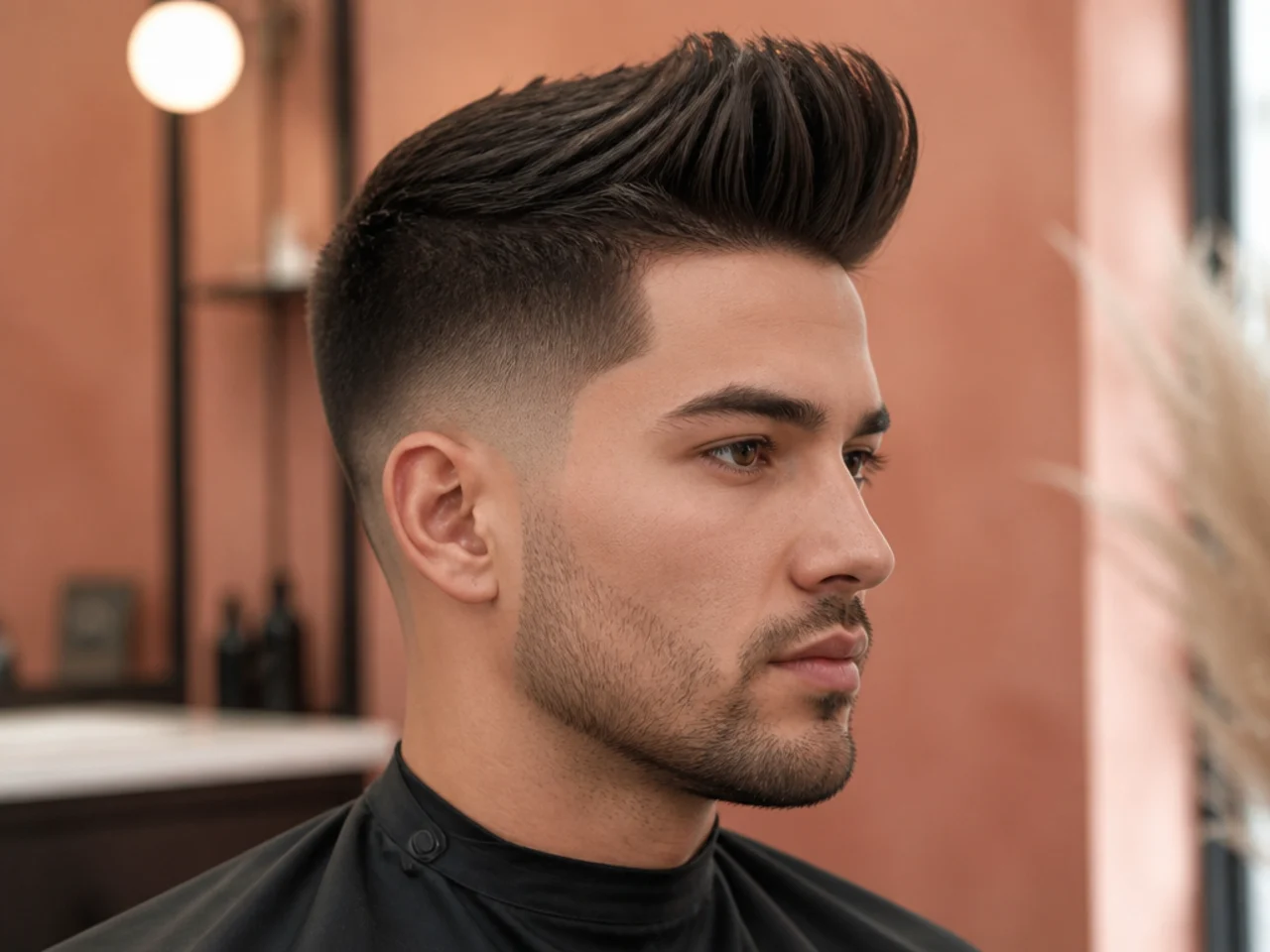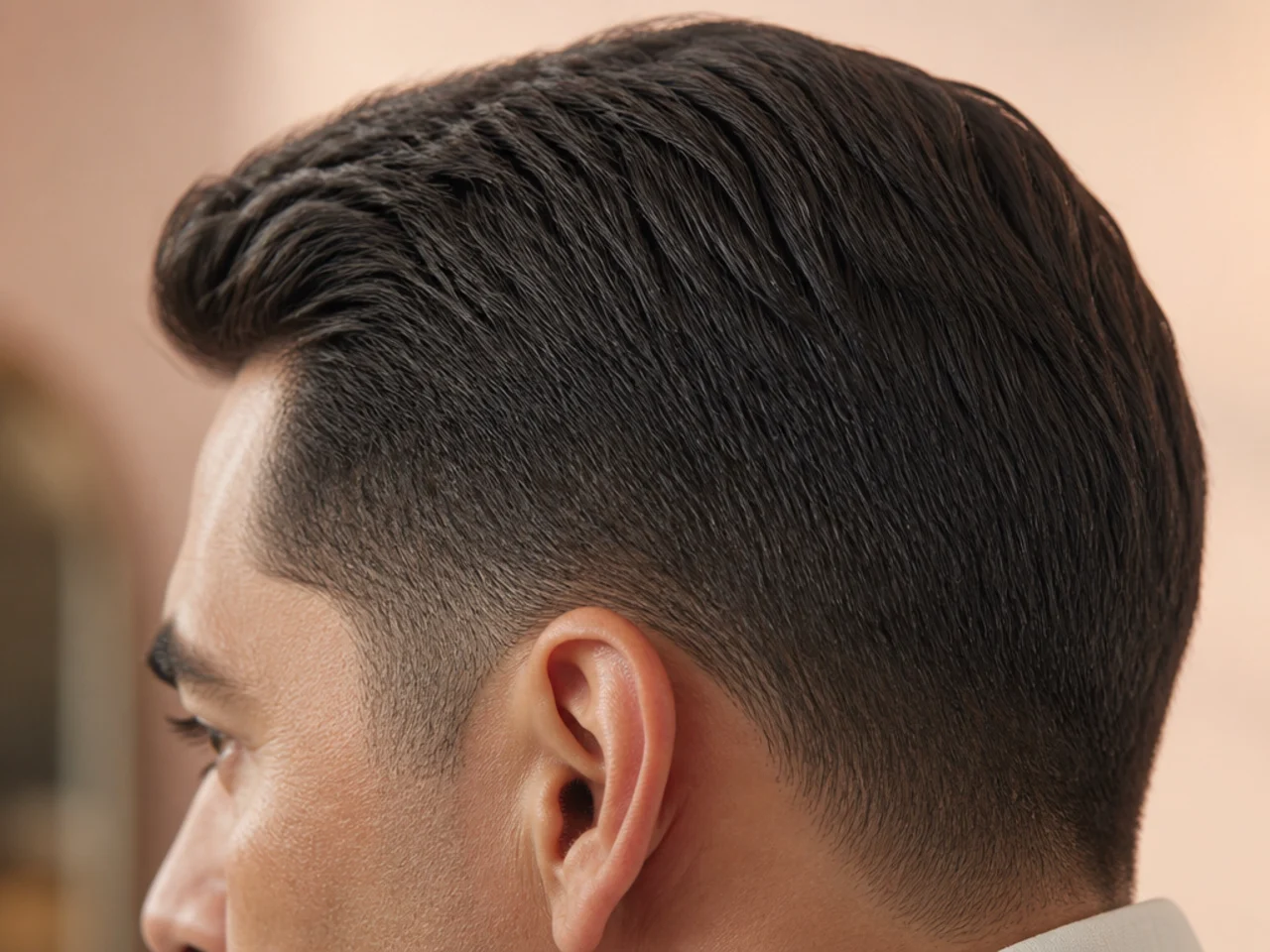
15 Business Men's Short Hair Ideas We Adore
A haircut has no fixed meaning. It is read against the room it walks into, and the same cut is conservative in a design studio and loud in a pension fund. The signals that move it between those rooms are specific and countable.
In this article · 22
- The Signals That Move a Cut Between Registers
- How to Read Your Own Room
- The 15 Cuts, by Register
- 1. Conservative Register — Scissor Taper, No Visible Line Anywhere
- 2. Conservative Register — A Matte Finish Instead of Shine
- 3. Standard Corporate — Low Taper, Soft Neckline
- 4. Client-Facing — The Cut That Reads the Same on Camera and in the Room
- 5. Creative Register — A Visible Low Fade Is Neutral Here
- 6. The Hard Part — A One-Step Register Jump
- 7. Disconnection, and the Register It Announces
- 8. The Temple Line-Up and the Rooms It Rules Out
- 9. Exposed Scalp on a High Fade
- 10. Texture on Top — The Softest Register Signal
- 11. The Register Shift When You Move Firms
- 12. The Interview Cut — One Register More Conservative Than the Job
- 13. Two Registers at Once, for Consultants
- 14. Grey Hair as a Register Modifier
- 15. The Neckline Shape — The Quietest Signal on Your Head
- Finish and Register
- Mistakes to Avoid
- FAQ
- Final Thoughts
There is no such thing as a professional haircut in the abstract. There is only a haircut and a room, and the room does the reading.
The same cut changes meaning between buildings. A visible low fade is the baseline on an engineering floor and the loudest thing in a pension fund boardroom. Nothing about the hair changed — the register did.
The signals that move a cut are countable. A visible line anywhere, exposed scalp, a hard part, a glossy finish, a disconnect, a drawn hairline. Four registers run through this page — strictly conservative, standard corporate, client-facing, and creative — and each idea below names the register it sits in and the signal that puts it there.
The Signals That Move a Cut Between Registers
A visible line anywhere reads as a statement. A hard part, a lined-up temple, a disconnect — any drawn edge tells the room the hair was designed rather than simply kept.
Skin showing through a fade reads younger and less formal. Scalp is a contrast, and a conservative room is quietly asking for less contrast, not less length.
Shine points in two directions at once. High gloss reads traditional in banking and dated in tech, which is why matte travels and shine does not.
The neckline is the quietest signal and the most ignored. It is the one part of your head the room can see and you cannot.

How to Read Your Own Room
Look at the people two levels above you. Their hair is the register your building actually runs on, whatever the handbook says.
Count the drawn lines on your own head. Zero reads conservative, one reads corporate, two or more reads creative.
Check how much scalp shows from three metres. That is the distance a room reads you at, not the distance a mirror does.
Decide which register you want to be read as. A cut can move you one step in either direction, comfortably. It cannot move you two.

The 15 Cuts, by Register
1. Conservative Register — Scissor Taper, No Visible Line Anywhere
Cut with scissors and comb alone, a scissor taper contains no drawn edge on any part of the head. Nothing announces itself, and that absence is the signal. Law, banking and insurance read no line as no statement, which is the most conservative thing a cut can say. It is the register the classic men's haircut has occupied for a century.
2. Conservative Register — A Matte Finish Instead of Shine
Gloss is the only signal on this page that points both ways, reading traditional in one room and dated in the next. A matte finish carries the same meaning everywhere, so it never has to be re-read when you change buildings or move between a client and your own desk.

3. Standard Corporate — Low Taper, Soft Neckline
A low taper sits at or below the temple and never reaches skin, so the sides gain definition without the room seeing scalp. With a soft neckline behind it, this is the default corporate register — visibly maintained, but not visibly designed.
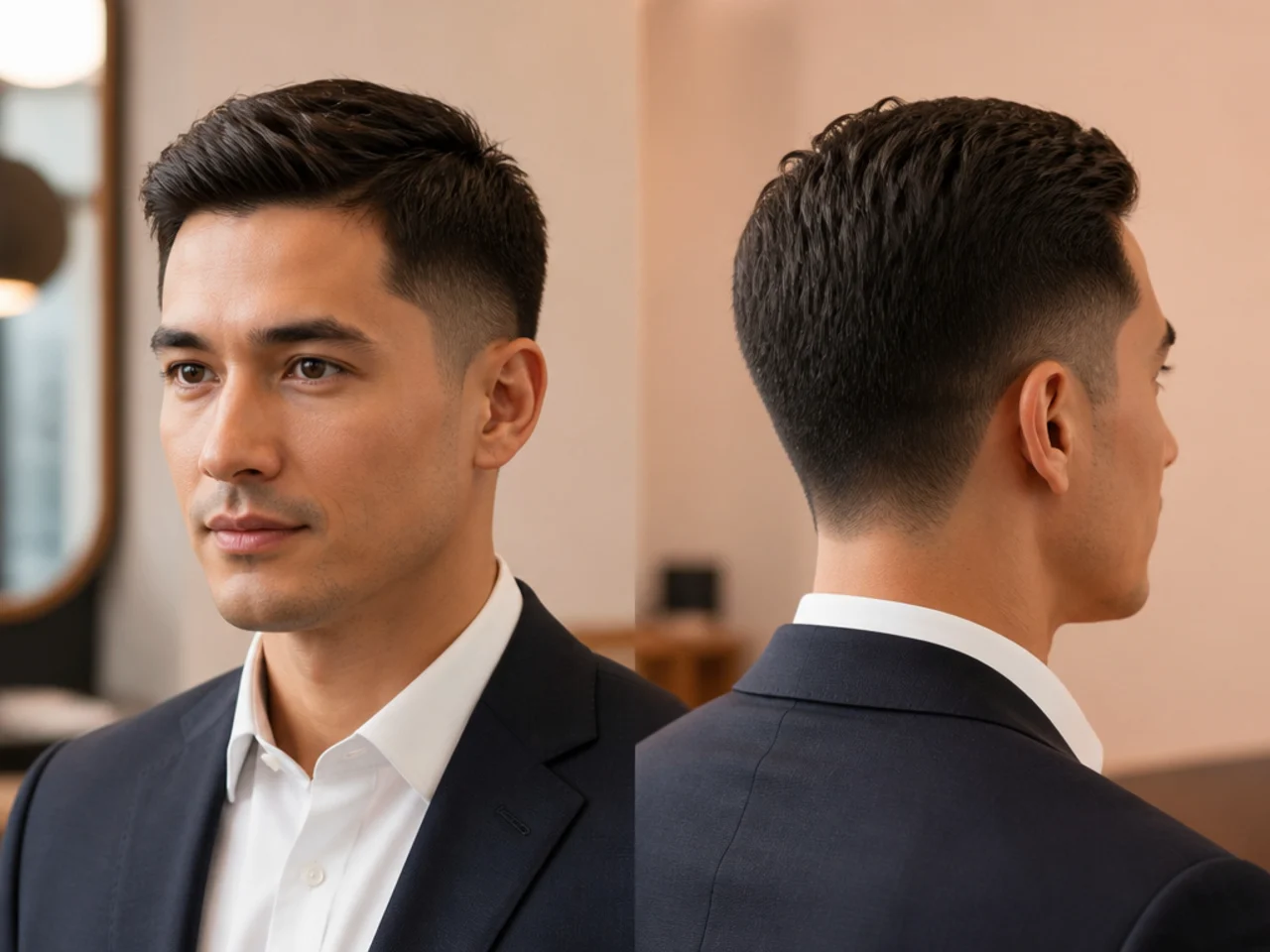
4. Client-Facing — The Cut That Reads the Same on Camera and in the Room
A camera compresses contrast, so a cut built on a strong gradient reads harder on screen than in person. Sales and consulting live in both places on the same day, which means the cut has to hold one register across the two rather than shifting when you join the call.

5. Creative Register — A Visible Low Fade Is Neutral Here
On a design or engineering floor a visible fade line is not a statement, it is the floor. The identical line in a pension fund is the loudest object in the meeting. That gap is the clearest evidence that the cut itself carries no fixed formality at all.
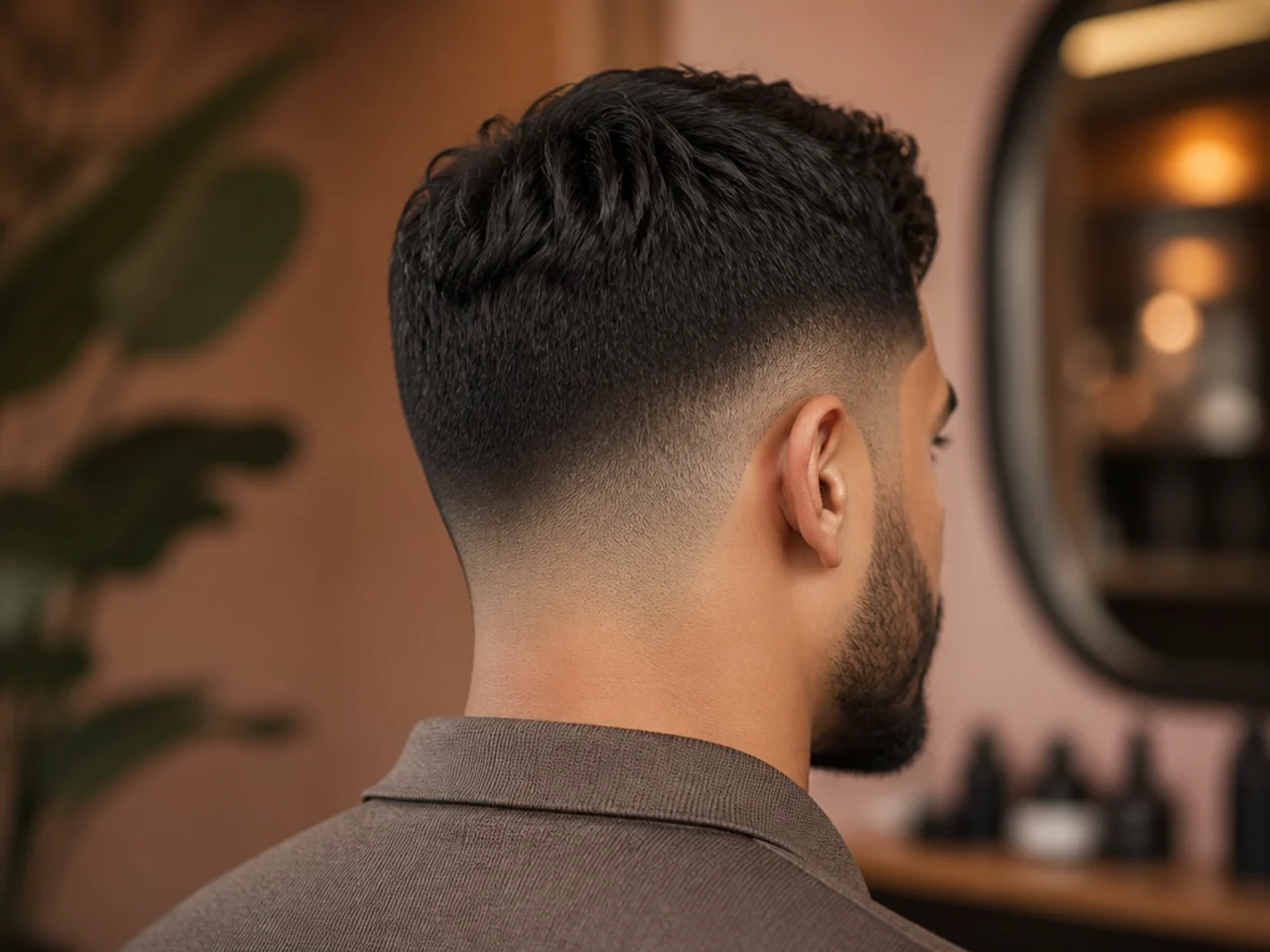
6. The Hard Part — A One-Step Register Jump
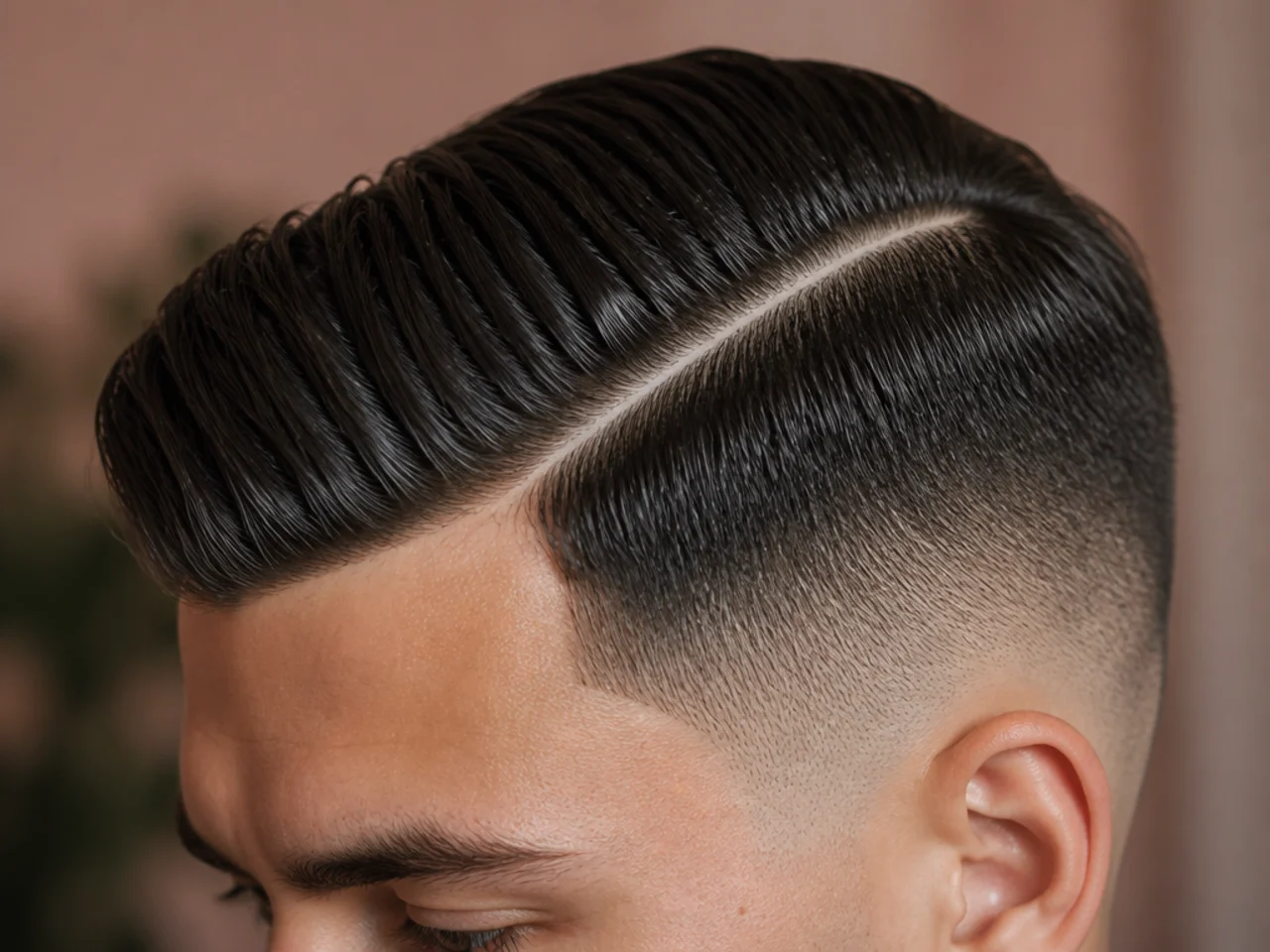
A hard part is a shaved line, and a shaved line is a decision the room can see from across it. It reliably moves any cut one register less conservative — useful for stopping a classic shape reading old-fashioned, and a mistake in a room that is already formal.
7. Disconnection, and the Register It Announces
A disconnect is a deliberate refusal to blend, with the top and the side meeting at no gradient at all. There is no way to read it as maintenance rather than design, which fixes it firmly in the creative register and makes it conspicuous in every other room.

8. The Temple Line-Up and the Rooms It Rules Out
A line-up replaces your natural hairline with a drawn one across the temple and the forehead. It is precise and unmistakably intentional, and because it moves two registers rather than one, it lands well outside conservative rooms rather than a step away from them.

9. Exposed Scalp on a High Fade
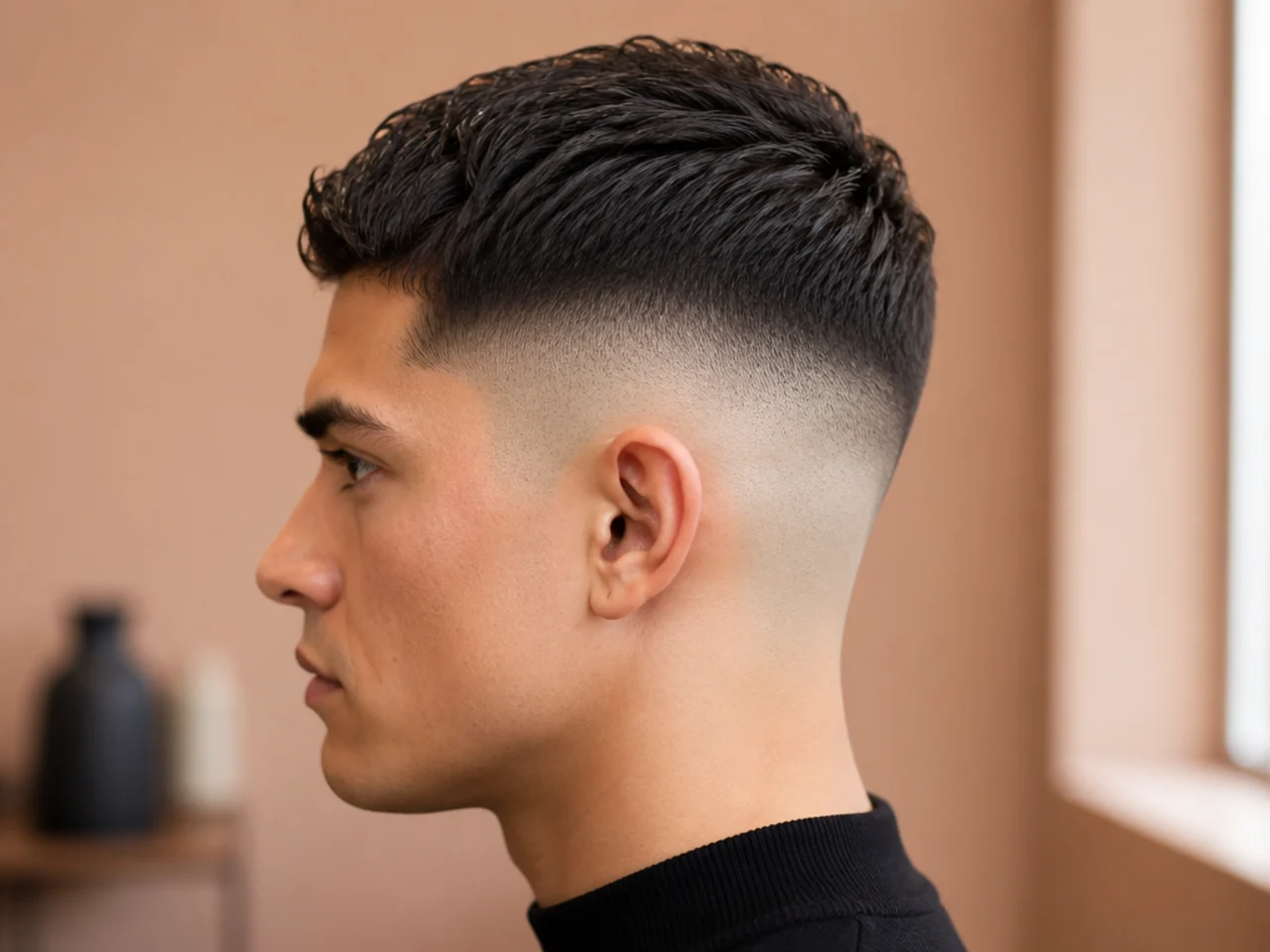
A fade starting at or above the parietal ridge shows scalp across a wide area of the head, and visible scalp reads younger and less formal at any distance. Neutral in tech, borderline in standard corporate, and conspicuous in the conservative register. If you are unsure which one you are being handed, the difference between a low, mid and high fade is simply where on the head the scalp starts showing.
10. Texture on Top — The Softest Register Signal
Texture changes how a cut reads without adding a single line to it. A conservative shape finished with separated, matte ends moves half a step toward current while staying entirely inside its register, which makes it the lowest-risk adjustment available.

11. The Register Shift When You Move Firms
The head that read conservative at one employer can read stiff at the next without a hair changing. When you move, keep the cut as it is and watch the room first — the register belongs to the building, and you cannot know it from the job title.

12. The Interview Cut — One Register More Conservative Than the Job
An interviewer reads you against a room you have not joined yet, so the safe error is the quiet one. Take the cut a register below the job's own, because being slightly under-styled goes unnoticed and being over-styled is the thing people remember. Start from business hairstyles for men and then take one signal back out.

13. Two Registers at Once, for Consultants
If you present to a bank on Tuesday and a studio on Thursday, you need a shape with no drawn lines and texture on top. There is nothing to remove for the formal room, and the finish alone carries the cut across to the informal one.

14. Grey Hair as a Register Modifier
Grey pulls a cut toward the conservative end on its own, whatever shape it sits in. That gives a grey head room to carry a signal — a visible taper line, more texture on top — that would read a full step louder in the same cut on dark hair.

15. The Neckline Shape — The Quietest Signal on Your Head
A squared neckline is a drawn line that everyone standing behind you can see and you never will. Rounded or tapered says nothing at all, which makes it the correct default in every register above creative and the cheapest correction on this page.

Finish and Register
Matte is the register-neutral finish. It says maintained rather than styled, and it means the same thing in every room described here.
Shine is the one product choice that moves you. High gloss reads traditional and formal in a conservative room and reads dated in a creative one.
Comb marks point in a single direction. Visible tracks are a formal signal, so use them where formality is the point rather than as a default.
Volume height is a dial, not a switch. Flat reads conservative, moderate reads corporate, and anything standing well clear of the head reads creative.
Change the finish before you change the cut. Product moves you half a register on a Monday morning; a cut takes far longer to undo.
Mistakes to Avoid
Copying a cut without asking what room the photo was taken in. The same shape carries a different meaning under a different dress code.
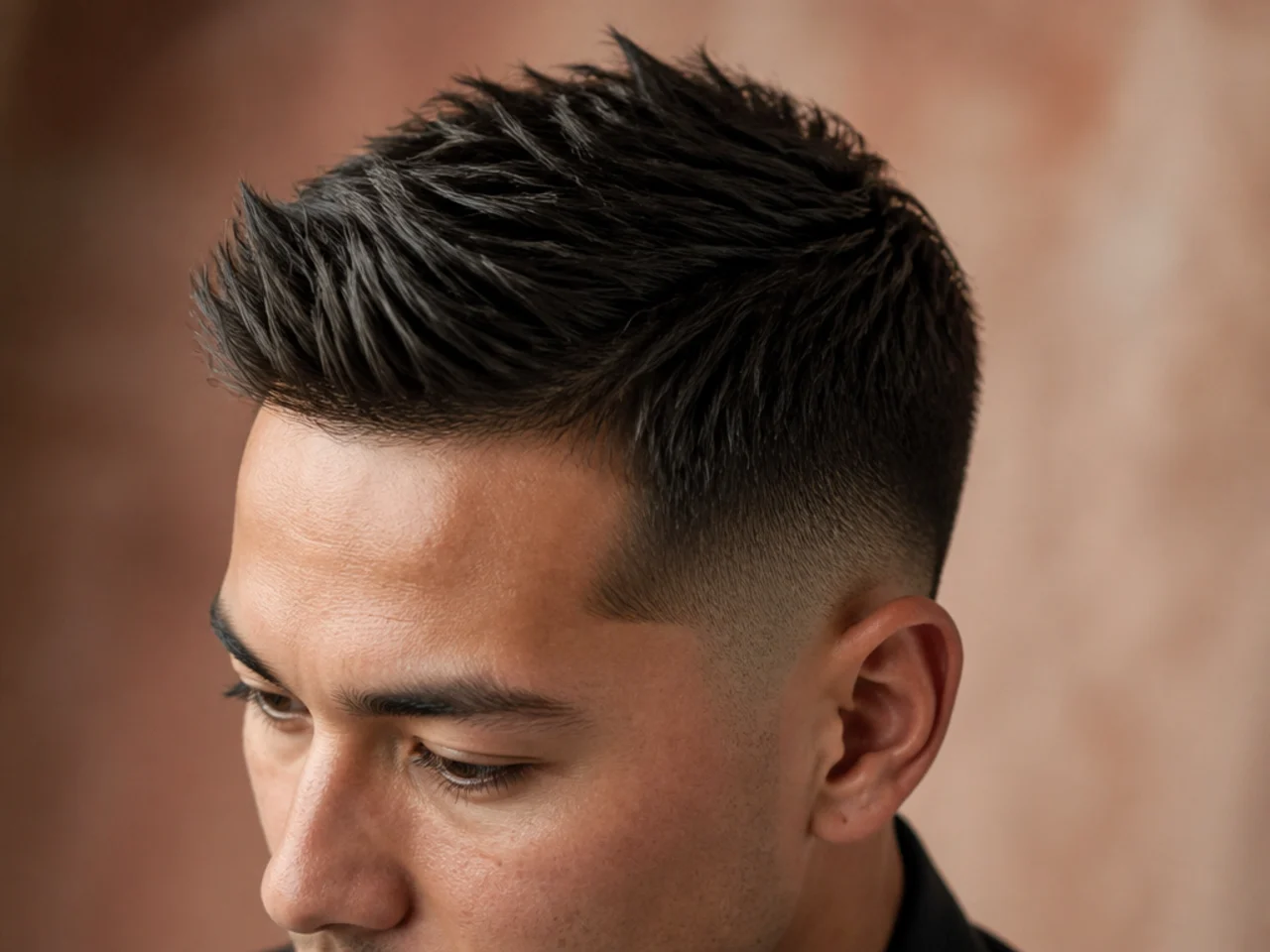
Assuming conservative means short. Register is made of visible decisions, not millimetres, and a very short cut with a lined-up temple reads louder than a longer scissor cut.
Adding two signals at once. A hard part plus a skin fade moves two registers, and two steps is almost always further than intended.
Letting the barber default to a blocked neckline. It is a drawn line in the one place you cannot audit.
Reading the handbook instead of the room. Dress codes describe clothing, and the register is set by the people two levels above you.

FAQ
What makes a cut read formal? No visible lines, a matte or controlled finish, and no scalp showing at conversational distance.
Is a fade acceptable at work? In creative and most corporate rooms, yes — in the conservative register the visible line is the issue.
What is the quietest signal I can change? The neckline. Rounded says nothing; squared says a clipper was here.

Final Thoughts
Choose the register first and the cut second. Once you know whether your room wants zero drawn lines or treats a fade as the baseline, the shape almost picks itself, and every decision left over is about finish rather than about millimetres.
For more shapes that sit inside these registers see professional hairstyles for men, and for the finish that reads neutral everywhere see a clean haircut for men. More in Men's Haircuts.