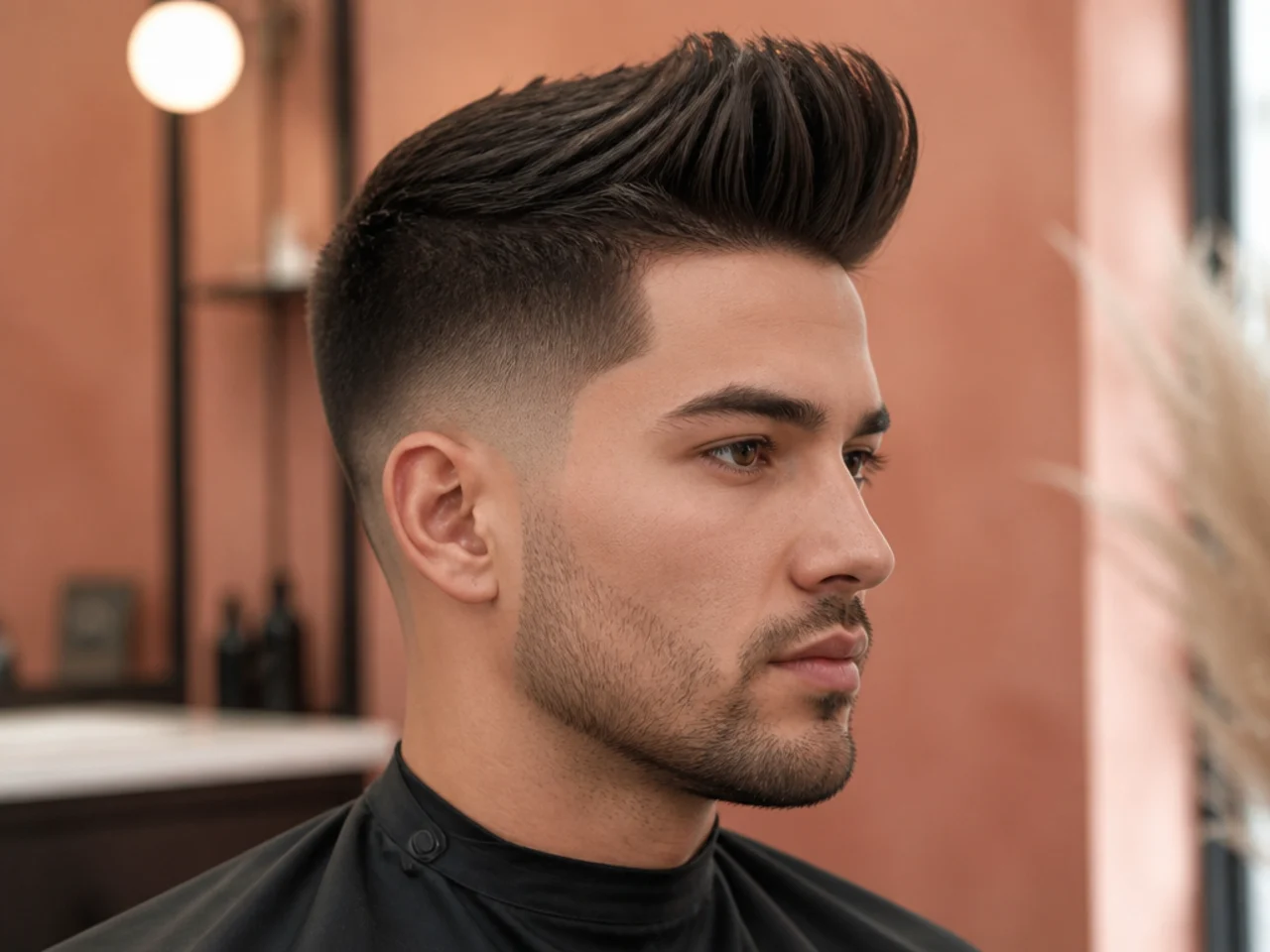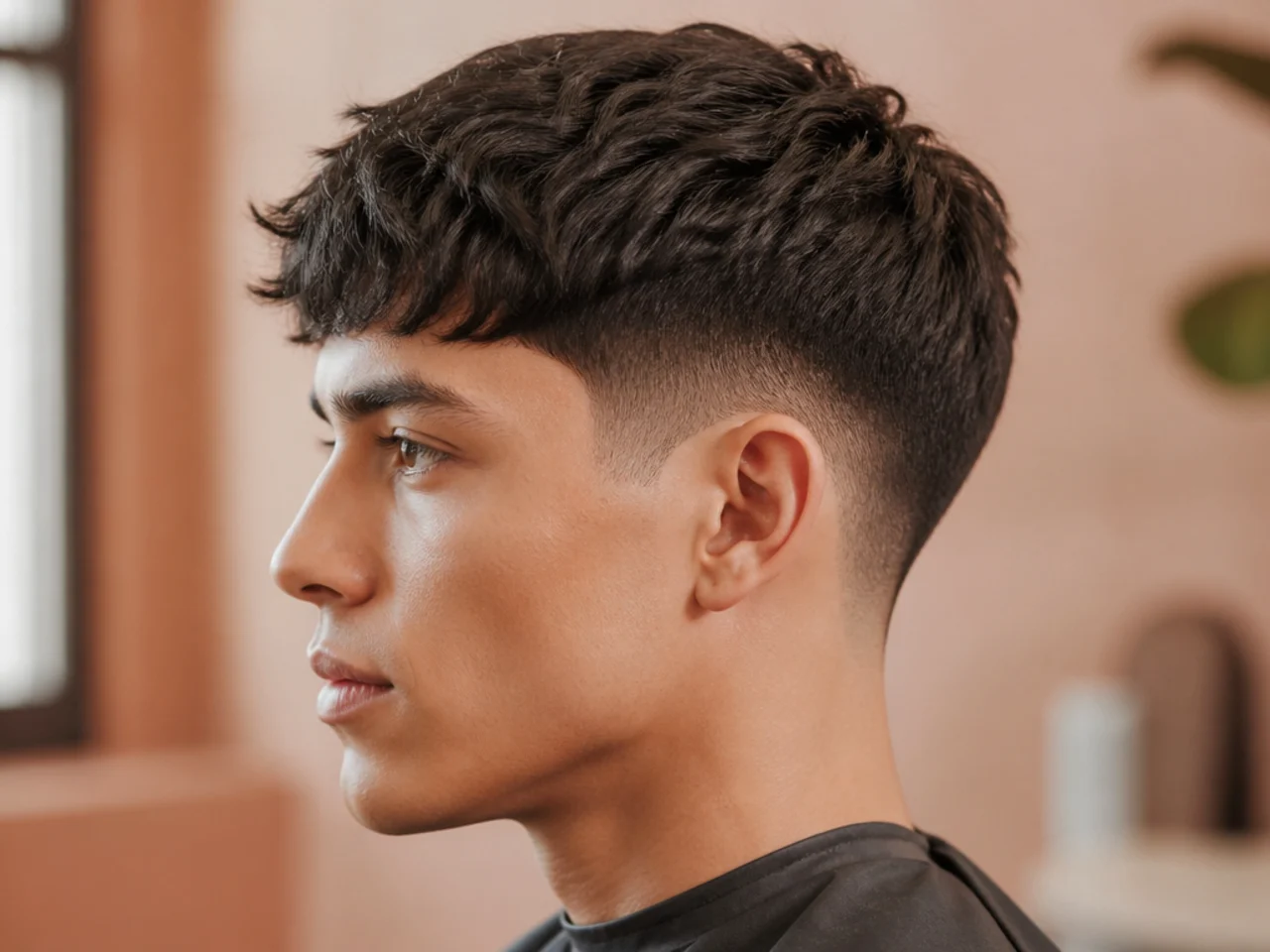
20 Short to Medium Haircuts Worth Trying
20 short to medium haircuts for men — transitional cuts that run 1.5 to 4 inches on top, with photos, face-shape notes, and the exact ask for your barber.
In this article · 32
- What Is a Short to Medium Haircut?
- How to Choose Your Short to Medium Cut
- The 20 Cuts
- 1. Textured Crop with Low Fade
- 2. French Crop
- 3. Ivy League
- 4. Short Modern Quiff
- 5. Brush Up
- 6. Textured Fringe
- 7. Short Two Block
- 8. Comma Crop
- 9. Short Comb Over
- 10. Short Side Part
- 11. Textured Messy Top
- 12. Short Slick Back
- 13. Low Taper with Scissor-Cut Top
- 14. Grown-Out Buzz
- 15. Butch Cut
- 16. Mid Fade with Crop Top
- 17. Skin Fade with Brush Up
- 18. Undercut with Textured Top
- 19. Short Curtains
- 20. Modern Edgar
- How to Ask Your Barber
- Styling and Maintenance
- FAQ
- What counts as a short to medium haircut for men?
- Which short to medium haircut is easiest to style?
- How do I ask my barber for a short to medium cut?
- How often should I re-cut a short to medium haircut?
- Do these cuts work while growing out from a buzz?
- Which short to medium haircut suits round faces best?
Short-to-medium is the sweet spot most men should live in — long enough to shape, short enough to skip the mirror. This guide walks through 20 short to medium haircuts men are asking for right now, each running roughly 1.5 to 4 inches on top. Every variation includes the exact ask for your barber, who it suits by face shape and hair type, and one honest styling tip you'll actually use.
What Is a Short to Medium Haircut?
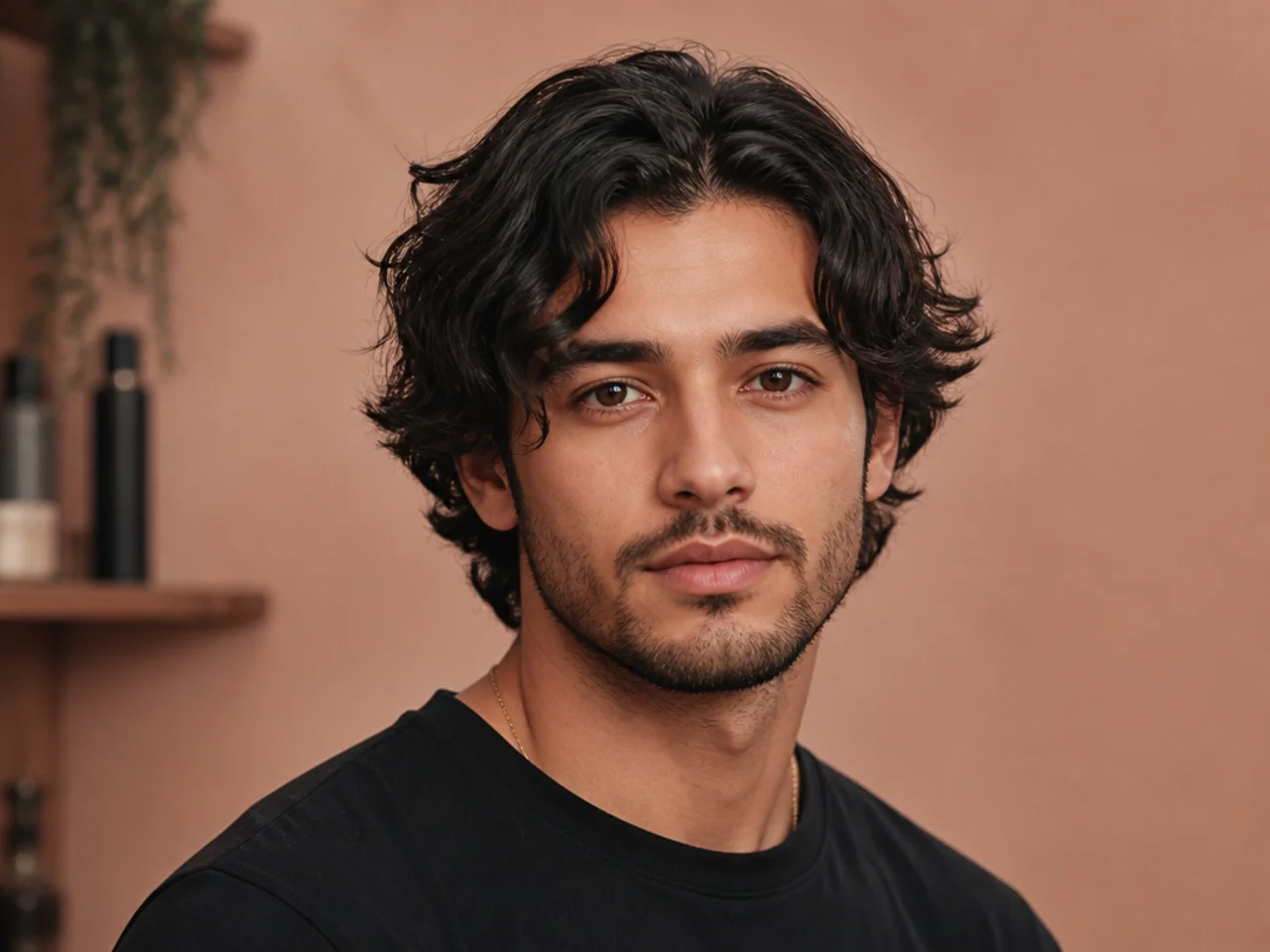
A short-to-medium cut sits between a full buzz and a proper medium — roughly 1.5 to 4 inches on top, and short-to-tapered on the sides. Short enough to style with your fingers in under a minute. Long enough that the shape does visible work rather than the density.
The category runs on a maintenance compromise. You don't need to sit in the chair every three weeks like a high-fade buzz. You don't need a round brush and five minutes like a full-length quiff. You book every four to five weeks, own two products, and walk out the door before the coffee cools. For a longer read on the top of this range, the medium length hairstyles men guide covers everything past 4 inches; for the ceiling on the short end, the short simple mens haircuts roundup covers cuts sitting under 2 inches.
How to Choose Your Short to Medium Cut
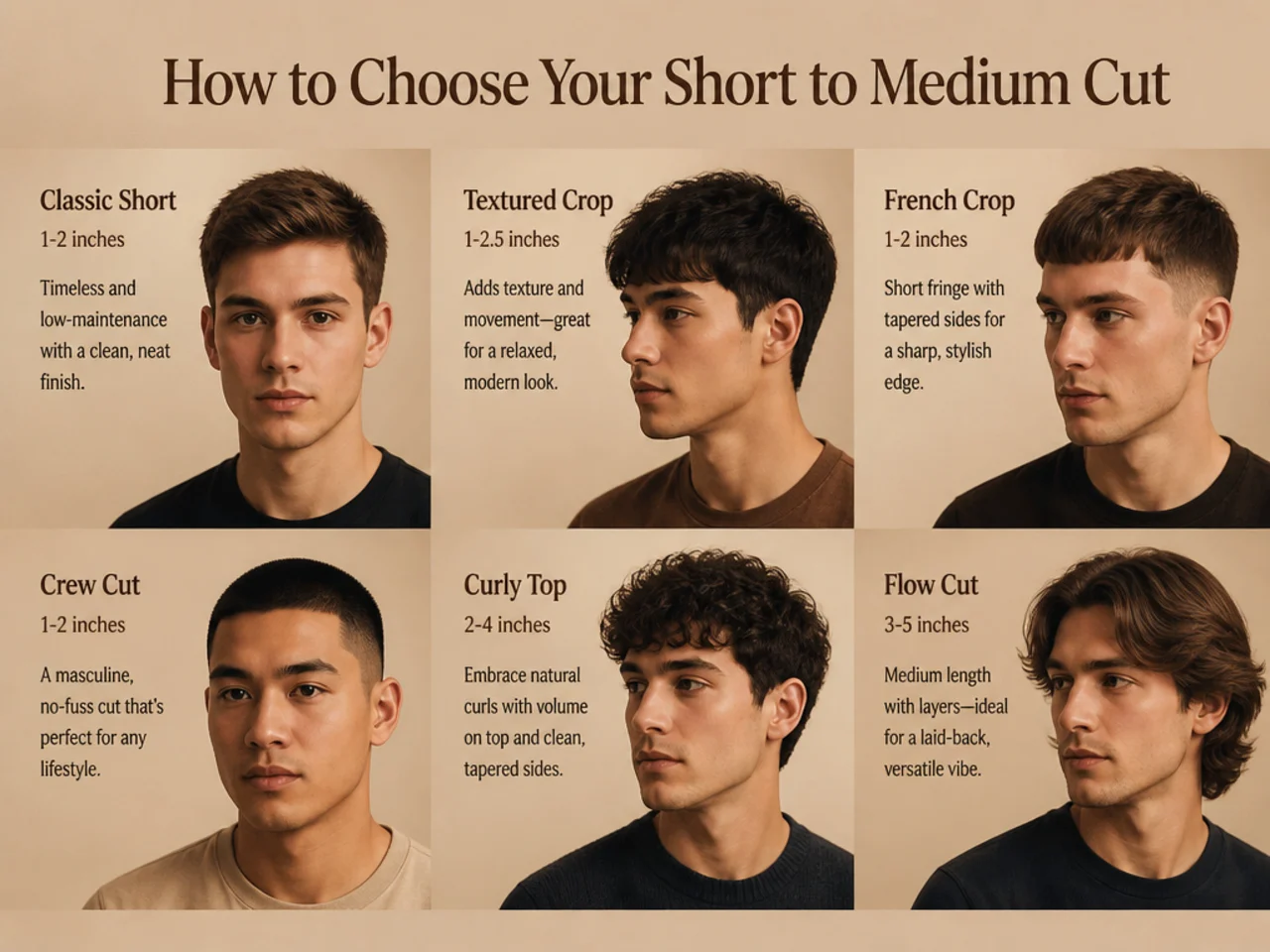
Three variables decide the pick.
Face shape steers the fringe and the top height. Round faces want vertical lift and a forward or slightly off-center fringe — a short quiff, brush up, or textured crop stretches the frame. Square faces want softness — a curtain, comma, or scissor-cut messy top pulls the eye off the jawline. Oval and heart faces can pick almost anything.
Hair type decides the finish. Straight hair holds sharp shapes and clean parts. Wavy hair thrives on textured crops, messy tops, and short flow. Curly hair does best with a taper plus 2 to 3 inches of curl on top — skip the hard skin fade at these lengths.
Your morning routine decides the rest. Zero minutes? Grown-out buzz, French crop, or butch. Two minutes with your fingers? Textured crop, short comb over, or brush up. Three minutes with a dryer? Short quiff, short slick back, or Ivy League. Pick the routine you'll actually run at 7:30 a.m. — the cut that looks best in the photo is the one you'll ignore by Thursday.
The 20 Cuts
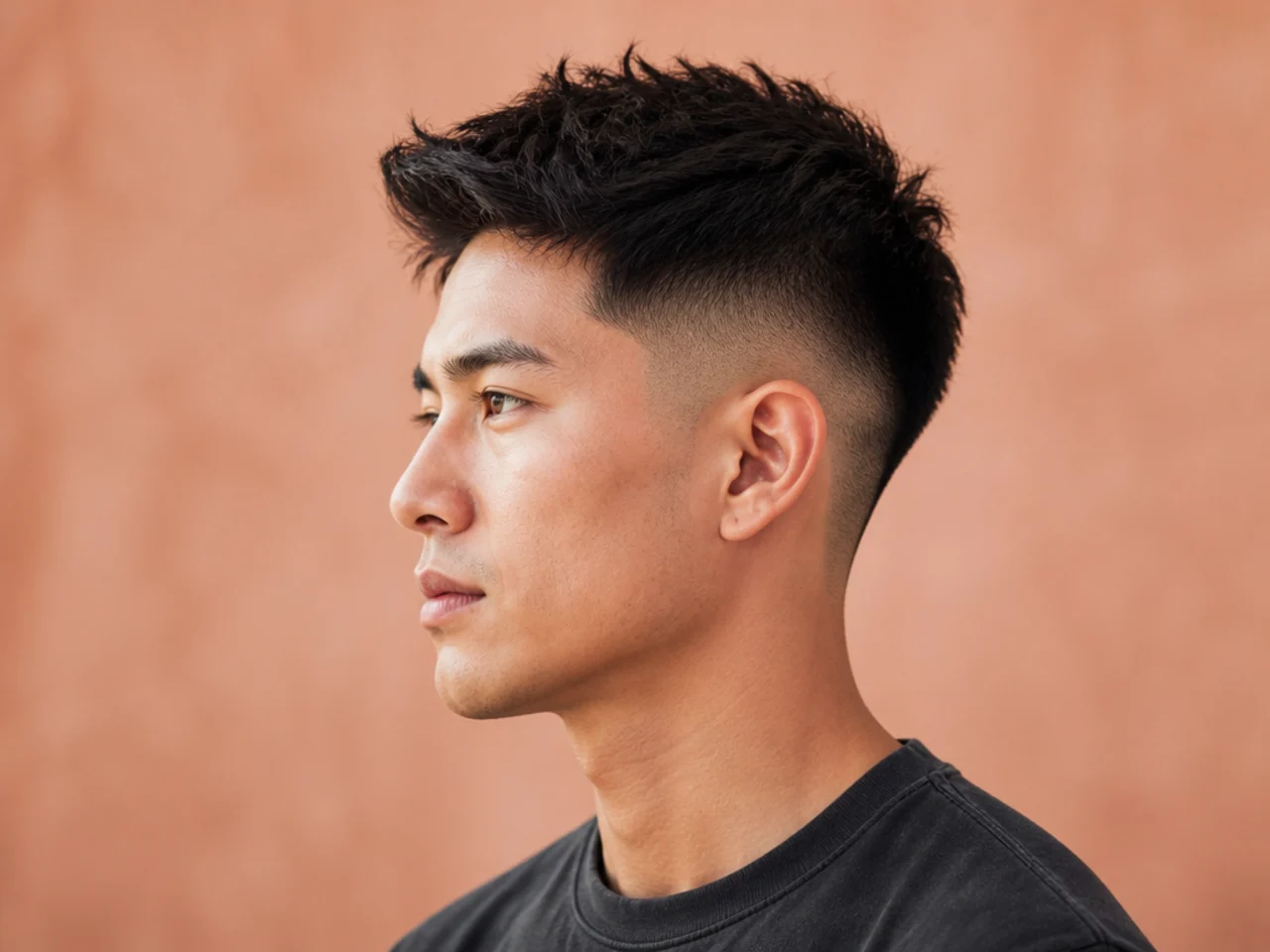
Each cut below runs in the 1.5 to 4 inch range on top. Names are what your barber will recognize — bring numbers with the name and you get the version you had in mind.
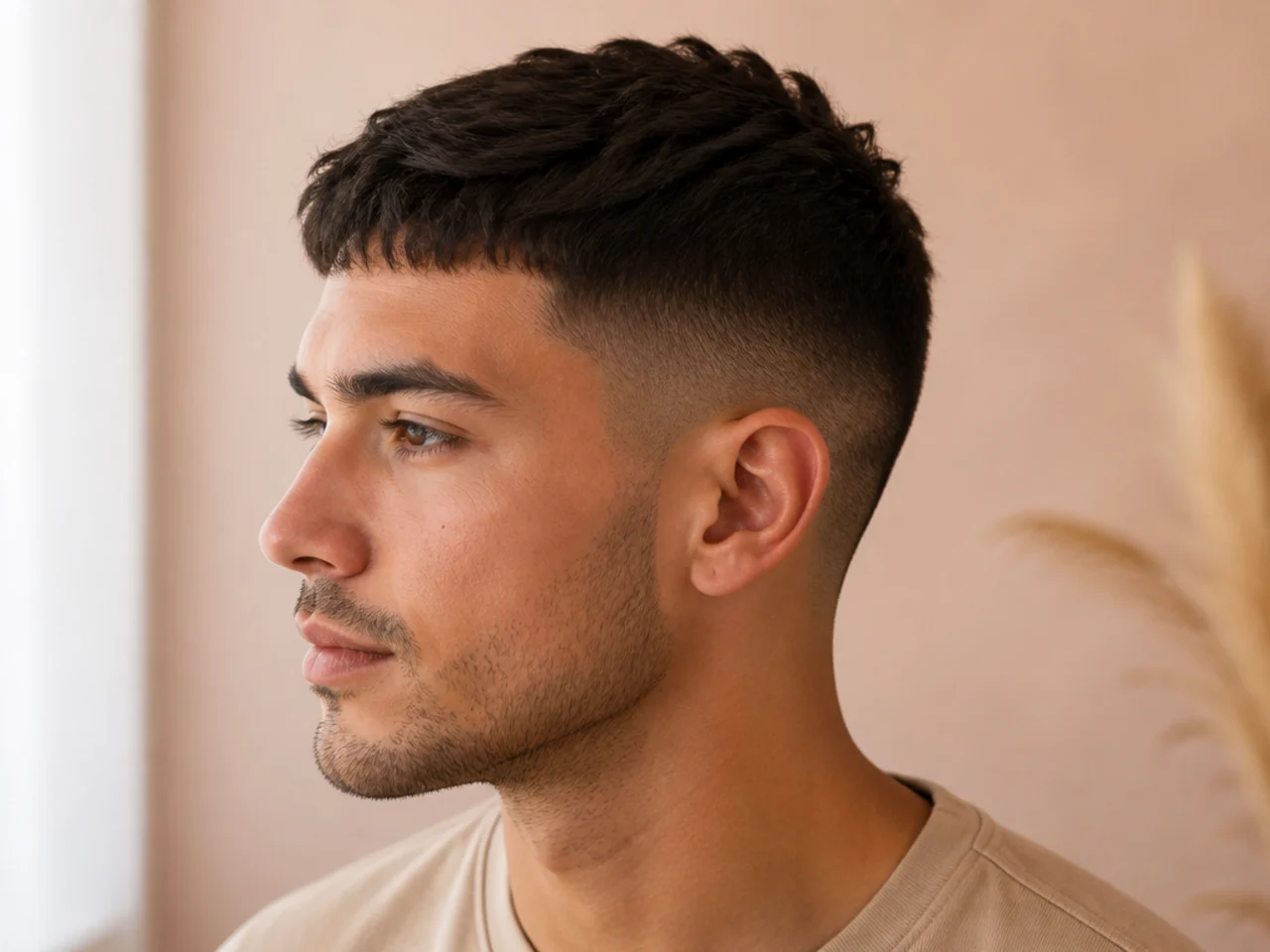
1. Textured Crop with Low Fade
The modern default and the safest short-to-medium cut on the list. 2 inches on top with point-cut ends, a soft forward fringe, and a low fade at the sides. The point-cut ends do the visual work — flat scissor cuts look dated at this length.
Best on every face shape. Straight, wavy, or curly hair.
Ask for: "Textured crop, 2 inches on top with piecey point-cut ends, forward fringe reaching the brow, low fade at the sides."
Styling tip: matte paste through damp hair, push the fringe forward with your fingers, walk out. Skip the comb.
2. French Crop
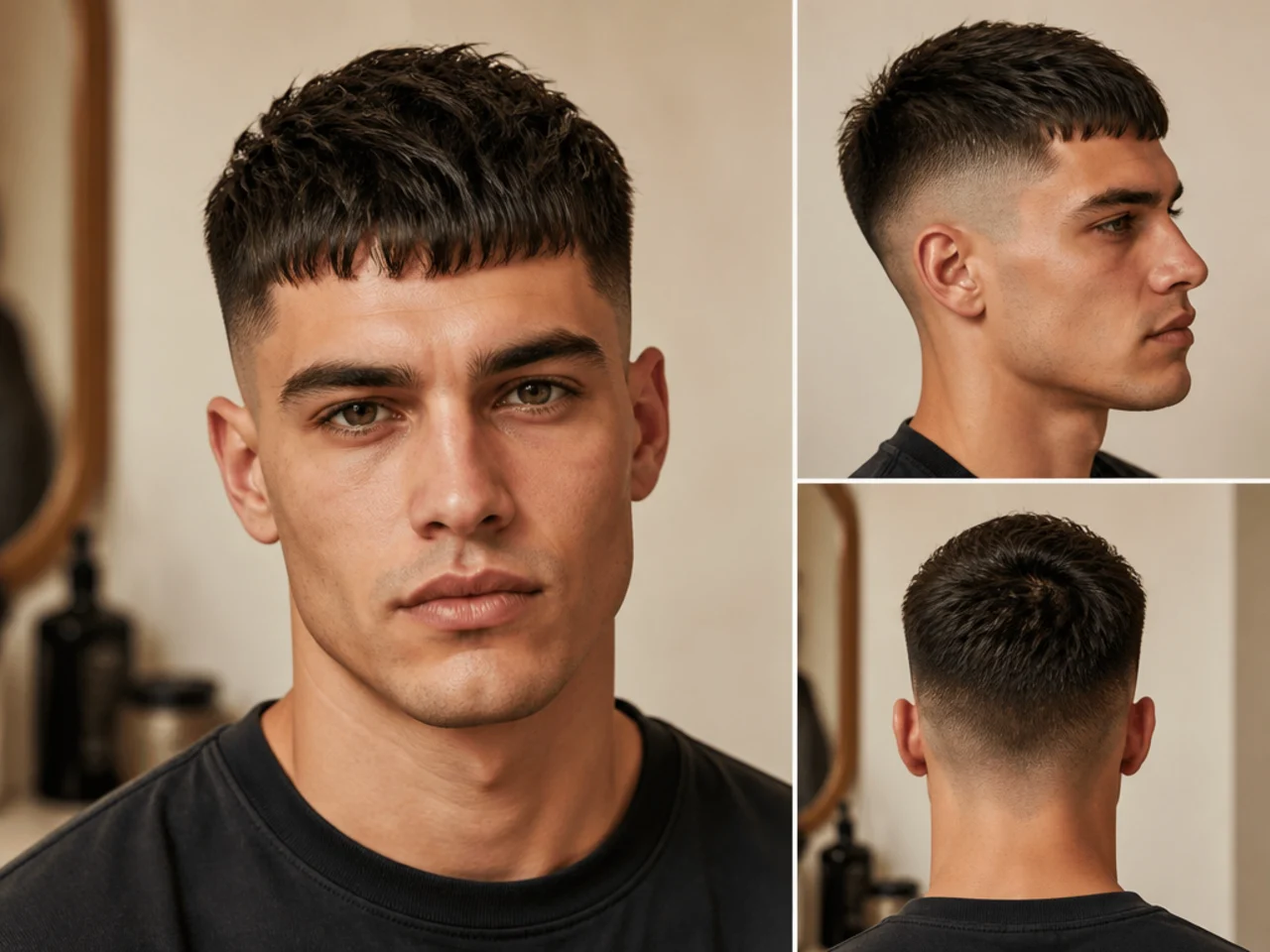
The French crop haircut is the textured crop's older cousin — shorter top (1.5 to 2 inches), blunter fringe cut straight across the brow, more classical read. Hides high foreheads and softens strong jaws in one move.
Best on round, oval, and rectangular faces. Any hair type — the shorter length hides most texture issues.
Ask for: "French crop, 1.5 inches on top, blunt fringe cut straight across the forehead, mid fade at the sides."
Styling tip: rake matte paste forward with your fingers. If the fringe lifts, mist hairspray underneath.
3. Ivy League
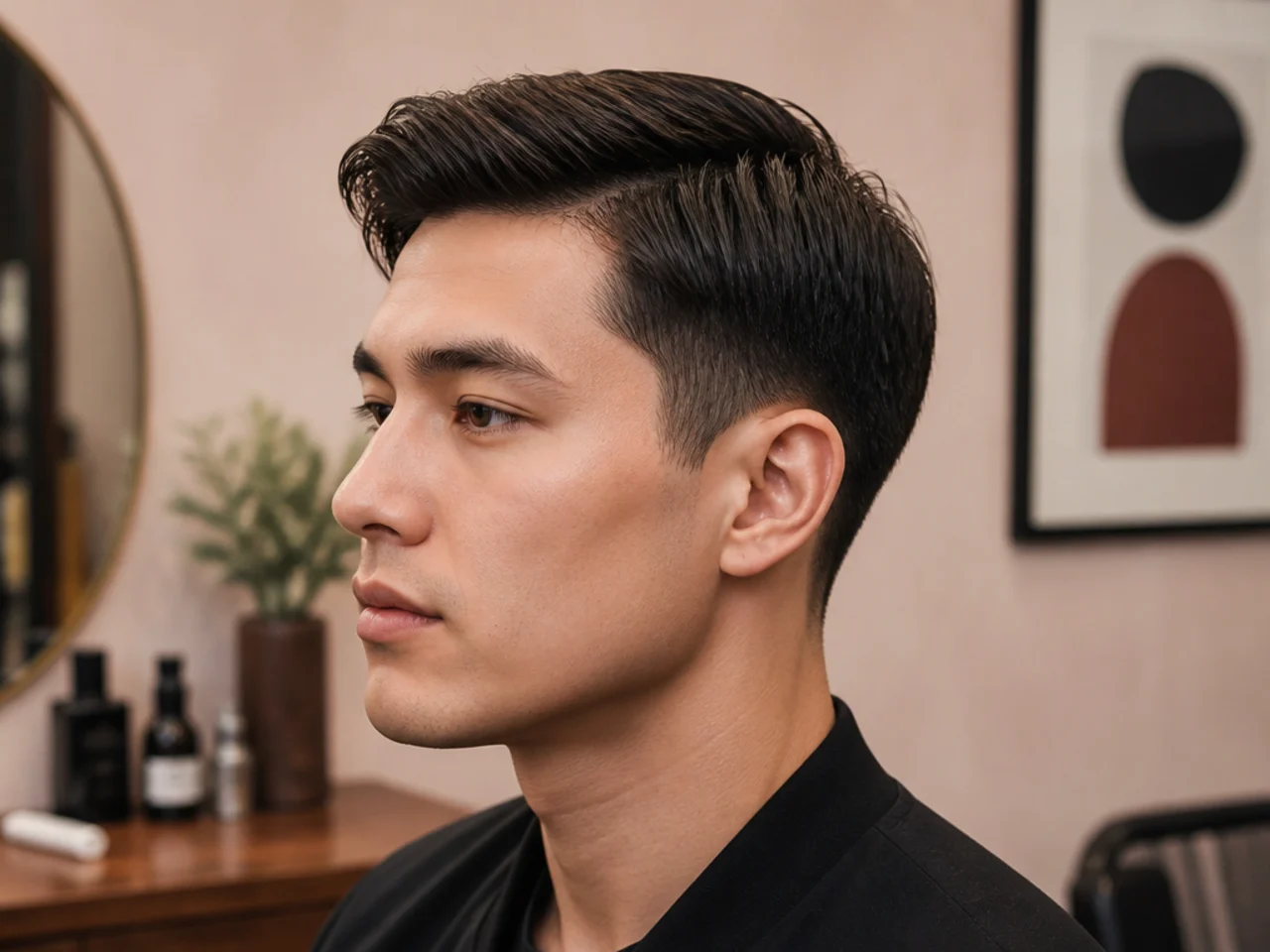
The Ivy League haircut is the grown-out crew cut with a hard side part. 2 to 3 inches on top, combed to one side, scissor-tapered sides. Reads mature without reading old. The single most workplace-safe cut on this list.
Best on every face shape. Straight and lightly wavy hair only — the part needs a defined lay.
Ask for: "Ivy League, hard side part on my left, 3 inches on top, scissor-tapered sides ending just above the ear."
Styling tip: light pomade combed once from the part outward. Set with a mist of hairspray if the front lifts.
4. Short Modern Quiff
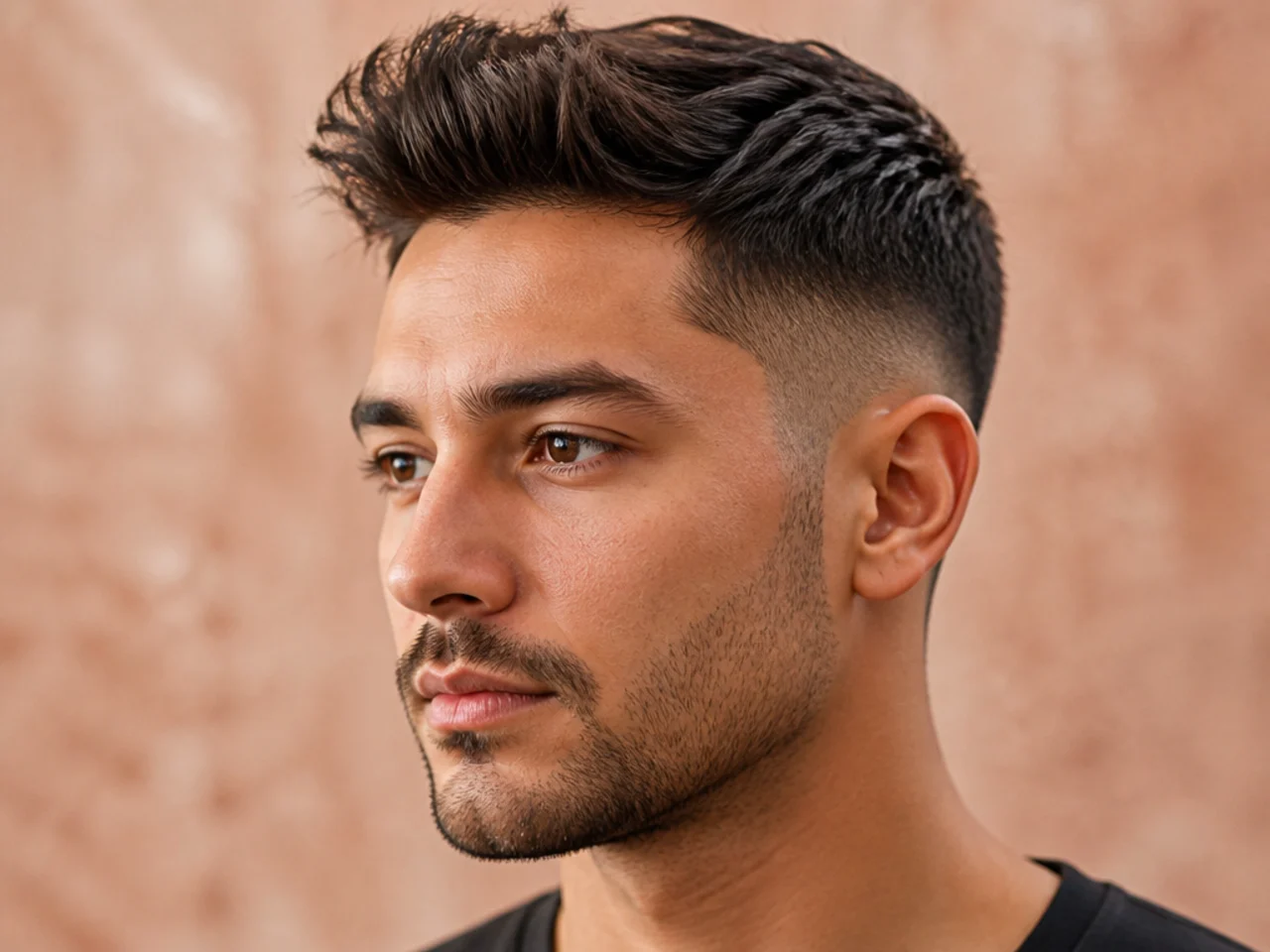
The quiff hairstyles men family scaled to the short-medium range. 3 to 4 inches on top, brushed up and slightly back at the front, sides on a mid fade. The vertical lift adds height without demanding the 5-inch length of a proper pompadour.
Best on round, square, and oblong faces — the height stretches the frame. Straight and lightly wavy hair.
Ask for: "Short quiff, 3 inches on top, mid fade at the sides, point-cut ends so the front doesn't sit like a block."
Styling tip: blow-dry the front up and back with a round brush. Matte clay warmed in the palms, pressed into the base — not the tips.
5. Brush Up
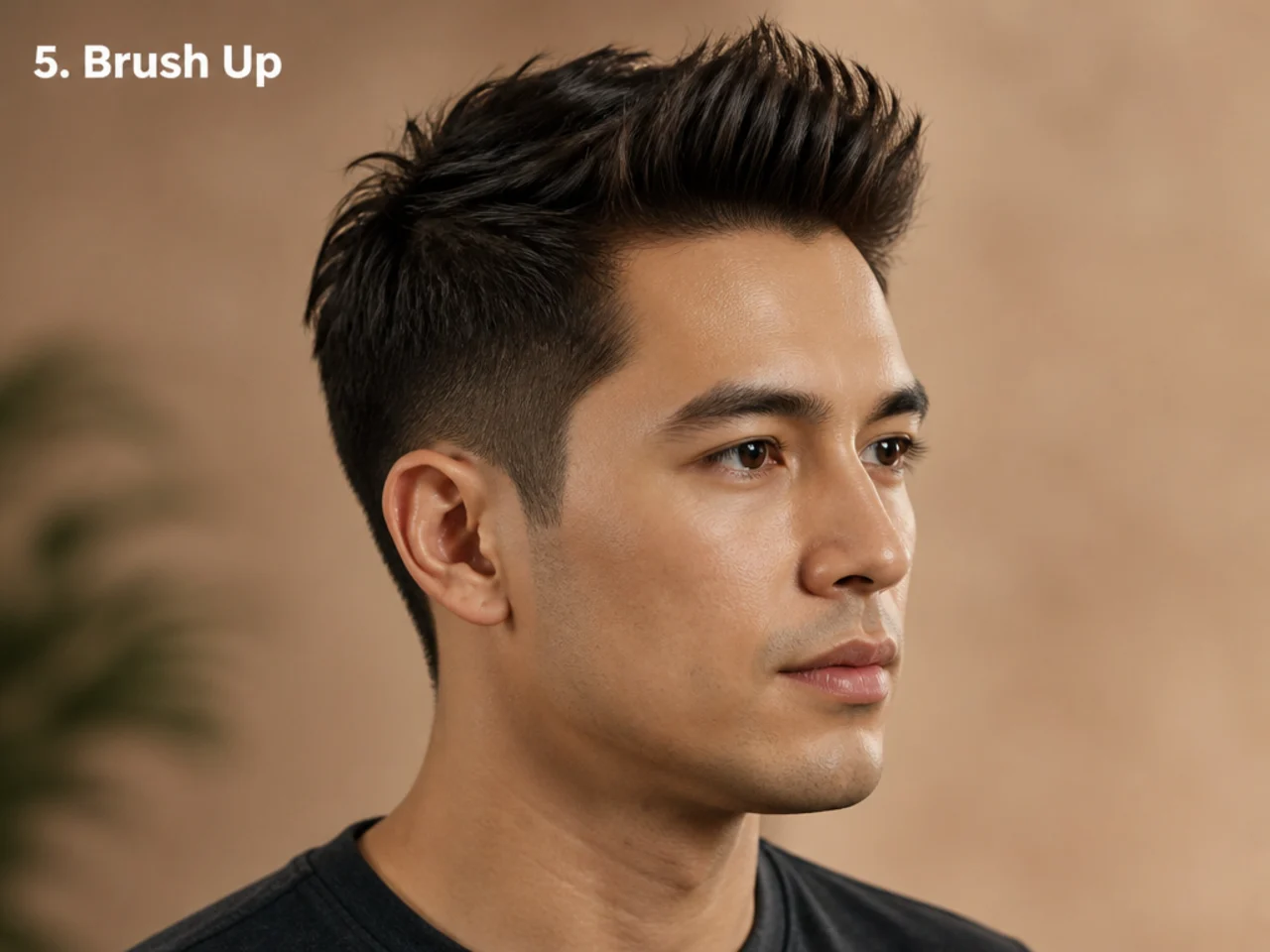
The brush up is the quiff without the arch. 2 to 3 inches on top, pushed straight up and slightly forward, sides on a low fade. Simpler than the quiff, faster to style, still reads modern. The right pick for guys who want vertical lift without dryer work.
Best on oval, square, and round faces. Straight and wavy hair.
Ask for: "Short brush up, 2 to 3 inches on top, pushed forward, low fade at the sides."
Styling tip: fingertip of light-hold cream raked through damp hair, pushed up and forward. Fifteen seconds, no comb.
6. Textured Fringe
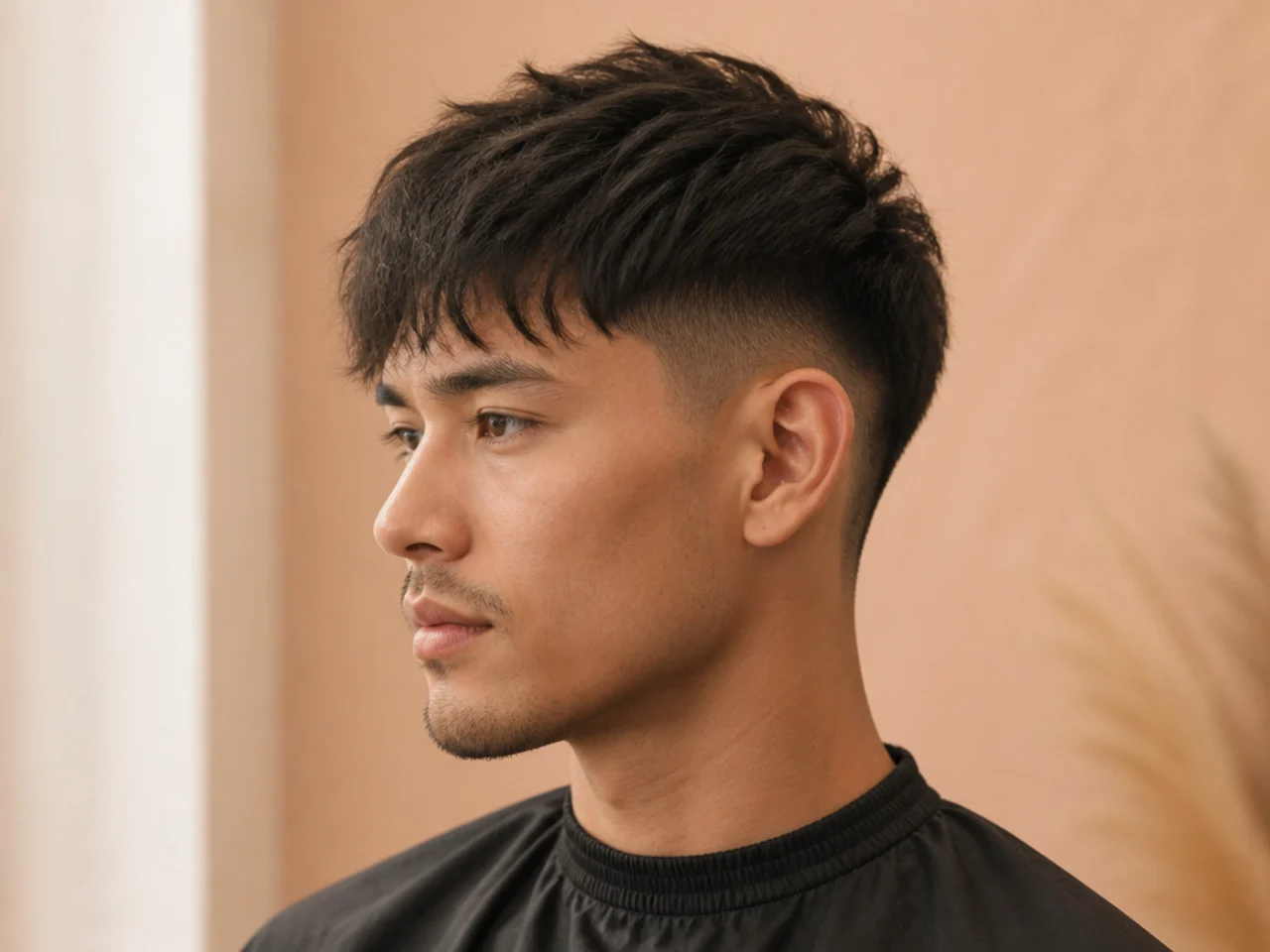
A textured fringe is the crop's romantic cousin — piecey, choppy, cut to fall forward and break at the brow. Sides pair cleanest with a low fade. Reads current from Tokyo to Los Angeles without needing a K-pop reference to translate.
Best on every face shape. Fine hair benefits most — the point-cut ends build volume that straight strands wouldn't hold.
Ask for: "Textured fringe forward, piecey point-cut ends, 3 inches on top, low fade at the sides. Not an Edgar — I want the ends broken, not blunt."
Styling tip: matte paste through damp hair, blow-dry forward with your fingers pulling the fringe down. A mist of texture spray breaks the ends apart.
7. Short Two Block
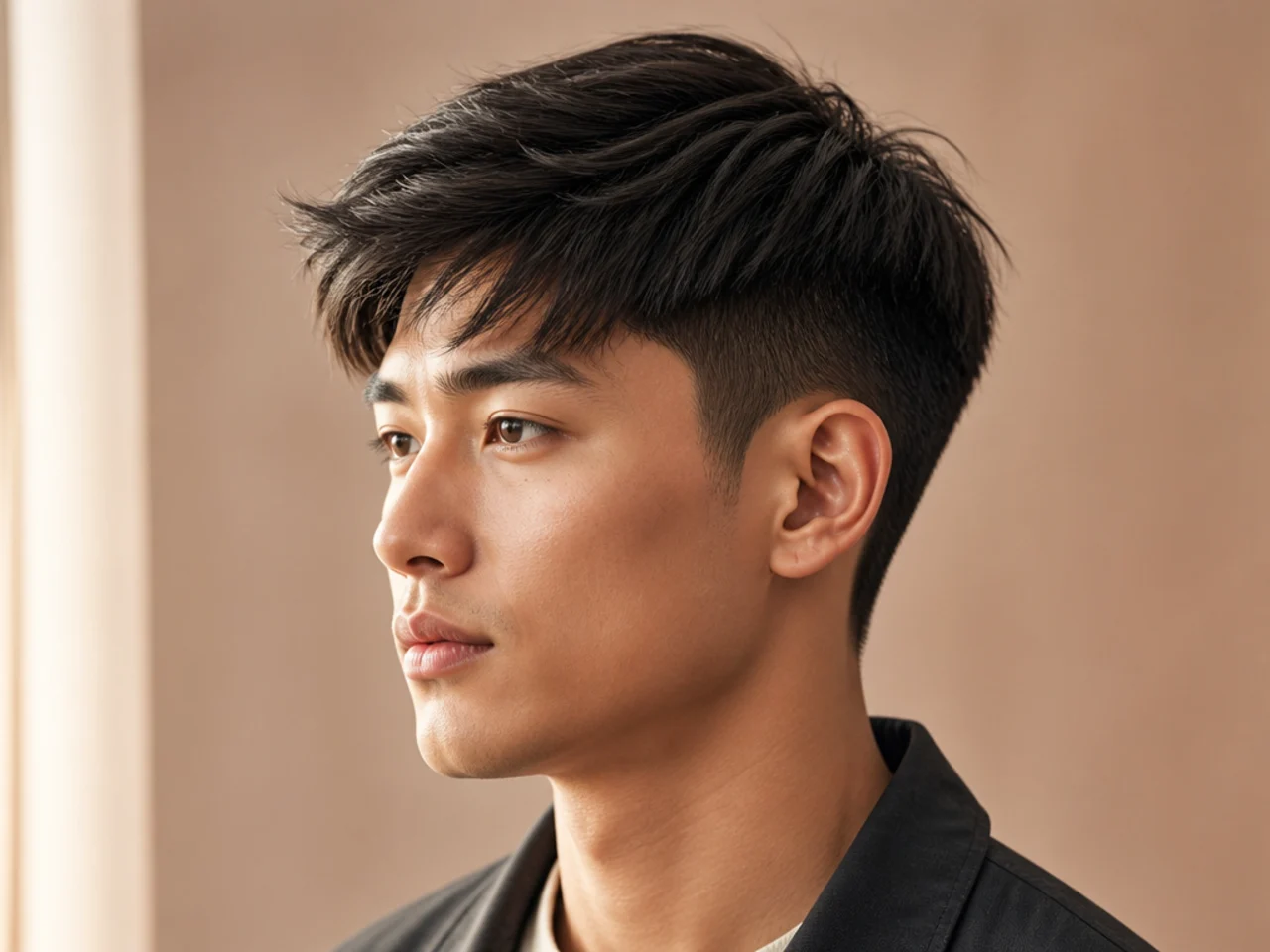
The starter version of the K-pop two block haircut. 3 inches on top, a two-guard buzz on the underlayer at the sides, and a horseshoe seam that hides the second block when your hair sits at rest. The shortest way into two-block territory without going full 5-inch drama.
Best on oval, square, and round faces. Straight and lightly wavy hair with medium-to-thick density.
Ask for: "Short two block, 3 inches on top, two guard on the underlayer, hidden seam at the horseshoe."
Styling tip: matte cream through damp hair, blow-dry with fingers pushing forward. Two minutes, done.
8. Comma Crop
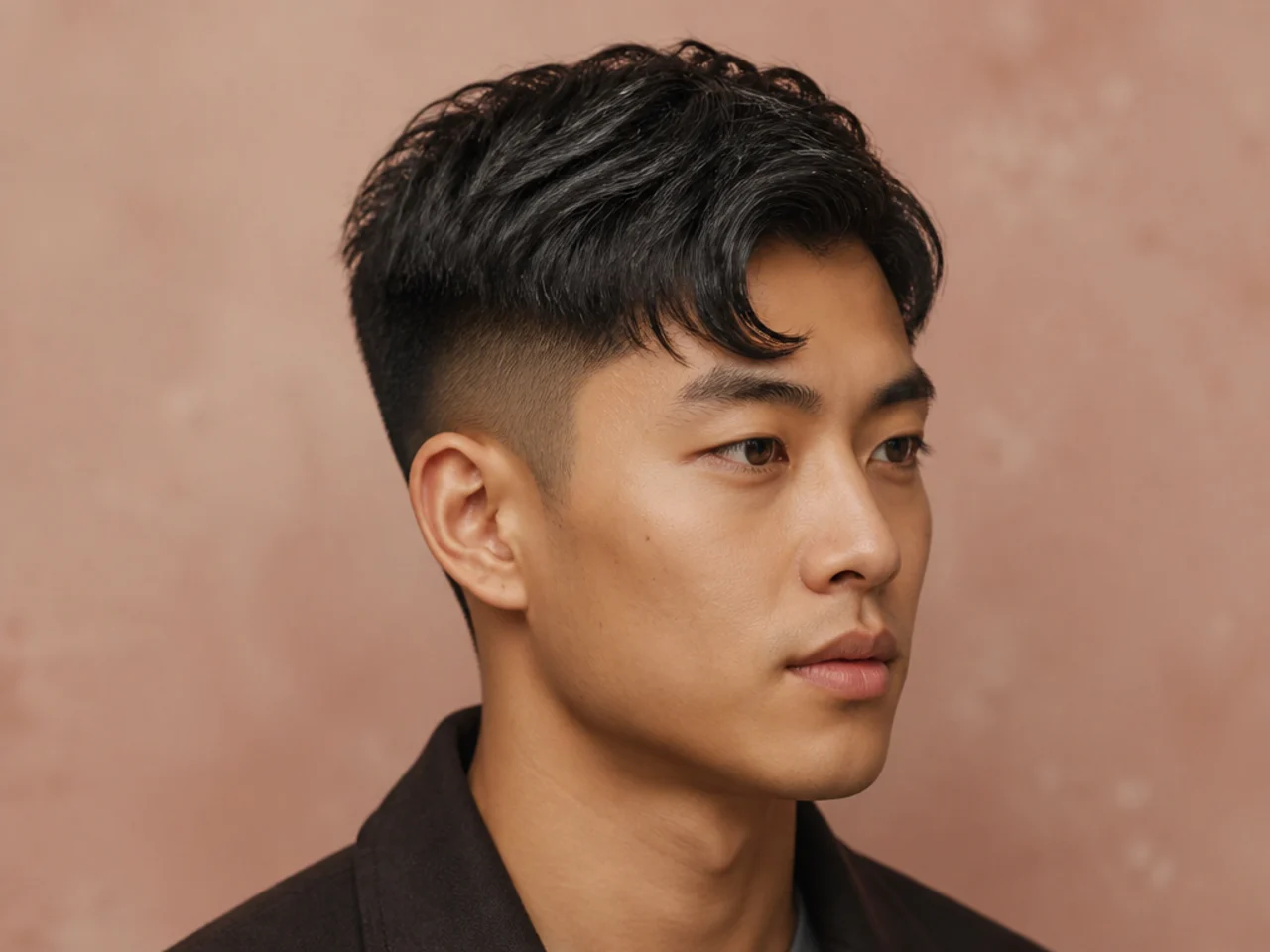
Trades the comma haircut's full 4-inch drama for a shorter 3-inch top with the signature curled front lock. Soft-tapered sides, no fade. Reads romantic in the way K-drama leads pull off, without the length upkeep.
Best on oval, oblong, and heart-shaped faces. Straight and lightly wavy hair.
Ask for: "Short comma cut, 3 inches on top, front cut long enough to hold a curl, soft taper at the sides — no fade to skin."
Styling tip: point a one-inch round brush at your temple, roll the front section inward, hit it with cool air. Set with a pea of curl cream.
9. Short Comb Over
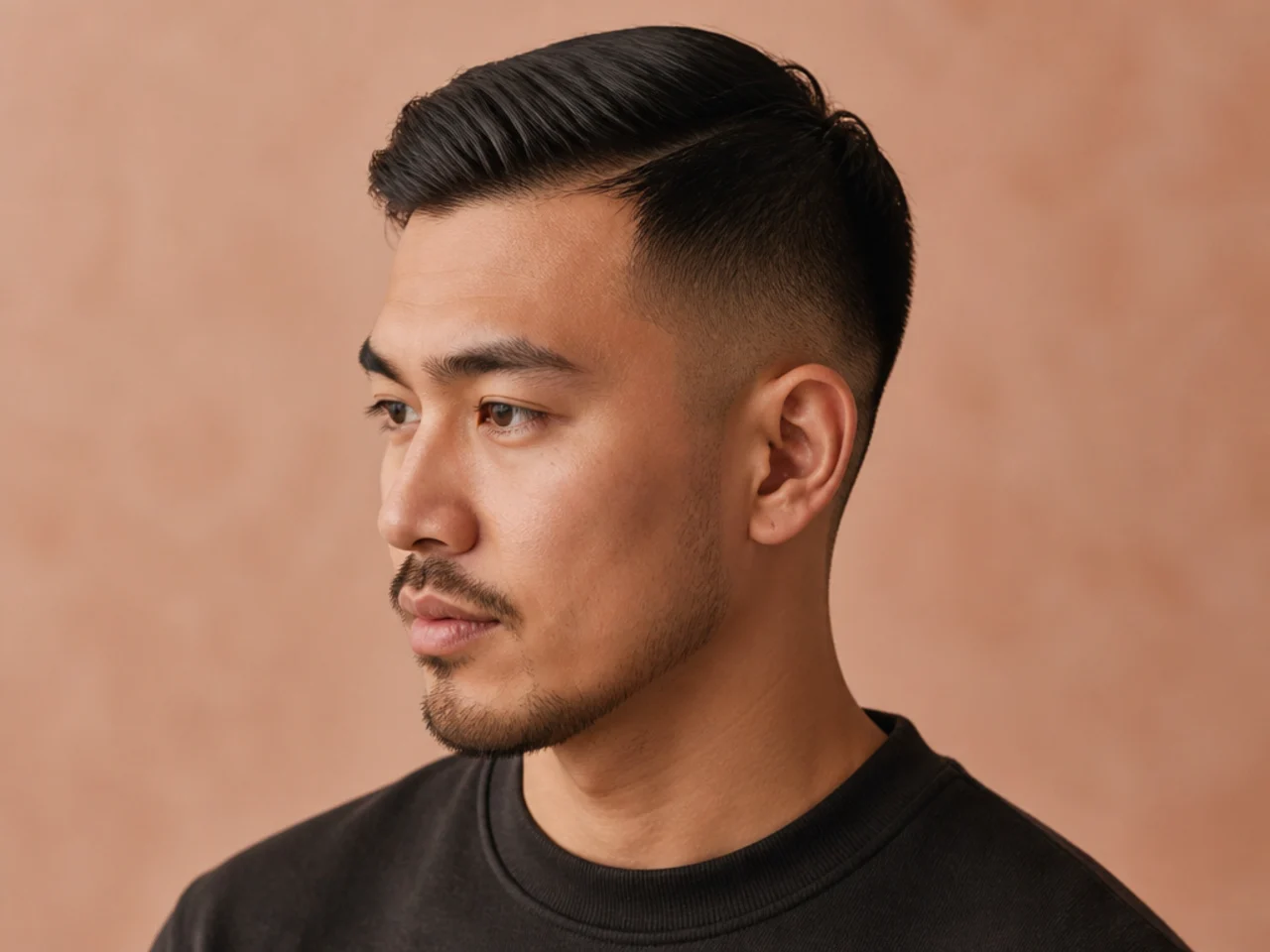
The comb over haircut at office-friendly length. 3 inches on top, a defined side part, hair swept cleanly across. Sides on a low fade or scissor taper depending on your workplace. Cleaner and less severe than a hard-part version.
Best on every face shape. Straight and lightly wavy hair only.
Ask for: "Short comb over, hard side part on my dominant side, 3 inches on top, low fade at the sides."
Styling tip: blow-dry across the part with a small paddle brush. Cream or medium pomade, comb once, leave it.
10. Short Side Part
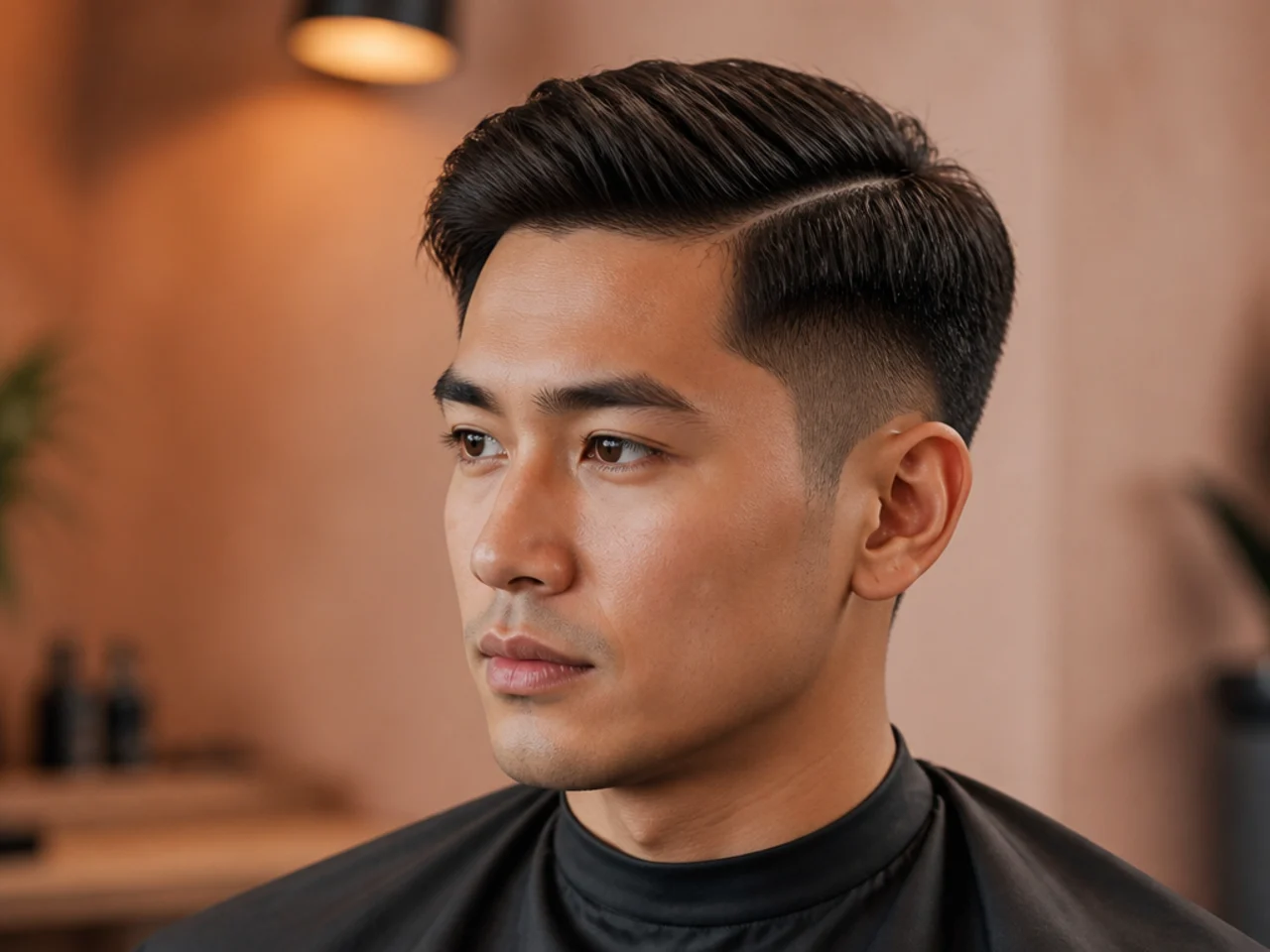
The side part hairstyles for men template at the short end of the range. 2 inches on top parted on the dominant side, scissor-tapered sides, no fade. The most conservative cut on this list and the most forgiving as it grows.
Best on every face shape. Straight, wavy, or lightly curly hair.
Ask for: "Short side part, natural part on my left, 2 inches on top, scissor-tapered sides above the ear."
Styling tip: light pomade combed to the part. If your part shifts, ask the barber to razor a hard line at the natural break.
11. Textured Messy Top
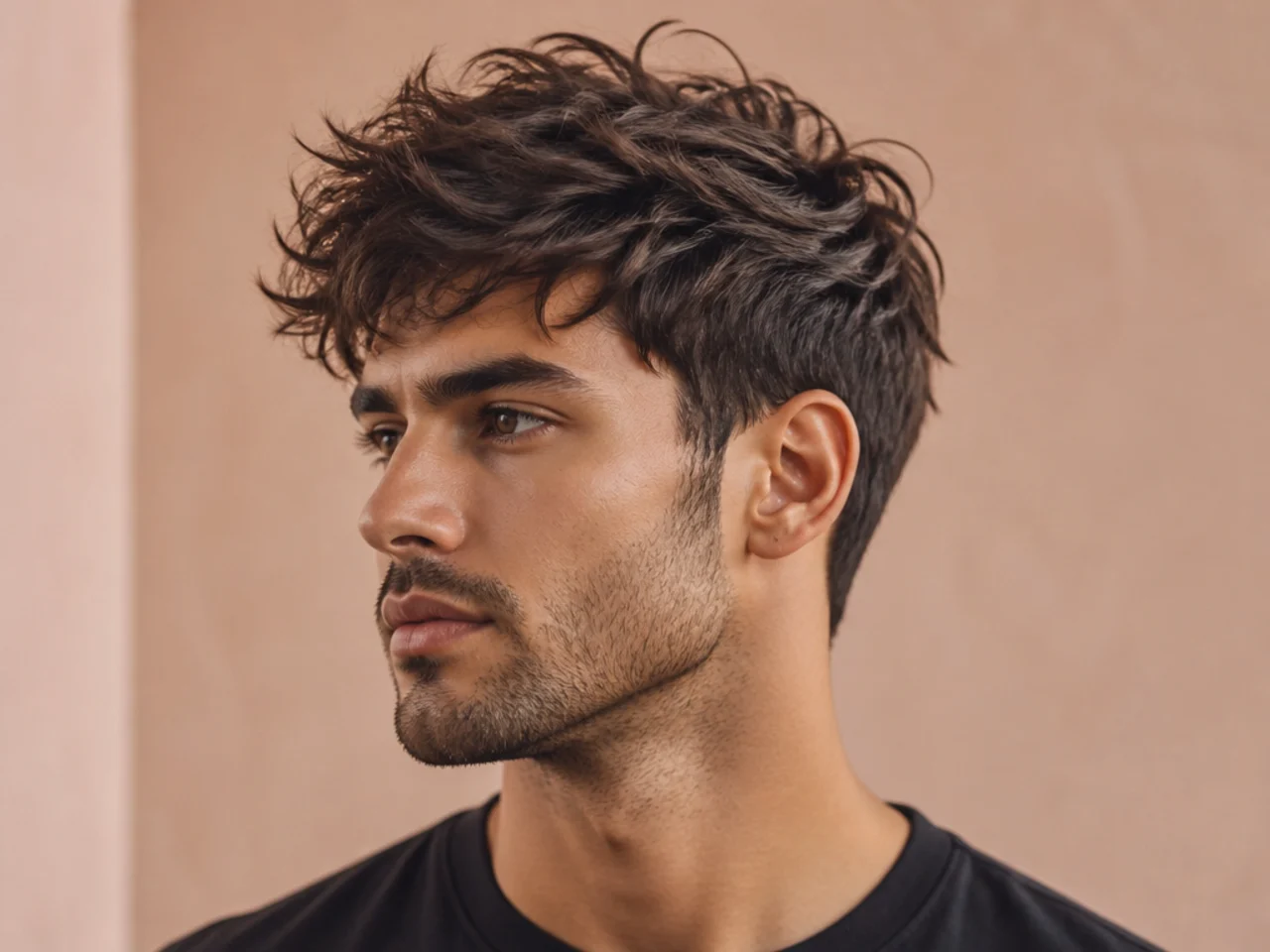
The anti-style style at short length. 3 inches on top with heavy internal layering, no defined part, no fade — just a low taper at the sides. The finish should read like you slept on it and it happened to work.
Best on every face shape. Wavy and thick straight hair — fine hair goes limp without the density.
Ask for: "Messy short cut, 3 inches on top with heavy internal thinning, point-cut ends, low taper at the sides."
Styling tip: sea-salt spray on damp hair, rough-dry with fingers, break the ends with a fingertip of matte paste. Skip the pomade — shine kills the finish.
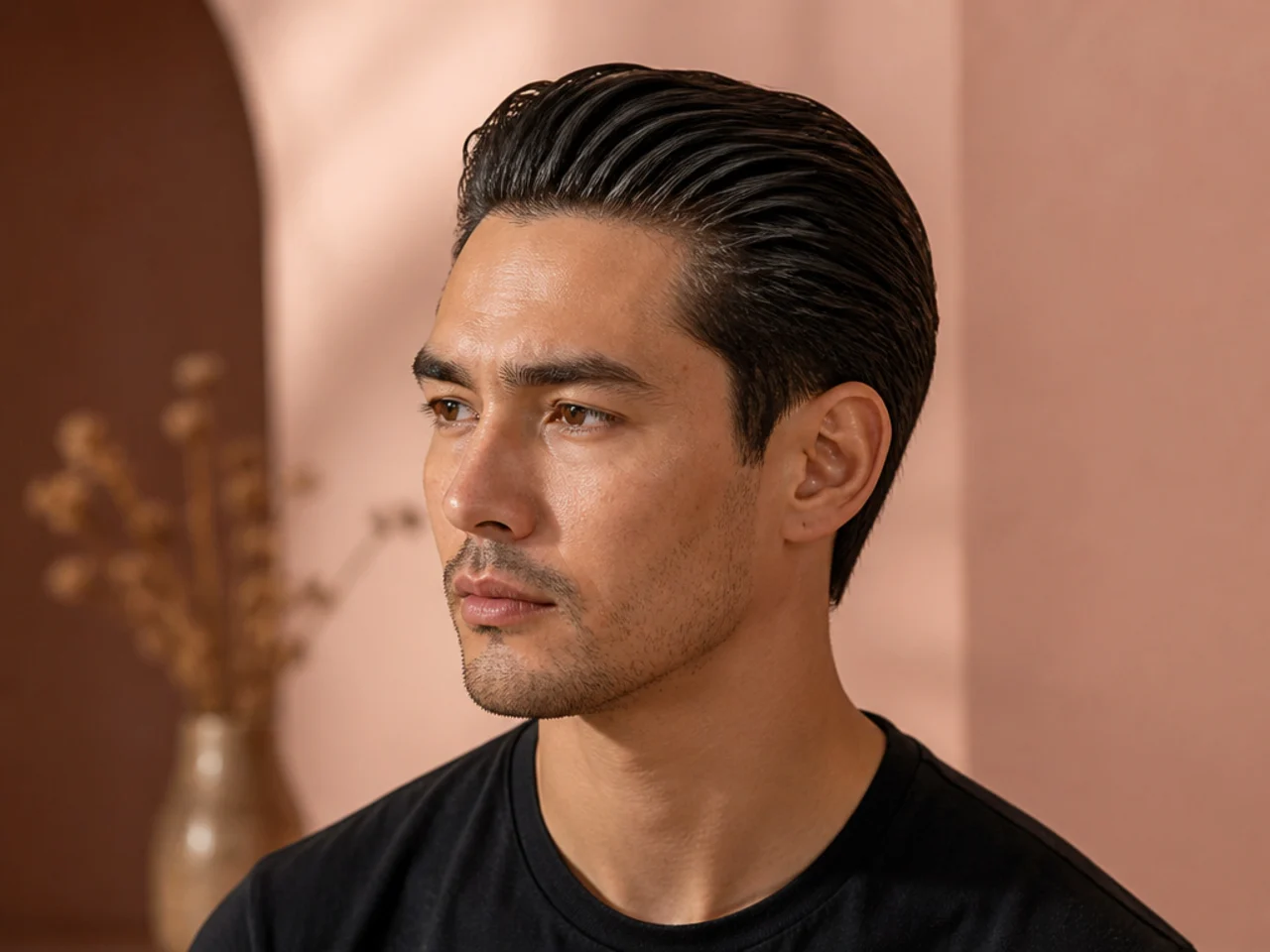
12. Short Slick Back
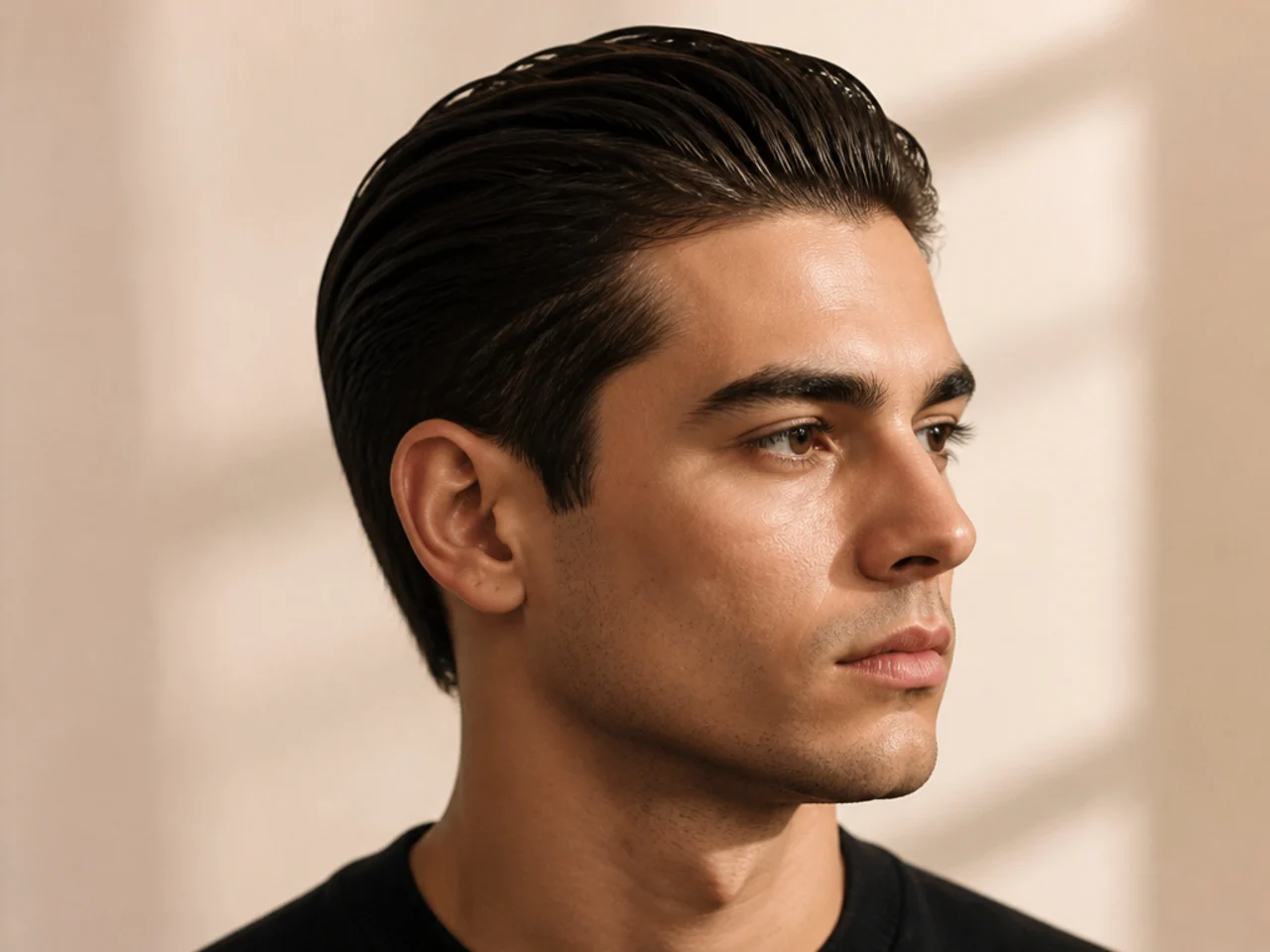
The slick back haircut at short-medium length. 3 inches on top swept straight back, sides on a low taper — no undercut disconnection. Reads polished without going full 5-inch cinema slick. The right pick for date nights, weddings, and Fridays that turn into Saturday nights.
Best on oval and rectangular faces. Straight and lightly wavy hair only.
Ask for: "Short slick back, 3 inches on top, low taper at the sides, natural part left visible."
Styling tip: pomade to towel-dried hair, comb straight back once, blow-dry cool from the front to lock the sweep.
13. Low Taper with Scissor-Cut Top
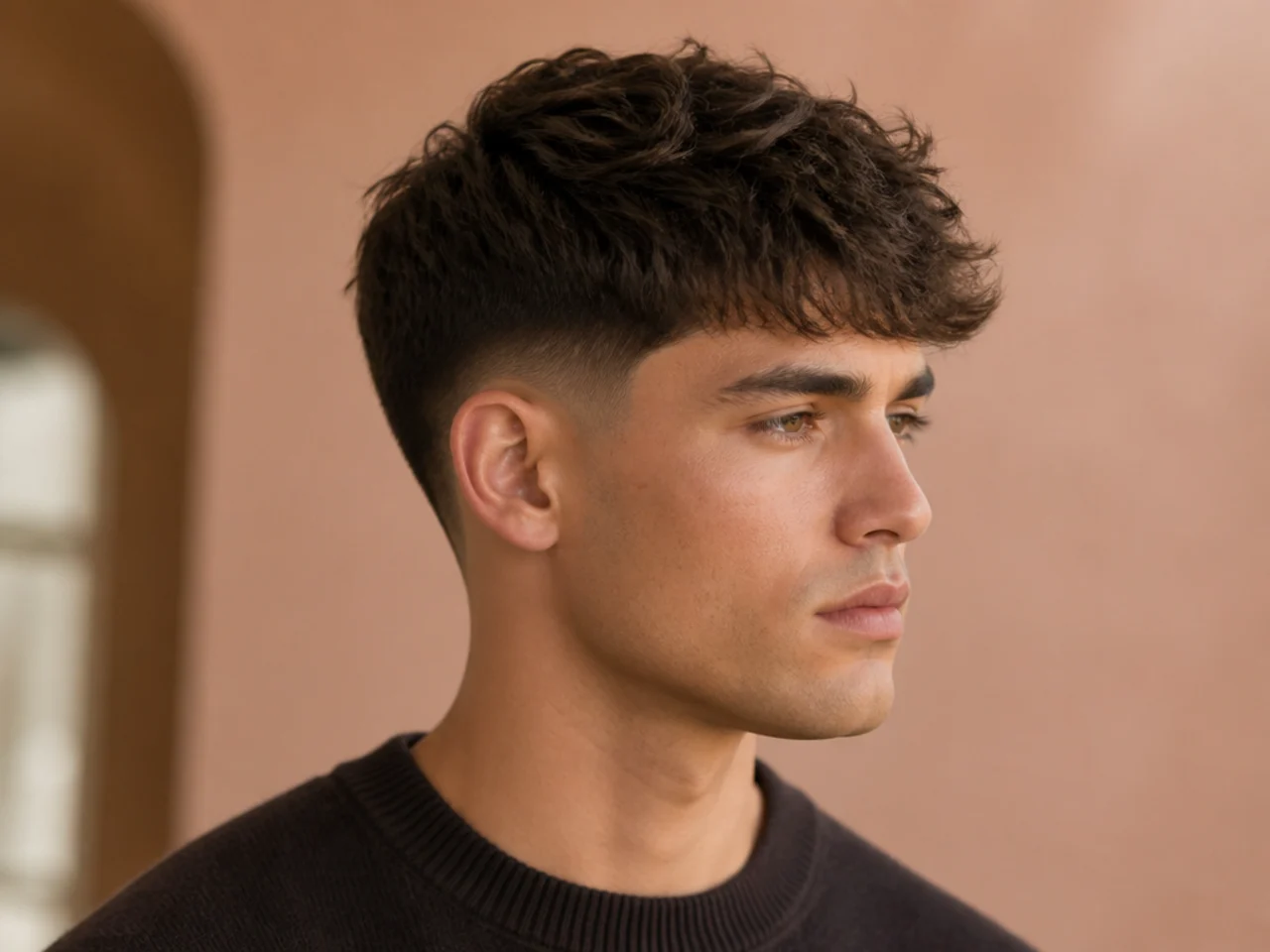
The low taper fade paired with a scissor-cut top rather than a clipper-cut one. 3 to 4 inches on top with layered ends, taper dropping to skin just above the sideburn. The scissor work lets the top move; the taper keeps the profile clean.
Best on every face shape. Straight, wavy, or lightly curly hair.
Ask for: "Low taper ending at the sideburn, 3 to 4 inches on top scissor-cut with soft layers."
Styling tip: matte clay warmed in the palms, worked through damp hair from mid-length to tips. Push the front up and slightly forward.
14. Grown-Out Buzz
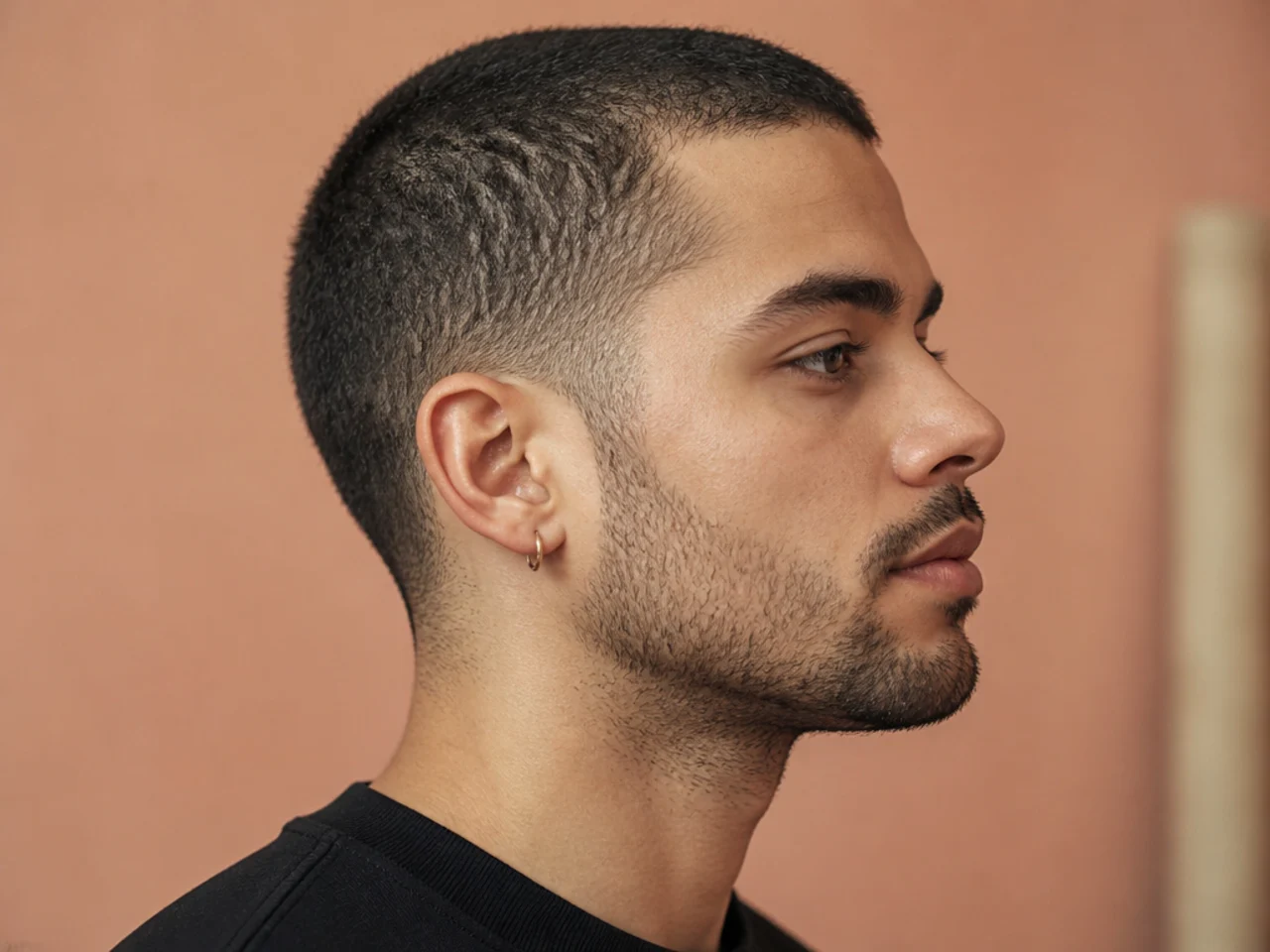
The buzz's grown-in stage, held instead of pushed longer. 1.5 to 2 inches all over, soft taper at the sideburn and nape. The shortest cut on the list still counting as "medium" — you can now see hair, not scalp, from six feet away.
Best on strong face shapes — square, angular, oval. Softer faces need a beard for definition.
Ask for: "Grown-out buzz, scissor-cut to 1.5 inches all over, soft taper at the sideburn and nape, natural neckline."
Styling tip: no product needed. Fingertip of light cream through damp hair for a soft sheen if you want it.
15. Butch Cut
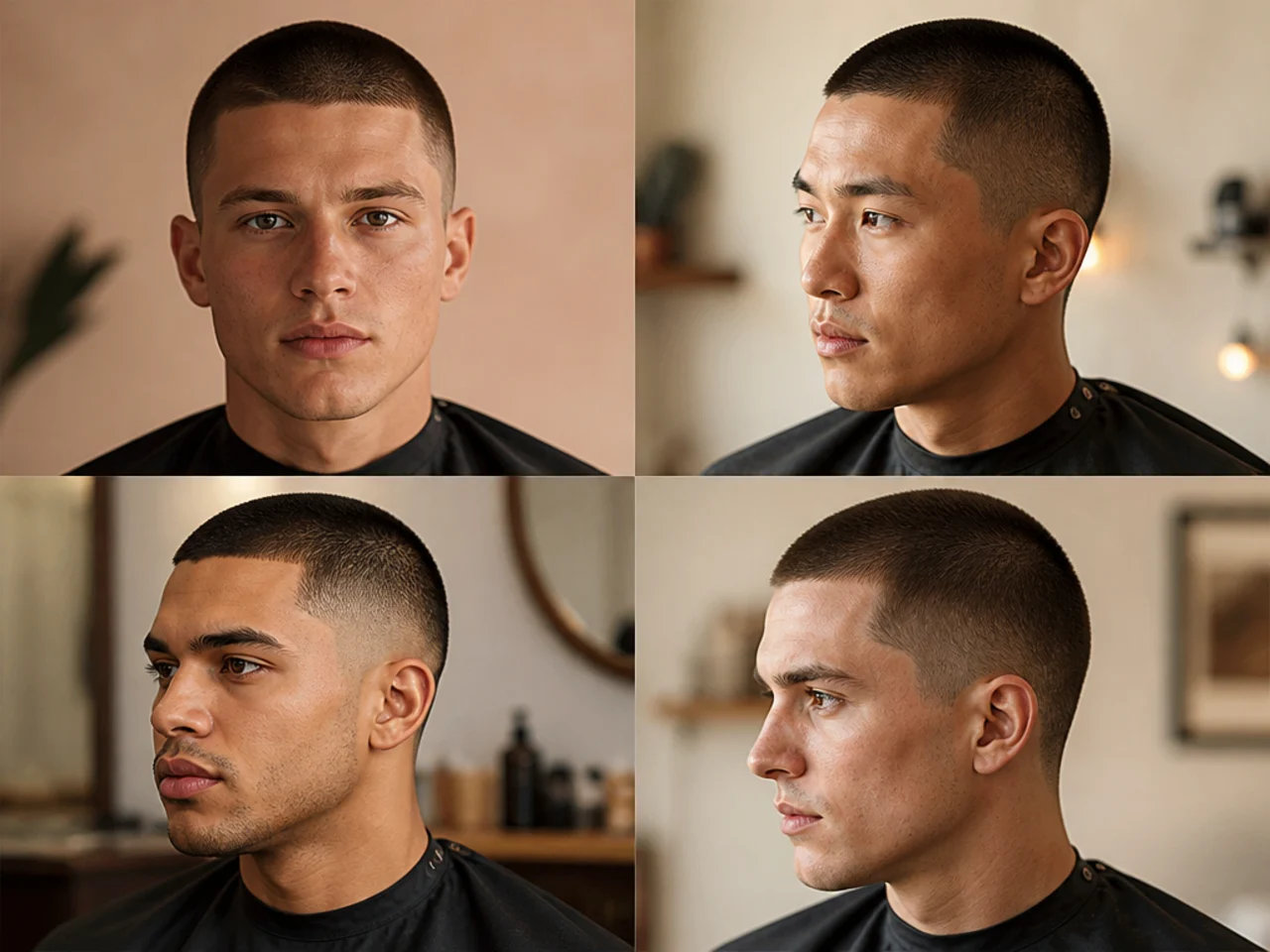
The butch is the buzz's older brother and the flat-top's calmer cousin. 2 inches on top cut flat, low fade blending into a #0 or skin at the sides. The flat top does the shape work — you just need to keep it dry.
Best on square, oval, and diamond faces. Any hair type — coarse hair reads especially clean.
Ask for: "Butch cut, 2 inches on top cut flat, low fade to skin at the sides."
Styling tip: towel dry, run your palm across the top, done. One drop of hair oil if you want a hint of shine.
16. Mid Fade with Crop Top
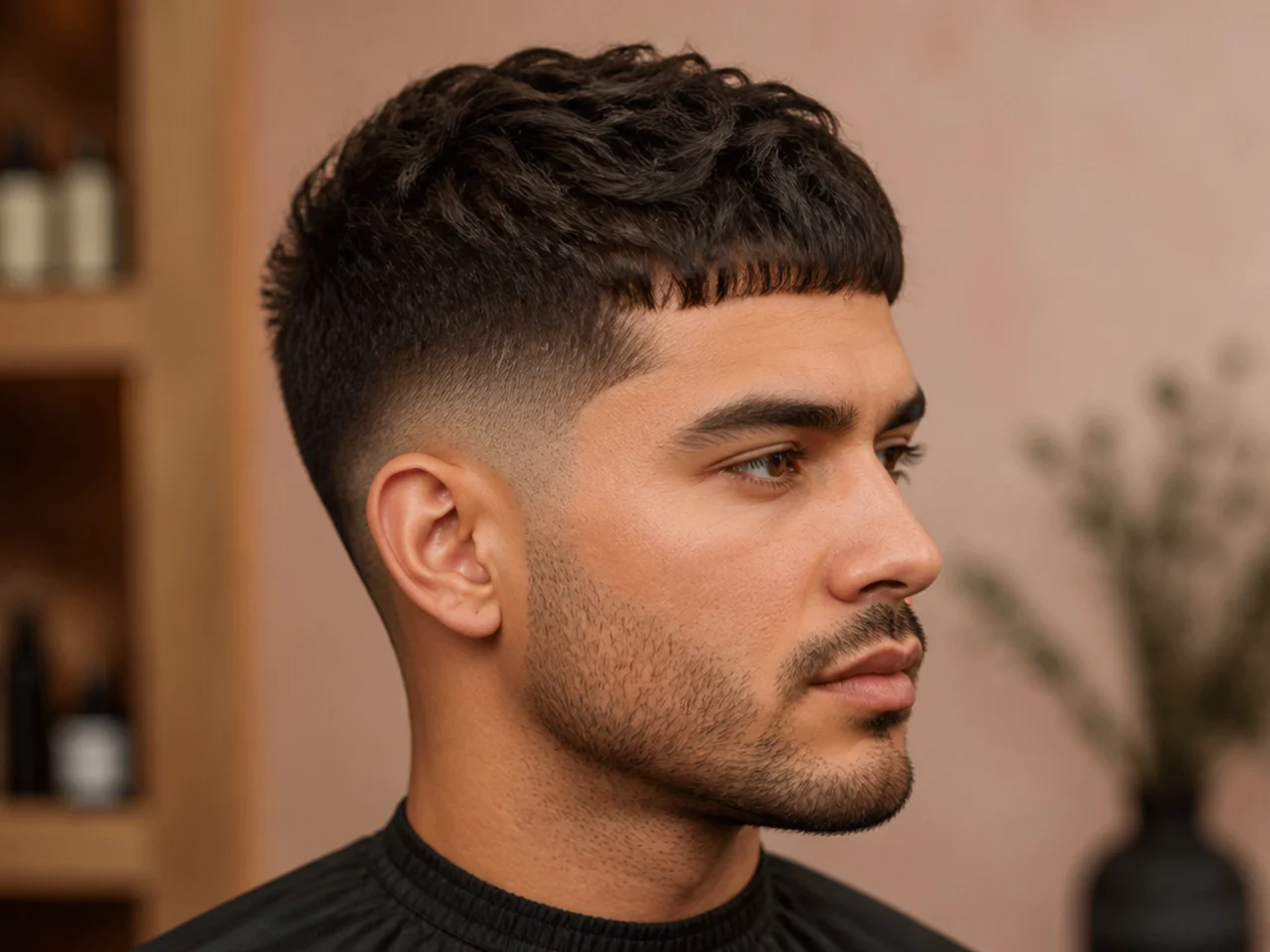
Pairs a temple-height mid fade haircut with a textured crop top. 2 to 3 inches on top with a forward fringe, mid fade dropping to skin at the temple. The most photograph-friendly short-to-medium cut and the one most barbers default-recommend for a first fade.
Best on every face shape. Straight, wavy, or curly hair.
Ask for: "Mid fade to skin at the temple, 2 to 3 inches on top with a textured forward fringe."
Styling tip: matte clay through damp hair, blow-dry forward with your fingers, mist of dry texture spray to set.
17. Skin Fade with Brush Up
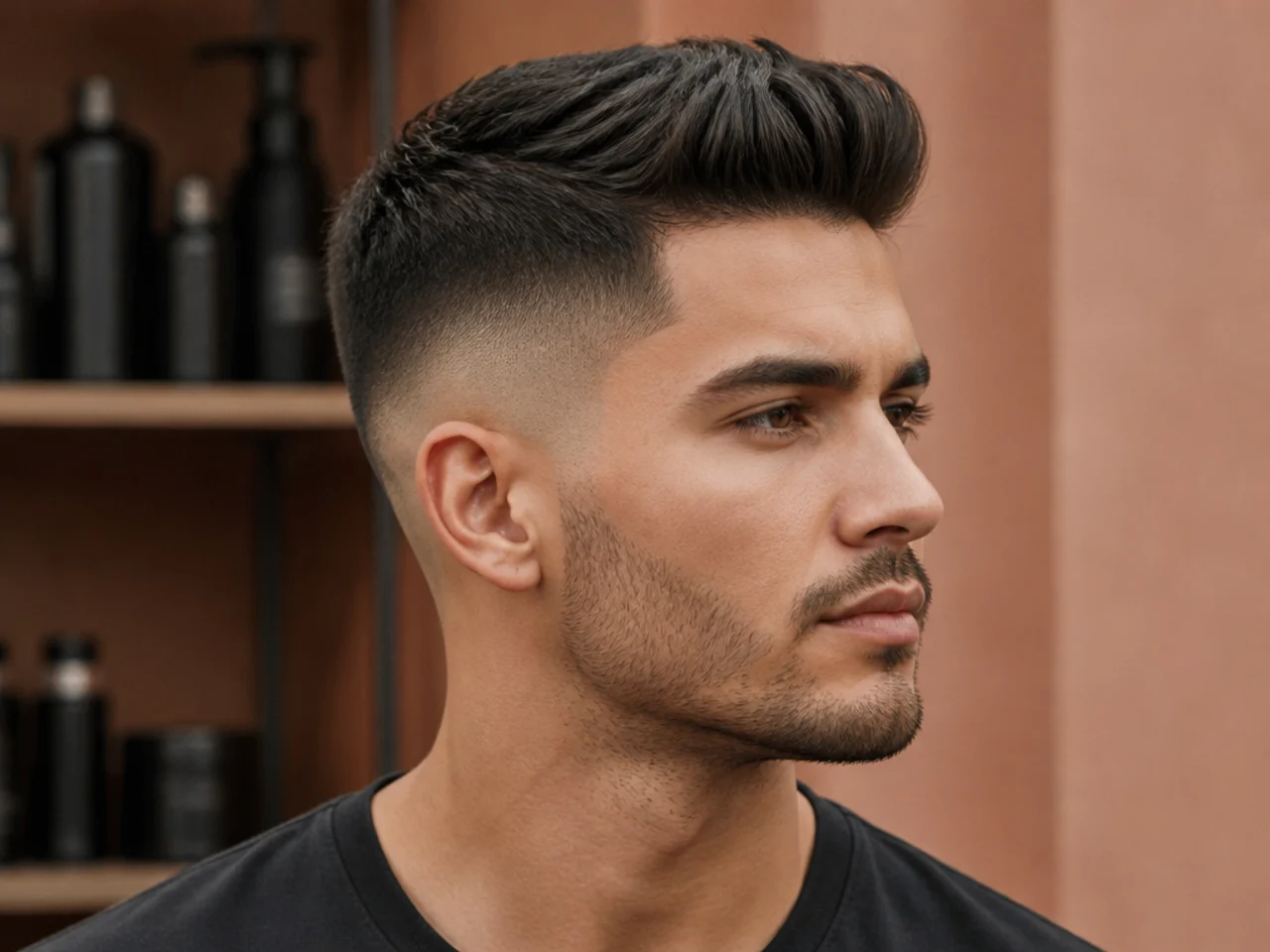
Sharper than the low-fade brush up — same top length, higher contrast. 3 to 4 inches on top pushed up and back, sides taken to skin at the temple. Reads bold without going full-on statement cut. Best when you want the top to be the whole show.
Best on oval and square faces. Straight and lightly wavy hair only — curls flatten under a skin fade at this length.
Ask for: "Skin fade at the temple, 3 to 4 inches on top pushed up and back, clean neckline."
Styling tip: strong-hold matte clay pressed into the base with the fingertips. Comb once to shape, then leave it.
18. Undercut with Textured Top
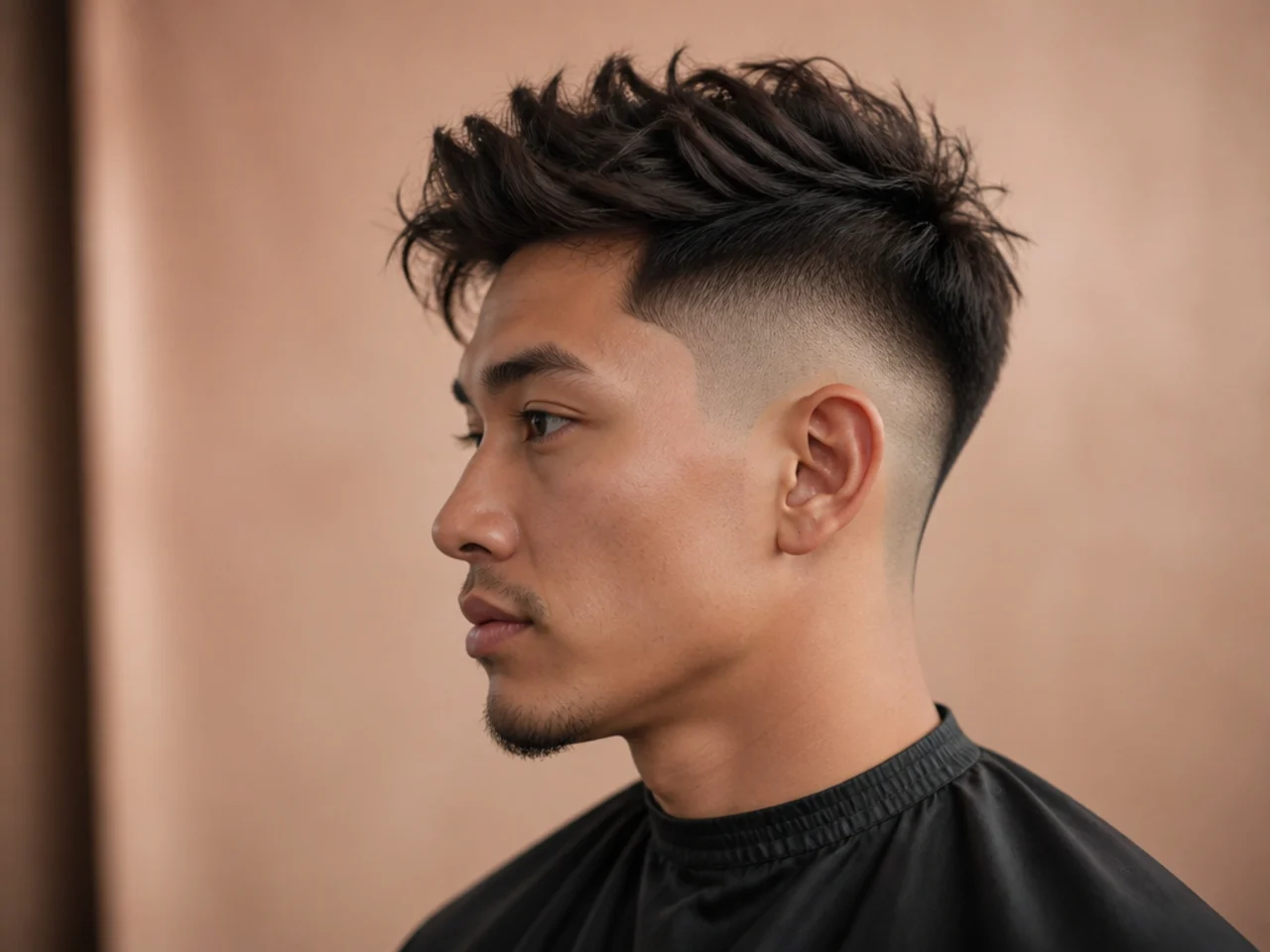
Trades a blended fade for a hard disconnect at the temple. 4 inches on top with layered ends, one-guard sides, no blend. Sits at the top of the short-to-medium range and the most statement-heavy cut on the list. Ages up cleanly if you swap the top for a slick back.
Best on oval, square, and rectangular faces. Straight and lightly wavy hair with strong density.
Ask for: "Undercut, 4 inches on top with point-cut layers, one guard on the sides all the way around, no blend at the temple."
Styling tip: sea-salt spray on damp hair, blow-dry back with fingers, matte paste worked through the top for grit. Skip pomade — the shine kills the disconnect.
19. Short Curtains
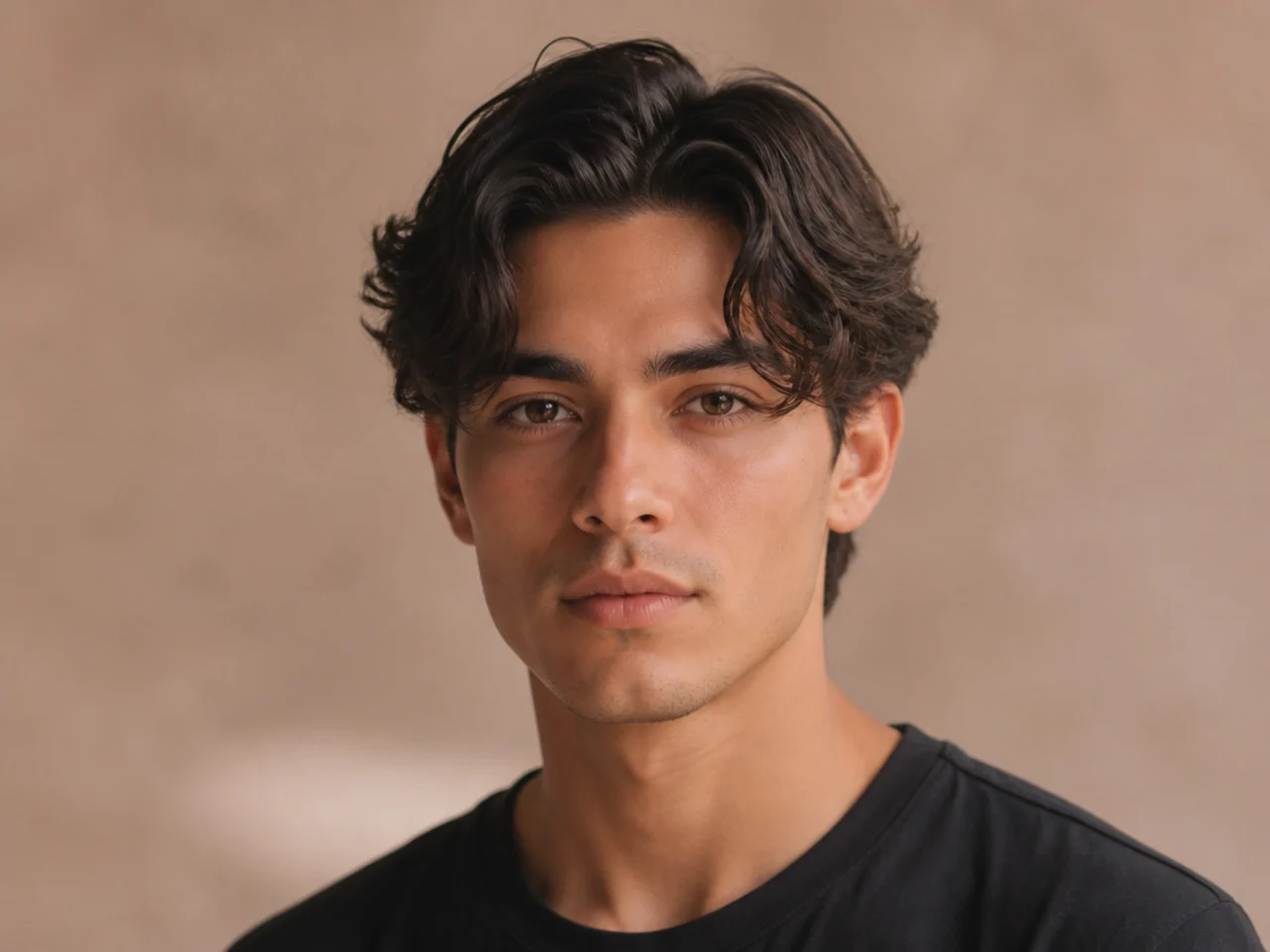
The 90s curtain at a modern short length. 3 to 4 inches on top parted down the middle, panels falling just past the brow, scissor-blended sides. Softer than a full-length curtain and easier to style — the shorter panels don't need product to sit.
Best on oval, diamond, and heart faces — the parted fringe balances narrow foreheads and softens angular jaws.
Ask for: "Short curtains, 3 to 4 inches on top with a middle part, panels stopping just past the brow, scissor-blended sides above the ear."
Styling tip: blow-dry the fringe outward from the center part with a small round brush. Fingertip of cream through the ends.
20. Modern Edgar
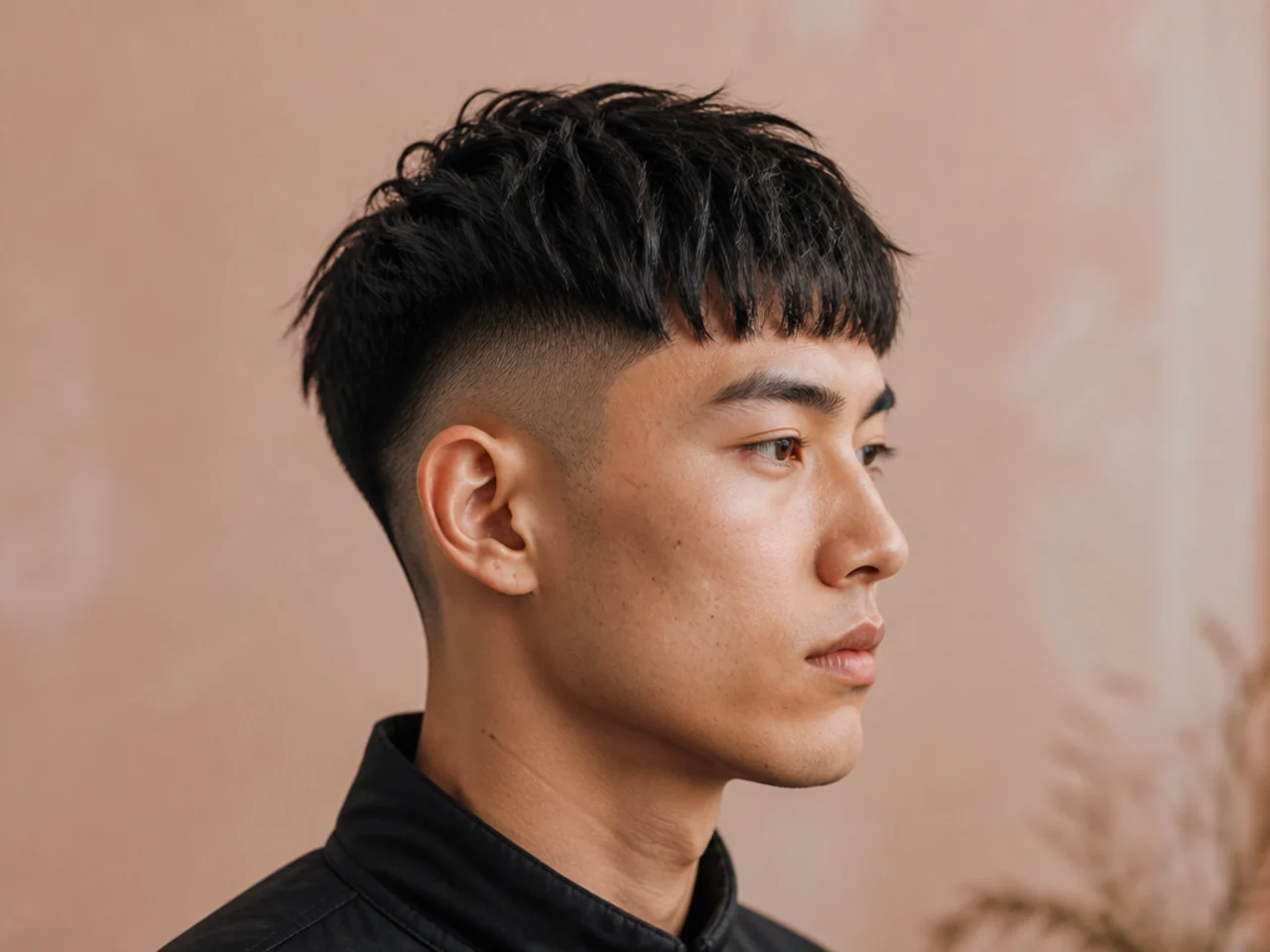
The Edgar haircut at the short-medium boundary. 2 inches on top, a sharp blunt fringe cut straight across the forehead, and a mid fade at the sides. Cleaner than a full-length Edgar, still carries the signature straight-line front.
Best on square, oval, and heart faces. Round faces should skip the blunt line — it widens the frame.
Ask for: "Modern Edgar, straight blunt fringe at the forehead, 2 inches on top, mid fade at the sides."
Styling tip: matte paste through damp hair with your fingers, no blow-dry — the whole point is the flat line at the brow. Mist hairspray underneath if the fringe lifts.
How to Ask Your Barber
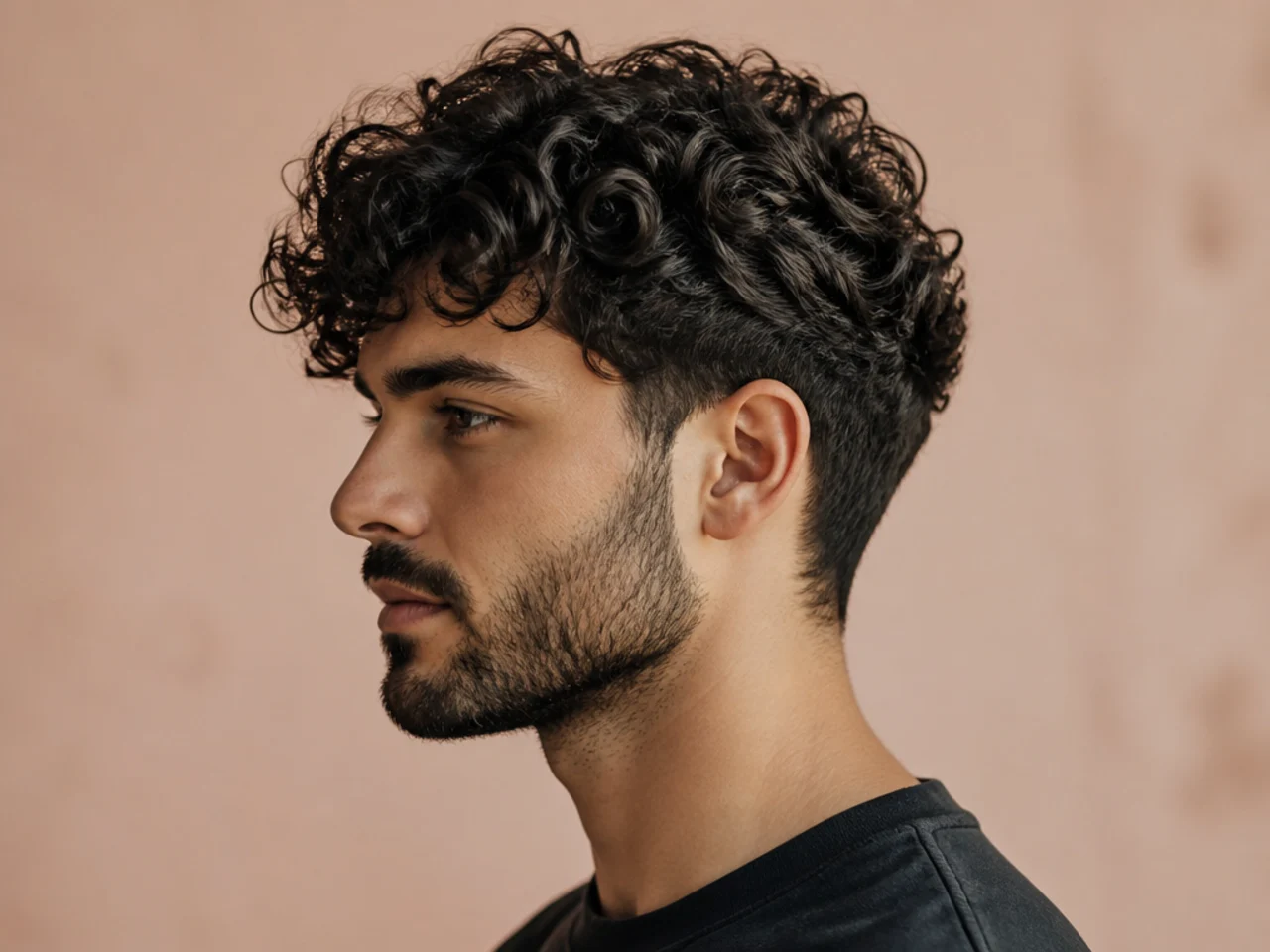
Short-to-medium is the hardest range to describe out loud — every "medium" means something different across barbers. The script below removes the guesswork:
- Bring two photos. A front three-quarter shot and a side profile. The side shot tells the barber how much length sits at the crown and where the fringe breaks.
- Specify inches, not adjectives. "Two inches on top" is unambiguous. "Medium" is not. Bring a ruler on your phone if the barber pushes back.
- Name the side finish. "Low fade," "mid fade," "low taper," or "scissor-blended above the ear." These are all different — pick one and say it out loud.
- State the fringe direction. Forward, back, side-swept, or middle-parted. A barber assumes forward on anything under 3 inches unless you correct them.
- Ask for point-cut ends. Blunt scissor work reads dated at short-to-medium length. Point-cut or texturized ends give the shape room to move.
- Point to the disconnect if you want one. For an undercut or two block, touch your temple where you want the line. A finger on the head beats a paragraph every time.
- Book the follow-up before you leave. Every 3 weeks for a fade you care about. Four to five weeks for anything else. Six weeks is the outside for a scissor-tapered cut.
Styling and Maintenance
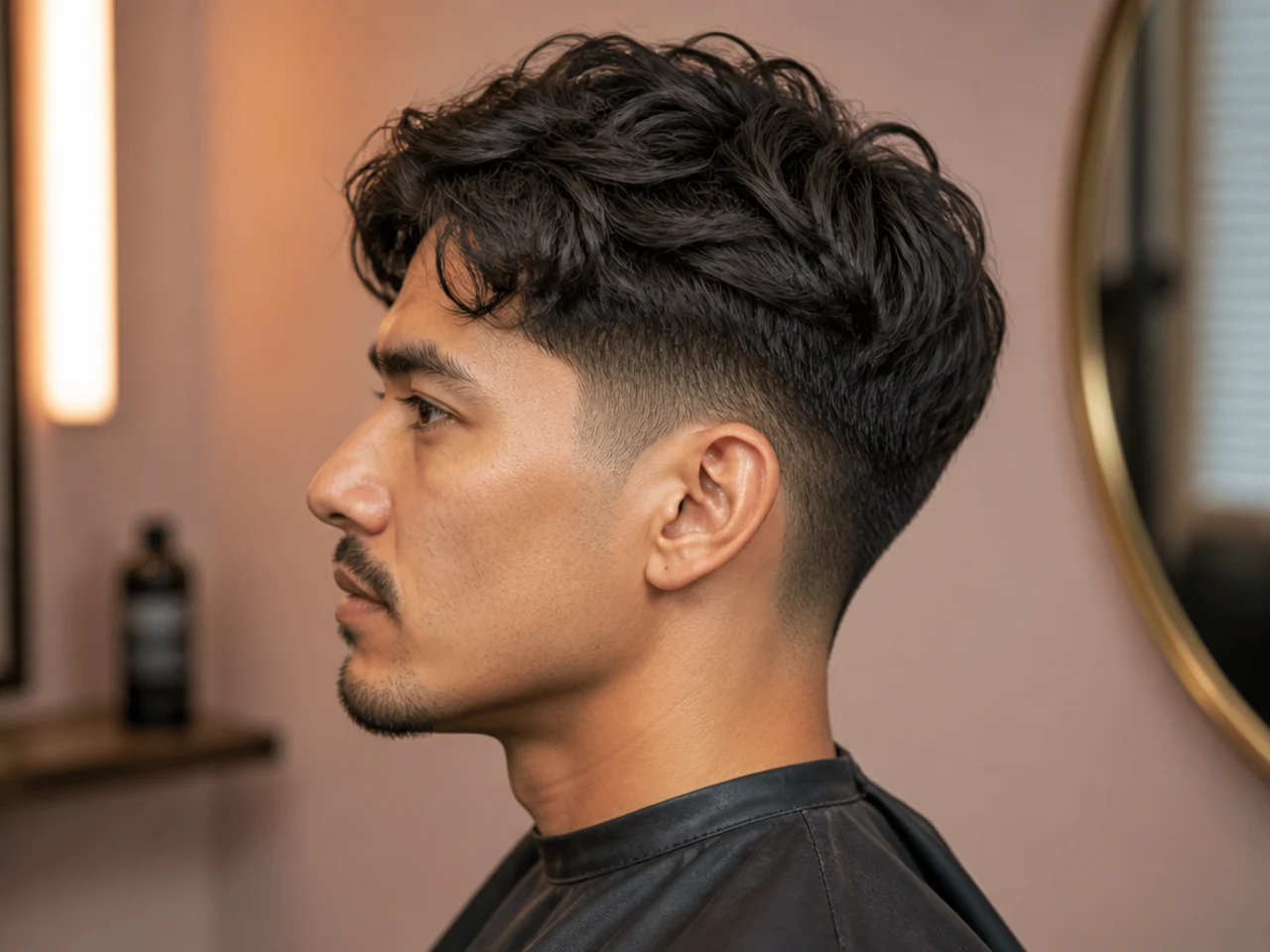
Short-to-medium hair rewards restraint. One product, small amount, applied to the right moisture level. Overload it and the shape collapses.
Match the product to the finish. Matte clay or paste for textured tops — crop, brush up, quiff, messy top. Cream or light pomade for combed and side-part styles. A shine pomade only if you're going slick back. Sea-salt spray is a foundation for wavy tops, not a finisher.
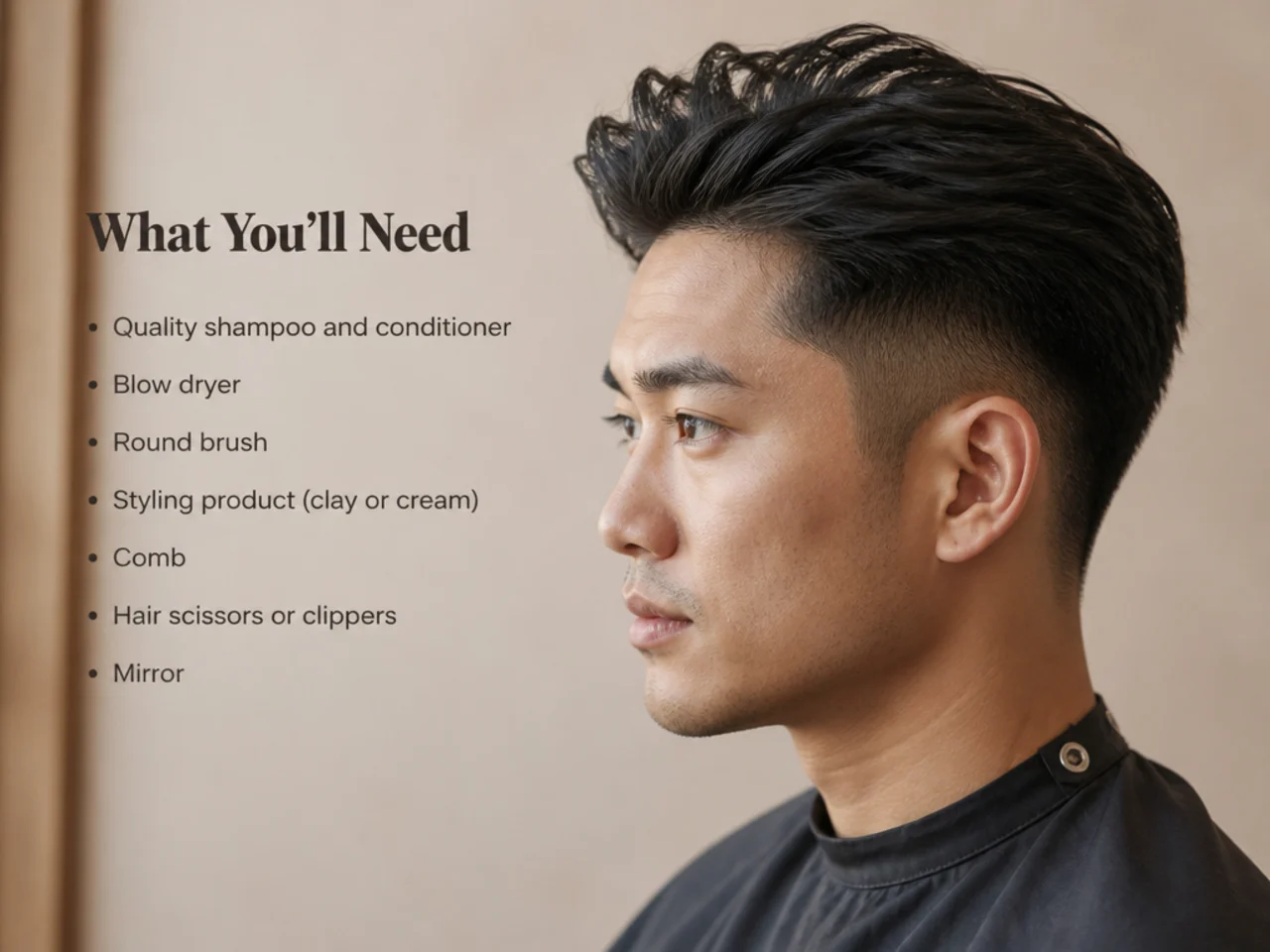
Apply product to damp hair. Every cut in this guide styles better damp than dry. Rough-dry with a towel until your hair reads damp but not dripping, then work product through with your fingers. Blow-dry the direction you want it to sit — forward, up, or back.
Blow-dry the front, air-dry the rest. A round brush pulling the front piece up and slightly back is the single technique that separates a short-to-medium cut that looks styled from one that looks flat. The rest can drip-dry.
Skip the layering. One product is enough at this length. Adding sea-salt spray on top of clay on top of cream leaves your hair feeling brittle by 2 p.m.
Book the maintenance cadence. Faded sides go soft at week three. Scissor-tapered sides stretch to week six. Do not wait past the point the shape softens — the next cut just gets harder for the barber.
Wash for the length. Sulfate-free shampoo twice a week for oily scalps, once for dry. A leave-in conditioner on anything past 3 inches to keep the ends from splitting. A drop of hair oil on the ends for medium-range cuts turns "short" into "styled."
Silk pillowcase, always. Especially for combed and quiffed shapes — the round-brush work you did in the morning survives the night if the friction stays low.
FAQ
What counts as a short to medium haircut for men?
Anything running roughly 1.5 to 4 inches on top with short-to-tapered sides. Long enough to shape with your fingers, short enough to skip the round brush. The category sits between a buzz and a full medium and covers cuts like the textured crop, French crop, short quiff, Ivy League, and grown-out buzz.
Which short to medium haircut is easiest to style?
The French crop, textured crop, and grown-out buzz all style in under a minute with one product. Rake matte paste through damp hair, push the fringe where you want it, walk out. Anything longer than 3 inches on top will want a hairdryer if you want visible shape rather than just length.
How do I ask my barber for a short to medium cut?
Specify the top length in inches (2, 3, or 4), how you want the sides finished (taper, low fade, mid fade, or scissor-blended), and the finish on top (matte and textured, or sleek and combed). Bring a front and side photo — one photo lets a barber guess.
How often should I re-cut a short to medium haircut?
Every 4 to 5 weeks for most cuts in this range. Faded sides soften earlier — around week 3 — so book on the shorter cycle if the fade matters to you. Scissor-blended sides stretch to 6 weeks without looking overgrown.
Do these cuts work while growing out from a buzz?
Yes — most of the range is engineered for exactly that. Start with the grown-out buzz or butch, move through the French crop and textured crop as the top passes 2 inches, then land on a quiff, brush up, or Ivy League as you push past 3 inches. The modern mullet haircut men is the next step past 4 inches if you're heading longer.
Which short to medium haircut suits round faces best?
Anything that adds vertical lift. Short quiff, brush up, textured crop with a forward fringe, and modern Edgar all stretch a round face upward. Skip cuts with a straight-down blunt fringe or heavy side volume — both make the face read wider than it needs to.