
20 Effortless Shaggy Wolfcut Looks We Love
Twenty shaggy wolfcut variations — the softer end of the family, where layers are connected rather than disconnected. Easier to wear, easier to grow out, and the version to ask for if the standard wolf cut looks too severe.
In this article · 27
- Shaggy Versus Standard
- How to Choose Your Shaggy Wolf Cut
- The 20 Shaggy Wolfcut Looks
- 1. Classic Shaggy Wolf Cut
- 2. Shaggy Wolf Cut with Curtain Bangs
- 3. Long Shaggy Wolf Cut
- 4. Short Shaggy Wolf Cut
- 5. Shaggy Wolf Cut for Fine Hair
- 6. Wavy Shaggy Wolf Cut
- 7. Curly Shaggy Wolf Cut
- 8. Shaggy Wolf Cut with a Middle Part
- 9. Shaggy Wolf Cut with a Deep Side Part
- 10. 70s Shag Wolf Cut
- 11. Shaggy Wolf Cut with Wispy Ends
- 12. Shaggy Wolf Cut for Thick Hair
- 13. Shaggy Wolf Cut with Highlights
- 14. Shaggy Wolf Cut on Coily Hair
- 15. Shaggy Wolf Cut for Men
- 16. Shaggy Wolf Cut, Air-Dried
- 17. Shaggy Wolf Cut with a Wispy Fringe
- 18. Shaggy Wolf Cut Grown Out Four Months
- 19. Shaggy Wolf Cut, Minimal Layering
- 20. Shaggy Wolf Cut with Overnight Waves
- How to Style and Maintain
- Mistakes to Avoid
- FAQ
- Final Thoughts
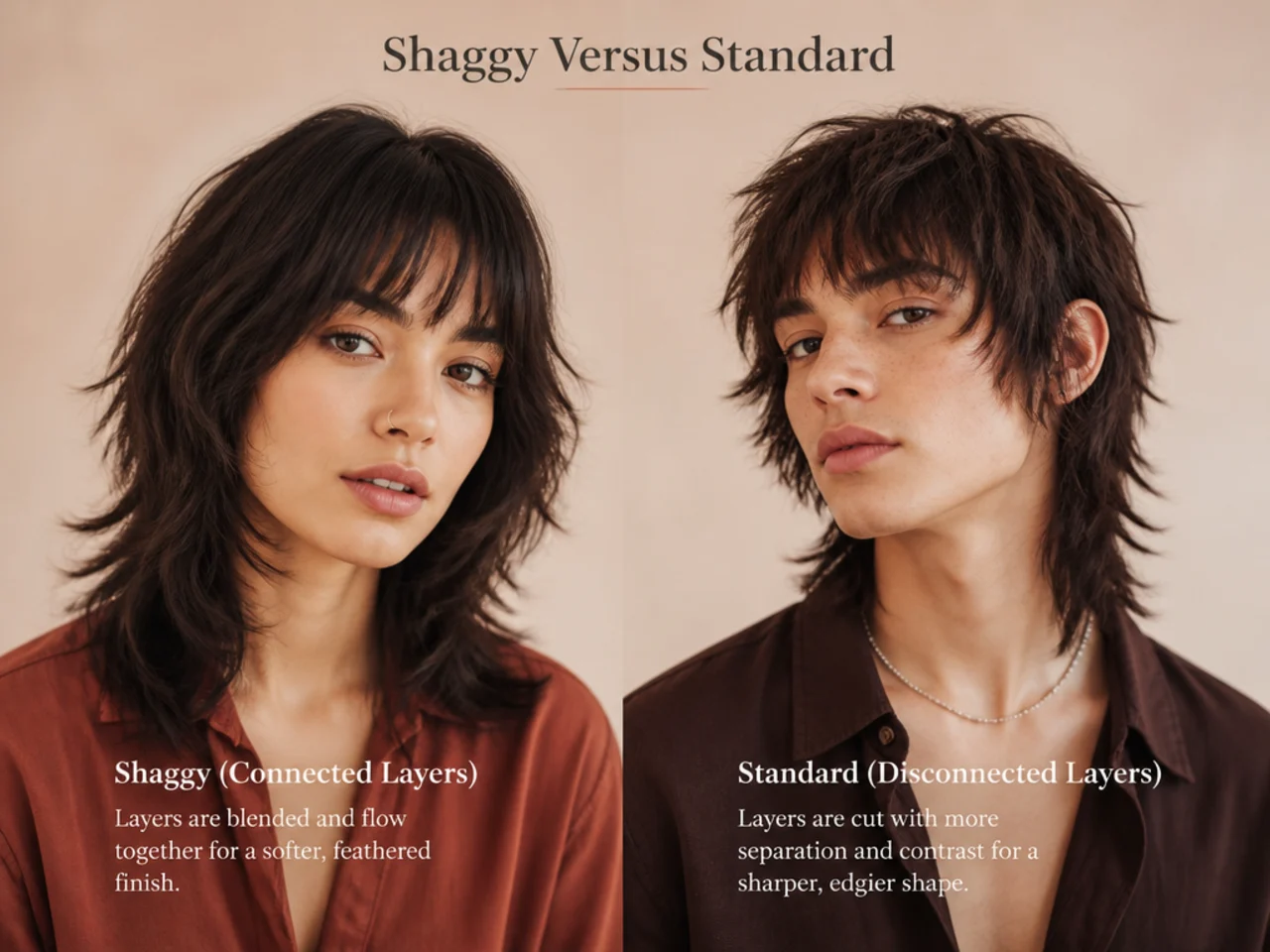
A shaggy wolf cut is the same shape with the edges taken off. The layers connect rather than step, which makes it softer to wear, kinder to fine hair, and much easier to grow out.
Shaggy Versus Standard
The difference is how sharply the layers disconnect. A standard wolf cut creates a visible step between the crown and the lengths. A shaggy one blends that step into a gradient.
Everything else — face-framing pieces at the cheekbone, volume at the crown, length at the back — is the same.
How to Choose Your Shaggy Wolf Cut
Ask for connected layers. The word that gets it: "blend the layers rather than disconnecting them."
Choose it for fine hair. Disconnection on fine hair leaves visible gaps.
Choose it if you trim rarely. Connected layers stay wearable far longer.
Choose it if the standard version felt severe. Same shape, softer delivery.

The 20 Shaggy Wolfcut Looks
1. Classic Shaggy Wolf Cut
Connected layers, cheekbone face framing, shoulder length.
2. Shaggy Wolf Cut with Curtain Bangs
The softest possible framing on the softest version of the cut.

3. Long Shaggy Wolf Cut
Past the shoulder blades. Layers blended high so they still register.

4. Short Shaggy Wolf Cut
Jaw to collarbone. Softer than a sharp short wolf cut.

5. Shaggy Wolf Cut for Fine Hair
The best option in the whole family for fine hair.

6. Wavy Shaggy Wolf Cut
Wave plus soft layers. Nothing needs doing to it.

7. Curly Shaggy Wolf Cut
Softer layering suits curl that is already voluminous.

8. Shaggy Wolf Cut with a Middle Part
Symmetric and soft. The most classic combination here.

9. Shaggy Wolf Cut with a Deep Side Part
Adds interest to a deliberately soft shape.

10. 70s Shag Wolf Cut
The retro end — heavier fringe, rounder silhouette.

11. Shaggy Wolf Cut with Wispy Ends
Fine point-cut perimeter for extra softness.

12. Shaggy Wolf Cut for Thick Hair
Soft layering that still removes real weight.

13. Shaggy Wolf Cut with Highlights
Colour through the mid-lengths to show the gradient.

14. Shaggy Wolf Cut on Coily Hair
Rounded, soft, and forgiving as it grows.

15. Shaggy Wolf Cut for Men
Soft crown layers, tidy sides, a little nape length.

16. Shaggy Wolf Cut, Air-Dried
The intended finish. No heat at all.

17. Shaggy Wolf Cut with a Wispy Fringe
Light fringe against connected layers.

18. Shaggy Wolf Cut Grown Out Four Months
Barely changed. This is the whole argument for connected layers.

19. Shaggy Wolf Cut, Minimal Layering
The softest version in the entire family.

20. Shaggy Wolf Cut with Overnight Waves
Plaited damp, released dry. No heat required.

How to Style and Maintain
Salt spray on damp hair, scrunch, air-dry. Connected layers need less product than disconnected ones because there is no step to disguise.
Trim every ten to twelve weeks rather than every eight. That extra month is the main practical benefit of choosing shaggy.

Mistakes to Avoid
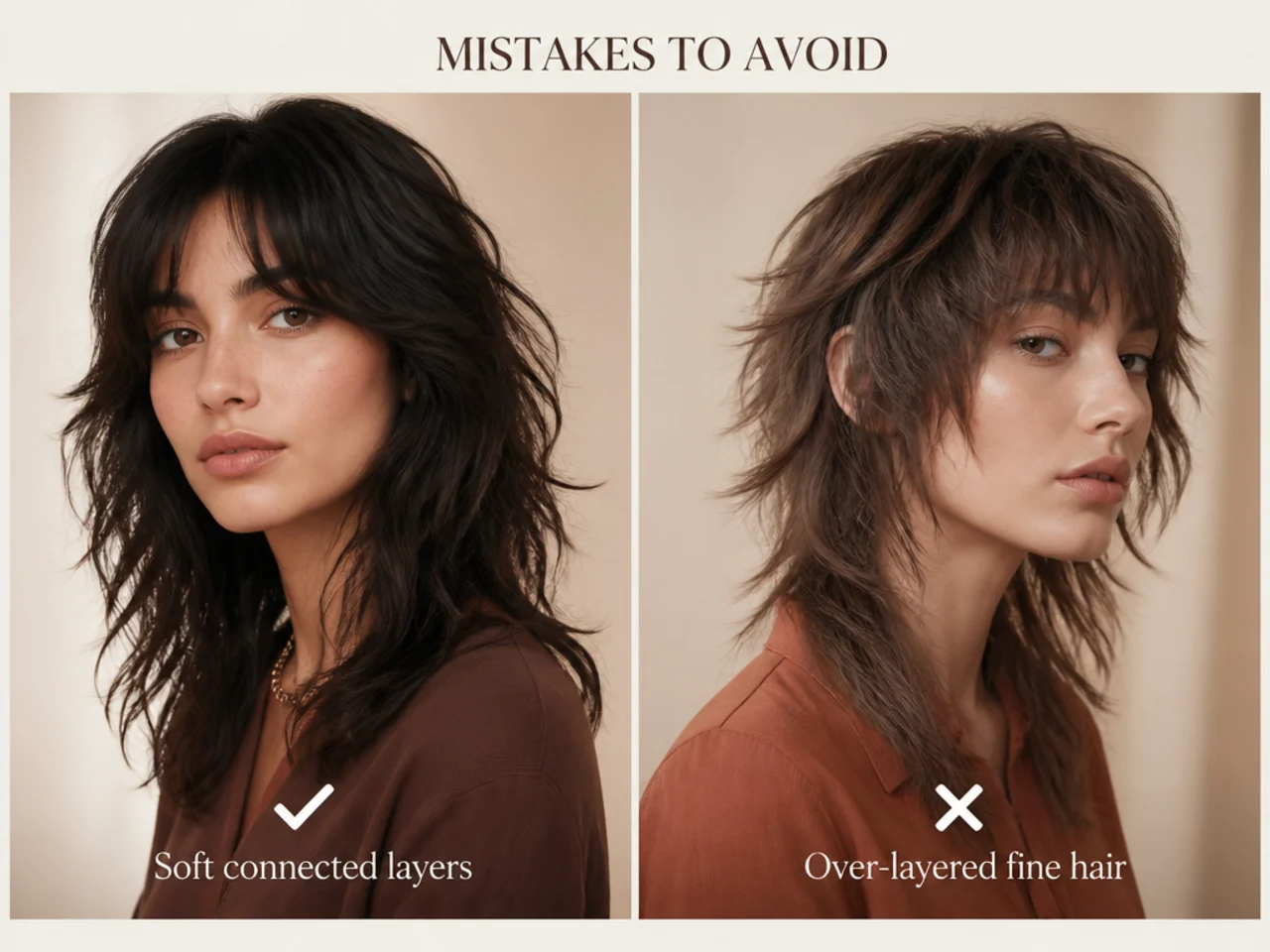
Asking for a wolf cut and expecting shaggy. Say "connected layers" explicitly.
Expecting the same drama. It is deliberately softer. That is the trade.
Straightening it flat. Soft layers disappear entirely when smoothed.
Over-layering fine hair even in a shaggy version. Softer still means fewer.
FAQ
Shag versus wolf cut? Degree of disconnection. A shaggy wolf cut sits between them.
Easier to grow out? Considerably — connected layers soften rather than leaving a shelf.
Who should choose it? Fine hair, anyone who found a wolf cut severe, and anyone trimming rarely.

Final Thoughts
Say "connected layers, not disconnected" and you get the softer version. It is the one to choose if your hair is fine or your appointments are infrequent.
For the sharper version see 25 stunning wolfcut ideas, and for the comparison see wolfcut vs mullet. More in Mullet & Wolf Cuts.