20 Mullet vs Wolf Cut Differences Nobody Explains
A mullet is built on a disconnection and a wolf cut is built on a blend. Every other difference between them — trim interval, grow out, which hair types suit which — follows from that one structural choice.
In this article · 27
- What Actually Separates Them
- How to Pick Between Them
- The 20 Differences
- 1. The Disconnect Versus the Blend
- 2. Where the Weight Sits
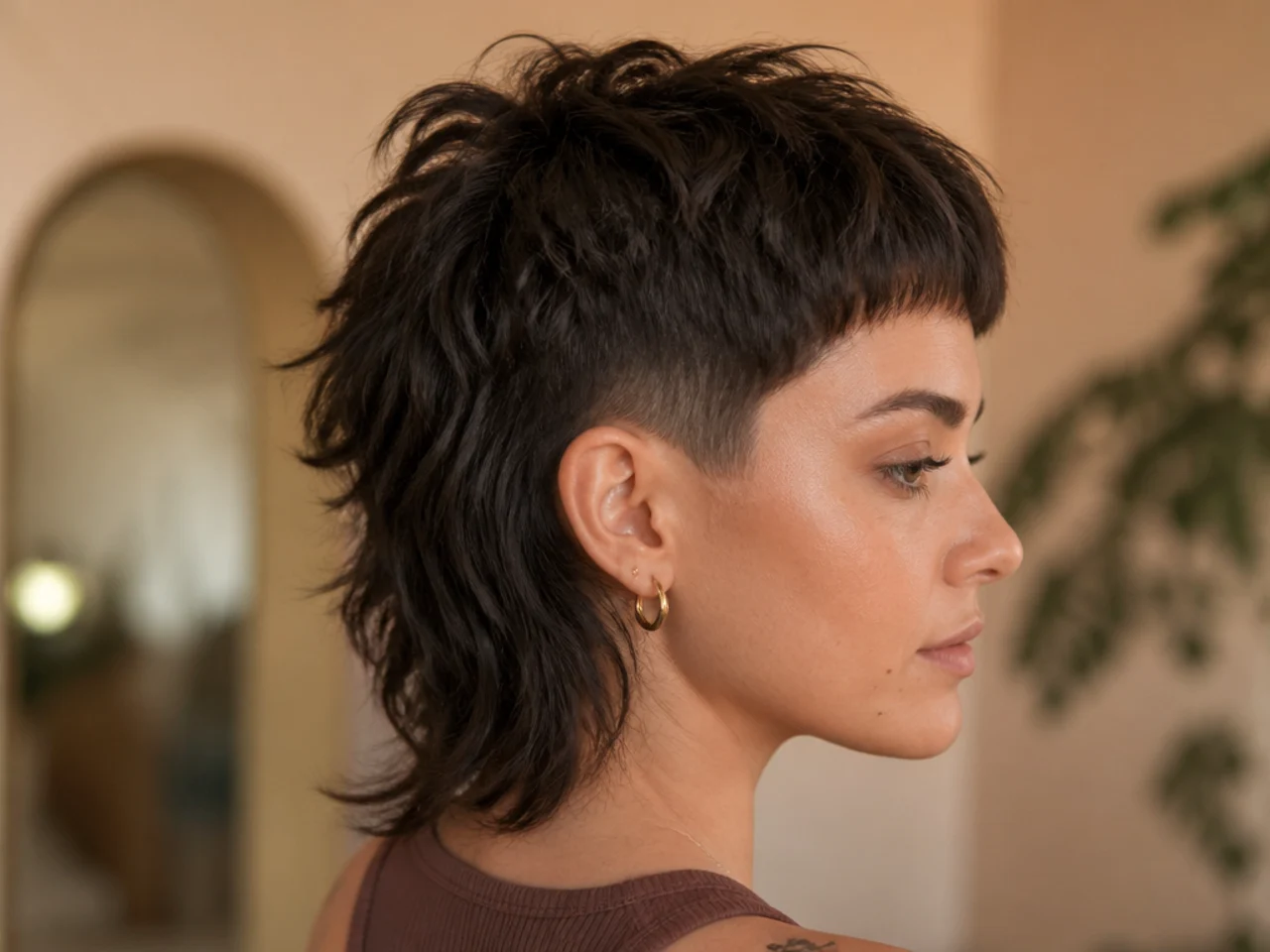
- 3. The Silhouette From the Side
- 4. The Sides
- 5. The Crown
- 6. The Fringe
- 7. Layer Count
- 8. Scissors Versus Clippers
- 9. Time in the Chair
- 10. Trim Interval
- 11. Grow Out Behaviour
- 12. Fine Hair
- 13. Thick Hair
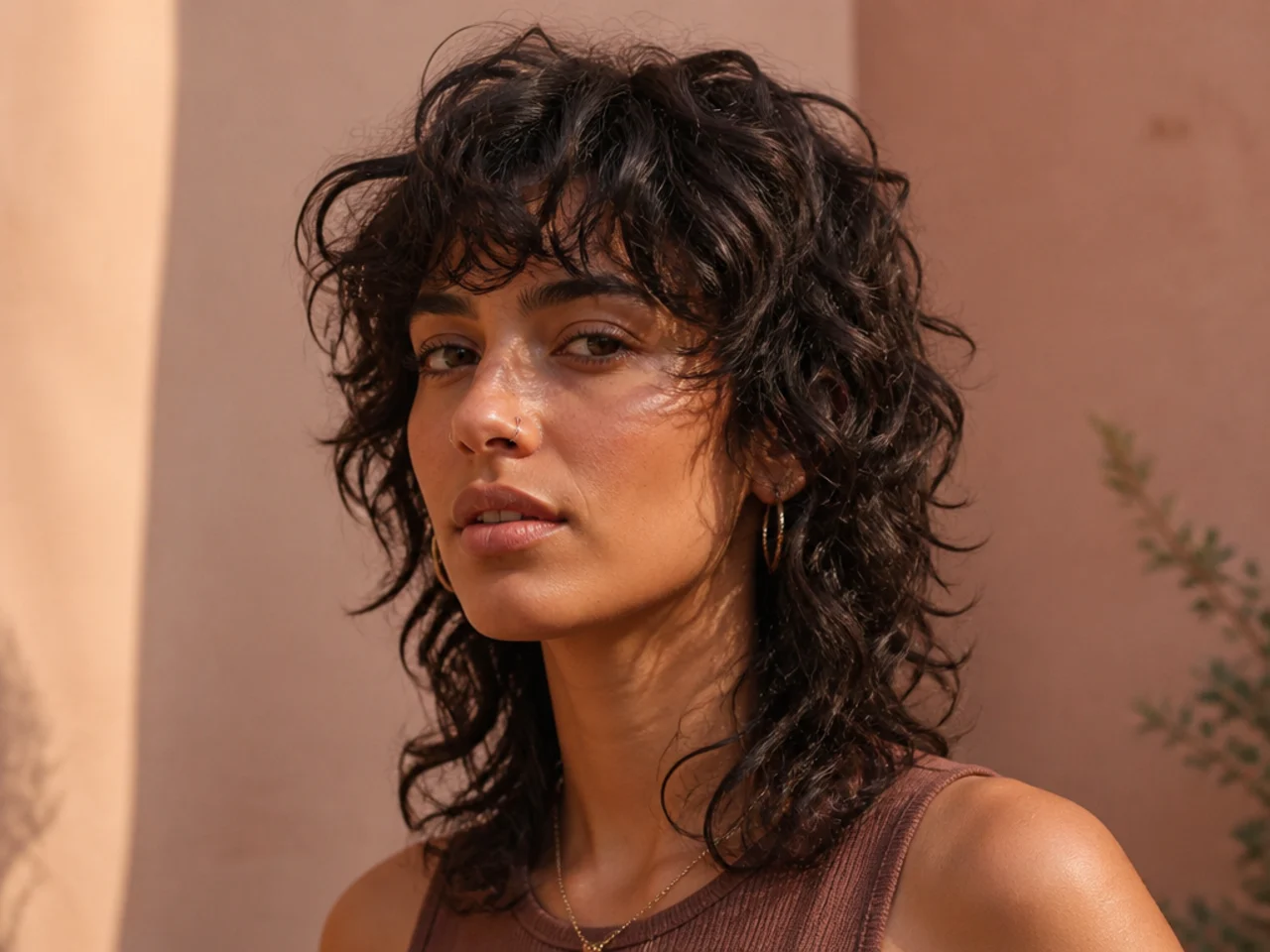
- 14. Curly Hair
- 15. Straight Hair
- 16. Round Faces
- 17. Long Faces
- 18. Styling Time Each Morning
- 19. Tying It Up
- 20. Going Back to Normal
- Styling and Upkeep
- Mistakes to Avoid
- FAQ
- Final Thoughts
People choose between a mullet and a wolf cut on photographs, when the two cuts differ in one structural decision that determines almost everything else.
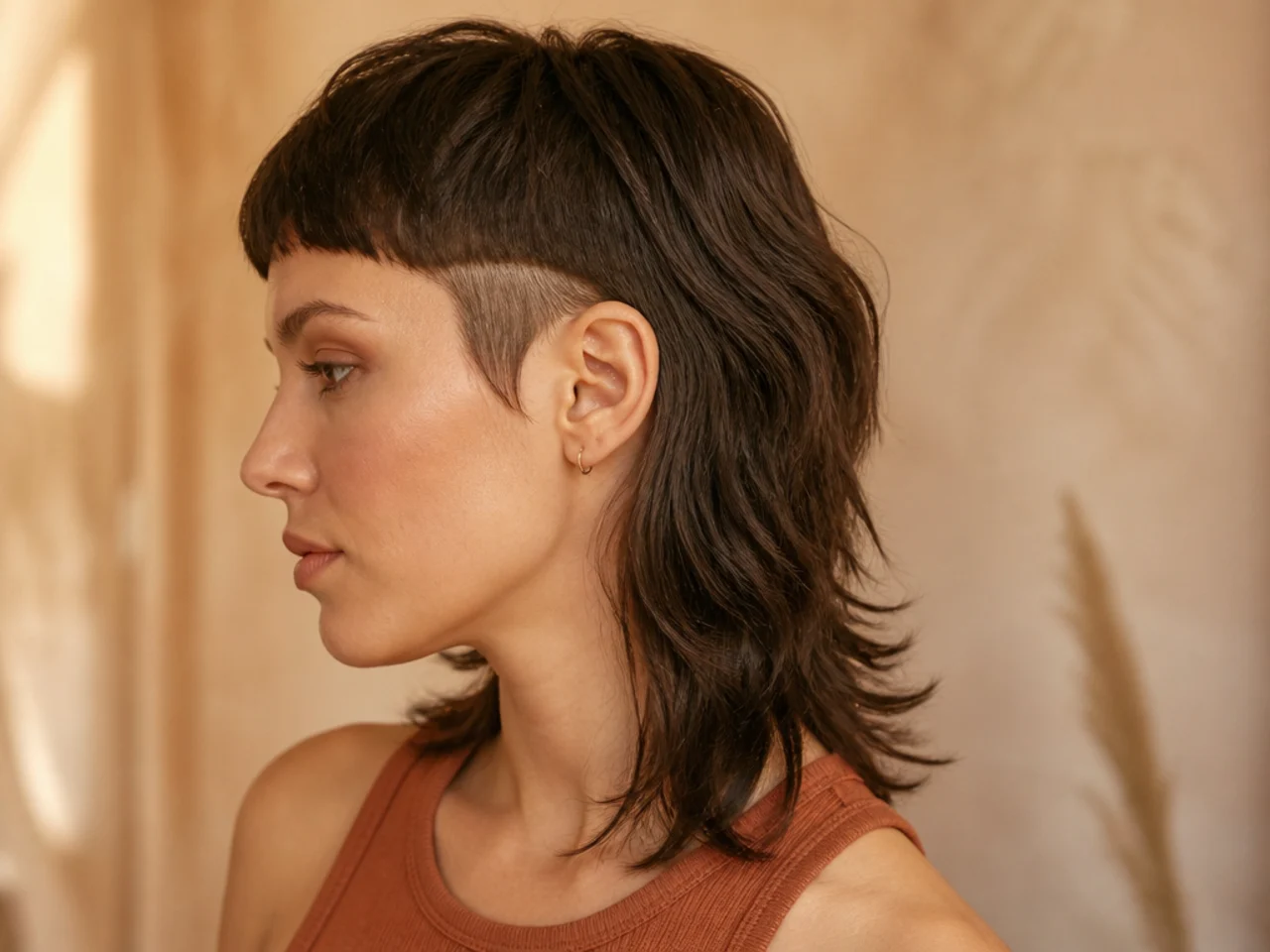
A mullet is disconnected. There is a visible step where the short section ends and the long section starts, and that step is the cut.
A wolf cut is blended. The same length change is spread across many layers, so nothing steps and the shape reads as a gradient.
What Actually Separates Them
One has a step, the other has a slope. Everything about how each cut behaves — grow out, upkeep, which textures suit it — comes out of that difference.
The mullet keeps weight in the tail. The back is often close to one length, which is why it hangs as a solid shape rather than a layered one.
The wolf cut removes weight everywhere. Layers run from the crown to the ends, so bulk is distributed rather than concentrated.
Both can be short or long. Length is not the difference. A short wolf cut and a short mullet look nothing alike, and neither do the long versions.
How to Pick Between Them
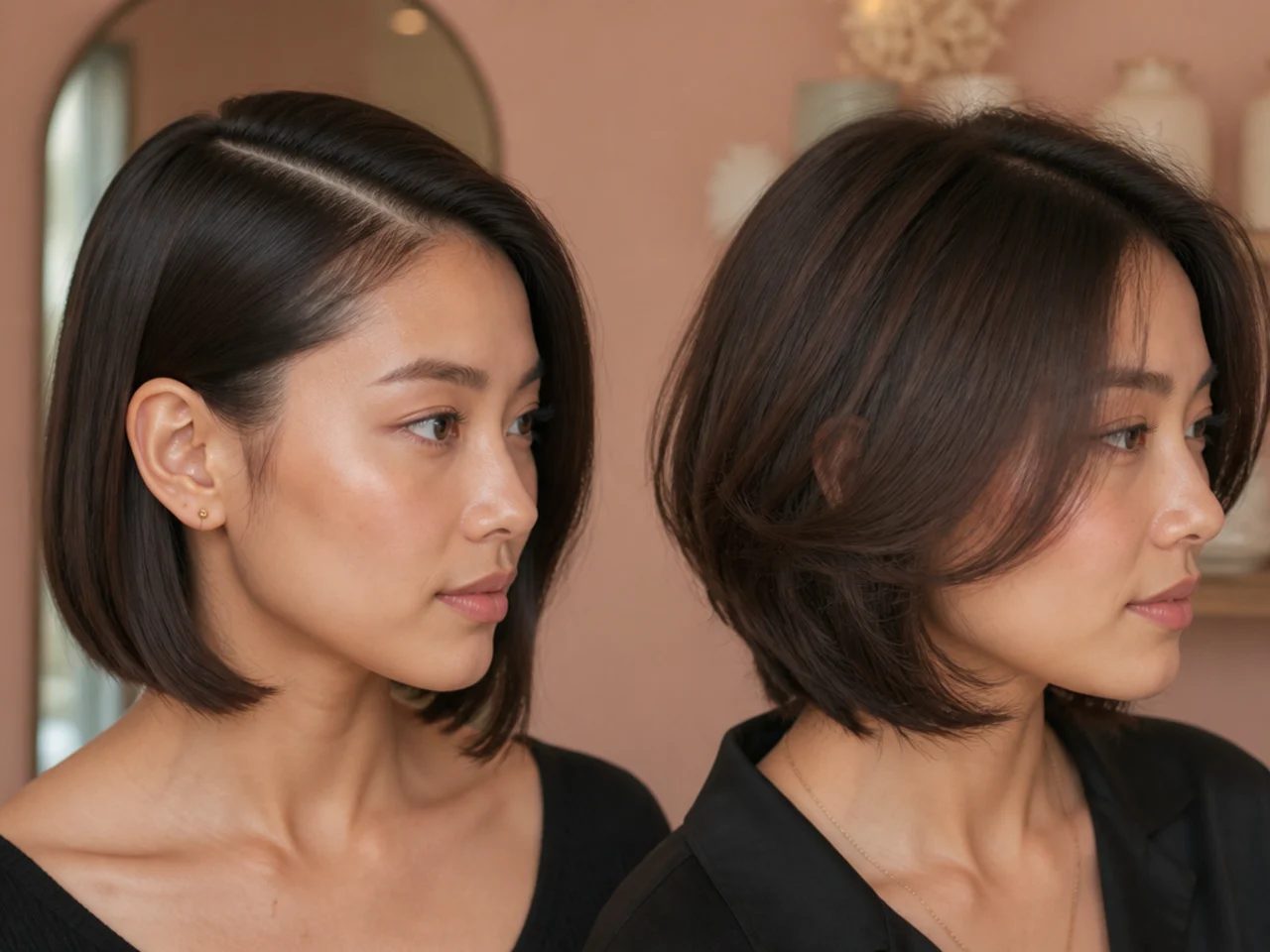
Start with your hair density. Thick hair needs weight removed and thin hair cannot spare any, and the two cuts sit on opposite sides of that line.
Then your trim schedule. A clippered mullet wants a barber every two to four weeks; a wolf cut is comfortable at eight to twelve.
Then how you want it to end. Ask yourself what happens if you stop liking it, because one of these grows out invisibly and one does not.
Style is the last question, not the first. Both are current. Choosing on look alone is how people end up with a cut whose upkeep they never agreed to.

The 20 Differences
1. The Disconnect Versus the Blend
The mullet leaves a deliberate step; the wolf cut spends layers erasing it. For anyone who wants the cut to be unmistakable at a glance, the mullet wins — the step is the signal. For anyone who wants length change without announcing it, the blend wins.
2. Where the Weight Sits
A mullet concentrates its weight in the back, often close to one length. A wolf cut spreads weight thinly from crown to ends. If your hair is heavy enough to hang flat, the wolf cut wins because it is the only one of the two that actually removes bulk.

3. The Silhouette From the Side
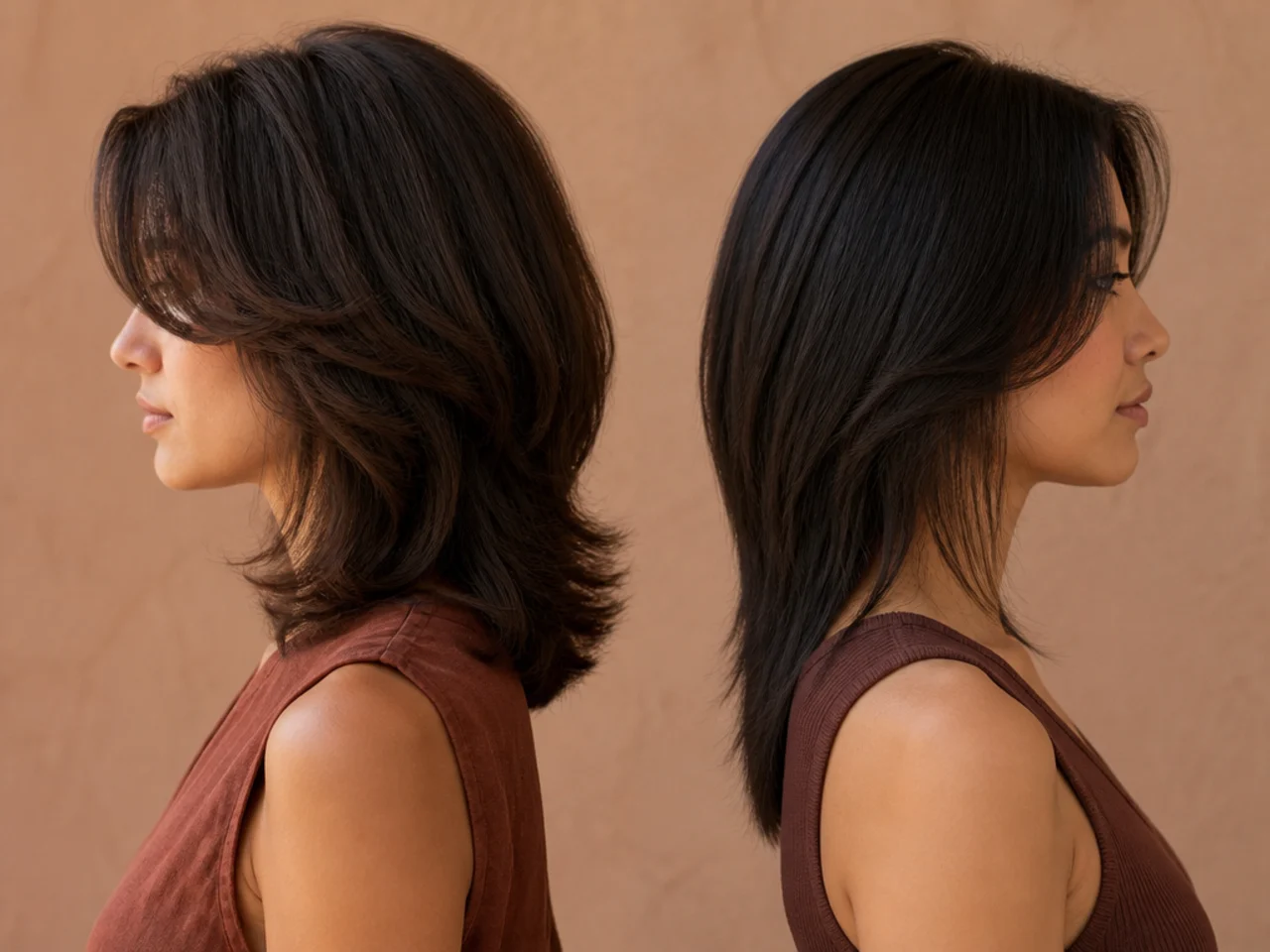
The mullet reads as two rectangles with a jump between them; the wolf cut reads as one triangle narrowing to the ends. In profile photographs the mullet wins for graphic impact, and the wolf cut wins wherever a softer outline is wanted.
4. The Sides
Mullet sides are cut short and often clippered, which exposes the head shape. Wolf cut sides keep length and fall into face framing pieces. For anyone unsure about their profile, the wolf cut wins, because nothing about the skull is revealed.

5. The Crown
A wolf cut takes its shortest layers at the crown to build height there. A mullet leaves the crown attached to the tail and gets its height from styling instead. For flat roots the wolf cut wins, because its volume is cut in rather than blow dried in.

6. The Fringe
Mullets take a blunt fringe or none at all, in keeping with the graphic shape. Wolf cuts take curtain or wispy fringes that merge into the layers. For a strong hairline the mullet wins; for a fringe that has to blend into the sides, the wolf cut does.

7. Layer Count
A wolf cut can carry a dozen or more layers; a mullet may have almost none behind the disconnection. If you want visible movement through the length, the wolf cut wins, because movement is a function of how many different lengths are stacked together.

8. Scissors Versus Clippers
Most mullets use clippers on the sides; most wolf cuts are entirely scissor work. That decides who can cut it — a barber for the mullet, a stylist for the wolf cut — and the mullet wins on availability because clipper work is far more widely practised.

9. Time in the Chair
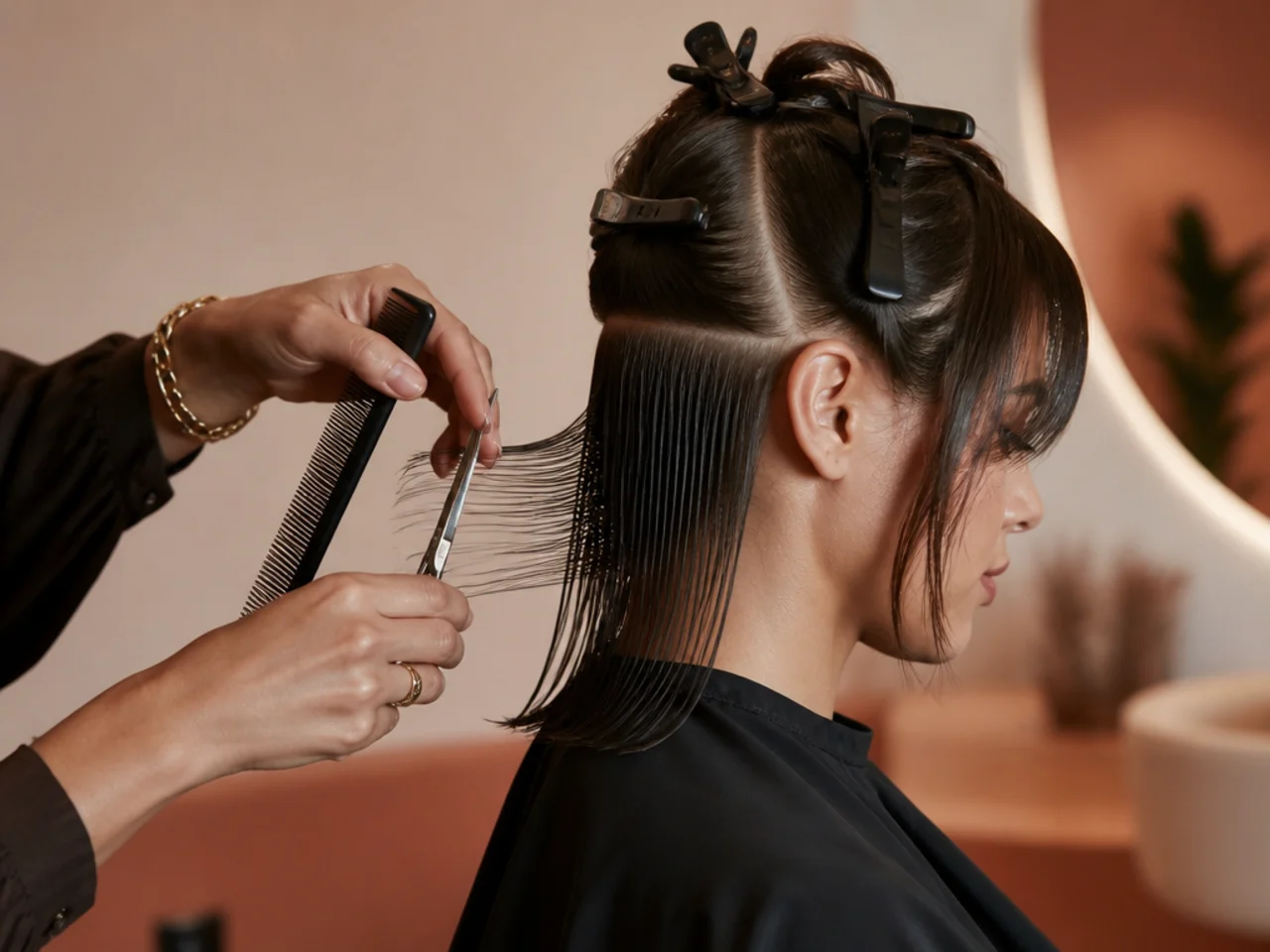
A clippered mullet is quick: short sides, one length back, a defined step. A wolf cut is sectioned and cut piece by piece. For a lunch break appointment the mullet wins outright, often by half an hour or more.
10. Trim Interval
A clipper line at the side loses its edge in two to four weeks. A wolf cut layer blurs slowly and still reads correctly at eight to twelve. On upkeep cost the wolf cut wins by a factor of three.
11. Grow Out Behaviour
A wolf cut turns into long layers and stops being a wolf cut without ever looking wrong. A mullet has to wait for the front to reach the back. The wolf cut wins for anyone who is not certain they will keep it.

12. Fine Hair
Fine hair has no bulk to give away, and a wolf cut spends its whole technique removing bulk. The mullet wins here: it builds shape from length contrast rather than from layer count, so the ends keep their density.

13. Thick Hair
Thick hair left one length in the back becomes a wedge that widens as it grows. The wolf cut wins because layering is the only method that reduces interior density without cutting into the outline.

14. Curly Hair
Curl expands sideways as it dries, which buries a hard step under a mass of texture. The wolf cut wins on curls, because layering controls where the width lands, while a mullet's step simply disappears.
15. Straight Hair
Straight hair lies flat and shows every edge exactly as cut, so a disconnection reads cleanly. The mullet wins here — the same flatness that makes the step crisp makes wolf cut layers hard to see without product.

16. Round Faces
A round face benefits from vertical lines and narrower sides. The mullet wins: cutting the sides short removes width at the cheek and the long back adds a vertical the eye follows downward.

17. Long Faces
A long face wants width at the cheekbone rather than height at the crown. The wolf cut wins, because its face framing layers land at cheek level and its side length fills the space a mullet would strip away.

18. Styling Time Each Morning
The mullet's shape is cut in, so it holds with nothing on it. A wolf cut's layers need product and usually a diffuser to show separation. For a five minute routine the mullet wins comfortably.

19. Tying It Up
A wolf cut has enough length around the whole head to gather, even if short pieces escape. A mullet's short front and sides will not reach a band at all. The wolf cut wins for anyone who ties their hair back daily.

20. Going Back to Normal
Undoing a wolf cut takes one trim to even the ends. Undoing a mullet takes months, because the only way to remove the step is to cut the back down to the front. The wolf cut wins on reversibility, and it is the difference most people find out too late.

Styling and Upkeep
Book by the technique, not the name. Clipper work needs a barber chair every few weeks; scissor layering does not.
Photograph the disconnection height. On a mullet it is the one measurement that changes the whole cut between appointments.
Use a texture product on the wolf cut, a light hold on the mullet. Layers need separation; a step needs nothing doing to it.
Dry the crown first. Both cuts take their height from the crown, and it is the section that sets fastest.
Trim the wolf cut ends before the layers. Split ends collapse the taper at the bottom, which is where the shape finishes.

Mistakes to Avoid
Asking for a wolf cut and describing a mullet. Say whether you want a step or a blend — it is the only word that matters.
Choosing a clippered mullet on a three month trim schedule. The sides will be unrecognisable long before then.
Putting a wolf cut on fine hair that is already thin at the ends. Layering makes see through ends more see through.
Leaving a thick mullet tail unthinned. The weight drags the back flat and the disconnection stops reading.
Taking the wolf cut crown too short. Those layers cannot be lengthened, and the flat crown they were meant to fix comes back within weeks.

FAQ
What is the real difference? A step versus a blend. Everything else follows.
Which grows out better? The wolf cut, into ordinary long layers.
Which needs more trims? The mullet, if the sides are clippered.

Final Thoughts
Bring one word to the appointment: disconnected or blended. It decides how often you sit in the chair, how the cut behaves in month four, and whether you can undo it in one visit or in one season.
For the hybrid that sits between the two see the wolf cut mullet, and for the version built on shorter length see the short wolf cut. More in Mullet and Wolf Cut.