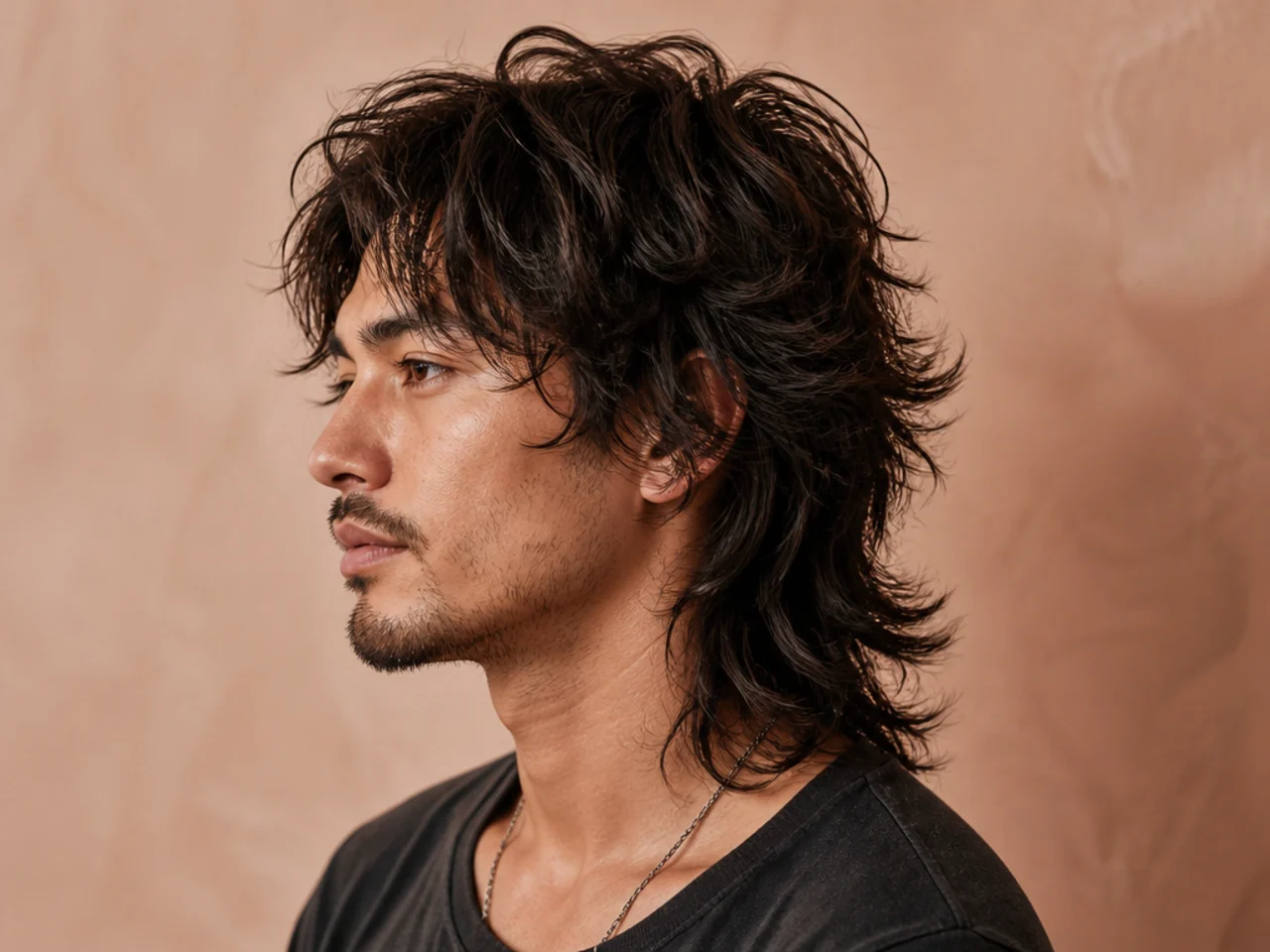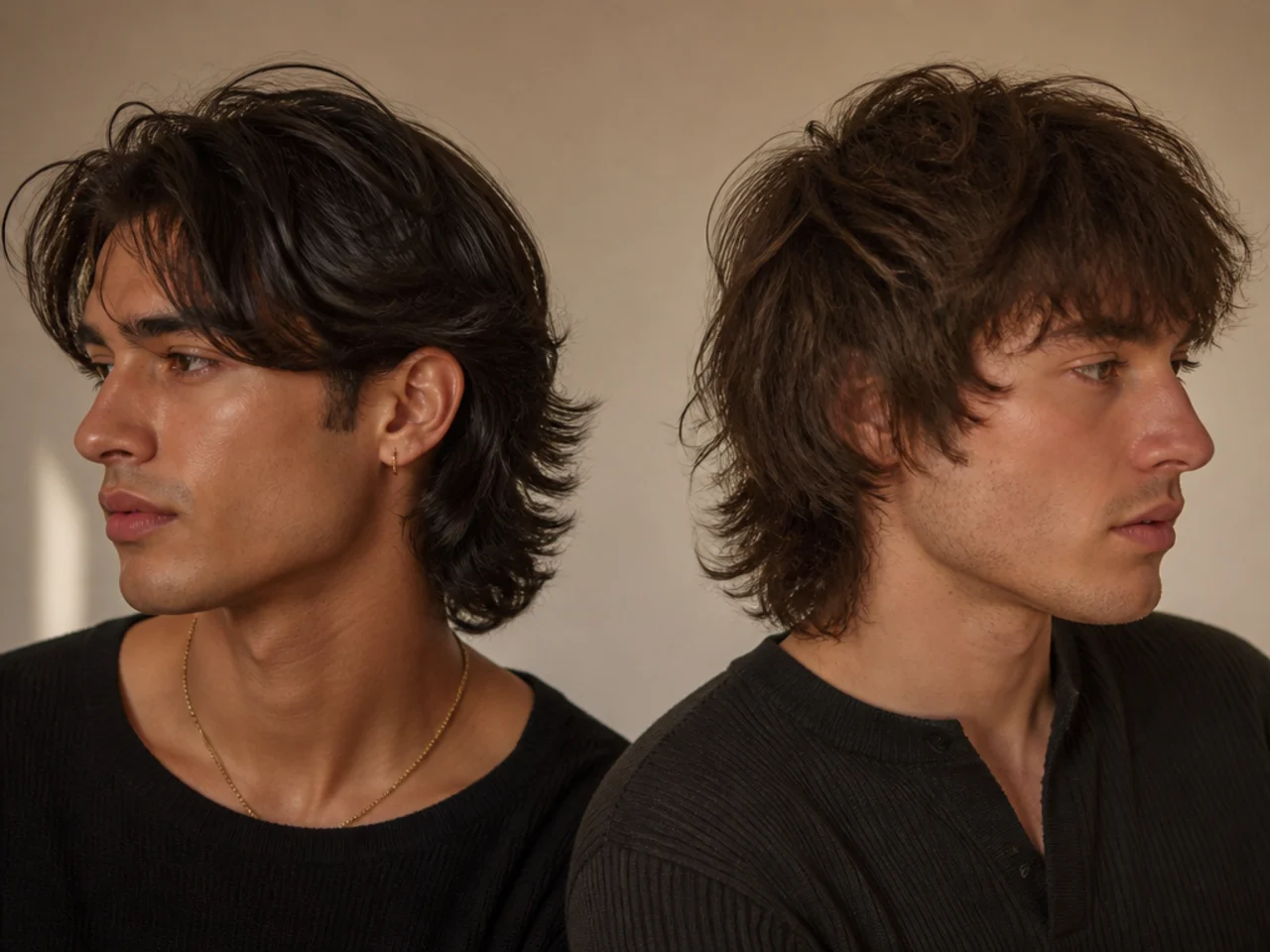
25 Sleek Mullet Ideas For Straight Hair That Falls Flat
Twenty five mullet shapes for straight hair, built around the one fact that decides whether any of them work — straight hair holds no volume of its own, so every bit of lift has to come from a short layer sitting underneath a longer one and physically holding it up.
In this article · 32
- Why Straight Hair Falls Flat
- How to Choose Your Layers
- The 25 Sleek Mullet Ideas for Straight Hair
- 1. Blunt Ended Straight Mullet
- 2. Layered Straight Mullet
- 3. Short Crown Layer Mullet
- 4. Point Cut Mullet
- 5. Hidden Layer Mullet
- 6. Soft Blended Mullet
- 7. Disconnected Mullet
- 8. Shag Mullet on Straight Hair
- 9. Wolf Cut Mullet
- 10. Mullet With Curtain Bangs
- 11. Mullet With a Comma Fringe
- 12. Mullet With Blunt Bangs
- 13. Collarbone Length Mullet
- 14. Nape Length Mullet
- 15. Mullet on Fine Straight Hair
- 16. Mullet on Thick Straight Hair
- 17. Mullet With a Taper at the Sides
- 18. Mullet With a Burst Fade
- 19. Mullet With Root Lift
- 20. Sleek Straightened Mullet
- 21. Mullet With Texture Spray
- 22. Mullet With a Middle Part
- 23. Mullet With a Side Part
- 24. Mullet at Week One
- 25. Grown Out Straight Mullet
- Styling and Upkeep
- Mistakes to Avoid
- FAQ
- Final Thoughts
Straight hair does not fall flat because it lacks product. It falls flat because nothing underneath it is short enough to hold it up.
Volume is a length difference, not a texture. A layer only props up the one above it if it is around two to four centimetres shorter, so it can stand rather than lie alongside.
Straight strands reflect light as one sheet. That is why straight hair can have genuine bulk and still read flat, and why breaking the ends into separate pieces changes the look more than adding volume does.
Why Straight Hair Falls Flat
There is no bend to create space. A wave holds strands apart from each other. A straight strand lies against its neighbour, so the whole mass collapses to its own thickness.
Blunt ends behave as one piece. When every strand finishes at the same point the ends move together, and the eye reads a curtain rather than a shape.
Product weight compounds the problem. Oil and silicone make strands slide past each other more easily, which is the opposite of what a flat head needs.
Straight hair returns to its fall. Whatever you brush it into, it settles back into the direction it was cut. That is why the shape has to be cut in rather than styled in.
How to Choose Your Layers
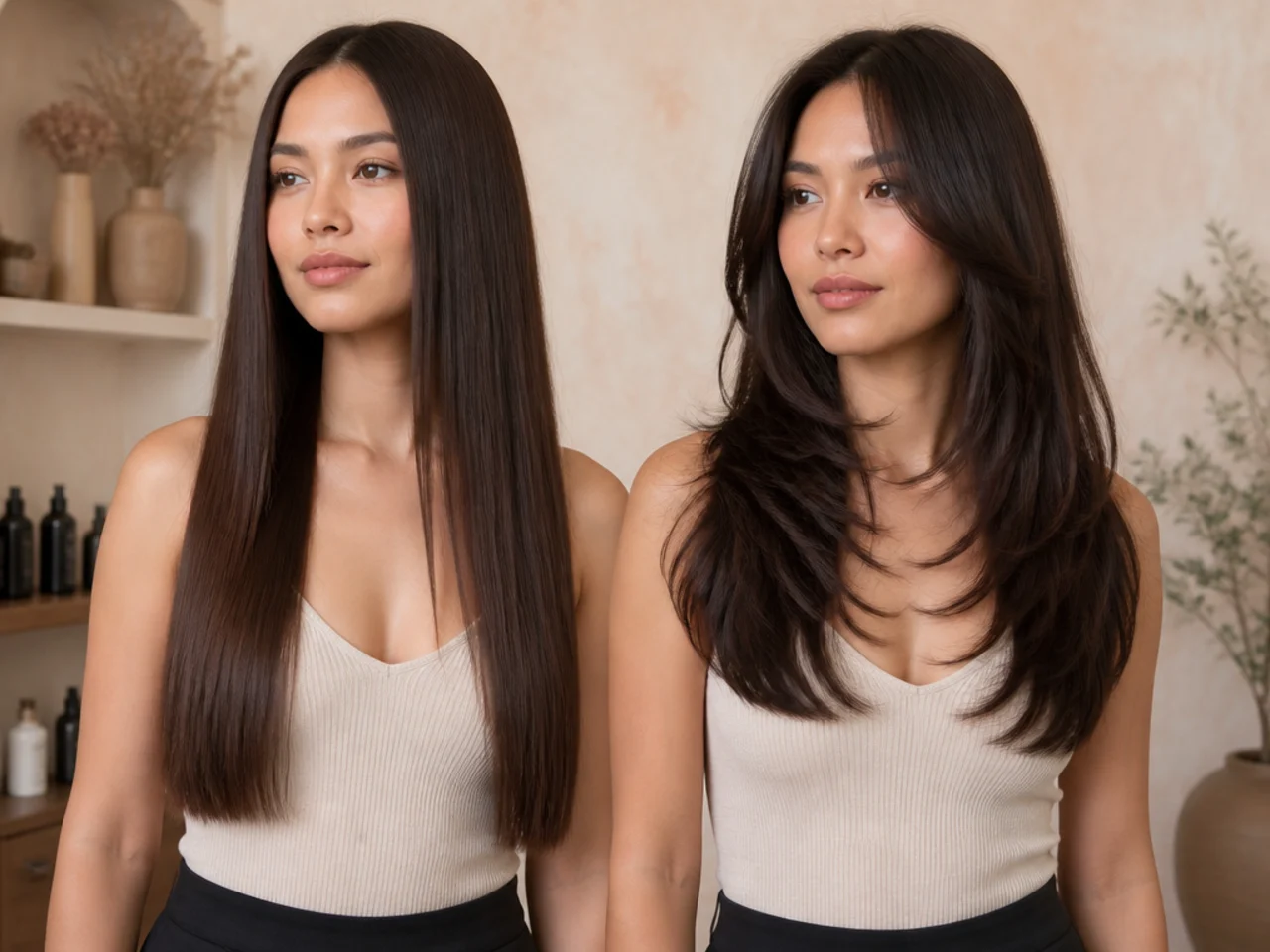
Set the crown layer by how much lift you want. Two centimetres shorter gives a soft rise. Four gives real height and a visible step if the blend is rushed.
Keep the outer line clean and take the weight from inside. Interior layering lifts the top while the perimeter stays sharp, which is what makes a straight mullet read as sleek rather than shaggy.
Choose the back length by your collar. At the nape it reads as a modern cut. Past the collar the shape tips into a period piece regardless of the layering.
Decide the front before the back. A curtain or comma fringe consumes length, and the front has to balance the weight at the back or the whole outline pulls backwards.
The 25 Sleek Mullet Ideas for Straight Hair
1. Blunt Ended Straight Mullet
Every strand at the back finishing on one line. It reads sharp and it maximises the appearance of density, but it moves as a single sheet, so it needs internal layering above it or the back hangs like a curtain.
2. Layered Straight Mullet
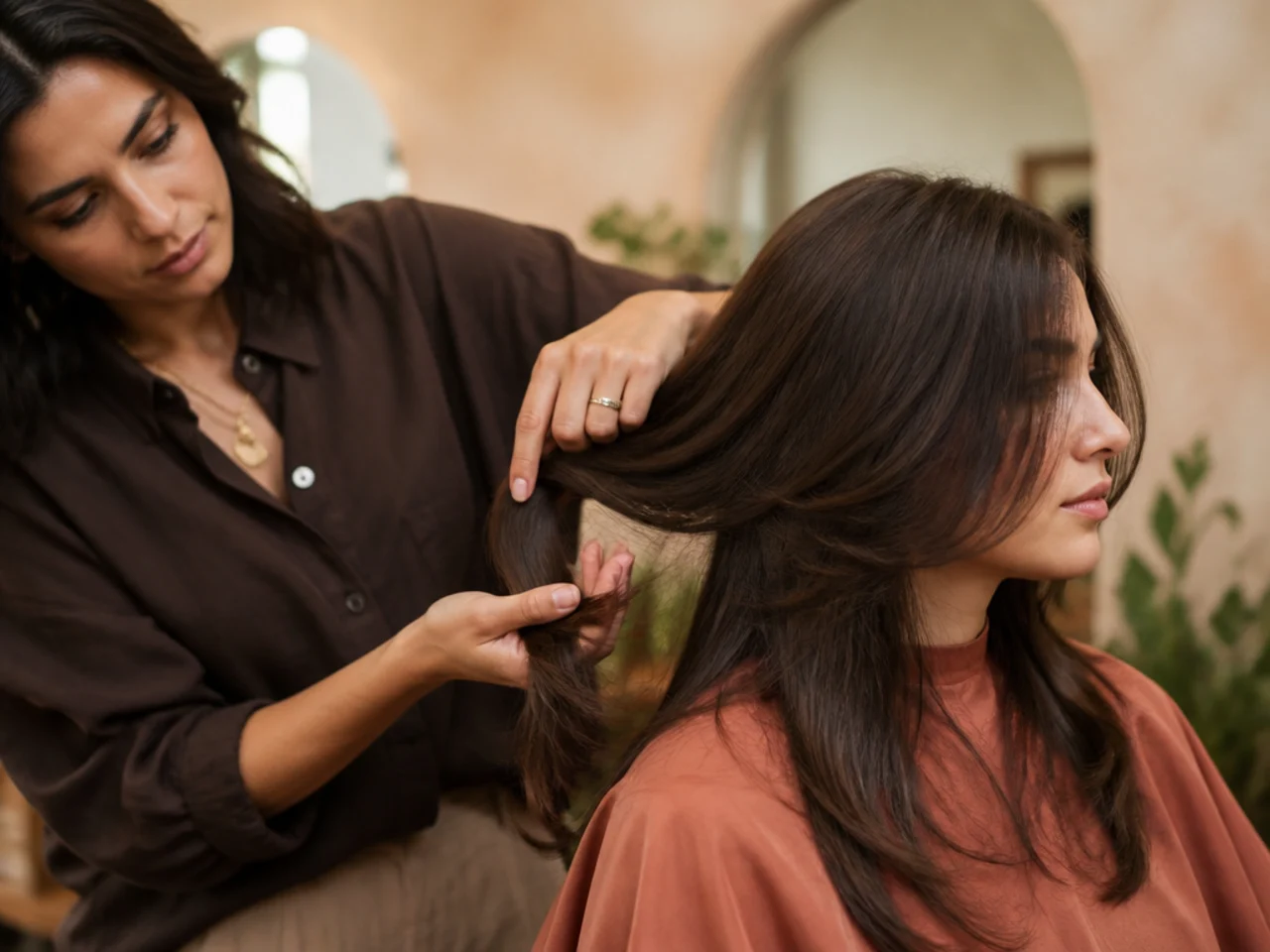
Graduated layers from the crown down, each around three centimetres shorter than the one below. That difference is what lets the upper layers stand instead of lying flat, and it is the whole mechanism behind the shape.
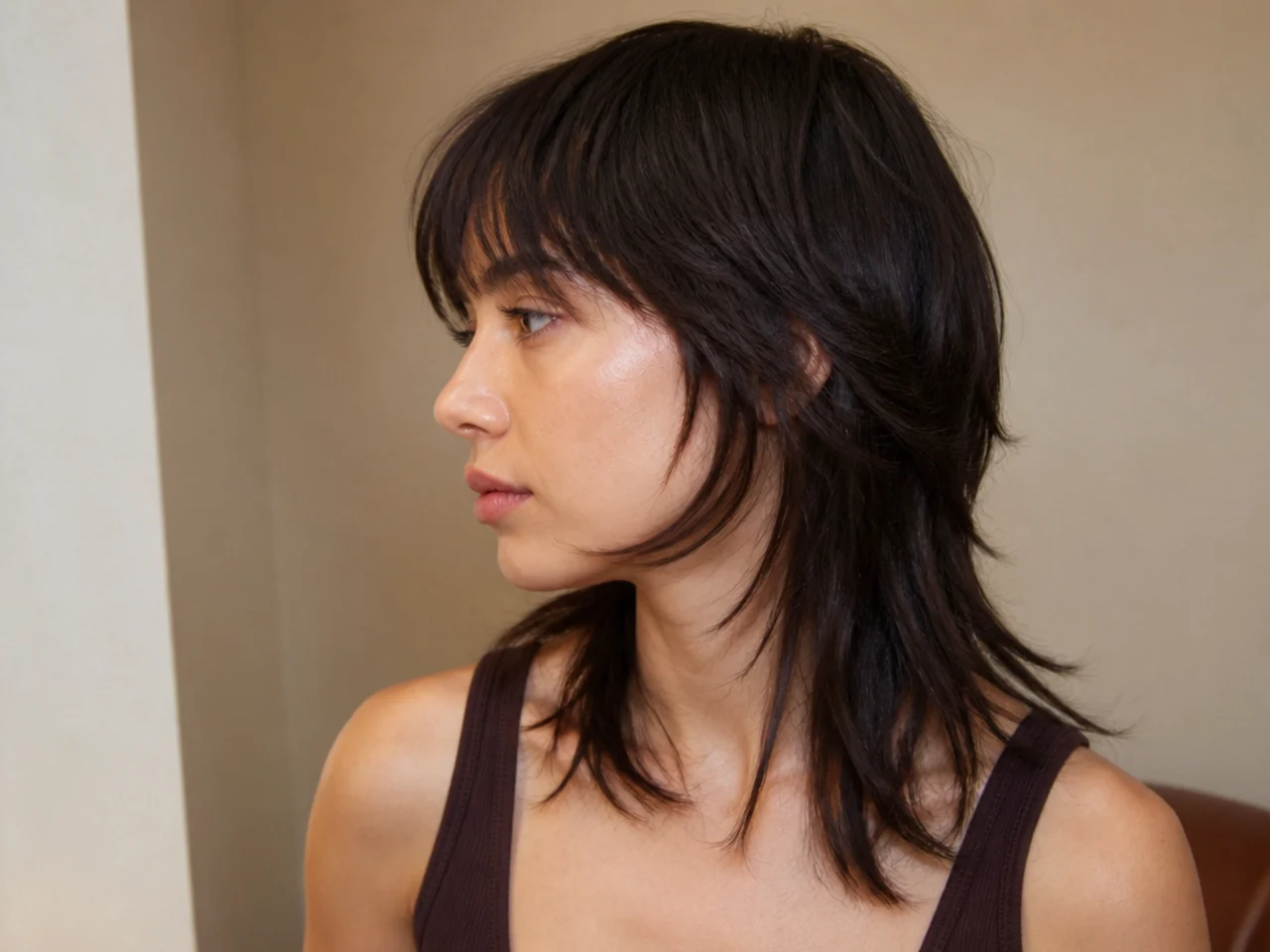
3. Short Crown Layer Mullet
The shortest layer sits at the crown, which is where a mullet needs the most height to balance the length behind it. Too long and it lies down. Too short and it stands away from the head as a separate shelf.

4. Point Cut Mullet
The ends notched vertically so each strand finishes at a slightly different height. Tapered tips separate as they dry, which is the cheapest way to stop straight hair reading as one reflective sheet.

5. Hidden Layer Mullet
Weight removed from underneath while the outside stays one length. The outer line keeps its edge and the interior loses the bulk that was dragging it down, which is how a straight mullet gets movement without looking choppy.

6. Soft Blended Mullet
No visible step anywhere between the top and the back. The blend has to be cut with scissors over comb through the join, since a graduated line on straight hair shows every place the length jumps.

7. Disconnected Mullet
A deliberate hard edge between the short top and the long back. Straight hair makes this the loudest version of the cut, because there is no bend to blur the step and the line stays exactly as sharp as it was cut.

8. Shag Mullet on Straight Hair
More layers, cut higher, so the whole head carries lift rather than just the crown. It is the most forgiving version on flat hair, since each short layer is holding up the one above it all the way down.

9. Wolf Cut Mullet
Short crown layers over long underneath, with the length concentrated at the back. See the wolf cut on straight hair for where those layers sit — the shape only works if the crown layer is genuinely short enough to stand on its own.

10. Mullet With Curtain Bangs
The front split down the middle and swept either side, which balances the weight sitting behind. Cut the fringe on a diagonal that reaches the cheekbone, or it ends in mid air against the face framing layers.

11. Mullet With a Comma Fringe
The front pieces curved forward into a comma. The curve consumes length, so this fringe has to be cut an inch longer than a straight one would be. The comma fringe mullet is the cleanest version of that pairing.

12. Mullet With Blunt Bangs
A heavy straight fringe against a layered back. Straight hair is the only texture that holds a blunt fringe cleanly, since there is no bend to break the line, and the flatness works in its favour here.
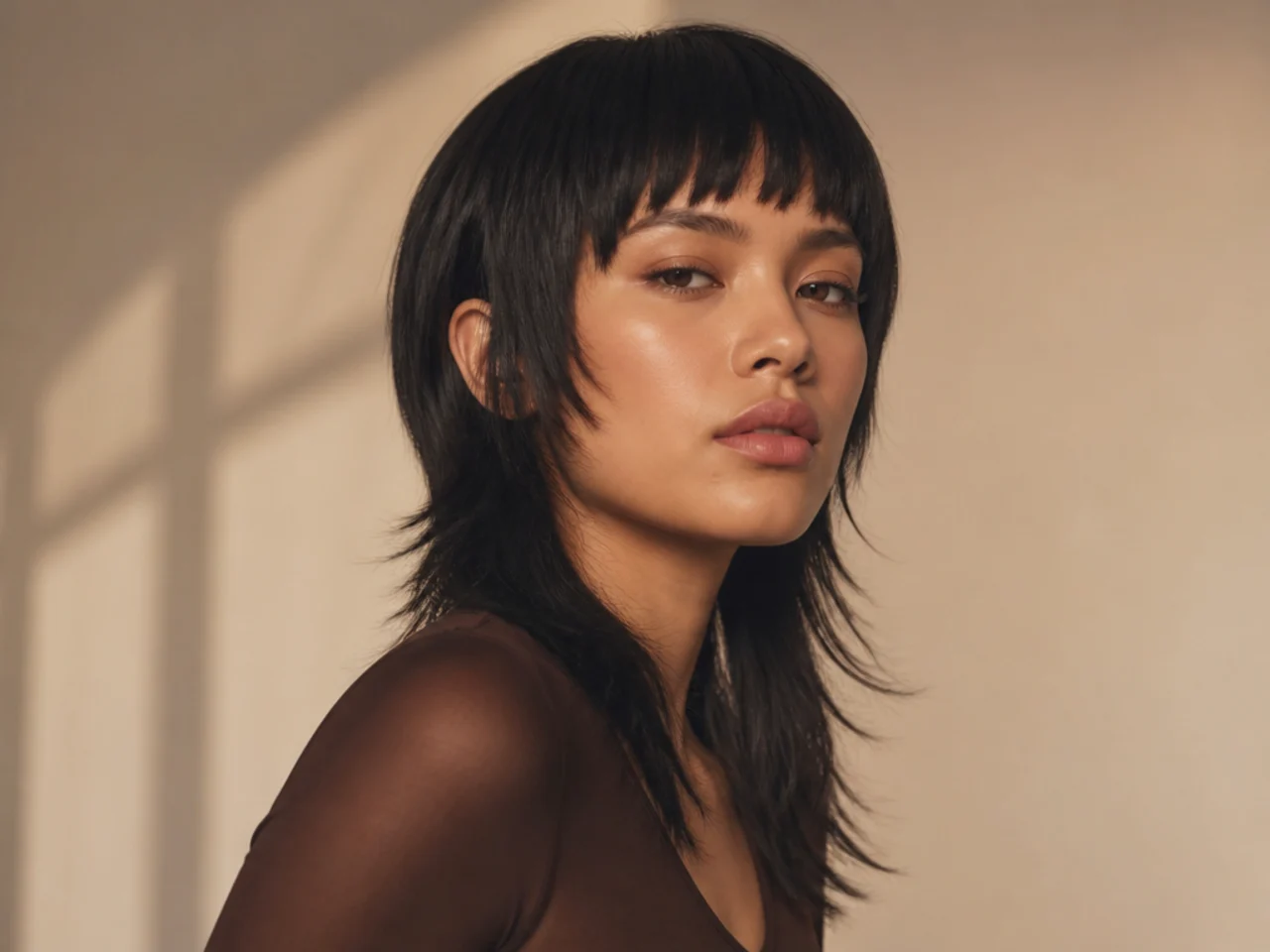
13. Collarbone Length Mullet
The back reaching the collarbone. At this length gravity starts working against the layers, so the crown layer has to be shorter than it would be on a nape length version to keep any lift at all.
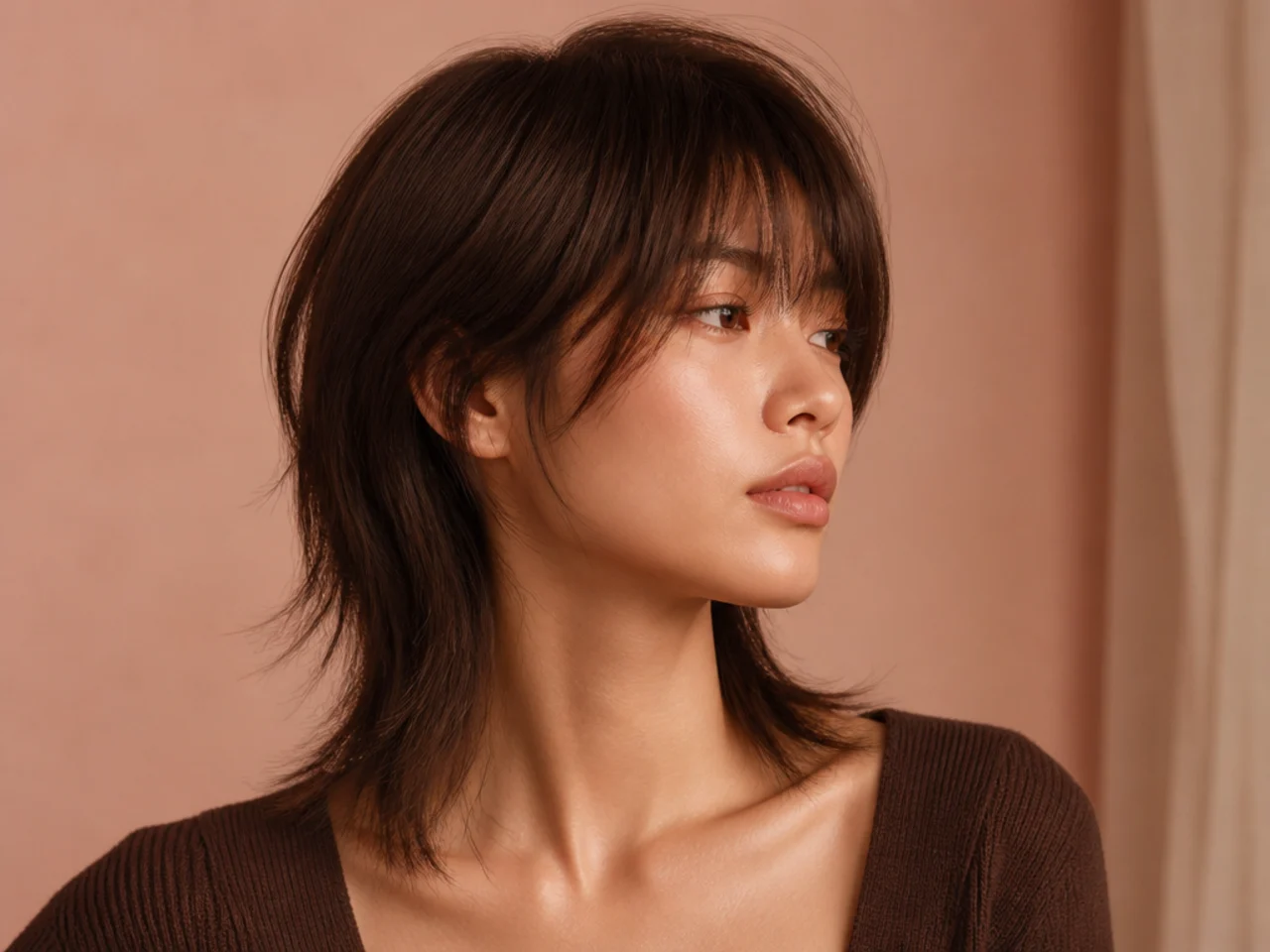
14. Nape Length Mullet
The back stopping at the hairline on the neck. It is the most wearable length because the weight is low enough not to drag the crown down, and it keeps the shape reading as a haircut rather than as a statement.
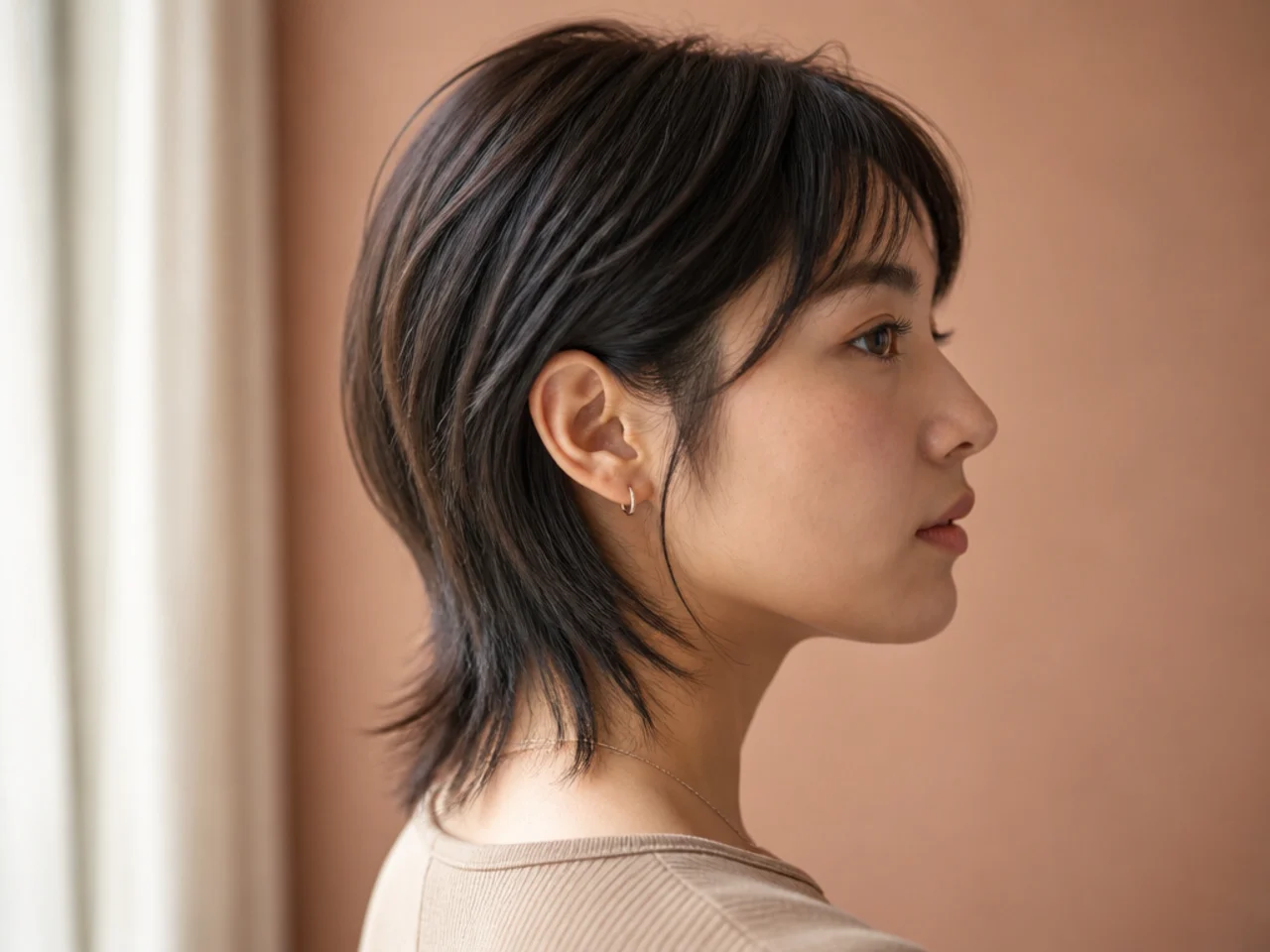
15. Mullet on Fine Straight Hair
Keep the layers few and the perimeter blunt. Fine straight hair has no bulk in reserve, so every extra layer removes visible density, and a heavy bottom line is what makes the ends look like a mass instead of separate strands.

16. Mullet on Thick Straight Hair
The opposite problem. Thick straight hair builds a triangle unless weight comes out of the interior, so the layering here is about removing bulk from underneath rather than about creating lift on top.

17. Mullet With a Taper at the Sides
The sides shortened gradually and finished at a number one, which leaves three millimetres rather than bare skin. A taper holds its shape for three to four weeks, where a skin finish shows regrowth within one or two.

18. Mullet With a Burst Fade
The fade runs in a semicircle around the ear and stops before the back of the head, so the length down the centre is never touched. On straight hair the gradient shows every pass, so it needs more blending time than a wavy head would. The burst fade on straight hair covers the blend in detail.
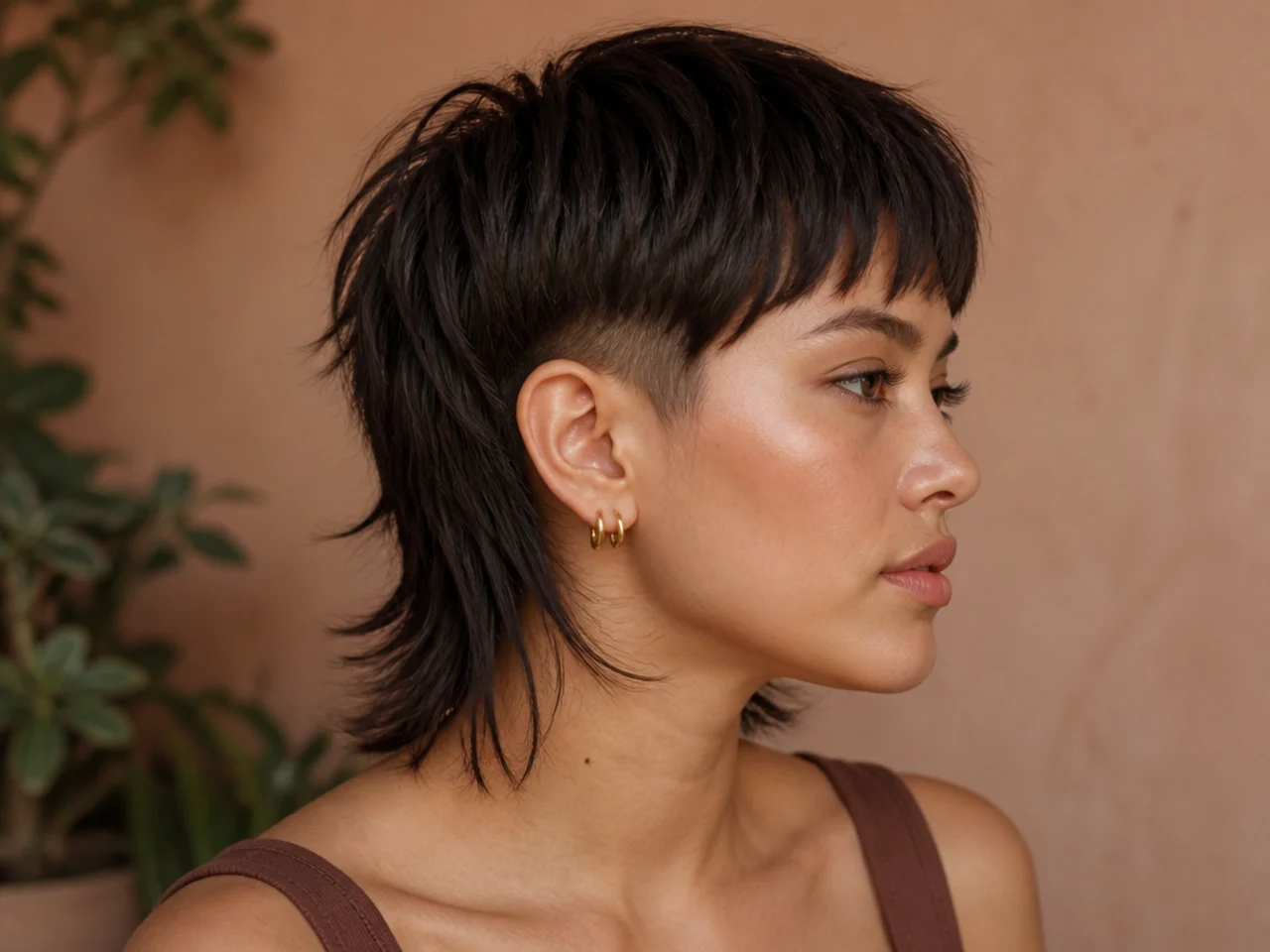
19. Mullet With Root Lift
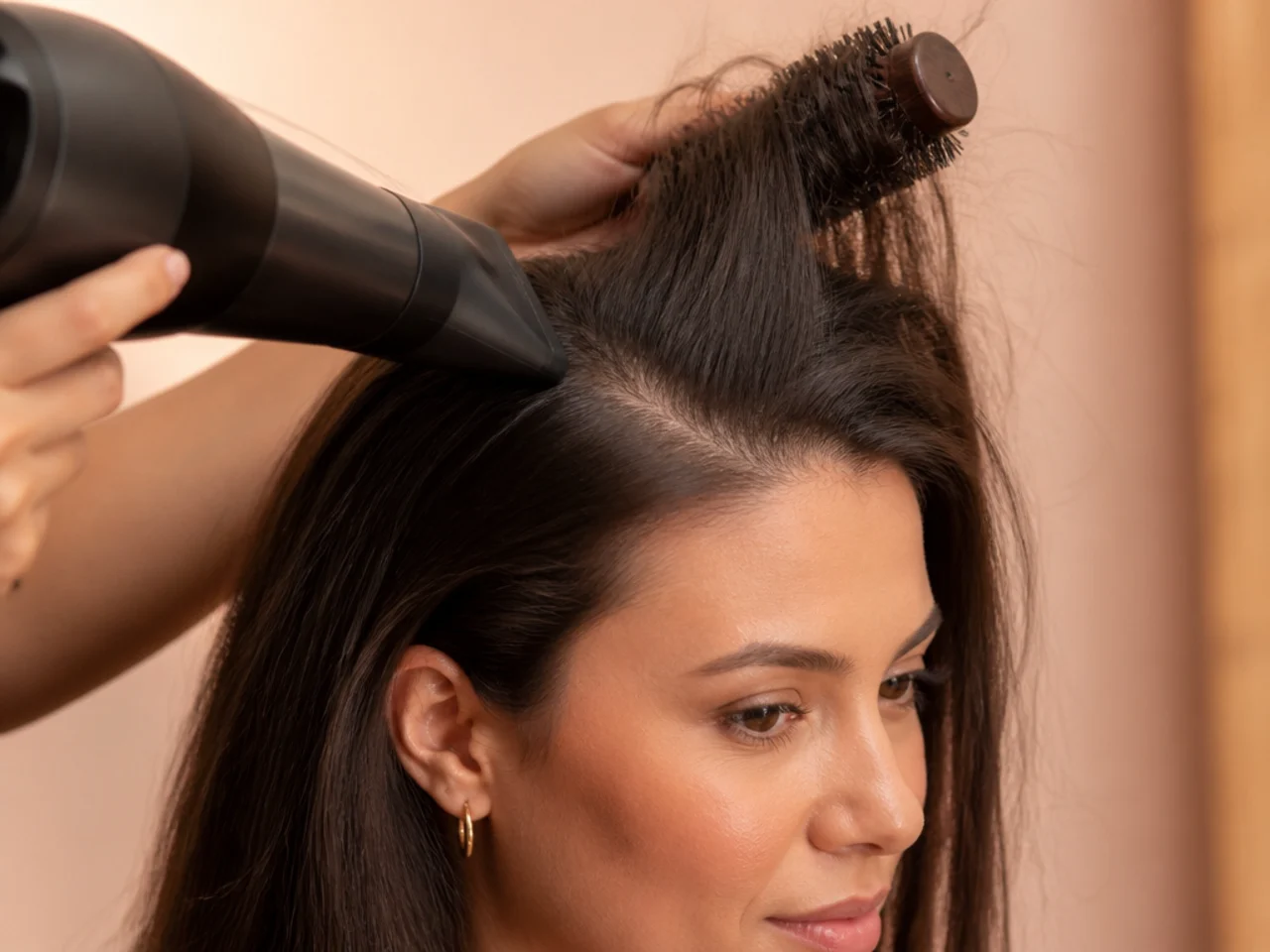
Dry the crown roots against their growth direction for the first thirty seconds, then back into place. The root ends up standing rather than lying down, and on straight hair a standing root is the only lift that survives past lunchtime.

20. Sleek Straightened Mullet
Ironed flat, with the shape coming entirely from the cut. It is the honest test of the layering, because there is nothing else holding the silhouette up and a badly cut mullet has nowhere to hide once it is smoothed.

21. Mullet With Texture Spray
Texture spray works by depositing a fine polymer or silica film on the strand, which raises friction so strands hold each other apart instead of sliding together. Use it at the root, where the holding apart is worth something.
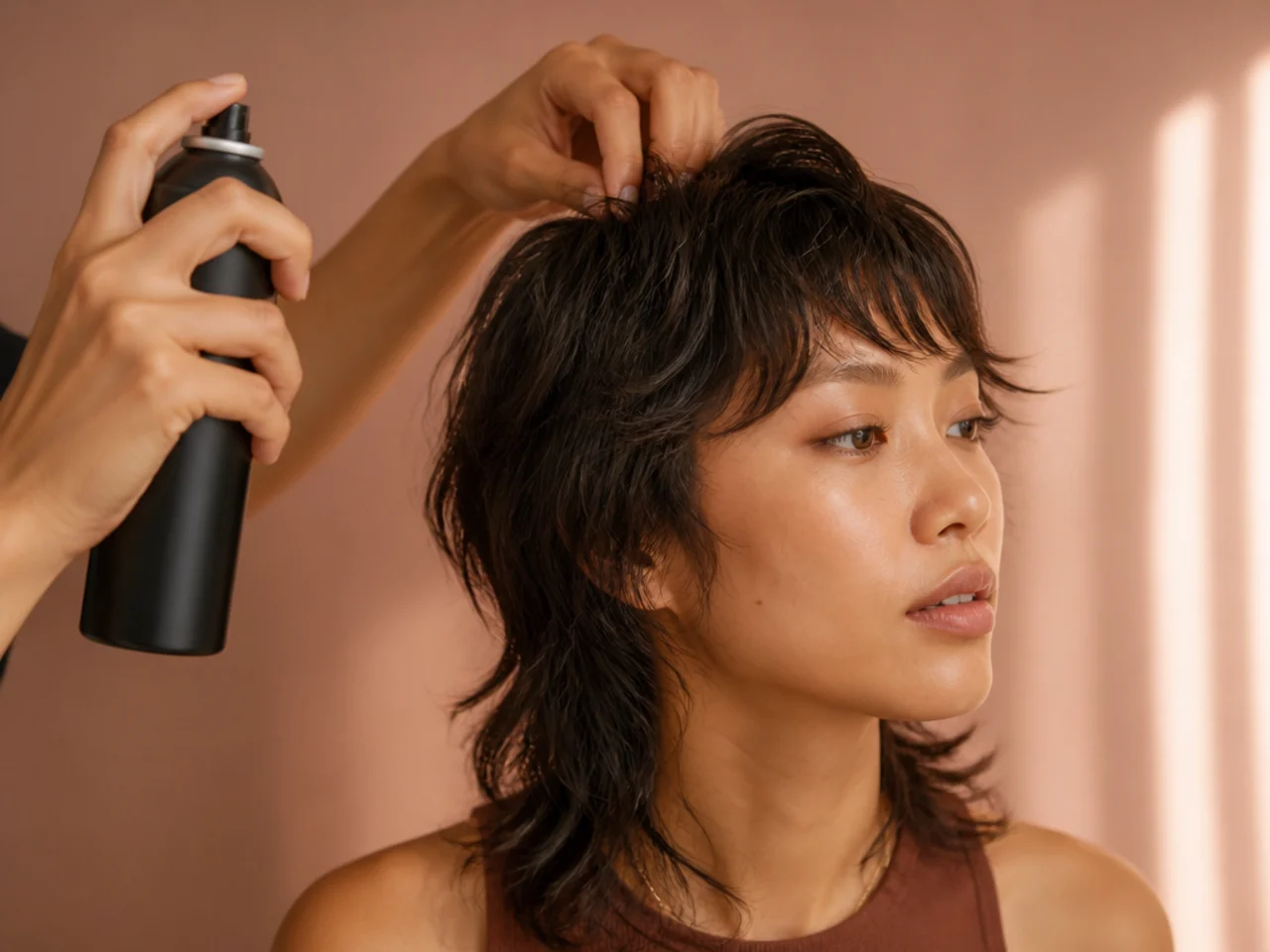
22. Mullet With a Middle Part
The parting splits the crown weight evenly and lets both sides fall away from the centre. On straight hair it also exposes the parting line itself, so the crown layer needs enough lift to cover the scalp on either side.

23. Mullet With a Side Part
Moving the parting across piles the weight on one side, which creates lift on the heavy side by volume alone. It is the simplest fix for a flat crown and it costs nothing but a comb.

24. Mullet at Week One
Every layer at its intended length and the perimeter at its sharpest. Worth photographing, since on straight hair the layer lengths are the entire cut and there is no texture disguising a change to them next time.

25. Grown Out Straight Mullet
After eight to ten weeks the layer differences have closed and the crown layer is no longer short enough to stand. The lift goes first and the shape follows, which is why a straight mullet needs a layer trim before it needs length taken off.

Styling and Upkeep
Dry the crown roots against the growth first. Thirty seconds of that beats any product for lift on straight hair.
Let the hair cool before you touch it. Hair sets into the shape it cools in, so a brush released while warm gives nothing back.
Keep oil and silicone off the crown. They make strands slide together, which is exactly the collapse you are trying to prevent.
Book a layer trim, not a length trim. The lift dies when the layer differences close, and that happens long before the length is a problem.
Photograph the crown at week one. The layer length is the whole cut and it is far easier to show than to describe.
Mistakes to Avoid
Asking for volume instead of layers. Volume on straight hair is a length difference. Name the difference, not the effect.
Leaving the crown layer too long. If it is not two to four centimetres shorter than the layer below it, it lies down and nothing you spray on it will change that.
Cutting the back blunt with no interior work. It hangs as one sheet against the neck and the shape disappears.
Over layering fine straight hair. Every layer removes visible density, and there is not much to spend.
Waiting for length to be the reason to rebook. The layers close up first. The cut has stopped working weeks before the length looks wrong.

FAQ
How do I get lift? A crown layer two to four centimetres shorter than the one beneath it.
Blunt or layered back? Clean outer line, weight removed from inside.
How often? A layer trim every eight to ten weeks, before the length looks wrong.

Final Thoughts
Ask for the layer difference in centimetres rather than for volume. "Crown layer three centimetres shorter, weight out of the interior, perimeter left clean" describes a cut that holds its own shape on hair with no help from texture.
For more shapes that suit this texture see straight hair hairstyles, and for the fringe that pairs with a mullet see comma hair with a mullet. More in Mullet & Wolf Cut.