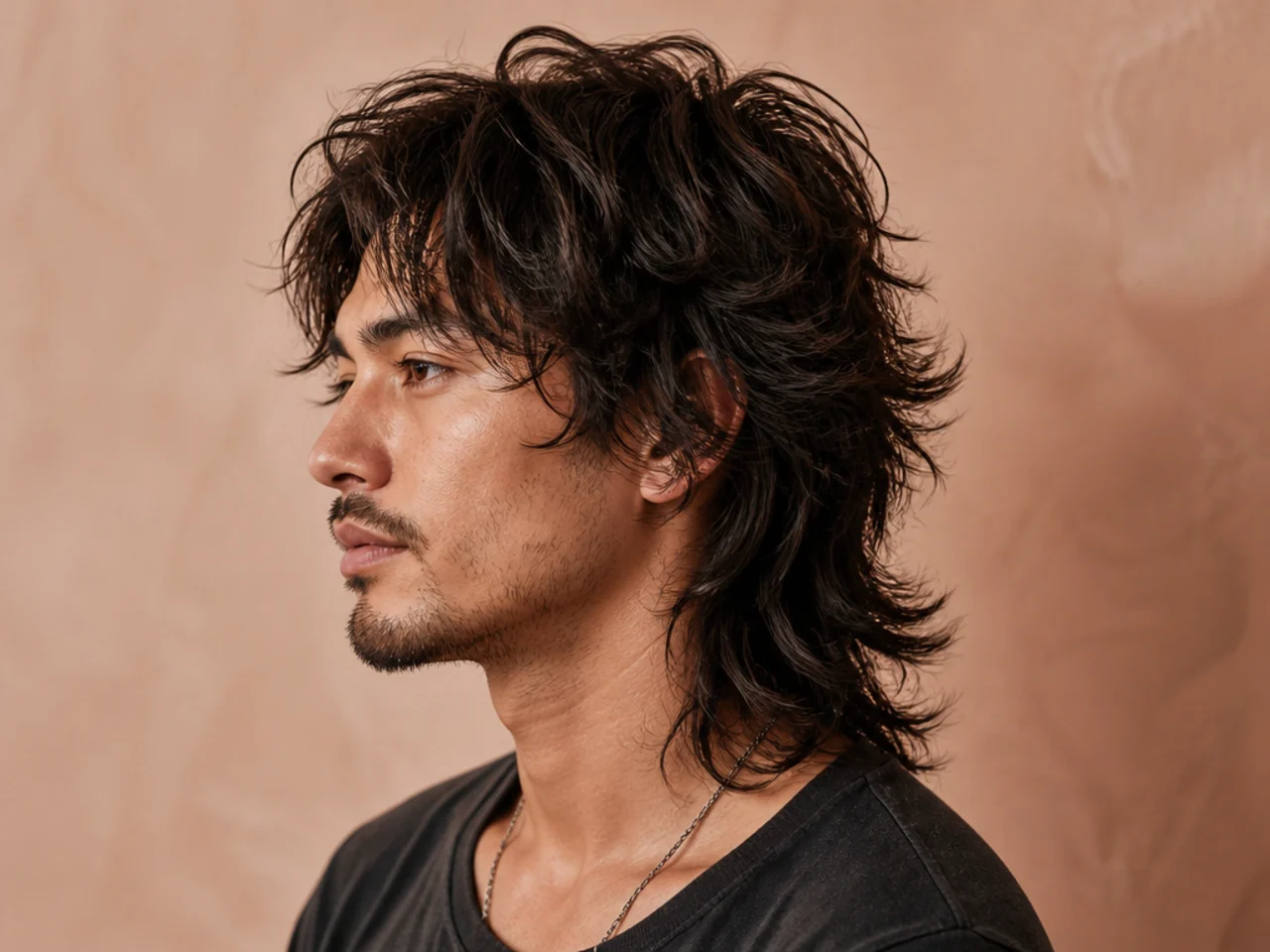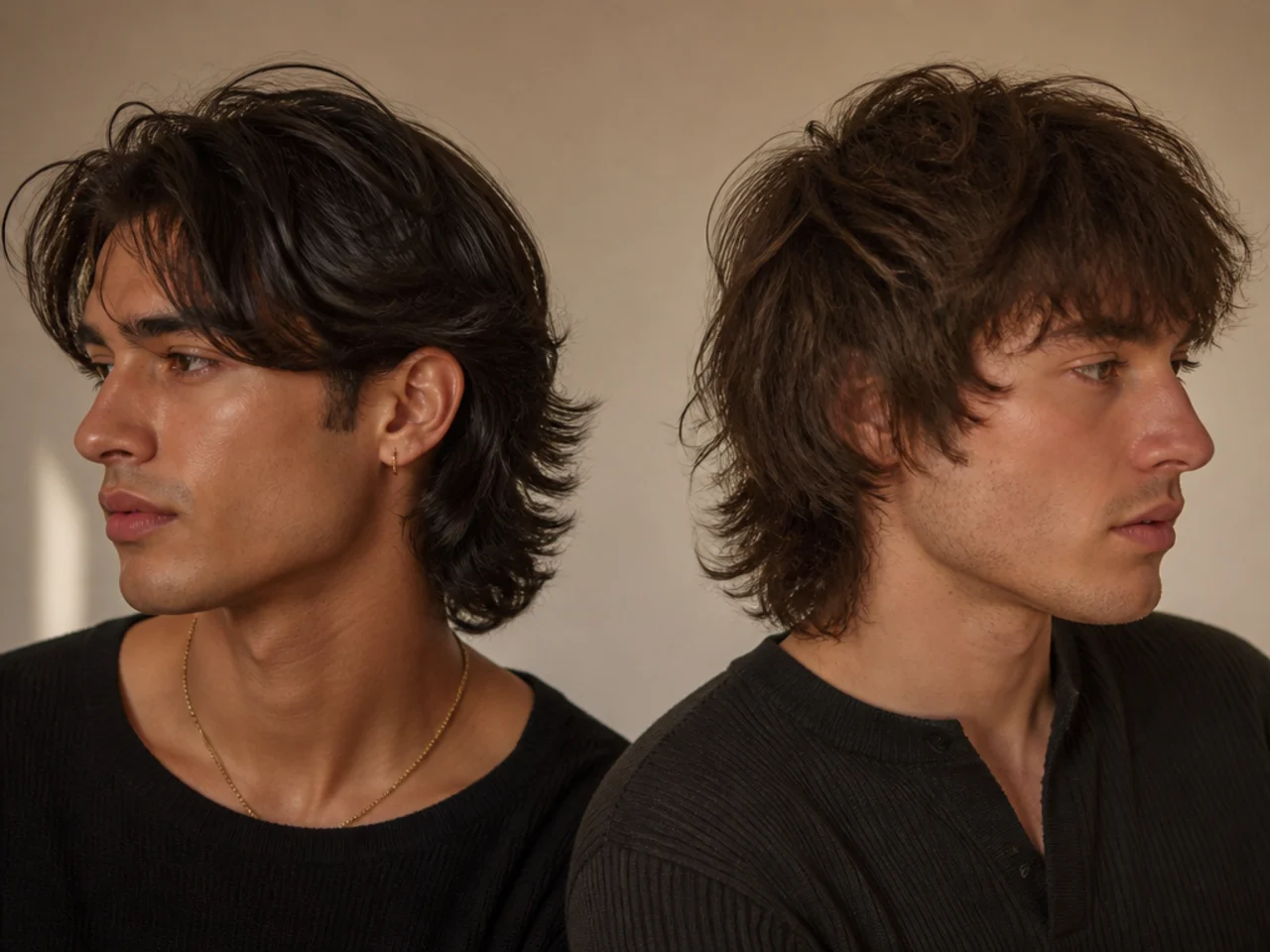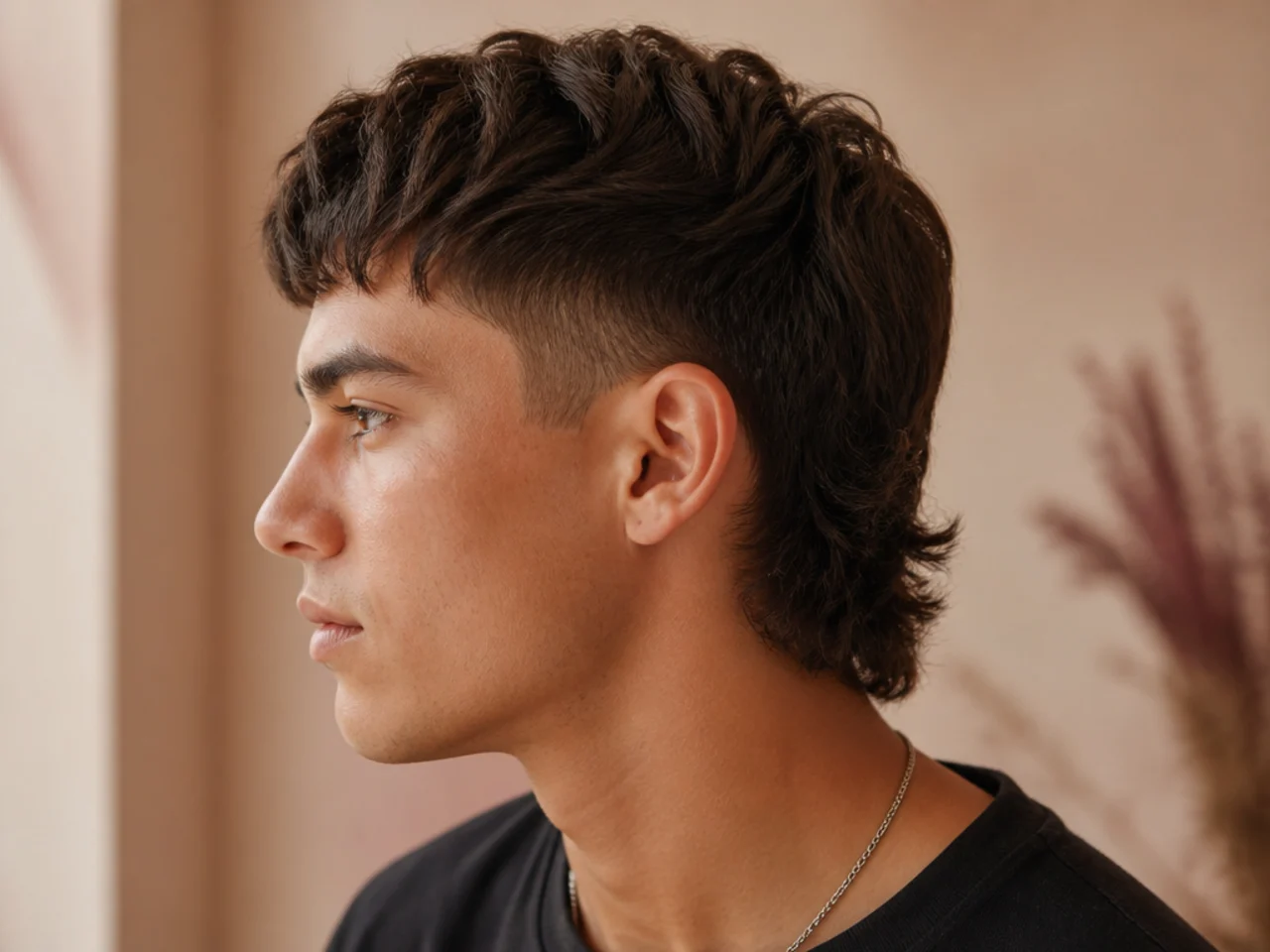
25 Stylish Mullet Looks For Men To Try This Year
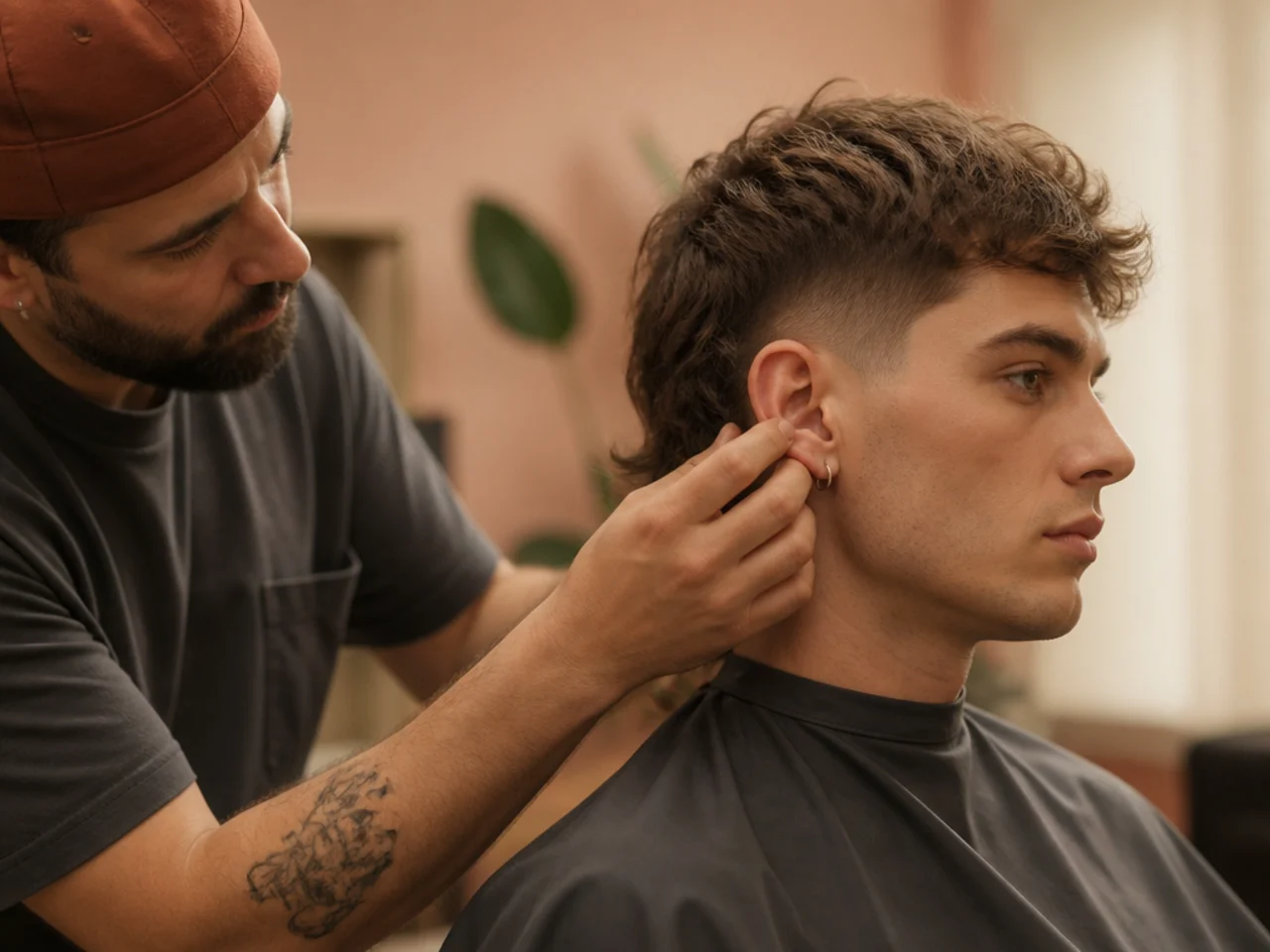
Twenty five mens mullets, and the one variable that separates them — how much of the side is removed between the top and the tail. That gap is the cut. The length of the tail barely changes how loud a mullet reads.
In this article · 32
- What Separates a Mullet From a Shag
- How to Pick Your Version
- The 25 Mullet Looks for Men
- 1. Classic Short Mullet
- 2. Modern Textured Mullet
- 3. Mullet With a Low Taper
- 4. Mullet With a Mid Fade
- 5. Burst Fade Mullet
- 6. Wolf Cut Mullet
- 7. Curly Mullet
- 8. Wavy Mullet
- 9. Straight Hair Mullet
- 10. Mullet With a Blunt Fringe
- 11. Mullet With a Curtain Fringe
- 12. Disconnected Mullet
- 13. Blended Mullet
- 14. Long Tail Mullet
- 15. Short Tail Mullet
- 16. Mullet With a Hard Part
- 17. Mullet With Long Sideburns
- 18. Bleached Tip Mullet
- 19. Two Tone Mullet
- 20. Mullet on Thick Hair
- 21. Mullet on Fine Hair
- 22. Mullet With a Beard
- 23. Mohawk Mullet
- 24. Shaggy Mullet
- 25. Mullet at Week Eight
- Styling and Upkeep
- Mistakes to Avoid
- FAQ
- Final Thoughts
Most men asking for a mullet describe the tail, when the part of the cut that actually decides how it reads is the sides.
The gap is the cut, not the length. A mullet works because the sides stop noticeably shorter than the back, and that difference is what the eye registers first.
Blend the gap and you have a shag. The same lengths, softened at the join, stop reading as a mullet entirely. How hard that transition is cut is the single decision worth getting right.
What Separates a Mullet From a Shag
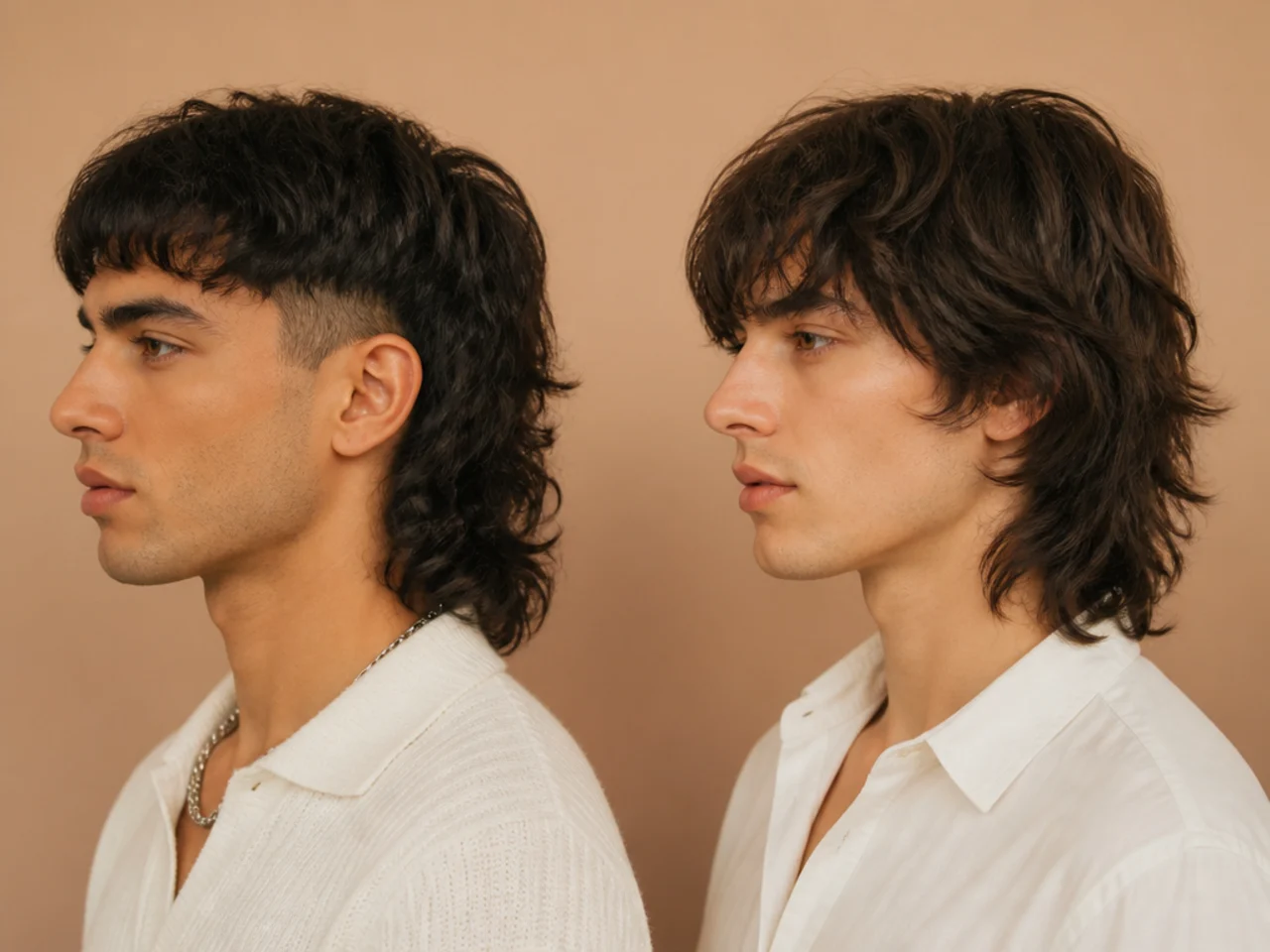
A mullet keeps a boundary. There is a point on the head where the length changes abruptly, and it usually sits behind the ear on a diagonal running toward the crown.
A shag removes that boundary. The same length change happens, but it is spread over enough distance that the eye reads a gradient rather than a step.
Tail length is a secondary decision. A collar length tail on blended sides reads far softer than a chin length one over a number two, because contrast beats length every time.
Both start from the same haircut. A mullet cut with a soft join becomes a shag in six weeks on its own, which is why the same head can wear either without a full restart.
How to Pick Your Version
Choose the side length first. A number three at ten millimetres is quiet, a number one at three millimetres is loud, and skin is a different cut in feel even at the same tail length.
Then choose how hard the join is. Disconnected means the change happens in a single scissor line, blended means it happens over two inches. Say which one you want out loud.
Match the tail to your neck, not the photograph. A tail that reaches the collar sits on fabric all day and lifts at the ends, which is why shorter tails hold their shape with no styling.
Pick by trim schedule. Guarded sides hold three to four weeks; a skin fade under a mullet wants two. Choose the version you can actually keep sharp.
The 25 Mullet Looks for Men
1. Classic Short Mullet
Sides at a number two, tail stopping just past the collar, and a scissor cut join behind the ear. It is the version that reads as a mullet from any distance because the boundary is unambiguous, and it is short enough that the tail keeps its own shape without product.
2. Modern Textured Mullet
The same shape with the tail point cut into the ends so they finish in fine points rather than a blunt line. Removing weight from the last inch lets the tail move independently instead of hanging as a slab, which is what stops the cut looking dated.

3. Mullet With a Low Taper
The shortening starts at the top of the ear and finishes around a number one, leaving hair everywhere. The taper keeps the sides tidy without adding contrast of its own, so the only contrast in the cut is the one you actually chose at the tail.
4. Mullet With a Mid Fade
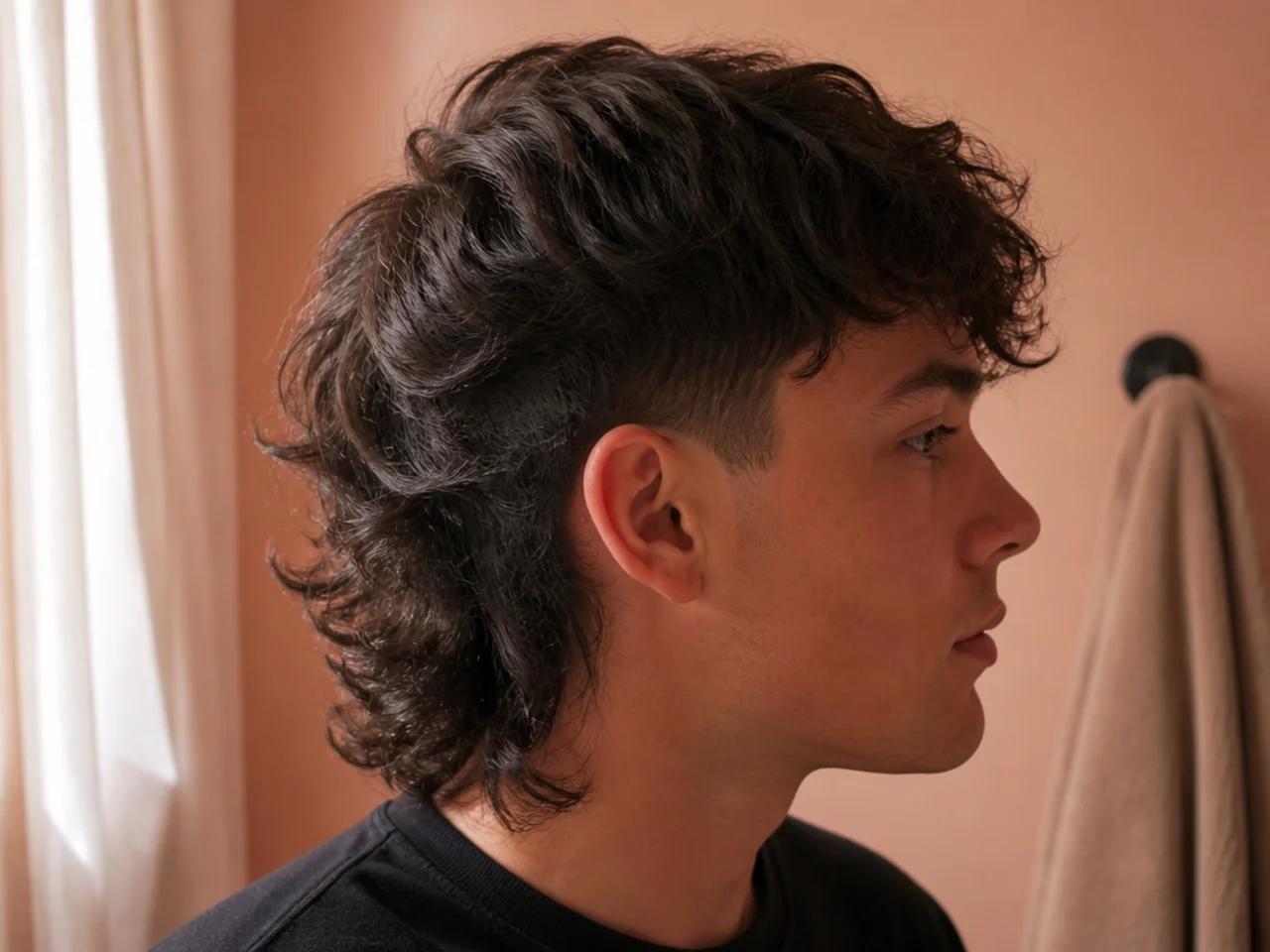
The gradient begins around the temple and runs to skin at the bottom. Because a fade already creates a strong vertical change, the join to the tail can be softer than usual and the cut still reads clearly, which makes it a good pairing for finer hair.
5. Burst Fade Mullet
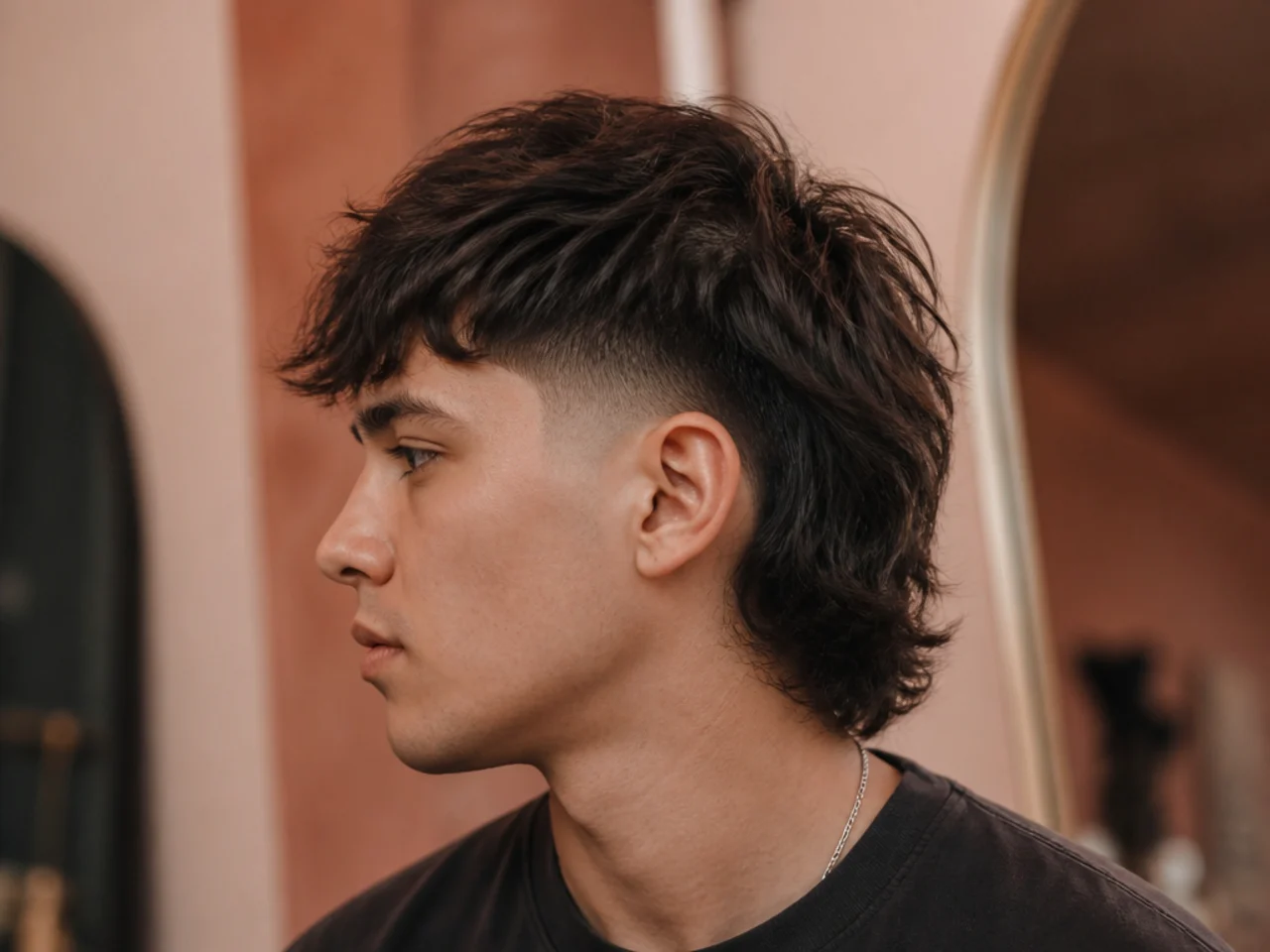
The fade curves around the ear and stops, leaving the hair behind it untouched all the way to the tail. That curve is what makes the burst version work under a mullet — it removes bulk at the ear without cutting into the length that feeds the back.
6. Wolf Cut Mullet
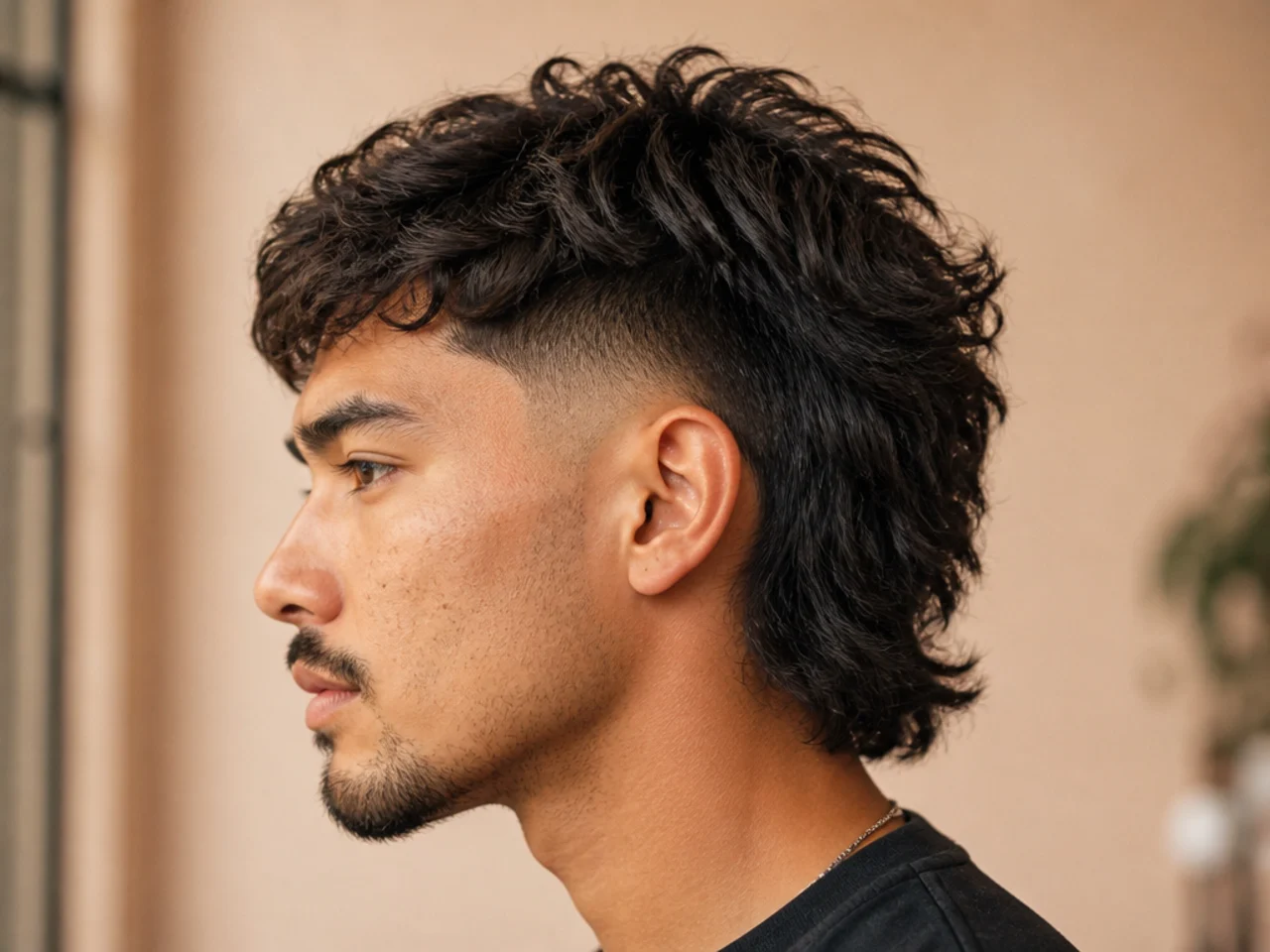
Layers carried up into the crown as well as down the back, covered in full in the wolf cut mullet for men. The crown layers prop up the ones beneath them, which is where the height comes from, and the tail then reads as an extension of that volume rather than a separate piece.

7. Curly Mullet
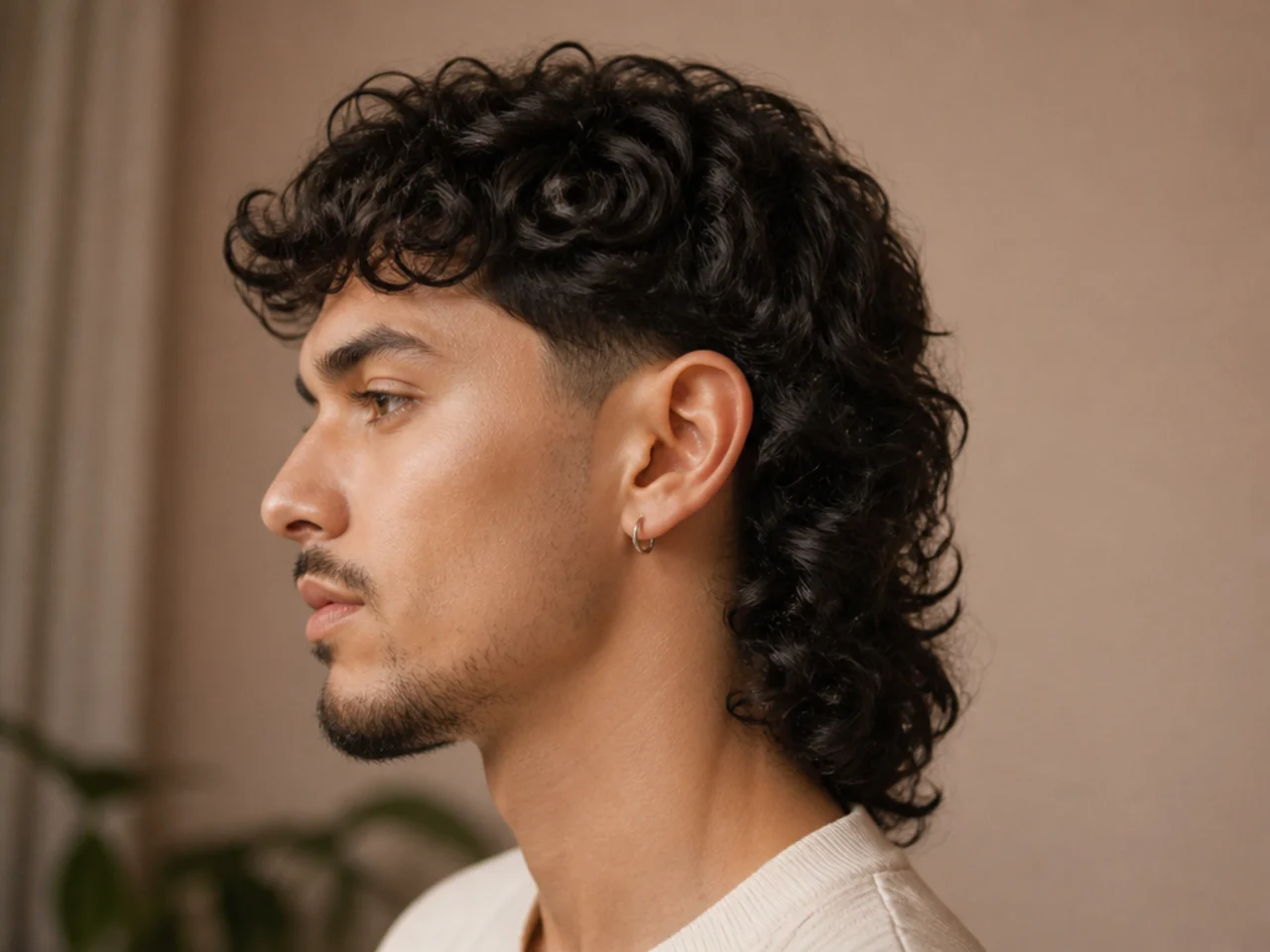
Curl shortens visually by roughly half, so a tail cut at the collar sits at the jaw once it dries. Ask for the tail cut dry and long, because a wet measurement on curly hair is always a guess and always guesses short.
8. Wavy Mullet
The natural bend breaks up the join between the sides and the back, which hides an imperfect transition. That forgiveness cuts both ways: a wavy head needs the disconnection cut harder than a straight one to read the same from a distance.

9. Straight Hair Mullet
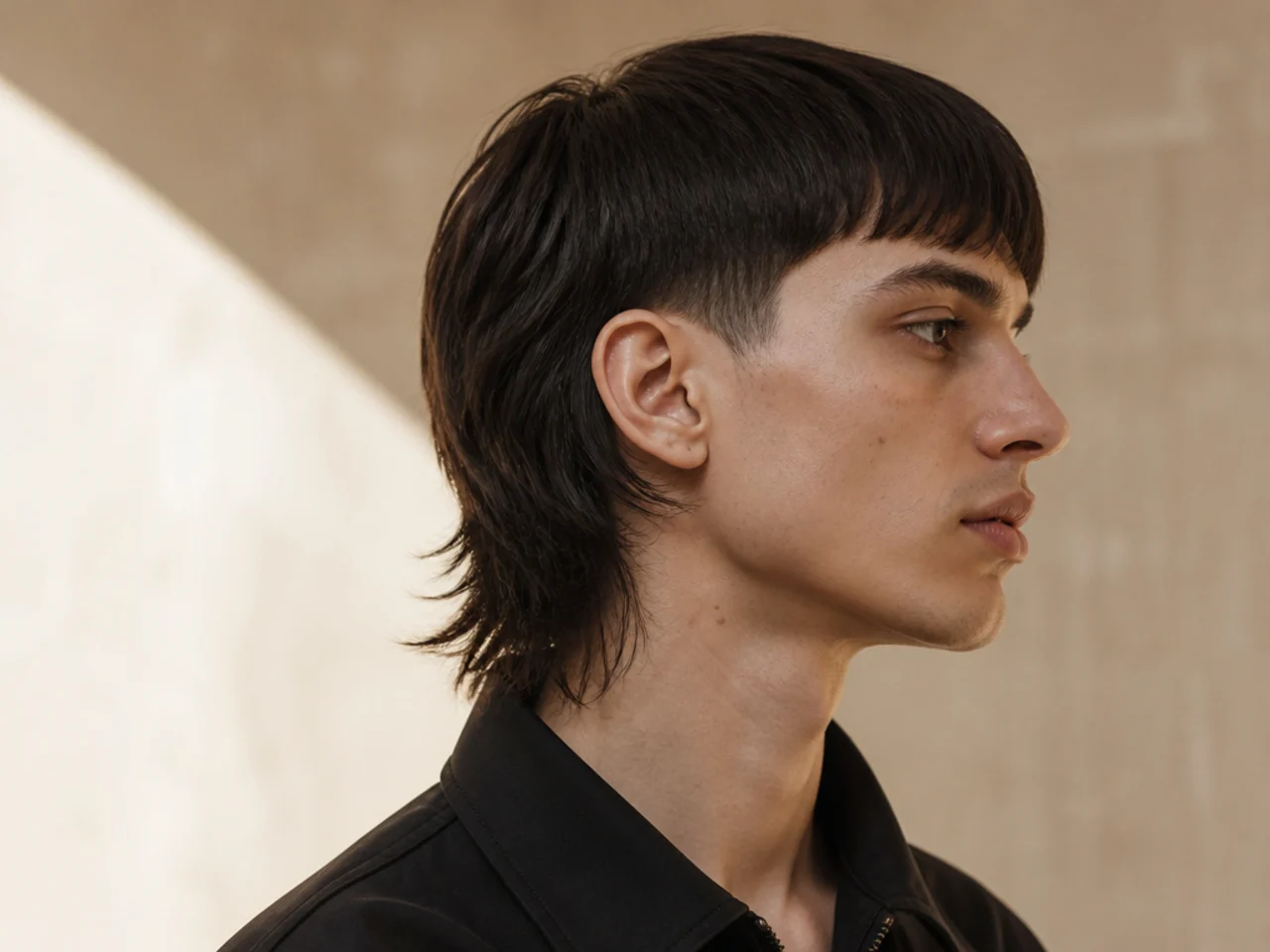
The sharpest possible version and the least forgiving, because a straight strand hangs in one line with no bend to scatter light. Every step in the gradient is read as a step rather than as shadow, so a rushed blend is visible from across a room.
10. Mullet With a Blunt Fringe
A heavy fringe cut straight across the brow, balancing the weight sitting at the back. Without it the profile is back heavy, because all the density in the cut is behind the ears and there is nothing at the front to hold the eye.

11. Mullet With a Curtain Fringe
The front split down the middle and swept to both sides so it frames rather than covers. It works on a mullet because the curtain moves weight sideways toward the temples, which fills the gap the short sides leave and stops the head looking narrow.

12. Disconnected Mullet
No transition at all — the tail sits at full length directly against clipper length sides. The boundary becomes a hard edge you can trace with a finger, which is the loudest a mullet gets, and it needs the line recut every three weeks to keep its edge.
13. Blended Mullet
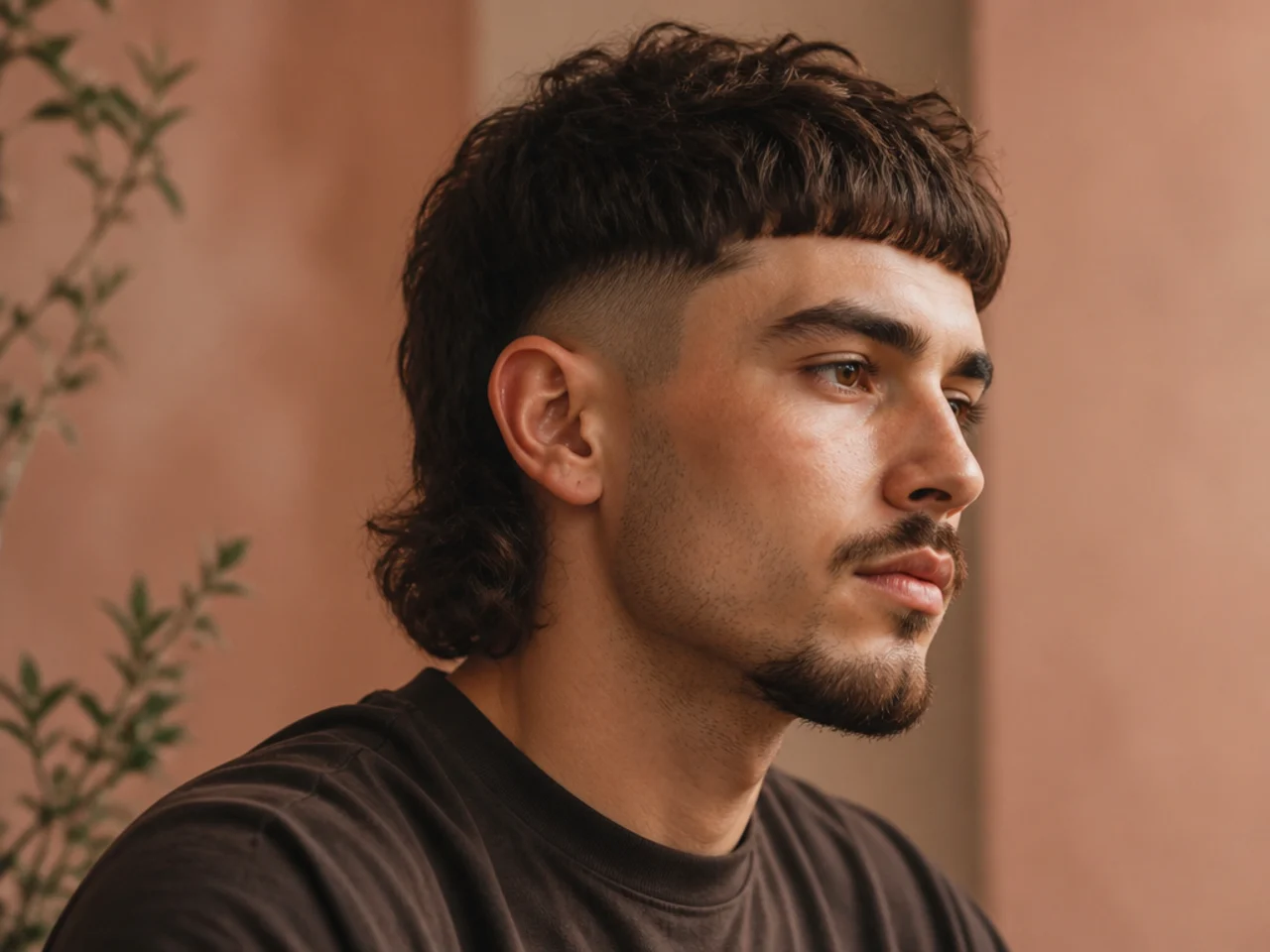
The opposite decision, detailed in the blended mullet and wolf cut for men. The change happens over two inches of graduation, so the cut reads as one shape from the front and only shows its mullet shape in profile, which suits anyone who needs it to pass at work.
14. Long Tail Mullet
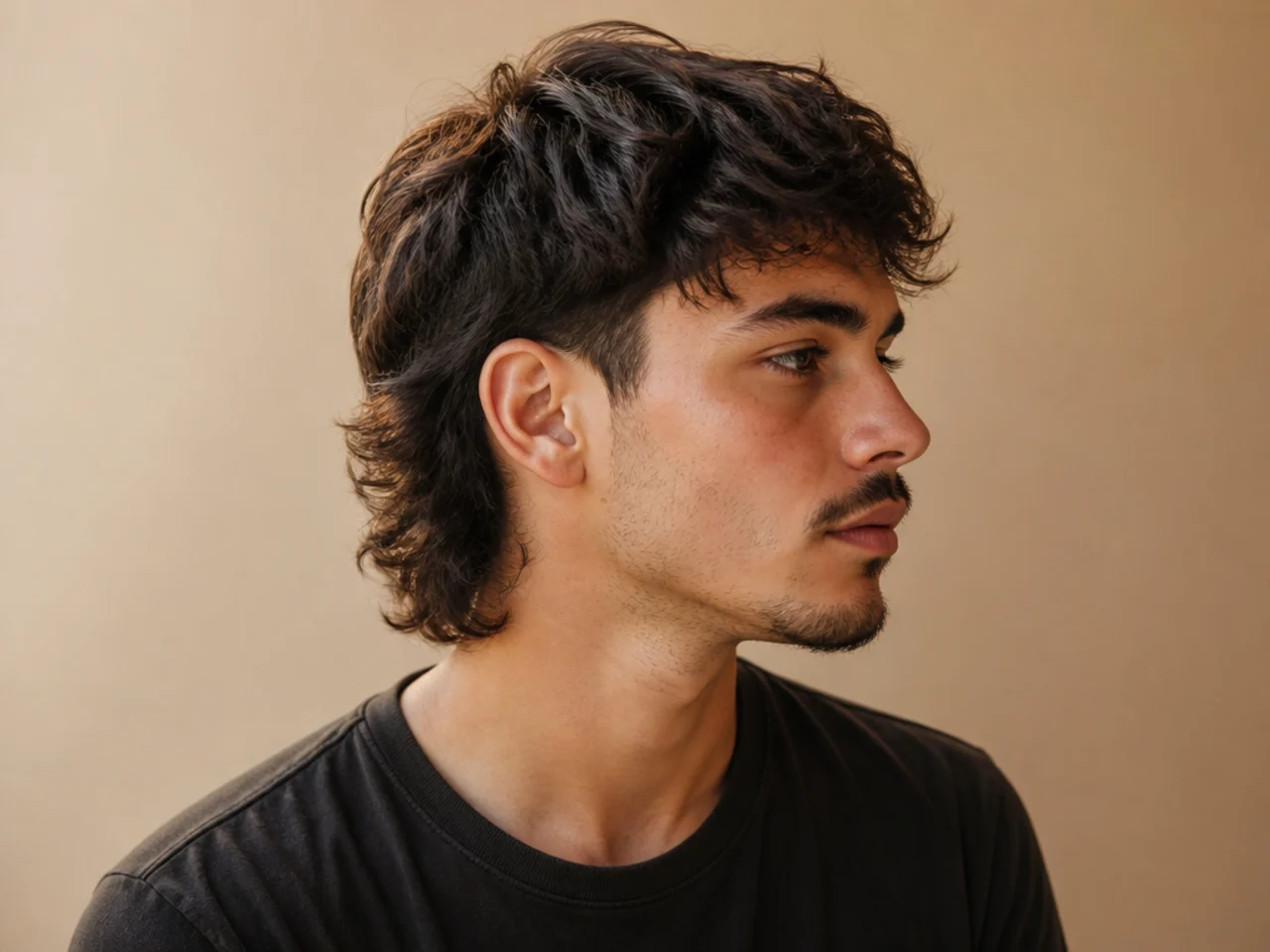
The tail carried past the collar toward the shoulder blades, in the tradition of the full mullet. Past collar length the tail stops hanging free and starts resting on fabric, which bends the ends outward and means it needs conditioning like long hair rather than short.

15. Short Tail Mullet
The tail cut to the nape so it never touches a collar. It holds its shape with no product because nothing is pulling on the ends, and it is the version that survives a helmet, a hood or a uniform collar without needing restyling.

16. Mullet With a Hard Part
A trimmer line cut along the natural parting above the fade. It gives the eye a vertical to read against the horizontal boundary of the mullet, which is what keeps the side of the head from looking like a flat panel.
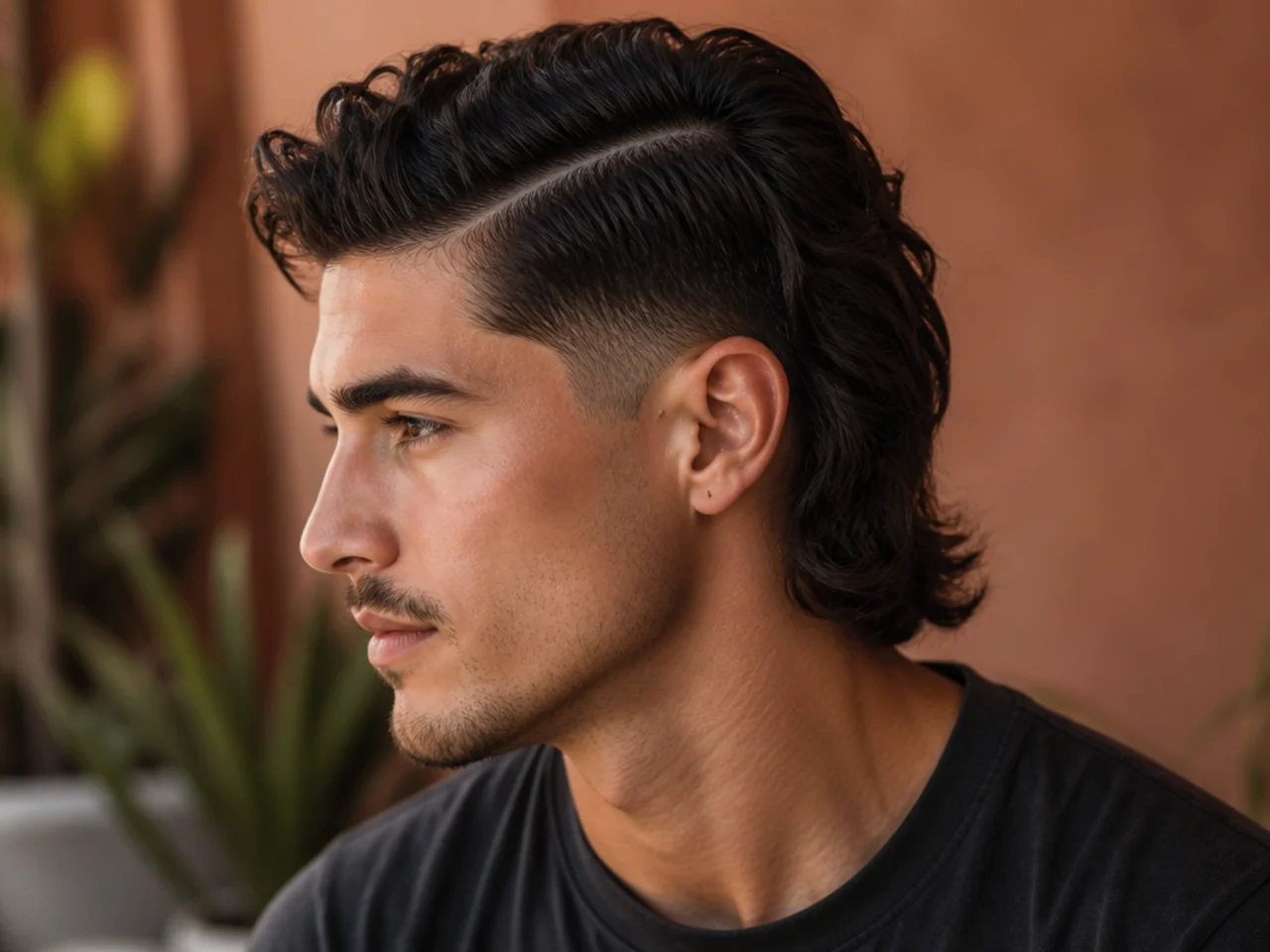
17. Mullet With Long Sideburns
The sideburns left down past the ear rather than squared off at the top of it. They pull the short side of the cut down toward the jaw, which narrows a wide face and stops the clipper work reading as a floating block above the ears.

18. Bleached Tip Mullet
Colour lifted only on the last inch of the tail. Because the lightened section is the part that moves most, the colour appears and disappears as the tail swings, which reads as texture rather than as a block of dye.
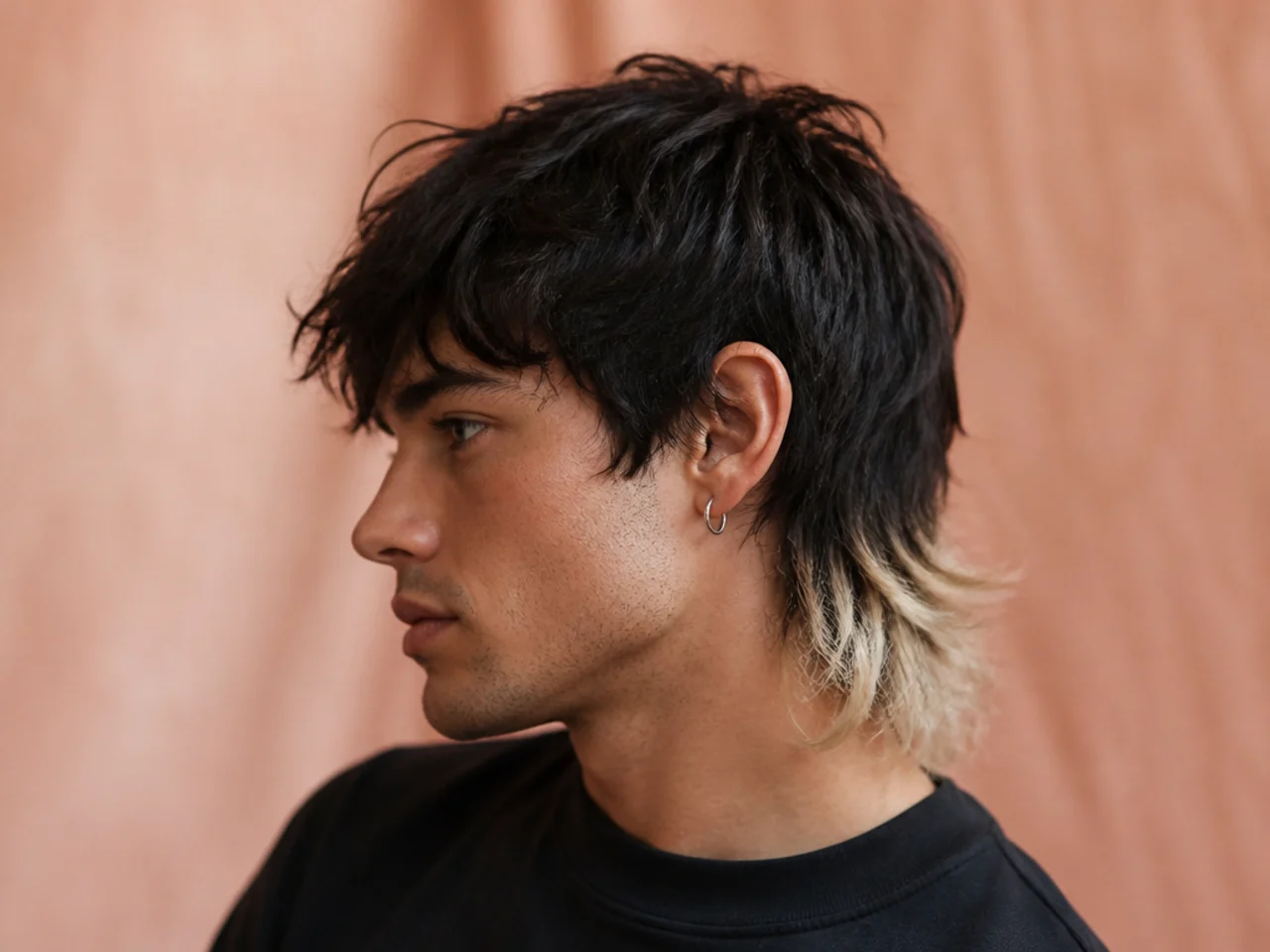
19. Two Tone Mullet
The top left natural and the tail taken several shades lighter or darker. Colour contrast stacks on top of length contrast, so a two tone mullet reads far louder than its actual proportions suggest and needs less disconnection to make the same point.

20. Mullet on Thick Hair
Thick hair holds a boundary sharply but builds a wedge of bulk where the tail meets the sides. Ask for weight removed internally with point cutting rather than a shorter guard, because taking the sides shorter fixes the width and makes the wedge worse.

21. Mullet on Fine Hair
Fine hair shows scalp at short guards, so keep the sides at a number two rather than a one. Six millimetres of stubble sits close enough together to read as coverage, where three millimetres on a sparse head shows skin between the strands in daylight.

22. Mullet With a Beard
The sides run down into the beard as one continuous gradient. The join has to land where beard density genuinely begins, usually just below the earlobe, or the blend runs out of hair halfway and leaves a bare band along the jaw.

23. Mohawk Mullet
The sides taken short right up to the crown so the length runs as a strip from the fringe to the tail. Narrowing the top exaggerates the height of everything left standing, which is why this version looks taller than a mullet with the same top length.
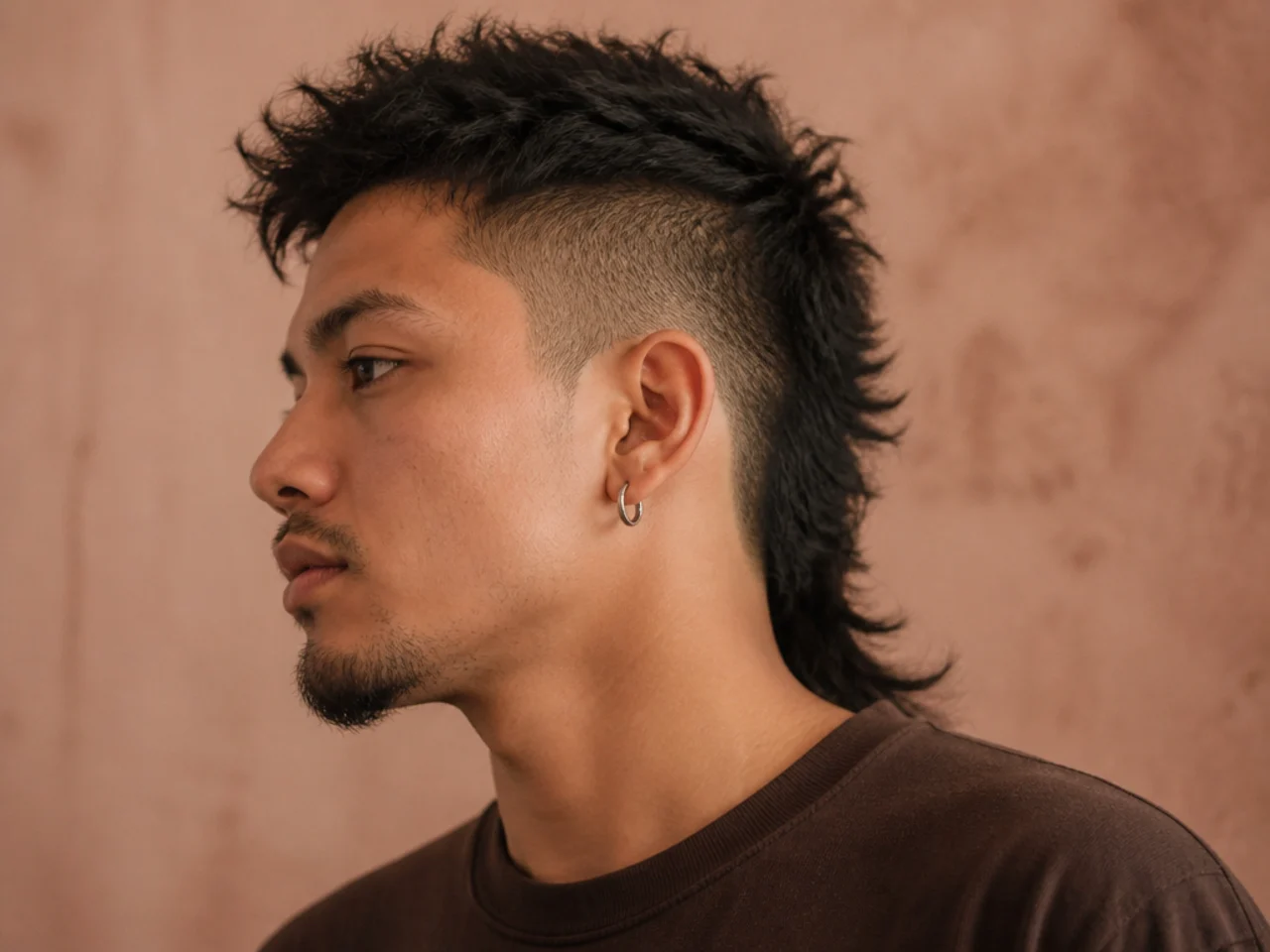
24. Shaggy Mullet
Layers cut throughout with the boundary deliberately softened, close to the soft mullet. It is the version that survives growing out, because the layers keep working as they lengthen while a hard disconnection simply closes up and vanishes.

25. Mullet at Week Eight
The sides have grown into the tail and the boundary has become a gradient. This is the honest picture of what a mullet becomes, and it is a good look in its own right — it is simply a shag now, and asking for a mullet again means recutting the sides rather than the tail.

Styling and Upkeep
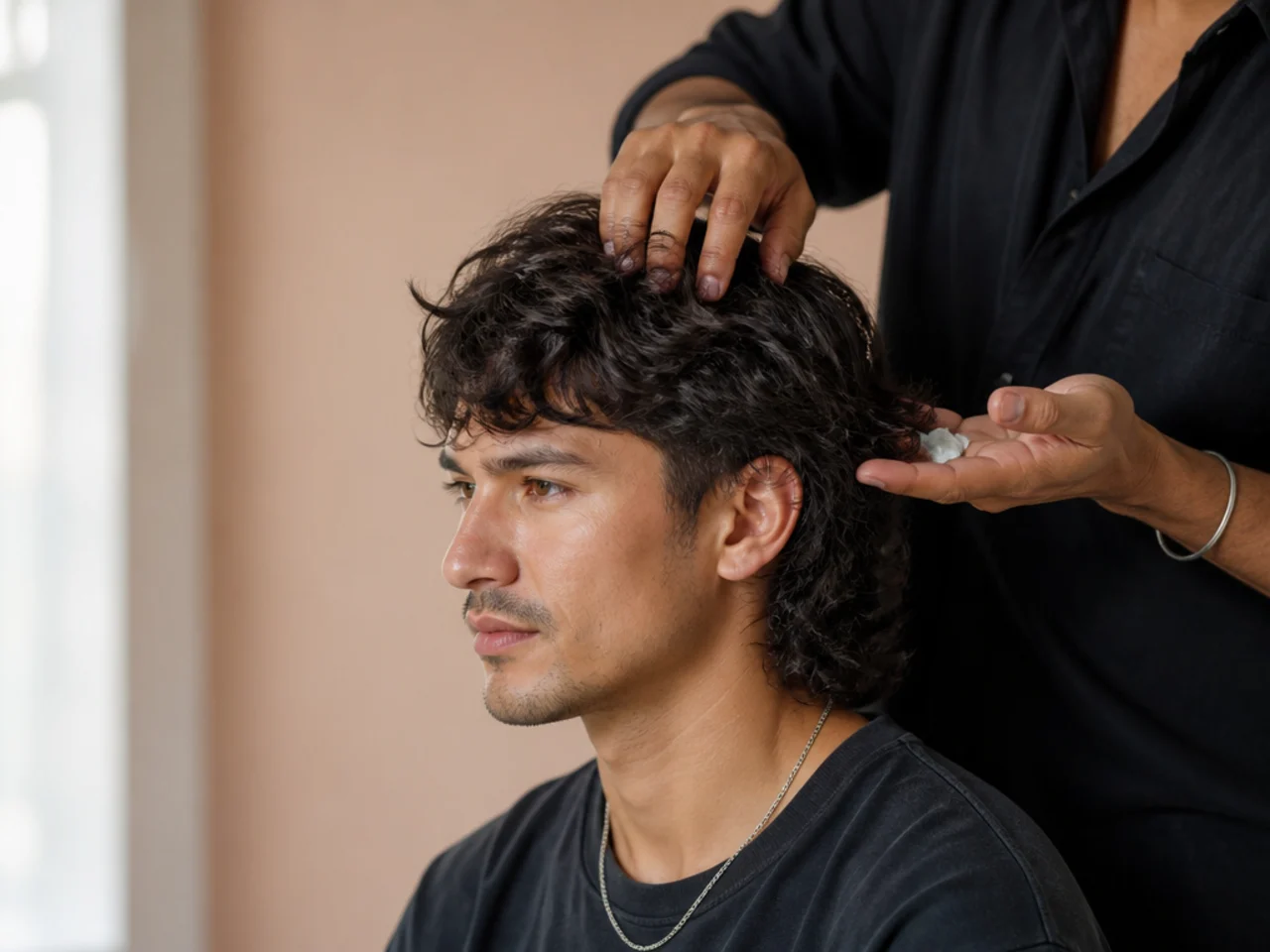
Book the sides and the tail separately. The sides need three to four weeks and the tail needs eight to twelve, and treating them as one appointment wastes half of it.
Dry the tail downward and the crown upward. Hair sets in the direction it dries, so a single pass over the whole head flattens the half that needs height.
Condition the tail only. It is the oldest hair on your head and the only part long enough to need it.
Keep a photograph of the boundary. Where the disconnection sits is the one measurement worth carrying to the next appointment.
Use a matte paste, not a wax. Shine on a mullet reads as grease because the tail already reflects along its whole length.
Mistakes to Avoid
Asking for a long tail and nothing else. Length is not what makes it a mullet — the side length is.
Going to skin without meaning to. A zero is bare scalp by definition, and it halves the window before regrowth shows.
A hard disconnection on fine hair. There is not enough density in the tail to hold the line, so it looks patchy rather than sharp.
Cutting a curly tail wet. Curl draws up by around half as it dries, so a wet measurement lands the tail two inches shorter than agreed.
Letting the sides run past five weeks. They grow into the tail and the mullet quietly becomes a shag without anyone deciding to.

FAQ
What makes it a mullet? The gap between the sides and the back, not the tail length.
How short should the sides go? A number two at six millimetres reads clearly and grows out cleanly.
How often? Sides every three to four weeks, tail every eight to twelve.

Final Thoughts
Describe the cut in two numbers and a word: the guard on the sides, the length of the tail, and whether the join is blended or disconnected. That is enough for any barber to cut it once, and enough for you to have it repeated.
For the full shape and its variants see the mens mullet haircut, and for the version built over a fade see the mullet fade. More in Mullet and Wolf Cut.