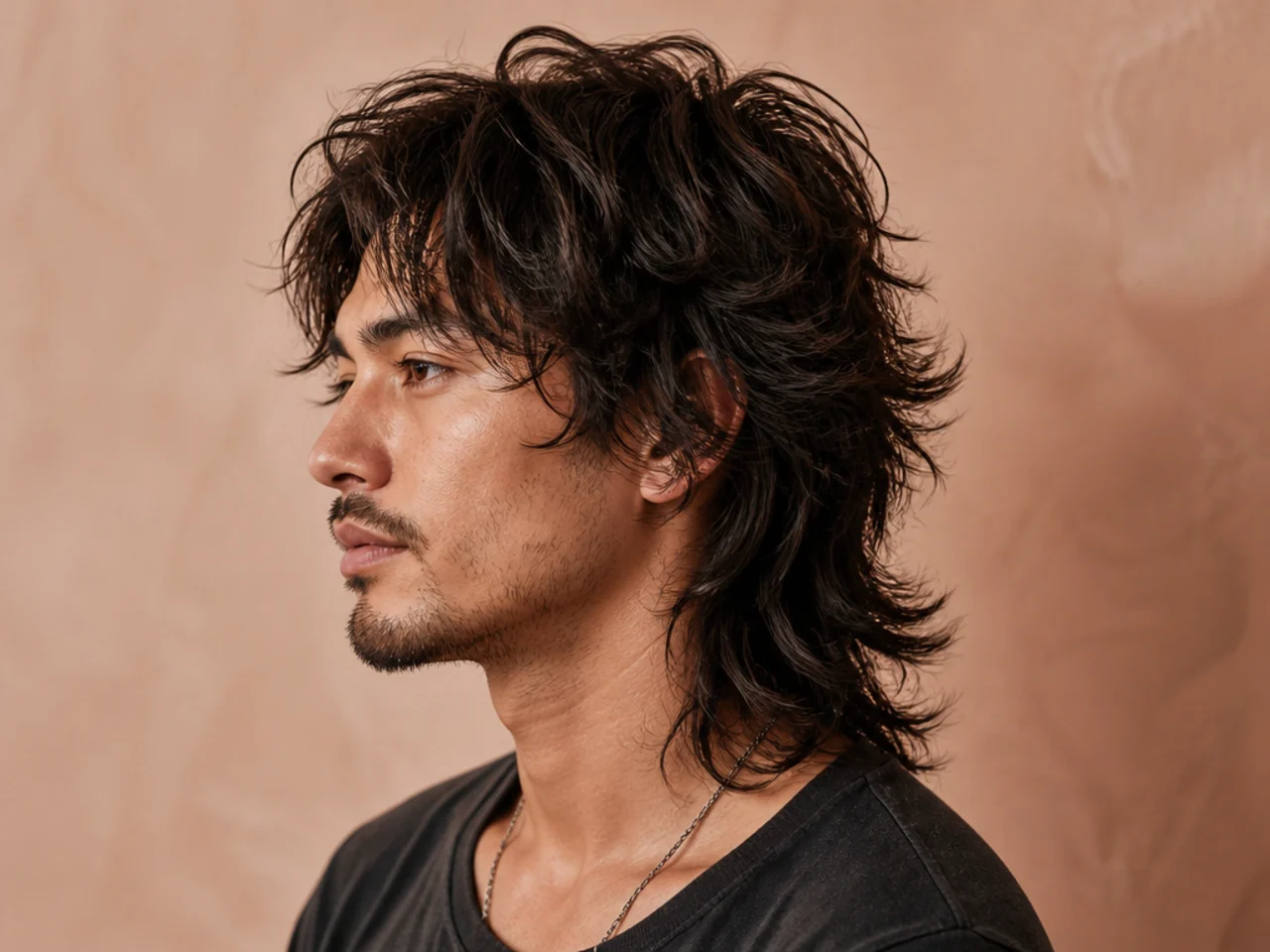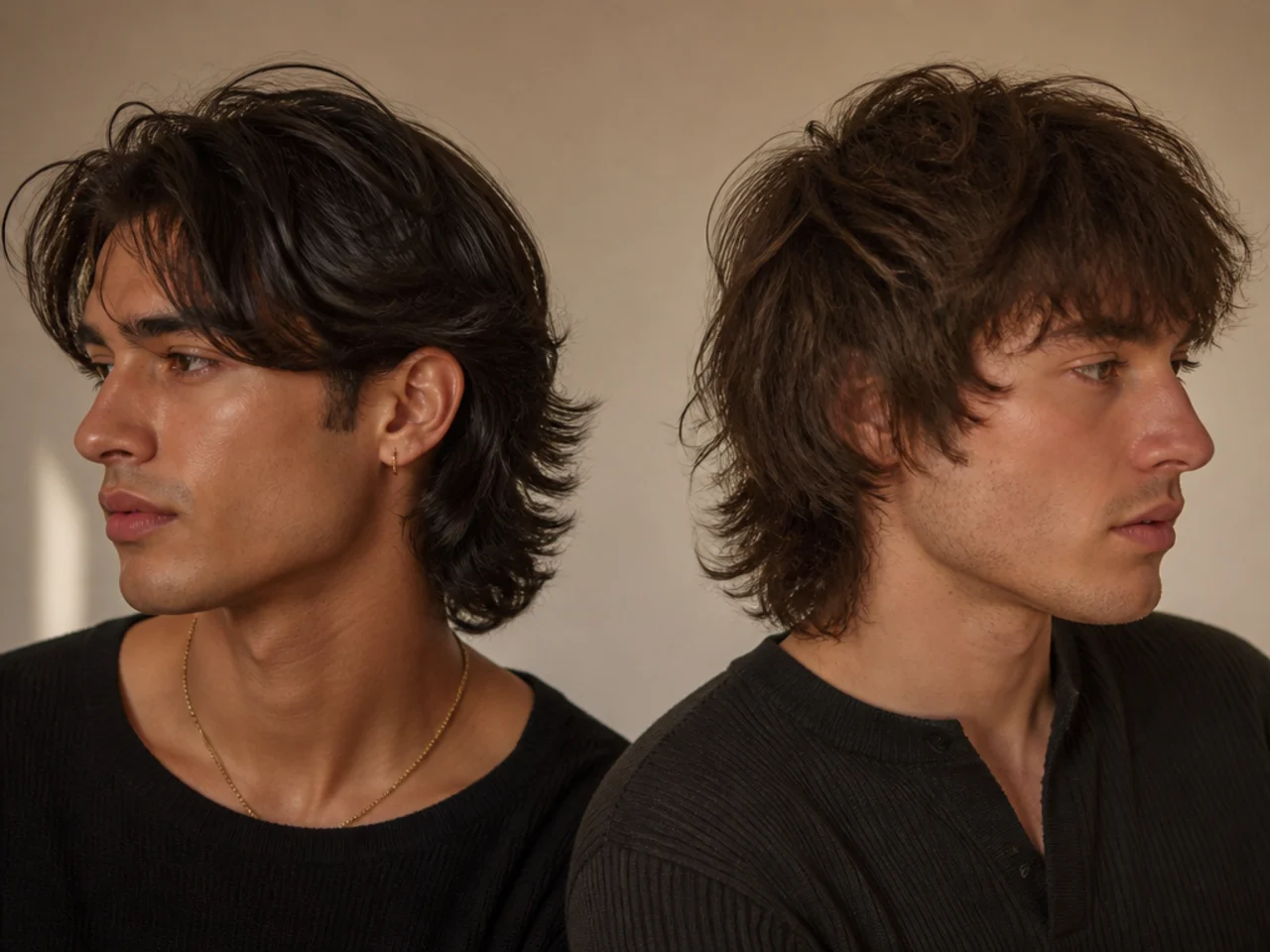
20 Middle Part Mullet Looks That Frame Any Face
Twenty centre parted mullets, and the measurement that decides all of them — where the shortest front piece stops. Cheekbone widens the top of the face, jaw narrows it, and anything shorter stops framing and starts fringing.
In this article · 27
- What a Middle Part Does to a Mullet
- Choosing Your Front Panel Length
- The 20 Middle Part Mullet Looks
- 1. Classic Centre Part Mullet
- 2. Curtain Fringe Mullet
- 3. Blunt Front Panels
- 4. Cheekbone Length Frame
- 5. Jaw Length Frame
- 6. Curly Middle Part Mullet
- 7. Wavy Middle Part Mullet
- 8. Straight and Sleek Middle Part Mullet
- 9. Fine Hair Middle Part Mullet
- 10. Thick Hair Middle Part Mullet
- 11. Short Mullet With a Middle Part
- 12. Long Mullet With a Middle Part
- 13. Shaggy Middle Part Mullet
- 14. Wolf Cut Middle Part Mullet
- 15. Middle Part Mullet With a Money Piece
- 16. Middle Part Mullet on a Round Face
- 17. Middle Part Mullet on a Long Face
- 18. Middle Part Mullet With a Tapered Nape
- 19. Middle Part Mullet With a Disconnected Back
- 20. The Grown Out Middle Part Mullet
- Styling and Upkeep
- Mistakes to Avoid
- FAQ
- Final Thoughts
A middle part mullet is not a side part moved two inches across, and cutting the front before you know that is how the frame ends up in the wrong place.
A centre parting splits the front weight into two panels. Each one falls against a cheek, so the shortest piece at the front decides where your face gets framed and how wide the top third reads.
The mullet still lives at the back. The parting changes nothing about the length behind the ears, which means a middle part mullet can look almost conservative from the front and unmistakable from behind.
What a Middle Part Does to a Mullet
It halves the front weight. One side parting drops the whole fringe onto one cheek. A centre part gives each side half as much hair, so both panels move more and sit closer to the face.
It draws a vertical line down the middle of the face. That line reads as length. On a round face it is flattering, on an already long face it needs width in the mid lengths to balance it.
It lowers the front and leaves the back alone. Contrast in a mullet is the gap between crown length and back length, so if the parting flattens the top, the crown has to come shorter to keep the shape reading.
It exposes the parting itself. A centre part runs along the strip where the hair grows out in two directions, so it shows more scalp than a side part on the same head. Density at the front matters more here than anywhere else.

Choosing Your Front Panel Length
Cheekbone is the shortest useful point. The panel still has enough weight to lie against the face, and it pushes the eye up toward the top of the cheek.
Jaw is the longest. Below that, the panel joins the rest of the length and stops separating from it, which is the whole point of a frame.
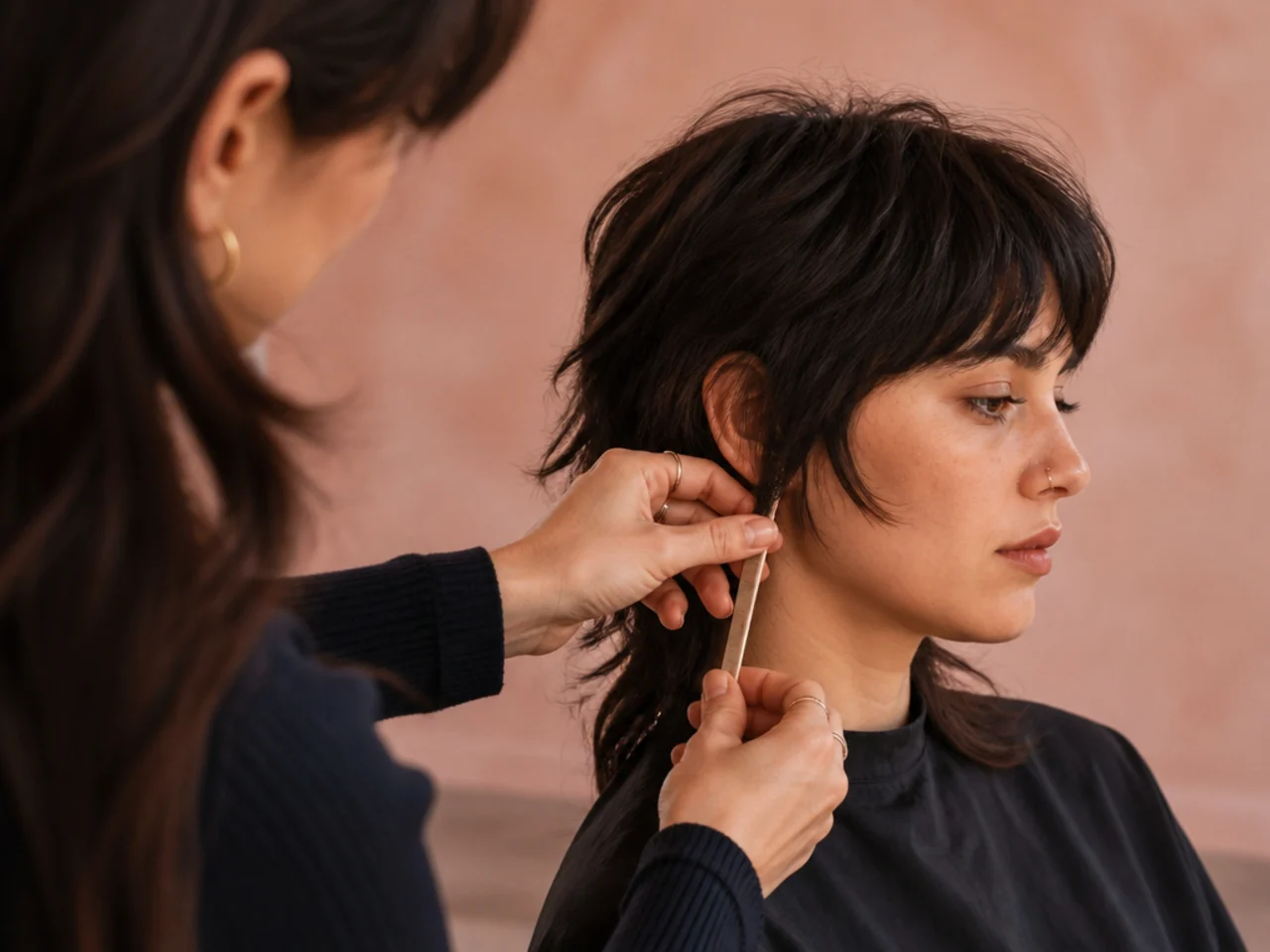
Match the shortest piece on both sides dry. Wet hair hangs longer than dry hair on every texture, and any difference between the two sides is doubled by a centre parting because they sit next to each other.
Decide the back separately. Front panel length and mullet length are two independent measurements. Give the barber both, in the order front then back, so neither gets cut to match the other by accident.
The 20 Middle Part Mullet Looks
1. Classic Centre Part Mullet
The parting sits dead centre, the two front panels graze the cheekbone, and the back is left two to three inches longer than the crown. Splitting the weight evenly is what stops either side flipping forward across the face during the day.
2. Curtain Fringe Mullet
The front is cut shorter at the centre and progressively longer toward the outside, so the two halves fall open instead of hanging as one flat sheet. That graduation is what makes a curtain sweep rather than sit, and it is cut into the panel rather than styled into it.

3. Blunt Front Panels
No internal graduation at all, just a clean edge across the bottom of each panel. The weight line at that edge is what holds the hair flat against the cheek, which is why blunt panels suit fine hair better than textured ones.

4. Cheekbone Length Frame
The shortest front piece stops level with the top of the cheekbone. The eye follows the end of a shape, so ending the panel high pulls attention to the upper third of the face and makes the cheekbones read wider.

5. Jaw Length Frame
The panels run down past the cheek and stop at the jaw, drawing two long verticals either side of the face. Those verticals narrow the face visually, which makes this the better option on round and heart shapes and the riskier one on a long face.

6. Curly Middle Part Mullet
Curls fall toward whichever side carries more weight, so a centre part only stays put if both front sections are cut to the same length while dry. Curly hair springs up by a third to a half as it dries, so a panel cut wet at the jaw can land at the cheekbone.

7. Wavy Middle Part Mullet
The easiest texture for this cut, because the S bend already pushes each panel away from the face and holds the parting open. Waves also hide small length differences between the two sides, since the bend scatters the eye before it can compare ends.

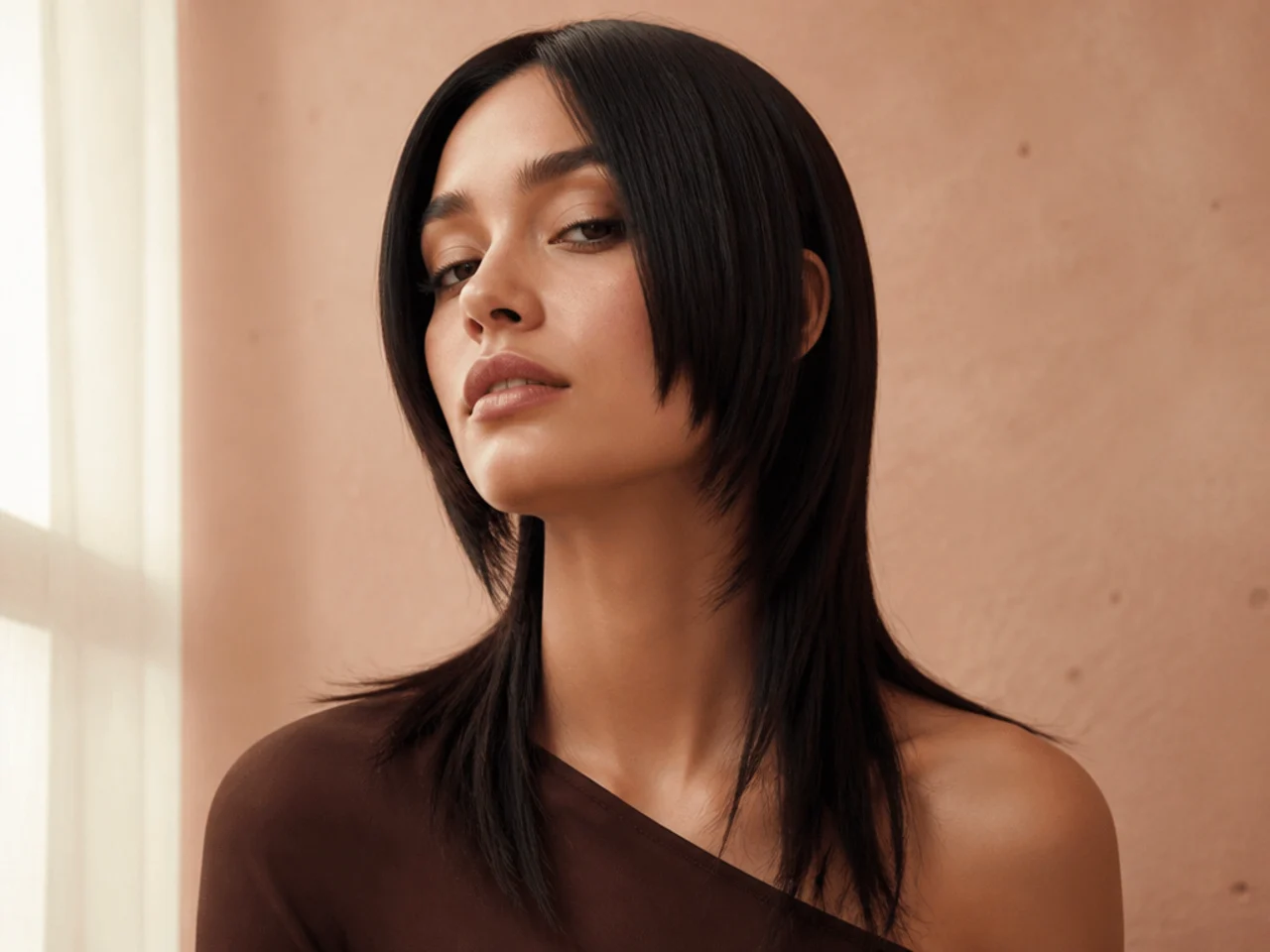
8. Straight and Sleek Middle Part Mullet
Straight hair gives the cleanest parting line and the least forgiving one, because every millimetre of difference between the two panels sits in plain view. It also lies flat at the crown, so the crown has to be cut shorter than usual to keep the contrast with the back.
9. Fine Hair Middle Part Mullet
The parting channel is the problem, not the length. Dry the roots forward against their growth direction and split them with your fingers at the last moment, so the hair stands up out of the parting instead of lying down either side of it.

10. Thick Hair Middle Part Mullet
Density holds the parting open without help, but it also swings the two panels forward as solid blocks. Weight has to come out of the interior about two inches below the parting rather than off the ends, or the panels lose the edge that keeps them flat.

11. Short Mullet With a Middle Part
Crown and sides kept close, the back stopping at the nape. Because the back is short, the contrast has to come from the crown being shorter still, and the front panels are the only piece long enough to do any framing.

12. Long Mullet With a Middle Part
The back reaches the shoulder blades while the front stays at the cheek. The larger the gap between those two measurements, the more the cut depends on a smooth transition through the sides, or it reads as two haircuts sharing a head.

13. Shaggy Middle Part Mullet
Layers run through the whole shape rather than sitting only at the crown, so the outline softens and the mullet stops having a single obvious step. The trade is volume at the ends, which fine hair cannot afford and thick hair usually needs.

14. Wolf Cut Middle Part Mullet
Short crown layers sit on top of longer ones and prop them up, which is where the volume through the top comes from. Combined with a centre part, that lift is what stops the parting flattening the crown and killing the mullet contrast.

15. Middle Part Mullet With a Money Piece
The two front panels lightened a level or two against the base. Colour placed exactly where the parting splits the hair doubles the visual separation, so the frame reads harder without a single extra centimetre coming off the length.

16. Middle Part Mullet on a Round Face
The parting draws a vertical down the centre and the panels draw two more either side, and three verticals add height to a face that is wider than it is long. Keep the panels at jaw length so they carry the line past the widest point.

17. Middle Part Mullet on a Long Face
The same verticals work against you here, so the fix is width rather than length. Keep the panels short enough to end at the cheekbone and let the mid lengths carry volume outward, which puts horizontal weight across the part of the face that needs it.

18. Middle Part Mullet With a Tapered Nape
The hair under the mullet shortened gradually but never taken to skin, usually finishing around a number one at three millimetres. Because there is still length at the bottom, the line blurs slowly and the shape still reads correctly three to four weeks later.
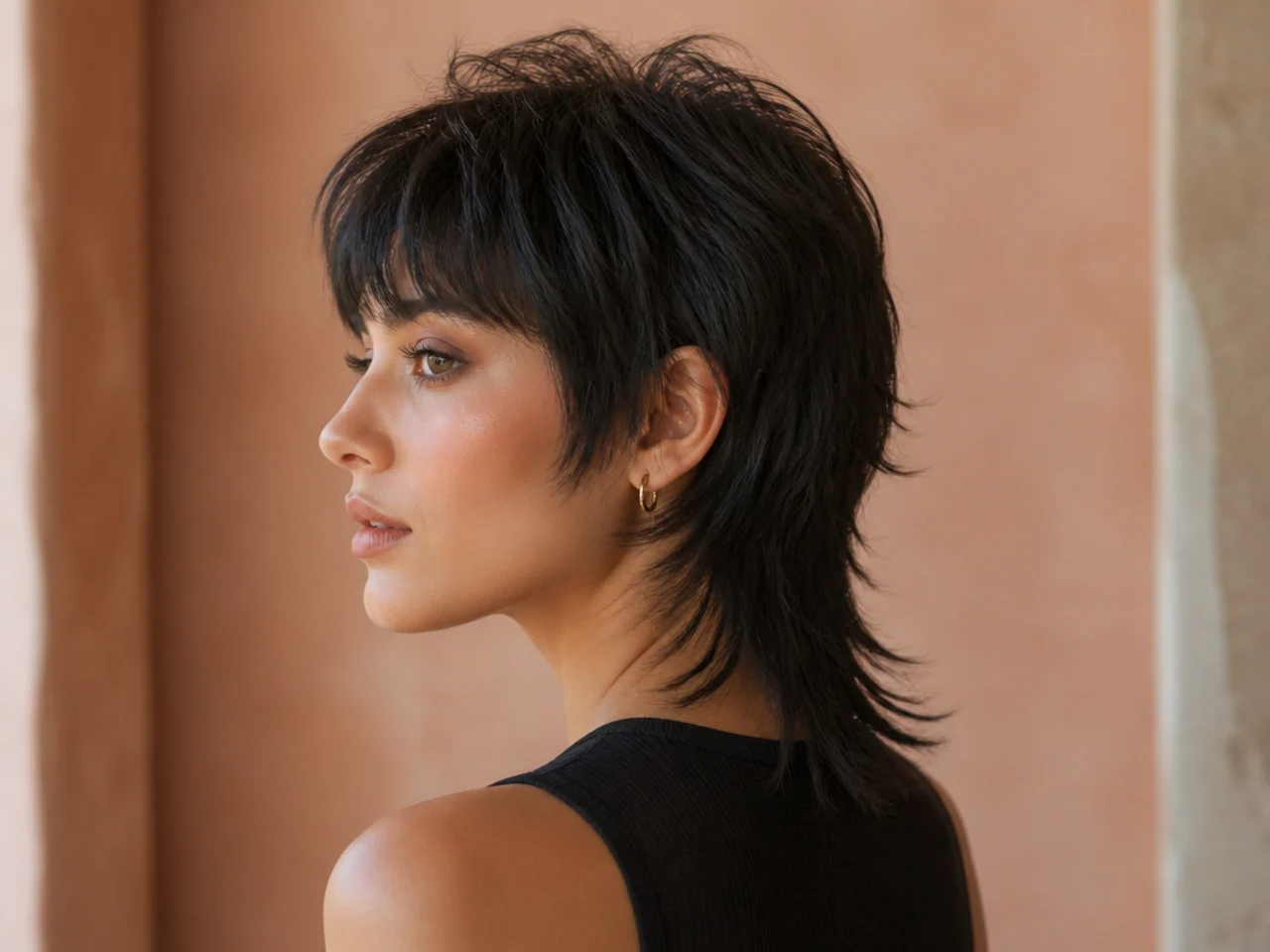
19. Middle Part Mullet With a Disconnected Back
No blend at all between the crown and the length behind it, just a deliberate step. Disconnection makes the mullet unmistakable, but it also means the two sections grow at their own rate and the step moves, so it needs resetting every four weeks.

20. The Grown Out Middle Part Mullet
Six weeks in, the crown has caught up with the back and the front panels have dropped past the jaw. It is a real look rather than a failure, but it is a different one, and the frame is gone until the shortest front piece is put back where it started.

Styling and Upkeep
Dry the roots forward, then split. Drying with the parting already in place sets the hair flat either side of it and widens the channel.
Curl the front panels away from the face. Away opens the frame, toward it closes it and hides the cheekbone the panel was cut to show.
Leave the ends of the panels alone. Product on the last inch drags the weight down and the panel stops sitting against the cheek.
Trim the front and the back on different schedules. The panels lose their point at six weeks, the mullet holds until ten.
Photograph the parting on a good day. It is the one variable nobody can describe accurately at the next appointment.

Mistakes to Avoid
Cutting the front panels above the cheekbone. Above that line the panel has no weight left to hold it down, so it lifts and becomes a fringe.
Cutting the two sides wet. Wet hair hangs longer, and a centre part puts both sides side by side where the difference is impossible to miss.
Forcing the part straight through a crown spiral. The hair will pull back to its own direction within an hour. Set the part slightly off centre to sit with the growth instead of against it.
Layering the front panels on fine hair. Every layer takes density out of the edge that holds the panel flat. Keep the panels blunt and take the weight from the back instead.
Letting the crown grow into the back. Once those two lengths meet, the contrast is gone and what is left is long hair with a soft outline.

FAQ
Cheekbone or jaw? Cheekbone widens the top of the face, jaw narrows the whole of it.
Will it hold on curls? Only if both front sections are cut dry to the same length.
How often does it need cutting? The front at six weeks, the mullet itself at ten.

Final Thoughts
Give the two measurements separately. Front panels at the cheekbone or the jaw, back two or three inches past the crown, and the parting placed where your crown already wants it. Those three facts describe the cut completely, and every look above is a change to one of them.
For the same parting cut on shorter hair see the middle part haircut for men, and for how the parting behaves once the length grows out see the middle part flow haircut. More in Mullet and Wolf Cut.