30 Gorgeous Mullet Looks For Women Of Every Age
Thirty mullets for women, sorted by how loud they read. The variable is not age, it is the ratio between the shortest crown layer and the longest tail, and how hard the join between them is cut.
In this article · 37
- What Actually Makes a Mullet
- How to Set the Contrast
- The 30 Mullet Looks
- 1. Soft Modern Mullet
- 2. Shag Mullet
- 3. Wolf Cut Mullet
- 4. Bixie Mullet
- 5. Short Mullet
- 6. Long Mullet
- 7. Curly Mullet
- 8. Wavy Mullet
- 9. Coily Mullet
- 10. Straight Blunt Mullet
- 11. Mullet on Fine Hair
- 12. Mullet on Thick Hair
- 13. Mullet With Curtain Bangs
- 14. Mullet With a Blunt Fringe
- 15. Mullet With Baby Bangs
- 16. Mullet With Face Framing Layers
- 17. Mullet With a Middle Part
- 18. Mullet With a Deep Side Part
- 19. Mullet With a Money Piece
- 20. Balayage Mullet
- 21. Root Shadow Mullet
- 22. Copper Mullet
- 23. Bleached Mullet
- 24. Silver Mullet
- 25. Mullet With a Hidden Undercut
- 26. Mullet With Tapered Sides
- 27. Rounded Tail Mullet
- 28. Squared Tail Mullet
- 29. Mullet Tucked Behind the Ears
- 30. Mullet at Twelve Weeks
- Styling and Upkeep
- Mistakes to Avoid
- FAQ
- Final Thoughts
A mullet is judged by the gap between its shortest and longest points, which is why the same haircut can read as a statement on one head and as a soft layered shape on another.
The contrast ratio is the whole decision. A three inch crown against a mid back tail is a loud cut. The same crown against a collarbone tail is a shag with an attitude.
The join matters as much as the lengths. A blended gradient gives the eye nowhere to stop, while a hard disconnection puts a visible step in the silhouette and doubles the volume of the statement.
What Actually Makes a Mullet
Short at the front and crown, long at the back. That is the definition. Everything else — texture, colour, fringe — is a variable laid on top of it.
The tail carries the outline. It is the only section long enough to hold a shape at a distance, so its bottom edge does most of the work in a photograph.
The crown carries the volume. Short layers there rest on the longer ones below and hold them off the scalp. Cut them too long and the lift disappears.
The disconnection sets the register. Blended reads modern and quiet, stepped reads deliberate and loud. Both are correct cuts, and they are not the same request.

How to Set the Contrast
Name both lengths in inches. Say how short the crown goes and where the tail lands. Two numbers remove almost all the ambiguity from the appointment.
Choose blended or stepped before the first cut. Blending a step later is easy. Restoring length to create a step is six months of growing at roughly half an inch a month.
Pick the tail edge to match your texture. A blunt edge holds on straight hair and disappears on curly hair, where a rounded perimeter keeps every curl the same distance from the scalp.
Decide how much of the face you want covered. A fringe added to a mullet moves the whole balance forward, which shortens the face and softens the top of the silhouette.
The 30 Mullet Looks
1. Soft Modern Mullet
The disconnection replaced by a graduated blend, so the eye cannot find a single edge anywhere in the cut. That gradient is what makes the shape read as a haircut rather than a costume, and it is the version that carries at any age.
2. Shag Mullet
Layers stacked from the crown all the way down instead of concentrated at the top. The volume ends up spread across the whole head rather than piled at the crown, which is why a shag mullet looks wide where a classic one looks tall.

3. Wolf Cut Mullet
Short crown layers propping up longer ones, with a mullet outline underneath. It is the highest volume version available, since the lift is mechanical rather than styled, and it is also the one that needs the most precise layer placement.

4. Bixie Mullet
Pixie length through the sides and crown with a longer nape left behind. The extreme ratio makes it the boldest cut here, and the shortest one to grow out, since the sides have the furthest to travel before they reach the jaw.
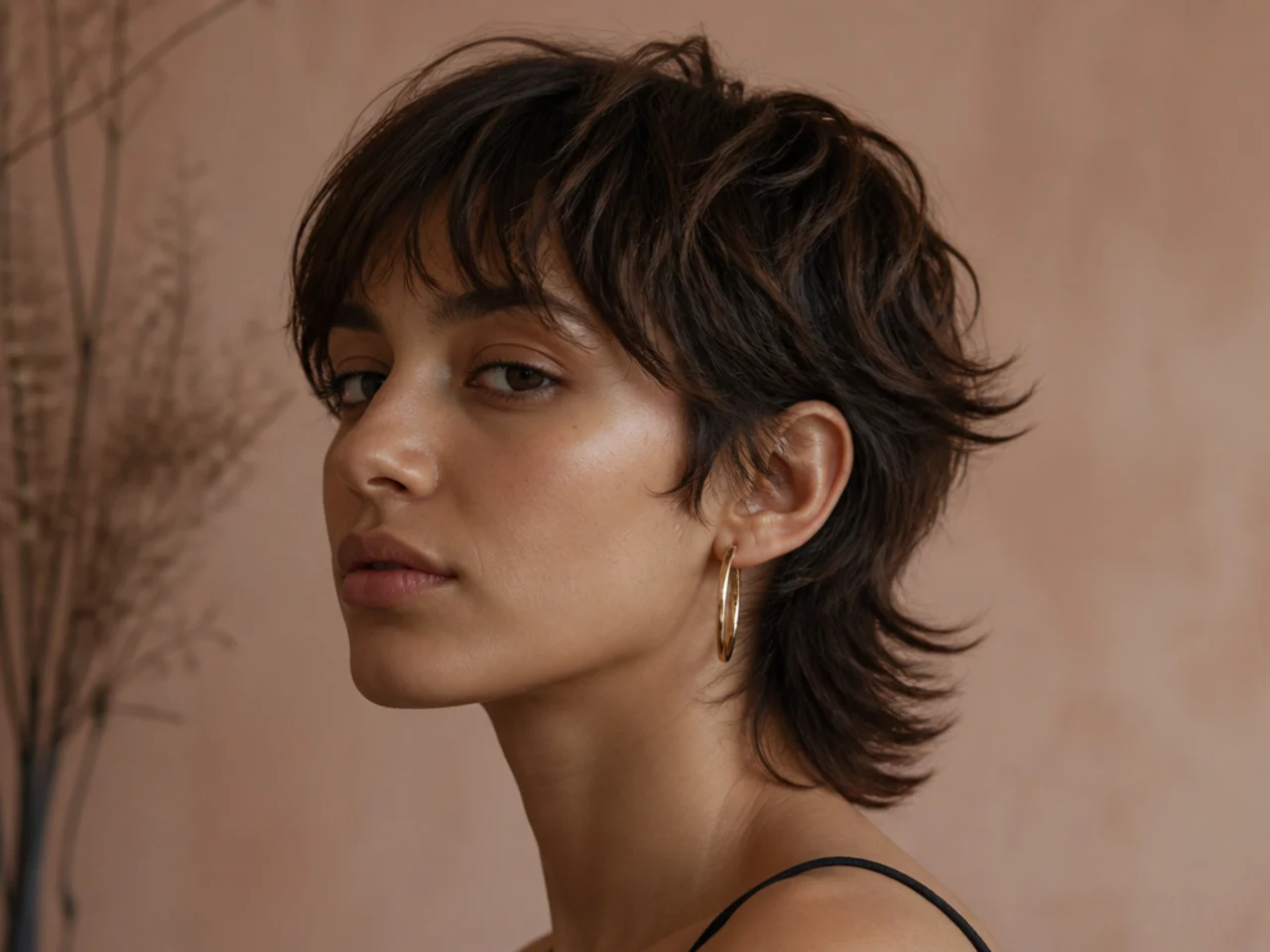
5. Short Mullet
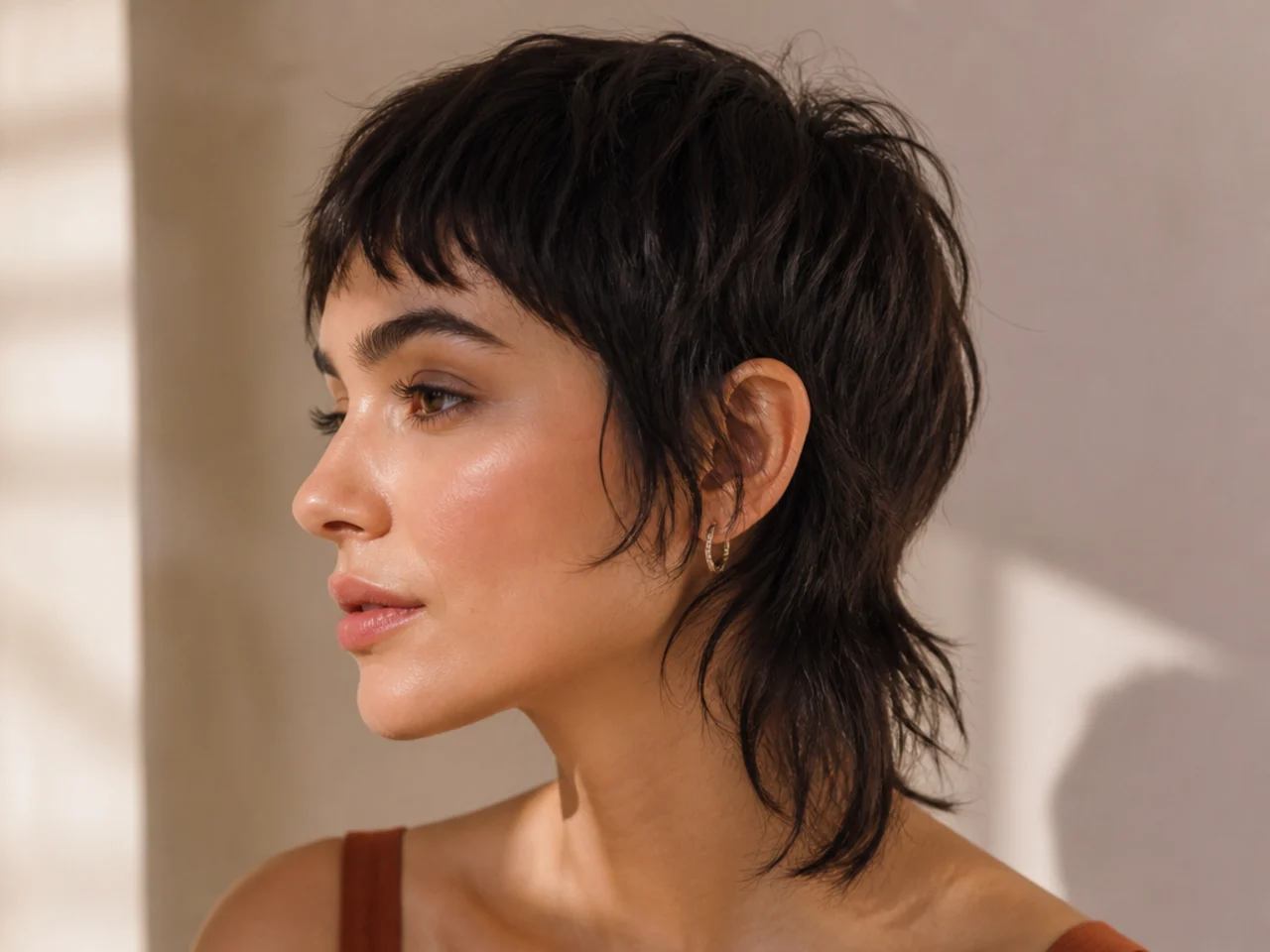
Everything above the jaw except the tail, which finishes at the nape. Keeping the whole cut high concentrates the visual weight around the face, so it reads as a short haircut with a detail rather than as a long cut with short bits.
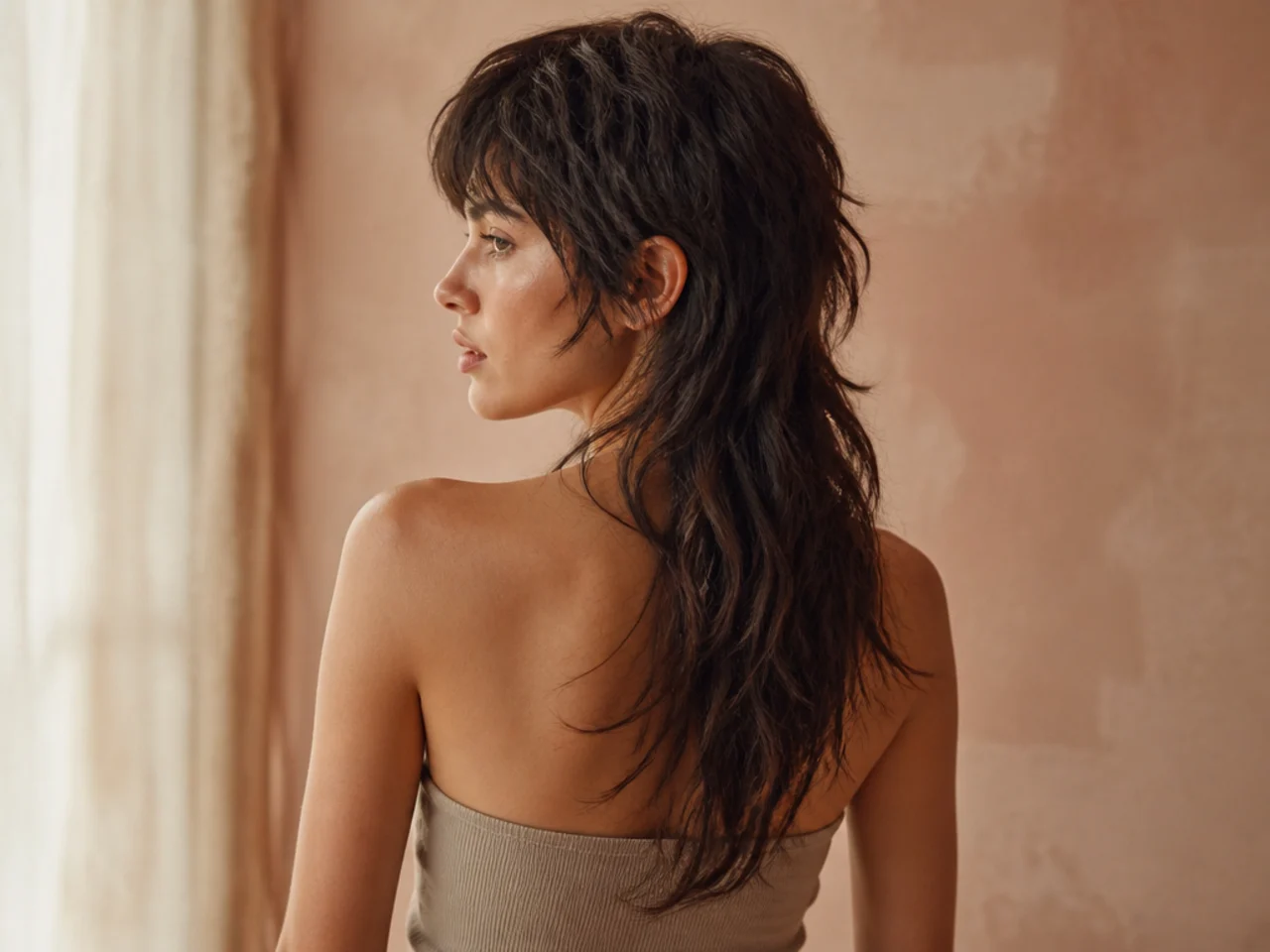
6. Long Mullet
The tail carried to mid back while the crown stays short. The gap between the two is at its widest here, so the cut announces itself even when the tail is simply worn down and untouched.
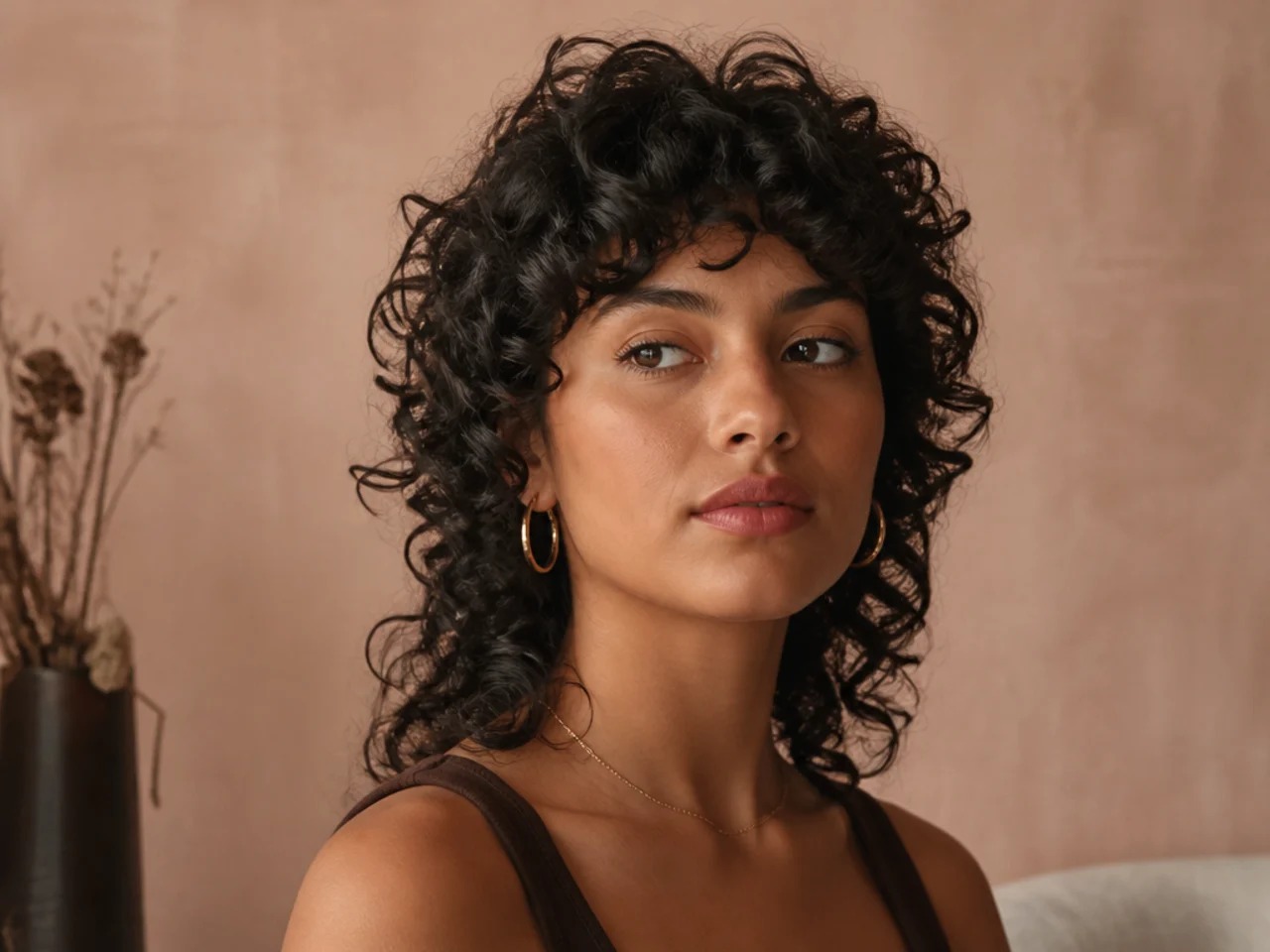
7. Curly Mullet
The curl pattern already supplies the volume that layers exist to create, so the layers are there only to shape it. Cut dry and curl by curl, because a curl cut wet unwinds straight and returns to a shorter position when it dries.
8. Wavy Mullet
The bend in a wave holds each strand away from its neighbours, which does most of the work a layer would otherwise do. Waves also spring up between half an inch and an inch as they dry, so wet length is not finished length.

9. Coily Mullet
Coils can shrink by half to three quarters of their stretched length, so a tail cut to the shoulders wet may sit at the ear once dry. The cut has to be planned around dry length or the mullet loses the one thing that defines it.

10. Straight Blunt Mullet
Straight hair hangs in one direction with nothing to disturb a cut line, so the outline holds exactly as it was cut. The trade is that every uneven pass stays visible too, with no bend in the strand to scatter light across it.

11. Mullet on Fine Hair
Keep the layering in the top third and the tail perimeter blunt. Fine ends have no weight left to remove, and a solid bottom line is read by the eye as a full one where a feathered edge reads as hair running out.

12. Mullet on Thick Hair
The opposite problem: too much weight at the tail pulls the crown flat. Ask for internal weight removal through the mid lengths rather than shorter layers, so the bulk goes without changing the outline you chose.

13. Mullet With Curtain Bangs
The fringe splits at the centre and lengthens outward to meet the face frame, which hides the point where the shortest crown layer begins. It also adds a second body of hair across the forehead, softening the top of the silhouette.

14. Mullet With a Blunt Fringe
A solid fringe cut straight at the brow. It puts a strong horizontal against the mullet's strong vertical, and that crossing is what stops the silhouette reading as one long shape falling from the crown to the back.

15. Mullet With Baby Bangs
The fringe cut well above the brow. It is the highest commitment decision in the whole list, because at roughly half an inch of growth a month a baby fringe takes three to four months just to reach the eyebrows again.

16. Mullet With Face Framing Layers
Shorter pieces cut at the temples and graduated back into the length. They sit against the cheek and throw a shadow along the jaw, narrowing the face without touching the crown layers that hold the volume.

17. Mullet With a Middle Part
Splitting the crown into two smaller sections lets each lift more easily than one wide one would. The cost is a visible scalp line down the centre, which is why a centre part suits dense hair better than sparse hair.

18. Mullet With a Deep Side Part
Moving the part across sends more hair over the top of the head, and hair crossing a part is lifted off the scalp by the change of direction alone. It is root volume that costs nothing and needs no product.

19. Mullet With a Money Piece
Two lightened sections at the front of the face frame. Brighter tones advance visually while darker ones recede, so the lightened pieces come forward and push the rest of the cut back, building depth a single tone cannot.

20. Balayage Mullet
Colour painted freehand so the lightest pieces land where the layers turn. Tonal variation gives the eye separate strands to read where a single flat colour gives it one sheet, which is why a painted mullet looks thicker than a solid one.

21. Root Shadow Mullet
A deliberately darker band kept through the first inch of regrowth. It makes the parting harder to see through, and because the line between colour and root is already soft, growing out costs nothing at the six week mark.

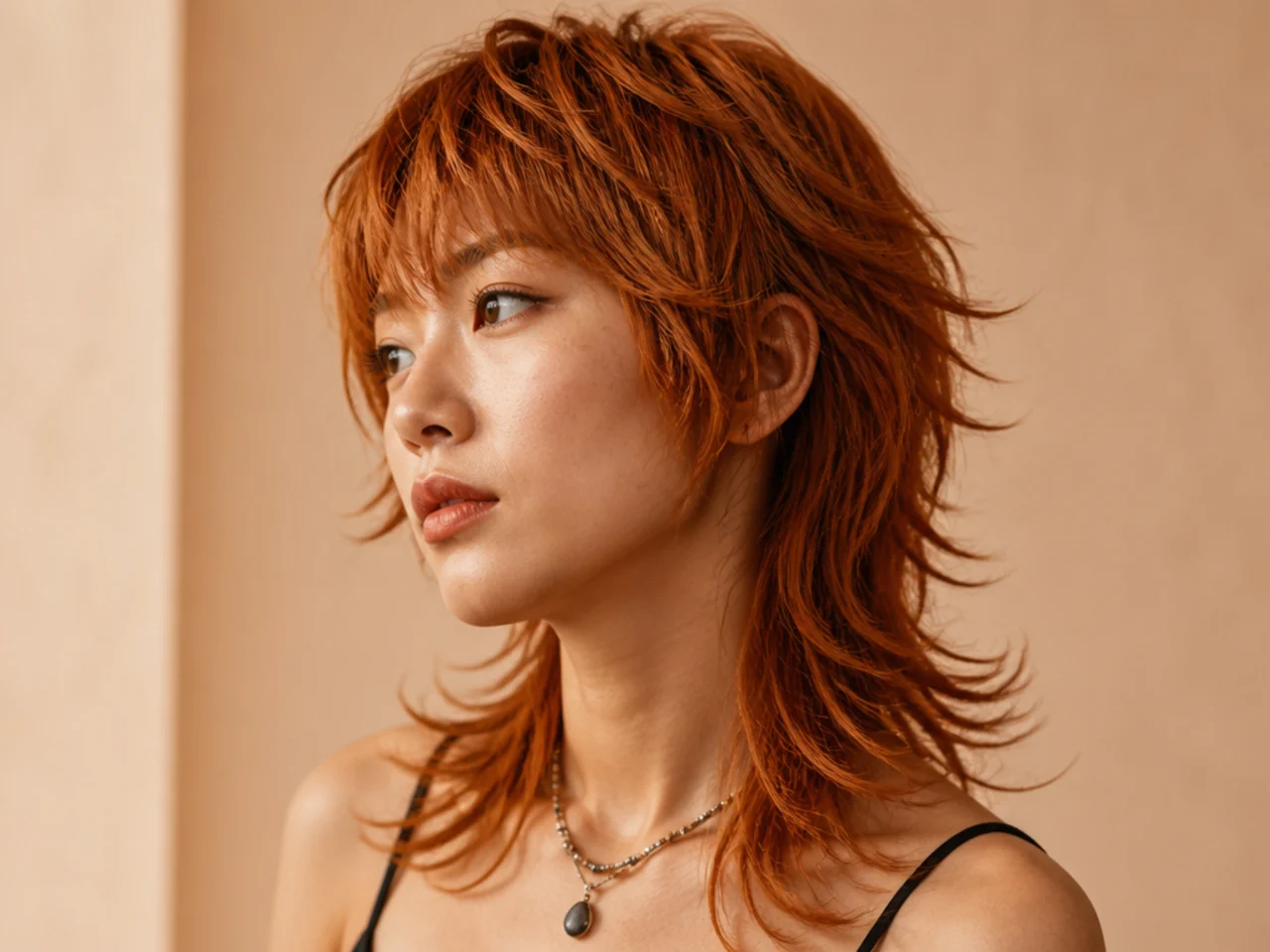
22. Copper Mullet
Warm copper throws light back from the ends, which makes a shaggy outline easier to read. Copper pigment molecules are among the largest and sit shallowest in the strand, so the tone washes out faster than any other and needs refreshing every four to six weeks.
23. Bleached Mullet
Bleach swells and roughens the cuticle, and roughened hair grips itself, so a bleached mullet holds a messy shape more easily than virgin hair does. The same damage costs elasticity, so the ends need trimming more often than the colour needs redoing.

24. Silver Mullet
Silver is a violet toner sitting on top of whatever warmth is underneath, so the hair has to be lifted to a pale yellow first or the result turns green-grey. That lift is the commitment, not the toner, which refreshes at home.

25. Mullet With a Hidden Undercut
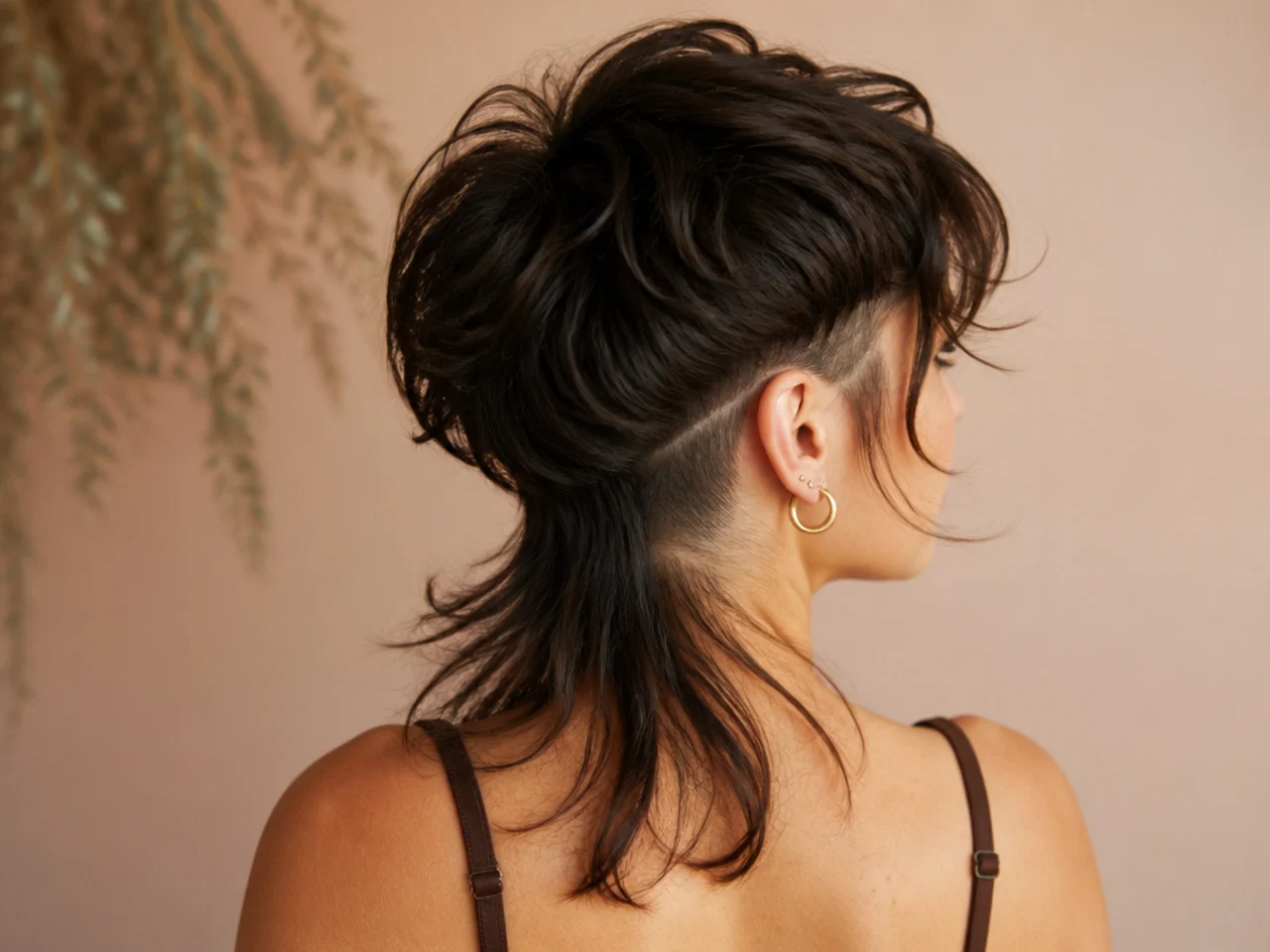
A shaved section at the nape or behind the ear, covered by the length above it. It removes bulk from the heaviest part of the head, which lets a thick tail hang closer to the neck instead of standing away from it.
26. Mullet With Tapered Sides
The sides shortened gradually and finished with length rather than skin, usually around three millimetres. A taper blurs as it grows and still reads correctly at three to four weeks, where a skin fade shows stubble inside one to two.
27. Rounded Tail Mullet
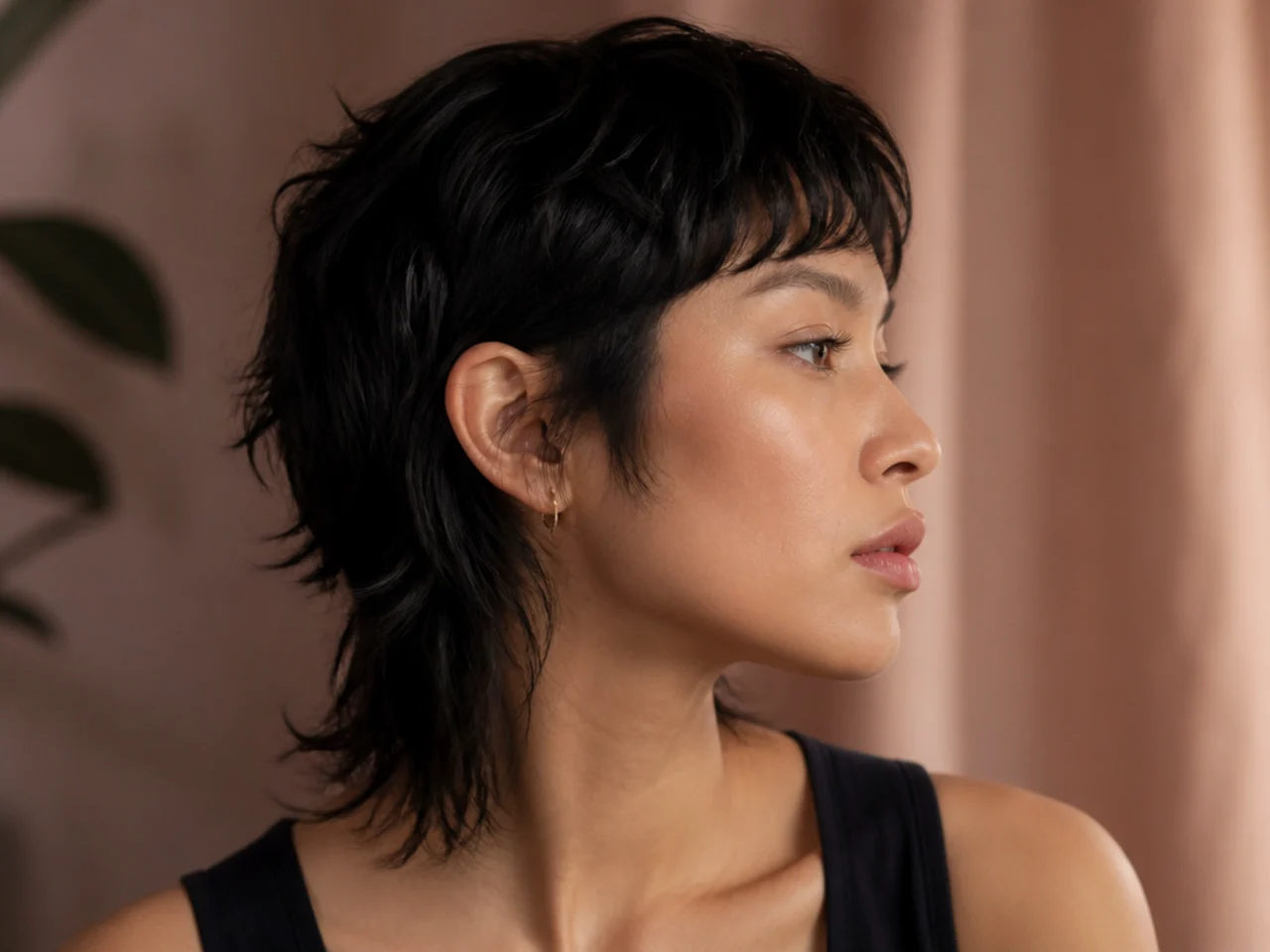
The bottom edge cut in a shallow curve. A curve holds the outside strands close in length to the centre ones, so the ends stay together as a mass rather than splaying at the corners the way a squared edge can.
28. Squared Tail Mullet
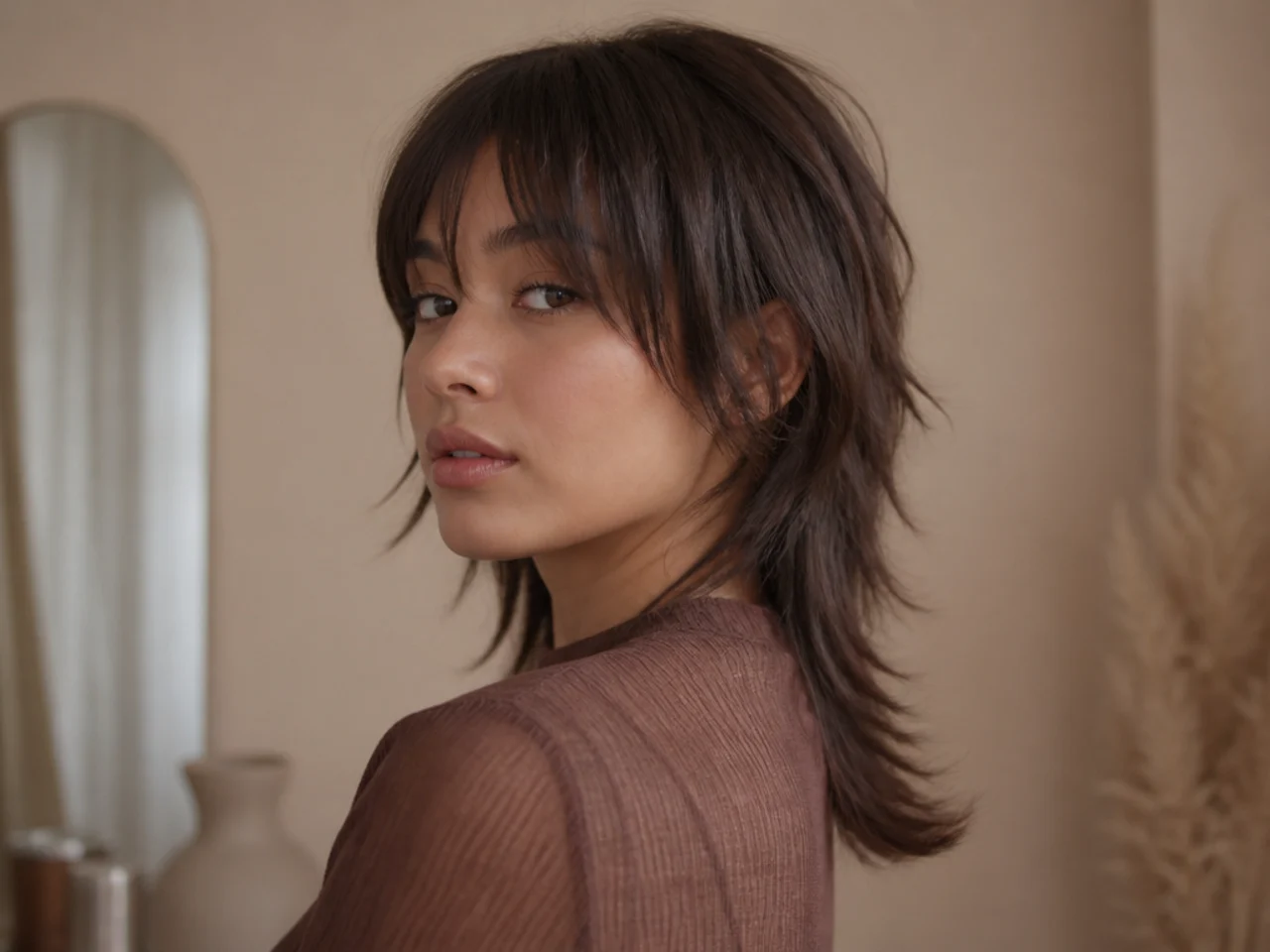
The tail cut flat across. It is the sharpest outline available and the most demanding, because a straight line across the back reveals any difference in density from one side of the head to the other.

29. Mullet Tucked Behind the Ears
Worth planning for rather than discovering. Tucking removes the side length from the silhouette entirely and leaves the crown and tail exposed, which briefly raises the contrast ratio and makes the cut read considerably bolder.
30. Mullet at Twelve Weeks
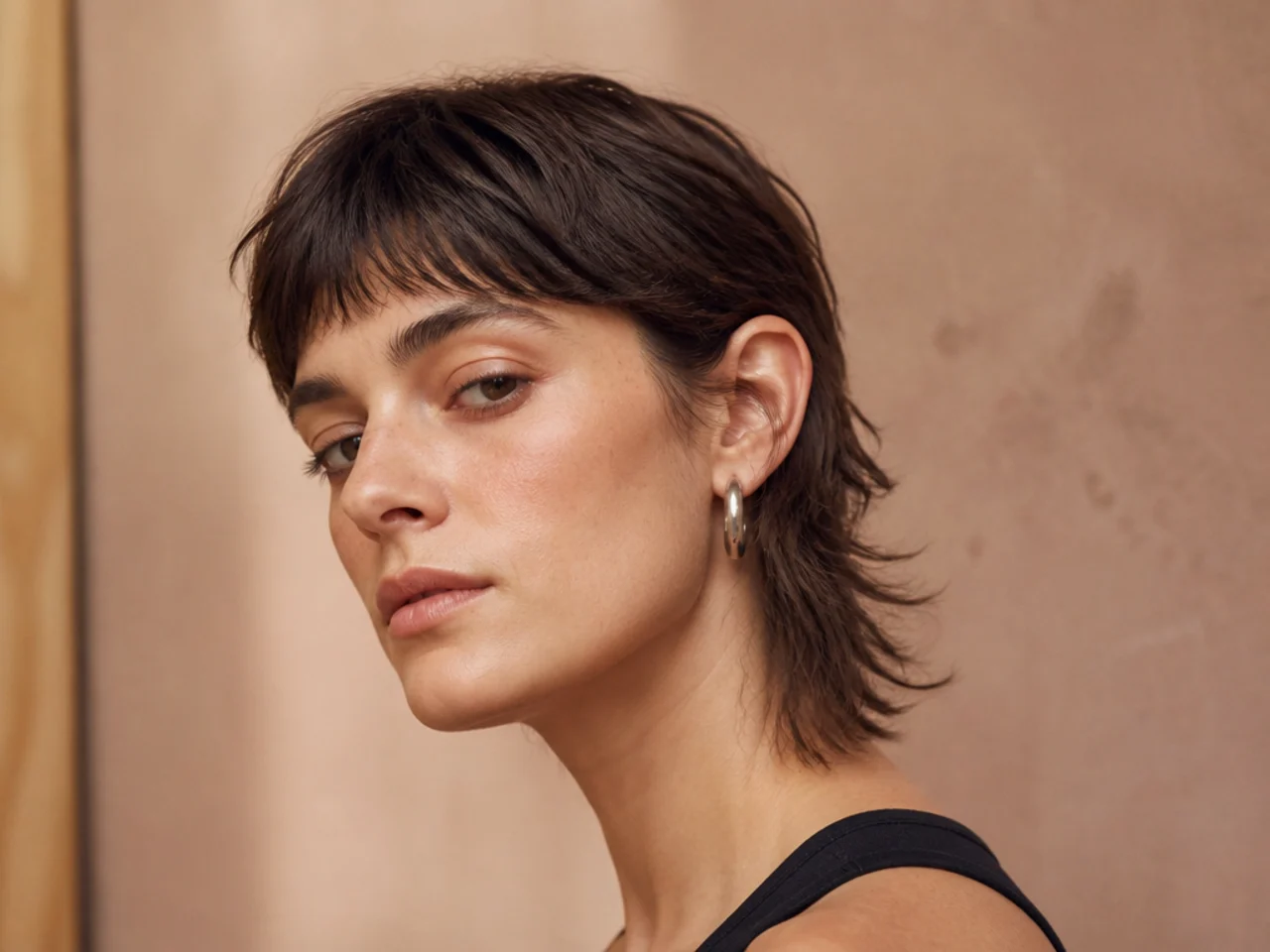
The crown layers have grown roughly an inch and a half and now reach the jaw, so the contrast has softened into a long layered shape. This is the natural resting point of the cut, and the moment to decide whether to reset it or keep growing.

Styling and Upkeep
Dry the crown first and dry it upright. Hair sets in the shape it dries in, and the crown is the only section whose direction changes the whole silhouette.
Keep product below the crown. Weight applied at the root closes the lift the short layers were cut to create, and the tail is where the hold is actually needed.
Trim the tail edge every eight to ten weeks. The perimeter is what carries the outline, and refreshing it costs no length in the layers above.
Refresh the crown separately at twelve weeks. Crown and tail grow at the same rate but the crown has less length to hide it, so the contrast fades from the top down.
Sleep on silk if the cut is bleached. A roughened cuticle catches on cotton, and the mid lengths of a mullet take the most friction because they move most.

Mistakes to Avoid
Asking for a mullet without naming two lengths. Crown and tail in inches. Without both numbers the ratio is guesswork and the ratio is the cut.
Cutting curls or coils wet. They unwind under water and return to a shorter position dry, so wet length has almost no relationship to finished length.
Taking the crown very short on fine hair first time. A short crown that cannot stand up lies flat and exposes the step where it was cut, with no way back for several months.
Layering the tail on fine hair. The ends carry the least weight in the whole cut, and removing more turns a solid outline into a scatter of loose pieces.
Booking a full reshape every six weeks. Only the perimeter needs that often. Reshaping the crown that frequently means it never reaches the length where the blend looks soft.

FAQ
What makes it bold or quiet? The gap between crown and tail, and whether the join is blended or stepped.
Does it suit fine hair? Yes, with layering kept high and the tail edge left blunt.
How long to grow out? About six months for the crown to reach the shoulders, passing through a shag on the way.

Final Thoughts
Nothing on this list is decided by age. It is decided by two numbers and one choice: how short the crown goes, where the tail lands, and whether the join between them is blended or stepped. Change any of those and the same haircut moves several notches quieter or louder.
For the full walkthrough of the cut see the womens mullet guide. See also mullet hairstyle. More in Mullet & Wolf Cut.