20 Modern Fringe Haircut Ideas for Men
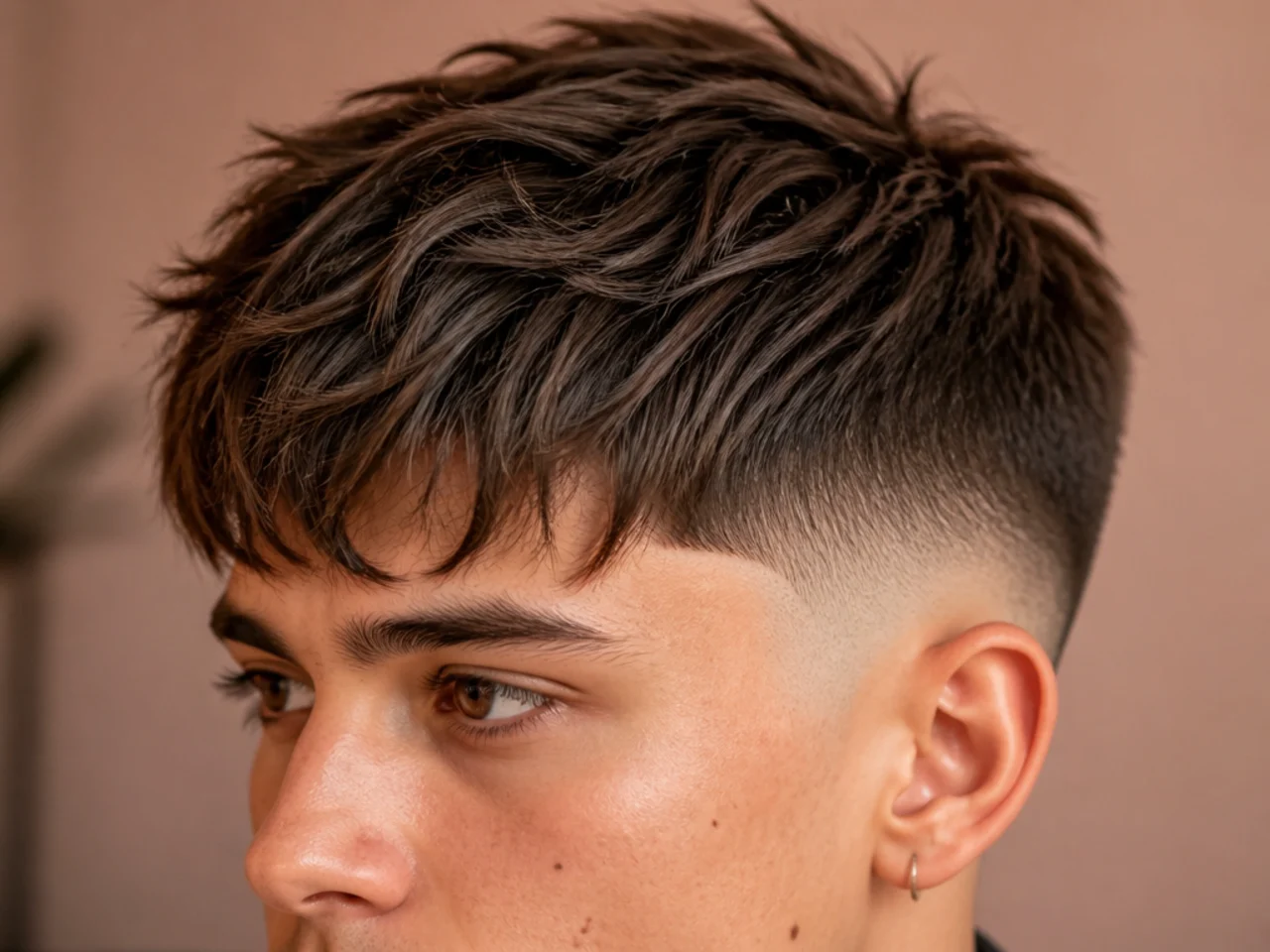
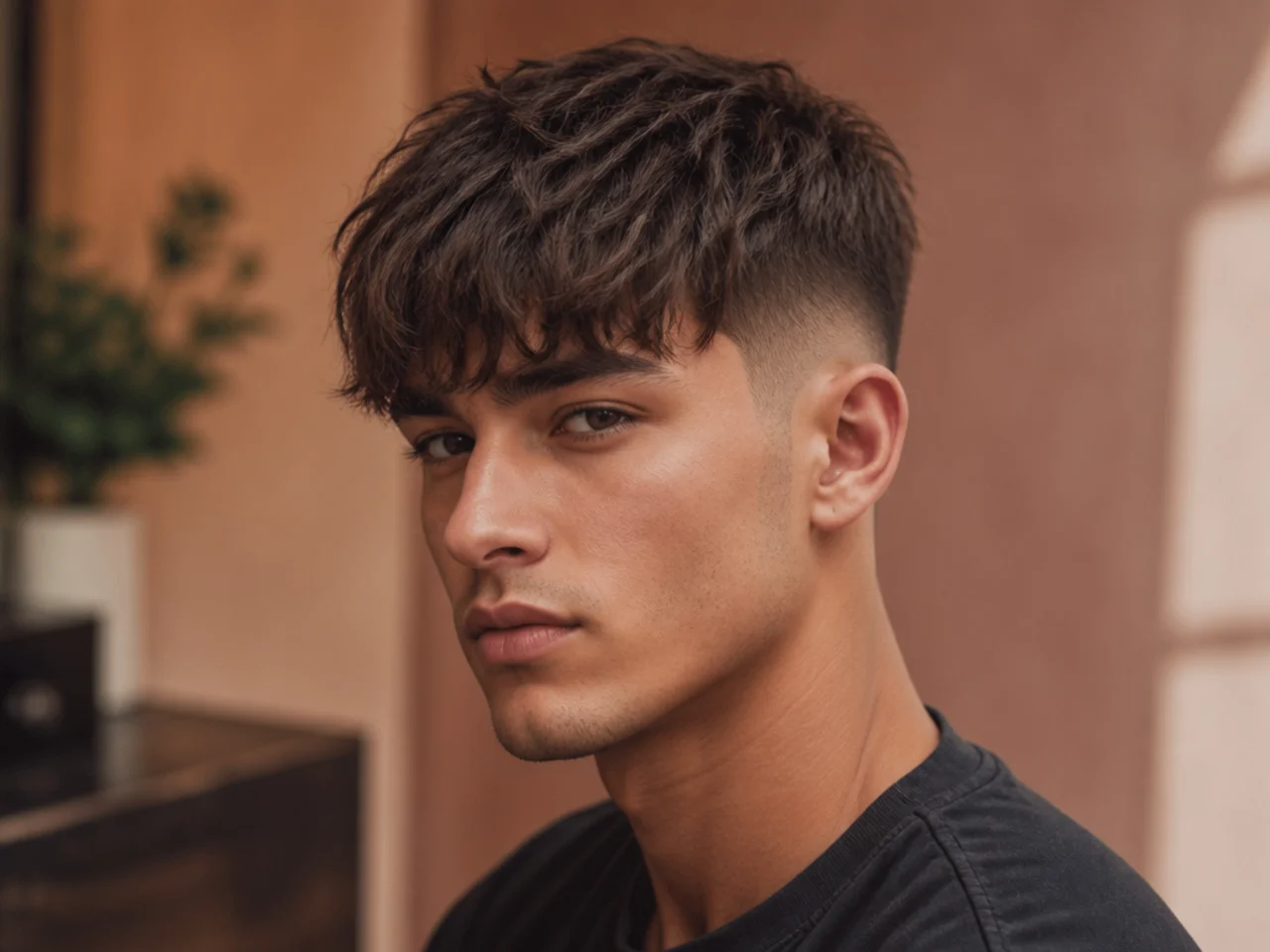
The modern fringe is defined by what was removed from the 2010s version — the hard disconnection, the shine, the wall of blunt hair across the brow. What replaced it is graded weight and a soft perimeter.
In this article · 27
- What Actually Changed
- How to Choose Yours
- The 20 Modern Fringe Ideas
- 1. The Blended Textured Fringe
- 2. Soft-Perimeter Crop
- 3. Fringe With a Blurry Low Taper
- 4. Piecey Forward Fringe
- 5. Grown-Out Modern Fringe
- 6. Middle-Part Modern Fringe
- 7. Modern Fringe With a Mid Fade
- 8. Air-Dried Fringe
- 9. Modern Fringe on Fine Hair
- 10. Modern Fringe on Thick Hair
- 11. Modern Fringe With a Beard
- 12. Fringe With a Soft Side Part
- 13. Modern Fringe With Curl Left In
- 14. Slide-Cut Fringe
- 15. Modern Fringe on a Receding Hairline
- 16. Asymmetric Modern Fringe
- 17. Modern Fringe With a Shadow Taper
- 18. Wavy Modern Fringe
- 19. Fringe With a Textured Crown
- 20. The Week-Four Modern Fringe
- Styling and Upkeep
- Mistakes to Avoid
- FAQ
- Final Thoughts
The fringe never went away. What changed is everything around it, and men who ask for the cut they wore ten years ago are often surprised at how differently it now reads.
The modern fringe is defined by three removals. The hard disconnection is gone, the shine is gone, and the blunt wall of hair across the brow is gone.
What replaced them is graded weight and a soft perimeter. Weight thins gradually from root to tip, and the front edge is broken rather than cut in a line.
What Actually Changed
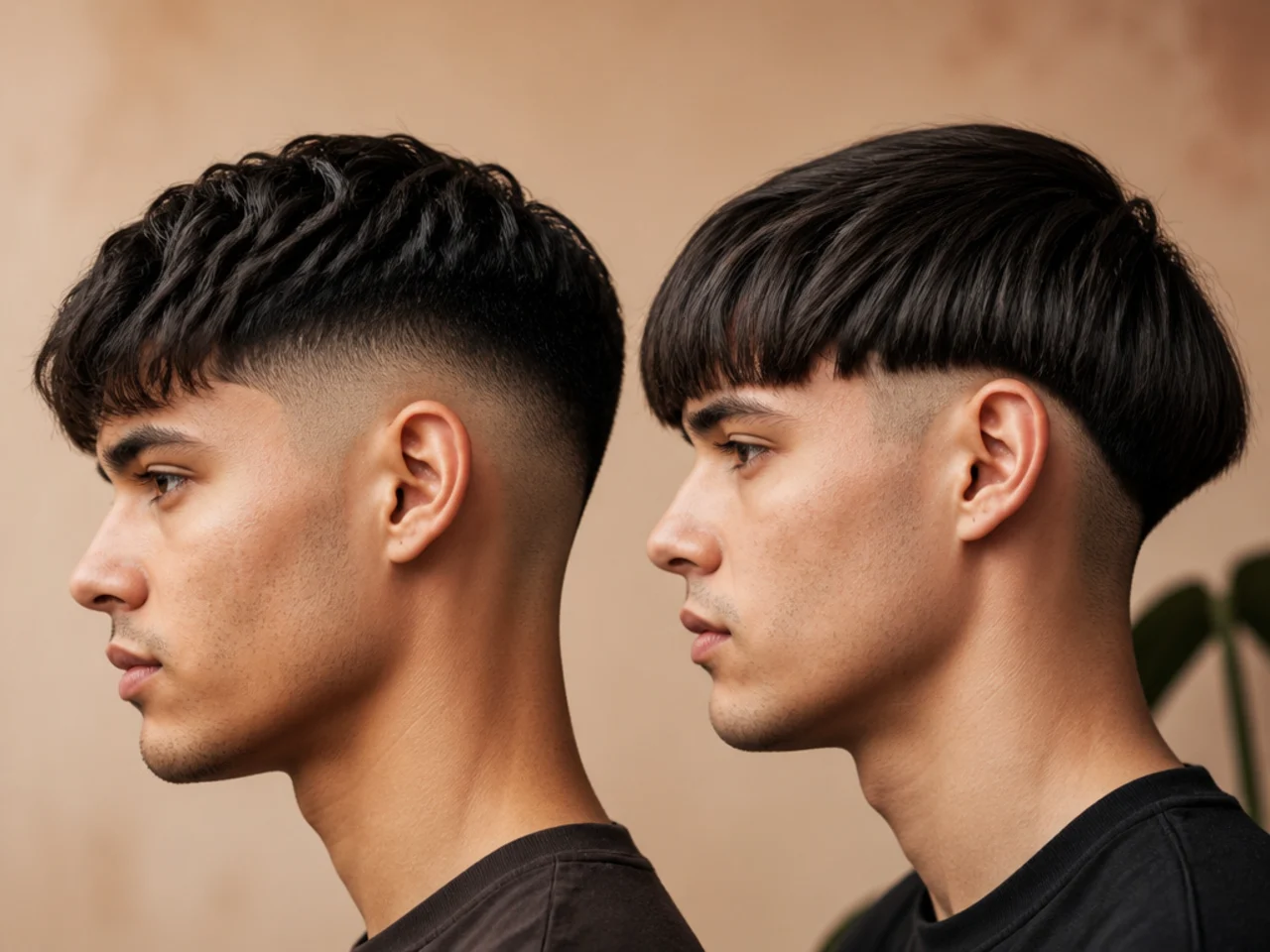
Disconnection became blend. The 2010s put a step between top and sides. The current shape gradates so the eye never finds a start point.
Shine became matte. Gloss reads as effort, and the entire modern look is built on not appearing styled.
Blunt became broken. A straight line across the brow is now the single most dating feature a fringe can have.
Uniform weight became graded weight. The section is heavy at the root and progressively lighter toward the tip.
How to Choose Yours
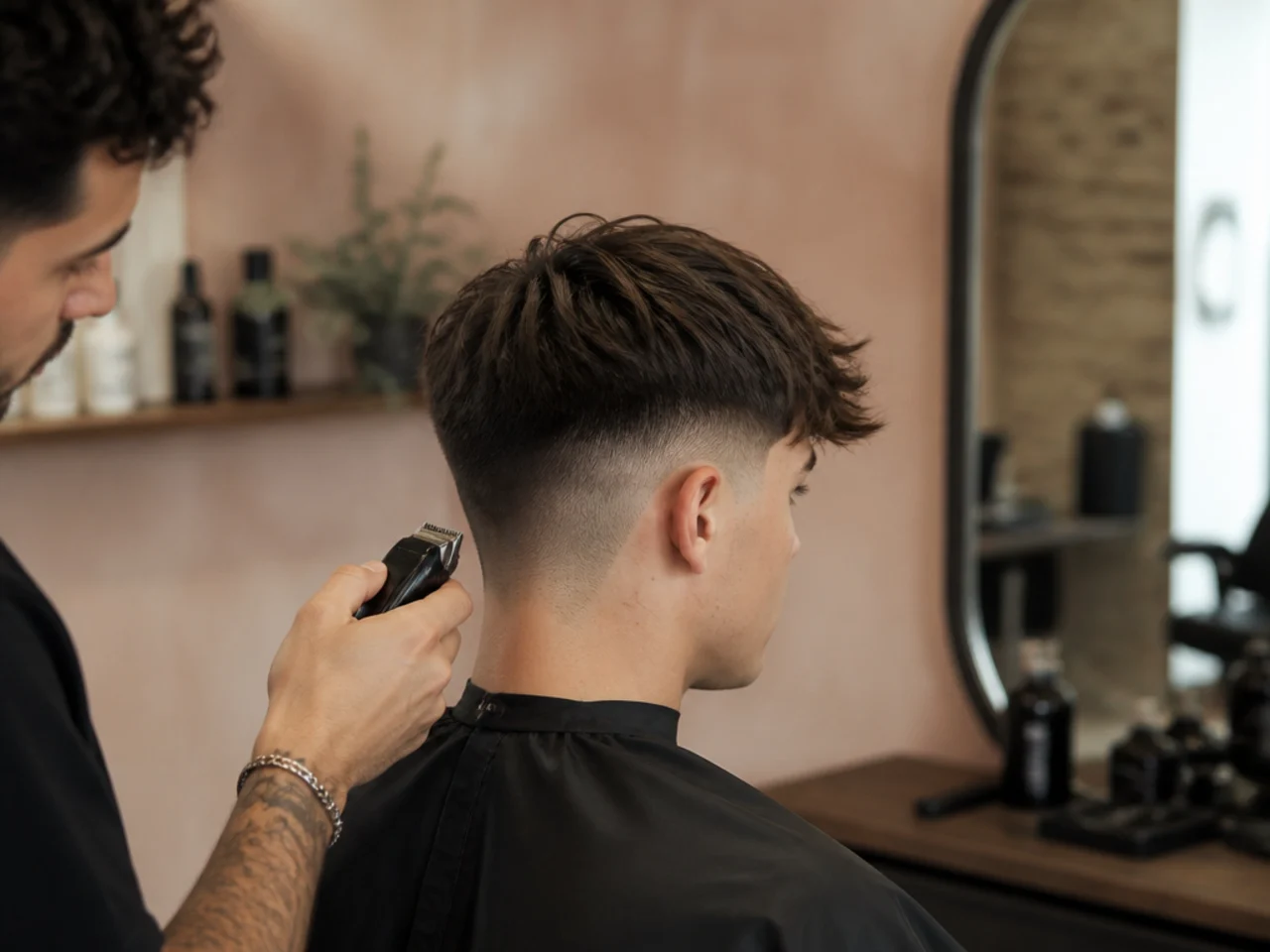
Ask for a blend, not a disconnect. Say the word blend out loud, because a disconnect is still what many barbers default to on a fringe.
Ask for the ends to be broken. Point-cut, notched or slide-cut — any of the three, but not a straight line.
Pick the fade height by upkeep. A taper holds three to four weeks, a skin fade blurs in one to two.
Buy one matte clay and stop there. Product choice is the fastest way to make a current cut look dated.
The 20 Modern Fringe Ideas
1. The Blended Textured Fringe
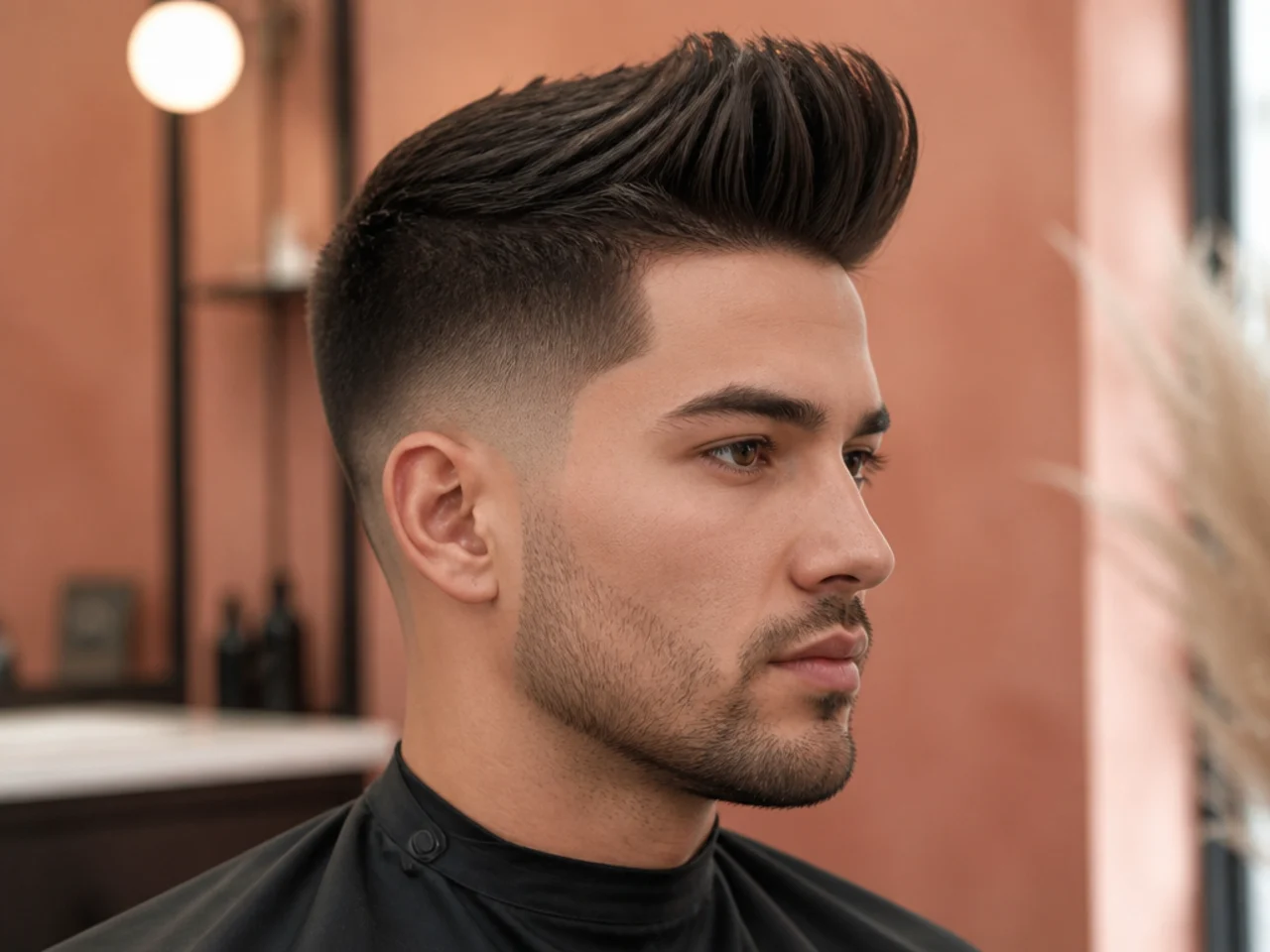
The default modern shape — graded weight through the top, a broken front edge, and a soft gradient into the sides. Everything else on this list is a variation of this one.
2. Soft-Perimeter Crop
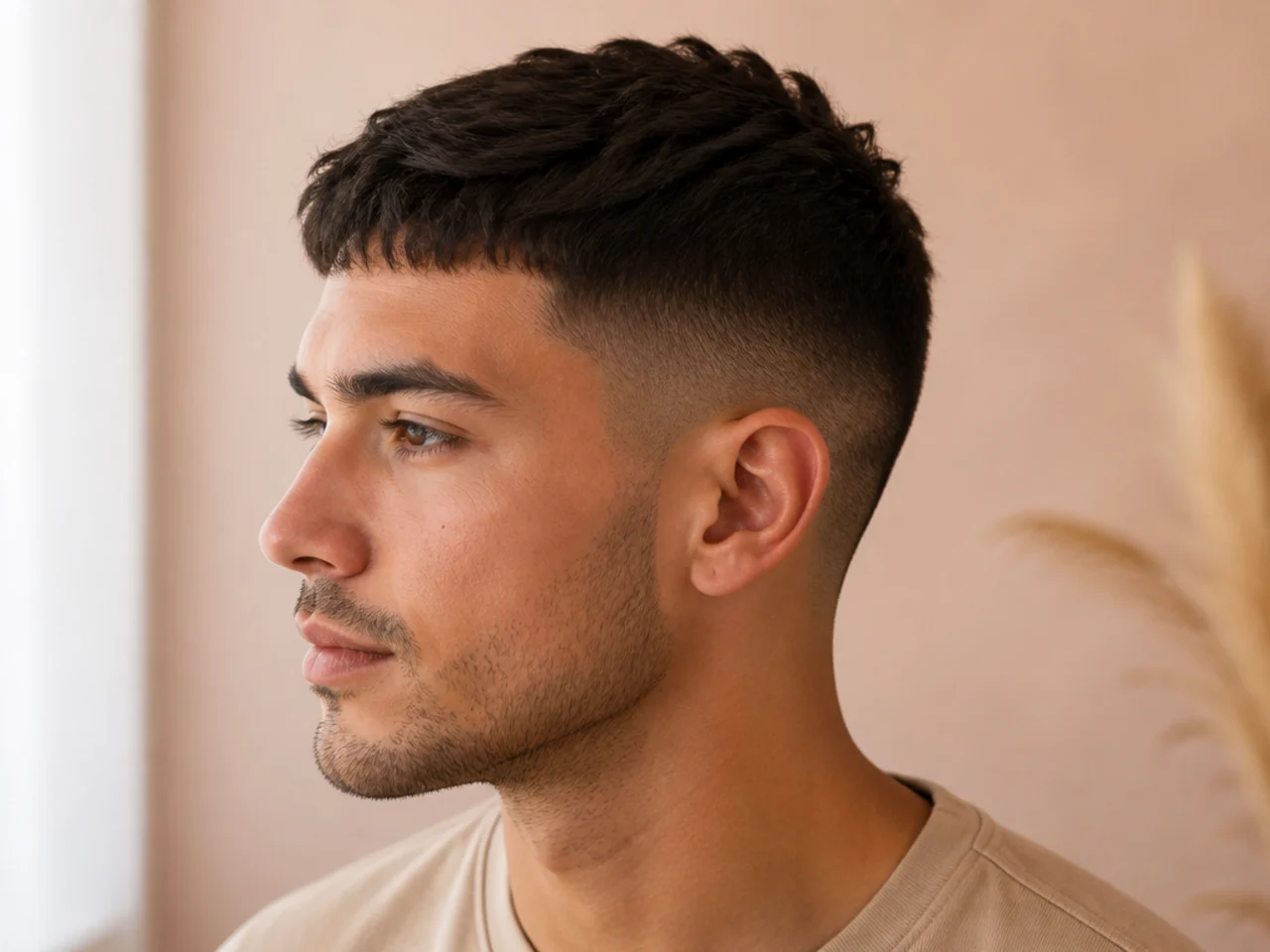
Short, forward, and finished with a deliberately imprecise edge. The imprecision is the point, because a crisp line is what makes a crop look like a helmet.
3. Fringe With a Blurry Low Taper
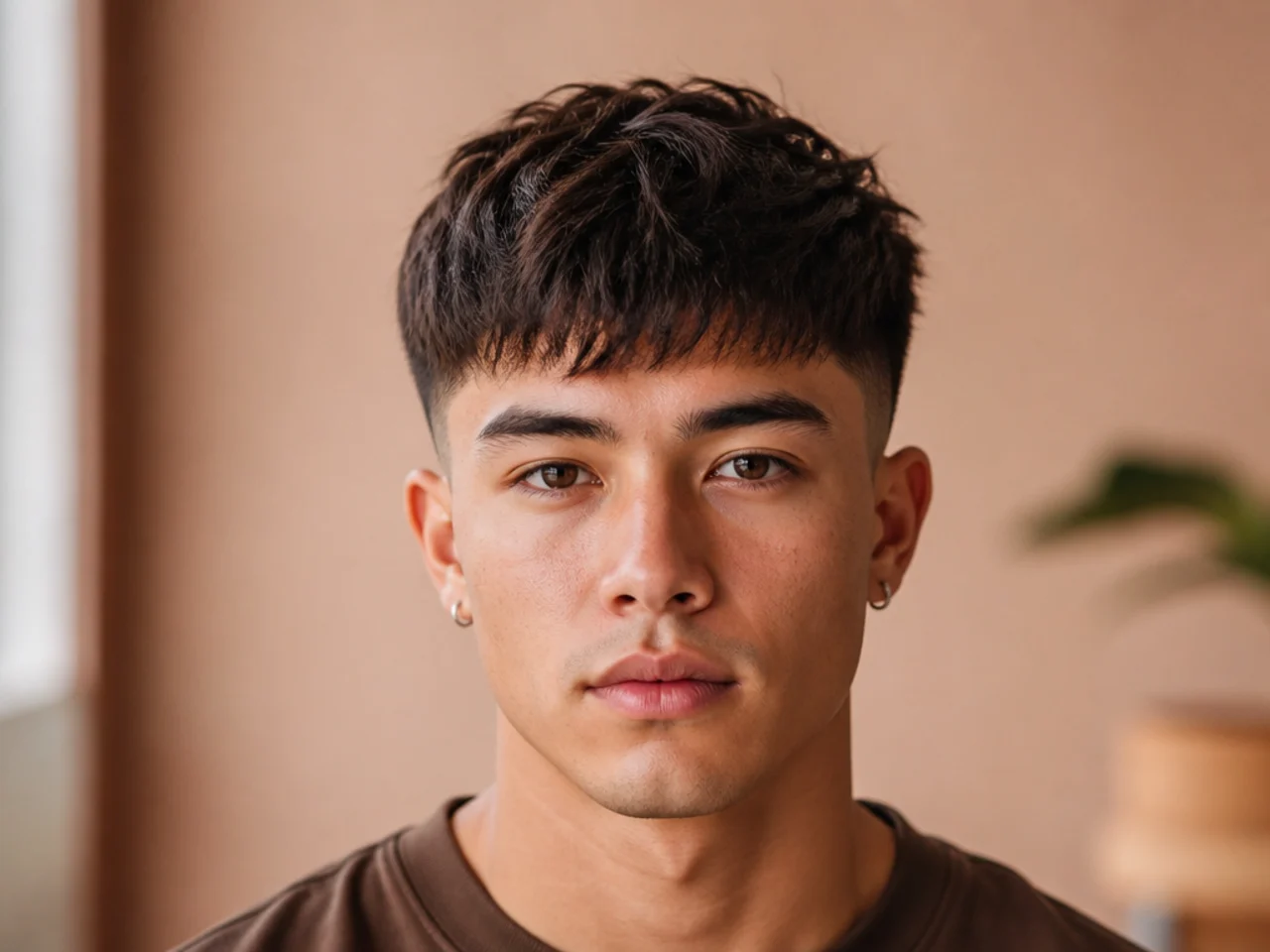
The gradient stretched over a longer distance so there is no visible start. It costs extra chair time and grows out invisibly, which is the trade most men should take. The low taper fade is the shape underneath it, simply stretched over more of the head.
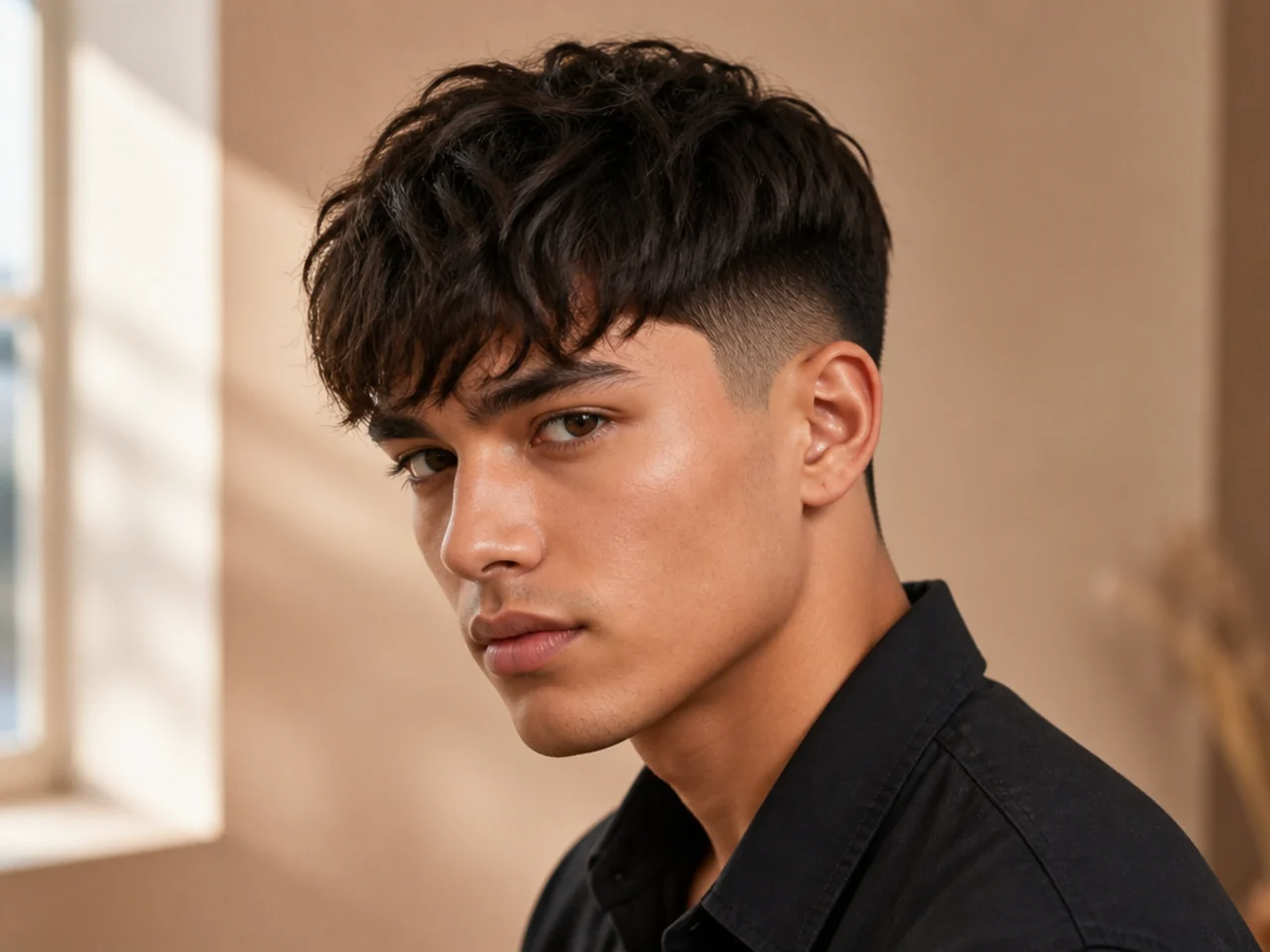
4. Piecey Forward Fringe
Product worked through the ends so the front breaks into distinct pieces rather than a panel. It needs matte clay, because the same shape with shine reads as greasy.
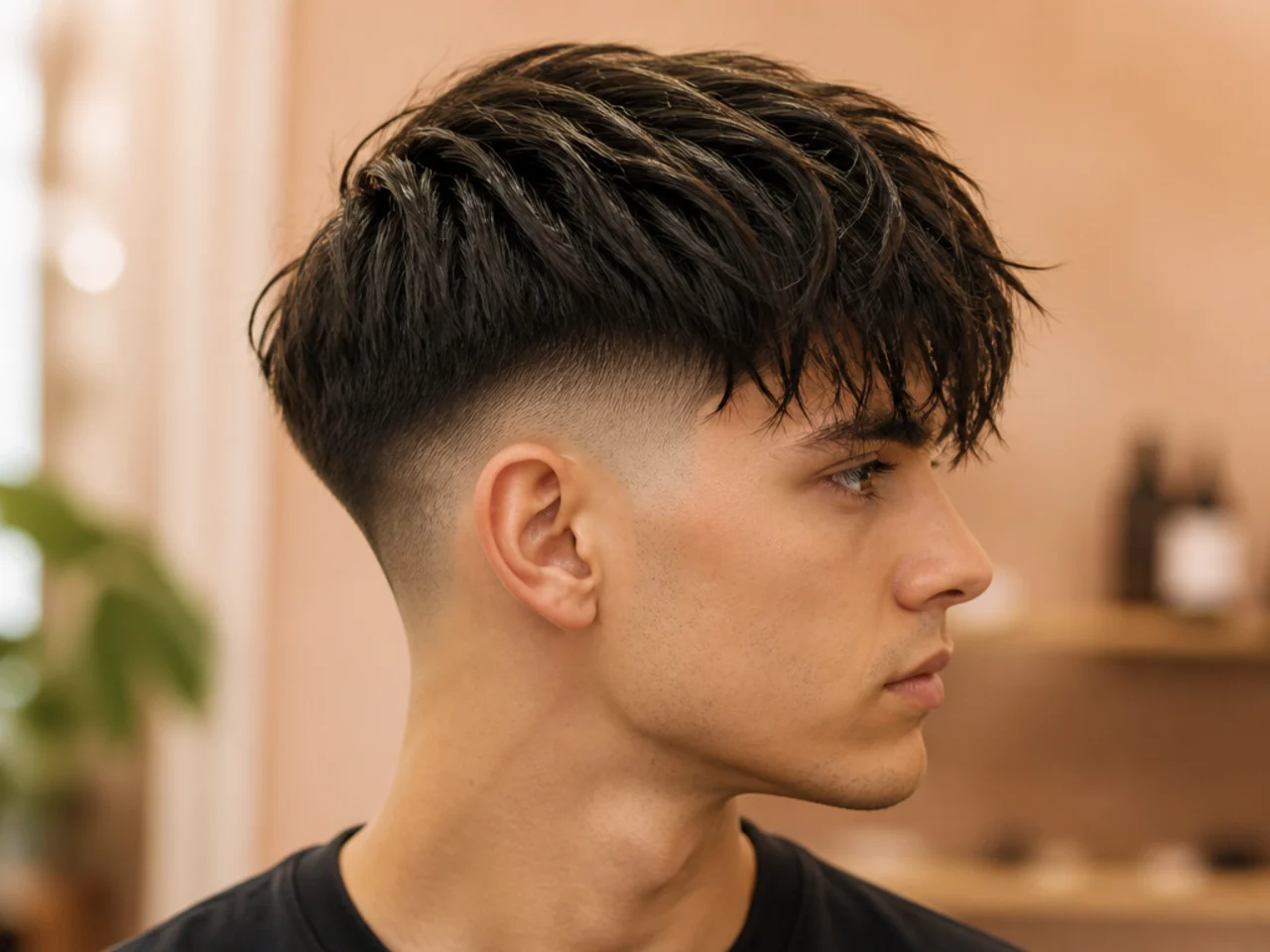
5. Grown-Out Modern Fringe
Deliberately kept past the brow so the ends fall into the lashes. It is the version that most obviously rejects the tidy 2010s silhouette.
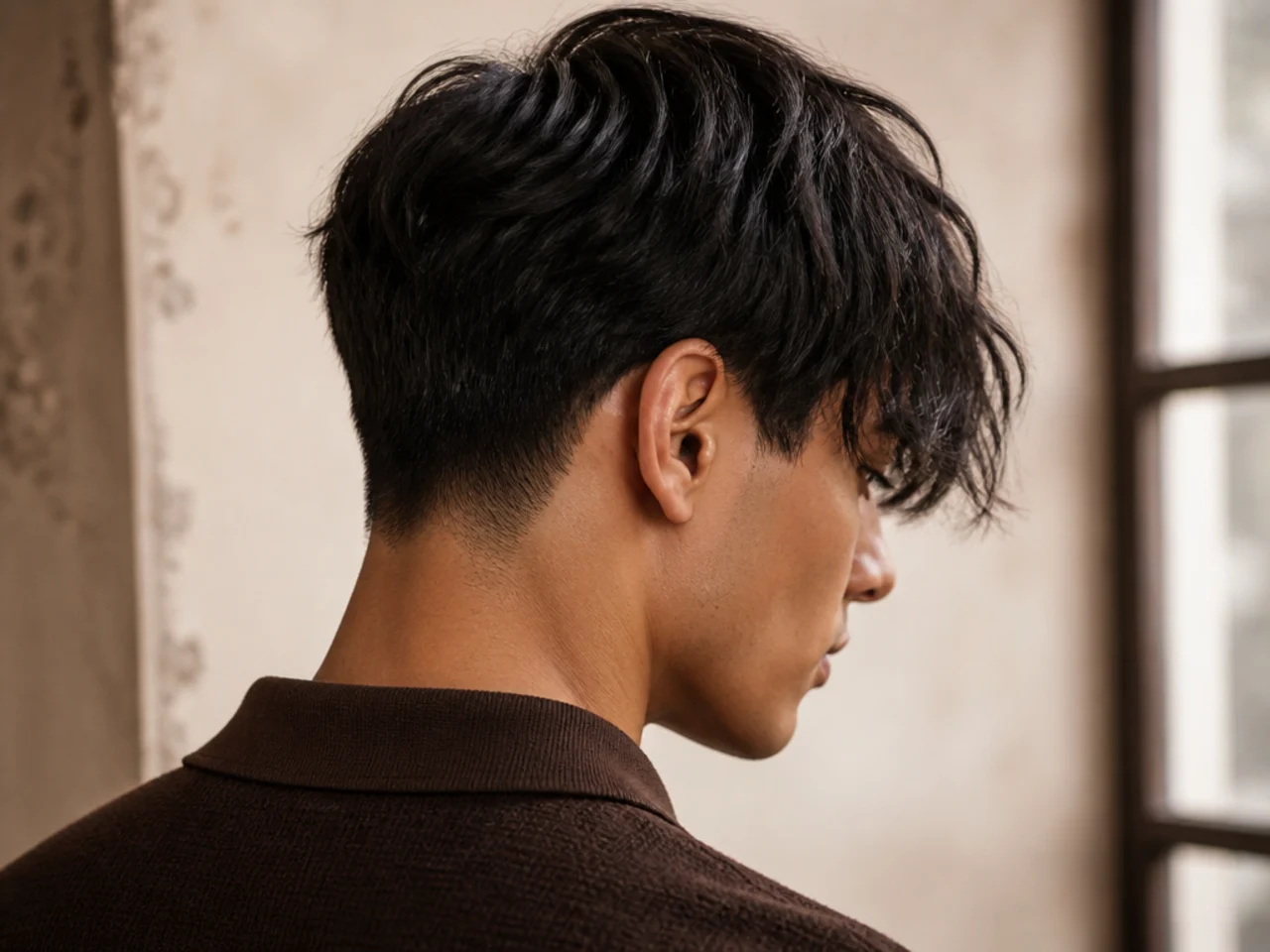
6. Middle-Part Modern Fringe
The front split down the centre and left to fall in two soft halves. It only works when the perimeter is broken, since a blunt centre split reads as a curtain from twenty years ago.
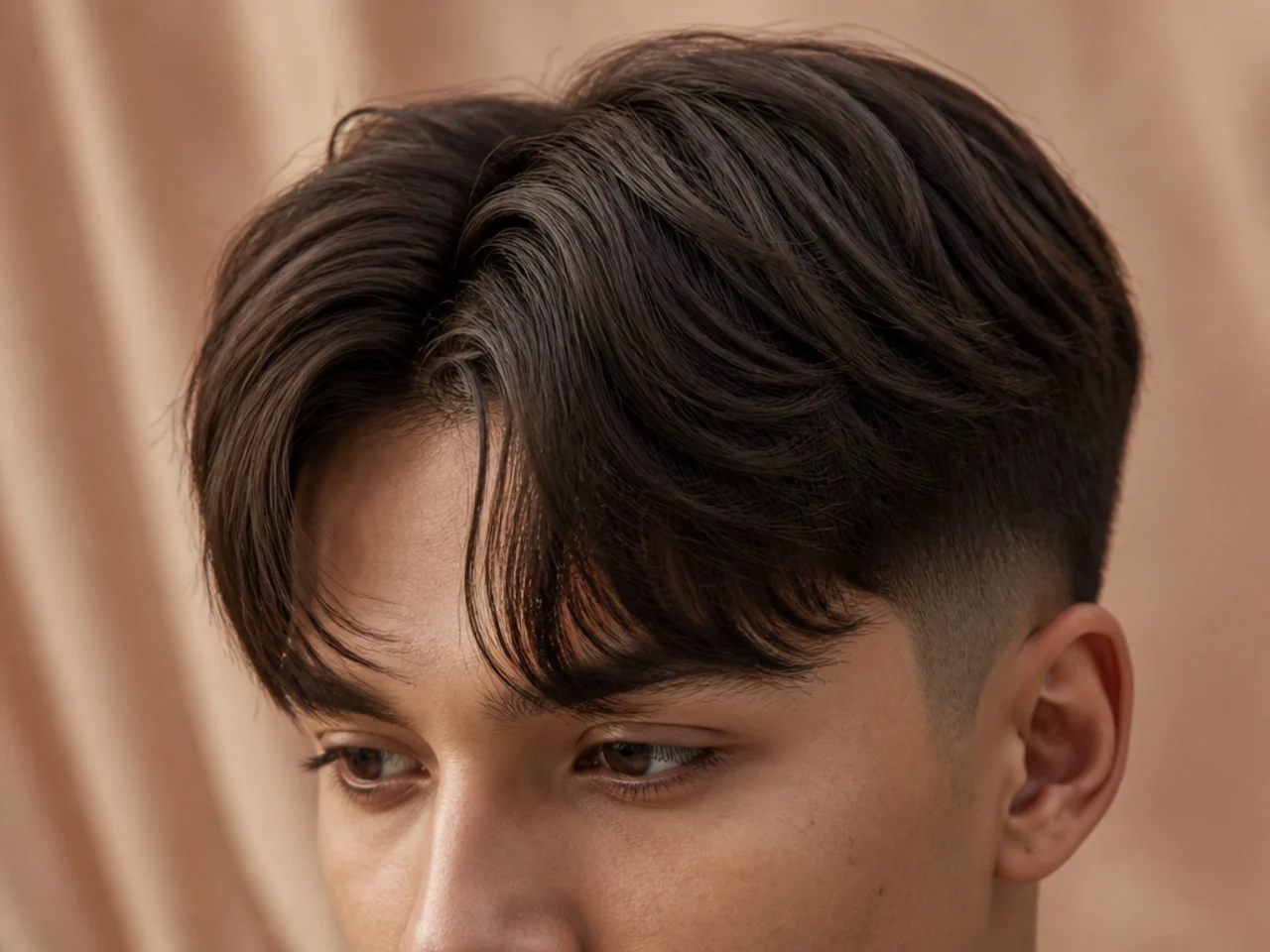
7. Modern Fringe With a Mid Fade
The fade sits between the temple and the parietal ridge, giving contrast without stripping the widest part of the skull. It is the highest fade a heavy fringe should sit above.
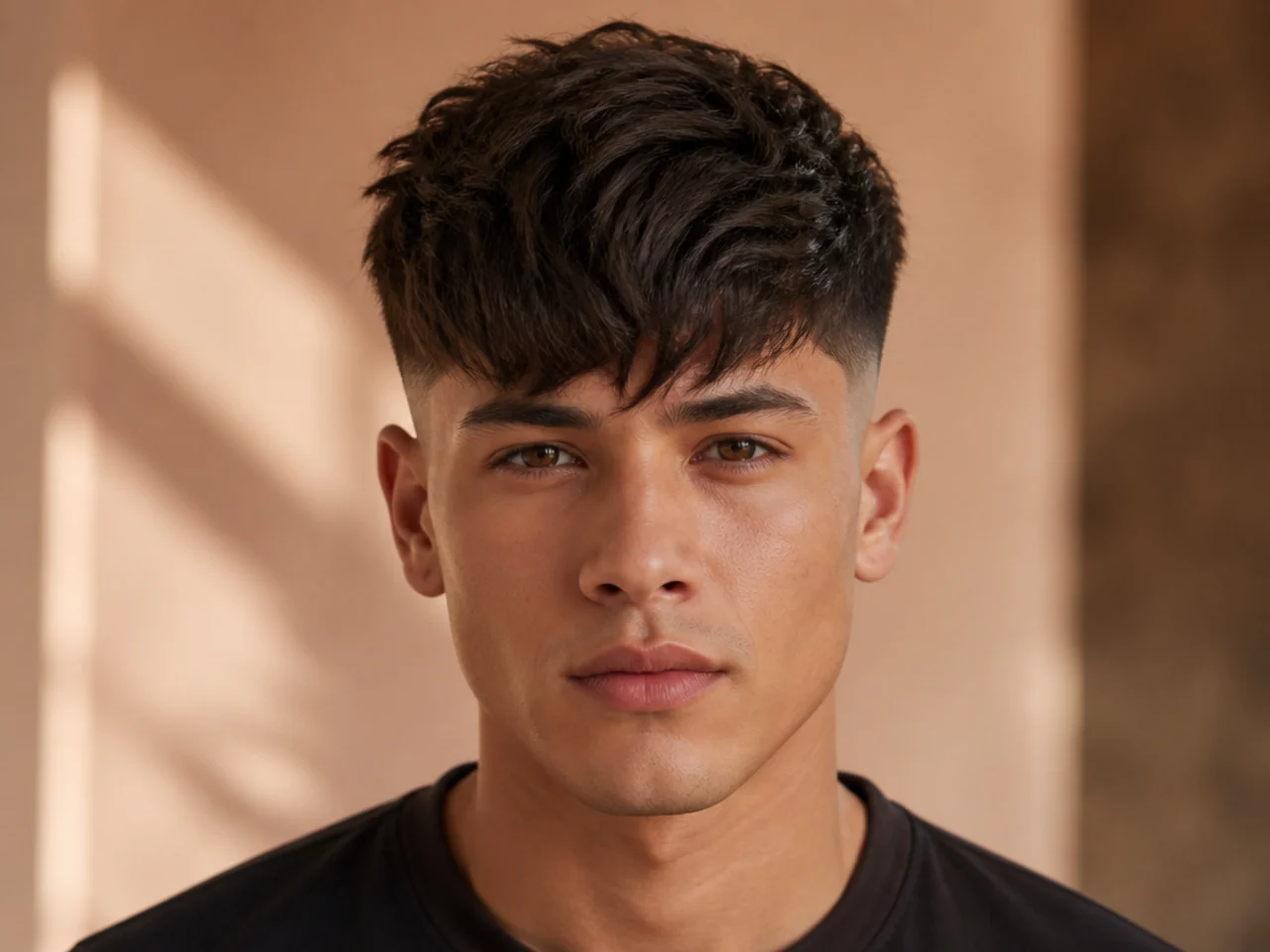
8. Air-Dried Fringe
No heat at all, styled with clay on damp hair and left alone. It gives the irregular root direction that a dryer flattens out, and that irregularity is the whole basis of deliberately messy men's hair.
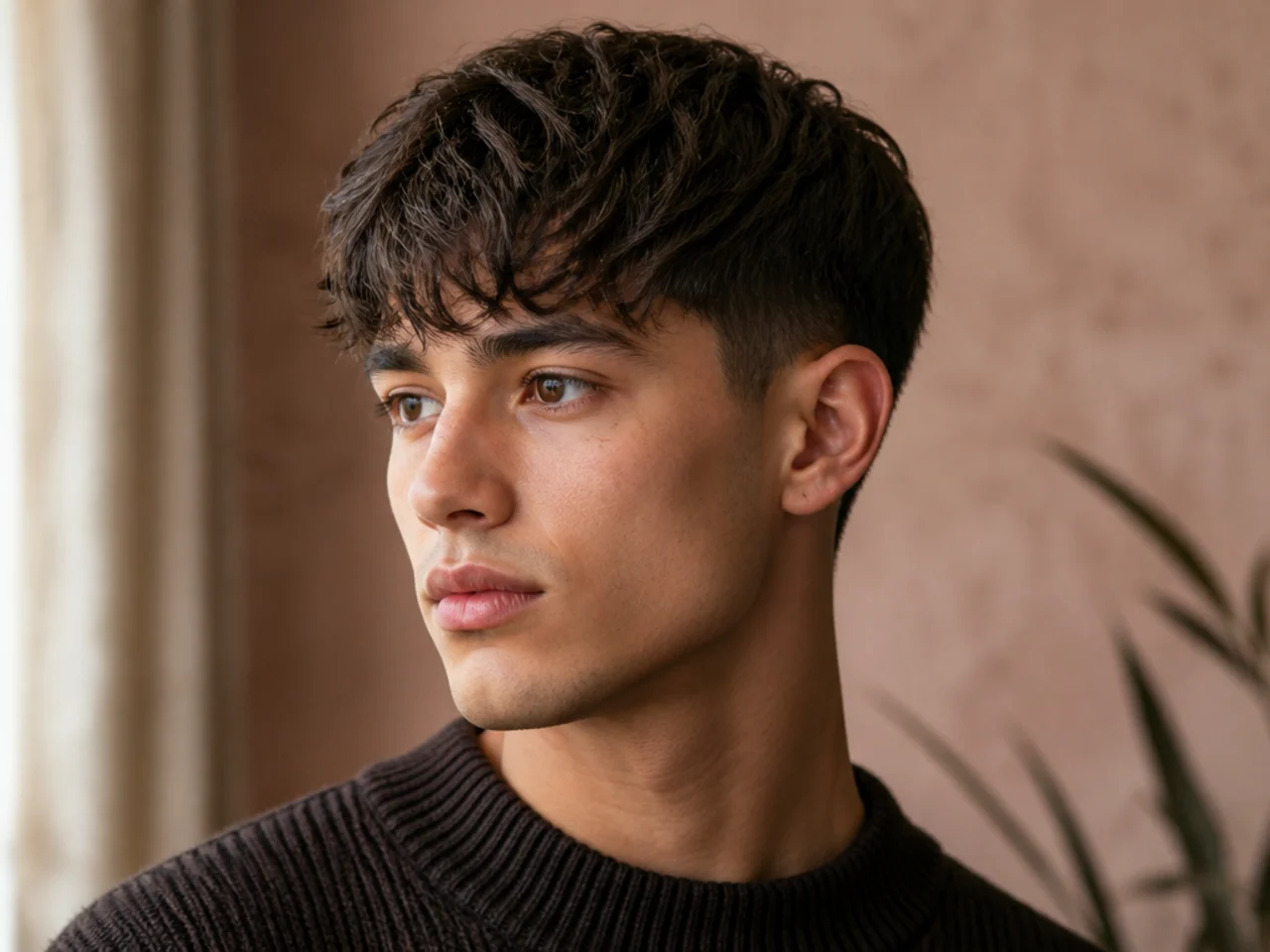
9. Modern Fringe on Fine Hair
Graded weight keeps the root full and the tip light, which is exactly what fine hair needs. Blunt-cutting a fine fringe collapses it into a flat sheet by lunchtime.
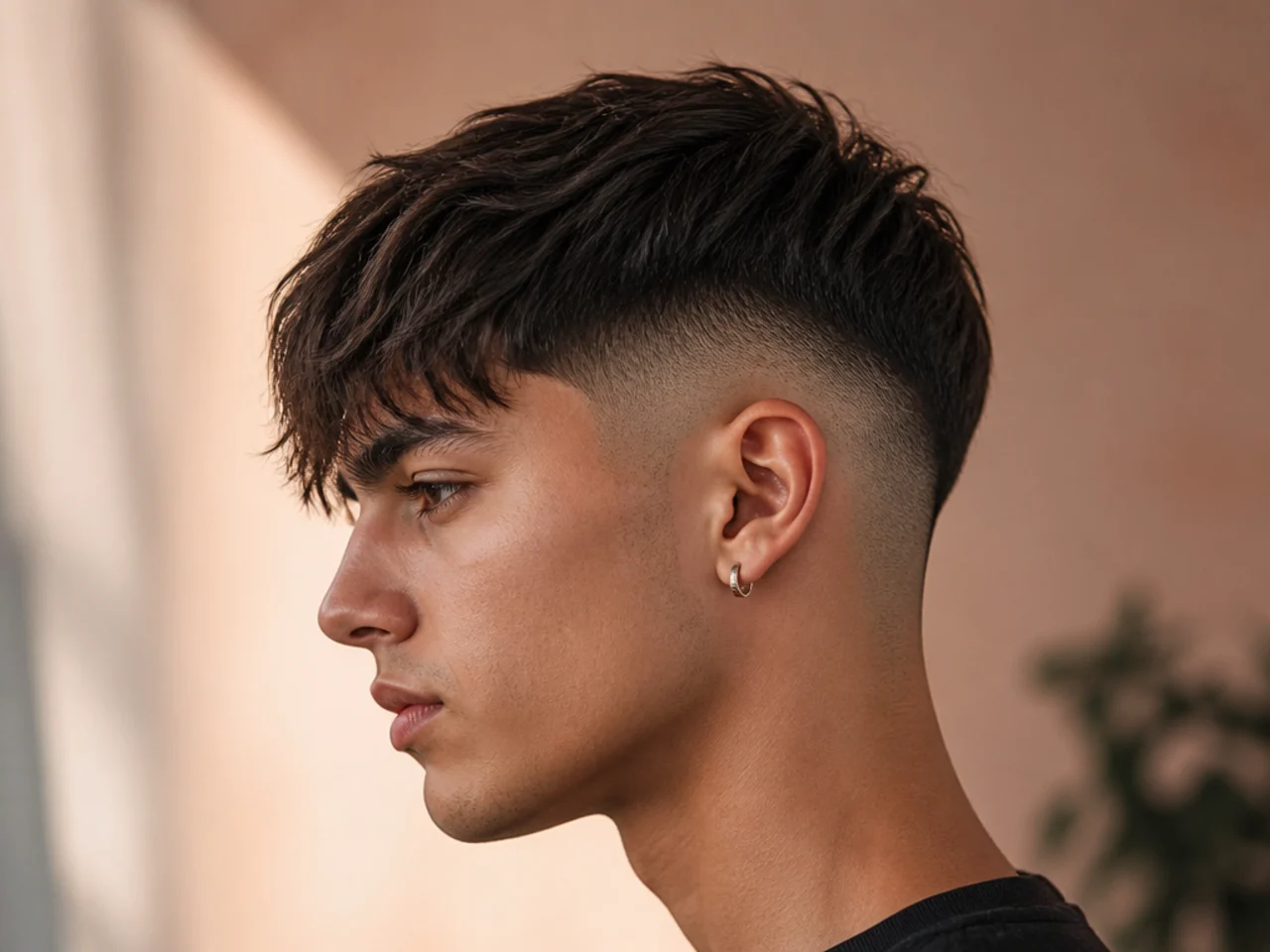
10. Modern Fringe on Thick Hair
Density needs internal weight removal or the front sits as a block. Ask for weight to come from inside the section rather than from a shorter overall length. It is the same instruction that keeps thick hair on men from setting into a helmet everywhere else on the head.
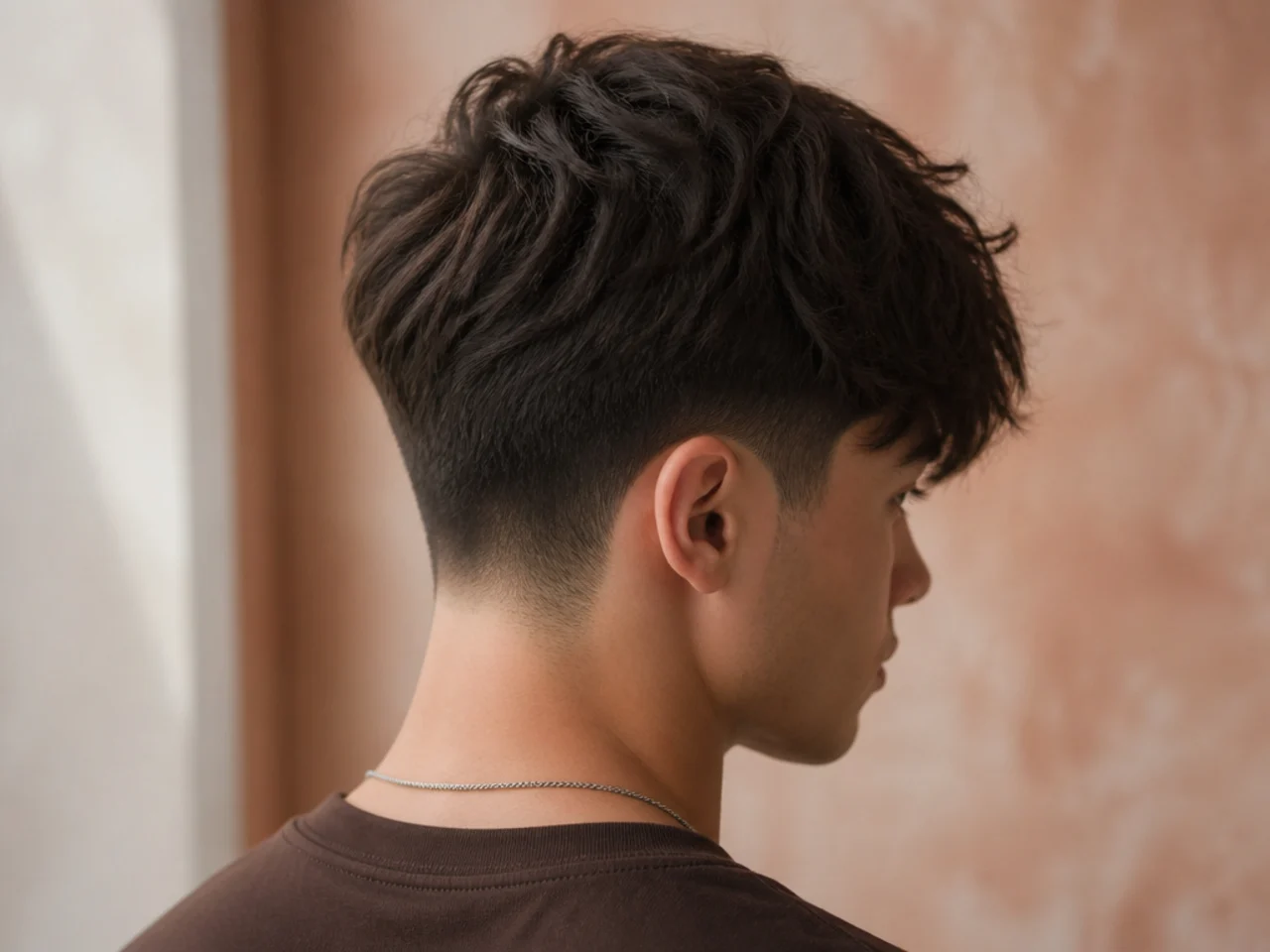
11. Modern Fringe With a Beard
The fringe and the beard are the two heaviest parts of the head, sitting at opposite ends of it. A full beard usually means keeping the fringe long so the proportions stay even.
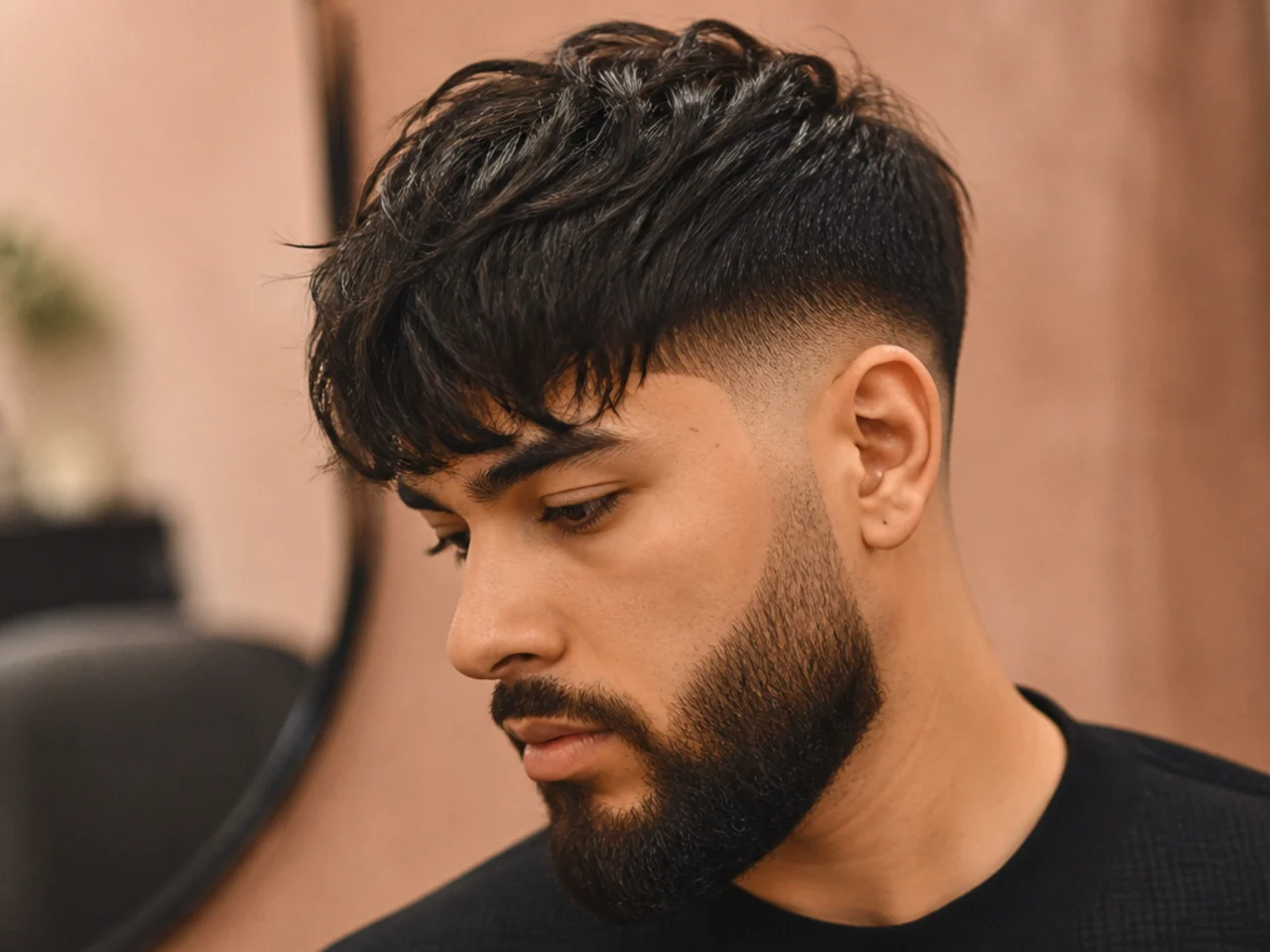
12. Fringe With a Soft Side Part
A part created with the fingers rather than a comb, so it moves during the day. A combed part on a modern fringe is a period detail.
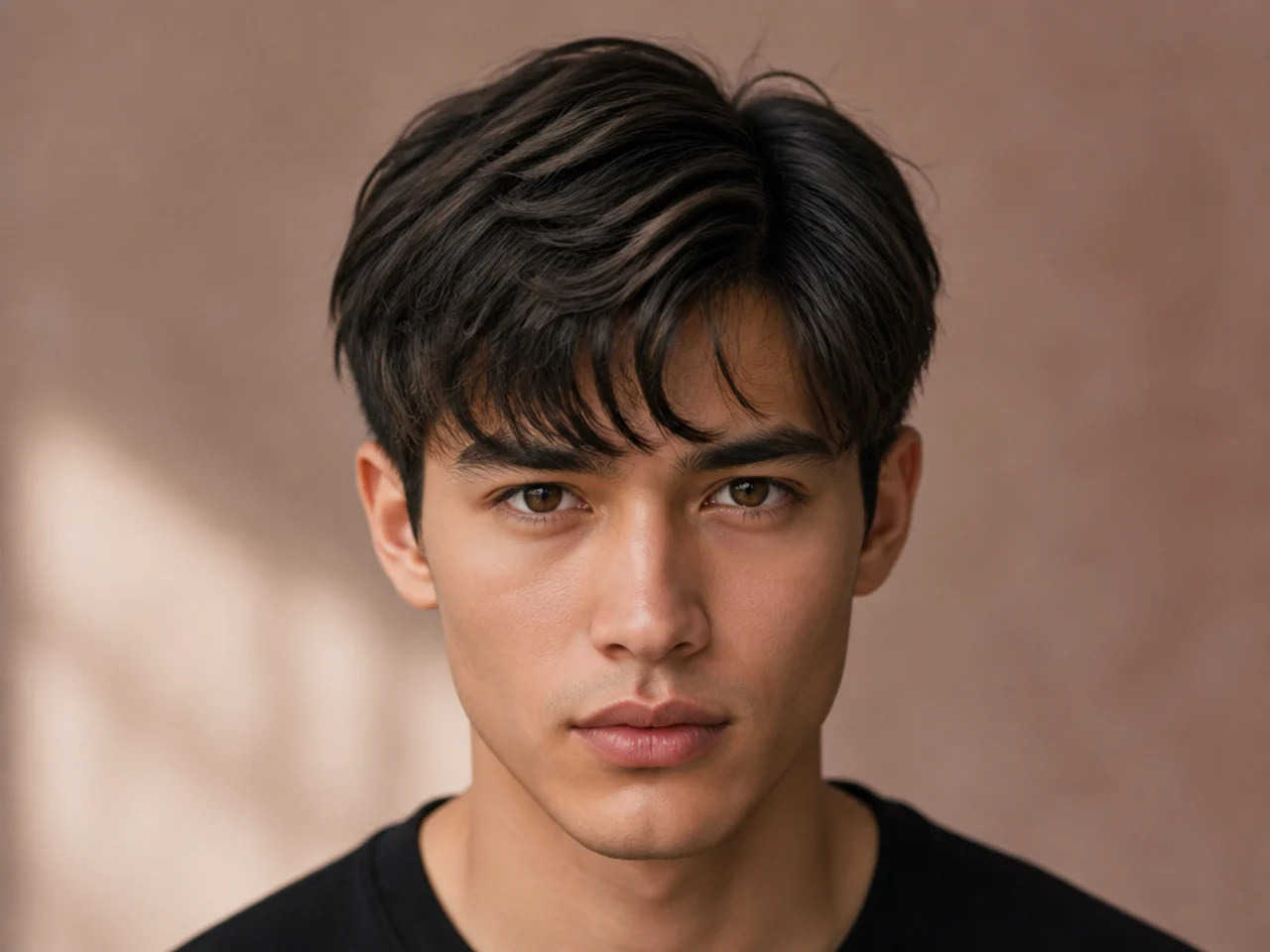
13. Modern Fringe With Curl Left In
Natural curl allowed to sit as it falls rather than being smoothed. Curl loses around a third of its length as it dries, so the fringe must be cut generously long.
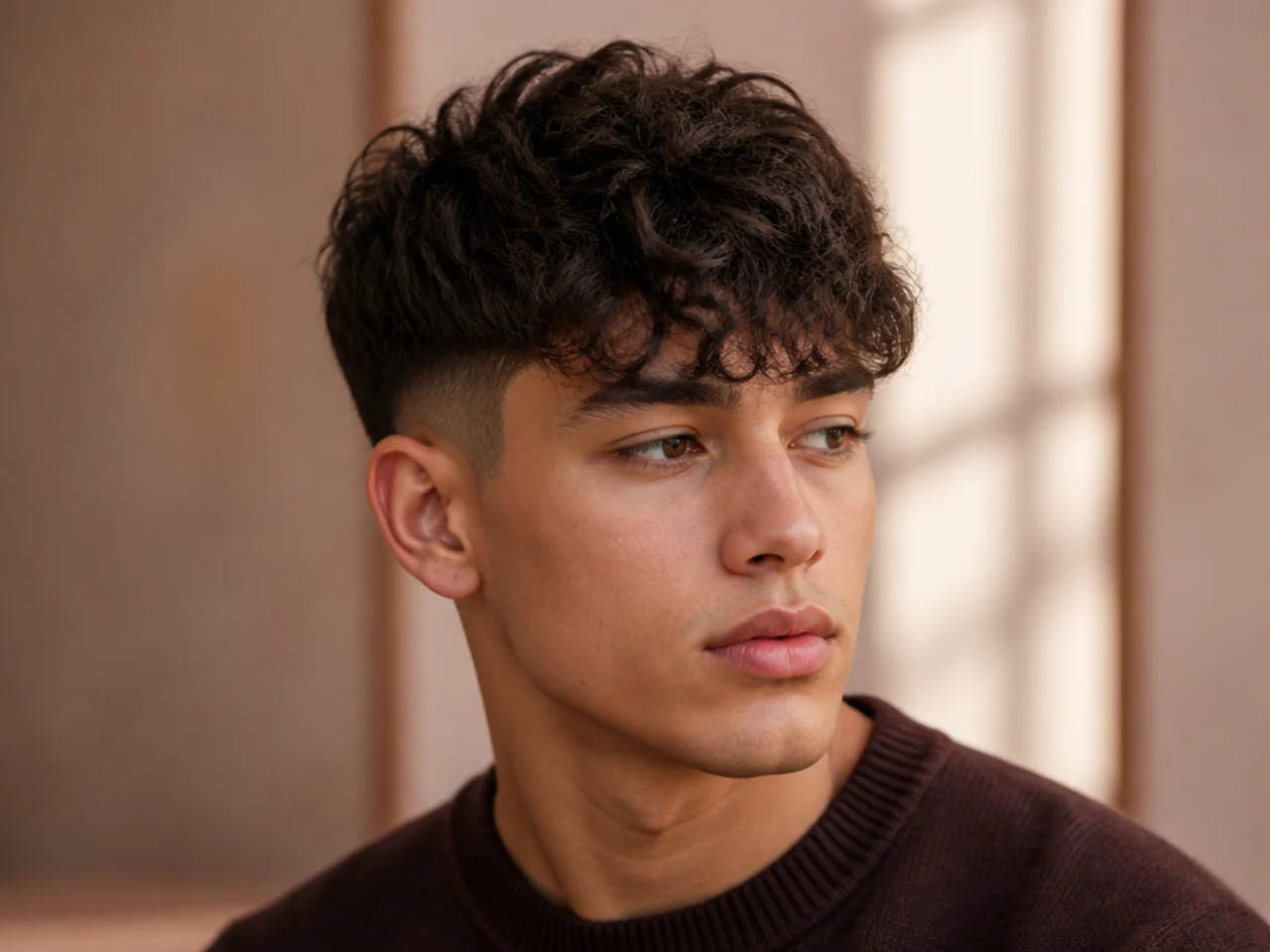
14. Slide-Cut Fringe
The scissors run down the length of the section rather than across it, thinning gradually from root to tip. It is the most literal execution of graded weight.
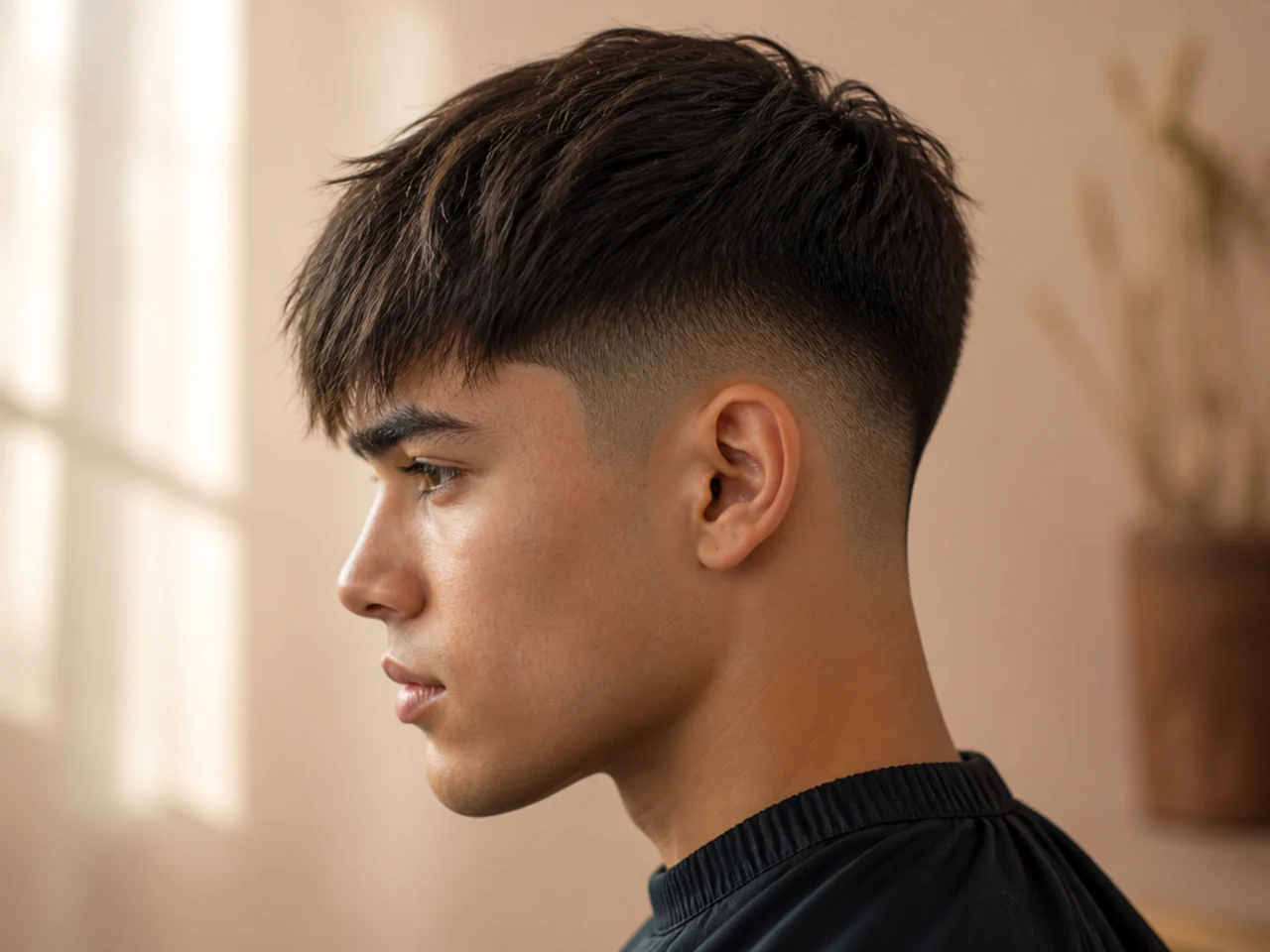
15. Modern Fringe on a Receding Hairline
Keep the weight high on the top and the sides short, since the contrast between full sides and a thin front is what draws the eye. A forward-falling soft fringe removes that contrast entirely.
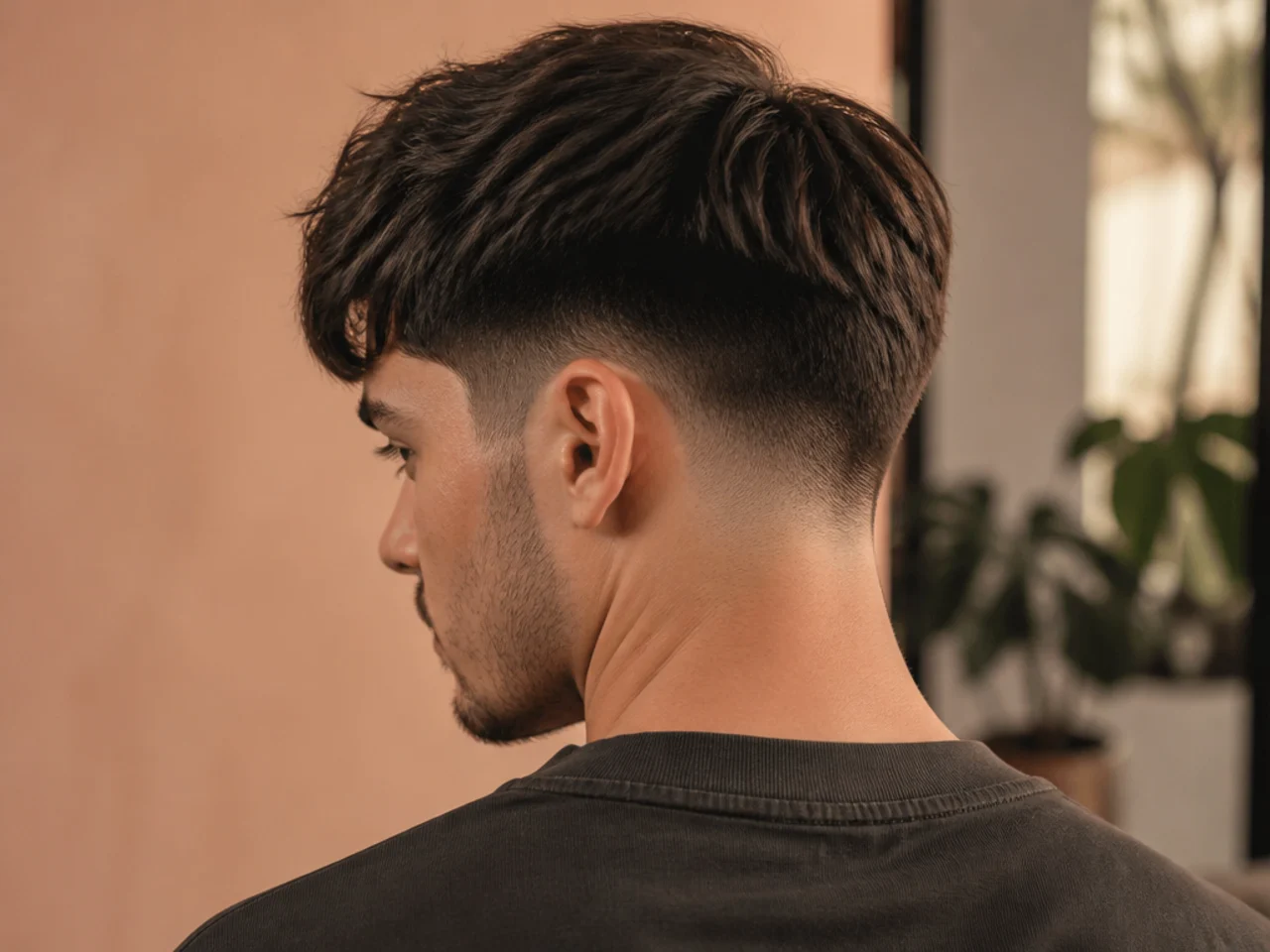
16. Asymmetric Modern Fringe
Longer at one side with the drop running diagonally. The diagonal has to be soft-edged or it reverts to the hard geometry the modern fringe was a reaction against.
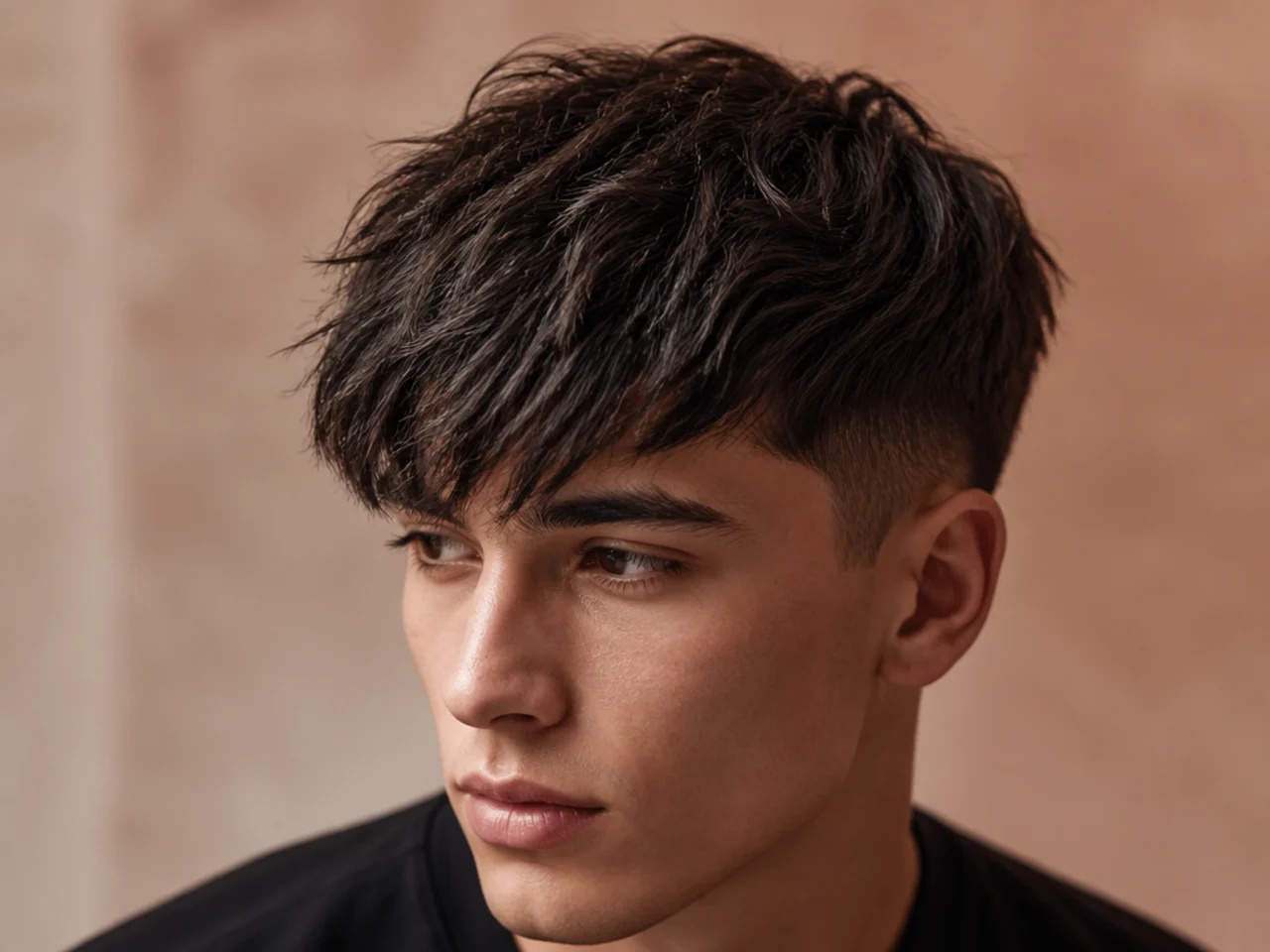
17. Modern Fringe With a Shadow Taper
The sides taken to a #1 rather than to skin, leaving a shadow rather than bare scalp. It is the compromise between contrast and a four-week booking rhythm.
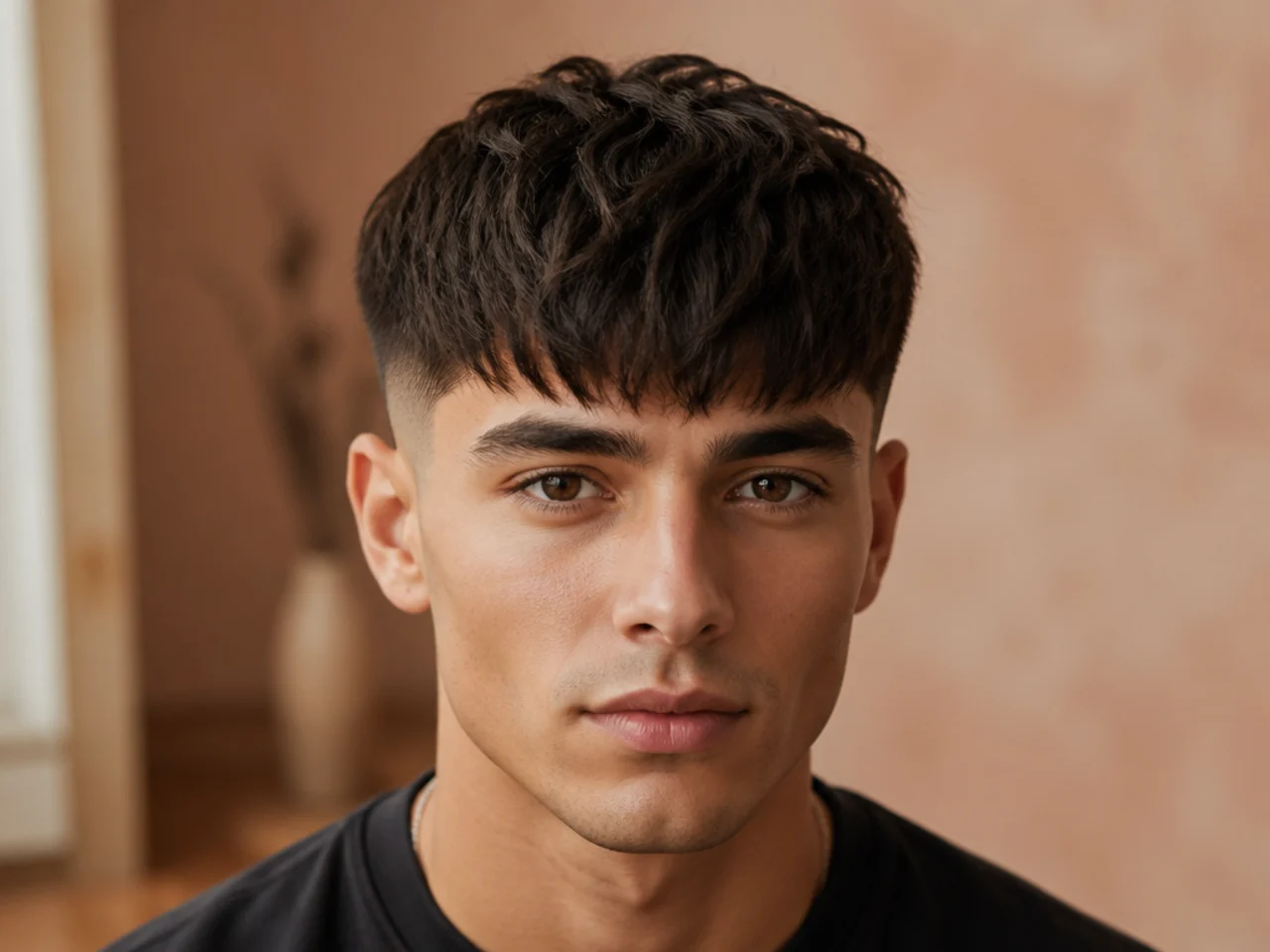
18. Wavy Modern Fringe
Natural wave lifts at the root, which does the volume work a dryer would otherwise have to do. It is the texture the modern fringe suits best.
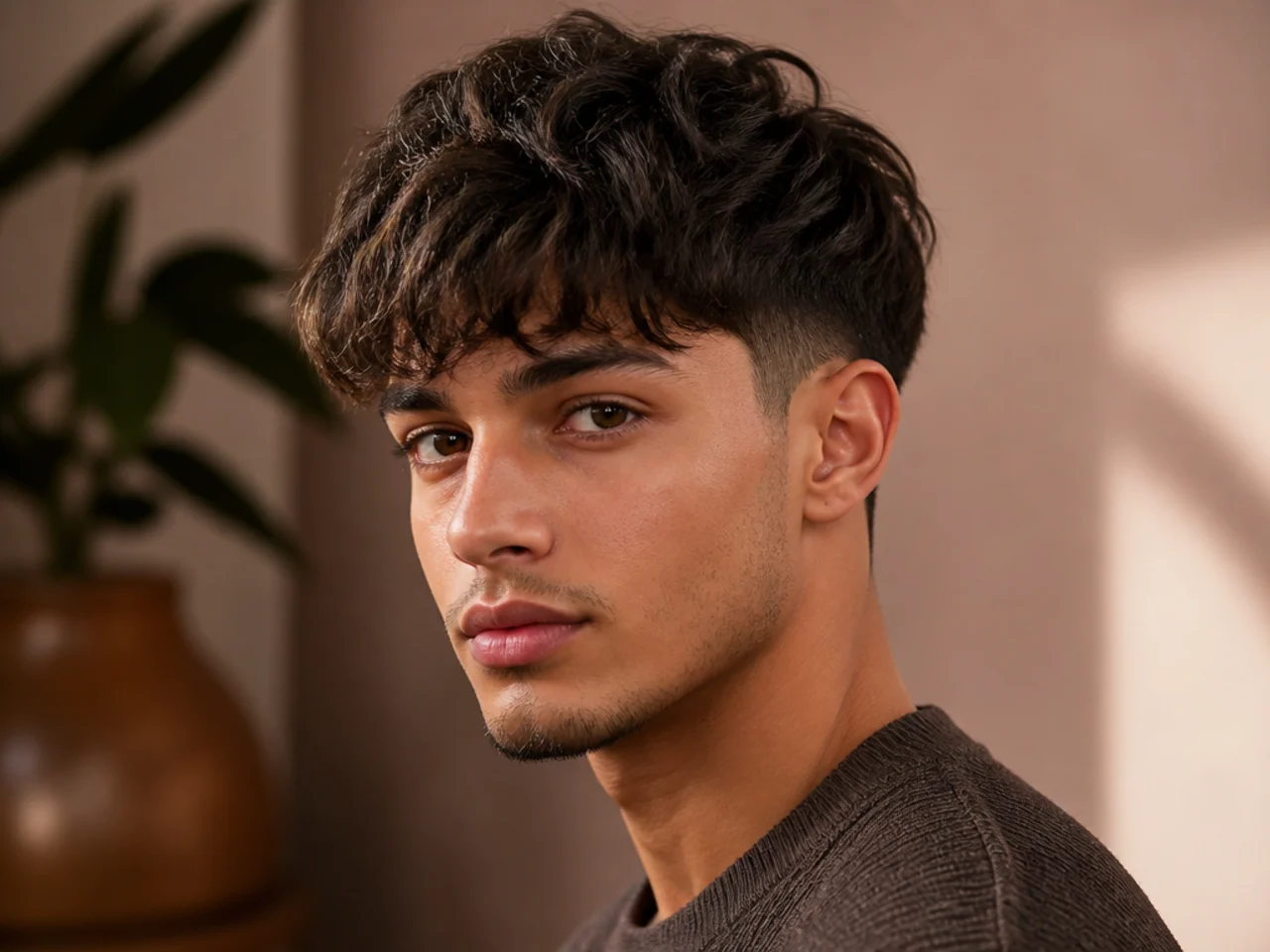
19. Fringe With a Textured Crown
The texture carried backward over the crown instead of stopping behind the front section. It stops the back of the head looking flat next to a busy front.
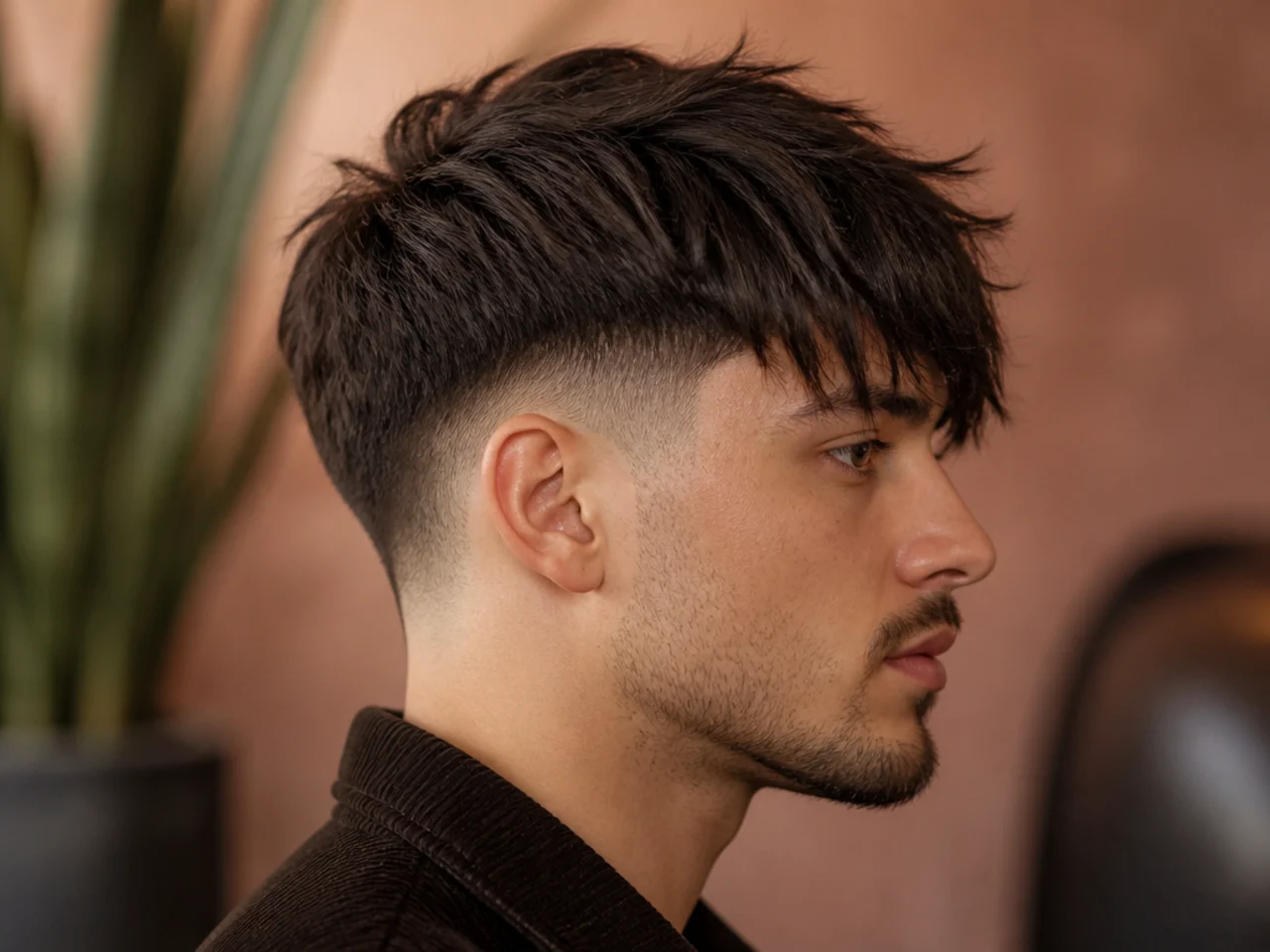
20. The Week-Four Modern Fringe
Softened, heavier and slightly longer than intended, which is where a graded fringe looks best. The whole design brief is a cut that improves as it grows.
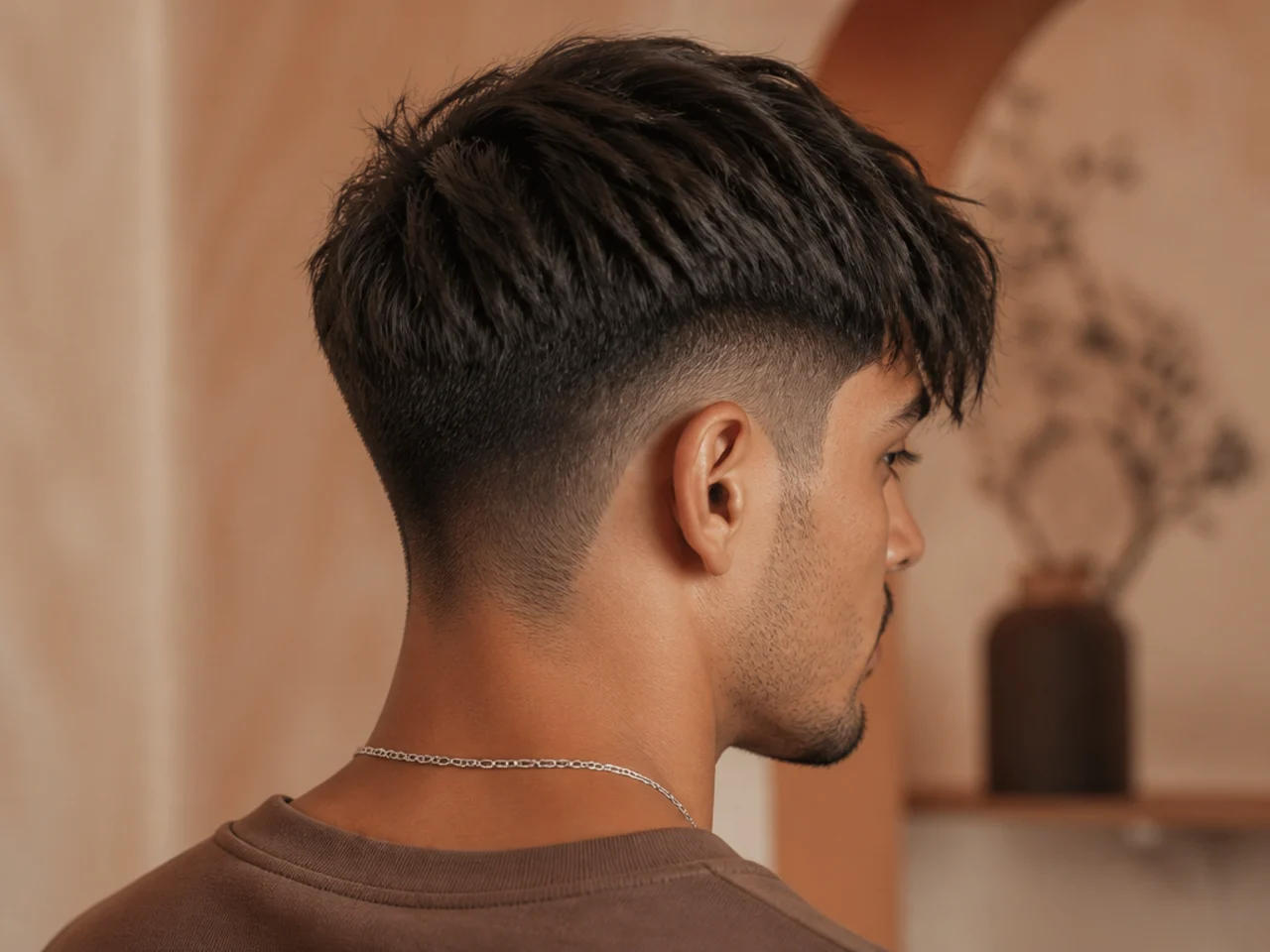
Styling and Upkeep
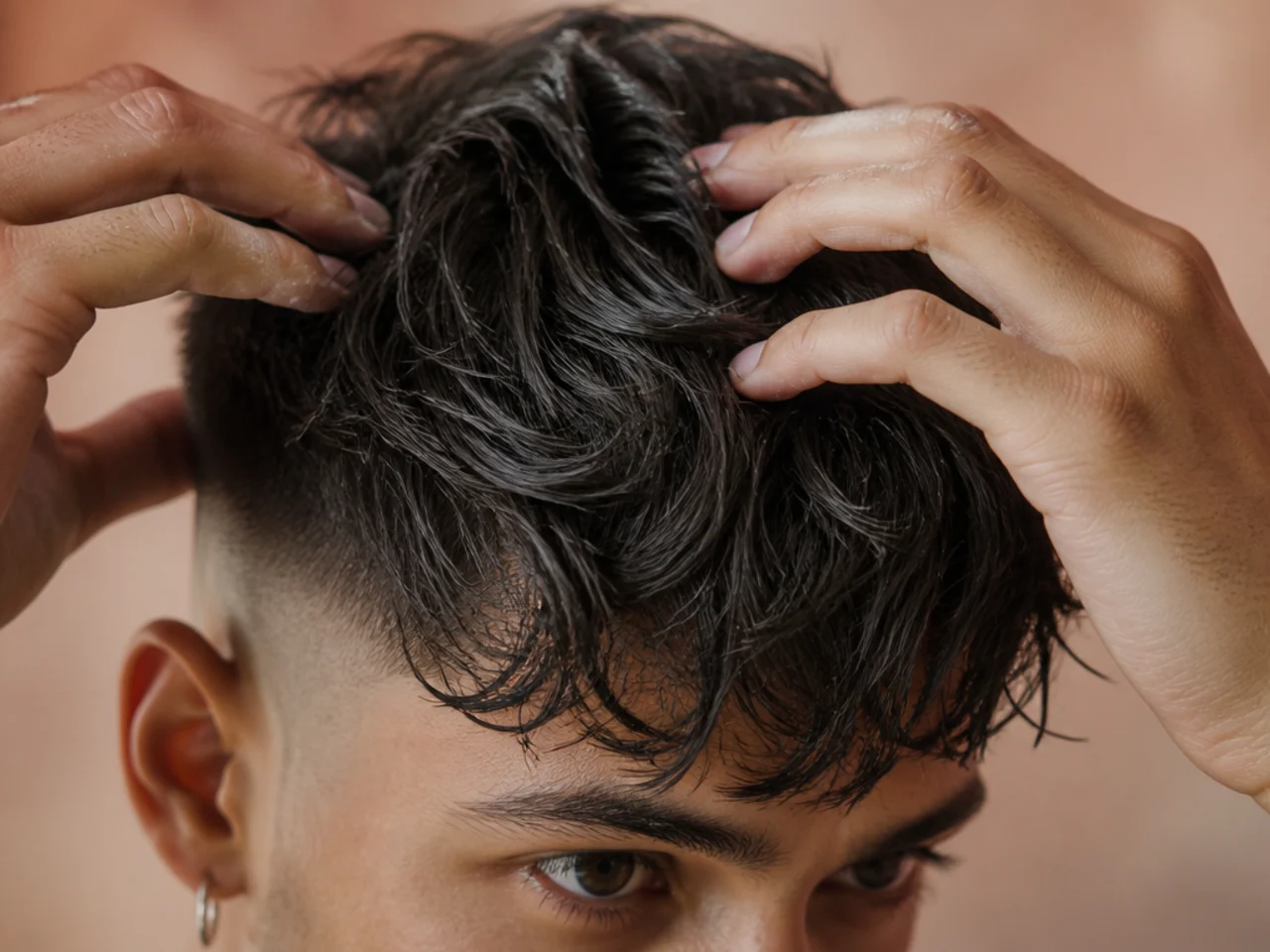
Use matte clay on damp hair. Product on dry hair coats the surface instead of moving the root.
Dry with fingers and no nozzle. A concentrated stream flattens the irregularity the cut is built on.
Skip the comb entirely. Combing regroups every strand into one plane and undoes the grading.
Let it grow between visits. A graded fringe reaches its best around week four.
Say blend when you rebook. The default on a fringe is still often a disconnect.
Mistakes to Avoid
Asking for a disconnected undercut. It is the single most dating structure a fringe can have.
Using shine pomade. Gloss makes a deliberately undone shape look like it was worked on for twenty minutes.
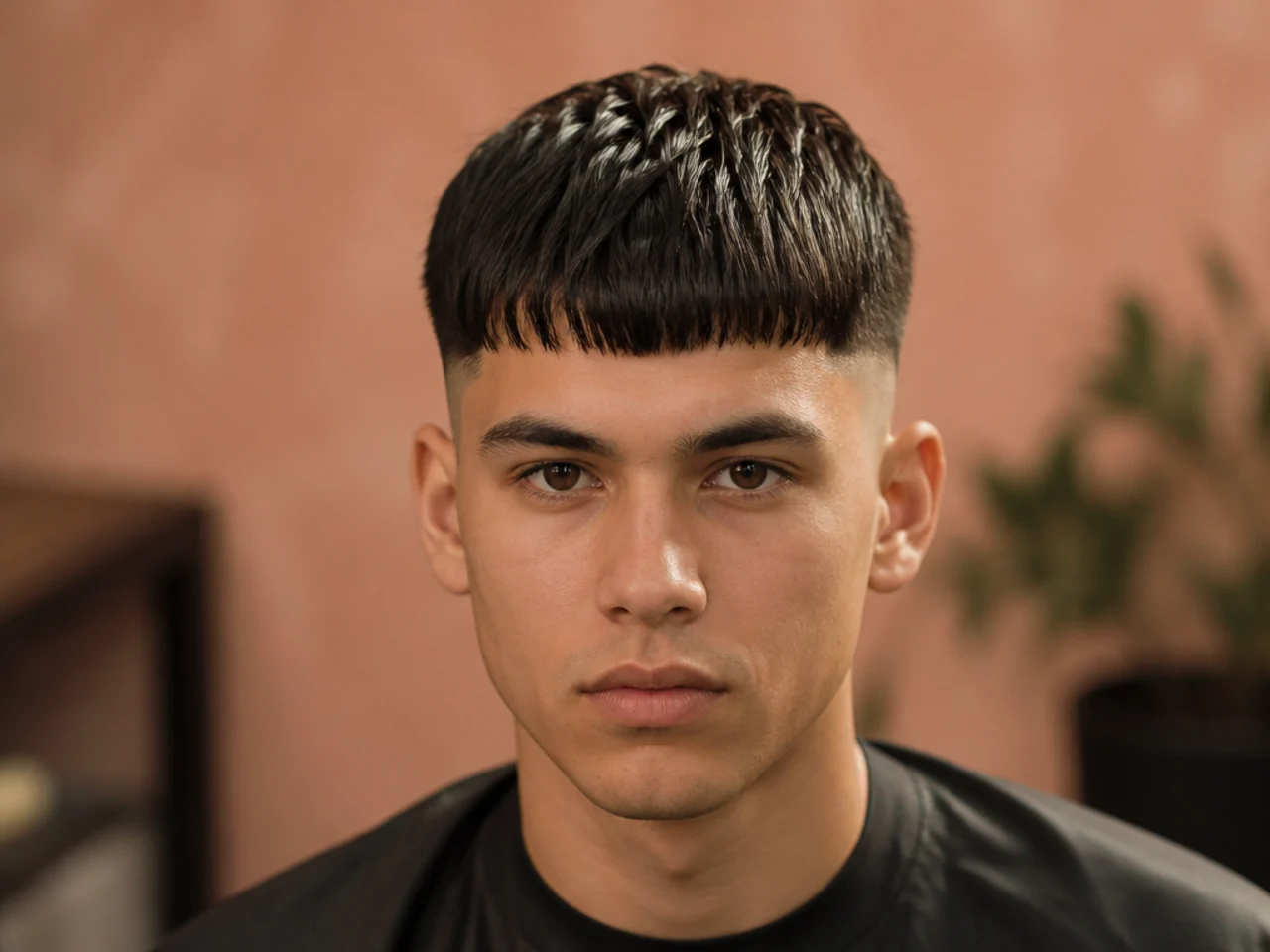
Cutting the front edge blunt. A straight line across the brow undoes everything else in the cut.
Booking every two weeks. You never see the shape at its best.
Copying a length without copying the weight. Length is identical between the old fringe and the new one.
FAQ
What makes it modern? Blended sides, matte finish and a broken front edge.
Is it shorter than the old version? No — the length is often identical, the weight distribution is not.
Does it suit thin hair? Yes, better than the older blunt version did.
Final Thoughts
Ask for blended sides, graded weight and a broken edge, and buy a matte clay on the way home. Those four decisions are the entire distance between a fringe that looks like this year and one that looks like the year you first got it.
For the broader current range see fringe haircuts for men, and for the most-requested modern execution see the textured fringe. More in Men's Haircuts.