20 Men Haircut Styles I Saved to Try
Twenty saved haircuts sorted by family rather than by name, which is what finally made the folder useful. Most saved boards are the same three structures repeated at different lengths and photographed from better angles.
In this article · 27
- How to Read a Saved Photo
- How to Choose Yours
- The 20 Saved Styles, Sorted
- 1. The Textured Crop — Textured Family
- 2. The French Crop — Short Family
- 3. The Buzz Cut — Short Family
- 4. The Crew Cut — Short Family
- 5. The Ivy League — Classic Family
- 6. The Side Part — Classic Family
- 7. The Slick Back — Classic Family
- 8. The Low Taper — Fade Family
- 9. The Mid Skin Fade — Fade Family
- 10. The Burst Fade — Fade Family
- 11. The Blurry Taper — Modern Family
- 12. The Two-Block — Modern Family
- 13. The Modern Mullet — Modern Family
- 14. The Middle Part — Modern Family
- 15. The Curly Top — Curly Family
- 16. The Curly Crop — Curly Family
- 17. The Executive Contour — Business Family
- 18. The Tapered Buzz — Business Family
- 19. The Week-Four Photo
- 20. The Family You Saved Most
- Styling and Upkeep
- Mistakes to Avoid
- FAQ
- Final Thoughts
My saved folder ran to about sixty haircuts before I sorted it, and sorting it by family rather than by name was the thing that finally made it useful.
Most saved boards are three or four structures repeated. The same short cut, the same textured crop and the same blended modern shape, at different lengths and better angles.
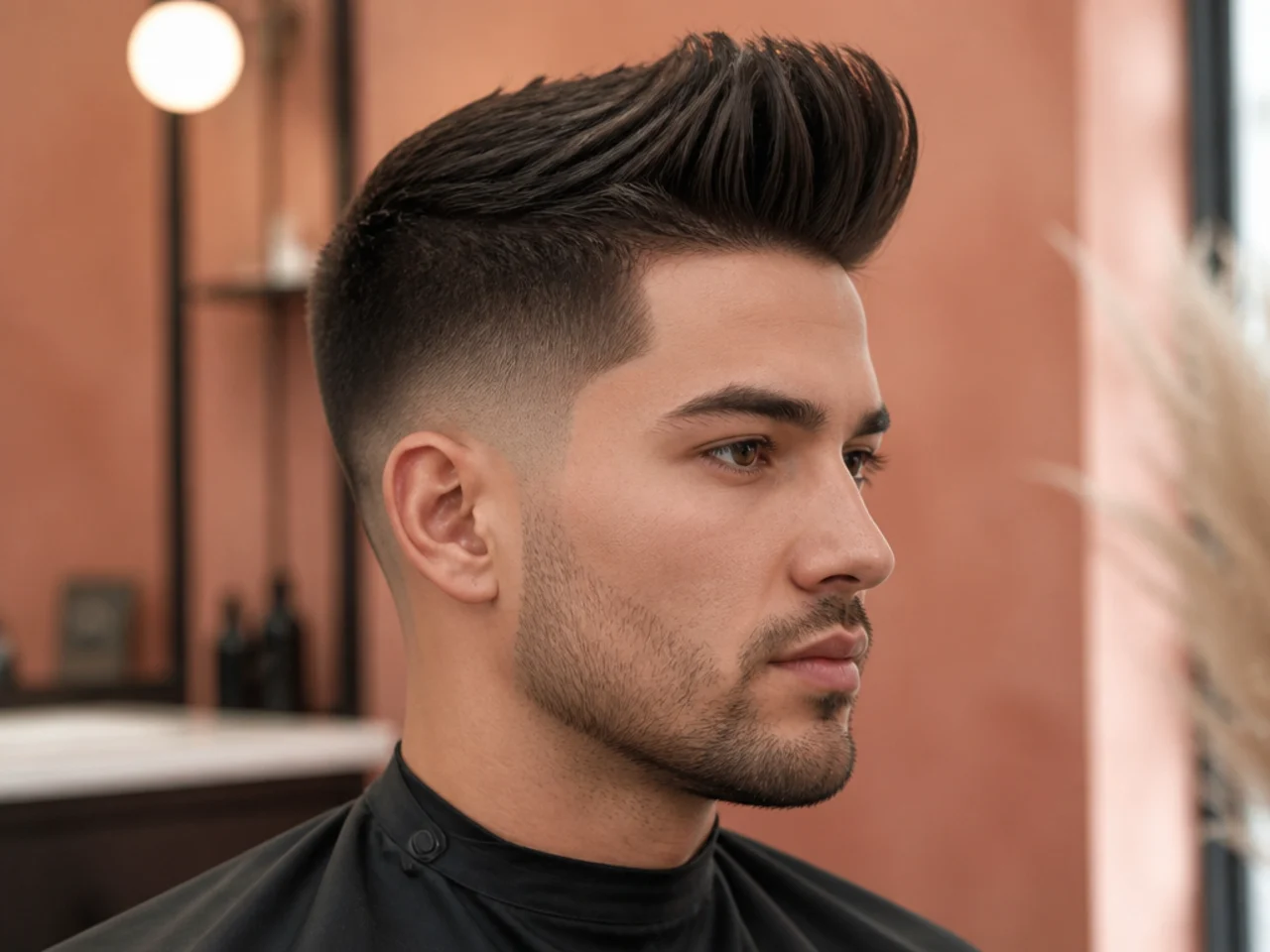
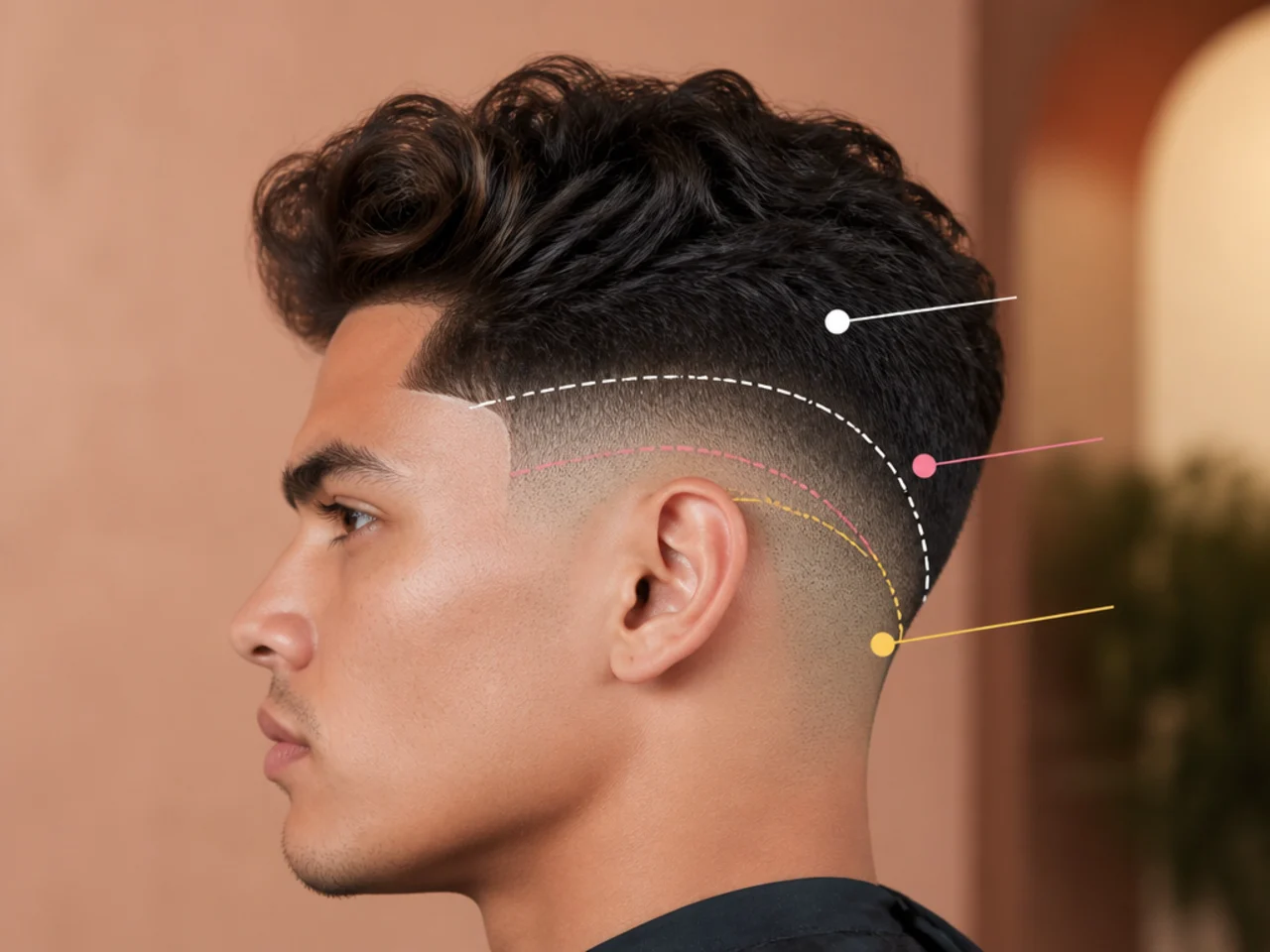
A photograph shows styling and hides structure. What you need from it is whether the sides are blended or stepped, whether there is bare skin, and whether the ends are blunt or broken.
How to Read a Saved Photo
Check the sides for a step. Blended is a fade, stepped is a two-block or an undercut.
Check for bare skin. It moves the photo out of the monthly families and into the fade family, where the appointment is fortnightly.
Check the ends. Blunt belongs to the classic family, broken to the modern and textured ones.
Check the texture. Curl loses around a third of its length drying, and no photograph warns you.
How to Choose Yours
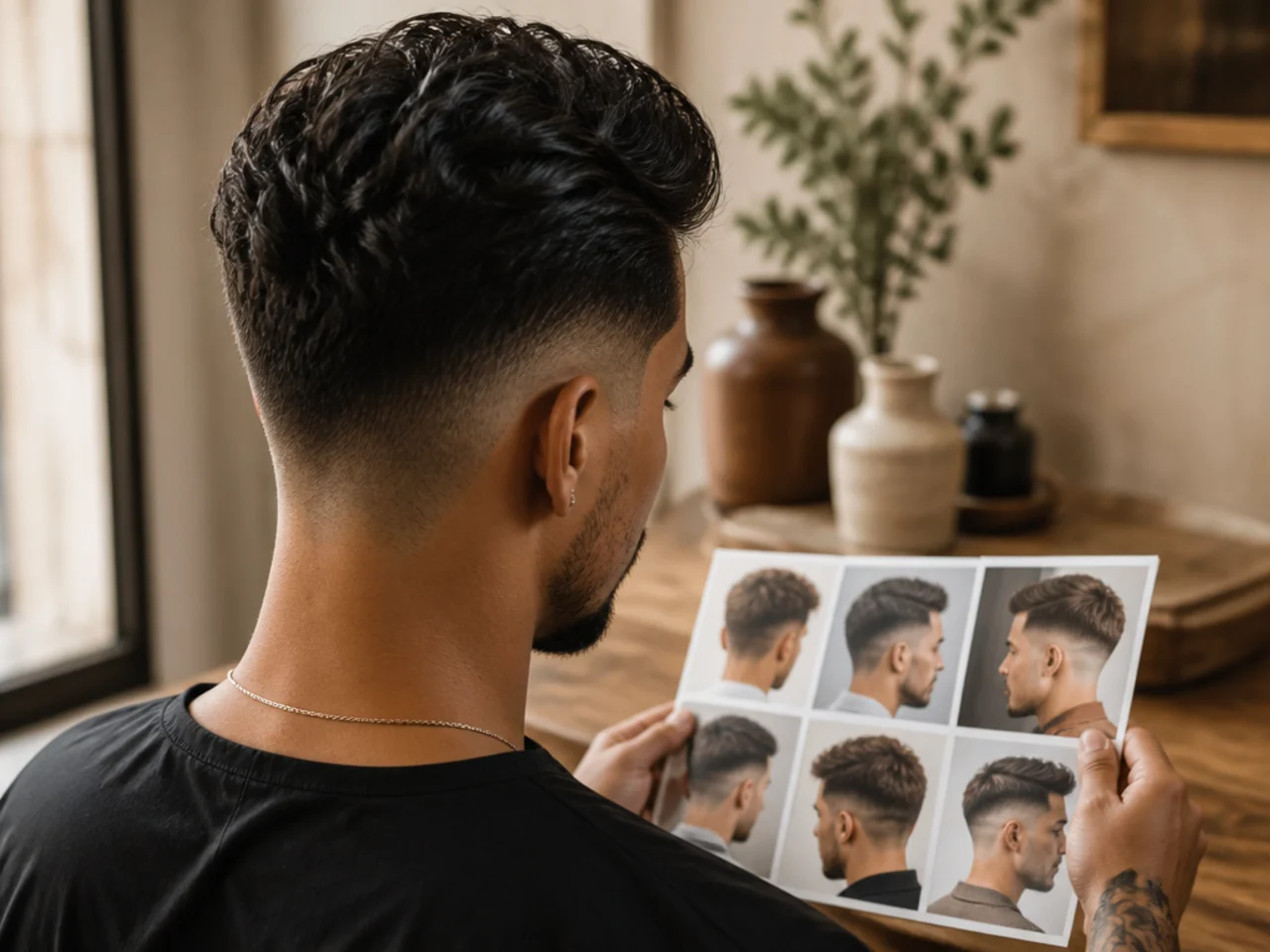
Sort your folder by family first. Most boards collapse into three groups.
Discard anything with wet-looking hair. Wet is the longest hair will ever look.
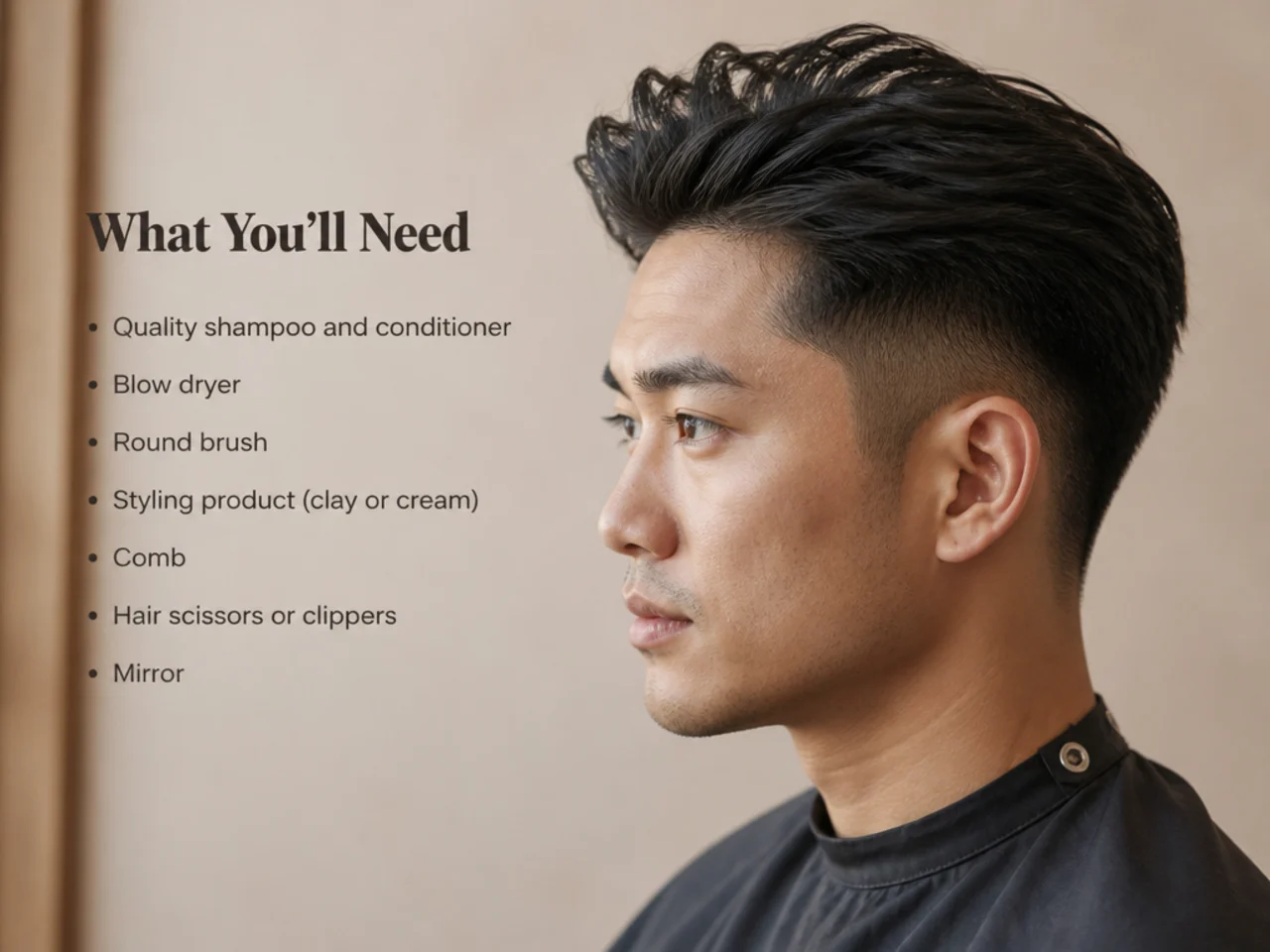
Keep only photos with a visible side profile. The front view hides the structure.
Pick for your texture, not your face. Texture decides what the hair does once it dries.
The 20 Saved Styles, Sorted
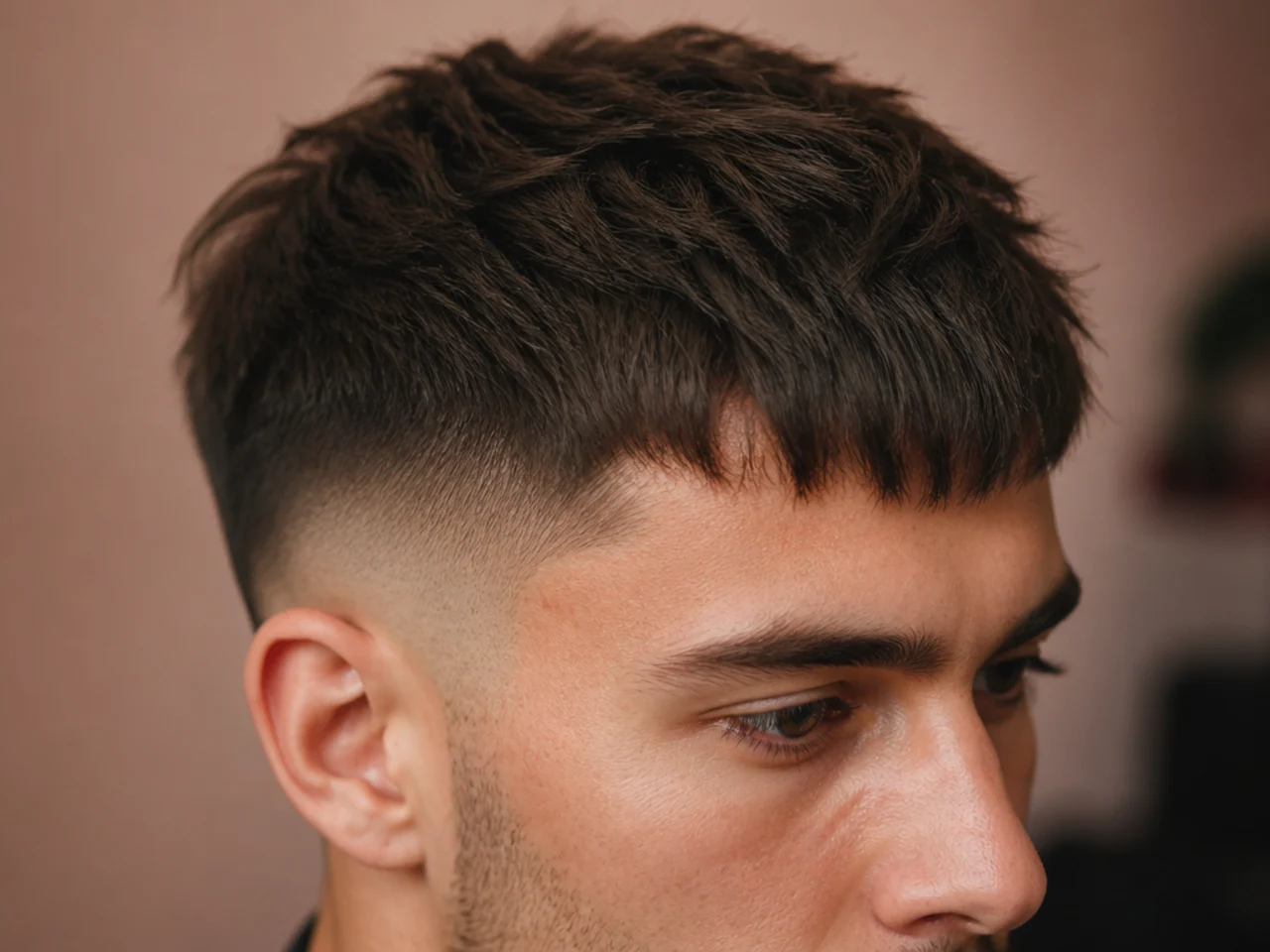
1. The Textured Crop — Textured Family
Staggered ends within one section, so the separation is cut in rather than styled on. It is the single most saved men's cut and the one most likely to translate.
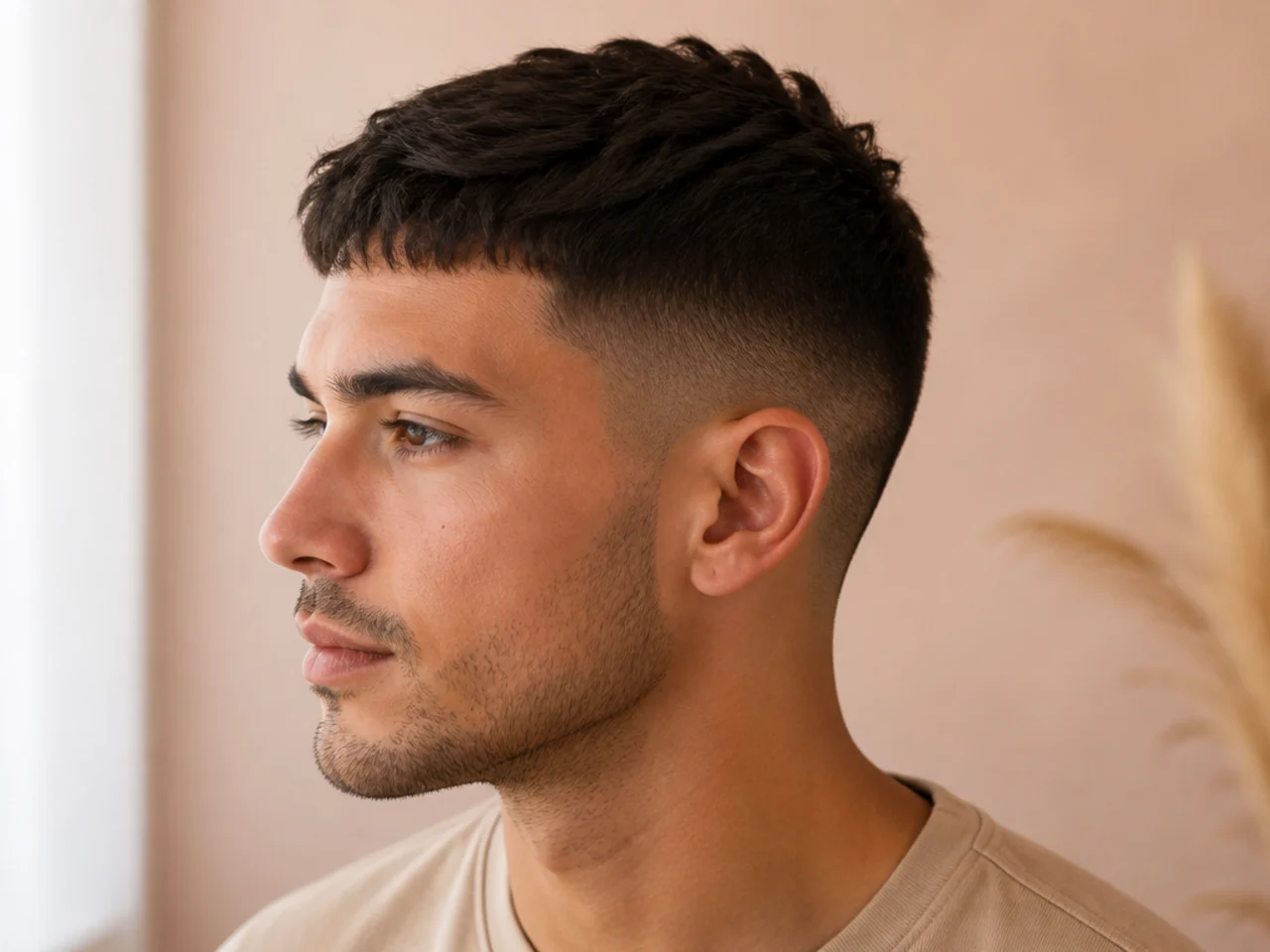
2. The French Crop — Short Family
Short sides, forward top, no product. It has the fewest hidden requirements of anything in a saved folder. The fringe line is the only variable in it, so one straight-on photograph happens to show the entire cut.

3. The Buzz Cut — Short Family
One guard number and nothing else. Check which number, because a #1 at 3mm and a #4 at 13mm are very different photographs in person.
4. The Crew Cut — Short Family
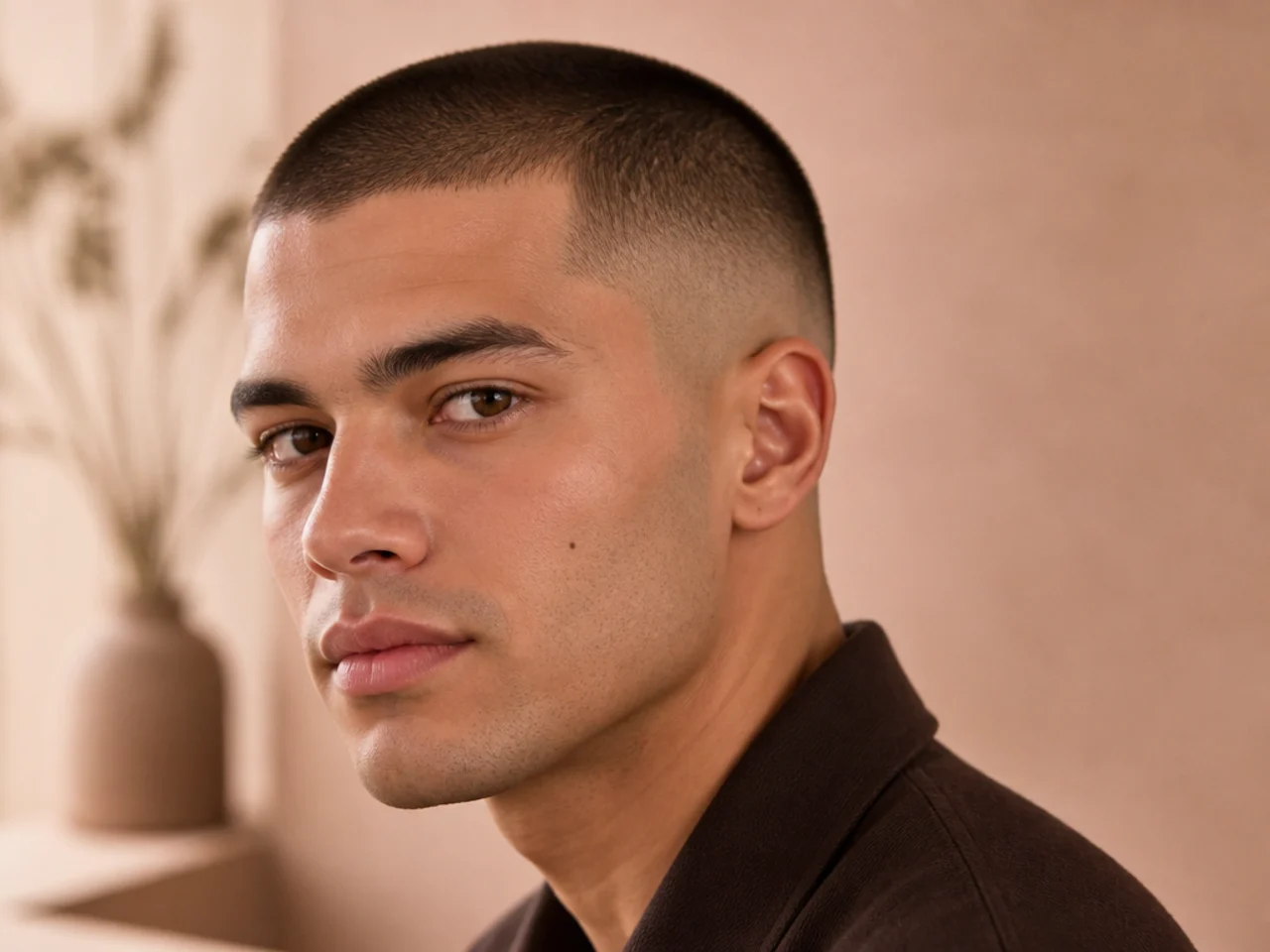
Graduated front to back. It is the safest saved cut on any head shape and the easiest to describe out loud. The length changes by about an inch from front to back, and a graduation that gentle is one of the few a photograph reports honestly.
5. The Ivy League — Classic Family
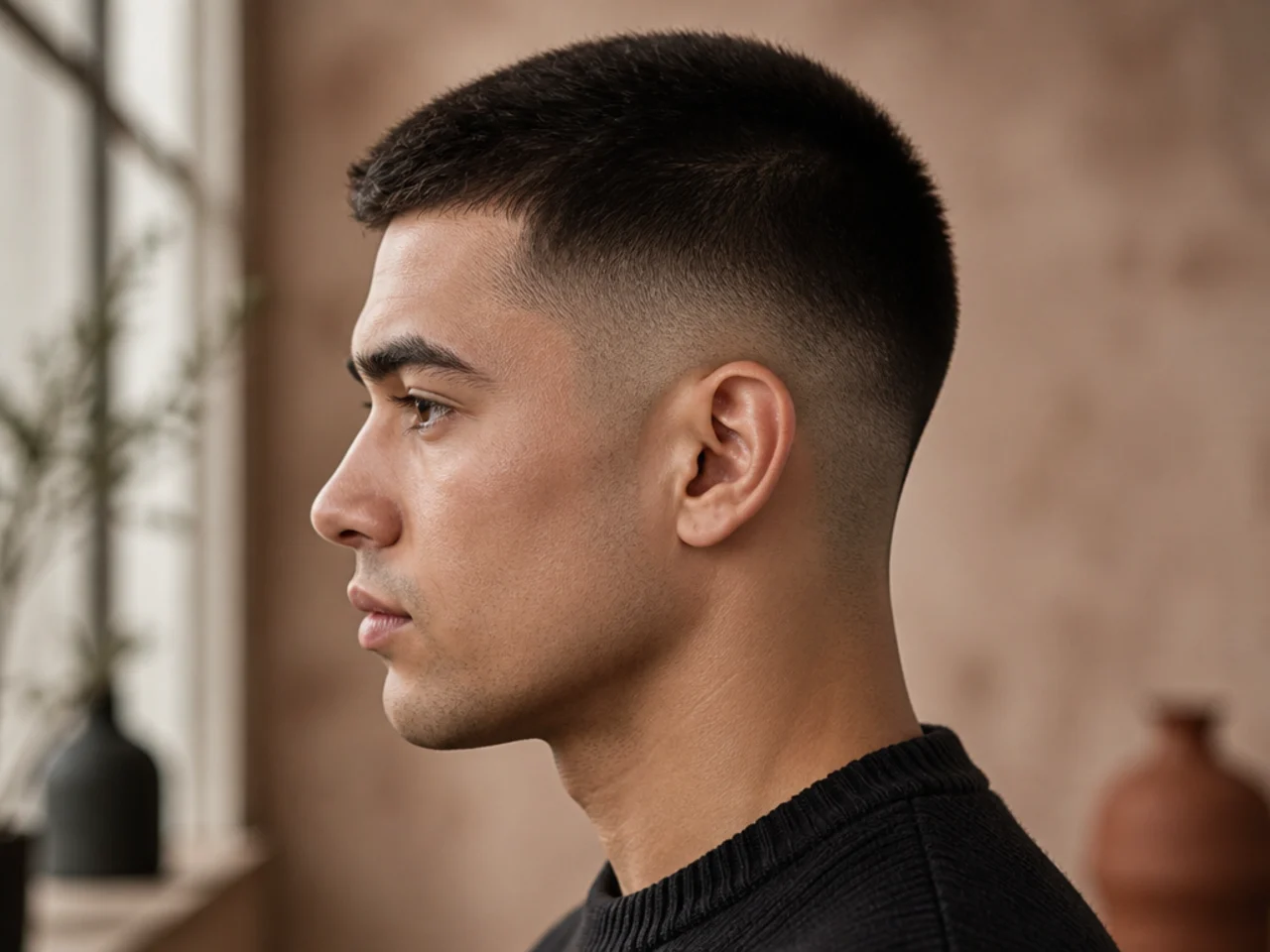
Scissor graduation with enough front length to comb. Look for the absence of a clipper line, which is what places it in this family.

6. The Side Part — Classic Family
The part is the structure, and it has to sit where the hair naturally separates. A saved photo cannot tell you whether yours does.
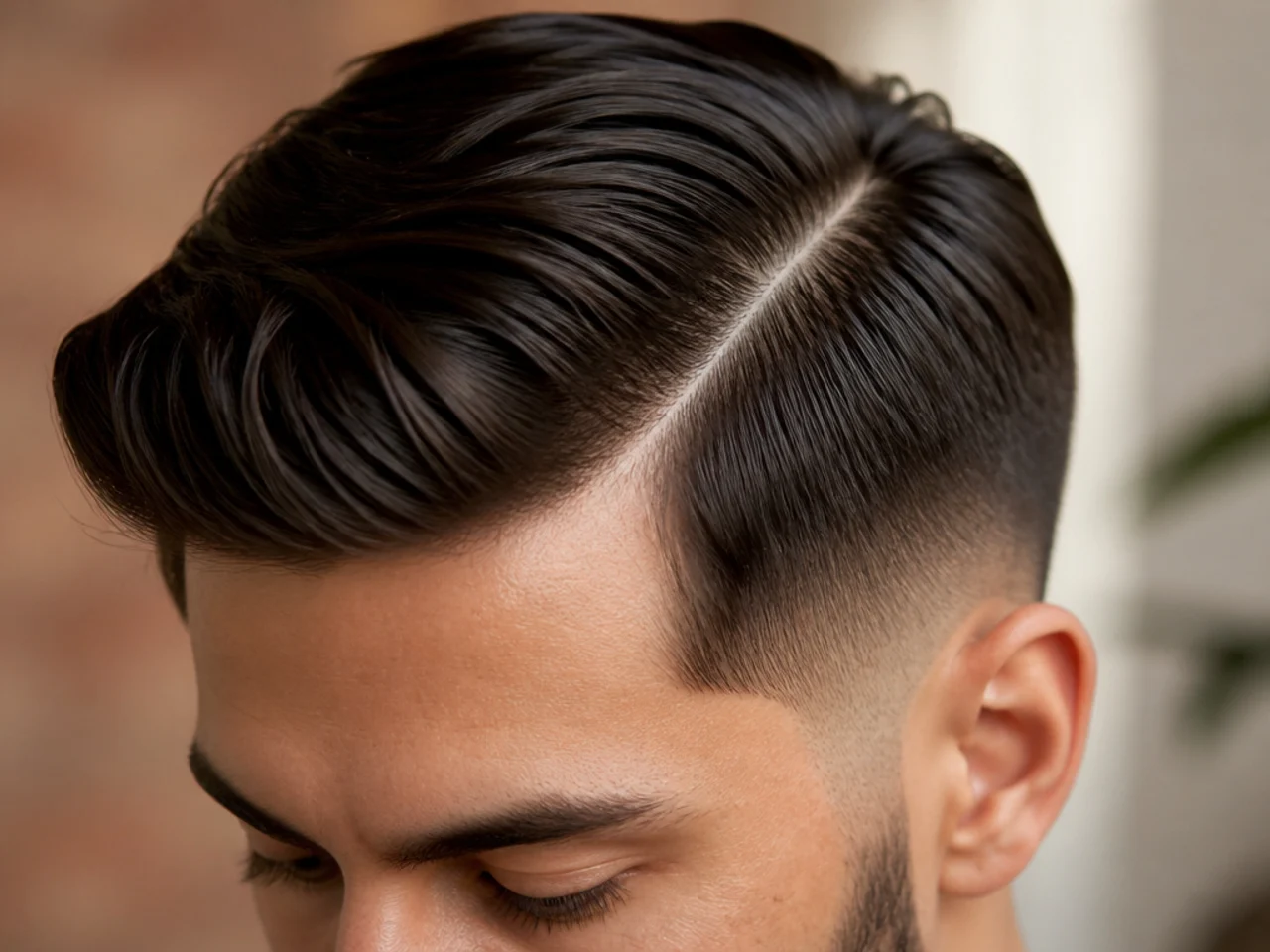
7. The Slick Back — Classic Family
Around four inches of length and a full drying routine. The photograph is showing a blow-dry rather than a haircut. Classic family means no graduation, so the whole shape is direction rather than structure, and direction is what a dryer puts in each morning.

8. The Low Taper — Fade Family
Low height and a #1 depth, holding three to four weeks. It is the most saveable member of the fade family for anyone booking monthly.
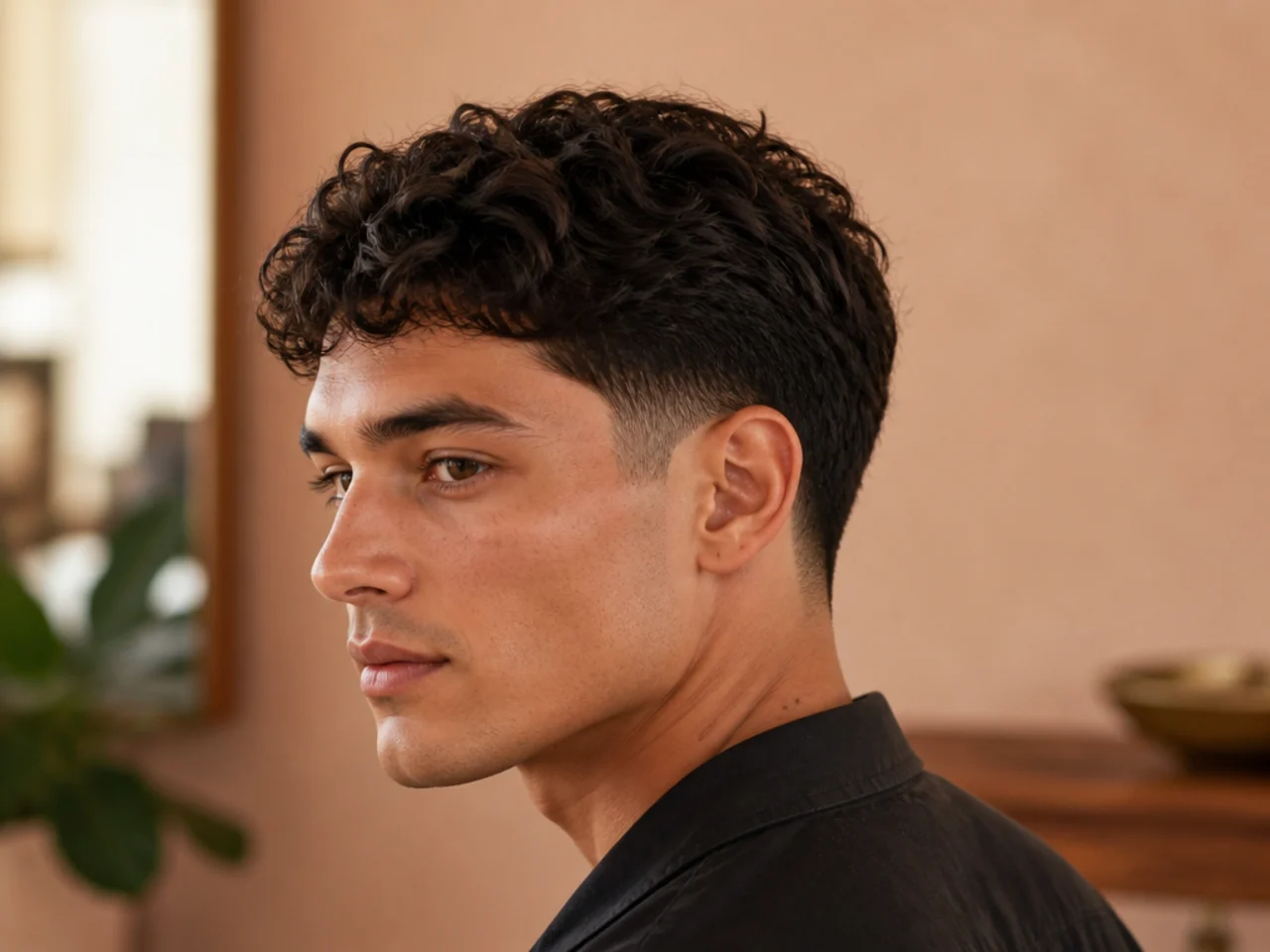
9. The Mid Skin Fade — Fade Family
Bare scalp in the gradient means a fortnightly appointment. That is the hidden caption on almost every fade photograph. Skin is the floor the gradient is built on, and a skin fade loses that floor at around 10mm of regrowth a month.
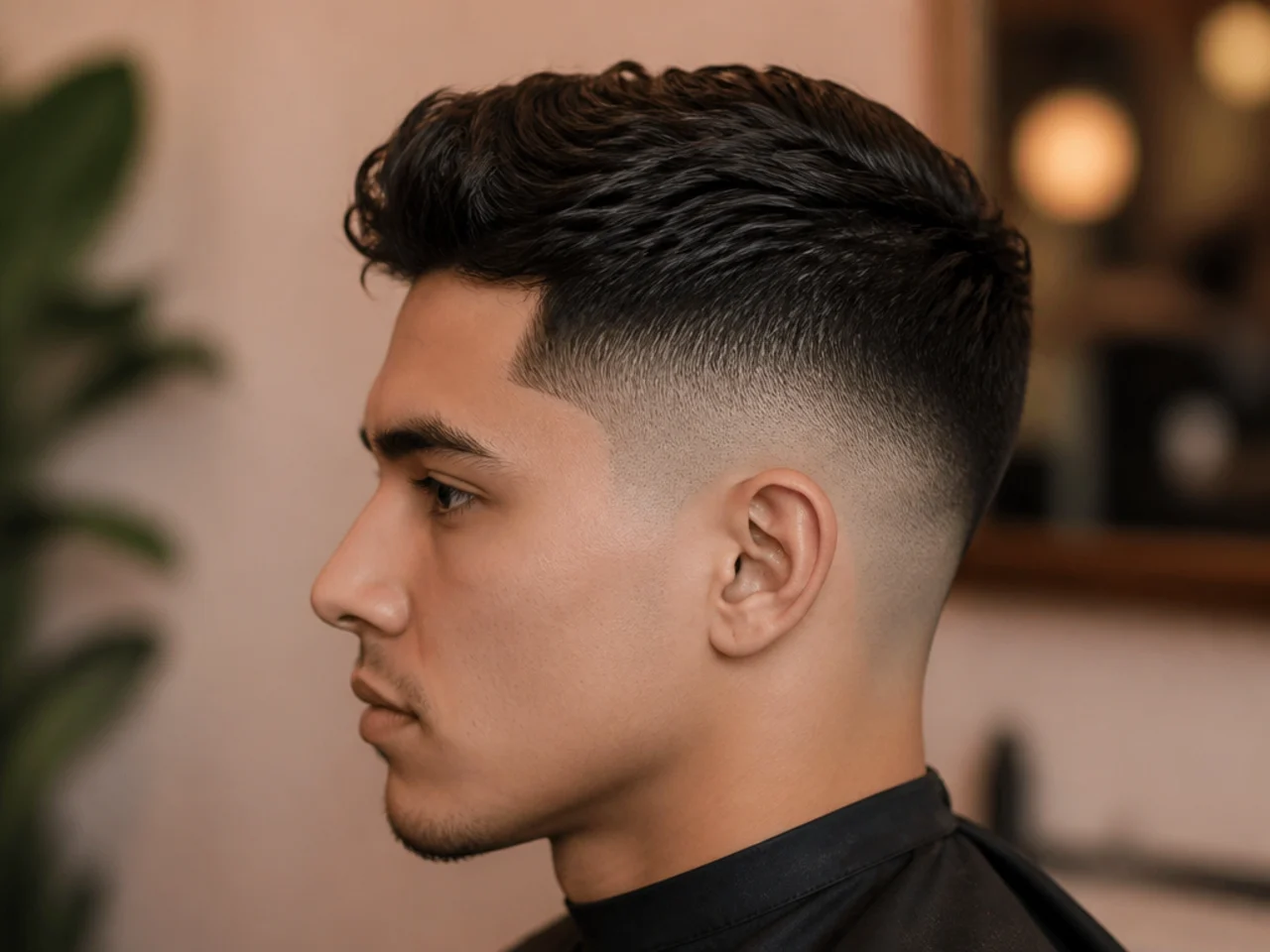
10. The Burst Fade — Fade Family
The gradient arcs around the ear rather than travelling all the way round. It is the one member of the fade family that has to be named out loud, because nothing in the photograph says it.
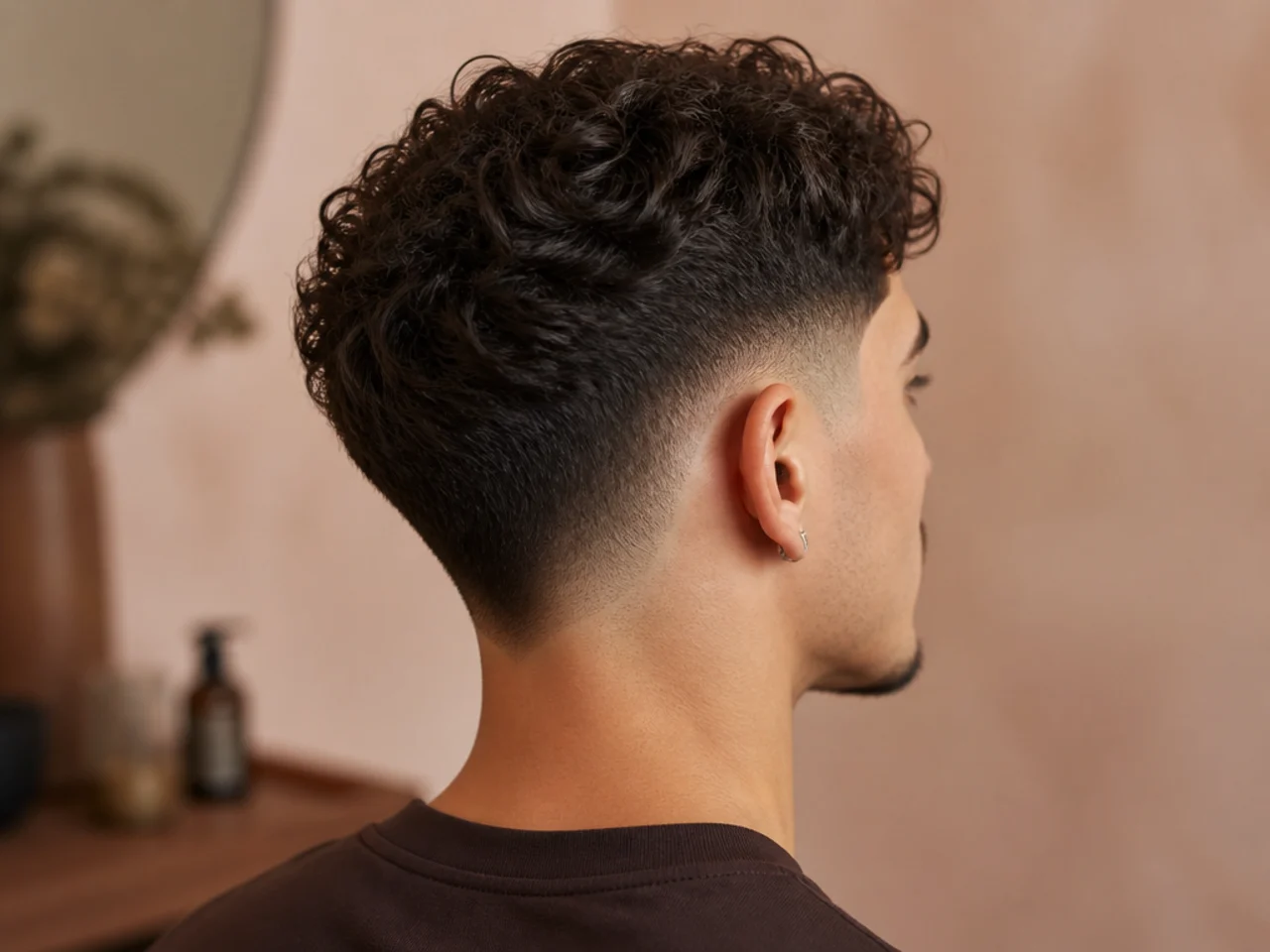
11. The Blurry Taper — Modern Family
No locatable start to the gradient. What you are saving is chair time rather than a shape. The lengths are identical to an ordinary taper, and the difference is the number of passes over the join, which no frame records.
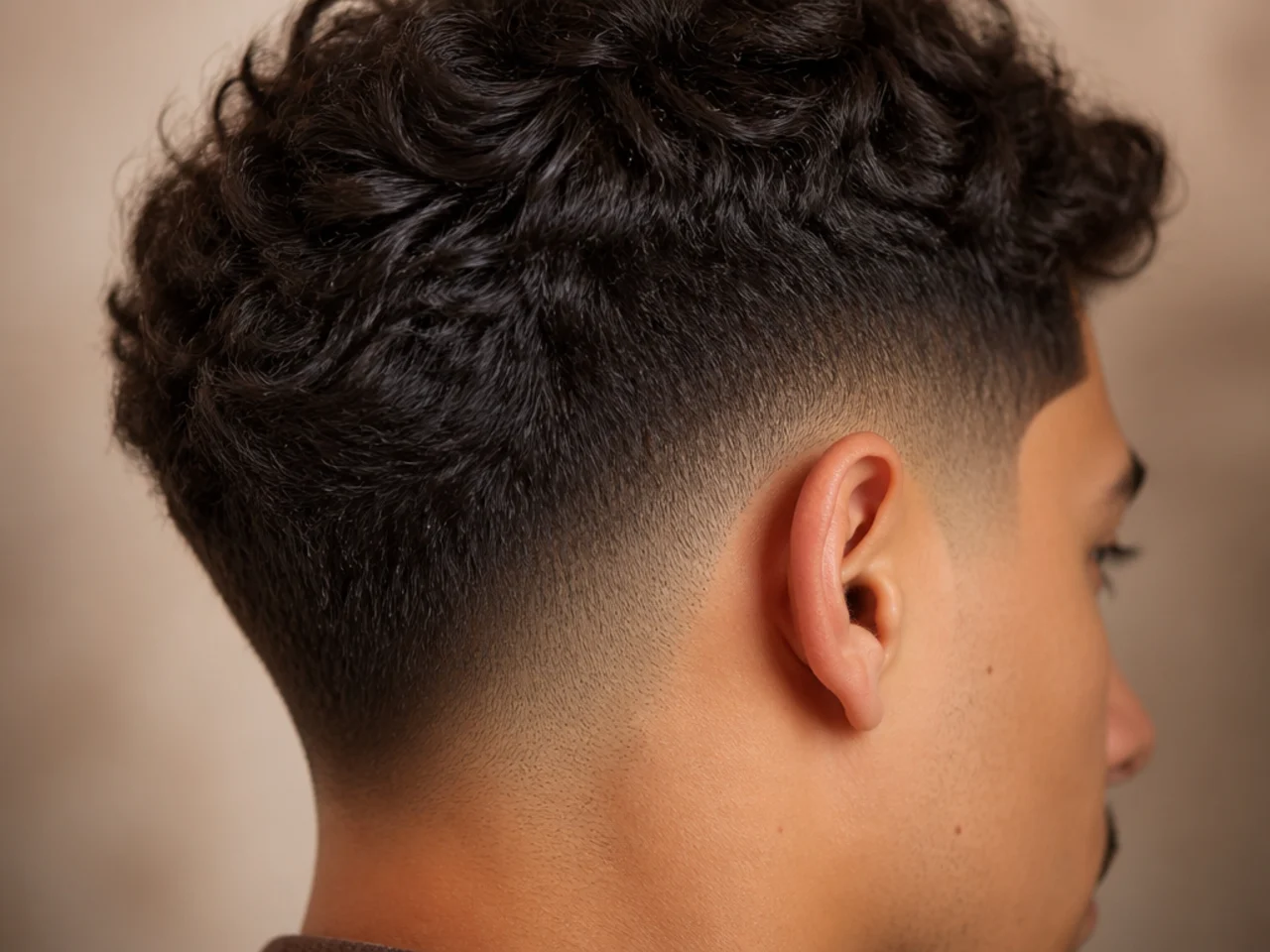
12. The Two-Block — Modern Family
A step rather than a gradient, which grows out completely differently from a fade. Saving it and asking for a fade produces the wrong cut.

13. The Modern Mullet — Modern Family
Length at the back blended into the sides rather than dropped as a slab. Blended is the whole difference from the older version.

14. The Middle Part — Modern Family
Needs length to the cheekbone, which is about four months of growing. No single sitting in a chair gets you there, whatever the photograph implies. Nothing can be cut into it until the length arrives, because the two halves of a middle part only separate once interior weight is removed.
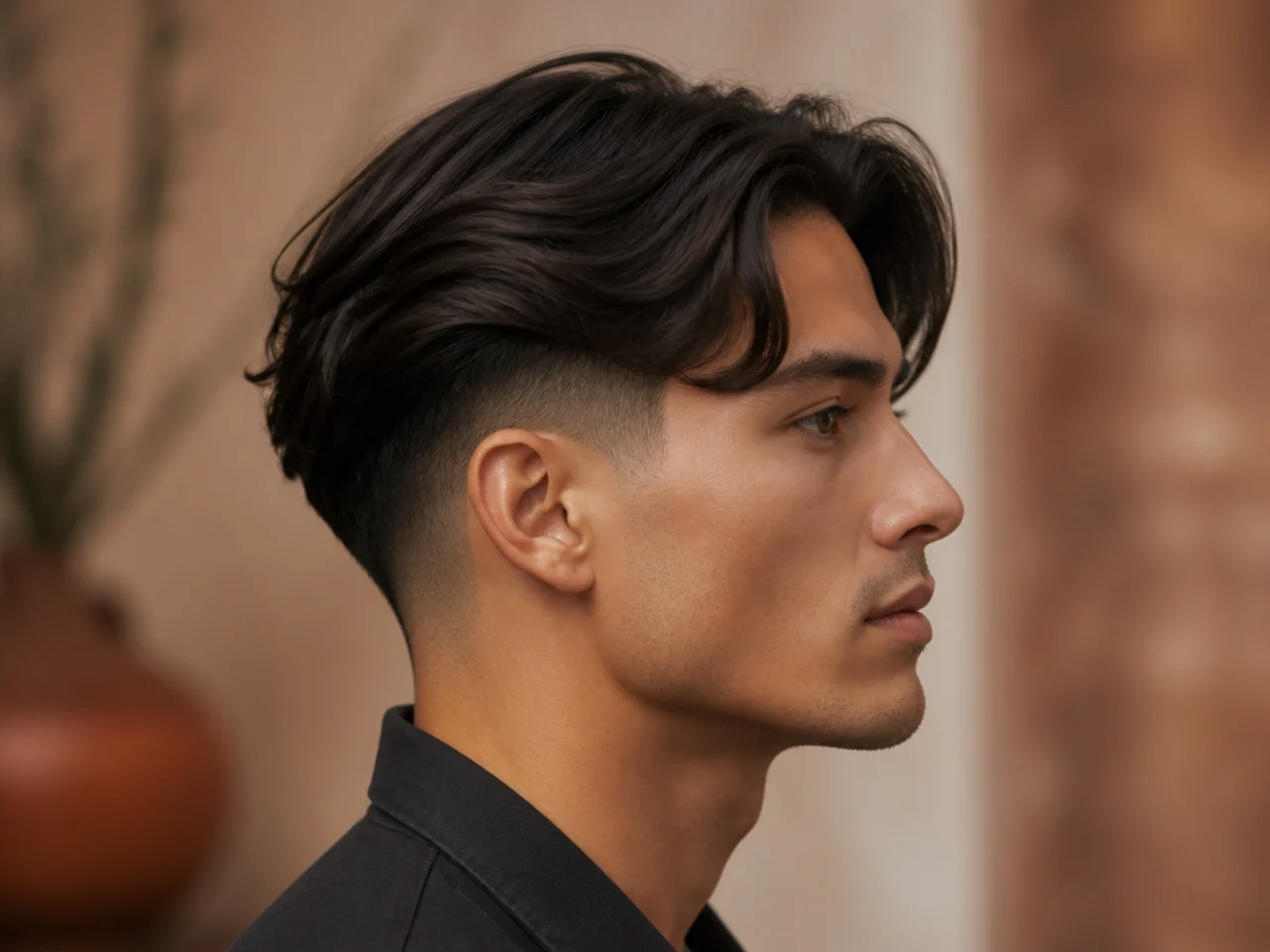
15. The Curly Top — Curly Family
Add a third to whatever length the photo appears to show, because that is what was cut before it dried. Curly photographs always understate the cut.
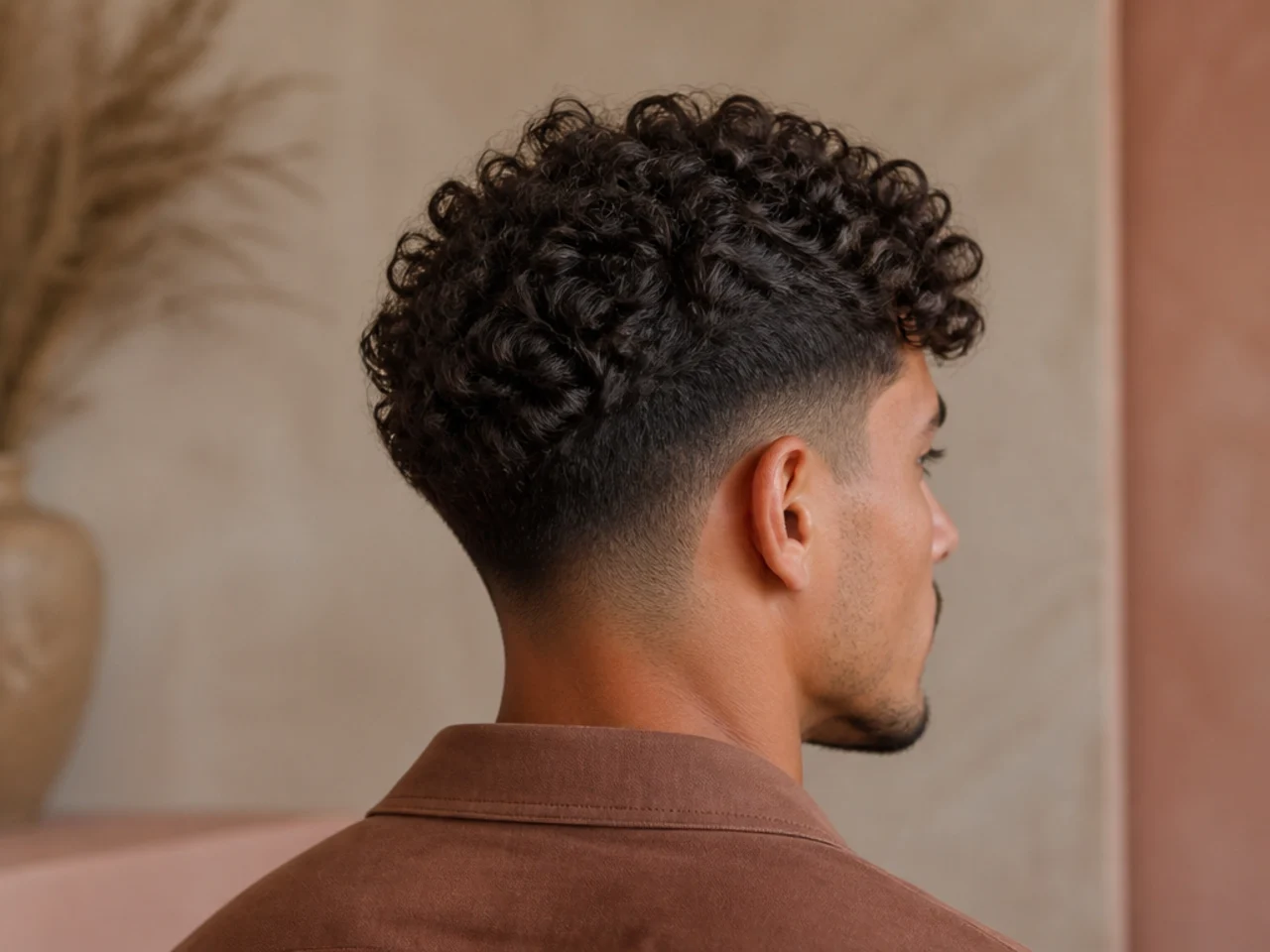
16. The Curly Crop — Curly Family
Short enough that shrinkage lands the whole shape close to the head. It is the curly cut most likely to look like its photograph.
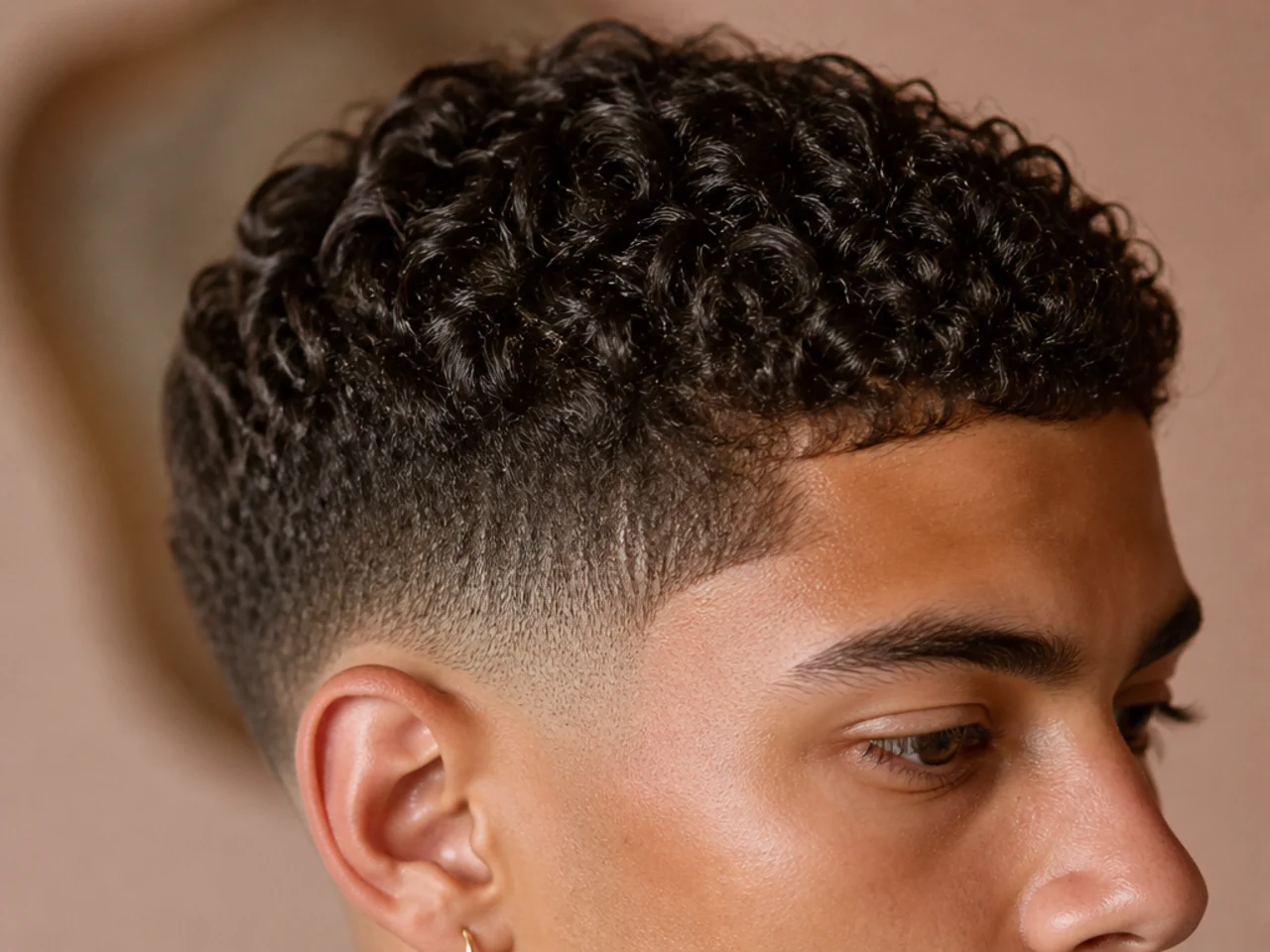
17. The Executive Contour — Business Family
Contoured to the skull with a defined part. Check it against a week-four version before saving it, because that is the test this family exists for.
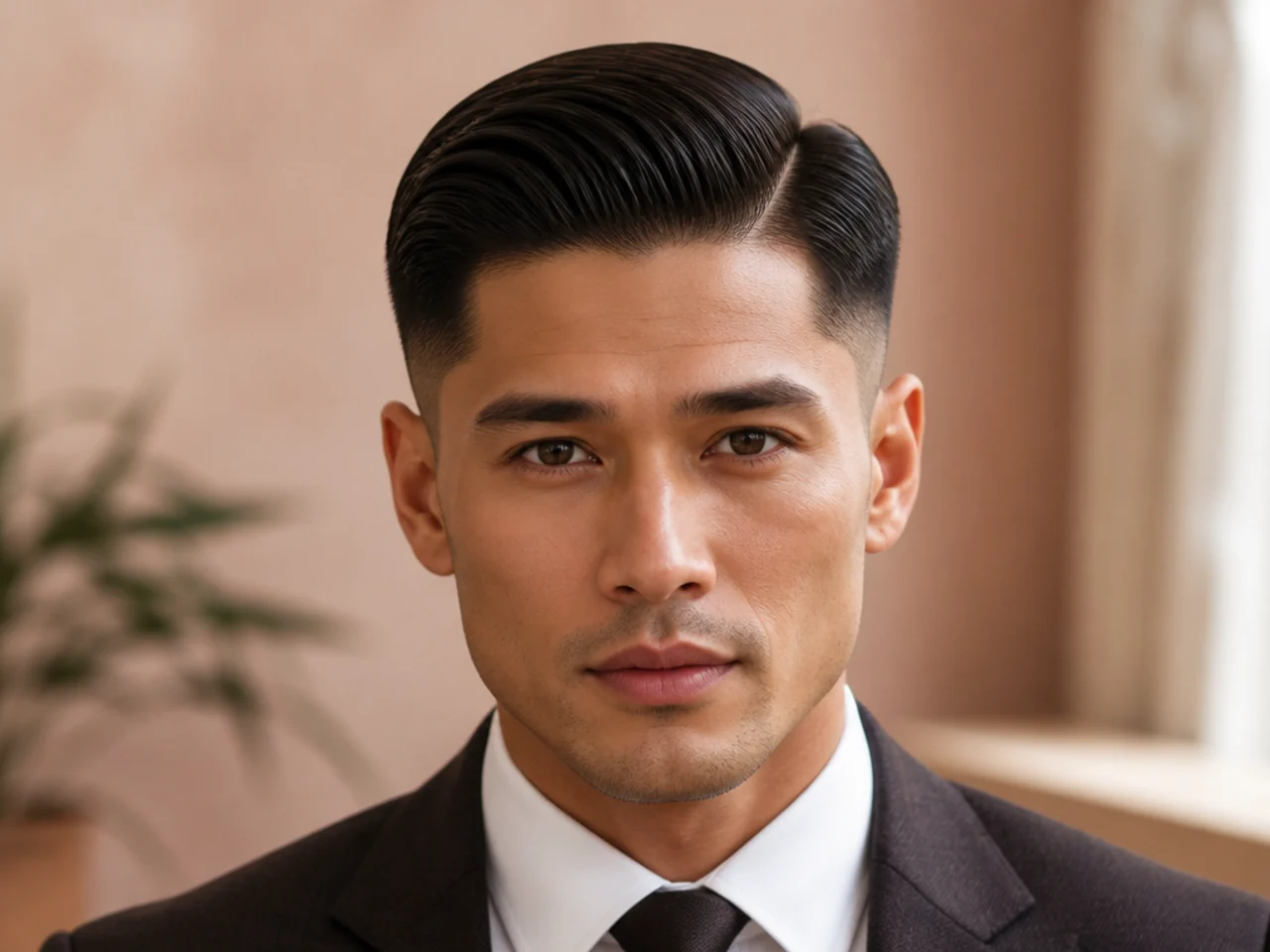
18. The Tapered Buzz — Business Family
A #3 at 10mm with a tapered perimeter. It is the lowest-maintenance saved cut that still has a shape. The taper only exists along the neckline and the inch of skull above each ear, which is precisely what a head-and-shoulders crop removes.

19. The Week-Four Photo
Rare and the most useful image in any folder. It shows what a cut becomes rather than what it was. Every family has added a little over a centimetre by then, and that centimetre is what separates the ones that hold their shape from the ones that collapse.
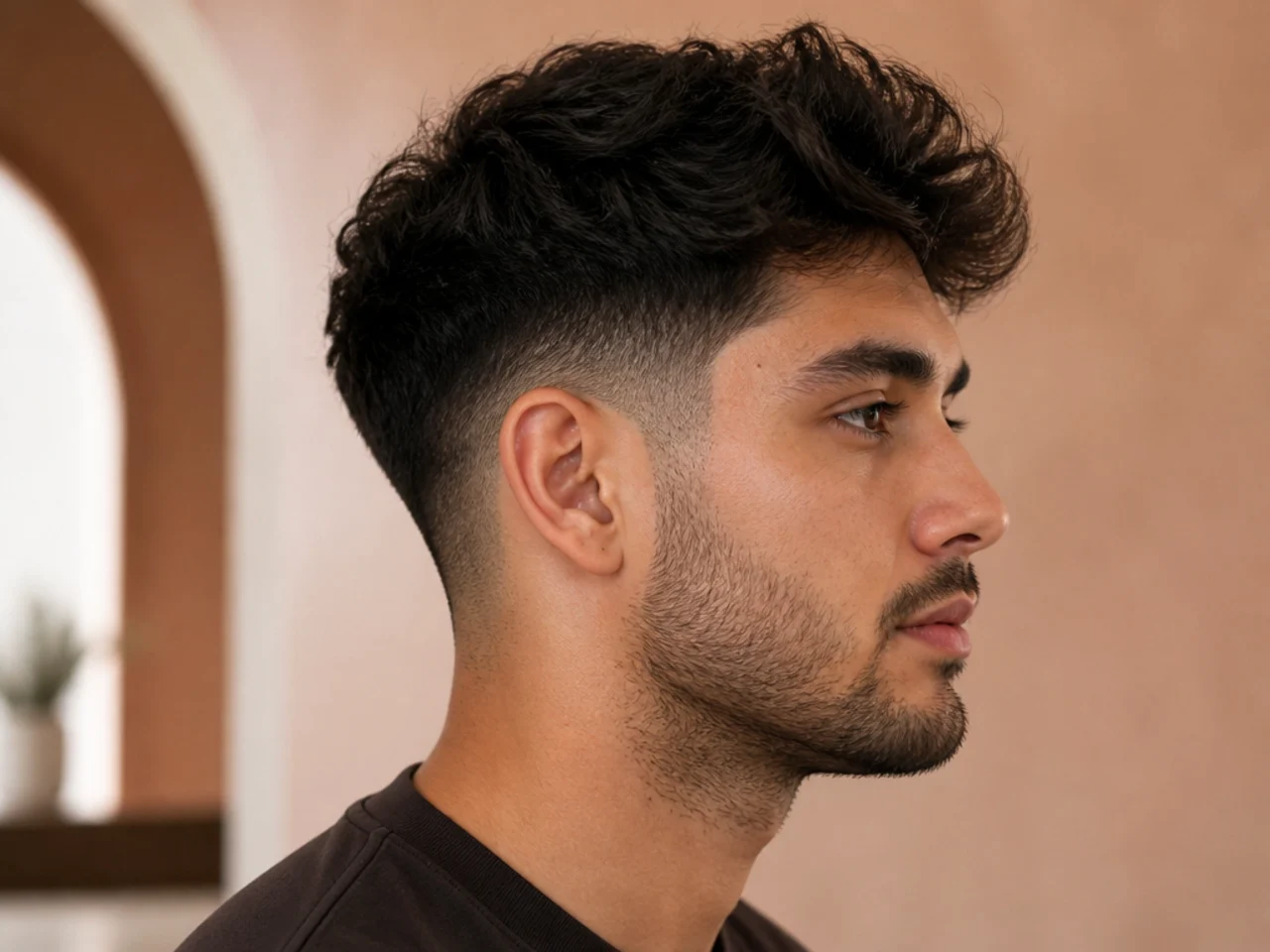
20. The Family You Saved Most
Count the structures rather than the pictures. Whichever family appears most often is the one you should be booking inside. Saved photos are chosen for the model as much as the cut, so counting the underlying structure filters out what you liked about the face.

Styling and Upkeep
Label each saved photo with its family. It takes an hour and it settles the question.
Convert each one into four specifications. Length, fade height, fade depth, finish.
Keep two or three angles of the same idea. A single frame hides the structure.
Save a week-three photo of your own cut. It is the honest counterpart to the folder.
Match the product finish, not only the shape. Matte and shine photograph as different haircuts.
Mistakes to Avoid
Sorting by name instead of structure. Names vary between shops and structures do not.
Assuming every short side is a fade. Only a blended one is; the rest belong to other families, with their own booking intervals.
Ignoring the texture in the photo. It is doing most of the work you credit to the cut.
Saving front-facing shots only. They hide both fade decisions entirely.
Booking from a photograph alone. It shows a result and hides all four inputs.

FAQ
Why do saved boards look the same? Most are three or four structures repeated.
What should I look for? Blended or stepped sides, bare skin, and blunt or broken ends.
How do I turn a photo into a booking? Convert it into length, height, depth and finish.

Final Thoughts
Spend an hour labelling your folder by family and the whole thing becomes a decision rather than a mood board. Most people find they have been saving the same structure for years and simply admiring it on different heads.
For the families themselves see men's haircut styles, and for the group most saved boards are dominated by see textured haircuts for men. More in Men's Haircuts.