20 Long Curly Hair Drawing Ideas to Try
Twenty long curly hair ideas, and the problem specific to length — repetition. The same curl repeated down twenty inches reads as wallpaper, and the fix is that real curl loosens as it falls.
In this article · 27
- Curl Loosens as It Falls
- Give It More Than One Plane
- The 20 Ideas
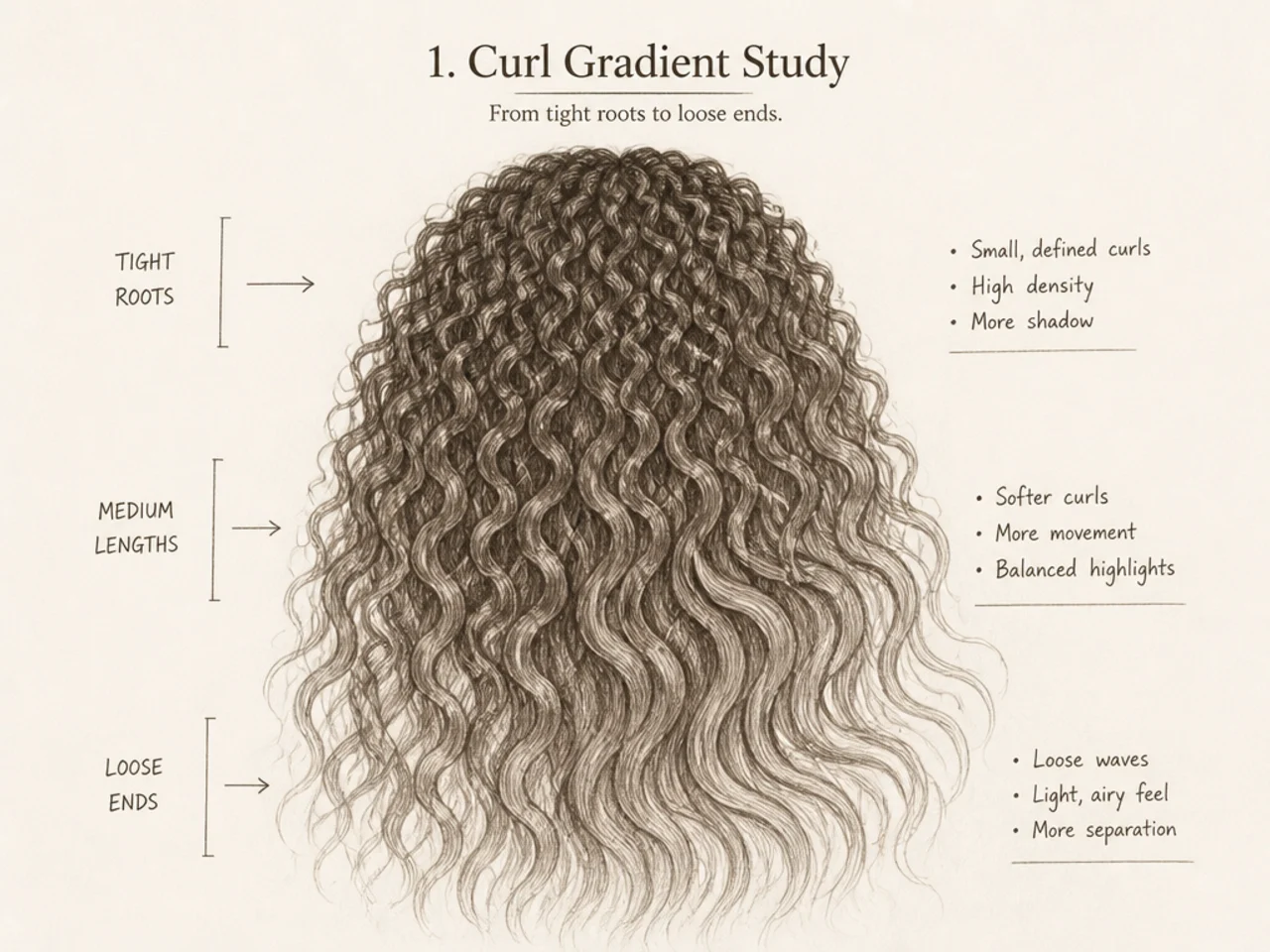
- 1. Curl Gradient Study
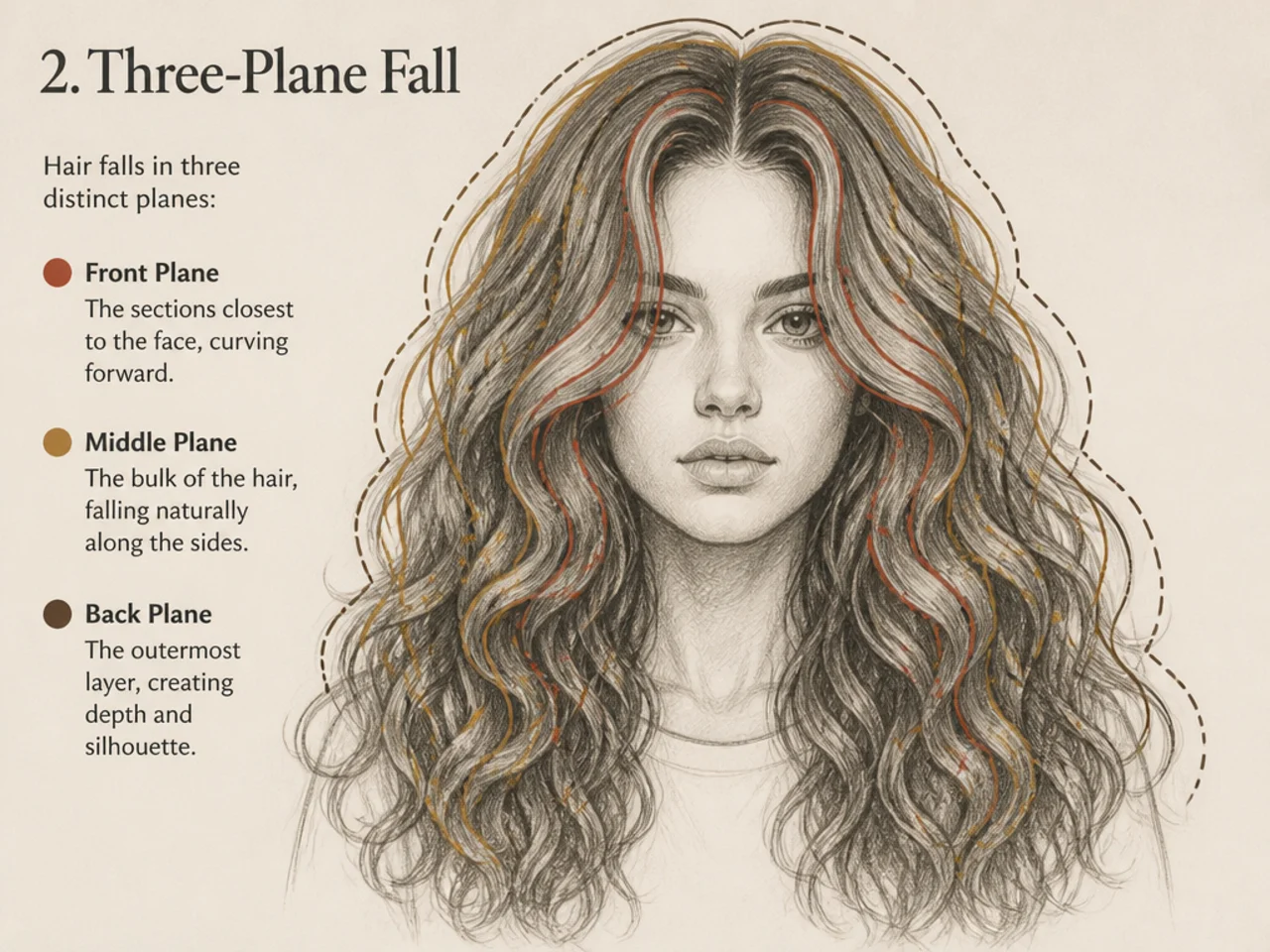
- 2. Three-Plane Fall
- 3. Waist-Length Spirals
- 4. Long Hair Over One Shoulder
- 5. Long Curls in Wind
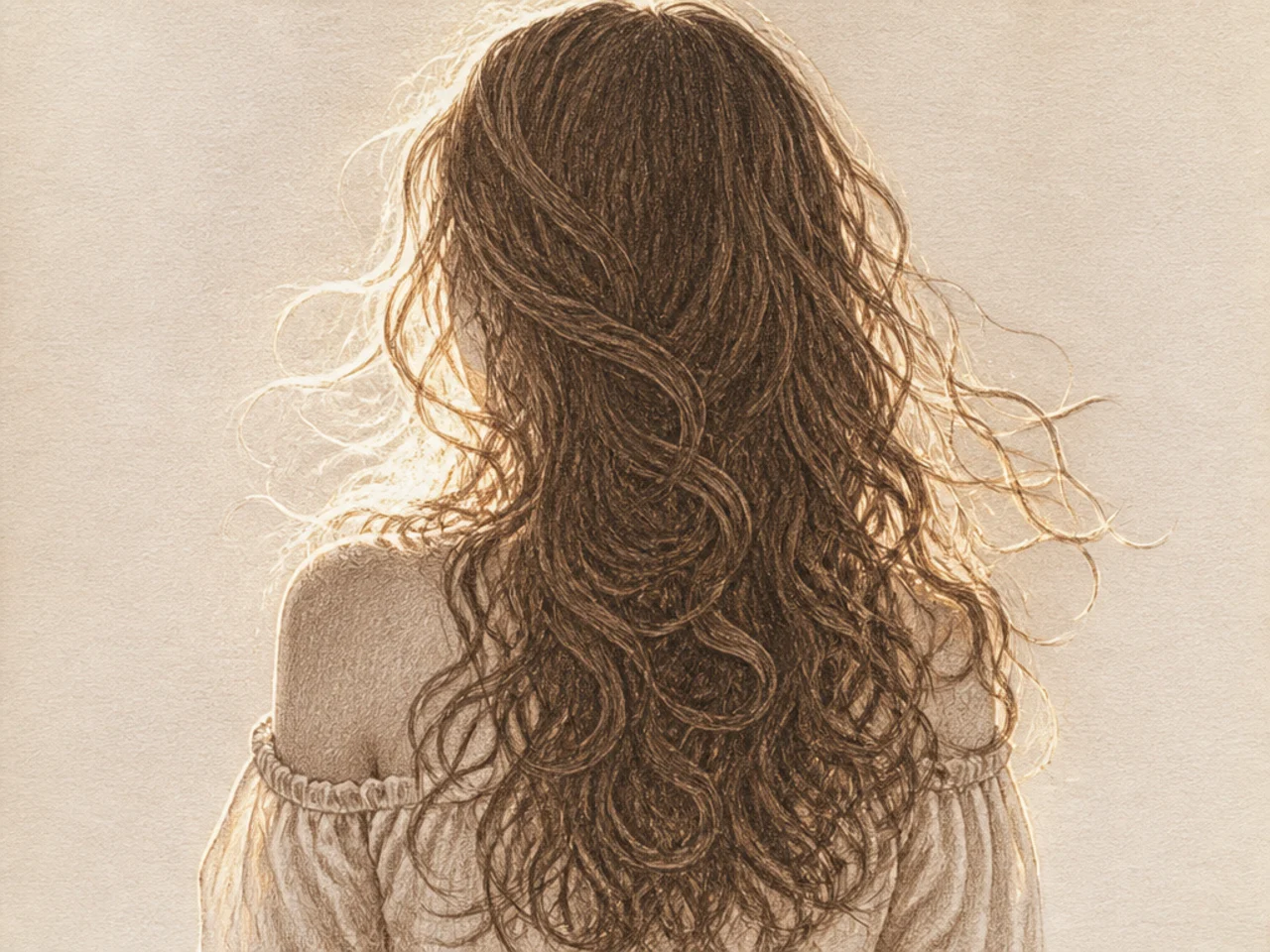
- 6. Long Hair From Behind
- 7. Long Curly Ponytail
- 8. Half-Up with Long Length
- 9. Long Braided Curls
- 10. Long Wet Curls
- 11. Backlit Long Hair
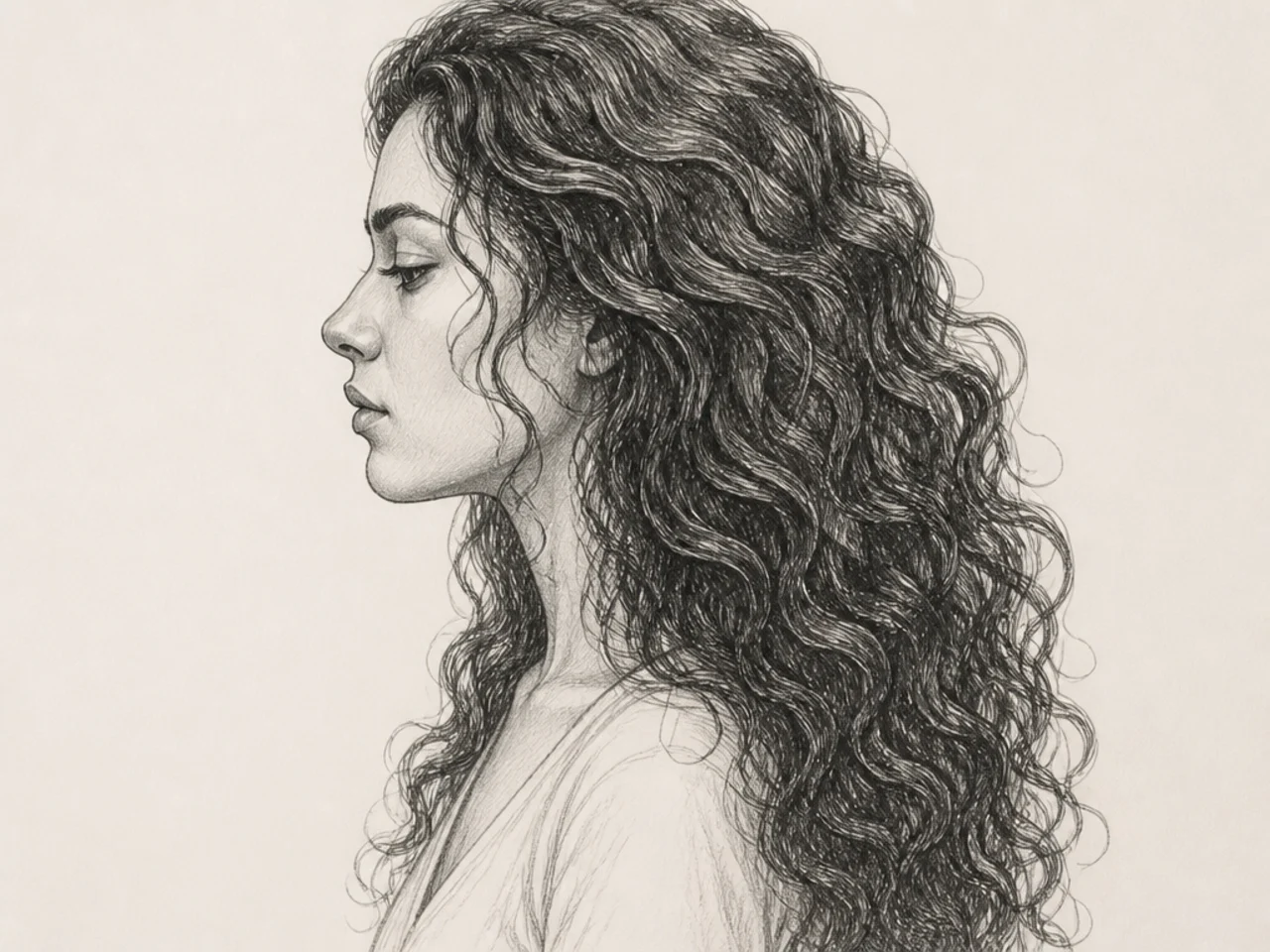
- 12. Long Curls in Profile
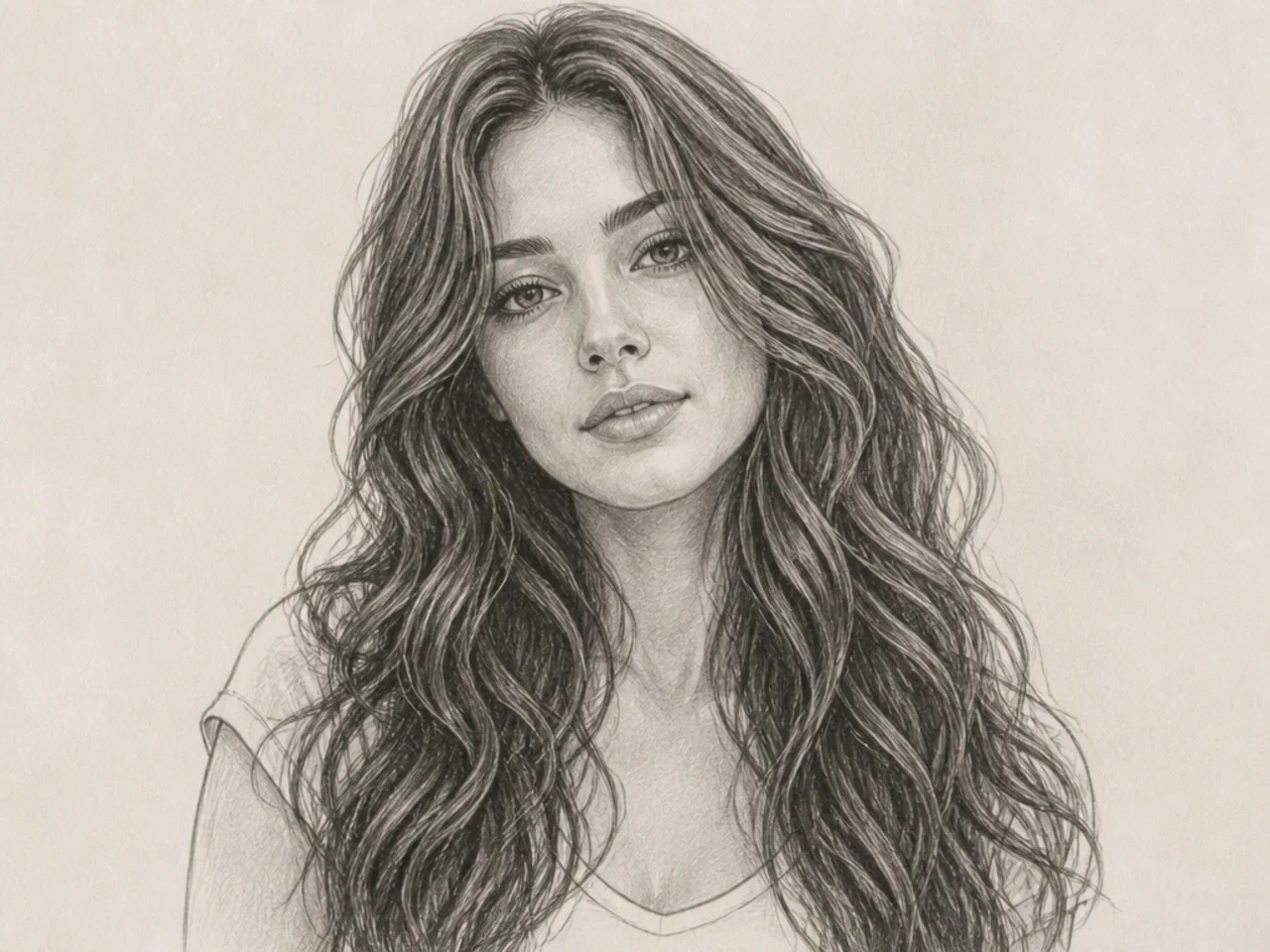
- 13. Long Loose Waves
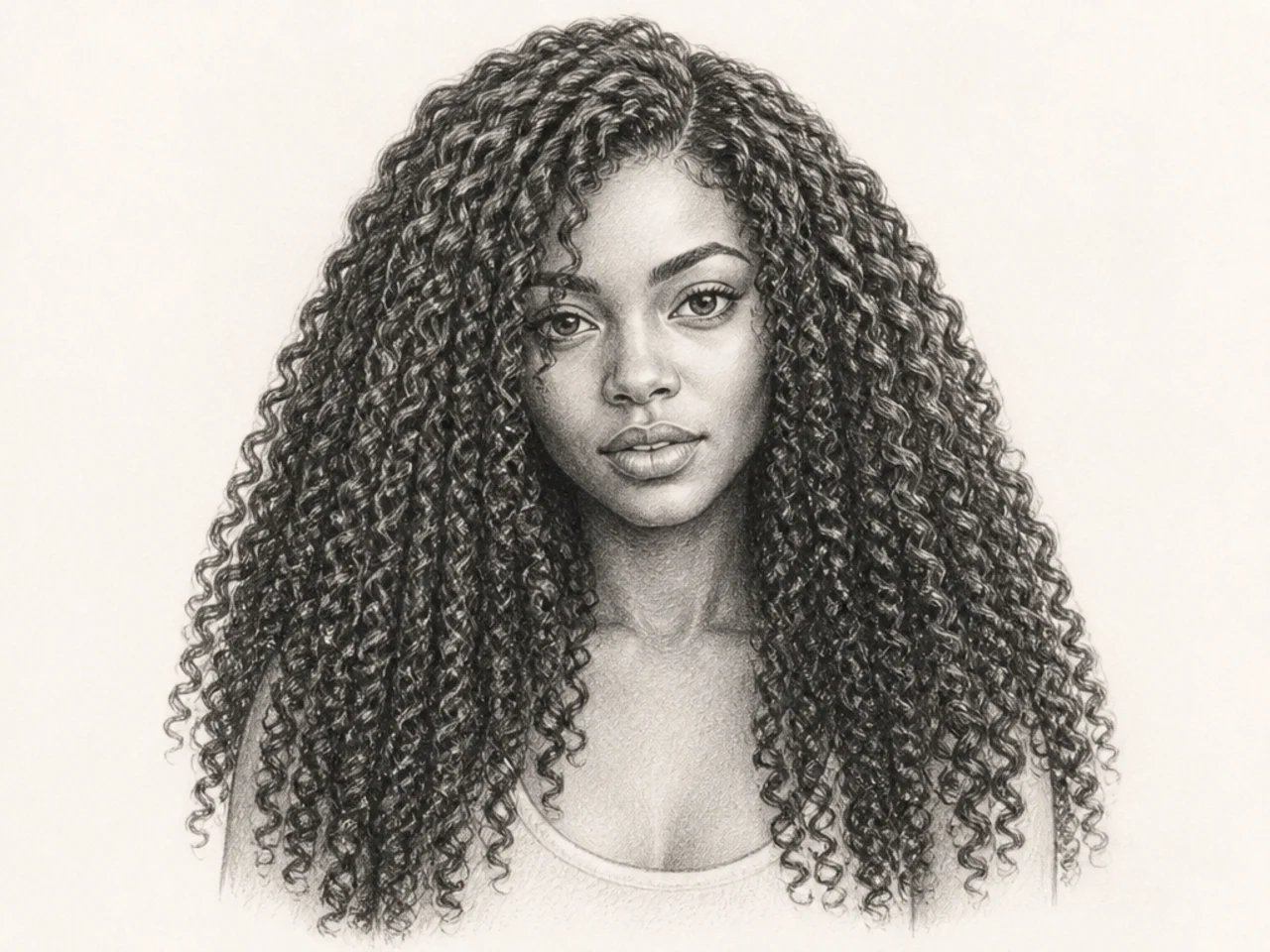
- 14. Long Tight Coils
- 15. Hair Falling Across the Body
- 16. Long Hair with a Fringe
- 17. Overlapping Clump Study
- 18. Long Hair Being Gathered
- 19. Ends-Only Study
- 20. Uniform Versus Gradient
- Where to Put the Detail
- Mistakes to Avoid
- FAQ
- Final Thoughts
Long curly hair has one problem that short and medium hair do not: repetition.
Twenty inches of identical curl reads as wallpaper. The eye recognises a repeating unit and stops looking, and the drawing goes flat regardless of how well each individual curl is rendered.
Real hair does not repeat, and the reason is physical.
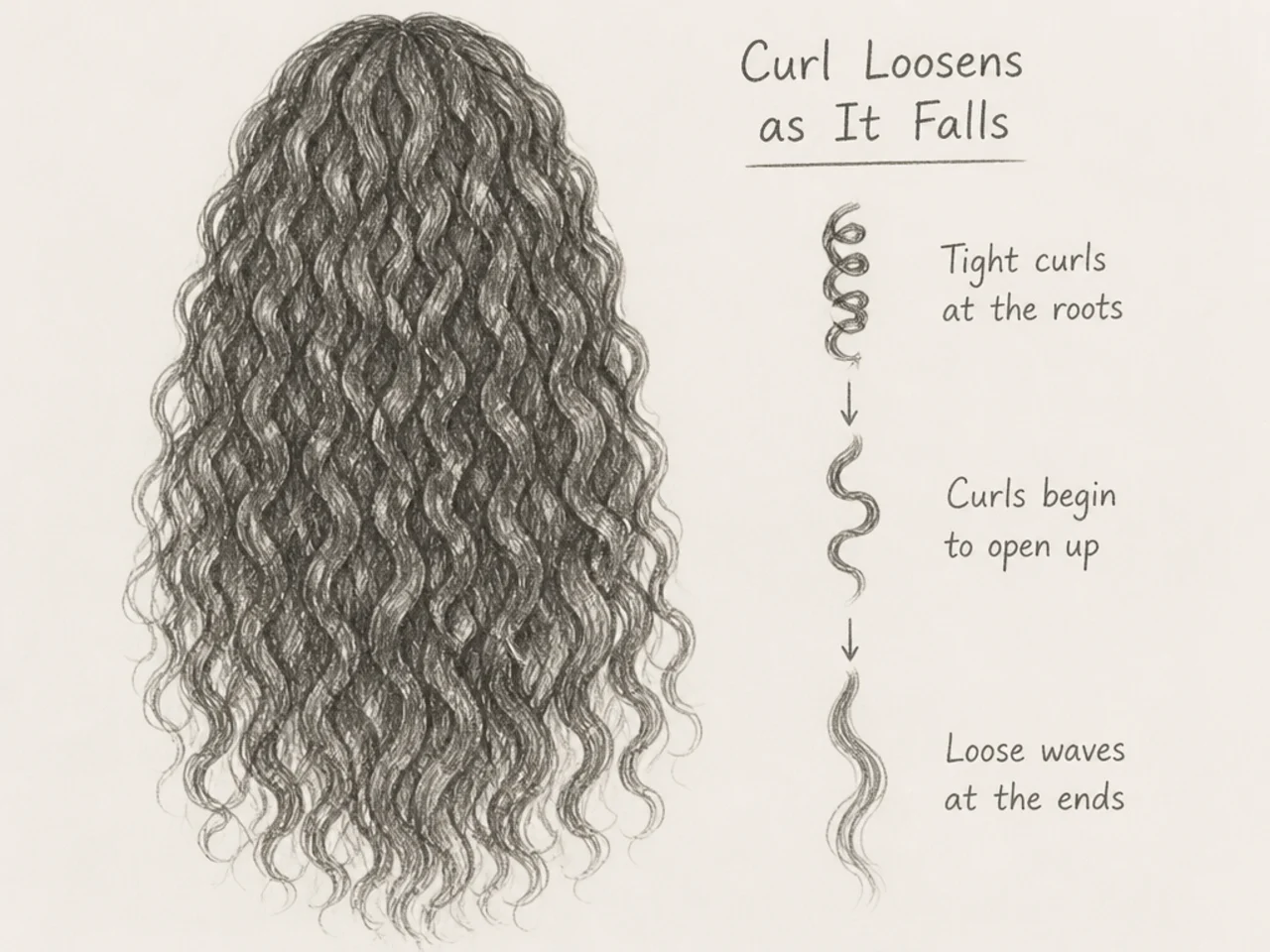
Curl Loosens as It Falls
This is the single most useful observation for drawing long curly hair.
Weight stretches curl out. Near the roots there is very little hair hanging below, so the curl holds its tightest form. At the ends there are twenty inches of hair pulling downward, and the pattern is noticeably looser and longer.
So a convincing long curly drawing has a gradient of curl size — tight and defined at the crown, opening out toward the tips.
Draw the same curl size the whole way down and it reads as a wig, because that is what wigs do and hair does not.
Around the face is tightest of all, since those pieces are shortest and carry least weight.
Give It More Than One Plane
The second flatness problem, and it is about depth rather than pattern.
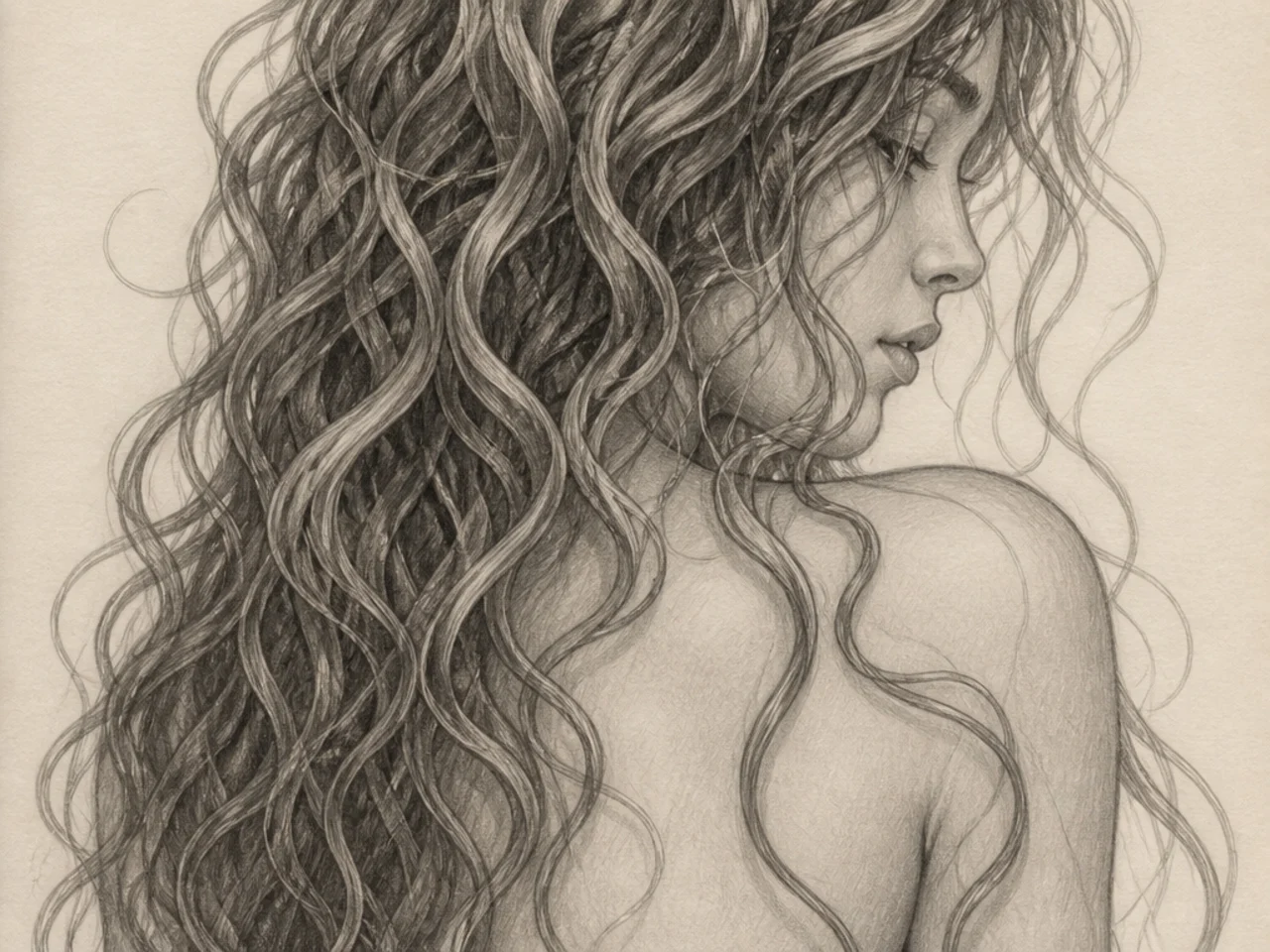
Long hair does not all hang in the same plane. Some falls in front of the shoulder, some behind it, some twists so you see the ribbon edge-on. Drawing every clump in one plane produces a flat curtain.
Send at least one clump behind the shoulder and one clearly in front.
Overlap clumps. One passing in front of another instantly creates depth.
Vary the direction. Not every clump falls straight down — some angle inward, some outward.
The 20 Ideas
1. Curl Gradient Study
Tight at the top, loose at the ends. The core exercise.
2. Three-Plane Fall
One clump in front, one behind, one twisting.
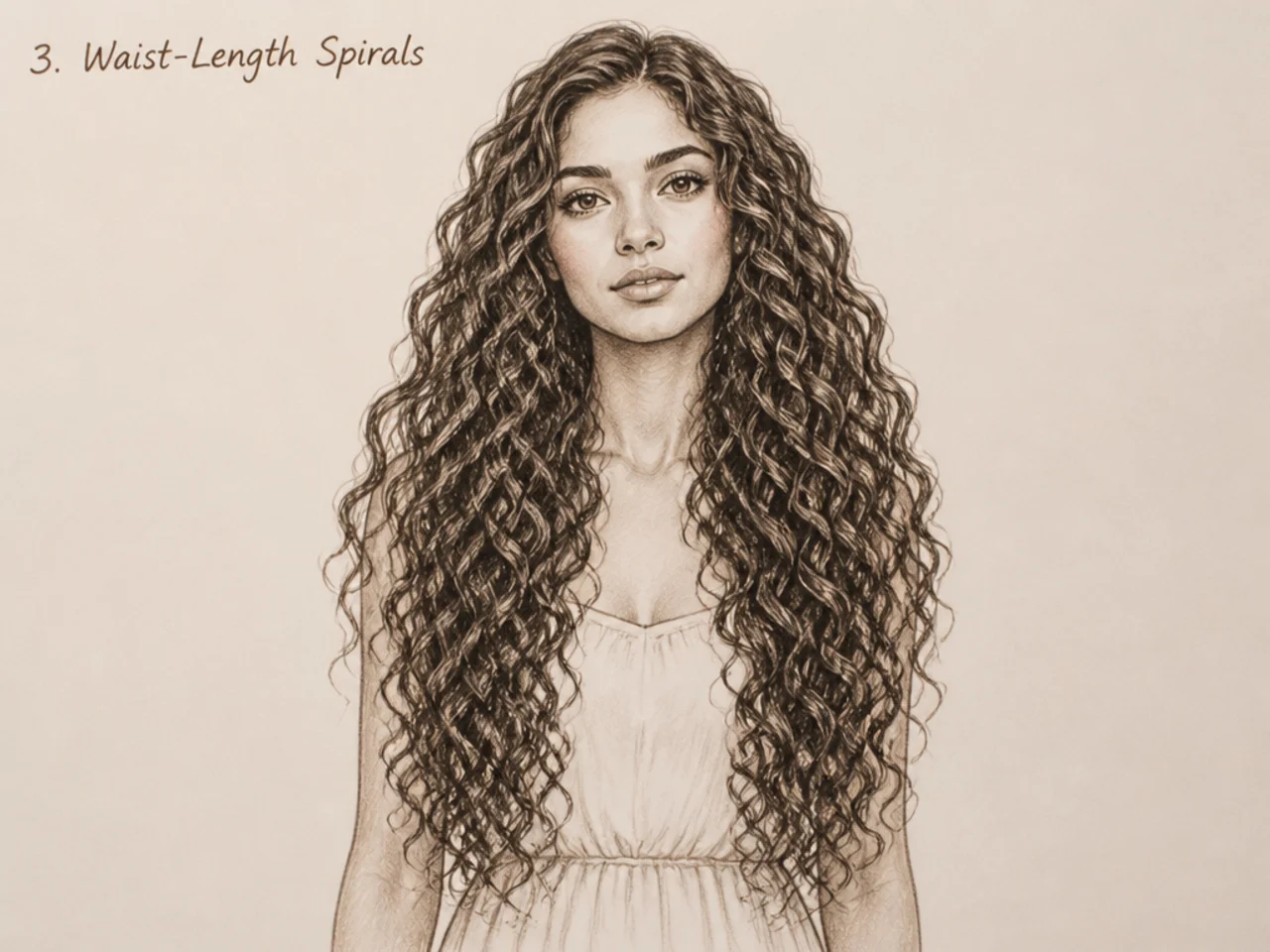
3. Waist-Length Spirals
Very long, with a strong loosening gradient.
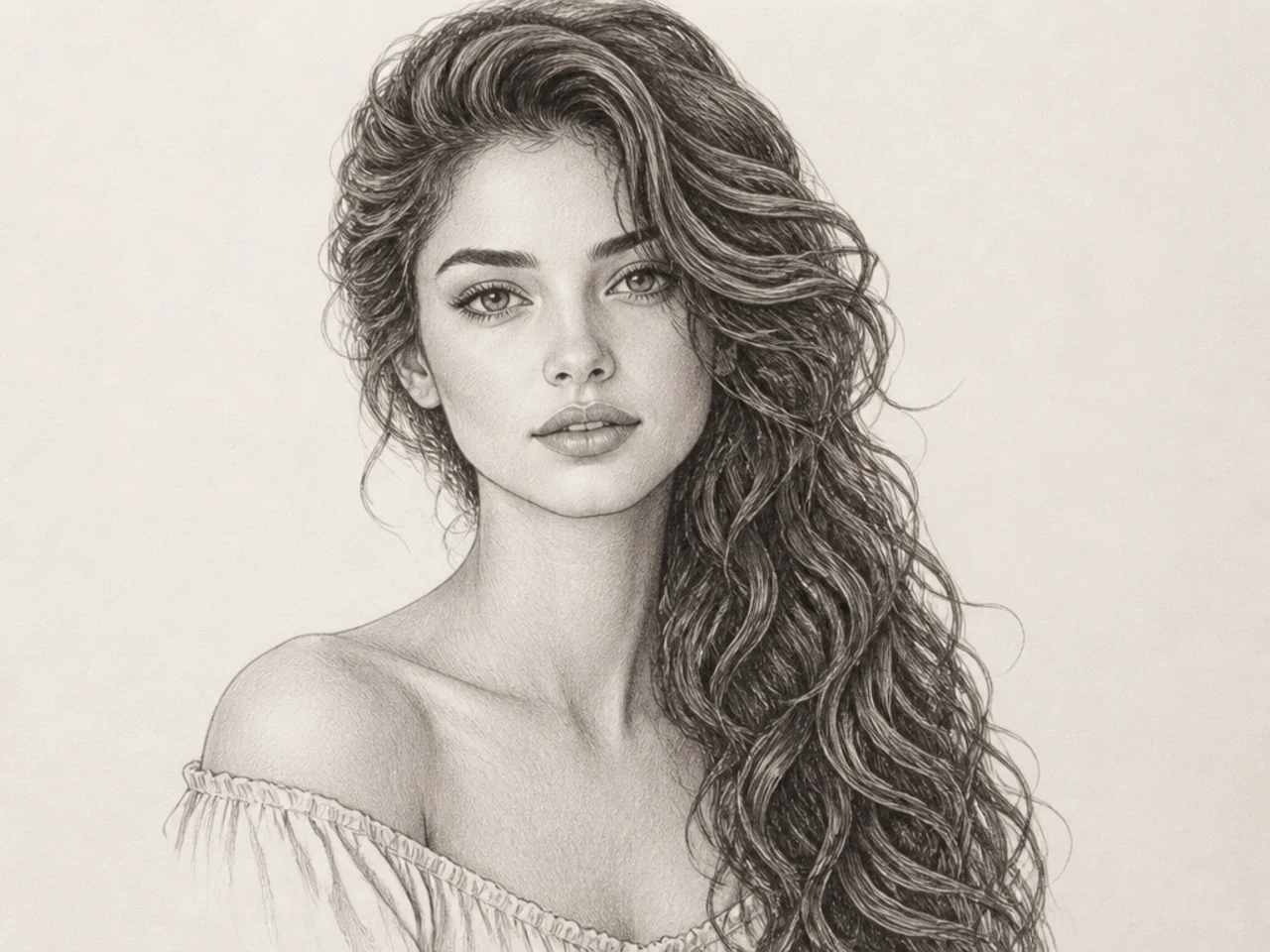
4. Long Hair Over One Shoulder
All mass to one side, asymmetric and dynamic.
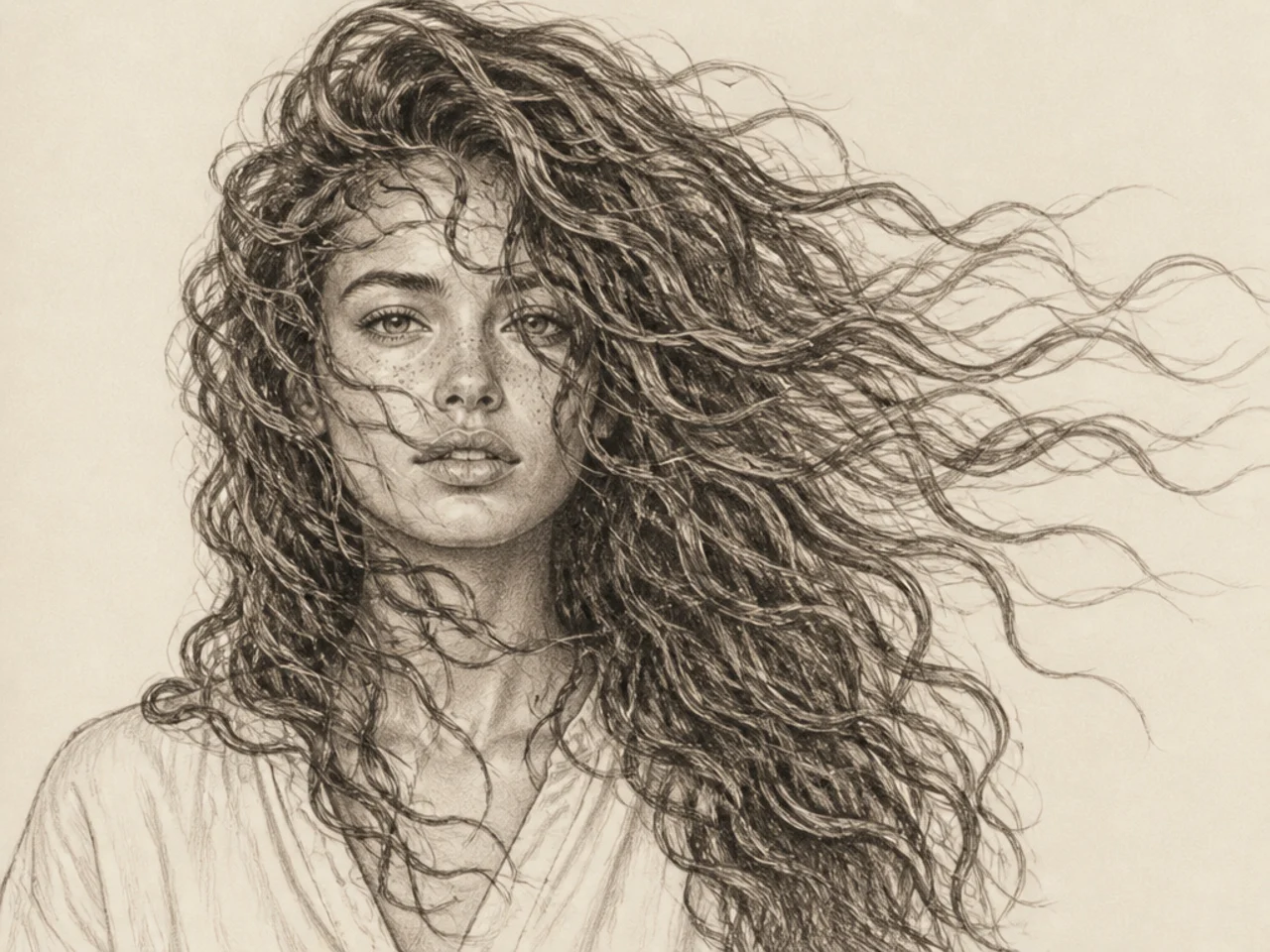
5. Long Curls in Wind
Silhouette stretched, clumps separated.
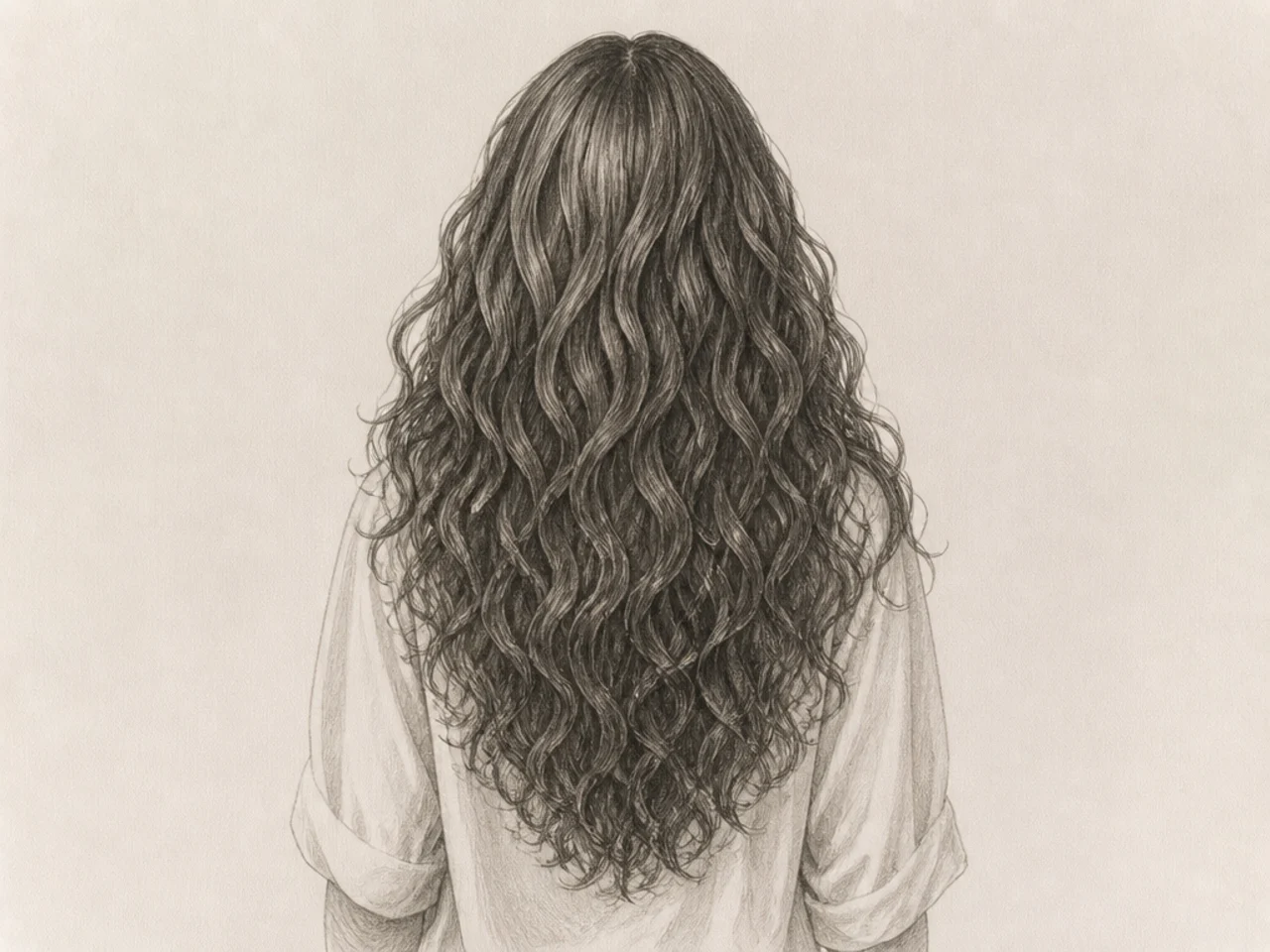
6. Long Hair From Behind
No face, so the gradient and planes carry everything.
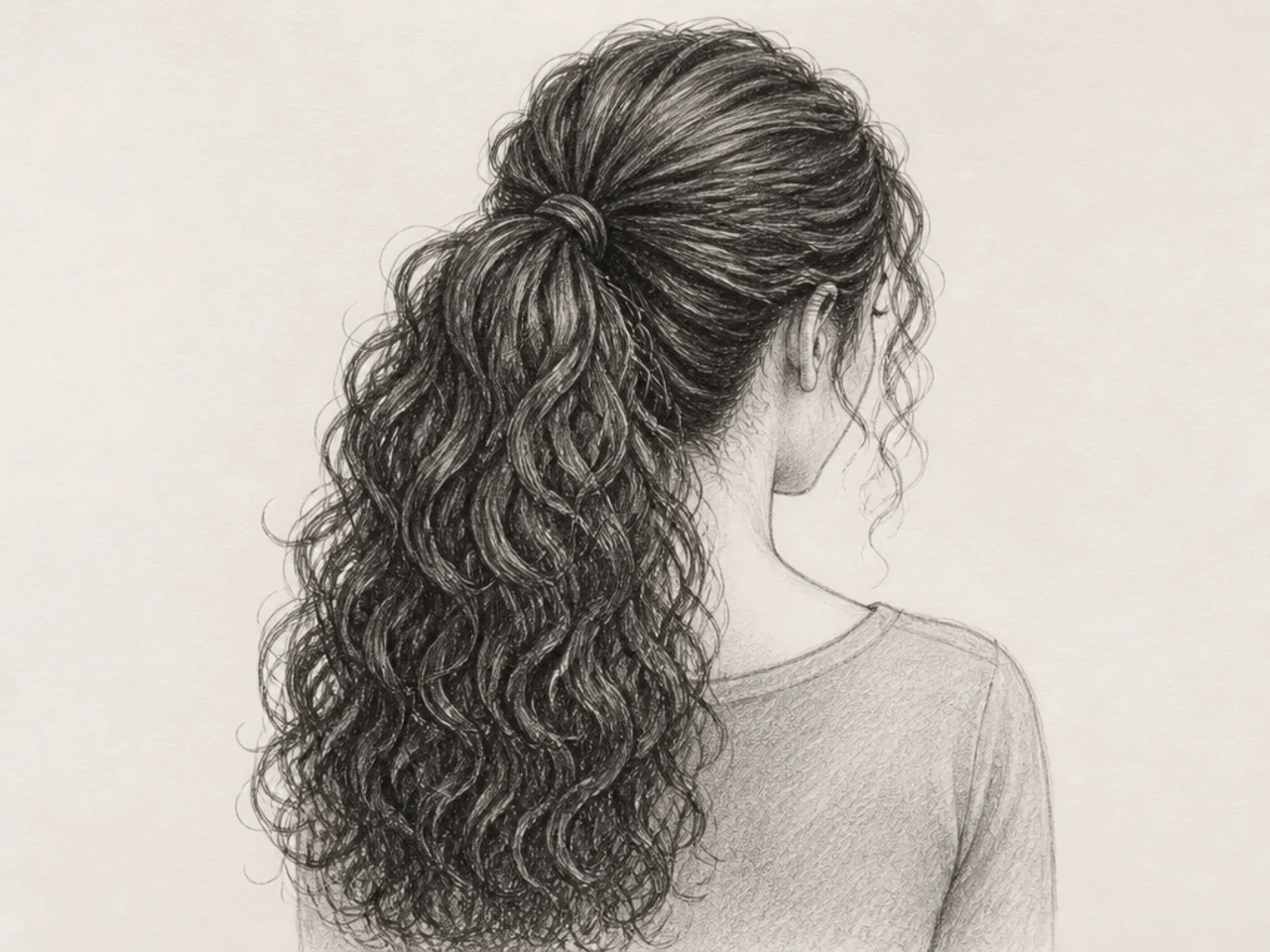
7. Long Curly Ponytail
Gathered at one point, fanning and loosening below.
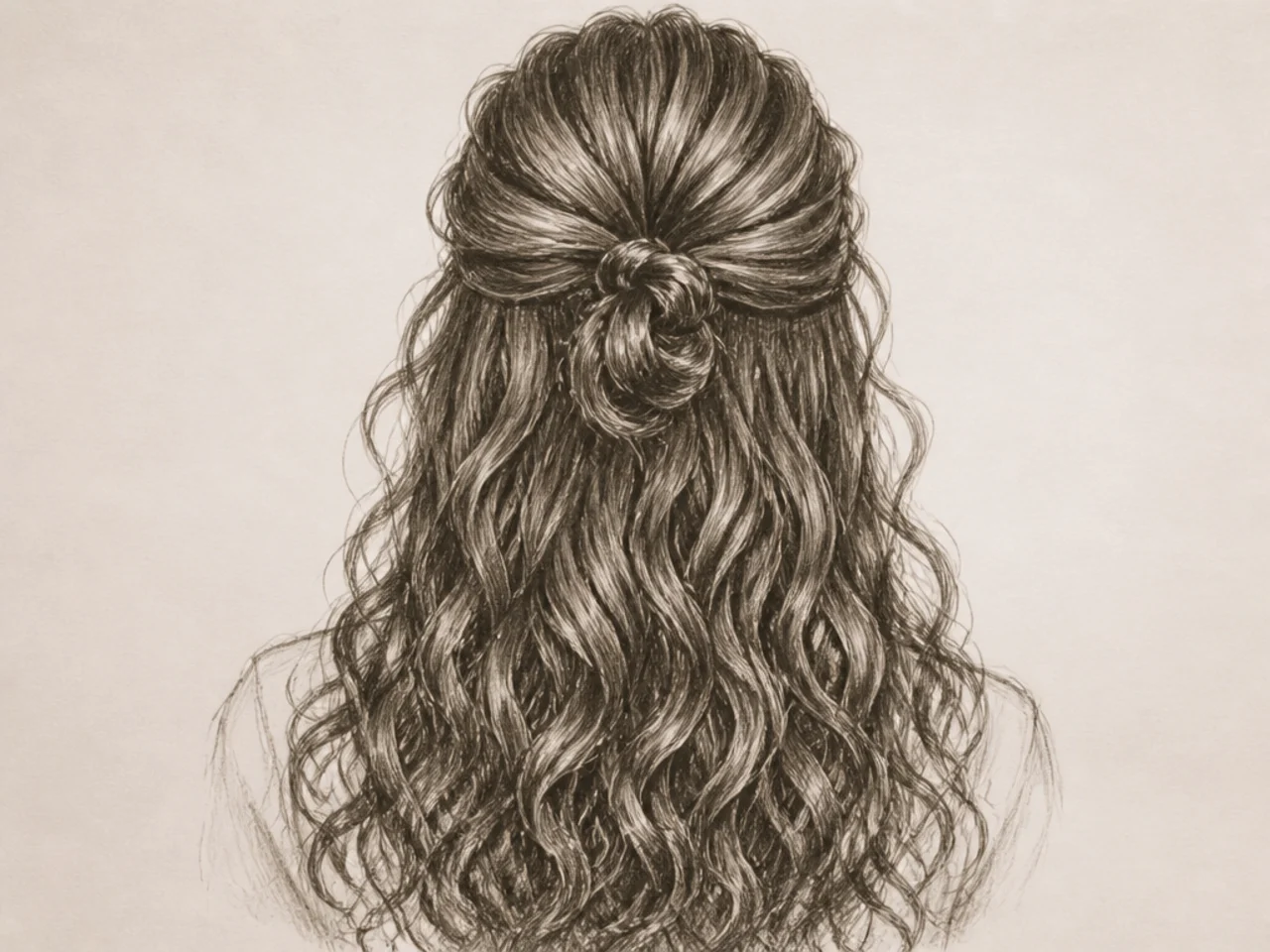
8. Half-Up with Long Length
Two textures, and the gradient starts below the gather.
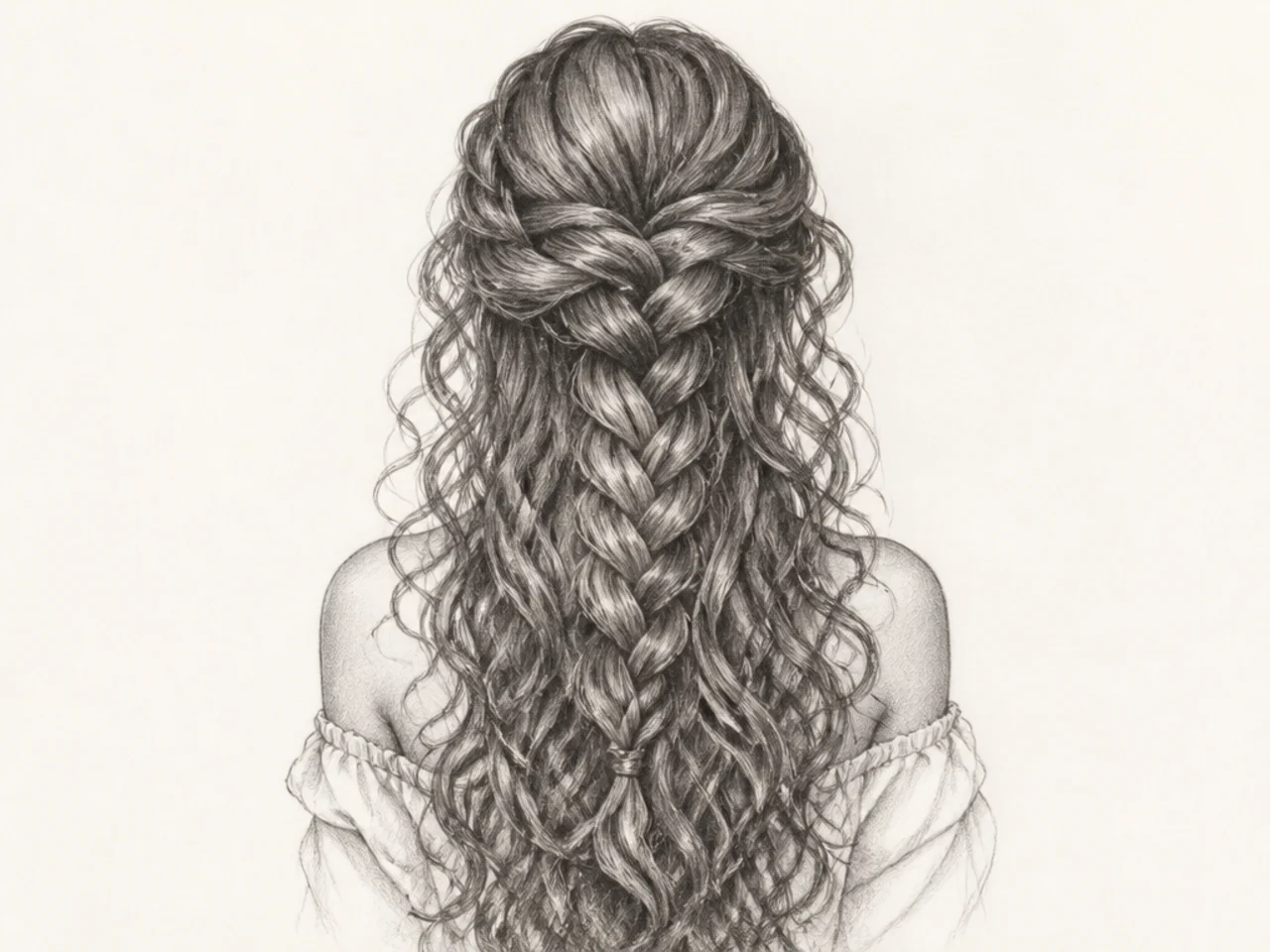
9. Long Braided Curls
Pattern over texture, with the braid loosening downward.
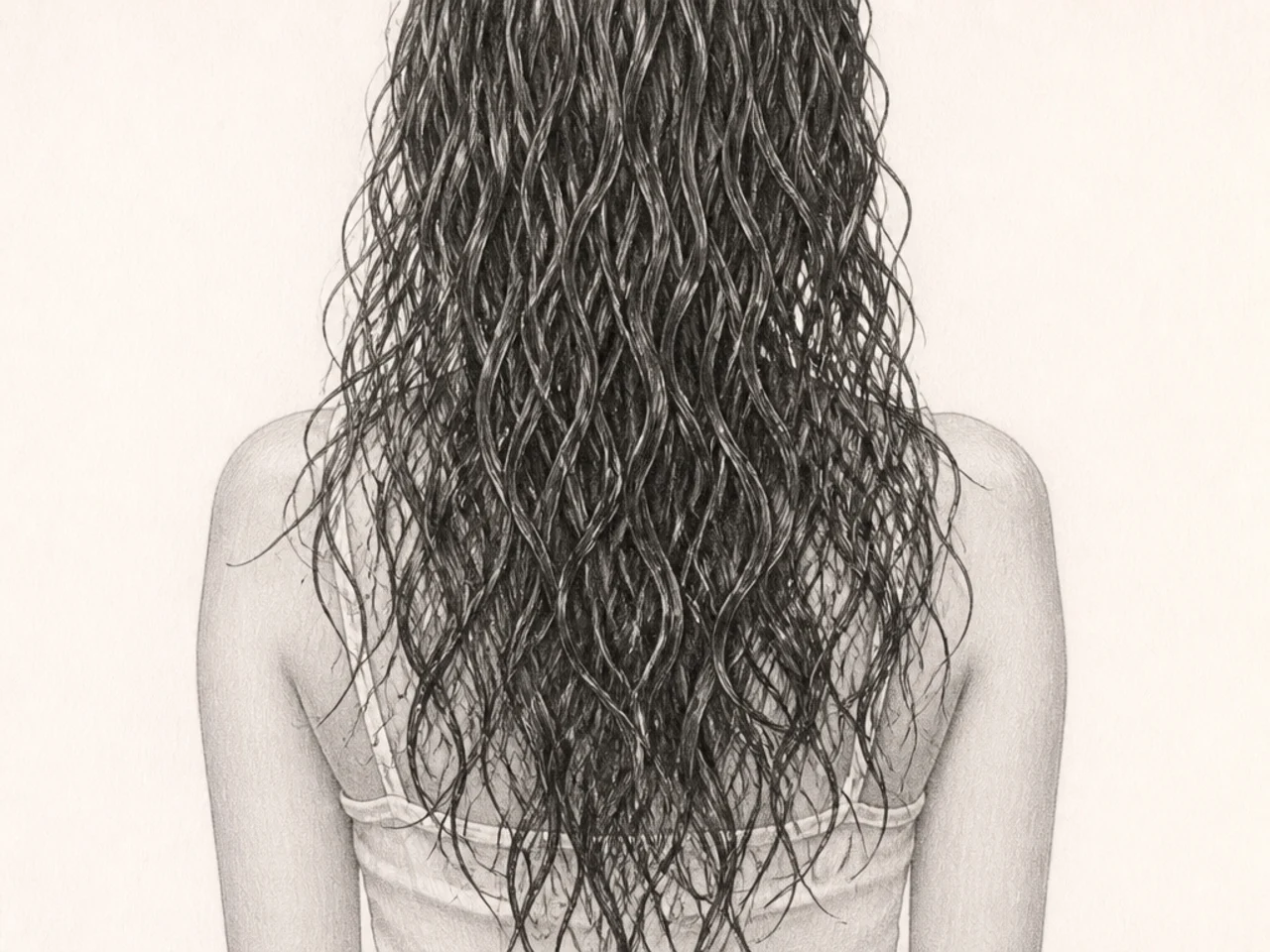
10. Long Wet Curls
Fewer, heavier clumps and a much stronger gradient.
11. Backlit Long Hair
Rim light down the whole silhouette.
12. Long Curls in Profile
The planes are clearest from the side.
13. Long Loose Waves
The loosest end of the range, with the gradient still present.
14. Long Tight Coils
Tightest pattern, and the gradient is subtler but still there.
15. Hair Falling Across the Body
Clumps interacting with the torso, not just the shoulders.
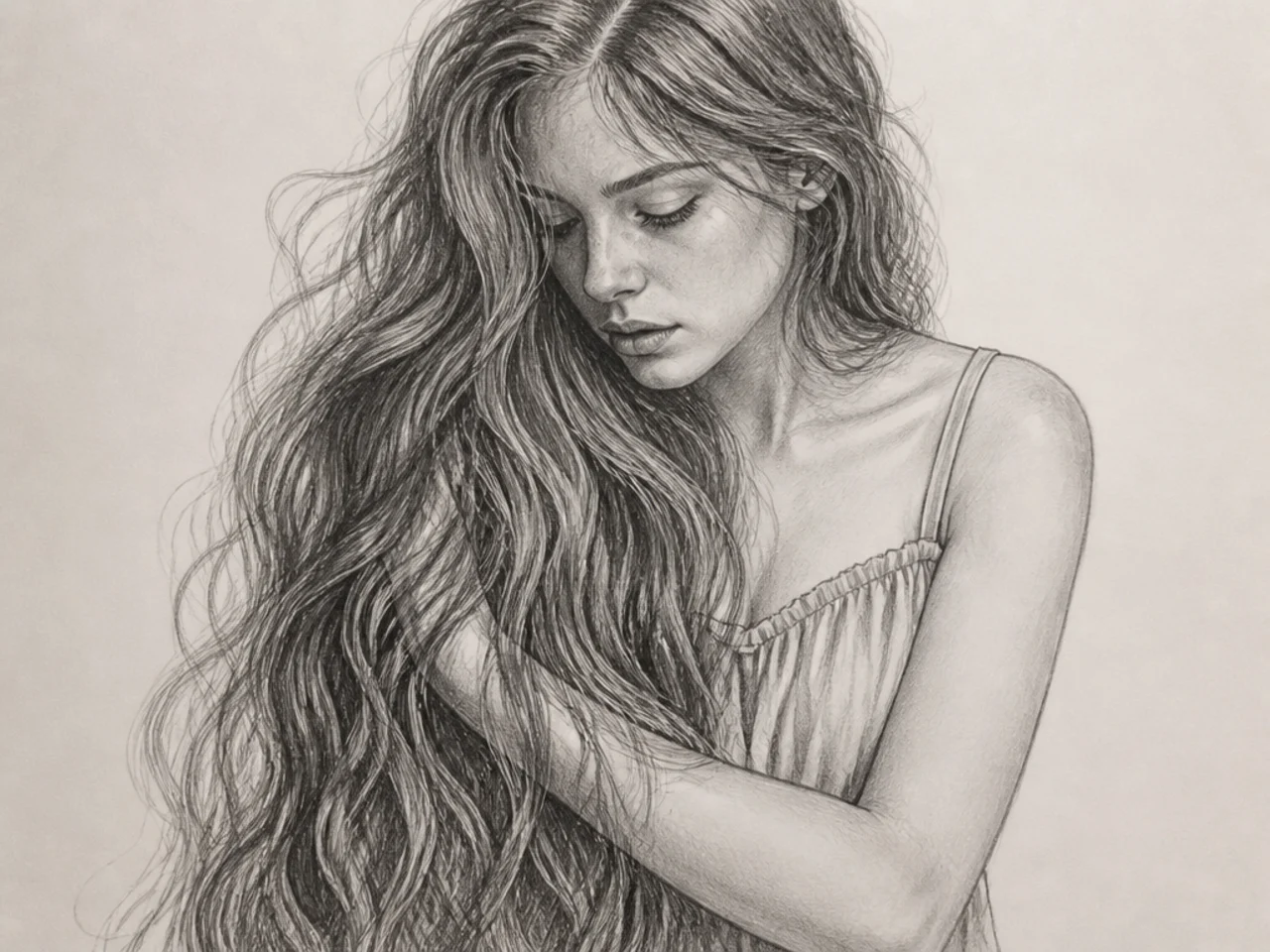
16. Long Hair with a Fringe
Two lengths, two curl sizes, in one drawing.
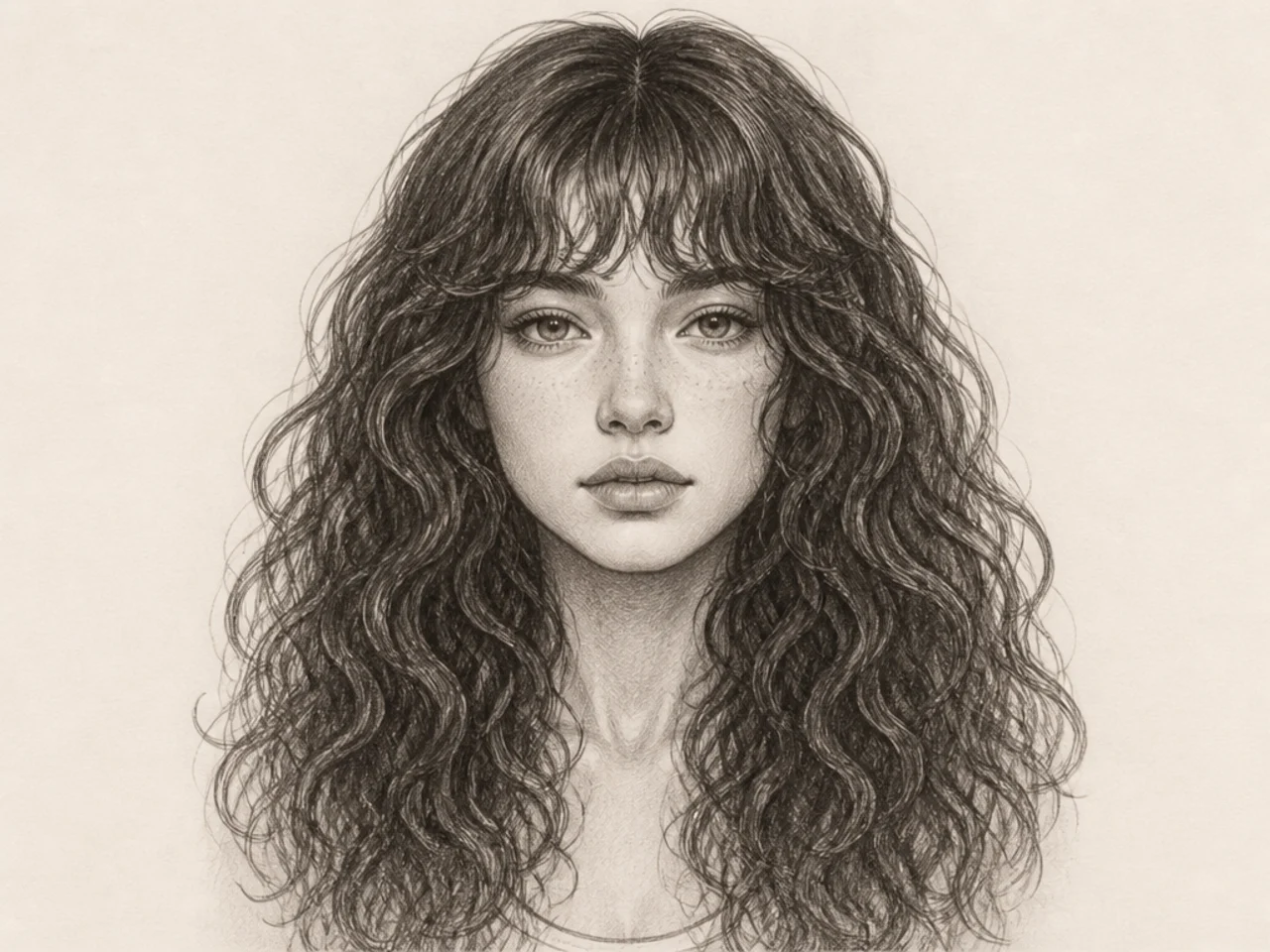
17. Overlapping Clump Study
Five clumps, each passing in front of or behind another.
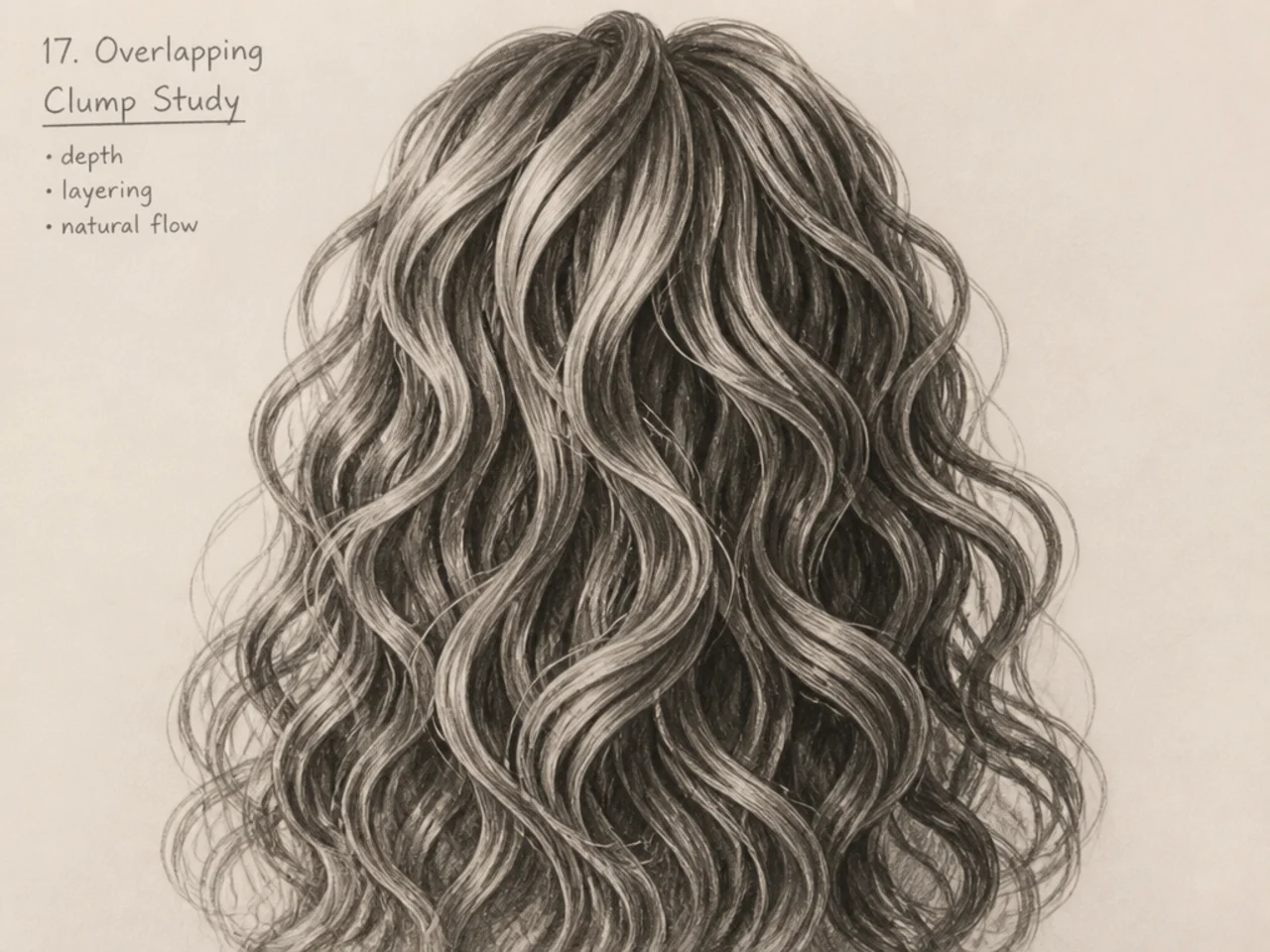
18. Long Hair Being Gathered
Mid-movement, hands in it. Compression and release together.
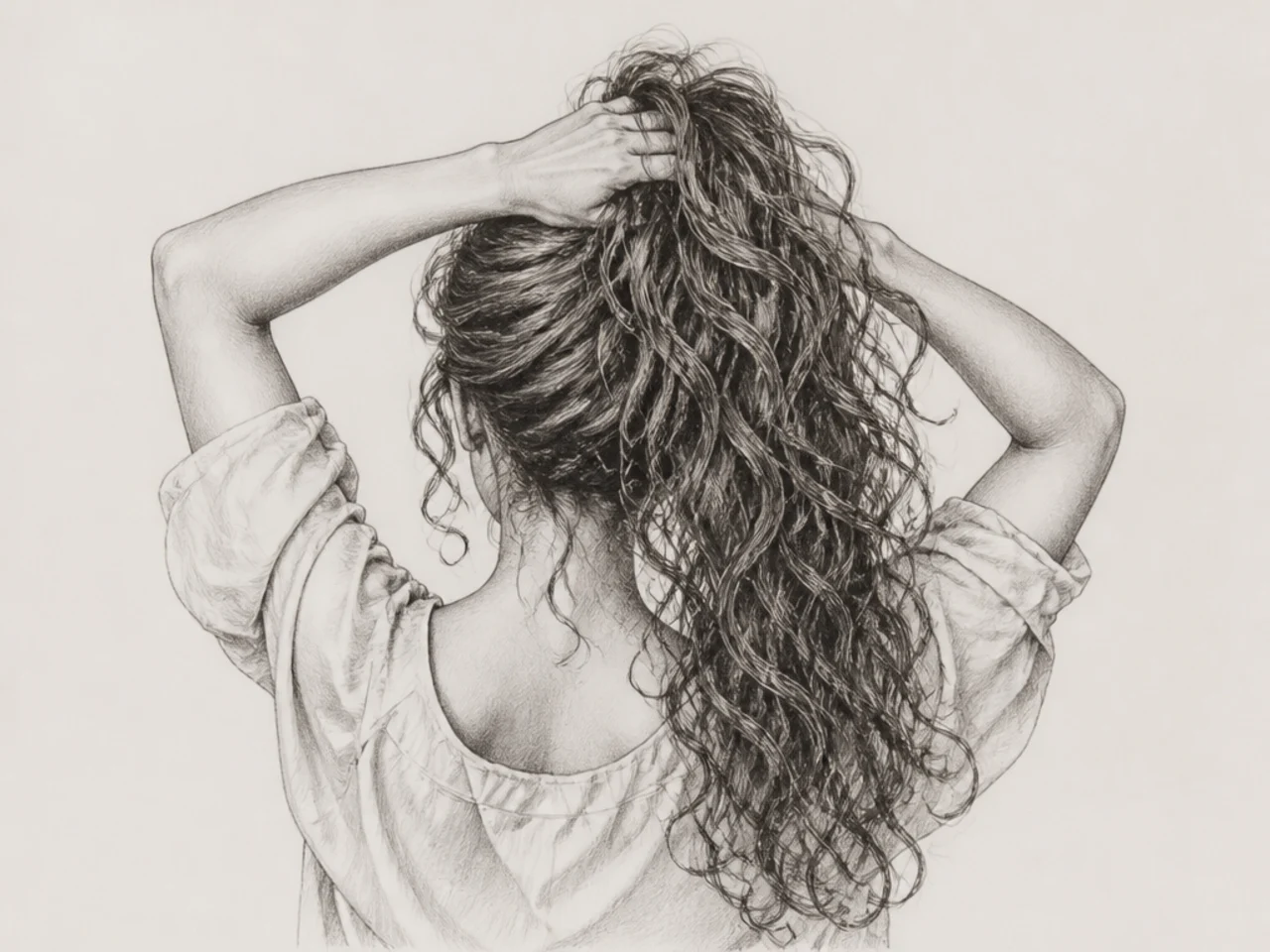
19. Ends-Only Study
Just the bottom six inches, where the pattern is loosest.
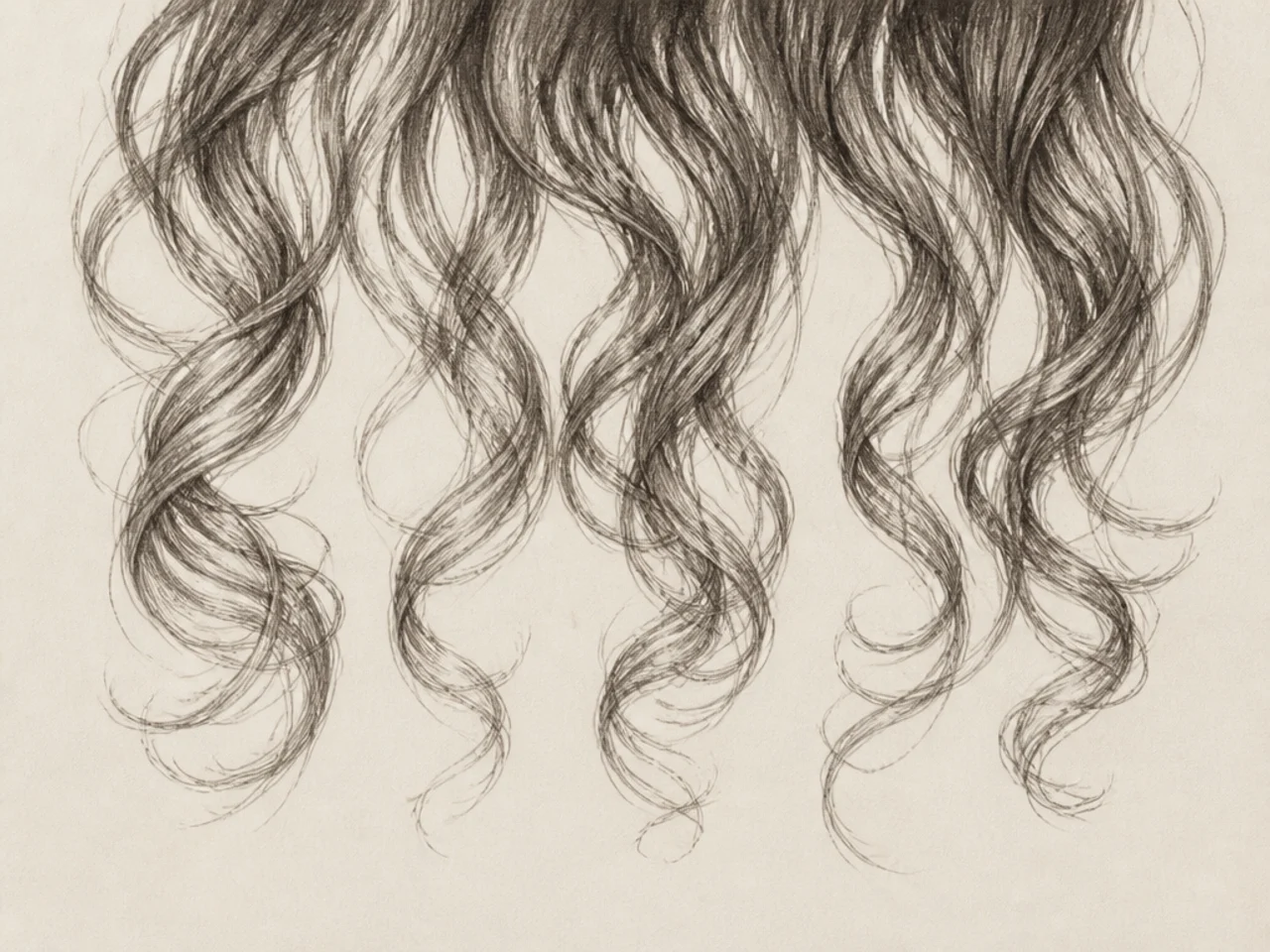
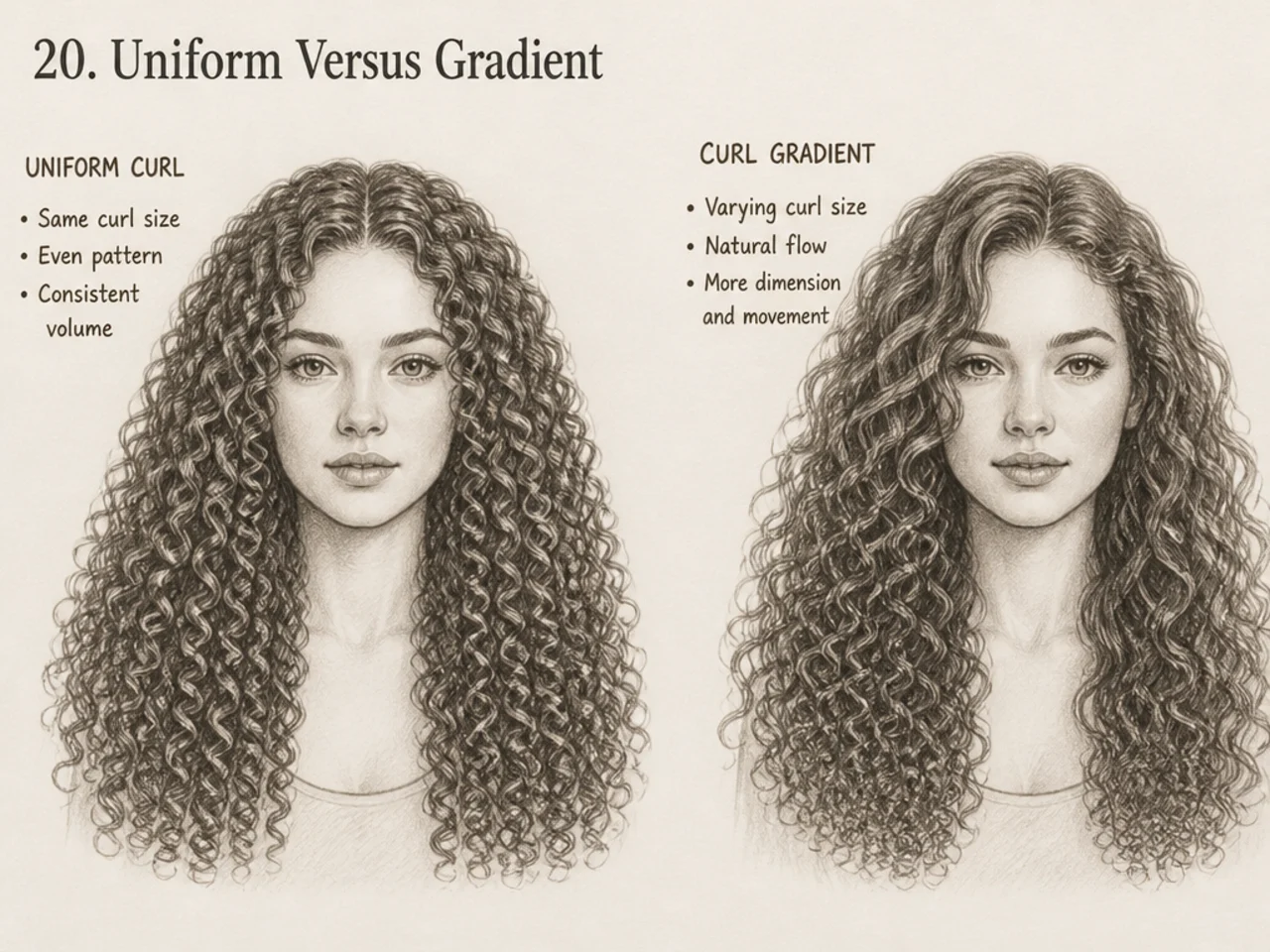
20. Uniform Versus Gradient
The same drawing done both ways. The difference is obvious.
Where to Put the Detail
On long hair the temptation is to render the whole length, which is both slow and self-defeating.
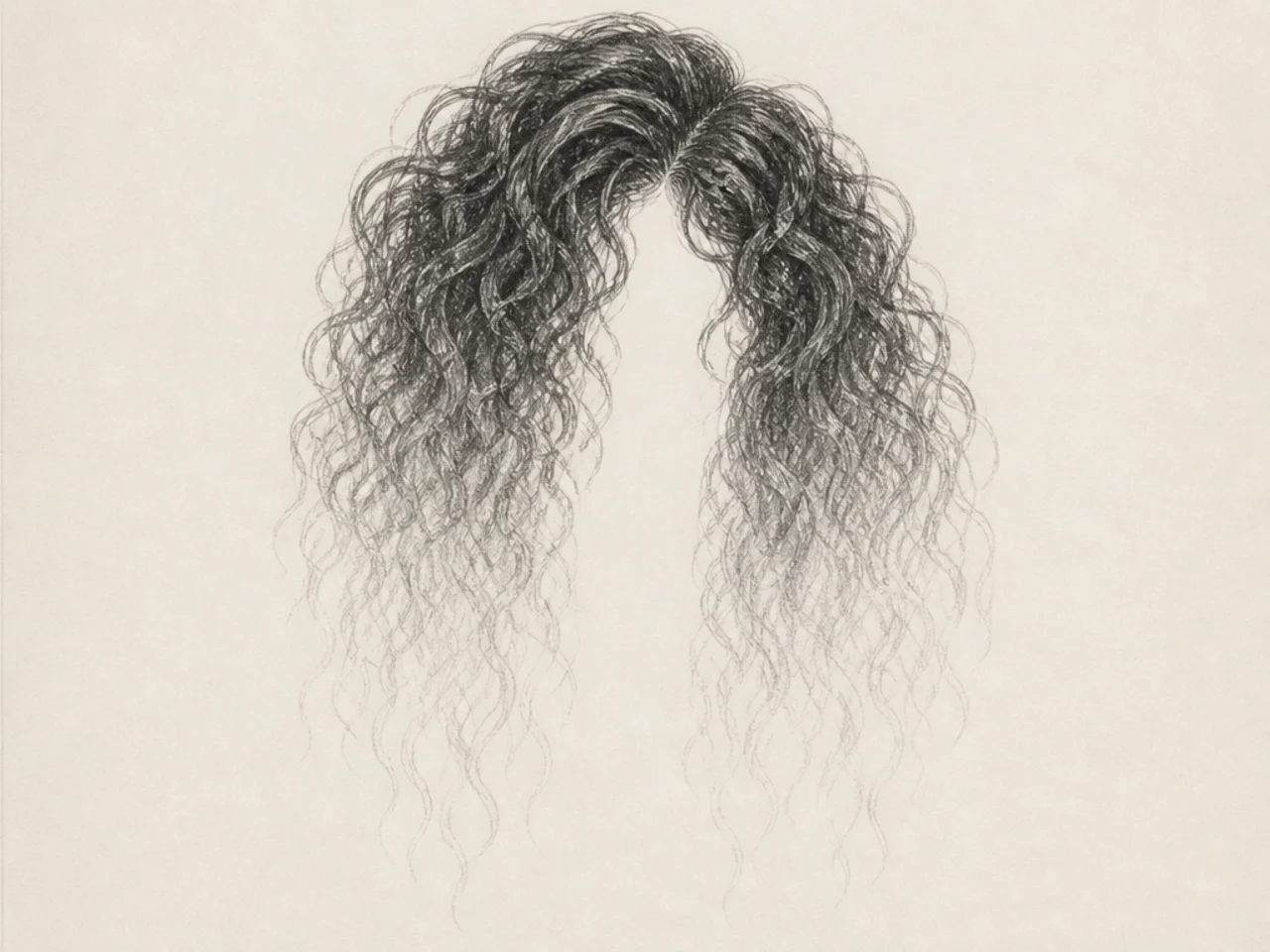
Top third: most detail. Tight, defined curl near the crown and around the face, where the eye goes.
Middle third: moderate. Clump separation visible, individual curls mostly not.
Bottom third: least. Loose, soft, often barely more than a broken silhouette and some tone.
This mirrors what actually happens — the ends are looser and less defined — and it concentrates your effort where it is seen.
Mistakes to Avoid
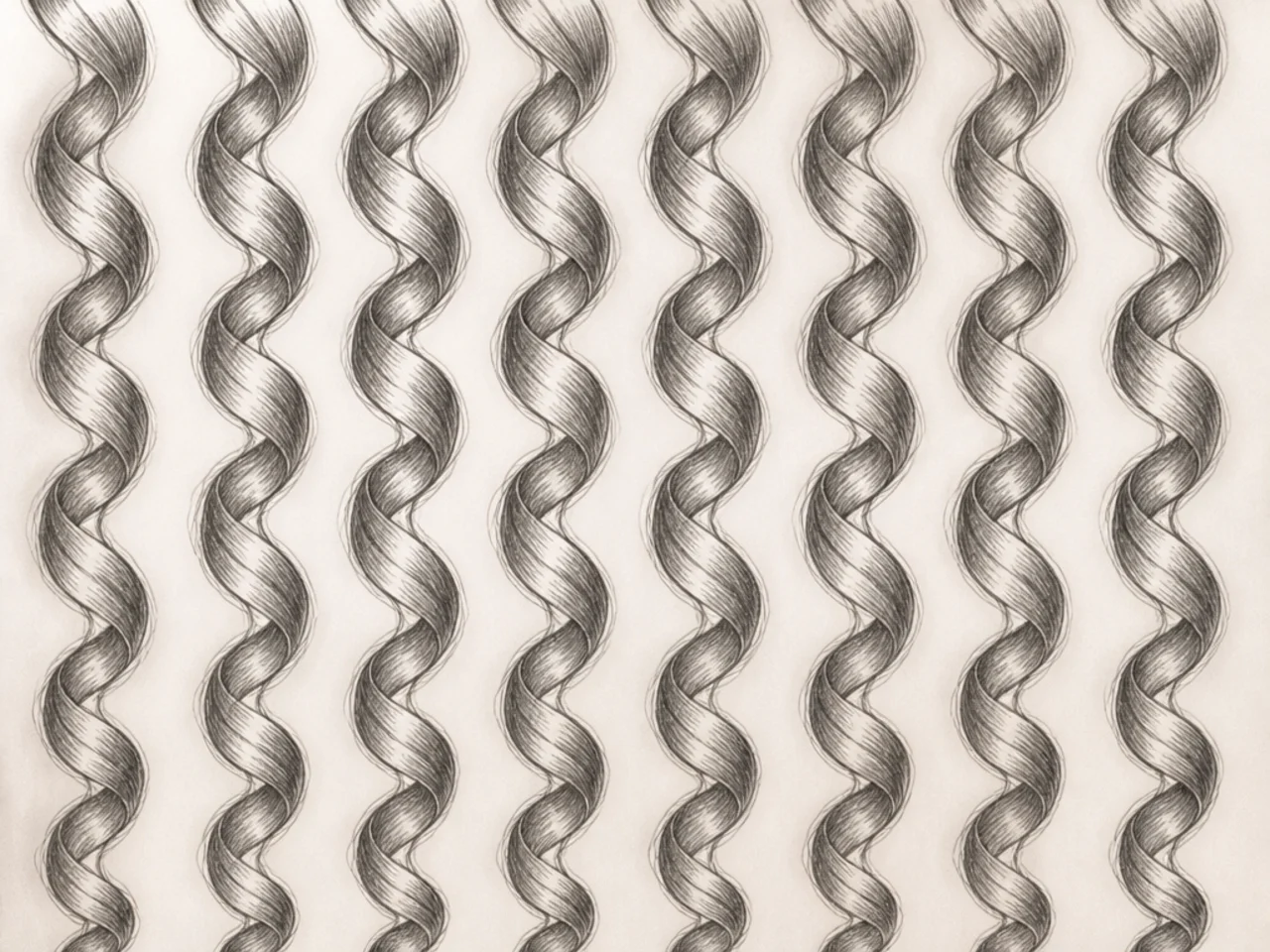
Uniform curl size down the length. It reads as a wig.
Everything in one plane. Flat curtain rather than hair.
Equal detail top to bottom. Slow to draw and wrong to look at.
No overlap between clumps. Overlap is where depth comes from.
Forgetting the shoulder break. Long hair still has to meet the body.
FAQ
How do you avoid repetition? Let the curl loosen toward the ends, as real hair does.
Where is curl tightest? At the roots and around the face, where least weight pulls on it.
How do you stop it looking flat? Give it more than one plane — some clumps in front, some behind.
Final Thoughts
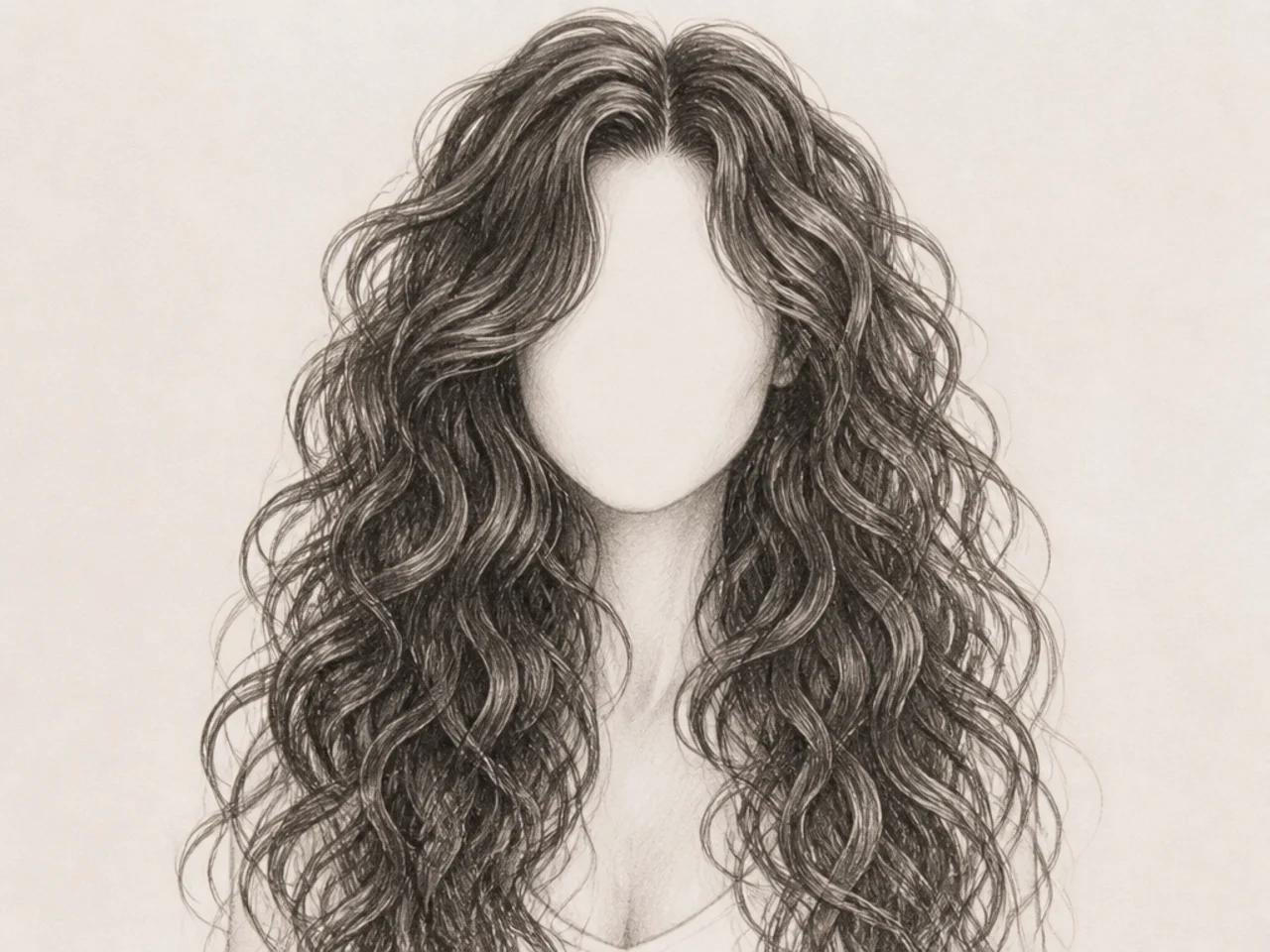
Draw the same head twice — once with uniform curl, once with a gradient from tight roots to loose ends. The second will look like hair and the first will look like a wig, and after seeing that once you will not draw uniform curl again.
For shorter hair see 15 short curly hair drawing ideas, and for the method see 20 steps to draw curly hair like a pro. More in Hair Drawing & Art.