15 Afro Curly Hair Drawing Ideas We Adore
Fifteen afro and coily hair drawing ideas, and the shift that makes them work — this is not clumps, it is a single continuous form. Light it like a sphere and put every piece of detail at the edge.
In this article · 22
- Light It Like a Sphere
- The Texture Lives at the Edge
- The 15 Ideas
- 1. Sphere Lighting Study
- 2. Edge Texture Study
- 3. Classic Round Afro
- 4. High-Top Shape
- 5. Backlit Afro
- 6. Afro in Profile
- 7. Short Coily Crop
- 8. Twist-Out Texture
- 9. Braided Coily Hair
- 10. High Puff
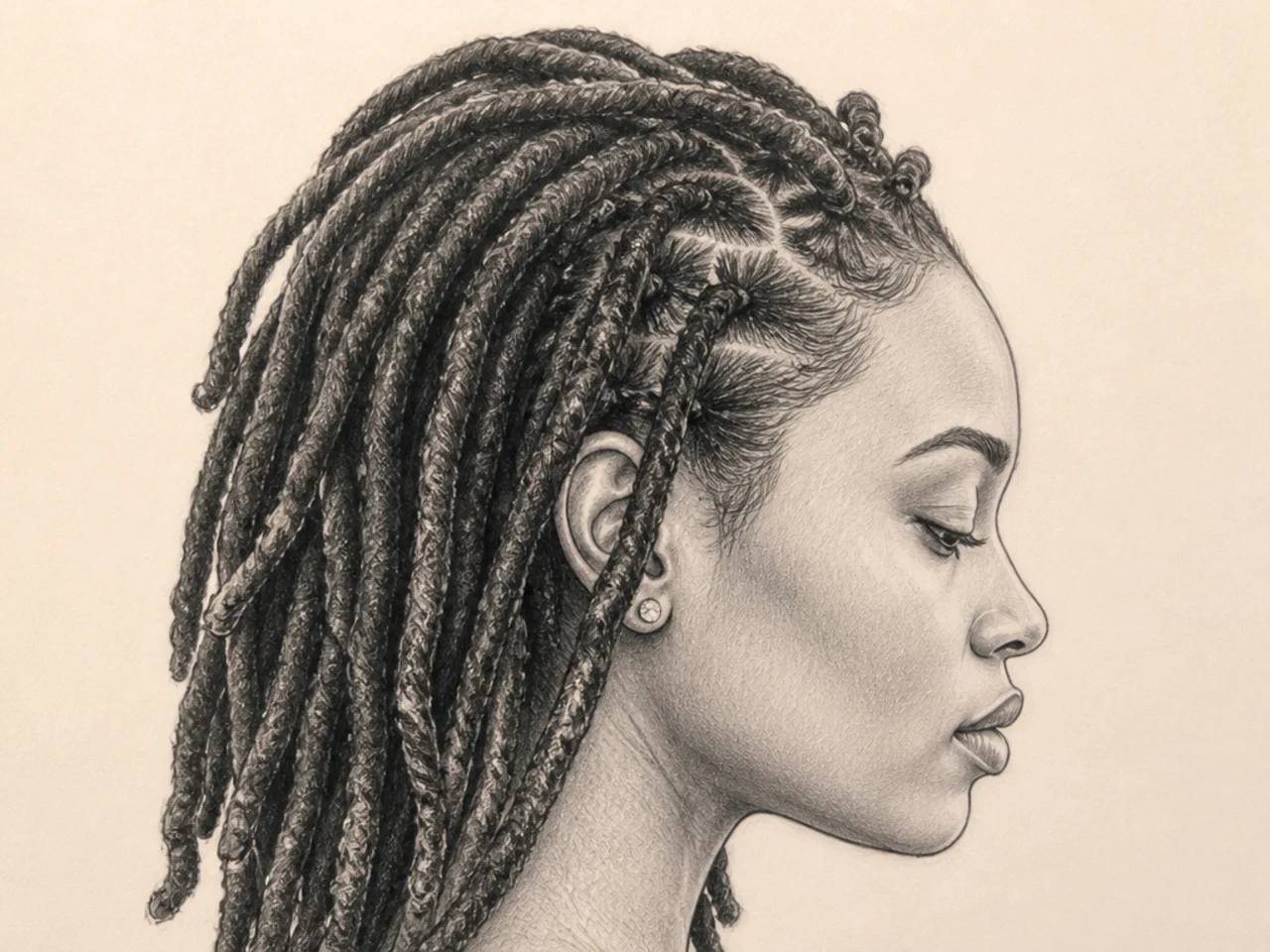
- 11. Locs
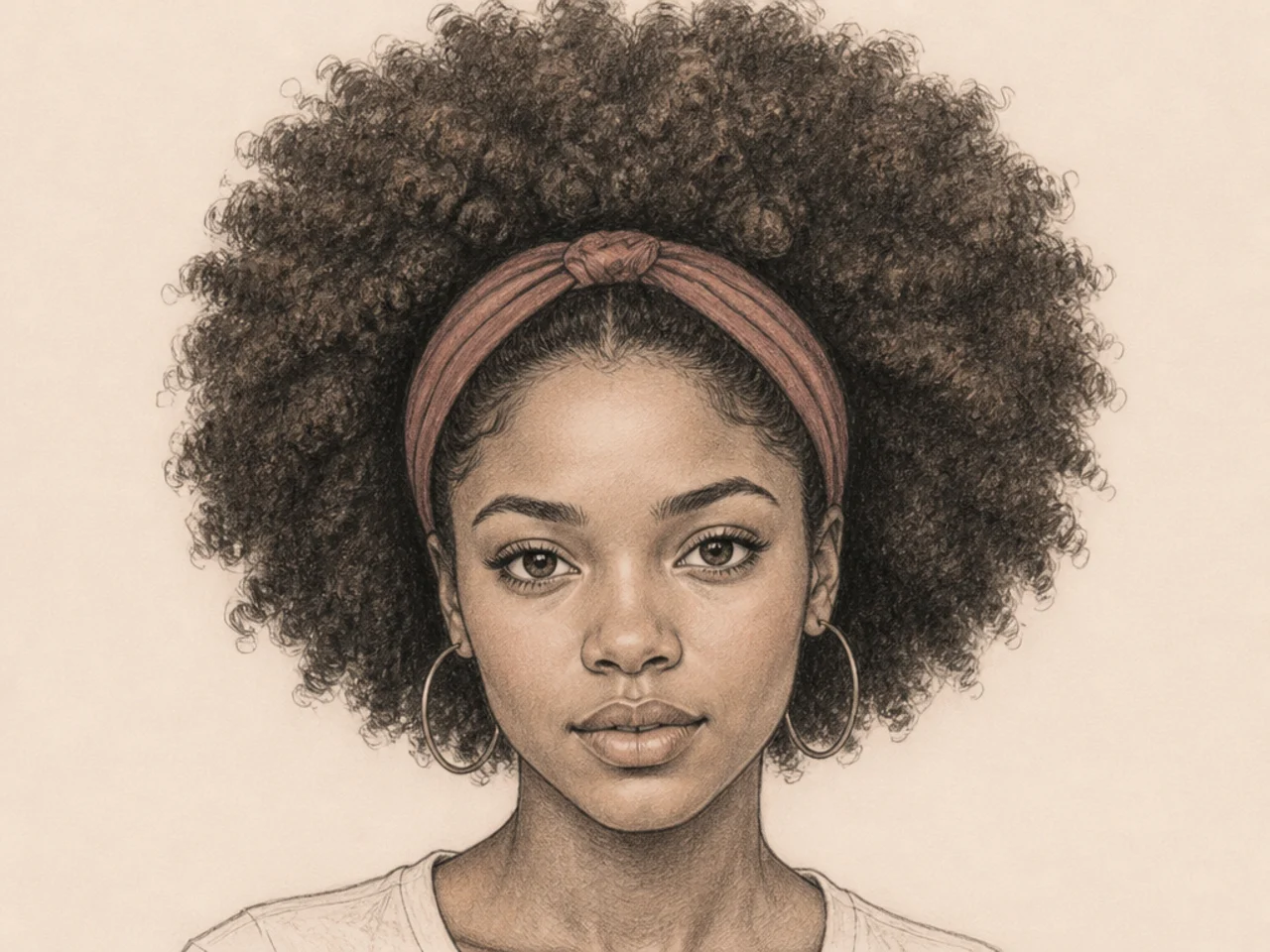
- 12. Afro with a Headband
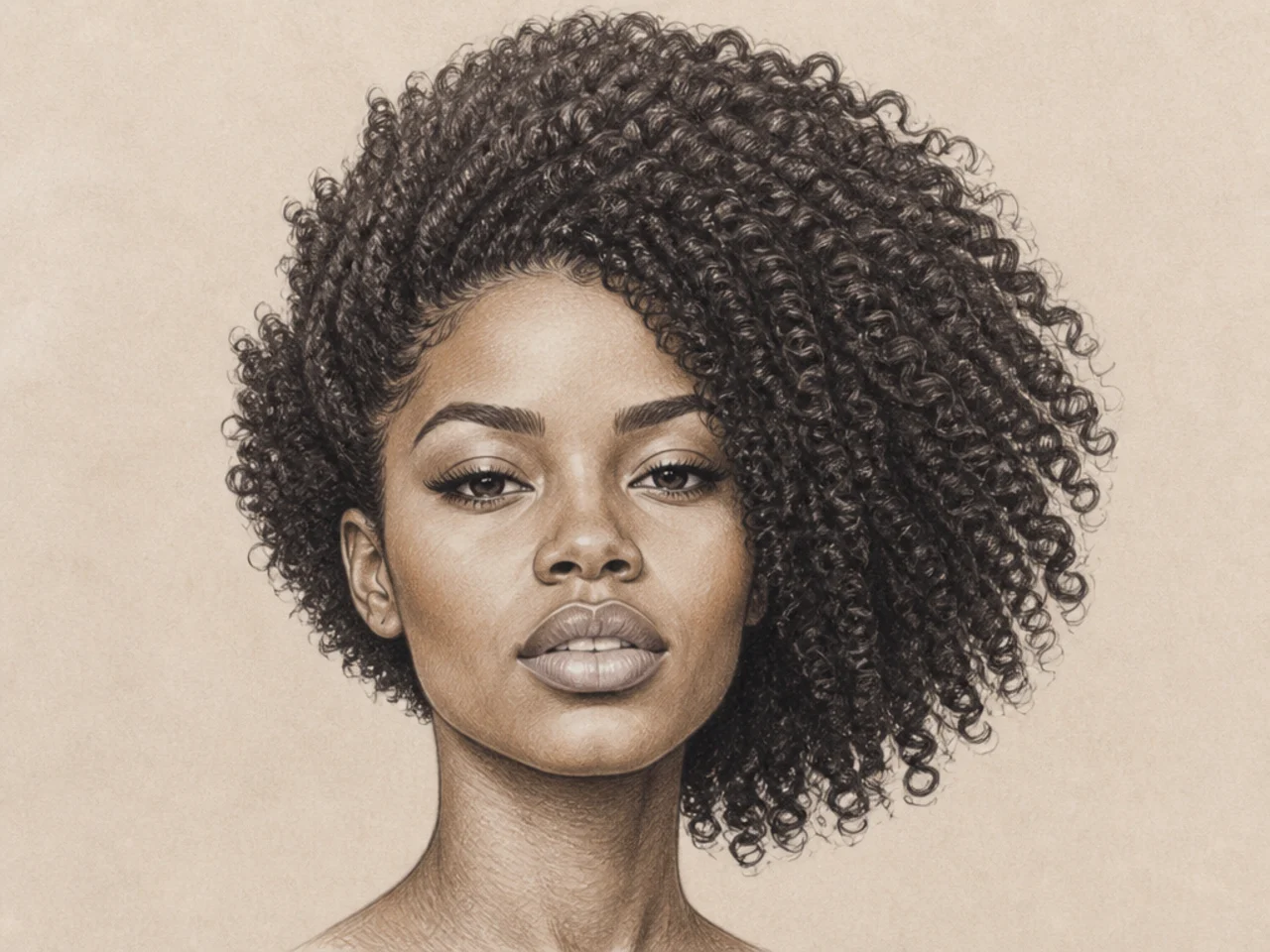
- 13. Asymmetric Afro Shape
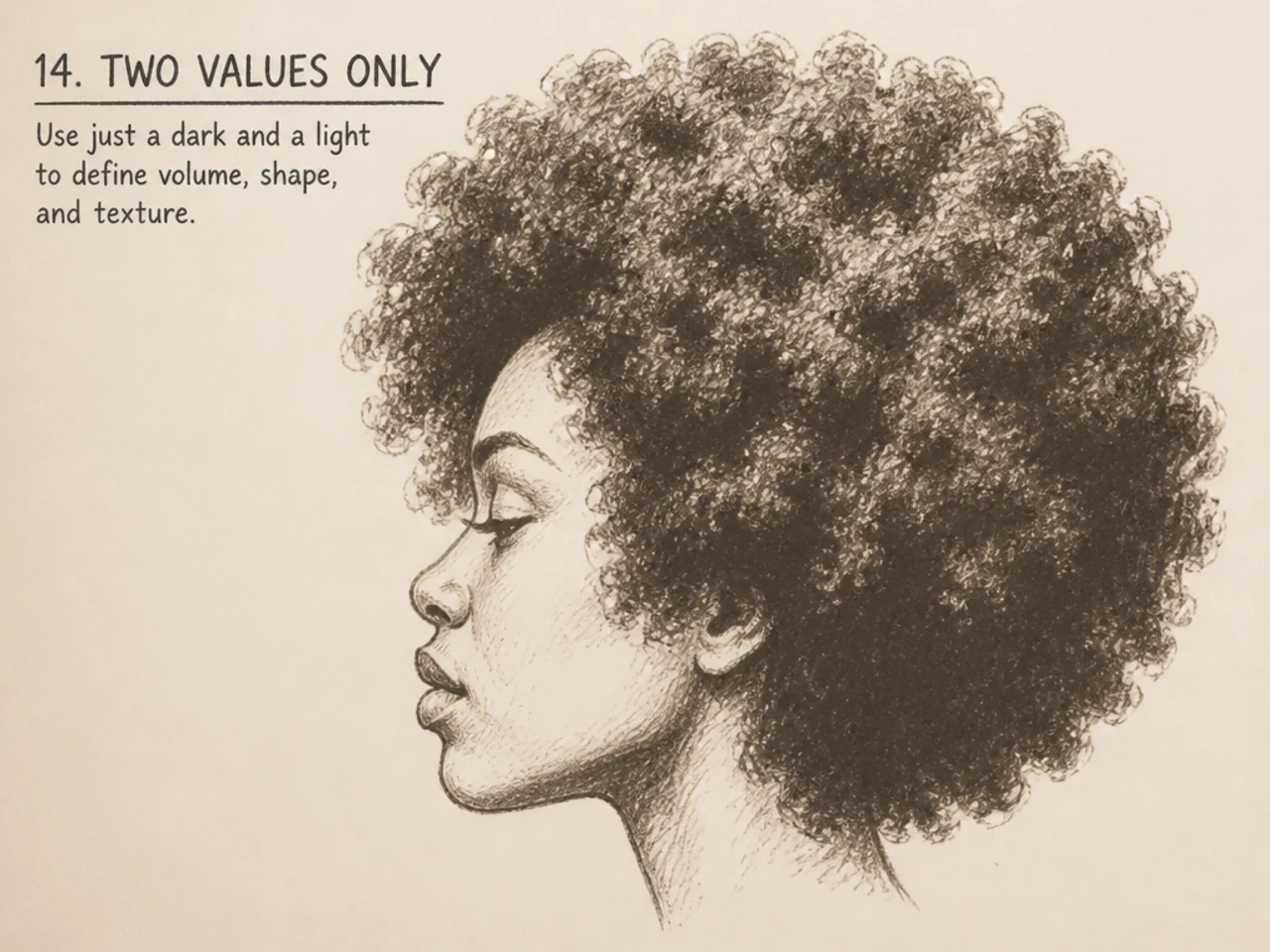
- 14. Two Values Only
- 15. Form Versus Bush Comparison
- Why It Reads as a Bush
- Mistakes to Avoid
- FAQ
- Final Thoughts
Most curly hair drawing advice is about clumps — finding them, grouping them, carving between them. Afro and coily hair of even length does not really have them, and applying the clump approach is what produces a drawing that looks like a bush.
It is a single continuous form. A volume around the head, closer to a sphere than to a set of separate pieces.
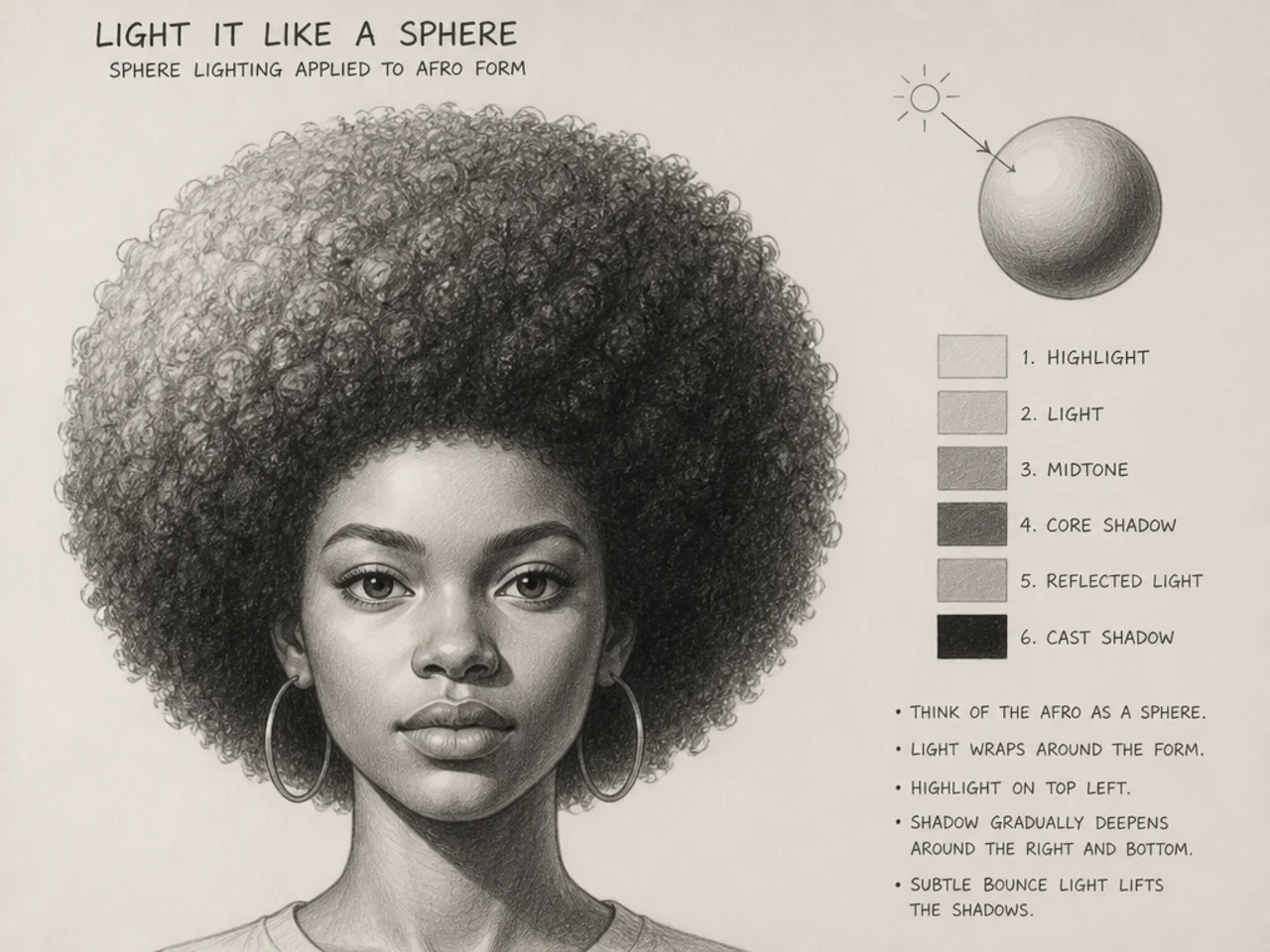
Light It Like a Sphere
Once you treat it as one form, the lighting does most of the work.
One clear lit plane where the light strikes, usually upper front or upper side.
A core shadow — the darkest band, sitting between the lit plane and the reflected light at the far edge, wrapping around the form.
Reflected light at the shadow edge, slightly lighter than the core shadow. This is what makes a form read as round rather than flat.
A cast shadow onto the forehead, neck or shoulders.
That is sphere lighting, and it is the whole structural basis of the drawing. If the form does not read as round with no texture at all, adding texture will not fix it.
The Texture Lives at the Edge
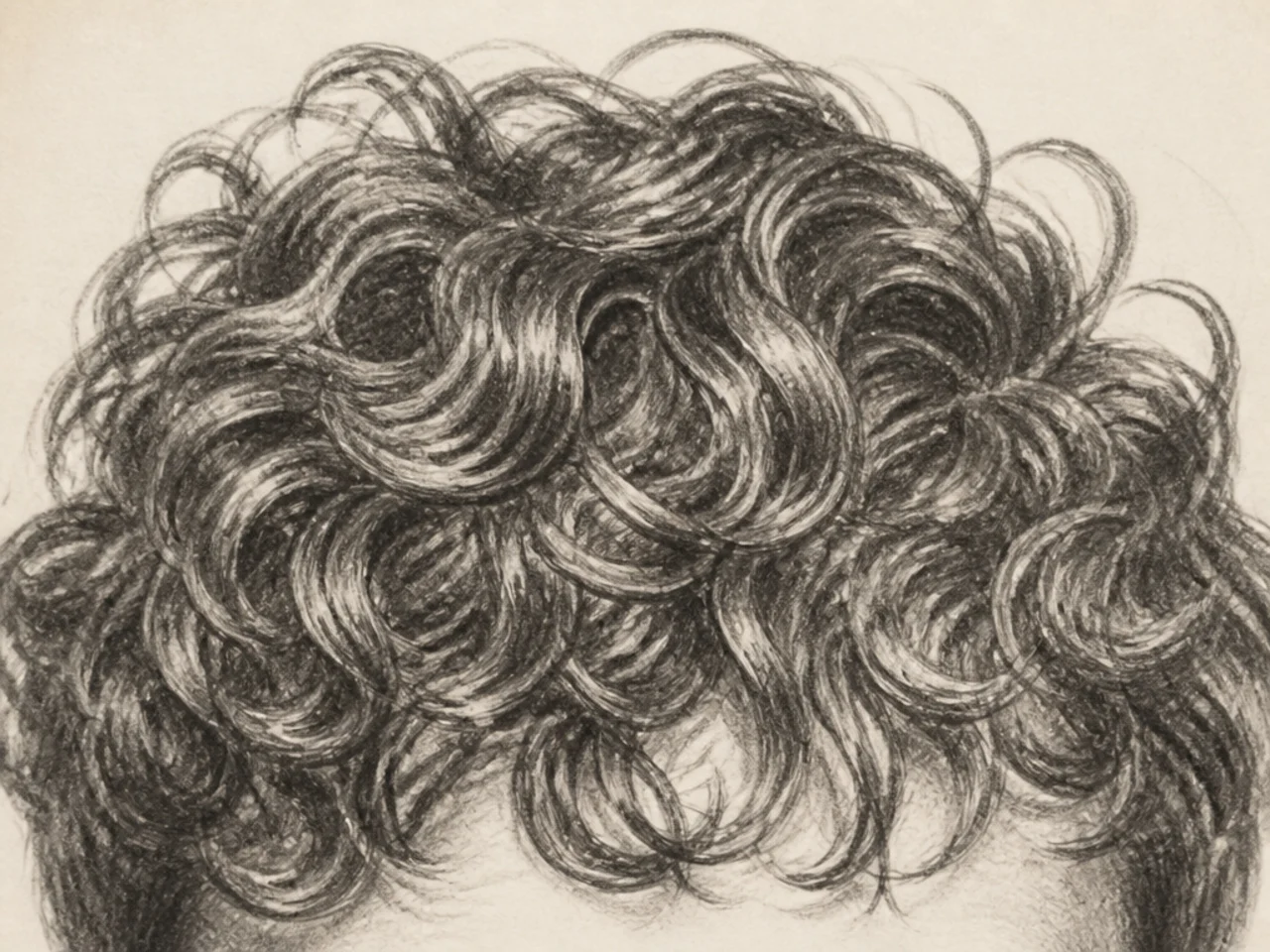
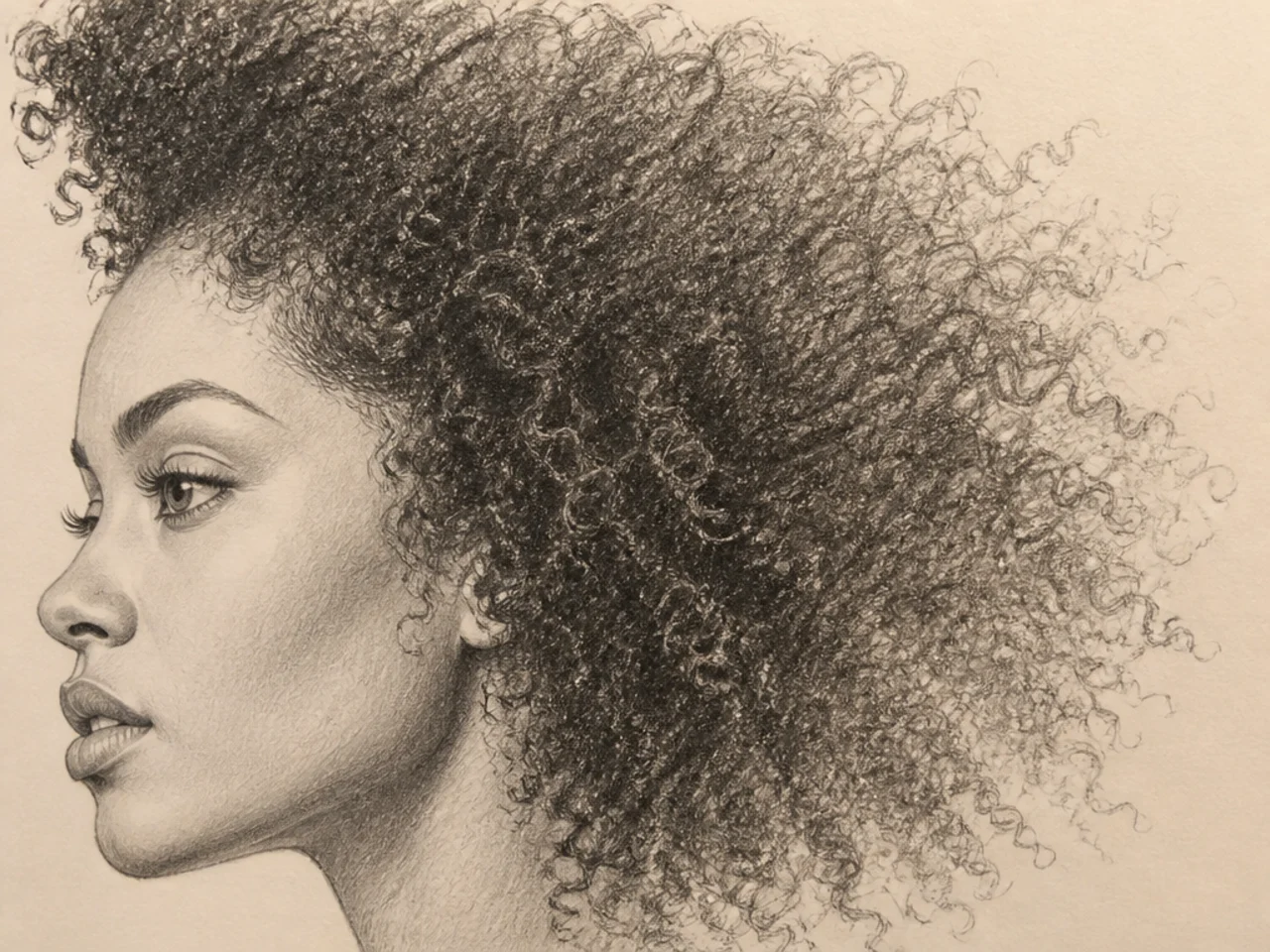
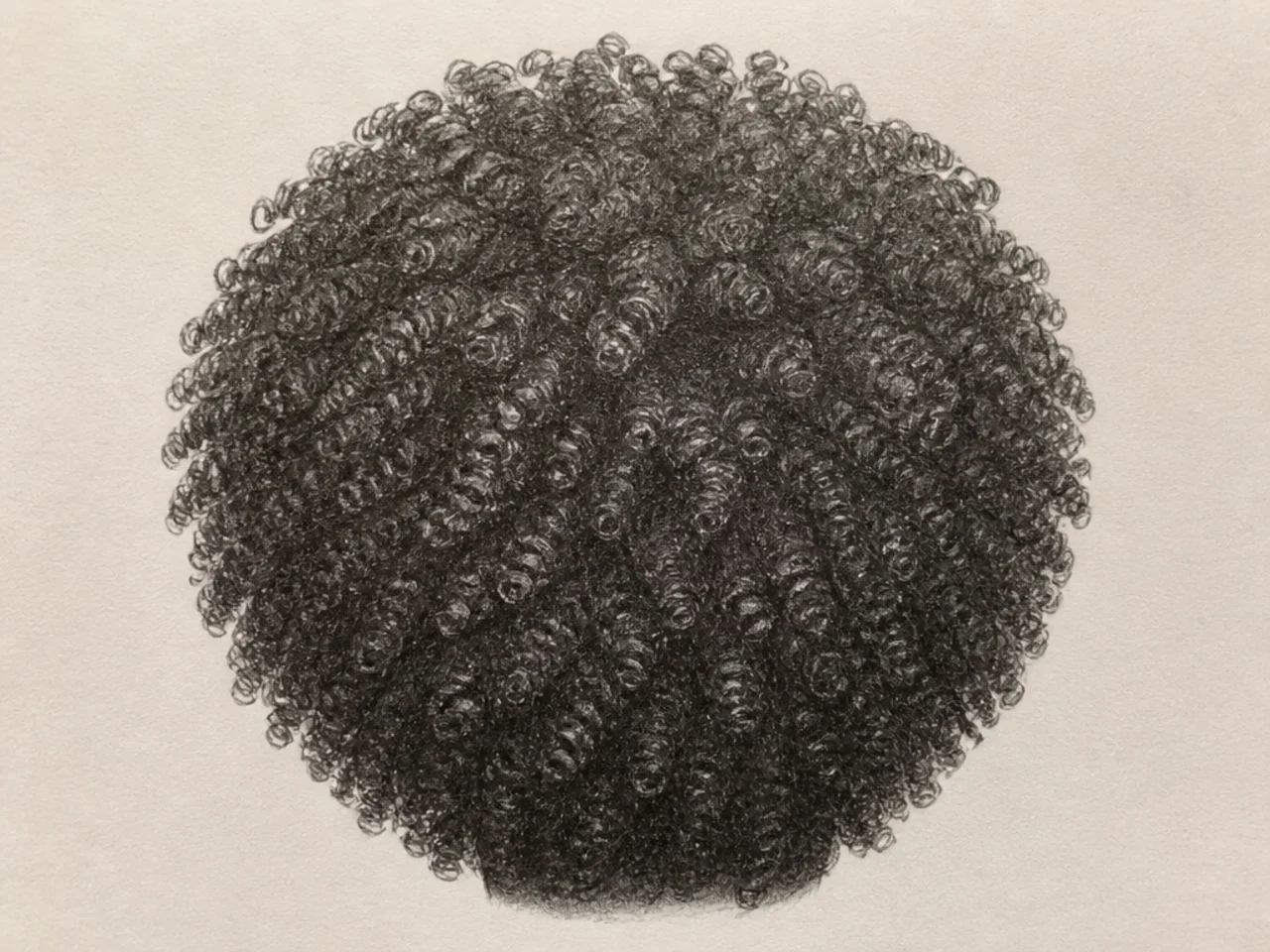
Coils are too small to read individually at normal drawing scale. In the interior they are simply surface quality — a slight granular variation across the tone, nothing more.
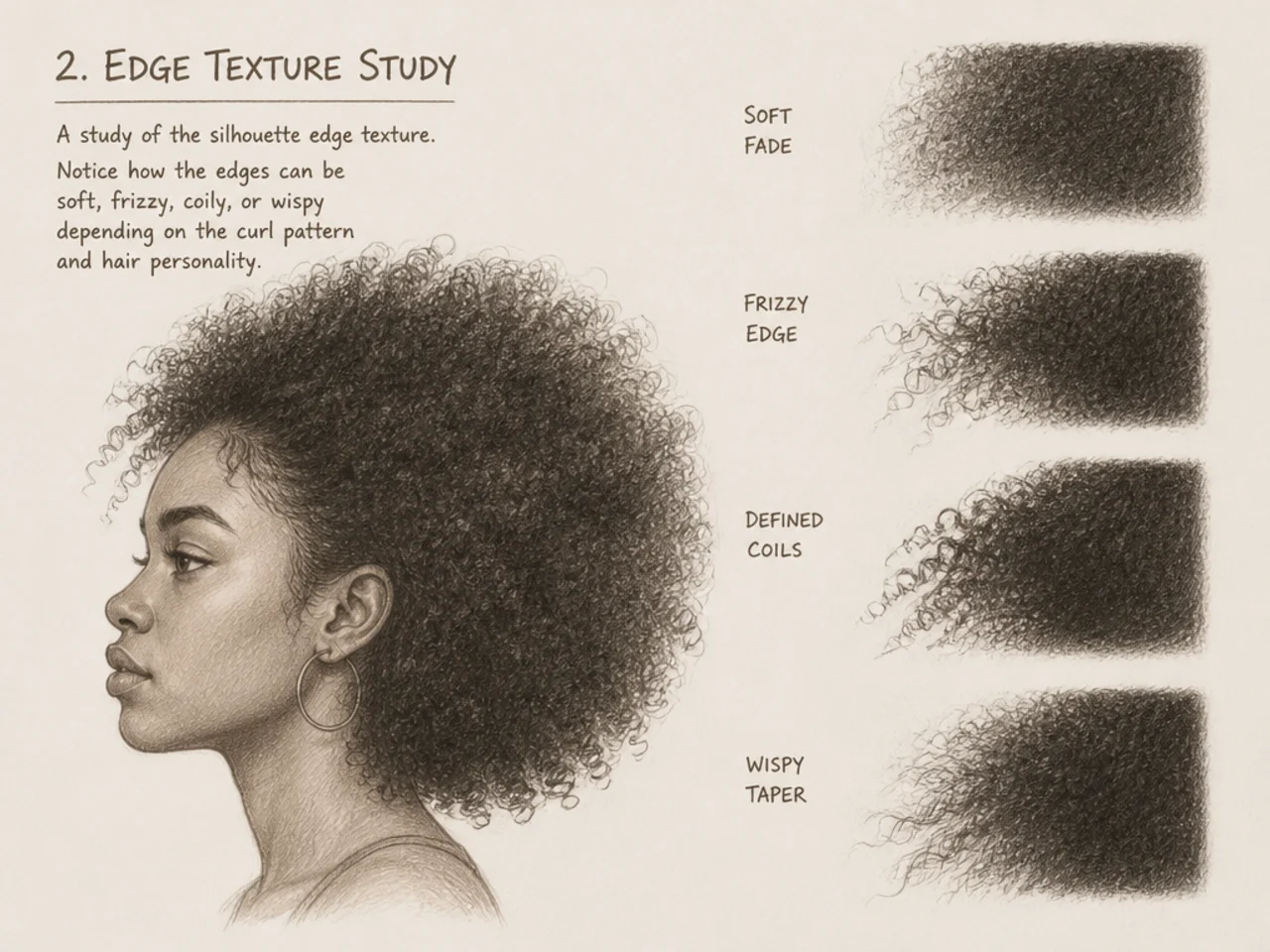
At the silhouette edge, against the background, individual coils catch light and become briefly legible. That thin band is where the hair announces what it is.
Break the edge finely and irregularly. Dense, small interruptions — not the large arcs used for looser curl.
Vary the density around the shape. Slightly softer and more open at the top where light hits, tighter and denser in shadow.
Let a few coils sit fully outside the outline. Three or four, no more.
The 15 Ideas
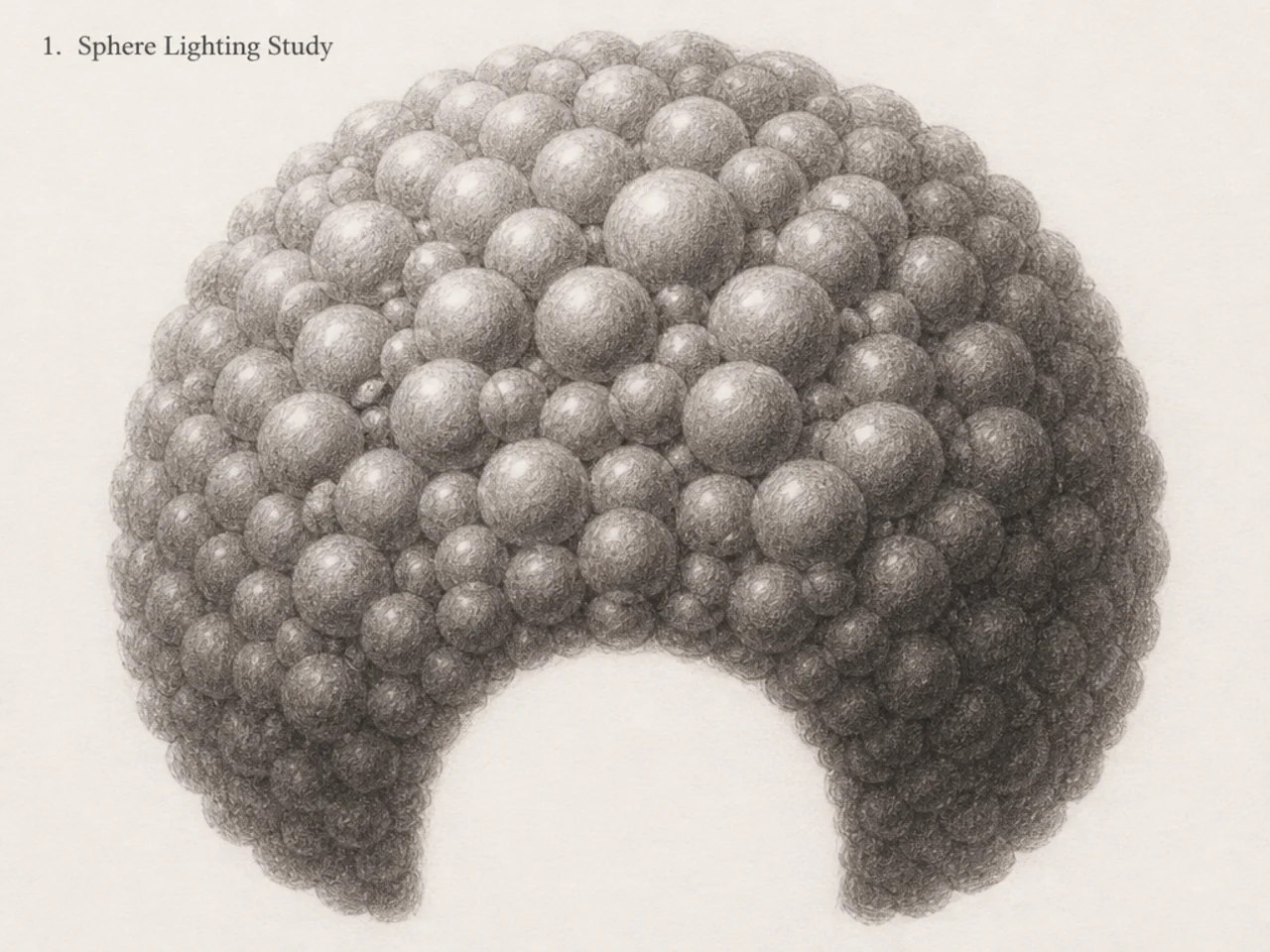
1. Sphere Lighting Study
The form only, no texture at all. The foundation exercise.
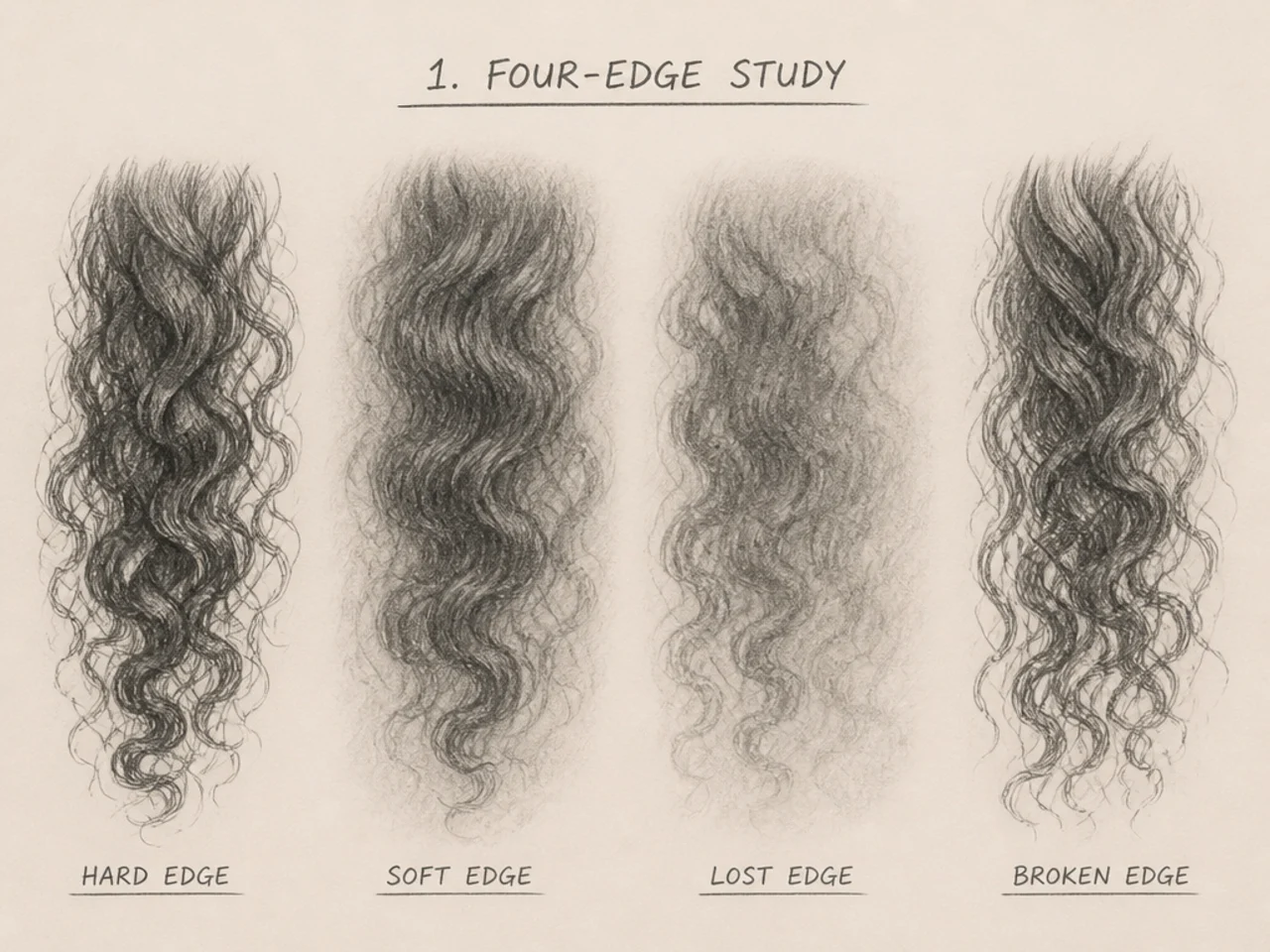
2. Edge Texture Study
The silhouette band alone, drawn large.
3. Classic Round Afro
Even volume, strong form lighting.
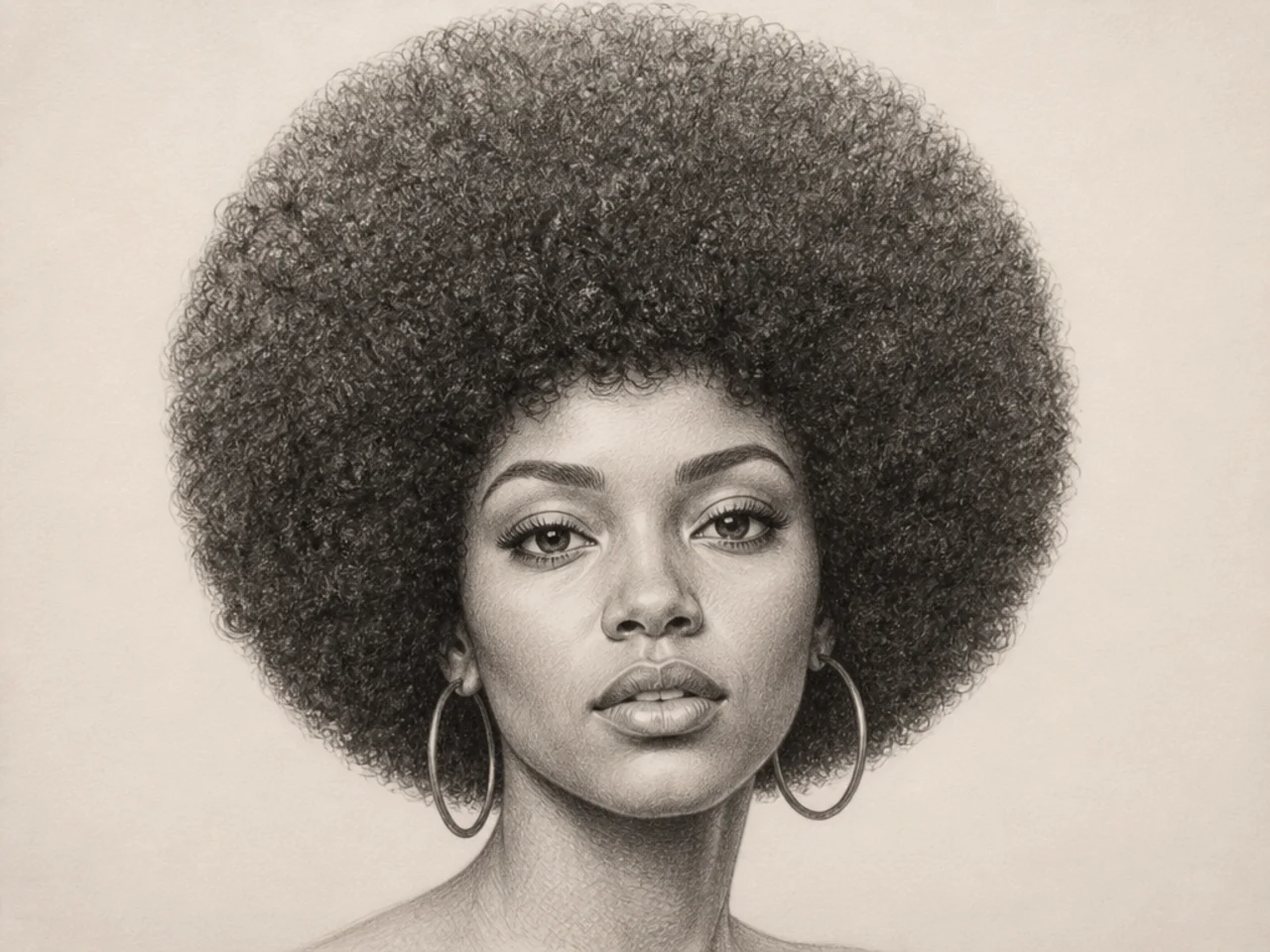
4. High-Top Shape
Volume concentrated above, close at the sides.
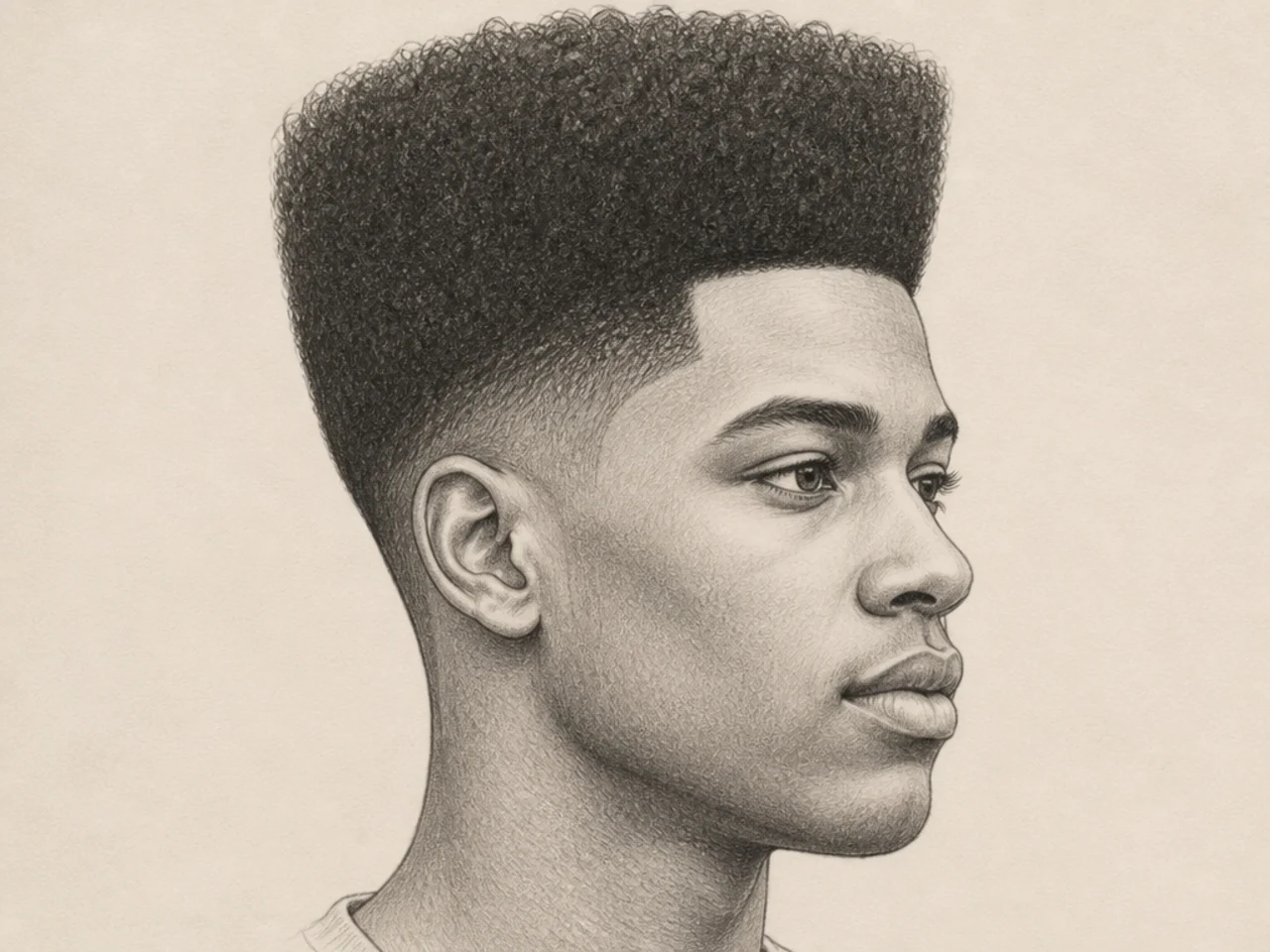
5. Backlit Afro
Rim light around the entire silhouette, form in shadow.
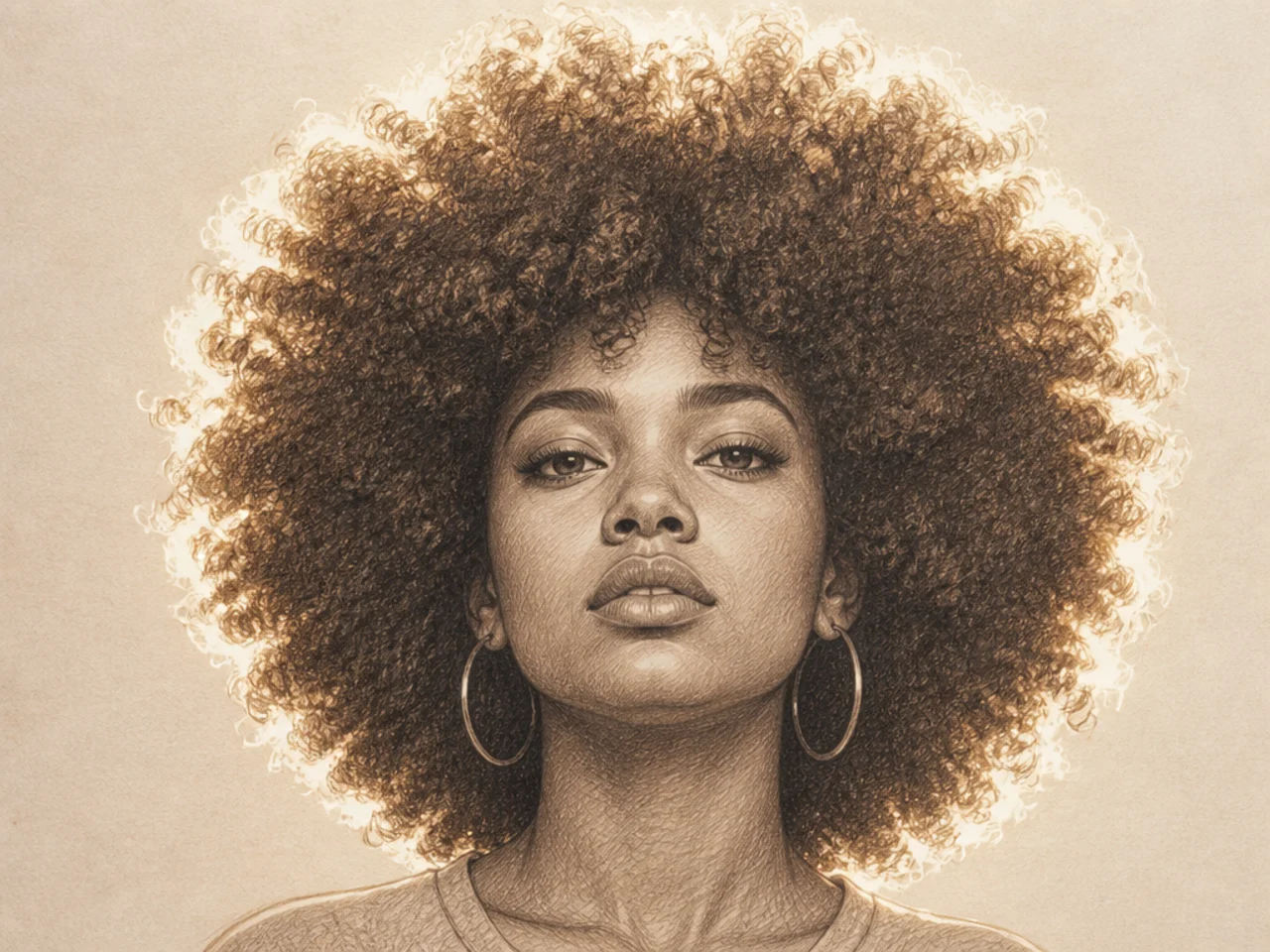
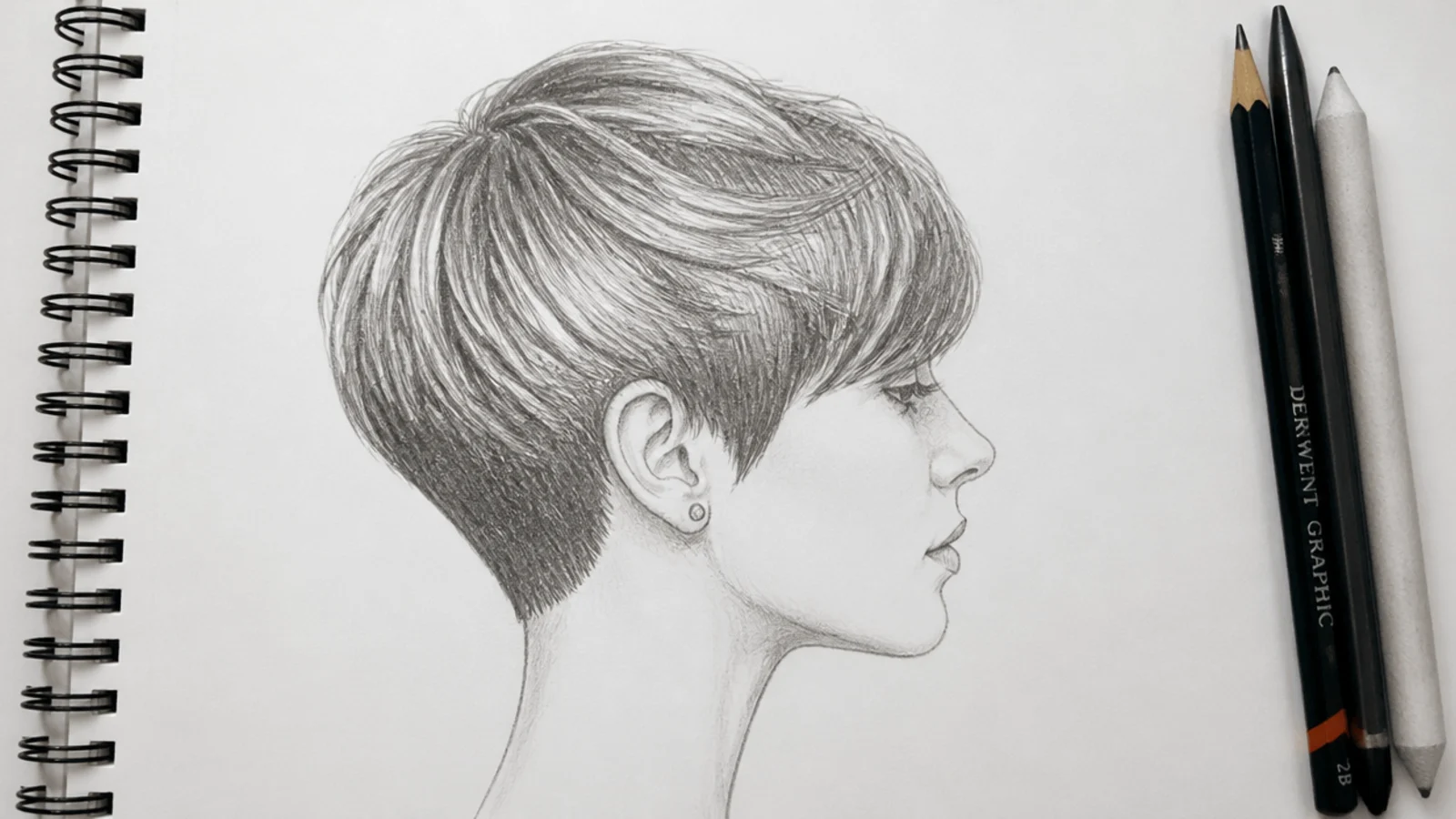
6. Afro in Profile
The form reads most clearly from the side.
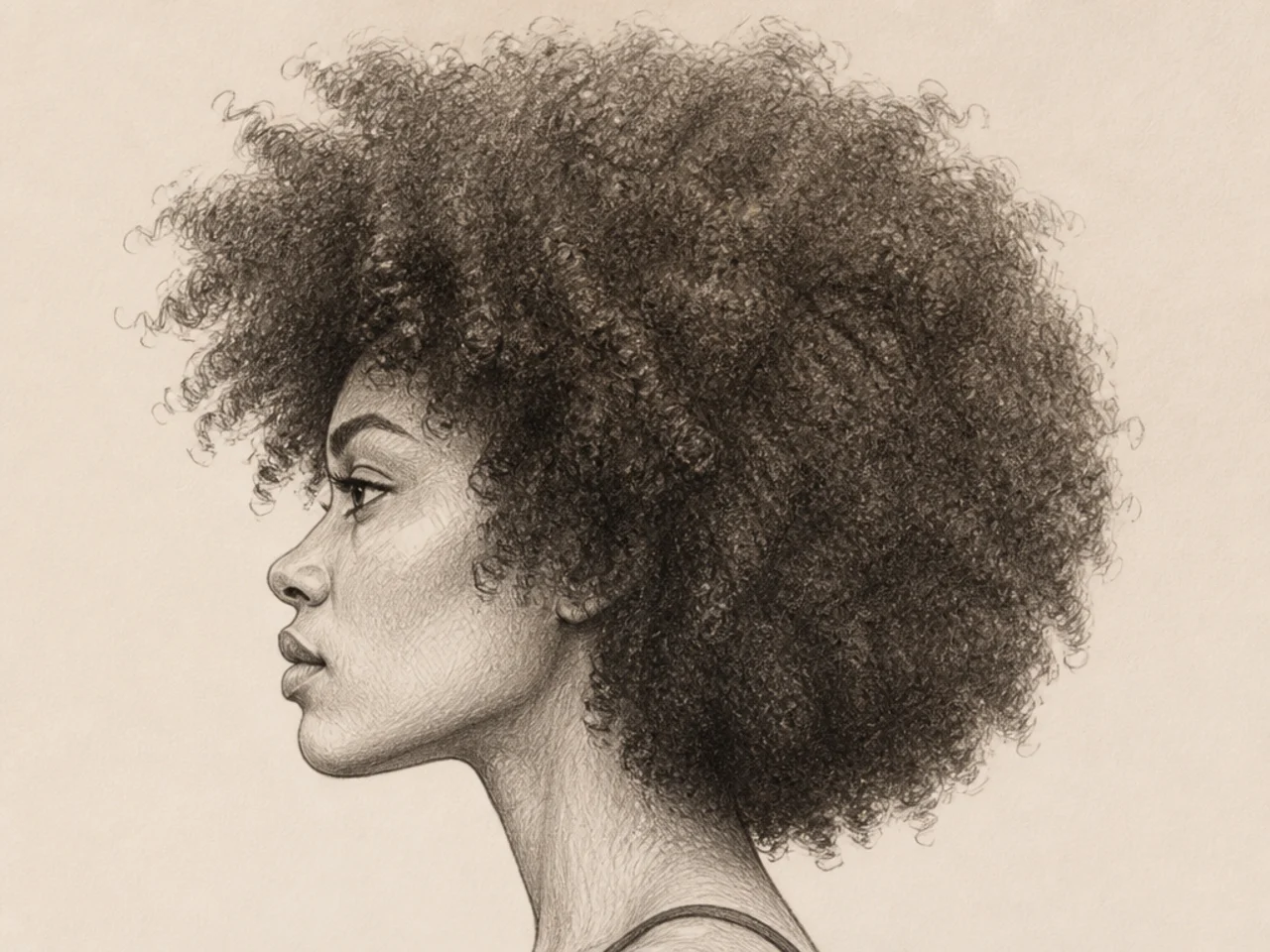
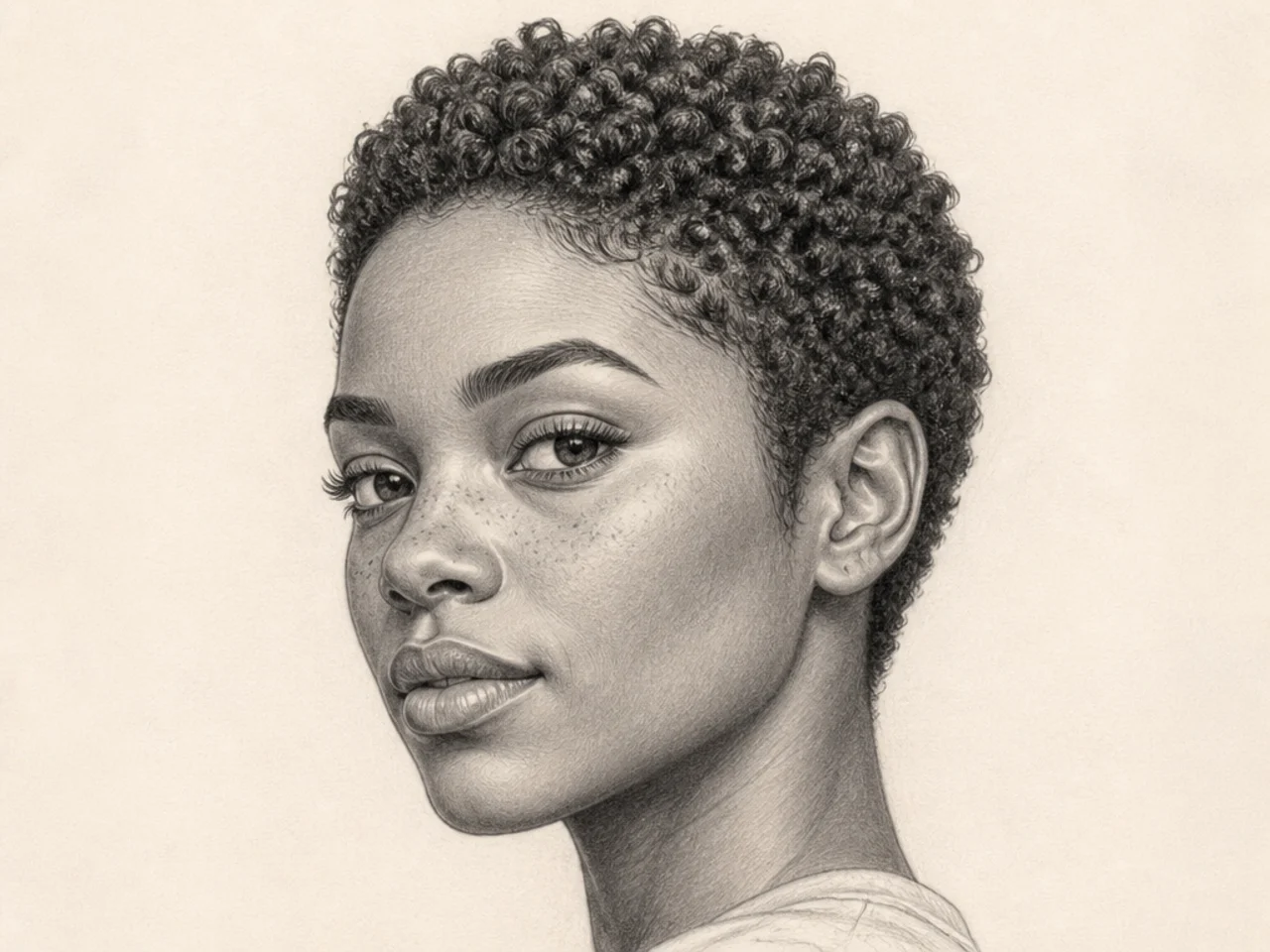
7. Short Coily Crop
Small volume, same principles.
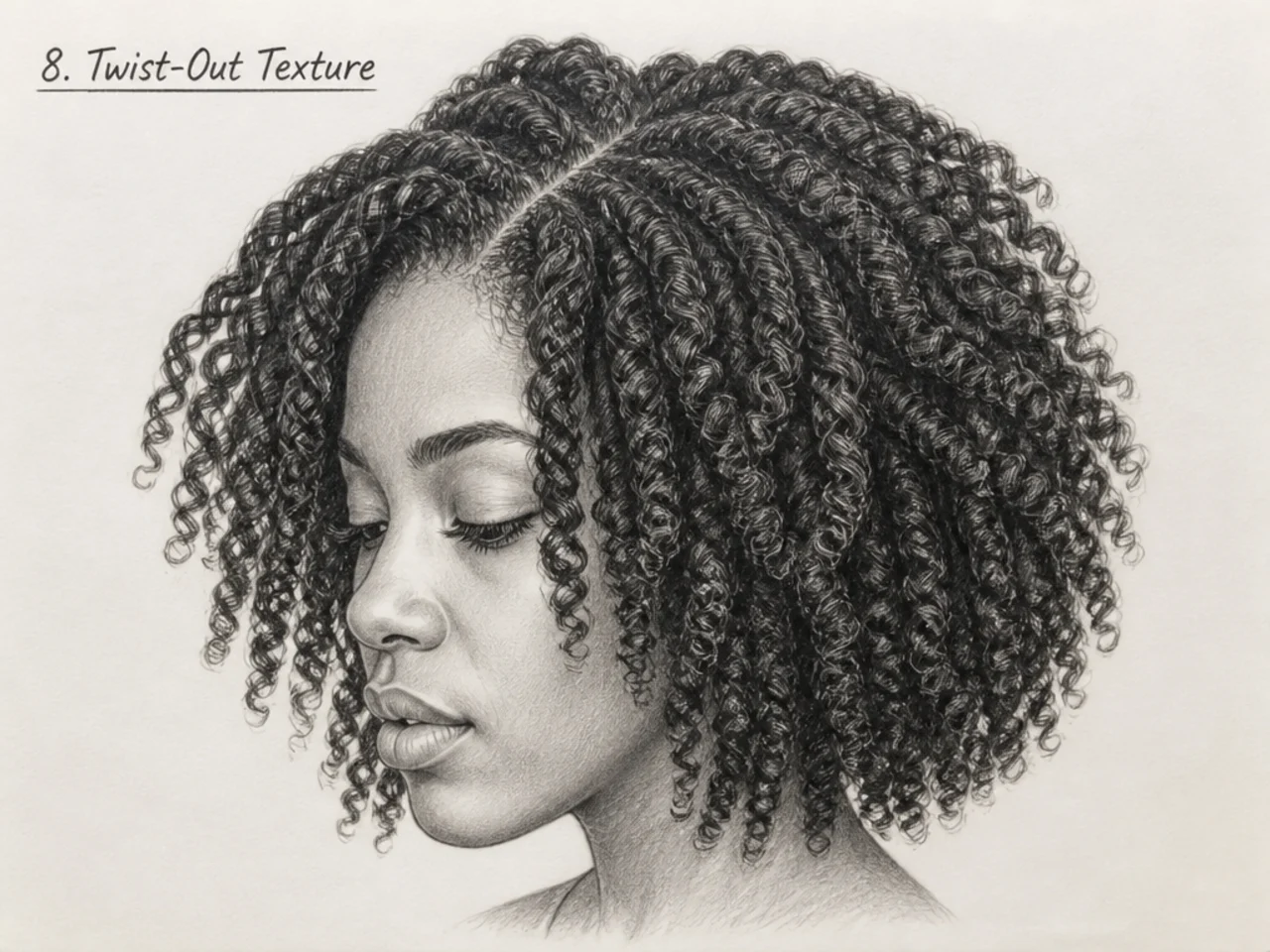
8. Twist-Out Texture
Defined separations — the one case with visible clumping.
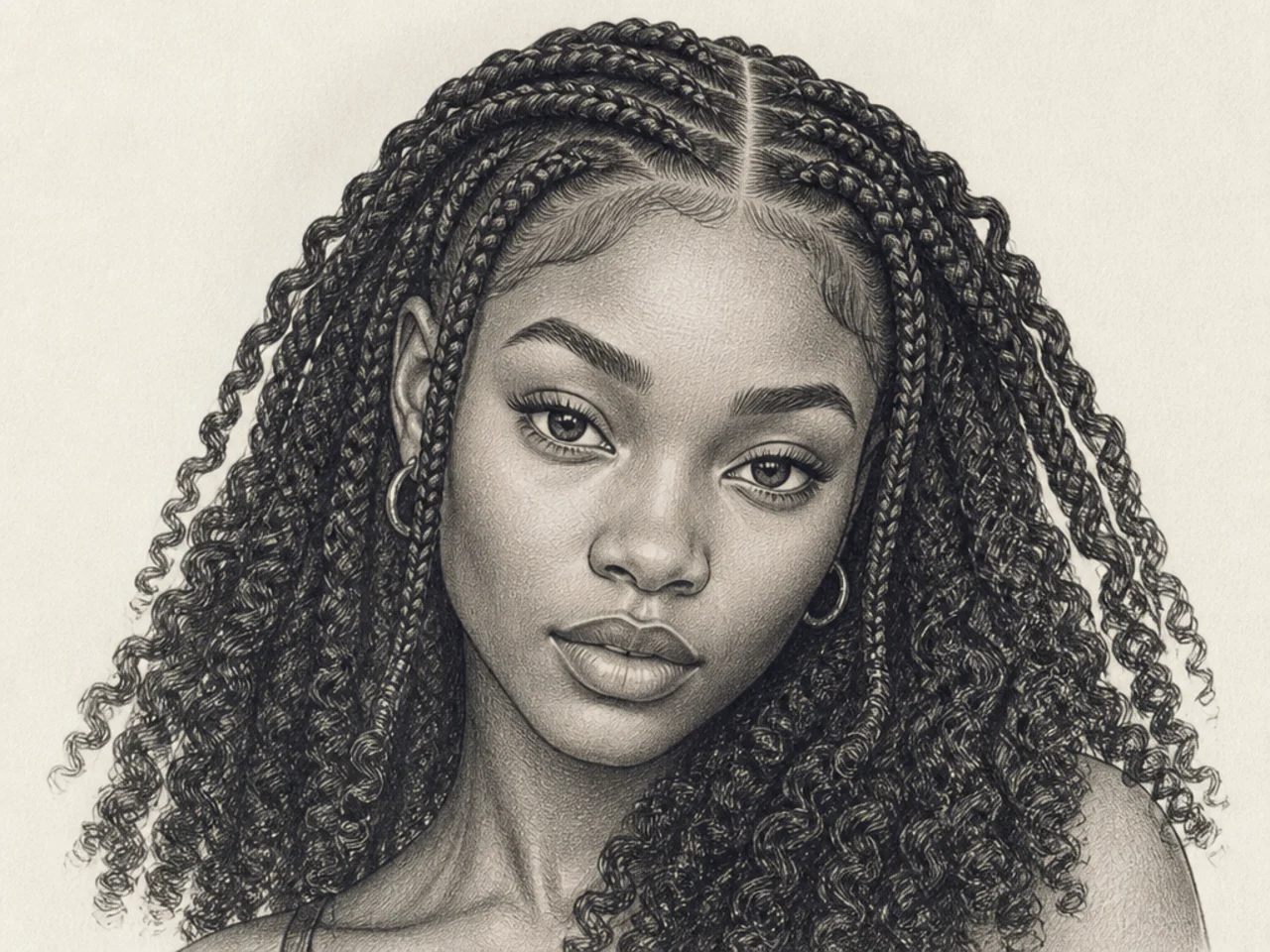
9. Braided Coily Hair
Pattern over form. The braids become the structure.
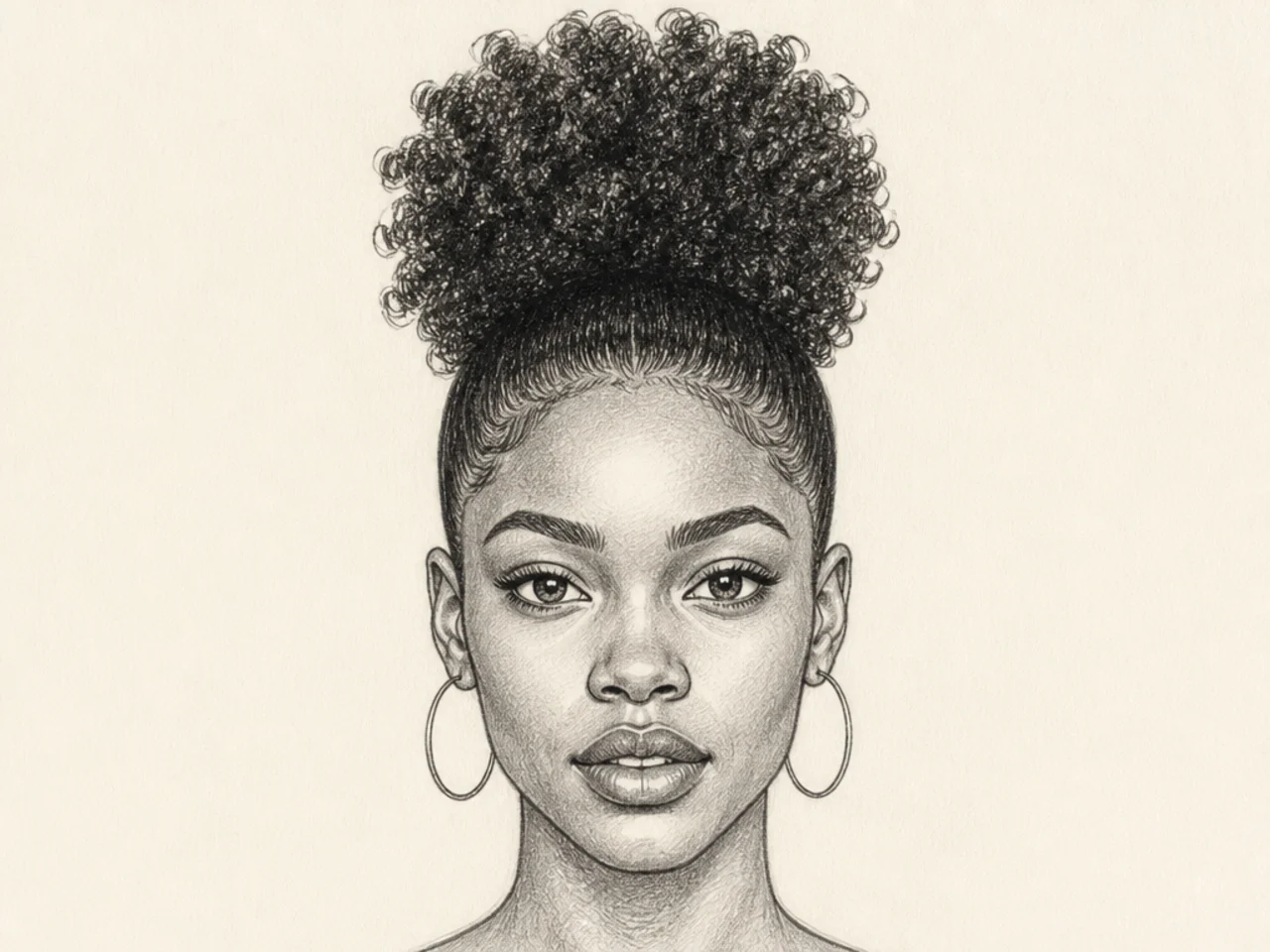
10. High Puff
Gathered volume above, edges laid at the hairline.
11. Locs
Individual units, so this one does return to clump logic.
12. Afro with a Headband
Hard line across a soft form.
13. Asymmetric Afro Shape
Deliberately uneven. Avoids the cloud read.
14. Two Values Only
Black and white. Tests whether the form reads.
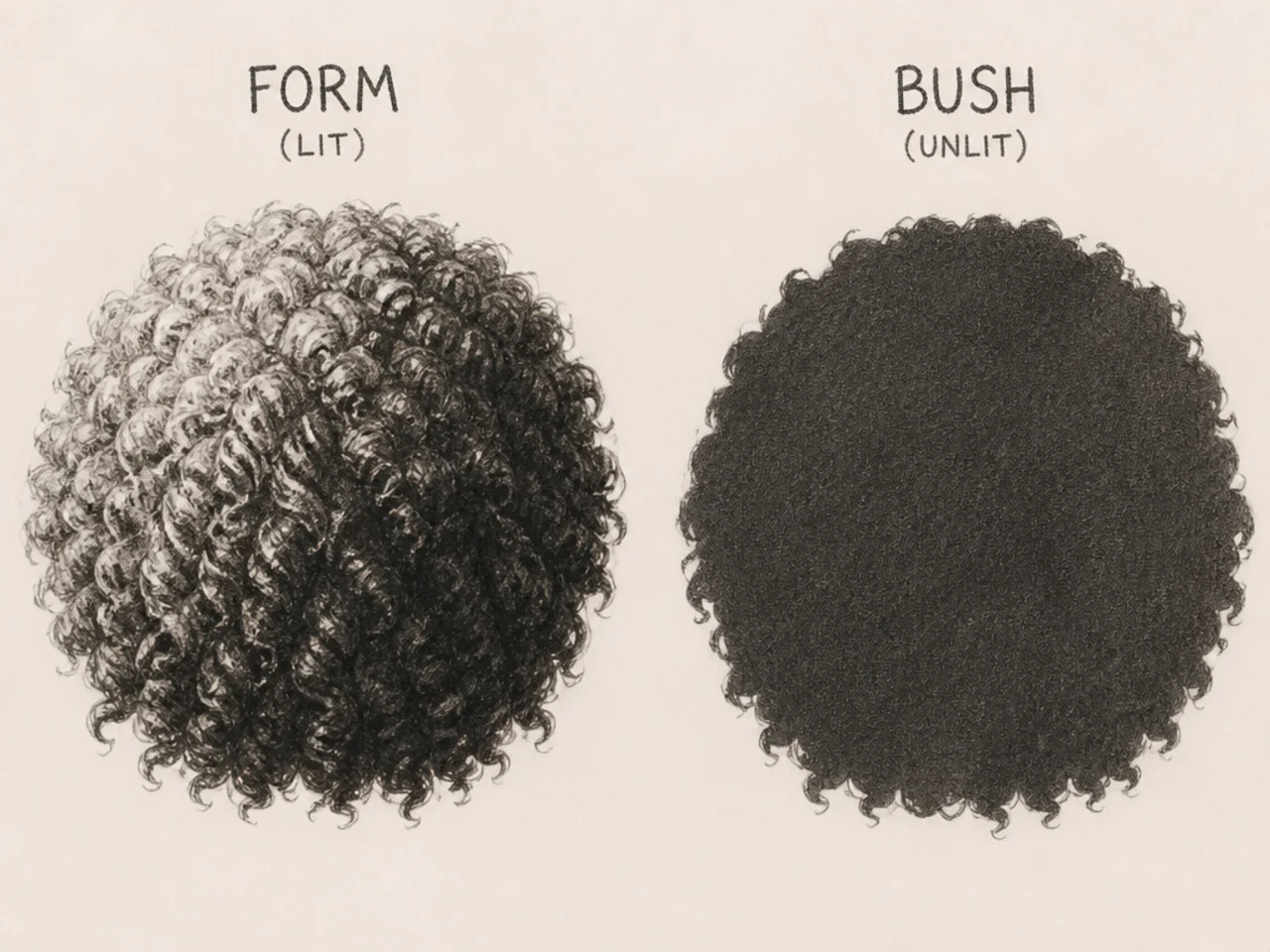
15. Form Versus Bush Comparison
The same shape lit, and unlit with an even edge.
Why It Reads as a Bush
Two causes, and they usually appear together.
No light direction. An unlit shape with texture all over it has no form, and the eye reads foliage — which is exactly what an evenly textured unlit mass looks like.
An evenly bumpy outline. Regular arcs of the same size read as a cloud or a tree. Real coily hair has an irregular edge with varying density.
The fix for both is the same: establish sphere lighting first with no texture at all, check that it reads as a round form, and only then break the edge — irregularly.
If it looks like a bush, the problem is almost never the texture. It is the lighting underneath it.
Mistakes to Avoid
Applying clump logic. It is one form, not separate pieces.
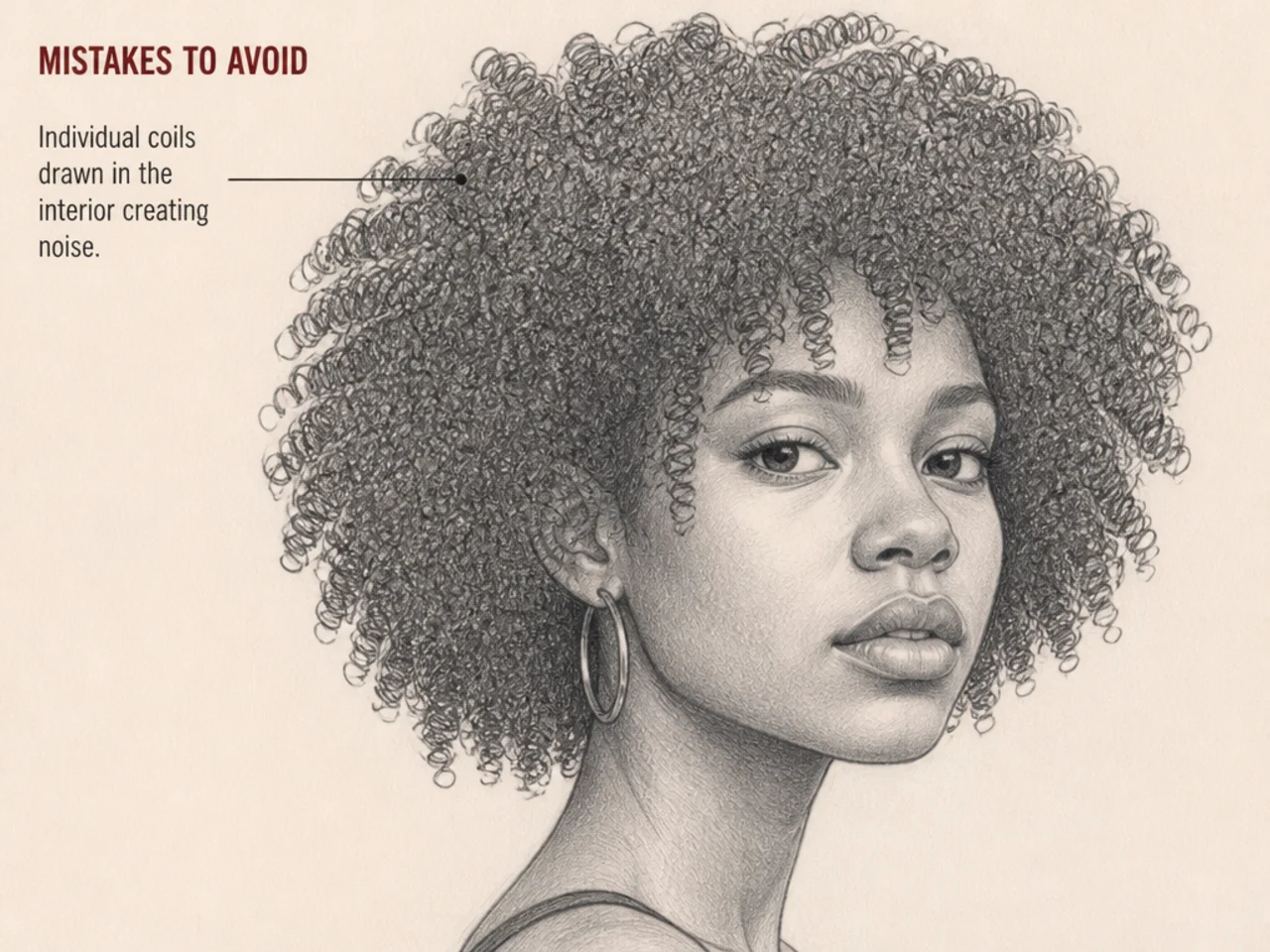
Drawing individual coils in the interior. Too small to read; it becomes noise.
An evenly bumpy outline. The cloud problem.
No core shadow. Without it the form stays flat however textured it is.
A perfectly symmetrical silhouette. Real volume is uneven.
FAQ
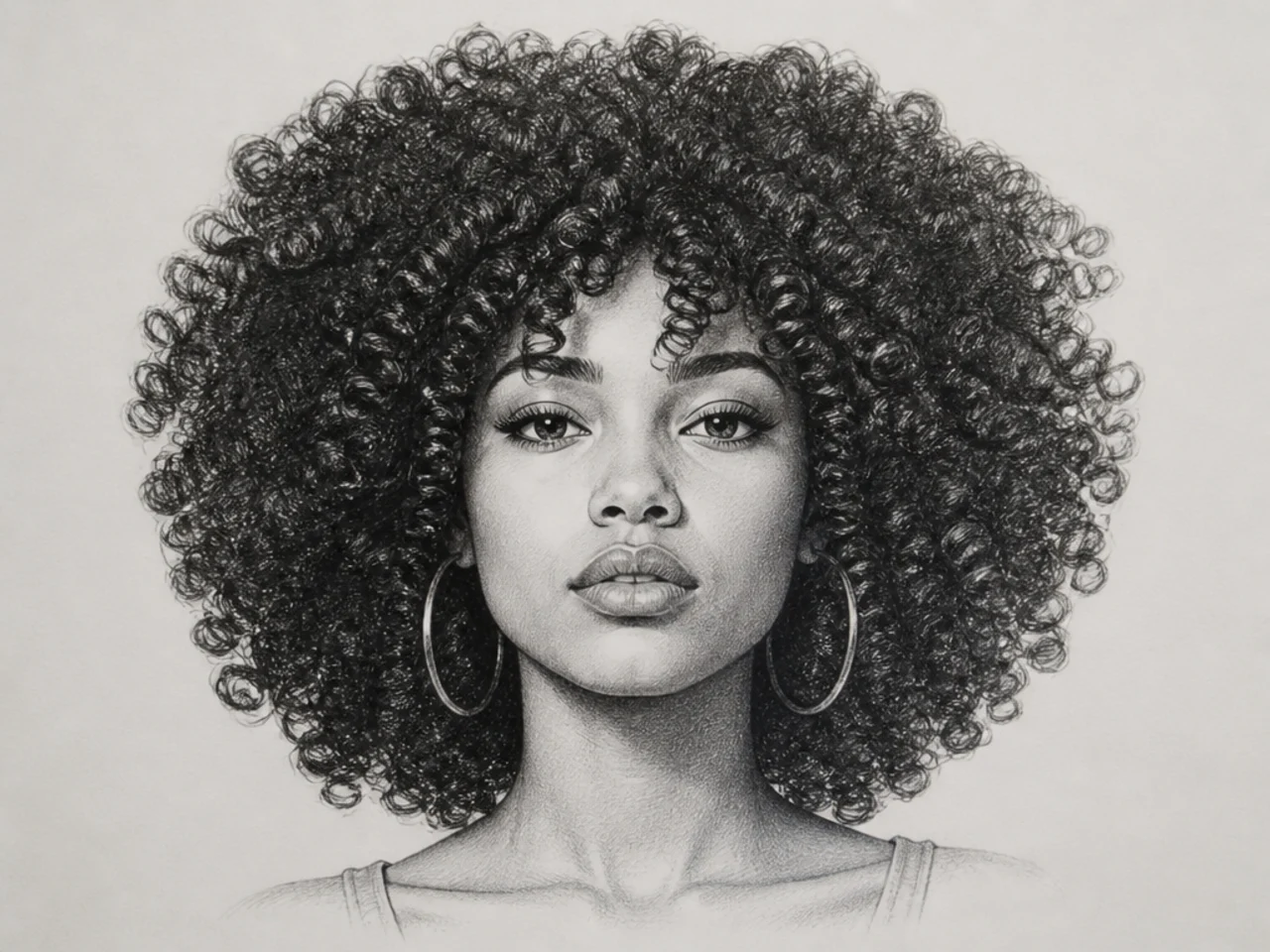
How do you draw afro hair? As a single form lit like a sphere, with texture at the edge.
Why does mine look like a bush? Usually no light direction, plus an evenly bumpy outline.
Should you draw individual coils? Only at the silhouette edge.
Final Thoughts
Draw the form with no texture at all and check that it reads as round. That one step is the whole difference between hair and foliage — and it takes two minutes to verify before you commit to any edge work.
For the general method see 20 steps to draw curly hair like a pro, and for short lengths see 15 short curly hair drawing ideas. More in Hair Drawing & Art.