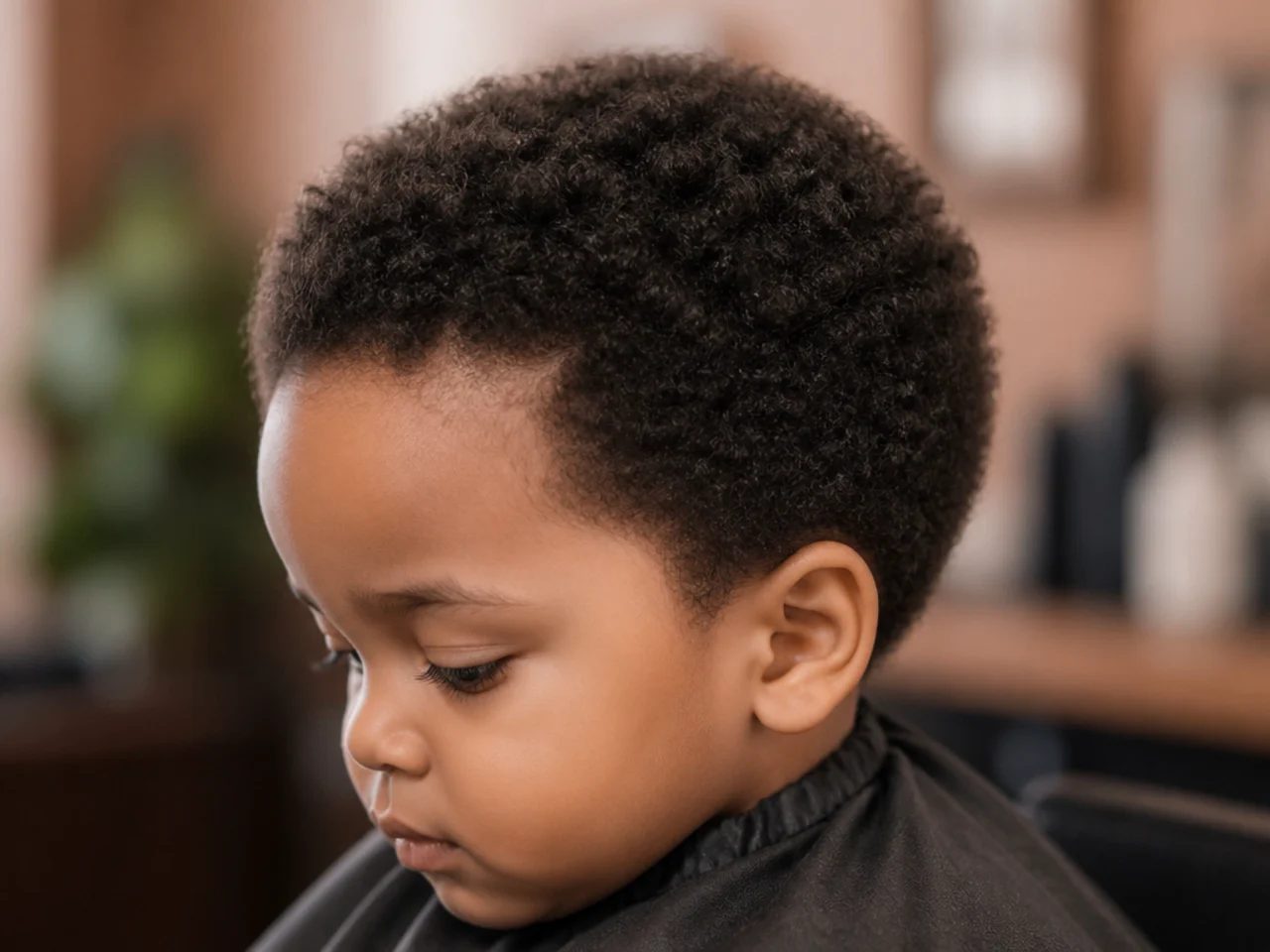
15 Toddler Boy Haircut Ideas for Black Boys
Tightly coiled toddler hair is the one texture where an unfinished cut is genuinely invisible, because the coil pattern bridges an uneven line. The trade is shrinkage, which is why these cuts are done dry.
In this article · 22
- Why Coily Toddler Hair Forgives an Unfinished Cut
- How to Choose Yours
- The 15 Coily Toddler Cuts
- 1. Short Afro Left One Length
- 2. A Number Four All Over
- 3. A Number Three All Over Cut Dry
- 4. A Round Afro With a Soft Perimeter
- 5. Sponge-Twisted Curls With No Cut at All
- 6. Fringe Coils Trimmed and Nothing Else
- 7. A Low Taper at a Number Two With the Line Left Natural
- 8. A Grown-Out Afro With Only the Perimeter Shaped
- 9. Loose Twists Set With No Tension
- 10. A Soft Taper at the Nape Only
- 11. A Low High-Top With Rounded Corners
- 12. A Number Two on the Sides With the Top Left Long
- 13. Free-Form Coils Cut Over Two Sittings
- 14. Ends Only Taken Off a Grown-Out Shape
- 15. A Part Combed In Rather Than Shaved
- Styling and Upkeep
- Mistakes to Avoid
- FAQ
- Final Thoughts
Every other texture punishes a haircut that got abandoned halfway. Tightly coiled toddler hair does not, and that changes what is worth attempting.
A coil pattern packs together and bridges an uneven line. Neighbouring coils lean into each other and close the gap, so a cut stopped at 60 per cent still reads as a shape rather than as a mistake. It is the most forgiving texture there is at this age.
The trade is shrinkage. Tightly coiled hair loses up to half its length as it dries, so a wet cut lands far shorter than it looked under the comb. These cuts get done dry, or barely damp at most.
Why Coily Toddler Hair Forgives an Unfinished Cut
The coil bridges the line. A slightly uneven perimeter disappears once the coils around it spring back and lean together, which is why the same wobble that ruins a straight-haired cut is invisible here.
Shrinkage runs up to half. Wavy hair loses a little and curly around a third, but a tight coil pattern can pull back to half its wet length. Plan the cut around the dry length, not the stretched one.
Cut it dry. Wetting the hair also means combing it, and combing a toddler's coil is a longer negotiation than the haircut itself. Dry hair shows you exactly where the shape sits.
No tension on a soft hairline. A toddler's coil is finer and softer than the same child's hair at six, and the edges at the front are the softest part. Nothing tight at the front, and no hard line-up against a hairline that is still moving forward.
How to Choose Yours
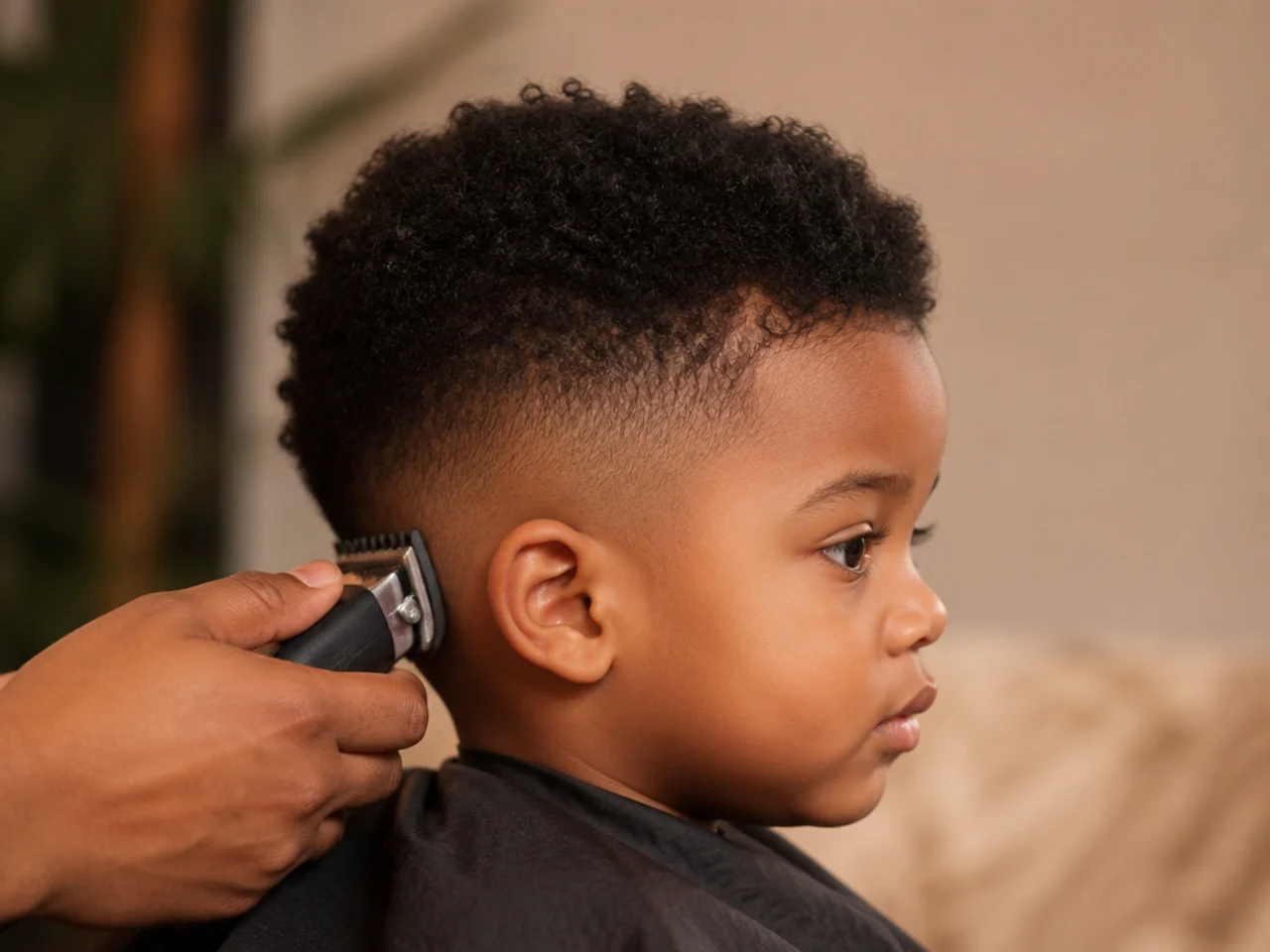
Choose the shape you would be happy to stop halfway through. One length and rounded perimeters both survive an abandoned session. Anything with an internal line does not.
Keep the guard longer than you would on an older child. Fine toddler coil shows scalp under a number two, so a three or a four keeps the density reading as a solid shape.
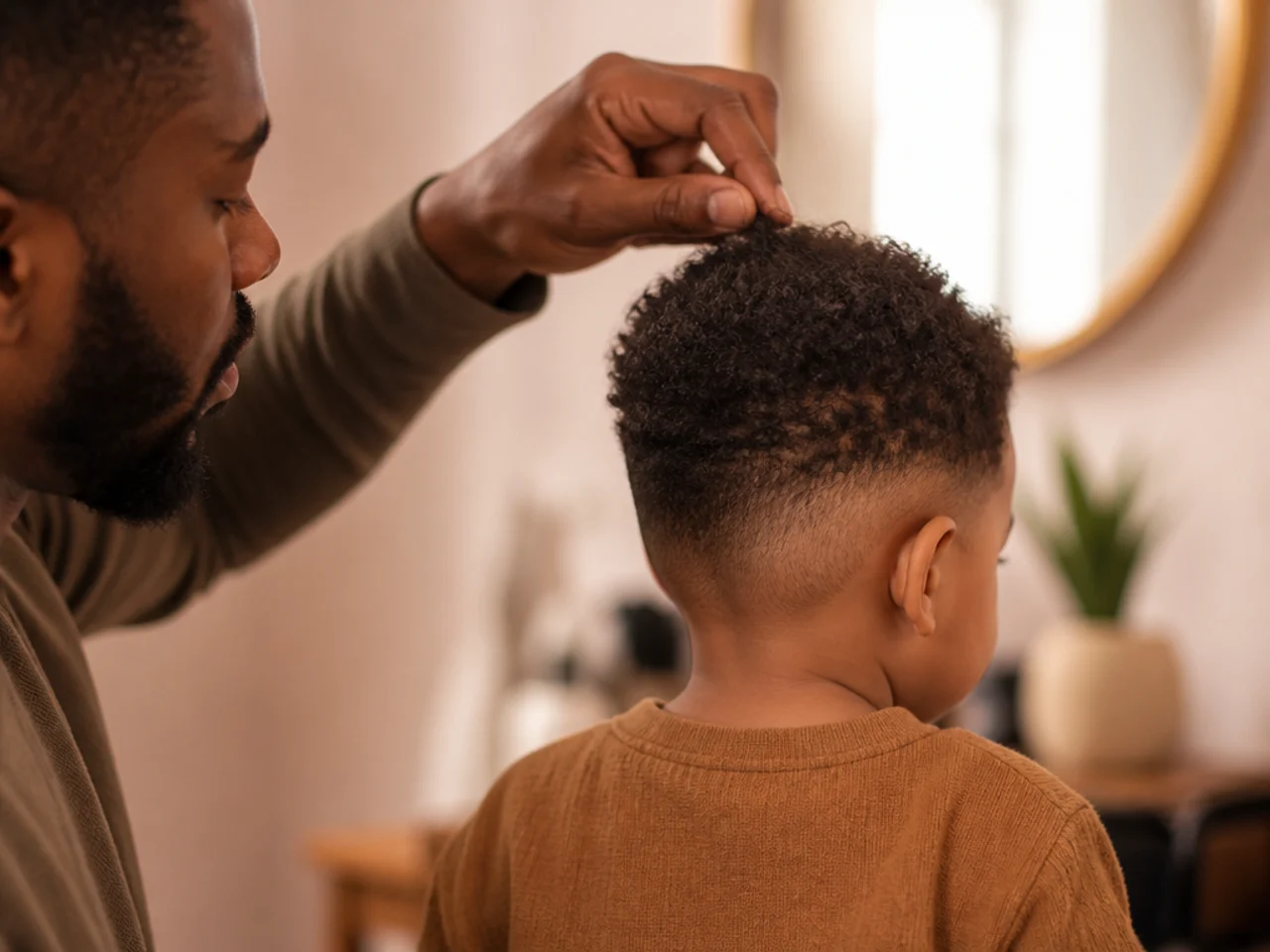
Leave the hairline alone. A natural edge cannot go out of date as the hairline fills in, and a carved one can.
Decide the length dry and cut to it dry. If you have to comb it out to see the length, you are already looking at a measurement you will not get back.
The 15 Coily Toddler Cuts
1. Short Afro Left One Length
A single guard taken over the whole head with no taper and no line. There is nothing internal to match up, so a session that ends early leaves a slightly longer patch that the coil closes over within a day. It is the most abandonable cut on this page.
2. A Number Four All Over
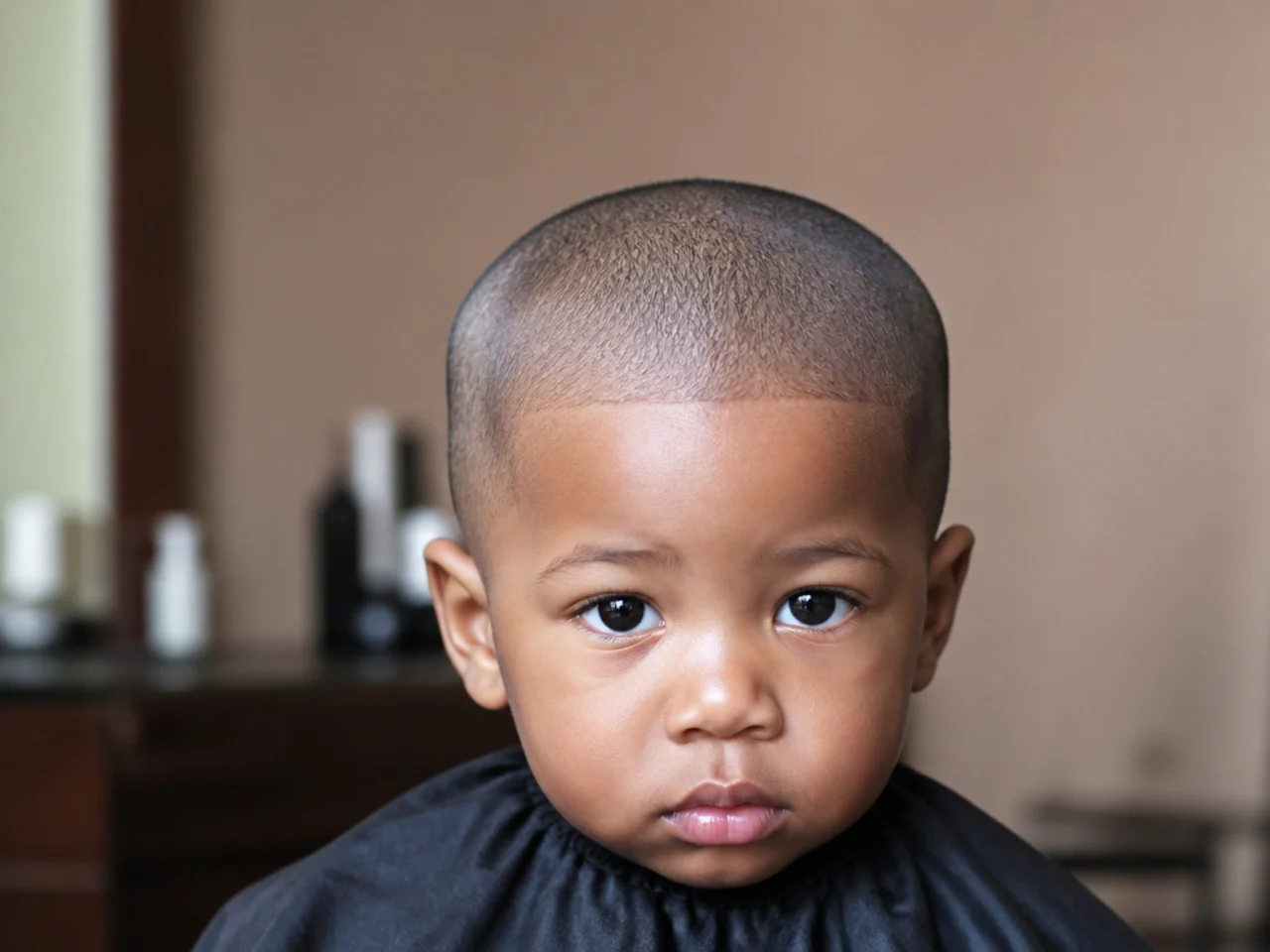
Thirteen millimetres is enough length for the coil pattern to still show, which is what stops the cut reading as scalp. On low-density toddler hair a four is roughly the point where the head still looks covered. It is the safest starting guard for a first clipper cut.

3. A Number Three All Over Cut Dry
Ten millimetres, taken on completely dry hair so the guard measures what you actually get. Cutting a coil damp lets it stretch under the clipper and then spring back shorter, which is how a three ends up looking like a one. Dry hair removes the guesswork.

4. A Round Afro With a Soft Perimeter
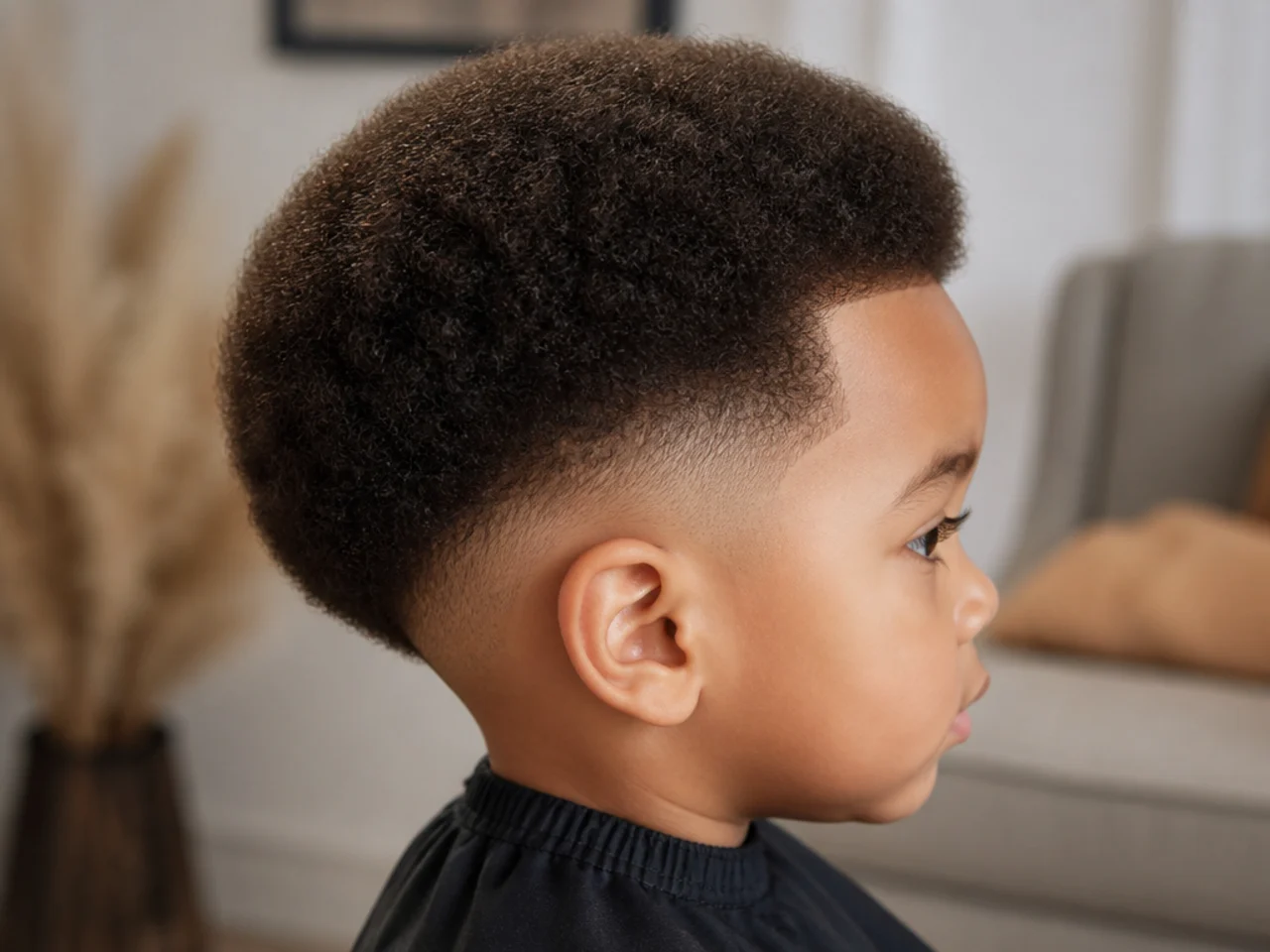
The shape comes from the outline rather than from anything inside the cut, so the only thing that has to be right is the curve. Cut the perimeter soft rather than sharp and the coil finishes the line for you. Half a rounded perimeter still looks deliberate.
5. Sponge-Twisted Curls With No Cut at All
A sponge worked lightly over dry hair sets the coils into defined curls without cutting anything, exactly as it does for older boys with coily hair. Nothing is removed, so nothing can go wrong, and the whole thing can be stopped at any second. It is the lowest-risk option on this list by a wide margin.
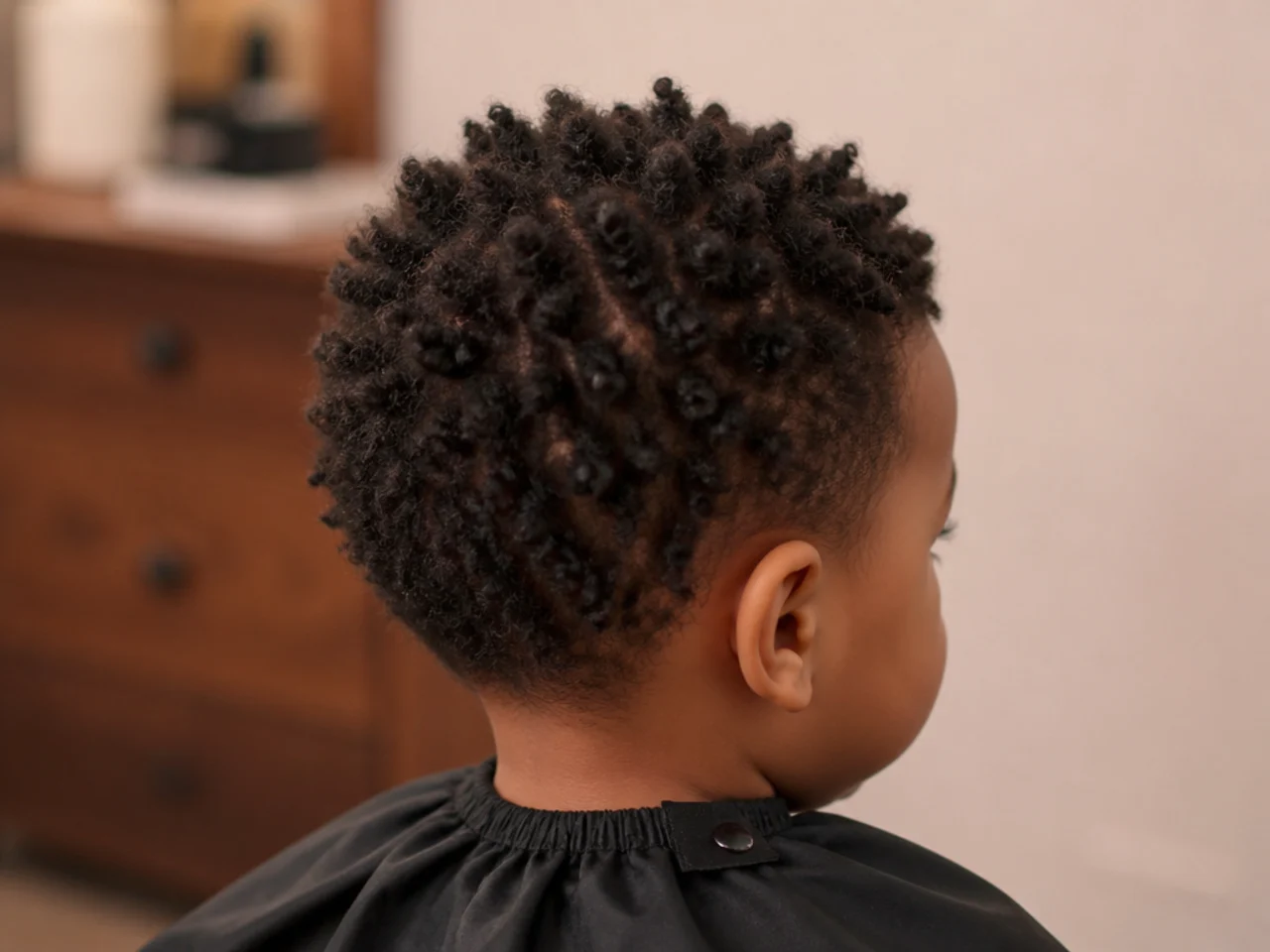
6. Fringe Coils Trimmed and Nothing Else
Only the coils at the front that reach the eyeline, taken off with scissors. On a coil pattern the front grows outward as much as downward, so a very small trim moves the hair off the face. Everything behind it stays untouched.
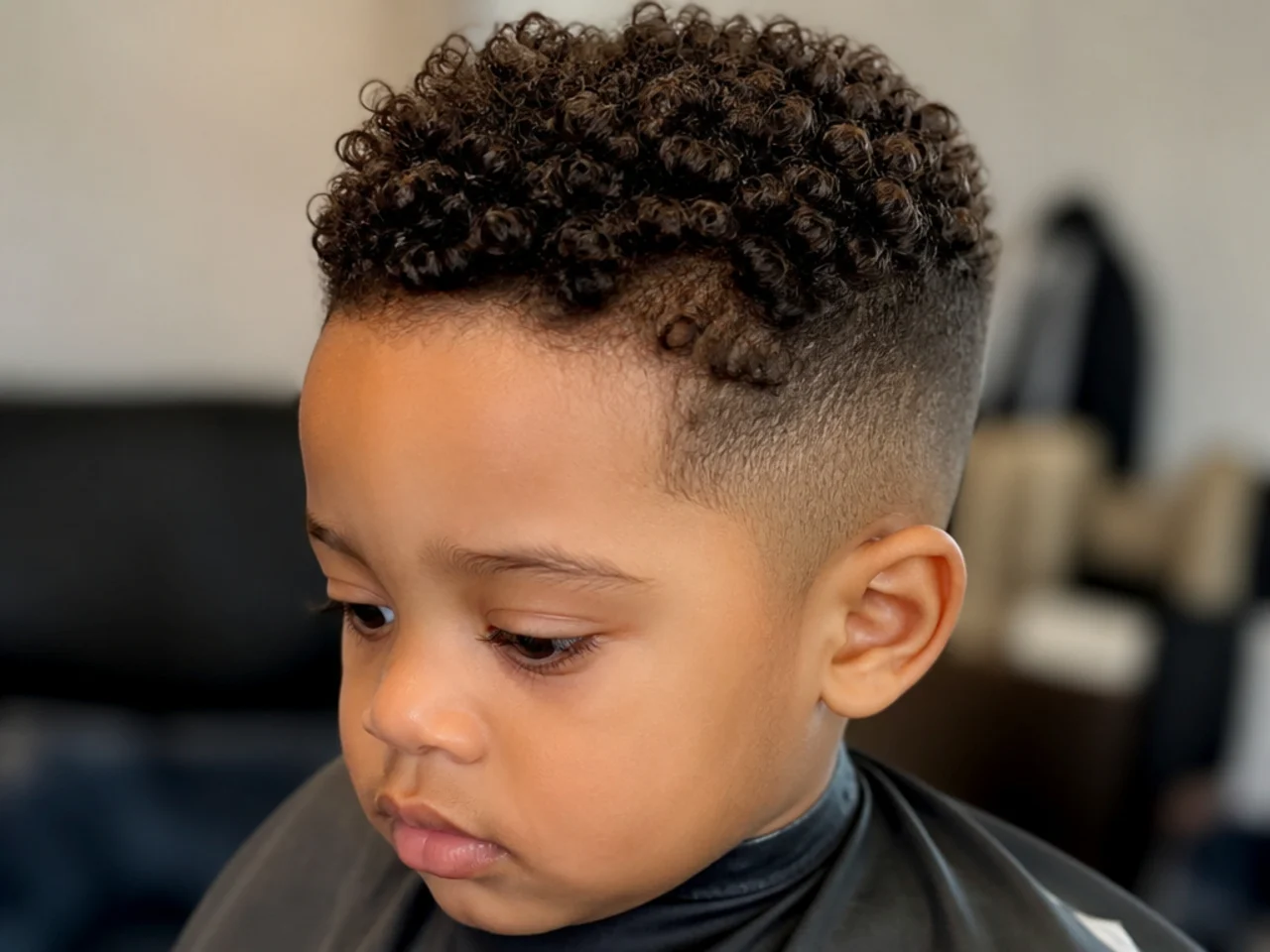
7. A Low Taper at a Number Two With the Line Left Natural
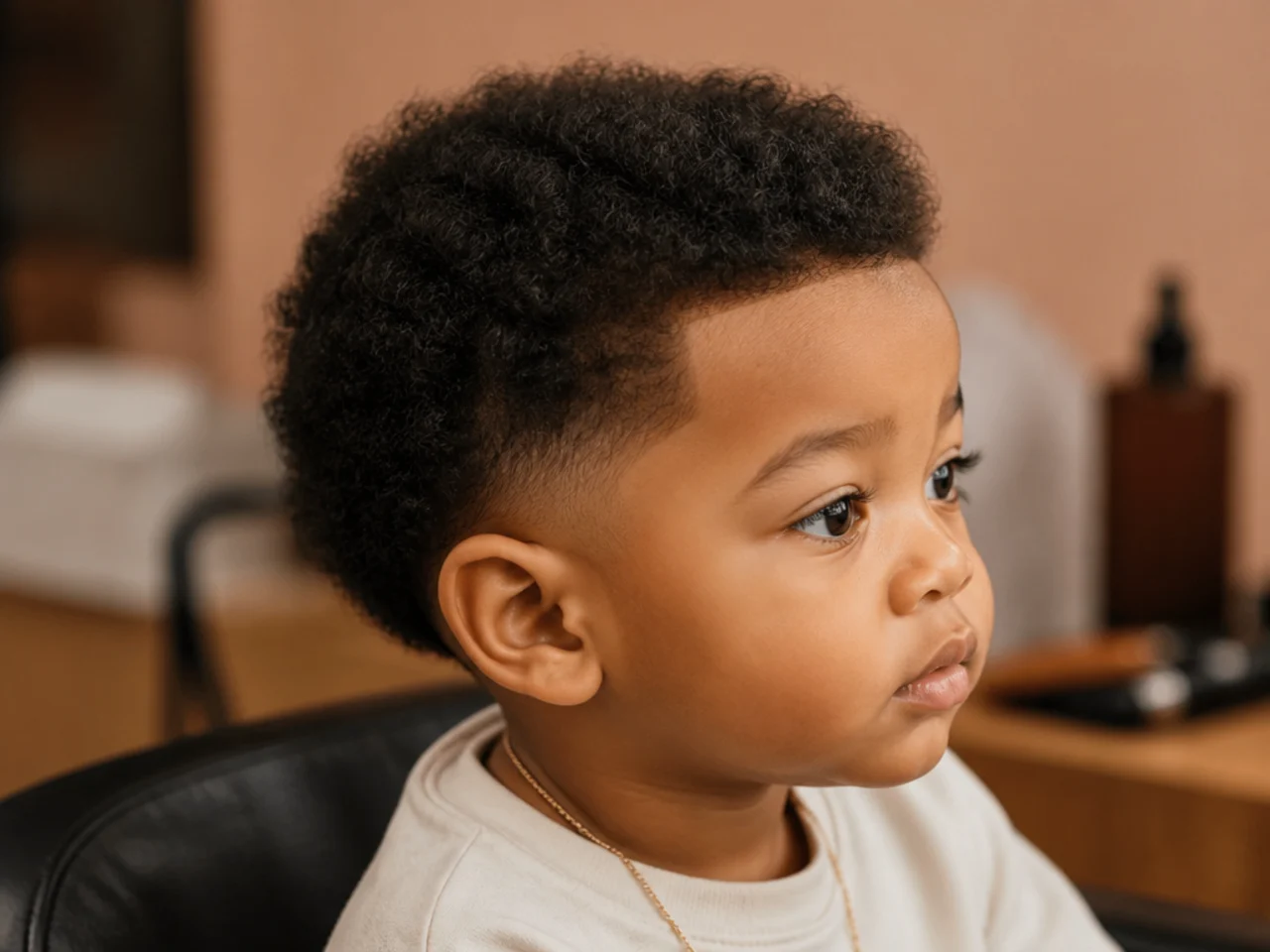
The taper sits at or below the temple and stops at a two rather than going to skin, so there is length left at the neckline and no bare edge against the hairline. Leaving the front line natural means nothing has to be redrawn as the hairline moves forward. A taper this low also blurs gently rather than stepping, which is the same reason the low taper outlasts a skin fade on older heads.
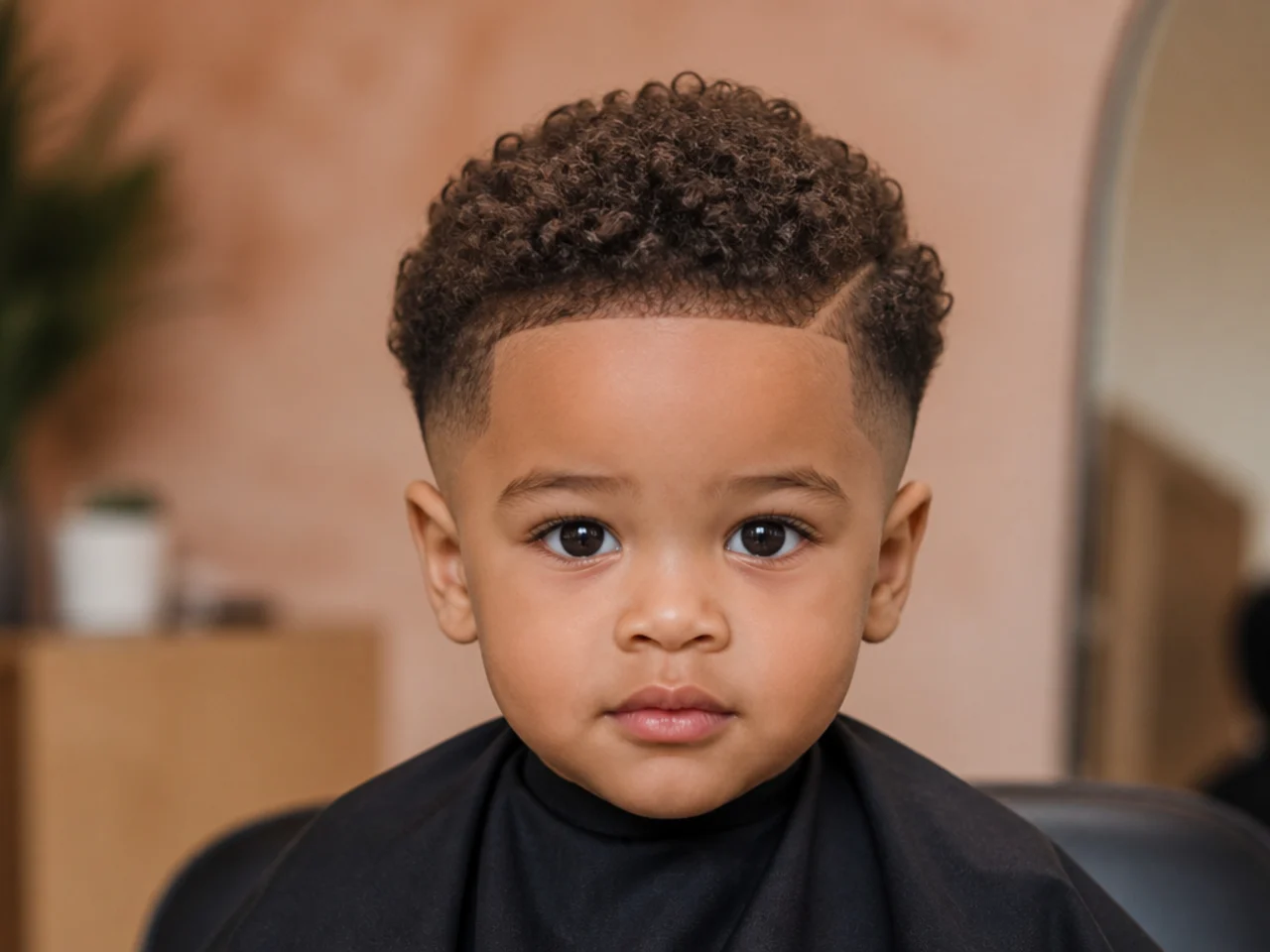
8. A Grown-Out Afro With Only the Perimeter Shaped
Nothing taken off the top or the sides, just the outline tidied where it has gone uneven. It is a five-minute job that reads as a full haircut, because the eye judges an afro on its outline. The interior length is doing all the work and never gets touched.
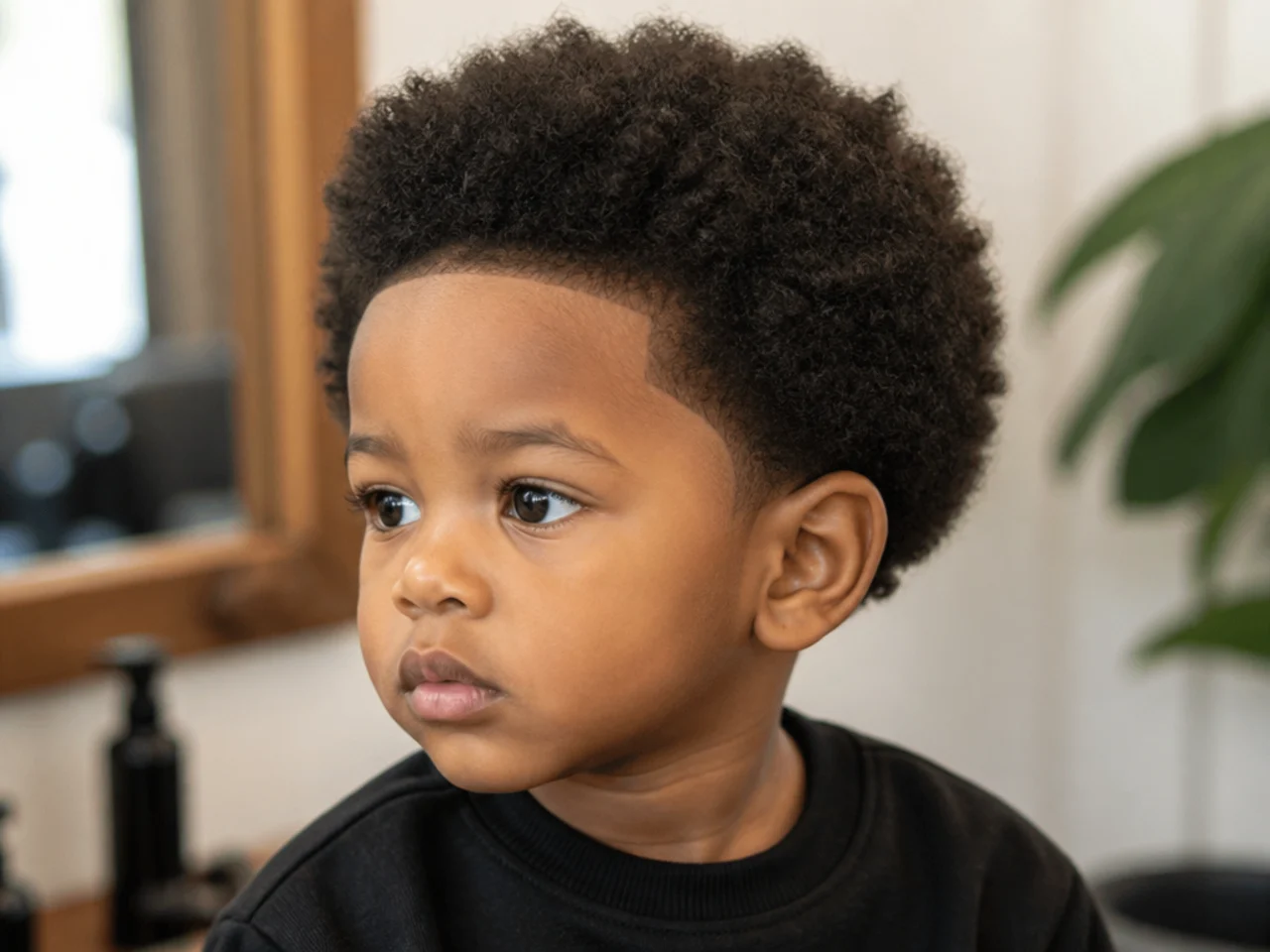
9. Loose Twists Set With No Tension
Twists rolled loosely into the coil rather than pulled tight at the root. Toddler edges are soft enough that a tight set at the front is the one thing genuinely worth avoiding, and a loose twist holds perfectly well in a coil pattern anyway. Set them at the crown and back rather than along the hairline.
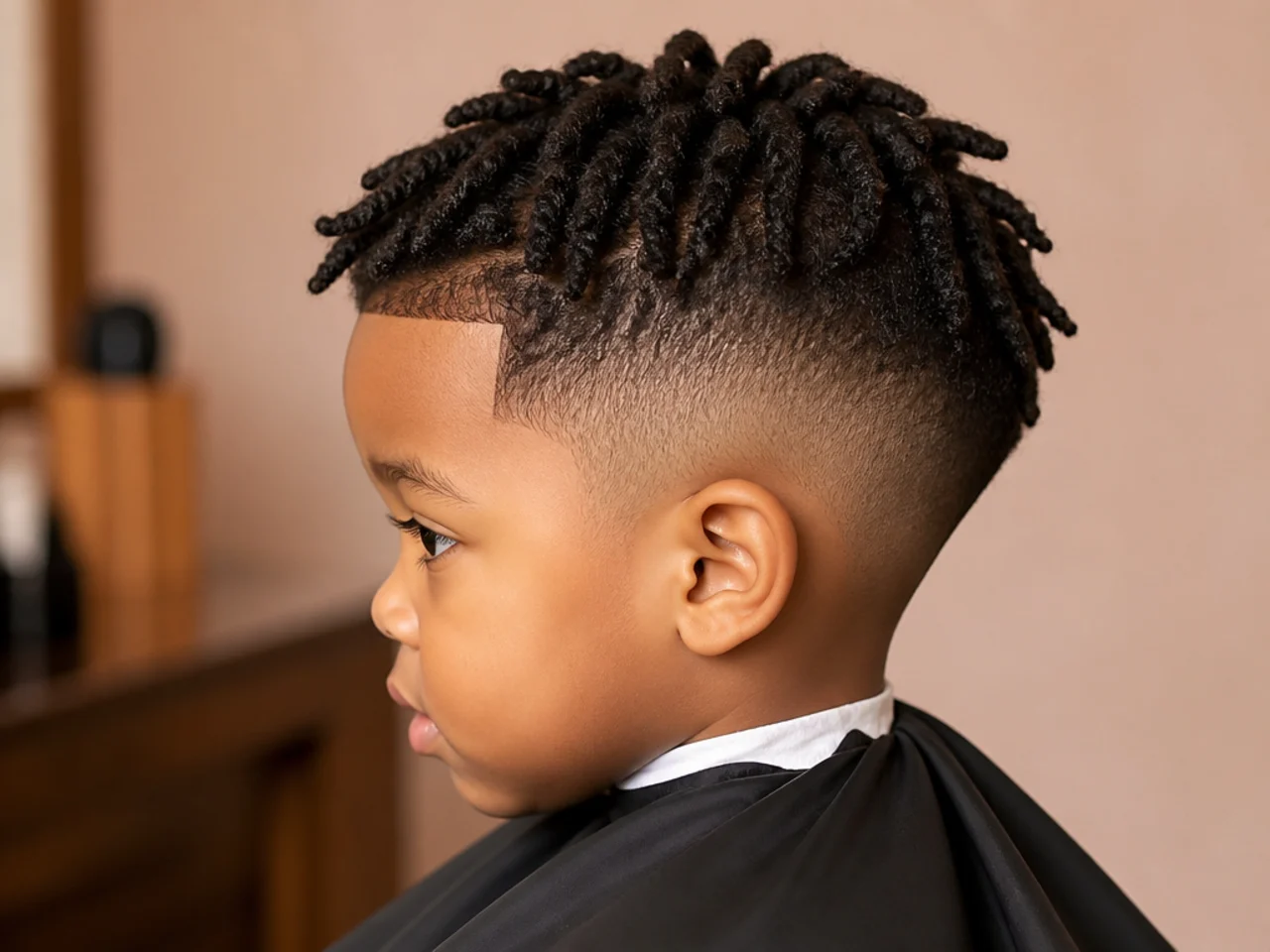
10. A Soft Taper at the Nape Only
The sides untouched and just the neckline softened, which is where a coil grows longest and shows scruffiest. It is one short pass at the back of the head where the child cannot see the clipper. Nothing at the temples means nothing near the face.
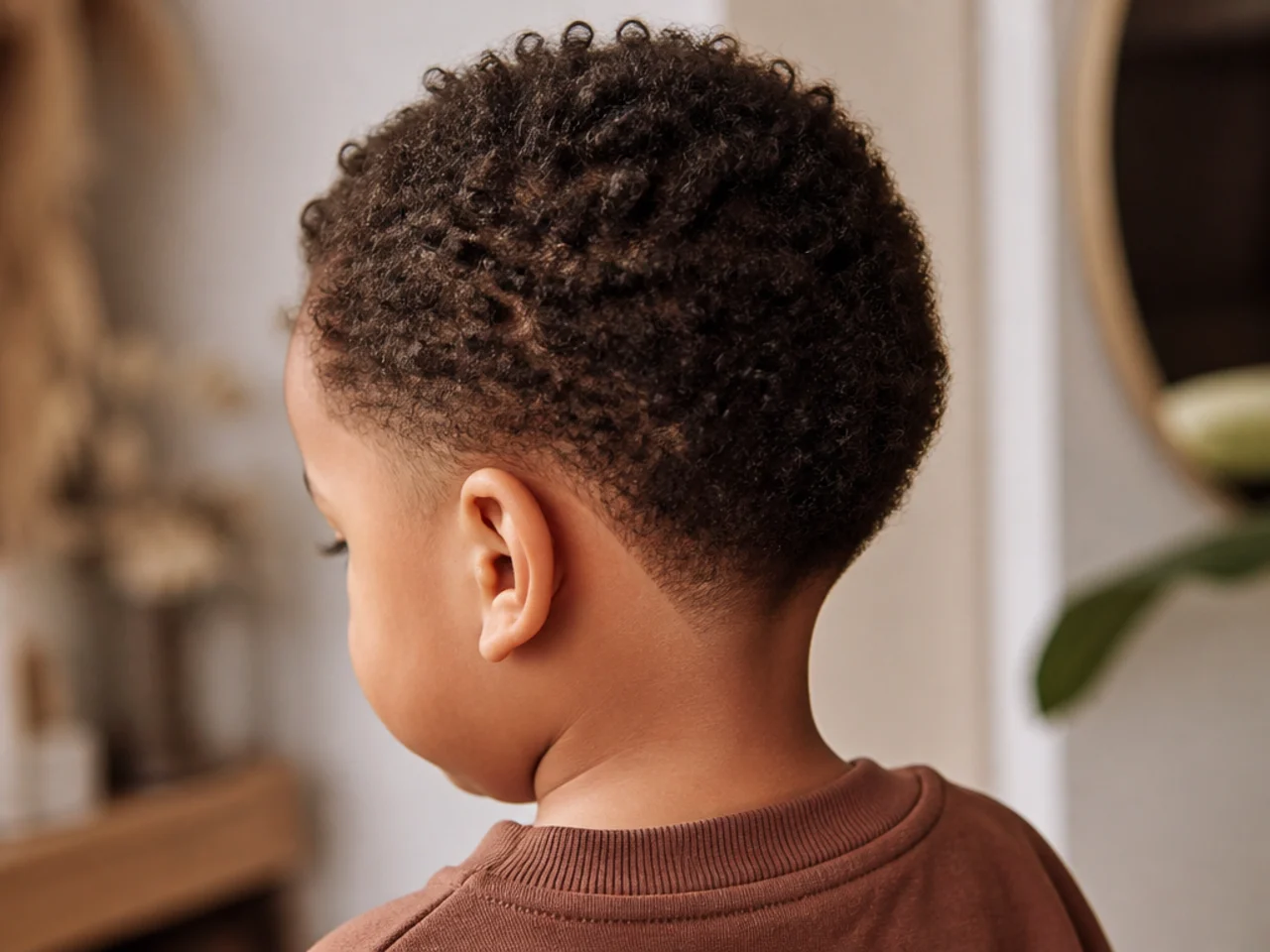
11. A Low High-Top With Rounded Corners
The classic squared shape kept short and with the corners left round rather than cut square. Square corners need precision on all four edges, and rounded ones absorb whatever the coil does at the perimeter. Kept low, it also avoids relying on length that fine toddler hair may not have.
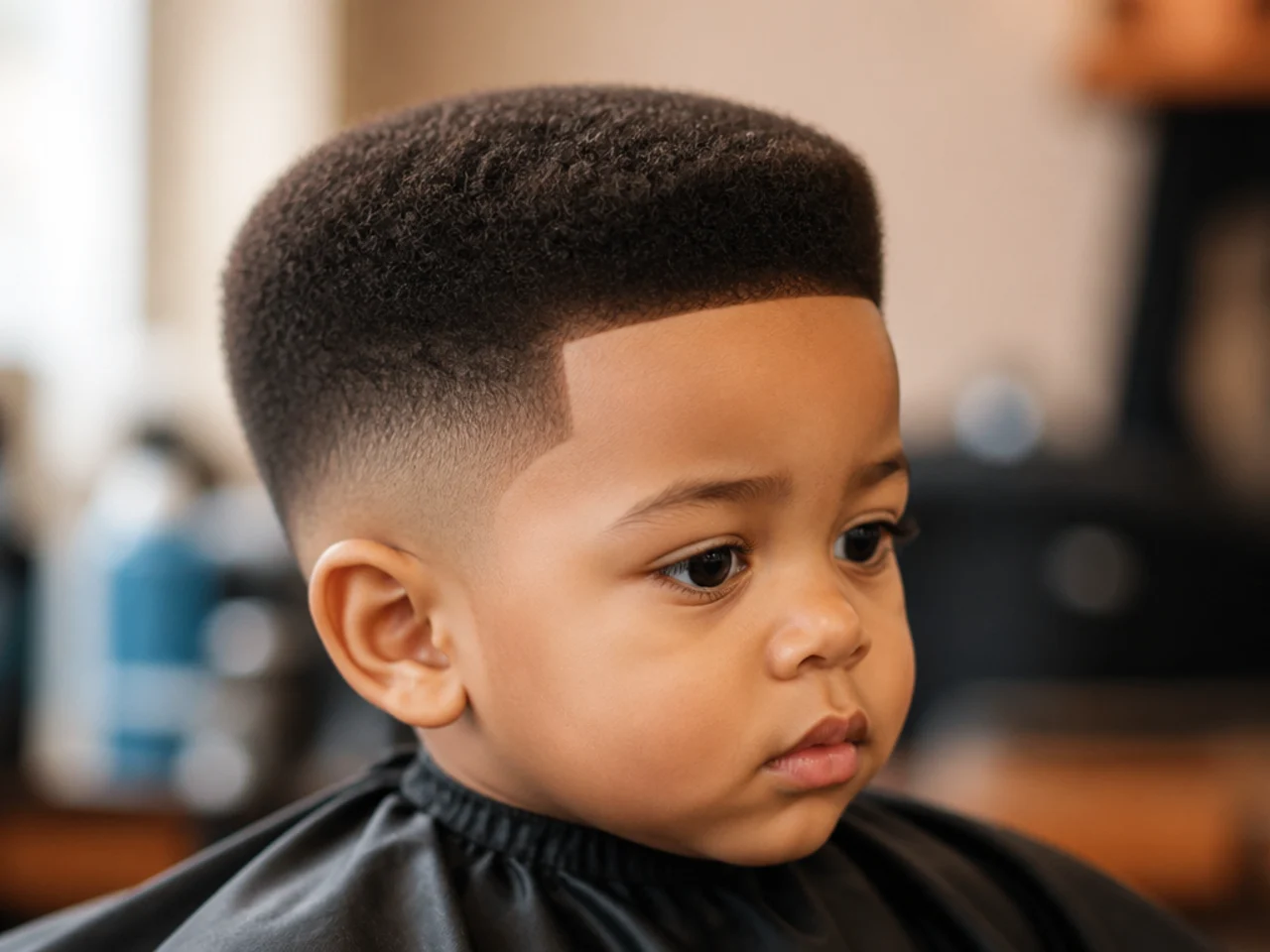
12. A Number Two on the Sides With the Top Left Long
Contrast built by leaving the top alone rather than by fading the sides. The join can stay soft because the coil on top overhangs the corner and covers it, so no blending skill is needed and no long stillness is spent on a gradient. A two is short enough here only because the top is carrying the density.
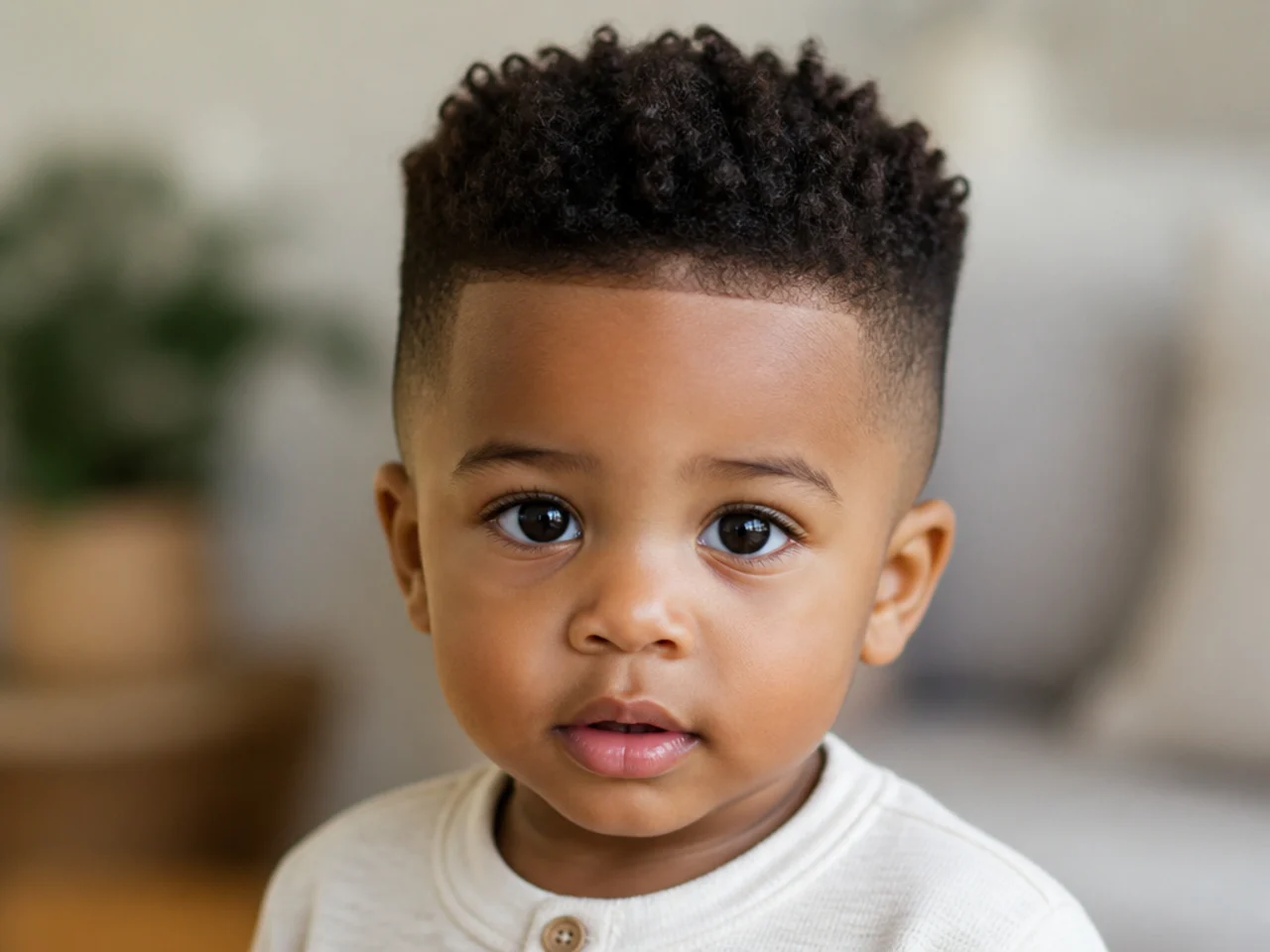
13. Free-Form Coils Cut Over Two Sittings
One side one evening, the other the next, with no shape that needs both halves finished together. Because the coil hides the join, the two halves do not have to be cut within minutes of each other to match. It is the practical answer to a toddler who gives you ninety seconds.
14. Ends Only Taken Off a Grown-Out Shape
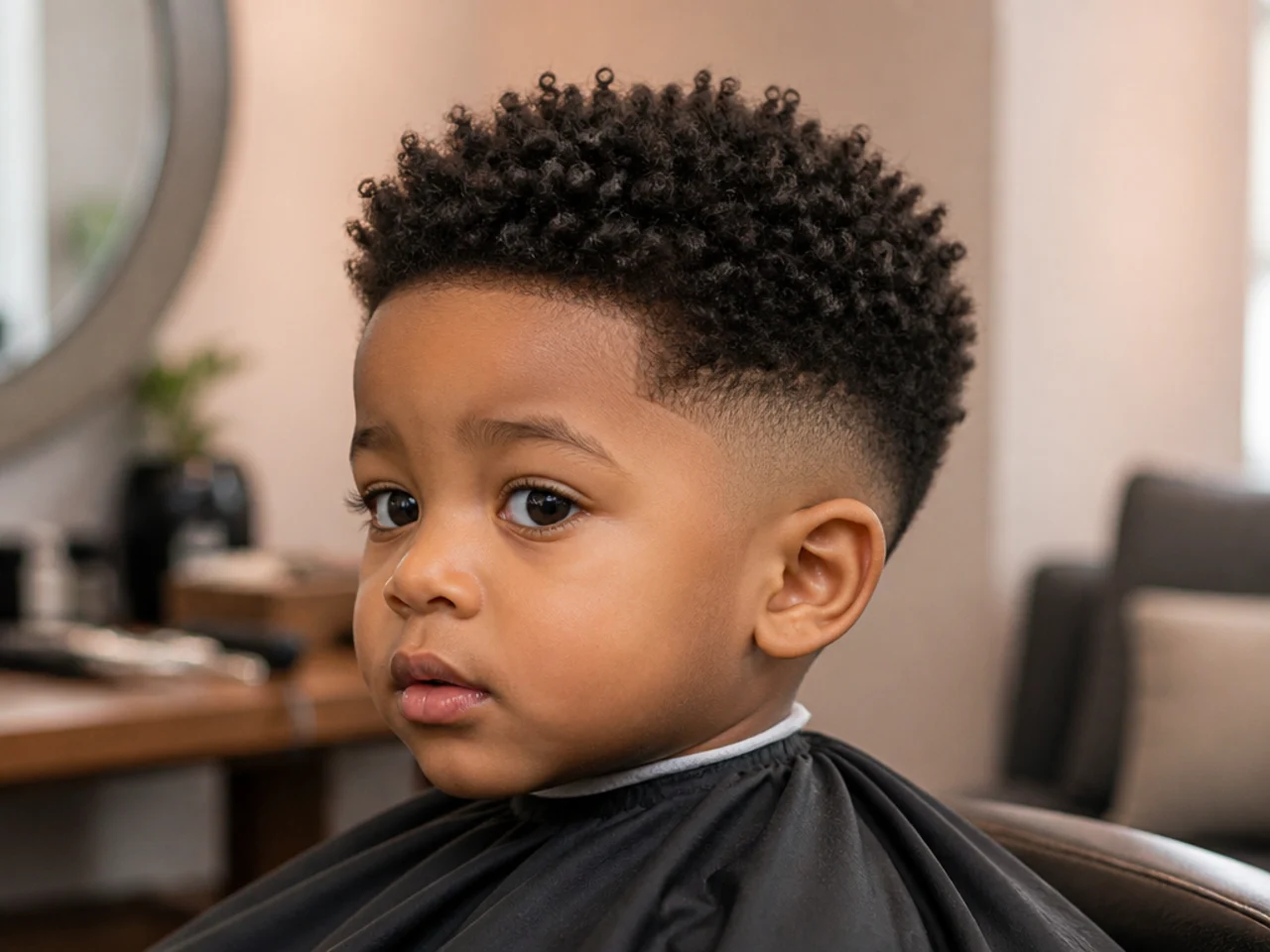
A centimetre off the ends and nothing else, which removes the dry frayed tips without changing the shape. On a coil the ends are where the wear shows first, so this buys a noticeably tidier head for almost no work. The dry length barely changes, which is the point.
15. A Part Combed In Rather Than Shaved
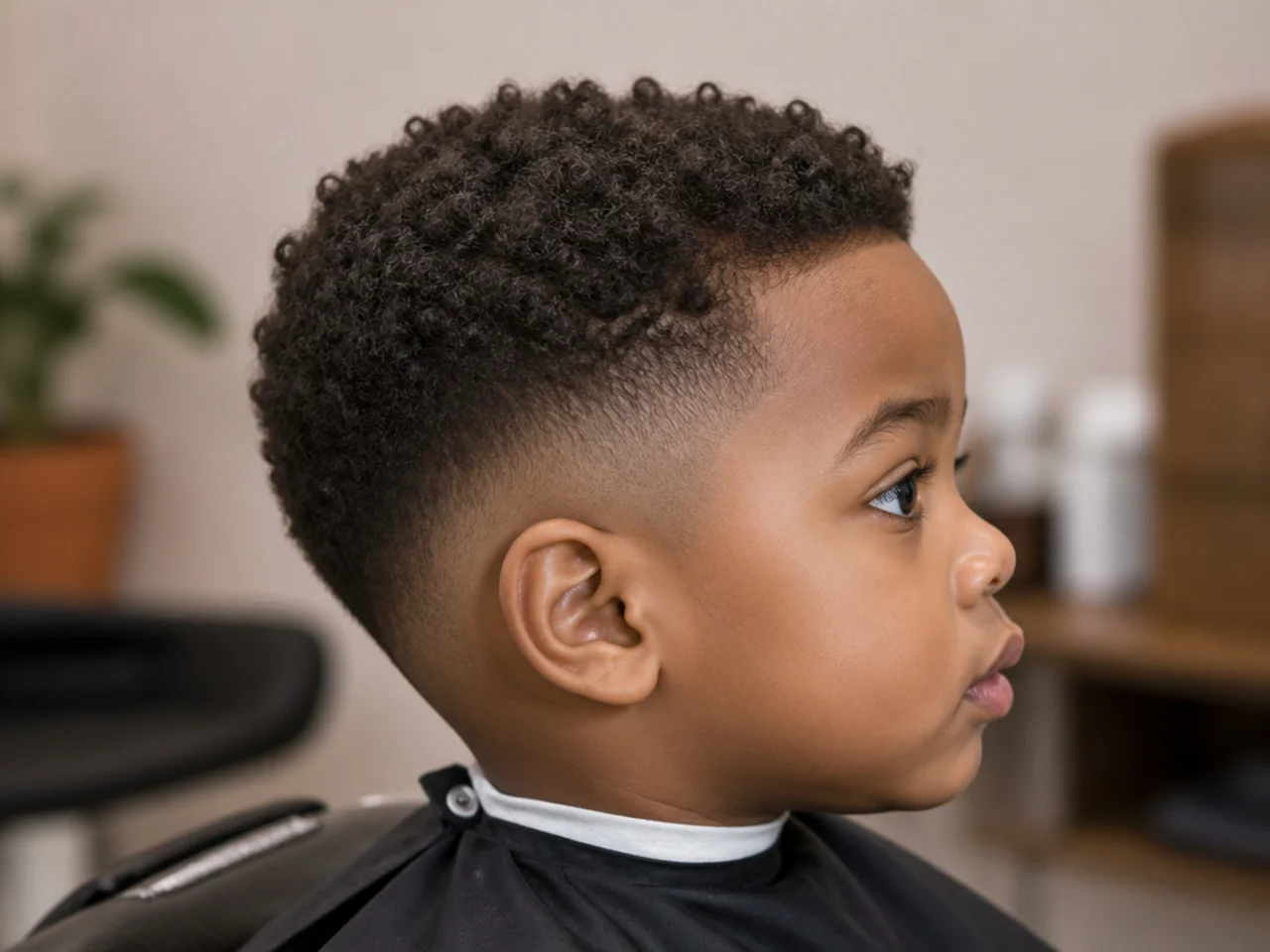
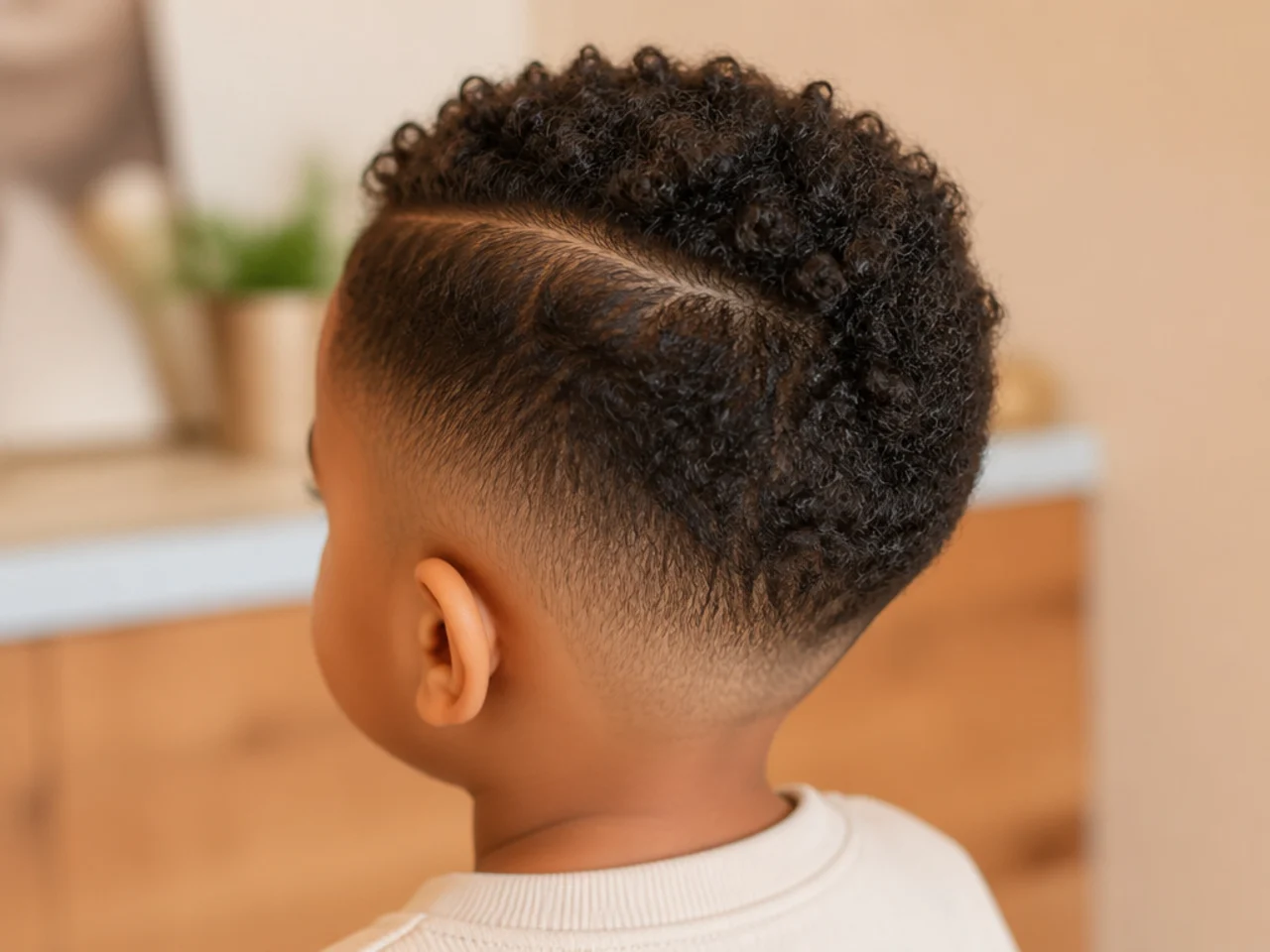
A parting made with the end of a comb instead of the corner of a trimmer. It gives the same visual break without a permanent line against a soft hairline, and it washes out rather than growing out, which is why it beats a cut-in design at this age. On fine toddler coil a shaved part also reads as bare scalp far more than it does on older hair.
Styling and Upkeep
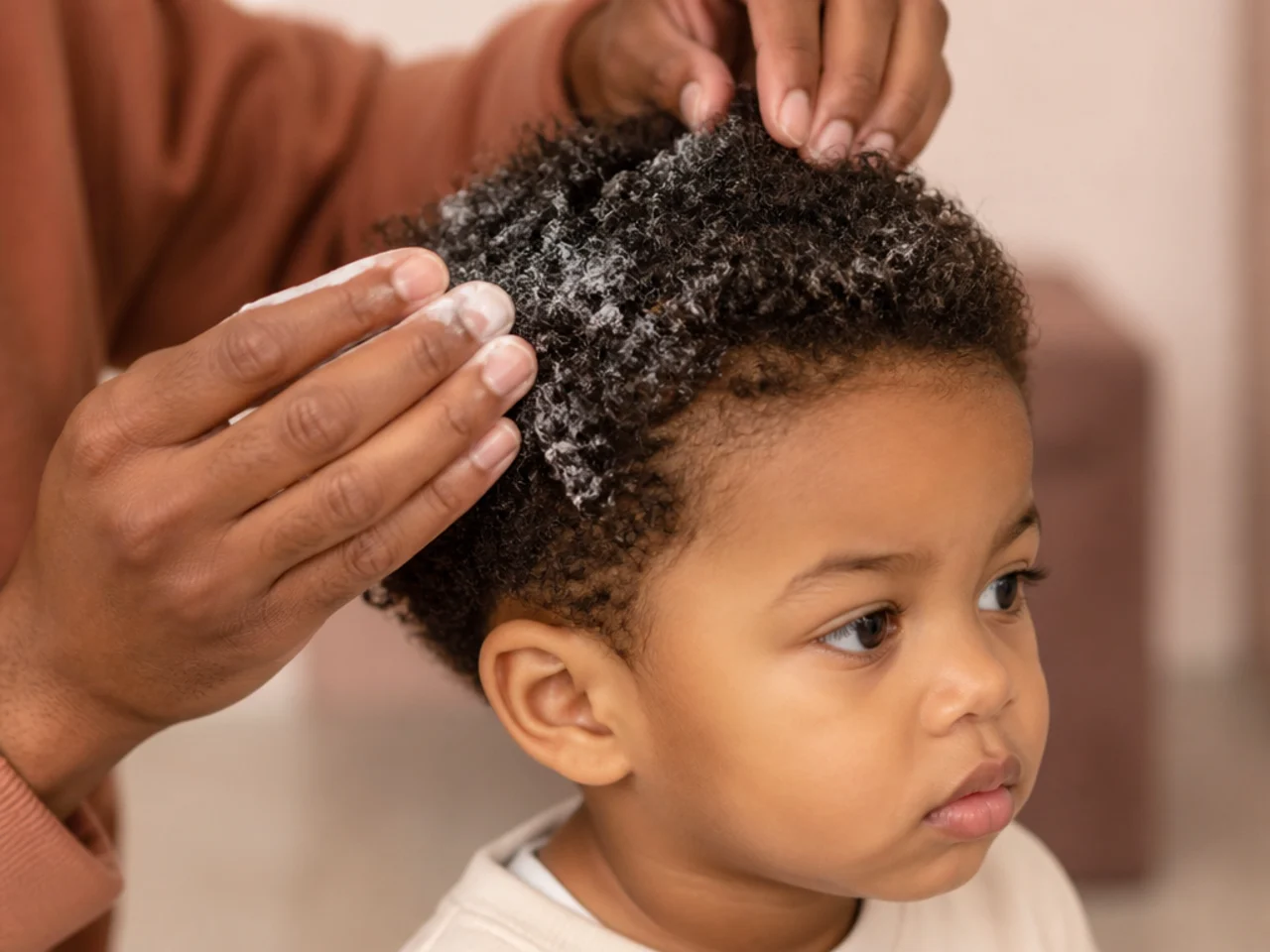
Moisturise rather than style. Coily toddler hair needs the moisture more than it needs a shape, and a light leave-in does more for how the cut reads than anything you comb in.
Comb with fingers or a wide tooth, and only when damp. Dry combing a coil breaks it, and broken ends are what make a good cut look ragged three weeks later.
Re-check the length dry before the next cut. Hair that looks like it has barely grown will often have gained two centimetres once stretched.
A satin pillowcase or a small sleep cap keeps the shape overnight. Cotton drags on a coil and flattens one side of the head into the pillow.
Leave the hairline alone between cuts. Every tidy-up of a soft edge moves it back a little further than intended.
Mistakes to Avoid
Cutting wet. Half the length disappears as it dries, and there is no way to put it back.
Going to a number one or two all over. Fine toddler coil at three or six millimetres shows scalp and the head reads patchy rather than short.
Asking for a line-up. The hairline is still moving forward at this age, so a carved edge sits in the wrong place within months.
Tight twists or braids at the front. The edges are the softest hair on a toddler's head and the least able to take tension.
Trying to match two sides in one session. The coil hides the join, so there is no reason to force both halves into the same four minutes.
FAQ
Wet or dry? Dry — a tight coil loses up to half its length as it dries.
Is a line-up worth doing? Not on a toddler, because the hairline is still moving forward.
What guard is short enough? A three or a four, since anything shorter shows scalp on fine toddler coil.
Final Thoughts
Cut it dry, keep the guard longer than you would on an older child, and pick a shape that has nothing inside it that has to be finished. The coil pattern will cover the rest, which is a licence no other texture at this age gives you.
For the same texture once a child can sit through a blend see burst fades on curly hair, and for where these shapes end up later see short haircuts for Black men. More in Men's Haircuts.