25 Cute Mullet Ideas For Boys That Grow Out Well
A mullet on a boy is judged at week six, not week one. What decides whether it still looks deliberate then is one thing — whether the top was disconnected from the sides or blended into them. Twenty five versions sorted by how they age.
In this article · 32
- What Makes a Mullet Grow Out Well
- Choosing the Version to Ask For
- The 25 Mullet Ideas for Boys
- 1. Blended Mullet With No Hard Line
- 2. Scissor Cut Mullet
- 3. Low Taper Mullet
- 4. Mid Taper Mullet
- 5. Clipper Cut Mullet on a Guard Three
- 6. Textured Crop Mullet
- 7. Curly Mullet
- 8. Wavy Mullet
- 9. Straight Hair Mullet
- 10. Baby Mullet
- 11. Short Tail Mullet
- 12. Long Tail Mullet
- 13. Mullet With a Fringe
- 14. Mullet With a Middle Part
- 15. Side Swept Mullet
- 16. Mullet With a Crown Whorl
- 17. Mullet With a Soft Neckline
- 18. Mullet With a Blunt Neckline
- 19. Skin Fade Mullet
- 20. Burst Fade Mullet
- 21. Mullet for Fine Hair
- 22. Mullet for Thick Hair
- 23. Mullet Grown From a Bowl Cut
- 24. Mullet at Six Weeks
- 25. Mullet at Twelve Weeks
- Styling and Upkeep
- Mistakes to Avoid
- FAQ
- Final Thoughts
A boy's mullet is judged at week six, and the thing that decides how it looks then is whether the top was blended into the sides or dropped onto them.
A blended mullet grows down. A disconnected one grows into a shelf. With a gradient, six weeks of growth just moves the whole shape lower. With a hard step, the sides grow up into the step and the step stops looking cut.
Length costs nothing to maintain, shortness does. Every millimetre taken off the sides is a millimetre the cut has to lose again before it looks unkempt, which is why a guard three ages far better than a guard one.
What Makes a Mullet Grow Out Well
Blending buys weeks. A gradient has no single line to go wrong, so growth softens it rather than breaking it. A disconnection has one line, and that line is the whole design.
Hair grows about twelve millimetres a month. A guard three leaves ten millimetres, so the sides have more than doubled by week four. Starting shorter does not slow that down, it just means more of the change is visible.
A taper outlasts a fade by two weeks. A taper finishes with hair still on the head, usually around three millimetres, and blurs gradually. A skin fade finishes at nothing, and stubble against bare skin is obvious within a fortnight.
Children's hair is finer at the nape than the crown. The hair at the bottom of the neck is often soft and short by nature, so a very long tail thins out toward its edges no matter how it is cut.
Choosing the Version to Ask For
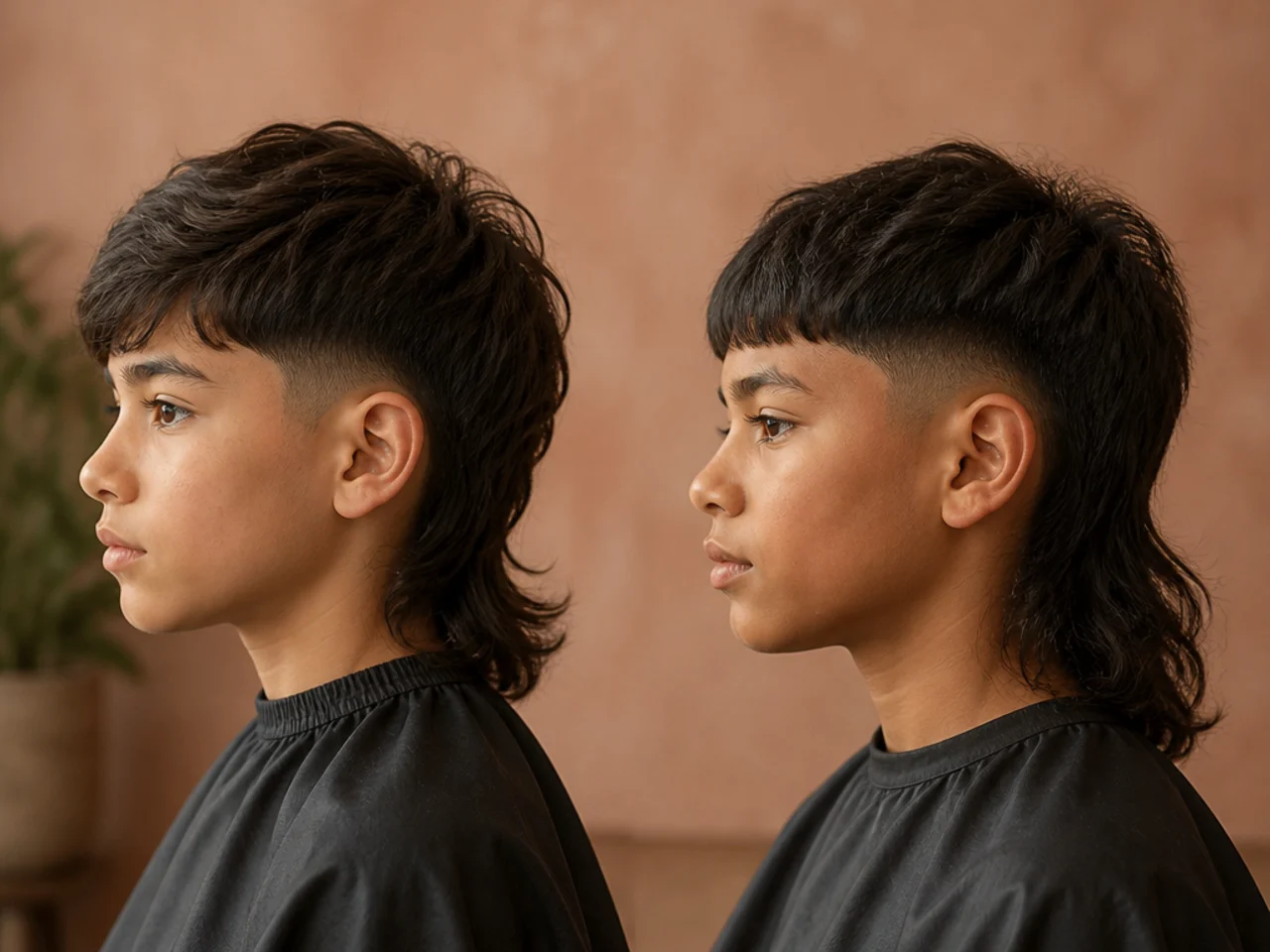
Say blended unless you want the step. The word disconnected means a deliberate jump in length, and barbers will cut exactly that if it is asked for.
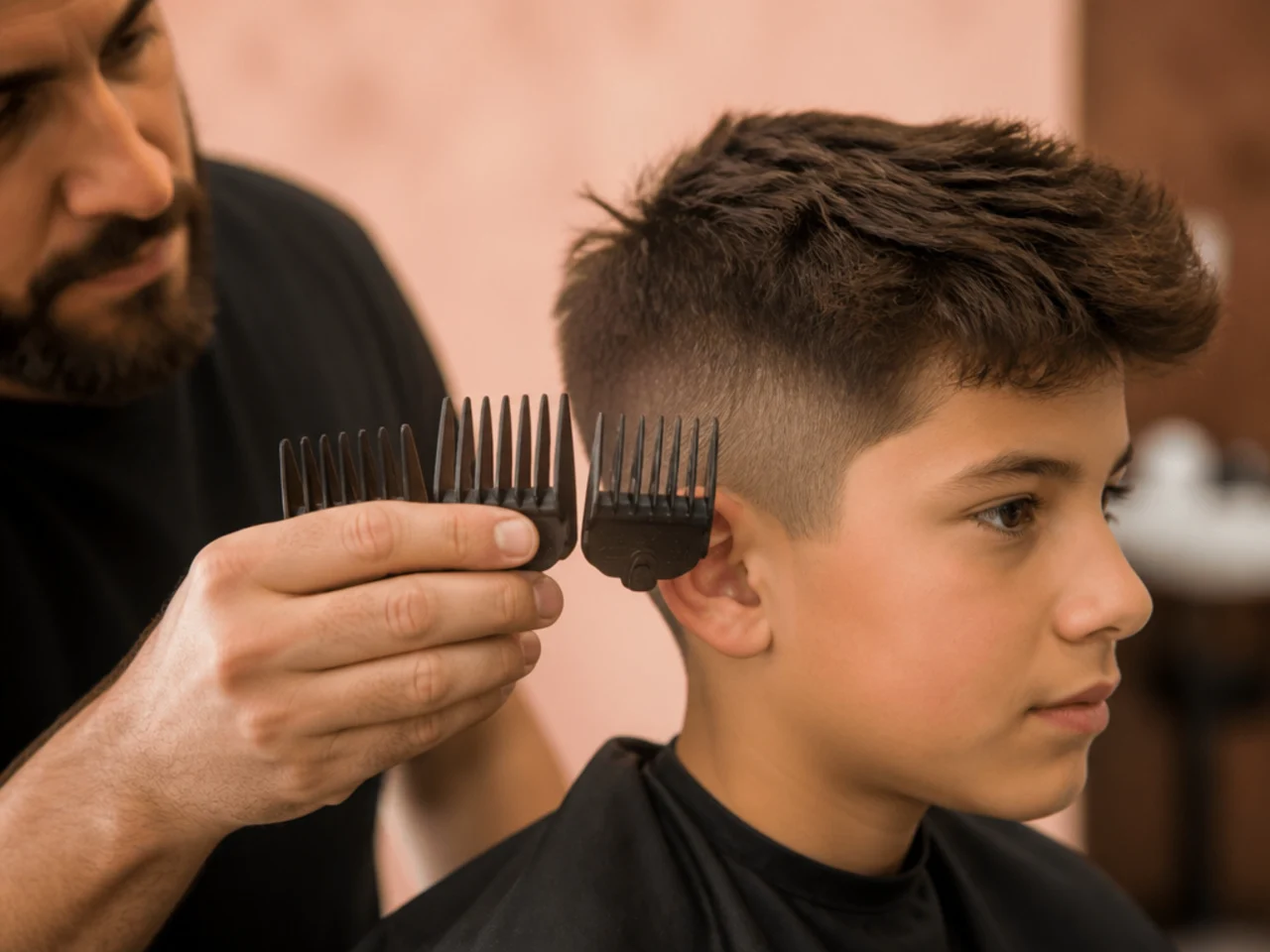
Pick the side guard by the trim schedule. A guard one or two needs attention every two to three weeks. A three or four is comfortable at five or six, which matters more than how it looks on the day.
Set the tail length by the collar. Just touching the collar is the point where the shape is obviously a mullet without becoming something that needs tying back for sport.
Take a photograph at the end of the appointment. Guard number, taper height and tail length are three facts that are easy to remember wrongly and easy to hand over as a picture.
The 25 Mullet Ideas for Boys
1. Blended Mullet With No Hard Line
The top is joined to the sides by a gradient rather than dropped onto them. There is no single line to fall out of place, so six weeks of growth simply lowers the whole shape instead of exposing a step. It is the version that needs the fewest appointments.
2. Scissor Cut Mullet
Cut entirely with scissors, no clippers anywhere. A scissor line is naturally uneven at the millimetre level, and that unevenness hides growth in a way a machine cut field of identical lengths cannot. It costs more chair time and buys about two extra weeks.
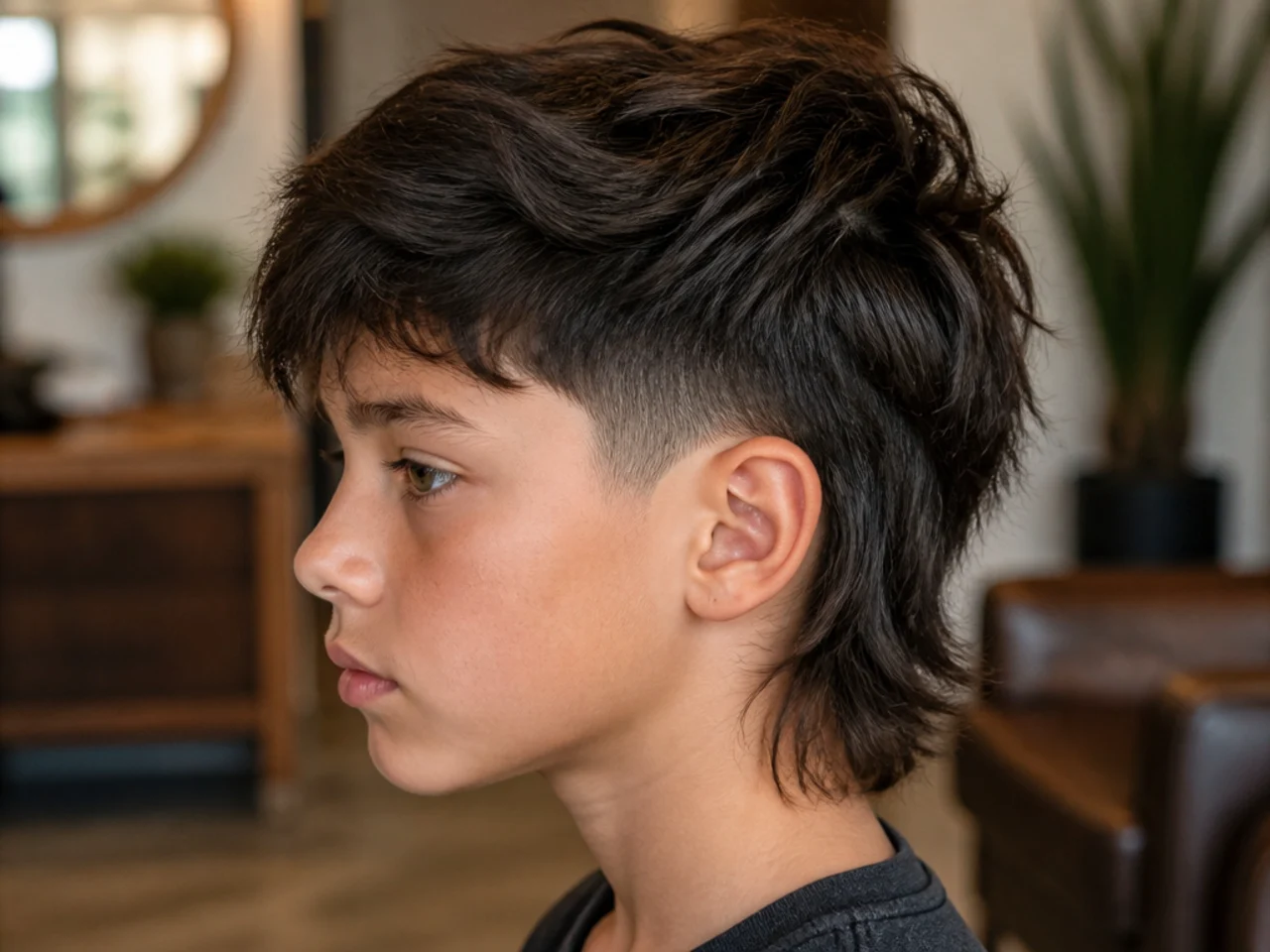
3. Low Taper Mullet
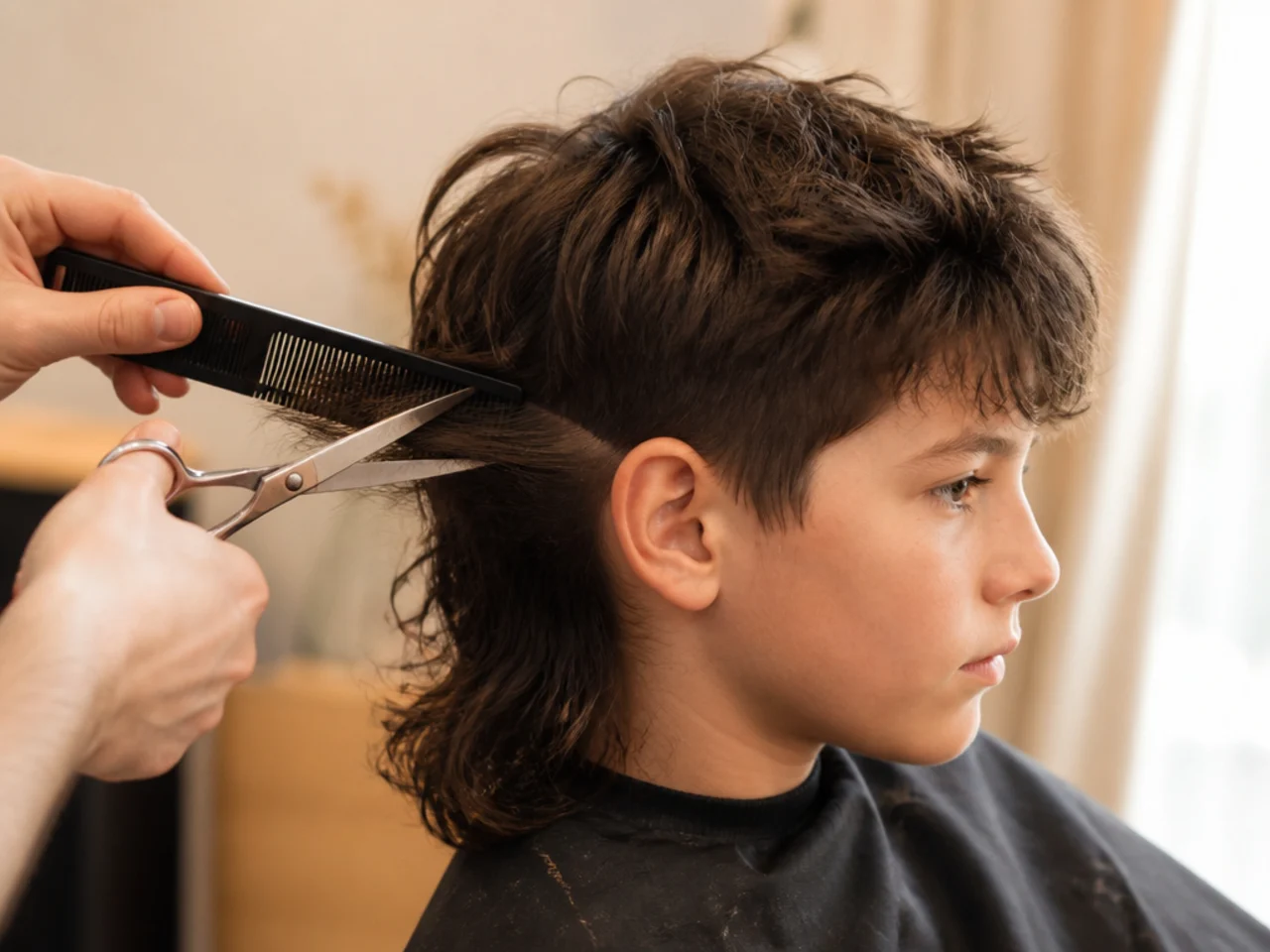
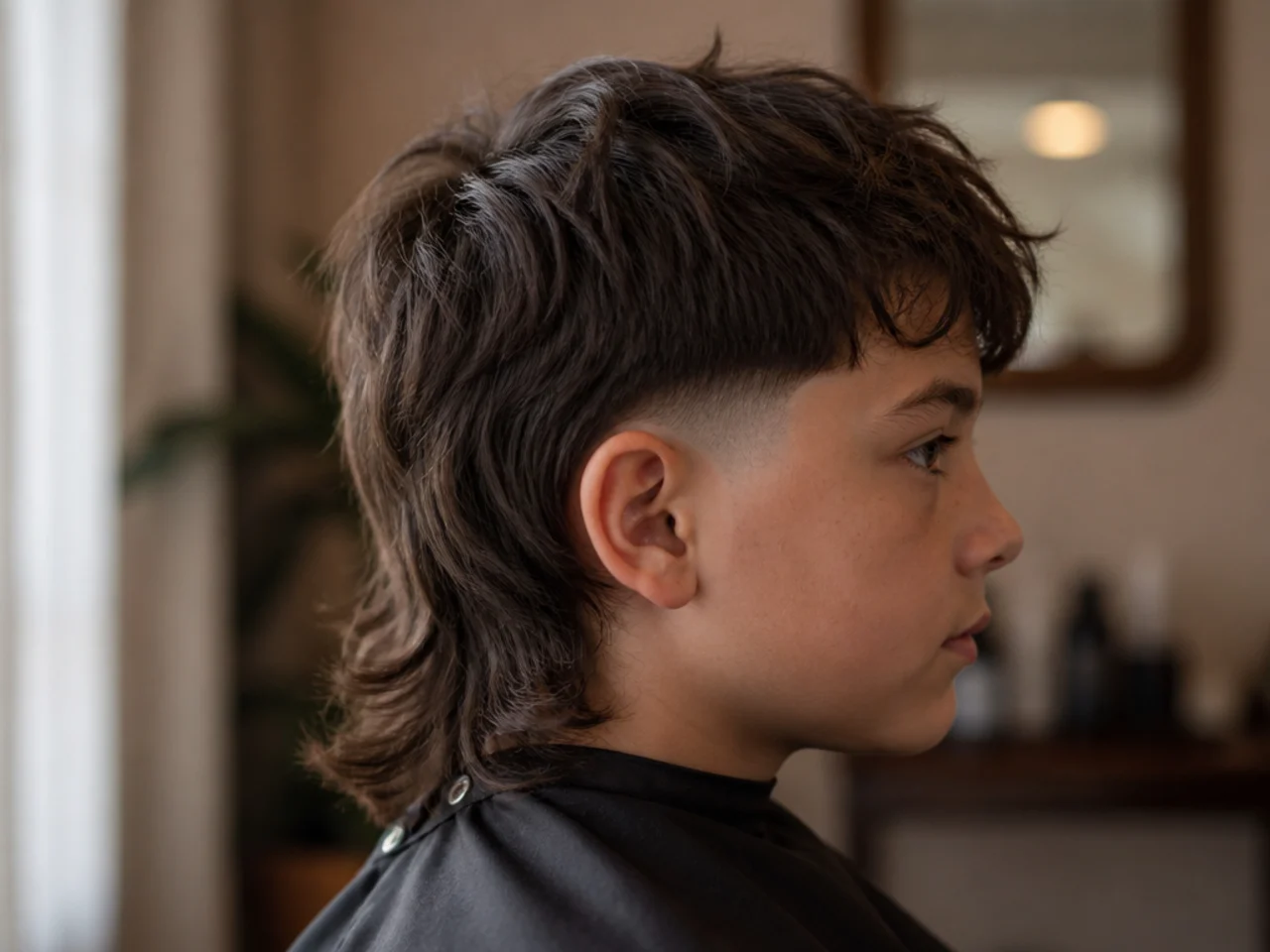
The shortening begins around the top of the ear and finishes with hair still on the head. Because the taper occupies only the bottom inch or two, growth has very little distance to travel before the shape looks continuous again.
4. Mid Taper Mullet
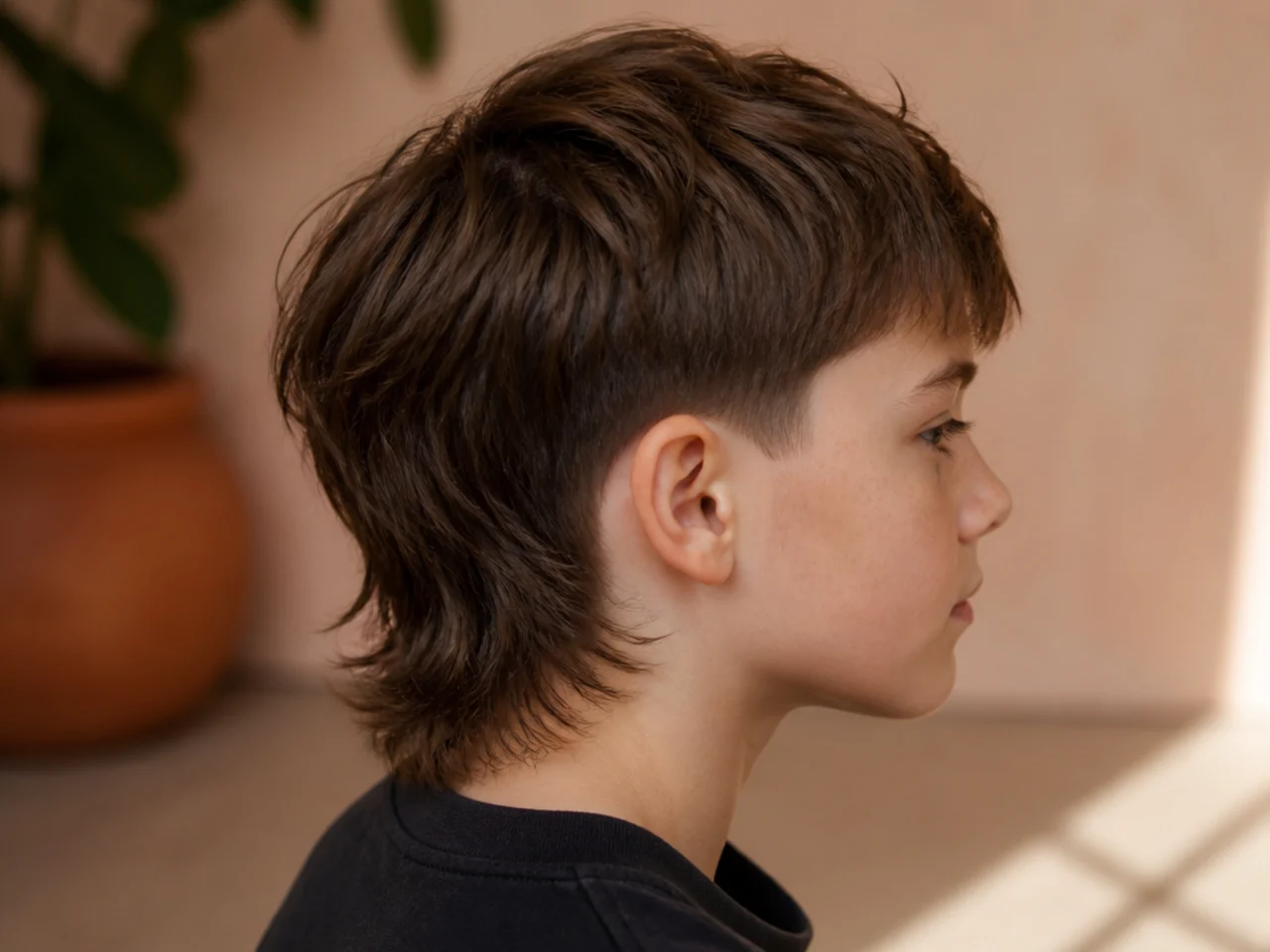
The line starts between the ear and the widest part of the head. More contrast against the length on top, still no skin anywhere, and the longer gradient means a rushed blend shows more clearly than it would on a low taper.

5. Clipper Cut Mullet on a Guard Three
Ten millimetres on the sides, everything above left long. Ten millimetres is short enough to read as cut and long enough that a month of growth does not change the category of the haircut, which is why it is the default for a school term.
6. Textured Crop Mullet
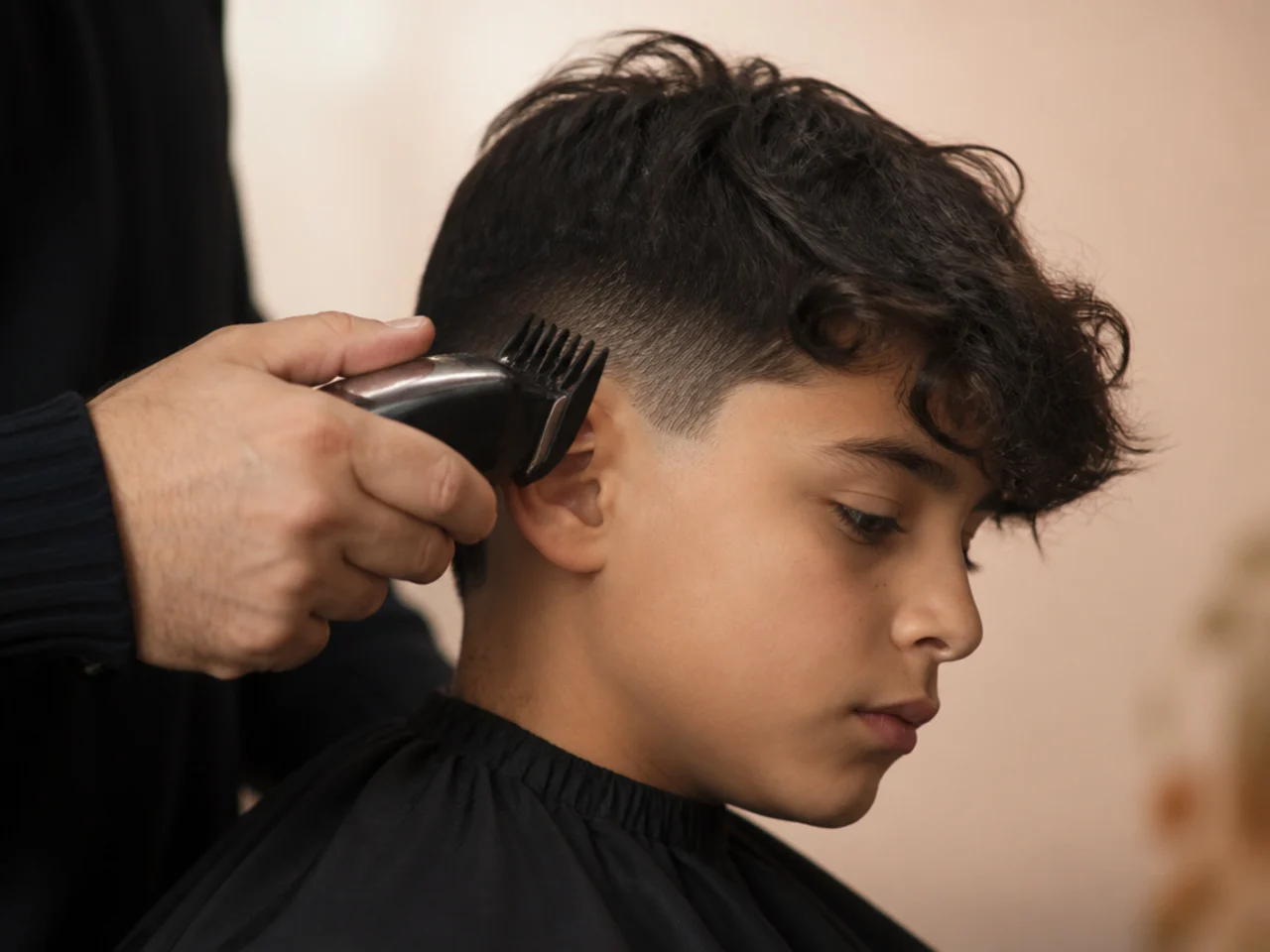
The top cut into short broken pieces and the back left long. Point cutting the ends means each strand finishes at a slightly different place, so the surface never forms a solid line that has to be maintained.
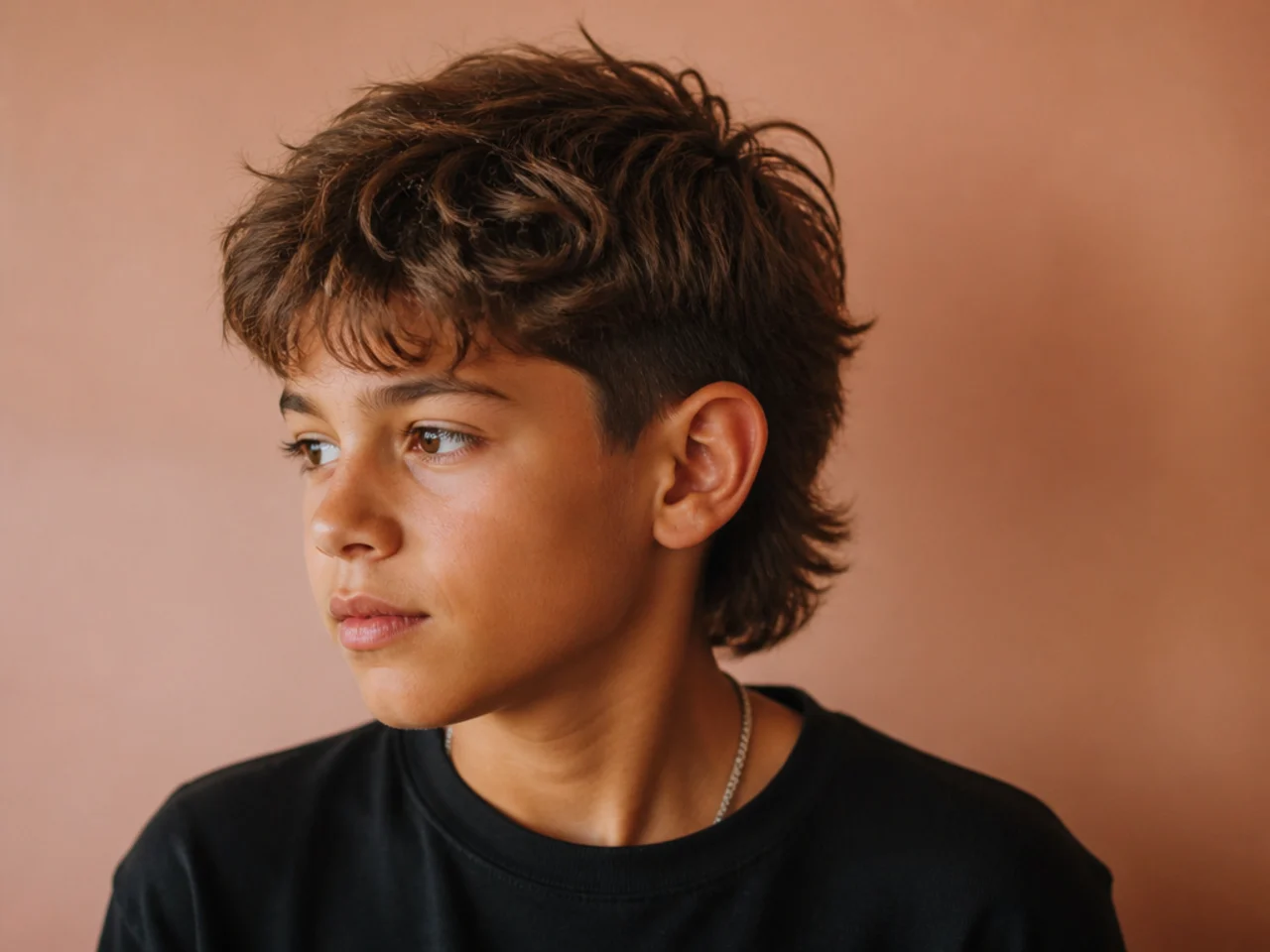
7. Curly Mullet
Curls handle growth better than any other texture because the length disappears into the spiral rather than showing at the outline. Cut it dry so each curl is trimmed where it actually sits, since a wet curl hangs an inch or more below its dry position.
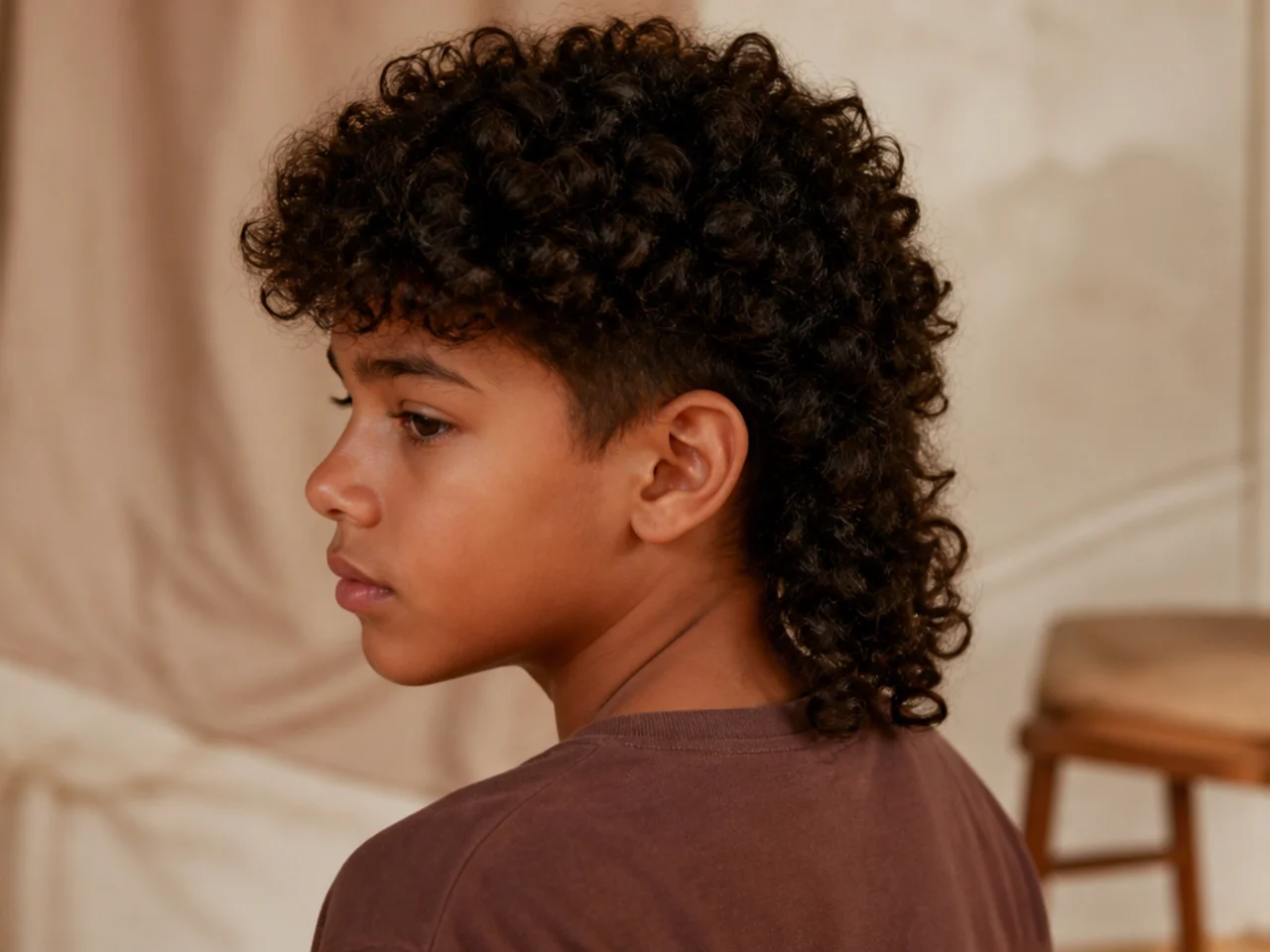
8. Wavy Mullet
The bend in a wave scatters light in several directions, which blurs the join between the top and the sides before the eye finds it. On this texture even a moderately rushed blend looks smooth.
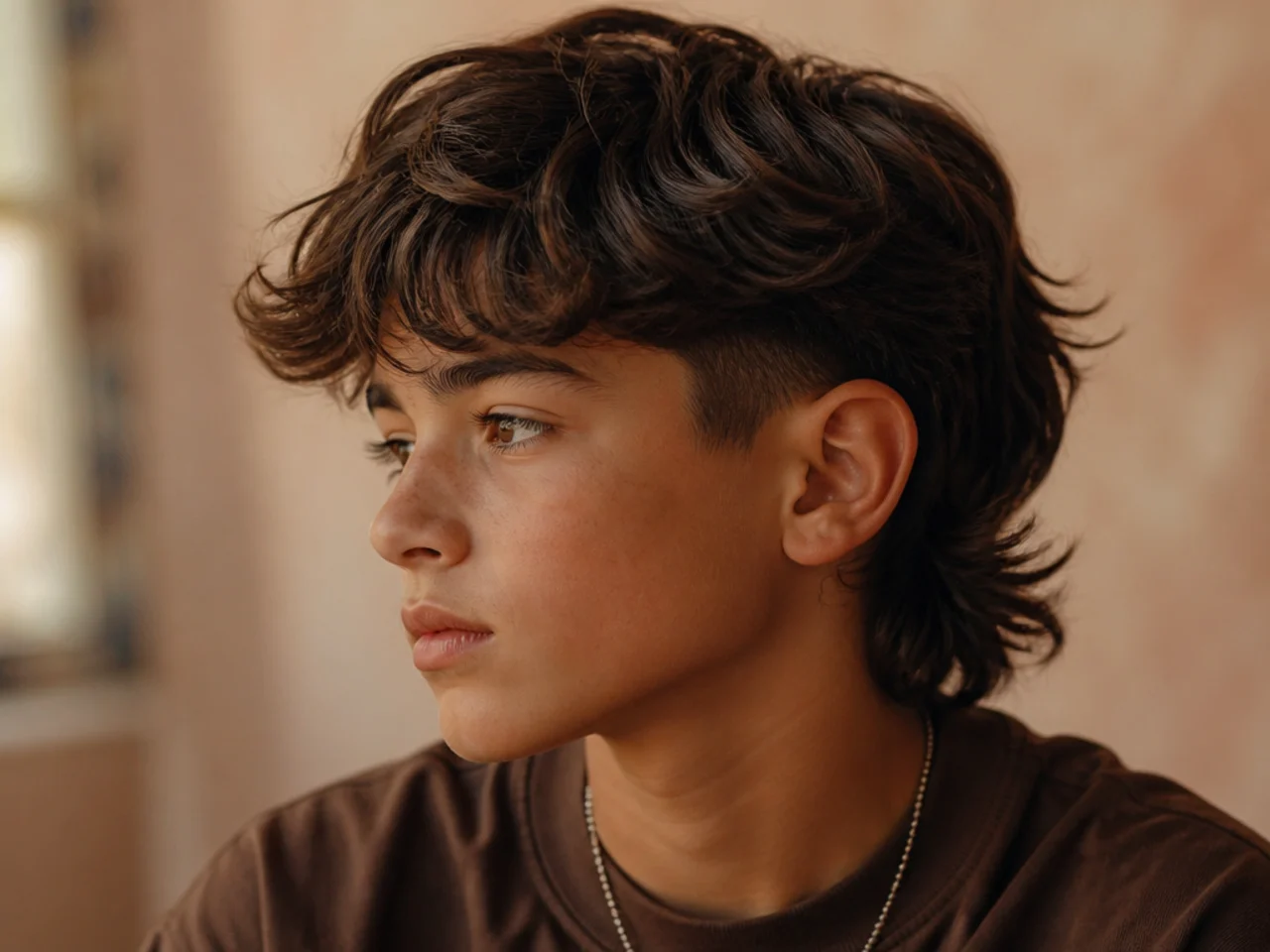
9. Straight Hair Mullet
The least forgiving texture, because a straight strand lies in one line with no bend to scatter light. Every uneven pass in the blend is read as a step rather than as shadow, so this version needs the most careful cutting and the most regular trims.
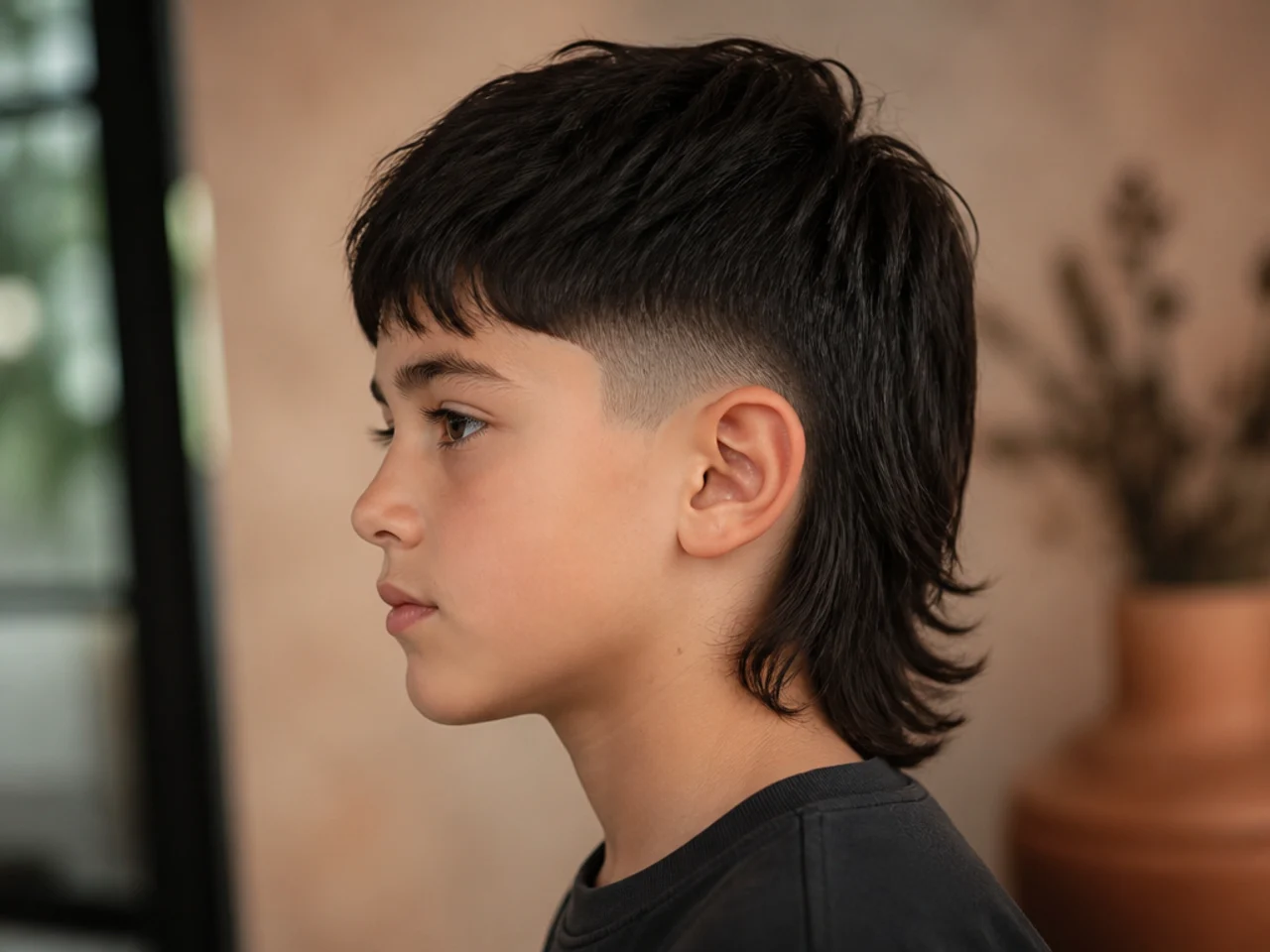
10. Baby Mullet
Short everywhere with the tail barely past the hairline. There is so little length involved that the whole shape is still recognisable after a month of growth, and it is the least committal way to find out whether a mullet suits a face.
11. Short Tail Mullet
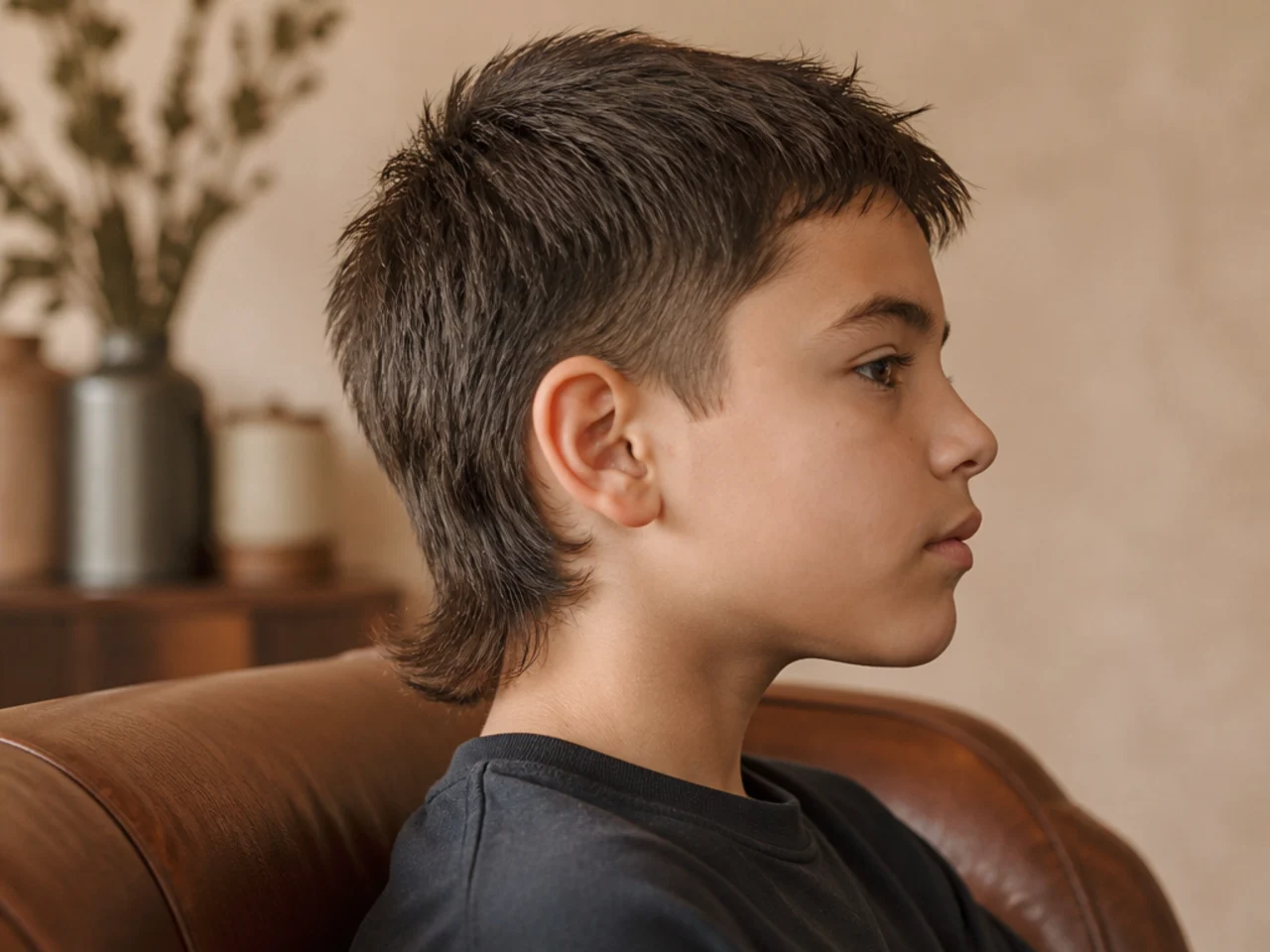
The tail stops above the collar. It stays out of the way of collars, straps and hoods, which is the practical reason most parents choose it, and it grows to a medium tail in about eight weeks without another appointment.
12. Long Tail Mullet
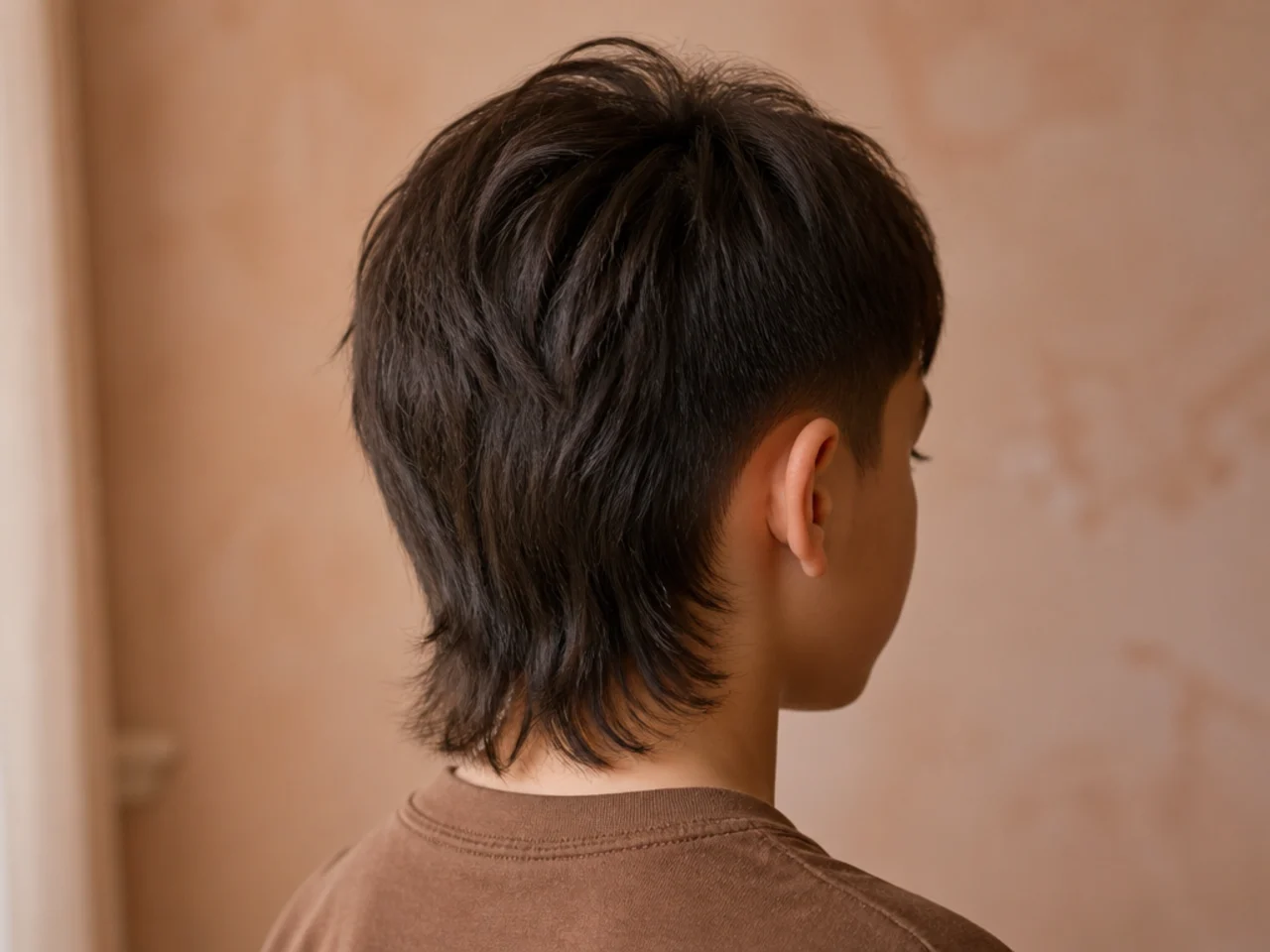
Past the collar and onto the shoulders. The longer the tail, the more of it is made up of the fine hair that grows at the nape, so the ends narrow to a point unless the bottom edge is cut straight across.

13. Mullet With a Fringe
Length left at the front to fall over the forehead. A fringe grows into the eyes roughly six weeks after it is cut, so it is the part of the shape that sets the trim schedule even when everything else could wait.

14. Mullet With a Middle Part
The top split down the centre so both sides fall forward. It only works once the top is long enough to reach past the eyebrow, because a shorter section springs back up rather than staying where it was placed.

15. Side Swept Mullet
The top dried across the head from a side parting. Sweeping across the natural growth direction bends the root, and a bent root holds its position until the hair is next wetted, which is why this style survives a school day.
16. Mullet With a Crown Whorl
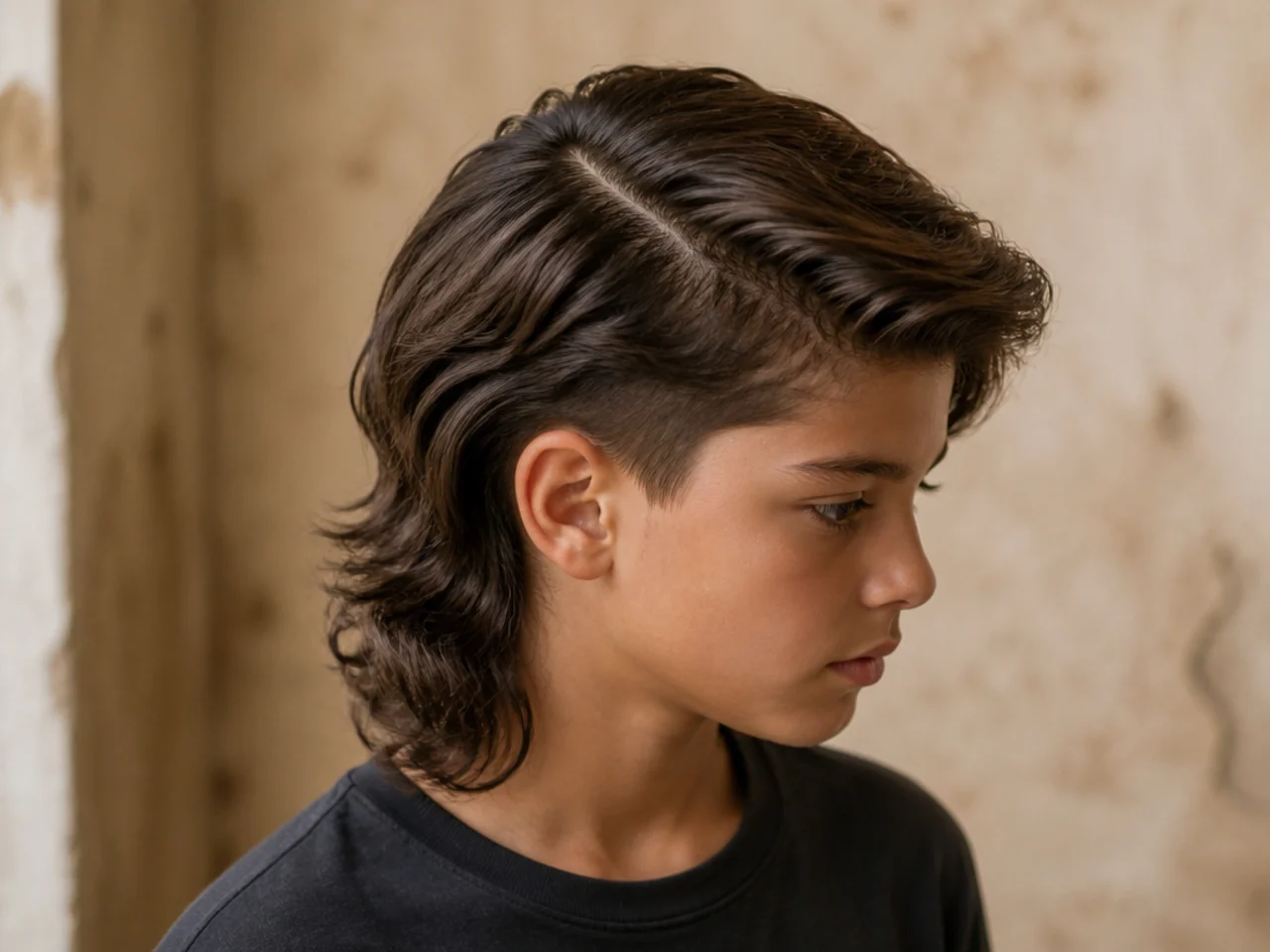
Most heads have a spiral at the crown where the hair leaves the scalp sideways. Leaving that area longer gives the hair enough weight to lie down, while cutting it short makes the spiral stand up permanently.
17. Mullet With a Soft Neckline
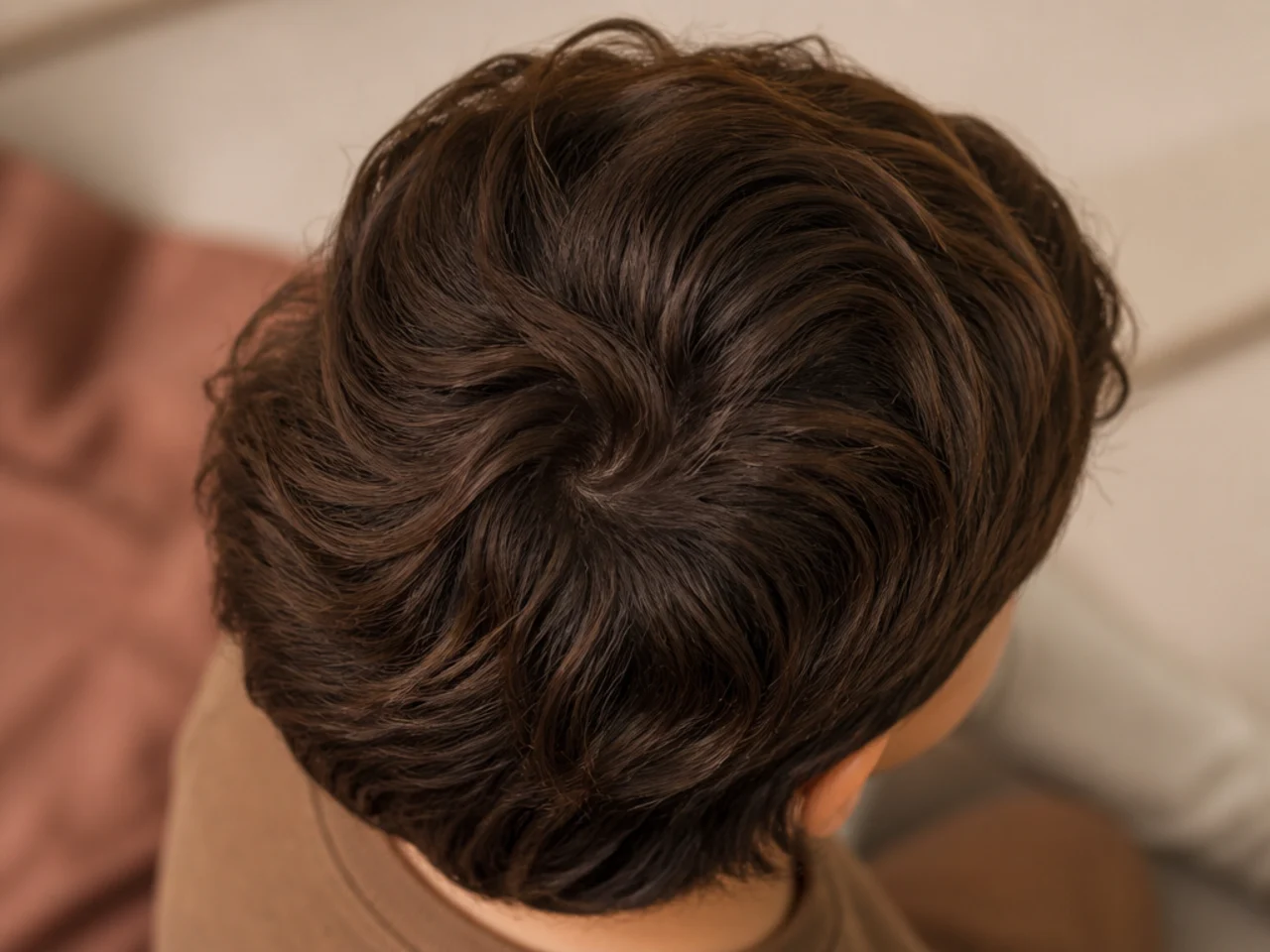
The bottom edge faded gently into the neck rather than cut across. There is no hard line to grow out of place, so the neckline never reaches the stage where it looks like it needs correcting.
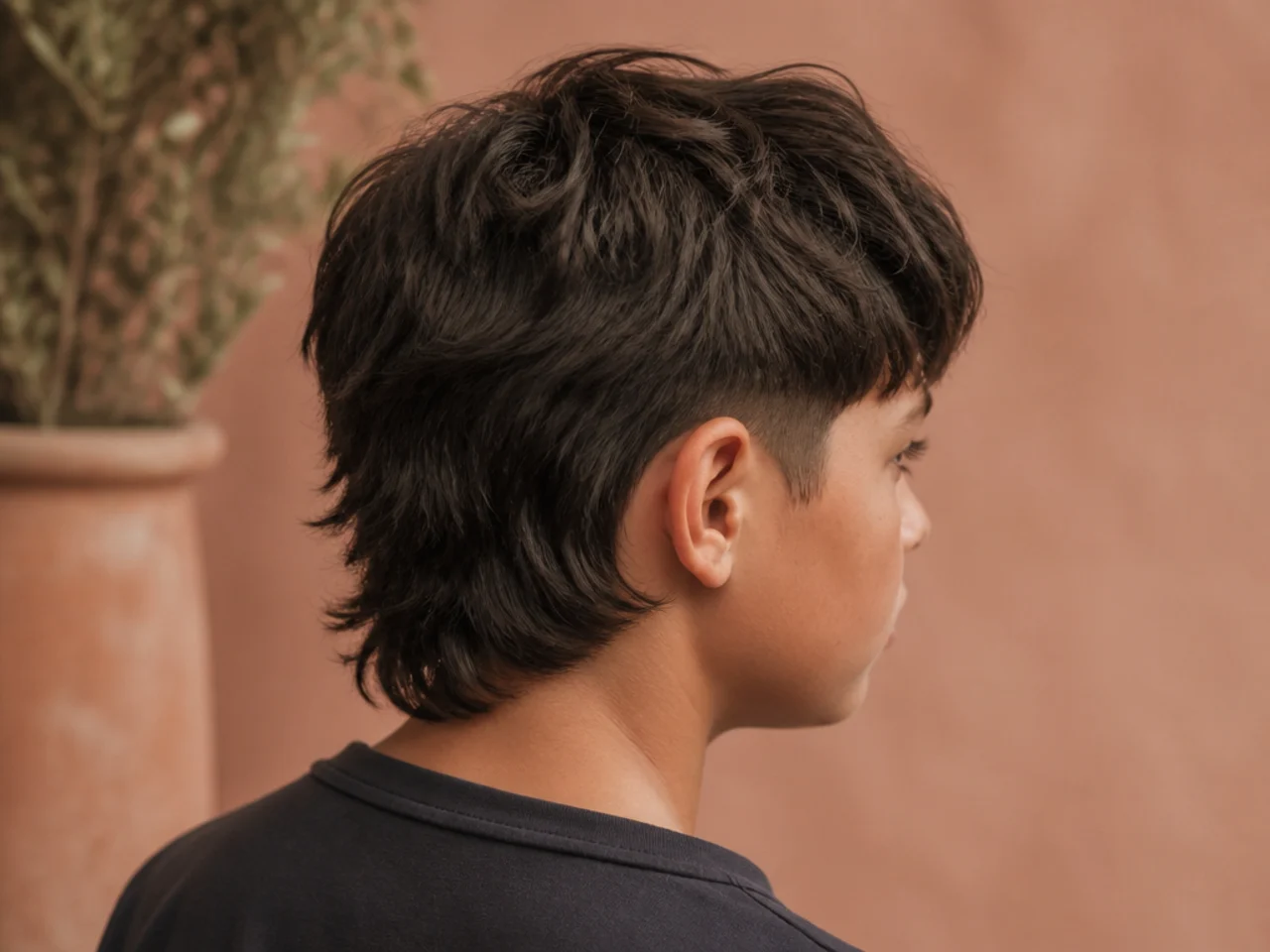
18. Mullet With a Blunt Neckline
Cut straight across the bottom for a hard outline. It looks sharper on the day and blurs faster, because a straight line only stays straight while every hair in it is the same length.

19. Skin Fade Mullet
The sides taken to bare skin under a long top. It is the highest contrast version and the shortest lived — skin shows stubble within one to two weeks, so this one commits to a fortnightly appointment rather than a monthly one.
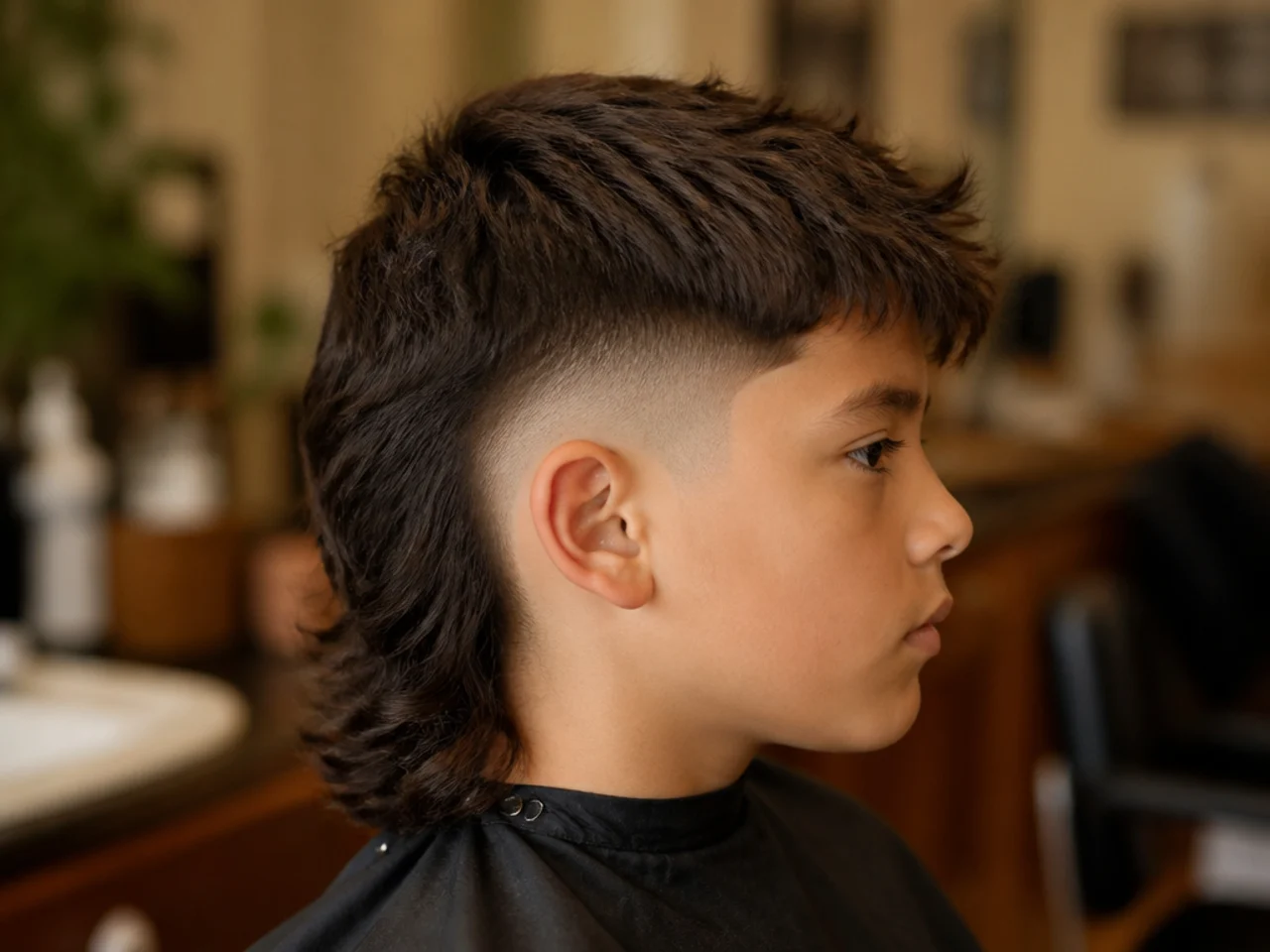
20. Burst Fade Mullet
The fade curves around the ear and stops, leaving the back long and untouched. Because the shortest hair is confined to a small arc, the rest of the shape carries on growing normally and only that arc needs attention.
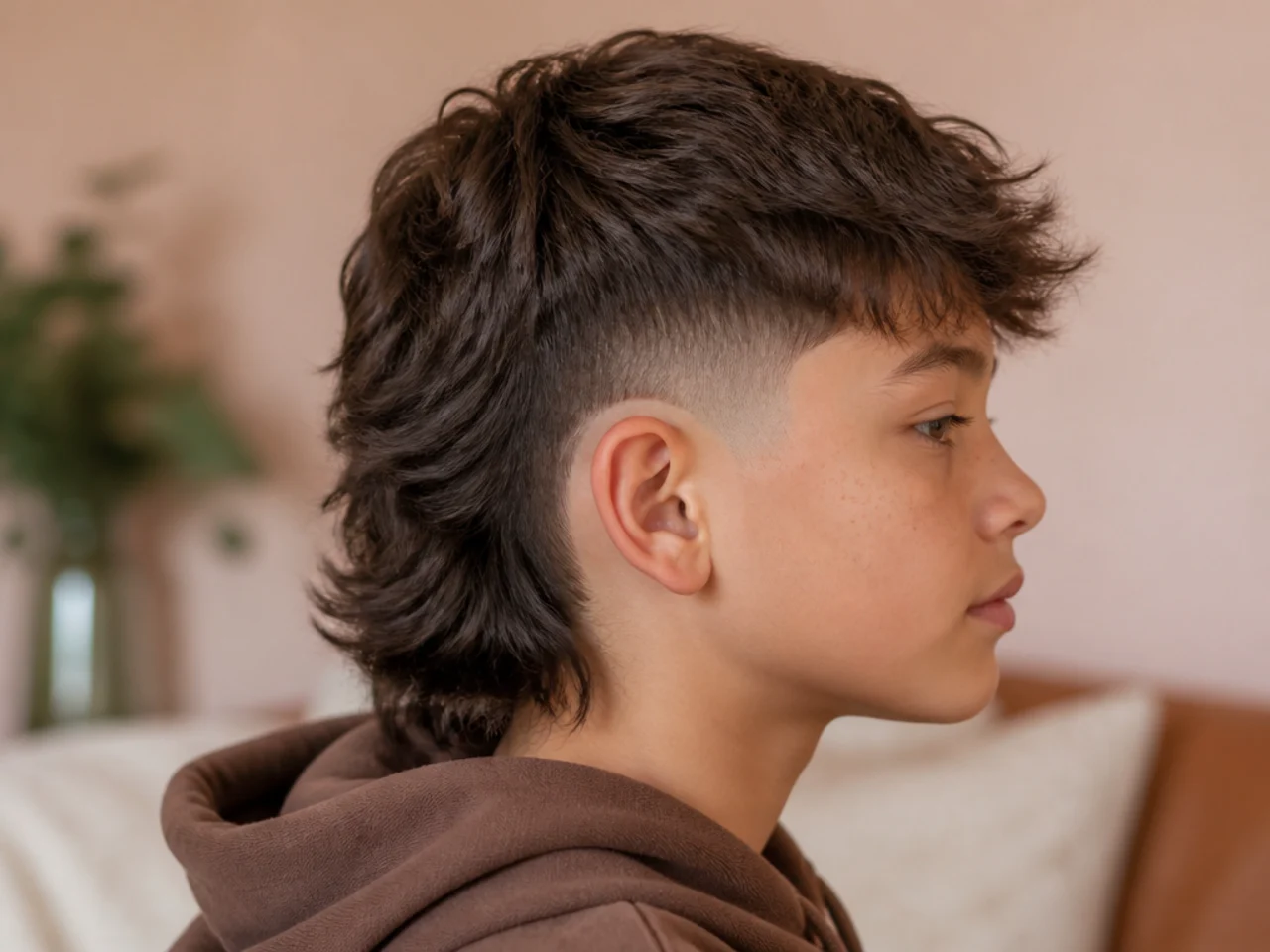
21. Mullet for Fine Hair
Keep the sides at a guard three or longer. Fine hair sits far enough apart at short lengths that scalp shows between the strands in daylight, and ten millimetres is roughly where the coverage returns.

22. Mullet for Thick Hair
Thick hair holds a clipper line sharply, so the gradient needs more passes to look smooth. Ask for extra blending rather than a shorter guard, because going shorter increases the contrast the blend has to cover.
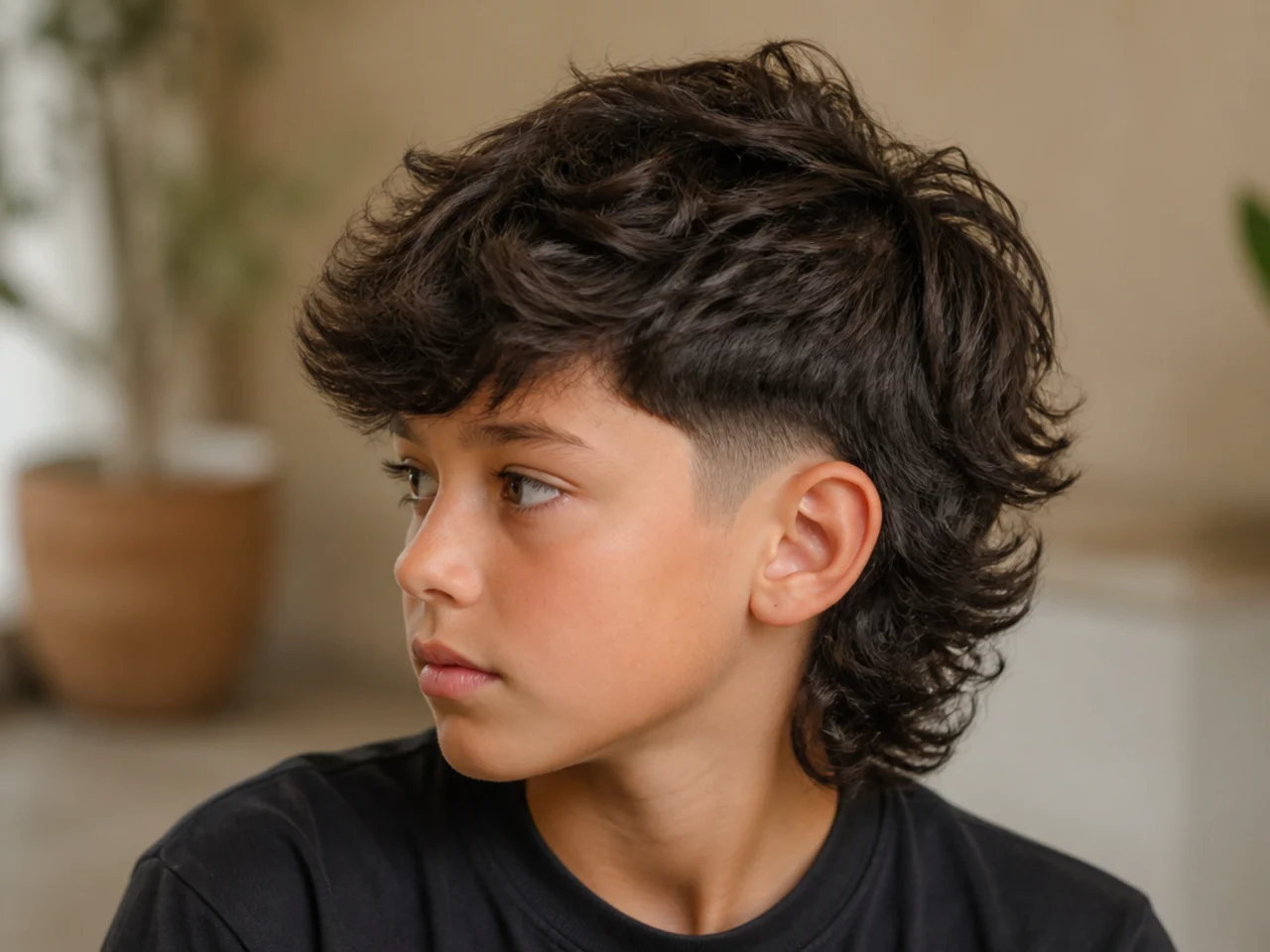
23. Mullet Grown From a Bowl Cut
A bowl cut is already one length all the way round, so leaving the back alone and shortening the sides converts it directly. Nothing has to grow out first, which makes it the quickest route into the shape.

24. Mullet at Six Weeks
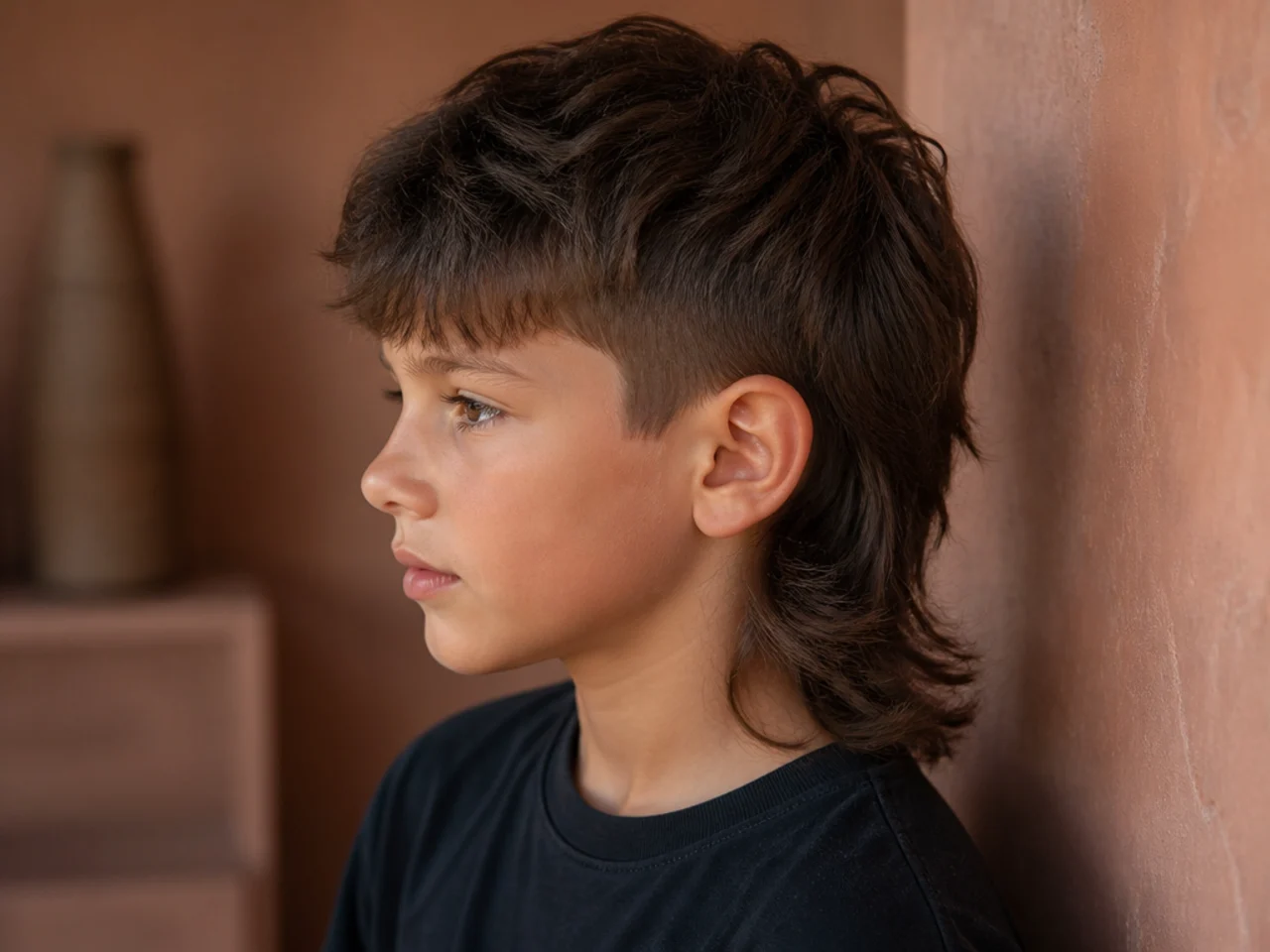
The sides have added roughly eighteen millimetres and the gradient has softened. On a blended cut this is still the same haircut. On a disconnected one the step has closed up and the shape has changed.
25. Mullet at Twelve Weeks
Three months on, the sides are past two and a half centimetres and the tail is well onto the shoulders. At this point the cut has become a long layered shape, which is either the plan or the signal to book.

Styling and Upkeep
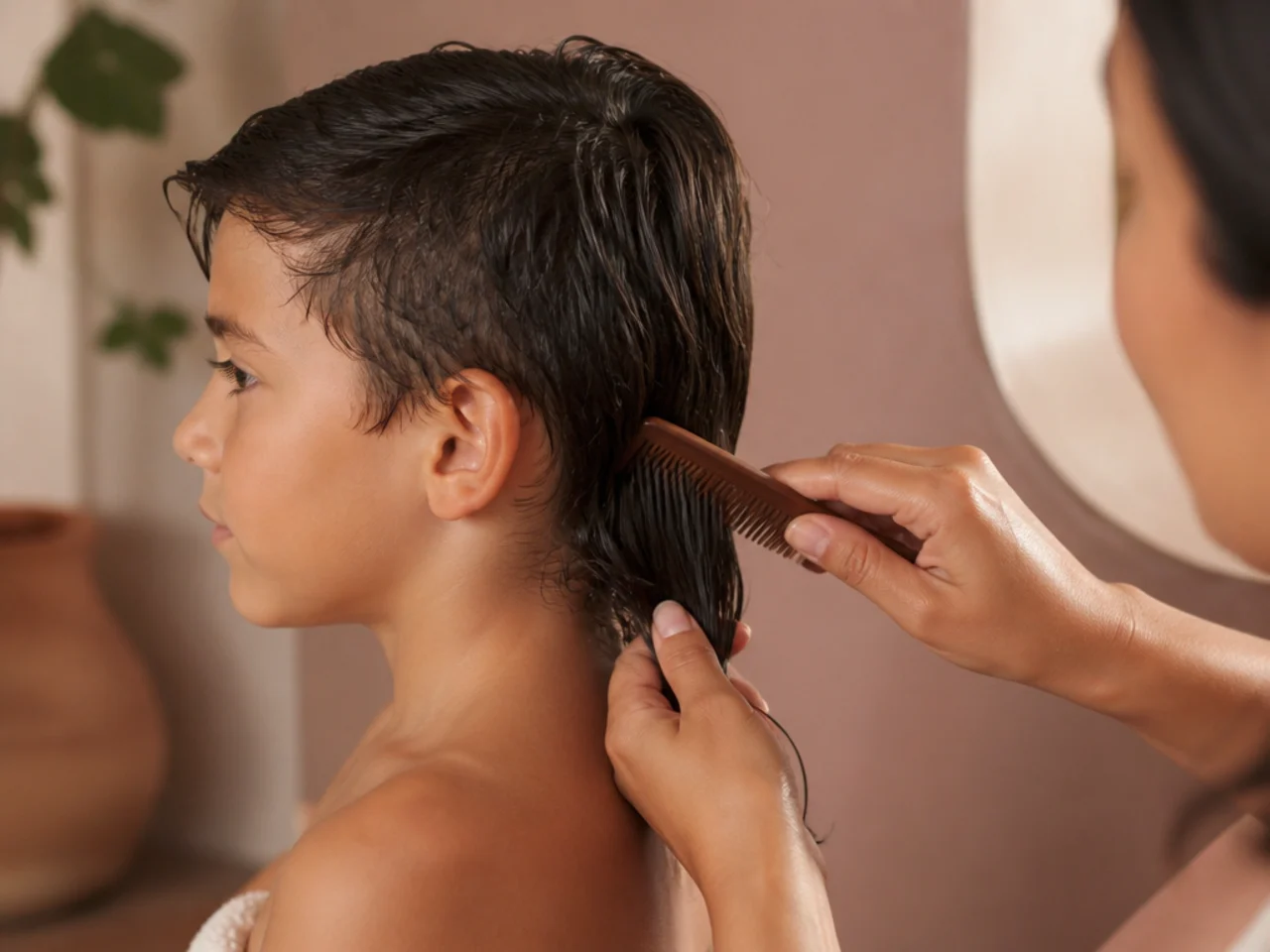
Wet the tail before combing it. Dry combing drags at the nape, where the hair is finest and breaks most easily.
Skip product on most days. A blended mullet on a child holds its own shape, and product mainly makes the hair need washing sooner.
Dry the fringe forward straight after a bath. It sets the direction for the day, which stops the front separating and standing up.
Book by the guard number, not the calendar. Sides at a guard one need three weeks, sides at a guard four are fine at six.
Trim the fringe between appointments. It reaches the eyes long before the rest of the cut needs anything doing to it.
Mistakes to Avoid
Asking for a disconnection without meaning it. It is a permanent step in the length, and it stops looking deliberate as soon as the sides grow.
Going to skin on a child who is seen every fortnight at most. Bare skin becomes stubble in one to two weeks and the cut spends most of its life looking half grown.
Cutting curly hair wet. A wet curl hangs an inch or more below where it dries, so the tail lands short and there is no way back.
Cutting the crown whorl short. Removing the weight there lets the spiral stand up, and it stays up until the length returns.
Changing the taper height every visit. It is the one measurement that makes the same cut look different, so write the number down.
FAQ
Blended or disconnected? Blended, if it has to last six weeks.
Which guard? A three leaves ten millimetres and holds its look longest.
Taper or fade? Taper — three to four weeks against a fade's two.
Final Thoughts
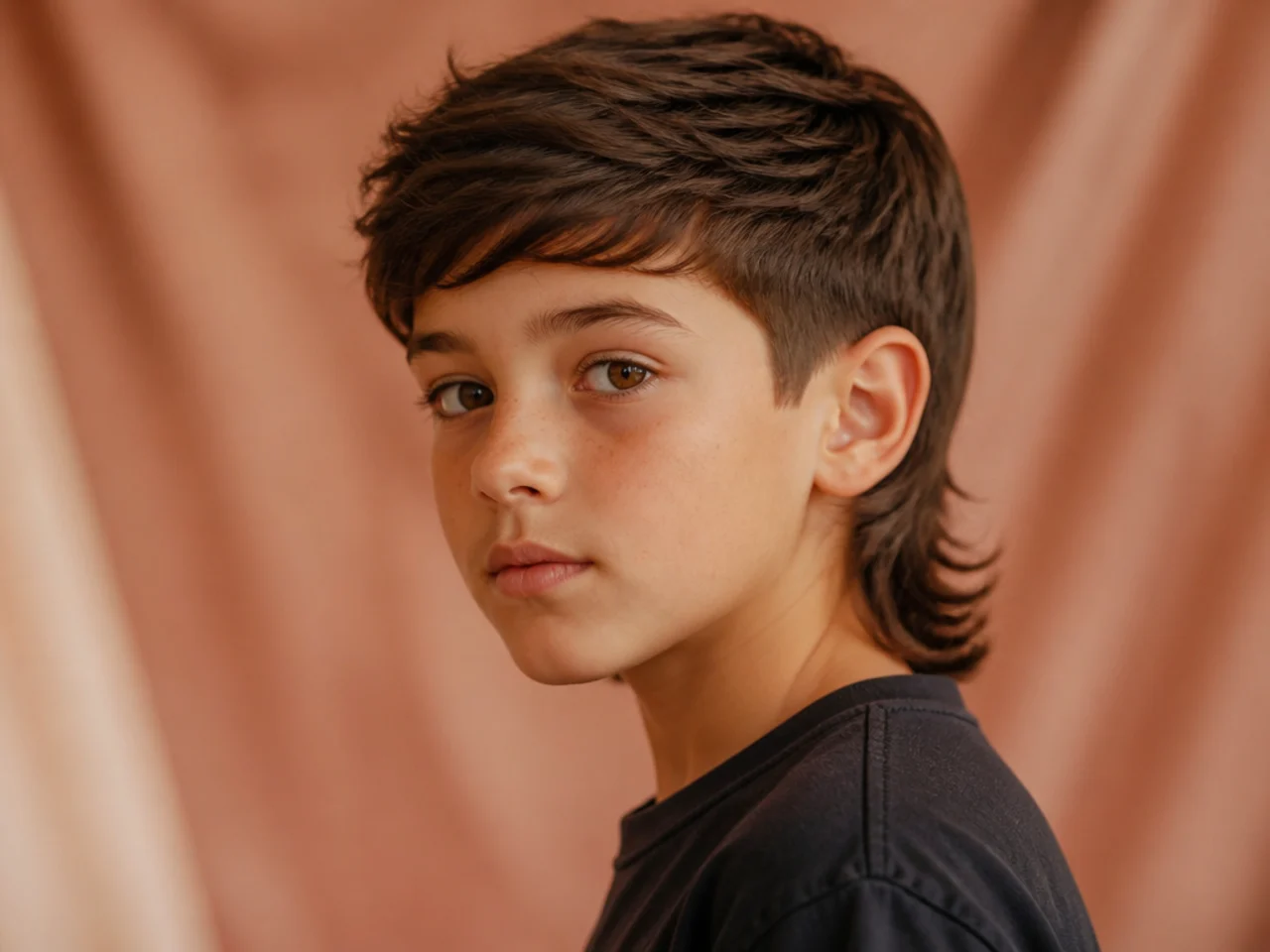
The version of a boy's mullet that gets photographed is the one cut an hour ago. The version everyone actually sees is the one at week five, and that one is decided by the blend and the guard number rather than by the picture on the phone.
Ask for a blend, sides no shorter than ten millimetres, a taper instead of a fade, and a tail that stops at the collar. See also mullet hairstyle mens and mullet men. More in Mullet and Wolf Cut.