
20 Steps To Grow Out A Mullet Buzzcut Without Regret
Growing a buzzcut into a mullet is a scheduling problem, not a patience problem. Hair moves at about half an inch a month, so the back is fixed and the only variable you control is how often the sides get cut. Twenty steps in the order they happen.
In this article · 27
- What Growing a Buzzcut Out Actually Takes
- Choosing the Mullet You Are Growing Toward
- The 20 Steps From Buzzcut to Mullet
- 1. Photograph the Buzz on Day One
- 2. Write Down Your Starting Guard
- 3. Set a Target Length for the Tail
- 4. Stop Cutting the Back Immediately
- 5. Book the Sides Every Three to Four Weeks
- 6. Decide Where the Disconnection Sits
- 7. Leave the Neckline Unblocked
- 8. Do Nothing at All in Month One
- 9. Cut the Flare Out at Month Two
- 10. Hold the Sides at a Number Two
- 11. Let the Crown Reach Two Inches Before Judging It
- 12. Grow the Fringe to the Brow Before Shaping It
- 13. Round the Corners at the Temples
- 14. Take the First Real Shape Up at Month Three
- 15. Push Through Month Four
- 16. Add Interior Layers at the Crown at Month Five
- 17. Train the Parting
- 18. Switch to a Matte Product
- 19. Have the Mullet Cut Properly at Month Six
- 20. Dust the Tail Every Eight to Ten Weeks
- Styling and Upkeep
- Mistakes to Avoid
- FAQ
- Final Thoughts
Growing a buzzcut into a mullet fails at the sides, not the back — people stop cutting everything and end up with an even head of medium hair.
The back is on a fixed schedule. Hair grows about half an inch a month and nothing changes that, so the tail is a waiting game measured in months.
The sides are the part you control. Trimming them every three or four weeks holds the contrast open while the back catches up, and contrast is what makes the shape read as a cut.
What Growing a Buzzcut Out Actually Takes
Half an inch a month, give or take. A buzz at a number two guard is six millimetres. By month five the back is close to three inches, and by month nine it is four to five.
Nothing you apply changes the rate. Growth speed is set at the follicle. What products and trims change is how much length survives, which is a different problem.
The awkward window is months two to four. Hair at an inch and a half has enough spring to stand away from the head and not enough weight to fall, so it flares outward at the sides.
Every trim to the back resets the clock. Half an inch off is a month gone. The back gets left alone until there is a shape worth cutting into.

Choosing the Mullet You Are Growing Toward
Collar length or shoulder length. A collar length tail is roughly month eight, a shoulder length one is past a year. Pick one now, because it changes when you start shaping.
Disconnected or blended. A disconnected mullet has a hard step between the short sides and the long back. A blended one graduates between them, which is more forgiving while the length is uneven.
Taper or fade at the sides. A taper leaves hair at the bottom and holds its shape for three to four weeks; a fade goes to skin and blurs within one to two, which means a fortnightly appointment for the next year.
Fringe or no fringe. A fringe has to be grown to the brow before it can be shaped, so decide early or you will cut it at the wrong length and start again.

The 20 Steps From Buzzcut to Mullet
1. Photograph the Buzz on Day One
Take a front, side and back photograph before anything grows. Without it you have no reference for how far along you are, and month three feels identical to month four when you are looking at it every morning. The photograph is also what you show a barber to explain where the shape came from.
2. Write Down Your Starting Guard
A number one leaves three millimetres, a two leaves six, a three leaves ten and a four leaves thirteen. Knowing which one you started from tells you exactly how much length you have added at any point. Guess it and every estimate afterwards is out by weeks.

3. Set a Target Length for the Tail
Collar, shoulder or somewhere between. This single decision sets your timeline and the month you can first have the shape cut. Without a target you will cut on impulse around month four, which is the worst possible moment to make a decision.

4. Stop Cutting the Back Immediately
From day one, nothing comes off the back or the crown. Half an inch removed is a month of growth gone, and the back is the section with the longest journey. If a barber offers to tidy it, decline specifically rather than generally.

5. Book the Sides Every Three to Four Weeks
The sides are what make the difference between growing out a mullet and growing out nothing. Cut on this cycle they stay short enough to hold the contrast; left longer than five weeks they close the gap and the whole head reads as one length.
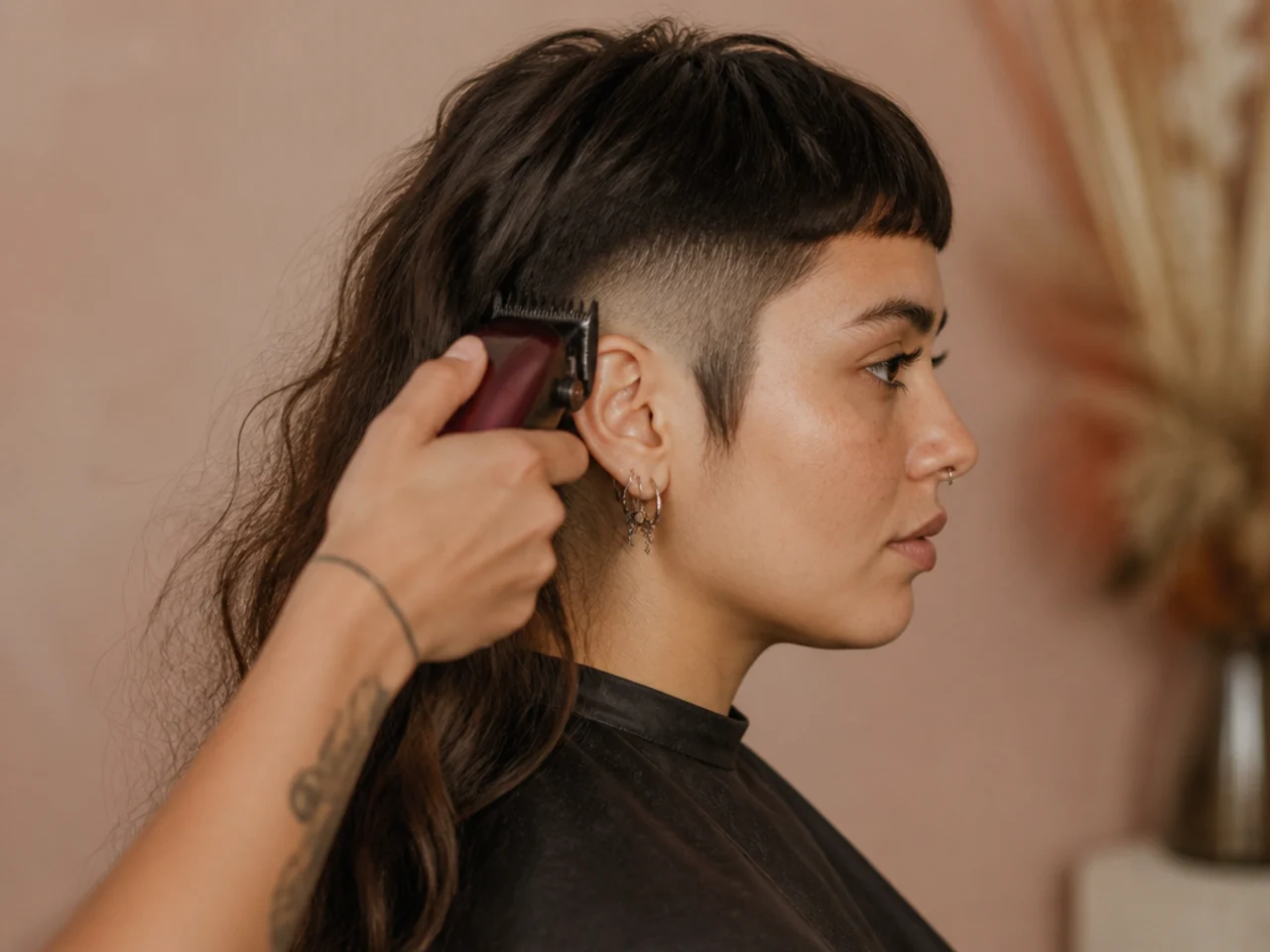
6. Decide Where the Disconnection Sits
The line where short meets long usually runs from the temple to just behind the ear. Fix it now and repeat it at every appointment. Let it drift upward by half an inch each visit and by month six the sides have eaten the shape you were growing.

7. Leave the Neckline Unblocked
Ask for a natural or tapered neckline rather than a squared one. A blocked edge looks sharp for about ten days and then grows into a visible fuzzy square, which forces you back for a trim you did not need. A tapered neckline grows out with nothing to correct.

8. Do Nothing at All in Month One
At six millimetres plus half an inch you have about nineteen millimetres, which is too short for any shape to exist. Any cutting here is cutting for the sake of it. The only useful action this month is booking the appointment for month two.

9. Cut the Flare Out at Month Two
Around an inch, the sides start standing outward because the hair has spring but no weight. Take them back to a number two and leave everything above the disconnection alone. Skip this and the head reads as wide for the next eight weeks.

10. Hold the Sides at a Number Two
Six millimetres is short enough to build contrast and long enough that the scalp does not show through. Going to a number one or to skin at this stage adds nothing, because there is no length on top yet for the contrast to work against.

11. Let the Crown Reach Two Inches Before Judging It
The crown has a whorl in it, and short hair there stands upright because the follicles point sideways. Below about two inches nothing will lie flat no matter what you put on it. Cutting the crown to fix this only guarantees another two months of the same.

12. Grow the Fringe to the Brow Before Shaping It
A fringe cut before it reaches the eyebrow has no weight and springs back to a height you did not ask for. Wait until it touches the brow and it will sit where it is cut. Cutting early costs six to eight weeks of regrowth.

13. Round the Corners at the Temples
At month three the top has enough length to form square corners above the temples, which makes the head read as a box. Softening those two corners costs almost no length and changes the silhouette more than anything else at this stage.

14. Take the First Real Shape Up at Month Three
Sides and outline only. Ask for a taper rather than a fade, because a taper still reads correctly at three to four weeks and a fade needs redoing at two. On a twelve month grow out that difference is a dozen fewer appointments.

15. Push Through Month Four
This is where the back reaches the collar, sits on it, and flicks outward. It is the point most grow outs are abandoned, and it is also the last month before the length starts working for you rather than against you. Tie it back rather than cut it.

16. Add Interior Layers at the Crown at Month Five
By now the top has enough length to sit as a solid block on the back. A few interior layers let it fall into the length instead of stopping against it. Left unlayered, the join between top and back stays visible as a shelf.

17. Train the Parting
Dry the hair away from where it naturally splits for a few weeks and it will start falling that way on its own, because the direction hair dries in is the direction it sets in. Leave it and the parting will settle wherever the whorl decides.

18. Switch to a Matte Product
At three to four inches the enemy is weight, not frizz. A cream or a wet look pomade drags the top down onto the sides and kills the contrast you spent five months building. A clay or a salt spray adds grip without mass.

19. Have the Mullet Cut Properly at Month Six
This is the first appointment where the whole shape exists and can be cut as one thing rather than managed in pieces. Bring the day one photograph and say where the disconnection sits and how long the tail must stay. Vague instructions here cost length that took half a year.

20. Dust the Tail Every Eight to Ten Weeks
A split travels up the shaft once it starts, so a few millimetres off the very ends preserves far more length than it costs. Skip it for six months and the bottom two inches go wispy, which is when the tail stops looking thick and starts looking neglected.

Styling and Upkeep
Book the sides, never the back. Say it at the desk and again in the chair, because tidying the back is the default and it costs a month each time.
Keep the same disconnection height every visit. It is the one measurement that decides whether the shape looks planned. Write it down and read it out.
Dry the top before judging the sides. Contrast only reads once the top is in position, and wet hair sits flat against the head.
Sleep on a smooth pillowcase once past three inches. Friction at the ends is what turns a tail wispy, and the tail is the section you cannot replace.
Photograph the back monthly. It is the part you never see and the part the entire cut depends on.

Mistakes to Avoid
Letting the whole head grow evenly. Without short sides there is no mullet, only medium length hair with no shape in it.
Trimming the back because it looks untidy. Untidy is the process. Half an inch removed at month four is a month added to month twelve.
Blocking the neckline. A squared edge looks sharp for ten days and fuzzy for the twenty after, and it pulls you back into the chair.
Choosing a skin fade during the grow out. Bare skin shows stubble inside a fortnight, so a fade turns a long project into a fortnightly commitment.
Cutting the fringe short to get it out of your eyes. It springs up higher than cut and takes two months to return, so pin it or push it back instead.

FAQ
How long to a real mullet? Five to six months for a short one, closer to a year for a collar length tail.
Do the sides get cut? Every three to four weeks. That is what keeps the shape visible.
Worst stage? Months two to four, when the sides flare and the back hits the collar.

Final Thoughts
The back grows at a rate you cannot influence, so treat it as fixed and spend your attention on the sides. Every decision that matters between month one and month six happens above the ear.
Set the disconnection height once, hold it at every appointment, and refuse a tidy up at the back however tempting it looks at month four. See also mullet hairstyle women and mullet hairstyle. More in Mullet and Wolf Cut.