20 Easy Mullet Haircut Ideas For Women With Fine Hair
Fine hair goes flat in a mullet for a structural reason. The shape is built from layers, and every layer removes a strand from the perimeter where fine hair has none to spare. Twenty versions that keep the ends blunt and the weight where it reads.
In this article · 27
- Why Fine Hair Struggles With a Mullet
- Choosing Your Mullet Length
- The 20 Mullet Ideas for Fine Hair
- 1. Blunt Cut Baby Mullet
- 2. Soft Shag Mullet
- 3. Curtain Fringe Mullet
- 4. Shoulder Grazing Mullet
- 5. Bixie Mullet
- 6. Mullet With a Rounded Crown
- 7. Two Length Mullet
- 8. Chin Length Mullet
- 9. Textured Crop Mullet
- 10. Mullet With Face Framing Pieces
- 11. Bottleneck Fringe Mullet
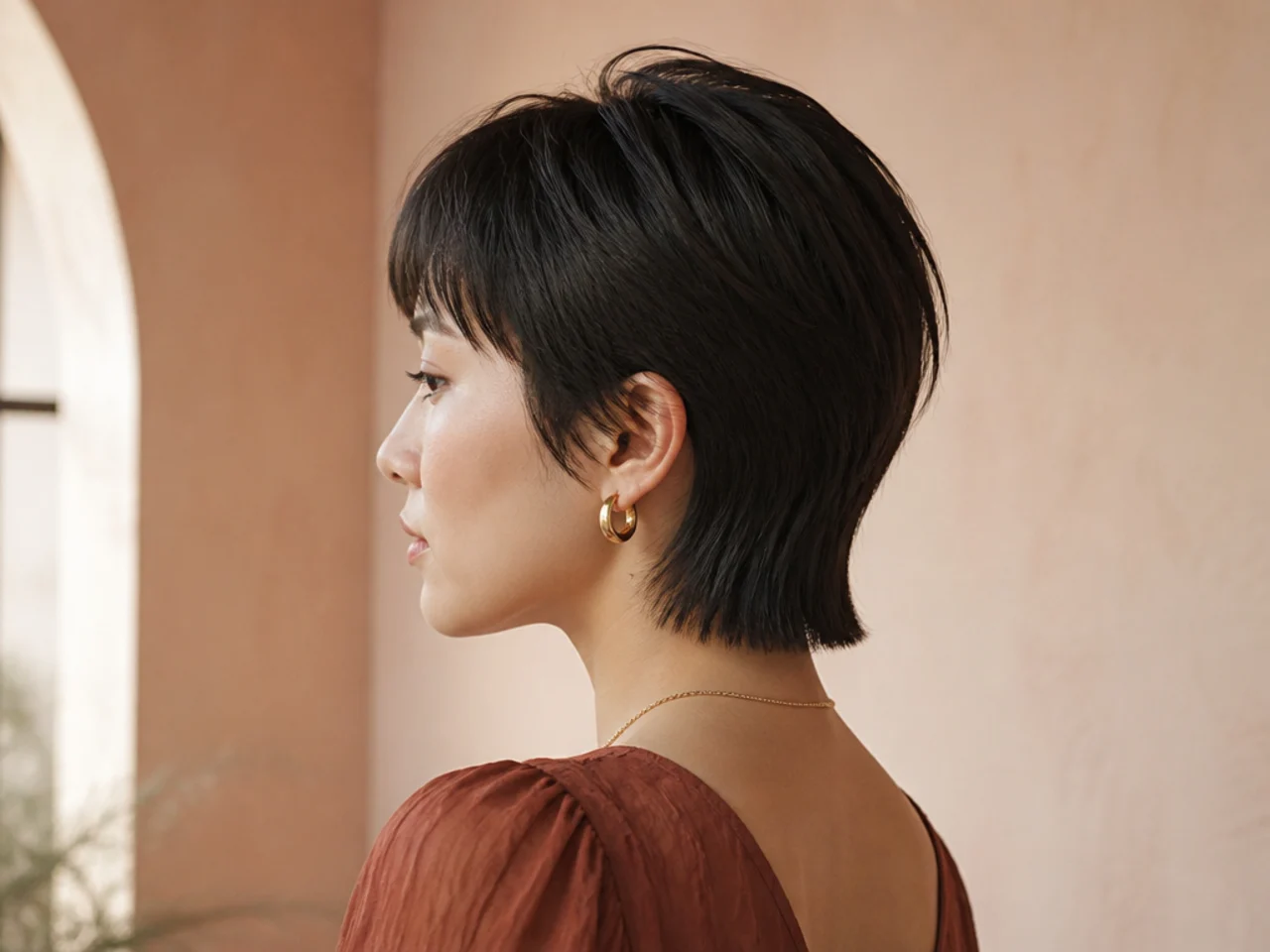
- 12. Grown Out Pixie Mullet
- 13. Micro Mullet
- 14. Wavy Mullet
- 15. Straight Blunt Mullet
- 16. Mullet With a Root Shadow
- 17. Mullet With Money Piece Highlights
- 18. Curly Mullet
- 19. Mullet With a Blunt Nape
- 20. Wolf Cut Mullet
- Styling and Upkeep
- Mistakes to Avoid
- FAQ
- Final Thoughts
Fine hair gets blamed for a flat mullet when the layering is usually what flattened it.
A mullet is a layered shape, and every layer costs perimeter. A layer is a strand cut shorter than the one below it, so it stops reaching the ends. On a fine head that outline is where the visible thickness lives.
Fine describes the strand, not the amount. A fine head can still be dense; a thin head has fewer strands on it. The cut that solves one makes the other worse, so the two get separated before any length is chosen.
Why Fine Hair Struggles With a Mullet
Fine strands bend under their own length. A smaller diameter means less resistance to bending, so the strand collapses toward the scalp sooner. That is why a crown that looked full in the chair is flat by lunchtime.
Layers subtract from the ends for years. Take four inches off at the crown and those strands stop contributing to the perimeter until they grow back, which at roughly half an inch a month is most of a year. The outline goes see through long before that.
Thinning shears are the wrong tool on this hair. They remove hair from the middle of a section and leave short pieces that stick out of the surface instead of lying inside it. On fine hair those pieces read as frizz, not texture.
The mullet forgives one thing. It is meant to be disconnected, so density does not have to run evenly from front to back. A dense short crown above a lighter tail is the shape working, not failing.

Choosing Your Mullet Length
Keep the shortest front piece at or above the cheekbone. That length is what props the sides outward. Cut it below the jaw and the front lies flat against the face with nothing underneath holding it out.
Stop the tail before it thins. Fine hair narrows toward the ends anyway, so a tail long enough to show that taper reads as damage. The collarbone is usually the limit before the point becomes obvious.
Choose blunt over soft if you want it to look thicker. A blunt line ends every strand in the section at the same place, stacking the ends against each other. A softened line staggers them and the edge turns translucent.
Decide honestly how much you will style it. A short, heavily layered crown needs a dryer to stand up. A longer, blunter version air dries into a usable shape and is the right choice if the round brush stays in the drawer.
The 20 Mullet Ideas for Fine Hair
1. Blunt Cut Baby Mullet
The shortest version worth cutting — the crown sits around ear level and the tail stops at the nape. Every section is cut with a straight scissor line rather than point cut, so the ends stack against each other instead of staggering. That stacking is what makes a fine head read as dense from a metre away.
2. Soft Shag Mullet
Layers cut long and closely spaced rather than short and far apart. Close spacing means each layer is only slightly shorter than the one below it, so the ends still support one another instead of separating into visible steps. It is the version that survives air drying.

3. Curtain Fringe Mullet
A fringe parted at the centre and swept to both sides over a mullet shape. Take the fringe from a shallow triangle at the hairline and never back toward the crown, because a deep section steals exactly the strands that were covering the part line on a fine head.

4. Shoulder Grazing Mullet
The tail stops where it touches the shoulder rather than passing it. Hair resting on the shoulder is pushed back up by the fabric, which puts a bend in the last two inches that fine hair would never hold on its own, and a bend reads as body.
5. Bixie Mullet
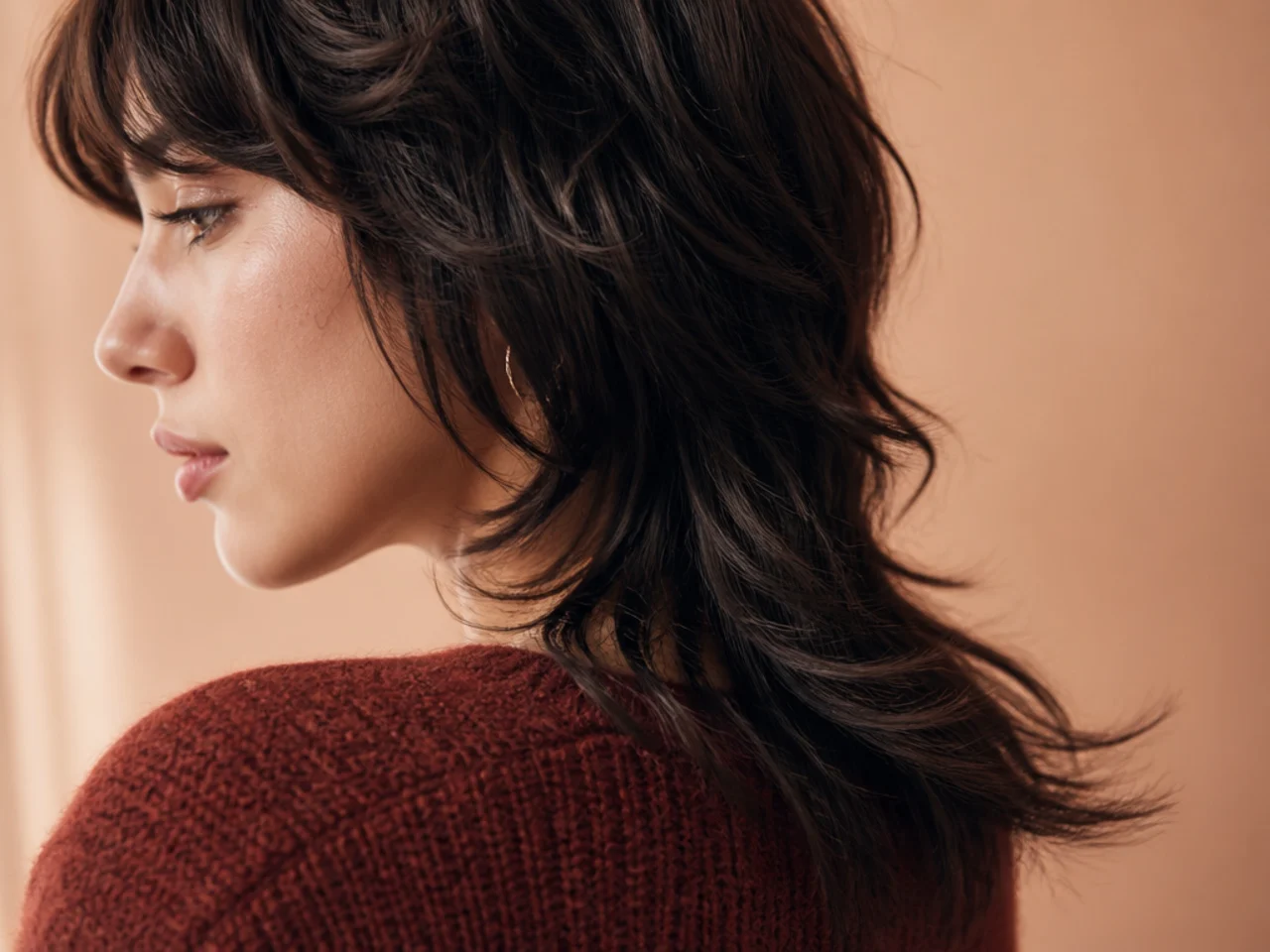
A pixie at the front with enough weight left behind to hang. The crown is cut short enough that each strand stands on its own stiffness instead of being pulled over by its own length, which is the only volume fine hair produces without a dryer.
6. Mullet With a Rounded Crown
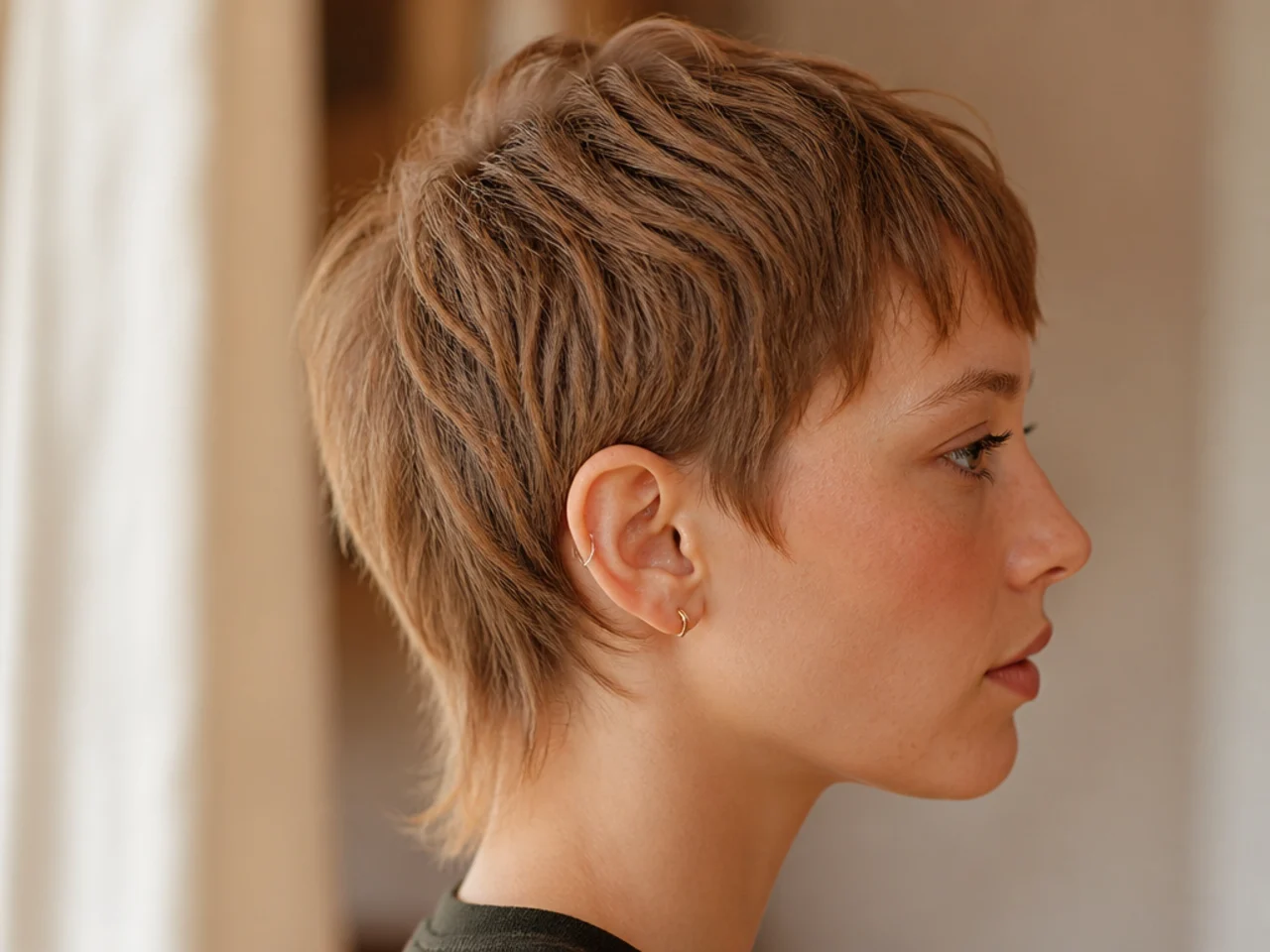
The crown layers cut over a curve rather than a flat plane. A curve puts the shortest point at the highest part of the skull, so the hair below falls across the top of it and gets propped up from underneath. That prop is where the height comes from.

7. Two Length Mullet
One short length, one long one, and nothing in between. Skipping the middle lengths lets every strand within each section end at the same point, so both sections keep a blunt edge — and on fine hair a blunt edge does the work that volume does elsewhere.

8. Chin Length Mullet
The front cut to the chin with the back a few inches longer. Chin length is the shortest front section that still folds under the jaw when the head turns, and that fold is what makes the shape look full in profile rather than pasted to the cheek.

9. Textured Crop Mullet
Short at the crown with point cutting confined to the top half inch of the ends. Keeping the point cutting shallow breaks the hard line without removing weight from further down the strand, which is the compromise that stops a fine crown going wispy.
10. Mullet With Face Framing Pieces
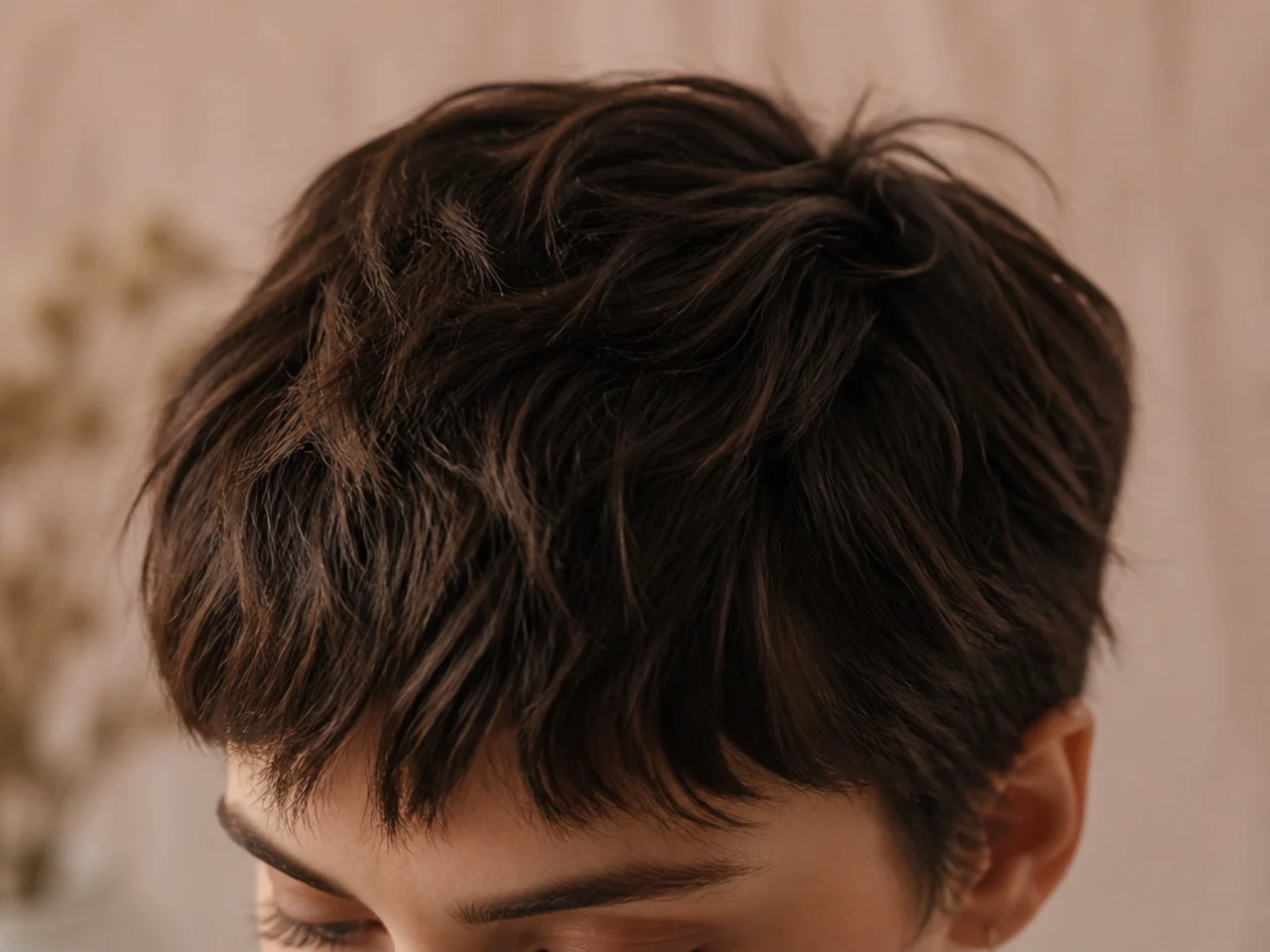
Two longer pieces left at the temples over shorter sides. They sit forward of the ear and catch light against the cheek, giving the eye something to read as thickness at the front, which is where a fine head is usually thinnest.

11. Bottleneck Fringe Mullet
A fringe that stays short and closed in the middle then opens out sharply at the sides. The closed centre needs very little hair to look solid, so it can be taken from a shallow strip of the hairline — useful when there is not much to give.

12. Grown Out Pixie Mullet
What a pixie becomes at around five months if the nape is left alone while the sides get trimmed. Hair grows roughly half an inch a month, so the tail arrives well before the sides catch up, and that gap in timing is the mullet.
13. Micro Mullet
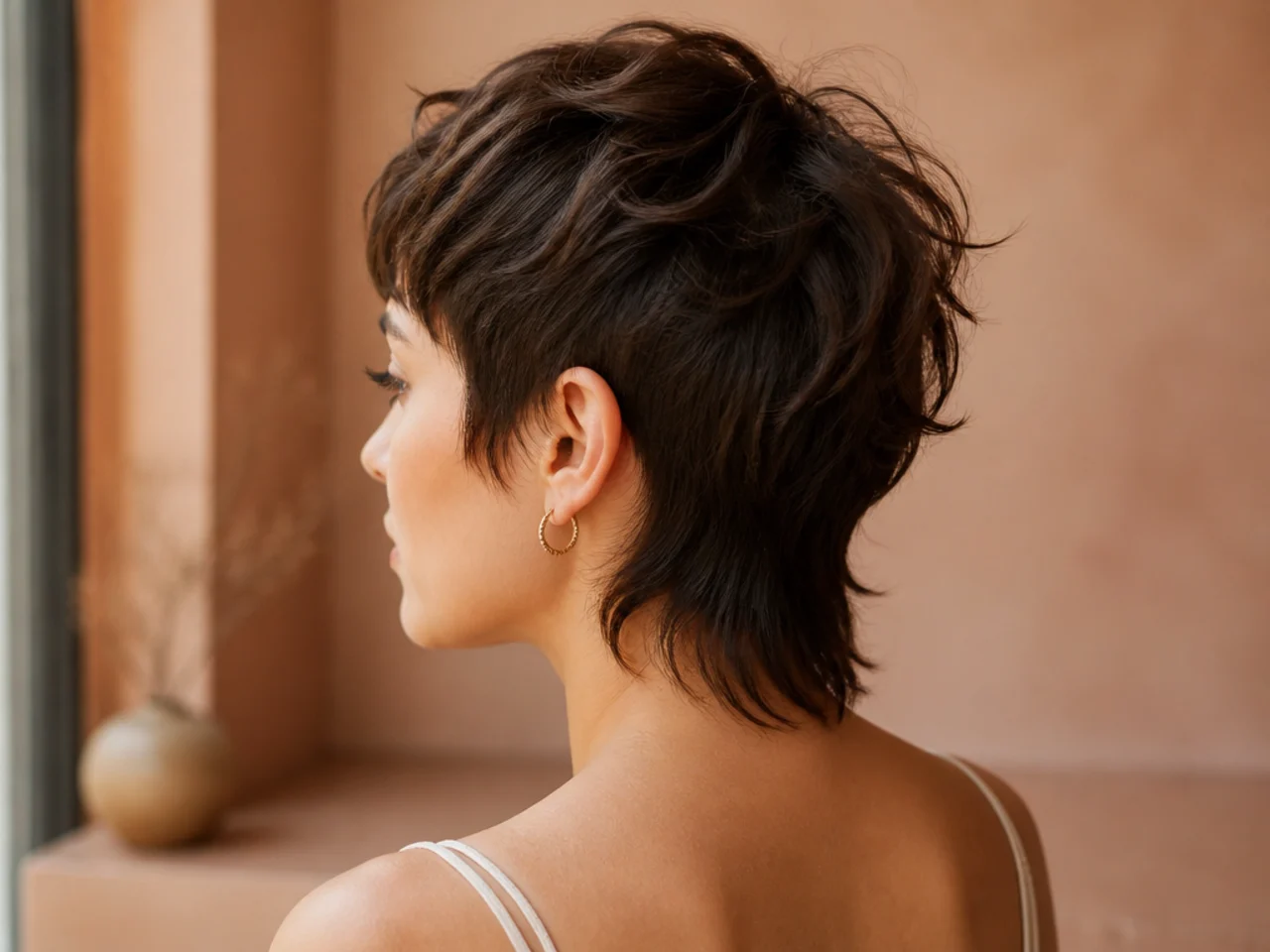
Under three inches nearly everywhere, with the tail barely clearing the hairline. At that length fine hair carries almost no weight, so it stands where the scissors left it rather than falling, and the shape holds through the day without product.
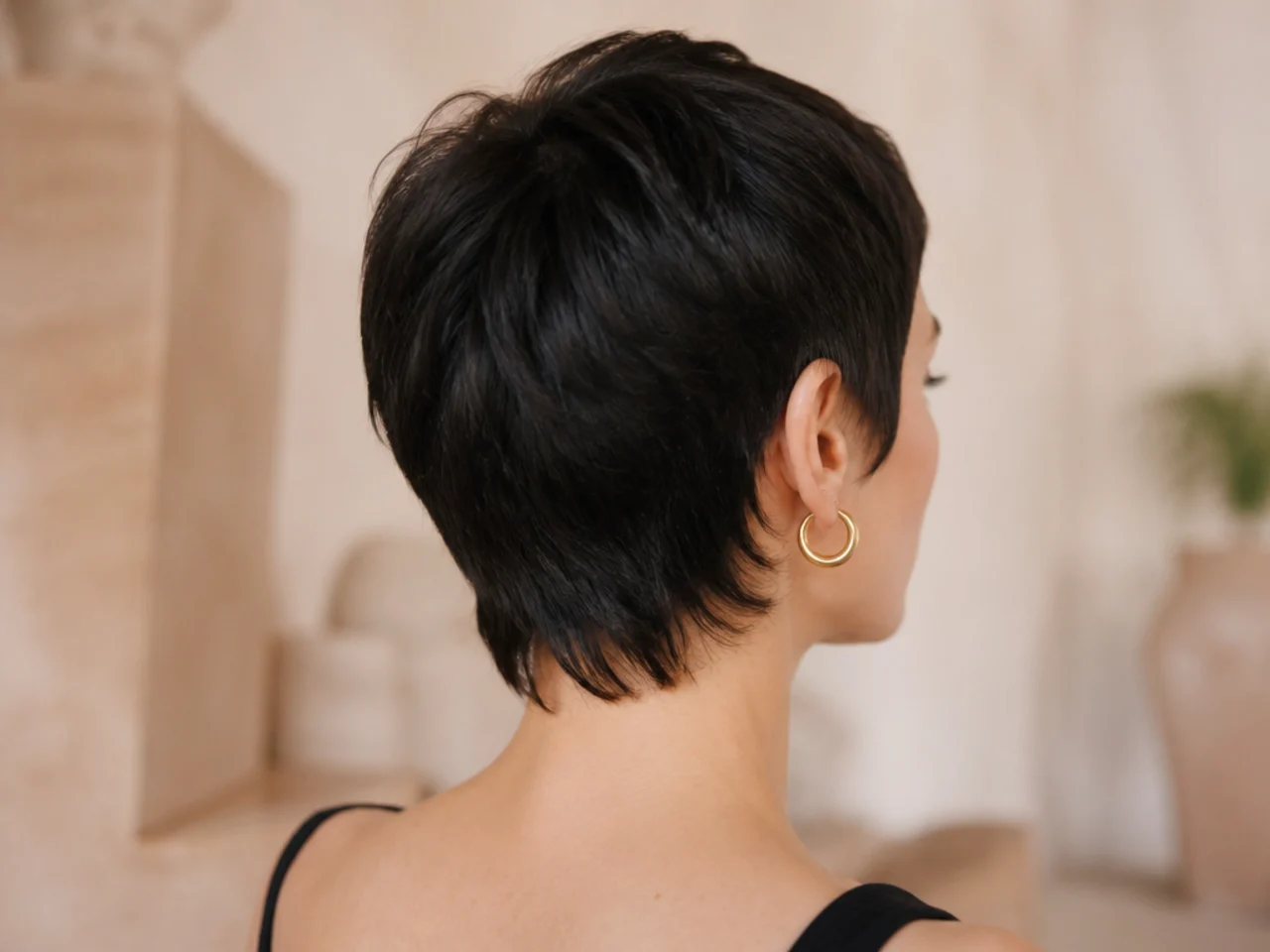
14. Wavy Mullet
Cut dry so each wave is left where it actually sits. A wave cut wet is cut in the wrong place — the strand straightens under water and travels up as it dries, which on fine hair is enough to leave a visible hole in the outline.
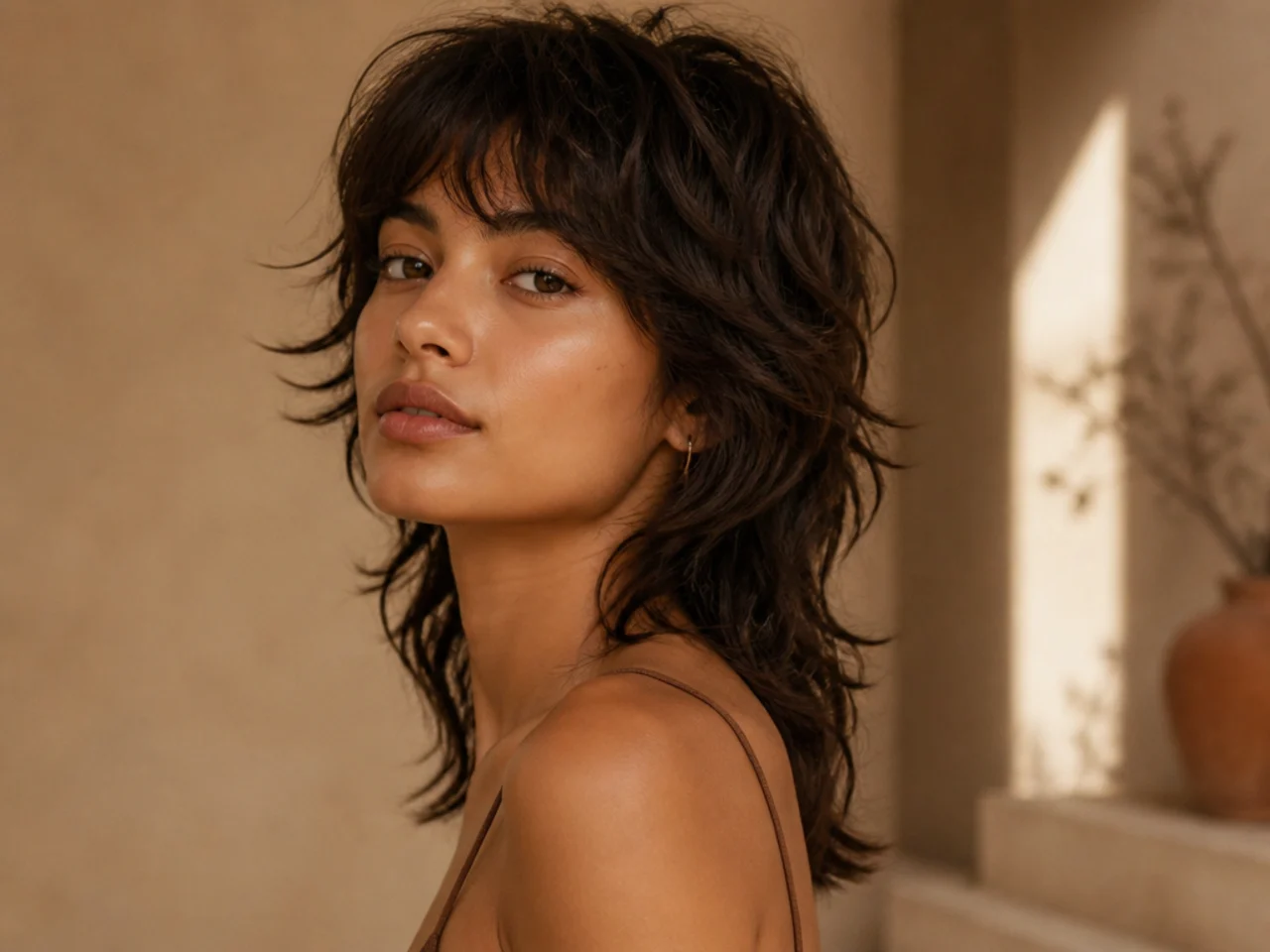
15. Straight Blunt Mullet
No line anywhere in the cut softer than a straight scissor edge. Straight fine hair has no bend to disguise a staggered end, so a softened perimeter goes translucent under overhead light while a blunt one keeps a solid outline.
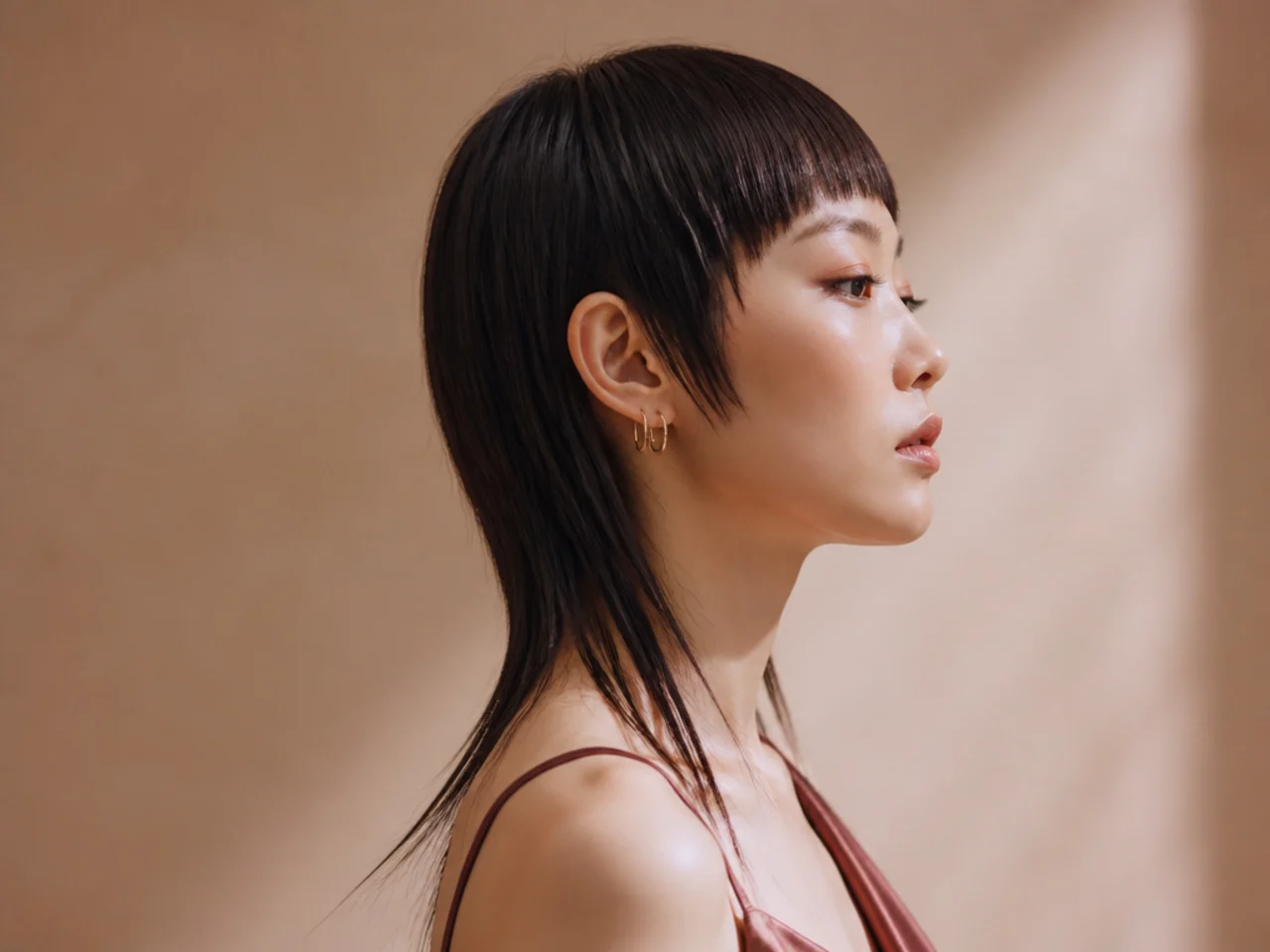
16. Mullet With a Root Shadow
Colour left a shade or two darker at the roots than through the lengths. Scalp shows through fine hair when it is viewed from above, and a darker root cuts the contrast between hair and skin so the gap stops registering as a gap.
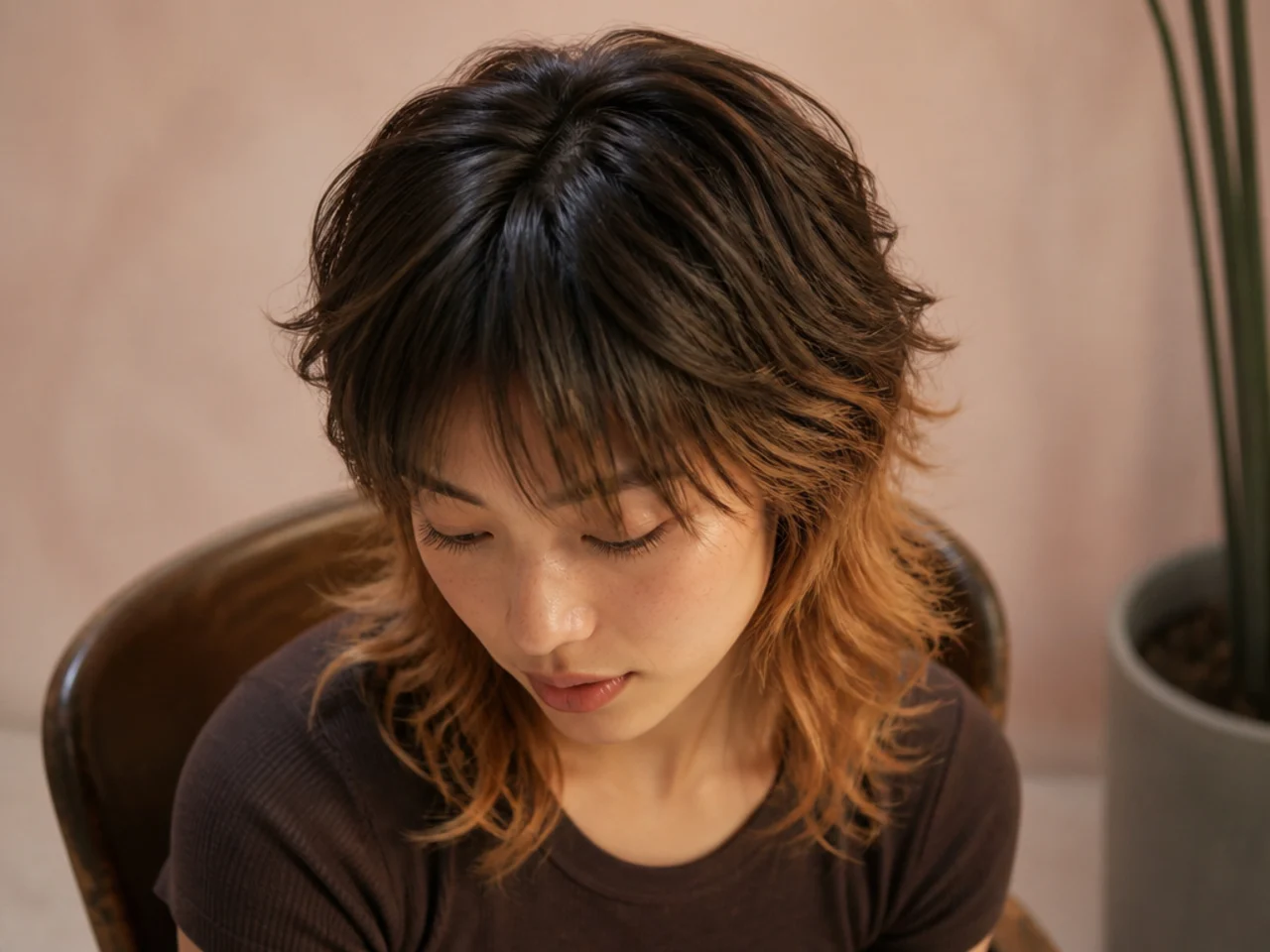
17. Mullet With Money Piece Highlights
Two lightened panels sitting either side of the parting. Lightening roughens the cuticle, and a rougher strand catches on its neighbours rather than sliding past them, so the treated section stacks and sits fuller than the hair around it.

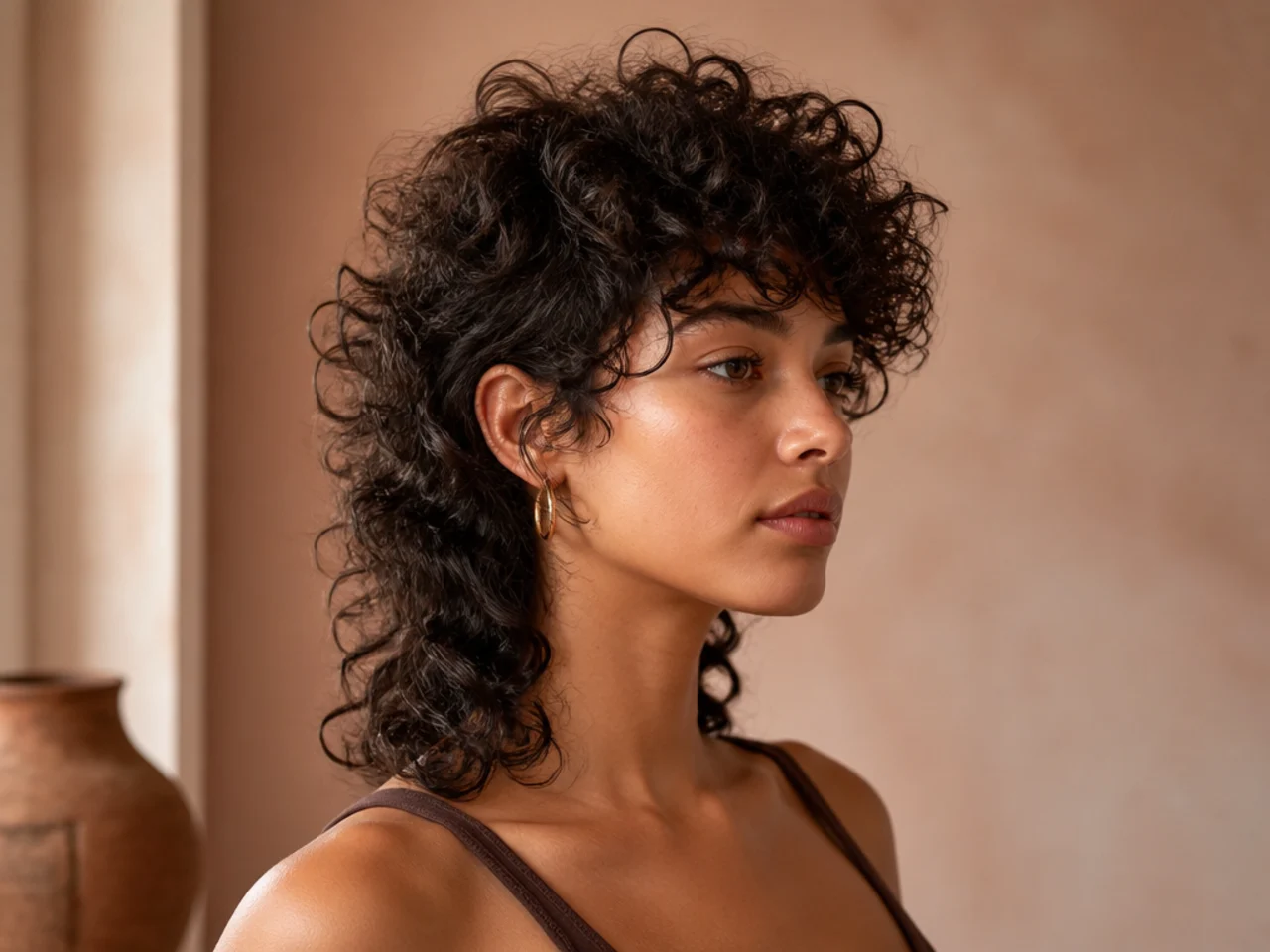
18. Curly Mullet
Fine curls are the easiest texture to build a mullet on, because the curl holds itself off the scalp without help. Cut it curl by curl on dry hair — a wet cut spends the length the curl needs for shrinkage, and the tail lands short.
19. Mullet With a Blunt Nape
The bottom edge cut straight across instead of tapered into the neck. A straight edge keeps every strand in the tail the same length so it finishes in a line rather than a point, and a point is what makes fine hair look sparse from behind.

20. Wolf Cut Mullet
The mullet crossed with a shag — heavier layering through the mid lengths and a longer tail below. It costs more perimeter than any other version here, so it suits a head that is fine but still dense, and disappoints on one that is genuinely thin.

Styling and Upkeep
Dry the roots against the direction they grow. Pushing the root the wrong way and holding it there while it dries sets the strand in a bent position, and a bent root cannot lie flat.
Let it cool before you touch it. Hair takes its shape as it cools, not while it is hot, so a section released from the brush warm goes straight again within minutes.
Mousse at the root beats oil on the ends. Mousse dries to a film that stiffens the strand and adds diameter. Oil adds weight, and weight is the one thing fine hair cannot carry.
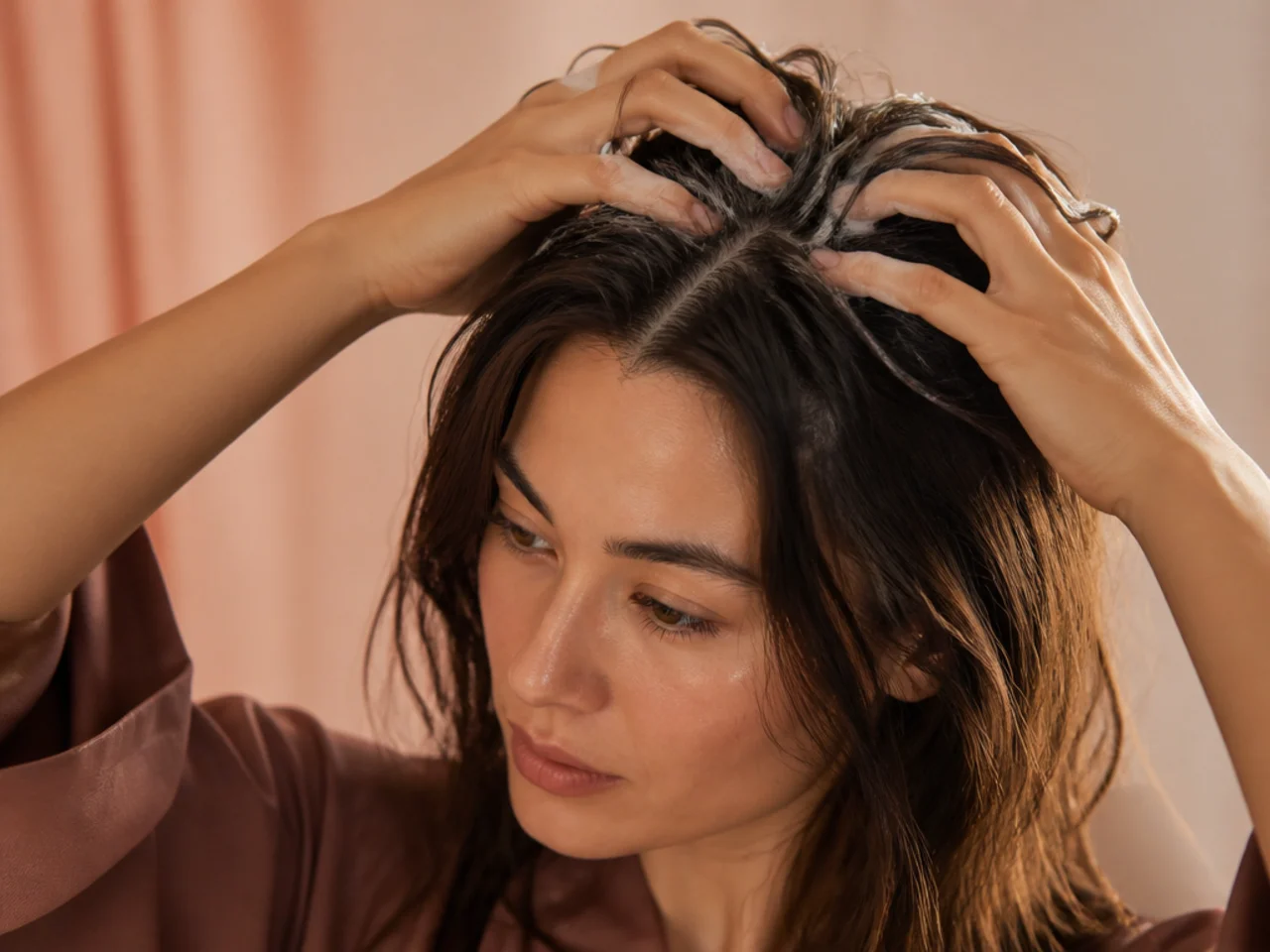
Wash more often than you have been told to. Sebum is heavy relative to a fine strand, so two days of oil flattens the crown faster than it would on coarse hair.
Trim the perimeter every eight to ten weeks. The blunt outline is the only part of the cut doing the density work, and it wears soft from the ends inward.
Mistakes to Avoid
Asking for texture and getting thinning shears. Say point cut at the ends only. Thinning shears cut into the middle of the section and leave stubs that will not lie down.
Cutting the crown under three inches on thin hair. Below that the strand stops covering the gap to its neighbour and scalp shows through from above.
Cutting the fringe wet. It dries up to an inch shorter, and a fringe is the one section where an inch is the whole design.
Letting the tail run past the collarbone. Beyond that point the natural narrowing of the ends becomes the thing people notice about the cut.
Ironing the crown flat. Straightening removes the bend at the root that was holding the height, so the shape collapses into the shape it had before the cut.

FAQ
Will it thin my ends? Only if the layers are cut short and far apart.
How short at the crown? Three inches is the floor before scalp starts showing.
Wet or dry cut? Dry for anything with a wave in it.

Final Thoughts
The mullet is not a bad shape for fine hair. It is a layered shape, and layers are what fine hair pays for, so the whole job is spending them where they buy height and refusing to spend them at the outline.
Ask for long, closely spaced layers, a blunt perimeter and a crown no shorter than three inches. For how a mullet is built when nothing is disconnected at all, see the soft mullet. See also modern mullet haircut. More in Mullet and Wolf Cut.