20 Side Swept Bangs for a Round Face
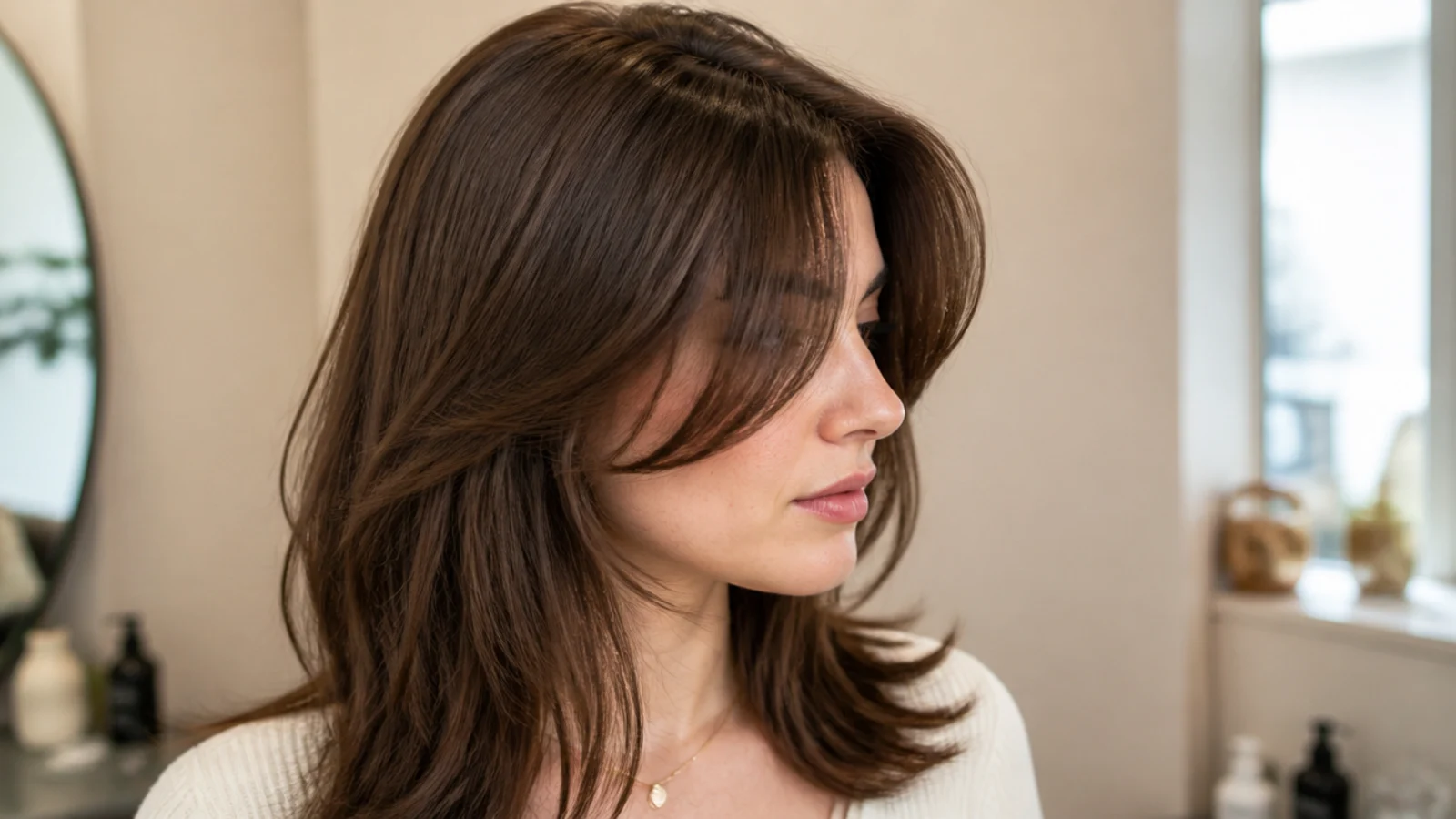
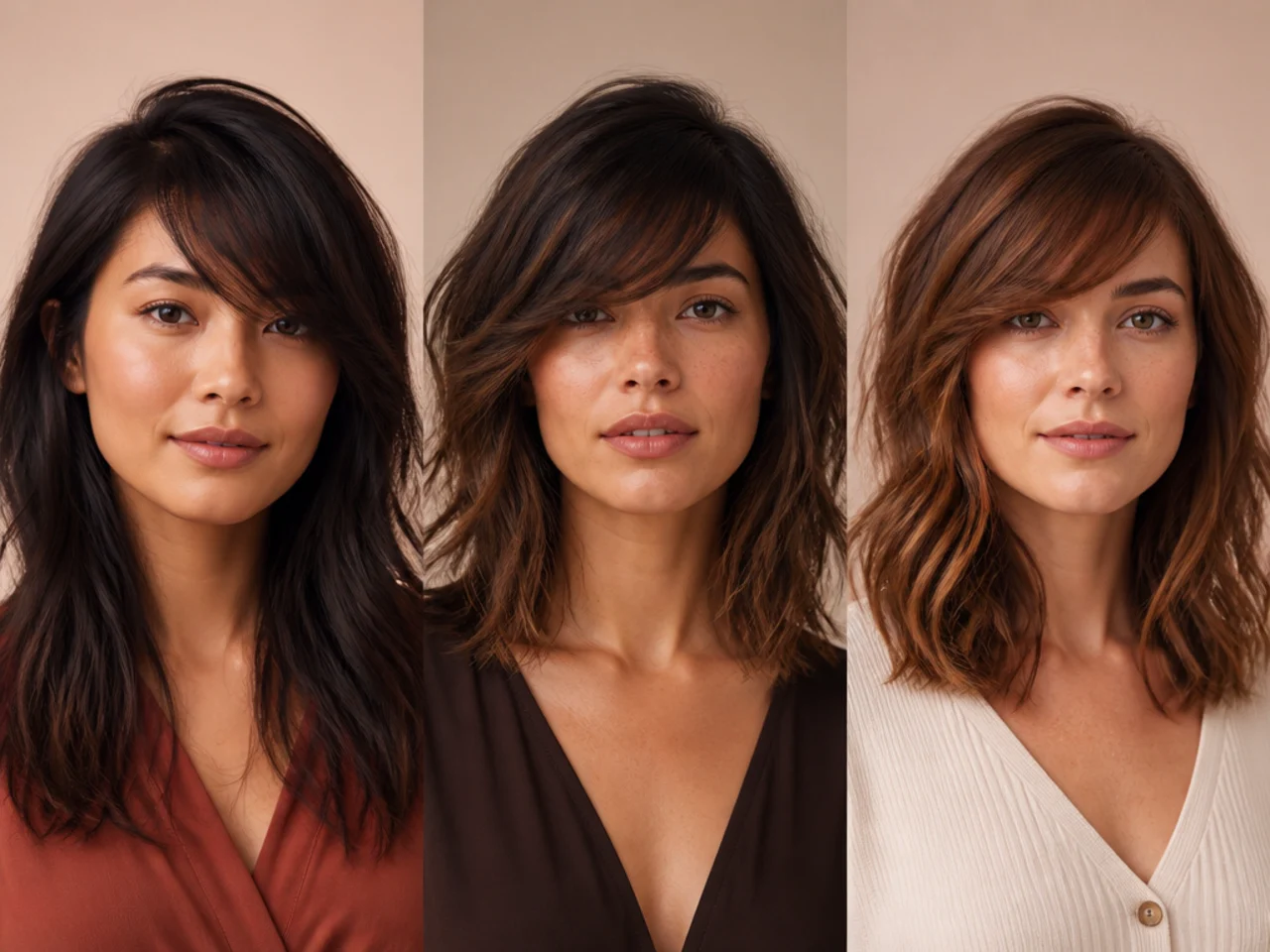
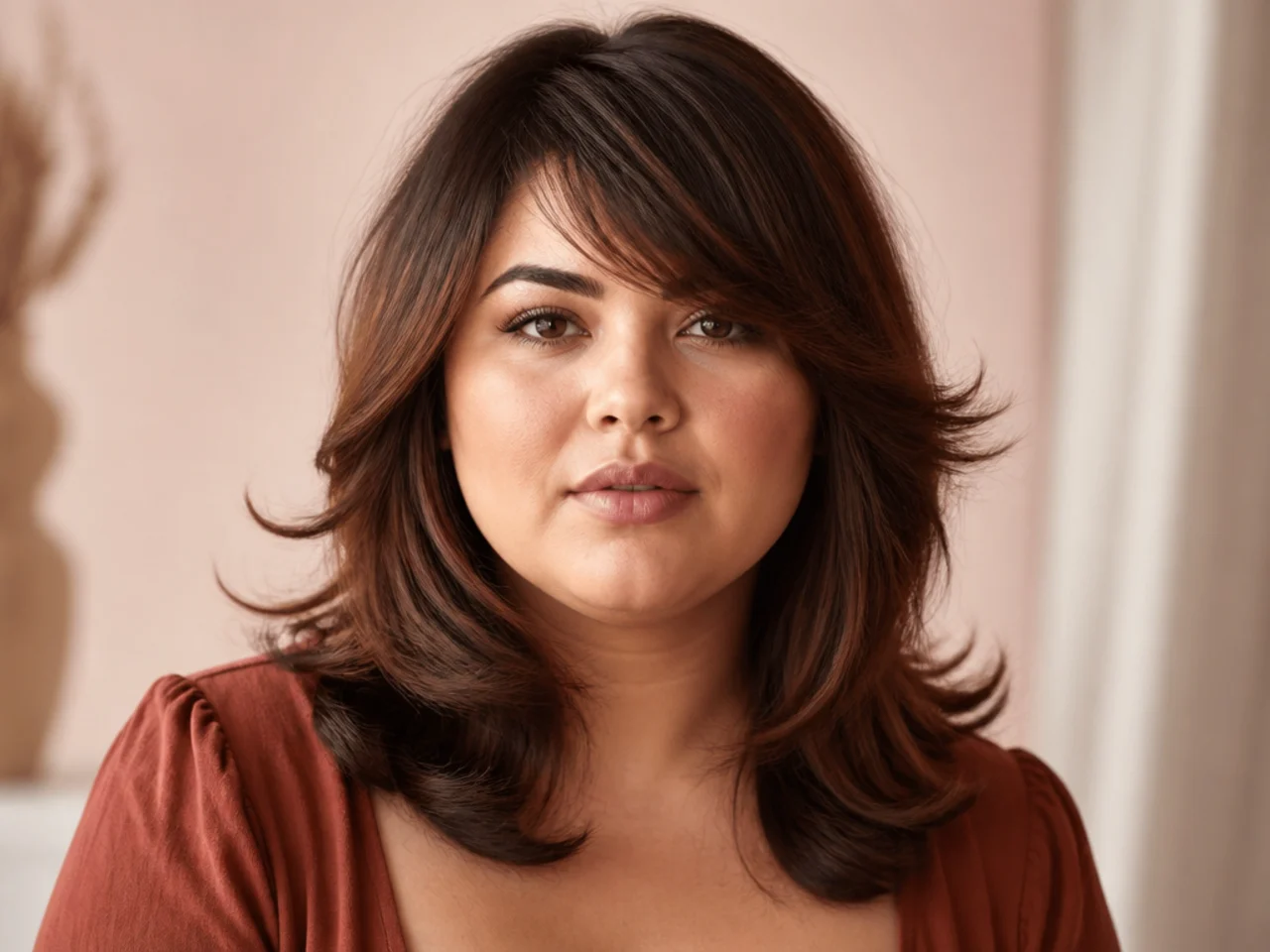
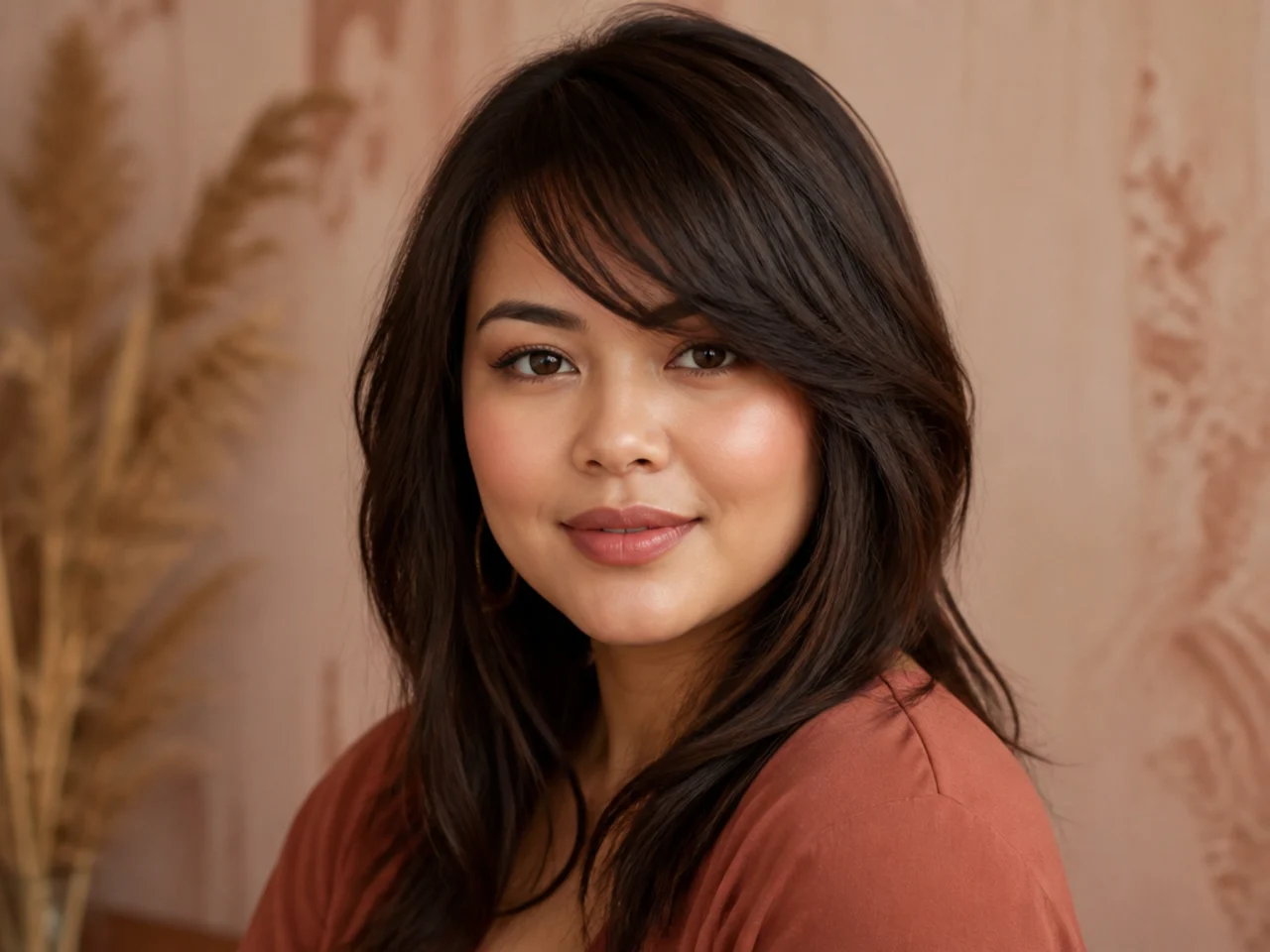
Twenty side swept bangs for a round face, and the rule that matters most — the sweep has to travel past the cheekbone. A fringe that stops at brow level draws a second horizontal line across the widest part of the face.
In this article · 27
- What Makes Side Swept Bangs Work on a Round Face
- How to Choose Yours
- The 20 Ideas
- 1. Long Steep Sweep Past the Cheekbone
- 2. Jaw-Length Side Sweep
- 3. Deep Side Part with a Long Sweep
- 4. Side Swept Bangs with a Long Bob
- 5. Side Swept Bangs with Long Layers
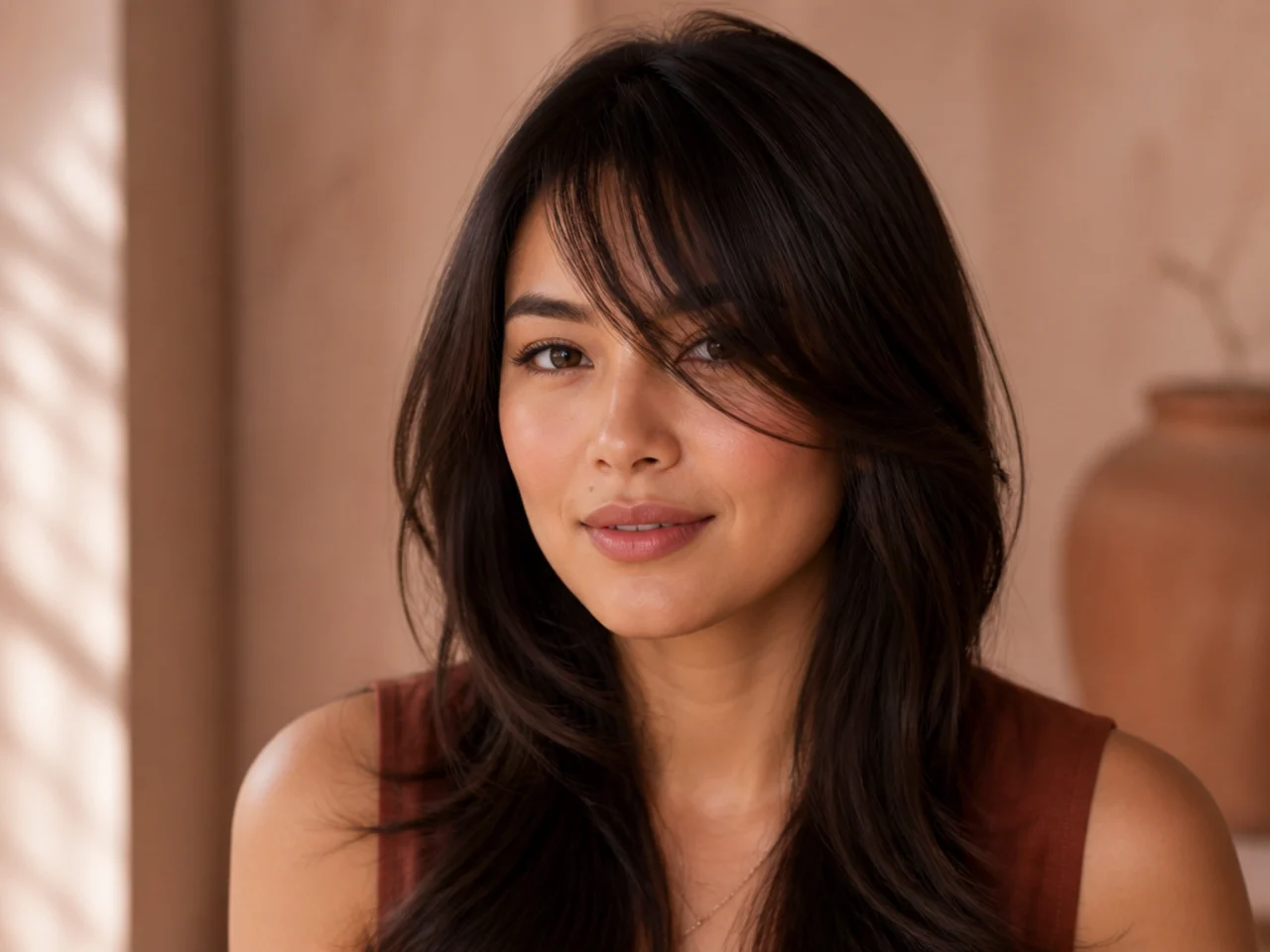
- 6. Wispy Long Sweep
- 7. Side Sweep with Crown Volume
- 8. Side Sweep Tucked Behind One Ear
- 9. Side Sweep with a Middle-Length Cut
- 10. Long Sweep on Straight Hair
- 11. Long Sweep on Wavy Hair
- 12. Long Sweep on Curly Hair
- 13. Side Sweep with a High Ponytail
- 14. Side Sweep with a High Bun
- 15. Side Sweep on Fine Hair
- 16. Side Sweep on Thick Hair
- 17. Side Sweep with Face-Framing Length
- 18. Side Sweep with Highlights Along the Line
- 19. Side Sweep with an Updo
- 20. A Sweep That Stops at the Brow
- Styling and Upkeep
- Mistakes to Avoid
- FAQ
- Final Thoughts
Side swept bangs are recommended for round faces more than any other fringe, and usually without the reason being given. The reason is worth knowing, because it also tells you what to ask for.
A round face has no dominant vertical line. The diagonal supplies one. That is the whole mechanism. A blunt fringe cut straight across adds a second horizontal instead, which is why it works against a round face rather than for it.
The sweep has to travel past the cheekbone. Stop it at brow level and you have drawn a line across the widest part of the face — the exact effect the diagonal was meant to break.
What Makes Side Swept Bangs Work on a Round Face
The diagonal is a vertical component. Any line that is not horizontal adds length to how a face reads. The steeper the diagonal, the more of that it supplies.
A high shortest point makes a longer diagonal. Placing it at the temple rather than near the brow lengthens the line, which is the part doing the work.
Past the cheekbone, not at it. The fringe should carry the eye downward past the widest point rather than stopping on it.
Volume belongs at the crown, not the sides. Width at the sides is what a round face already has. Height at the top is what it does not.

How to Choose Yours
Ask for the shortest point at the temple. Higher than feels natural. It is the single most useful instruction you can give.
Specify past the cheekbone. Give the length as a landmark on your own face rather than in inches.
Avoid a blunt horizontal edge anywhere. Softened, point-cut ends keep the eye travelling rather than stopping at a line.
Keep the sides close. Layers that flare at cheek height widen the face at exactly the wrong point.
The 20 Ideas
1. Long Steep Sweep Past the Cheekbone
The benchmark. High shortest point, long diagonal. A round face is working against width, so the fringe wants the longest possible vertical travel rather than the shortest.
2. Jaw-Length Side Sweep
Longer still, carrying the line all the way down. Every extra centimetre the diagonal covers is more vertical emphasis, which is the one thing a round face wants.
3. Deep Side Part with a Long Sweep
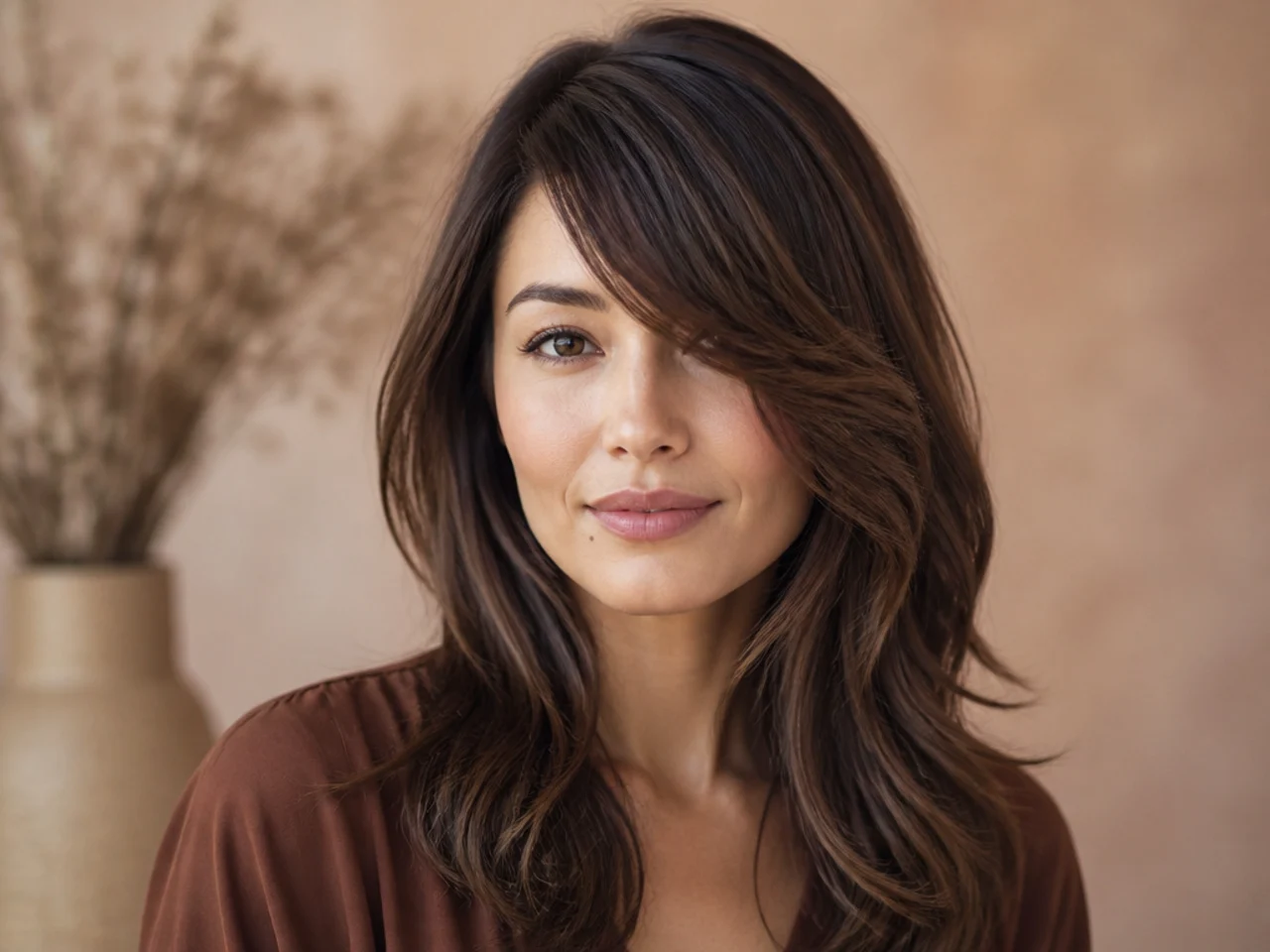
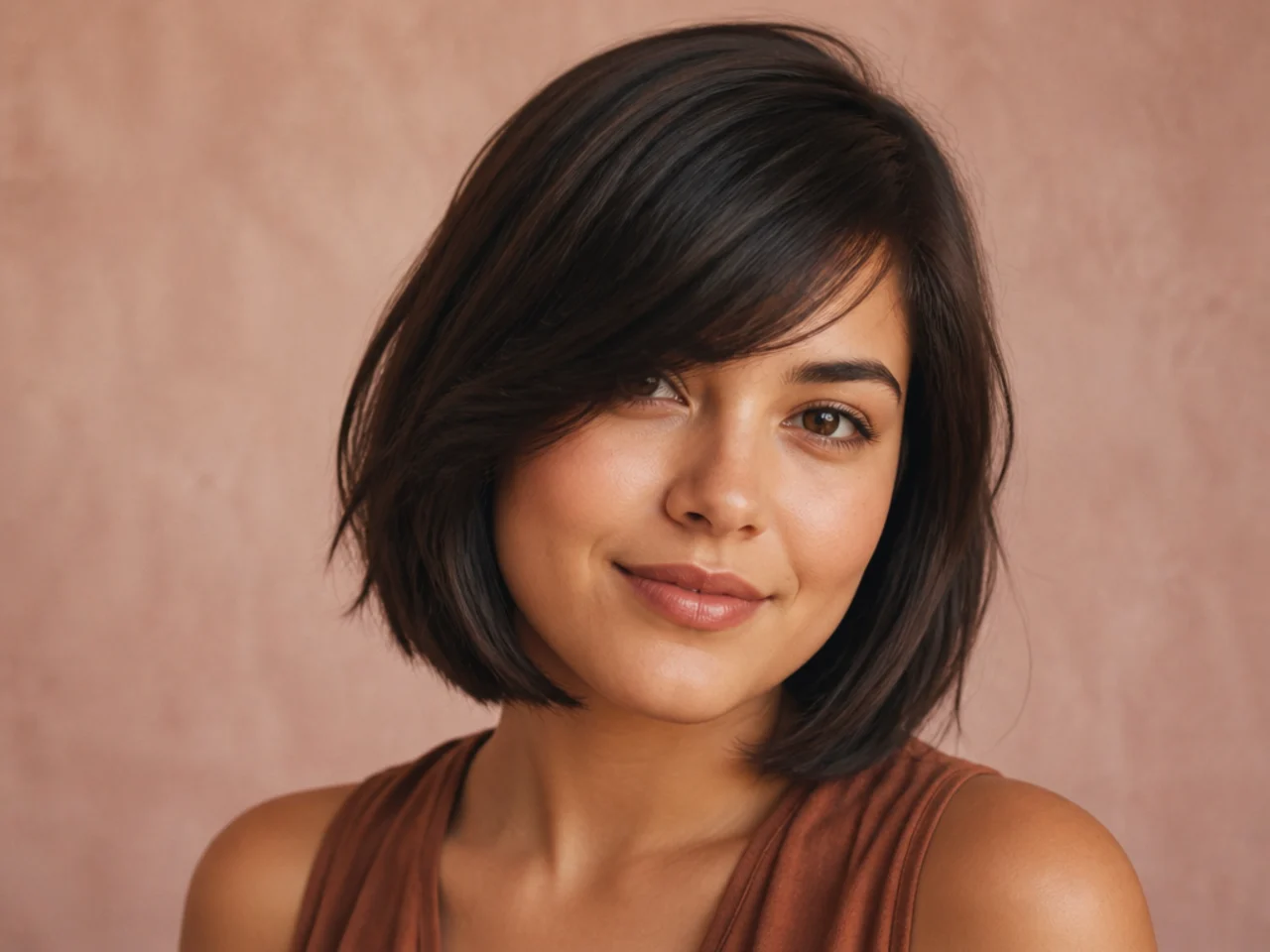
The part itself adds a second asymmetric line. Two diagonals running the same way compound, where a centre part would draw a symmetrical shape across a face that already reads round.
4. Side Swept Bangs with a Long Bob
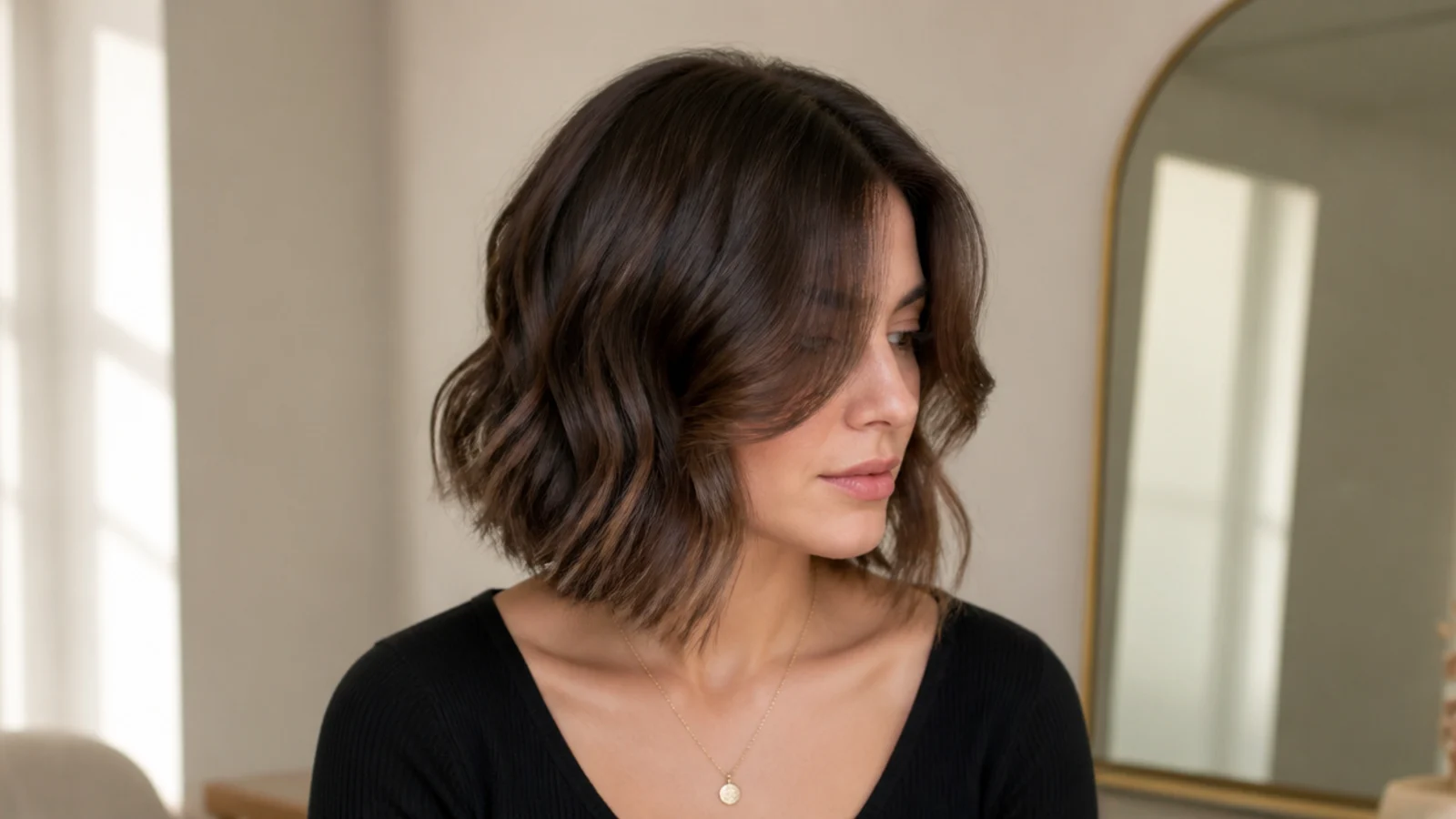
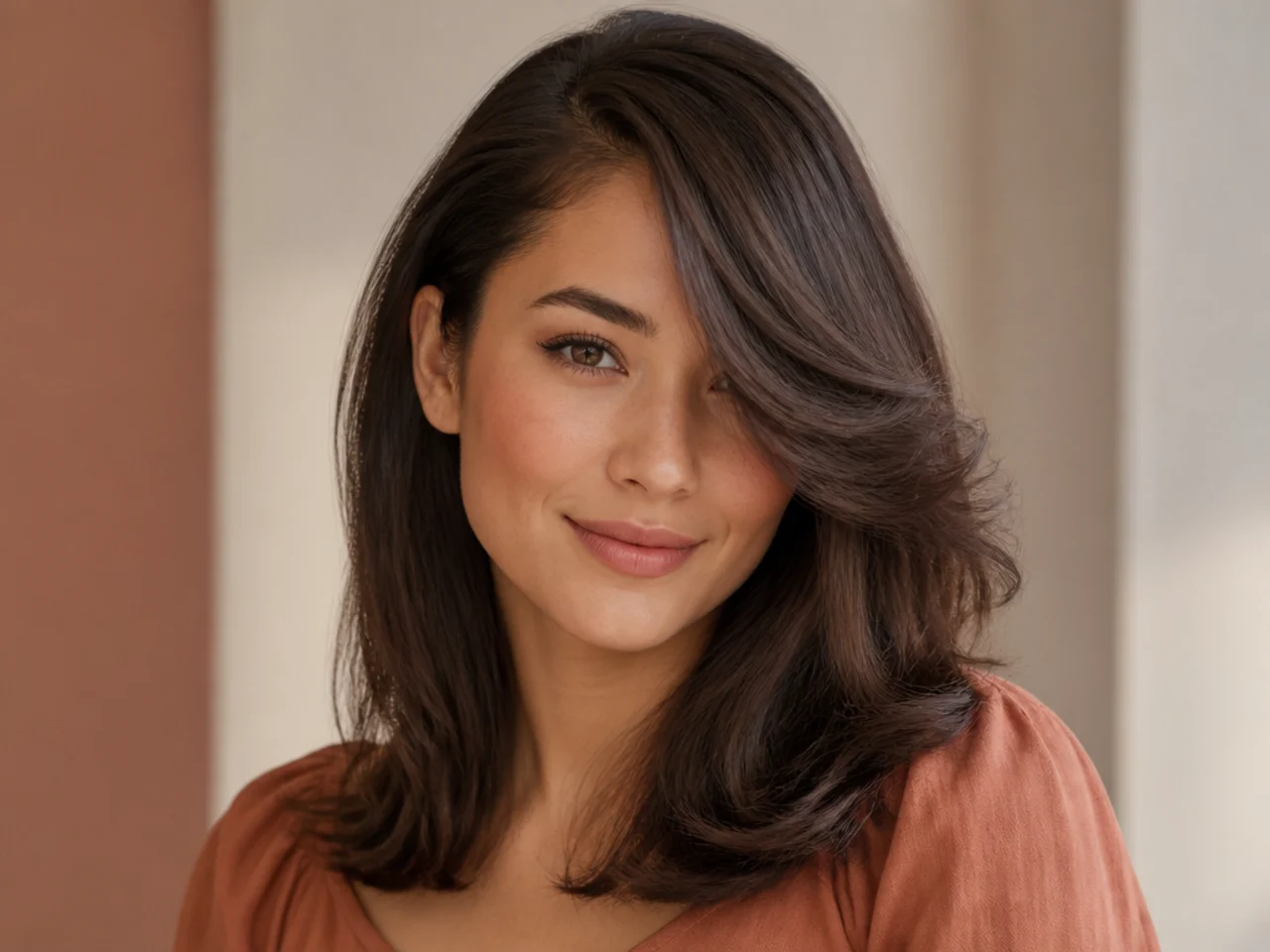
Collarbone length behind, diagonal in front. A lob keeps length below the chin, which is where a round face needs it — anything ending at the cheek widens it.

5. Side Swept Bangs with Long Layers
Layers starting below the jaw so nothing flares at the cheek. A layer beginning at the cheekbone puts volume at the widest point, which is exactly the wrong place.
6. Wispy Long Sweep
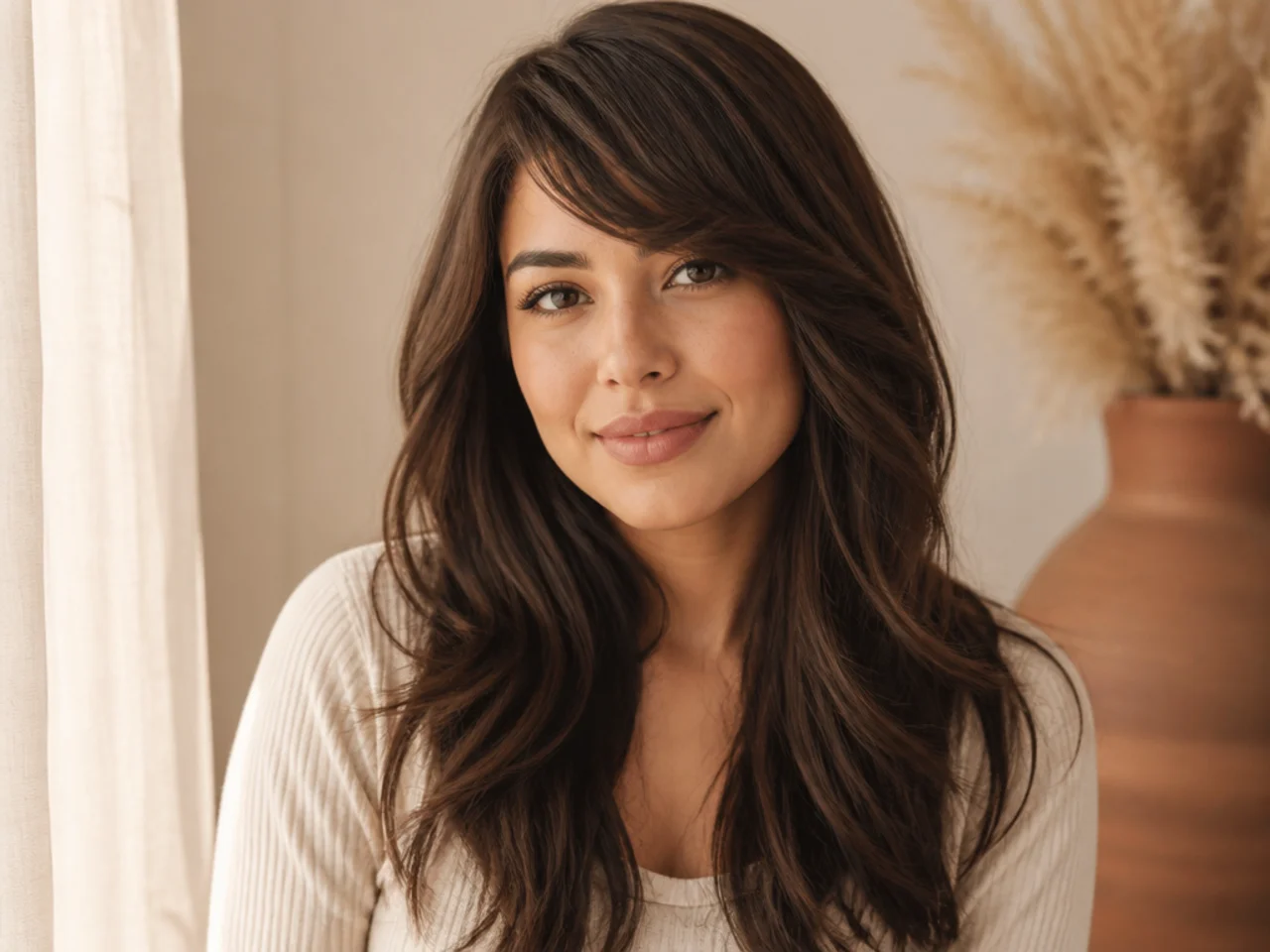
Thinned ends, so the line finishes softly rather than stopping. A hard stop creates a horizontal edge, and a horizontal edge across a round face reads as more width.
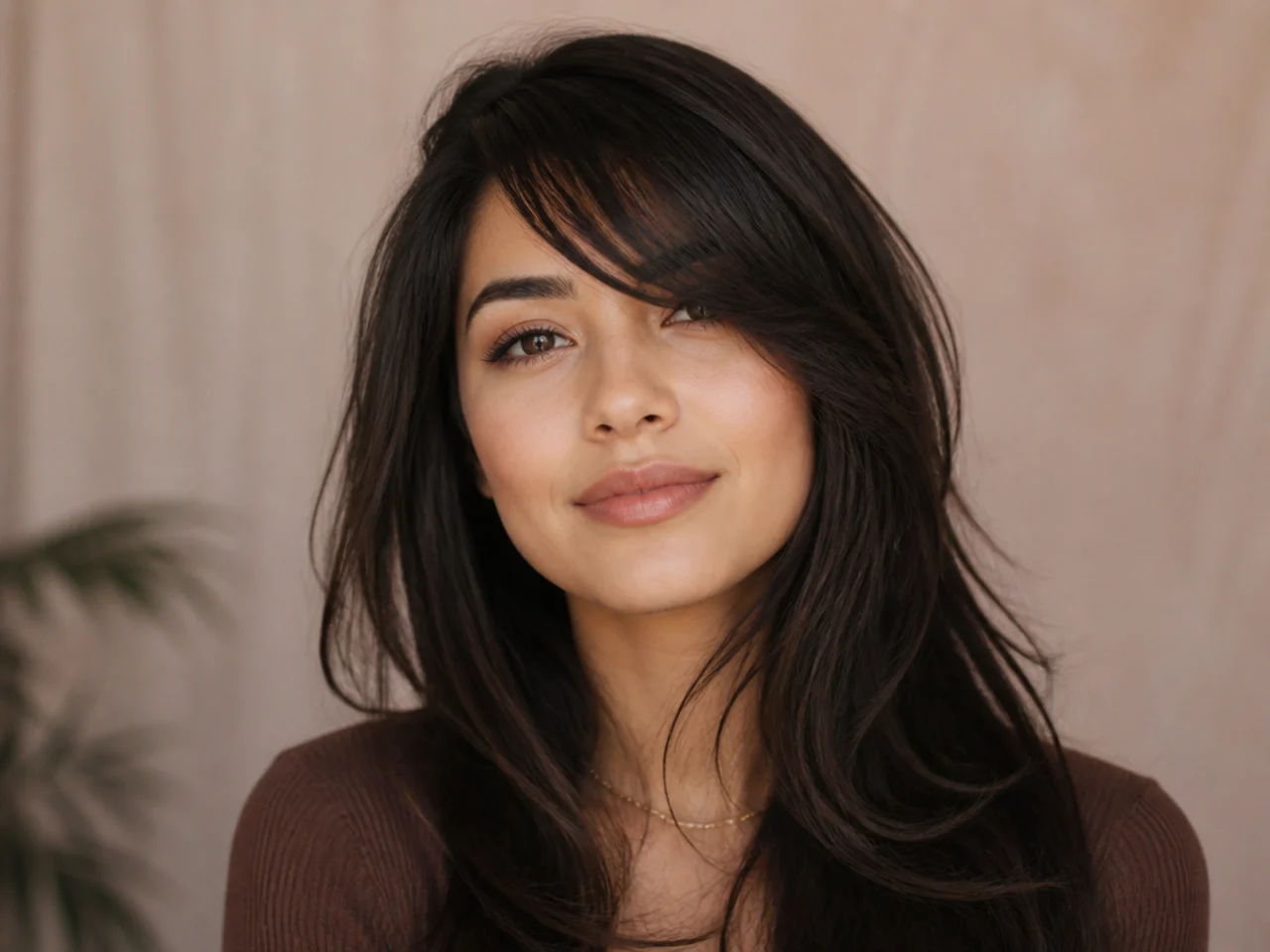
7. Side Sweep with Crown Volume
Height at the top, close at the sides. The proportion that works. Volume at the crown lengthens the silhouette while flat sides narrow it, which is the whole round-face strategy in one shape.
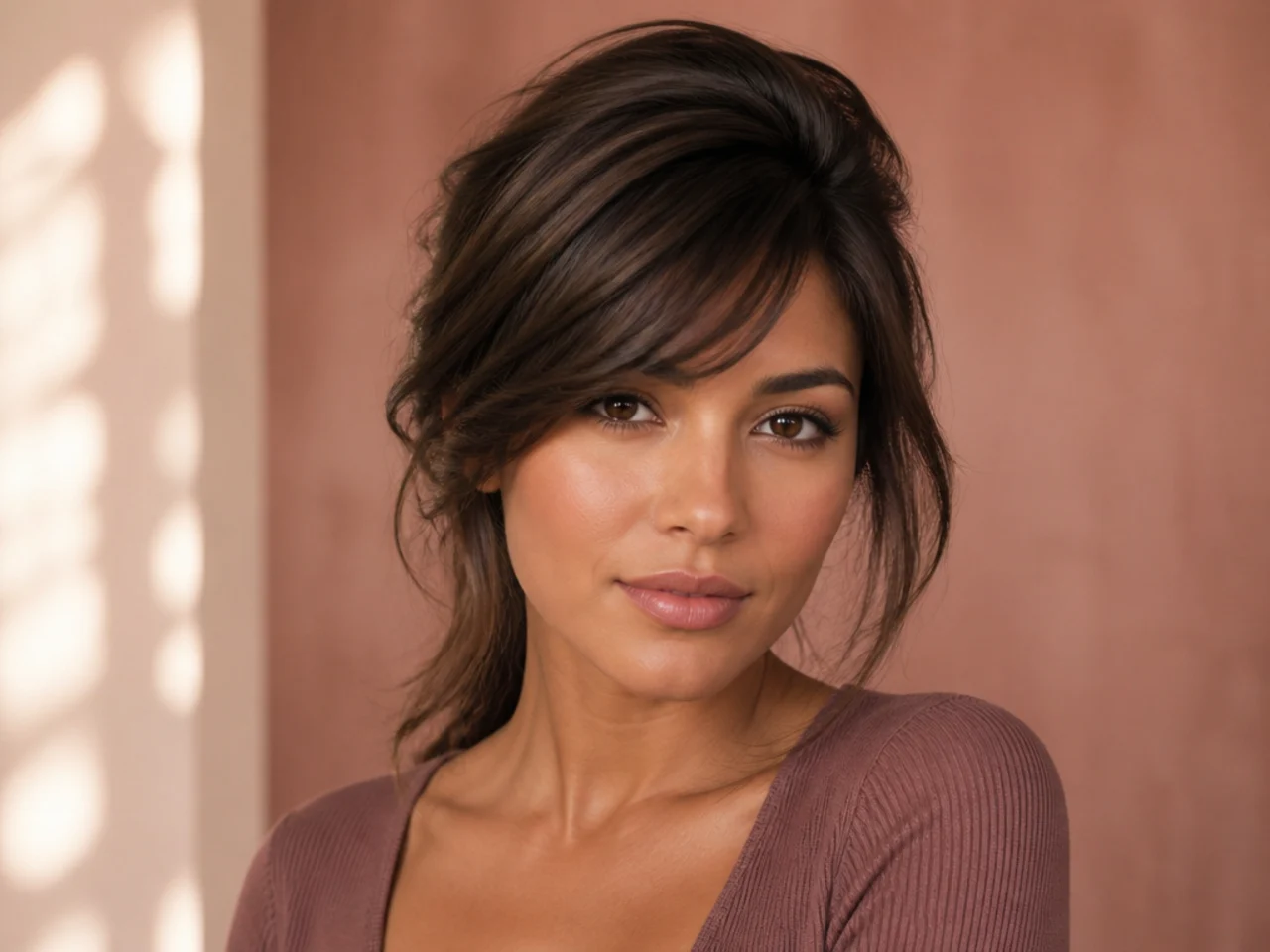
8. Side Sweep Tucked Behind One Ear
Exposes one side and narrows the face visually. Asymmetry breaks the circle the eye is otherwise reading, and it costs nothing to try.

9. Side Sweep with a Middle-Length Cut
Shoulder length behind, keeping the vertical emphasis. Shoulder length is about the shortest you can go before the shape starts adding width rather than length.

10. Long Sweep on Straight Hair
The cleanest version of the diagonal, and the most obvious. Straight hair shows the line at full strength, which suits a round face because the line is doing the work.
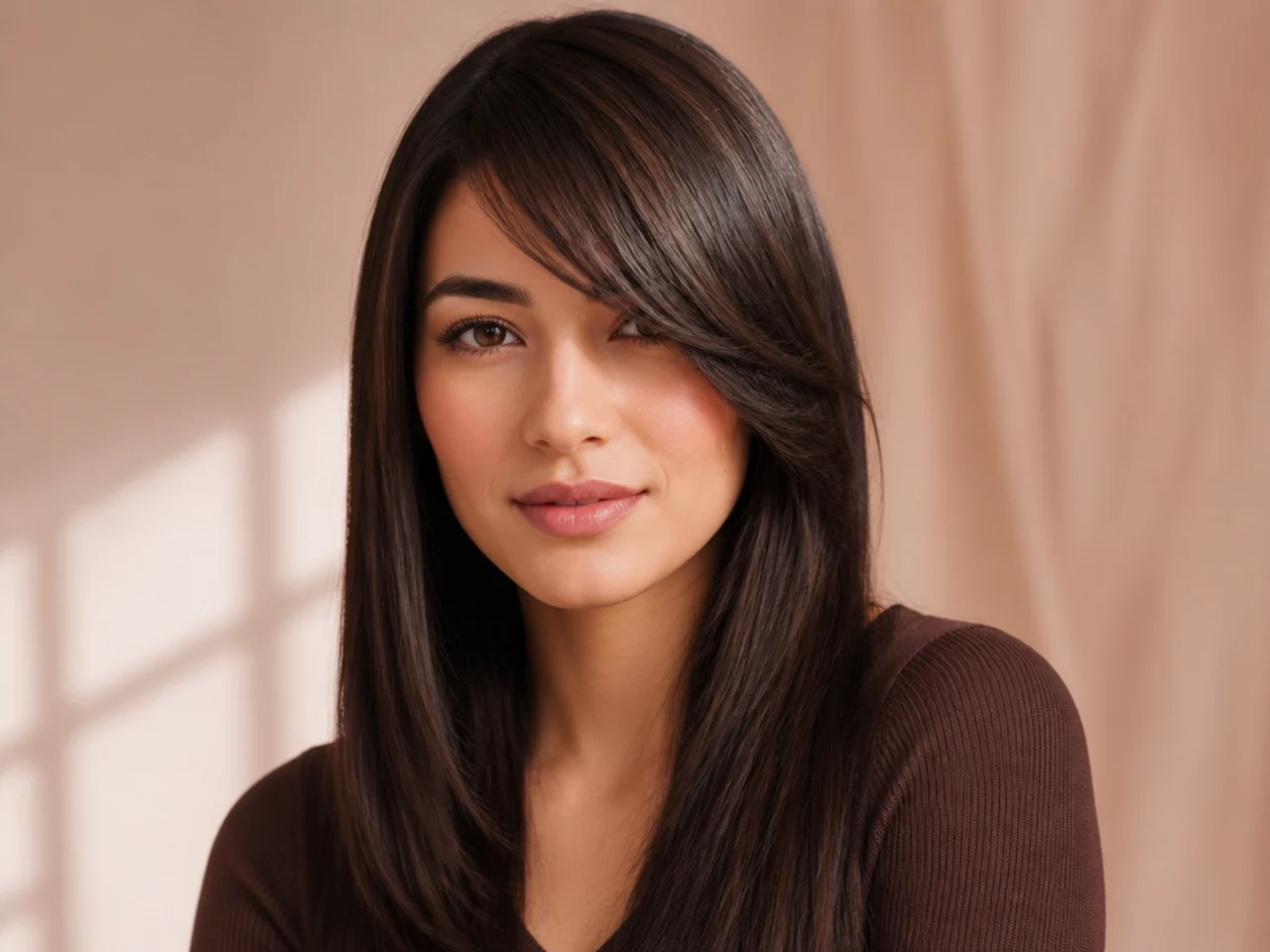
11. Long Sweep on Wavy Hair
The bend adds movement without widening the sides. A soft wave adds interest vertically rather than horizontally, which is the distinction that matters here.
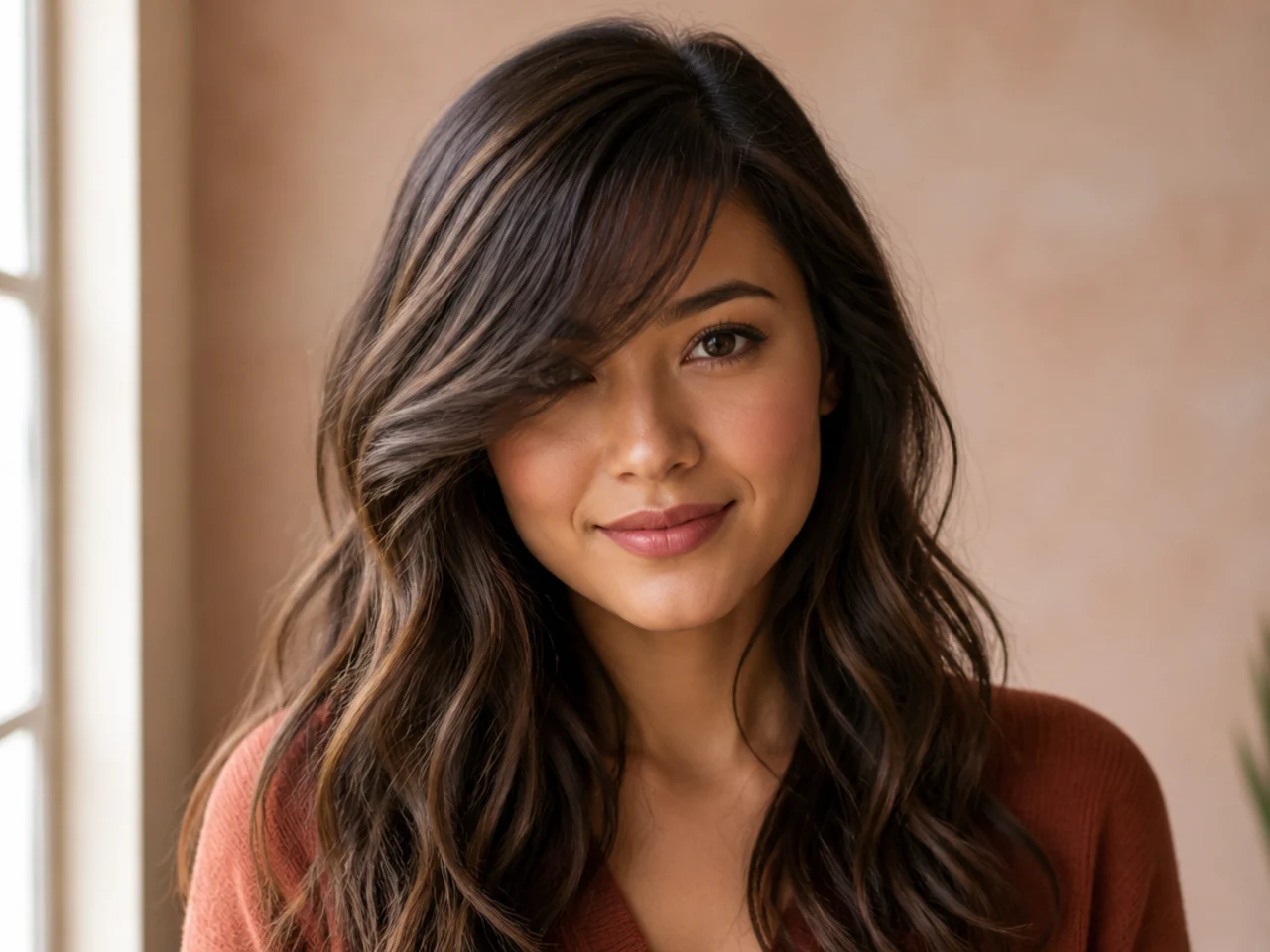
12. Long Sweep on Curly Hair
Cut well below the target line, since curl lifts as it dries. Curl shrinks upward as the water leaves, so a fringe cut at the target lands well above it once dry.
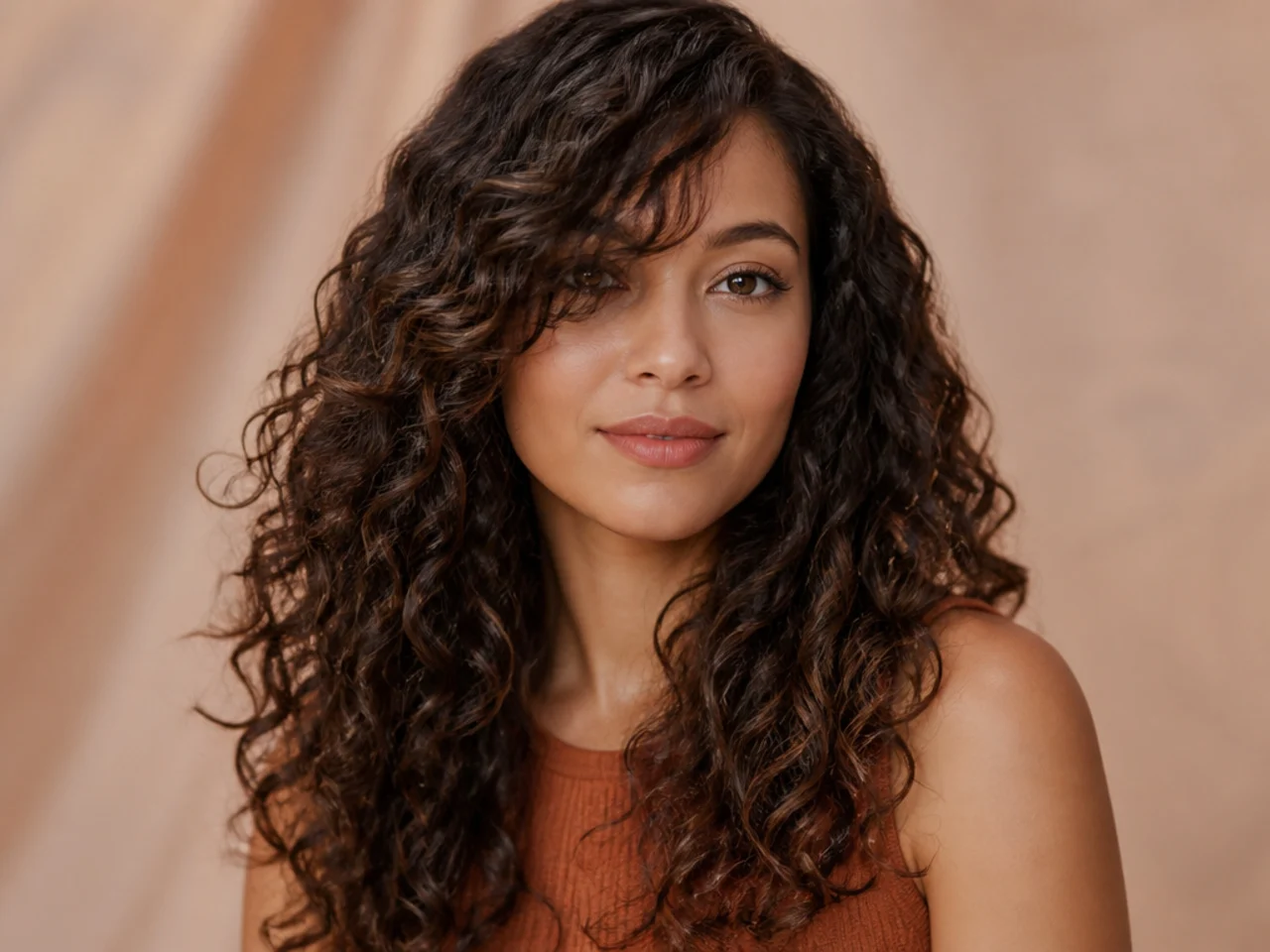
13. Side Sweep with a High Ponytail
Height at the crown, one diagonal left out at the front. A high gather adds vertical height while pulling the sides in, which is the most lengthening thing you can do without cutting.
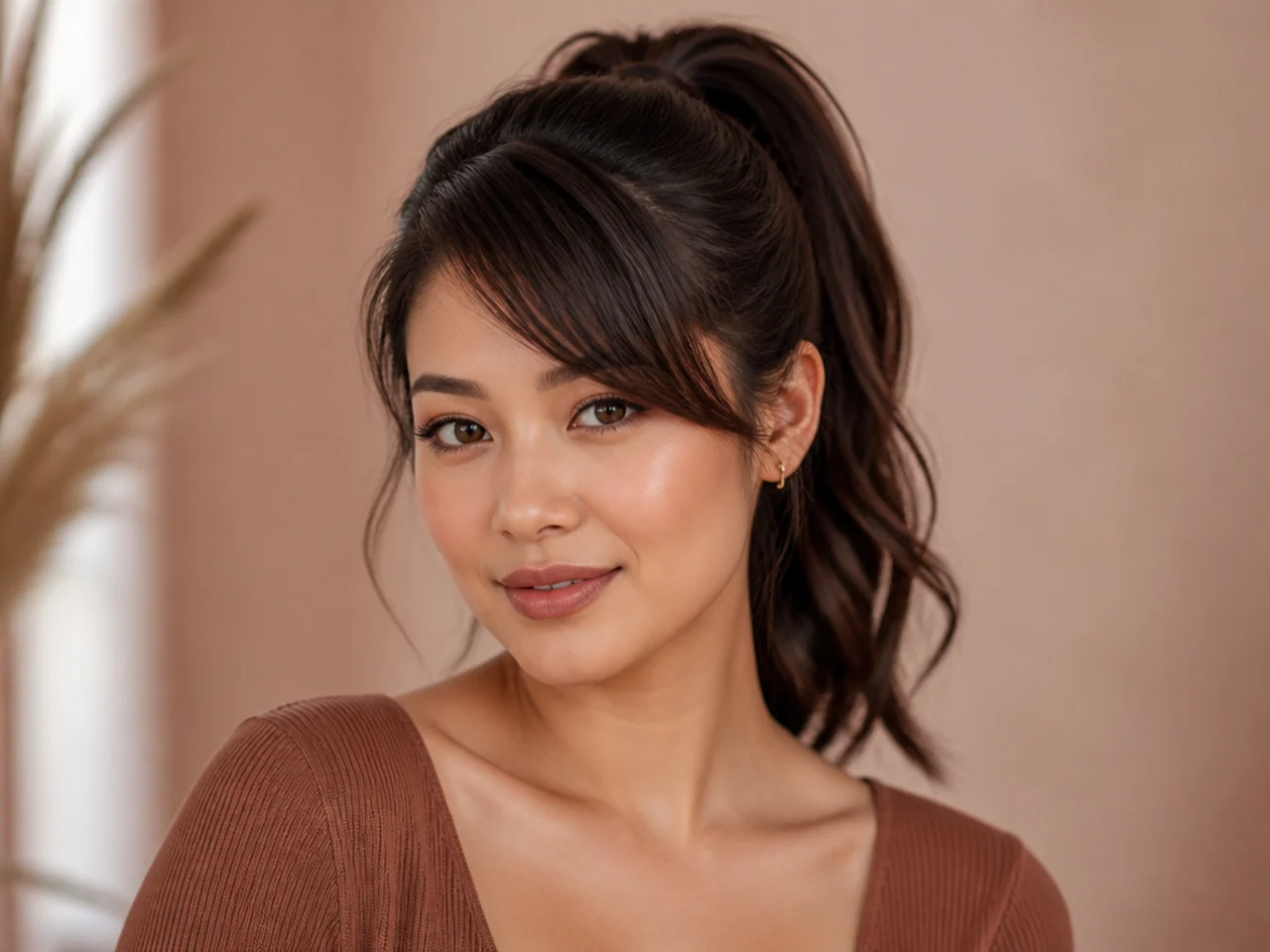
14. Side Sweep with a High Bun
The most lengthening combination on this page. All the volume above and none at the sides, with the fringe breaking the forehead diagonally.
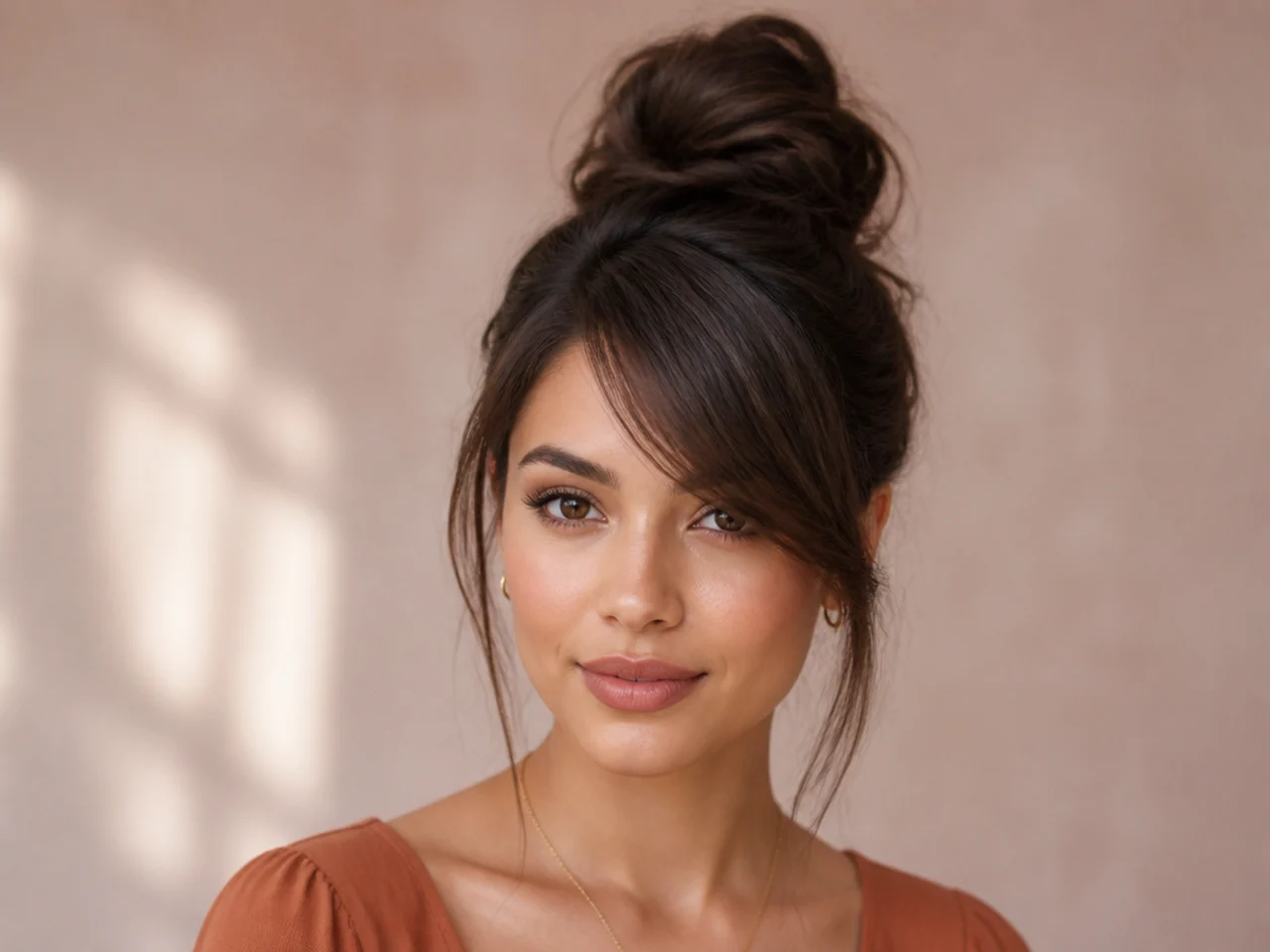
15. Side Sweep on Fine Hair
Taken from further back so the diagonal has enough weight to read. Depth is what puts hair into a fringe, and a fine round-face sweep needs enough body for the line to register.

16. Side Sweep on Thick Hair
Internally thinned so the sweep does not build width at the cheek. Thick hair builds a wedge exactly where a round face is widest, and the weight has to come out from underneath.
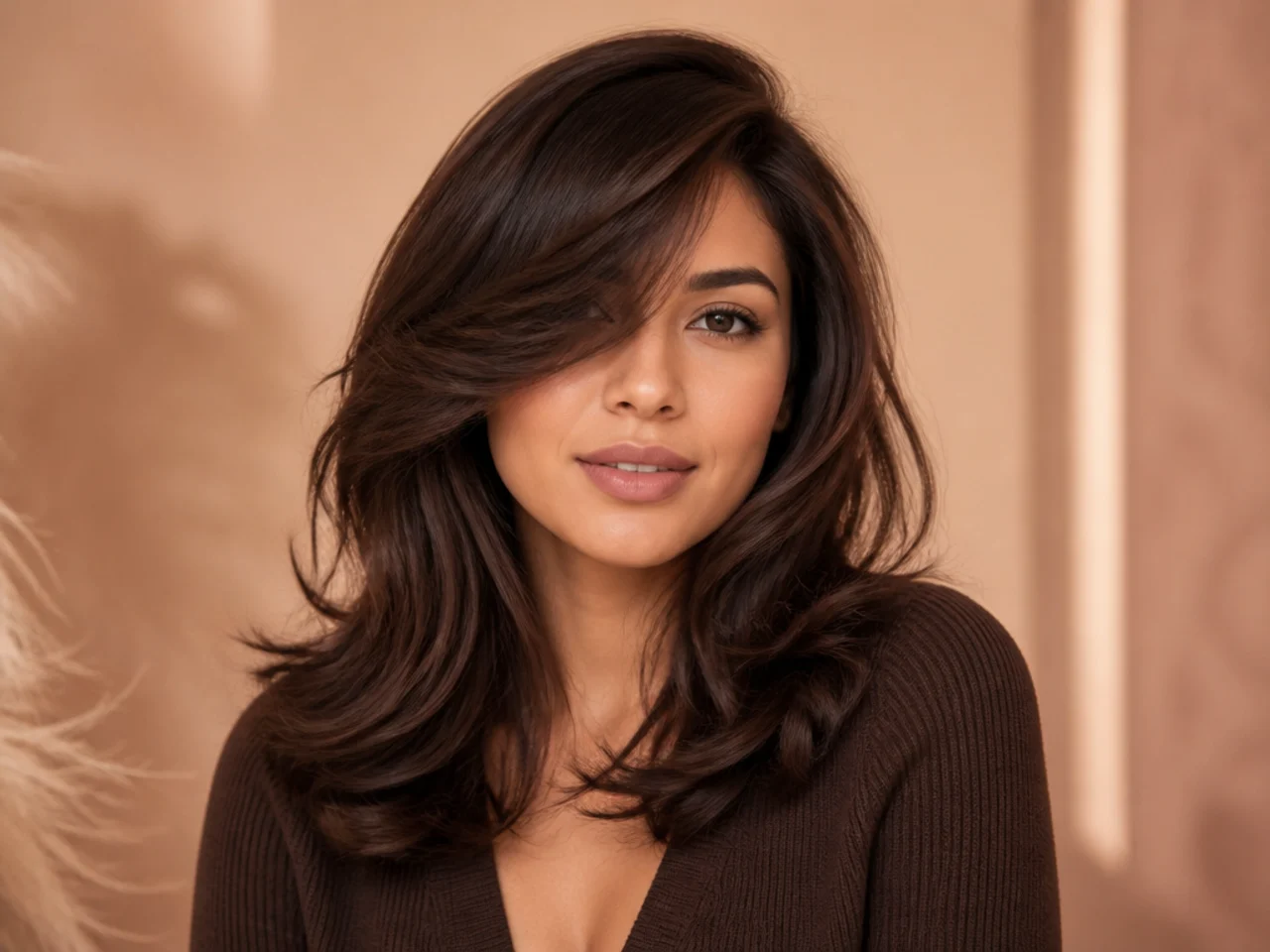
17. Side Sweep with Face-Framing Length
Longer pieces continuing the diagonal below the fringe. Carrying the line past the fringe extends the vertical travel further than the fringe alone can.
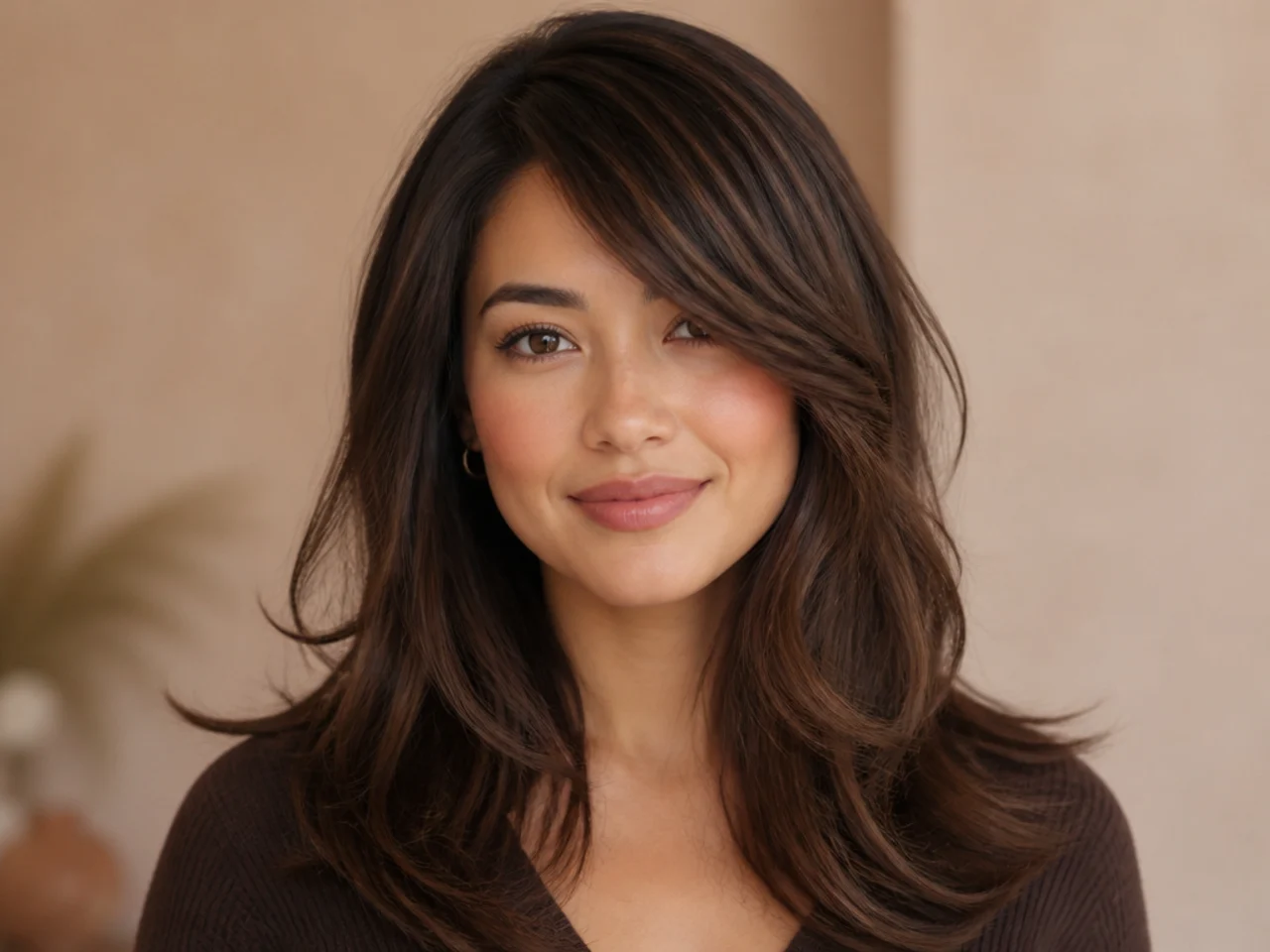
18. Side Sweep with Highlights Along the Line
Colour tracing the diagonal to emphasise it. The eye follows the lighter line, so colour along the diagonal makes the shape read more strongly than the cut alone.
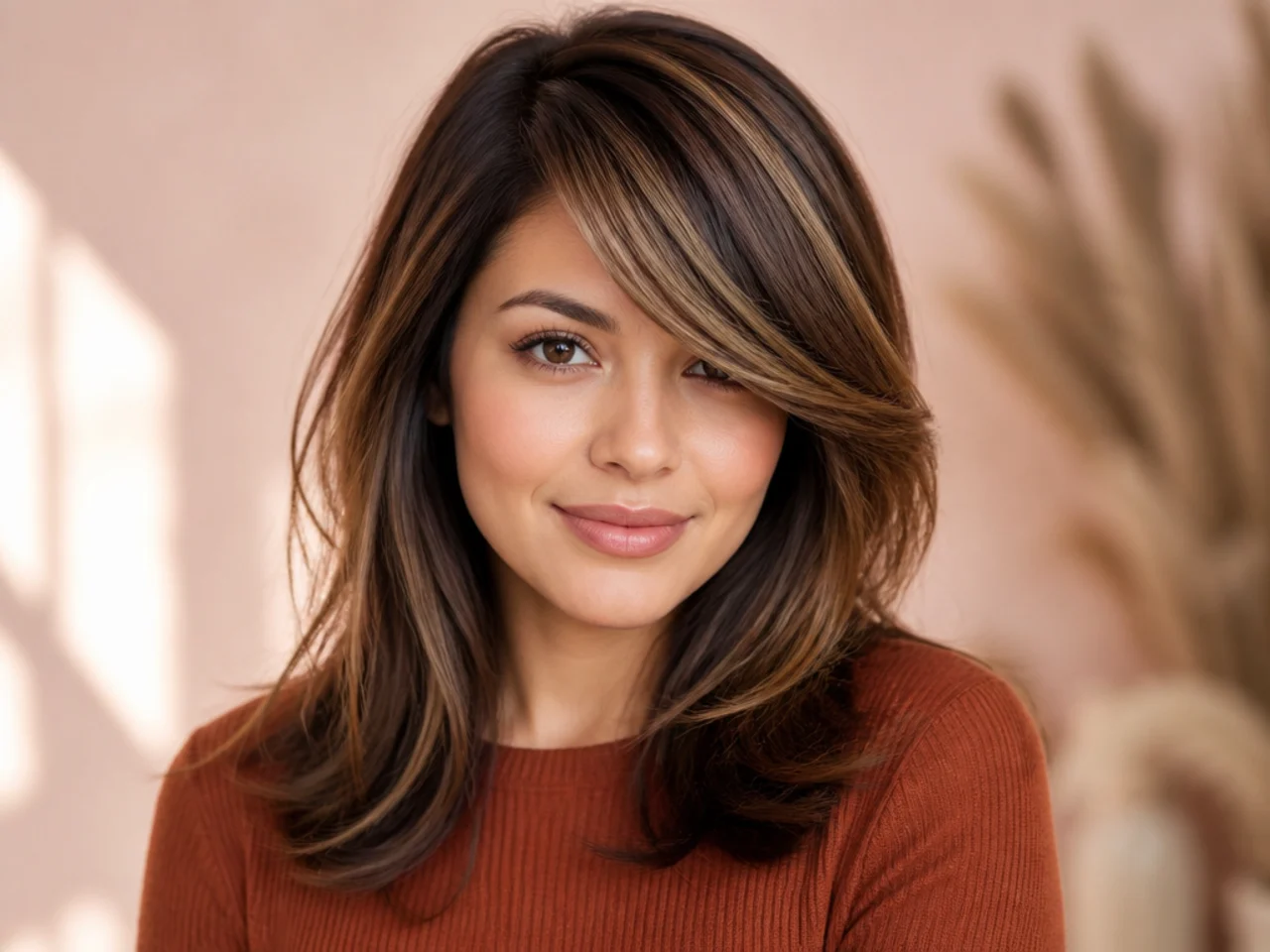
19. Side Sweep with an Updo
One soft diagonal against a gathered shape. With everything gathered the fringe is the only thing breaking the round outline, so it has to be a long one.
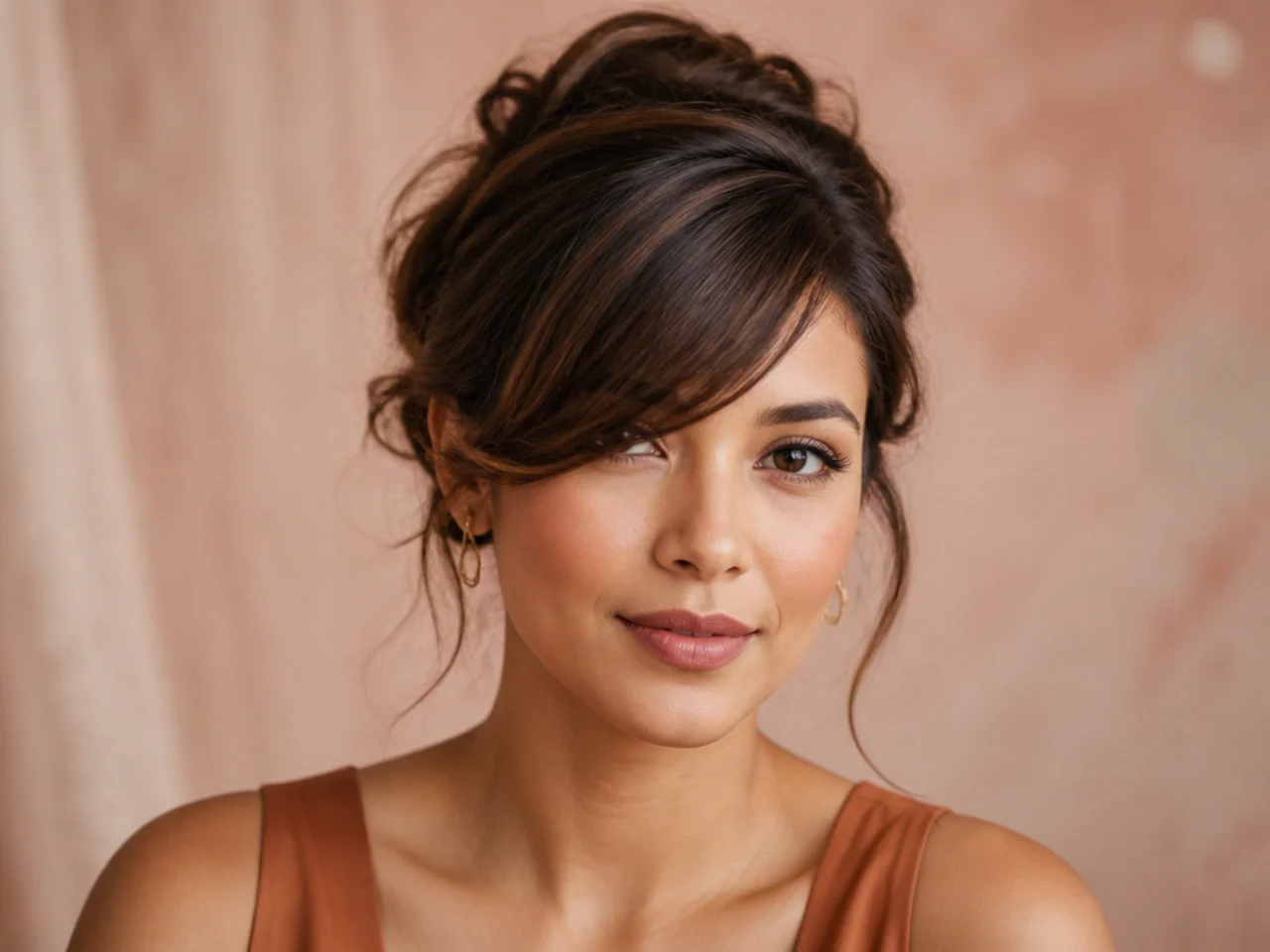
20. A Sweep That Stops at the Brow
The version to avoid. A second horizontal across the widest point. A brow-length fringe draws a line straight across the face at its widest, which is the opposite of everything above.
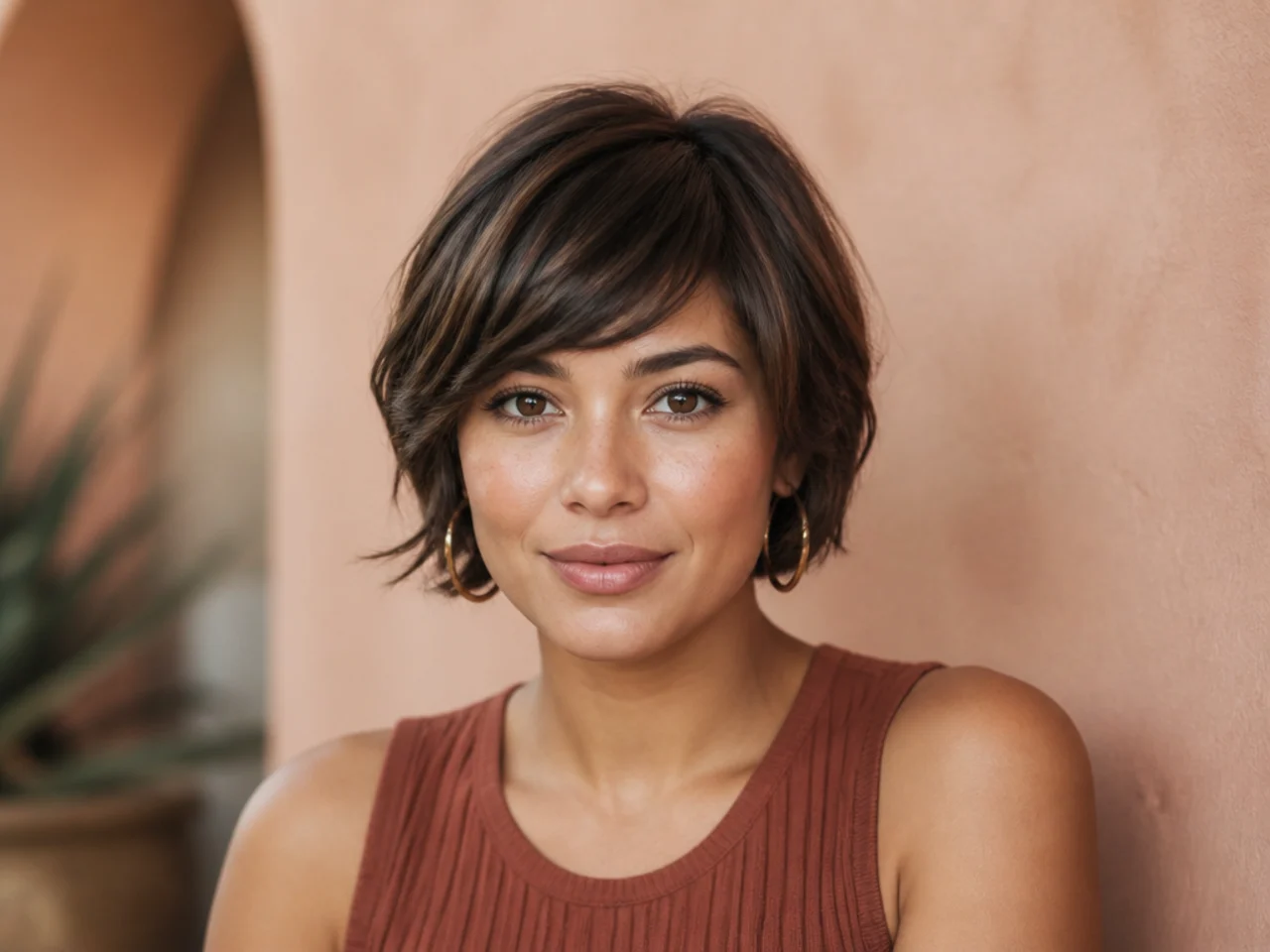
Styling and Upkeep
Dry it downward and sideways from wet. Lifting at the root and pulling across sets the diagonal for the day.
Build volume at the crown, not the sides. A round brush lifting the top does what a round face actually needs.
Trim before it reaches the brow. As it grows the shortest point drops, and at brow level the fringe stops lengthening the face and starts widening it.
Avoid tucking both sides back. Exposing both cheeks at once removes every vertical line you just paid for.
Skip heavy product at the ends. Weight flattens the diagonal into a horizontal.

Mistakes to Avoid
A fringe that stops at the brow. The exact line you are trying to break.
A shortest point set low. It shortens the diagonal and weakens the effect.
Layers flaring at cheek height. Width at the widest point.
Tucking both sides behind the ears. It squares off the whole face.
A blunt horizontal edge on the ends. The eye stops where the line stops.
FAQ
Do they suit a round face? Yes — the diagonal supplies the vertical line a round face lacks.
How long should they be? Past the cheekbone, without exception.
Where should the shortest point sit? High, at the temple, to lengthen the diagonal.
Final Thoughts
Give your stylist two instructions and nothing else is likely to go wrong: shortest point at the temple, and long enough to pass the cheekbone. Every version on this page is a variation on those two, and every version that fails a round face breaks one of them.
For every other face shape, including the one where this rule reverses, see side swept bangs by face shape. For a blunter fringe on the same face shape see french bangs for a round face. More in Bangs & Fringe.