20 Side Swept Bangs by Face Shape to Save
Twenty side swept bangs sorted by face shape, including the one shape where the usual advice reverses — a long face wants a shallower angle and more forehead covered, not a steeper diagonal.
In this article · 27
- What the Diagonal Actually Does
- How to Choose Yours
- The 20 Ideas by Face Shape
- 1. Square Face — Long Sweep Past the Jaw
- 2. Square Face — Soft Wispy Diagonal
- 3. Square Face — Deep Side Part
- 4. Square Face — Sweep with Long Layers
- 5. Heart Face — Sweep Ending at the Cheekbone
- 6. Heart Face — Wide Sweep Across a Broad Forehead
- 7. Heart Face — Sweep with Chin-Length Layers
- 8. Heart Face — Textured Diagonal
- 9. Long Face — Shallow Angle, Full Coverage
- 10. Long Face — Sweep Combined with Width at the Sides
- 11. Long Face — Sweep with a Blunt Lob
- 12. Long Face — Low Shortest Point
- 13. Diamond Face — Sweep Across the Widest Point
- 14. Diamond Face — Sweep with Volume at the Jaw
- 15. Oval Face — Classic Steep Sweep
- 16. Oval Face — Shallow Sweep
- 17. Oblong Face — Sweep with a Curved Line
- 18. Any Shape — Sweep Tucked One Side
- 19. Any Shape — Sweep with an Updo
- 20. The Wrong Angle for the Shape
- Styling and Upkeep
- Mistakes to Avoid
- FAQ
- Final Thoughts
Face-shape advice for fringes is usually a list of shapes with the same haircut attached to each. This is more useful as one principle with one exception.
The diagonal adds vertical length and removes horizontal width. That is what a side swept fringe does to any face. So the shapes wanting to look narrower want a steeper angle — and a long face wants the opposite, which is the one case where the usual advice about a steep diagonal is simply wrong.
What the Diagonal Actually Does
It adds a vertical component. Any line that is not horizontal makes a face read longer. The steeper the line, the stronger the effect.
It removes width where it crosses. A diagonal cutting across the widest part of a face breaks that width visually.
Coverage shortens. More forehead covered means a shorter-looking face, regardless of angle. This is the lever a long face needs.
The two can be traded against each other. Shallow angle plus high coverage shortens. Steep angle plus low coverage lengthens. Most cuts sit somewhere between.
How to Choose Yours
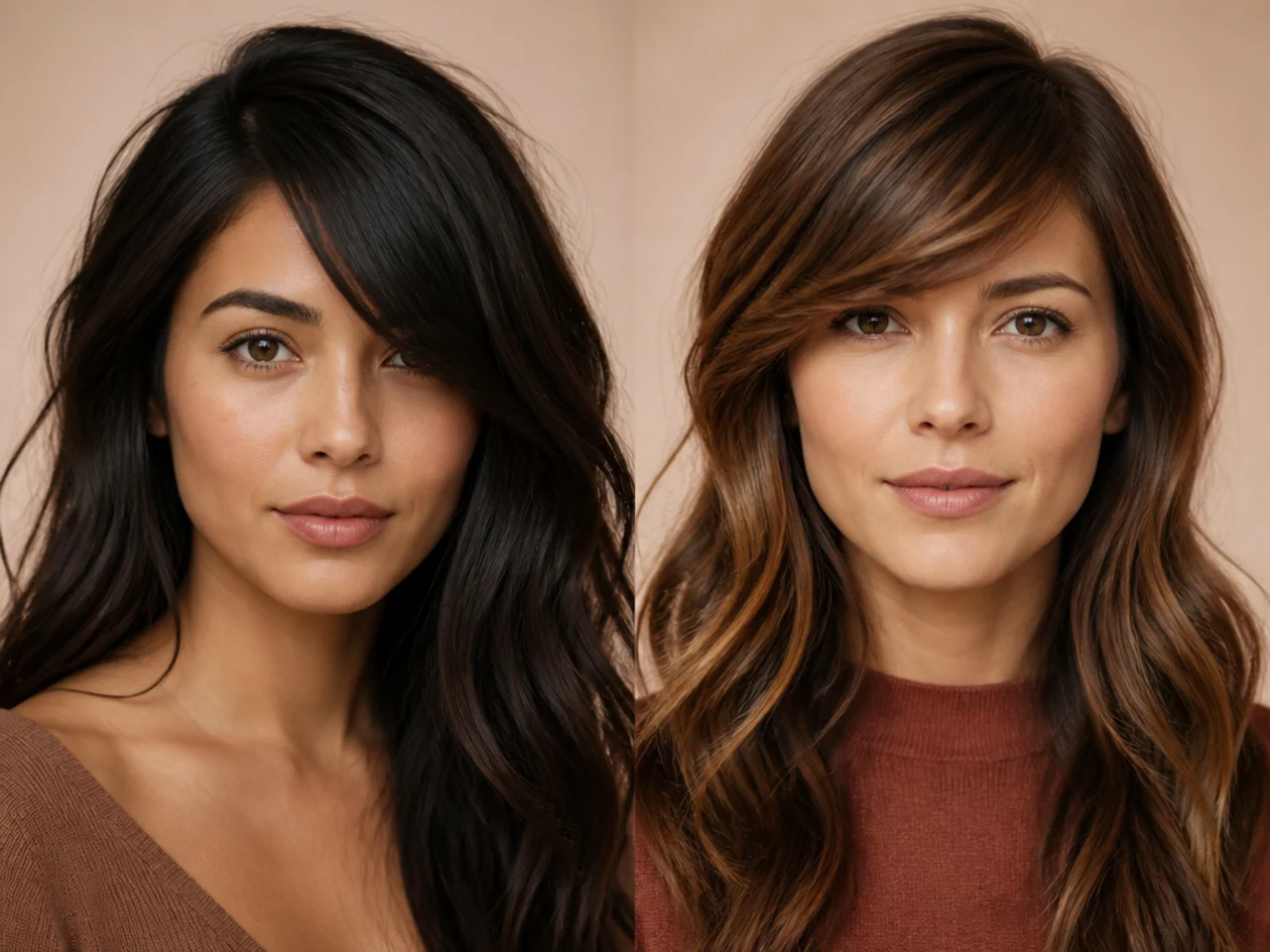
Decide whether you want length or width. Everything else follows. This is a more useful question than naming your face shape.
Steeper for square, heart and diamond. All three benefit from a strong diagonal breaking a horizontal.
Shallower and fuller for long or oblong. Cover more forehead, angle less. The opposite instruction to everything else here.
Oval can take either. The one shape where the choice is purely aesthetic.
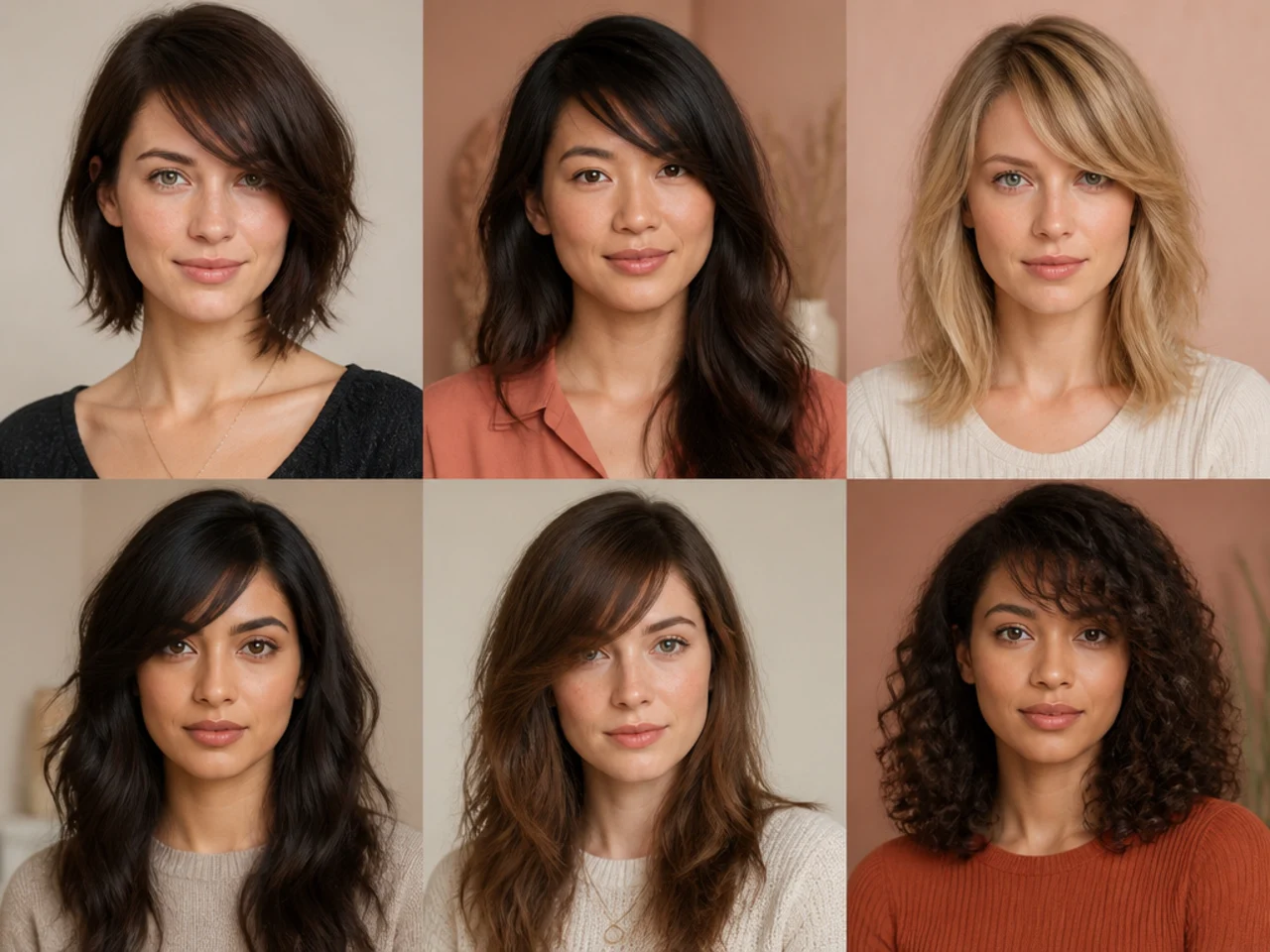
The 20 Ideas by Face Shape
1. Square Face — Long Sweep Past the Jaw
The diagonal running alongside the corner rather than stopping above it. A fringe that ends above the jaw draws a horizontal line across the widest part; one that runs past it does the opposite.
2. Square Face — Soft Wispy Diagonal
Thinned ends against a strong jaw. Softness where the face is hardest. The contrast is doing the work — a hard edge next to a hard jawline reinforces it rather than balancing it.

3. Square Face — Deep Side Part
A second asymmetric line reinforcing the first. Two diagonals in the same direction read as one deliberate angle rather than as two competing lines.
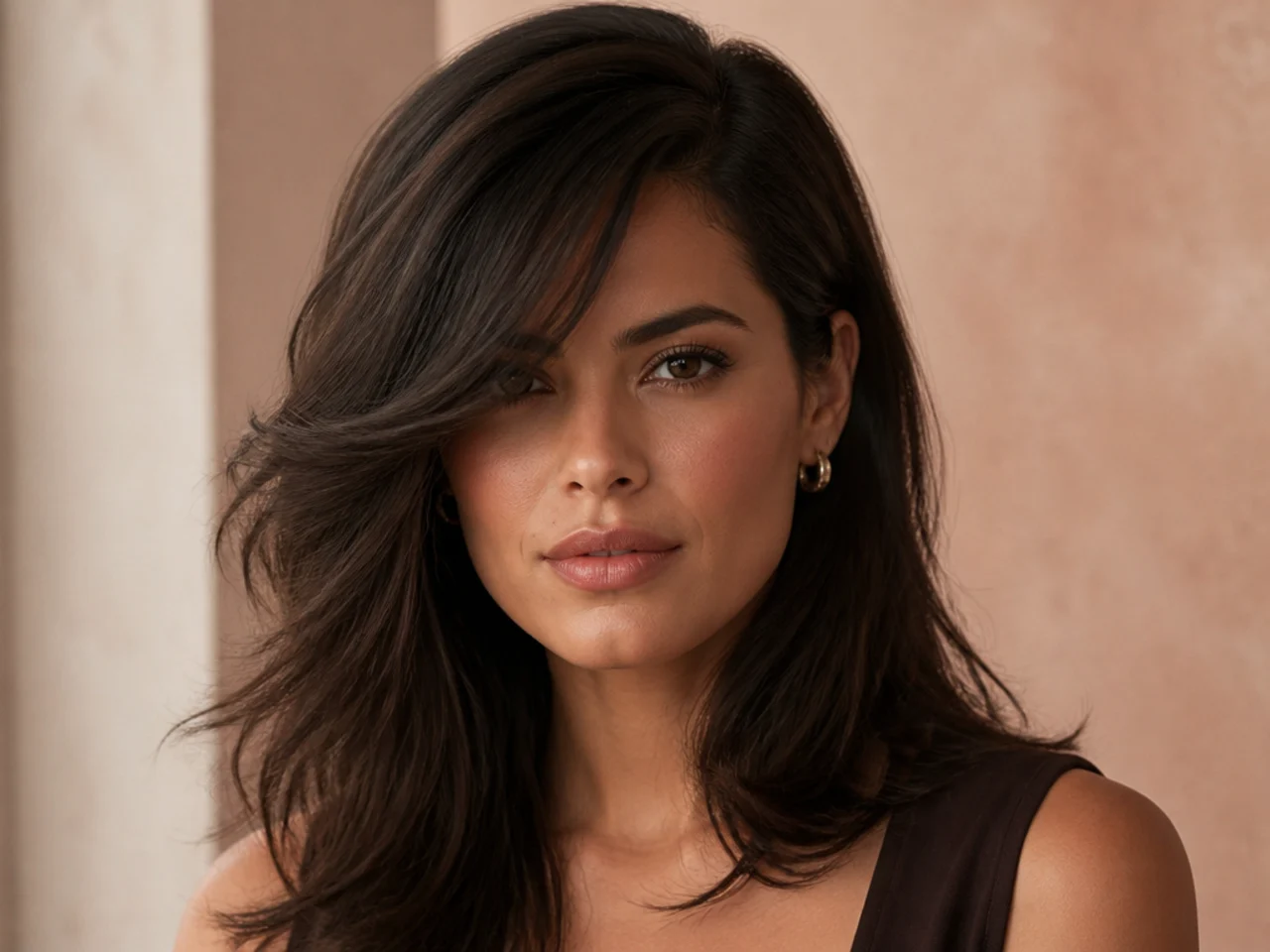
4. Square Face — Sweep with Long Layers
Layers starting below the jaw, so nothing widens the corner. A layer that starts at the jaw adds volume exactly where a square face already has width.
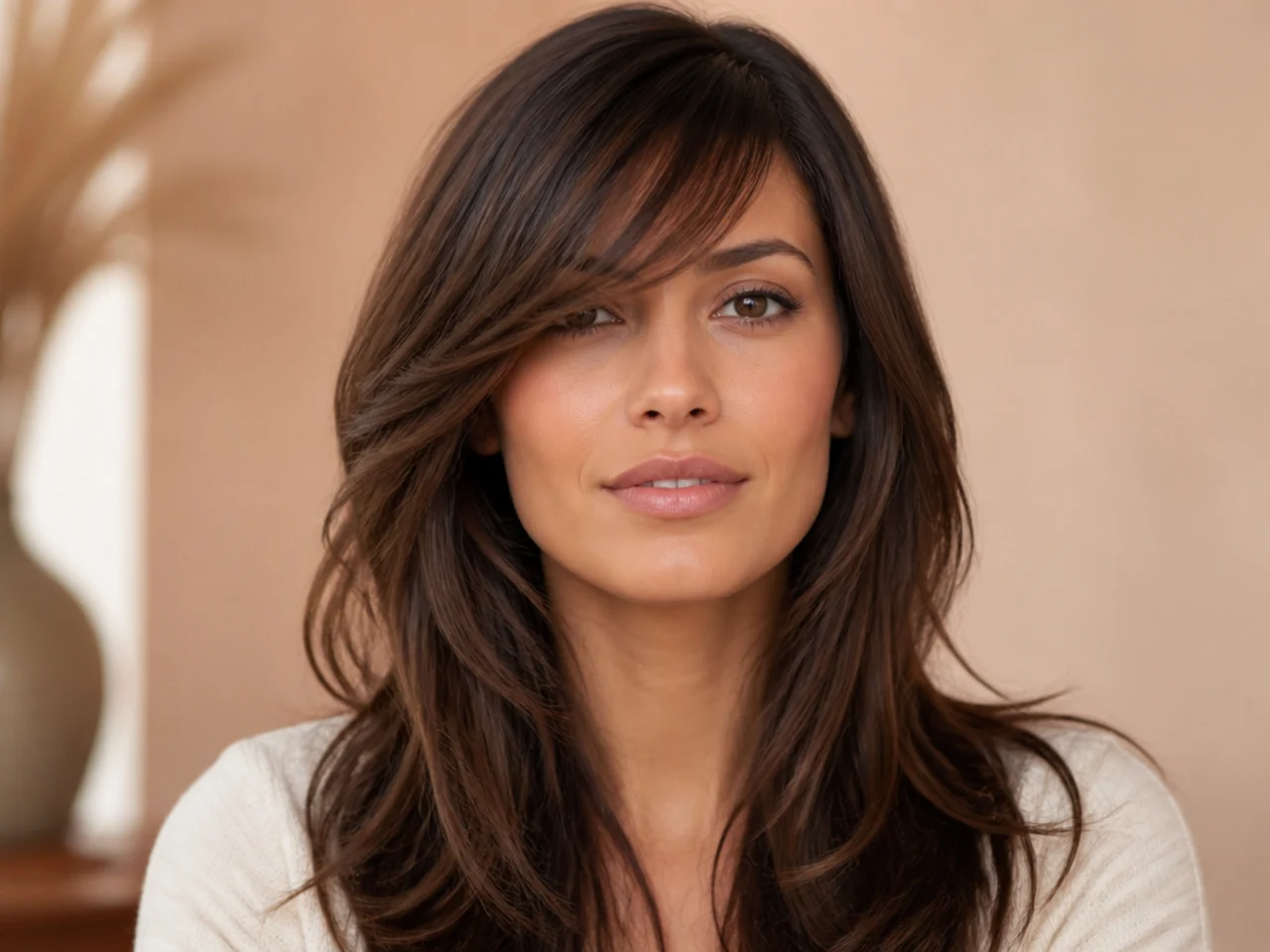
5. Heart Face — Sweep Ending at the Cheekbone
Width added lower down, where a heart face narrows. A heart face is widest at the forehead and narrowest at the chin, so anything that adds width low balances it.
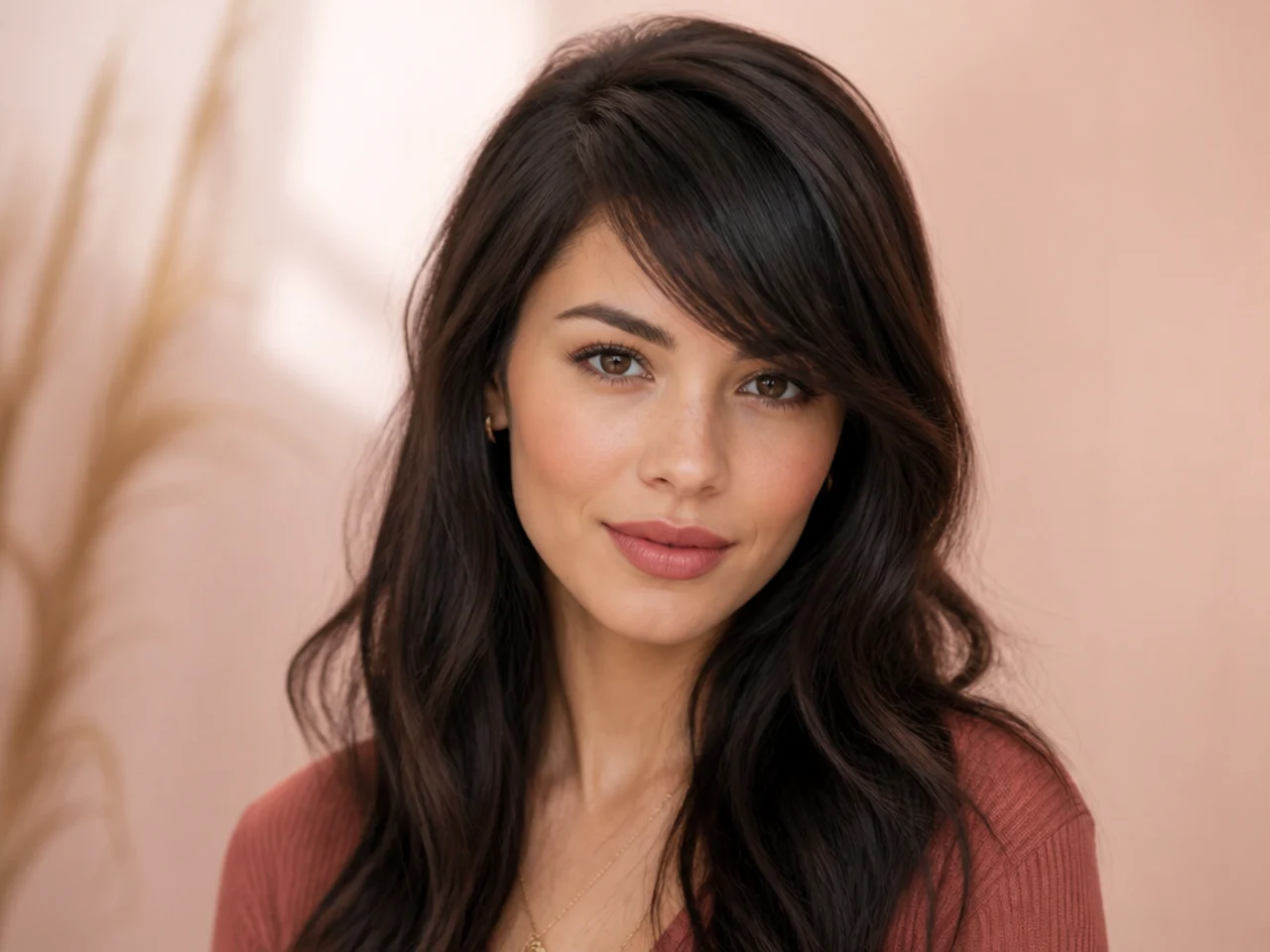
6. Heart Face — Wide Sweep Across a Broad Forehead
Coverage where the face is widest. Covering more forehead reduces the visible width at the top, which is the specific proportion a heart face is working against.
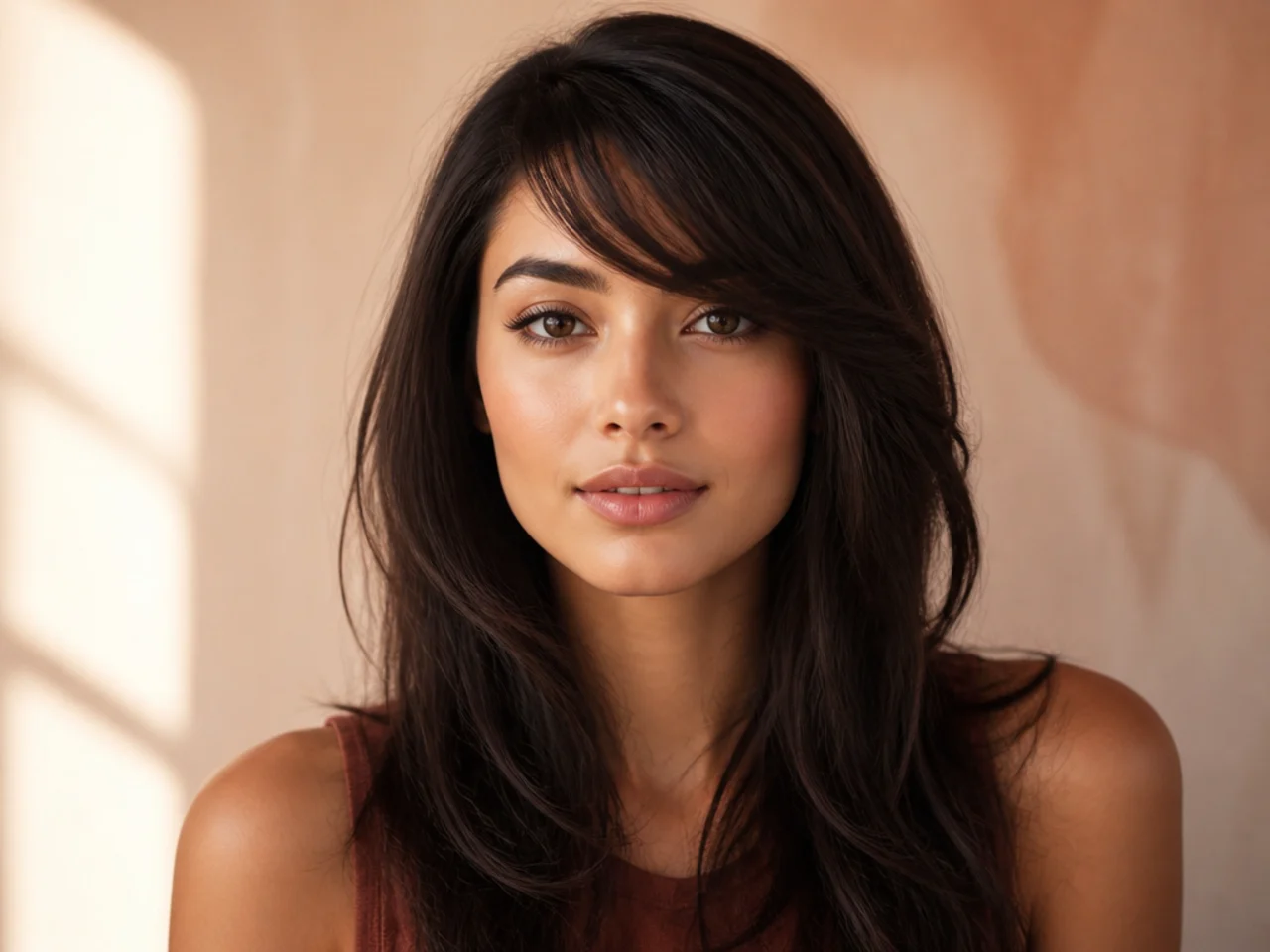
7. Heart Face — Sweep with Chin-Length Layers
Volume brought down to balance a narrow chin. Chin-length layers put mass at the narrowest point, which is the same balancing move from the other direction.
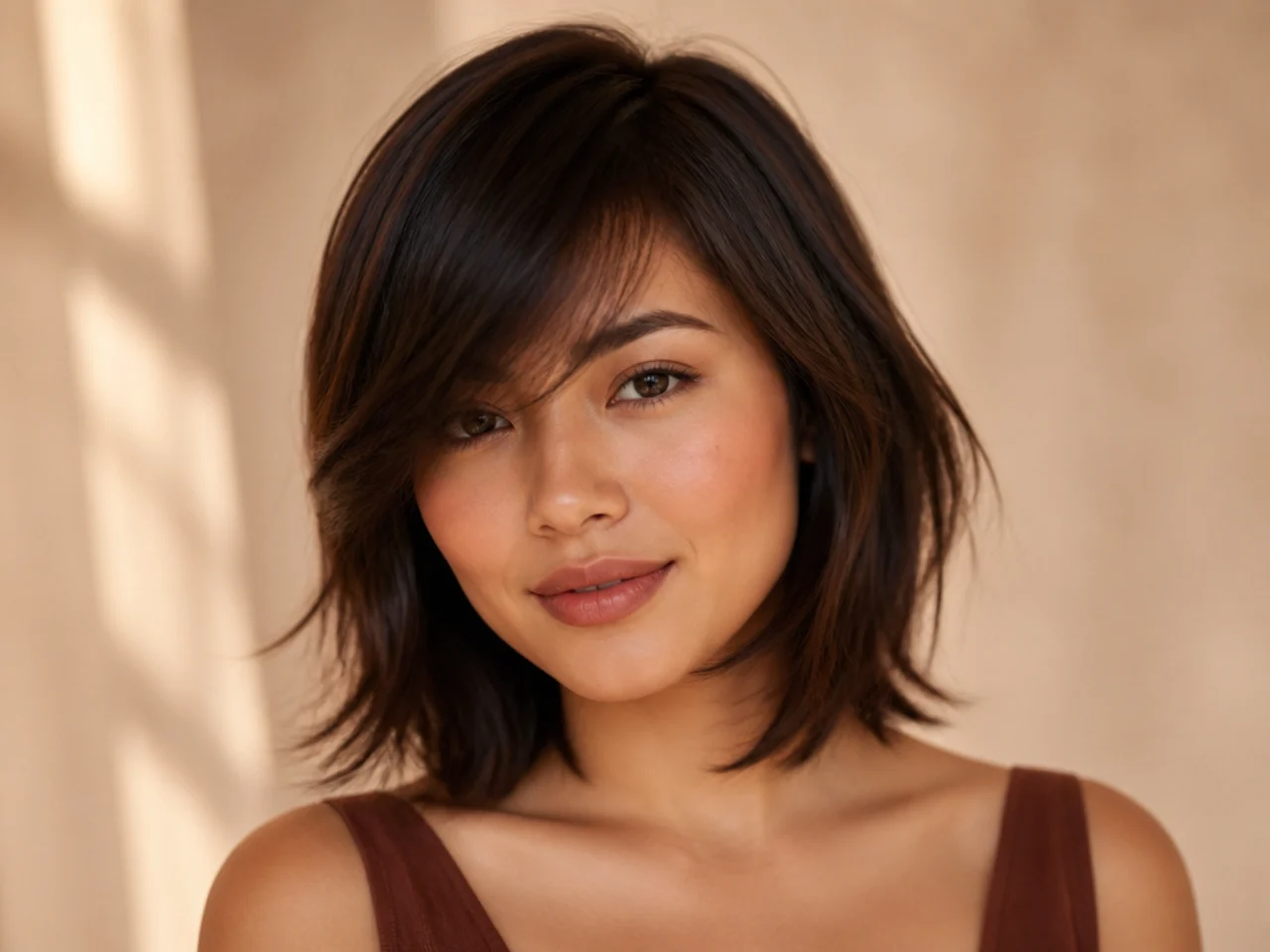
8. Heart Face — Textured Diagonal
Separated ends so the forehead coverage does not read heavy. Heavy coverage on a broad forehead can read as a block, and separation keeps it light while still covering.
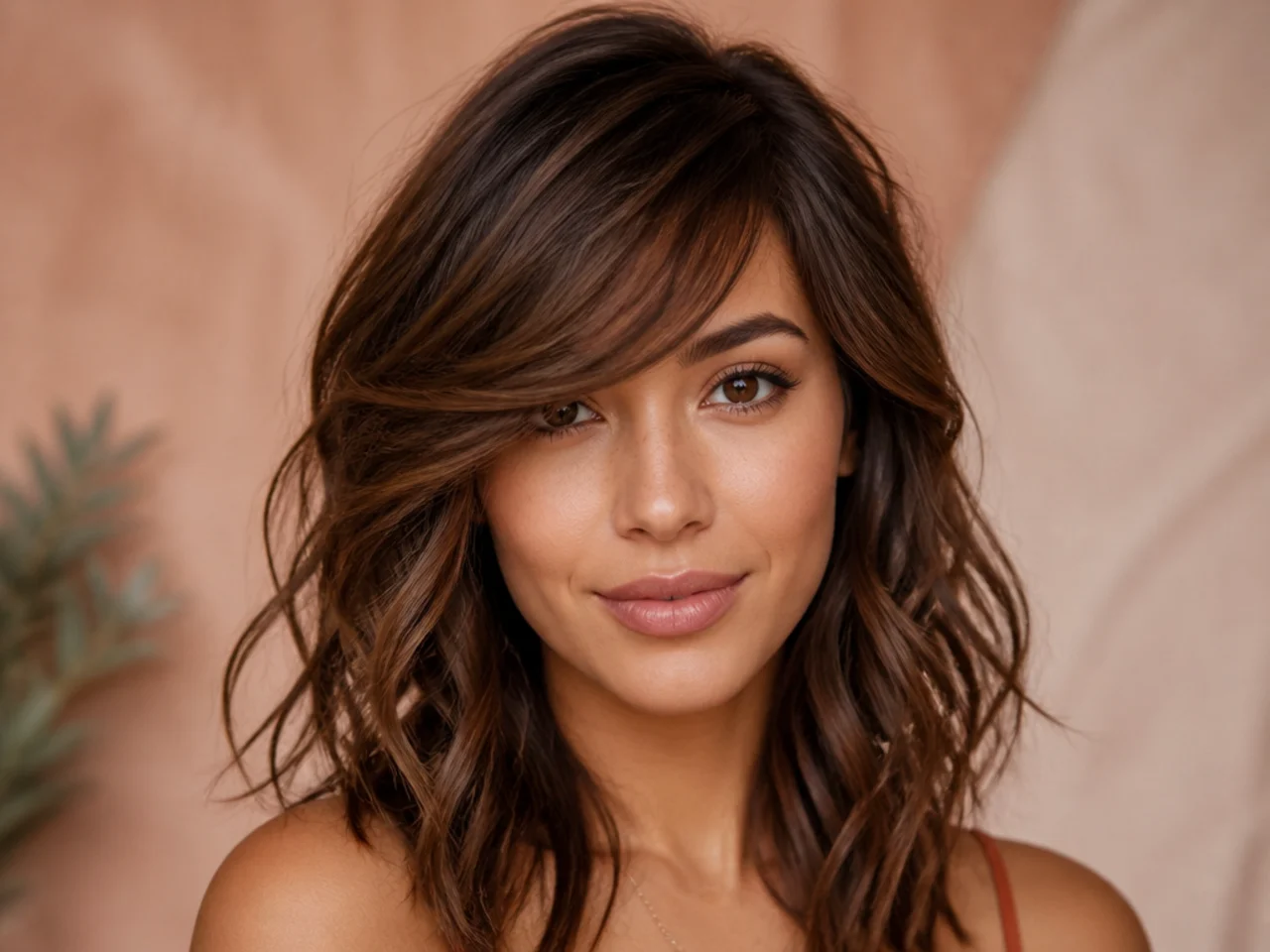
9. Long Face — Shallow Angle, Full Coverage
The reversal. Less angle, more forehead covered. A long face wants its vertical length interrupted, and a shallow fringe covering more forehead does exactly that.

10. Long Face — Sweep Combined with Width at the Sides
Volume where a long face has none. Width at the sides shortens a face visually, which is why a long face is the one shape that wants volume rather than length.
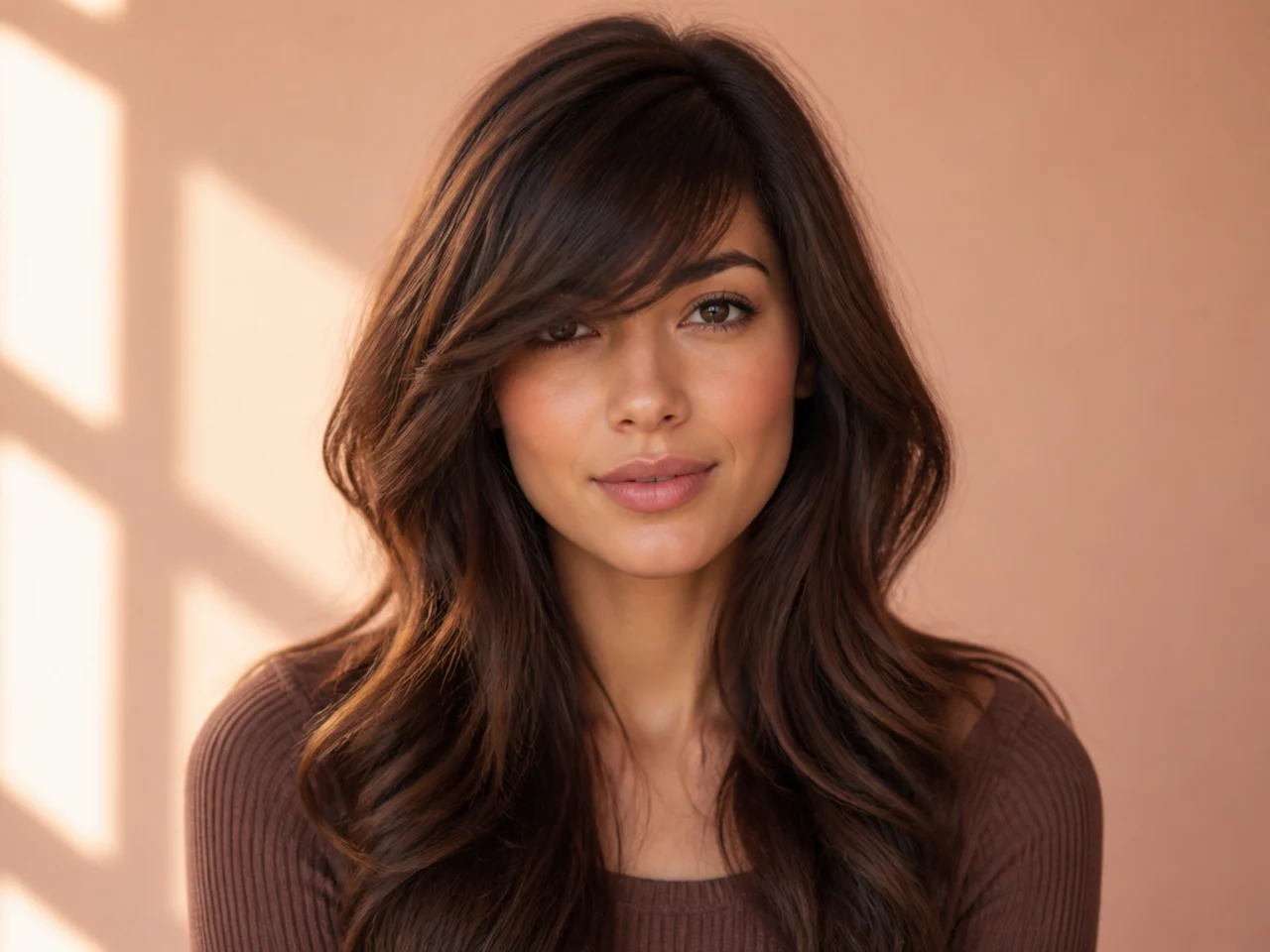
11. Long Face — Sweep with a Blunt Lob
A horizontal length line, deliberately, to shorten the face. Everywhere else a blunt horizontal line is something to avoid; here it is the point.

12. Long Face — Low Shortest Point
Nearer the brow, which is wrong everywhere else and right here. A low shortest point interrupts the forehead higher up, which is the opposite of what every other shape wants.

13. Diamond Face — Sweep Across the Widest Point
The diagonal cutting the cheekbone width. A diamond face is widest at the cheekbones, so a diagonal crossing them breaks that width rather than following it.
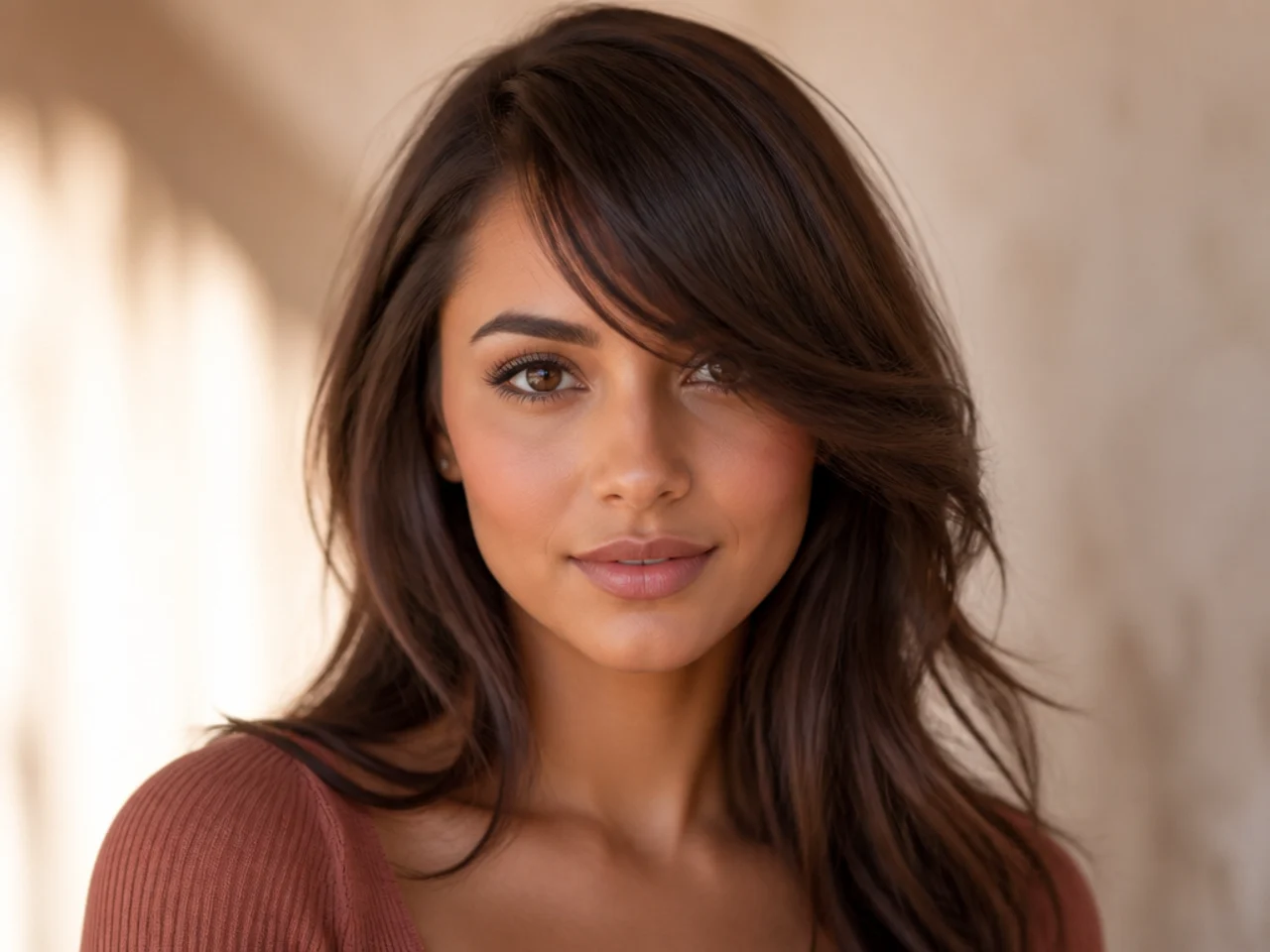
14. Diamond Face — Sweep with Volume at the Jaw
Balance brought to the narrowest part. Volume at the jaw addresses the diamond's narrow lower third, which the fringe alone cannot reach.
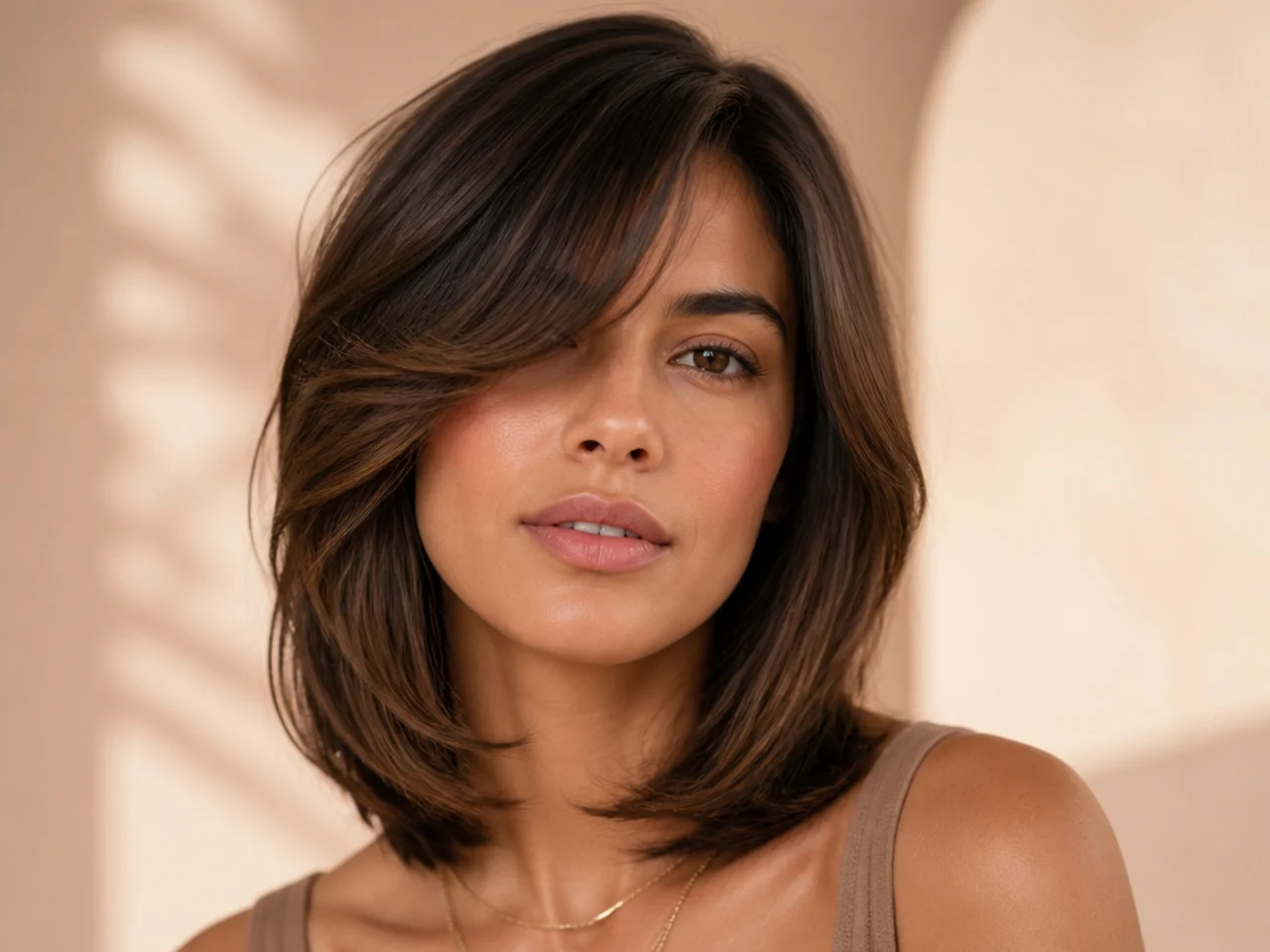
15. Oval Face — Classic Steep Sweep
The default, and oval takes it without adjustment. Oval is balanced in both directions, so there is no proportion the fringe needs to correct.
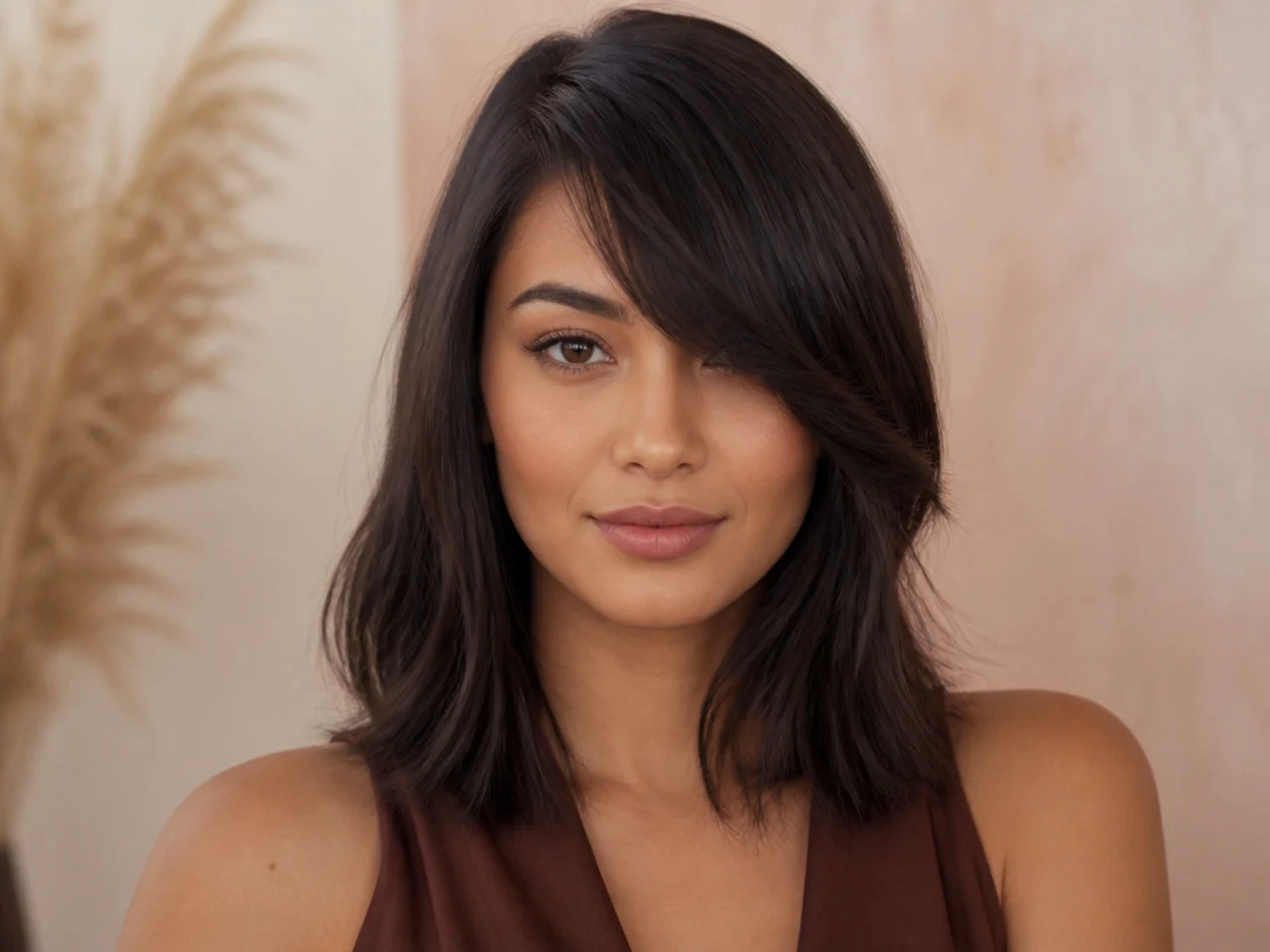
16. Oval Face — Shallow Sweep
Equally fine here. Oval is the shape with no constraint. Worth saying plainly — if your face is oval, choose the fringe you like rather than the one a chart recommends.

17. Oblong Face — Sweep with a Curved Line
A curve rather than a straight diagonal, softening the length. A curved line has no single direction, so it reads as width rather than reinforcing vertical length.
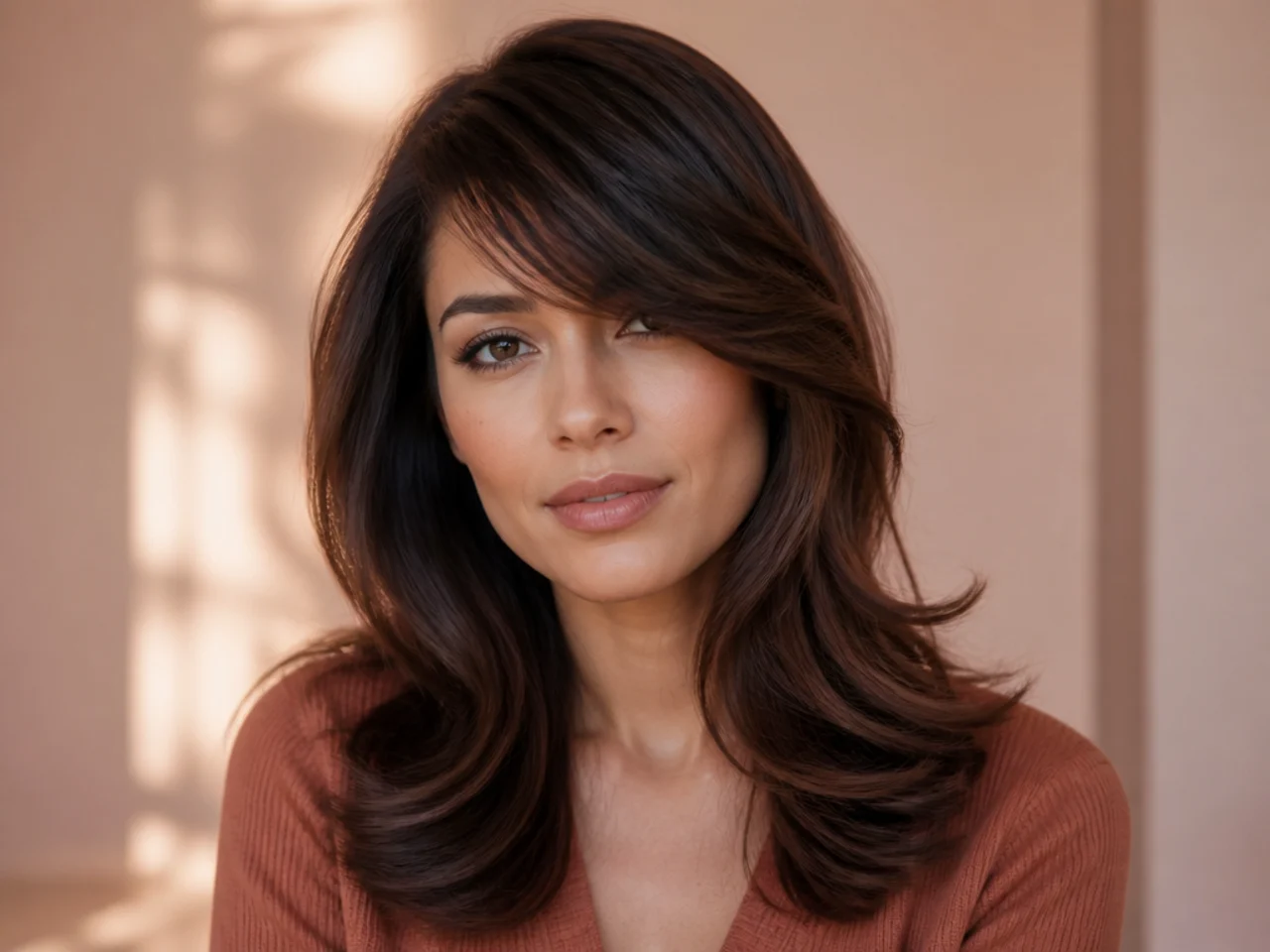
18. Any Shape — Sweep Tucked One Side
Exposes one side, covers the other. Asymmetry without a new cut. It is the only face-shape adjustment on this page that costs nothing and can be undone in a second.

19. Any Shape — Sweep with an Updo
The diagonal carries the framing when everything else is gathered. With no length around the face, the fringe angle is the only thing left doing any balancing.
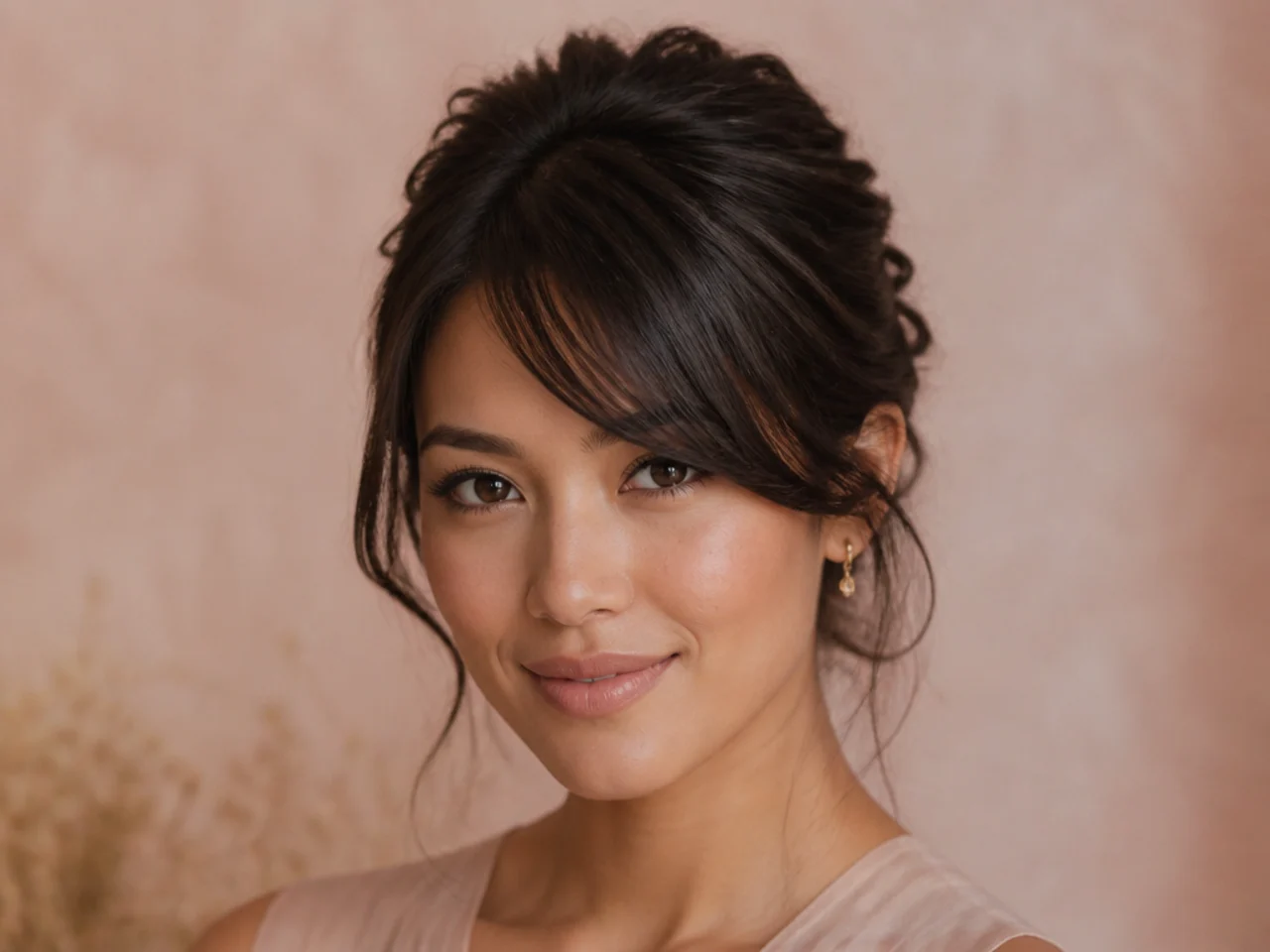
20. The Wrong Angle for the Shape
A steep diagonal on a long face. The most common face-shape error. A steep angle emphasises vertical length, which is the one thing a long face is trying to interrupt.
Styling and Upkeep
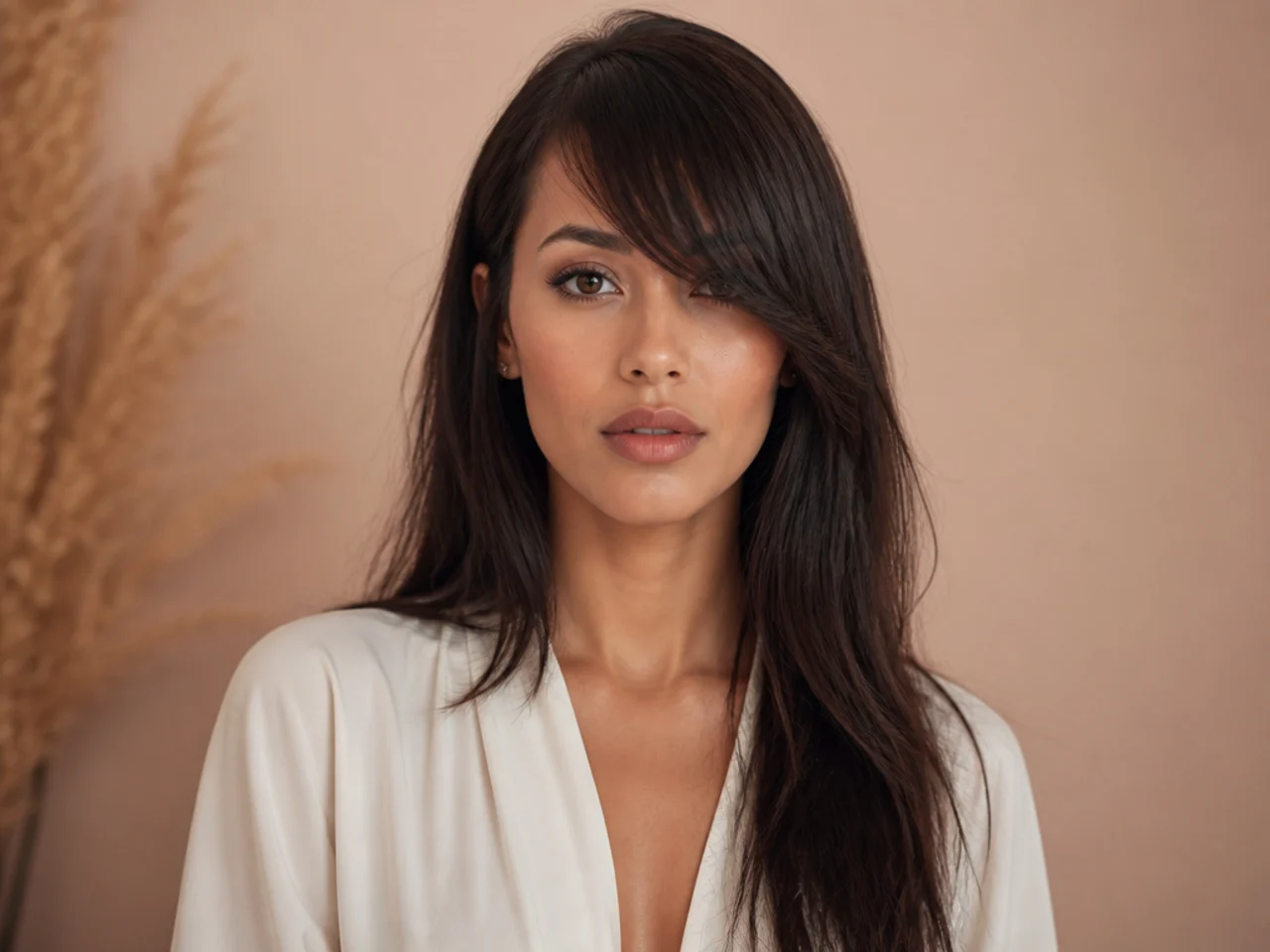
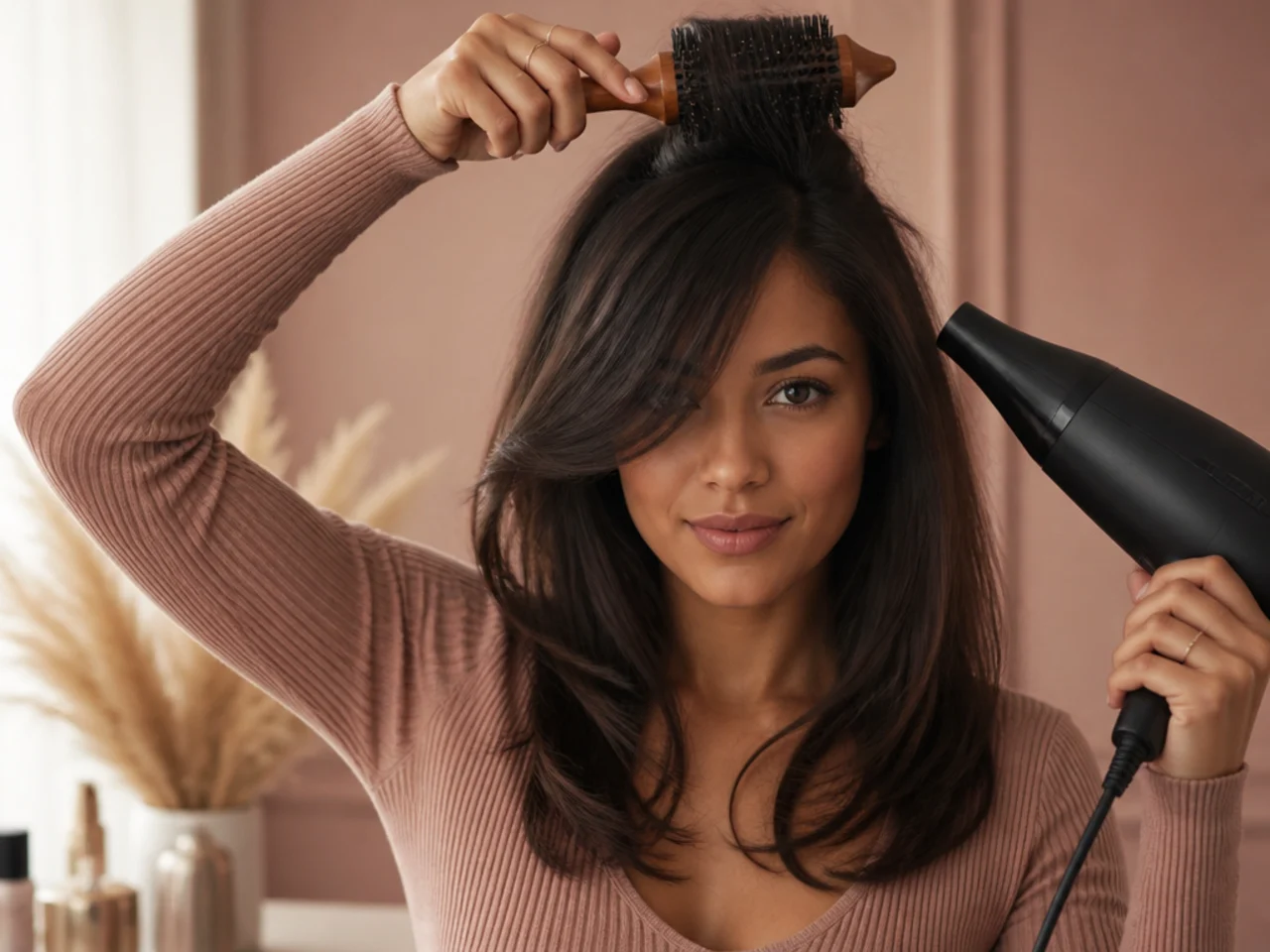
Style toward the effect you want. Drying the sweep flatter shortens the face; lifting and pulling it across lengthens.
Adjust the volume placement, not the cut. Crown volume lengthens, side volume widens. It is the cheapest lever you have.
Trim on schedule. As a diagonal drops, its angle flattens — which quietly moves the effect toward whatever you were not aiming for.
Reassess after a big length change. The same fringe reads differently against a bob than against waist-length hair.
Keep one photograph of it working. Angles are hard to describe, easy to show.
Mistakes to Avoid
A steep diagonal on a long face. It lengthens what is already long.
Naming your face shape instead of the effect you want. Length or width is the useful question.
Full coverage on a heart face without texture. It reads heavy over the widest part.
Side volume on a round or square face. Width where there is already width.
Assuming one angle suits everyone. The diagonal has a direction, and direction has consequences.
FAQ
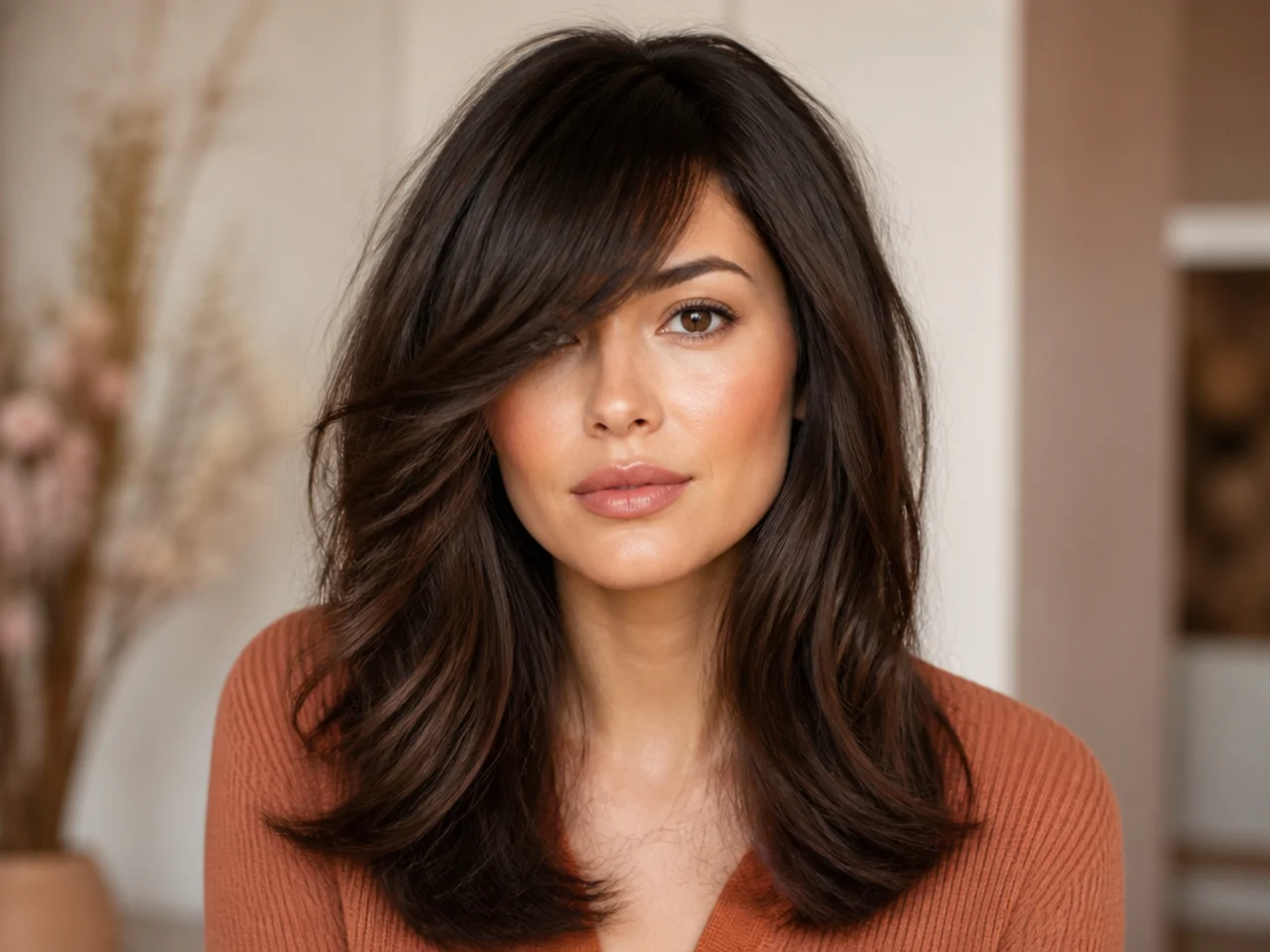
Which shapes suit them? Nearly all, but not with the same angle.
Are they good for a long face? Yes, with the advice reversed — shallower angle, more coverage.
What do they do for a square jaw? Soften it, by running a diagonal alongside the corner.
Final Thoughts
Walk in asking for length or width rather than naming a shape. Every recommendation on this page reduces to that one question, and the only reason face-shape advice ever contradicts itself is that a long face needs the opposite of what everyone else does.
For the round-face case in full see 20 side swept bangs for a round face, and for the cut itself see 25 cute side swept bangs ideas. More in Bangs & Fringe.