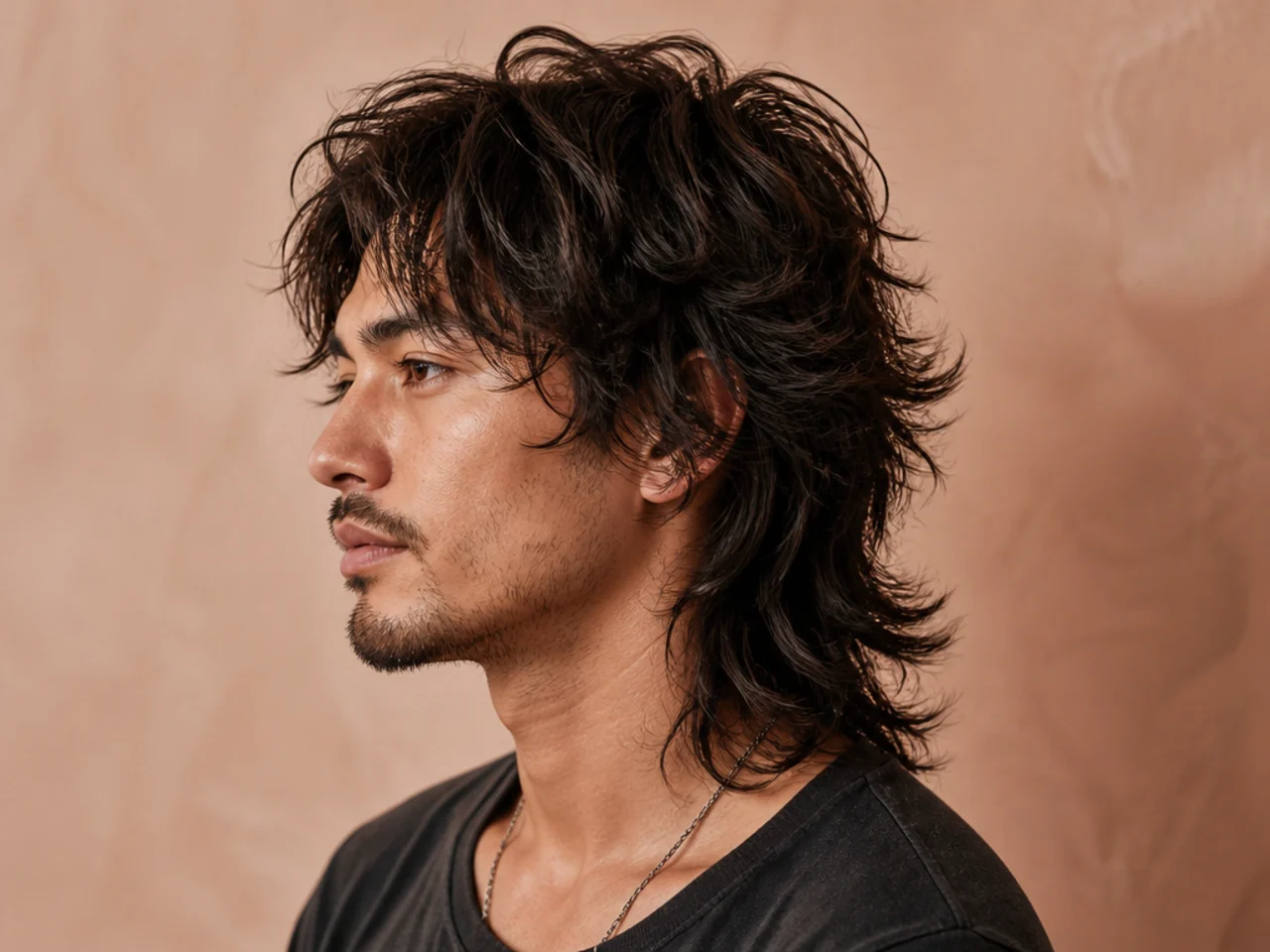
25 Dreamy Shag Haircuts For Naturally Wavy Hair
Twenty-five shags cut for a wave that already exists, and the decision that makes or breaks every one of them — whether the layers are cut wet or dry. A wave stretches straight under water and springs back as it dries, so a wet-cut layer always lands shorter than it measured.
In this article · 32
- Why a Shag Suits a Natural Wave
- Choosing Your Shag Length
- The 25 Wavy Shag Haircuts
- 1. Classic Wavy Shag
- 2. Short Wavy Shag
- 3. Shoulder Length Wavy Shag
- 4. Long Wavy Shag
- 5. Wavy Shag With Curtain Bangs
- 6. Wavy Shag With Wispy Bangs
- 7. Wavy Shag With a Full Fringe
- 8. Shag for Fine Wavy Hair
- 9. Shag for Thick Wavy Hair
- 10. Shag on 2A Waves
- 11. Shag on 2B Waves
- 12. Shag on 2C Waves
- 13. Wavy Shag With a Deep Side Part
- 14. Wavy Shag With a Money Piece
- 15. Wolf Cut Shag on Wavy Hair
- 16. Wavy Shag With an Undercut
- 17. Wavy Shag Bob
- 18. Wavy Shaggy Lob
- 19. Wavy Shag With Face Framing Layers
- 20. Wavy Shag With Blunt Ends
- 21. Wavy Shag for Round Faces
- 22. Wavy Shag for Long Faces
- 23. Wavy Shag With a Middle Part
- 24. Wavy Shag at Six Months
- 25. Air Dried Wavy Shag
- Styling and Upkeep
- Mistakes to Avoid
- FAQ
- Final Thoughts
A shag that hangs limp on wavy hair was almost always cut wet, when every layer measured longer than it would ever be again.
Wet hair lies about length. A wave stretches straight under water and springs back as it dries, so a layer measured at the collarbone in the chair can sit two inches higher by the time you get home.
The shag is a layer shape, not a texture. It is short through the crown and long at the ends, and the wave is what fills the space between them. Cut the same shape into straight hair and it reads as a mullet.
Why a Shag Suits a Natural Wave
The layers prop each other up. Short crown layers sit on top of longer ones and hold them off the scalp. That gap is the volume, and a bent strand holds it because a bend resists lying flat.
A wave hides an imperfect line. The S-bend throws light in several directions, so a slightly uneven layer reads as texture rather than as a step.
Weight removal is the whole point. Wavy hair goes flat at the root and heavy at the ends. Taking bulk out of the mid-lengths lets the pattern lift instead of hanging.
Nothing in it needs heat. The shape is cut in, not styled in, which is why a shag survives air drying where a blunt one-length cut collapses.

Choosing Your Shag Length
Decide by where your wave starts. Hair that bends from eye level can carry a short shag. Hair that only waves below the collarbone cannot — there is nothing to fill the top layers.
Fine waves want fewer layers, set lower. Every layer costs density, and fine hair has little to spare. Too many and the ends finish in strings.
Thick waves want more, set higher. The bulk lives in the mid-lengths, and short crown layers are what let the rest move instead of sitting as a block.
Choose by how you dry it. Air drying rewards longer layers, because there is no heat to lift a short one off the scalp.

The 25 Wavy Shag Haircuts
1. Classic Wavy Shag
The reference version — short layers through the crown, longer ones from the ears down, and a fringe that meets them. The crown pieces are cut short enough to stand on their own, and that is what props up the length underneath instead of letting the whole shape hang.
2. Short Wavy Shag
Everything stops around the jaw. The shortest crown pieces sit close enough to the surface to lift with almost no product, and because shrinkage is proportional, a short shag loses fewer absolute inches as it dries than a long one does.

3. Shoulder Length Wavy Shag
The most requested version, and the length at which a wave has room to complete a full S before it meets the shoulder. Shorter and the bend gets interrupted halfway; longer and the accumulated weight starts pulling the pattern out.

4. Long Wavy Shag
Layers begin at the collarbone and run to the mid back. Length is weight, so the crown layers have to be cut shorter here than on a bob to lift by the same amount — the extra hair below is pulling down on everything above it.

5. Wavy Shag With Curtain Bangs
The fringe splits at the centre and sweeps out to meet the shortest face-framing layer. That join matters more on a wave than on straight hair, because a bend that does not line up with the layer beneath it reads as a gap rather than a curve.

6. Wavy Shag With Wispy Bangs
Thinner than a curtain and cut with the point of the shears so the ends break up. Wispy suits a looser wave specifically because there is not enough bend to fill out a dense fringe, which would sit flat against the forehead as a slab.

7. Wavy Shag With a Full Fringe
Dense and cut straight across, which on a wave has to be done dry and slightly long. Each bend eats a few millimetres of visible length, so a fringe cut level with the brow while wet will finish well above it.

8. Shag for Fine Wavy Hair
Fewer layers, all of them starting below the ear. Fine hair has almost no bulk to give away, so each layer costs visible density at the ends — remove too much and the shape finishes in strings rather than in a wave.

9. Shag for Thick Wavy Hair
Thick hair carries a shag well, and internal layering is what stops it spreading into a triangle. Bulk is removed from underneath so the outline stays clean while the width at the mid-lengths drops.

10. Shag on 2A Waves
The loosest pattern, closer to a bend than a wave. Layers have to sit higher because there is not enough curl to generate lift on its own, so the cut does the work the pattern would otherwise do — the 2A routine covers the styling side.

11. Shag on 2B Waves
The pattern most shag photographs are cut on. A defined S starting around eye level fills the layers without any help, and there is enough strength in the wave to hold a gel cast while it dries and keep the shape once the cast is broken.

12. Shag on 2C Waves
Nearly curly, with a tight S that begins close to the root. Shrinkage is at its highest here, so a layer cut level with the shoulder can dry two inches above it, and the whole cut has to be planned at dry length rather than corrected afterwards.

13. Wavy Shag With a Deep Side Part
Moving the parting off centre stacks more hair on one side, which pushes the crown up on that side. It also cuts across the natural fall line, so expect the first week to fight it before the roots settle into the new direction.

14. Wavy Shag With a Money Piece
Two lightened panels at the front, placed where the shortest face-framing layer begins. Lighter hair advances visually, so the panel makes that layer read shorter and sharper than it is without a single extra snip.

15. Wolf Cut Shag on Wavy Hair
The shag pushed further — a much shorter crown and a real disconnection between top and length. That gap between the two lengths is what makes it a wolf cut rather than a shag, and the wave is what stops the gap looking like a mistake.

16. Wavy Shag With an Undercut
Bulk taken out underneath at the nape or behind the ears, covered by the length on top. It removes weight without touching the outline, which is the only way to thin a very thick wave without creating short broken ends that stick out later.

17. Wavy Shag Bob
Layers built inside a jaw-length bob. The shortest layer sits at the cheekbone so the top of the wave is free to bend, while the perimeter stays heavy enough to hold a recognisable outline.

18. Wavy Shaggy Lob
Longer than a bob, shorter than the shoulder, layered through the middle only. It is the safest first shag, because the perimeter still holds a shape even if the layers come out shorter than planned.

19. Wavy Shag With Face Framing Layers
The shortest pieces start at the cheekbone and lengthen towards the back. On a wave they have to be cut where the bend sits rather than at even intervals, or they alternate between visibly too short and visibly too long.

20. Wavy Shag With Blunt Ends
The perimeter cut straight across instead of point cut. Blunt ends hold weight, which keeps a fine wave from thinning out at the bottom, but they also record every unevenness in the cutting line for months.

21. Wavy Shag for Round Faces
Layers that start below the chin, with a centre or deep side part. Width at the cheekbone is what makes a round face read rounder, so the volume is pushed up to the crown and the length is kept falling past the jaw.

22. Wavy Shag for Long Faces
The opposite arrangement — layers starting at the cheekbone and a fringe. Horizontal volume at the sides shortens a long face, and a fringe removes the forehead from the equation entirely.

23. Wavy Shag With a Middle Part
A centre parting splits the weight evenly, which flatters an even wave and exposes an uneven one. If one side of your head bends more than the other, this is the parting that will make it obvious in every photograph.

24. Wavy Shag at Six Months
Grown out, the crown layers reach down to the shortest face-framing pieces and the shape reads as long layers rather than a shag. That is the natural end point of the cut, and the reason it wants a trim every ten to twelve weeks.

25. Air Dried Wavy Shag
The cut judged on its own with nothing holding it up. If the layers are wrong, the first air dry shows it — which is why the air dry, not the blow-dry in the chair, is the honest test of a shag.

Styling and Upkeep
Ask for a dry cut when you book, not in the chair. The stylist needs to see where each bend sits before deciding where a layer lands, and that decision cannot be reversed.
Scrunch, never brush. A brush pulls the S into a straight line and separates the clump into individual strands. Detangle in the shower with conditioner in, then leave it alone.
Apply product to soaking hair. Water is what carries a cream or gel evenly through a clump. On merely damp hair it coats the outside and never reaches the middle.
Diffuse on low speed, medium heat. High airflow blows the clumps apart before they set. Low and slow is the whole difference between defined and fluffy.
Trim every ten to twelve weeks. The short crown layers grow down into the ones below them and the shape closes up, which is exactly what makes a grown-out shag look flat.

Mistakes to Avoid
Letting it be cut wet. A stretched wave measures longer than it lives. Every layer lands above where you agreed, and there is no putting it back.
Over-layering fine hair. Fine waves have no density to give away. Once the ends are see-through the only remedy is growing out the layers you paid for.
Cutting all the layers to one length. That builds a shelf, not a shag. The layers have to graduate, or the hair sits in two separate blocks with a visible line between them.
Brushing it out once dry. Brushing splits every strand in the clump and the wave becomes frizz. The clump is the pattern.
Letting it run past twelve weeks. The short layers catch up with the long ones, the shape closes, and the volume goes with it.

FAQ
Wet or dry? Dry, always — a wet wave measures longer than it lives.
How short can the crown go? About chin length on a shoulder-length shag; shorter and it stops lying back down.
How often does it need trimming? Every ten to twelve weeks, before the layers close up.

Final Thoughts
A shag is a weight-removal cut wearing a texture's name. What makes it work on wavy hair is that the pattern fills the space the layers open up, so the shape looks full with no heat involved at all.
Say the word dry when you book, not when you are already in the chair. For what to do with the cut once it is home see the wavy hair routine, and for the pattern most shag photographs are cut on see the 2B routine. More in Mullet and Wolf Cut.