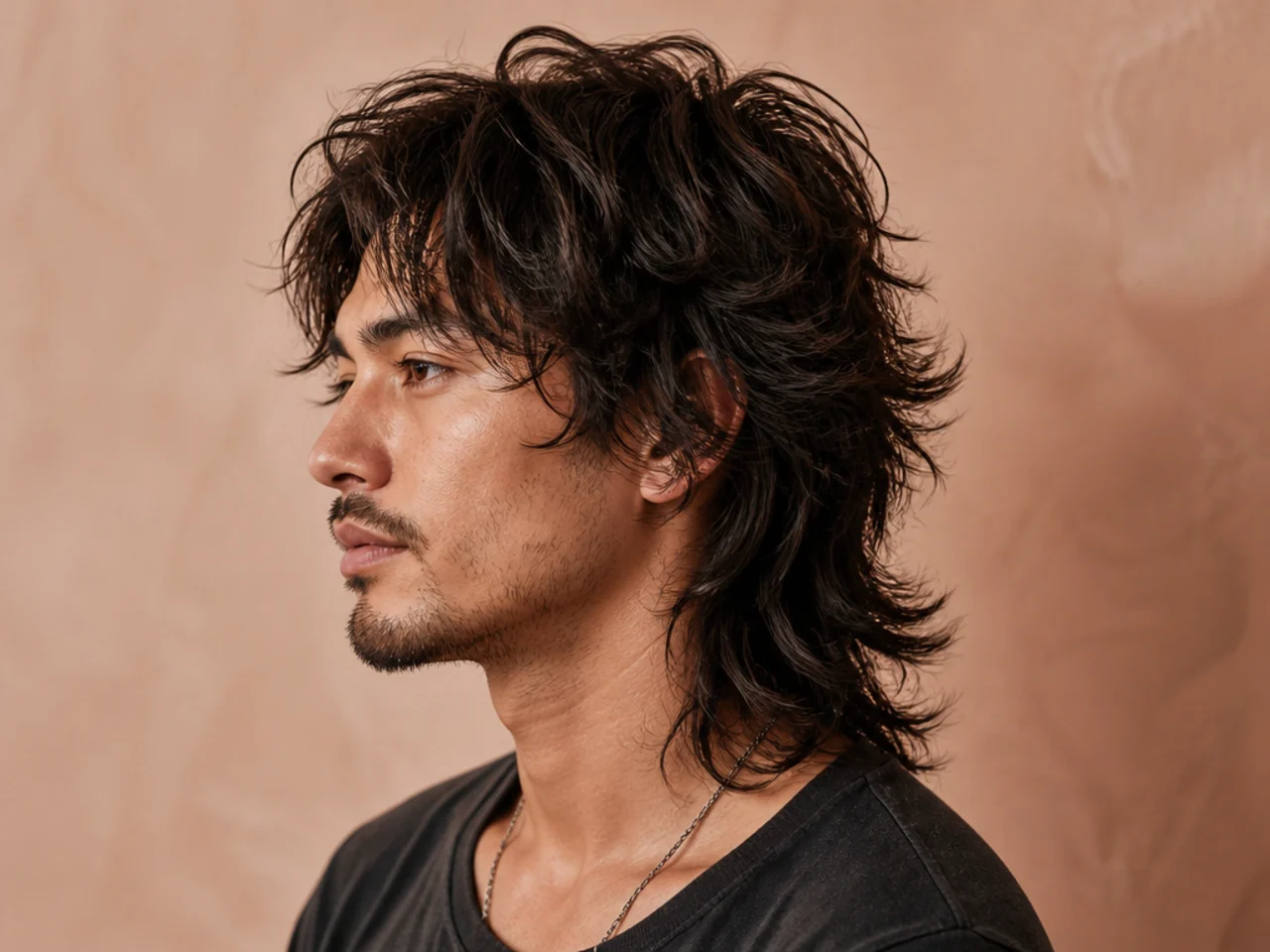
25 Medium Wolf Cut Ideas With Cozy Layers
A medium wolf cut is defined by the gap between the shortest crown layer and the perimeter, not by the overall length. Get that gap wrong and the cut reads as ordinary layers on collarbone hair.
In this article · 32
- What Makes a Wolf Cut Medium
- How to Choose Your Layer Placement
- The 25 Medium Wolf Cut Ideas
- 1. The Collarbone Wolf Cut
- 2. The Shoulder Grazing Wolf Cut
- 3. The Soft Layered Wolf Cut
- 4. The Heavy Layered Wolf Cut
- 5. The Wolf Cut With a Long Nape
- 6. The Wavy Medium Wolf Cut
- 7. The Curly Medium Wolf Cut
- 8. The Straight Medium Wolf Cut
- 9. The Coily Medium Wolf Cut
- 10. The Korean Wolf Cut
- 11. The Fine Hair Wolf Cut
- 12. The Thick Hair Wolf Cut
- 13. The Hidden Undercut Wolf Cut
- 14. The Curtain Bang Wolf Cut
- 15. The Wispy Fringe Wolf Cut
- 16. The Blunt Fringe Wolf Cut
- 17. The Micro Bang Wolf Cut
- 18. The Grown Out Fringe Wolf Cut
- 19. The Razored Wolf Cut
- 20. The Point Cut Wolf Cut
- 21. The Dry Cut Wolf Cut
- 22. The Blunt Perimeter Wolf Cut
- 23. The Air Dried Wolf Cut
- 24. The Diffused Wolf Cut
- 25. The Week Ten Wolf Cut
- Styling and Upkeep
- Mistakes to Avoid
- FAQ
- Final Thoughts
Most medium wolf cuts fail because the crown was layered as though the hair were short, leaving four inches of untouched weight hanging below the shortest piece.
The gap does the work, not the length. A wolf cut is a short heavily layered crown sitting over a long perimeter, and the distance between the two is what produces the lift.
Collarbone length is the working range. Long enough that the perimeter still reads as long hair, short enough that the crown layers can reach it without being cut to the ear.
What Makes a Wolf Cut Medium
The perimeter sits between shoulder and collarbone. Above the shoulder it becomes a shag bob, below the collarbone the crown layers cannot reach far enough to affect it.
The shortest crown layer lands around the jaw. That is roughly four inches above the perimeter, which is the minimum distance for the top layer to sit on the one below and prop it up.
The nape stays longer than the sides. This is the mullet half of the cut. Remove it and the silhouette rounds off into a shag.
Weight is removed through the mid lengths, not the ends. Thinning the ends makes them wispy. Removing interior weight is what lets the perimeter separate into pieces rather than hanging as one curtain.

How to Choose Your Layer Placement
Start from your shortest tolerable front piece. The face framing layer is the one you will see every day, so set it first and build the crown to match it.
Count the gap in inches, not in layer numbers. Four inches between the shortest crown piece and the perimeter gives full lift, three gives a soft version, two gives a lob with movement.
Subtract your shrinkage before agreeing to anything. Waves pull up about an inch, curls two to three. The number quoted at the mirror is the wet number unless someone says otherwise.
Match the layer count to your density. Thick hair needs interior weight removed or the mid lengths expand sideways. Fine hair needs the opposite, and fewer layers than the photograph suggests.

The 25 Medium Wolf Cut Ideas
1. The Collarbone Wolf Cut
The perimeter finishes at the collarbone and the shortest crown layer lands near the jaw, which puts about four inches between them. That distance is the whole mechanism: the top layer rests on the one below and lifts it instead of lying flat against it.
2. The Shoulder Grazing Wolf Cut
Cut to the shoulder, the perimeter meets the fabric of a top and flicks outward instead of hanging. That flick is not a styling choice, it is contact, so the ends need to be point cut or the whole bottom line kicks up in one solid piece.

3. The Soft Layered Wolf Cut
The gap is closed to about two and a half inches, so the crown lifts a little and the perimeter keeps most of its weight. It is the version to ask for if you have never had short layers, because there is no stage in the grow out where the top sits visibly above the bottom.

4. The Heavy Layered Wolf Cut
Layers run from the crown right down through the mid lengths, so the perimeter carries almost no weight and separates into distinct pieces. It reads dramatic in a photograph and needs the most product, because nothing is holding the shape down once the hair moves.

5. The Wolf Cut With a Long Nape
The back is left an inch or two longer than the sides, which is the mullet component of the cut. Keeping it means the silhouette has a point rather than a curve, and it is the first thing a stylist rounds off if you do not name it.

6. The Wavy Medium Wolf Cut
Waves lose roughly an inch between wet and dry, so a layer measured wet at the jaw finishes at the cheekbone. Ask for the layers to be checked dry after the first pass, or the shortest piece sits above the eye where it cannot be tucked behind an ear.

7. The Curly Medium Wolf Cut
Curl shrinkage runs two to three inches and it varies from strand to strand, so a wet cut dries into an uneven staircase. Cutting curl by curl in its dry state is slower and it is the only method where the layers land where they were drawn.

8. The Straight Medium Wolf Cut
Straight hair shows every layer line as a line, because a straight strand sits in one direction with no bend to scatter the light. The layers have to be point cut into rather than cut across, or the cut looks like three separate haircuts stacked on one head.

9. The Coily Medium Wolf Cut
Coils compress so much that medium length hair reads as short until it is stretched, so the perimeter is usually cut a good deal longer than the target. The layers work in the round here rather than in a vertical gradient, shaping the outline of the whole head instead of one profile.
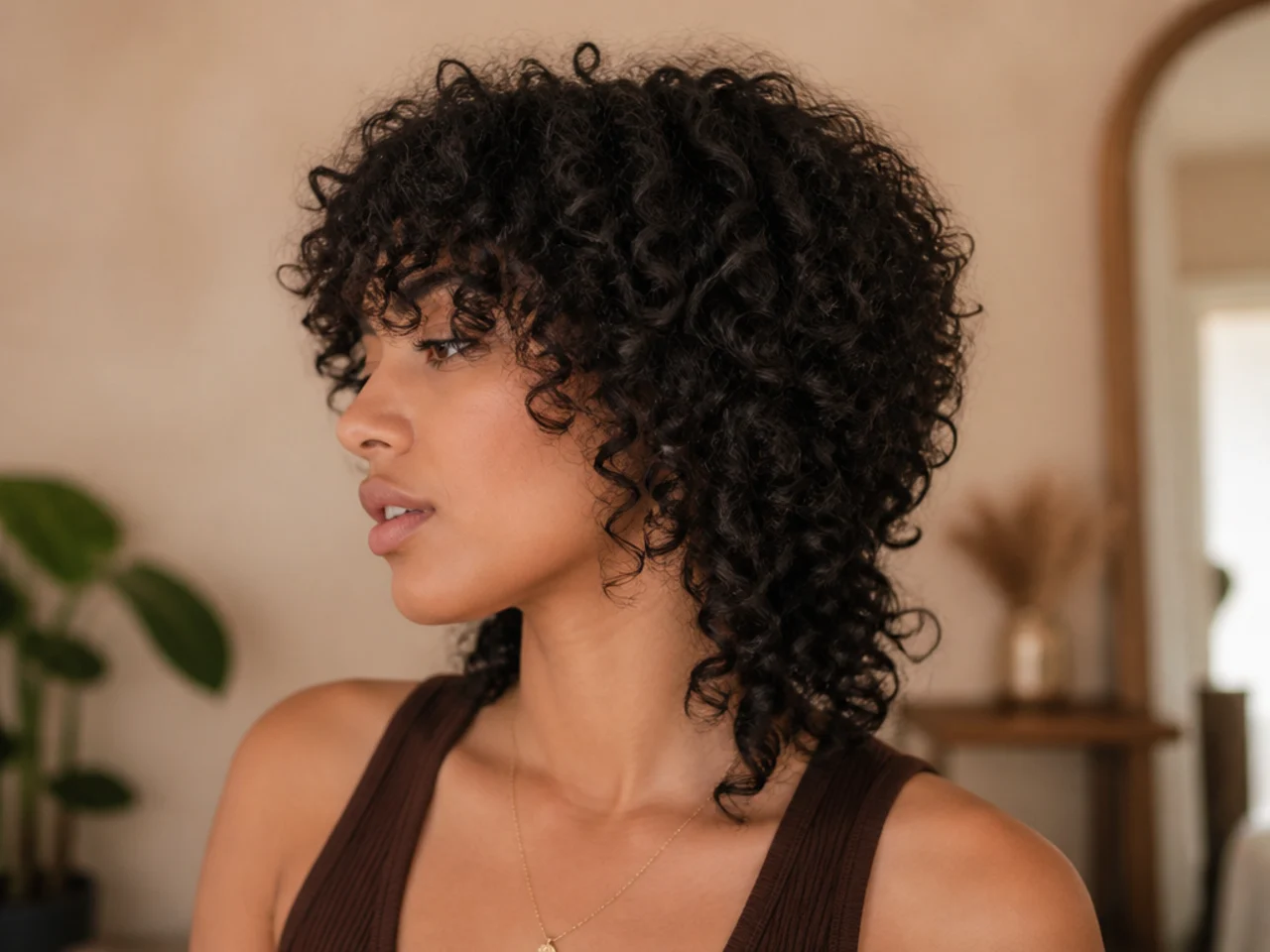
10. The Korean Wolf Cut
A softer reading of the same idea, covered in full in the korean wolf cut, where the layers are blended rather than disconnected and the face framing carries most of the shape. The crown still lifts, but the step between top and bottom is graded away so it grows out without a shelf.

11. The Fine Hair Wolf Cut
Every layer takes weight out of the perimeter, and fine hair has none to spare, so a full set of layers finishes in see through ends. Keep the shortest crown piece at the cheekbone and leave the bottom two inches of the perimeter uncut so there is still a visible line.

12. The Thick Hair Wolf Cut
Thick hair expands sideways at the mid lengths because the layer ends stack on each other, so the shape widens into a triangle. The fix is interior weight removal through the middle third rather than more layers, which takes bulk out without adding another visible step.

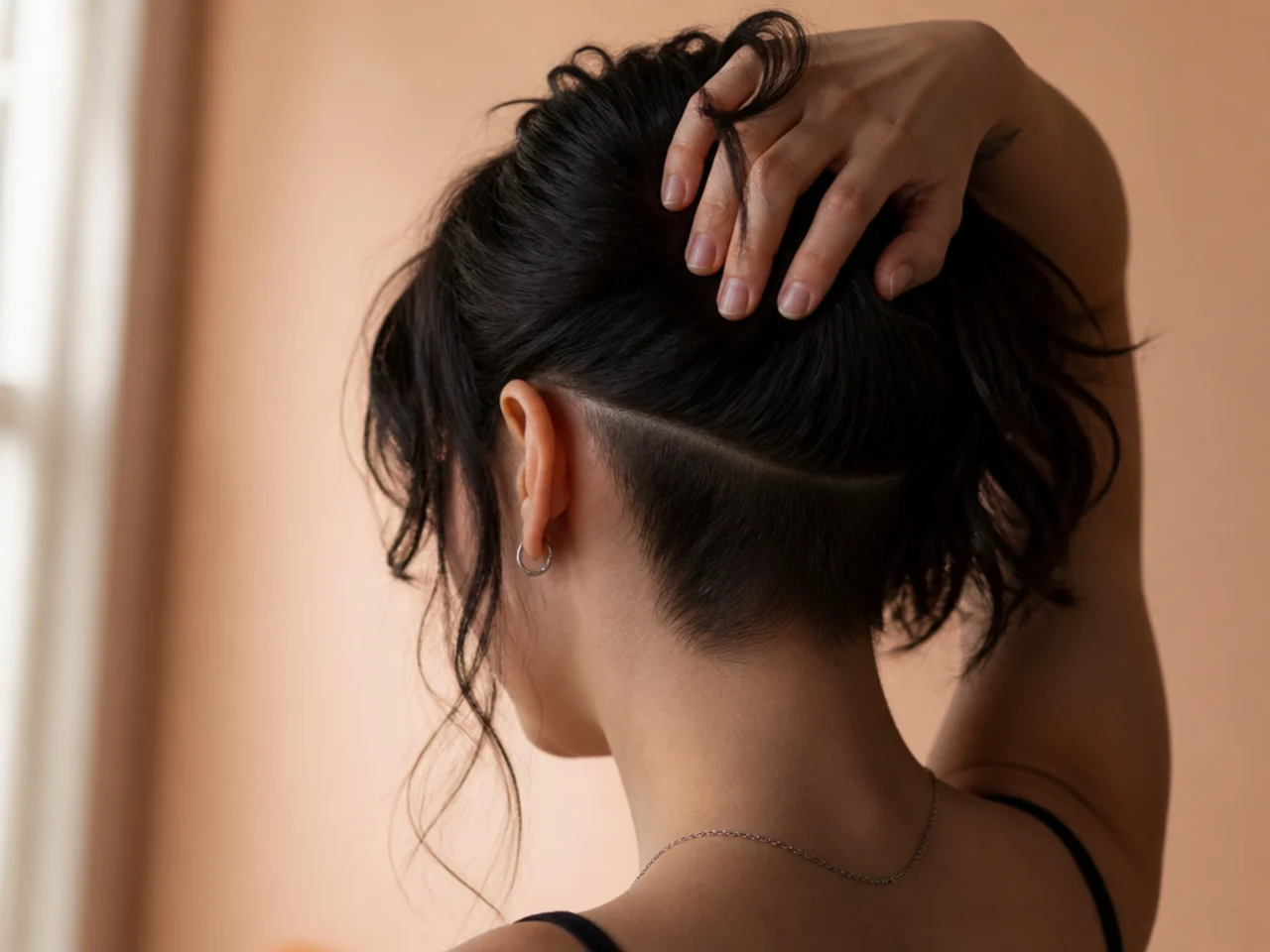
13. The Hidden Undercut Wolf Cut
A small section removed at the nape or behind the ear, sitting under the top layer where nothing shows. It exists to remove bulk that no amount of layering will reach, which is why it works on very dense hair and does nothing useful on fine hair.
14. The Curtain Bang Wolf Cut
The fringe is cut as the shortest point of the face framing and then graded back into the crown layers, so there is no step at the temple. Cut as a separate section it grows out as a separate section, and by week six there is a visible shelf where it meets the length.

15. The Wispy Fringe Wolf Cut
Cut with the points of the scissors rather than the blade, so each strand ends at a slightly different length and the edge reads as a haze. It suits a high forehead because it covers without creating a hard horizontal line across the face.

16. The Blunt Fringe Wolf Cut
A solid horizontal edge against the broken texture of the rest of the cut, which is what makes both halves read more clearly. It needs trimming every two to three weeks, because a blunt line is only blunt while it is level.

17. The Micro Bang Wolf Cut
Cut well above the brow, which shifts the eye upward and makes the forehead read shorter than it is. There is no grow out stage where it is a normal fringe, so it goes from micro to awkward to curtain over about three months.

18. The Grown Out Fringe Wolf Cut
At around week ten the fringe has passed the cheekbone and joined the face framing layers, which is where a lot of people decide they prefer it. Keeping it there means trimming the face framing instead of the fringe, so the two stay one continuous line.

19. The Razored Wolf Cut
A razor removes weight along the length of the strand rather than cutting straight across it, which is why razored ends taper to a point and separate on their own. On dry or coarse hair the same action roughens the cuticle, so it belongs on hair that is smooth to start with.

20. The Point Cut Wolf Cut
The scissors go into the ends vertically, taking small notches out so the line breaks up without losing length. It gives the texture of a razor cut with none of the cuticle damage, which makes it the safer option on coarse or colour treated hair.
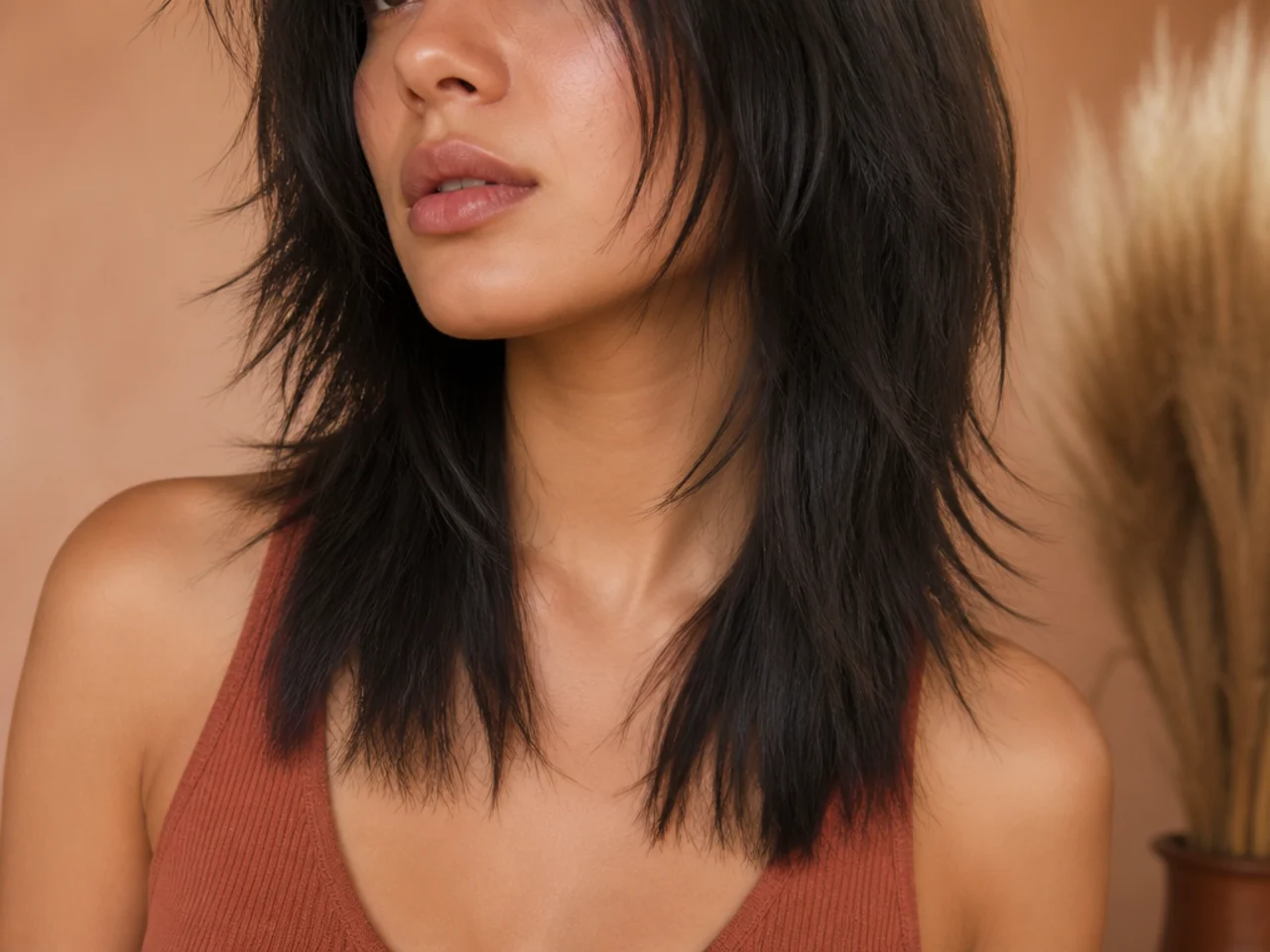
21. The Dry Cut Wolf Cut
The entire cut is done on dry, styled hair so every layer is placed where it will actually sit. It costs more chair time and it removes the single largest source of disappointment, which is a layer that looked right wet and lifted two inches once it dried.

22. The Blunt Perimeter Wolf Cut
Everything above is layered and the bottom line is left solid, which gives the eye a definite edge to read the shape against. It is the version that survives fine hair, because the perimeter keeps its density while the crown still gets its lift.

23. The Air Dried Wolf Cut
Left to dry on its own, the crown layers set in whatever direction they fell, which is why the part matters more than the product. Roughing the roots with the fingers for the first ten minutes is what decides whether the crown lifts or sits flat all day.

24. The Diffused Wolf Cut
A diffuser spreads the airflow so the curl pattern is not blown apart, and drying upside down puts the roots in a lifted position while they set. Most of the volume in a diffused wolf cut comes from that root position, not from the layers themselves.

25. The Week Ten Wolf Cut
Everything has grown about half an inch a month, so the gap in inches is roughly where it started. What changed is the crown layer itself: an inch longer, it is heavier and bends under its own weight instead of standing on the layer below, which is why the lift goes before the shape does.

Styling and Upkeep
Set the part before the hair dries. The crown layers hold whatever direction they set in, and moving the part afterwards leaves a flat panel.
Rough dry the roots for ten minutes. Root position accounts for most of the visible volume. The layers only make it possible.
Keep product off the crown. Anything heavy at the root pulls the short layers down, which removes the exact thing the cut was built for.
Re-cut the crown, not just the perimeter. A bottom trim on its own narrows the gap, which takes the cut further towards a plain layered lob.
Book at ten to twelve weeks. By then the crown layer has gained about an inch and is heavy enough to lie down rather than stand up.

Mistakes to Avoid
Cutting a wave or curl wet. The layer lands one to three inches higher than measured, and there is no way to put it back.
Asking for layers instead of a gap. Name the two lengths — where the shortest crown piece lands and where the perimeter finishes.
Adding layers to fix thickness. Layer ends stack and widen the mid lengths. Interior weight removal is the tool for bulk.
Thinning shears at the ends. They leave the perimeter wispy and translucent while the bulk stays exactly where it was.
Booking only a bottom trim. It shortens the perimeter, narrows the gap, and quietly converts the cut into long layers.

FAQ
How long is medium? Shoulder to collarbone, with a four inch gap above it.
Wet or dry cut? Dry for anything with a bend. Wet only for straight hair.
How often? Ten to twelve weeks, and re-cut the crown layers, not just the ends.

Final Thoughts
Bring two numbers to the appointment rather than a photograph: where the shortest crown layer should land, and where the perimeter should finish. Everything else in the cut follows from the distance between them.
For the shorter version of the same shape see the short wolf cut, and for the softer blended reading see the korean wolf cut. More in Mullet and Wolf Cut.