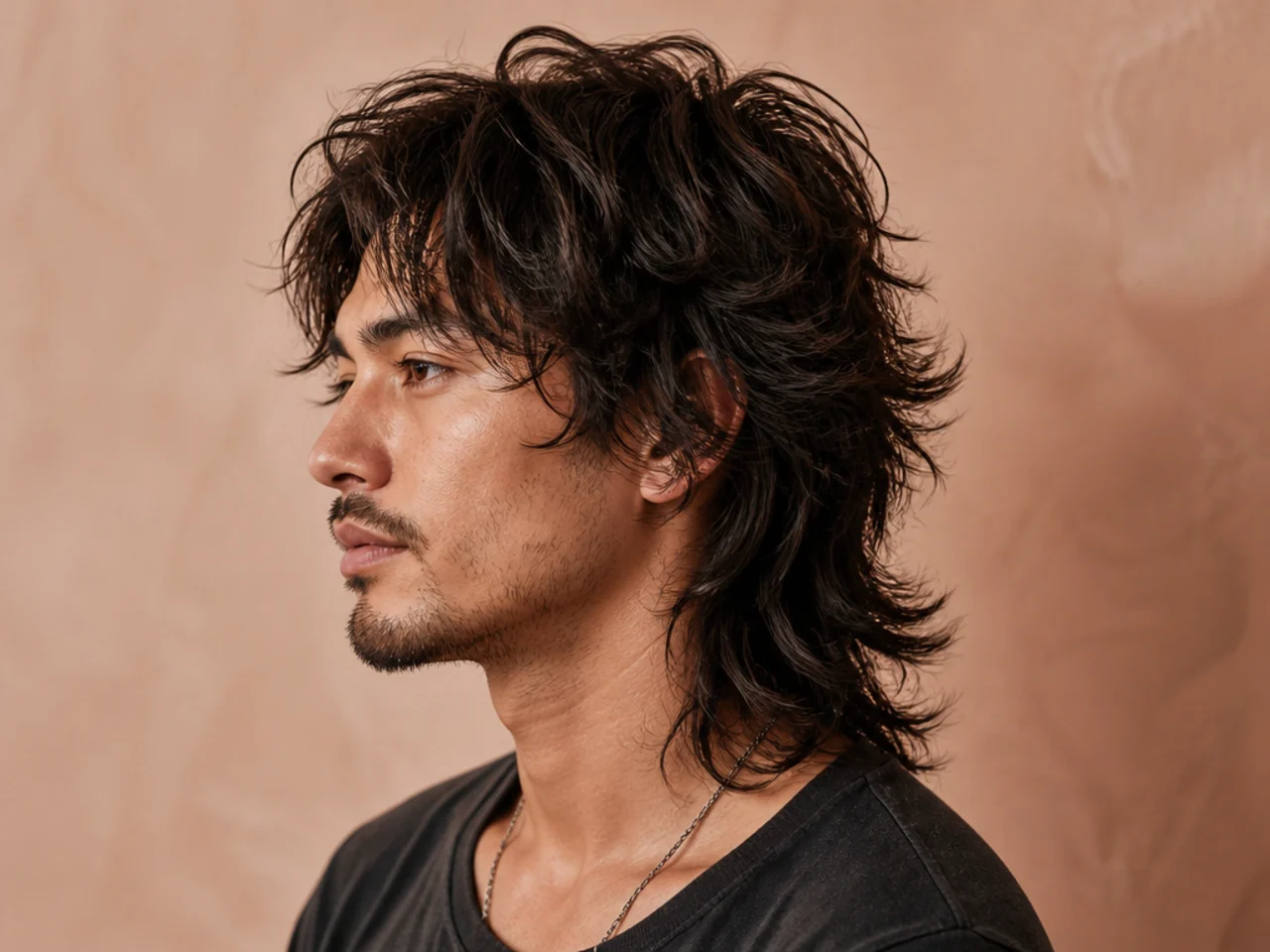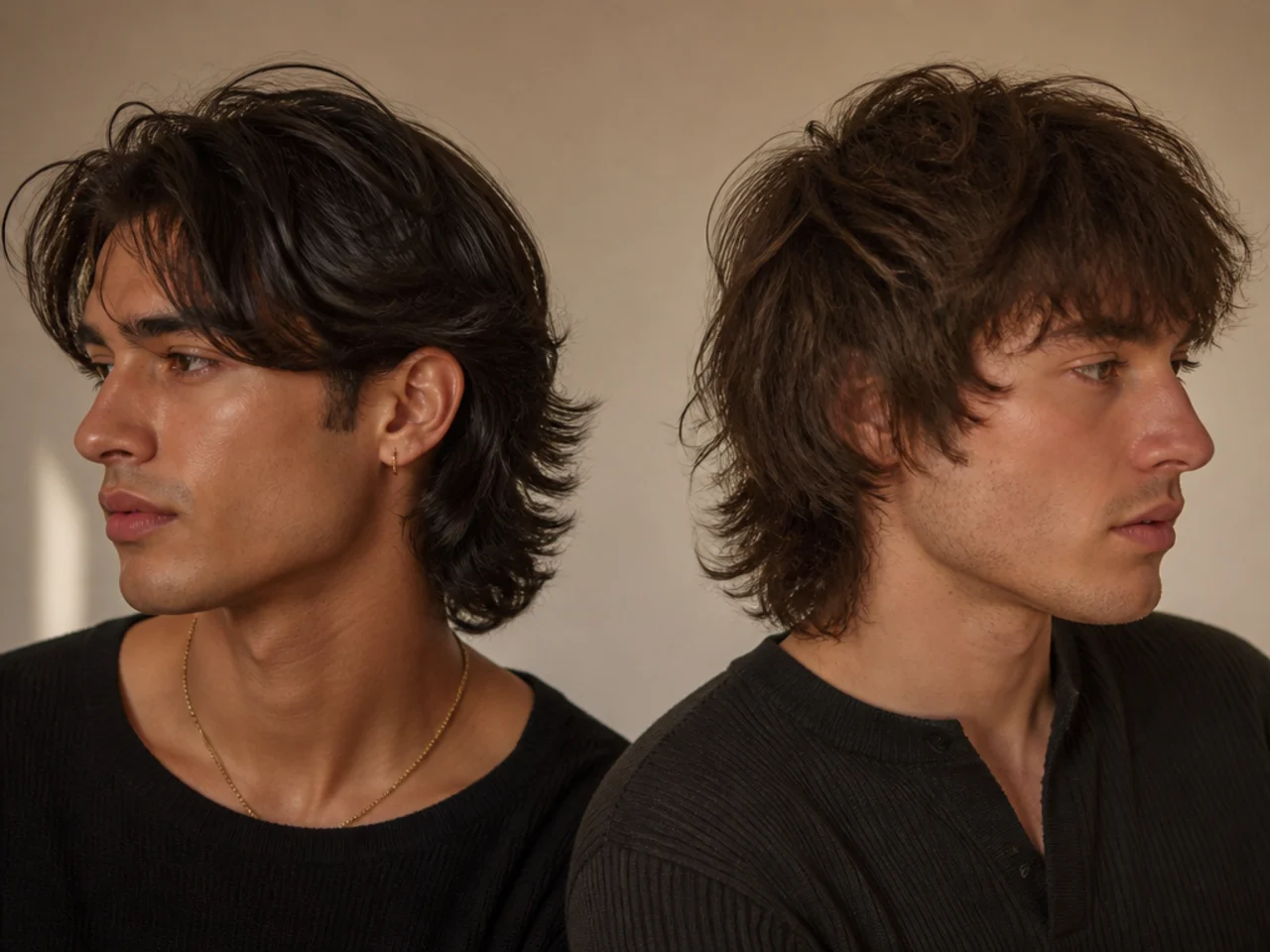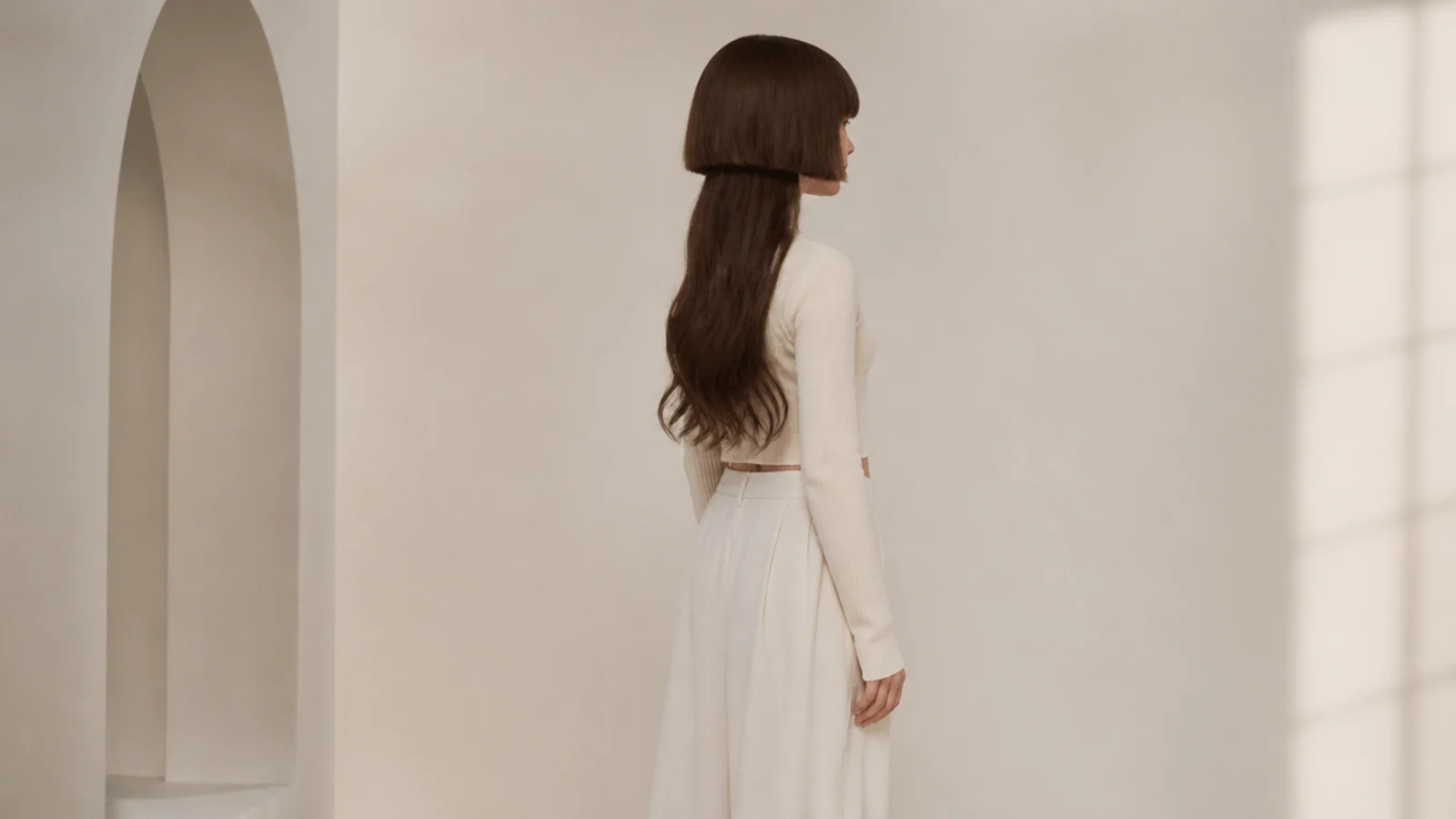
15 Wavy Jellyfish Haircut Ideas and the Shrinkage Rule
Fifteen wavy jellyfish cuts, and the reason wavy hair needs a bigger gap than straight hair does. A wave lifts the bell as it dries and scatters the line the disconnection depends on, so both lengths have to be set wet with the spring already counted in.
In this article · 23
- The Two Layer Structure
- Jellyfish Versus Wolf Versus Mullet
- Who It Suits
- Styling the Bell and the Lengths
- Heatless Styling
- Growing It Out
- The 15 Wavy Jellyfish Variations
- 1. Cheekbone Bell
- 2. Jaw Bell
- 3. Curtain Bangs
- 4. Heatless Braids
- 5. Fine Hair
- 6. Waist Tentacles
- 7. Round Face
- 8. Foam Rollers
- 9. Two Tone
- 10. Hime Bangs
- 11. Air Dried
- 12. Sleek Bell
- 13. Nape Undercut
- 14. Thick Hair
- 15. Money Piece
- Final Thoughts
A wavy jellyfish cut to the same measurements as a straight one comes out wrong twice, and both errors happen after you leave the salon.
Wave lifts the bell as it dries. A bell cut at the jaw wet finishes near the cheekbone dry, which moves the whole shape up a level nobody asked for.
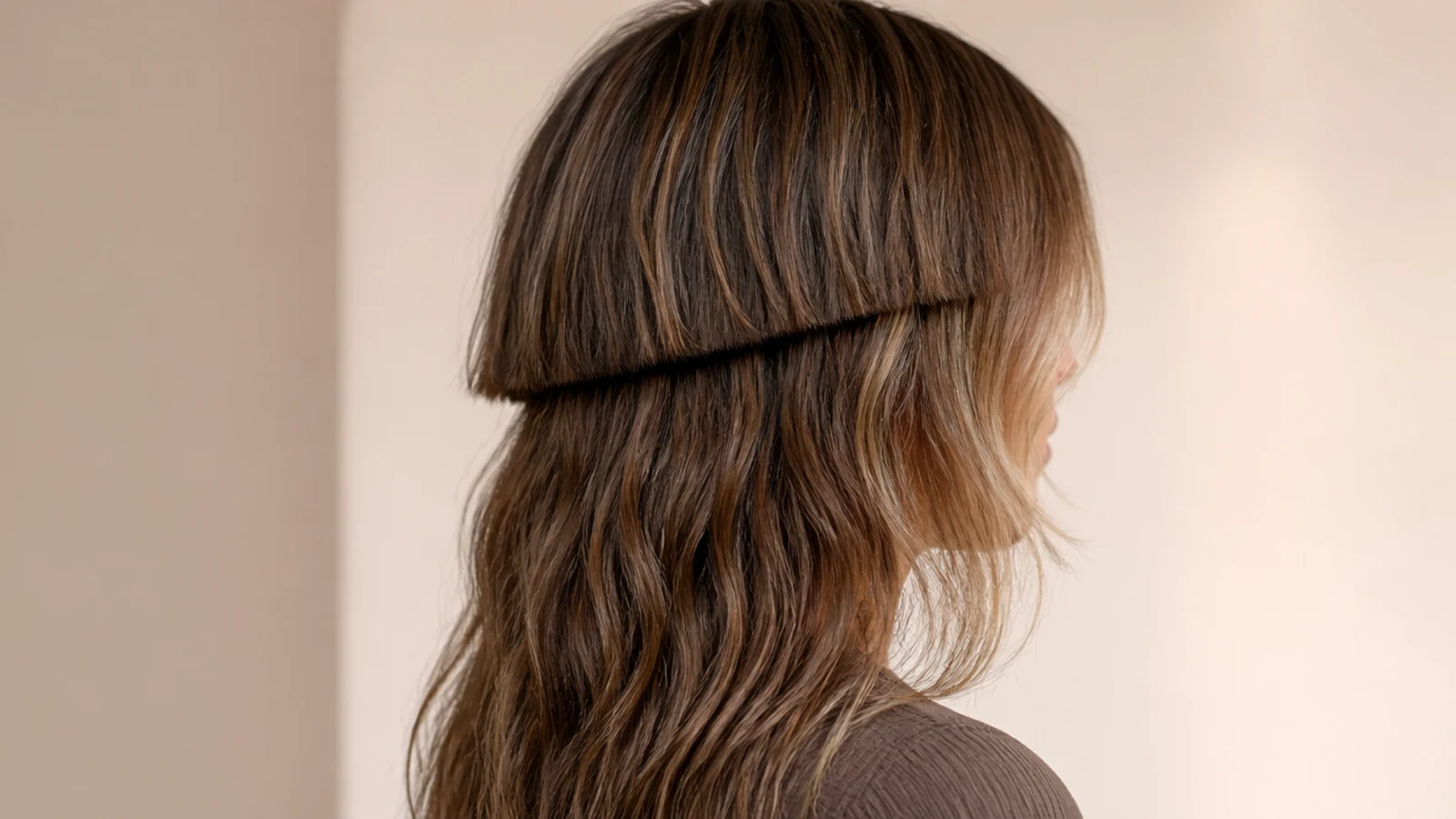
Wave also blurs the cut line. A straight bell ends on one bright highlight. A wavy one ends on a soft fringe of bends, so it takes more bare length underneath before the eye reads two layers rather than one thick head of hair.
The Two Layer Structure
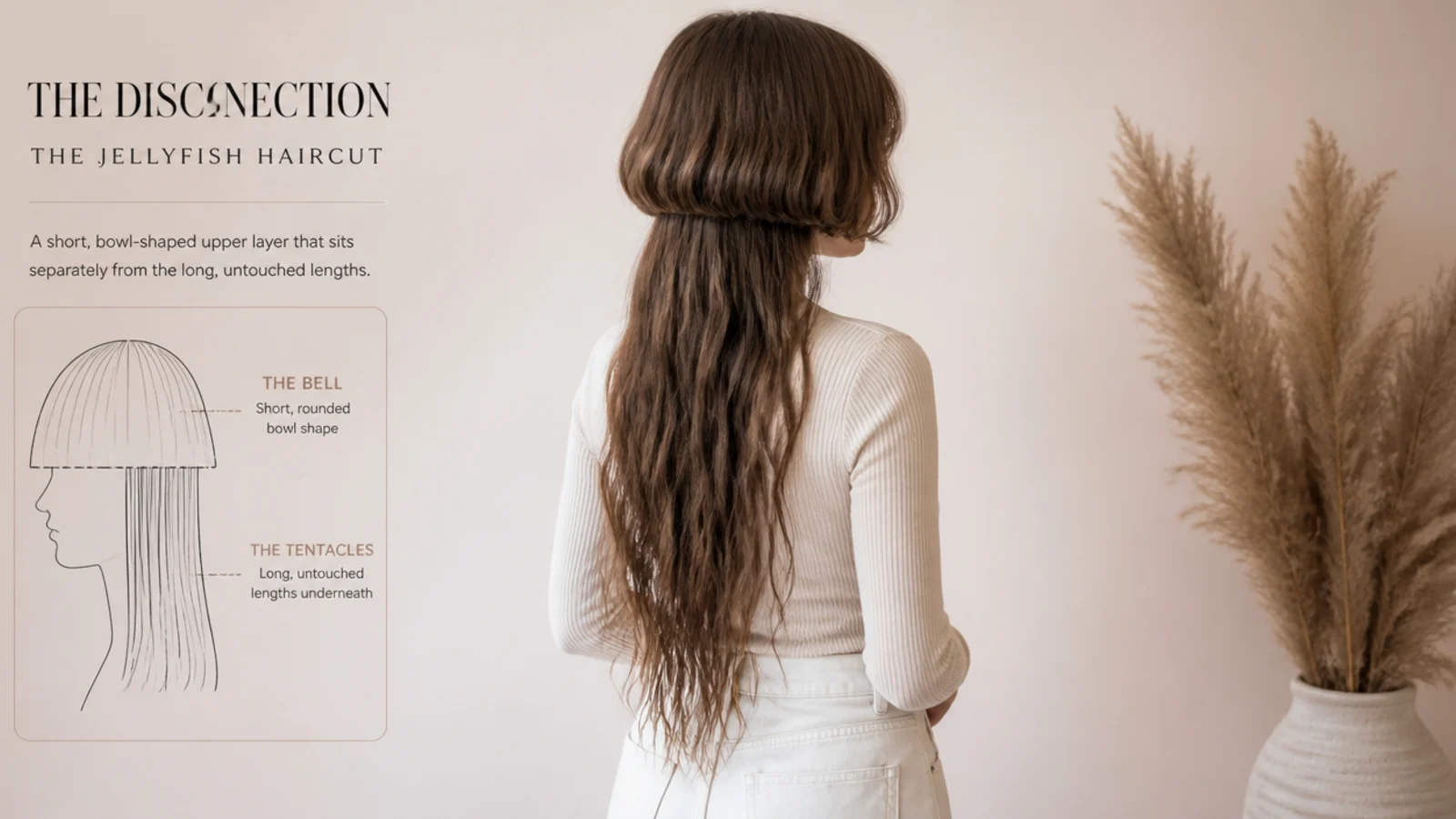
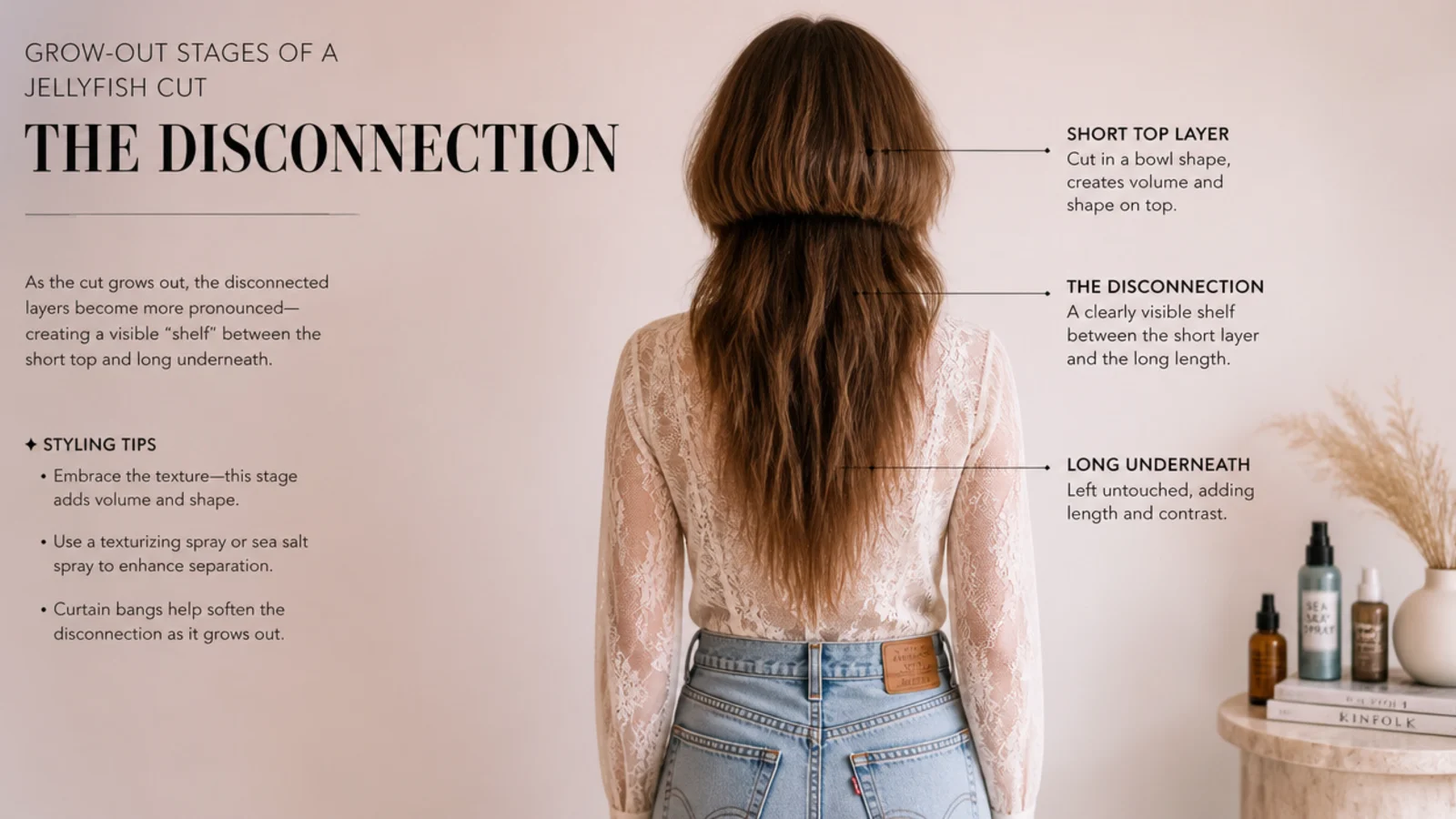
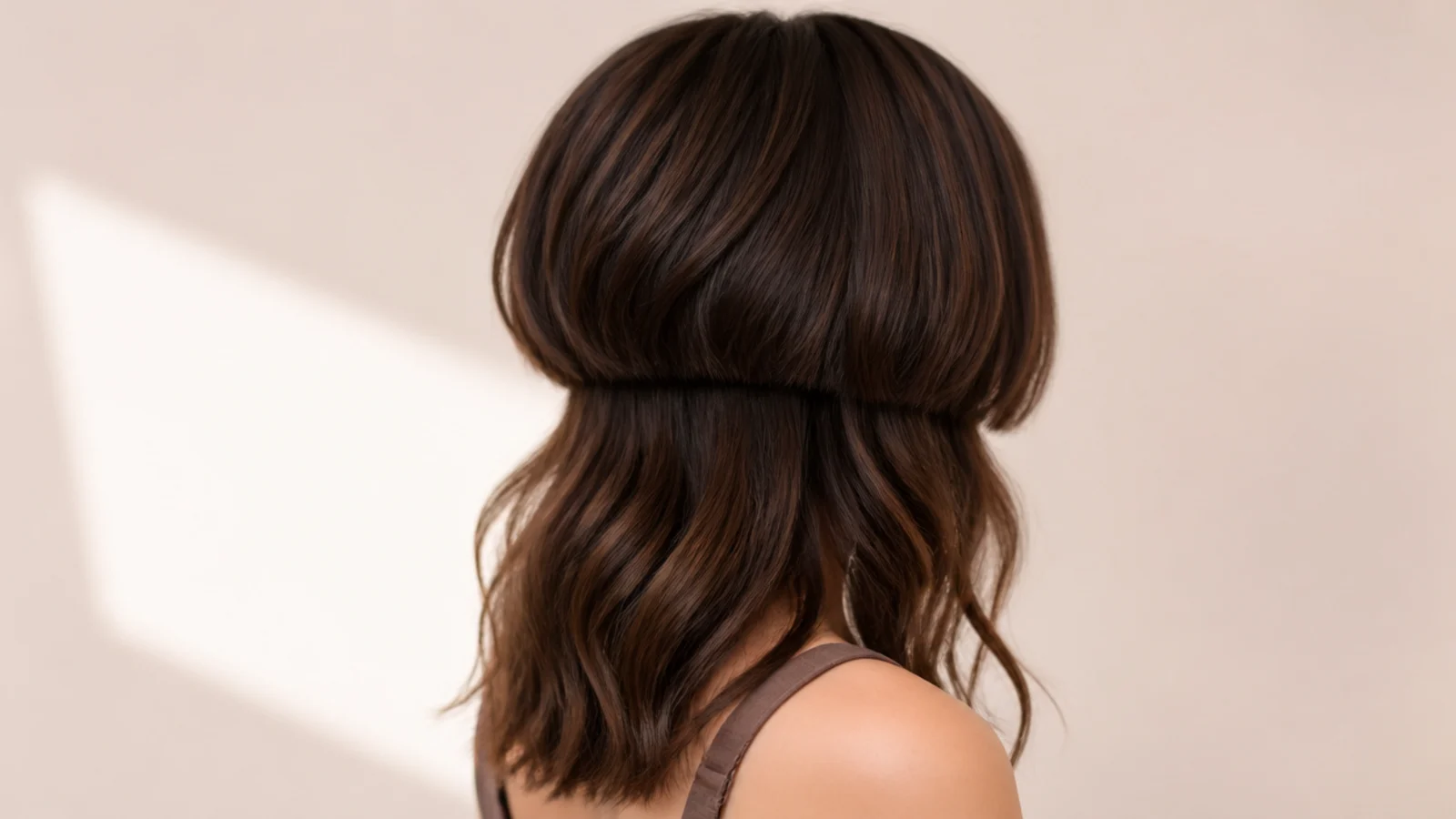
A closed bell over untouched lengths. The top section is cut to one solid perimeter and the section beneath it is left alone. Nothing graduates between them.
The perimeter runs all the way round. Front, sides and back. A rounded shape only at the front is a heavy fringe, not a jellyfish.
The join is a ring, not a line. Which is why the cut looks different head on and in profile, and why the profile is the view that tells you whether it worked.
Almost all the work is in the bell. The lengths usually get a dusting at most. That makes this a rare shape you can wear while still growing hair out.
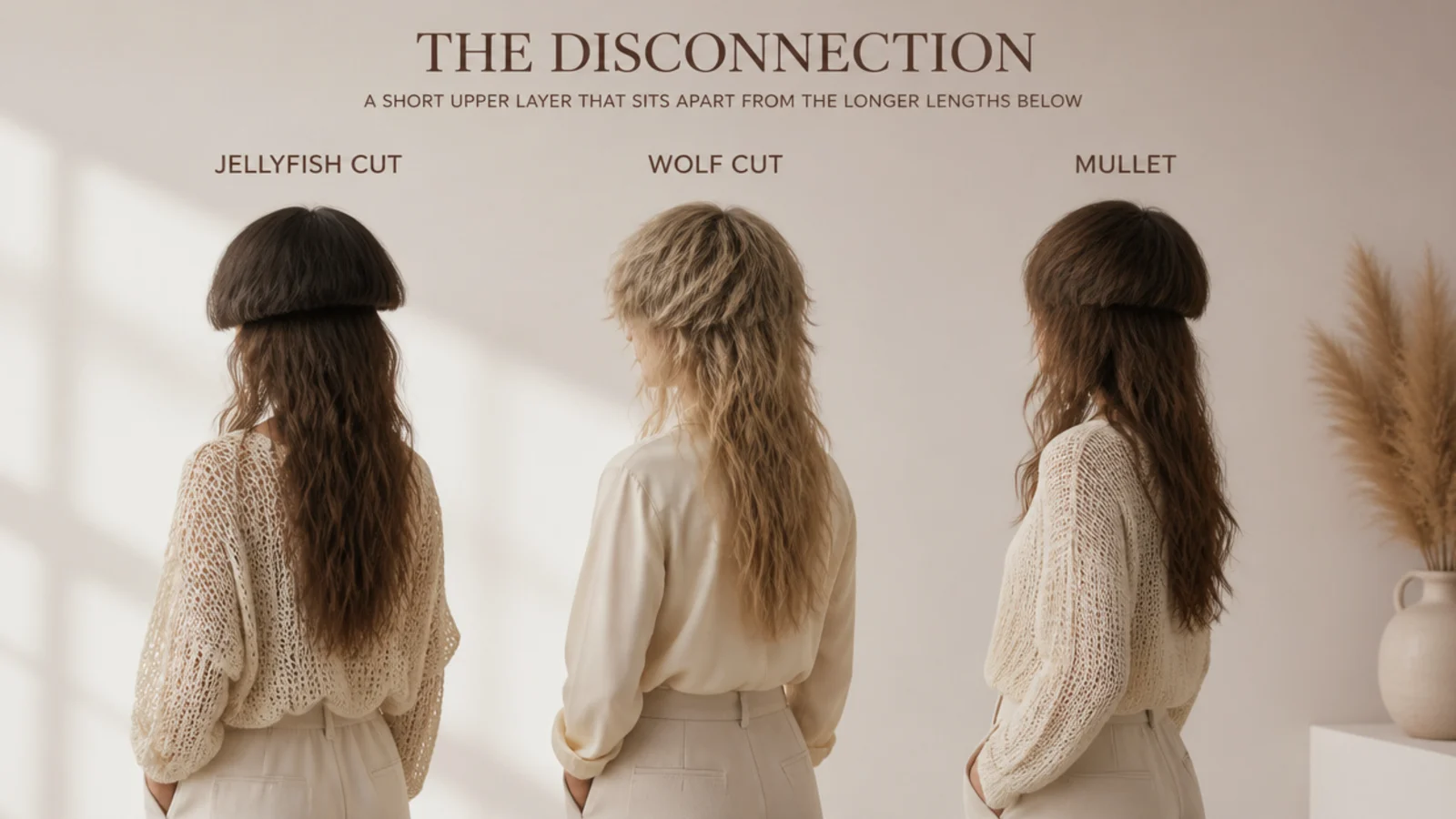
Jellyfish Versus Wolf Versus Mullet
A wolf cut is connected. Its layers step down continuously from crown to ends, and no length is ever more than an inch off its neighbour.
A mullet divides front to back. Short at the face and long at the nape, with the split running through the profile.
A jellyfish divides top to bottom. A horizontal ring around the entire head, with a hard edge and no blending at any point on it.
Wave hides the difference fastest. On straight hair the three shapes are obvious at a glance. On wavy hair a badly gapped jellyfish reads as a wolf cut, which is the exact failure the shrinkage rule exists to prevent.
Who It Suits
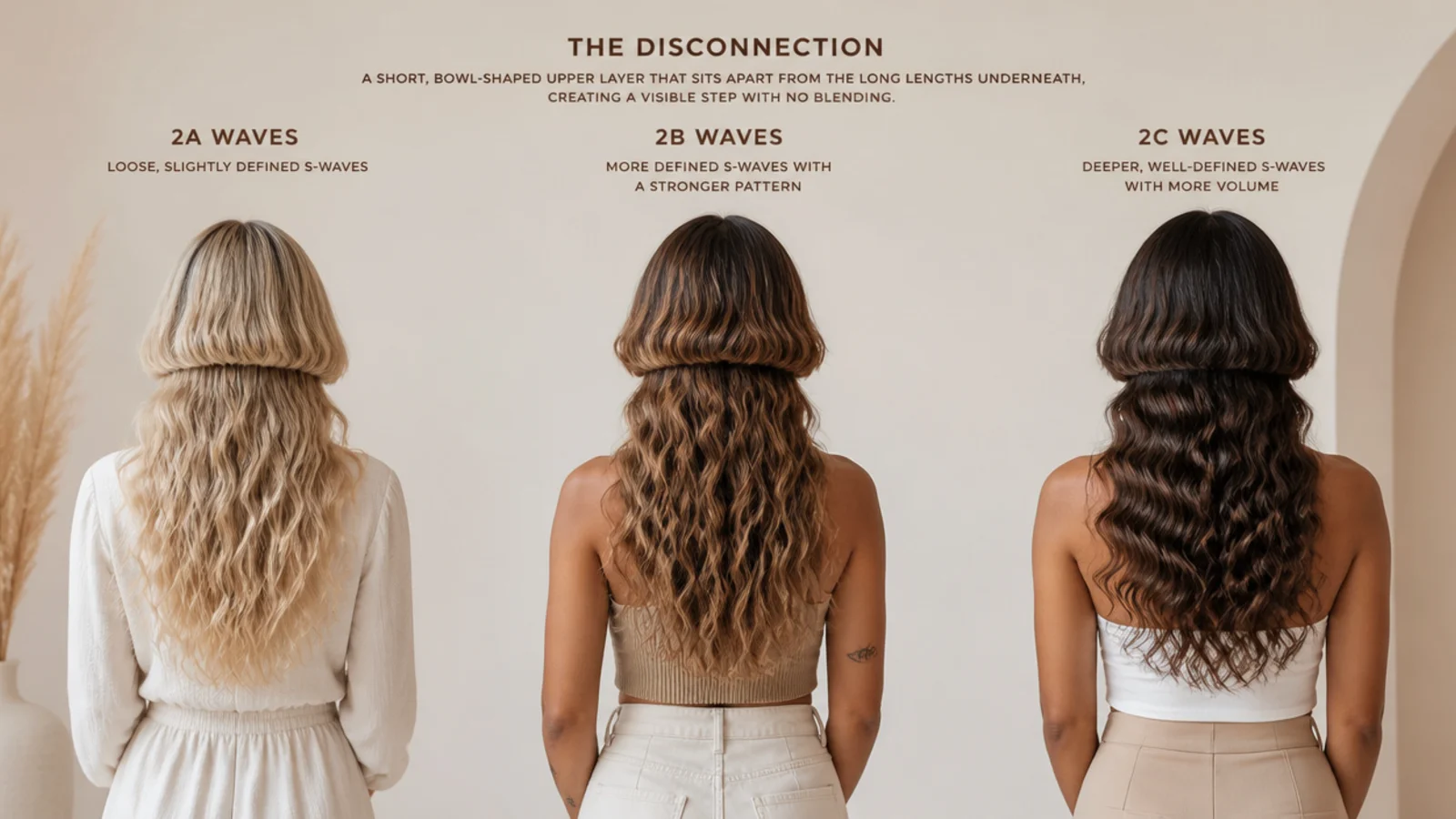
Loose waves suit it best. A 2a to 2c pattern has enough bend to give the bell volume and enough weight to keep the lengths hanging flat, which is exactly the contrast the shape wants.
A round face wants the bell past the cheek. Wave widens whatever line it ends on, so a bell finishing at the cheekbone puts extra width at the widest point of the face.
A long face wants the bell high and a fringe under it. Two horizontals across the upper face break the vertical the eye is following.
Fine waves want shorter lengths. Wave costs density at the ends, and a thin ribbon of hair four inches below the bell reads as nothing at all.
Thick waves want weight removed inside the bell. Never off its surface. Texturising the perimeter frays the one edge the whole cut rests on.
Styling the Bell and the Lengths
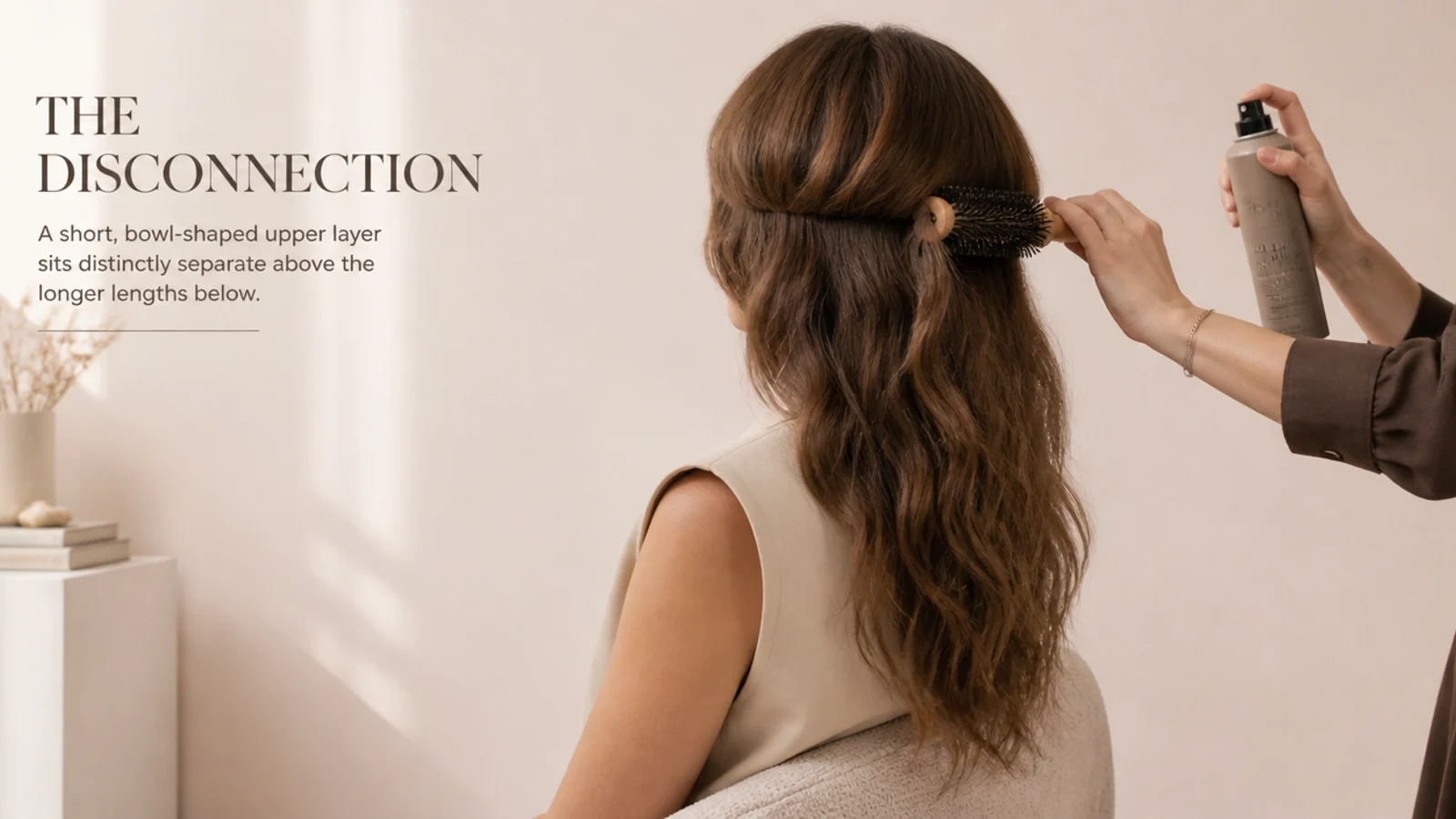
Dry the bell first and dry it round. Wave will make a dome on its own, but only if the ends are turned and left to cool in that position.
Keep cream and oil off the bell. Weight is the enemy of a dome. Everything you use belongs from the ear down.
Scrunch the lengths, do not brush them. A brush pulls the S bends out into frizz, and frizz below the bell closes the visual gap by filling it in.
Two finishes on one head. A smooth bell over textured lengths reads as deliberate. Two smooth sections read as a wig and two rough ones read as damage.
Refresh with water, not product. Wave re rolls when it is wet. A spray bottle on day two costs nothing and puts the pattern back.
Heatless Styling
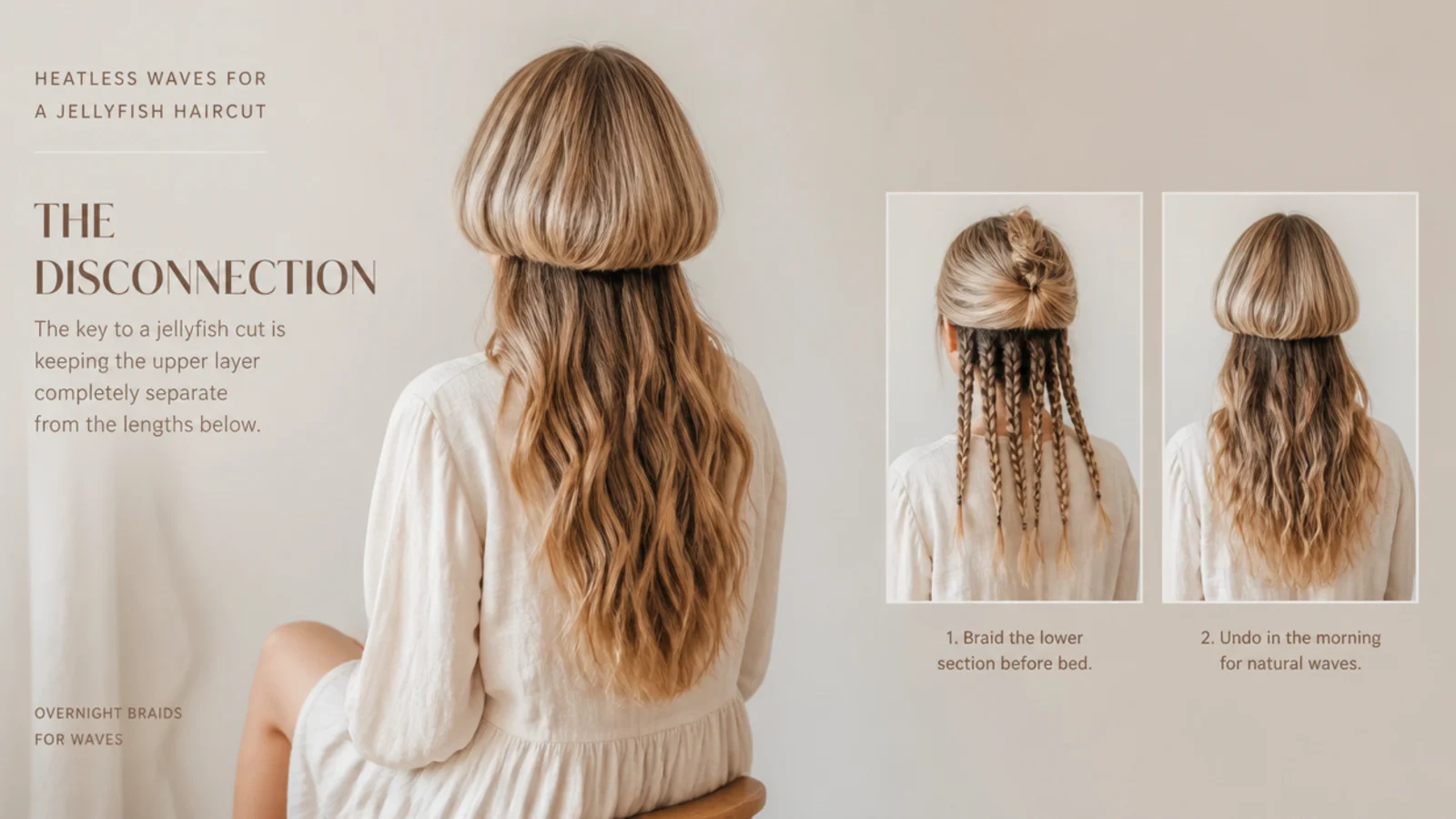
Wave holds a set overnight without heat. The bonds that hold a bend reform as hair dries, so anything that shapes it while damp will still be there in the morning.
Braids give a bend, rollers give a curl. A plait sets a wide S from the mid length down. A roller sets a round spiral from wherever it starts.
Damp, not wet. Fully soaked hair takes longer to dry than you will sleep, and hair that dries before it is shaped holds nothing at all.
The bell and the lengths need different sets. Rollers on the bell for a dome, plaits on the lengths for a bend. One method over both flattens the contrast.
Growing It Out
Only the bell has to grow. The lengths were never cut, so there is nothing to wait for underneath.
Half an inch a month is the rate. A cheekbone bell reaches the chin in around six months and shoulder length in around a year.
The gap closes gradually, so it stays wearable. Unlike a fringe, a jellyfish grows through a series of usable shapes rather than one bad one.
Trim the lengths on their own schedule. Dusting the ends every three months keeps the bottom of the shape solid while the bell does its travelling.
The 15 Wavy Jellyfish Variations
1. Cheekbone Bell
The highest bell that still reads as a bell rather than as a fringe. Cutting this high buys separation for free, which is why it is the safest placement on wavy hair — even after an inch of shrinkage the gap underneath is still wide enough to read.
2. Jaw Bell
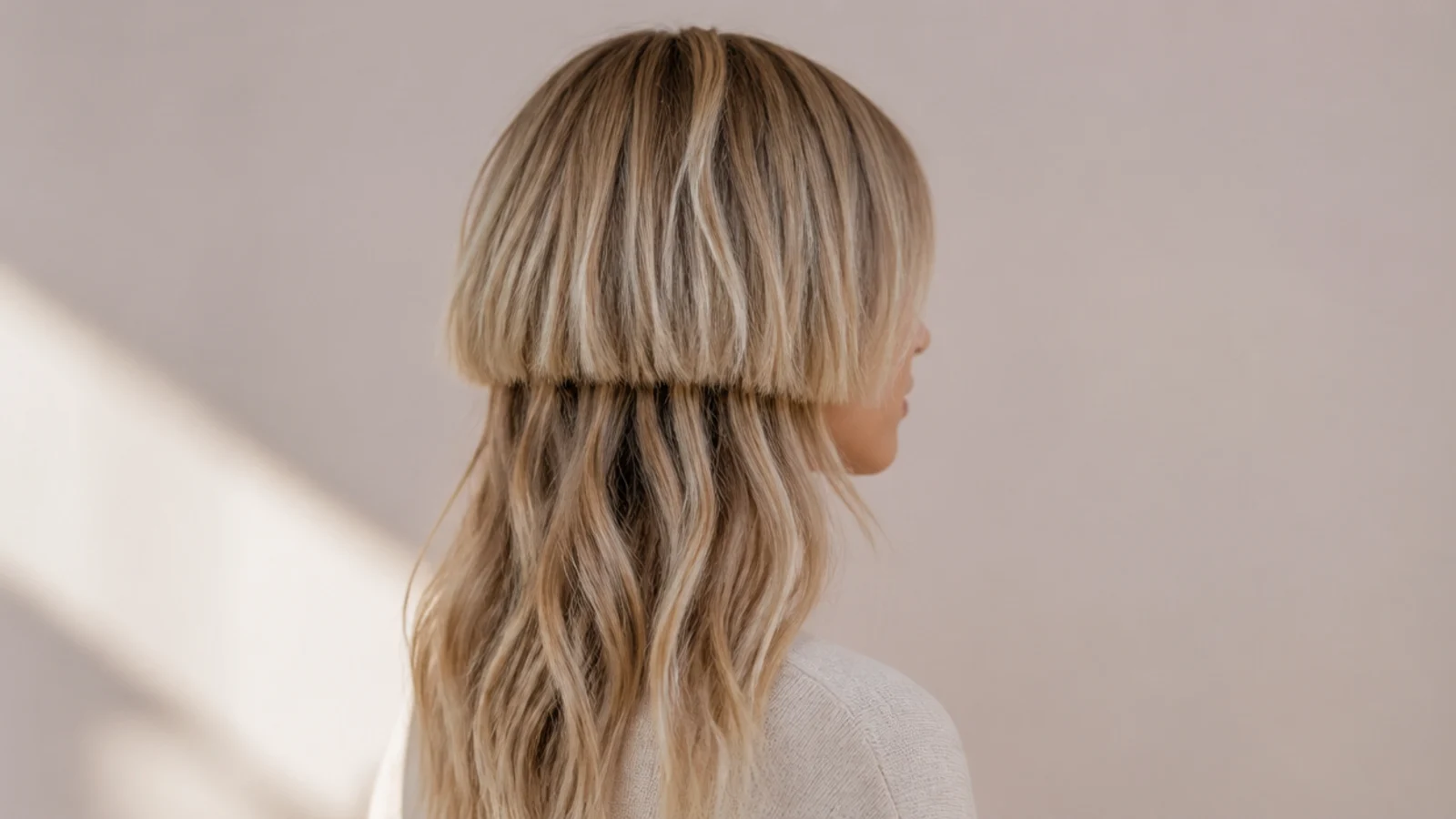
The most wearable placement, and the one that needs the shrinkage rule most. Cut it at the jaw wet and it dries near the cheek, so the stylist has to add an inch to the wet measurement before the scissors move.
3. Curtain Bangs
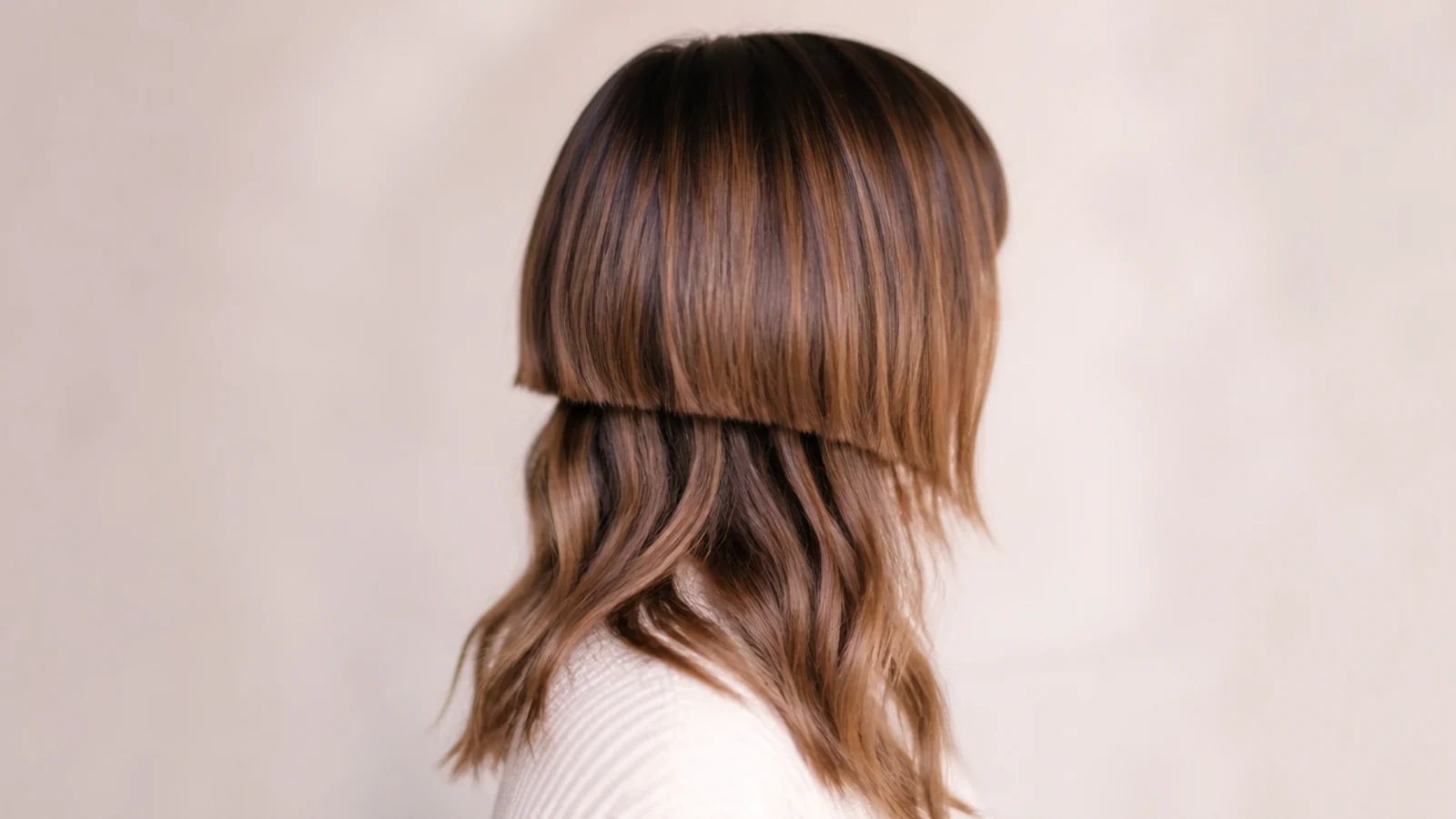
Splitting the front of the bell into two panels breaks the closed circle where it meets the face. On wavy hair the split has to start higher than on straight hair, because the bend pushes the panels back together as they dry.
4. Heatless Braids
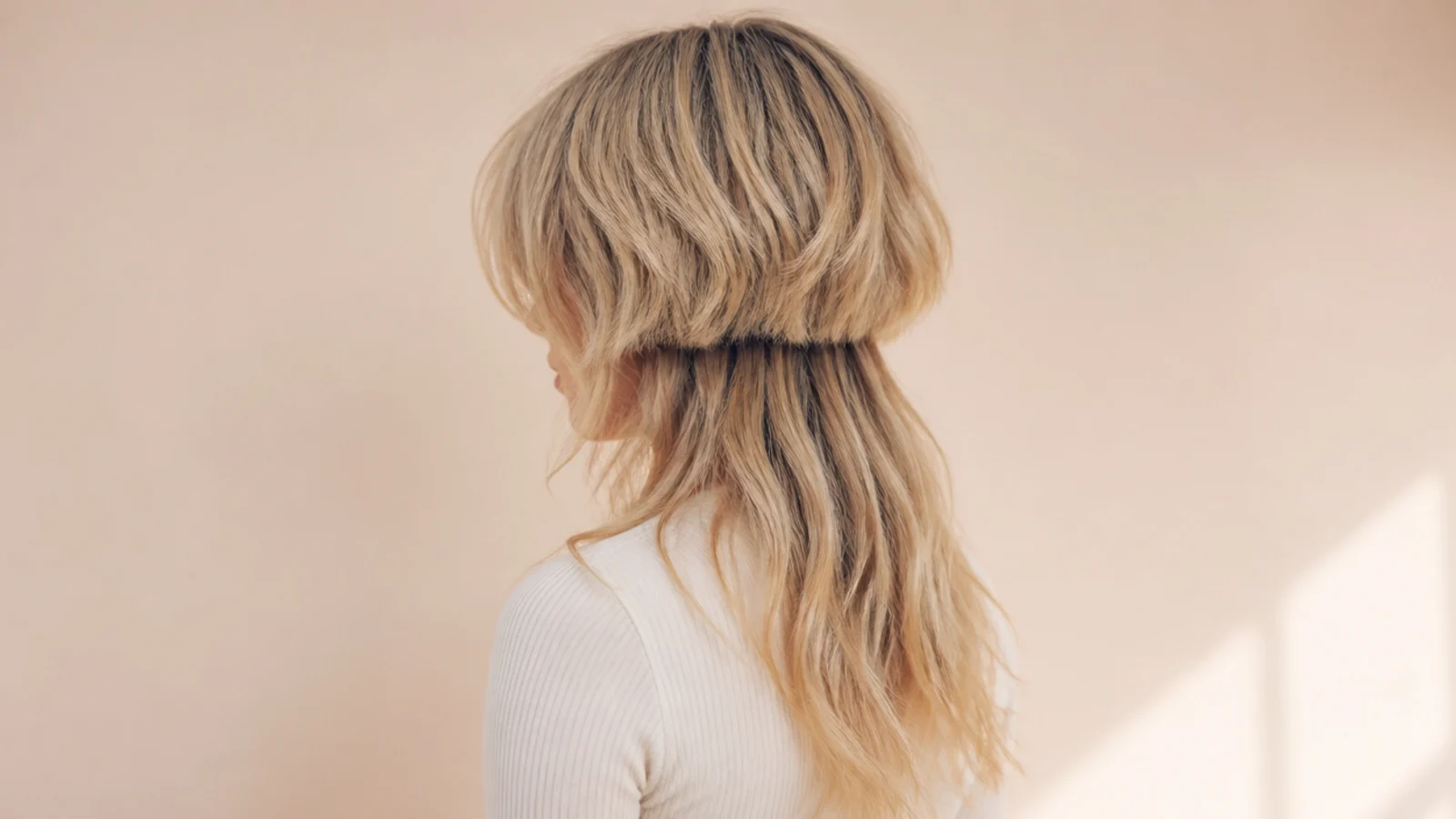
Two loose plaits set overnight give a wide S from the mid length down without touching the roots, which keeps the lengths flat where they meet the bell. Braid them damp rather than wet, because hair that dries before the plait is finished holds nothing.

5. Fine Hair
A blunt bell is the single best thing you can do to fine hair, because every strand ending on one line reads as density. Keep the lengths at the collarbone rather than the waist, since fine wave loses thickness fastest at the ends and thin ends undersell the second layer.
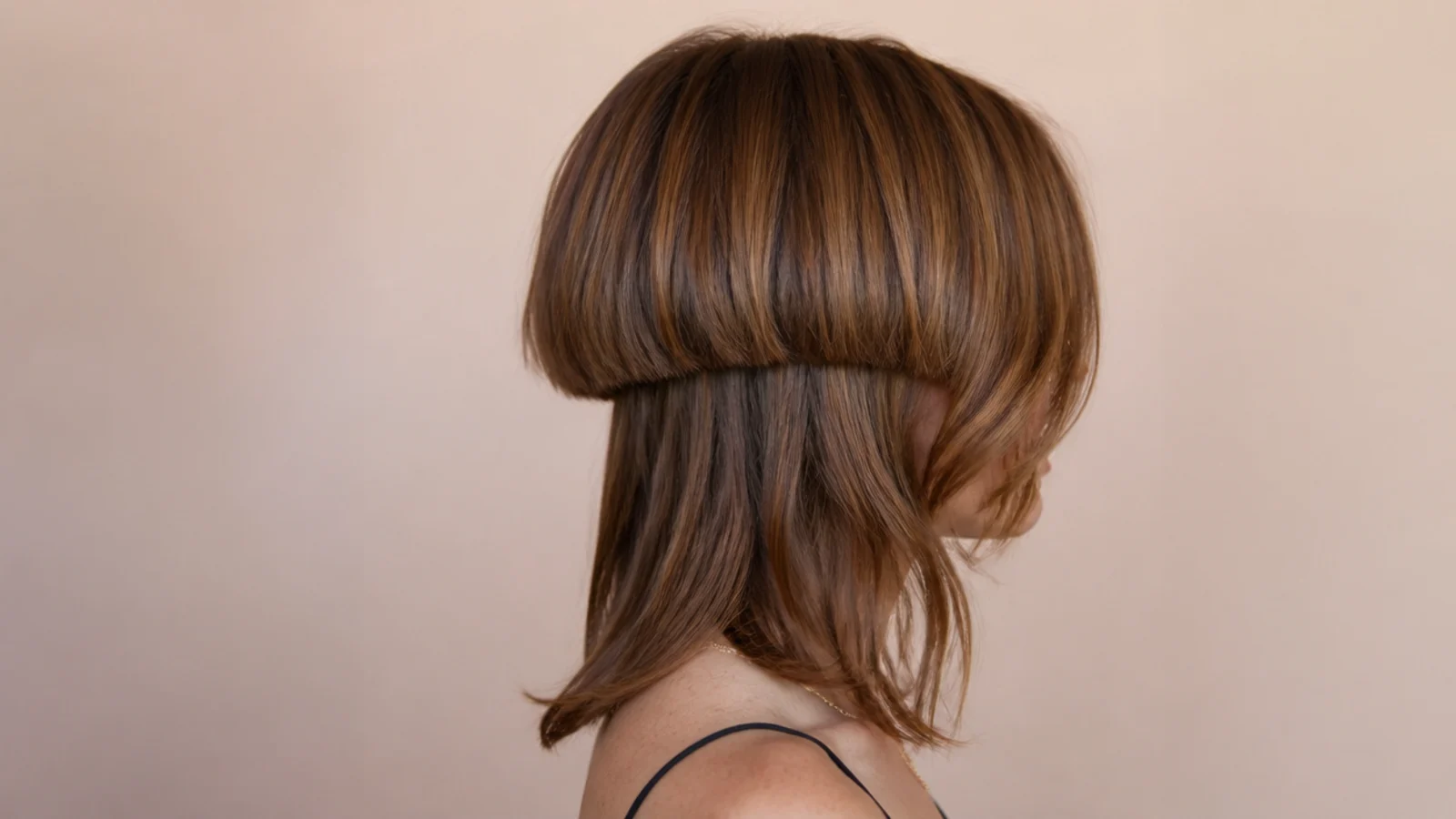
6. Waist Tentacles
The widest gap available, and the clearest possible reading of the shape. A cheekbone bell over waist length waves is close to two feet of separation, which is far more than wave can blur even at its worst.
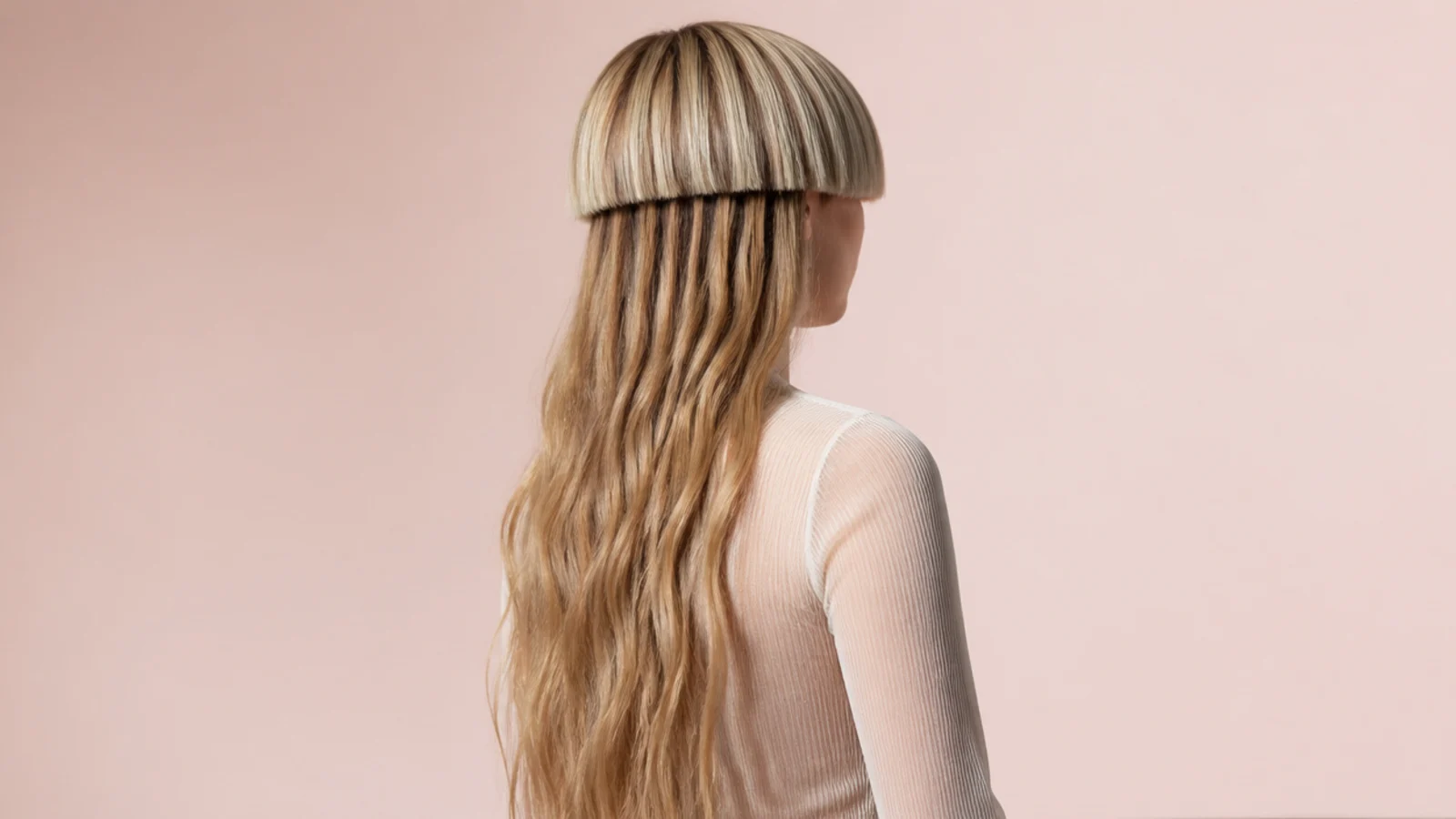
7. Round Face
The bell drops below the cheek so its widest curve does not sit on the widest part of the face. Wave makes this matter more than it does on straight hair, because a wavy perimeter expands sideways as it dries rather than hanging where it was cut.
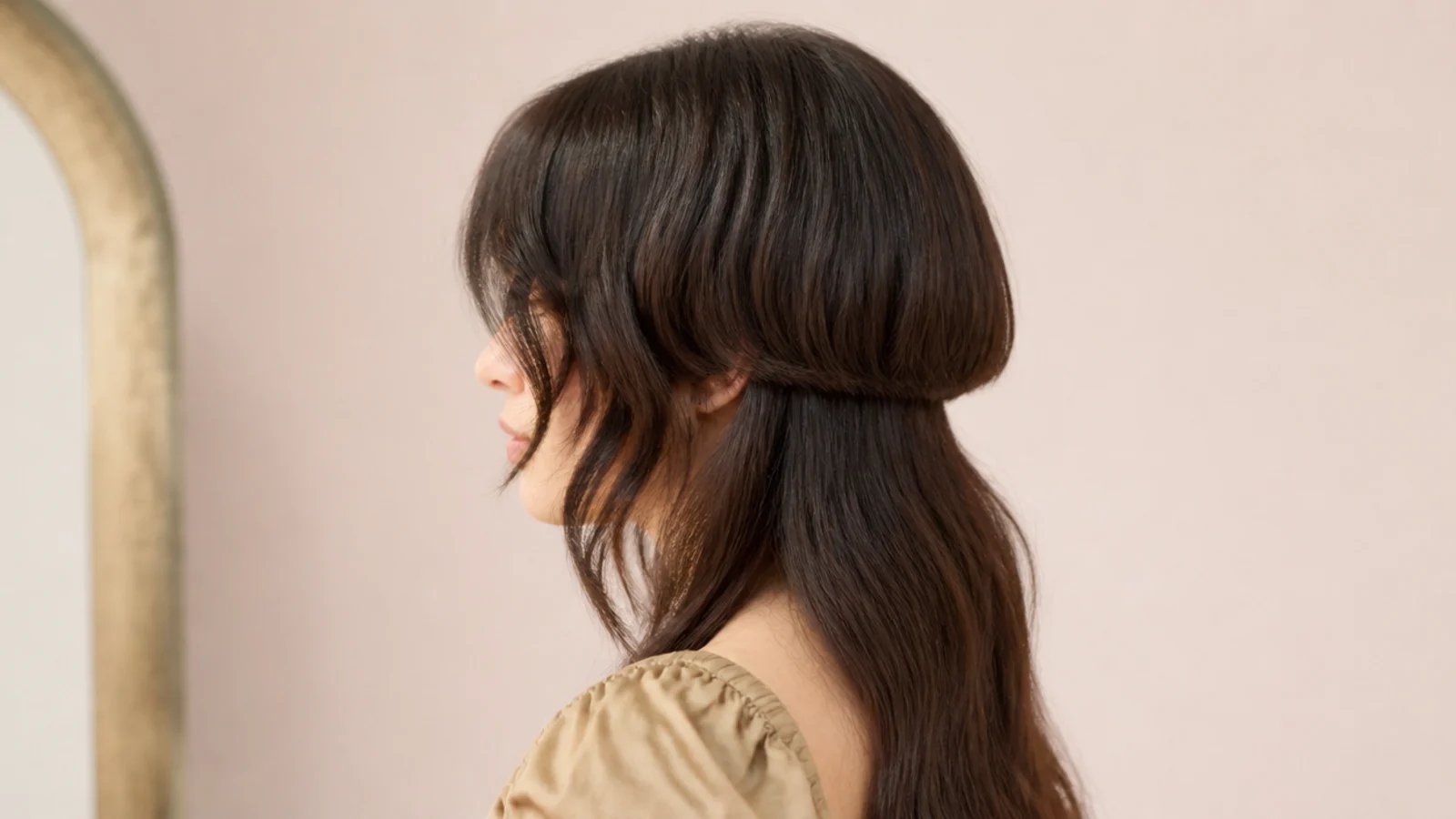
8. Foam Rollers
Rollers set a round spiral rather than the flat S a plait gives, which is what the bell needs to hold a dome. Set the bell on rollers and leave the lengths in a plait, so the two sections dry into different shapes instead of matching.
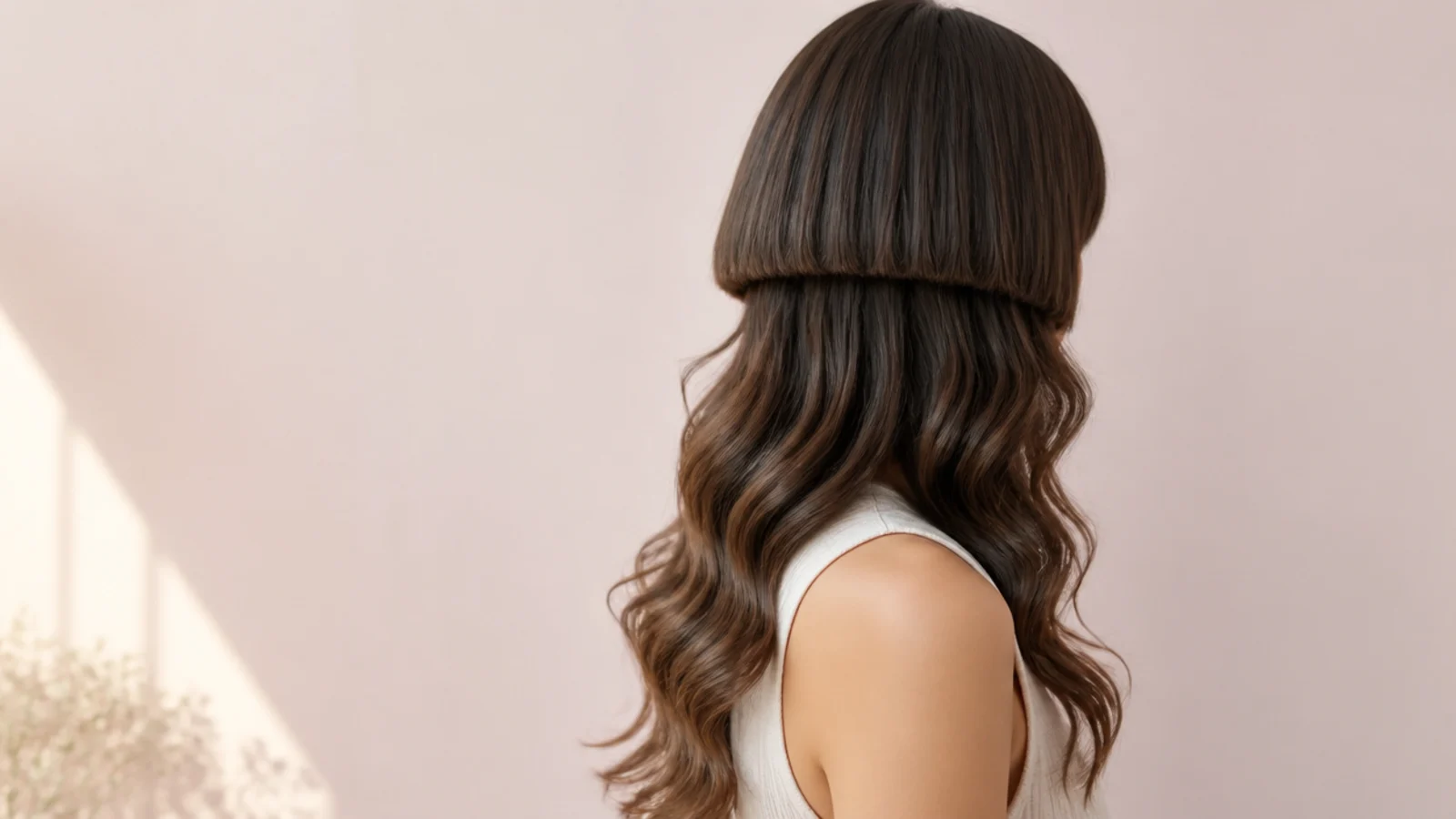
9. Two Tone
Placing the colour change on the same line as the cut line doubles the separation, because a difference in value registers faster than a difference in shape. On wavy hair this is worth more than on straight, since colour holds a line that wave keeps trying to soften.
10. Hime Bangs
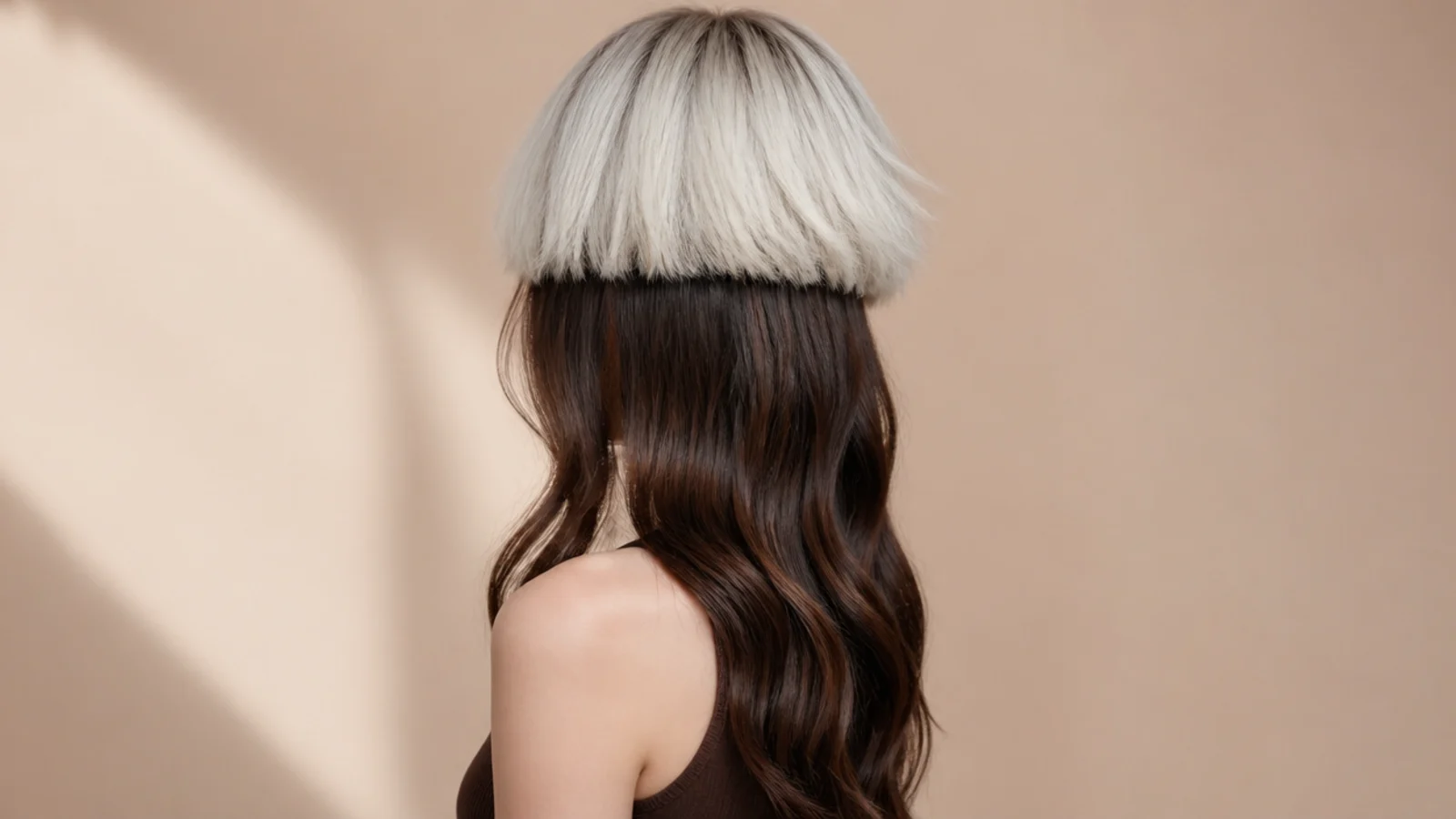
Two straight panels cut at the cheek and kept out of the bell add a third length at the front. They need blunt ends and a smoothing pass, because a wavy panel left to its own devices just looks like the bell is unravelling at the sides.
11. Air Dried
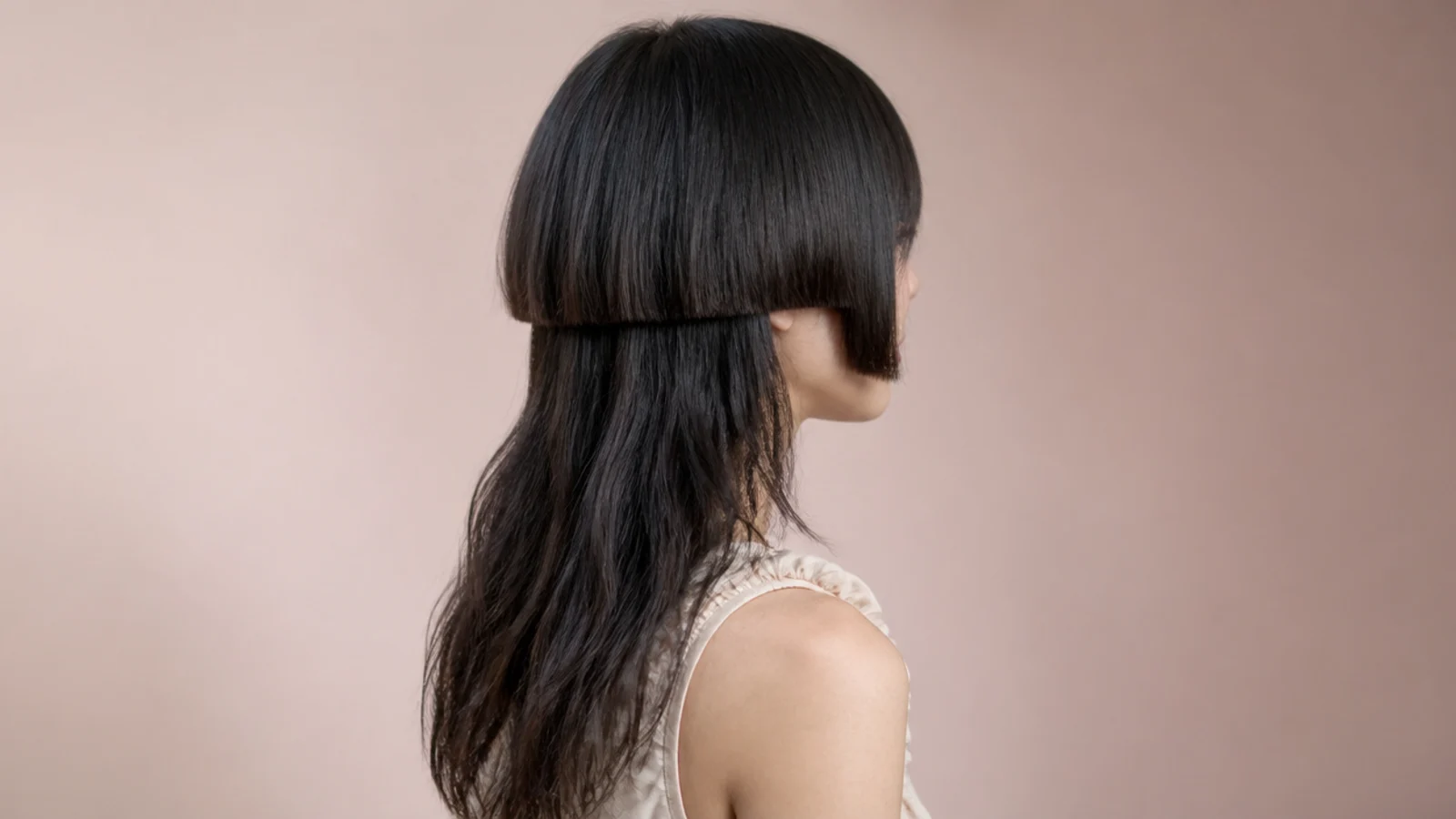
The version this texture was made for. A wavy bell dries into a dome without a brush because the shape is coming from the bend in the strand, so the only thing you have to do is stop touching it while it dries.

12. Sleek Bell
The bell smoothed flat while the lengths stay wavy, which is the strongest contrast in the set. A flat cuticle reflects light in one direction, so the smoothed bell throws a hard highlight that the textured hair underneath cannot compete with.
13. Nape Undercut
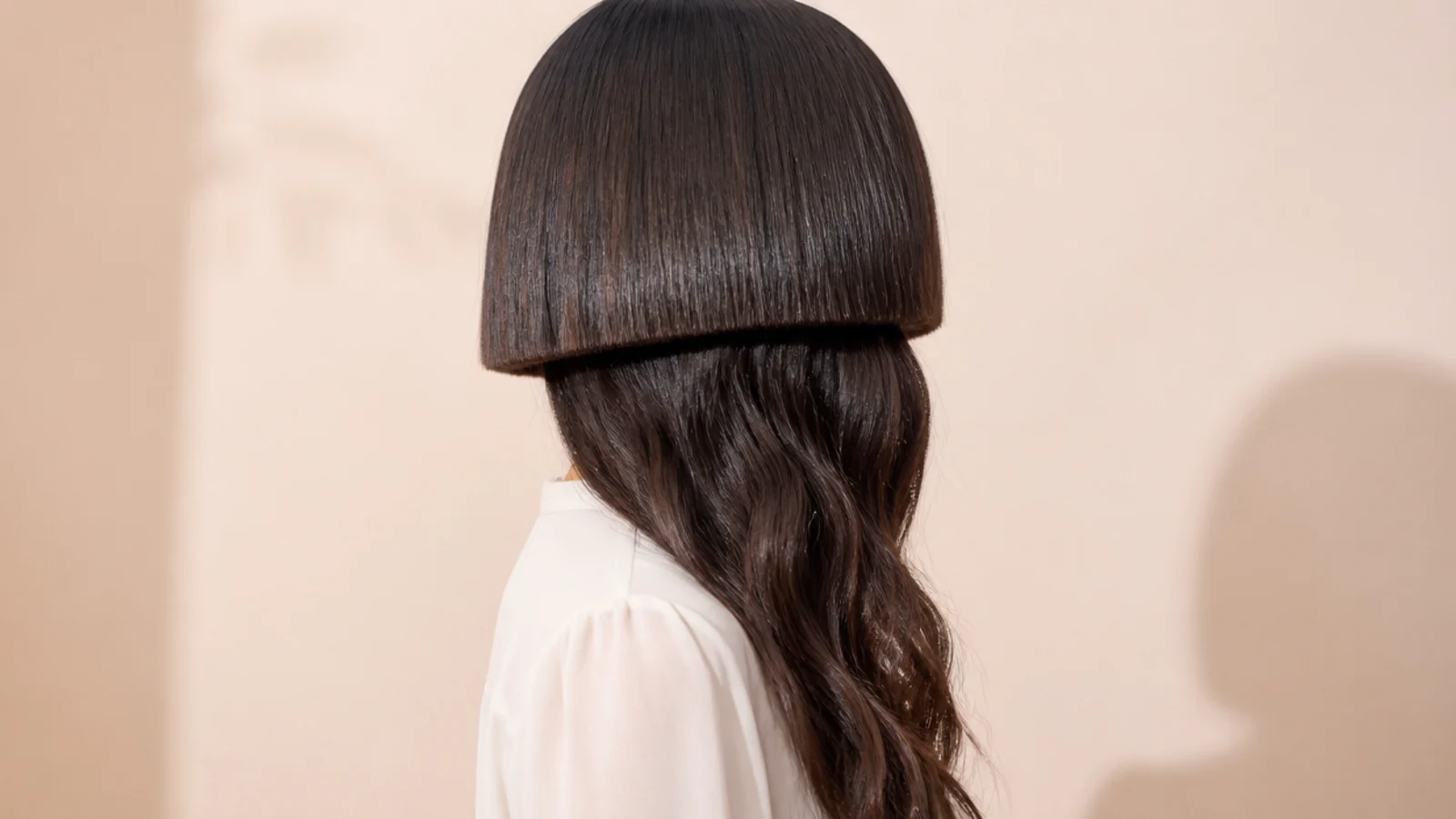
A section taken out at the nape stops the lengths propping themselves away from the neck, which is what makes thick wavy hair sit as a triangle. It is invisible with the hair down and takes a clipper every three to four weeks to stay clean.
14. Thick Hair
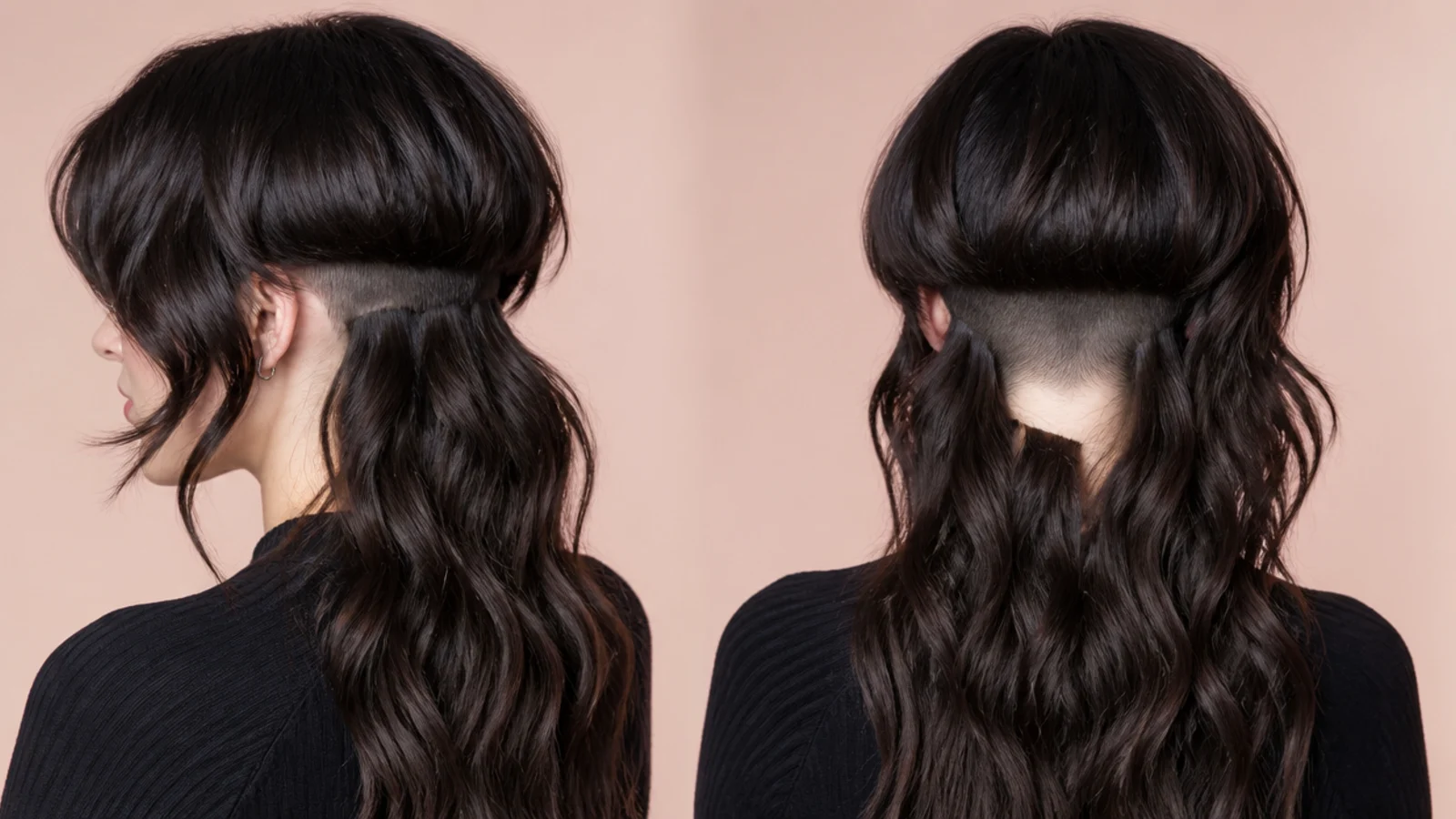
Weight comes out of the inside of the bell, never off its surface. Thick wave pushes the dome outward from underneath, and thinning the interior lets it collapse back onto the skull while the perimeter stays blunt enough to hold the line.
15. Money Piece
Two lightened panels at the front of the bell brighten the face without touching the rest of the colour. Because they sit inside the bell rather than under it, they move with the dome and lift the front edge instead of adding another horizontal.
Final Thoughts
The whole cut comes down to one instruction the stylist has to hear before the first section is combed down. Set both lengths wet, add an inch to the bell for the spring, and leave more bare length underneath than a straight head would need.
For the full range of the shape see the jellyfish haircut guide, and for the other disconnected shape built around long wavy lengths see the wavy butterfly haircut. More in Mullet and Wolf Cut.