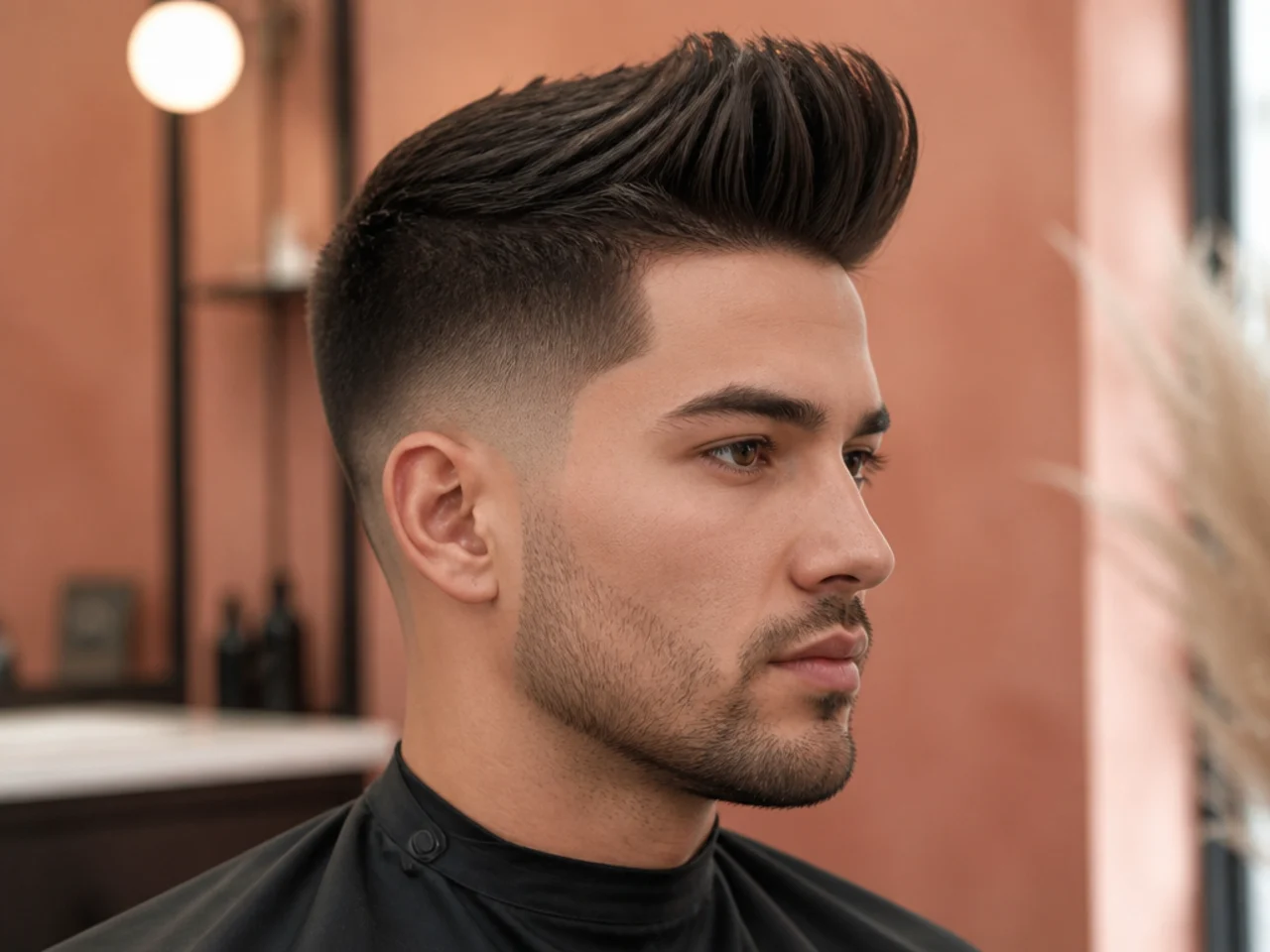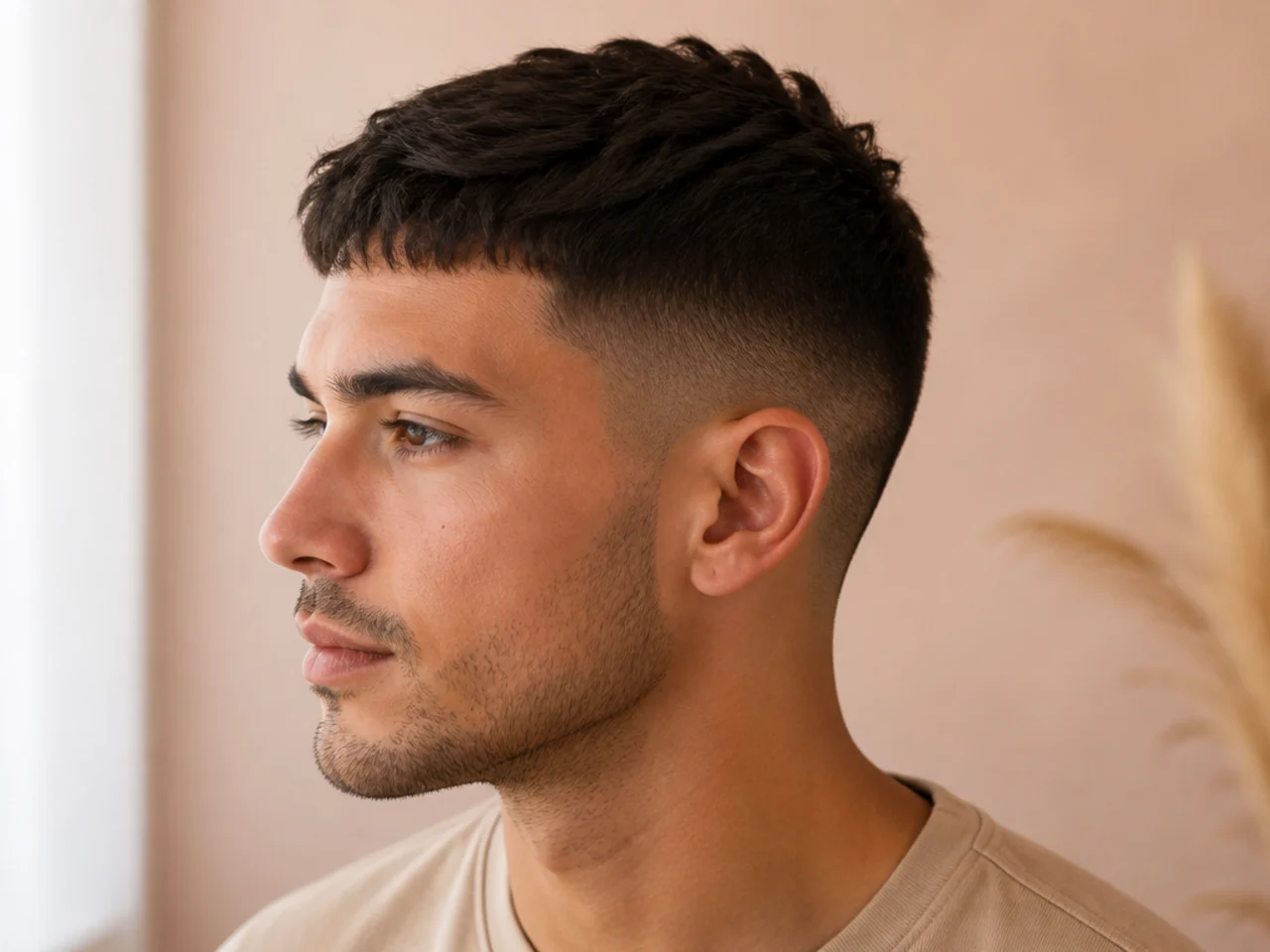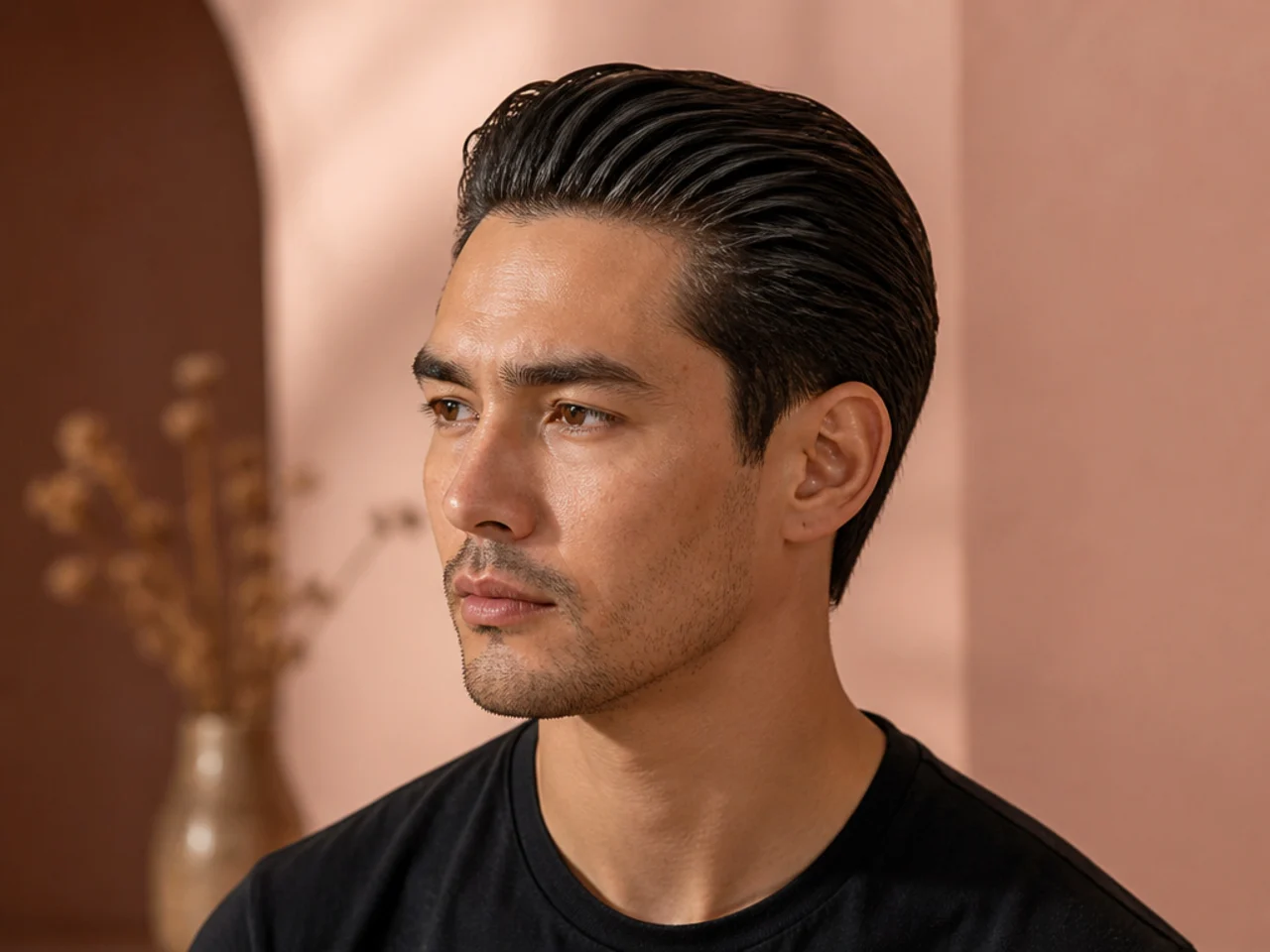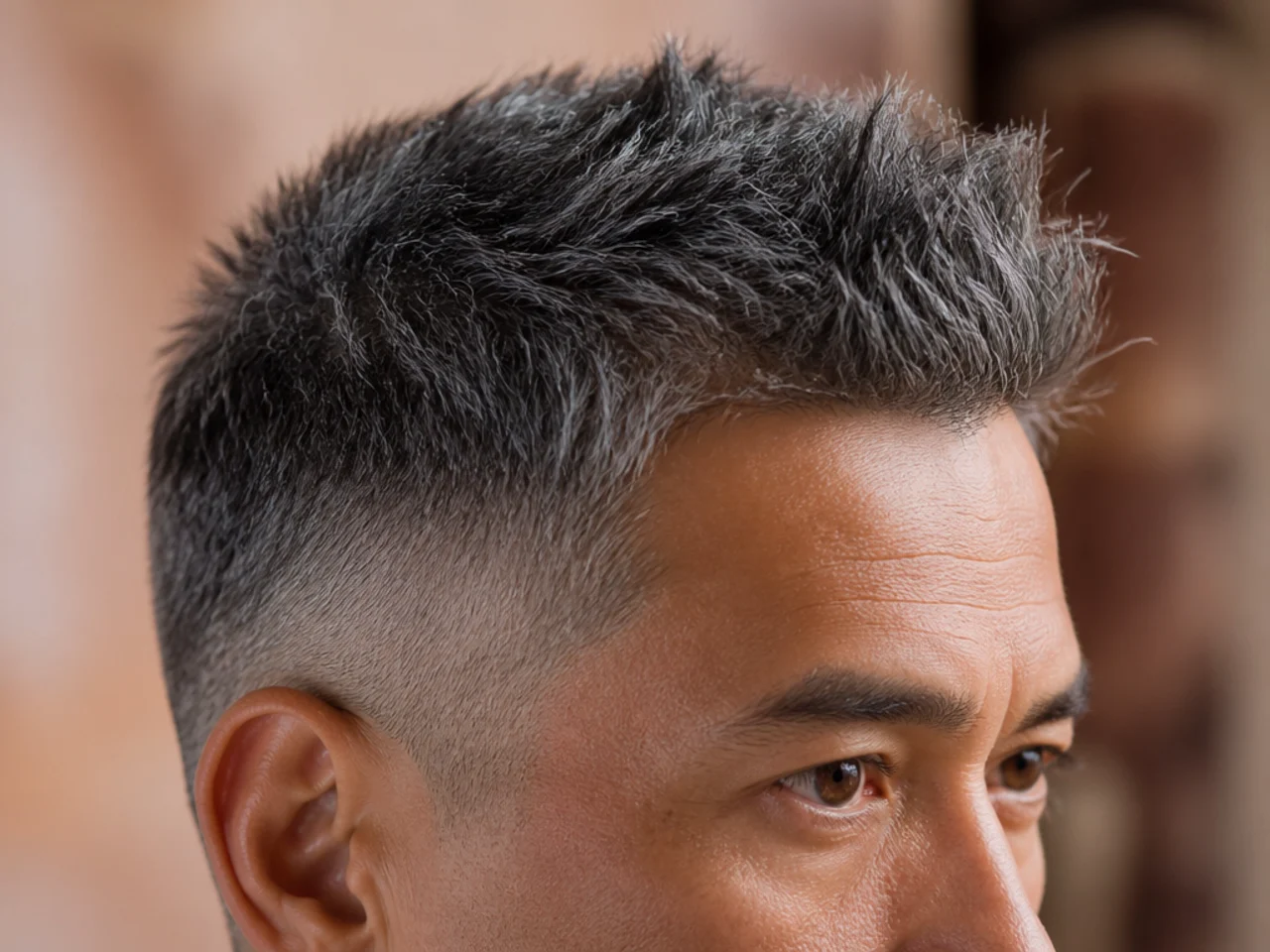
15 Short Haircut Ideas for Older Men
Hair does not simply get thinner with age, it changes in four separate ways and each one has a different answer. The one that matters most is contrast, because a full side next to a sparse top is what the eye actually reads.
In this article · 22
- What Actually Changes, and Why Contrast Matters Most
- How to Choose Yours by the Change You Have
- The 15 Changes and the Cuts That Answer Them
- 1. Coarse Grey That Will Not Lie Flat — Cut Shorter, Not Longer
- 2. A Thinning Crown, Answered by Taking the Sides Down
- 3. Corner Recession and the Fringe That Stops Fighting It
- 4. Wiry Texture Given a Matte Finish Instead of a Comb
- 5. Salt-and-Pepper Contrast and Why Shorter Reads Cleaner
- 6. The Temple Hollow
- 7. The Widow's Peak That Sharpens Into a Point
- 8. A Softened Hairline Instead of a Lined-Up One
- 9. The Low Taper That Suits a Lined Neck Better Than a Fade
- 10. Why the Comb-Over Fails and the Crop Succeeds
- 11. The Crown Swirl That Opens With Age
- 12. The Length at Which Scalp Starts Showing Under Office Lighting
- 13. A Rounded Neckline as the Skin Loosens
- 14. Eyebrows and Ears, Part of the Same Appointment
- 15. The Cycle When Hair Grows More Slowly
- Styling and Upkeep for Age-Changed Hair
- Mistakes to Avoid
- FAQ
- Final Thoughts
Getting older does not do one thing to your hair. It does four, and they arrive at different times, so a cut that answers one of them can make another worse.
The hair itself changes before the amount does. Grey grows in coarser and wirier, standing where it used to fall. Density drops at the crown and the temples first. The hairline goes at the corners before the middle.
And thinning is read as a contrast, not as a quantity. A full side next to a sparse top is what the eye picks up, which is why shorter sides make the top look fuller without a single hair being added. Each idea below names one age change and the cut that answers it.
What Actually Changes, and Why Contrast Matters Most
Grey is coarser and wirier. It stands where the same hair used to fall, so it holds shapes it never held before and fights a comb.
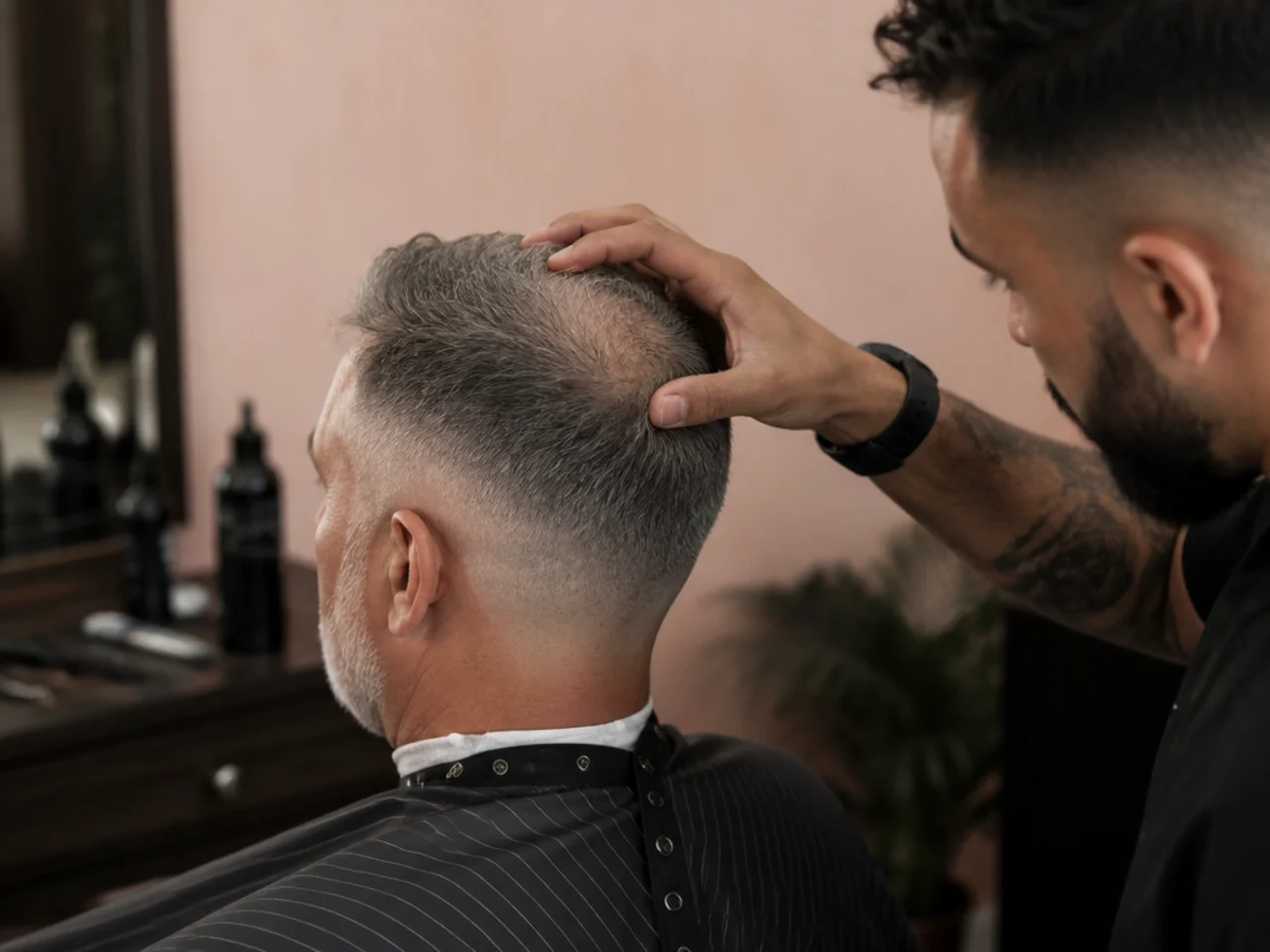
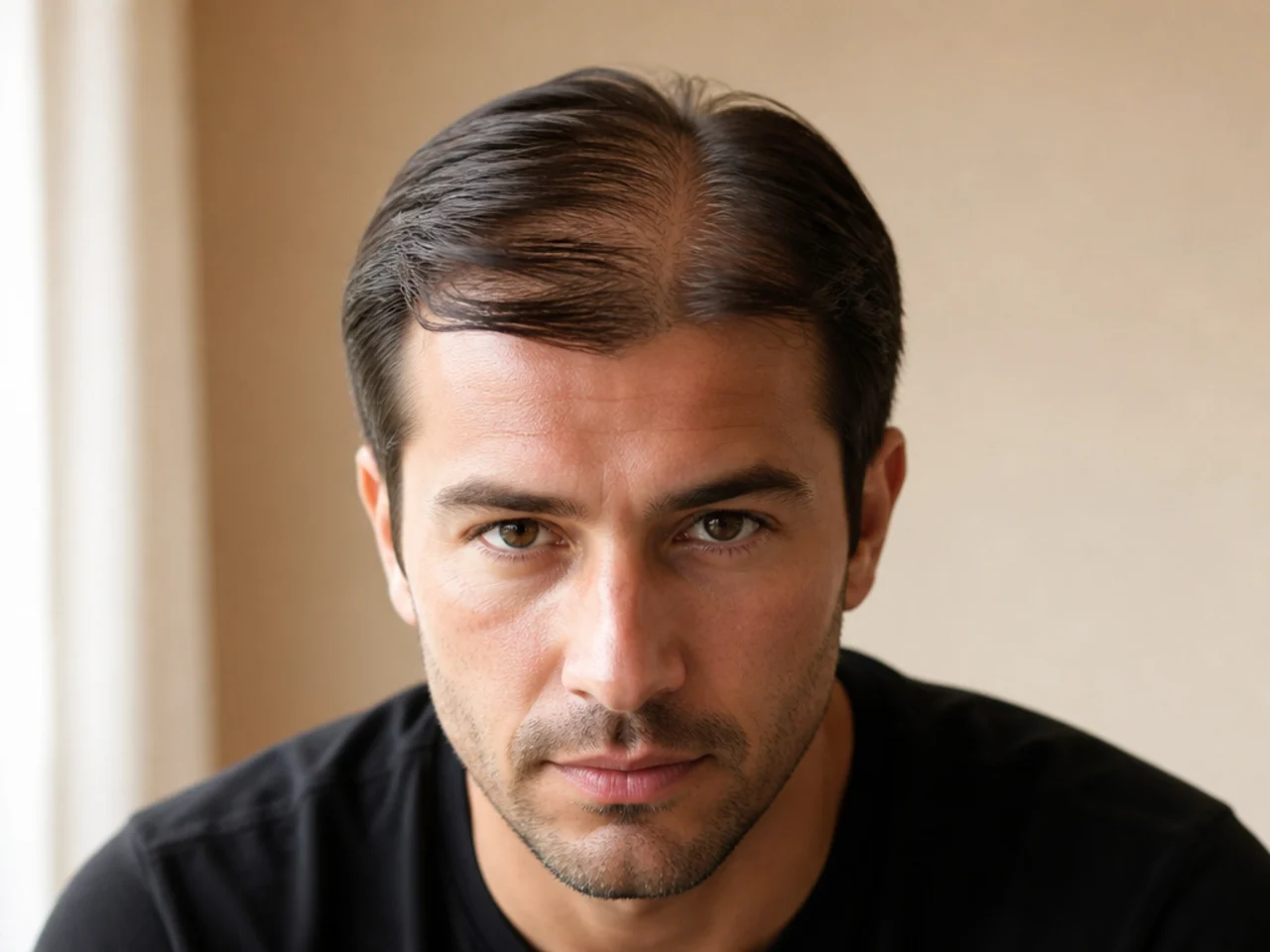
The crown and the temples go first. Two specific zones rather than the whole head, and both of them sit where a mirror cannot show you.
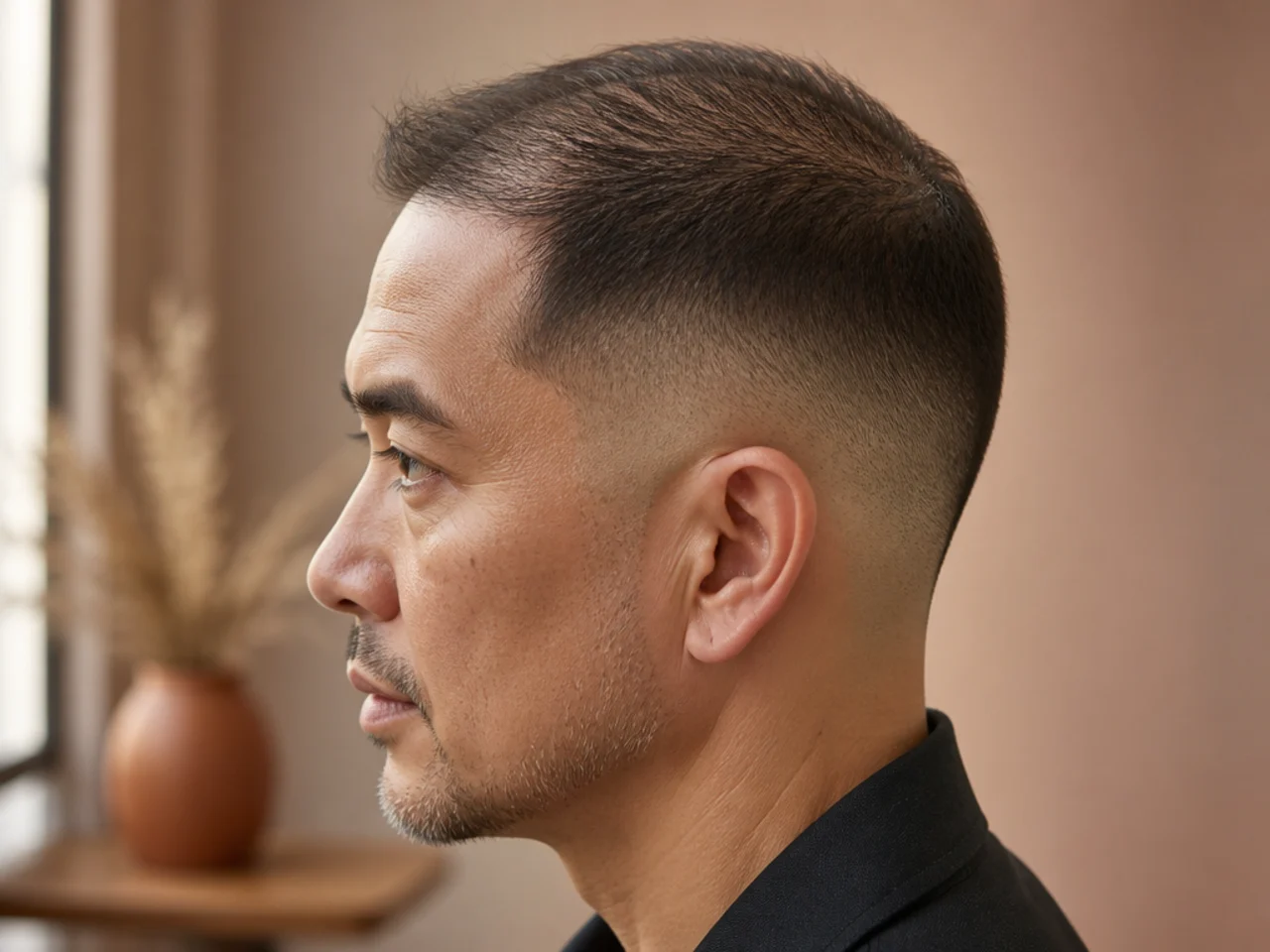
Thinning is a contrast, not a quantity. Full sides beside a sparse top is the difference the eye reads, so taking the sides down reduces it directly.
Scalp shows through length, not through shortness. Long strands separate and open gaps; short ones stand up and cover them.
How to Choose Yours by the Change You Have
Name the change before you name a cut. Coarse grey, a thinning crown, corner recession and a softening hairline all have separate answers.
Photograph your own crown. It is the first zone to lose density and the only one you never see.
Test the contrast with your hand. Hold the sides flat to the head — if the top instantly looks fuller, shorter sides are your answer.
Decide what the finish is doing. Wiry grey needs a matte product to sit down, because a comb only holds it while you stay still.
The 15 Changes and the Cuts That Answer Them
1. Coarse Grey That Will Not Lie Flat — Cut Shorter, Not Longer
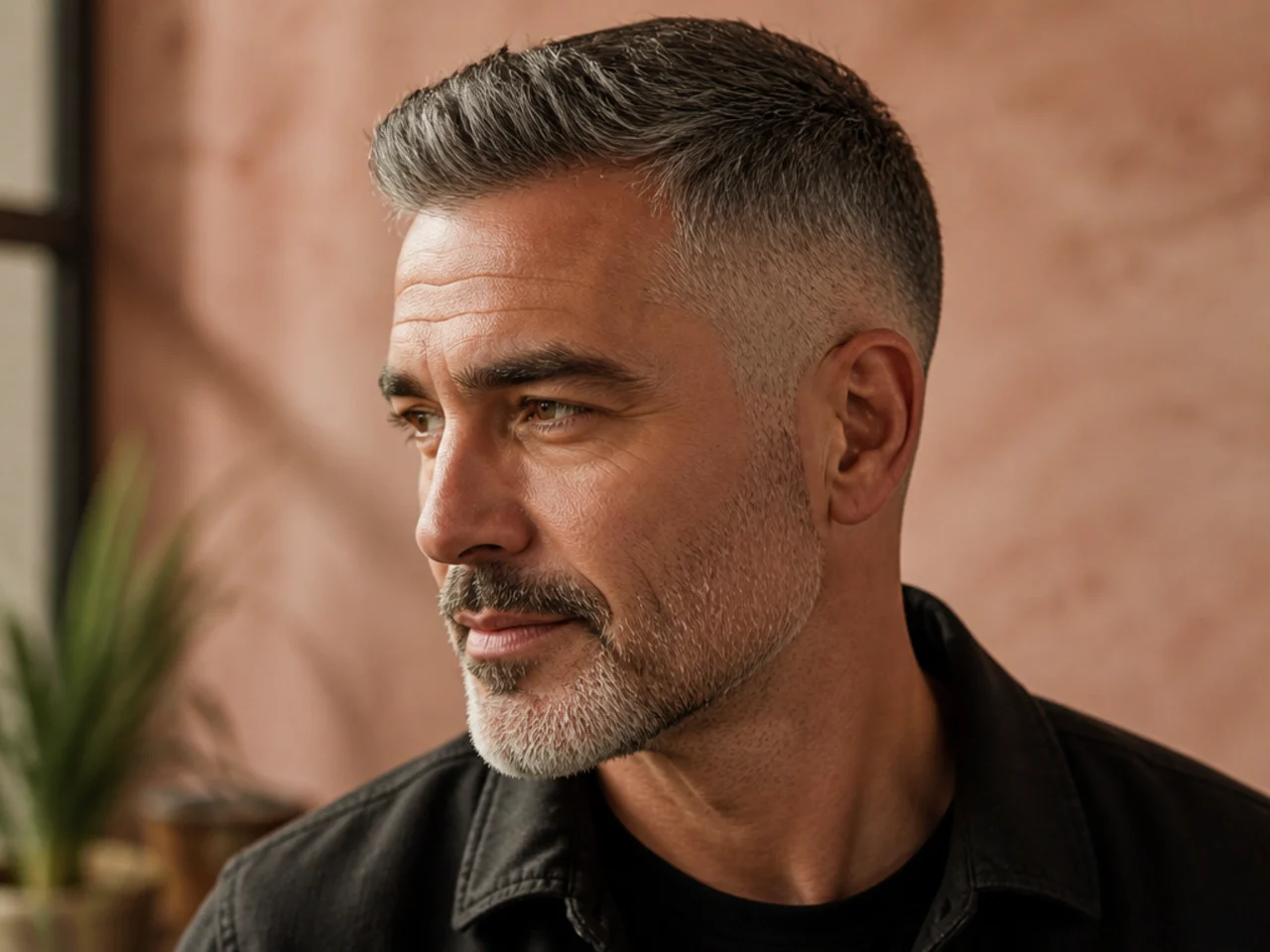
A wirier shaft means length works against you, because every extra centimetre gives the hair more leverage to lift and separate. Cutting shorter removes that leverage. At two to four centimetres the same coarseness that beat the comb turns into body that holds a shape on its own, which is the band crew cut hairstyles are cut in.
2. A Thinning Crown, Answered by Taking the Sides Down
Density leaves the crown before anywhere else, and the eye only registers it because the sides beside it are still full. Bringing the sides to a #2 or #3 shrinks that difference, and the crown stops reading as a gap and starts reading as part of one deliberately short cut.
3. Corner Recession and the Fringe That Stops Fighting It
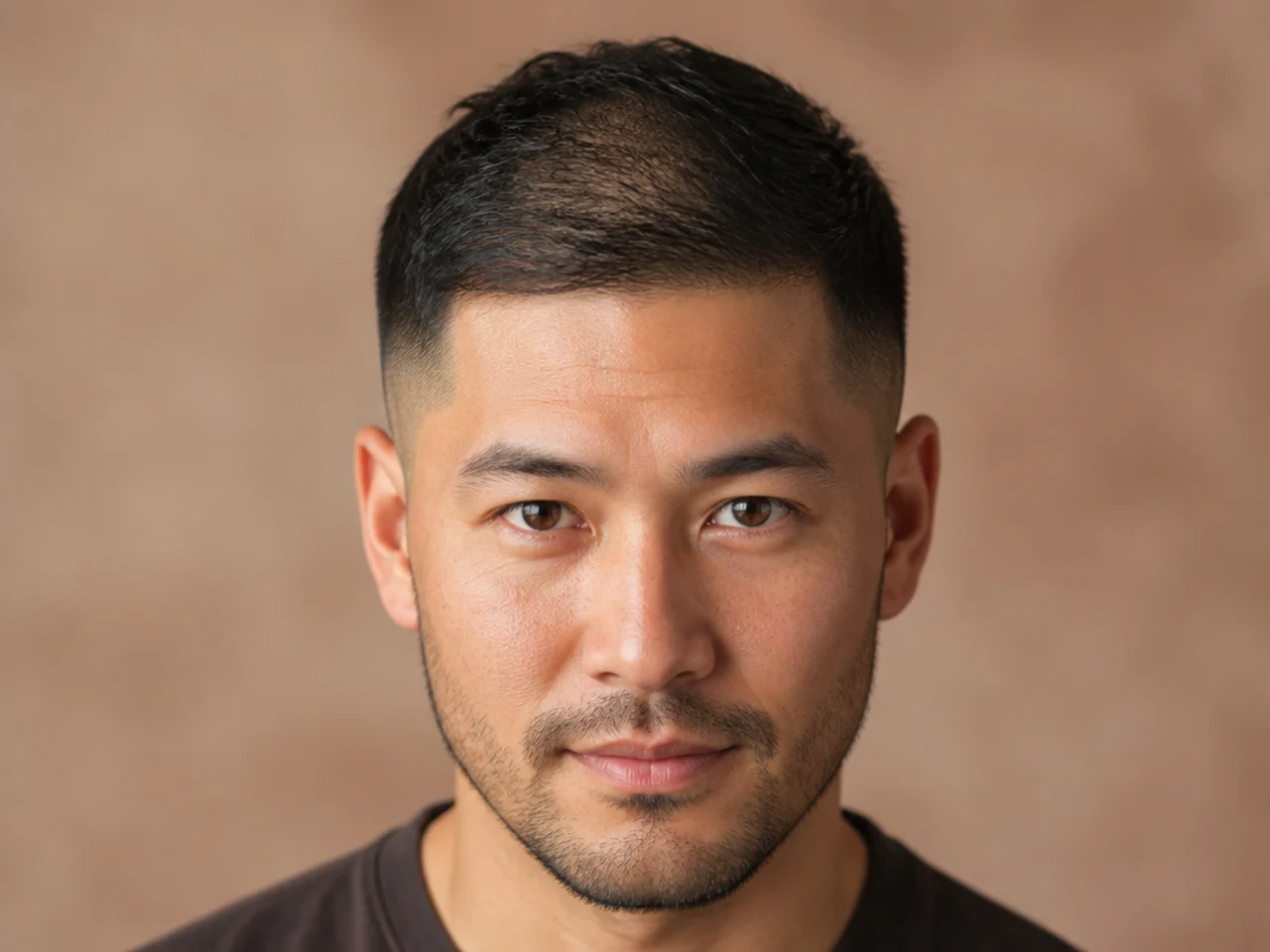
The hairline goes at the two front corners before the middle, leaving a point of hair between two bays. A short, broken-up fringe worn forward sits across the whole front without needing the corners to be full. What fails is length combed sideways over one bay, because it has to be held there all day.
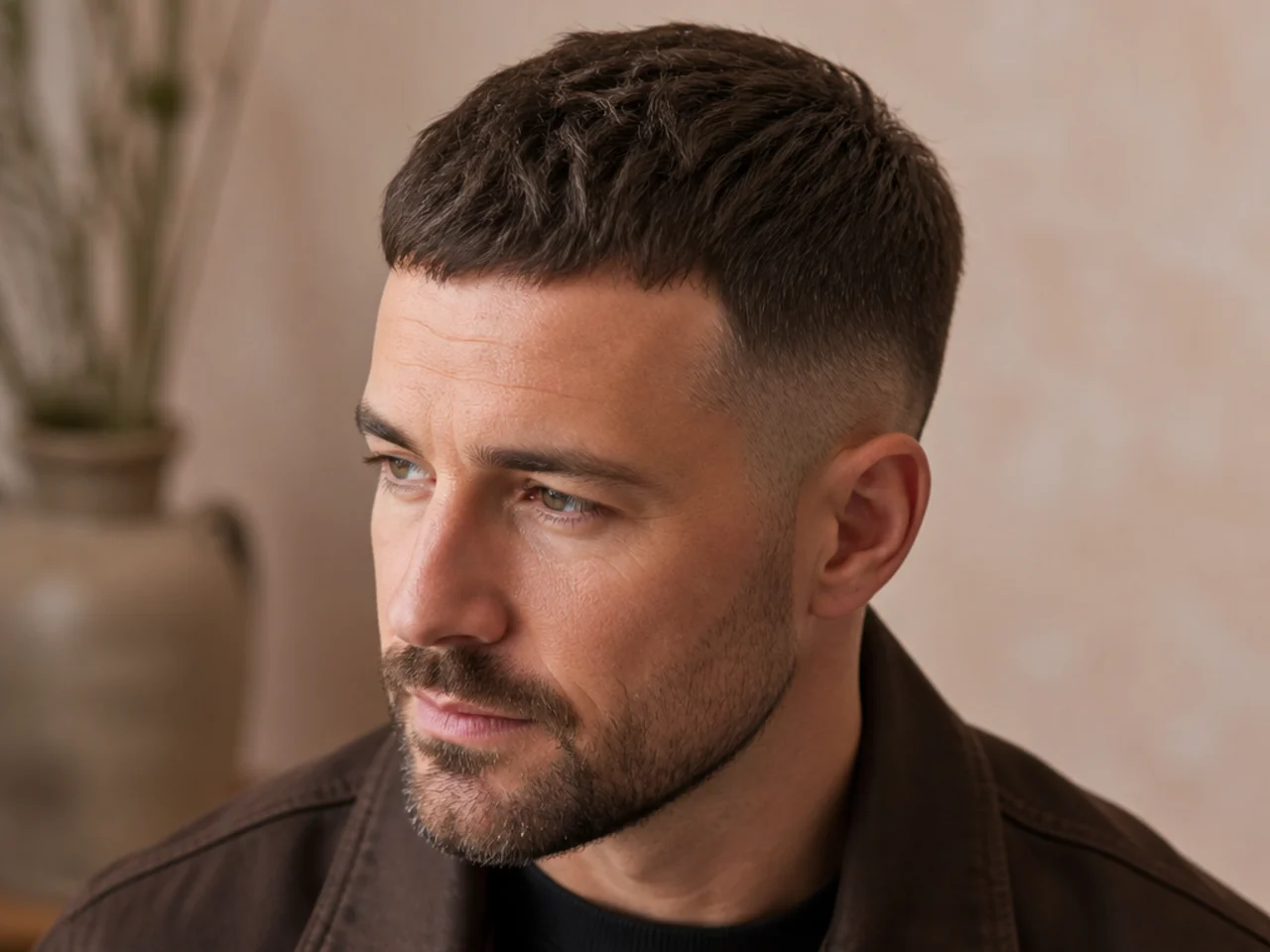
4. Wiry Texture Given a Matte Finish Instead of a Comb
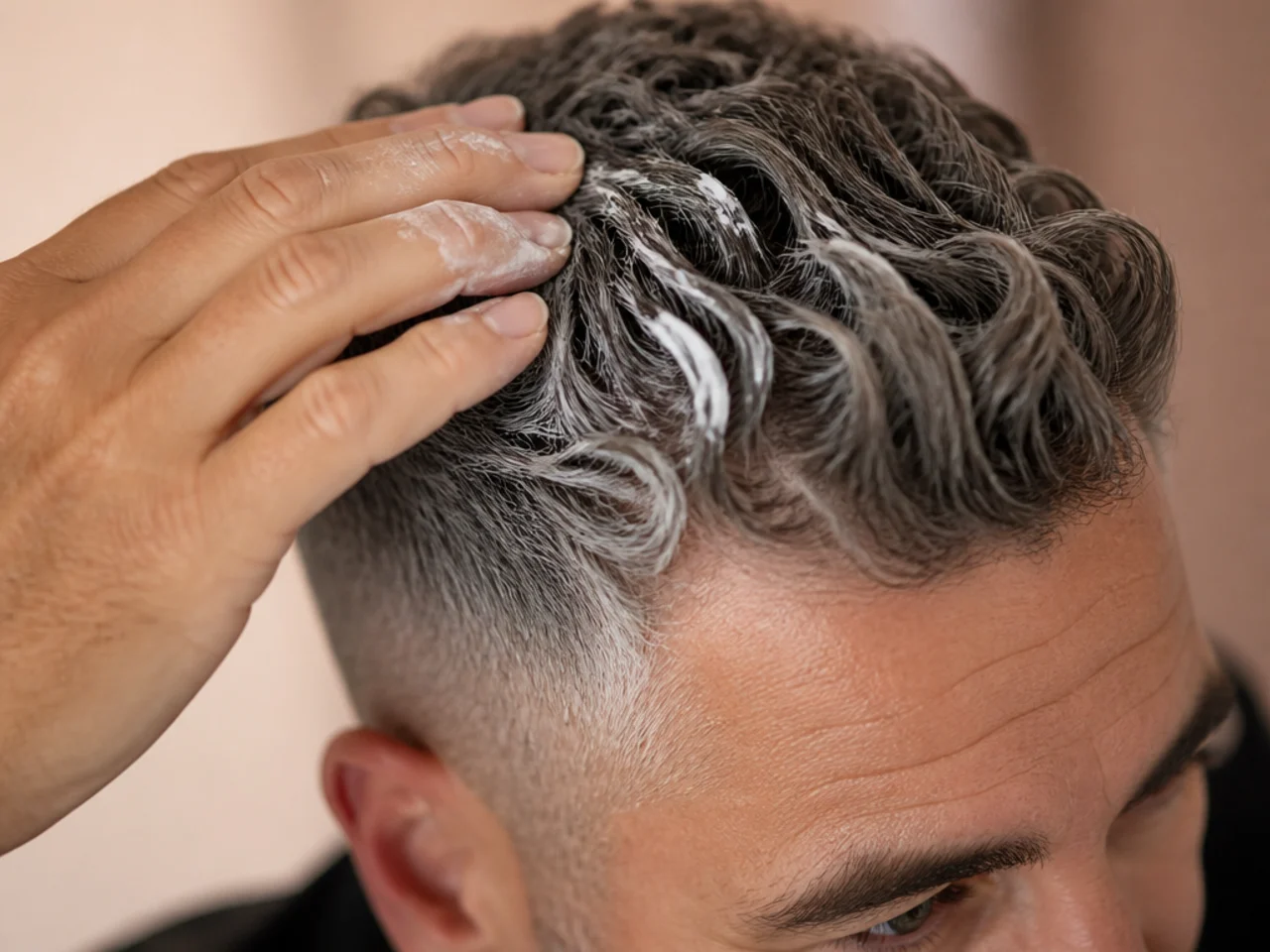
Coarse hair is stiff enough to be pushed into place with your fingers and stiff enough to stay there. A matte clay or paste works with that stiffness. A comb sets a line the hair will resist from the moment you put the comb down, and it usually wins by mid-morning.
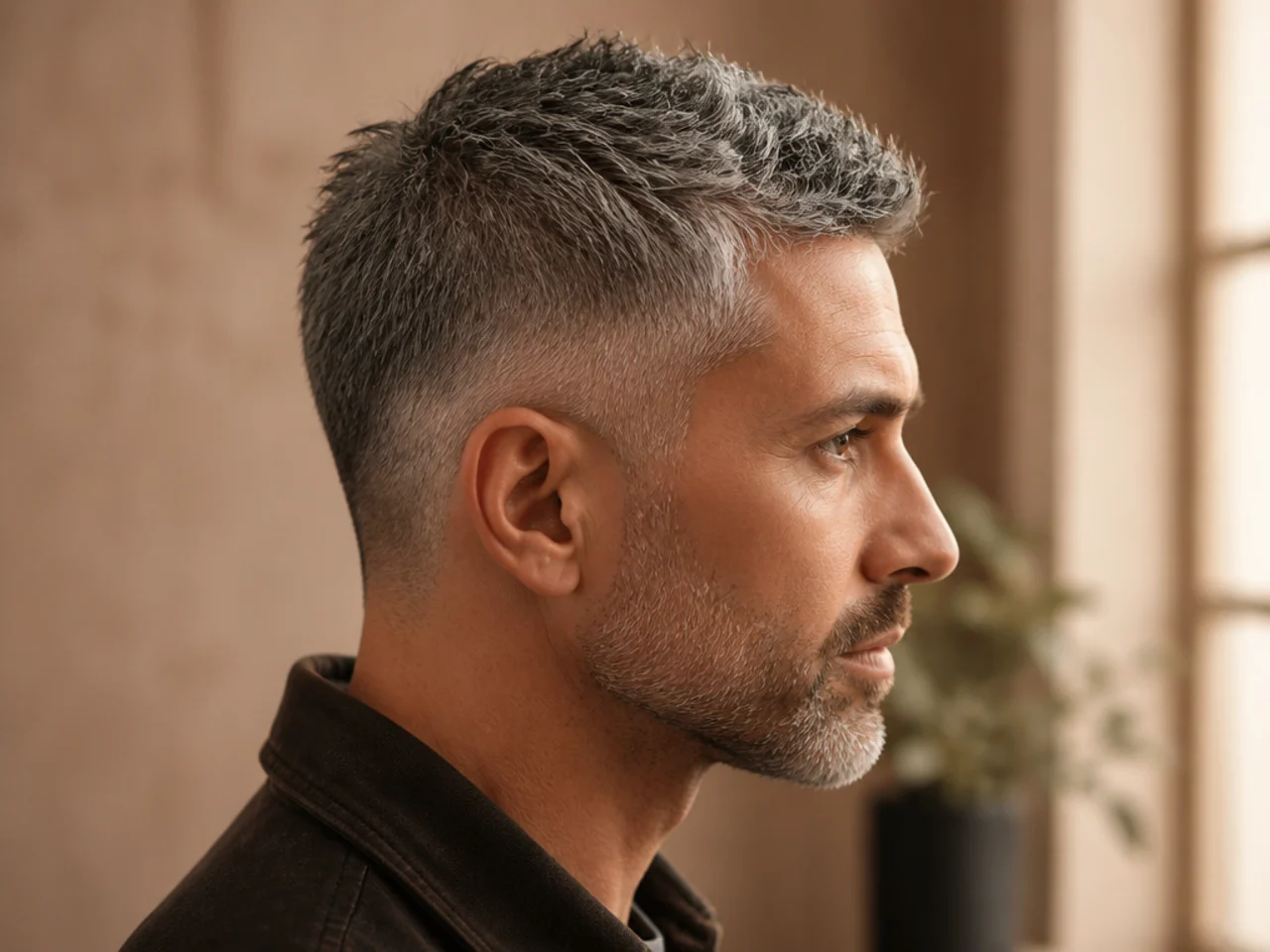
5. Salt-and-Pepper Contrast and Why Shorter Reads Cleaner
Salt-and-pepper is two colours sharing one head, and every extra centimetre gives them more room to look patchy. Short lengths blend the two shades optically, which is why the same hair reads as a single clean tone at a #3 and as blotchy at four centimetres.
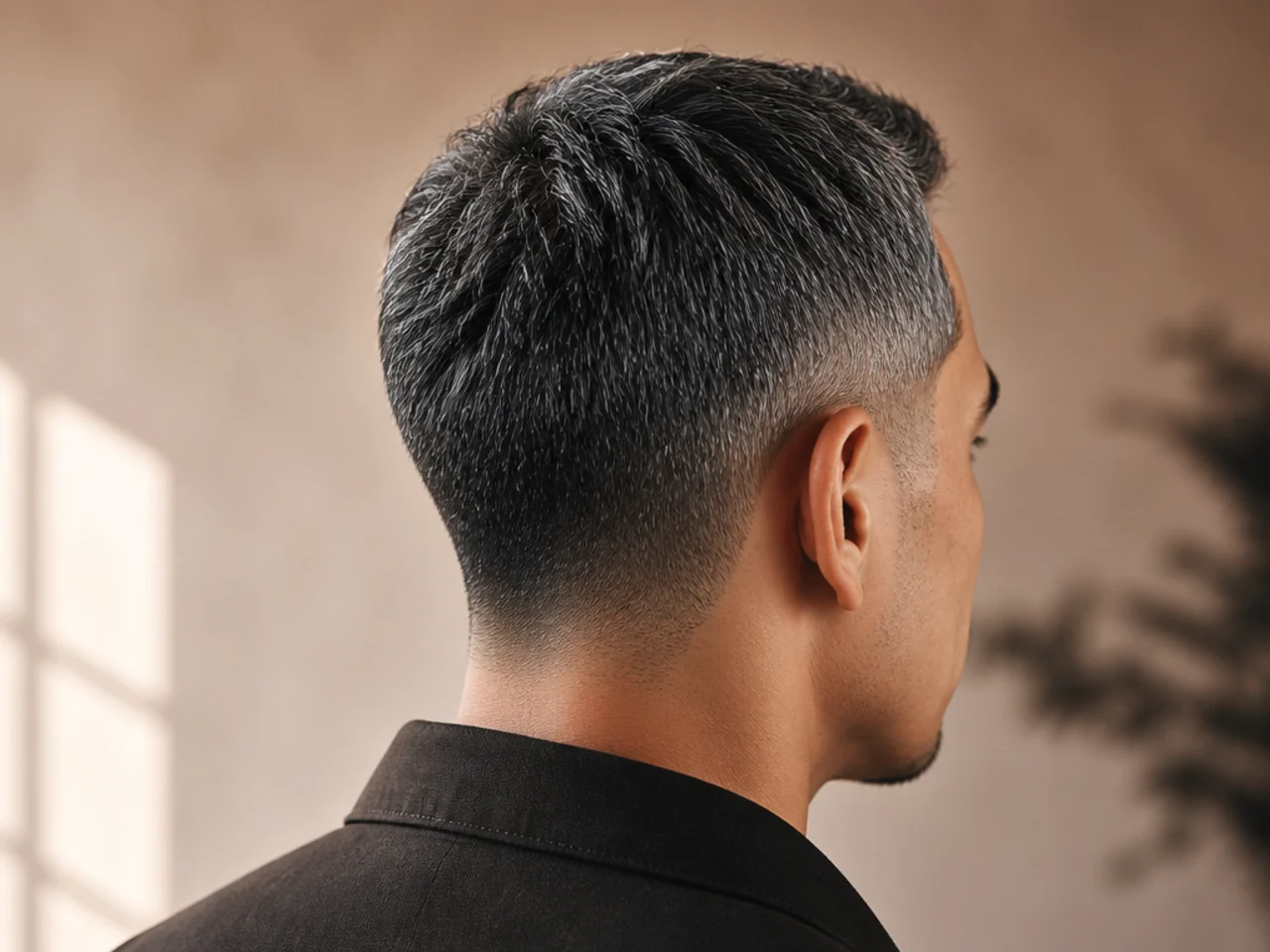
6. The Temple Hollow
The temples hollow with age, so the side no longer meets the hairline as one continuous band. Taking the temple area very short removes the thin fringe of hair that was drawing the eye to the hollow, and the head then reads as evenly cut rather than as thinning at one specific point.
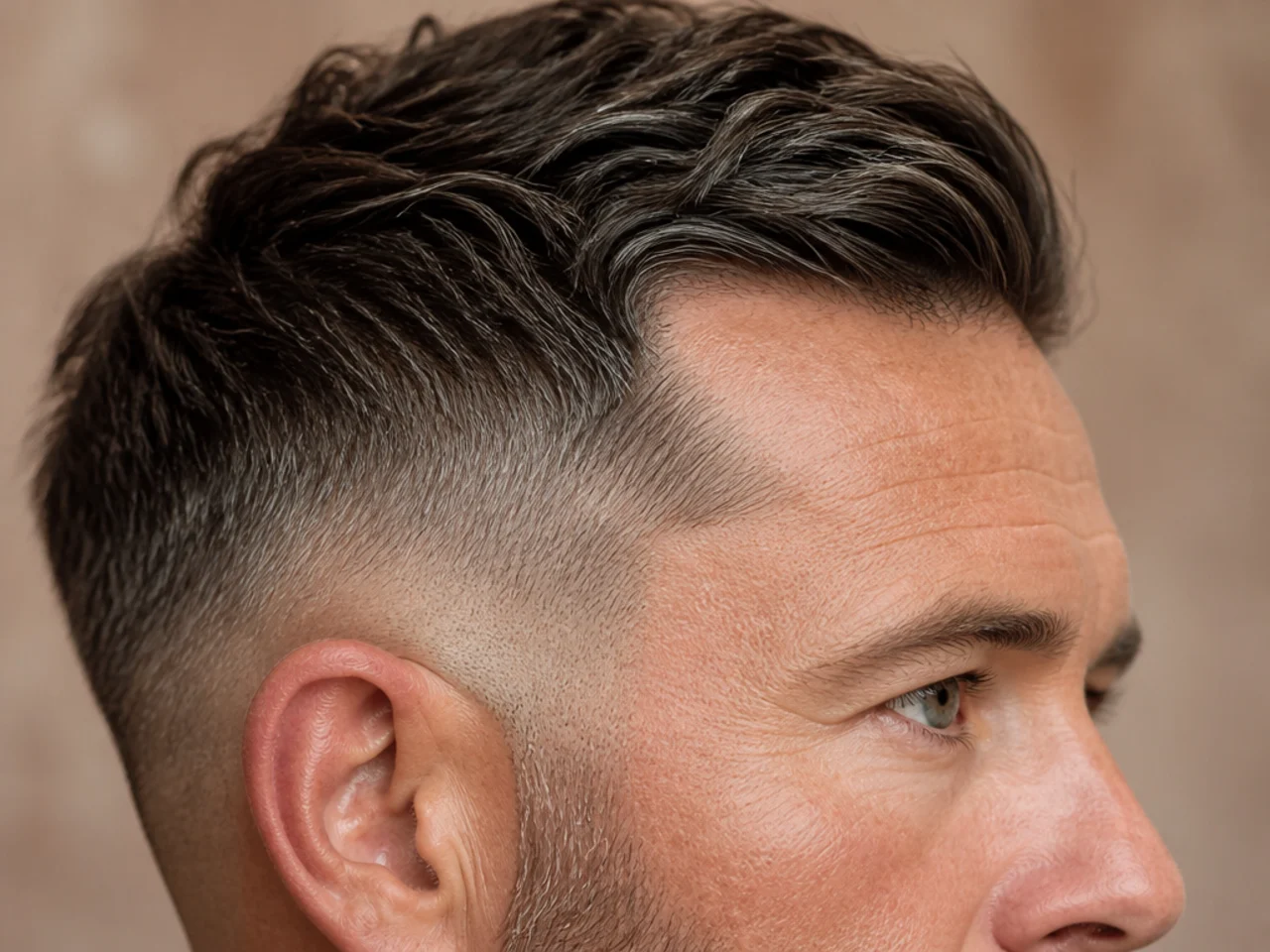
7. The Widow's Peak That Sharpens Into a Point
As the corners recede, the middle of the hairline remains and becomes a defined point. Keeping the front short lets that point read as a hairline shape you have. Length pulled across it does the opposite, because the whole effect depends on the point staying hidden.
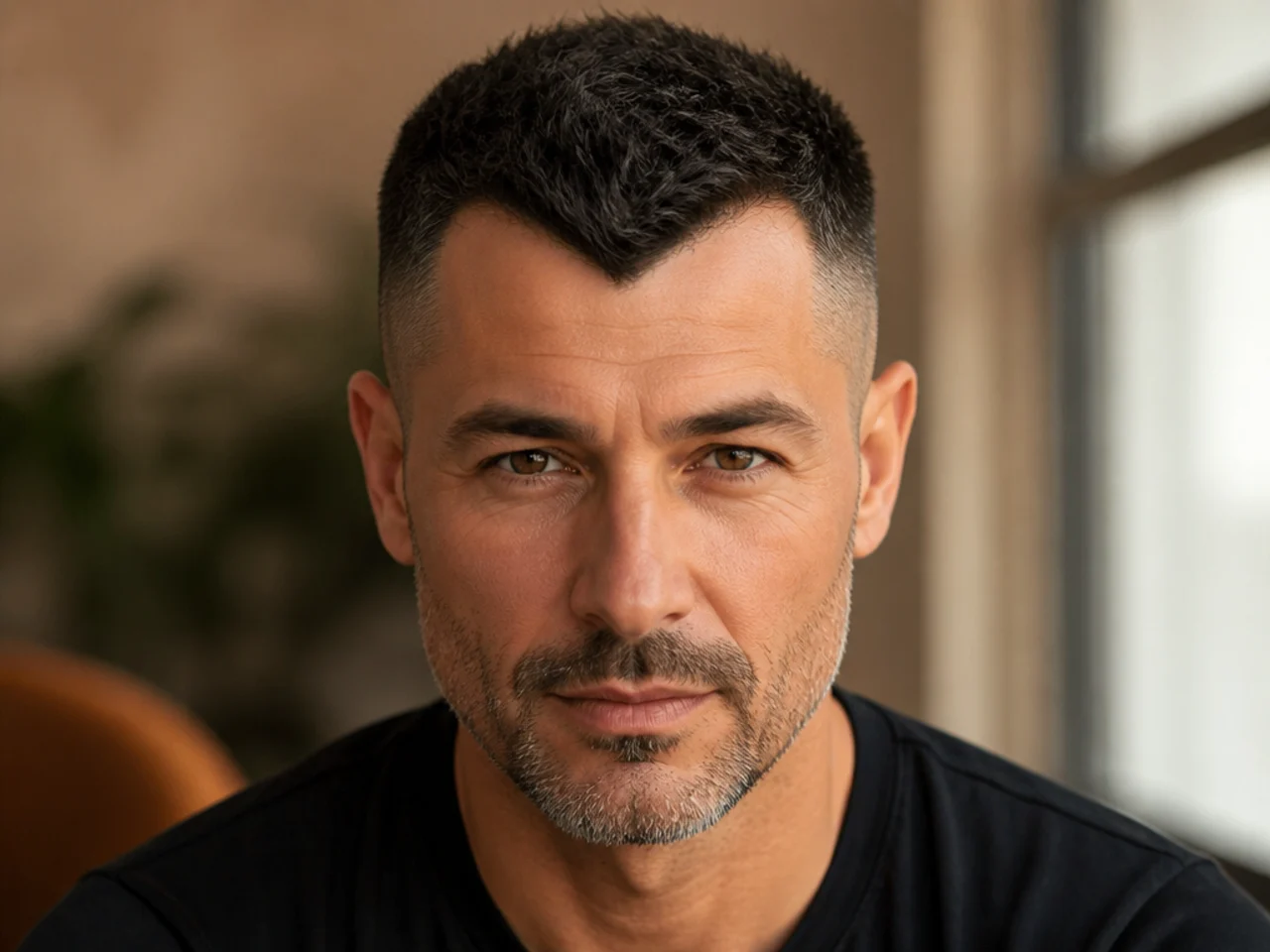
8. A Softened Hairline Instead of a Lined-Up One
A line-up draws a hard edge where an older hairline is soft and irregular, and the contrast between a drawn line and thinner hair behind it makes the thinness more obvious. Asking for the hairline to be softened rather than squared lets the eye travel over it without stopping.
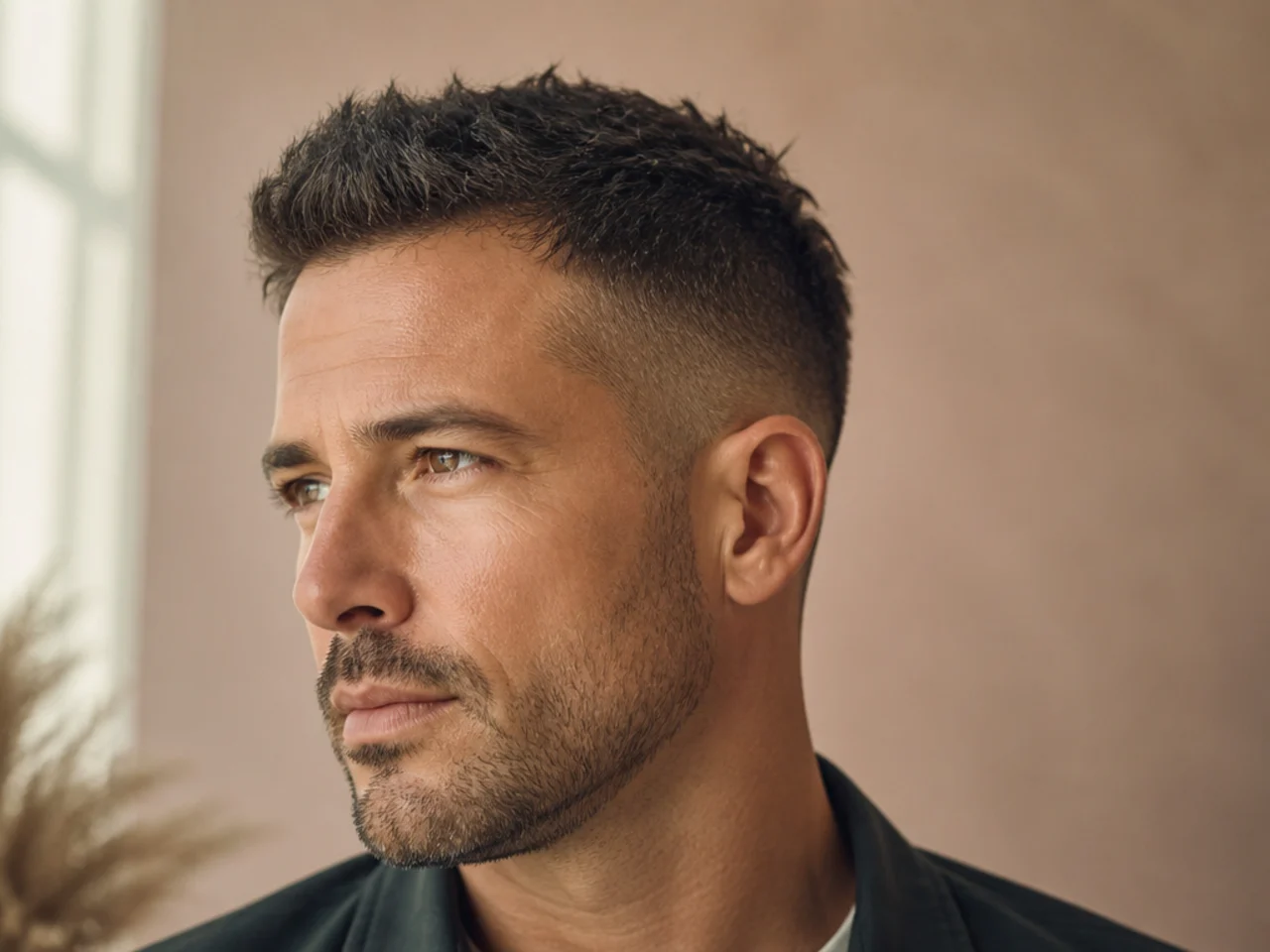
9. The Low Taper That Suits a Lined Neck Better Than a Fade
A fade finishes on bare skin against the neck, and skin that has lost elasticity shows every crease at exactly that point. A low taper leaves a #1 at the neckline, so a few millimetres of hair cover the transition and the eye stays on the haircut.
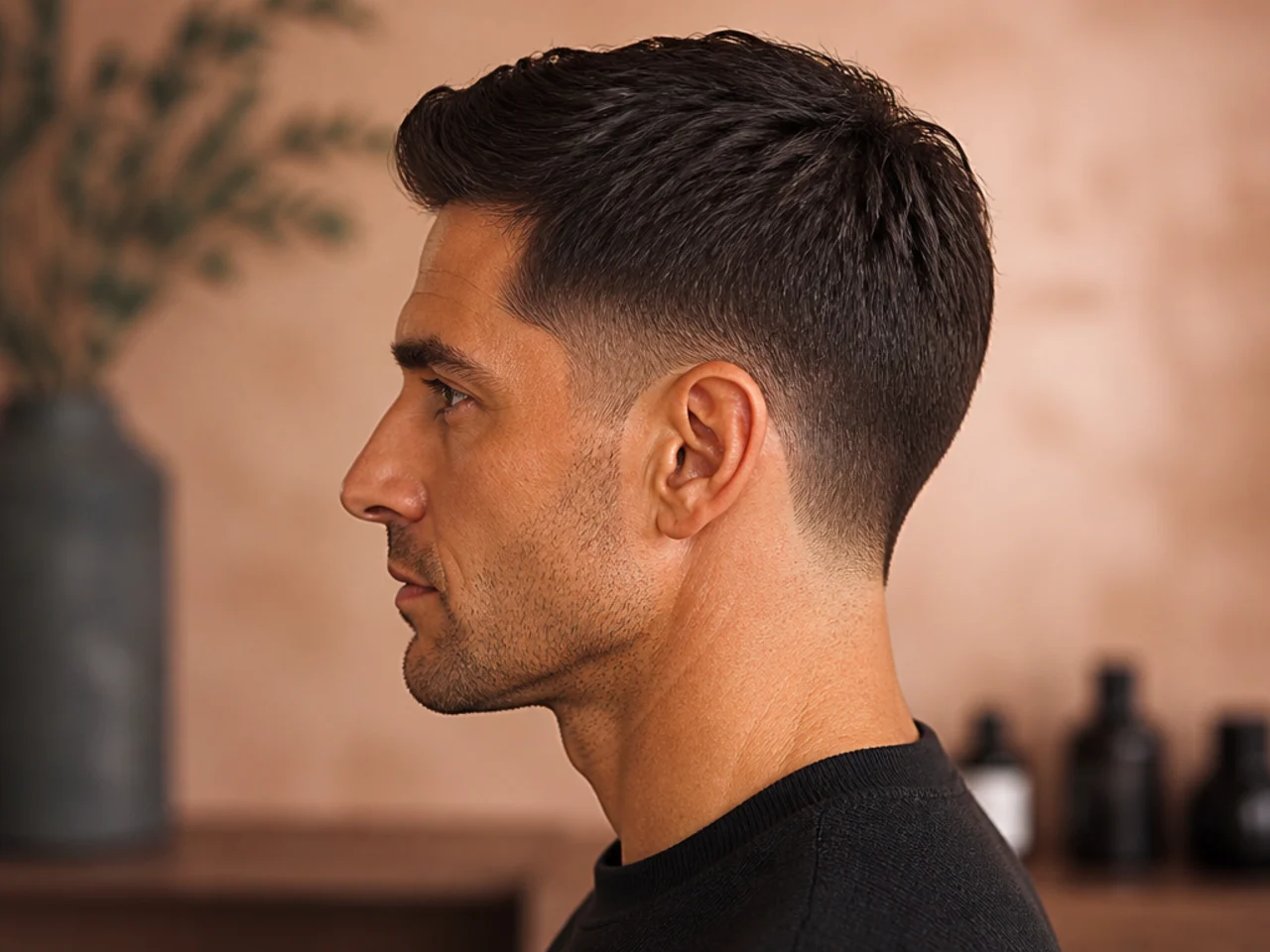
10. Why the Comb-Over Fails and the Crop Succeeds
A comb-over needs a donor area dense enough to cover a sparse one, and the donor is thinning too. It also needs the hair to stay exactly where it was placed. A short crop asks for neither, because it is cut to the density you have rather than the density you used to have.
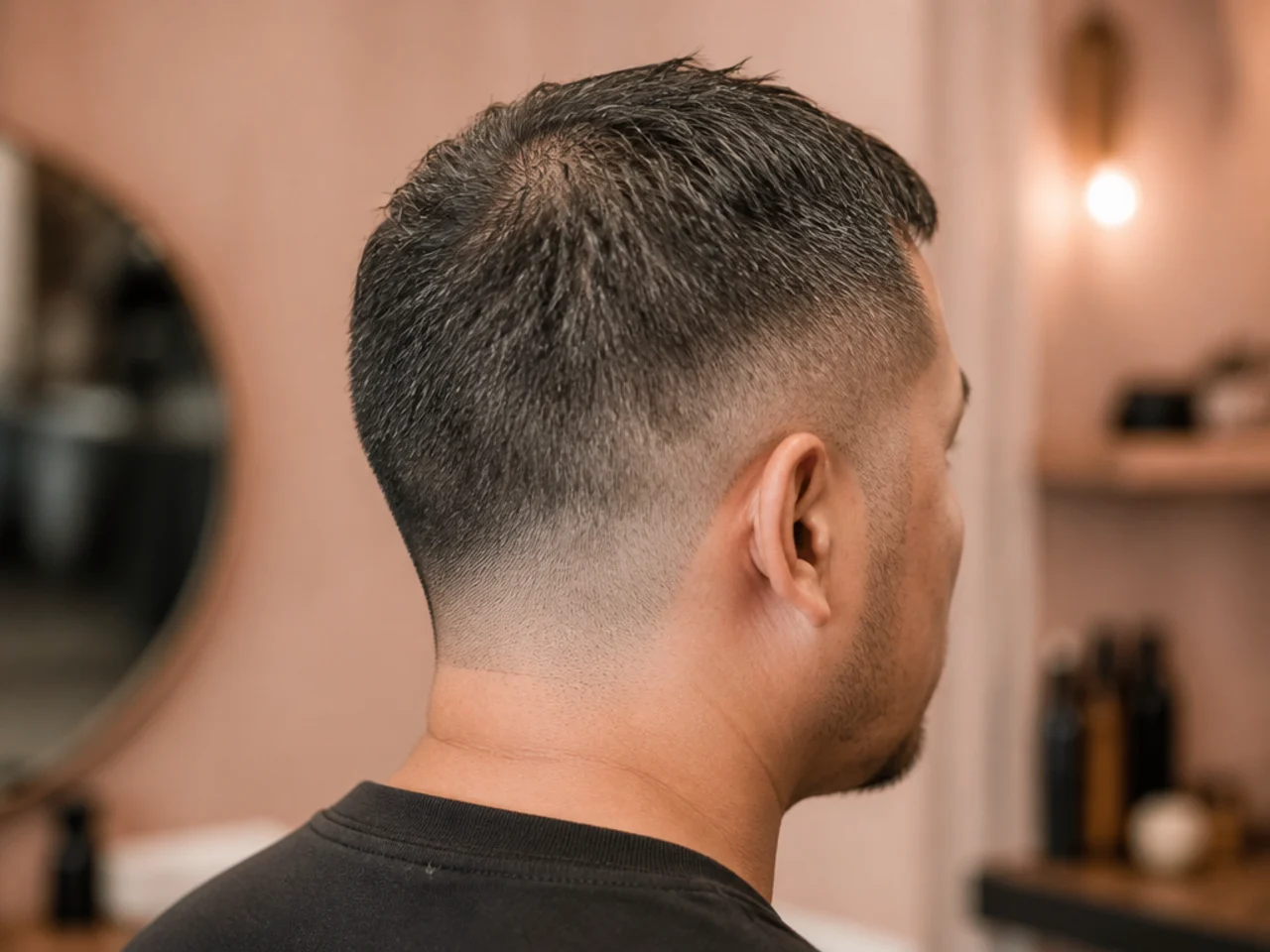
11. The Crown Swirl That Opens With Age
The spiral at the crown opens out as density drops, so a swirl that was hidden becomes a visible parting on the back of the head. Cutting the crown a guard shorter than the surrounding top closes it visually, because short hair stands and covers where longer hair falls away from itself.
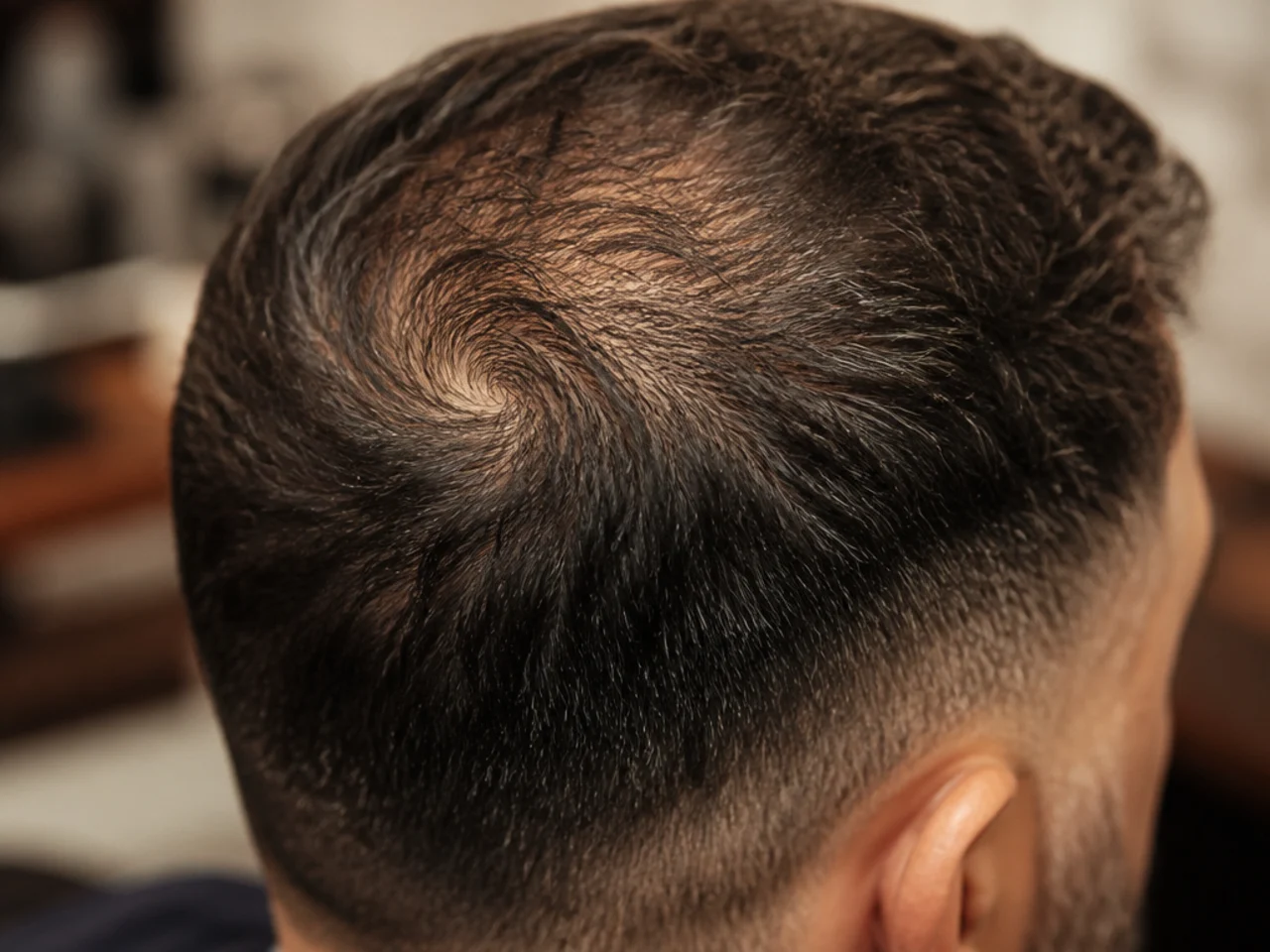
12. The Length at Which Scalp Starts Showing Under Office Lighting
Overhead lighting comes straight down and lands on the scalp through any gap. Above roughly four centimetres, thinning hair separates under that light and the scalp appears. Below it the hair stands and blocks the light, which is why shorter reads fuller under the exact lighting you spend your day in.
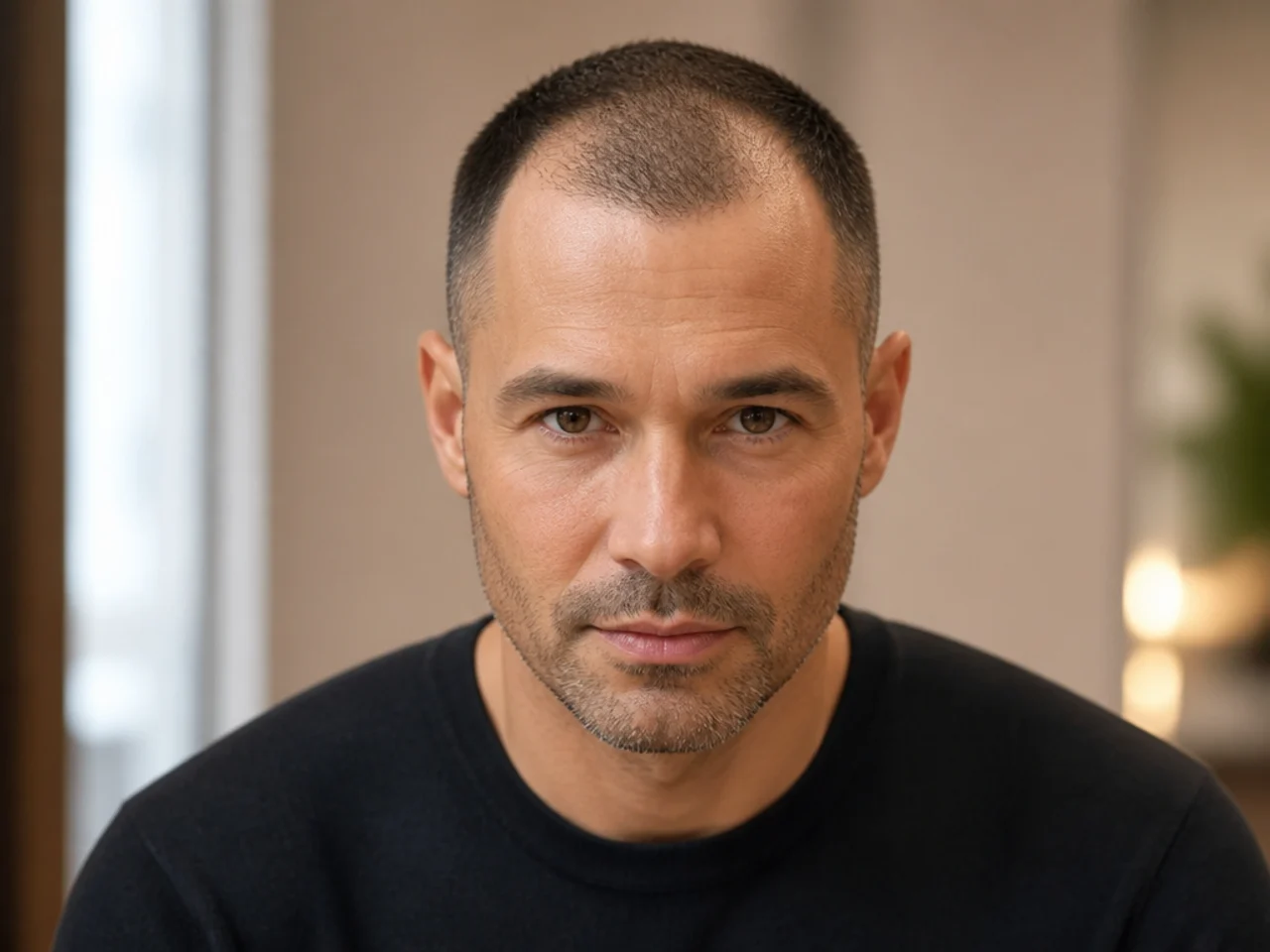
13. A Rounded Neckline as the Skin Loosens
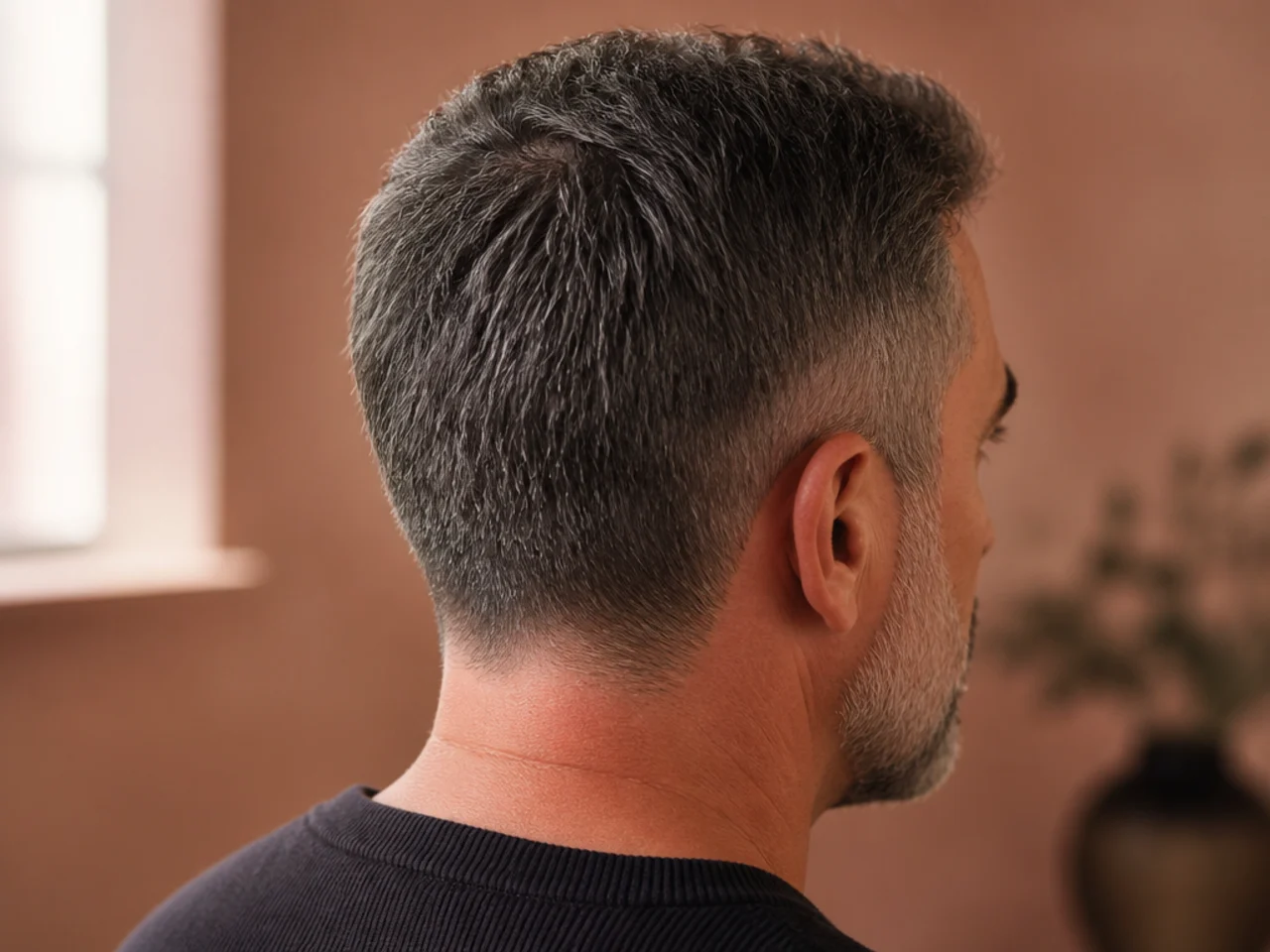
A blocked neckline is a straight horizontal drawn onto skin that no longer sits straight, and it sets up a comparison you cannot win. A rounded or tapered neckline gives the eye no line to measure against, so the back of the head simply reads as soft.

14. Eyebrows and Ears, Part of the Same Appointment
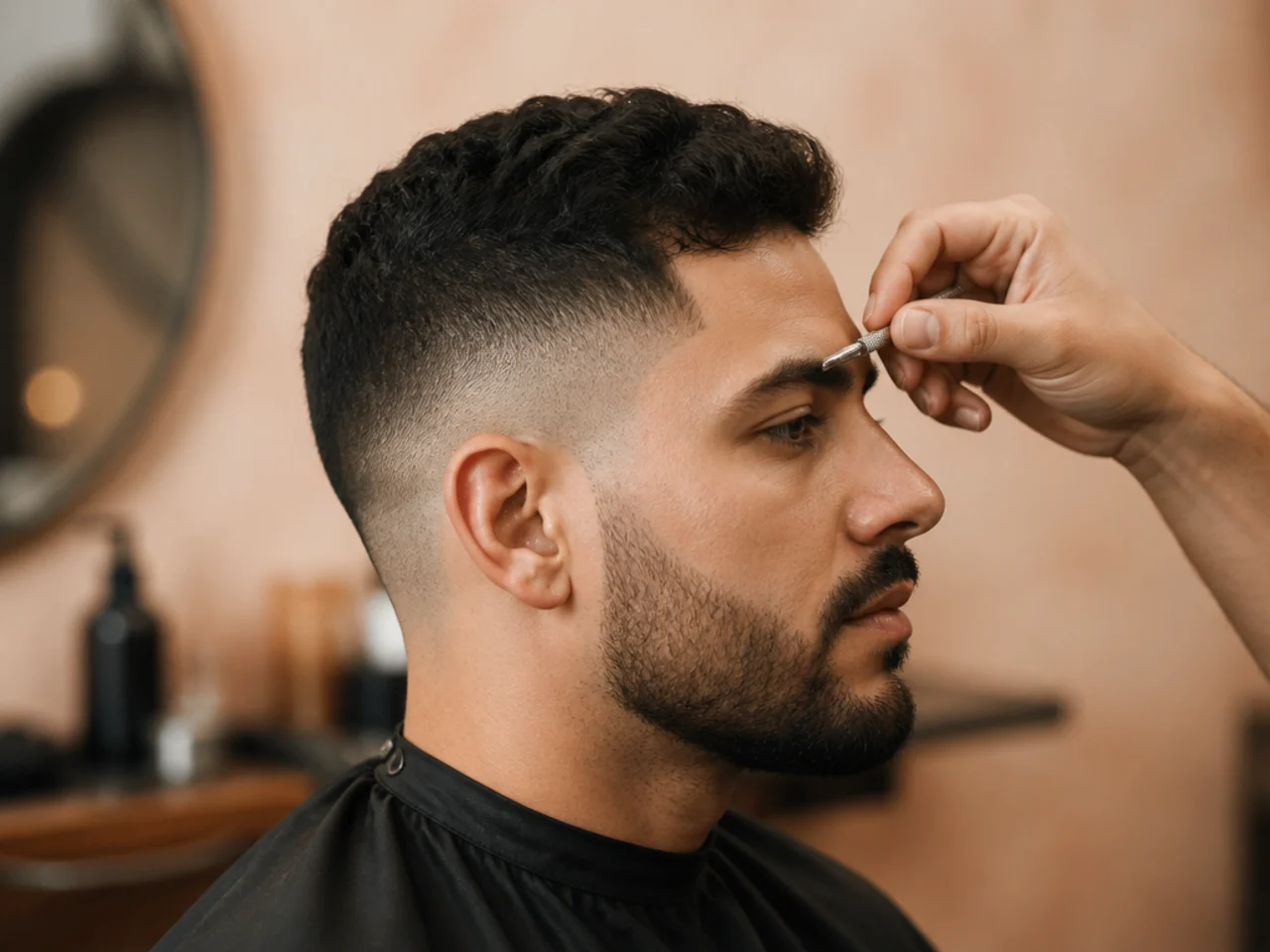
Eyebrow and ear hair coarsen for the same reason and on the same timeline as the hair on your head. A precisely cut short back and sides above unattended brows reads as an unfinished job, so both belong in this appointment rather than in one you keep meaning to book.
15. The Cycle When Hair Grows More Slowly
Growth slows with age, so an interval that used to be three weeks may now be five with nothing looking wrong, which quietly moves an ordinary short cut into the low maintenance men's haircuts bracket. Judge the next booking by the neckline and the crown rather than by the calendar you have been using for twenty years.
Styling and Upkeep for Age-Changed Hair
Use a matte clay, not a comb. Wiry grey holds a finger-placed shape and rejects a combed one within the hour.
Avoid anything with shine. Gloss on thinning hair separates the strands and puts light on the scalp between them.
Dry the crown first and against the swirl. It is the zone with the least density and the one that gains most from lift.
Condition the ends even on short hair. Coarse grey runs drier, and a dry shaft lifts more than a conditioned one does.
Photograph the crown every couple of months. Density changes slowly, and a mirror will never be the thing that tells you.
Mistakes to Avoid
Growing it longer to cover thinning. Length separates and opens gaps, while shortness stands and covers them.
Keeping the sides full while the top thins. That contrast is the thing the eye actually reads as balding.
Asking for a hard line-up on a soft hairline. A drawn edge makes the thinner hair behind it more obvious, not less.
Choosing a skin fade without looking at your neck first. Bare skin at the neckline shows every crease it sits on.
Booking on the interval you set decades ago. Slower growth changes the schedule, and the neckline is the thing to judge it by.
FAQ
Does short hair look fuller? Yes — short hair stands and covers, while length separates and lets the scalp show.
Why will grey not lie flat? The shaft grows in coarser and wirier, so it holds a lift the same hair never used to have.
Fade or taper? A low taper in most cases, because it keeps a few millimetres over the neckline instead of finishing on skin.
Final Thoughts
Work out which change you actually have before you pick a cut, because the answers point in different directions. And whichever one it is, reducing the contrast between the sides and the top does more for how full your hair looks than any amount of length ever will.
For more on density itself see short haircuts for thin hair, and for shapes that age well see the classic short men's haircut. More in Men's Haircuts.