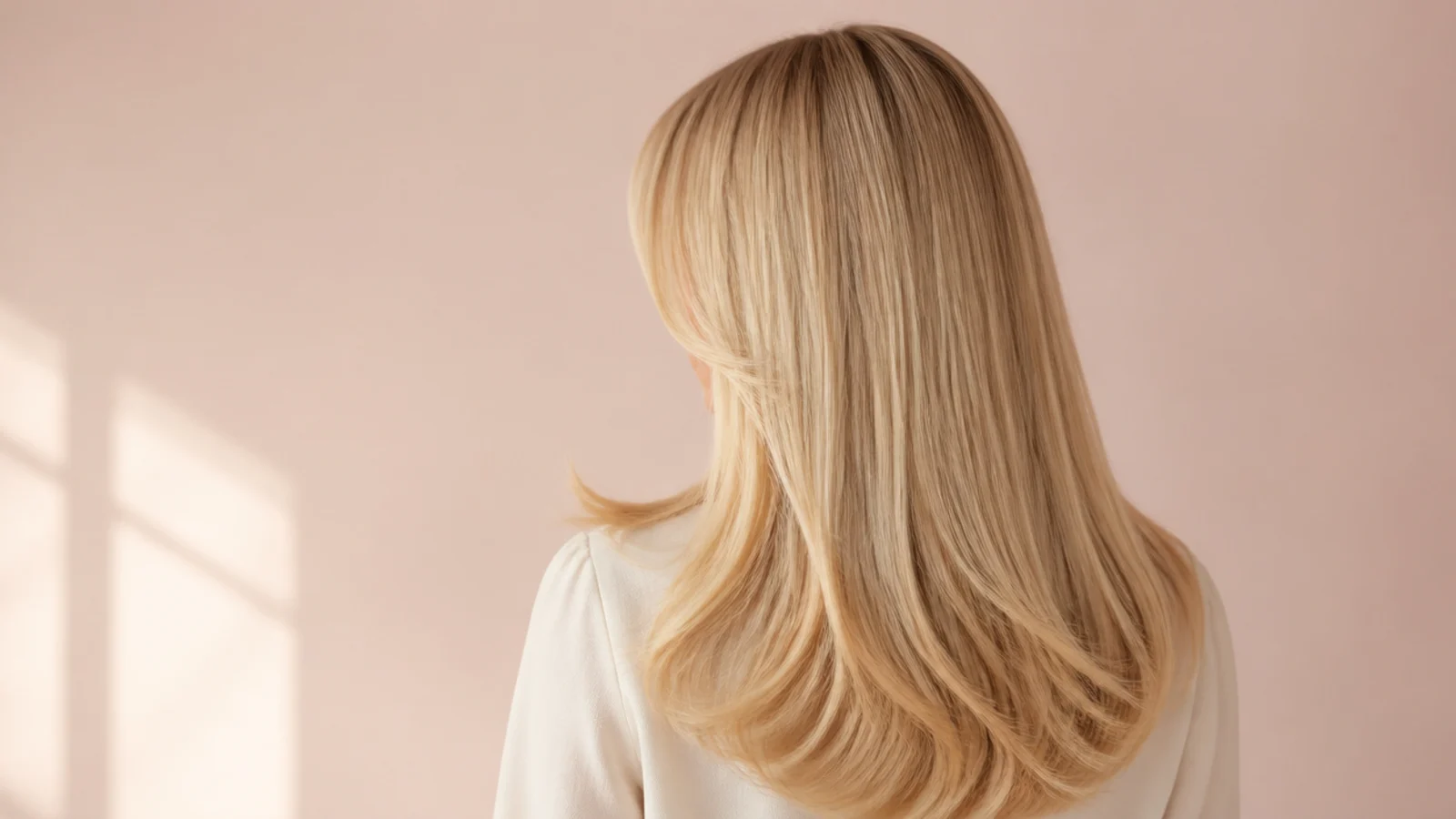
20 Sabrina Carpenter Straight Hair Ideas
Twenty straight hair ideas, and the distinction that decides whether you get the look — straight hair has no bend to hold volume, so every bit of lift is either root direction or a layer, and only one of those survives a wash.
In this article · 28
- The Signature Look Broken Down
- Hair Type and Face Shape
- Cuts and Layers
- Blonde Shade Families
- A Straight Blowout at Home
- Keeping a Fringe From Going Flat
- The 20 Straight Hair Ideas
- 1. Centre Part Sleek
- 2. Glass Hair Gloss
- 3. Deep Side Part
- 4. Jaw Length Layers
- 5. One Length With a Full Fringe
- 6. A Bend at the Ends
- 7. Pin Straight on Fine Hair
- 8. Collarbone Lob
- 9. Money Piece at the Front
- 10. Butterfly Layers
- 11. Half Up on Straight Hair
- 12. Shadow Root Blonde
- 13. Low Ponytail With a Bow
- 14. Bottleneck Bangs
- 15. Thick Coarse Straight Hair
- 16. Curly to Straight
- 17. Blunt Collarbone
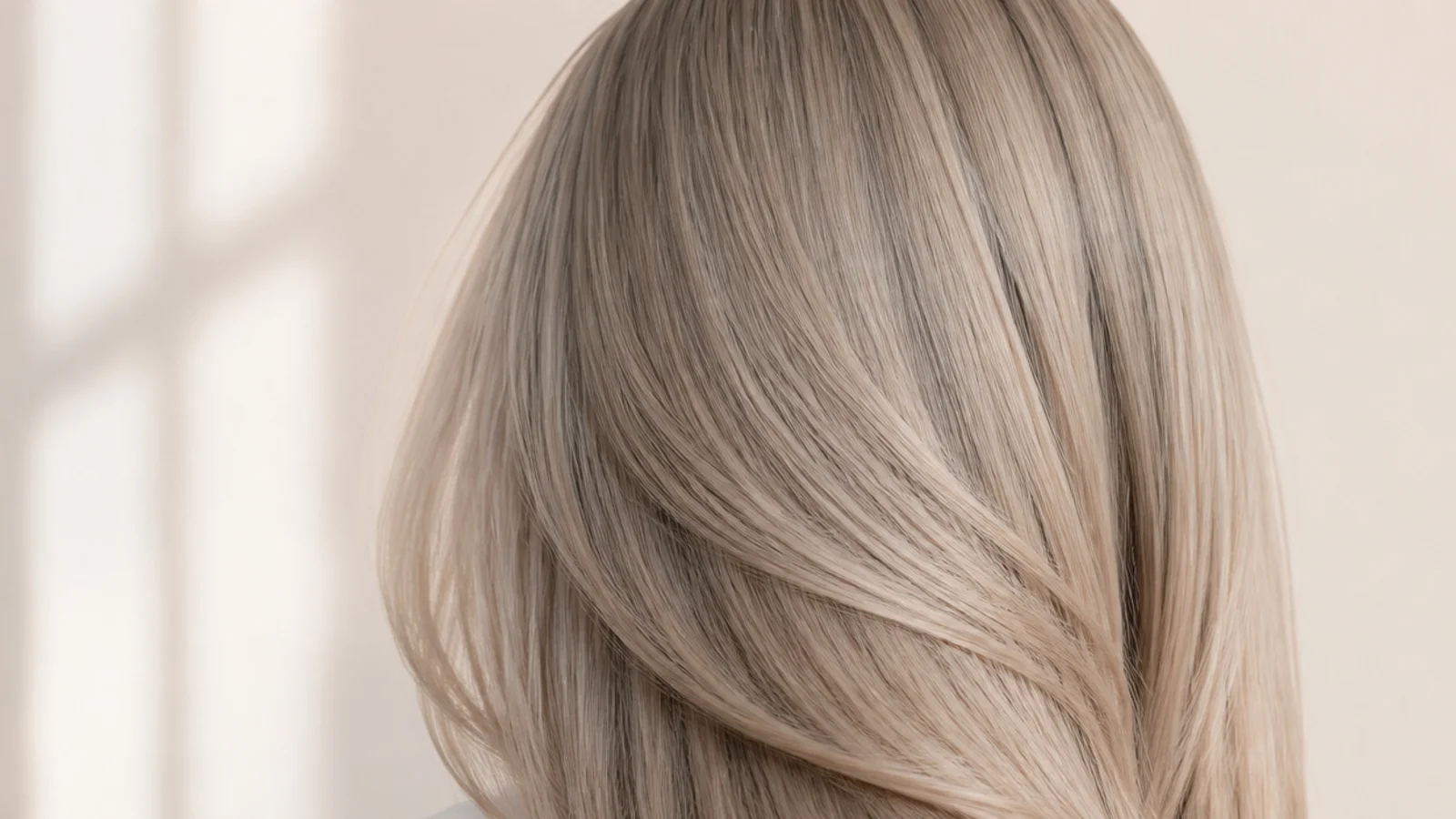
- 18. Cool Beige Blonde
- 19. Brunette Base Straight
- 20. Second Day Refresh
- Final Thoughts
The shine in these photographs is not a product. It is a flat cuticle over a blunt line, and both of those are decisions made in a chair rather than in a bathroom.
Straight hair has no bend, so it has no built in volume. Every bit of lift you see is either the direction the roots were dried in or weight taken out by a layer.
Only one of those survives a wash. A blowout is a heat set that ends at the next shower. A layer is permanent, which is why it deserves more thought than the styling does.
The Signature Look Broken Down
A flat cuticle doing the shining. Light reflects off a smooth surface in one direction. Off a roughened one it scatters, and scattered light is what we call dull.
A perimeter with a definite edge. Not necessarily blunt all the way across, but never feathered into nothing.
Low contrast blonde over a deeper root. No stripes. The tone changes gradually from root to end, and the change is small.
Volume that starts at the root and stops there. The ends stay narrow and heavy. Lift at the top, weight at the bottom.
Movement from a bend at the ends, not from curl. One rotation of a round brush, no more, which reads as polish rather than as a set.
Hair Type and Face Shape
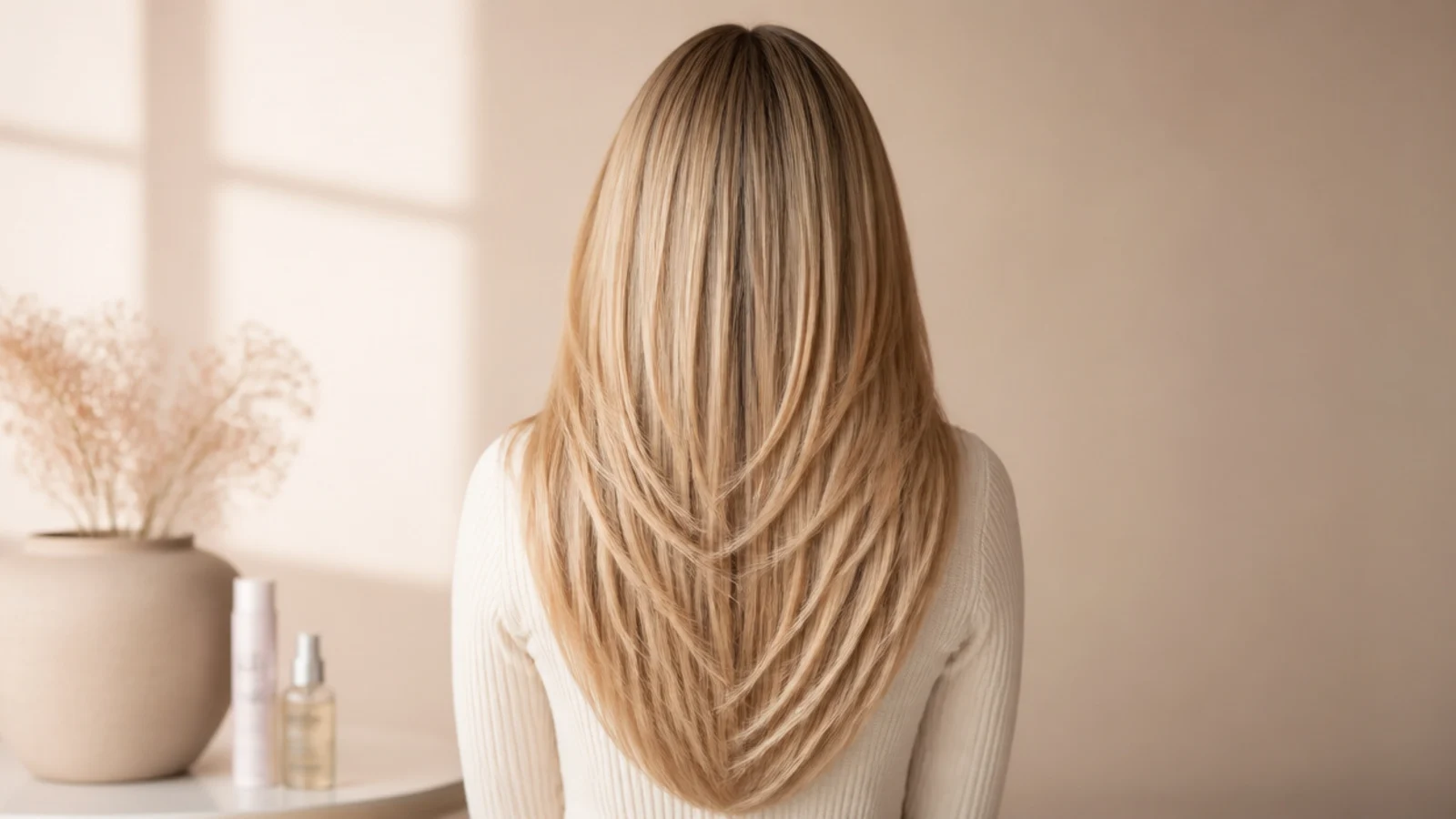
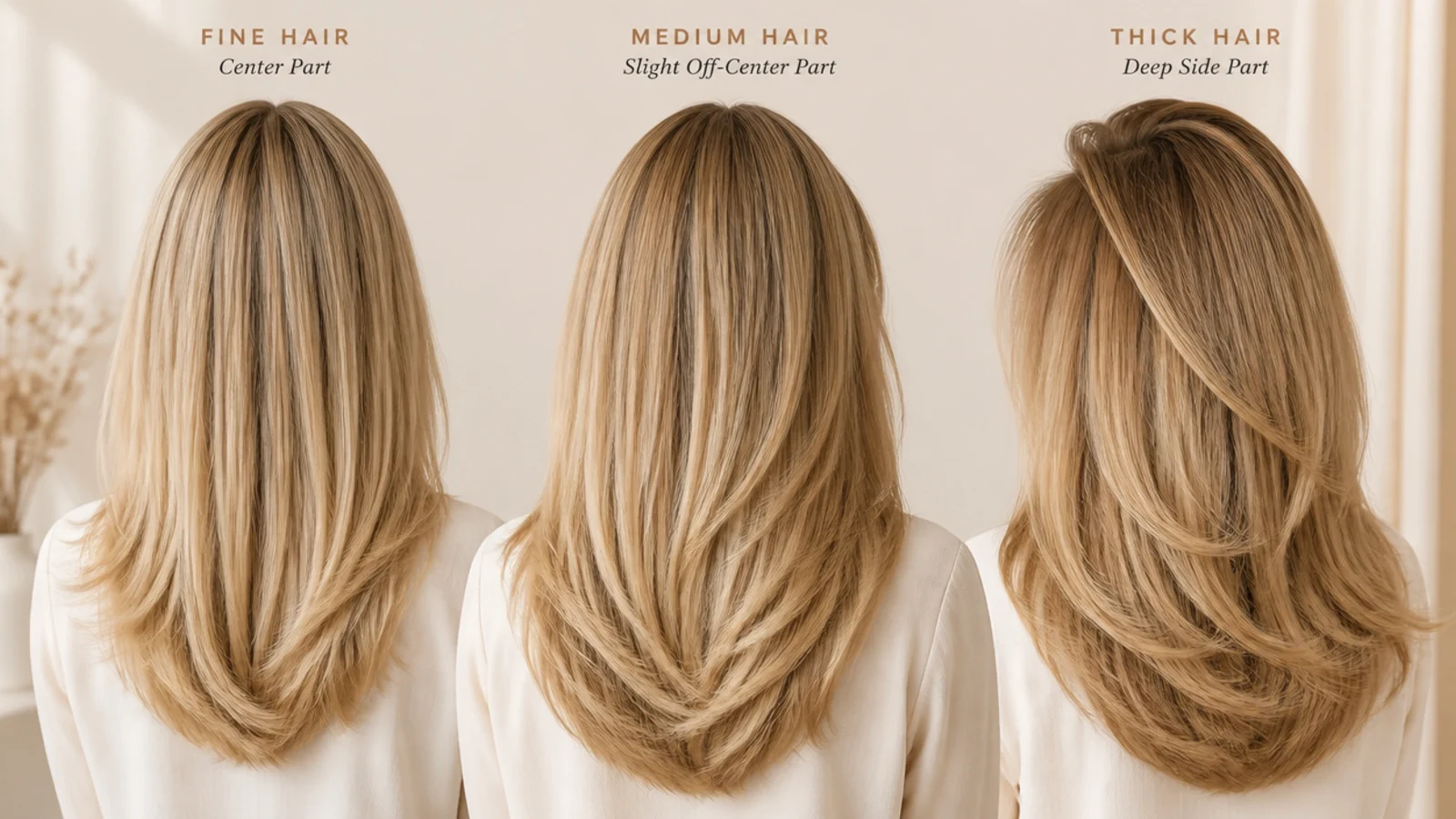
Fine straight hair needs blunt ends and few layers. Every strand ending on the same line reads as density, and tapered ends on fine hair read as damage.
Thick straight hair needs internal weight removal. Left solid it builds outward at the bottom, because nothing has been taken out above the perimeter to let it fall close.
Coarse straight hair resists a bend. A wider strand takes more energy to reshape and springs back harder, so it wants a larger barrel and a longer cooling period.
A round face wants length past the collarbone or a strong side part. Vertical lines do the narrowing that a straight perimeter alone will not.
A long face wants a fringe or width at the jaw. Horizontal interest across the face is the one thing a centre parted curtain of straight hair cannot supply.
Cuts and Layers
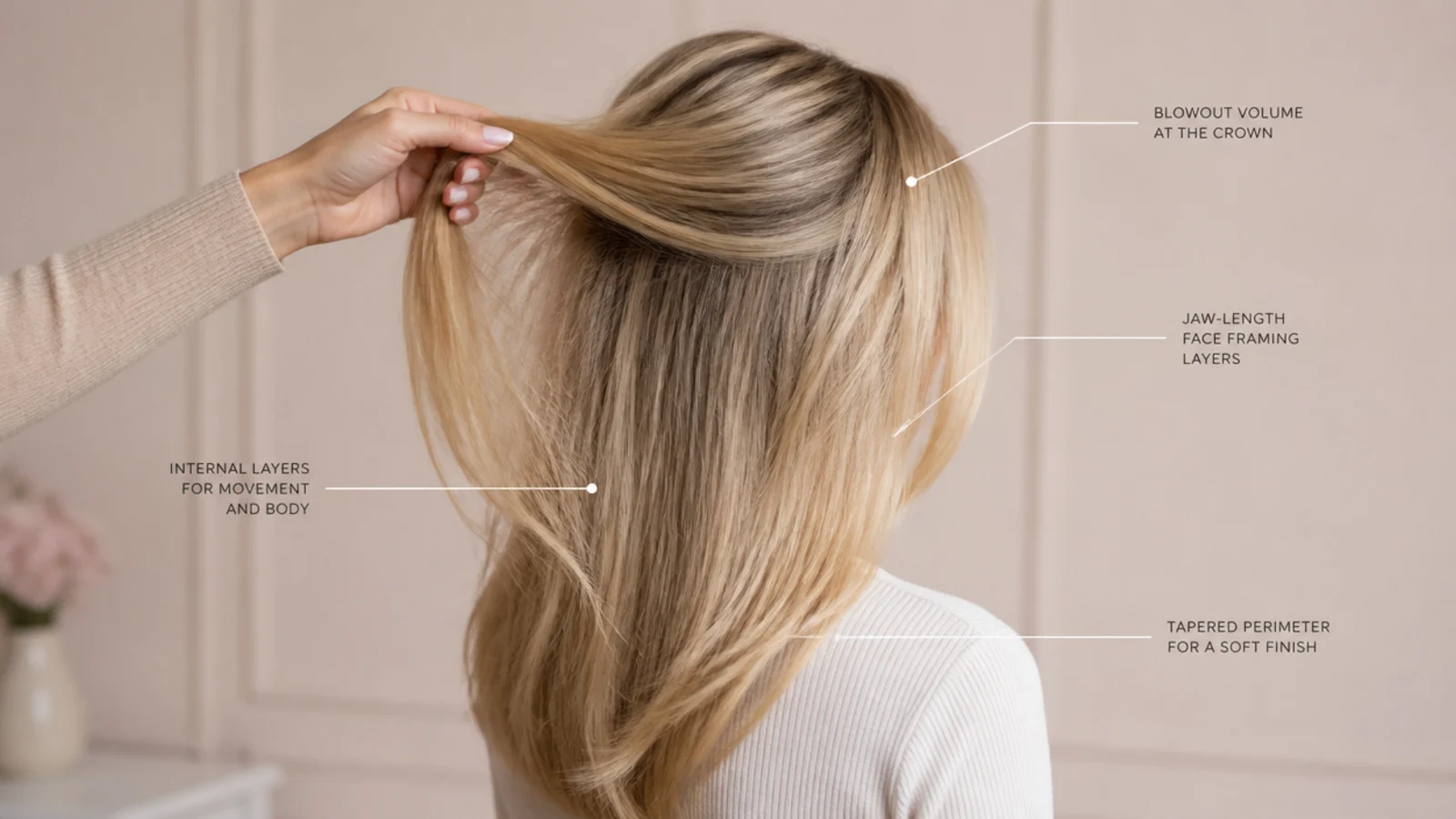
Long layers move the widest point up. Where the shortest layer ends is where the hair looks fullest, so the placement of that one length changes the whole silhouette.
Face framing is a separate decision from internal layers. One shapes the front, the other shapes the body. Ask for them by name, not as one instruction.
Butterfly layers are two lengths, not many. A short front section and a long back section, cut so the two overlap rather than blend.
A blunt perimeter is not a style choice on fine hair. It is the only way to keep the ends looking like hair rather than like fraying.
Point cutting softens, and softening costs you shine. A staggered edge scatters light, so ask for it only where you actually want movement.
Blonde Shade Families
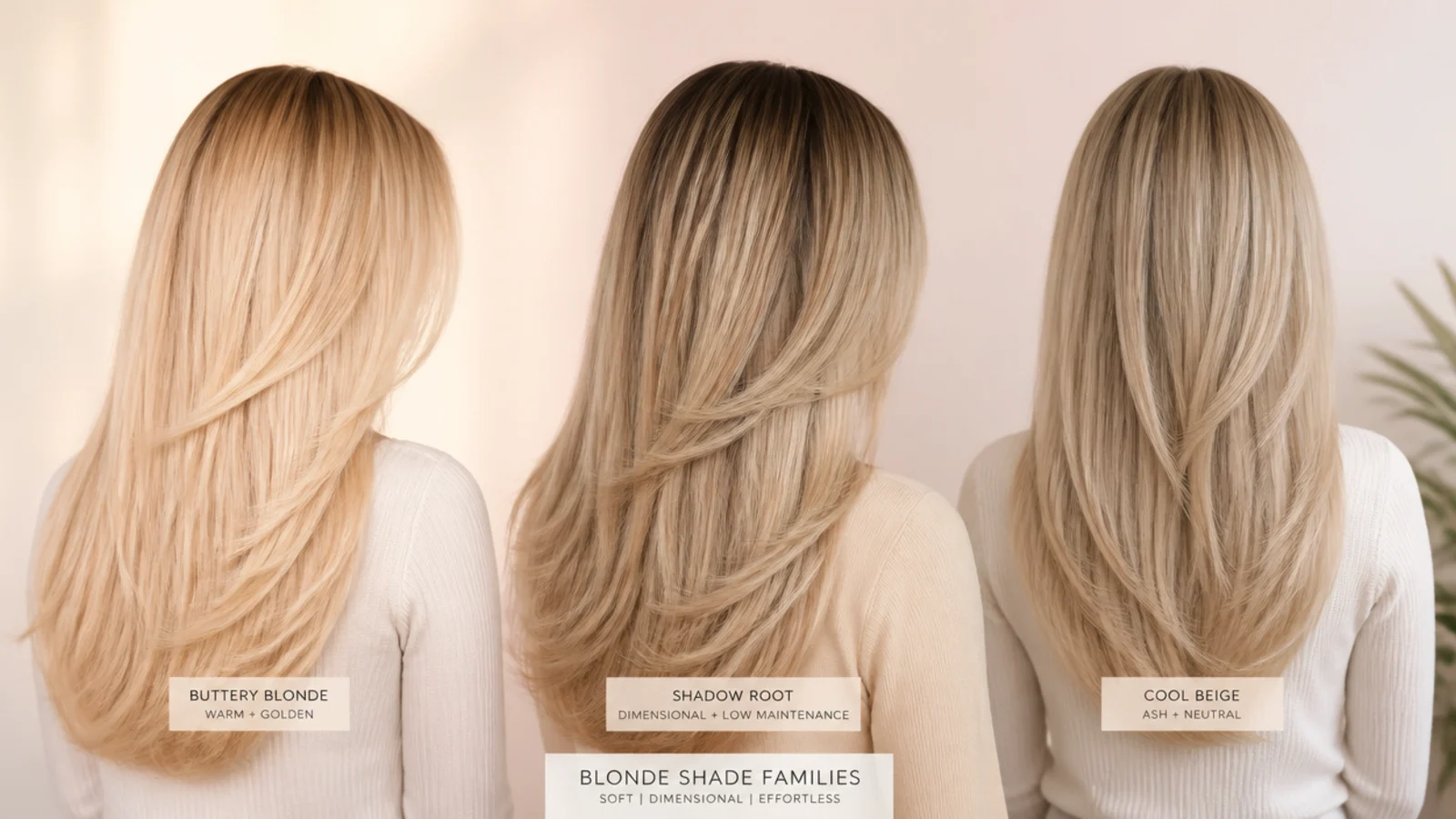
Cool beige. The least warmth to fade through, so it drifts toward neutral rather than toward brass as the pigment oxidises.
Warm golden. Needs a deeper root underneath it, because warmth with no depth to sit against photographs yellow and flat.
Bronde. A brunette base with blonde placed through the mid-lengths, which is the lowest maintenance version on the list by a wide margin.
Shadow root, in any of the above. The regrowth line is designed in, so eight to ten weeks passes with nothing to fix.
Gloss on a six to eight week cycle. A demi-permanent gloss restores tone and closes the cuticle at the same time, which is the shine half of the appointment.
A Straight Blowout at Home
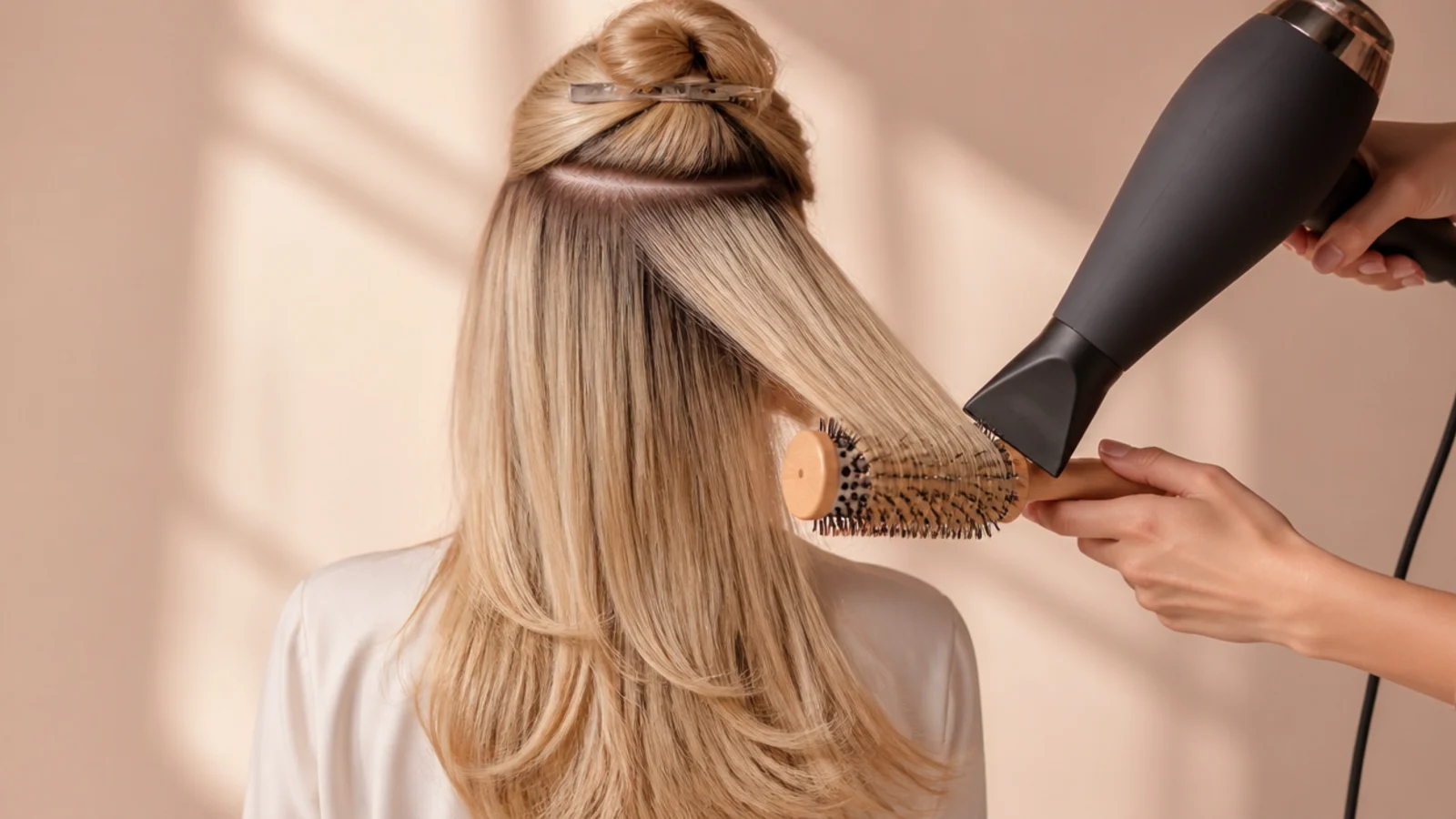
Dry to eighty per cent before a brush touches it. Brushing soaking hair stretches it, and a stretched strand snaps rather than smooths.
Point the nozzle down the length. Airflow running root to end makes the cuticle scales lie flat. Airflow going up the length lifts them, which is exactly what dulls a finish.
Overdirect the roots. Pull each front section back and away from where it grows before you dry it. The root sets in the direction you held it.
One rotation at the ends, then hold until cool. Hair holds the shape it cools in, so releasing a warm section throws the bend away.
Cool shot at the end of every section. It sets the bonds faster than the room will, and it costs about four seconds.
Keeping a Fringe From Going Flat
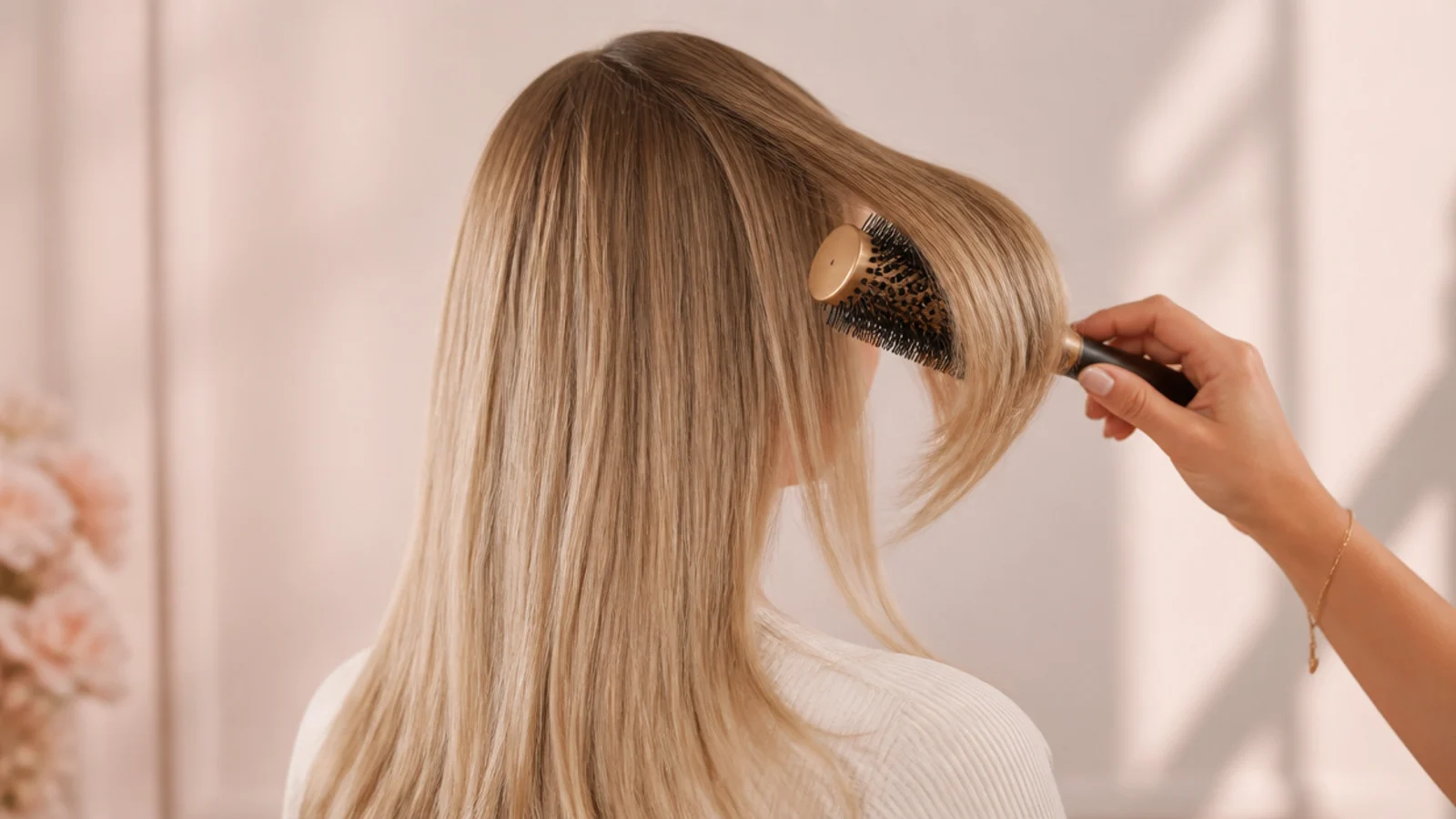
Dry the fringe first, while it is wettest. A fringe dries faster than anything else on the head and sets in whatever position it dried in, usually before you have got to it.
Dry it side to side, not forward. Sweeping it left then right breaks the root out of its growth direction, which is the only lift a fringe will ever have.
A cowlick needs to be beaten while wet. Once dry it is set. Rewetting just that section is faster than fighting it with an iron.
Dry shampoo at the fringe roots, not on the length. It works by friction, giving flattened strands something to catch on so they stop lying back down.
Never touch it during the day. Fingers carry oil, and oil at the root is what turns a fringe into strips.
The 20 Straight Hair Ideas
1. Centre Part Sleek
A centre part is symmetrical and unforgiving, since it exposes the root along the whole length of the parting and splits the face into two matching halves. It suits an even hairline and a deliberate root shadow, and it gives you the least volume of any parting because nothing is being pushed against its growth.
2. Glass Hair Gloss
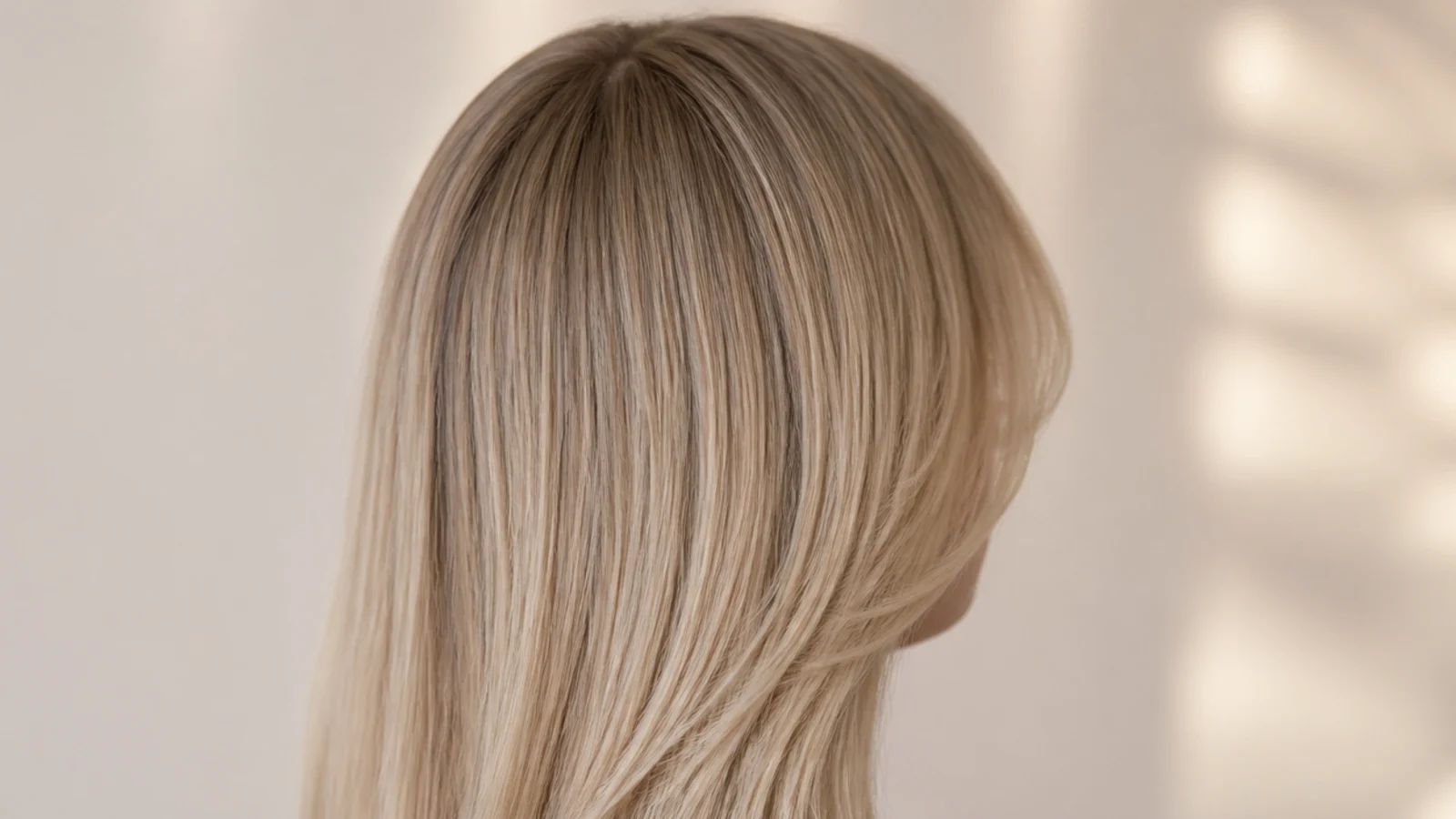
The glass finish is a flat cuticle plus a straight surface, so light reflects in one direction and returns as a single bright band. A demi-permanent gloss closes the cuticle chemically, which is why it does more for shine than any leave in product applied to the same head.
3. Deep Side Part
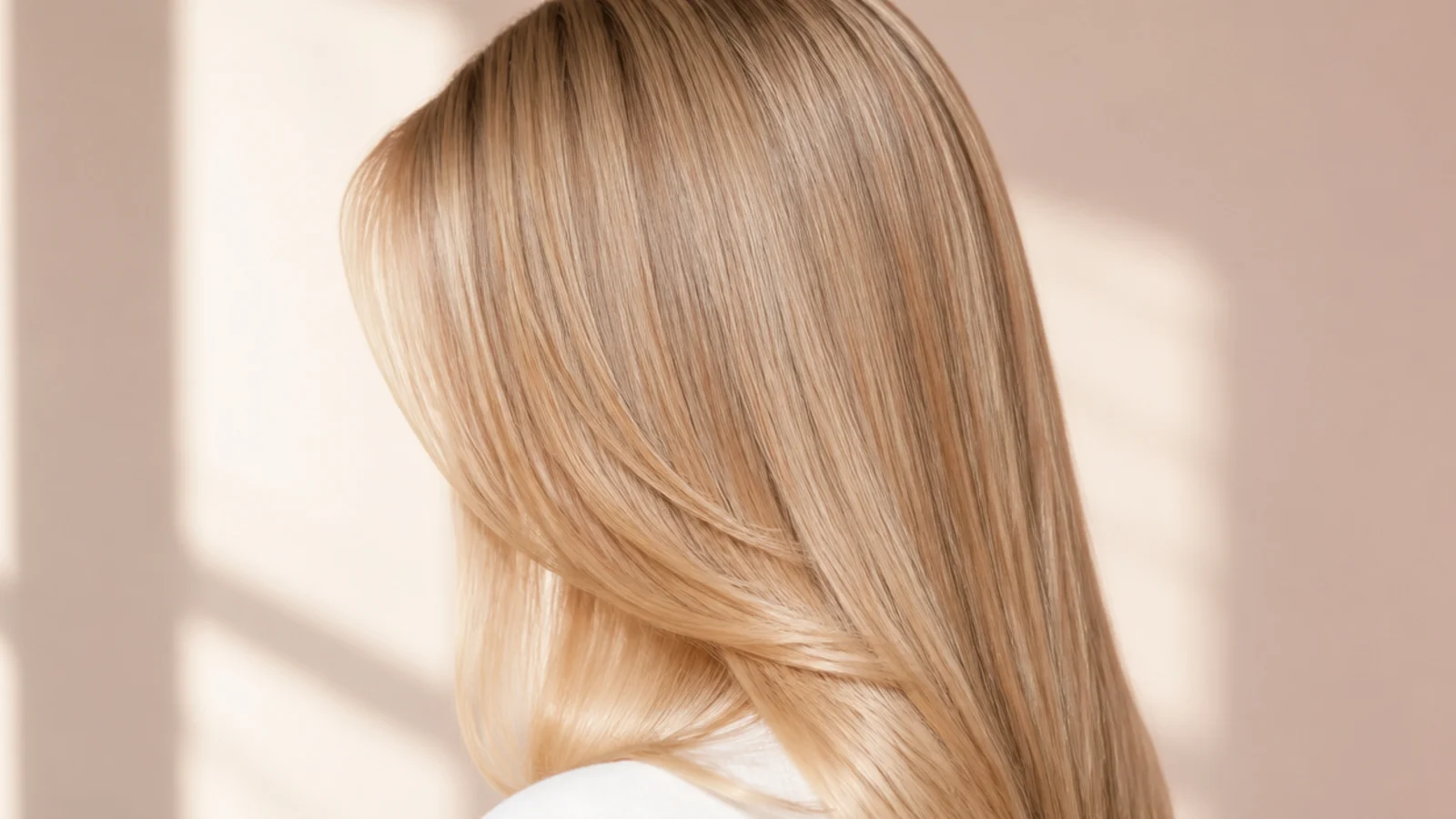
Sweeping the parting well off centre forces the roots on the heavy side to stand up before the length can fall, which is free volume on hair that has none of its own. The asymmetry also crosses the face diagonally, and a diagonal narrows a round face where a centre part widens it.
4. Jaw Length Layers
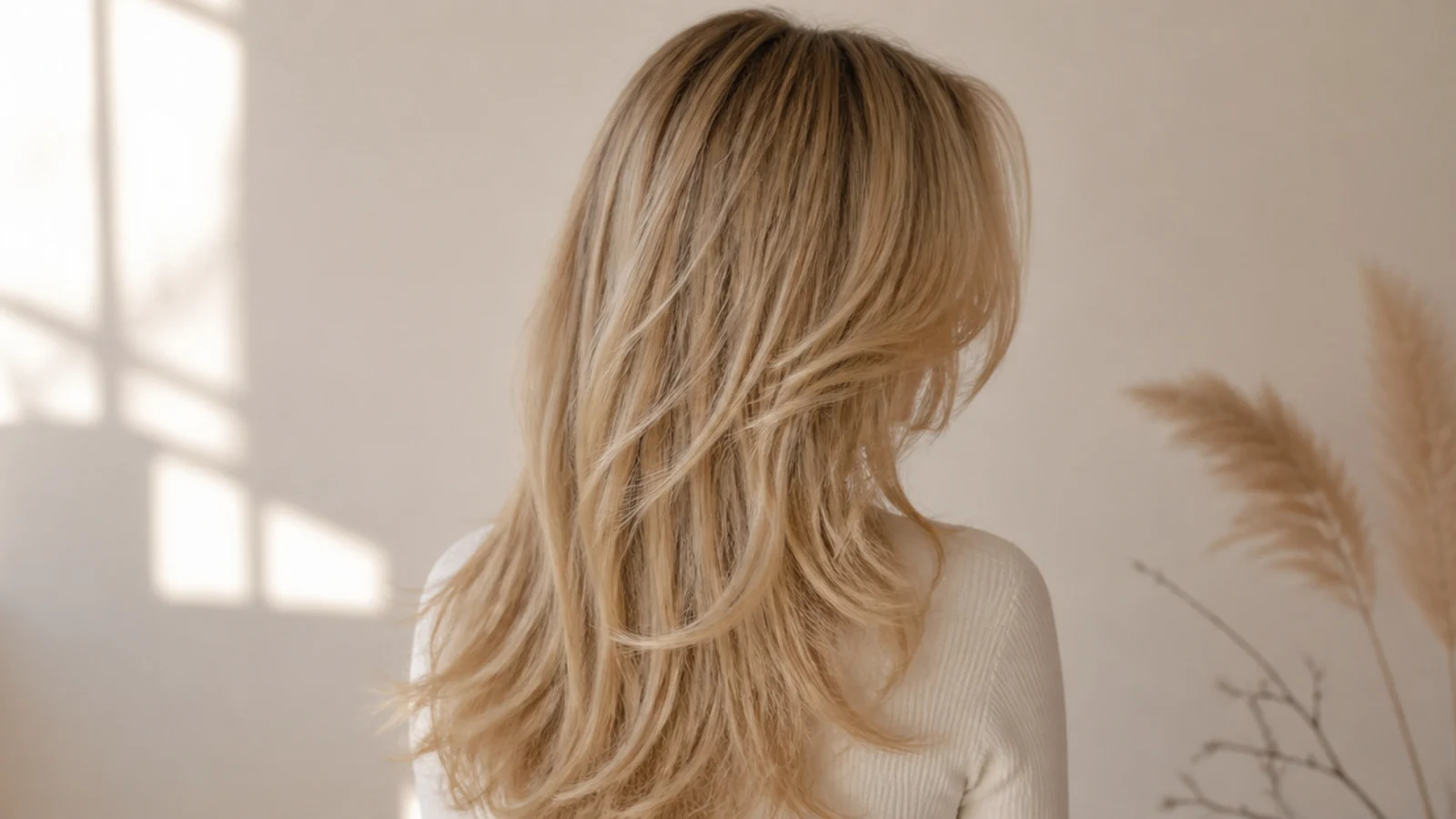
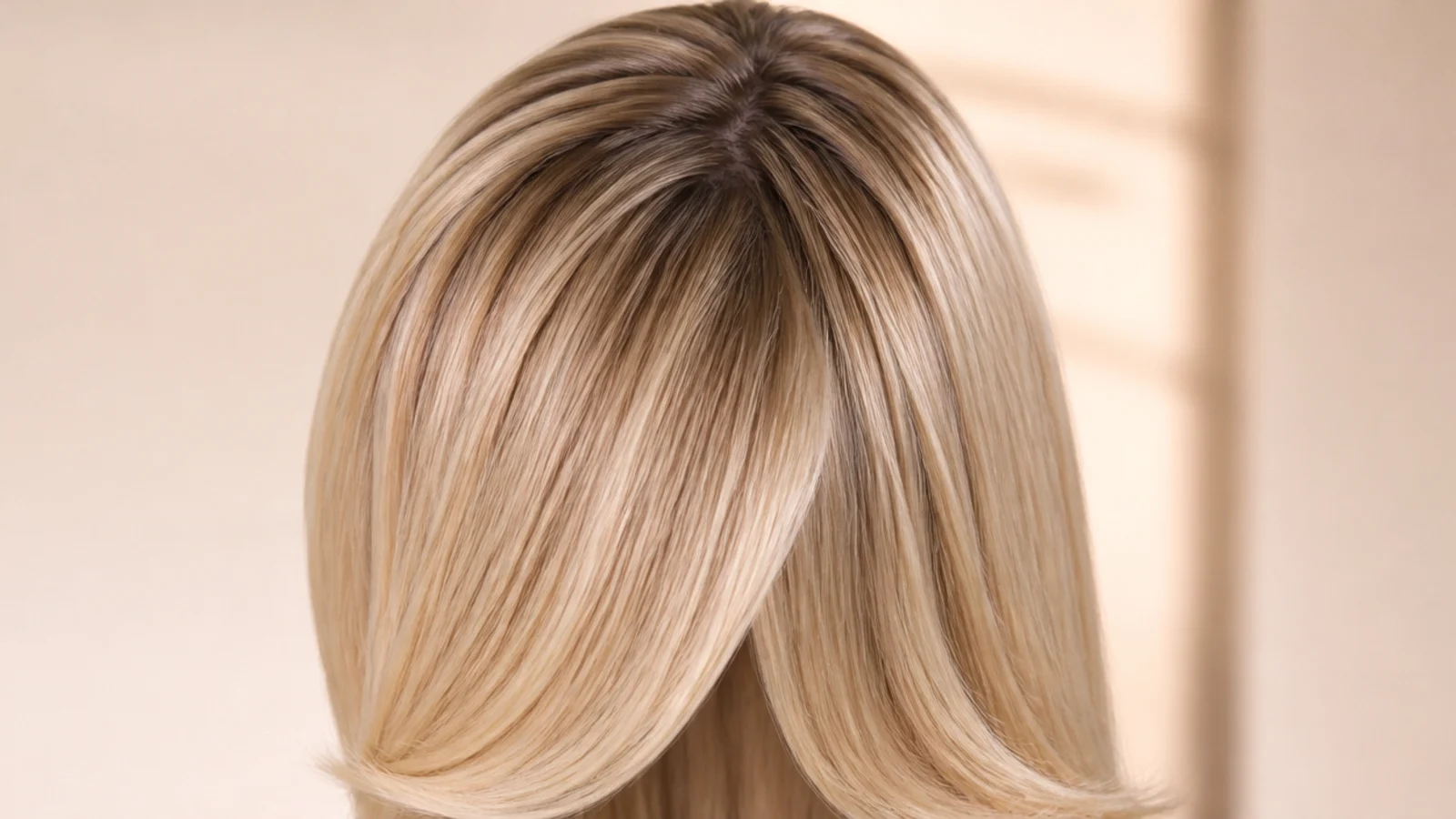
Cutting the shortest face framing pieces to the jaw puts the widest part of the silhouette level with the widest part of the face. That is flattering on an oval or long face and adds width exactly where a round face does not want it, so the placement is worth arguing about.
5. One Length With a Full Fringe
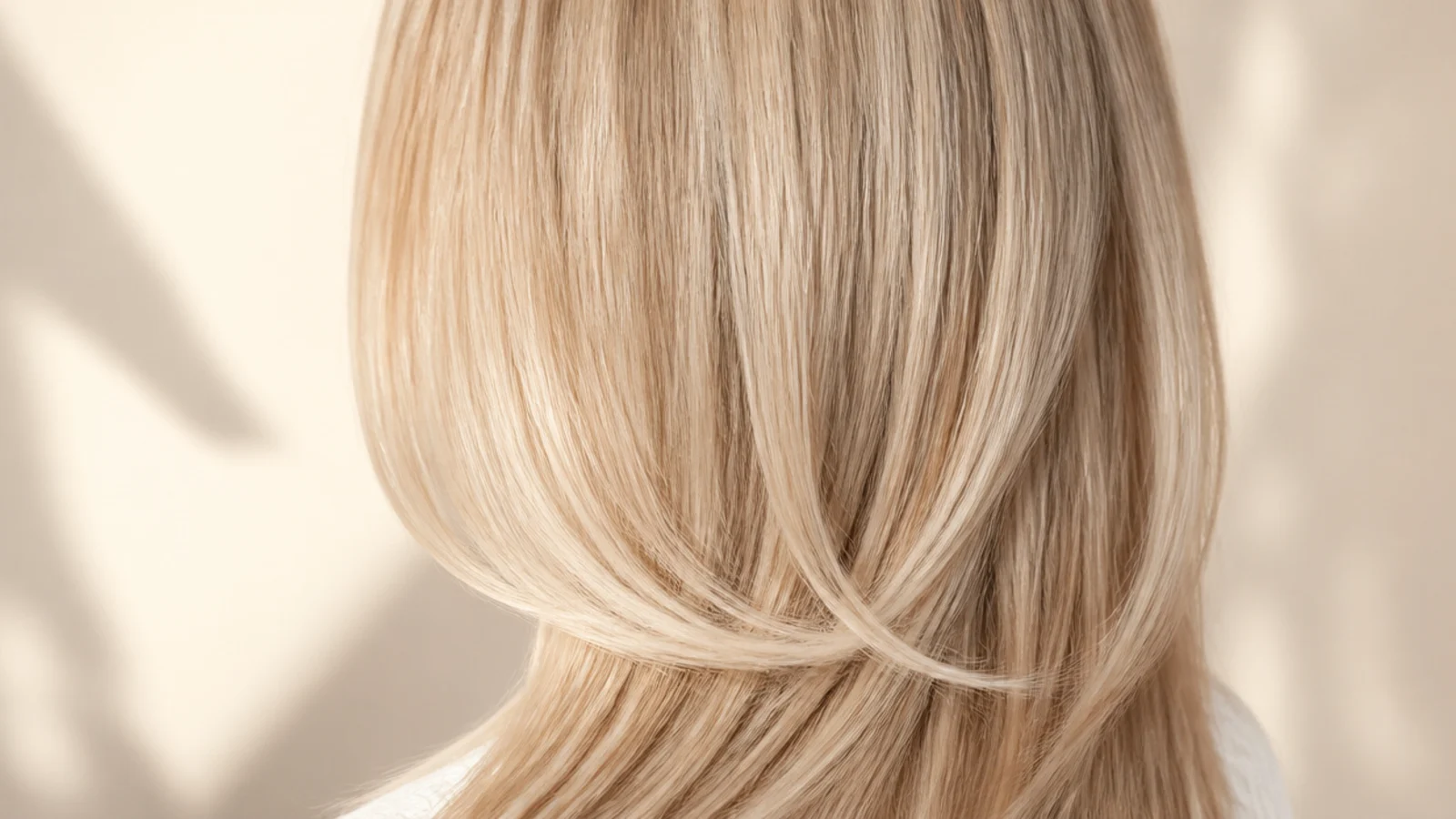
No internal layers at all, with the interest moved entirely to a solid fringe. It is the strongest option for fine hair, because a one length perimeter keeps every strand ending together, and the fringe supplies the shape that layers would otherwise have to.
6. A Bend at the Ends
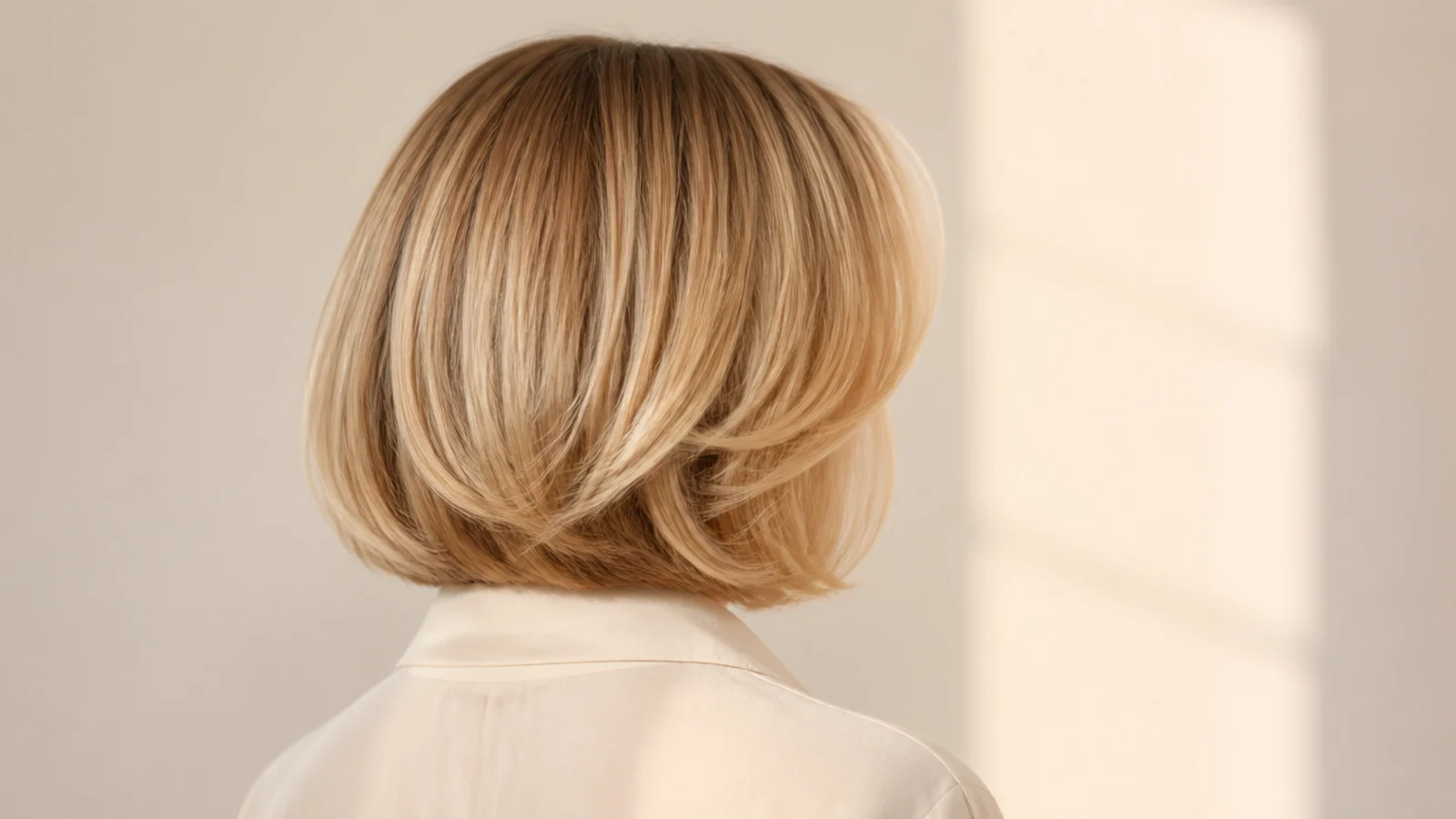
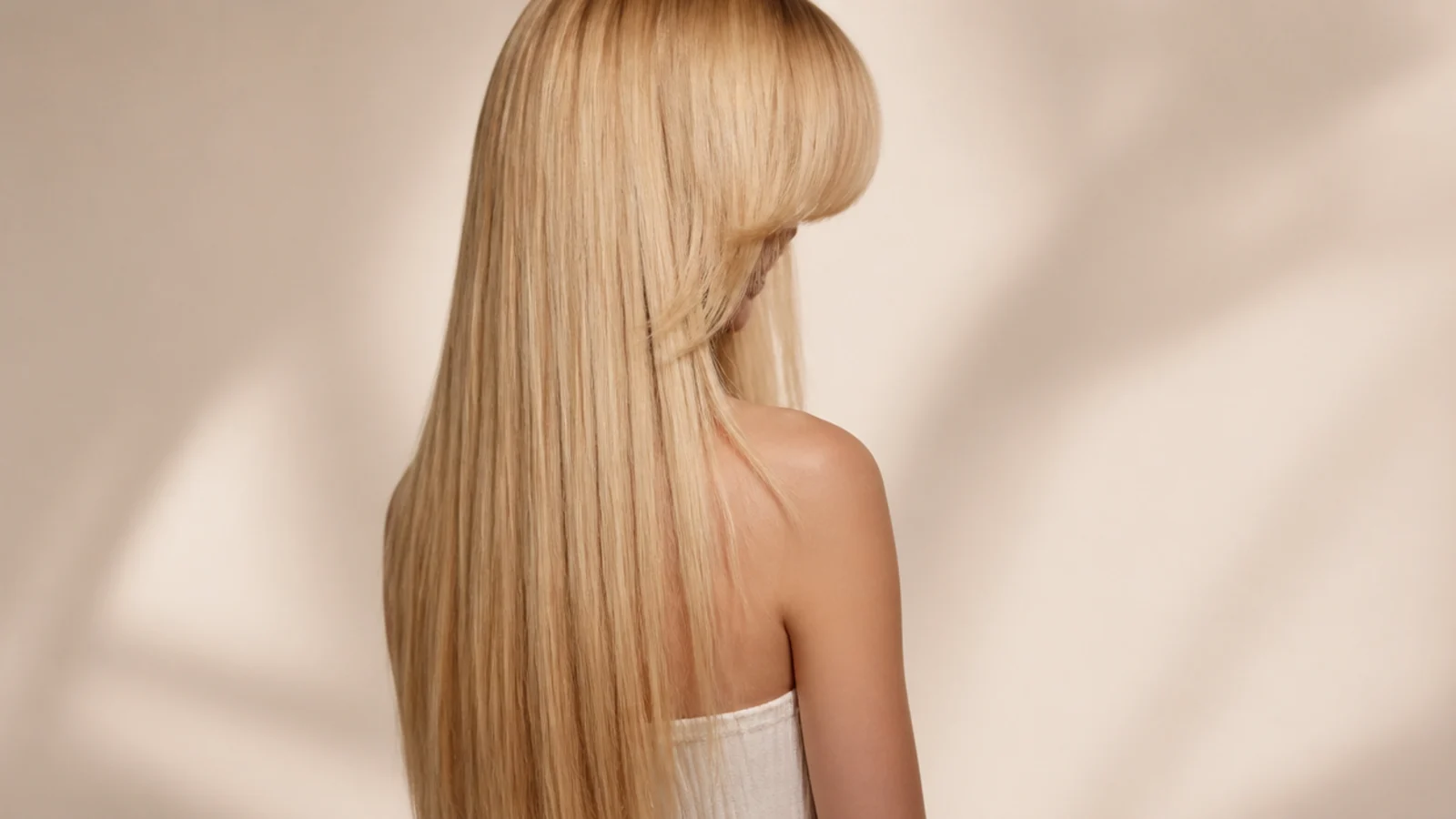
One rotation of a round brush at the very bottom, nothing above it. The bend reads as polish rather than as a set precisely because it is isolated, and it gives a straight perimeter somewhere to end other than in a flat line against the back.
7. Pin Straight on Fine Hair
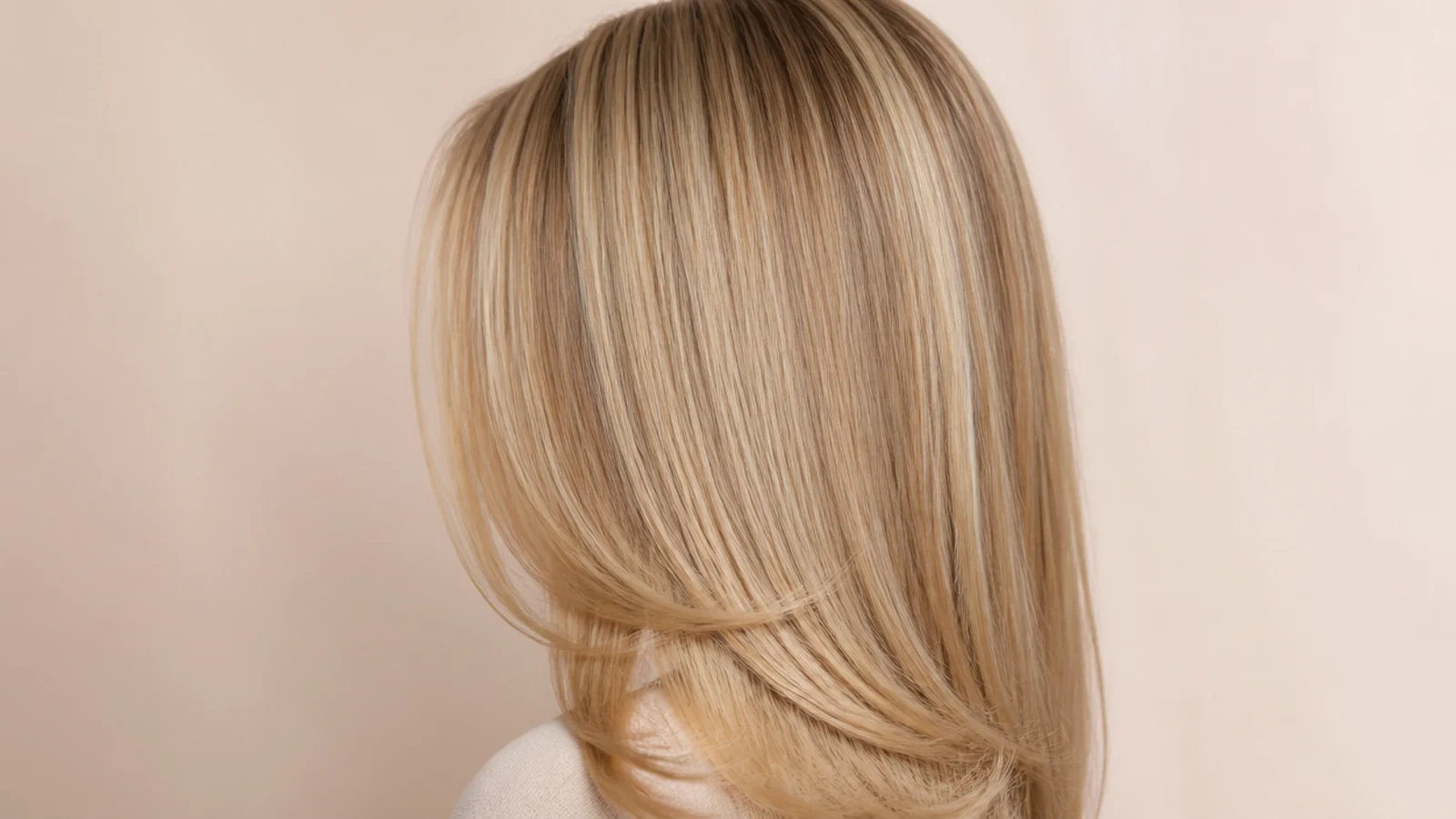
Ironing fine hair completely flat removes the last of its apparent volume, so it only works over a blunt perimeter that supplies the density visually. Fine strands reshape at a much lower temperature than coarse ones because there is less mass to heat through, which means the hottest setting buys nothing and costs condition.
8. Collarbone Lob
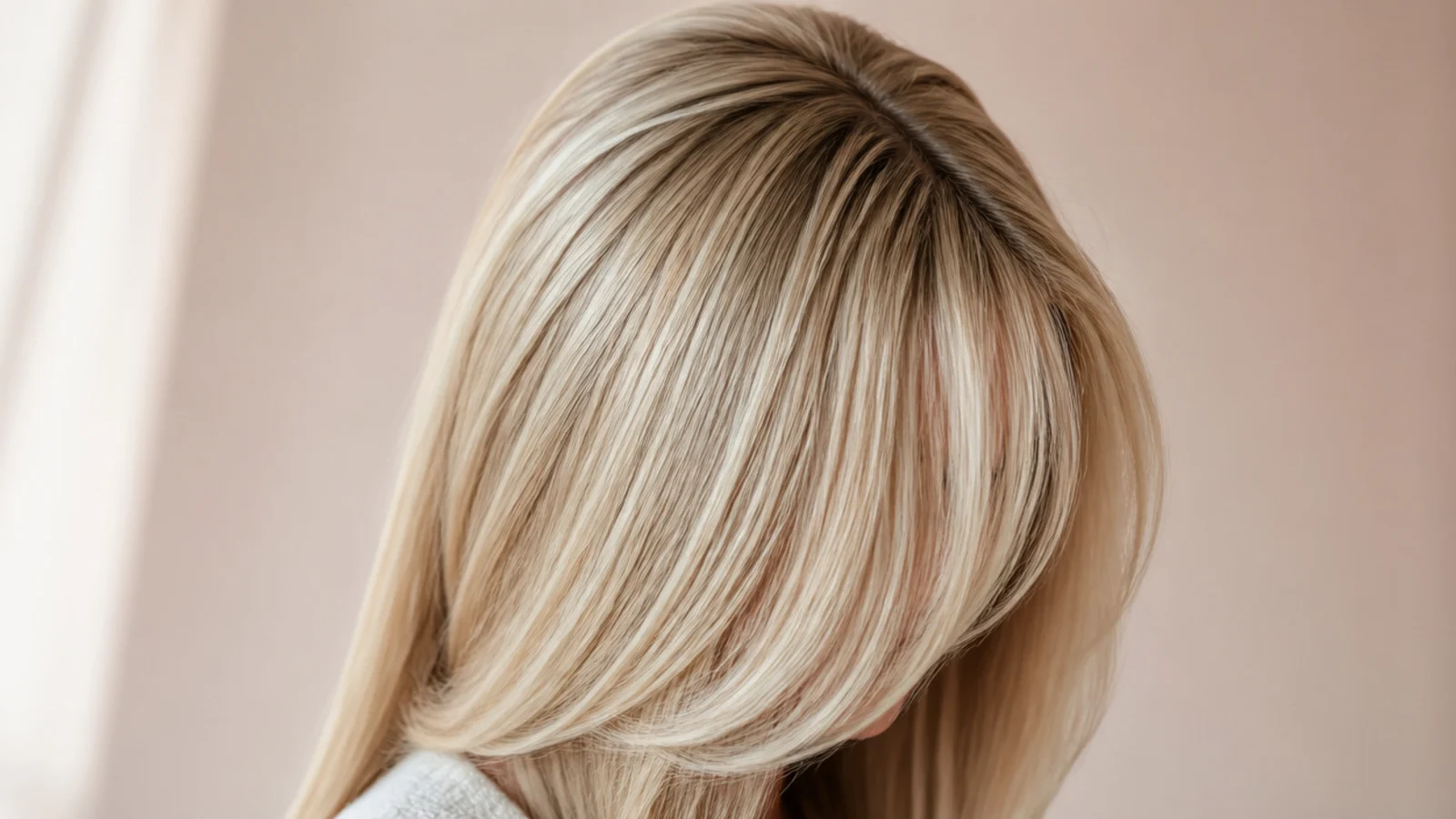
The collarbone is where a perimeter stops behaving like a line and starts behaving like long hair, which makes it the most forgiving length here. It is also the point at which the weight of the hair begins to pull a bend out, so any curve at the ends needs setting properly to last the day.
9. Money Piece at the Front
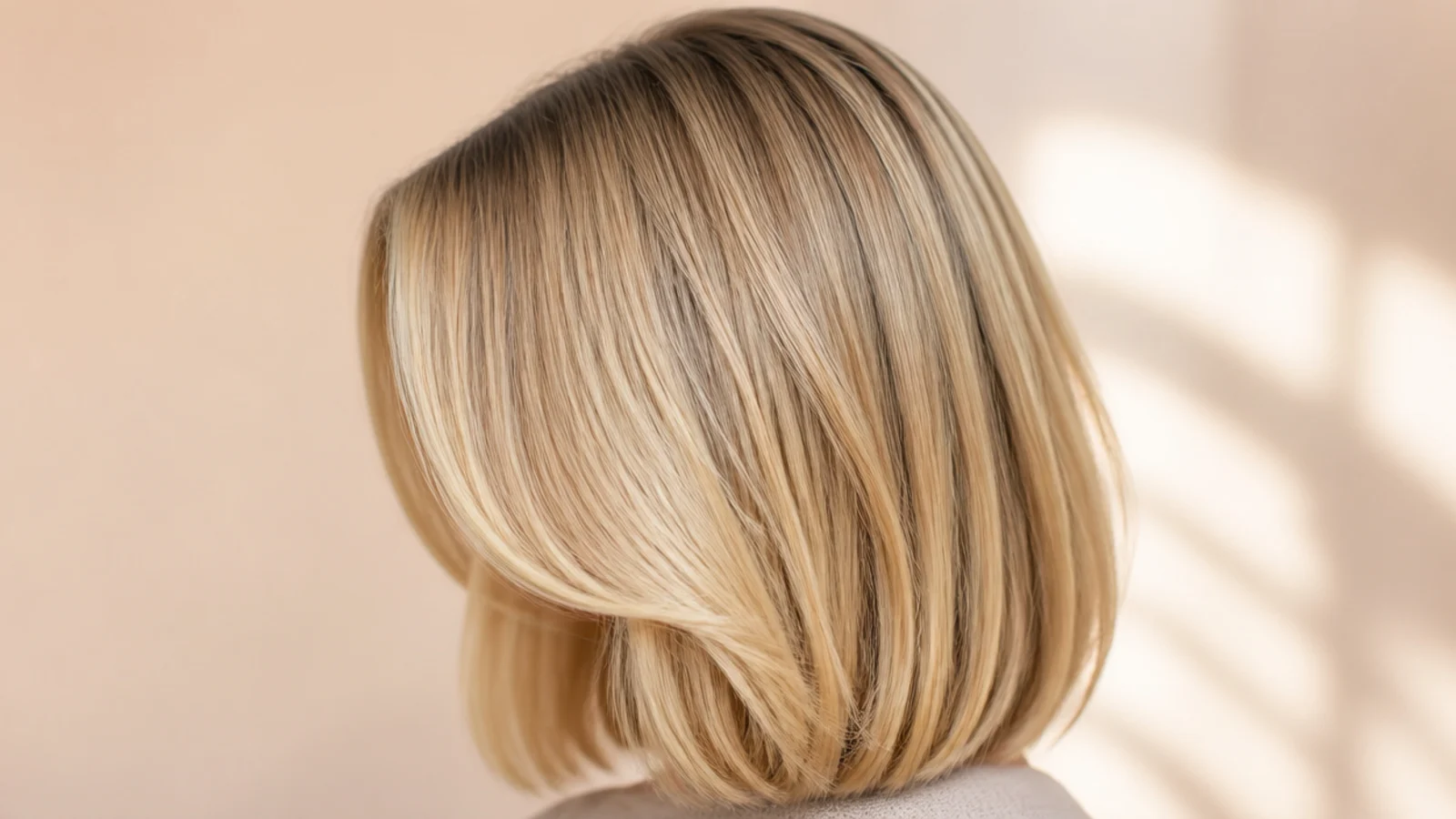
Two brighter panels either side of the parting sit where light naturally falls on the face, which is why the effect reads as brightness rather than as highlighting. Confining the lift to those two sections also protects the condition of everything behind them, and on straight hair condition is visible at all times.
10. Butterfly Layers
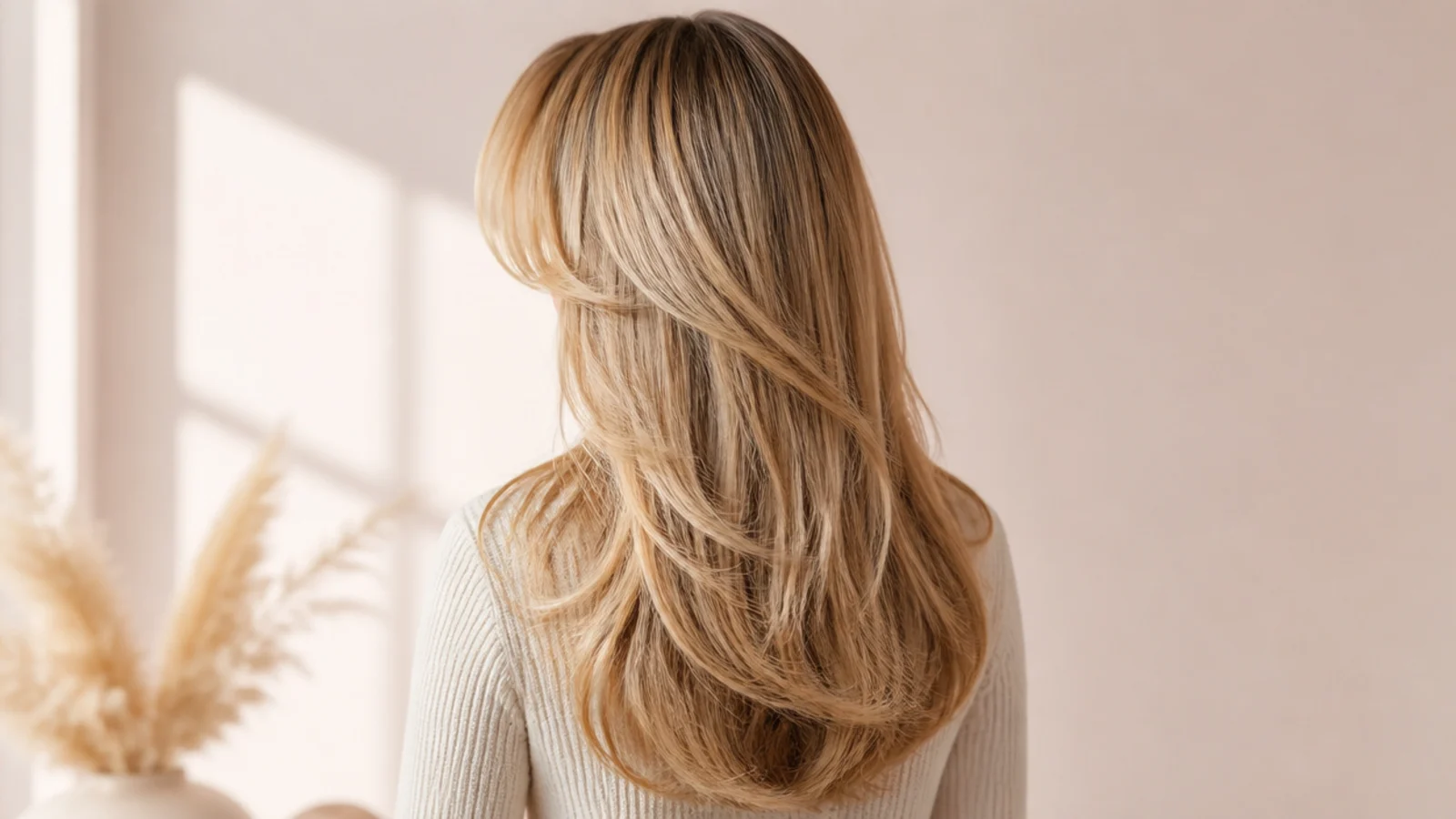
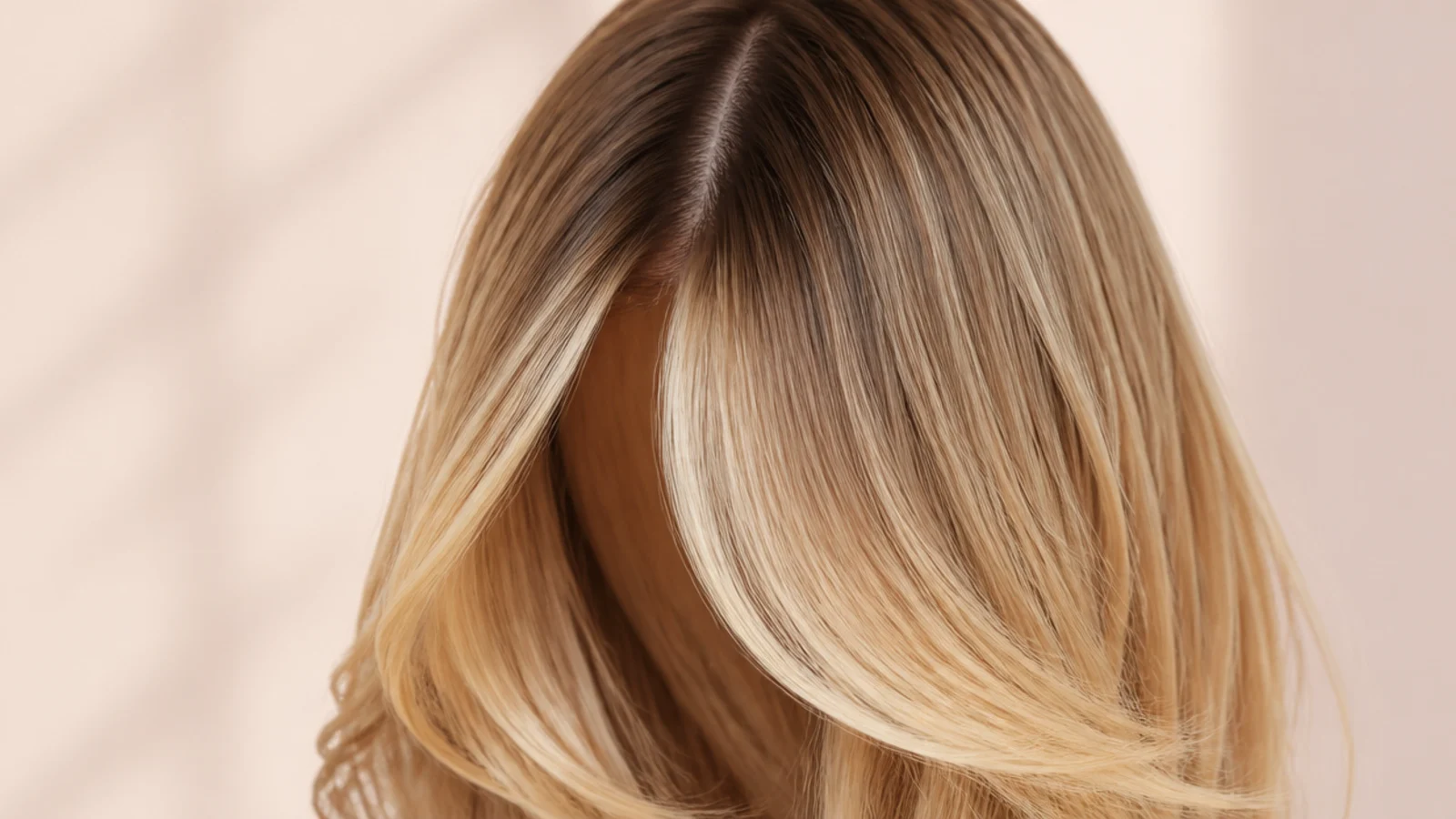
Butterfly layers are two distinct lengths rather than a gradient, with a short front section overlapping a long back one. The overlap is what creates the illusion of a shorter cut sitting on top of long hair, and it collapses into an ordinary layered head the moment the two lengths are blended.
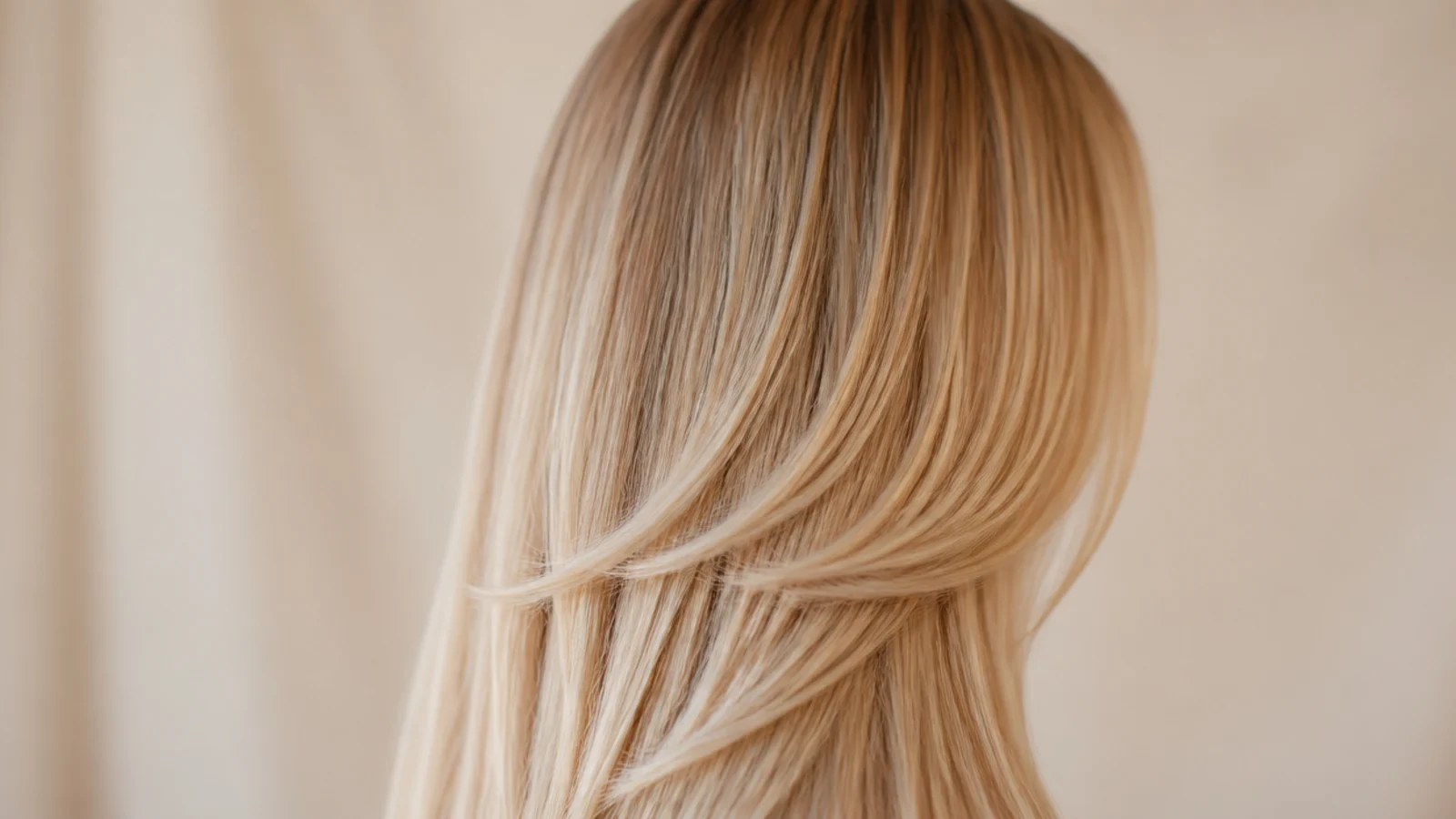
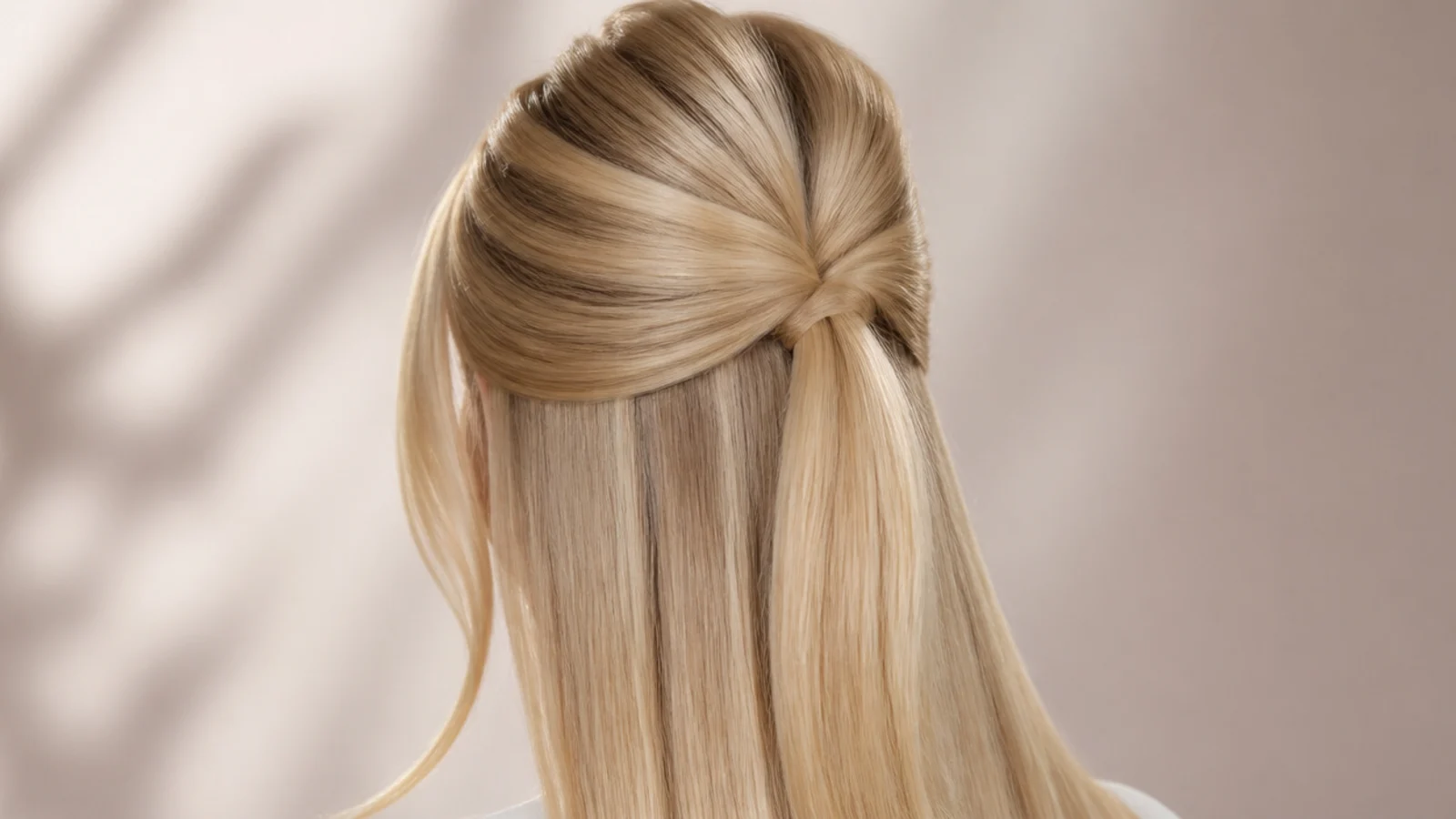
11. Half Up on Straight Hair
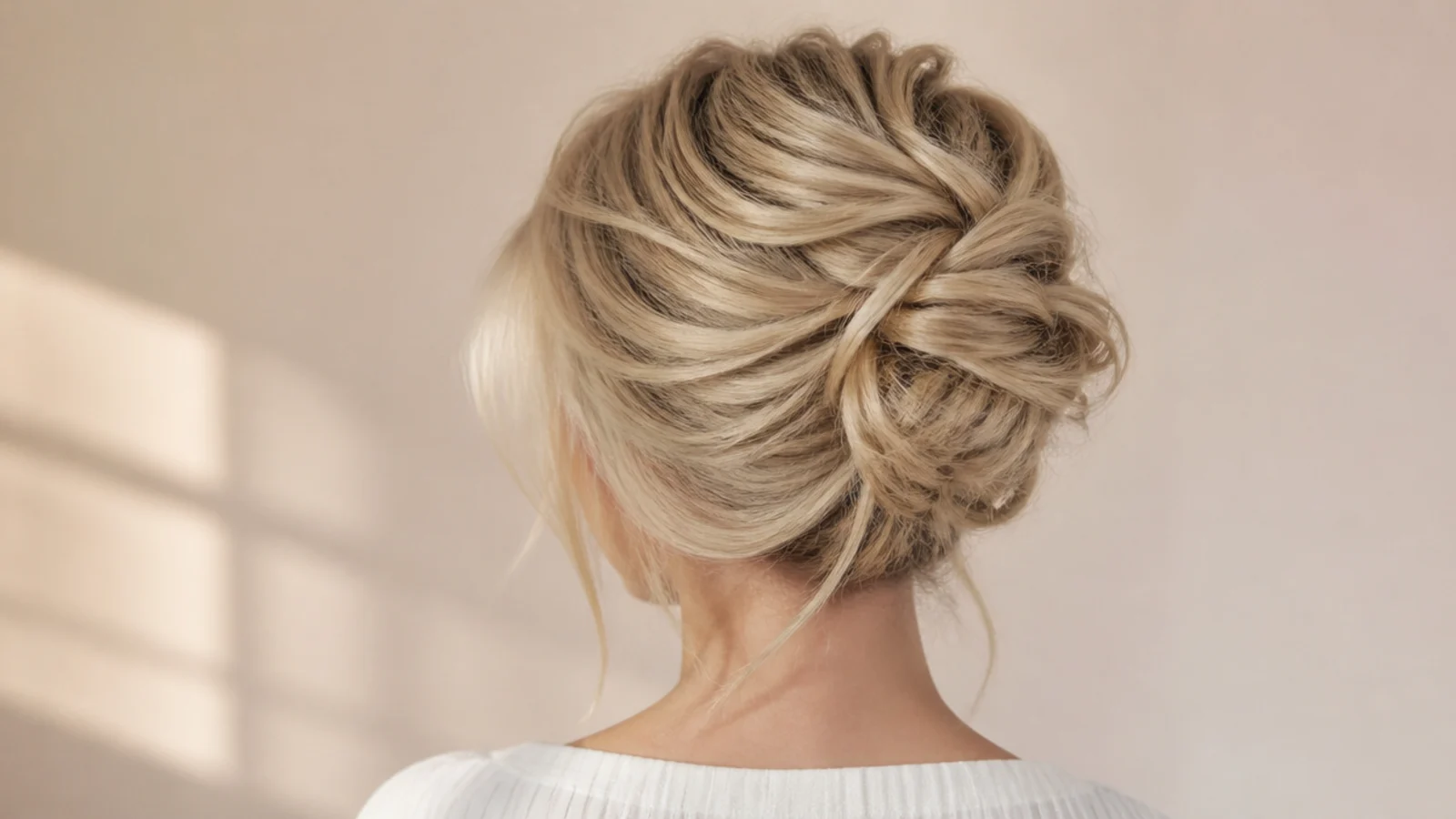
Gathering the top section lifts the crown mechanically, which is the only volume straight hair will hold without heat. Keep the join at ear level or lower, because a join any higher creates a bump that pulls the front hairline back and exposes the roots along the parting.
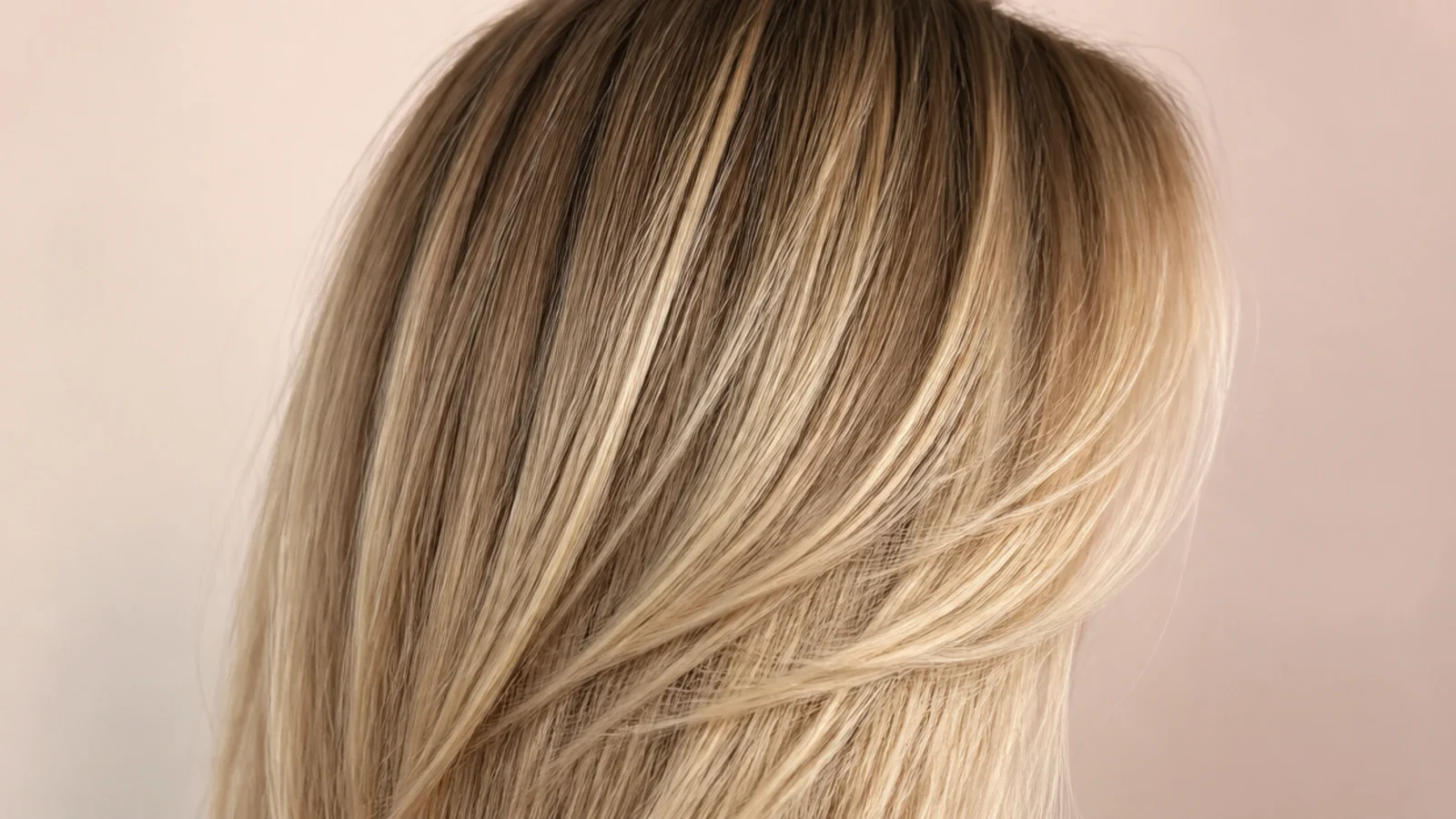
12. Shadow Root Blonde
A deliberately deeper root under a lighter length turns regrowth from a deadline into part of the design. On straight hair this matters more than on textured hair, because a flat surface shows a hard regrowth line as a clean horizontal band with nothing to break it up.
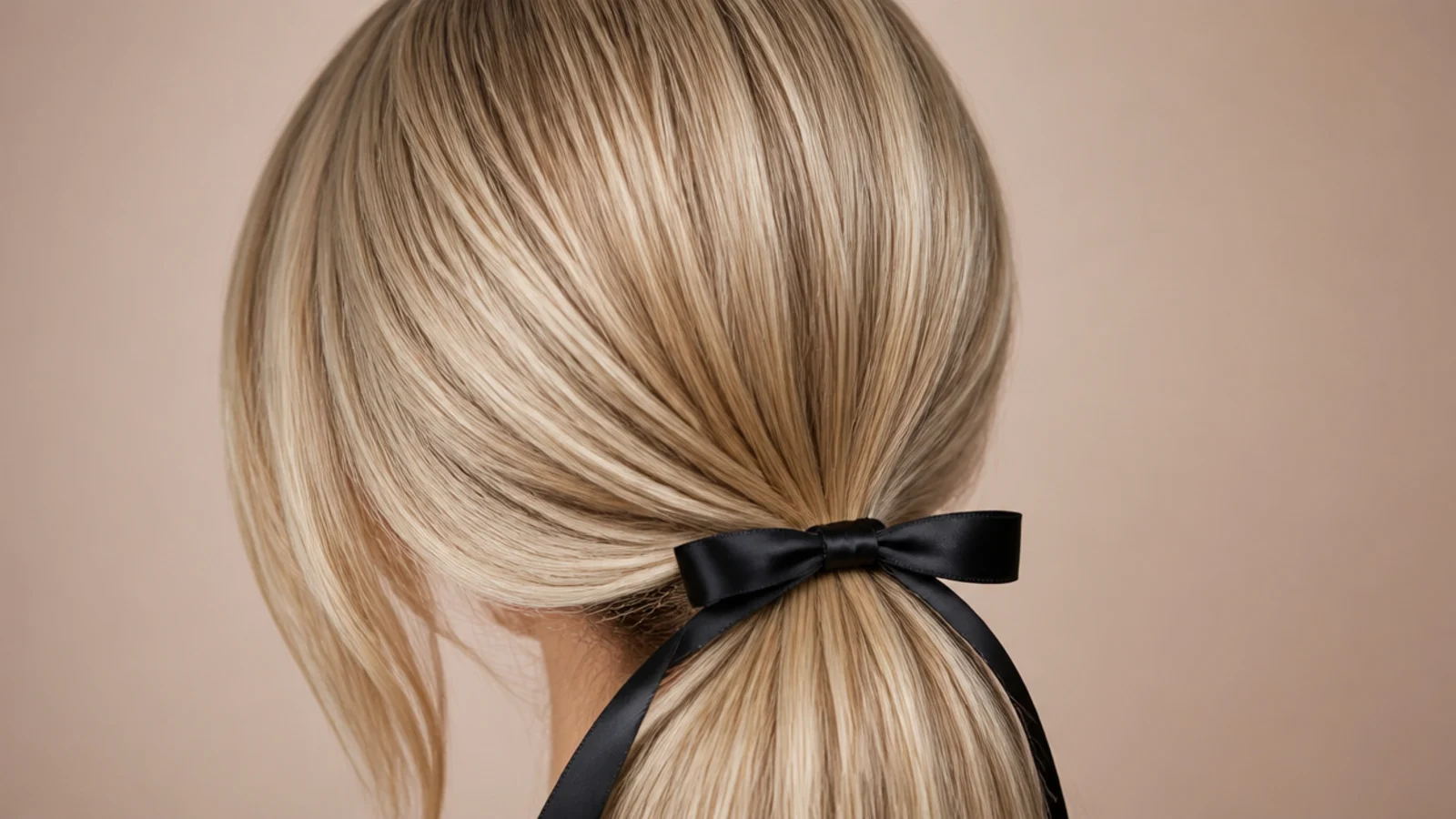
13. Low Ponytail With a Bow
A low ponytail on straight hair sits flat against the head and needs no product, since there are no escaping curls to smooth down. The bow supplies the horizontal that a sleek straight ponytail otherwise lacks, and wrapping a section around the elastic hides the hardware that would otherwise break the line.
14. Bottleneck Bangs
Bottleneck bangs stay short and closed through the centre and open out steeply at the sides, narrowing like the neck of a bottle. On straight hair the shape holds exactly as cut with no texture to distort it, which makes this the fringe that is easiest to reproduce at home.
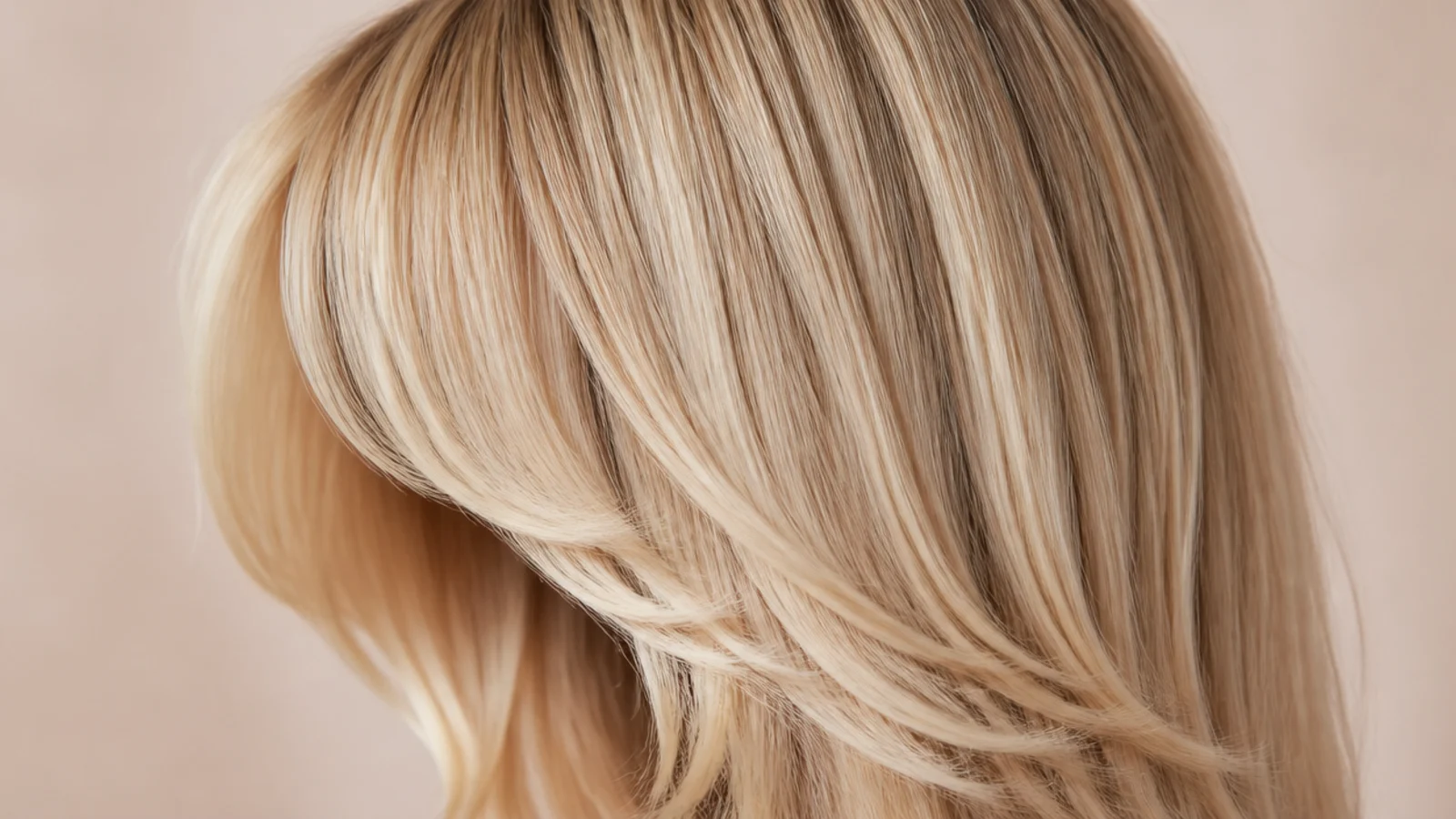
15. Thick Coarse Straight Hair
Coarse strands are wider, so they resist reshaping and spring back toward straight faster than fine hair does. That means a bigger barrel, more tension and a genuinely cold section before release, and it also means internal layers are doing real structural work rather than cosmetic work.
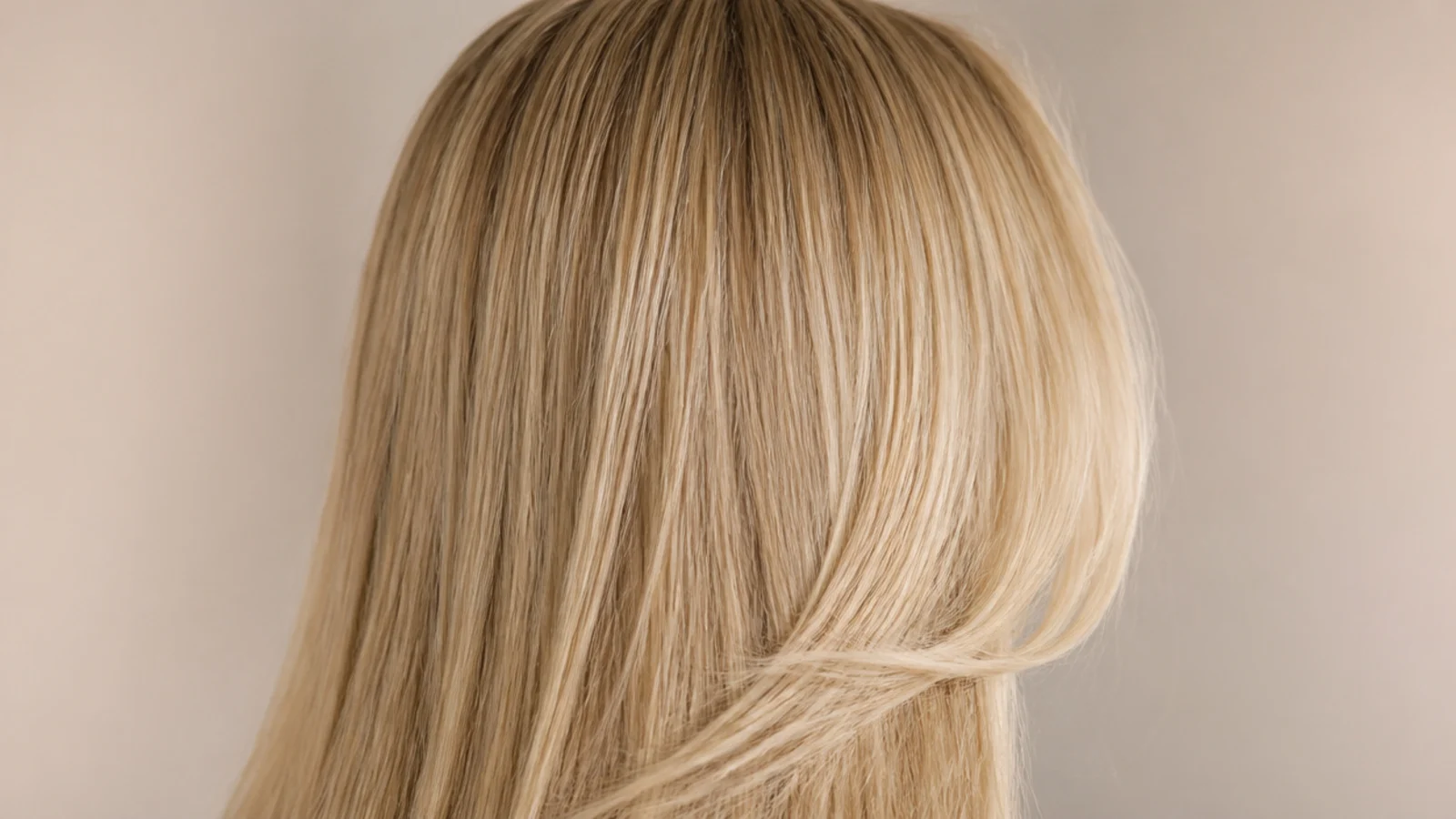
16. Curly to Straight
Straightening curly hair permanently changes nothing, but repeated high heat does, since each pass drives moisture out of the cortex and the curl pattern loosens as the internal bonds are damaged. A heat protectant slows that, and dropping the iron temperature by twenty degrees slows it far more than any product will.
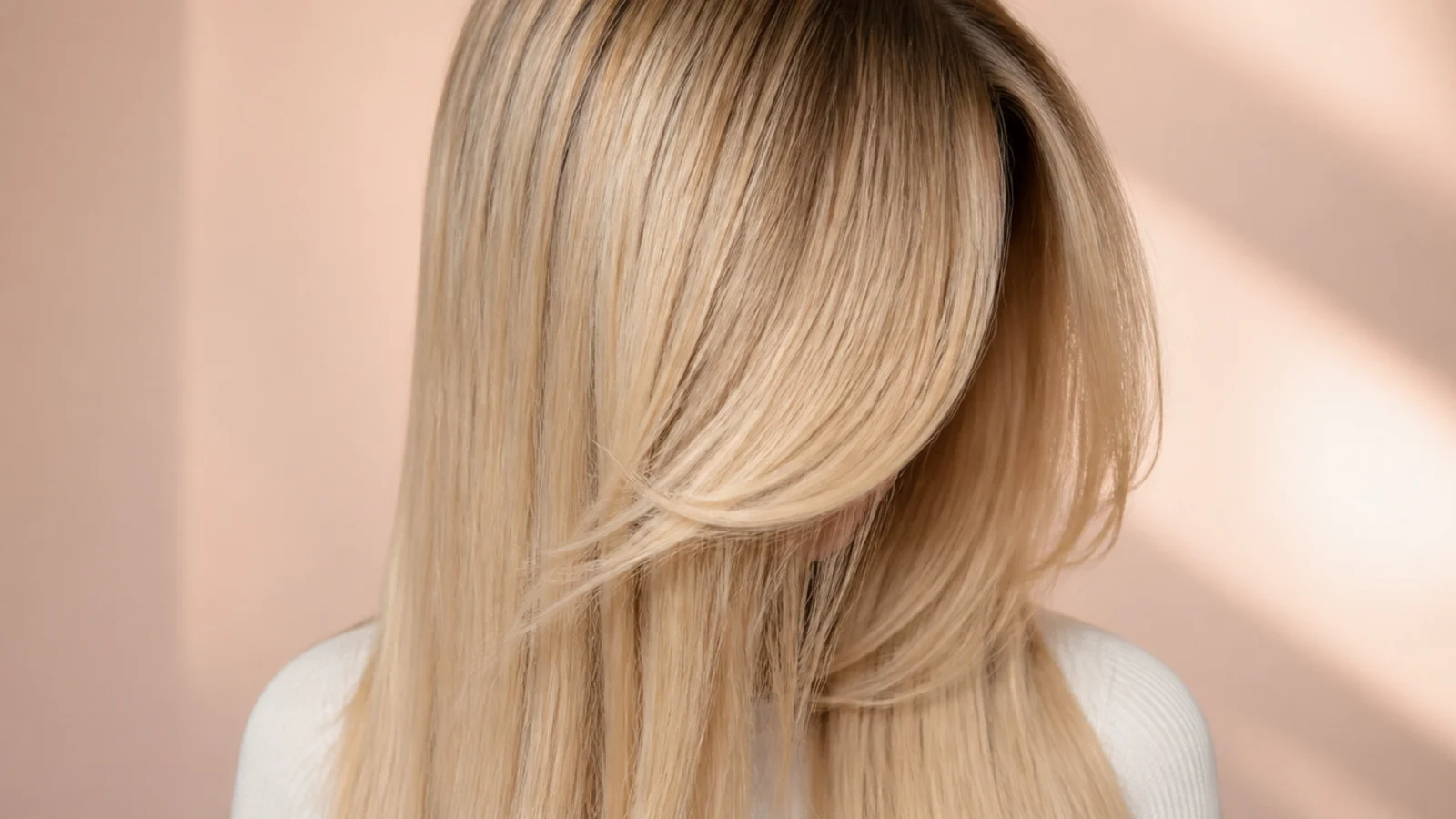
17. Blunt Collarbone
A blunt line at the collarbone is the highest density illusion available at that length, because every strand terminates on the same horizontal and none of them taper. It also demands healthy ends, since a blunt cut displays any splitting along the entire edge at once rather than hiding it among staggered lengths.
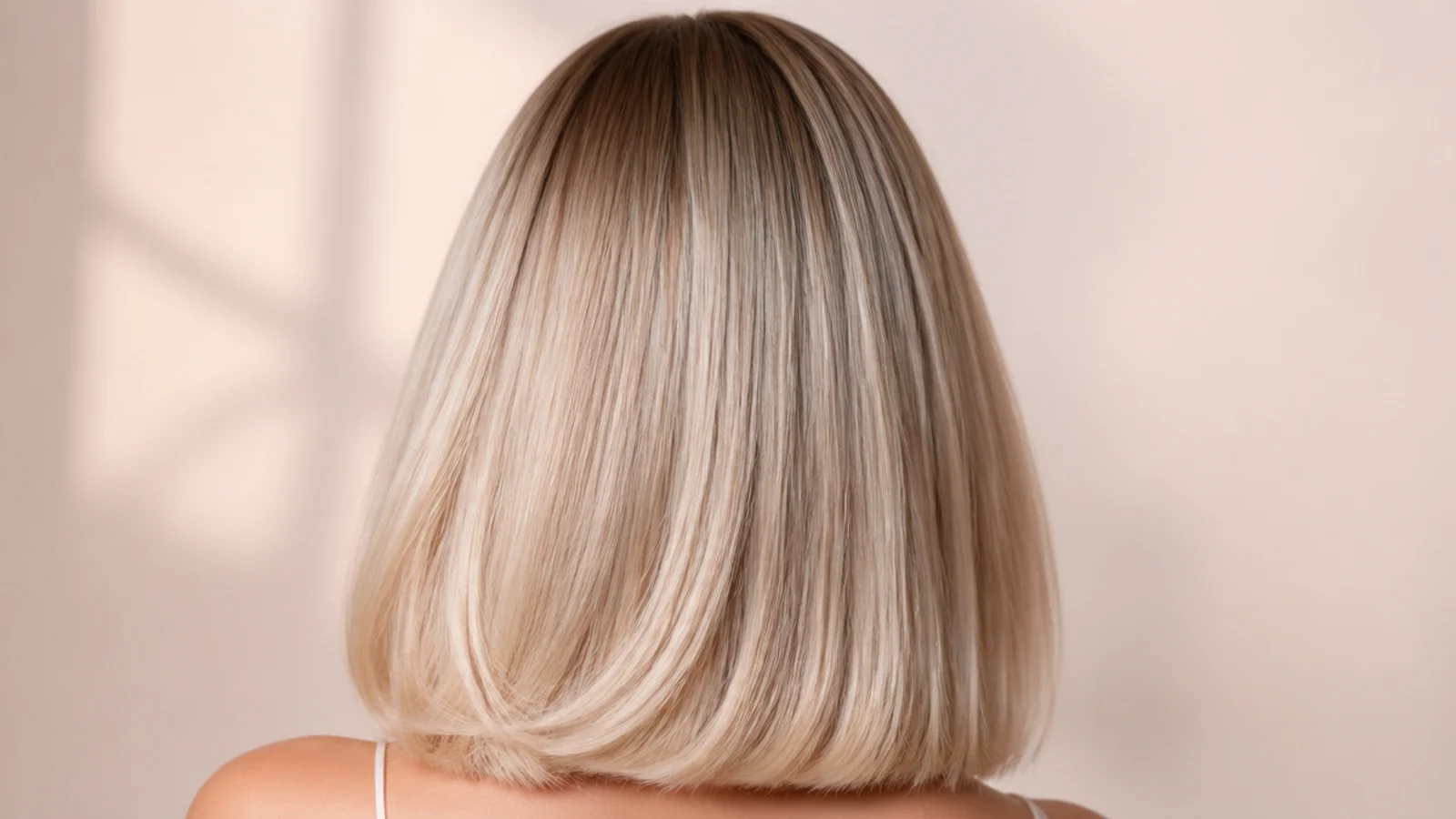
18. Cool Beige Blonde
Beige is a neutral to cool blonde with the yellow deliberately muted, so as the colour oxidises it fades toward a soft grey rather than toward brass. It is the shade that photographs most reliably under indoor light, where warm blondes tend to pick up whatever colour temperature the room is throwing.
19. Brunette Base Straight
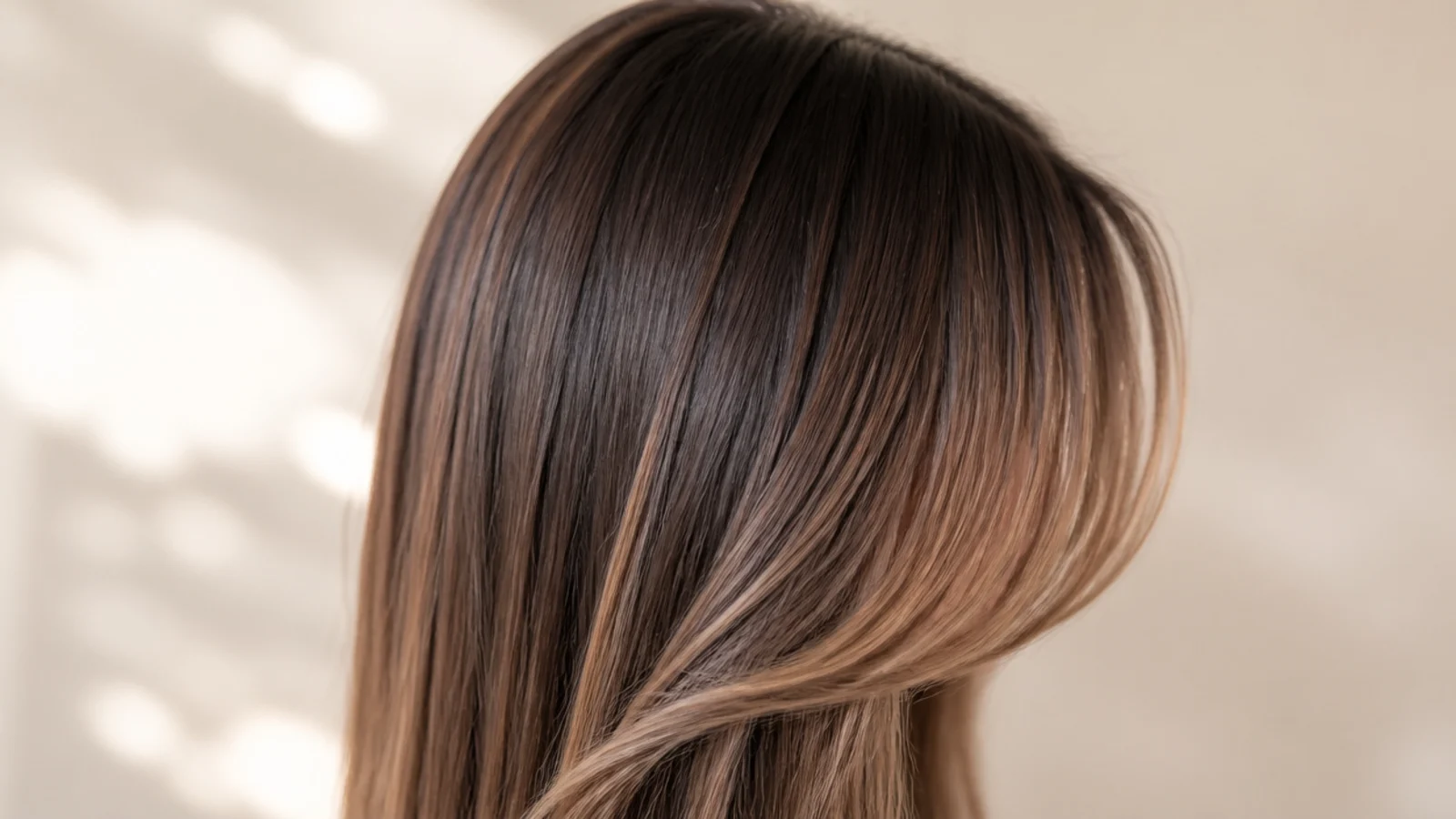
Keeping the base its natural depth and lightening only the mid-lengths cuts the maintenance in half, because the regrowth is already the right colour. Dark hair also reflects a narrower and brighter highlight than blonde does, so a brunette base on straight hair reads glossier at the same level of condition.
20. Second Day Refresh
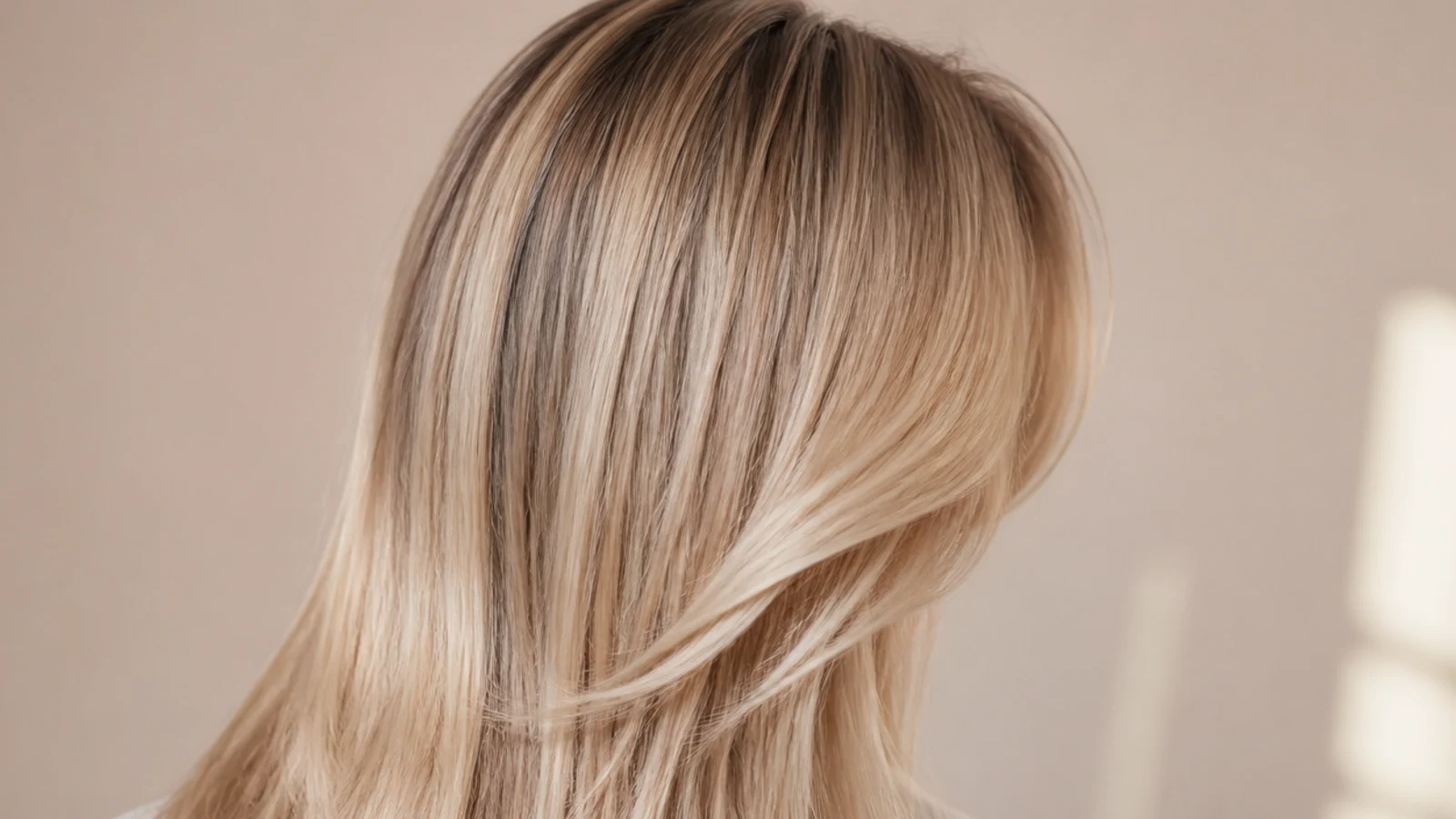
Straight hair goes flat overnight because the roots are pressed in one direction for eight hours and the hydrogen bonds reset in that position. Dry shampoo at the roots only, a cool blast to lift them back up, and one pass of an iron on the front sections is the entire repair.
Final Thoughts
Spend the decision on the cut and treat the styling as maintenance. Layer placement, perimeter weight and where the shortest face framing piece lands are permanent for months, and they are what decide whether your hair has a shape when it is air dried and unbrushed. A blowout, by contrast, is four hydrogen bonds away from being gone.
Then get the cuticle flat and keep it there. Airflow down the length, a cool shot at the end of each section, and a gloss on the colour cycle will do more for shine than a shelf of serums, because shine is a geometry problem before it is a product problem. For more ways to wear a straight length see easy straight hair hairstyles, and for the fringe that suits it best see short curtain bangs for straight sleek hair. More in Celebrity Hair.