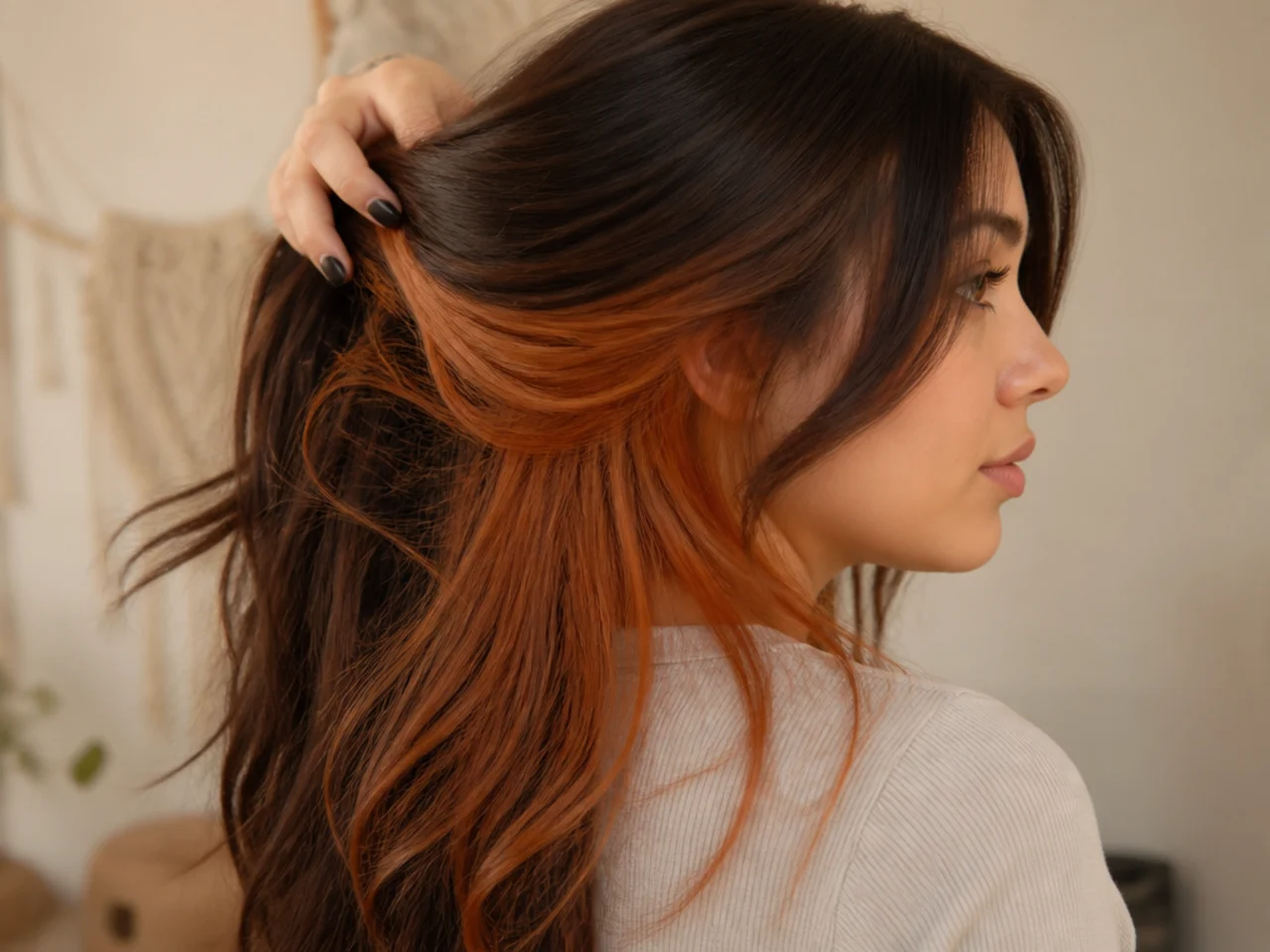
25 Peekaboo Highlights For Dark Hair That Pop
Twenty five peekaboo highlights for dark hair, sorted by how far the base has to be lifted before each one sits true. On dark hair the shade is the easy part — what you lift to underneath it decides whether it reads at all.
In this article · 32
- Why Dark Hair Needs Lifting First
- Choosing by How Much Lift It Needs
- The 25 Peekaboo Highlight Ideas
- 1. The Copper Underlayer
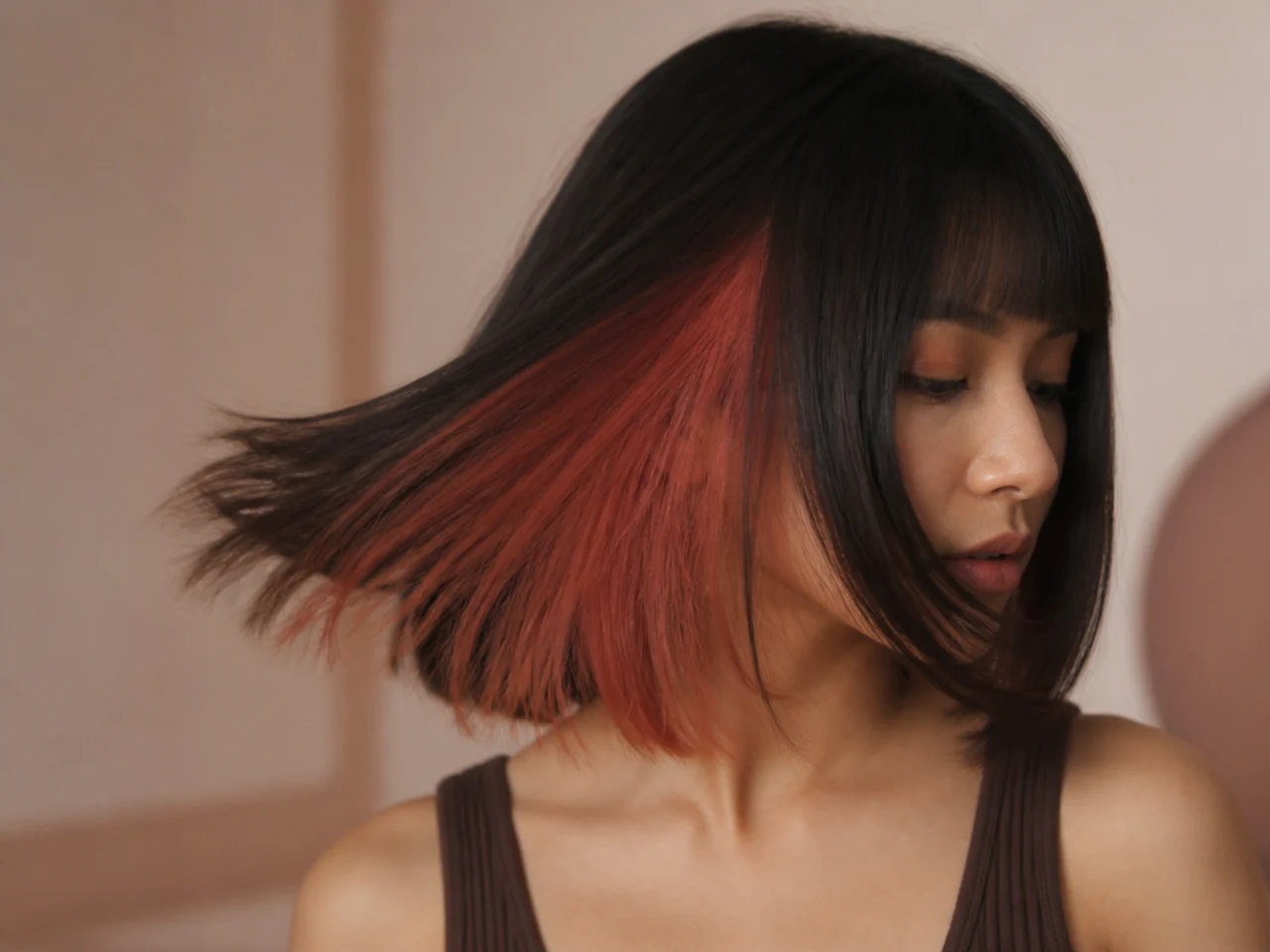
- 2. The Cherry Red Panel
- 3. The Burgundy Peekaboo
- 4. The Scarlet Peekaboo
- 5. The Burnt Orange Peekaboo
- 6. The Honey Caramel Peekaboo
- 7. The Golden Blonde Peekaboo
- 8. The Rose Gold Peekaboo
- 9. The Magenta Peekaboo
- 10. The Hot Pink Peekaboo
- 11. The Pastel Pink Peekaboo
- 12. The Deep Violet Peekaboo
- 13. The Lilac Peekaboo
- 14. The Electric Blue Peekaboo
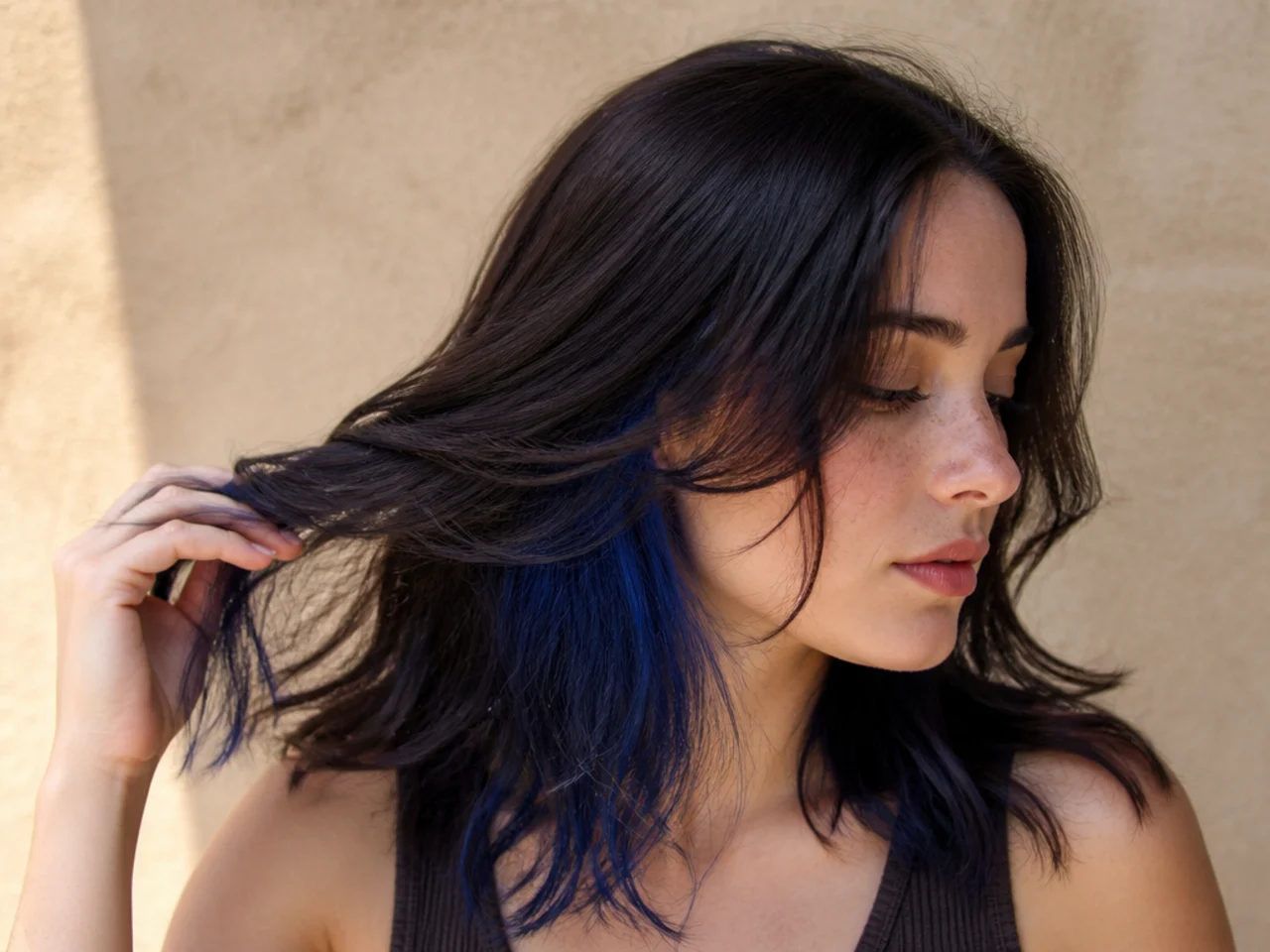
- 15. The Navy Peekaboo
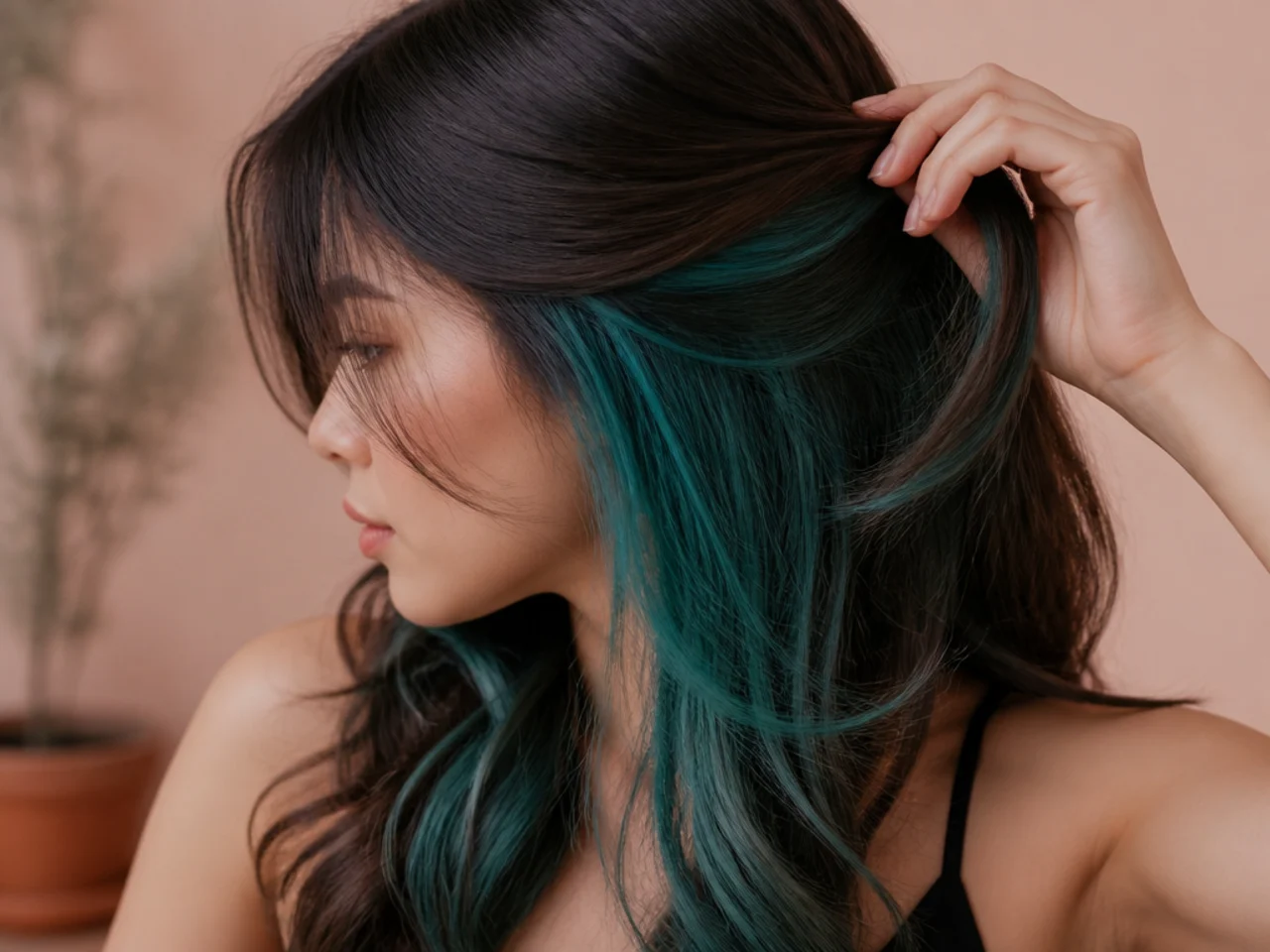
- 16. The Teal Peekaboo
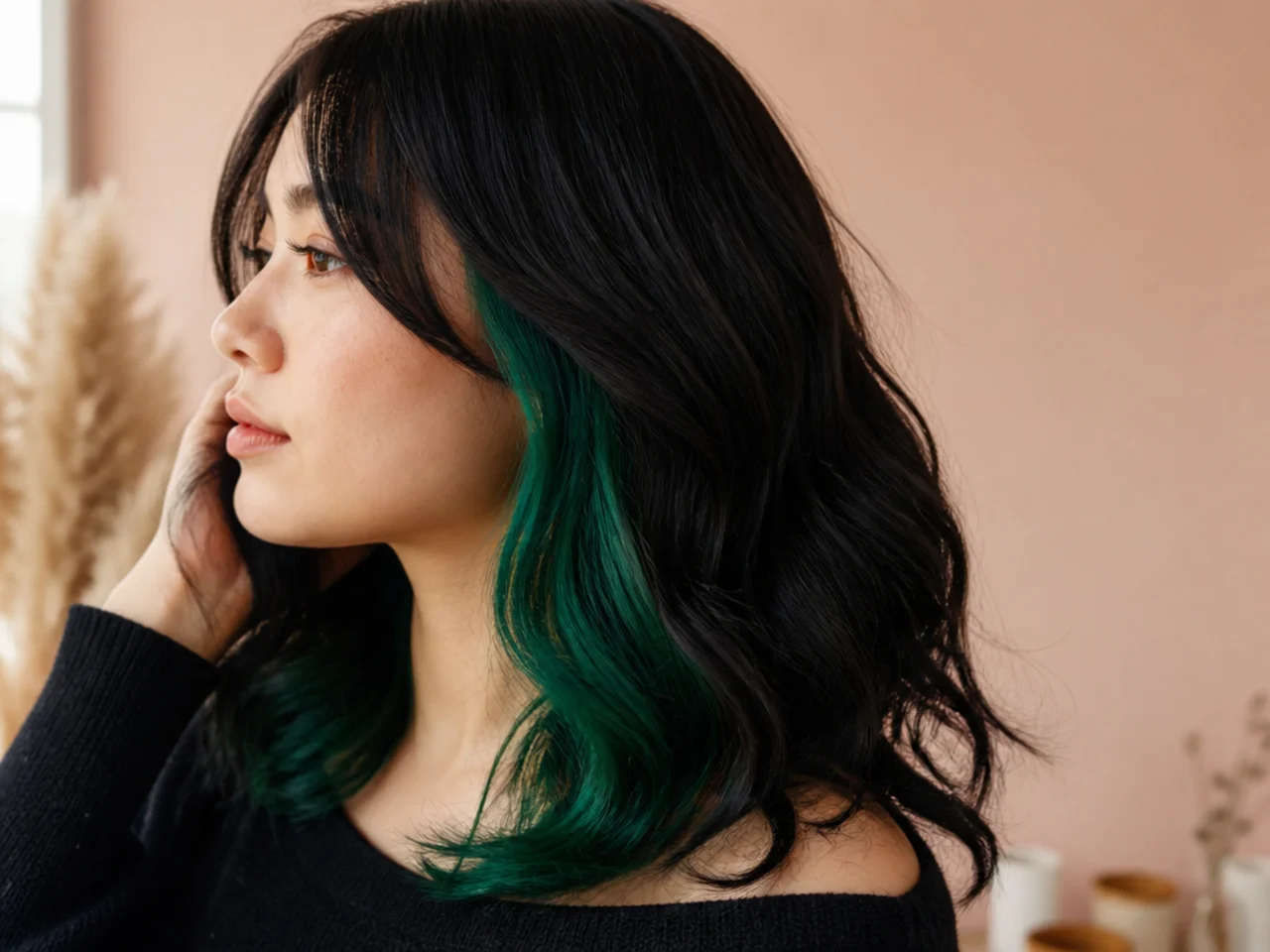
- 17. The Emerald Green Peekaboo
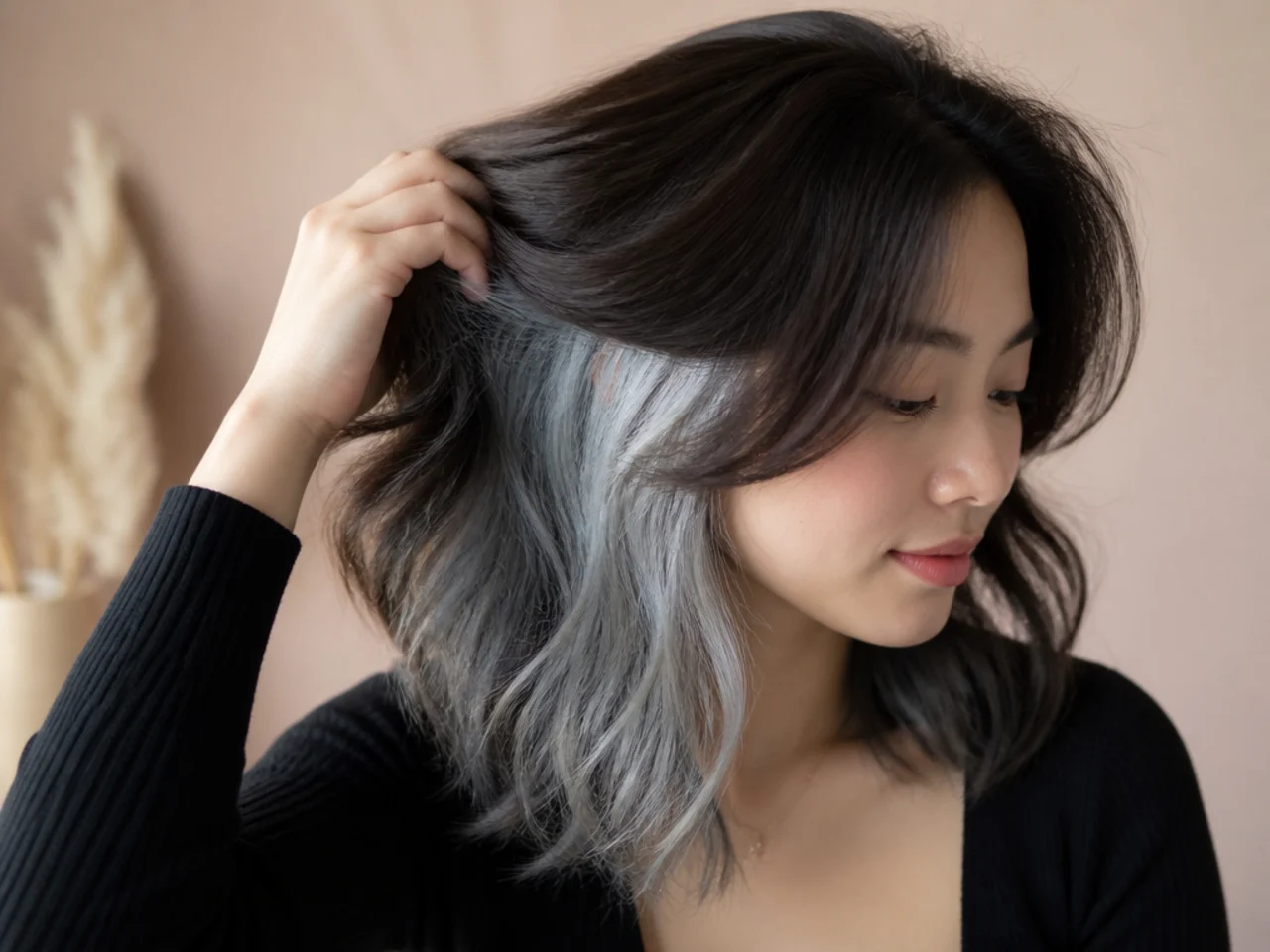
- 18. The Silver Peekaboo
- 19. The Platinum Peekaboo
- 20. The Two Colour Split Peekaboo
- 21. The Nape Only Peekaboo
- 22. The Under Parting Peekaboo
- 23. The Face Framing Peekaboo
- 24. The Ponytail Peekaboo
- 25. The Shadow Rooted Peekaboo
- Styling and Upkeep
- Mistakes to Avoid
- FAQ
- Final Thoughts
Peekaboo colour disappoints on dark hair for one reason — the shade was chosen before anyone decided how far the base underneath it would be lifted.
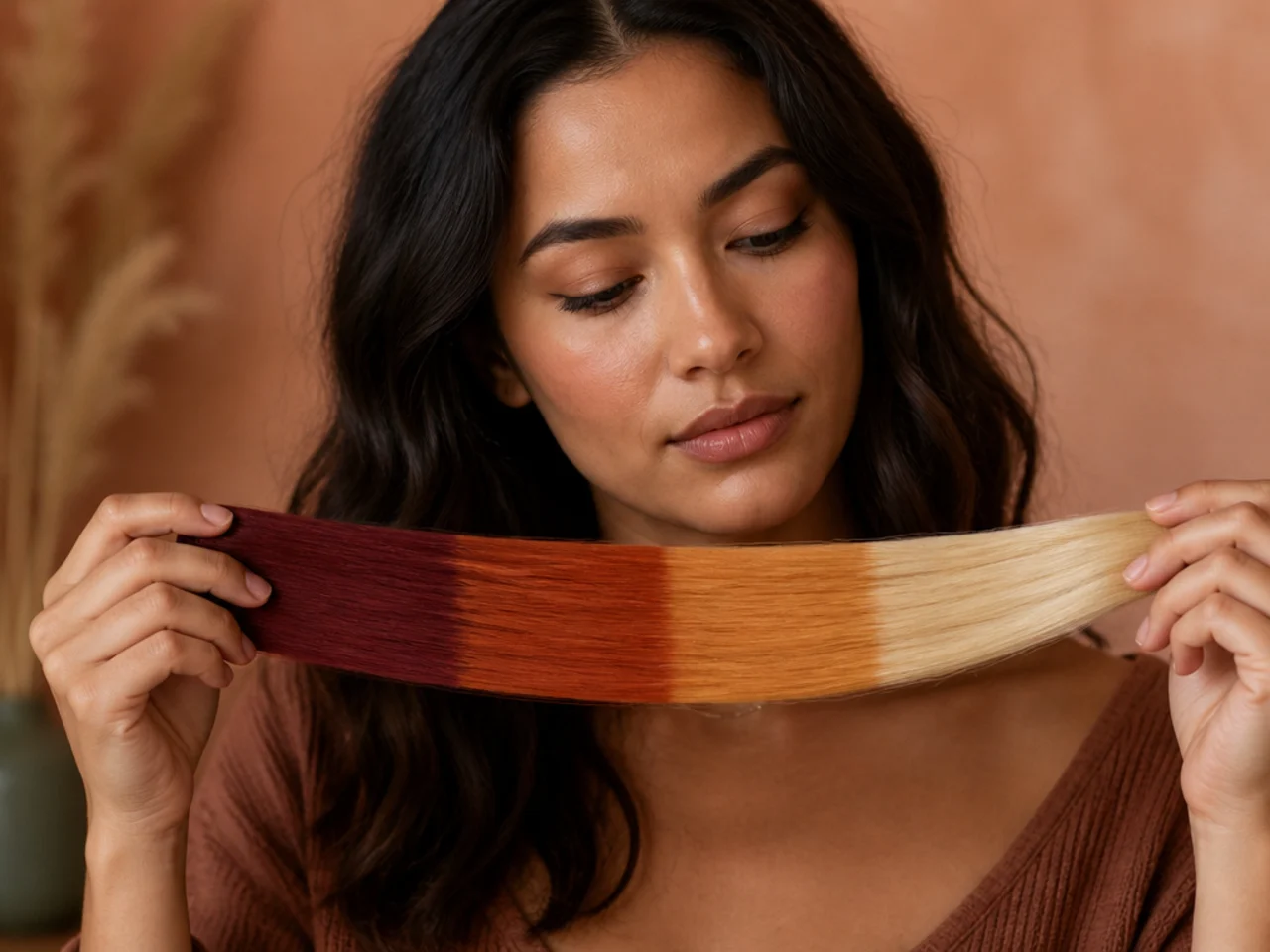
Every vivid is translucent. The pigment does not cover what is beneath it, it sits over it. The finished colour is the lifted base plus the dye, never the dye on its own.
Dark hair lifts through warmth in a fixed order. Red, then red orange, then orange, then gold, then pale yellow. Where the lightening stops decides which colours can sit true on top.
Why Dark Hair Needs Lifting First
The base shows through the dye. Blue laid over a leftover orange base cancels toward brown, because blue and orange sit opposite each other. The same blue over pale yellow reads green.
One bleach session usually reaches orange. From a natural level two or three, a single careful lift lands around level seven. Pale yellow generally takes a second session on another day.
Warm colours are the cheap ones. Copper, red and burgundy need the least lift, so they cost the least damage and the least chair time. Pastels are at the other end of that scale.
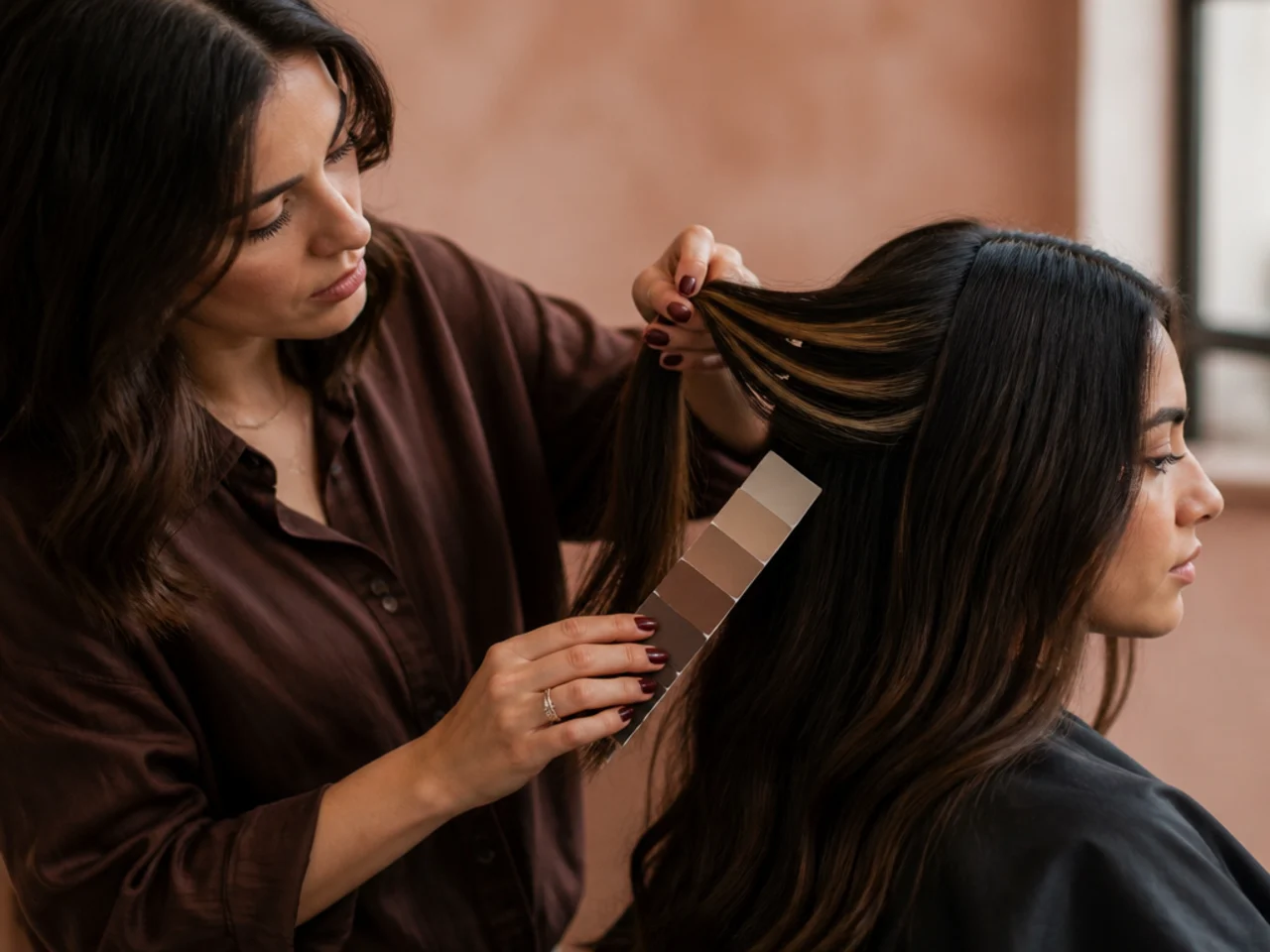
Toning is a separate step, not a bonus. Violet cancels yellow and blue cancels orange, which is what makes a silver or a true pastel possible. Skip it and the warmth comes through everything laid on top.
Choosing by How Much Lift It Needs
Pick the colour, then price the lift. Ask what level the base has to reach for the shade you want, and whether that is one session or two.
Warm shades on one session, cool shades on two. Trying to reach pale yellow in a single sitting on dark hair is where breakage happens, and a peekaboo panel that snaps is worse than one that stayed orange.
Match the shade to how the colour will fade. Direct dyes rinse away over washes and reveal the base beneath, so blue fades toward green and red fades toward peach.
Place before you choose. A colour nobody sees is a wasted lift. Decide where the panel sits and how wide it is before you decide what goes in it.
The 25 Peekaboo Highlight Ideas
1. The Copper Underlayer
Copper sits true over an orange base, so it is one of the few vivids that needs a single lift session on dark hair. The remaining warmth underneath supports the shade rather than fighting it, which is why copper stays bright as it fades.
2. The Cherry Red Panel
A blue based red, so it needs slightly more lift than copper to avoid reading orange. Take the base to a clean orange gold, then deposit. Cherry holds its saturation longer than most vivids because the pigment is dense.
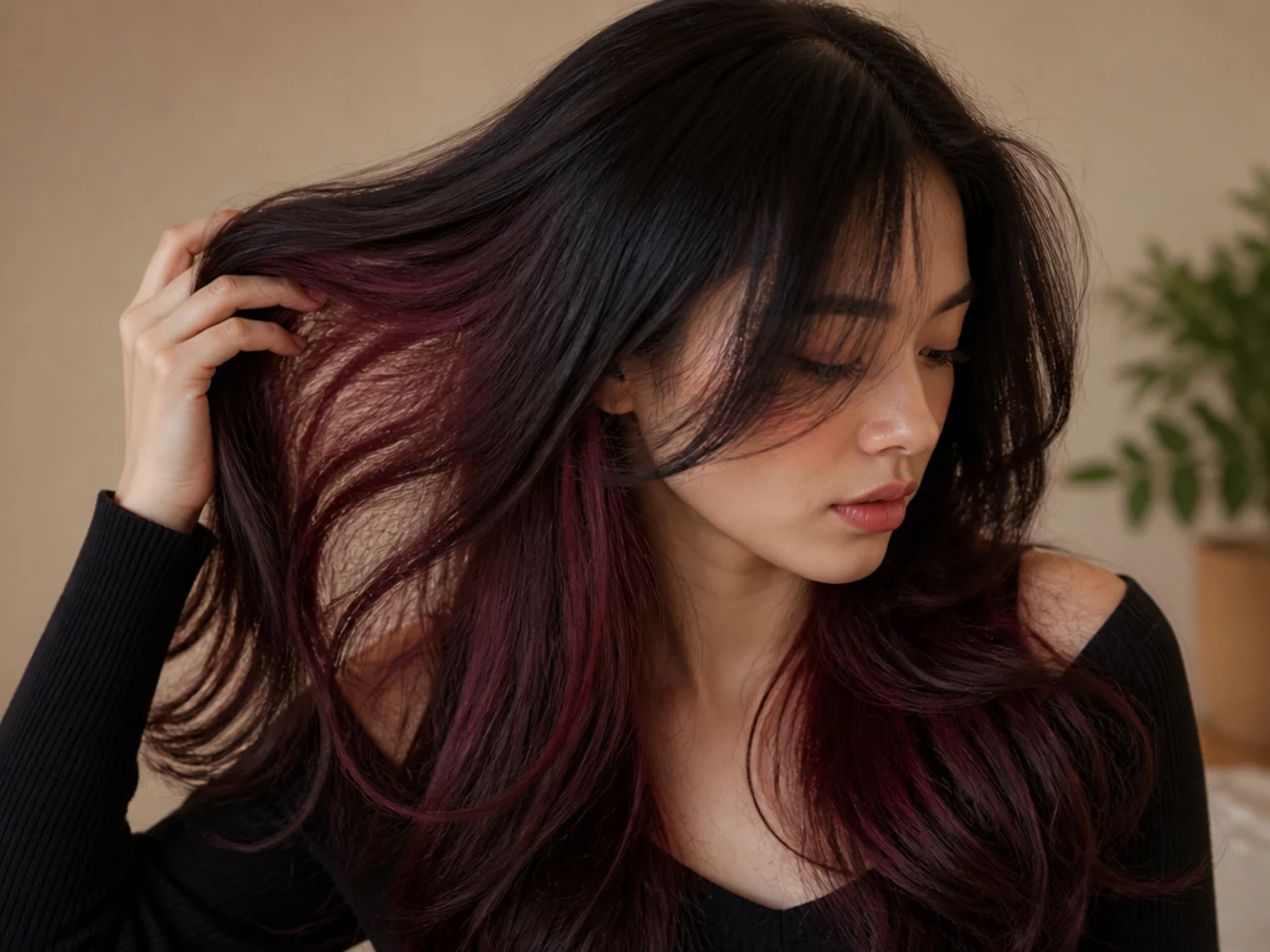
3. The Burgundy Peekaboo
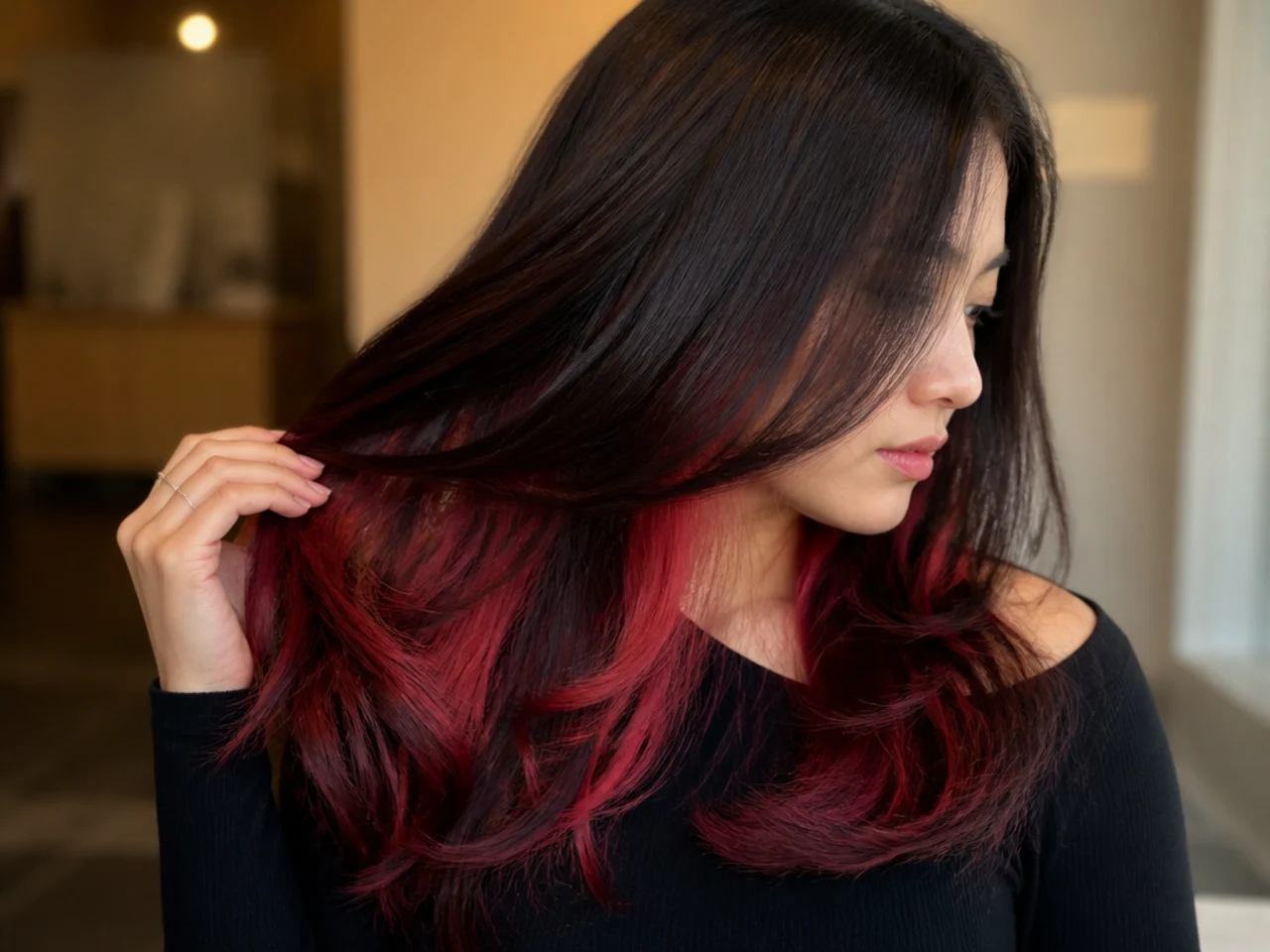
Burgundy is dark enough to sit close to the natural base, so the panel reads as depth in shade and colour in sunlight. It is the lowest maintenance vivid available on dark hair, because as it fades it moves toward red rather than toward blonde.
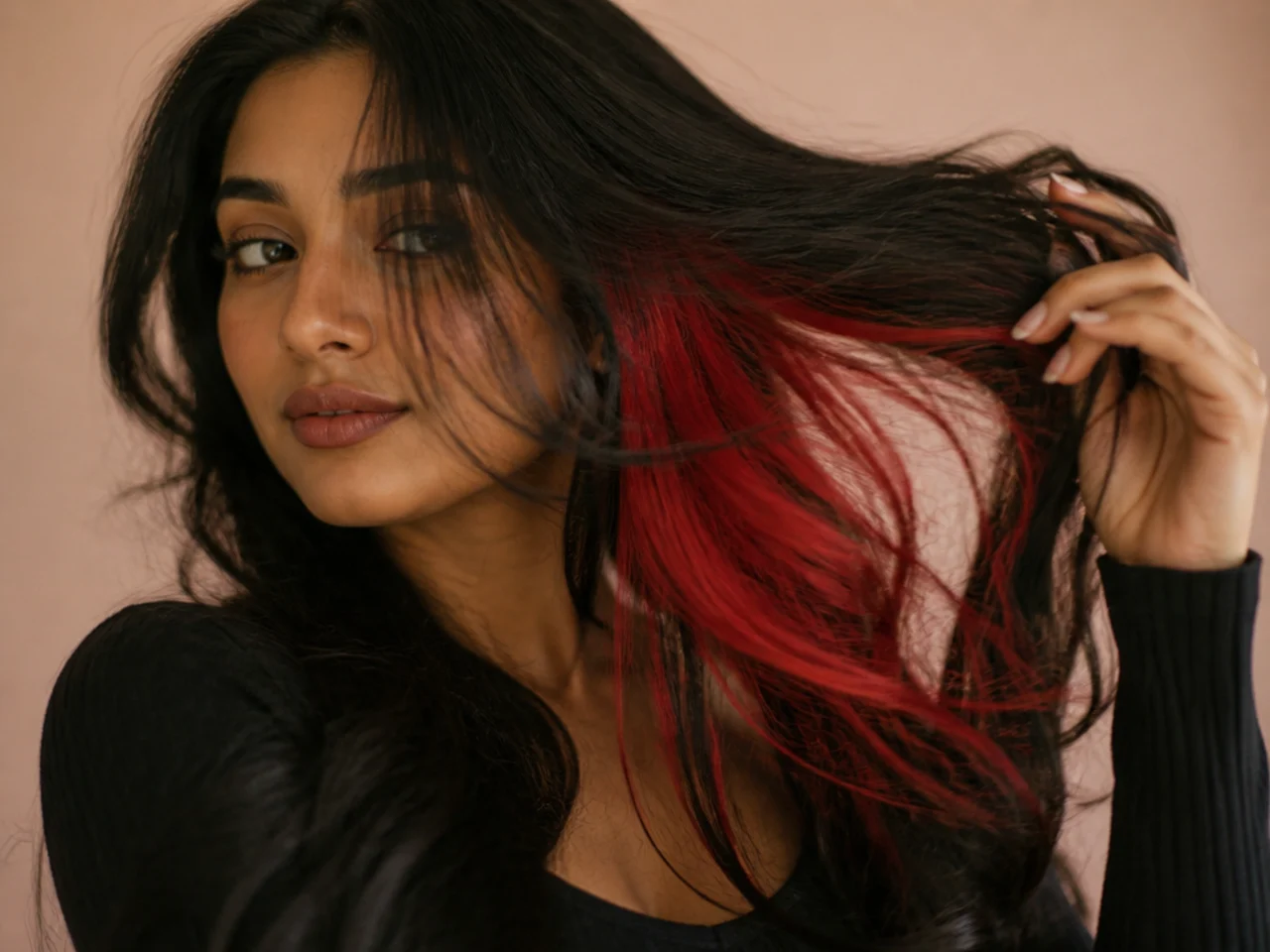
4. The Scarlet Peekaboo
A pure warm red at full saturation. Because red pigment molecules wash out steadily, the panel loses intensity before it loses tone, so it goes softer rather than muddier — see red peekaboo ideas for the full range of that family.
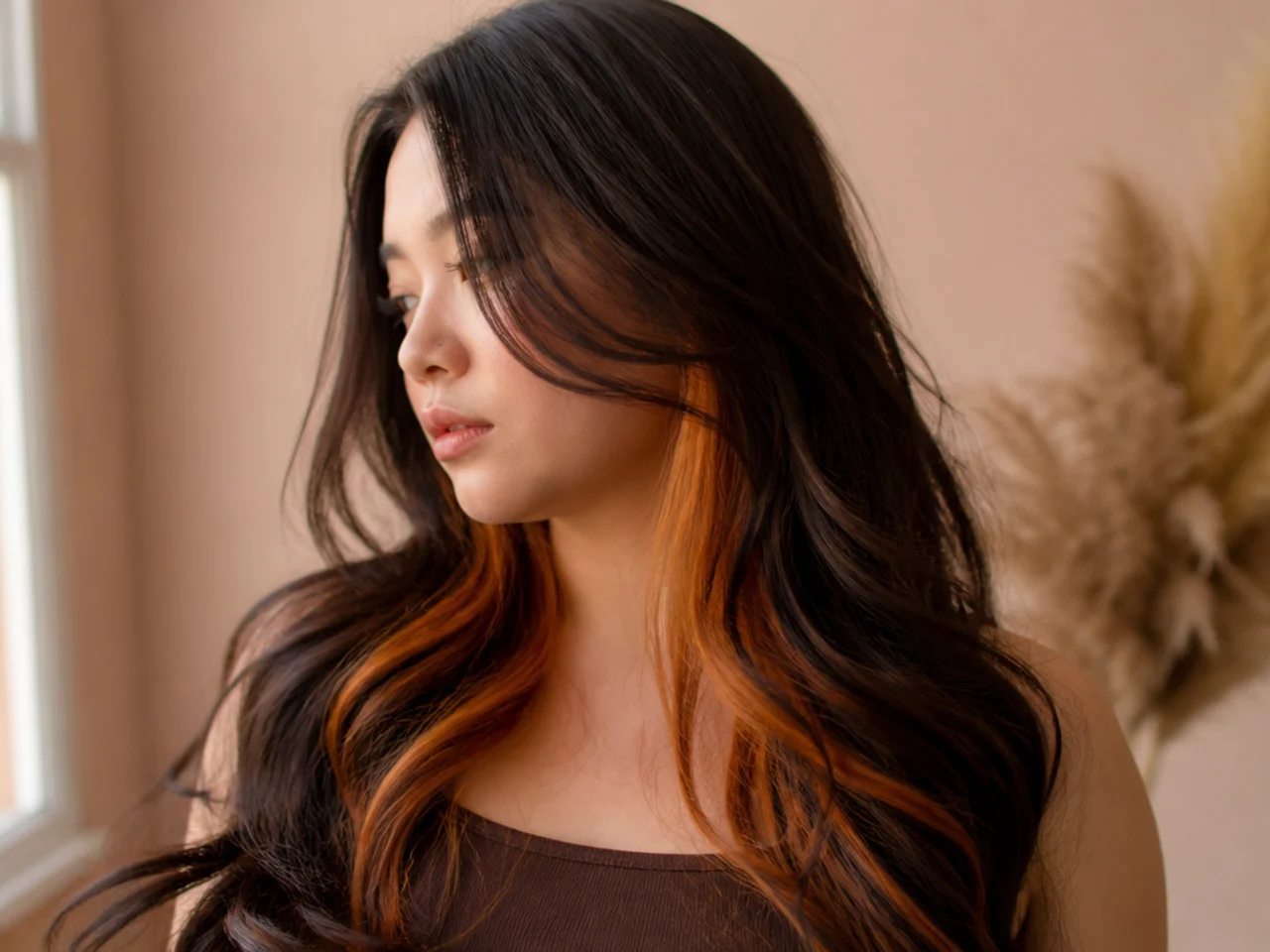
5. The Burnt Orange Peekaboo
The closest match to what dark hair naturally lifts to, which makes it the most forgiving choice of all. Uneven lift barely shows, because the patches that stayed darker are already the colour being applied over them.
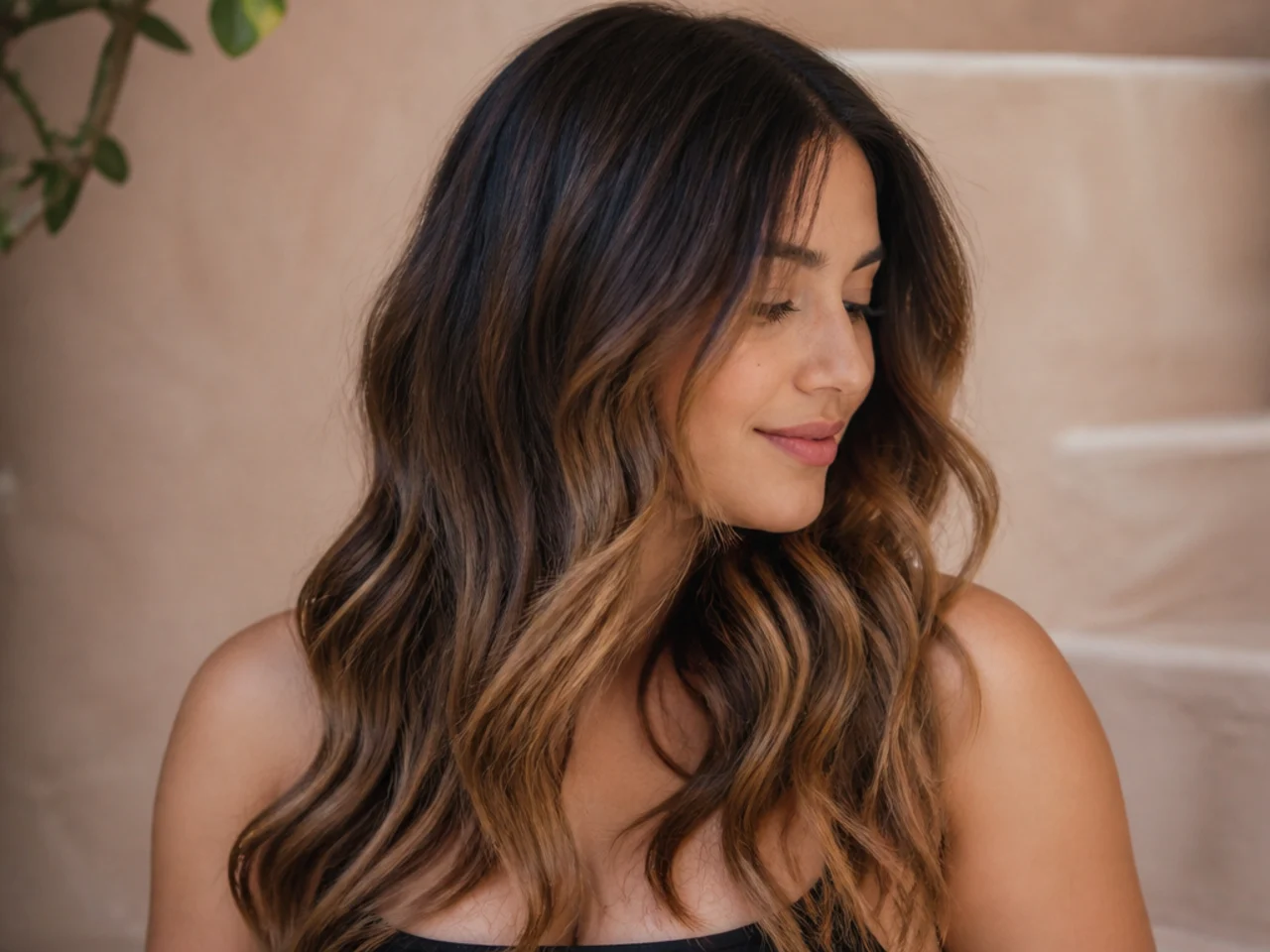
6. The Honey Caramel Peekaboo
Not a vivid at all but a permanent shade, so it grows out as a soft line rather than washing away. On dark hair it needs lift to around level seven, and the warmth left in the base is what makes the honey tone look natural.
7. The Golden Blonde Peekaboo
Lifted to gold and toned only lightly, so the underlying warmth is kept rather than cancelled. It reads as sunlight caught under the top layer, which makes it the most wearable option in an office.
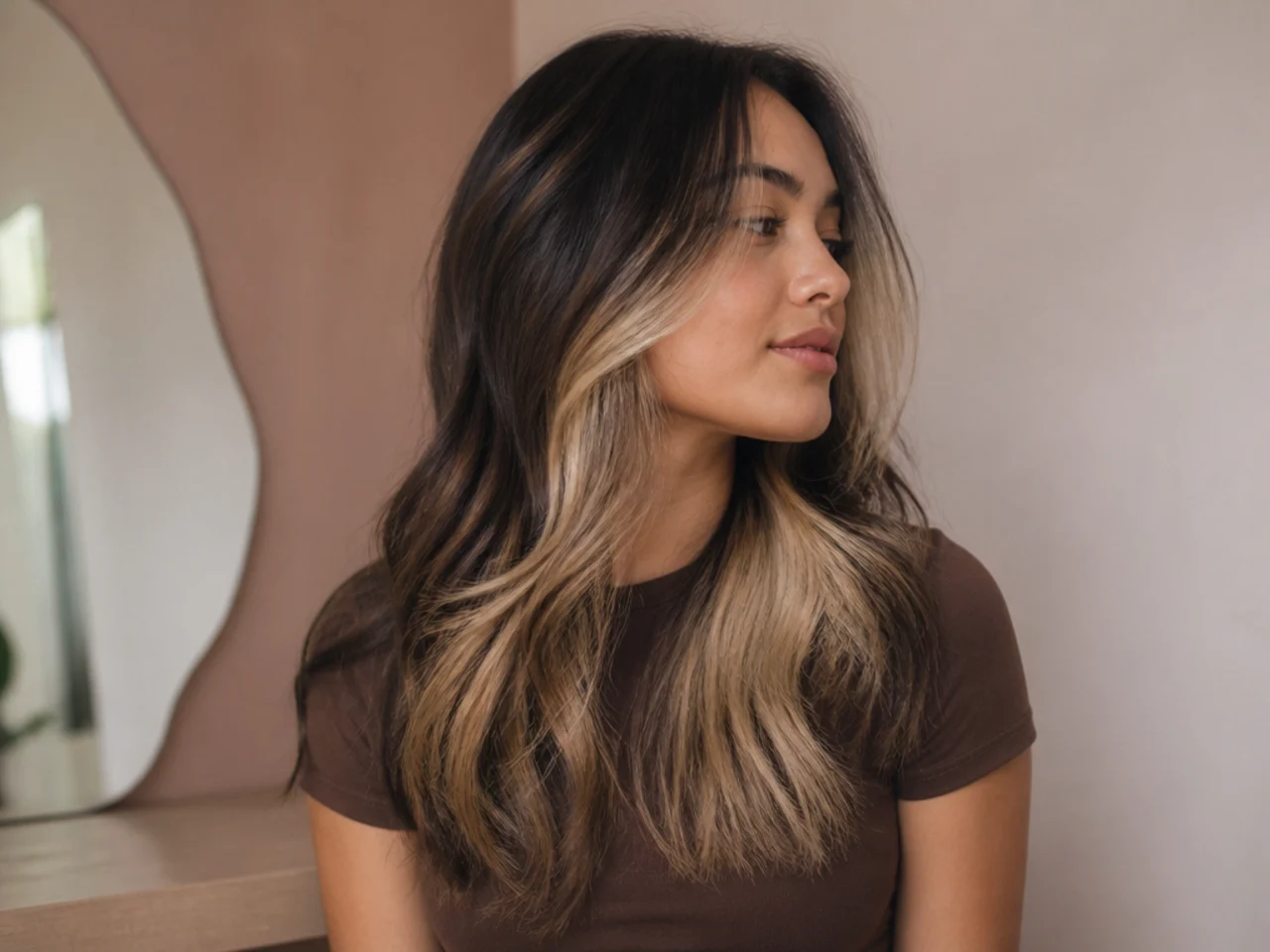
8. The Rose Gold Peekaboo
A pale pink over a gold base, which is what makes it rose rather than pink. Push the lift too far to pale yellow and the warmth that gives rose gold its metallic quality disappears, leaving flat pastel pink instead.
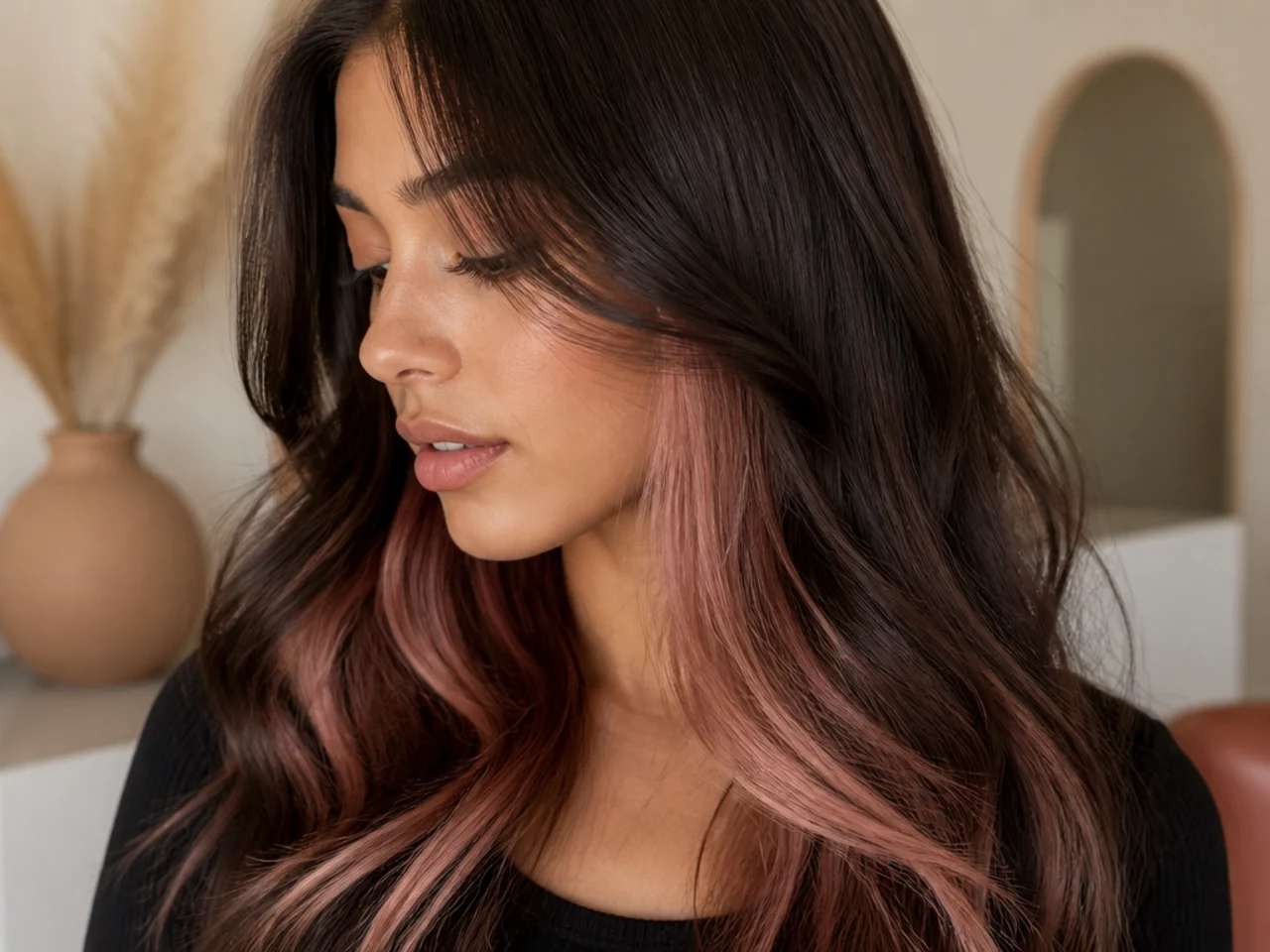
9. The Magenta Peekaboo
A cool pink with enough density to cover a level eight base without going patchy. Magenta fades toward a soft pink rather than toward a dirty tone, which is why it survives longer between refreshes than most cool shades.
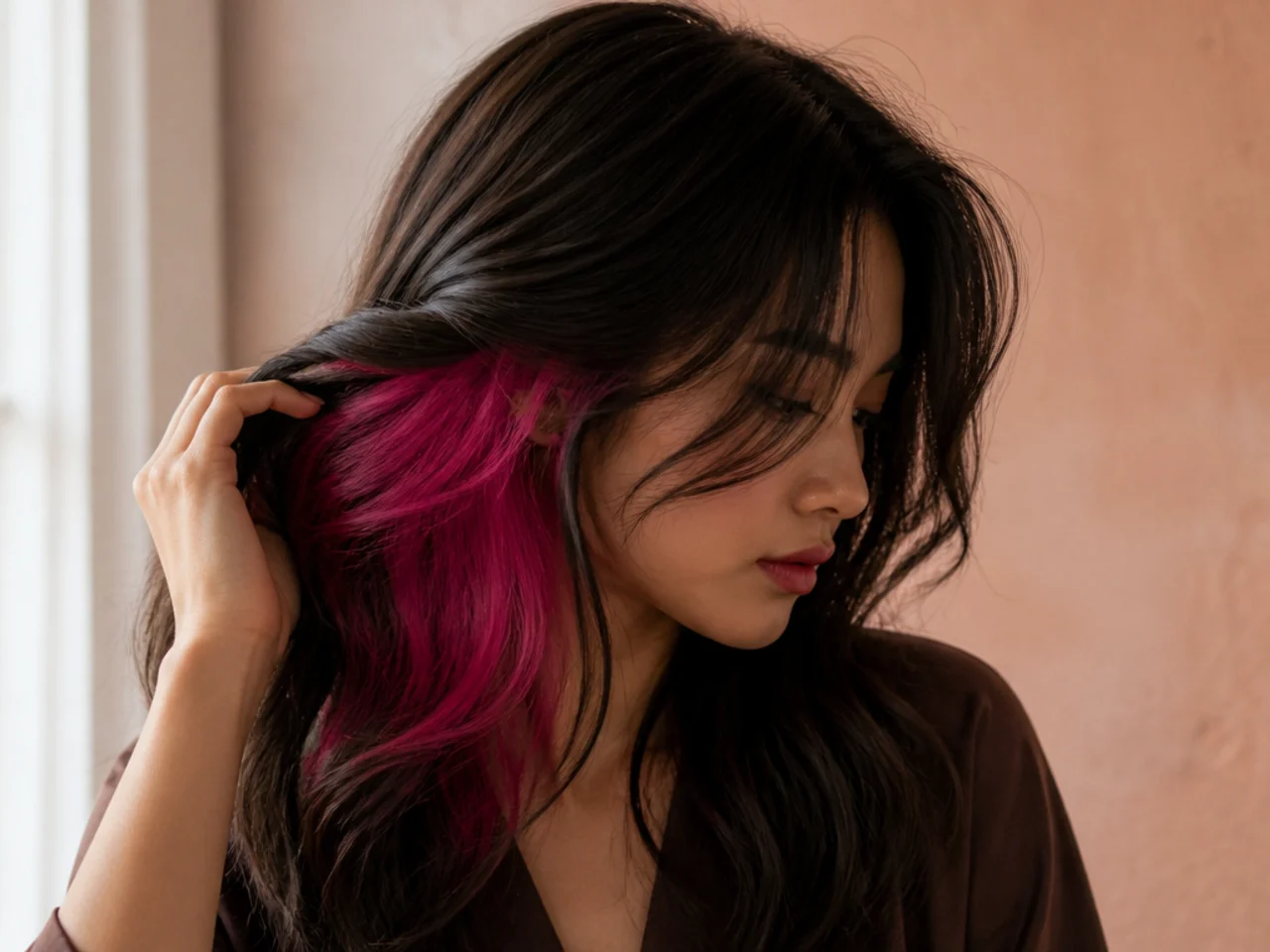
10. The Hot Pink Peekaboo
At full saturation, hot pink is bright enough to read against black hair from a distance, which not every vivid manages. It fades fastest of the pinks because the pigment is small and rinses easily, so plan on topping it up monthly.
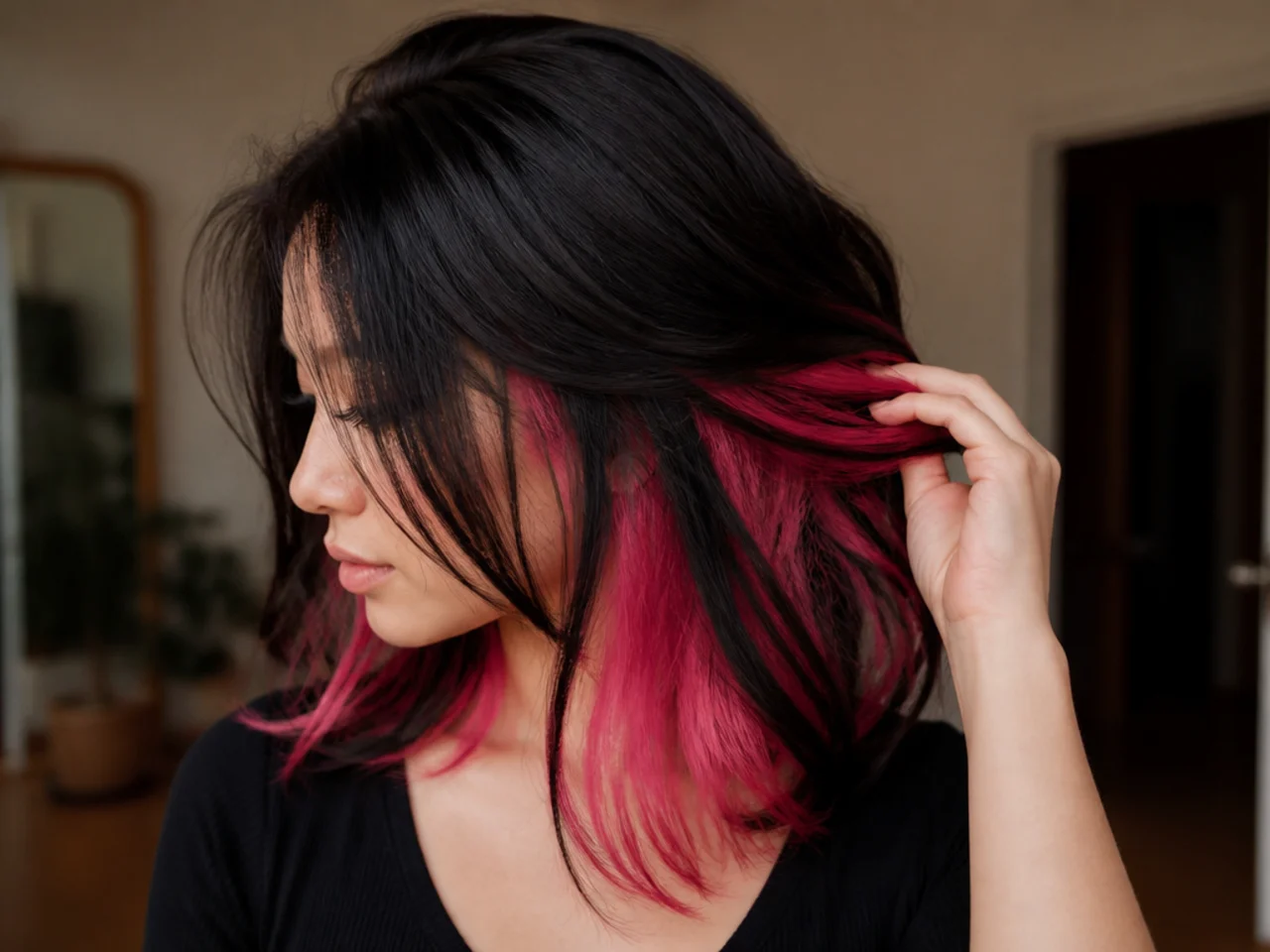
11. The Pastel Pink Peekaboo
Pastels are heavily diluted, so they hide nothing. The base has to reach pale yellow at level ten and be toned, otherwise the leftover warmth turns pastel pink into peach the moment it is applied.
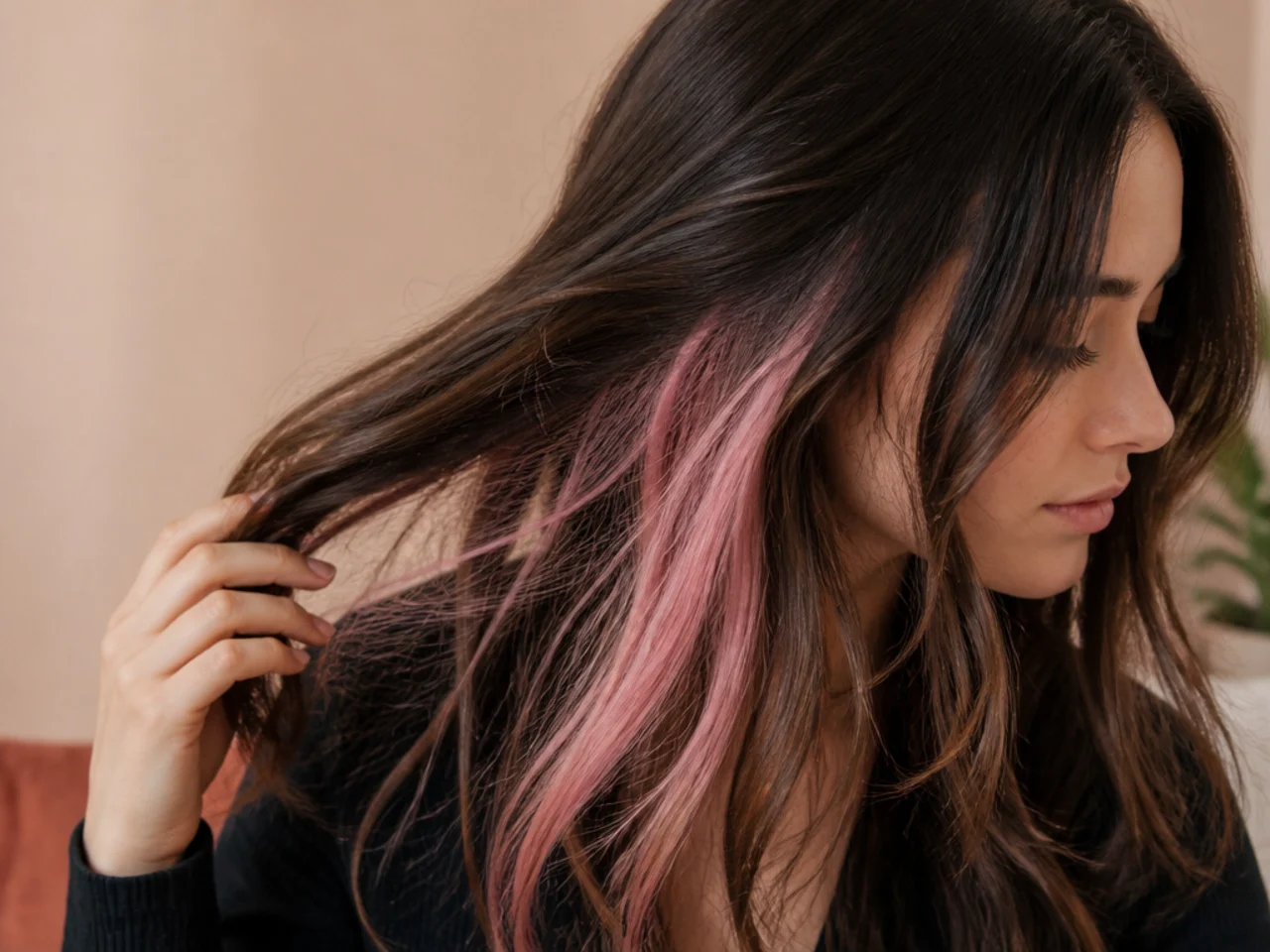
12. The Deep Violet Peekaboo
Violet is dark and dense enough to cover a level eight base, so it does not need the second lift session that lilac does. Against dark hair it reads as a colour shift rather than a brightness shift, which suits anyone who wants it subtle.
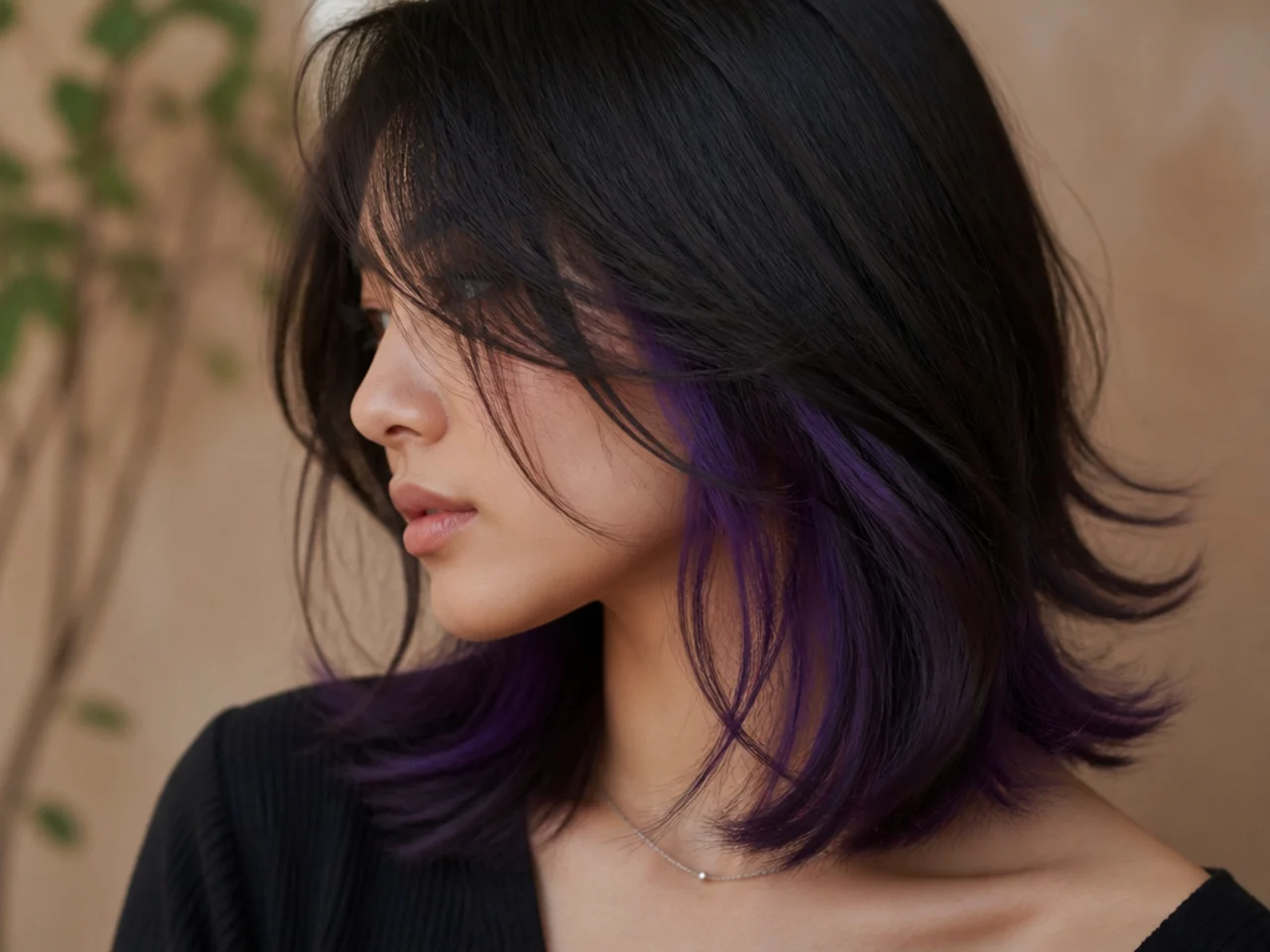
13. The Lilac Peekaboo
The hardest pastel to hold on dark hair. Violet cancels yellow, so any warmth left in the base neutralises the lilac into grey rather than tinting it. The base has to be genuinely pale before the shade goes on.
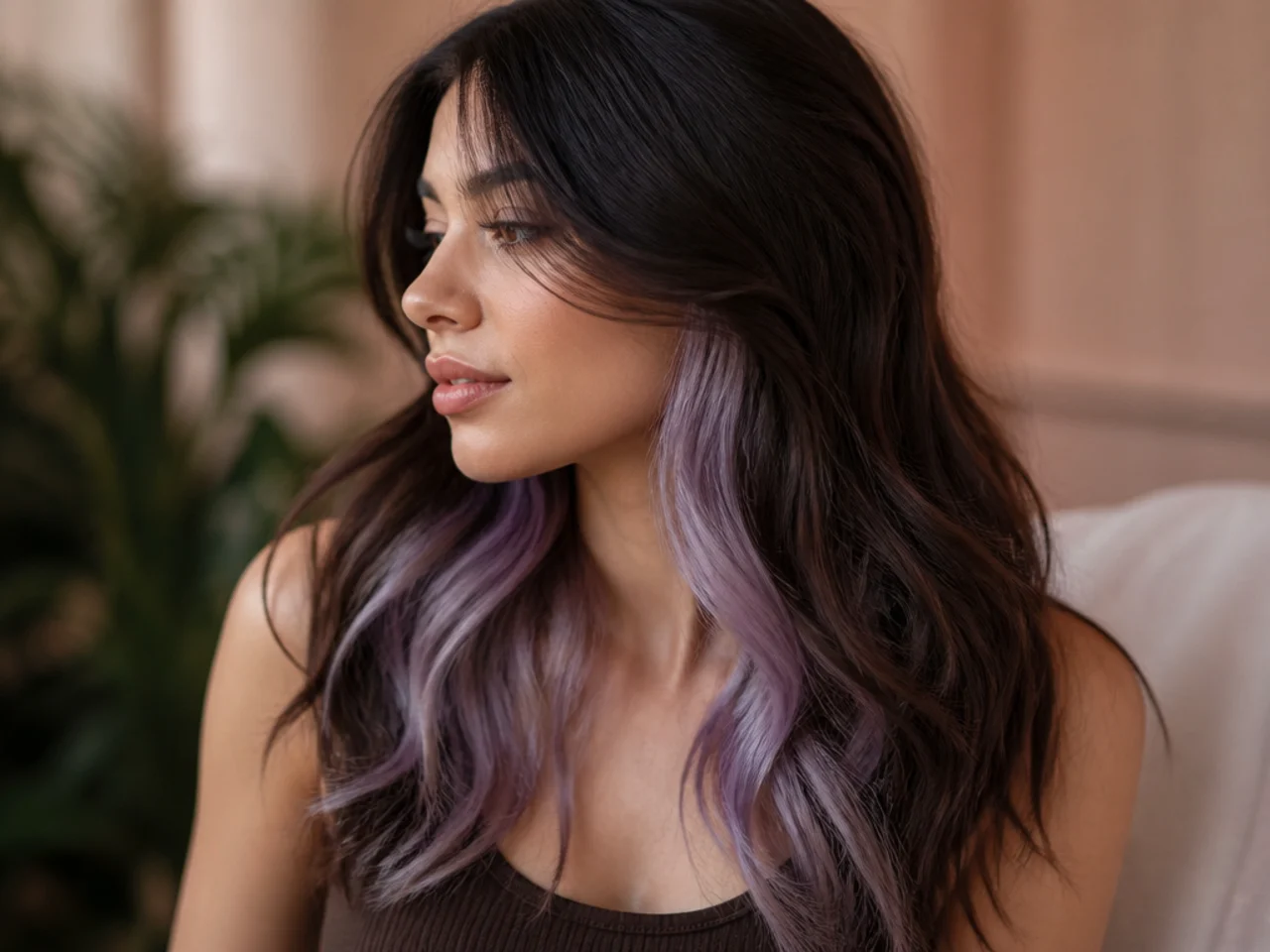
14. The Electric Blue Peekaboo
Blue needs a gold base rather than an orange one, because blue over orange cancels toward brown. Get the lift right and it is the highest contrast option against black hair — more of the family in blue peekaboo ideas.
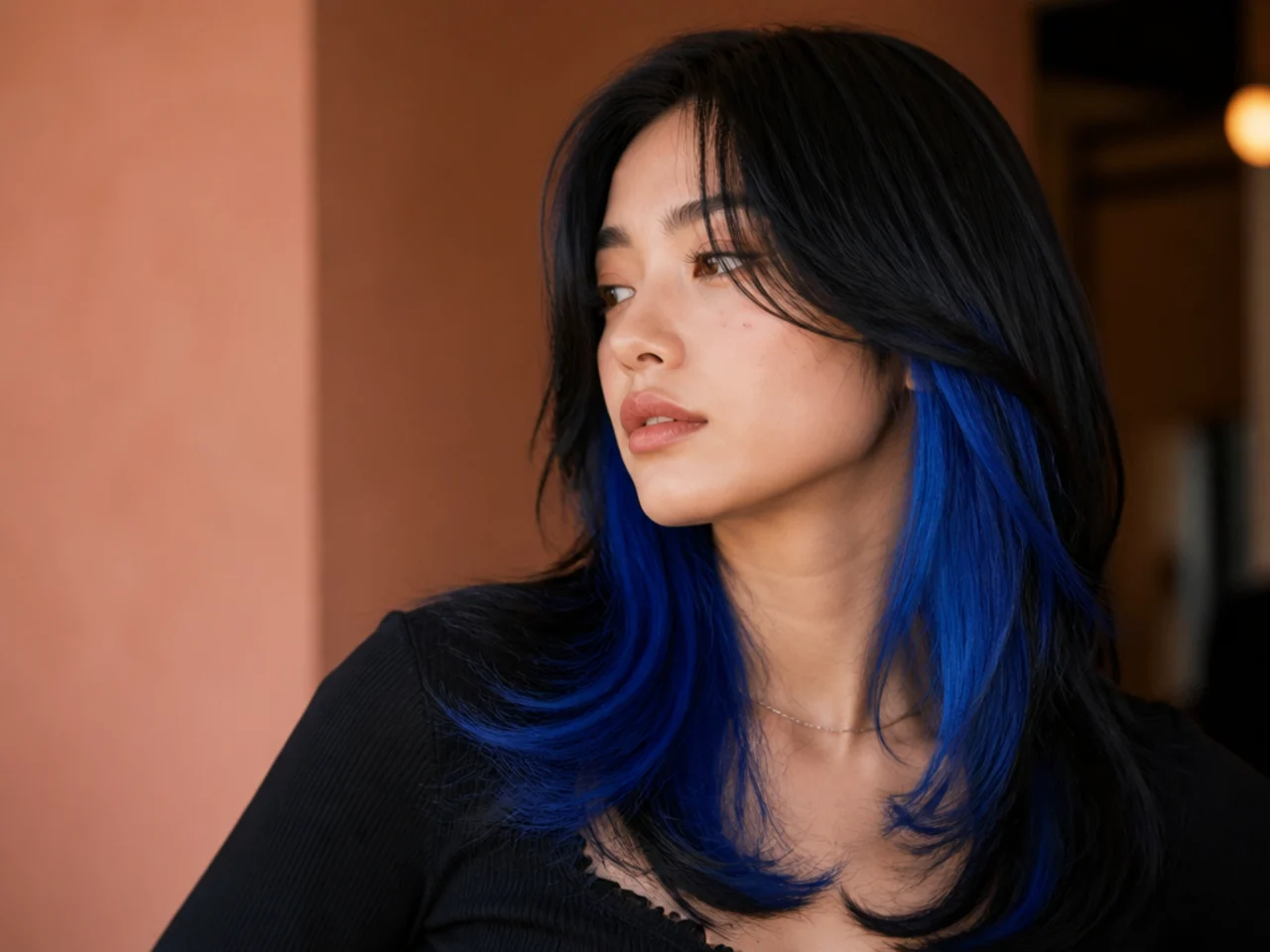
15. The Navy Peekaboo
Dark enough to sit close to the natural base, so it works on a lower lift than electric blue and reads as depth indoors and as colour outdoors. It is also the slowest blue to fade, since the pigment is heavily concentrated.
16. The Teal Peekaboo
Blue and green mixed, which makes it unusually tolerant of a slightly warm base — the yellow that ruins a pure blue simply pushes teal a little greener. That forgiveness makes it the safest cool shade on dark hair.
17. The Emerald Green Peekaboo
Green sits true over a yellow base, which is convenient, because yellow is exactly where dark hair lands after a good lift. The catch is removal: green is notoriously stubborn to strip out later.
18. The Silver Peekaboo
Silver is a toner rather than a colour, so it can only be as clean as the base beneath it. Anything short of pale yellow at level ten shows through as brass, and no amount of silver on top will cover it.
19. The Platinum Peekaboo
The most demanding option on dark hair, because it is not a colour at all — it is the absence of one. It needs the full lift to level ten and a violet toner to cancel the last of the yellow, usually across two appointments.
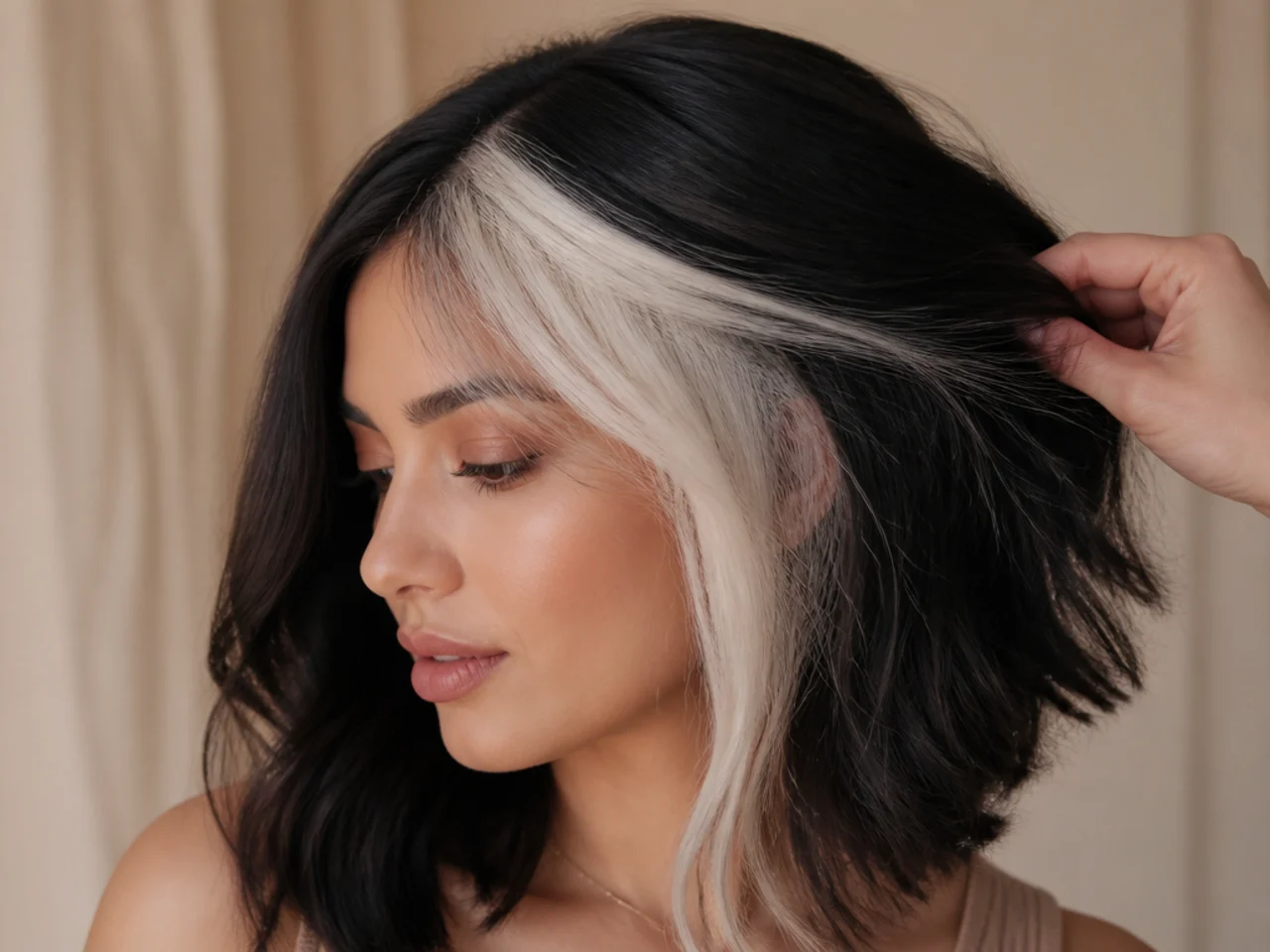
20. The Two Colour Split Peekaboo
Two shades placed left and right, or stacked one above the other. Choose colours that are neighbours on the colour wheel, because adjacent shades blur into each other pleasantly where they meet while opposites cancel to brown.
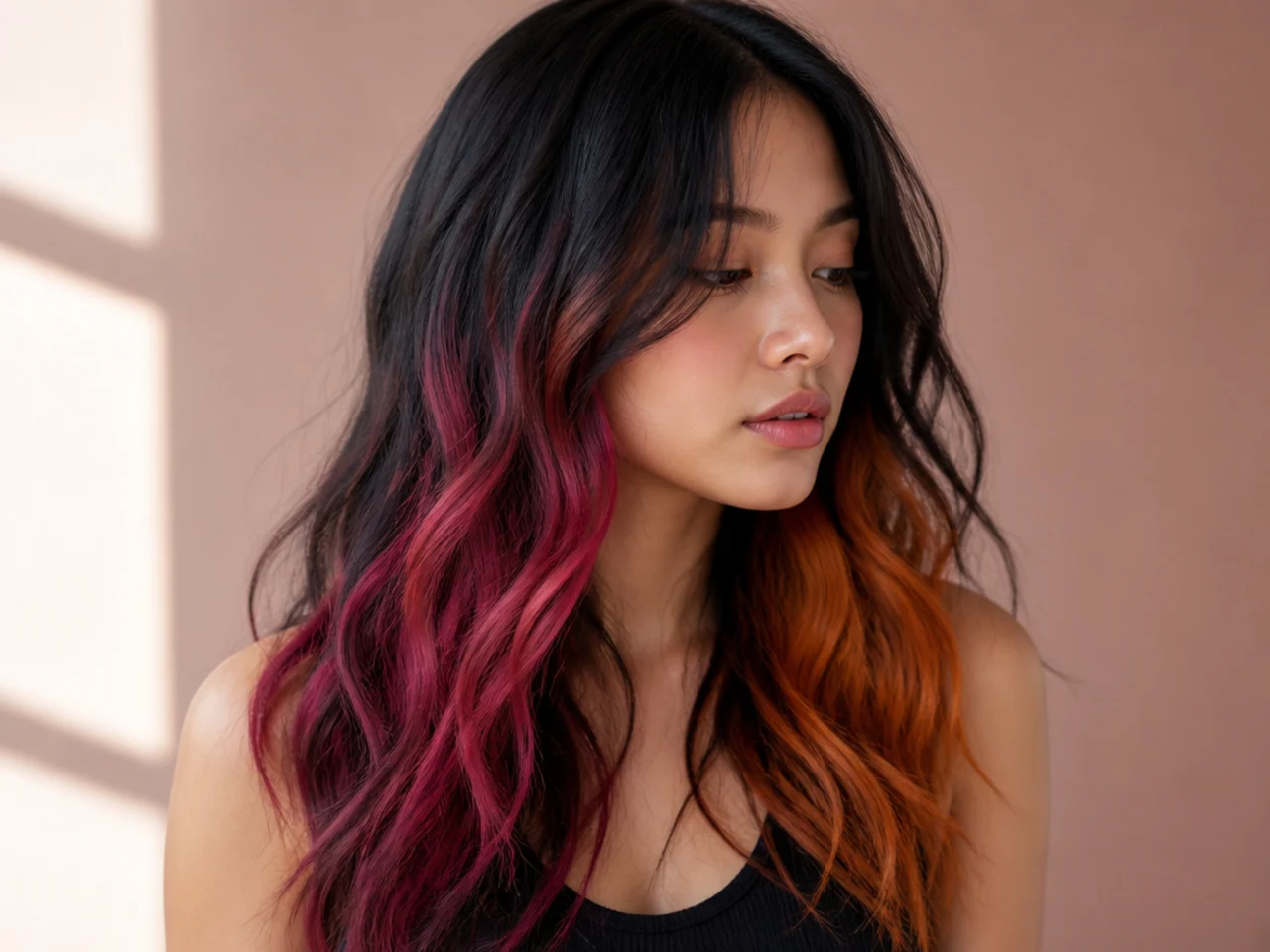
21. The Nape Only Peekaboo
The panel sits low at the back of the neck, so it shows only when the hair is up. It is the least visible placement and the one that survives a strict dress code, but it does nothing at all when the hair is down.
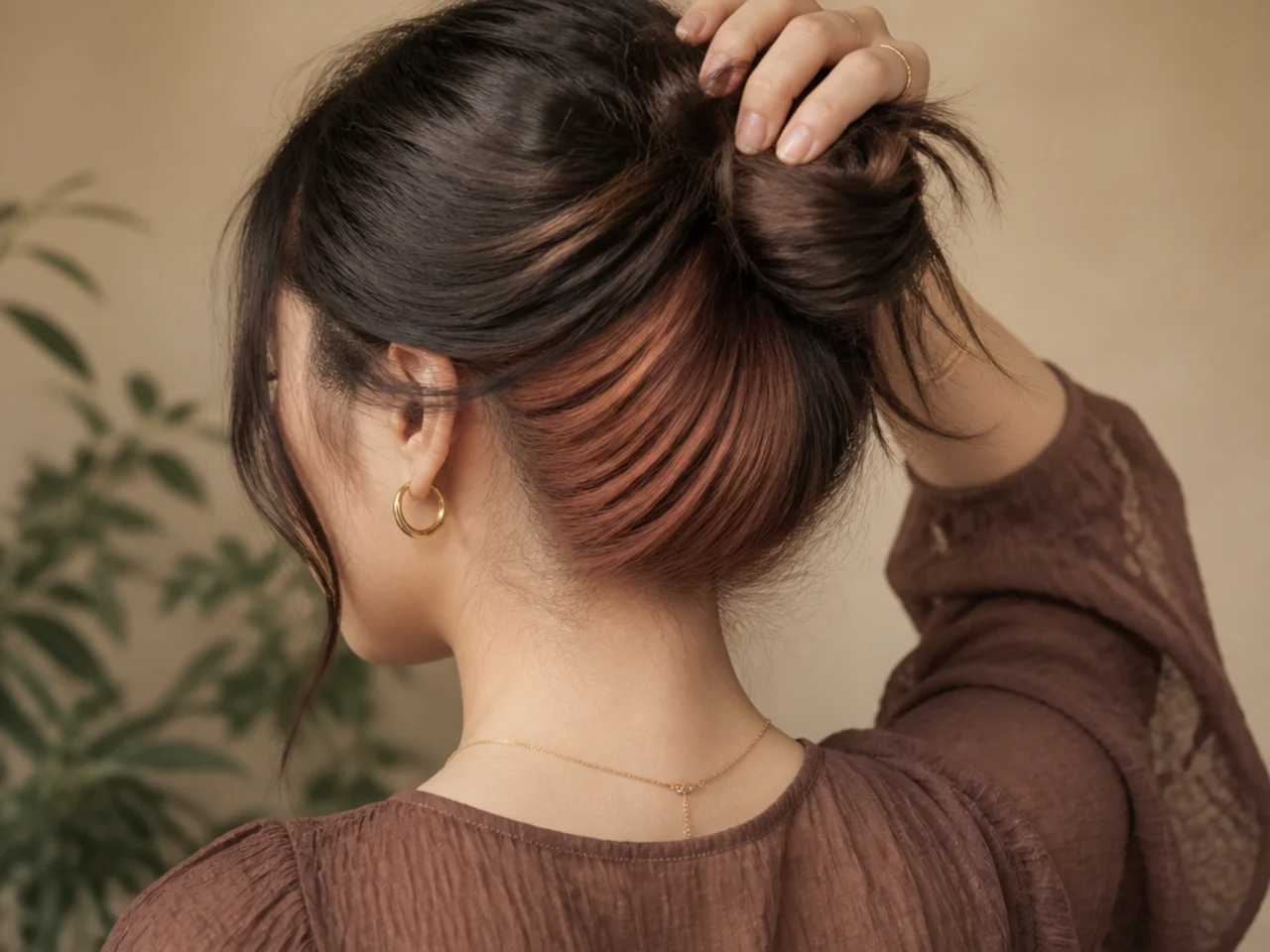
22. The Under Parting Peekaboo
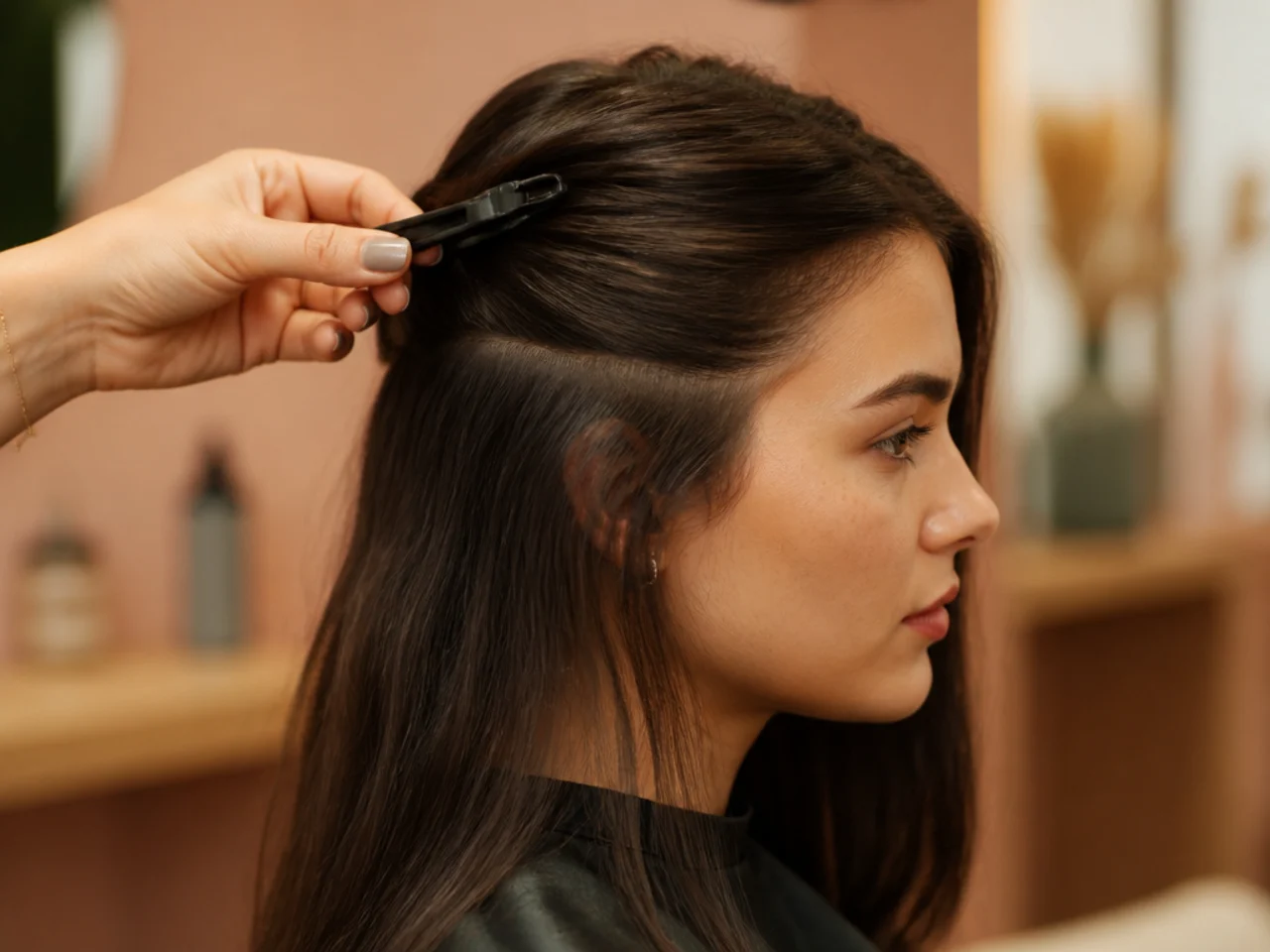
Placed directly beneath the horseshoe section that runs temple to temple, which is the highest a panel can sit and still be covered. Because it starts high, it swings into view whenever the head turns, so it shows the most.
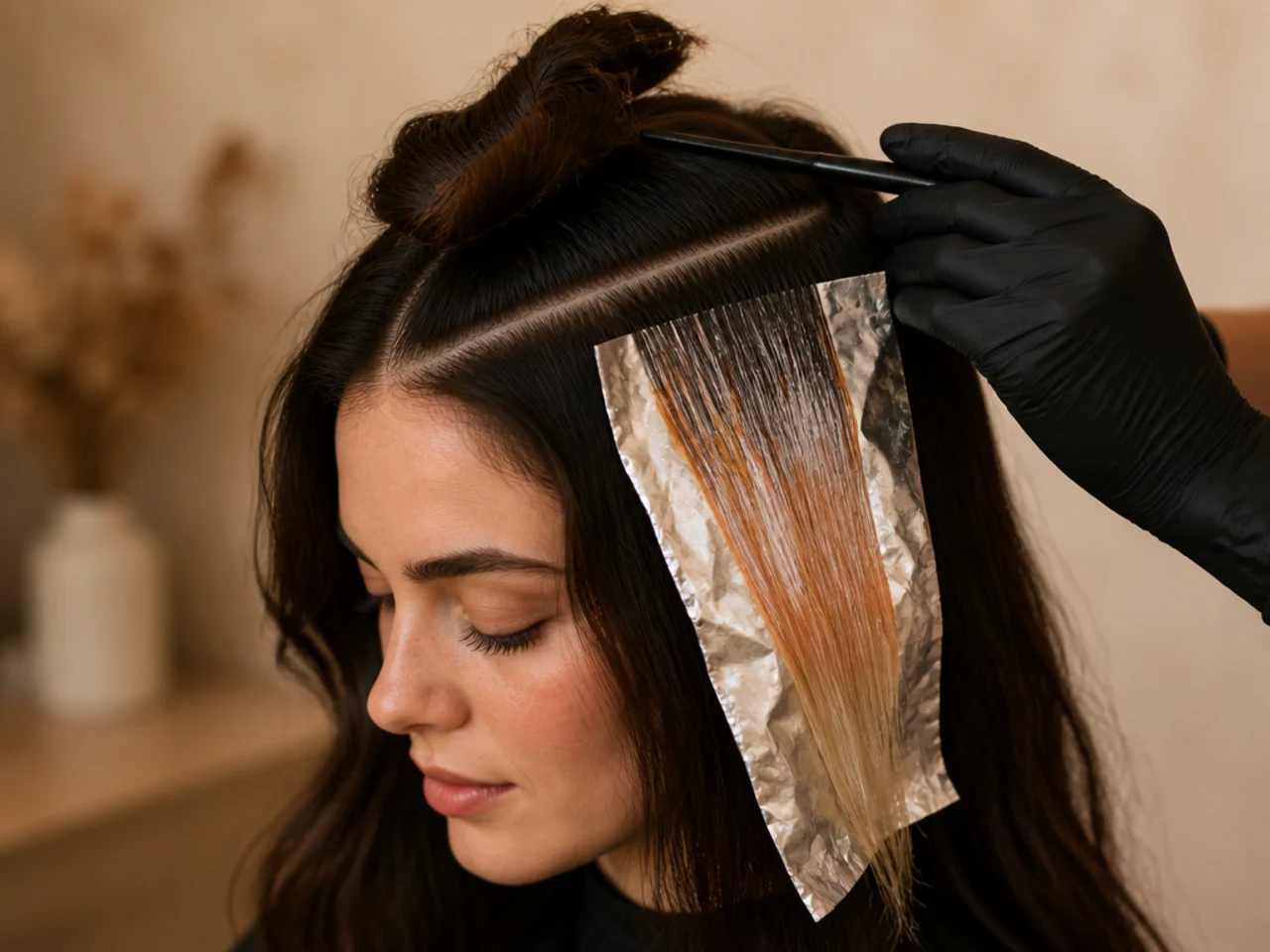
23. The Face Framing Peekaboo
Colour applied to the underside of the front sections only, so it appears when the hair is tucked behind an ear. It is the placement people notice first, because it sits in the same plane as the face.
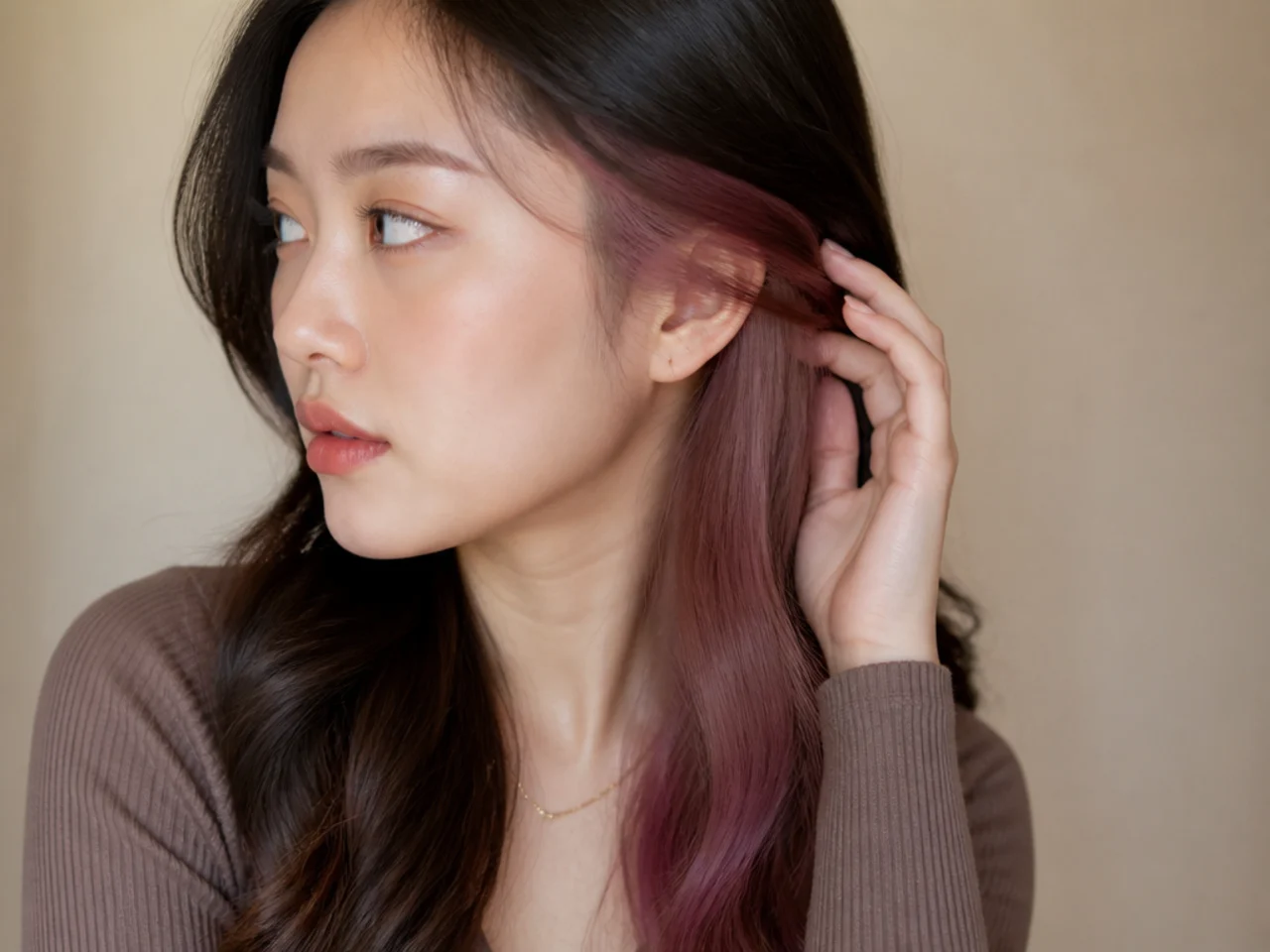
24. The Ponytail Peekaboo
Two panels placed either side of the head at ear height, so that gathering the hair up spirals them through the ponytail. This is the placement to ask for if your hair spends most of its time tied back.
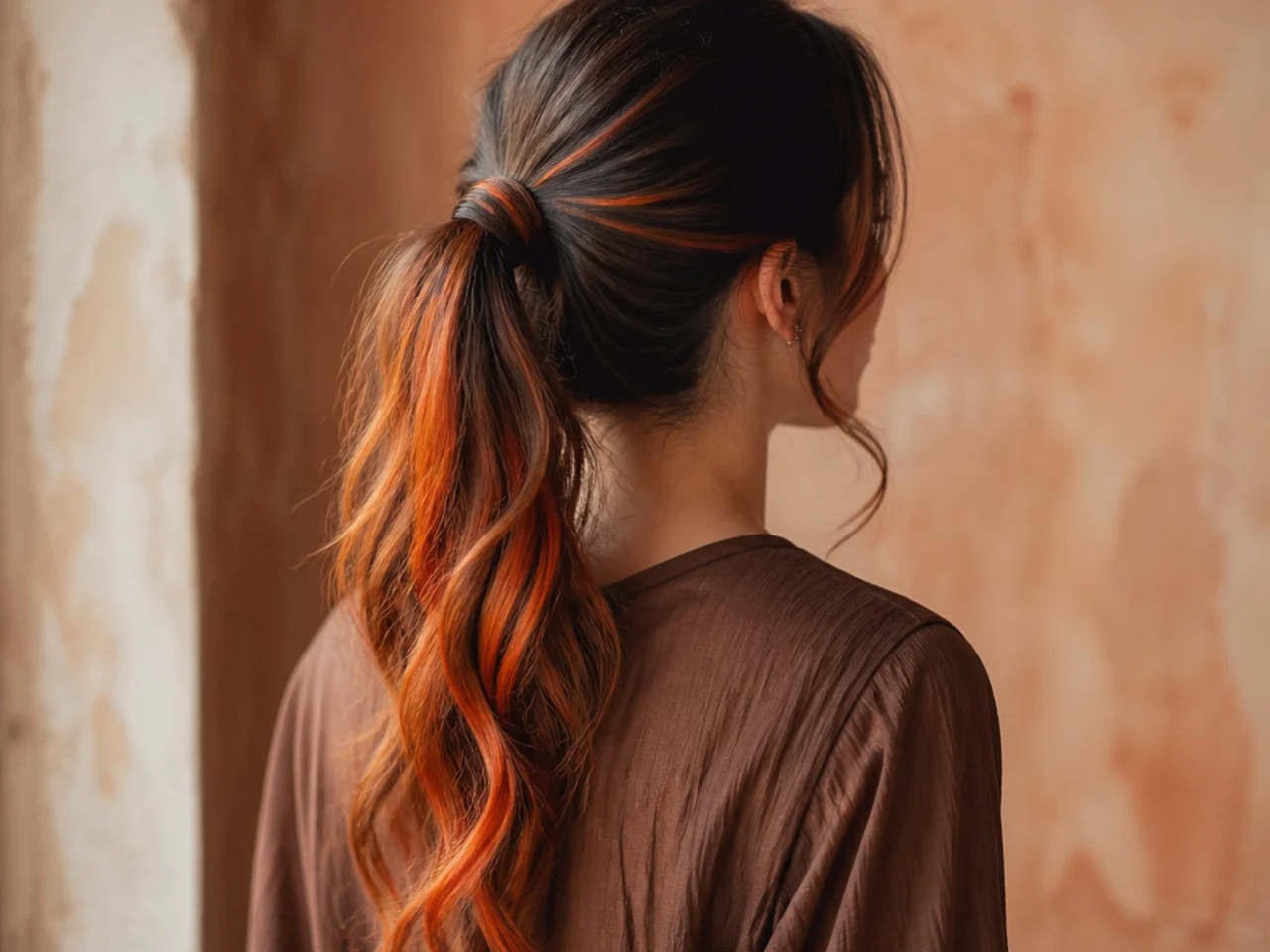
25. The Shadow Rooted Peekaboo
The panel starts a few centimetres down from the scalp rather than at the root. Regrowth then has nowhere obvious to show, which turns a six week appointment into a three month one without changing the look.
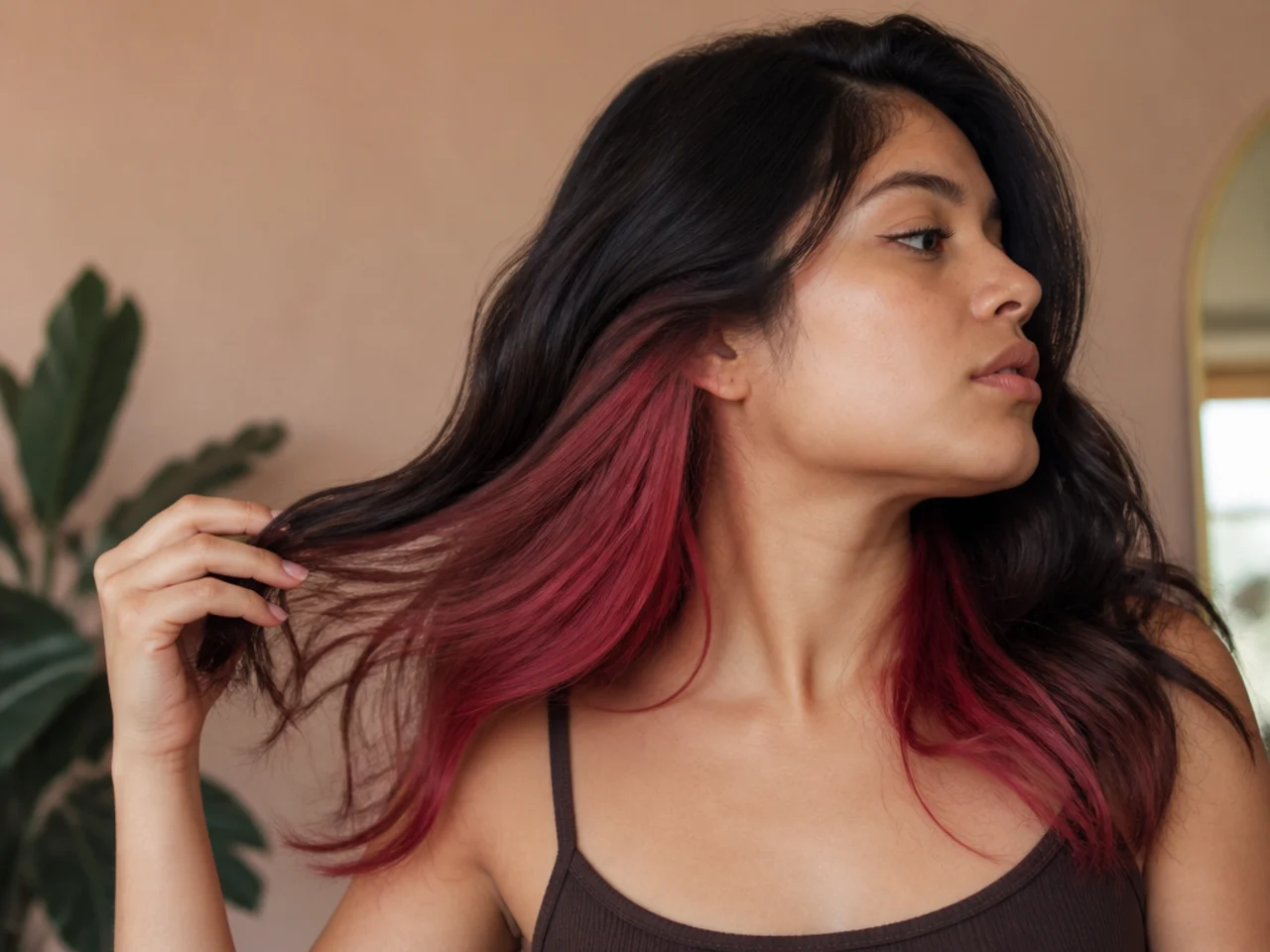
Styling and Upkeep
Wash in cool water. Direct dyes sit on the outside of the hair and warm water opens the cuticle, which lets the pigment leave faster than anything else you do.
Use a colour depositing conditioner between appointments. It replaces what each wash removes, which is far less work than a full reapplication every six weeks.
Keep the panel out of chlorine. Chlorinated water strips vivids quickly and pushes blues and greens off tone in a single swim.
Expect the fade to change the colour, not just dim it. As pigment leaves, the lifted base underneath comes forward, so blue drifts to green and pink drifts to peach.
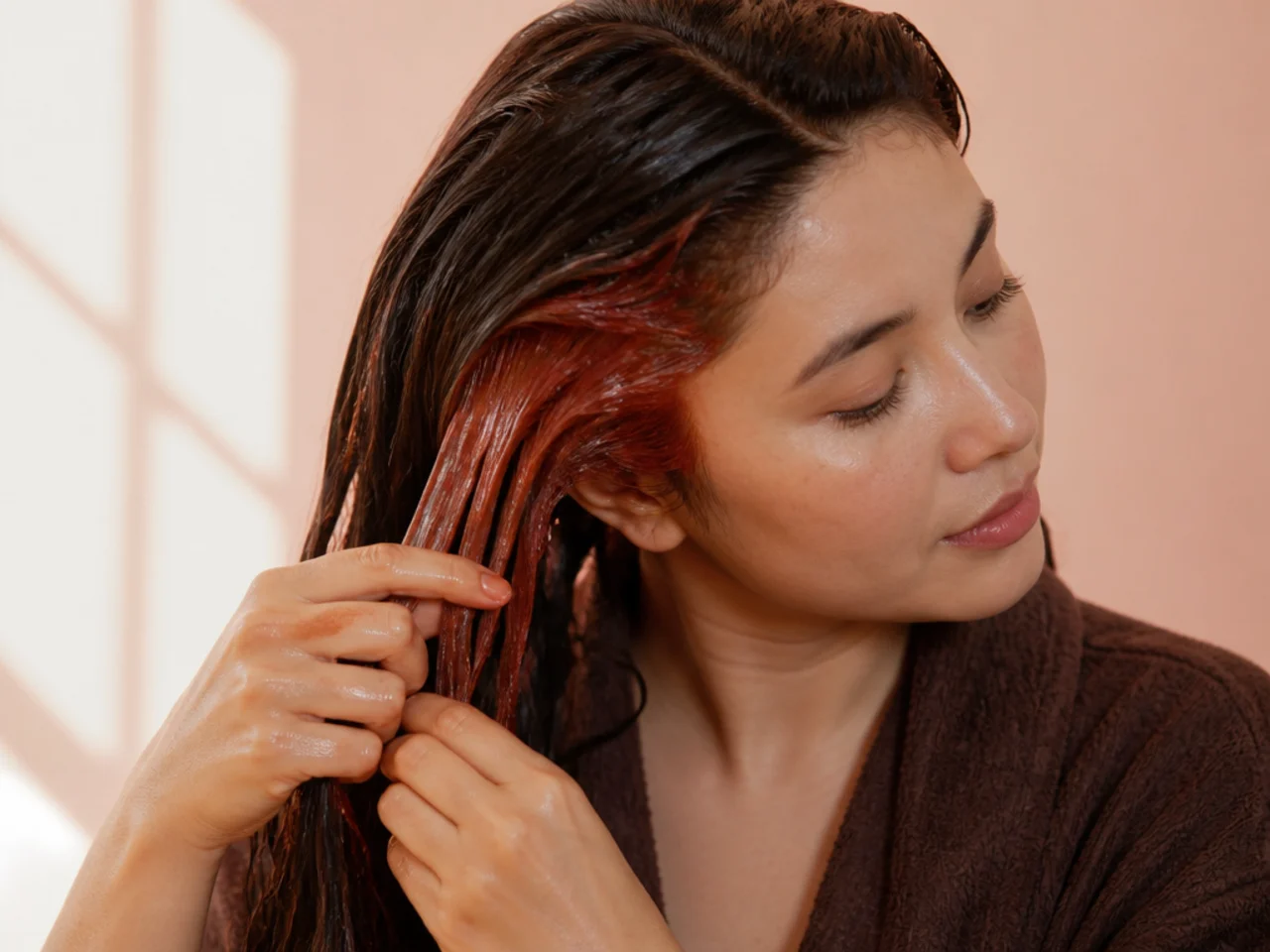
Refresh the lift only at the roots. Bleaching the same length twice is what causes breakage. New growth is the only part that needs lightening again.
Mistakes to Avoid
Choosing the shade before pricing the lift. A pastel and a copper are the same appointment on paper and two completely different appointments in the chair.
Reaching for pale yellow in one session on dark hair. That is where the damage happens, and a panel that breaks off is worse than one that stayed warm.
Placing the panel too low. A colour at the nape only exists when the hair is up. If you wear it down, the panel needs to start near the parting.
Making the panel too narrow. Dark hair on either side closes over a thin section, so a narrow panel reads as a shadow rather than a colour.
Skipping the toner on cool shades. Blue, lilac and silver are all cancelled by leftover warmth, and toning is the step that removes it.
FAQ
Is bleach necessary? On dark hair, yes for anything but deep red — vivids are translucent and need a lifted base.
Which colour lasts longest? Burgundy and navy, because both are dense and fade toward related tones.
How often does it need redoing? Six to eight weeks for a vivid, or three months if it is shadow rooted.
Final Thoughts
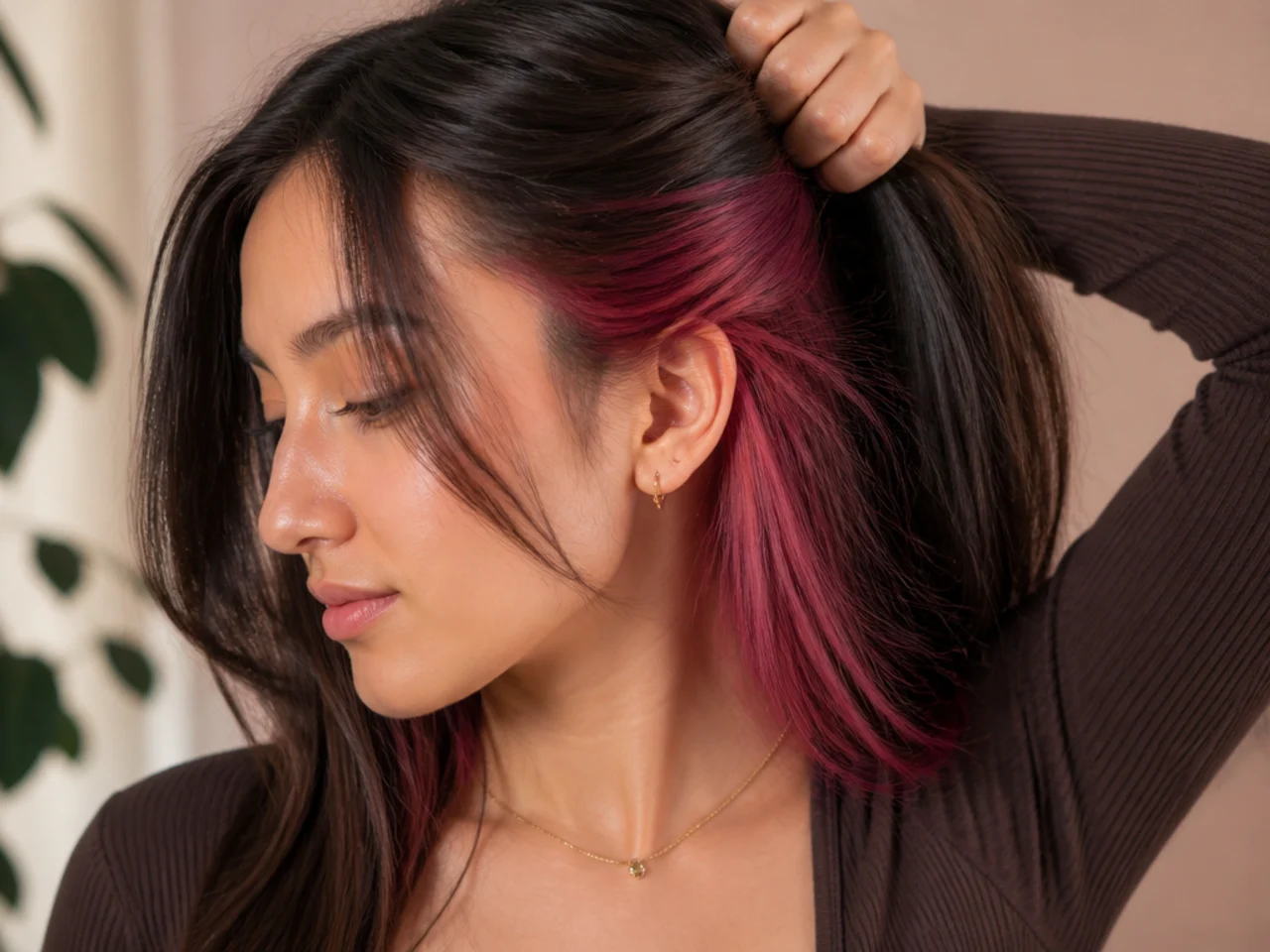
The shade in the photograph is only half the recipe. The other half is the level the base was taken to, and that is the number worth asking about before you book anything.
For the placement rules that apply to every version see the peekaboo colour guide, and for more shade options on a dark base see bold peekaboo colours for dark hair. More in Hair Color Trends.