15 Long Hair Growth Tips for Faster Length
Fifteen tips for growing long hair, and the six month test that tells you whether a routine is doing anything. Hair at your waist is four years old and has no repair mechanism, so every gain comes from handling it less badly.
In this article · 23
- How Fast Hair Grows
- Breakage Versus Growth
- Scalp Health
- The Weekly Routine
- The Six Month Test
- When to See a Doctor
- The 15 Long Hair Growth Tips
- 1. Scalp Massage
- 2. Rosemary Oil
- 3. Satin Pillowcase
- 4. Quarter Inch Trim
- 5. Heat Cap
- 6. Wide Tooth Comb
- 7. Microfiber Towel
- 8. Silk Scrunchies
- 9. Clarifying Wash
- 10. Protein Meals
- 11. Bloodwork
- 12. Biotin Gummies
- 13. Deep Conditioning Mask
- 14. Protective Braids
- 15. Measuring Growth
- Final Thoughts
The most common complaint about long hair is that it has stopped growing, and in almost every case it has not stopped growing at all.
The follicle produces about half an inch a month, indefinitely. Six inches a year, whether the length looks any different or not.
Hair at your waist is roughly four years old and cannot repair itself. If the ends break off at six inches a year, the length holds perfectly steady while the scalp works exactly as hard as ever.
How Fast Hair Grows
Roughly half an inch a month. Six inches a year, arriving at the same rate in a good year and a bad one.
Nothing applied to the shaft changes the rate. The shaft is dead tissue with no route back to the follicle that produced it.
Your ceiling is a time limit rather than a length. A growing phase of two years cannot reach the same point as one lasting seven, whatever either is fed.
Fifty to a hundred shed hairs a day is normal. Long hair simply makes each one more visible on the floor.
Breakage Versus Growth
Length is what survives, not what grows. The first number is fixed and the second is entirely under your control.
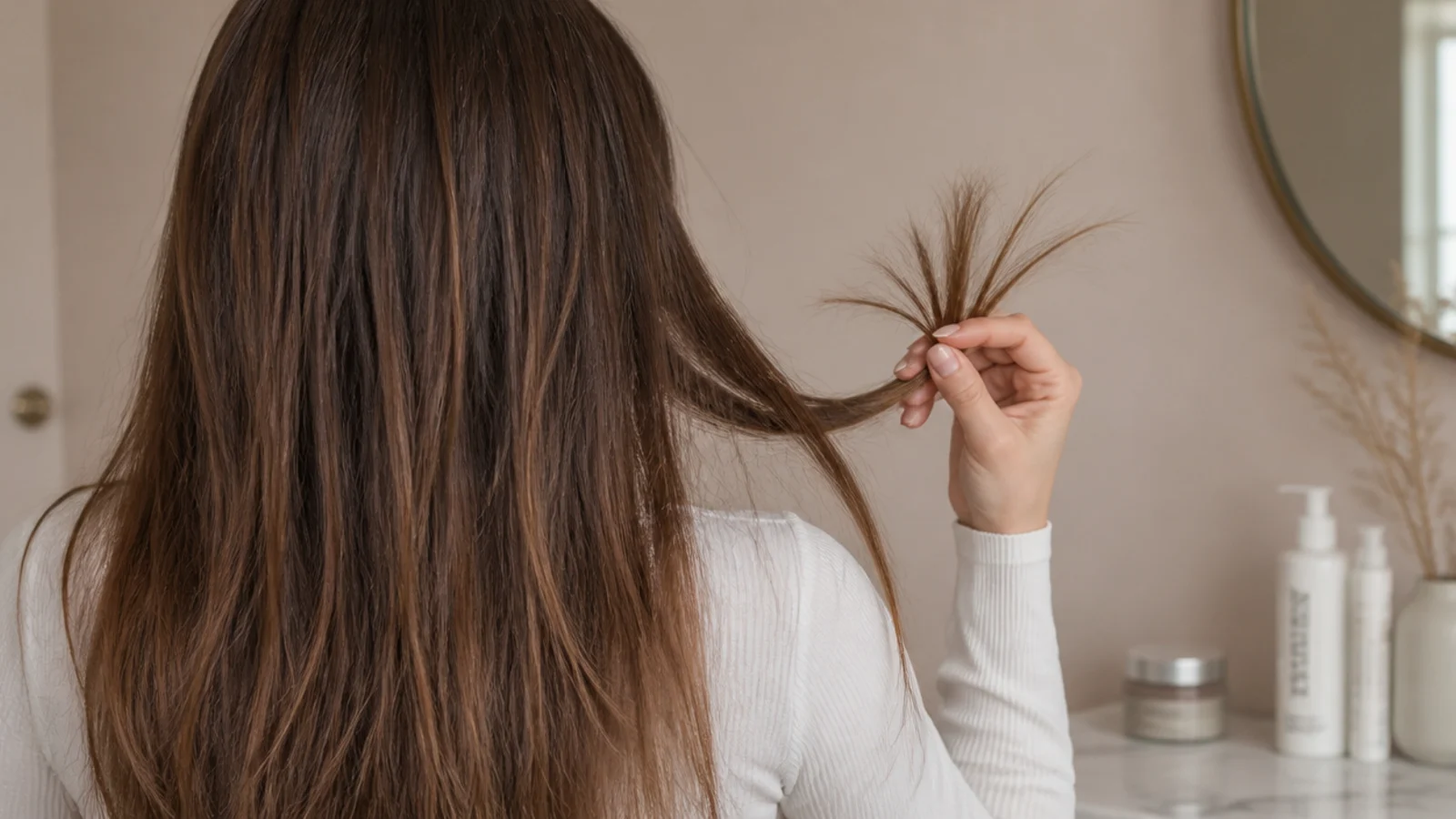
The ends have the longest history. Four years of washing, brushing, weather and heat sit in the last few inches, and none of it can be undone.
Steady length with normal shedding means breakage. If the ends stay on the same line month after month, you are losing exactly what you make.
Look for the short ones. Broken hairs stand up along the part and have no bulb on the end, unlike a naturally shed hair.
Scalp Health
Growth happens at the scalp and nowhere else. Everything you own is already finished by the time it is an inch long.
Buildup irritates, and irritation sheds. Oil, dead skin and product film accumulate under long hair exactly as under short.
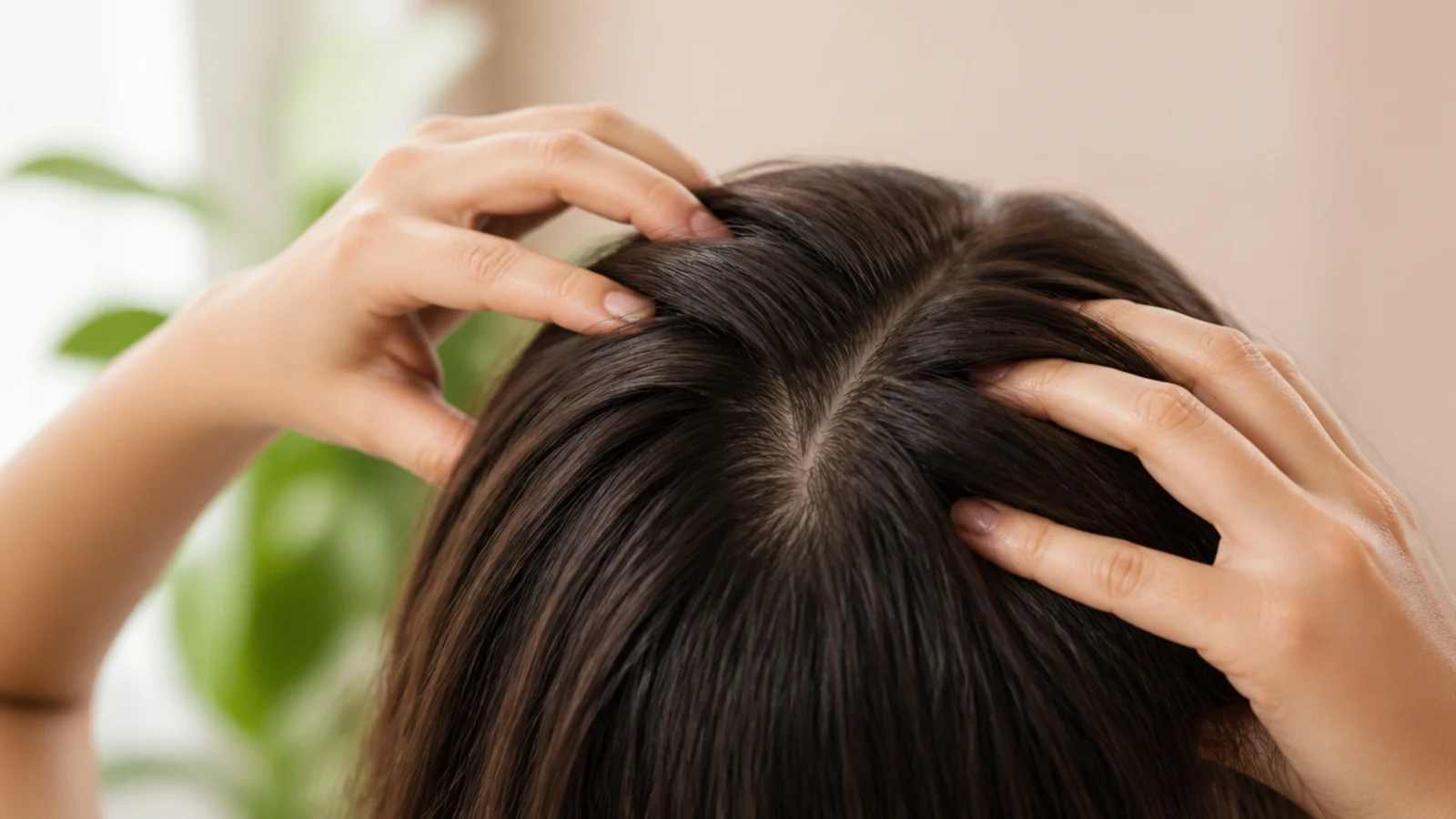
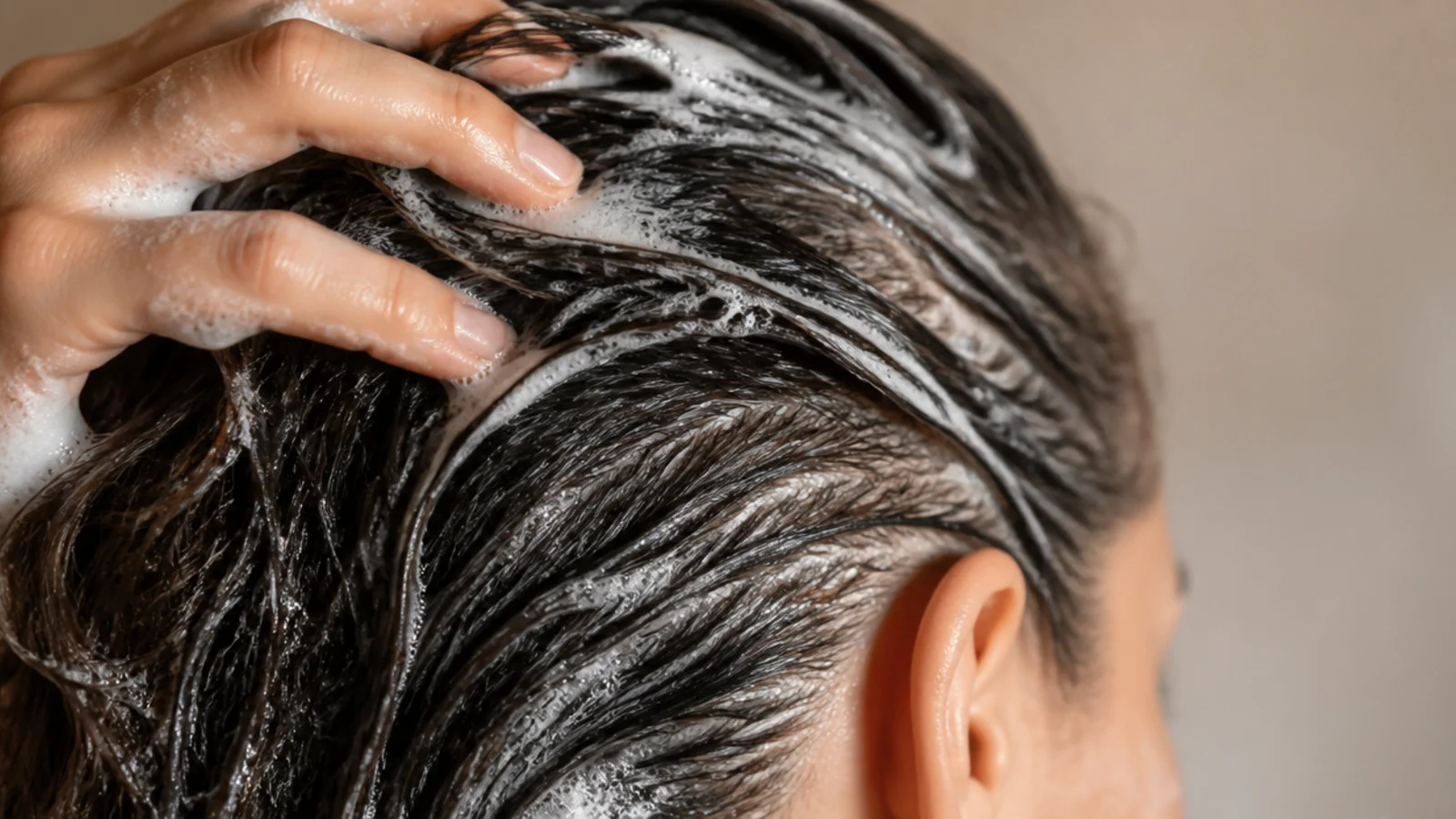
Massage before rinsing, with fingertips. Move the scalp itself rather than dragging length across it.
Long hair hides a neglected scalp. It is the section people notice last and the only section that matters for growth.

The Weekly Routine
One wash and one mask covers most of it. Frequency beyond that is a scalp decision rather than a length decision.
Detangle before water, then again with conditioner in. Wet hair is swollen and weakest, so most of the work should already be done.
One heat day, not five. Damage accumulates by exposure count, so consolidating styling protects more than lowering the dial does.
Sleep is a third of the week. Whatever your hair does for those hours happens more often than anything you do awake.
The Six Month Test
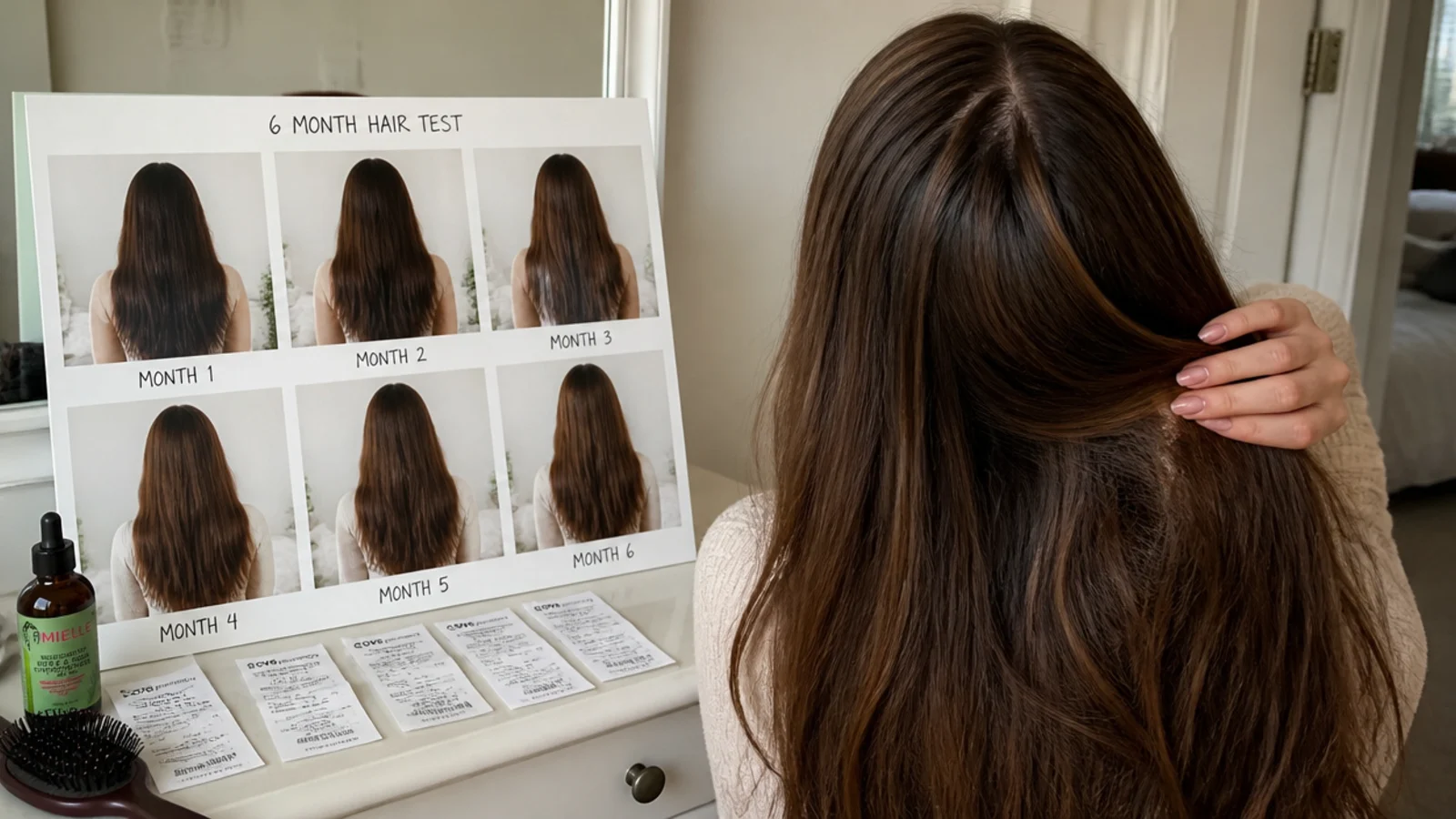
Six months is the shortest honest trial. Three inches of new growth is the minimum you can judge, and anything shorter is noise.
Change one thing at a time. Four changes at once tell you nothing about which of them worked.
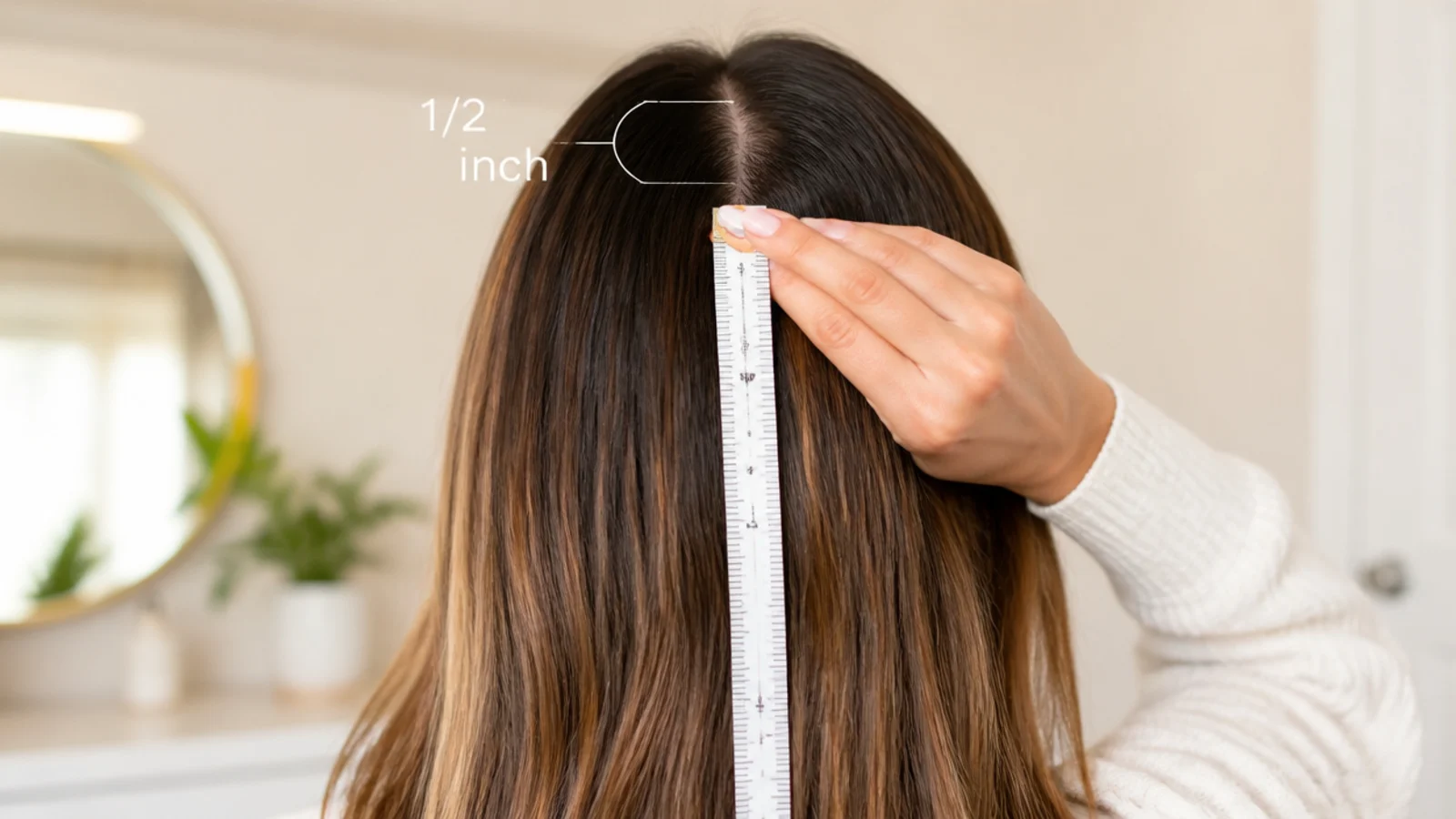
Photograph, do not remember. Same light, same top, hair pulled straight, once a month, and compare the files rather than the mirror.
Judge the ends as well as the length. If the ends are in better condition at month six, the routine is working even if the ruler has barely moved.
When to See a Doctor
Sudden diffuse shedding has a cause. Illness, surgery, childbirth or a crash diet push follicles into rest together, and the shed lands two to three months afterwards.
That kind resolves on its own. Usually within six months of the trigger, with regrowth appearing as short hairs along the part.
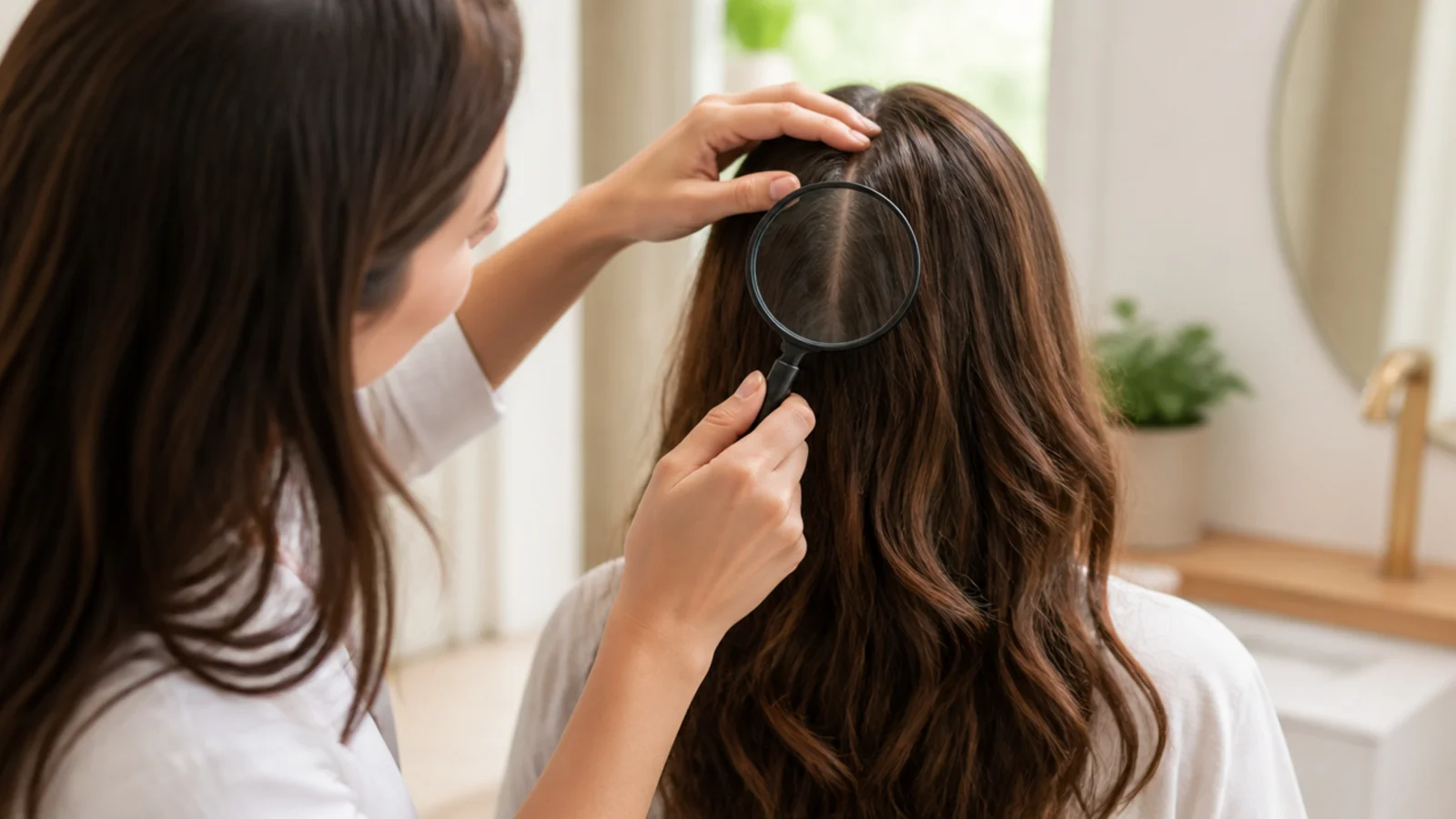
A widening part is different. Losing density in one area rather than shedding evenly is a pattern worth having looked at.
Ask for numbers. Ferritin, thyroid function and vitamin D are the results worth requesting by name rather than accepting a general reassurance.
The 15 Long Hair Growth Tips
1. Scalp Massage
Five minutes of firm circular pressure a day is one of the few habits with a mechanism behind it, since mechanically stretching the tissue around the follicle appears to alter how it behaves. On long hair, work the scalp itself rather than raking fingers through the length, which only creates tangles you then have to comb out.
2. Rosemary Oil
The supporting evidence is one small six month trial finding diluted rosemary oil comparable to a low strength minoxidil, which is a modest result rather than a transformation. Dilute it into a carrier and put it on the scalp only, because oil on the lengths does nothing for growth and simply adds a wash you did not need.

3. Satin Pillowcase
Long hair spends the night trapped between your head and the pillow, so it takes the full friction of every turn. Cotton is abrasive and absorbent at once, lifting the cuticle and drawing water out of the shaft, while satin does neither and costs nothing to use every single night.
4. Quarter Inch Trim
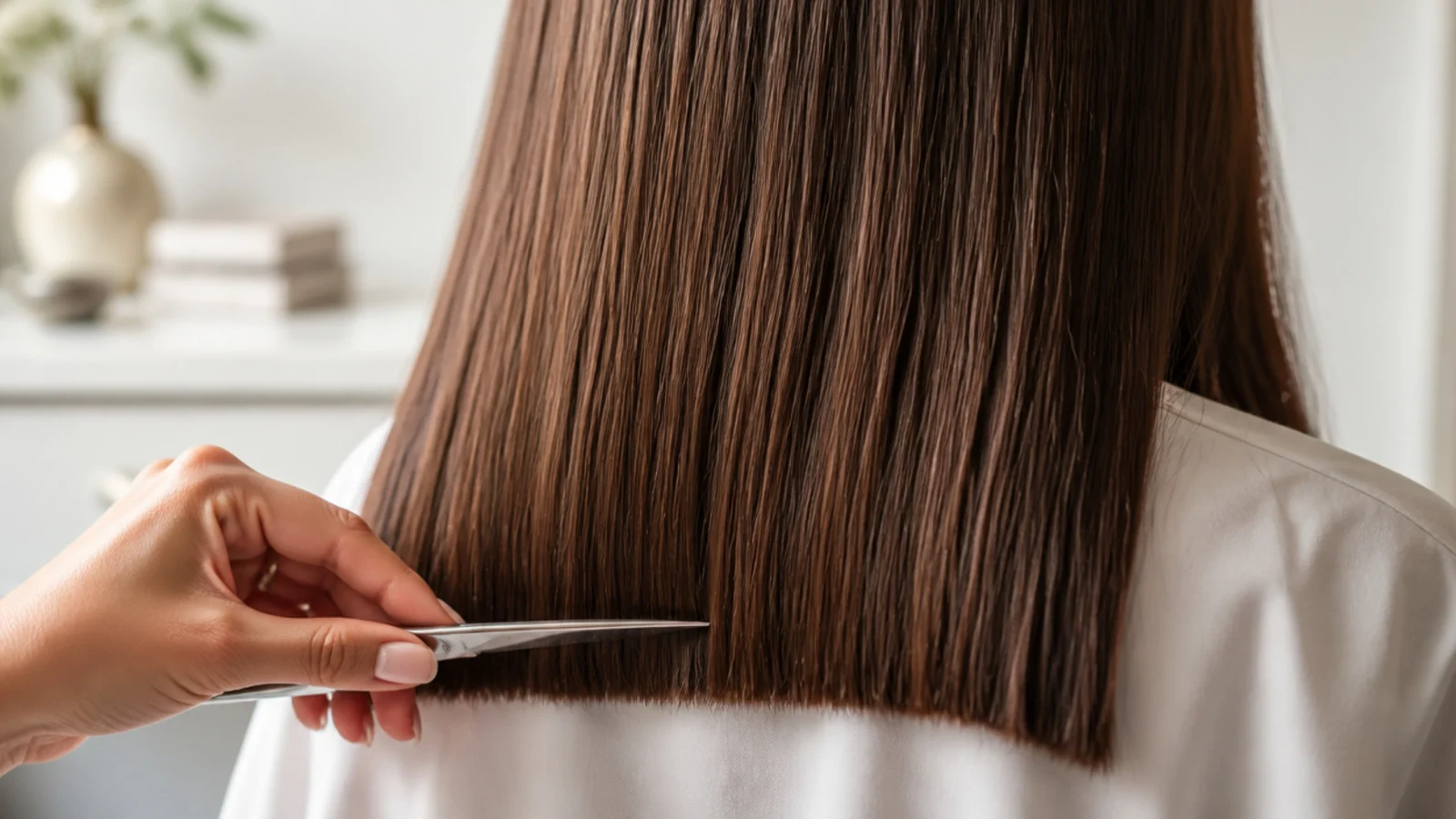
The length people believe they cannot grow past is usually the point where breakage matches growth, not a genetic ceiling. A split climbs the shaft under ordinary combing and takes more than a trim would have, so a quarter inch every ten to twelve weeks is the cheapest length you will ever buy.
5. Heat Cap
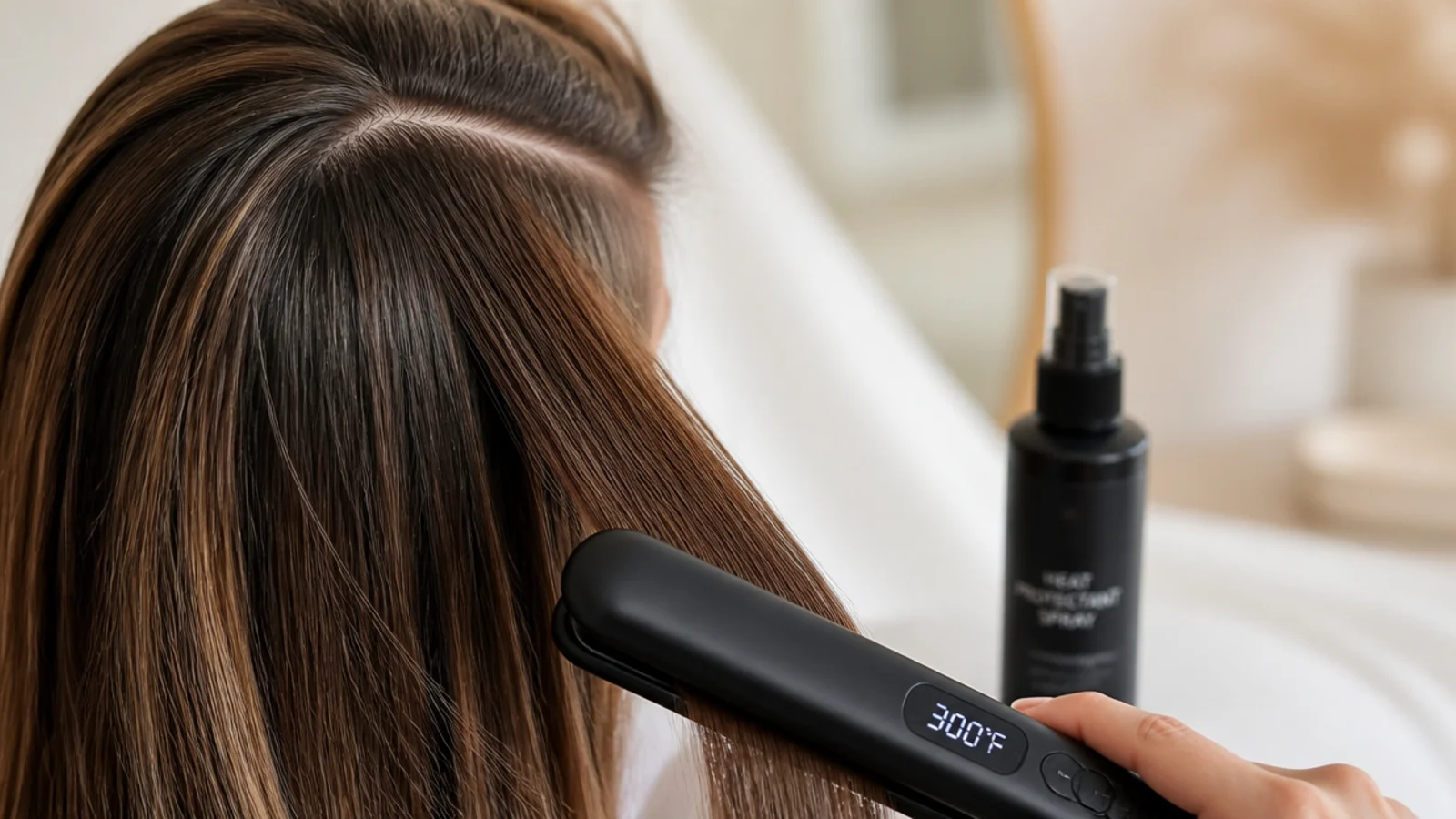
Long hair takes many more passes to style than short hair, so the same session delivers several times the exposure at the ends. Setting a ceiling around three hundred and fifty Fahrenheit and one heat day a week limits both the temperature and the count, and the count is what accumulates over years.
6. Wide Tooth Comb
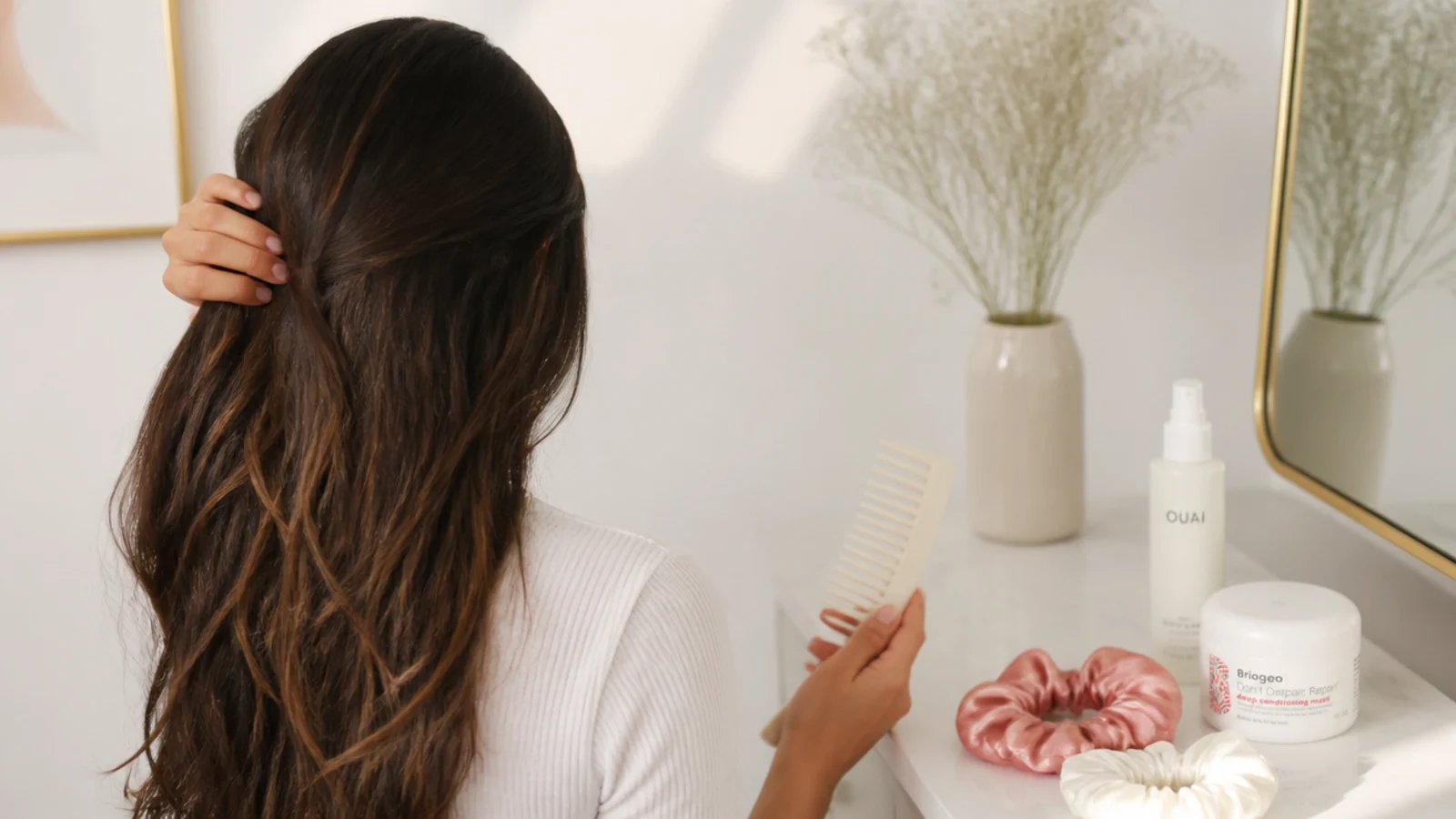
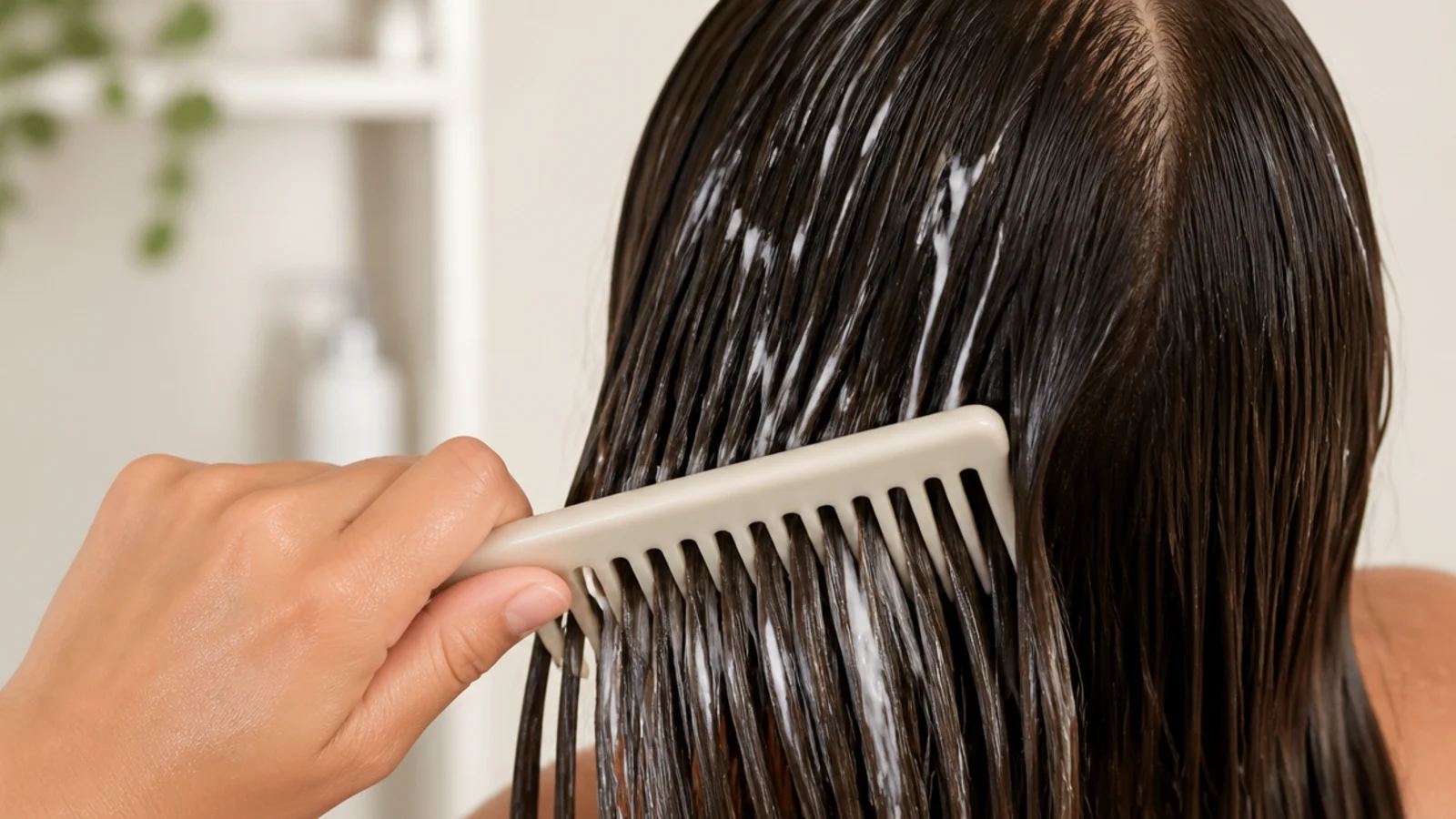
A fine comb dragged through long hair meets each knot with the full width of the tooth and tears it apart rather than separating it. Wide teeth pass through tangles, and working upward from the ends means each knot has almost no hair behind it to resist against, so the force never builds.
7. Microfiber Towel
Long hair holds a lot of water, and a terry towel twisted into a turban puts that weight on the hairline while its loops catch every raised cuticle scale. A microfiber towel absorbs by contact instead of abrasion, so squeeze the lengths rather than wrapping and rubbing them.

8. Silk Scrunchies
A thin elastic focuses its entire grip on one narrow band, which on long hair is also the point carrying the most weight. A wide silk scrunchie spreads the same hold across a broader area and slides rather than gripping, so strands slip free instead of folding hard against the tie and snapping at the crease.

9. Clarifying Wash
Conditioner, oil and styling polymer build a film on long hair faster than on short simply because there is more surface for it to sit on. One clarifying wash a month resets the surface so treatments can reach the cuticle again, and doing it more often starts stripping the lipid the ends genuinely need.
10. Protein Meals
Hair is keratin and the body ranks it last, so a protein shortfall reaches the follicle before it reaches anything vital. Spreading adequate protein across three meals rather than concentrating it in the evening keeps supply steady for a tissue that divides faster than almost any other in the body.

11. Bloodwork
Ferritin measures stored iron rather than circulating iron, and hair loss commonly appears while a standard blood count still reads as normal. Ask for ferritin, thyroid function and vitamin D by name, because those three explain a large share of unexplained shedding and none of them shows up in the mirror.

12. Biotin Gummies
Biotin only affects hair if you are genuinely deficient, and real deficiency is rare outside specific medical conditions. It also interferes with common laboratory assays for thyroid and cardiac markers, which can produce a misleading result, so take it only for a reason and tell any lab that you do.

13. Deep Conditioning Mask
A mask needs warmth and time to move past the cuticle, which is why twenty minutes under a cap outperforms an hour of the same product applied cold. On long hair the bottom third should get almost all of it, because those inches are years older than the roots and have lost most of their original lipid.

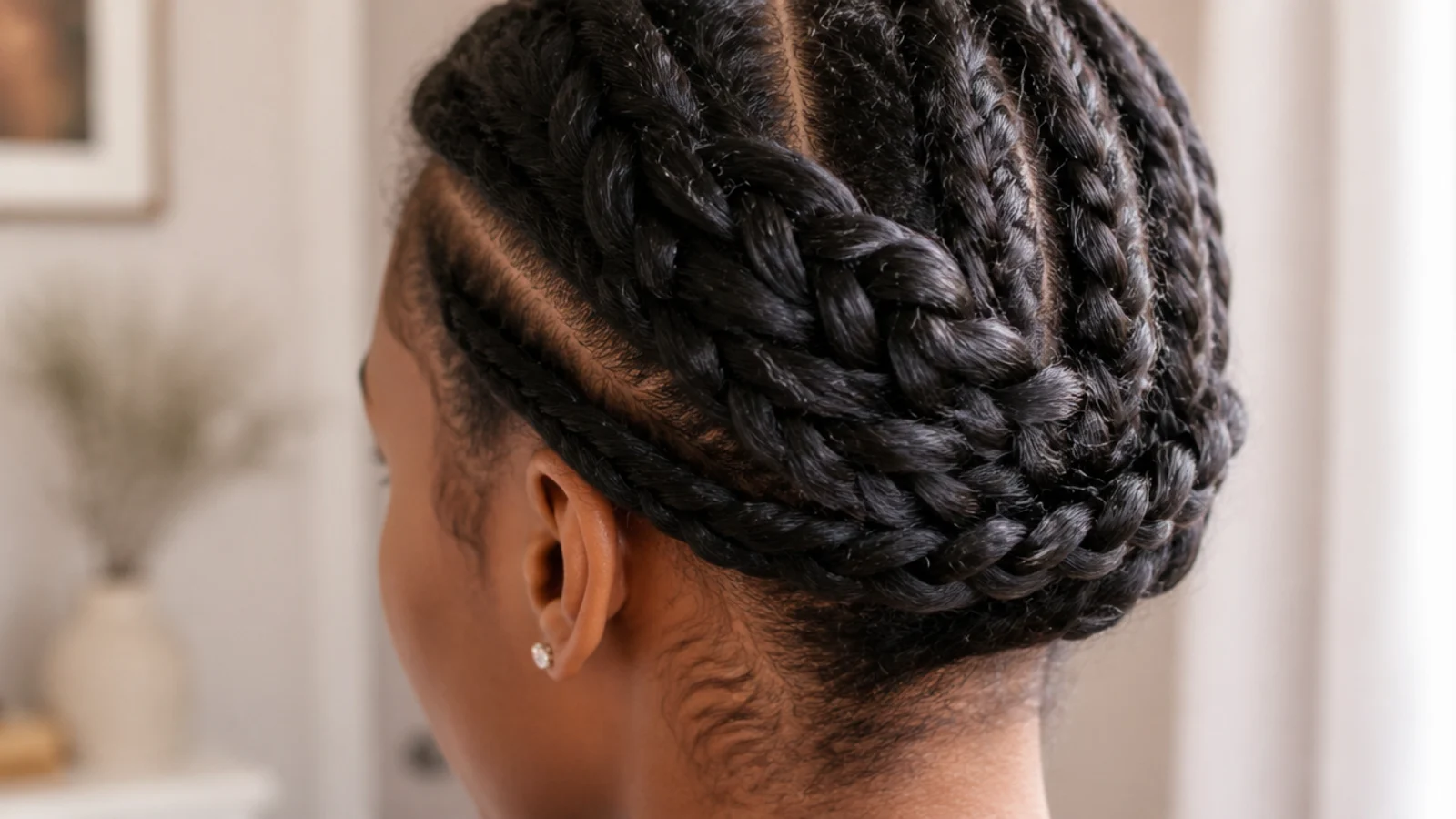
14. Protective Braids
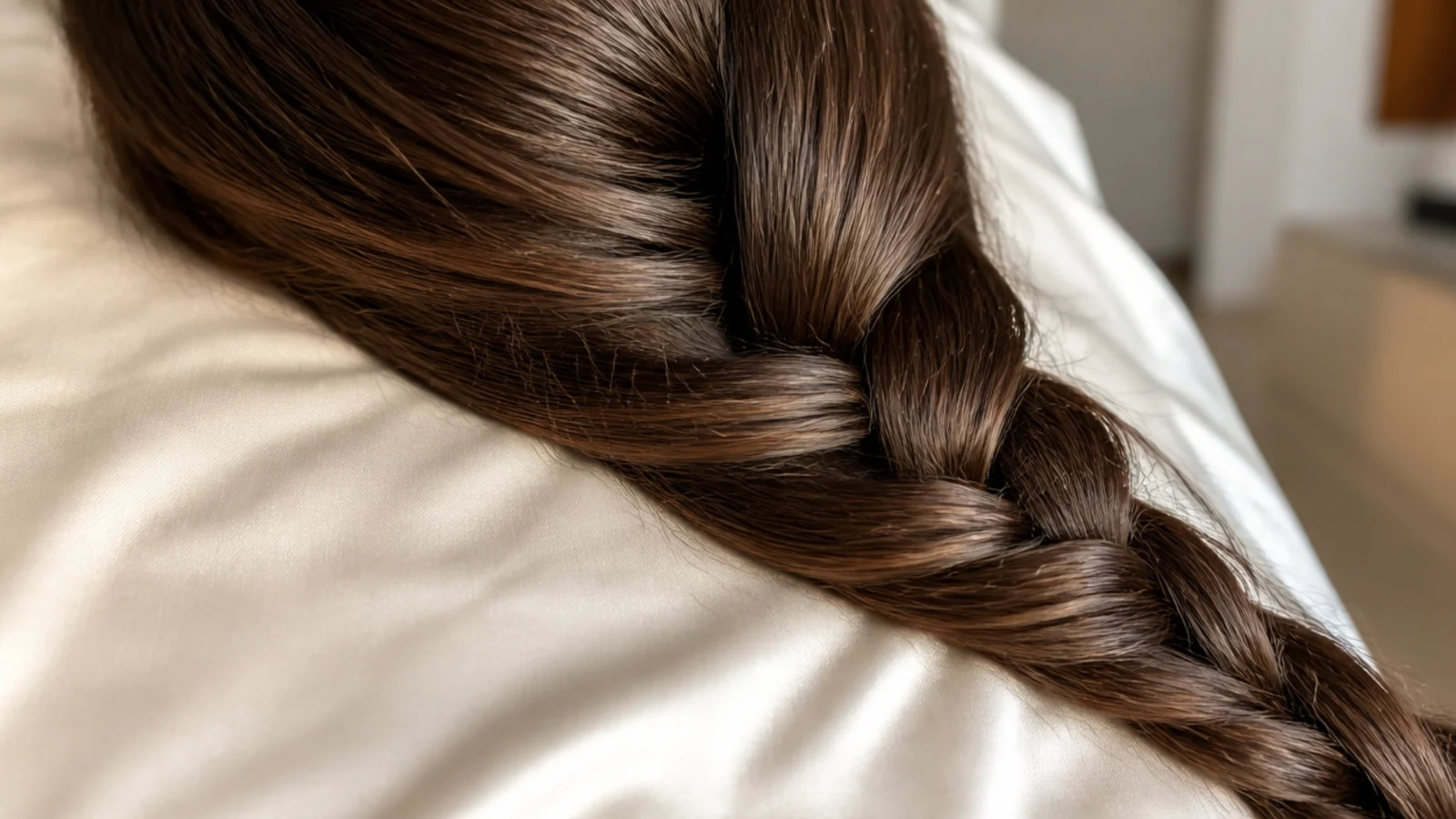
A braid tucks the oldest, driest inches inside the plait where nothing rubs against them, which removes most of a day's friction in one action. Keep it loose and low, because a braid tight enough to sting is trading damage at the ends for traction damage at the roots.
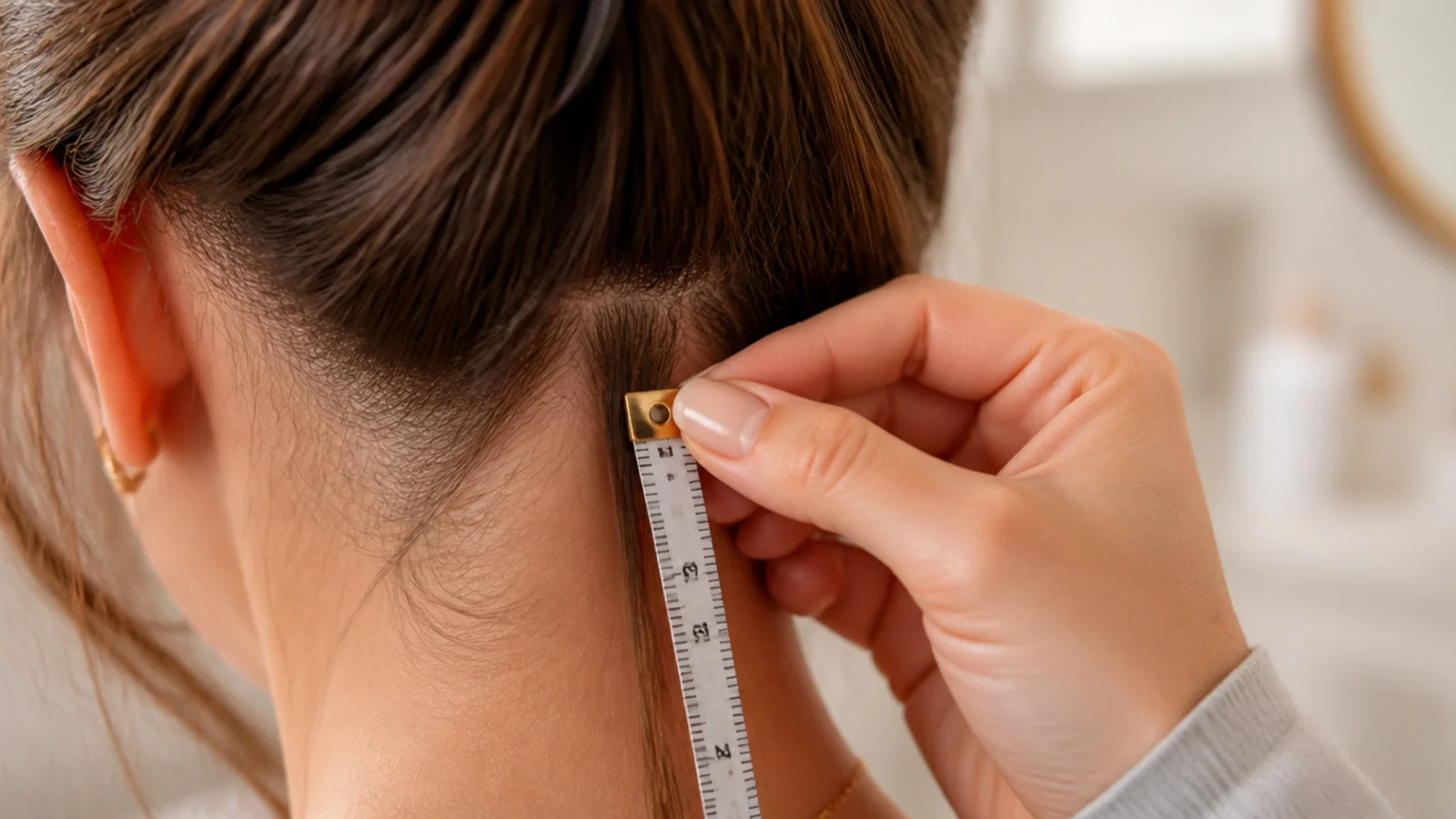
15. Measuring Growth
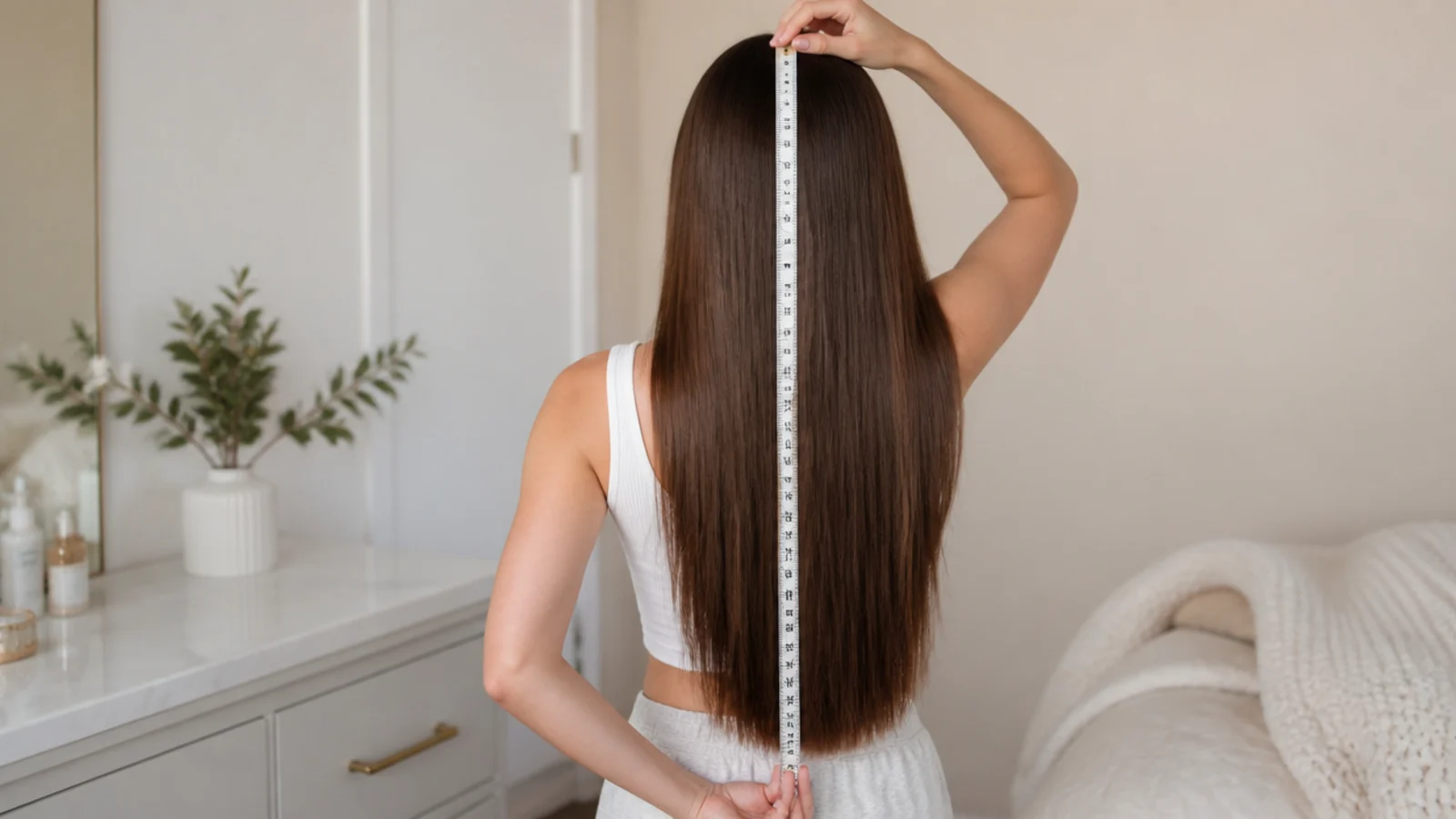
Measure from a fixed point on the head rather than from the shoulder, because posture moves the shoulder and ruins the comparison. Once a month, hair pulled straight, same tape, same starting point, written down. Half an inch is below what a mirror can detect and well within what a tape can.
Final Thoughts
The routine that grows long hair is short and boring, and its whole purpose is to make the last four inches survive another year. Nothing here speeds the follicle up because nothing can, so treat every claim about faster growth as a claim about retention and judge it accordingly.
Run one change for six months, photograph monthly, and measure from a fixed point. If you are keeping the length but want it to move, 20 long wolf cuts that keep length and add volume adds shape without shortening the perimeter, and 15 simple steps to style a long shag haircut daily covers the daily handling. More in Hair Care.