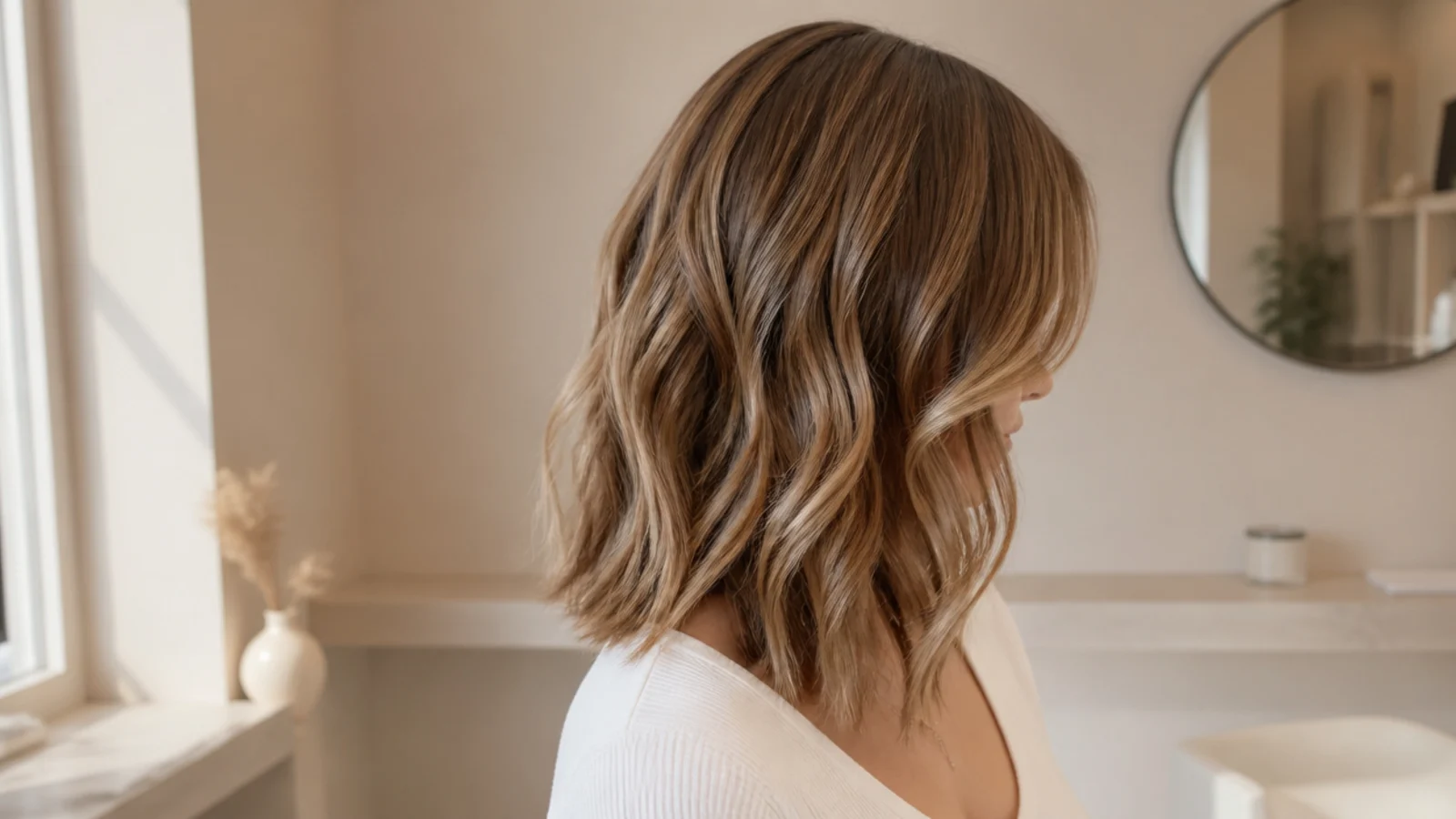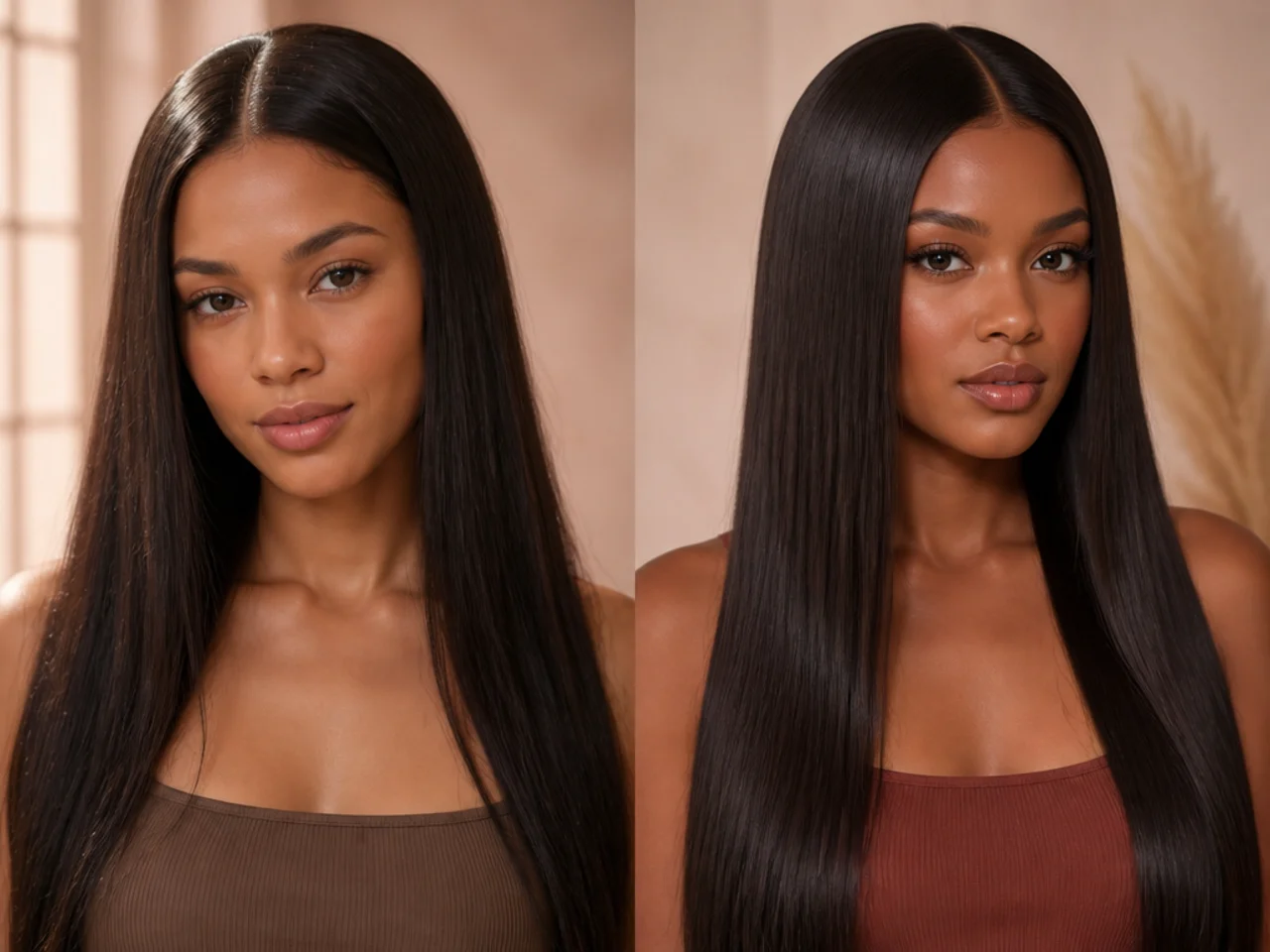
20 Salon vs At Home Butterfly Haircut Differences
A butterfly cut divides cleanly into work you can see and work you cannot. The front curtain and the trims between appointments are safely yours. The perimeter and the back are where a home cut costs length you spent a year growing.
In this article · 27
- What the Butterfly Cut Actually Requires
- Deciding Which Parts to Do Yourself
- The 20 Differences
- 1. Sectioning the Two Lengths
- 2. Cutting Wet Versus Dry
- 3. The Ponytail Method
- 4. Setting the Perimeter
- 5. Judging Layer Height
- 6. Cutting the Back
- 7. Scissors
- 8. Elevation and Angle
- 9. Trimming the Curtain Bangs
- 10. Removing Bulk
- 11. Checking Balance
- 12. Tension Control
- 13. Cost
- 14. Time
- 15. Fixing a Mistake
- 16. Colour Placement
- 17. The Finishing Blow Dry
- 18. Repeatability
- 19. Curly and Wavy Texture
- 20. Maintenance Between Cuts
- Styling and Upkeep
- Mistakes to Avoid
- FAQ
- Final Thoughts
Most home butterfly cuts fail in the same place: not in the layers everyone worries about, but in the hem nobody can see.
The front half is genuinely doable. The short face framing layer runs down the sides in plain view of a mirror, and you can check it against your own cheekbone as you go.
The back half is not. The perimeter and the interior layers behind your ears are invisible to you at every moment of the cut, and they are what make the shape read as two deliberate lengths rather than one uneven one.
What the Butterfly Cut Actually Requires
Two lengths with a gap between them. A short internal layer and a longer base, cut so they stay visibly separate. Close the gap and the cut becomes ordinary layers.
A blunt, level perimeter. The hem carries the weight that holds the shape down. It is also the one line where a millimetre of error on one side is obvious next to the other.
Consistent elevation. The angle at which hair is held away from the head sets how steep each layer is. Hold the same section higher on the second pass and you have cut two different layers.
Even tension on both sides. Hair pulled tighter is longer while you hold it and shorter once you let go, which is why a cut made with one hand stronger than the other finishes lopsided.
Deciding Which Parts to Do Yourself
Do the parts you can see in one mirror. Anything requiring a second mirror is being cut from a reversed image, and your hands correct in the wrong direction under reversal.
Do maintenance, not structure. Trimming a curtain that has grown past the cheekbone is low risk. Establishing where the short layer starts is not.
Never cut what you cannot regrow quickly. Hair grows around a centimetre a month, so a layer cut five centimetres short is five months of waiting.
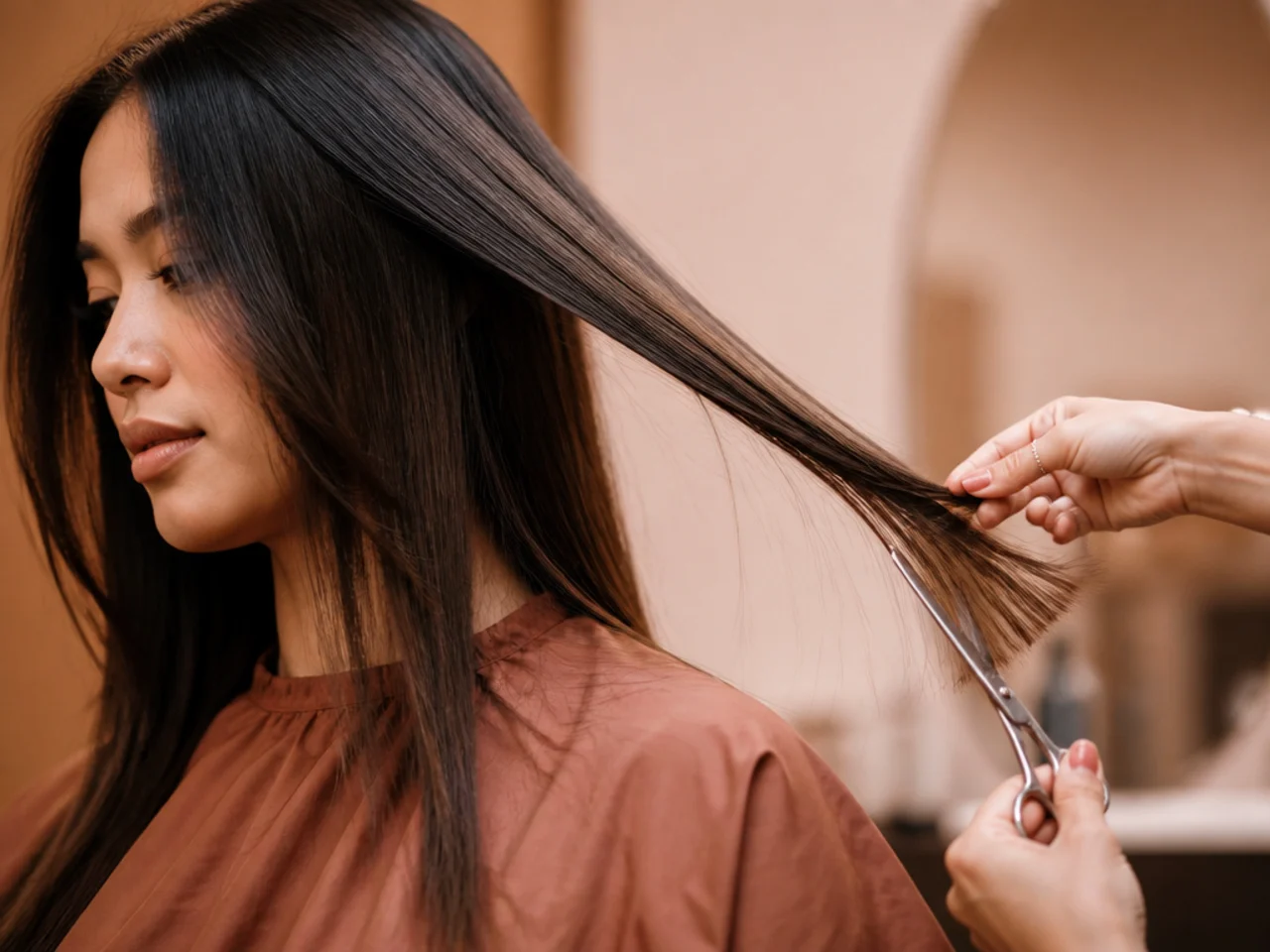
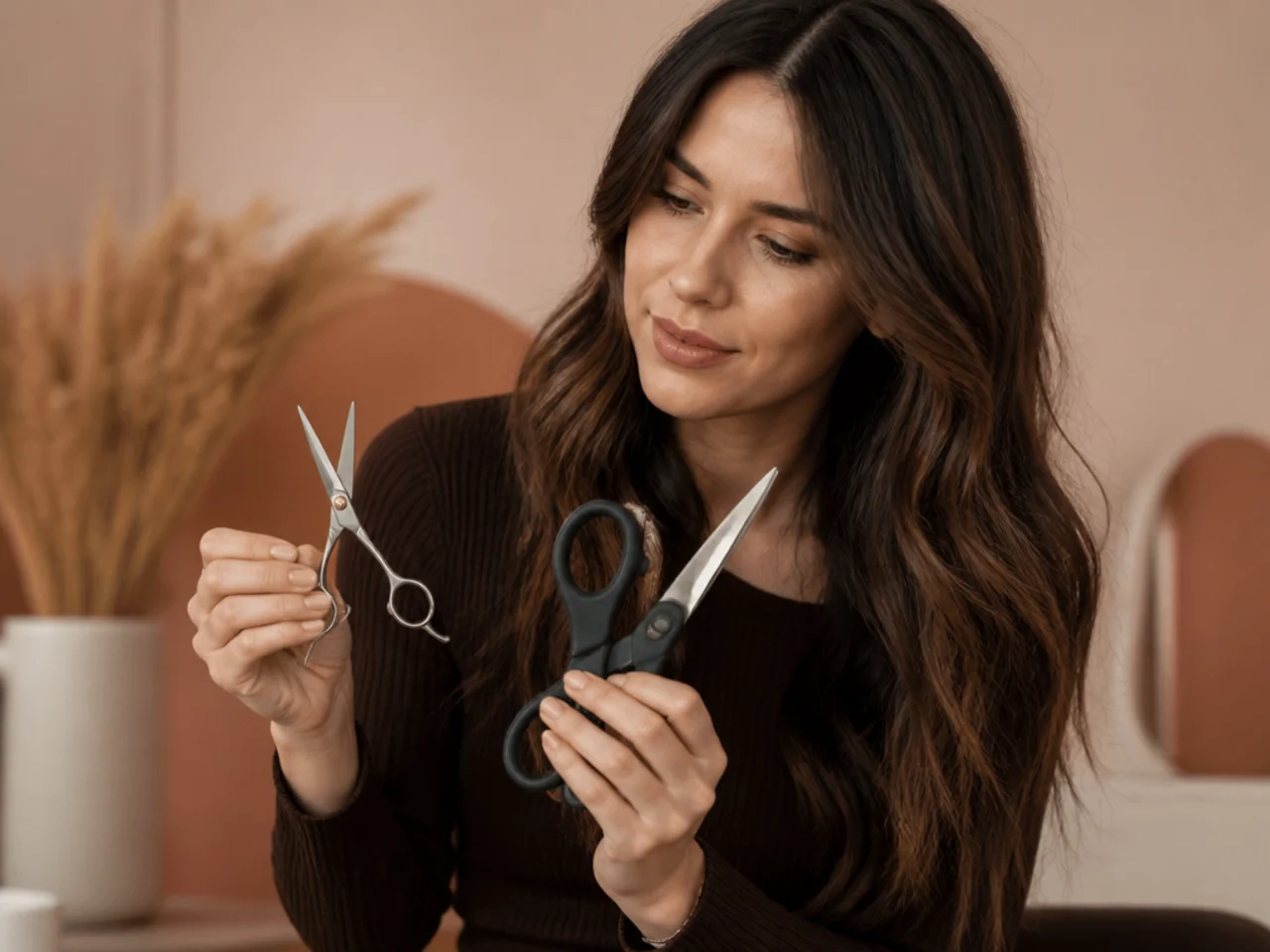
Use hairdressing shears or do not cut. Kitchen scissors bend the hair between two blunt blades rather than shearing it, and a crushed end splits within days.
The 20 Differences
1. Sectioning the Two Lengths
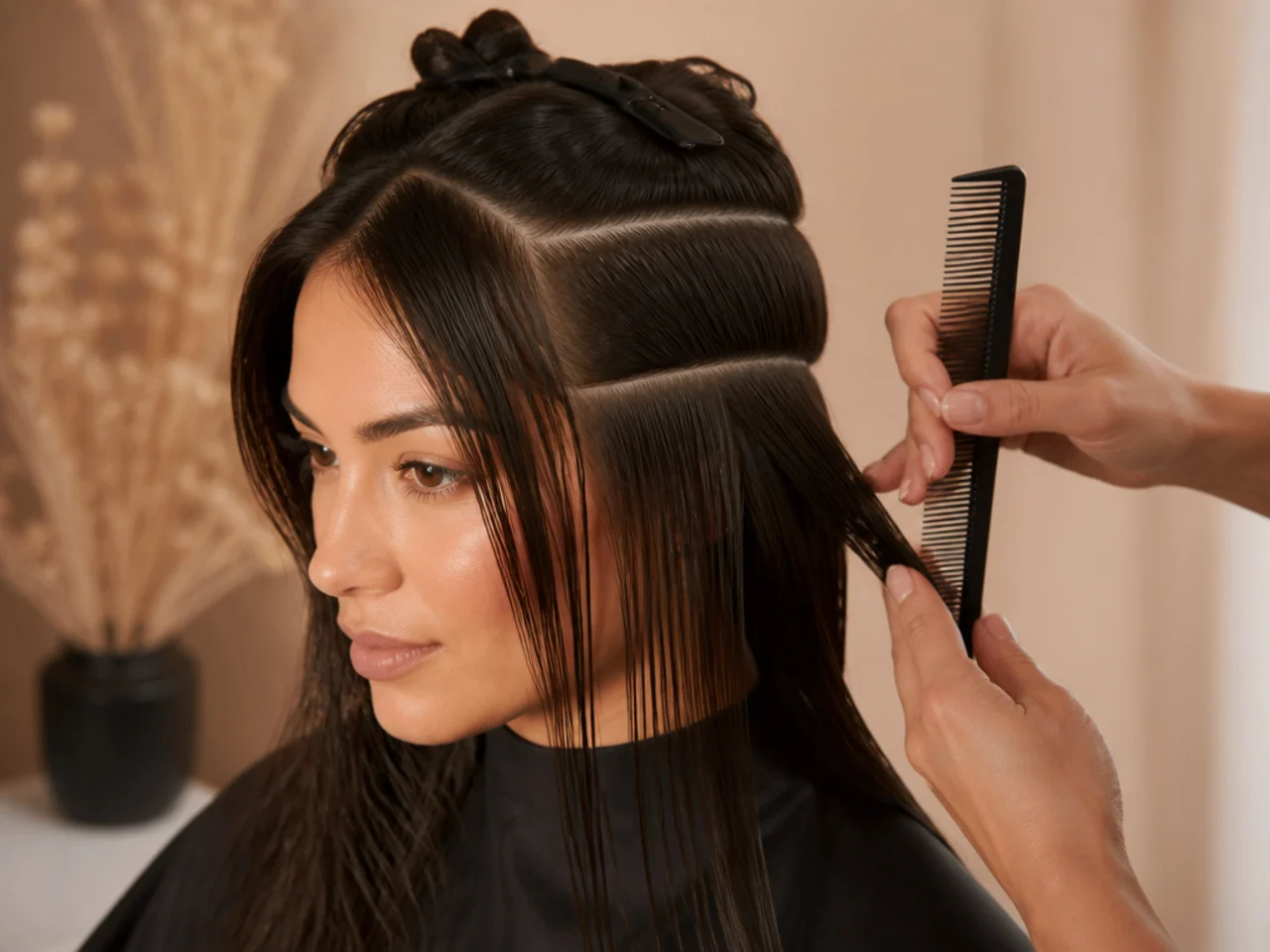
A salon separates the short internal layer from the base with clean horizontal partings before a single cut is made, so the two lengths never get mixed. At home the sections drift as you work and hair from the base ends up cut into the short layer. Salon wins, because the whole shape is defined by which hair belongs to which length.
2. Cutting Wet Versus Dry
Salons cut a butterfly dry so they can see where the hair actually falls. At home almost everyone cuts wet because it combs easily, and wet hair hangs at full stretch, so wavy hair retracts a centimetre or more as it dries. Salon wins for anyone whose hair bends at all.
3. The Ponytail Method
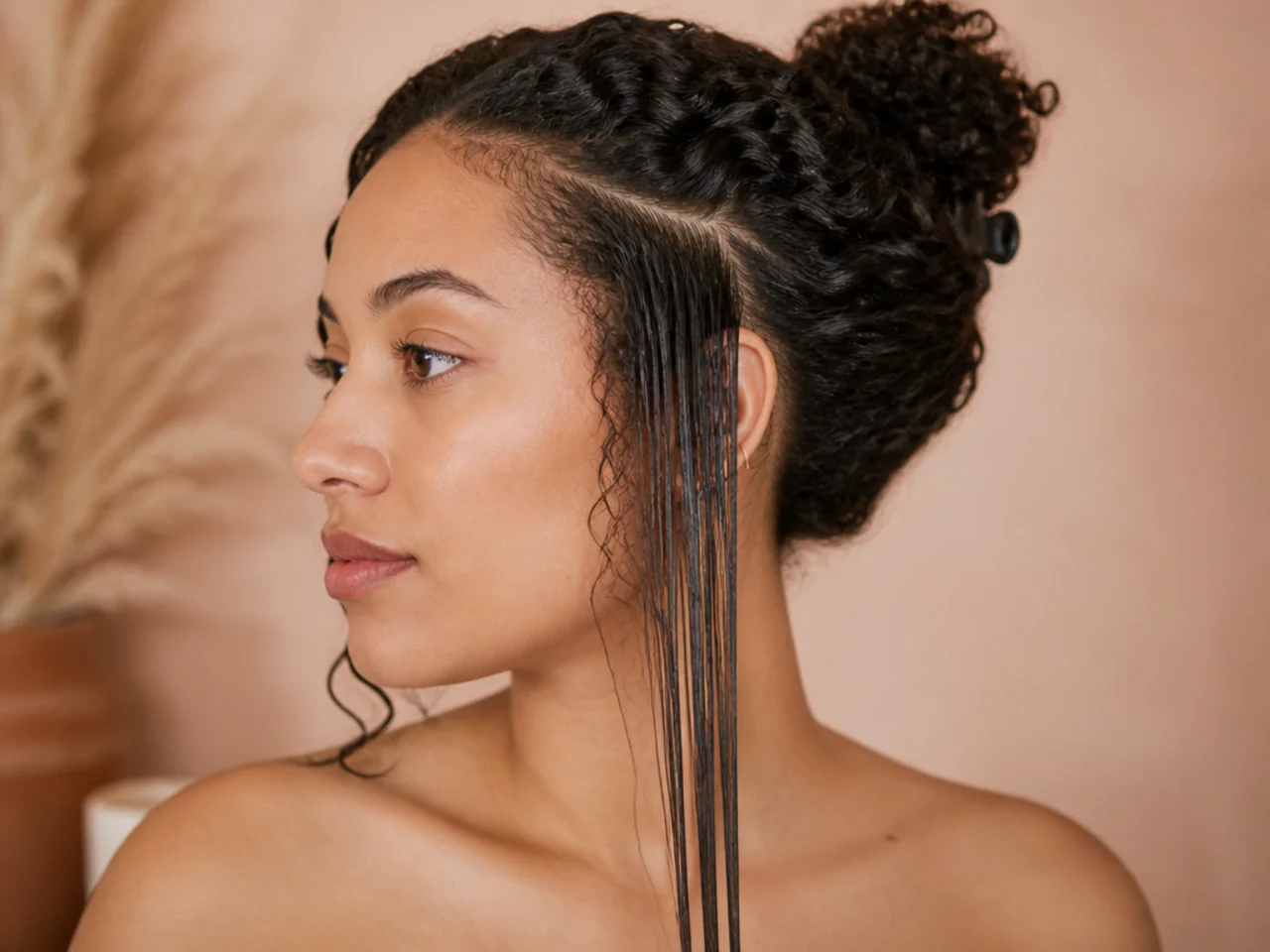
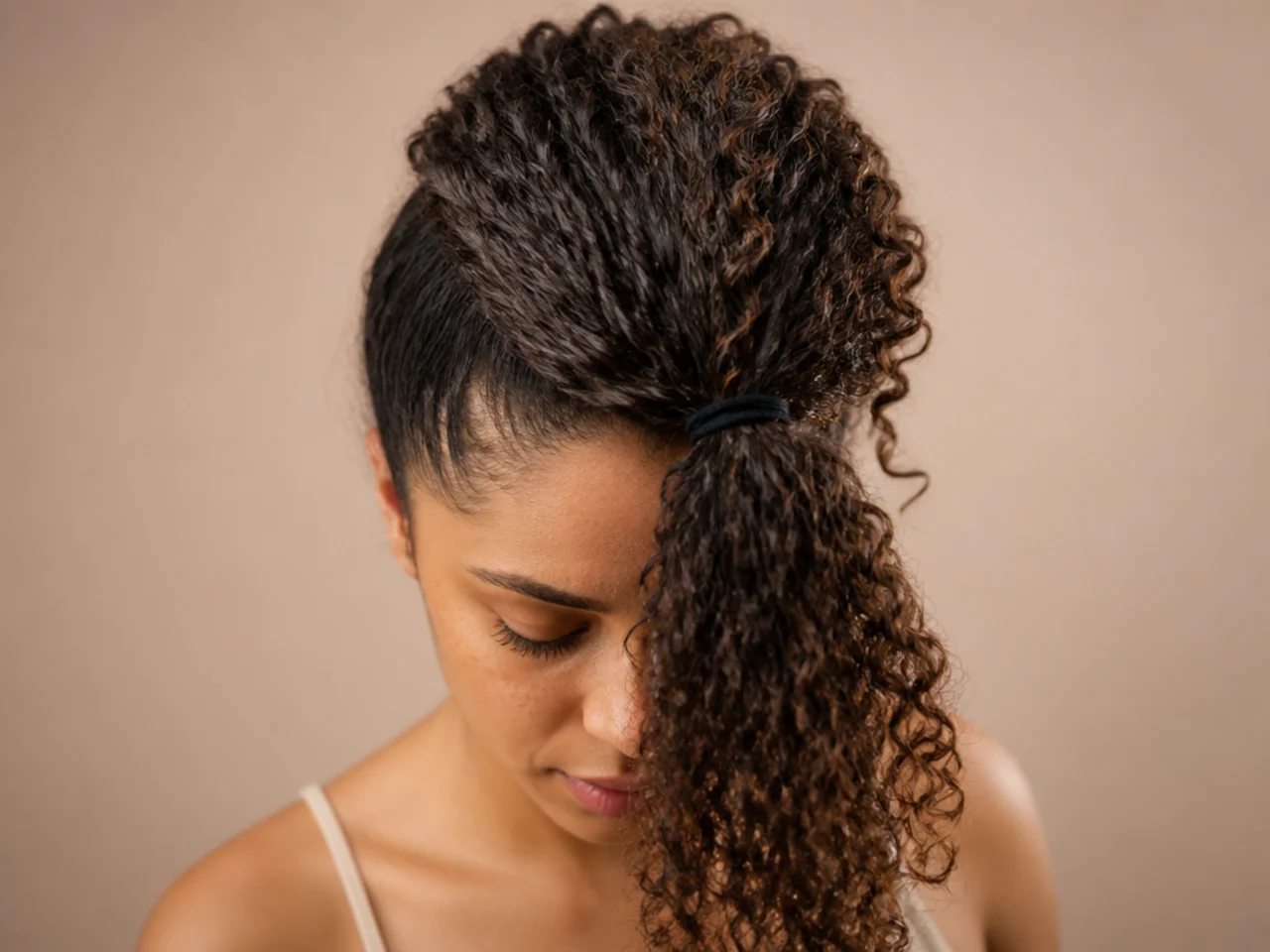
Gathering everything into an elastic at the front hairline and cutting across the end does produce layers, because each strand travels a different distance to reach the blade. But the lengths are decided by geometry, not by you, and moving the elastic a centimetre changes every layer at once. At home wins on speed only.
4. Setting the Perimeter
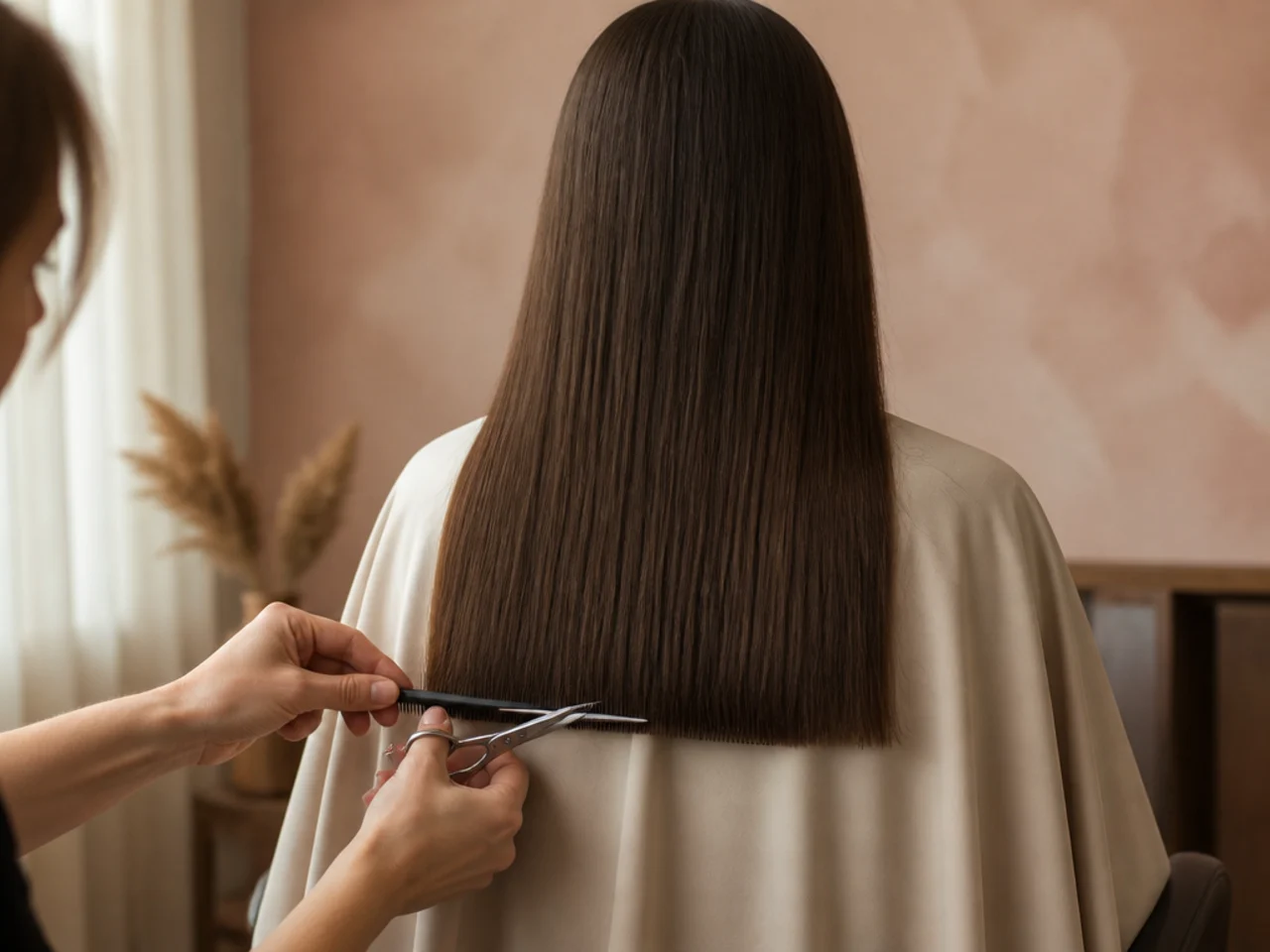
A stylist cuts the hem against a level guide with the head upright. At home it is cut by feel behind your own back, and it comes out higher on the side of your dominant hand every time. Salon wins outright, and this is the difference that costs the most length to correct.
5. Judging Layer Height
In a salon the shortest layer is set against your cheekbone with the head still. At home you tilt your chin to see what you are doing, and tilting shortens the front relative to the back by exactly as much as you moved. Salon wins, because the reference point has to stay fixed.

6. Cutting the Back
The interior layers behind the ears are the ones that hold the shape out from the head, and you cannot see them in any mirror arrangement. Working from a reflection also reverses your corrections, so errors grow rather than shrink. Salon wins by the widest margin of anything on this list.
7. Scissors
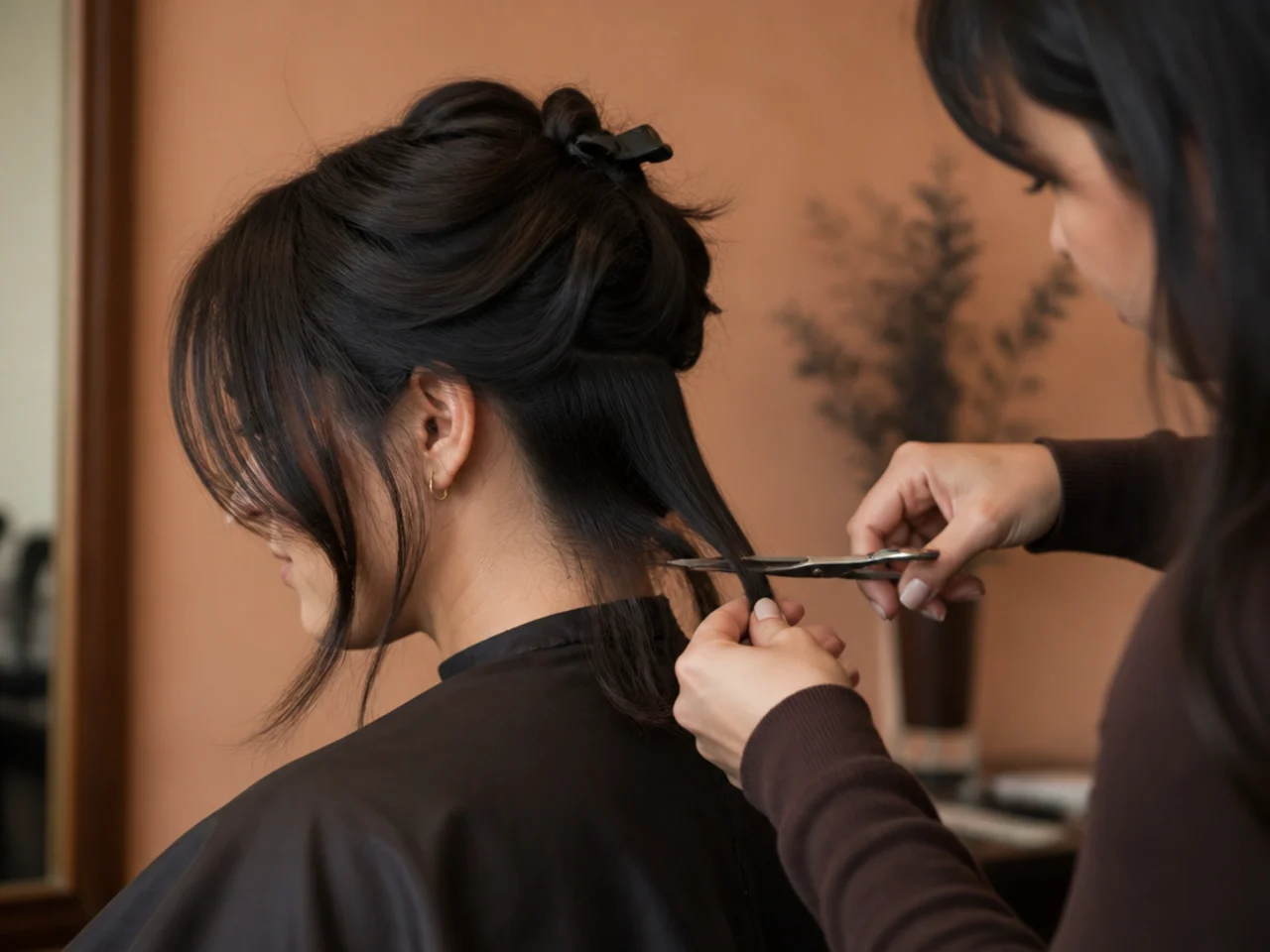
Hairdressing shears have a convex edge that slices a strand cleanly in one motion. Kitchen and craft scissors close on the hair and crush it, which fractures the cuticle at the tip and starts a split within days. Salon wins unless you own real shears, in which case the gap closes entirely.
8. Elevation and Angle
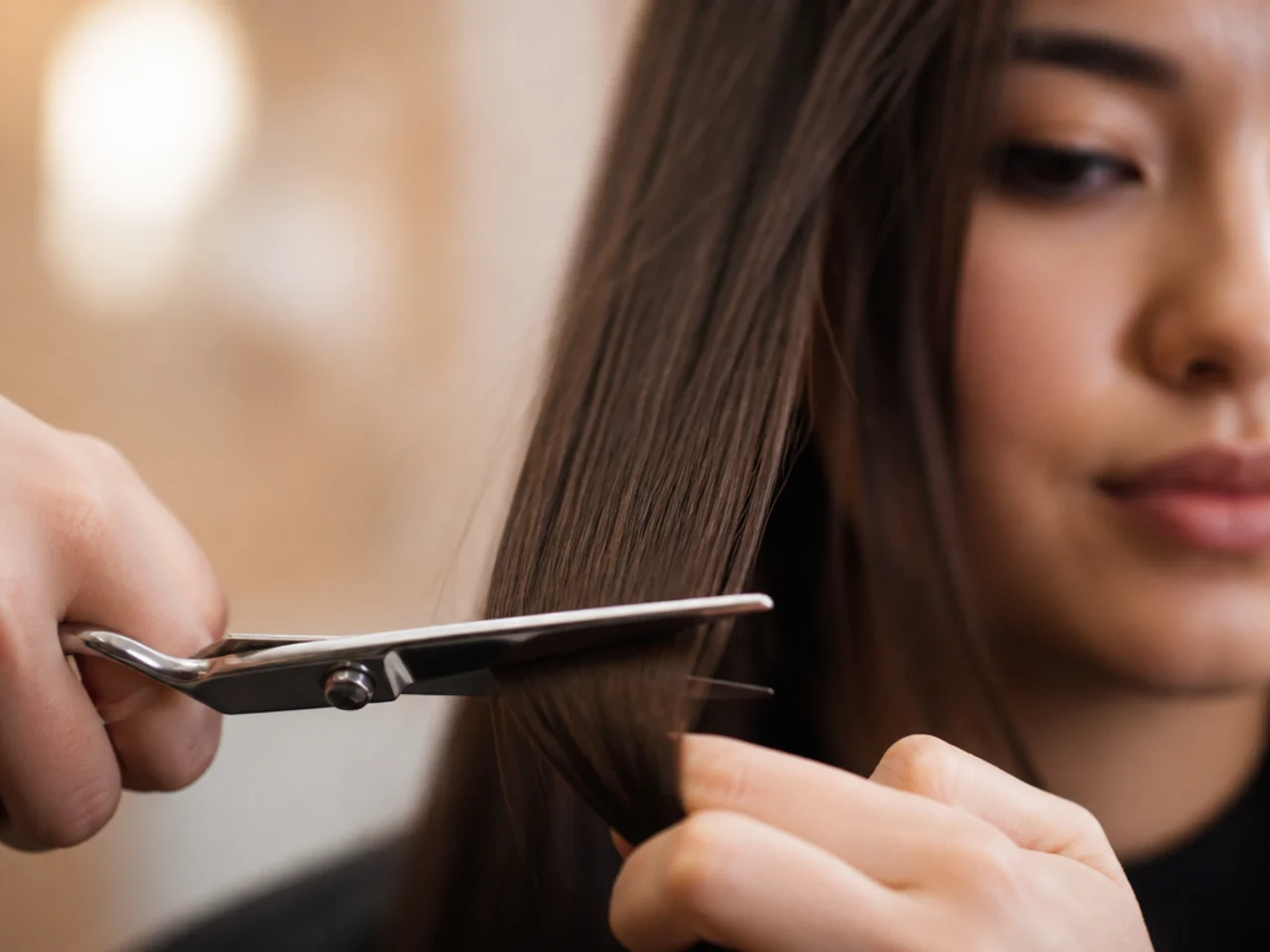
The steepness of a layer is set by how far the section is lifted from the head, and a stylist holds the same angle across dozens of sections by habit. At home the arm tires and the angle drops, so the last sections cut are longer than the first. Salon wins on consistency, which is what layers are made of.
9. Trimming the Curtain Bangs
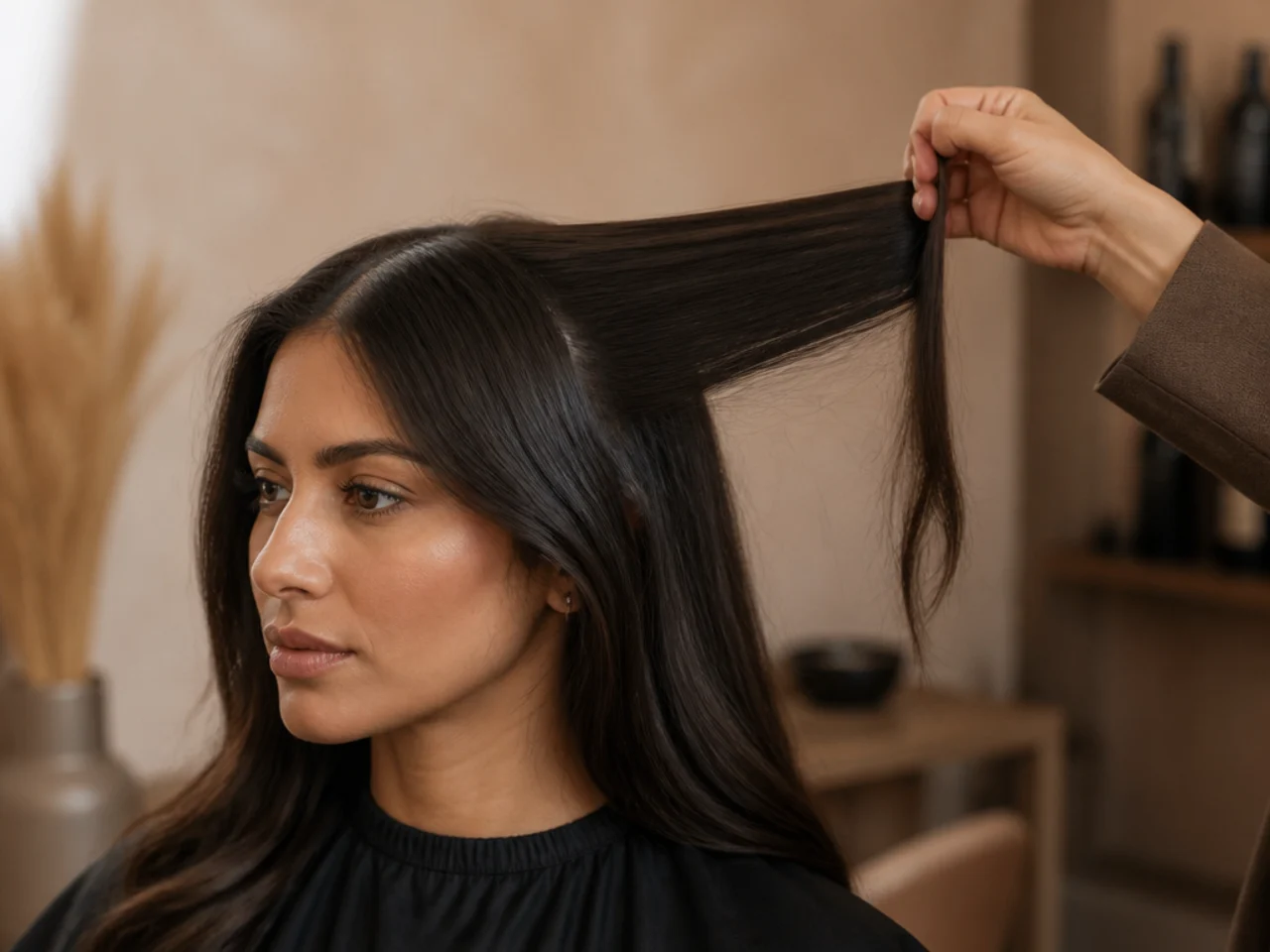
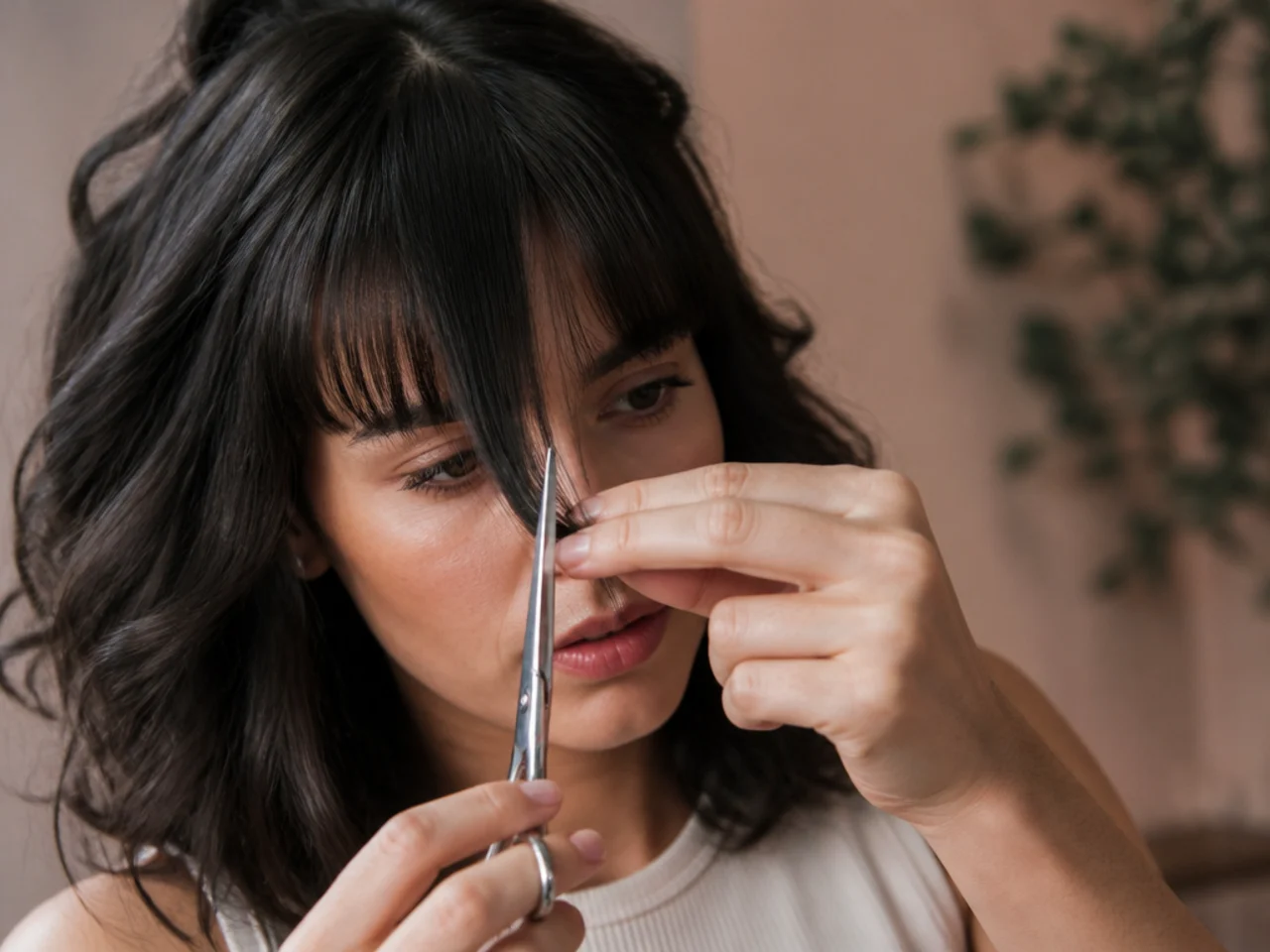
This is the one structural piece you can genuinely handle. The curtain sits directly in front of you, it is cut on a diagonal by eye, and any mistake grows out in weeks rather than months. At home wins, provided you cut it dry and take half of what you think.

10. Removing Bulk
Salons take weight out by slide cutting whole interior sections, which shortens hair without touching the surface. At home the instinct is thinning shears, which scatter short broken pieces through the mid lengths that then lift as frizz. Salon wins, and thinning shears are the tool most likely to make hair look worse.
11. Checking Balance
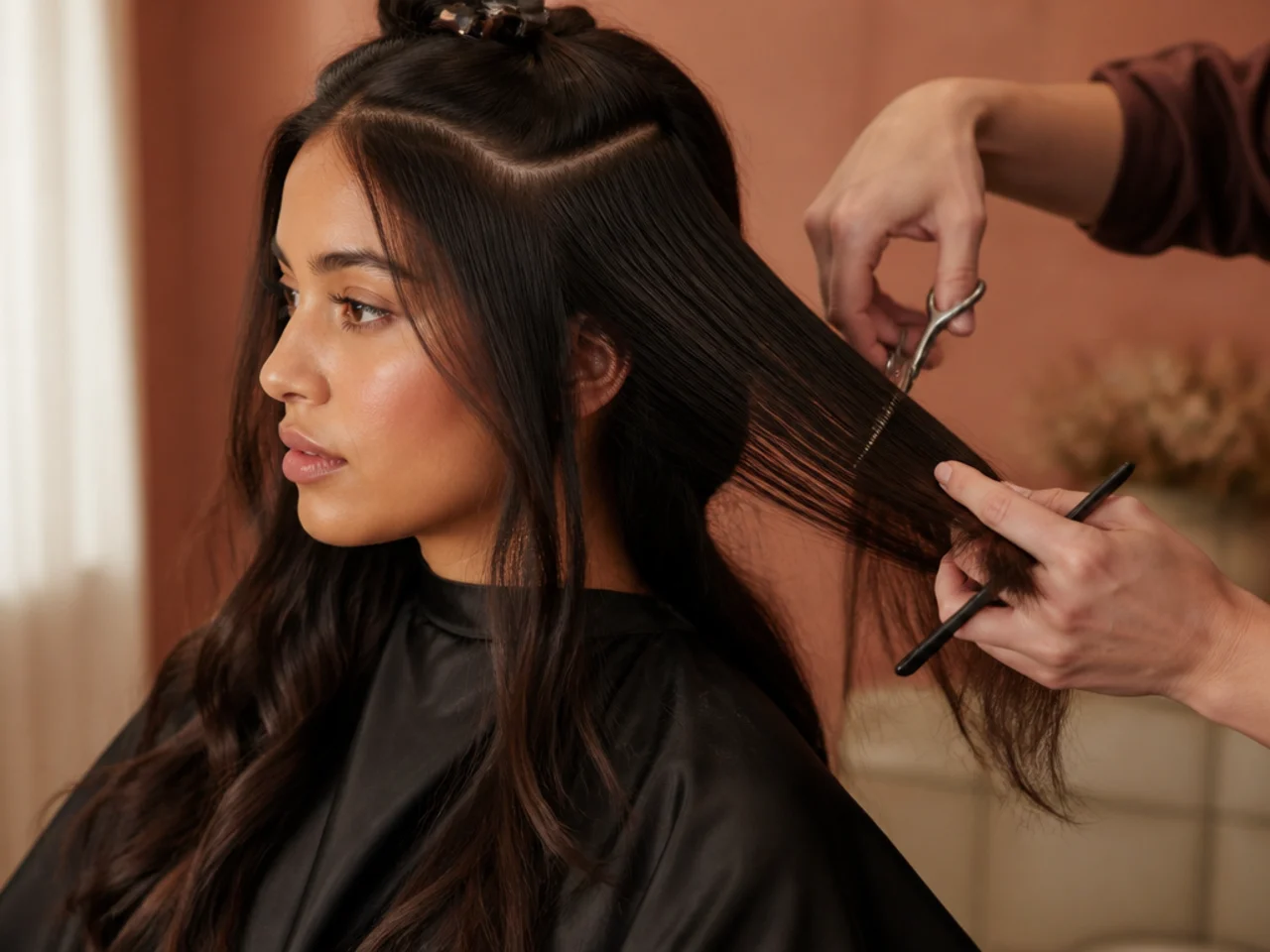
A stylist pulls both sides forward to the chin and compares them at the end of every cut. At home you compare them in a mirror, where the reflection reverses which side looks short and your correction goes to the wrong one. Salon wins because the check itself is unreliable at home.

12. Tension Control
Hair held under strong tension is longer than hair held loosely, so it springs up shorter when released. A stylist keeps tension even across the head out of habit. At home your dominant hand pulls harder, which is the mechanical reason home cuts come out asymmetric. Salon wins.
13. Cost
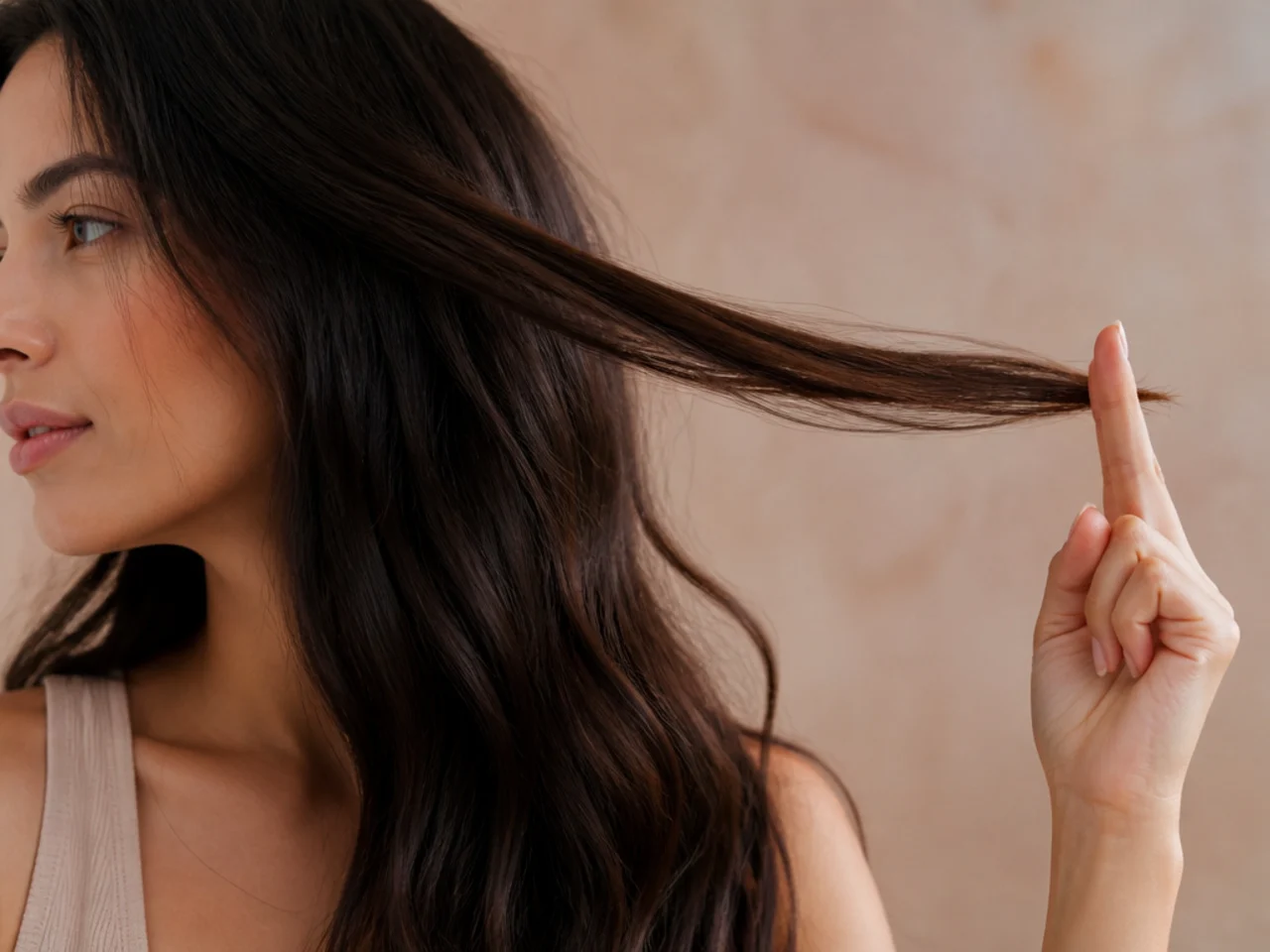
The home version has no cost beyond a pair of shears, and for a maintenance trim that saving is real and repeatable. The comparison changes the moment a correction is needed, since fixing one short layer means taking the rest down to meet it. At home wins for trims, loses for structure.
14. Time
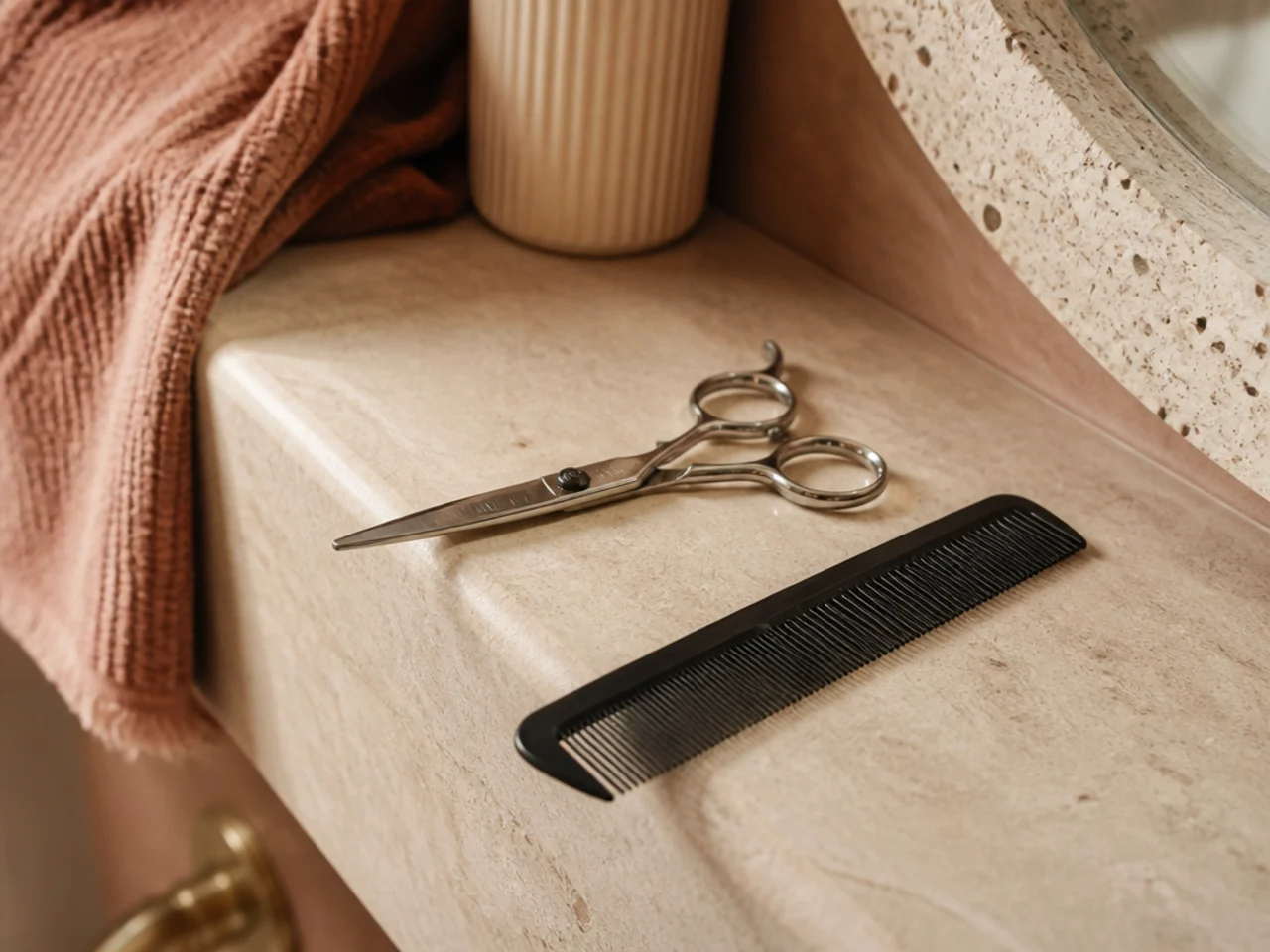
A trim at your own sink takes a few minutes with no travel and no waiting. A full butterfly takes a salon an hour or more because the sectioning is slow and the balance checks are repeated. At home wins for small work, and that is exactly what it should be used for.

15. Fixing a Mistake
Any correction to a layer that is too short means bringing every longer layer down to meet it, so one bad section costs length across the whole head. A stylist can sometimes disguise it by re angling the layers around it instead. Salon wins, and this is why the risk is asymmetric.

16. Colour Placement
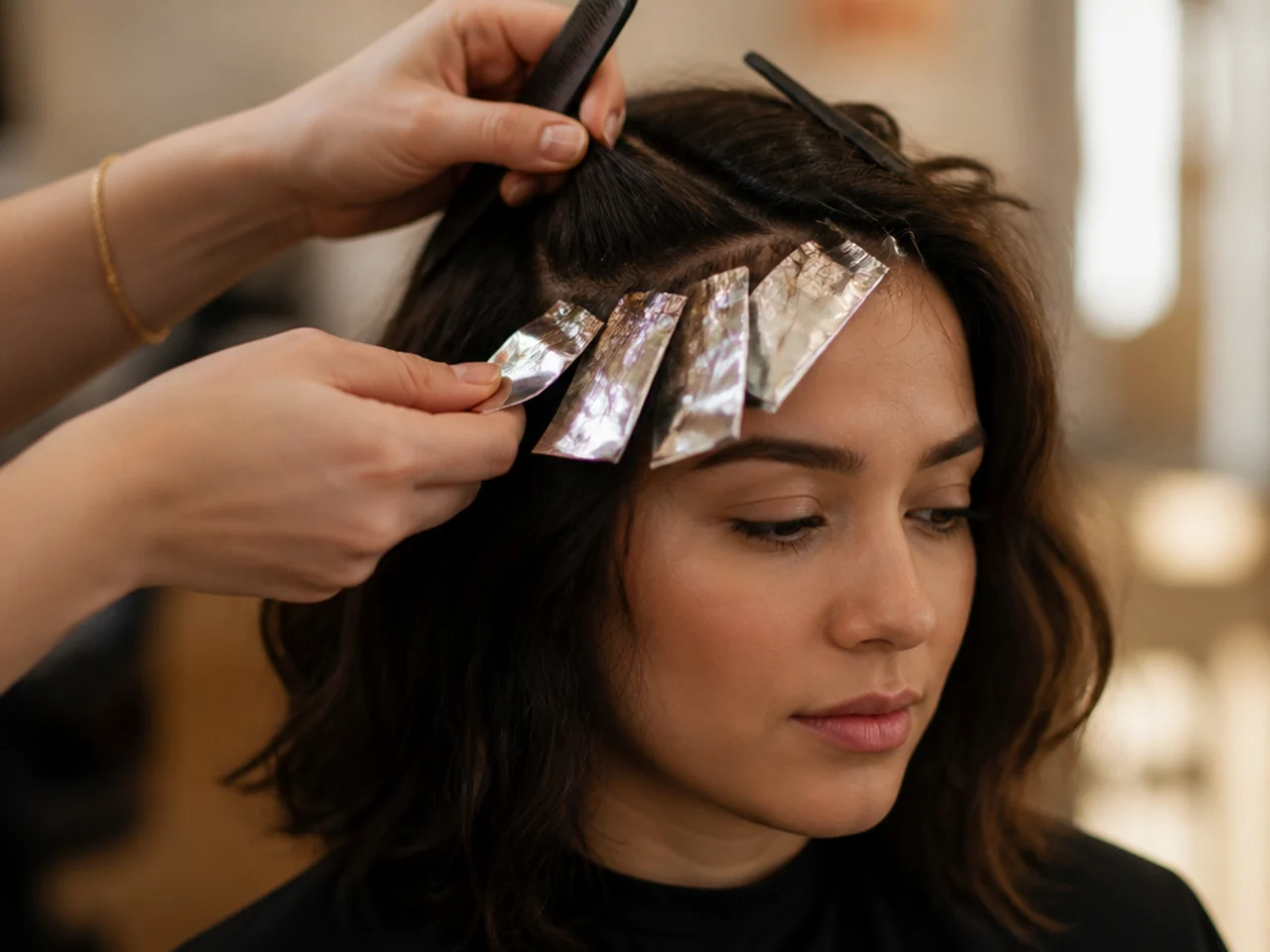
A money piece or a set of wing highlights has to sit exactly on the short layer to be visible when it moves. Placing it yourself means guessing where that layer starts under the top surface. Salon wins, since misplaced lightening shows up as a stripe rather than as movement.
17. The Finishing Blow Dry
A salon finish makes any cut look better than it will look at home, which is exactly why it is a poor way to judge the cut. Your own dry, repeated daily, is the honest test. At home wins as a verdict, salon wins on the day itself.

18. Repeatability
A stylist writes down the layer height and the perimeter length and reproduces it at the next visit. A home cut is reconstructed from memory each time, so the shape drifts a little further from where it started with every attempt. Salon wins over any timescale longer than one cut.
19. Curly and Wavy Texture
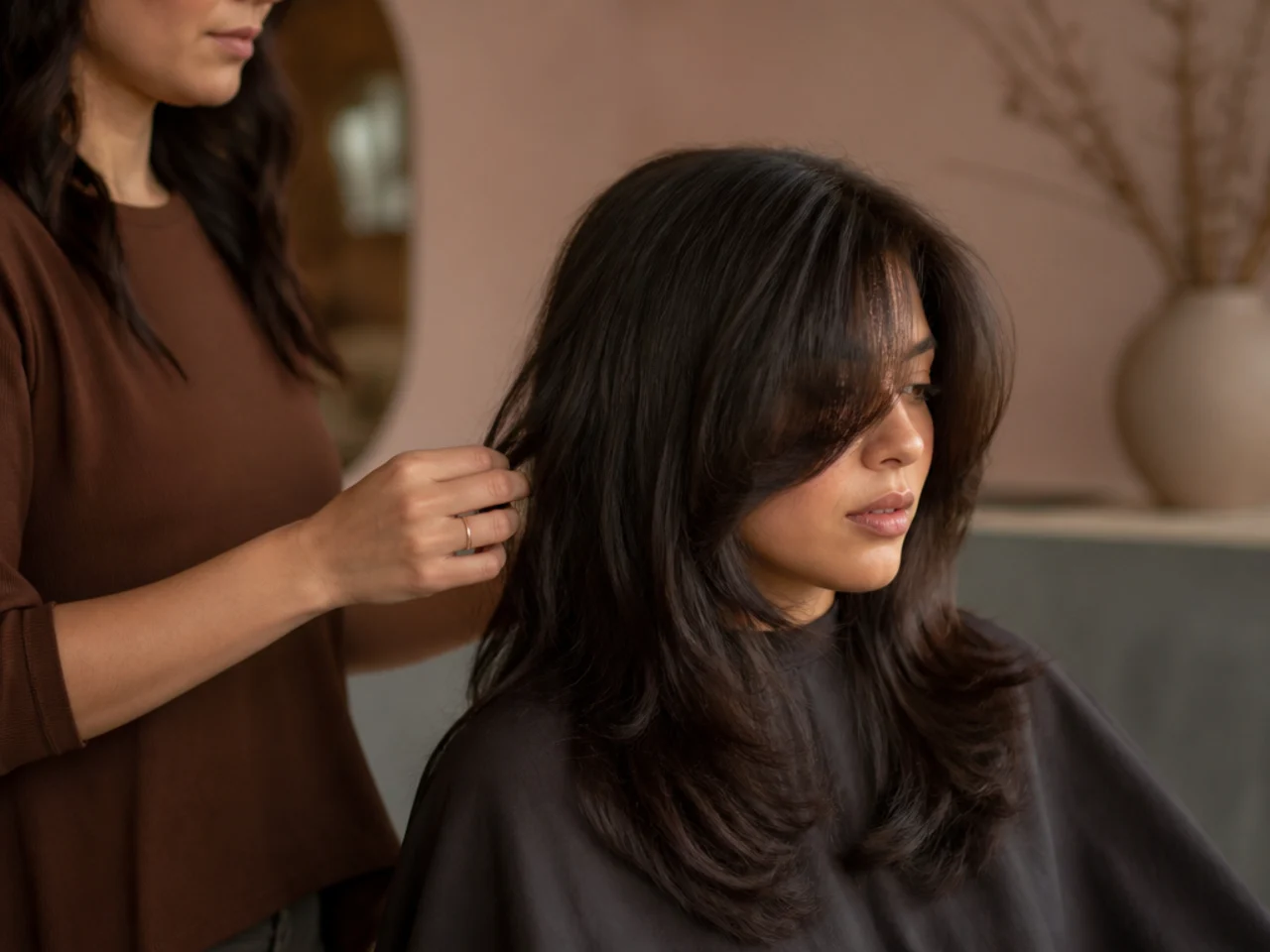
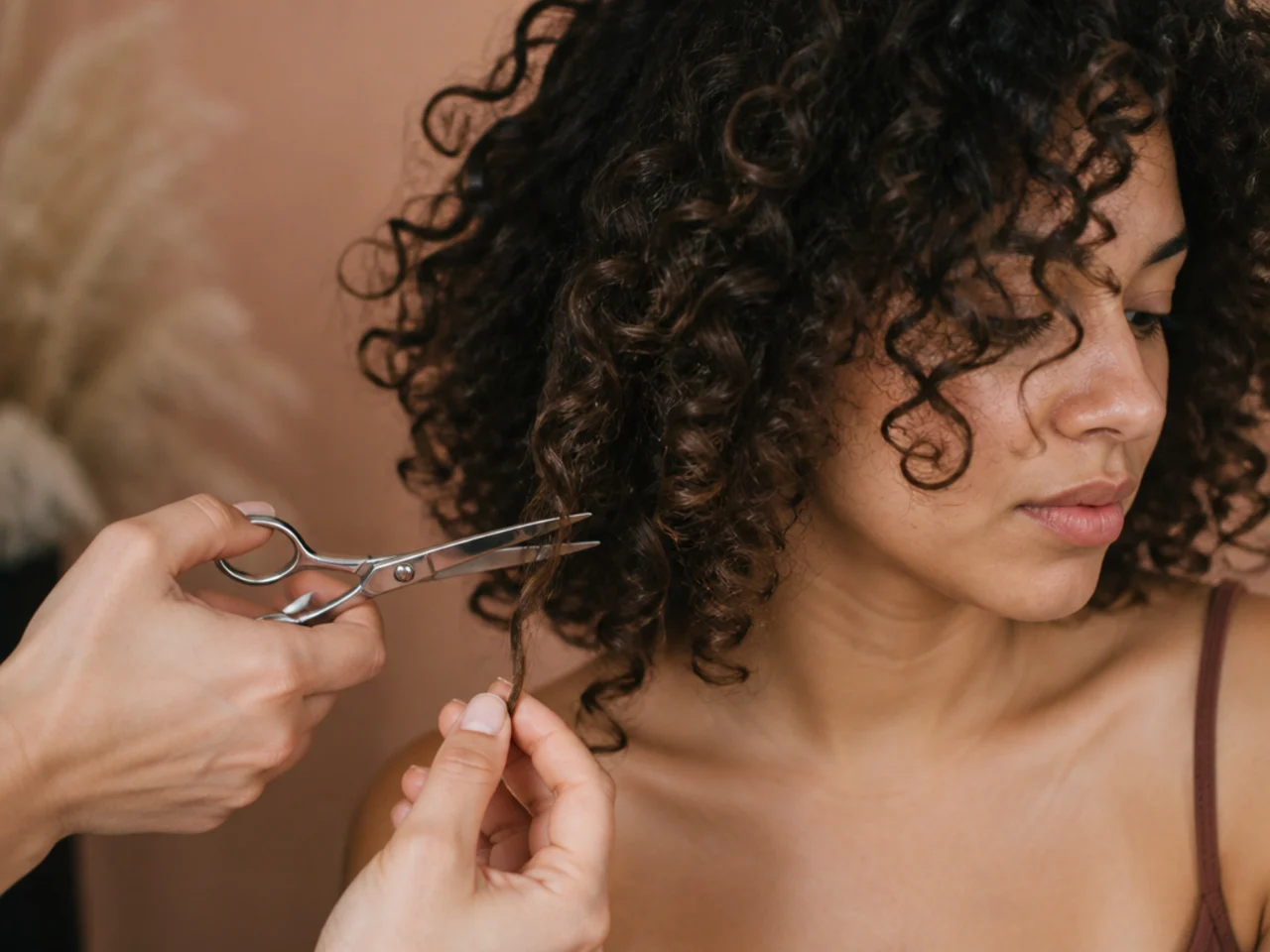
Curl retracts as it dries, sometimes to a third of its wet length, so it has to be cut dry and often curl by curl. That is slow, deliberate work that is hard to do on your own head at an angle. Salon wins clearly on any hair with a pattern.
20. Maintenance Between Cuts
Trimming the curtain, tidying two long strays at the front and keeping split ends off the shortest layer are all safely yours, and doing them stretches the interval between appointments. At home wins, and this is the highest value thing a home kit does.
Styling and Upkeep
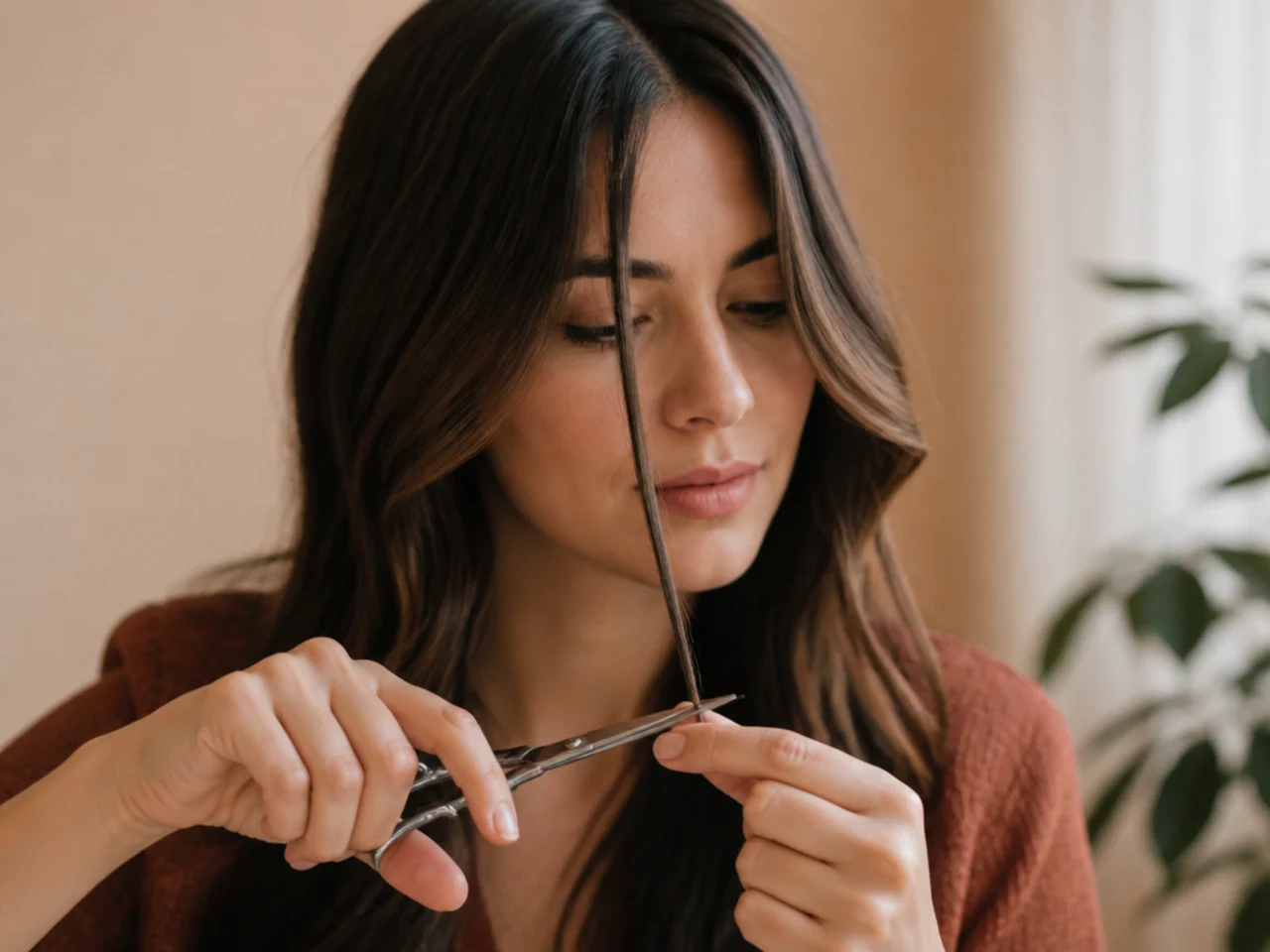
Trim the curtain dry and in daylight. Wet hair hangs longer than it will sit, and bathroom light hides the unevenness you are trying to fix.
Cut half of what you intend. You can always take more. Nothing puts it back.
Point the shears upward into the ends. Cutting into the hair rather than across it leaves a softer edge that hides a wobbly line.
Leave the hem to a stylist. It is the one line where a small error is permanently visible next to its own opposite side.
Book the structure, do the upkeep. Establish the two lengths in a chair, then maintain them yourself for two cycles.
Mistakes to Avoid
Cutting wet if your hair waves. It retracts as it dries, and the layer you liked at the sink is not the one you keep.
Thinning shears for bulk. They leave short broken pieces that lift instead of lying flat.
Working between two mirrors. The image reverses and your corrections go to the wrong side.
Cutting with your chin tilted down. It shortens the front relative to the back by exactly the angle you moved.
Chasing symmetry cut by cut. Each correction takes a little more off, and the shape climbs upward while you are trying to level it.

FAQ
Which part is safe at home? The curtain and small trims. Nothing structural.
Wet or dry? Dry, always, on anything with a wave or curl.
What goes wrong most? The hem, cut higher on your dominant side.

Final Thoughts
Split the job by visibility. Anything you can see in one mirror and check against your own face is fair game, and anything behind your ears is a structural decision that costs months of growth when it goes wrong.
For the full range of lengths and how the two lengths are set see the butterfly haircut guide. See also butterfly haircut for short hair. More in Womens Hairstyles.