20 Sleek Graduation Hairstyles That Survive the Cap
Twenty sleek graduation styles and the two things that ruin them — a gel film pressed under the cap band before it has dried, and humidity softening that film hours later. Both are avoidable if you know the timing.
In this article · 28
- The Cap Band Line
- Sleek by Length
- Fine and Textured Hair
- Gel Flaking and Humidity
- Morning Timeline
- Cap Off Recovery
- The 20 Sleek Graduation Styles
- 1. Sleek Low Bun
- 2. Slicked Low Ponytail
- 3. Wet Look Bun
- 4. Middle Part Chignon
- 5. Deep Side Part Bun
- 6. Glass Hair
- 7. Sleek Half Up
- 8. Sleek Curled Tail
- 9. Ballerina Bun
- 10. Rope Twist Bun
- 11. French Twist
- 12. Bubble Ponytail
- 13. Laid Edges Bun
- 14. Sleek Bob
- 15. Sleek Pixie
- 16. Side Swept Waves
- 17. Sleek Braided Ponytail
- 18. Braids Into a Low Bun
- 19. Claw Clip Twist
- 20. Ribbon Bun
- Final Thoughts
Sleek is the safest look at a graduation and the easiest to ruin, and both facts come down to the same thing — the product film.
A sleek finish is a polymer film holding the cuticle flat. Flat cuticles reflect light in one direction, which is where the shine comes from. Everything about the day is a threat to that film.
The cap is the first threat and humidity is the second. A band pressed onto a wet film sets a crease into it. Damp air hours later softens it and the edges lift.
The Cap Band Line
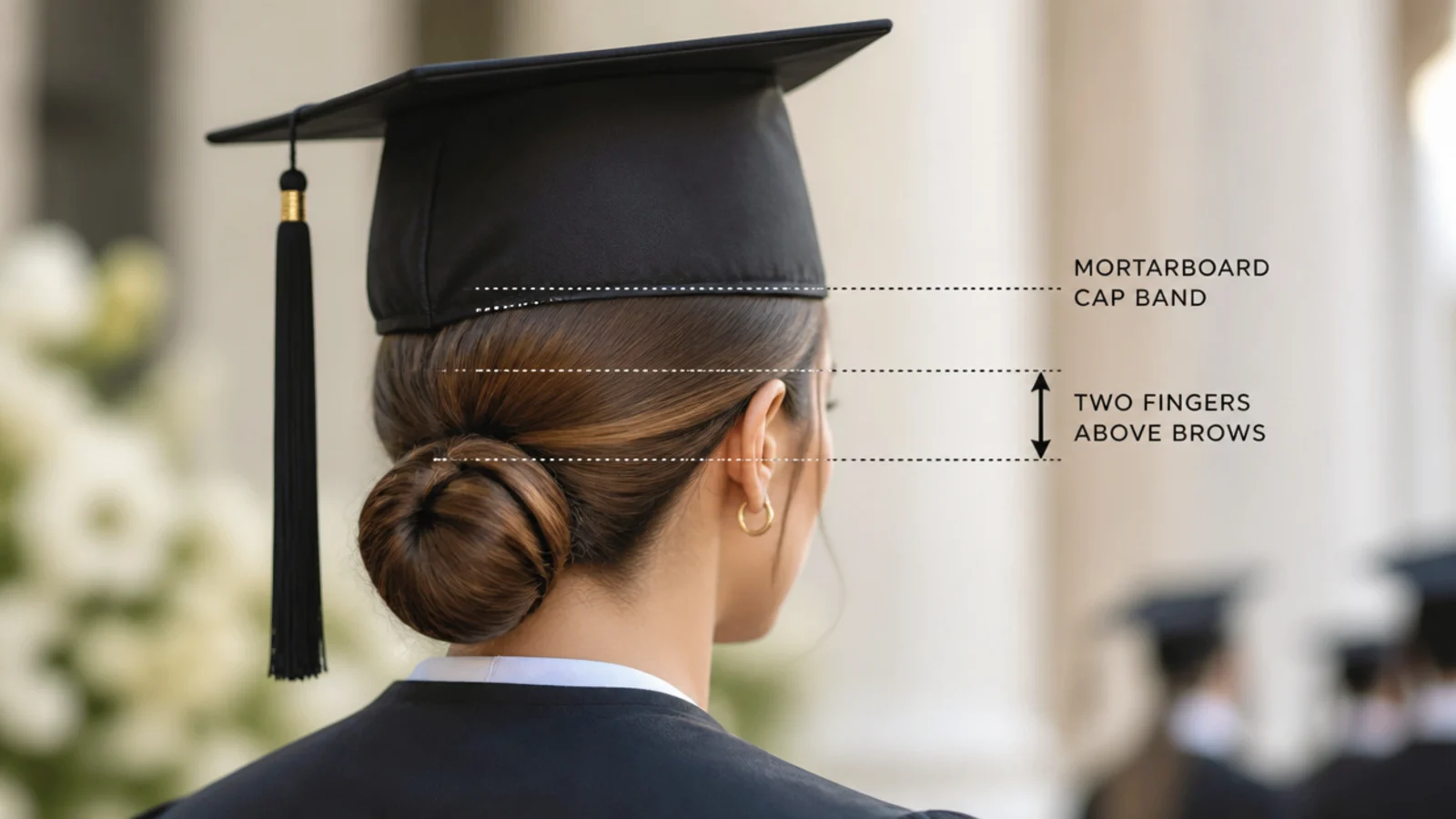
A finger above the brows at the front. That edge crosses the most polished part of any slicked style, so it is the first place a crease will show.
Occipital bone at the back. The band rests there, which means a bun built below the bone is outside the cap entirely.
Dry before the cap, without exception. A wet film sets in whatever shape it is held in, and a band holds it in a line across your forehead.
Width is free, depth is not. A wide flat chignon passes under the band without touching it. A rounded knot at crown level does not.
Sleek by Length
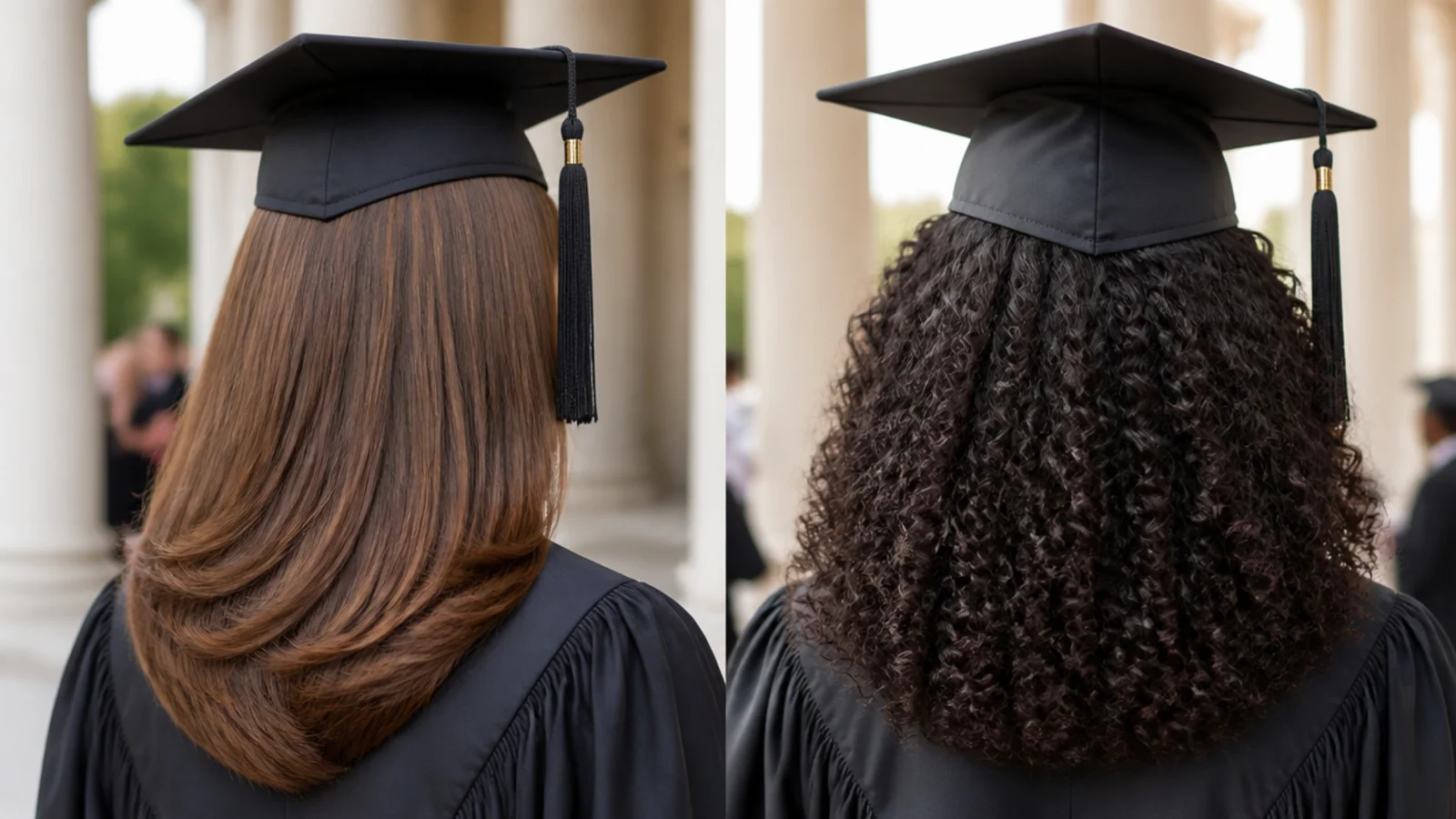
Pixie and short crops. The whole head is the visible surface, so use a light wax rather than gel. Gel on short hair reads as wet rather than as sleek.
Chin to shoulder. The best case for glass hair, because a short smooth length gives one continuous reflective plane with no interruptions.
Long hair. Slick the top and roots, then decide separately whether the ends are straight, waved or gathered. Trying to hold the whole length flat with product weighs it down.
Coils and tight texture. Sleek here means laid and defined, not straightened. A brush, a strong hold gel and a silk scarf while it dries do more than heat ever will.

Fine and Textured Hair
Fine hair needs less product than you think. Too much gel weighs the roots down until the scalp shows through, which reads as thin rather than polished.
Apply to damp hair, not dry. Water spreads a small amount of product across a large surface, so the film is thin and even instead of patchy and heavy.
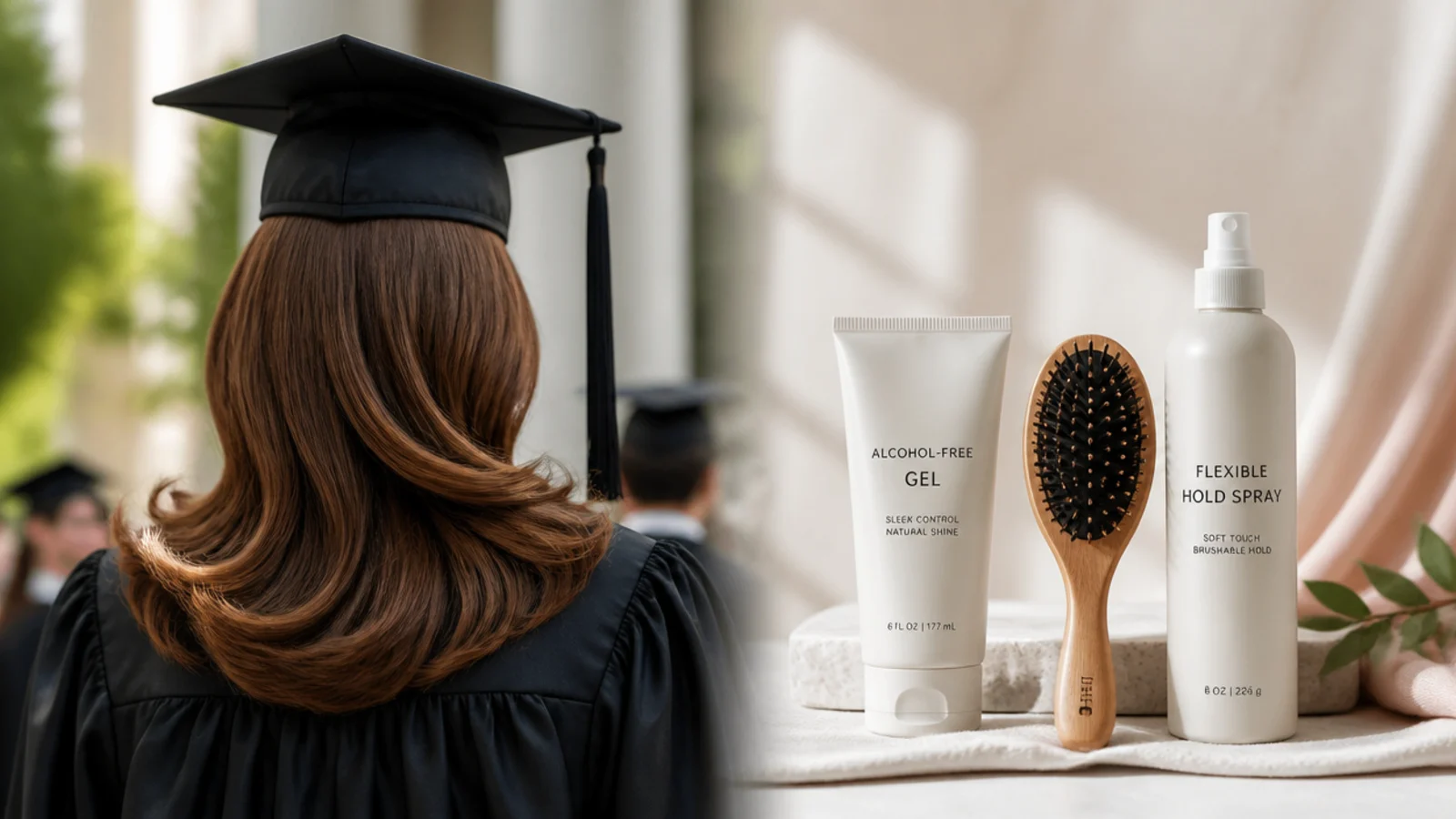
Textured hair needs more hold, not more heat. A strong gel plus tension from a brush lays the surface without cooking the strand.
Let a scarf do the drying. Tying a silk or satin scarf over a laid style while it sets holds the cuticle flat mechanically until the film hardens.
Gel Flaking and Humidity
Flakes are a fractured film. A dried polymer layer broken by a brush or by fingers turns into white fragments. The fix is not to touch it after it sets.
Layering different products cracks faster. A gel over a wax over a cream gives you three films with different flex, and the interfaces between them are where the breaks start.
Humidity softens the film from the outside. Water plasticises the polymer, the hold drops, and edges you laid at eight in the morning lift by noon.
A finishing oil buys you hours. A thin oil layer on the surface slows the moisture reaching the film underneath, and it adds the reflection the look is built on.
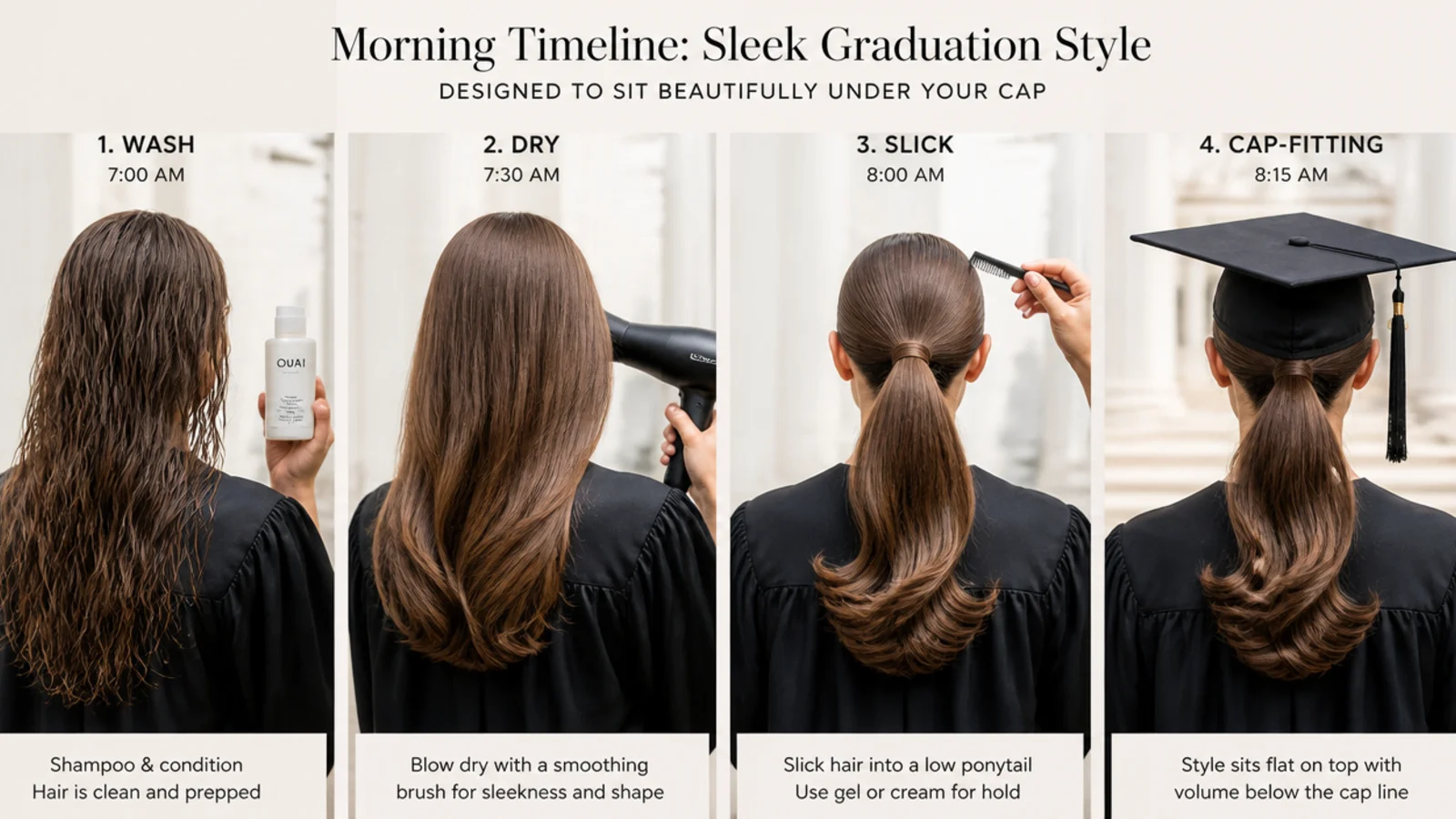
Morning Timeline
Wash the night before. A clean cuticle is slippery, and pins in a sleek updo have very little to grip as it is.
Product on damp hair, ninety minutes out. That is roughly how long a full gel film takes to set hard enough to sit under a band.
Do the cap fitting once, dry, in the gown. The collar changes where a low bun sits and you want to know before the hall.
Then stop touching it. Every pass of a hand over a set film is a chance to break it.
Cap Off Recovery
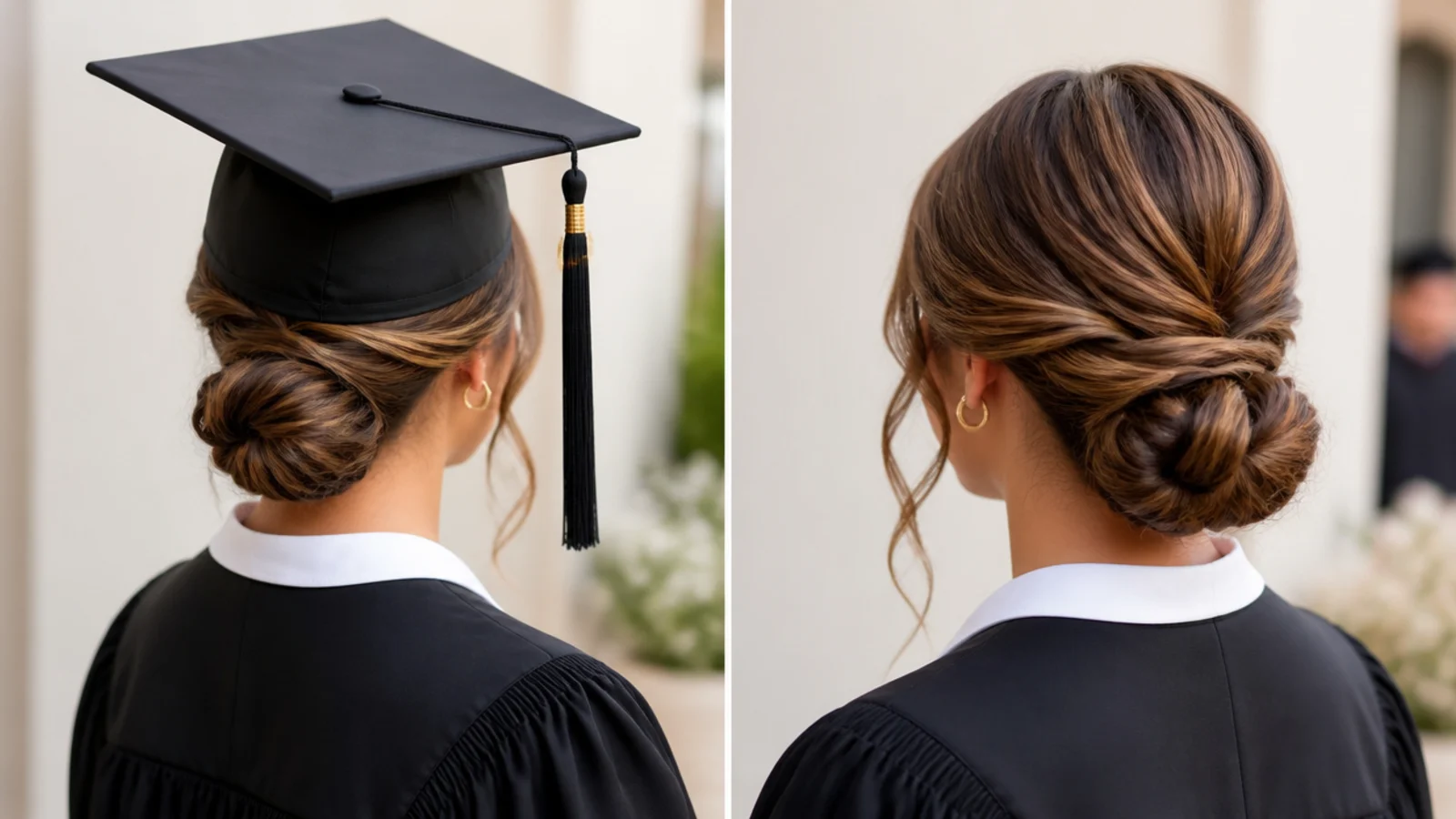
The band line shows most on sleek hair. A single flat reflective surface makes any interruption in it obvious, which is the cost of the finish.
A drop of oil on the fingertips fixes the front. Smooth along the line rather than across it, following the direction the hair was laid.
Do not brush it. A brush fractures the film across the whole head to repair one line.
A low bun has nothing to repair. Nothing was under the band except scalp, which is why the pinned versions here are the safest choices of the twenty.
The 20 Sleek Graduation Styles
1. Sleek Low Bun
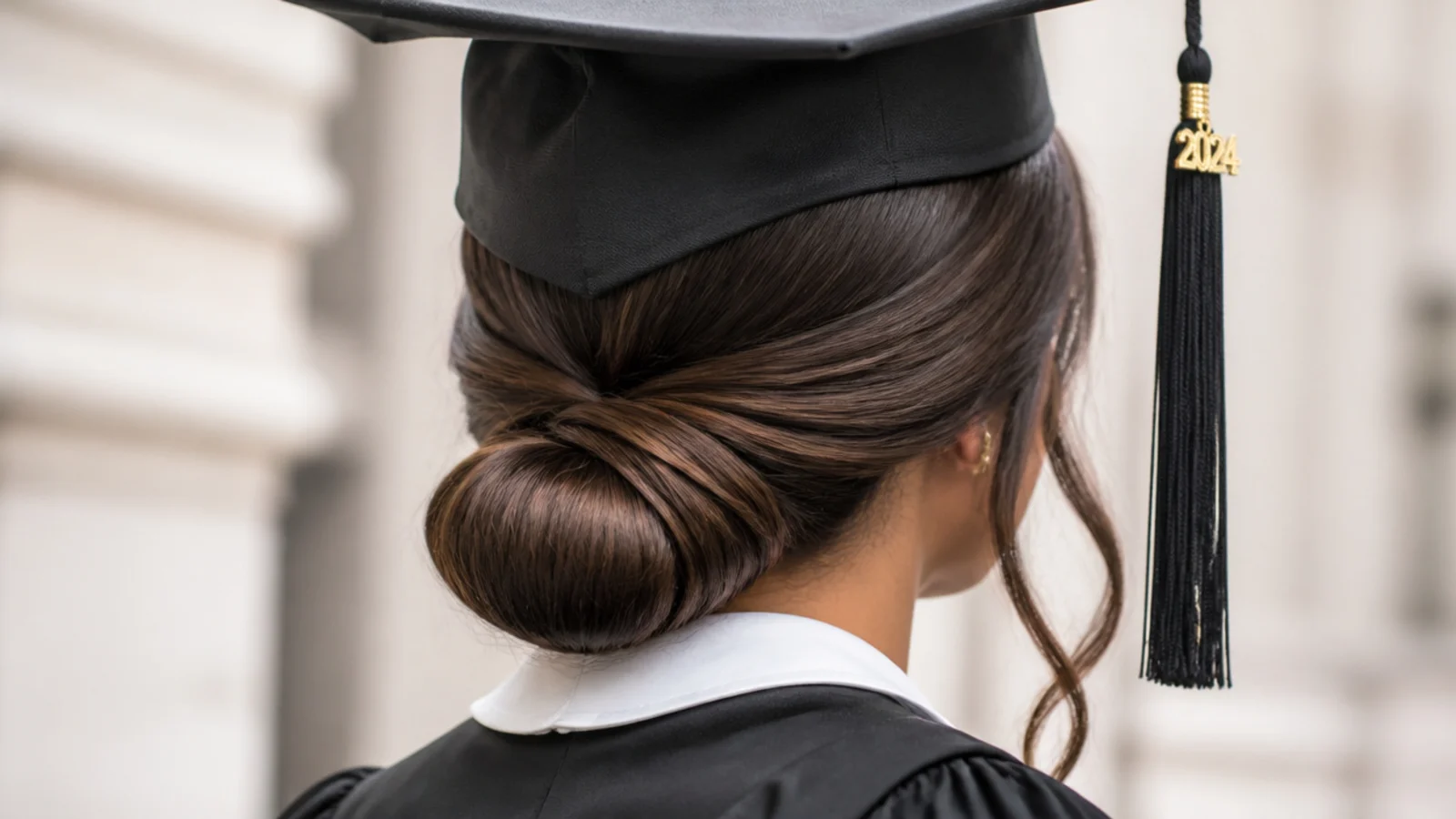
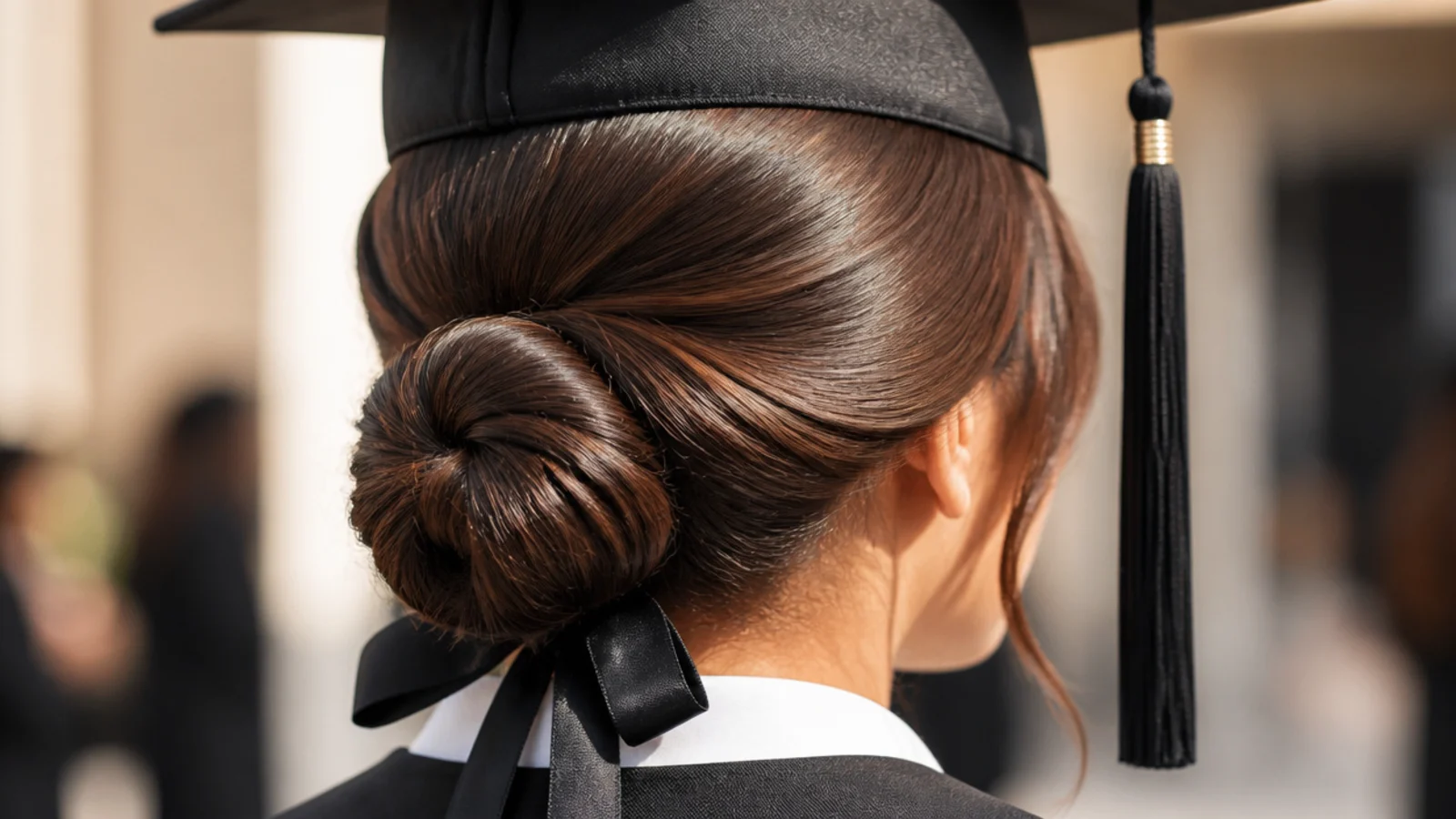
The reference version. Product laid over the crown and a flat coil at the nape means the entire style sits below the cap band, so the only thing under the board is a dry, hard, set surface. It photographs as one continuous reflective plane from the front.
2. Slicked Low Ponytail
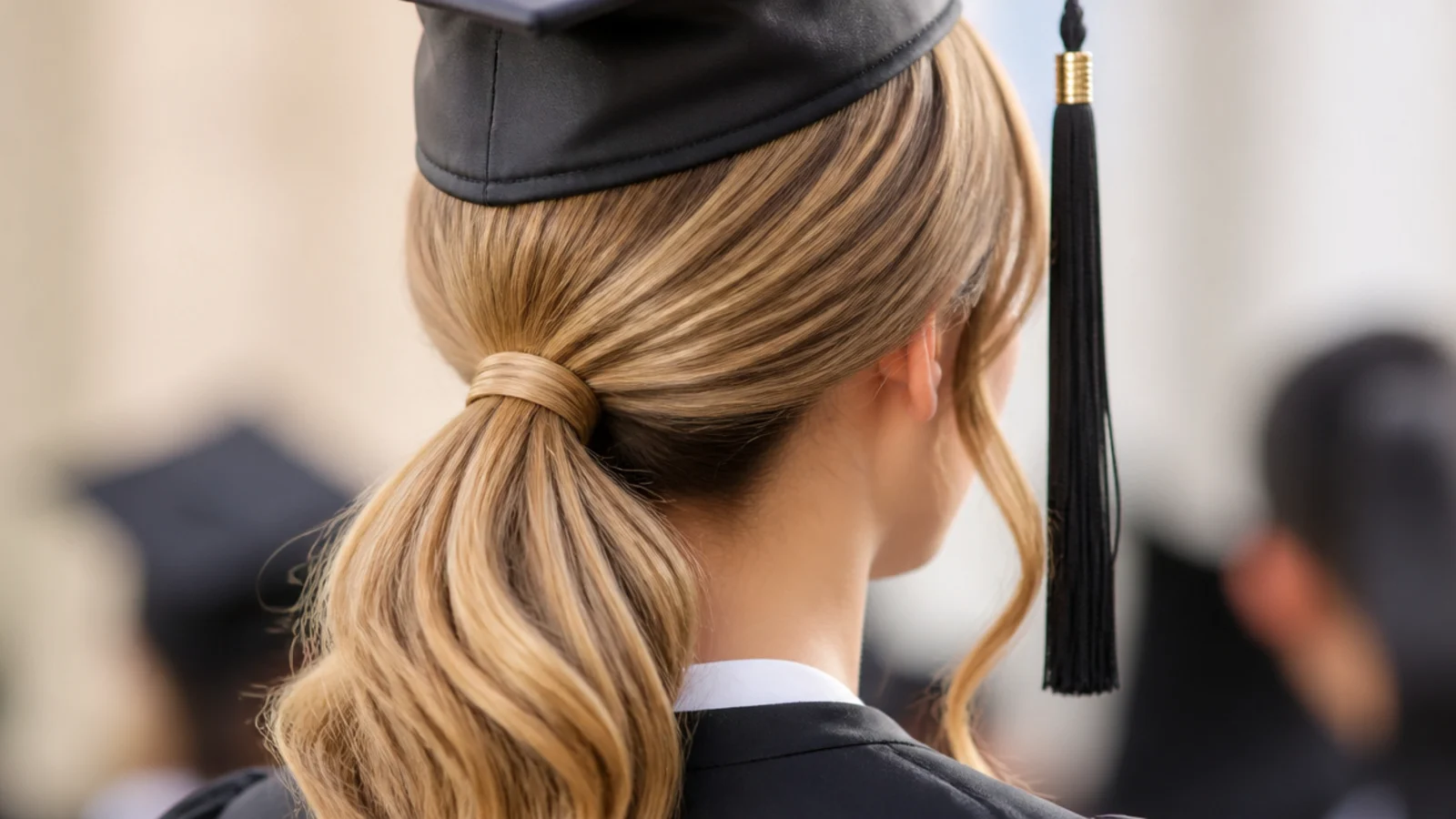
Tying at the occipital bone keeps the elastic under the rear edge of the band rather than in its path. The tail hangs outside the cap entirely, which means the sleekest part of the style is also the part the mortarboard never touches.
3. Wet Look Bun
A wet look uses a high water gel that stays glossy as it dries, so it needs longer to set than a standard gel does. Allow the full ninety minutes before the cap goes on, because this is the finish most likely to take a crease.
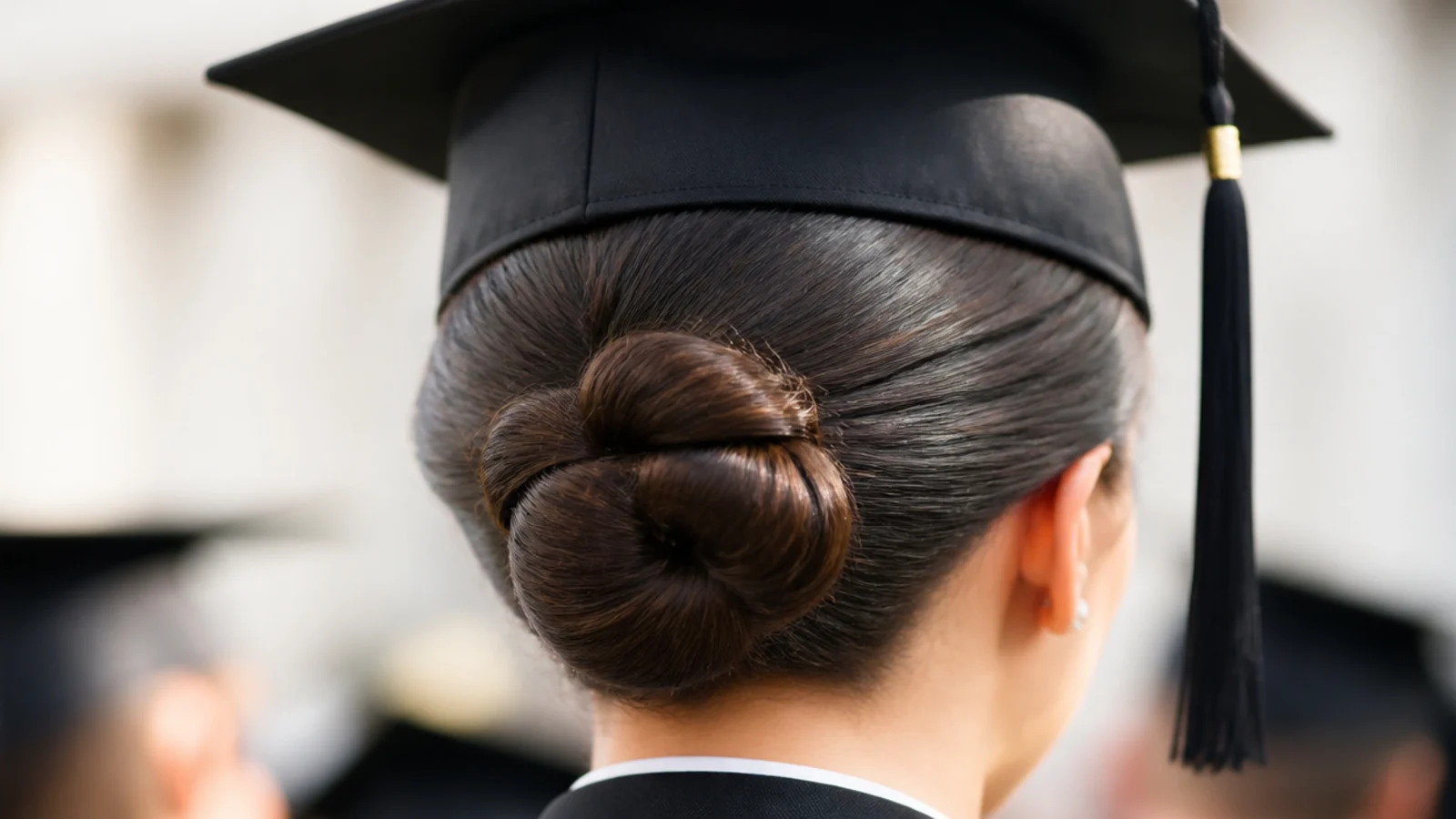
4. Middle Part Chignon
A centre part splits the crown into two symmetrical planes, each reflecting light along its own line. That symmetry is what makes it read as deliberate, and it also gives the cap band a flat surface to land on with no raised parting to sit over.
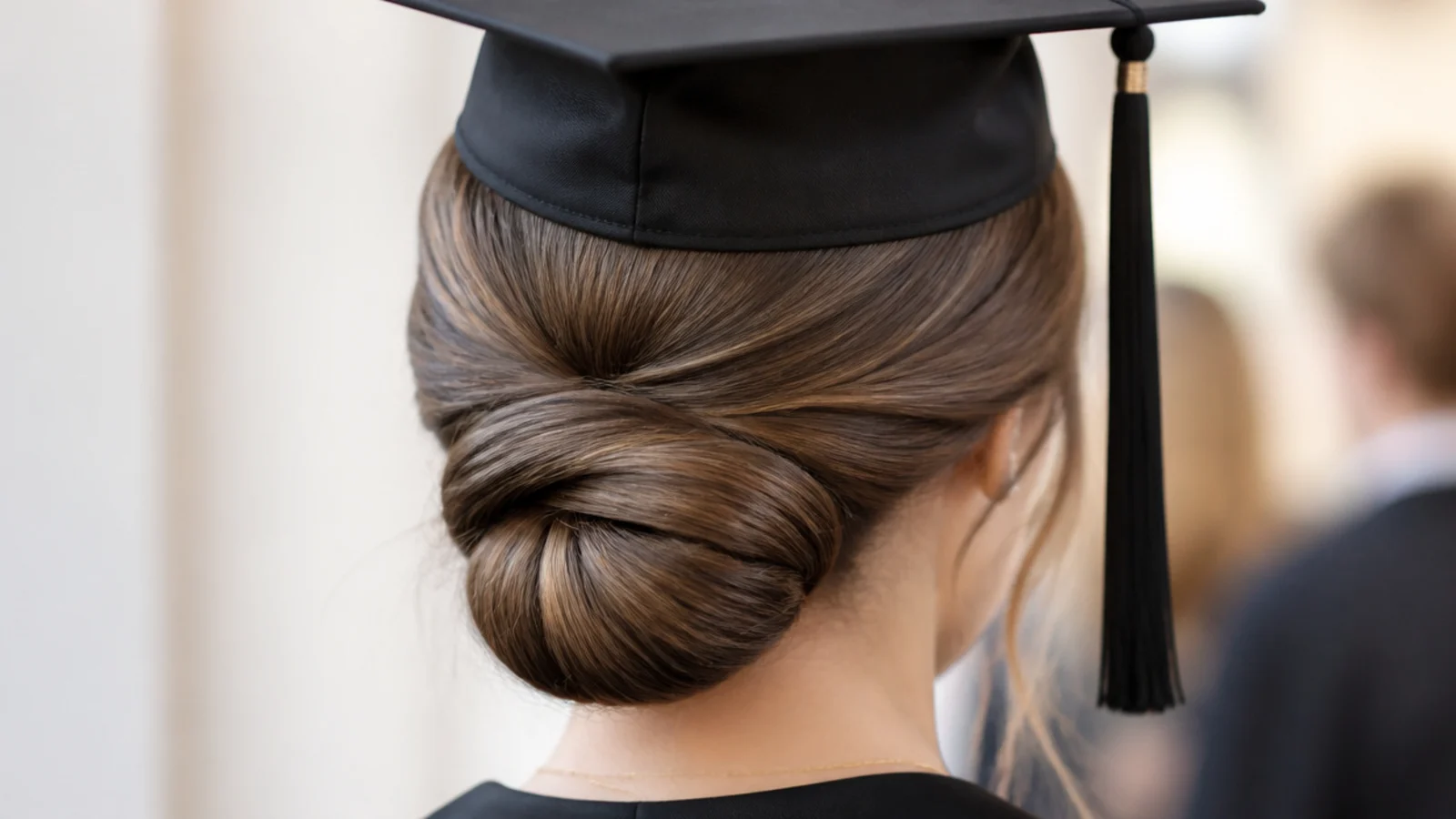
5. Deep Side Part Bun
One asymmetric line across an otherwise flat surface gives the style a single strong angle. Set the part with a comb while the gel is wet, because a parting drawn into a film that has already begun to dry will not hold its edge.
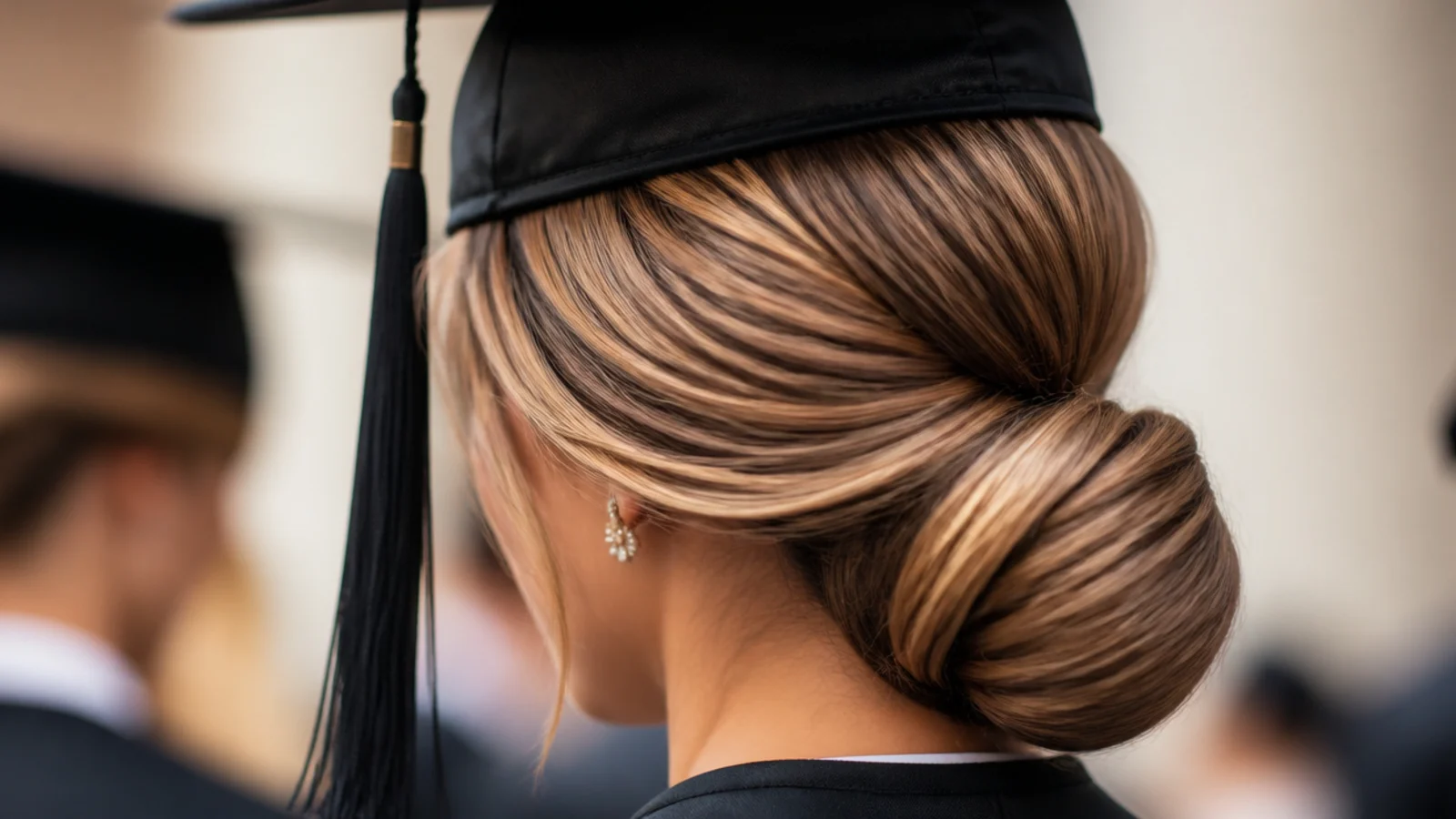
6. Glass Hair
Glass hair is the cuticle lying perfectly flat so light reflects in one direction instead of scattering. It is the hardest finish to protect under a cap, because the band interrupts exactly the one surface the whole effect depends on.
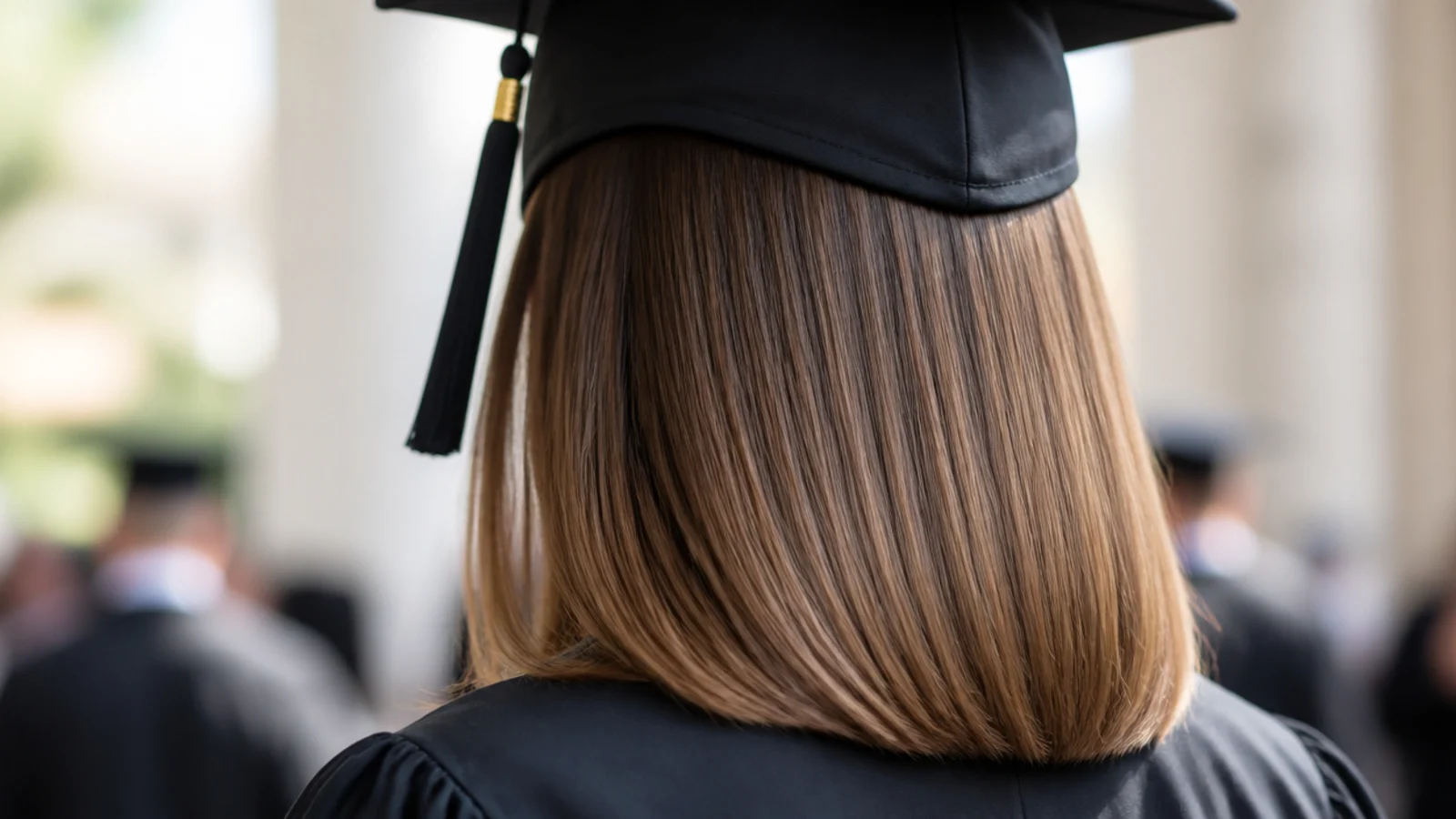
7. Sleek Half Up
Only the top is gathered, so the loose length below the band keeps its movement while the crown stays flat under the cap. Pin the gather at the occipital bone rather than tying it higher, or the elastic becomes the thing propping the board up.
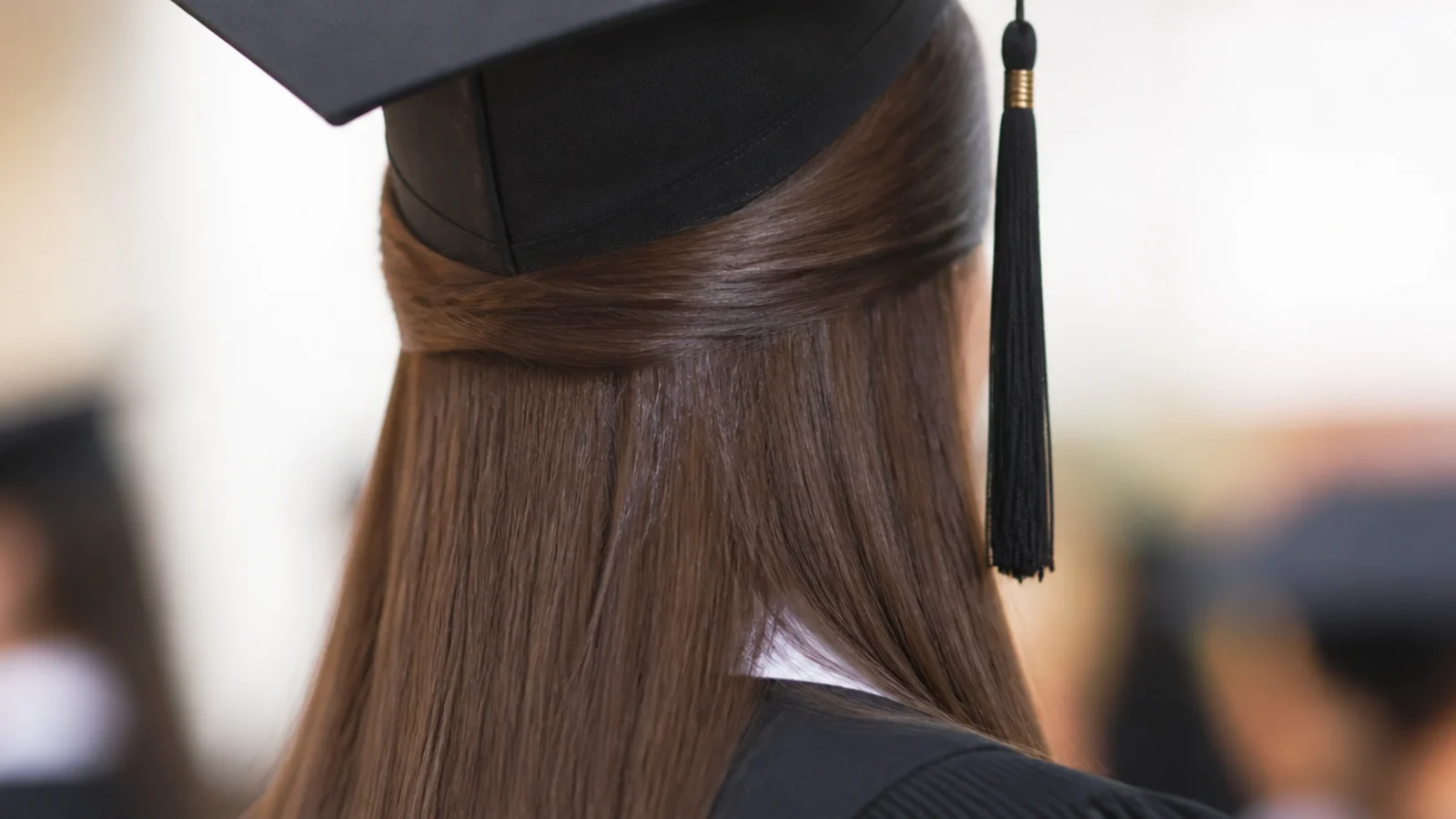
8. Sleek Curled Tail
A flat polished crown against a curled tail works because the contrast is between two different surfaces rather than two different styles. Curl the ends before applying anything to the roots, since gel on your hands transfers straight onto the tongs.
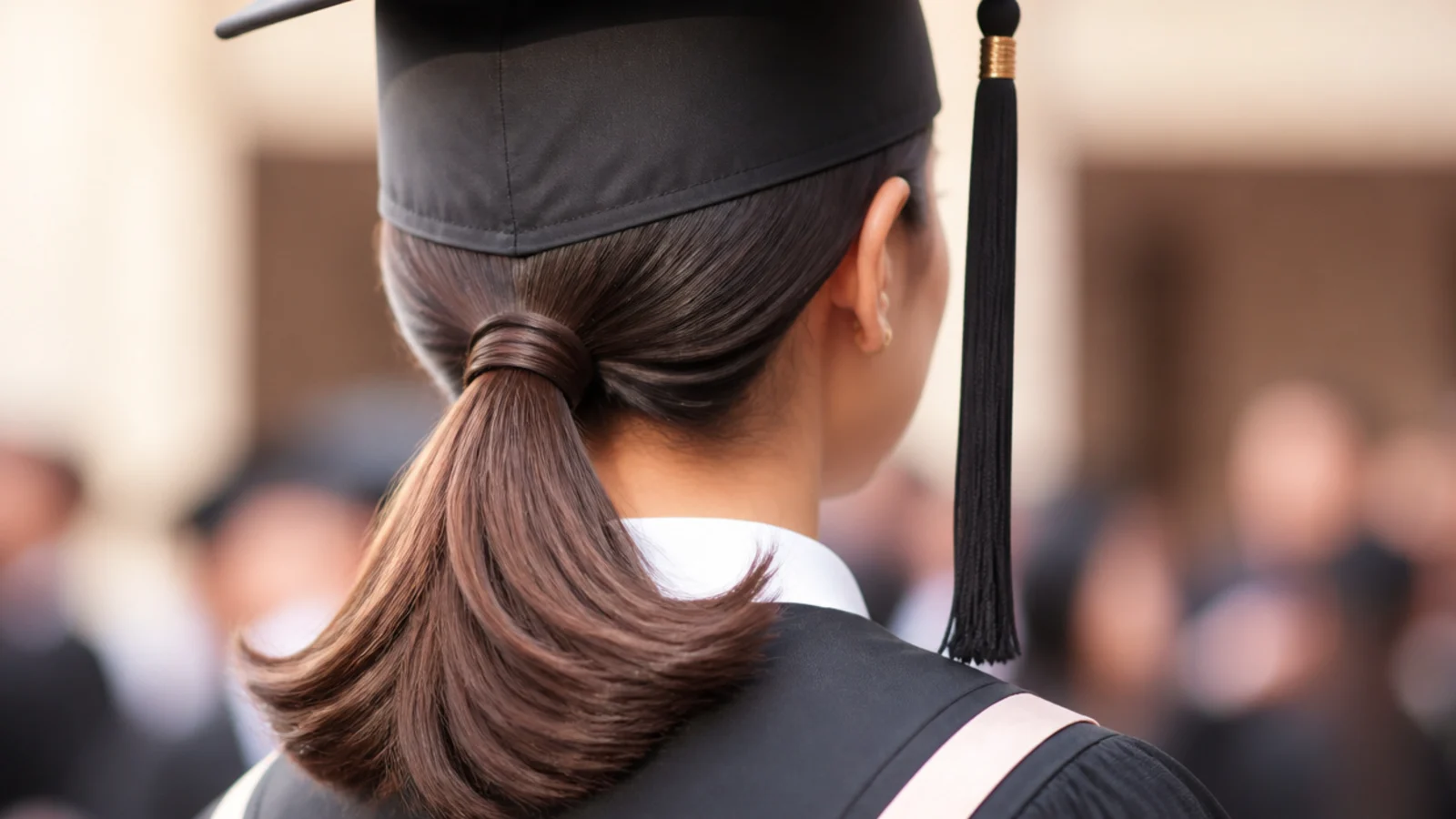
9. Ballerina Bun
The traditional placement is at the crown, which is the one spot a mortarboard cannot accommodate. Drop the same wrapped bun to the nape and you keep the clean sculpted shape while removing the wedge that lifts the back of the board.
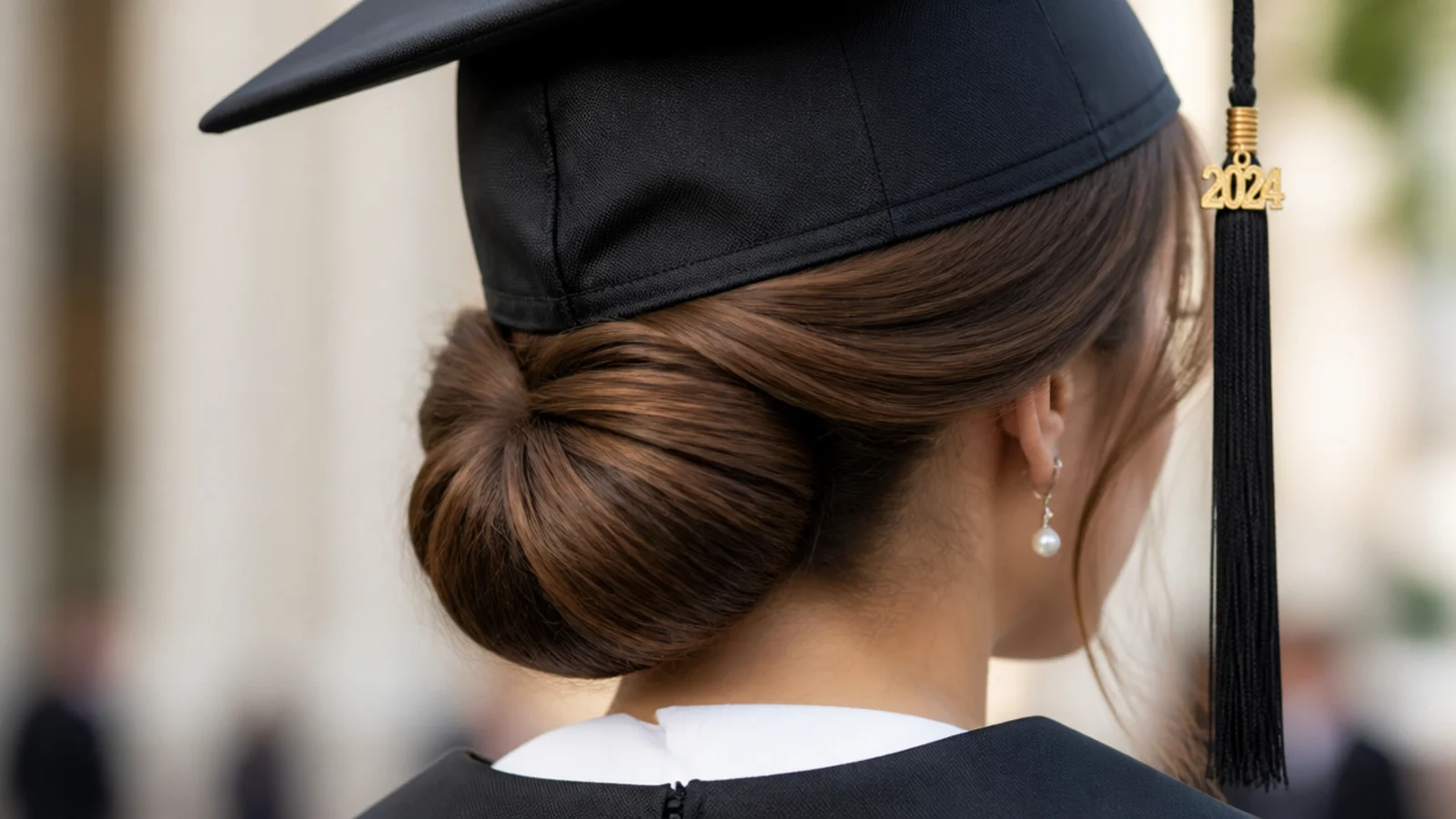
10. Rope Twist Bun
Two sections twisted one way and wrapped the other lock against each other, so the rope cannot unwind under its own tension. Coiled at the nape it holds its definition for hours, which a plain twist in slippery gelled hair will not.
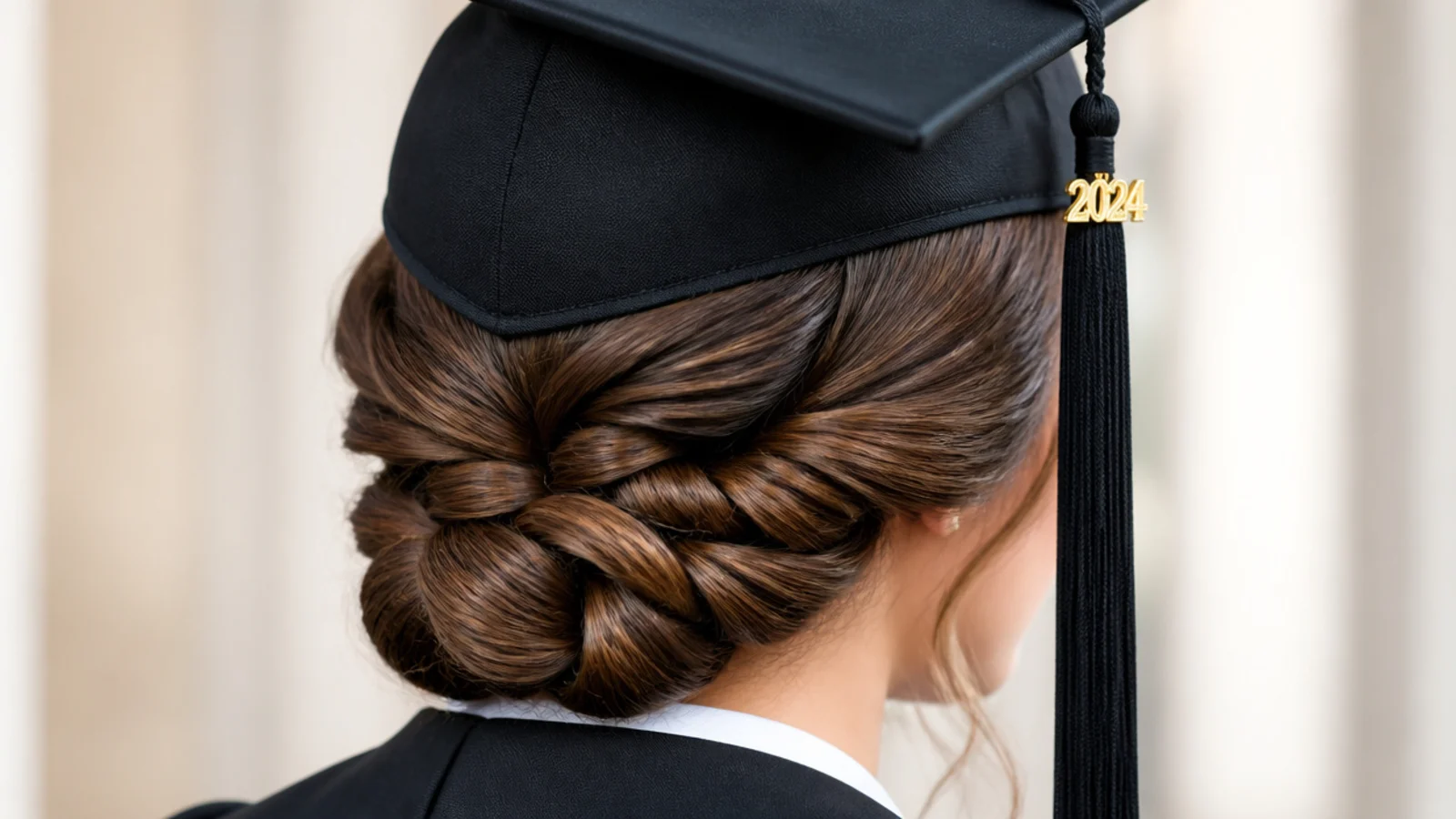
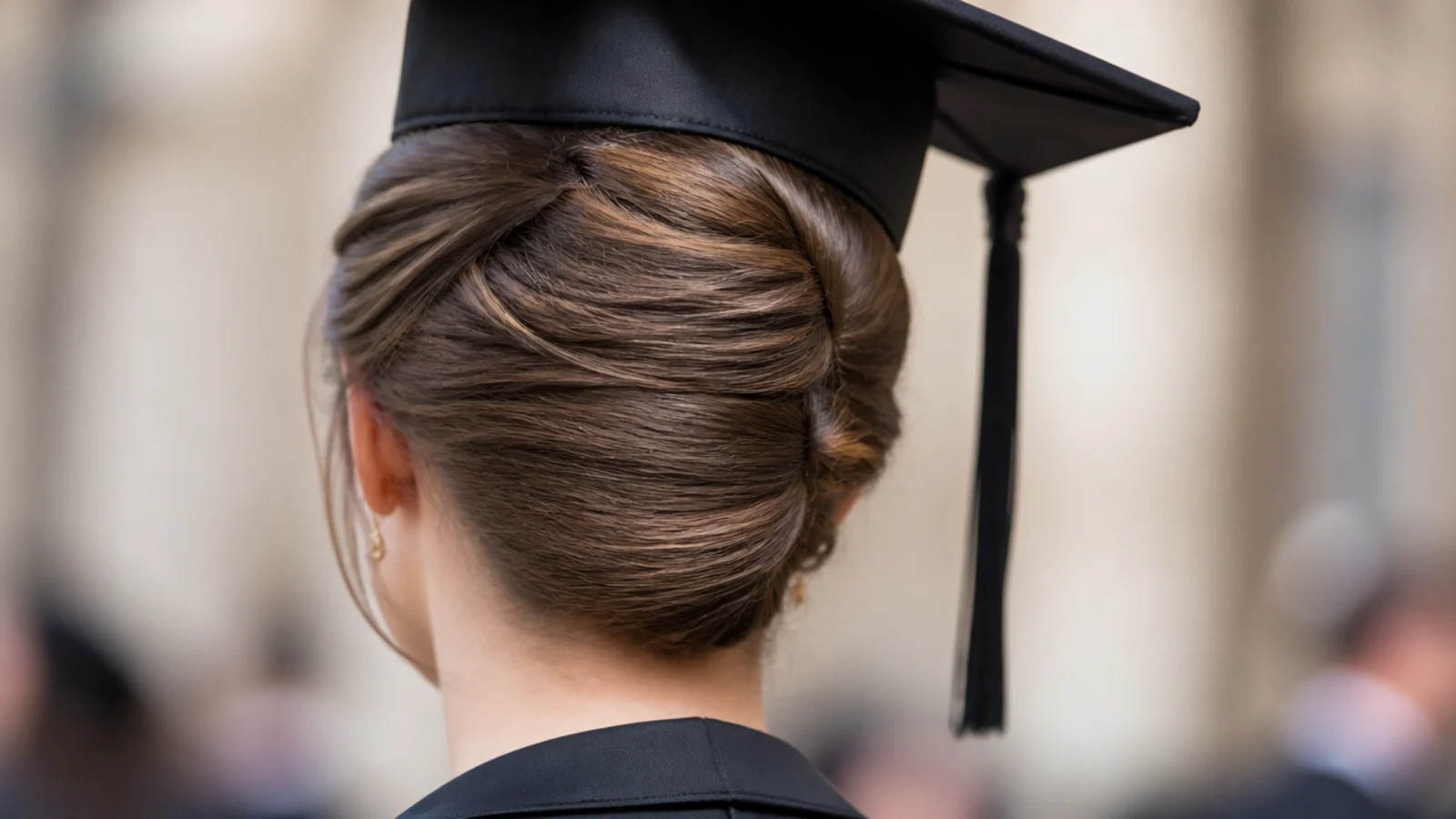
11. French Twist
Rolling the length vertically against the back of the head keeps the mass narrow and close to the skull, which is exactly the profile a cap wants. Pin along the seam of the roll so each pin is loaded sideways rather than being pulled straight out.
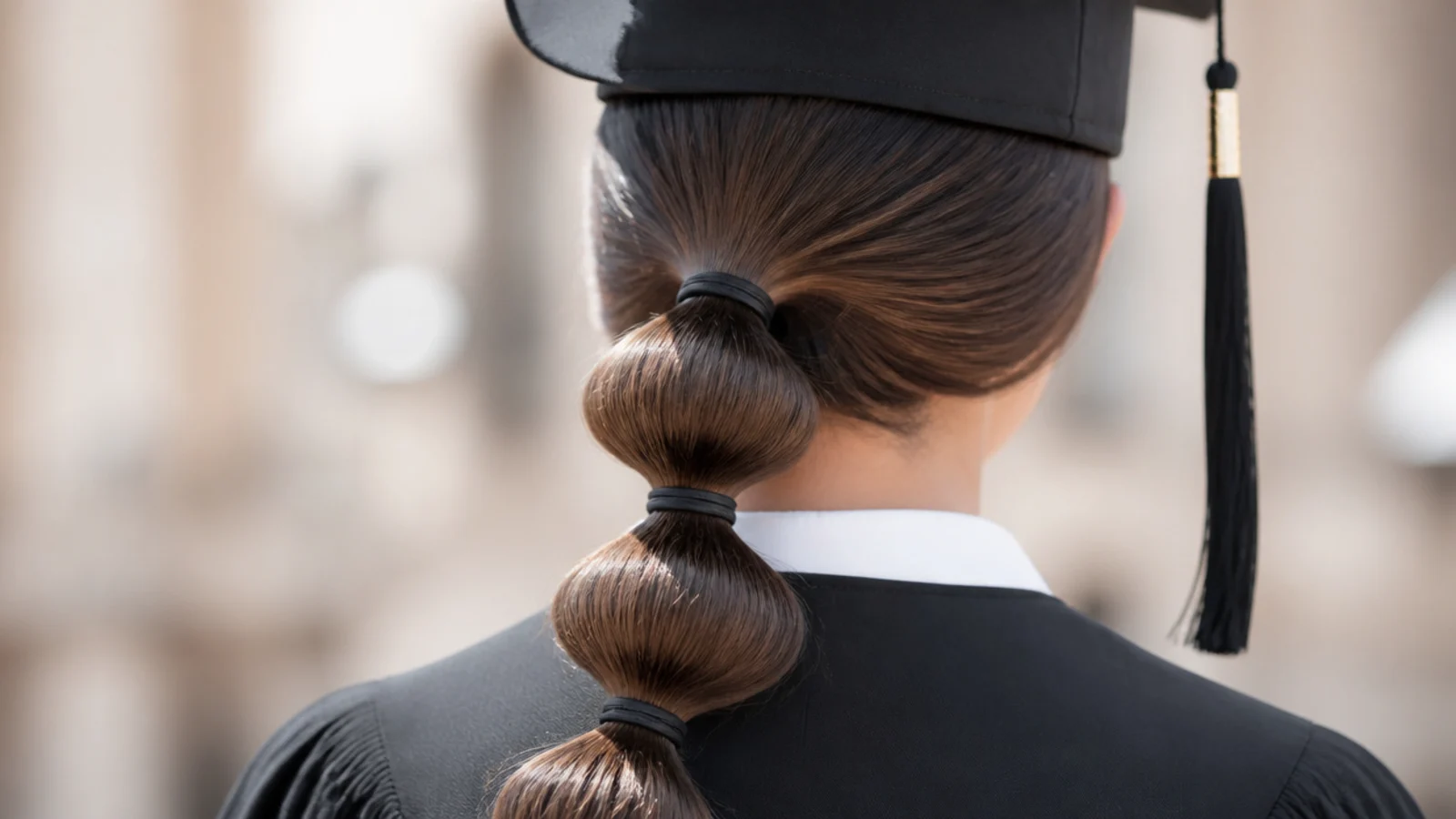
12. Bubble Ponytail
Clear elastics down the tail spread the weight along its length instead of loading the first band alone. On gelled hair that matters more than usual, because a smooth set surface gives a single elastic almost nothing to grip.
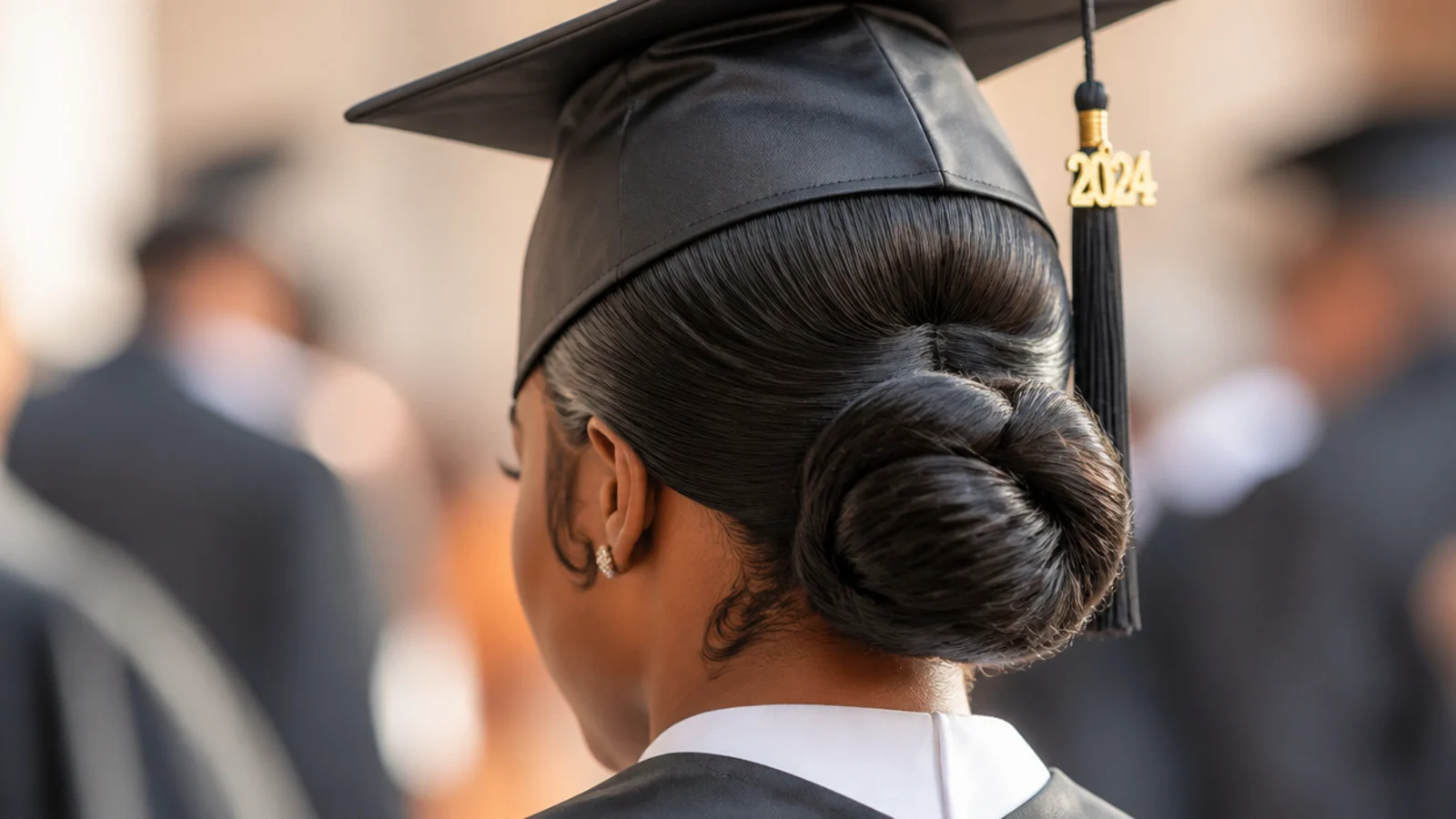
13. Laid Edges Bun
Edges are laid with a fine brush and a strong gel while the hair is damp, then held with a scarf until the film hardens. The scarf is doing mechanical work, holding the pattern flat until the polymer sets rather than adding any hold itself.
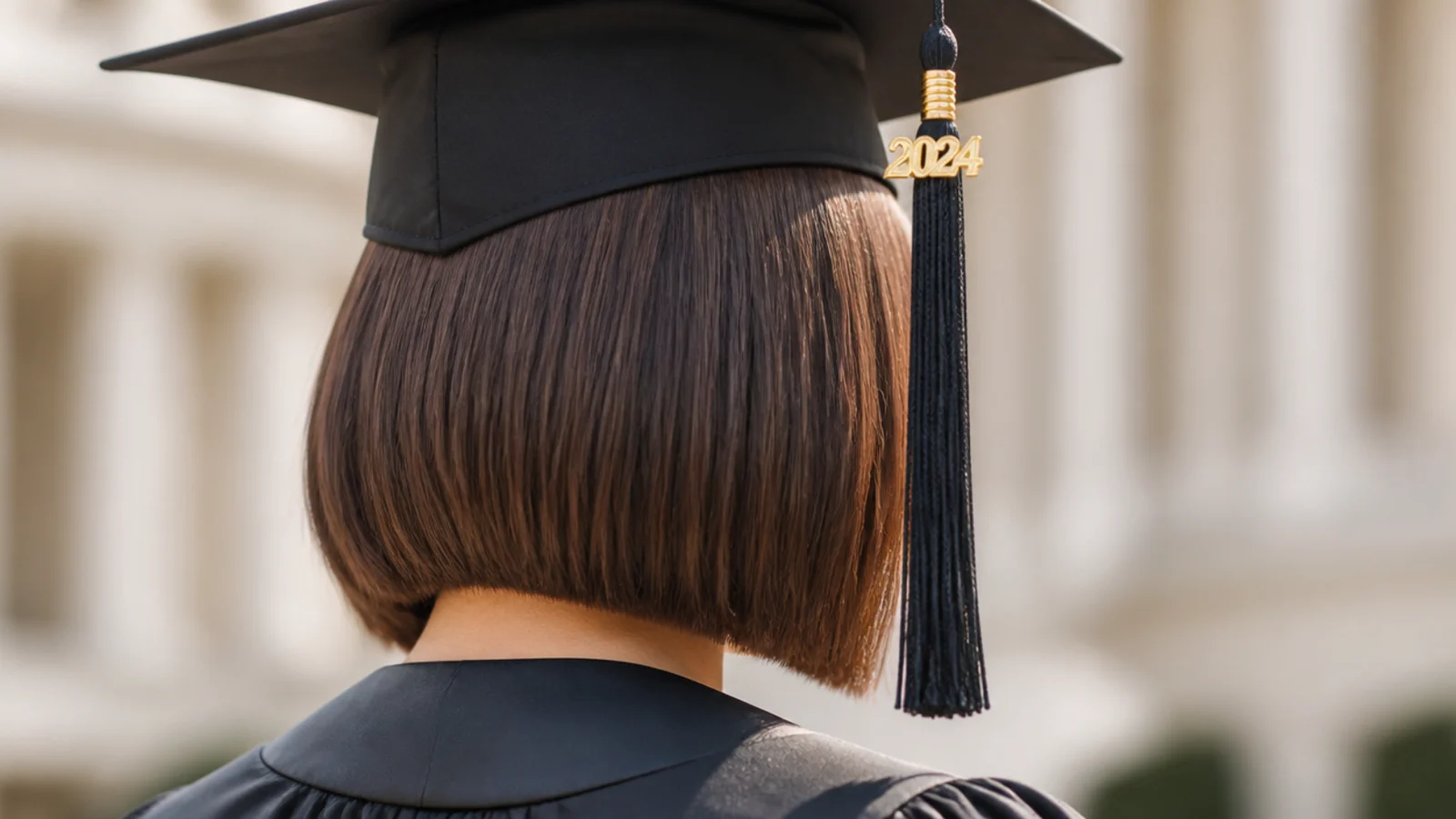
14. Sleek Bob
At bob length there is no weight pulling the surface out of line, so a flat iron and a light serum produce a single plane with very little effort. The ends fall below the band, meaning the cap only ever presses on the smoothed crown.
15. Sleek Pixie
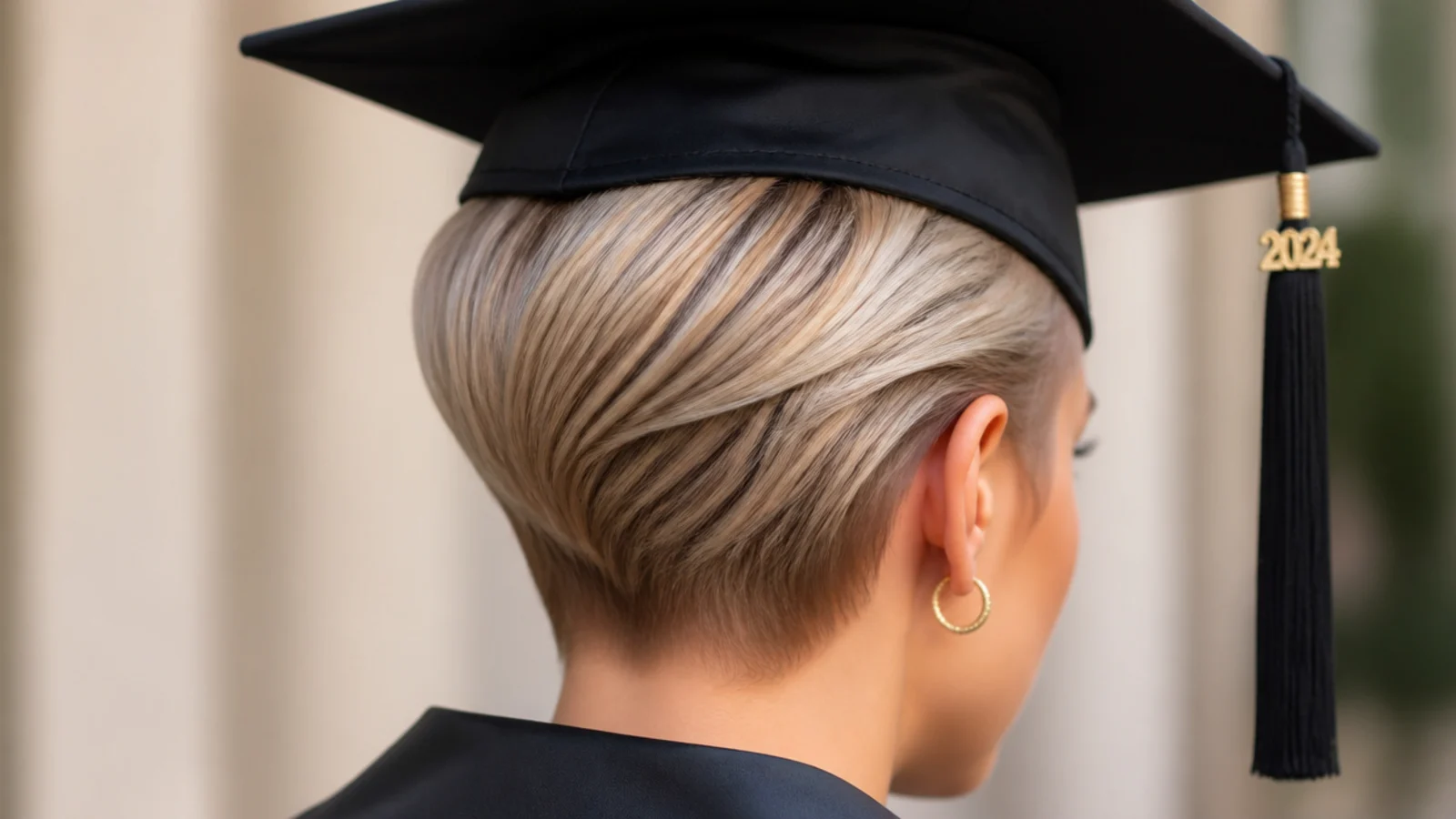
Use a light wax rather than gel, because on very short hair a gel film reads as wet rather than polished. Wax also stays pliable, so it survives the cap being pushed on and lifted off without setting a hard line.
16. Side Swept Waves
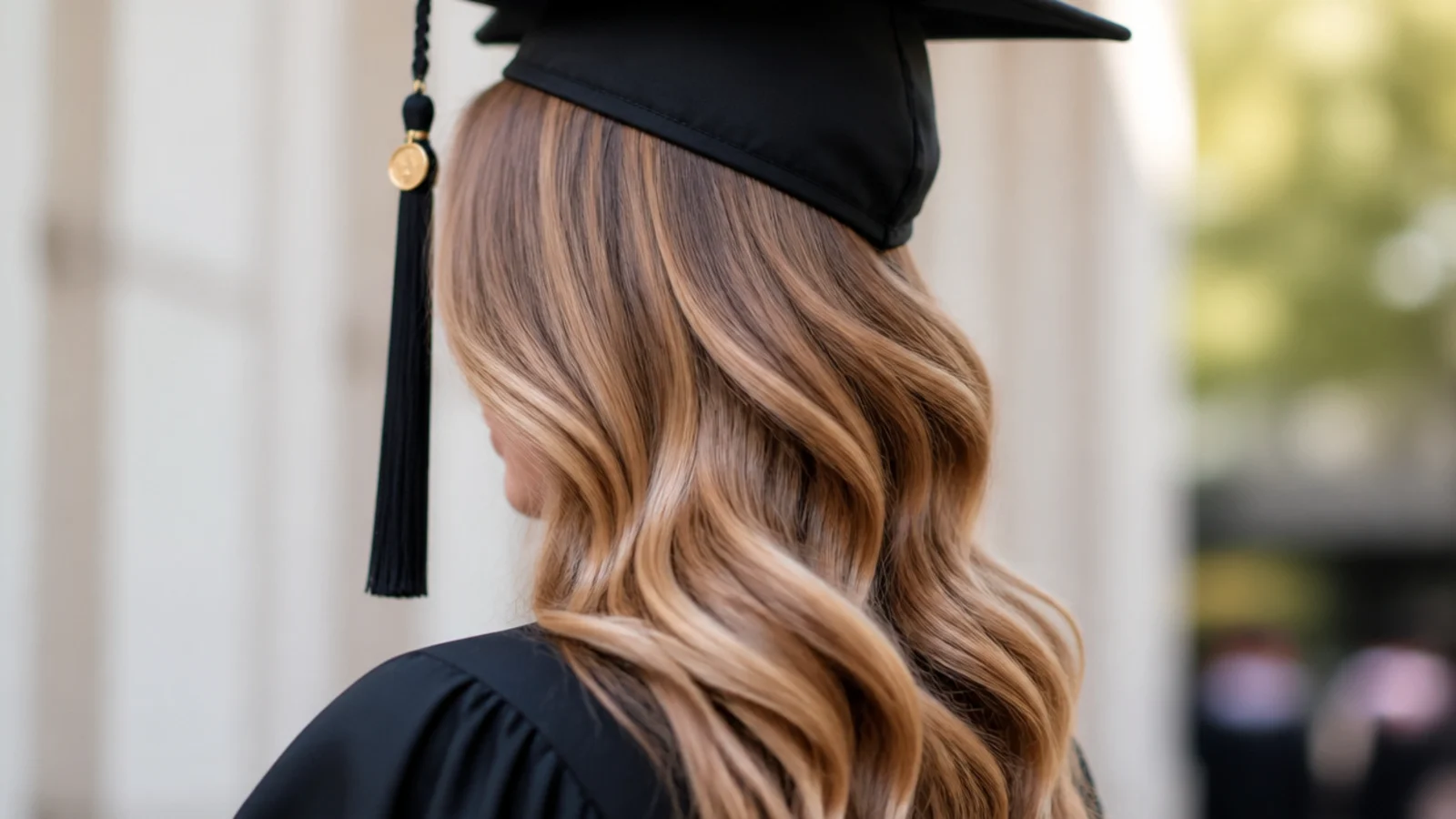
Sweeping the length to one shoulder moves the shine onto the collarbone where the cap never reaches, and leaves only the roots under the band. Keep the roots dead flat and the wave below ear level, because a compressed wave at the root will not recover.
17. Sleek Braided Ponytail
A braid gives the tail structure so it hangs in one piece rather than splitting over a gown collar. Braid it before the gel at the roots dries completely, so the whole style sets as one continuous surface from hairline to ends.

18. Braids Into a Low Bun
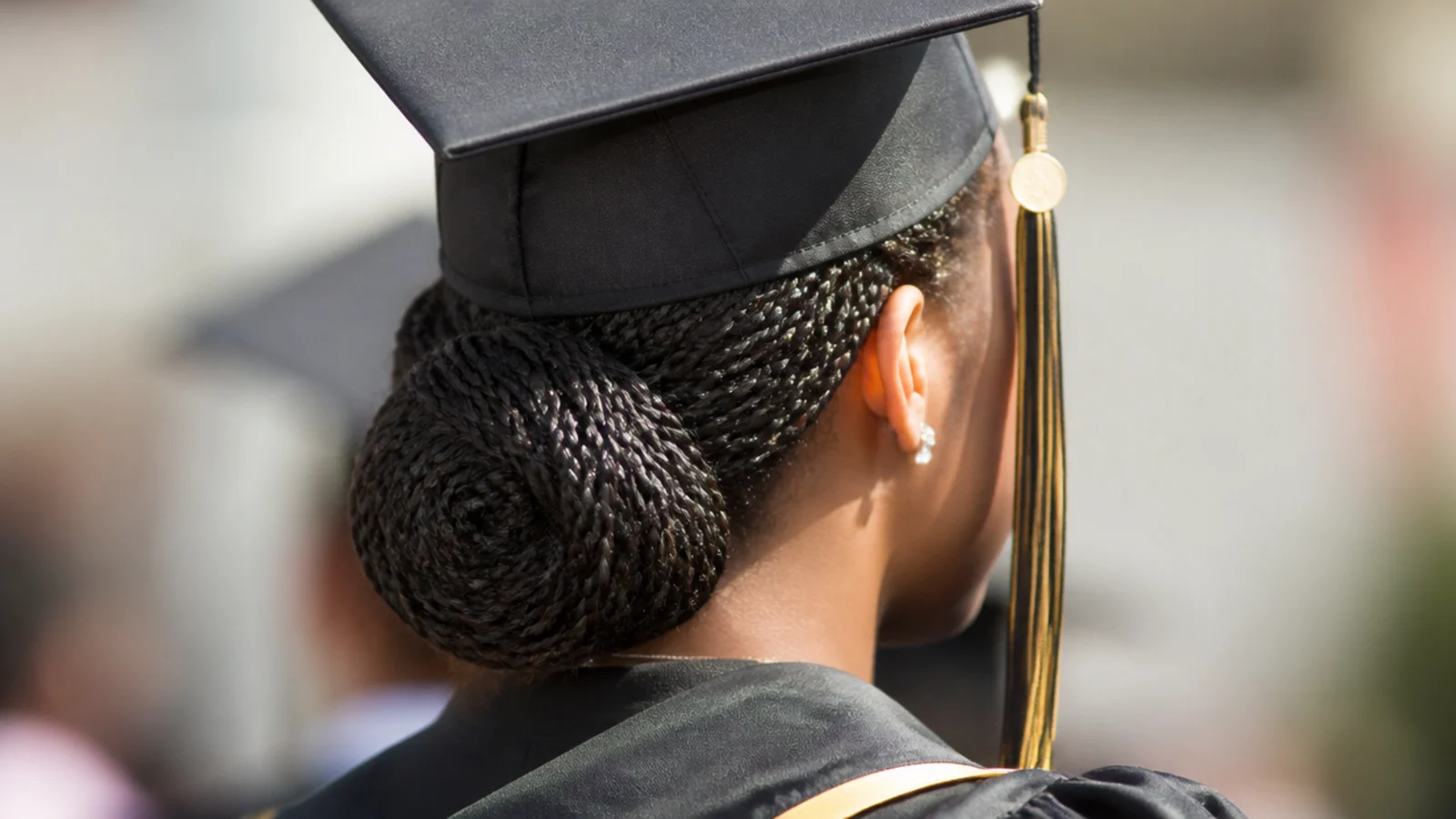
Braids hand their weight to the scalp along their whole length instead of loading a single pinned point, which is why this holds when a plain gelled bun slides. Gathering them low keeps the collected ends beneath the rear edge of the band.
19. Claw Clip Twist
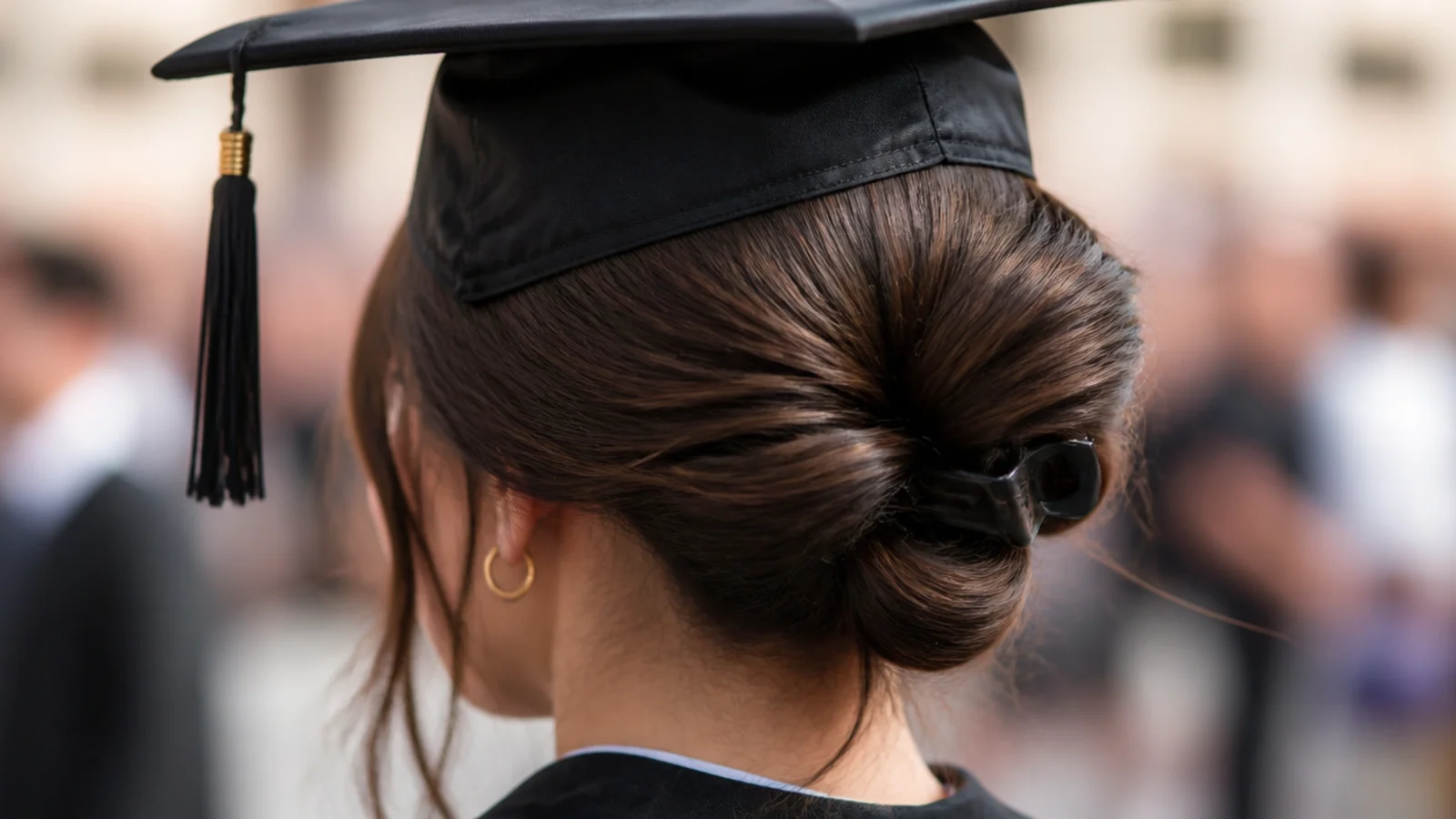
A twist held in a clip is the fastest sleek option and the easiest to rebuild between the ceremony and the photographs, as covered in the claw clip version. Pick a small flat clip, since a large one adds depth exactly where the band lands.
20. Ribbon Bun
A ribbon wrapped over the base adds colour against a plain black gown and hides the elastic at the same time. Tie it after the cap has been fitted once, because a bow crushed under the band comes out flat and cannot be reshaped.
Final Thoughts
Sleek is a film, and the film has one enemy in the morning and a different one in the afternoon. Give it ninety minutes to set before the cap touches it, then stop touching it yourself, because every hand that passes over a dried polymer layer is what turns it into flakes.
Build it low so the mortarboard never reaches the finish, and carry a few drops of oil for the band line afterwards. For the same finish without a cap to plan around see the claw clip version and the high ponytail version. More in Occasion Hair.
Frequently asked questions
Related posts
See all posts
15 Graduation Hair Ideas for the Updo Versus Down Decision
Read more
15 Straight Hair Wedding Looks to Save
Read more
20 Gorgeous Prom Looks for Straight Hair
Read more