25 Simple Fulani Braids Ideas to Try Now
Twenty-five simple Fulani braids styles with the install time, braid size and takedown reality for each. Cornrowed fronts, beaded ends, jumbo and small variations, plus the tension rules that keep your edges intact.
In this article · 32
- What Are Simple Fulani Braids?
- How to Choose Your Simple Fulani Braids
- The 25 Simple Fulani Braids Ideas
- 1. Classic Two-Cornrow Fulani Braids
- 2. Fulani Braids with Gold Cuffs
- 3. Jumbo Fulani Braids
- 4. Small Fulani Braids
- 5. Waist-Length Fulani Braids
- 6. Shoulder-Length Fulani Braids
- 7. Fulani Braids with Beads at the Ends
- 8. Fulani Braids with a Middle Cornrow
- 9. Half-Up Fulani Braids
- 10. Fulani Braids into a Bob
- 11. Honey Blonde Fulani Braids
- 12. Two-Tone Fulani Braids
- 13. Fulani Braids with Curly Ends
- 14. Knotless Fulani Braids
- 15. Fulani Braids with a Side Parting
- 16. Fulani Braids with Face-Framing Tendrils
- 17. Fulani Braids in a High Bun
- 18. Fulani Braids with Cowrie Shells
- 19. Fulani Braids for Kids
- 20. Fulani Braids with a Braided Crown
- 21. Burgundy Fulani Braids
- 22. Fulani Braids with Curved Cornrows
- 23. Waist-Length Fulani Braids with Beads Throughout
- 24. Fulani Braids with Thick and Thin Mixed Sizes
- 25. Low-Tension Fulani Braids for Fine Hair
- How to Style and Maintain Simple Fulani Braids
- Mistakes to Avoid
- FAQ
- Final Thoughts
Fulani braids are recognisable by their pattern rather than their size: cornrows running back from a centre parting, a braid framing each side of the face, and loose braids falling from the crown. The twenty-five styles below cover every version worth asking for — with the braid size, the honest install time, and what each one does to your hairline over the weeks that follow.
What Are Simple Fulani Braids?
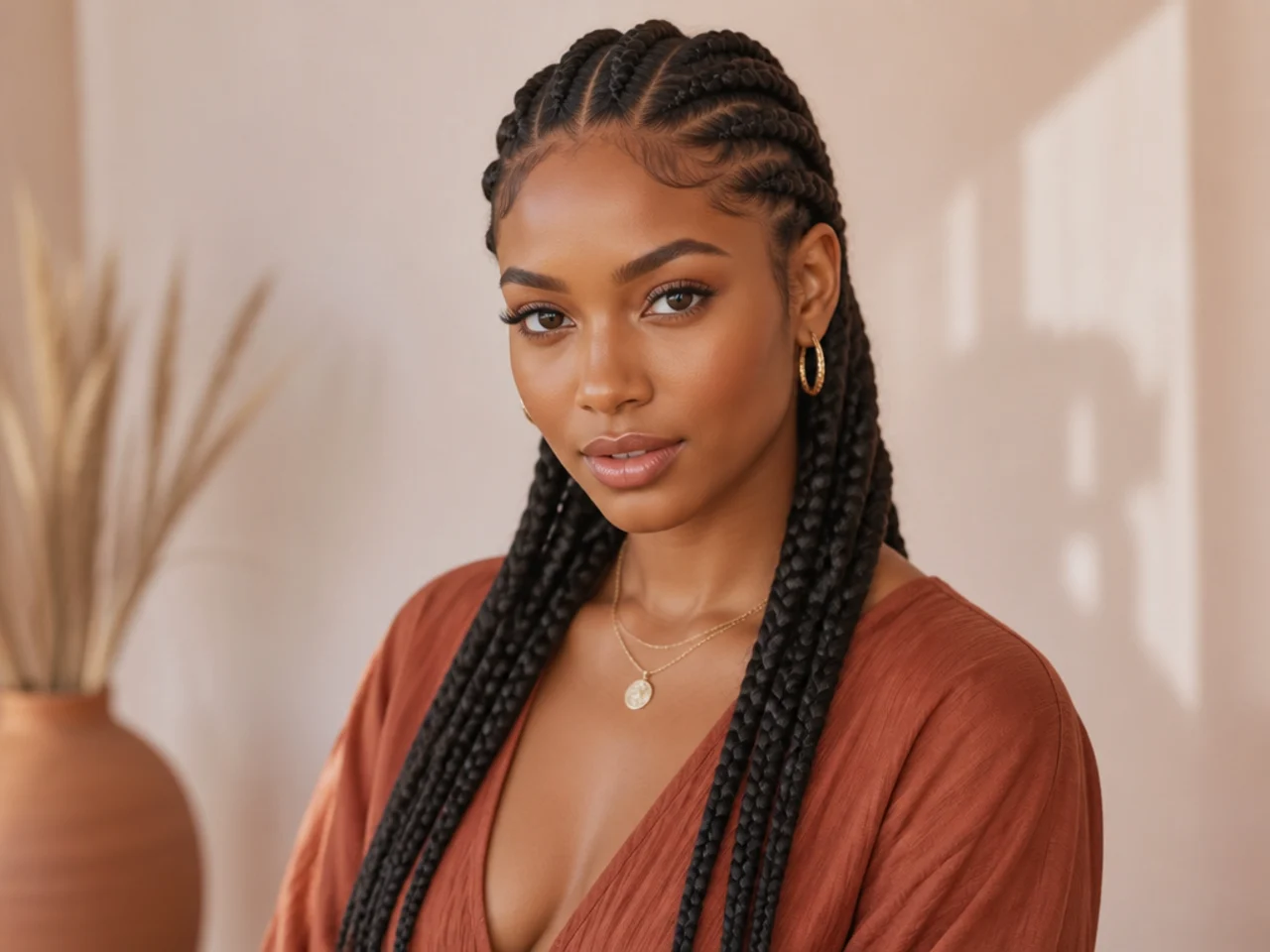
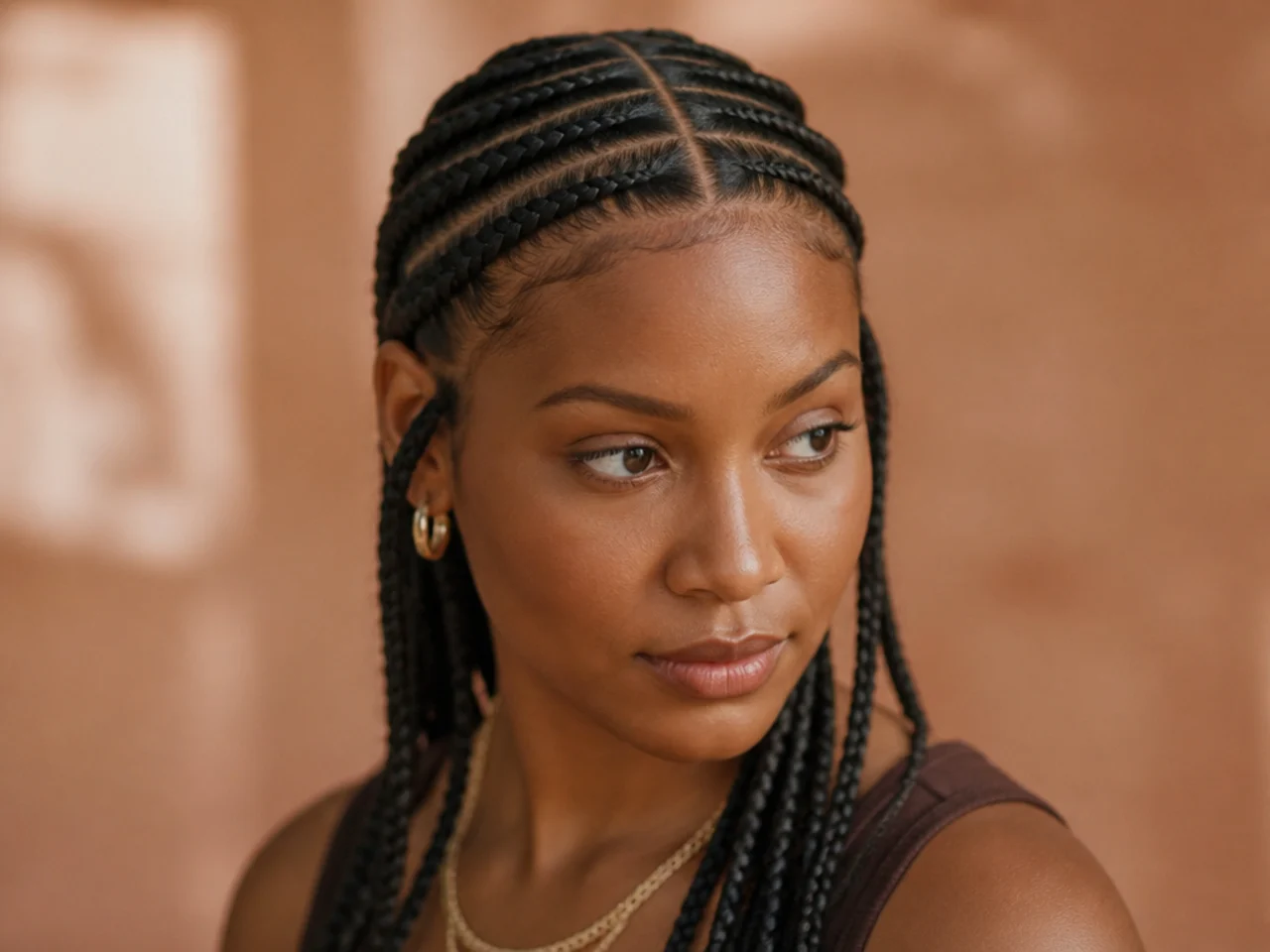
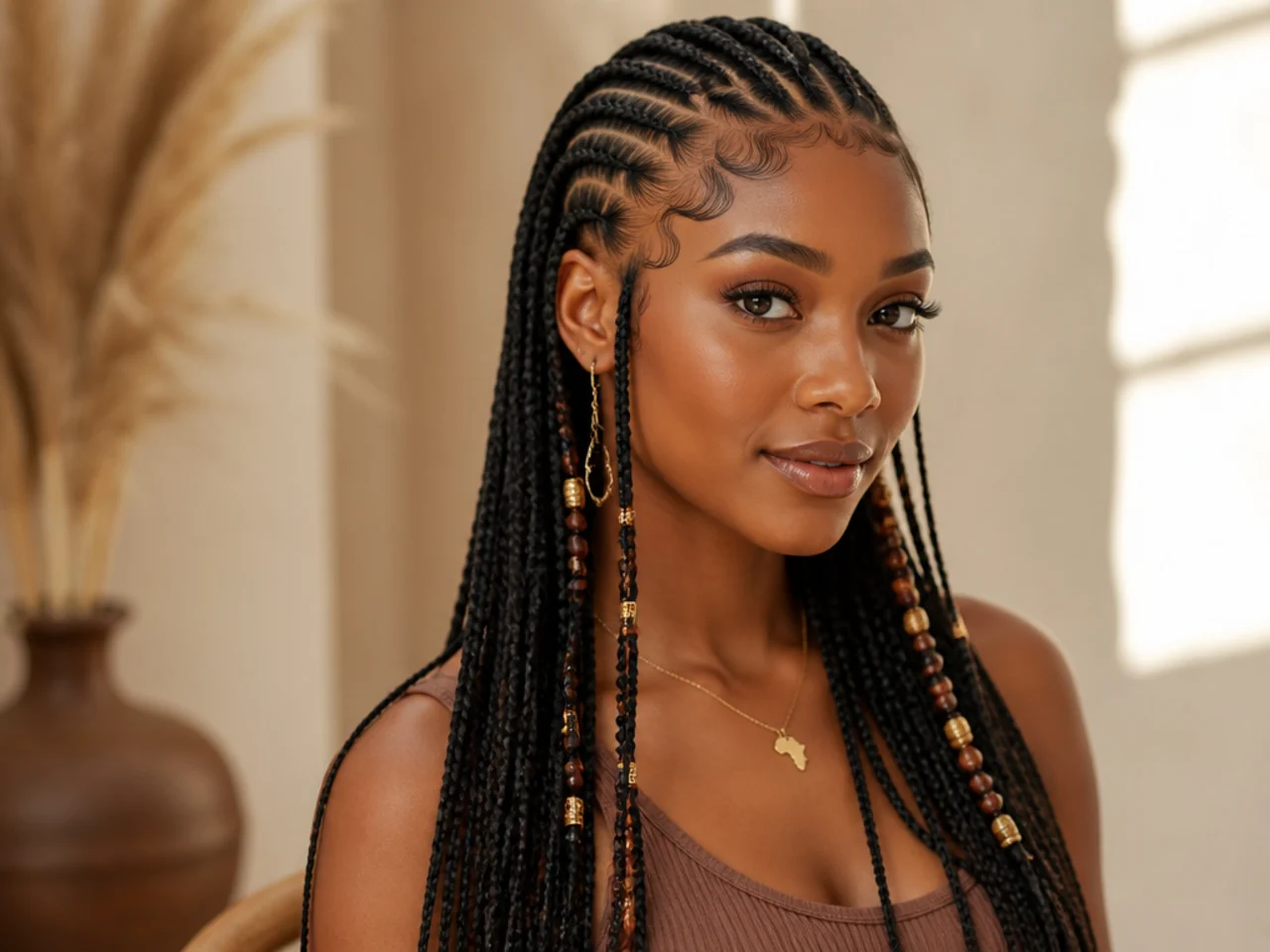
Fulani braids take their name and structure from the Fulani people of West Africa. The traditional pattern is specific: a centre parting, two to five cornrows braided straight back from the front hairline, one braid dropping in front of each ear, and the rest of the hair braided loose from the crown down. Beads and cuffs are traditional rather than decorative additions.
"Simple" here means the pattern is kept clean — no swirled parts, no zig-zags, no colour blocking. Two cornrows either side of a centre part, loose braids behind, and a handful of cuffs. That simplicity is why it installs faster than most protective styles and why it suits nearly every face shape.
How to Choose Your Simple Fulani Braids
Four things decide which version works for you, and none of them is what the style looks like on someone else.
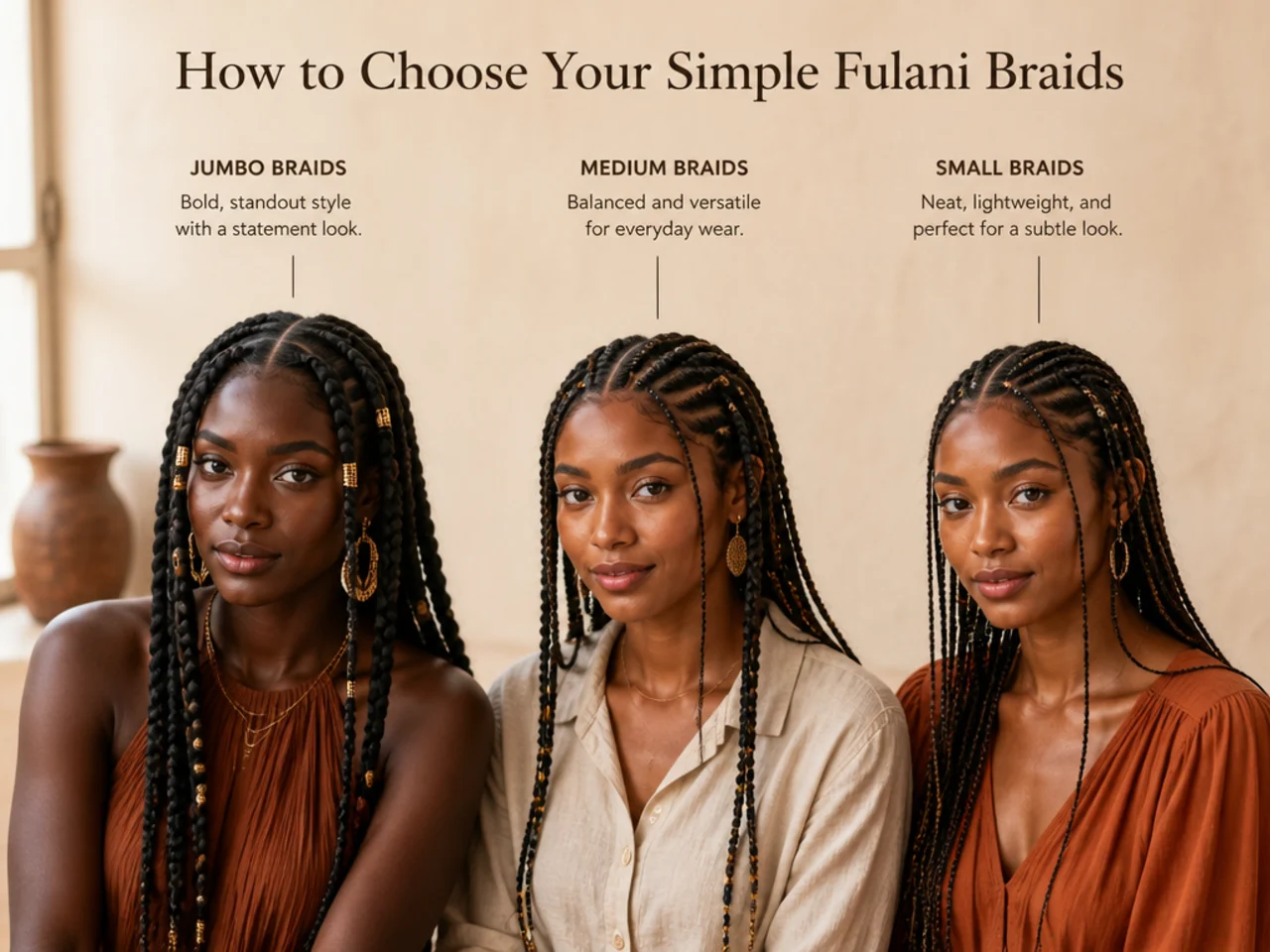
Your hair's density at the hairline. Fulani braids put the cornrows directly along the front. If your edges are already thin, go jumbo — fewer, larger cornrows spread the tension across more scalp than eight small ones do.
How long you want them in. Small braids last longer before they look untidy but take longer to install and longer to take down. Jumbo braids install in half the time and are far kinder to your scalp, but start to look loose around week four.
Weight. Braids past the shoulder blade carry real weight, and that weight pulls on the parting all day. If you get headaches from ponytails, keep the length at collarbone or shorter.
Your actual free time. A full head of small Fulani braids is a seven-hour appointment. That is a whole day, and it is worth knowing before you book rather than after.
The 25 Simple Fulani Braids Ideas
Each of these is a distinct install. Times assume a professional braider working alone.
1. Classic Two-Cornrow Fulani Braids
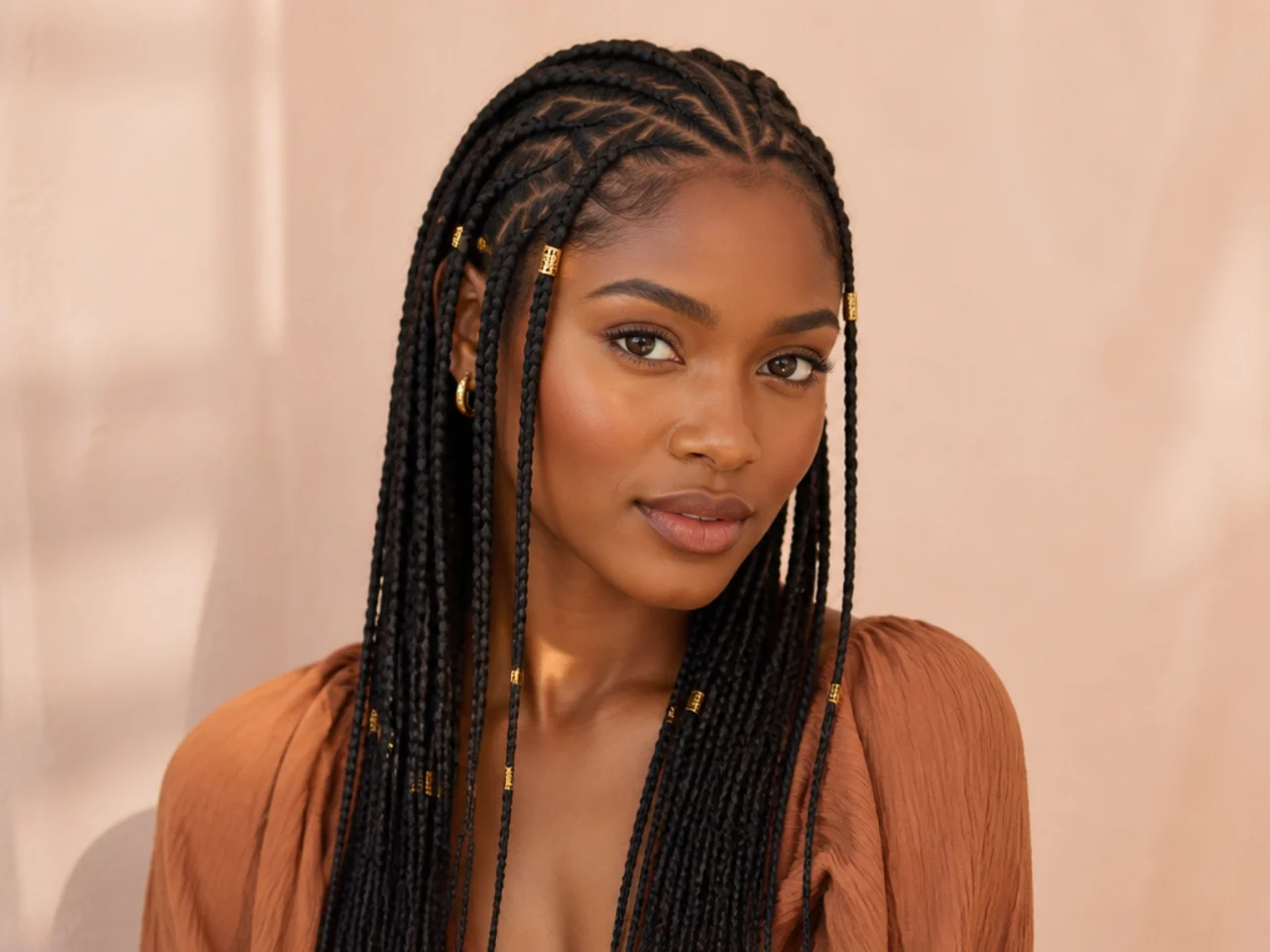
The baseline: a centre parting, one cornrow either side running straight back, everything else braided loose to mid-back. Around four hours in medium size. This is the version to ask for if you have never had Fulani braids — it suits every face shape and grows out cleanly because the two front cornrows sit on strong hair rather than the fine edge hair.
2. Fulani Braids with Gold Cuffs
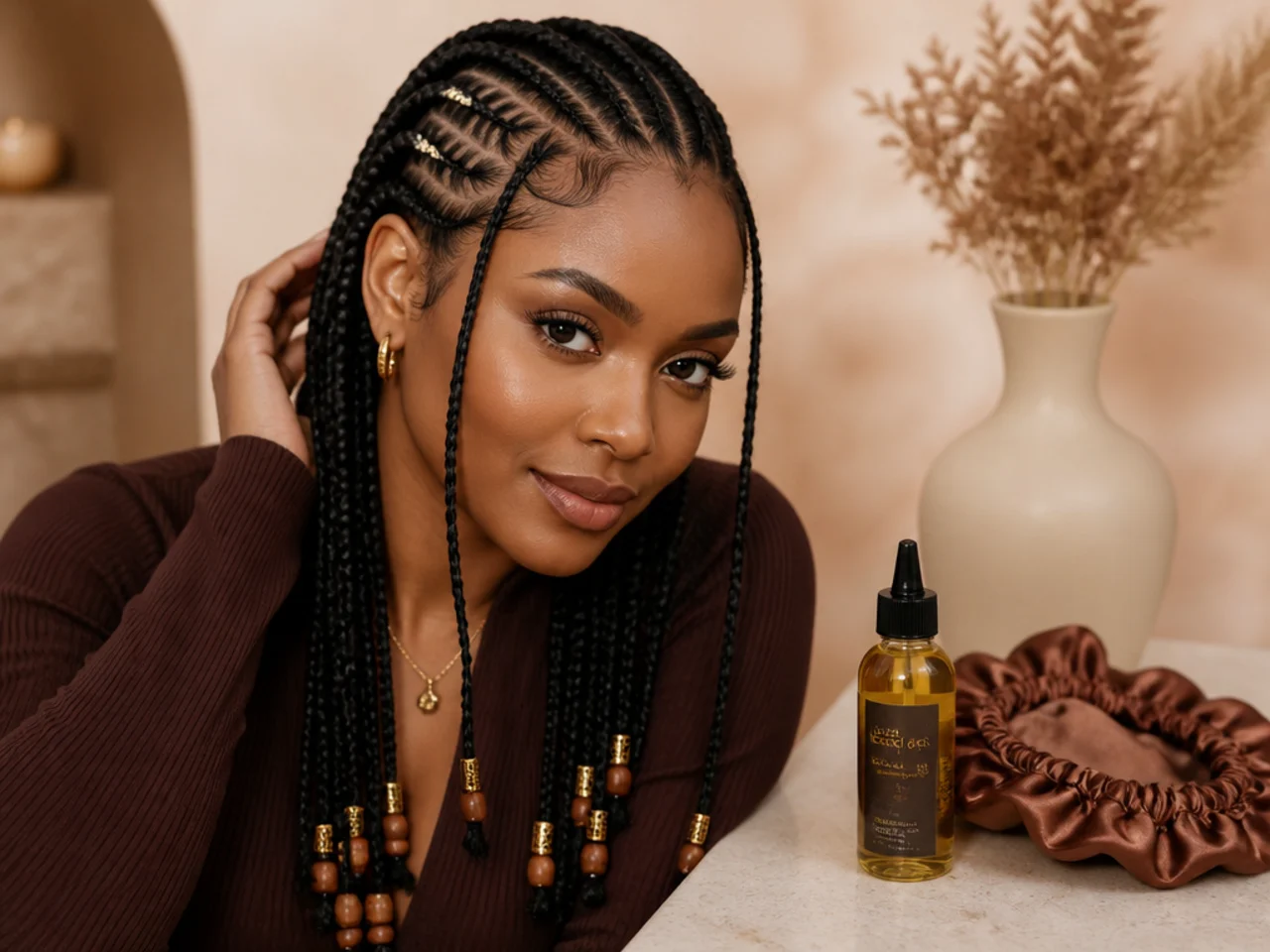
The same base with eight to twelve gold cuffs distributed across the front braids and a few of the loose ones. Cuffs add almost no install time but change the style completely under light. Keep them to the front third — cuffs at the ends catch on clothing and drag on the braid.
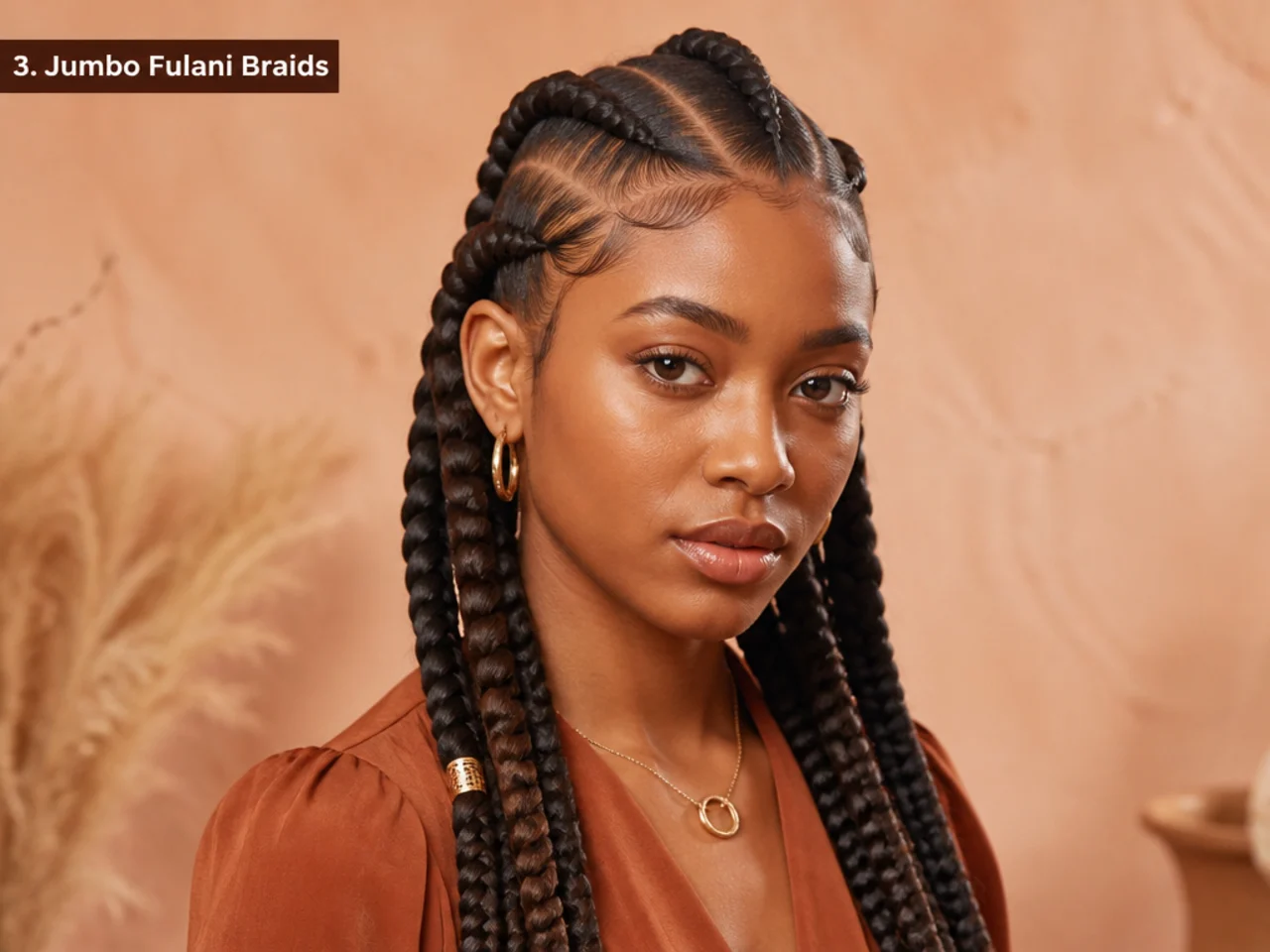
3. Jumbo Fulani Braids
Chunky braids, roughly finger-width, with two thick cornrows at the front. Installs in two to three hours and is the gentlest version on your scalp because the weight is spread across far fewer partings. Lasts three to four weeks before the roots start to loosen.
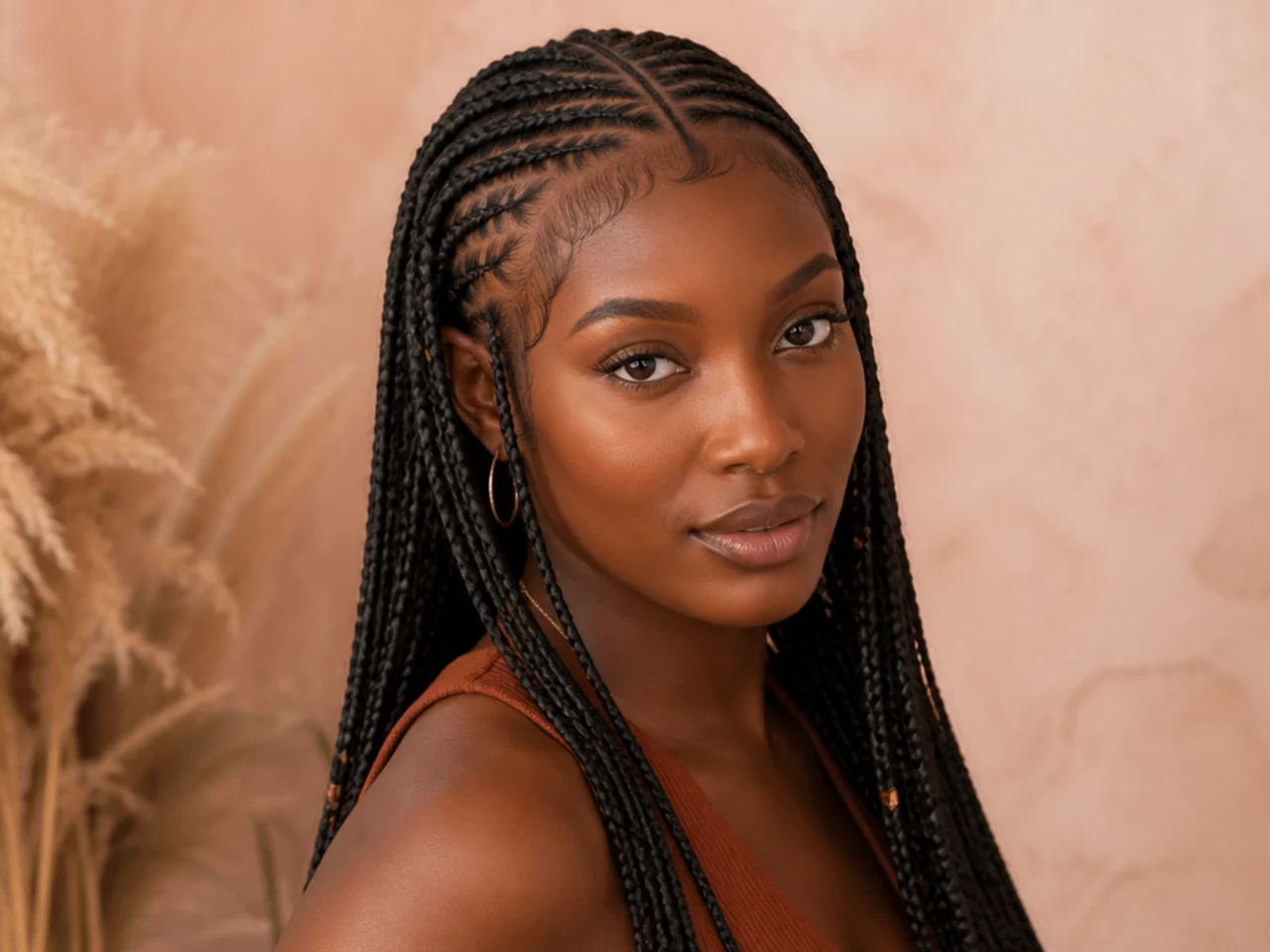
4. Small Fulani Braids
Pencil-width or finer, four to six cornrows at the front. Six to eight hours to install and the longest-lasting option at five to six weeks. The trade-off is real: more partings means more tension points, so this version needs a braider who genuinely works loose at the root.
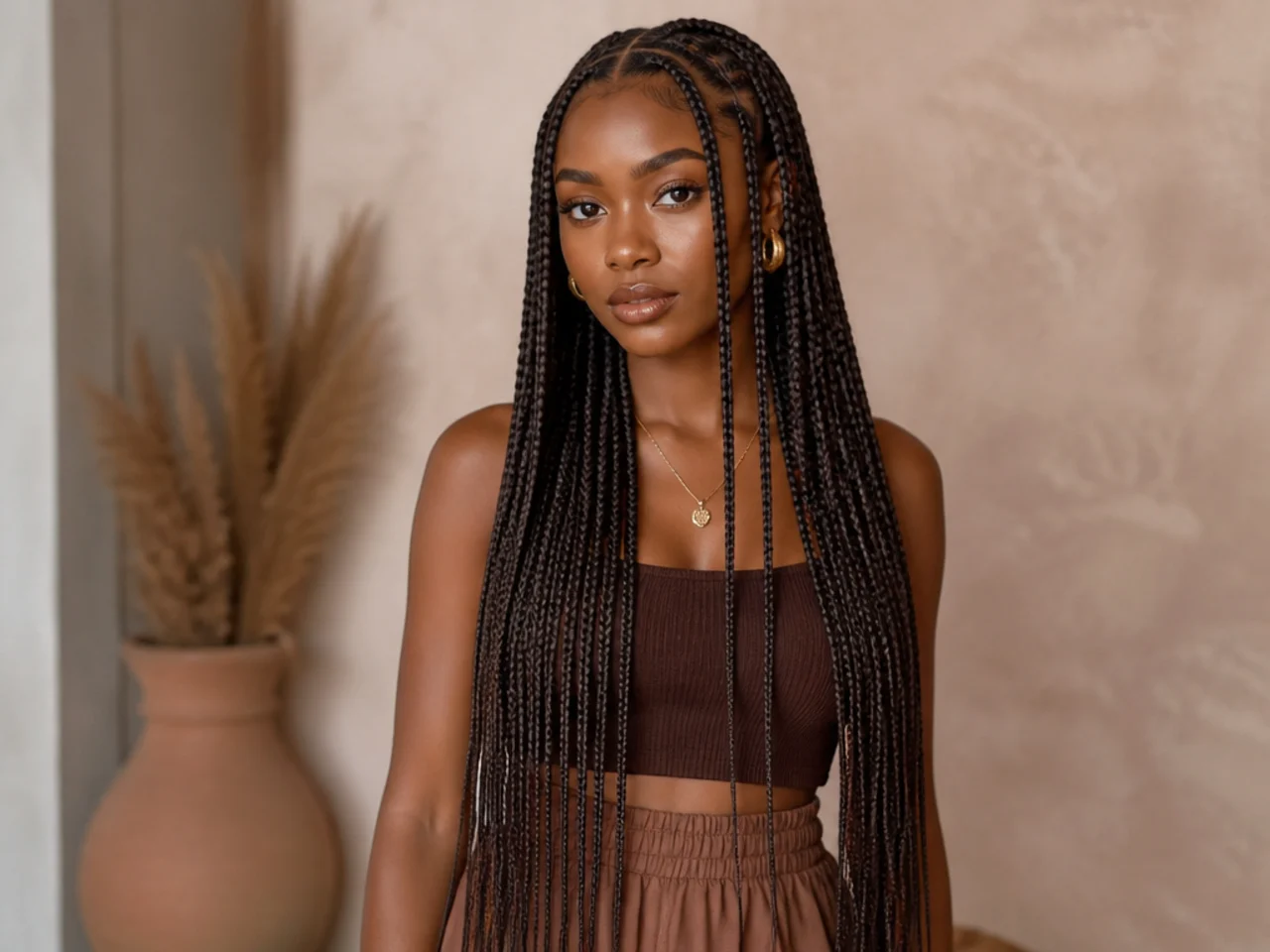
5. Waist-Length Fulani Braids
Medium braids taken to the waist. Dramatic, and heavy — expect around 300 grams of added weight. Sleep with them gathered loosely rather than in a high bun, which concentrates all of that pull on the crown.
6. Shoulder-Length Fulani Braids
The most practical length. Light enough to wear up without strain, long enough to move, and quick to dry after washing. If this is your first protective style, start here rather than at the waist.
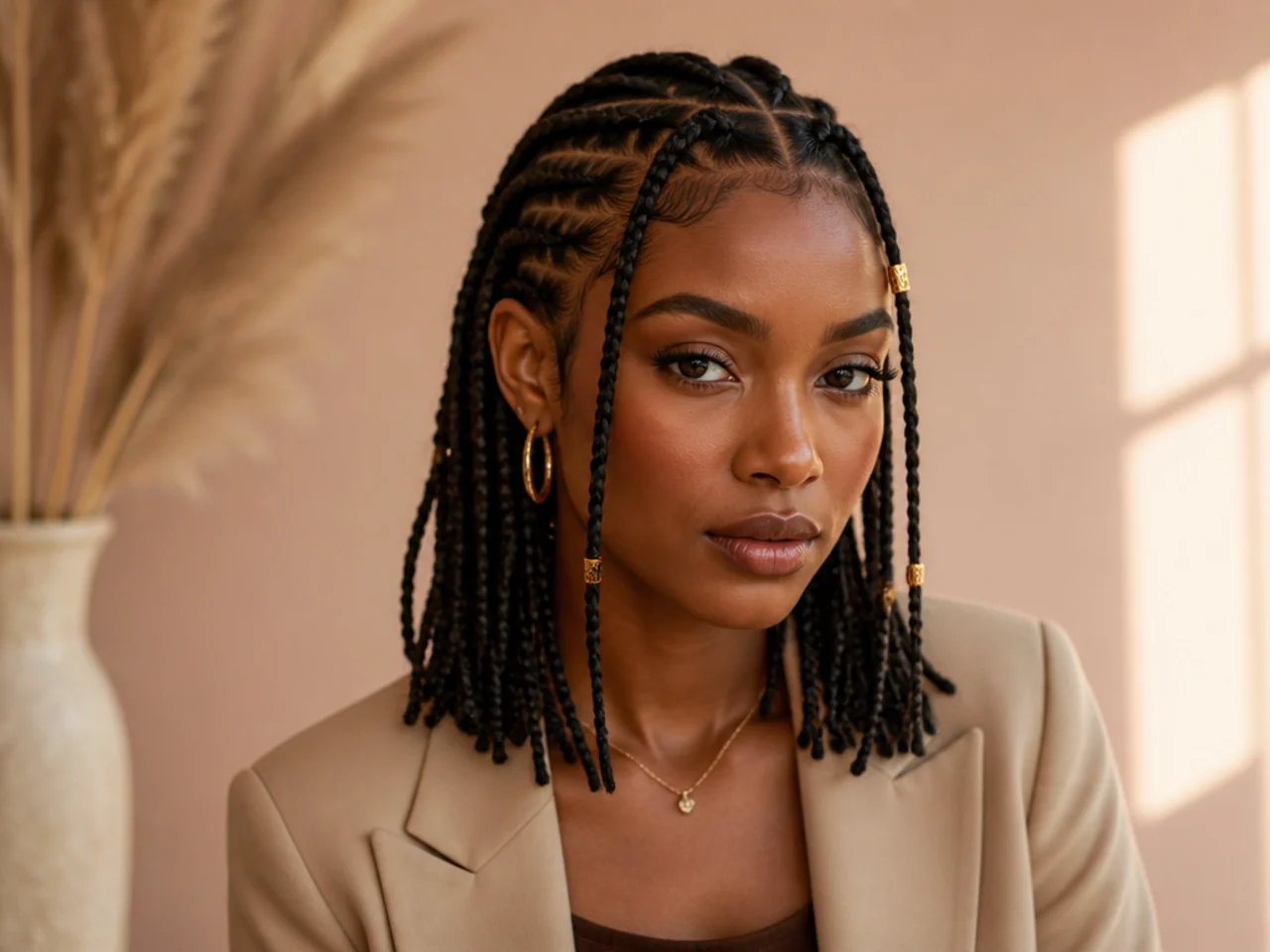
7. Fulani Braids with Beads at the Ends
Wooden or glass beads on the bottom two inches of the loose braids, secured with a small elastic. Beautiful, and noisy — they click against each other constantly. Worth knowing if you work somewhere quiet.
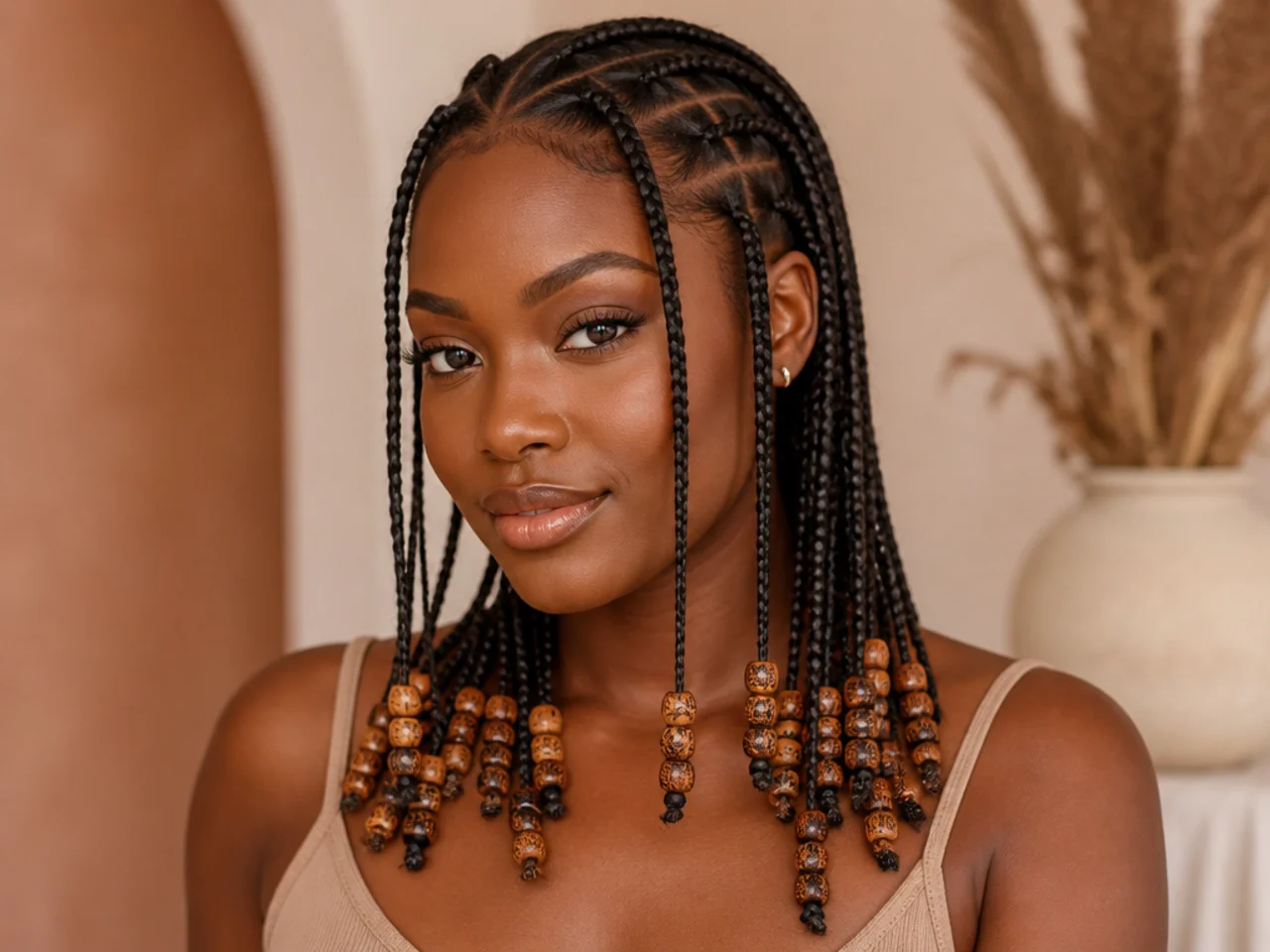
8. Fulani Braids with a Middle Cornrow
A third cornrow braided straight down the centre parting itself, between the two side sections. It removes the exposed scalp line, which makes the style read fuller from above — useful if your parting shows more scalp than you would like.
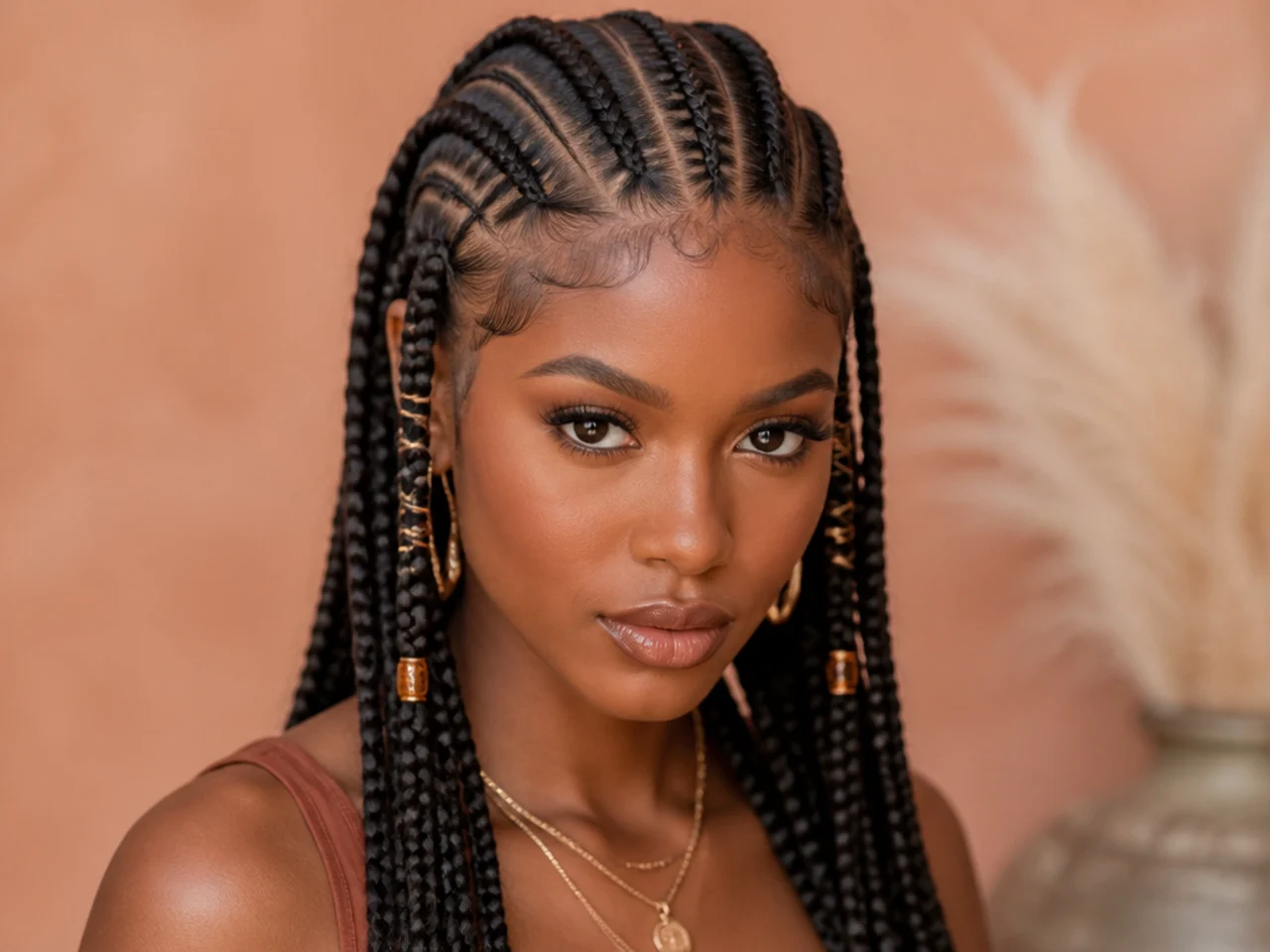
9. Half-Up Fulani Braids
The loose braids gathered into a high half-ponytail, front cornrows and face-framing braids left down. Takes thirty seconds to do and lifts the whole style off your neck. The most-worn variation day to day.
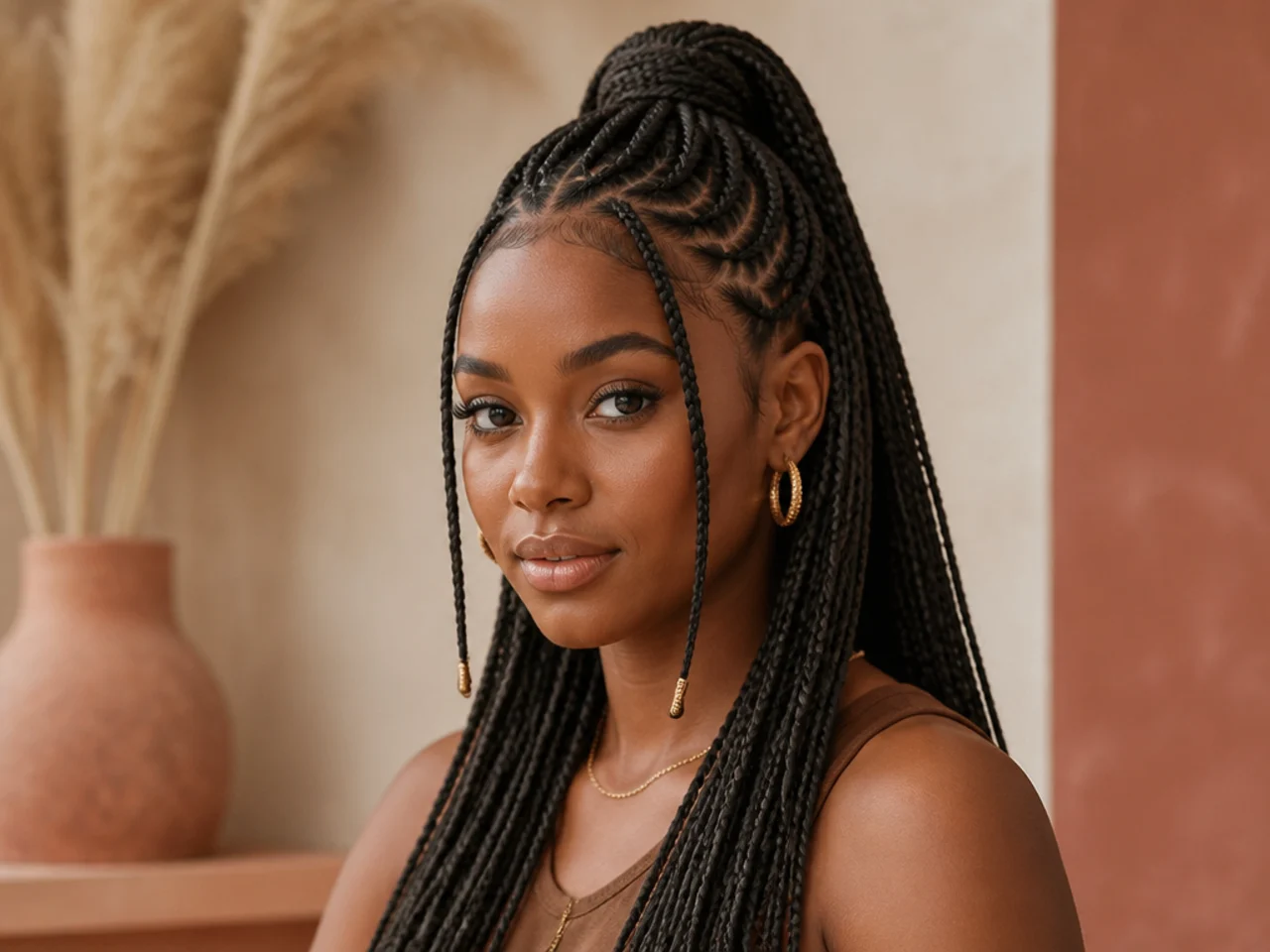
10. Fulani Braids into a Bob
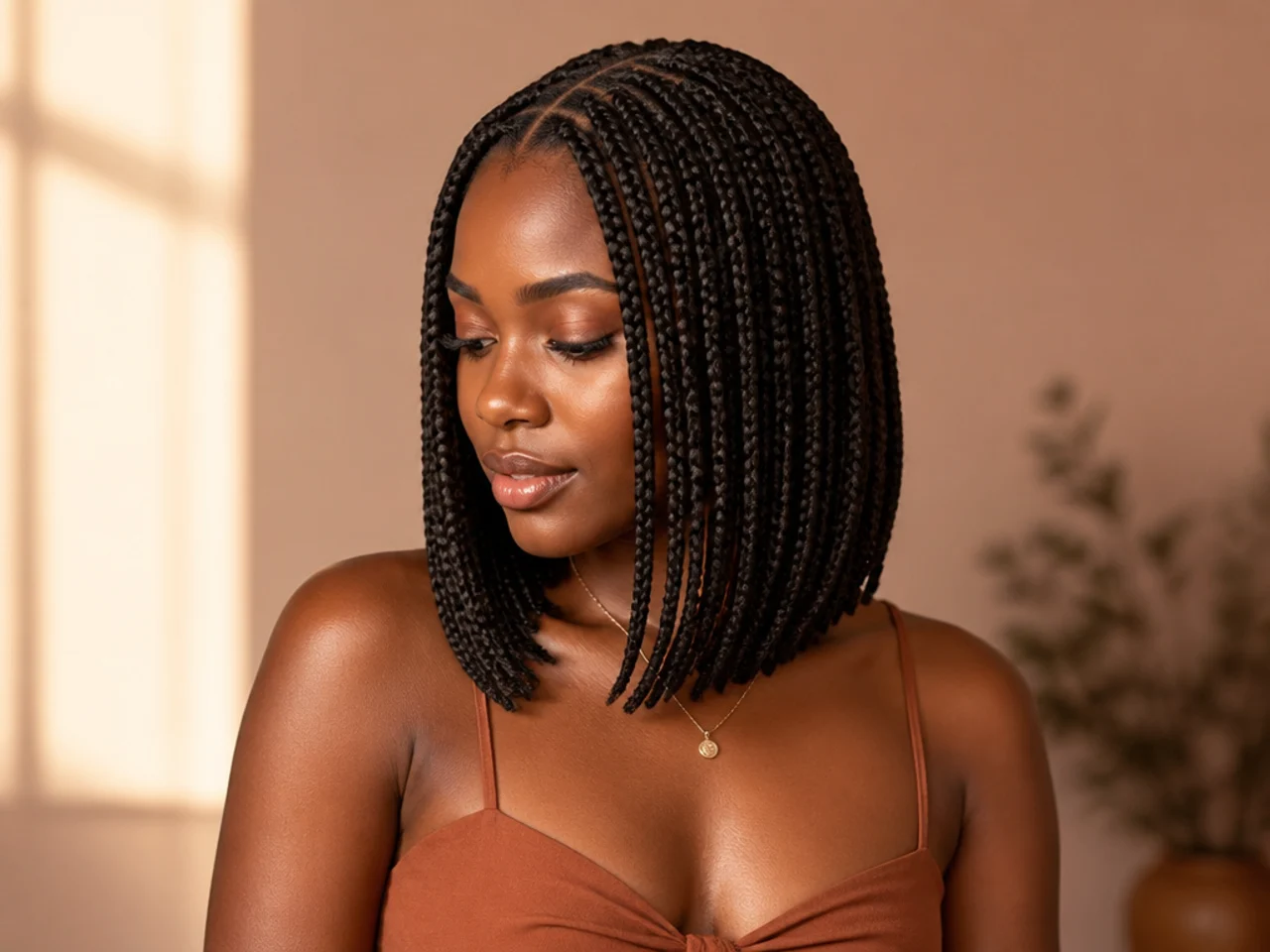
Braids cut or installed to jaw or chin length. Light, sharp, and far easier to sleep in than long braids. The blunt bottom edge is what makes it work — ask for the ends cut level rather than tapered.
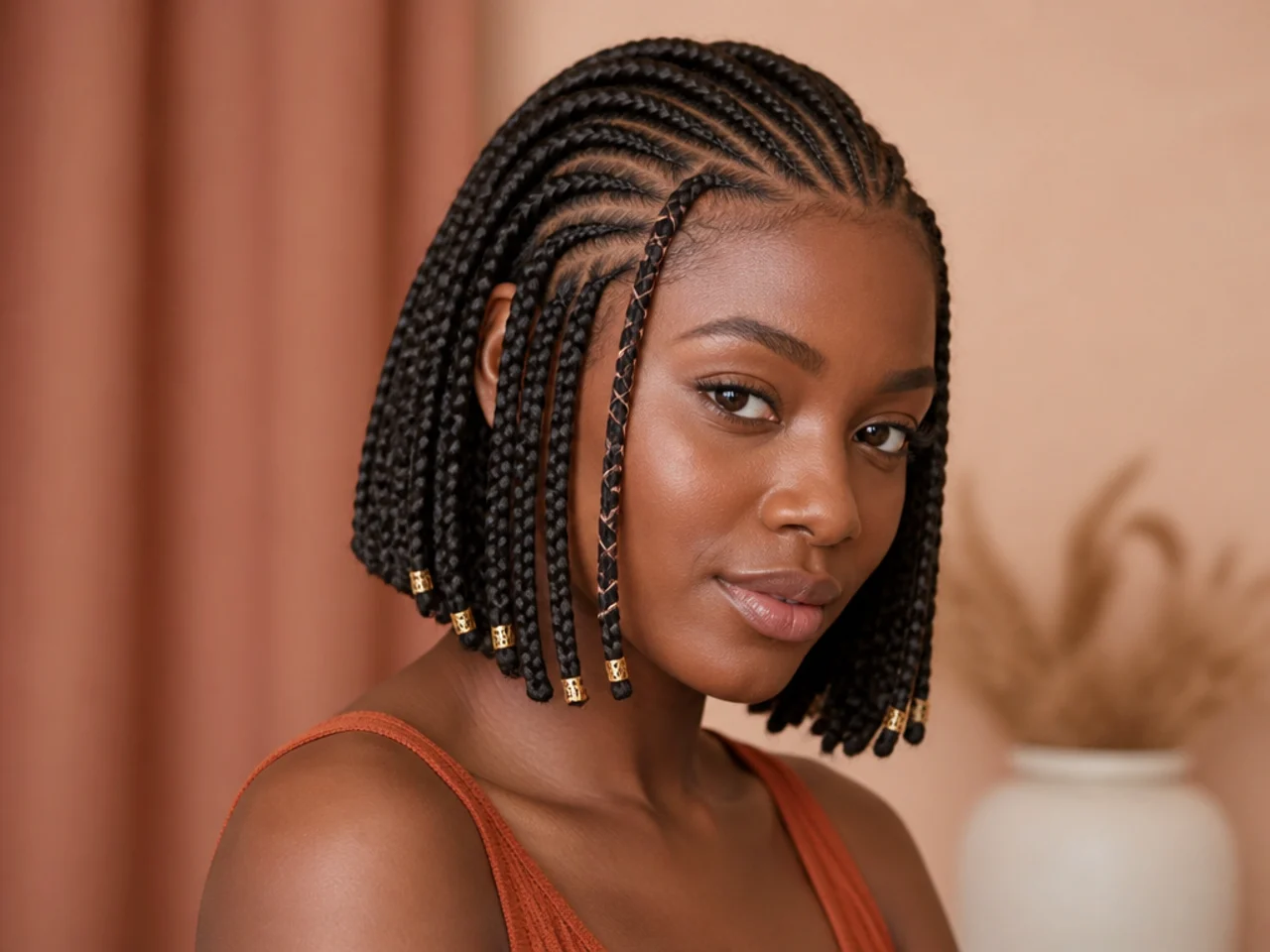
11. Honey Blonde Fulani Braids
Braiding hair in a warm honey tone, either throughout or as a few highlighted braids near the face. Warm blonde flatters deeper skin tones far better than ash blonde, which tends to read grey against warm undertones.
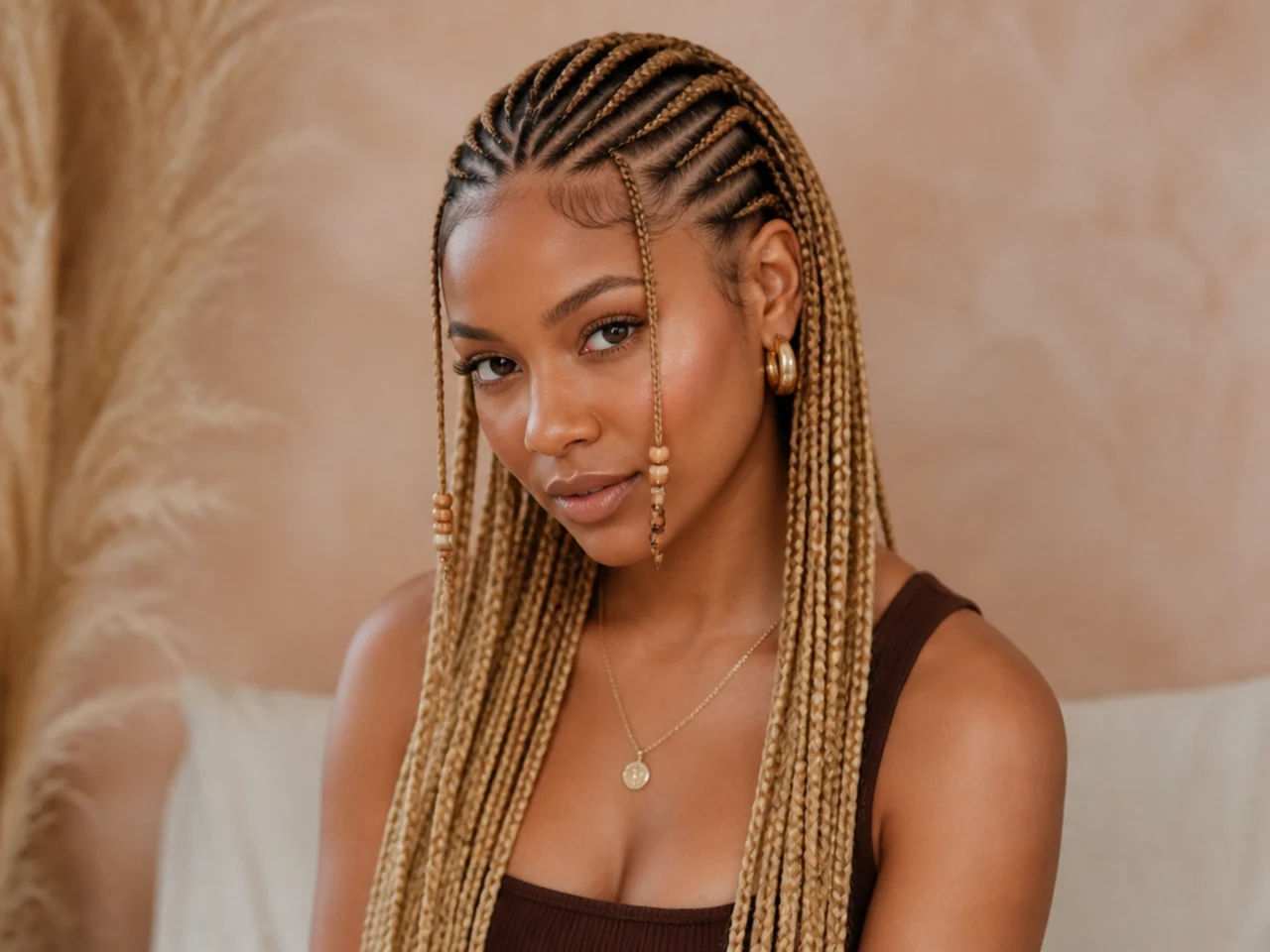
12. Two-Tone Fulani Braids
Natural black at the roots and through the cornrows, with a lighter shade from mid-length down. The gradient keeps the front looking like your own hair while the ends carry the colour.
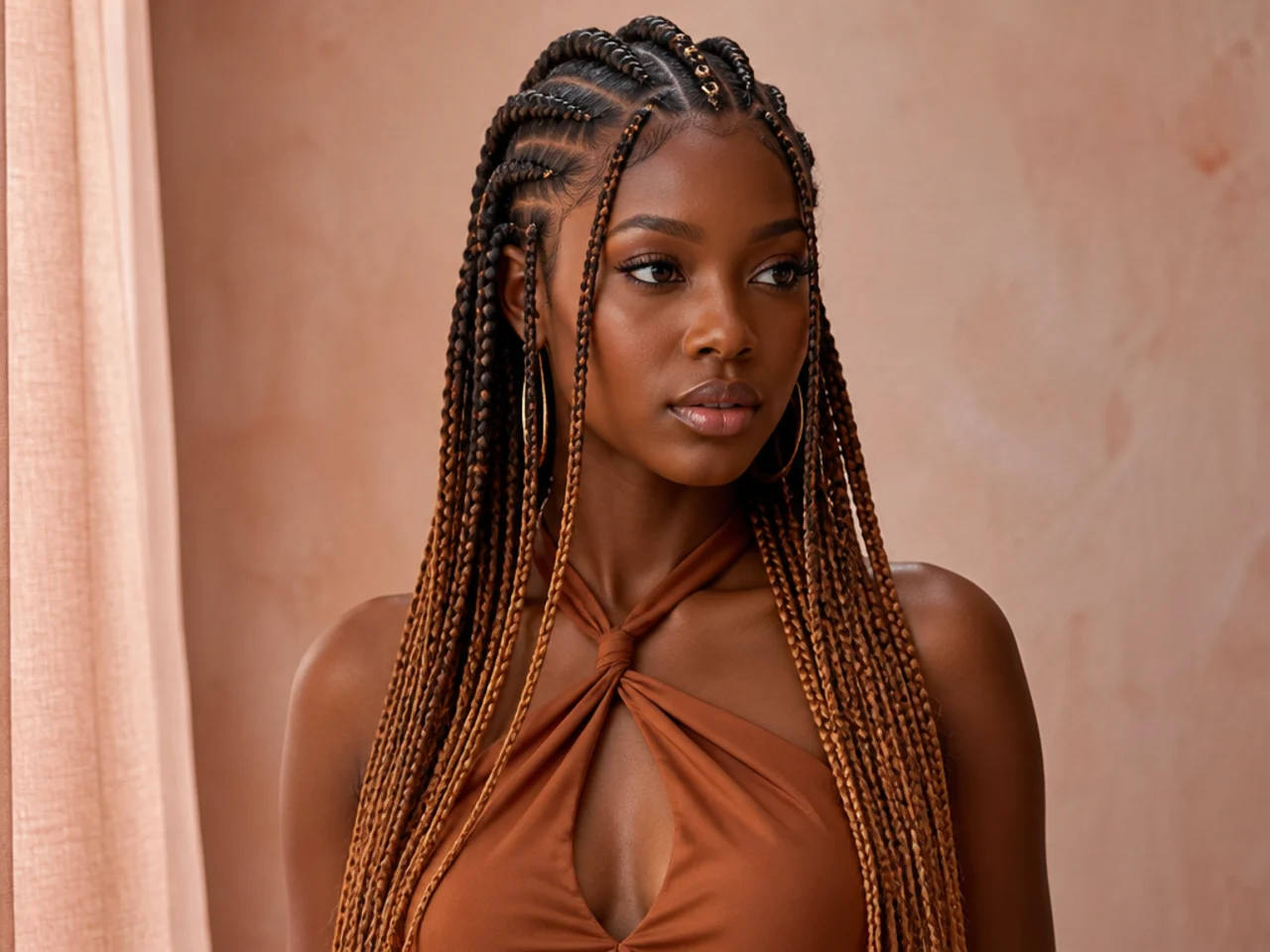
13. Fulani Braids with Curly Ends
Braided to about three-quarter length and left loose below, with the remaining braiding hair curled into a soft coil. Softens the whole silhouette and hides uneven ends.
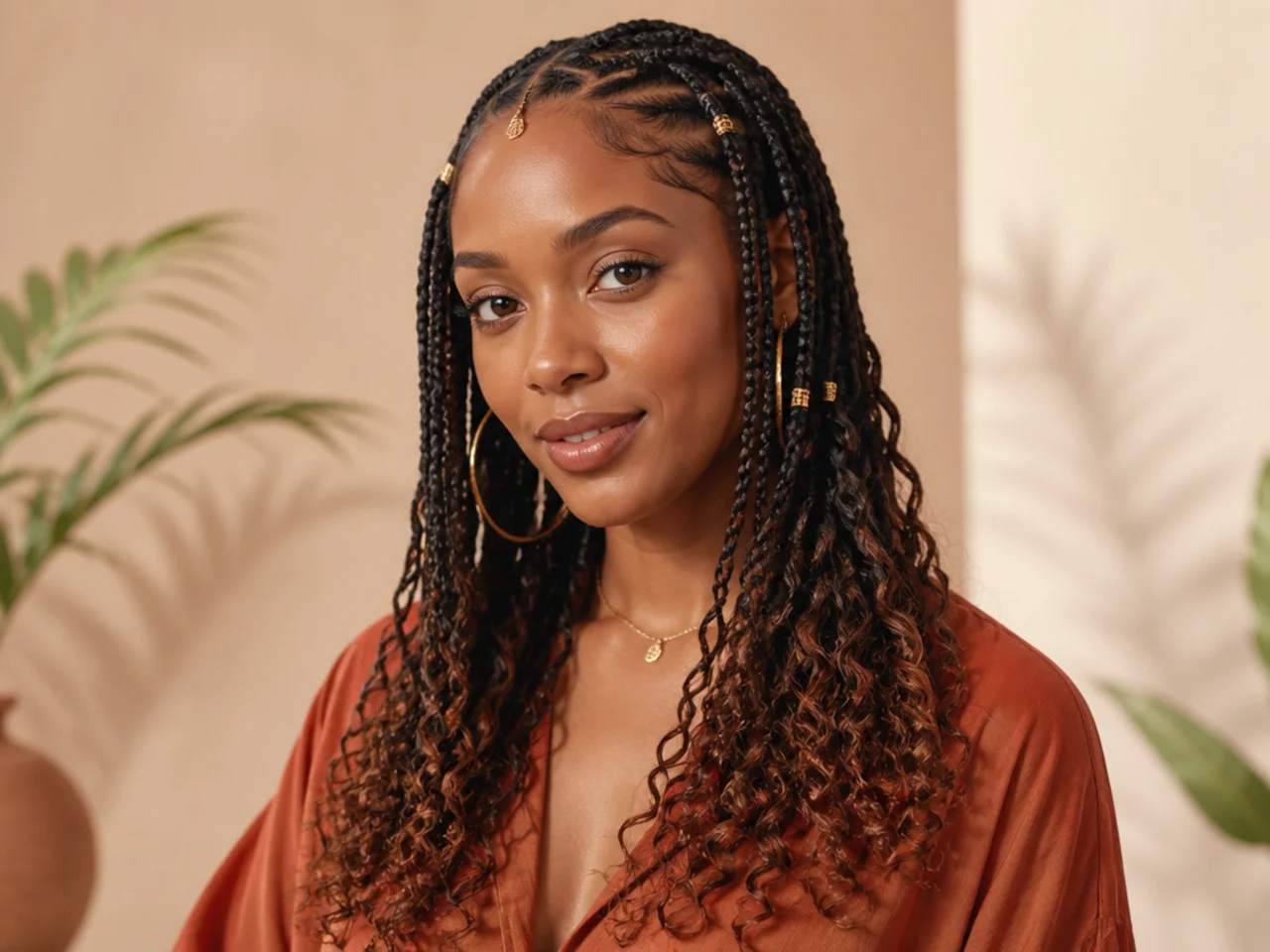
14. Knotless Fulani Braids
Same pattern, but each braid starts by feeding hair in gradually rather than knotting at the root. Noticeably more comfortable in the first week and much lighter at the scalp. Adds around an hour to the install and is worth every minute of it.
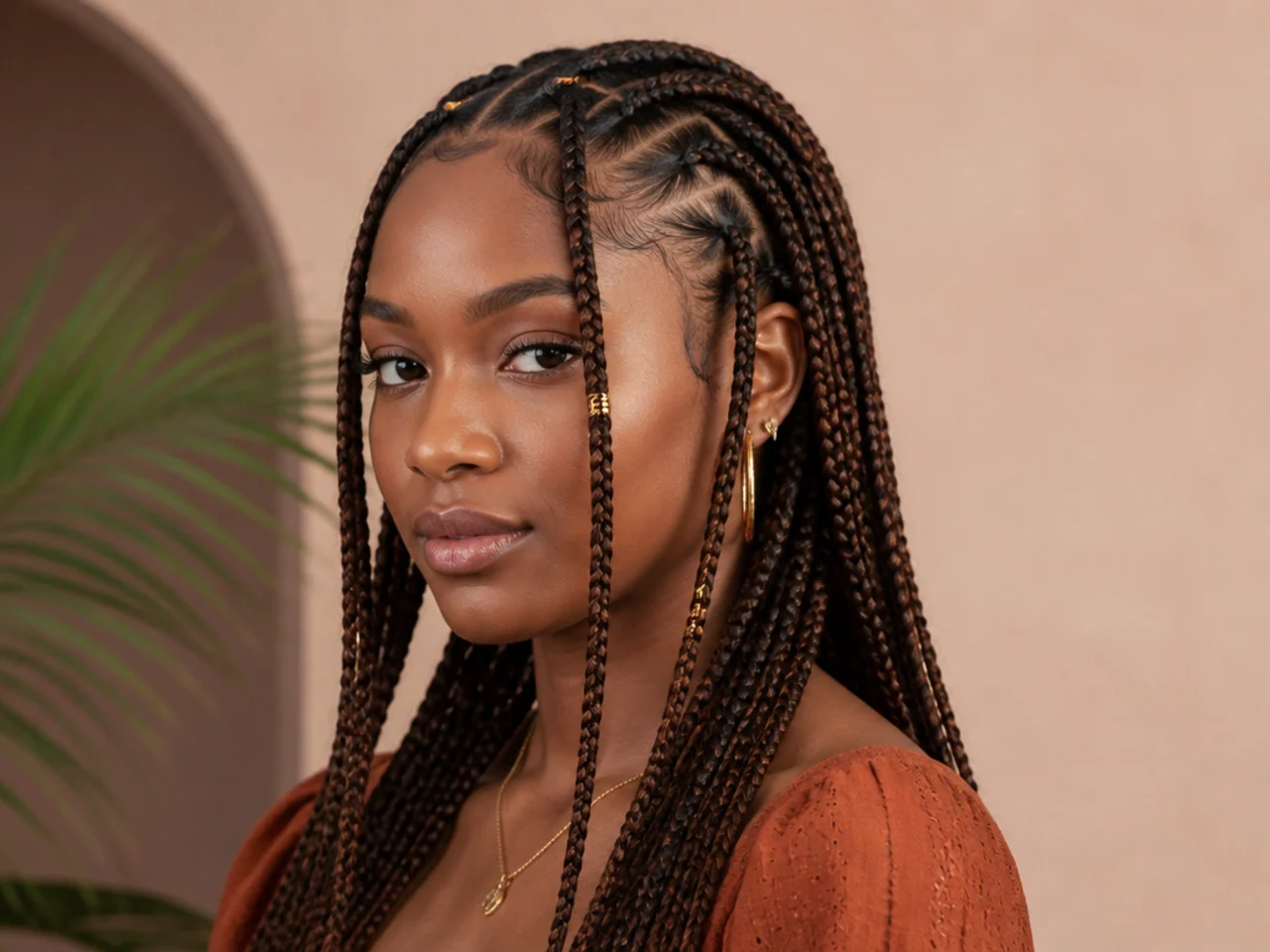
15. Fulani Braids with a Side Parting
The same cornrow structure moved off-centre to a deep side part. Softer than a centre parting and more flattering on a round or very square face, because the diagonal line breaks up the width.
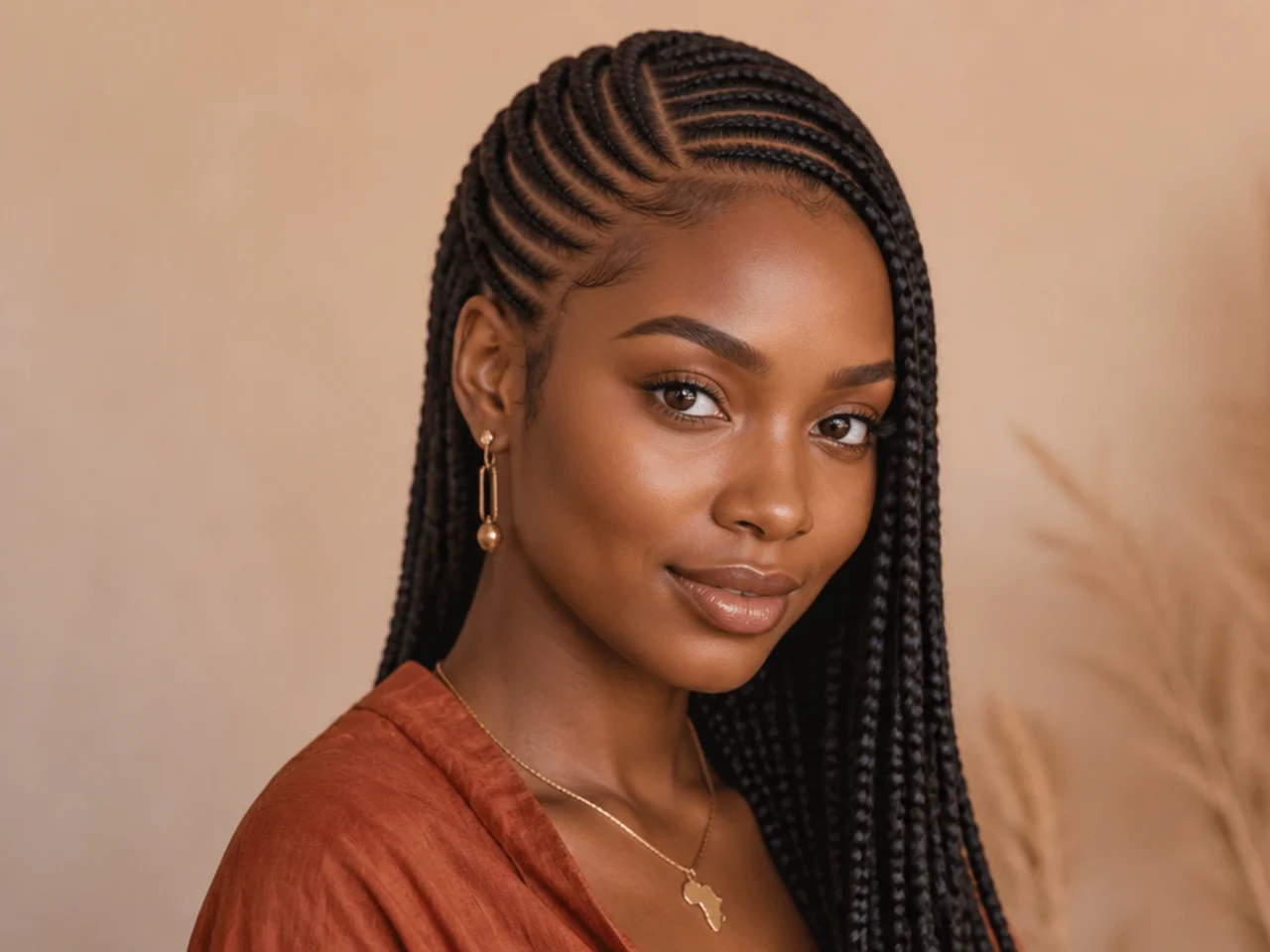
16. Fulani Braids with Face-Framing Tendrils
Two fine braids left loose in front of the ears while everything else is pulled back. It is the smallest possible change and it softens the hairline more than any other variation here.
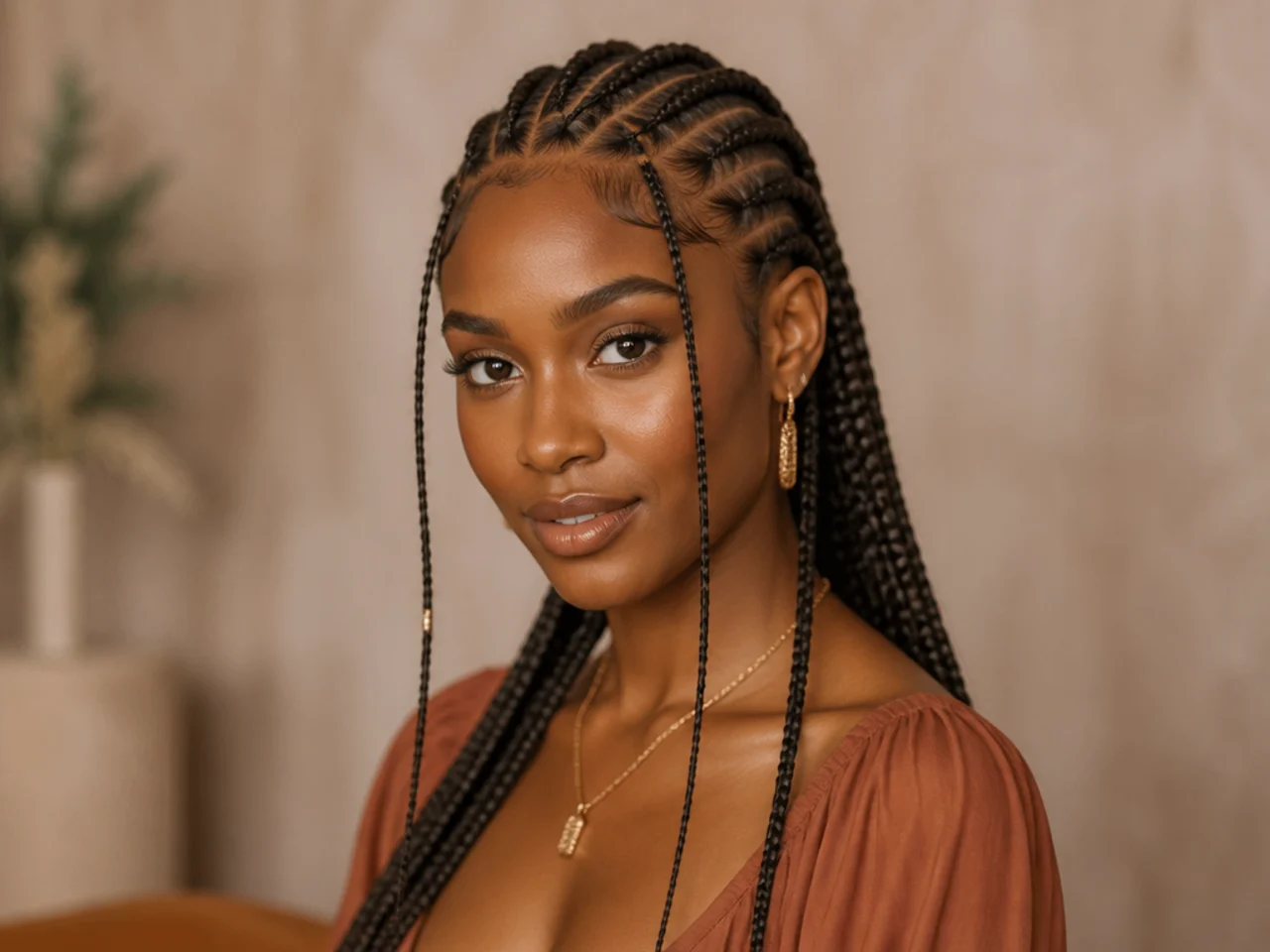
17. Fulani Braids in a High Bun
All loose braids gathered into a high bun, cornrows and front braids intact. Clean, formal, and the fastest way to make the style look deliberate for an event. Do not leave it up all day — a high bun concentrates tension at the crown.
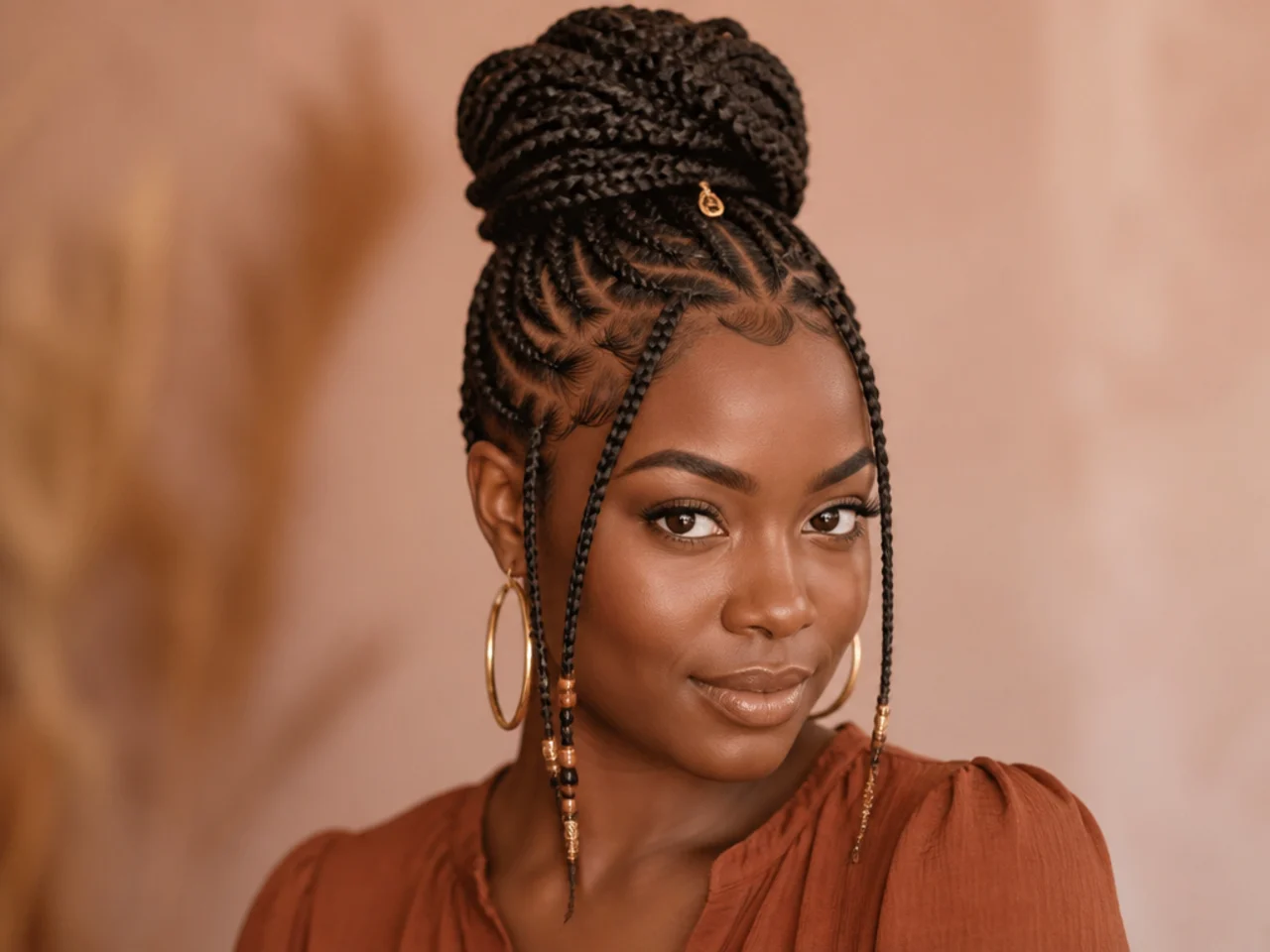
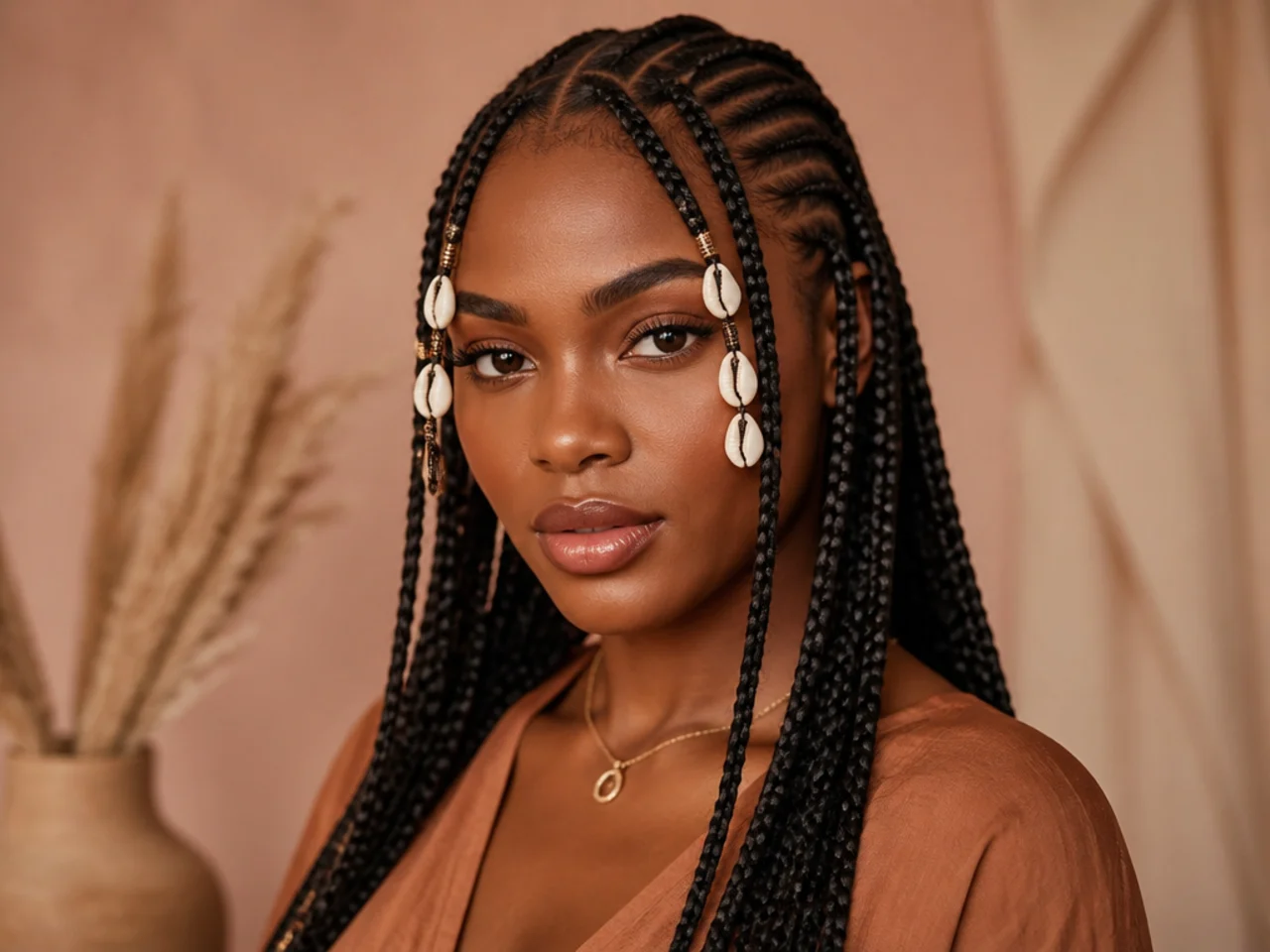
18. Fulani Braids with Cowrie Shells
Shells threaded onto the front braids instead of metal cuffs. Lighter than they look and the most traditional finish on this list. Two or three per braid is plenty — more and the braid starts to bow under the weight.
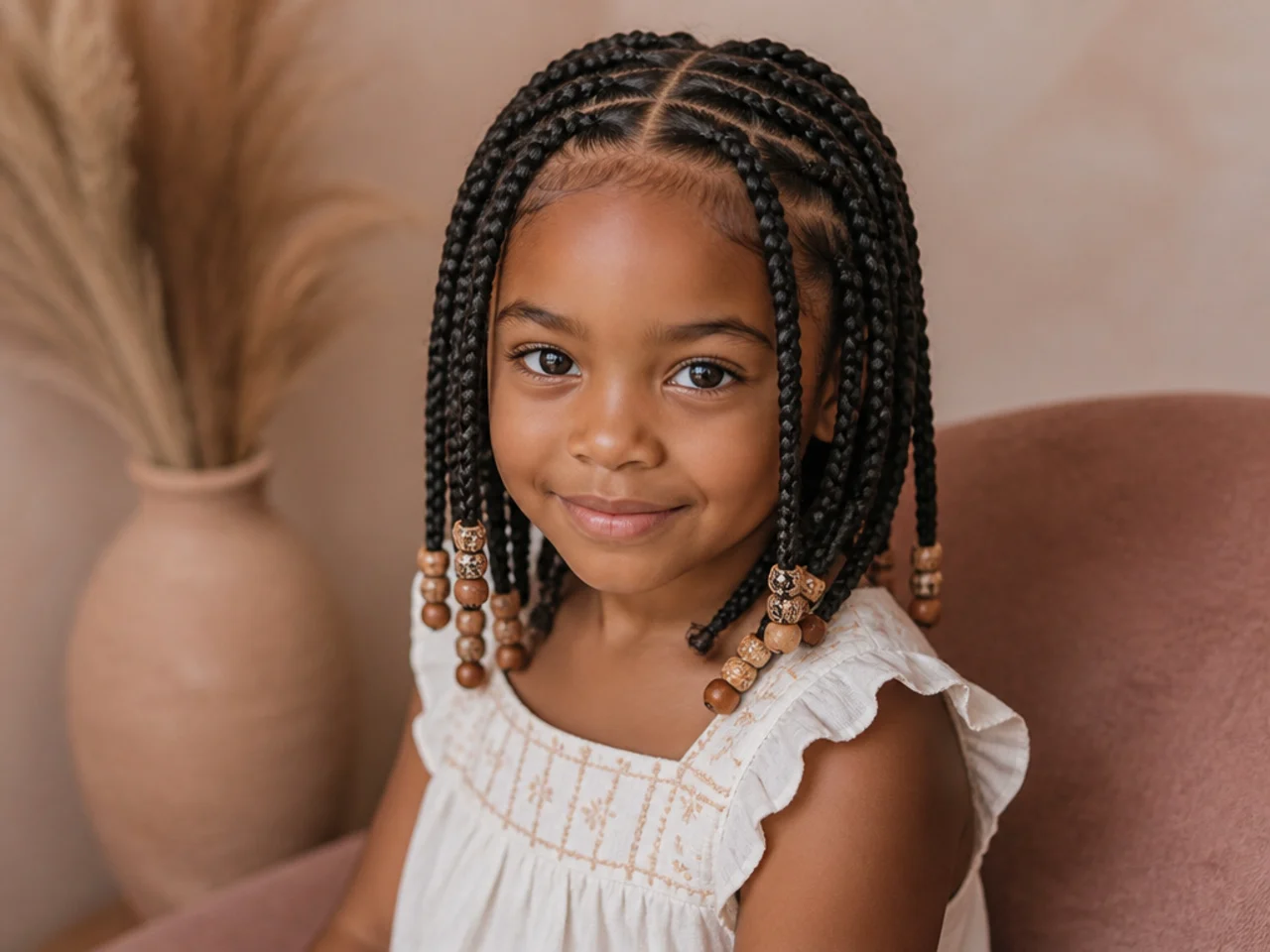
19. Fulani Braids for Kids
Jumbo or medium braids kept at shoulder length, with a maximum of two cornrows either side and no heavy beads. A child's hairline is finer and recovers more slowly, so this is a case where looser and shorter is the whole point.
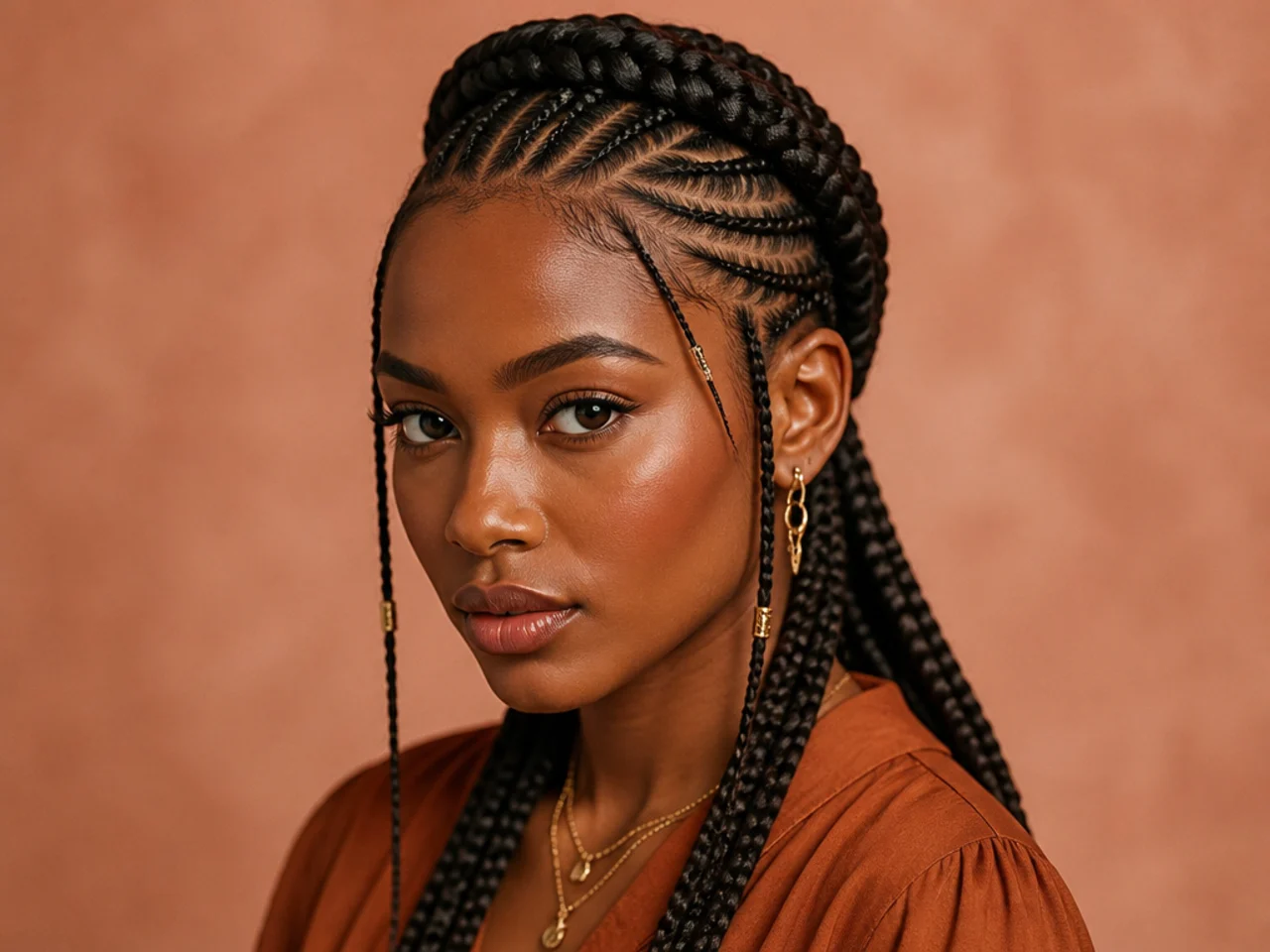
20. Fulani Braids with a Braided Crown
The front cornrows continued around the head as a halo before joining the loose braids at the back. Adds about forty minutes and gives you an updo that needs no pins.
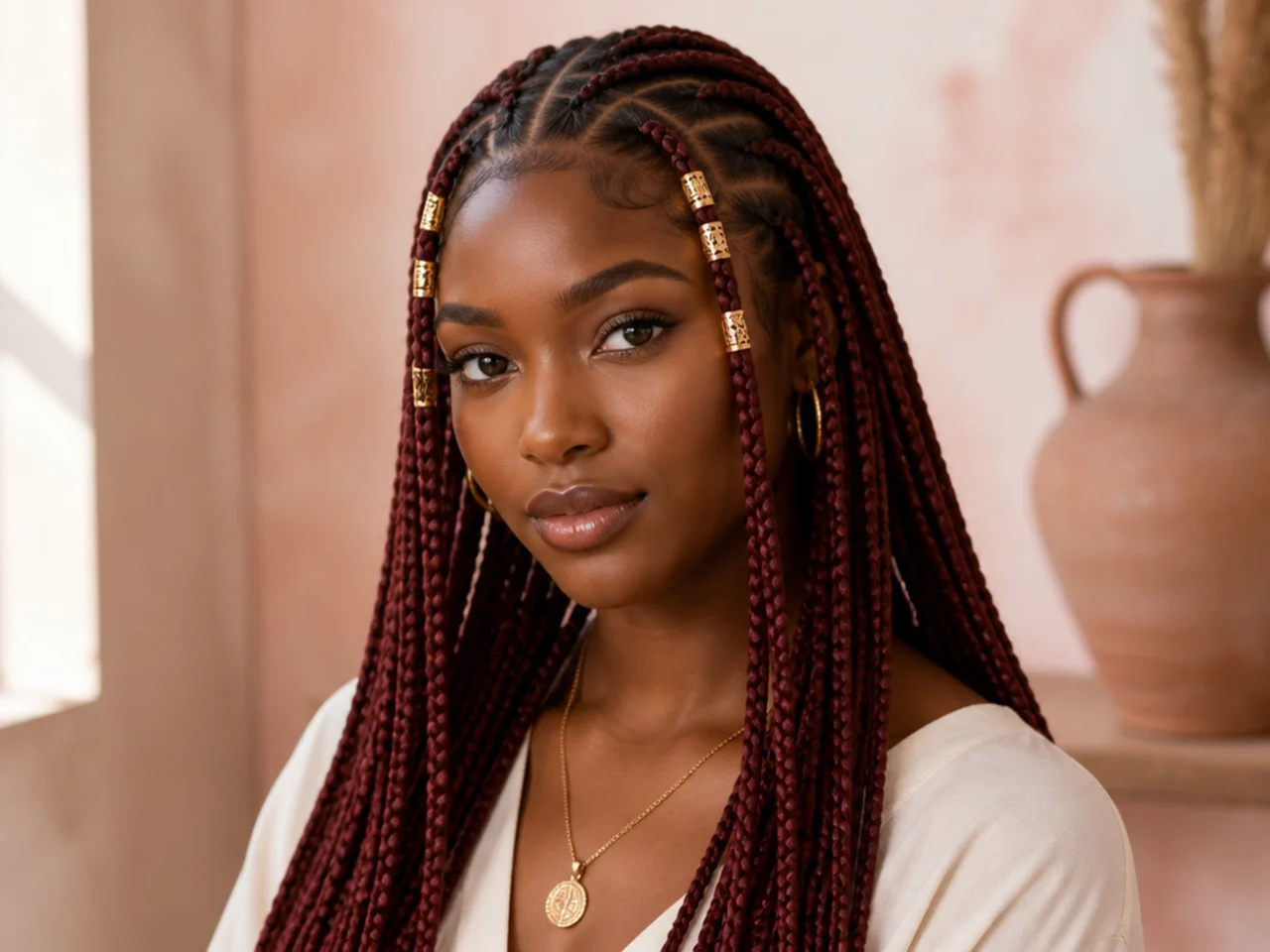
21. Burgundy Fulani Braids
Deep red-brown braiding hair. Reads almost black indoors and shows its colour fully in daylight, which makes it the easiest bold colour to wear to work.
22. Fulani Braids with Curved Cornrows
The front cornrows braided in a gentle arc rather than straight back. Slightly more work for the braider, and it draws the eye along the cheekbone rather than straight over the crown.
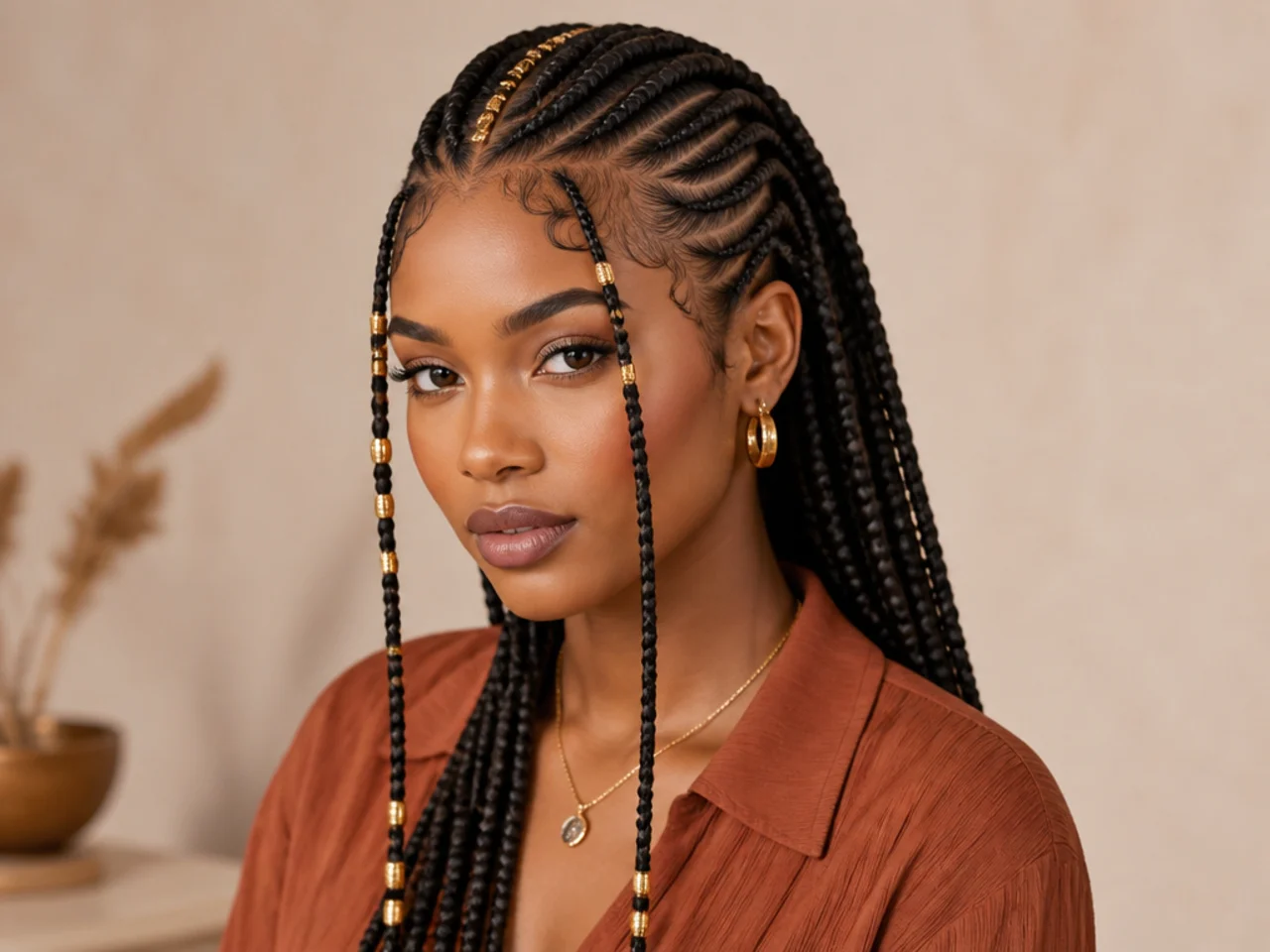
23. Waist-Length Fulani Braids with Beads Throughout
Beads distributed along the full length rather than clustered at the front or ends. Striking, and the heaviest version on this list — wear it for a fortnight, not six weeks.
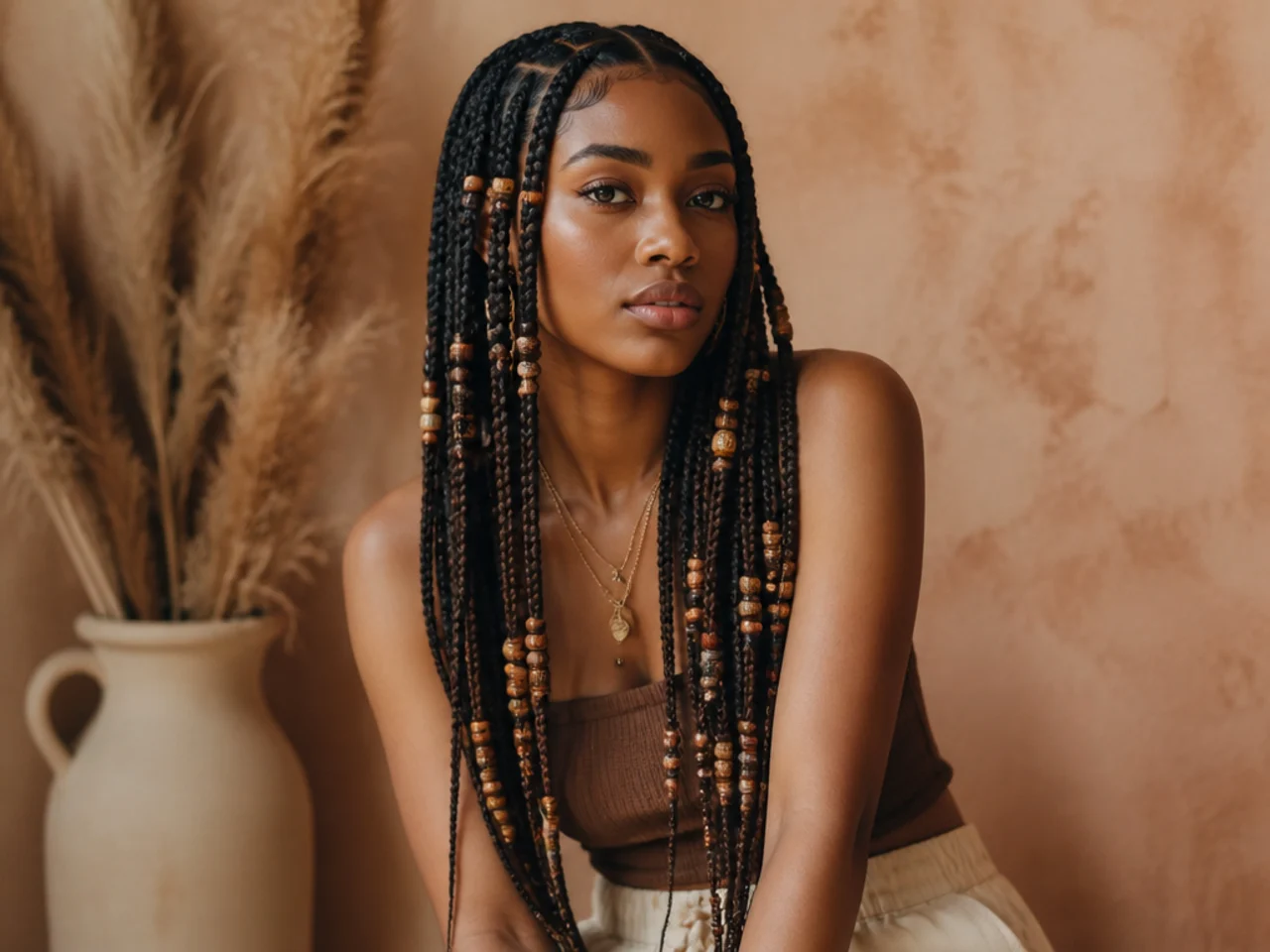
24. Fulani Braids with Thick and Thin Mixed Sizes
Alternating braid widths through the loose section. Breaks up the uniformity of a full head of one size and reads more organic without adding install time.
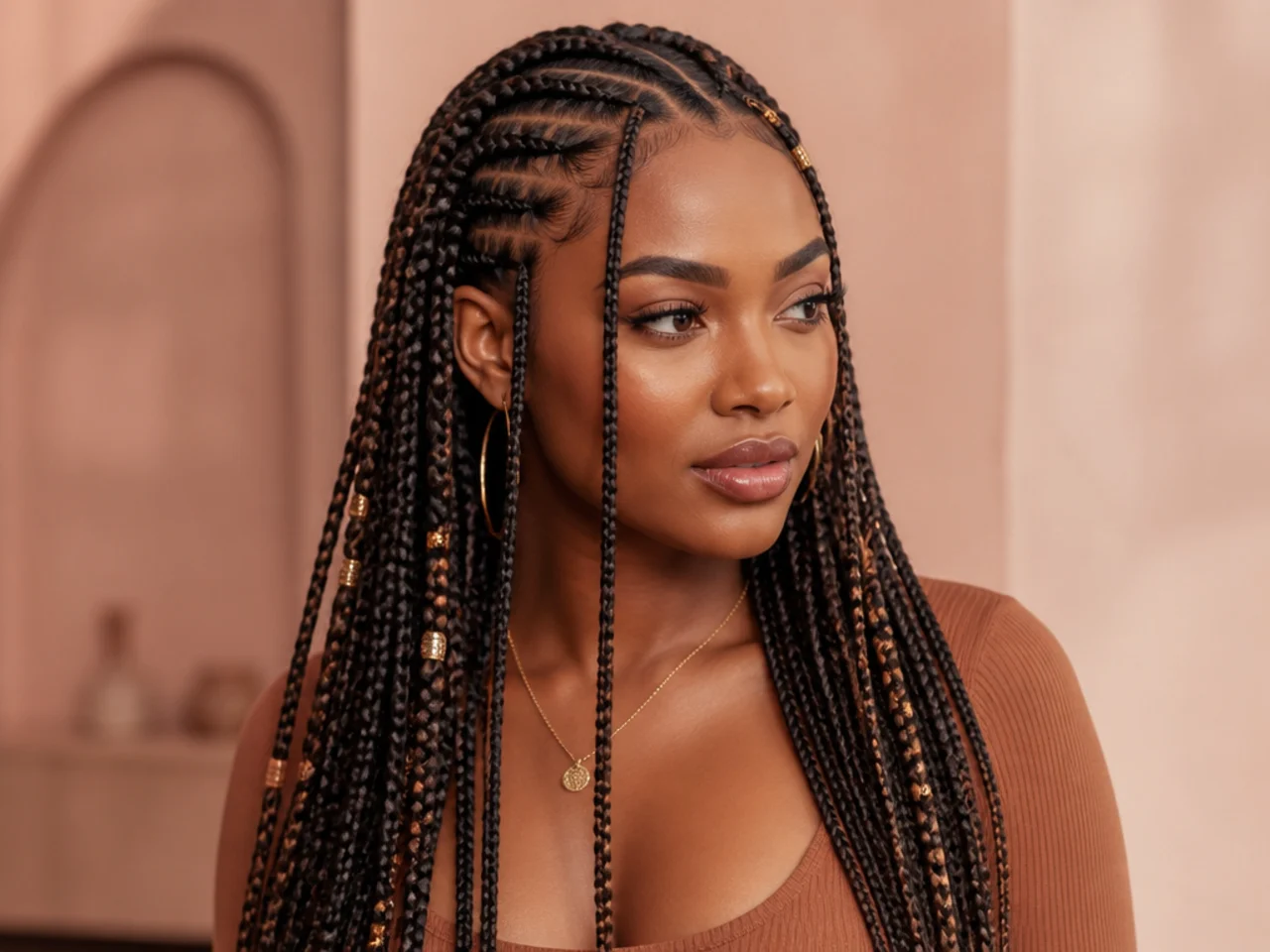
25. Low-Tension Fulani Braids for Fine Hair
Jumbo braids, two wide cornrows only, knotless throughout, and nothing past the shoulder. Purpose-built for fine or recovering hair — every choice here is about reducing pull.
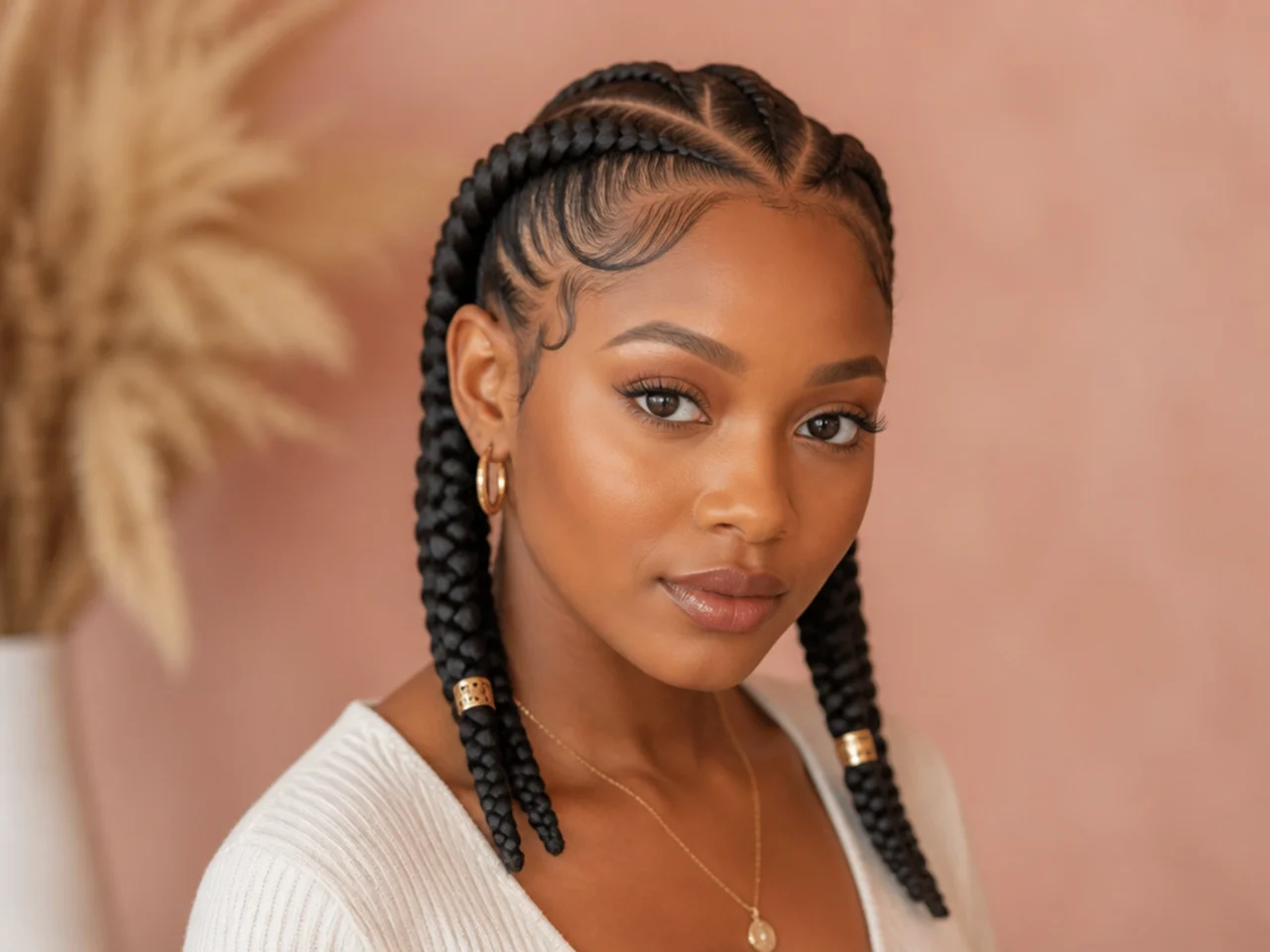
How to Style and Maintain Simple Fulani Braids
Wash every two to three weeks. Dilute shampoo one part to three parts water in an applicator bottle, apply along the partings only, and squeeze through rather than rubbing. Rubbing frizzes the braid at the root, which is what makes braids look old.
Dry fully. Damp braids at the scalp is how you get mildew smell by day three. Sit under a hooded dryer on cool, or give them a full afternoon.
Oil the scalp, not the braids. A light oil on the partings twice a week. Heavy butters build up and attract lint that you cannot get out.
Sleep in a satin scarf or bonnet. Cotton pillowcases pull moisture out of the braiding hair and rough up the cuticle at the front.
Take them down at six weeks. Not eight, not twelve.
Mistakes to Avoid
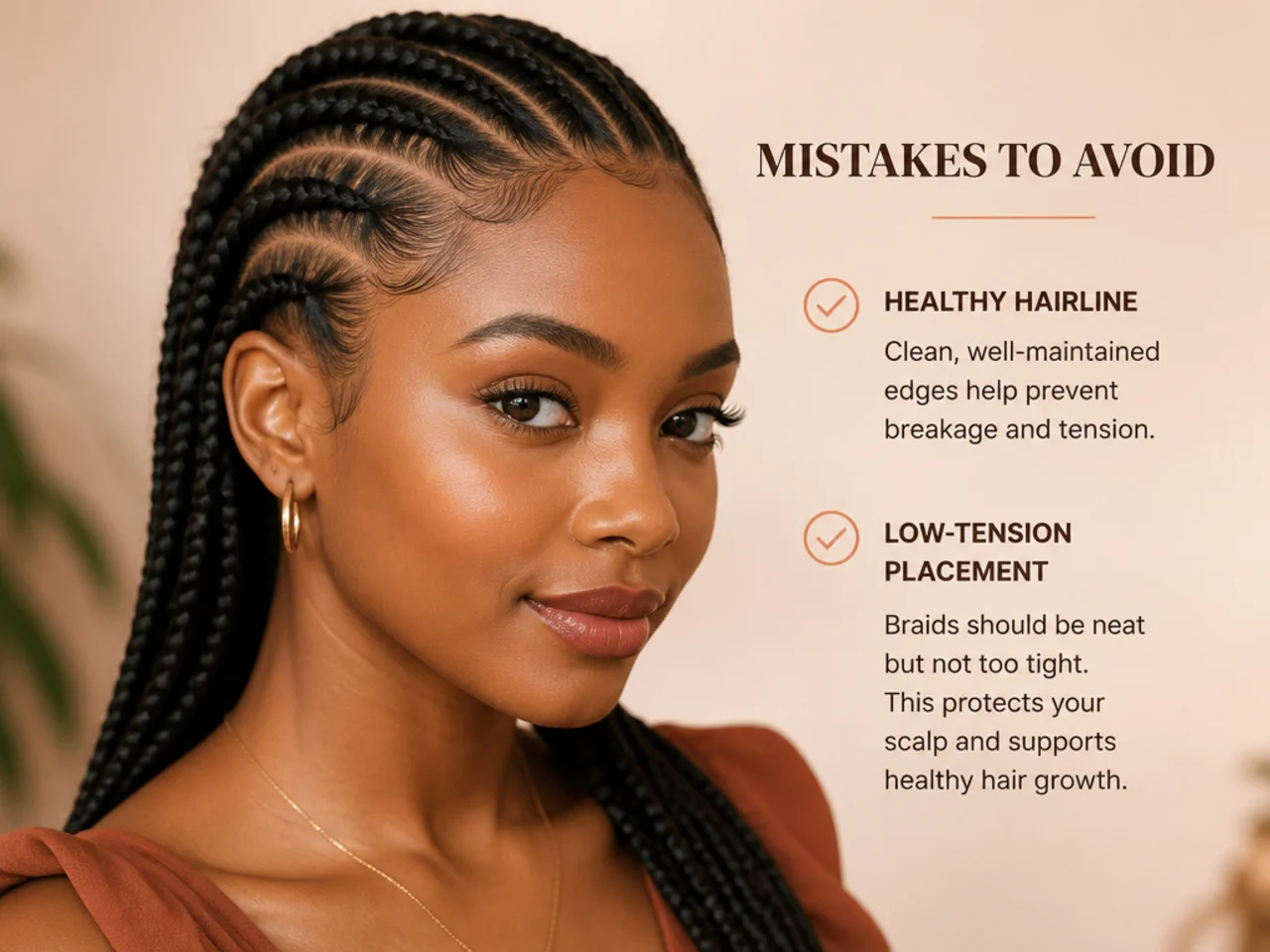
Accepting a painful install. If it stings while the braider is working, it is too tight. Say so during, not after — the fix takes seconds at the time and is impossible later.
Leaving them in past six weeks. The single biggest cause of hairline damage. Grown-out braids pull from a different angle than freshly installed ones.
Going small when your edges are already thin. More braids means more tension points along exactly the hair that is struggling.
Skipping the takedown conditioner. Saturate each braid with conditioner before unravelling. Dry takedown snaps the shed hair that has collected inside the braid.
Pulling into a high ponytail every day. The style already puts tension on the parting. A daily high pony doubles it.
FAQ
How long do simple Fulani braids last? Four to six weeks. Past six the new growth at each parting starts pulling against the braid, which is where hairline damage begins.
How long does the install take? Four to eight hours depending on braid size. Jumbo is the low end, small the high end, and the cornrowed front adds about an hour by itself.
Do Fulani braids damage your edges? Only when installed too tight or left in too long. A correctly tensioned braid never stings or raises bumps on day one.
What is the difference between Fulani braids and box braids? Fulani braids are defined by the pattern — cornrows from a centre parting plus face-framing braids. Box braids are uniform individual braids with no cornrowed section.
Can you wash them? Yes, every two to three weeks, with diluted shampoo applied to the scalp only.
Final Thoughts
The version of this style that works is the one matched to your hairline, not the one with the most cuffs. Start jumbo and shoulder-length if you are new to it, keep the tension honest, and take them down at six weeks. Everything else here is preference.
For the size decision specifically, compare jumbo Fulani braids against small Fulani braids, and read Fulani vs knotless braids before you book. The rest of the collection is in Braids & Protective Styles.
Frequently asked questions
Related posts
See all posts
20 Waterfall Mermaid Braid Ideas That Hold
Read more
15 Side Mermaid Braid Ideas That Sit Right
Read more
20 Side Part Medium Knotless Braids I Saved
Read more