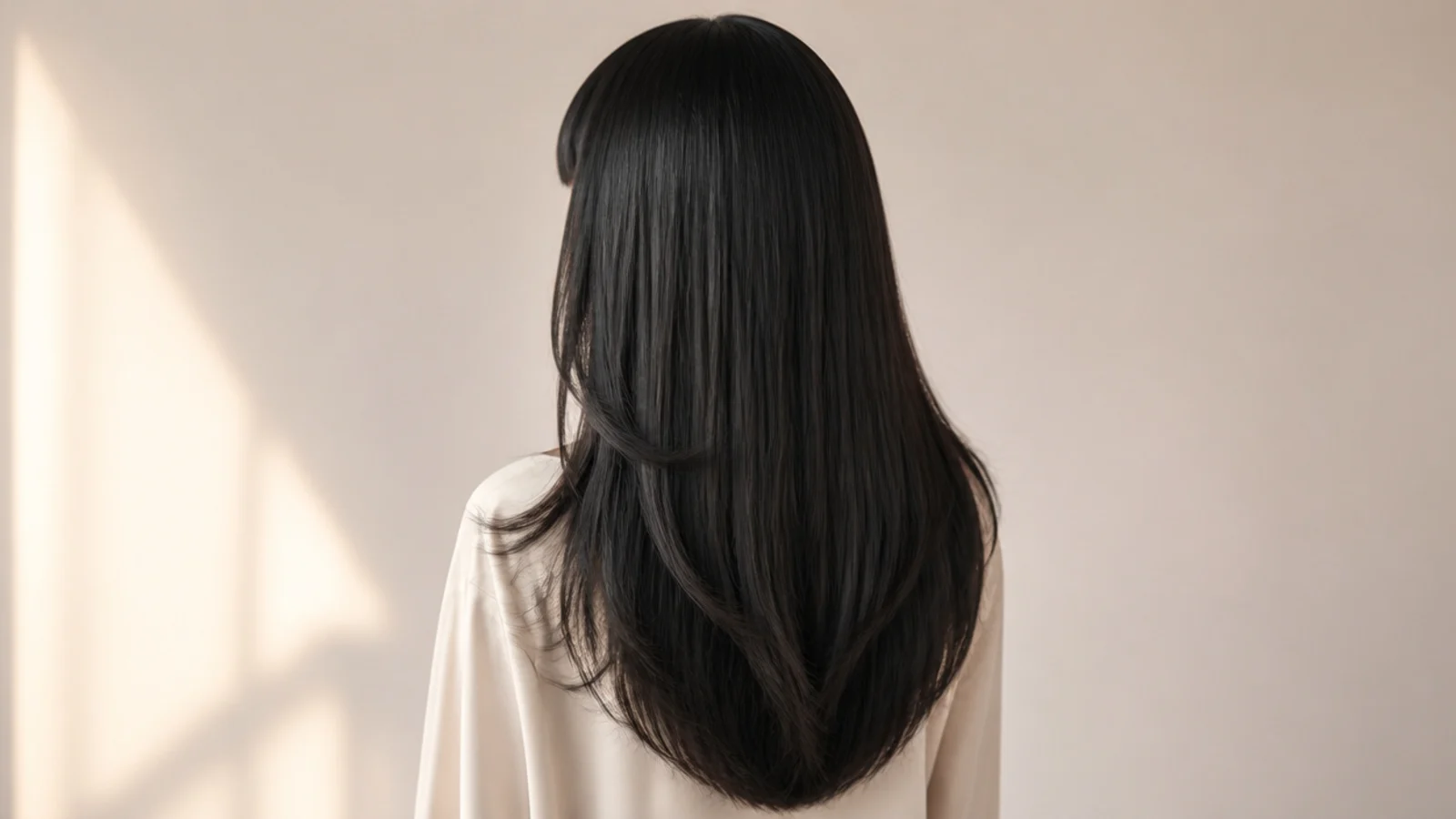
20 Sabrina Carpenter Black Hair Ideas
Twenty ways to wear this black, and the step most people skip on the way to it. Bleached hair has lost the warm pigment a dark shade is built to sit on, so black over blonde needs a filler before anything else touches it.
In this article · 28
- Telling a Wig From Dye
- Shade Family Consultation
- Filler Over Blonde
- Hair Type Matching
- Round Brush Blowout on Dark Hair
- Cost and Grow Out
- The 20 Black Hair Ideas
- 1. Jet Black With Blunt Bangs
- 2. Espresso With Curtain Bangs
- 3. Blue Black Blowout
- 4. Black Money Piece
- 5. Black Hollywood Waves
- 6. Black Blunt Lob
- 7. Black Wispy Fringe
- 8. Black Shadow Root
- 9. Black High Ponytail
- 10. Black Half Up With a Bow
- 11. Black With a Copper Underlayer
- 12. Black Wolf Cut
- 13. Black With a Deep Side Part
- 14. Black Bob With a Micro Fringe
- 15. Black Beach Waves
- 16. Black in a Claw Clip
- 17. Black Face Framing Layers
- 18. Black Glass Hair
- 19. Black Lace Front Wig
- 20. Semi Permanent Black Gloss
- Final Thoughts
Black is the easiest colour in a salon to apply and the hardest one to undo, and almost nobody is told the second half of that sentence.
Bleached hair cannot take black straight. Lightening strips out the warm pigment a dark shade is built to sit on, so black goes on muddy, fades greenish, and does it unevenly along the length.
Getting into this colour is one appointment. Getting out is several. Dark pigment is deposited deep in the cortex and has to be broken down before it can be lifted.
Telling a Wig From Dye
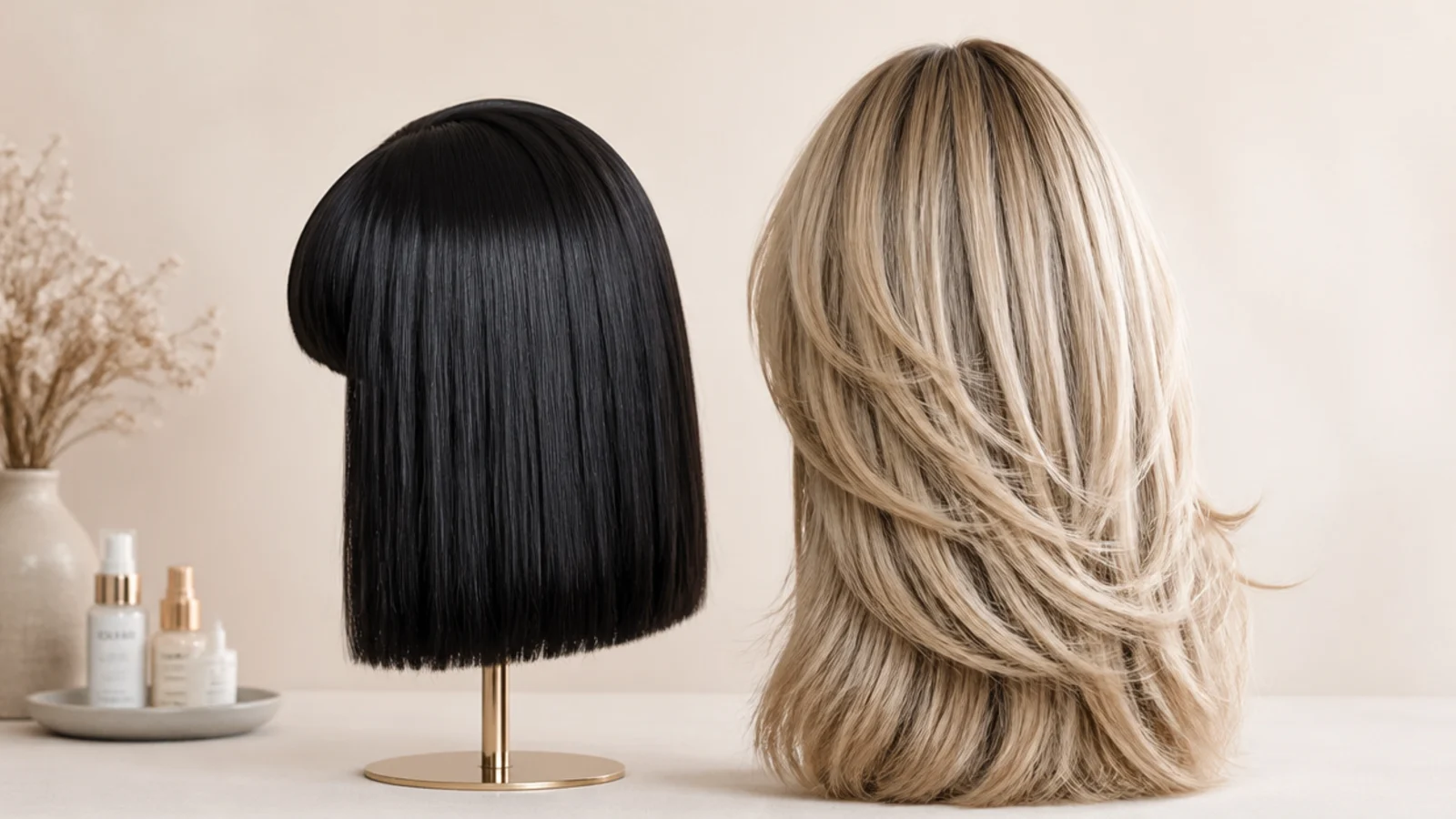
There are two honest routes to this colour. A wig, or a dye, and they suit different people entirely.
A wig keeps your own condition intact. Nothing is processed, nothing is lifted, and the whole look comes off at the end of the night.
The hairline is where the two differ. A lace front puts knotted strands into a fine mesh against the scalp, so the hairline reads as individual hairs rather than as a solid edge.
Dye is a one-way decision at this depth. Worth trying the colour on a wig first if you have ever lightened your hair, because that is the head that pays most to reverse it.
Shade Family Consultation
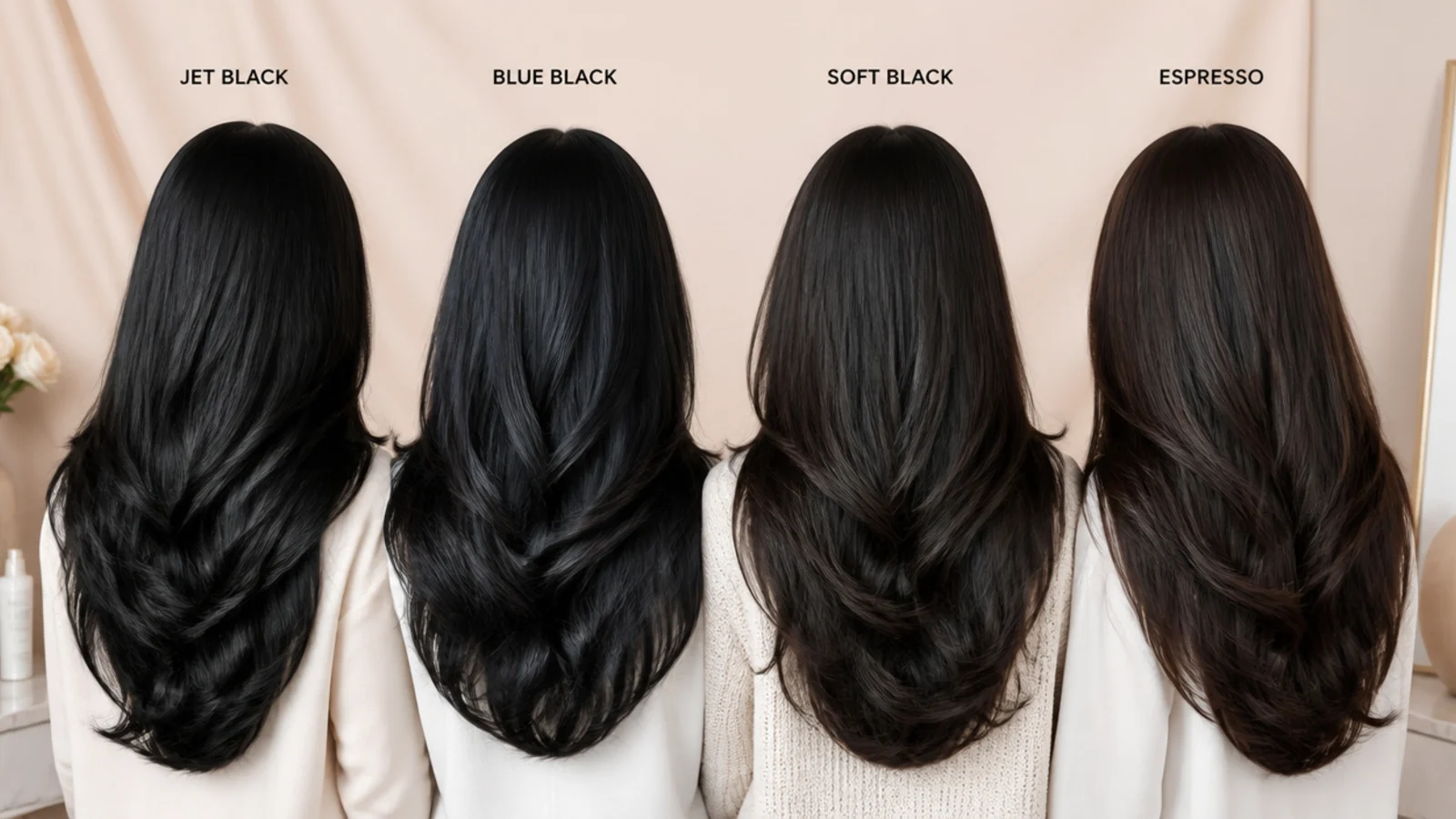
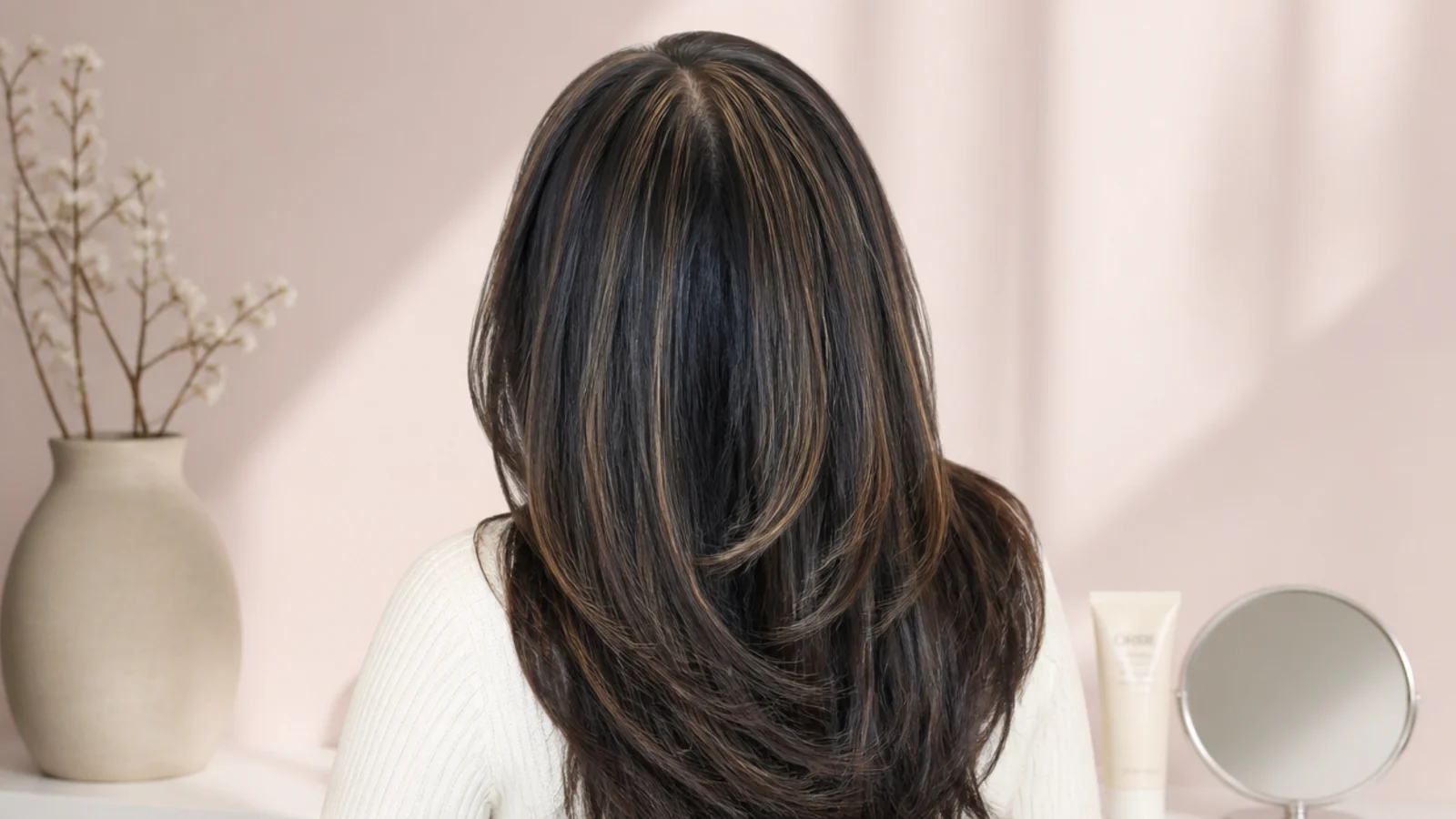
Jet black is neutral. No reflect at all, which reads as flat depth and shows the cut rather than the colour.
Blue black carries a cool violet reflect. It only appears where light hits directly, so it needs a smooth surface to be visible.
Espresso is a very dark brown. It holds a little warmth at the ends, which keeps layers readable where a true black merges them.
Choose it at a window, not under salon light. Indoor lighting collapses all three into the same colour, and daylight separates them instantly.
Filler Over Blonde
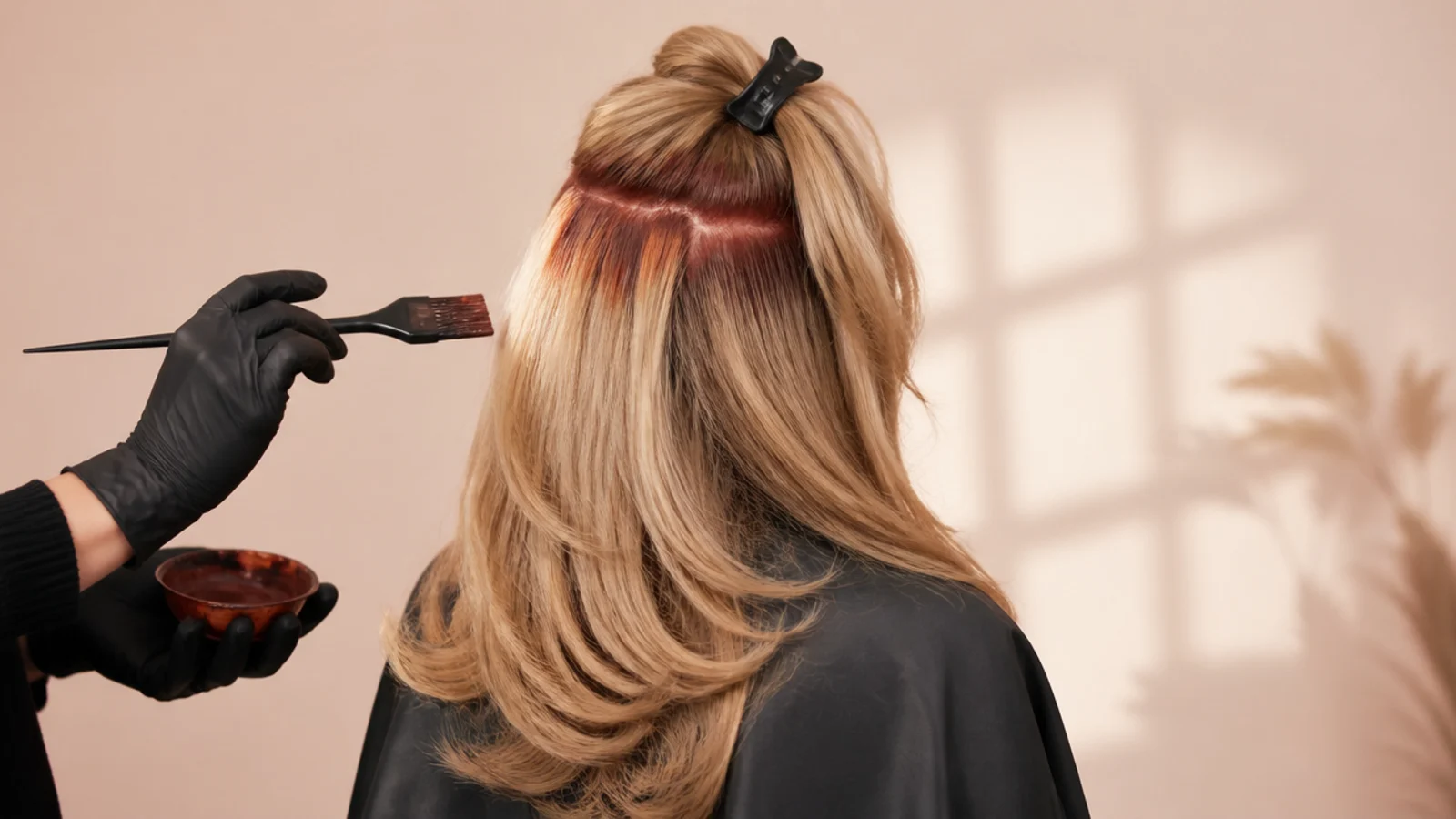
Bleach removes warm pigment first. That warmth is the base every dark shade is formulated to be applied over.
Without it, black has nothing to sit on. The result reads muddy or slightly green and fades unevenly along the shaft.
A red or copper filler goes on before the black. It replaces the missing underlying pigment so the dark shade lands the way it does on virgin hair.
Lightened hair is porous. It grabs colour quickly and lets it go just as quickly, which is why a filled application still needs a gloss on a schedule.
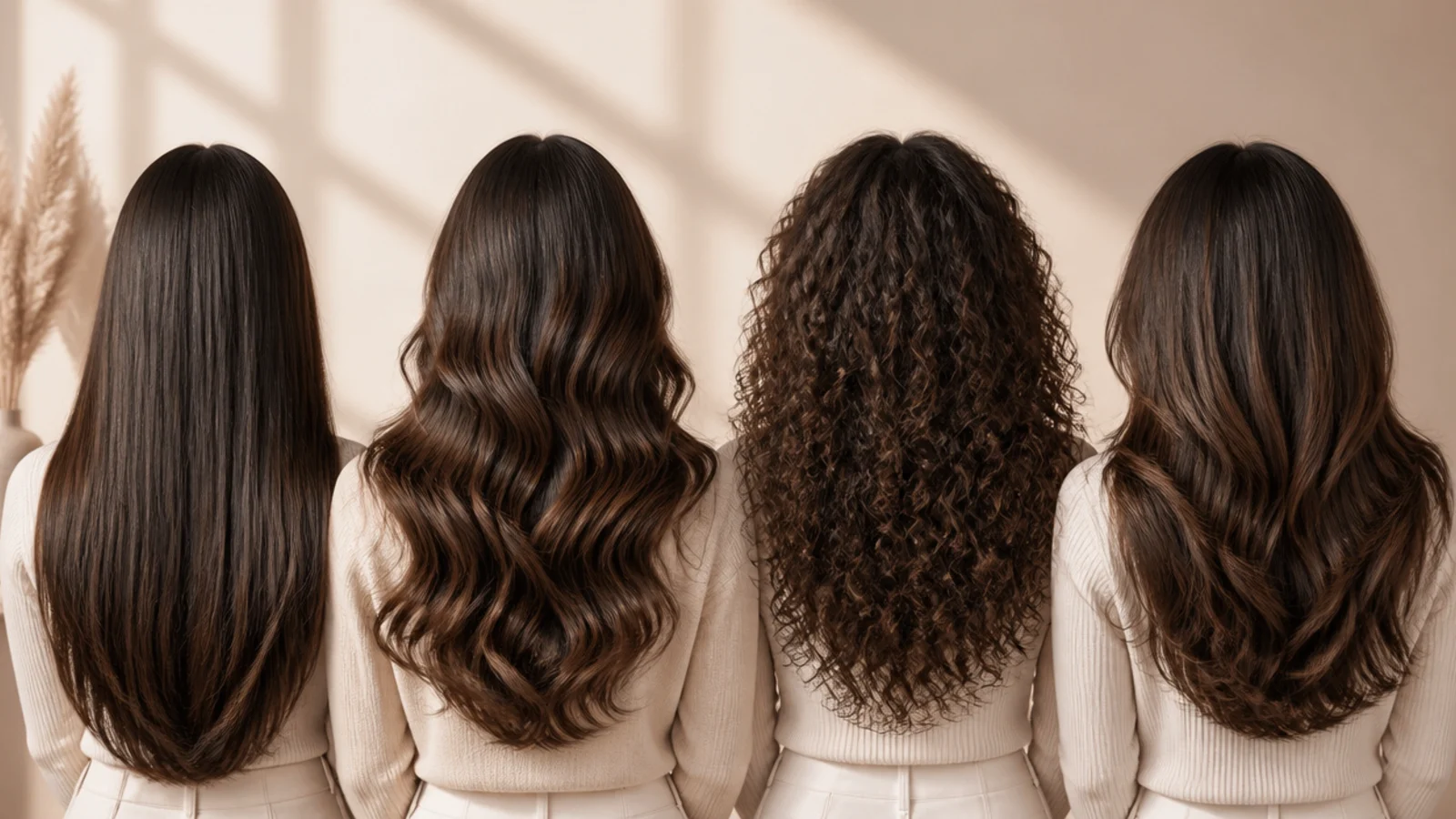
Hair Type Matching
Fine hair shows more scalp in black. The contrast between dark strands and skin is at its maximum, so the part reads wider than it did in a lighter shade.
Coarse hair takes dark colour evenly. A thicker cuticle absorbs at a steadier rate, which is why deep shades sit so cleanly on coarse hair.
Curly and coily hair shows the reflect at every bend. Each curve catches light separately, so a blue or violet reflect appears far more often than it does on straight hair.
Grey needs a longer process. Resistant grey strands have a tighter cuticle and take extra time before the pigment gets in at all.
Round Brush Blowout on Dark Hair
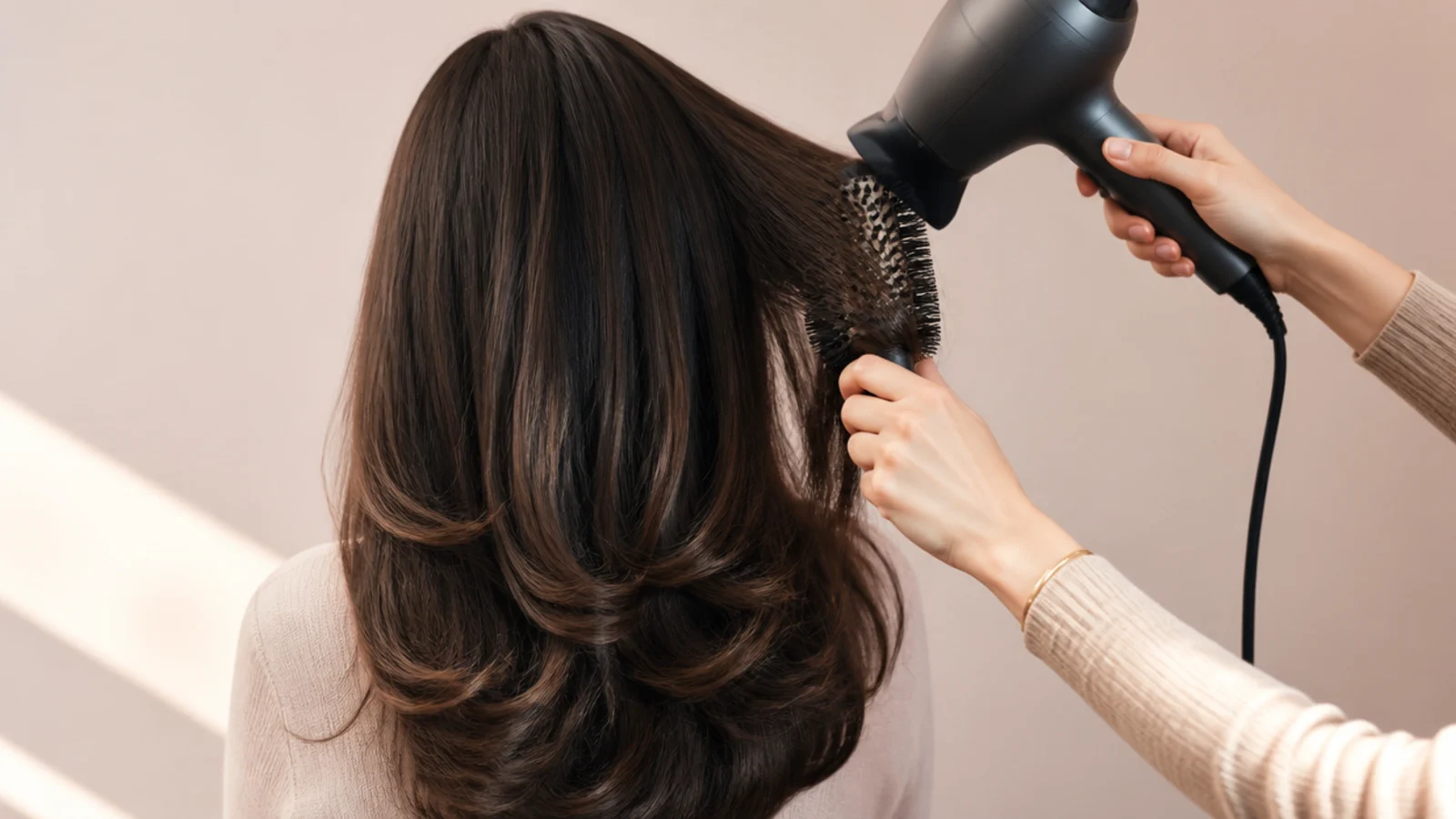
Tension flattens the cuticle. Pulling the section taut against the brush is what produces shine, not the temperature setting.
Cooling is what sets it. The bond reforms as the section drops below body temperature, so releasing a warm section undoes the work.
Dark hair shows every dent. There is no lighter tone breaking up the surface, so a kinked section reads as a fault line down the whole length.
Take smaller sections than feels necessary. Anything thicker than the brush barrel dries on the outside and stays damp underneath.
Cost and Grow Out
Going dark is the cheap half. One deposit-only application covers a whole head in a single visit with no lightening involved.
Coming back out is the expensive half. Colour remover first, then lifting, and usually across more than one appointment with weeks between them.
Grow-out is easy if your natural shade is dark. There is no line, because the new growth is close to the colour already there.
A gloss every six to eight weeks holds the reflect. Direct pigment sits in the cuticle and leaves a little with every wash, so the depth outlasts the tone.
The 20 Black Hair Ideas
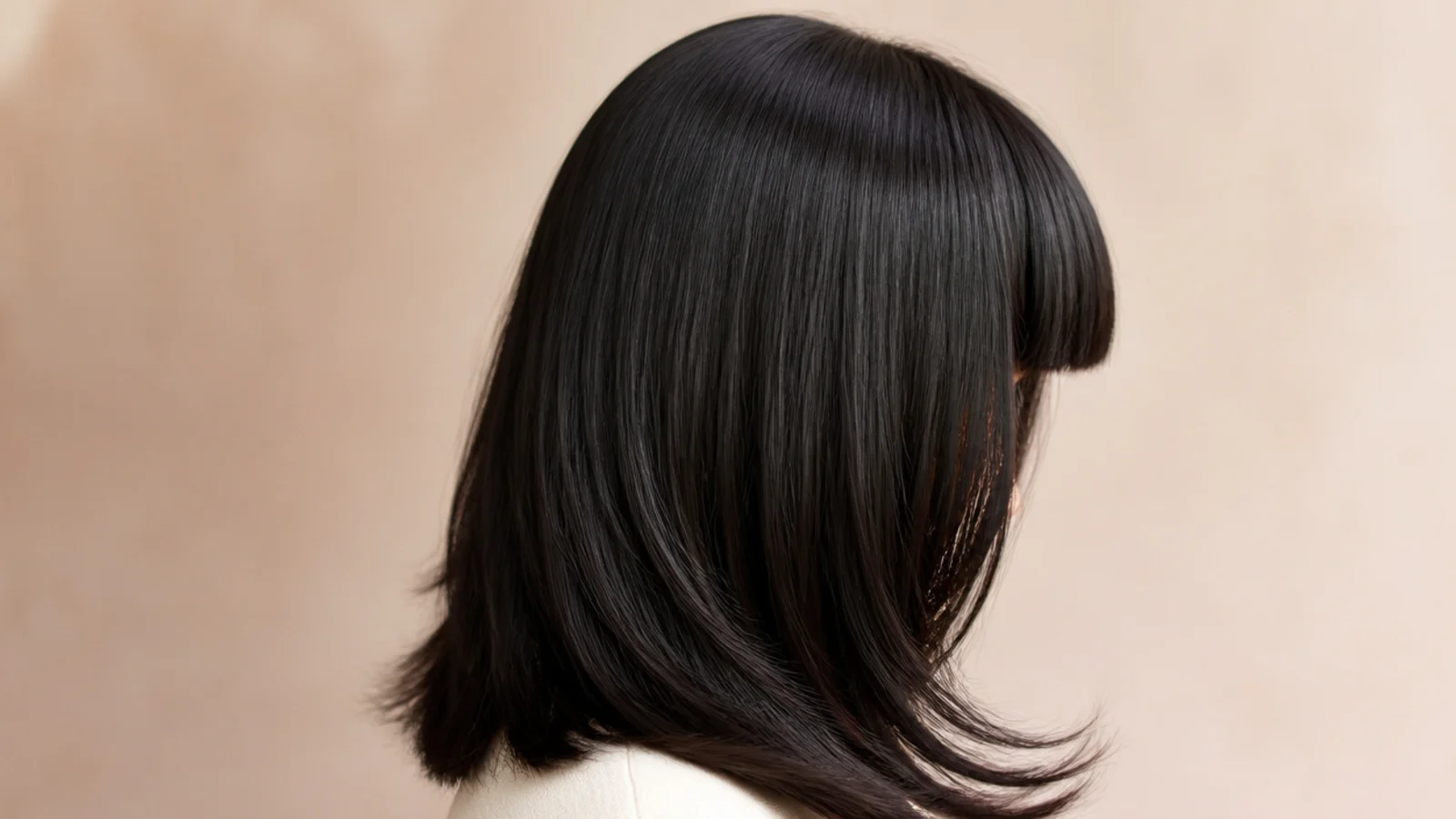
1. Jet Black With Blunt Bangs
A neutral black behind a blunt fringe gives the highest possible contrast against skin, and the eye reads the fringe as one hard graphic edge. It is also the least forgiving pairing here, because a dark base has no lighter tone to disguise a fringe line that drifts by a millimetre.
2. Espresso With Curtain Bangs
Espresso keeps a trace of warmth at the ends, which is what stops the two halves of a curtain fringe merging into a single dark shape. On a true black the same fringe loses its inner edge and reads as one block across the forehead.
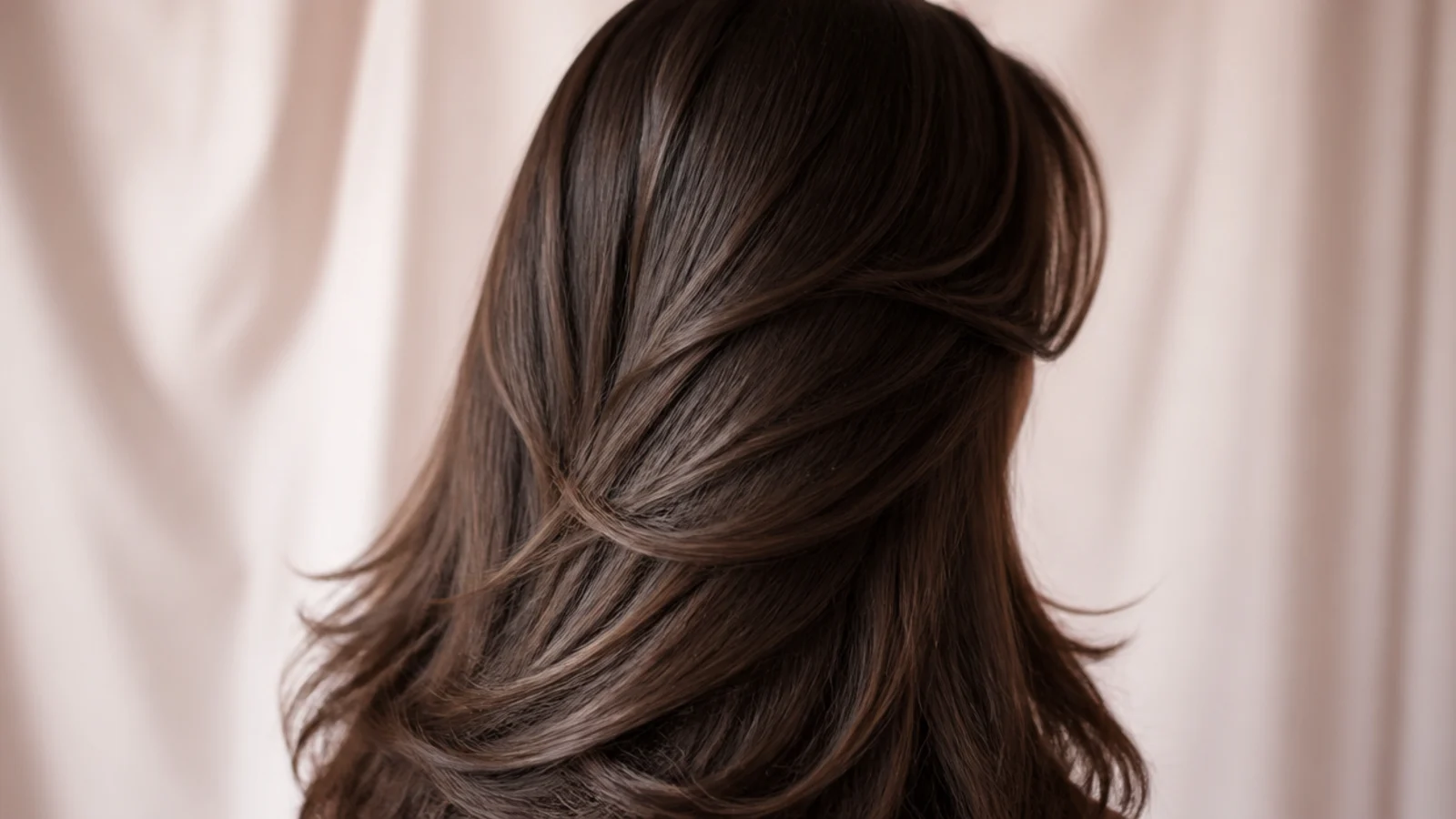
3. Blue Black Blowout
The violet-blue reflect only becomes visible where light strikes the surface directly, which is precisely what a smooth round-brush finish provides. Wear the same colour air dried and the reflect stays hidden, because a rough cuticle scatters light in every direction at once.
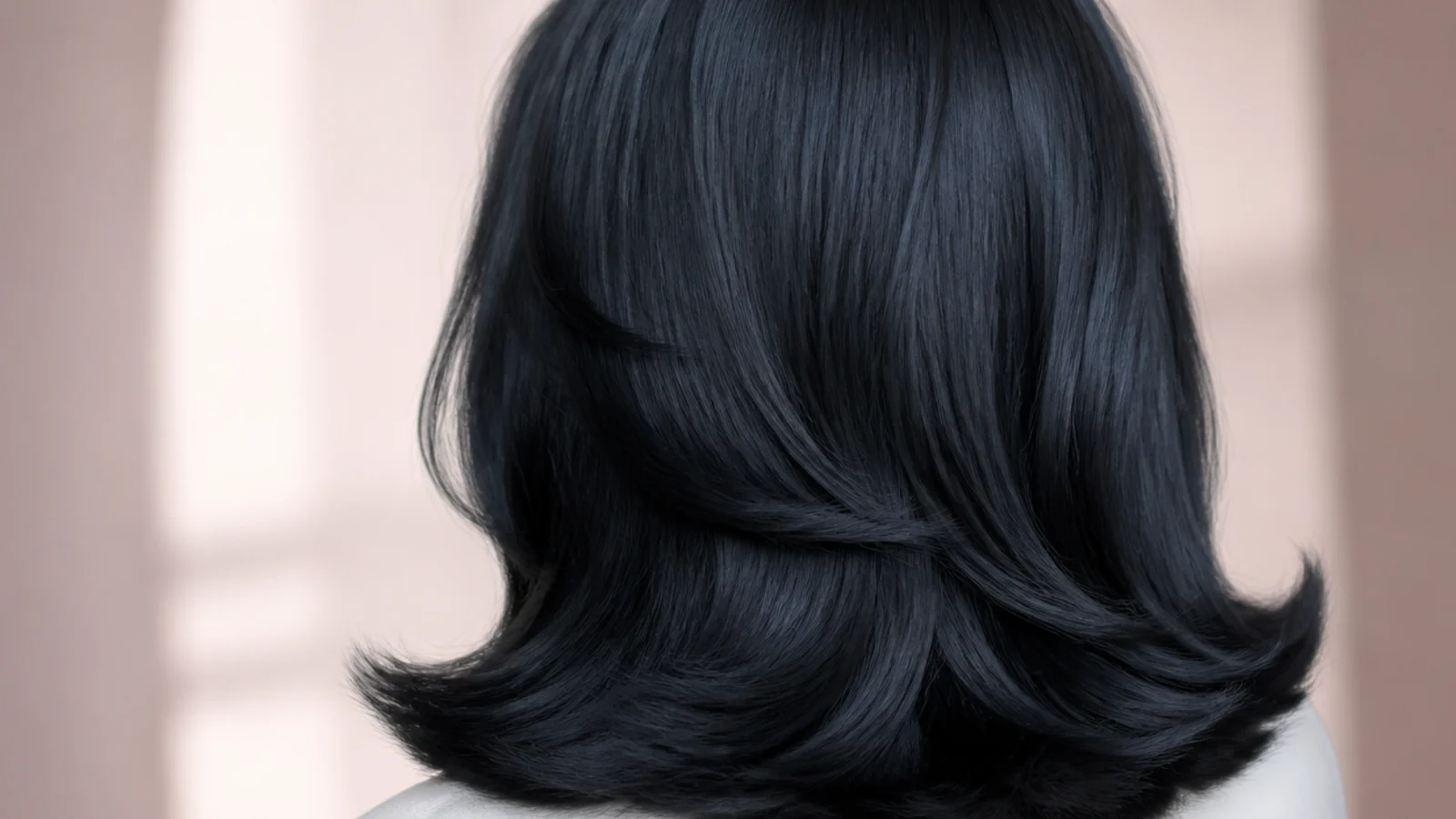
4. Black Money Piece
Two lightened pieces against a black base is the highest contrast placement in hair colour, and also the most expensive to build, since those sections have to be lifted several levels through the dark. They are the first part of the head to turn brassy and need toning on their own schedule.
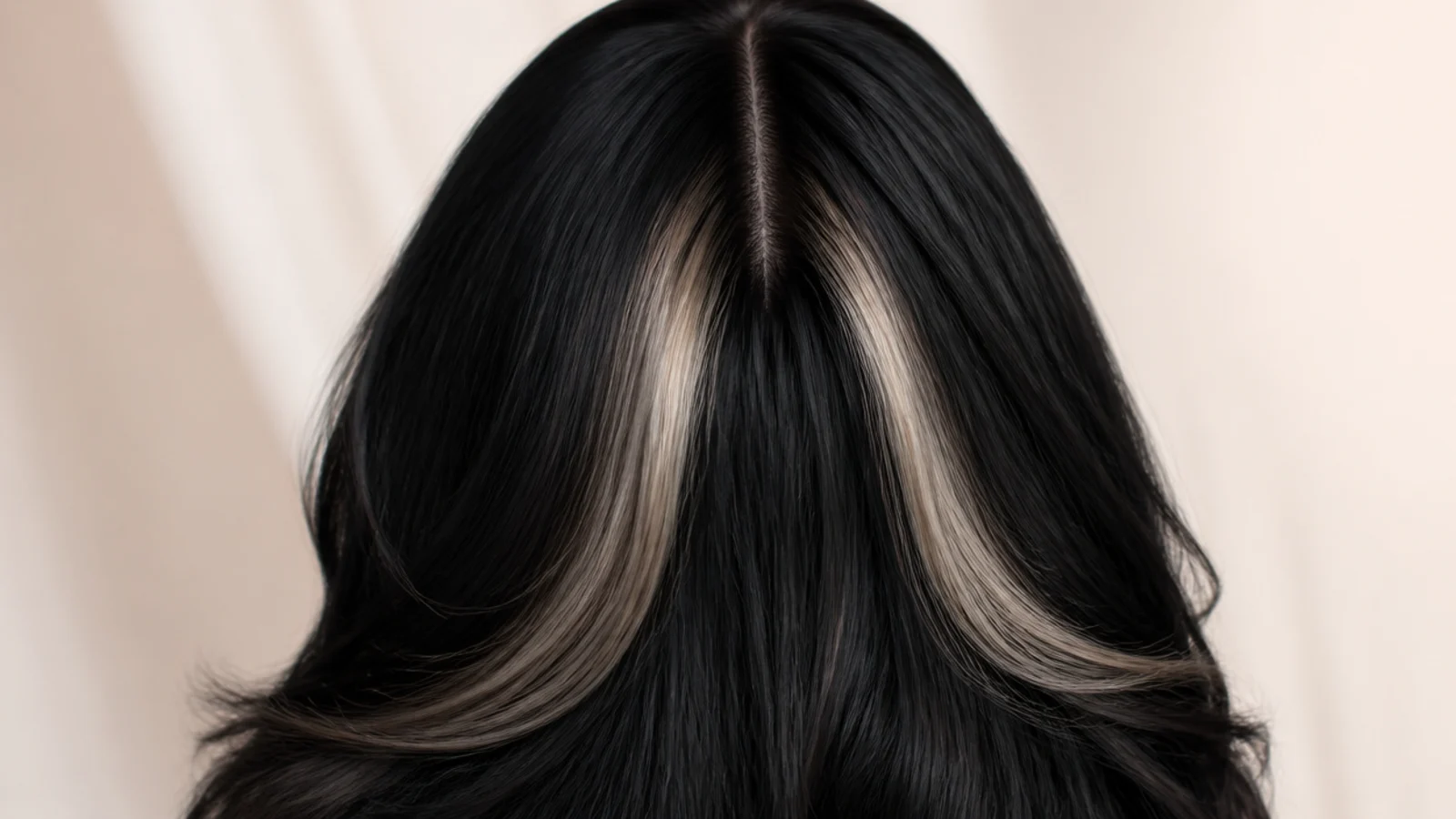
5. Black Hollywood Waves
One unbroken S-wave set in pins and brushed out. Dark hair renders the ridge of each wave as a bright band and the trough as deep shadow, so the pattern reads far more strongly here than the identical set does on blonde.
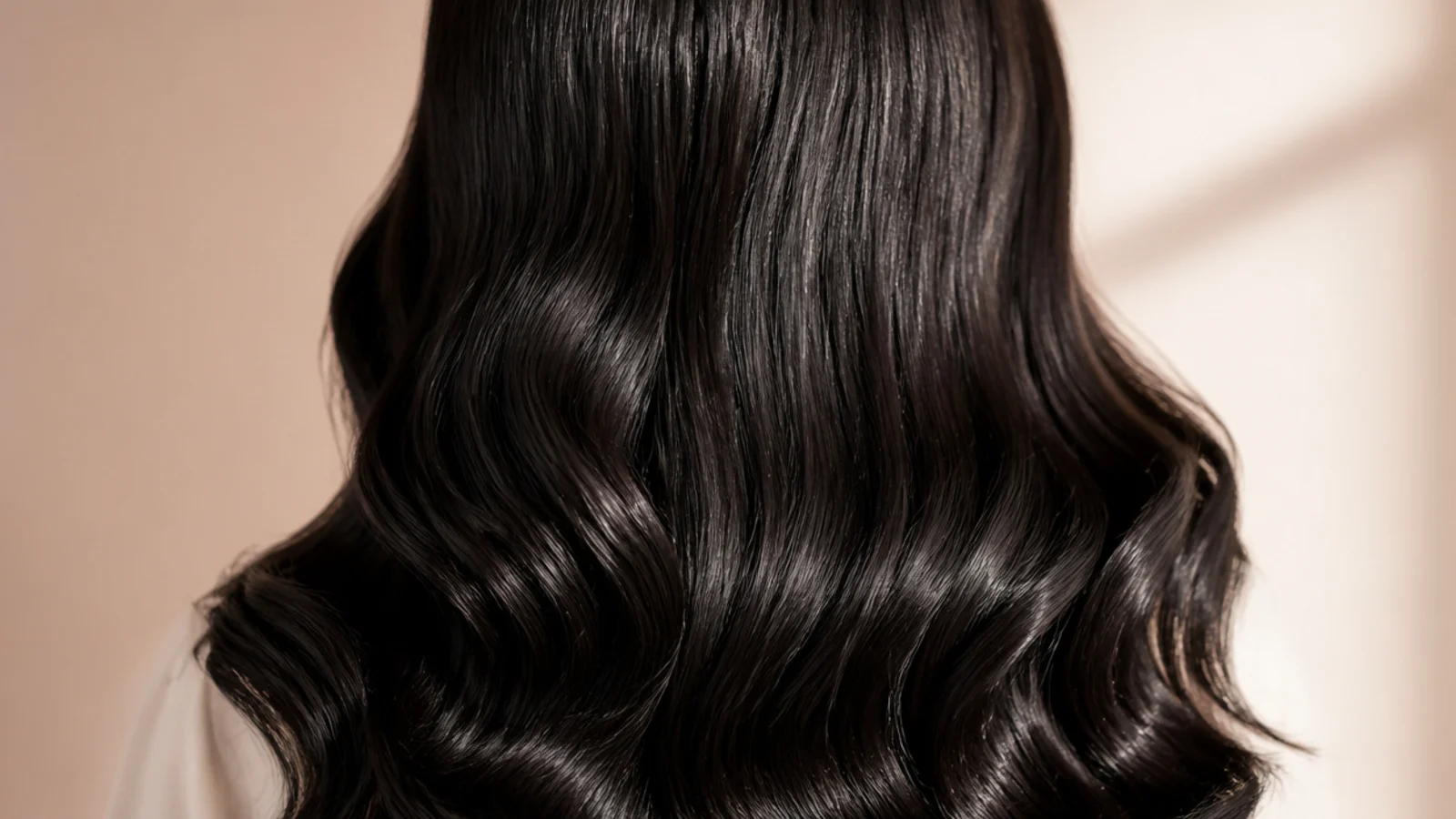
6. Black Blunt Lob
Every strand ending on the same line turns the perimeter into a single reflective edge, and on a black base that highlight is the brightest thing in the frame. This is why blunt and black is the standard pairing whenever glass-like shine is the goal.
7. Black Wispy Fringe
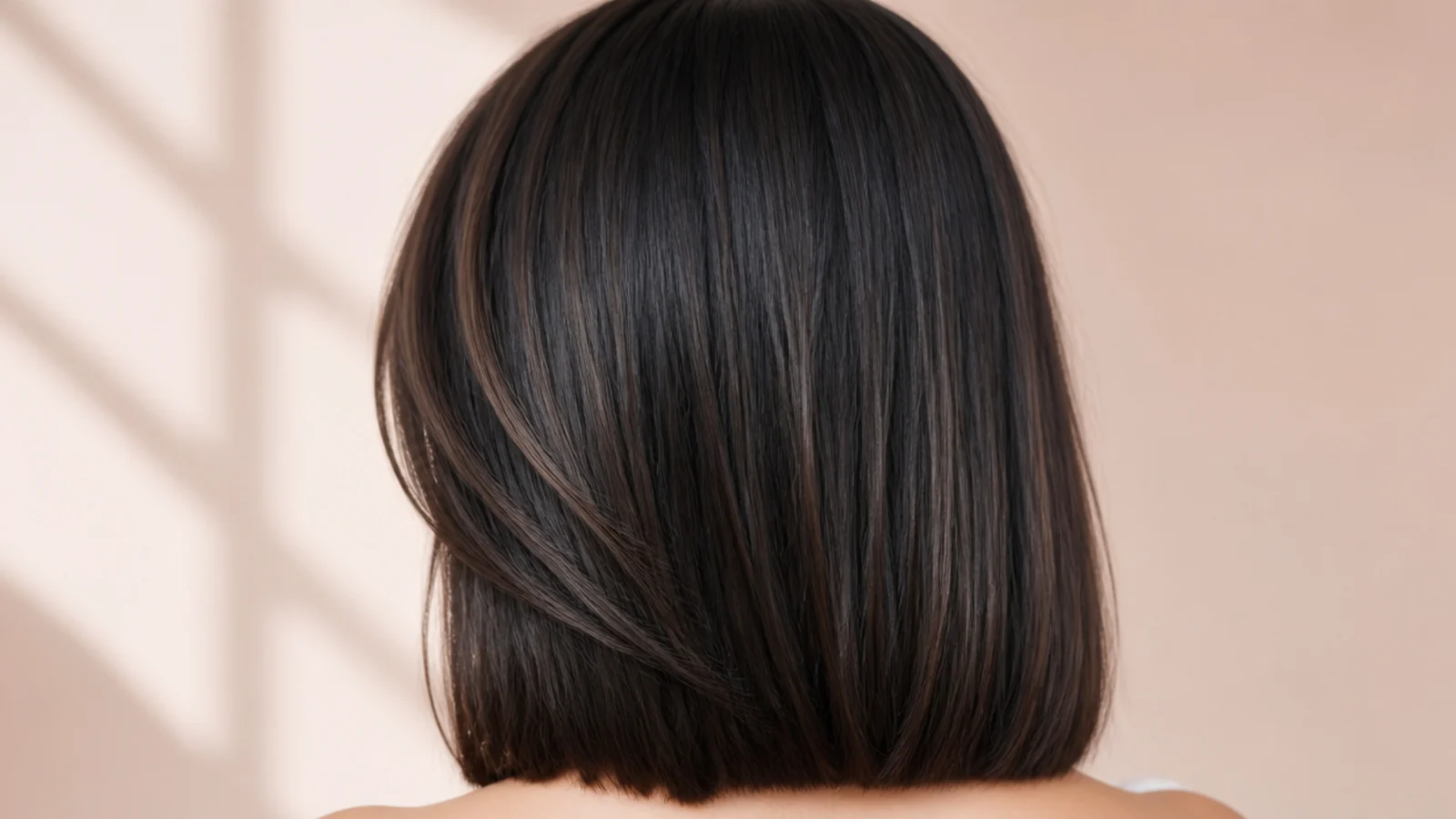
Black reads as a solid mass, so a fine sparse fringe lets skin show through and removes weight from the forehead that a full fringe would add. It is the version to ask for if a blunt black fringe feels too heavy against your features.
8. Black Shadow Root
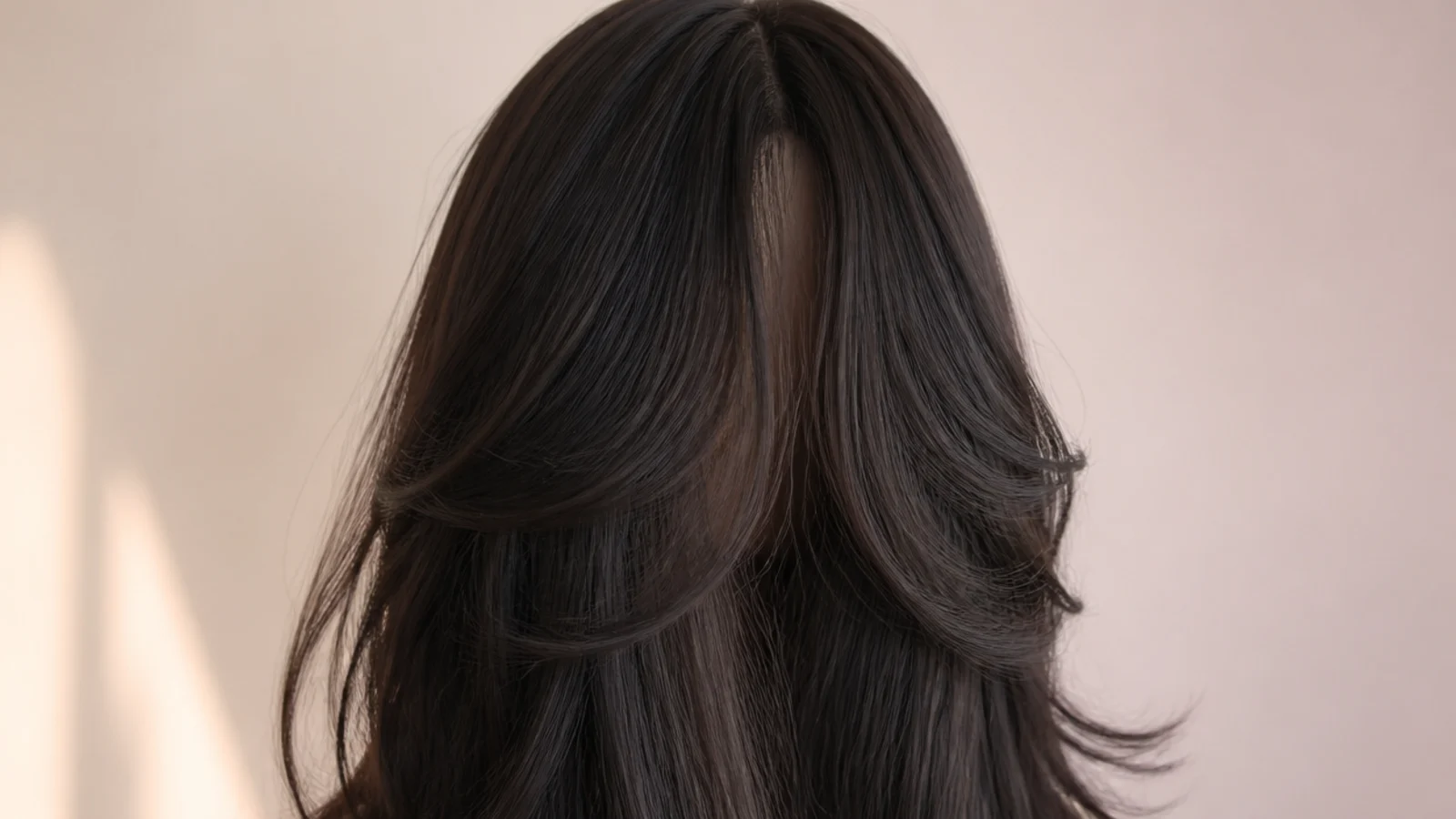
A deeper root melted into marginally lighter mid-lengths gives a dark head the one thing it otherwise lacks, which is internal contrast. It also means new growth arrives into a root that was already darker, so there is no line to correct.
9. Black High Ponytail
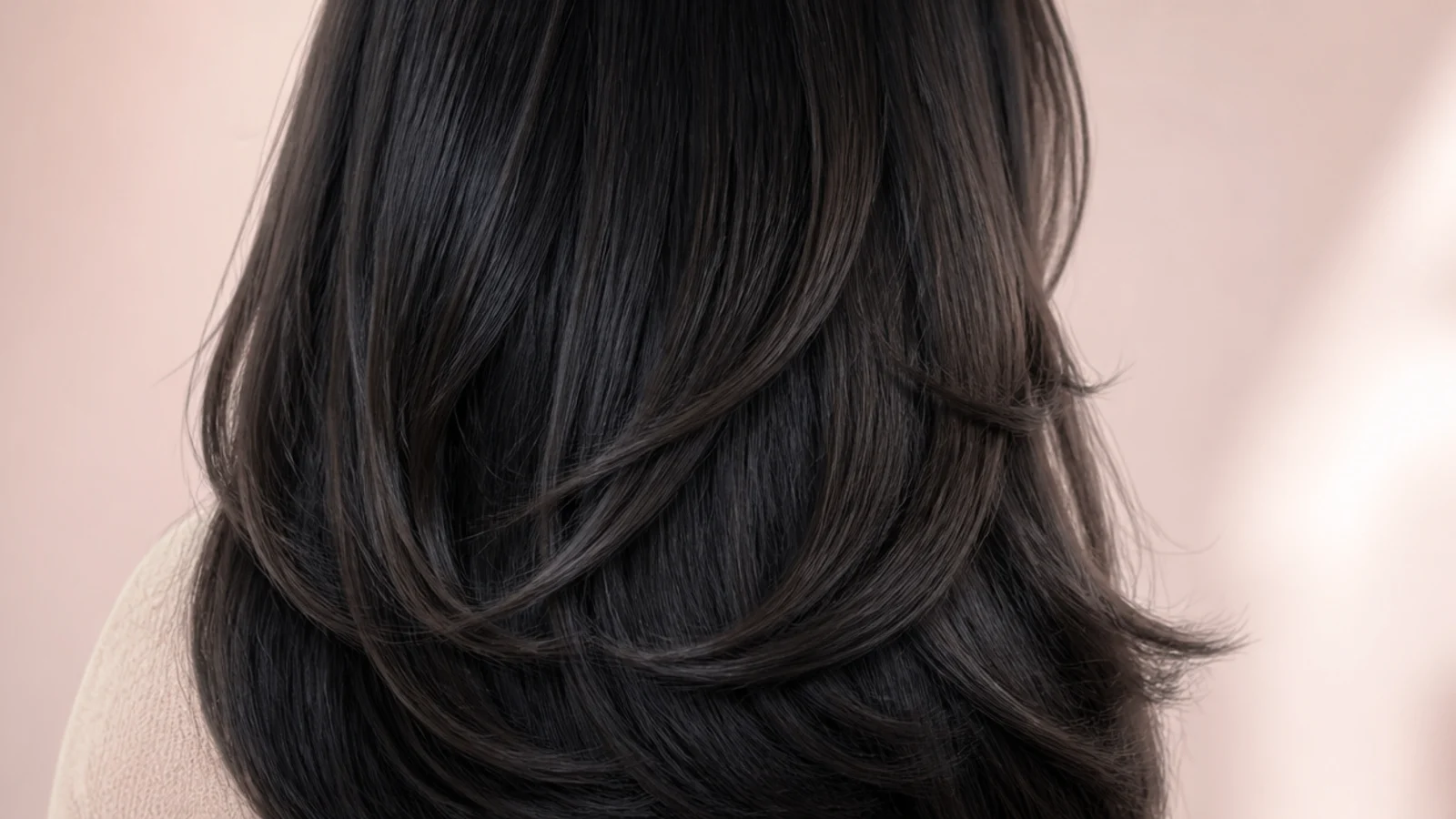
A dark surface pulled tight is one continuous reflective plane, so every bump on the way to the tie is visible from across a room. Brush it into position while it is still damp and let it dry there, because a dry brush-through will not remove a set bump.
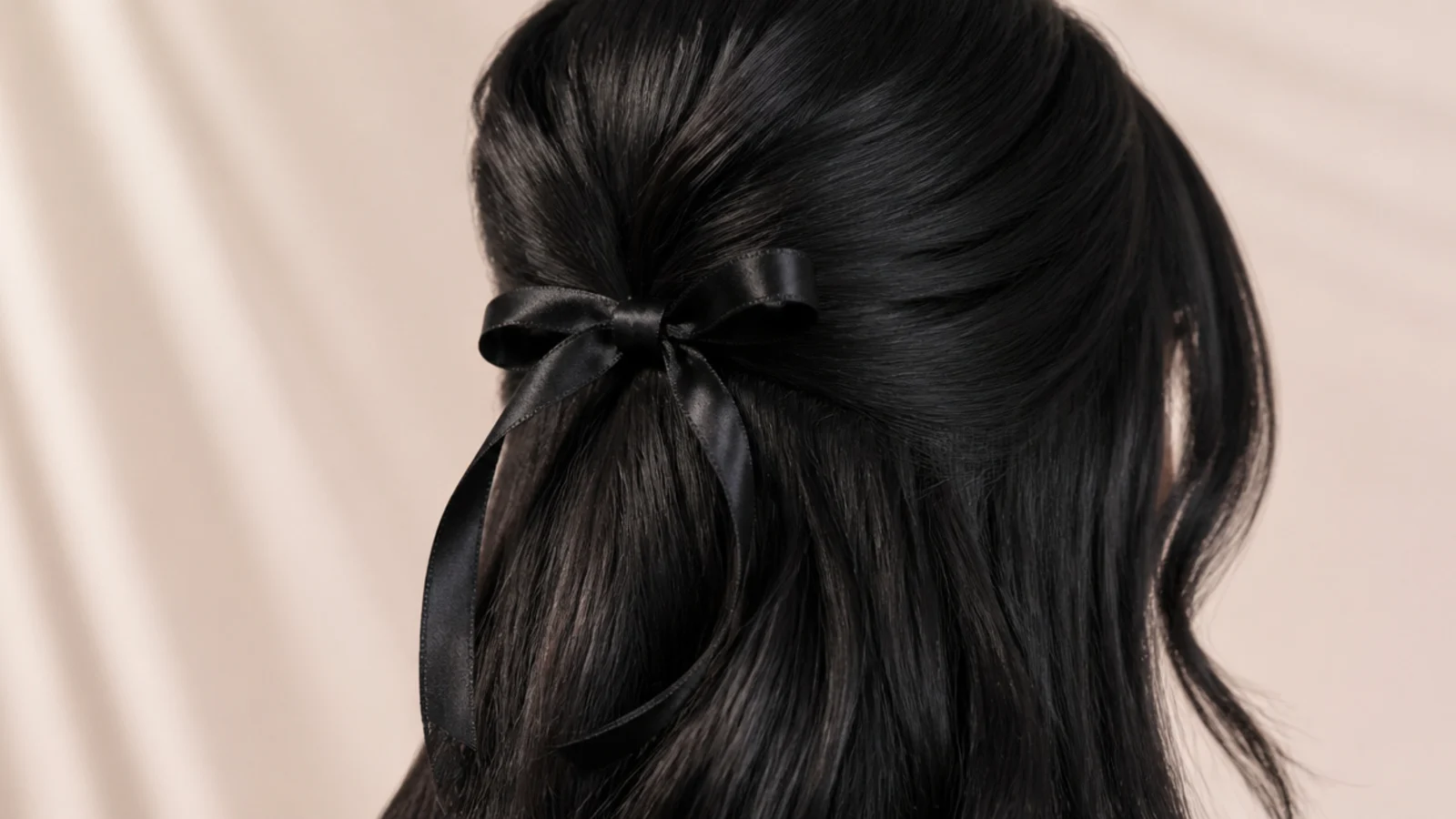
10. Black Half Up With a Bow
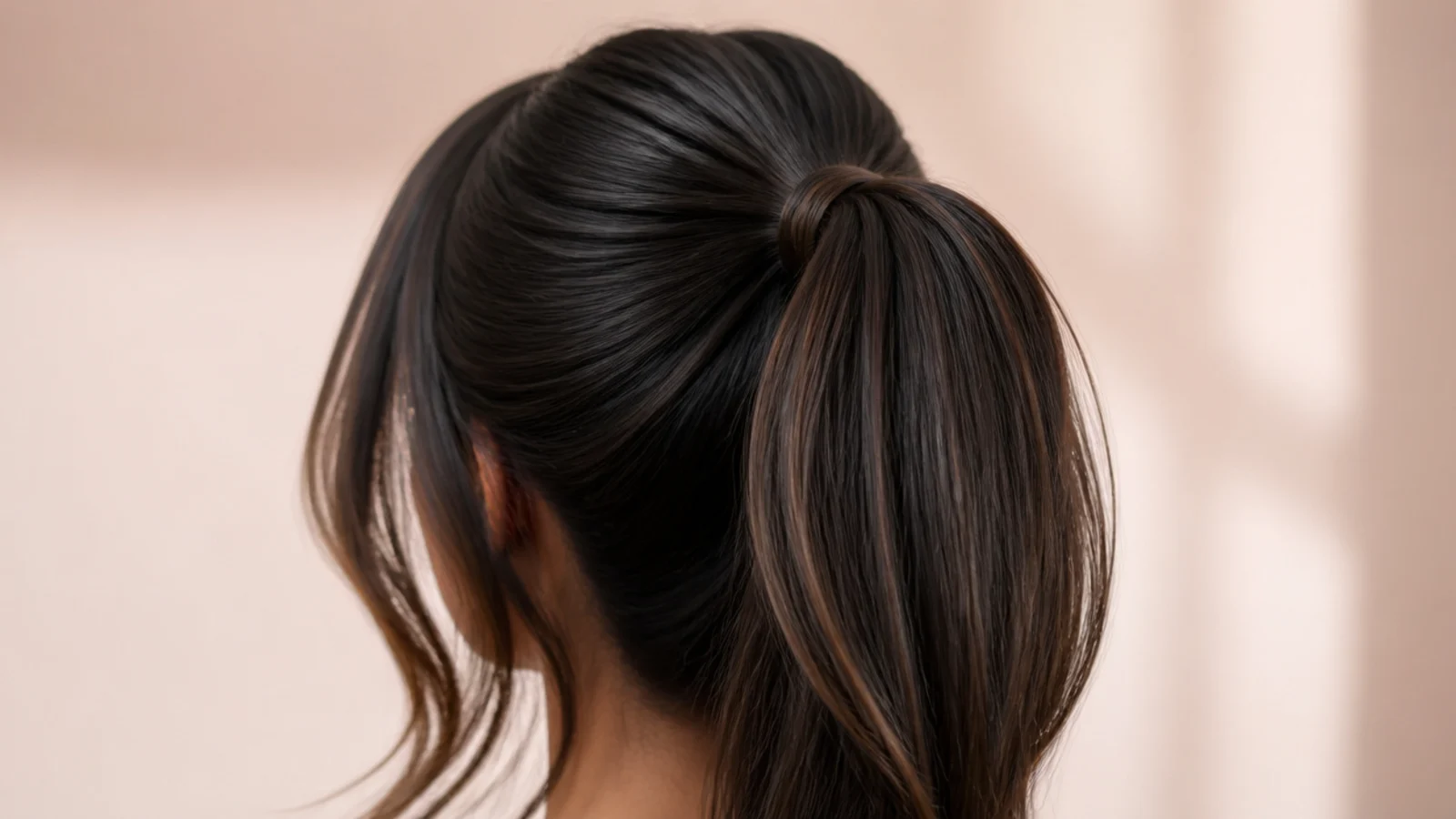
Gathering only the top exposes the parting, and on black hair the scalp shows through that line more clearly than in any lighter shade because the contrast with skin is at its greatest. A zigzag part scatters the line instead of drawing it.
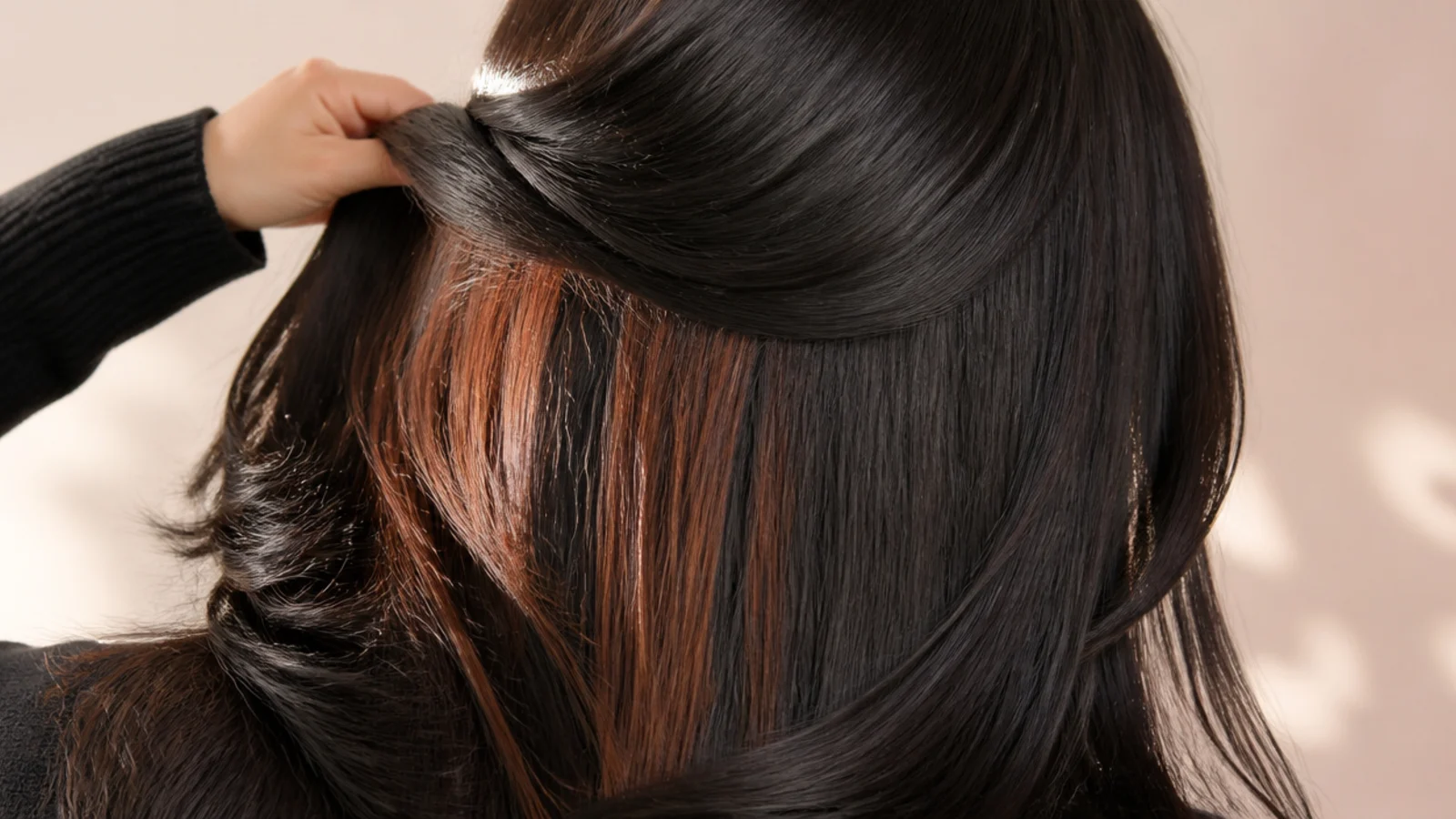
11. Black With a Copper Underlayer
Colour placed on the panel underneath appears only when the hair moves or is tied up. Copper works better here than any other shade because warm pigment is what sits beneath dark colour naturally, so it reads as a sub-tone rather than as a stripe.
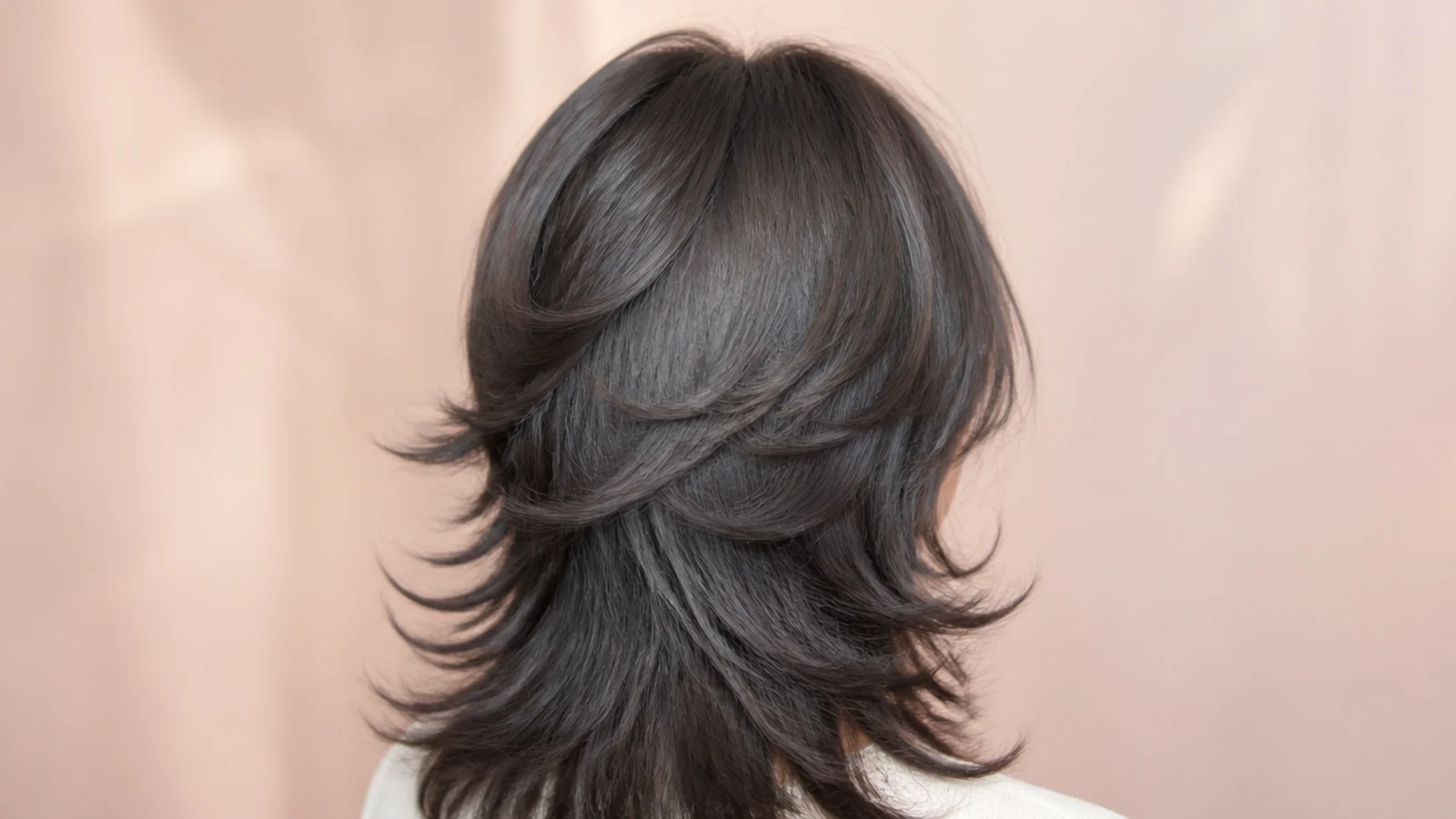
12. Black Wolf Cut
Disconnection is more visible on black than on any other base, since there is no lighter tone to blur the step between a short crown layer and a long end. Ask for every tier to be point cut heavily so the gap reads as movement instead of as a shelf.
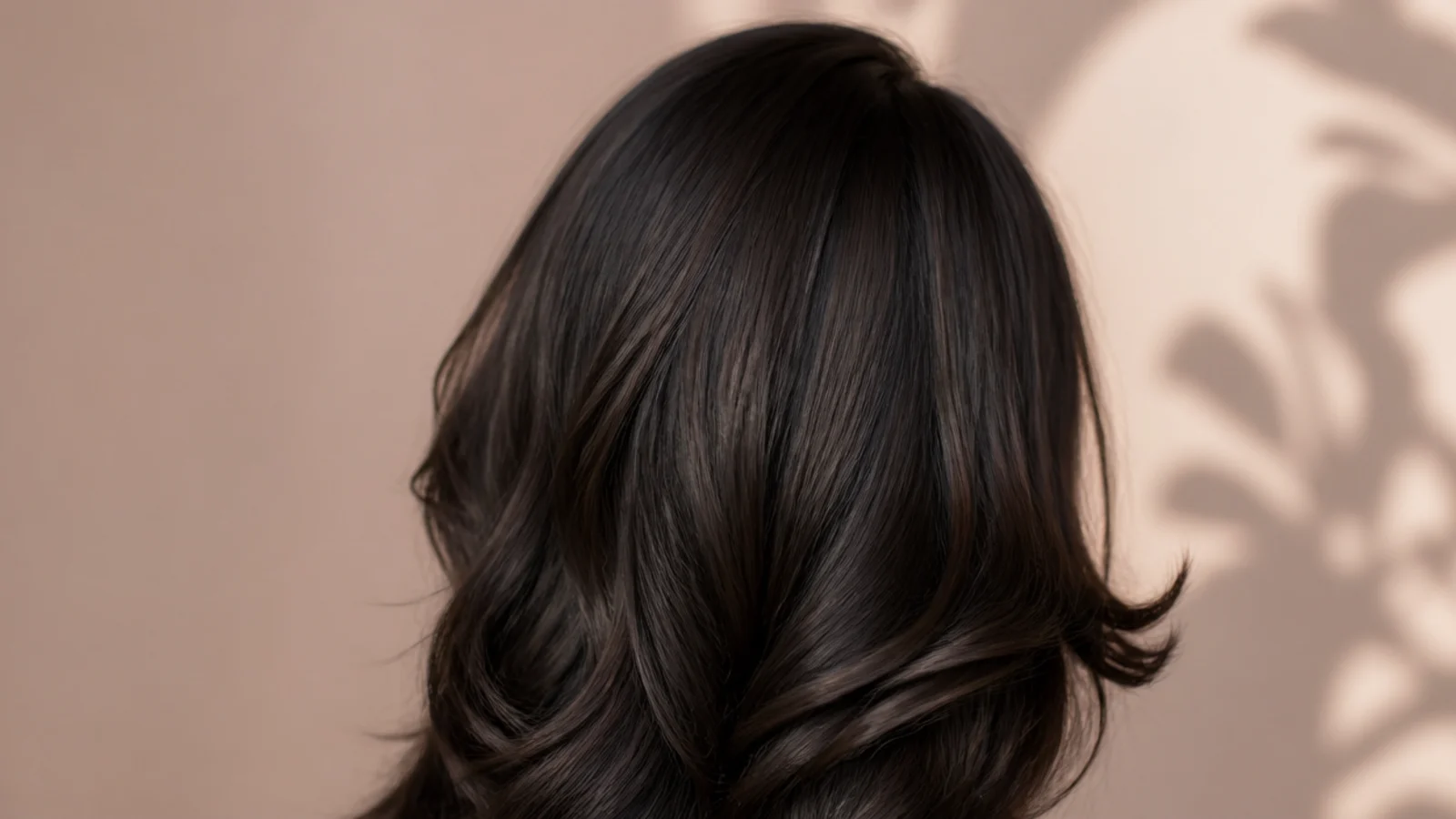
13. Black With a Deep Side Part
A dark head has almost no internal contrast, which makes the parting the only line in the whole shape. Moving it well off centre gives the eye something to follow and lifts the root on the heavy side at the same time, for the price of a comb.
14. Black Bob With a Micro Fringe
A very short fringe sitting well above the brow reads as a graphic block on a black base, which makes its width matter as much as its length. Cut it narrower than a standard fringe or it swallows the temples and squares off the whole face.
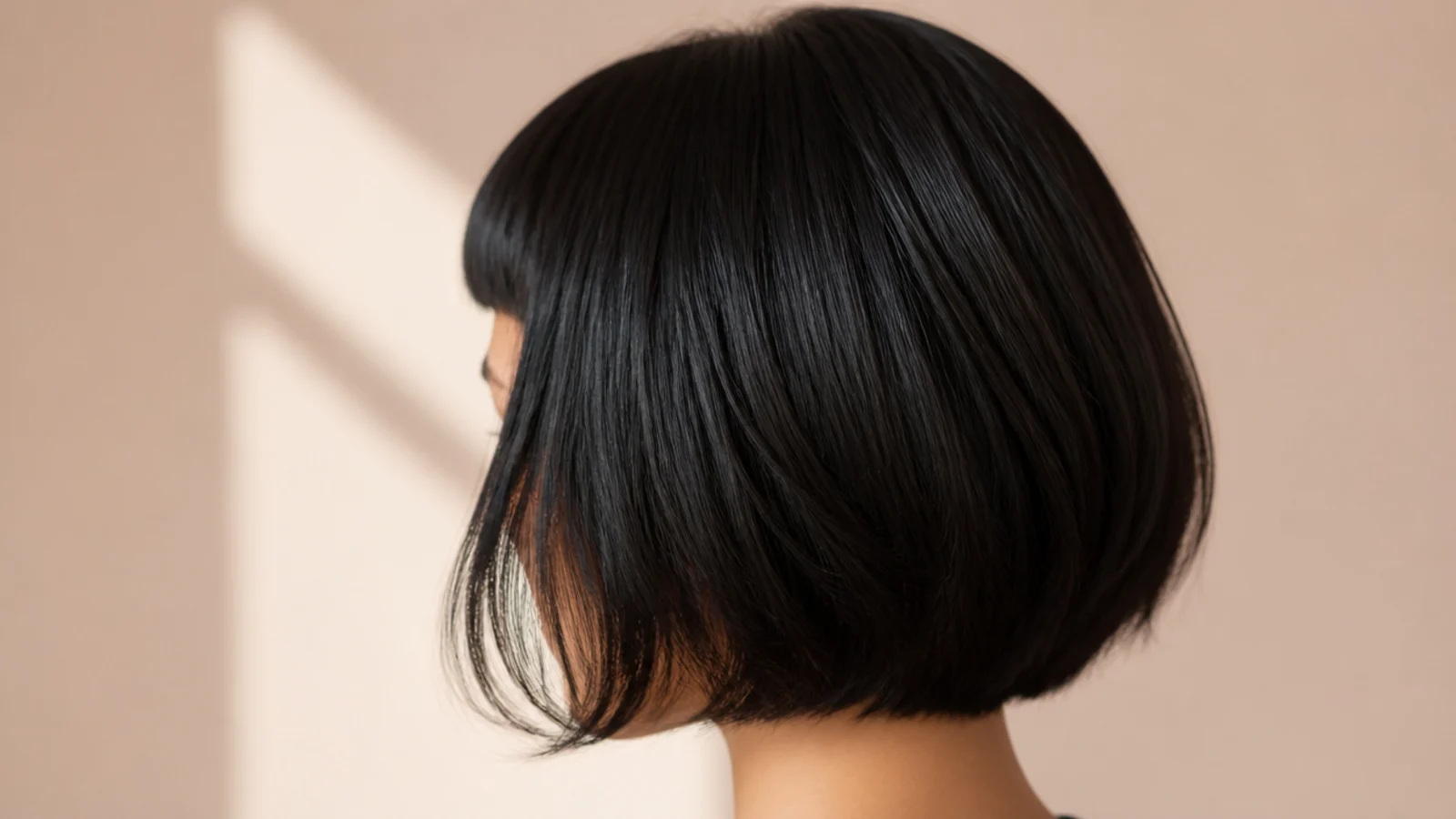
15. Black Beach Waves
On dark hair the bends supply the only variation in an otherwise uniform surface, which is why undone texture reads as dimension here without a single foil. Break the waves apart once each section has cooled, since separating a warm curl removes the shape entirely.
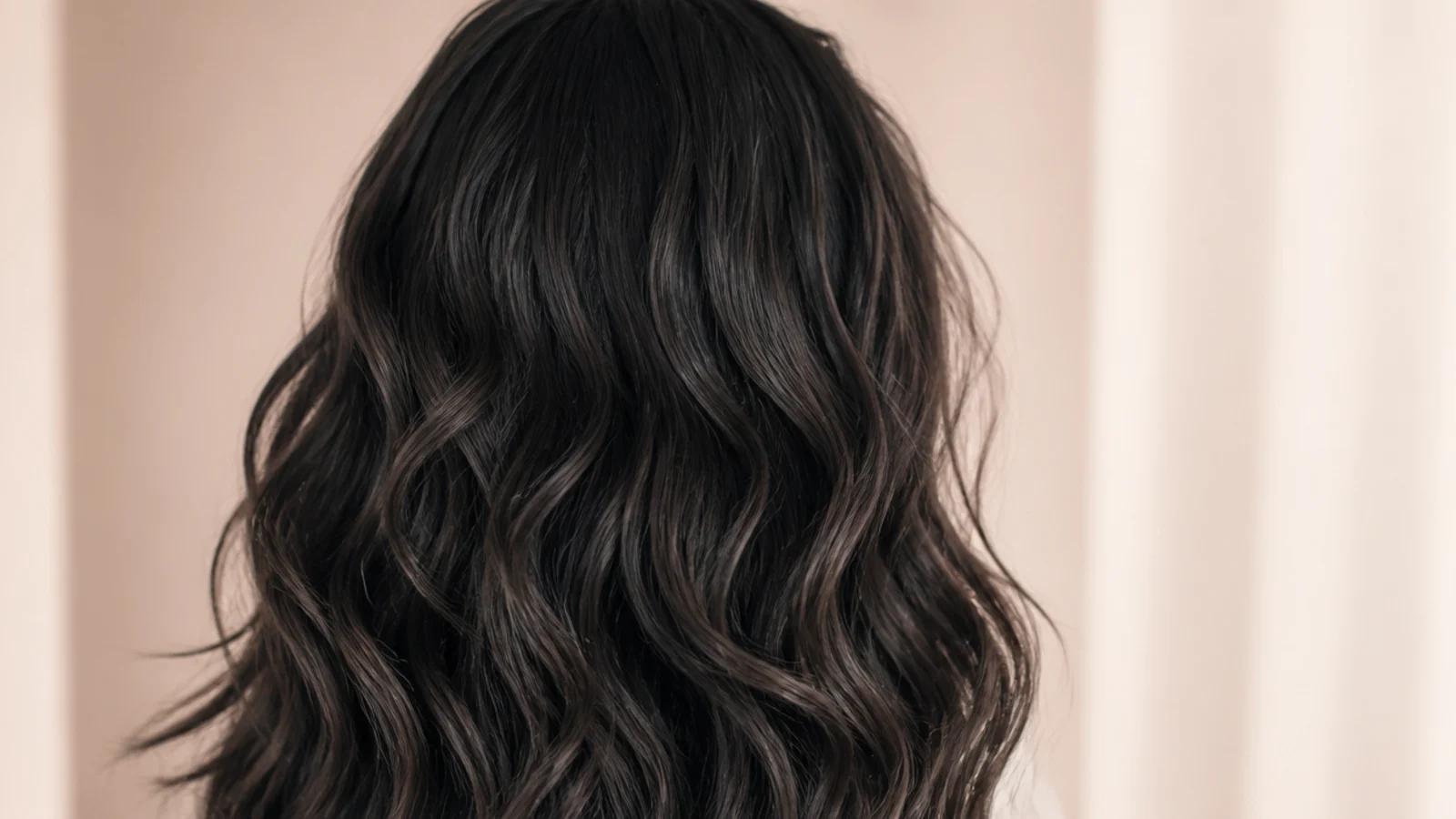
16. Black in a Claw Clip
A twisted section shows its ridges very clearly in a dark shade, because each fold in the twist catches light along a narrow band. That makes a claw clip one of the few thirty-second styles that actually looks constructed on black hair.
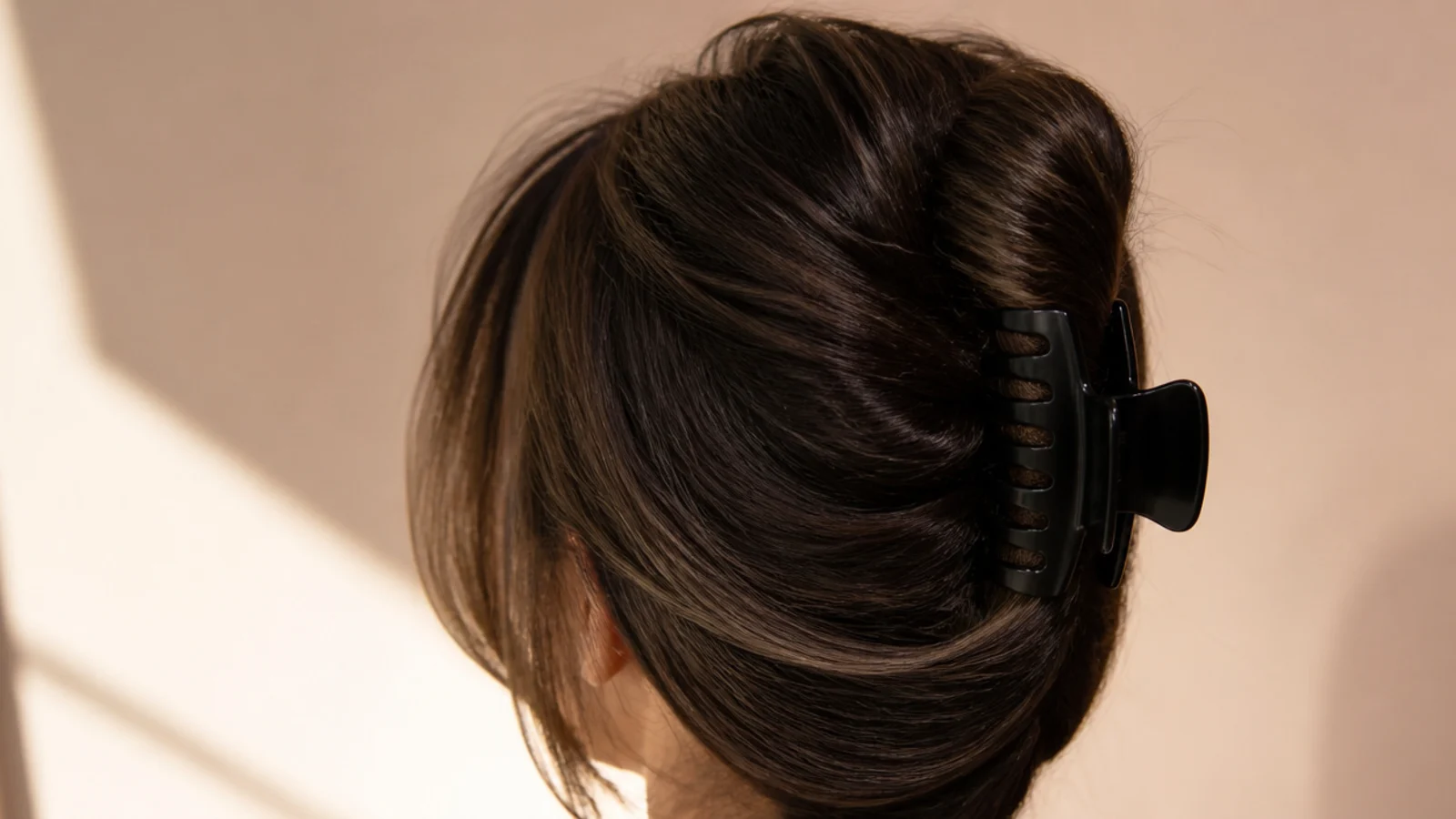
17. Black Face Framing Layers
On a dark base the edge of a layer is read as a shadow rather than as a change in colour, so face framing supplies the dimension that highlights would otherwise have to provide. It is the way to add shape to this colour without lifting anything.
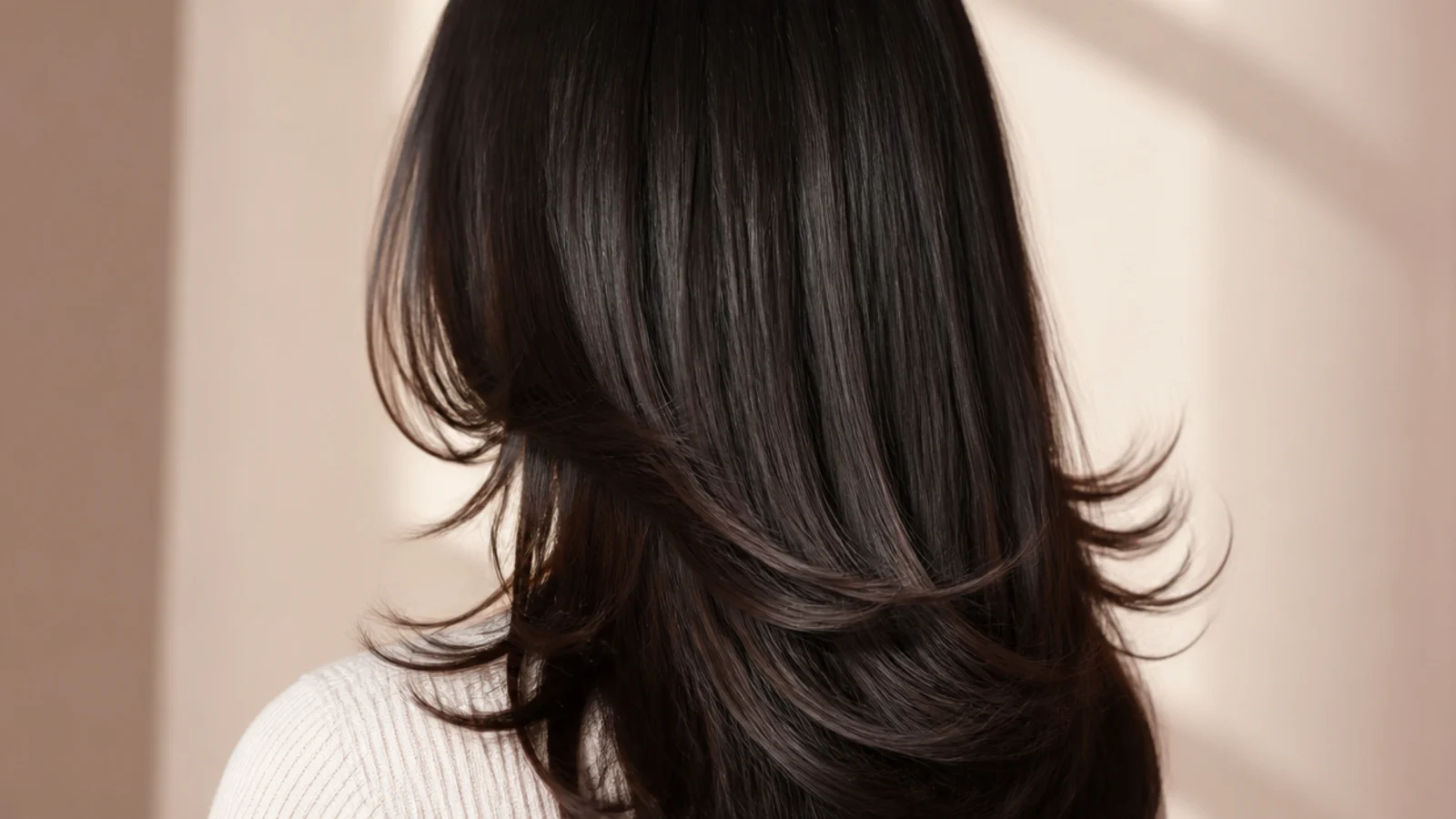
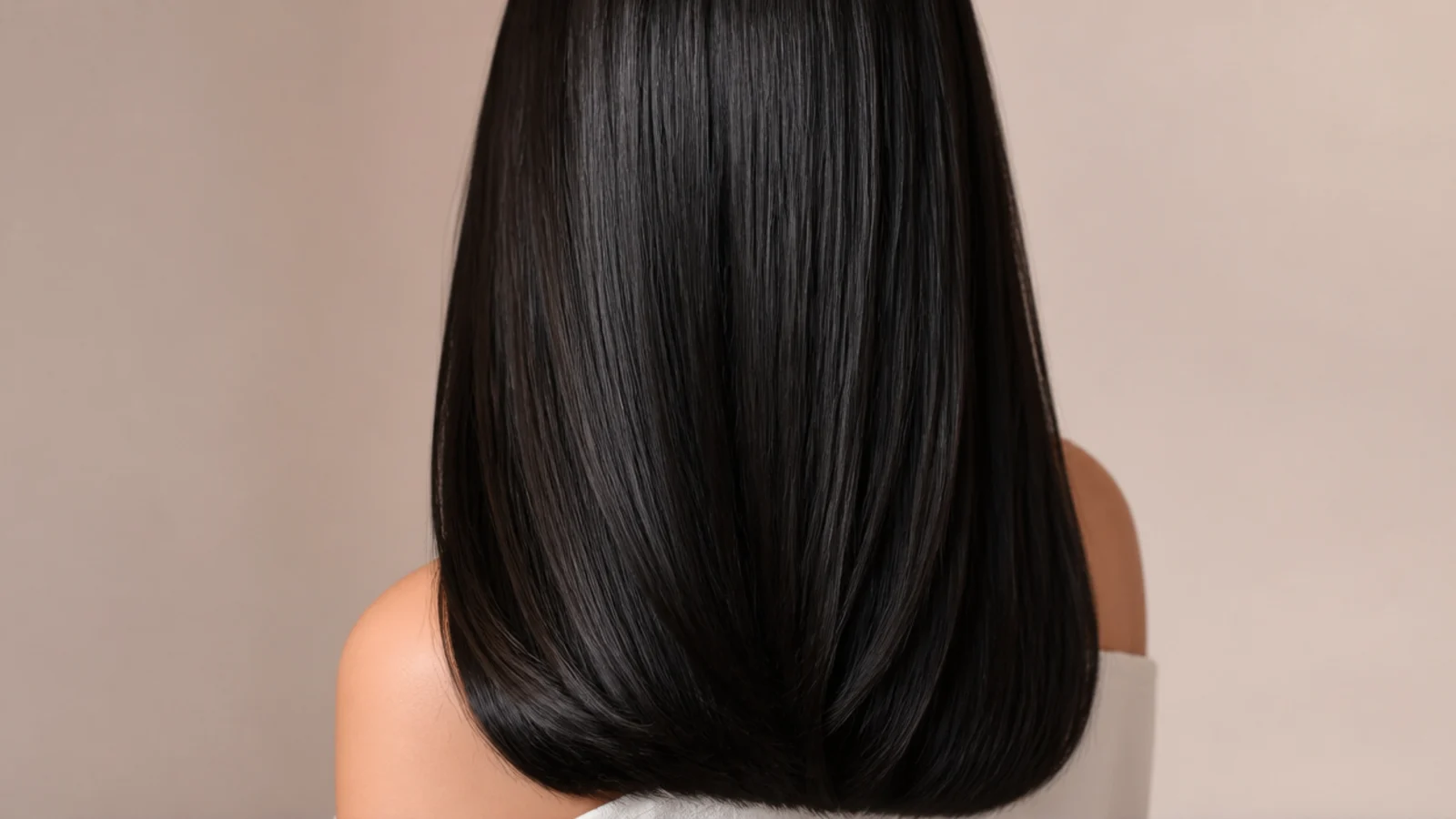
18. Black Glass Hair
A flat cuticle reflects light in one direction, and a black base gives the widest possible gap between that bright band and the colour around it. Glass hair is easiest to achieve in this shade for that reason alone, which is why the two are so often photographed together.
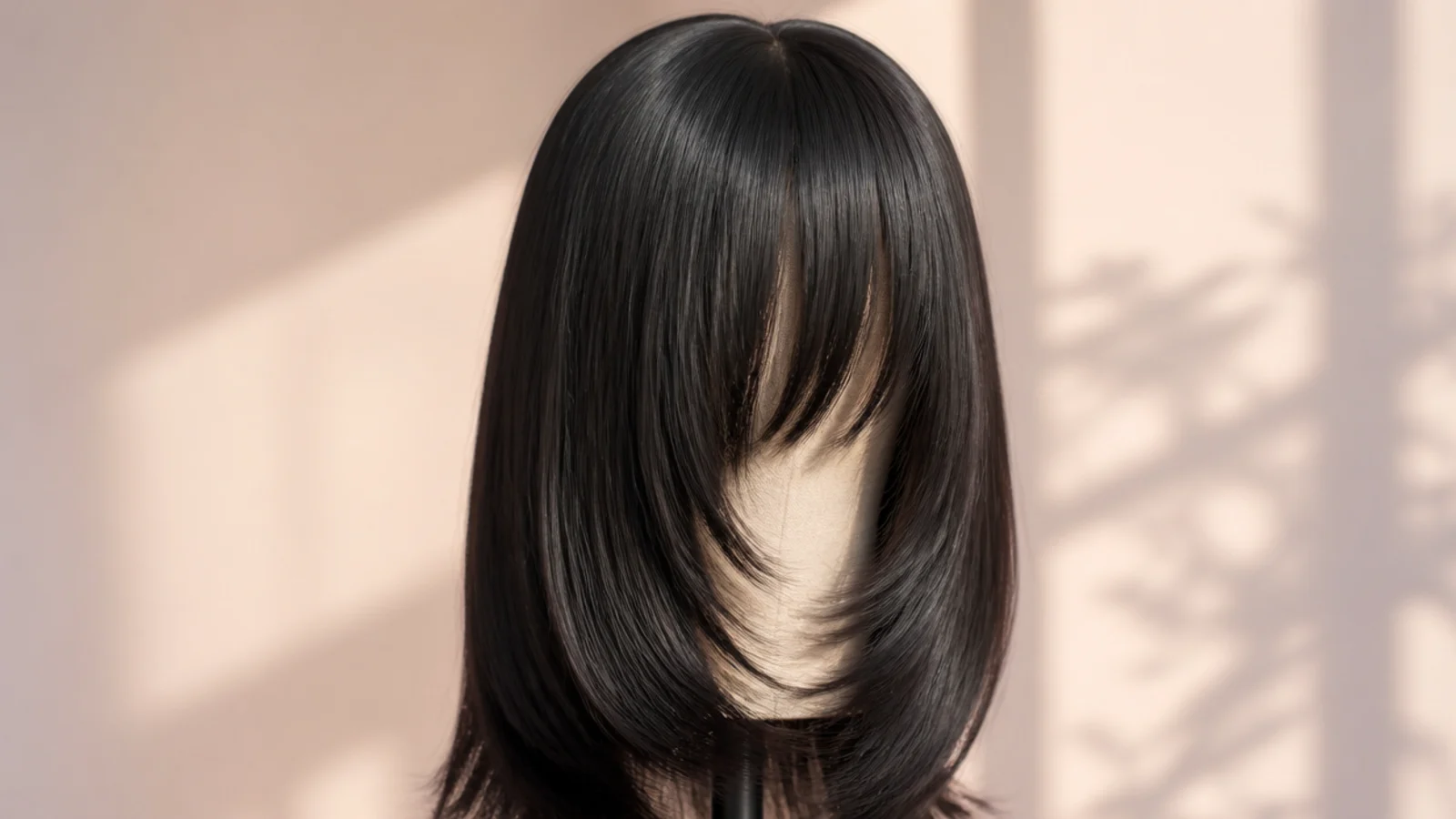
19. Black Lace Front Wig
Knots tied into a fine mesh sit against the scalp so the hairline reads as separate strands rather than as a solid edge. It is the only way to wear this depth of colour for one night and have your own condition untouched the next morning.
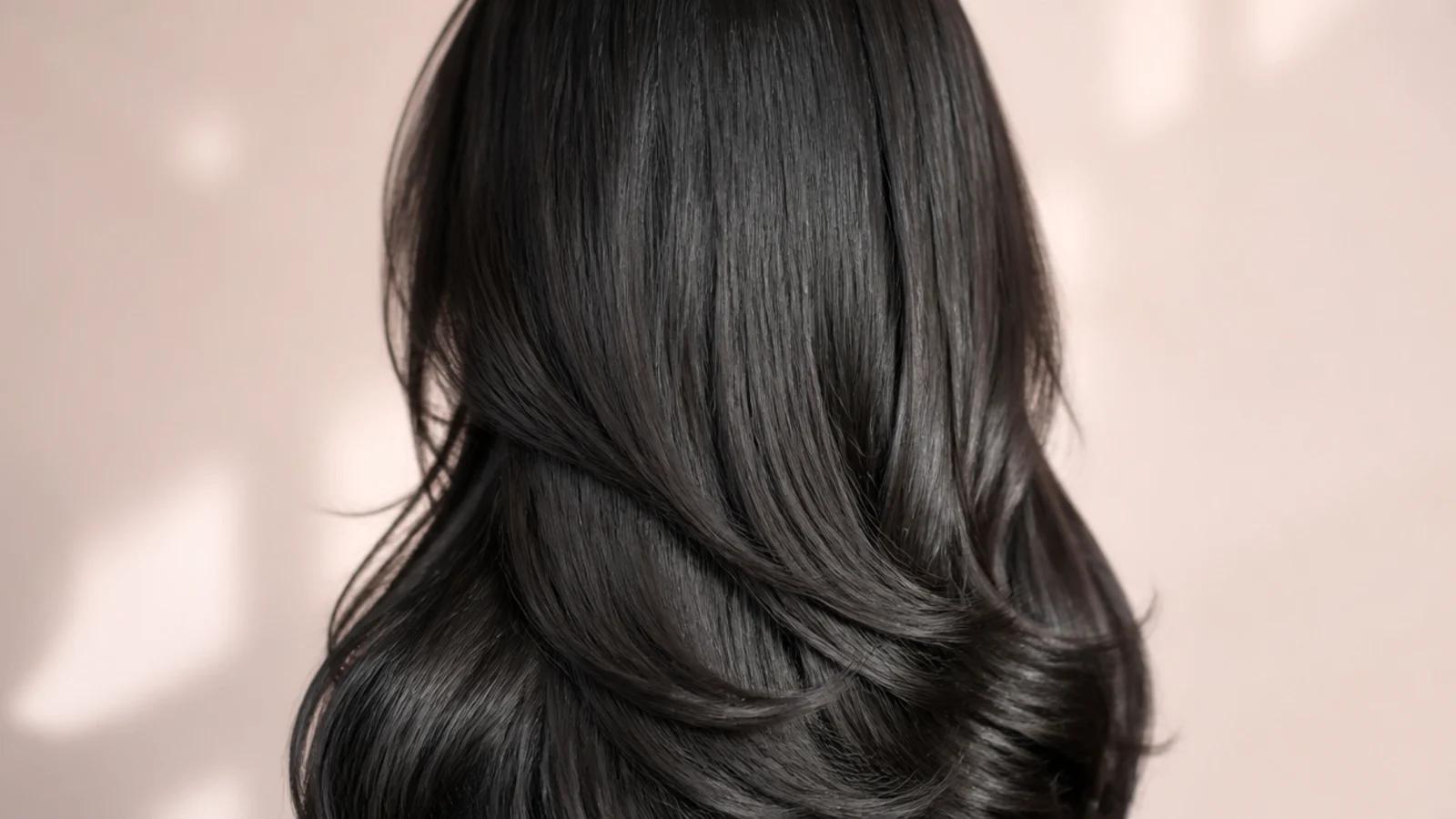
20. Semi Permanent Black Gloss
A semi-permanent or demi-permanent formula deposits pigment in the cuticle without lifting anything, so it washes out gradually over several weeks rather than needing removal. It is the only genuinely reversible version of this colour and the sensible way to test it.
Final Thoughts
If your hair has never been lightened, this is a one-appointment colour and an easy grow-out. If it has been blonde at any point, the filler is not optional — a red or copper base has to replace the warm pigment bleach removed, or the black will read muddy and slide green as it fades. Ask which shade family is going on before anyone mixes anything, and look at the swatch in daylight.
Start with a semi-permanent gloss if you are unsure, because it is the only version that leaves on its own. And decide in advance whether you want the reflect, since blue black and espresso ask for a smooth blow dry to be visible at all while jet black shows the cut instead. For colour placed underneath rather than on top see 15 peekaboo color ideas, and for sleek straightening technique see 15 straight hair styles. More in Celebrity Hair.