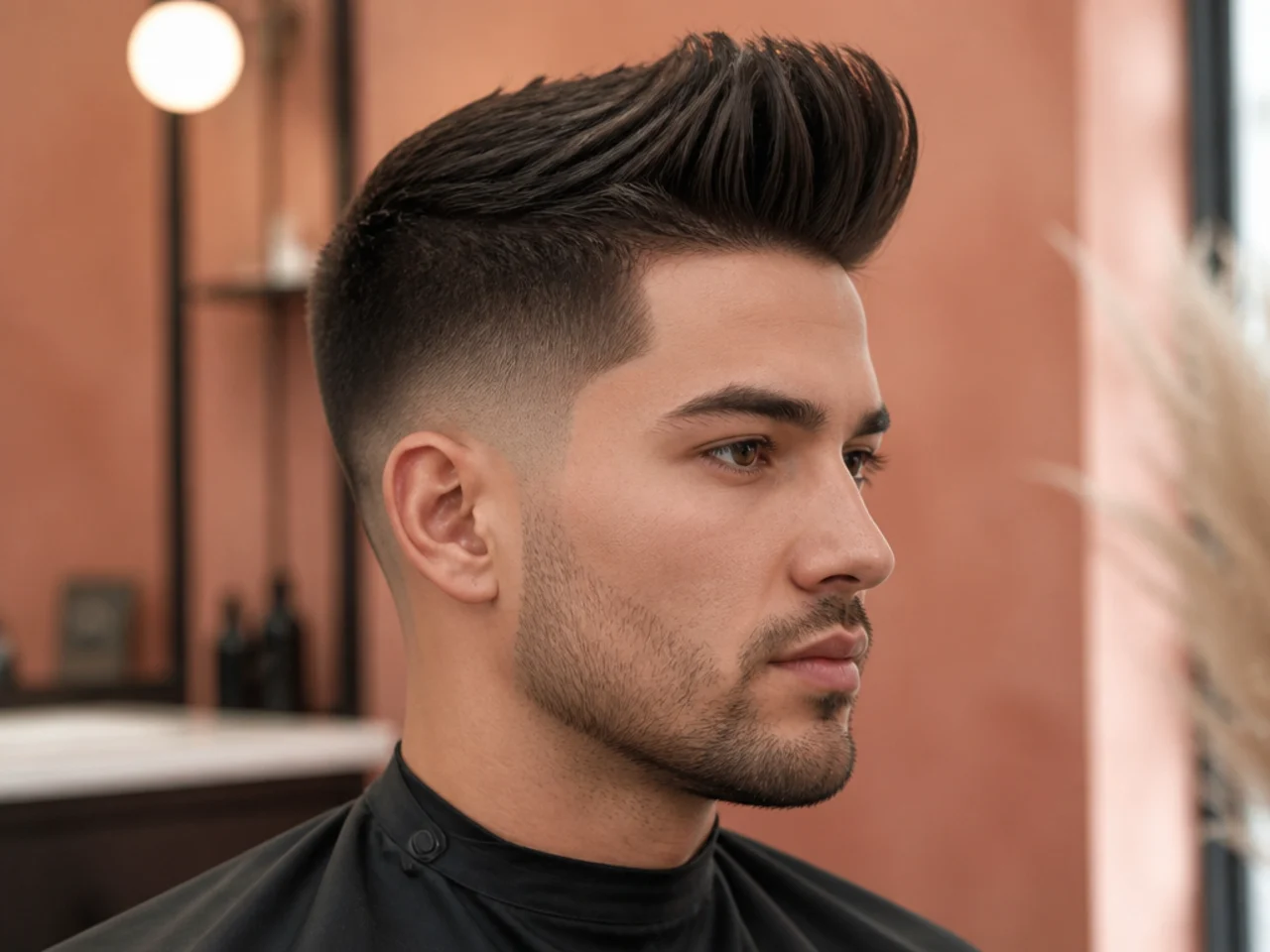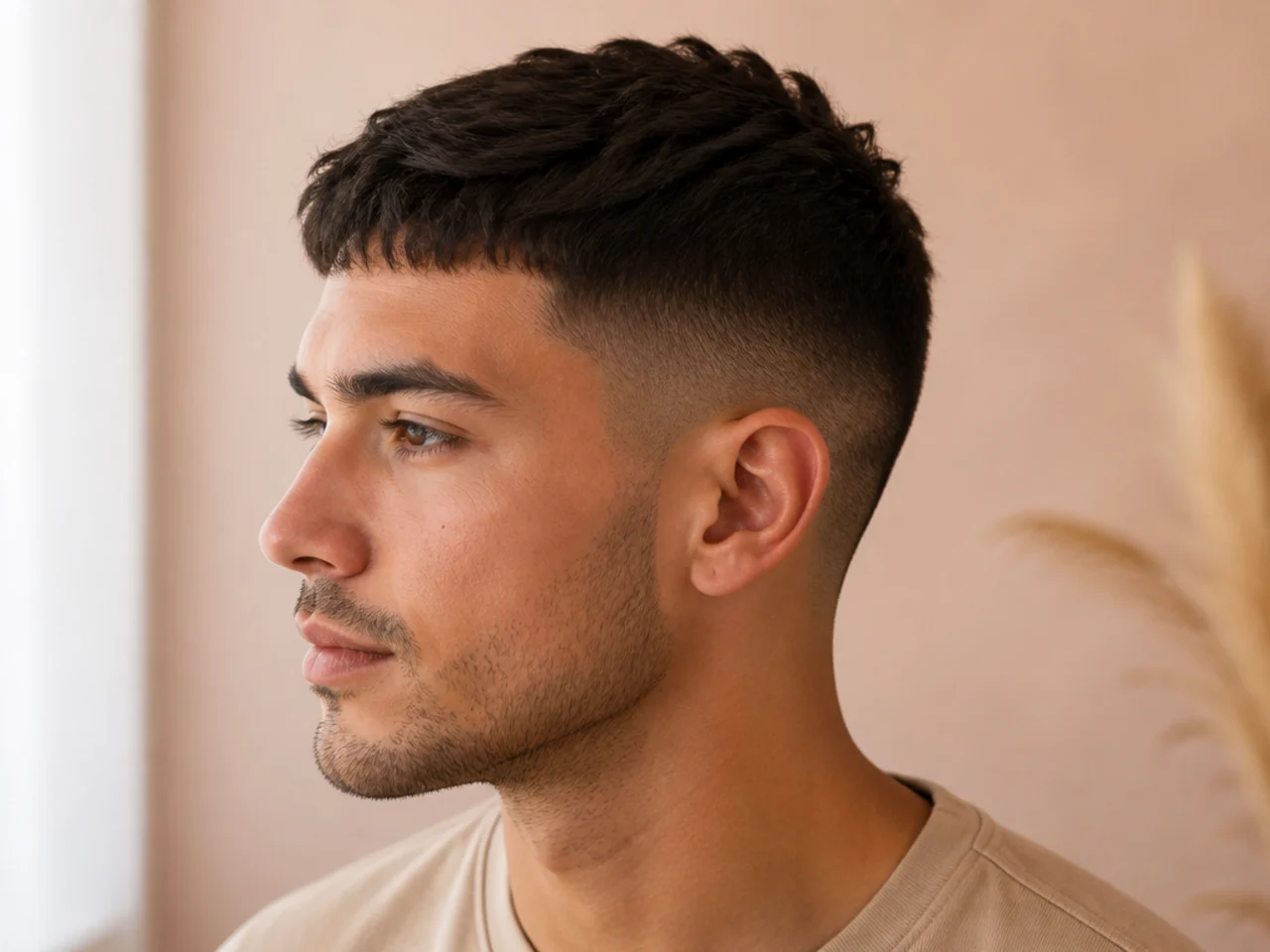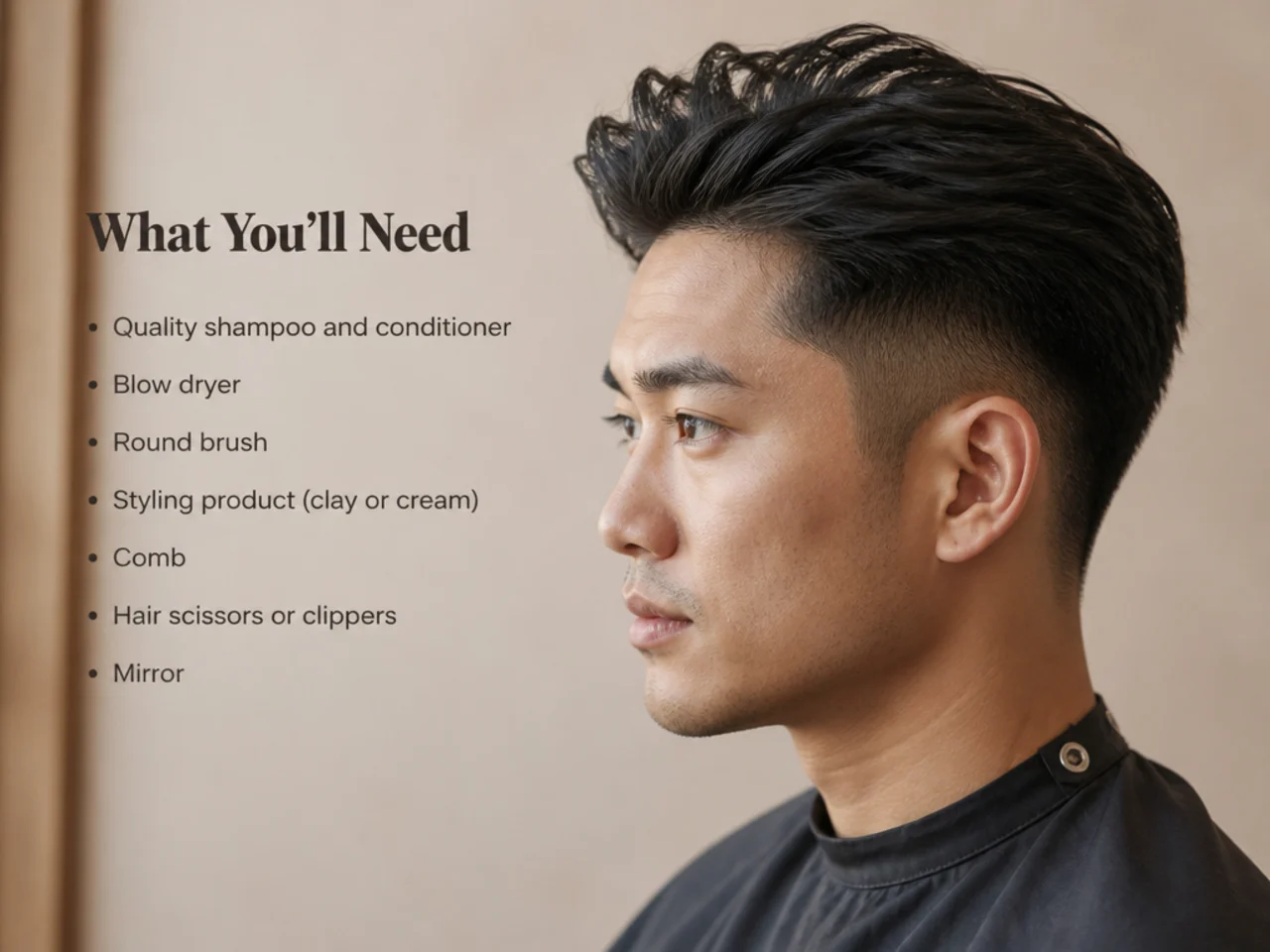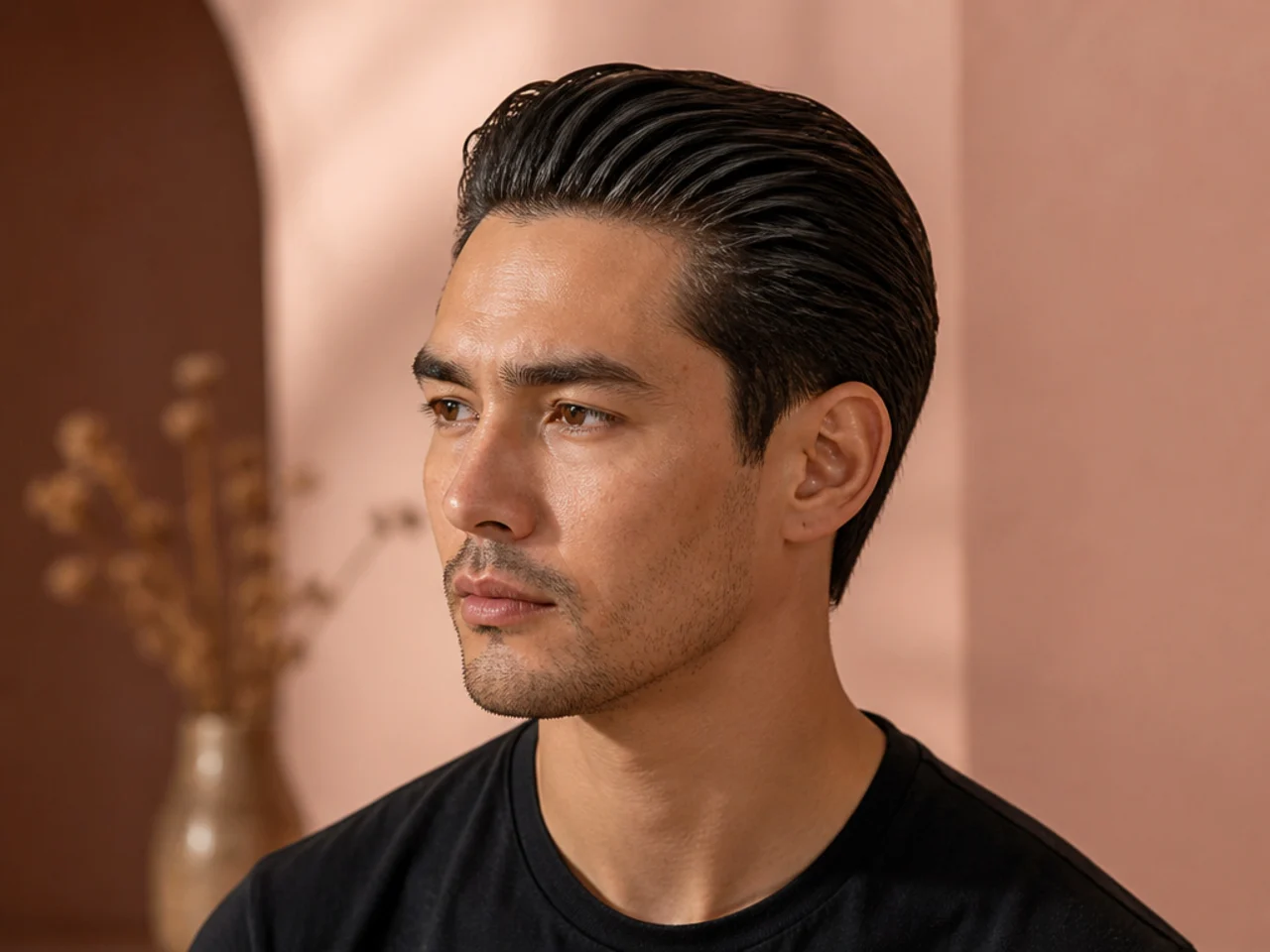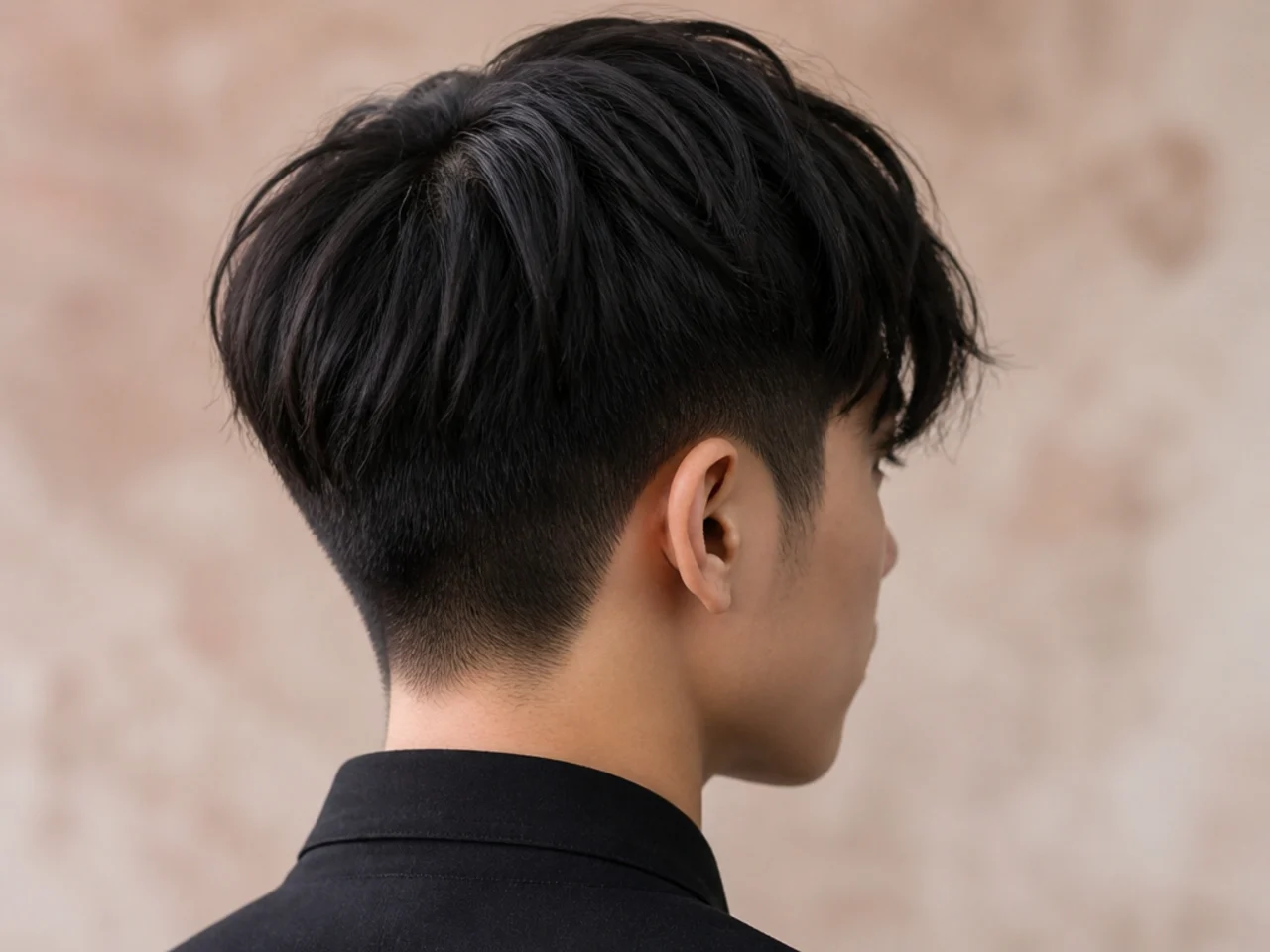
20 Steps to Get a Two Block Haircut
Twenty steps to actually getting one, and the instruction that decides whether you do — say disconnected, not blended. Blending is what most barbers default to, and it turns a two block into a fade.
In this article · 27
- What You Will Need to Specify
- Before You Start
- The 20 Steps
- 1. Bring a Photograph of the Side and Back
- 2. Say the Word Disconnected
- 3. Say Explicitly That You Do Not Want It Blended
- 4. Choose a Guard for the Underneath
- 5. Agree the Height of the Line
- 6. Check the Line Height Against Your Head Shape
- 7. Decide How Much Length Stays on Top
- 8. Keep the Top Longer Than Feels Necessary
- 9. Ask for the Back to Match the Sides
- 10. Decide on the Nape Finish
- 11. Choose Your Parting Before Cutting
- 12. Ask Whether Your Sides Will Wing Out
- 13. Consider a Down Perm if They Will
- 14. Consider a Volume Perm on Top
- 15. Check the Line in a Hand Mirror
- 16. Check That the Step Is Still Visible
- 17. Learn to Dry the Top Forward and Down
- 18. Use a Light Cream, Not a Wax
- 19. Book the Next Cut at Four Weeks
- 20. Say Disconnected Again Next Time
- Troubleshooting
- Mistakes to Avoid
- FAQ
- Final Thoughts
Most people who ask for a two block and do not get one made the same mistake, and it is a single word.
Say disconnected, not blended. Blending is the default for almost every modern men's cut. A barber who is not told otherwise will graduate the join between the top and the underneath — and that is a fade, not a two block.
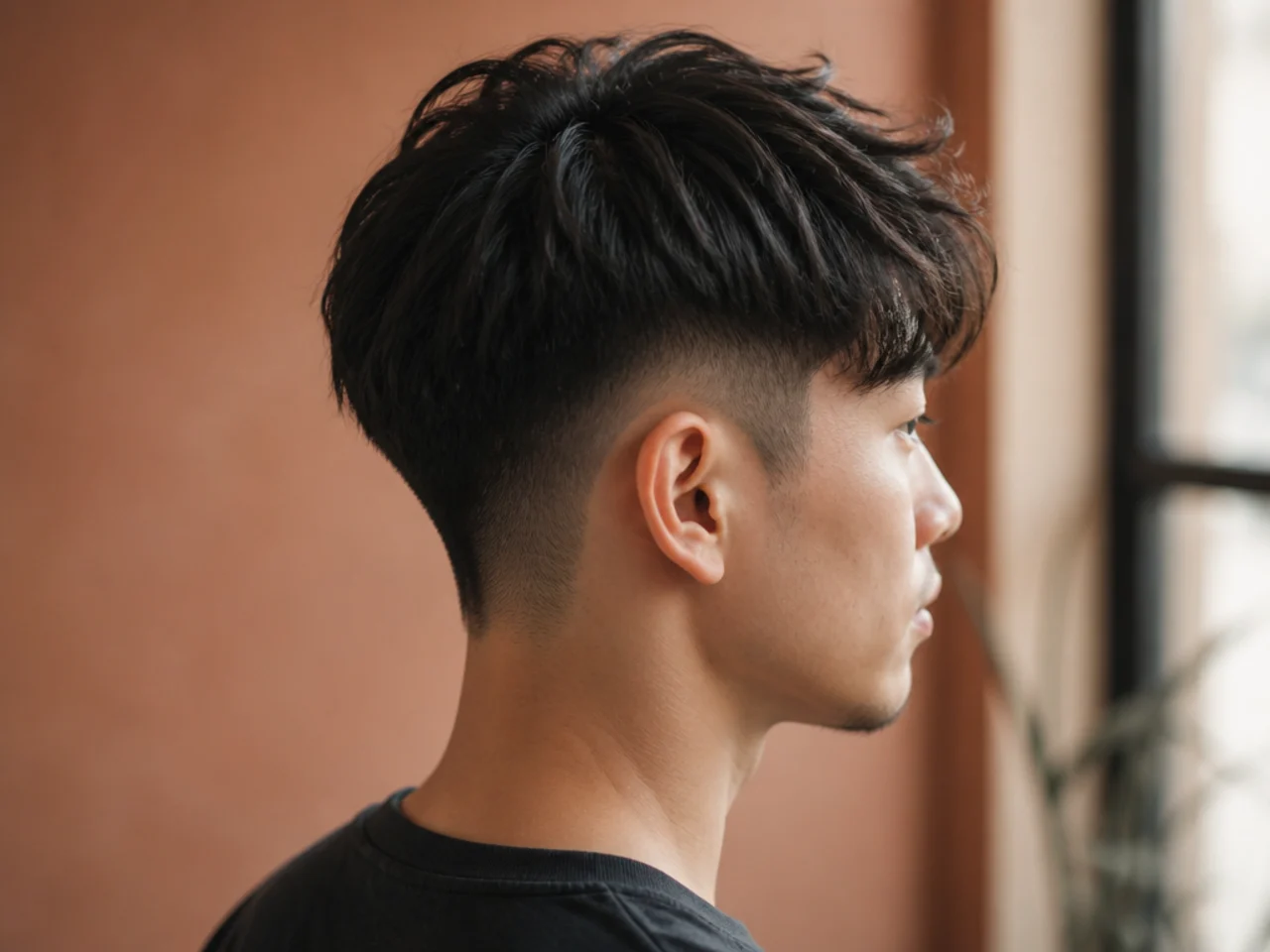
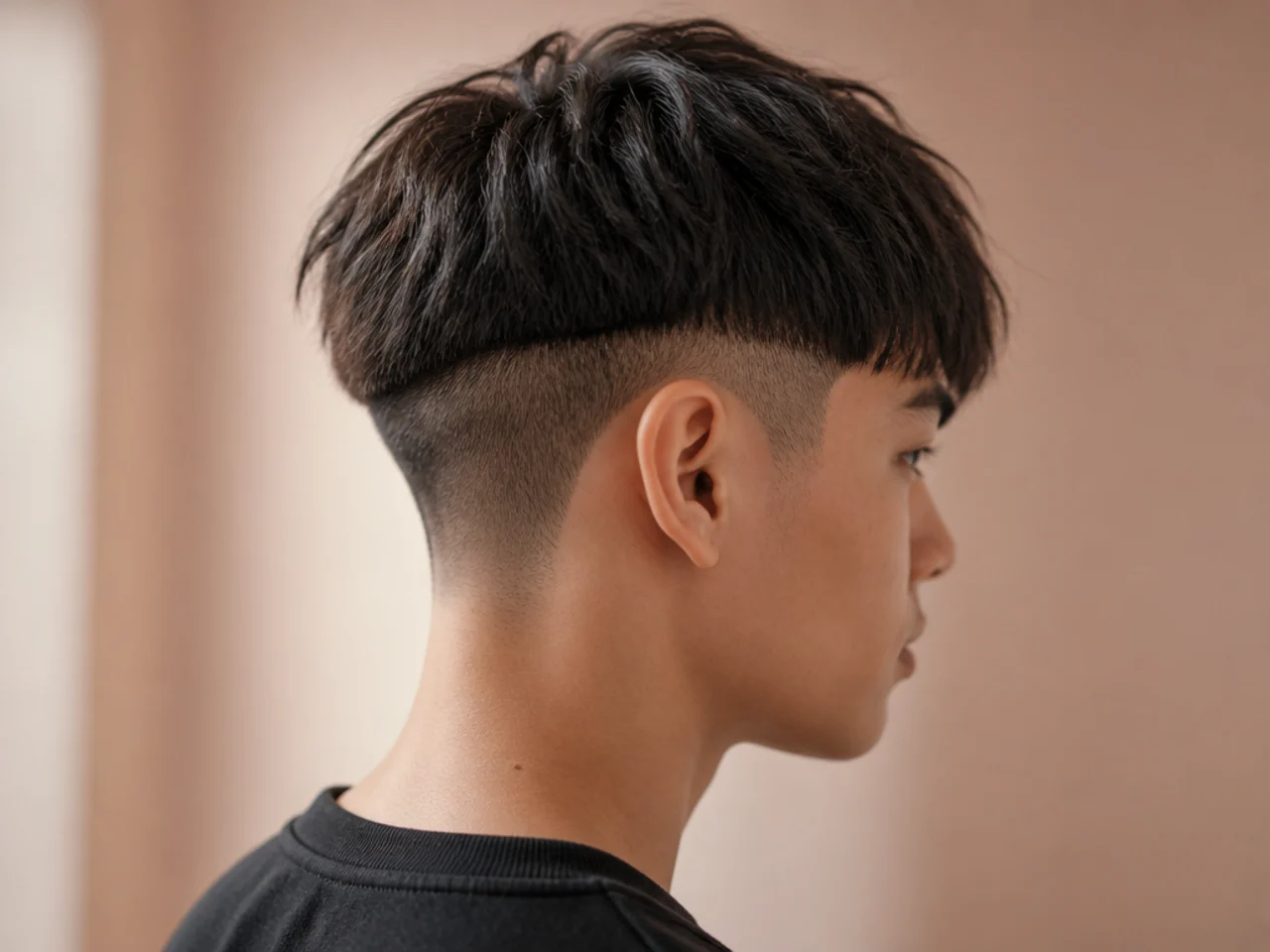
The two cuts happen at the same part of the head with opposite intentions: a step versus a gradient.
What You Will Need to Specify
A guard number for the underneath. Usually a two to a four, depending on how strong you want the contrast.
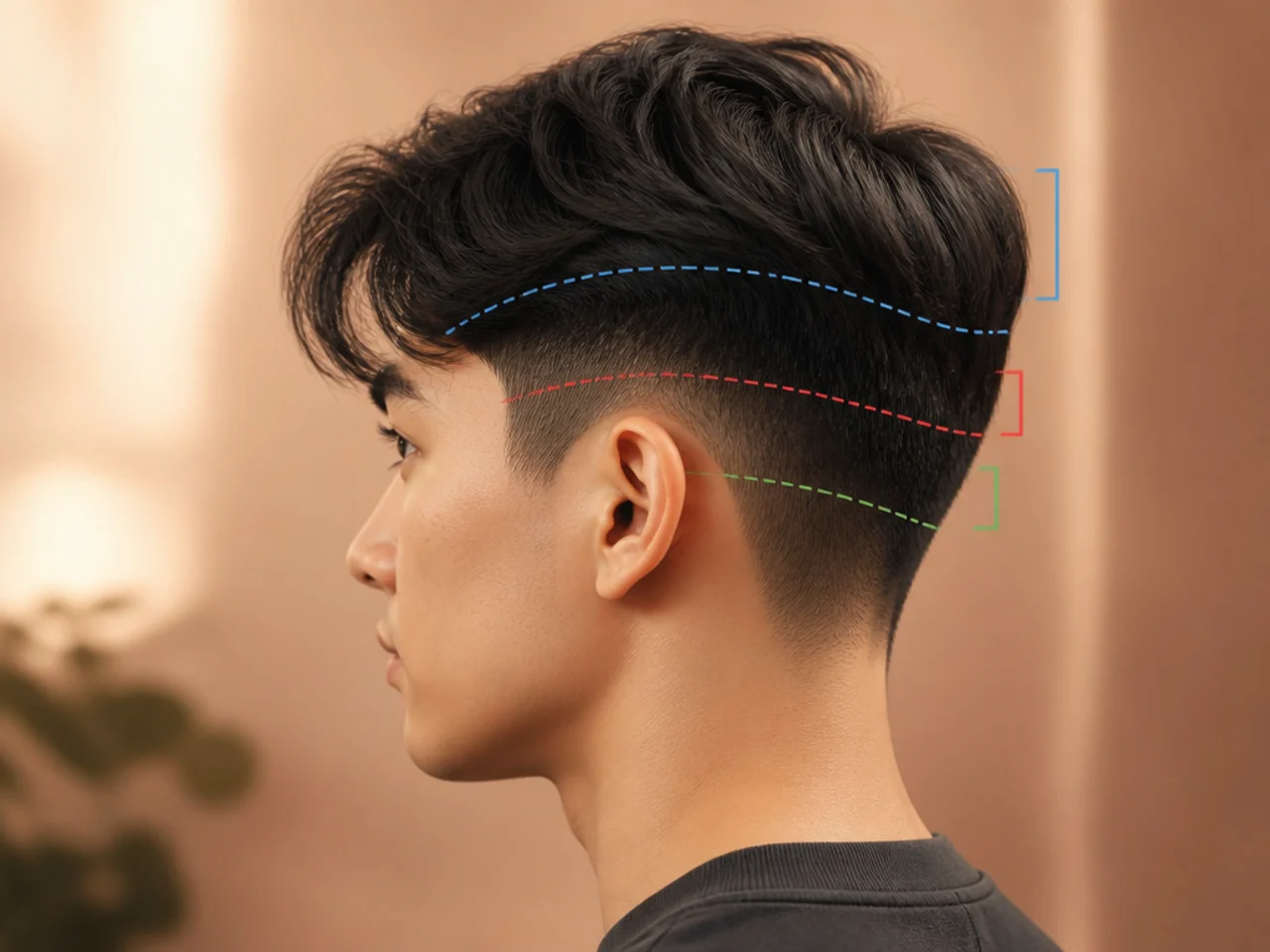
A height for the disconnection. Where the line sits — typically around the temple or just above the ear.
A length to leave on top. Long enough to fall over the line and cover it.
The word disconnected. The one that prevents everything else going wrong.
Before You Start
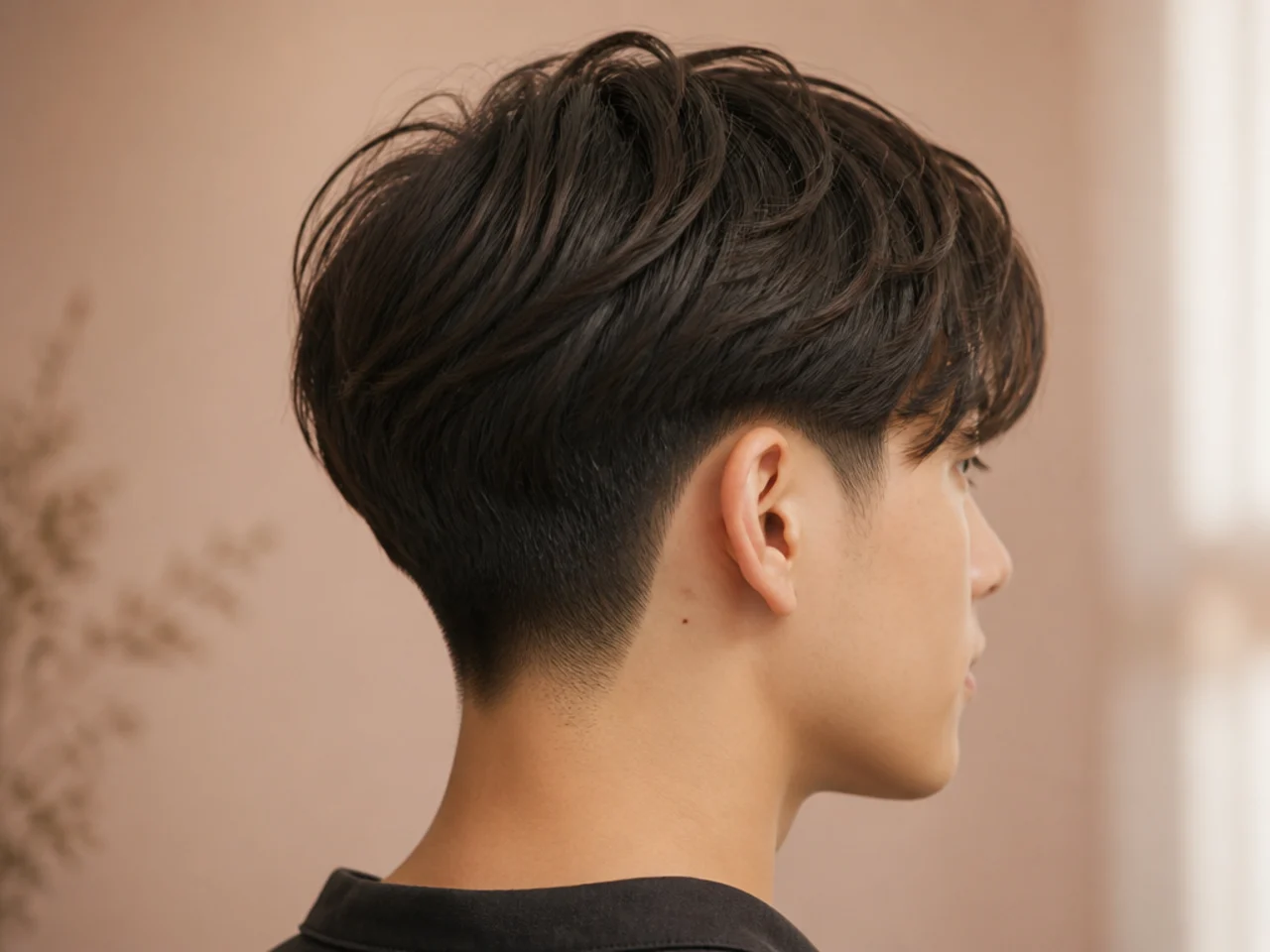
Look at photographs of the back, not just the front. The disconnection is a side and back feature.
Decide how much contrast you want. A shorter guard underneath makes a stronger step.
Know that a perm is often part of it. The permed versions in photographs are permed, not blow-dried.
Expect a four-week cycle. The disconnection blurs as the underneath grows. The line is the cut, so once it goes there is nothing else holding the shape.
Do not ask for a Korean haircut generically. It covers several different cuts.
The 20 Steps
1. Bring a Photograph of the Side and Back
Where the cut actually lives. A front-facing photograph shows the one angle at which a two block and a fade look identical.
2. Say the Word Disconnected
Before anything else in the conversation. It is the word that separates two constructions, and everything after it depends on which one you have asked for.

3. Say Explicitly That You Do Not Want It Blended
Worth stating twice. It is the default otherwise. A blended join is what a barber produces unless told not to, which is why three appointments can fail the same way.
4. Choose a Guard for the Underneath
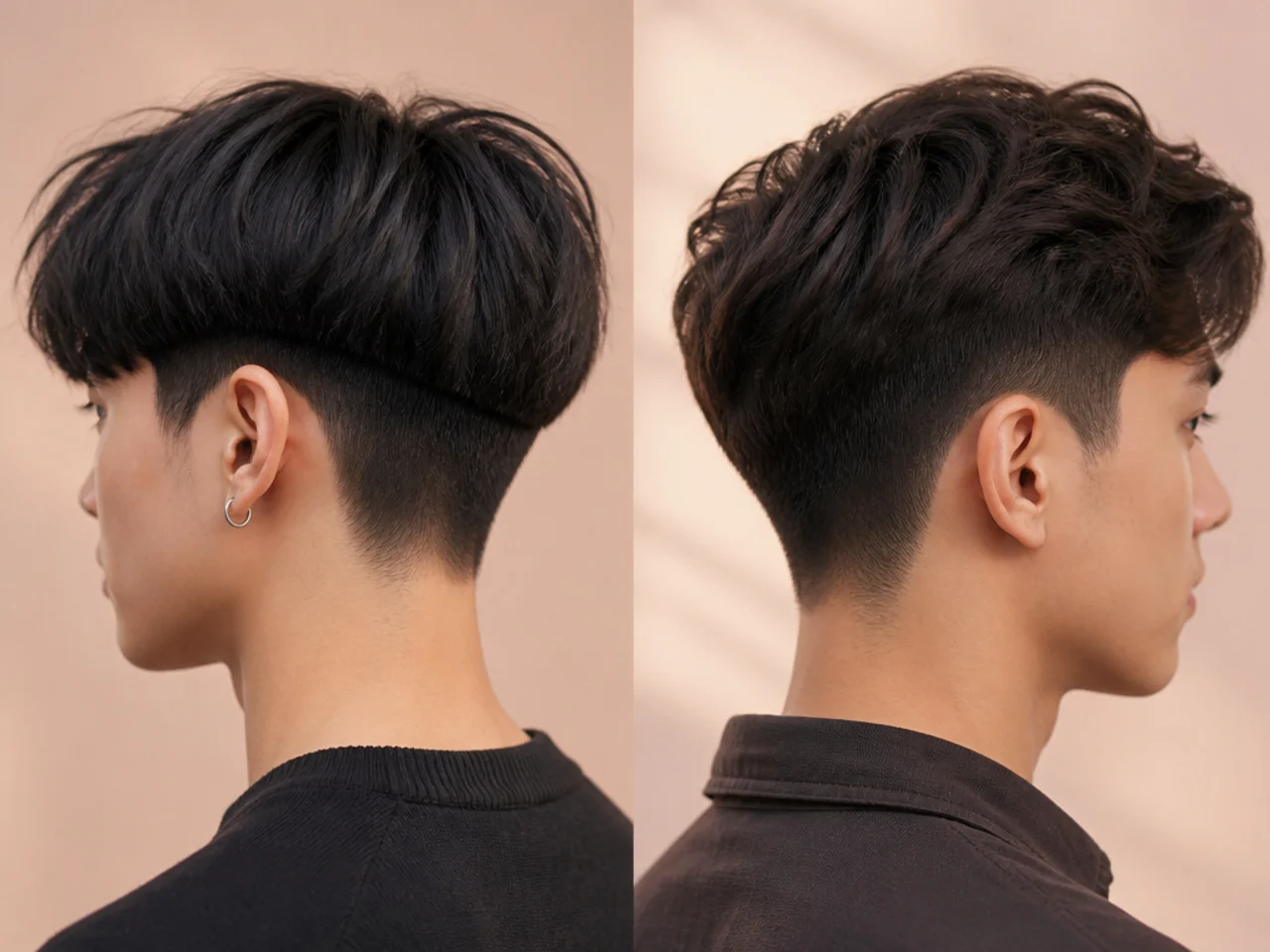
A two for strong contrast, a four for softer. The shorter the guard, the wider the gap between the two lengths and the harder the step reads.
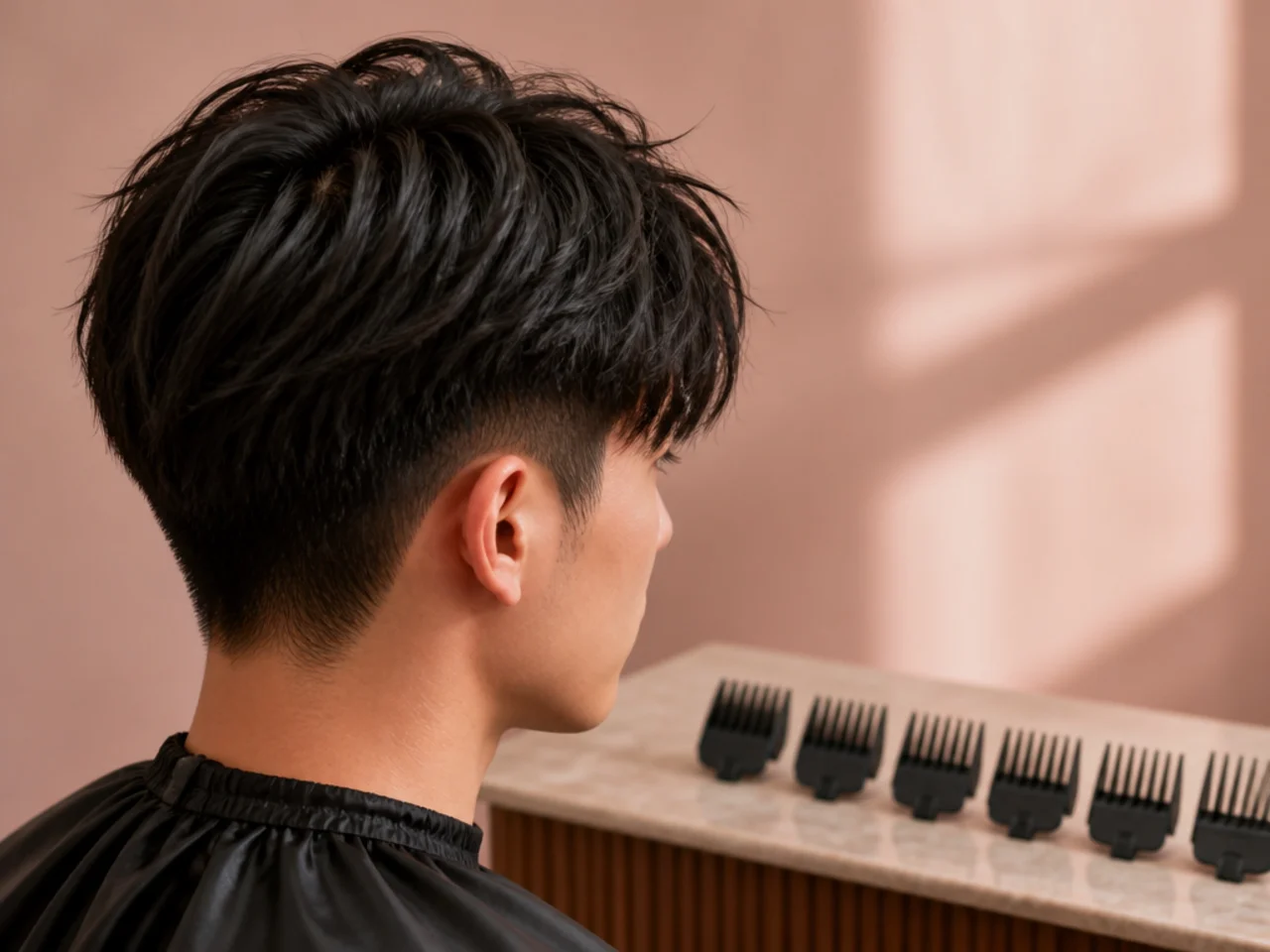
5. Agree the Height of the Line
Temple height, or just above the ear. A higher line has further to travel before the top layer reaches it, which is what extends the useful window.
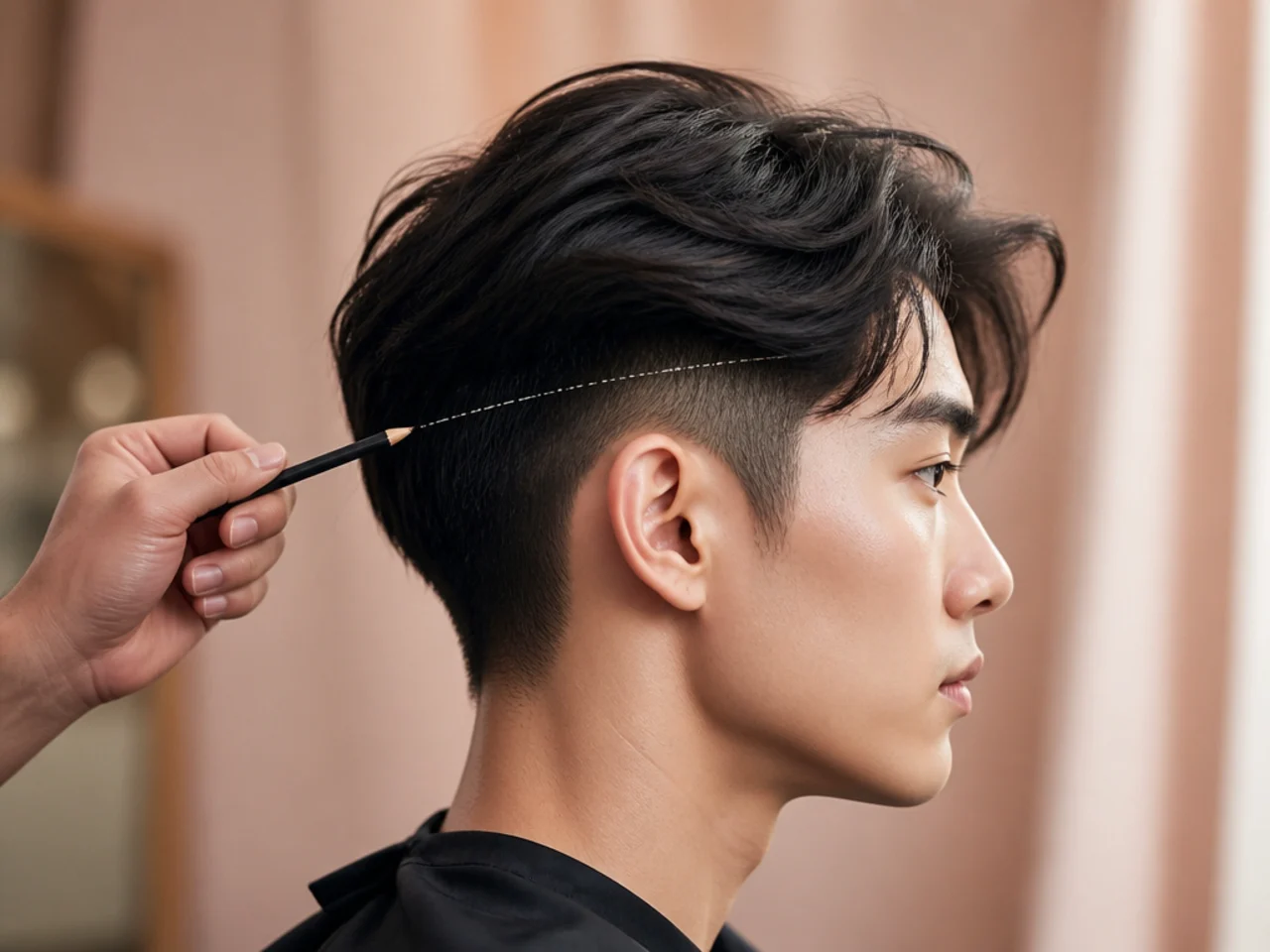
6. Check the Line Height Against Your Head Shape
A high line on a narrow head can look severe. The line removes visual width where it sits, so a narrow head loses width it did not have to spare.

7. Decide How Much Length Stays on Top
Enough to fall over the line and cover it. Length above the line is the only thing disguising the disconnection as it grows.
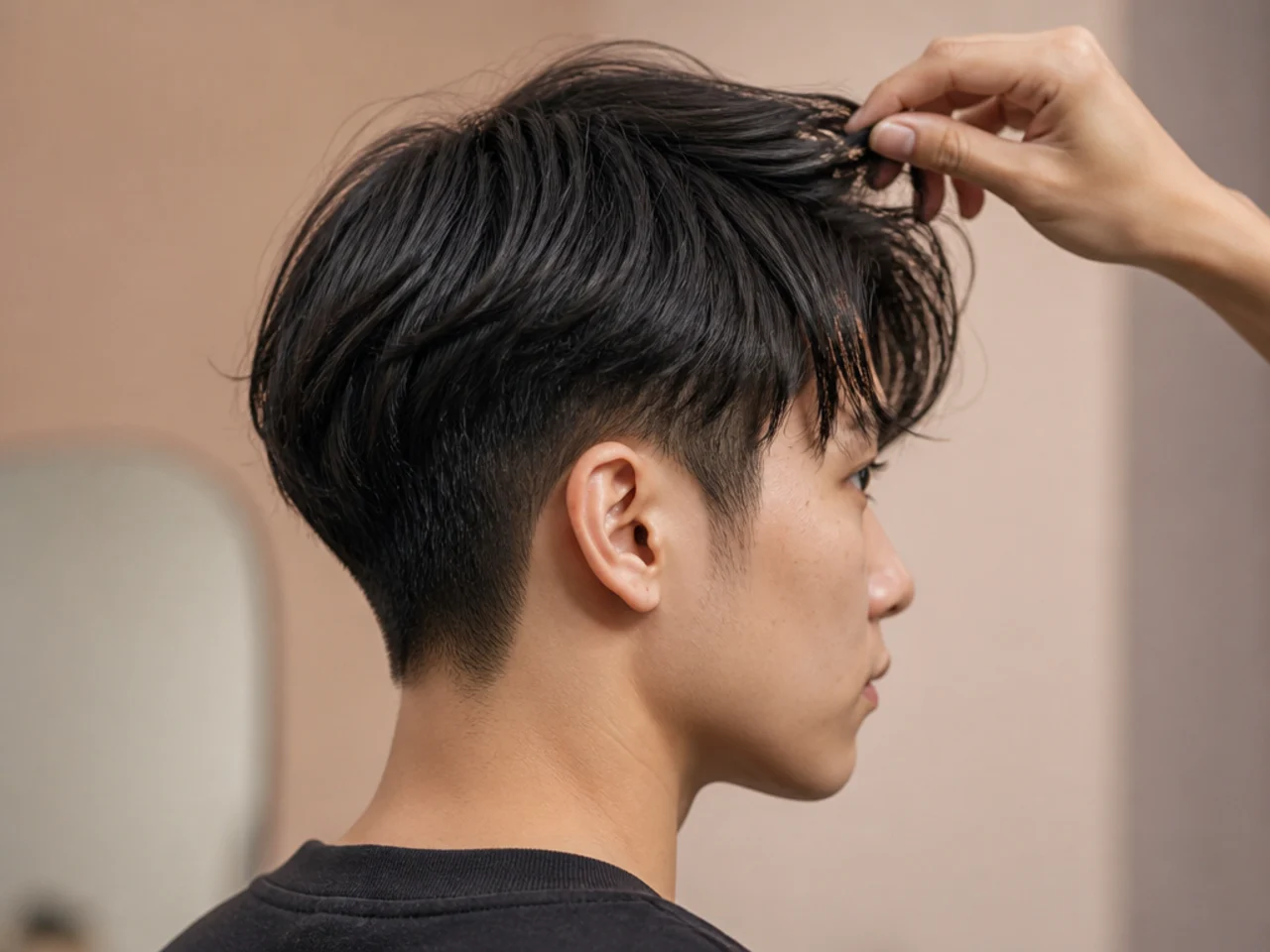
8. Keep the Top Longer Than Feels Necessary
It shrinks when dry and shrinks again if permed. Two separate reductions, and neither is visible at the moment the scissors are in the hair.

9. Ask for the Back to Match the Sides
The disconnection should run continuously around. A line that stops at the sides leaves a wedge at the back where the two lengths meet unevenly.
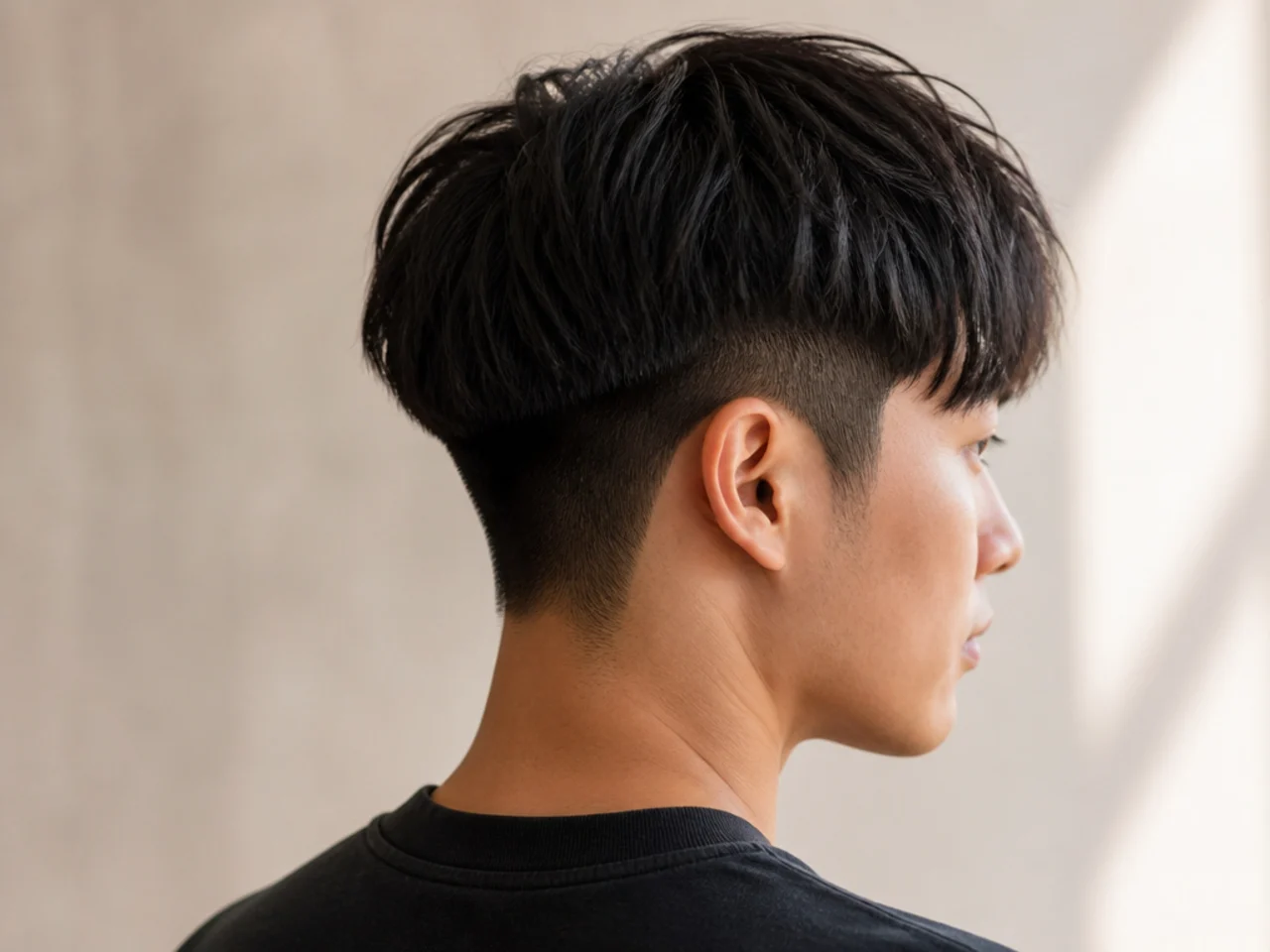
10. Decide on the Nape Finish
Squared off or tapered. A small choice that shows. You never see your own nape, and it is the part of the cut everyone behind you does.

11. Choose Your Parting Before Cutting
Middle, side, or none. It affects how the top falls. A side part sends the whole top one way and covers more line; a middle part splits it and covers less.

12. Ask Whether Your Sides Will Wing Out
Thick hair often does above the line. Coarse strands have the stiffness to spring away from the head rather than falling over the step.

13. Consider a Down Perm if They Will
It flattens the section above the line. A down perm works in the opposite direction from a volume perm, relaxing rather than lifting.

14. Consider a Volume Perm on Top
It is what hides the step in most reference photographs. Straight hair falls flat over the line and shows the step exactly as sharply as it was cut.

15. Check the Line in a Hand Mirror
Before you leave the chair. It is the one fault that cannot be fixed afterwards, because the hair has already gone.
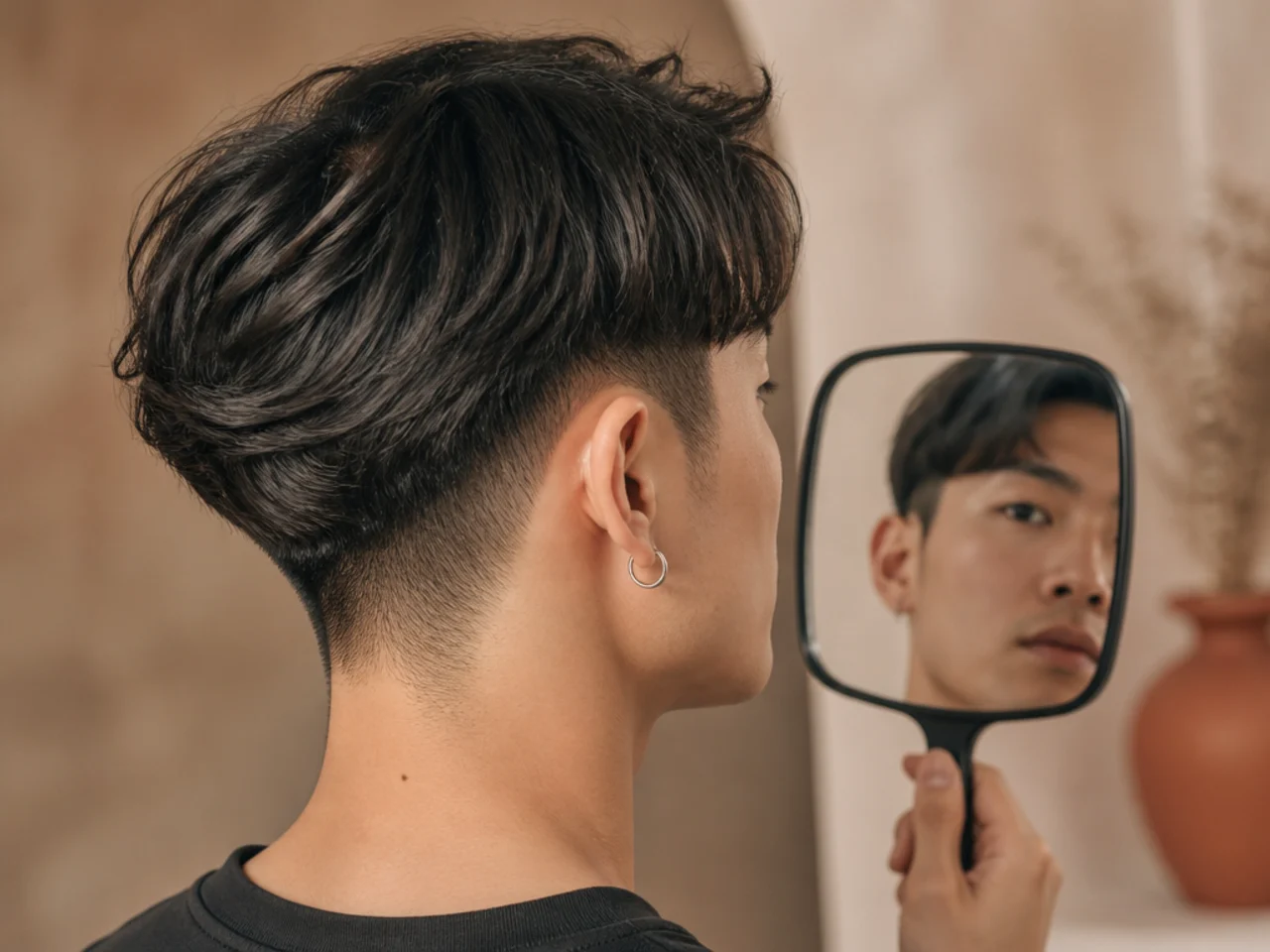
16. Check That the Step Is Still Visible
If it has been softened, say so now. Softening the join is a reflex, and it can still be corrected while you are in the chair.
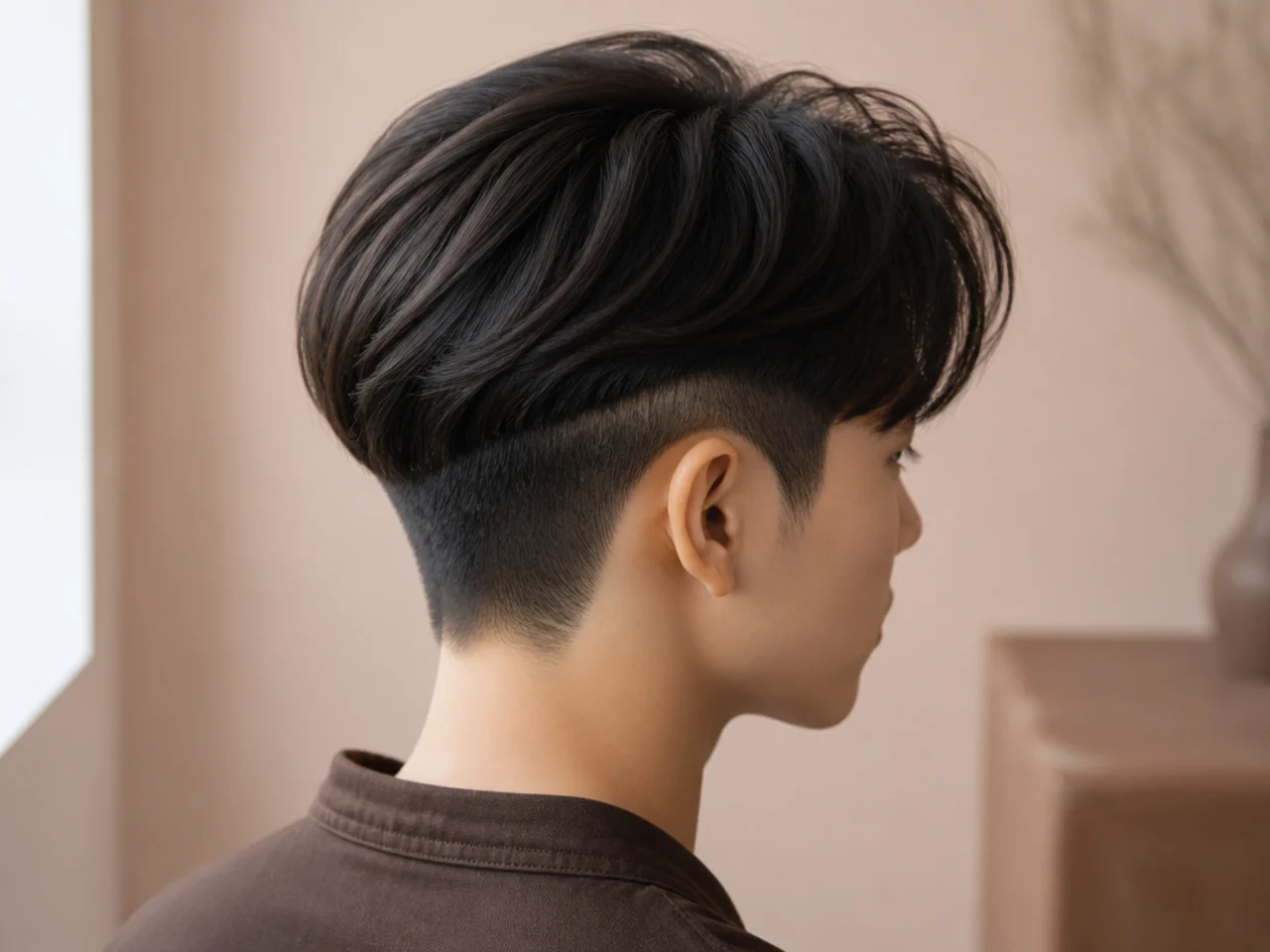
17. Learn to Dry the Top Forward and Down
So it falls over the line rather than back off it. Forward and down while it is still damp — the root direction sets from wet.
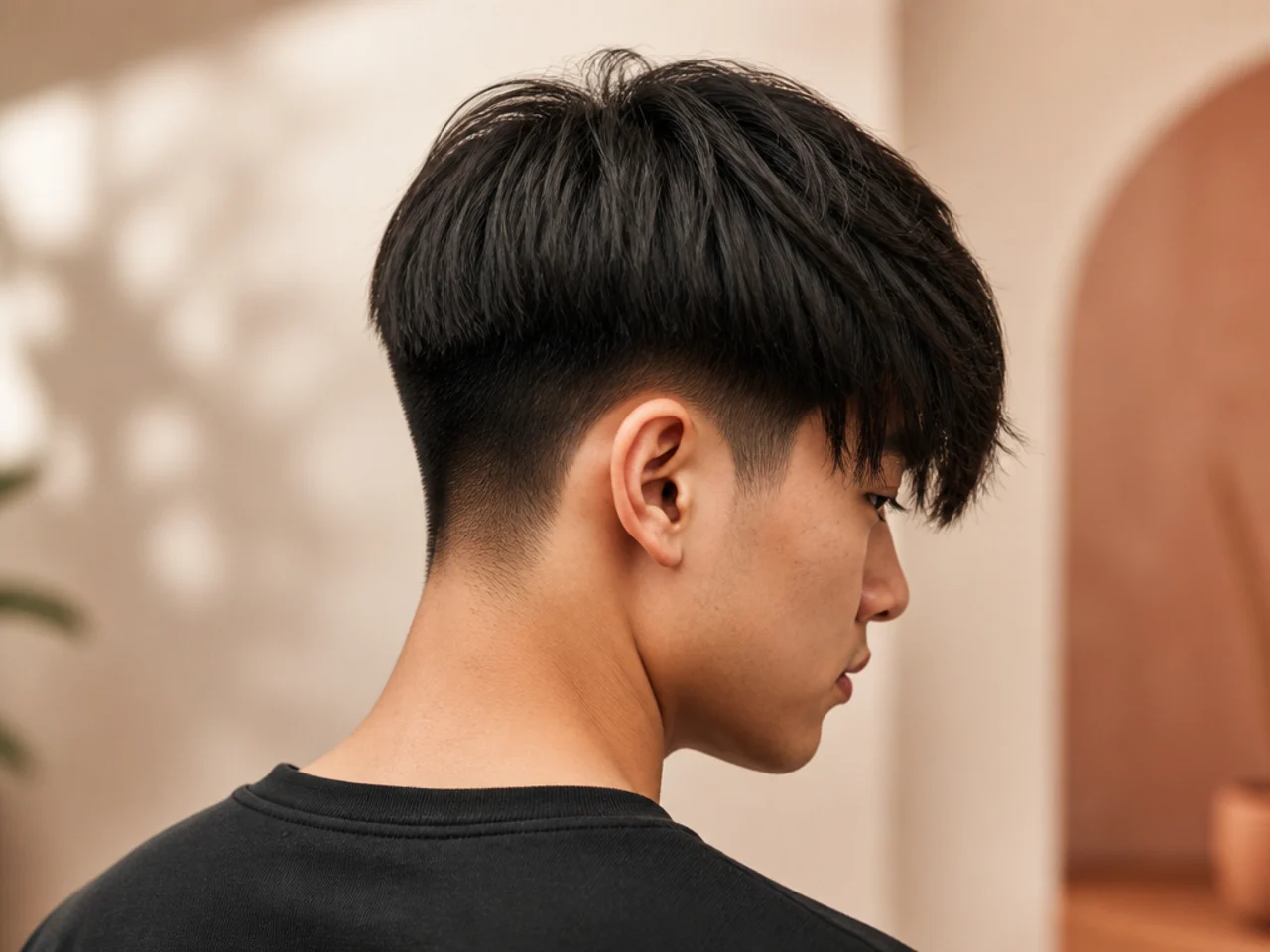
18. Use a Light Cream, Not a Wax
Wax pulls the top down and exposes the step. Weight is the one thing this cut cannot carry above the line.

19. Book the Next Cut at Four Weeks
The disconnection blurs as the underneath grows.

20. Say Disconnected Again Next Time
Every appointment, including with the same barber. The default does not change between visits, and neither should the instruction.
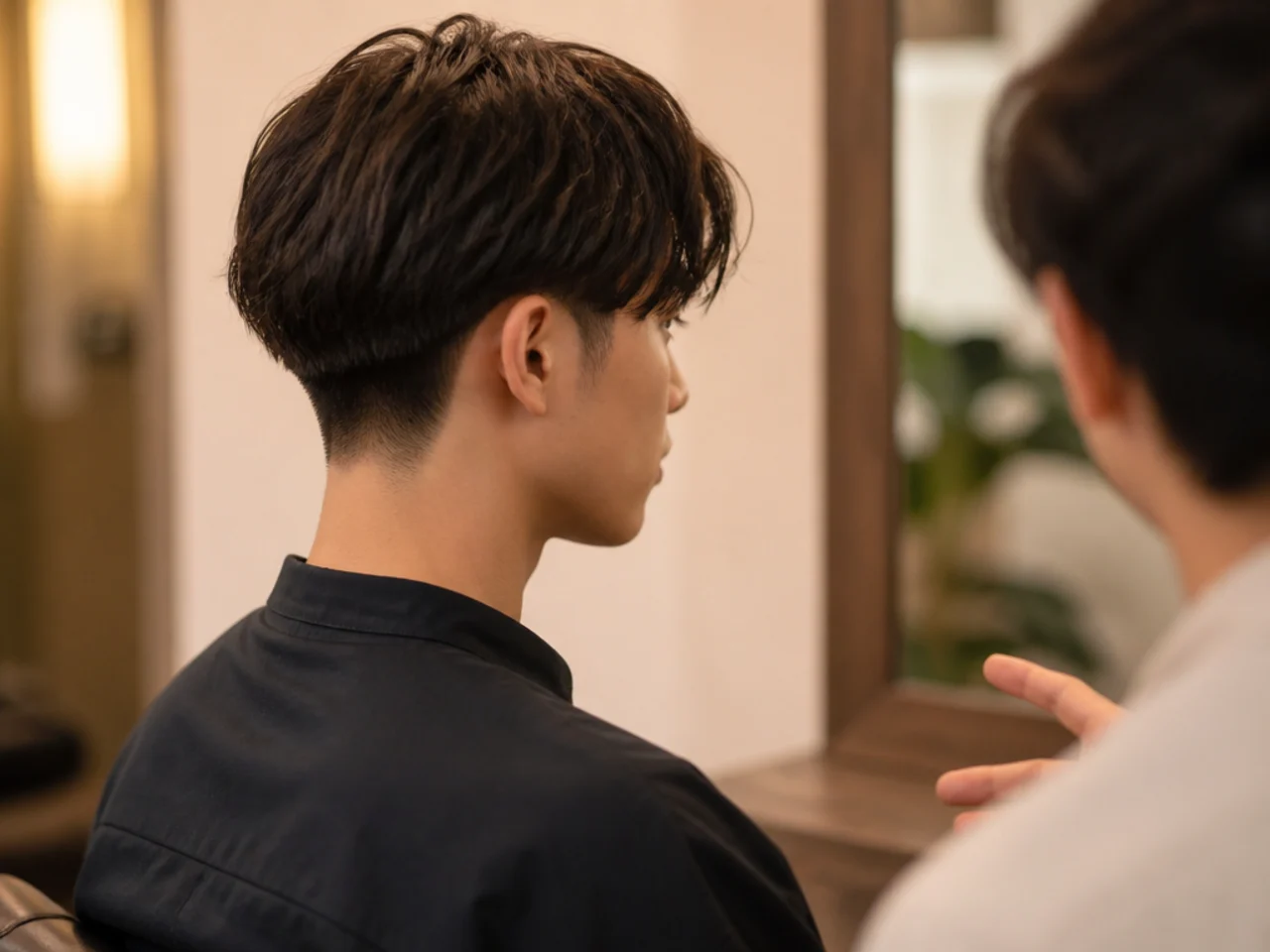
Troubleshooting
It came out as a fade. It was blended. Say disconnected explicitly next time and check in the mirror before leaving.
The step is too obvious. Either the top is too short to cover it, or the guard underneath was too short. Grow the top before shortening the underneath further.
The sides wing out above the line. Common on thick or coarse hair. A down perm is the standard fix.
It looked right for two weeks and then stopped. Normal. The underneath grows and the line blurs — this is a four-week cut.
The back looks different from the sides. The disconnection was not carried around. Ask for it continuous next time.
It looks flat on top. Most reference photographs are permed. Straight hair over a two block needs either a perm or daily drying.
Mistakes to Avoid
Not saying disconnected. The single most common failure.
Asking for a Korean haircut generically. It covers several different cuts.
Cutting the top too short. It needs to cover the line.
Using wax. It flattens the top and exposes the step.
Booking on a six-week cycle. This is a four-week cut.
FAQ
How do you ask for it? Say disconnected, not blended, and say it explicitly.
Two block versus fade? A step versus a gradient — opposite intentions.
What numbers? Guard for the underneath, height for the line, length for the top.

Final Thoughts
Say the word disconnected before you say anything else. Every other specification can be adjusted at the next appointment, and that one cannot — because a blended join has already removed the thing that makes a two block a two block.
For the cut in full see the two block haircut, and for the perm that usually accompanies it see two block haircut ideas with a perm. More in Men's Haircuts.