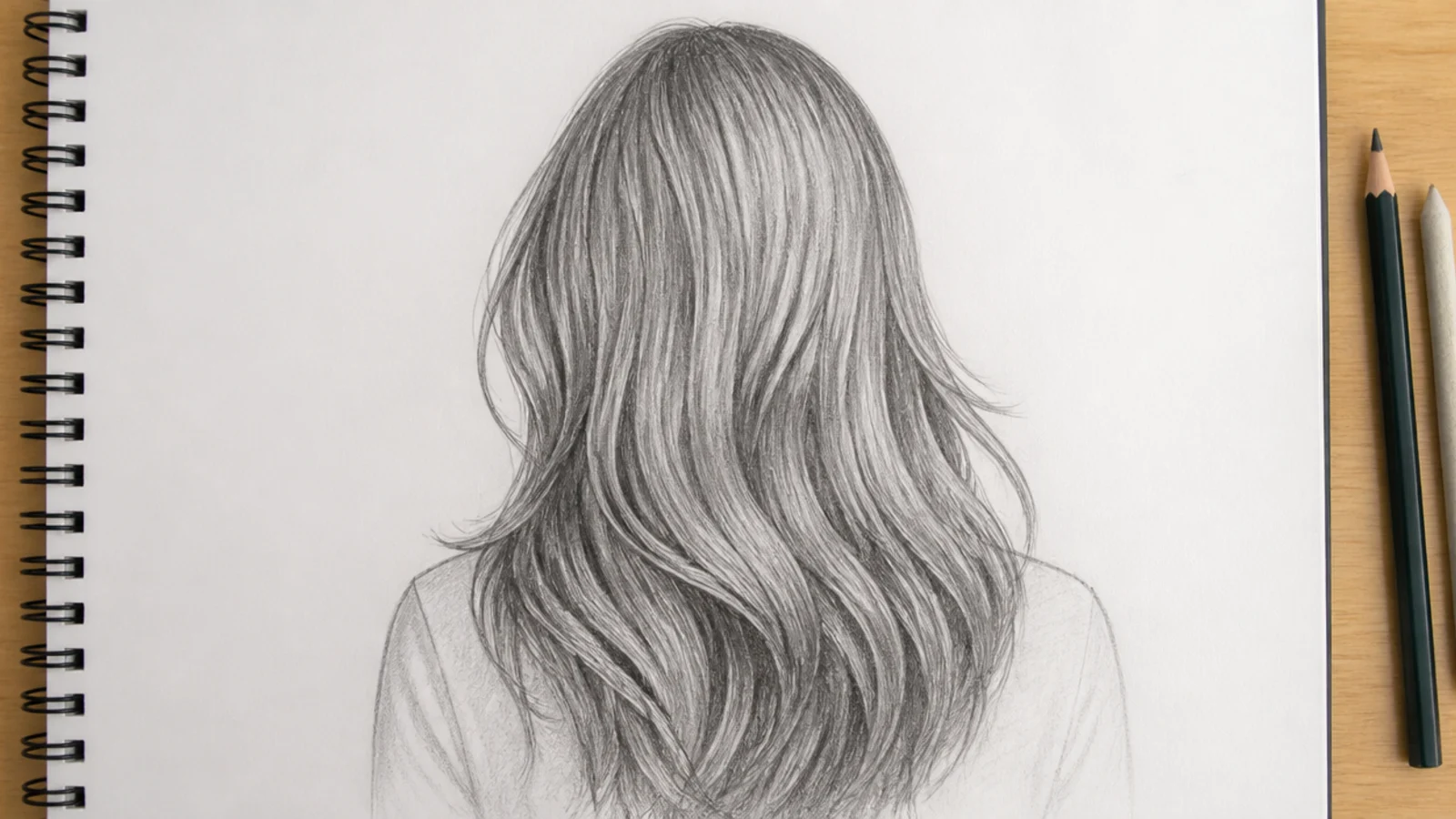
25 Creative Hair Sketch Ideas to Draw
Twenty five conceptual hair sketch ideas, and the rule that decides whether any of them work. A concept is a material swapped onto a correct hair flow, so the stranger the material, the plainer the structure underneath has to be.
In this article · 33
- Pencils Paper and Blending Tools
- How to Start a Hair Sketch
- Hair Textures Compared
- Shading Hair for Volume and Depth
- Using Hair References
- Common Hair Sketch Mistakes
- The 25 Creative Hair Sketch Ideas
- 1. Hair Made of Water
- 2. Hair Made of Fire
- 3. Wind Blown Hair From the Back
- 4. Leaf and Vine Hair
- 5. Galaxy Hair
- 6. Wet Hair
- 7. A Haircut in Progress
- 8. A Face Covered by Hair
- 9. Hair Underwater
- 10. Hair Made of Smoke
- 11. Beaded Box Braids
- 12. Loc Bun
- 13. 4C Afro With Backlight
- 14. Spiral Curl Ribbons
- 15. Crown Braid From Overhead
- 16. Messy Bun
- 17. Buzz Cut With a Fade
- 18. Hair Turning Into Birds
- 19. Hair on a Dark Background
- 20. Undercut Sweep
- 21. A Braid Unraveling
- 22. Silver Gray Hair
- 23. Continuous Line Waves
- 24. Anime Spiky Silhouette
- 25. Hair at Small Scale
- Final Thoughts
Most conceptual hair drawings fail for the same reason — the concept got drawn and the hair did not.
A concept is a material swapped onto a correct flow. Hair made of water still leaves a crown swirl, still follows the skull, still hangs with weight. Change the material and keep everything else.
The stranger the idea, the plainer the structure has to be. The viewer needs to recognise the shape as hair before noticing what it is made of, and that recognition comes entirely from flow.
Pencils Paper and Blending Tools
Conceptual work needs a wider value range than portrait work. Anything meant to glow has to sit against something genuinely dark, so a 6B or 8B earns its place here in a way it rarely does elsewhere.
Sharpen an eraser to a corner. Hard specular highlights on water, metal and glass are cut rather than left, and a rounded kneaded eraser cannot make that edge.
Toothed paper for smoke, smooth paper for water. Tooth breaks a soft transition into grain, which helps vapour and hurts anything that should look like a hard reflective surface.
Blend the background, not the hair. A dark ground blended flat makes every lifted highlight in the hair jump forward without you touching the hair itself.
How to Start a Hair Sketch
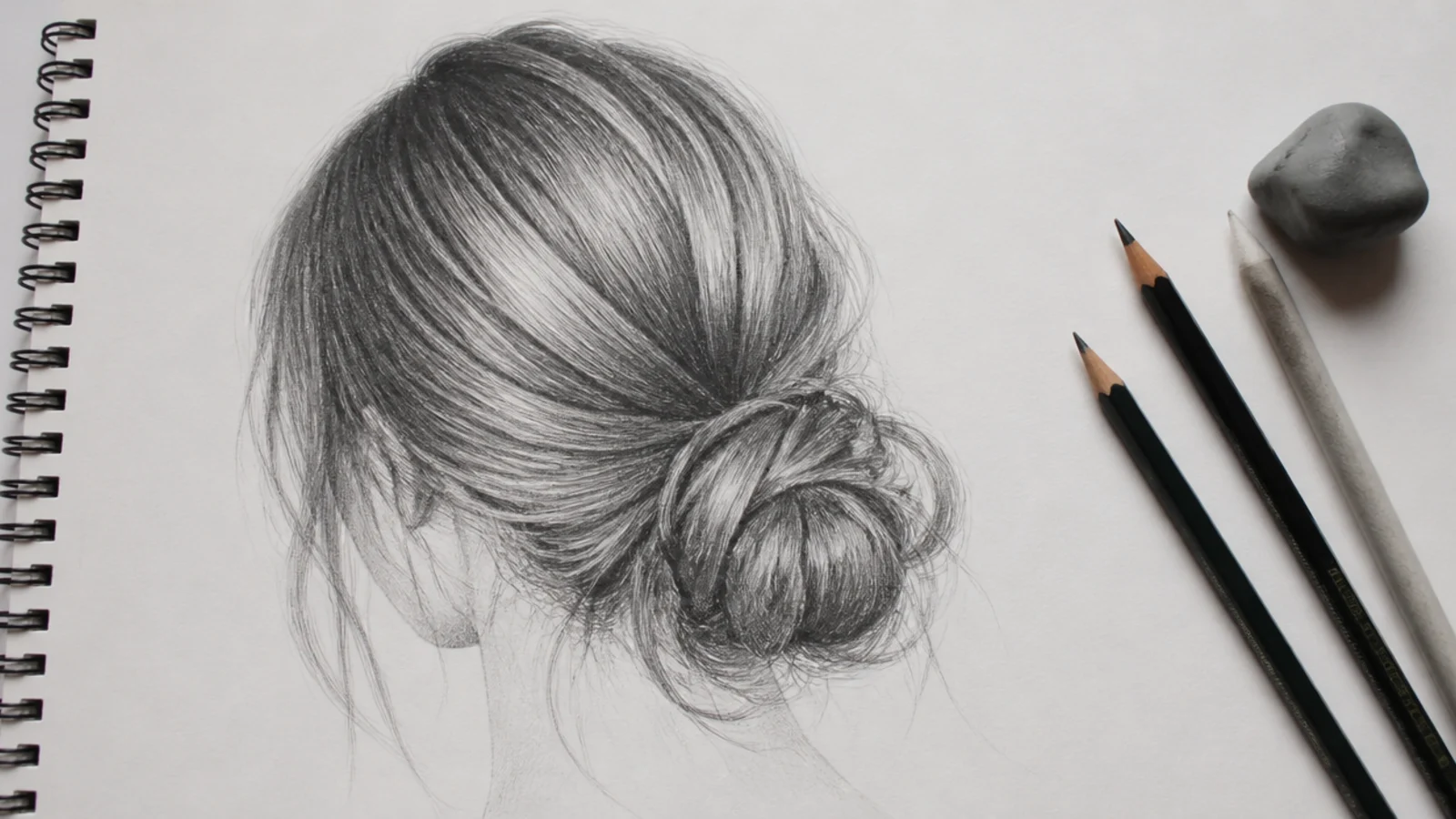
Thumbnail the idea at postage stamp size. If the concept does not read at two centimetres it will not read at twenty, and you will have spent an afternoon finding that out.
Draw the silhouette before the material. Block the hair mass as it would exist in ordinary hair, then decide what it is made of.
Mark the crown swirl even on abstract ideas. Every ribbon needs an origin, and a mass without one drifts in whatever direction each stroke happens to go.
Decide the light before the first dark mark. Concepts that glow, reflect or burn depend on one committed light direction, and half of them depend on that light being behind the head.
Hair Textures Compared
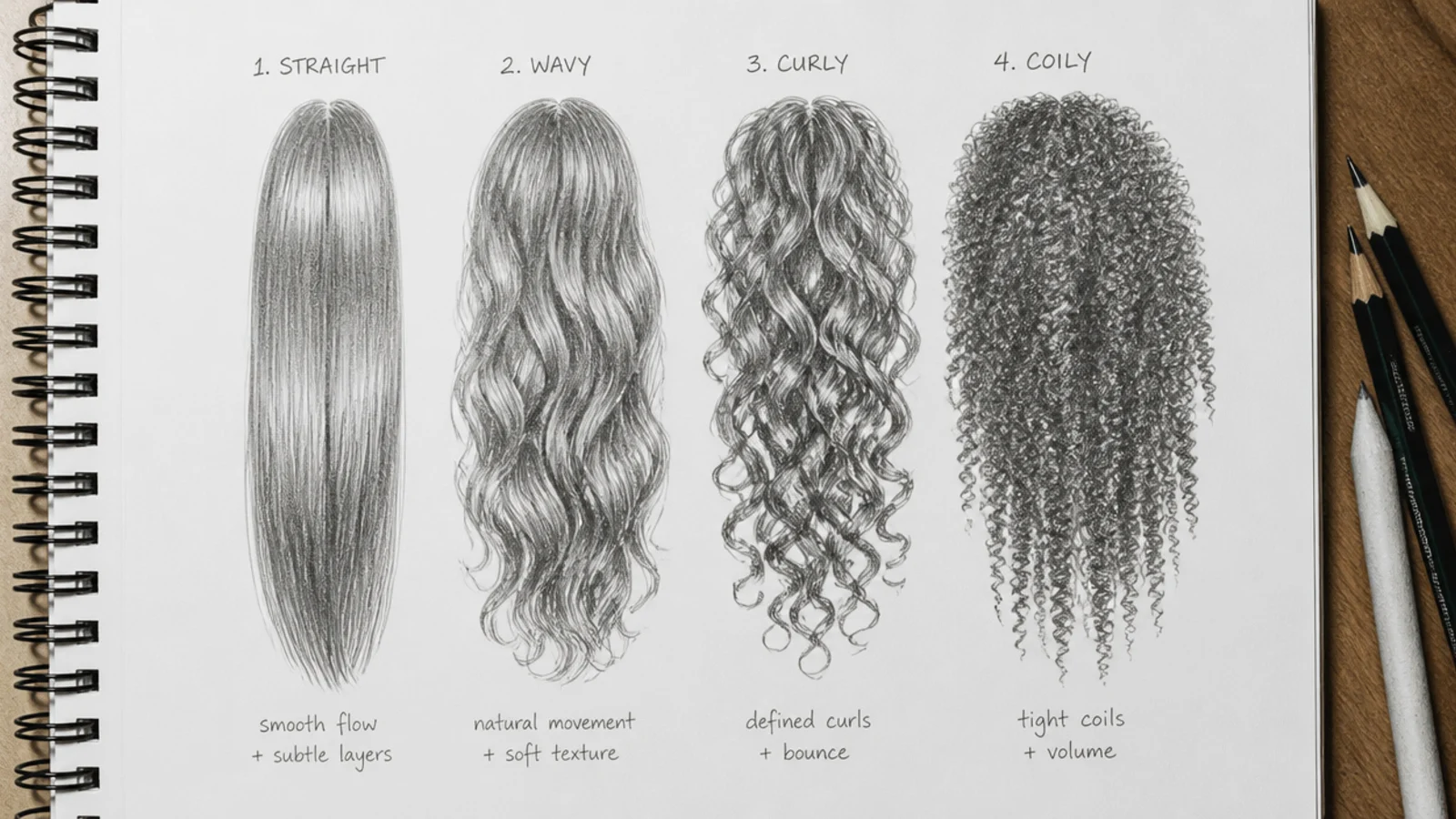
Straight hair suits reflective materials. One continuous surface with one long highlight is what glass, water and metal need, and any texture breaks that up.
Wavy hair suits anything that flows. The alternation between the outer and inner face of each bend already reads as movement before you change the material at all.
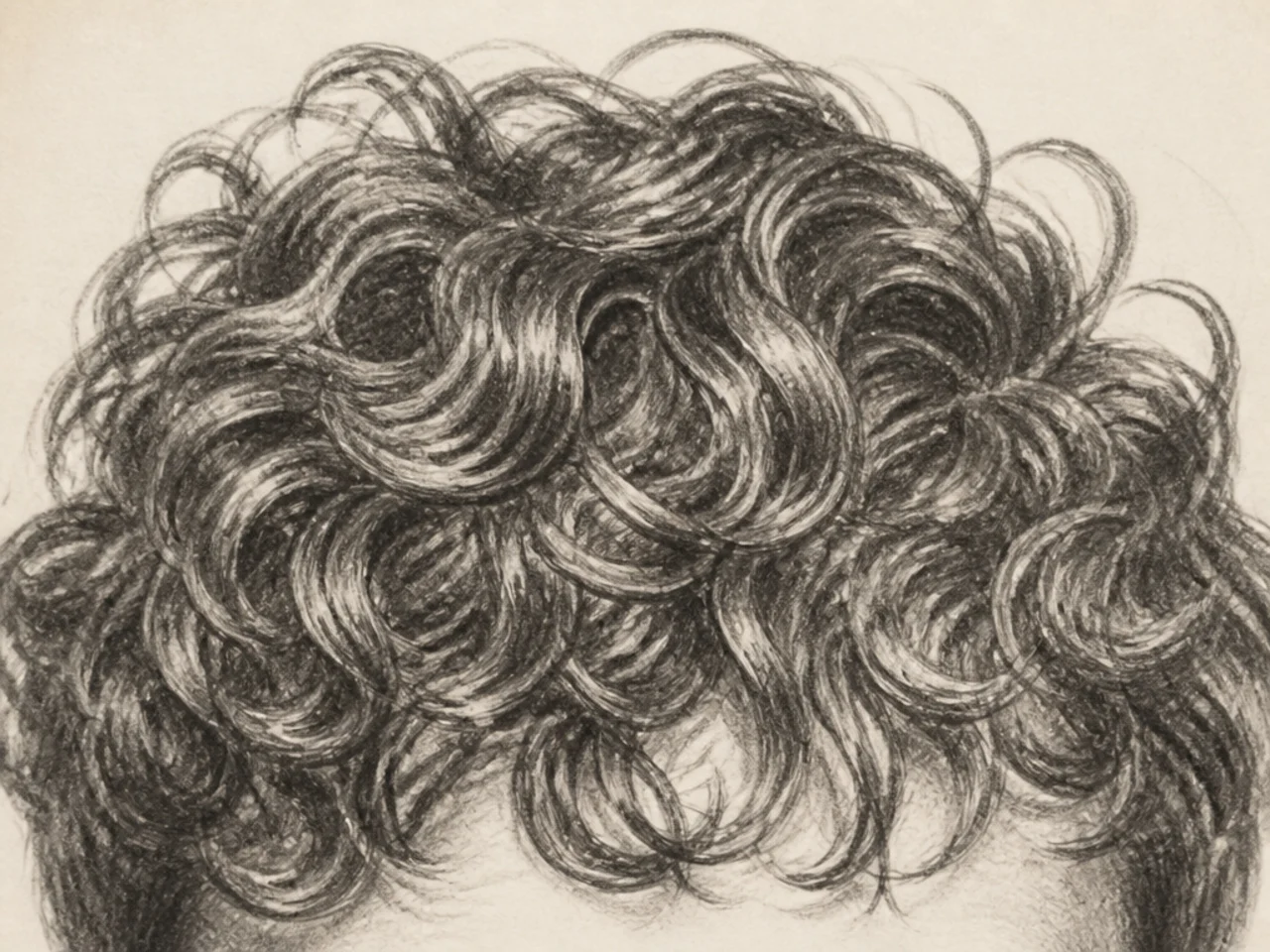
Curly hair suits ideas built from repeating shapes. Each ringlet is a separate object, so leaves, feathers and beads have somewhere obvious to attach.
Coily hair suits light passing through. A dense mass with a thin outer edge is exactly the structure that produces a rim of light, which is why backlit coils are the most reliable glow in the set.
Shading Hair for Volume and Depth
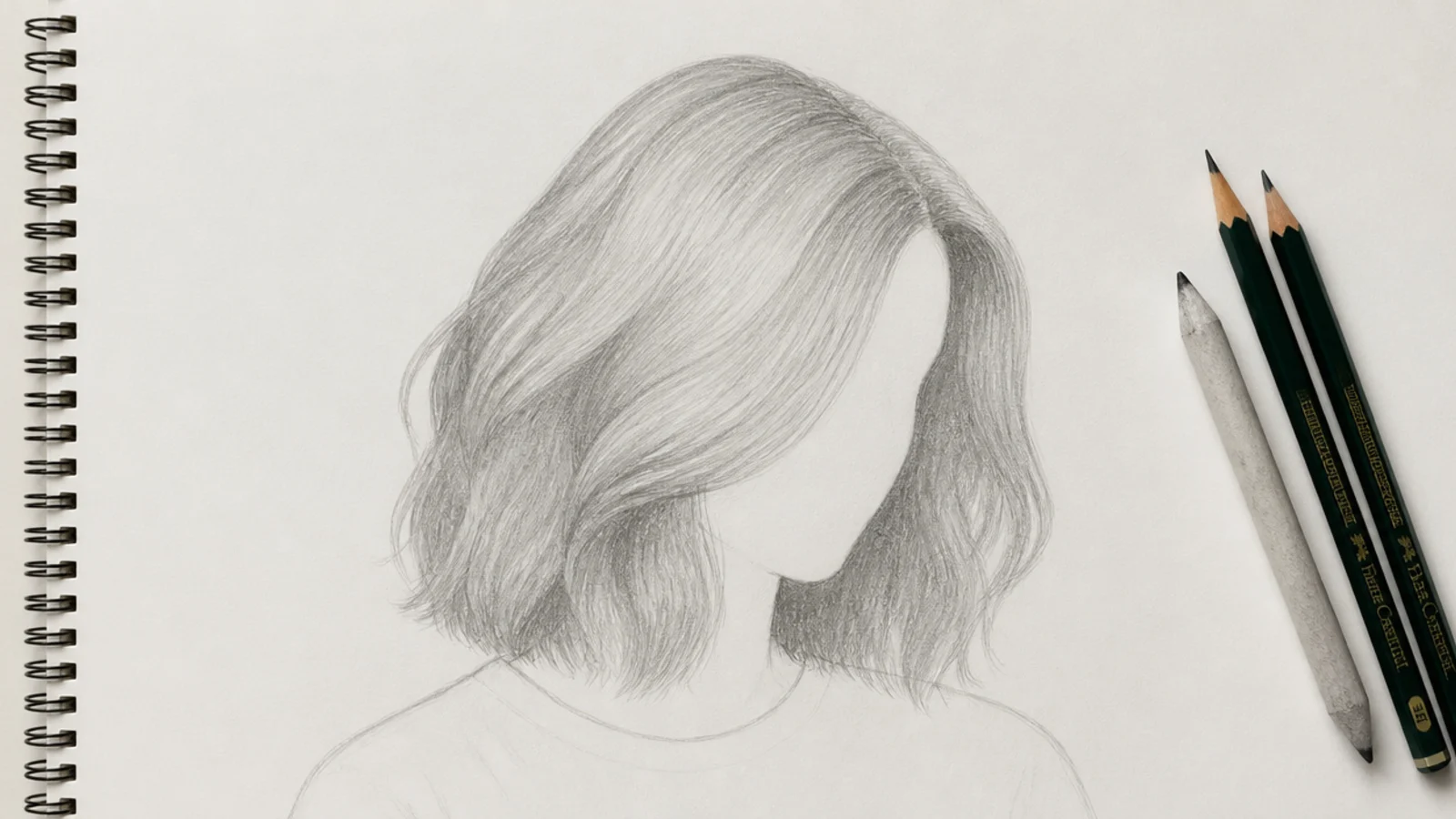
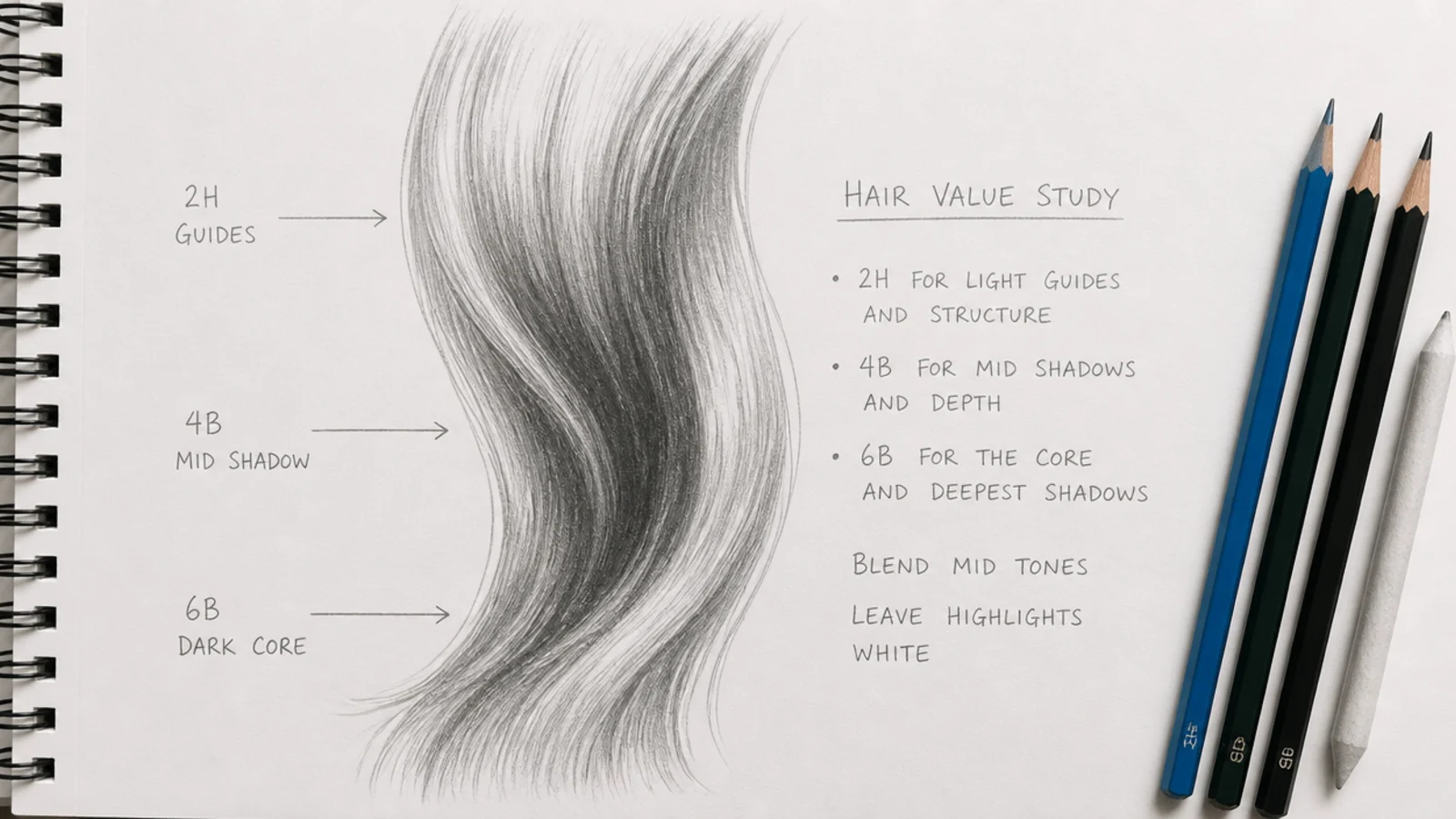
Three values inside every clump. Dark core, mid body, lifted highlight. This holds whether the clump is hair, water or smoke.
The material decides the highlight, not the value structure. Hard bright points for water and metal, a soft broken band for dry hair, no highlight at all for smoke. The cores stay in the same places regardless.
Darkest tone in the gaps between clumps. Light cannot reach where two ribbons meet, and those small deep shadows are what stop a concept flattening into a pattern.
Glow is contrast, not brightness. Graphite cannot go lighter than paper, so anything that has to shine needs its surroundings taken down instead.
Using Hair References
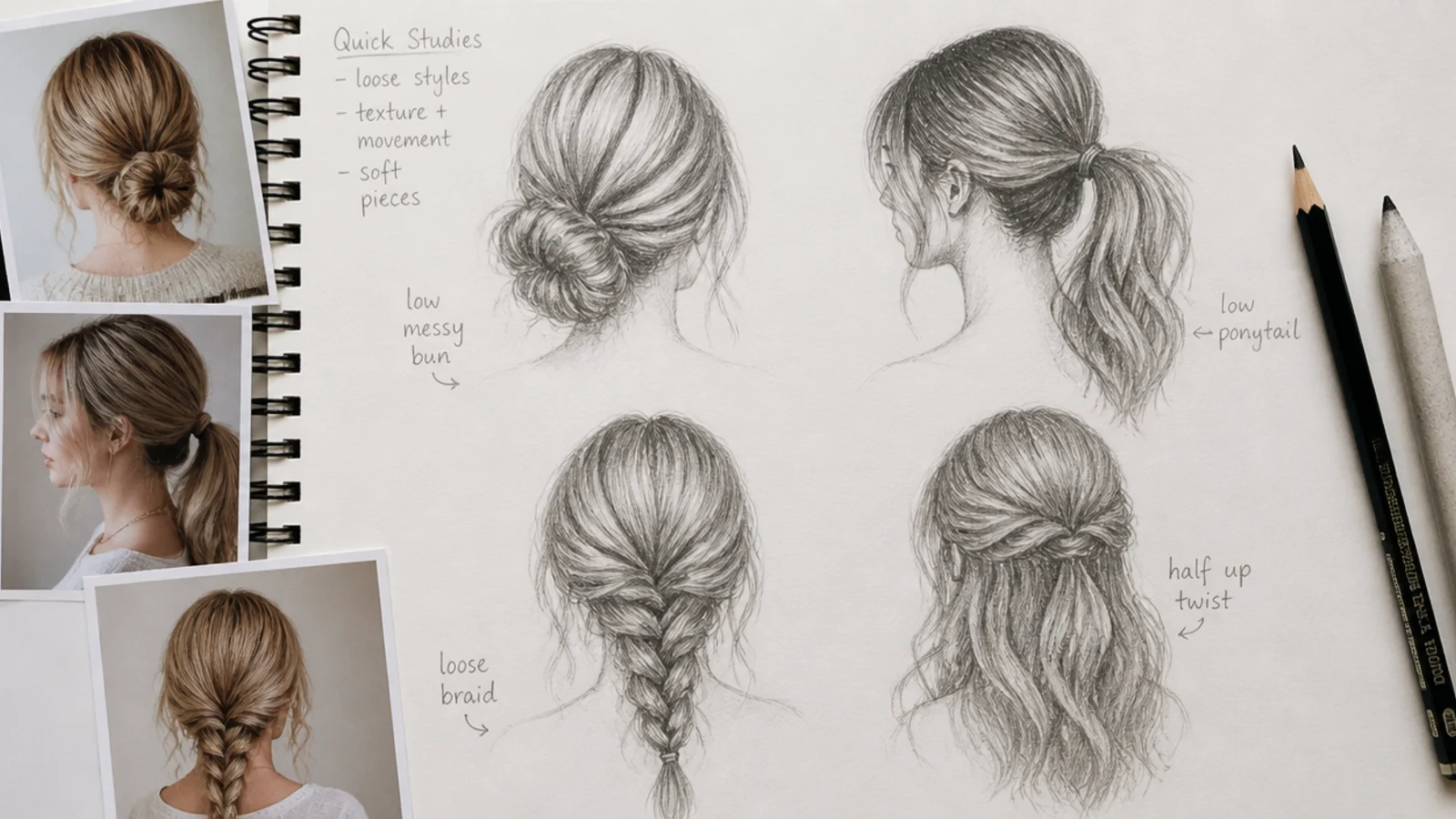
Two references, not one. One for the hair flow and one for the material, because inventing both at the same time is how a concept ends up looking like neither.
Study how the material breaks up. Water separates into droplets, smoke dissipates, fire tapers upward. Those behaviours are what the viewer recognises, far more than the colour would be.
Get a back view of the hairstyle. The crown swirl is invisible from the front, and half of these ideas are drawn from behind.
Do not trace and publish. A photograph remains someone else's copyright after being redrawn in pencil, and traced outlines are recognisable to anyone who knows the source image.
Common Hair Sketch Mistakes
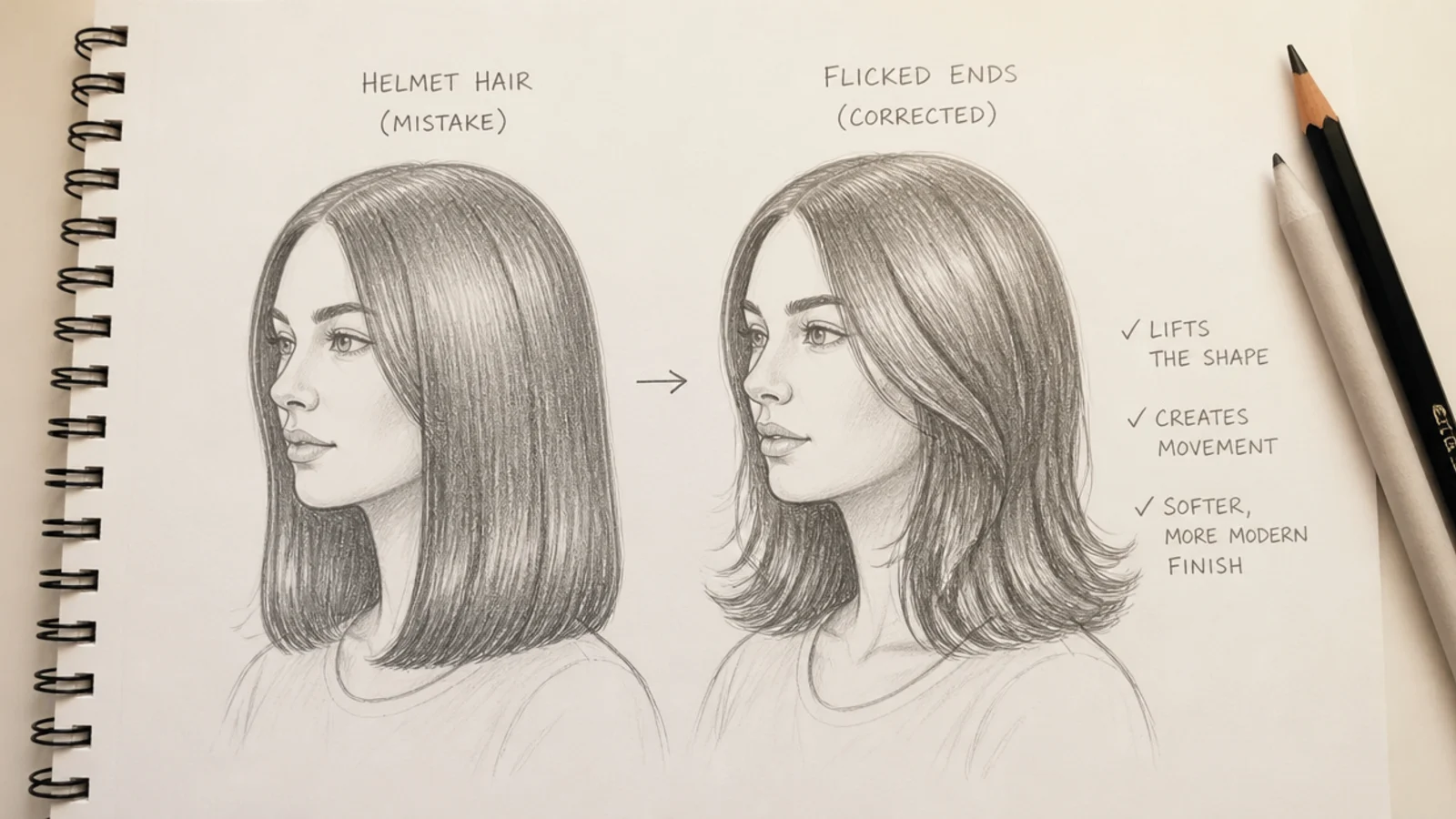
Material without flow. Waves of water that never leave a scalp read as water, not as hair.
Roots that do not attach. Whatever the ends are doing, the hair still grows from a head, and lifted roots make the whole mass look like a hat.
Everything rendered at the same focus. A concept needs one area of detail and a great deal of quiet around it, or the eye has nowhere to land.
A glow with no dark ground. Light on white paper is invisible. The background has to come down first.
Even spacing. Regular intervals in beads, leaves or spikes read as a printed pattern rather than as objects with weight.
The 25 Creative Hair Sketch Ideas
1. Hair Made of Water
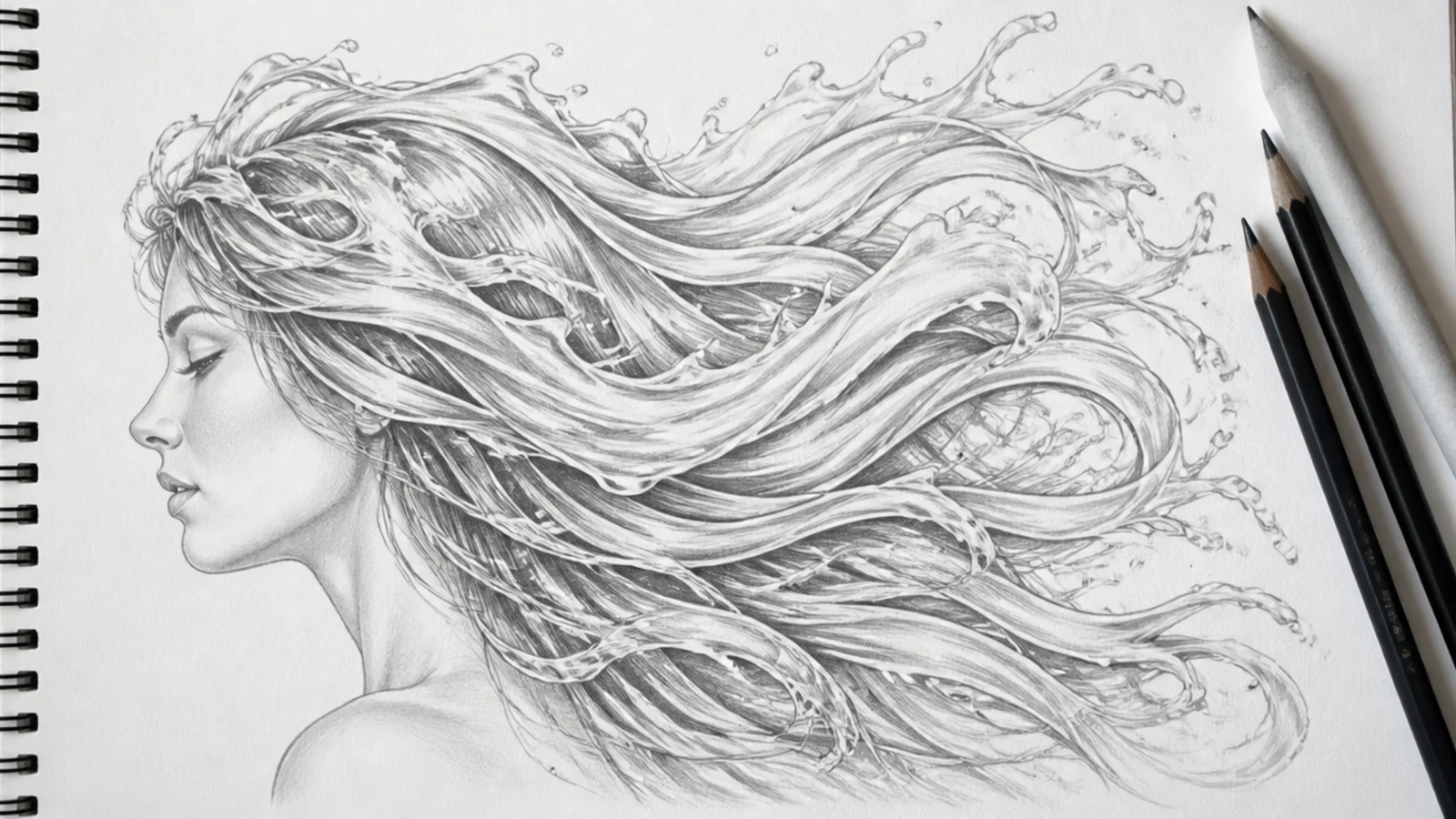
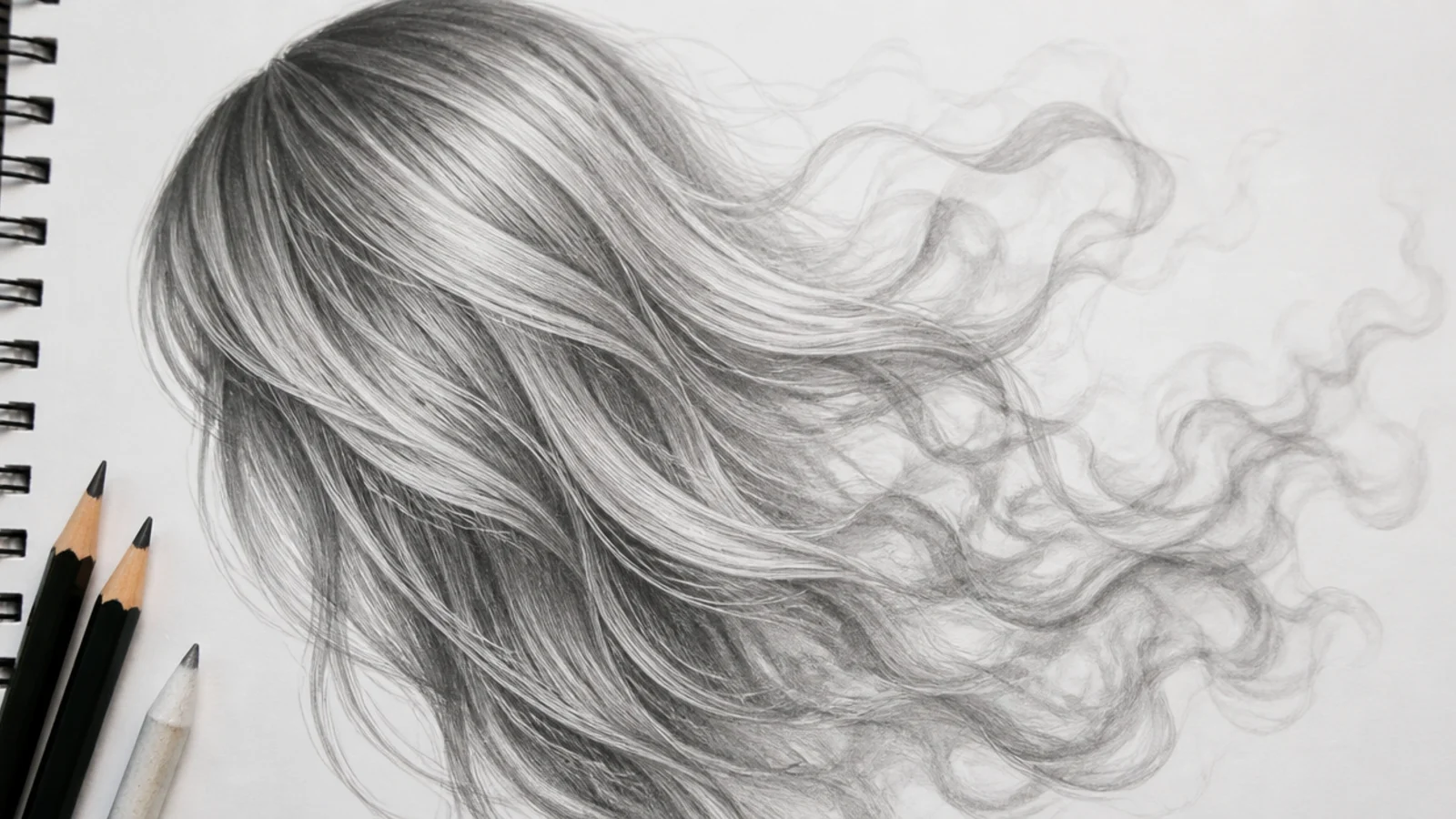
Water reads through hard specular highlights and through transparency, so cut sharp white gaps and let the background show through the thinner ribbons. Keep the flow exactly as hair leaves a crown, because the illusion depends on the viewer recognising the shape as hair before noticing what it is made of.
2. Hair Made of Fire
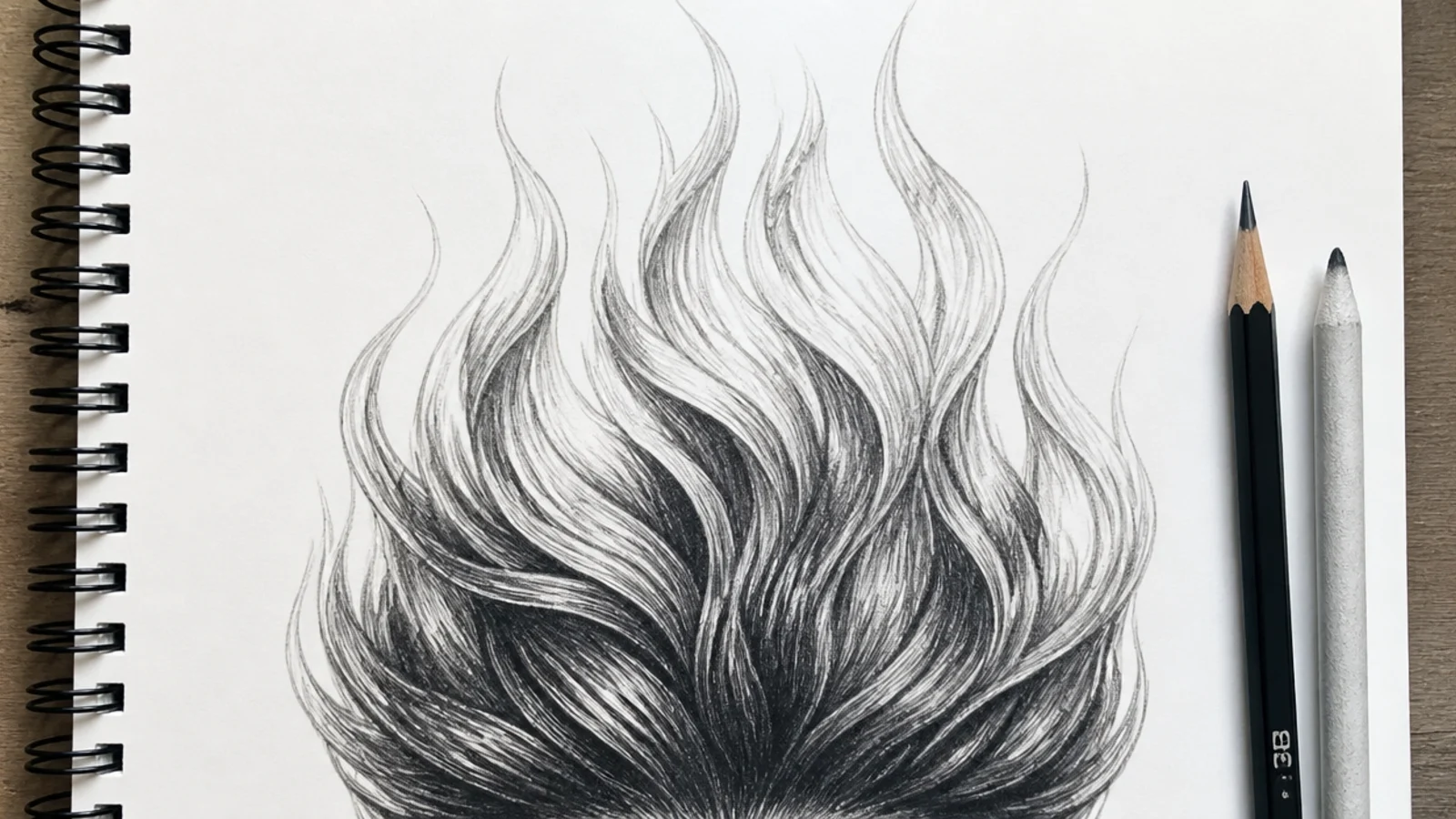
Flame rises regardless of what the head is doing, so the ends lift against gravity while the roots stay dark and attached. Keep the base of every clump among the darkest values in the drawing, since fire is brightest at its tips and that contrast is the only thing that makes graphite glow.
3. Wind Blown Hair From the Back
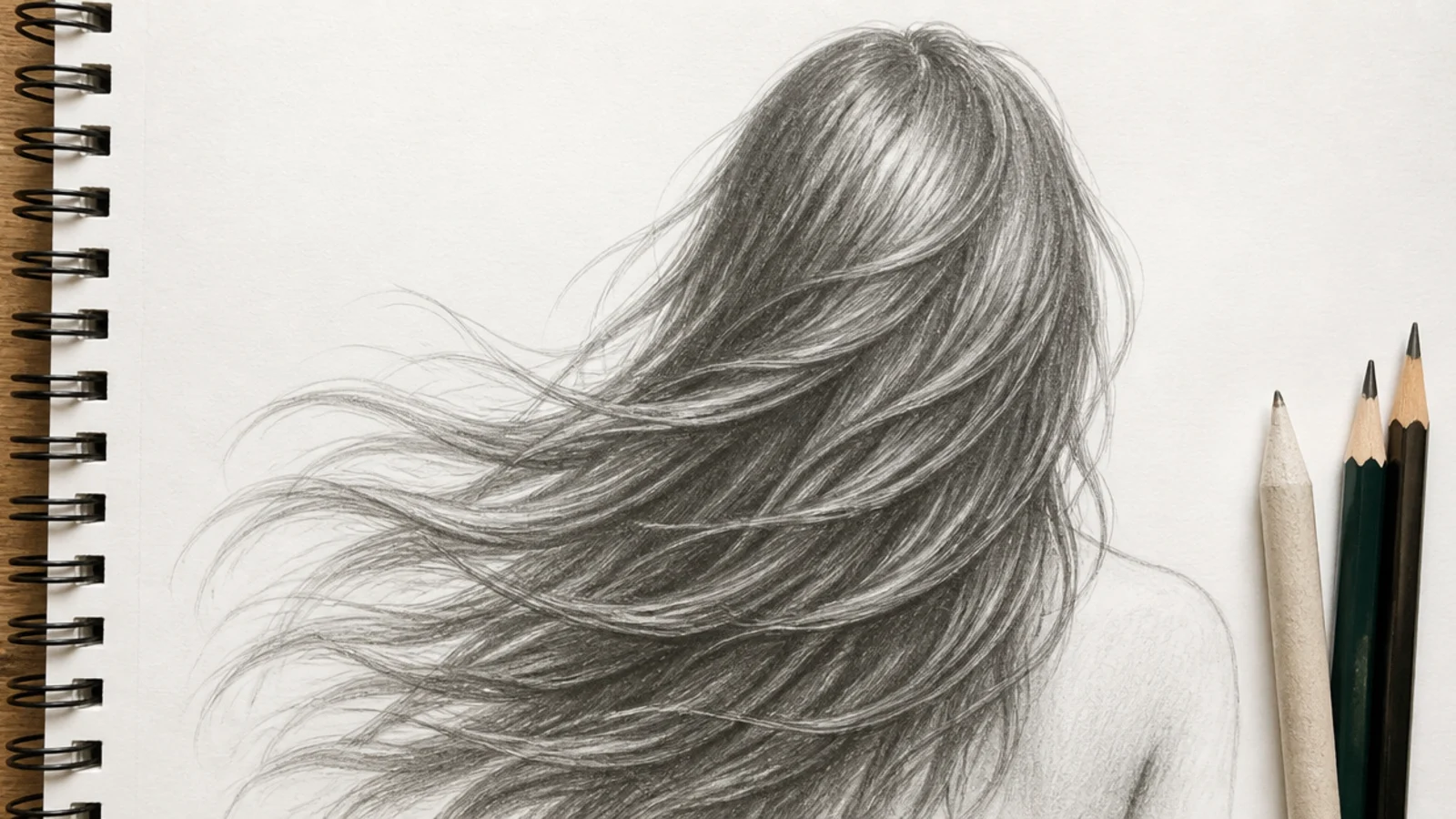
From behind, the crown swirl is the only landmark available, and every ribbon should stream away from it in the same direction. Widen the gaps between ribbons toward the ends and keep the roots tight, so the wind reads as force applied to the length rather than the whole head lifting off.
4. Leaf and Vine Hair
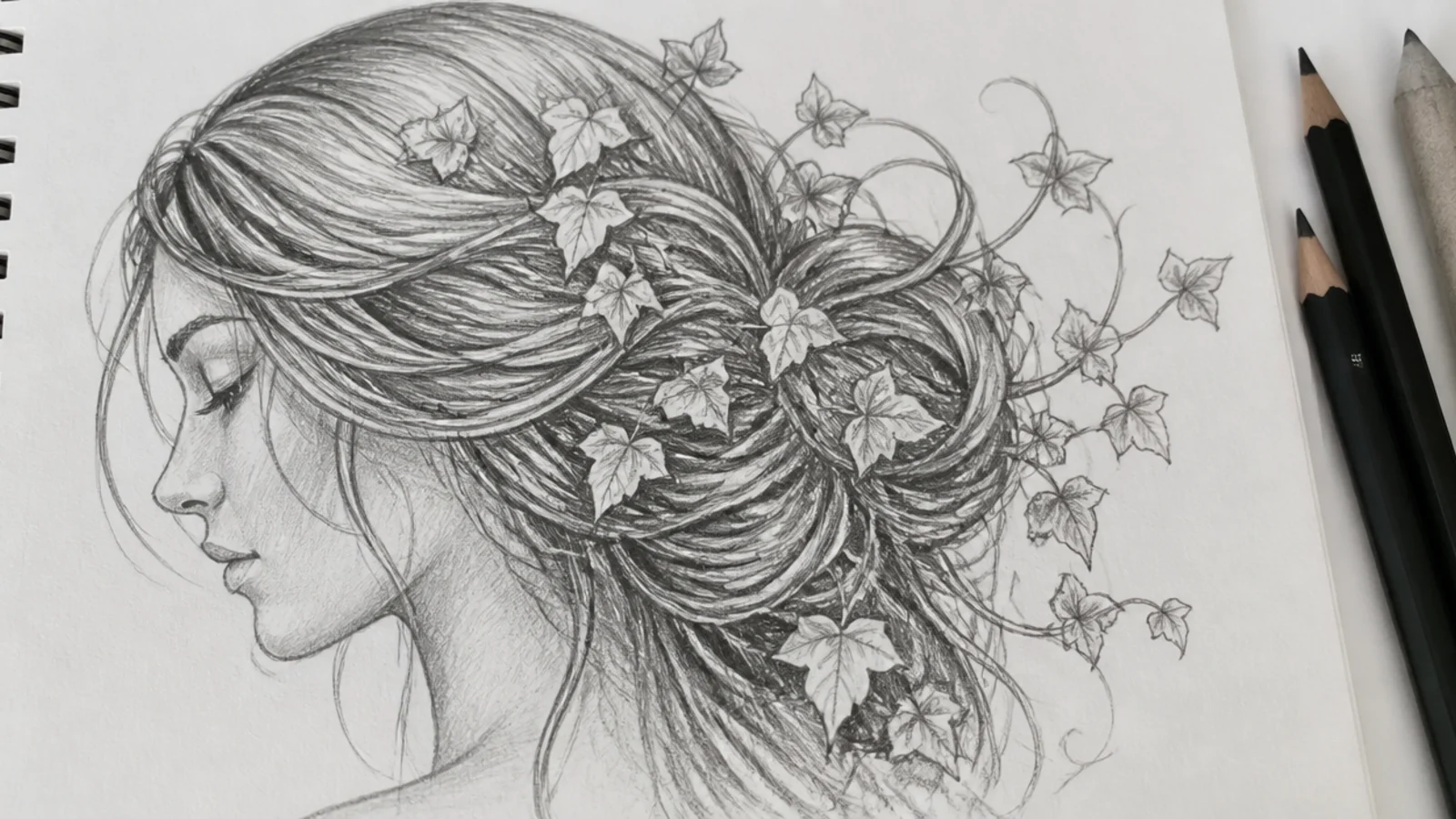
Every vine needs a spine, so draw the ribbon of hair first and hang the leaves along it at alternating intervals. Vary the leaf size with distance from the head and let a few curl away from the mass, because evenly spaced foliage reads as wallpaper rather than as something growing.
5. Galaxy Hair
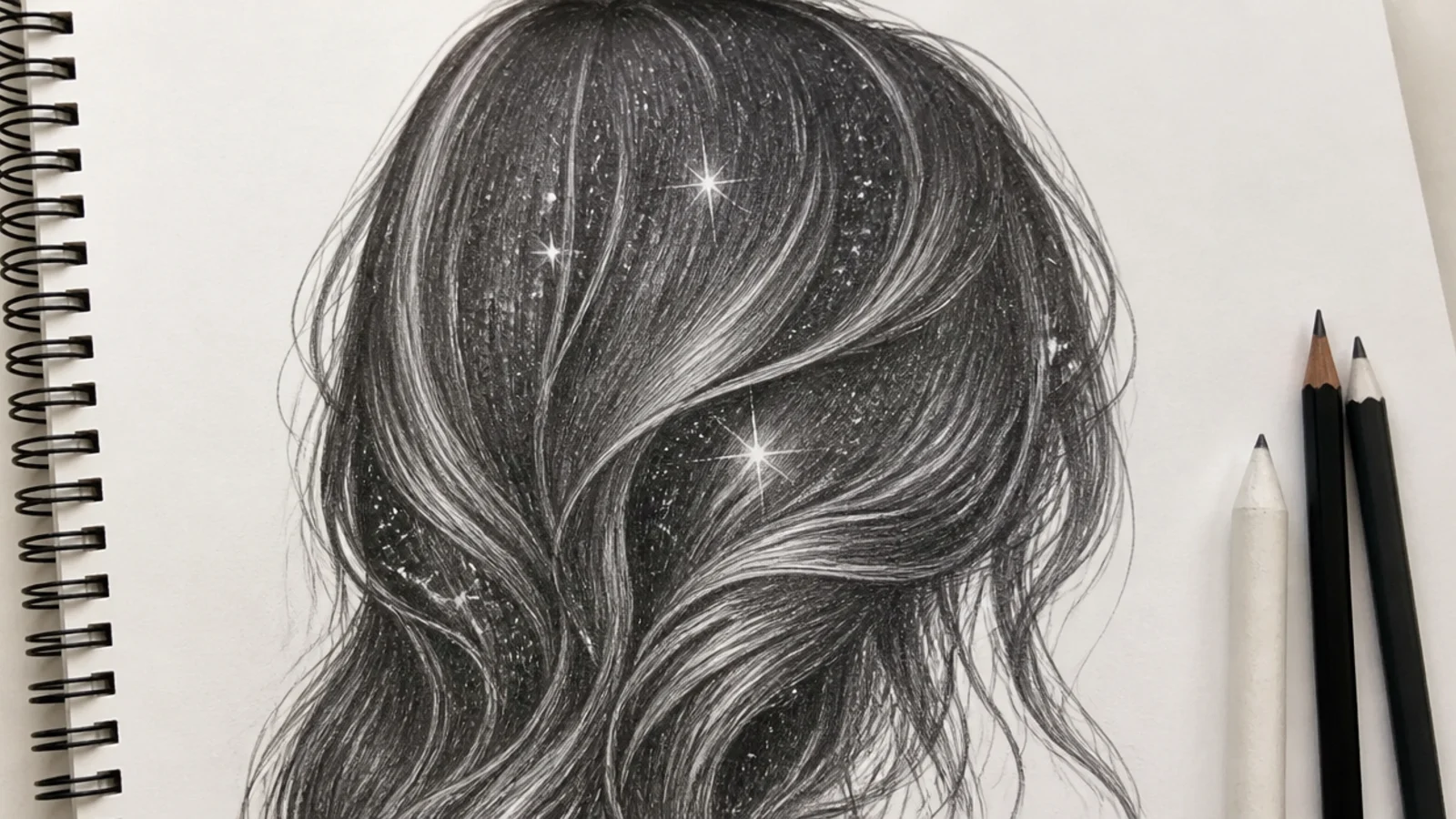
The idea only works against a dark ground, so the cores go darker than the background and the highlights come up brighter than anything else on the page. Scatter the small points of light unevenly and cluster them along the flow lines, because evenly spread dots read as dust on the paper.
6. Wet Hair
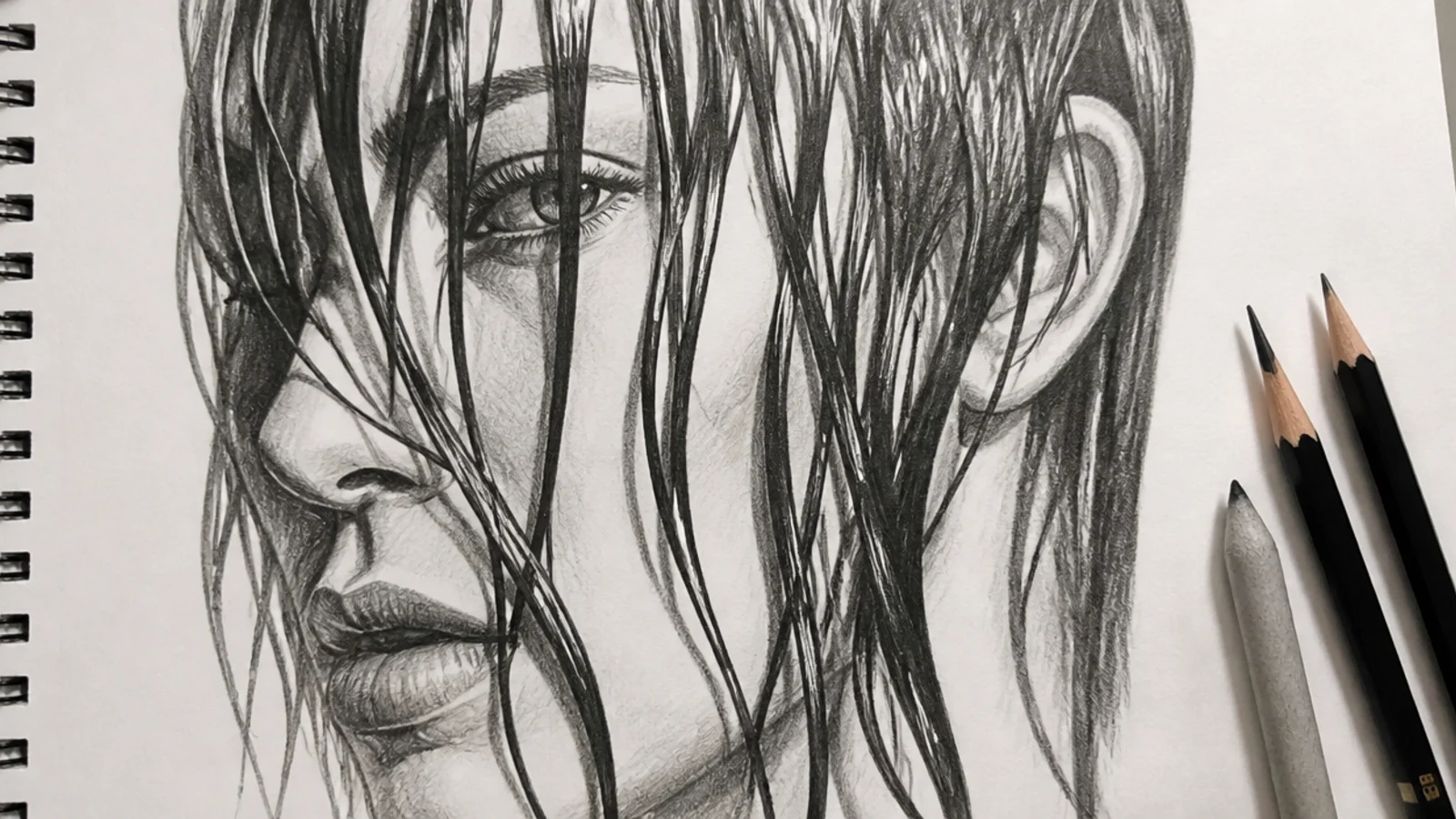
Wet hair gathers into fewer heavy pieces, collapses toward the skull and swaps its soft highlight band for small hard points. Pull the silhouette in noticeably from the dry version and add two or three drops leaving the ends, which is the cheapest convincing signal of water in the whole set.
7. A Haircut in Progress
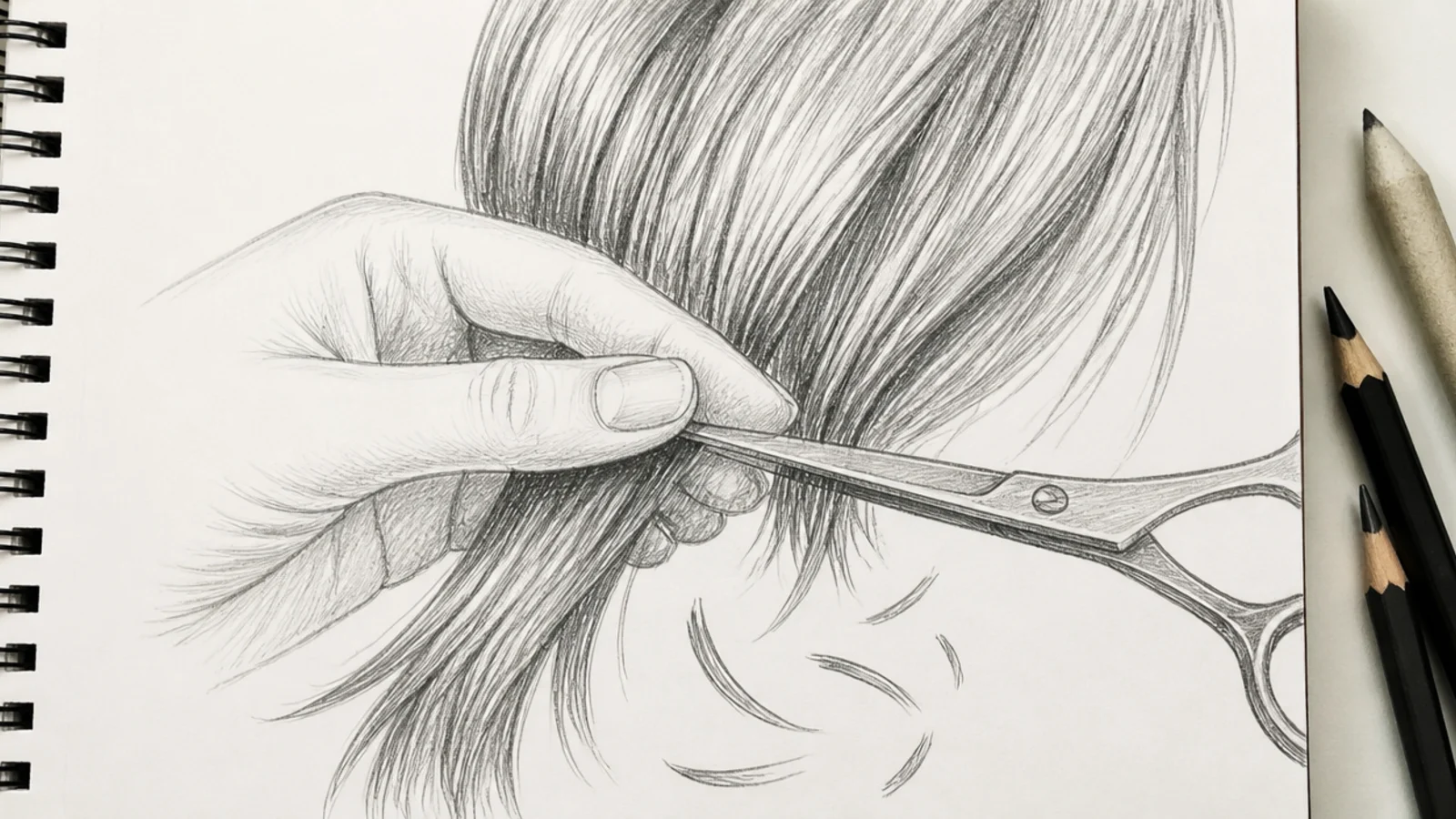
The story lives in the contrast between the cut side and the uncut one, so keep one sharp and finished and the other soft and long. Add clippings falling across the shoulder, because loose hair in the air is what fixes the drawing to a moment rather than showing a finished style.
8. A Face Covered by Hair
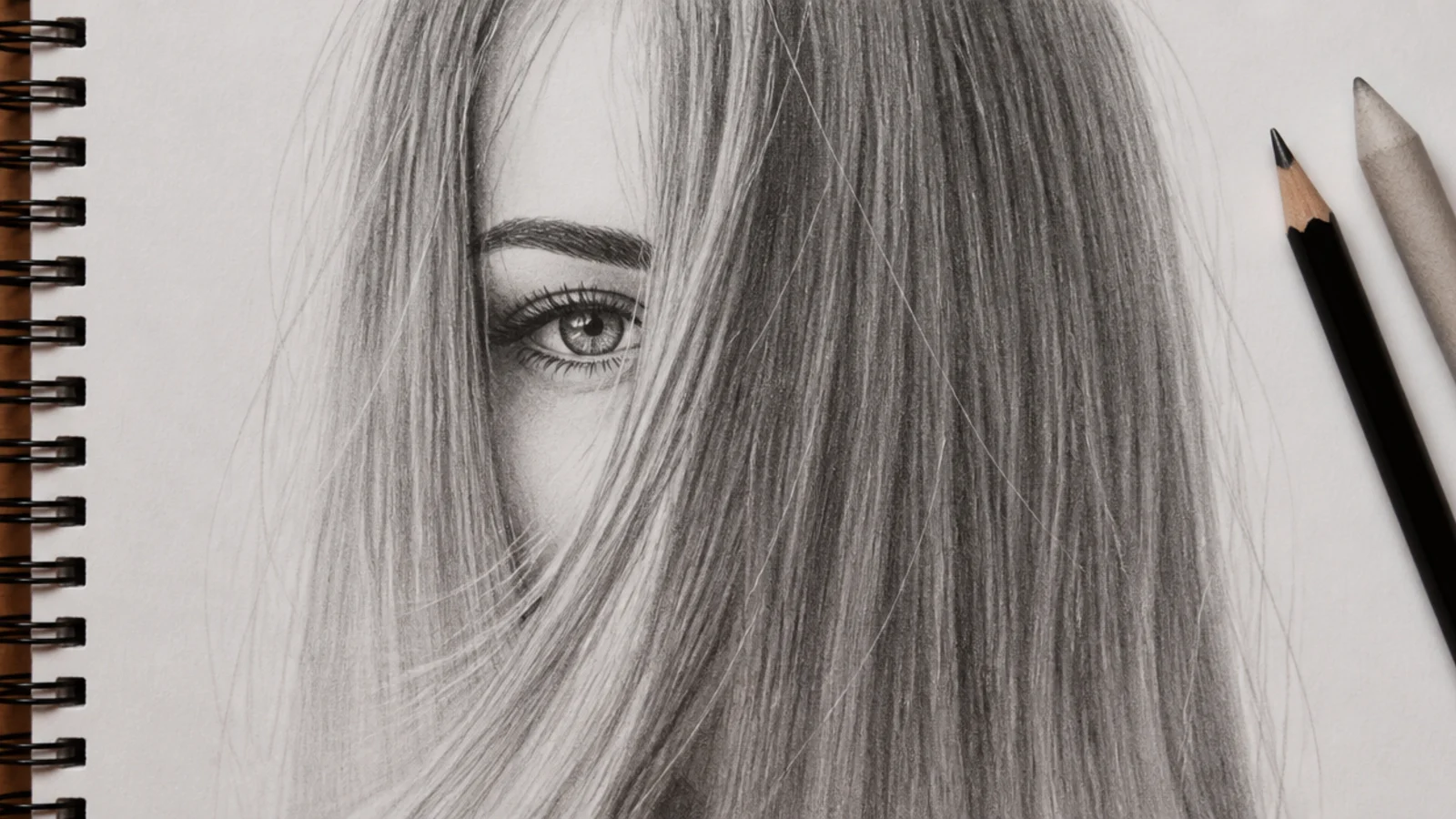
Hiding the features forces the hair to carry all the expression, which means the flow lines have to describe the skull underneath. Leave a little of the jaw and the shoulders visible, since a mass with no anchor reads as a mop rather than as a person behind it.
9. Hair Underwater
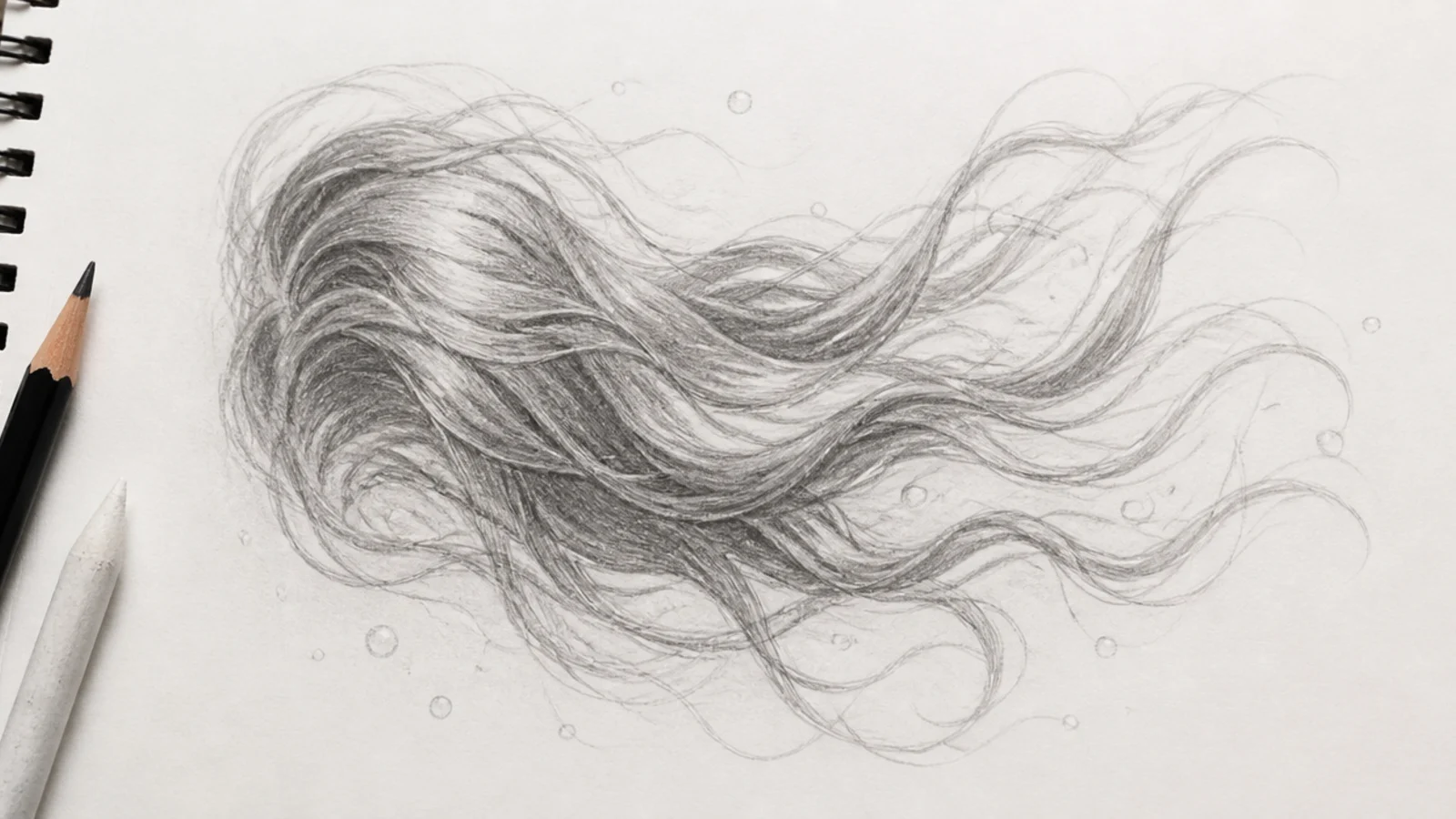
Submerged hair floats outward in every direction at once and moves slowly, so the ribbons curve rather than stream. Soften the ends, lift them away from the shoulders and drop the overall contrast, because water scatters light and removes the deep cores you would draw in air.
10. Hair Made of Smoke
Smoke has no edges, which makes this the one drawing here with no outline anywhere. Blend the ends into the background until they disappear entirely and keep only the roots defined, because the transition from something solid to nothing at all is the whole effect.
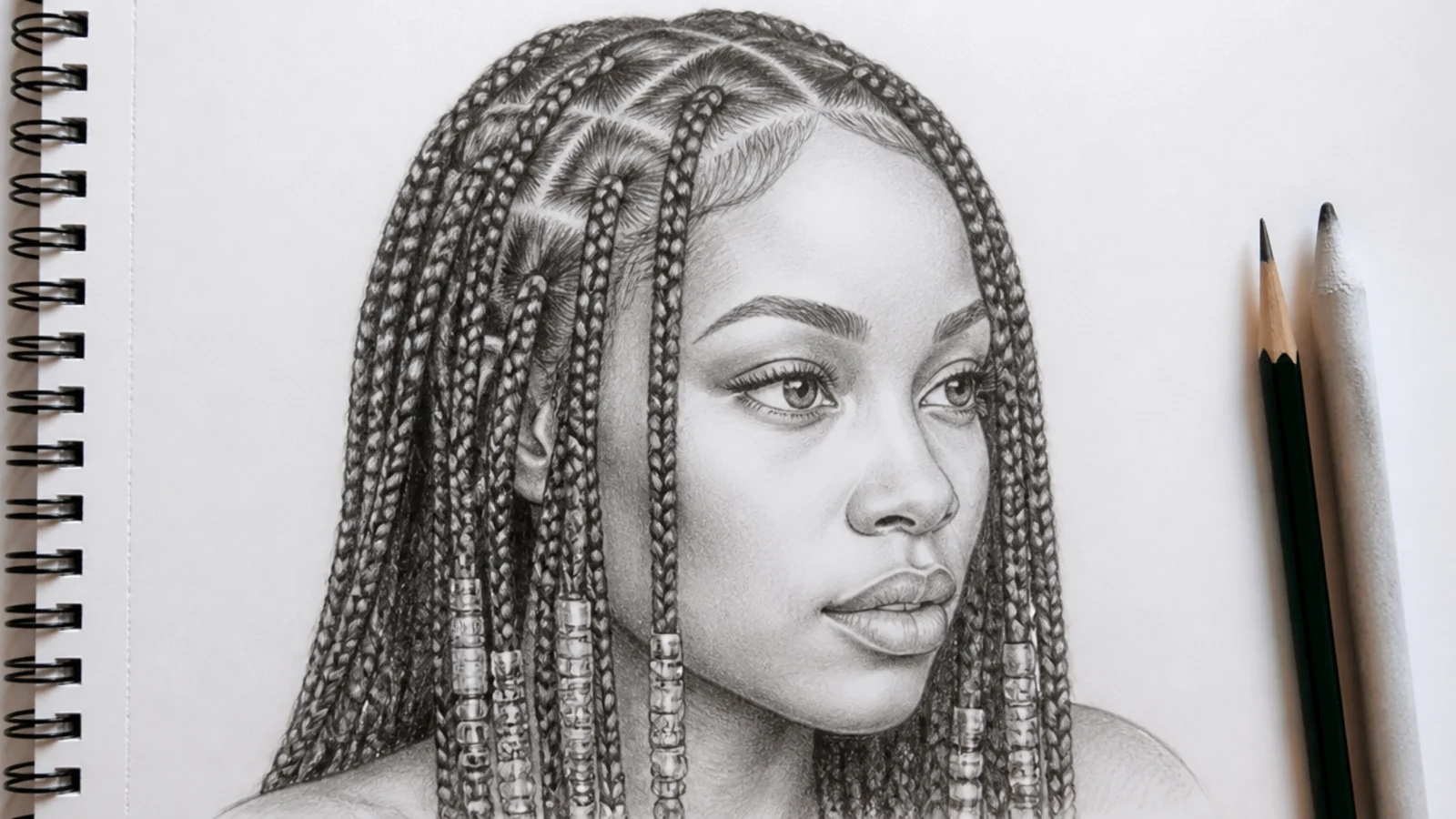
11. Beaded Box Braids
Beads are hard, symmetrical and shiny against a matte braid, so they carry the only sharp highlights on the page. Draw them slightly larger than feels right and set them at varying heights, since a level row of beads reads as a ruled line rather than as weight hanging on hair.
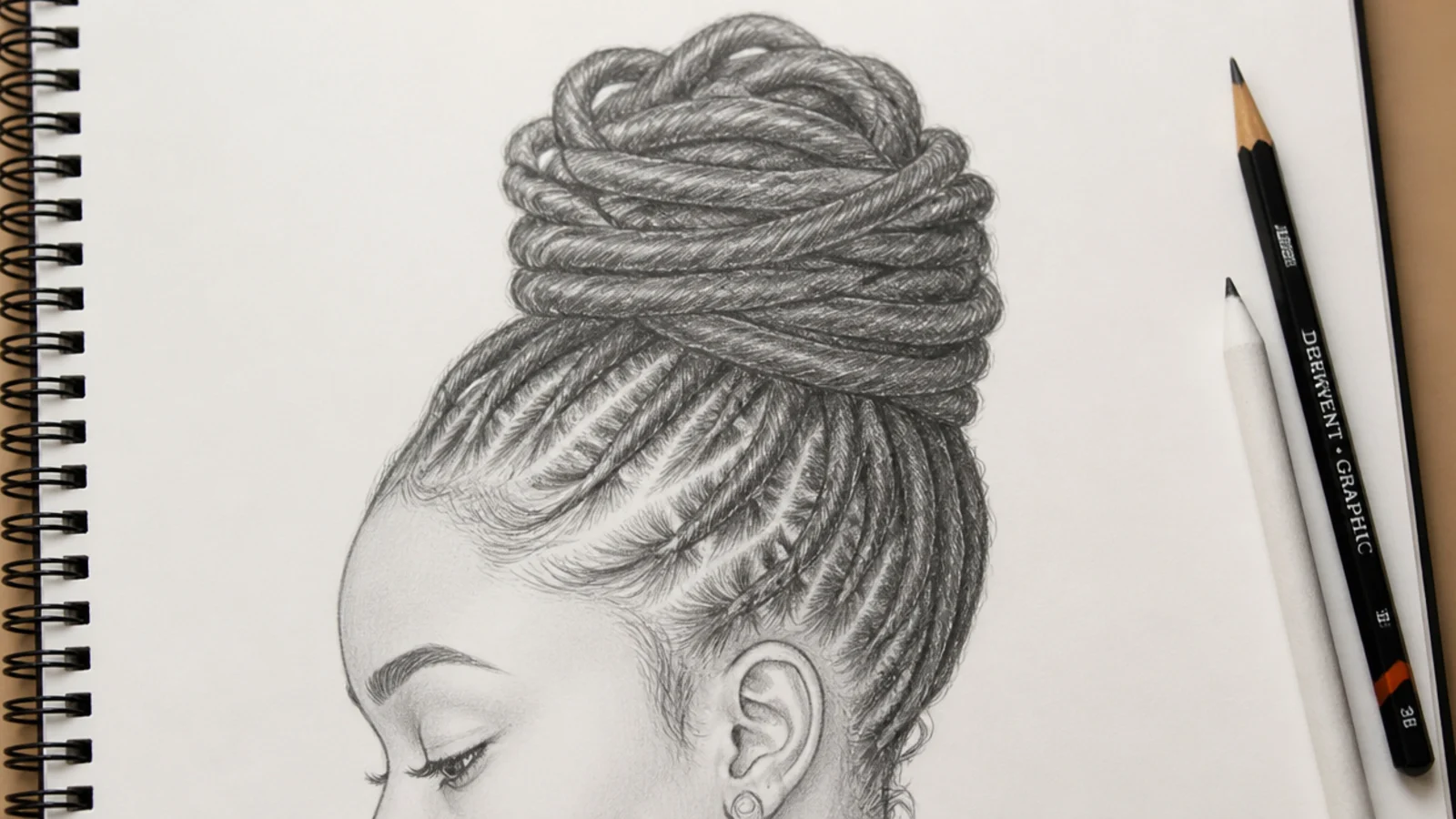
12. Loc Bun
Gathering cylinders into a knot means each loc keeps its thickness right through the turn instead of compressing. Follow two or three of them all the way round and let the rest sink into shadow, which is what makes the bundle read as a bun rather than as a ball of rope.
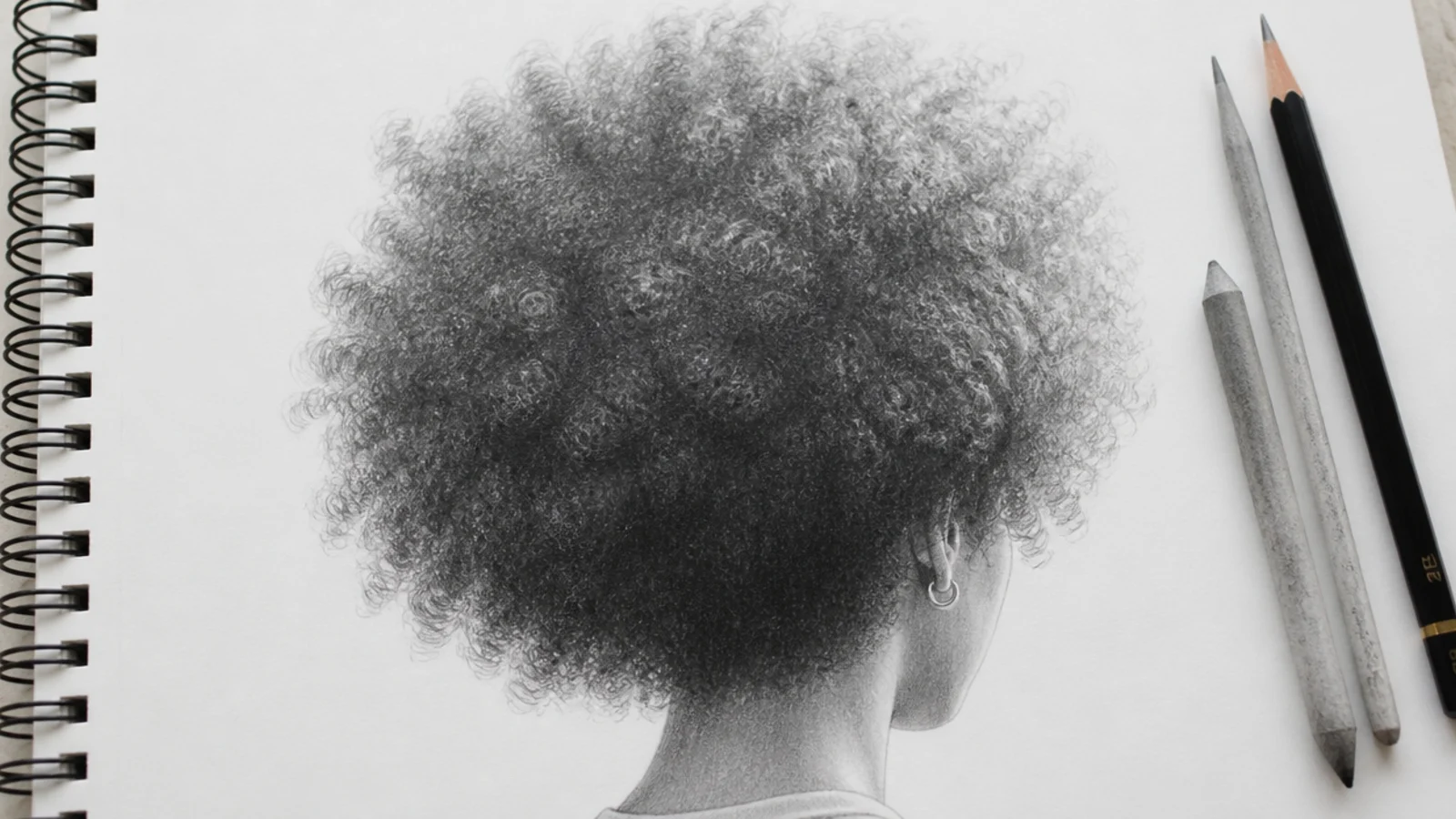
13. 4C Afro With Backlight
Backlight passes through the thinnest outer coils, so the rim is brightest precisely where the mass runs out. Take the interior to the deepest values you have and lift the edge as a broken ring, because an even outline of light kills the effect and turns the head into a sticker.
14. Spiral Curl Ribbons
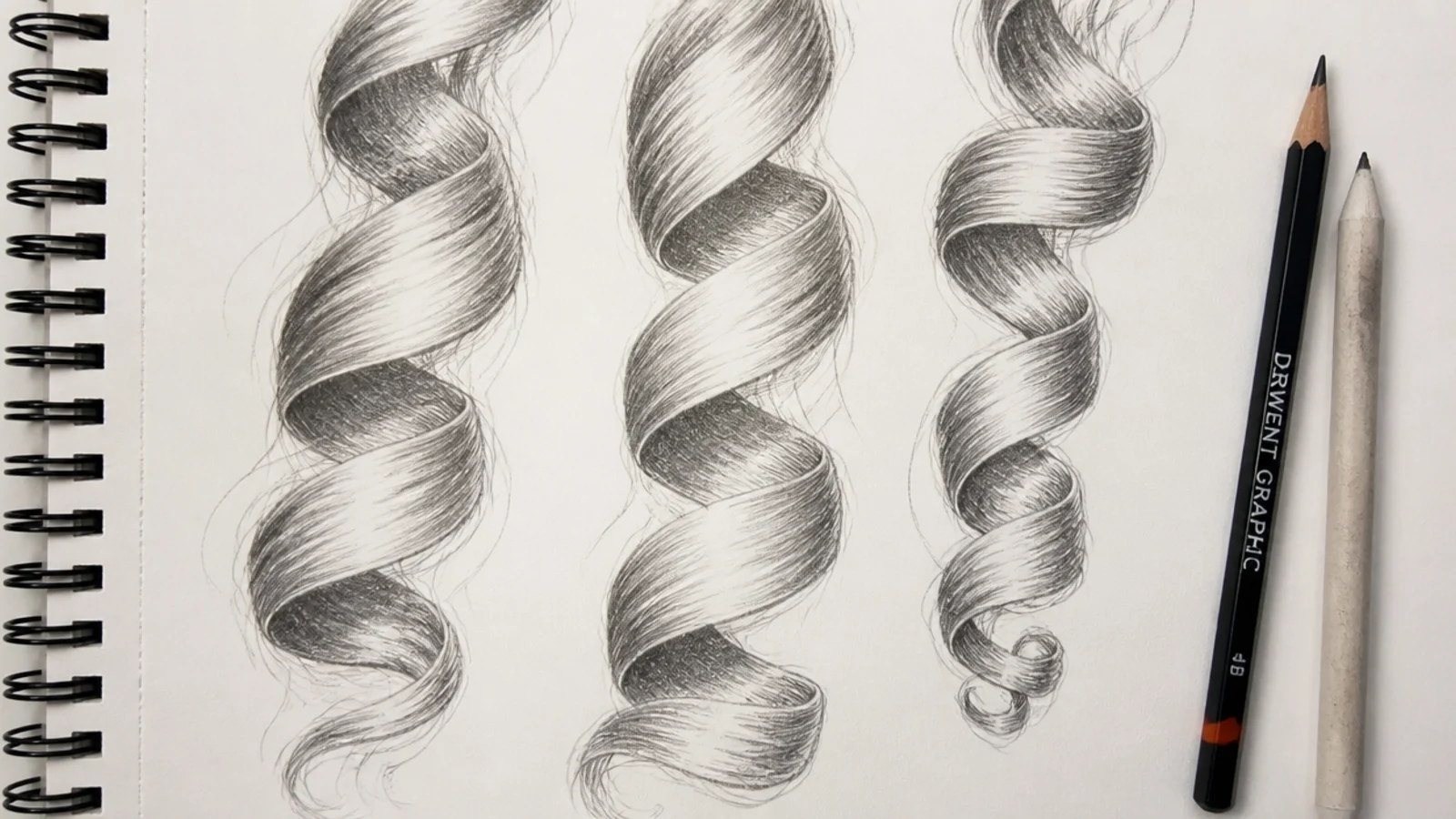
Treat every spiral as a flat ribbon wound around an invisible tube, showing its outer face, then its thin edge, then its inner face. Shade those three states in order down the curl and the spiral appears without a single loop being outlined.
15. Crown Braid From Overhead
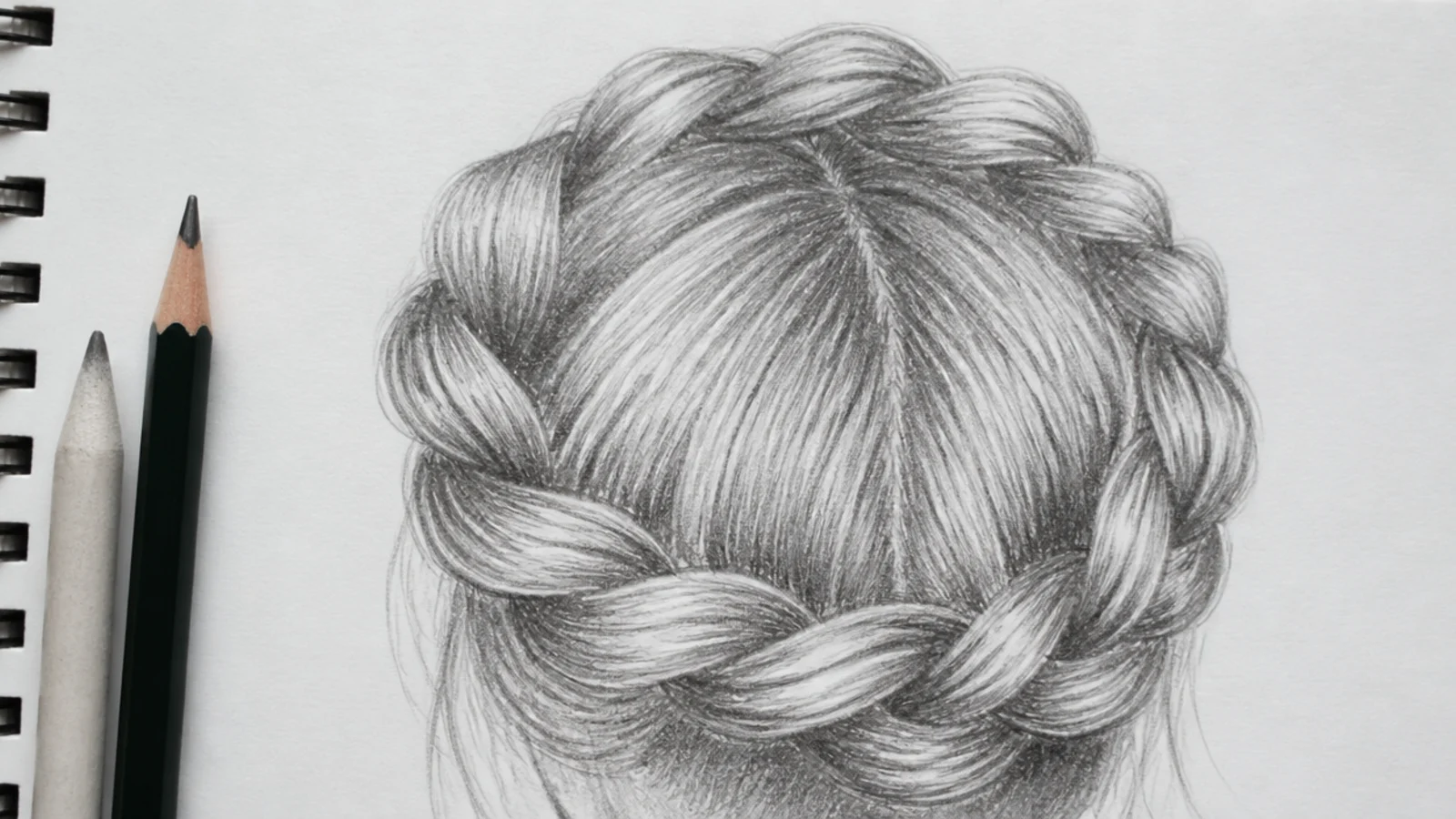
Seen from above you are drawing the top plane of every wedge rather than its face, and the braid curves through perspective as it travels. Compress the wedges as they go round the head and run the highlight along the top of the braid instead of down its centre.
16. Messy Bun
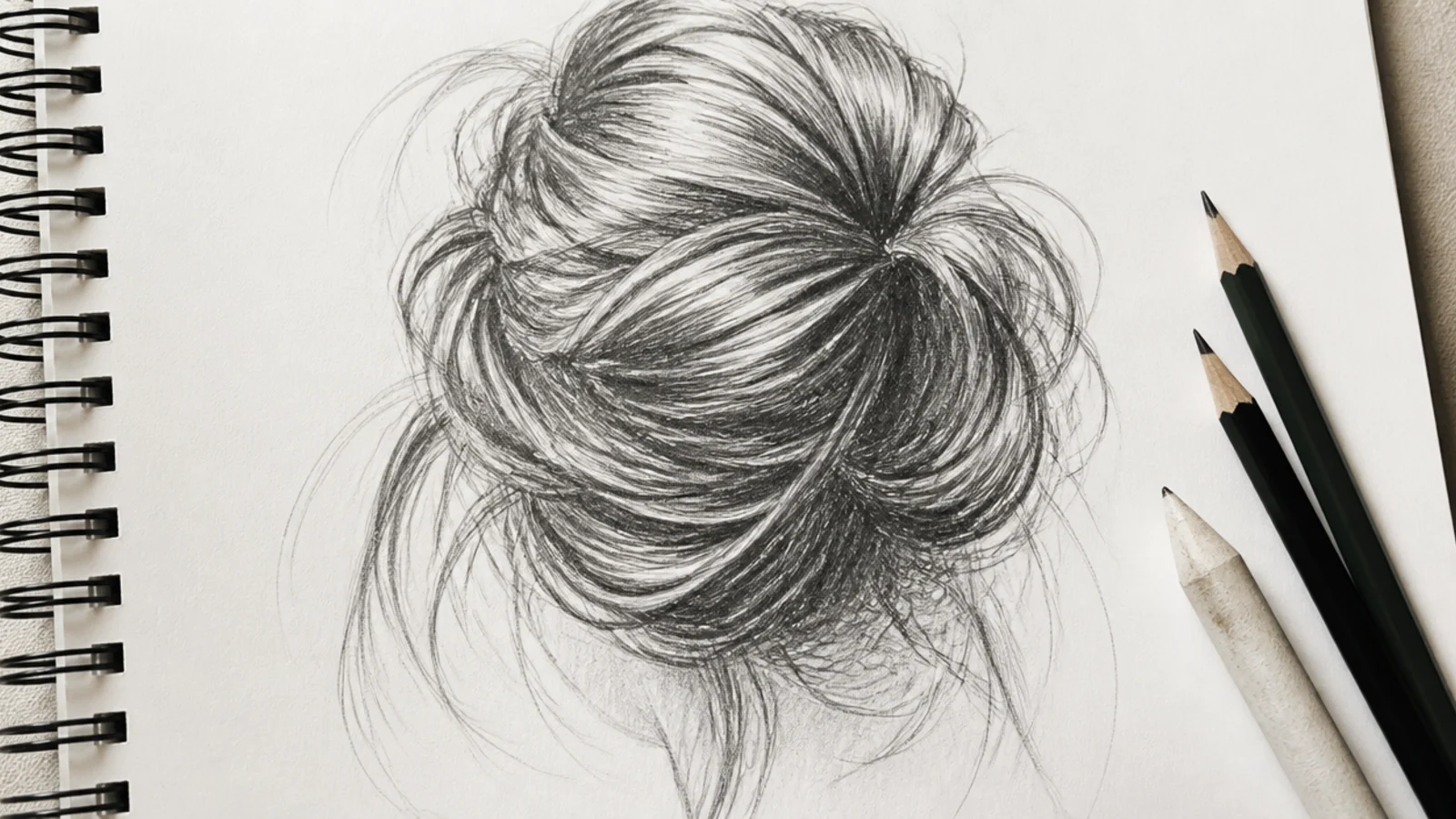
The variation in loop size is the entire style, so build the bun from two or three loops at different scales with dark gaps behind them. Put escaping strands only where the hair enters the tie, since that is the one place they can physically leave the gather.
17. Buzz Cut With a Fade
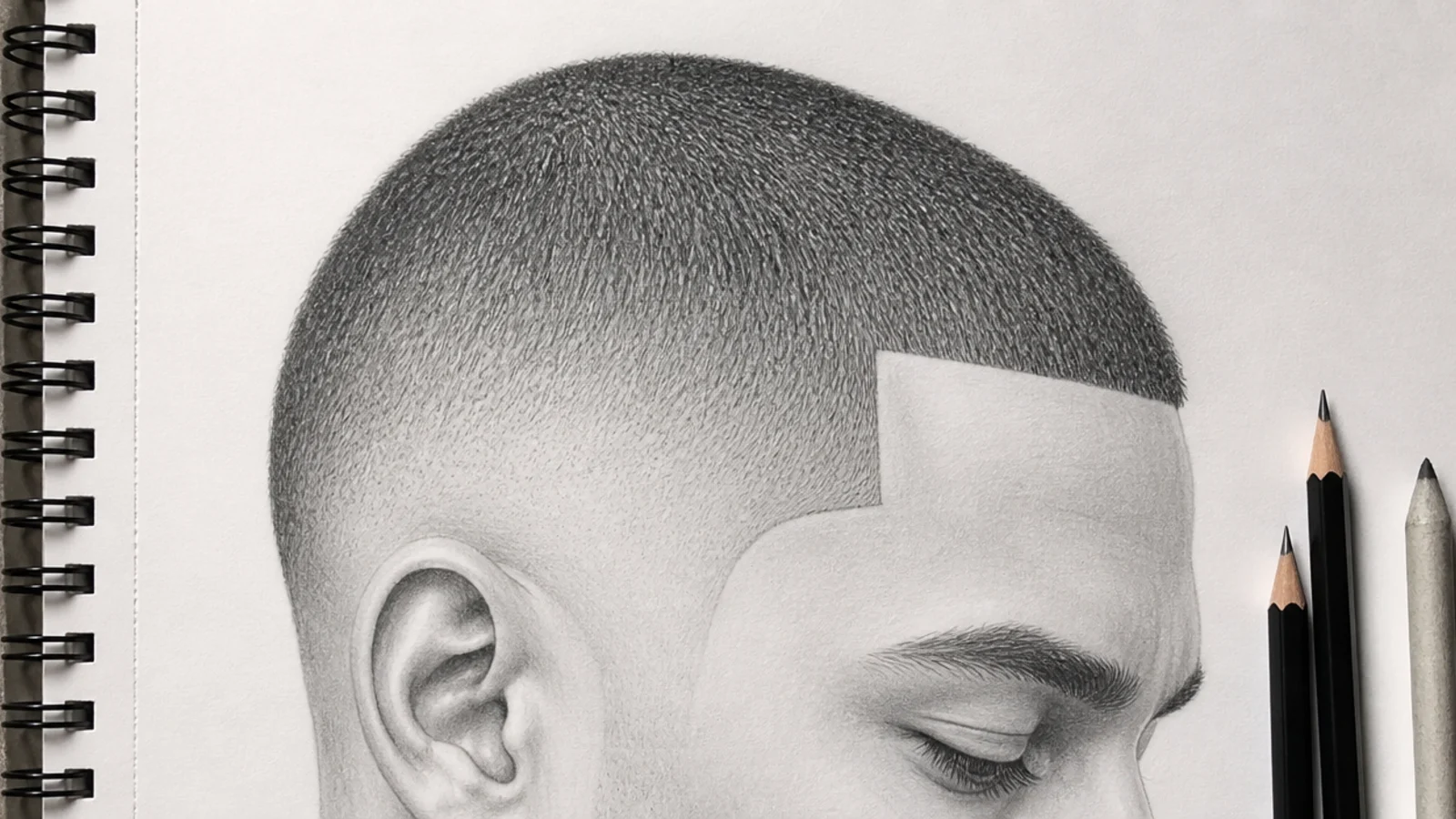
A fade goes all the way to skin, so the drawing runs from bare paper at the neckline up to a mid tone where the length begins. Shade the head as a sphere first and keep the gradient smooth, because at this length the skull is genuinely the subject of the drawing.
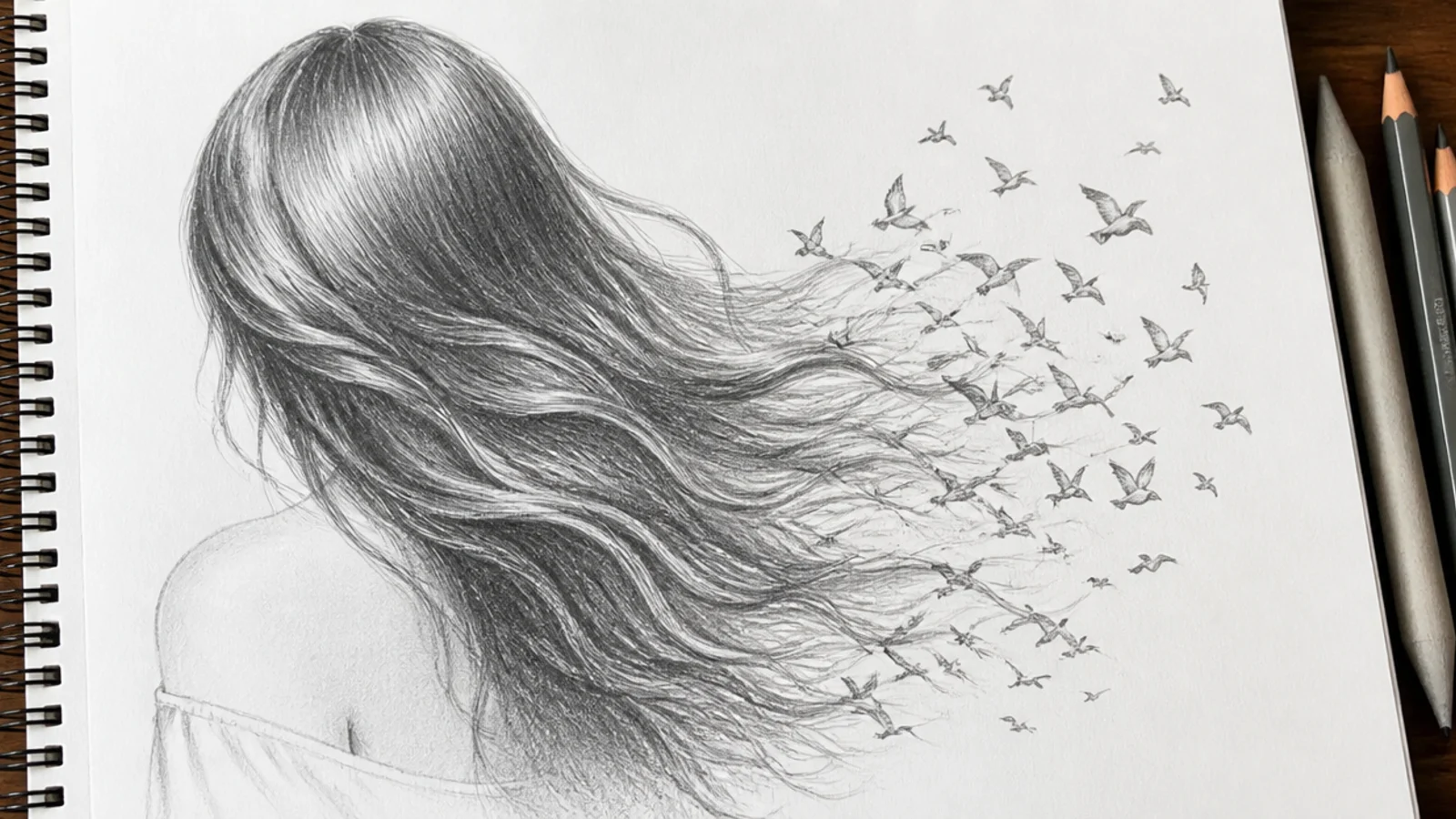
18. Hair Turning Into Birds
The transition is the drawing, and it only works when it is gradual. Let the outermost ribbons resolve into wing shapes over several inches and keep the mass nearest the head unmistakably hair, so the eye reads one thing changing rather than two pictures joined together.
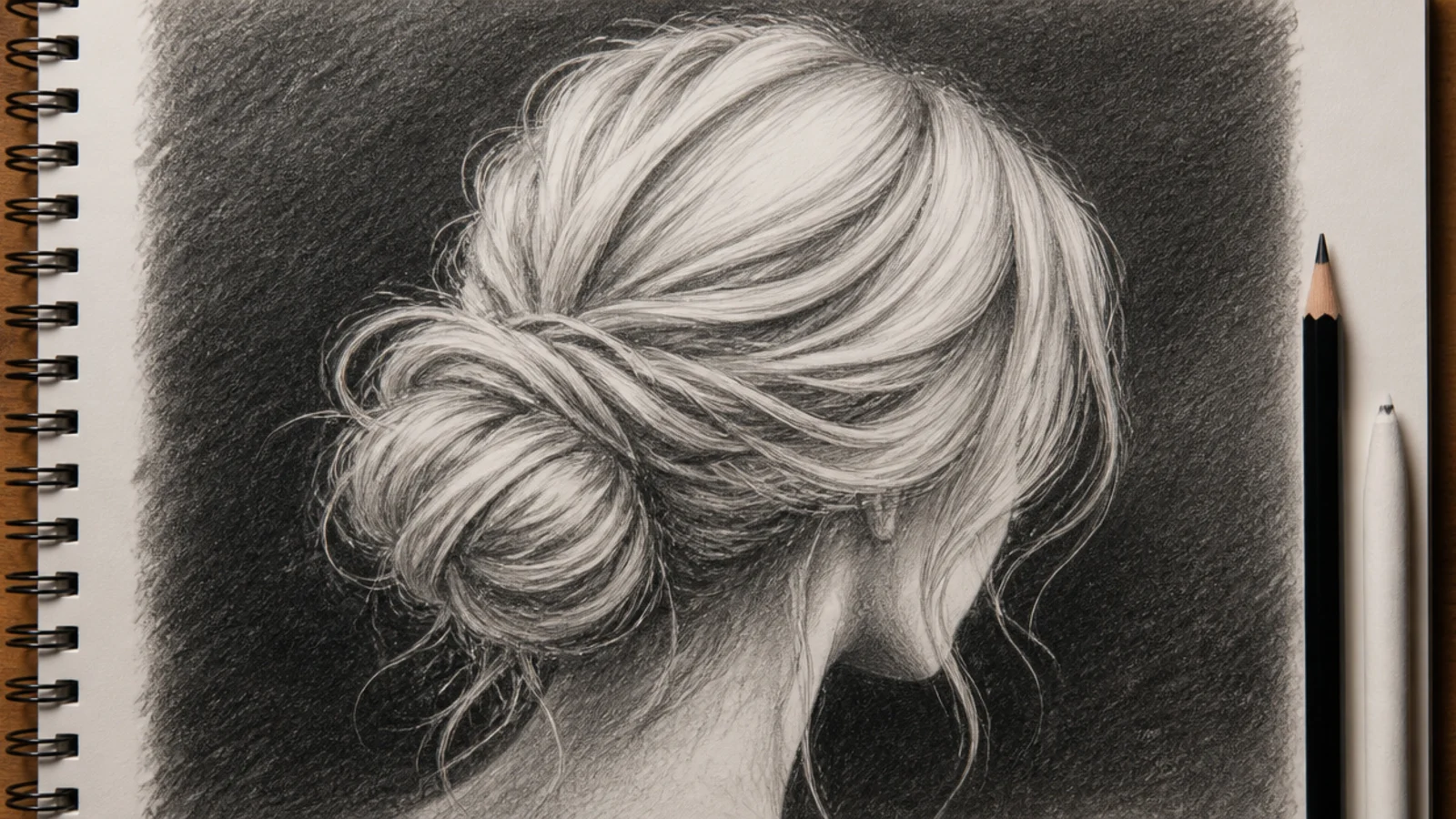
19. Hair on a Dark Background
Against a dark ground everything inverts, and the hair is described by light on its edges instead of dark lines between clumps. Lift the outer strands to near white and let the interior fall close to the background value, which is exactly what a rim light does.
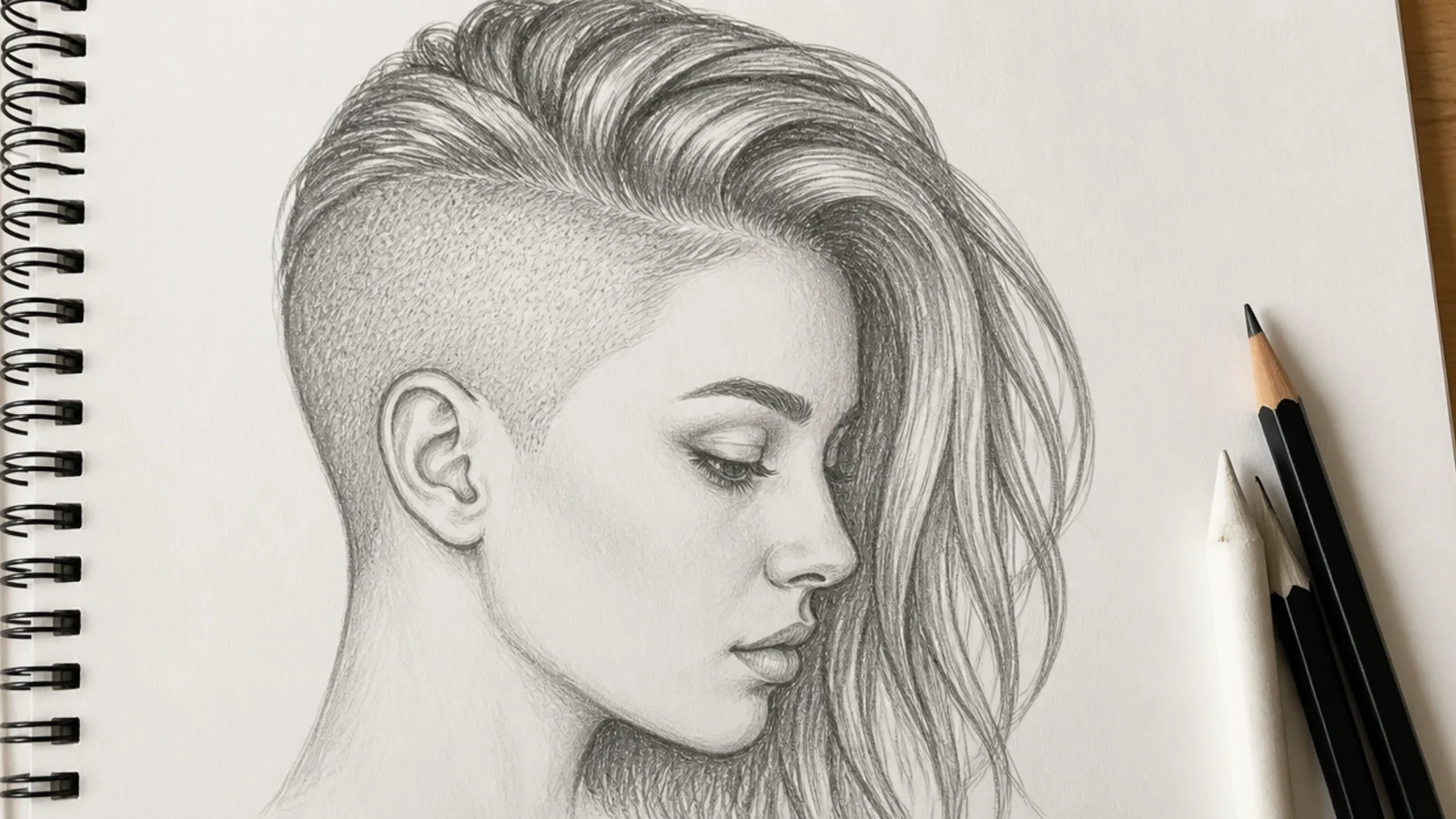
20. Undercut Sweep
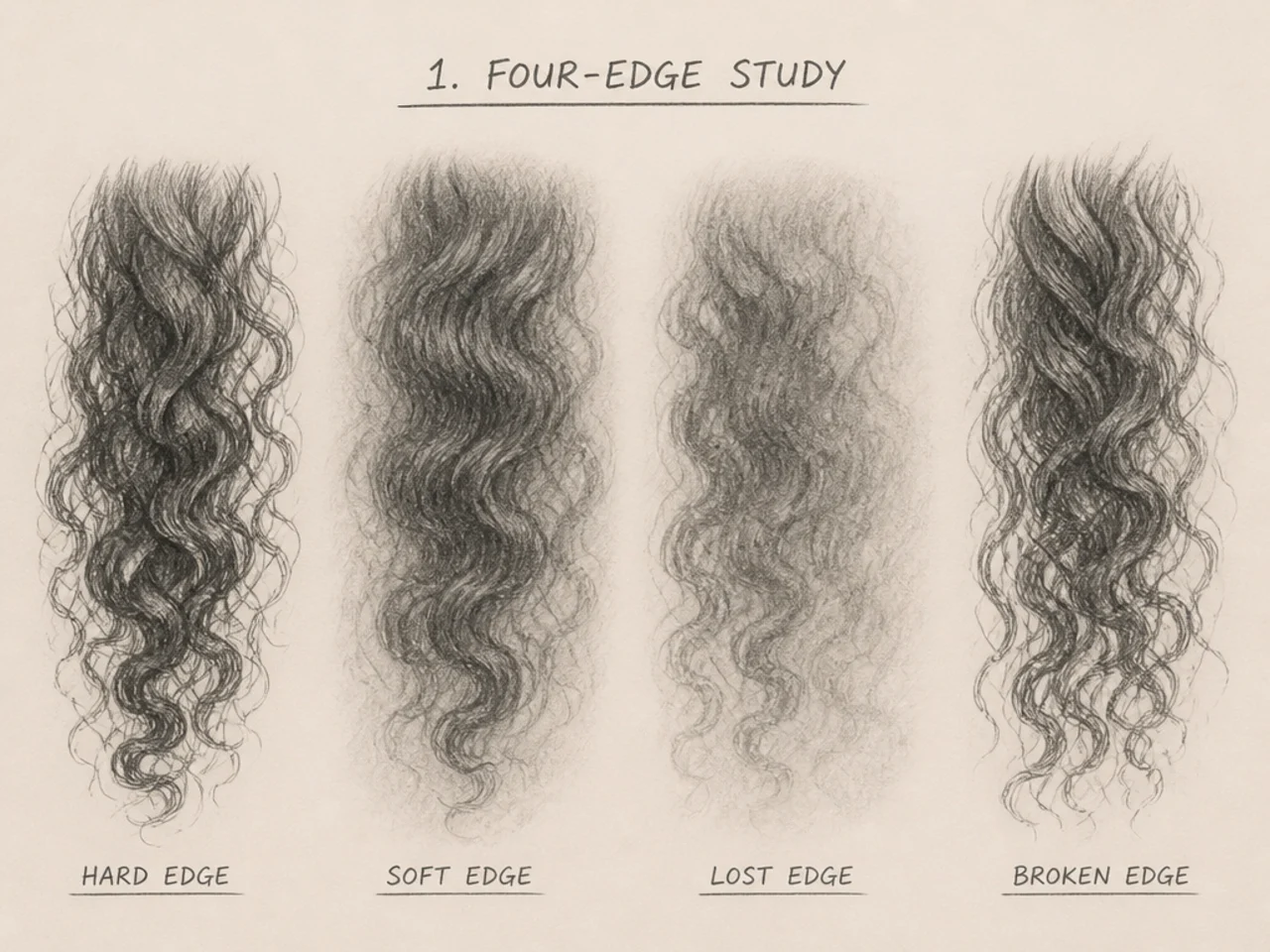
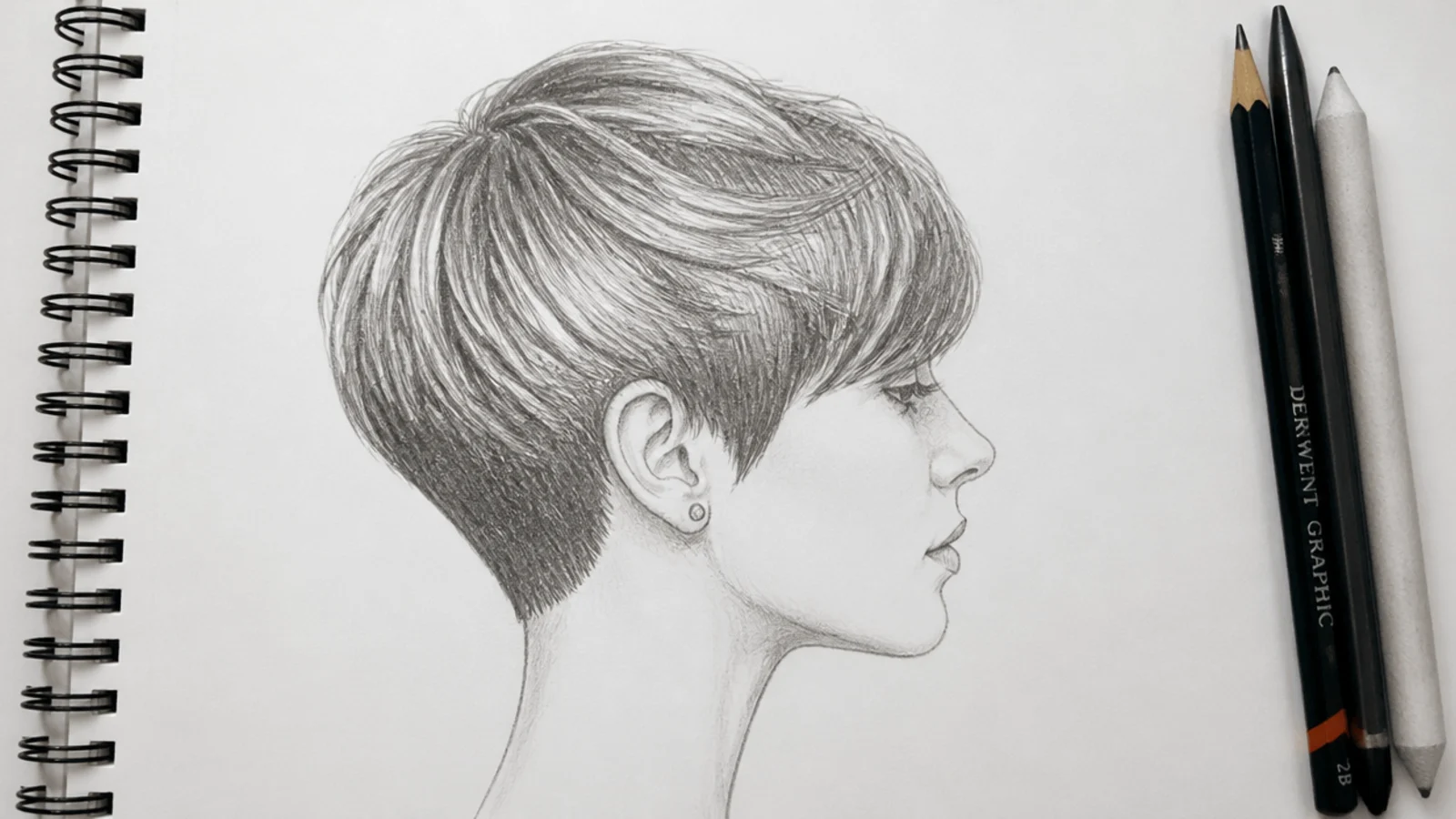
The interest is a hard machine cut edge sitting against a soft swept mass, so keep that boundary crisp and completely unblended. Sweep every strand above it in one direction with the roots lifted at the parting, because the volume on top is what makes the shaved section look deliberate.
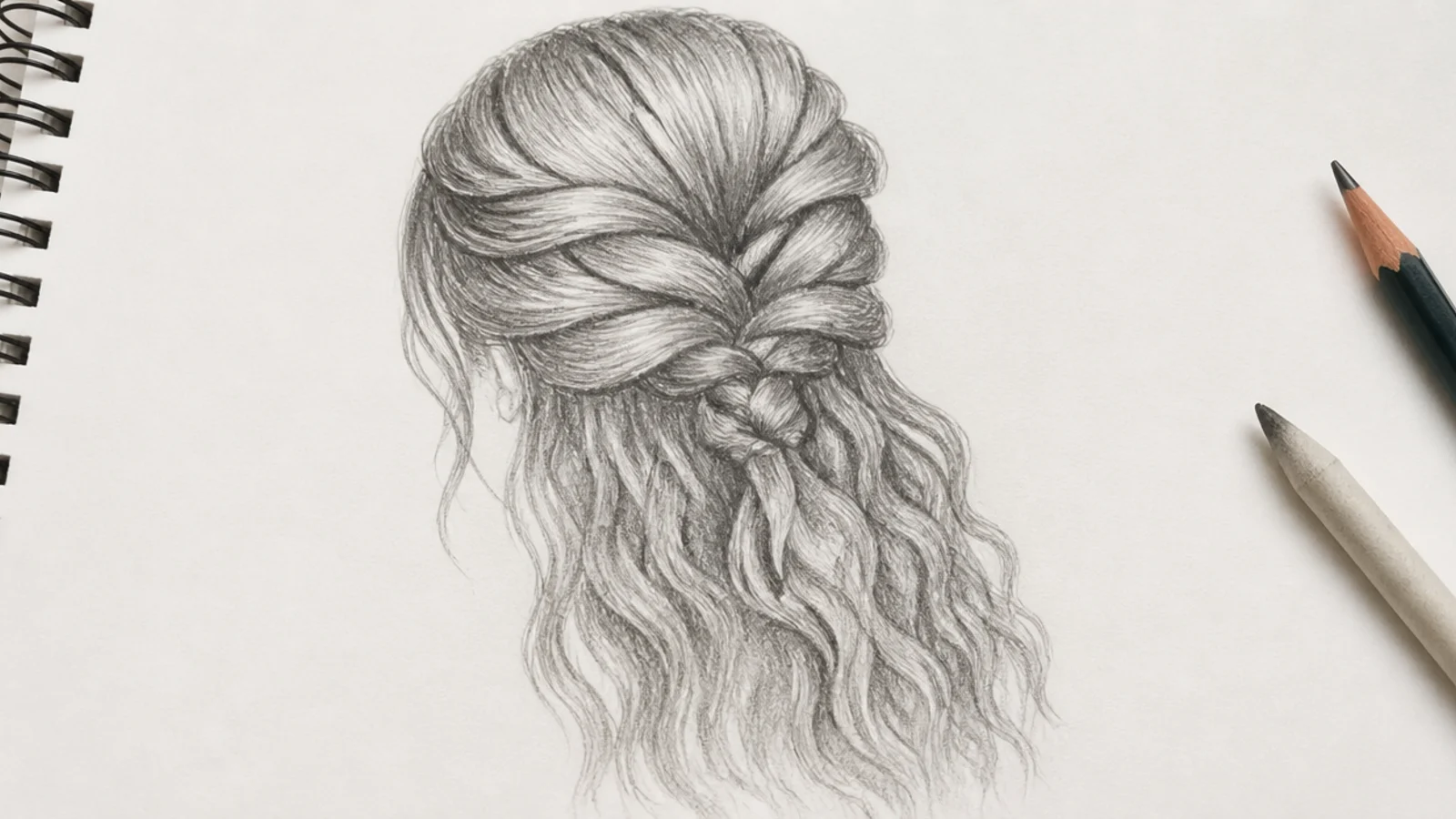
21. A Braid Unraveling
Halfway down, the pattern loses its grip, so the teardrops widen, the interval stretches and the strands separate into loose waves. Keep two or three intact teardrops above the break, because the contrast against the ordered section is the only thing that makes the unravelling read as unravelling.
22. Silver Gray Hair
Silver is drawn by taking tone away rather than adding it, so lay a mid value across the mass and lift the highlights back out with a kneaded eraser. Keep the cores between clumps dark while you do it, because hair lightened evenly stops reading as hair and starts reading as blank paper.
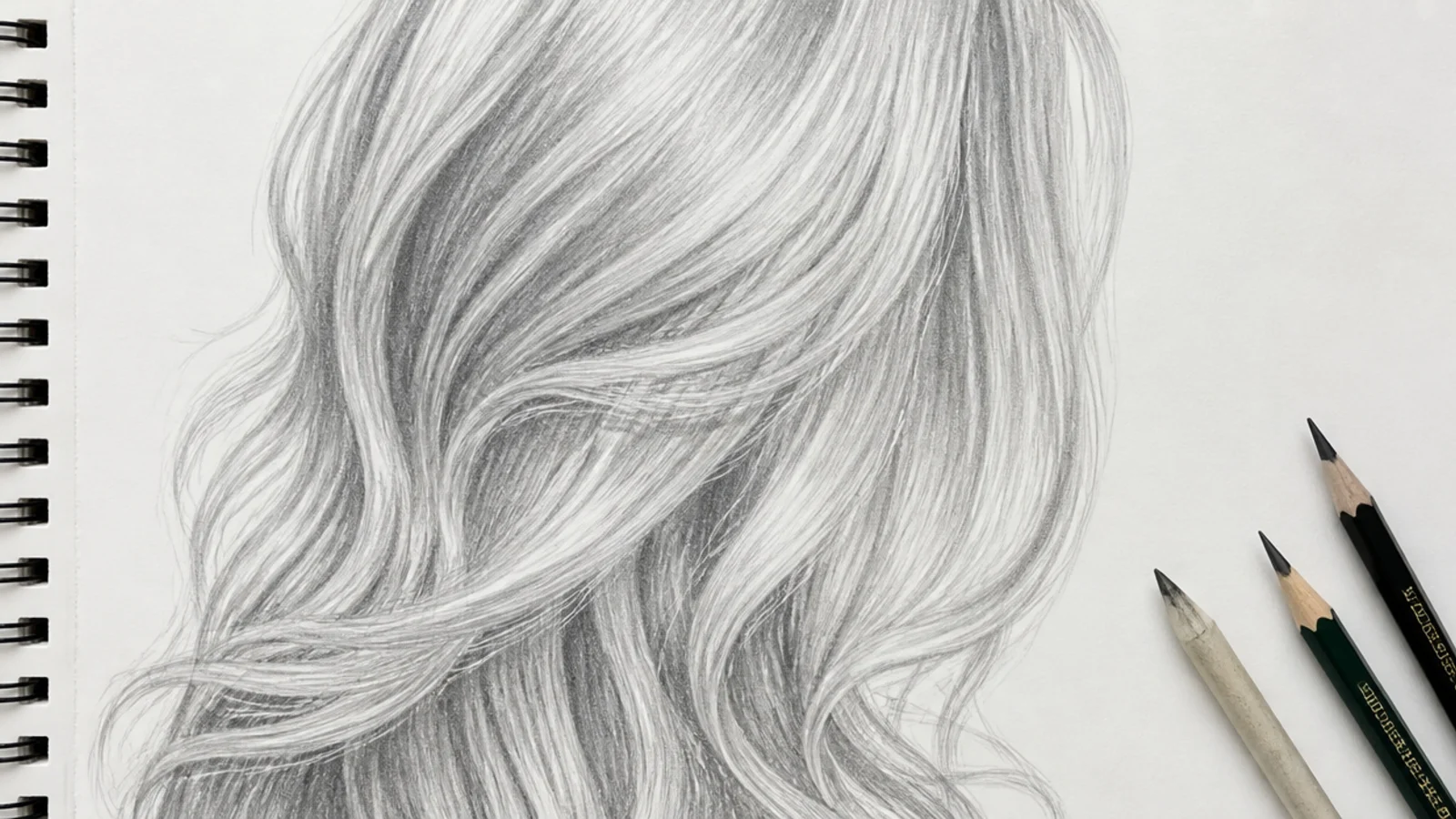
23. Continuous Line Waves
Drawing the whole mass without lifting the pencil forces you to think in flow rather than in strands. The line has to change weight to survive it, pressing hard through the cores and lightening across the highlights, and learning that pressure control is the real point of the exercise.
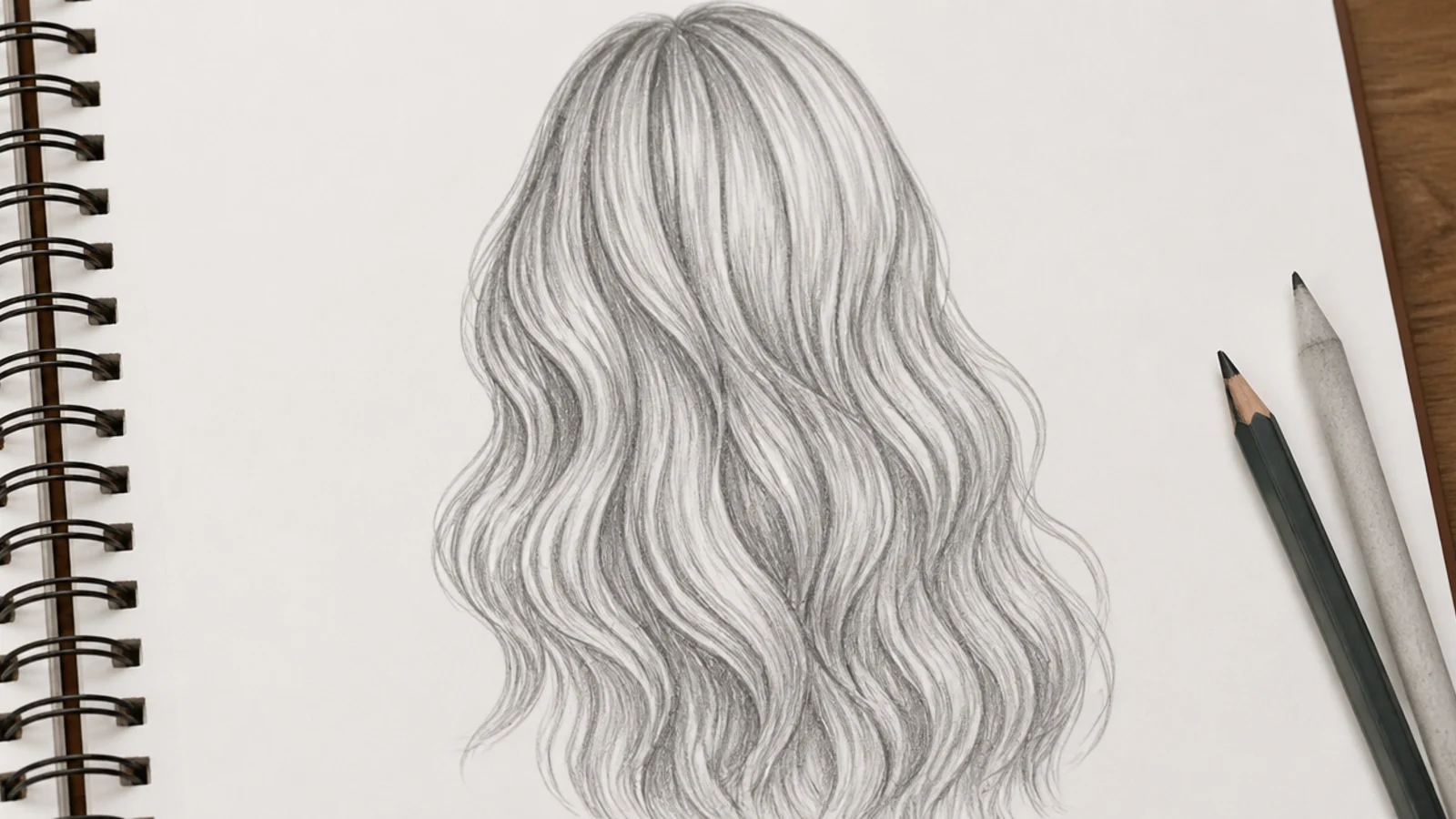
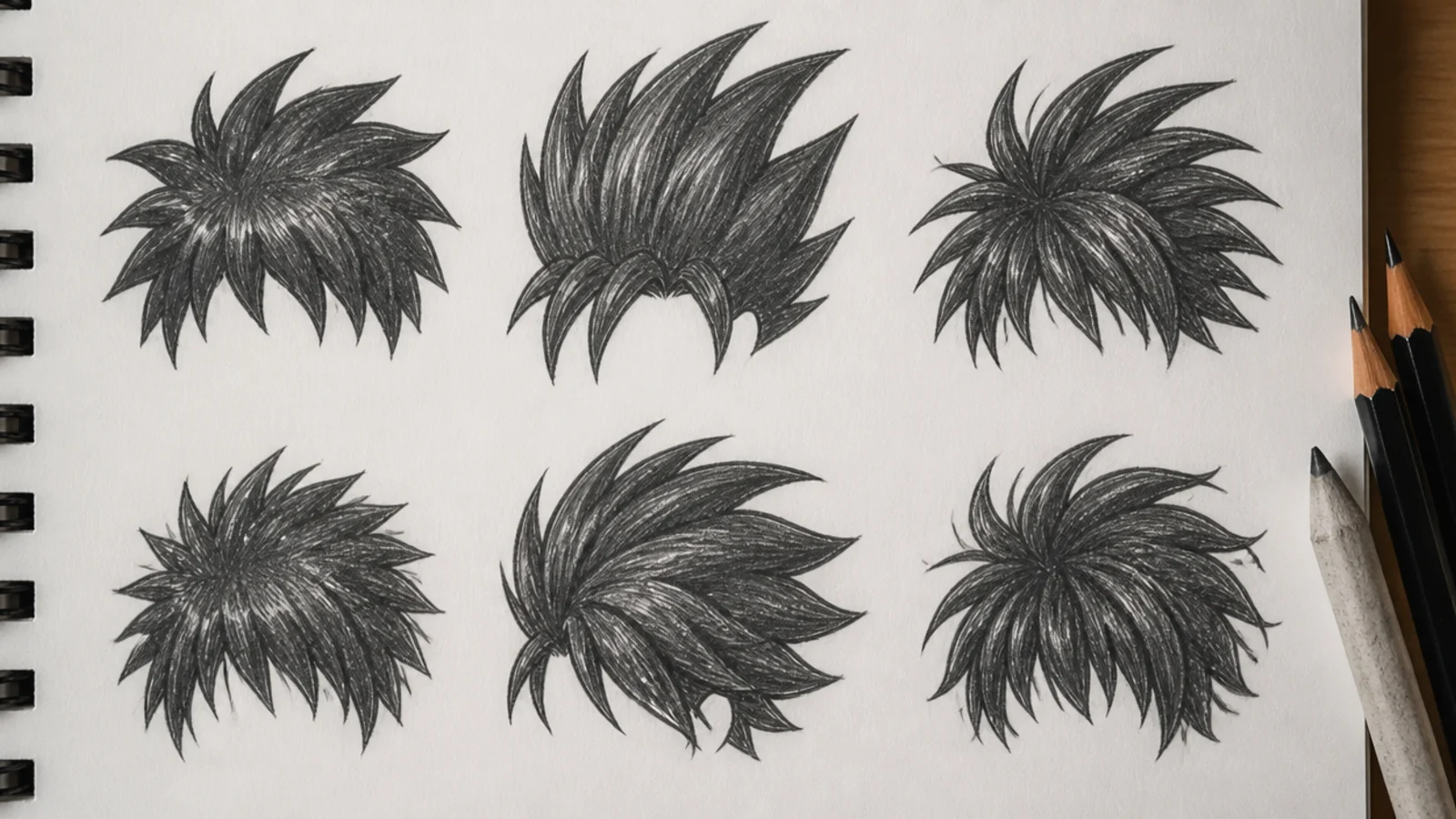
24. Anime Spiky Silhouette
Stylised hair reads by silhouette alone, so test it by filling the shape in solid and checking it is still recognisable. Group the spikes into three or four clusters with a shared outline, because a head of individually drawn spikes turns into noise the moment it is seen small.
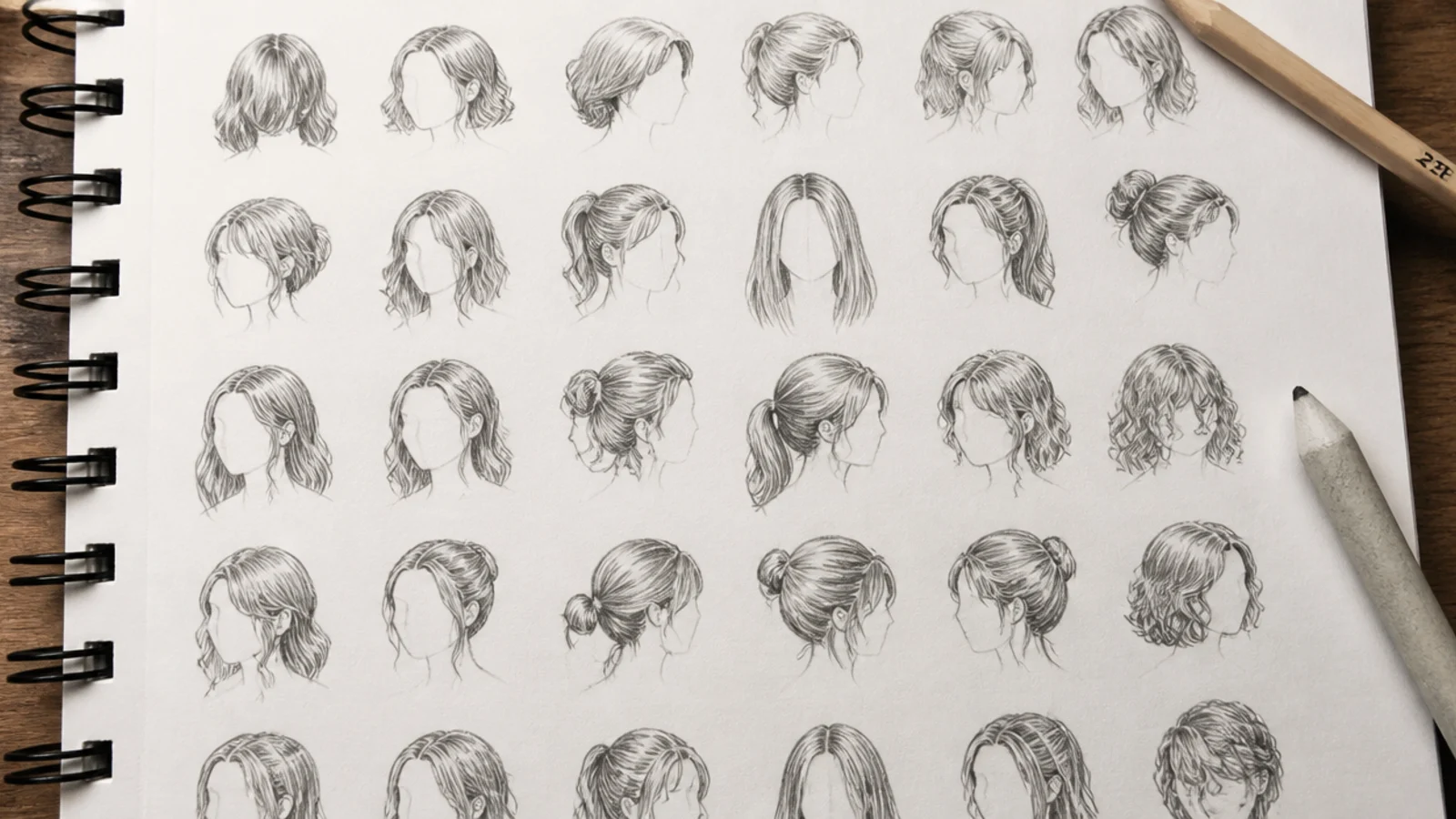
25. Hair at Small Scale
At thumbnail size only the outer shape and one highlight survive, which makes small studies the fastest way to find out what actually matters in a style. Draw the same idea at postage stamp size four or five times and keep whichever version still reads correctly at that size.
Final Thoughts
Draw the hair, then change what it is made of. Every idea on this page survives or dies on whether the mass leaves a crown, follows a skull and hangs with weight, because those three things are what tell a viewer they are looking at hair at all — and a material substituted onto a wrong structure is just an abstract shape.
For curly textures under any concept see 15 ways to sketch curly hair easily. More in Hair Drawing. See also the anime version.