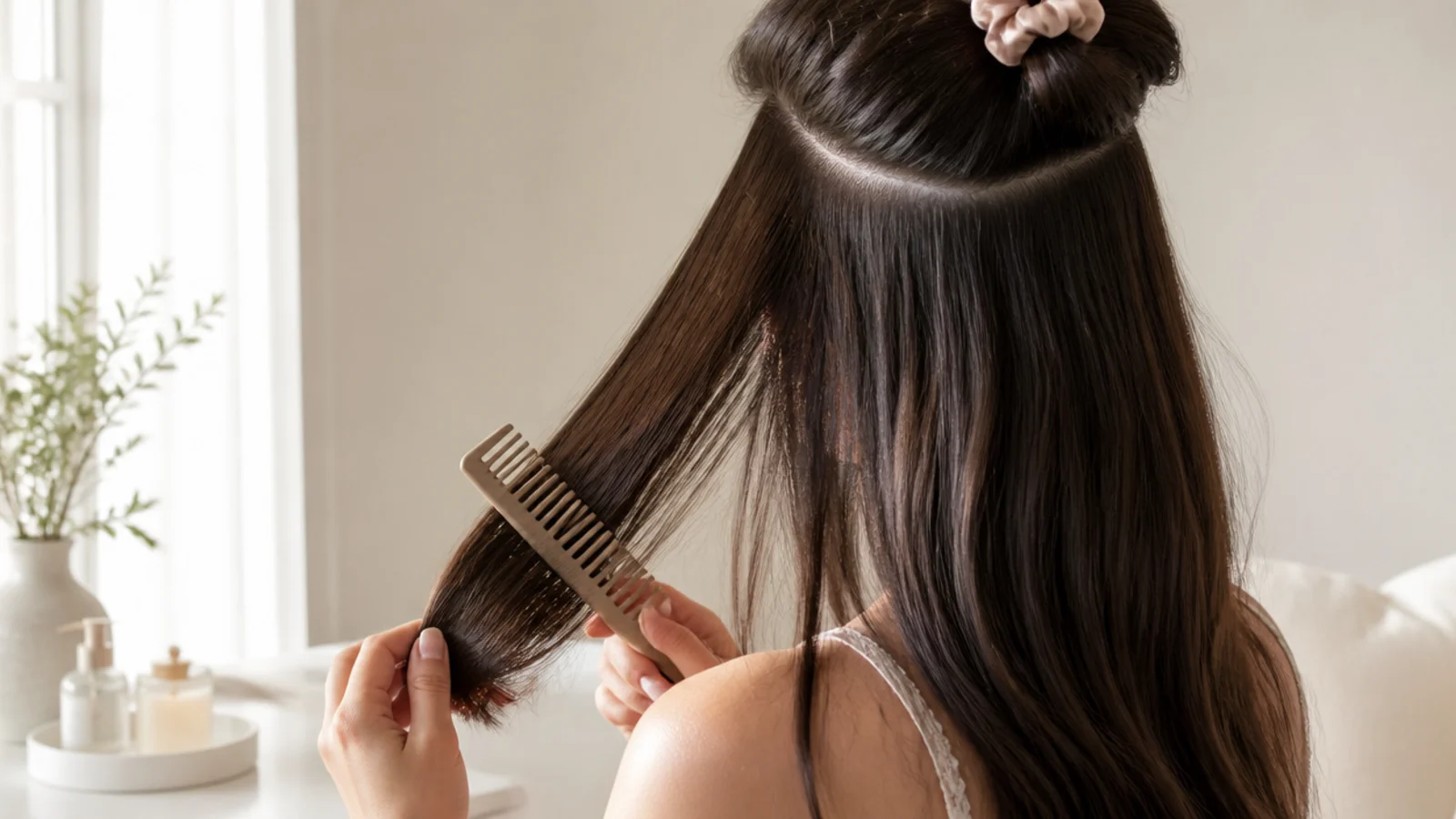
20 Hair Growth Tips for Faster Results
Twenty tips for growing hair faster, and the arithmetic nobody puts on the bottle. Hair leaves the scalp at half an inch a month no matter what you buy, so every real gain comes from what you stop losing at the other end.
In this article · 28
- Growth Rate Explained
- Breakage Versus Growth
- Scalp Health Routine
- Protective Styling and Heat
- Diet Supplements and Their Limits
- Specific Concerns and Edges
- The 20 Hair Growth Tips
- 1. Trim a Quarter Inch
- 2. Scalp Massage
- 3. Rosemary Oil
- 4. Satin Pillowcase
- 5. Protective Braids
- 6. Cap the Heat at 350F
- 7. Detangle From the Ends Up
- 8. Clarifying Wash
- 9. Deep Conditioning
- 10. The Stretch Test
- 11. Protein in the Diet
- 12. Ferritin Test
- 13. Biotin Supplement
- 14. Microfiber Towel
- 15. Satin Scrunchies
- 16. Lukewarm Rinse
- 17. Loose Low Ponytail
- 18. Pre Swim Rinse
- 19. Minoxidil for Thinning
- 20. Length Check Photos
- Final Thoughts
Almost every growth routine is sold as a way to speed the follicle up, and the follicle is the one part of this you cannot negotiate with.
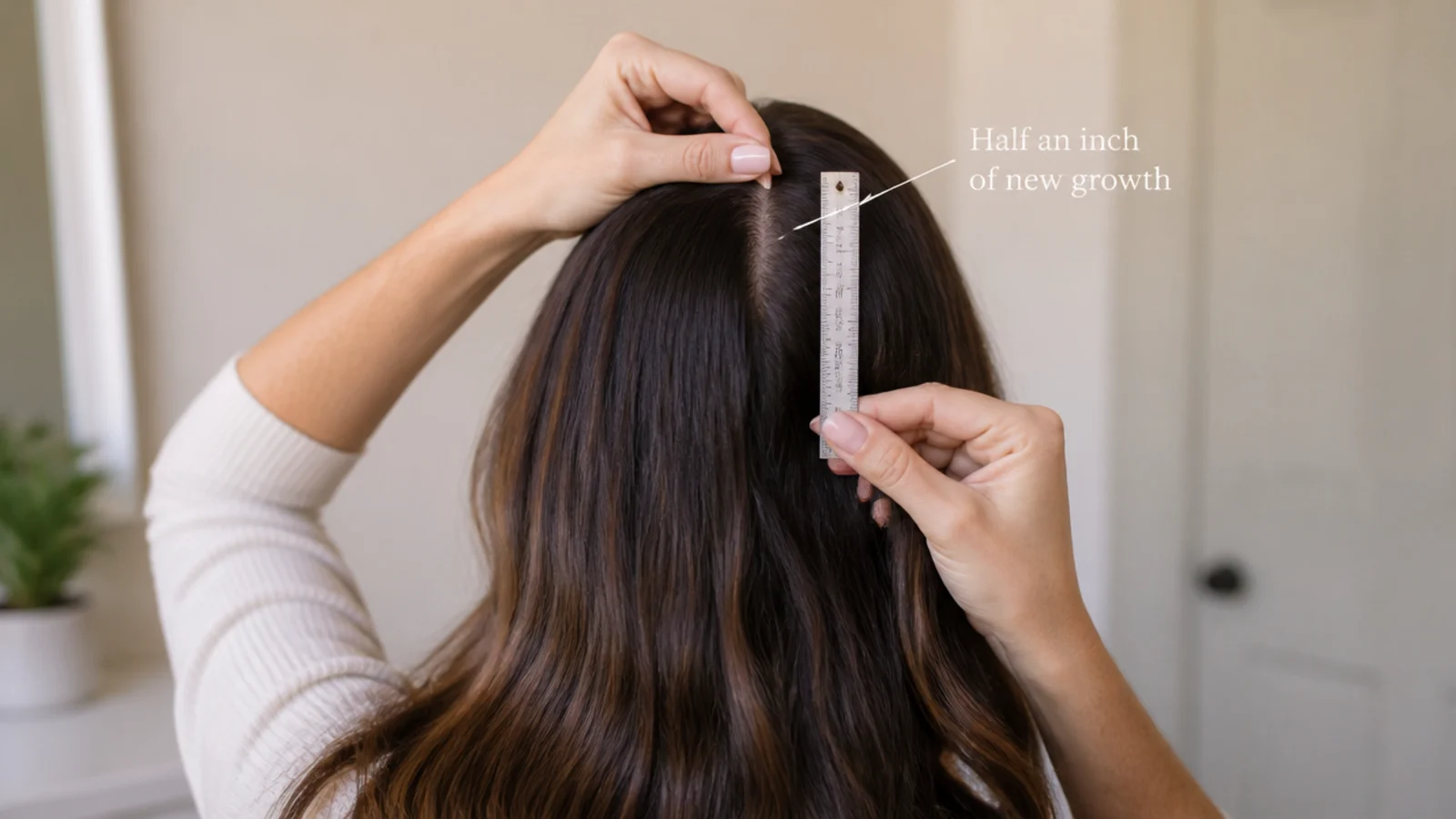
Hair grows roughly half an inch a month, and nothing on a shelf changes that. Six inches a year leave your scalp whether you oil it, massage it or ignore it entirely.
What you can change is how much of that six inches survives. Length is growth minus breakage, and breakage is the only side of the equation you have any control over.
Growth Rate Explained
About half an inch a month. Six inches a year, from a follicle that has been running to the same schedule your whole life.
The rate is set by genetics, age and general health. Not by shampoo. Nothing applied to the outside of the shaft reaches the part of the follicle that decides speed.
Roughly nine in ten follicles are growing at any moment. The rest are resting or shedding, which is why fifty to a hundred hairs a day in the drain is normal rather than alarming.
A growing phase runs two to seven years. That ceiling, not your routine, is why some people reach the waist and others stall at the shoulder blades.
Breakage Versus Growth
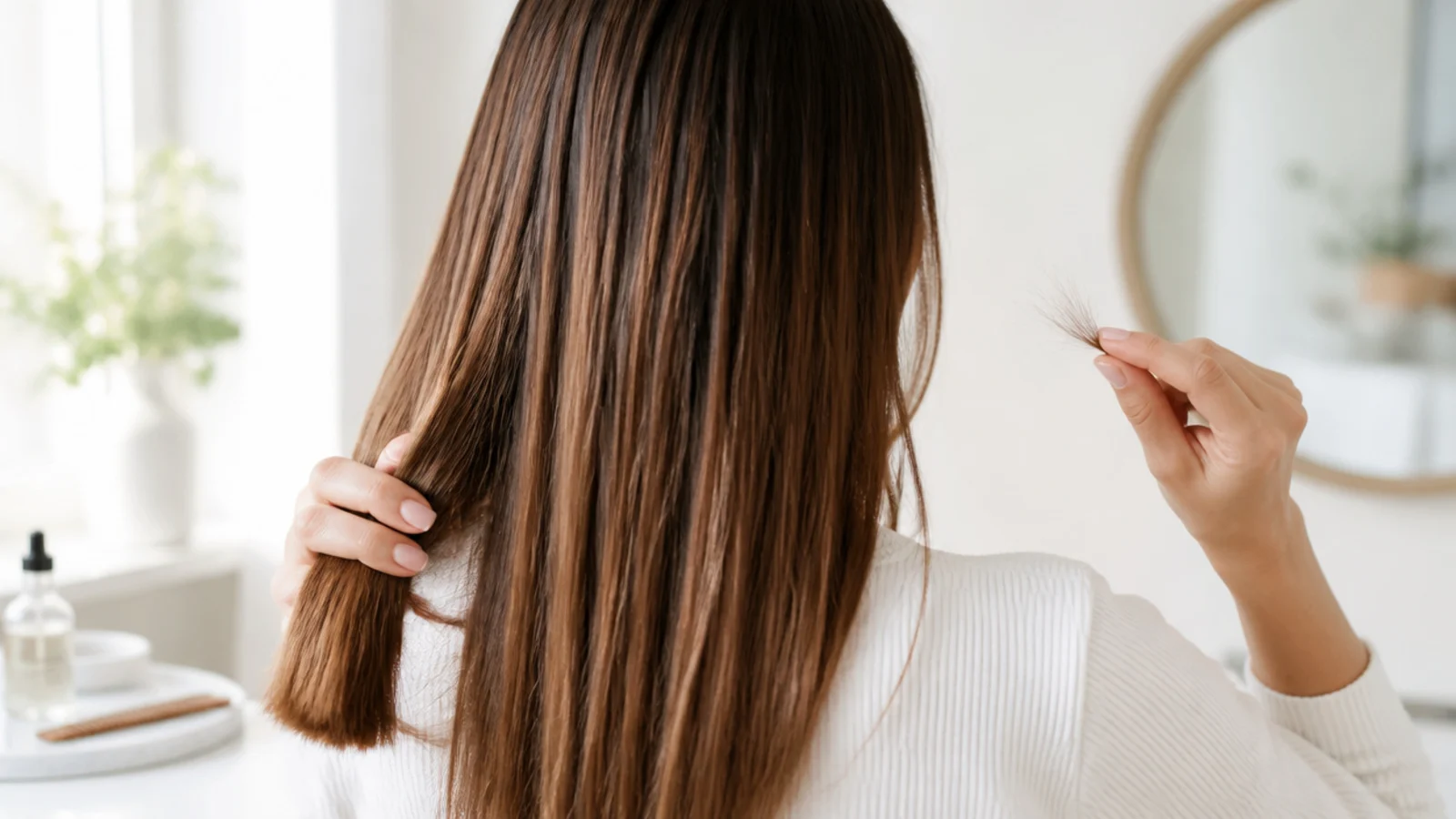
Length is growth minus breakage. The first number is fixed. The second is entirely yours.
Breakage happens where hair is oldest. The ends have been through years of washing, brushing, heat and weather. The root has been through a fortnight.
Hair at the waist is around four years old. Everything you have ever done to it is still in it, because hair has no repair mechanism whatsoever.
Stalled length is usually a snapping problem. If the length holds steady while daily shedding looks normal, you are growing and losing at the same rate.
Scalp Health Routine
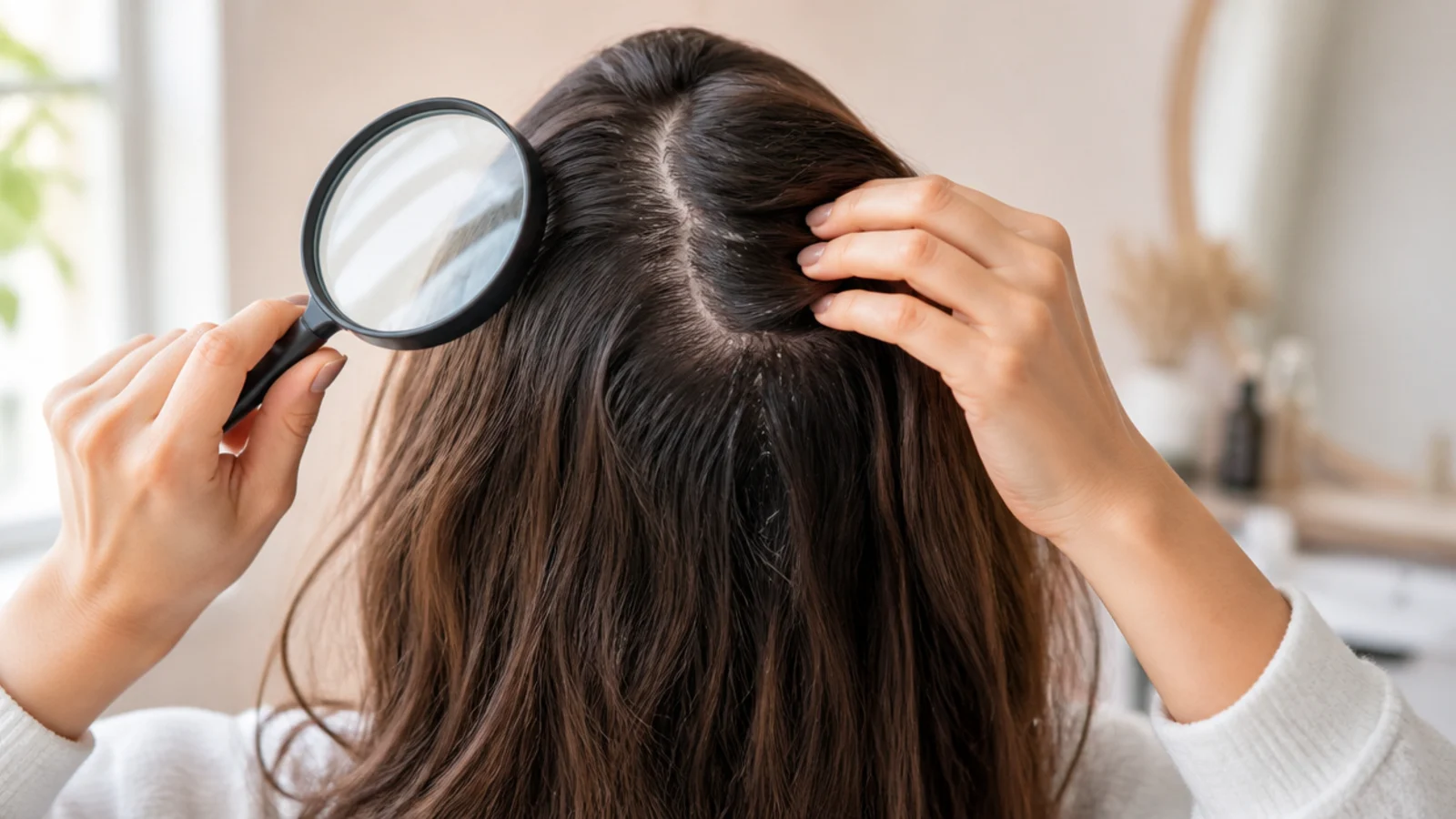
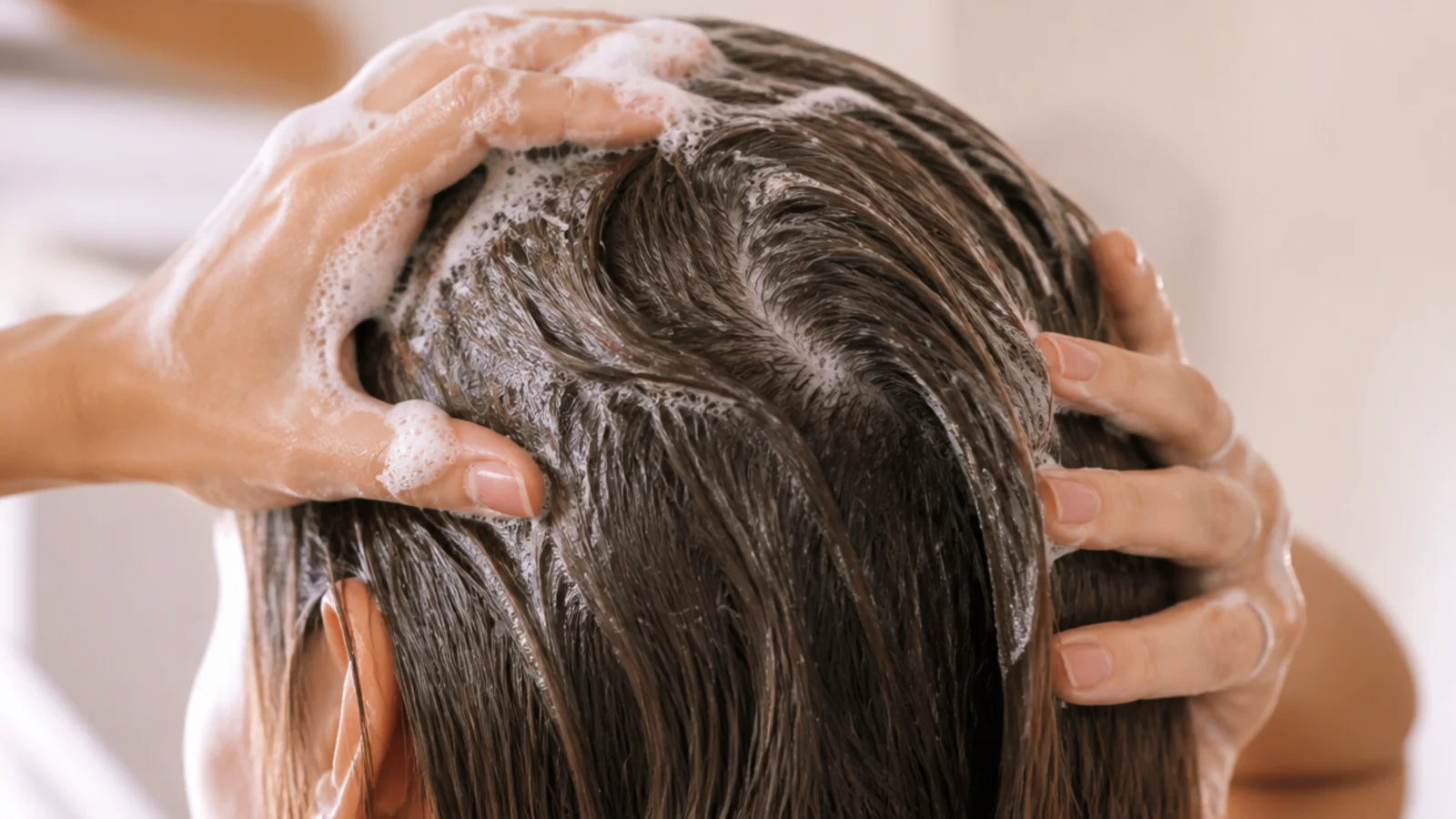
The scalp is skin and behaves like skin. It accumulates oil, dead cells and product film, and covering it does not make it clean.
Buildup causes most itching and flaking. Washing less in order to be gentle usually makes it worse rather than better.
Massage moves blood and shifts buildup at once. Fingertips, circular, five minutes, before you rinse.
Inflammation costs you hair. A chronically irritated scalp sheds more, which is why every strong active on this list gets diluted before it goes near skin.
Protective Styling and Heat
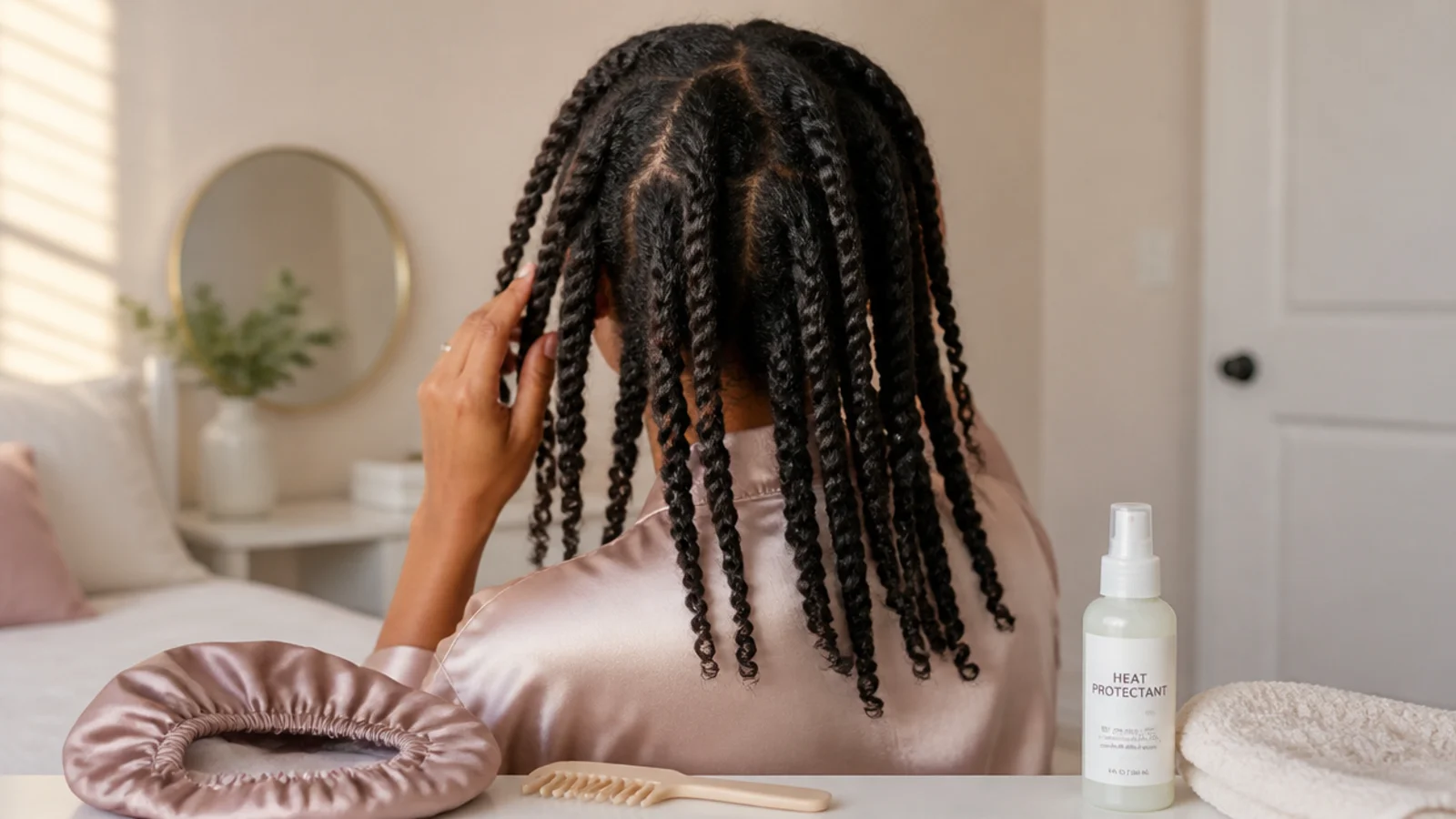
Every style is a trade. A braid protects the ends and loads the roots. Wearing it loose does the reverse.
Tension is the tell. If a style stings, tingles or gives you a headache, it is pulling follicles rather than holding hair.
Heat damage does not reverse. Cooked keratin stays cooked, and a mask coats it rather than rebuilding it.
Cap the temperature and the frequency together. One heat day a week at a sensible setting does less damage than daily touch ups at a low one.
Diet Supplements and Their Limits
A supplement can only fix a deficiency. If you are not short of something, adding more of it does nothing at the follicle.
Protein and iron are the two that matter most. Both are commonly low, and both show up in hair long before they show up anywhere obvious.
Test before you supplement. A ferritin result and a full blood count cost less than a year of guessing.
Excess iron is harmful. Never supplement it on a hunch. It accumulates, and the consequences are considerably worse than thin hair.

Specific Concerns and Edges
Sudden diffuse shedding usually follows an event. Illness, surgery, a crash diet or childbirth push a batch of follicles into rest together, and the shed lands two to three months later.
That kind of shedding resolves on its own. Generally within six months of the trigger, and the regrowth arrives as a fringe of short hairs along the part.
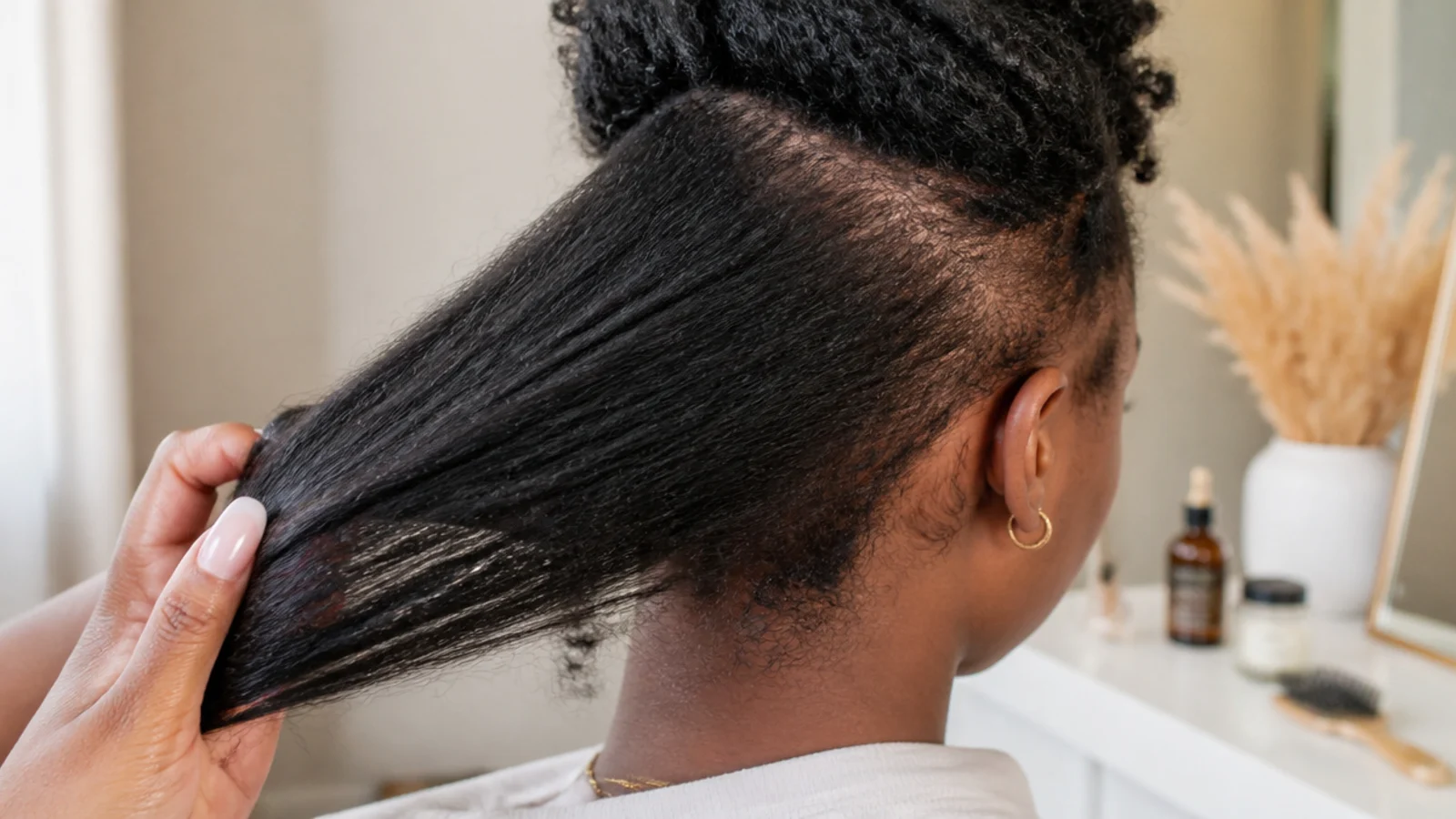
Thinning edges are a tension problem until proved otherwise. Repeated pull at the same follicles is reversible early and scarring late.
A hairline that keeps receding needs a doctor. Patterned loss and patchy loss have different causes and different treatments, and telling them apart is a diagnosis rather than a styling decision.
The 20 Hair Growth Tips
1. Trim a Quarter Inch
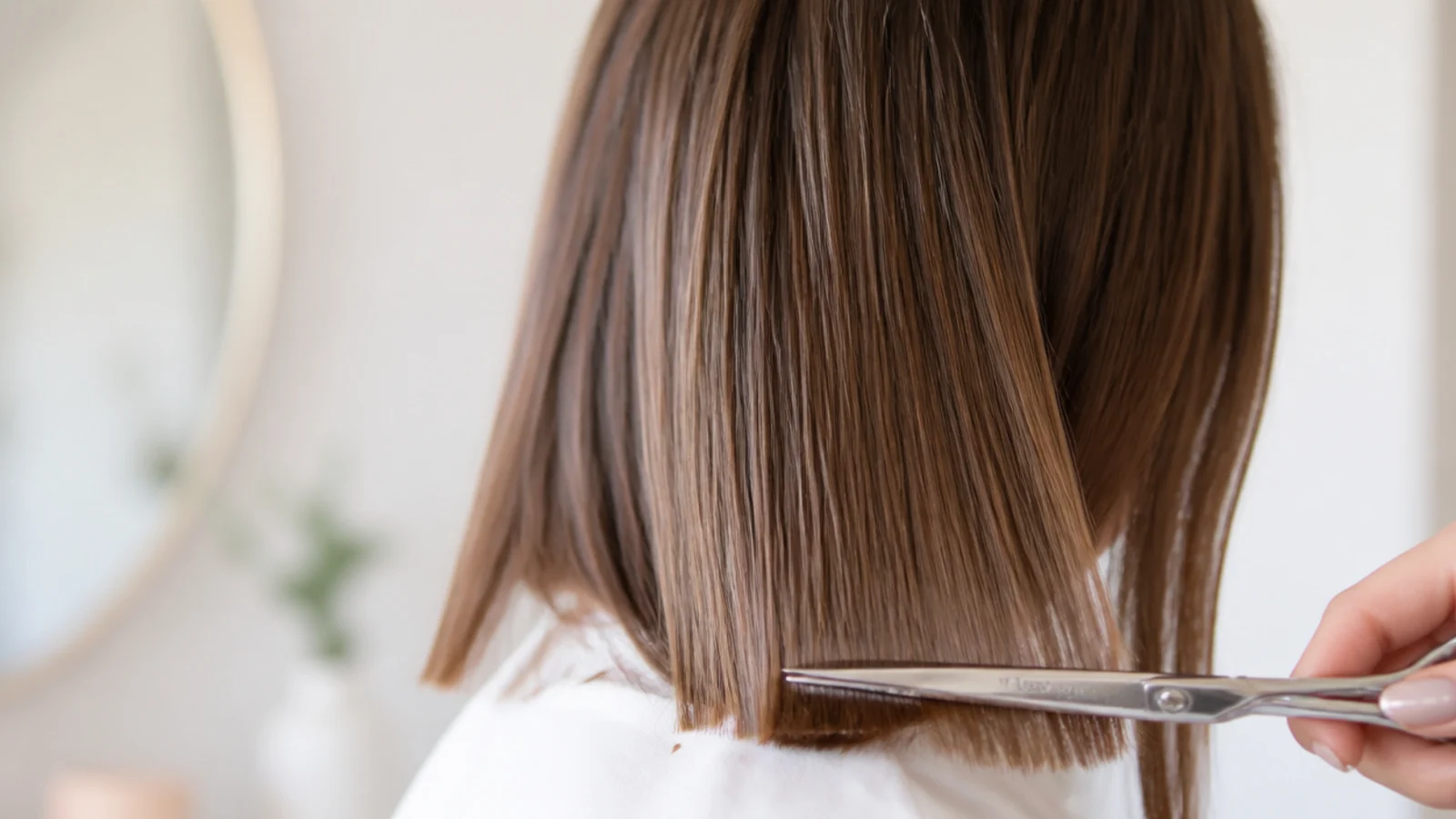
A split travels upward because the cuticle has already failed at that point, and every comb stroke drives it further along the shaft. Removing a quarter inch every ten to twelve weeks cuts the damage off below the split, which is why regular trimming adds length on the head while subtracting it on the ruler.
2. Scalp Massage
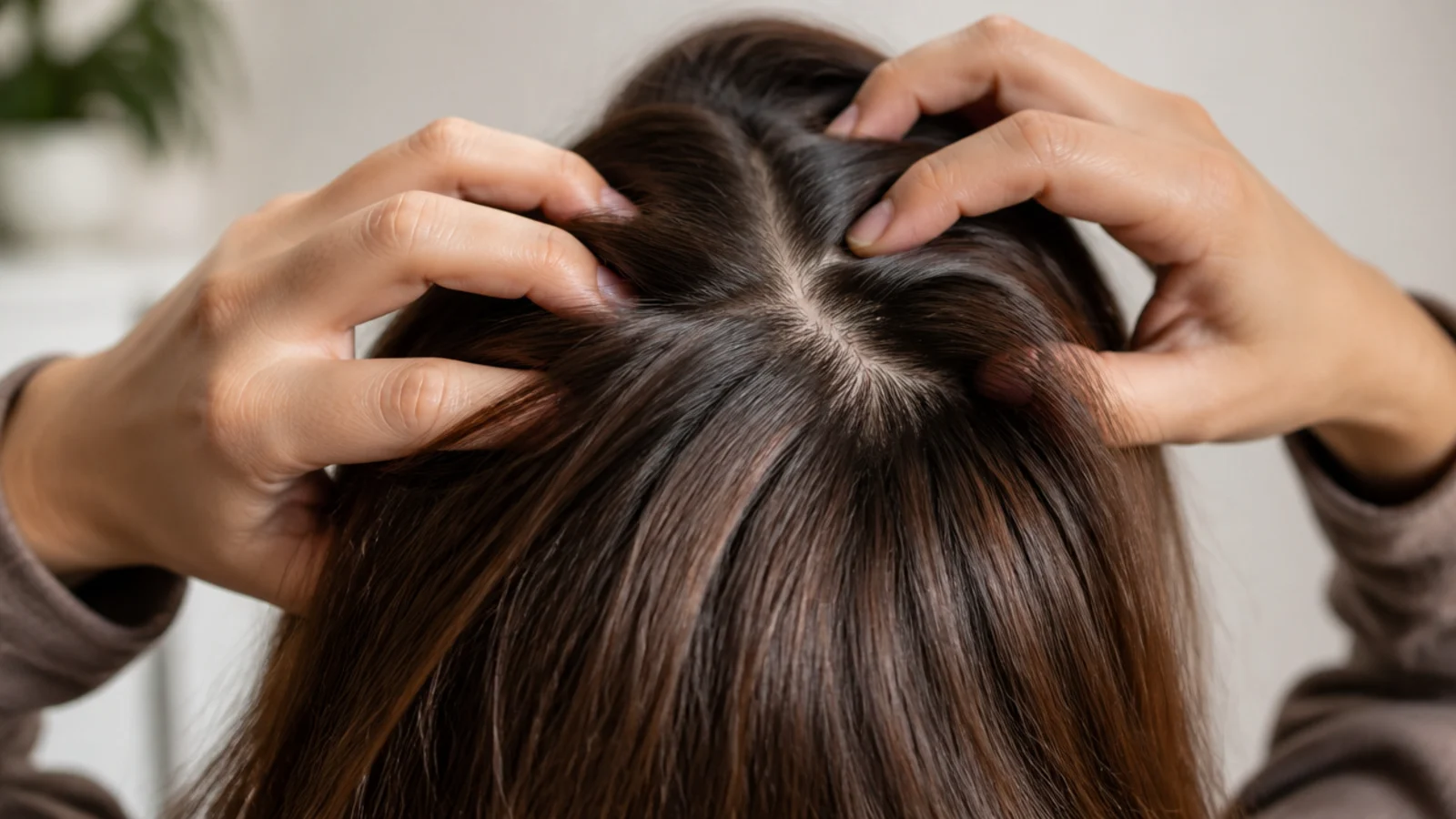
Five minutes of firm circular pressure a day is one of the few habits here with both a plausible mechanism and a small trial behind it, since mechanical stretching of the tissue around the follicle appears to change how it behaves. Use fingertips rather than nails, and move the scalp itself rather than dragging hair across it.
3. Rosemary Oil
The evidence is one small six month trial that found diluted rosemary oil comparable to a low strength minoxidil, which is a modest result rather than a miracle. Dilute it into a carrier oil before it touches skin, because neat essential oil irritates the scalp and an irritated scalp sheds more rather than less.

4. Satin Pillowcase
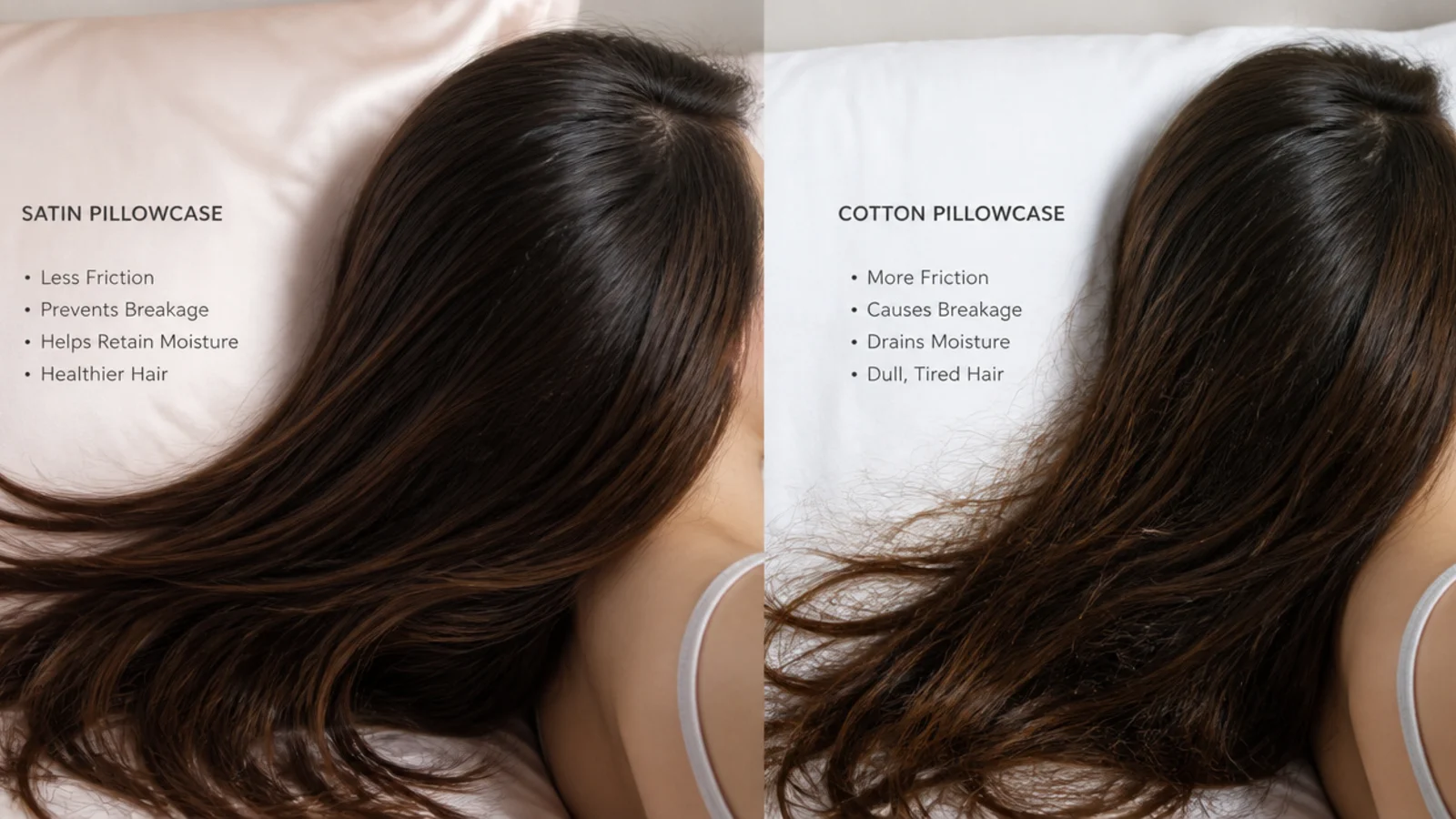
Cotton combines a high friction coefficient with a real thirst for water, so across seven hours of turning it lifts the cuticle and pulls moisture out of the shaft at the same time. Satin does neither. It is the cheapest change on this list and the only one that works while you are unconscious.
5. Protective Braids
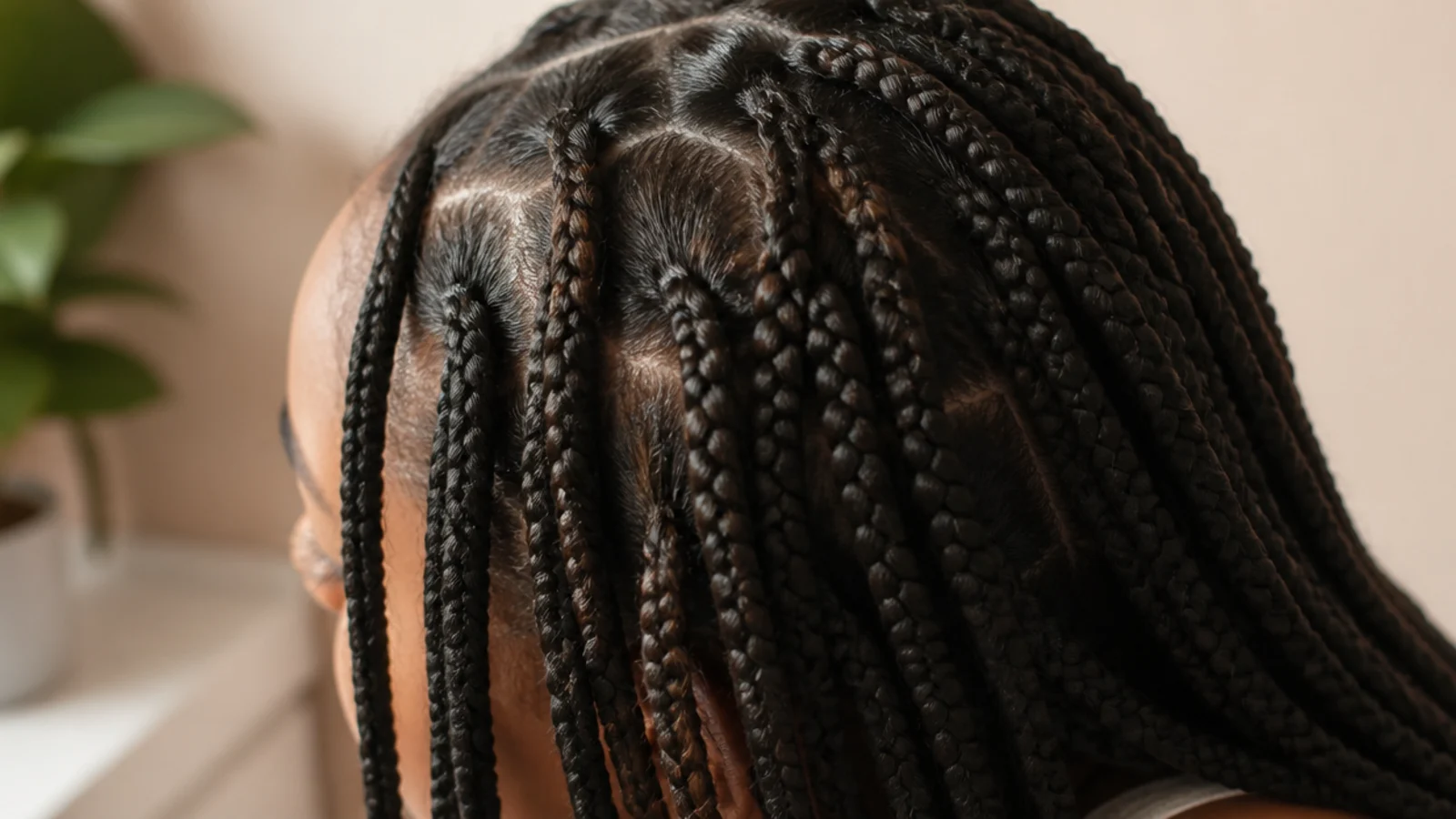
A braid tucks the fragile ends inside the plait where nothing rubs against them, which removes most of a day's mechanical damage in a single step. The catch is tension. A protective style pulled tight enough to sting is causing traction damage at the root while it protects the ends.
6. Cap the Heat at 350F
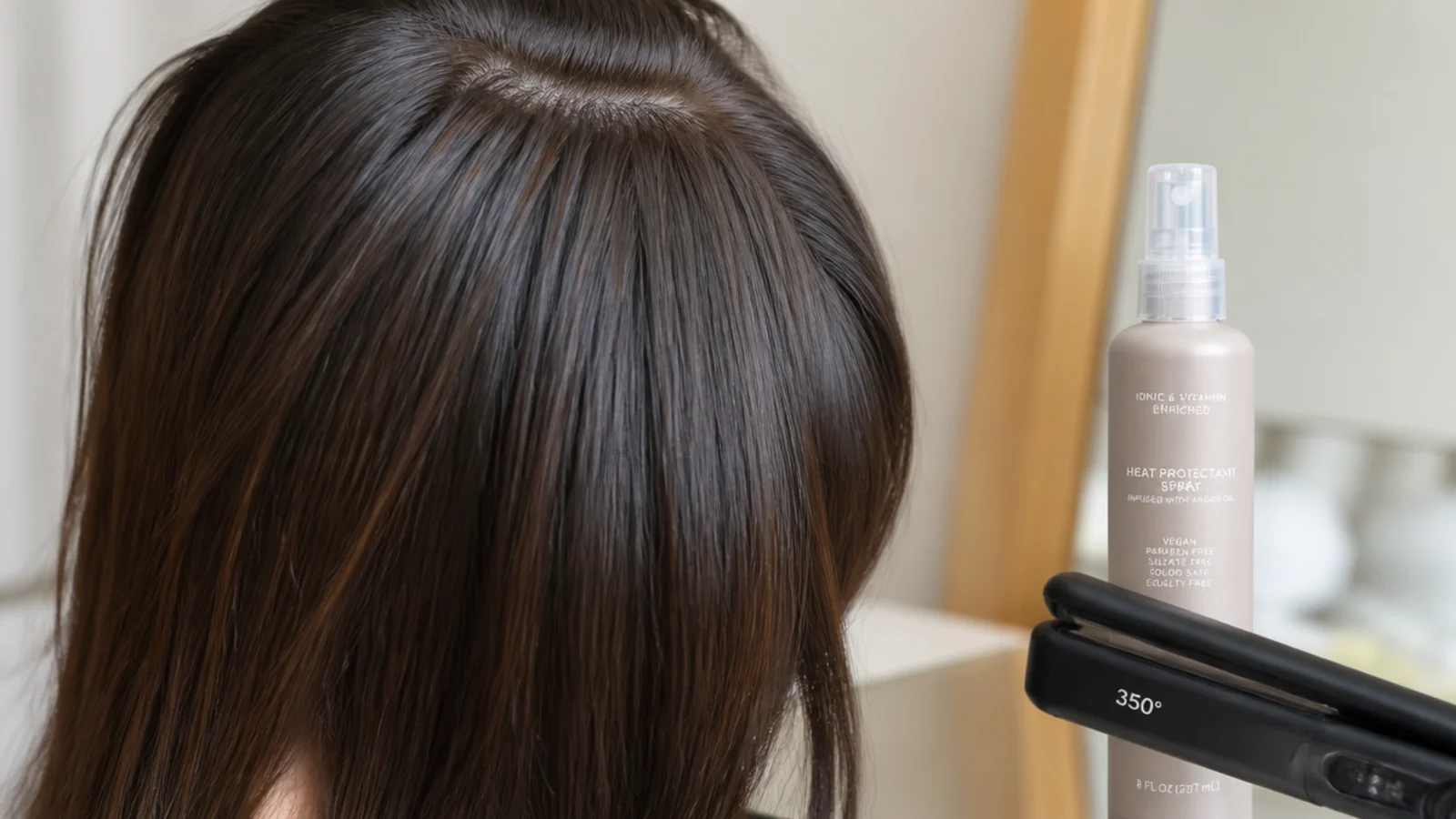
Keratin starts to deform well below the temperature most irons run at, and every pass above that ceiling spends elasticity you never get back. Three hundred and fifty Fahrenheit works as a limit for most hair and fine hair wants less. One slow pass at a sensible setting beats four fast ones at a reckless one.
7. Detangle From the Ends Up
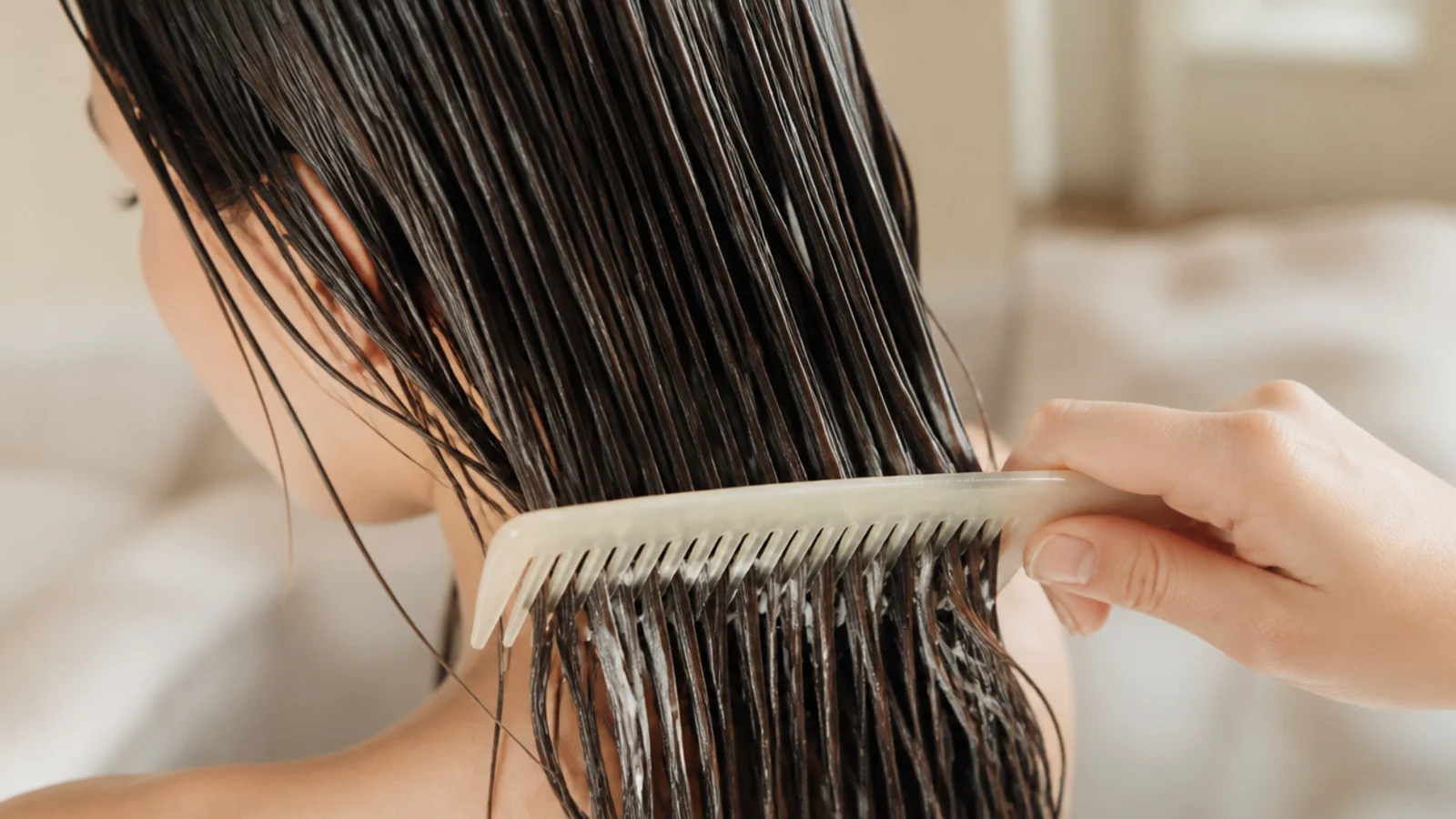
Starting at the roots pushes every knot downward and compresses them into one immovable mass, which then has to be torn through. Working upward from the ends in short sections releases each tangle against almost no length of hair at all, so the force never has a chance to build.
8. Clarifying Wash
Silicones, styling polymers and hard water minerals leave a film that conditioner cannot get through, so hair reads as dry however much you put on it. A clarifying wash once a month strips that film back to bare hair. Do it more often and you start removing the lipids you actually need.
9. Deep Conditioning
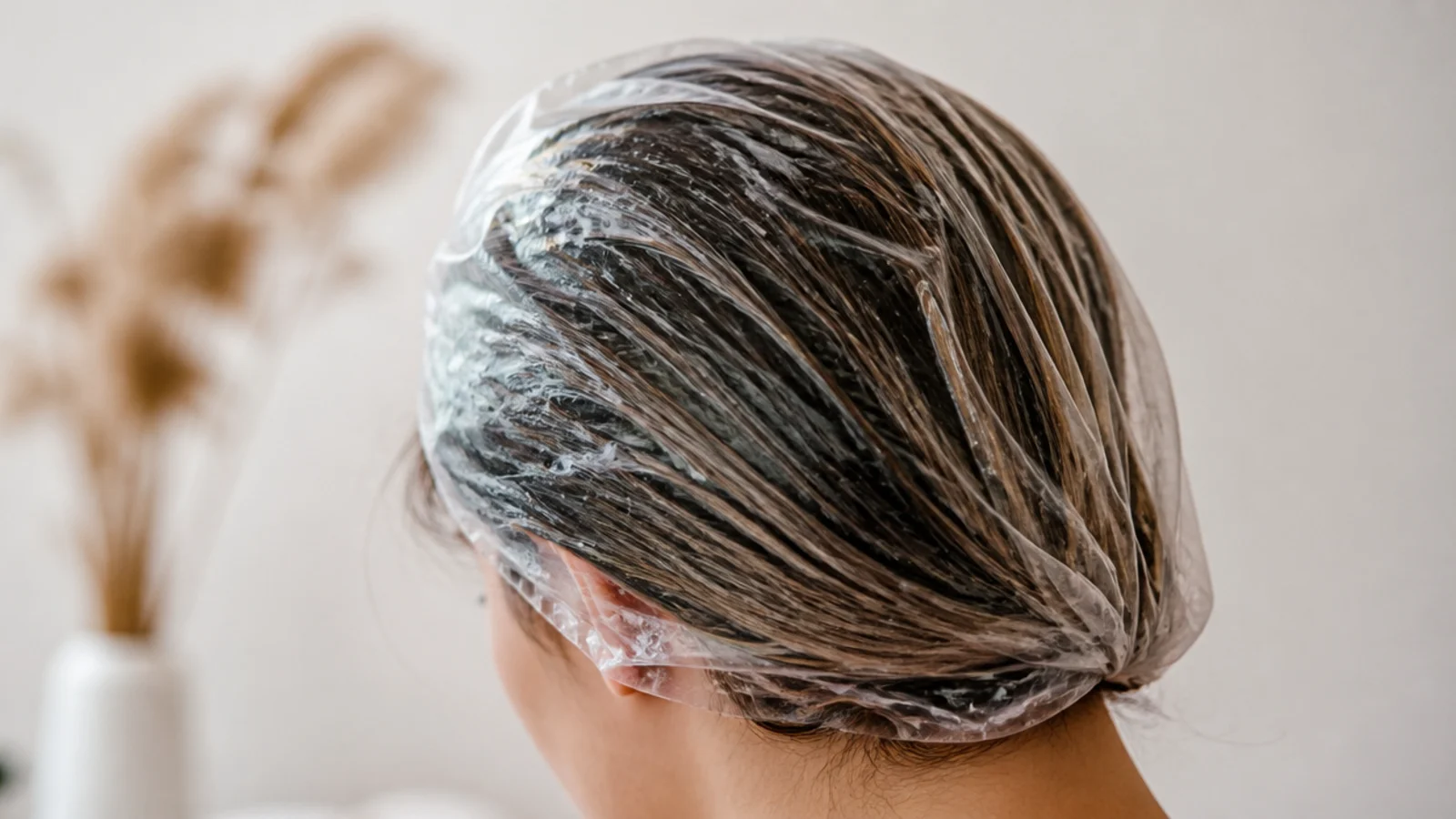
A mask needs time and warmth to move anything past the cuticle, which is why twenty minutes under a cap outperforms an hour of the same product applied cold. Concentrate it on the bottom third. The ends are years older than the roots and have already lost most of their original lipid.
10. The Stretch Test
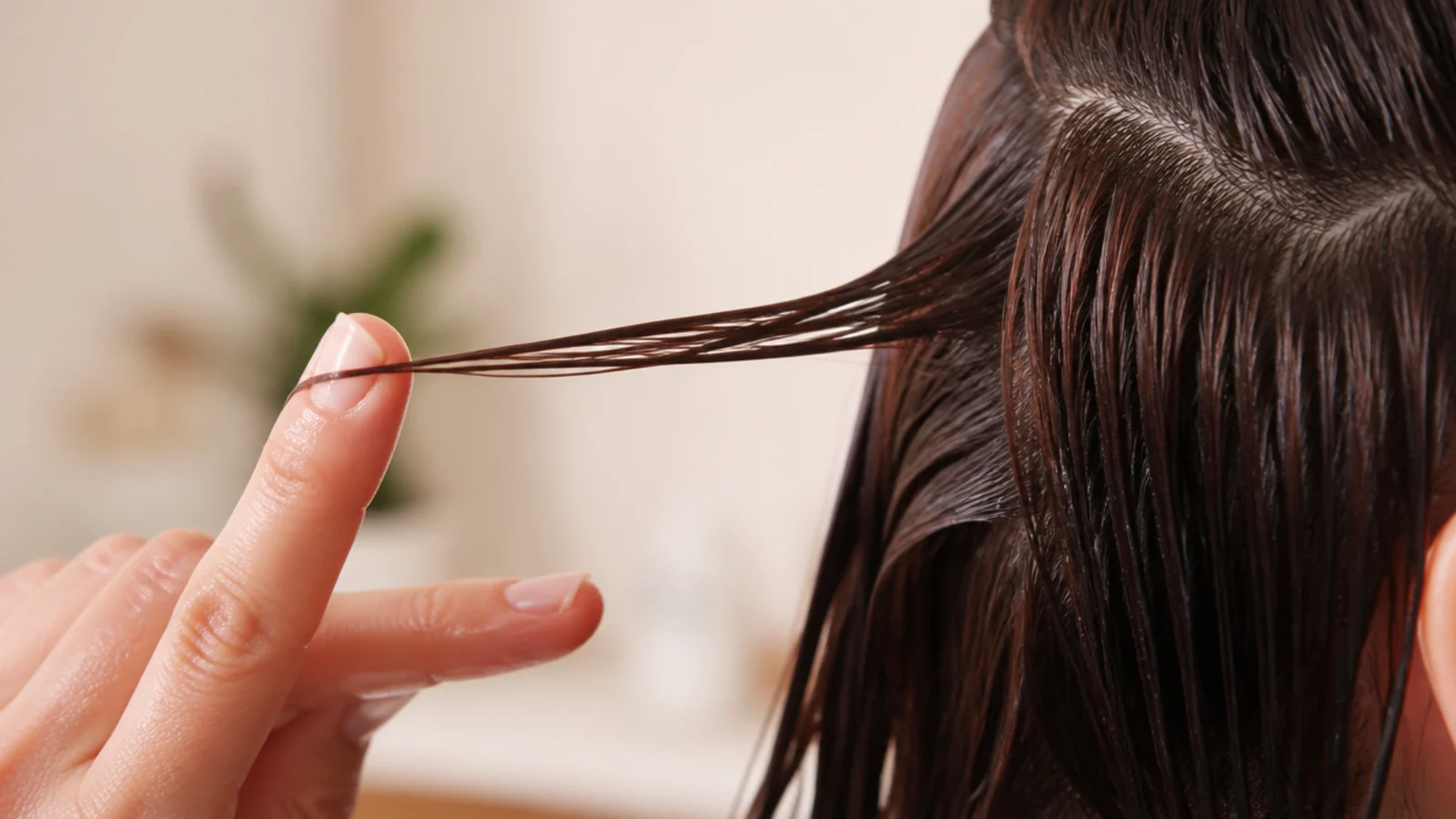
Pull one wet strand gently. Hair that stretches and springs back is balanced, hair that stretches and stays stretched wants protein, and hair that snaps on the first pull wants moisture. Thirty seconds of this tells you more than any label and stops you stacking protein onto hair already stiff with it.
11. Protein in the Diet
Hair is keratin, and the body treats it as the least urgent thing it builds, so under a shortfall the follicle is starved long before anything vital is. Spreading adequate protein across the day rather than loading it into one evening meal keeps supply steady for a tissue that never stops working.

12. Ferritin Test
Ferritin measures stored iron rather than circulating iron, and hair loss frequently appears while a standard blood count still reads normal. Many dermatologists want to see ferritin sitting comfortably above thirty rather than merely inside the reference range. Ask for the number itself, not for reassurance that it is fine.

13. Biotin Supplement
Biotin only helps hair if you are genuinely deficient in it, and real deficiency is rare outside specific medical conditions. It also interferes with common laboratory assays for thyroid and cardiac markers, which can produce a badly misleading result. Take it if a doctor found a reason to, and tell any lab that you do.

14. Microfiber Towel
Wet hair is swollen and at its weakest, and a terry towel rubbed over it lifts every cuticle scale it catches. A microfiber towel absorbs by contact rather than by abrasion, so you squeeze instead of scrubbing. The frizz most people blame on their hair type is often just the towel.

15. Satin Scrunchies
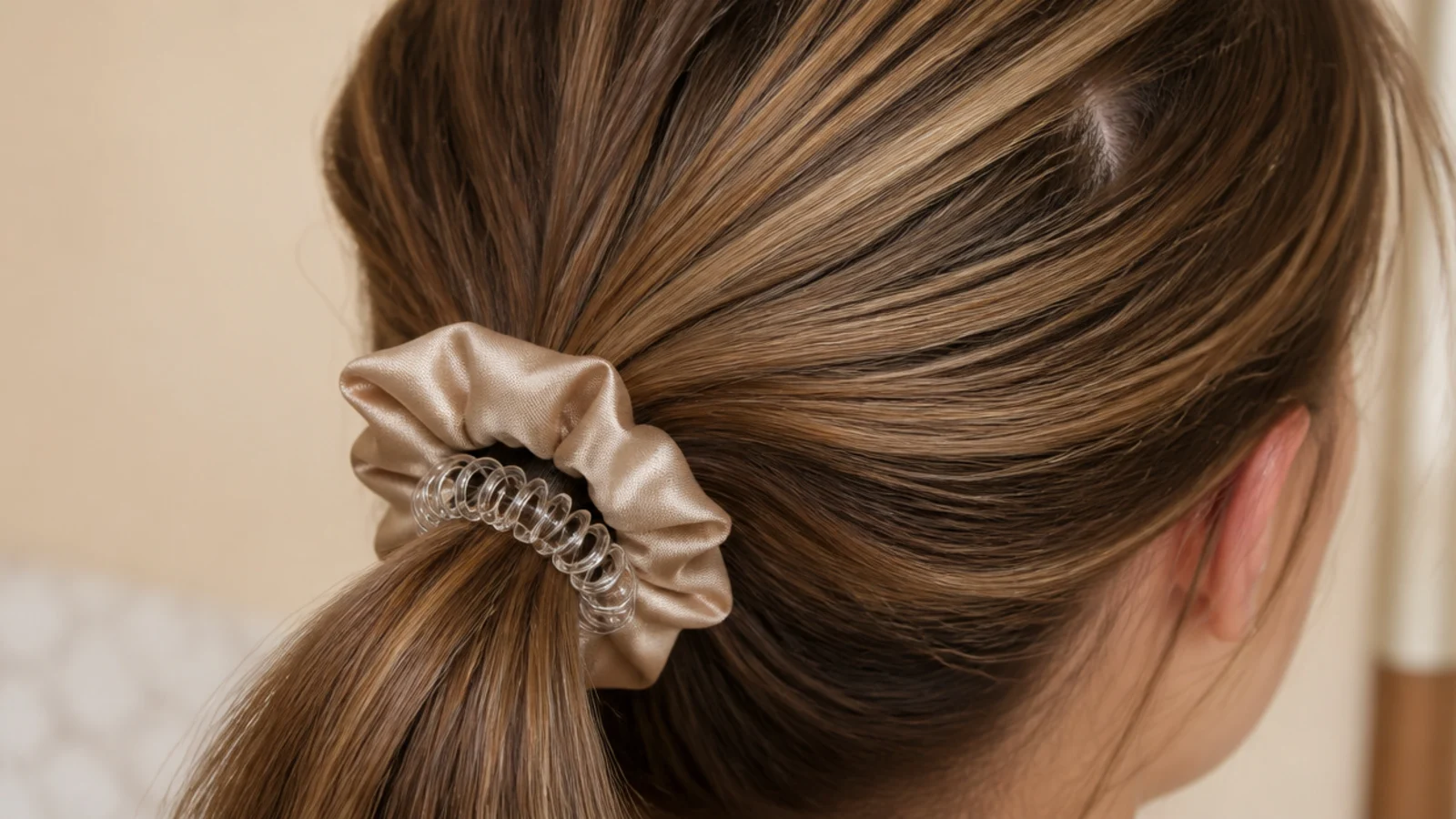
A thin elastic concentrates its whole grip on one narrow band of hair, which is exactly where mid length snapping happens. A wide satin scrunchie spreads the same hold across a broader area and slides rather than gripping, so strands slip out instead of folding sharply and breaking.
16. Lukewarm Rinse
Hot water swells the shaft and lifts the cuticle, and hair left in that state dries rough and tangles more on the way out. Finishing on lukewarm or cool water brings the swelling down before you leave the shower, which leaves a smoother surface and a far less violent comb through.
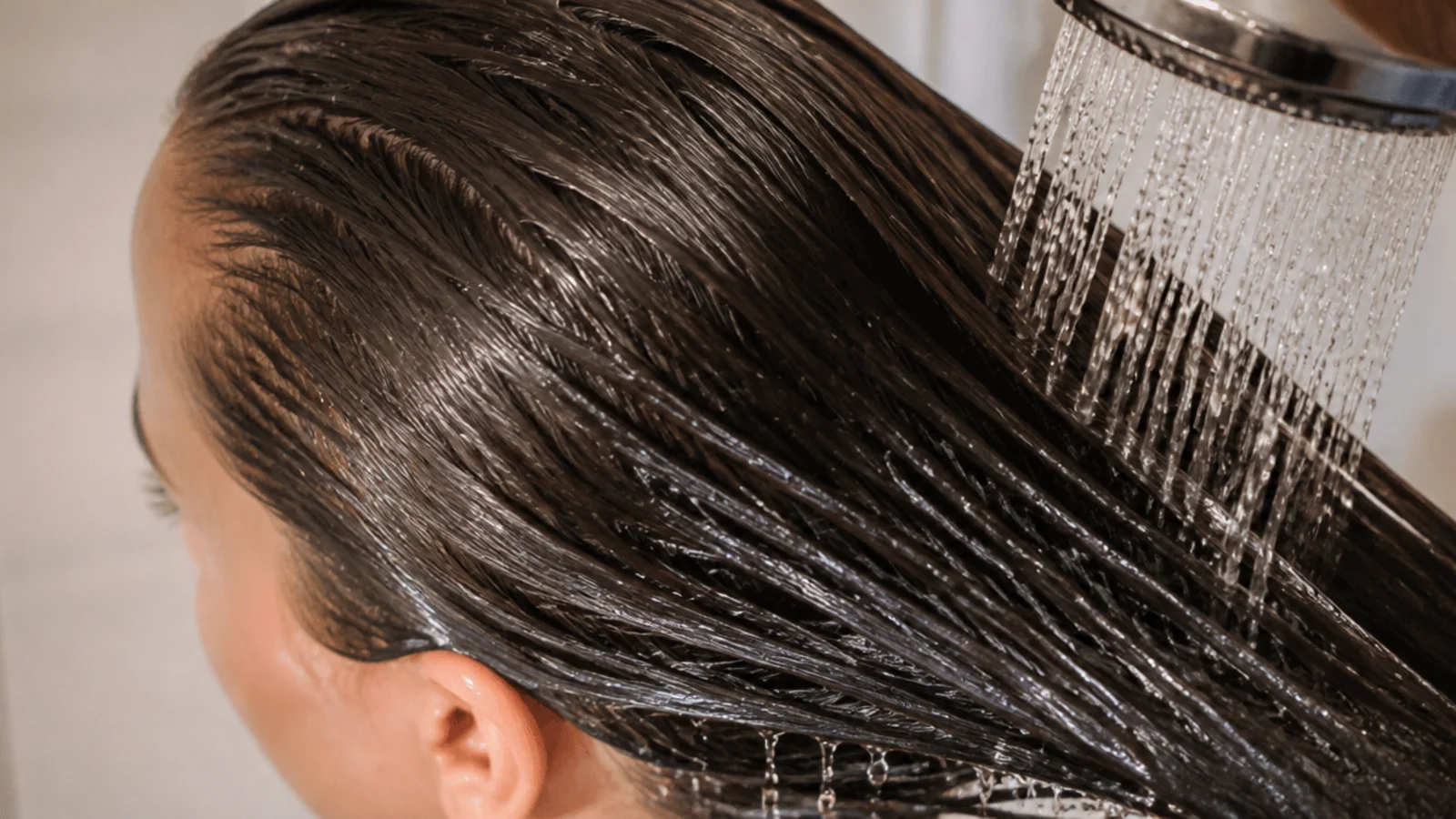
17. Loose Low Ponytail
Height is what does the damage, because a high ponytail loads the hairline and the crown, and those are the follicles least able to survive repeated tension. Sitting the tie low and leaving it slack spreads the weight across the whole head and keeps the pull away from the edges.
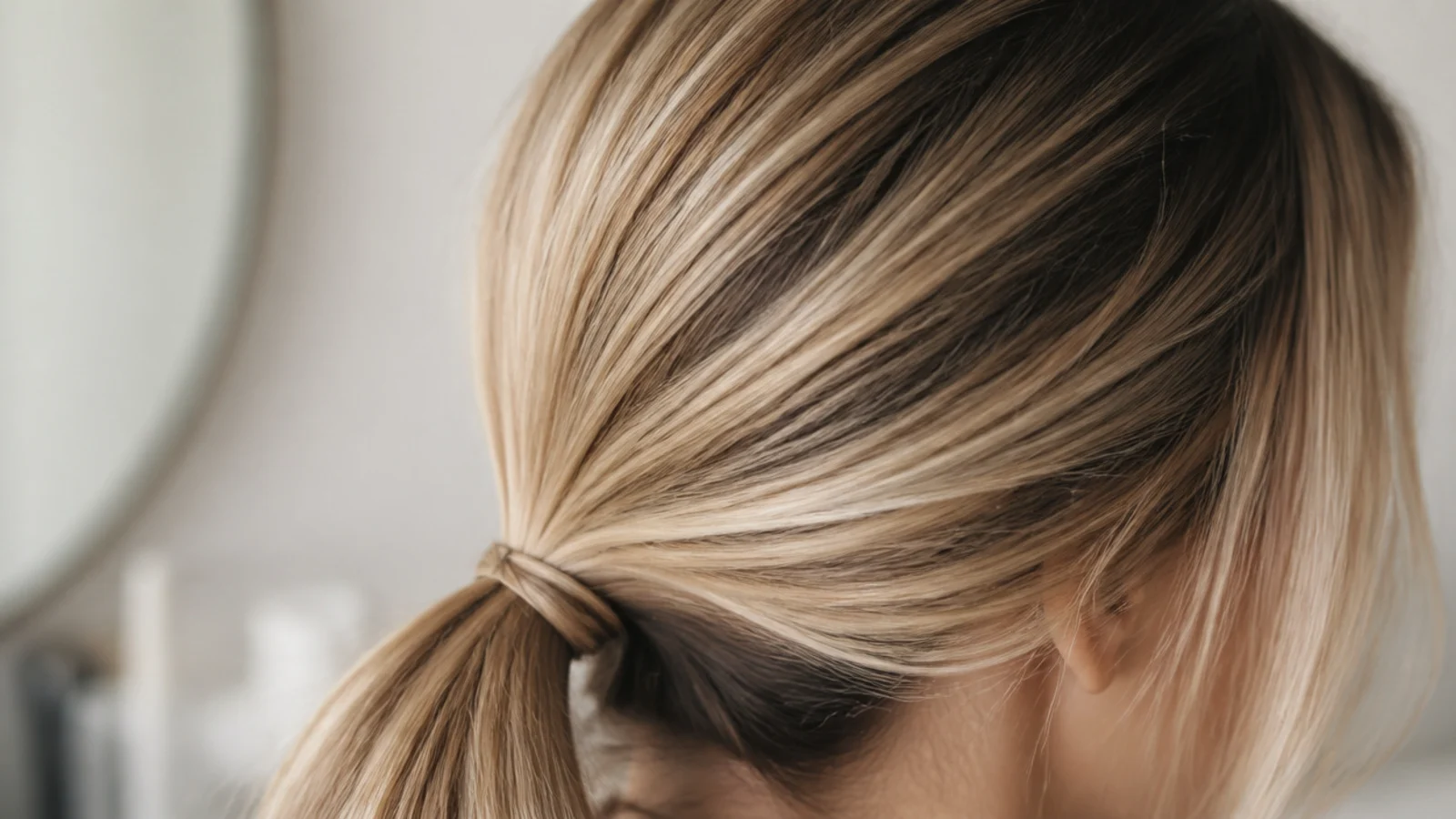
18. Pre Swim Rinse
Hair absorbs water like a sponge and fills with whatever it meets first. Saturating it with clean water and a little conditioner before you get in leaves far less capacity for chlorinated pool water, which is the thing that strips colour and roughens the cuticle over a summer of swimming.
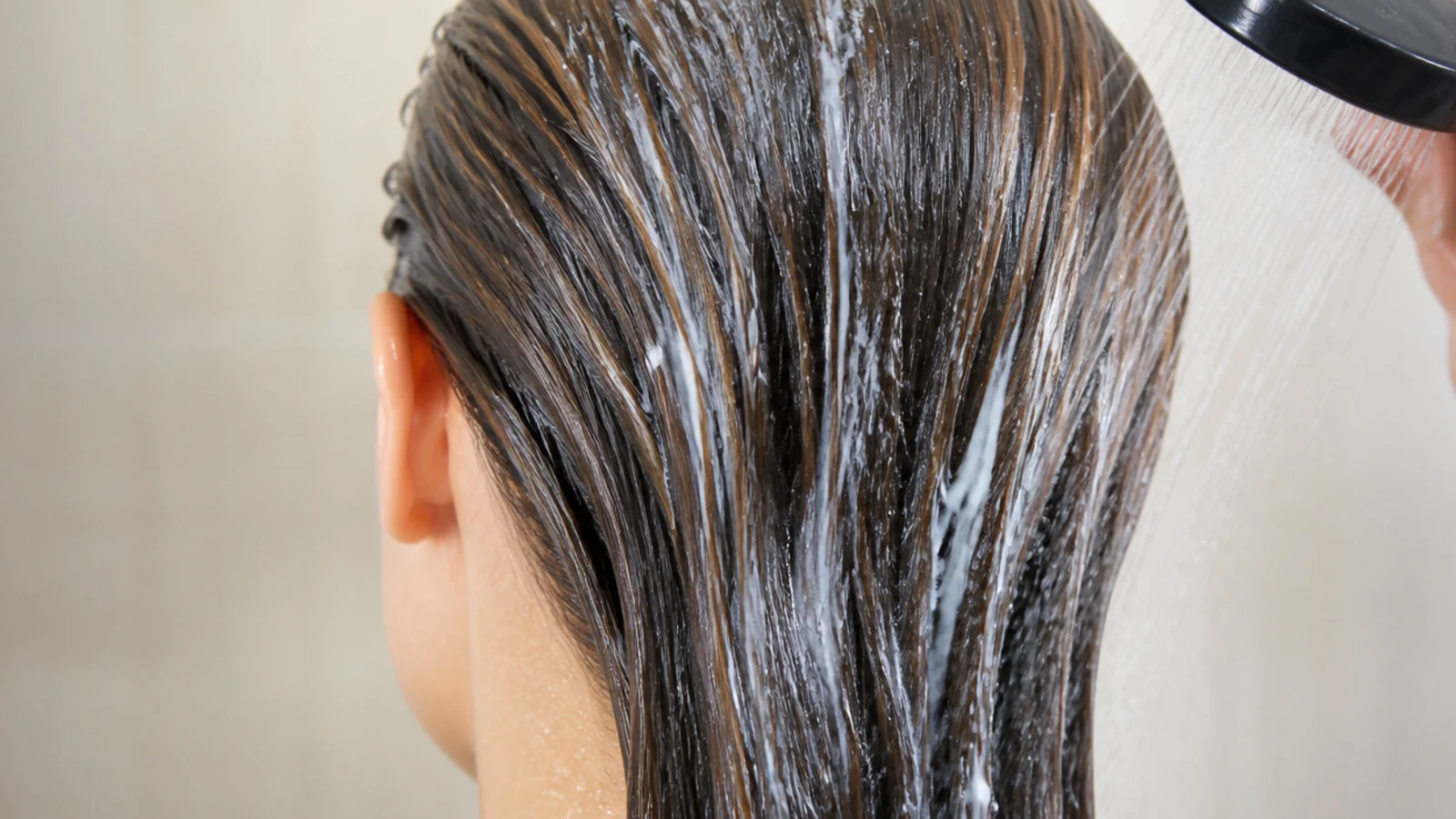
19. Minoxidil for Thinning
Minoxidil is the only over the counter treatment with regulatory approval for pattern thinning, and it works by extending the growing phase rather than by feeding the follicle. Expect an initial shed, expect three to six months before anything is visible, and expect the gain to unwind if you stop.
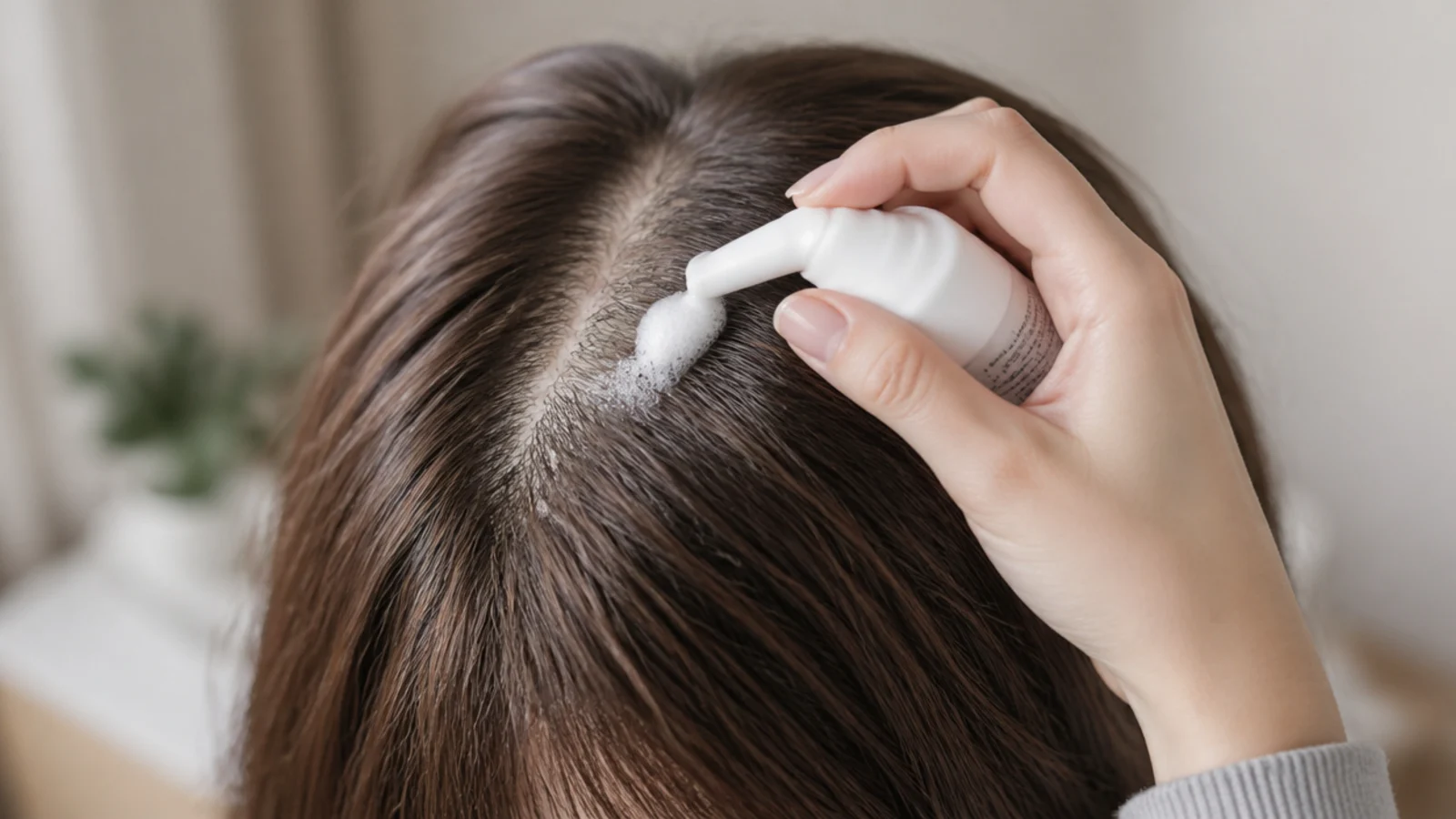
20. Length Check Photos
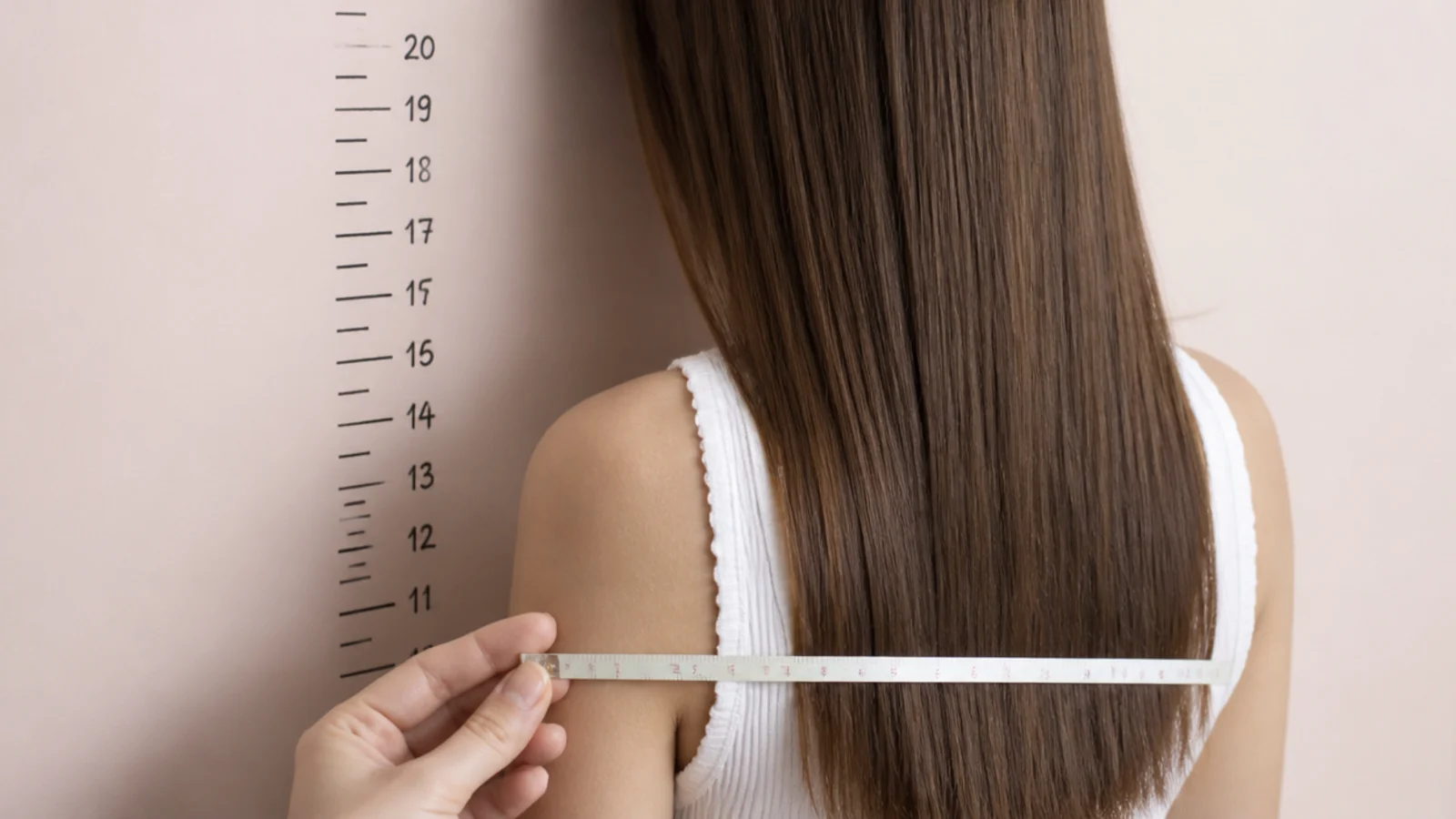
Half an inch a month is invisible day to day, which is why people abandon a working routine at week six. Take one photograph a month in the same light, the same top and with the hair pulled straight, then compare the files rather than trusting the mirror.
Final Thoughts
Write down what you are actually changing and then leave it alone for six months. Hair leaves the scalp at half an inch a month whether the routine is good or bad, so six months is the shortest window in which three inches of new growth exists to be judged at all — and a routine swapped out at week four was never tested.
Then judge it at the ends rather than at the ruler. The measurable win of everything above is that a strand you grew last spring is still attached this spring, and retention is the only variable in this whole subject that answers to effort. More in Hair Care. See also the at home version and the 4c version.