25 Hailey Bieber Hair Looks Worth Copying
Twenty-five looks in the glossy, low-contrast style this hair is known for, and the thing that actually makes it work — the polish lives in the colour and the cut, not in the styling. You cannot style your way there.
In this article · 32
- What Makes This Look Work
- How to Choose Yours
- The 25 Looks
- 1. Glossy Blunt Lob
- 2. Low-Contrast Brunette
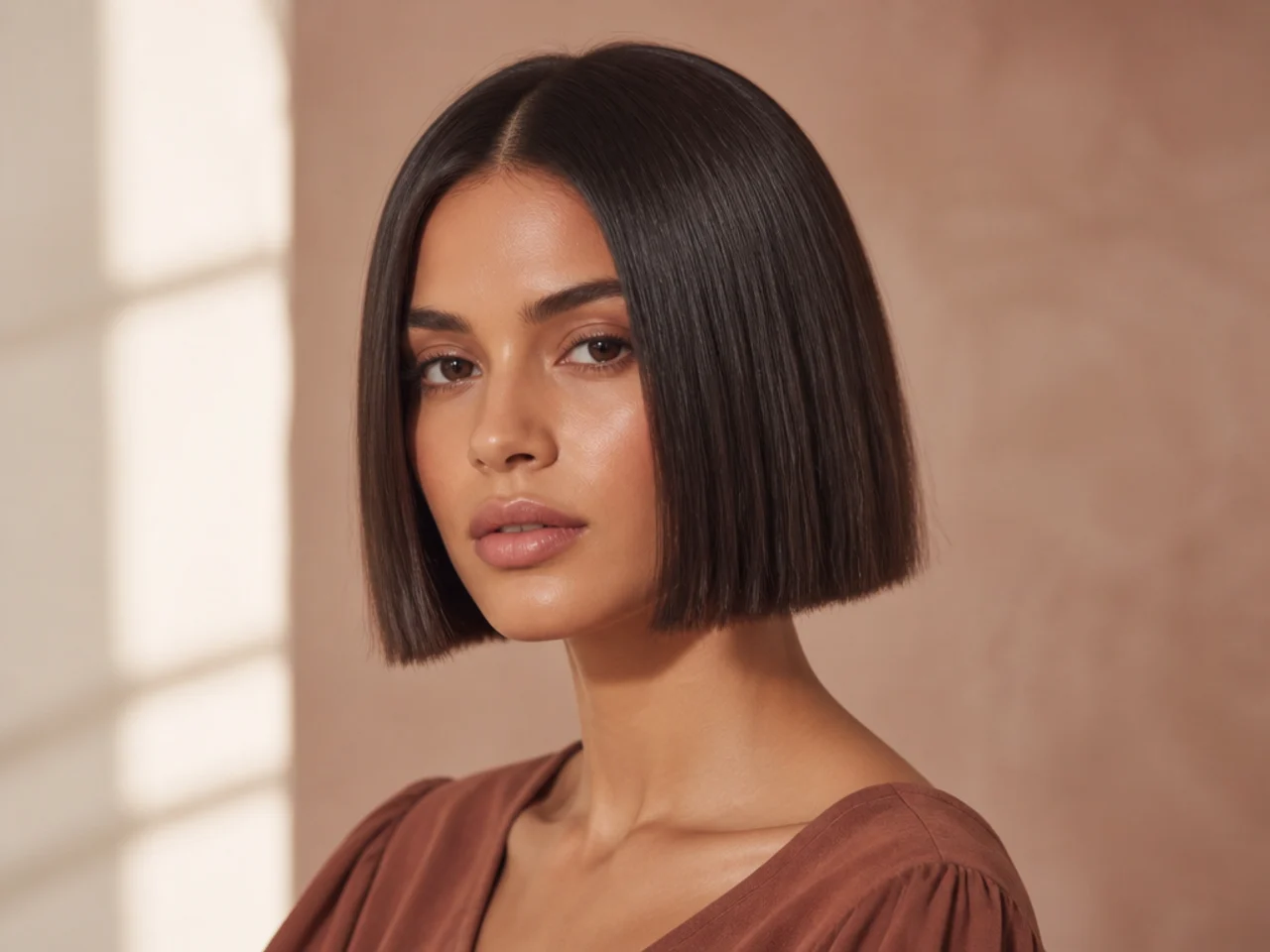
- 3. Blunt Bob with a Centre Part
- 4. Long Hair with Minimal Layers
- 5. Air-Dried Undone Texture
- 6. Slicked-Back Low Bun
- 7. Sleek Middle-Parted Straight
- 8. Soft Undone Waves
- 9. Deep Espresso Brunette
- 10. Cool Toned Brunette
- 11. Warm Chestnut
- 12. Bronde with a Deep Root
- 13. Blonde with Low Contrast
- 14. High Slicked Ponytail
- 15. Low Ponytail with a Centre Part
- 16. Half-Up with a Claw Clip
- 17. Wet-Look Slick
- 18. Blunt Lob with a Deep Side Part
- 19. Tucked-Behind-Ears Lob
- 20. Glossed Dark Chocolate
- 21. Shoulder-Length Blunt Cut
- 22. Long Blunt Ends
- 23. Soft Bend with a Flat Iron
- 24. Middle-Parted Waves with a Blunt Line
- 25. Heavily Layered Hair for Comparison
- Styling and Upkeep
- Mistakes to Avoid
- FAQ
- Final Thoughts
This is one of the most-saved hair aesthetics there is, and the most commonly misunderstood, because the visible part is the least important part.
The polish lives in the colour and the cut, not the styling. A low-contrast colour with very little tonal variation, cut with a strong unbroken perimeter, and then almost nothing done to it. That is the whole formula.
Which means you cannot style your way there. Adding more heat, more product and more shaping moves you further away, because the look depends on light landing evenly on a clean shape.
What Makes This Look Work
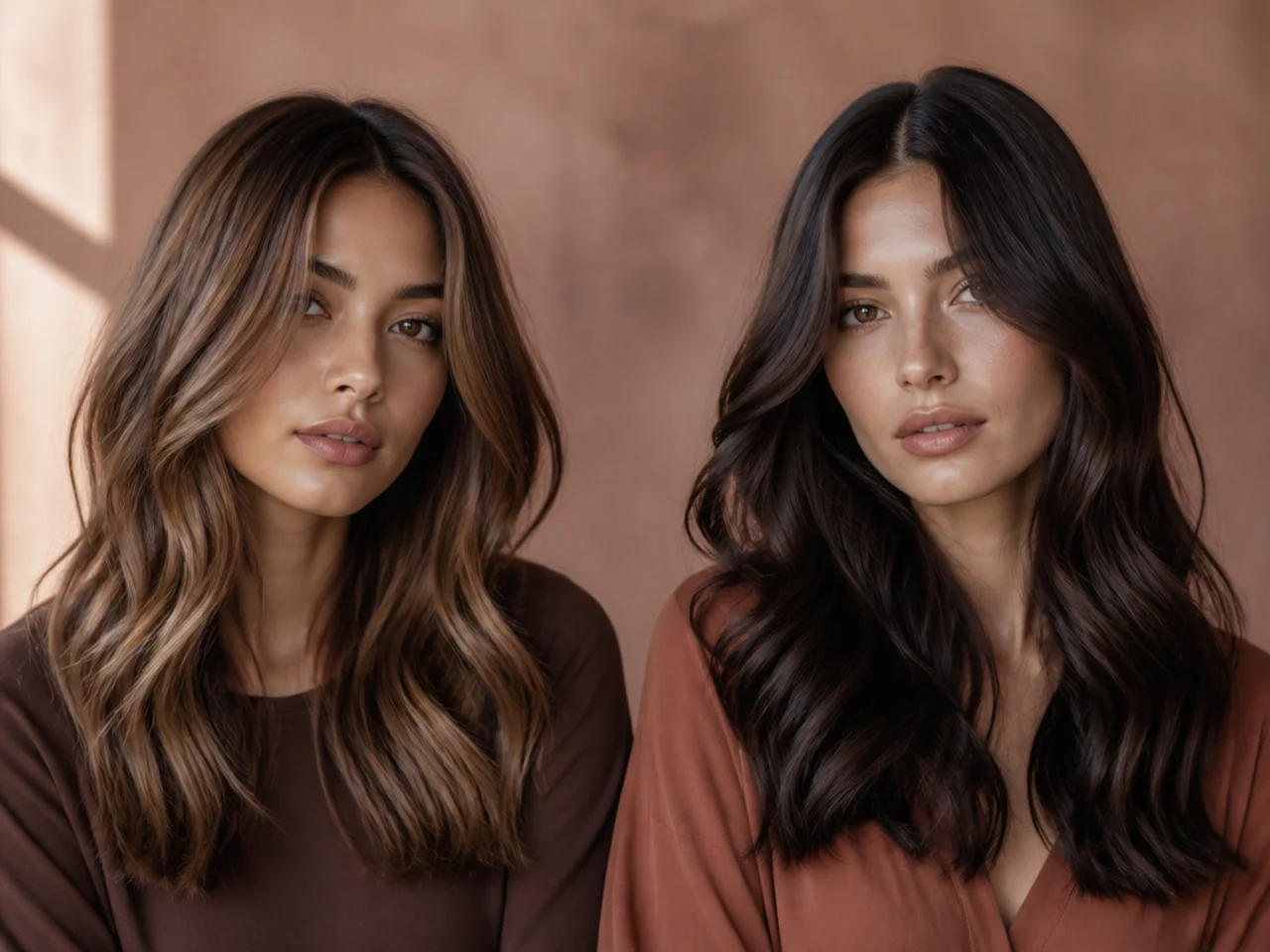
Low contrast is the colour rule. Very little difference between the lightest and darkest pieces. High-contrast highlighting does the opposite of this look, however expensive it is.
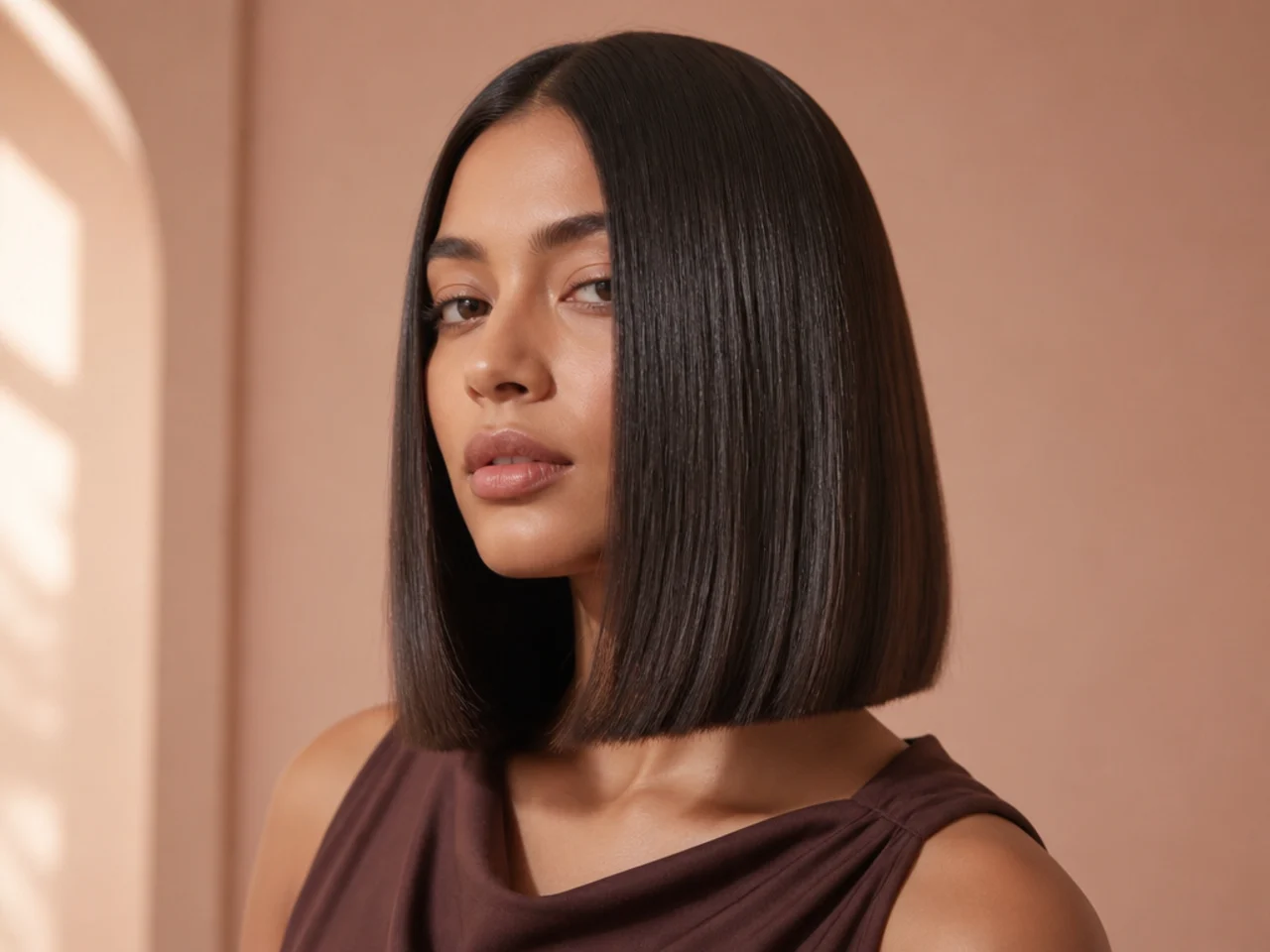
A blunt perimeter reflects light as one surface. Layers break the line into many small surfaces, which scatters light and kills the gloss.
Depth at the root. A slightly deeper root is what makes the mid-lengths read rich rather than flat.
Minimal styling, deliberately. Air-dried or roughly blow-dried. The undone texture is what stops the polish reading as stiff.
How to Choose Yours
Ask for low contrast, in those words. It is a colour instruction most colourists will understand immediately, and it is the opposite of what people usually request.
Choose a cut with a strong line. Blunt lob, blunt bob, or long with minimal layering. The line is doing half the work.
Keep a deeper root if you go lighter. Without it, lighter shades read washed out rather than glossy.
Budget for gloss treatments, not for styling tools. The finish is a colour service. That is where the effect actually comes from.
The 25 Looks
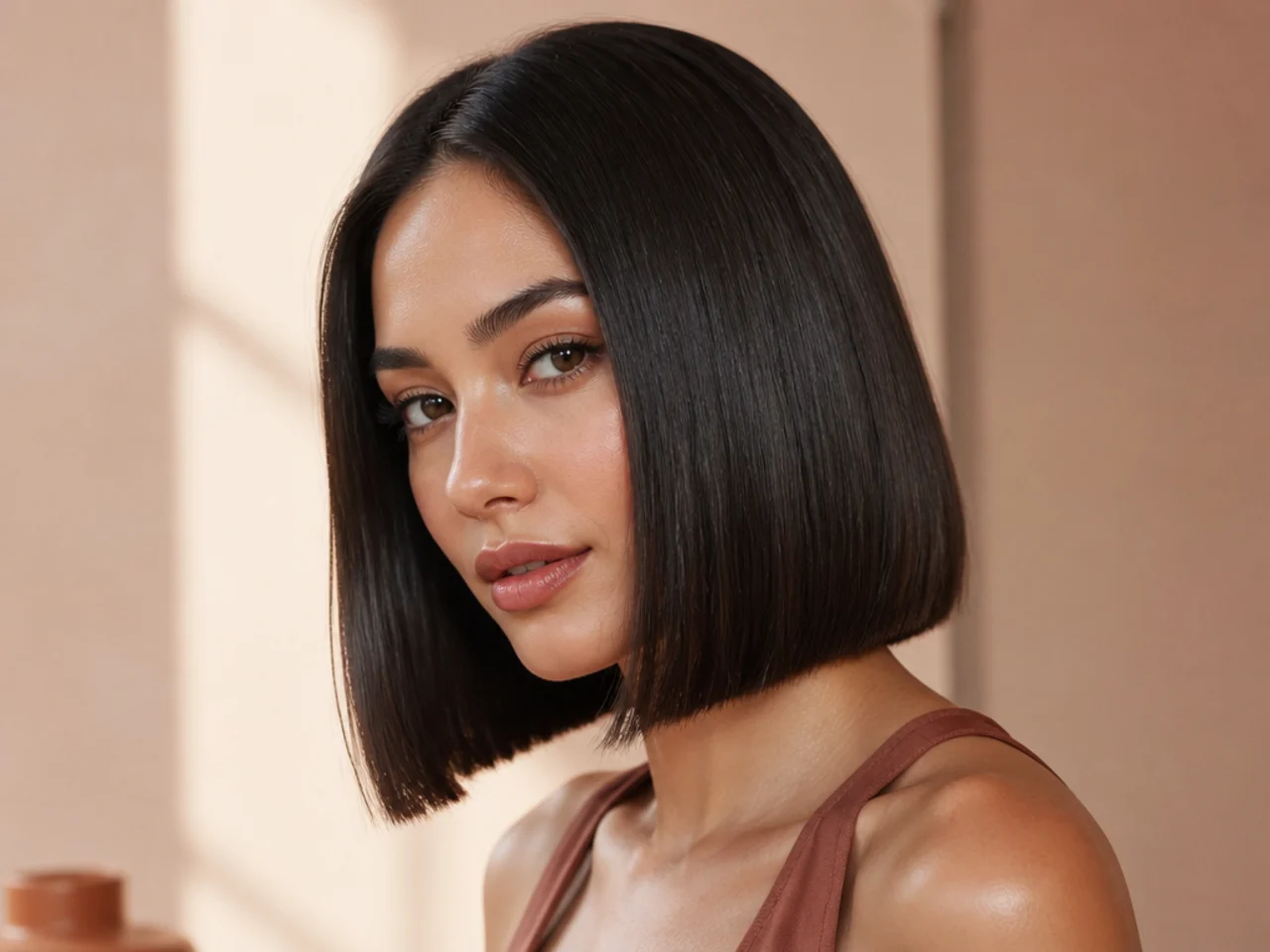
1. Glossy Blunt Lob
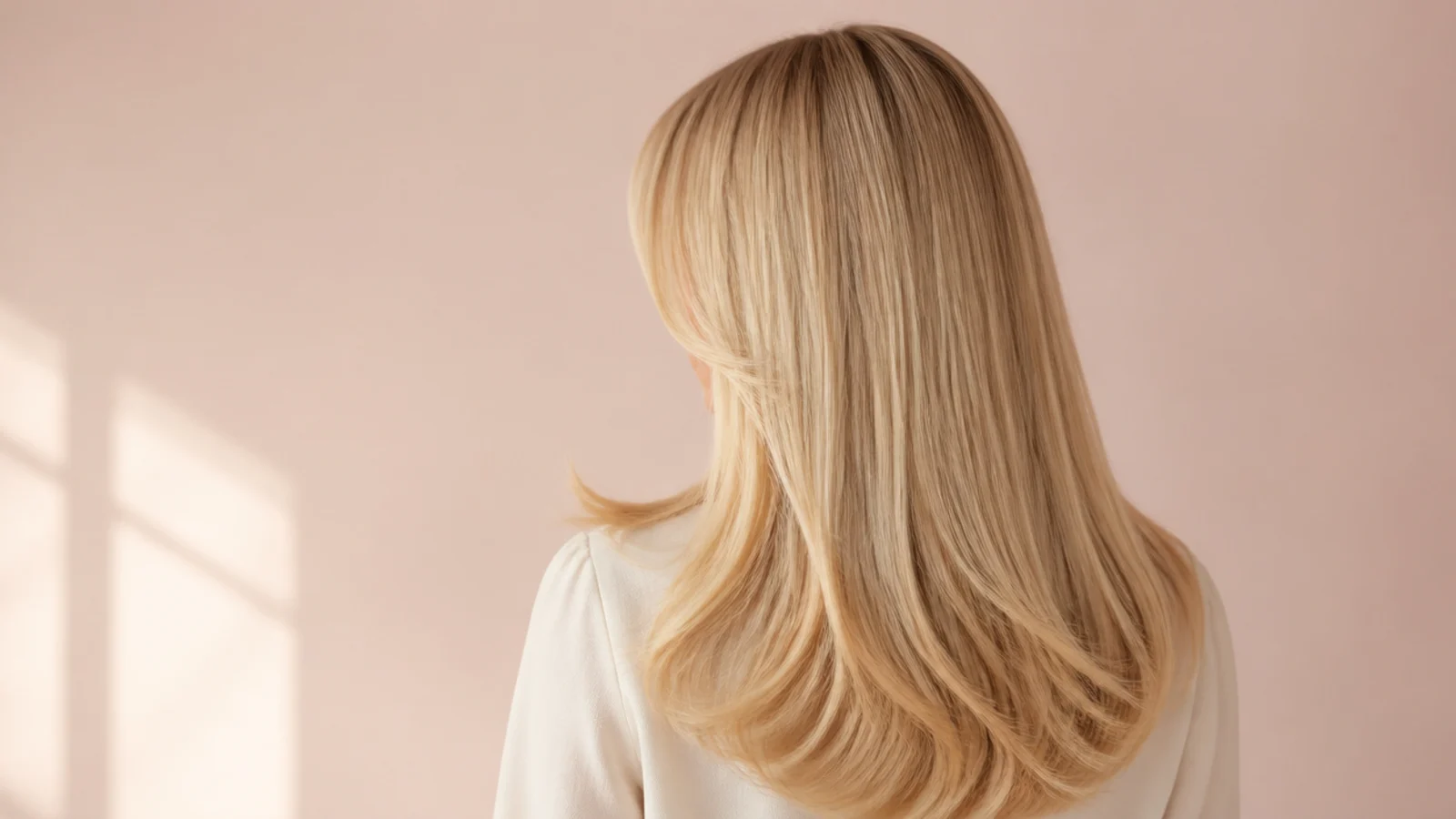
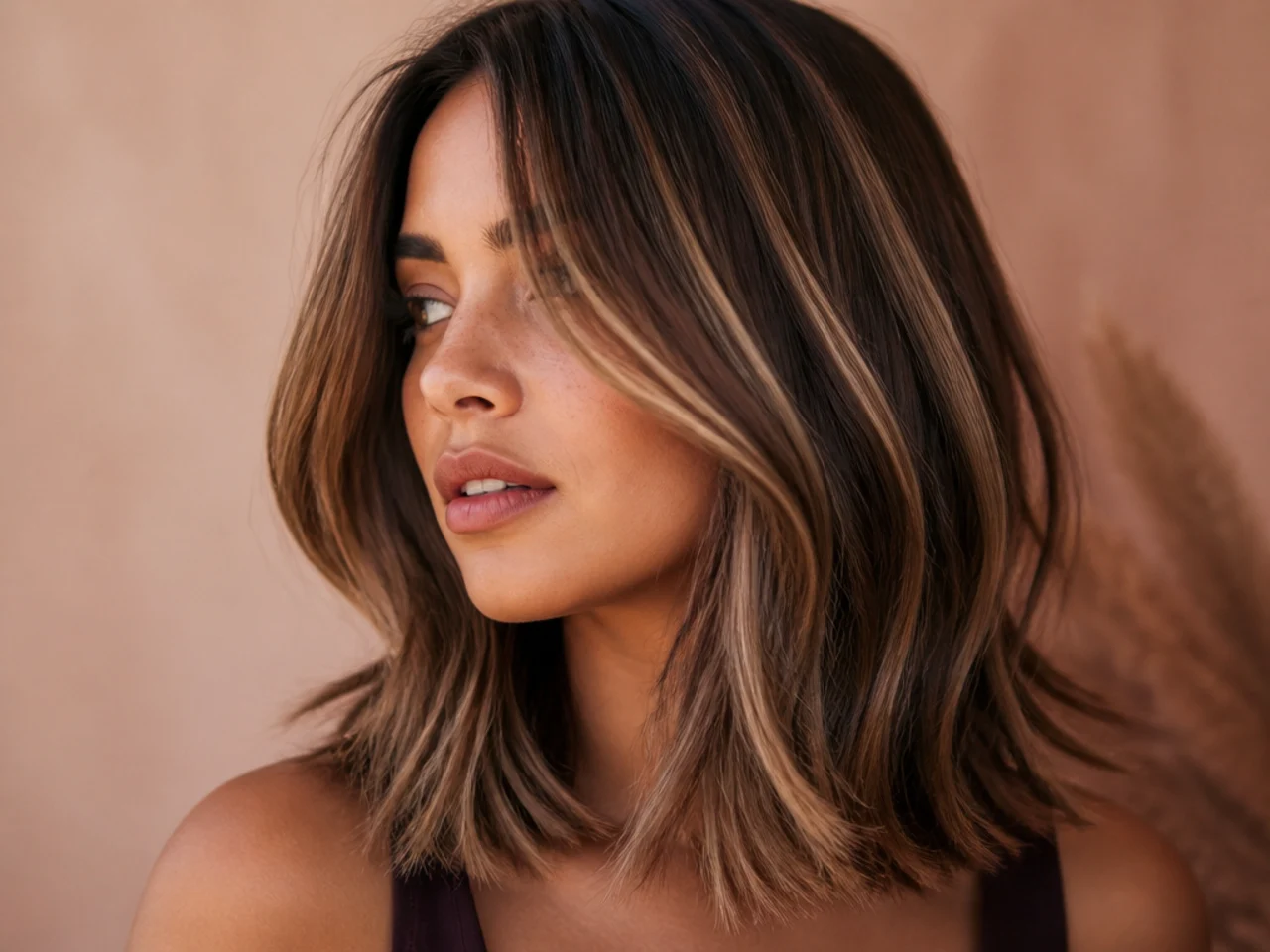
The signature shape. Collarbone length, one clean line. A blunt perimeter ends every strand at the same point, which is what gives light a single edge to catch.
2. Low-Contrast Brunette
Rich, even, with almost no visible highlighting. Evenness is the requirement rather than any particular shade — a streaky brunette fails this brief as completely as a streaky blonde.
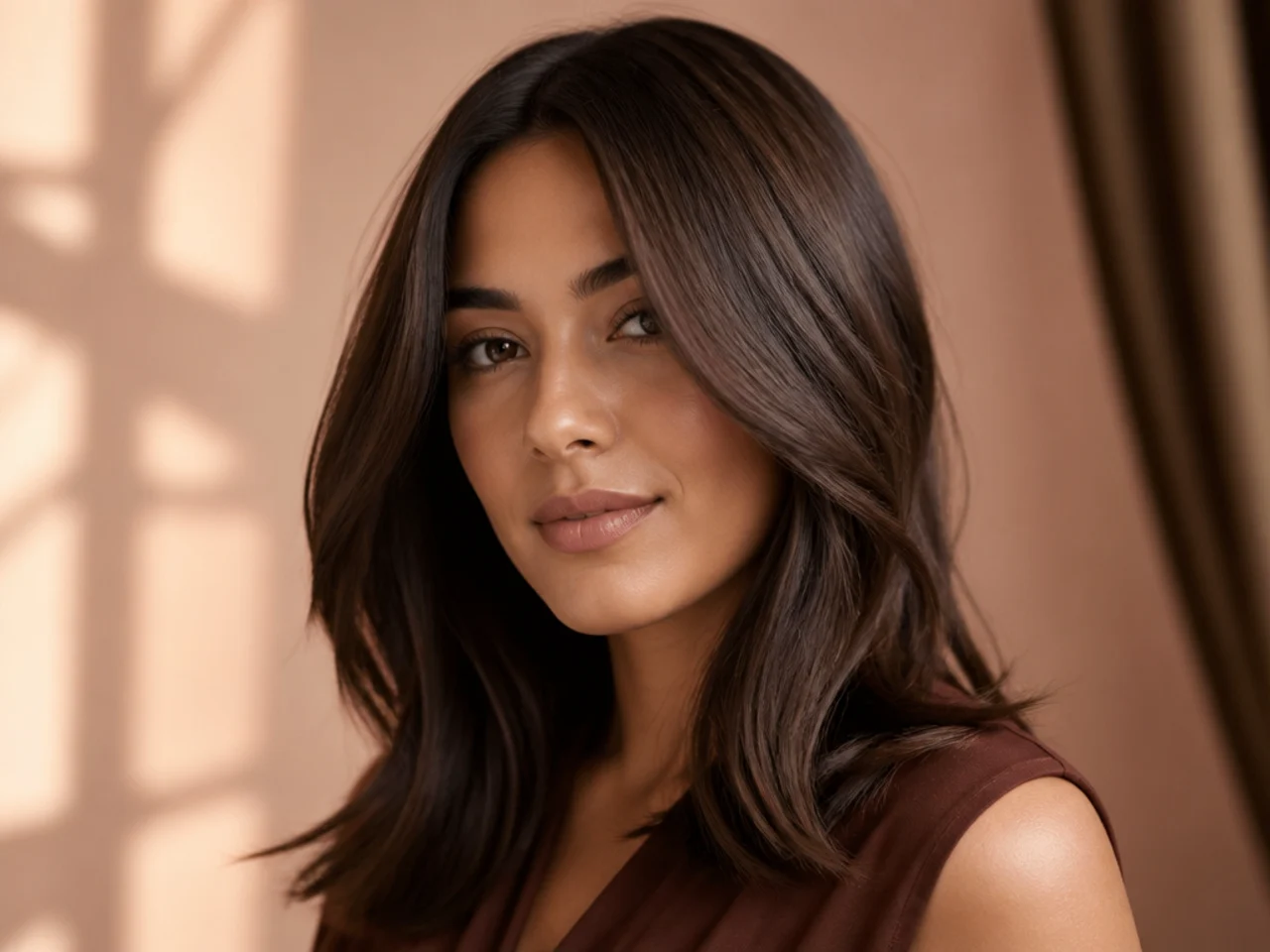
3. Blunt Bob with a Centre Part
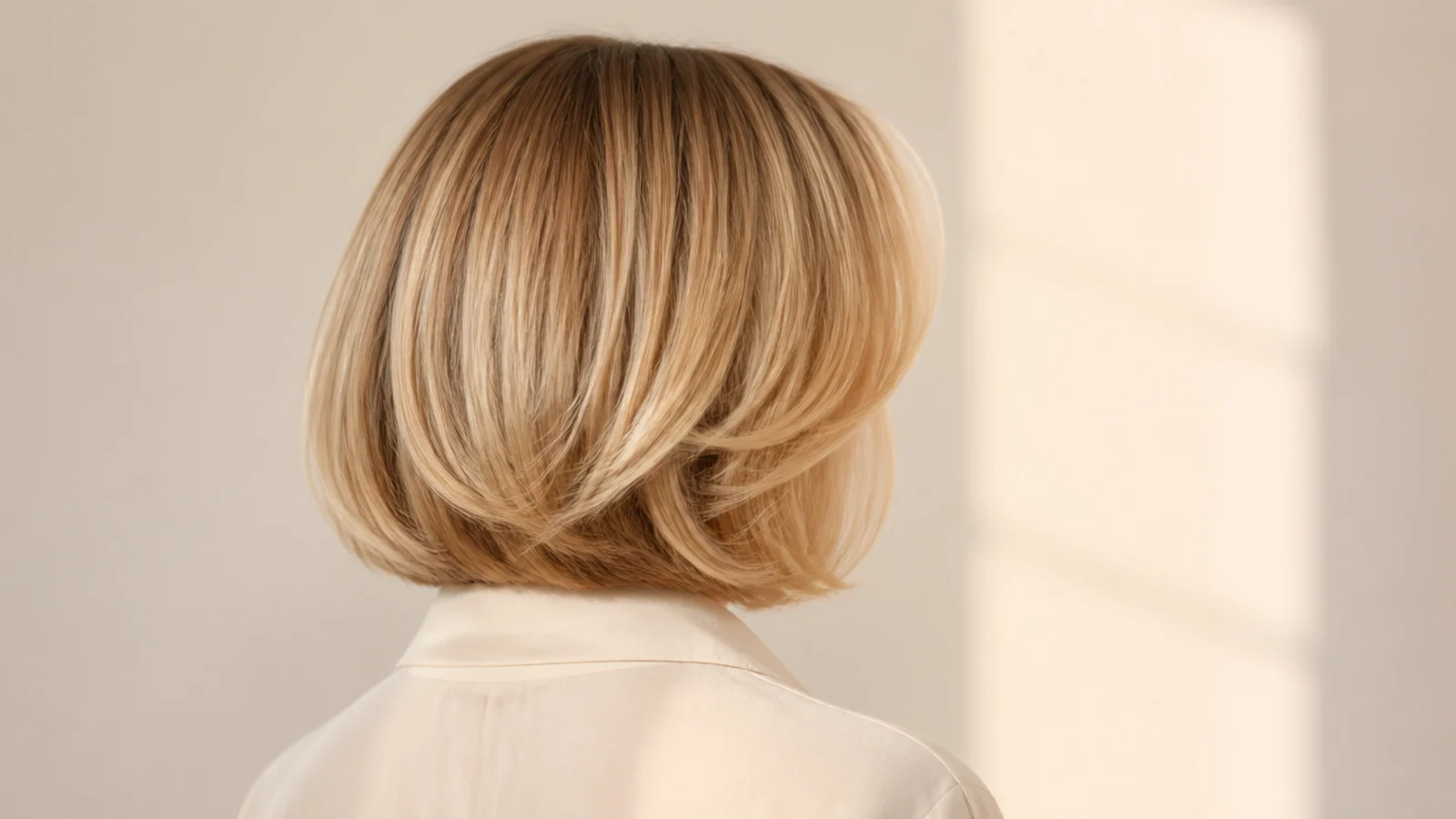
Shorter, sharper, and the most graphic version. Less length means the perimeter is a larger share of what you see, so the line carries more of the look.
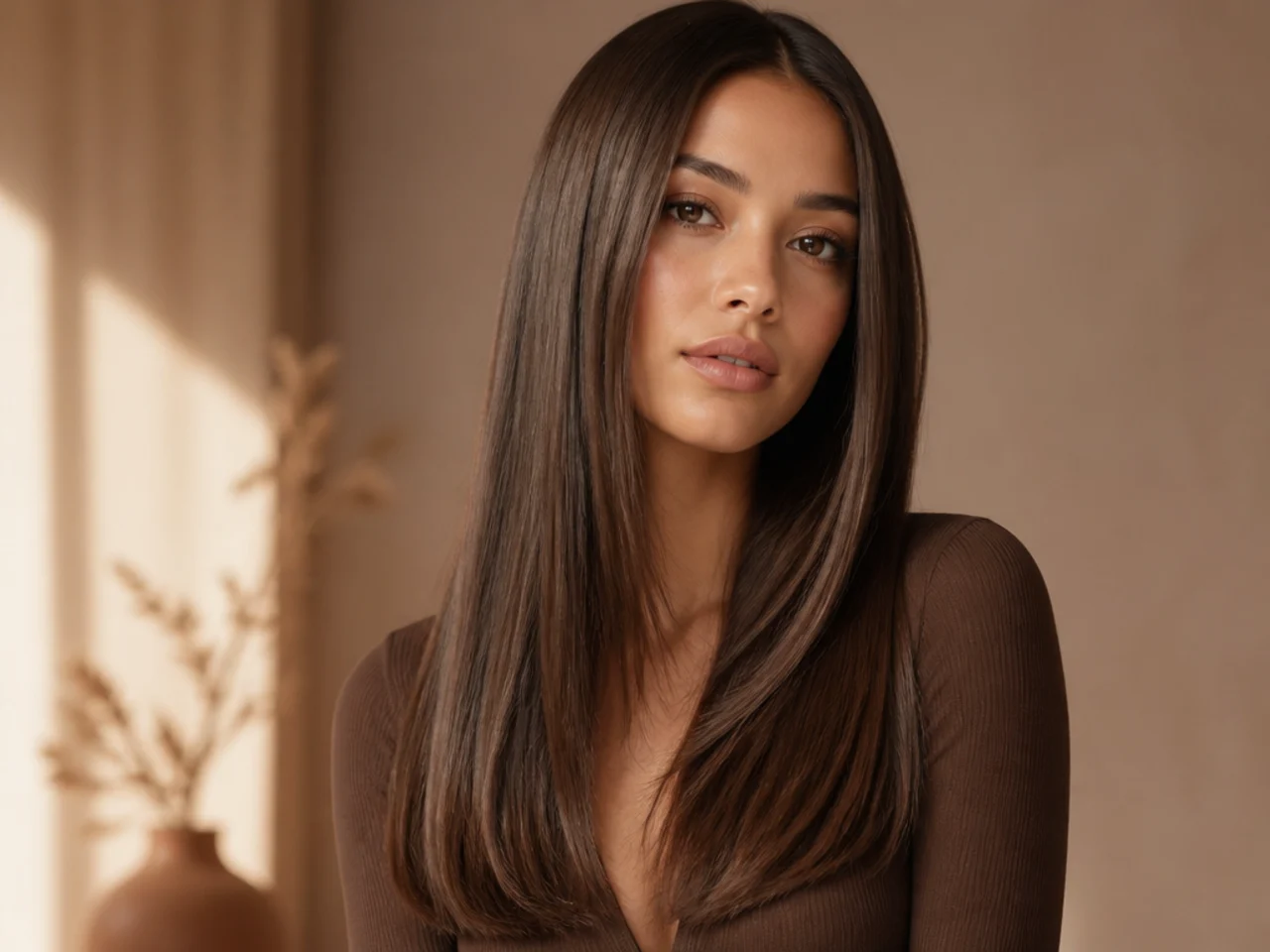
4. Long Hair with Minimal Layers
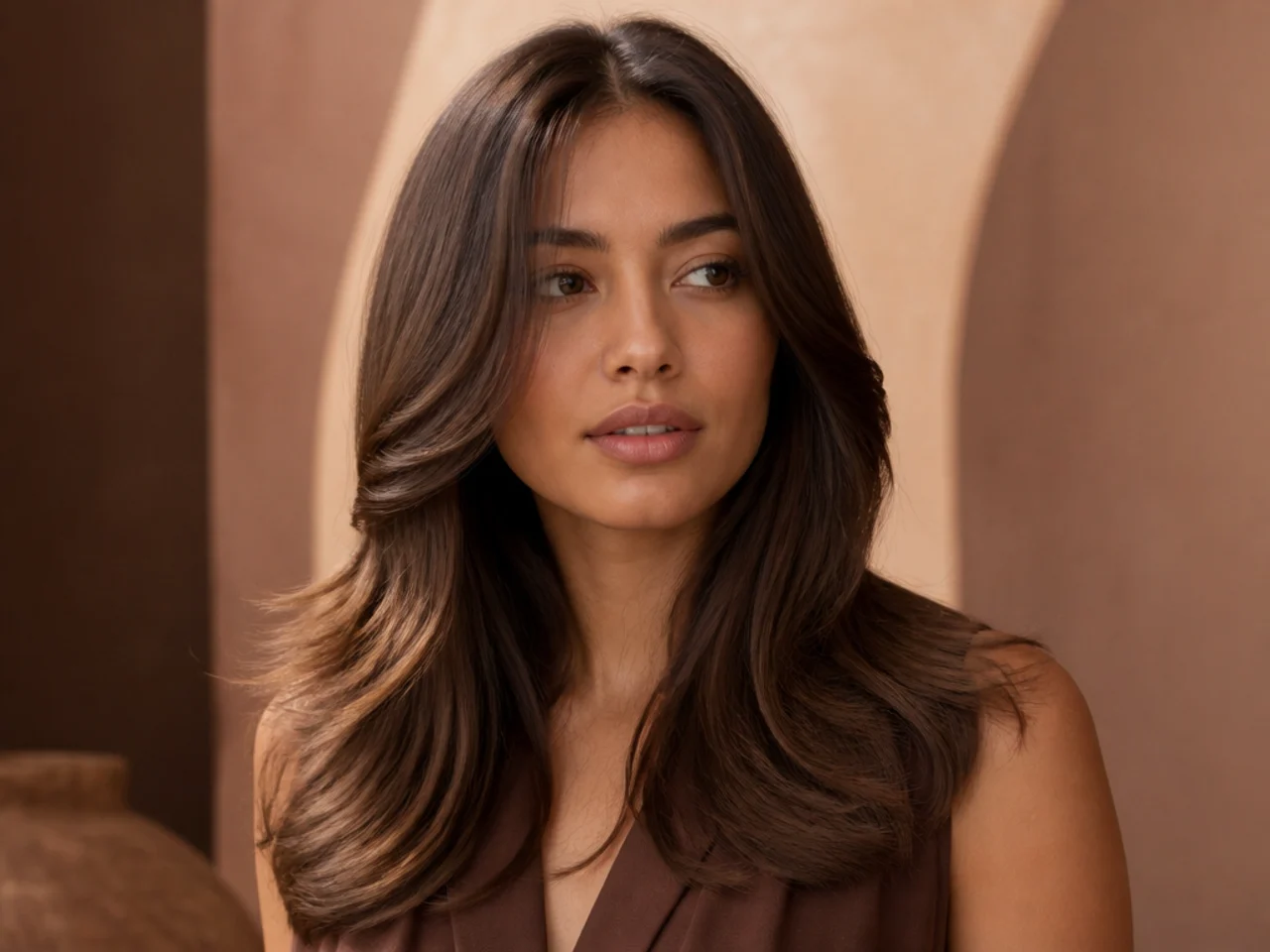
Length kept heavy so the perimeter stays intact. Every layer breaks the surface into sections, and sections are what scatter light instead of reflecting it.
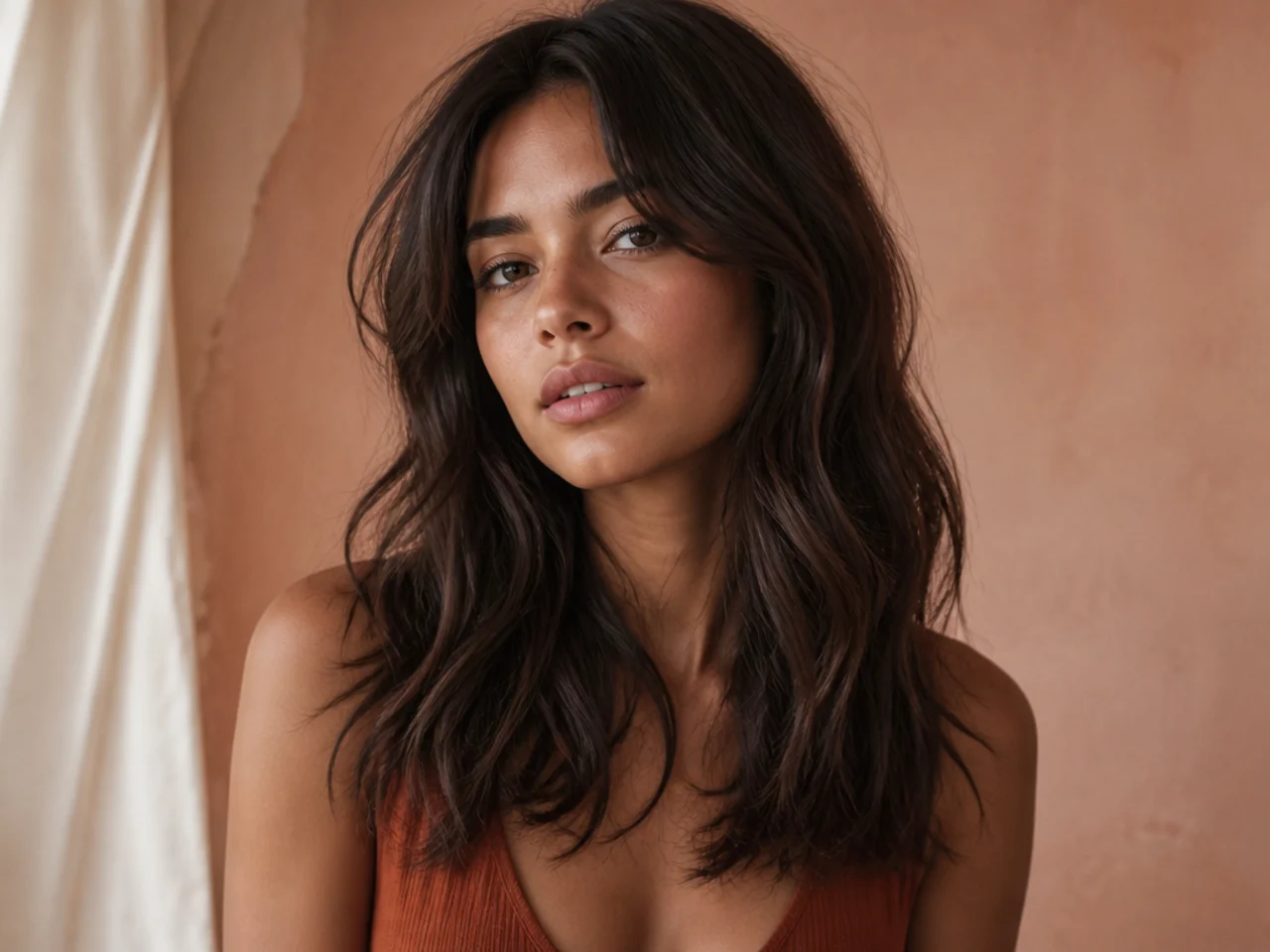
5. Air-Dried Undone Texture
Rough-dried and left alone. The intended finish. Untouched only works on a good cut, because the perimeter is the only thing holding the shape.
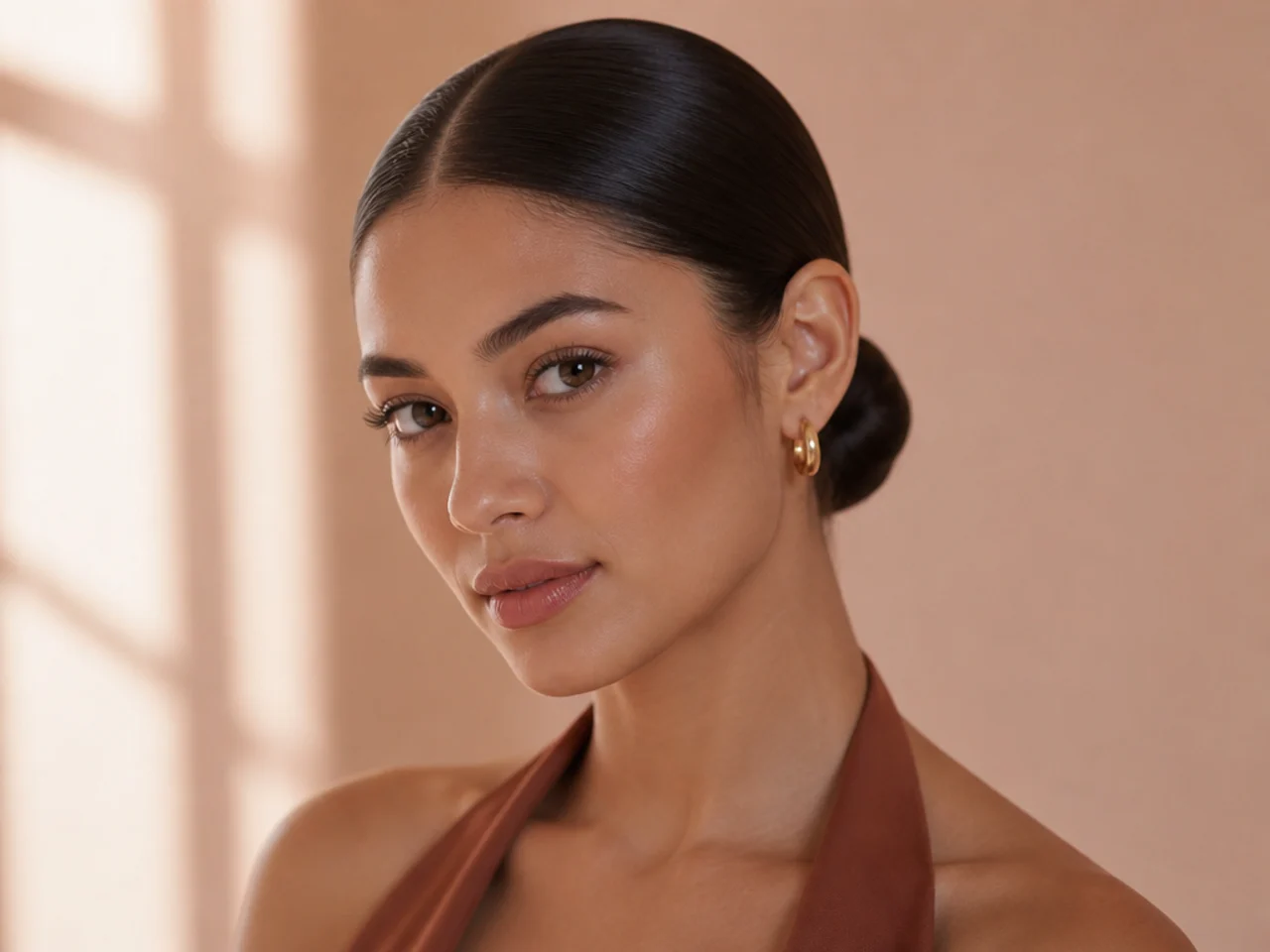
6. Slicked-Back Low Bun
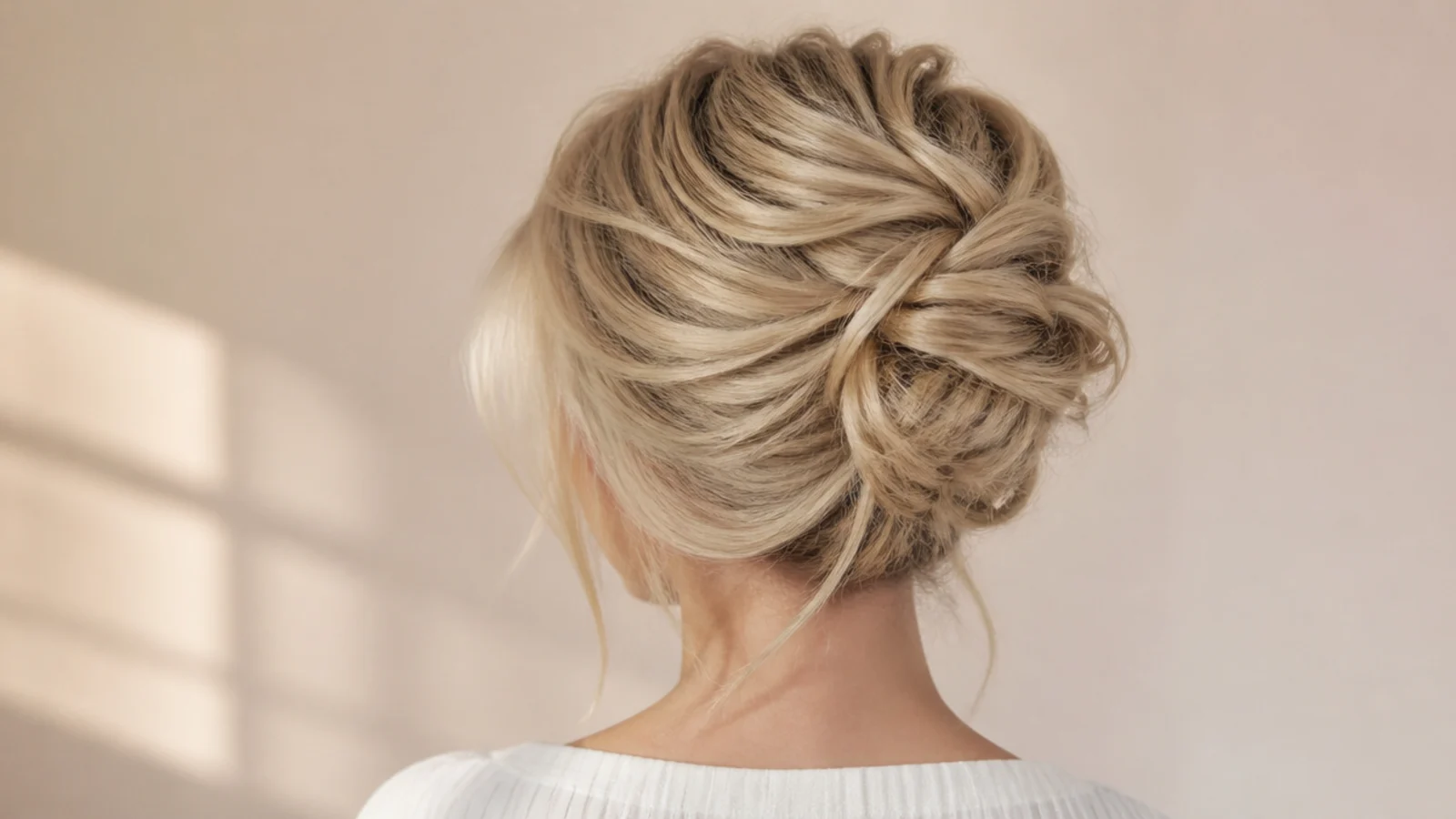
Everything back, nothing loose. Colour and shine on full display. A slicked surface shows the colour with no shadow anywhere, so an even deposit reads as glass.
7. Sleek Middle-Parted Straight
Straightened to a single flat surface. A flat cuticle reflects light in one direction, which is the entire mechanism behind the gloss.
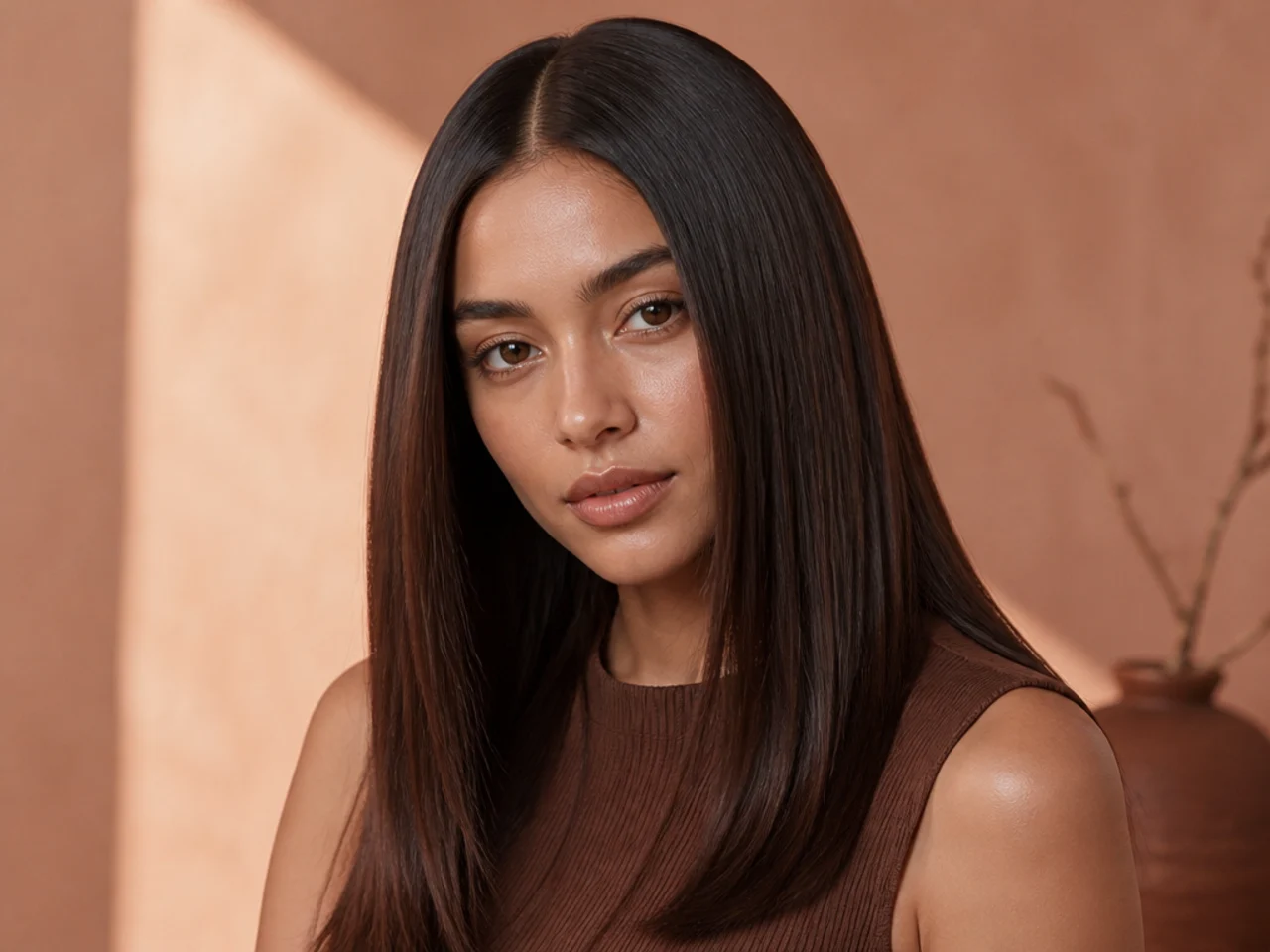
8. Soft Undone Waves
A loose bend rather than a defined curl. One bend, released before the ends — a bend that reaches the tip is a blowout, which is a different look entirely.
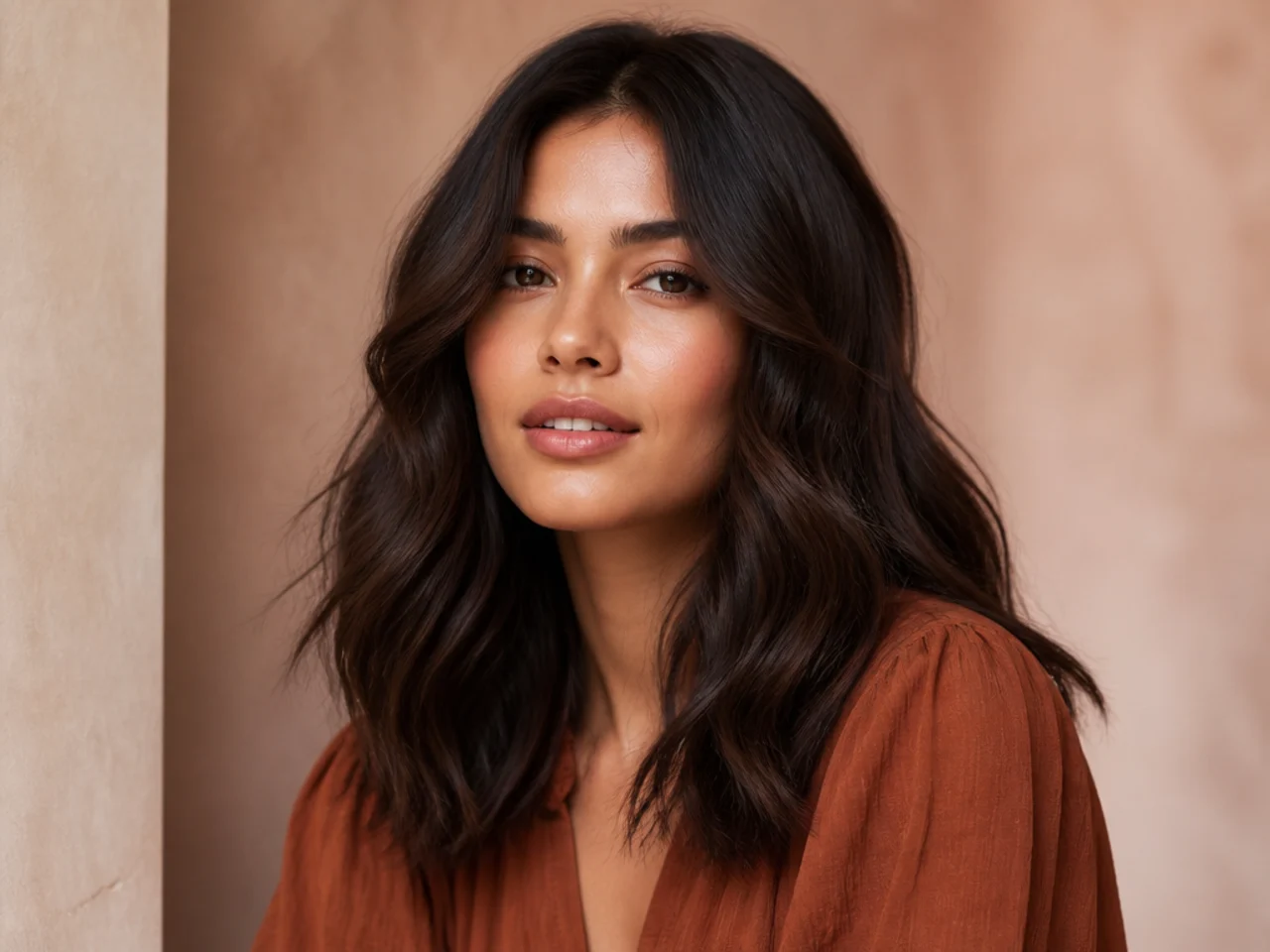
9. Deep Espresso Brunette
The darkest of the low-contrast options. At that depth there is no room left for variation to show, which does most of the evenness work for you.
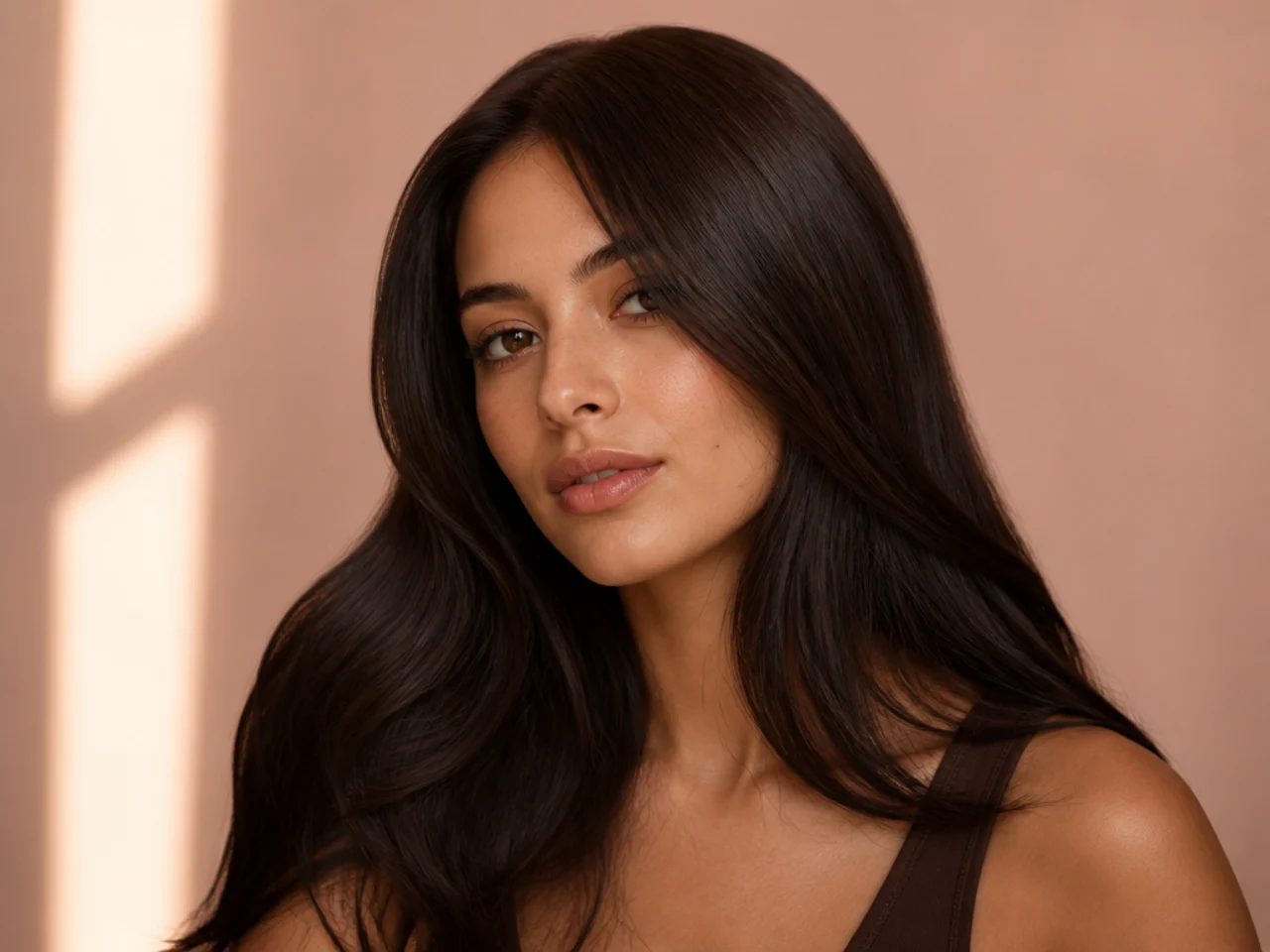
10. Cool Toned Brunette
Ashy rather than warm, and it reads very clean. Cool tones drift less than warm ones, so they hold the flat, even quality for longer.
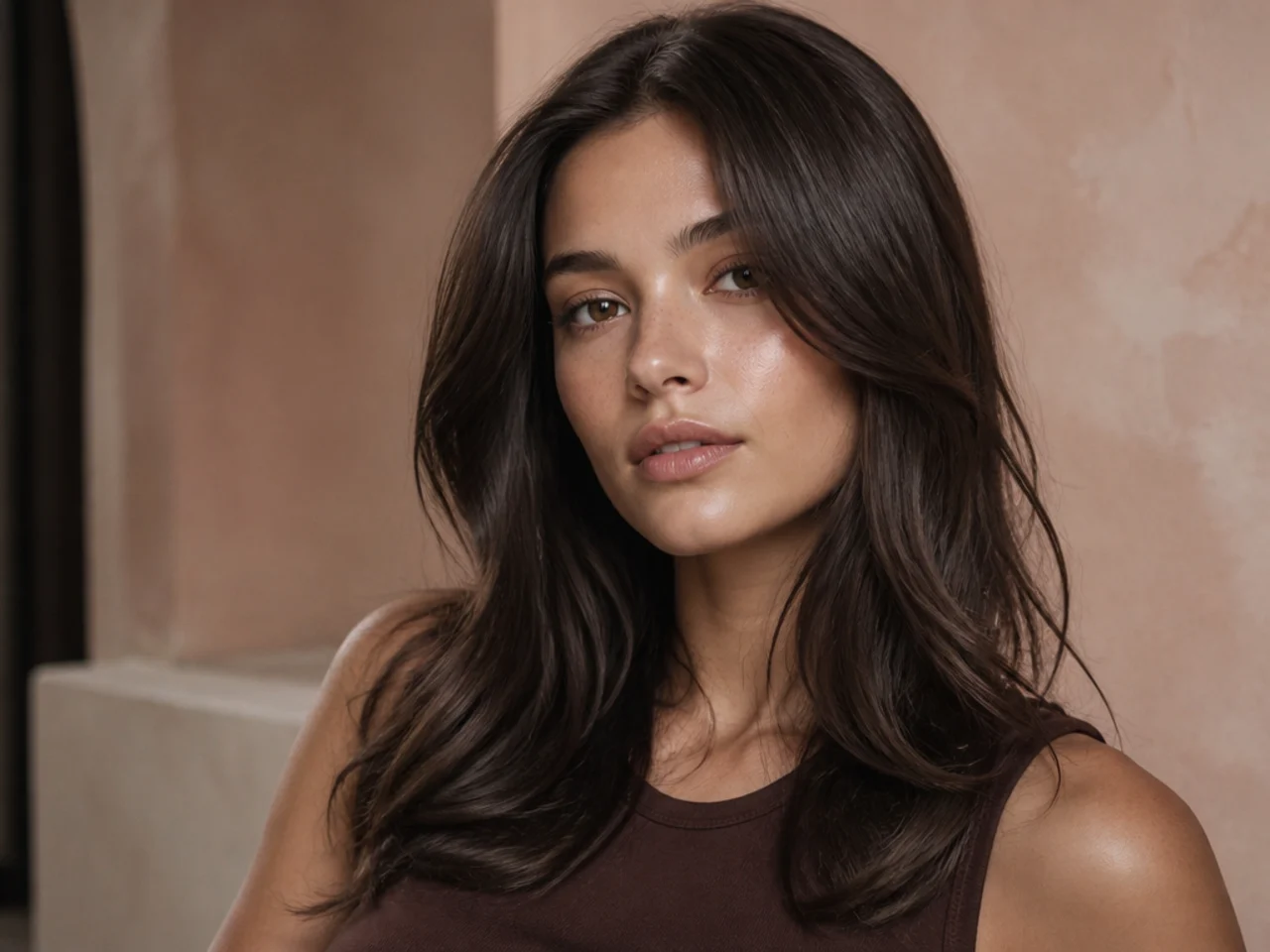
11. Warm Chestnut
The warmer end of the same low-contrast idea. Warm shades pull towards brassiness as they fade, which is contrast arriving by another route.
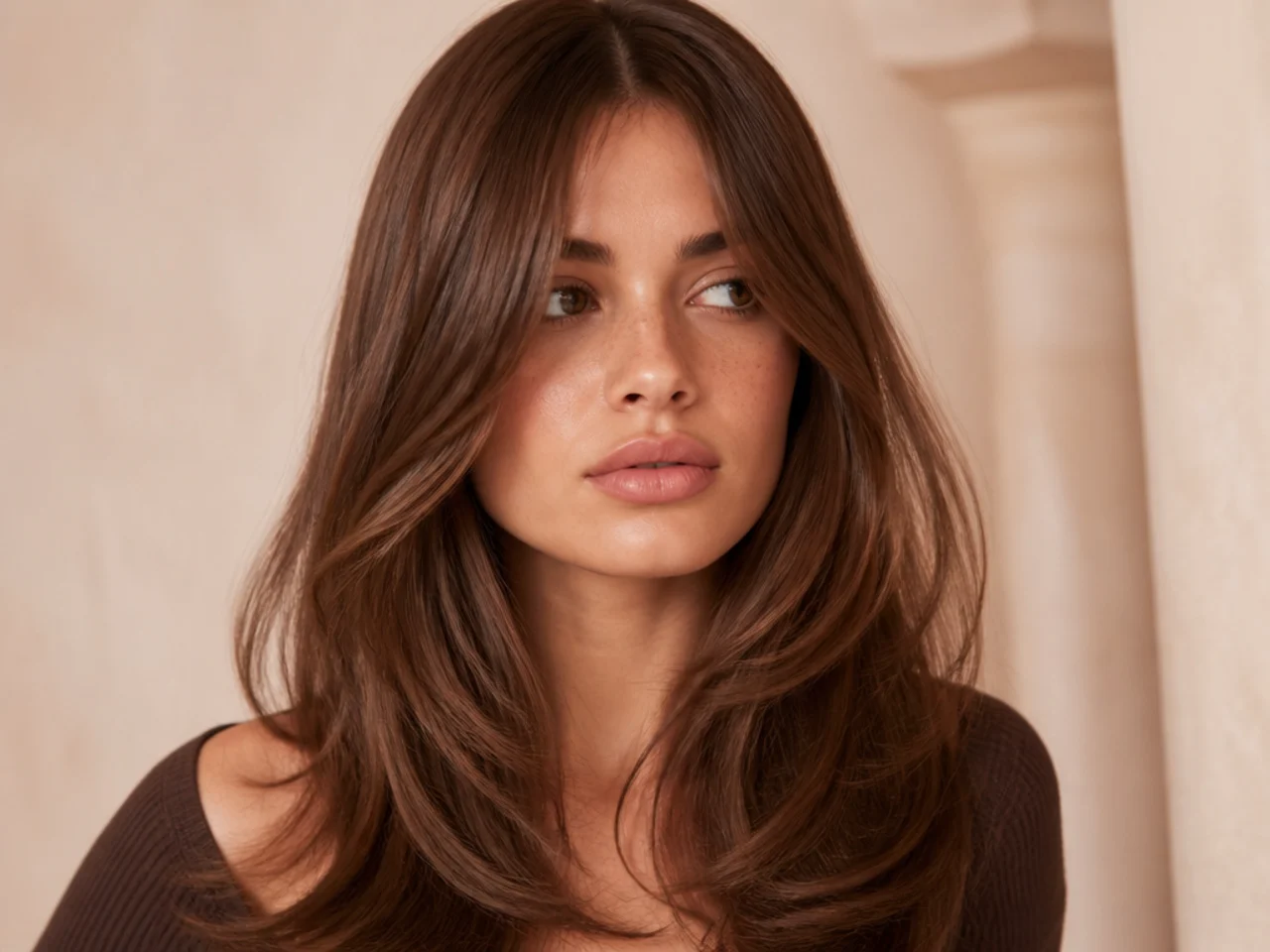
12. Bronde with a Deep Root
Lighter mid-lengths held down by root depth. The root gives the lightness somewhere to begin, so there is no line where the colour starts.
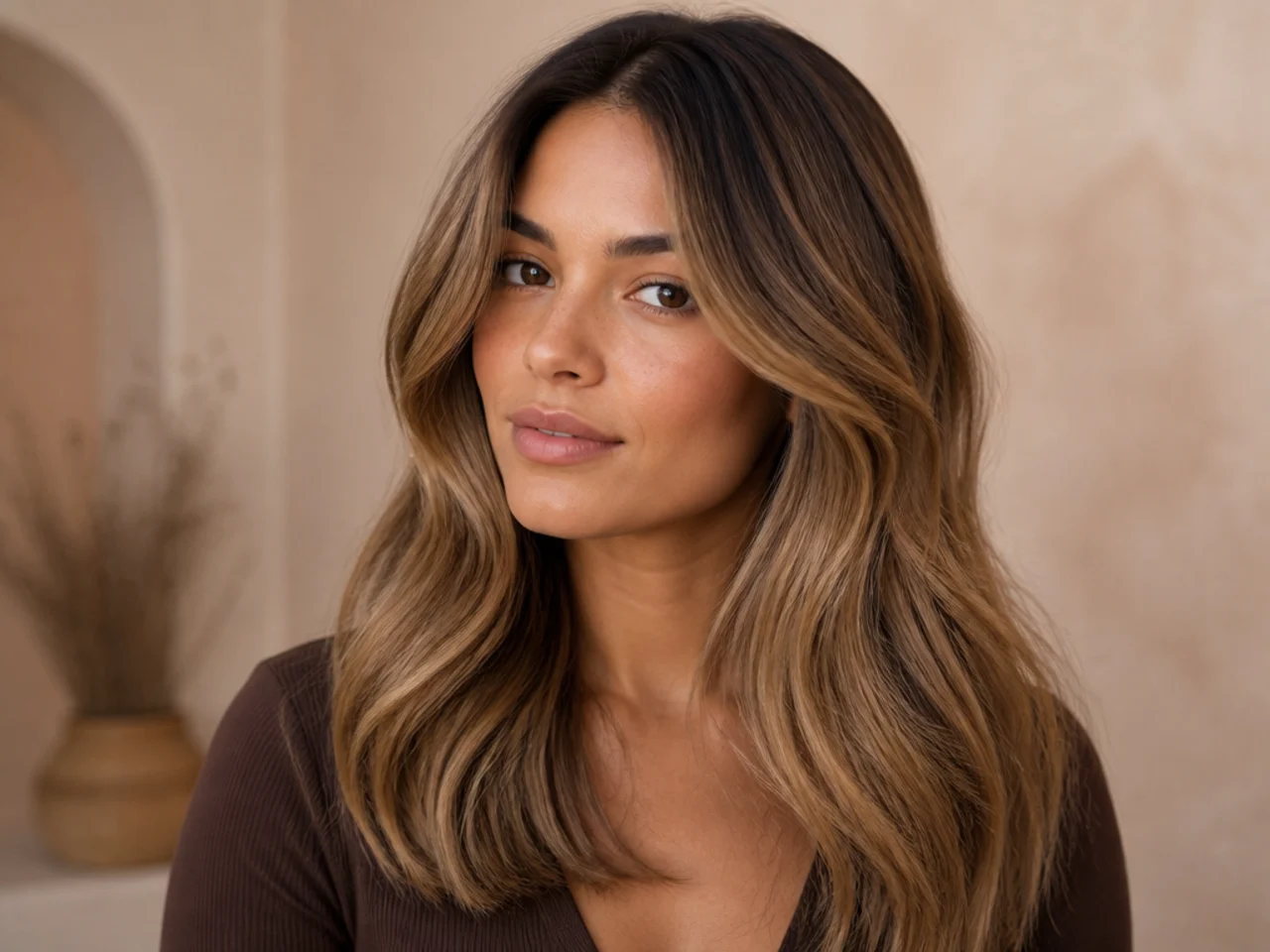
13. Blonde with Low Contrast
Blonde done the same way — even, not streaked. Proof that the shade is not the variable: what matters is whether the head reads as one surface.
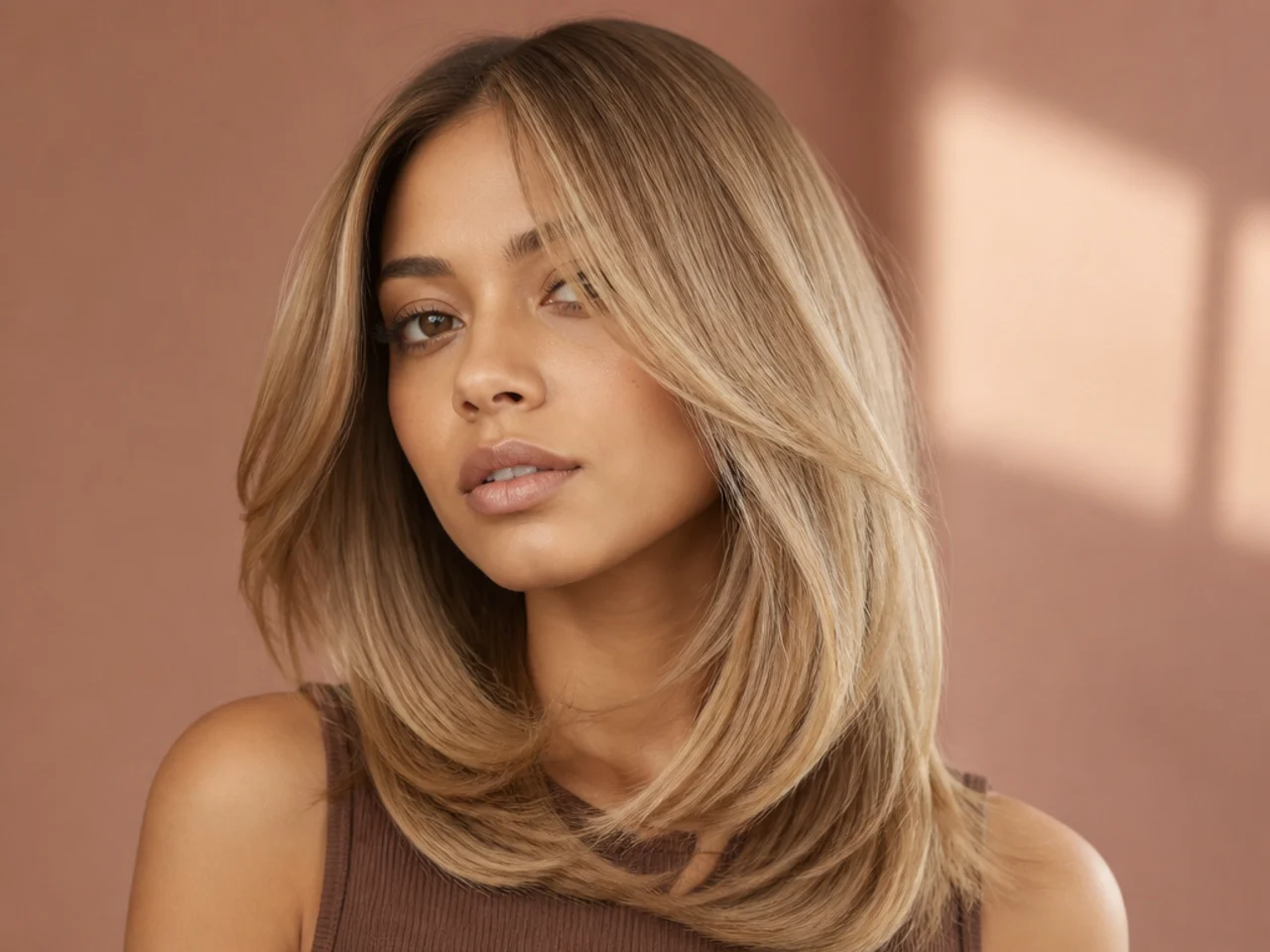
14. High Slicked Ponytail
Pulled tight and glossy, nothing left out. A high gather exposes the part along its full length, so it has to be genuinely straight.
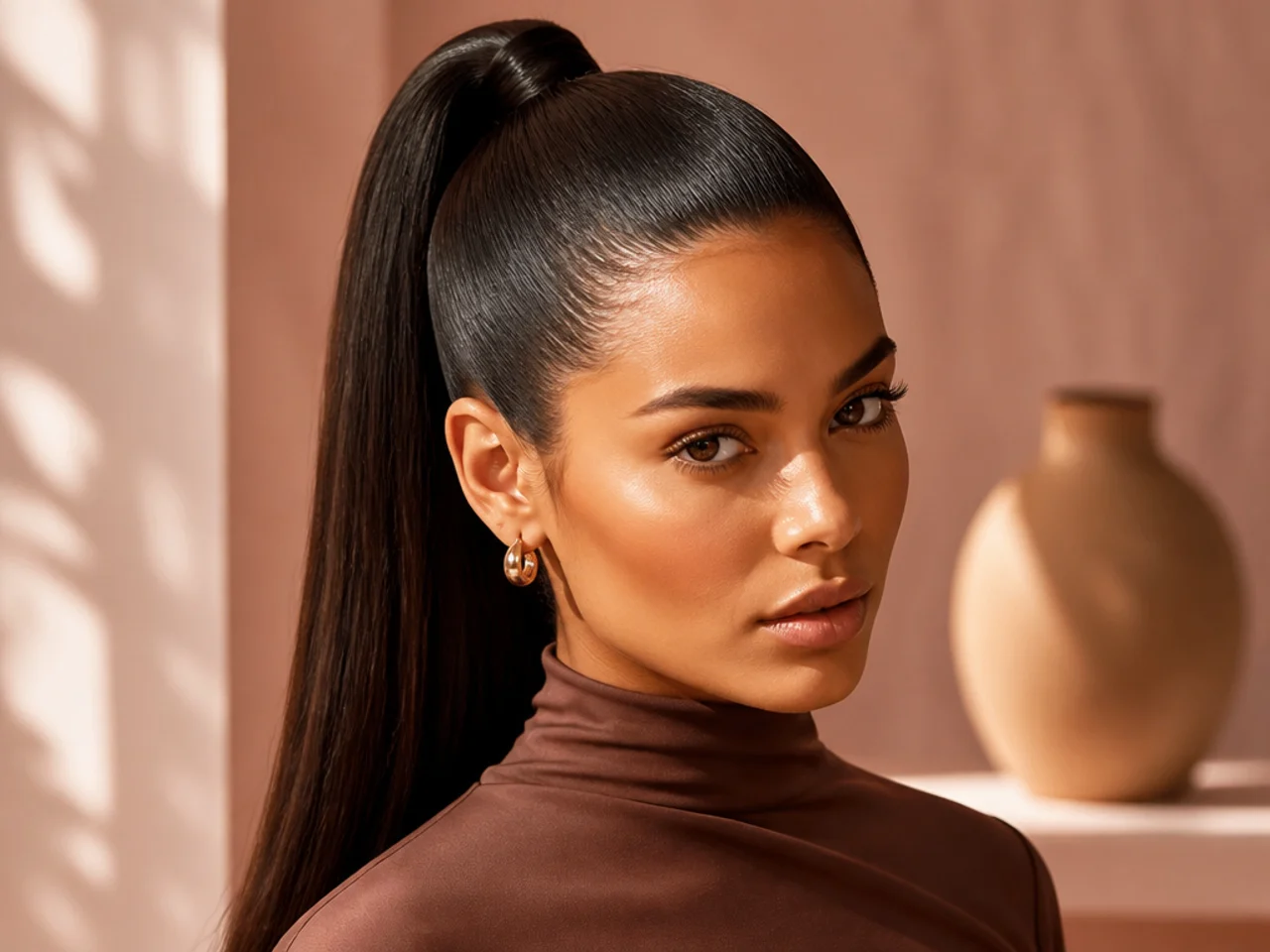
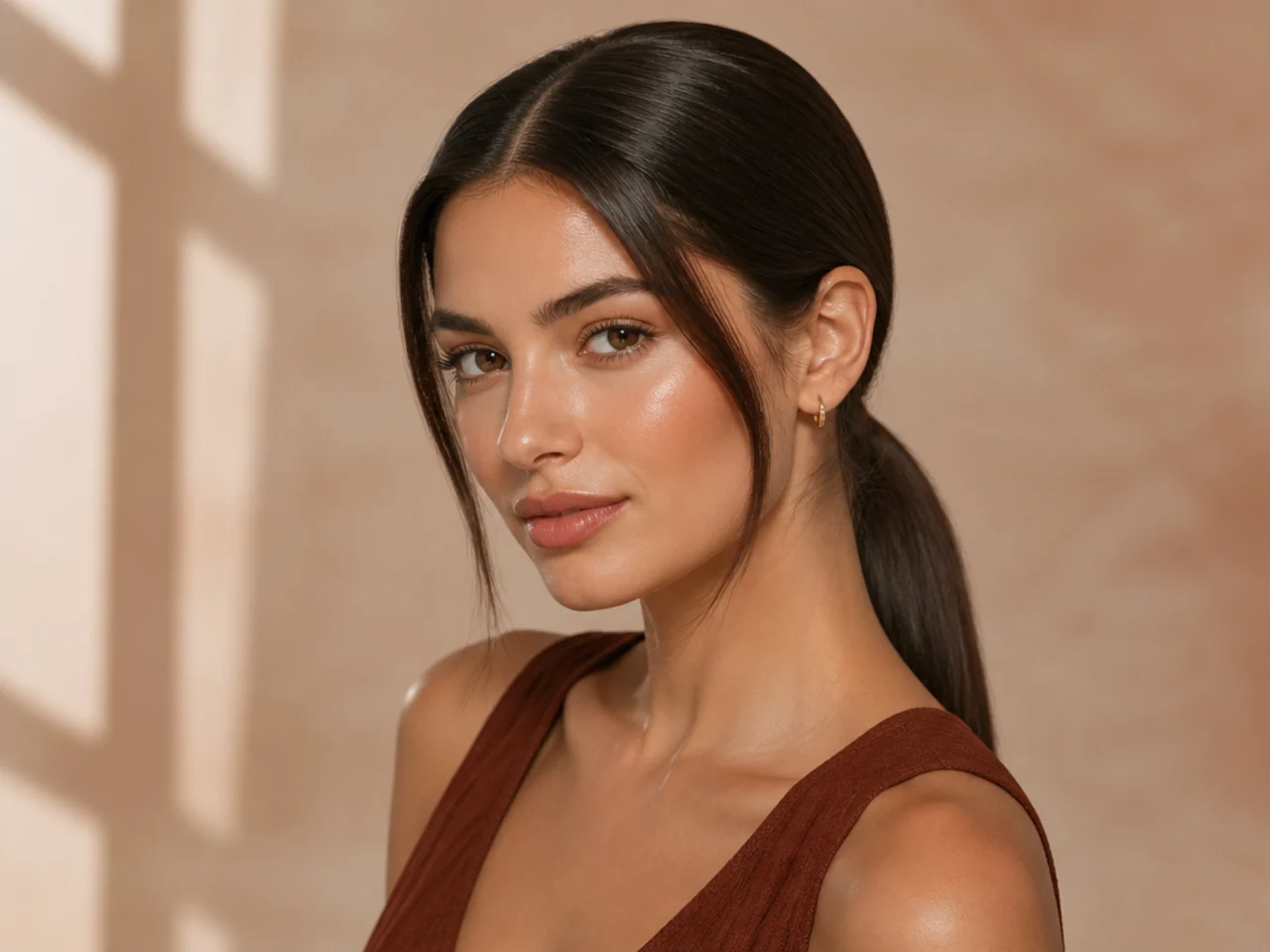
15. Low Ponytail with a Centre Part
The everyday version, and the easiest to wear. Wrap the band with a section of hair, which is the one step separating this from an ordinary ponytail.
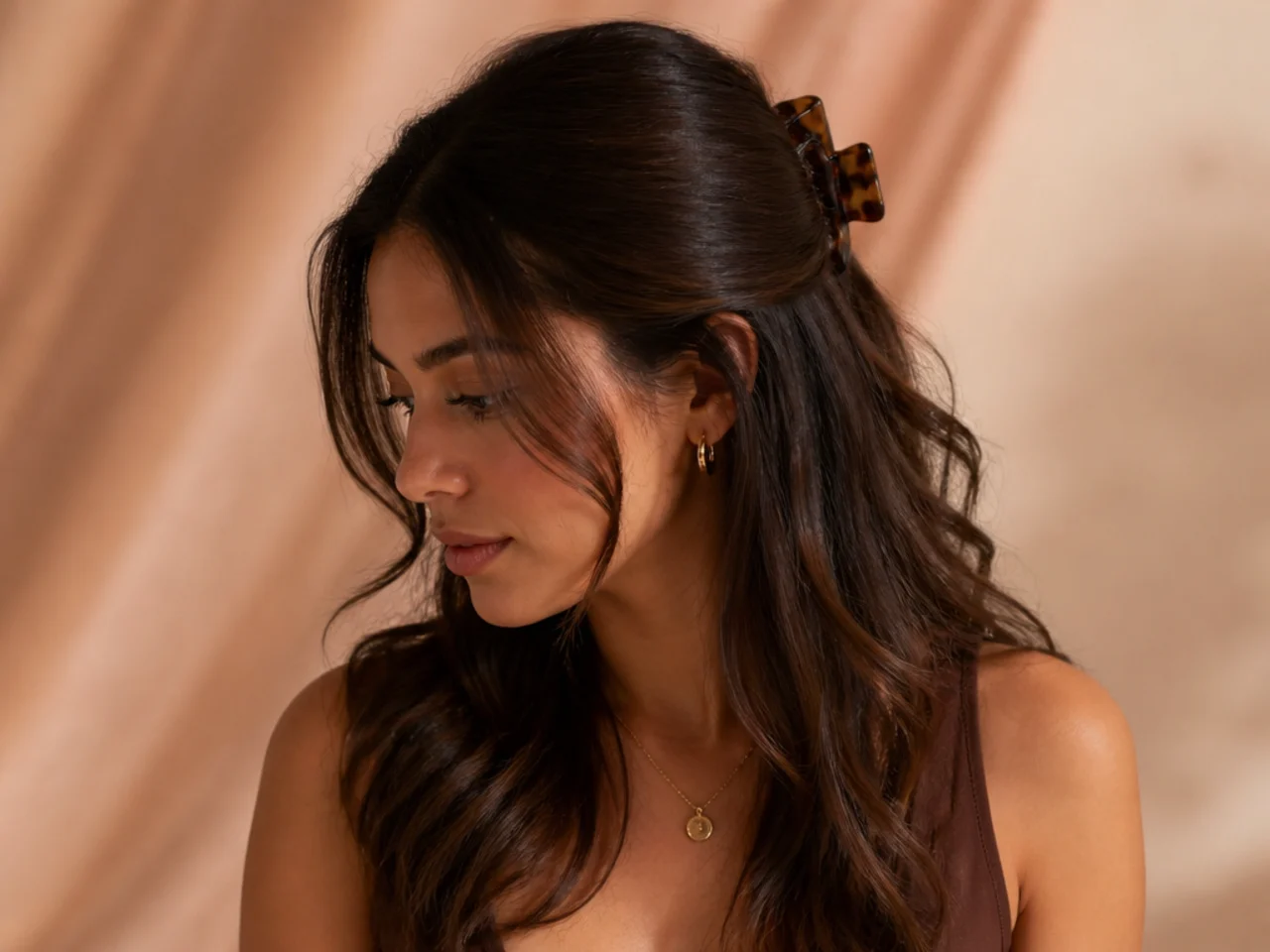
16. Half-Up with a Claw Clip
Casual, with the perimeter still visible below. Gathering only the top leaves the cut line on show, which is why a half-up suits a blunt shape.
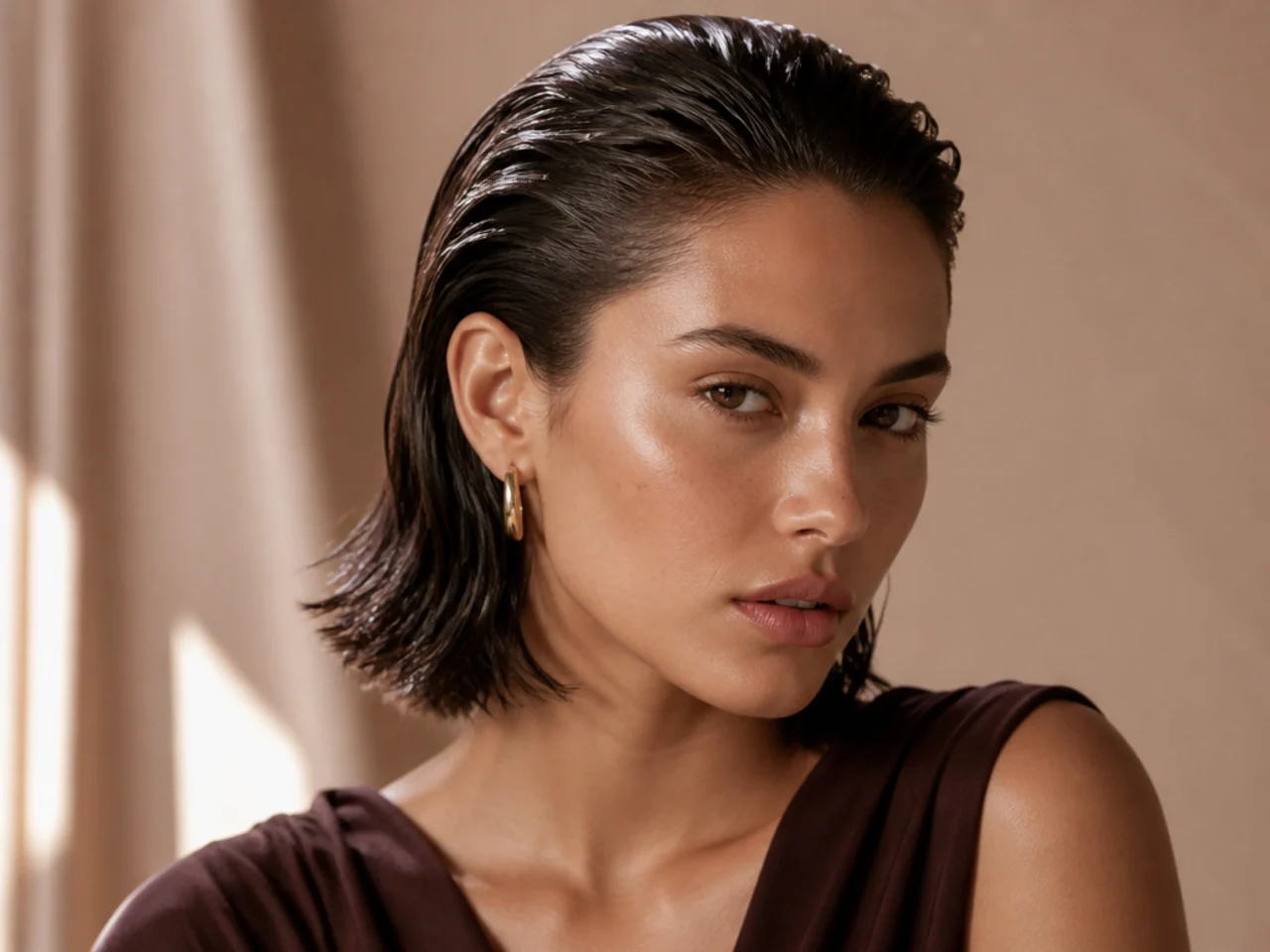
17. Wet-Look Slick
Product-heavy and deliberately flat. The most editorial version. Gel reads wet only while the solvent is evaporating, so this is a short-occasion finish rather than a daily one.
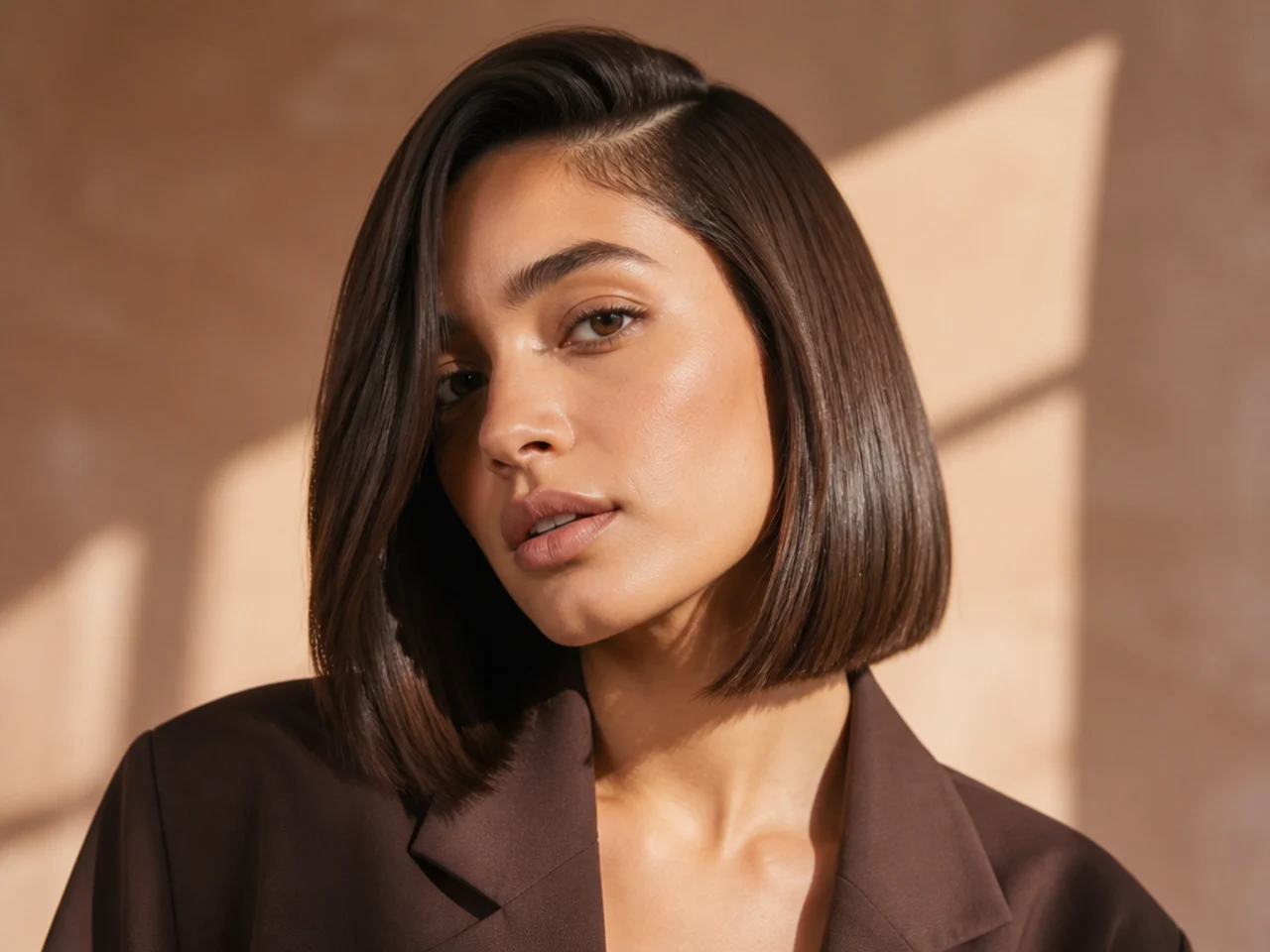
18. Blunt Lob with a Deep Side Part
The one asymmetric version of the shape. A deep part gives the length a direction to fall rather than hanging evenly on both sides.
19. Tucked-Behind-Ears Lob
Both sides tucked. Very clean, very simple. Tucking removes every distraction from the cut, which flatters exactly in proportion to how precise it is.
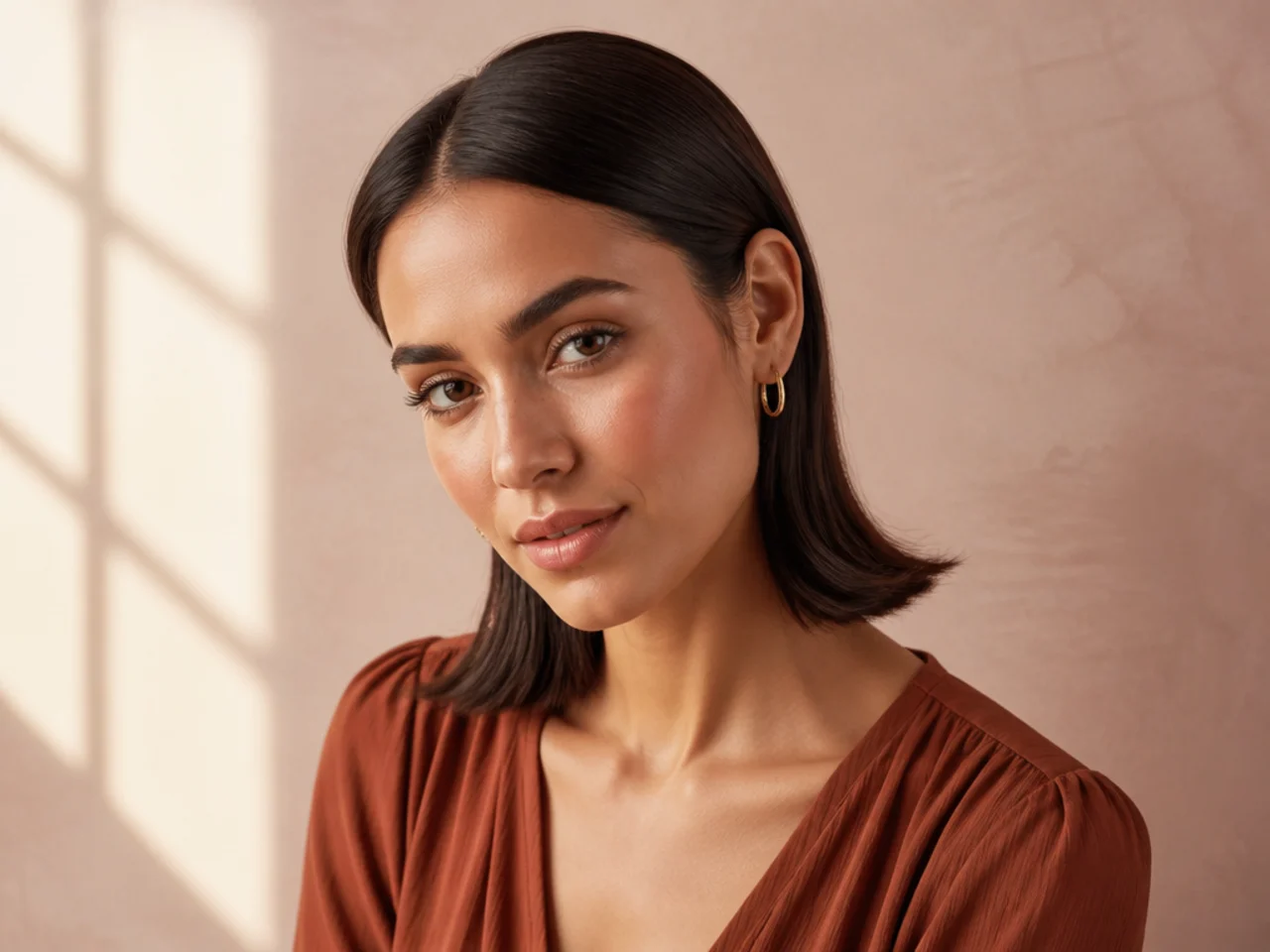
20. Glossed Dark Chocolate
A gloss over an existing dark base. The cheapest route in. No lift, low cost, and it delivers most of the effect — if you only do one thing, this is it.
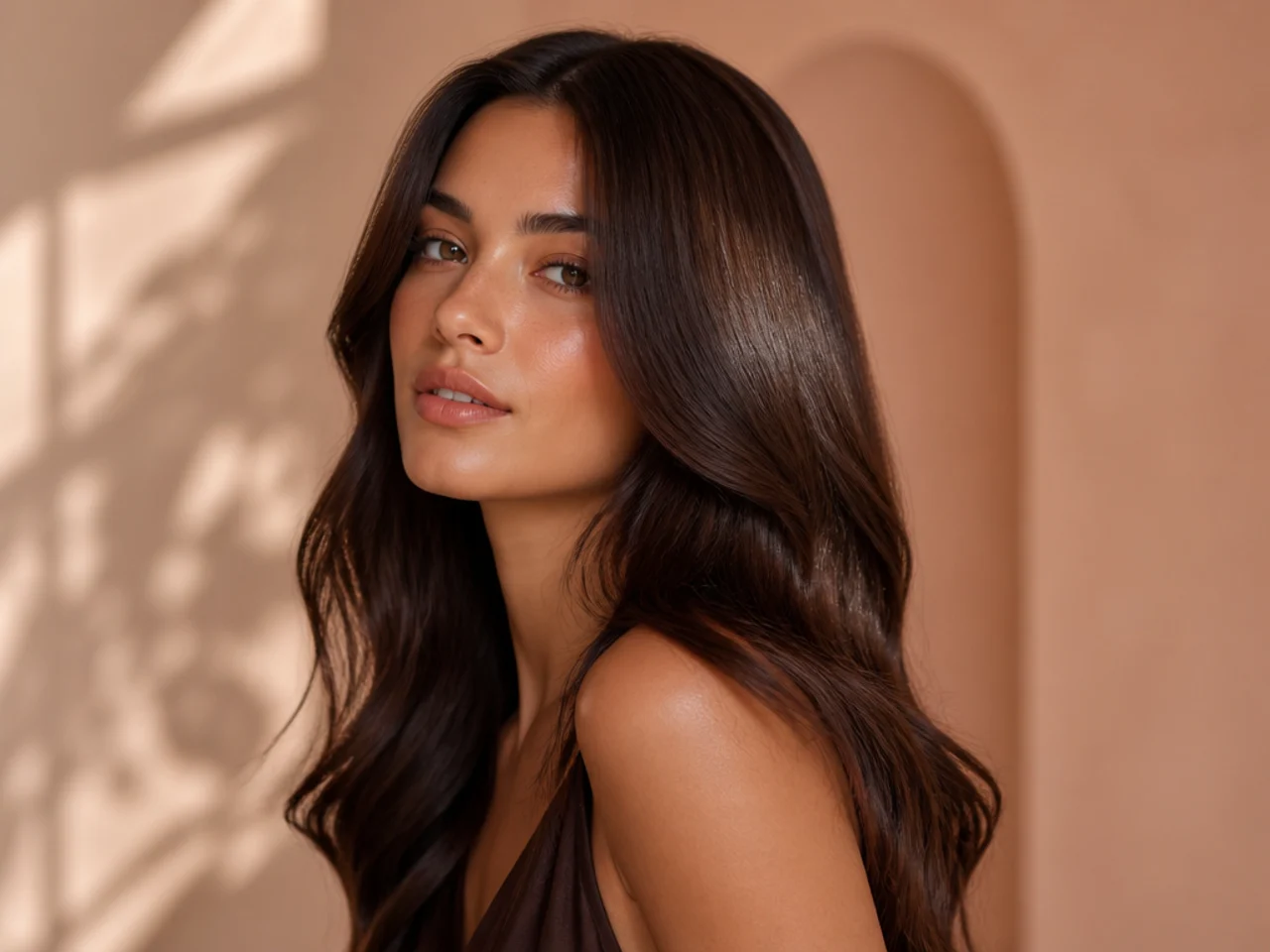
21. Shoulder-Length Blunt Cut
Between a bob and a lob. Very wearable. Long enough to gather and short enough that the perimeter still reads as a line.
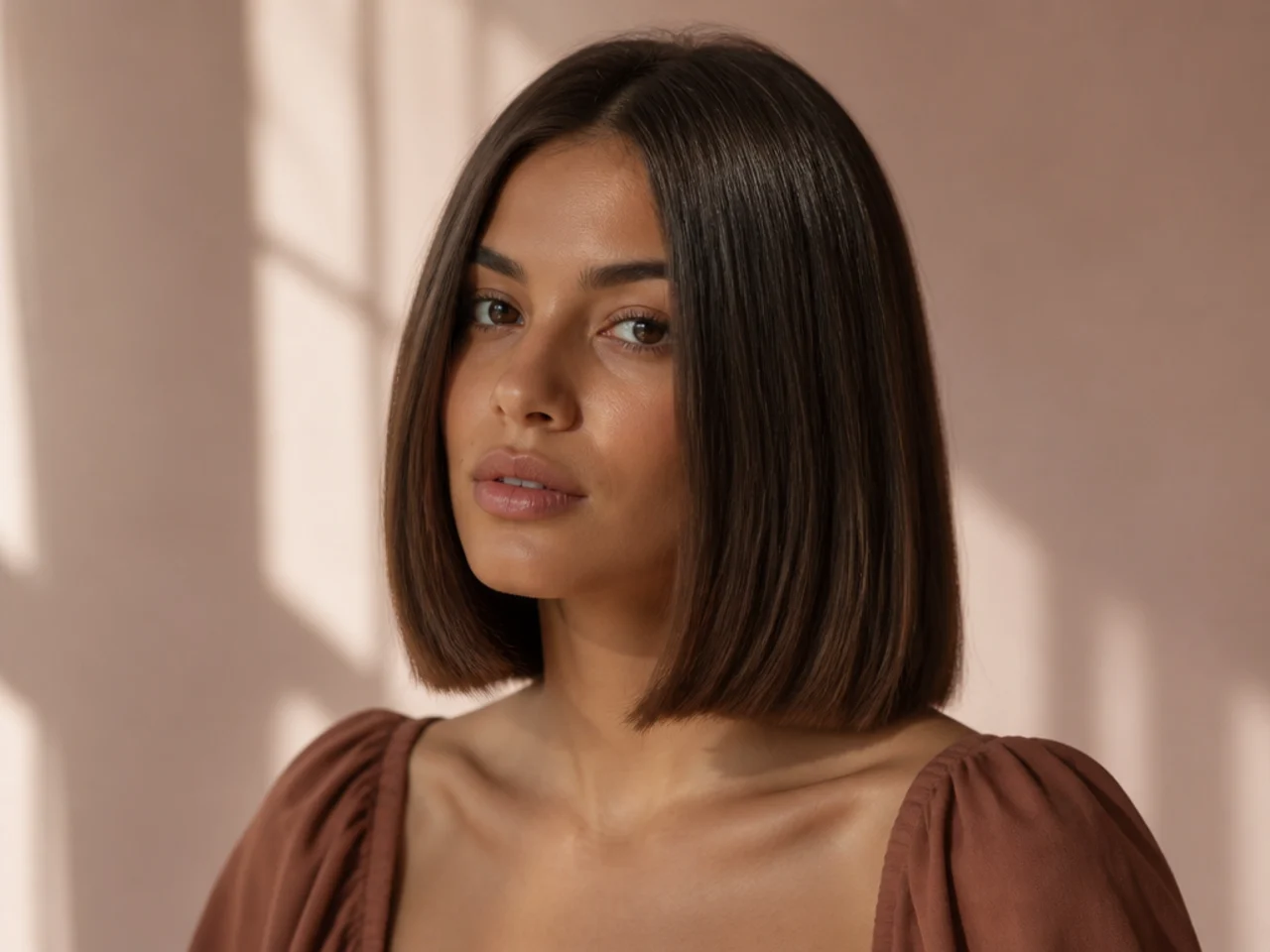
22. Long Blunt Ends
Waist length with a hard perimeter. Rare and striking. Length plus a blunt edge reads as condition, because neither can be faked.
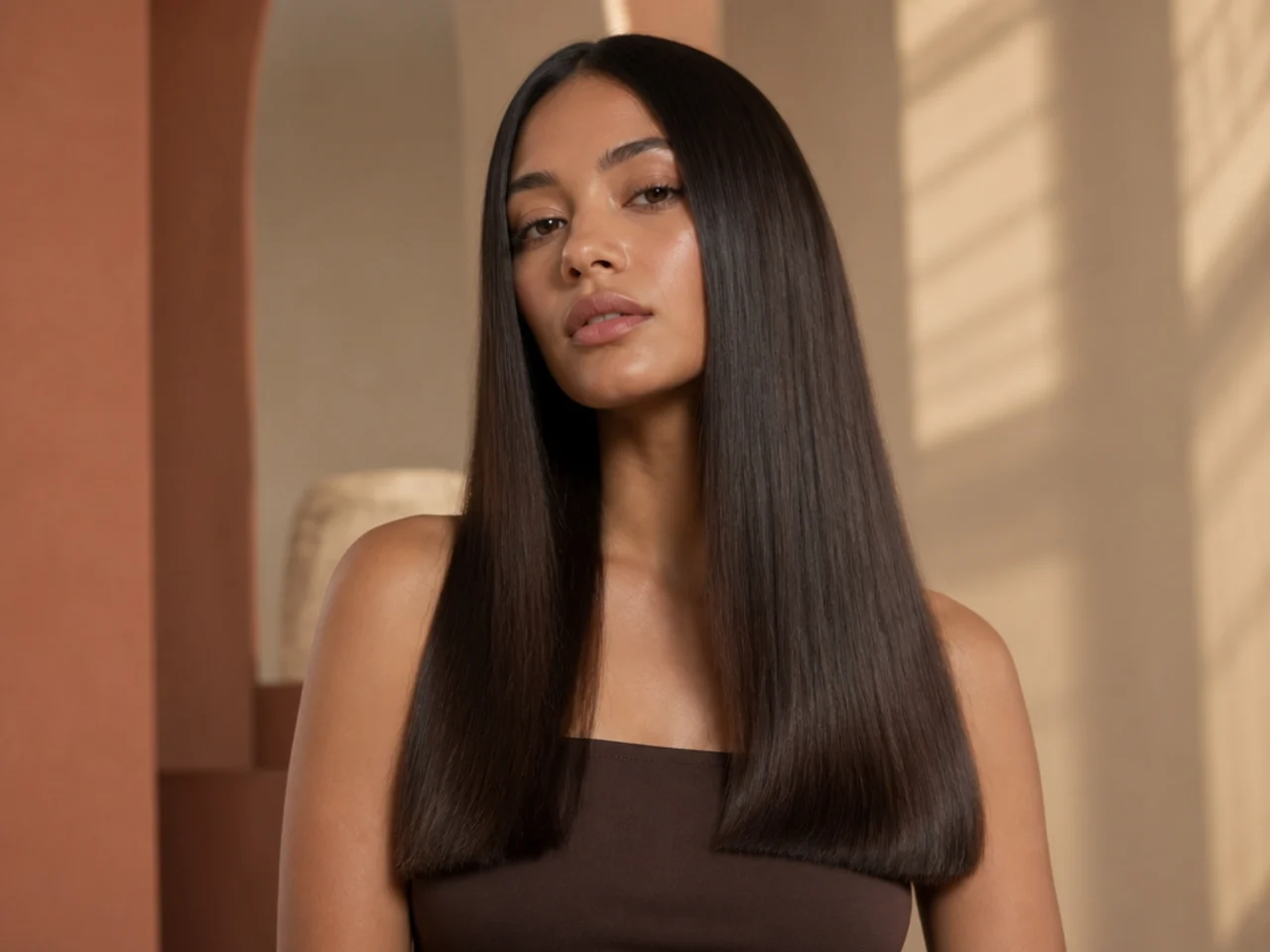
23. Soft Bend with a Flat Iron
One bend through the mid-length, nothing more. Keep the iron below the cheekbone — above it and you are building volume, which this look avoids.
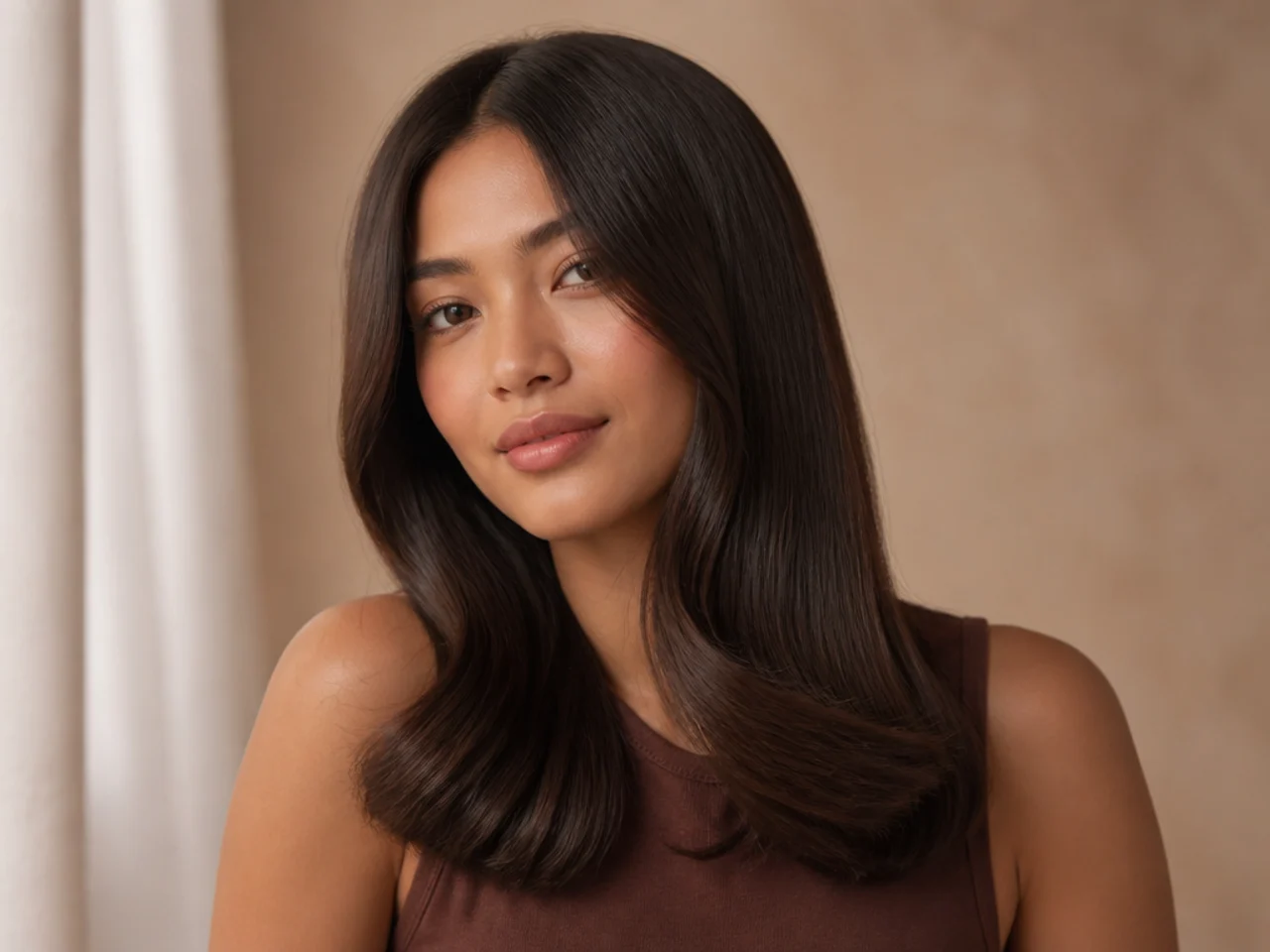
24. Middle-Parted Waves with a Blunt Line
Texture above, hard line at the bottom. The blunt edge is what stops the texture reading as undone-and-unfinished rather than as deliberate.
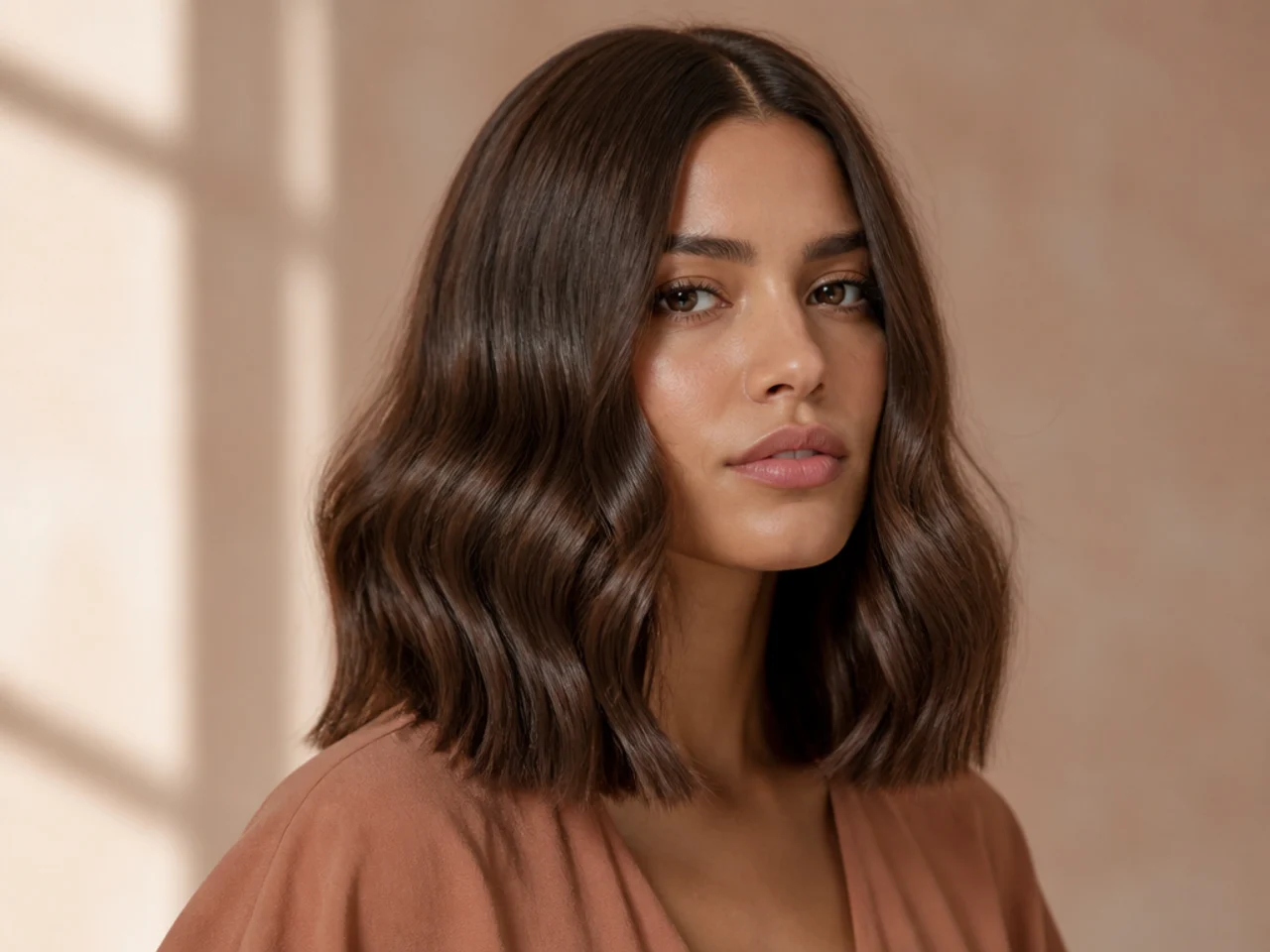
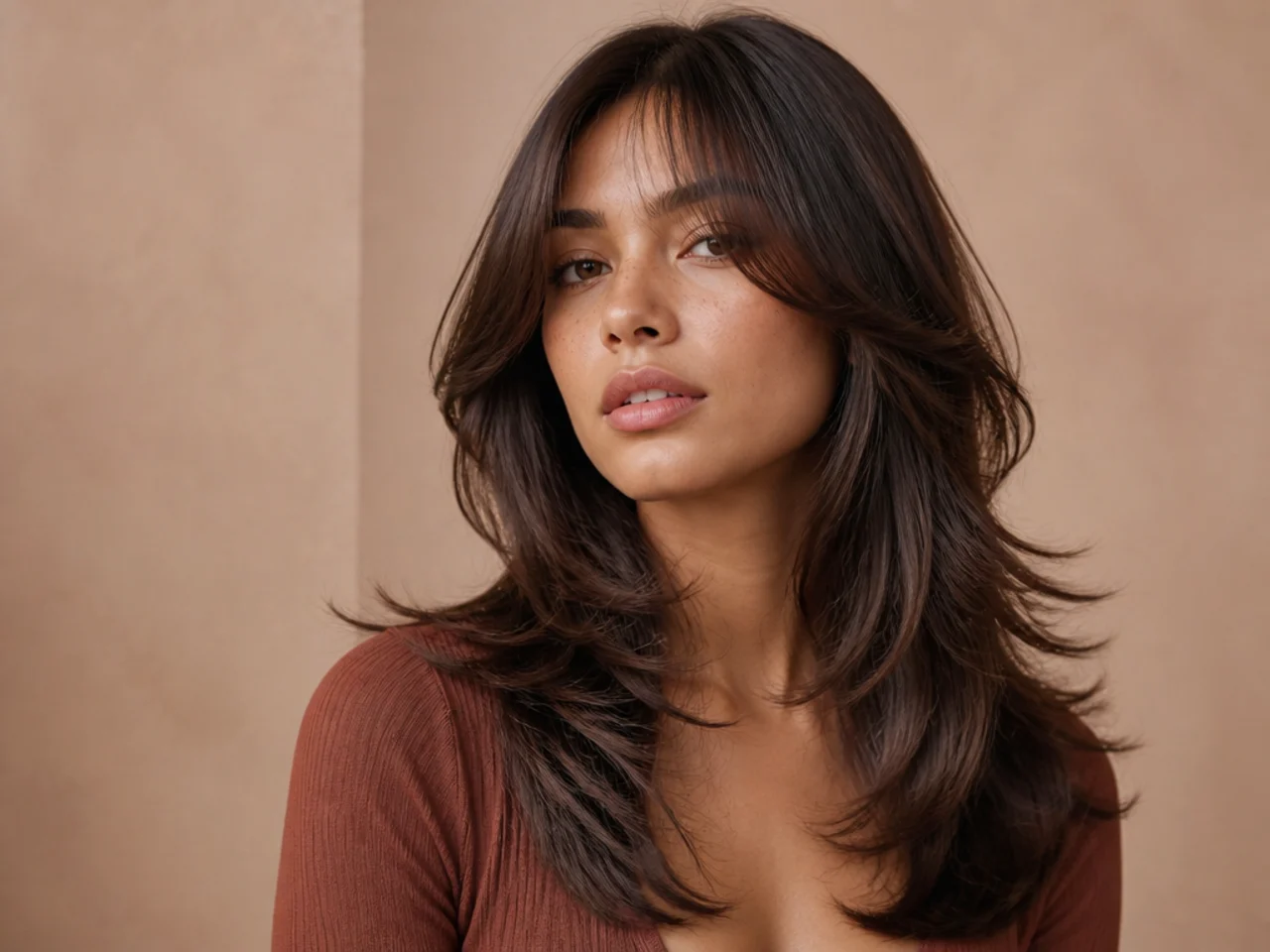
25. Heavily Layered Hair for Comparison
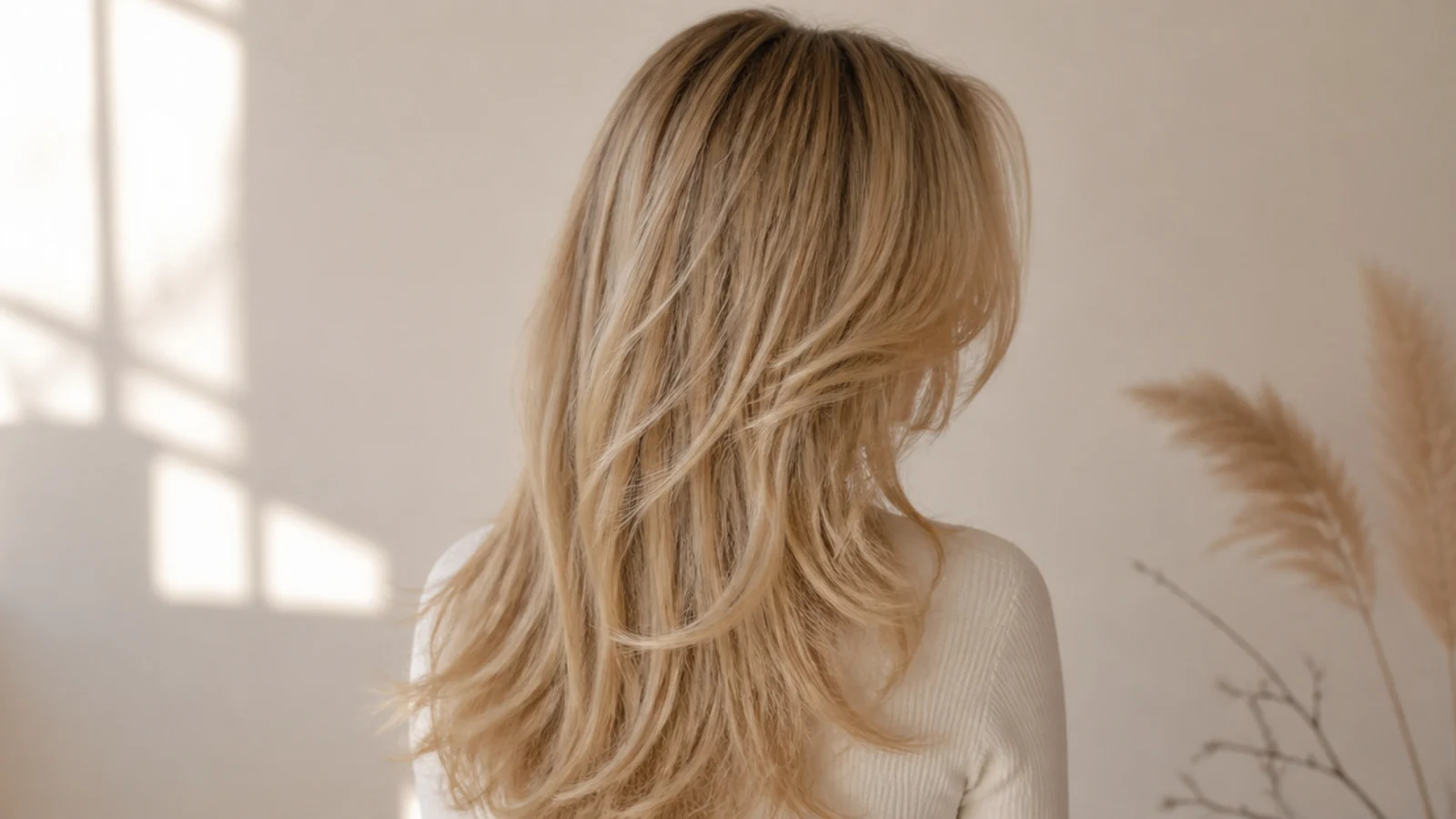
Light scattering across many surfaces. The opposite of this look. Many layers means many edges, and every edge scatters light where a single perimeter reflects it.
Styling and Upkeep
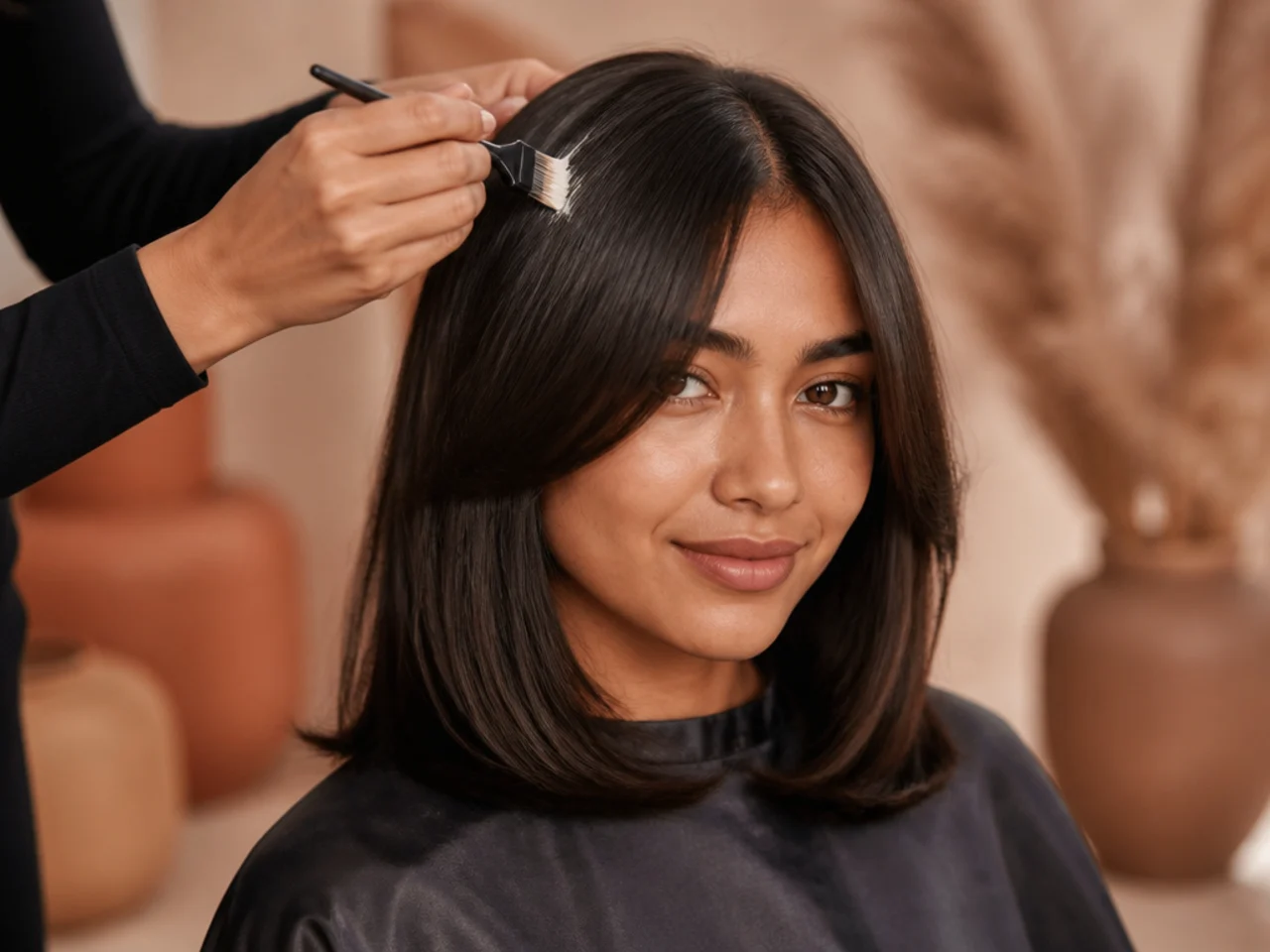
Gloss every six to eight weeks. The shine is a colour service, and it fades on that schedule.
Trim the perimeter every eight weeks. A blunt line goes soft as it grows, and softness is what this look cannot afford.
Use less product, not more. Anything that adds texture works against the single-surface effect.
Cool rinse, always. It closes the cuticle, which is the free half of the gloss.
Skip the volumising anything. Volume at the root breaks the smooth line from crown to ends.
Mistakes to Avoid
Asking for highlights. High contrast is the opposite of this colour.
Heavy layering. It scatters light and removes the perimeter.
Trying to style your way there. The effect is cut and colour; styling cannot substitute.
Skipping the deeper root when going lighter. It reads washed out without it.
Volume products. They break the surface the gloss depends on.
FAQ
What makes it look like that? Low-contrast colour and a blunt cut, with minimal styling on top.
Can you get it by styling? No — that is the most common disappointment.
What cut does it need? A strong unbroken perimeter, with very few layers.
Final Thoughts
Take two words to your next appointment — low contrast — and ask for a blunt perimeter. That is the entire look, and both are decisions someone else makes for you. Everything you do at home afterwards should be less than you think.
For the everyday styles that suit it see 25 hailey bieber hairstyles for every day. More in Celebrity Hair.