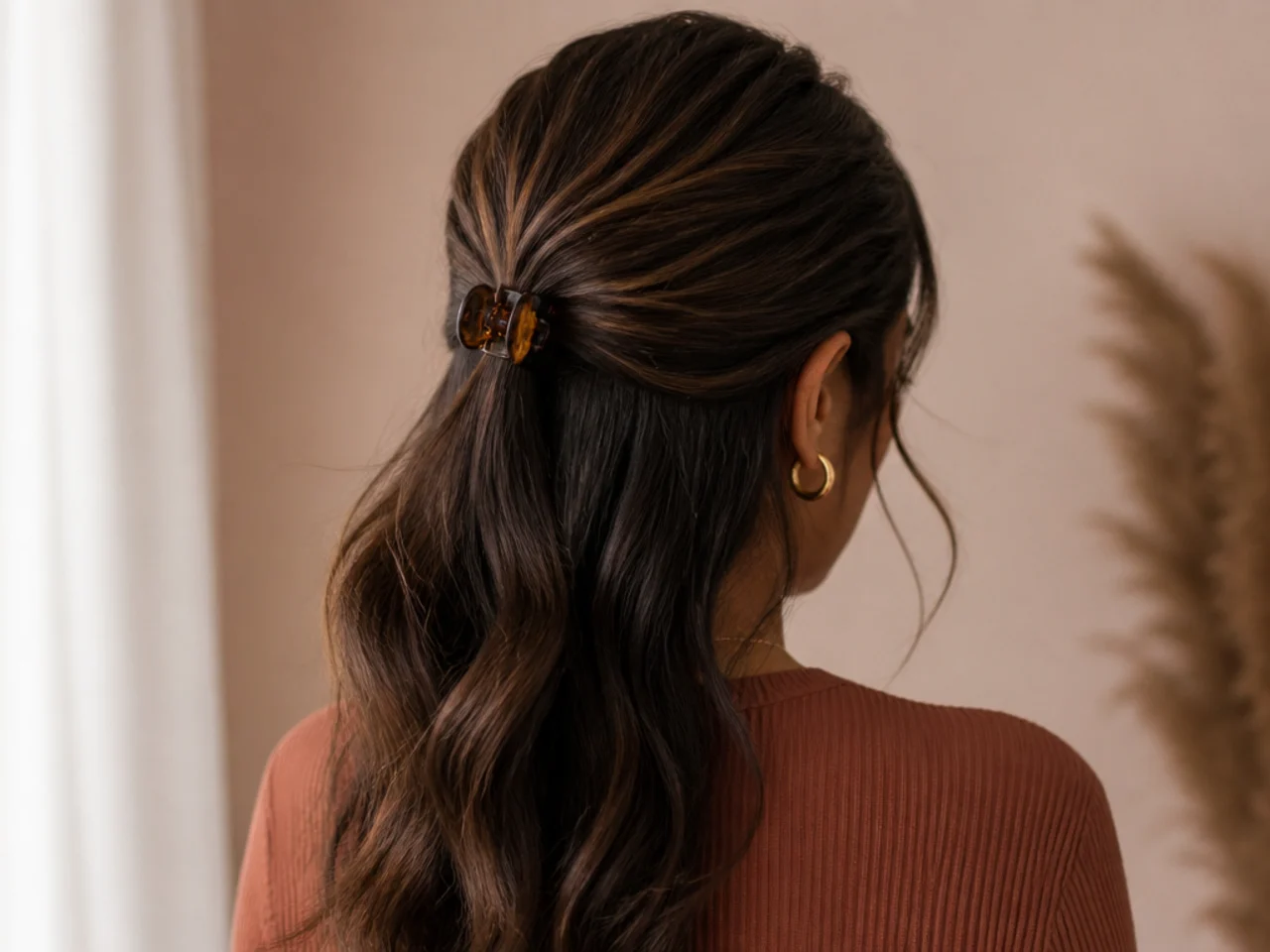
20 Claw Clip Hairstyles for Thin Hair
Twenty claw clip styles for fine and thin hair, and the counter-intuitive rule behind them — go smaller. A big clip on fine hair grips nothing, which is why it slides out within the hour.
In this article · 27
- Why Smaller Holds Better
- Build the Shape Before You Clip
- The 20 Styles
- 1. Small-Clip Half-Up
- 2. Loose Twisted Chignon
- 3. Backcombed Crown with a Clip
- 4. Clip Over a Hair Tie
- 5. Two Small Front Clips
- 6. Messy Low Bun with Pieces Out
- 7. Half-Up with Tendrils
- 8. Textured Twist with Salt Spray
- 9. Low Nape Clip
- 10. Clipped Ponytail Fold
- 11. Half-Up with a Decorative Clip
- 12. Side-Swept Clip
- 13. Clipped Half-Up on Second-Day Hair
- 14. Loose Crown Pouf with a Clip
- 15. Two Clips Stacked Vertically
- 16. Clipped Braid Fold
- 17. Half-Up with Curled Ends
- 18. Deep Side Part with a Clip
- 19. Loose French Twist
- 20. Clip with a Volumising Root Spray
- Why Clips Beat Elastics for Fine Hair
- Mistakes to Avoid
- FAQ
- Final Thoughts
Fine hair and claw clips have a reputation for not getting along, and the reason is almost always the clip rather than the hair.
The instinct with a clip that keeps sliding out is to buy a bigger one. On fine hair that makes it worse, every time.
Why Smaller Holds Better
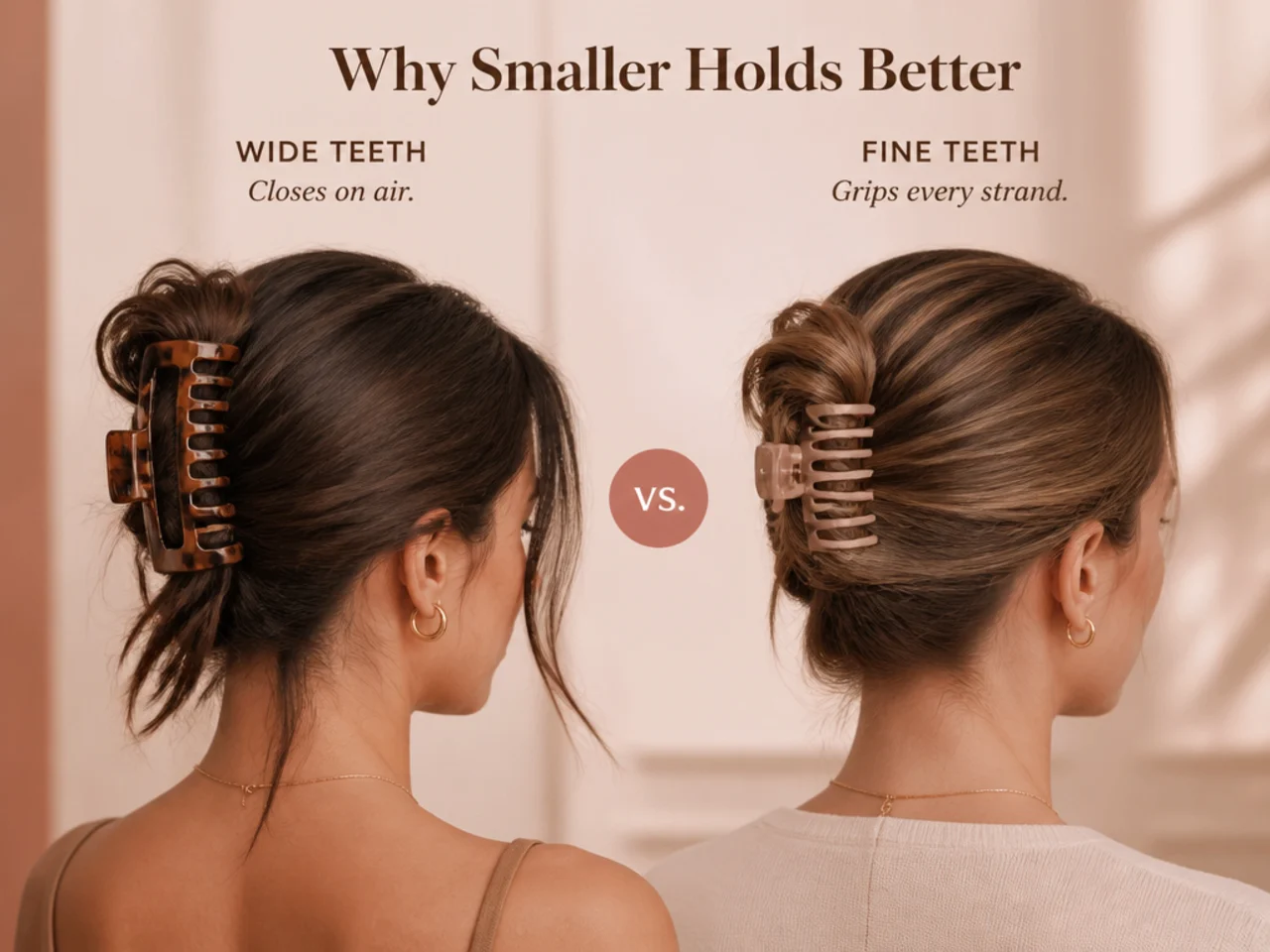
A claw clip grips by closing its teeth through hair. What it needs is hair filling the space between those teeth.
On fine hair there is less bulk, so a large clip with widely spaced teeth closes mostly on air. Only a few teeth make contact with anything, the pressure is carried by a small part of the jaw, and it works loose from the outside inward — usually within the hour.
A smaller clip with narrowly spaced teeth does the opposite. Every tooth has hair between it and the next one, the whole jaw shares the load, and the same amount of hair is now genuinely held.
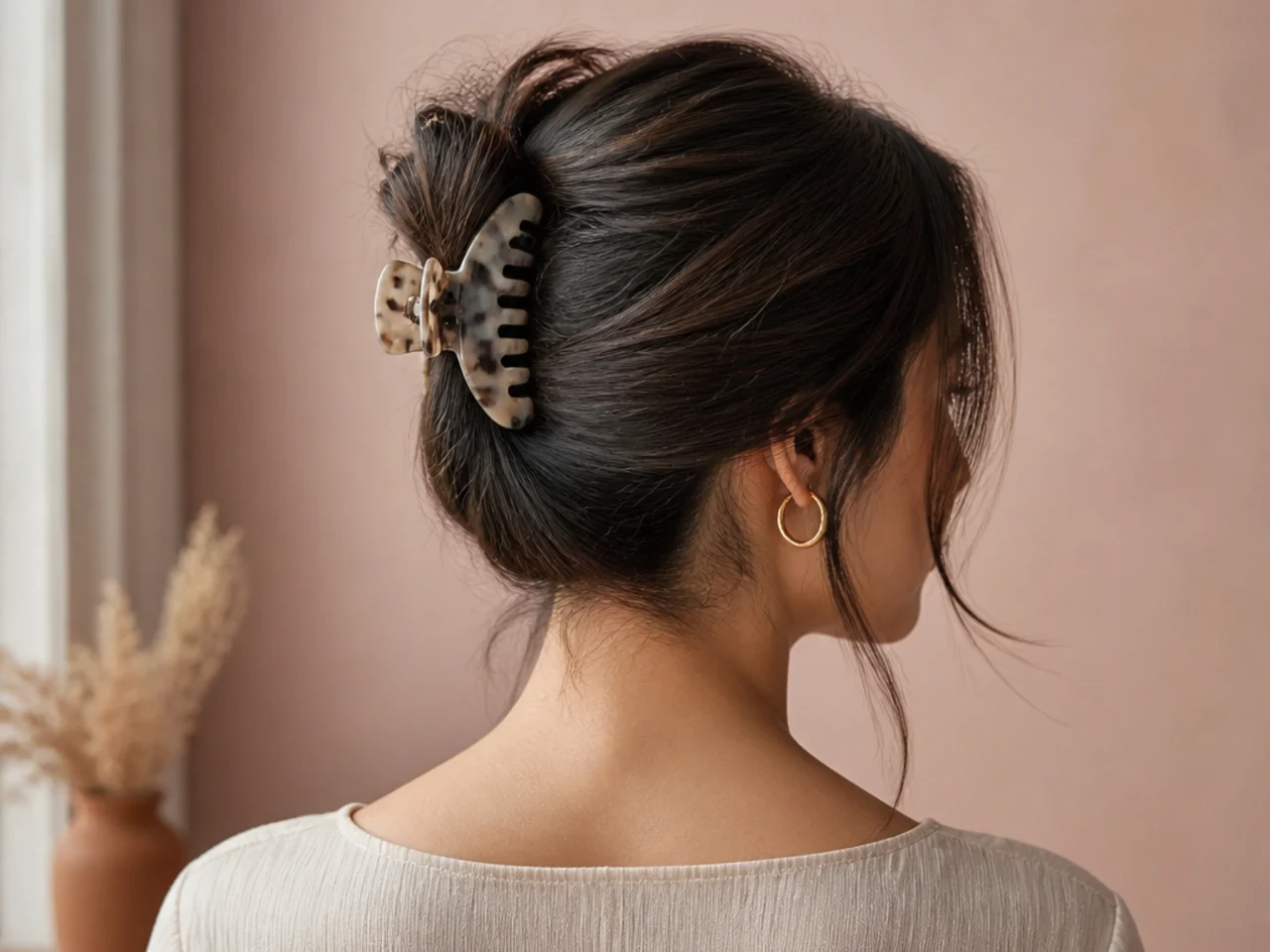
Around 7cm, fine teeth, matte finish. That is the specification, and it is smaller than nearly everyone with fine hair is using.
Build the Shape Before You Clip
The second half of the problem is that fine hair clipped tightly looks like less hair than you have.
Volume in a clipped style is created before the clip goes in, not after.
Backcomb three light passes at the crown. Not aggressive — enough to stop the top lying flat.
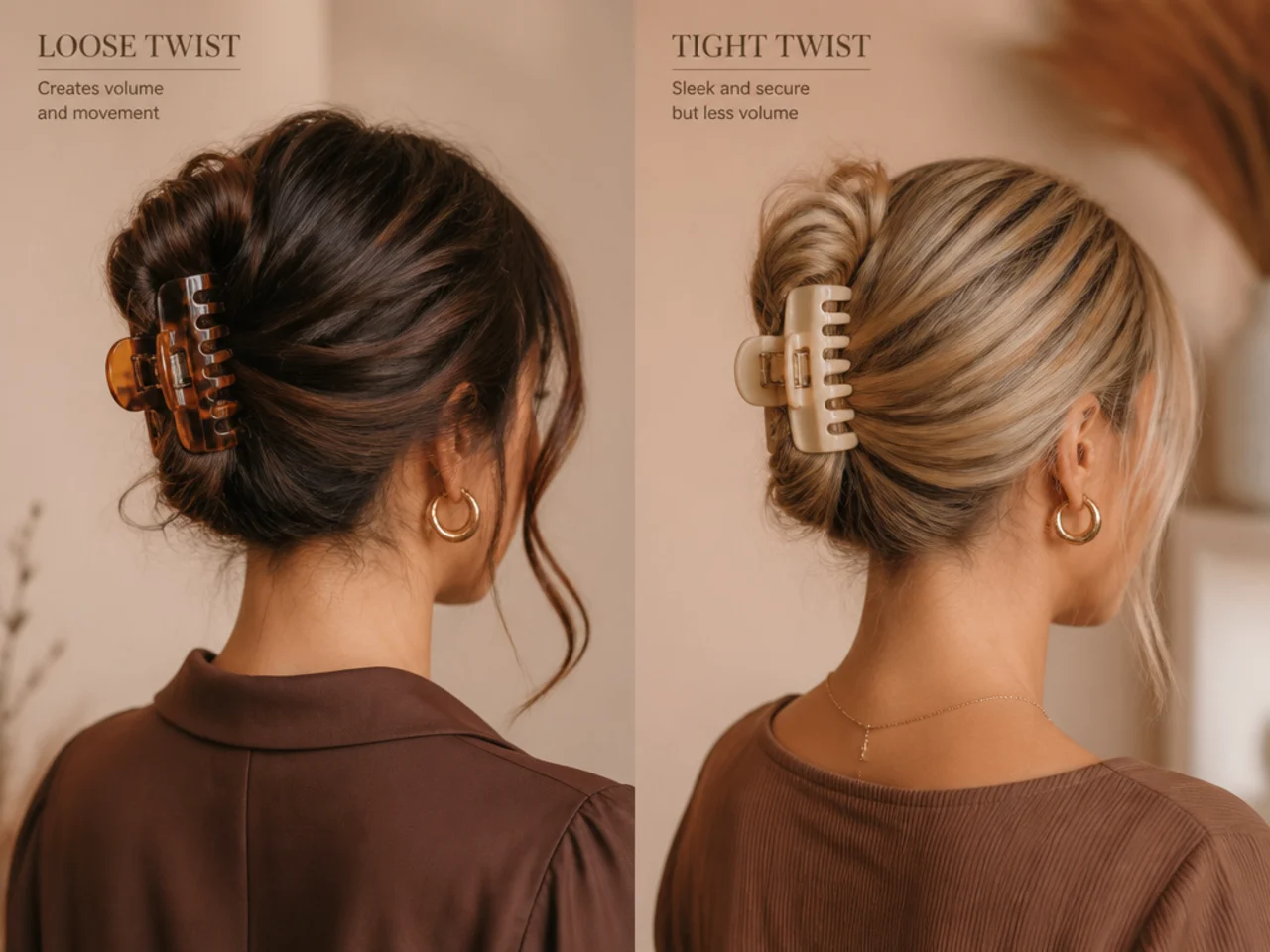
Twist loosely. A tight twist compresses the hair into the smallest possible shape. A loose one occupies noticeably more space with identical hair.
Texture spray through the mid-lengths first. Fine hair is too smooth to hold a shape, and grit is what gives the clip something to bite.
Pull pieces free after clipping. Two or three small sections tugged gently loose makes the whole shape read as fuller.
The 20 Styles
1. Small-Clip Half-Up
Top third only, 7cm clip. The most reliable fine-hair clip style.
2. Loose Twisted Chignon
Twisted without tension, clipped low. Occupies twice the space of a tight one.
3. Backcombed Crown with a Clip
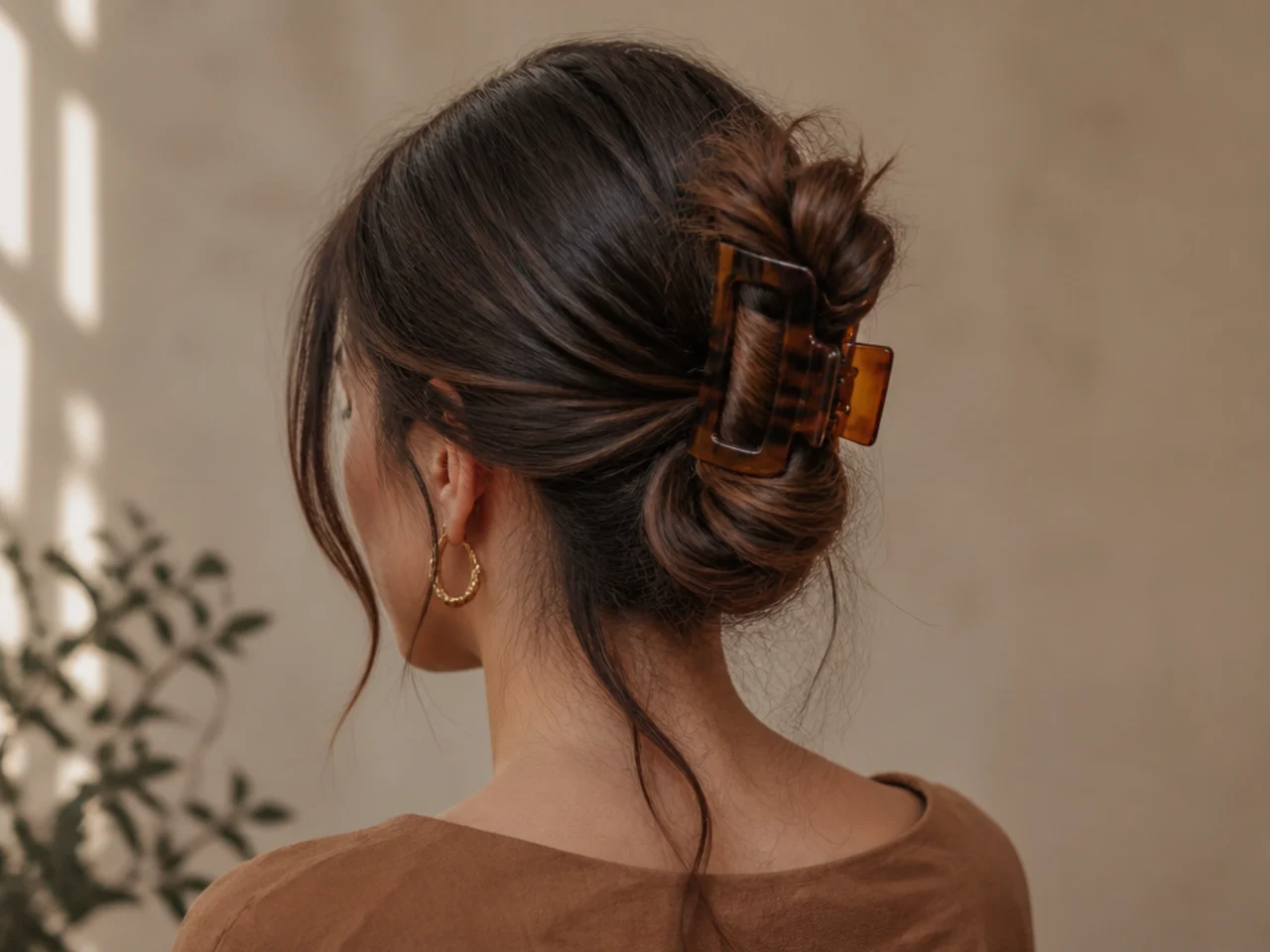
Height at the top, clipped below. The height is what reads as thickness.
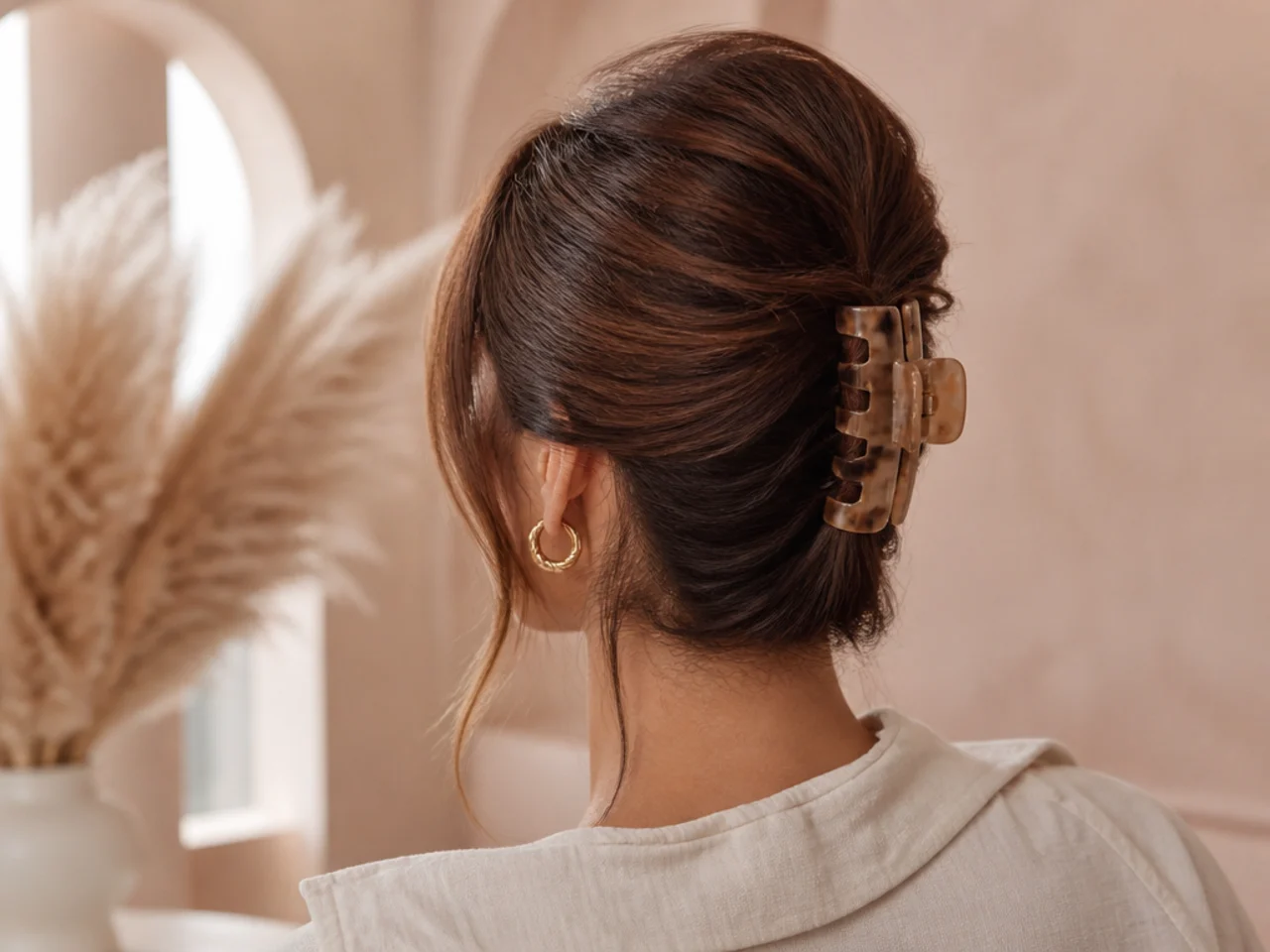
4. Clip Over a Hair Tie
The tie carries the weight, the clip does the shaping. Belt and braces for fine hair.
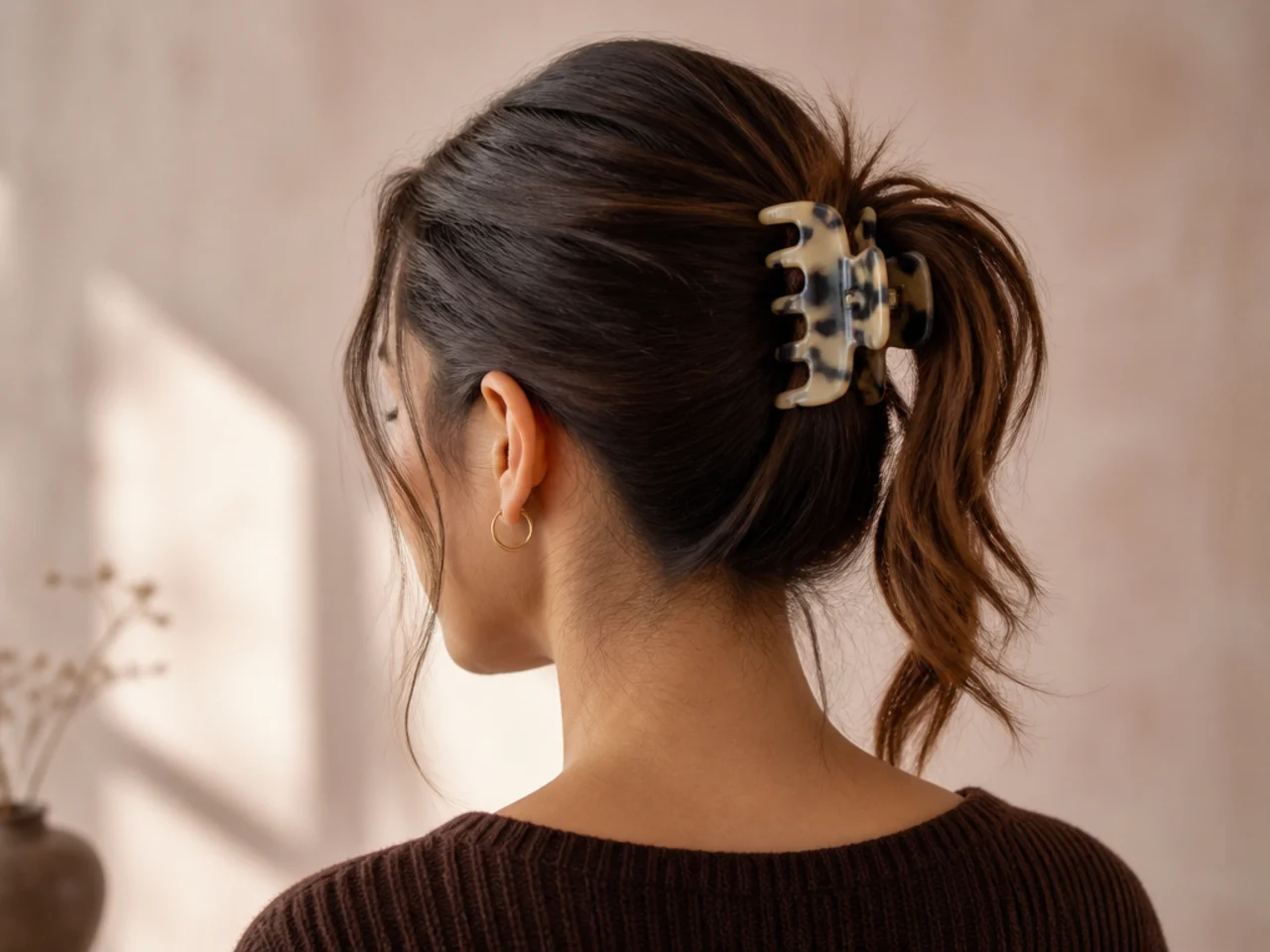
5. Two Small Front Clips
Face-framing pieces held back, nothing else touched. Almost no hair required.
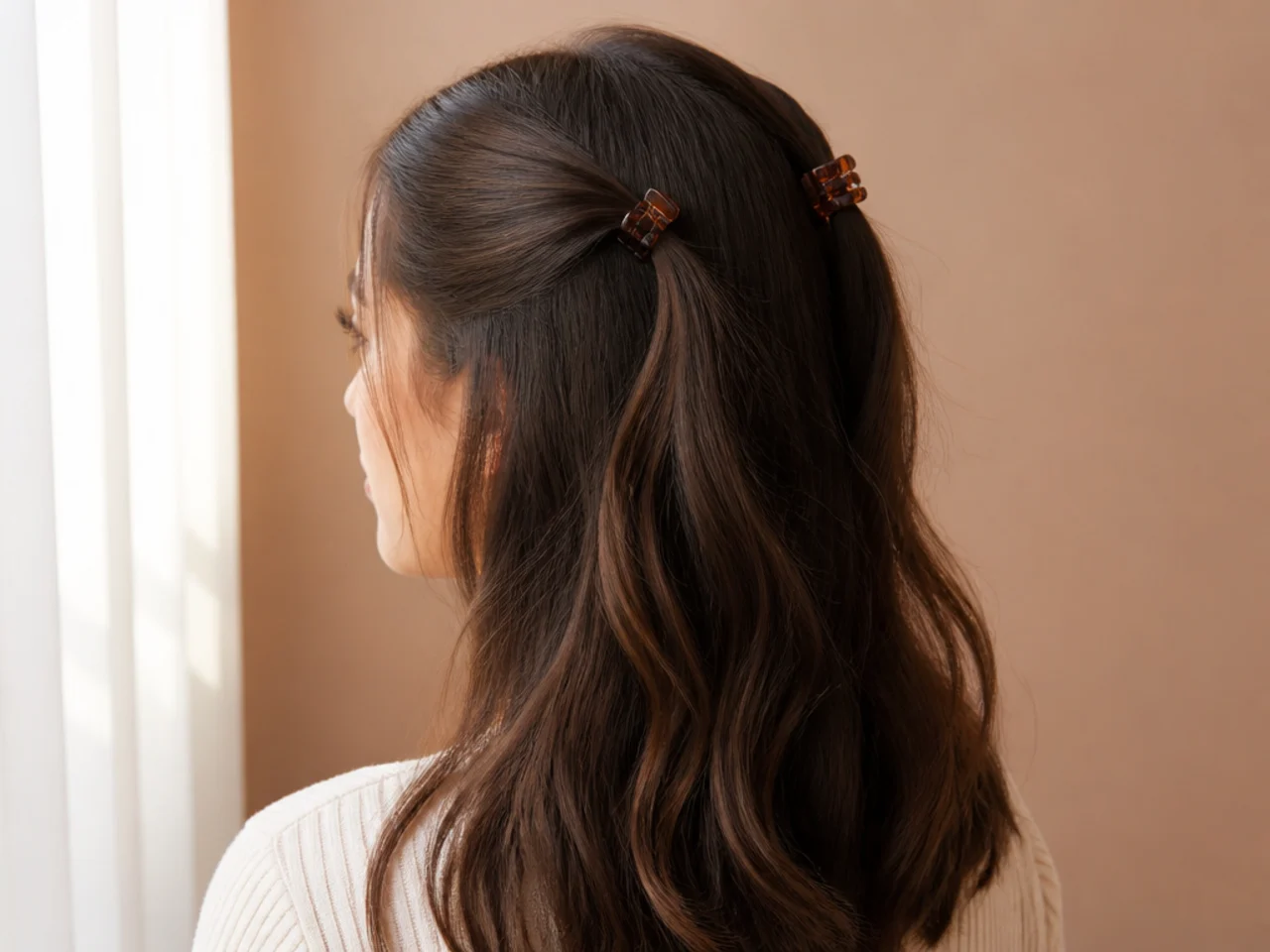
6. Messy Low Bun with Pieces Out
Deliberately undone, which disguises the lack of bulk entirely.
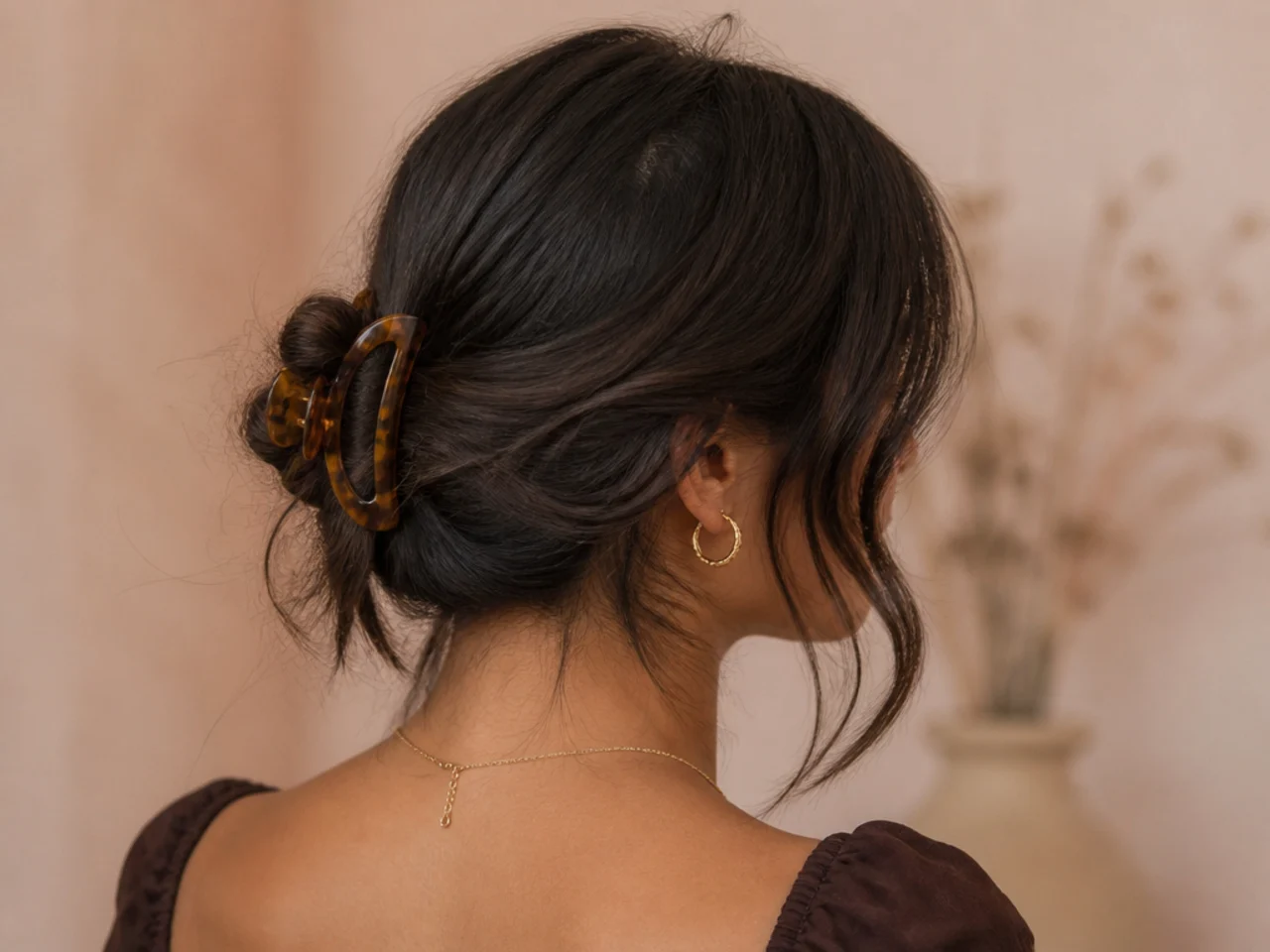
7. Half-Up with Tendrils
Two pieces released at the temples. The eye reads movement as volume.
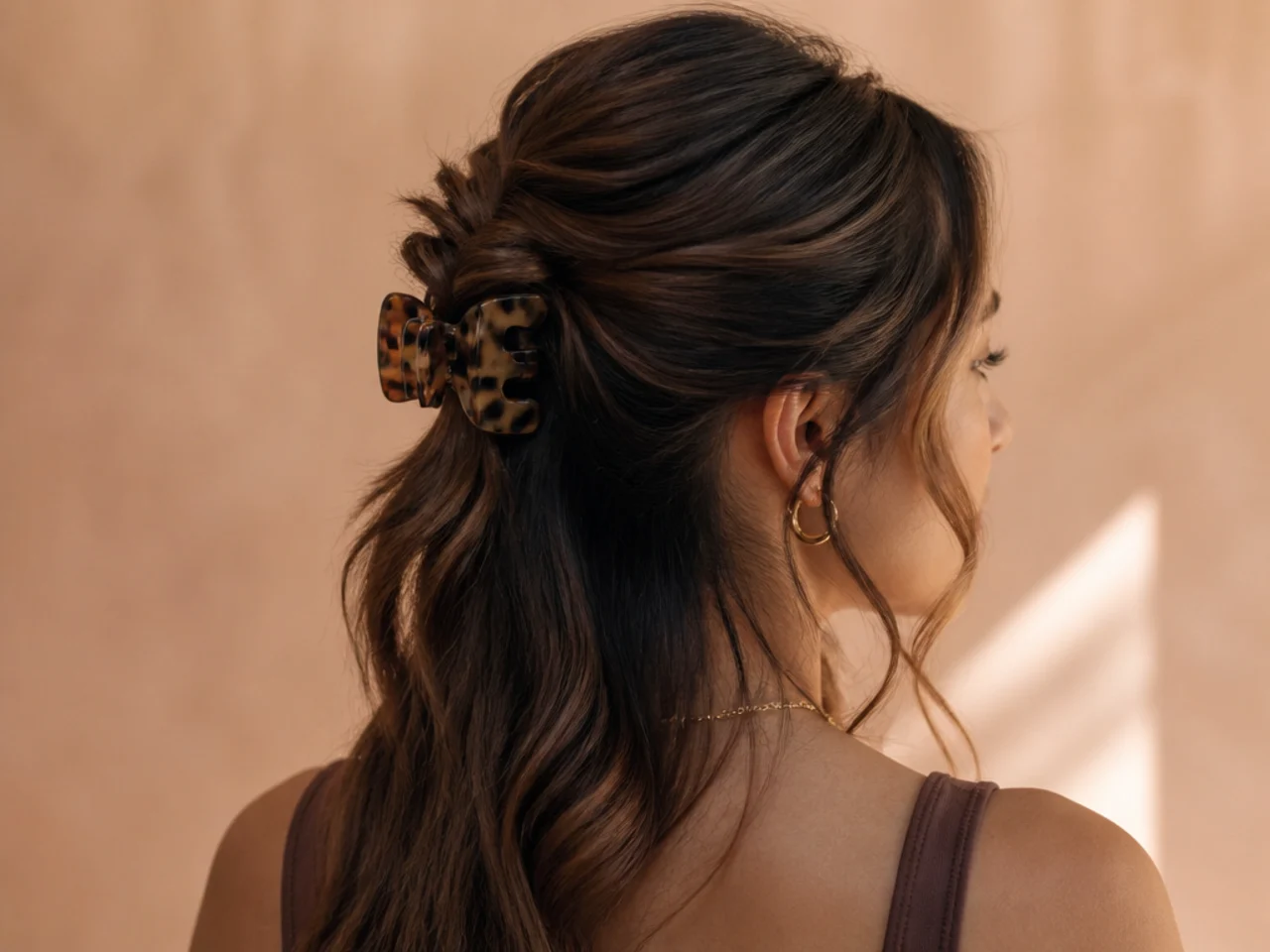
8. Textured Twist with Salt Spray
Grit first, twist second. Fine hair holds a shape far better with texture in it.
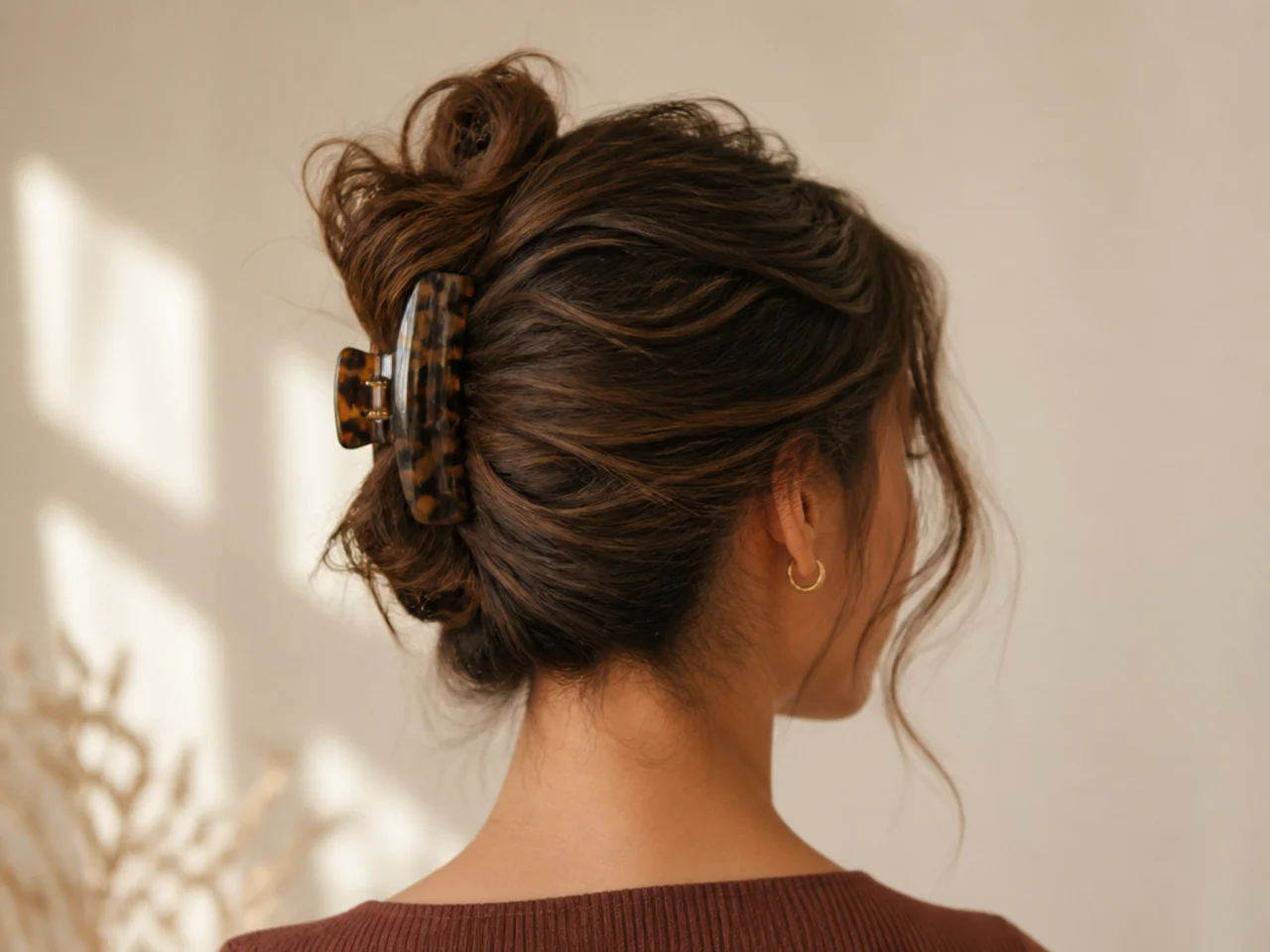
9. Low Nape Clip
The most secure position, because there is no weight hanging below it.
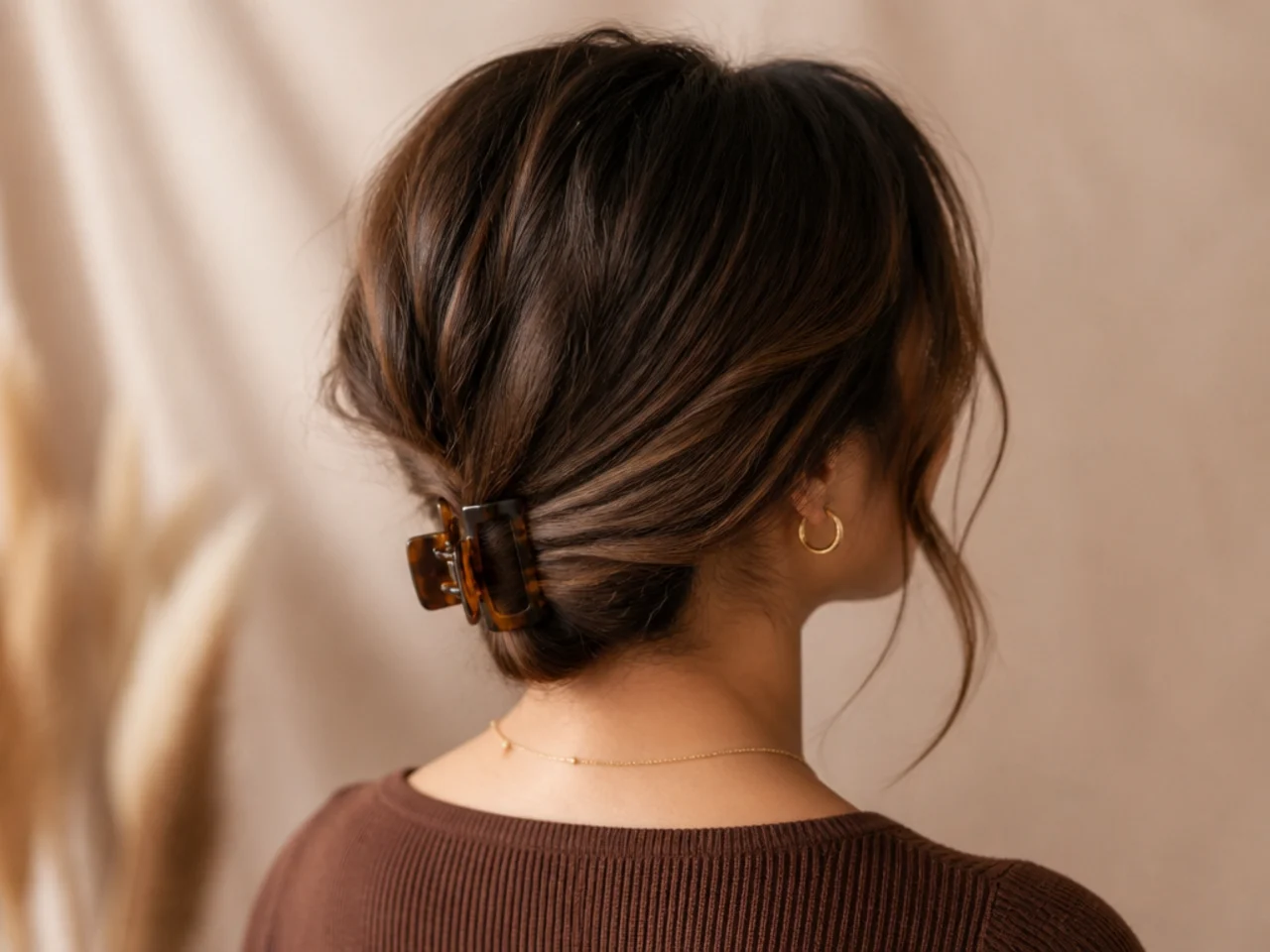
10. Clipped Ponytail Fold
Ponytail folded up and clipped. Two securing points for hair that struggles with one.
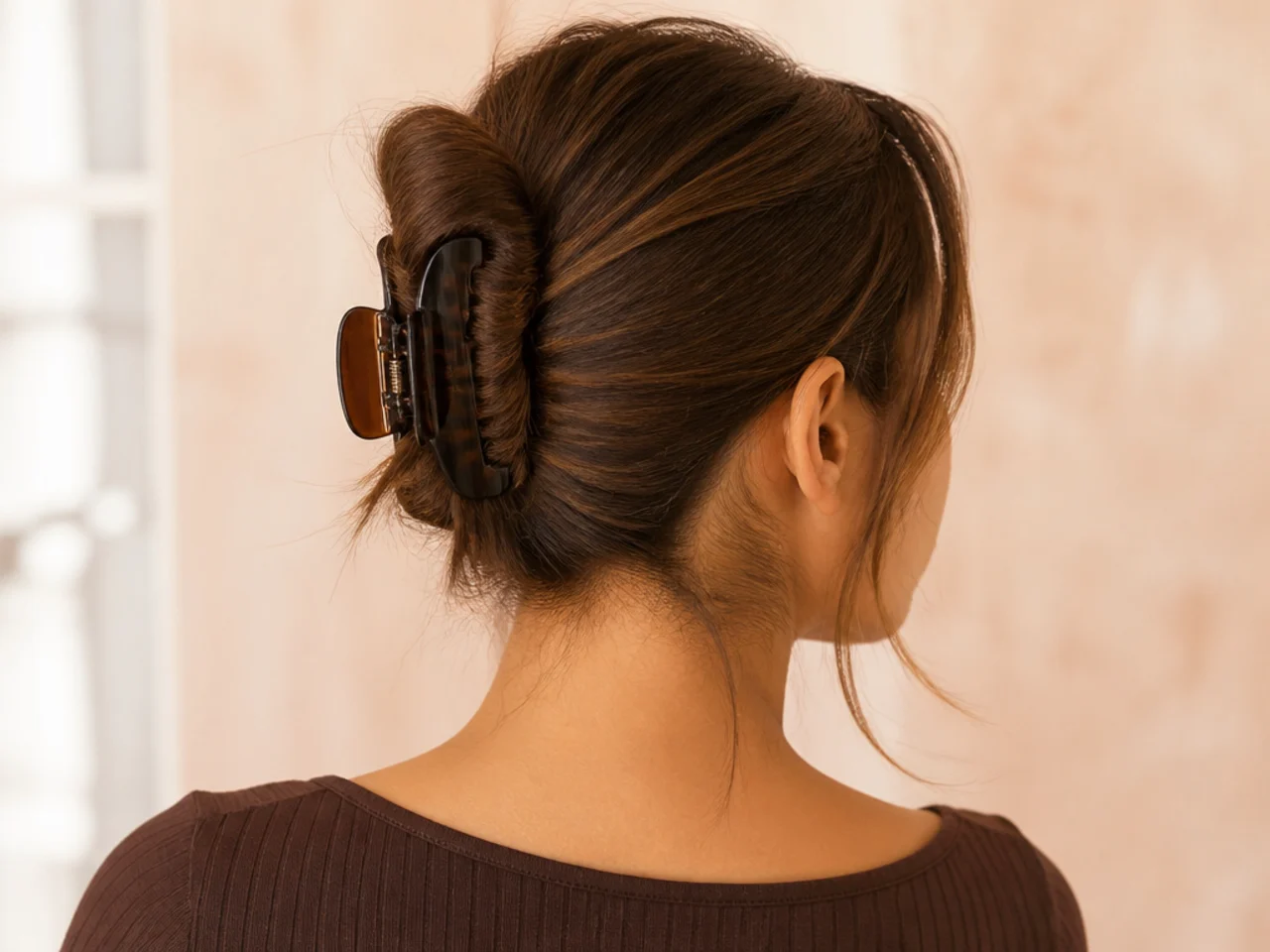
11. Half-Up with a Decorative Clip
The clip supplies visual weight the hair does not have.
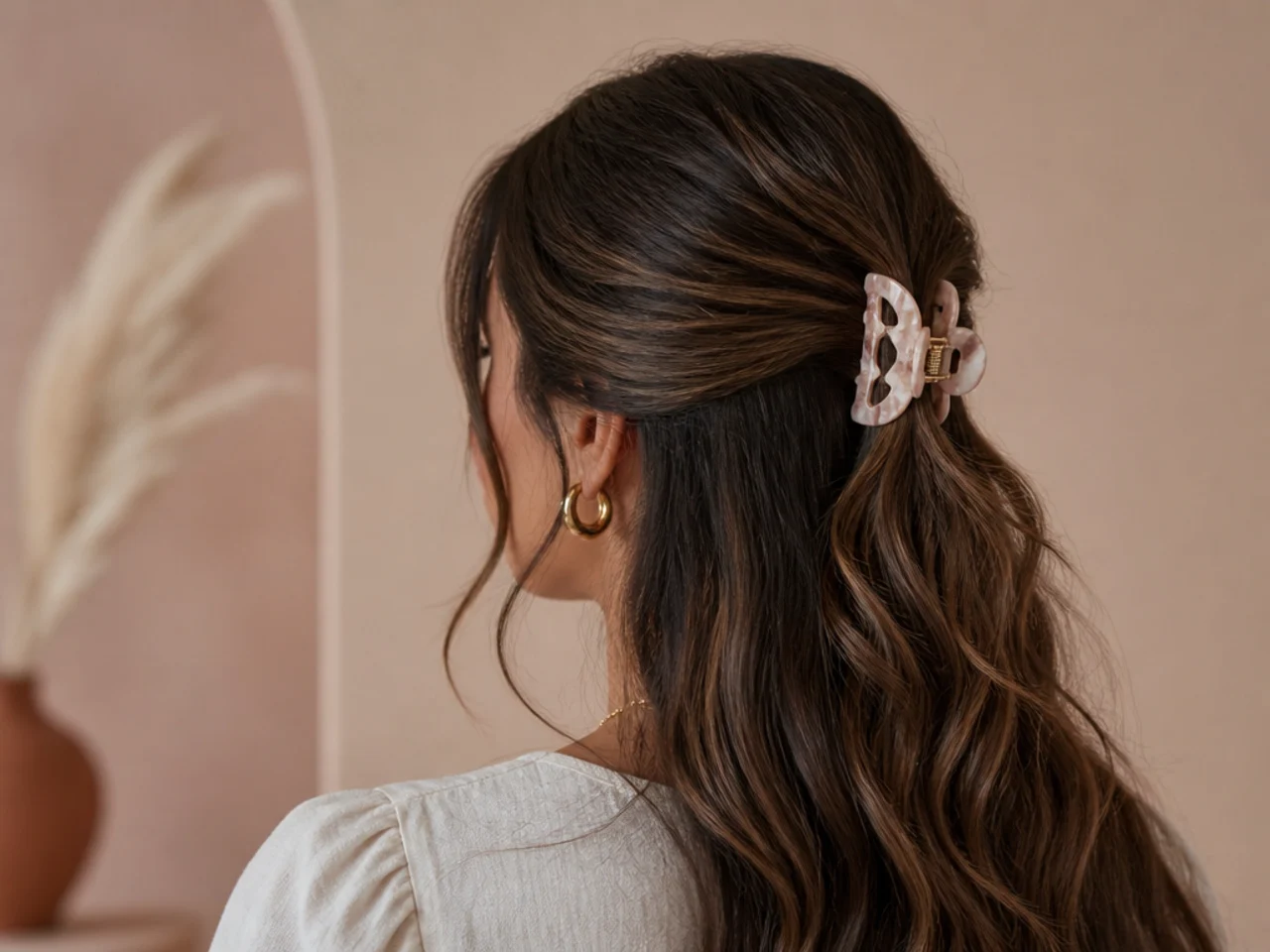
12. Side-Swept Clip
Everything gathered one way. Overlapping strands read thicker than spread ones.
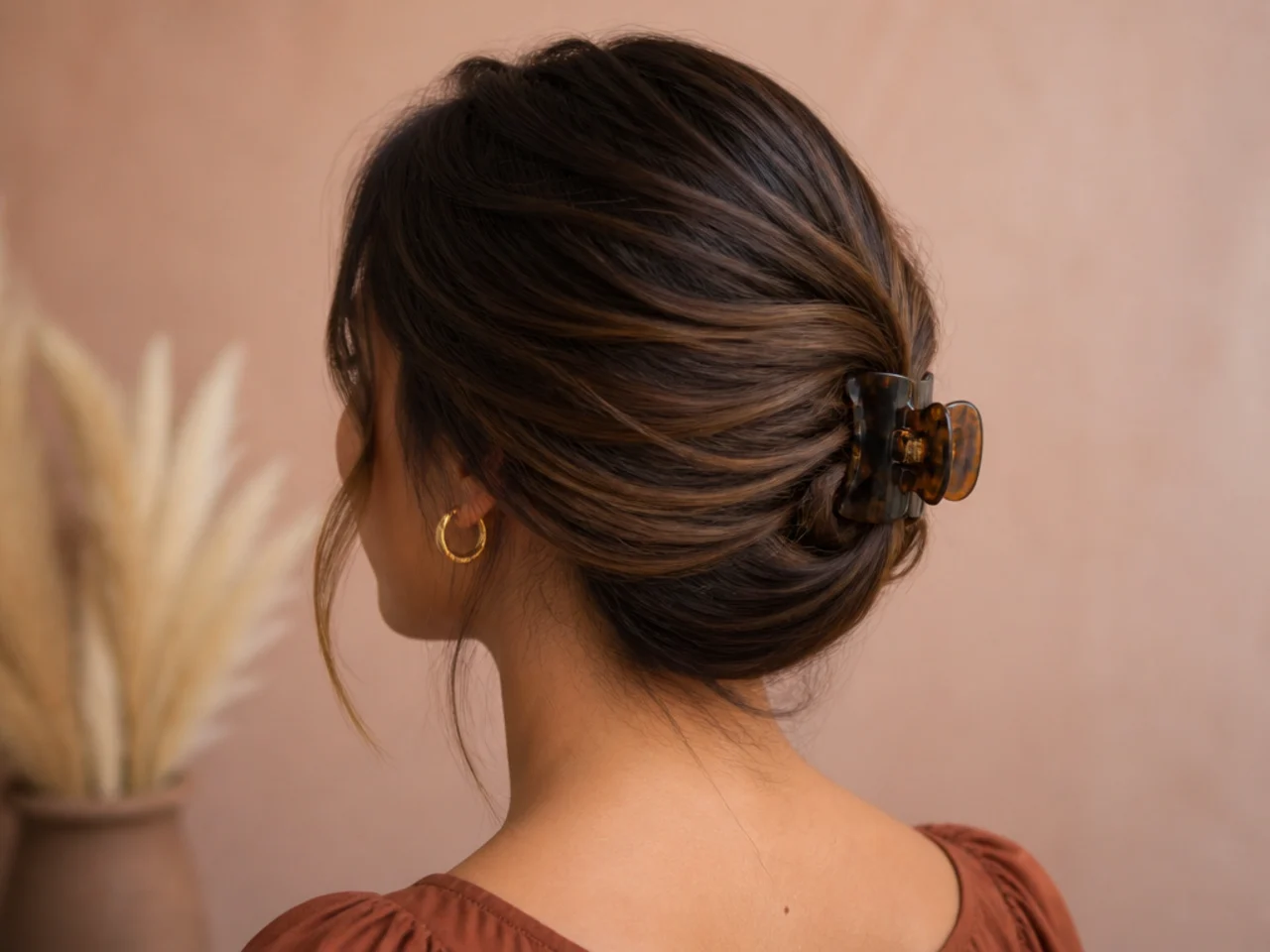
13. Clipped Half-Up on Second-Day Hair
Day-two texture holds a clip far better than clean hair does.
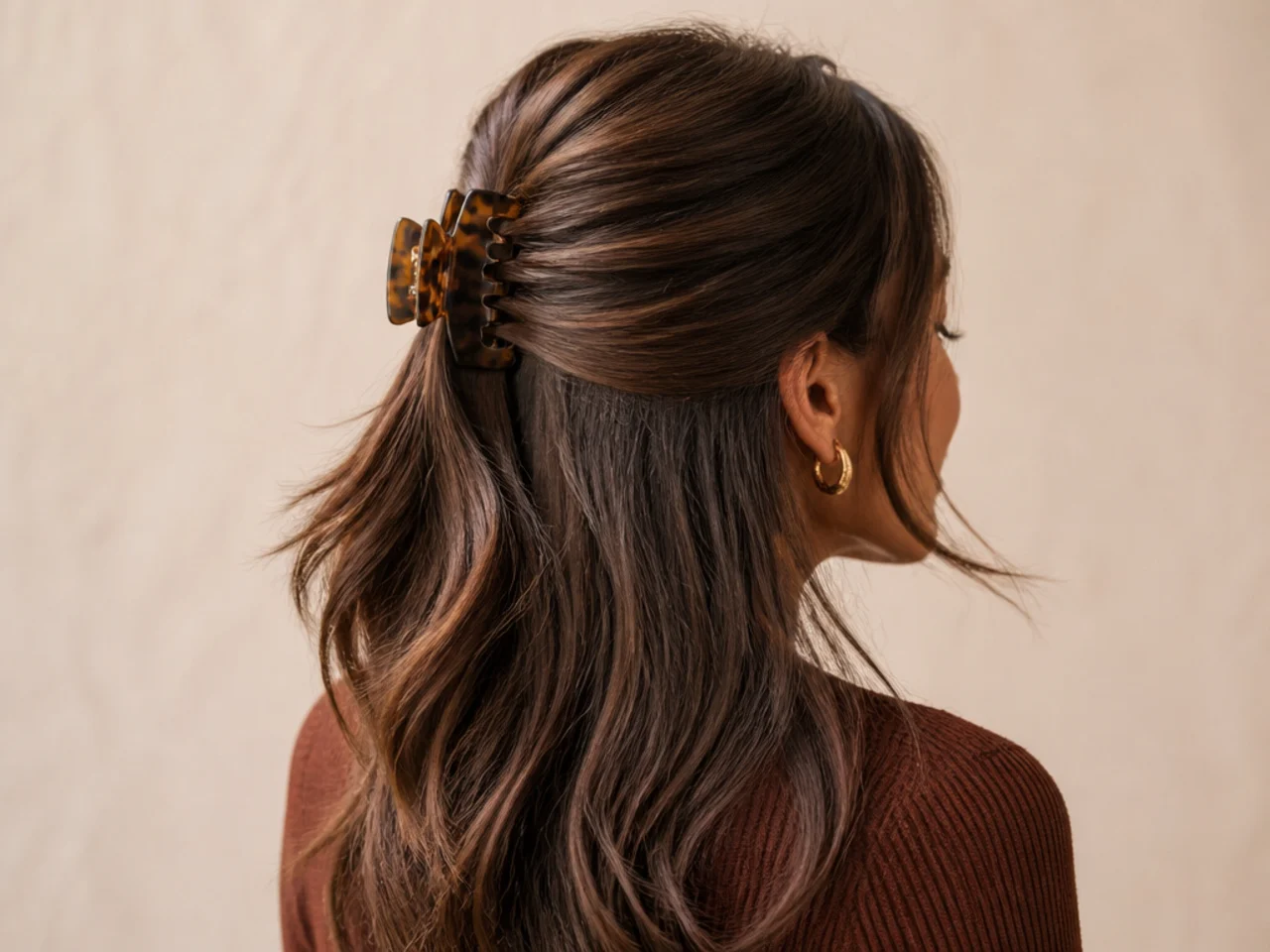
14. Loose Crown Pouf with a Clip
A small pouf at the crown, clipped beneath. Height where it counts most.
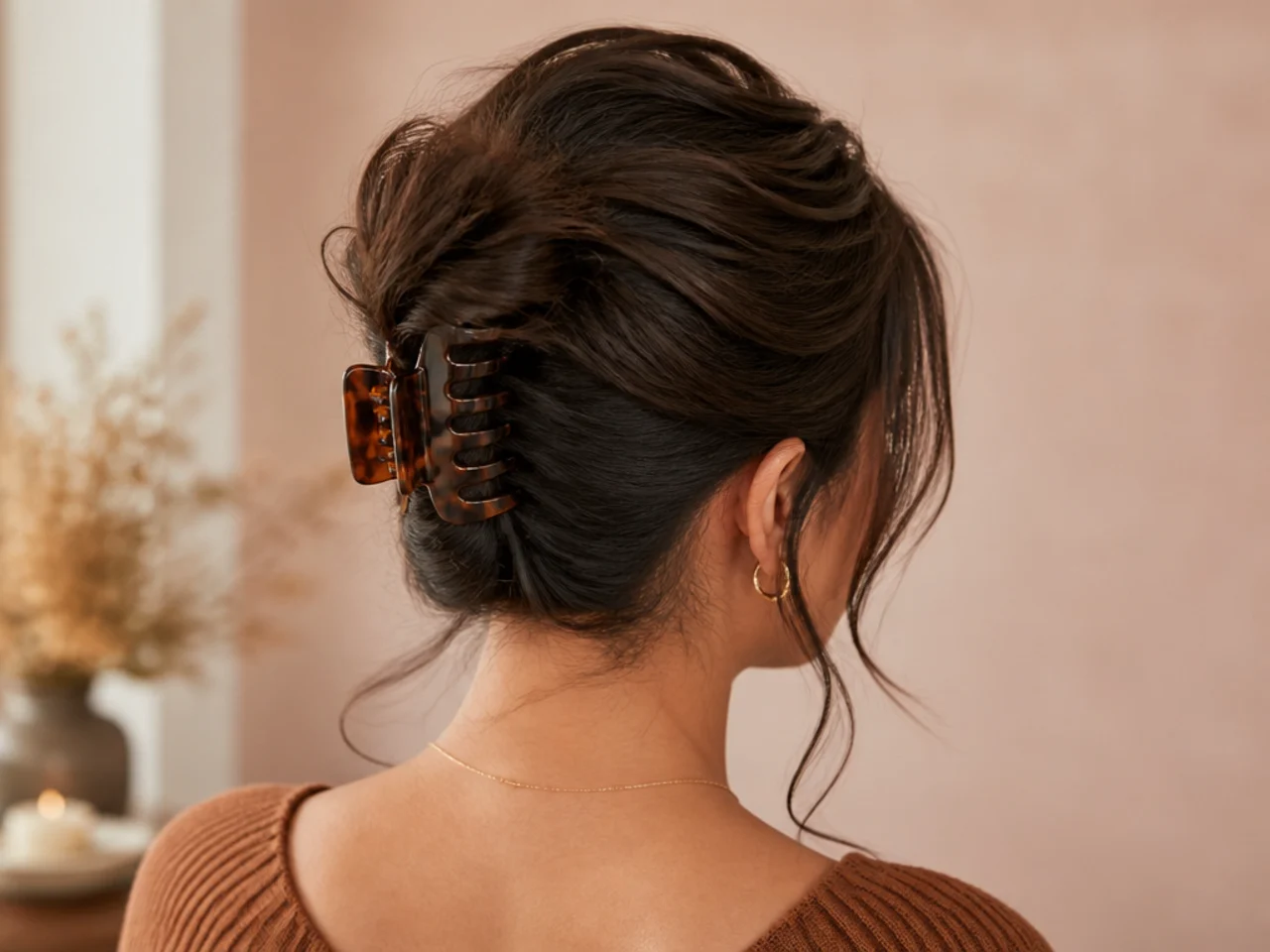
15. Two Clips Stacked Vertically
Small clips one above the other. Spreads the load without needing bulk.
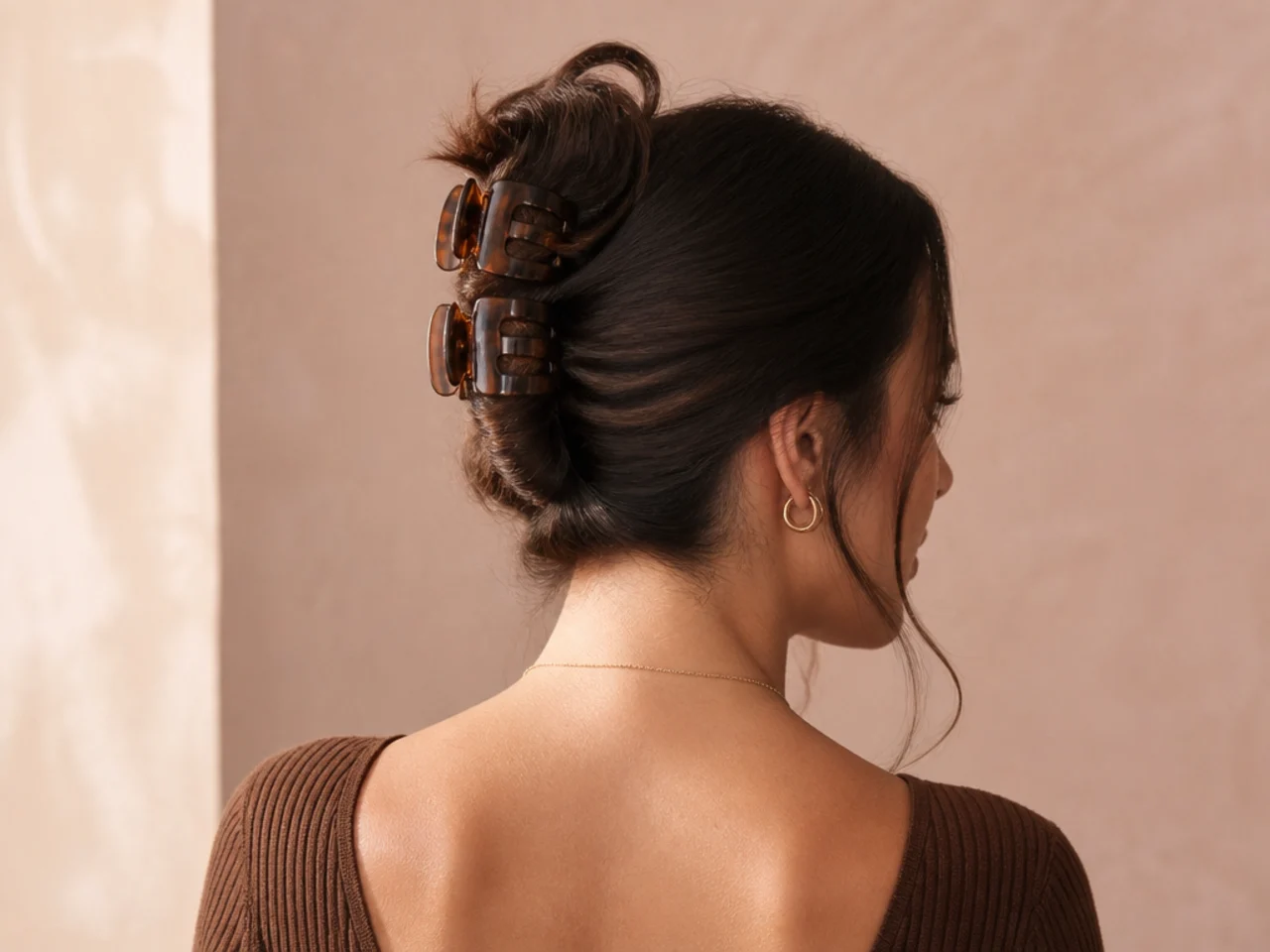
16. Clipped Braid Fold
Braid first, then fold and clip. The braid adds apparent thickness before the clip goes near it.
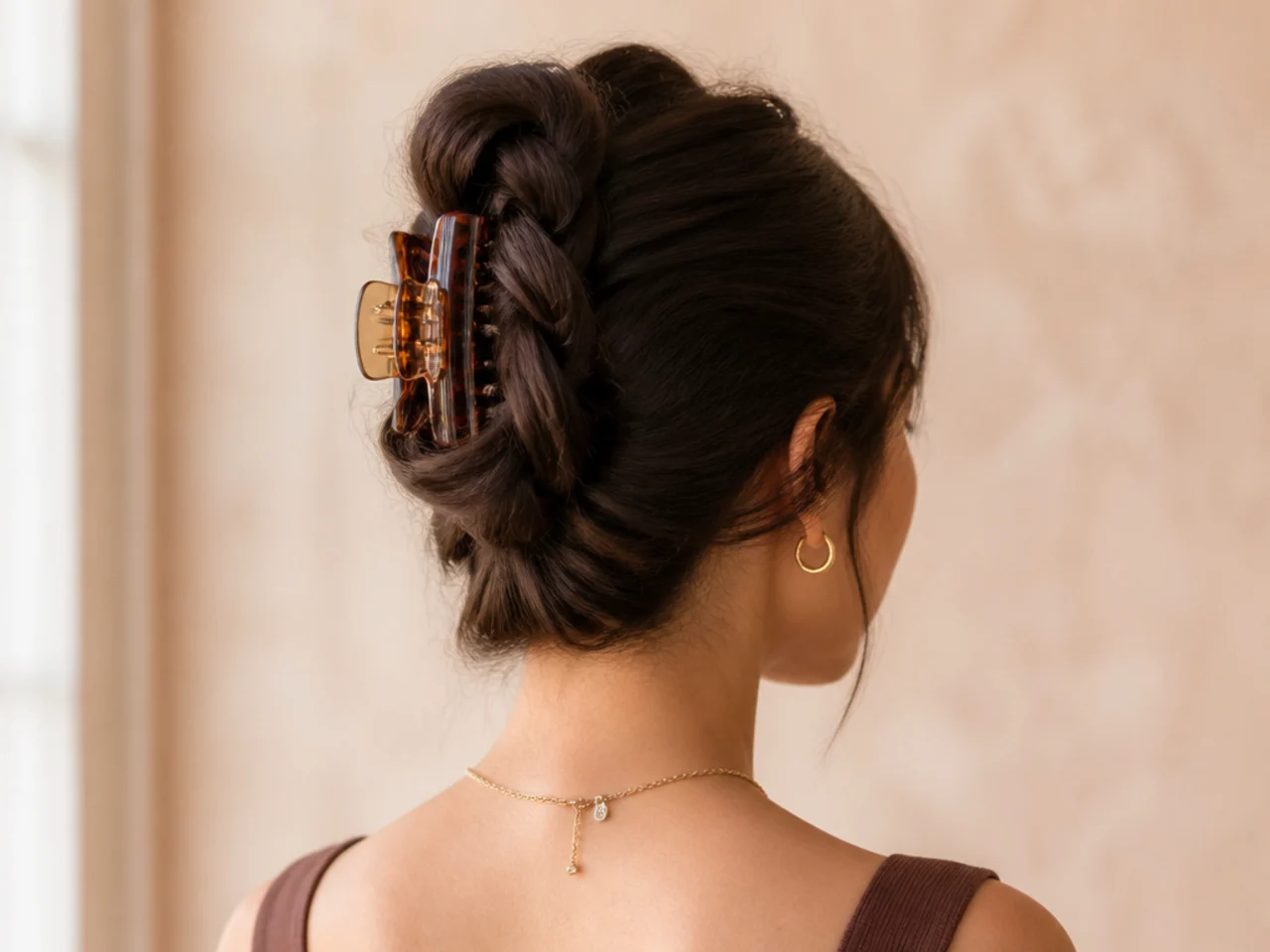
17. Half-Up with Curled Ends
Curl below the clip. Movement in the length distracts from density at the top.
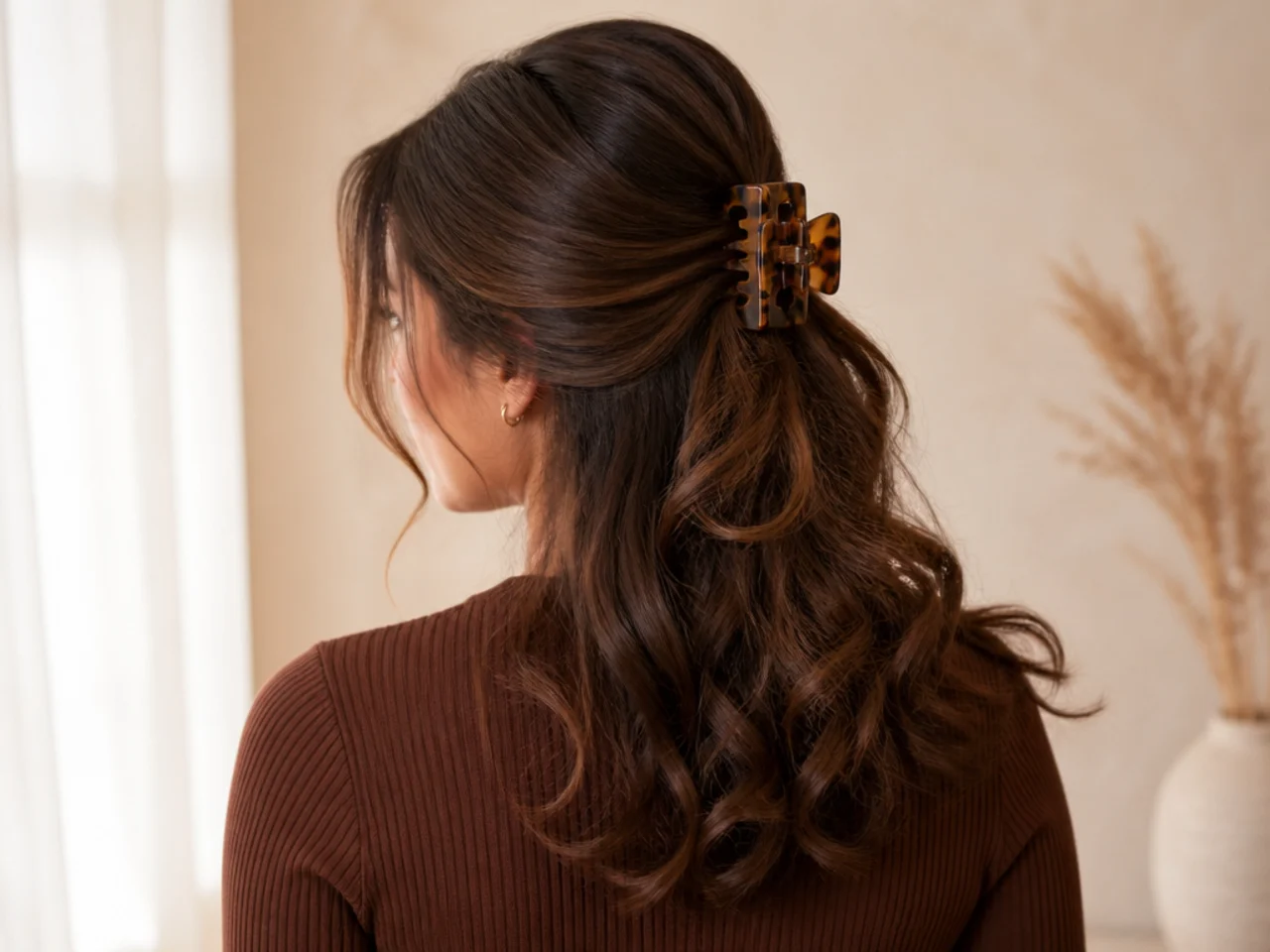
18. Deep Side Part with a Clip
The parting adds root lift on one side before anything is fastened.
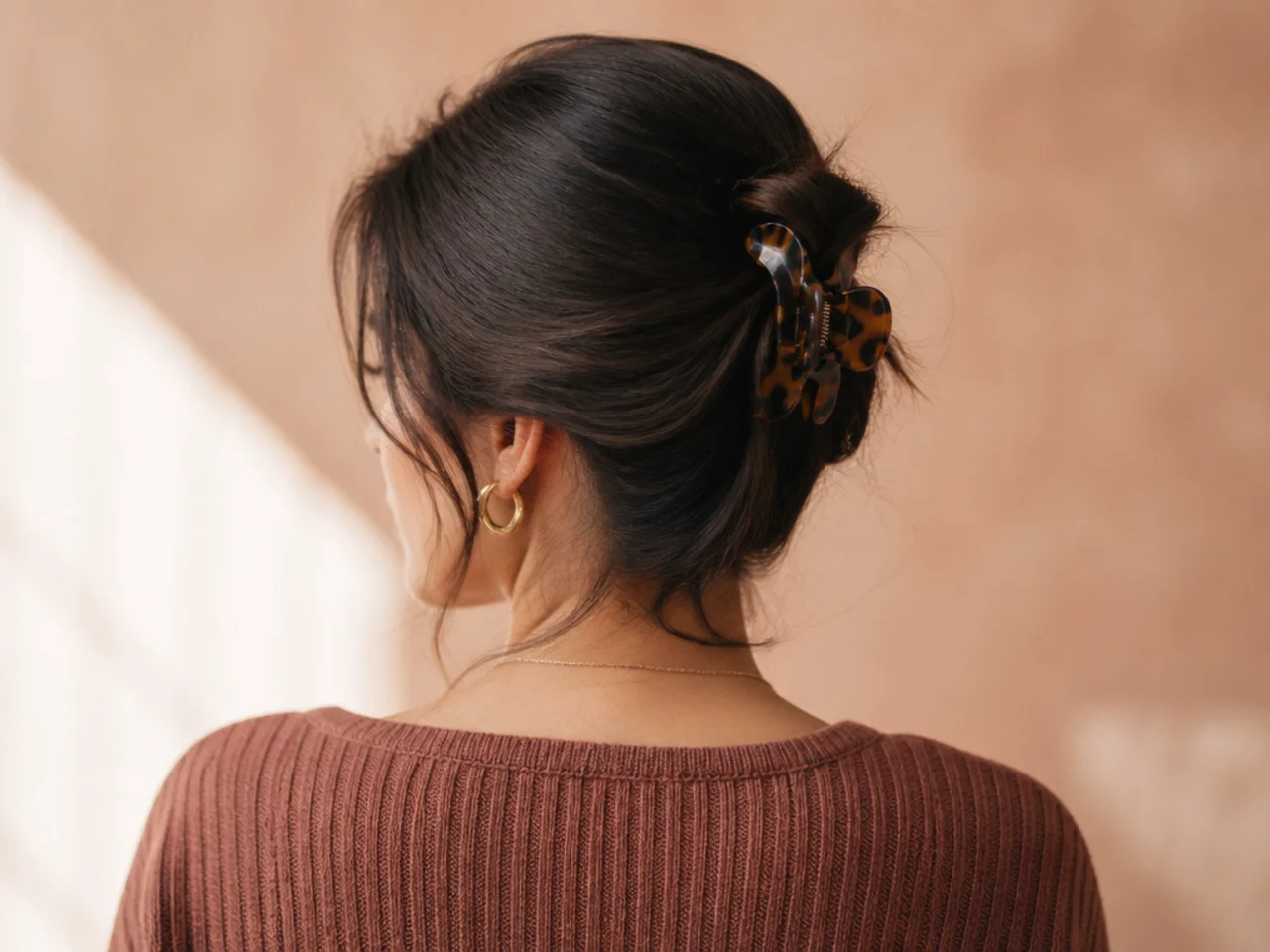
19. Loose French Twist
Rolled without compression and clipped along the seam.
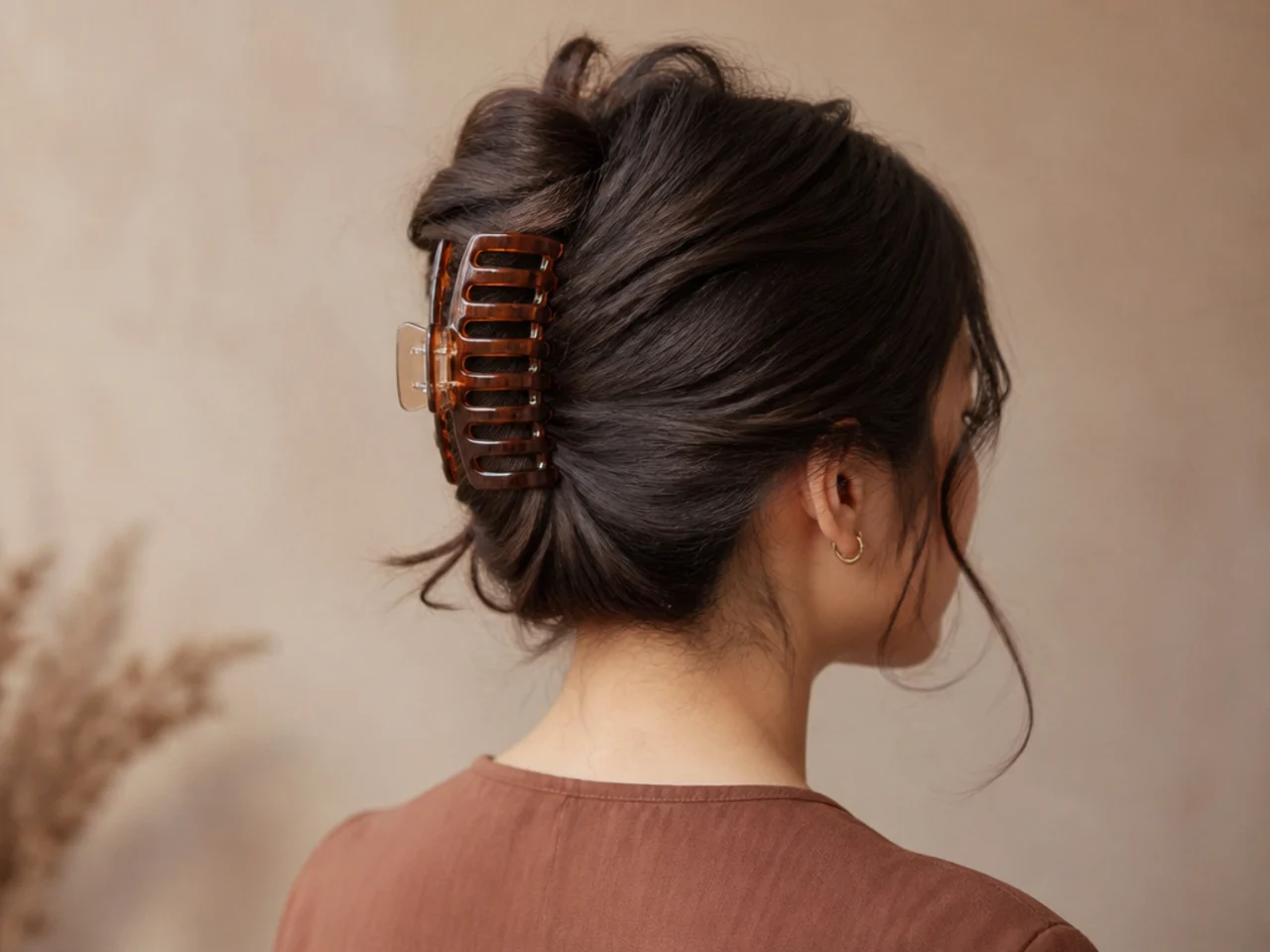
20. Clip with a Volumising Root Spray
Root product first, always. It is the only product that helps fine hair hold a clip.
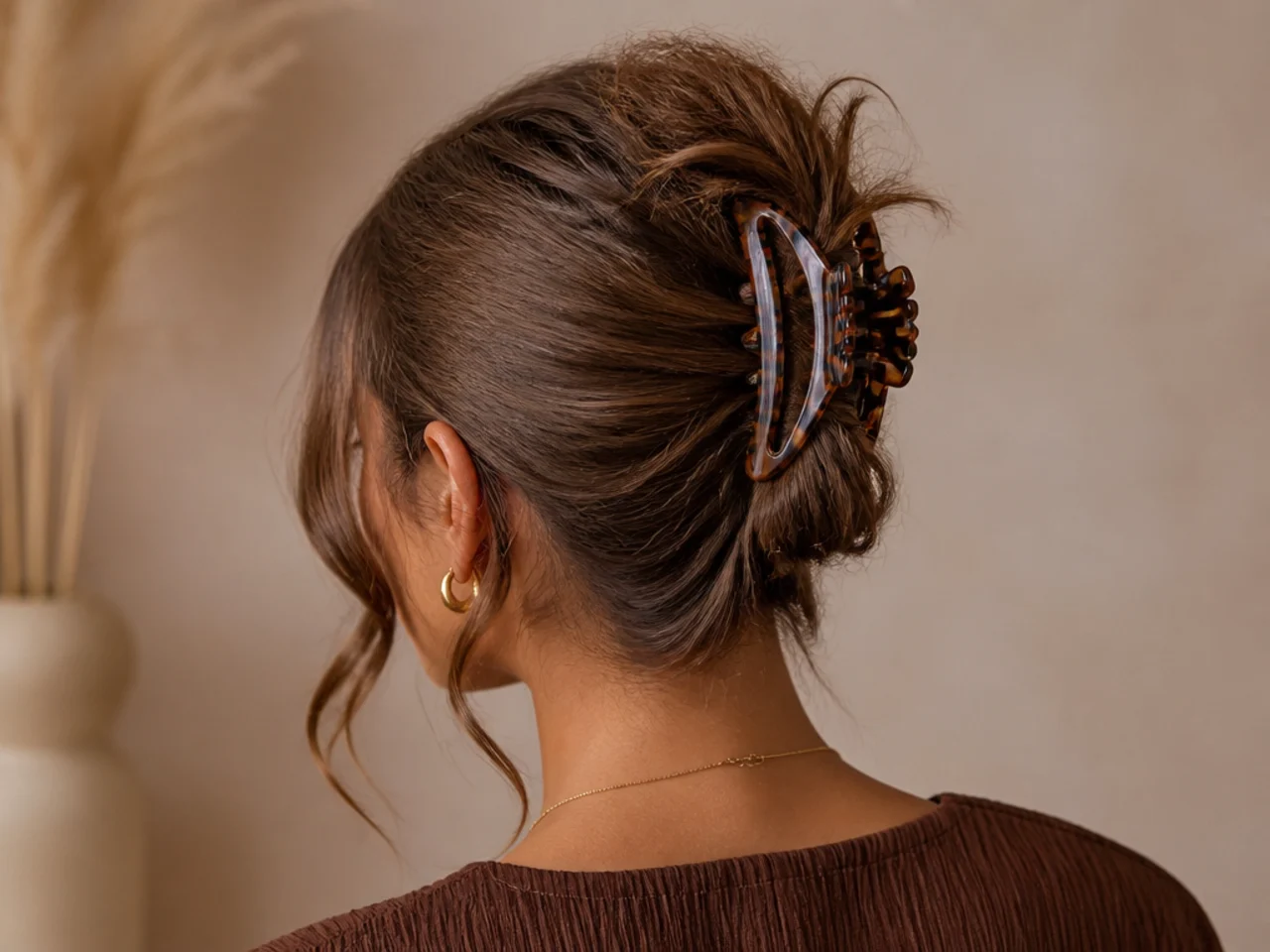
Why Clips Beat Elastics for Fine Hair
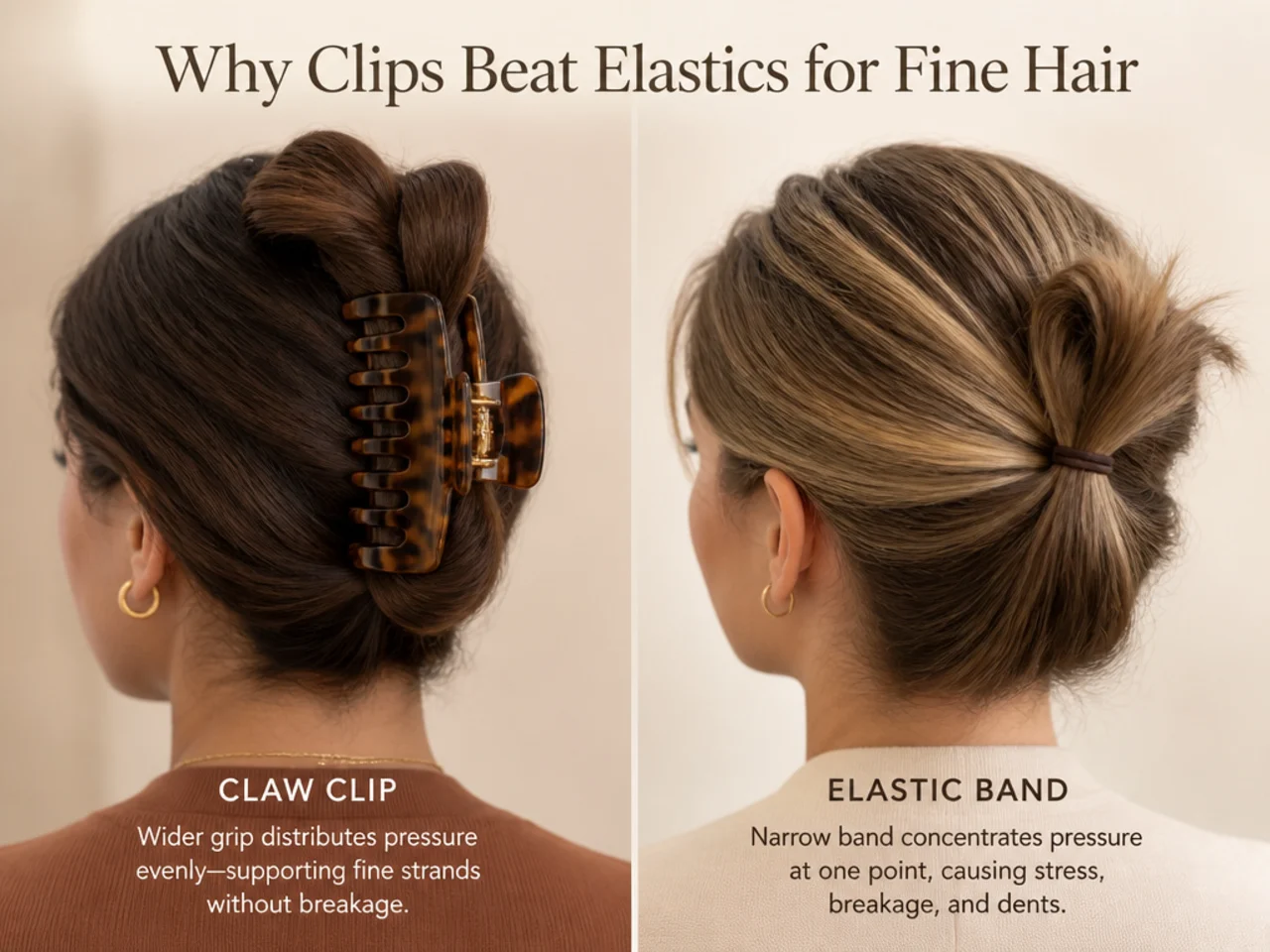
Worth saying plainly, because fine hair is the most prone to breakage and the most likely to be tied back daily.
An elastic concentrates all its pressure into one narrow band, in the same place, every day. That is precisely the condition that produces breakage, and on fine hair the resulting short broken pieces are visible.
A claw clip spreads the same holding force across a jaw several centimetres wide, and it sits in a slightly different place each time because you re-clip rather than re-tie. Less pressure per strand, less repetition in one spot.
If you wear your hair up most days and it is fine, switching from elastics to clips is one of the few genuinely protective changes available.
Mistakes to Avoid
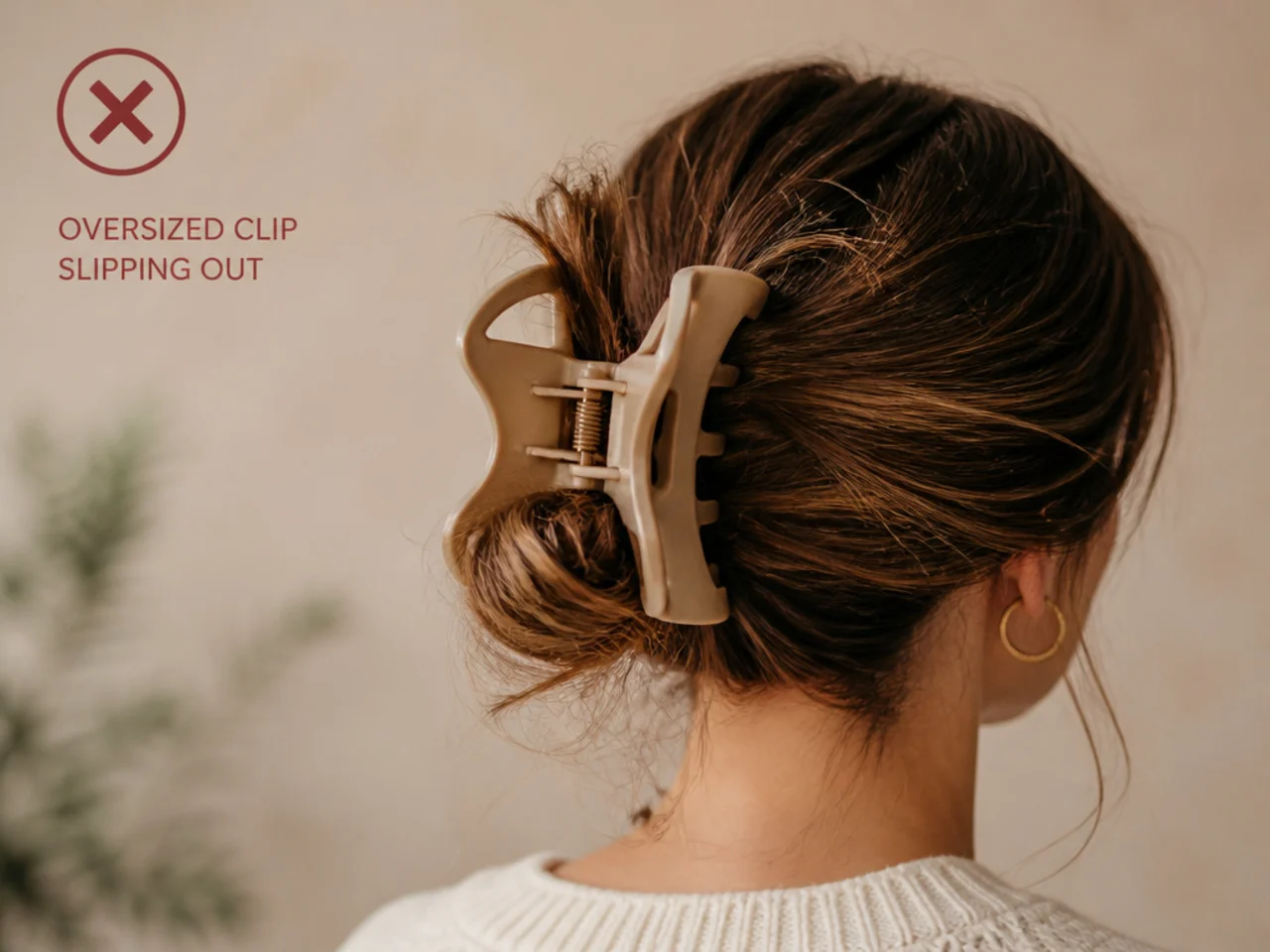
Buying a bigger clip when it slips. The opposite of the fix. Go smaller with finer teeth.
Twisting tightly. It compresses fine hair into the smallest shape it can occupy.
Clipping freshly washed hair. Too slippery to grip. Texture spray, or wait a day.
Skipping the backcomb. Three light passes is the difference between flat and shaped.
Any conditioning product before clipping. It weighs fine hair down and removes what little grip it had.
FAQ
What size clip for thin hair? Around 7cm with narrow teeth — smaller than most people use.
How do you make it look fuller? Build the shape first: backcomb, twist loosely, pull pieces free after.
Do clips damage thin hair? Less than elastics — the pressure is spread rather than concentrated.
Final Thoughts
Go smaller, twist looser, and add texture before the clip goes anywhere near your hair. Fine hair is not bad at holding clips — it is bad at holding the wrong clip, which is a different and much more fixable problem.
For choosing a clip see 15 ways to style a claw clip, and for the full range see 25 easy claw clip hairstyles. More in Updos & Clips.