10 Cherry Cola Brunette Hair Ideas for Fall
Ten cherry cola brunette looks for fall — glossy all-over color, black cherry, balayage, and low-maintenance glosses, with what to ask your colorist.
In this article · 11
- 1\. Classic Cherry Cola All Over
- 2\. Black Cherry Cola
- 3\. Cherry Cola Balayage
- 4\. Cherry Cola Money Piece
- 5\. Cherry Cola Lowlights on Dark Hair
- 6\. Cinnamon Cherry Cola
- 7\. Cherry Cola Gloss on Black Hair
- 8\. Cherry Cola for Curly Hair
- 9\. Mulberry Cherry Cola
- 10\. Cherry Cola Ombre Melt
- Narrowing Down Your Perfect Cherry Cola
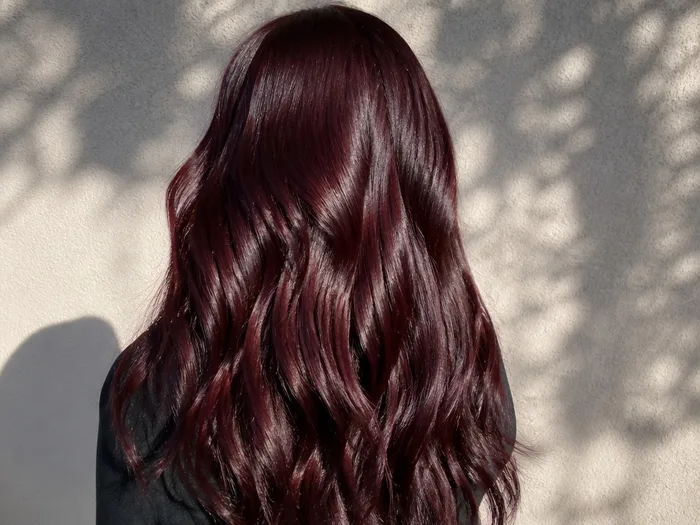
Cherry cola is the brunette way into red, and fall 2026 is its season: Pinterest searches for "cherry cola brunette hair" are up 788% in the platform's autumn beauty report. The formula is simple and forgiving. A deep brown base, usually level 3 to 5, carries a translucent red-violet glaze, so the hair looks like espresso indoors and flashes black cherry the moment you step into sunlight. It is the most wearable red a brunette can try, because the brown underneath does the heavy lifting and the red only has to shimmer. These ten versions cover every starting point and commitment level — pick the one that matches your base color and your appetite for upkeep, not just the photo you like.
1. Classic Cherry Cola All Over
The classic version is a single all-over gloss: a level 4 brown base with a red-violet reflect, applied as a demi-permanent color from roots to ends. Demi-permanent color deposits pigment without lifting the base, so there is no bleach, no harsh regrowth line, and the result is glossy rather than flat. This is the reference shade every other version on this list is a variation of, and the right starting point if you have never colored your hair before.
You will need: one gloss appointment, a color-safe shampoo. Ask for "level 4 brown with a red-violet reflect, demi-permanent gloss, no copper" — the no-copper instruction is what keeps it cola rather than auburn.
Styling tip: loose waves show the color shift best, because every bend catches light differently. A shine spray on the ends makes the cherry flash read as gloss rather than color.
2. Black Cherry Cola
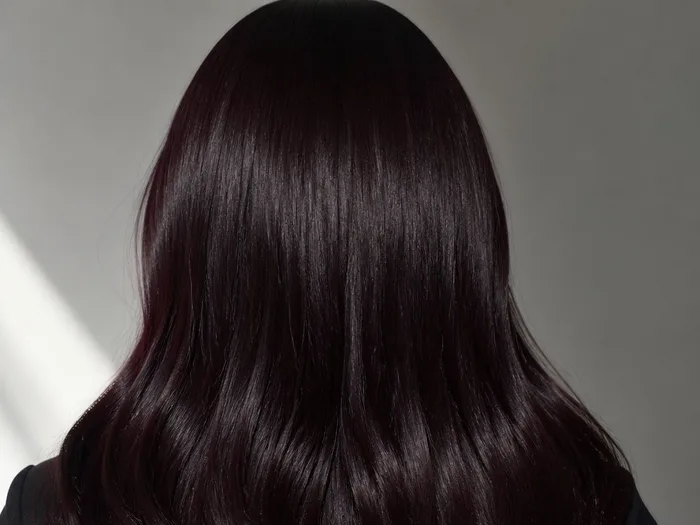
Black cherry cola pushes the base down to near-black, level 2 to 3, so the cherry only reveals itself when light hits the hair. Indoors it reads as a rich, glossy black-brown; in sunlight it opens into deep cherry. The dark base makes this the lowest-maintenance version on the list, because fading red simply returns the hair to dark brunette instead of exposing brass.
You will need: a colorist who will keep the base dark rather than lifting it first. Ask for "black cherry, level 3 base, red-violet reflect, visible in sunlight only."
Styling tip: glass-hair styling is the perfect partner — smooth, reflective hair turns the hidden cherry into a mirror effect. A flat-iron finish with a glossing serum shows it off better than curls do.
3. Cherry Cola Balayage
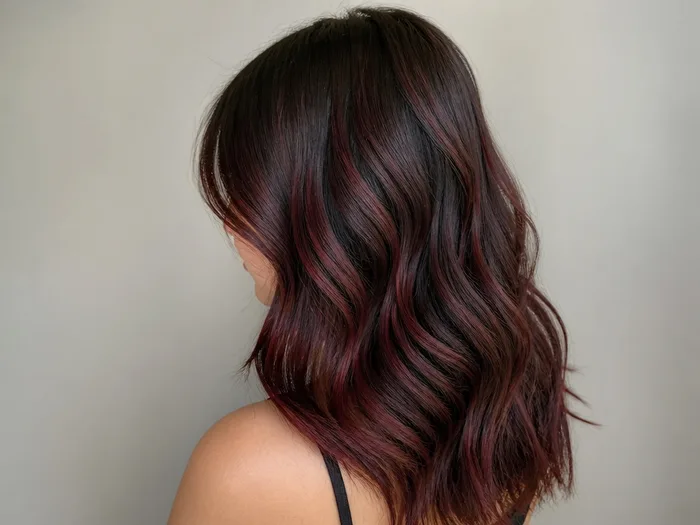
Cherry cola balayage hand-paints cherry ribbons through a dark brown base, concentrating the red through the mid-lengths and ends while the roots stay untouched. The painted placement means the grow-out is graceful — your natural color simply joins the dark root zone — and the red reads as dimension rather than an all-over commitment. It is the best version if you want the color but are unsure about going red everywhere.
You will need: a colorist comfortable with surface painting, and lightener only if your base is very dark and you want bright ribbons. Ask for "cherry cola balayage, ribbons through the mid-lengths and ends, roots untouched." For a warmer, chocolate-toned cousin, see our mocha balayage hair ideas roundup.
Styling tip: a middle part shows the ribbons symmetrically and keeps the placement looking deliberate. Skip heavy oils on the lengths; they flatten the contrast between ribbon and base.
4. Cherry Cola Money Piece
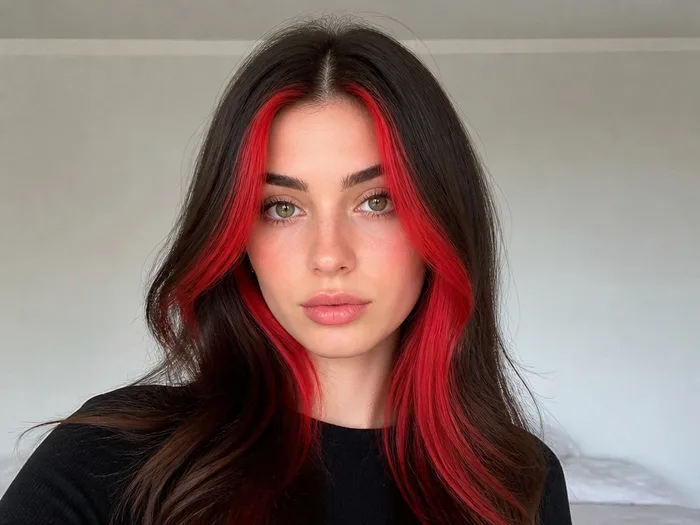
The money piece takes the two front sections a level or two brighter and redder than the rest, framing the face with cherry brightness while the back stays dark and blended. It is the highest-impact, lowest-commitment version of cherry cola — you can retouch just the front pieces and leave everything else alone. The contrast draws attention to eyes and cheekbones, especially with a middle part.
You will need: a colorist who blends the money piece back diagonally, so it melts rather than stripes. Ask for "front pieces one to two levels brighter, cherry red, blended back into the cola base."
Styling tip: curtain bangs plus a money piece is the classic pairing — the bangs sit inside the bright frame. Keep the front sections glossy; frizz there reads messier than anywhere else.
5. Cherry Cola Lowlights on Dark Hair
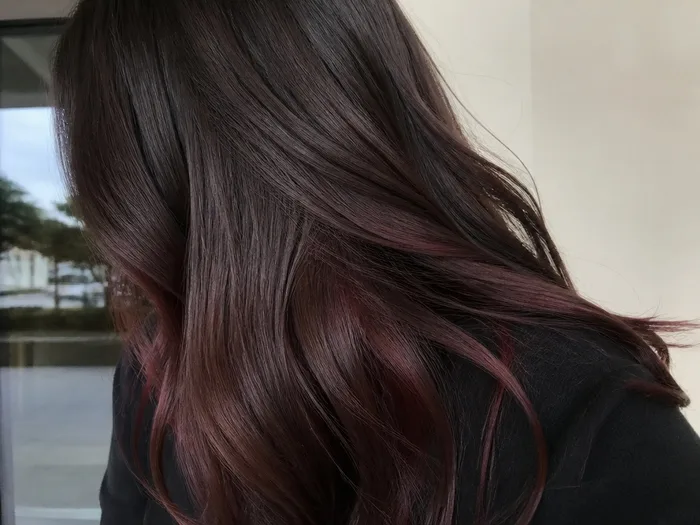
Lowlights weave cherry-toned strands underneath and through dark hair instead of painting over the surface, so the red appears in flashes as the hair moves. The technique adds depth without changing the overall level of the hair, which makes it the most conservative way to wear cherry cola and the easiest to grow out. It is also the right call if you need a work-appropriate look that still feels current.
You will need: a colorist who will place lowlights in the interior layers, not just the top. Ask for "cherry lowlights, interior placement, one level above my base."
Styling tip: because the red hides inside the hair, movement does the talking — a tousled finish or a loose braid will reveal the lowlights that straight, still hair hides.
6. Cinnamon Cherry Cola
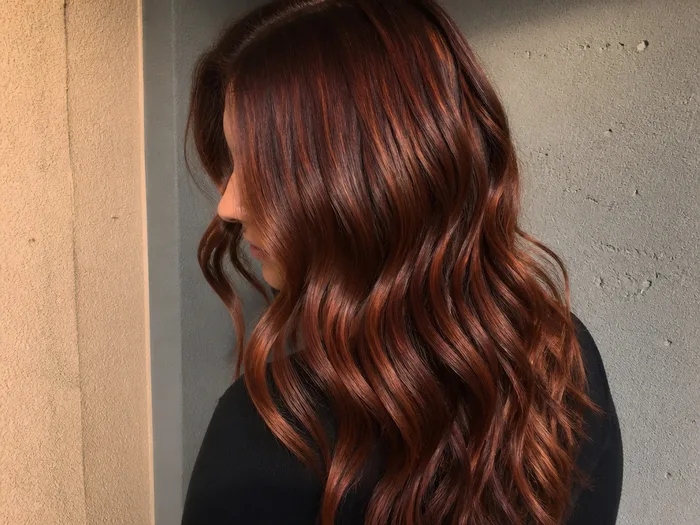
Cinnamon cherry cola warms the reflect toward red-copper, so the color reads spicier and sunnier than the classic violet-leaning version. The copper warmth makes it the best cherry cola for warm and olive skin tones, since the red echoes their undertone instead of fighting it. It also bridges neatly into the copper trend family if you later decide to go fuller copper.
You will need: a gloss that leans copper-red rather than violet-red, and acceptance that warm red fades fastest. Ask for "cherry cola, cinnamon reflect, warm red, no violet." For a full copper commitment, see our cowboy copper hair color roundup.
Styling tip: this is the cherry cola that most rewards a blowout — smooth, reflective hair makes the cinnamon read as shine rather than color. A round-brush finish beats air-drying here.
7. Cherry Cola Gloss on Black Hair
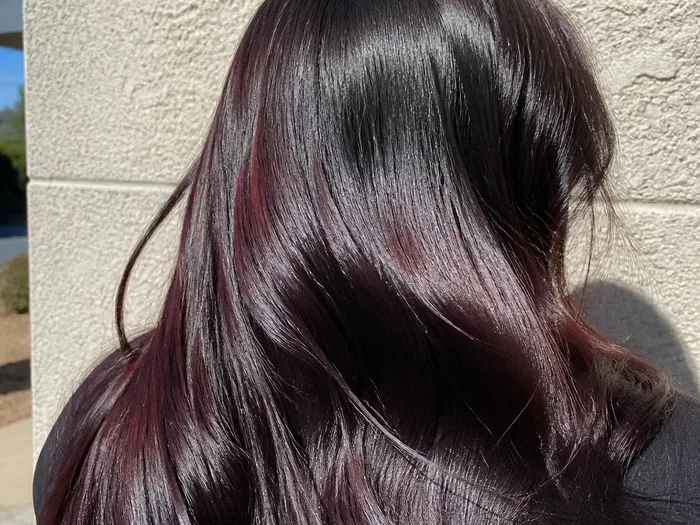
On black hair, a cherry cola gloss is pure payoff with zero lift: the demi-permanent red-violet pigment sits on top of the black base and turns it into a deep cherry-black that glows in sunlight. No bleach means no damage and no orange stage, and the grow-out is invisible because the gloss simply fades back to black. It is the easiest version on this list to try and the easiest to reverse.
You will need: a demi-permanent gloss, nothing else — no lightener, no toner. Ask for "cherry cola gloss over my natural black, no lift."
Styling tip: moisture is everything on glossed black hair — a weekly mask keeps the ends from going dry and dull, which is what makes a gloss look cheap. Finish with a glossing serum for the mirror shine.
8. Cherry Cola for Curly Hair
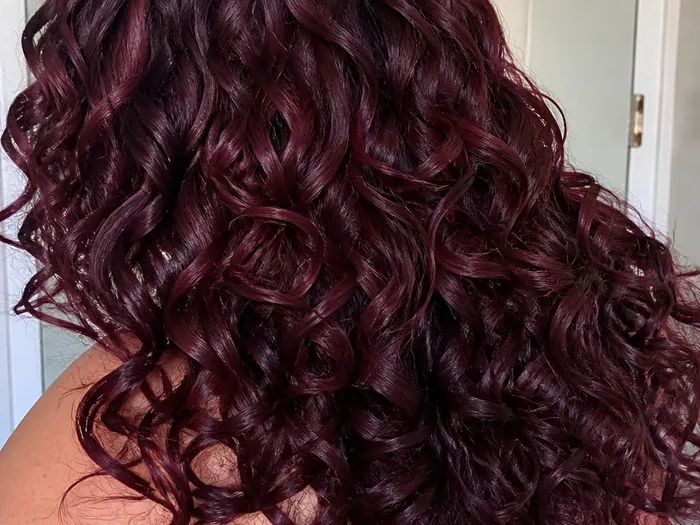
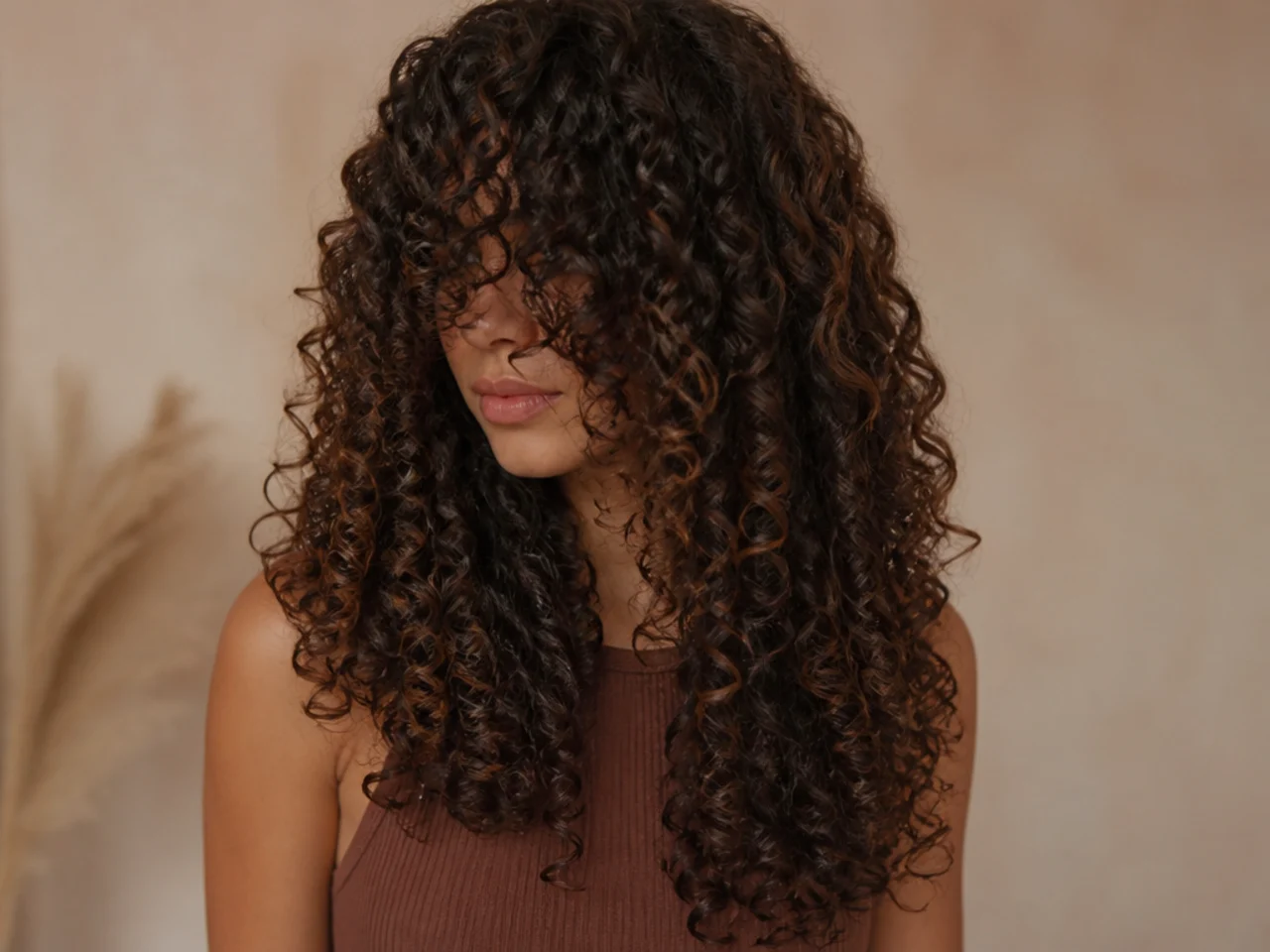
Curly hair and cherry cola are a natural match, because each curl catches light differently and the red-violet reflect shifts as the hair moves. For balayage or lowlight versions, the colorist should paint on dry, styled curls — not wet, stretched hair — so the placement follows the actual curl pattern instead of guessing where it will land. For the all-over gloss, curl pattern does not change the formula at all.
You will need: a curl-specialist colorist for any painted version, a paint-on-dry technique. Ask for "color painted on dry curls, placement following the curl pattern."
Styling tip: diffuse on medium heat to keep the curls defined — frizz scatters the reflect and dulls the contrast. A curl cream on the mid-lengths keeps each curl's cherry intact.
9. Mulberry Cherry Cola
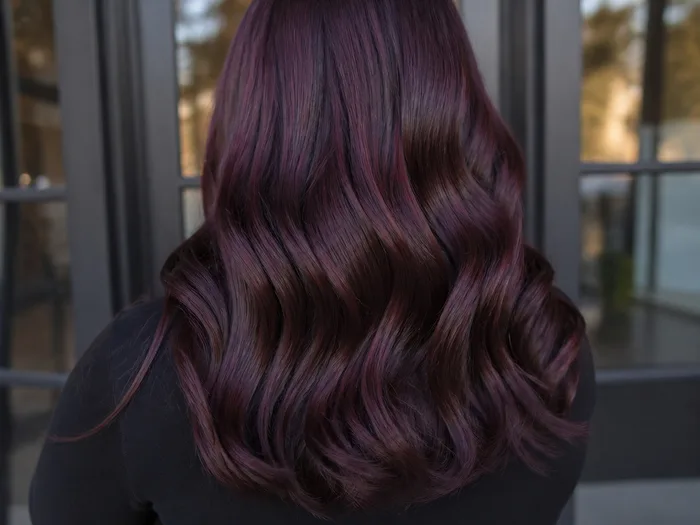
Mulberry cherry cola leans the reflect toward violet-berry, so the color reads plum in shade and mulberry in light. The cool violet makes this the best cherry cola for cool and neutral skin tones, and for anyone whose warm reds have gone brassy in the past. The trade-off is that violet toners fade faster than warm reds, so plan a gloss refresh every four weeks rather than six.
You will need: a purple toning shampoo used once a week, a colorist who will tone rather than lift. Ask for "mulberry cherry cola, violet reflect, no copper, no gold."
Styling tip: cool water rinses slow toner fade more than any product. If the violet washes out between appointments, a single purple mask session usually pulls it back.
10. Cherry Cola Ombre Melt
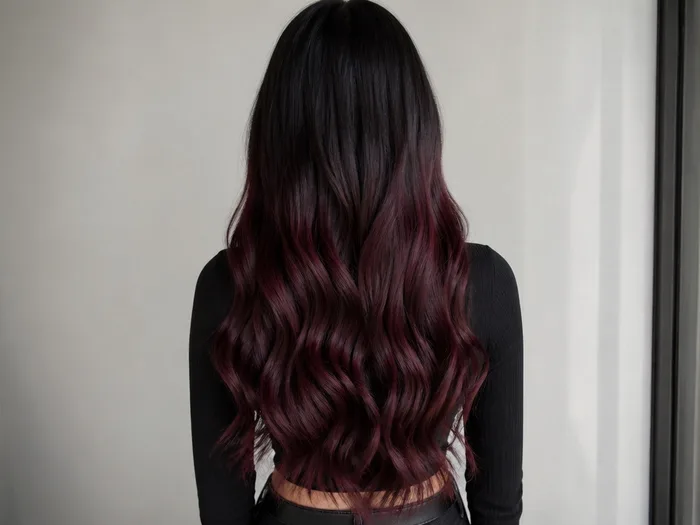
The ombre melt starts at near-black at the roots and dissolves into cherry cola through the lengths, with no visible line anywhere. It is the most grown-out-friendly version of cherry cola, because your natural regrowth simply joins the dark root zone, and the cherry lives only where it is easiest to refresh. People who stretch appointments to three or four months should start here.
You will need: a colorist who melts rather than lines — ask to see photos of their grow-outs, not just fresh color. A root melt plus gloss every eight to ten weeks is the whole maintenance plan.
Styling tip: a deep side part shows the melt's gradient best, since it puts the darkest zone and lightest zone in the same view. This is the version that photographs most like a salon campaign.
Narrowing Down Your Perfect Cherry Cola
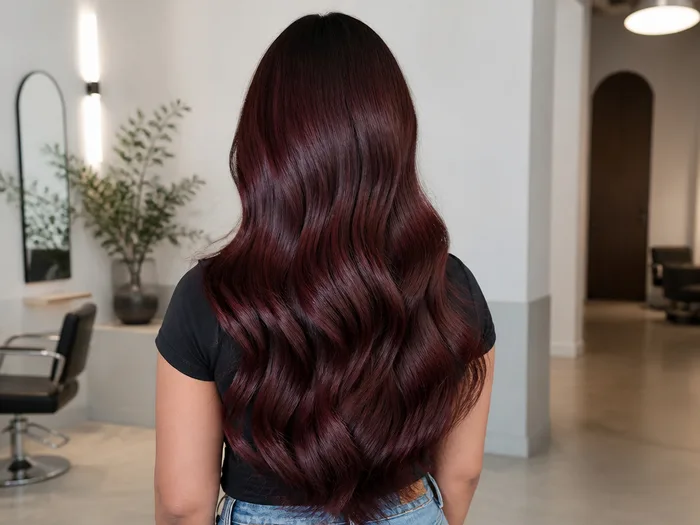
Start from your base color and your undertone, not the photo. Dark brown or black hair: the gloss, lowlights, or black cherry versions give you the look with zero bleach. Medium brown: the classic all-over or balayage. Warm or olive undertone: cinnamon cherry cola. Cool or neutral undertone, or a history of brassiness: mulberry. Want maximum impact for minimum upkeep: money piece or ombre melt. Curly: always the dry-paint version for anything hand-painted.
Whatever you pick, bring photos that show the color in both indoor light and sunlight, say "cherry cola, deep brown with a red-violet reflect, demi-permanent gloss," and book the gloss refresh before you leave the chair. The color is only half the look — the maintenance plan is what keeps it looking like the photo six weeks later.
More fall color in Hair Color Trends.