25 Short Shag Haircut Ideas That Look Effortlessly Cool
Twenty five short shags and the constraint that governs all of them. Above the jaw the layer ladder has only a few inches to work in, so the gap between the shortest crown piece and the perimeter decides whether it reads as a shag or a bowl.
In this article · 32
- What Makes a Short Cut a Shag
- Choosing Your Length
- The 25 Short Shag Haircut Ideas
- 1. The Chin Length Shag
- 2. The Shaggy Bob
- 3. The Bixie Shag
- 4. The Pixie Shag
- 5. The Curly Short Shag
- 6. The Wavy Short Shag
- 7. The Straight Short Shag
- 8. The Coily Short Shag
- 9. The Short Shag With Curtain Bangs
- 10. The Short Shag With a Micro Fringe
- 11. The Short Shag With a Full Fringe
- 12. The Short Shag With a Longer Nape
- 13. The Short Shag With a Hidden Undercut
- 14. The Seventies Short Shag
- 15. The Razored Short Shag
- 16. The Blunt Perimeter Short Shag
- 17. The Short Shag on Fine Hair
- 18. The Short Shag on Thick Hair
- 19. The Short Shag With a Deep Side Part
- 20. The Short Shag Worn Tucked
- 21. The Short Shag With a Bleached Fringe
- 22. The Short Shag With Face Framing Highlights
- 23. The Short Shag on Grey Hair
- 24. The Short Shag at Eight Weeks
- 25. The Short Shag Styled Wet
- Styling and Upkeep
- Mistakes to Avoid
- FAQ
- Final Thoughts
A short shag fails in one of two directions, and both come from the same measurement: how far the crown layers sit above the perimeter.
Too close together and it flattens into a crop. Layers within half an inch of each other have nothing to stack on, so the cut loses the propped up crown entirely.
Too far apart and it becomes a mullet. Once the crown is short and the nape is not, the disconnection reads as a different cut altogether, whatever it was booked as.
What Makes a Short Cut a Shag
A compressed layer ladder. At long lengths the layers can be three inches apart. Above the jaw they have to sit within an inch or so, or the shape breaks into steps.
Texture cut into the ends, not the outline. The perimeter stays where it is and the movement comes from point cutting into the last inch of each section.
A fringe or face framing that starts at the cheekbone. Without it a short layered cut reads as a bob, because nothing breaks the front line.
Volume that comes from stacking, not from lift. Short crown pieces rest on the ones below and hold them off the scalp, which is why a good short shag has height without being backcombed.

Choosing Your Length
Decide where the perimeter lands first. Chin, jaw or nape. Everything else in the cut is measured back from that line.
Check the nape growth before committing. A strong cowlick at the hairline decides whether a short perimeter will sit flat or kick, and it cannot be styled out for long.
Match layer depth to texture. Curly hair reaches its shortest layer much faster because of shrinkage, so the ladder has to be planned on dry hair.
Consider the ear. A perimeter that finishes level with the earlobe will tuck; one an inch longer will not stay behind the ear at all.

The 25 Short Shag Haircut Ideas
1. The Chin Length Shag
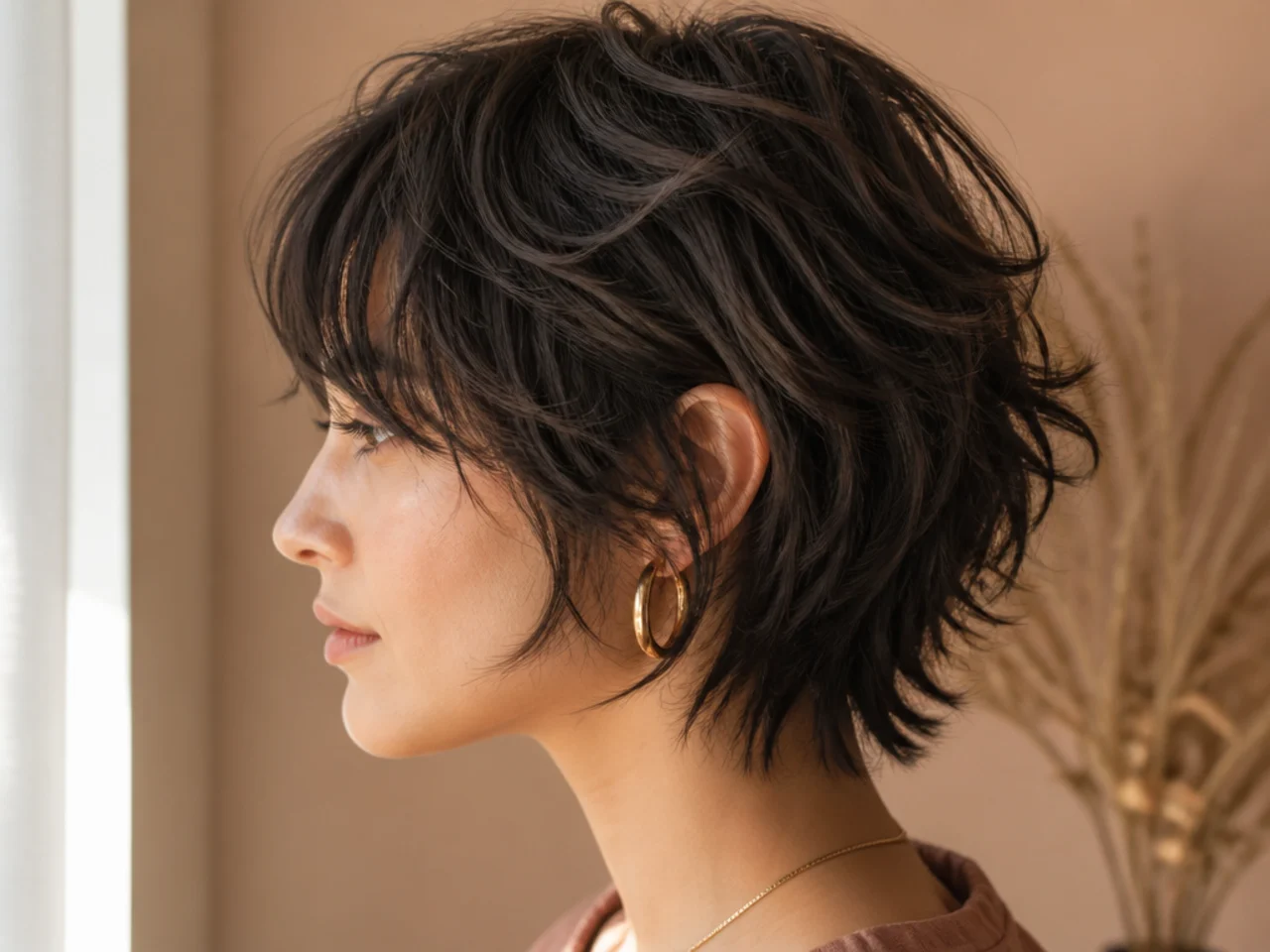
The perimeter lands level with the chin and the shortest crown layer sits around the top of the ear. That gap is roughly two inches, which is enough for the upper layers to stack without exposing the ones below them.
2. The Shaggy Bob
A bob outline with shag interior. The perimeter stays blunt so the ends look dense, and all the texture is taken from inside the shape, which is the combination that suits medium density hair better than either cut alone.

3. The Bixie Shag
Halfway between a pixie and a bob, with the back cut close and the front left at cheekbone length. The weight difference front to back is what creates the forward movement, so the shape reads as directional rather than round.

4. The Pixie Shag
The shortest version that still stacks. The crown is left an inch or so longer than the sides so it can fall onto them, and the moment that difference disappears the cut becomes a plain pixie with no movement in it.
5. The Curly Short Shag
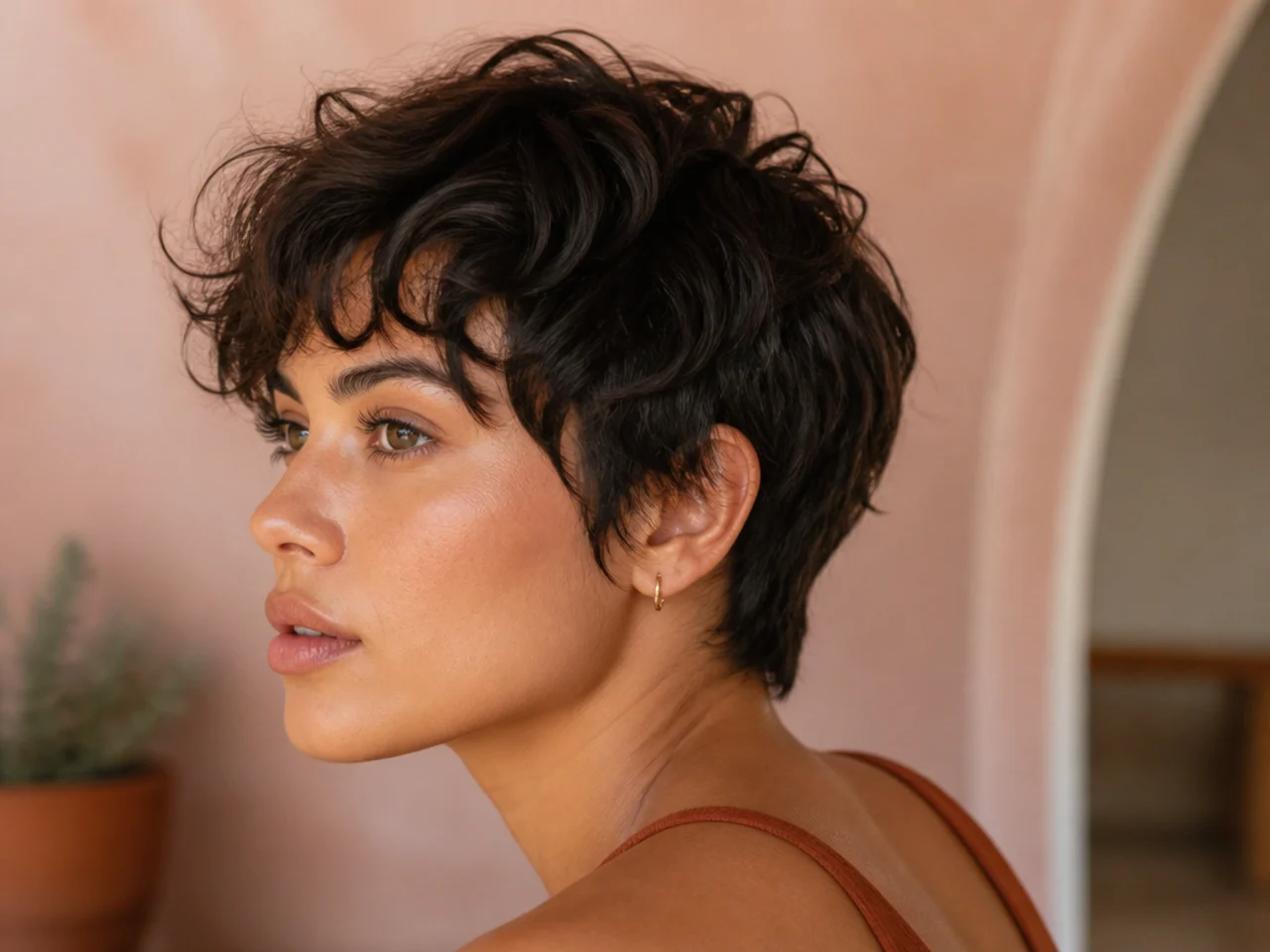
Cut entirely dry, curl by curl. A curl loses up to two thirds of its stretched length as it dries, so at short lengths a wet cut can end up an inch higher than intended, which at this scale changes the whole silhouette.

6. The Wavy Short Shag
Waves supply their own bend, so the layers can be softer and the cut still looks textured. It is the least demanding version to style, because the shape the cut is asking for is the one the hair already makes on its own.

7. The Straight Short Shag
Straight hair reveals every layer line, so the ladder has to be even the whole way round. Point cutting into the ends is not optional here; a straight blunt section at short length reads as a step rather than as texture.

8. The Coily Short Shag
Layers are shaped by eye on dry, defined coils rather than combed into sections. Combing pulls a coil out of its clump, and once the clump is broken the piece that gets cut is not the piece that will be sitting there afterwards.

9. The Short Shag With Curtain Bangs
The fringe splits centrally and sweeps into the face framing. At short lengths the join matters more than it does on long hair, because there are only a couple of inches between the fringe and the perimeter for the two to blend across.

10. The Short Shag With a Micro Fringe
A fringe cut well above the brow. Because it is short it stands away from the forehead instead of lying on it, which exposes the root and stops the front of the cut collapsing flat.

11. The Short Shag With a Full Fringe
A heavy fringe cut to the brow across the whole front. Take the section shallow, no more than an inch and a half back, because a deep fringe section removes hair from the crown and the layers behind it lose the mass they were stacking on.

12. The Short Shag With a Longer Nape
The crown and sides are cut short while a tail of length is left at the nape. It is the point where a shag starts borrowing from a mullet, and the transition has to be blended or the two lengths read as a mistake instead of a choice.

13. The Short Shag With a Hidden Undercut
A small section under the occipital bone is clipped short and covered by the layers above. It removes bulk from exactly the place a short shag tends to bulge, and nothing about it shows when the hair is down.
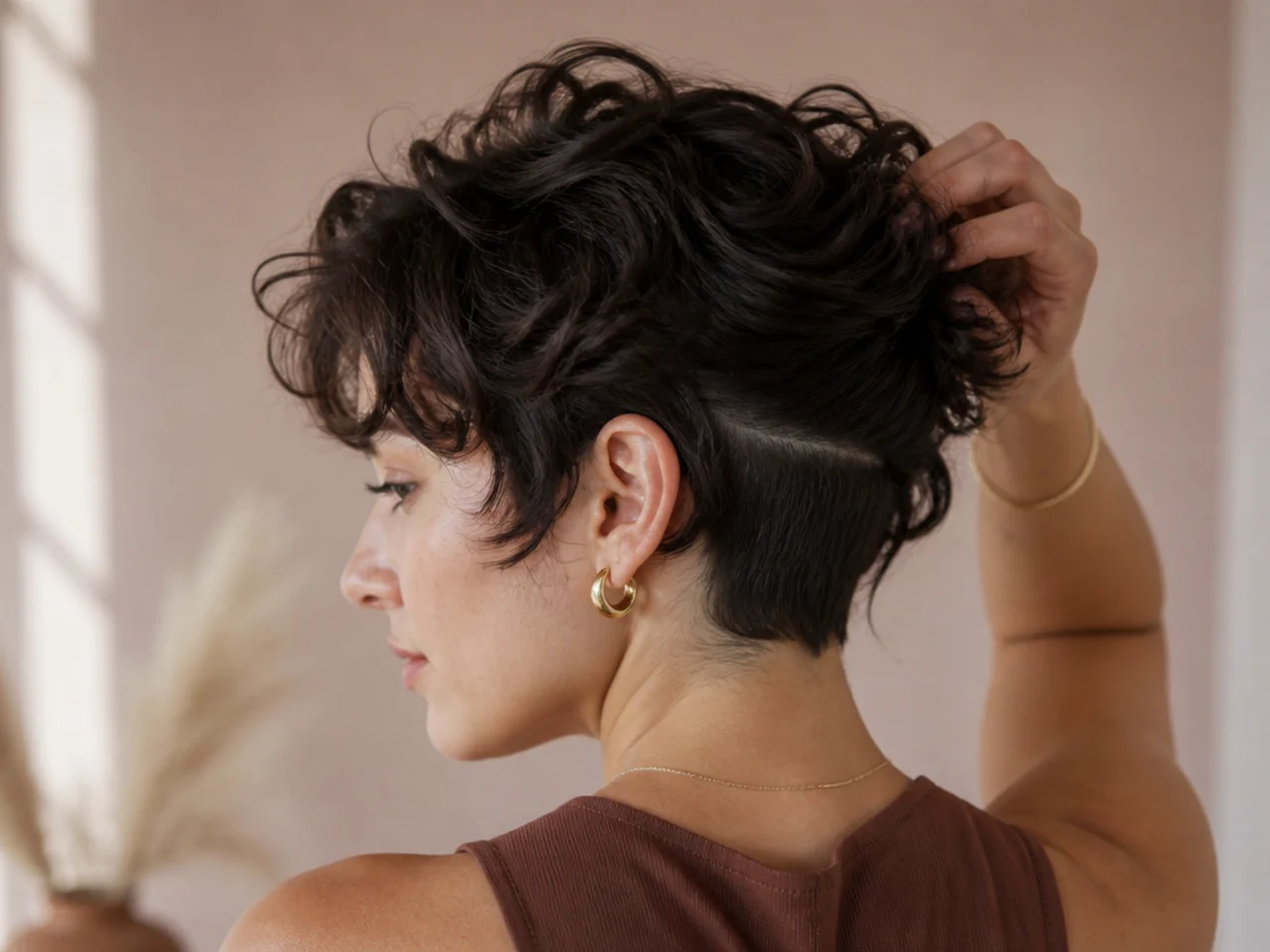
14. The Seventies Short Shag
Steeper side layers that flick back and away from the ear, building a winged outline. The angle only holds where the hair has some natural bend, so straight hair needs the ends turned out with a brush and wavy hair does it unassisted.

15. The Razored Short Shag
Each end is tapered rather than cut square, so the strands sit closer together and the outline turns feathery. It belongs on fine to medium hair. On coarse hair a tapered end has enough spring to stand away from its neighbours and frizz.

16. The Blunt Perimeter Short Shag
Sharp outline, textured interior. The blunt edge is doing a specific job: at short lengths the ends are the most visible part of the cut, and a solid line makes the hair look denser than a chewed one ever will.

17. The Short Shag on Fine Hair
Short suits fine hair because the hair is carrying less of its own weight, so root lift survives instead of dropping by mid morning. Keep the layers within an inch of one another so the perimeter still looks solid.

18. The Short Shag on Thick Hair
Thick hair builds width at the widest part of the head, which on a short cut is roughly ear level. The weight has to come out above that point with internal thinning, or the shape settles into a triangle within a fortnight.

19. The Short Shag With a Deep Side Part
Combing a heavier bank of hair across the head loads it onto the shorter layers underneath, which pushes the crown up. On a short cut the effect is more pronounced than on a long one, because there is less length pulling it back down.

20. The Short Shag Worn Tucked
Cut so the sides finish level with the earlobe, which is the shortest length that will still stay behind the ear. An inch longer and it falls forward again within minutes, which is the usual reason a tucked style will not hold.

21. The Short Shag With a Bleached Fringe
Only the fringe section is lifted. It sits in front of everything else so the contrast is at its strongest, and because the section is small the whole thing can be reversed with one cut rather than a colour correction.

22. The Short Shag With Face Framing Highlights
Lightened pieces placed on the shortest front layers. Those layers sit on top of the rest, so the colour is what the eye meets first, and putting the same amount of lift anywhere else in the head would be half as visible.

23. The Short Shag on Grey Hair
Grey strands are usually coarser and more wiry than the pigmented hair around them, so they hold a layer's shape better and frizz more readily. Cut them a little longer than the rest and the wiriness works as volume instead of against it.

24. The Short Shag at Eight Weeks
The layers have grown down together and the perimeter has crossed the jaw. It still reads correctly because the ladder is intact, and the only thing genuinely out of place is the fringe, which has moved into the eyes.

25. The Short Shag Styled Wet
Product applied to damp hair and left to dry undisturbed. Hair sets in the shape it dries in, so the wet finish is not only a look but the most reliable way to get a short shag to hold its stacking all day.

Styling and Upkeep
Dry the roots first and the ends last. The crown does the structural work, and a flat crown cannot be fixed by anything you do to the ends.
Use a paste or a texture spray, not a cream. Creams add weight, and at short lengths the layers have very little mass to resist it.
Push the hair forward while it dries. Hair sets in the direction it dries, so drying it back and then combing it forward gives you a shape fighting itself.
Trim the fringe every three to four weeks. It moves faster than the rest and it is what dates the cut first.
Book the full cut every six to eight weeks. Short cuts lose their outline sooner than long ones because the same half inch is a larger share of the length.

Mistakes to Avoid
Cutting the crown too close to the sides. Under half an inch of difference and there is nothing left to stack, so the volume disappears.
Ignoring the nape cowlick. It decides which way the back hairline sits, and cutting straight across one guarantees a kick you will fight every day.
A deep fringe section. More than about an inch and a half back takes mass out of the crown, and the layers behind lose what they were resting on.
Thinning shears at the perimeter. At short lengths the ends are the most visible part of the cut, and a chewed outline is obvious from across a room.
Cutting curls wet. Shrinkage of up to two thirds means the finished length is not the cut length, and at short lengths that margin is the whole shape.
FAQ
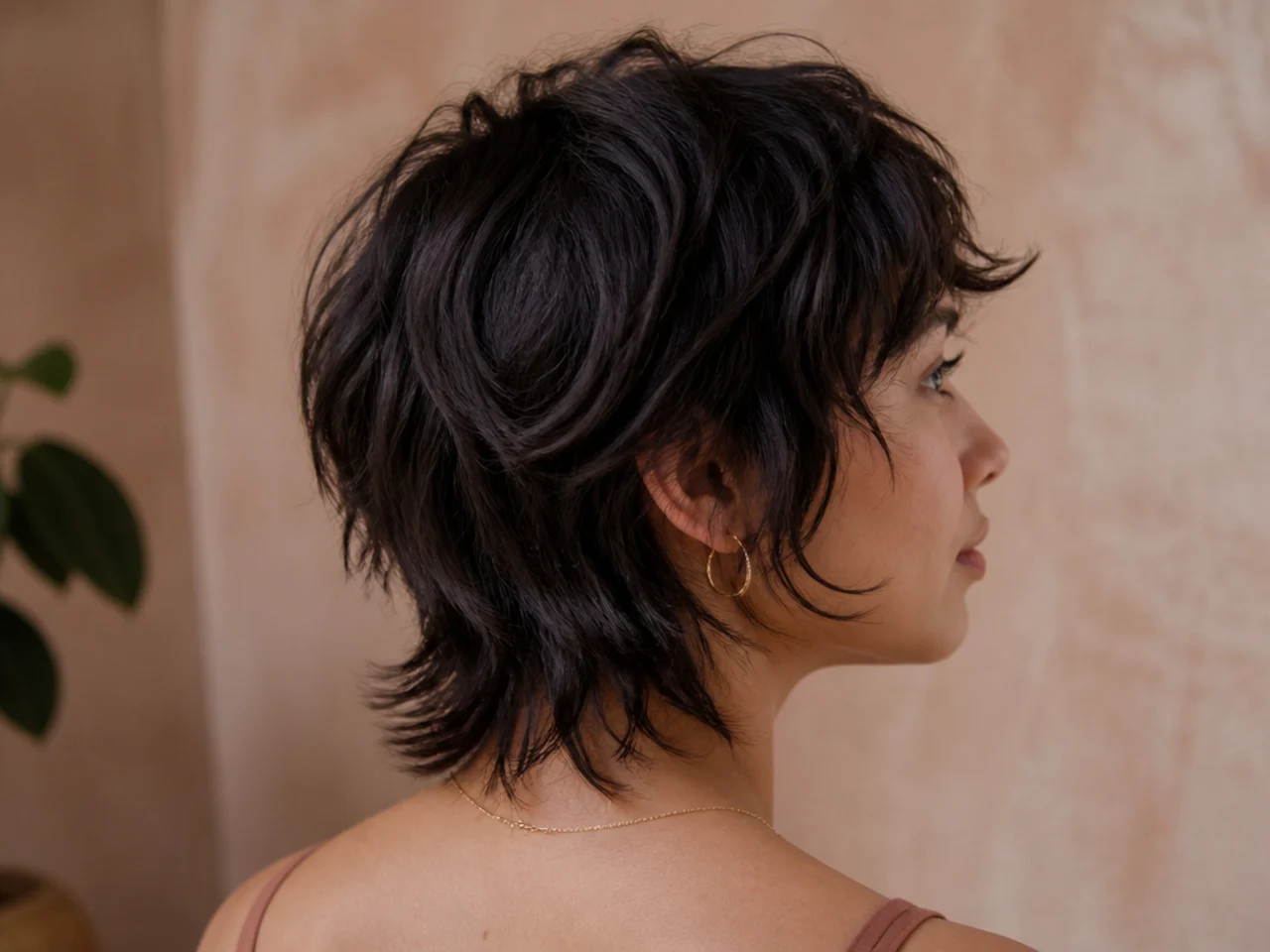
How short can it go? About an inch above the ear at the crown, no shorter at the nape.
Why does the back kick out? A nape cowlick. Cut with the growth, not across it.
Good on fine hair? Yes. Short hair holds root lift that would collapse at length.

Final Thoughts
Name the perimeter and the crown separately when you book it. "Perimeter at the jaw, shortest layer at the top of the ear, texture in the ends only" is three facts a stylist can cut to, and it is the difference between a shag and a short layered bob.
The same stacking logic runs through most short cuts, so it is worth seeing where else it turns up — short haircut ideas for men covers the equivalent shapes, and the short korean haircut is the same textured crown handled with a softer fringe. More in Mullet and Wolf Cut.