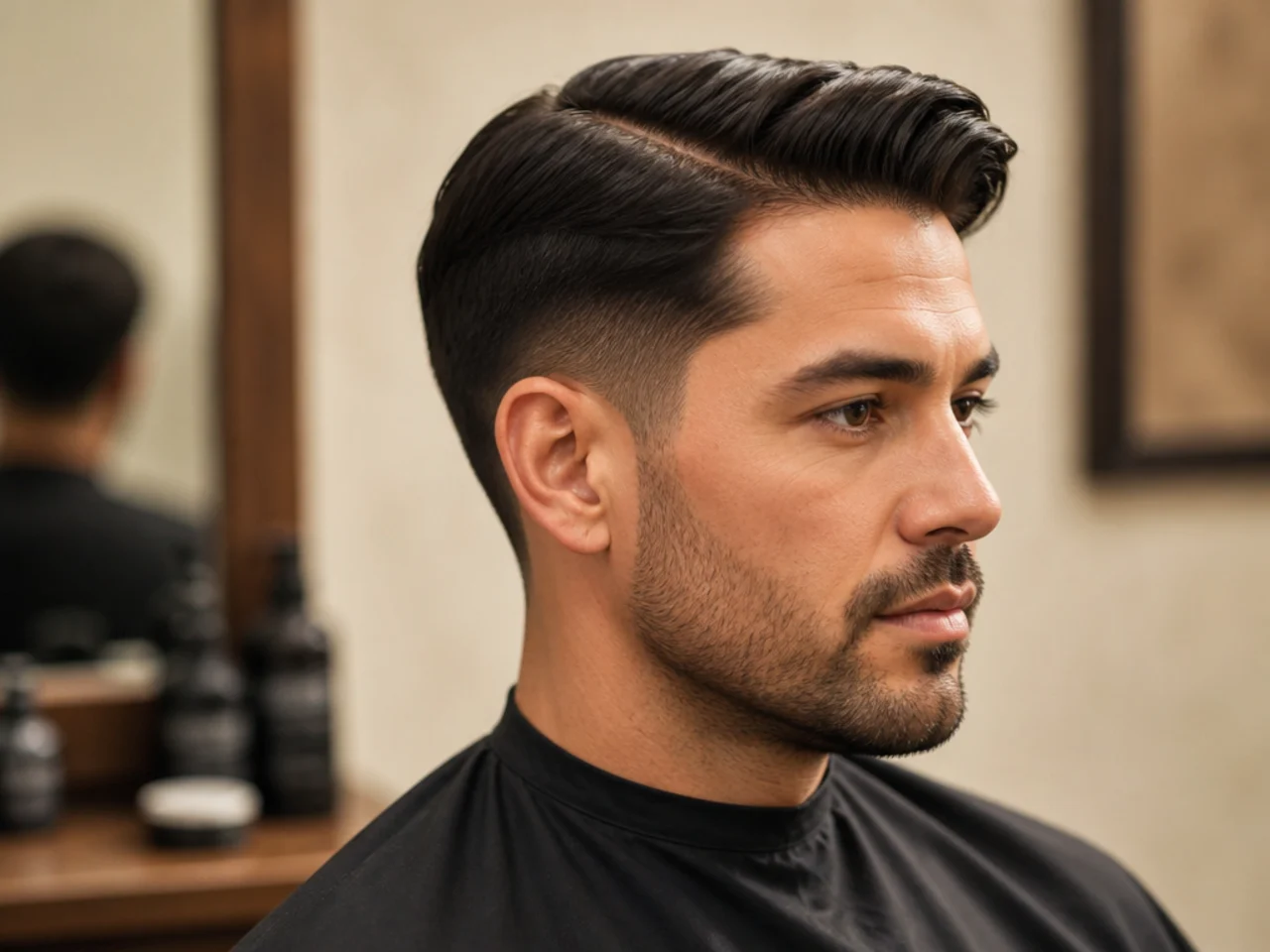
6 Professional Haircuts That Get You Noticed
Six professional haircuts noticed at work — real stylist client stories, the exact chair language behind each cut, and the cadence that keeps every one sharp past week two.
In this article · 18
- What Makes a Professional Haircut Get You Noticed
- Choose Yours by Industry and Face Shape
- The Six Professional Cuts That Get You Noticed
- 1. The Modern Side Part with a Low Taper — Ryan, 34
- 2. The Textured Crew Cut — Vikram, 29
- 3. The Executive Comb Over with Mid Fade — Marcus, 42
- 4. The Ivy League — Daniel, 25
- 5. The Textured Quiff with Low Taper Fade — Ethan, 31
- 6. The Slick Back with Skin Fade — Diego, 38
- The Habit Every One of Them Kept
- What to Do Next
- FAQ
- What haircut gets a man noticed at work?
- How do I ask for a professional haircut at the barber?
- Is a fade professional?
- How often should I book a professional cut?
- What product keeps a professional cut looking sharp all day?
- Do professional cuts work for thin or curly hair?
Six guys walk into my chair every quarter asking for the same thing — a cut that reads competent before they open their mouth. Not showy. Not trendy. Just sharp enough that a hiring manager, a partner, or a client notices for the right reasons. Below are the six professional haircuts that get you noticed most reliably in a boardroom, a hiring loop, or a promotion cycle — the six clients who wear them, the exact chair language behind each one, and the maintenance rhythm that keeps every version working past week two.
What Makes a Professional Haircut Get You Noticed
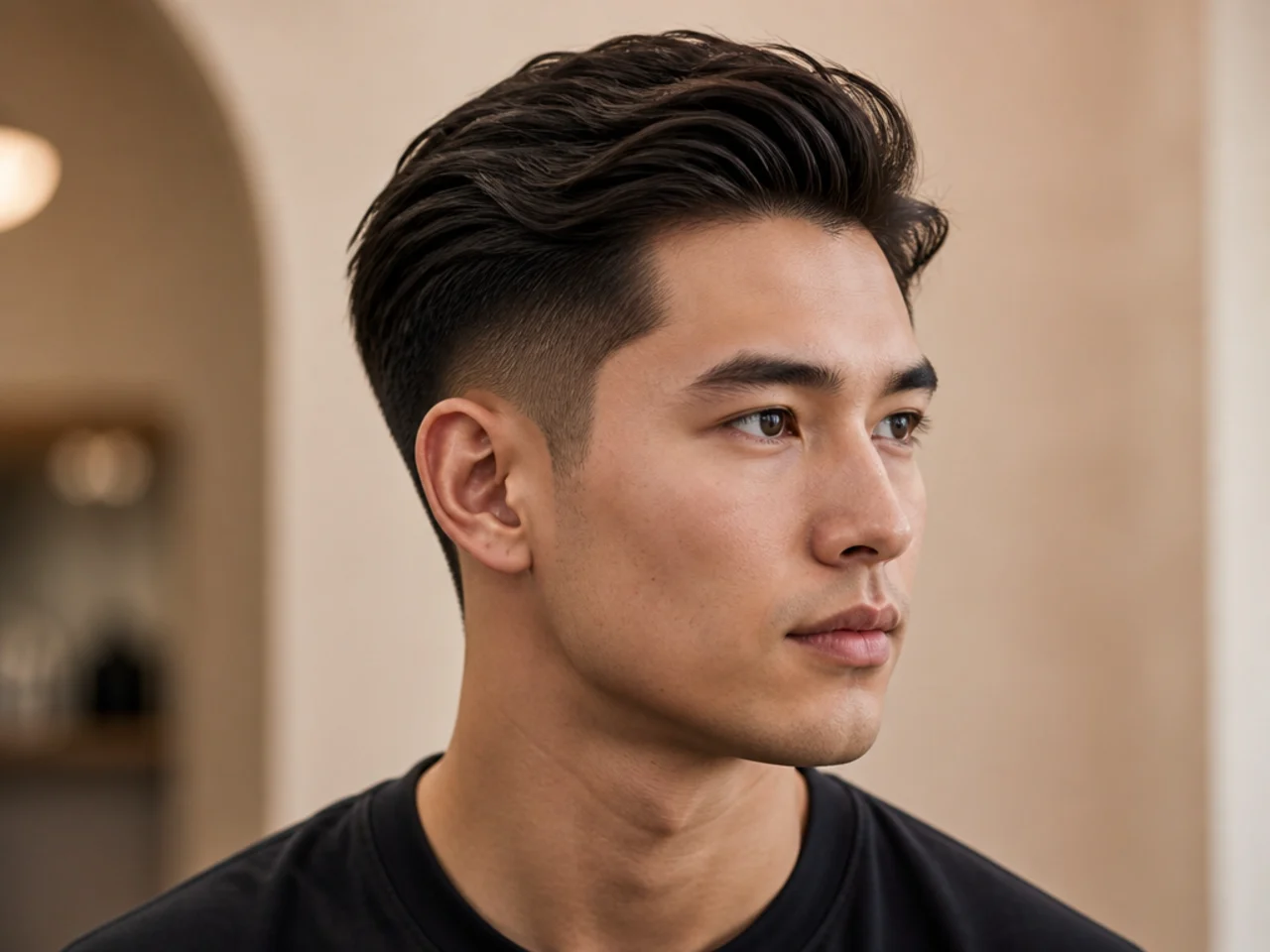
Three traits show up in every cut on this list. Clean lines that hold from morning coffee through the last meeting. A finish that reads matte under fluorescent lighting instead of shiny. And a shape engineered to survive an average day without twenty minutes at the mirror. Take any one of those away and the cut stops reading professional — no matter how sharp it looked leaving the salon.
The room reads your grooming faster than your handshake. Hiring managers rate polish inside the first four seconds. Partners scan for tell-tale signs of neglect the moment you walk into a client meeting. That's why every cut below is built for cadence and consistency, not the wow of a fresh-cut moment. A cut that holds its shape for three weeks straight beats a cut that peaks on day one and drifts by day ten.
I've cut most of the guys on this list for years. Their industries are different — banking, law, consulting, tech, sales — but the pattern is identical. One shape, one product rotation, one standing appointment, one signature they wear month after month. The recognition follows.
Choose Yours by Industry and Face Shape
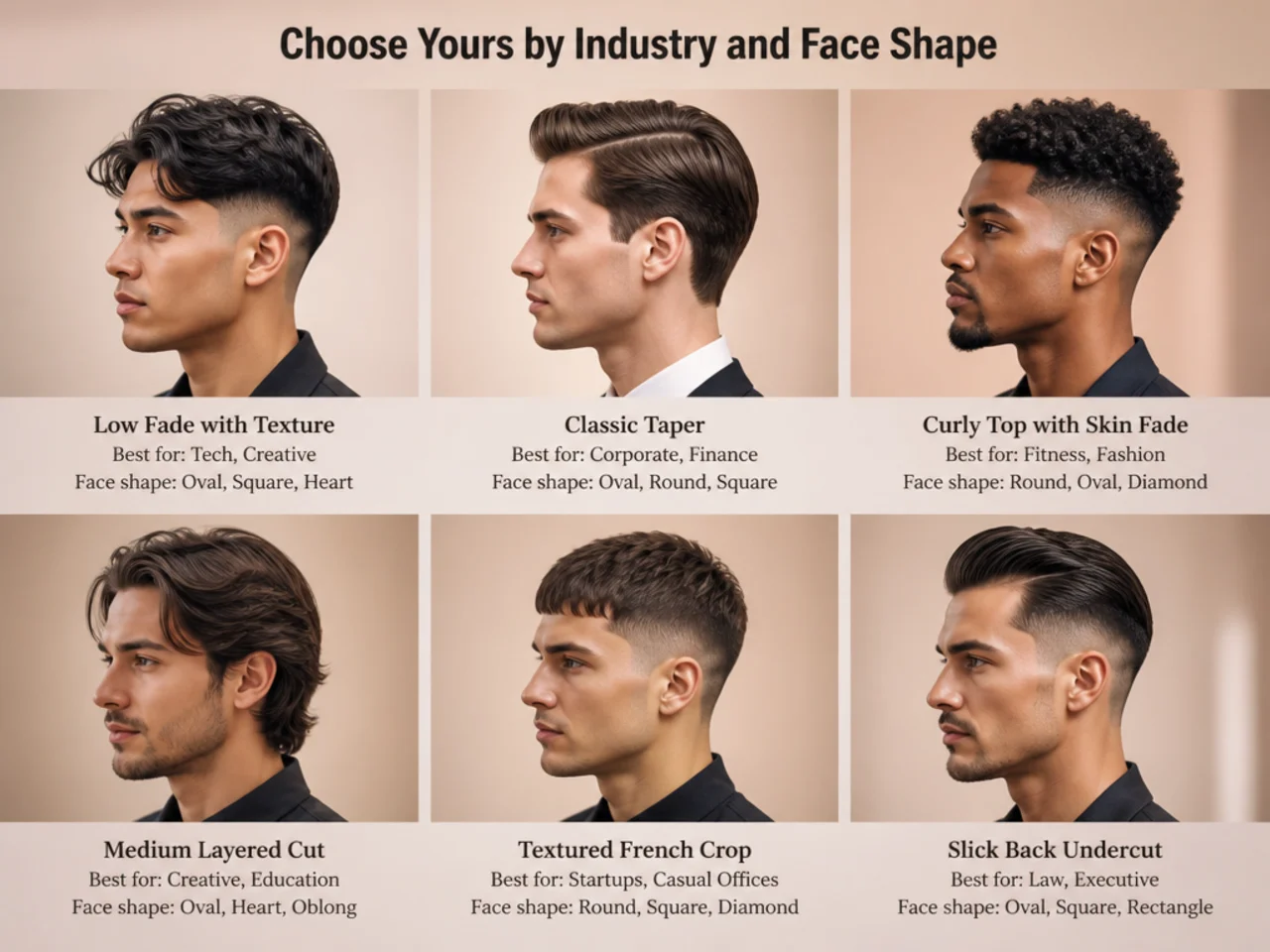
Industry is the first filter. Conservative rooms — law partnership, corporate finance, medicine, government — want a scissor-blended side treatment, a matte finish, and length under three inches on top. Client-facing sales and consulting rooms tolerate more length and a defined fade. Creative-adjacent industries — tech leadership, marketing, product — reward a bit of texture and modest volume. Culturally-flexible rooms — startups, agencies, media — let you push toward a full quiff or a slick back without raising eyebrows.
Face shape is the second filter. Oval faces suit every cut on this list. Round faces want height on top — the quiff, the textured crew, the modern side part. Square faces soften with the Ivy League or the executive comb over, both of which add movement around the temples. Long faces benefit from length that breaks the vertical — a side part or a comb over with a defined fringe. Heart-shaped faces balance with a slick back or a longer Ivy League that adds weight at the jaw.
Hair type sets the third filter. Thin hair suits a shorter Ivy League or a textured crew where density concentrates at the crown. Curly hair carries any of the six paired with a soft taper haircut around the ears and two-inch coils on top. Straight hair takes the widest range — every cut, every finish, every fade height on the menu. For the shorter end of the professional library, the short simple mens haircuts roundup covers the low-maintenance shapes.
The Six Professional Cuts That Get You Noticed
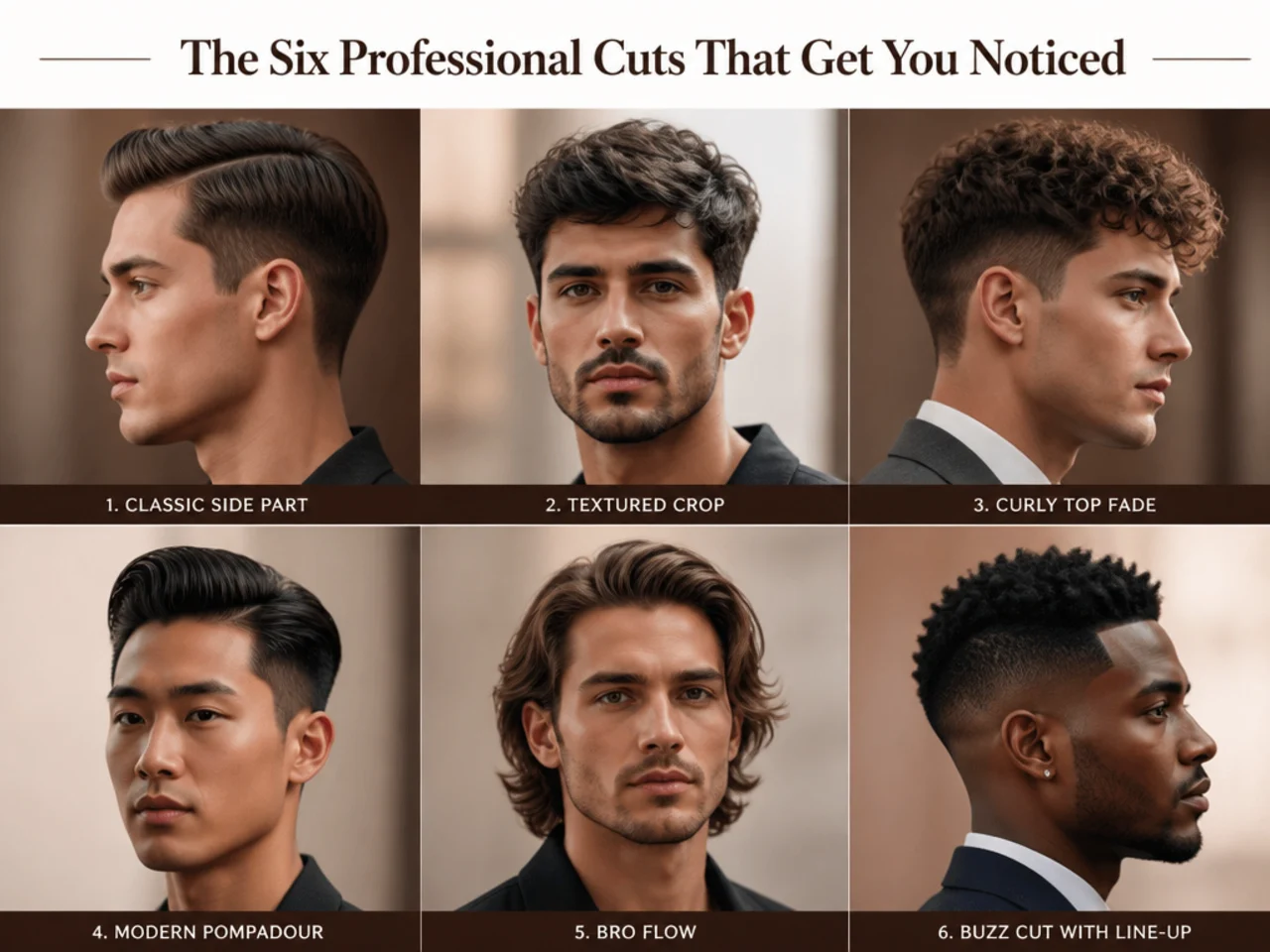
Every one of these six cuts has a name attached to it in my chair — a real professional whose signature look now travels with him from meeting to meeting. The cut, the client, the exact chair language, and the moment the room started noticing. Read the story closest to your industry first, then borrow whatever fits your calendar.
1. The Modern Side Part with a Low Taper — Ryan, 34
Ryan is a management consultant who spends most of his week on client sites where he needs to be trusted inside an hour. His previous barber had been running an old-school slick side part with a shiny pomade finish, and it read older than he was. Clients kept calling him "sir" in a way that felt off for a thirty-something.
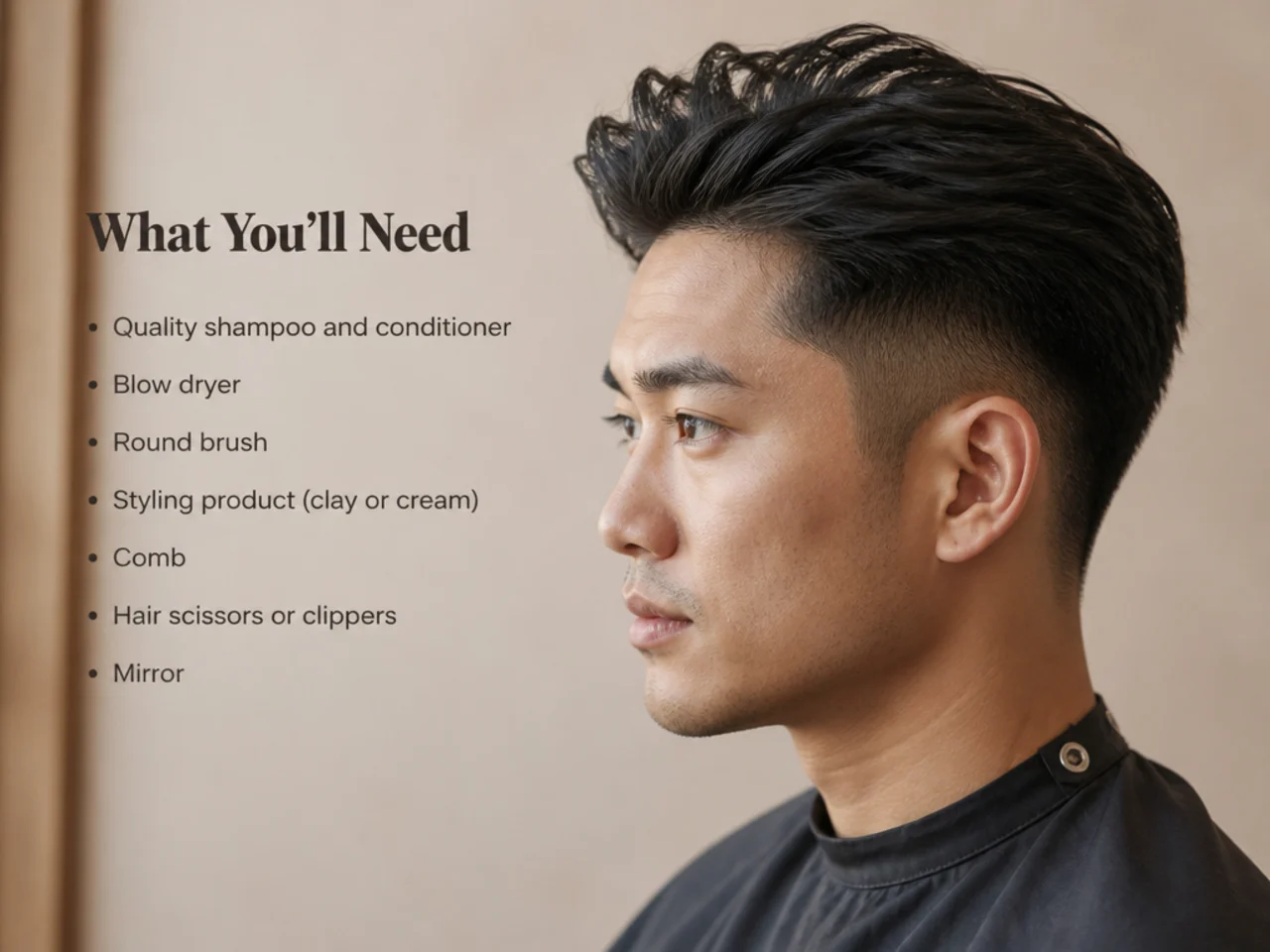
The ask that changed his week was specific. Two and a half inches on top, a low taper fade starting an inch above the ear, and a hard-scissored part on his natural side. Matte paste, not pomade. Blow-dry pointed with the part rather than back into it — that's the move that gives the cut modern lift without spraying it stiff.
Why it works: the side part signals order without reading like a costume. The low taper keeps the sides tight enough to look intentional and soft enough for a business-conservative dress code. The matte finish reads current, not vintage.
The noticed moment: he was pulled into a senior partner's calendar for a client he wasn't scheduled to meet, based on how he'd shown up to a walk-through the week before. The partner mentioned the cut by name in the next quarterly review. For variation options, the side part guide covers the full library.
2. The Textured Crew Cut — Vikram, 29
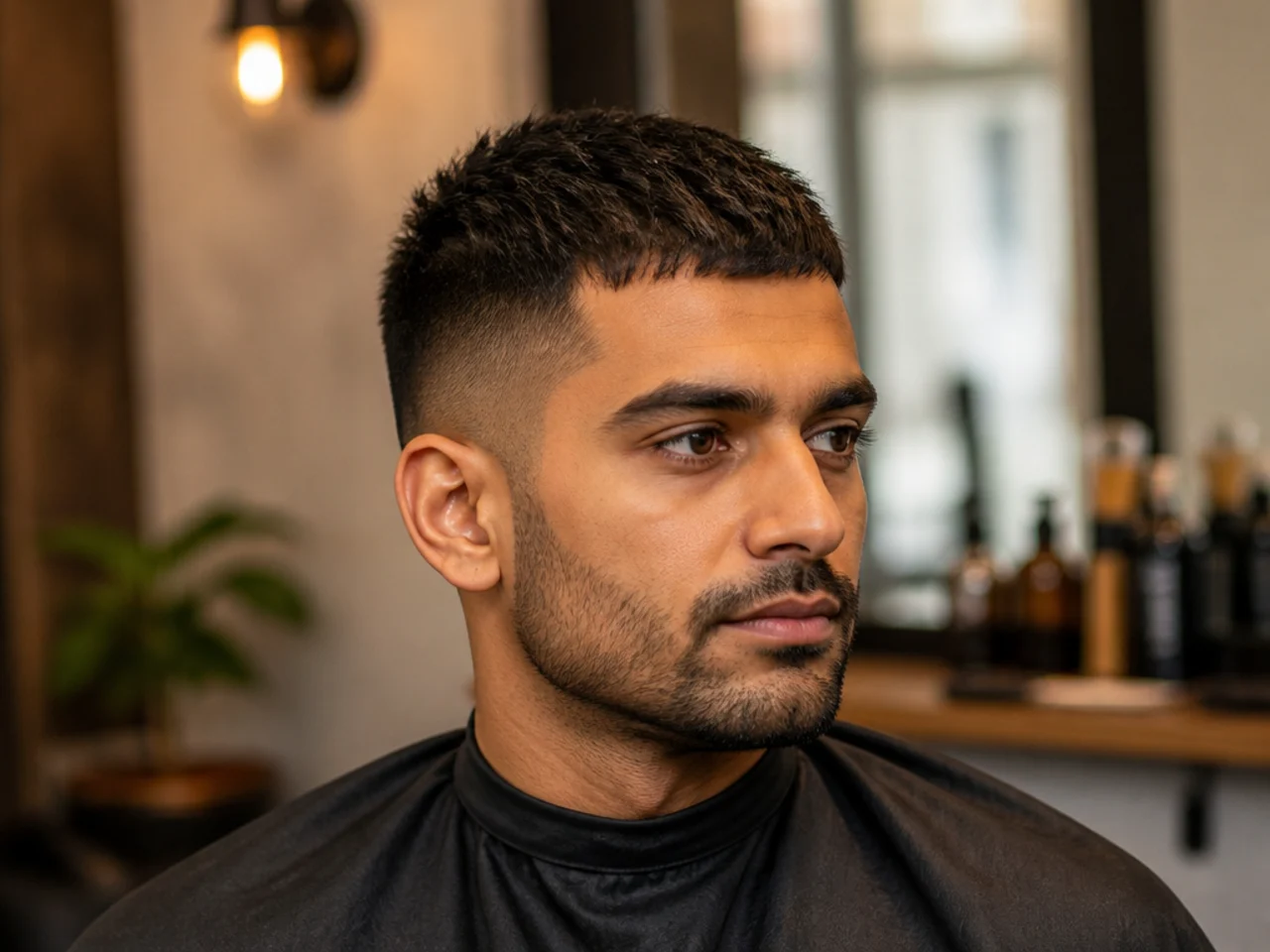
Vikram is a senior software engineer who works four days from an office and one on customer visits. He came in tired of styling. His previous cut — a longer flow he'd worn since college — took ten minutes every morning and looked "trying" for a role where he wanted to signal competence rather than personality.
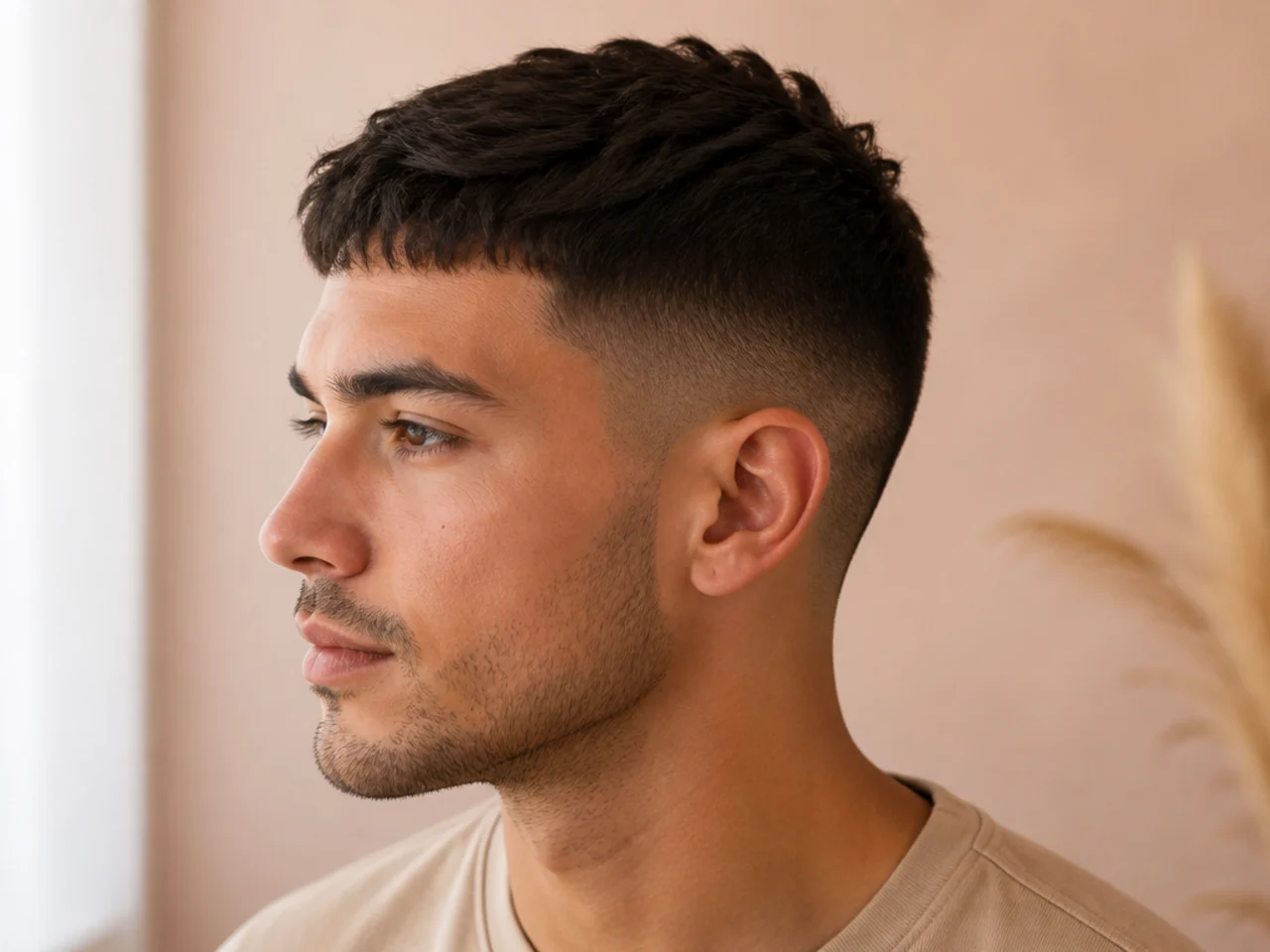
The ask was tight. A #3 guard through the top with two inches of length at the crown, a #2 on the sides scissor-blended into a soft taper, and a natural front hairline — no razor lineup. Matte cream to knock down shine and hold the texture, brushed forward with the palm. Zero styling required past the shower.
Why it works: the crew cut is the shortest professional cut that still gives the top something to shape. A #3 reads intentional; a shorter guard tips into military territory that reads younger than most engineers want. The scissor-blended sides add polish that a straight clipper cut misses.
The noticed moment: Vikram was named to a small group of engineers presenting quarterly to executive leadership within two months of the recut. He credits the cut, in his words, for making him look like "the guy who ships." A textured crew is my most-referred cut for tech — it reads competent, requires nothing, and photographs cleanly on webcam.
3. The Executive Comb Over with Mid Fade — Marcus, 42
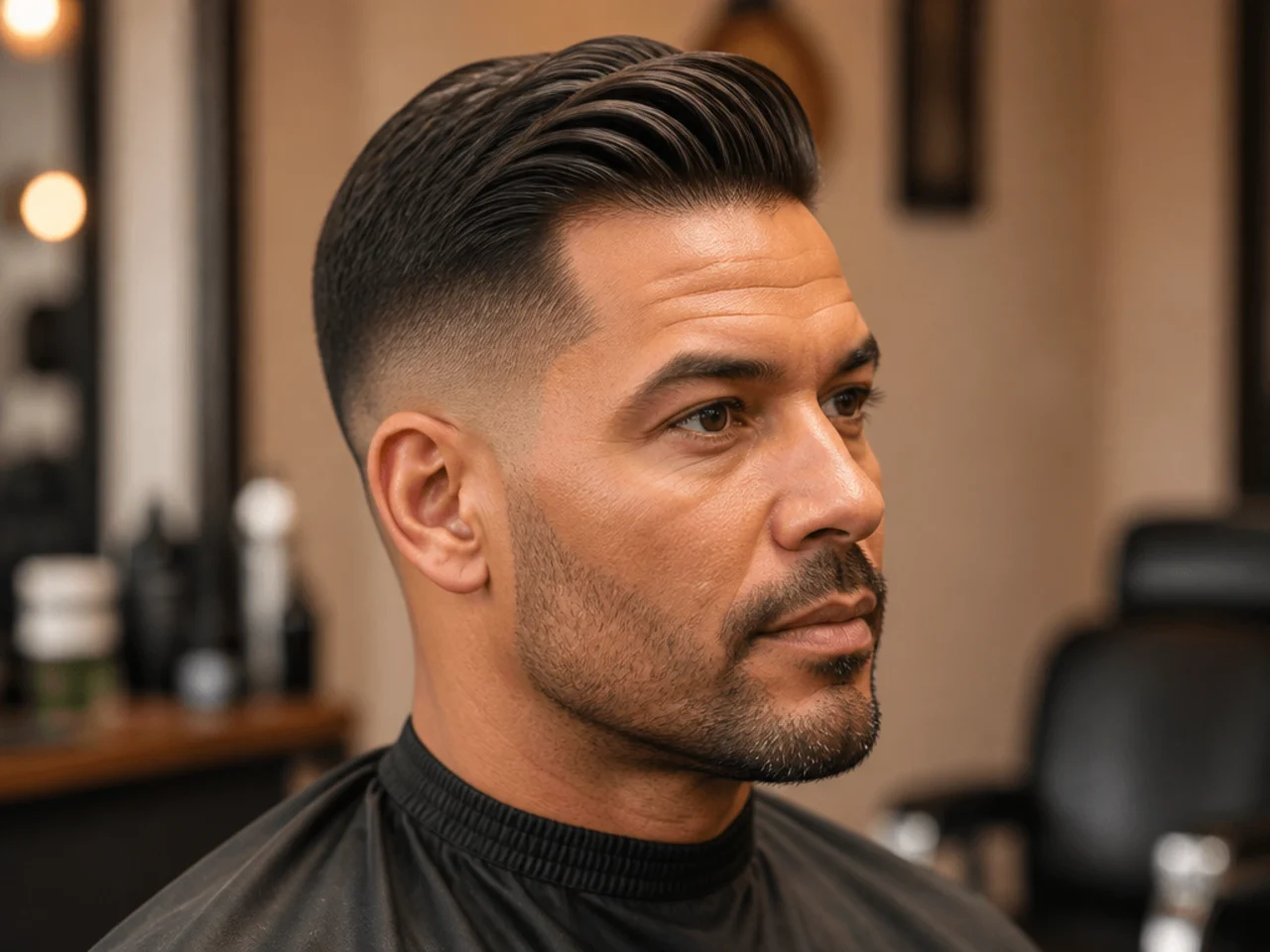
Marcus is a corporate lawyer who made partner two years ago. Most of his week is a boardroom or a video call with in-house counsel across three time zones. His pre-partnership cut was a soft comb over with a scissor-only taper — it photographed flat on webcam and read younger than his role now demanded.
The ask sharpened the whole silhouette. Three inches on top, a mid fade starting an inch above the temple, and a hard part etched in on his natural side. Pomade — a matte one, not the shiny kind he'd been using — worked through damp hair, combed over from the part, and paddle-brushed flat for thirty seconds. The hard part loses definition fast, so book every three weeks.
Why it works: the comb over with a fade is one of the sharpest professional cuts on the menu. The part gives structure. The fade keeps it modern. The mid fade sits at eye level in every meeting he takes, which is where the polish shows up on camera.
The noticed moment: his practice group started asking for him on pitches he wouldn't have been staffed on the year before — cases where the client wanted a senior presence in the first conversation. Nothing about his work had changed. The presence read differently. Marcus books three weeks out on the dot now.
4. The Ivy League — Daniel, 25
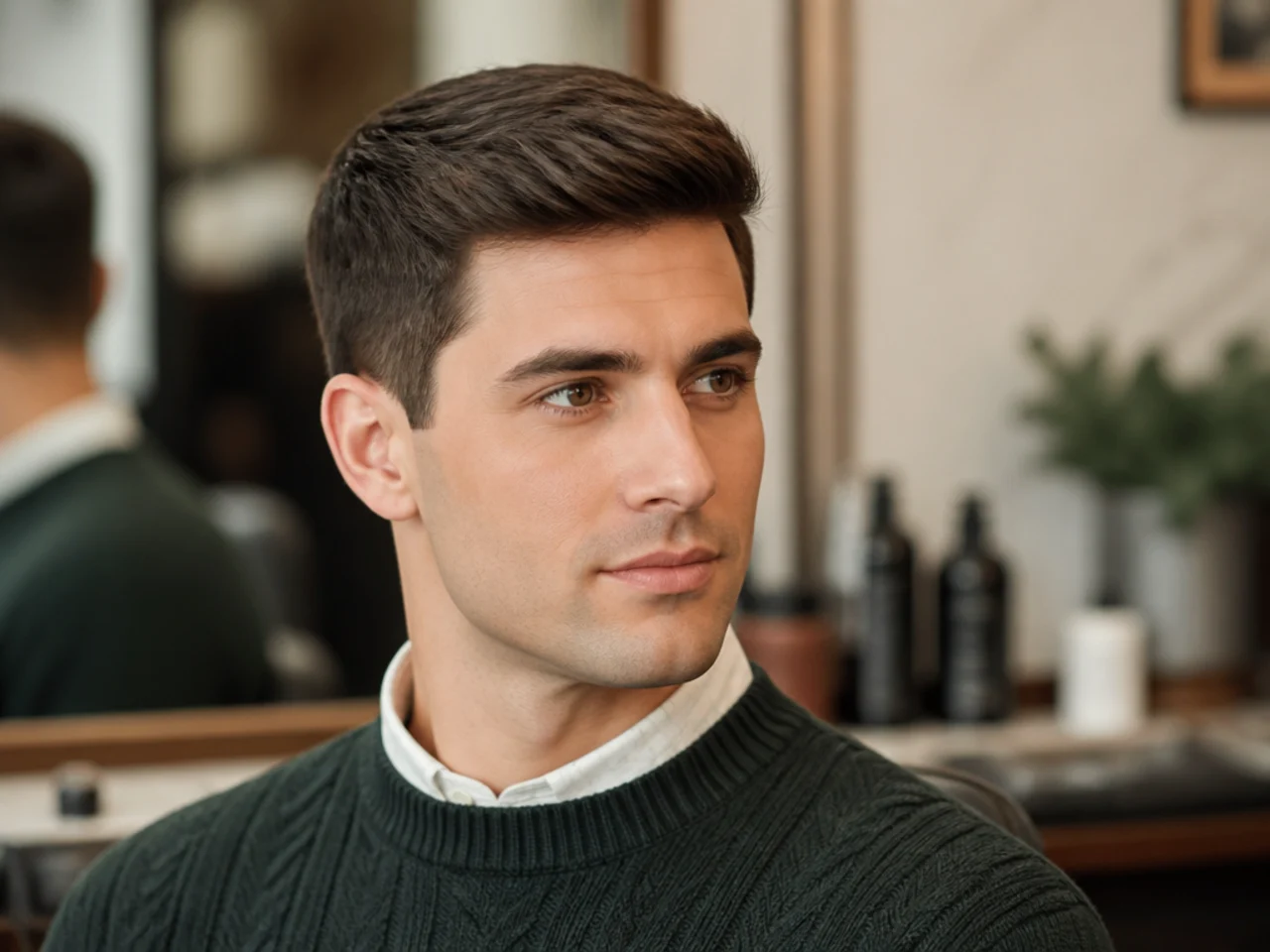
Daniel is a first-year investment banking associate at a bulge-bracket firm. His onboarding week included a subtle nudge from a managing director about grooming standards. He walked in the following Saturday not knowing what to ask for. His college cut read student, not associate.
The ask was the Ivy League — the softer, longer cousin of the crew cut. Two inches on top with a soft sweep to the side, a #2 on the sides tapering to skin above the ear, and a natural front hairline. Light cream through damp hair, swept to the side with fingers, air-dried. Book every three weeks — this cut softens fast.
Why it works: the Ivy League is the default first professional cut for a reason. It reads polished without reading old, works on nearly every hair type, and requires almost no morning routine. A slightly heavier front piece gives it enough movement that it never reads like a helmet.
The noticed moment: Daniel was staffed on a live deal by his group head in his second month — earlier than the average intake — with a passing comment that he "looked ready." He's booked with me every three weeks since and has started sending me the analysts one year behind him. First impressions in banking count triple.
5. The Textured Quiff with Low Taper Fade — Ethan, 31
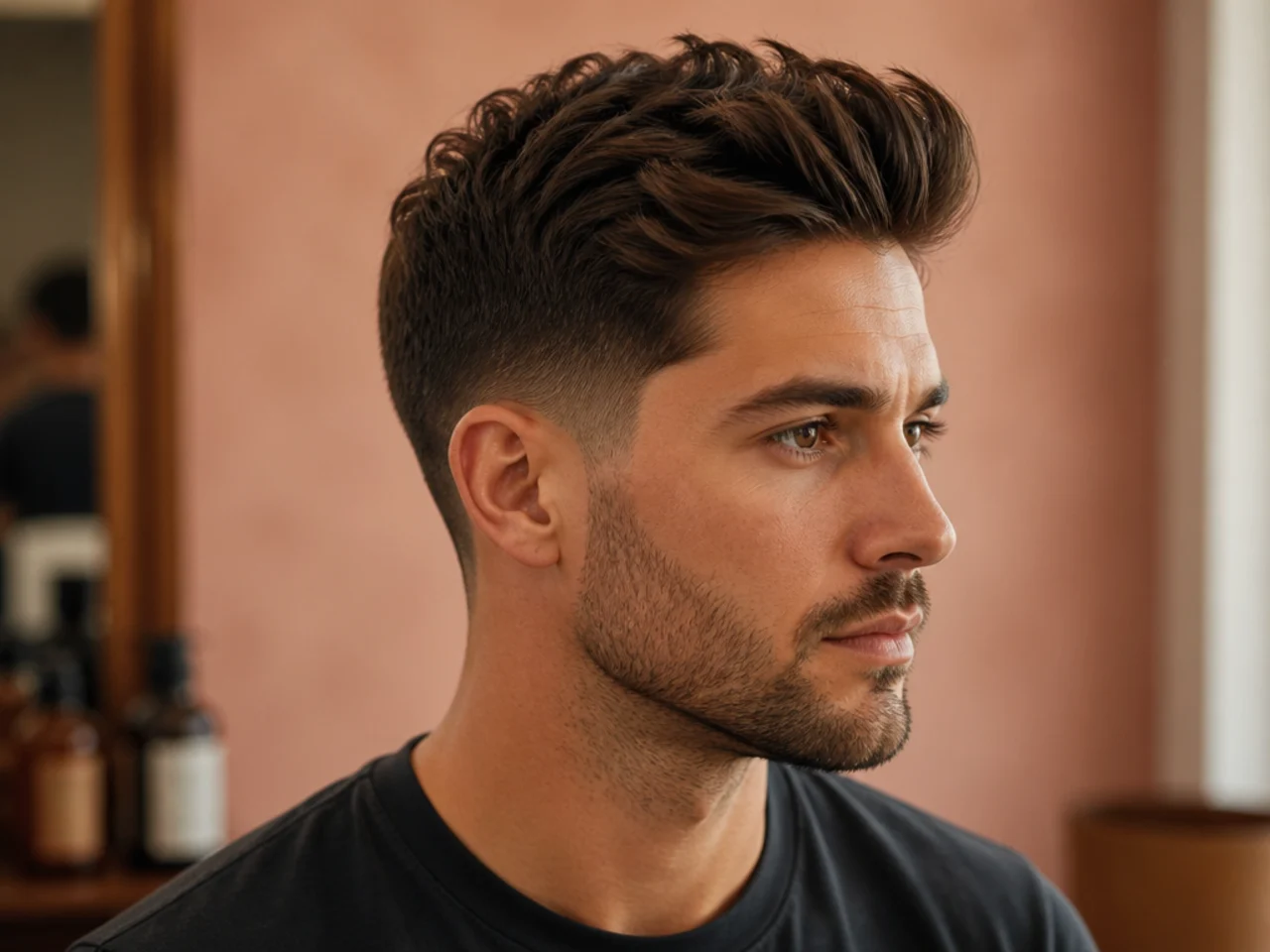
Ethan is a senior product manager at a mid-stage startup. His workplace is casual — hoodie-friendly, no dress code — but his role puts him in leadership meetings, investor updates, and stage presentations three or four times a month. He needed a cut that read polished on stage without looking overdressed at his desk.
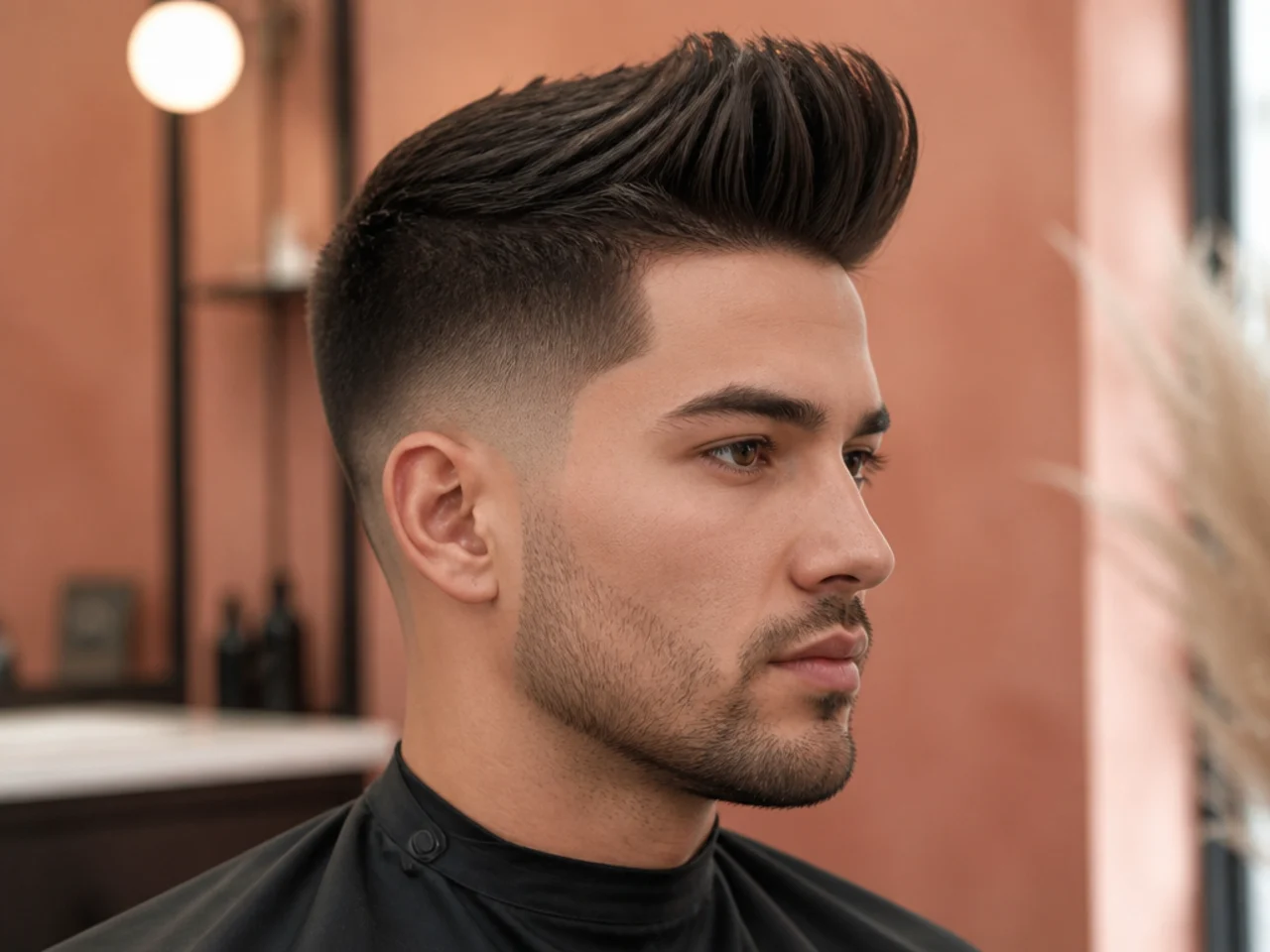
The ask was specific to that duality. Three inches through the front cropped shorter toward the crown, a low taper fade starting at the temple, and a natural hairline. Matte paste worked from mid-length to root, then pushed up and slightly back with the fingers. Not sculpted — pushed. A round brush and a shot of cool air locks the front upright.
Why it works: the modern quiff trades the wall of hair the old pompadour built for a lower, tighter silhouette. The fade does most of the polishing work while the top provides the visible confidence. It photographs well from a stage without reading like a fashion statement in a normal Tuesday standup.
The noticed moment: Ethan was tapped to present at his company's biggest customer conference — the first time a PM at his level had led the opening keynote. His head of product referenced the event photos as the reason he'd been picked to represent the team. A haircut that reads on-brand for the room you're presenting into makes the ask easier for the person picking the presenter.
6. The Slick Back with Skin Fade — Diego, 38
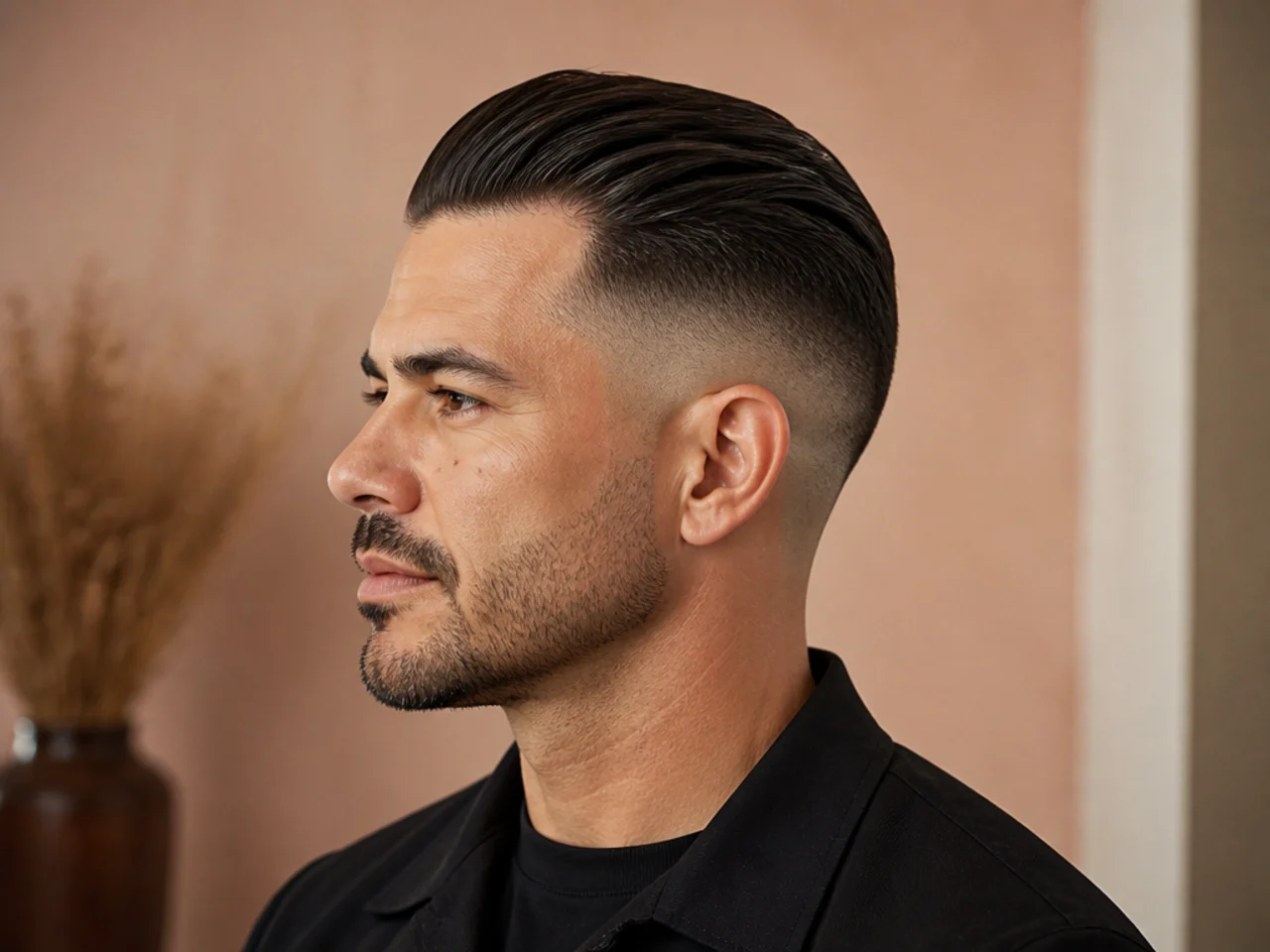
Diego is a sales director at an enterprise software company. His week is a rotation of on-site pitches to Fortune 500 buyers, and the cut has to travel. Airport lighting, boardroom lighting, hotel bathroom mirror at 5am — the shape has to hold in every one. His old slick back with a scissor-only taper softened by the third day of a road trip.
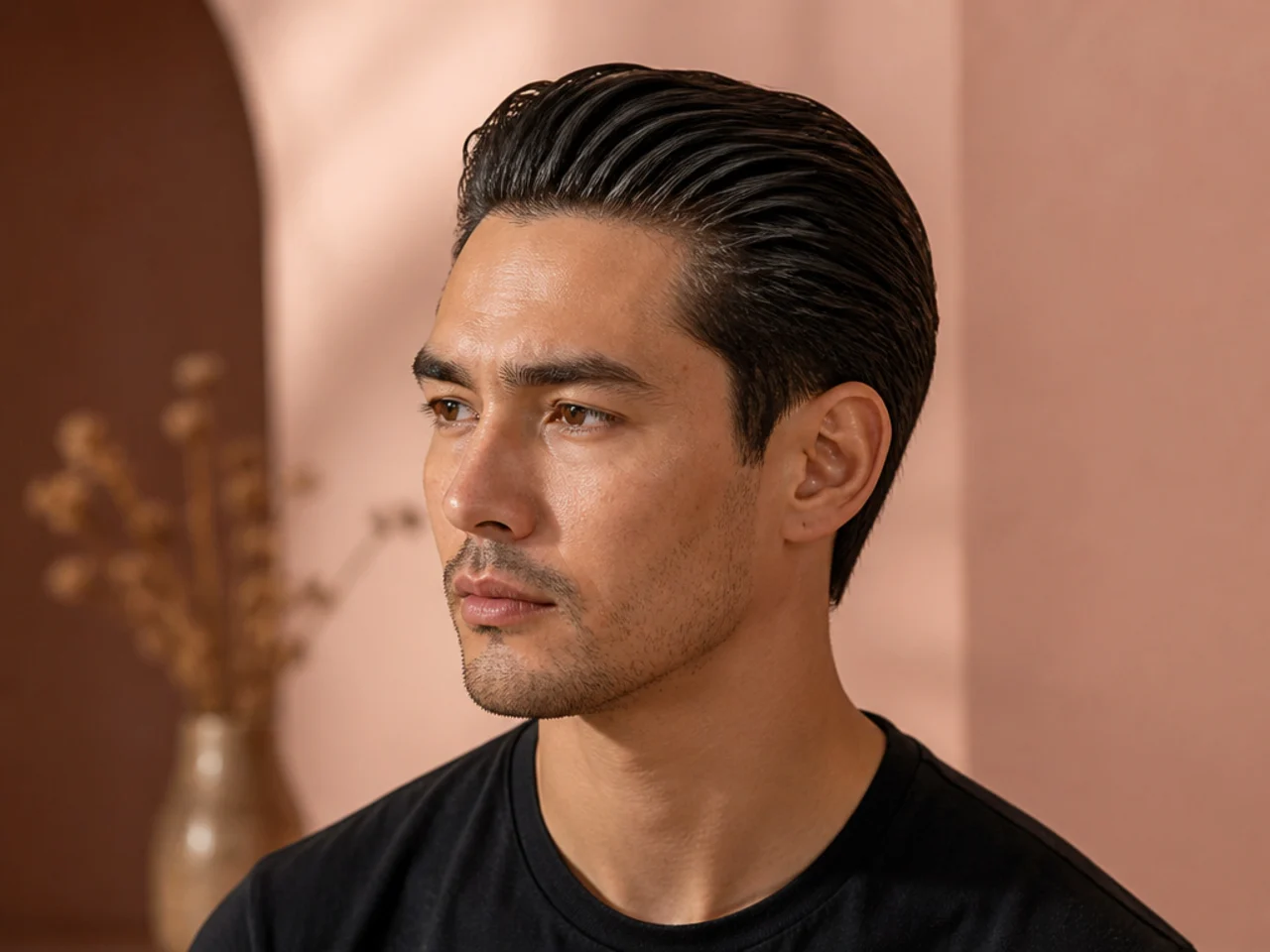
The ask committed to the discipline. Four inches on top, an undercut running to a skin fade on the sides, and a hard-blended weight line where the top meets the fade. Matte pomade — a pea worked into damp hair, combed straight back with a fine-tooth comb, then paddle-brushed flat and hit with cool air. Two weeks between shape-ups. Skin fades don't forgive.
Why it works: a slick back with a skin fade is the alpha-professional silhouette when it's kept disciplined. No product overflow onto the forehead. The high contrast reads authoritative without shouting. On a sales director walking into a room he needs to own inside the first ninety seconds, that presence sells before the pitch does.
The noticed moment: Diego's close rate on first-touch executive meetings moved up materially within a quarter of the recut. He's the first to say it's not about the hair. But he books the road-trip haircut the way he books flights. Never showing up looking off-schedule is a variable he refuses to leave to chance.
The Habit Every One of Them Kept
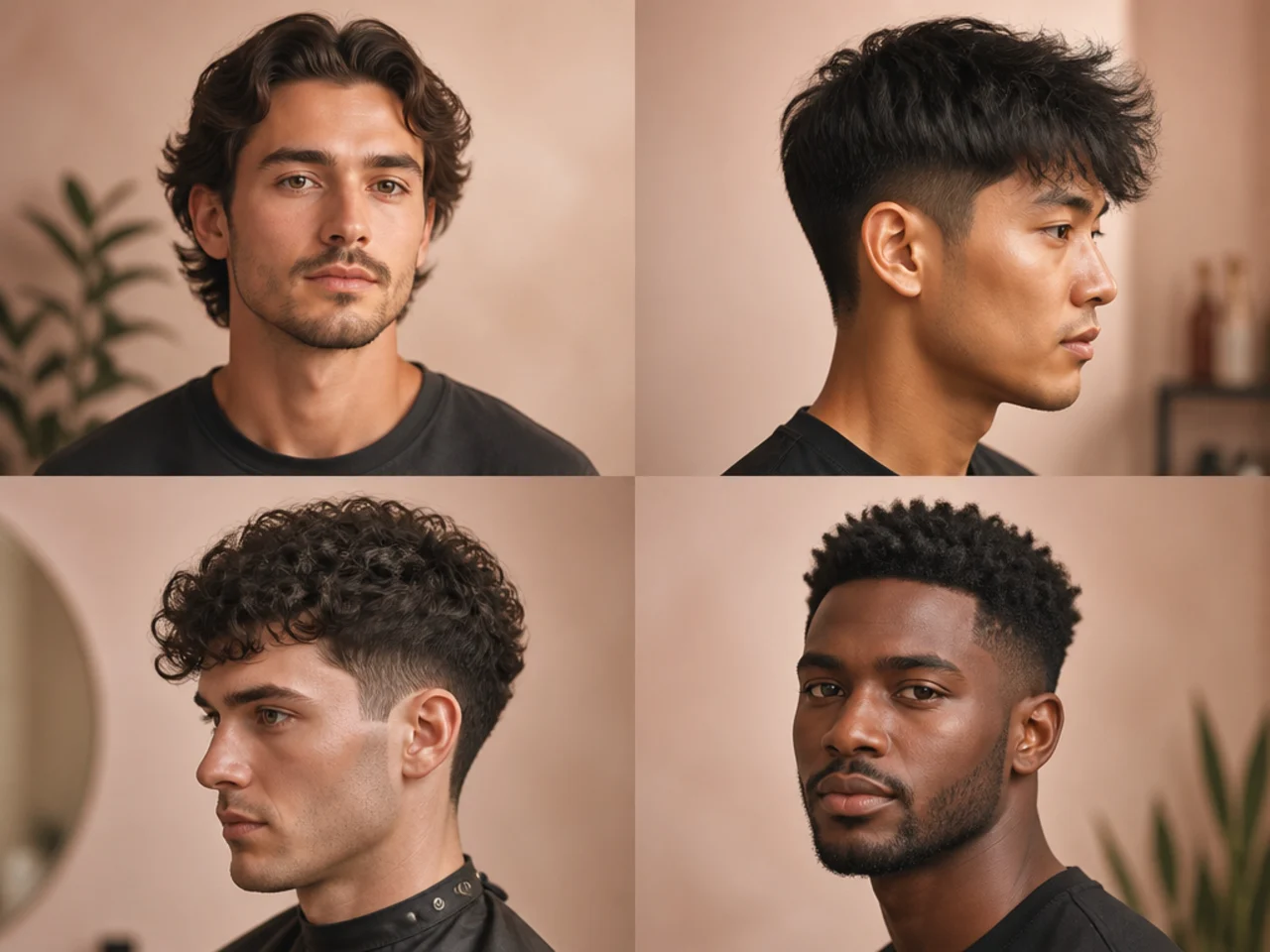
Every client above has a different cut and a different industry. What they share is one habit — the standing appointment. Every one of them books the next visit before he leaves the current one, and every one of them treats the cadence as non-negotiable.
That's the whole difference between guys who look sharp all year and guys who look sharp for two weeks after each cut. The polish isn't in the shape. It's in never letting the shape soften. A cut that reads professional on day one still reads professional on day twenty-one if you're back in the chair on day twenty-two. Skip a cycle and you spend the next month styling around a shape that's fighting you.
For the exact mechanics of that cadence — how often each cut family really needs a re-shape, when to book the neck-and-side cleanup between full cuts, and how to spot the moment a cut has started drifting — the haircut cadence guide covers the numbers by cut family. Every guy in this article follows those windows.
What to Do Next
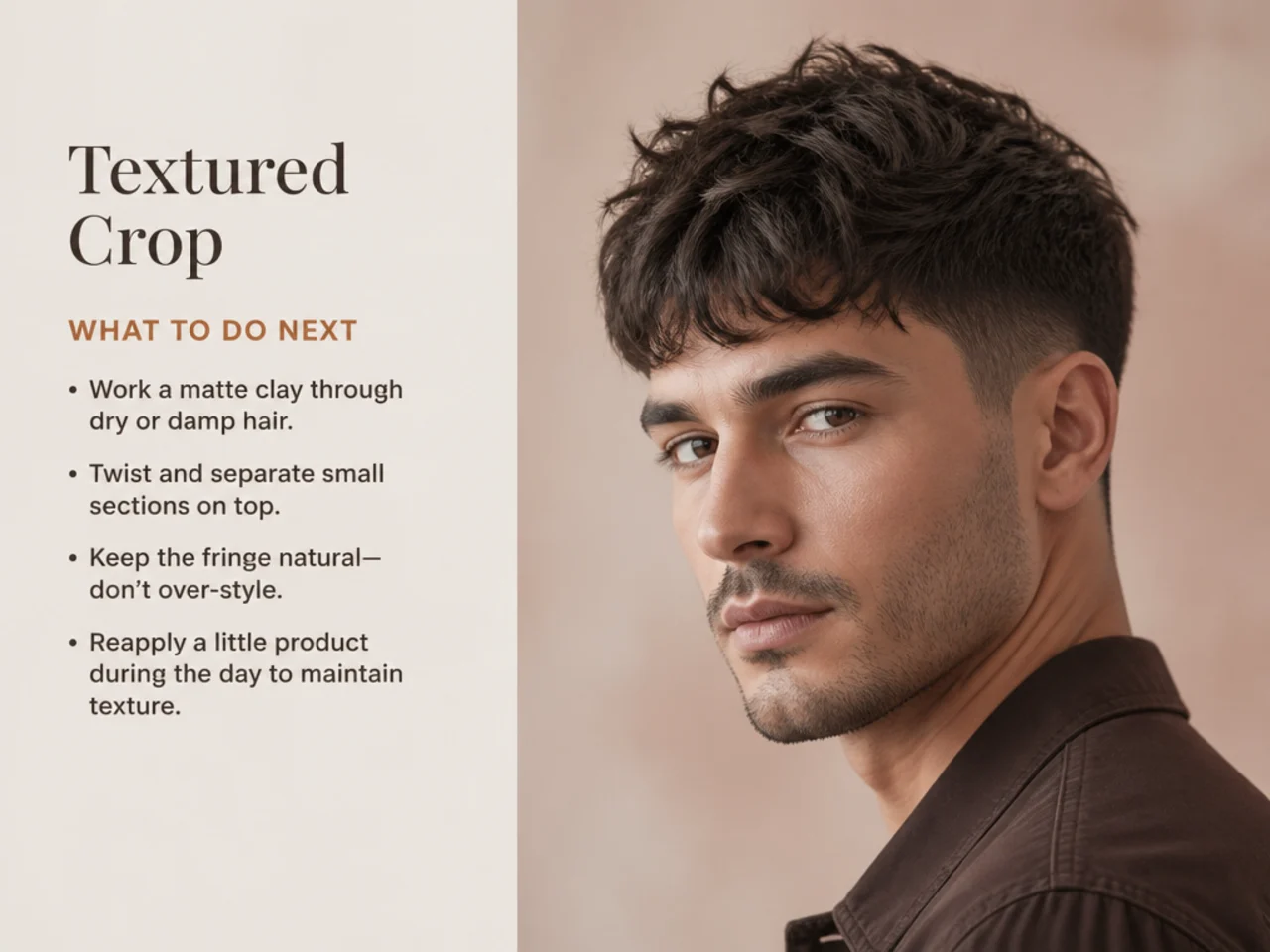
Pick the cut that matches your industry first. If you're in a conservative room — law, banking, medicine, government — start with the modern side part or the Ivy League. If you're client-facing in sales, consulting, or executive presence, the executive comb over with a mid fade or the slick back with a skin fade both photograph well and hold shape through a day of pitches. If you're in tech, product, marketing, or a startup, the textured crew or the textured quiff give you the polish without the formality.
Book with a barber who's cut your specific silhouette before. Ask to see three photos of the exact style you want on their Instagram — not adjacent, not similar, exactly the cut. Barbers who don't have a portfolio of the cut you want will give you the cut they know. Word-of-mouth beats Google reviews for shape-heavy professional styles — if a friend has one that reads sharp, ask them who cut it.
Then commit to the cadence. Three to four weeks for the short cuts (crew, Ivy League), four to five weeks for the mid-length cuts (side part, comb over, quiff), and two weeks for the skin fade side of the slick back. Standing appointments do more work than any single visit. That's the pattern every guy in this article shares, and it's the pattern that keeps the noticed moment showing up unchanged in month two, month three, and month twelve.
FAQ
What haircut gets a man noticed at work?
Six sit at the top of the list — a side part with a low taper, a textured crew, an executive comb over with a mid fade, an Ivy League, a textured quiff with a low taper fade, or a slick back with a skin fade. All six read polished from ten feet away, hold shape through a day of meetings, and photograph cleanly on webcam. Match the cut to your industry, your face shape, and how much time you're willing to spend at the mirror.
How do I ask for a professional haircut at the barber?
Bring a photo. Name the length on top in inches. Name the fade or taper height. Name the finish — matte or shiny. "Two and a half inches on top, low taper starting at the temple, matte finish" is the phrase every barber recognizes. Add your industry — "I'm in banking" or "I present on stage" — so they know which end of the professional spectrum to aim at.
Is a fade professional?
A low taper, low fade, or mid fade all read professional in almost every workplace in 2026, including law, banking, and medicine. High fades and skin fades read sharper and slightly more current — safe in most rooms, best in creative, consulting, and sales. Skip disconnected undercuts and hard designs in conservative rooms. The taper is the safest universal.
How often should I book a professional cut?
Three to four weeks for short cuts like the crew and Ivy League. Four to five weeks for medium styles like the side part and comb over. Two weeks for the skin fade side of the slick back. The moment the shape softens is the moment to book — waiting past that just makes the next cut harder and lets the grow-out read as unpolished in meetings.
What product keeps a professional cut looking sharp all day?
A single matte clay, paste, or cream for hold, plus a light hairspray for long days on your feet. Skip shiny pomade under office lighting — it photographs like helmet hair on webcam calls. Pea-sized amount, worked into damp hair with fingers, combed once. One product is enough. Layering three softens the shape.
Do professional cuts work for thin or curly hair?
Yes. Thin hair suits a shorter Ivy League or a textured crew where density concentrates at the crown and the shape doesn't ask the product to do the work. Curly hair suits a taper with two-inch coils on top defined with curl cream and diffused dry. The finish is what reads professional. The hair type sets the length.