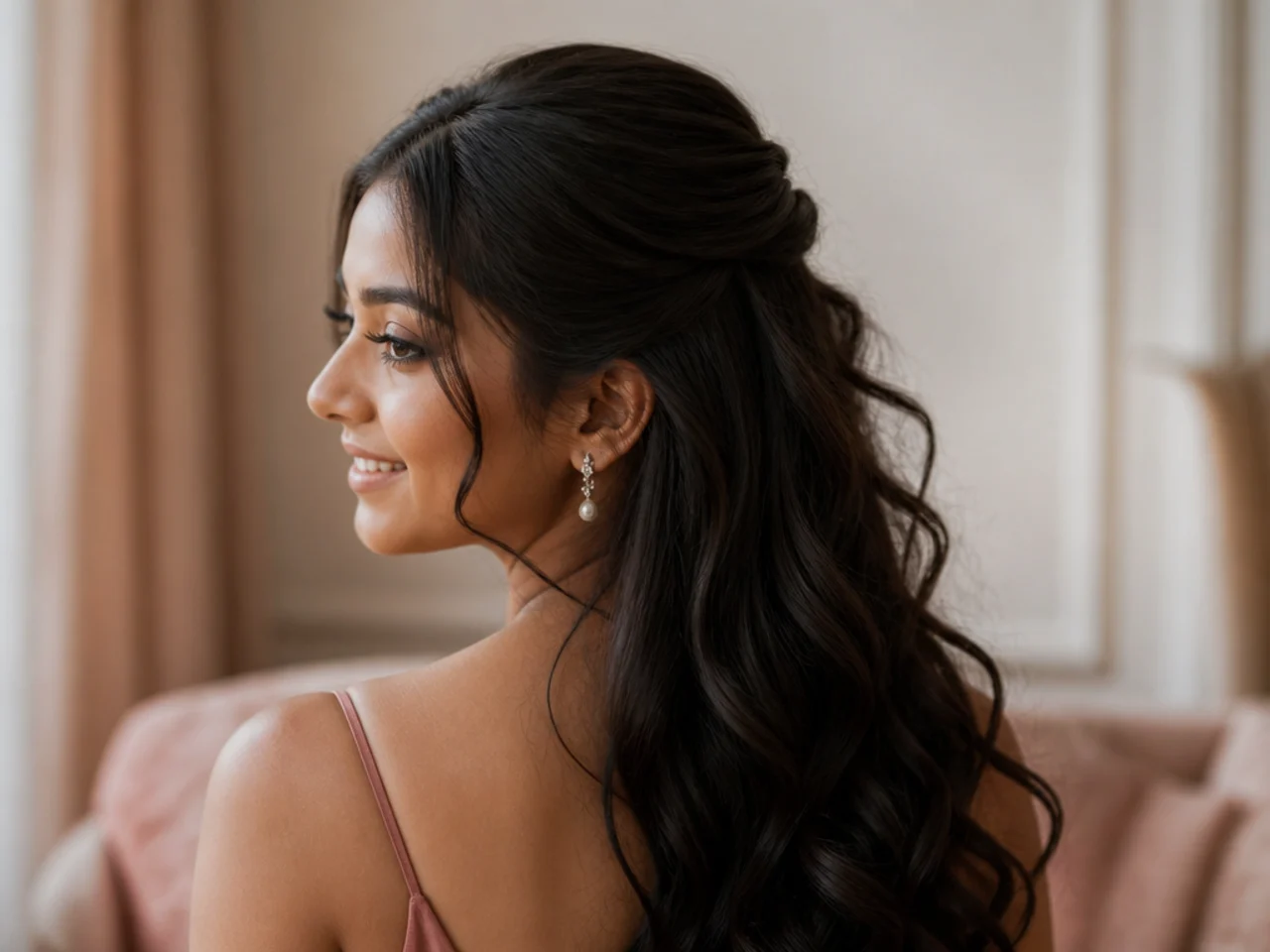
20 Dreamy Half Up Half Down Hoco Hairstyles
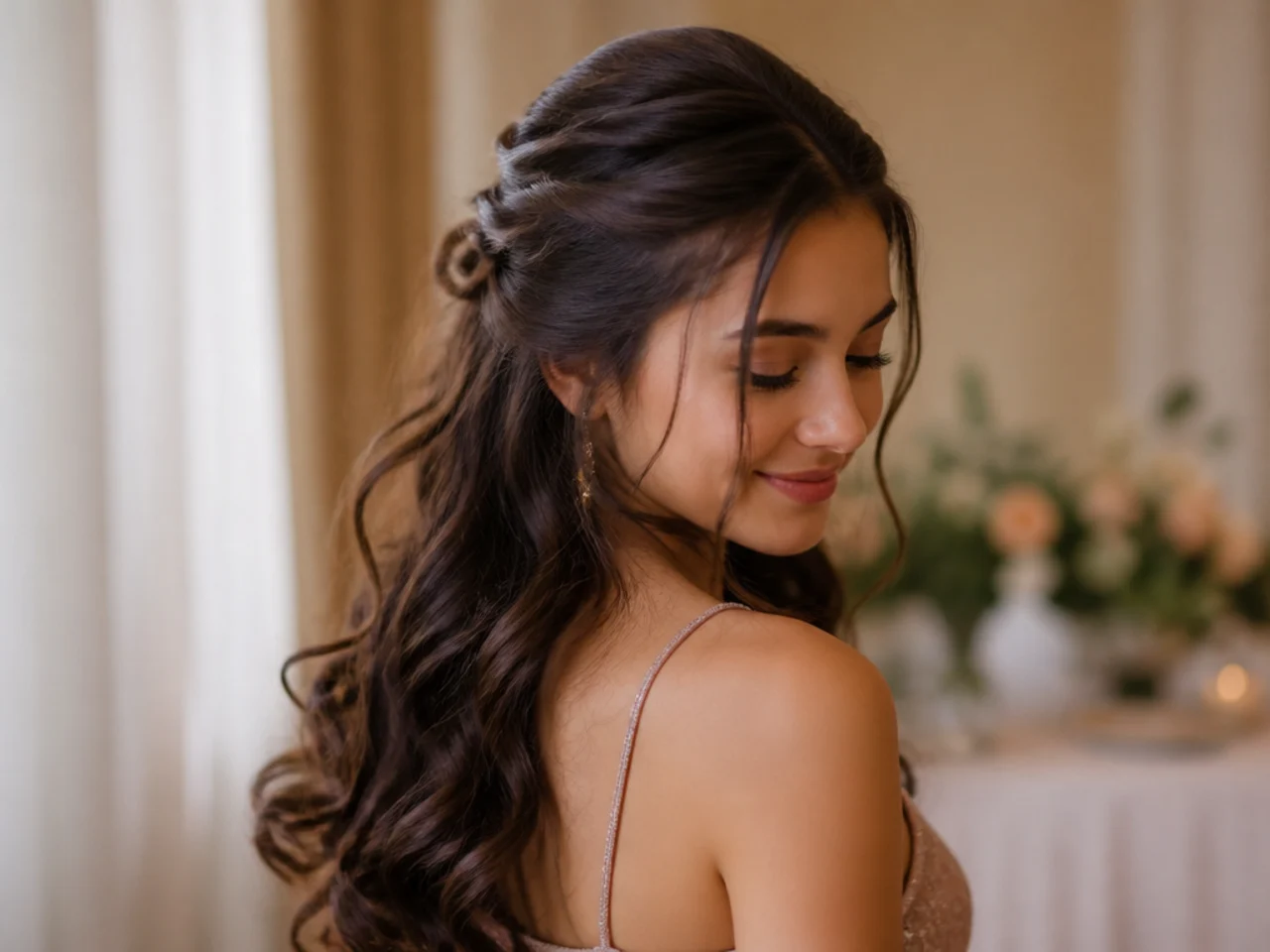
Twenty half up half down styles for homecoming, built around the one thing that decides whether any of them survive the night — the join has to sit at or above the occipital bone, and the pins need texture to bite into.
In this article · 27
- What Holds a Half Up Style in Place
- Choosing Your Version and Anchor
- The 20 Half Up Half Down Hoco Styles
- 1. Classic Half Up Half Down
- 2. Half Up With a Bumped Crown
- 3. Twisted Crown Half Up
- 4. Half Up Bubble Ponytail
- 5. Half Up Bun
- 6. Half Up Double Buns
- 7. Half Up Claw Clip
- 8. Ribbon Tied Half Up
- 9. Oversized Bow Half Up
- 10. Crystal Barrette Half Up
- 11. Half Up French Braid
- 12. Half Up Dutch Braid
- 13. Half Up Fishtail Braid
- 14. Half Up With Face Framing Tendrils
- 15. Half Up With a Deep Side Part
- 16. Half Up on Curly Hair
- 17. Half Up on Fine Hair
- 18. Half Up on Thick Hair
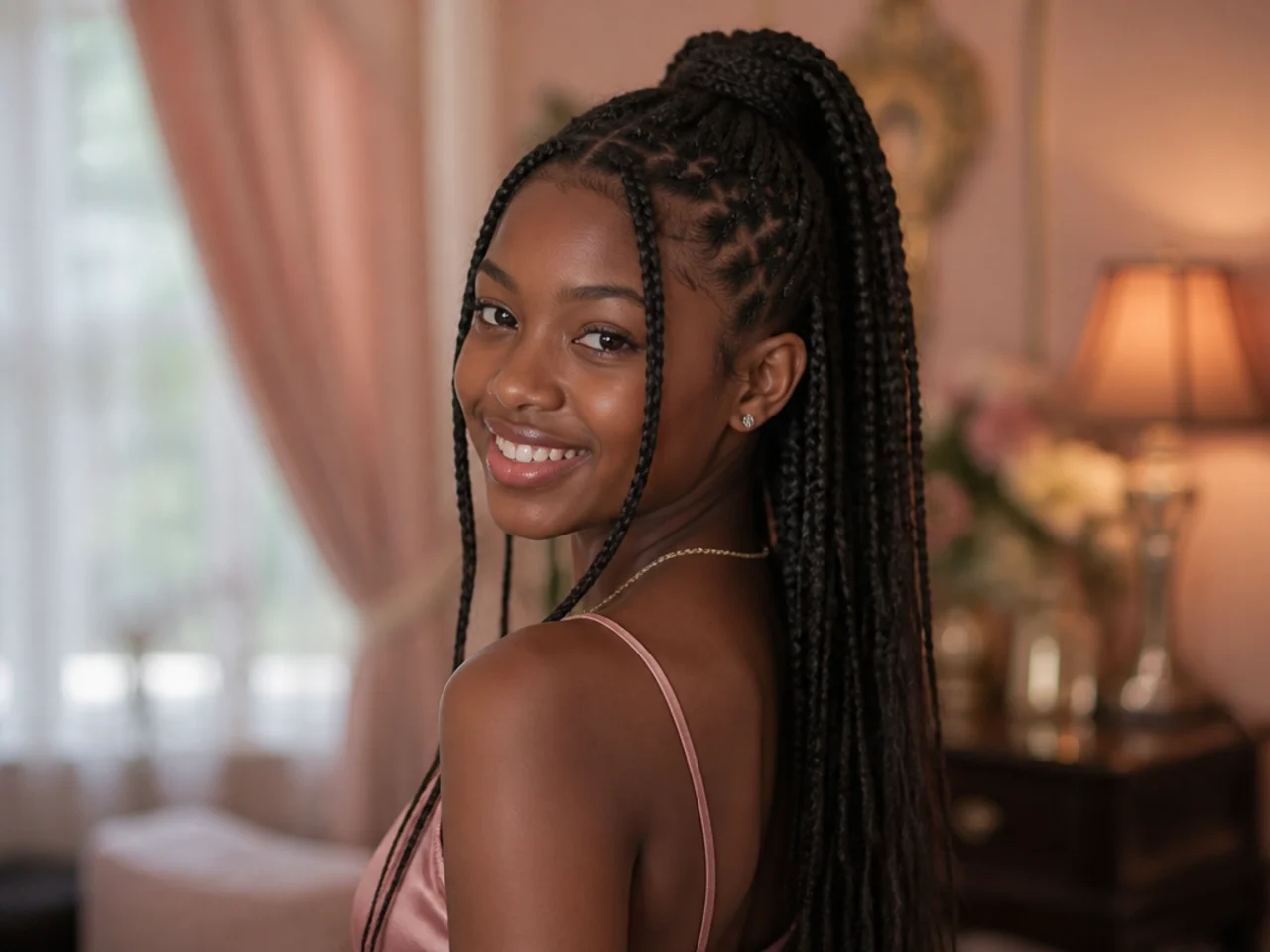
- 19. Half Up Knotless Braids
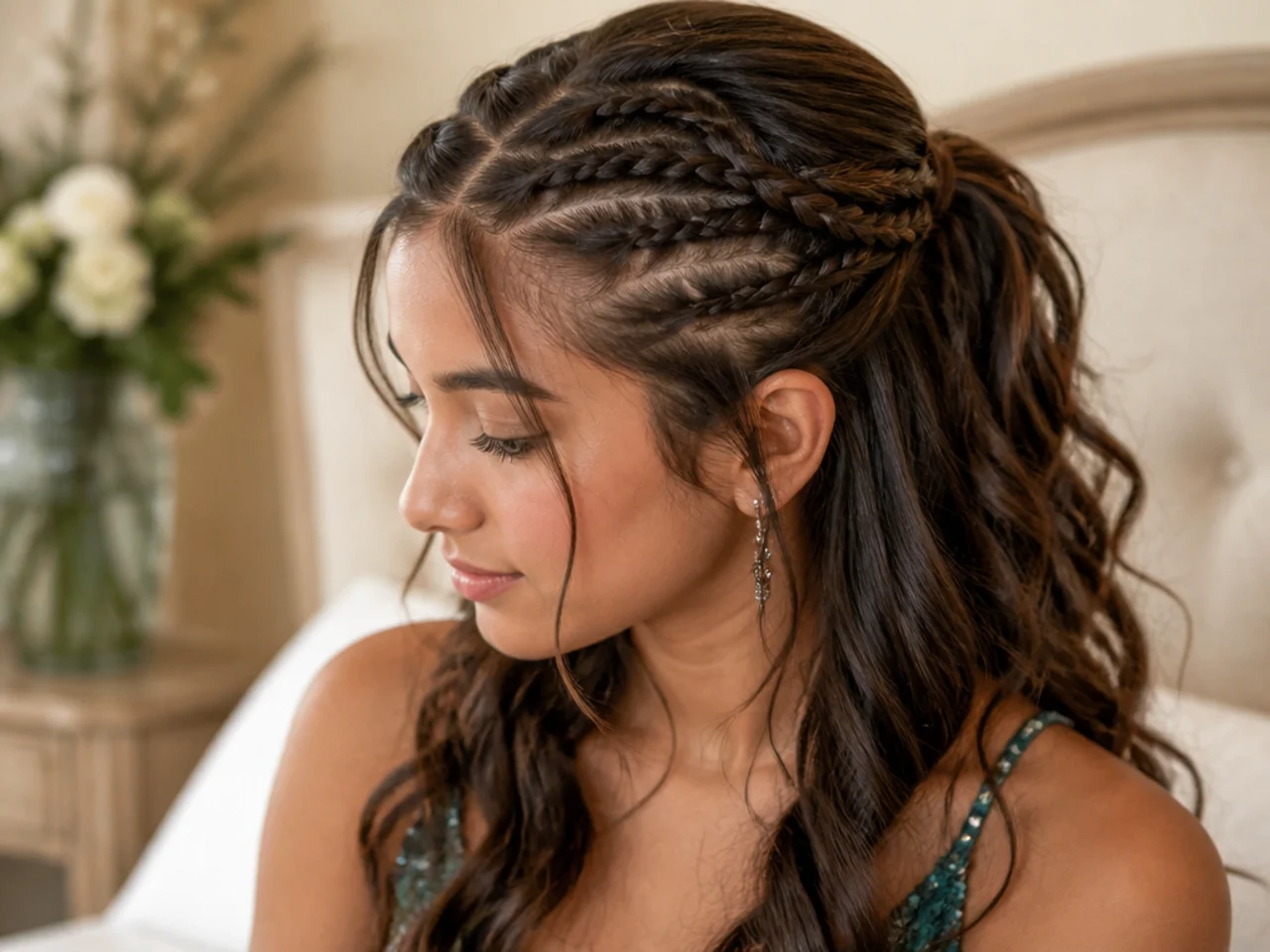
- 20. Half Up Fulani Braids
- Styling and Upkeep
- Mistakes to Avoid
- FAQ
- Final Thoughts
A half up style that slides down by the second song was tied in the wrong place, not tied too loosely.
The join has to sit at or above the occipital bone. That is the rounded bump at the back of the skull, and above it the bone carries the weight instead of gravity dragging it down a slope.
Pins hold by friction, not by shape. Clean smooth hair gives them nothing to grip, which is why texture comes before pinning rather than after.
What Holds a Half Up Style in Place
Height comes from the anchor point. Gather above the occipital bone and the style lifts, gather below it and it sags within an hour.
A backcombed cushion gives pins something to bite. A few strokes at the crown, then the surface smoothed back over it, holds far more than a tighter elastic does.
Texture beats tension. A style forced tight on slippery hair still slips, because the failure is friction rather than grip.
Curl first, always. Heat sits directly on an elastic if you curl afterwards, and cooled curls gather far more easily than straight hair does.
Choosing Your Version and Anchor
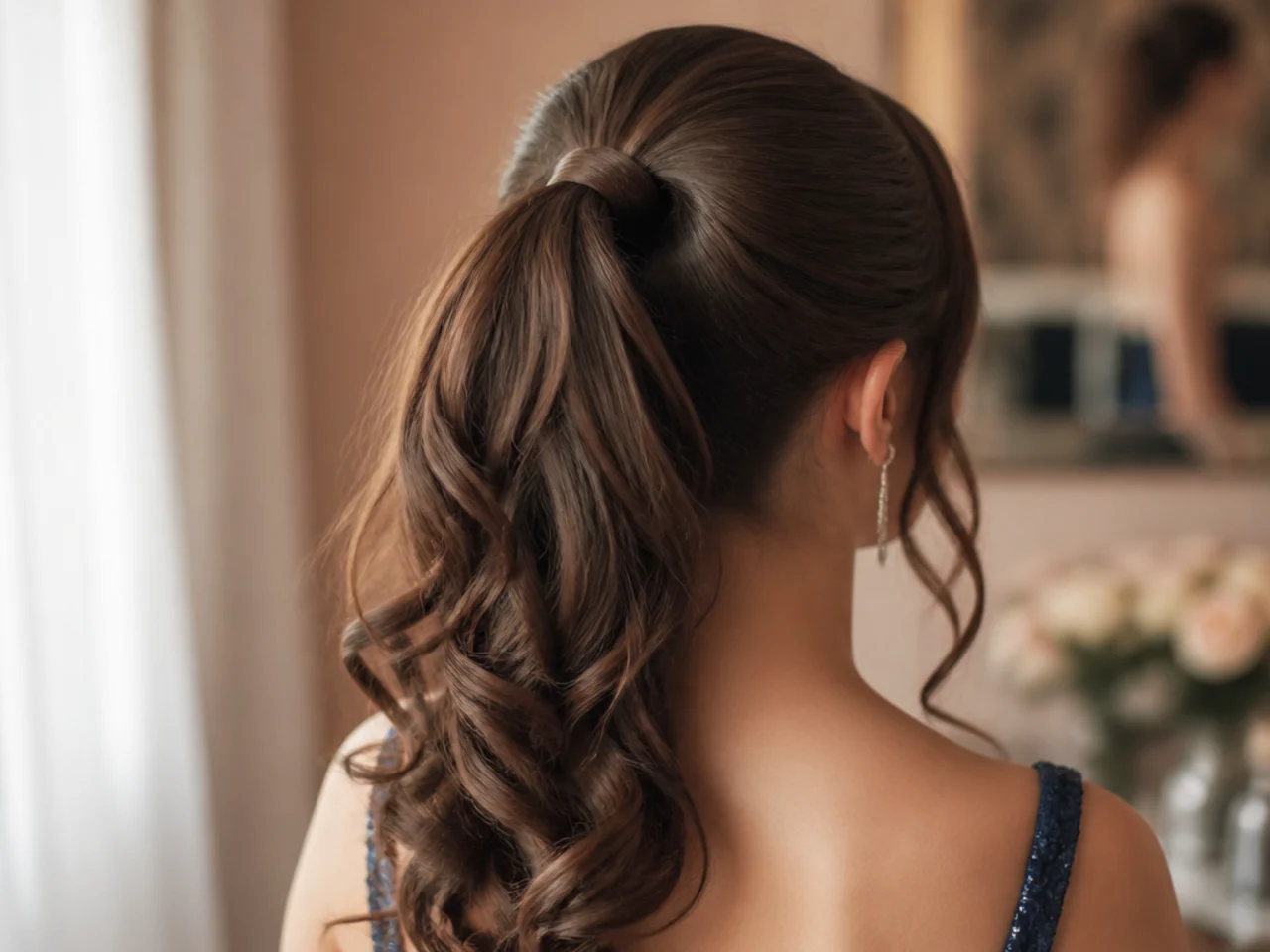
High anchor for a lifted crown. Gathering at the top of the head puts the volume above the temples and lengthens the face.
Low anchor for a softer look. It sits closer to the neck and reads gentler, but it needs more pins because the slope works against it.
Small section for delicate styles. A barrette or a single twist can only carry a section it can physically close around.
Split the section on thick hair. Two ties stacked one above the other share a load that a single elastic cannot hold all evening.
The 20 Half Up Half Down Hoco Styles
1. Classic Half Up Half Down
The section runs from temple to temple and back to the crown, gathered and tied in one. Where that tie lands is the whole style, because at or above the occipital bone the skull supports it and anywhere lower it slides down the slope all evening.
2. Half Up With a Bumped Crown
A few strokes of backcombing at the roots build a cushion, then the surface is smoothed back over it so nothing rough shows. The cushion holds the height and gives every pin something solid to bite into, which is why it outlasts a style built on a tighter elastic.
3. Twisted Crown Half Up
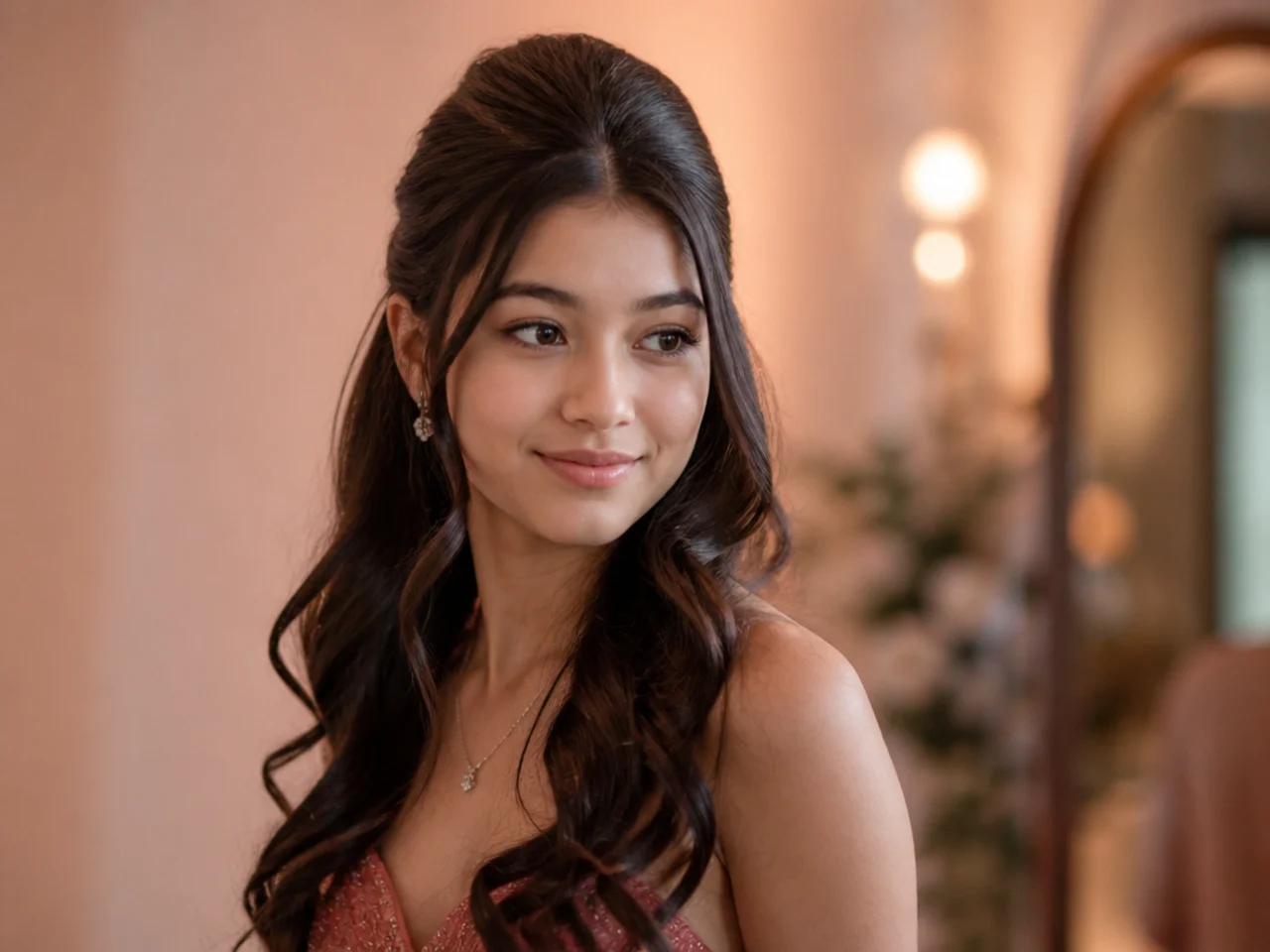
Two rope twists run back from the temples and meet at the crown. A rope twist locks because the two strands are twisted one way and wrapped around each other the other way, so twisting both in the same direction is what makes it unwind.
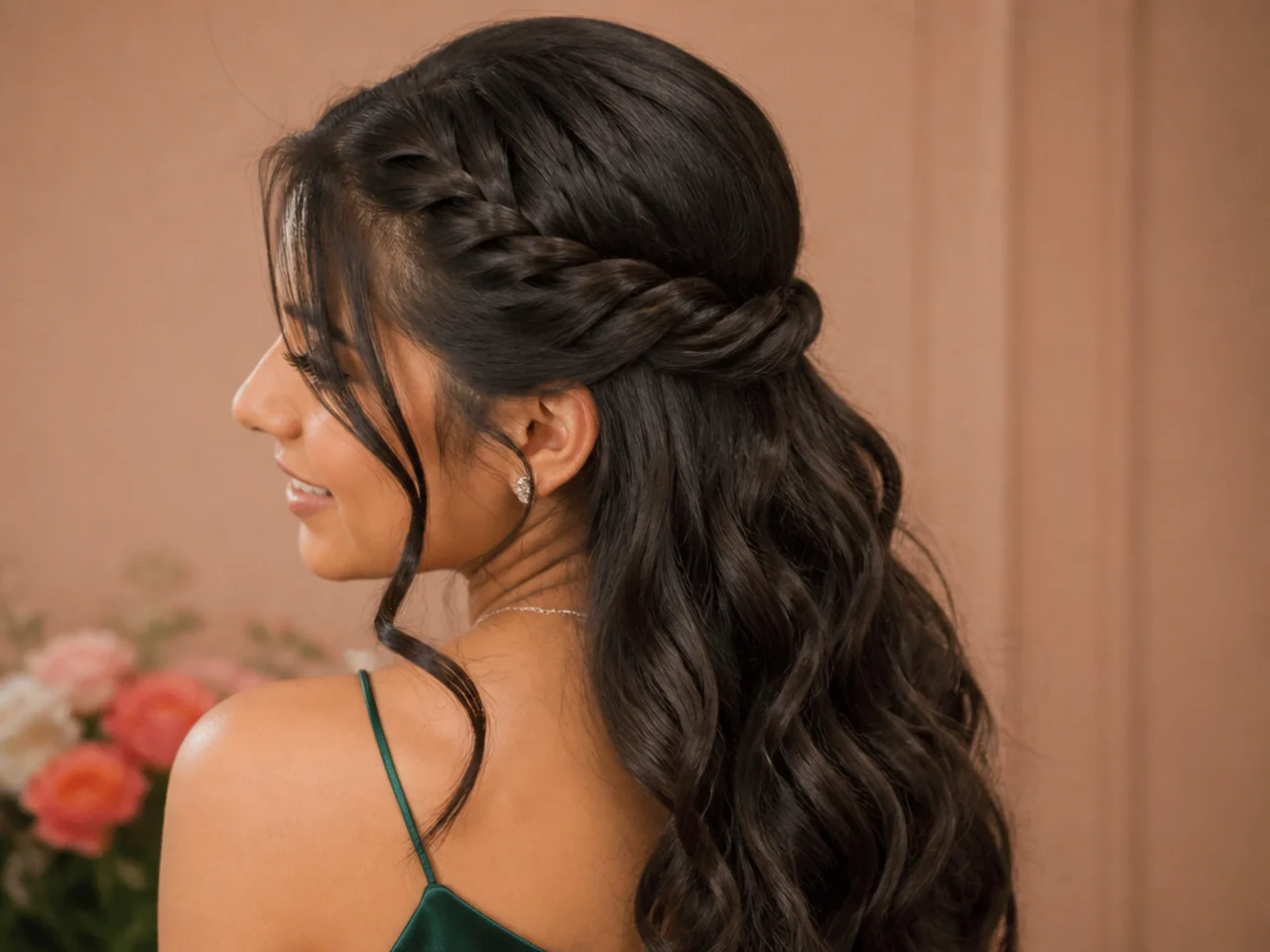
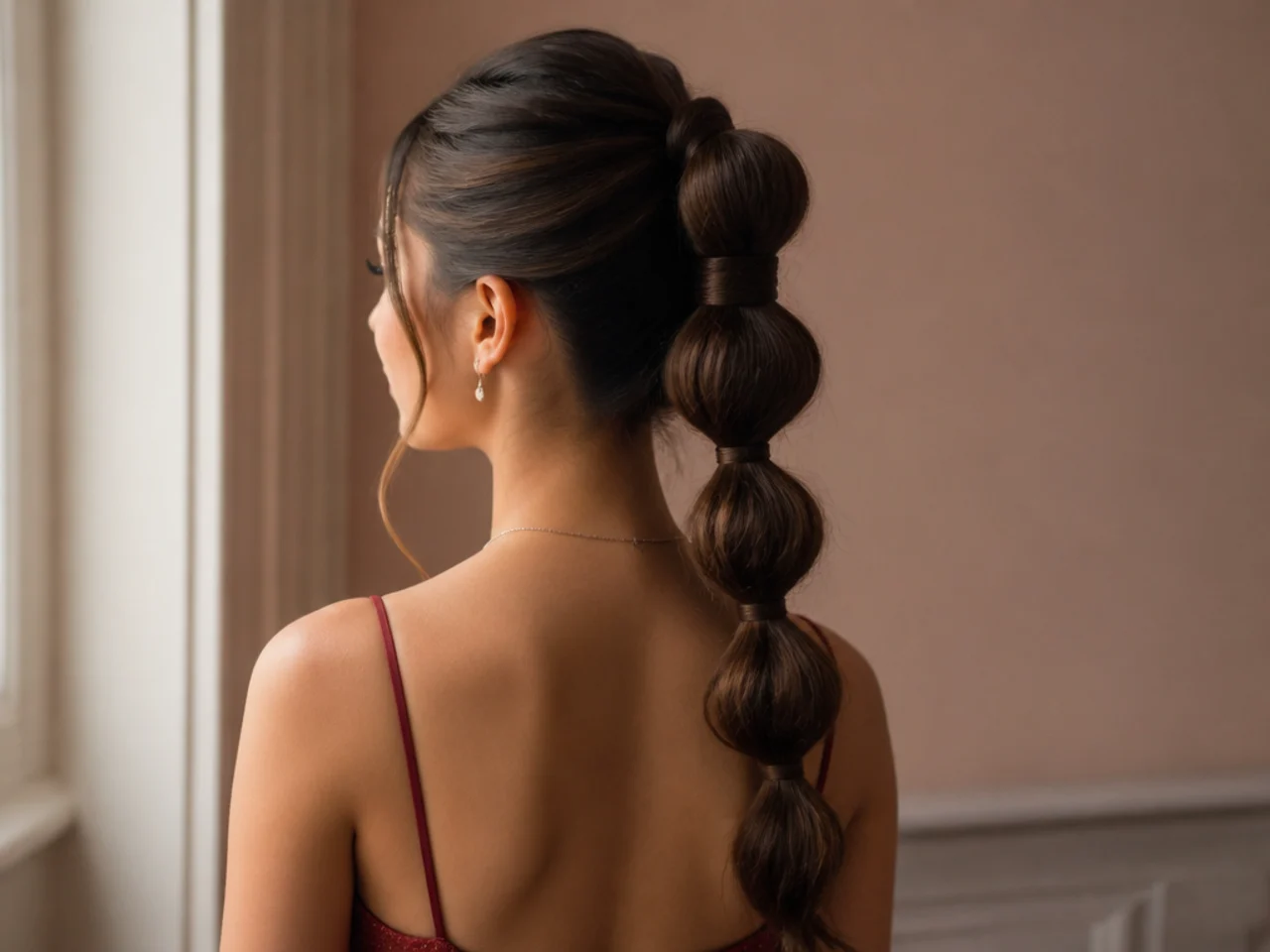
4. Half Up Bubble Ponytail
Elastics placed at even intervals down the tail, with each section gently pulled outward afterwards. The bubbles come from spreading the hair between the bands rather than from the bands themselves, so uneven spacing reads as lumps instead of bubbles.
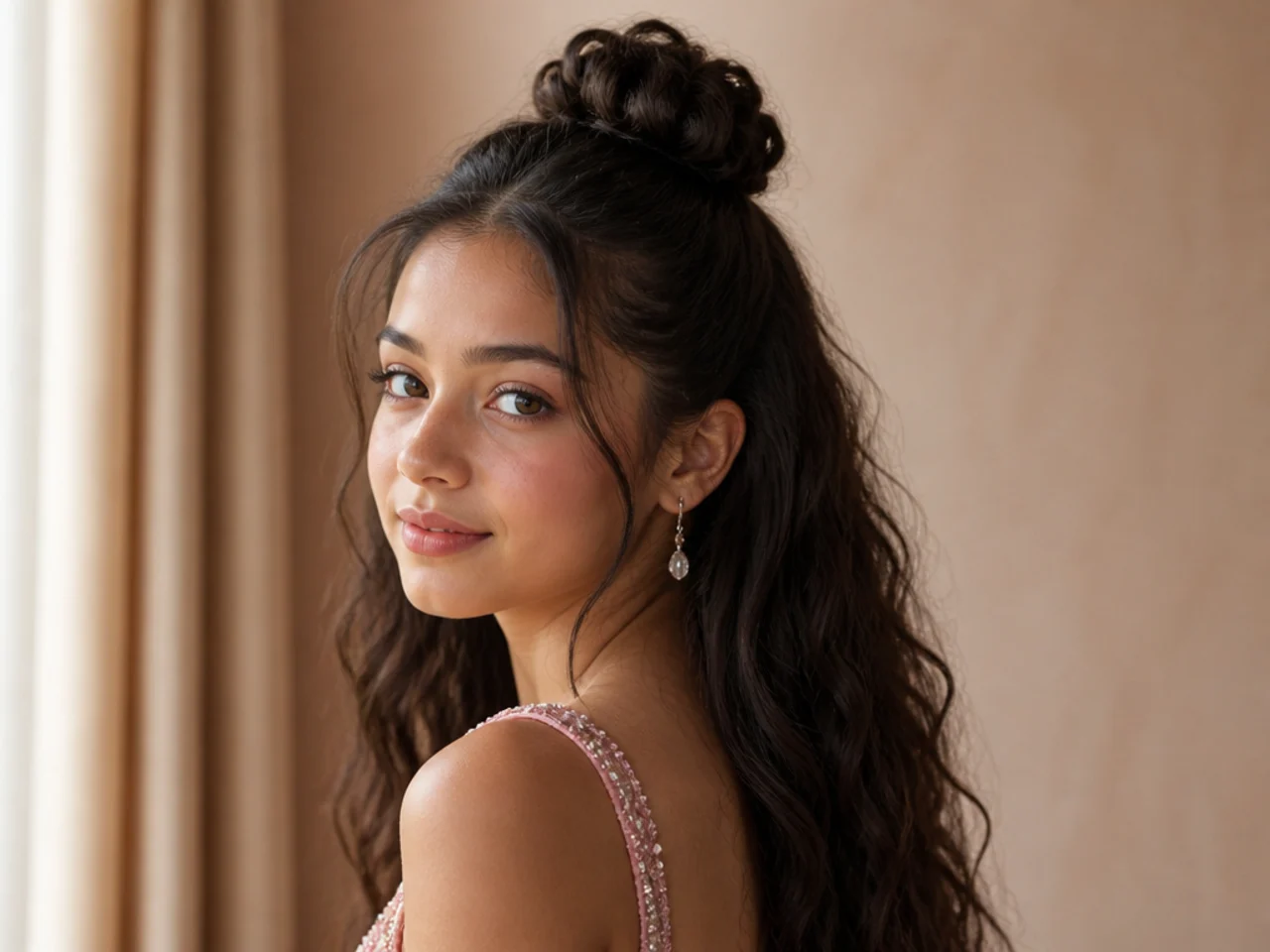
5. Half Up Bun
The gathered section coiled into a bun and pinned at the crown. Push each pin across the direction of the coil rather than along it, because a pin following the wrap has nothing to catch and works its way out as the head moves.
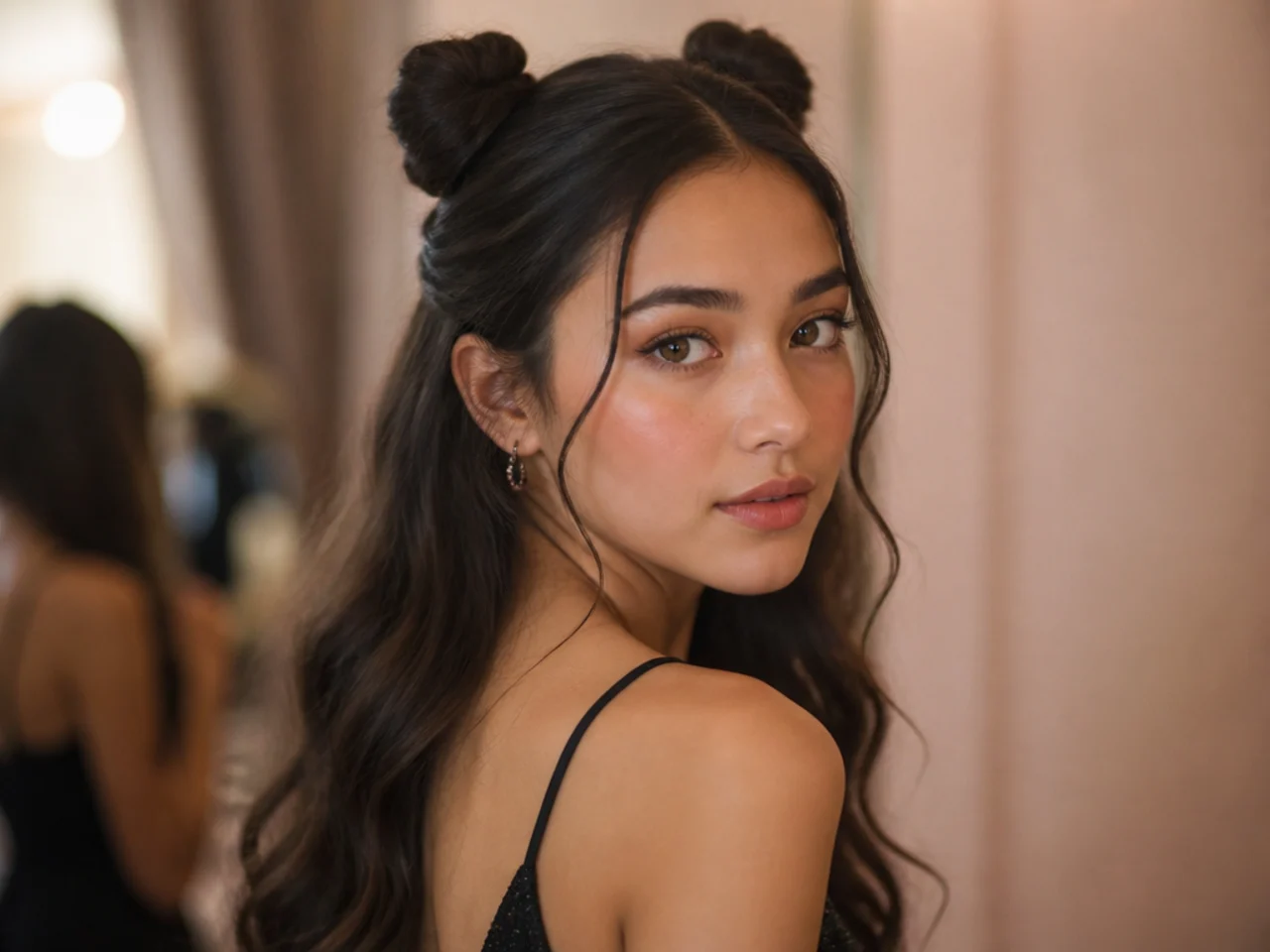
6. Half Up Double Buns
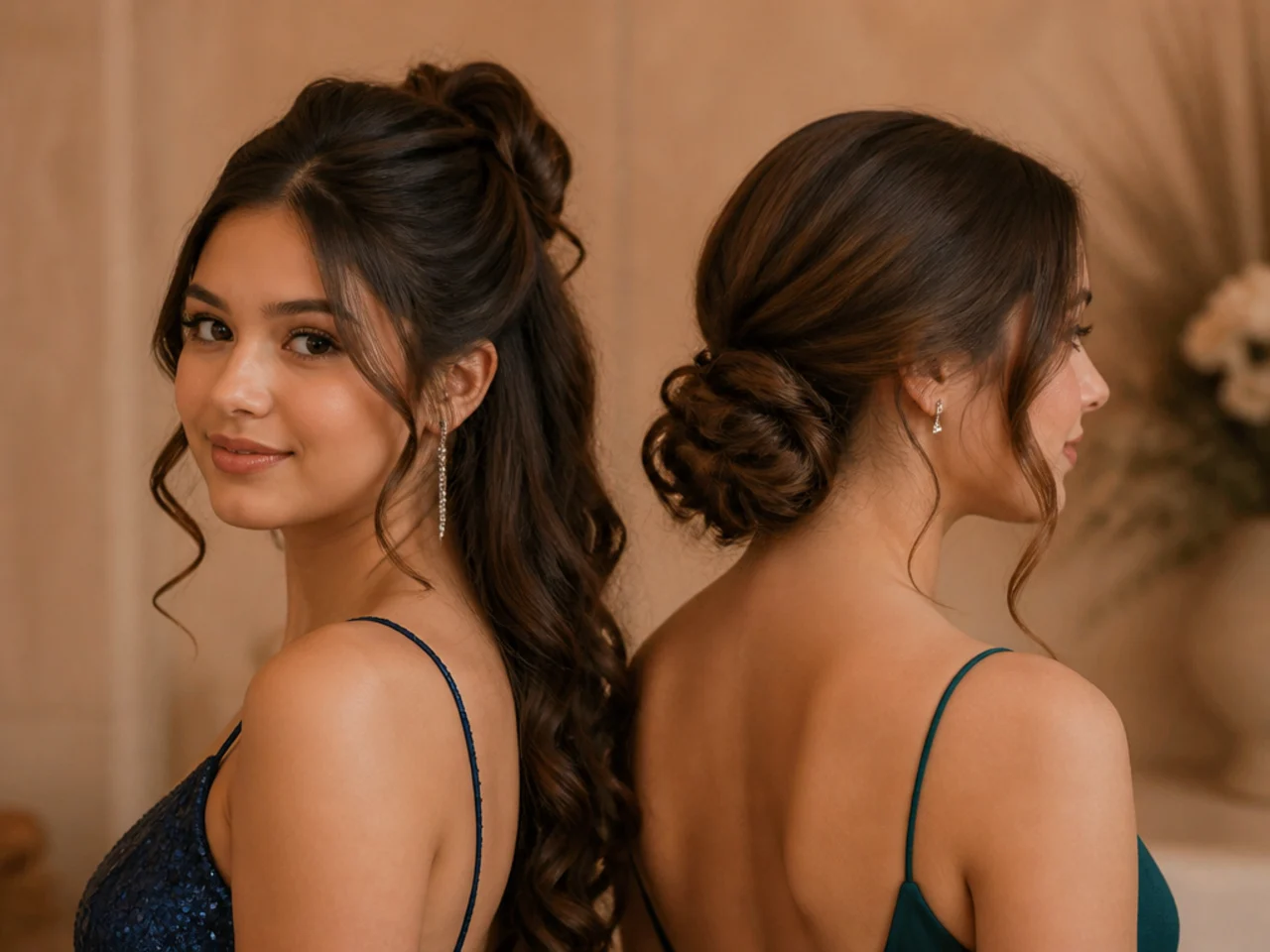
Two smaller buns either side of the parting, each carrying half the weight, which is why they hold better than one large bun. Measure their placement from the parting rather than from the ears, since ears are rarely level with each other.
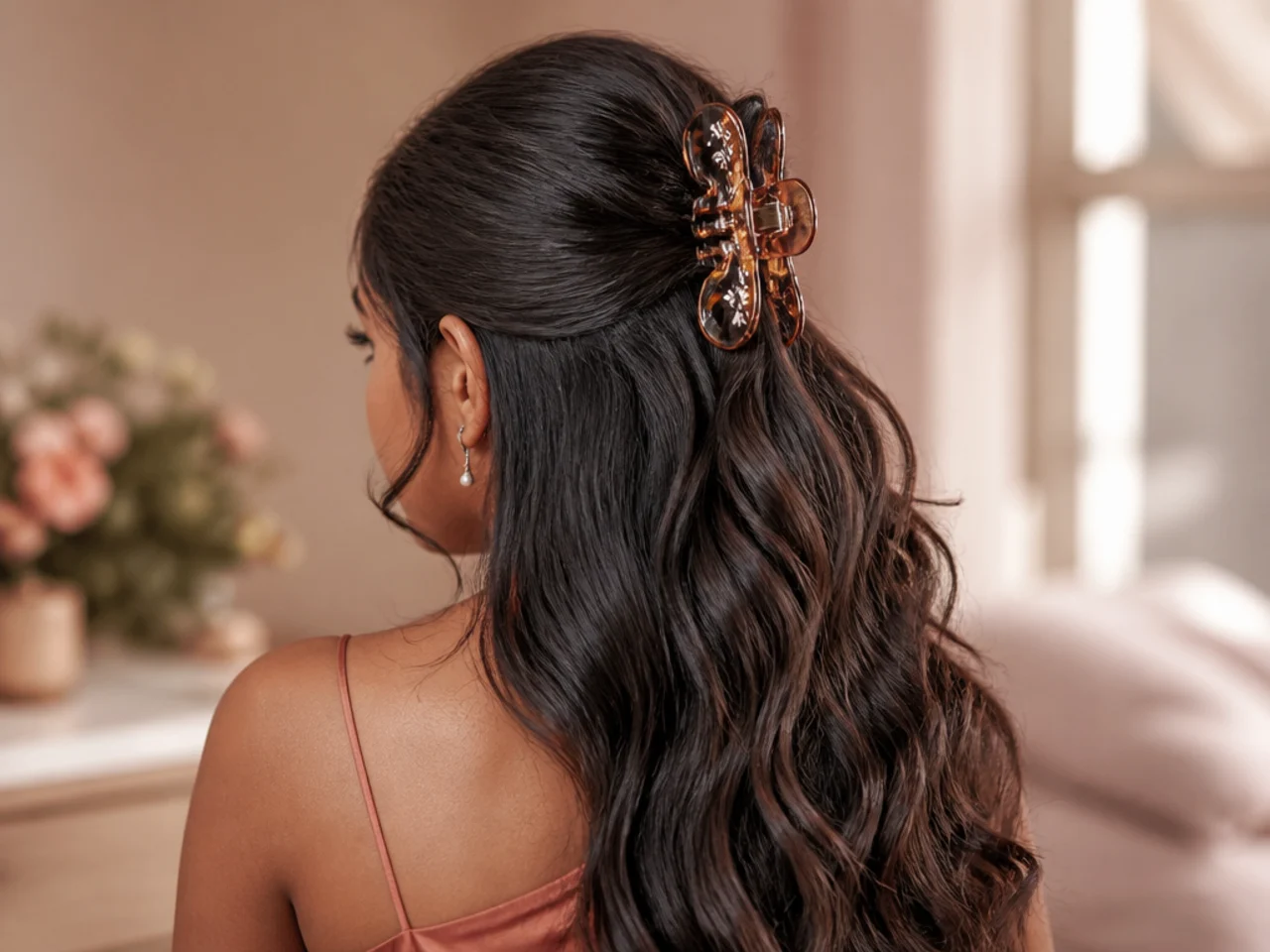
7. Half Up Claw Clip
A claw clip grips by pressing the section flat against the head, so it needs both enough hair to close on and a rough surface to hold. On freshly washed hair it slides within minutes, which is why a claw clip style starts with texture spray.
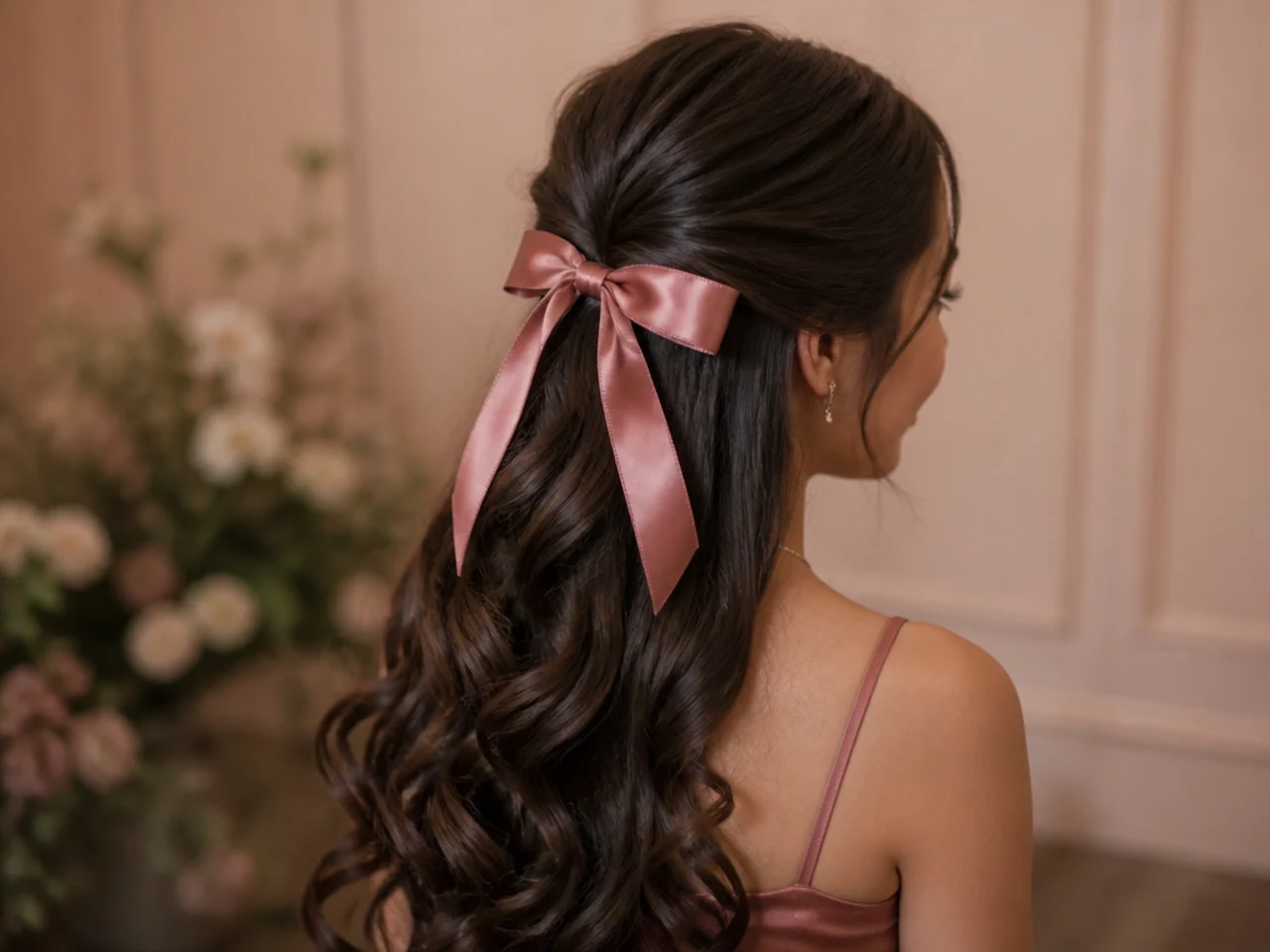
8. Ribbon Tied Half Up
Tie the elastic first and lay the ribbon over it as a cover. A ribbon on its own cannot carry the weight of a gathered section, and the knot works loose every time the head turns.
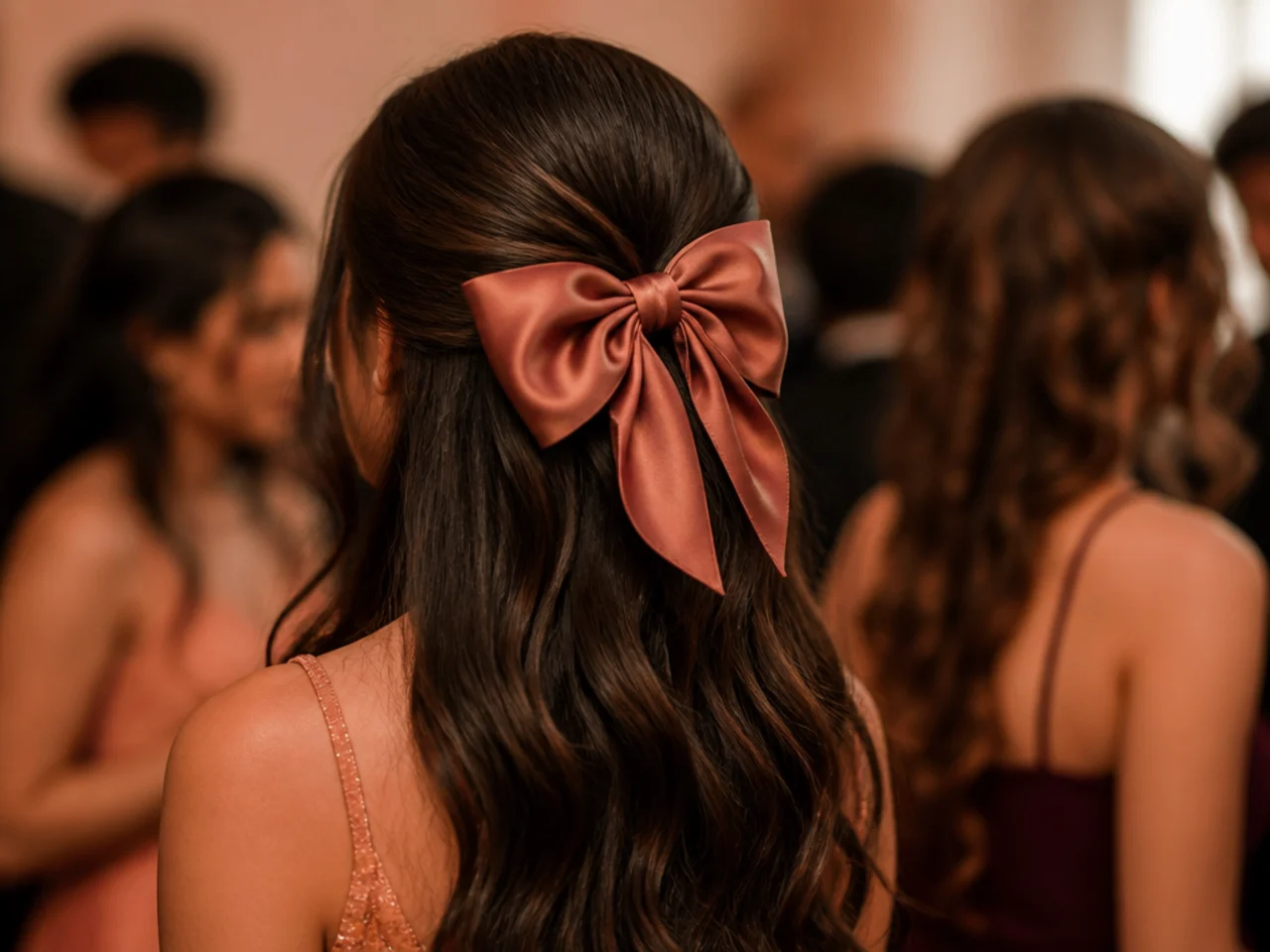
9. Oversized Bow Half Up
The bow sits over the join and needs pinning into the elastic on both sides to stay level. Clipped to hair alone it rotates as the head moves and ends up sideways in every photograph taken after the first hour.
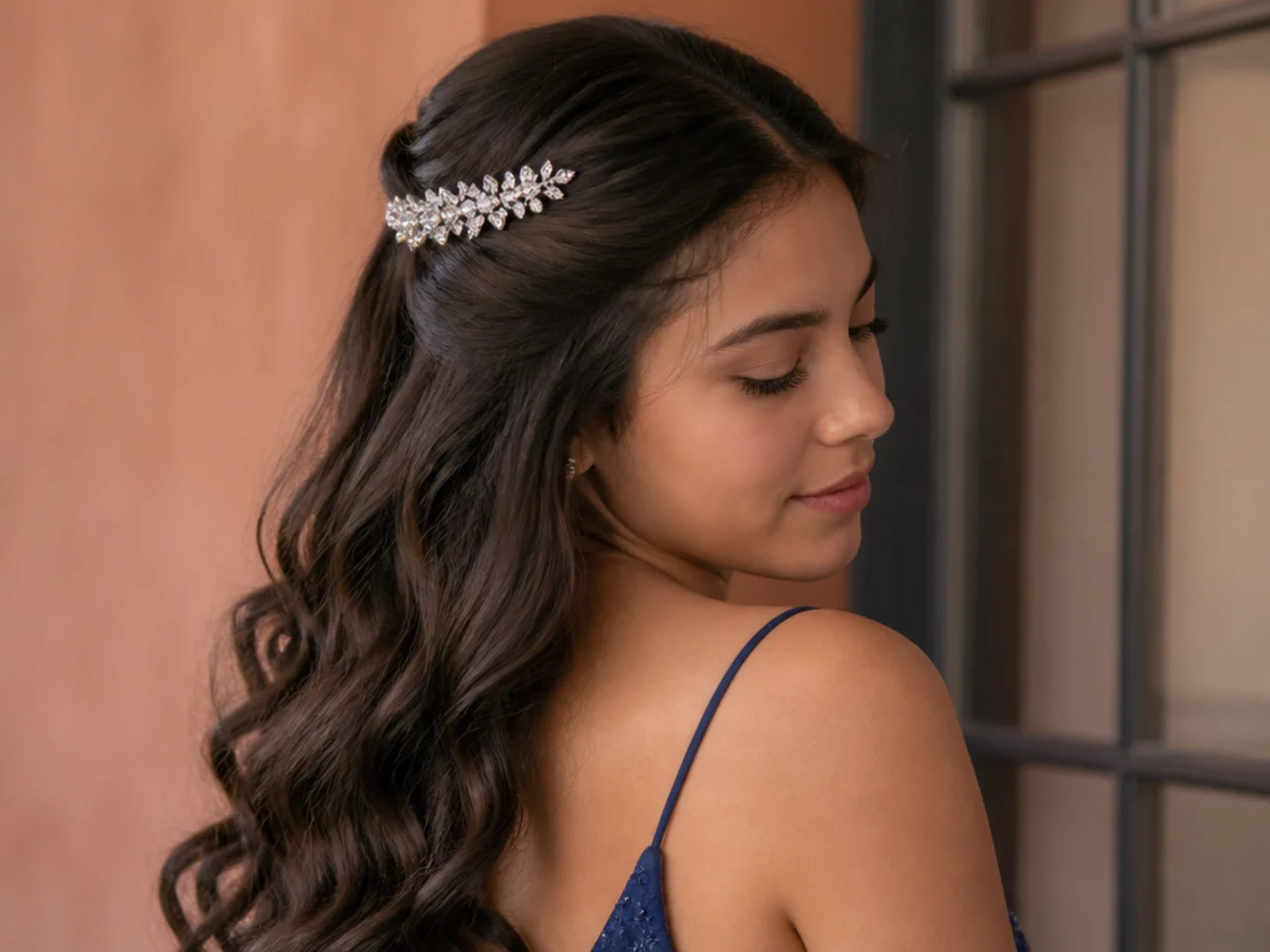
10. Crystal Barrette Half Up
A barrette can hold a small half up section on its own, but on a large one the hinge cannot carry the weight. On thick hair use it as decoration over an elastic instead and it stays where you put it.
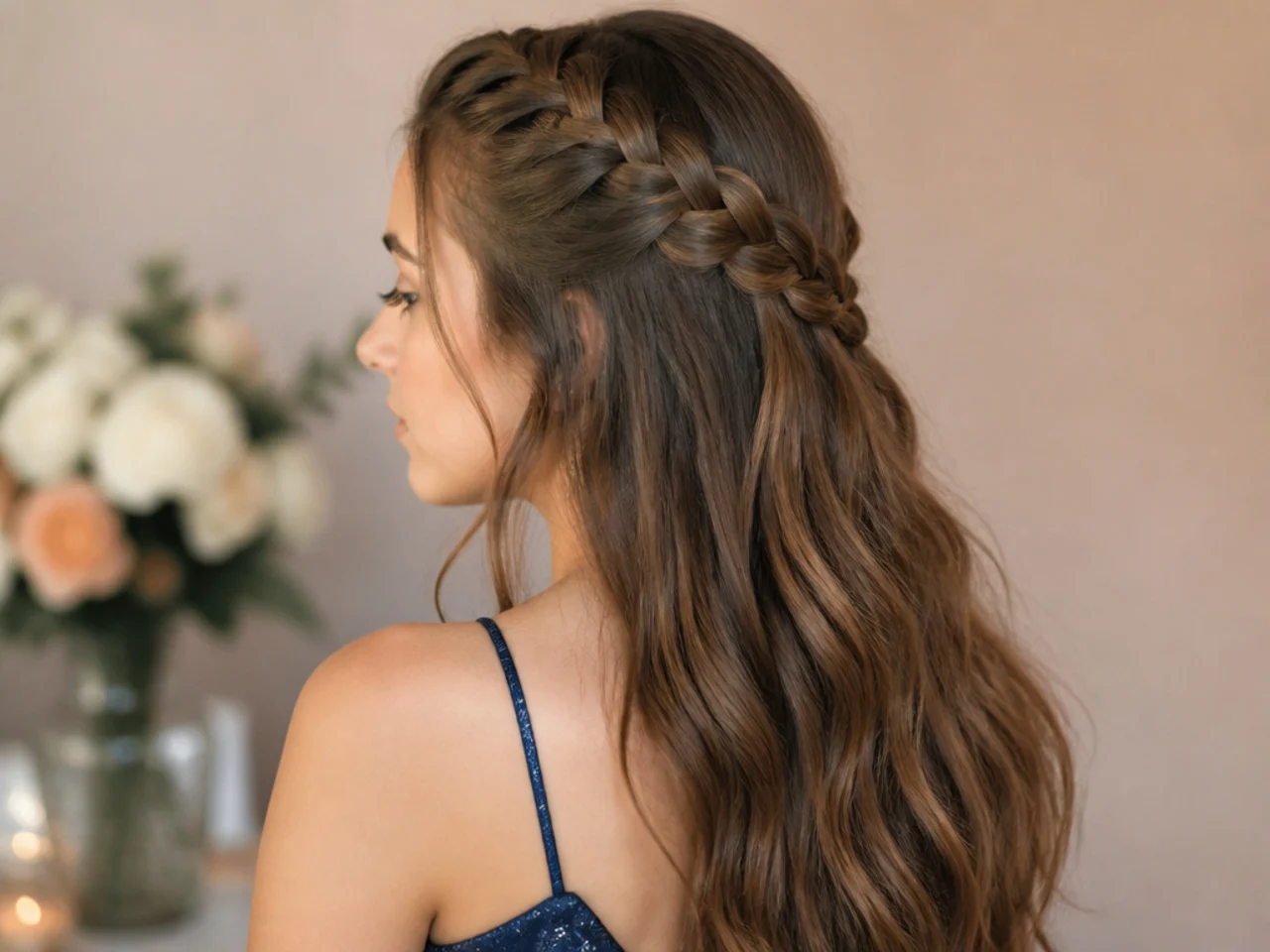
11. Half Up French Braid
Strands are added from outside the braid as it travels back, and each one is picked up close to the scalp so the braid lies flat. Pick up from too far away and the braid lifts off the head and sits like a rope laid on top.
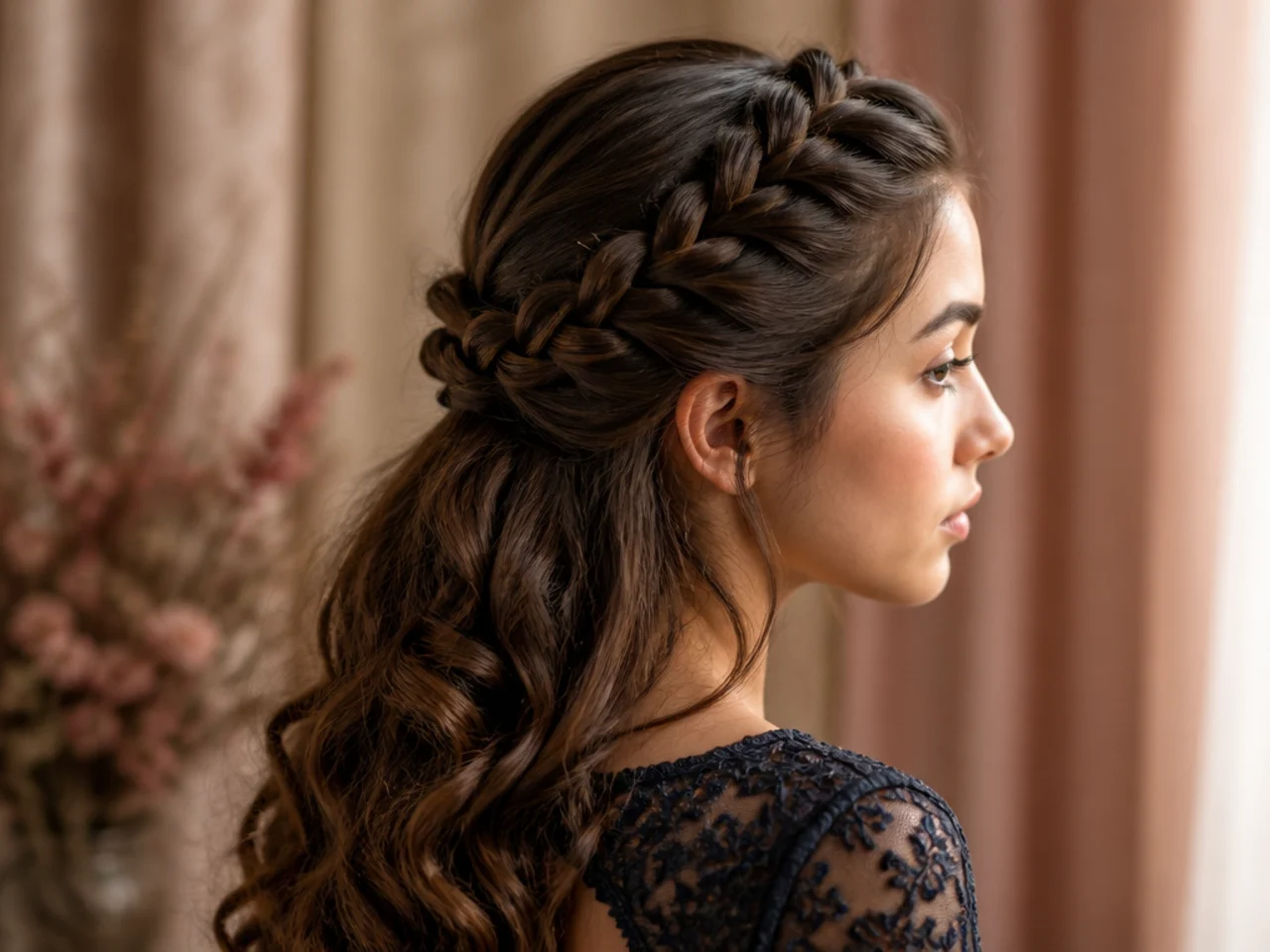
12. Half Up Dutch Braid
The same additions crossed underneath rather than over, which raises the braid above the surface of the hair. The raised braid casts its own shadow, so it photographs far more clearly under the flat lighting of a dance floor.
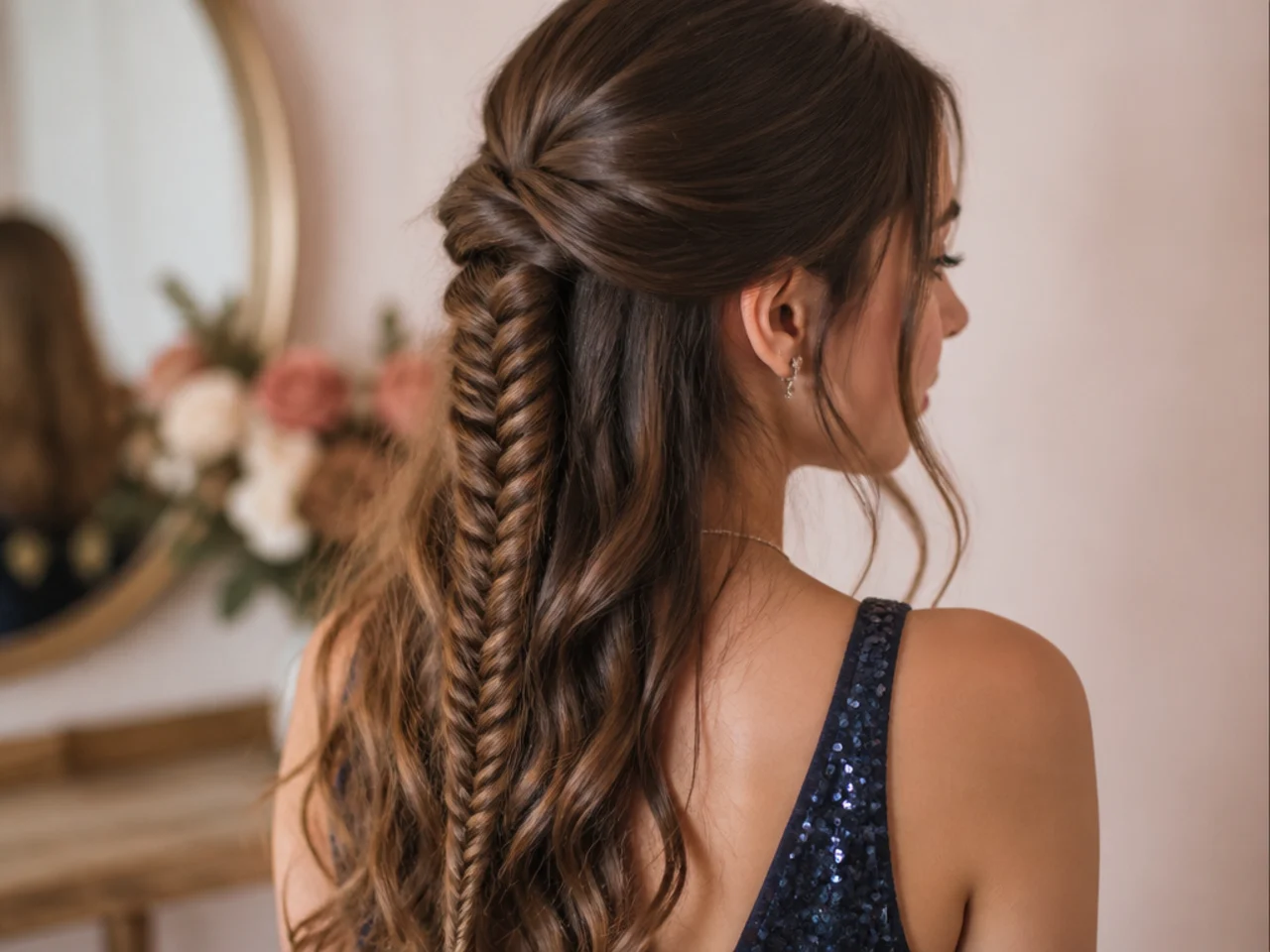
13. Half Up Fishtail Braid
Two sections only, with small pieces crossed over from the outer edges. The finer the pieces the tighter the weave, and tension is the only thing holding it, so a loose fishtail comes apart before the night does.
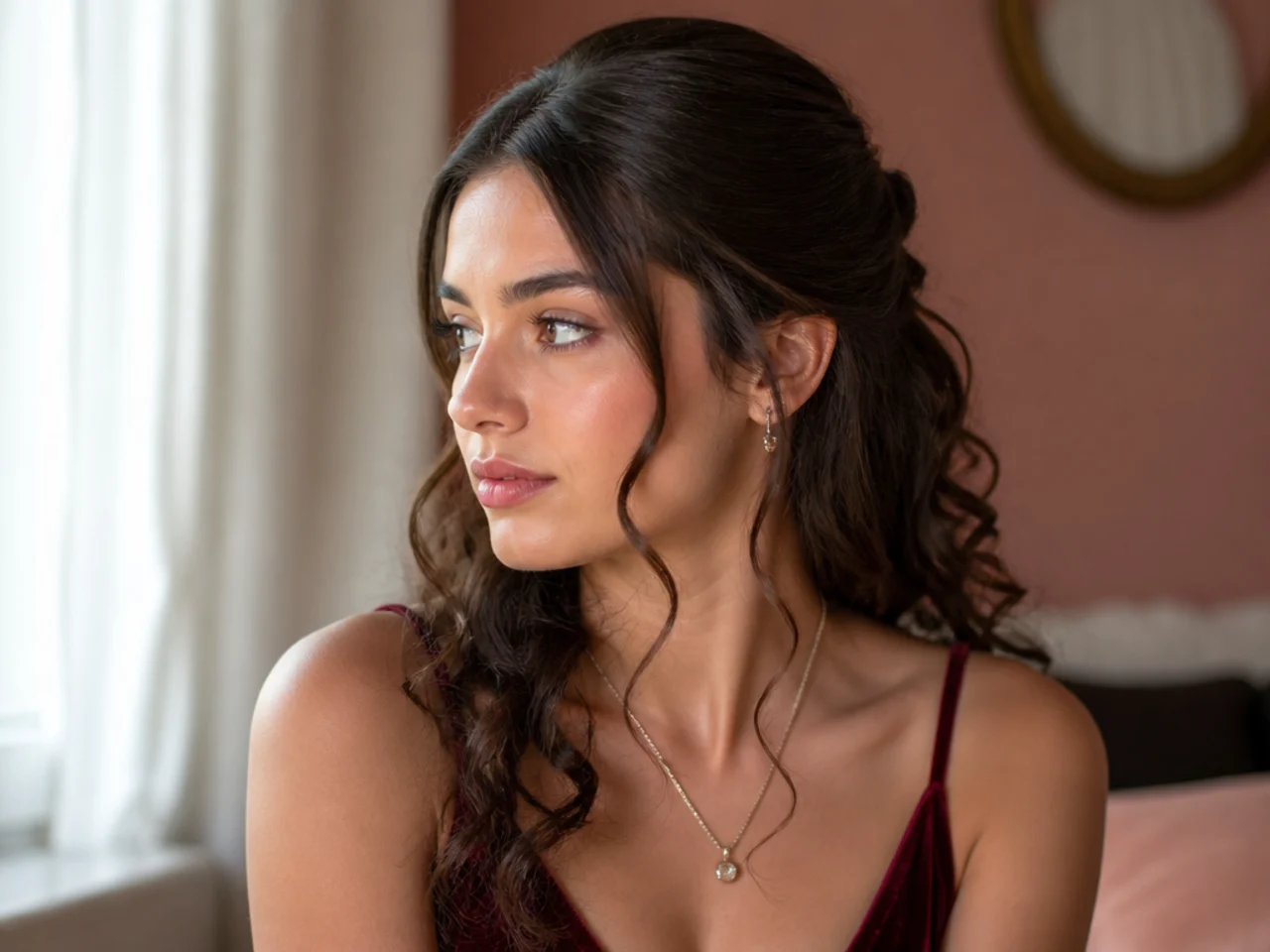
14. Half Up With Face Framing Tendrils
Two pieces left out at the temples and curled away from the face. Curled inward they fall across the cheek and read as hair that escaped, where curled outward they read as hair that was placed on purpose.
15. Half Up With a Deep Side Part
Taking the section from an off centre parting sends more hair one way, and the heavier side falls diagonally across the forehead. That diagonal breaks the symmetry, which is what stops a formal style looking severe in photographs.
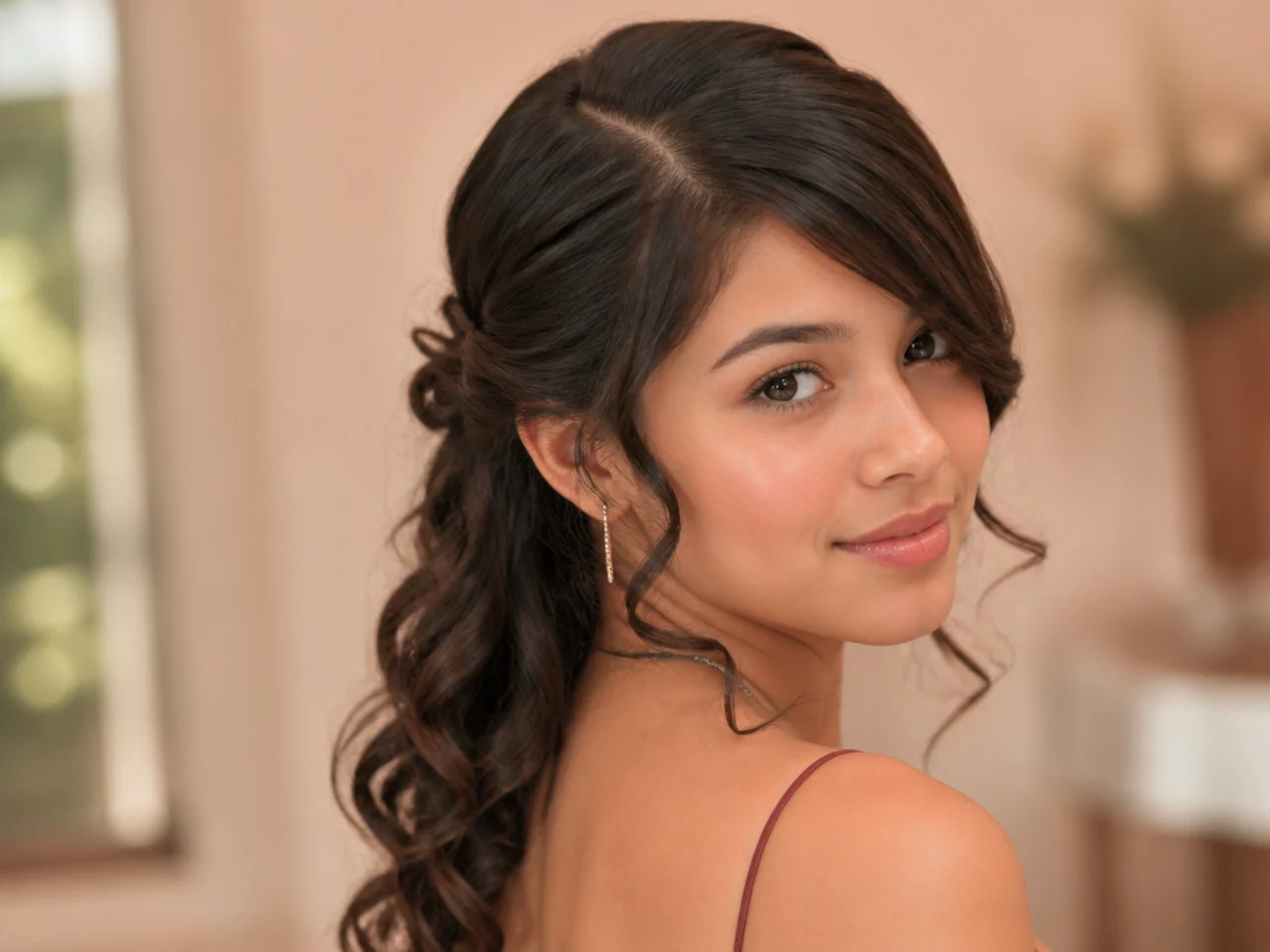
16. Half Up on Curly Hair
Take a larger section than you would on straight hair, because curls compress once gathered and the finished half up always looks smaller than the section you picked up. Pin along the curl direction so the clumps stay intact rather than splitting.
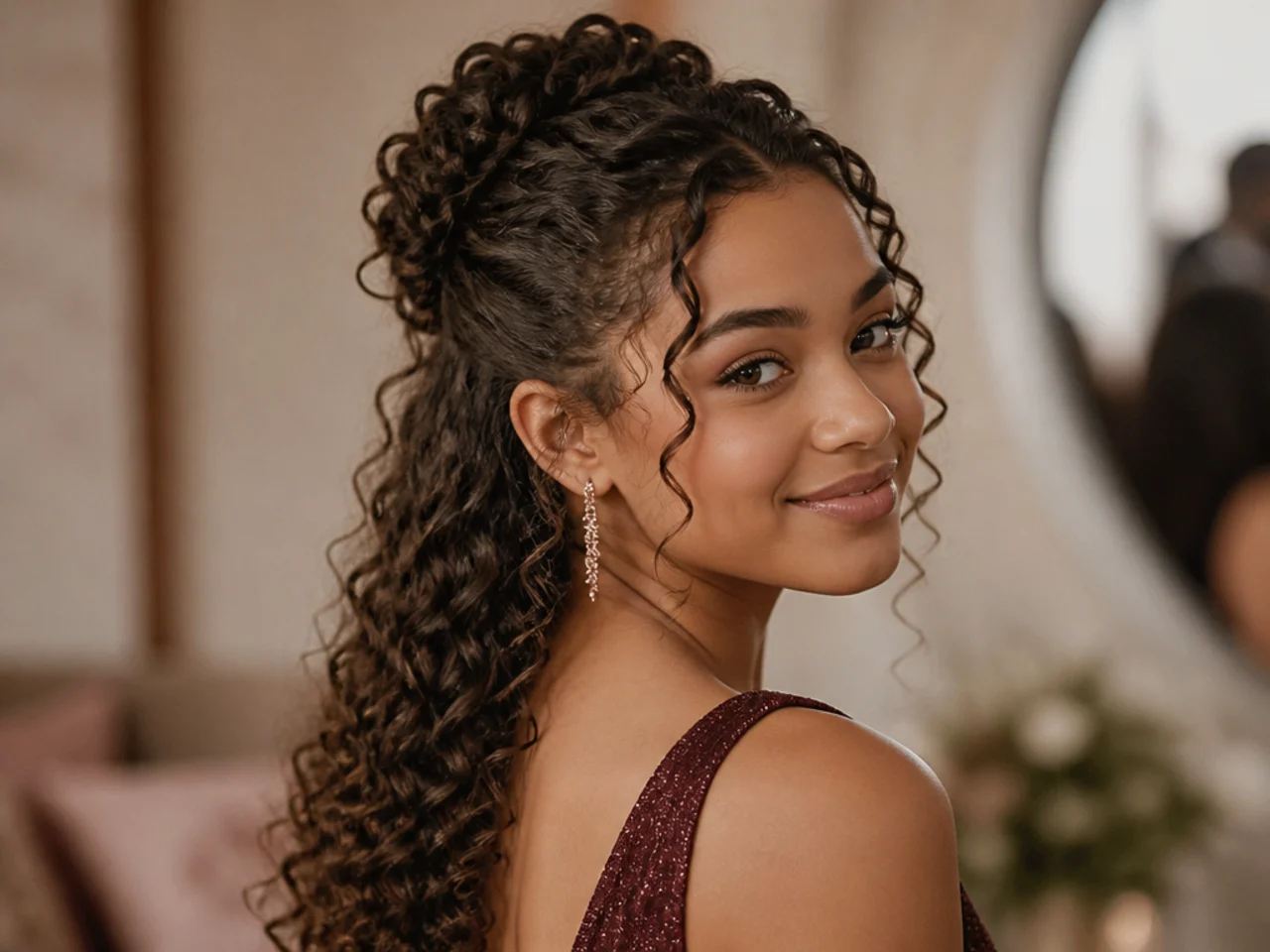
17. Half Up on Fine Hair
A backcombed cushion and texture spray give the pins the friction they need, since fine hair is smooth and offers almost none. Wrap the elastic one extra turn as well, because a fine section slips out of a loose band as soon as it moves.
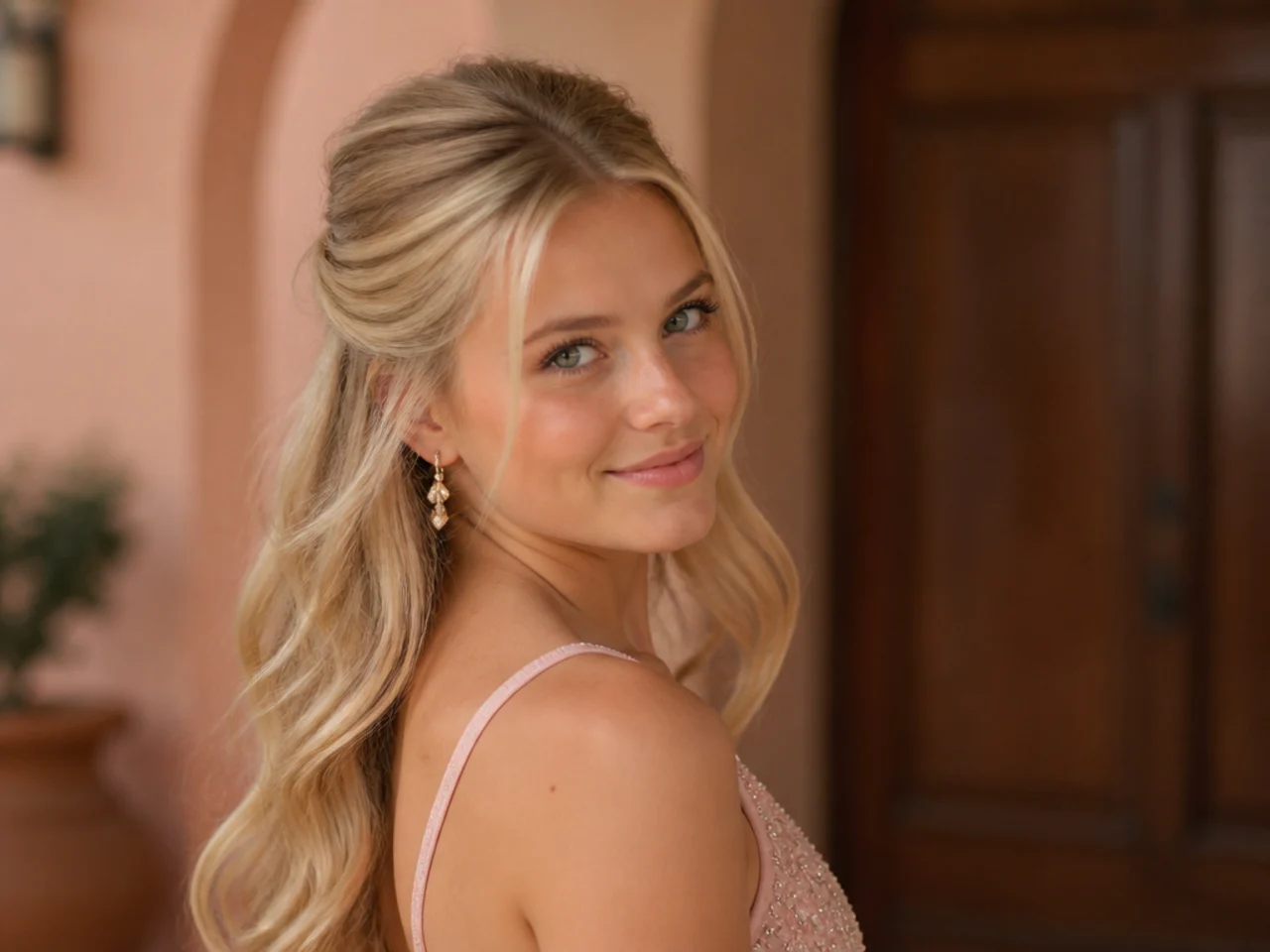
18. Half Up on Thick Hair
Split the section in two and tie them separately, one above the other, so the load is shared. A single elastic on thick hair is carrying more weight than it can grip, and it walks down the head over the course of an evening.
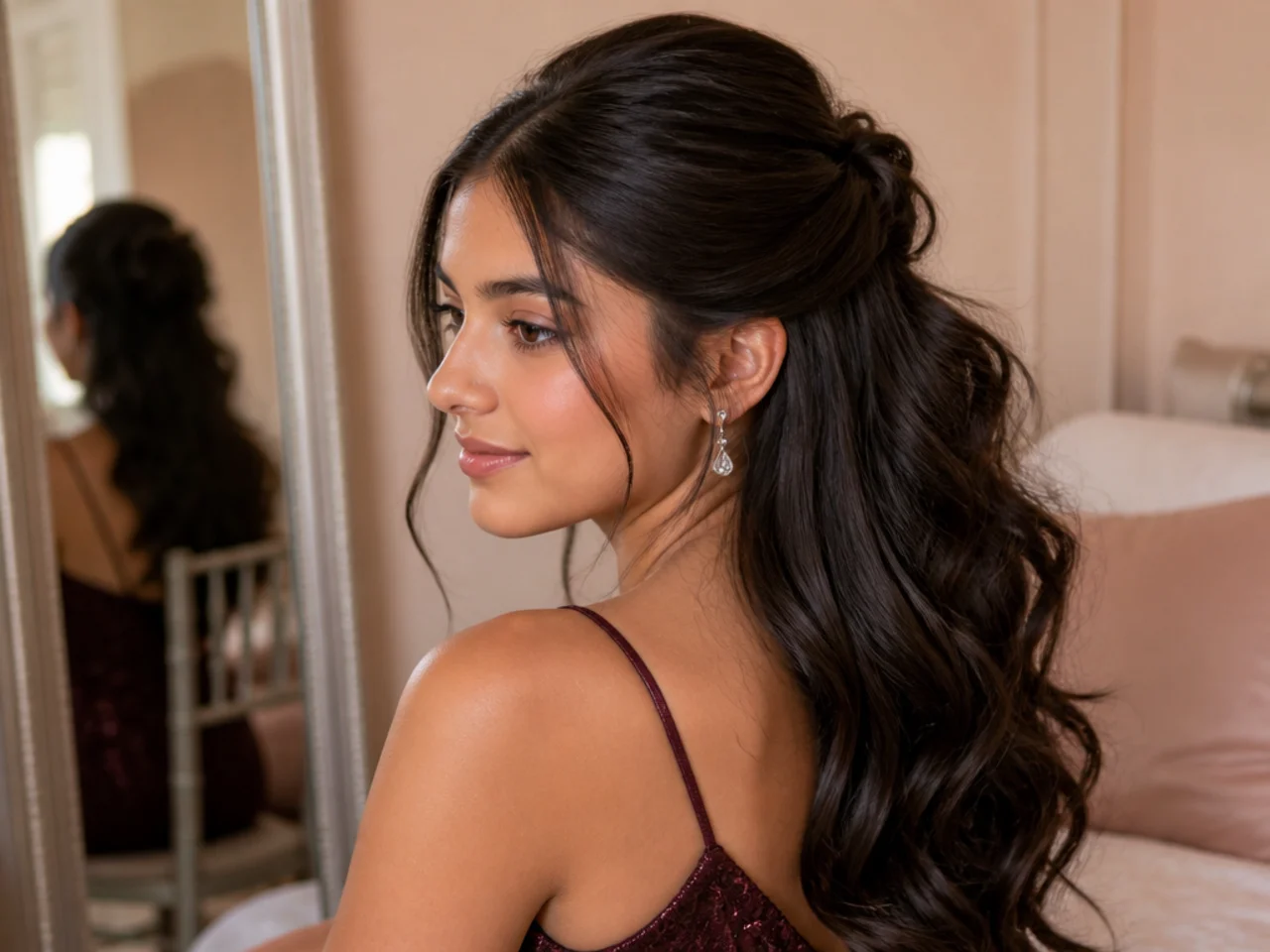
19. Half Up Knotless Braids
Braids gather evenly because each one weighs about the same, which makes the section far more predictable than loose hair. Take from the front and crown only and tie with a covered band, as described for large knotless braids, so nothing snags the braid surface.
20. Half Up Fulani Braids
The front braids already form a pattern, so the gather is taken from behind them and the pattern stays visible at the face. Sweep those front braids into the tie and the design they were made for disappears entirely.
Styling and Upkeep
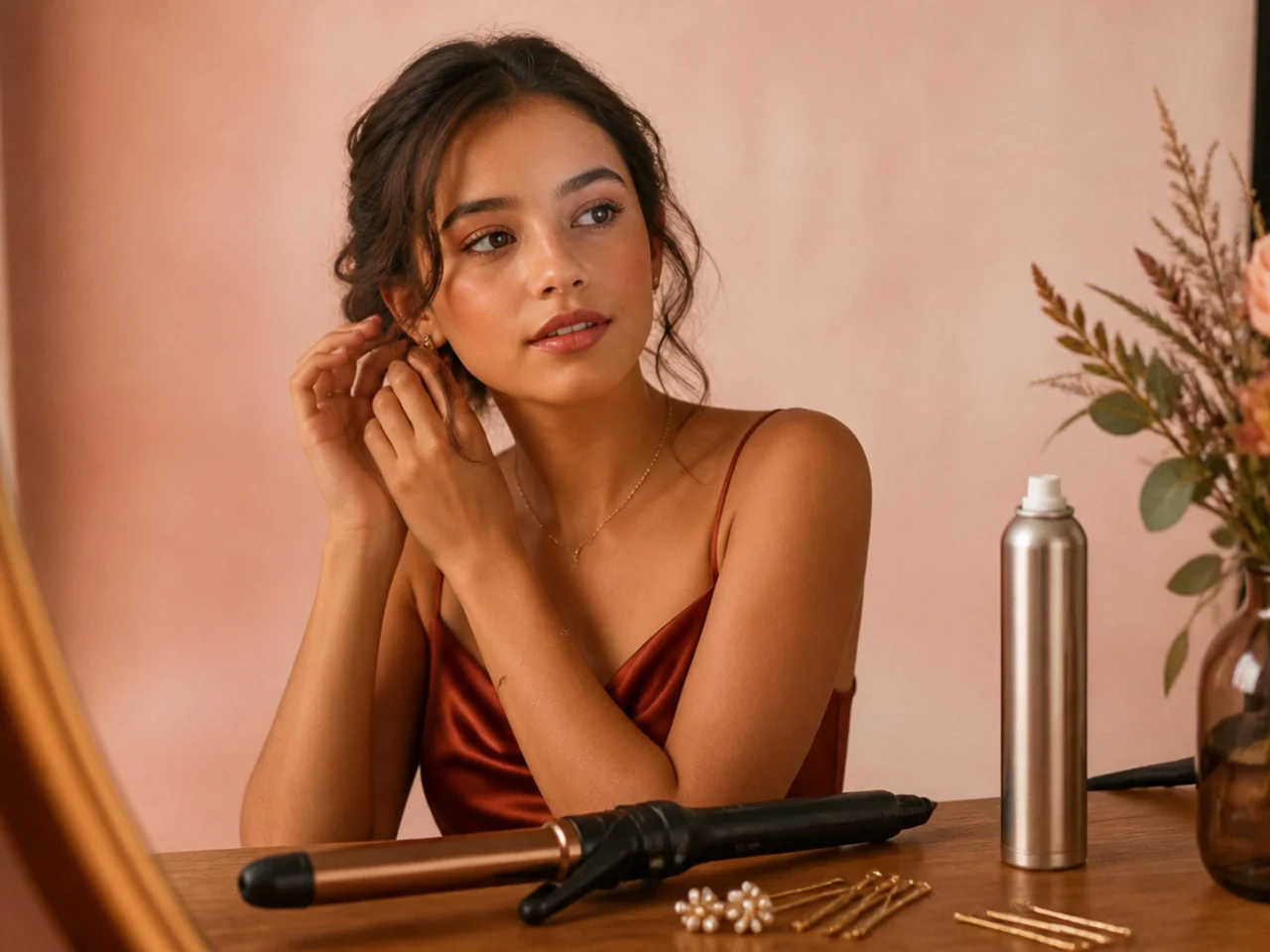
Texture the whole head before you start. Dry shampoo or texture spray gives every pin and clip something to hold.
Curl and let it cool fully. Hair sets as it cools, so a curl gathered while still warm drops out of the finished style.
Pin across the direction of the section. A pin that follows the hair has nothing to catch and travels straight back out.
Spray from underneath at the end. It supports the shape without coating the surface you actually see.
Carry six spare pins. They fail one at a time, and one replaced early prevents the rest from taking the extra load.
Mistakes to Avoid
Gathering below the occipital bone. There is nothing but a slope beneath it, and the whole style slides down it.
Pinning clean unprepared hair. Pins hold by friction, and freshly washed hair provides none.
Curling after tying. The heat lands on the elastic and the sections are far harder to reach.
One elastic on thick hair. It cannot grip the weight and works its way down through the evening.
Backcombing the surface instead of the roots. The roughness ends up on the outside where every photograph shows it.
FAQ
Where do I tie it? At or above the occipital bone, the bump at the back of the skull.
Curl first or last? First, and let it cool completely before gathering.
Why do the pins slip? Clean hair has no friction, so texture it before pinning.
Final Thoughts
Pick the anchor point before you pick the style. Everything else is decoration on top of one structural decision, and that decision is the difference between a style that photographs well at midnight and one that photographs well at seven.
For more versions of the same shape see half up half down hoco hair, and for textured hair specifically see hoco hairstyles for curly hair. More in Occasion Hair.
Frequently asked questions
Related posts
See all posts
15 Graduation Hair Ideas for the Updo Versus Down Decision
Read more
15 Straight Hair Wedding Looks to Save
Read more
20 Gorgeous Prom Looks for Straight Hair
Read more