
20 Grown Out Short Curtain Bangs Stages Week by Week
Twenty stages from a freshly cut fringe to a fully grown out one, with the arithmetic nobody offers you at the counter — hair grows about half an inch a month, so brow to jaw is around eight months, not a few weeks.
In this article · 28
- What Grown Out Short Curtain Bangs Are
- The Grow Out Timeline
- Awkward Phase Fixes
- Face Shapes and Textures
- The Home Styling Routine
- Trim Cadence and Cost
- The 20 Grow Out Stages
- 1. Week 2 Brow Skimming
- 2. Week 3 on a Bob
- 3. Week 4 Wispy
- 4. Week 4 Round Brush Flip
- 5. Week 5 Lash Grazing
- 6. Week 6 Deep Side Part
- 7. Week 7 No Crease Clips
- 8. Week 8 Tucked
- 9. Week 9 Headband
- 10. Week 10 Half Up Twist
- 11. Week 12 Cheekbone
- 12. Week 13 Wavy
- 13. Week 14 Curly
- 14. Week 15 Straight and Fine
- 15. Week 16 Round Face
- 16. Week 18 Money Piece
- 17. Week 20 Jawline
- 18. Week 24 Face Framing
- 19. Week 28 Ponytail
- 20. Week 32 Fully Grown Out
- Final Thoughts
Growing out a fringe fails for one reason, and it is not patience. It is that nobody gives you the number before you start.
Hair grows roughly half an inch a month. Brow to jaw is about three inches on most faces, which makes the honest answer around eight months.
The awkward window is weeks six to sixteen. Too long to fall forward, too short to tuck behind an ear, and every one of those ten weeks has a fix.
What Grown Out Short Curtain Bangs Are
A fringe on its way to becoming face framing layers. The destination is not long hair. It is a shorter front piece that blends into the length beside it.
Every stage is a different haircut. Brow, lash, cheekbone and jaw are four separate looks, and each one suits different styling.
The centre parting is the constant. It is what keeps the two halves reading as a curtain rather than as an overgrown fringe pushed sideways.
The outer corners are what needs maintaining. The middle grows out on its own. The corners are where the fringe meets the rest of the cut, and they are what goes wrong.
It is reversible at every point. A shorter fringe can be recut from any of these stages, which is not true in the other direction.
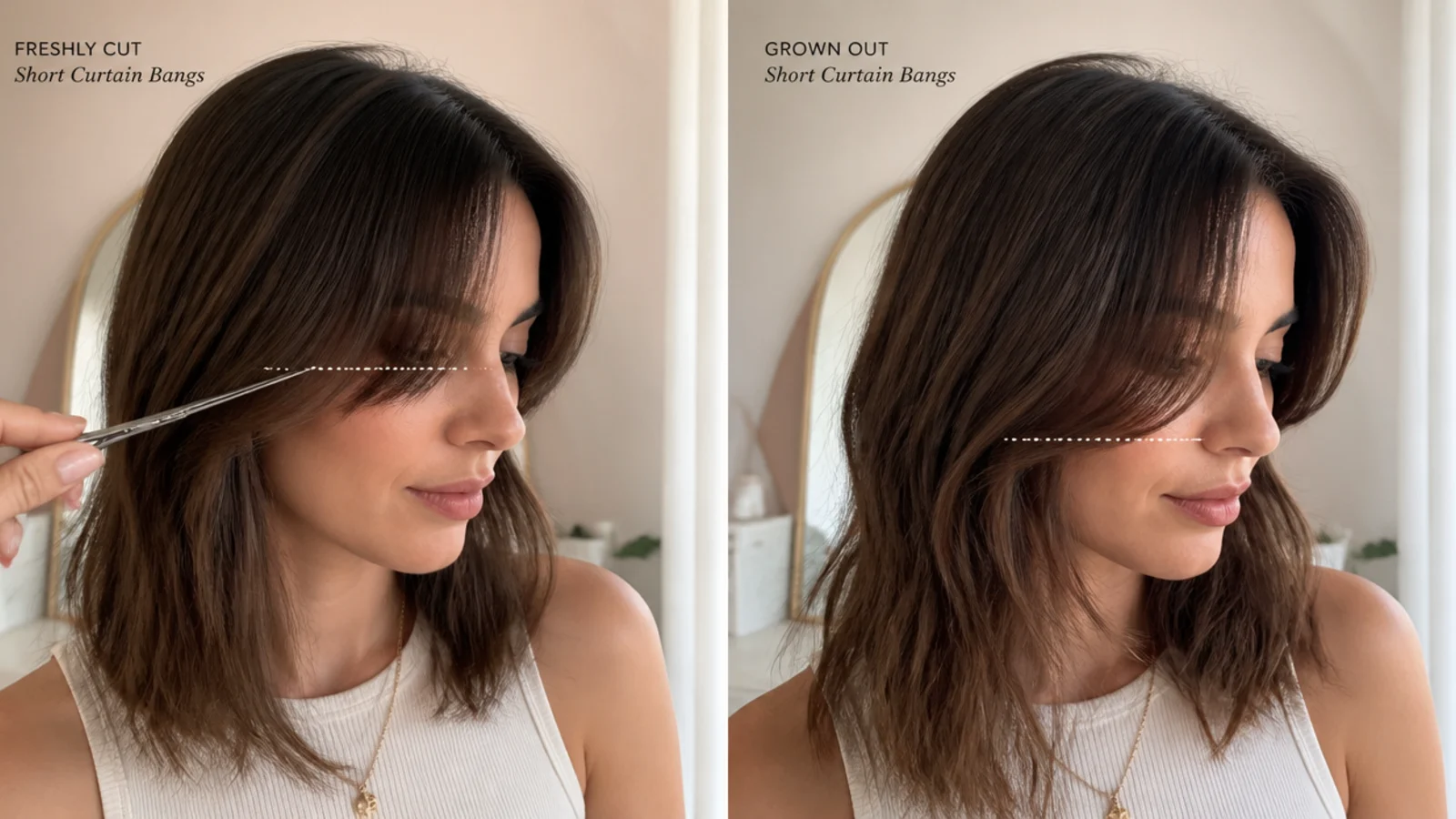
The Grow Out Timeline
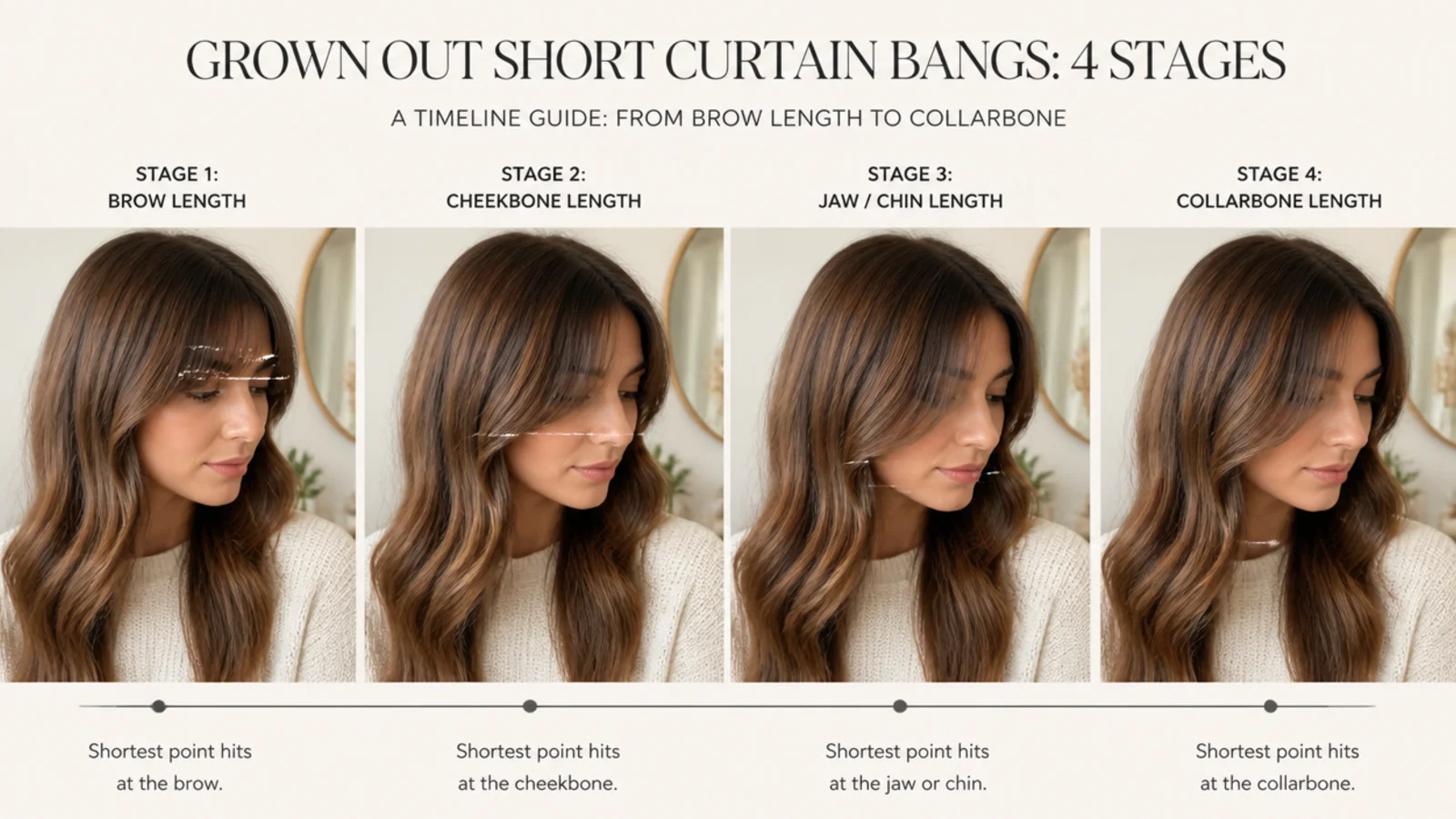
Weeks one to five. Brow to lash. The fringe still works as cut and needs nothing but drying in the right direction.
Weeks six to twelve. Lash to cheekbone. The hard part. The fringe now falls into the eye line and has nowhere to sit.
Weeks twelve to twenty. Cheekbone to jaw. It starts tucking, and clips become optional rather than compulsory.
Weeks twenty to thirty two. Jaw to collarbone. It reads as face framing rather than as a fringe, and most people stop noticing it.
Half an inch a month, every month. The rate is roughly constant. Nothing in a bottle changes it, and the only real variable is how much you trim off the ends.
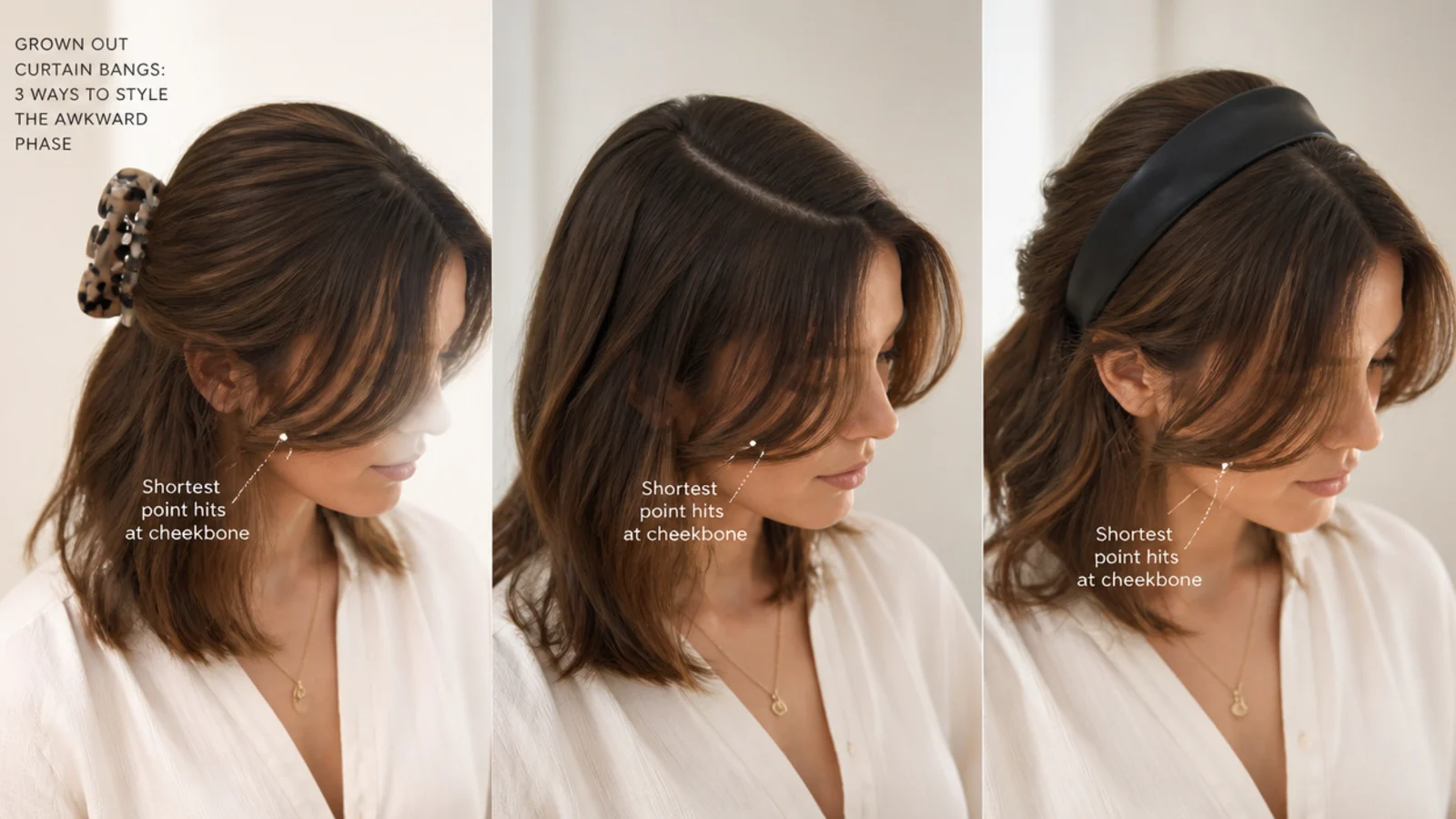
Awkward Phase Fixes
Move the parting. A fringe that will not sit at the centre will often sit perfectly at a deep side part, because the roots are being pushed against their growth and stand up instead of falling forward.
Clip the corners, not the middle. Two small clips at the temples take the two problem pieces out of play and leave the shape intact.
Push it back with texture, not with product. A light texture spray at the root gives the hair enough friction to stay where you put it. Gel makes it a solid piece that falls as one.
Flip the ends outward. A round brush turning away from the face gives the fringe a direction, and any direction beats hanging.
Wear a headband for the worst four weeks. Weeks eight to twelve are short enough to sit out, and a headband hides exactly the length that has nowhere to go.
Face Shapes and Textures
Round faces should grow past the cheekbone before deciding. The moment the fringe falls below the widest point of the face it starts lengthening rather than widening.
Long faces do better staying short. A fringe adds horizontal interest across the forehead, and a long face loses that the further it grows out.
Fine hair goes flat as the fringe lengthens. More length means more weight on the same roots, so the lift you had at week two is gone by week ten.
Wavy hair grows out most easily. The bend gives the fringe somewhere to sit at every length, which is why waves rarely hit a genuinely stuck week.
Curly hair takes longer than the calendar says. Growth is partly absorbed by the spiral, so a curl adds visible length more slowly than a straight strand at the same growth rate.

The Home Styling Routine
Dry the front first. The front dries fastest and sets in whatever direction it dried in, which is usually the wrong one by the time you get to it.
Dry it side to side. Left then right, then let it fall. That breaks the root out of its growth direction and is the whole source of a fringe with lift.
Round brush away from the face. One rotation outward at the ends is enough to turn a growing fringe from hanging into sweeping.
Cool it before you release it. The bend sets as the hair cools, so letting go of a warm section throws away the shape you just made.
Dry shampoo at the roots only. The front section gets oily first because it is touched most, and oil at the root is what makes a grown out fringe separate into strips.

Trim Cadence and Cost
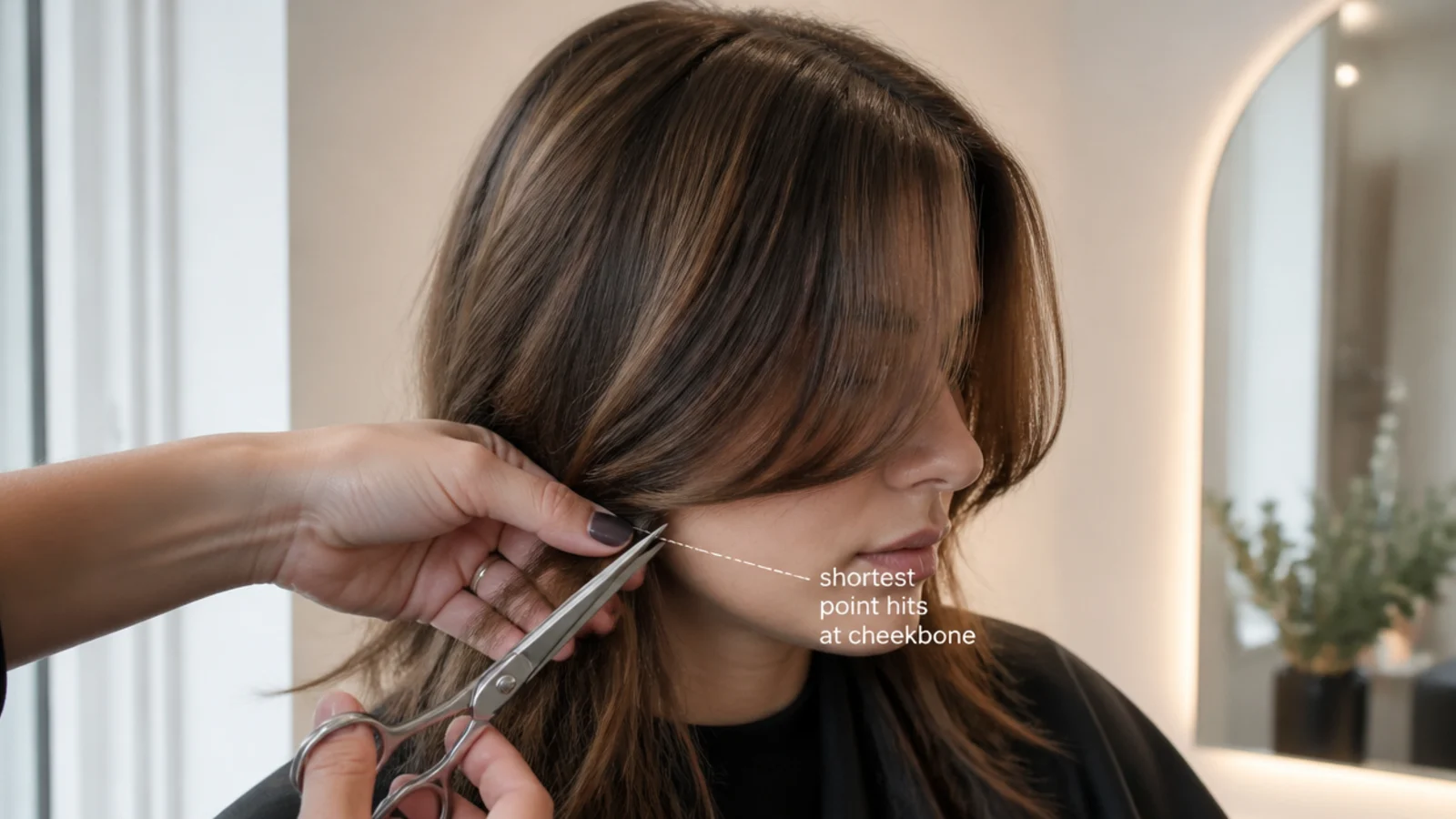
Trim the corners every eight weeks. Not the middle. The corners are what connect the fringe to the sides and they are what make it look deliberate.
Expect a short appointment, not a cut. Ten minutes of blending is enough, and many salons treat it as a fringe trim rather than a haircut.
Say growing out, not trimming. Those are opposite instructions. A stylist told trim will take length off the shortest hair on your head.
Ask for the shortest piece to be left alone. Every quarter inch taken from it adds two weeks to the total.
Budget for clips instead of appointments. A set of no crease clips costs less than one visit and solves weeks eight to twelve entirely.
The 20 Grow Out Stages
1. Week 2 Brow Skimming
Two weeks buys about a quarter of an inch, which is enough to drop a fringe from just above the brow to sitting on it. Nothing needs changing yet, but this is the point at which people usually book the trim that restarts the whole clock.

2. Week 3 on a Bob
On a bob the fringe and the perimeter are close enough in length that a small change in one shifts the proportion of both. At three weeks the fringe has moved and the bob has not, so the shape reads slightly heavier at the front than it did on day one.

3. Week 4 Wispy
At four weeks the fringe has half an inch of new length and starts separating into pieces rather than sitting as a block. Lean into it with a light texture spray, because a fringe that is separating anyway looks intentional as wisps and untidy as a failed solid line.

4. Week 4 Round Brush Flip
The same four week length, styled outward instead of forward. One rotation of a round brush away from the face turns the extra half inch from something falling into your eyes into a deliberate sweep, which is the cheapest fix available at this stage.

5. Week 5 Lash Grazing
Five weeks is roughly five eighths of an inch, which takes a brow fringe down to the lash line. This is the last stage where the fringe still functions as a fringe without help, and it is worth photographing as the reference for your next cut.

6. Week 6 Deep Side Part
Moving the parting off centre forces the heavy side against its growth direction, so the roots lift and the length sweeps sideways instead of forward. That single change buys about three weeks of grow out without any cutting, which is why it is the first thing to try.

7. Week 7 No Crease Clips
A flat clip with no teeth holds the fringe back without pressing a line into it, which matters because a creased fringe stays creased until it is rewetted. Placing them at the temples takes the two problem corners out of the picture and leaves the rest of the shape untouched.
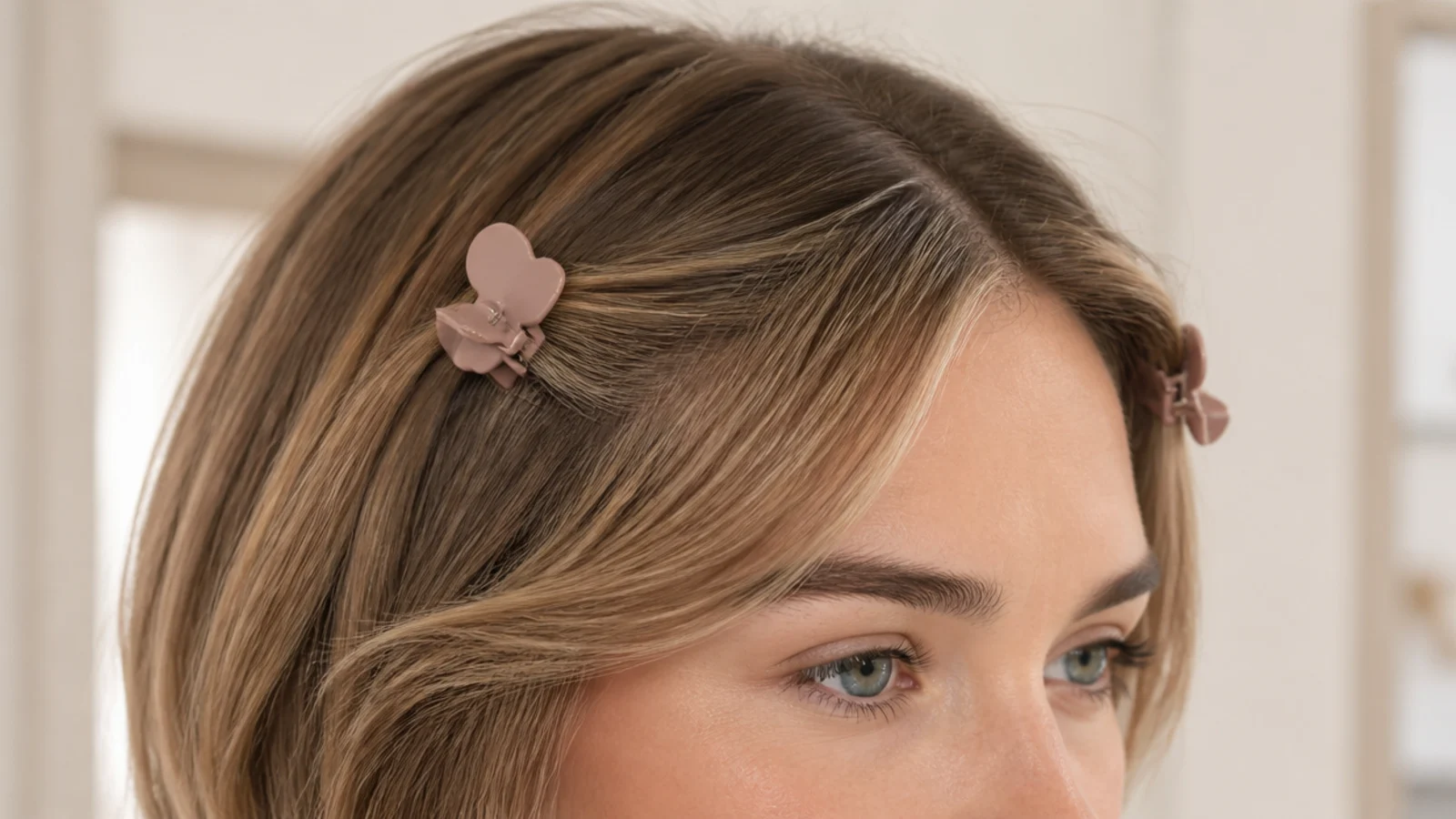
8. Week 8 Tucked
Eight weeks is about an inch of growth, and an inch is roughly the point at which the fringe first stays behind an ear. It will not hold there all day yet, so treat this as the beginning of tucking rather than the solution to it.
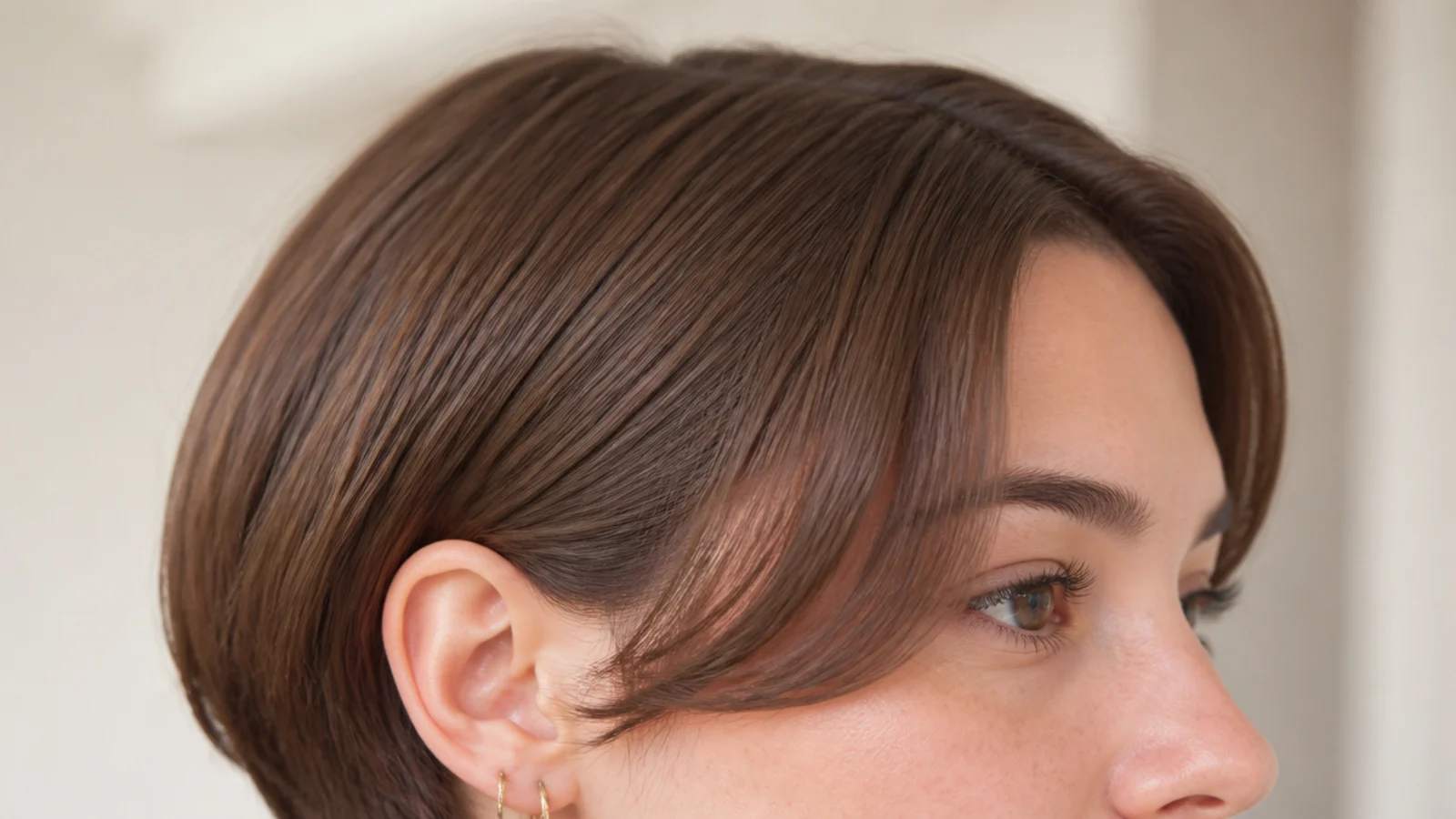
9. Week 9 Headband
A headband works at this stage because the fringe is long enough to be held down but too short to be gathered up. It also solves the root direction problem entirely, since anything pressed flat for a few hours will stay flat when the band comes off.
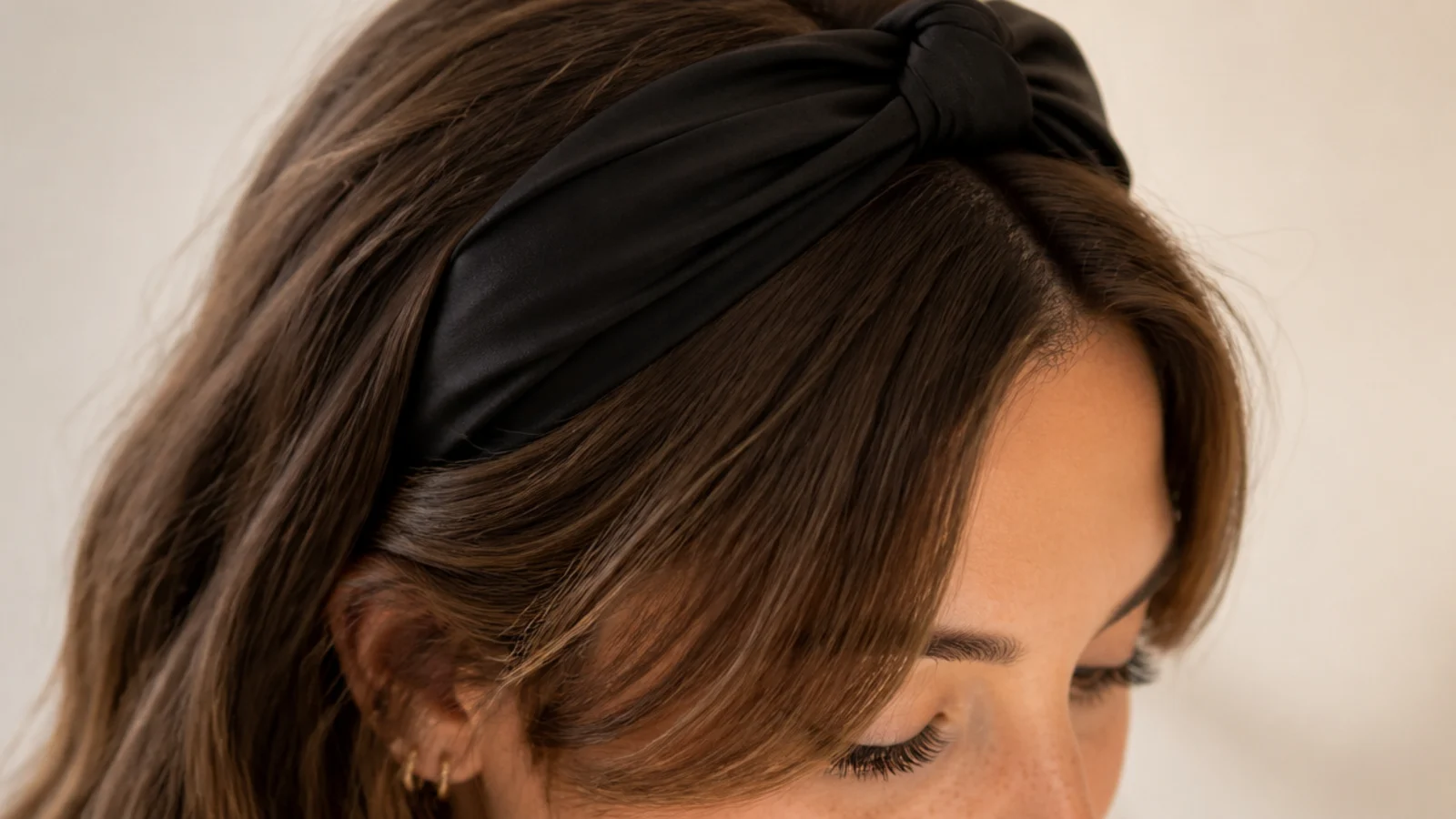
10. Week 10 Half Up Twist
Twisting each side back and pinning it turns the fringe into the front of a half up, which is the first styling that uses the extra length rather than hiding it. The twist also holds better than a straight pin, because the tension is spread along the section instead of concentrated at one point.
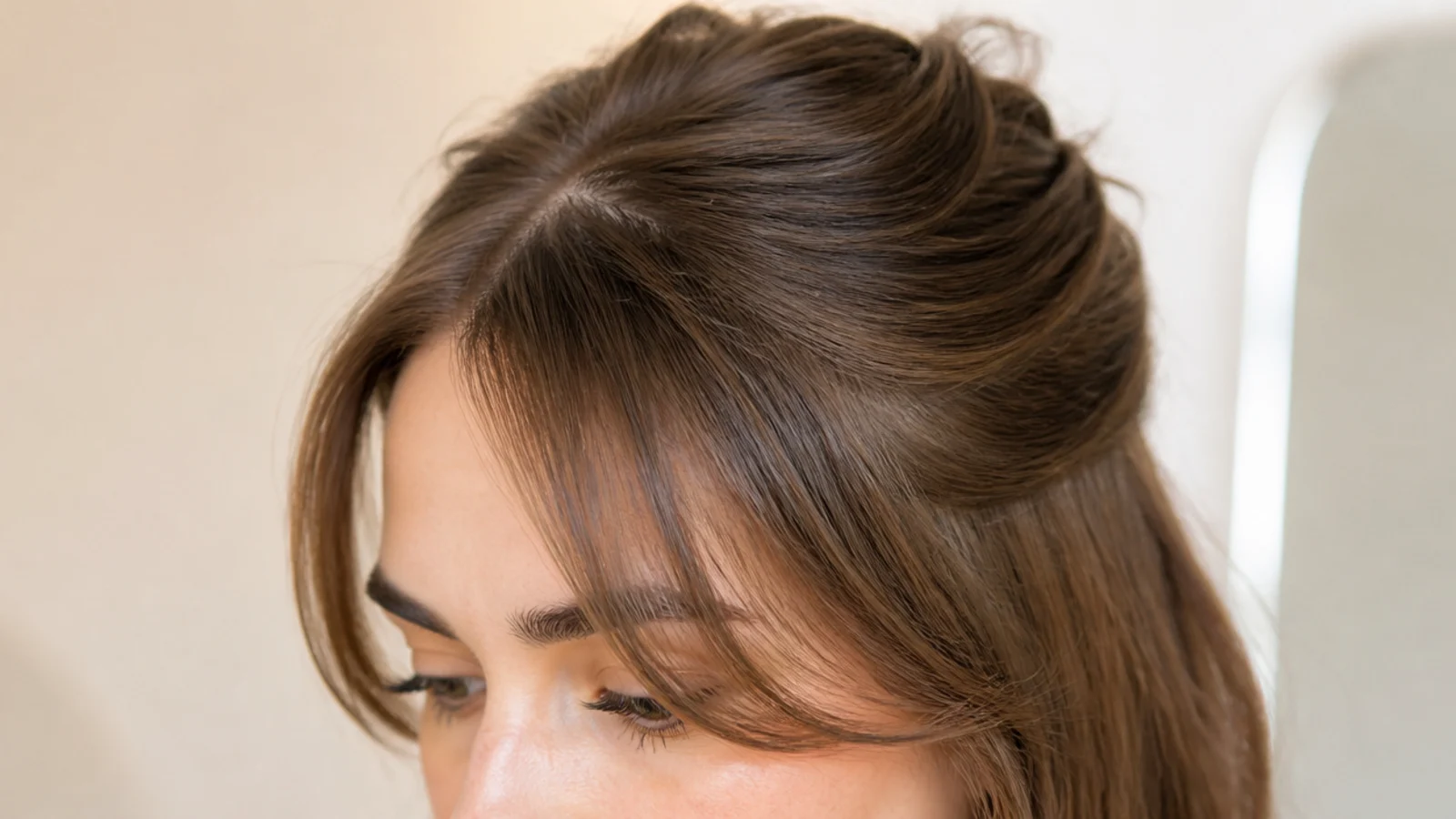
11. Week 12 Cheekbone
Three months is around an inch and a half, which lands the fringe on the cheekbone. This is the turning point of the whole grow out, because from here the length is falling below the eye line and stops interfering with anything.

12. Week 13 Wavy
Wave gives a growing fringe somewhere to sit at every length, because the bend creates a natural resting position that a straight strand does not have. It is the easiest texture to grow a fringe out on, and the one least likely to need clips at any point.

13. Week 14 Curly
Curl absorbs part of every month of growth into the spiral, so a curly fringe reaches a given visible length weeks later than a straight one at the same growth rate. The compensation is that a curl never hangs awkwardly, since it coils away from the face on its own.

14. Week 15 Straight and Fine
Fine straight hair loses lift as the fringe lengthens, because the same roots are now carrying more weight. Drying the front section side to side rather than forward is the only reliable answer, since it puts the root in a direction the added weight cannot pull it out of.

15. Week 16 Round Face
At four months the fringe is around two inches longer and finally falls past the widest point of a round face. That is the moment it starts lengthening the face instead of widening it, which is why growing out is usually the right advice for a round face in the first place.
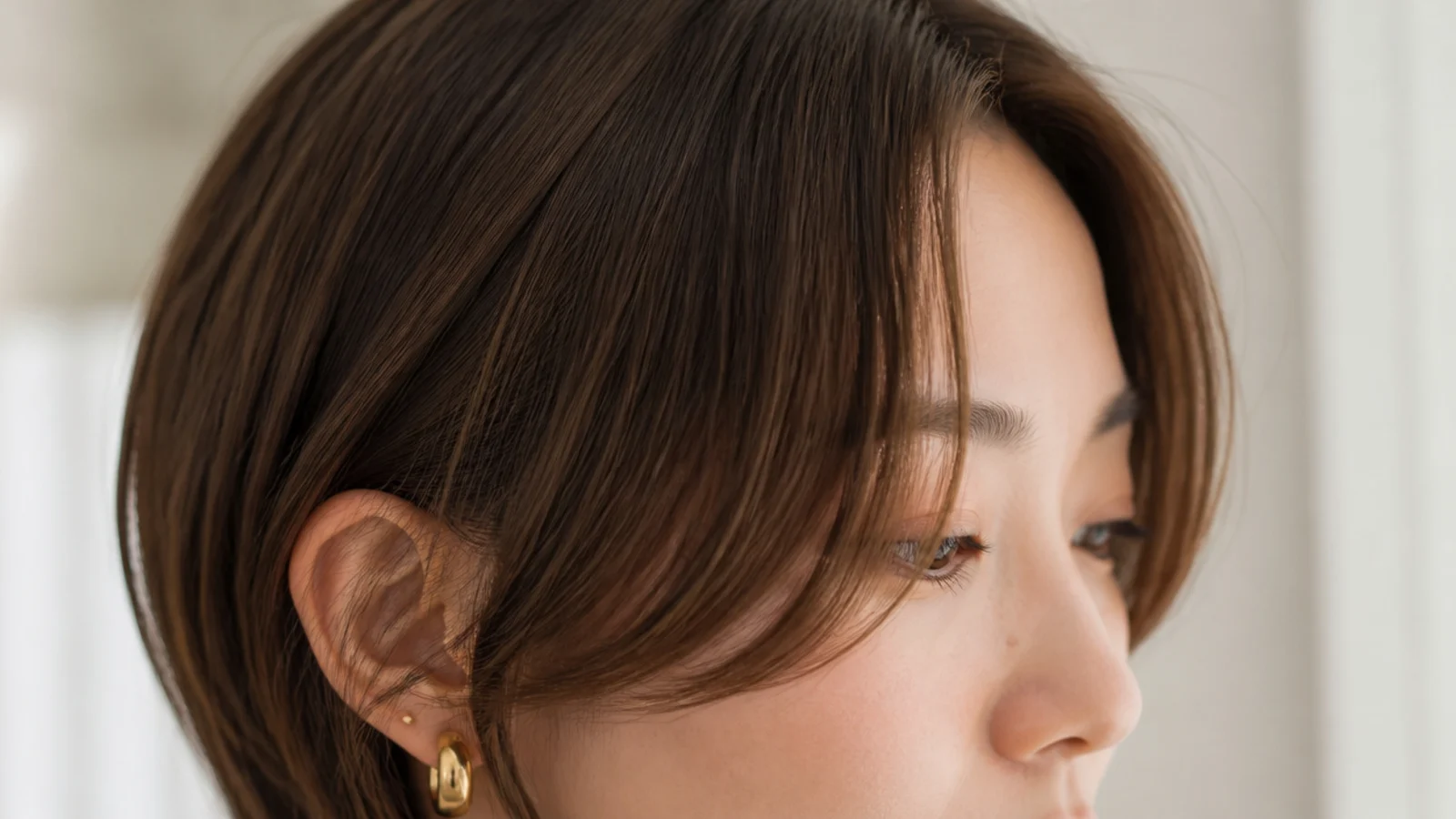
16. Week 18 Money Piece
Lightening only the two front sections gives a half grown fringe a reason to exist, because the colour marks it as a deliberate feature rather than as leftover length. It also draws the eye along the piece from root to end, which makes the shape read as intentional.

17. Week 20 Jawline
Five months is roughly two and a half inches, which brings the front pieces to the jaw on most faces. At this length they tuck reliably, hold in a ponytail and stop needing daily attention, which is effectively the end of the difficult part.

18. Week 24 Face Framing
By six months the fringe is long enough to be blended into the layers beside it, which is the point at which it stops being a fringe. Ask for the corners to be softened rather than for a trim, because softening the join is what removes the last visible evidence of a grow out.
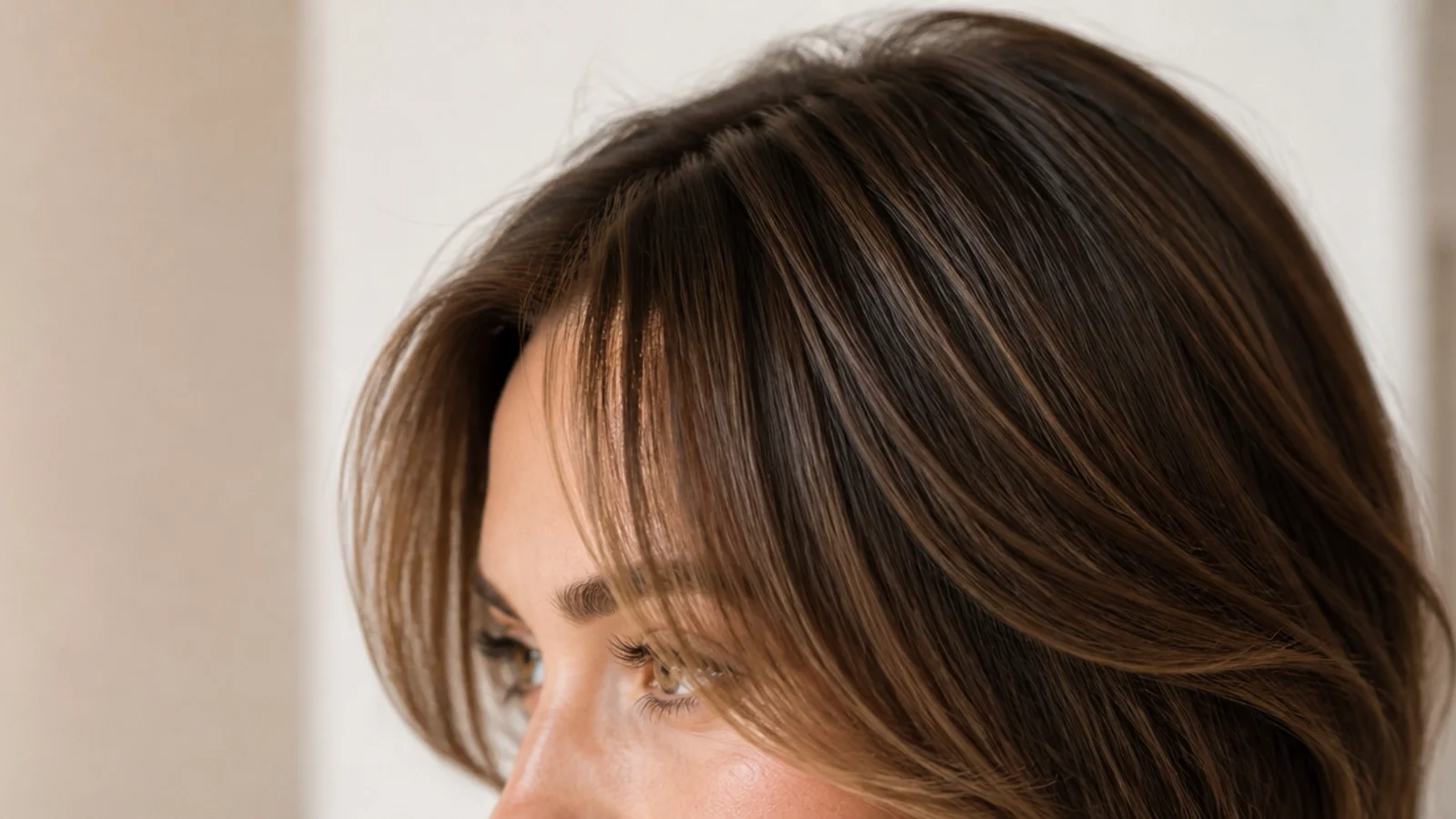
19. Week 28 Ponytail
Seven months puts the front pieces around three and a half inches longer, which is enough to reach a low ponytail without escaping. Short pieces around the hairline are the last to arrive, so a low tail holds cleanly well before a high one will.
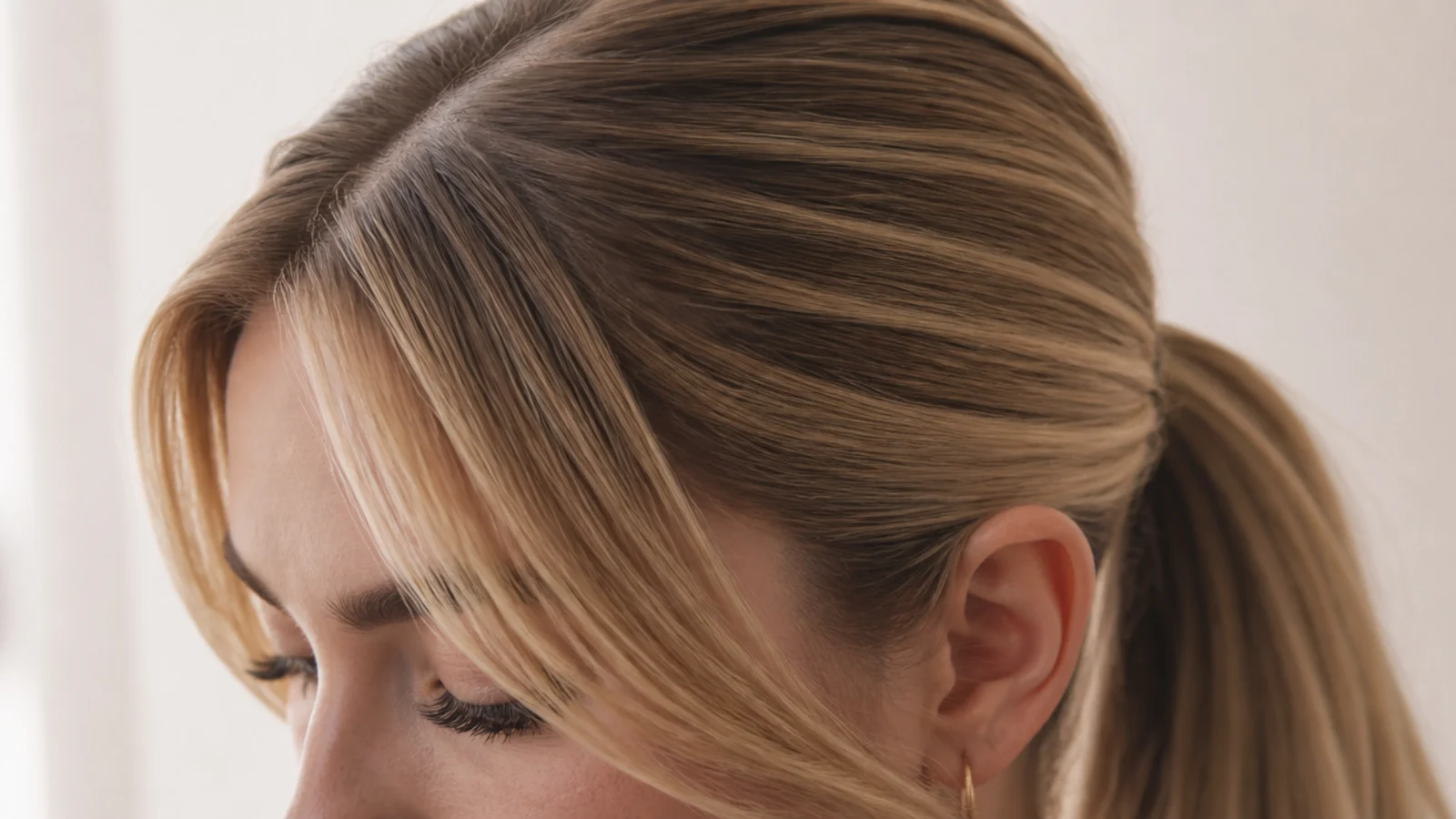
20. Week 32 Fully Grown Out
Eight months is about four inches, which takes a brow length fringe past the jaw and into the body of the cut. Nothing about the front reads as grown out any more, and the only decision left is whether to cut a fringe again.

Final Thoughts
Do the arithmetic before you start rather than after. Half an inch a month is not negotiable, so a fringe at the brow is around eight months from the jaw and roughly a year from disappearing entirely into the length. Knowing that in advance turns week nine from a crisis into a scheduled inconvenience with a clip in it.
Then protect the shortest hair on your head. Every quarter inch removed from the middle of the fringe adds two weeks to the total, which is why the only trimming worth doing during a grow out is at the outer corners. Blend the join, leave the centre alone, and the fringe will keep looking like a decision the whole way through. For the same grow out on a heavier fringe see the french version, and for the swept version see the side swept version. More in Bangs and Fringe.