20 Full French Bangs Ideas I Saved to Try
Twenty full French bangs ideas, and the thing that makes a fringe full — depth, not width. A full fringe also shortens the face, which is why it transforms a long one and fights a round one.
In this article · 27
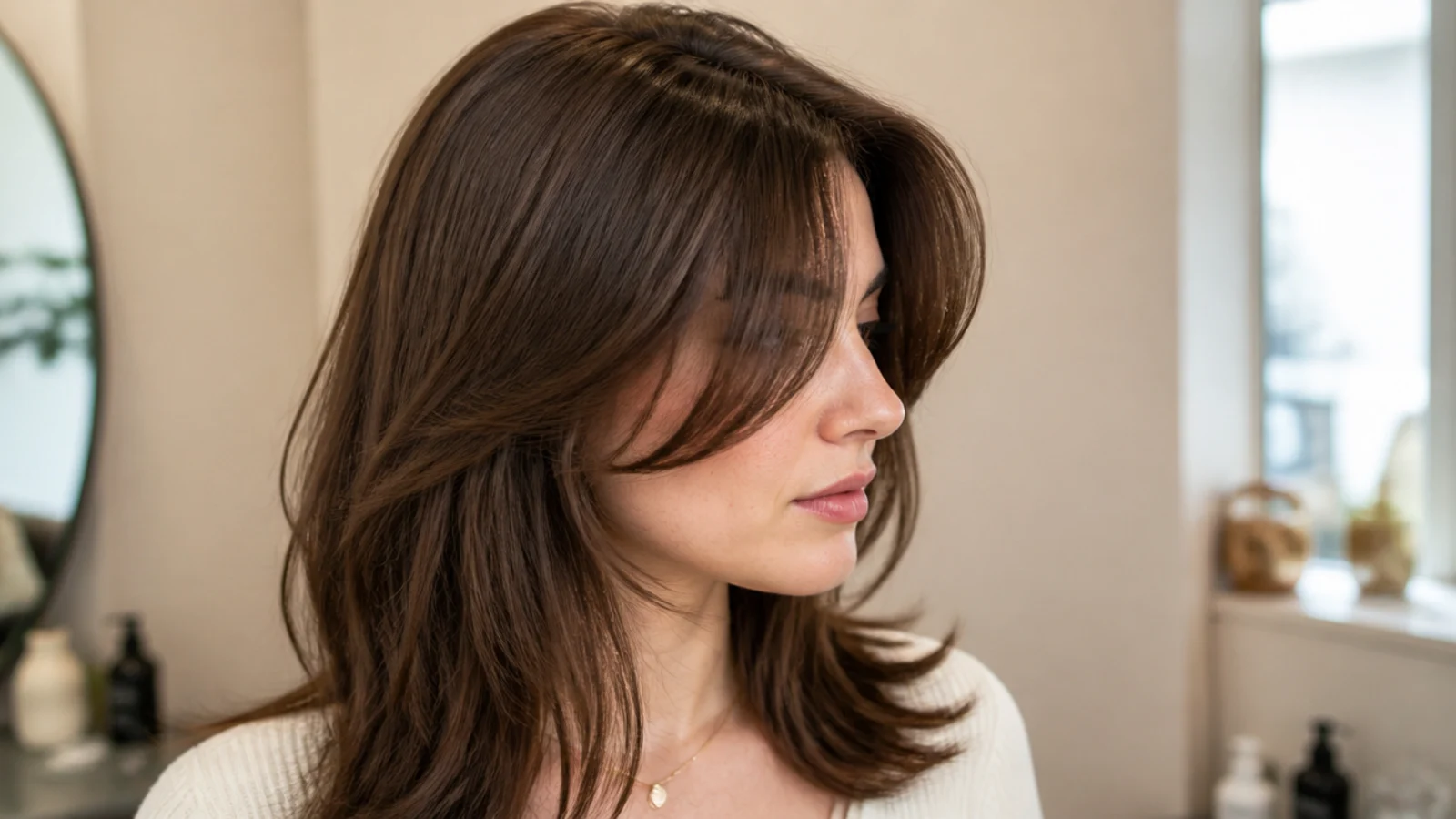
- Full Means Deep, Not Wide
- What a Full Fringe Does to Your Face
- The 20 Full French Bangs Ideas
- 1. Classic Full Brow-Skimmers
- 2. Heavy Fringe with a Blunt Bob
- 3. Full Bangs with Long Layers
- 4. Rounded Full Fringe
- 5. Full Fringe at the Lash Line
- 6. Full Bangs with Curtain Corners
- 7. Full Fringe on a Long Bob
- 8. Full Bangs with a Shag
- 9. Piecey Full Fringe
- 10. Full Bangs on Straight Hair
- 11. Full Curly Fringe
- 12. Full Bangs with a High Ponytail
- 13. Asymmetric Full Fringe
- 14. Full Bangs with a Middle Part Behind
- 15. Full Fringe with Face-Framing Pieces
- 16. Full Bangs on Coily Hair
- 17. Full Fringe with a Bun
- 18. Full Bangs with a Colour Contrast
- 19. Extra-Deep Statement Fringe
- 20. Full Fringe Growing Out into Curtains
- The Maintenance Reality
- Mistakes to Avoid
- FAQ
- Final Thoughts
A full fringe is the most transformative thing you can do to a face without changing the length of your hair. It is also the least reversible in the short term, because there is more of it and it takes longer to grow out.
What makes a fringe full is not what most people assume.
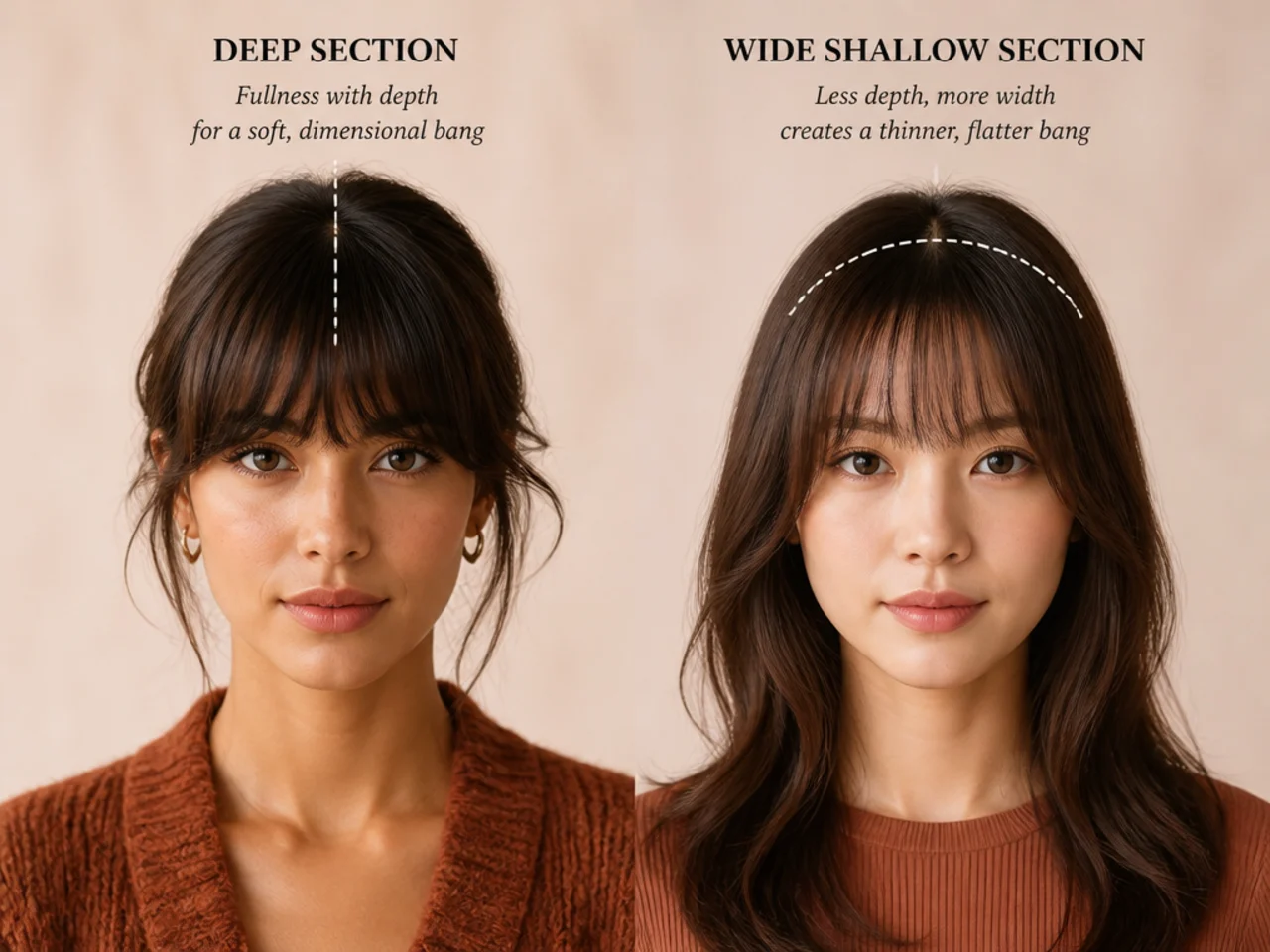
Full Means Deep, Not Wide
Width across the forehead changes almost nothing about density. Taking the fringe out to the outer corners of your eyebrows rather than the inner corners gives you a wider fringe of exactly the same thickness.
Depth is what makes it full. A section taken two centimetres back from the hairline gives a light fringe. Three to four centimetres gives a full one, because there is simply more hair hanging forward from a bigger area of scalp.
This matters at the consultation, because "I want it fuller" and "I want it wider" are different requests and only one of them produces a fuller fringe. Asking for the wrong one is why people leave with a fringe that is bigger across and just as sparse.
The trade is the same one every fringe makes: everything moved forward is gone from behind. Full fringes need medium to thick hair to carry them without leaving a visible thin strip.
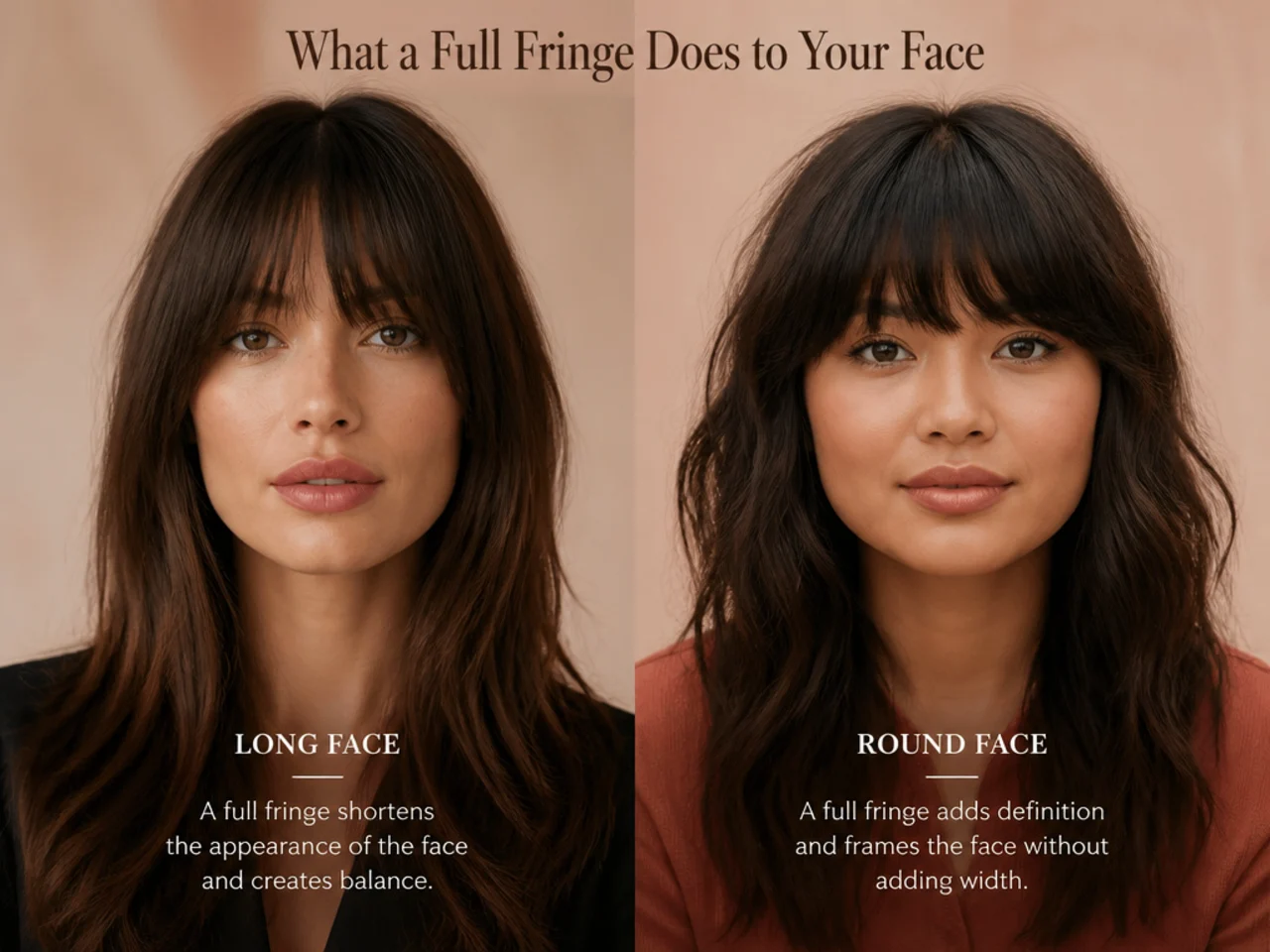
What a Full Fringe Does to Your Face
It covers the forehead, which removes the top third of the face from view. That has one large consequence: the face reads as shorter.
Long or oval face: the best possible candidate. A full fringe brings the proportions in and is genuinely transformative.
Round face: it works against you. Removing vertical length while keeping the width makes the face rounder. Longer bangs that open toward the sides are a better fit.
Square jaw: a full fringe softens the top, which balances a strong lower half. Rounded at the centre works better than a flat line.
Heart-shaped: works well, particularly with the outer corners left longer to balance a narrower chin.
Face shape is genuinely relevant here in a way it is not for lighter fringes — a wispy fringe leaves the forehead partly visible and changes proportion far less.
The 20 Full French Bangs Ideas
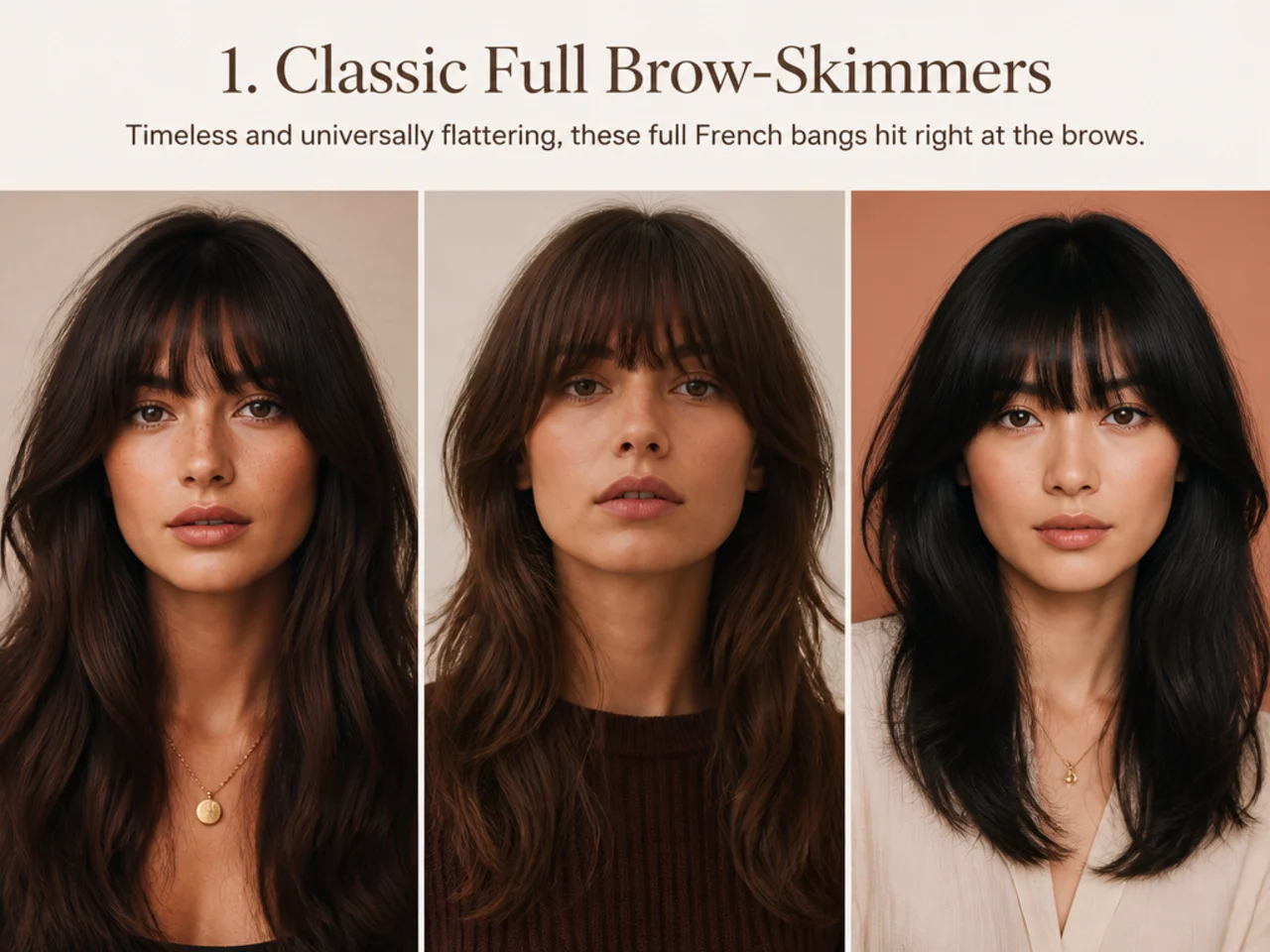
1. Classic Full Brow-Skimmers
Deep section, landing on the brow, edge still broken rather than blunt.
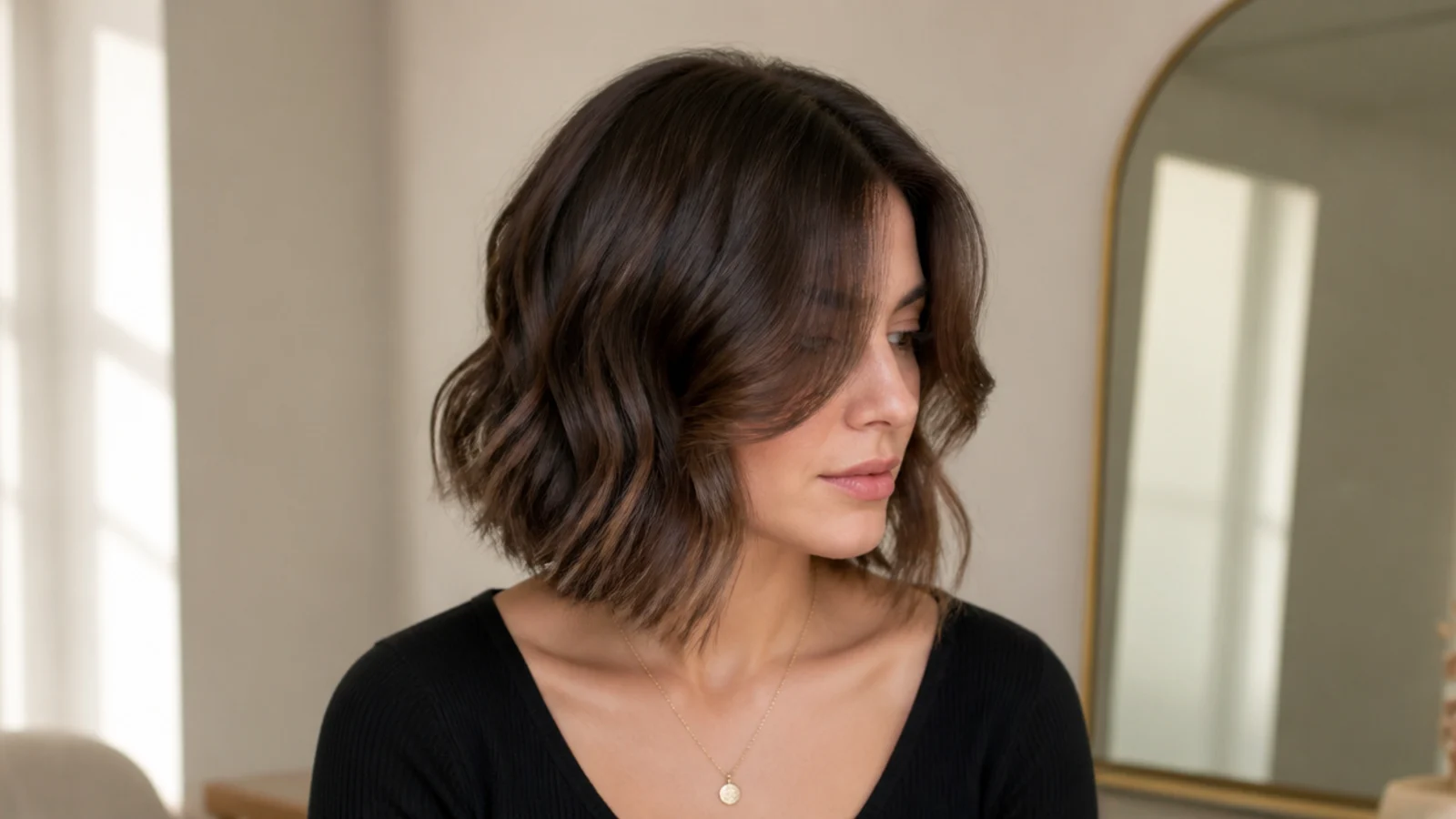
2. Heavy Fringe with a Blunt Bob
Two solid shapes together. The strongest silhouette on this page.

3. Full Bangs with Long Layers
Weight at the front, movement below. It stops a full fringe reading as top-heavy.

4. Rounded Full Fringe
Shorter at the centre, longer at the corners. The most flattering shape for a square jaw.
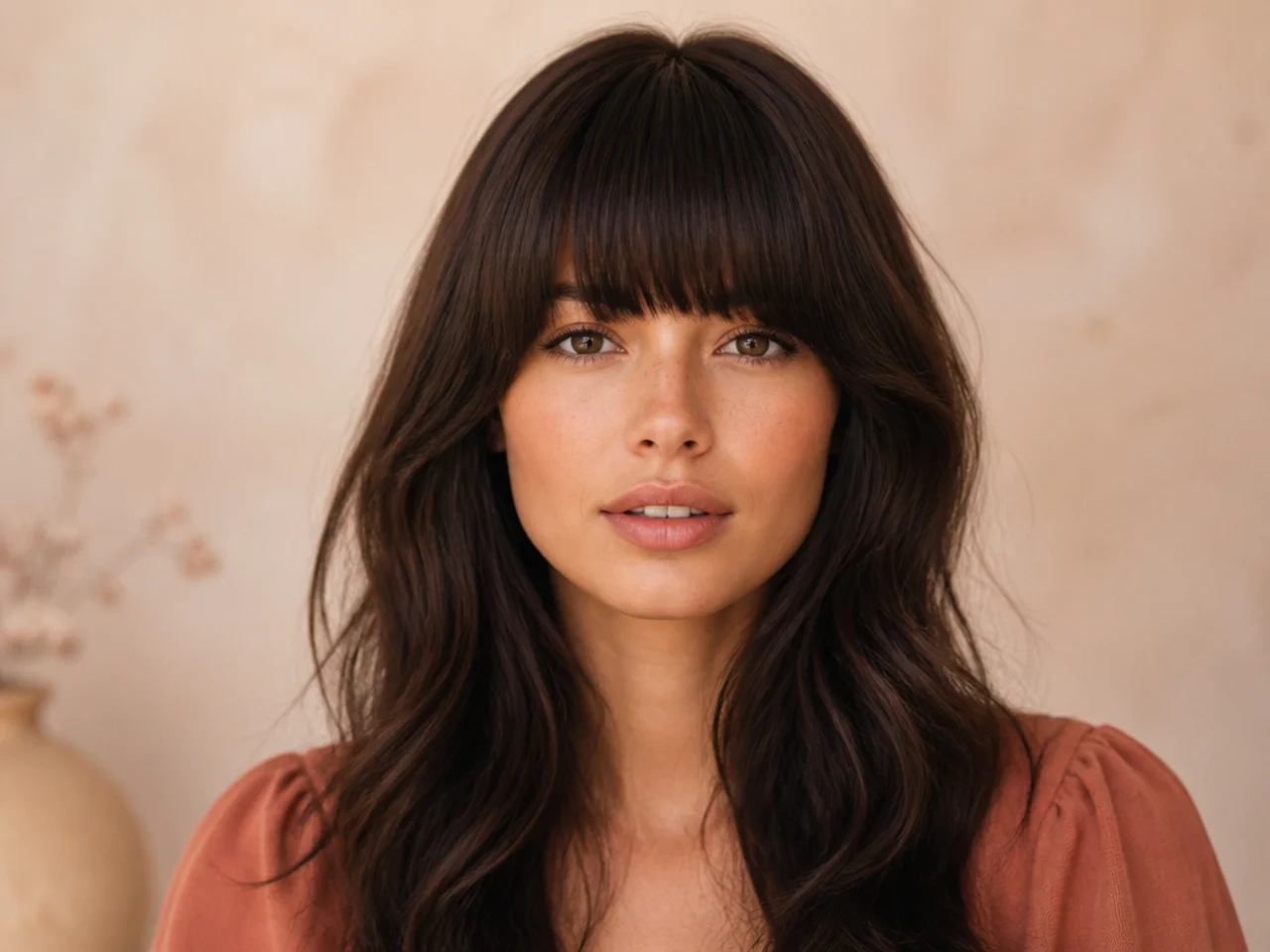
5. Full Fringe at the Lash Line
Long and heavy, sitting low. Dramatic, and easier to see through than it looks.

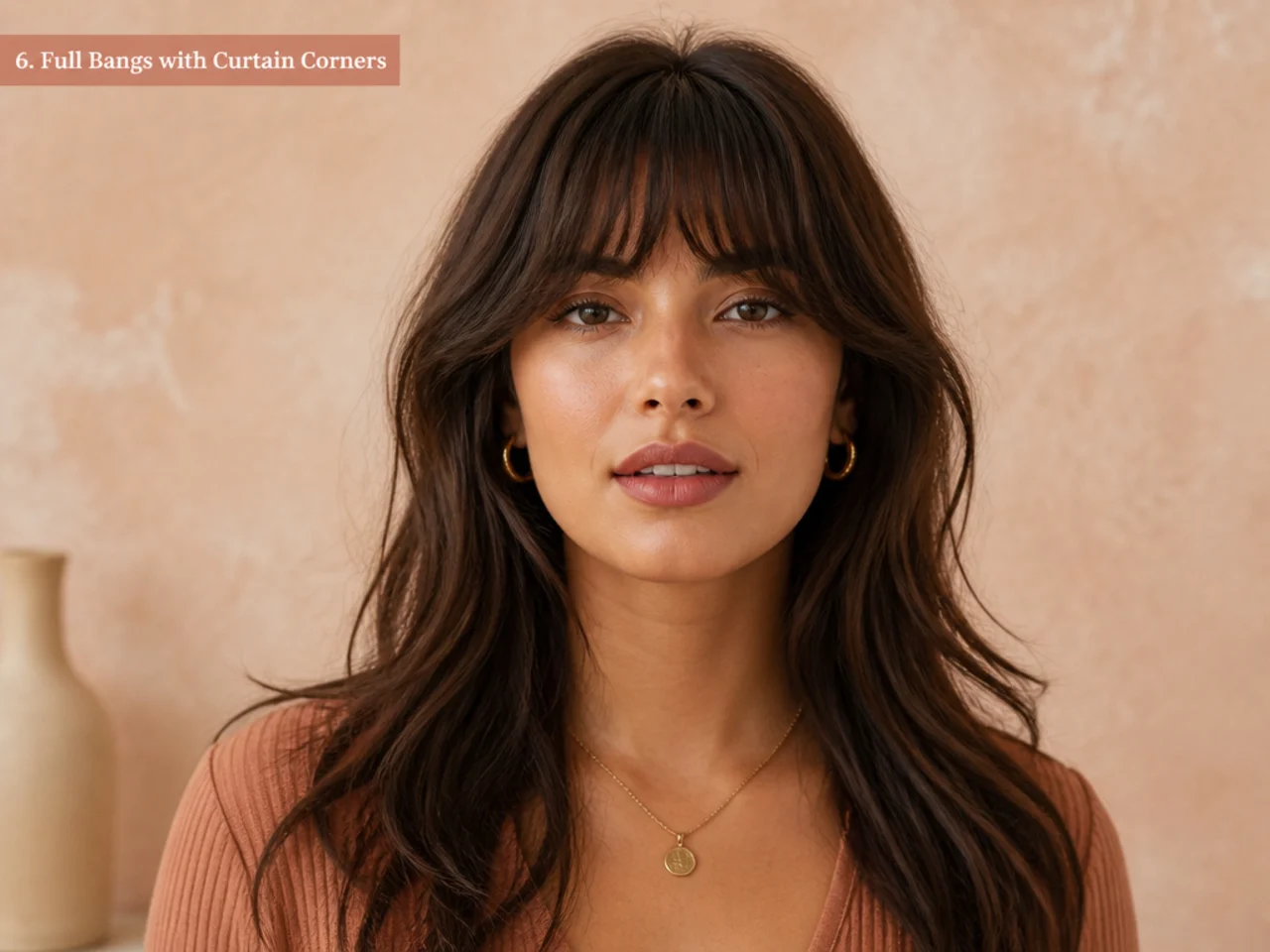
6. Full Bangs with Curtain Corners
Dense through the middle, opening out at the sides. The compromise that suits most faces.
7. Full Fringe on a Long Bob
The most-worn version of this cut, and the easiest to maintain.

8. Full Bangs with a Shag
Heavy at the front, textured throughout. Softer than the weight suggests.

9. Piecey Full Fringe
Dense but separated with wax, so the weight does not read as a solid block.

10. Full Bangs on Straight Hair
The version that shows the cut most clearly, for better or worse.

11. Full Curly Fringe
A deep section on curl, cut with the shrinkage allowance built in.

12. Full Bangs with a High Ponytail
The fringe carries the whole front, which stops a pulled-back look reading as severe.

13. Asymmetric Full Fringe
Deliberately heavier on one side. It needs the depth to carry the imbalance.
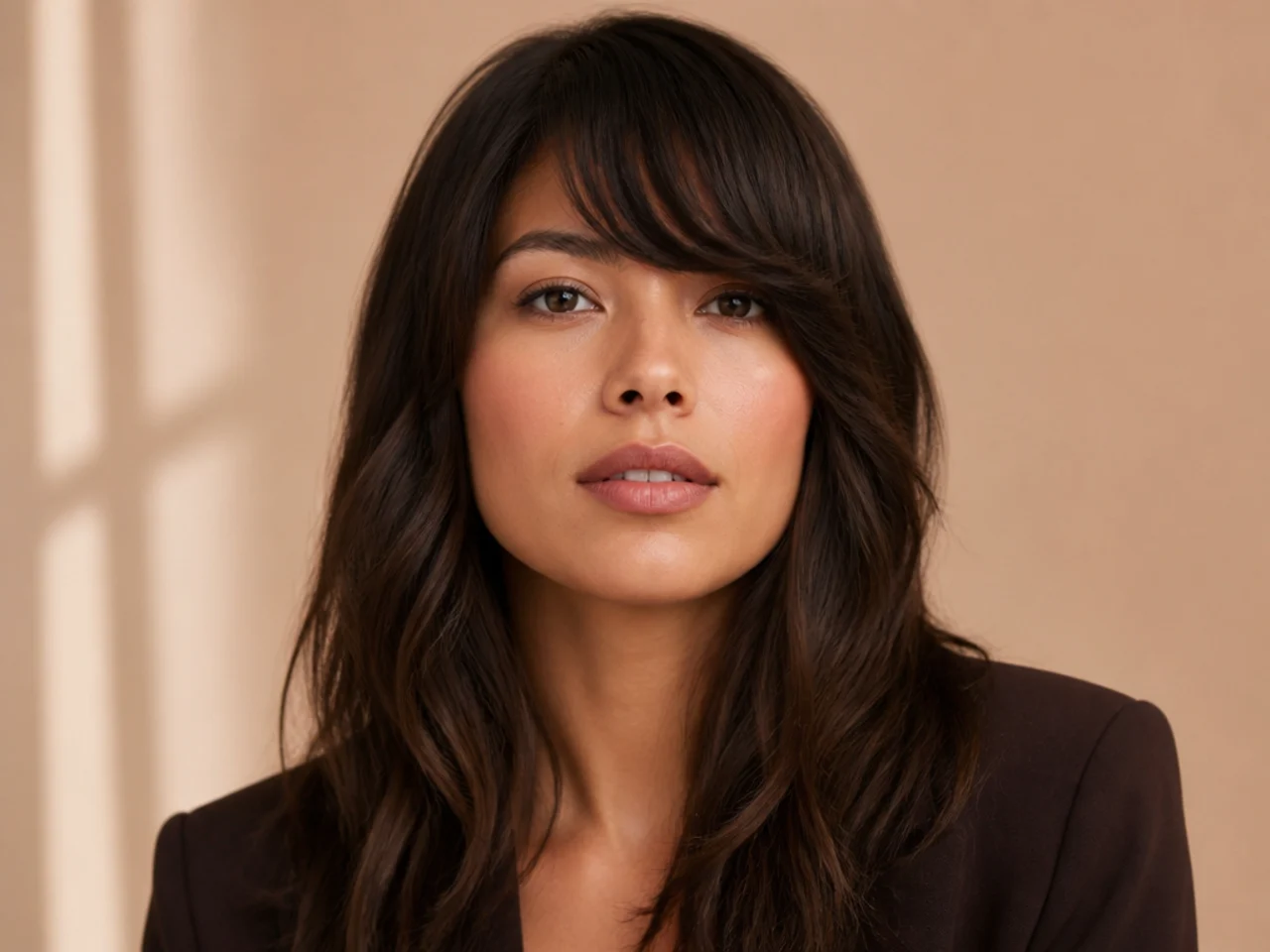
14. Full Bangs with a Middle Part Behind
Dense at the front, opened up behind. It relieves the weight without losing it.

15. Full Fringe with Face-Framing Pieces
Two longer sections released at the cheekbone to break up the horizontal line.

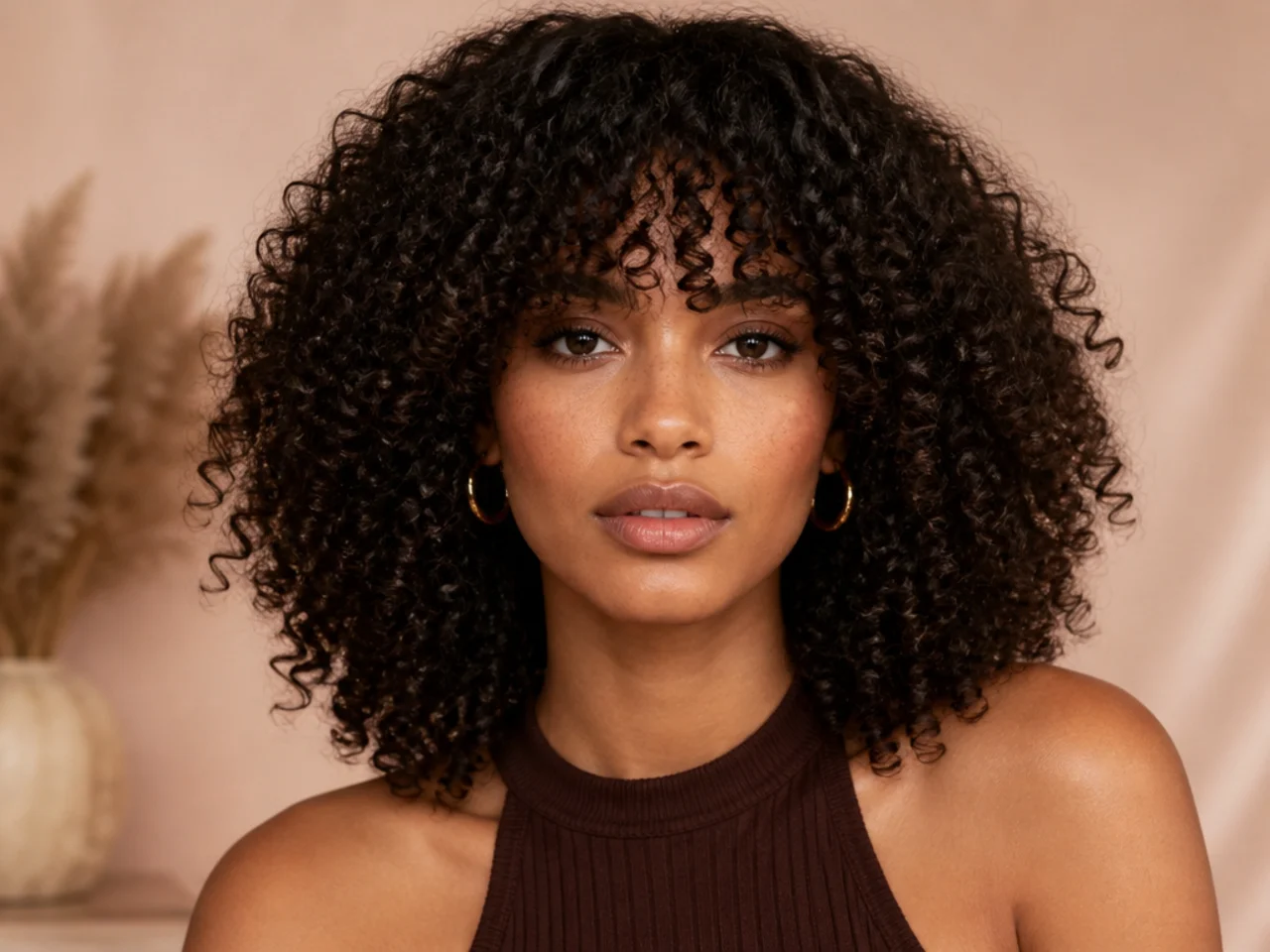
16. Full Bangs on Coily Hair
Shaped into real density, with the pattern intact rather than pressed flat.
17. Full Fringe with a Bun
Maximum contrast — heavy at the front, entirely smooth behind.

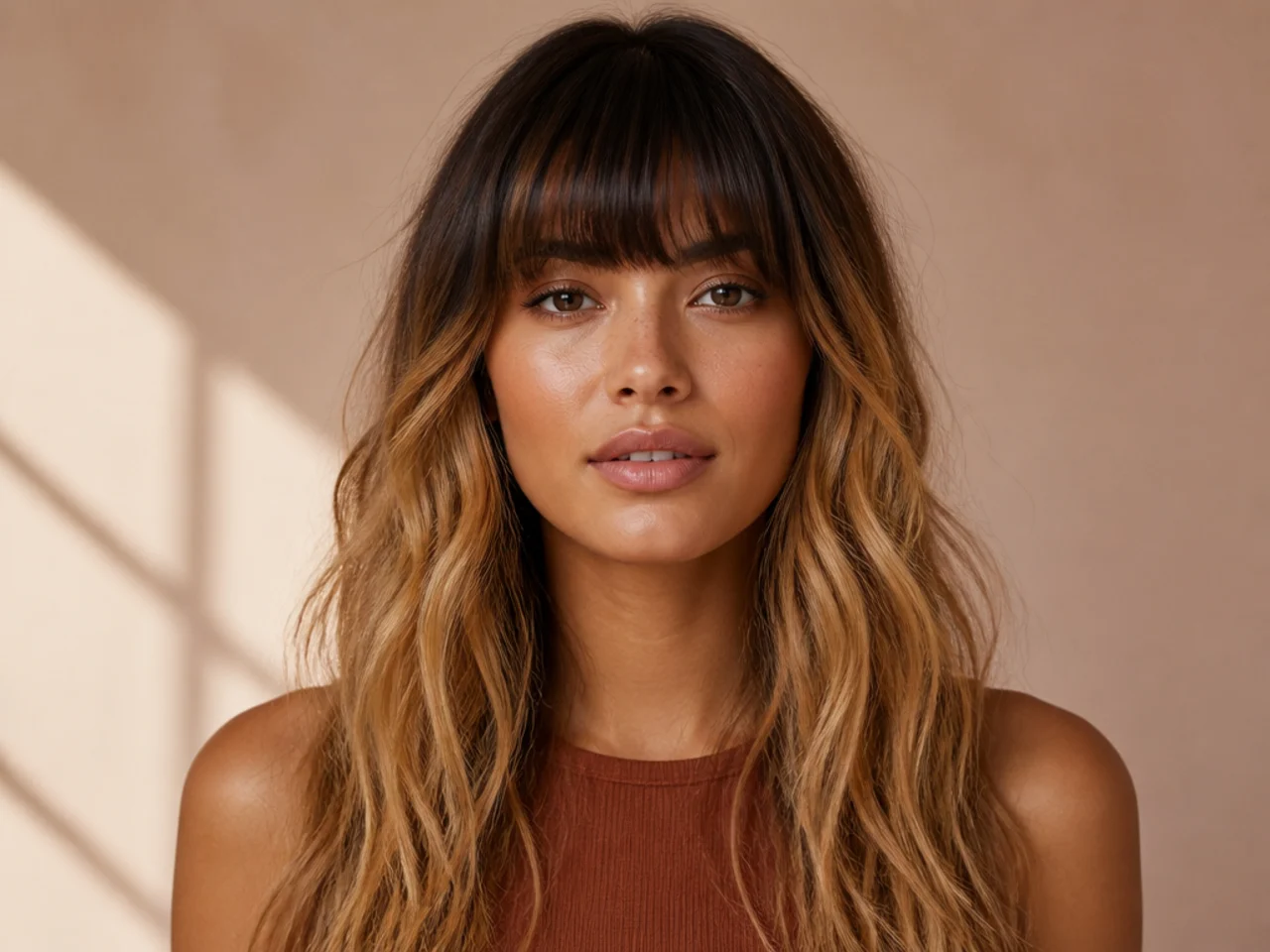
18. Full Bangs with a Colour Contrast
Darker at the fringe than the lengths. The density makes the colour block read clearly.
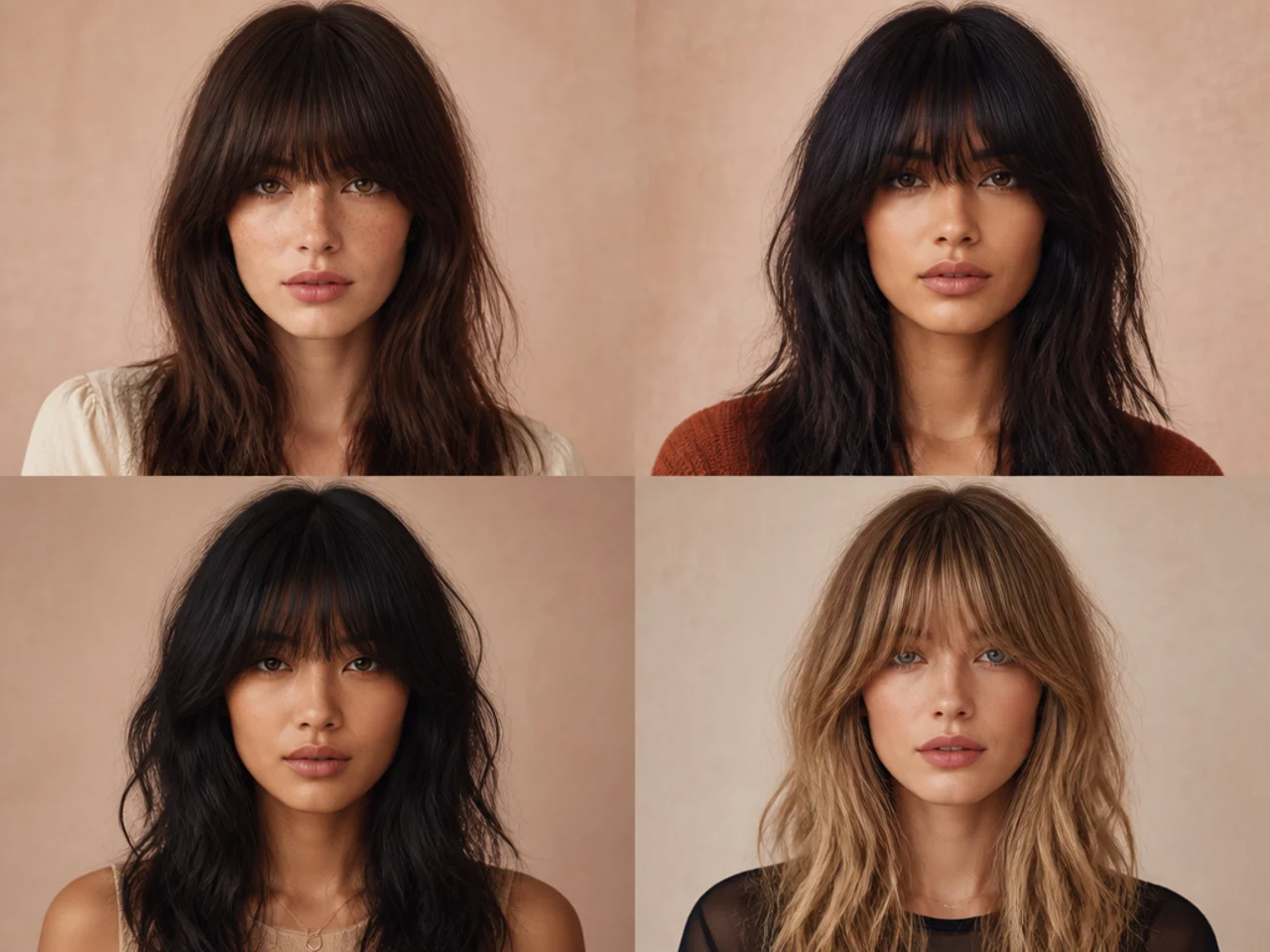
19. Extra-Deep Statement Fringe
Four centimetres back, the heaviest version here. Commit to it or do not.
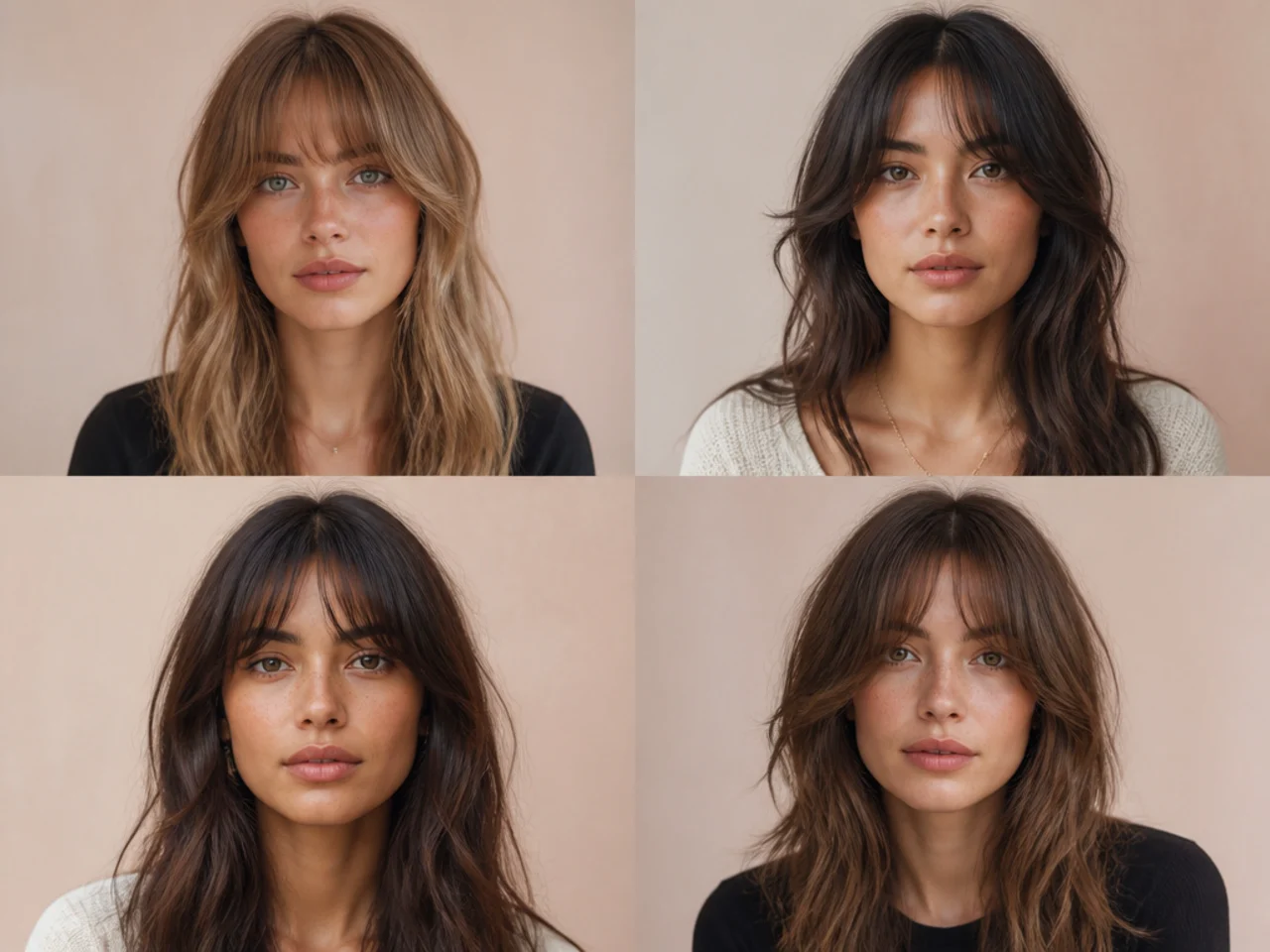
20. Full Fringe Growing Out into Curtains
The stage after a full fringe, parted and swept. Where most of these end up eventually.
The Maintenance Reality
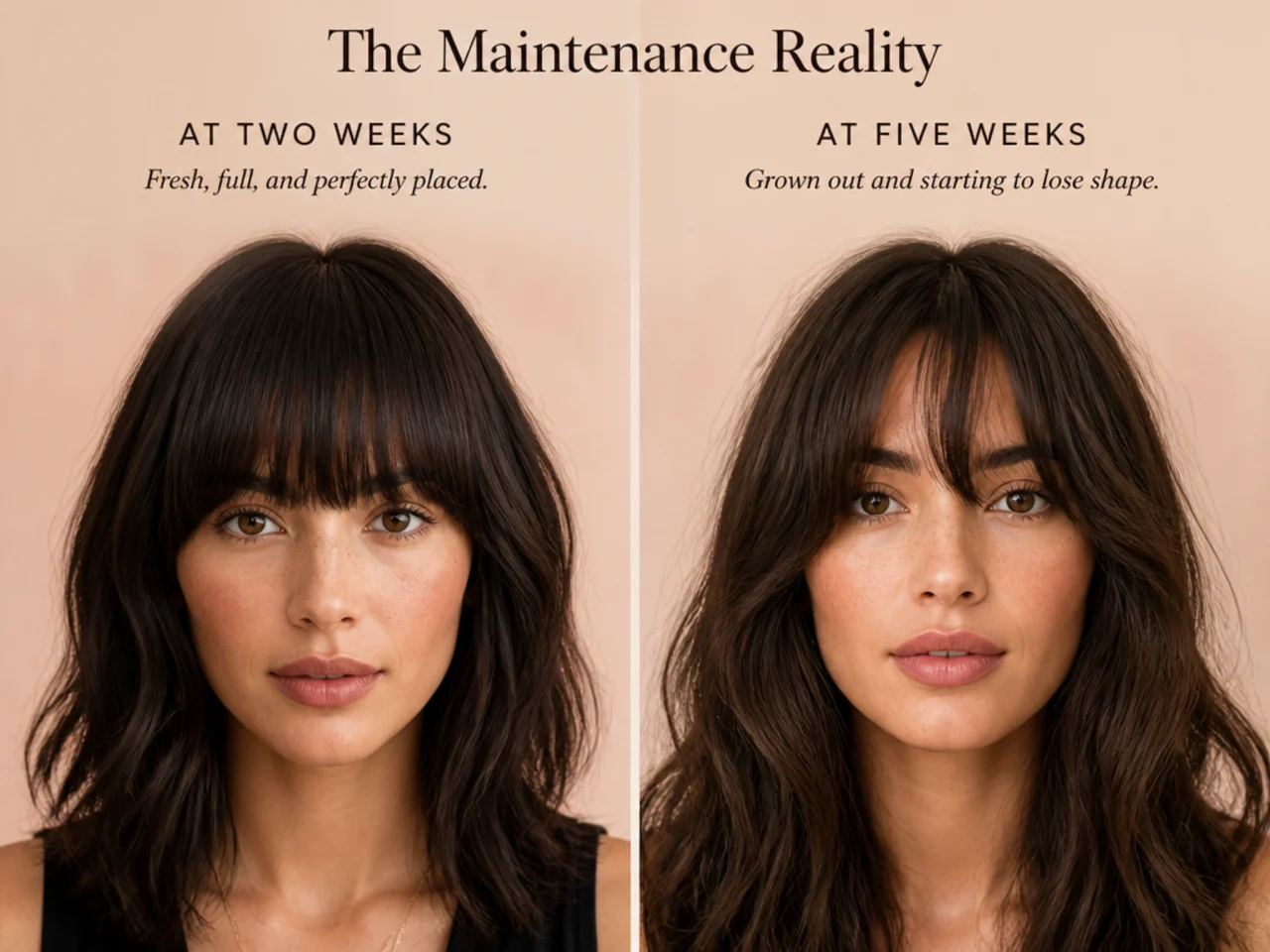
A full fringe needs trimming more often than a light one, and for a reason worth understanding: weight makes growth visible.
A wispy fringe with staggered ends looks much the same at four weeks as at two, because there is no clear line to move. A full fringe has a definite bottom edge, and when that edge drops a centimetre the whole thing reads as overdue.
Expect every three to four weeks. Most salons will trim a fringe between appointments for very little or nothing, and it is worth asking when you have it cut.
It also needs washing more often than the rest of your hair. The fringe sits against your forehead all day, and a full fringe has enough weight that grease makes it separate into visible strands almost immediately.
Mistakes to Avoid
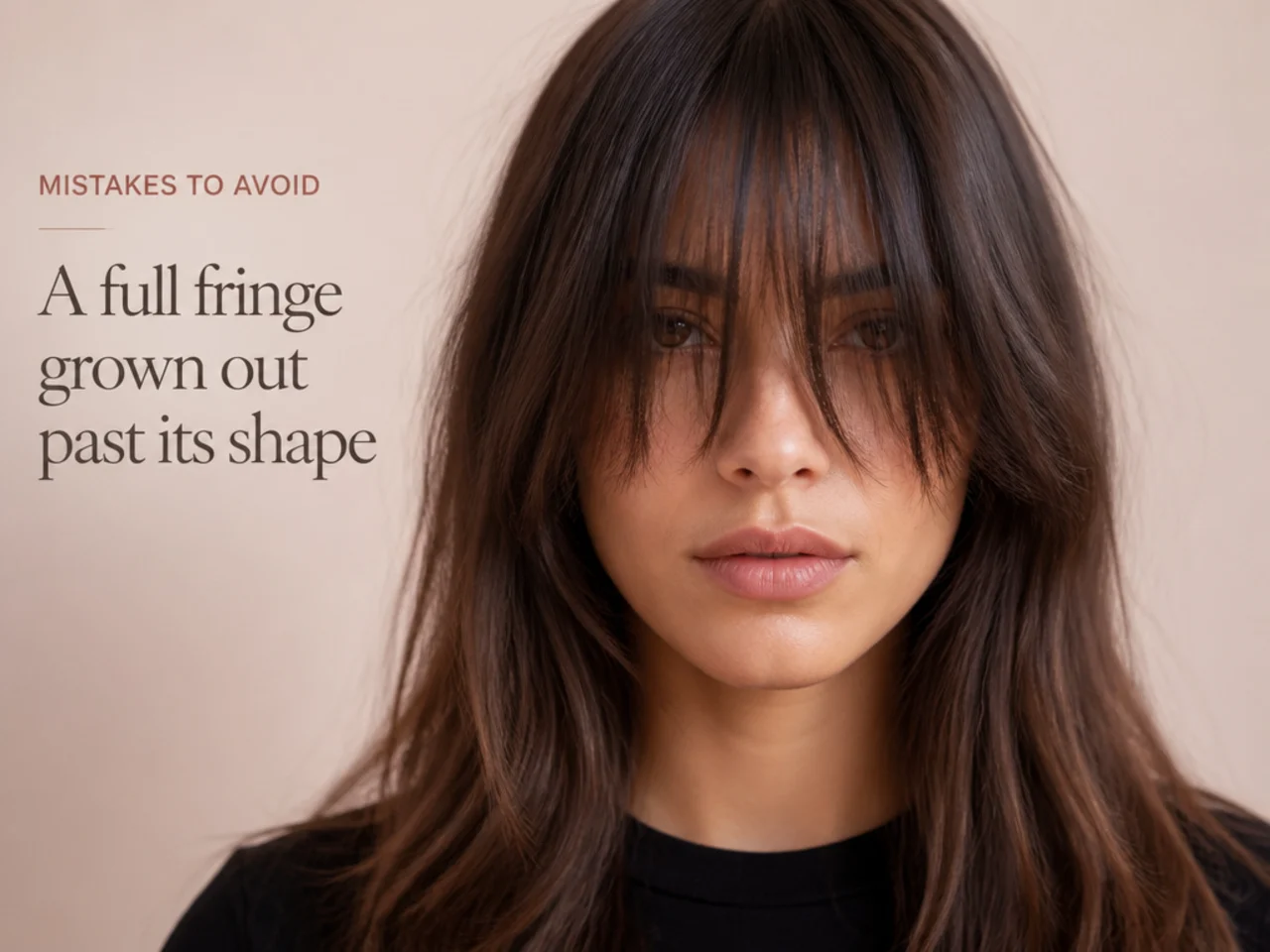
Asking for wider when you mean fuller. Depth is what creates density. Width just makes it bigger.
A full fringe on a round face. It removes vertical length and keeps the width.
A full fringe on fine hair. The section has to go deep, and fine hair shows the strip behind it.
Cutting it blunt across. A full fringe still needs a broken edge, or it stops being French.
Underestimating the upkeep. Three to four weeks, not six.
FAQ
What makes bangs full? Section depth — three to four centimetres back rather than two.
Do they suit a round face? They fight it. Longer bangs opening at the sides work better.
Do you need thick hair? Medium to thick. Fine hair shows a sparse patch behind the section.

Final Thoughts
Ask for depth rather than width, know that it will shorten your face, and budget for a trim every three to four weeks. A full fringe is the biggest change on this whole site that does not involve cutting length off — which is exactly why it is worth being deliberate about.
For fine hair see 15 soft French bangs for fine hair, and for the lighter technique see 15 wispy French bangs ideas. More in Bangs & Fringe.