15 Curly Mid Length Haircut Ideas for Every Curl Type
Mid length on curly hair is a wet measurement and a dry disappointment, because a curl finishes somewhere between one and several inches above where it was cut. Fifteen collarbone cuts, sorted by pattern, and how to ask for them.
In this article · 23
- What Counts as Mid Length on Curly Hair
- The Curl Type Guide
- Dry Cutting Versus Wet Cutting
- How to Ask Your Stylist
- Daily Curly Styling
- Growing Out a Curly Mid Length
- The 15 Curly Mid Length Cuts
- 1. Curly Collarbone Lob on 3A
- 2. Curly Shag on 2C
- 3. Invisible Layers on 3B
- 4. Curly Butterfly Cut
- 5. Curly Curtain Bangs
- 6. Curly Wolf Cut
- 7. The Triangle Proof Lob
- 8. Face Framing at the Jaw
- 9. V Shape on 3C
- 10. Fine Curly Hair
- 11. Blunt Curly Lob
- 12. Deep Side Part
- 13. Rezo Round Layered Cut
- 14. Wispy Bangs for a Round Face
- 15. Low Maintenance on 4A
- Final Thoughts
Mid length is a wet measurement on curly hair and a dry disappointment, which is why so many curly cuts come out shorter than anyone asked for.
A curl finishes above where it was cut. Loose waves lose a little, tight coils can finish at half their stretched length, and no two patterns lose the same amount.
So the useful number is the dry one. Say where you want it to sit once it has sprung up, and let the stylist work backwards from there rather than measuring a stretched strand.
What Counts as Mid Length on Curly Hair
Chin to a few inches below the collarbone, measured dry. That is the whole definition, and the word dry is doing most of the work in it.
The same cut sits at three different heights. On 2C, 3B and 4A hair the identical scissor line finishes in three completely different places.
Shrinkage is not damage or dryness. It is what a spiral does when the strand is no longer weighed down by water, and a healthier curl shrinks more, not less.
Photographs are almost always stretched. Judge a reference picture by the curl pattern in it rather than by where the ends land.
The Curl Type Guide
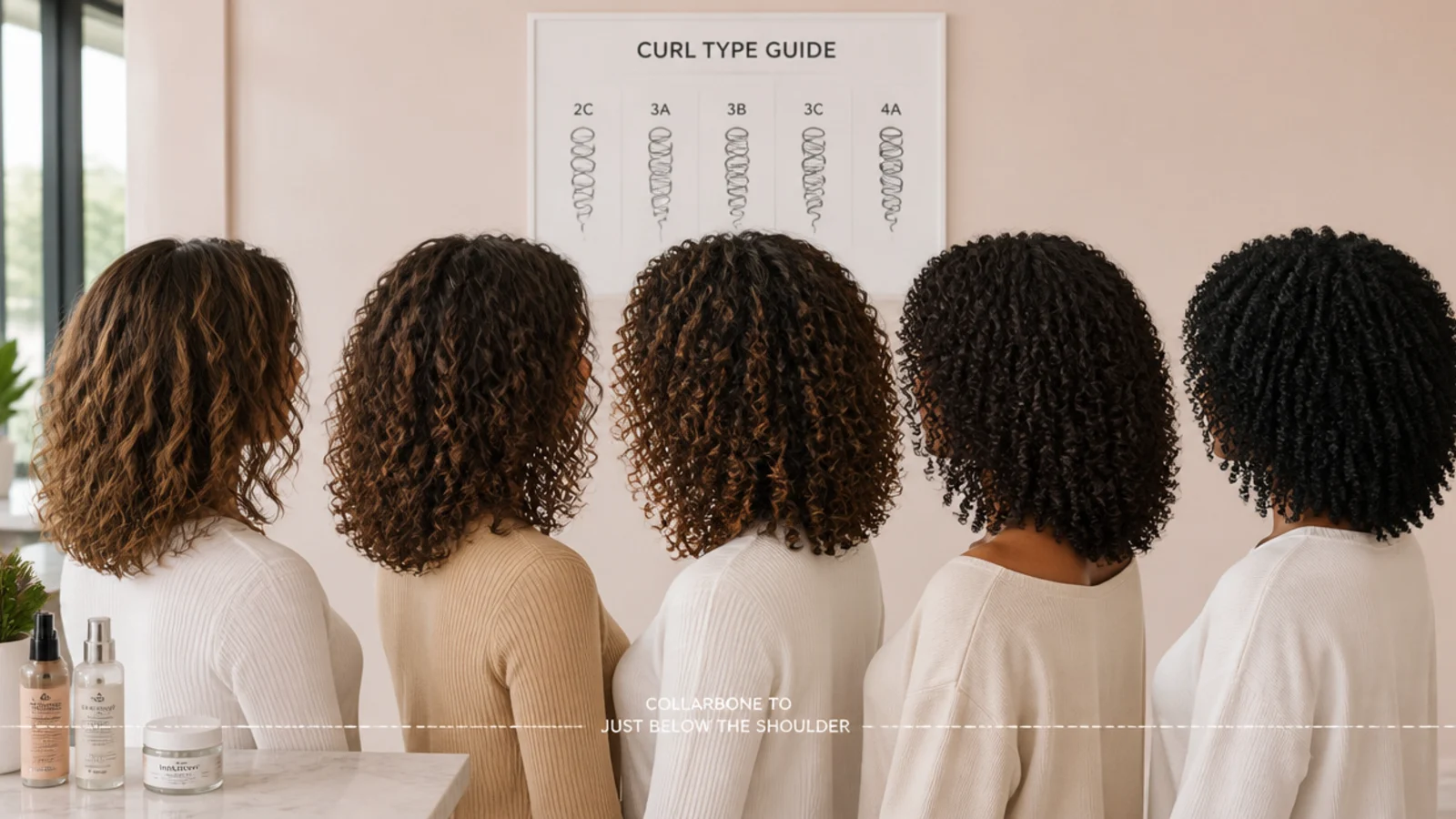
2A to 2C are waves. An S bend with little or no loop, which flattens at the crown under any weight left there.
3A to 3C are curls. Defined spirals ranging from about the width of a marker pen down to a pencil, and the tighter the spiral the more length it hides.
4A to 4C are coils. Tight springs that shrink dramatically and hold a shape for weeks, which changes upkeep more than it changes cutting.
Most heads carry two patterns. Looser at the nape, tighter at the crown, or the reverse, and a cut that ignores that gets one half right.
Dry Cutting Versus Wet Cutting
Dry cutting places the end where you will see it. Each curl is cut in its natural position, so nothing springs somewhere unexpected afterwards.
Wet cutting is faster and far less accurate on curls. It works on the stretched strand, which is not the shape the hair spends its life in.
Dry cutting handles two patterns in one head. The stylist can see which sections shrink more and adjust as they go instead of averaging.
Wet cutting still has a place at the perimeter. A blunt outline is easier to cut cleanly wet, then refined dry once the curls have sprung.
How to Ask Your Stylist
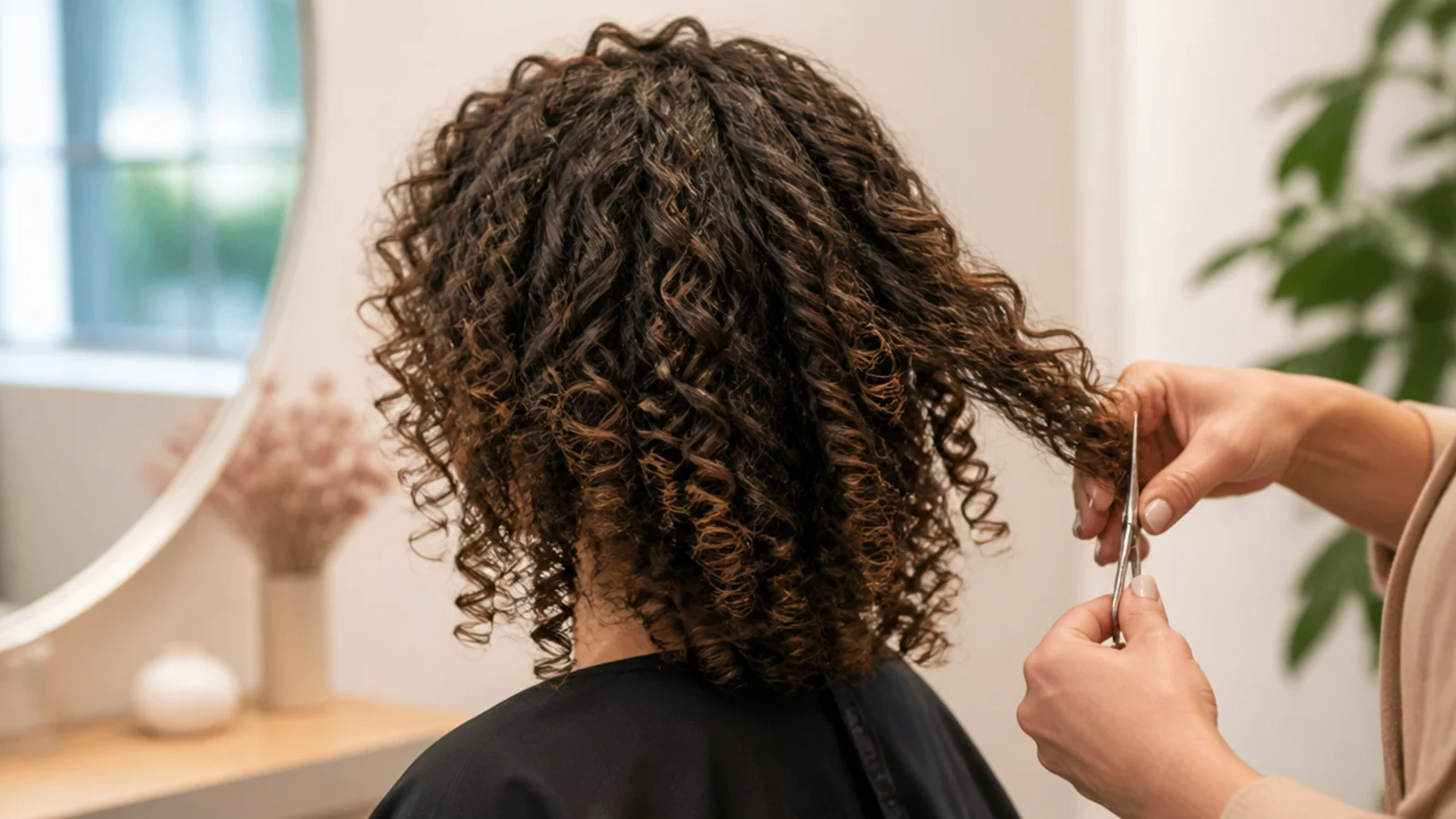
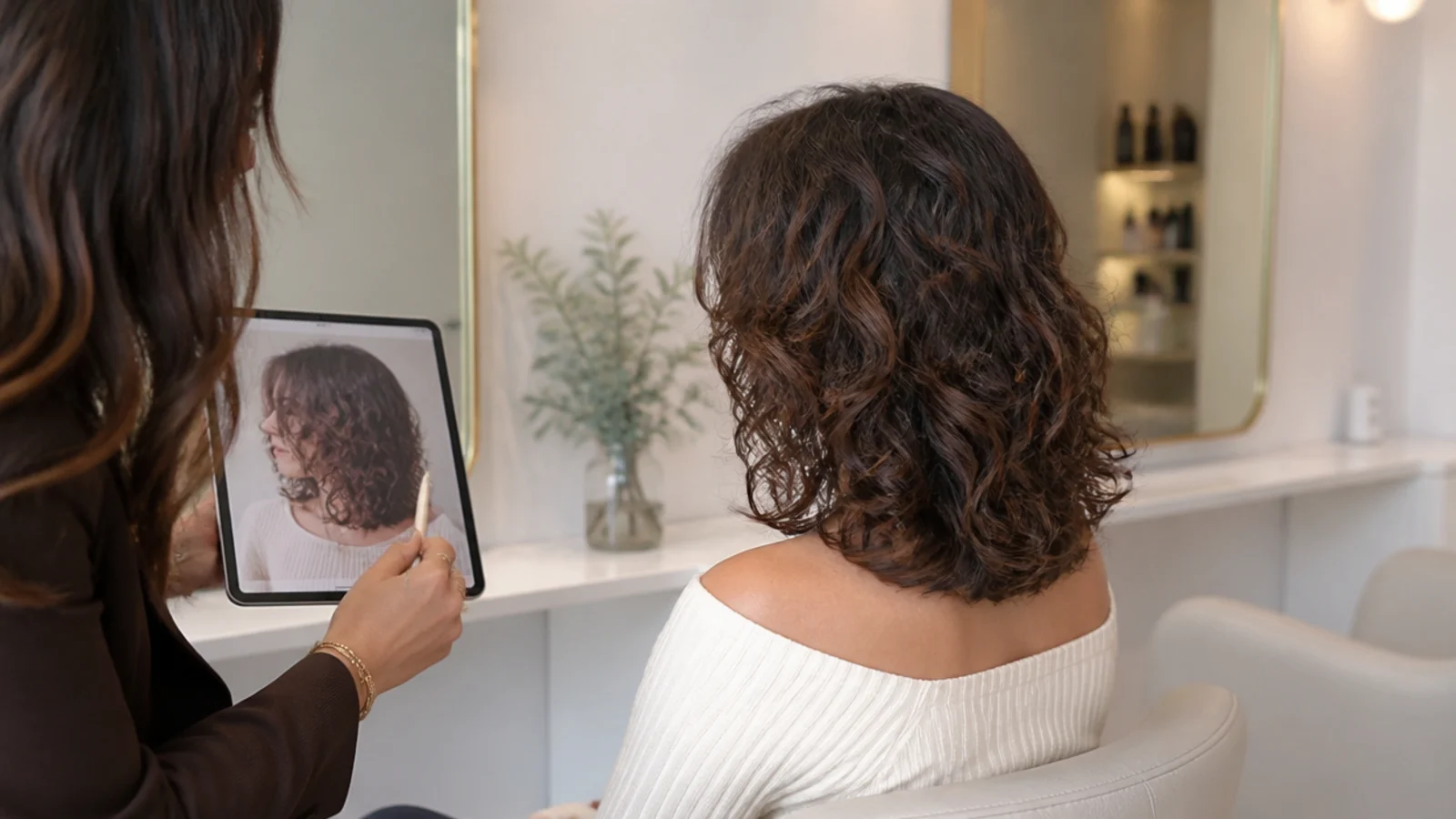
Give the dry finished length against your body. Collarbone, an inch below it, jaw. Never in inches removed.
Say your pattern, or show it unstyled. Arriving with the hair straightened hides the only information the stylist needs.
Say whether you want weight removed or only shape. These are different appointments on curly hair, and asking for one gets you the other about half the time.
Say where it goes wide. If it swells at the ears or flattens at the crown, name it, because that is what layering is being asked to fix.
Daily Curly Styling
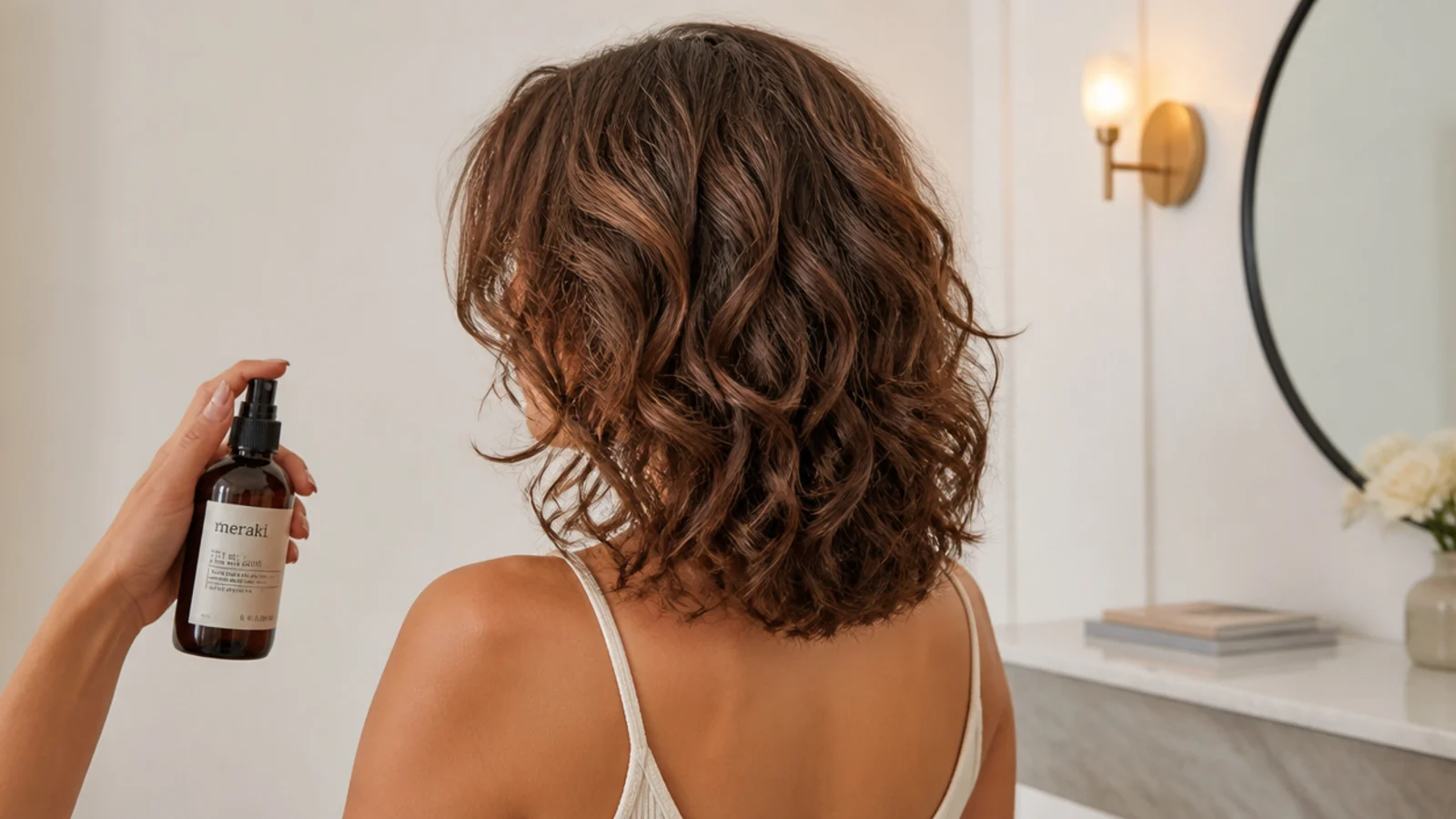
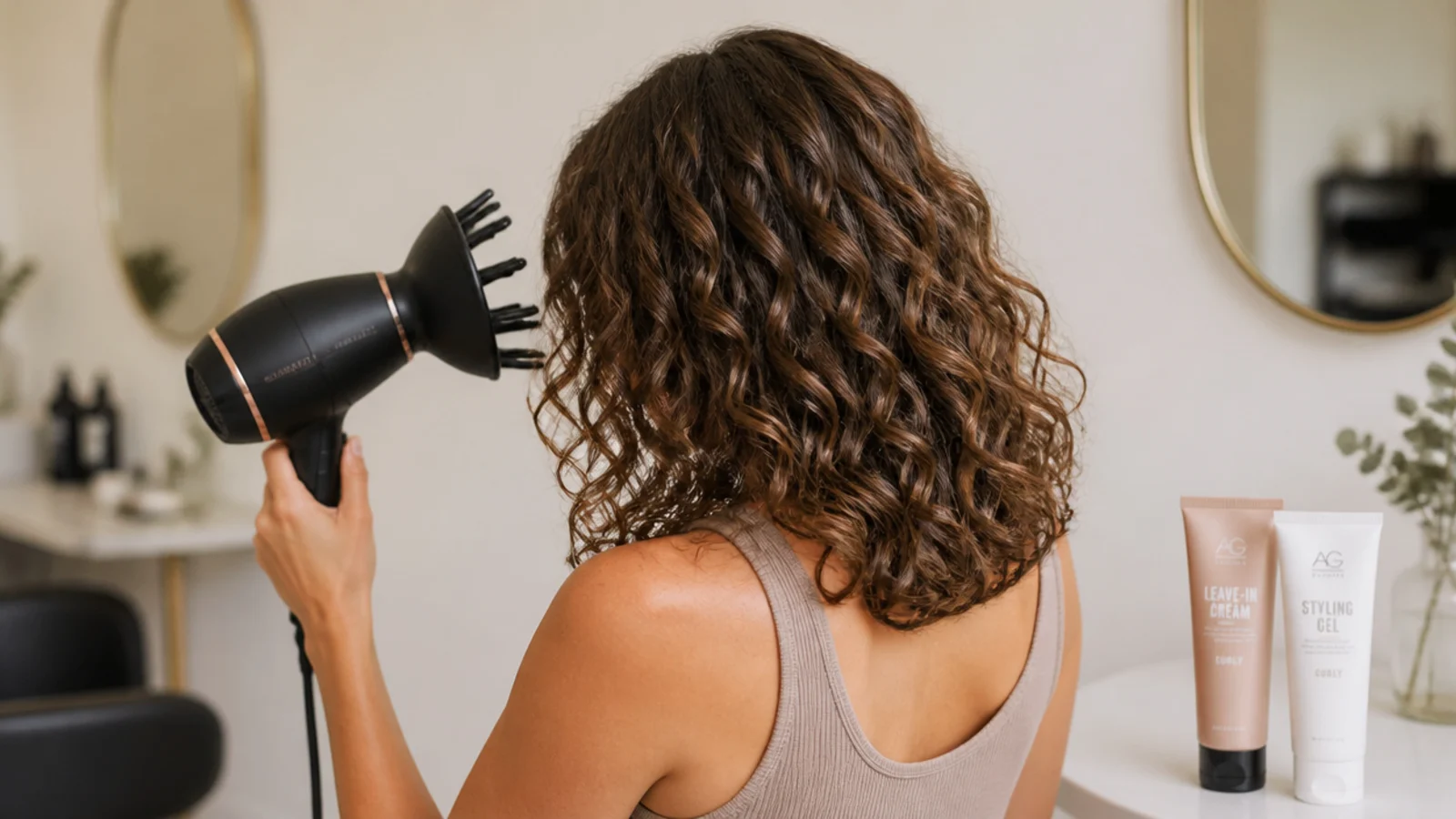
Product goes on soaking wet. A curl clumps while water is holding it together, and once the hair is towel dry the clump has already broken.
Stop touching it while it dries. Every pass of a hand breaks the cast and separates the clump into frizz.
Dry on low with a diffuser or not at all. Fast moving air pushes curls apart before they have set into their own shape.
Break the cast only when fully dry. Scrunching a damp cast turns a defined curl into a soft one and there is no way back until the next wash.
Growing Out a Curly Mid Length
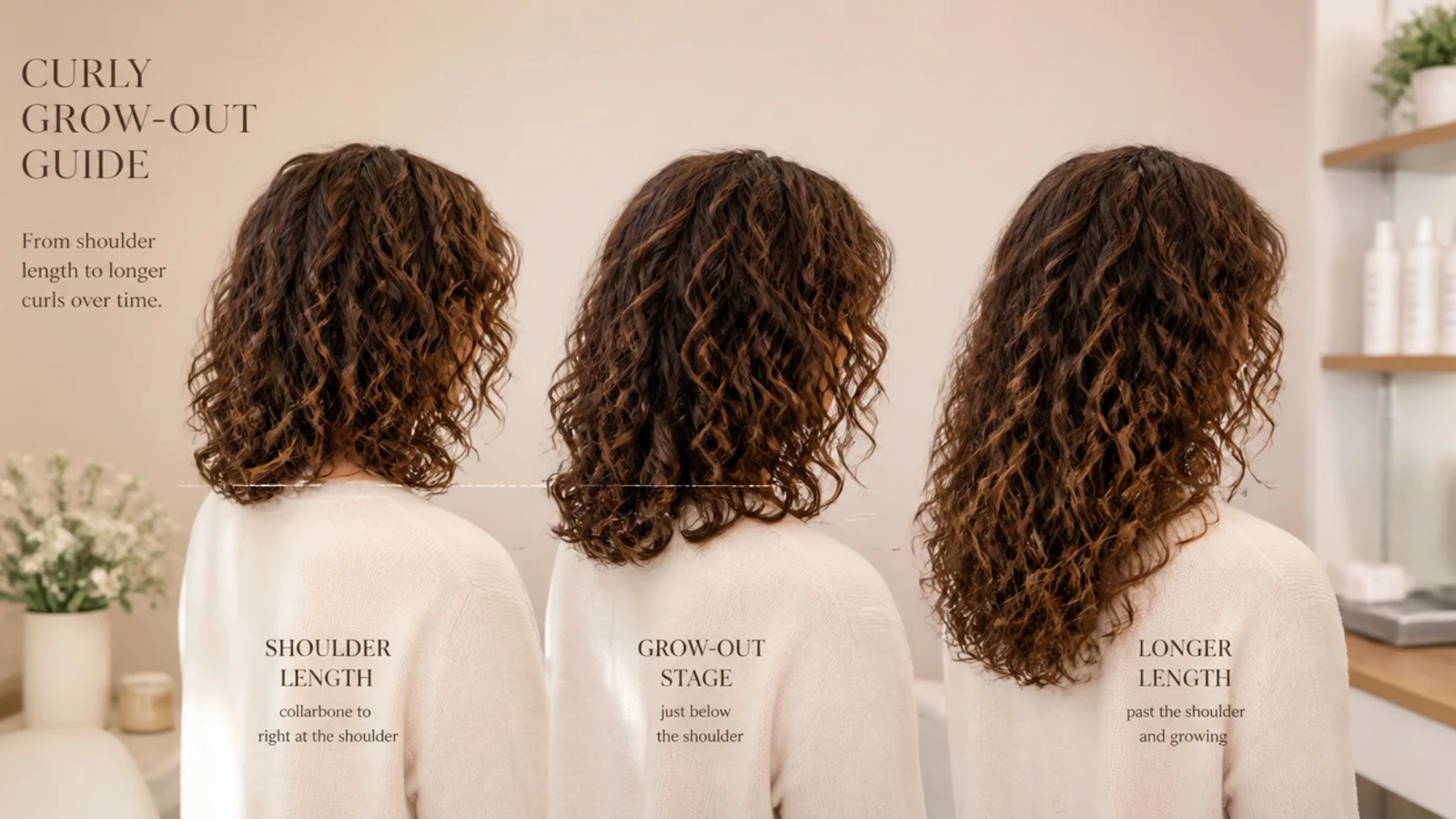
Growth is partly hidden by shrinkage. Half an inch a month is stretched growth, and a tight pattern shows a fraction of it, which is why curly cuts feel like they stall.
The shape goes before the length does. Layers drop together, so the outline widens at the bottom long before the ends reach anywhere new.
Dust the ends rather than waiting. A trim of a quarter inch every couple of months removes split ends without losing the length you are chasing.
Keep the perimeter dense while growing. Thinning the outline is what makes long curly hair read as stringy rather than long.
The 15 Curly Mid Length Cuts
1. Curly Collarbone Lob on 3A
A 3A spiral is loose and wide enough to stretch under its own weight, so a collarbone lob keeps enough length to show the pattern without enough to pull it straight. Cut it a little longer than the target, because the curl lifts once the water leaves it.
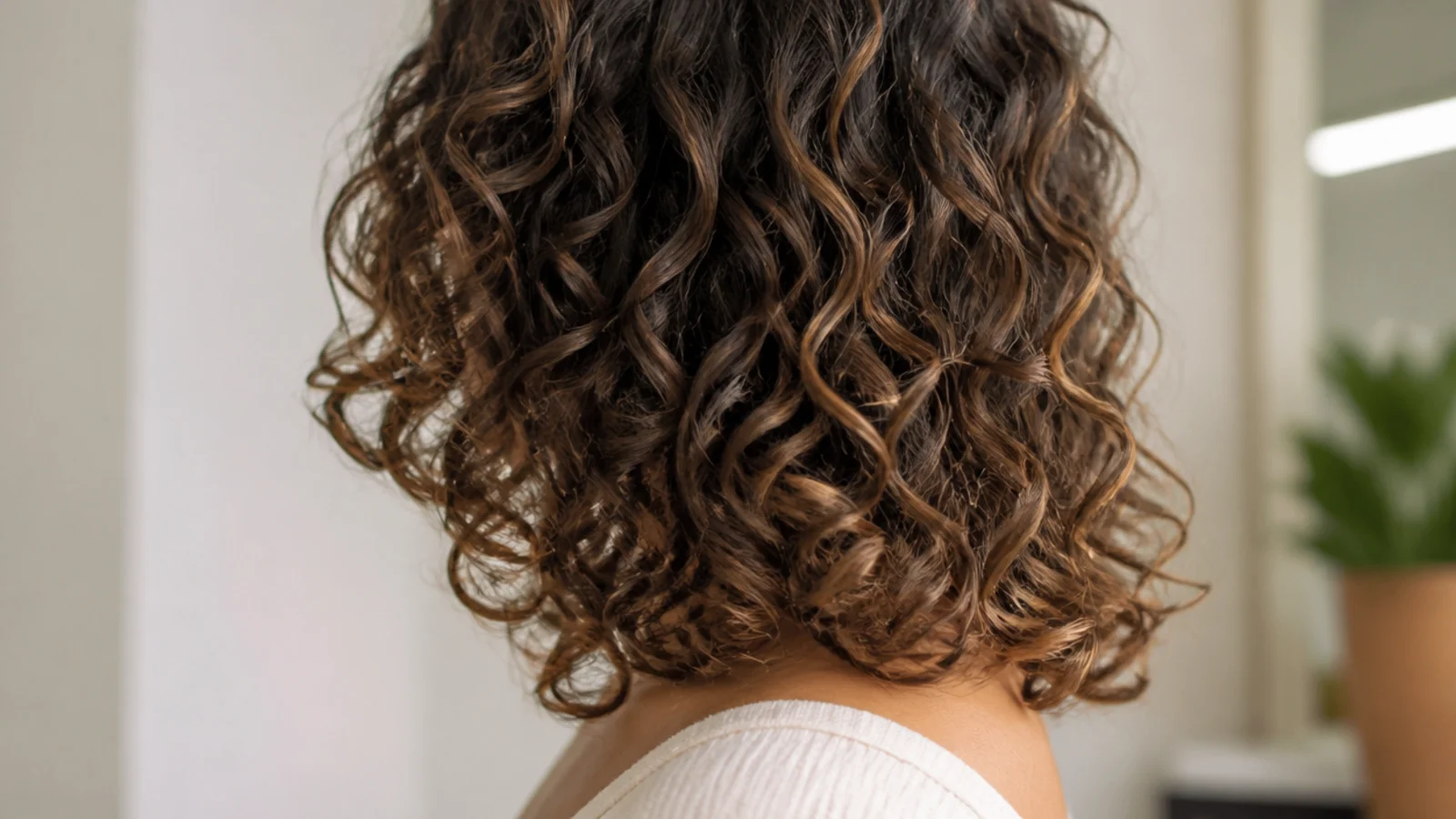
2. Curly Shag on 2C
A 2C pattern is a strong wave with the occasional loop, and it goes flat at the crown under any weight left sitting there. Shag layering takes that weight out of the top so the bend can start higher up the head rather than halfway down the length.

3. Invisible Layers on 3B
Layers cut entirely inside the shape so nothing on the surface is shorter than the curls around it. On a 3B pattern, where each spiral is roughly the width of a marker pen, a visible layer shows up as a gap, and hidden layers remove the same bulk without leaving one.
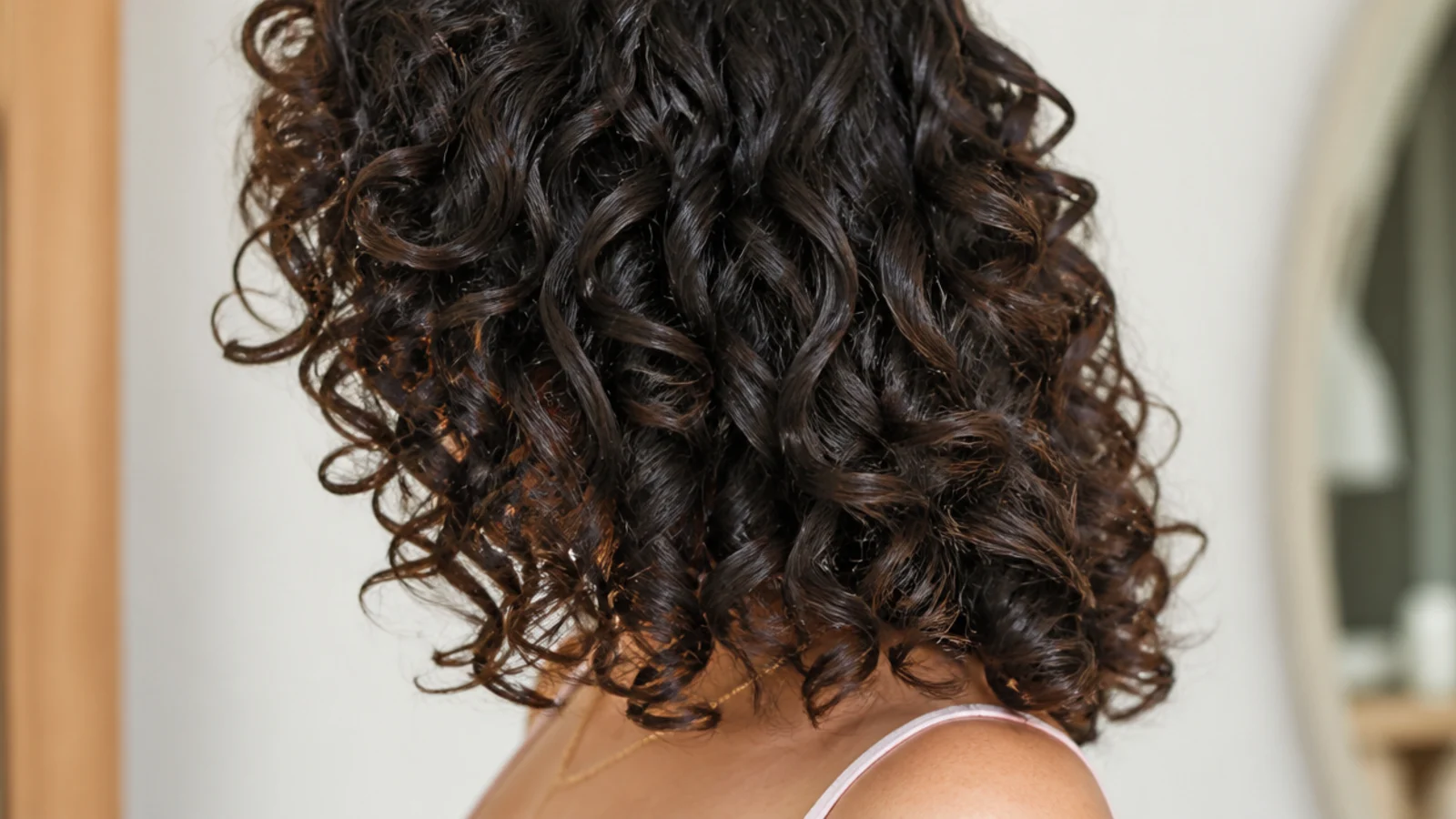
4. Curly Butterfly Cut
Two lengths in one head, with chin level pieces falling forward and everything else left long behind them. On curls the shorter set springs higher than expected, so the gap between the two lengths has to be cut wider than it would be on straight hair or they simply merge.
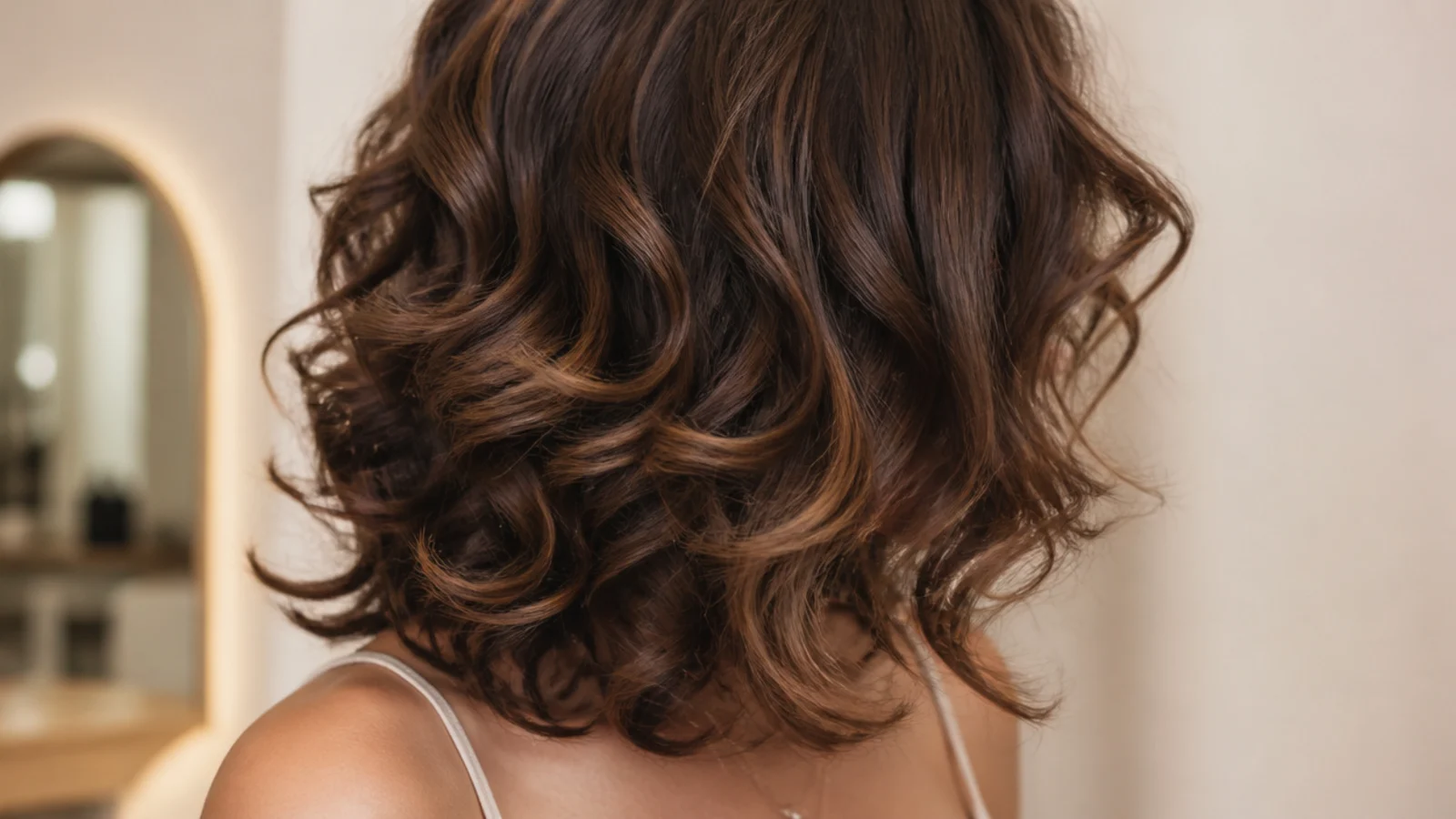
5. Curly Curtain Bangs
Cut dry and cut long, because a curtain fringe on curly hair lifts substantially as it dries. Taken to the eyebrow while wet, it can finish somewhere near the hairline, so the safe method is to cut well below target and take it up curl by curl.
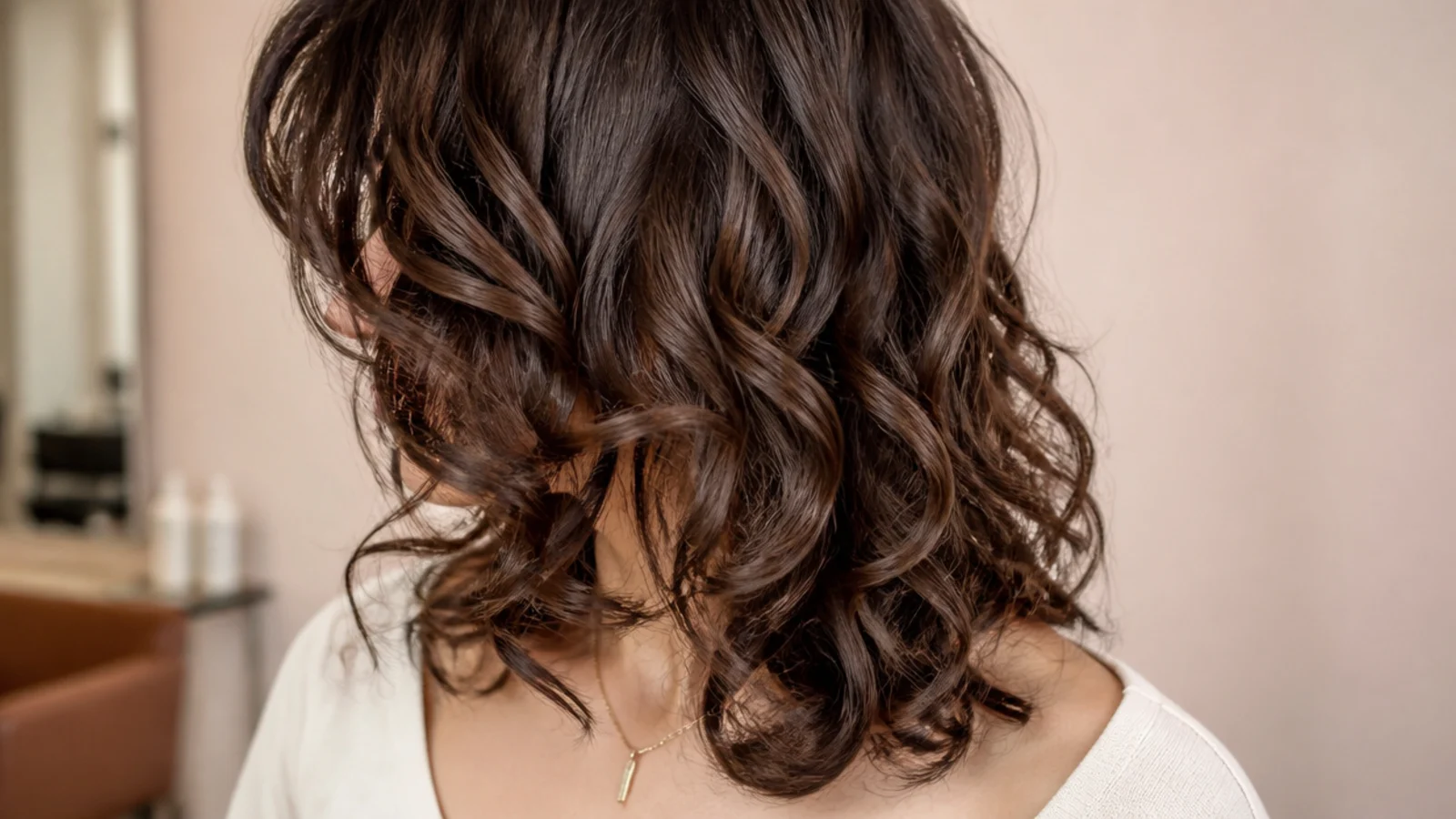
6. Curly Wolf Cut
Short crown layers over long ends, and the contrast comes out higher on curls than on straight hair because the shorter sections spring up further than the long ones. That makes it a strong shape on anyone whose crown goes flat, and a hard one to soften once cut.
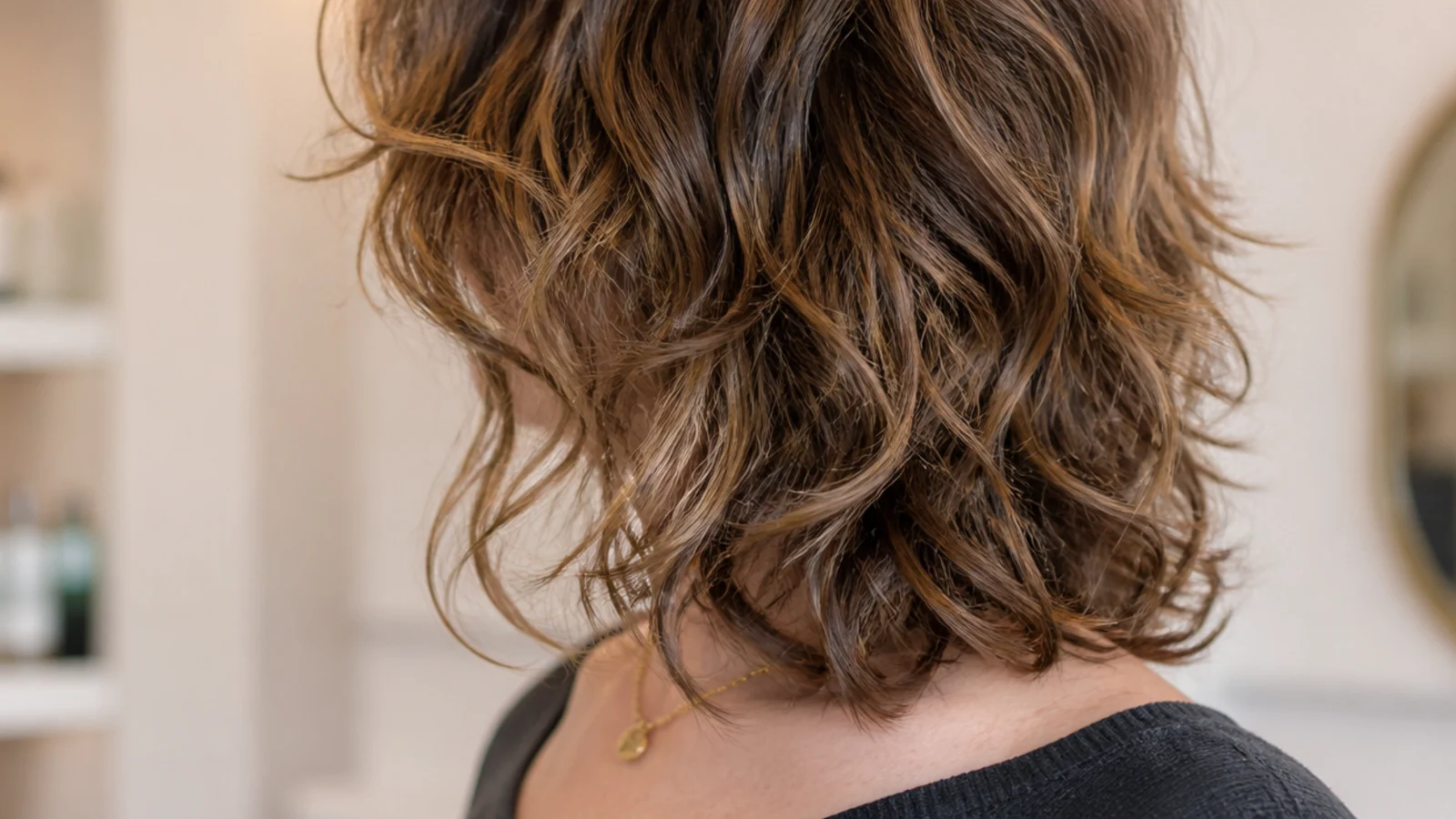
7. The Triangle Proof Lob
The pyramid happens because curls expand outward as they travel down the head while the crown stays flat under its own weight, putting the widest point somewhere around the ears. The fix is weight removed at that widest point and a perimeter left dense, which is the reverse of what most people ask for.
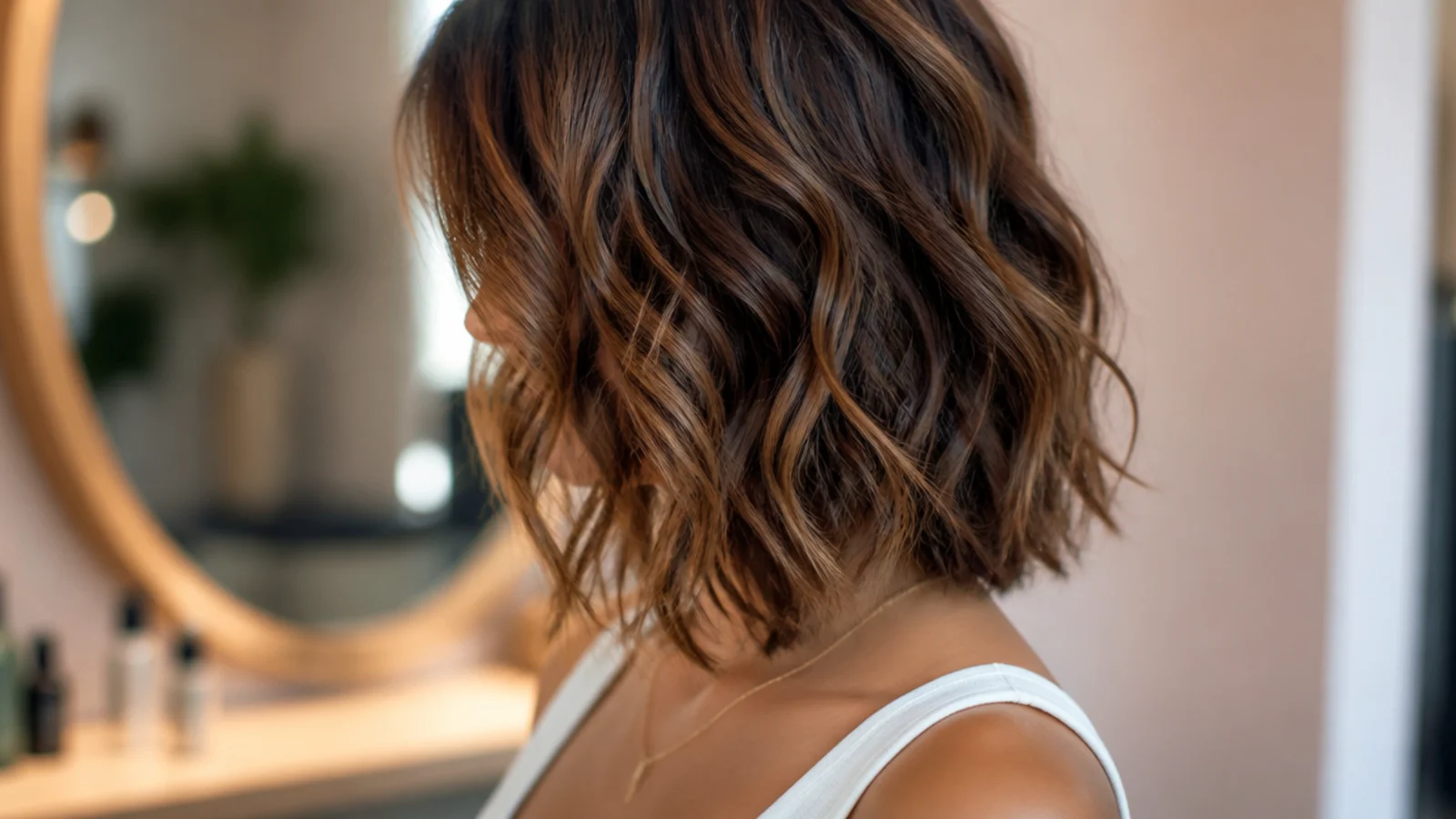
8. Face Framing at the Jaw
Start the framing above the jaw and let it finish below it, because a curl cut level with the jaw shrinks up to the cheek. That lands the shortest piece at the widest part of the face, which is the single most common way curly face framing goes wrong.

9. V Shape on 3C
The perimeter cut to a point at the back instead of straight across, which removes the heavy corner where the sides meet the back. On a tight 3C pattern that corner is exactly where the triangle begins, so taking it out solves the shape rather than disguising it.
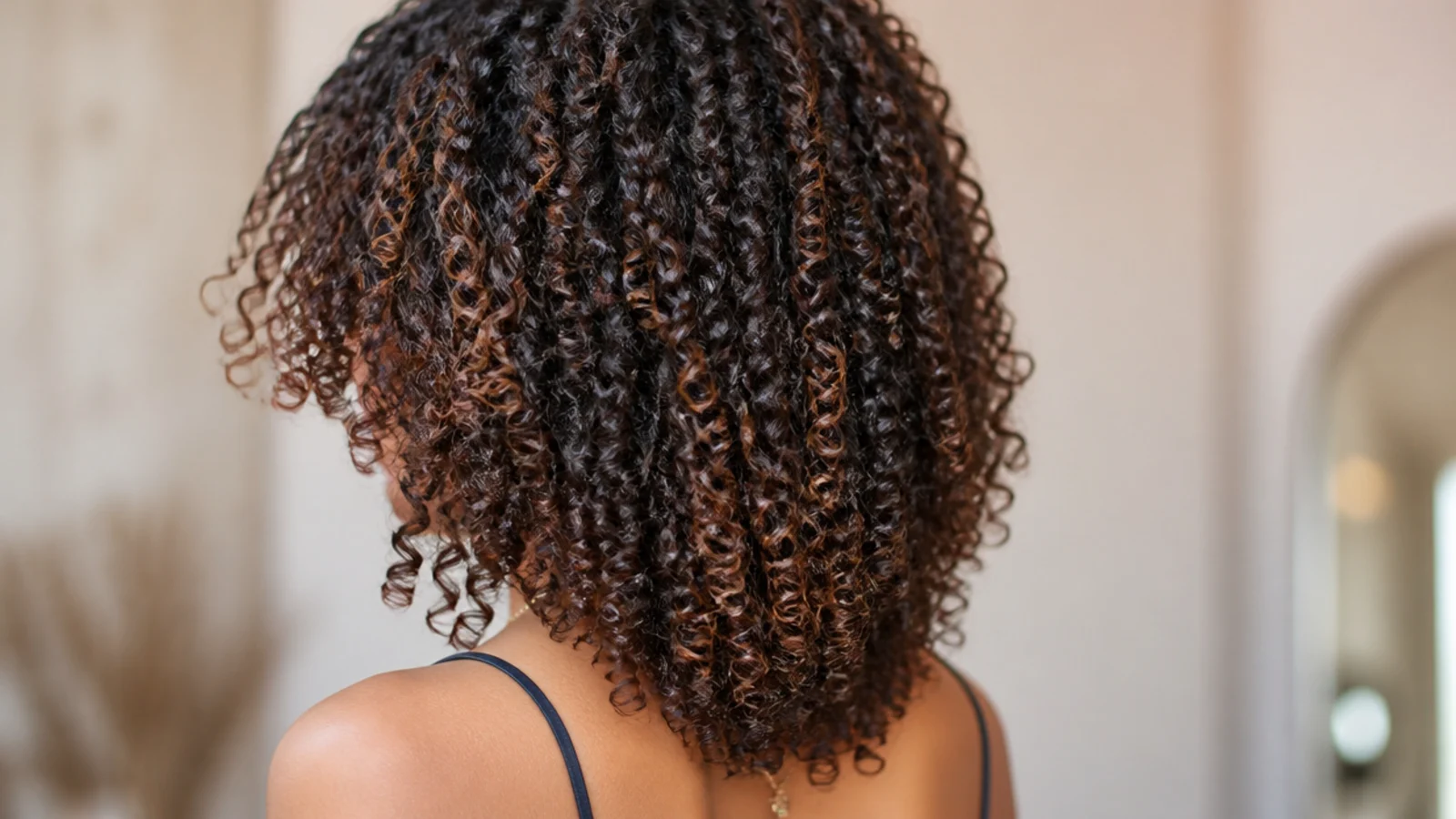
10. Fine Curly Hair
Fine curls have the pattern but not the strand diameter, so every gram of weight removed is felt twice over. Keep the layers few and long and let the curl itself supply the volume, because thinned ends on fine curly hair go straight past airy and land on sparse.

11. Blunt Curly Lob
One length, cut dry, with no layering at all. Blunt works on curls in a way it cannot on straight hair because every curl already ends at a slightly different point, so the pattern supplies the variation that scissors would otherwise have to create.
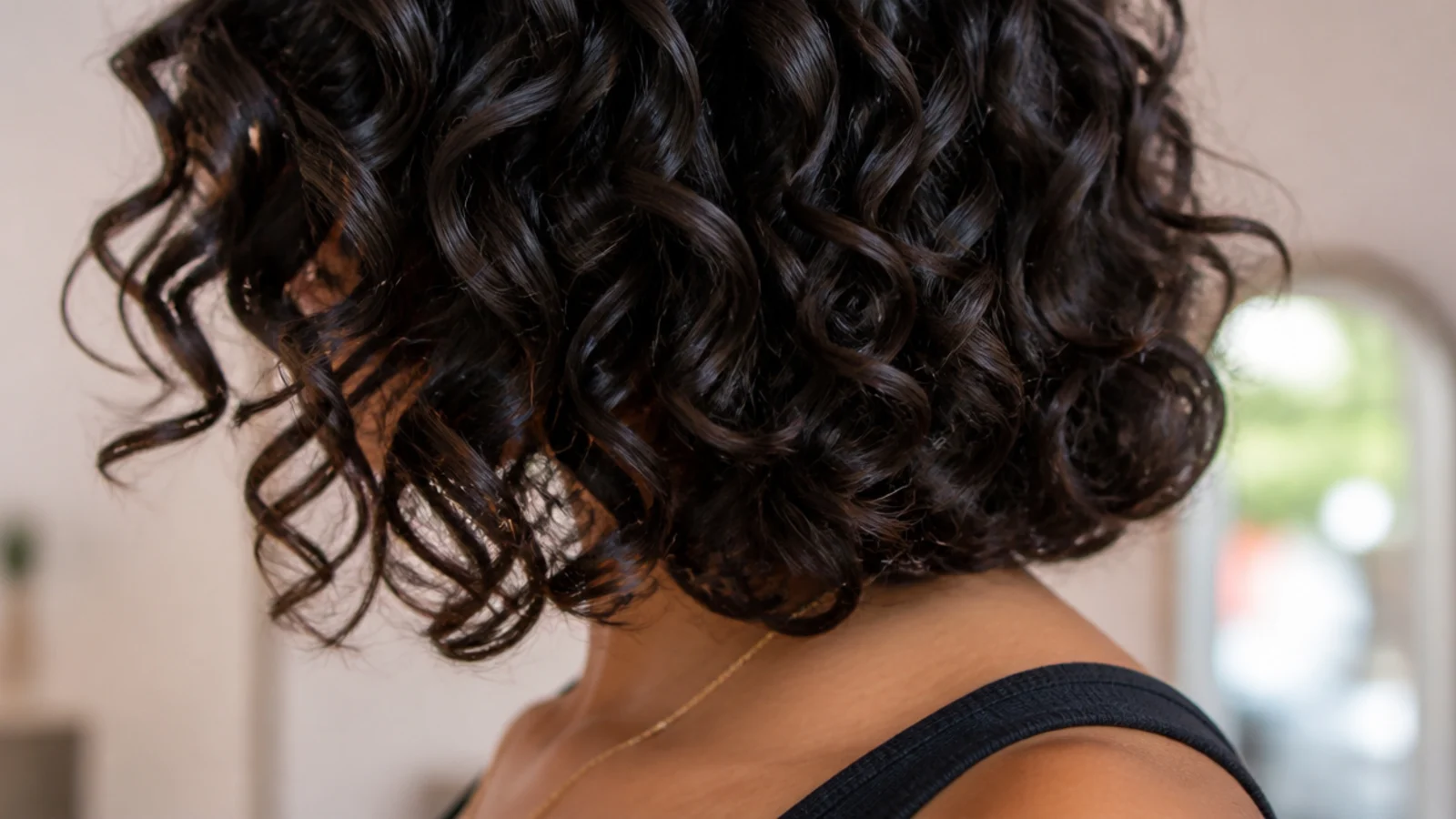
12. Deep Side Part
A part taken well off centre forces the hair to travel across the crown before it falls, which lifts the root on the heavy side. Curls hold that lift far longer than straight hair does, because the bend in the strand props the section up instead of letting it drop flat.
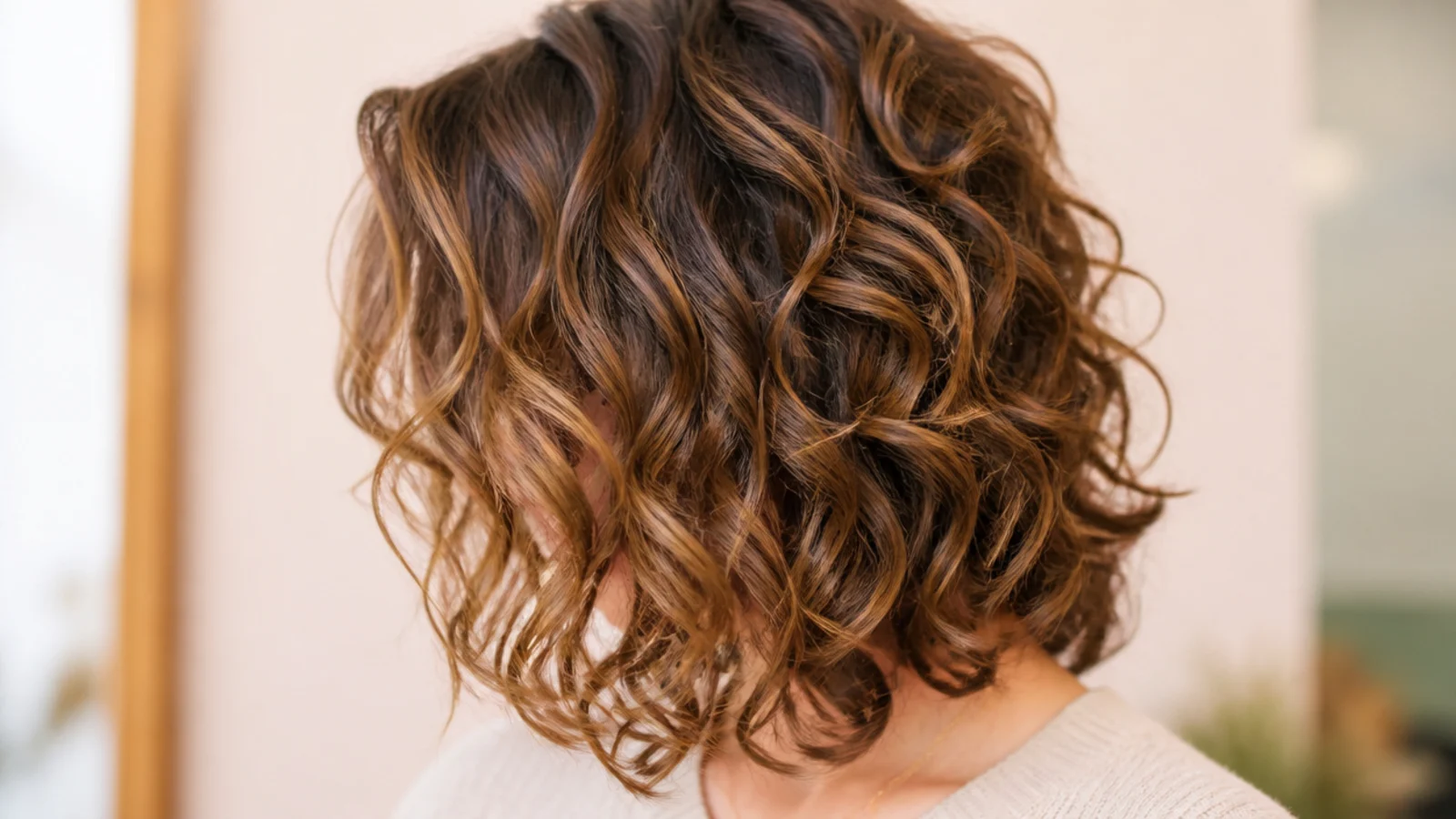
13. Rezo Round Layered Cut
Cut dry and worked section by section right around the head, aiming for even volume in the round rather than a shape graduated from front to back. It suits anyone whose curls go flat at the back and swell at the sides, because it treats every part of the head as its own problem.
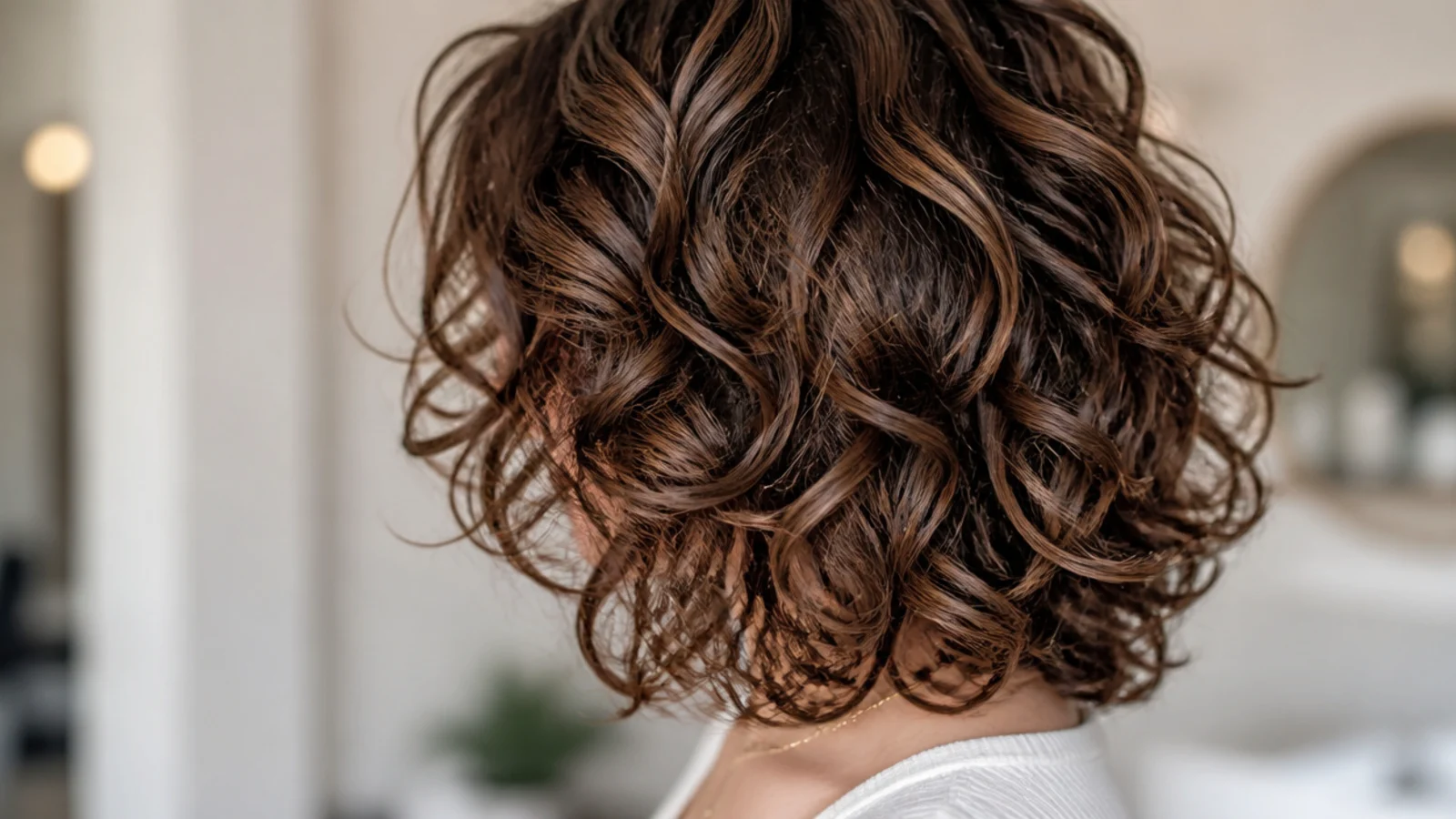
14. Wispy Bangs for a Round Face
On curly hair a fringe has to be light enough to show forehead through it, or the curl adds height and width to the face at the same time. Keep the pieces few, cut them dry, and let them fall slightly off centre so they break the roundness instead of underlining it.

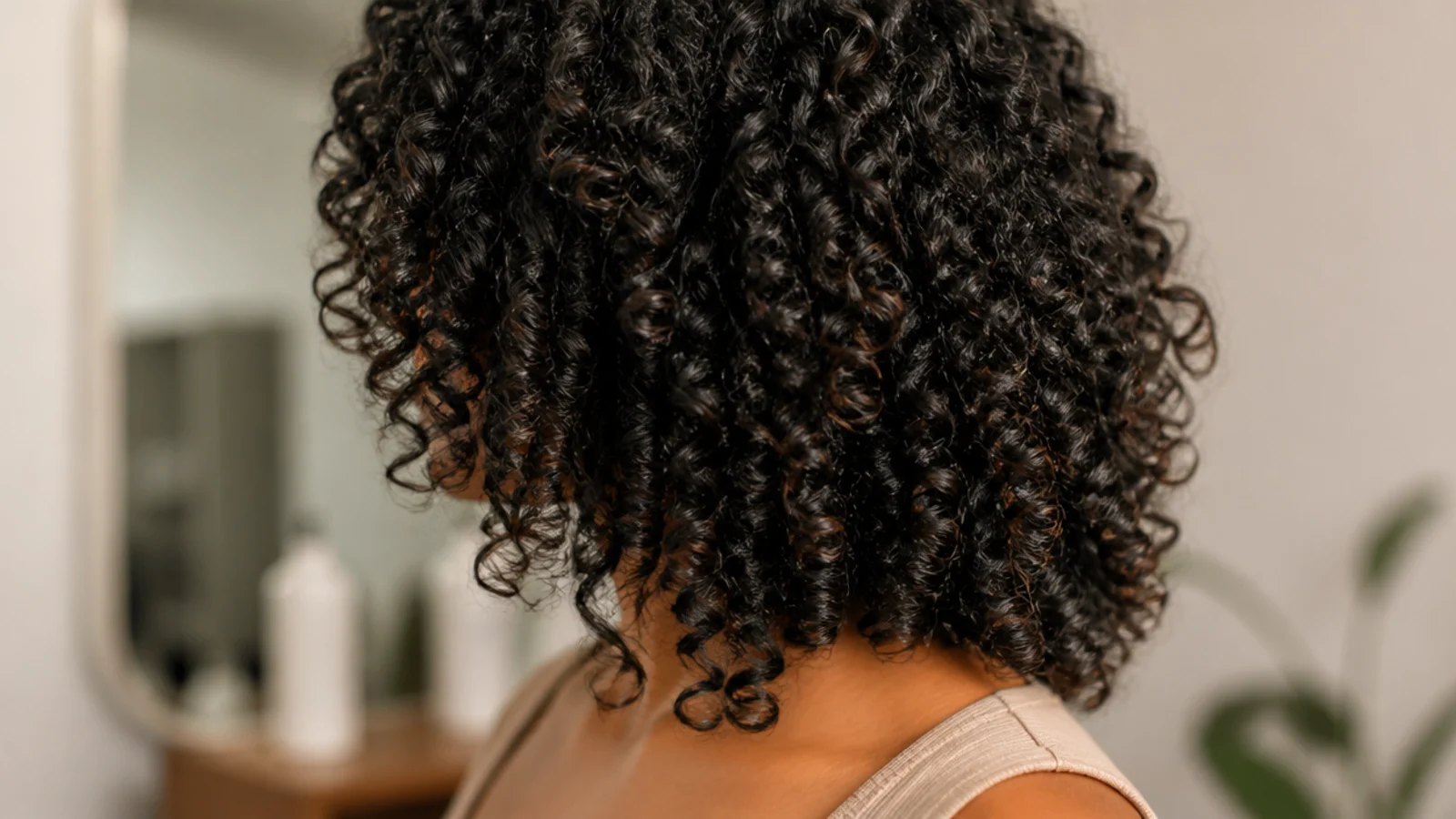
15. Low Maintenance on 4A
A 4A coil often finishes near half its stretched length, so mid length wet is a considerably shorter cut dry. Very few layers and a rounded perimeter is what holds here, and the shape lasts for months because shrinkage hides most of the growth as it happens.
Final Thoughts
Ask for the dry length and insist on a dry cut, and most of the usual complaints about curly haircuts stop happening. The rest come down to weight in the wrong place — the crown flattening while the sides swell — and that is a layering conversation, not a length one, so name where it goes wide instead of asking for it shorter.
Between appointments, the two things that hold a curly mid length are a dense perimeter and a light hand while it dries. For a heavier layered version of the same idea see curly shag haircut ideas, and for the equivalent length on men see medium length haircuts for curly hair. More in Women's Hairstyles.