25 Stunning Hoco Hairstyles That Are Easy To Do
Twenty-five homecoming styles, and the reason most of them collapse by the second hour — freshly washed hair has nothing to grip. Texture first, pins second, and every pin pointed against the direction the weight pulls.
In this article · 32
- Why Hoco Styles Fall Out
- Choosing Yours by Hair Length
- The 25 Hoco Hairstyles
- 1. Twisted Half Up
- 2. Low Bun at the Nape
- 3. Sleek High Ponytail
- 4. Bubble Ponytail
- 5. Dutch Braid Into a Bun
- 6. Hollywood Waves
- 7. Braided Crown
- 8. Half Up With a Ribbon
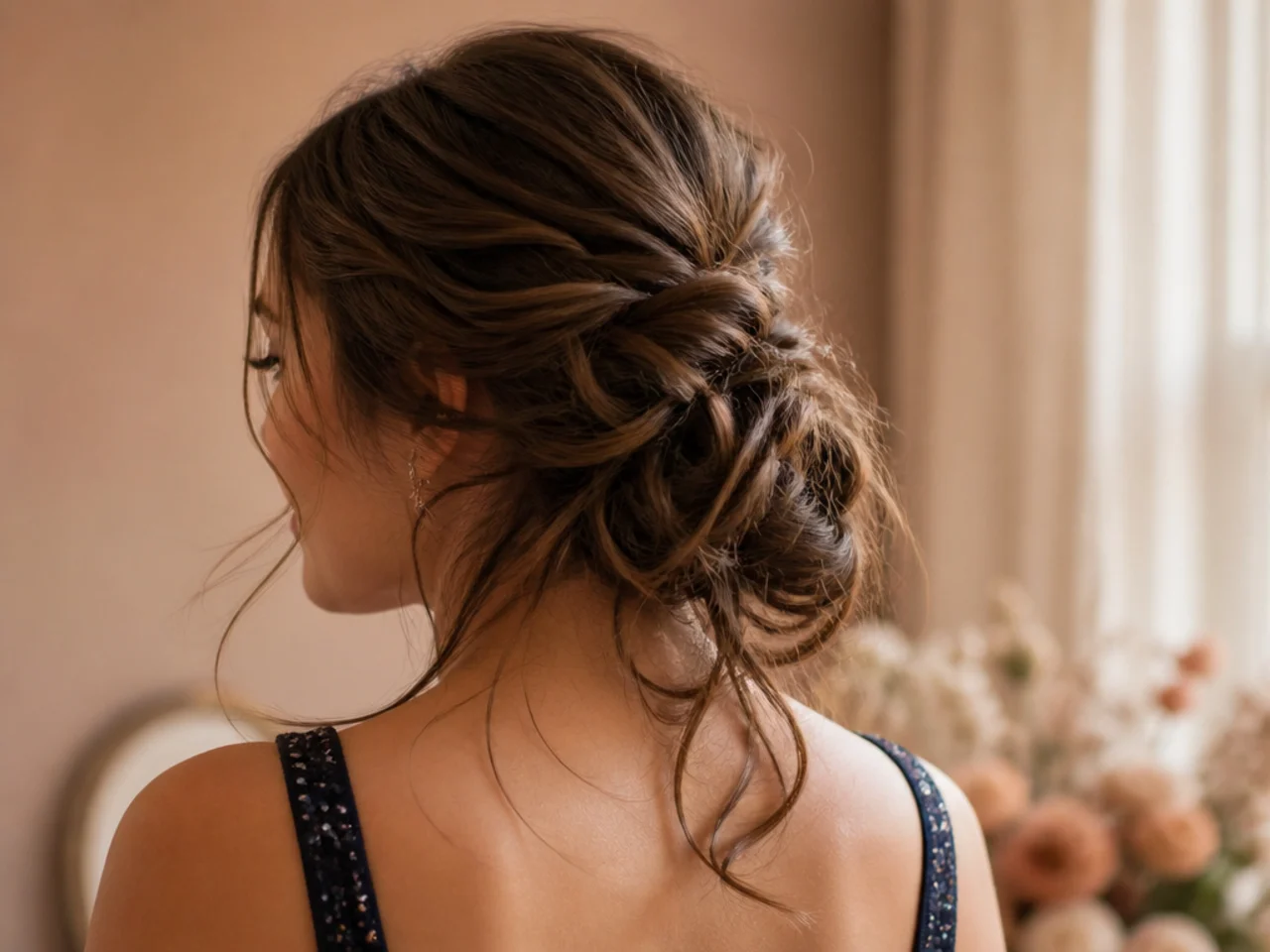
- 9. Messy Bun With Face Framing Pieces
- 10. Side Swept Curls
- 11. French Twist
- 12. Fishtail Braid Over One Shoulder
- 13. Double Buns
- 14. Claw Clip Twist
- 15. Slicked Back Low Ponytail
- 16. Curled Half Up With a Bow
- 17. Chignon With a Middle Part
- 18. Rope Twist Ponytail
- 19. Voluminous Blowout With Hidden Pins
- 20. Braided Headband
- 21. Deep Side Part With Pinned Waves
- 22. Ballerina Bun
- 23. Low Ponytail Wrapped With Hair
- 24. Soft Waves With Curtain Bangs
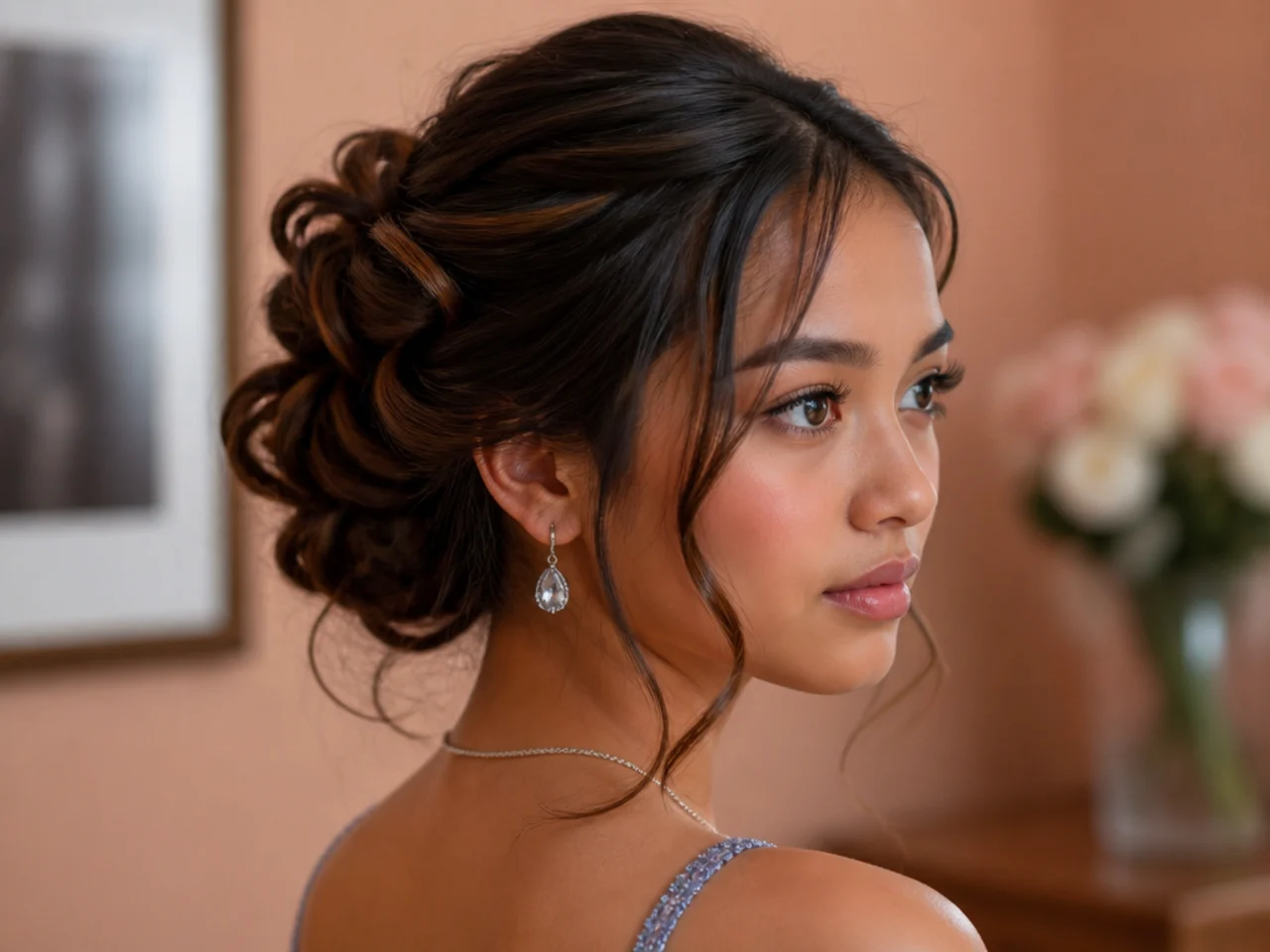
- 25. Textured Updo With Loose Tendrils
- Styling and Upkeep
- Mistakes to Avoid
- FAQ
- Final Thoughts
Most homecoming styles fail on the dance floor rather than in the mirror, because they were built on freshly washed hair that has nothing to hold onto.
Clean hair is the wrong starting point. A washed cuticle is smooth and slippery, so strands slide past each other and every pin works its way loose. Day-old hair holds an updo for hours longer.
Pins hold direction, not weight. A bobby pin pushed straight in along the line of pull slides straight back out. Angle it against that pull and it locks.
Why Hoco Styles Fall Out
Friction is what holds a style, not product volume. Texture spray, dry shampoo or a day of natural oil all do the same job — they roughen the cuticle so strands grip each other.
Weight always wins over a single pin. Anything sitting high on the head is fighting gravity all night. Anchor it low, or split the weight across several pins.
Heat sets nothing until it cools. A curl brushed out while still warm has not set its shape yet and will drop within the hour.
Tension at the hairline turns into a headache. Pull tight at the back and loose at the front, never the reverse. The hairline has the shortest, finest hairs and the least tolerance.
Choosing Yours by Hair Length
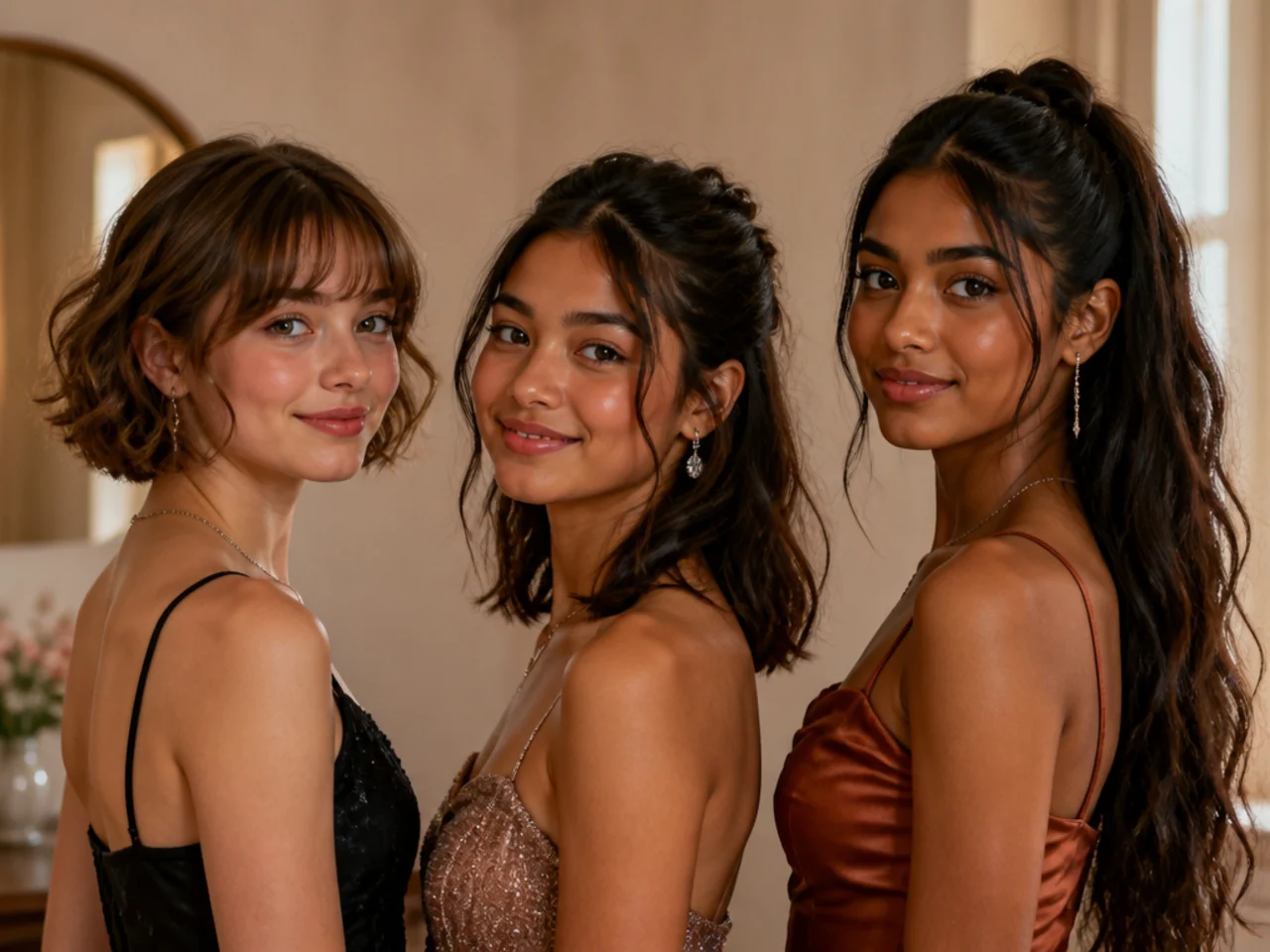
Above the shoulder, go half up. There is not enough length to wrap a full updo without the ends escaping, and escaped ends read as a mistake rather than a style.
Shoulder length suits a low bun or a twist. Both use the whole length once and need no wrapping, which is where short hair usually runs out.
Long hair can carry weight high. A high ponytail or a ballerina bun needs enough length to wrap the base and hide the elastic entirely.
Fine hair needs a bigger silhouette than it has. Backcomb at the base and pin loosely, so the shape holds air rather than being compressed flat.
The 25 Hoco Hairstyles
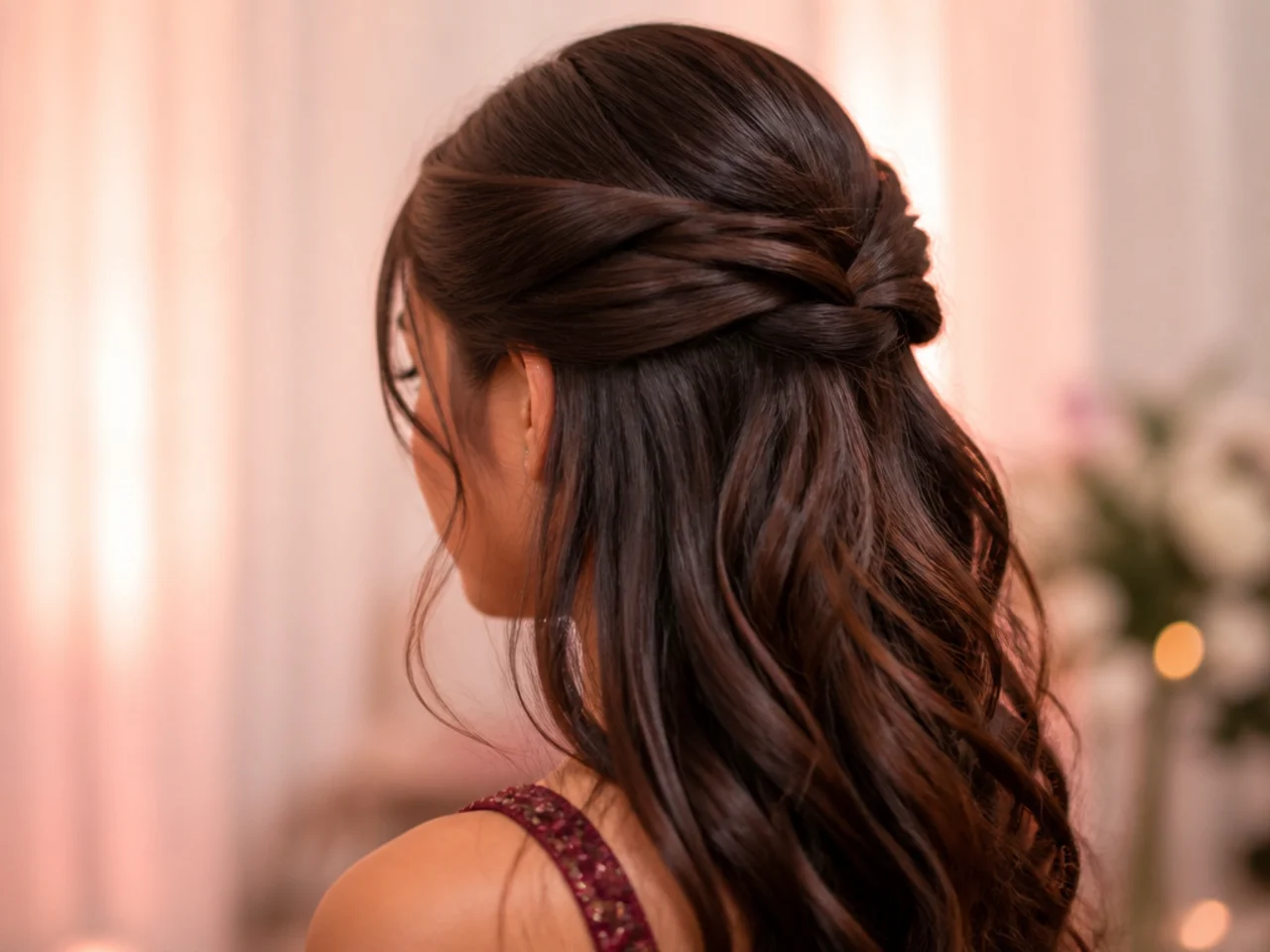
1. Twisted Half Up
Two sections twisted back from the temples and pinned into each other at the crown rather than into the scalp. The twists take the strain between them, which is why this holds when a plain half up pinned in one place slides apart by the second song.
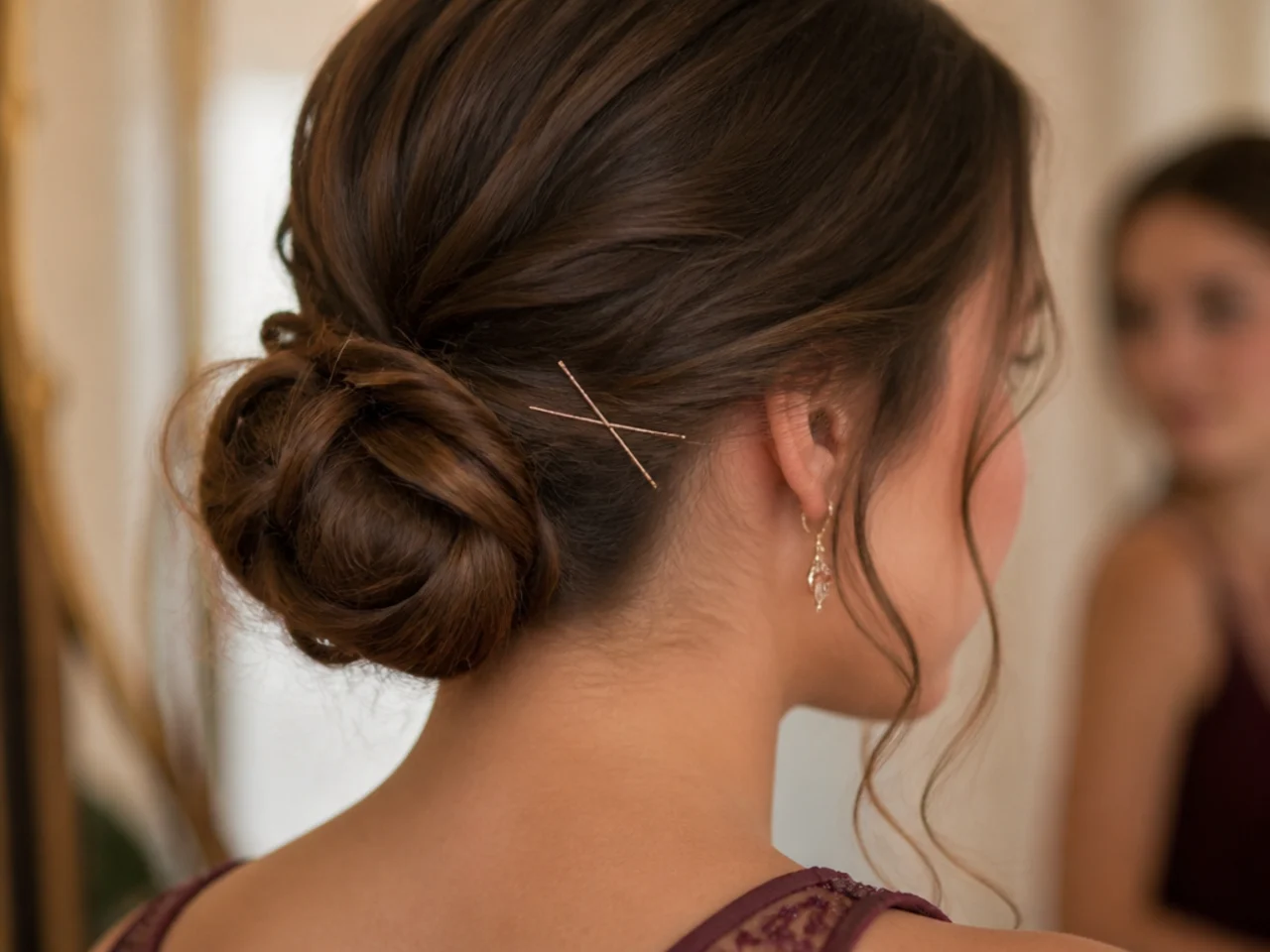
2. Low Bun at the Nape
Sitting the bun below the occipital bone rests its weight against the skull instead of hanging off it. Gravity presses it into place rather than dragging it down, which is why fine hair holds this shape for a whole evening when a high bun slips inside an hour.
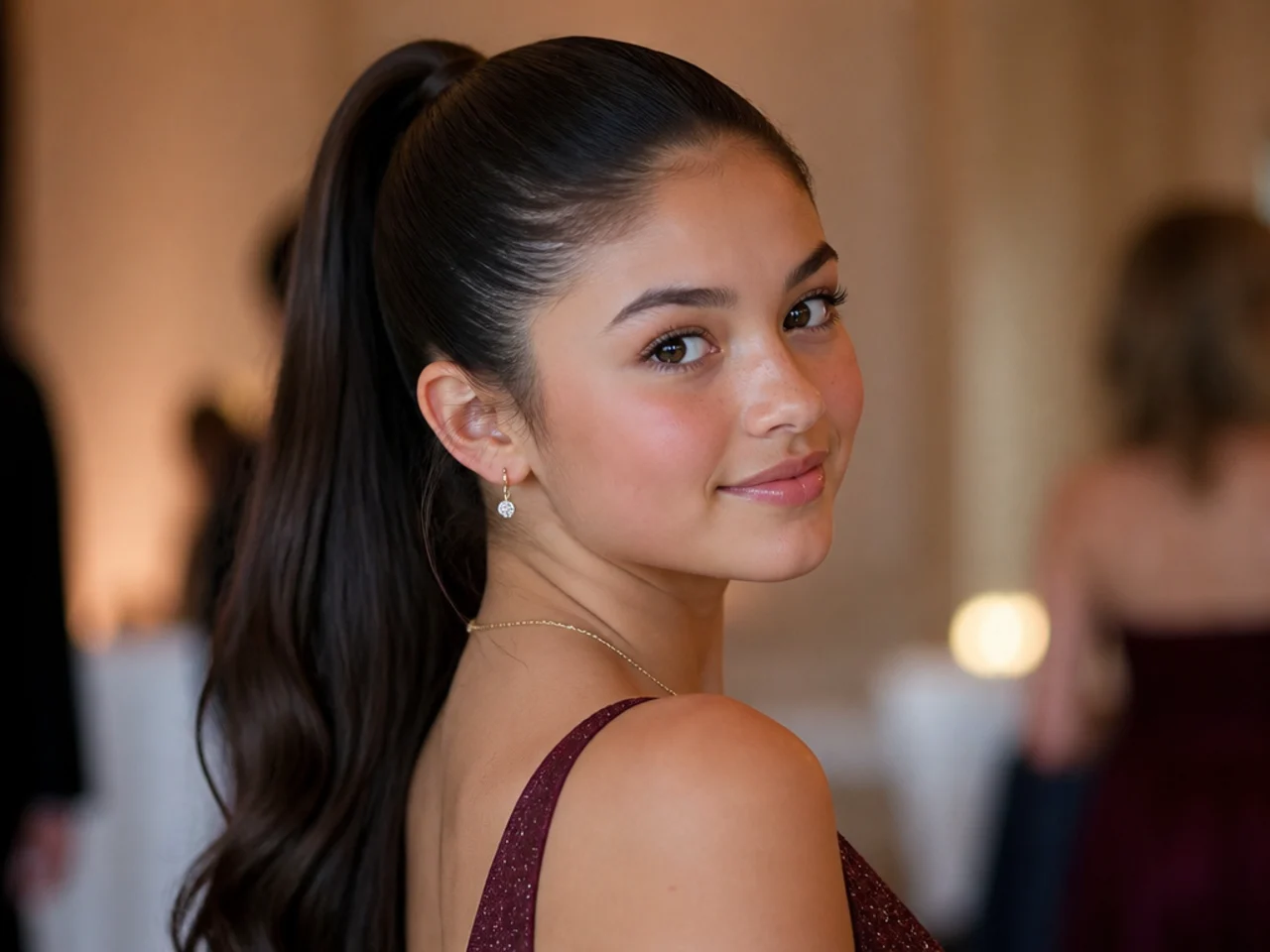
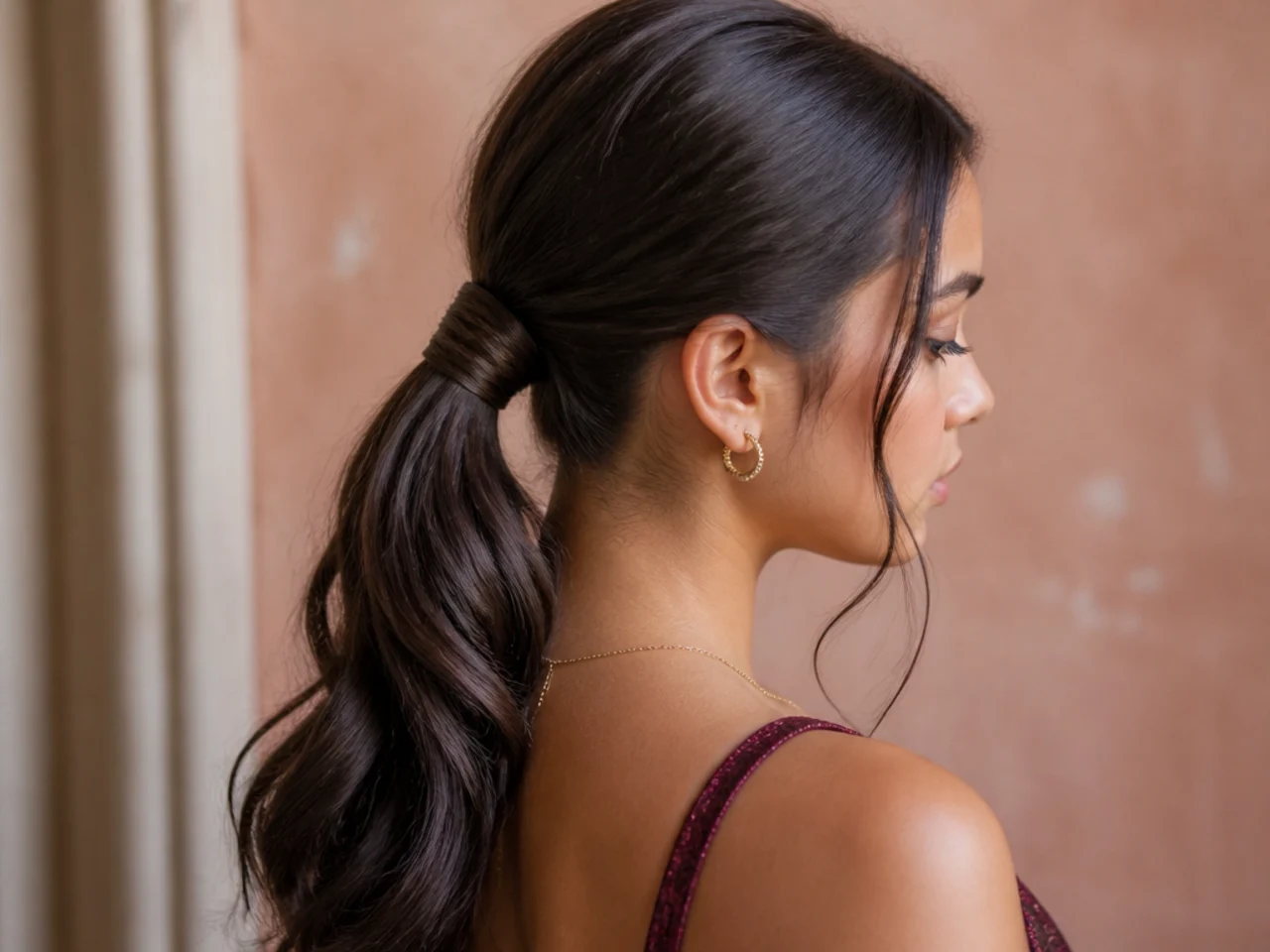
3. Sleek High Ponytail
Everything reads on the surface, so brush direction matters more than how much product you use. Set the elastic behind the crown rather than in front of it — pulled forward, the tension lands on the hairline and becomes a headache well before the last dance.
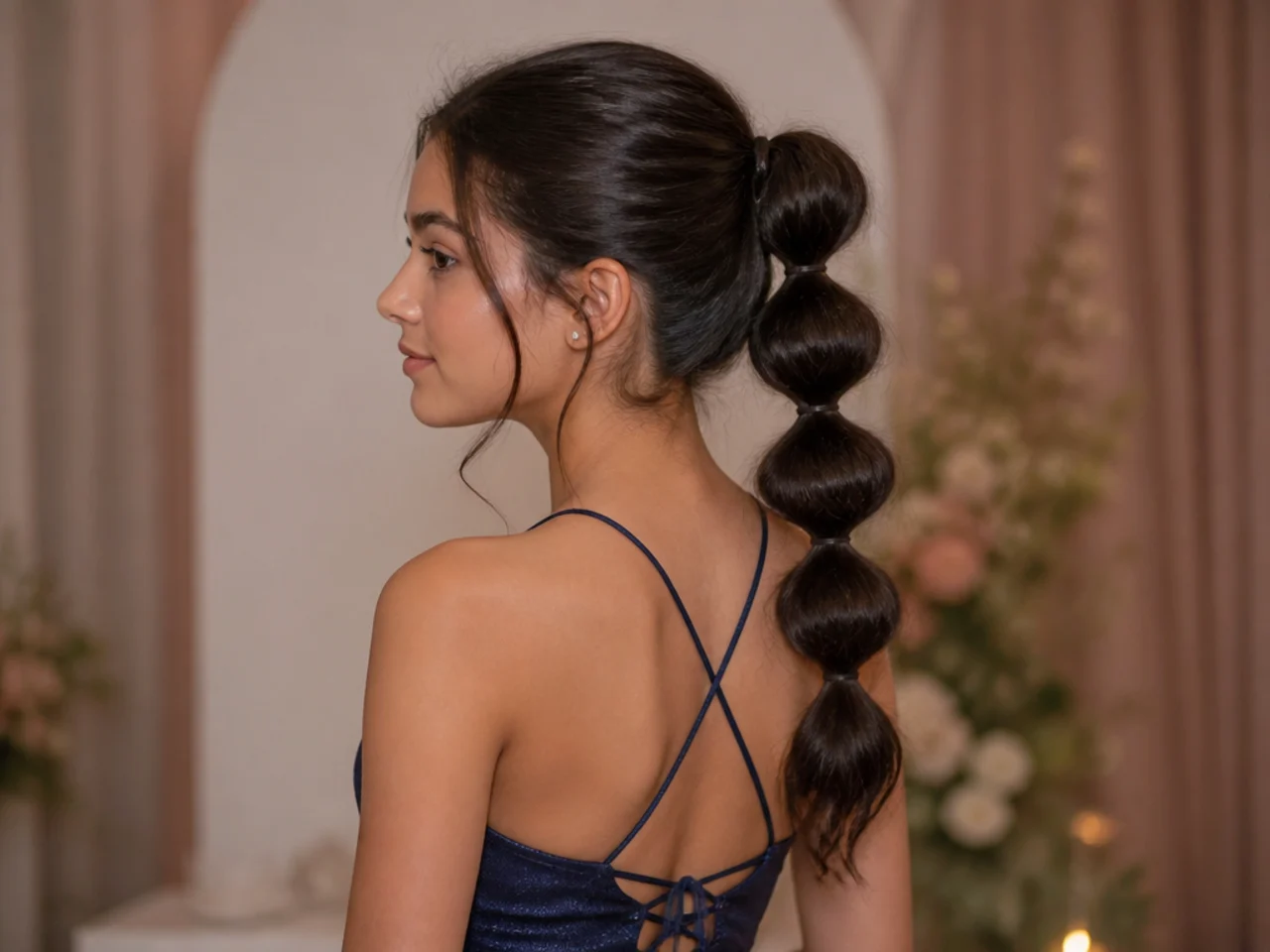
4. Bubble Ponytail
Elastics spaced evenly down the length, then each section teased outward so it holds air between the ties. Even spacing is the whole trick: the lower bubbles carry the most weight, so if they are spaced wider than the top ones they flatten out under it.
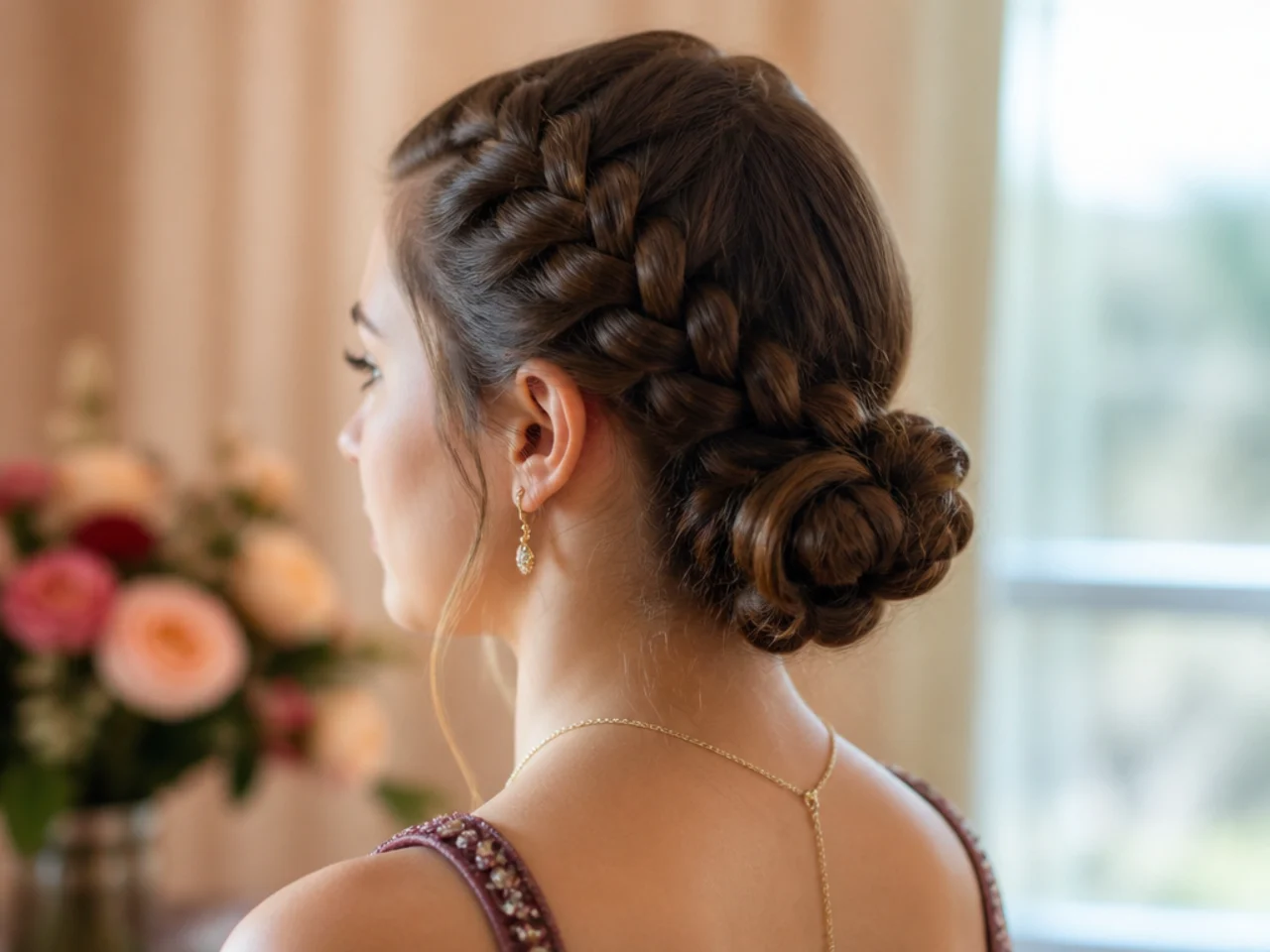
5. Dutch Braid Into a Bun
A Dutch braid crosses strands underneath rather than over, so it sits raised off the scalp and stays visible from the front. It also grips the crown hair along its whole length, which stops the bun at the end from sliding once the room gets warm.
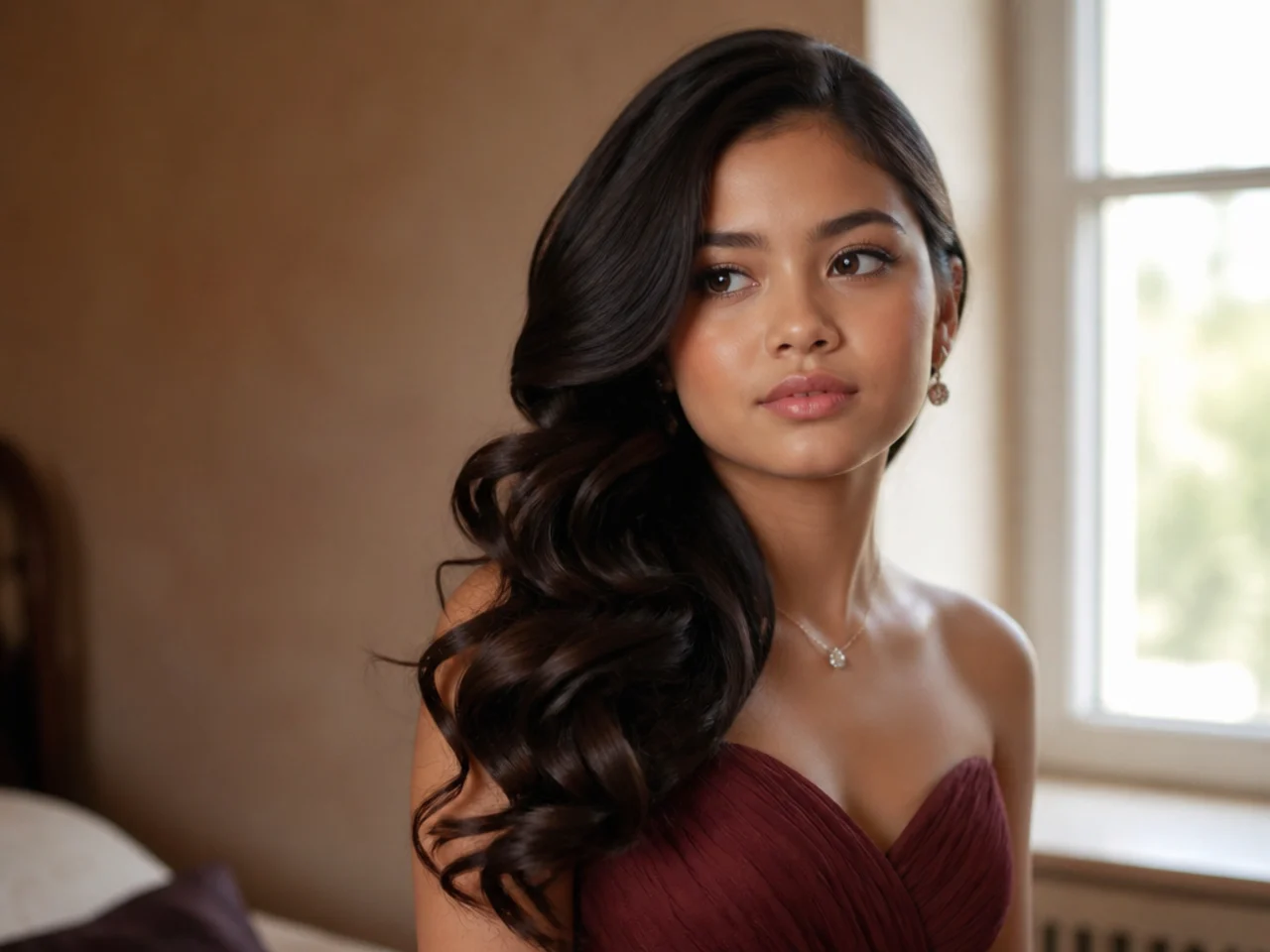
6. Hollywood Waves
Set on a large barrel, then pinned flat to the head and left to cool completely before brushing out. The cooling is the mechanism — hair takes its new shape as it returns to room temperature, so brushing warm curls out drops them into loose bends instead of waves.
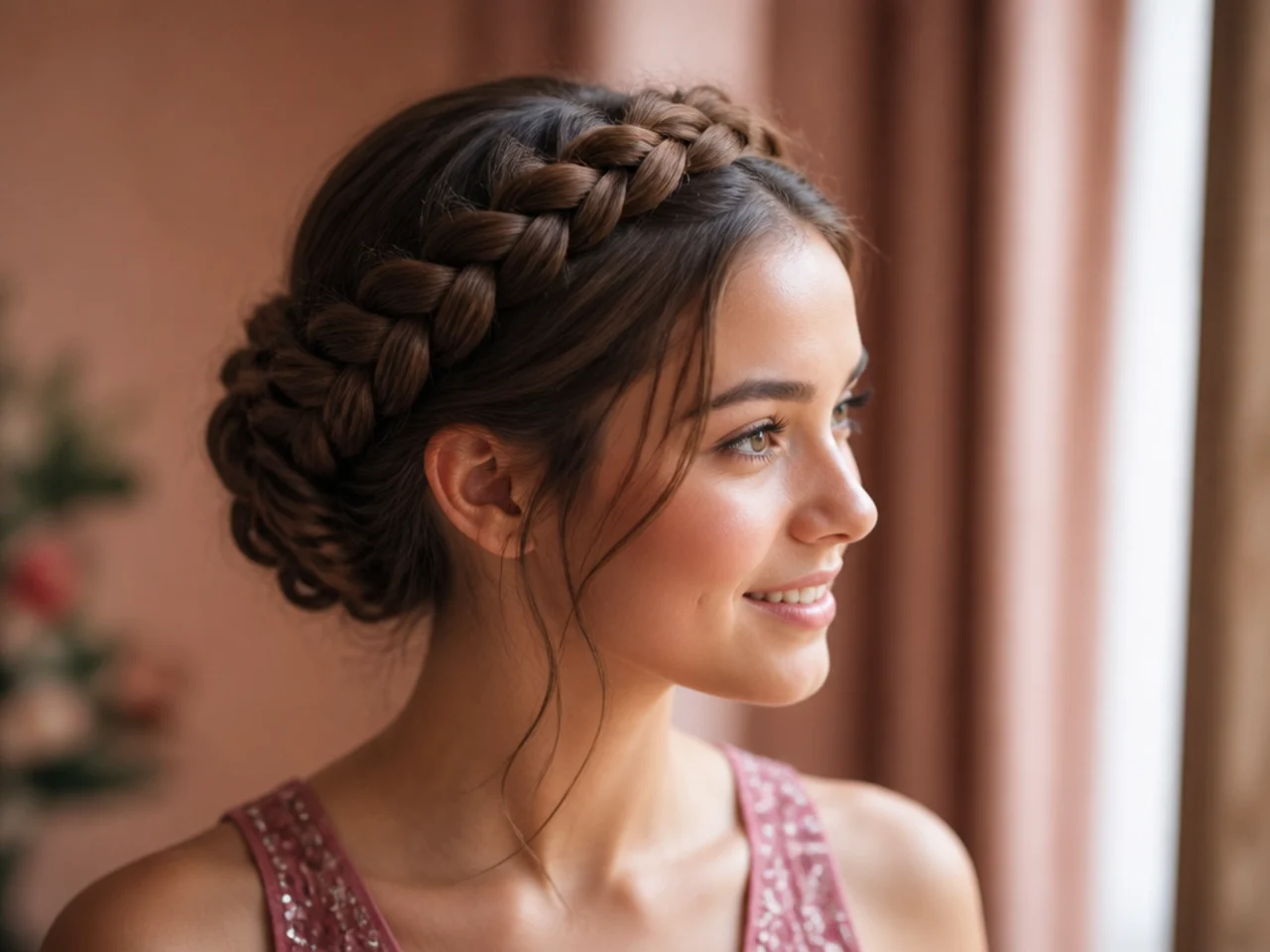
7. Braided Crown
A braid taken around the head and pinned above the opposite ear. The tension is spread along the entire braid rather than concentrated at one anchor point, so no single pin carries enough load to work itself loose during the night.
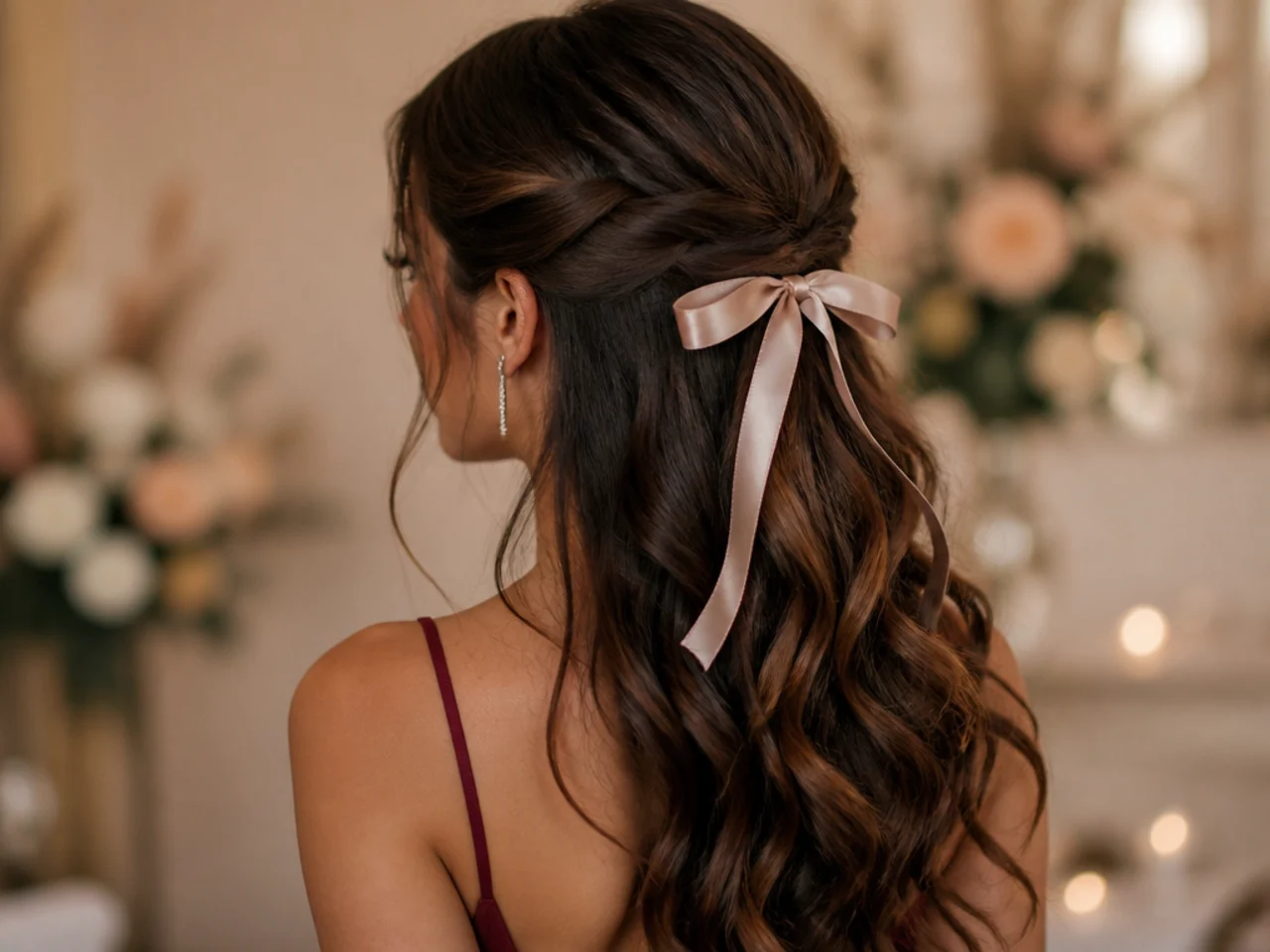
8. Half Up With a Ribbon
The ribbon is structural, not decorative. Fabric has far more friction against hair than an elastic does, so tying it through the section adds grip exactly where a smooth half up normally loosens and slides down the back of the head.
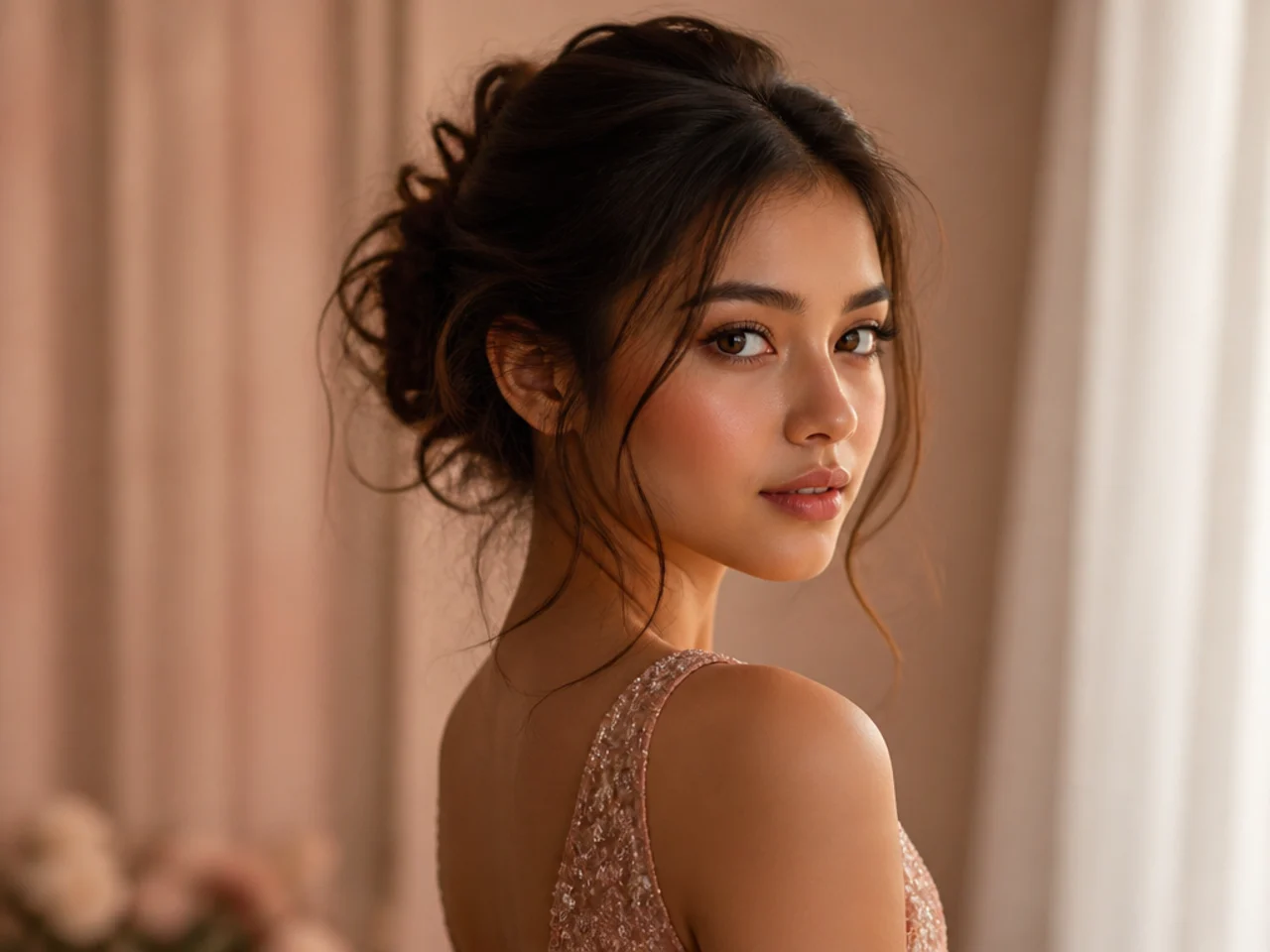
9. Messy Bun With Face Framing Pieces
Pull the front pieces out before you pin, not after. Pulling afterwards loosens the whole bun because you are drawing hair back through the pins, and each piece you free takes a little of the bun's tension with it.
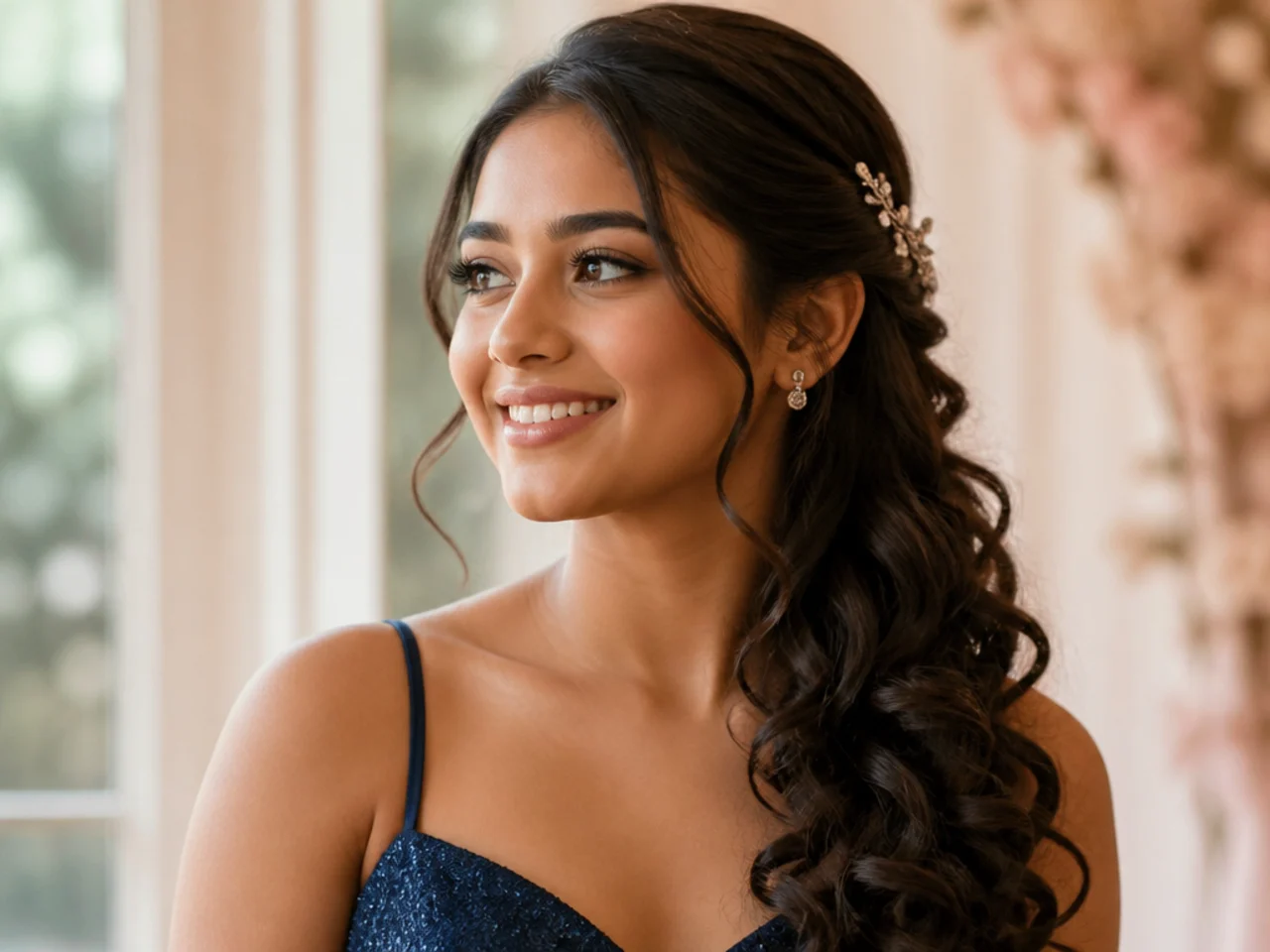
10. Side Swept Curls
Everything gathered over one shoulder and pinned behind the opposite ear, with the pins hidden underneath the top layer. Curls carry more weight on one side than a symmetrical set does, so use three or four small pins spread out rather than two large ones.
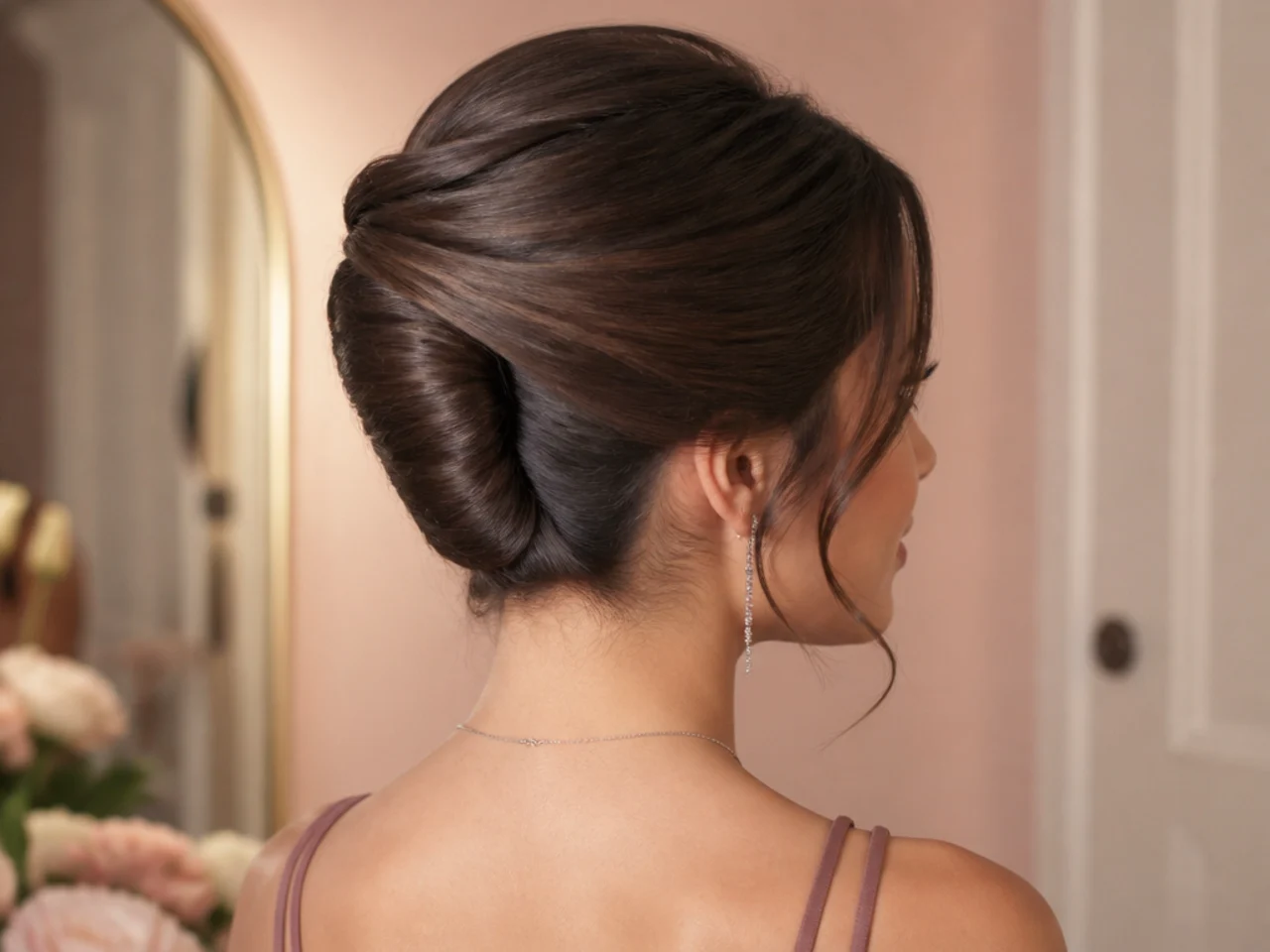
11. French Twist
The length is rolled vertically against the back of the head and secured with pins pushed through the roll into the hair underneath. The roll holds itself by tension, so the pins only stop it unwinding — which is why a loose roll needs twice as many.
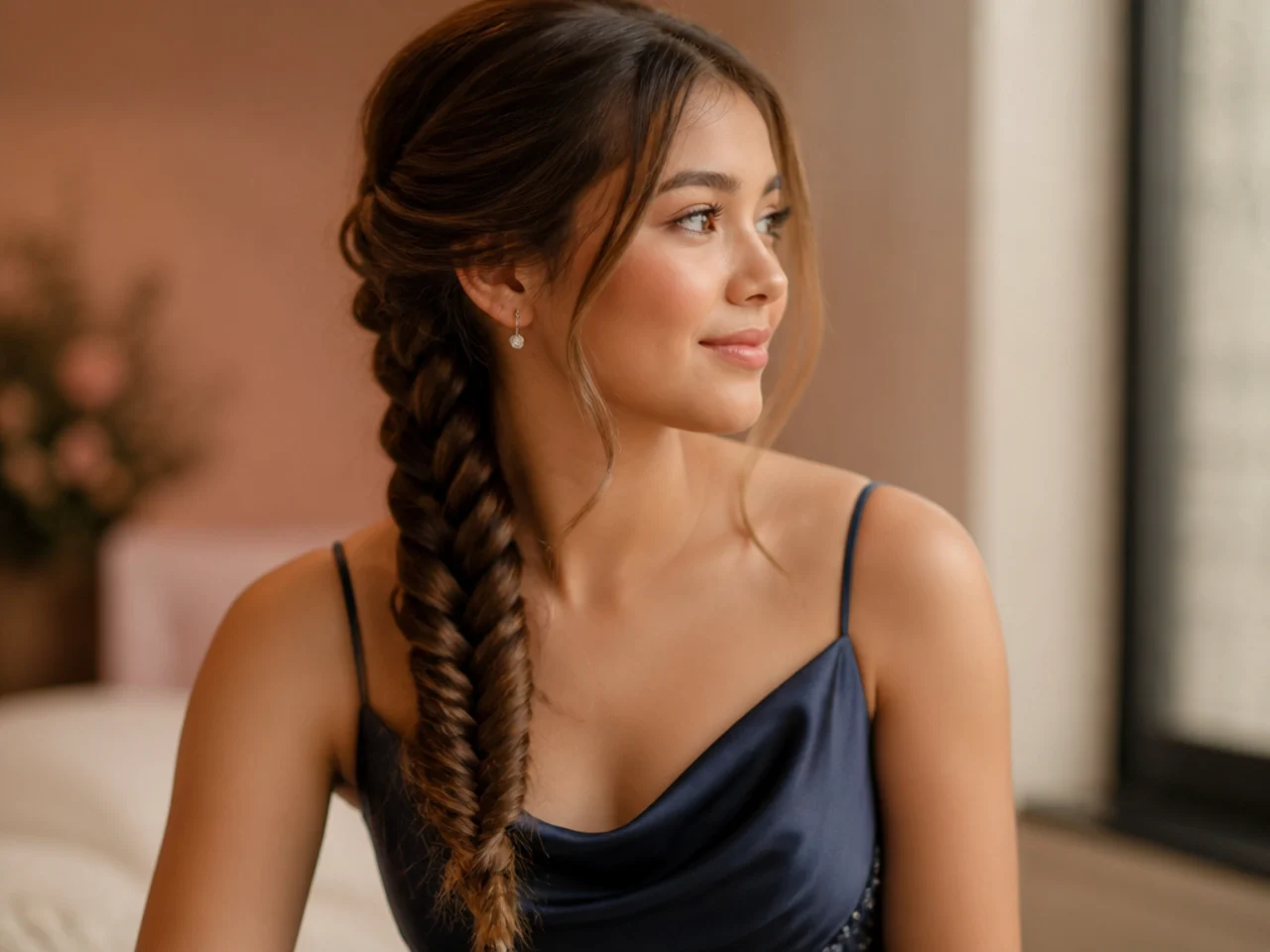
12. Fishtail Braid Over One Shoulder
Small alternating strands crossed from the outside in, so every crossover locks the one before it. That interlocking is why a fishtail survives a night of movement while a three strand braid of the same tightness gradually works itself loose.
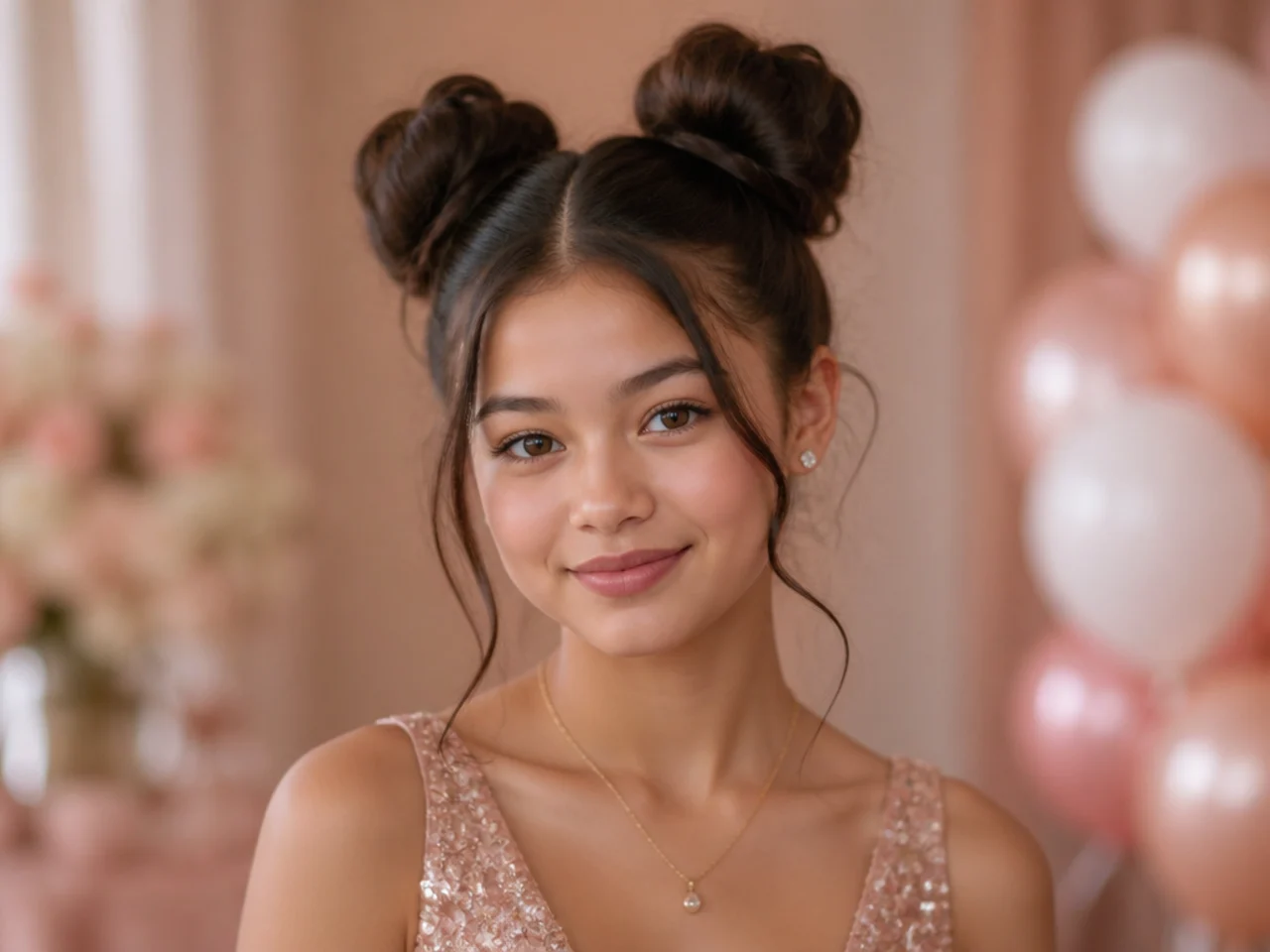
13. Double Buns
Two buns set symmetrically above the ears, each carrying half the weight. Splitting the load is what makes this workable on hair that is too fine to hold one large bun, since neither side is heavy enough to drag its own pins downward.
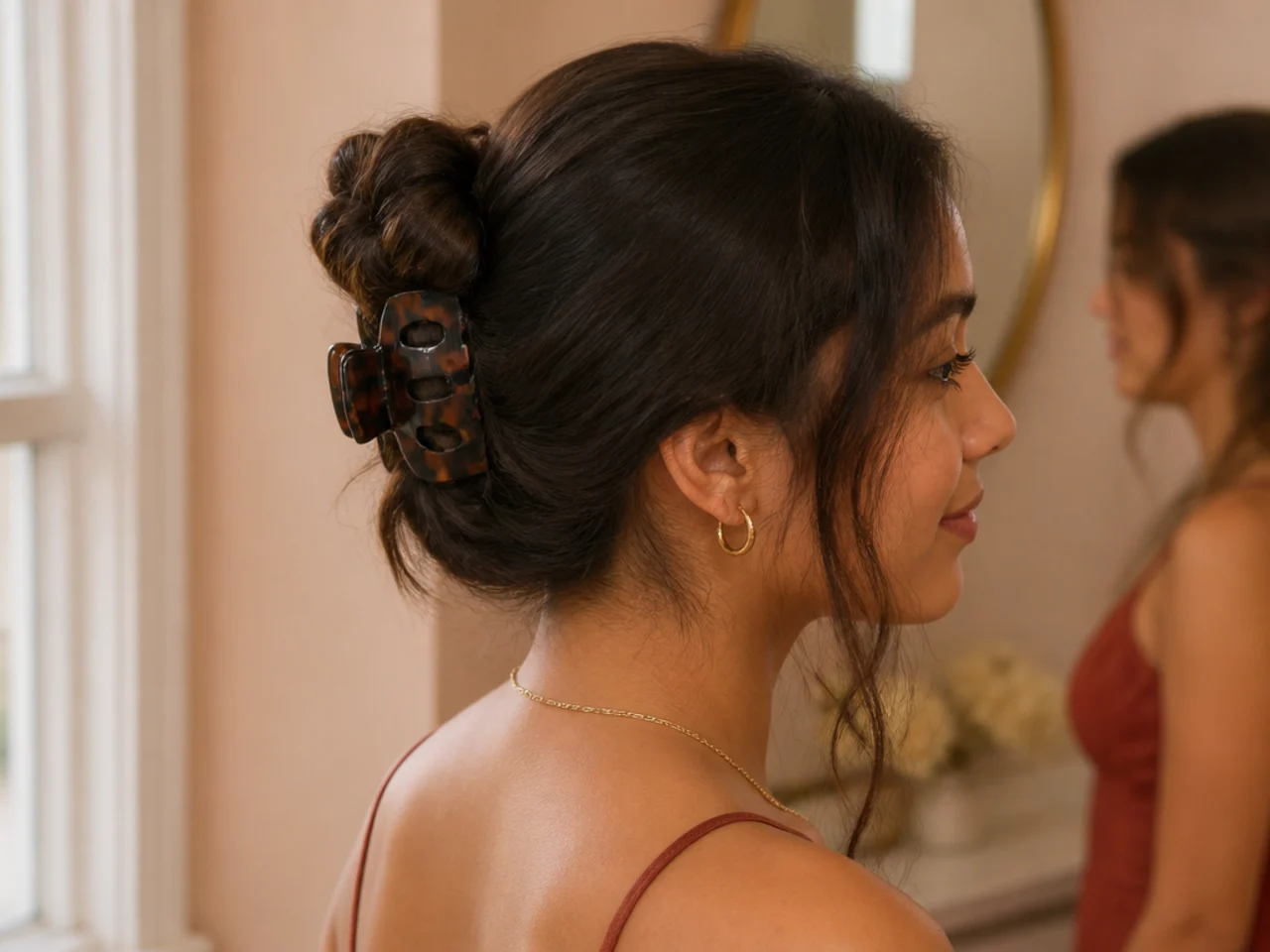
14. Claw Clip Twist
The clip needs a twist to bite into — teeth closing on flat hair have nothing to grip and slide out within minutes. Twist the length once, fold it upward, then close the clip across the fold rather than across the loose ends.
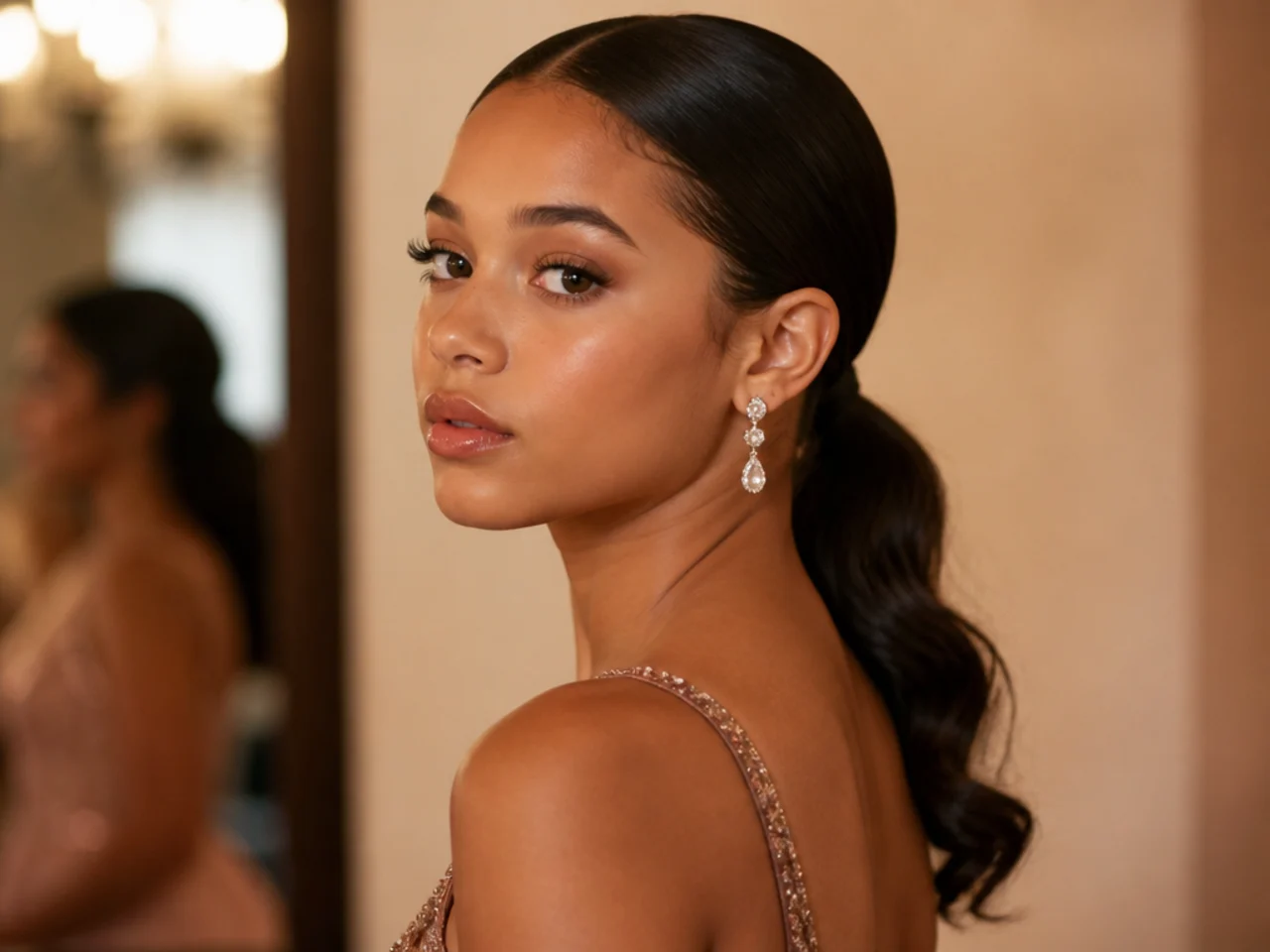
15. Slicked Back Low Ponytail
Gel or wax sets into a shell as it dries, which is what holds the surface flat rather than any tension in the elastic. Apply it with a brush in one direction and do not touch it again — reworking a half dry shell breaks it into flakes.
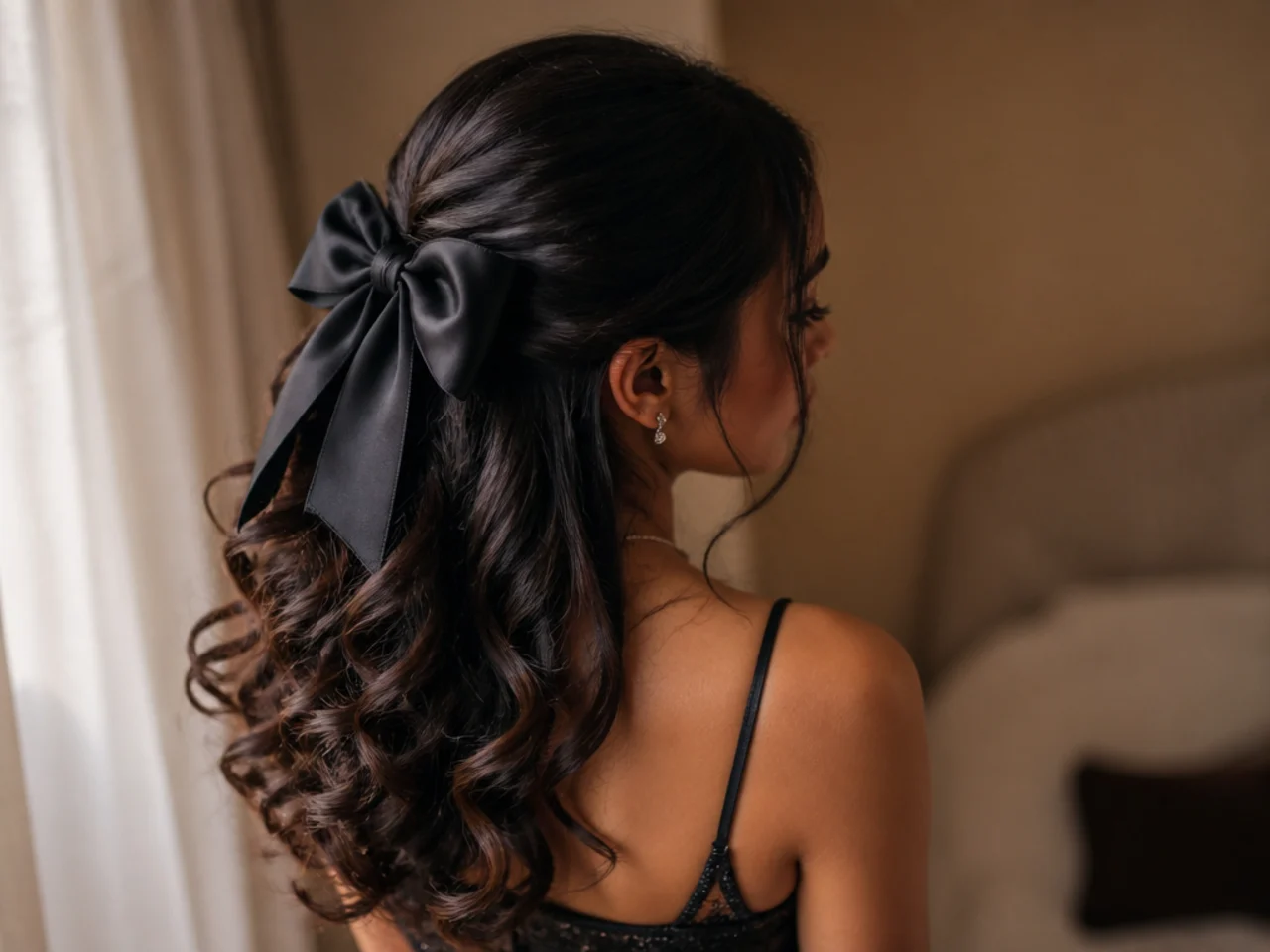
16. Curled Half Up With a Bow
The bow sits over the join, so it hides the elastic and the pins in one move. Keep the curls below the join rather than above it — curl the crown too and the bow has no flat surface to sit against.
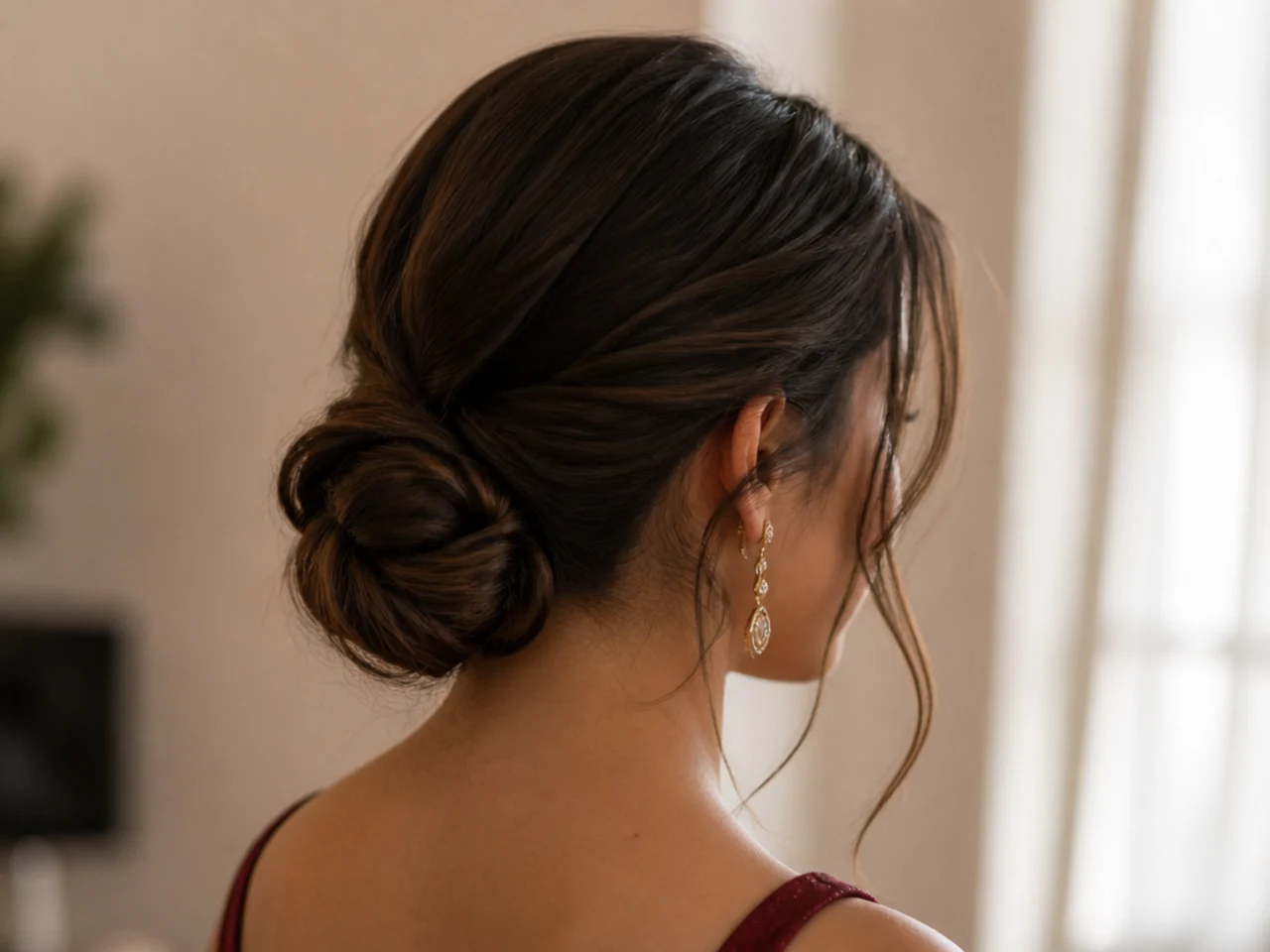
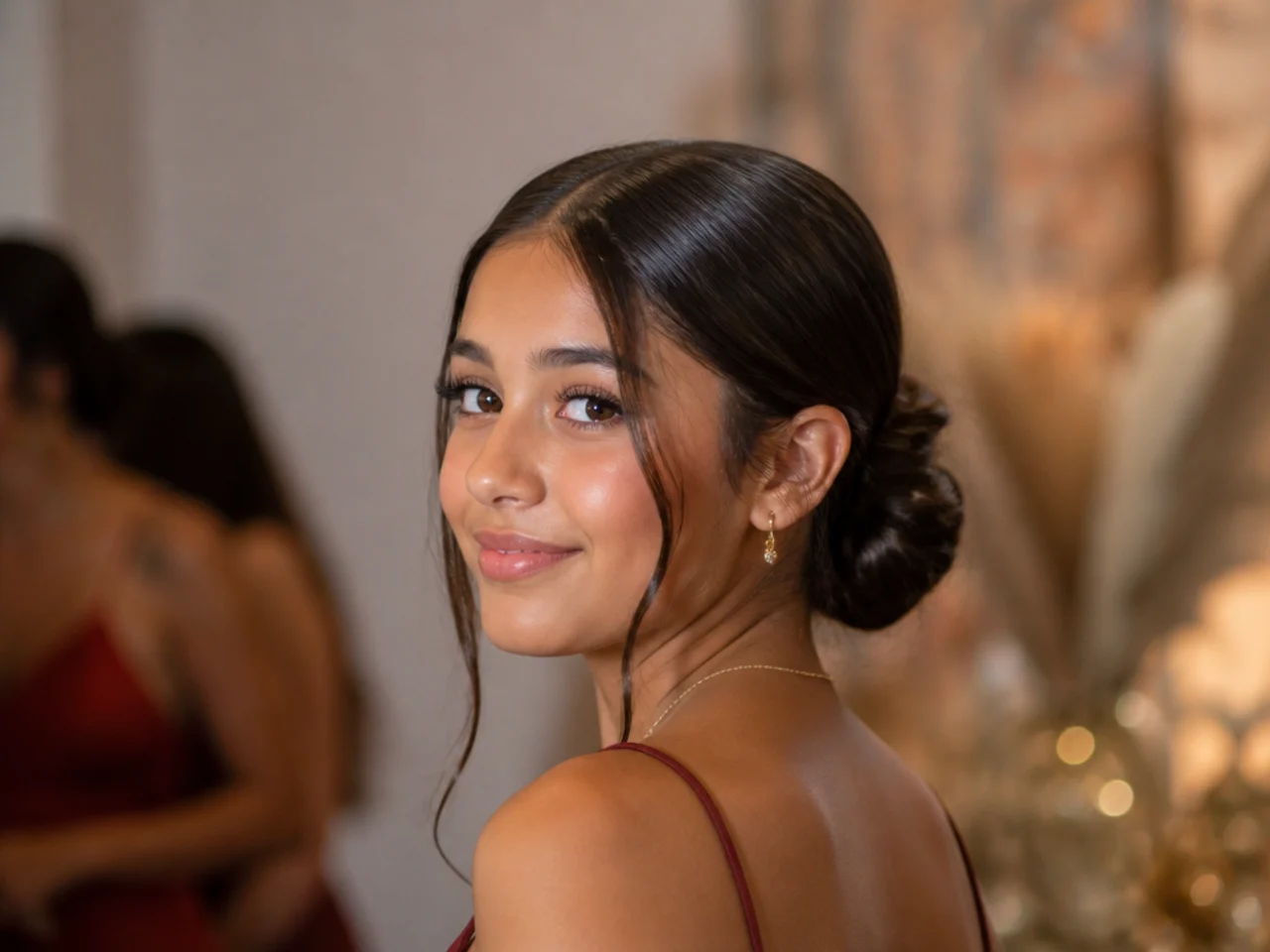
17. Chignon With a Middle Part
A soft coil pinned low, with the part taken cleanly down the centre first. The part is what makes this read as deliberate — a chignon with an undefined front looks like hair that was gathered up rather than a style that was set.
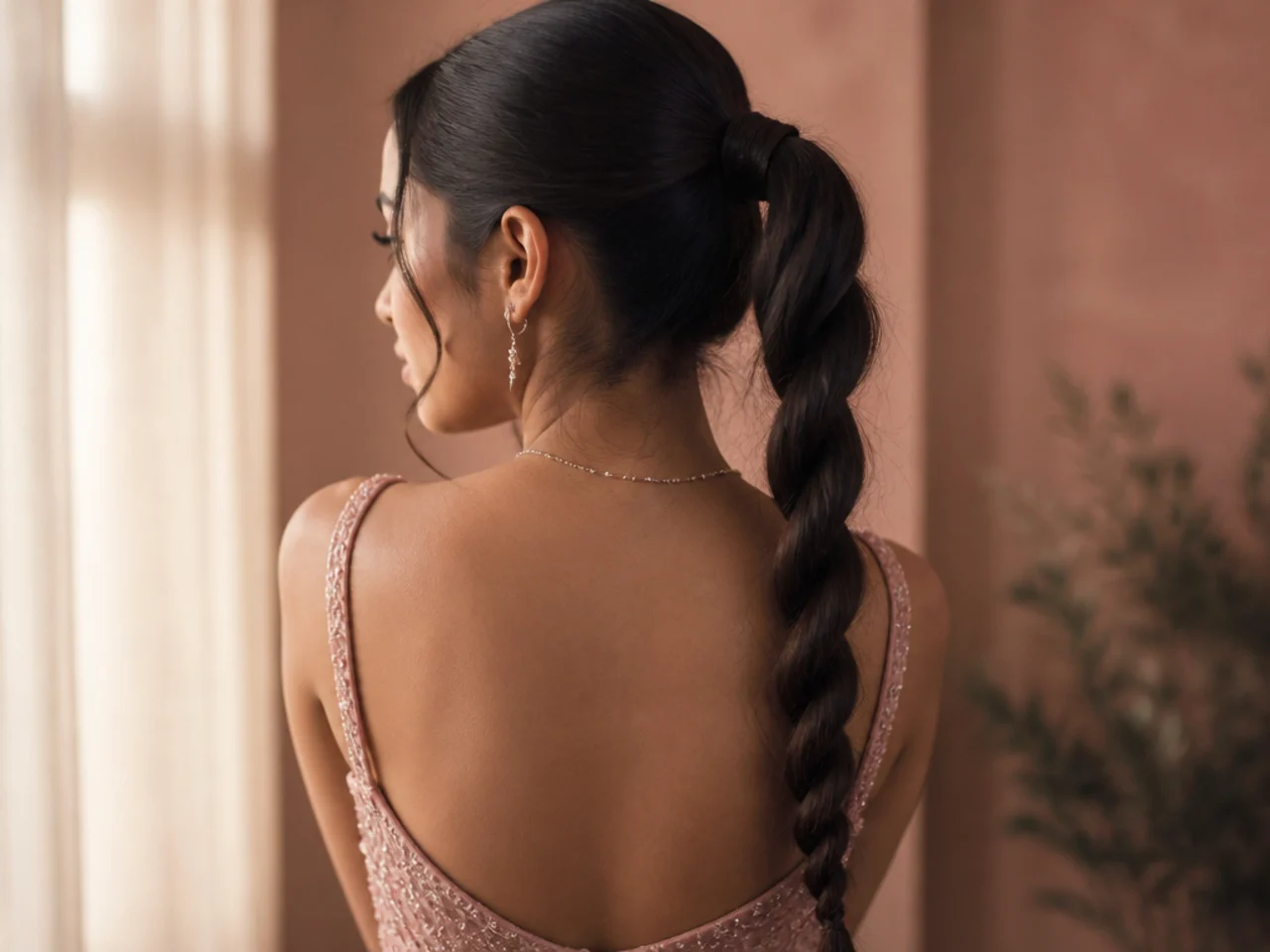
18. Rope Twist Ponytail
Two strands twisted in one direction, then wound around each other in the opposite direction. The counter twist is the whole mechanism: each strand is trying to unwind and is held by the other, so the rope stays closed without needing pins along its length.
19. Voluminous Blowout With Hidden Pins
Two pins crossed underneath the crown lift the section without showing. The volume comes from the pins holding the roots up off the scalp, not from product — spray alone coats the surface and adds weight where you wanted lift.
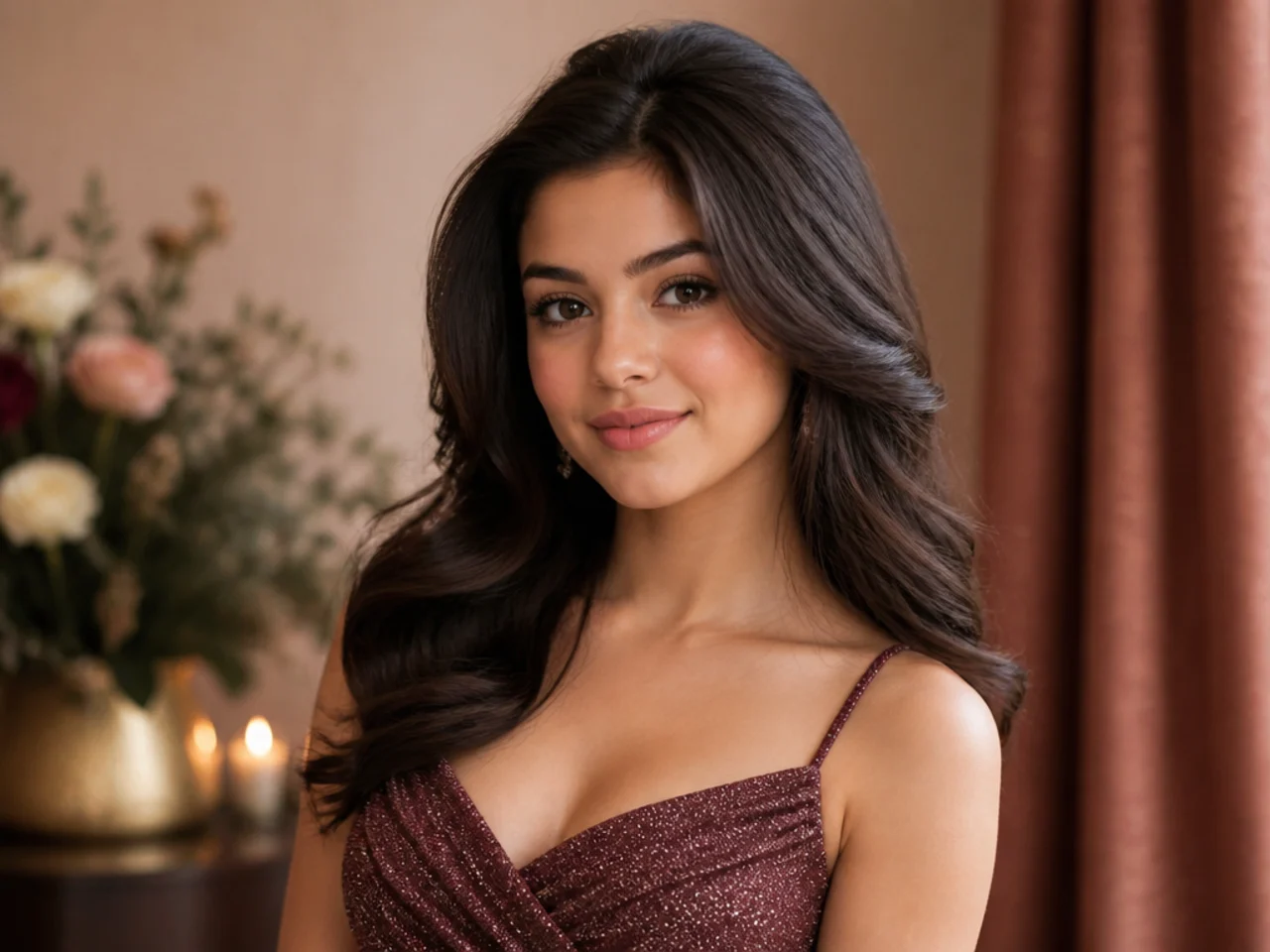
20. Braided Headband
A narrow braid taken from one temple across the front hairline. Because it is thin it carries almost no weight, so it stays put on fine hair where a thicker crown braid would sag forward over the course of the evening.
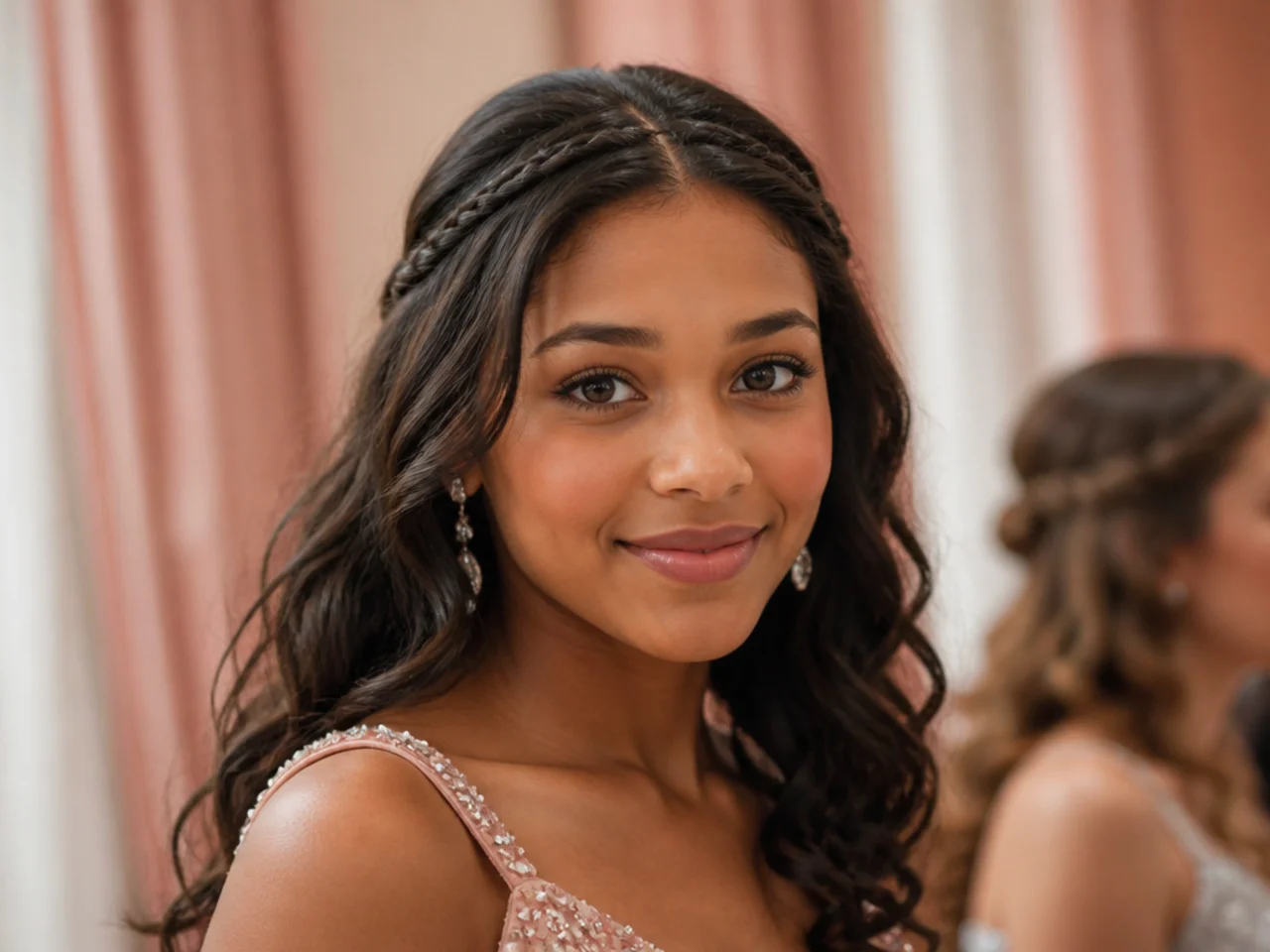
21. Deep Side Part With Pinned Waves
The part is taken well past the arch of the brow so one side carries clearly more hair. That imbalance is what creates the sweep — a part closer to the centre gives you two even halves and the wave has nowhere to travel.
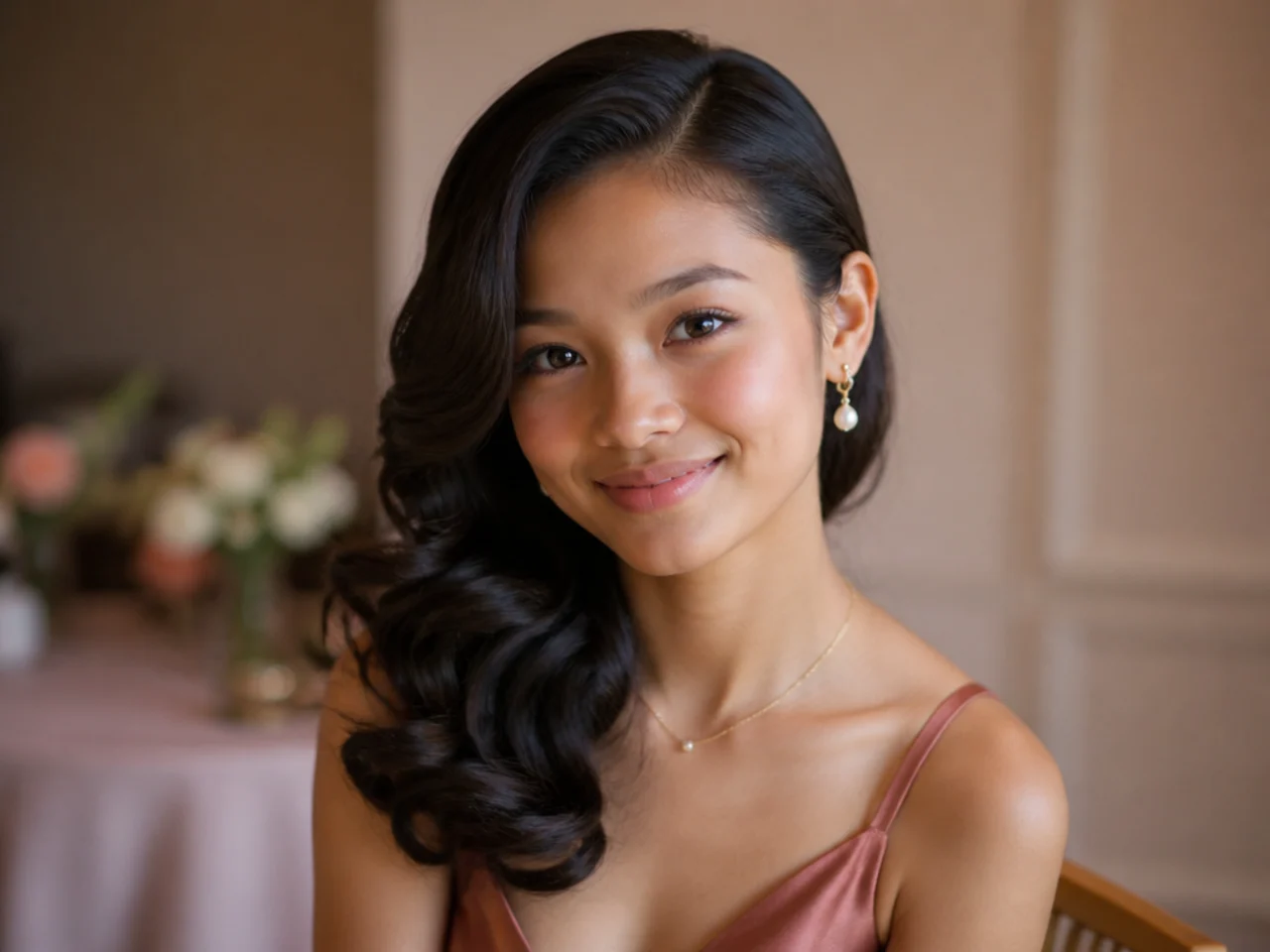
22. Ballerina Bun
Wrapped tightly around its own base so the bun is a solid disc rather than a loose loop. Density is what keeps it circular — a loosely wound bun flattens against the head within an hour because nothing inside it is holding the shape.
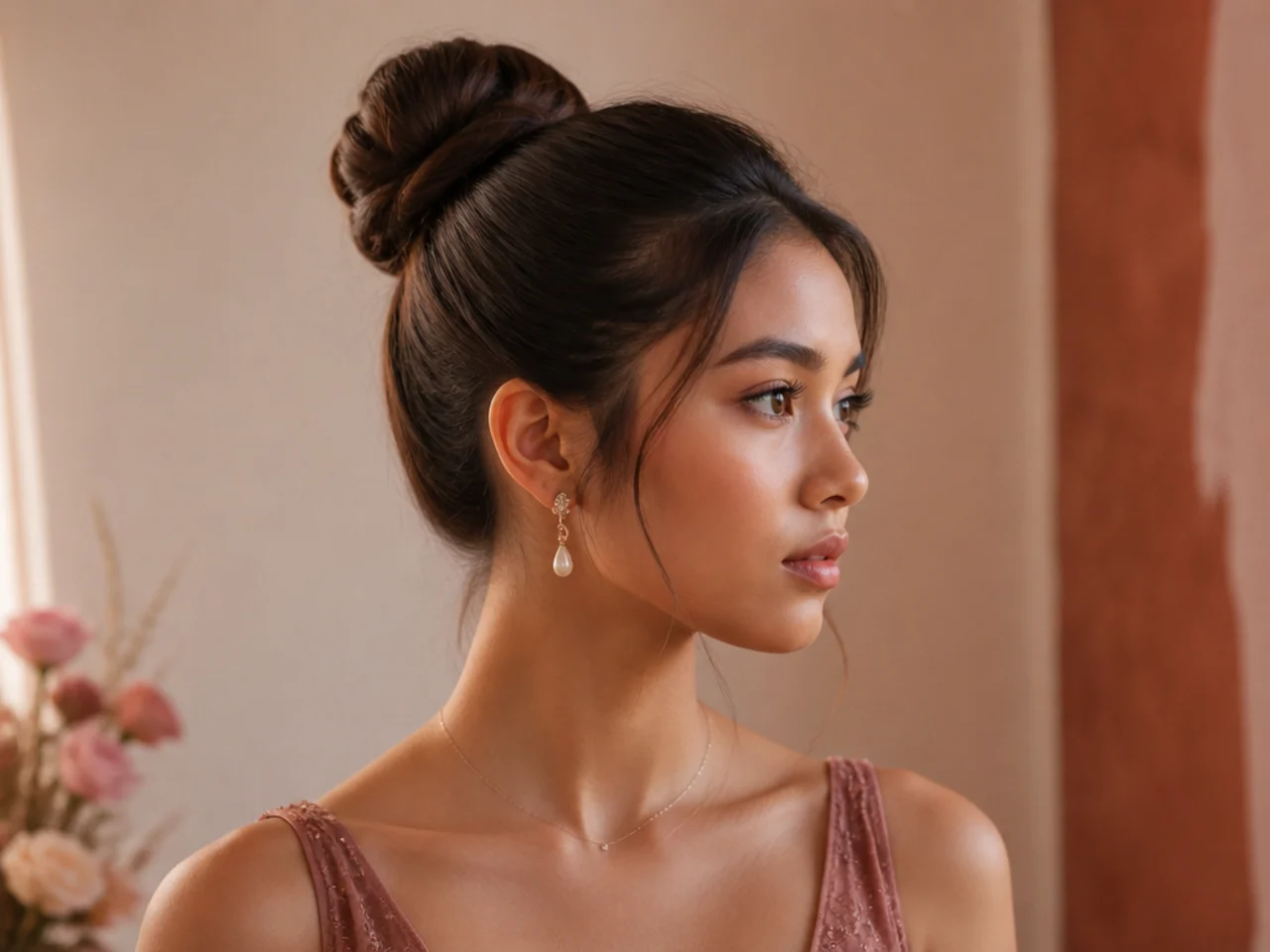
23. Low Ponytail Wrapped With Hair
A thin strand taken from underneath and wound around the elastic, then pinned upward into the ponytail. Pinning upward is the point — the weight pulls down, so a pin set against that direction cannot slide out the way it went in.
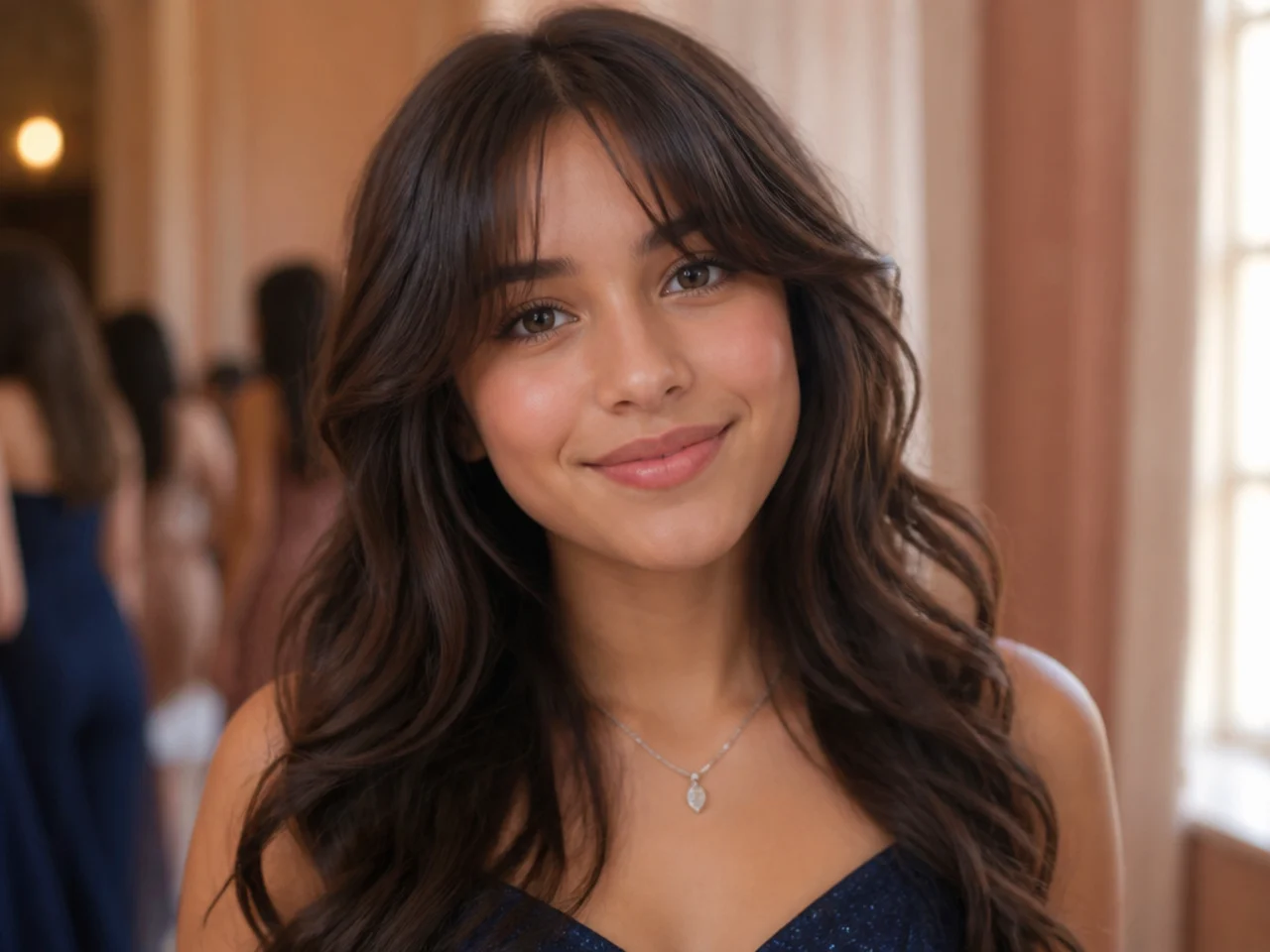
24. Soft Waves With Curtain Bangs
The bangs are curled away from the face on a separate, larger barrel so they fall open rather than closing in. Using the same barrel as the lengths gives the front the same tight bend, and a curtain bang with a tight bend reads as a fringe.
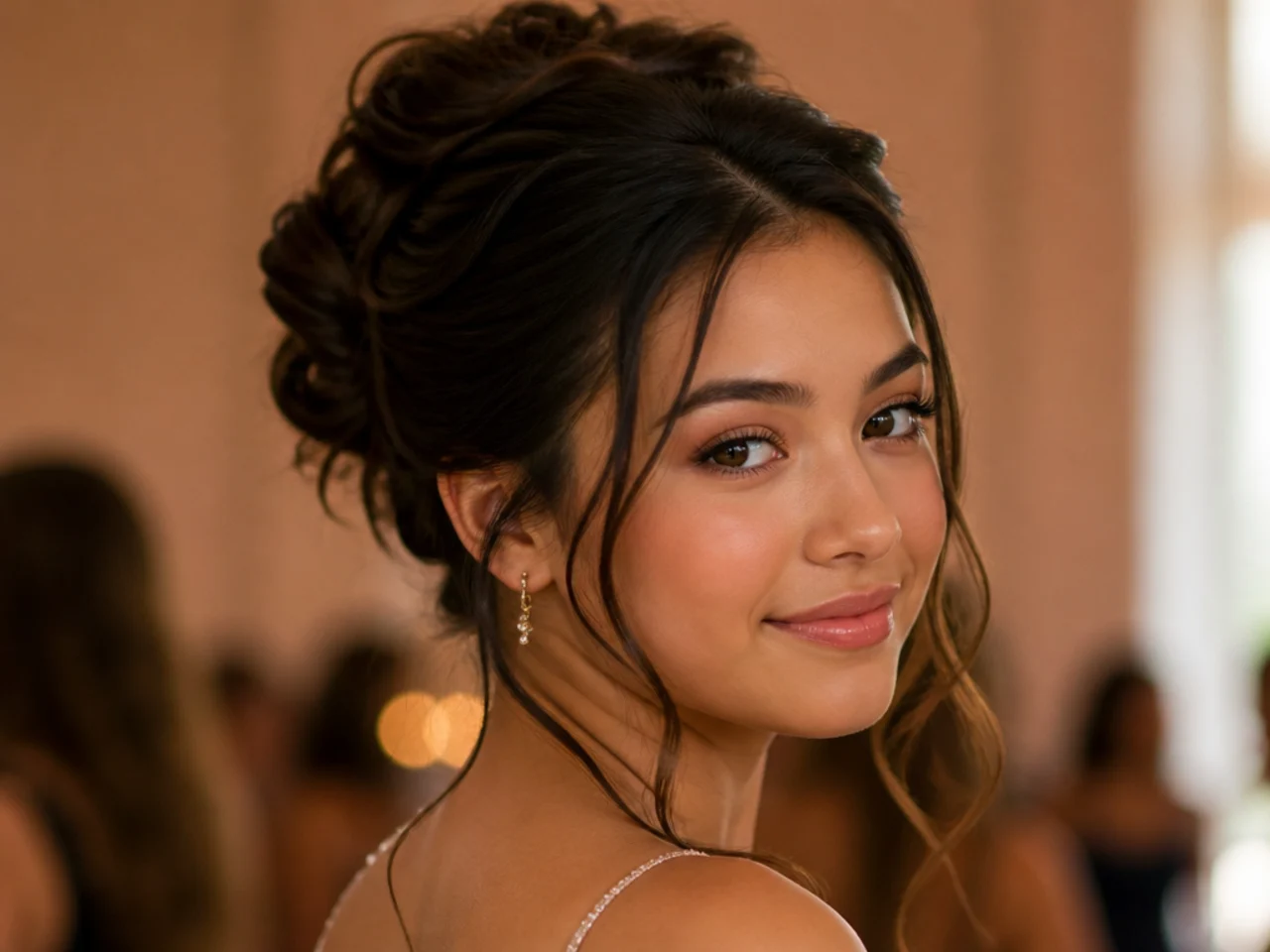
25. Textured Updo With Loose Tendrils
Built on texture spray, pinned in sections, then a few strands drawn out at the temples and nape. Those tendrils only look intentional if they come from the hairline, where short hairs naturally escape — pulled from the middle of a section they read as the style falling apart.
Styling and Upkeep
Wash the night before, not the morning of. A day of natural oil is the cheapest hold product there is, and it costs nothing.
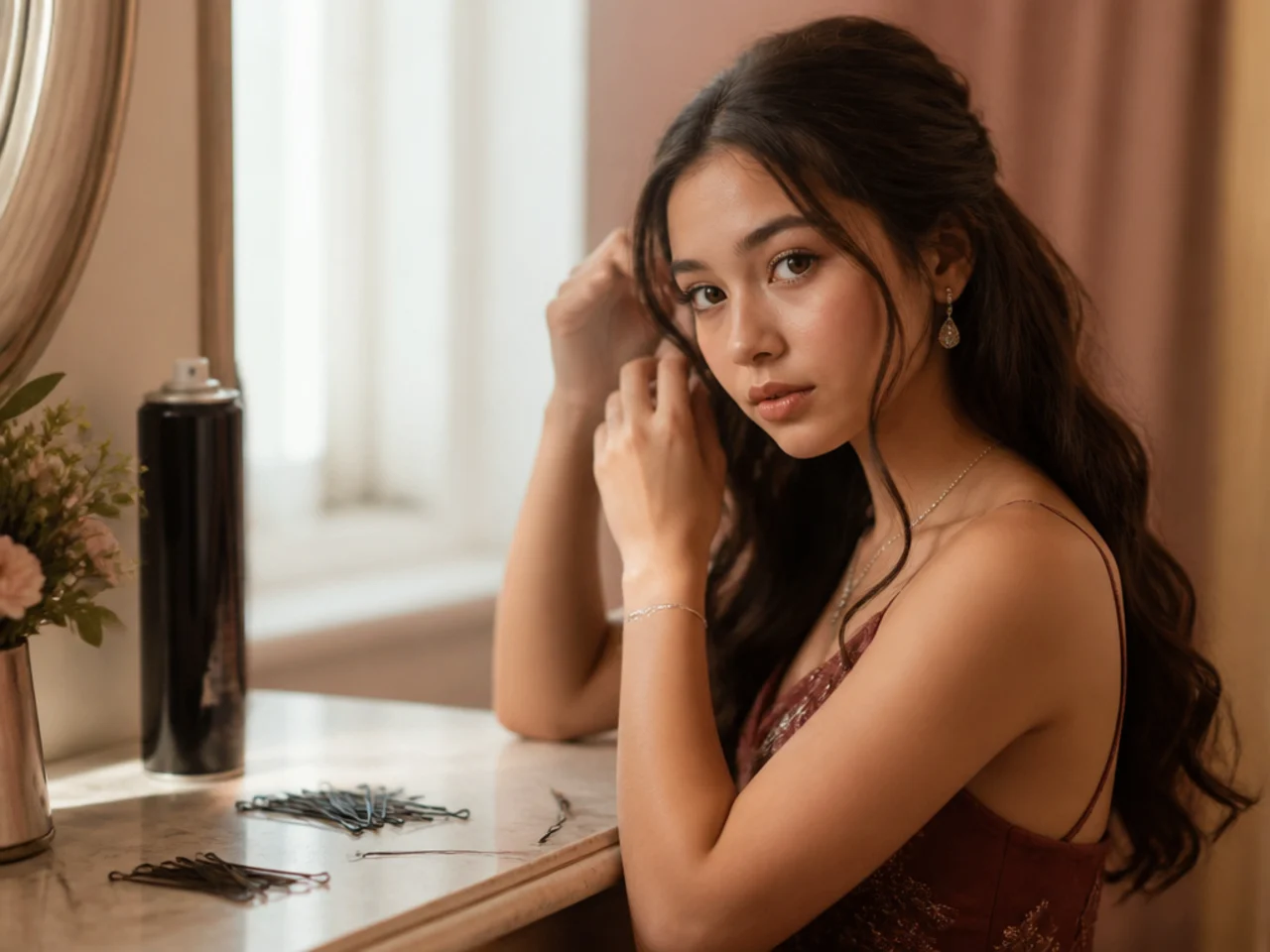
Cross your bobby pins in an X. One pin holds a section, two crossed pins hold each other as well as the section.
Let curls cool pinned to the head. Ten minutes of cooling buys several hours of shape.
Spray the brush, not the hair. Hairspray straight onto a finished style lands unevenly and sets in patches you cannot then redistribute.
Carry six spare pins. They are the only repair you can make in a bathroom mirror in two minutes.
Mistakes to Avoid
Starting on freshly washed hair. Everything slips, and no amount of spray fixes a cuticle that smooth.
Pinning in the direction of the pull. The pin slides straight back out along the same line. Angle it against the weight.
Brushing curls out while they are still warm. They have not set yet, and you lose the whole set in one pass.
Pulling face framing pieces out last. Every piece you free drags tension out of the finished style. Take them before you pin.
Testing the style for the first time on the day. A practice run tells you where it loosens, and that is the only place you need extra pins.
FAQ
Wash the same day? No — day-old hair grips, clean hair slips.
Why does my ponytail sink? Smooth hair plus downward weight. Backcomb the base and cross two pins under the elastic.
How early can I curl? In the morning, as long as each curl cools pinned before you brush it.
Final Thoughts
Pick the style that matches your hair's grip rather than the one in the photograph. A style built on texture and pinned against the pull will still be there at the end of the night, and that is the only test that matters.
For textures that need a different approach see hoco hairstyles for curly hair, and if your hair sits above the shoulder see hoco hairstyles for short hair. More in Occasion Hair.
Frequently asked questions
Related posts
See all posts
15 Graduation Hair Ideas for the Updo Versus Down Decision
Read more
15 Straight Hair Wedding Looks to Save
Read more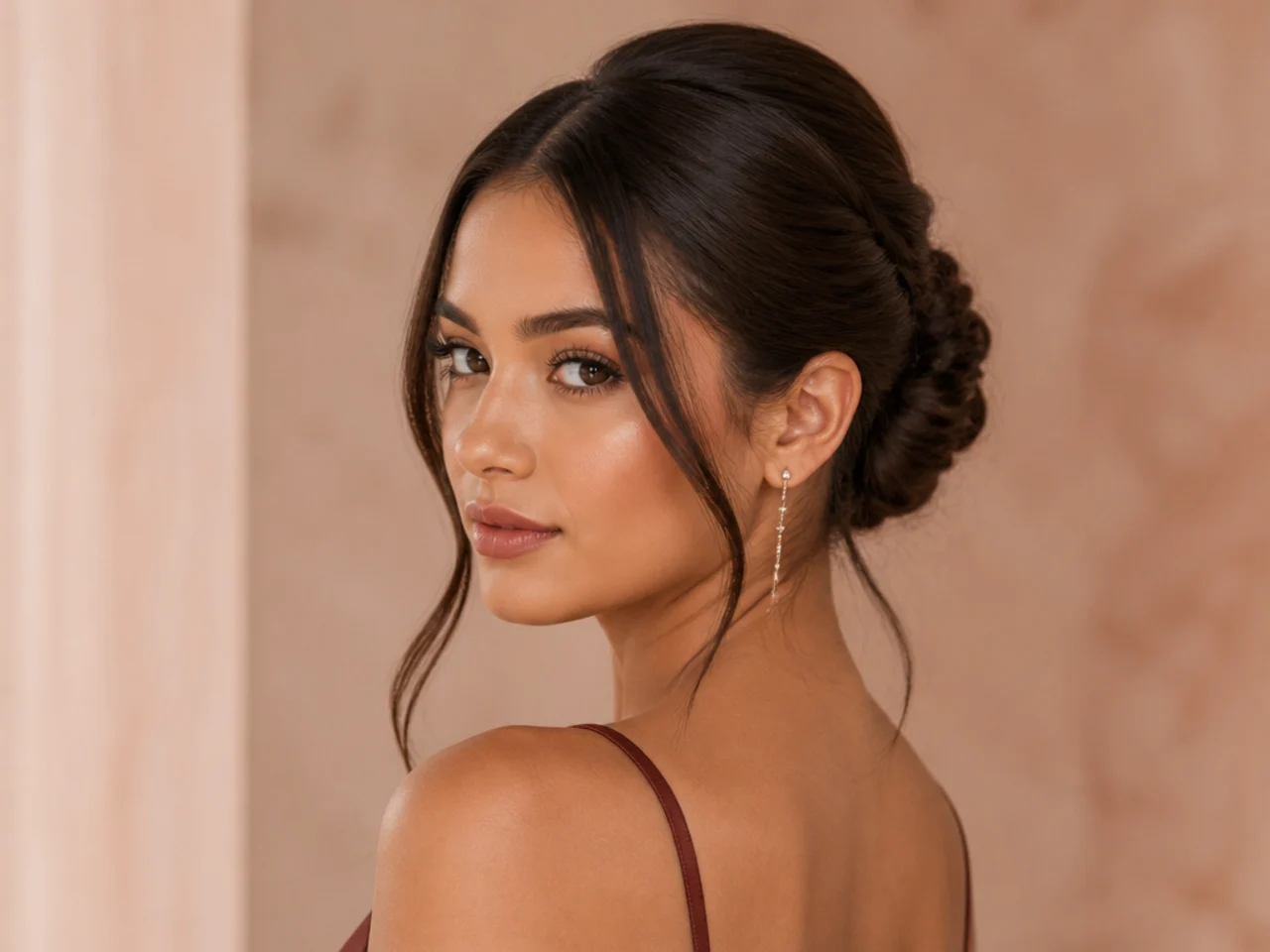
20 Gorgeous Prom Looks for Straight Hair
Read more