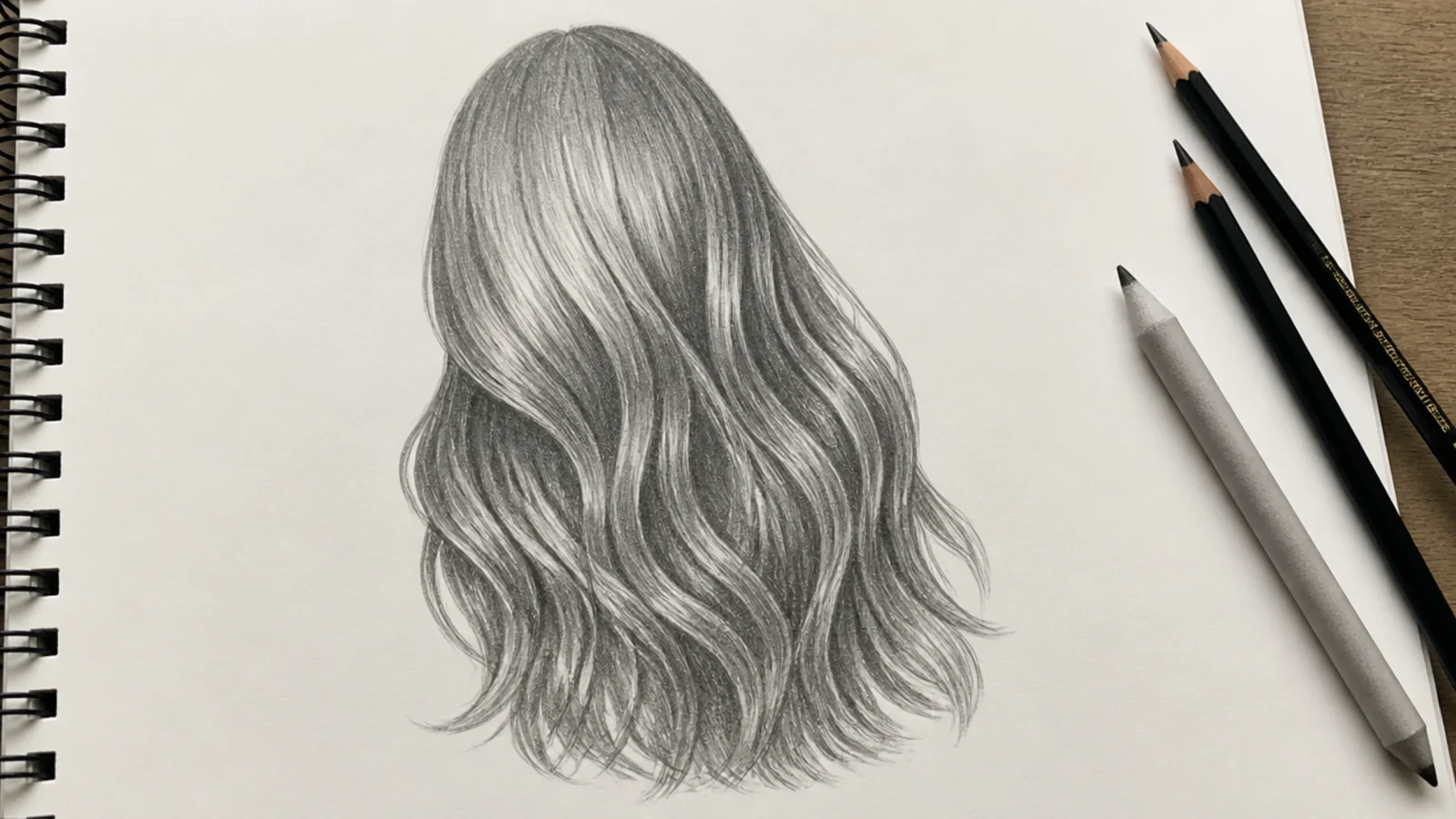
15 Female Hair Sketch Ideas to Draw
Fifteen female hair references and the one habit that ruins most of them — hair drawn as thousands of even strands instead of a handful of clumps. Real hair separates into ribbons, and each ribbon carries its own highlight.
In this article · 23
- Pencils Paper and References
- How to Start a Female Hair Sketch
- The Female Hairline Shape
- Four Female Hair Textures
- Shading Female Hair for Volume
- Common Female Hair Sketch Mistakes
- The 15 Female Hair Sketch Ideas
- 1. Long Straight Hair With a Center Part
- 2. Beach Waves Over One Shoulder
- 3. Windblown Hair in Three Quarter View
- 4. Low Messy Bun
- 5. High Ponytail From the Back
- 6. Blunt Bob From the Side
- 7. Pixie With a Side Swept Fringe
- 8. Curly 3B Ribbons
- 9. Round Afro With a Halo Edge
- 10. Waist Length Locs With Cuffs
- 11. Fishtail Braid Over the Shoulder
- 12. Wrapped Crown Braid
- 13. Half Up With a Claw Clip
- 14. Wet Slicked Back Hair
- 15. Hime Cut With Side Panels
- Final Thoughts
Most female hair sketches go wrong in the first ten minutes, when the artist starts drawing strands.
Hair reads as clumps, not strands. A clump has a dark core and one highlight shared across many hairs. Draw every hair at equal weight and you get straw.
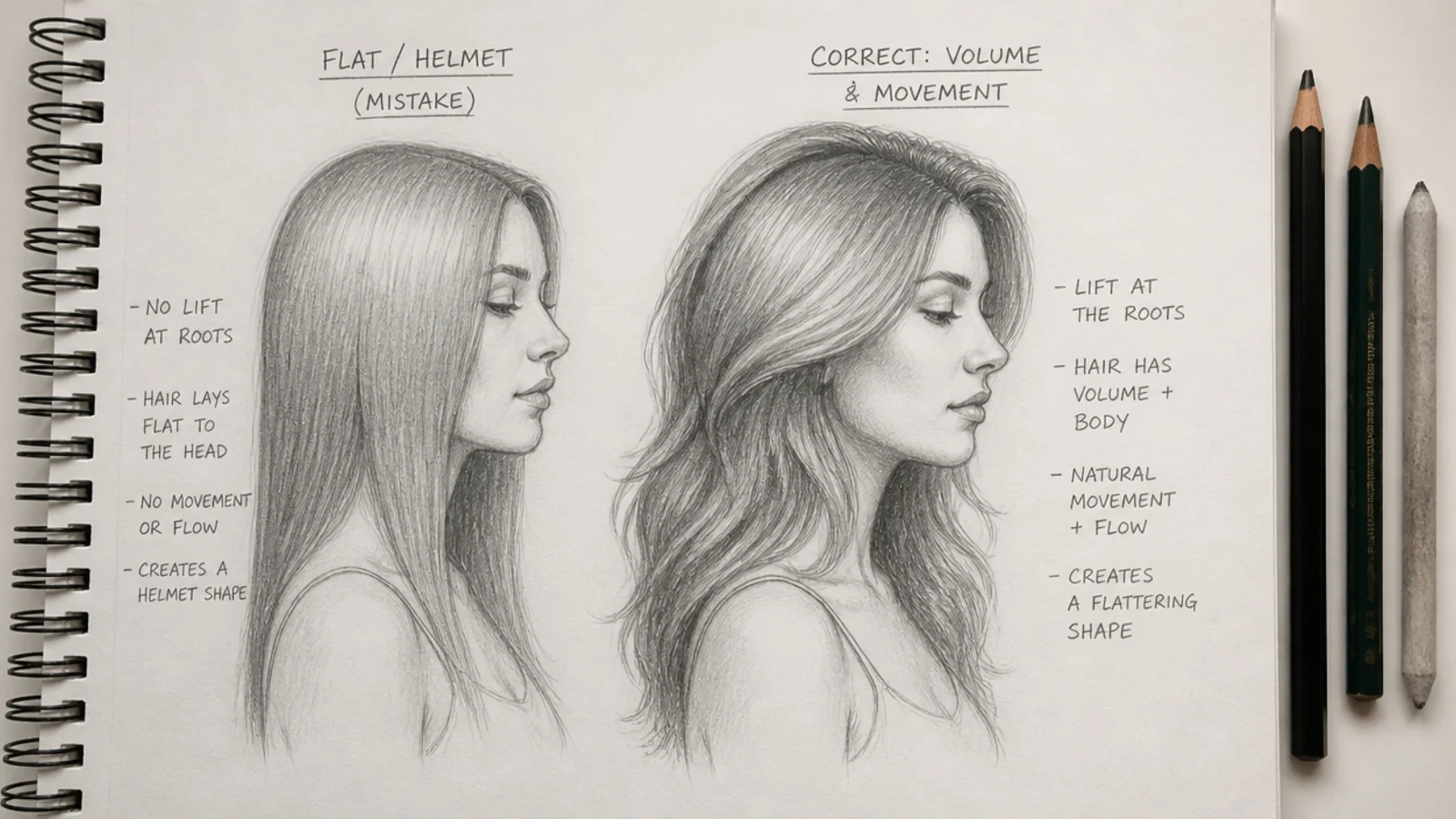
The silhouette sits outside the skull. Hair has thickness. Trace the outline onto the skull and the head looks shrink-wrapped before you have shaded anything.
Pencils Paper and References
A 2H for construction, a 2B for the body, a 6B for the cores. Three grades cover a whole head. Anything else is a matter of how hard you press.
A kneaded eraser draws the highlights. Lay a mid tone across the mass and lift the shine out of it in broken bands. Trying to leave white paper for a highlight almost always leaves it in the wrong place.
Paper with a slight tooth is essential for long hair. A smooth surface will not hold an even mid grey over a large area, and long hair is mostly a large area of even mid grey.
Reference from photographs with a single light source. Studio lighting with three lamps gives you three competing highlight bands, and copying them faithfully produces hair that looks made of chrome.
How to Start a Female Hair Sketch
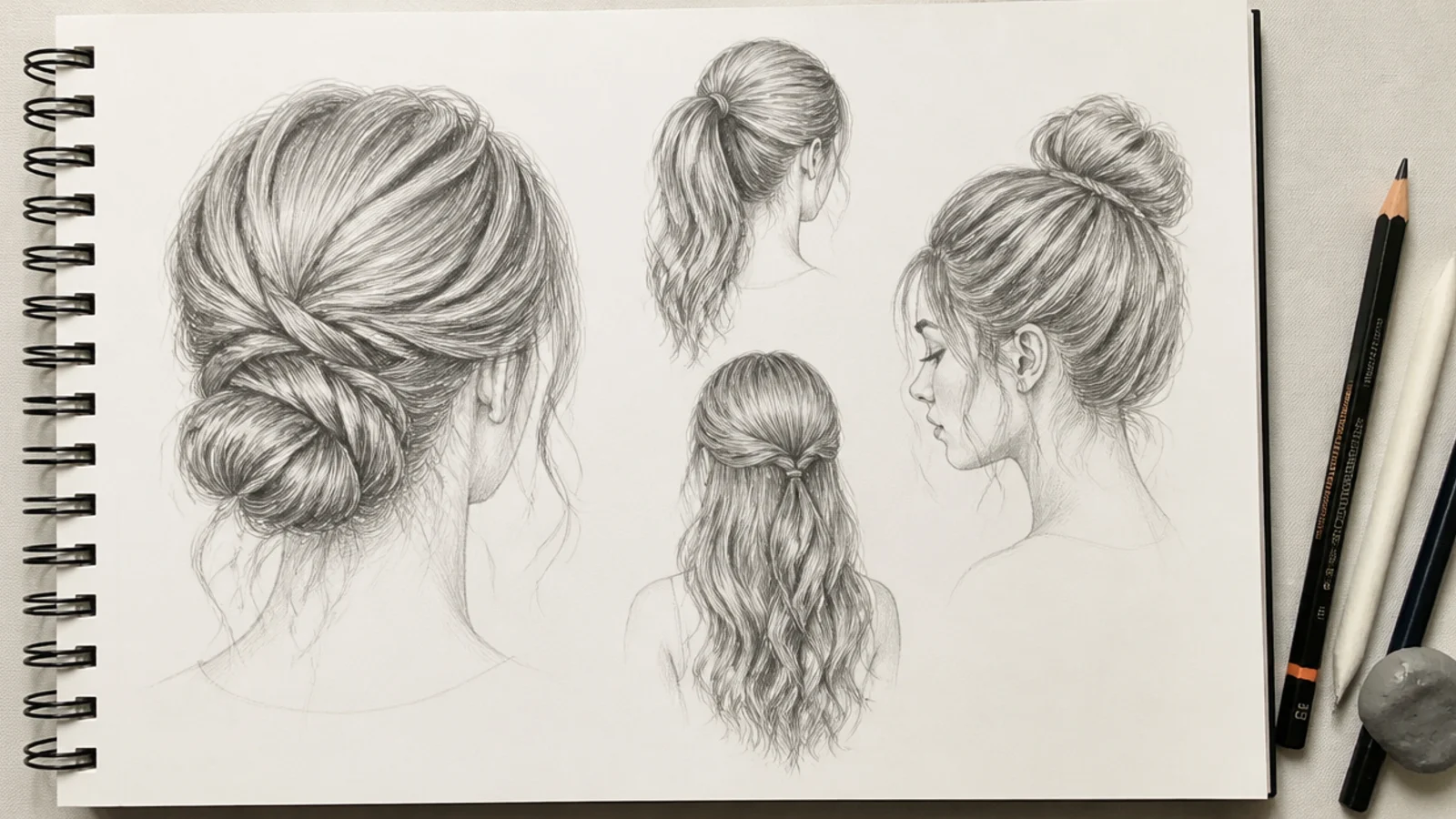
Find the crown swirl before anything else. It is the point every strand travels away from, and placing it first gives every later line a reason to go where it goes.
Block the whole mass as one shape. No parting, no strands. Just the outline including the volume that sits above the skull.
Divide the mass into four or five ribbons. Those divisions are where the dark cores will go. Any more than five at this stage and you have started rendering.
Only then decide where the light falls. The highlight wraps across the ribbons rather than following any one of them, which is what tells the viewer there is a head underneath.
The Female Hairline Shape
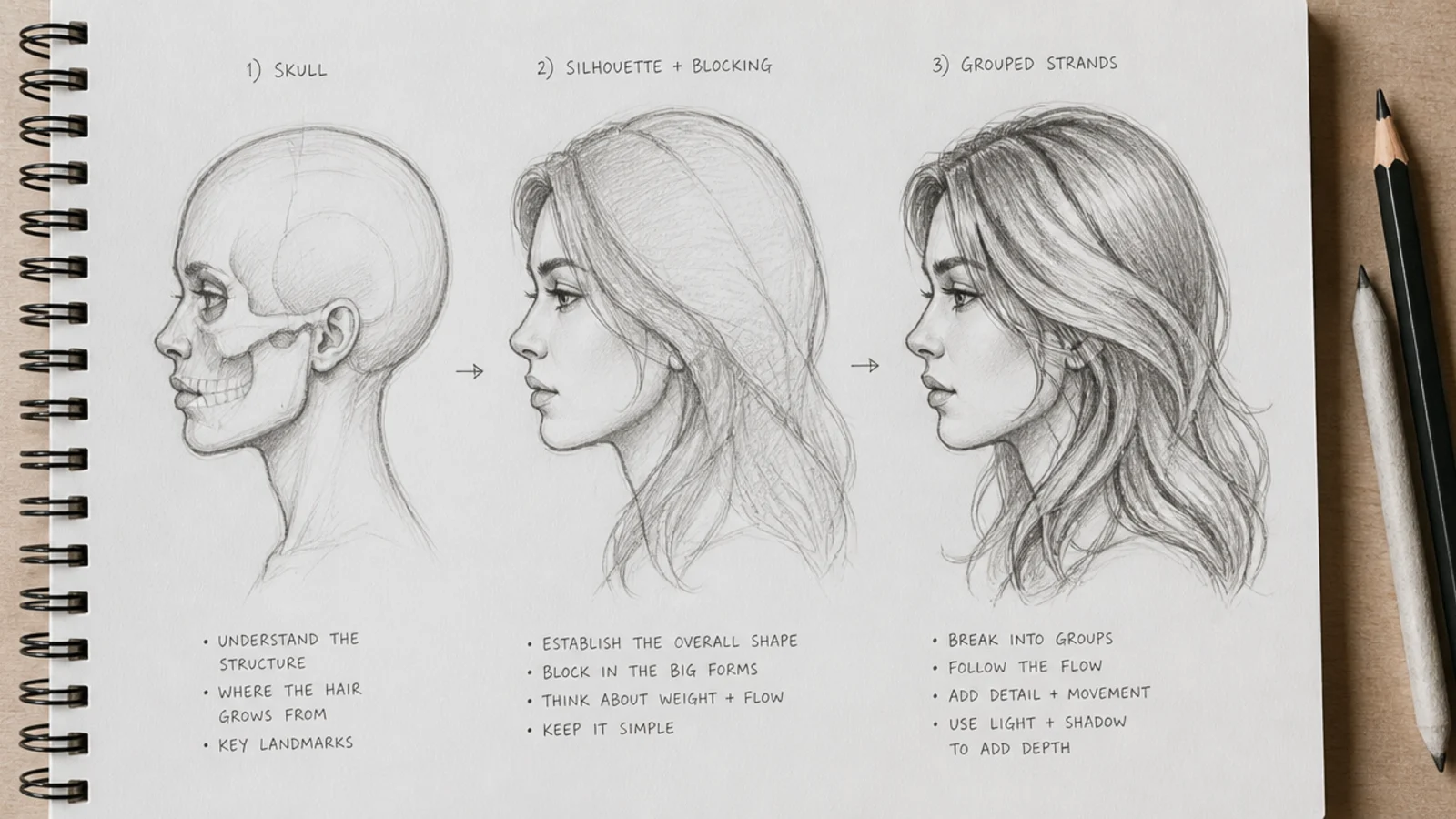
A hairline is a soft band, not a line. Fine short hairs thin out over roughly a centimetre, so a hard drawn boundary at the forehead gives every portrait a wig.
The typical female hairline is rounder at the temples. There is less recession above the outer eyebrow, which keeps the forehead a continuous curve rather than a shape with two notches in it.
Baby hairs sit in front of the mass, not on it. Draw them last, as light strokes lifting off the forehead, and keep them short. Long wispy strokes read as damage rather than as a hairline.
The parting is a wedge of scalp with two banks rising from it. Draw it as a single stroke and the hair loses the thickness the whole drawing depends on.
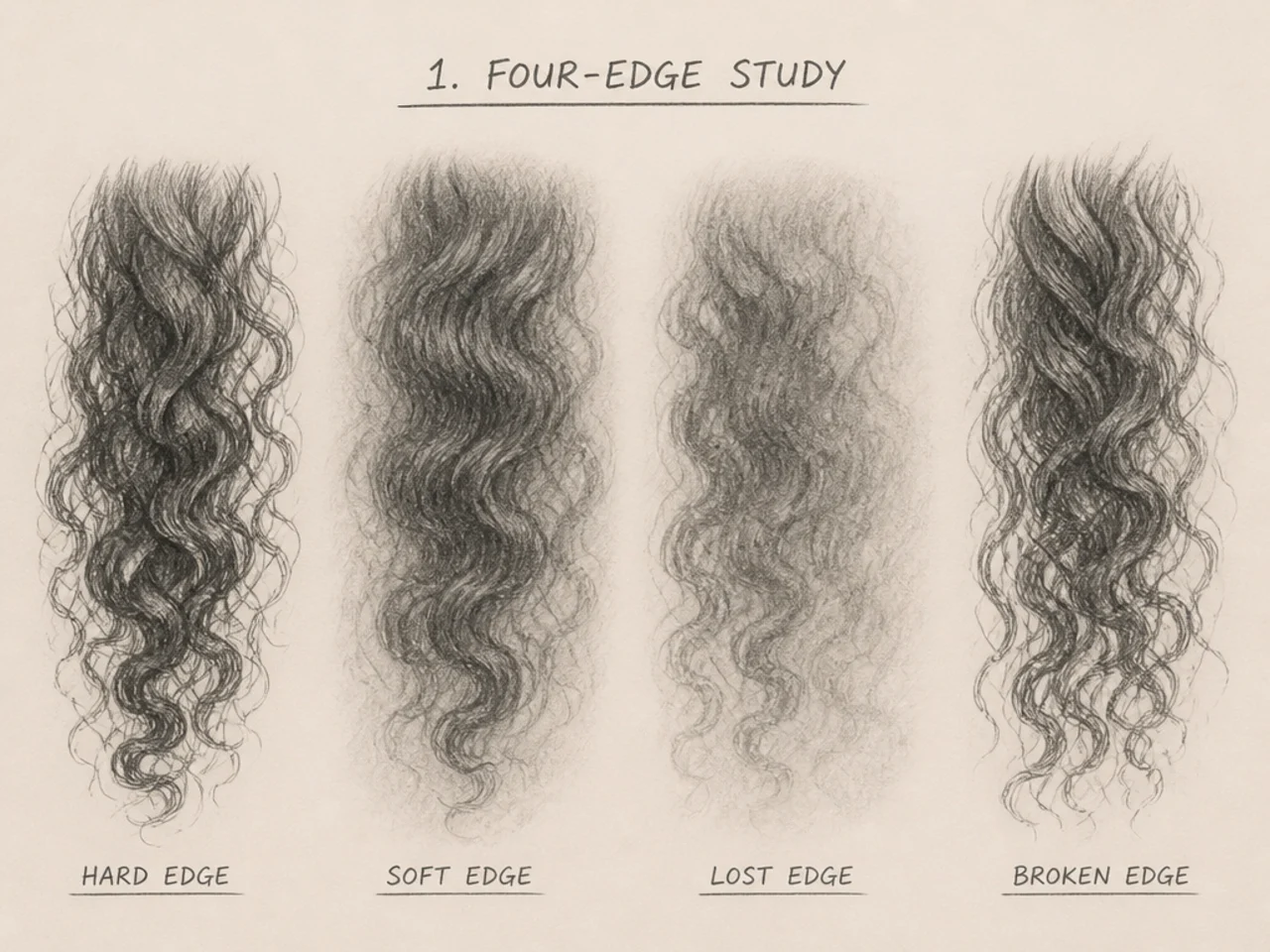
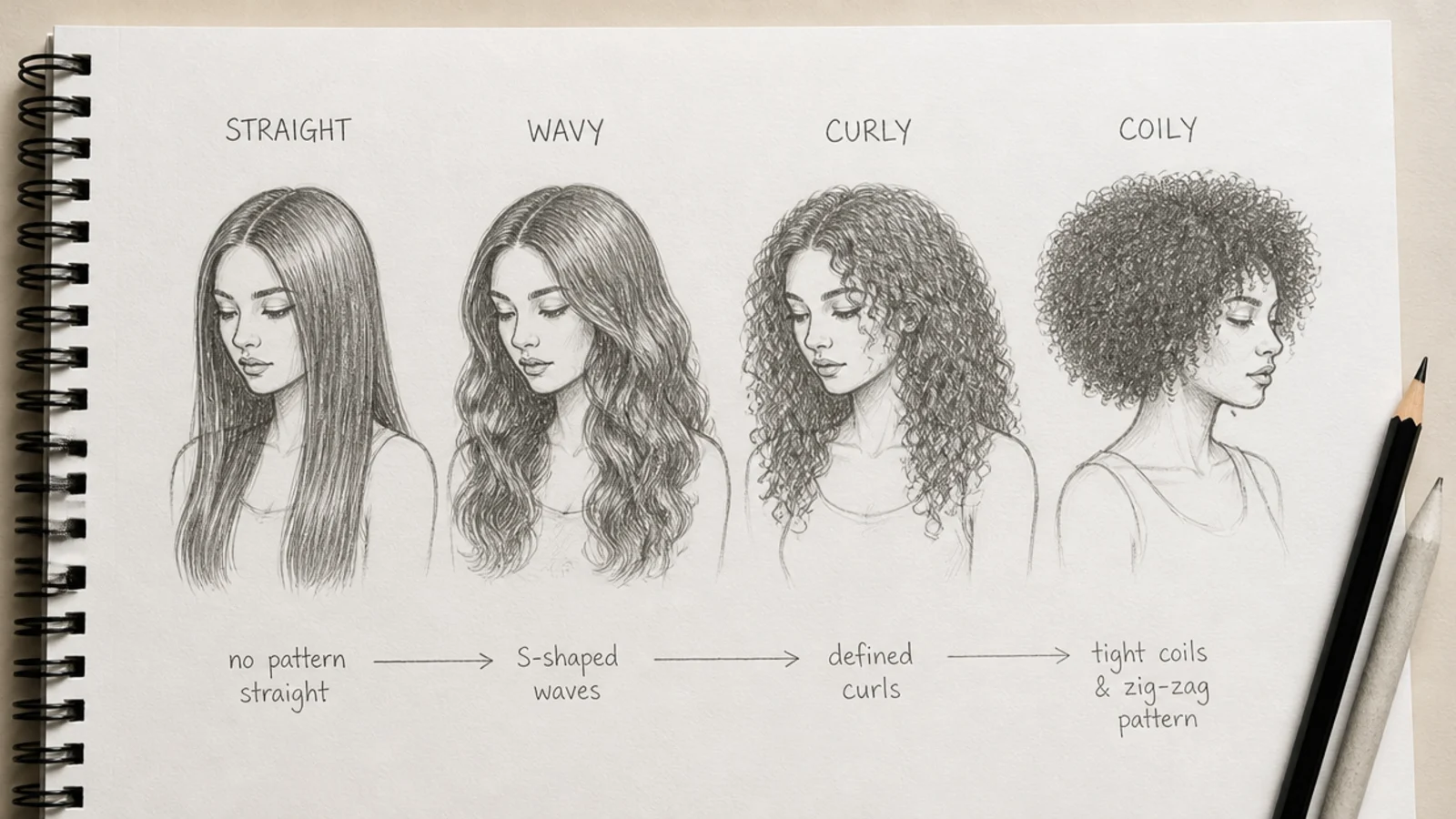
Four Female Hair Textures
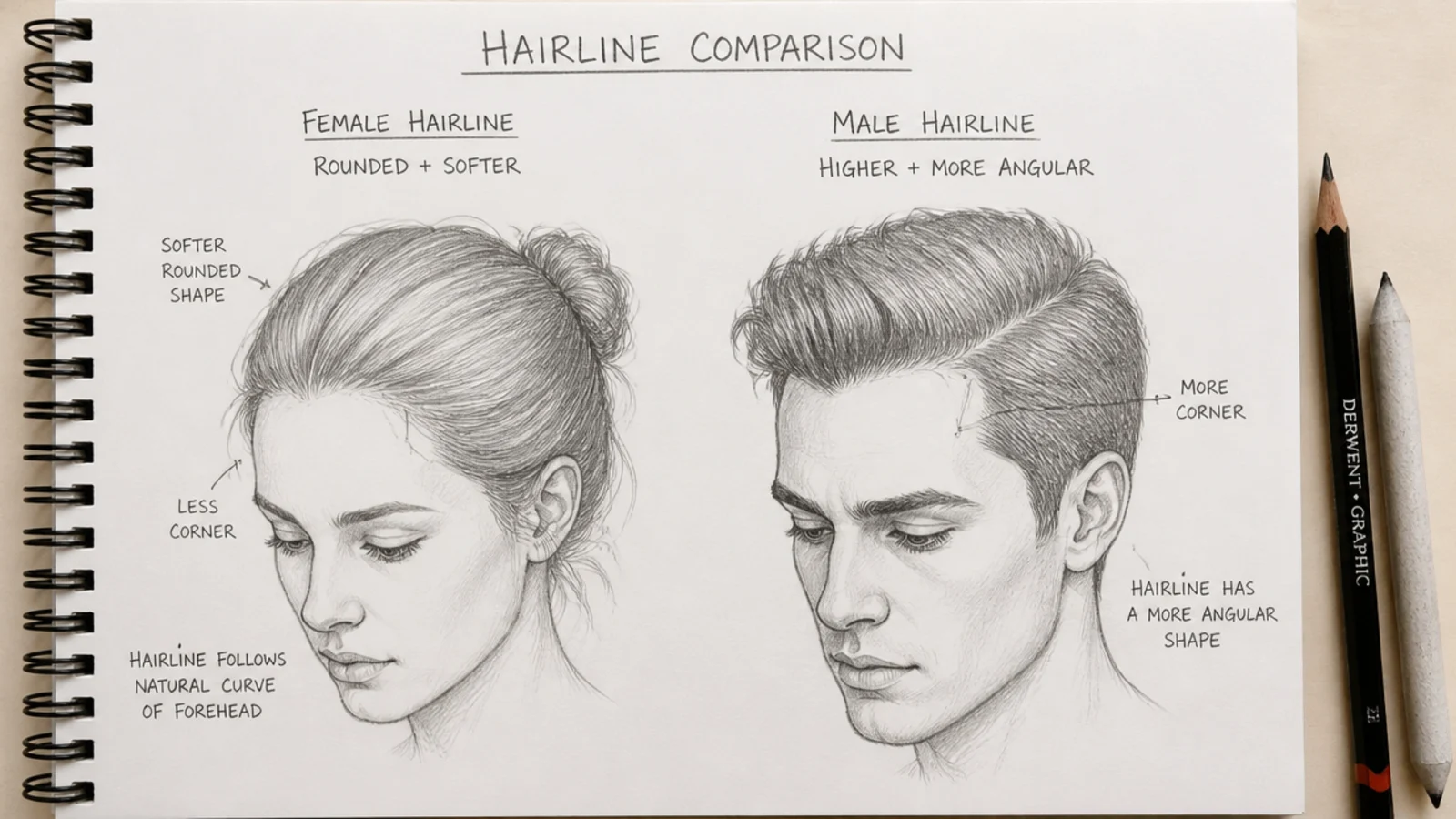
Straight hair is one surface with one long highlight. It is the least forgiving texture, because there is no broken pattern to hide an uneven mid tone.
Wavy hair alternates between two faces. Each bend turns the ribbon outward then inward, so the shading alternates light and dark down its length without you drawing a single wave outline.
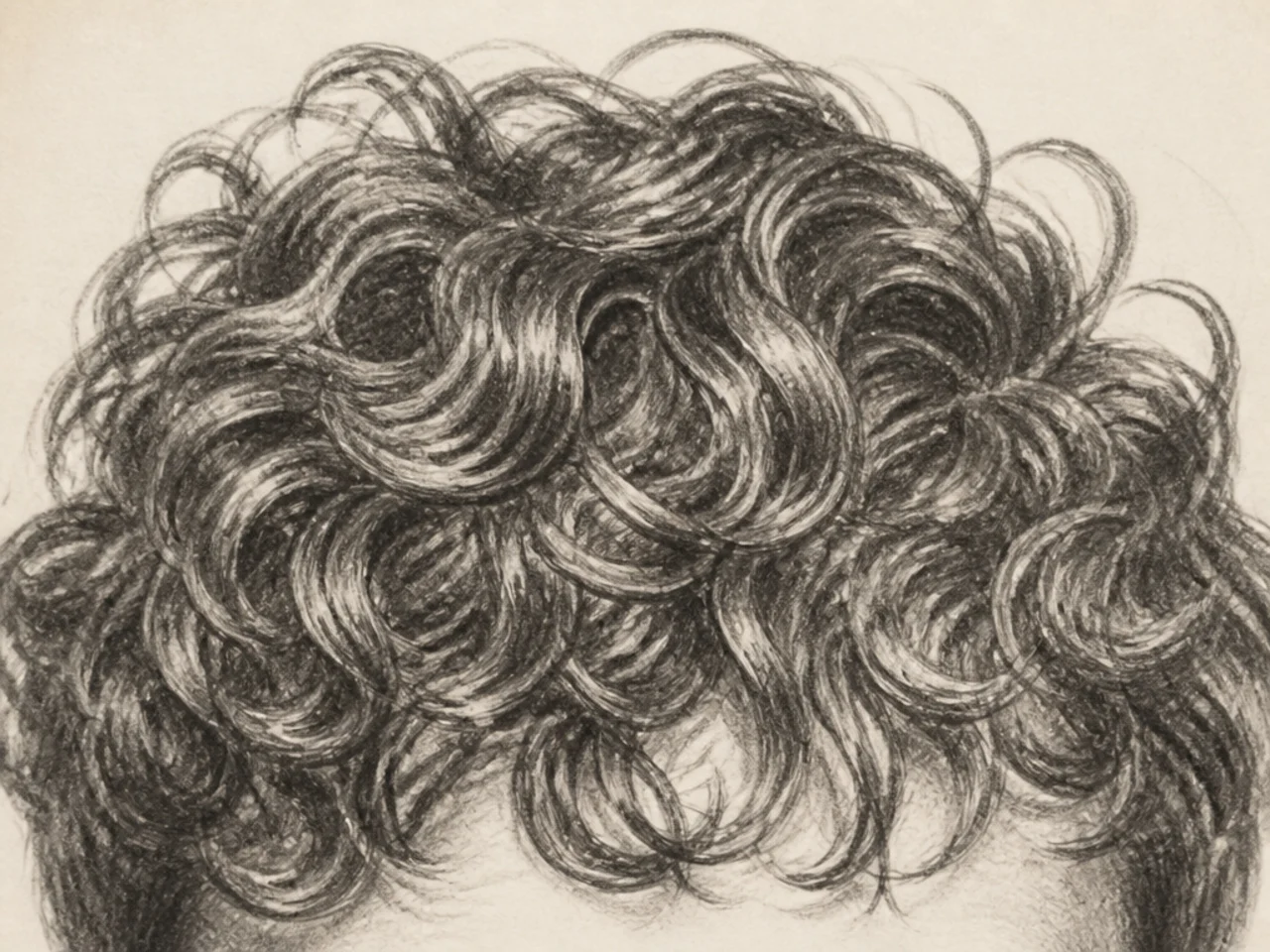
Curly hair resolves into individual ringlets. At marker width and below the eye can pick out one curl at a time, which is the range where drawing separate curls is correct.
Coily hair reads as a surface rather than as shapes. The loops are too small to resolve, so you shade the mass and define only the silhouette, exactly as you would a piece of fabric.
Shading Female Hair for Volume
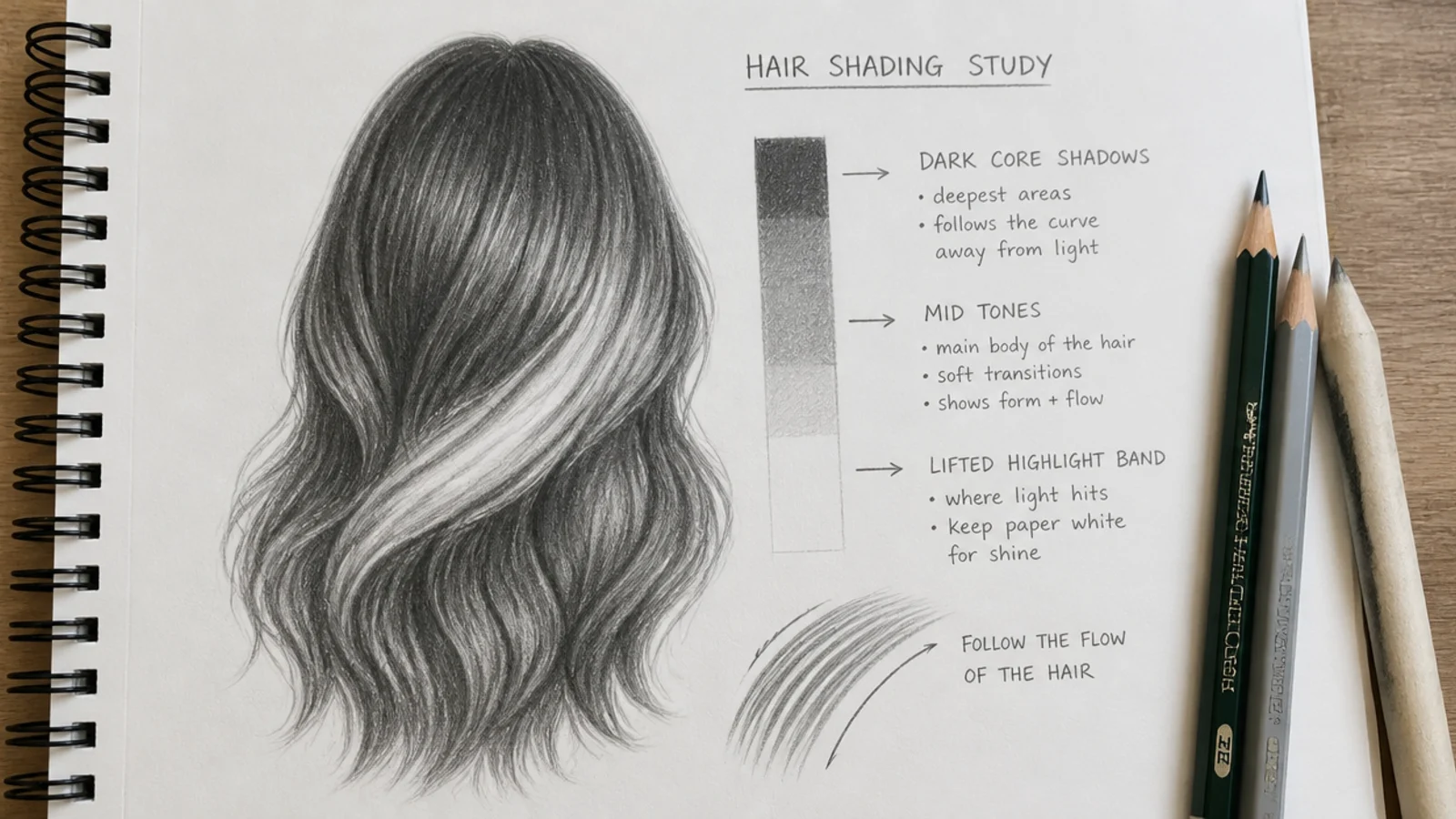
Three values inside every clump. A dark core, a mid body, a lifted highlight. One flat tone across a clump reads as paper cut to the shape of hair.
The darkest tone goes between clumps. Light cannot reach the gap where two ribbons meet, and those gaps are what separate the mass into readable pieces.
The highlight wraps across the form. It runs over several clumps at once following the curve of the skull, and it breaks wherever a clump lifts away.
Long hair needs a second, weaker highlight lower down. The mass curves out at the shoulder and catches light again, and leaving that out is why long hair often looks like a flat cape.
Common Female Hair Sketch Mistakes
Even pressure everywhere. It removes the grouping that makes hair read as hair.
A highlight band that never breaks. Real shine is interrupted by every clump it crosses, which is what keeps it from looking like plastic.
Ends that all stop at the same length. Unless the cut is blunt, the ends stagger. A single hard line across the bottom of loose hair reads as a costume wig.
Strands crossing without a decision. When one clump passes in front of another, one of them has to darken. Drawing both at the same value flattens the whole overlap.
Detail before silhouette. A perfectly rendered clump inside the wrong outer shape is a clump you are about to erase.
The 15 Female Hair Sketch Ideas
1. Long Straight Hair With a Center Part
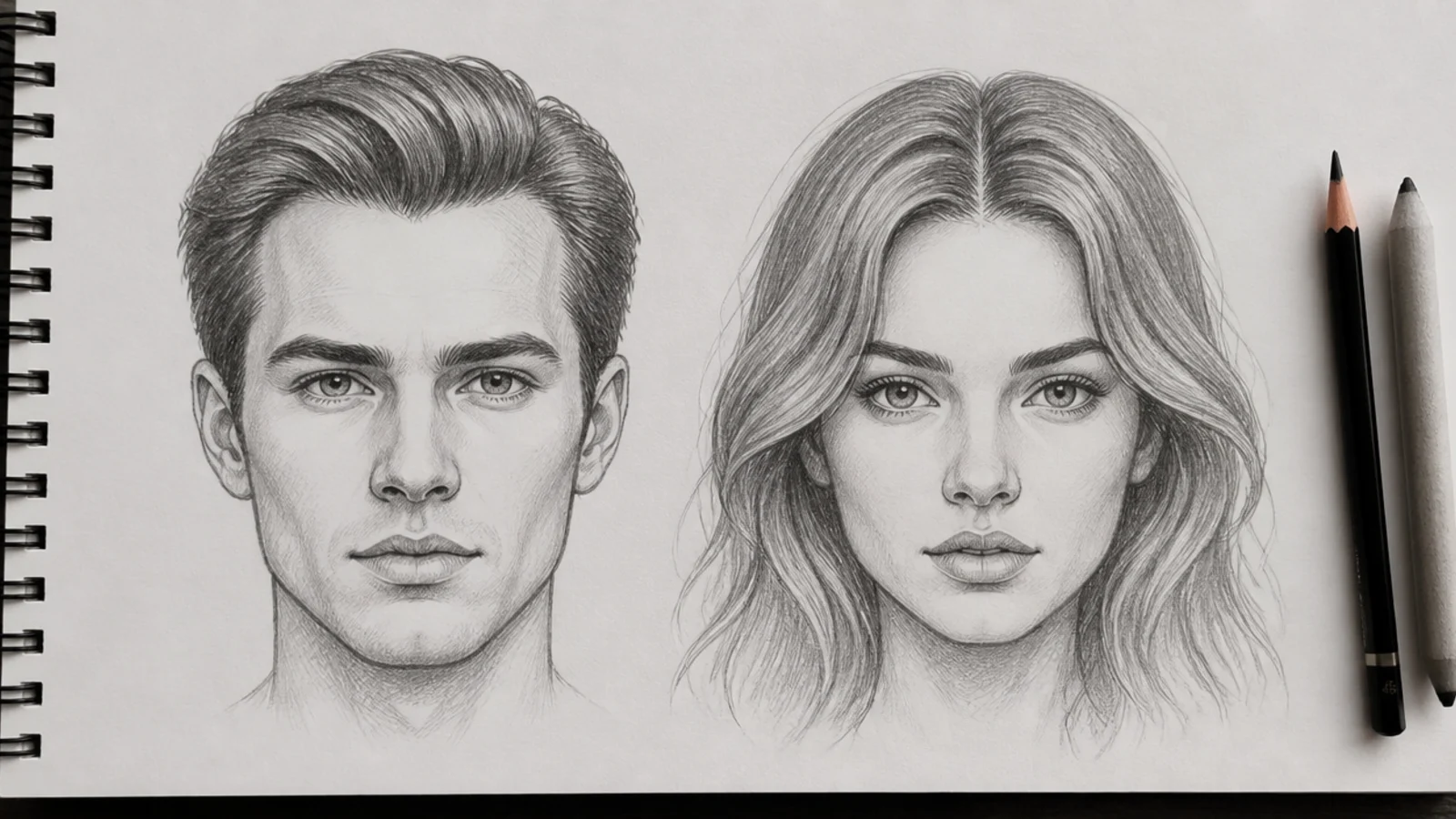
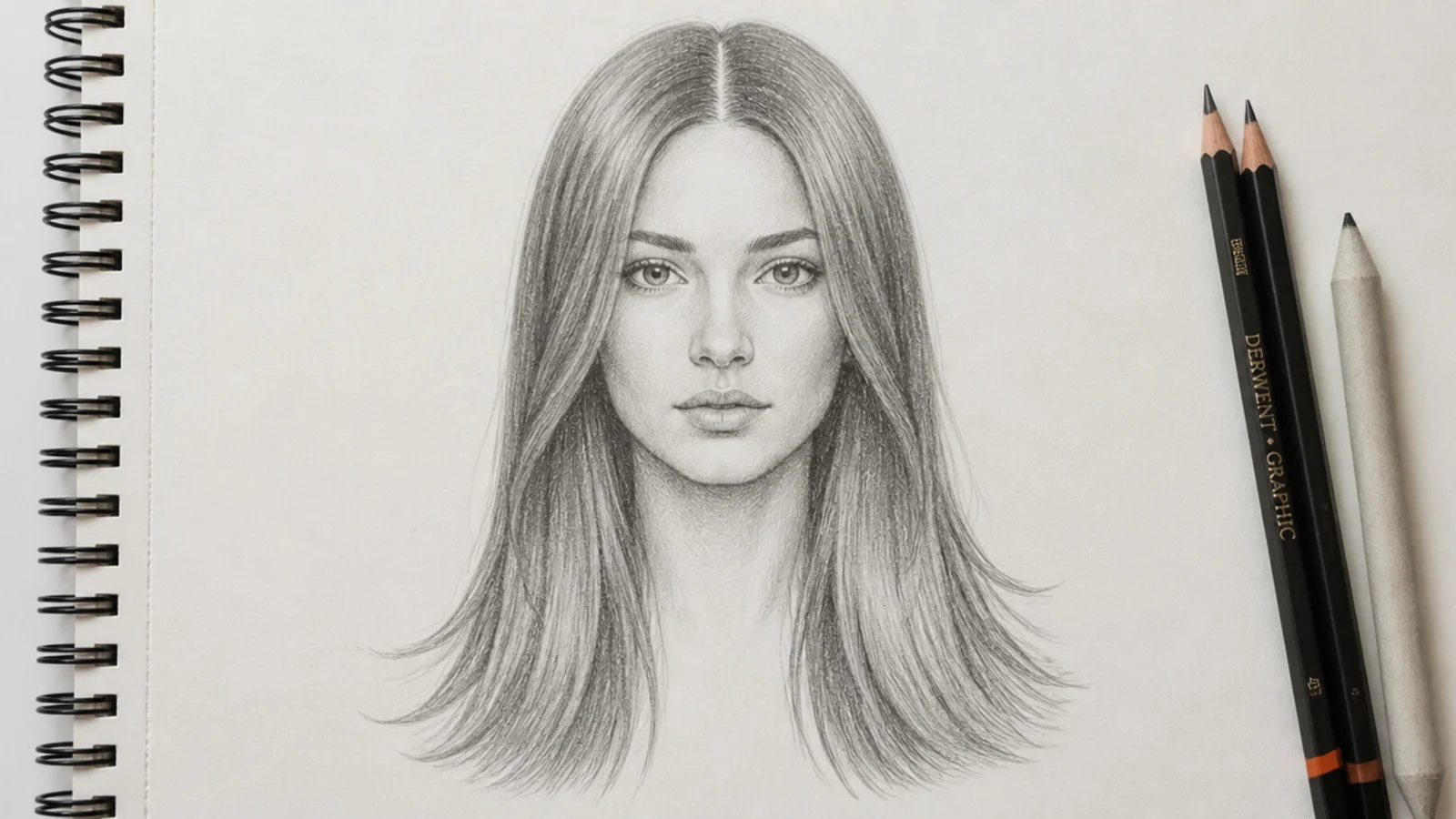
A center part is the hardest test in the set because it is symmetrical and every error appears twice. Draw the two banks rising from a visible wedge of scalp, then break the length into three or four ribbons so the surface never becomes one uninterrupted sheet.
2. Beach Waves Over One Shoulder
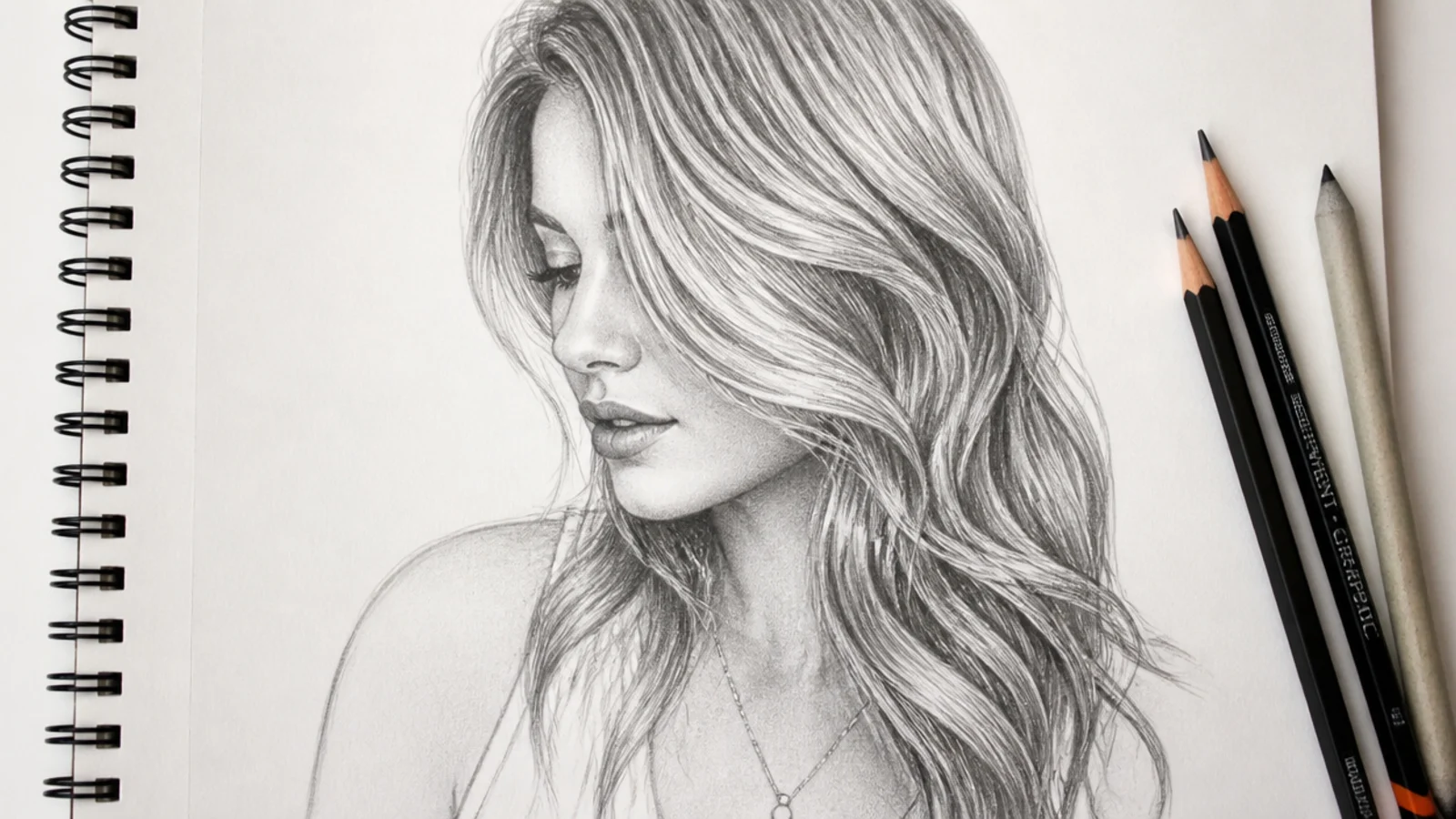
Waves bend in a single plane, so each ribbon alternates between showing its outer face and its inner one. Shade the outward bends light and the inward bends dark, and the wave builds itself from the alternation before you have drawn a single outline.
3. Windblown Hair in Three Quarter View
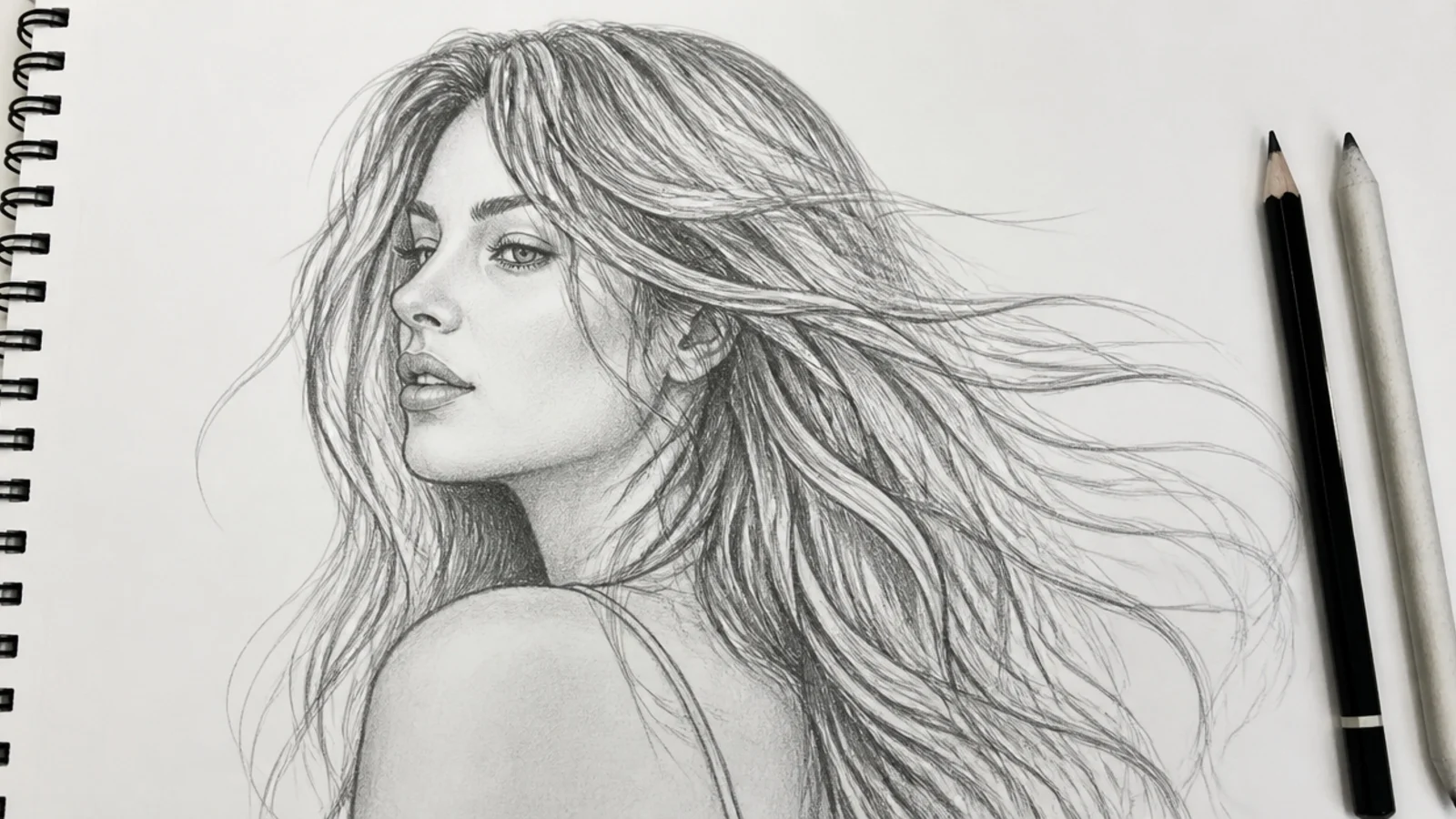
Wind separates the mass into ribbons with air between them, so the drawing needs real gaps you can see through. Keep the roots gripped at the scalp and let the separation widen toward the ends, because that is the direction the force actually travels through the hair.
4. Low Messy Bun
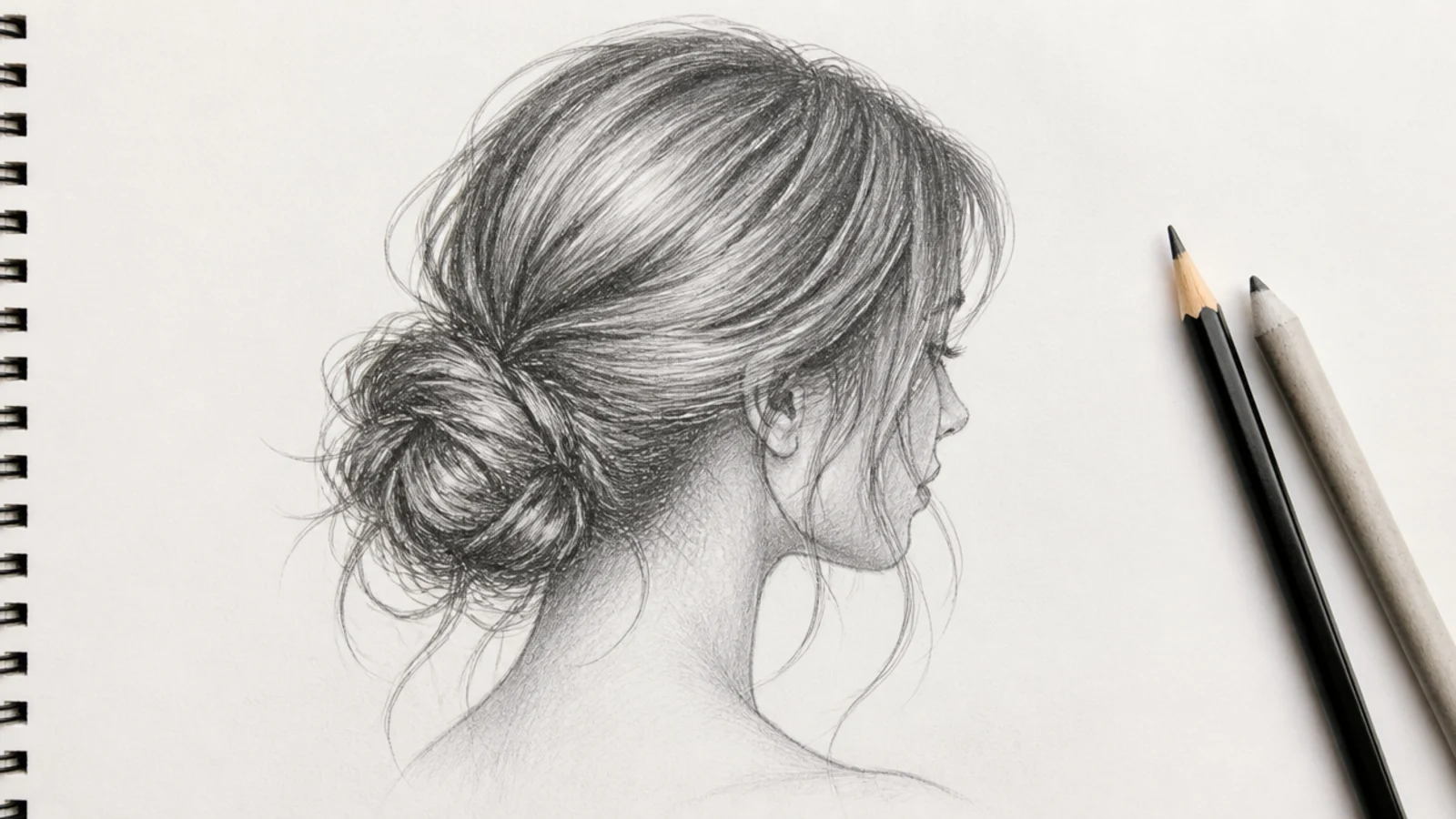
A messy bun is a coil of hair with loops of different sizes, not a fuzzy ball. Draw two or three overlapping loops with clear dark gaps behind them, and add escaping strands only where the hair enters the tie, since that is the only place they can physically come from.
5. High Ponytail From the Back
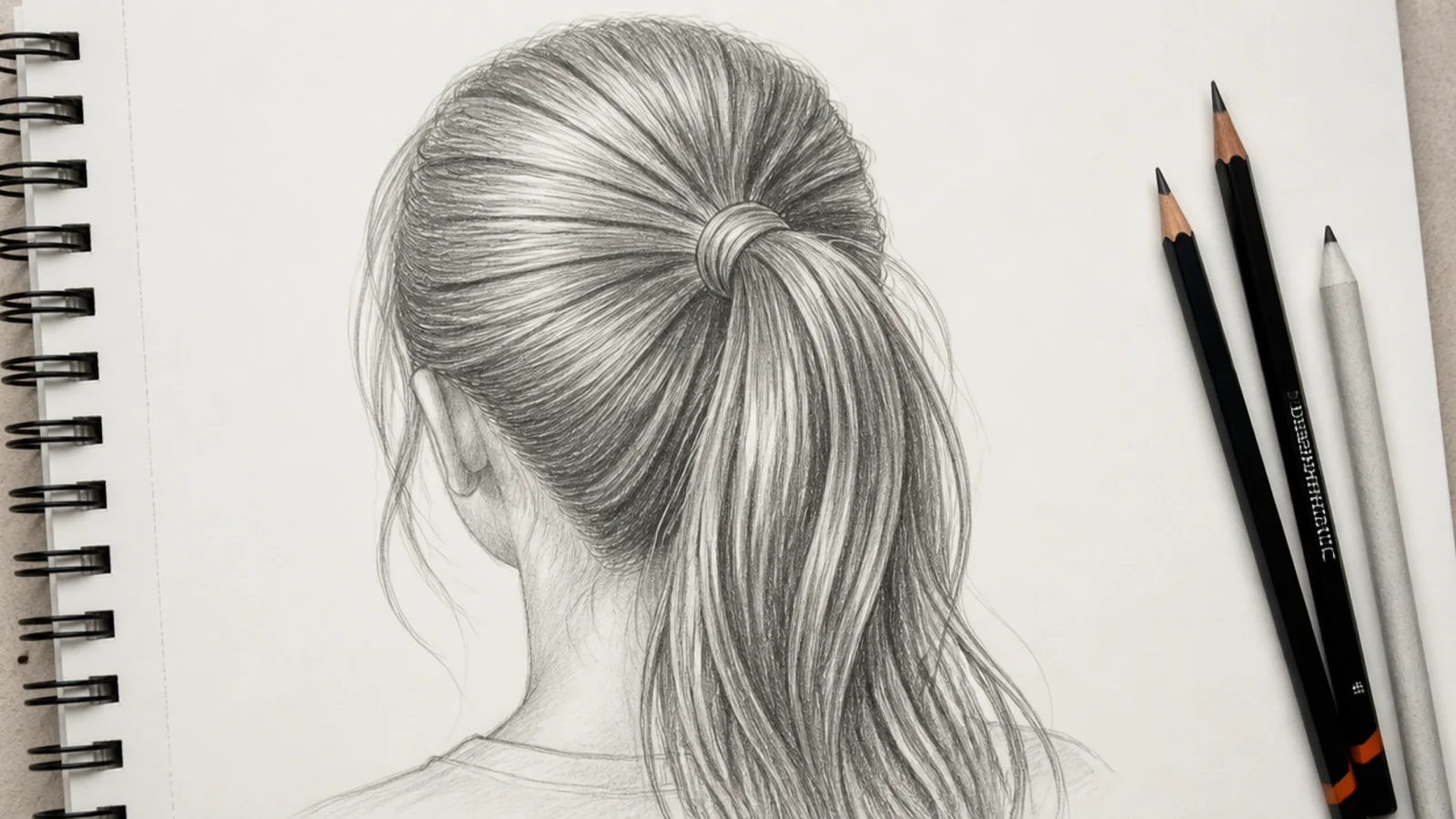
Every tension line converges on one point, and making them converge convincingly is the whole drawing. Sweep them up from the nape and the temples with a slight curve rather than straight lines, because hair follows the surface of the skull on its way to the tie.
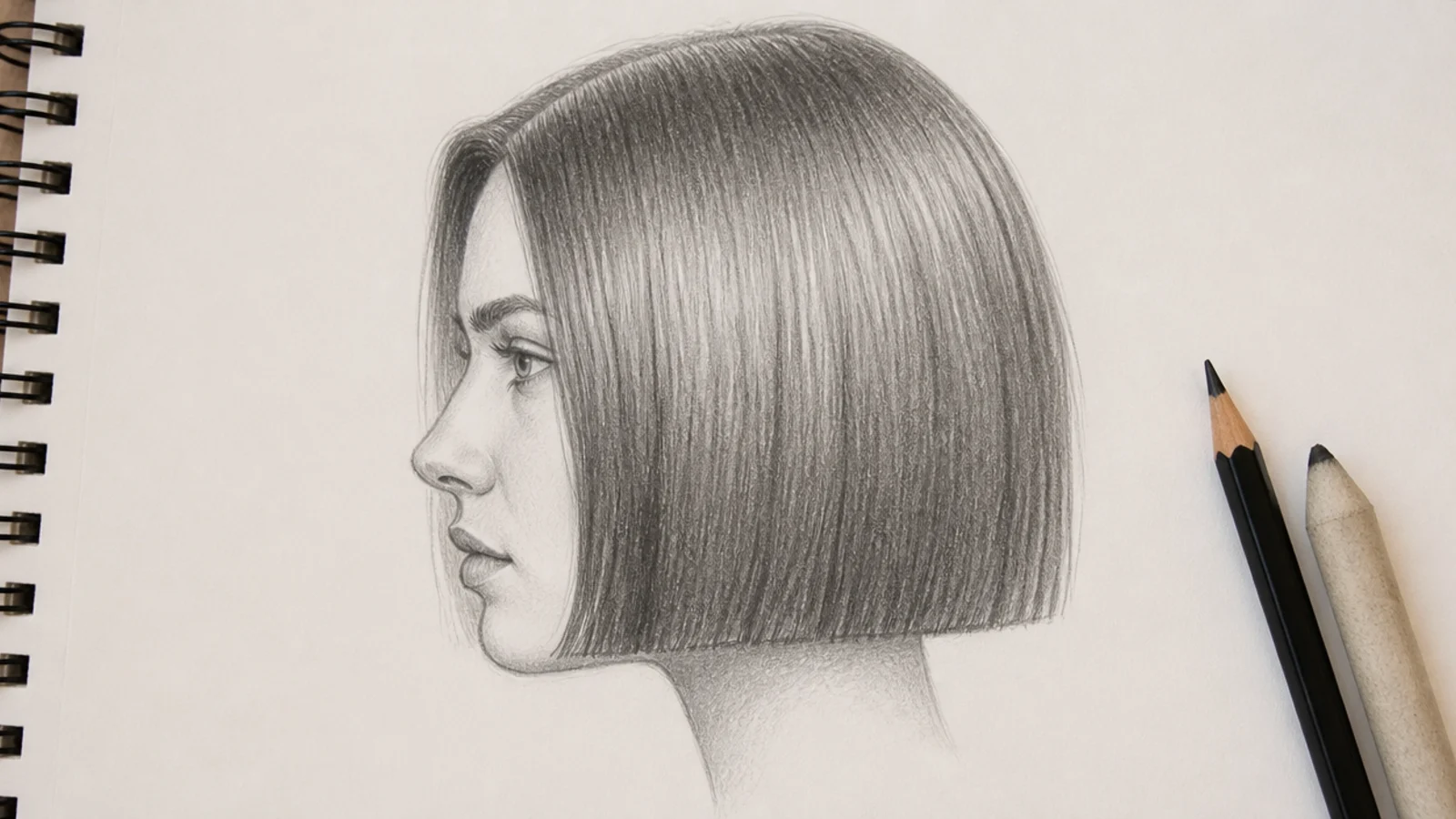
6. Blunt Bob From the Side
A blunt perimeter ends every strand on the same line, so the bottom edge is one clean shape and the drawing lives or dies on it. Keep those ends dark and unfeathered, because feathering the edge converts a blunt bob into a layered cut in a single stroke.
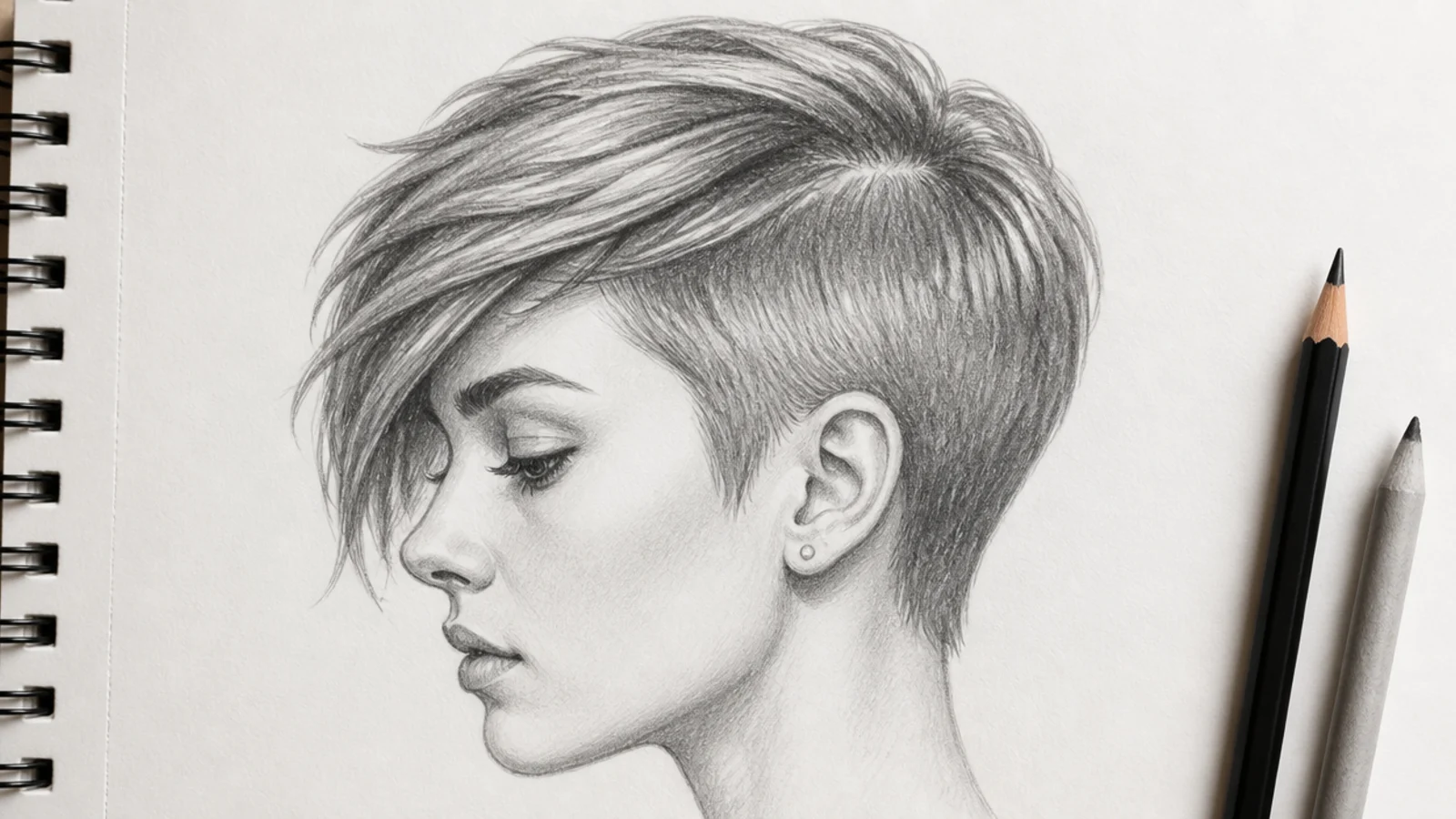
7. Pixie With a Side Swept Fringe
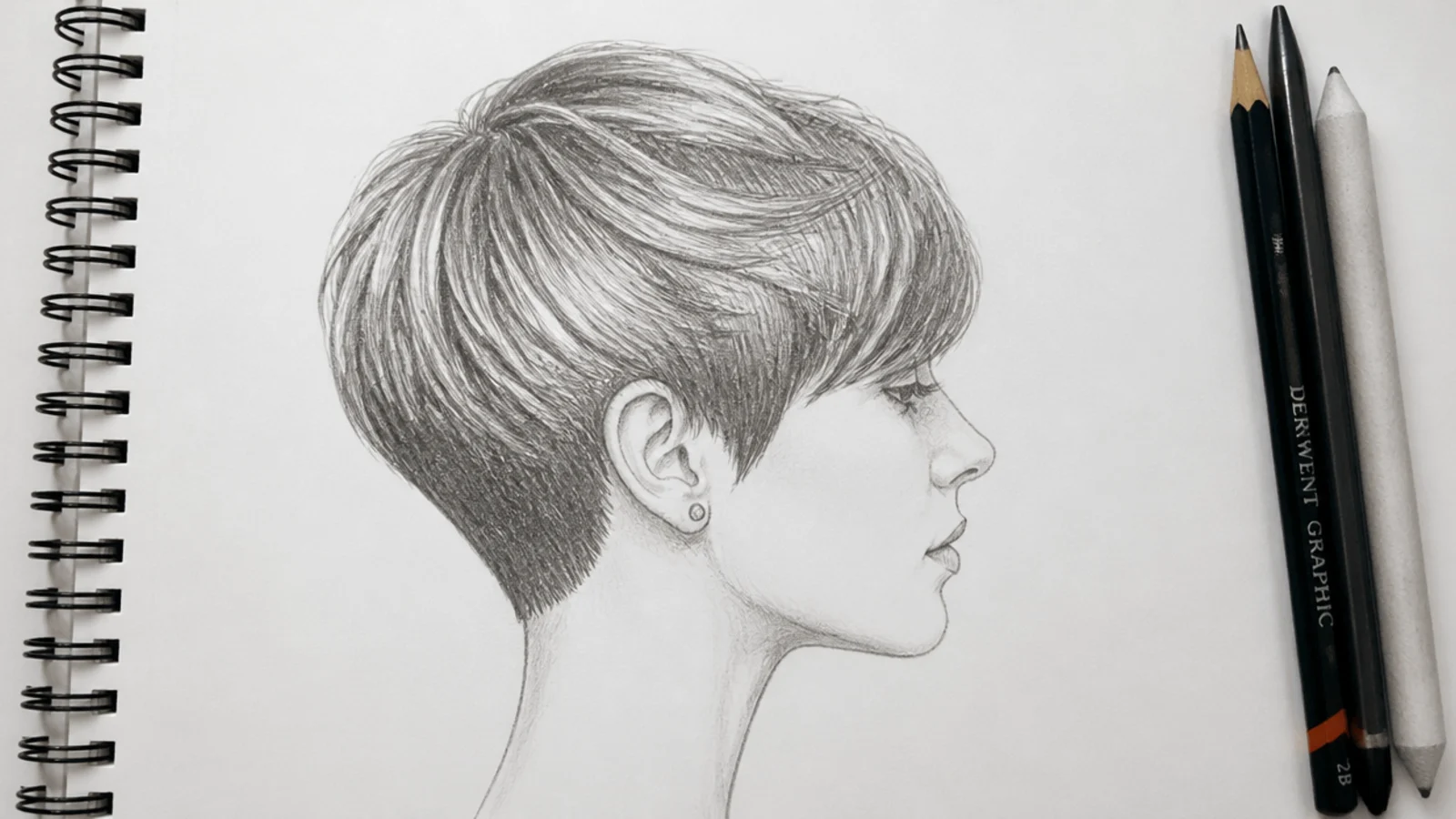
Short hair exposes the skull, so the shading has to describe a sphere rather than a curtain. Direct every clump away from the crown swirl and carry the fringe across the forehead as one piece with a lifted root at the parting, which is where all its volume comes from.
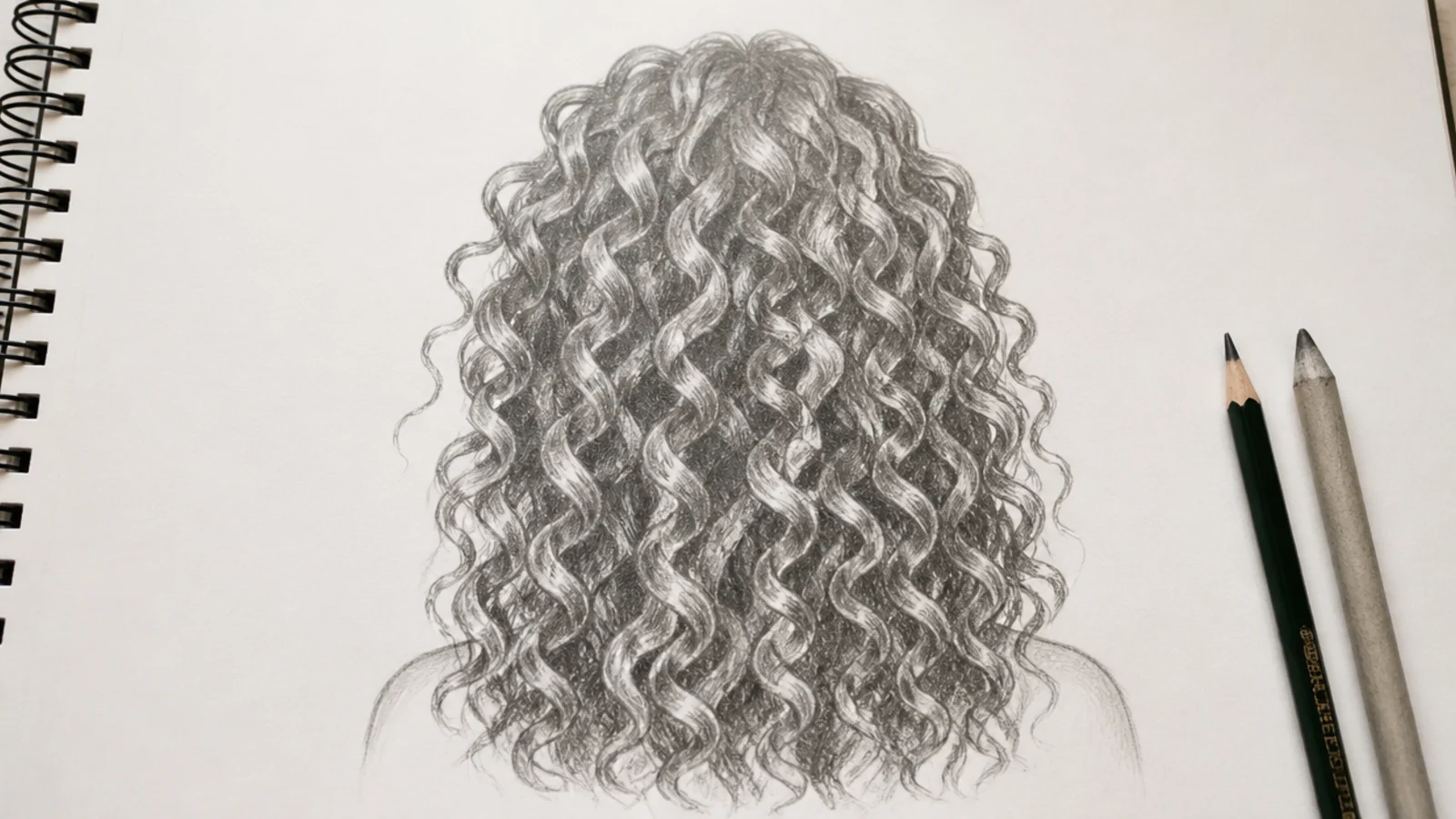
8. Curly 3B Ribbons
3B curls are roughly marker width, wide enough to draw as individual ribbons that twist along their length. Give each a dark inner face and a lit outer face, and the twist appears in the drawing without you outlining a single spiral.
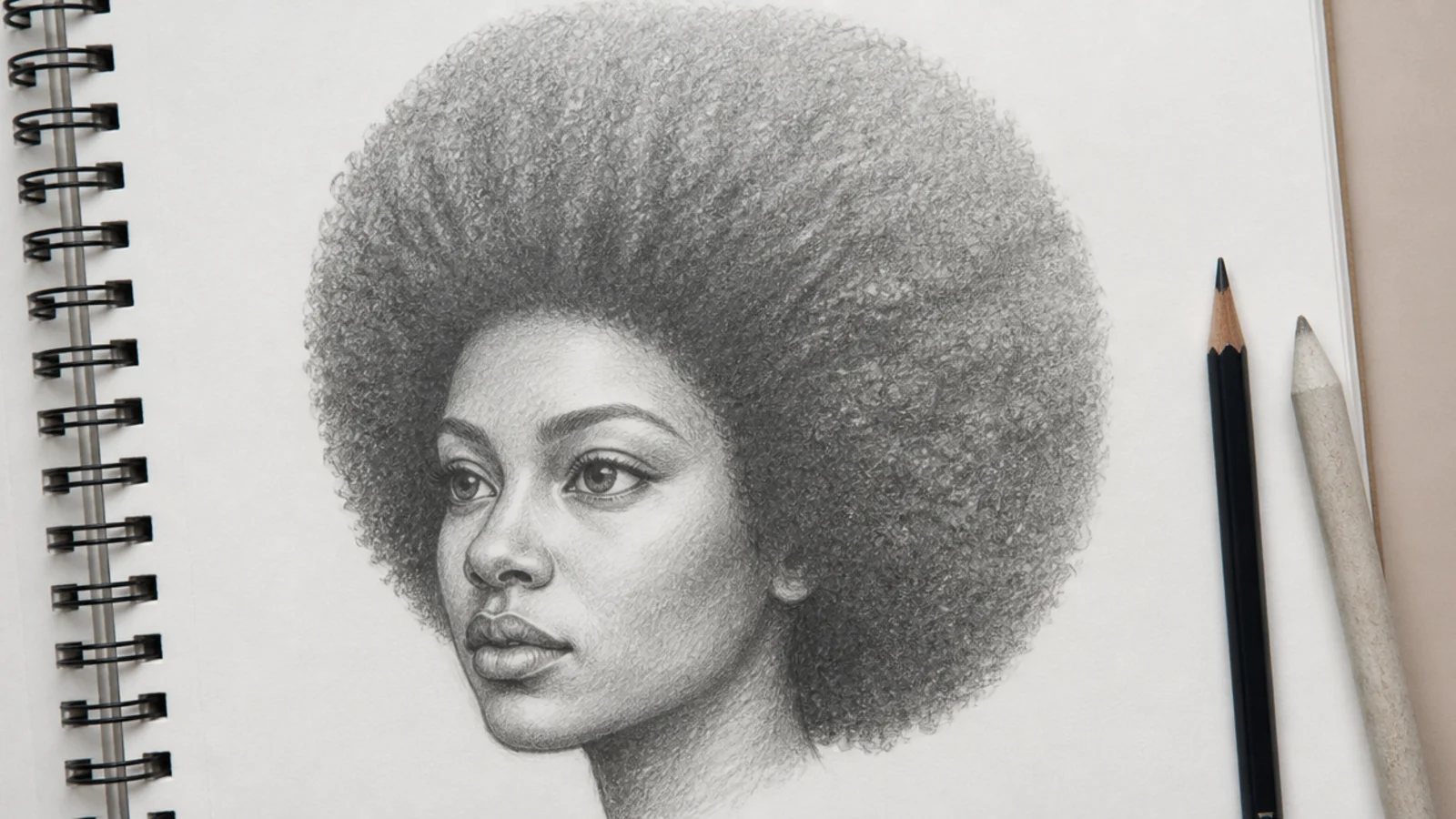
9. Round Afro With a Halo Edge
The lit rim around an afro comes from light passing through the thinnest outer coils rather than bouncing off them, so it is brightest exactly where the mass runs out. Keep the interior in mid tone and dark cores, and lift the rim as a broken ring rather than an even outline.
10. Waist Length Locs With Cuffs
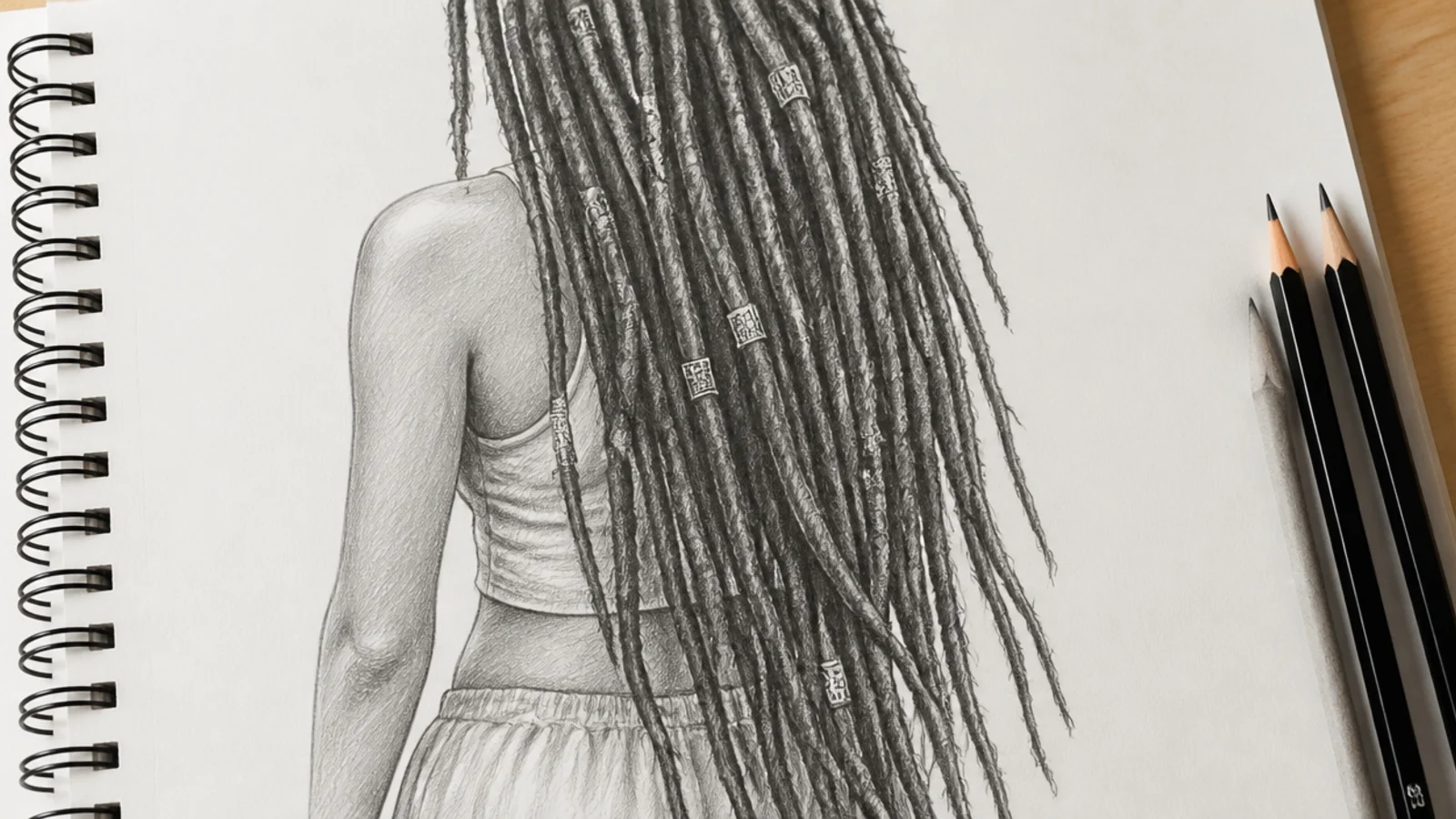
Each loc is a cylinder with its own highlight, so vary the lengths and let some cross behind others to build depth. The metal cuffs carry the only hard specular highlight in the drawing, which is precisely what makes them read as metal against all that matte texture.
11. Fishtail Braid Over the Shoulder
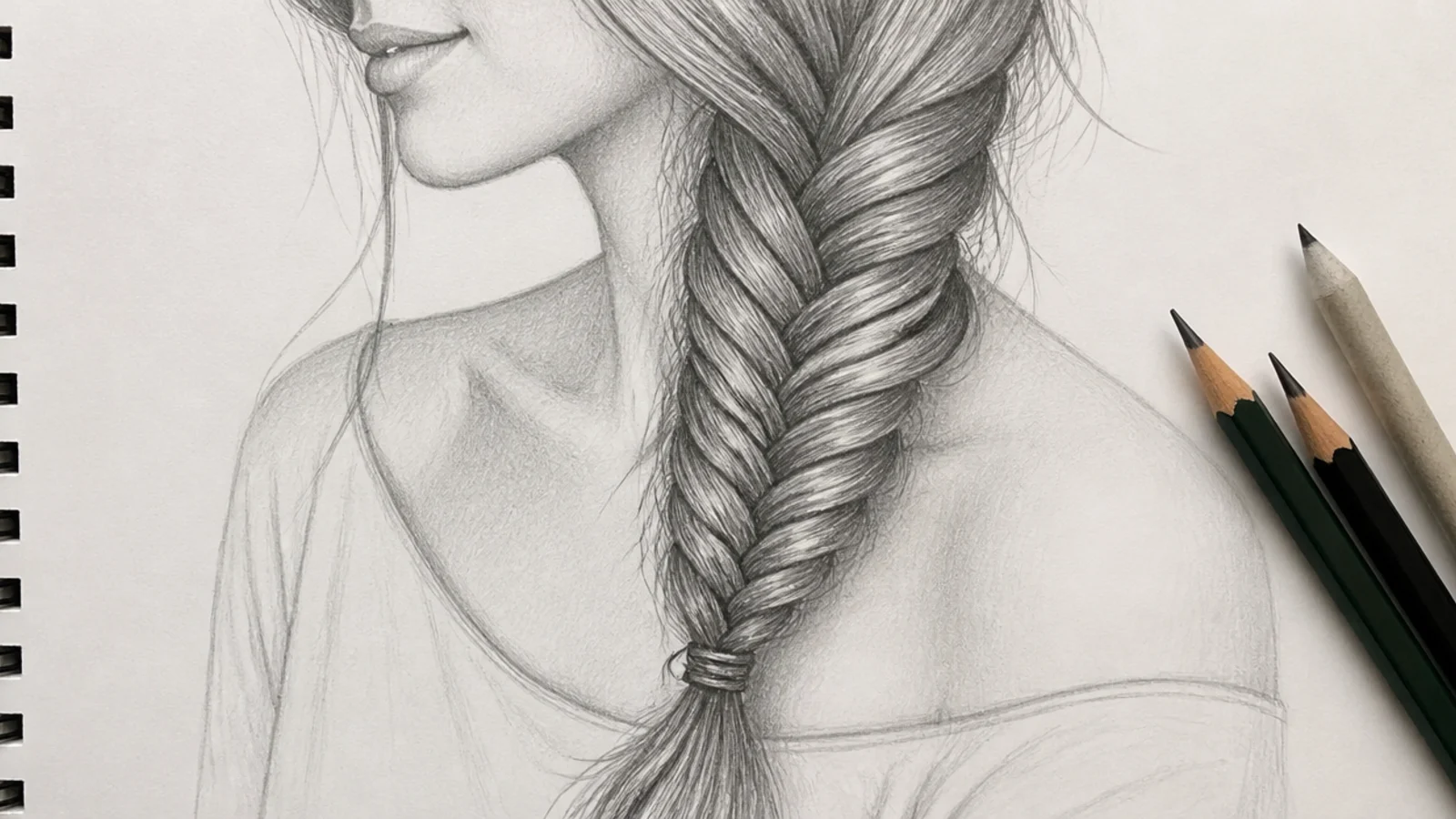
A fishtail is many small alternating wedges rather than three large ones, so the pattern is finer and more regular than a standard braid. Draw the centre line first and hang the wedges off it at a consistent angle, tightening the interval as the braid narrows toward the end.
12. Wrapped Crown Braid
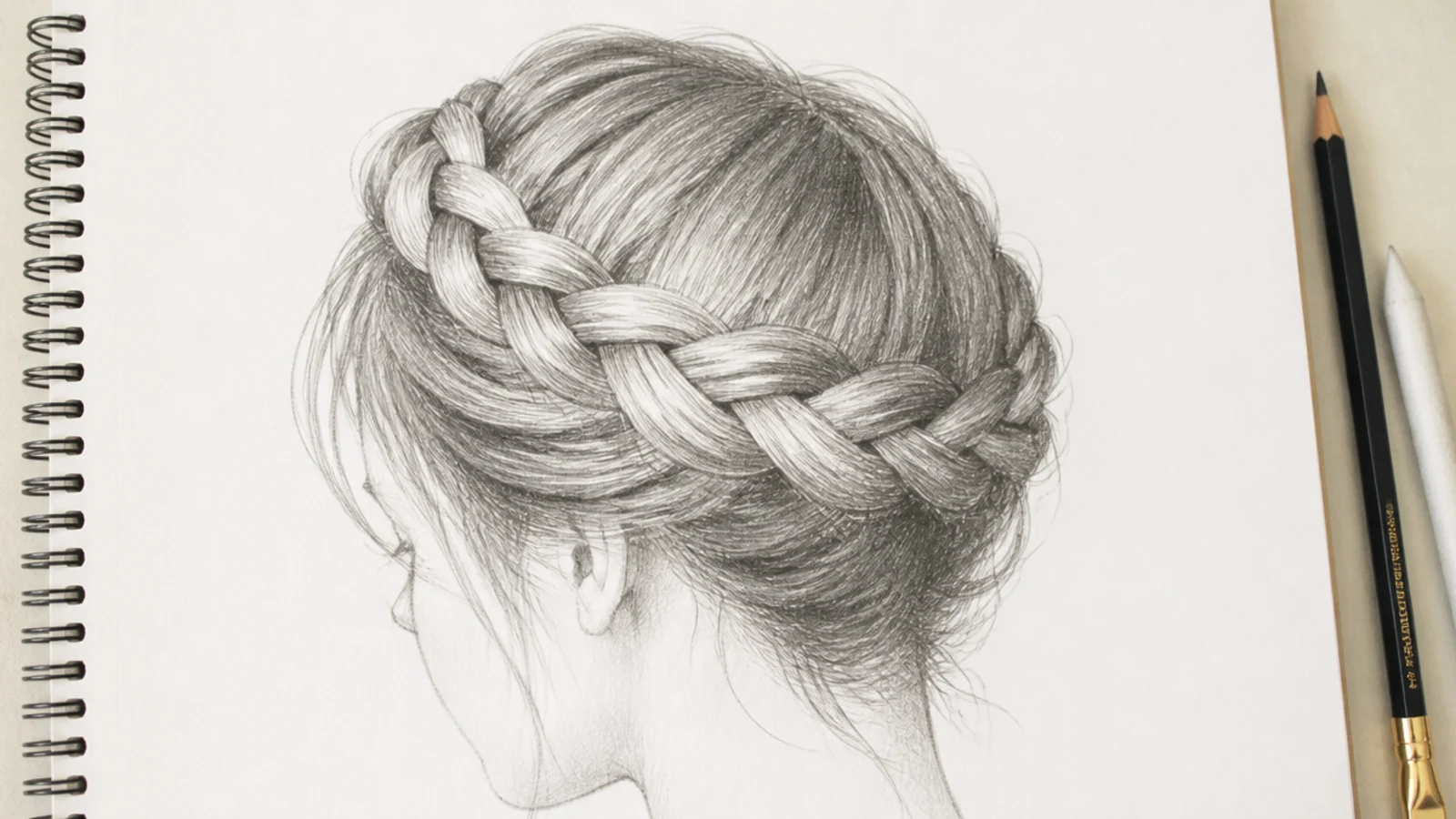
The braid travels around the head, which means it turns through perspective and its wedges compress on the far side. Follow the skull with the centre line and shrink each wedge as it goes around, or the crown flattens into a headband lying on top of the page.
13. Half Up With a Claw Clip
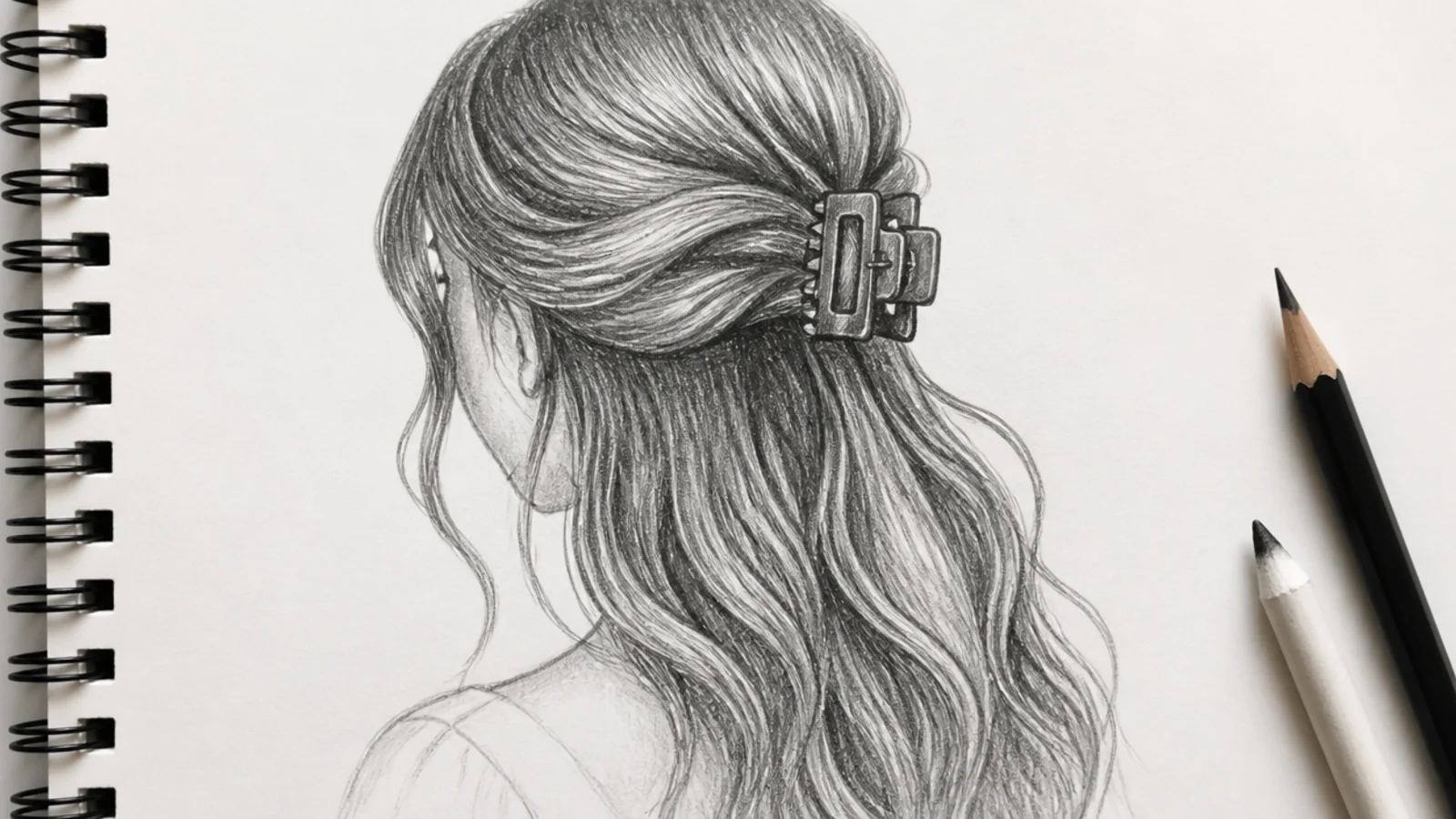
The clip is a hard geometric object against a soft mass, so keep its edges sharp and its tone flat while everything around it stays broken. Show the gathered hair entering from below and the loose length falling past it, because that direction is what makes the clip look like it is holding something.
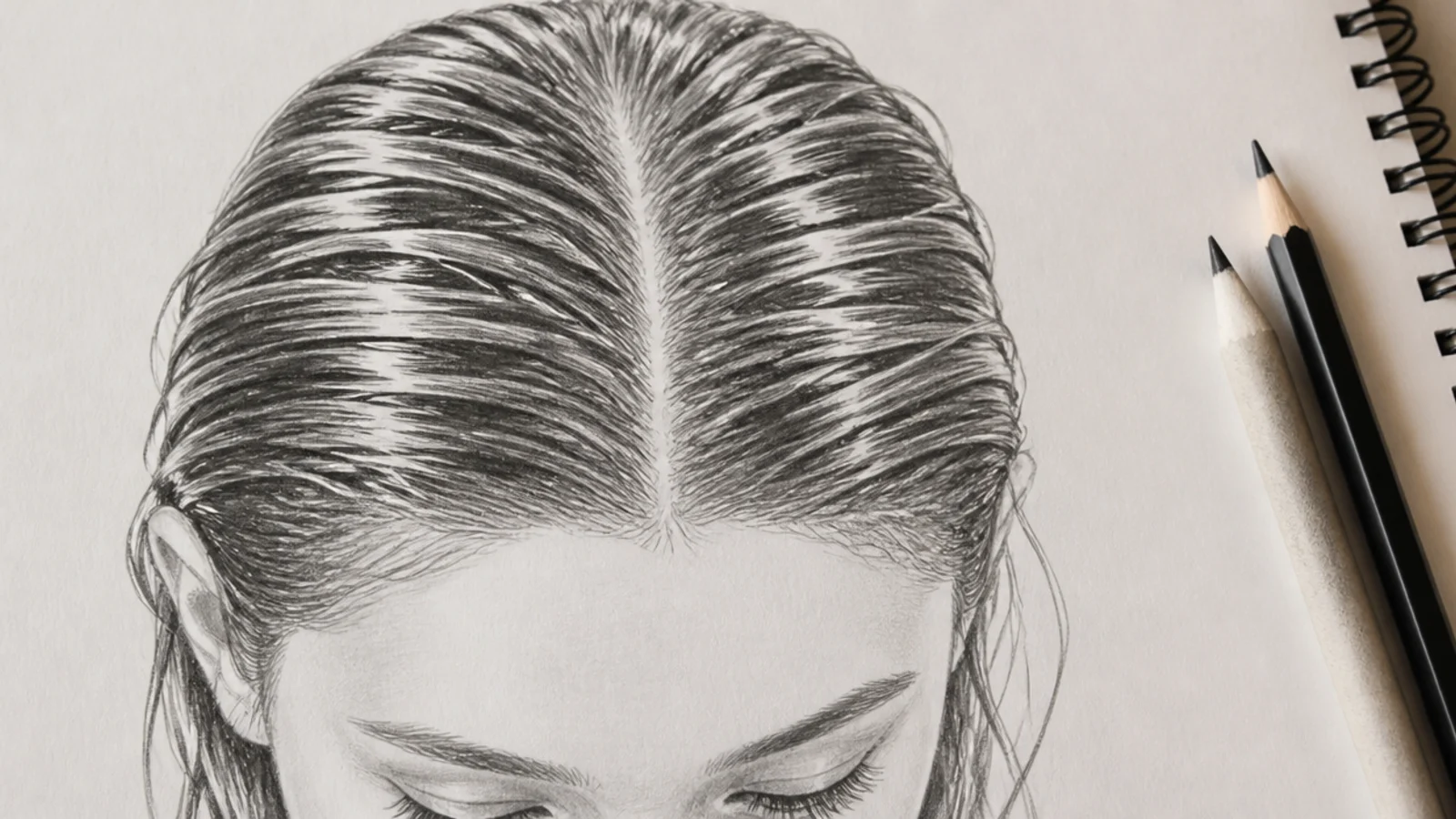
14. Wet Slicked Back Hair
Wet hair collapses against the skull, so the silhouette is nearly the skull outline and the drawing becomes a study of a rounded form. Comb marks read as narrow dark lines with hard bright gaps between them, all converging toward the back of the head where the hair was pulled.
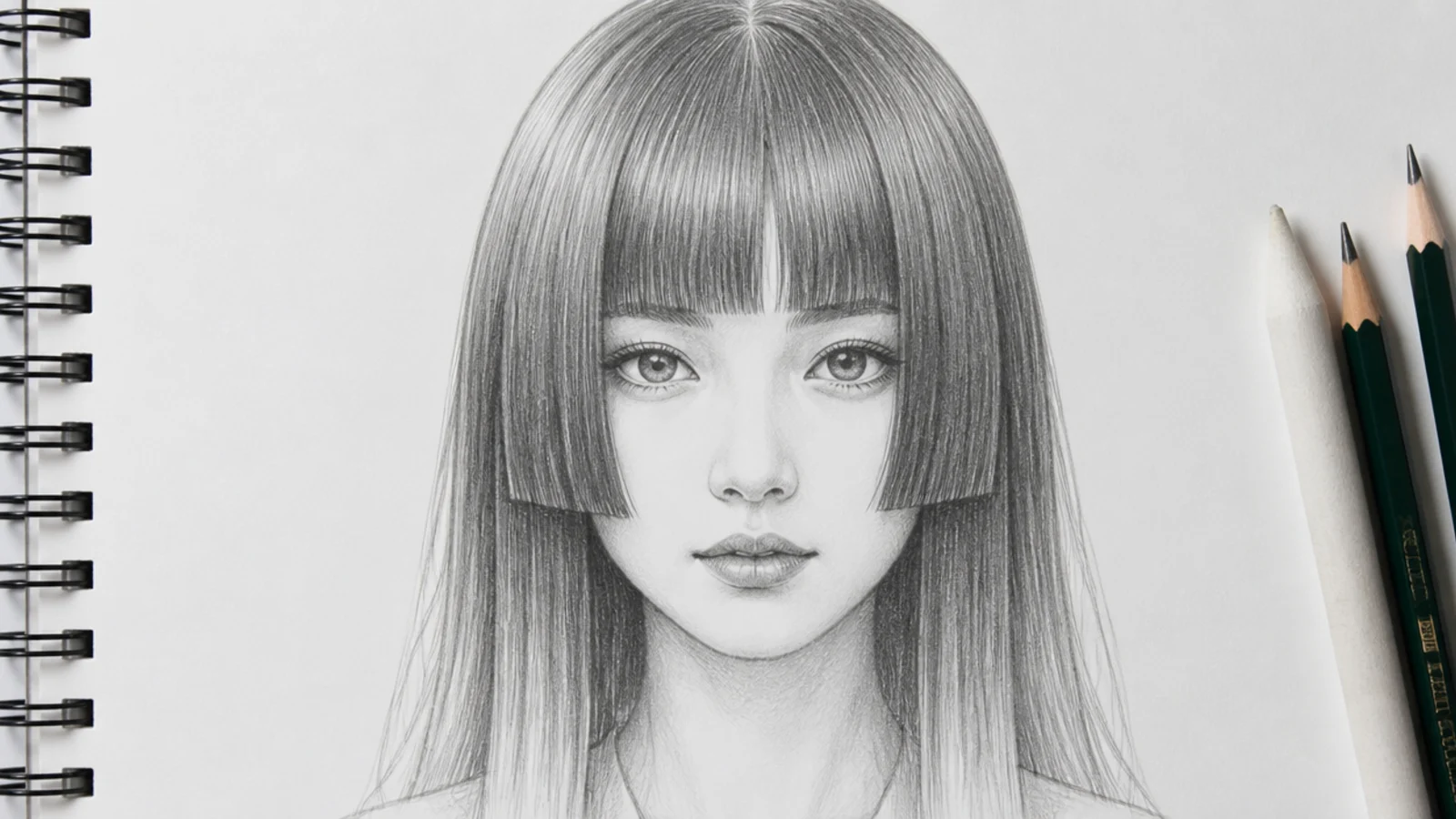
15. Hime Cut With Side Panels
The cut has two blunt lines, one across the fringe and one at the jaw, and both have to be genuinely straight for the shape to read. Keep the side panels forward of the ear and the long length behind it, since the contrast between those two lengths is the entire cut.
Final Thoughts
Group before you render. Find the crown, block the mass, split it into four or five ribbons, shade each in three values, and add individual strands only at the edges where they escape. The order matters more than the technique, because every mistake on this page comes from starting with detail inside a shape that was never correct.
For curly textures in depth see 15 female curly hair drawing ideas, and for the sketching order itself see 15 ways to sketch curly hair easily. More in Hair Drawing.