10 Textured Pixie Cuts That Add Volume and Movement
Ten textured pixie cuts that add volume and movement — choppy layers, piecey fringes, shaggy shixies and undercuts, with the cutting and styling rules that make each one work.
In this article · 11
- 1\. Classic Textured Pixie
- 2\. Textured Pixie With a Long Fringe
- 3\. Choppy Textured Pixie for Fine Hair
- 4\. Textured Pixie With an Undercut
- 5\. Side-Swept Textured Pixie
- 6\. Textured Pixie With Curtain Bangs
- 7\. Shaggy Textured Pixie
- 8\. Textured Pixie for Thick Hair
- 9\. Piecey Textured Pixie With Highlights
- 10\. Messy Textured Pixie
- Narrowing Down Your Perfect Textured Pixie Cut
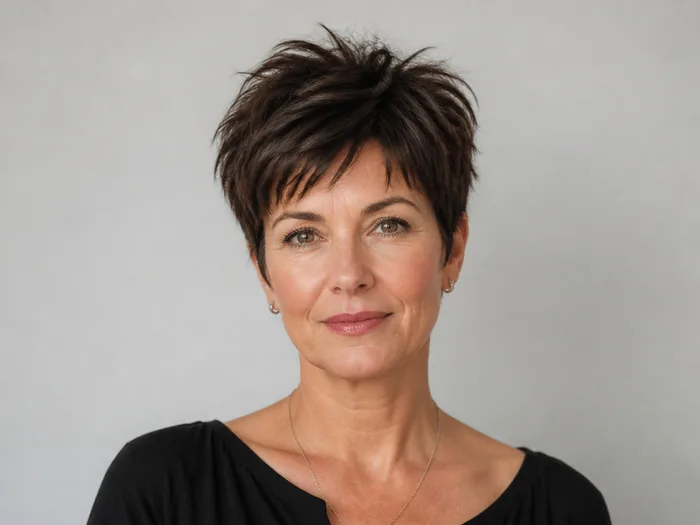
A textured pixie is the pixie that looks effortless because the effort is in the cut, not the styling: choppy, uneven layers are cut into the shape so the hair has movement, separation and volume built in, and the morning routine is a pea-sized amount of paste and two minutes of finger-styling. A blunt pixie can sit flat like a helmet, but texture breaks the surface into pieces of different lengths, so light catches the ends, the crown lifts, and fine hair reads thicker than it is. The ten pixies below cover every version of the idea, from the classic choppy crop to the shaggy shixie, and each one says which hair type it suits, the cutting rule that makes it work and the styling move that keeps the texture visible instead of flattened. If you want the softer classic shapes first, our feminine pixie cuts cover the soft, textured and bold versions, and our pixie cuts round up the wider family. For the curly version of the same logic, our pixie cut for curly hair carries texture into curls, and our short pixie cuts for round faces add the lengthening rules to these same shapes. For winter texture that survives cold air and hats, our winter hairstyles for curly hair pair these shapes with cold-weather care.
1. Classic Textured Pixie
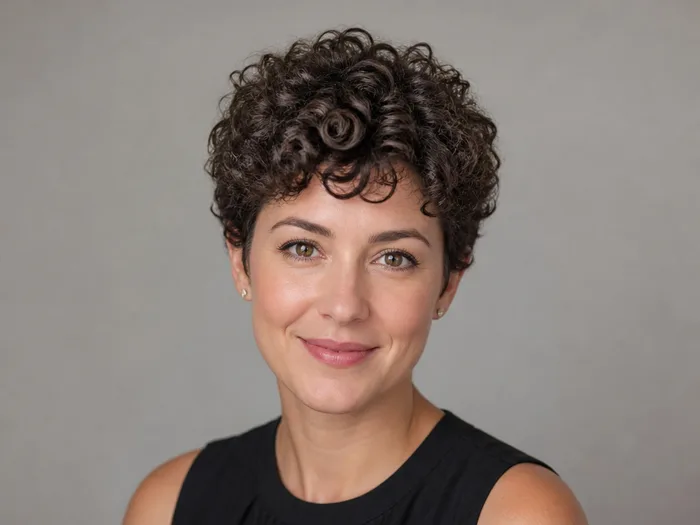
The classic textured pixie is the reference shape: short, choppy layers on top with a slightly longer fringe swept to one side and a tapered nape. The mechanism is the uneven length: the layers are point-cut so the ends sit at different heights, which makes the hair look thicker and stops it collapsing into one smooth sheet, while the taper at the nape keeps the silhouette narrow so the volume reads as height, not width. It flatters oval and heart-shaped faces best, because the texture adds width at the crown without overwhelming a narrow jaw, and fine-haired women love it because thinner strands hold the piecey shape longer between washes. Ask your stylist for a razor-cut finish rather than scissor-only layers, because the razor softens the ends instead of leaving them blunt, and the texture stays visible even as the cut grows out.
How to do it: Warm a pea-sized amount of light paste between your palms, then work it through dry hair and pinch the ends into separated pieces with your fingers. Rough up the crown for lift and sweep the fringe to one side, keeping the sides smooth with a soft brush so the texture stays concentrated on top. Mist very lightly or skip the spray entirely.
Time: About 2 minutes. Best for: Fine to medium, straight to wavy, short. Ask your stylist for: Choppy point-cut layers through the crown, a tapered nape, a razor-cut finish, fringe swept to one side.
2. Textured Pixie With a Long Fringe
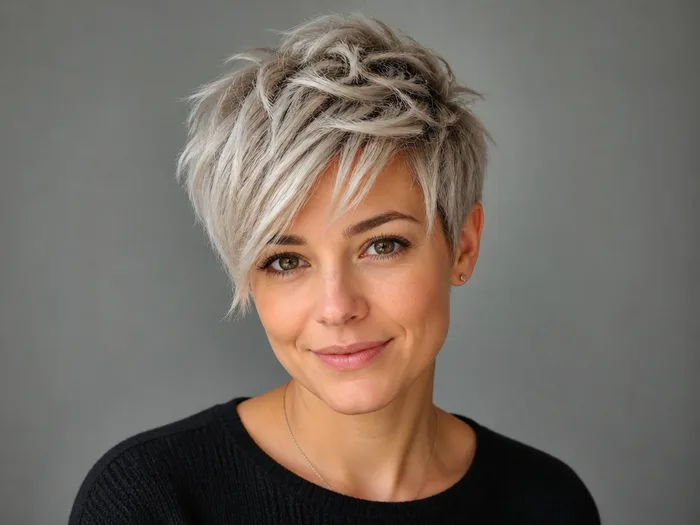
The textured pixie with a long fringe keeps the fringe long enough to fall across the forehead while the rest of the cut stays short and choppy, and the fringe is what makes it the most versatile textured pixie on this list. The mechanism is the contrast between the fringe and the crown: the long fringe is point-cut into separated pieces, so it breaks up the forehead without drawing a hard horizontal line, while the short textured crown gives the height that stops the fringe from dragging the face down. It is the pick when you want a pixie with styling options, because the fringe can be worn forward, swept to the side or pushed back, so one cut gives three different silhouettes, and it suits round faces especially well, since the diagonal of the fringe lengthens the face. The fringe must be cut dry and longer than it looks right wet, because the pieces spring up as they dry and a wet cut ends up far above the brows.
How to do it: Work a pea-sized amount of texturizing cream through dry hair, then pinch the fringe into separated pieces with your fingers and sweep it across the forehead, keeping the pieces distinct rather than combed flat. Rough up the crown for height and smooth the sides close so the fringe stays the focus. Finish with a light flexible-hold spray aimed at the fringe only.
Time: About 3 minutes. Best for: Fine to medium, straight to wavy, short. Ask your stylist for: A long fringe point-cut into separated pieces, short textured crown, tapered nape, cut dry.
3. Choppy Textured Pixie for Fine Hair
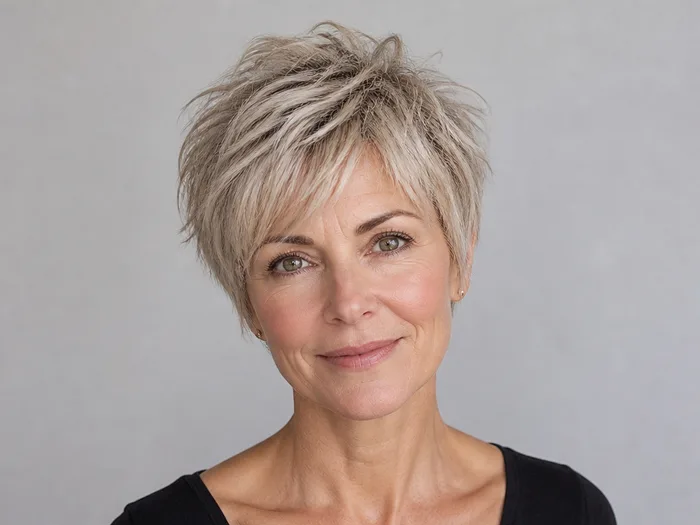
The choppy textured pixie for fine hair is the cut that makes fine strands look thick, because it uses the shortest, most uneven layers on this list. The mechanism is the stacking: layers of different lengths sit on top of each other, so the hair reads as a dense mass instead of a thin sheet, and because each layer ends at a different point the eye sees volume where a blunt cut would show scalp. It is the pick when your hair is fine and flat and you are tired of cuts that collapse by midday, because the texture is cut in at the ends and does not depend on product or backcombing to hold. The top must be kept short enough to hold its separation, since fine hair left too long collapses under its own weight and the texture disappears, and the product must stay light, because a heavy gel or cream glues the pieces together and undoes the effect.
How to do it: Work a pea-sized amount of light paste or texturizing spray through dry hair, then pinch the ends into separated pieces with your fingers, lifting the crown upward as you go. Do not use a brush on the top, because brushing blends the pieces into one flat surface. Add a drop of sea salt spray on second-day hair for grip.
Time: About 2 minutes. Best for: Fine, straight to wavy, short. Ask your stylist for: Short choppy layers through the crown, point-cut ends, no thinning, a tapered nape.
4. Textured Pixie With an Undercut
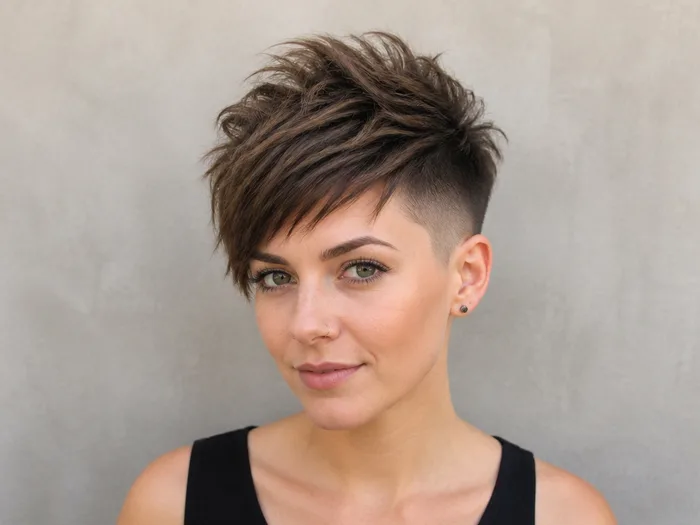
The textured pixie with an undercut pairs closely faded sides with long, choppy layers on top, and the contrast is the whole effect. The mechanism is the removal of the sides: the undercut takes the bulk out exactly where hair builds width, so the face's widest measurement shrinks, while the top keeps its full textured volume and height, so the silhouette reads tall and narrow against the clean sides. It is the pick when you want an edgy, confident look and you are comfortable with a cut that needs a trim every two to three weeks, because the contrast softens fast as the sides grow in and the effect depends on the line staying crisp. The undercut must be faded into the texture, not cut as a hard line against it, or the regrowth pushes the top out sideways and the shape goes boxy.
How to do it: Work a pea-sized amount of matte paste through the dry top, then pinch the ends into separated pieces with your fingers and lift the crown for height. Smooth the undercut sides flat with a soft brush and a drop of serum so they read clean against the textured top. Finish with a light flexible-hold spray on the top only.
Time: About 3 minutes. Best for: Medium to thick, straight to wavy, short. Ask your stylist for: An undercut on one or both sides, long choppy layers kept through the top, a fade that blends into the texture.
5. Side-Swept Textured Pixie
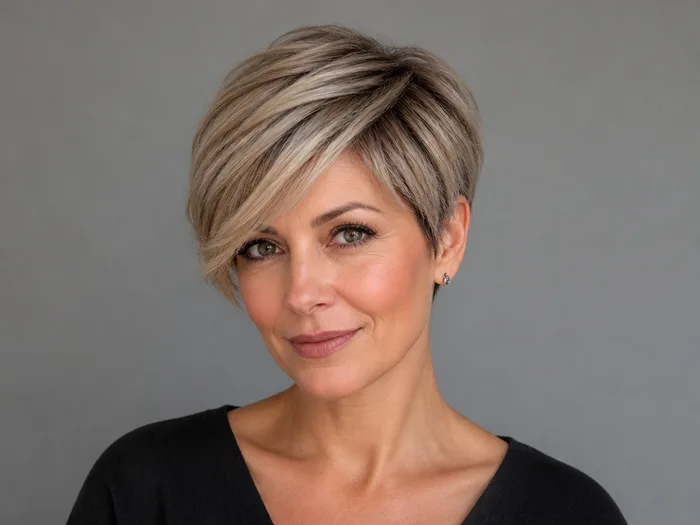
The side-swept textured pixie parts the hair deeply on one side and sweeps the textured layers across, and the asymmetry is what makes it flatter so many face shapes. The mechanism is the diagonal: the layers fall from a deep side part in a long line across the forehead, so the eye follows the diagonal instead of the face's width, while the shorter side stays close to the head and removes bulk exactly where the face carries it. It works on almost any hair type, and it is the cut to pick when you want the lengthening effect of a diagonal without an edgy or dramatic shape, because the sweep is soft and the texture keeps it wearable. The deep part must be cut into the shape, not just styled in, or the layers spring back to the middle as they dry and the diagonal disappears.
How to do it: Part the hair deeply on one side while it is dry, then work a pea-sized amount of light paste through the longer side and sweep it across the forehead, pinching the ends into separated pieces. Keep the shorter side smooth by pressing it gently toward the head. Finish with a light flexible-hold spray aimed at the sweep only.
Time: About 3 minutes. Best for: Fine to medium, straight to wavy, short. Ask your stylist for: A deep side part cut into the shape, the longer side left to sweep past the cheekbone, the shorter side kept close.
6. Textured Pixie With Curtain Bangs
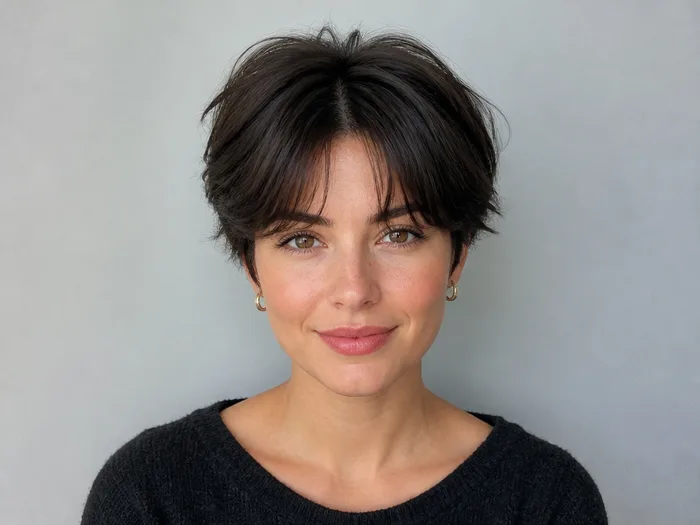
The textured pixie with curtain bangs splits the front section down the middle and sweeps both sides away from the face, and the parting is what softens the cut. The mechanism is the symmetry of the split: the two sides frame the face like curtains, so the forehead reads narrower and the cheekbones get a soft frame, while the textured crown behind them supplies the height that stops the parting from flattening the shape. It is the pick when you want a pixie that still feels feminine and conventional, because the curtain bangs are the gentlest fringe on this list and they grow out more gracefully than any other fringe, blending into the layers instead of needing a trim. The bangs must be cut longer at the sides than in the middle, so they fall away from the face in a curve, and they must be point-cut, because a blunt curtain bang draws a hard line across the forehead.
How to do it: Part the front section down the middle while the hair is dry, then work a pea-sized amount of texturizing cream through the bangs and sweep each side away from the face, pinching the ends into separated pieces. Rough up the crown for height and keep the sides close. Mist very lightly or skip the spray.
Time: About 3 minutes. Best for: Fine to medium, straight to wavy, short. Ask your stylist for: Curtain bangs parted in the middle, longer at the sides than the centre, point-cut ends, textured crown.
7. Shaggy Textured Pixie
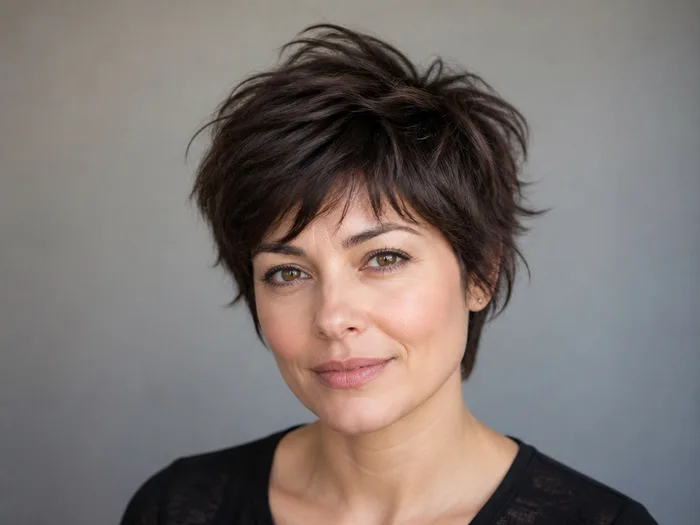
The shaggy textured pixie, also called the shixie, is where the pixie meets the shag: the short length of a pixie with the soft, deconstructed layers of a shag. The mechanism is the feathering: the layers are cut with a razor so the ends taper into wisps instead of ending in a line, which makes the hair look deliberately lived-in and gives it movement in every direction, so it never sits in one stiff shape. It is the pick when you love the messy, just-woken-up look and you want a pixie that forgives a bad hair day, because the shaggy texture hides uneven growth and the shape holds for five to six weeks between trims. It works best on wavy hair, since the wave gives the feathered layers somewhere to go, and it needs the lightest product on this list, because anything heavy kills the airy finish.
How to do it: Work a pea-sized amount of sea salt spray or light texturizing cream through dry hair, then rough up the layers with your fingers and let them fall where they want to. Do not comb or brush the top, because the shaggy finish depends on the pieces staying separated and uneven. Pinch the ends apart with your fingers for extra definition.
Time: About 2 minutes. Best for: Wavy to curly, fine to medium, short. Ask your stylist for: Razor-cut feathered layers, a soft deconstructed finish, a tapered nape, no blunt lines.
8. Textured Pixie for Thick Hair
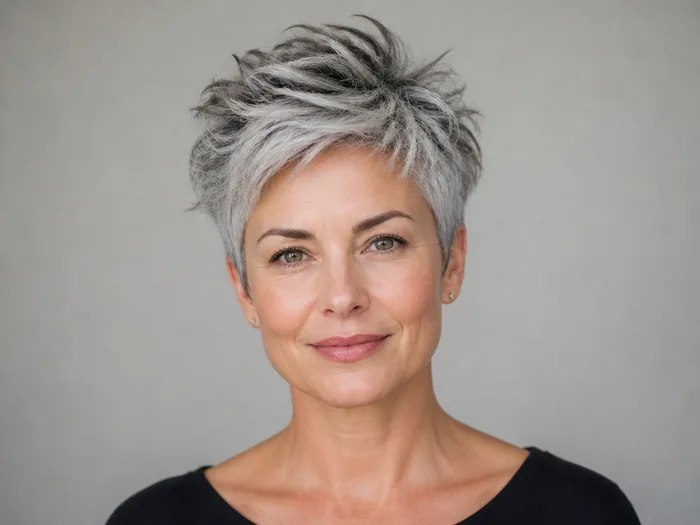
The textured pixie for thick hair is the cut that tames volume instead of adding it, because thick hair in a pixie goes wide before it goes tall. The mechanism is the internal texture: the layers are point-cut and the bulk is removed from underneath, not from the surface, so the shape stays narrow at the sides while the crown keeps its fullness, and the texture on top gives the weight somewhere to move instead of puffing out. It is the pick when your hair is thick and every short cut you have tried turned triangular, because the taper at the sides and the texture through the crown do the narrowing work that styling cannot. The sides must be tapered, not buzzed flat, so the hair keeps its natural fall, and the top must stay long enough for the layers to stack, since cutting thick hair too short makes it spring outward.
How to do it: Work a pea-sized amount of smoothing cream through damp hair, then blow-dry the crown upward with your fingers for lift and press the sides gently toward the head while they dry. Pinch the ends into separated pieces once dry, and add a drop of serum to the ends for shine. Finish with a light flexible-hold spray on the crown only.
Time: About 7 minutes. Best for: Thick, straight to wavy, short. Ask your stylist for: Bulk removed from underneath, tapered sides, length kept through the crown for stacking, point-cut ends.
9. Piecey Textured Pixie With Highlights
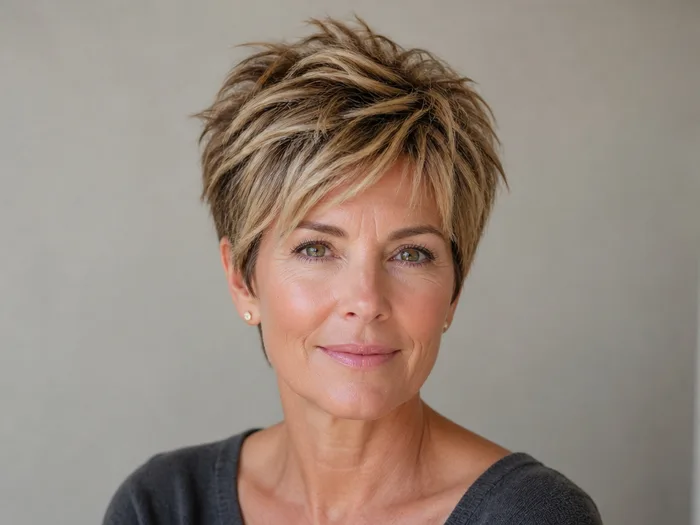
The piecey textured pixie with highlights adds dimension to the cut with lighter pieces woven through the layers, and the colour is what makes the texture read. The mechanism is the light: highlights catch the tops of the layers and leave the undersides darker, so each piece reads as a separate, defined strand instead of one solid mass, and the piecey texture of the cut gives the light somewhere to land. It is the pick when your hair feels flat or one-dimensional and you want the shape to pop without changing the cut, and it suits every hair type, because the colour works on the layer, not the length. The highlights must be placed on the layers that sit on the surface, not through the whole head, or the dimension flattens out as the hair moves, and the base should stay close to your natural colour so the grow-out is forgiving.
How to do it: Work a pea-sized amount of light paste through dry hair, then pinch the ends into separated pieces with your fingers so the highlights show, keeping the sides smooth and close so the light stays concentrated on the top. Add a drop of serum to the ends for shine and mist very lightly. A purple-toned shampoo once a week keeps blonde highlights from turning brassy.
Time: About 3 minutes. Best for: Fine to medium, straight to wavy, short. Ask your stylist for: Piecey texture through the ends, highlights placed on the surface layers, a base close to your natural colour.
10. Messy Textured Pixie
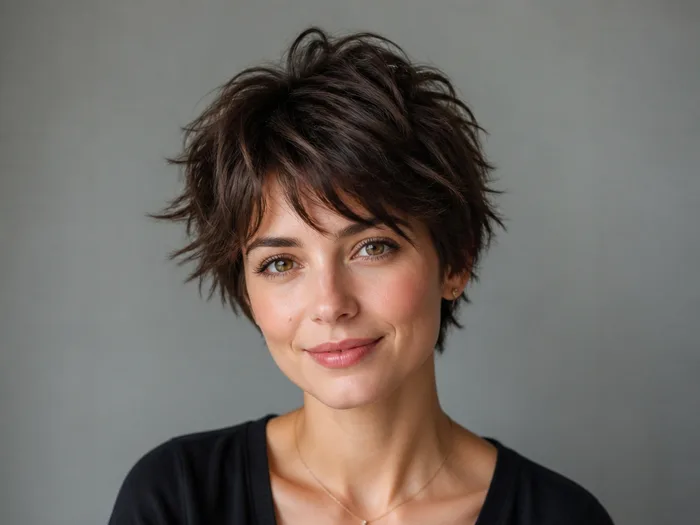
The messy textured pixie is the lowest-maintenance textured pixie there is, because the shape is cut so the layers fall into place with nothing more than paste and a rough-up. The mechanism is the cut itself: the layers are chopped at uneven lengths through the crown, so there is no single line for the hair to fall into, and the mess is the style — the pieces sit where they land, which means there is no wrong way to wear it and no blow-drying, no diffusing and no daily restyling. It is the pick when you want the pixie for the freedom, not the styling, and it works best on hair with a little natural wave, since the wave gives the mess its direction. The cut must be shaped with the hair dry, because a messy pixie lives or dies on how the pieces sit in their natural state, and a wet cut cannot see that.
How to do it: Warm a pea-sized amount of matte paste between your palms, then work it through dry hair and rough up the crown with your fingers, letting the pieces fall where they want to. Do not comb the top once it has set, because combing blends the pieces into one flat surface. On second-day hair, mist with sea salt spray, rough it up again, and let it reset.
Time: About 2 minutes. Best for: Fine to medium, straight to wavy, short. Ask your stylist for: Uneven chopped layers through the crown, cut dry, a tapered nape, no blunt lines.
Narrowing Down Your Perfect Textured Pixie Cut
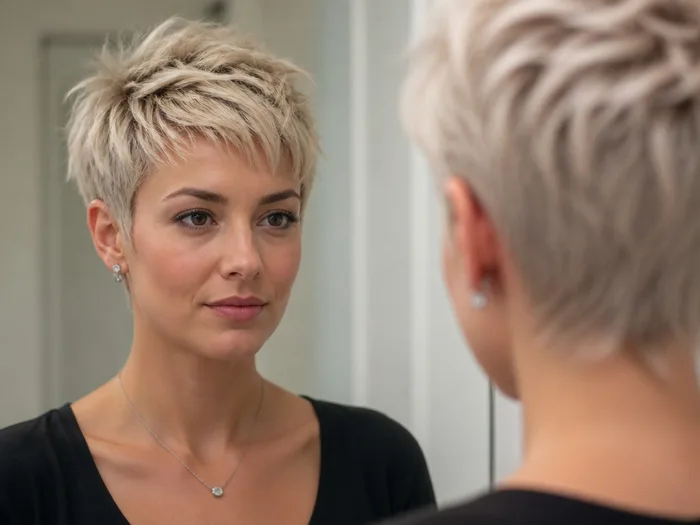
Choose by three filters, in this order: your hair type, how much styling time you will actually spend each morning, and how bold you want the cut to be. If your hair is fine and flat, the choppy textured pixie for fine hair is the only honest choice, because its short uneven layers stack into the thickness fine strands cannot build on their own. If your hair is thick, the textured pixie for thick hair is the one to take, because it removes the bulk from underneath instead of letting the shape go triangular. If you want the simplest effect, take the messy textured pixie or the classic textured pixie — both need about two minutes and a pea-sized amount of paste, because the shape comes from the cut. If you want the strongest statement, take the textured pixie with an undercut or the shaggy textured pixie — both build their effect on contrast, clean sides against choppy tops, and the undercut needs a trim every two to three weeks to keep the line crisp. If you want a soft, face-framing detail, the textured pixie with a long fringe, the side-swept textured pixie or the textured pixie with curtain bangs all draw a line across the forehead that flatters almost every face shape. Whatever you pick, follow the two rules that decide whether a textured pixie works: get it point-cut or razor-cut, never thinned, because thinning removes bulk from the inside and leaves the shape stringy, and style it dry, because the texture only shows once the hair has set. Book the trim before the shape goes soft, and bring photos to the salon, because a pixie is a precision cut and the words that matter are choppy layers, tapered nape, and a fringe finished to your choice. For the classic shapes, our feminine pixie cuts cover the full family, and for the curly version of the same logic, our pixie cut for curly hair carries it into curls. If your face is round, our short pixie cuts for round faces add the lengthening rules to these same shapes, and for the longer version of the same idea, our short curly hairstyles carry it into in-between lengths.