20 Simple Fulani Braids Ideas for Kids
Twenty child-appropriate Fulani braid styles built around the two rules that matter — looser tension and shorter length. A child's hairline recovers more slowly than an adult's, so size and weight are safety choices, not style ones.
In this article · 27
- What Makes a Fulani Braid Style Child-Appropriate?
- How to Choose Your Child's Fulani Braids
- The 20 Kids' Fulani Braids Ideas
- 1. Two-Cornrow Jumbo Fulani Braids
- 2. Fulani Braids with Light Plastic Beads
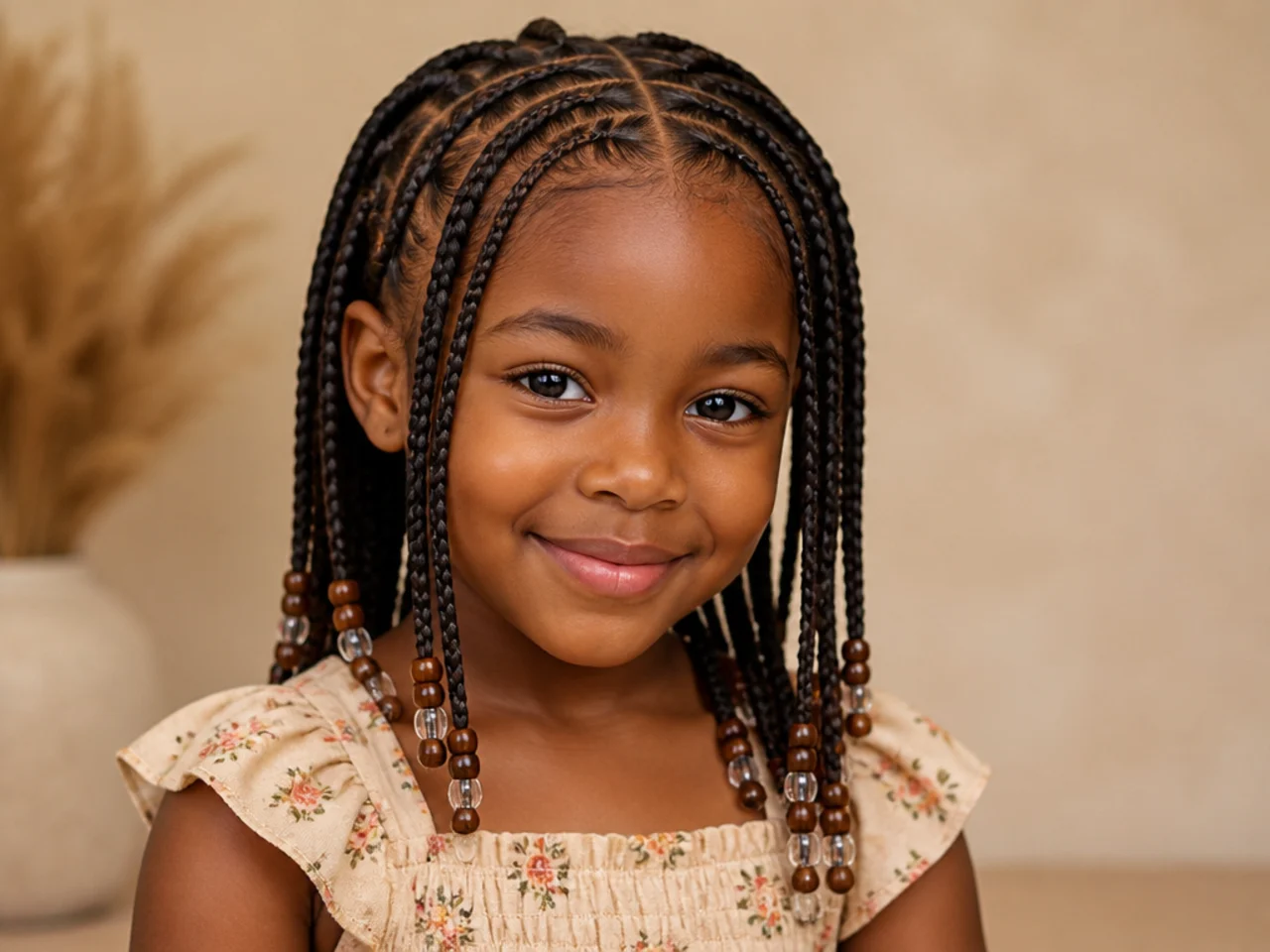
- 3. Chin-Length Bob Braids
- 4. Knotless Kids' Fulani Braids
- 5. Fulani Braids with a Braided Crown
- 6. Half-Up Kids' Fulani Braids
- 7. Fulani Braids in Two Low Bunches
- 8. Fulani Braids with Colourful Ribbon
- 9. Three-Cornrow Fulani Braids
- 10. Fulani Braids with Curly Ends
- 11. Fulani Braids with a Side Part
- 12. Shoulder-Length Medium Braids
- 13. Fulani Braids in a Single Low Plait
- 14. Fulani Braids with Cowrie Shells
- 15. Two-Tone Kids' Fulani Braids
- 16. Fulani Braids with Curved Cornrows
- 17. Very Short Jumbo Braids
- 18. Fulani Braids with a Fabric Wrap
- 19. Fulani Braids for Fine or Fragile Hair
- 20. Fulani Braids for a Special Occasion
- How to Style and Maintain Kids' Fulani Braids
- Mistakes to Avoid
- FAQ
- Final Thoughts
Braiding a child's hair is a different job to braiding an adult's. Their hairline is finer, it recovers more slowly from tension, and they cannot sit for six hours. Every style below is built around those three facts.
What Makes a Fulani Braid Style Child-Appropriate?
Three things: braid size, length, and sitting time. Jumbo or medium braids, shoulder length or shorter, and an install that finishes in two to three hours rather than eight.
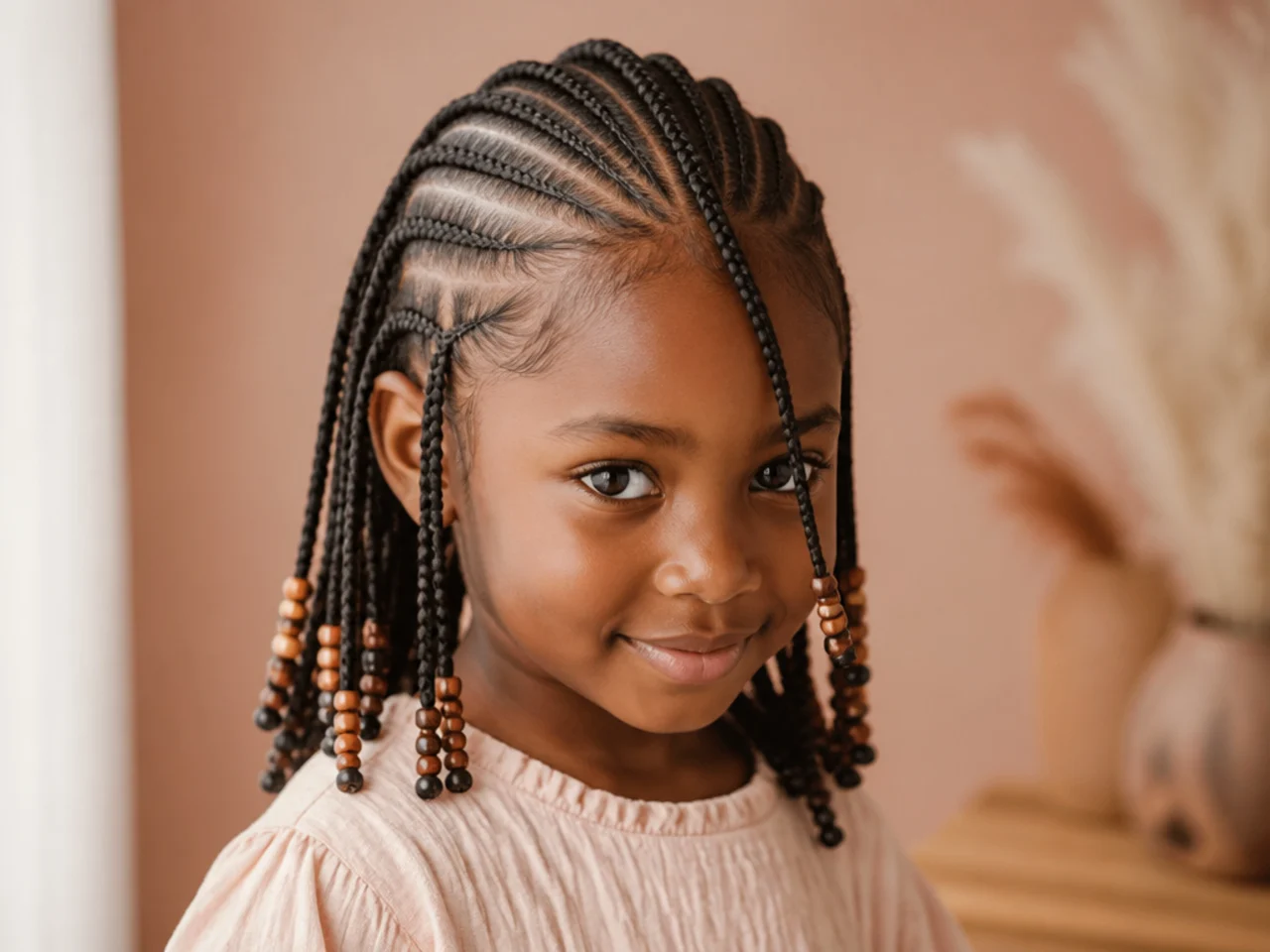
The Fulani pattern itself is well suited to children because the front cornrows sit back from the fine edge hair rather than pulling directly on it.
How to Choose Your Child's Fulani Braids
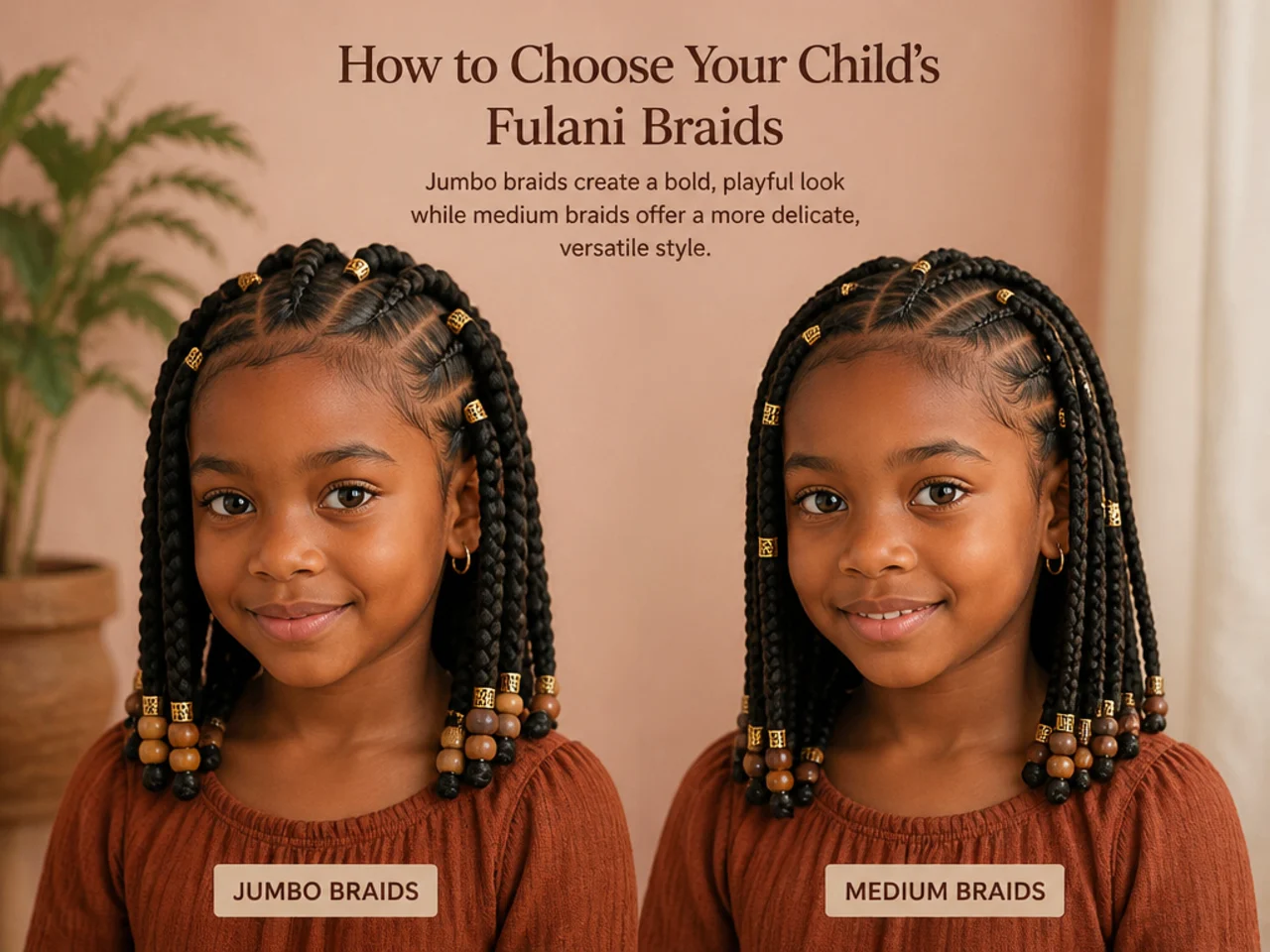
Go jumbo or medium, never small. Fewer partings means fewer tension points on a hairline that is still developing.
Keep it at the shoulder. Weight pulls all day, and children do not tell you their scalp aches until it really does.
Budget two to three hours. Split it across a morning and an afternoon if needed.
Ask the child during, not after. "Does anywhere feel tight?" every twenty minutes.
The 20 Kids' Fulani Braids Ideas
1. Two-Cornrow Jumbo Fulani Braids
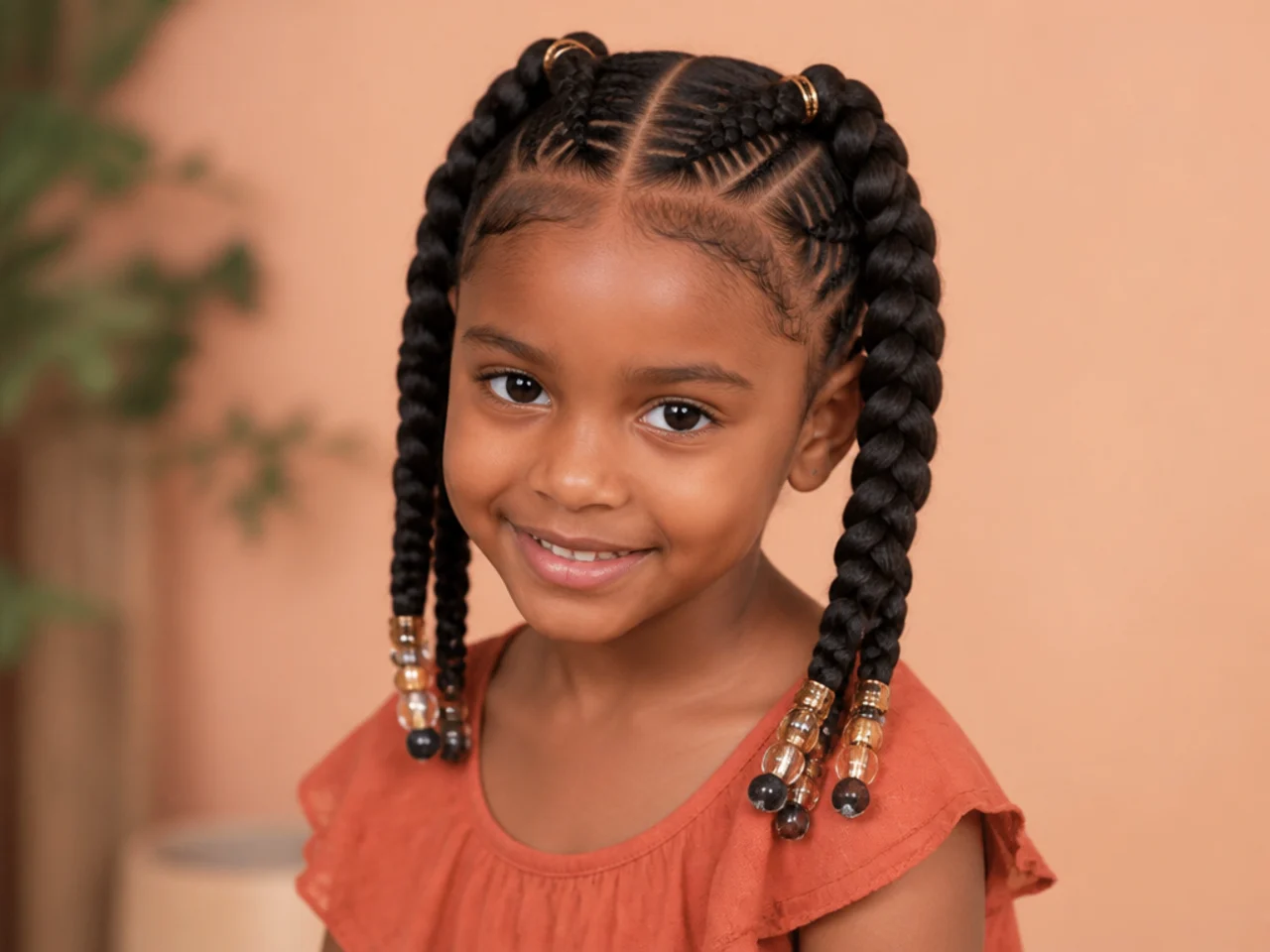
The default. Two wide cornrows, chunky loose braids at shoulder length, ninety minutes.
2. Fulani Braids with Light Plastic Beads
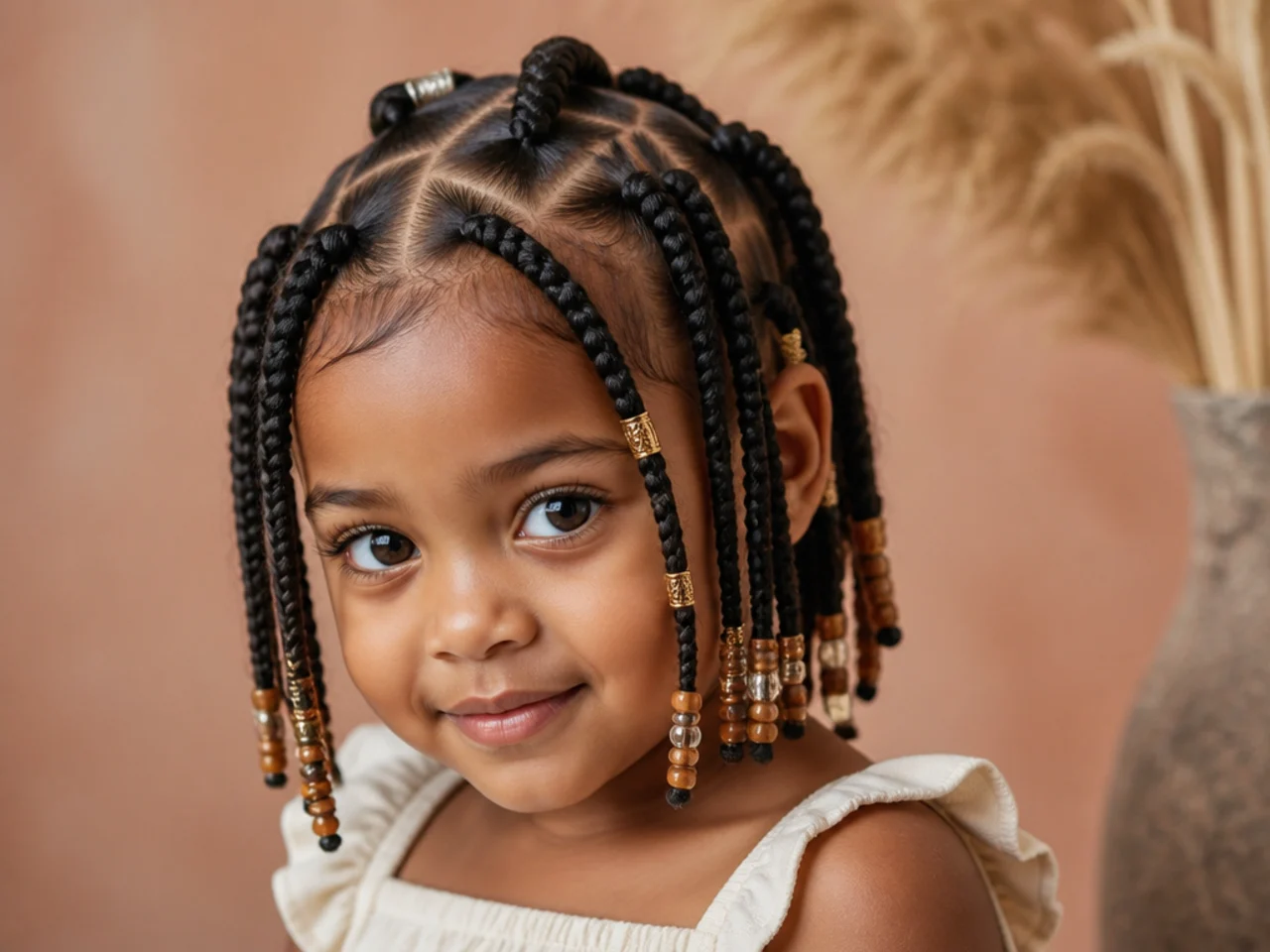
A handful of coloured plastic beads. Light enough not to pull, and children love them.
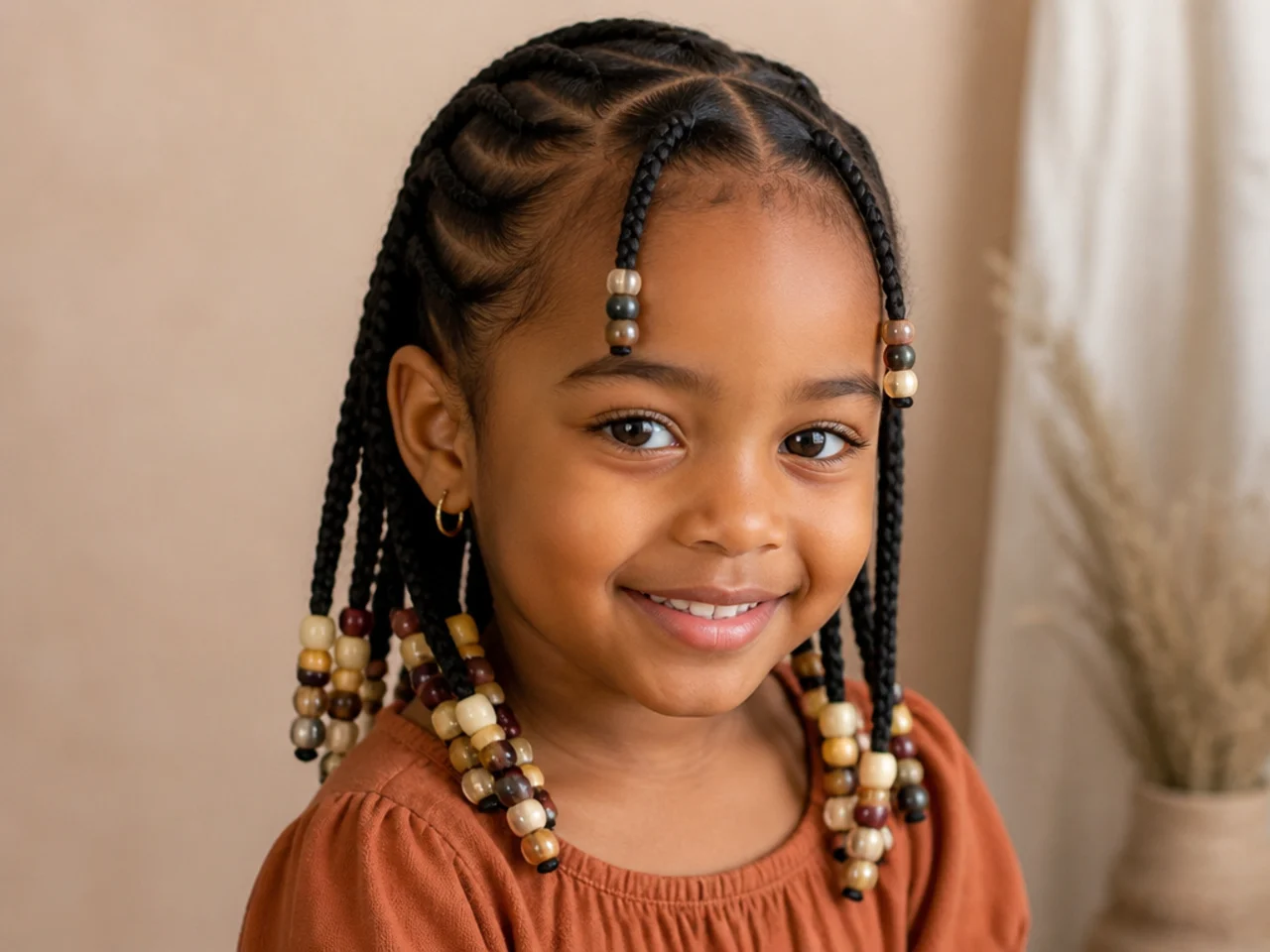
3. Chin-Length Bob Braids
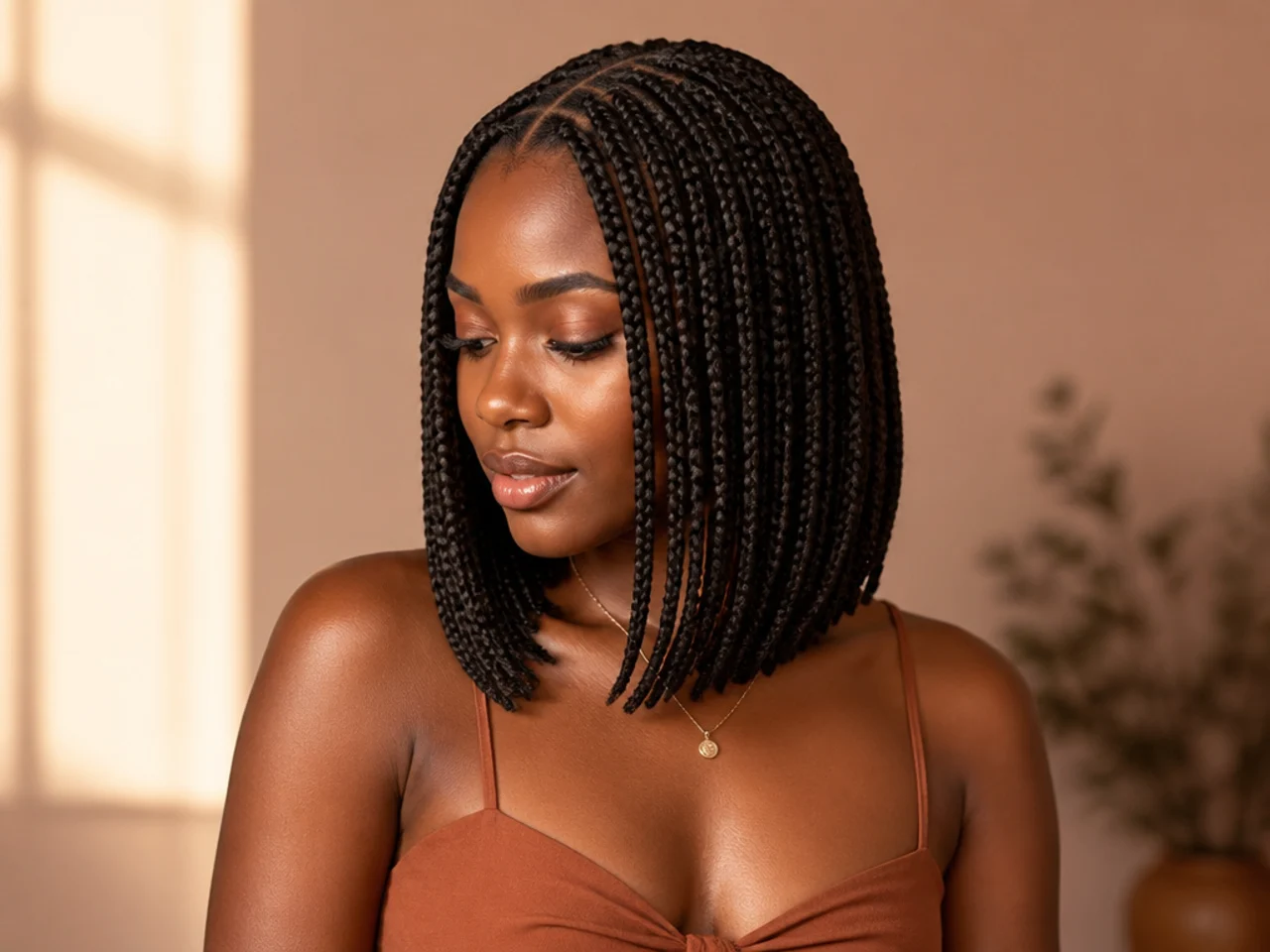
Short, light and the easiest to sleep in. The best first protective style for a young child.
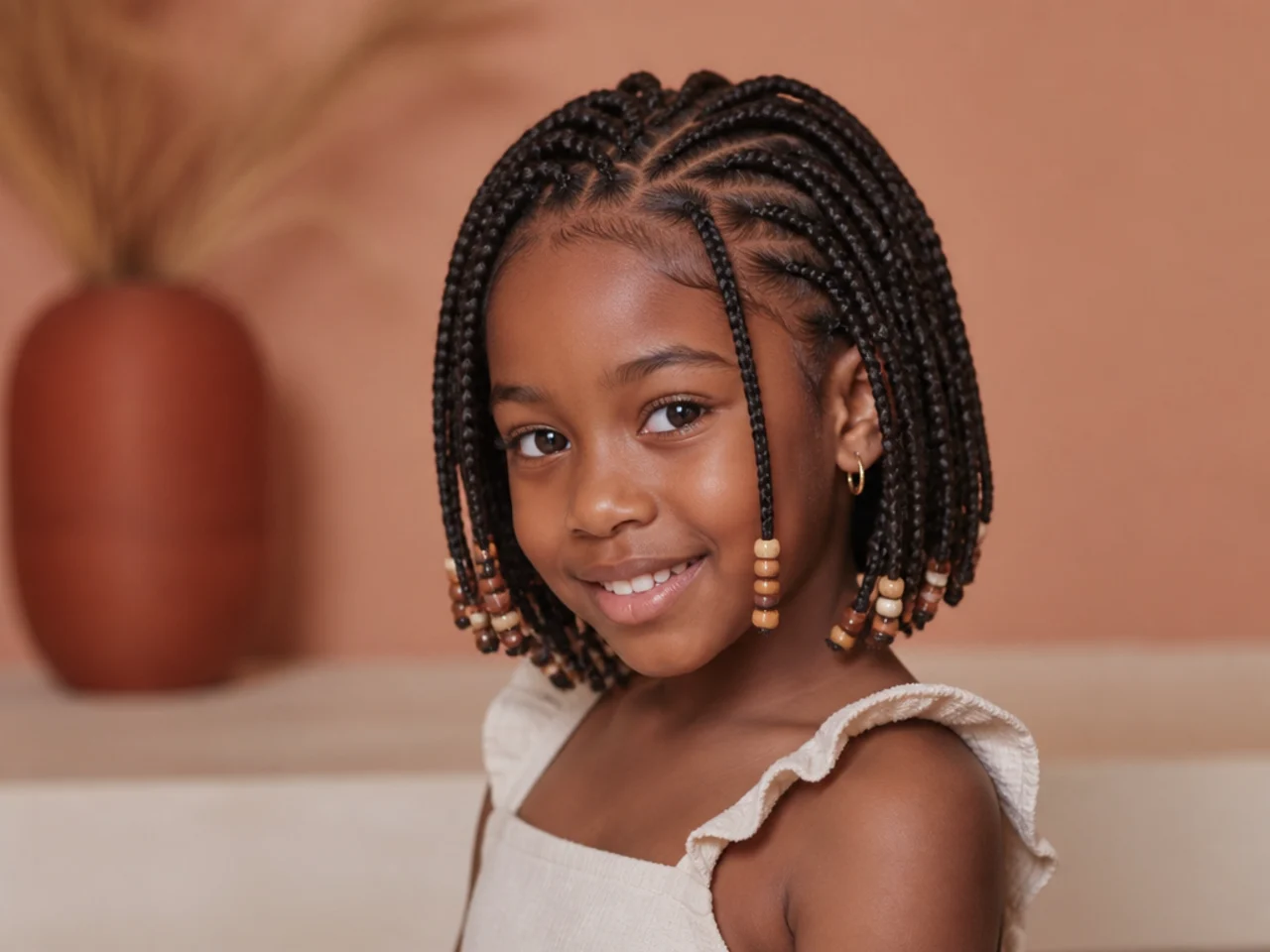
4. Knotless Kids' Fulani Braids
Feed-in roots. Worth the extra half hour on a fine hairline.
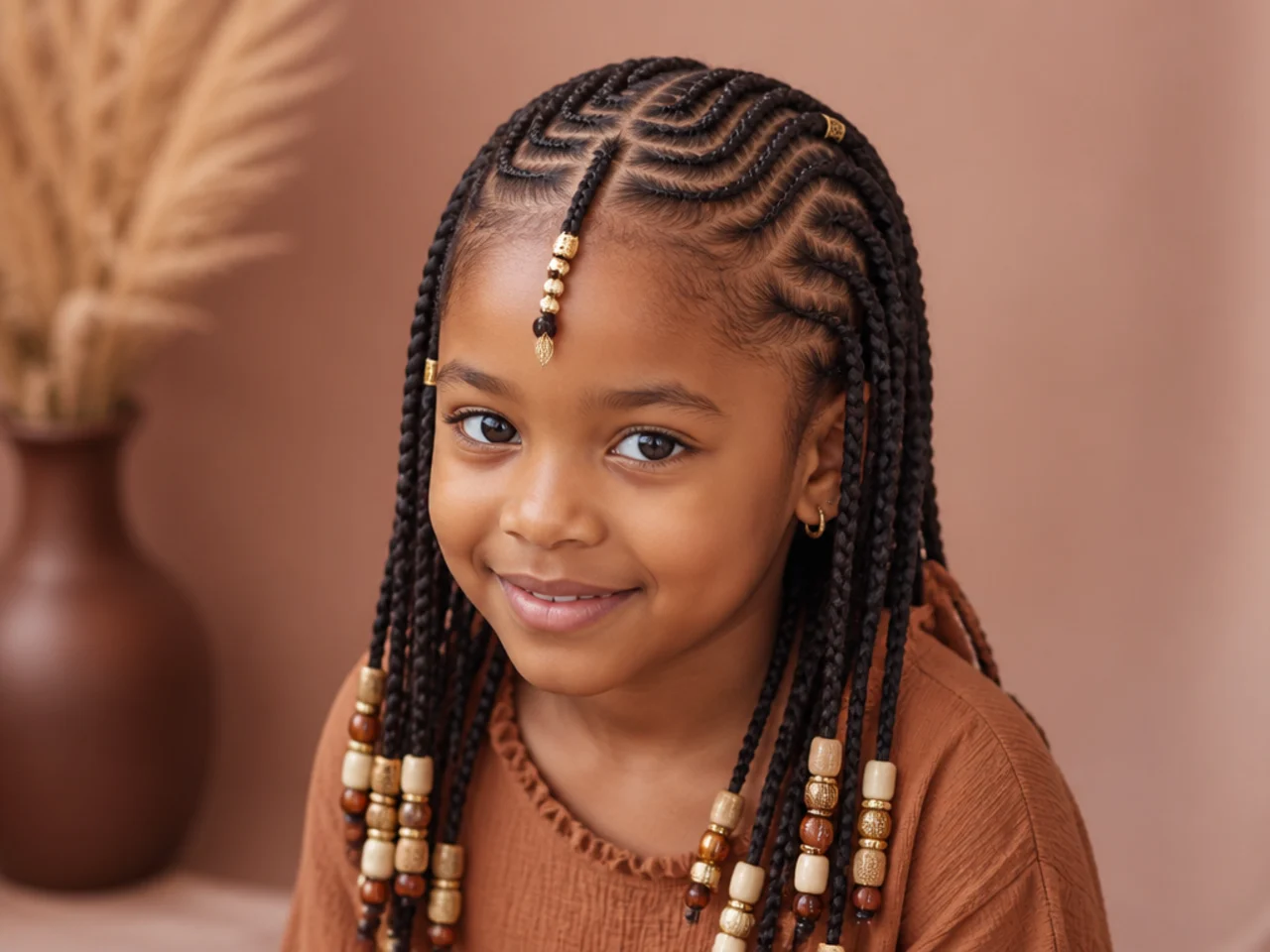
5. Fulani Braids with a Braided Crown
Front cornrows carried around the head. Keeps hair fully off the face for school.

6. Half-Up Kids' Fulani Braids
Loose braids gathered high, front cornrows down. Quick to redo each morning.
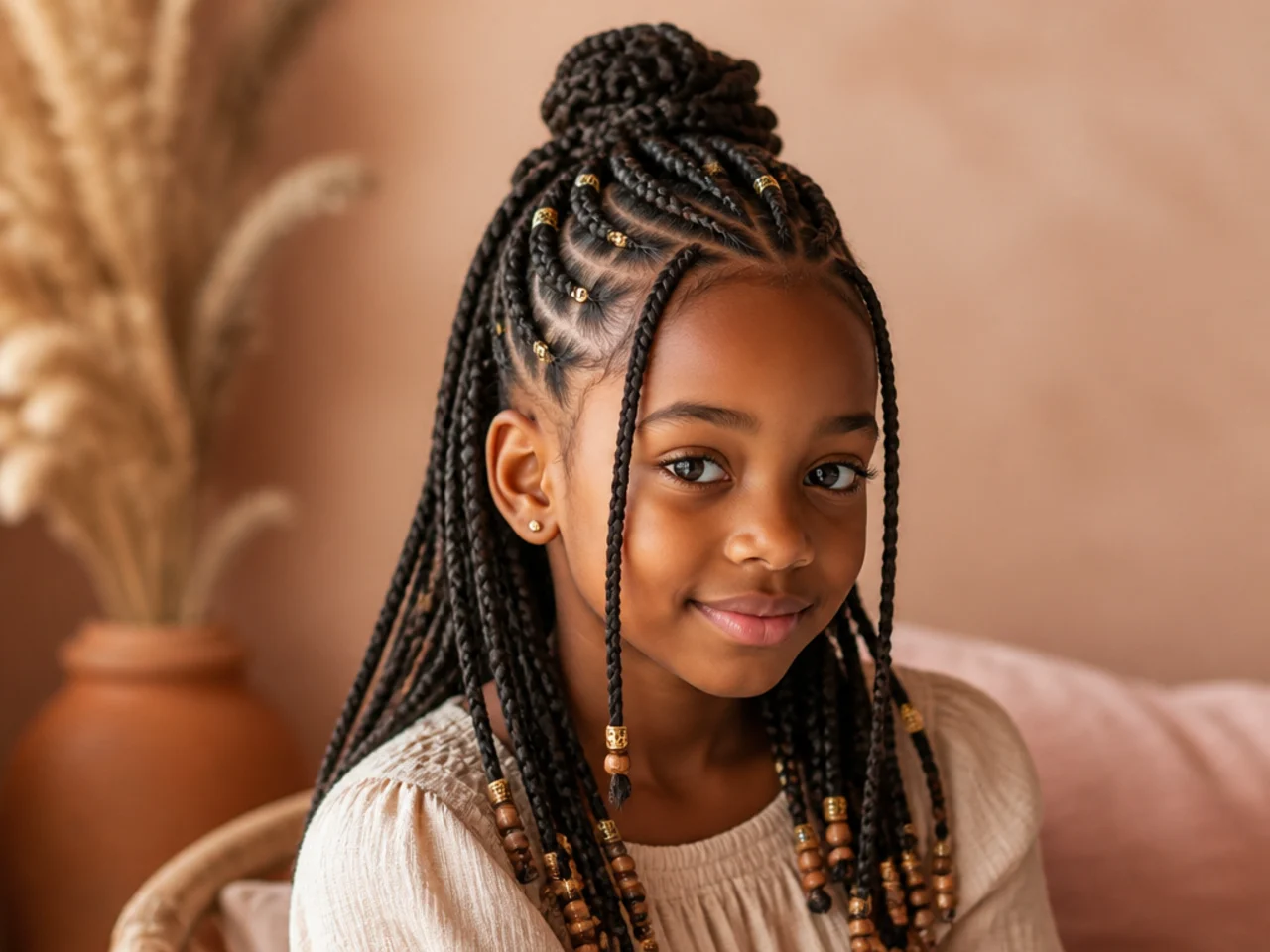
7. Fulani Braids in Two Low Bunches
Split into two low gathers. Balanced weight and no crown pull.
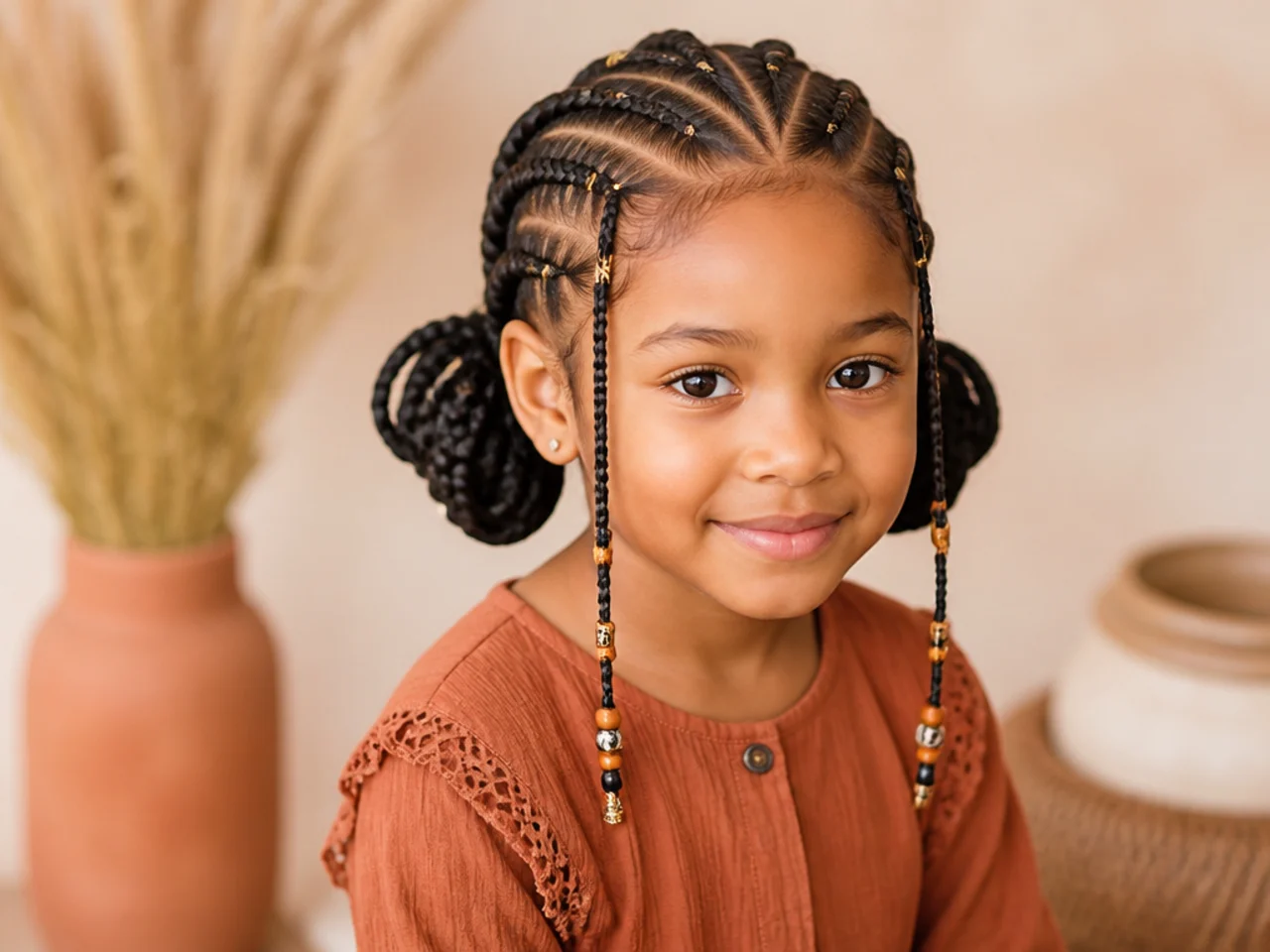
8. Fulani Braids with Colourful Ribbon
Ribbon woven through instead of beads. Zero weight and it comes out in seconds.
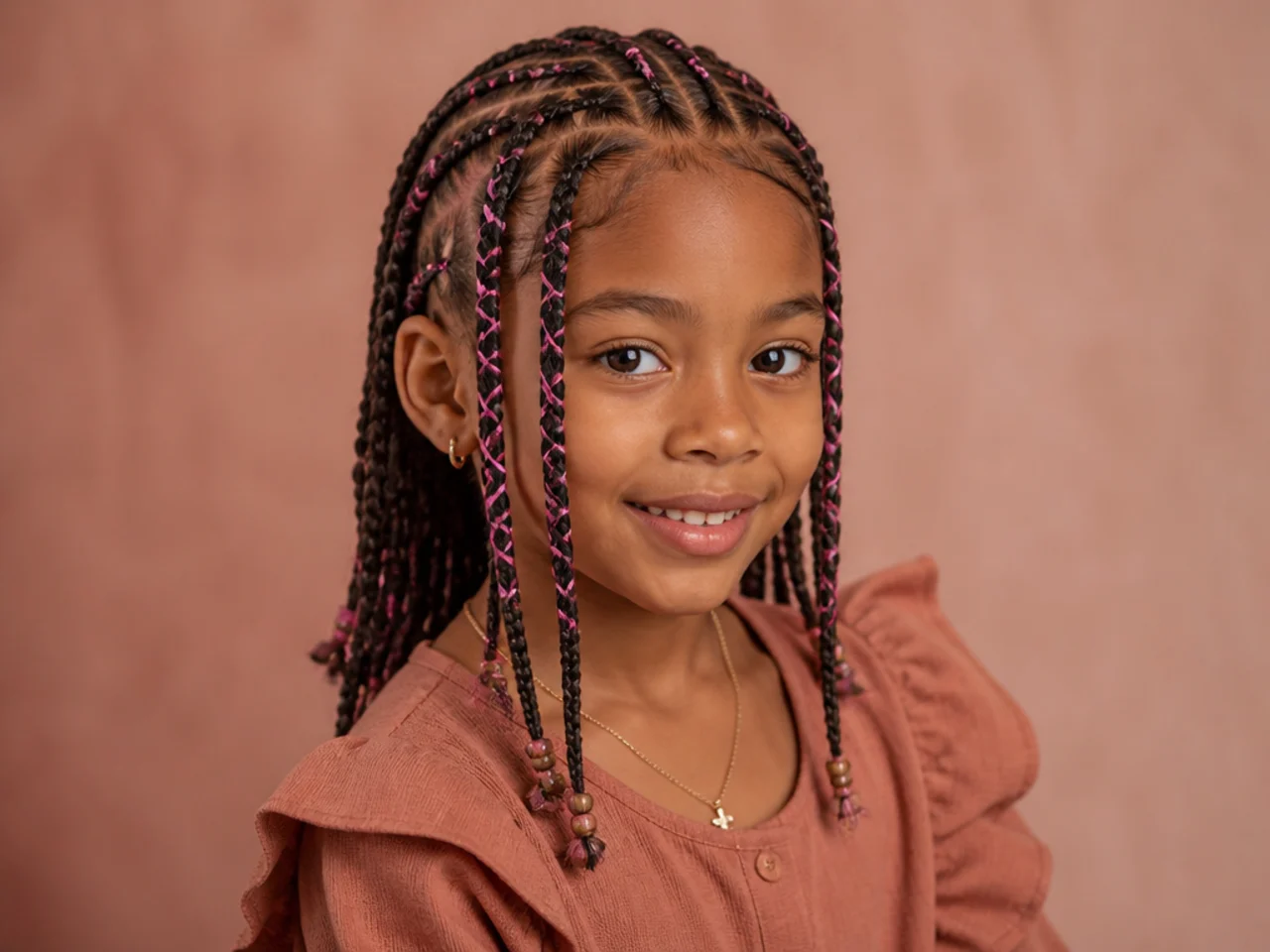
9. Three-Cornrow Fulani Braids
A third cornrow down the centre. Covers the parting, which children tend to expose when they play.
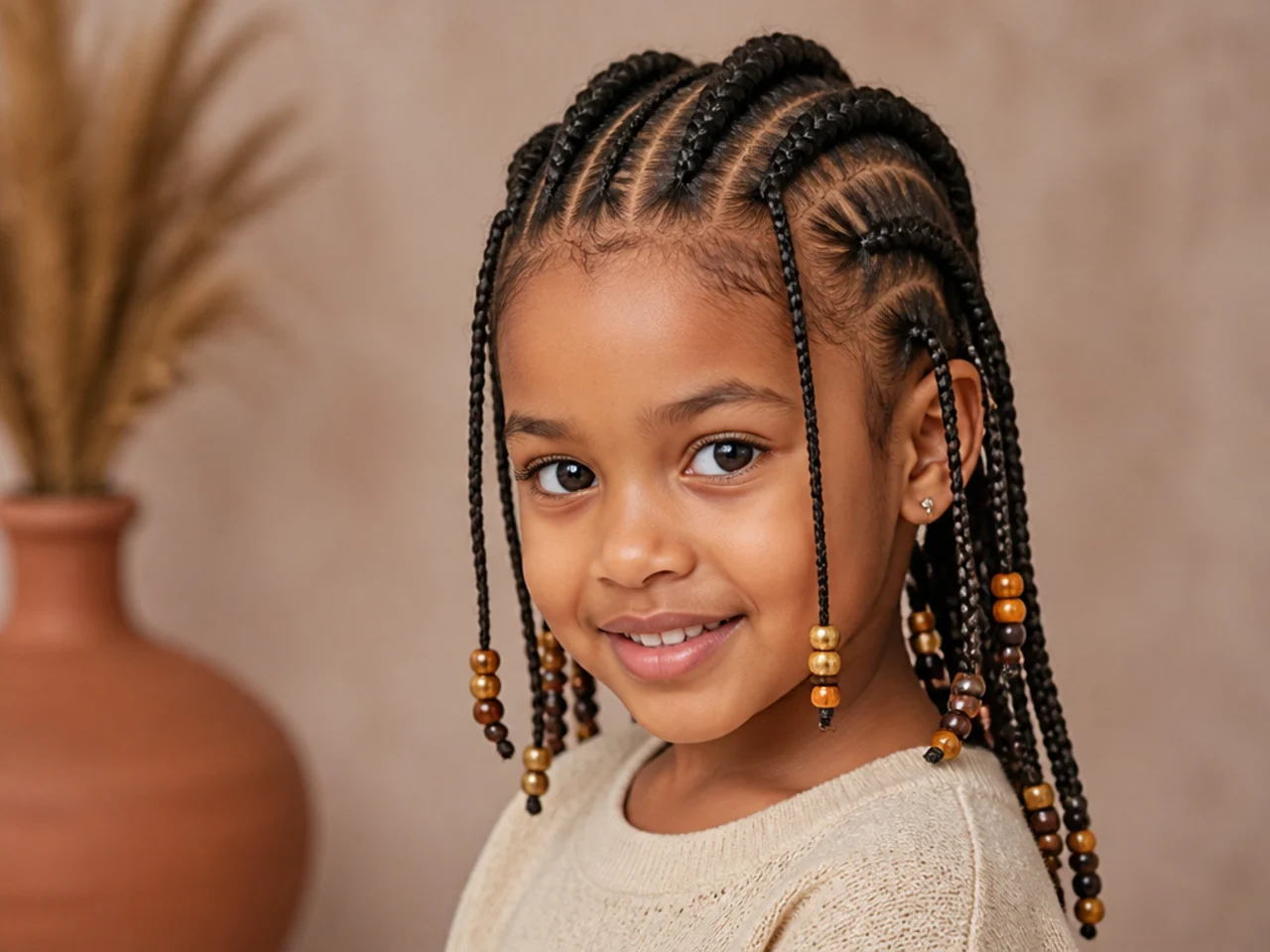
10. Fulani Braids with Curly Ends
Coiled ends instead of sealed tips. Softer against the neck.
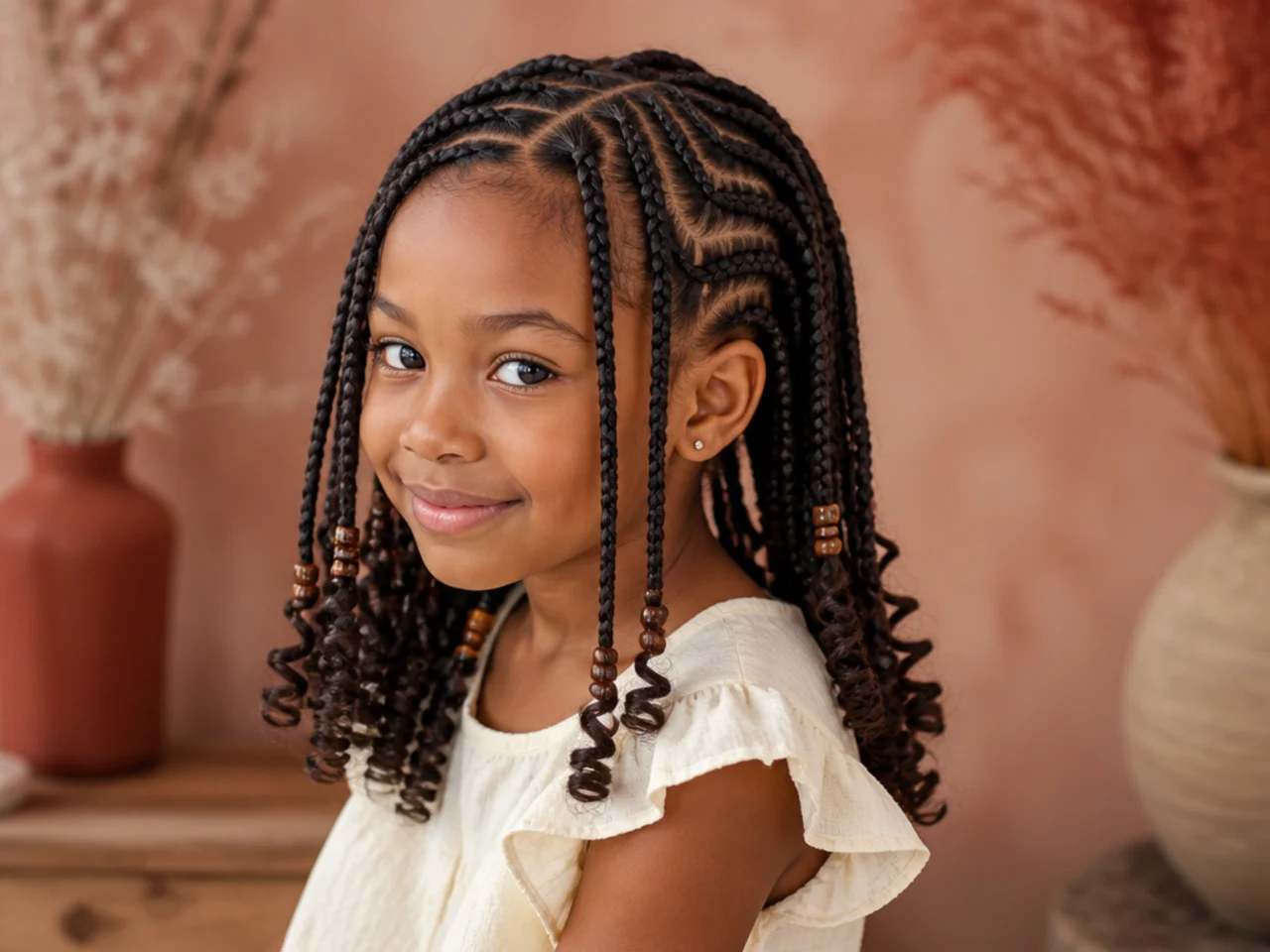
11. Fulani Braids with a Side Part
Off-centre parting. Small change, and it stops the same centre line being exposed daily.
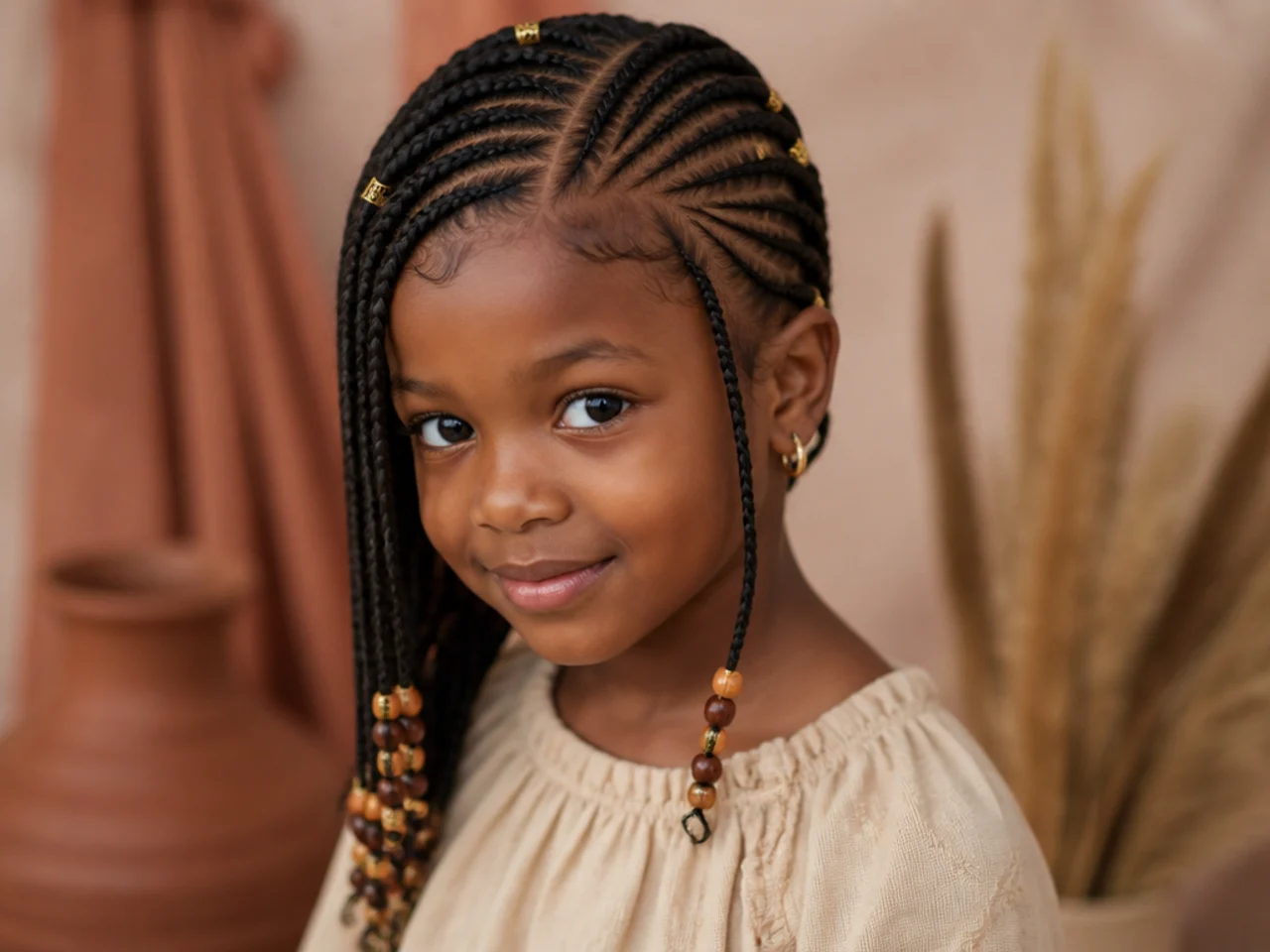
12. Shoulder-Length Medium Braids
A step up from jumbo for an older child who can sit longer. Three hours, four weeks.
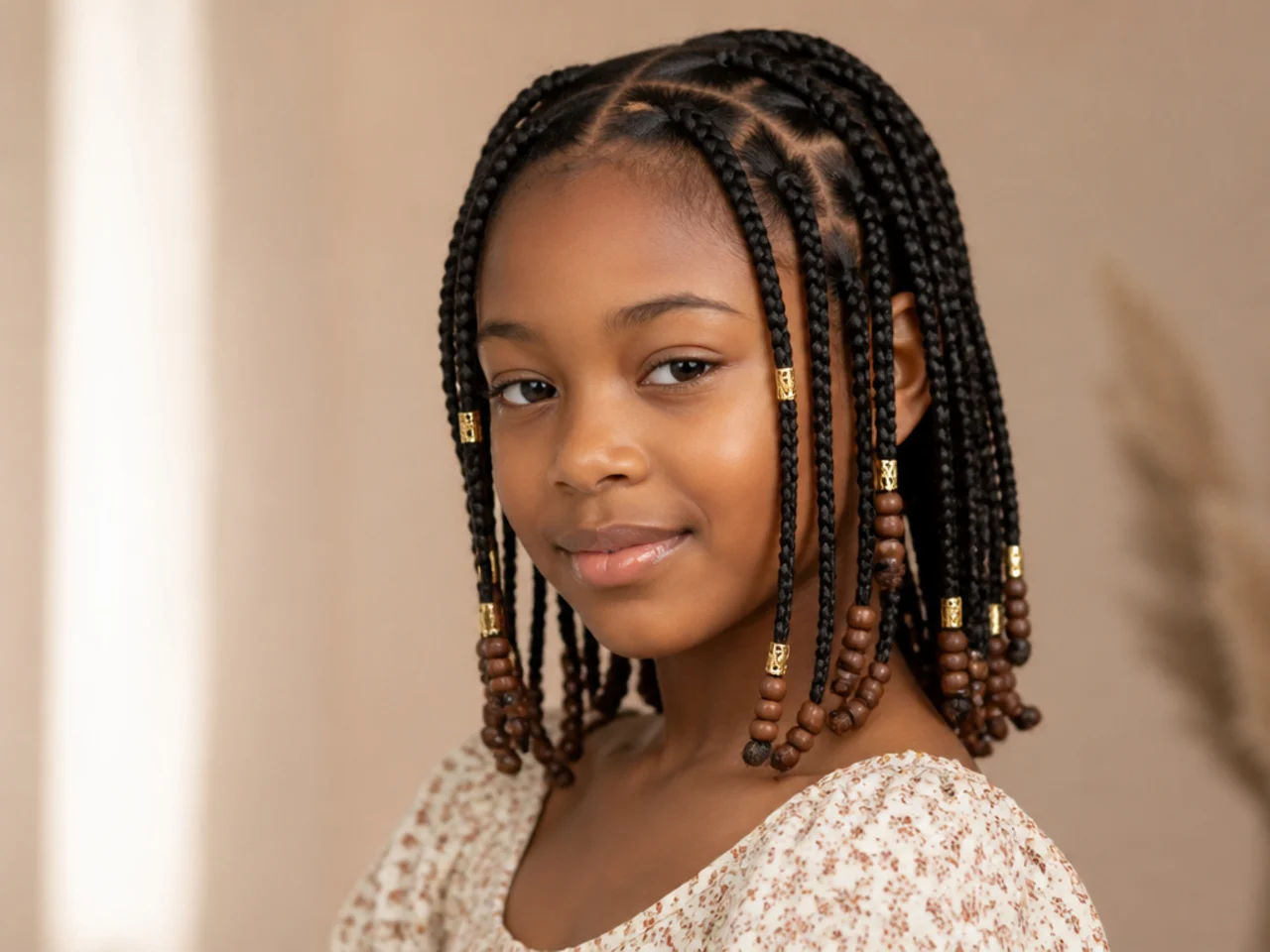
13. Fulani Braids in a Single Low Plait
All loose braids gathered into one plait. Tidy for sport and school.
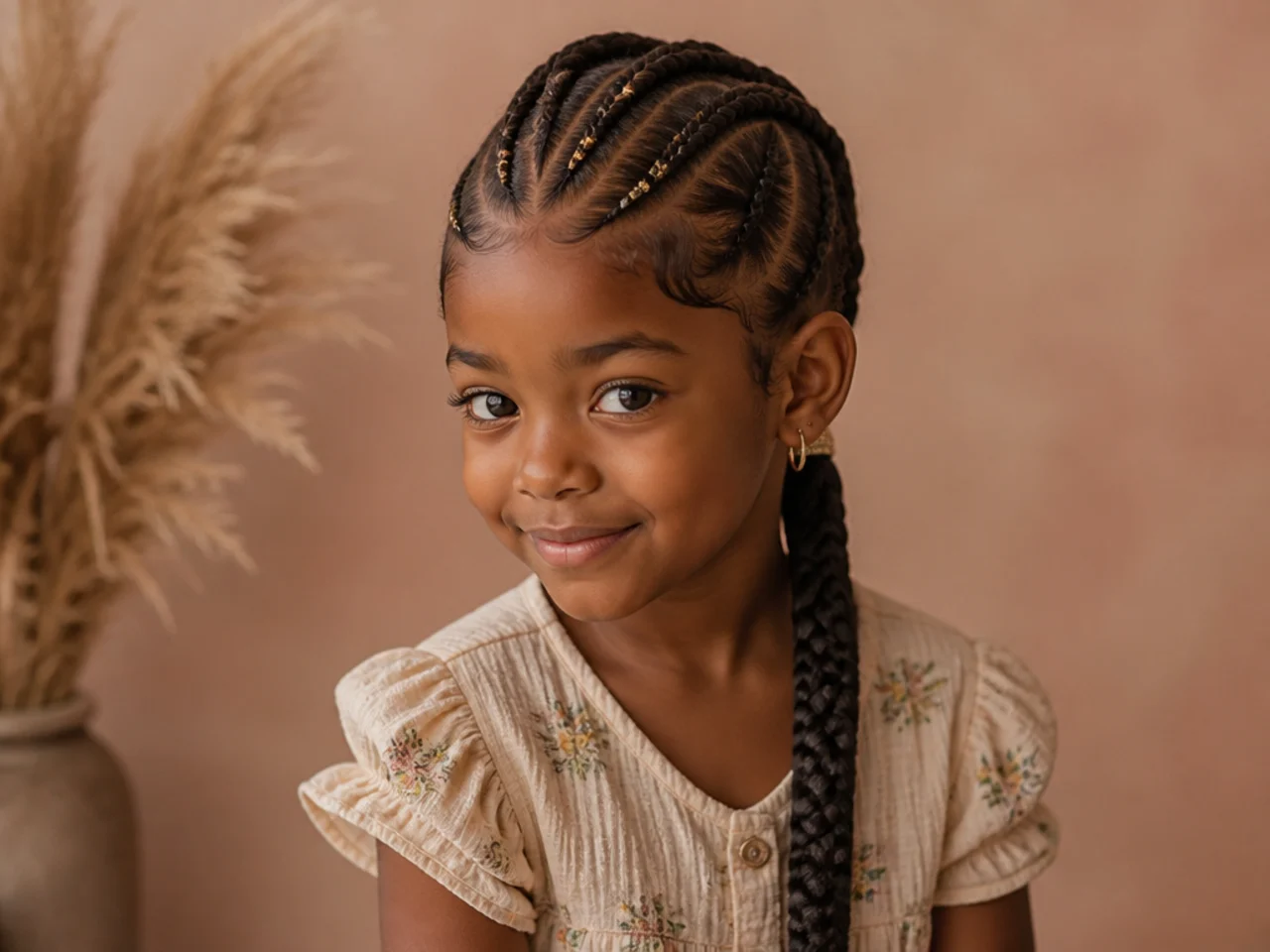
14. Fulani Braids with Cowrie Shells
For older children only — shells are heavier than plastic and need supervision.
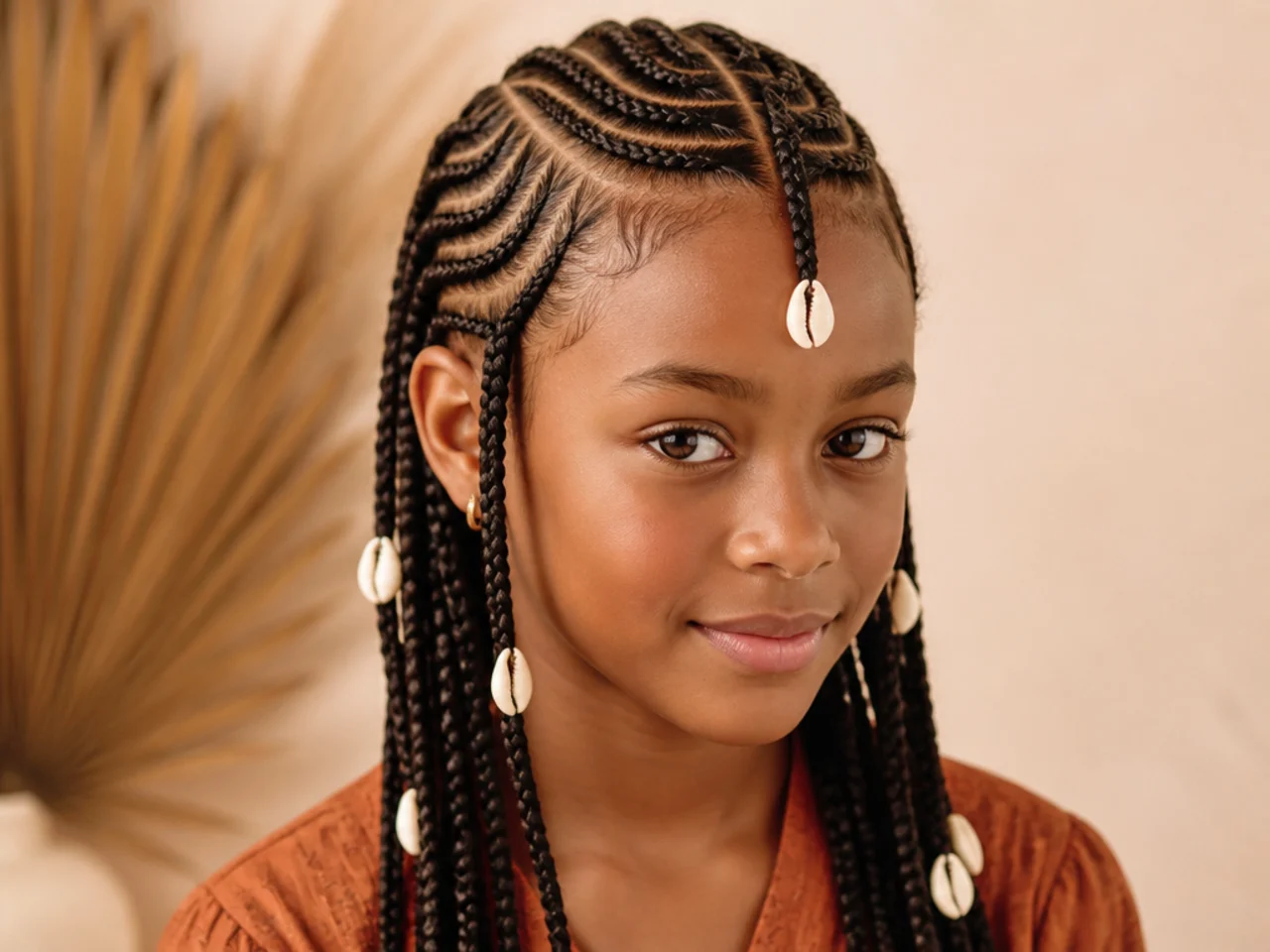
15. Two-Tone Kids' Fulani Braids
Natural roots with a subtle lighter end. Fun without a full colour commitment.
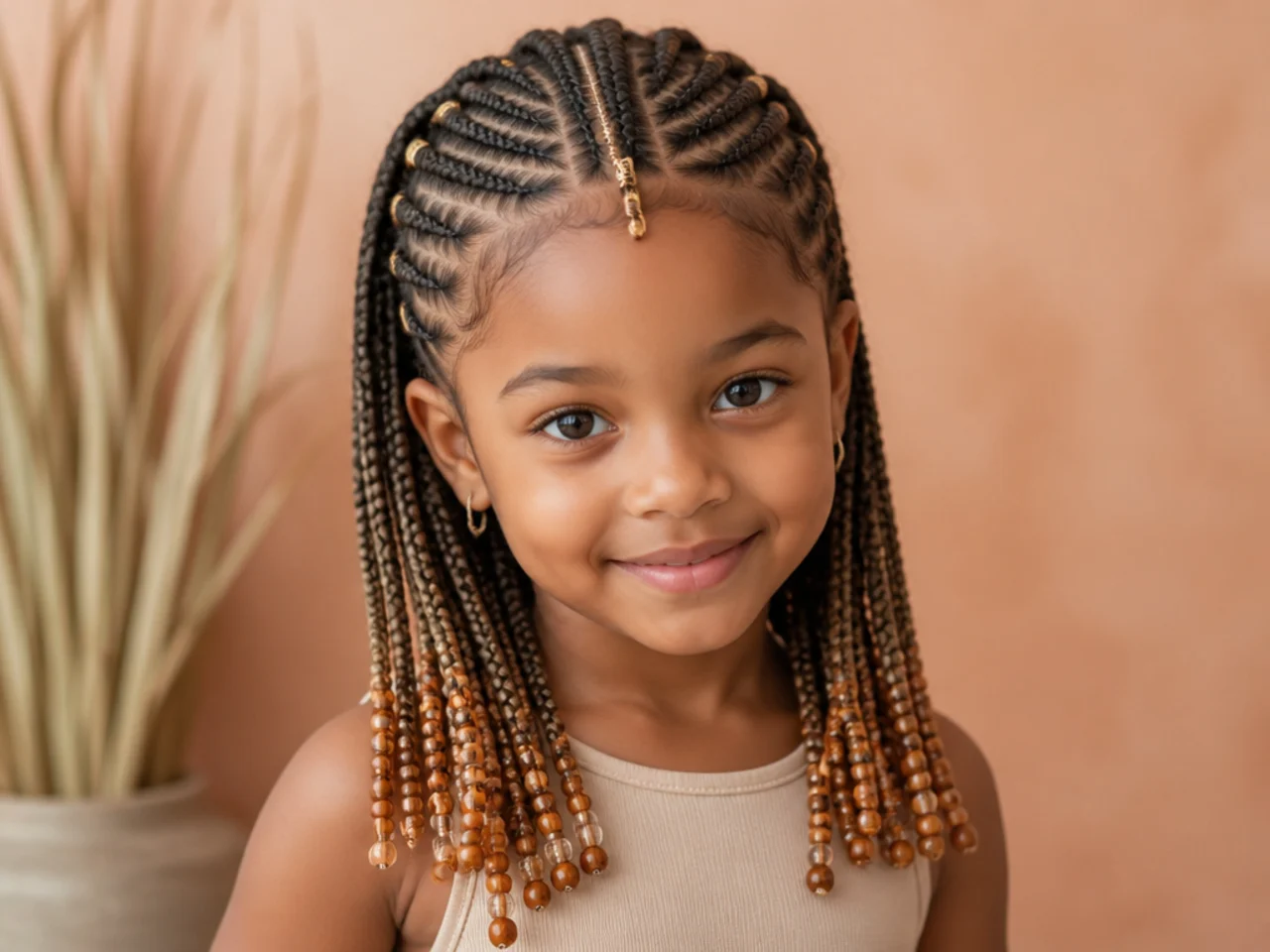
16. Fulani Braids with Curved Cornrows
Arced front cornrows. Visually playful and no harder on the scalp than straight ones.
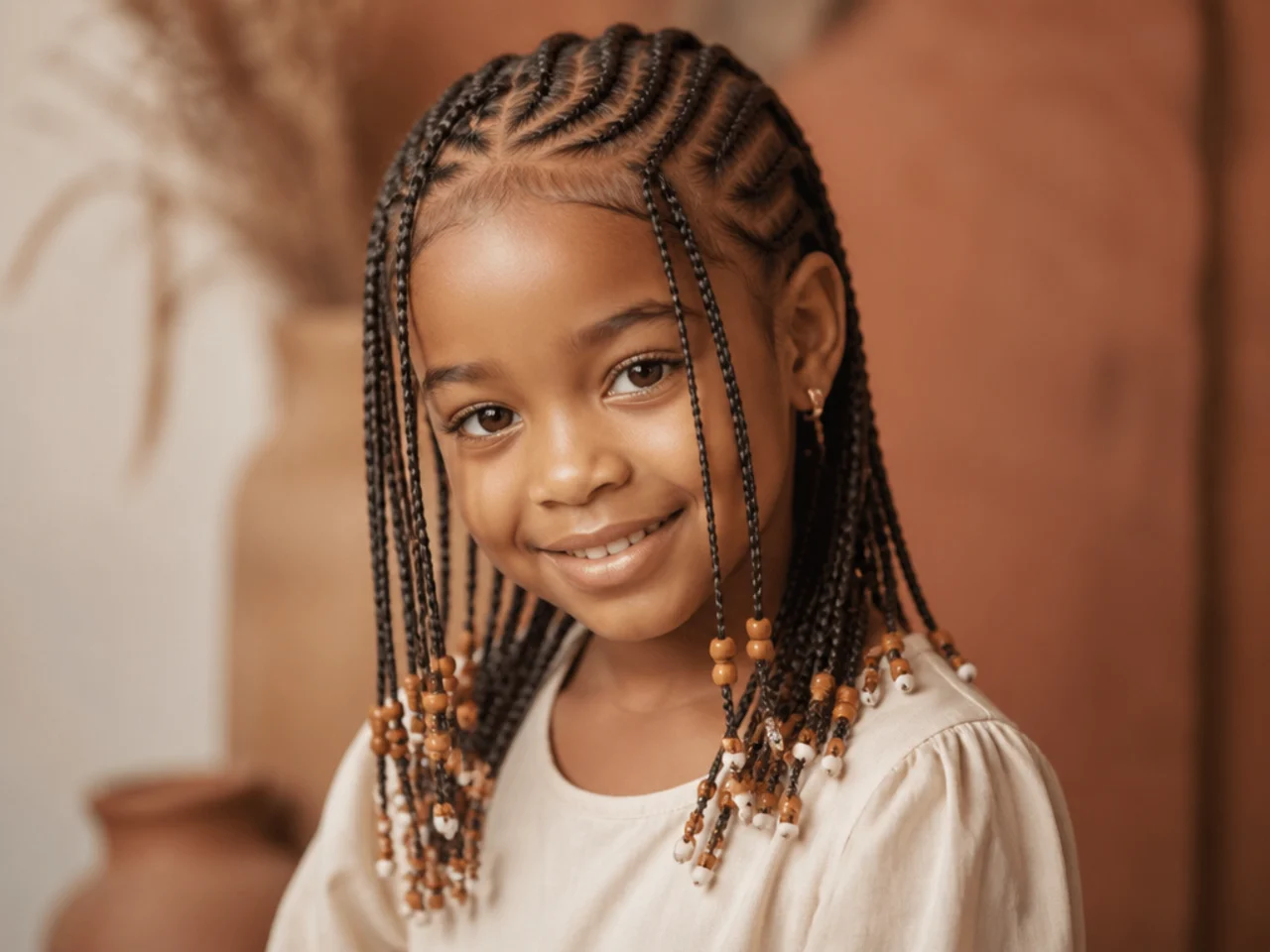
17. Very Short Jumbo Braids
Ear length. The lightest option here and the fastest install at around an hour.
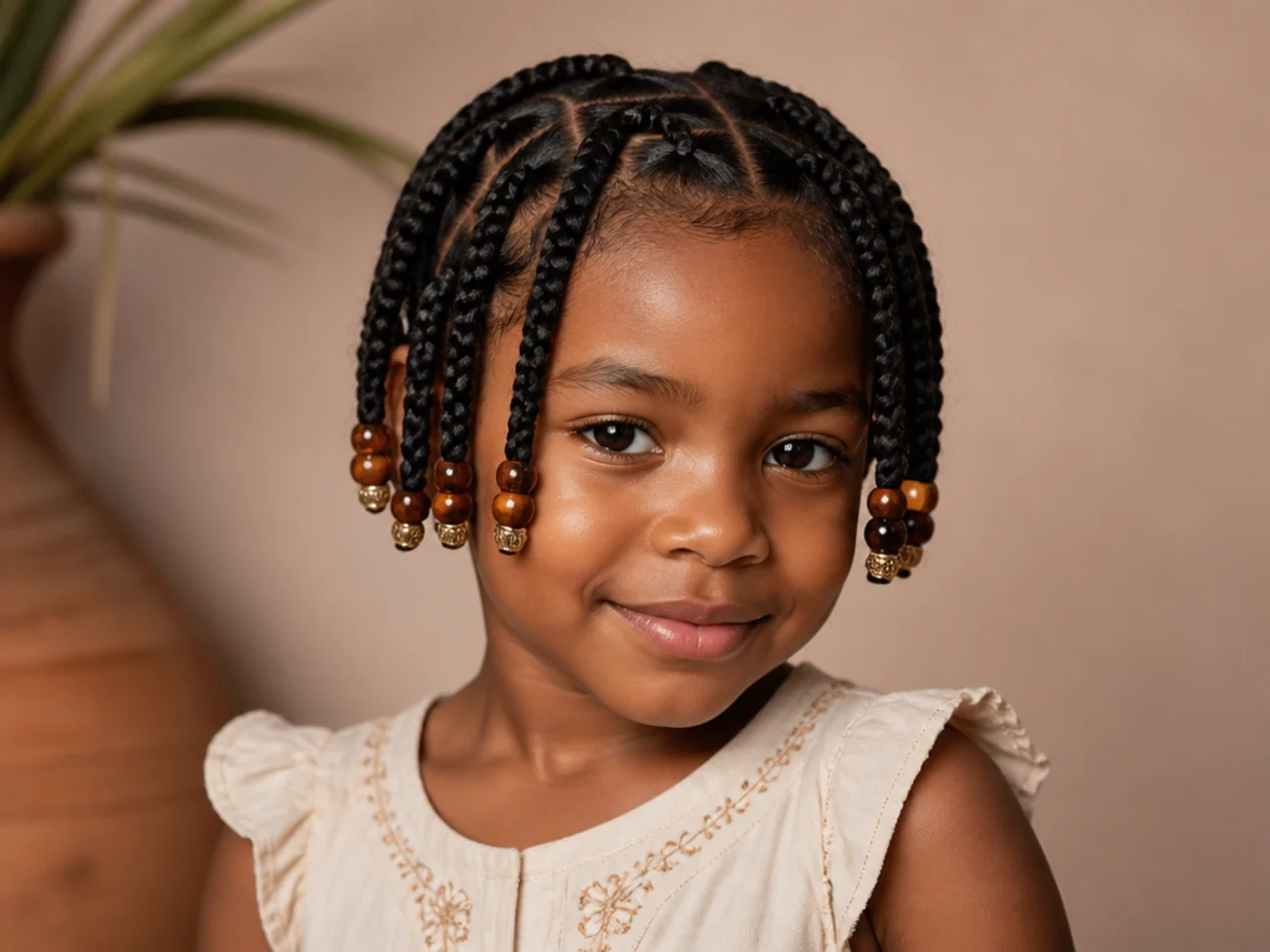
18. Fulani Braids with a Fabric Wrap
A soft fabric strip wrapped around one braid. No weight, high visual impact.
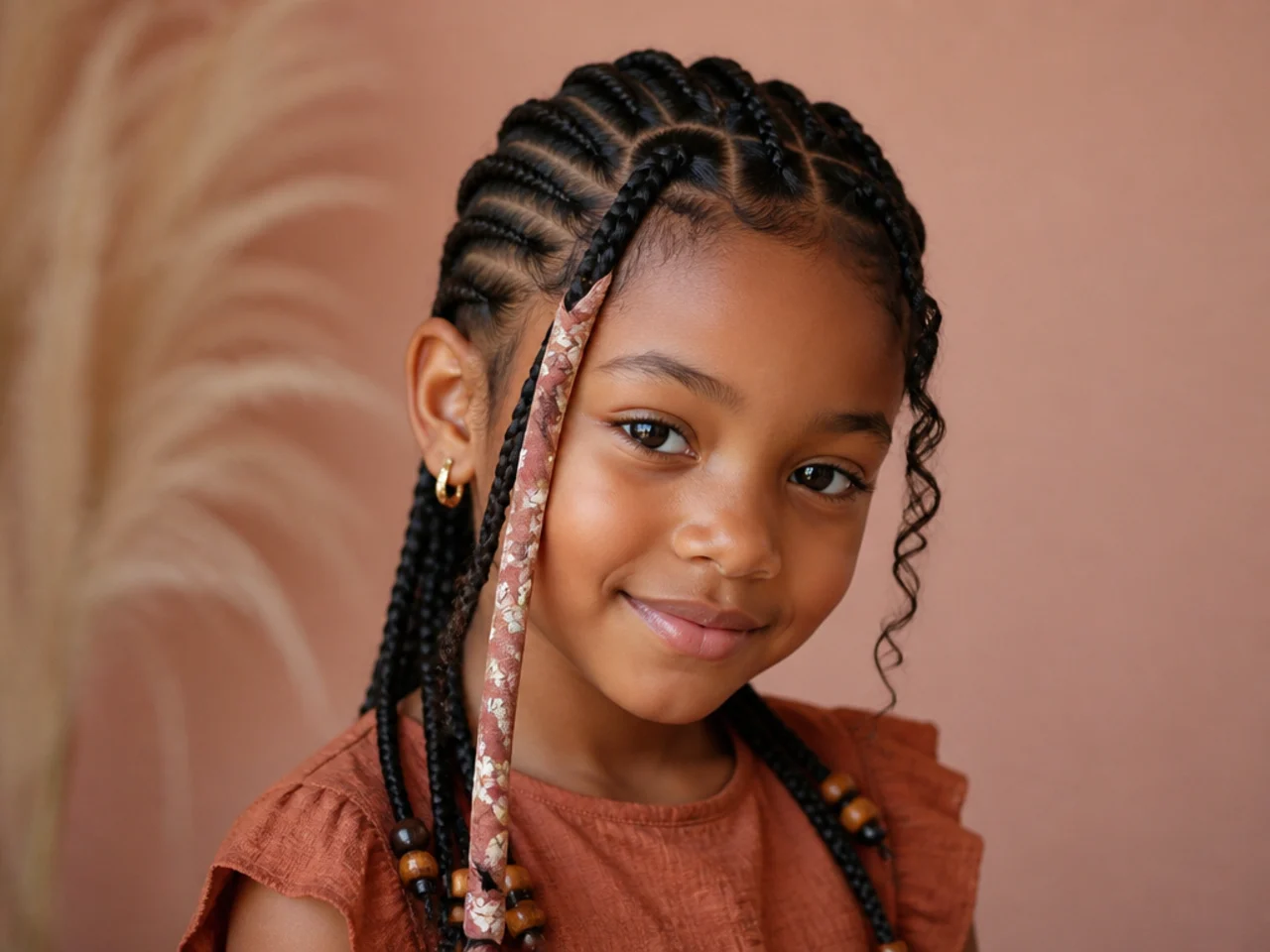
19. Fulani Braids for Fine or Fragile Hair
Jumbo, knotless, ear length, no beads. Every choice here reduces pull.
20. Fulani Braids for a Special Occasion
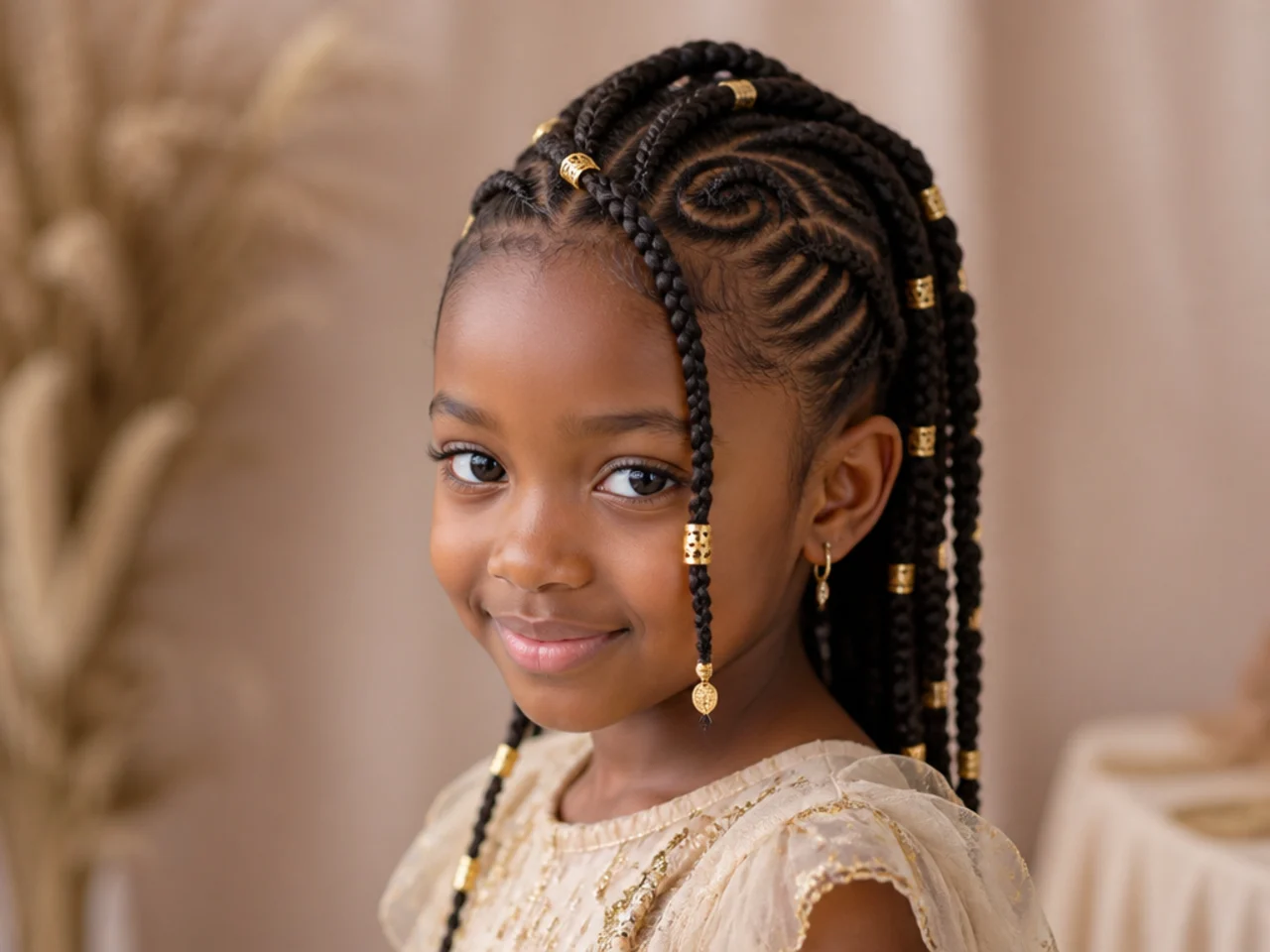
Medium braids with a few gold cuffs, worn for a fortnight rather than a month.
How to Style and Maintain Kids' Fulani Braids
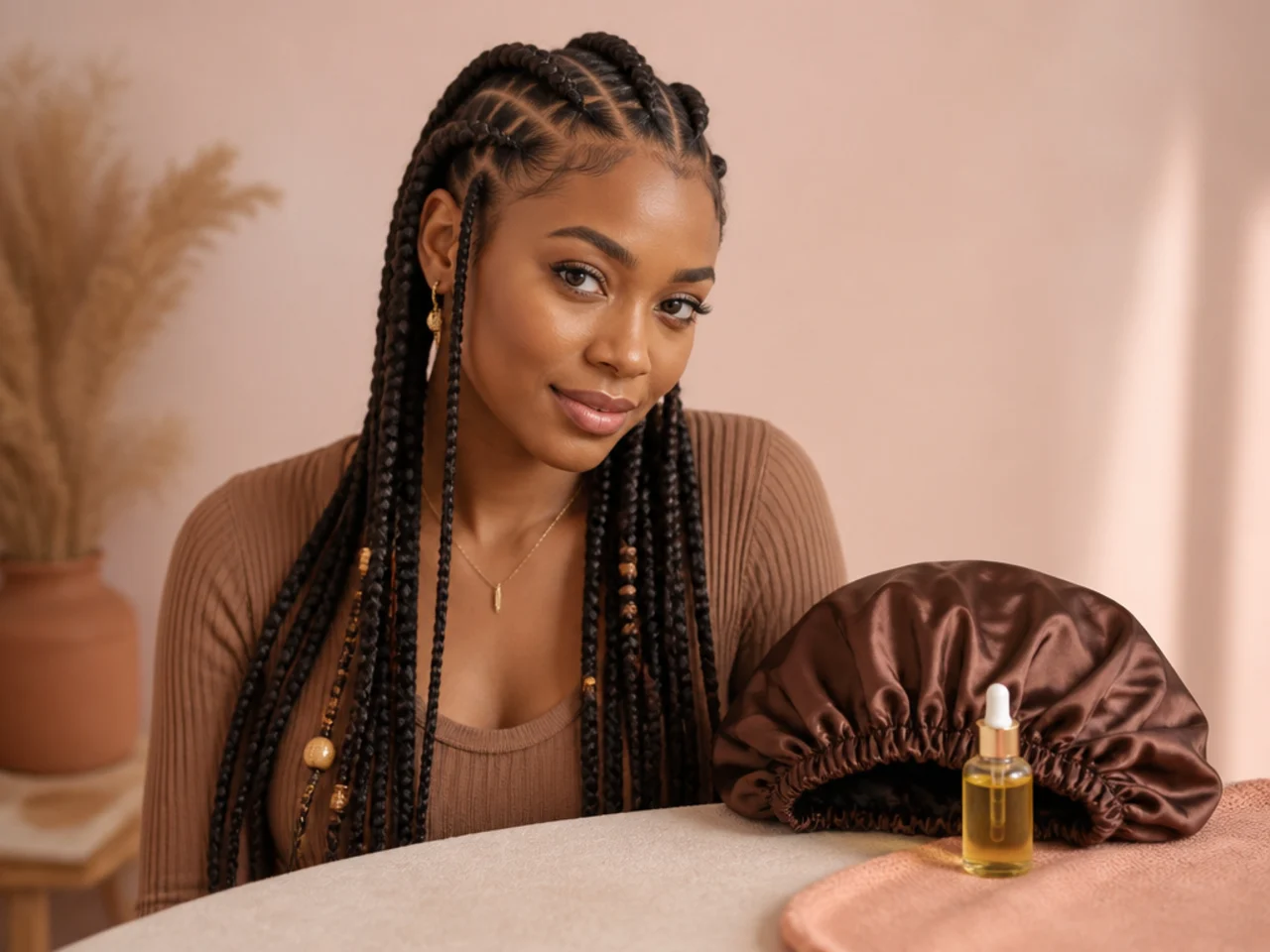
Satin pillowcase or bonnet from night one — children move a lot in their sleep and cotton frizzes the roots fast. Oil the partings twice a week. Wash every two weeks, and dry fully before bed.
Redo the front cornrows at week two if they have loosened. Children's hair grows faster, so the front goes before the back.
Mistakes to Avoid
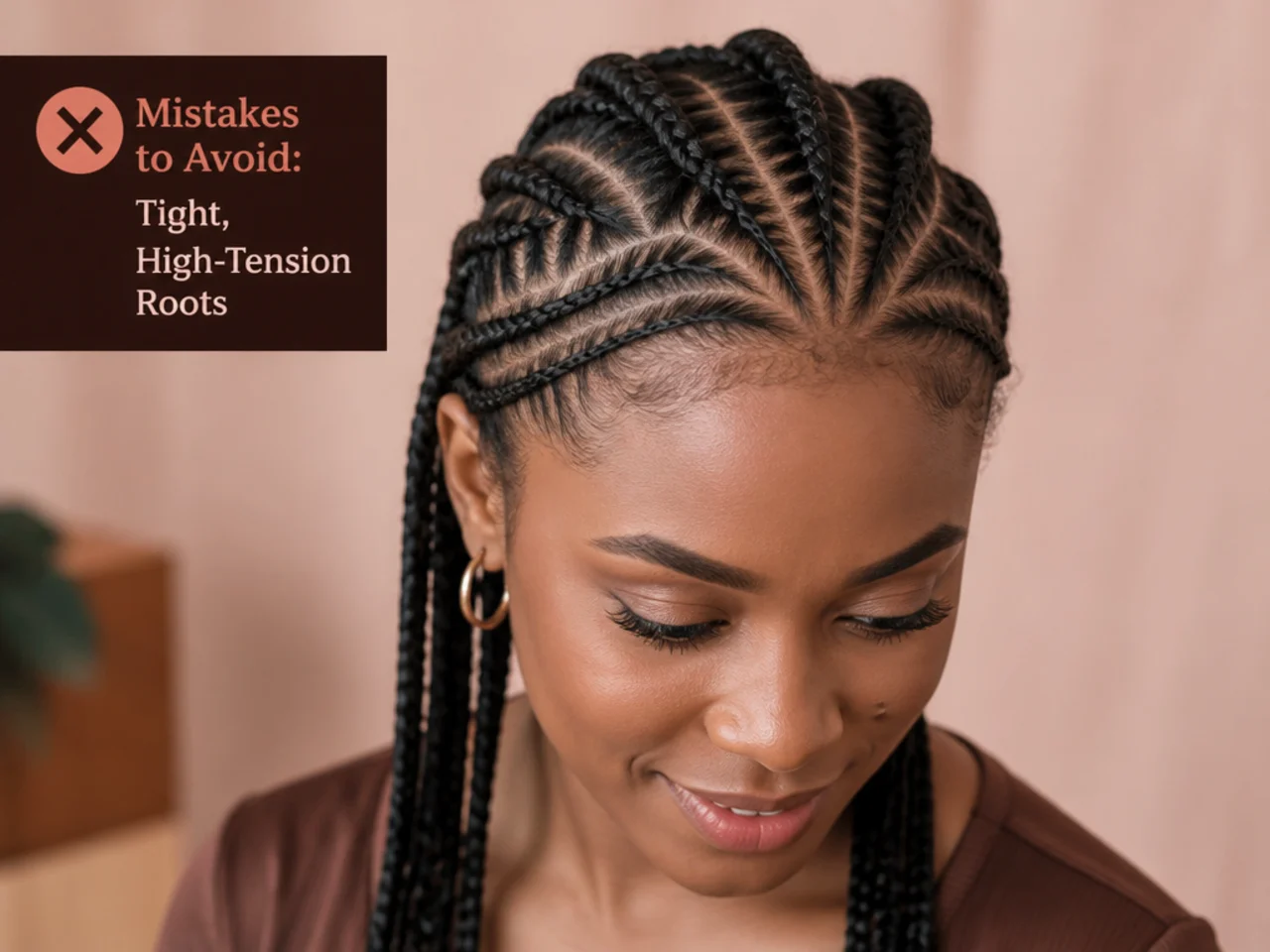
Small braids on a child. Too many tension points on a hairline that has not finished developing.
Leaving them in for six weeks. Three to four is the limit for children.
Heavy beads. Glass and metal are too much weight for a child's braid.
Assuming silence means comfort. Children often will not say a braid hurts. Ask directly, during the install and again the next morning.
FAQ
What age can a child get them? From around three, but sitting time matters more than age.
How long should they stay in? Three to four weeks, shorter than an adult install.
Are beads safe? Light plastic on older children. Skip them entirely under five.
Final Thoughts
Looser and shorter, every time. A child's hairline does not get a second chance, and no style is worth a receding temple at eight years old.
See the adult versions in 25 simple Fulani braids ideas and the gentlest sizing in jumbo Fulani braids. More in Braids & Protective Styles.
Frequently asked questions
Related posts
See all posts
20 Waterfall Mermaid Braid Ideas That Hold
Read more
15 Side Mermaid Braid Ideas That Sit Right
Read more
20 Side Part Medium Knotless Braids I Saved
Read more