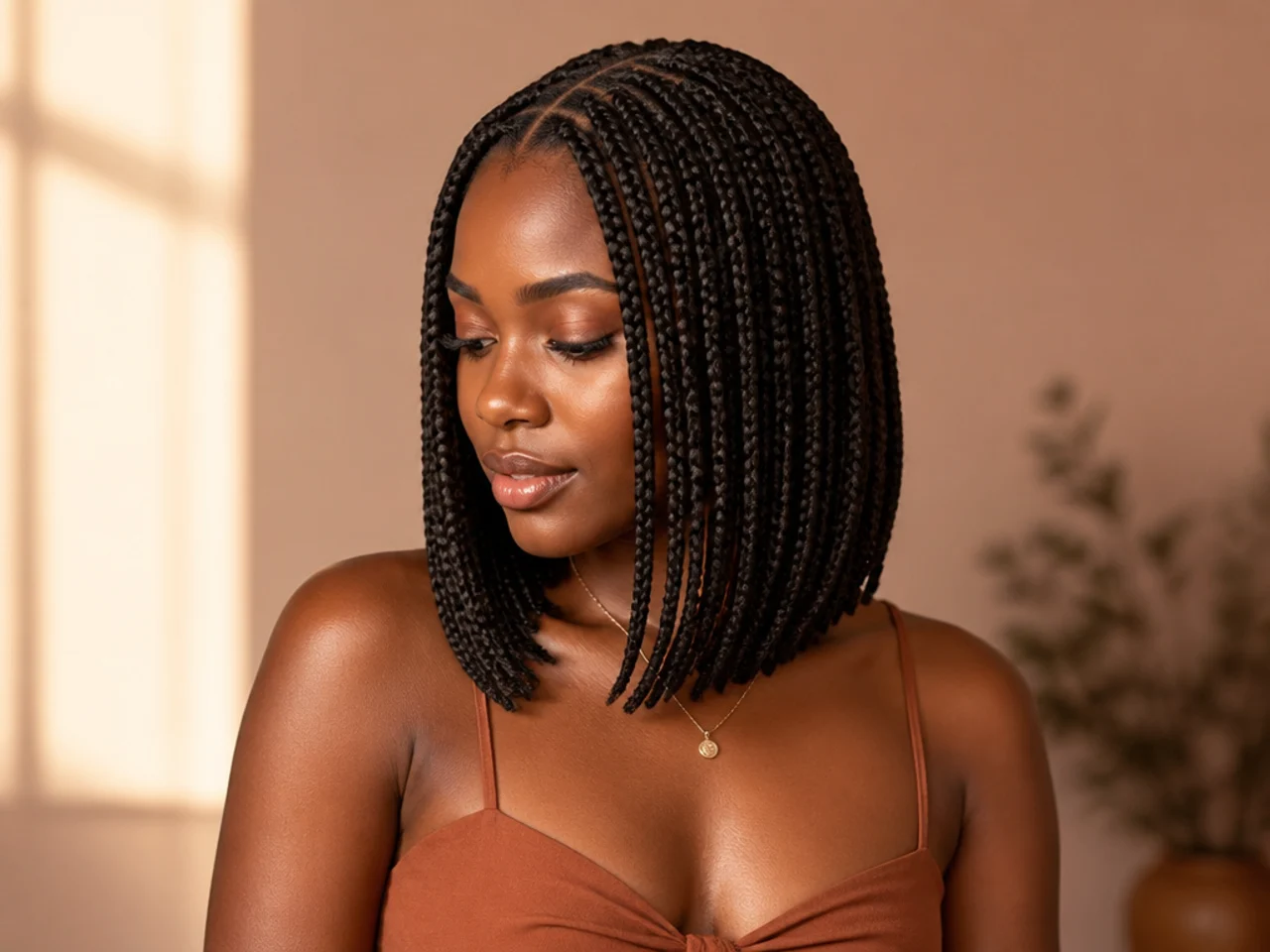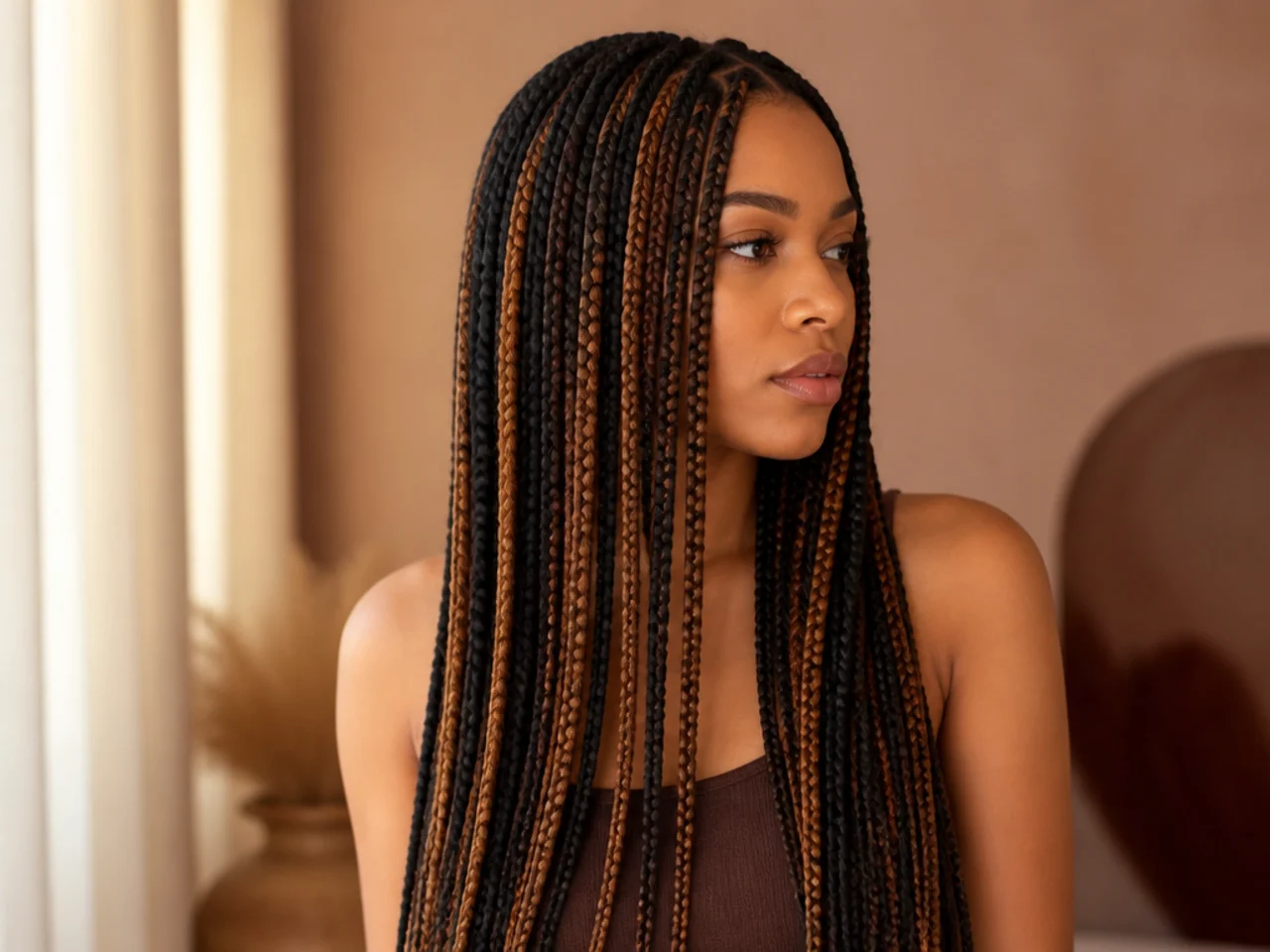
15 Colored Medium Knotless Braids to Save
Fifteen coloured medium knotless braid ideas, and the thing that changes at this braid count — colour stops being a placement decision and becomes a ratio. One in four reads as highlights; one in two reads as two-tone.
In this article · 22
- What Makes Coloured Medium Knotless Work
- How to Choose Yours
- The 15 Coloured Ideas
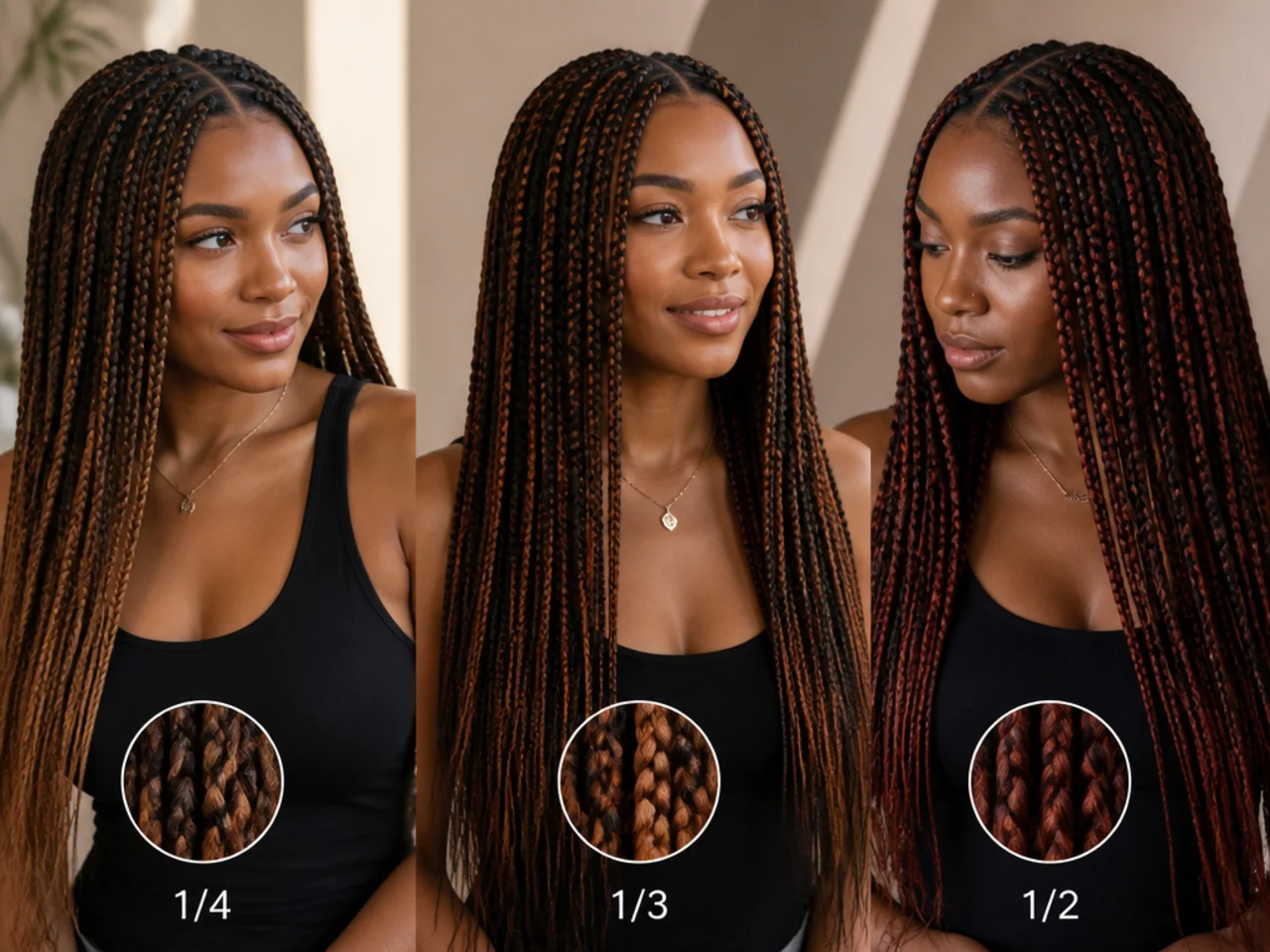
- 1. Caramel Highlights, One in Four
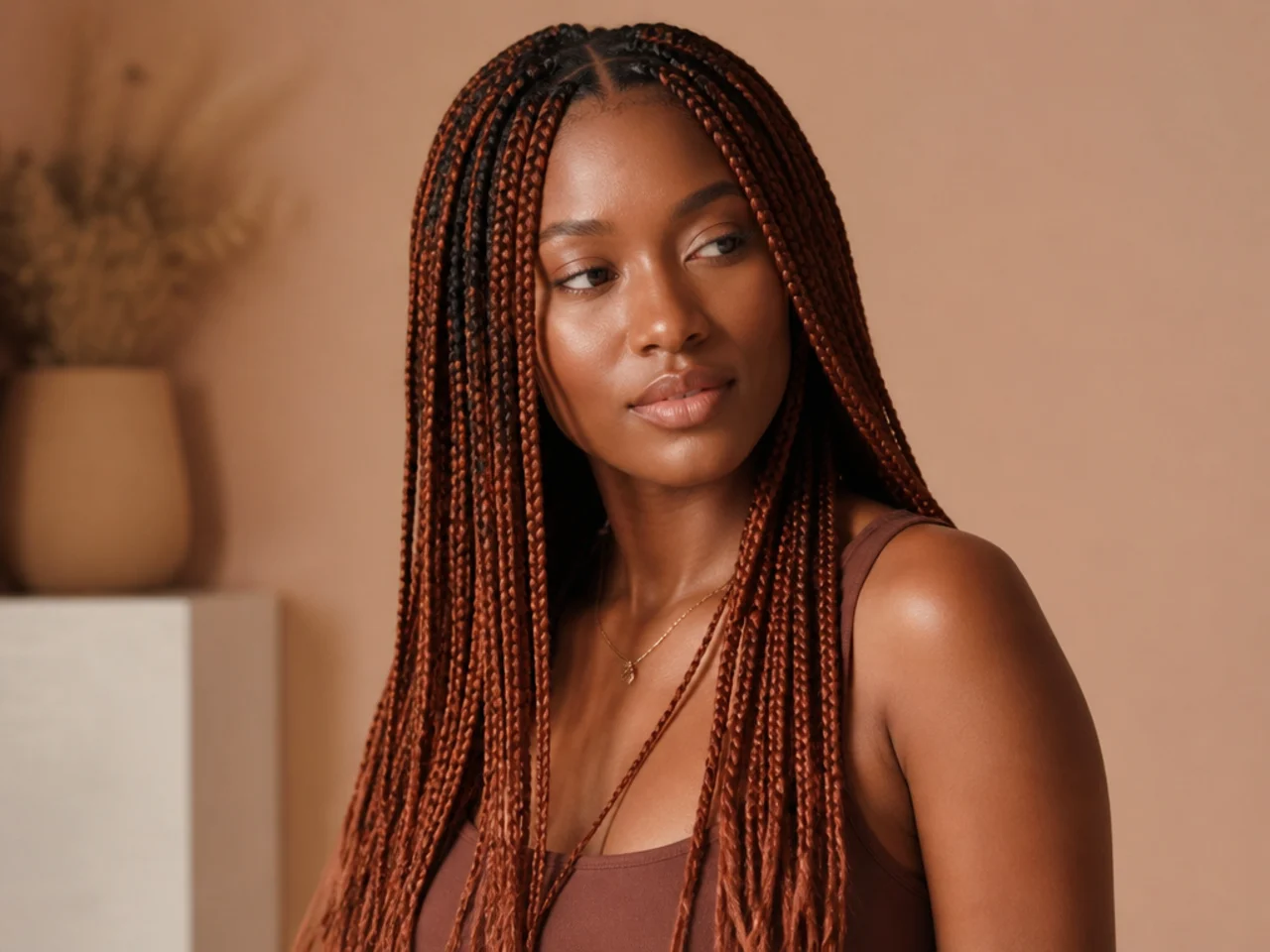
- 2. Copper Highlights
- 3. Burgundy Through Black, One in Three
- 4. Full Burgundy
- 5. Two-Tone at One in Two
- 6. Blue Peekaboo
- 7. Lavender Scattered Through
- 8. Teal at One in Four
- 9. Pink Concentrated at the Crown
- 10. Ginger Through Natural
- 11. Grey and Silver Blend
- 12. Coloured Ombré
- 13. Coloured Tips Only
- 14. Pastel Blend
- 15. Coloured Medium at Week Six
- Styling and Upkeep
- Mistakes to Avoid
- FAQ
- Final Thoughts
Colour on medium braids works in a way it cannot at larger sizes, and the difference is worth understanding before you choose a shade.
At this braid count colour blends. Eighty to a hundred and forty braids sit close enough together that scattered coloured braids read as highlights rather than as blocks. A forty-braid set cannot produce that effect at all.
Which means the design decision is a ratio, not a placement.
What Makes Coloured Medium Knotless Work
Density does the blending. The eye stops resolving individual braids at this width and reads the set as a whole, which is exactly what a highlight is.
Ratio is the design. One in four is a natural highlight, one in three is clearly coloured, one in two is a two-tone style. Three different looks from the same two shades.
Nothing touches your own hair. No lift, no deposit, no chemical cost. The colour lives entirely in the extension.
Bright synthetic still bleeds. Reds and purples run onto light fabric for the first washes, and at this density there is more of it. Rinse the hair before it goes in.
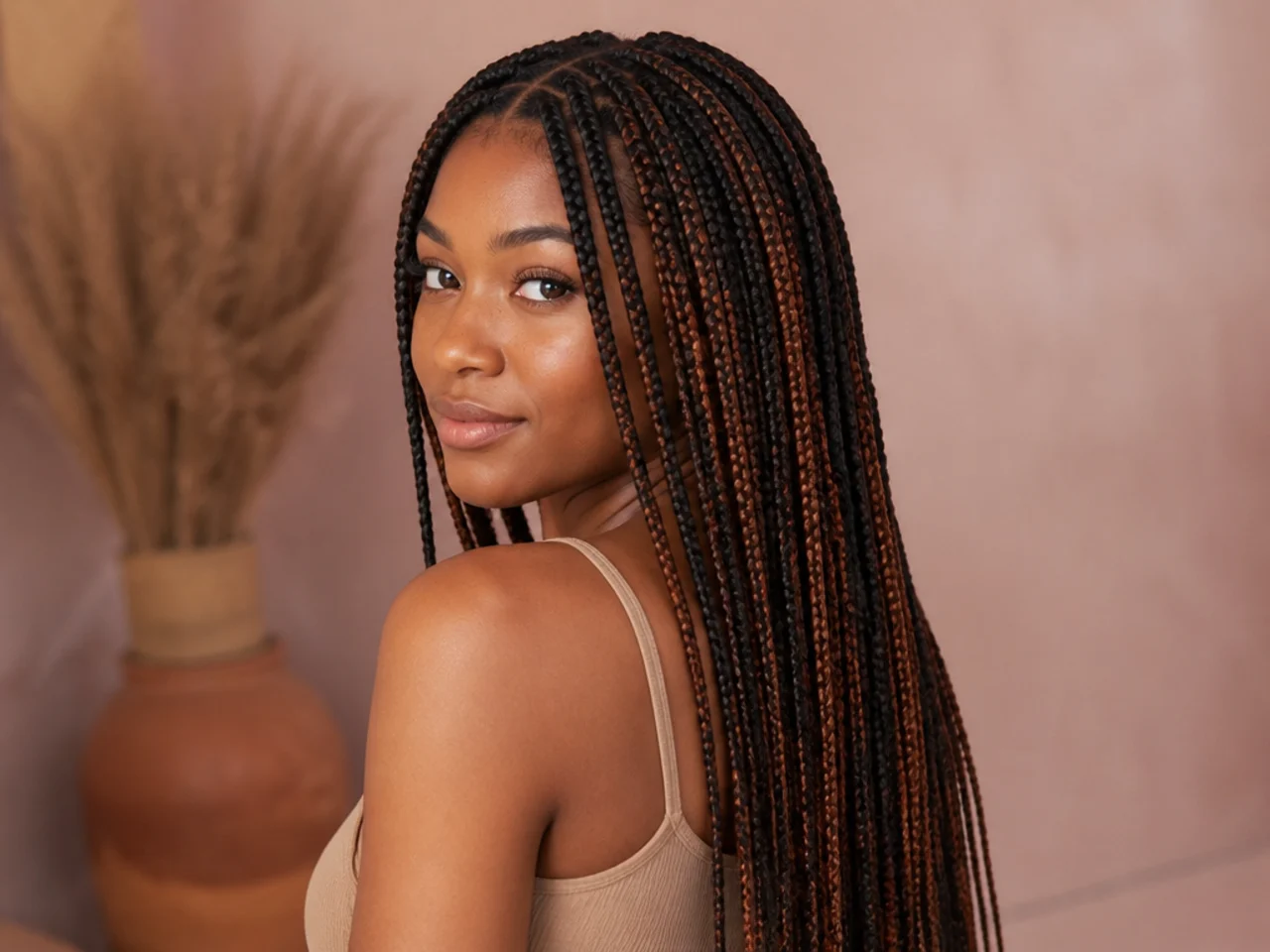
How to Choose Yours
Ask by ratio. "One in four" is a specification. "Some colour through it" is not, and it is why results vary so much between appointments.
Choose a near shade for highlights, a far shade for contrast. Caramel through black reads as highlighting. Blue through black reads as a statement. Both work; they are not the same request.
Keep it to two shades even here. The blending forgives more than a large set does, but three colours still reads as busy rather than designed.
Decide whether you want it visible from the front. A ratio spread evenly across the whole head reads differently from the same ratio concentrated at the crown.
The 15 Coloured Ideas
1. Caramel Highlights, One in Four
The classic. Reads as highlighted hair rather than as coloured braids. Caramel sits close enough to a natural base that the eye reads it as light hitting the hair rather than as a separate colour.
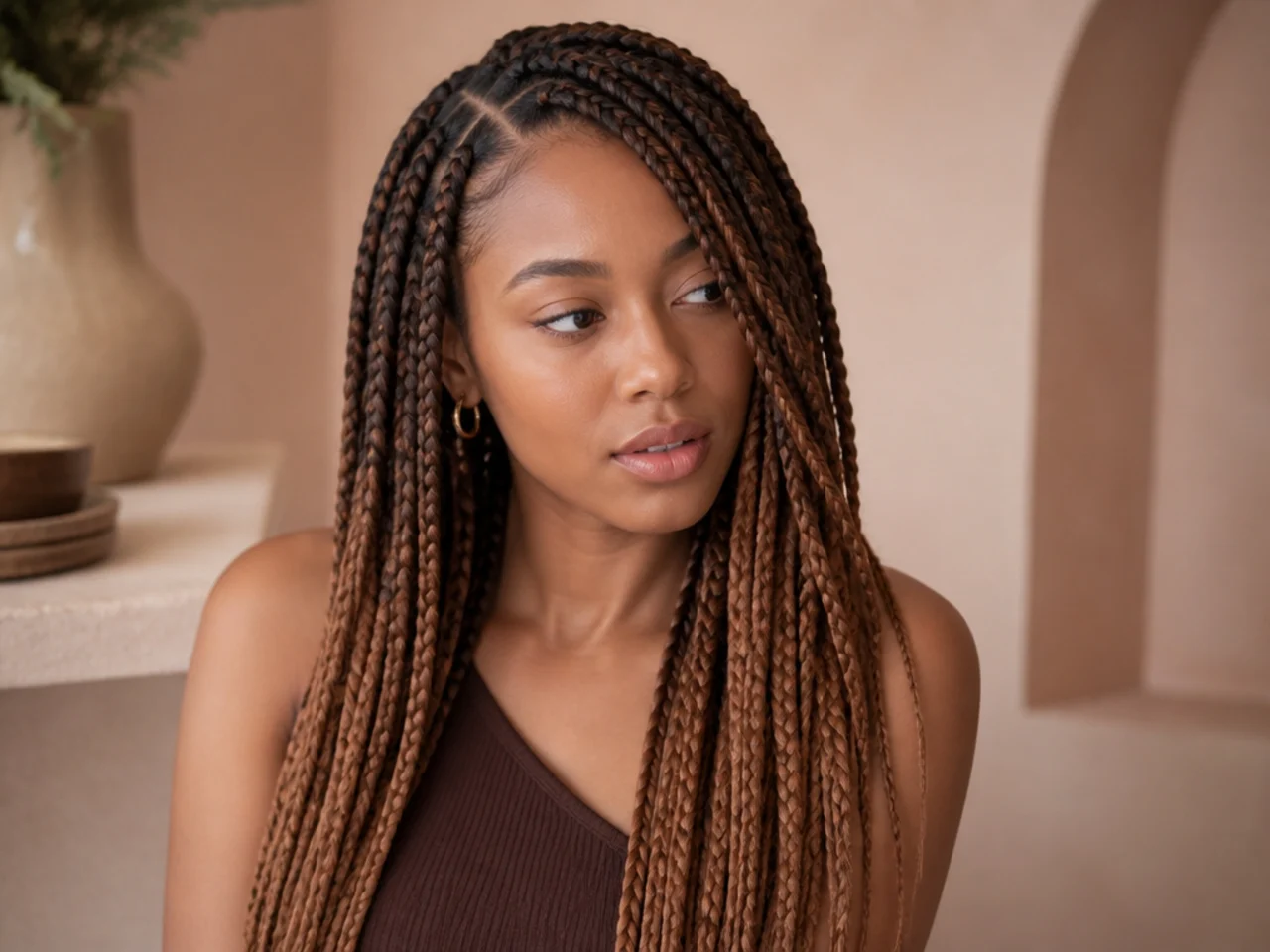
2. Copper Highlights
Warmer and brighter than caramel, still within blending range. Copper is the furthest you can go from a dark base and still have it read as highlighting rather than as a statement.
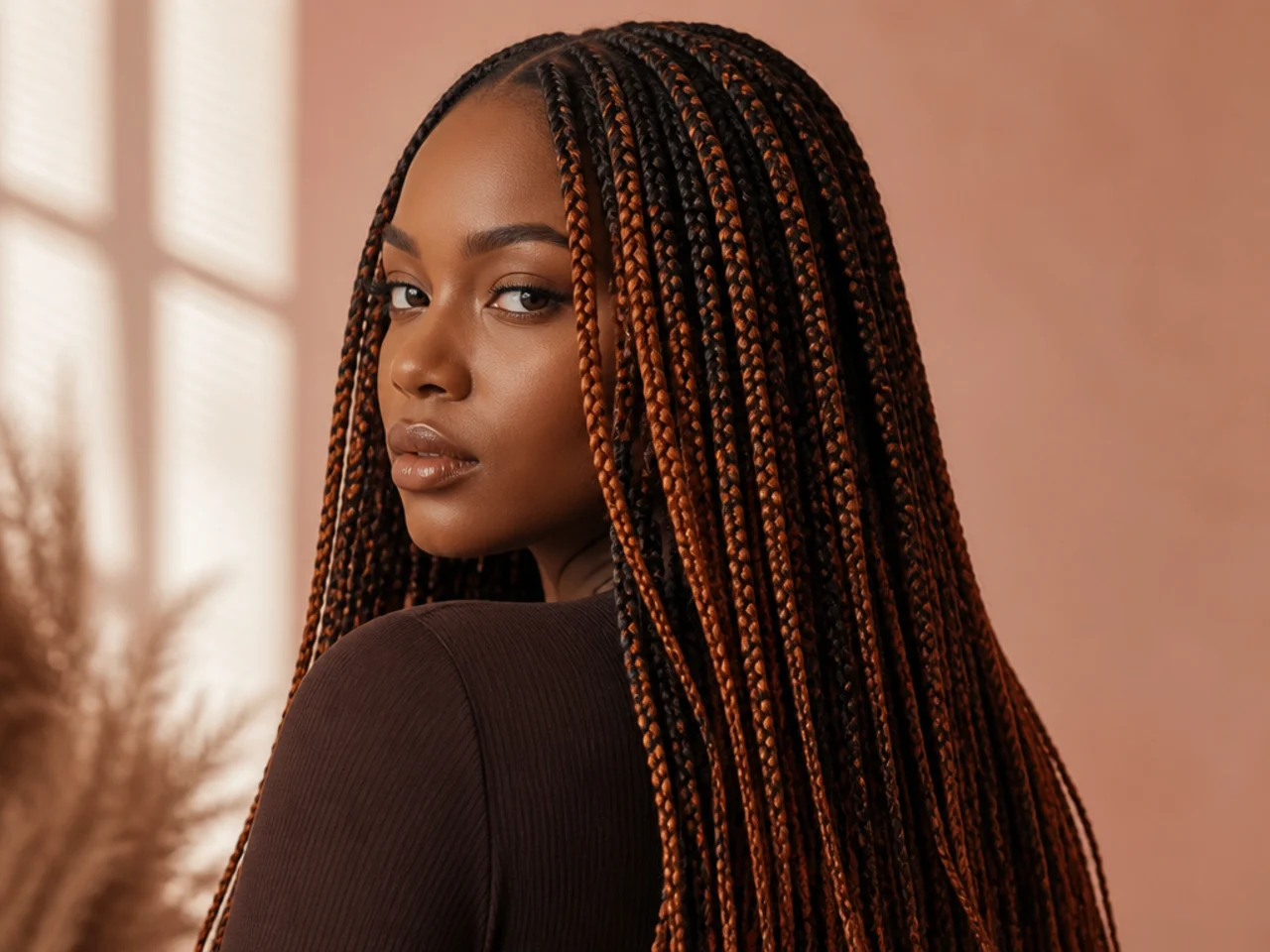
3. Burgundy Through Black, One in Three
Clearly coloured, still soft at the edges. One in three is the ratio where a set stops looking highlighted and starts looking coloured, without ever looking blocky.
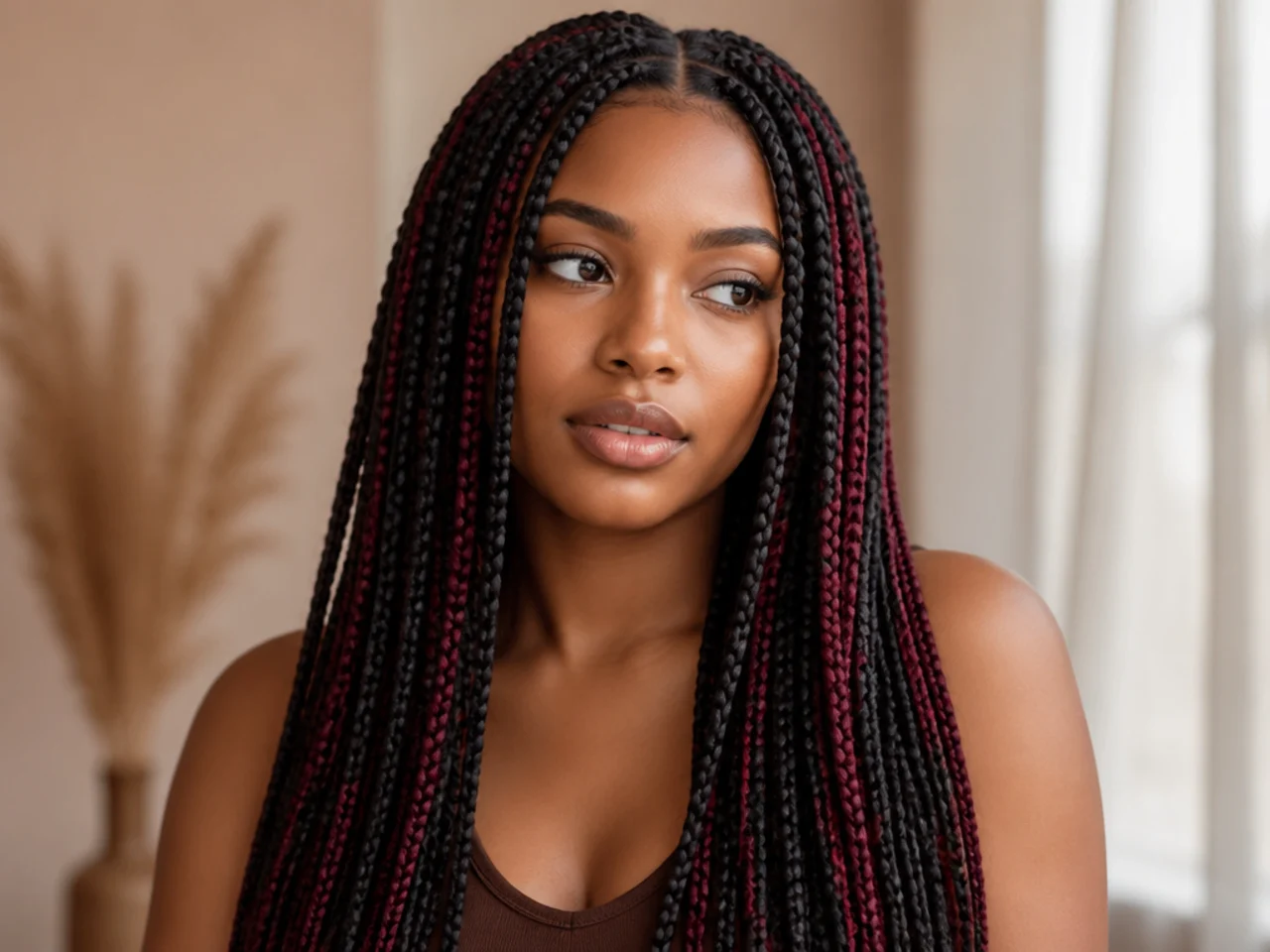
4. Full Burgundy
Every braid in one shade. Rich rather than blocky at this density. Density is doing the work — enough braids in one shade reads as a colour rather than as a set of coloured strands.
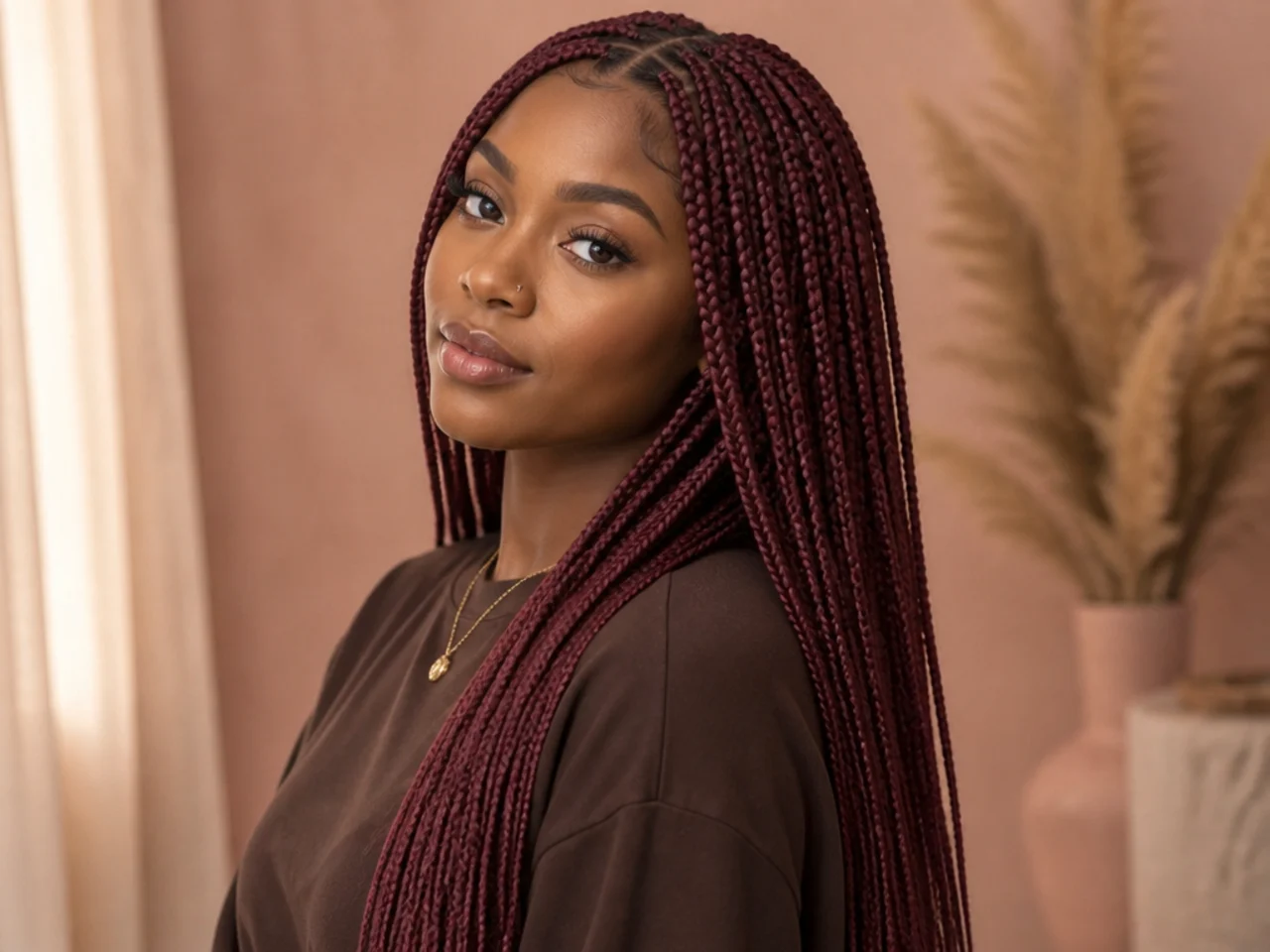
5. Two-Tone at One in Two
Half and half. The point where highlights become a two-tone style. At one in two neither shade is the base any more, which is a different design decision from highlighting.
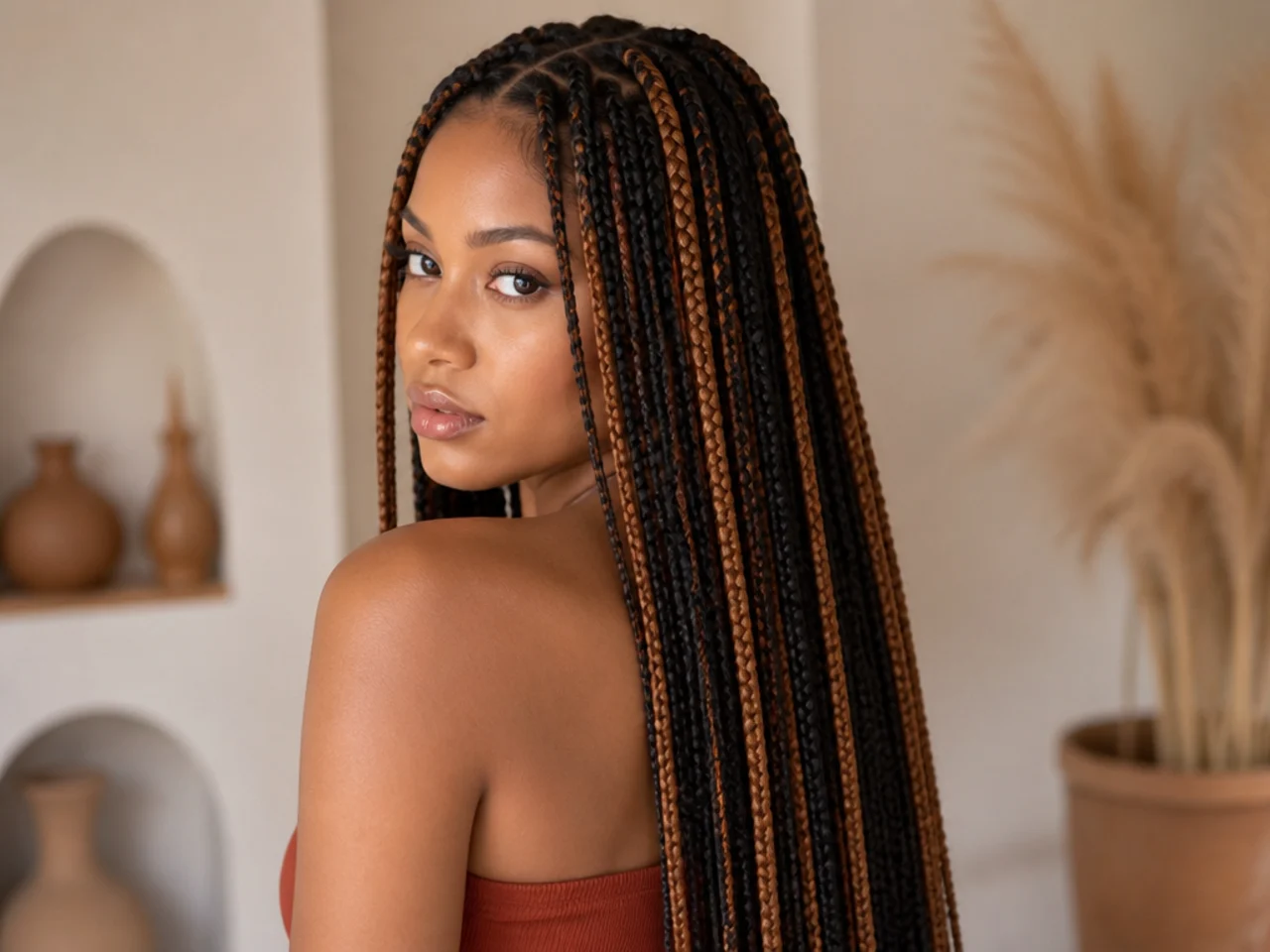
6. Blue Peekaboo
Colour under the top layer, hidden until you move. The top layer has to be dense enough to cover it, which is exactly what this braid count provides.
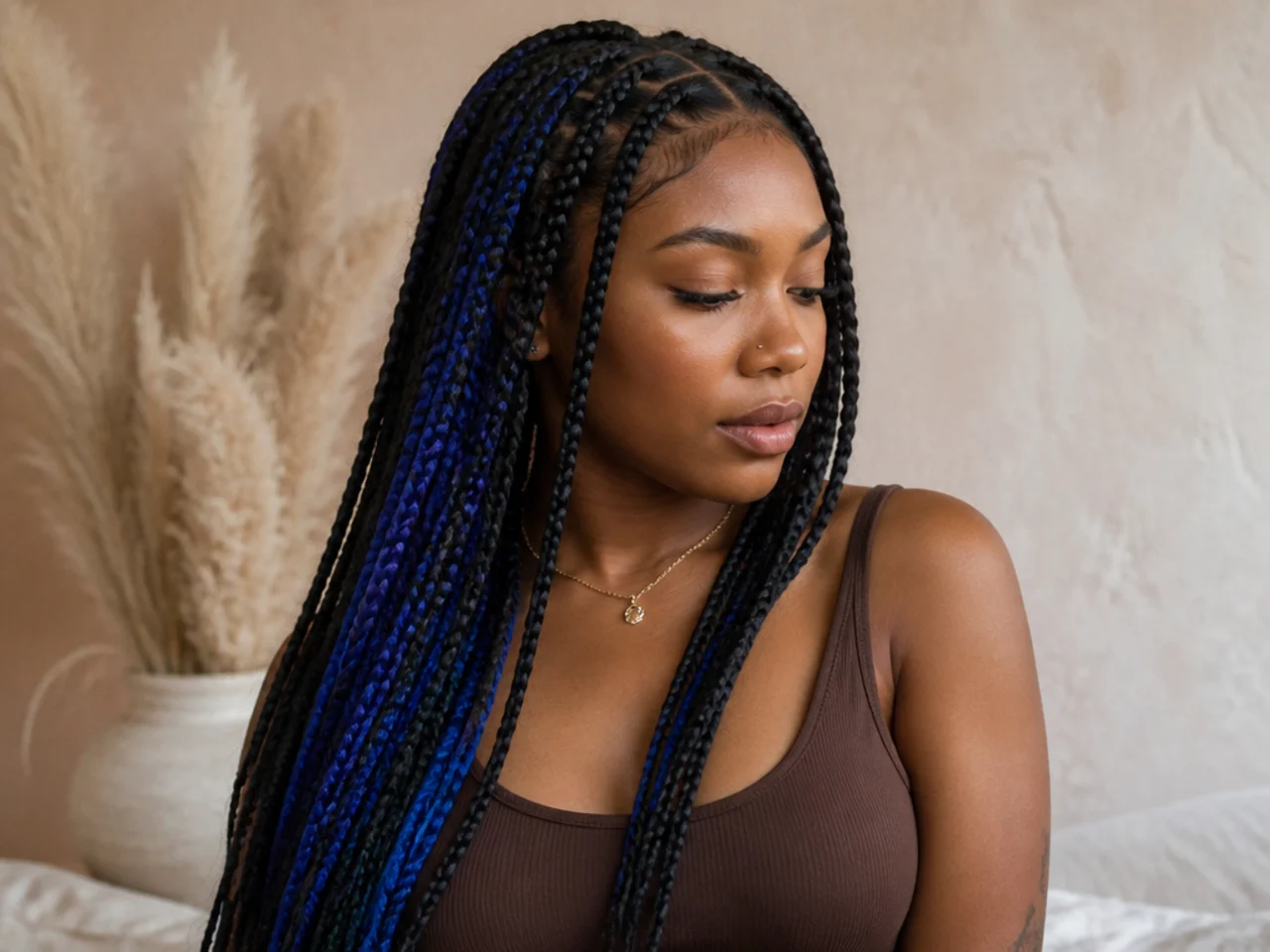
7. Lavender Scattered Through
Pale purple at a low ratio. Reads as a tint across the whole set. Pale shades blend further than bright ones, so lavender at one in six still reads across the entire head.
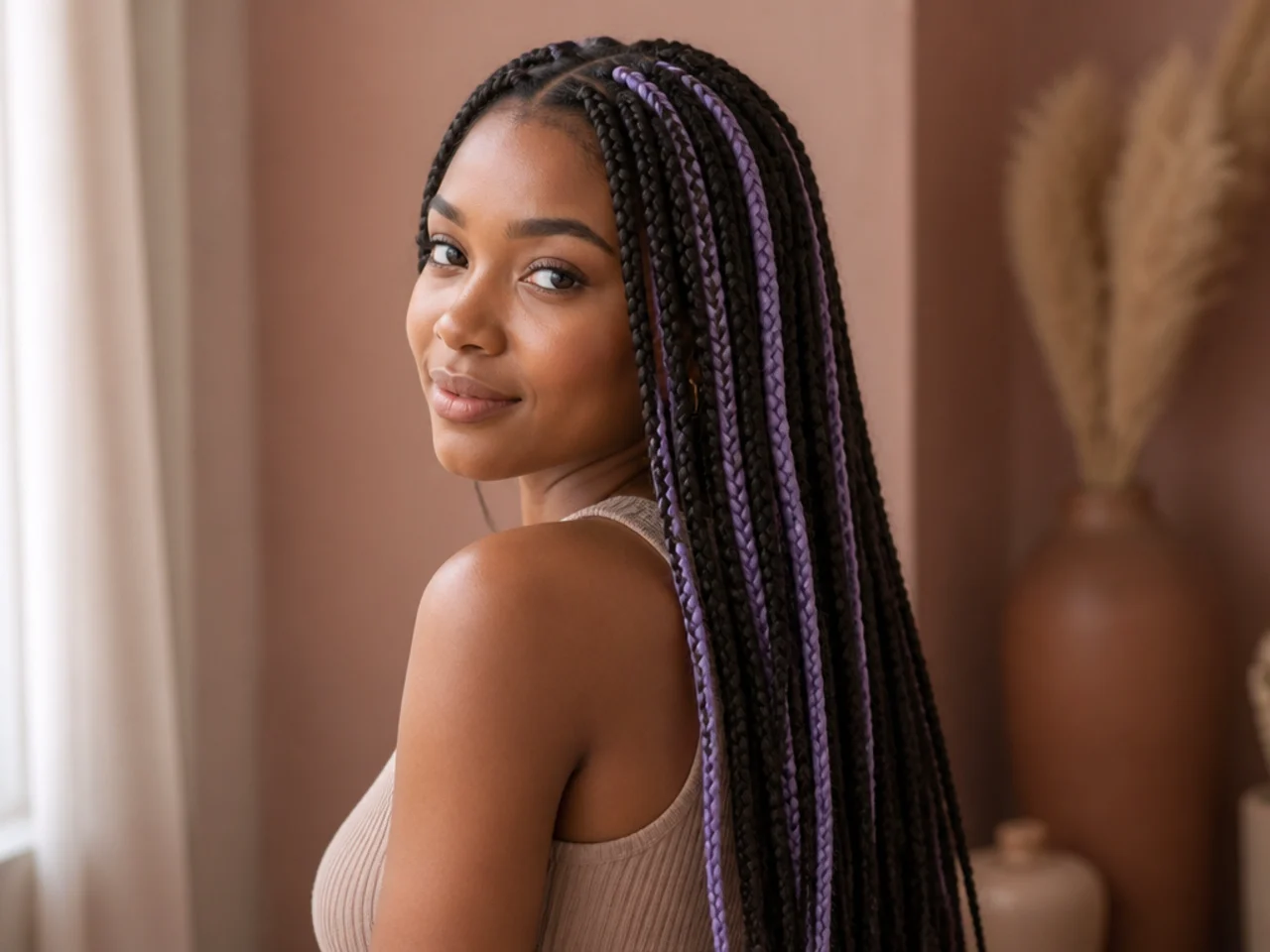
8. Teal at One in Four
Blue-green as a highlight rather than a statement. Teal is dark enough to sit near a natural base, which is why it highlights where a bright blue would not.
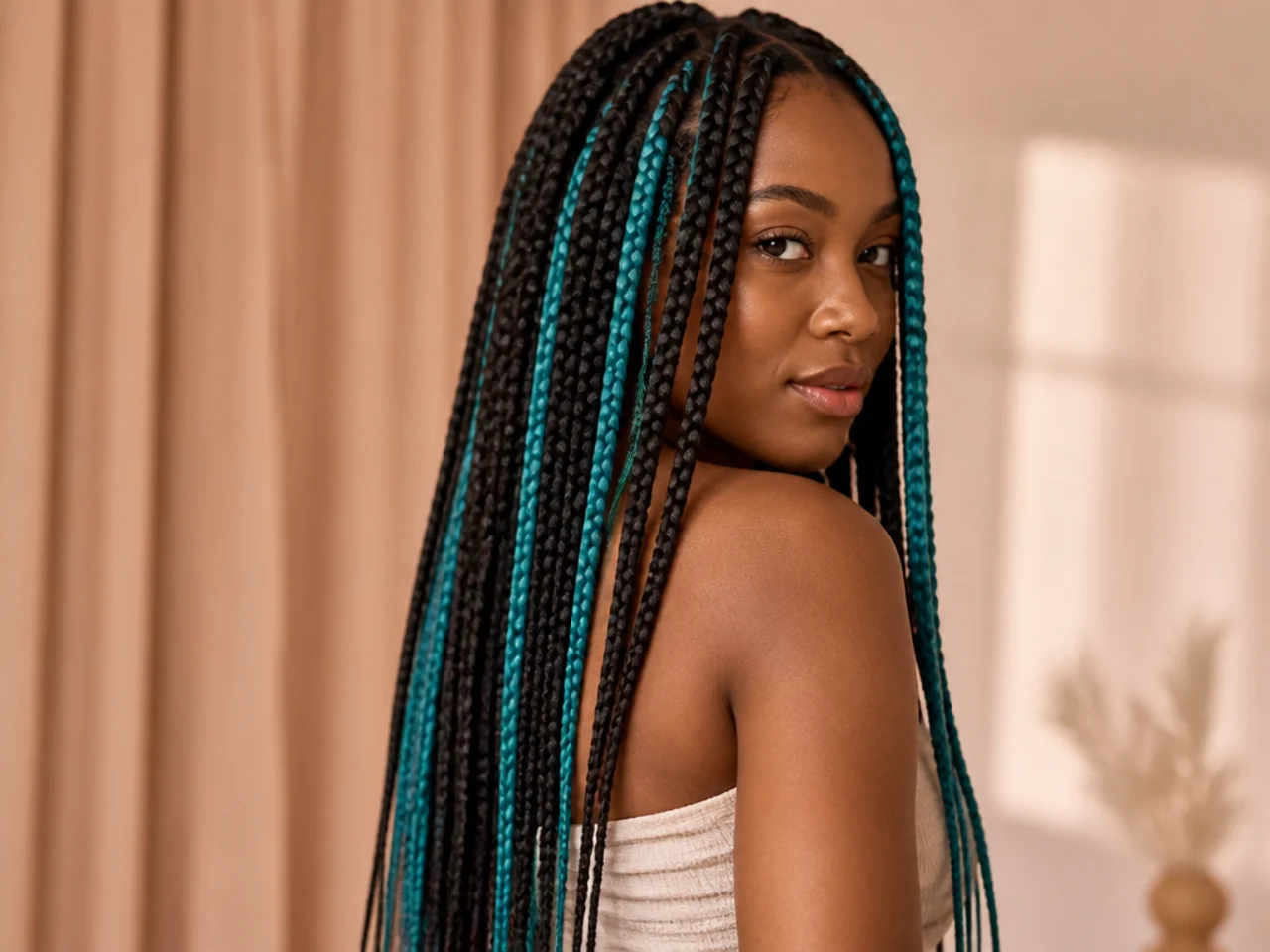
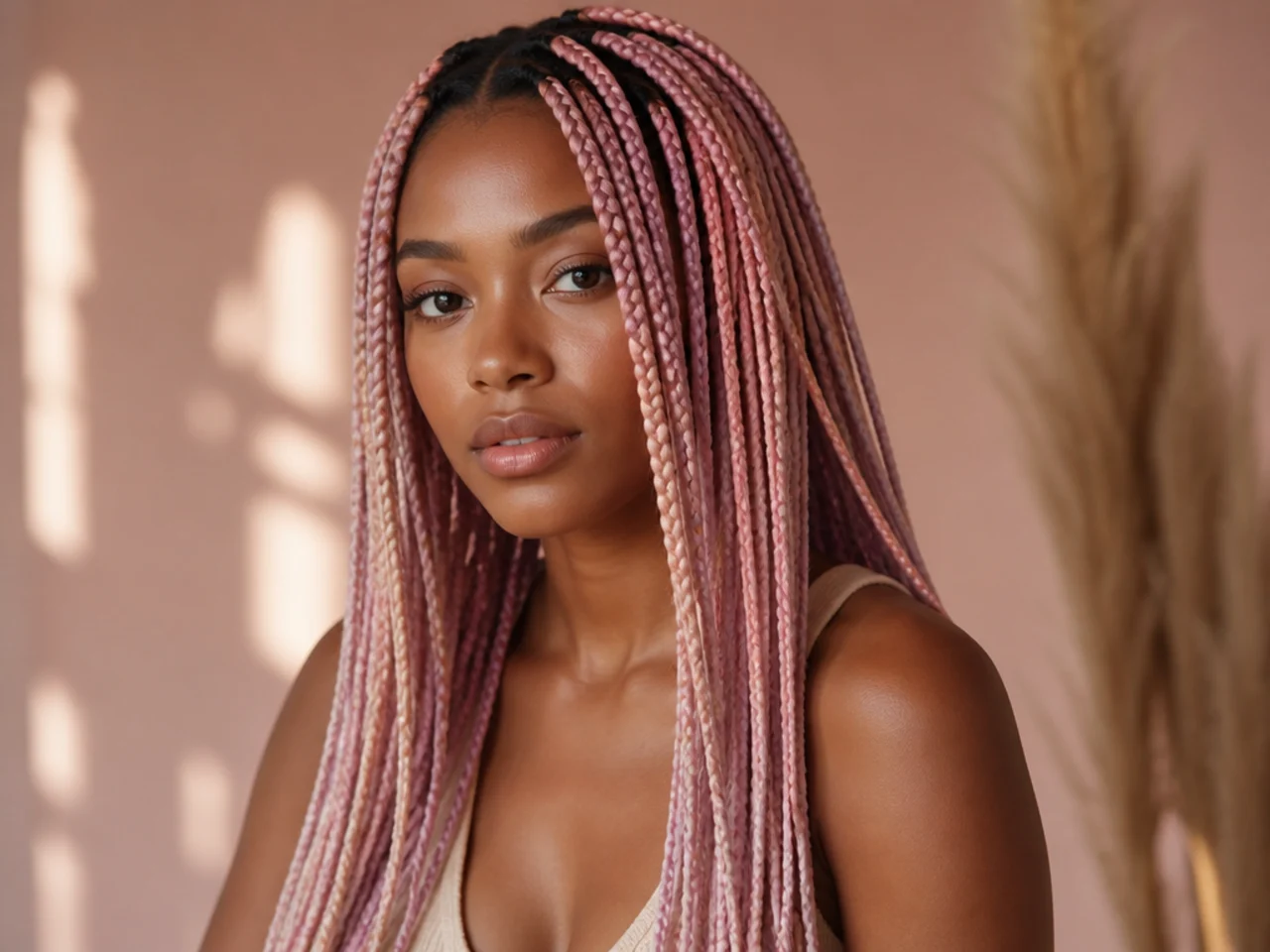
9. Pink Concentrated at the Crown
Same ratio, gathered at the top. Visible from every angle. Concentrating the same number of coloured braids at the crown makes them visible from the front, which an even scatter does not.
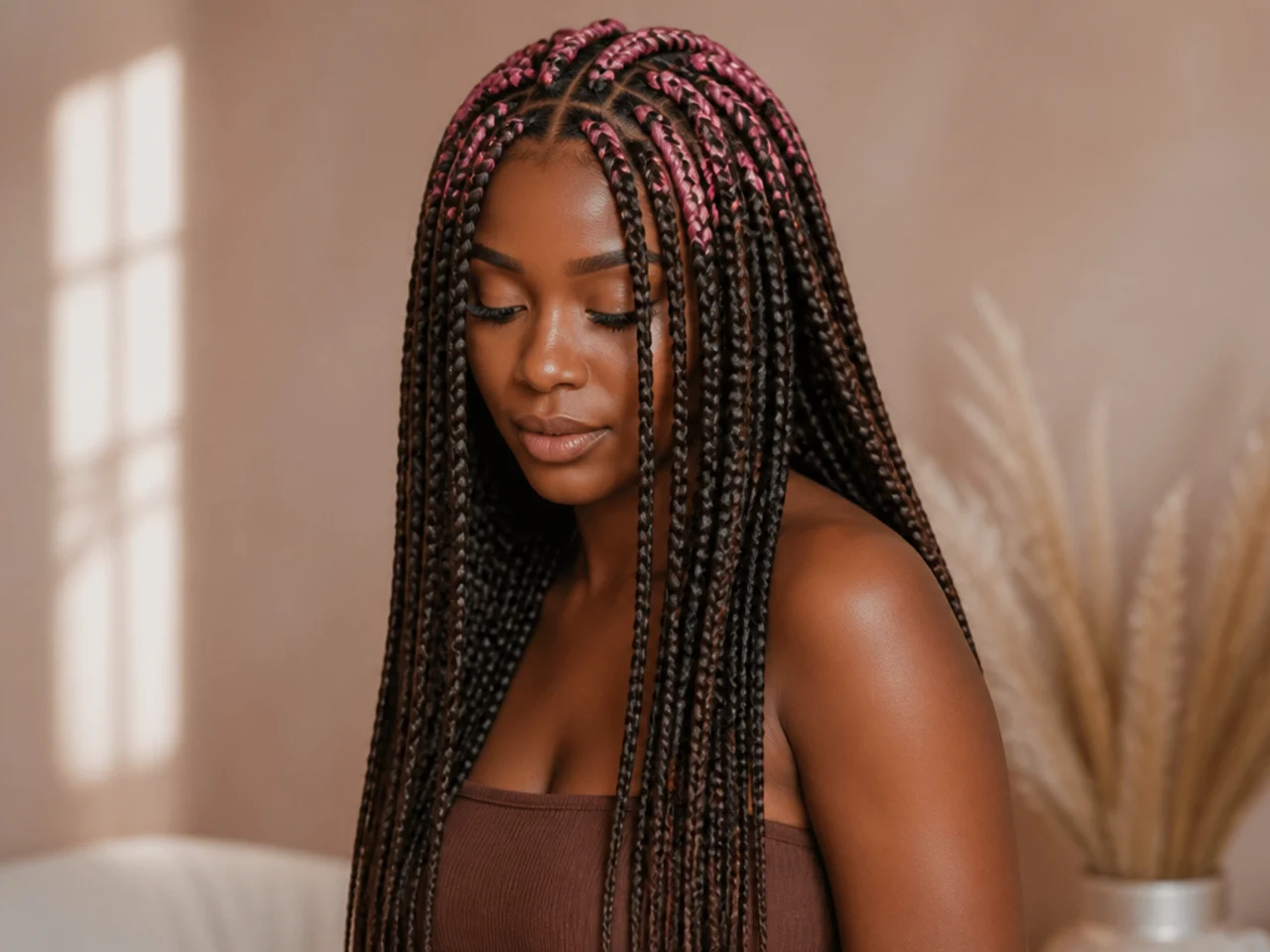
10. Ginger Through Natural
Warm orange blended into a natural base. Ginger reads warmer than caramel and cooler than copper, which makes it the middle option of the three warm highlights.
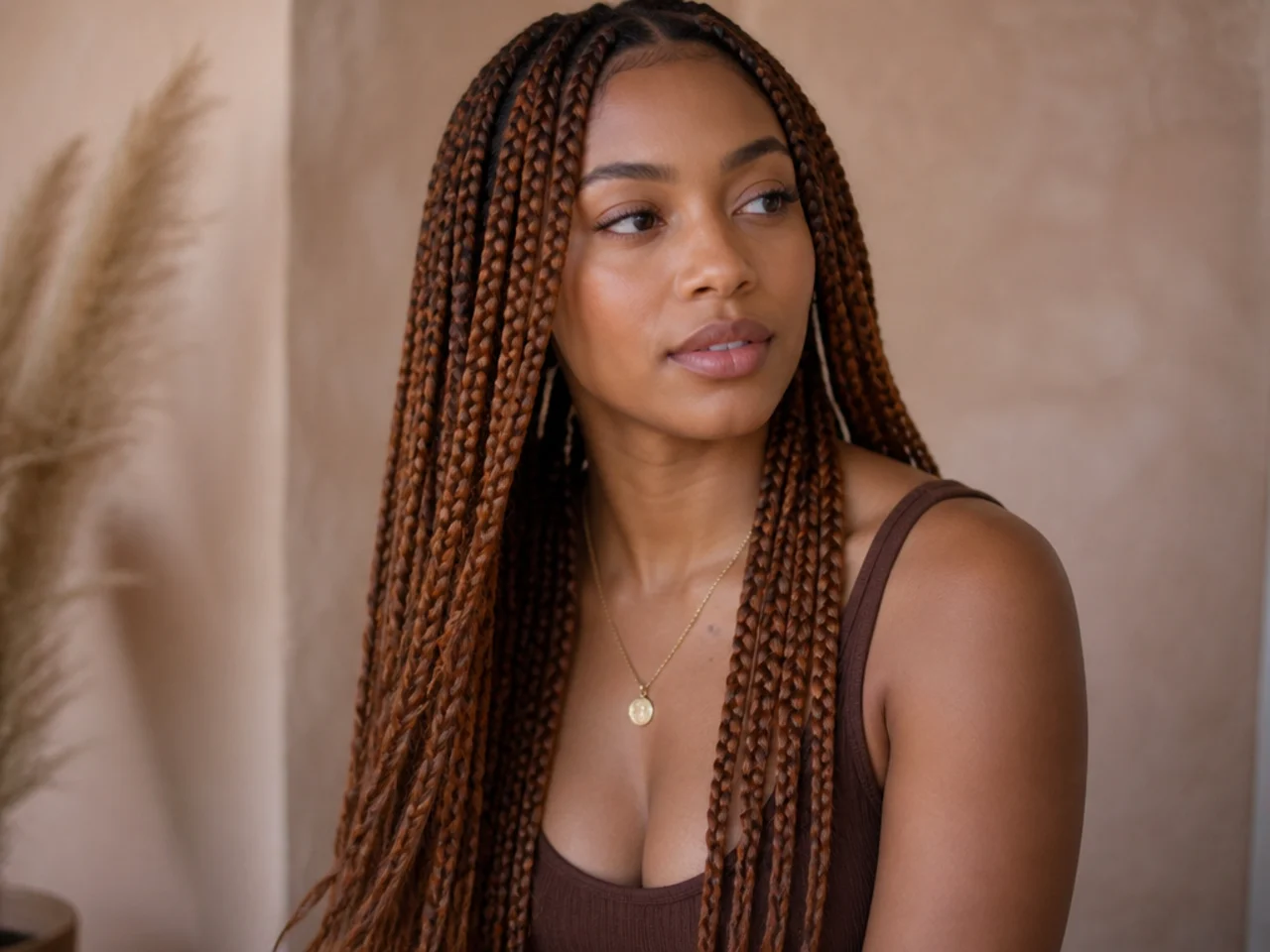
11. Grey and Silver Blend
Cool neutrals scattered through, reading as a soft grey overall. Grey and silver together give depth that a single grey cannot, because the two shades catch light differently.
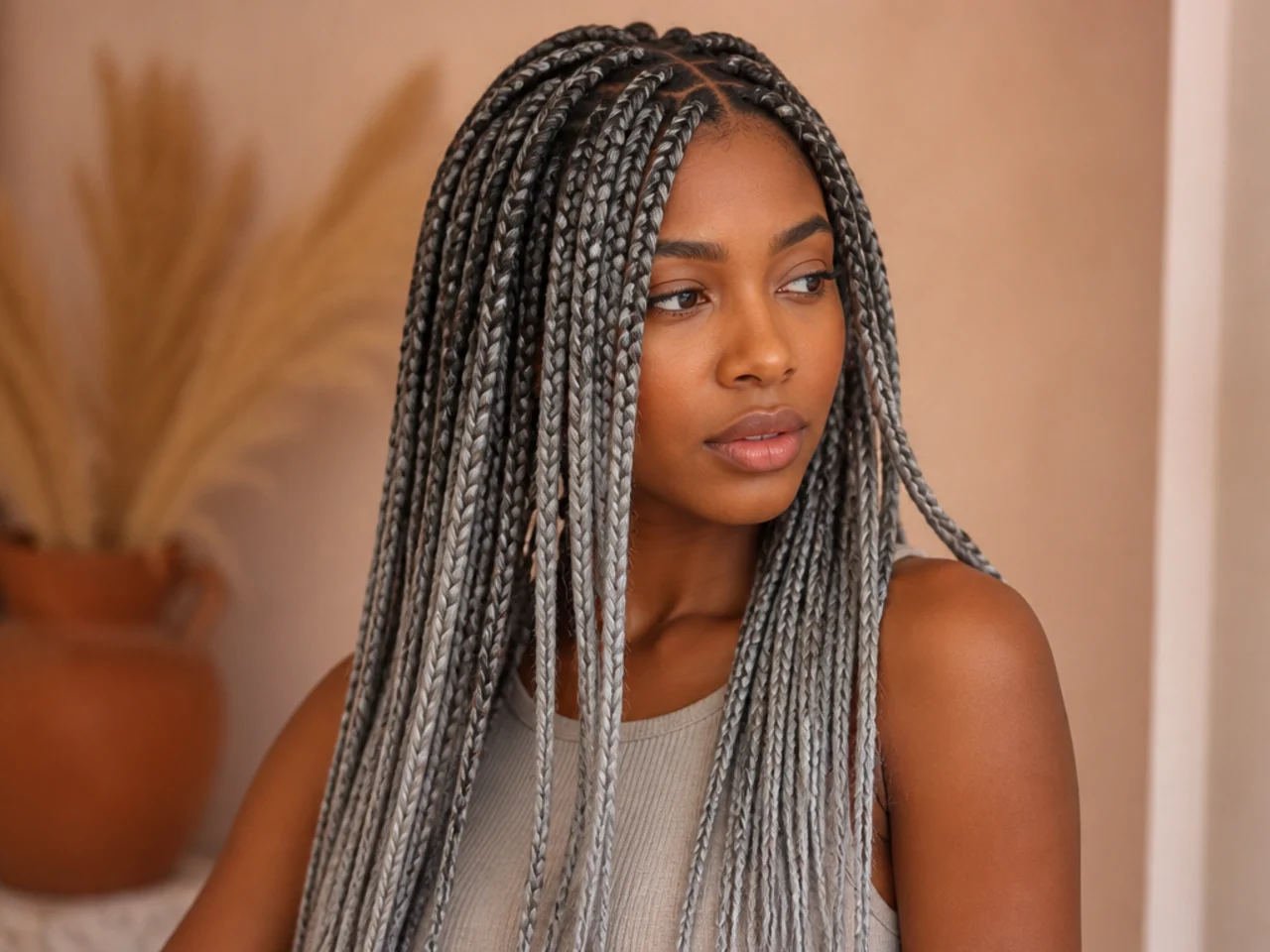
12. Coloured Ombré
Natural roots into colour from mid-length down. The gradient hides the transition, so the colour change never reads as a line the way a single release height would.
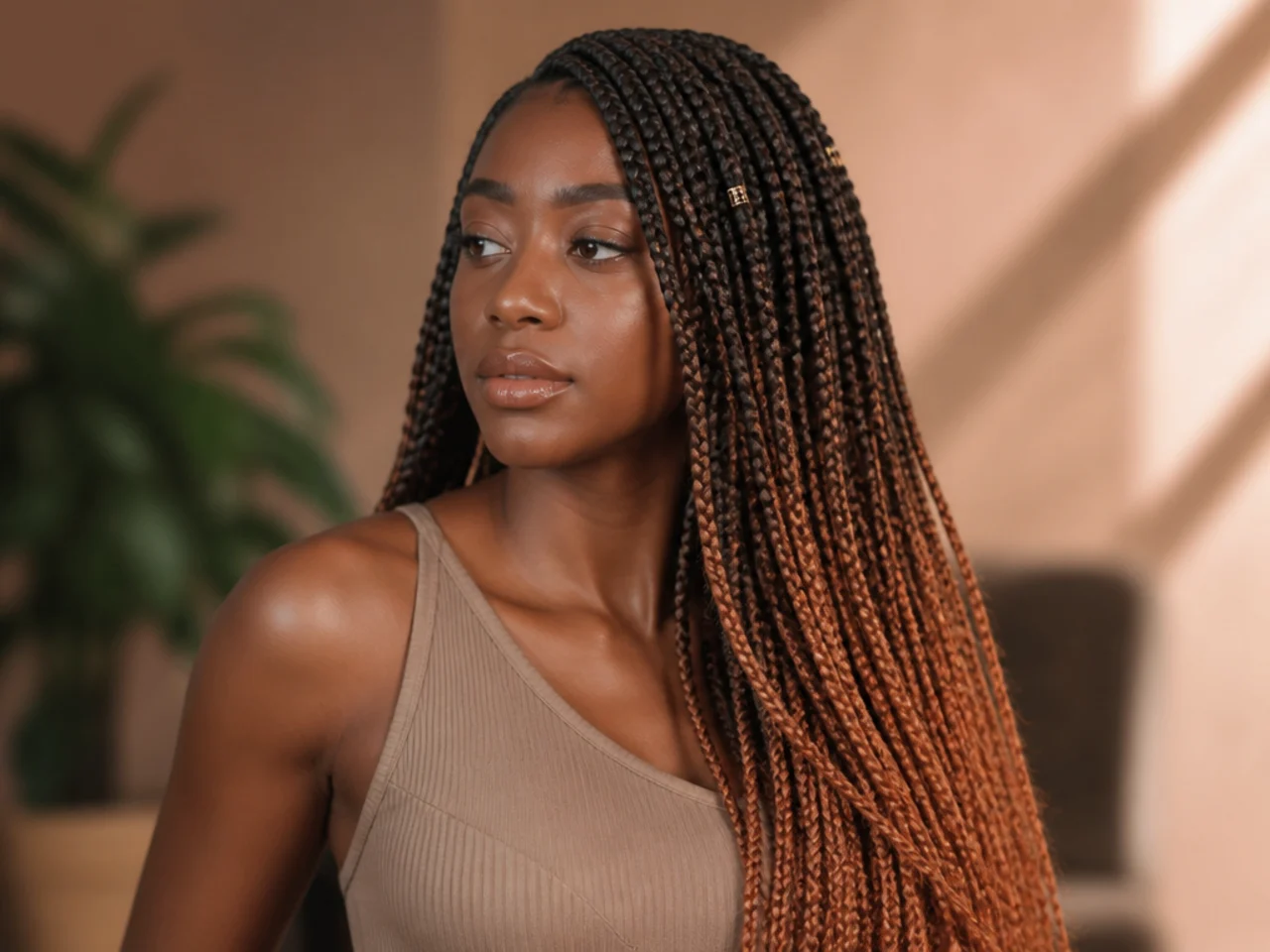
13. Coloured Tips Only
Colour on the final inches across the whole set. The lowest-commitment version — it is visible when your hair moves and invisible when it is up.
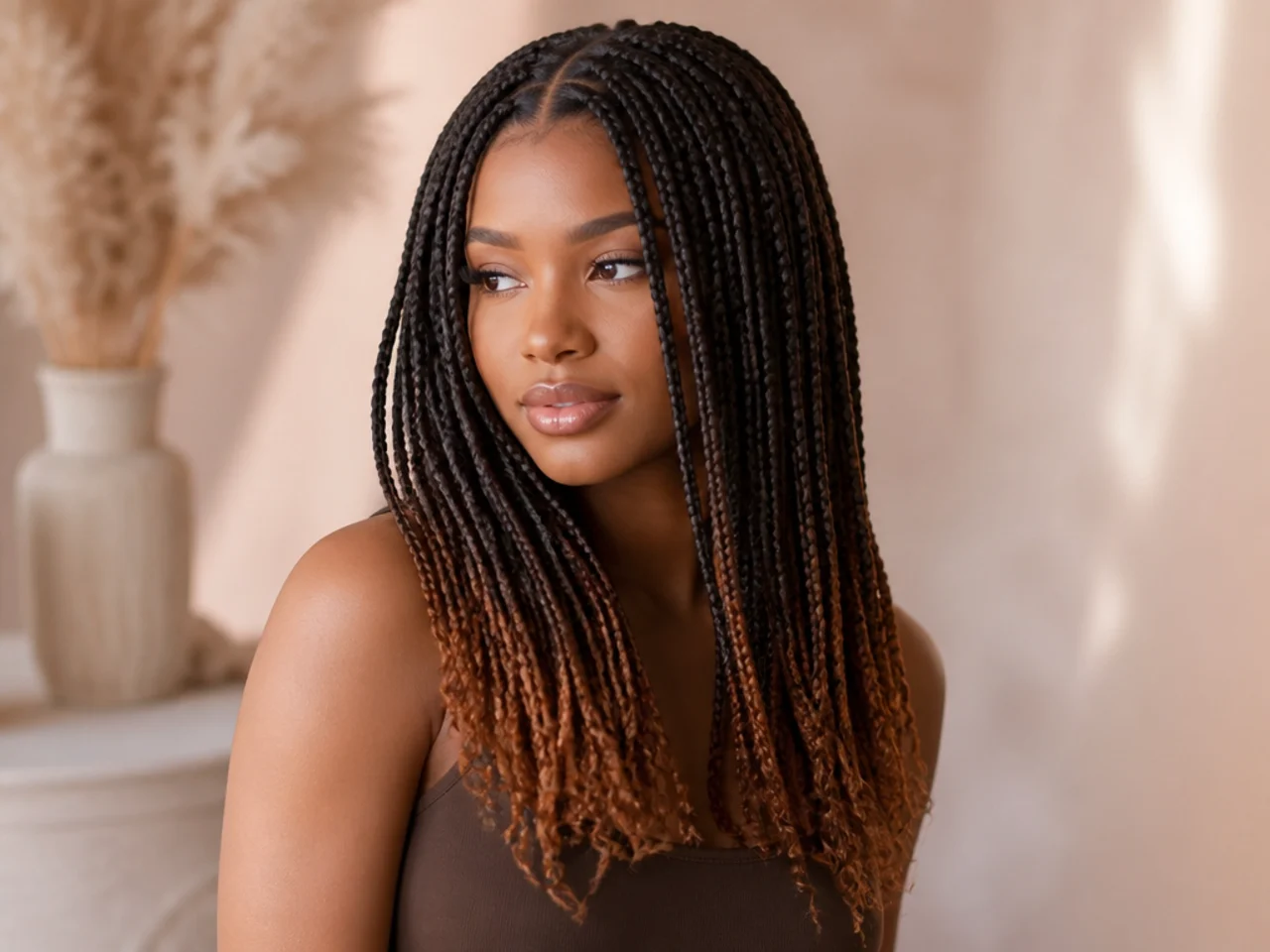
14. Pastel Blend
Two soft pastels together, blending into a single wash of colour. Pastels are close enough in value that two of them read as one soft shade rather than as two colours.
15. Coloured Medium at Week Six
Where bright shades have faded at the top layer first. Sun reaches the top layer and nothing else, so the fade is uneven in a way that shows most on bright colours.
Styling and Upkeep
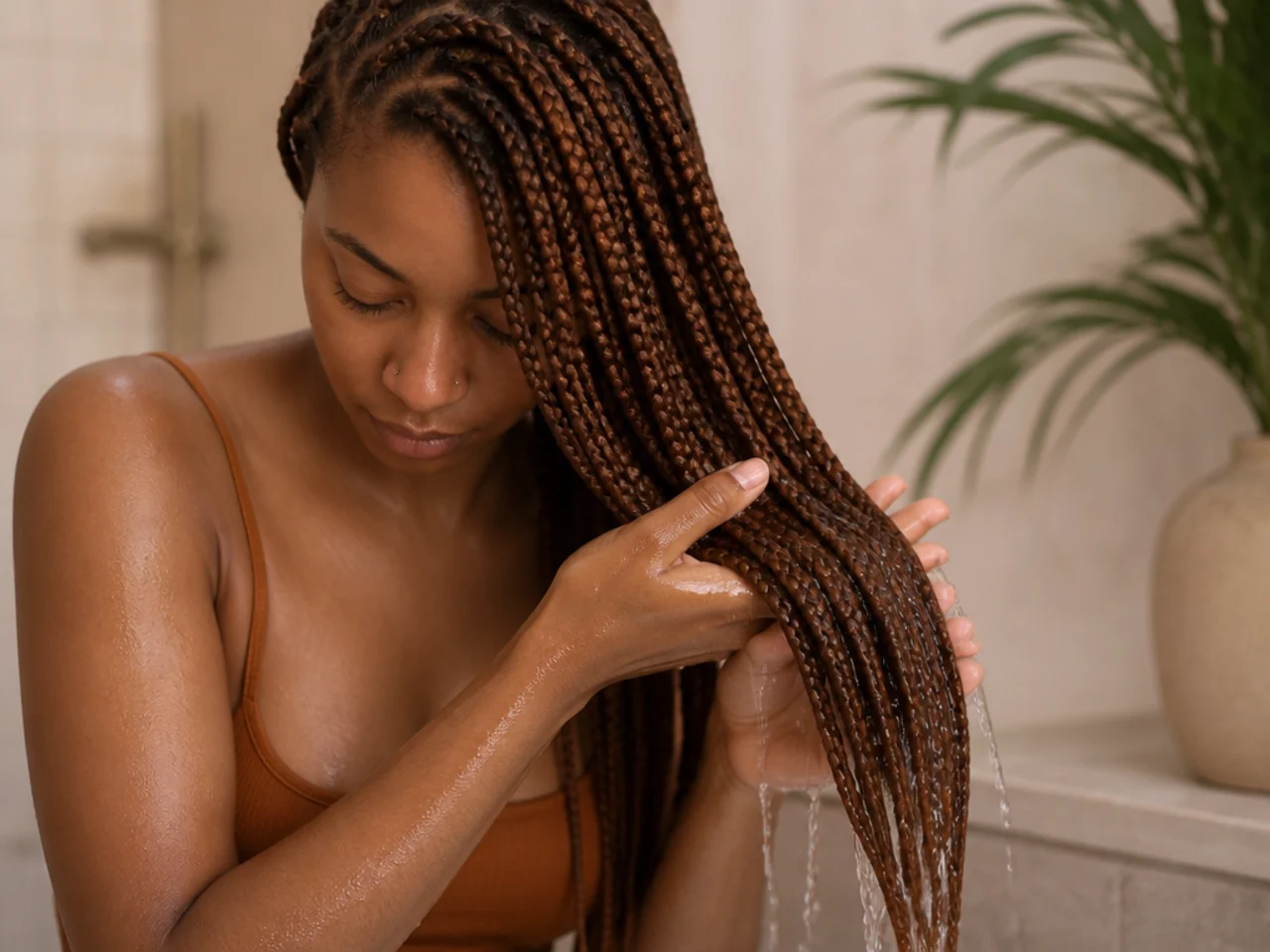
Rinse the coloured hair before installation. Warm water until it runs clear, which removes most of the loose dye.
Dark towel for the first two washes. More braids means more bleed, and pale towels show it.
Keep it out of prolonged sun. Synthetic colour fades from the top layer first — the layer everyone sees.
Lukewarm water only. Heat accelerates the bleed on bright shades.
Eight weeks still applies. Colour distracts from the roots, and a striking set at week nine is still a loose set at week nine.
Mistakes to Avoid
Asking for "some colour". Give a ratio — one in four and one in two are different styles.
Using three or more shades. Blending forgives a lot, but not that.
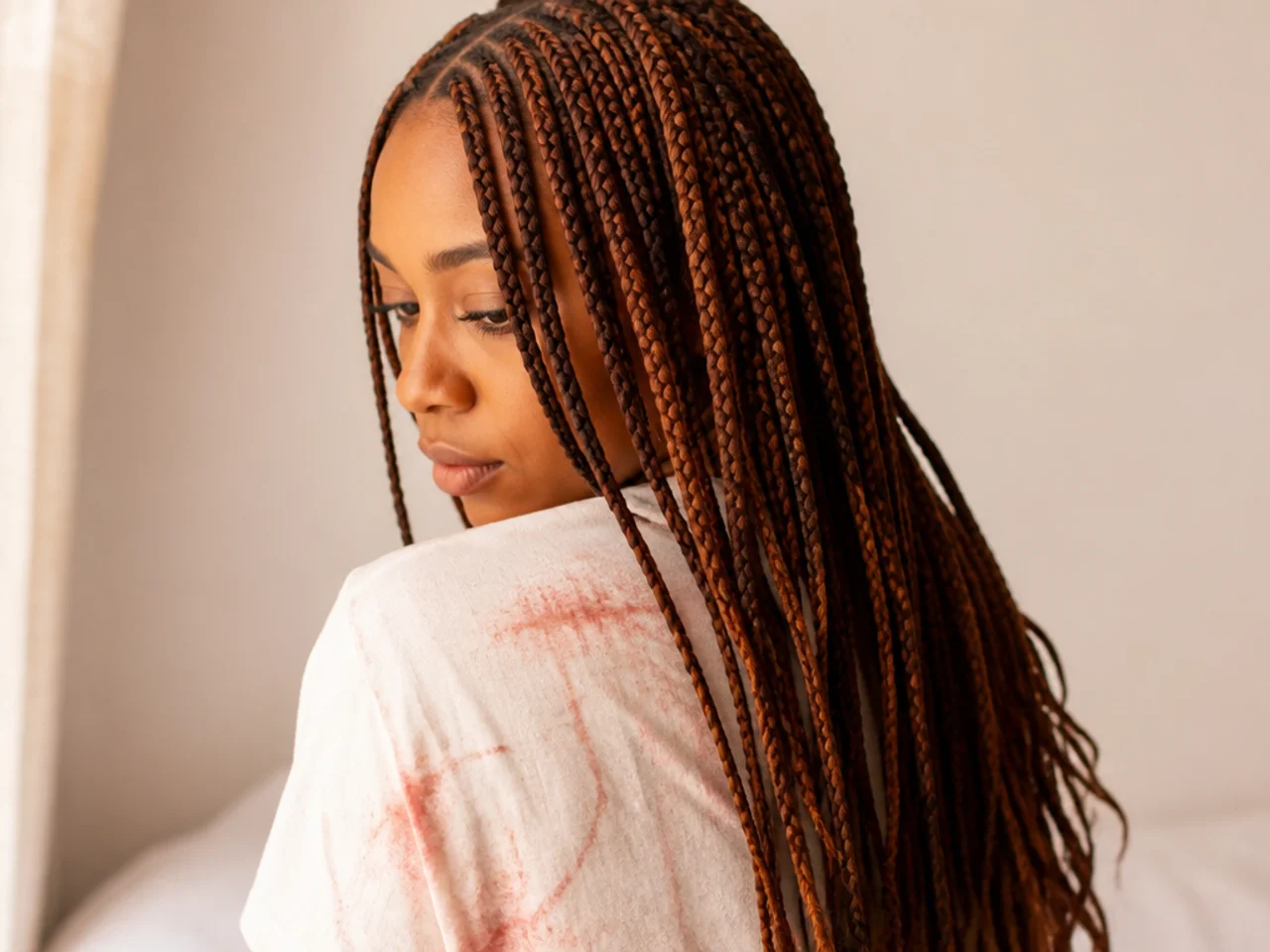
Skipping the pre-rinse. The dye ends up on your collar.
Assuming a large-braid reference photo will translate. The same colour at forty braids reads as blocks, not highlights.
Concentrating a low ratio at the back. You will never see it, and neither will anyone facing you.
FAQ
Does colour blend at this size? Yes — that is the defining difference from larger braids.
What ratio? One in four for highlights, one in three for clearly coloured, one in two for two-tone.
Does it damage your hair? No. The colour is in the extension, not your strands.
Final Thoughts
Go in with a ratio and a shade, in that order. Medium is the only braid size where a genuine highlight effect is available, and the one thing that reliably wastes it is walking in with a photograph of a large-braid set and asking for the same look.
For blonde specifically, which has a sourcing problem of its own, see blonde medium knotless braids, and for the full range see 25 medium knotless braids ideas. More in Braids & Protective Styles.
Frequently asked questions
Related posts
See all posts
20 Waterfall Mermaid Braid Ideas That Hold
Read more
15 Side Mermaid Braid Ideas That Sit Right
Read more
20 Side Part Medium Knotless Braids I Saved
Read more