20 Medium Knotless Braids Into a Bob
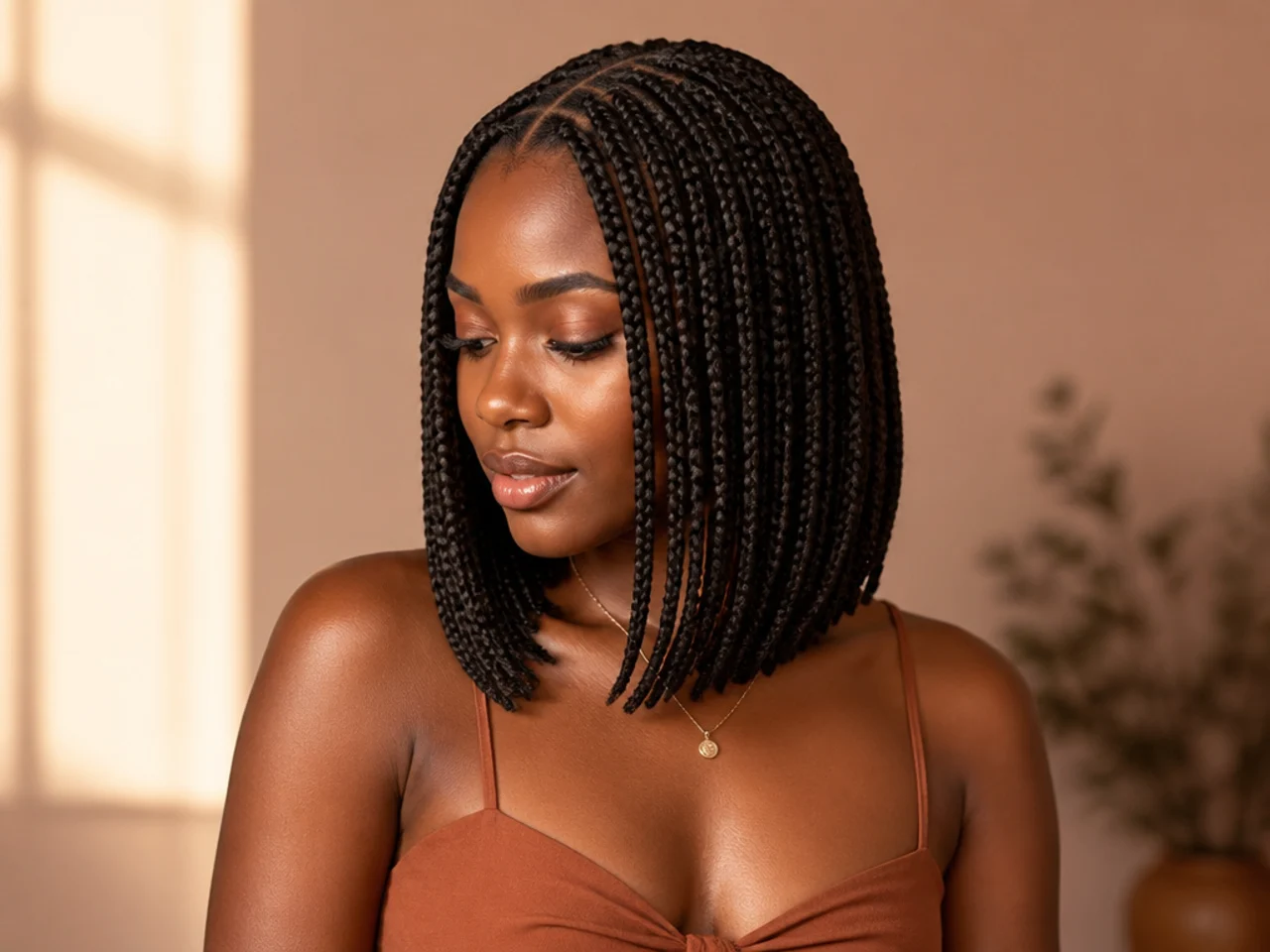
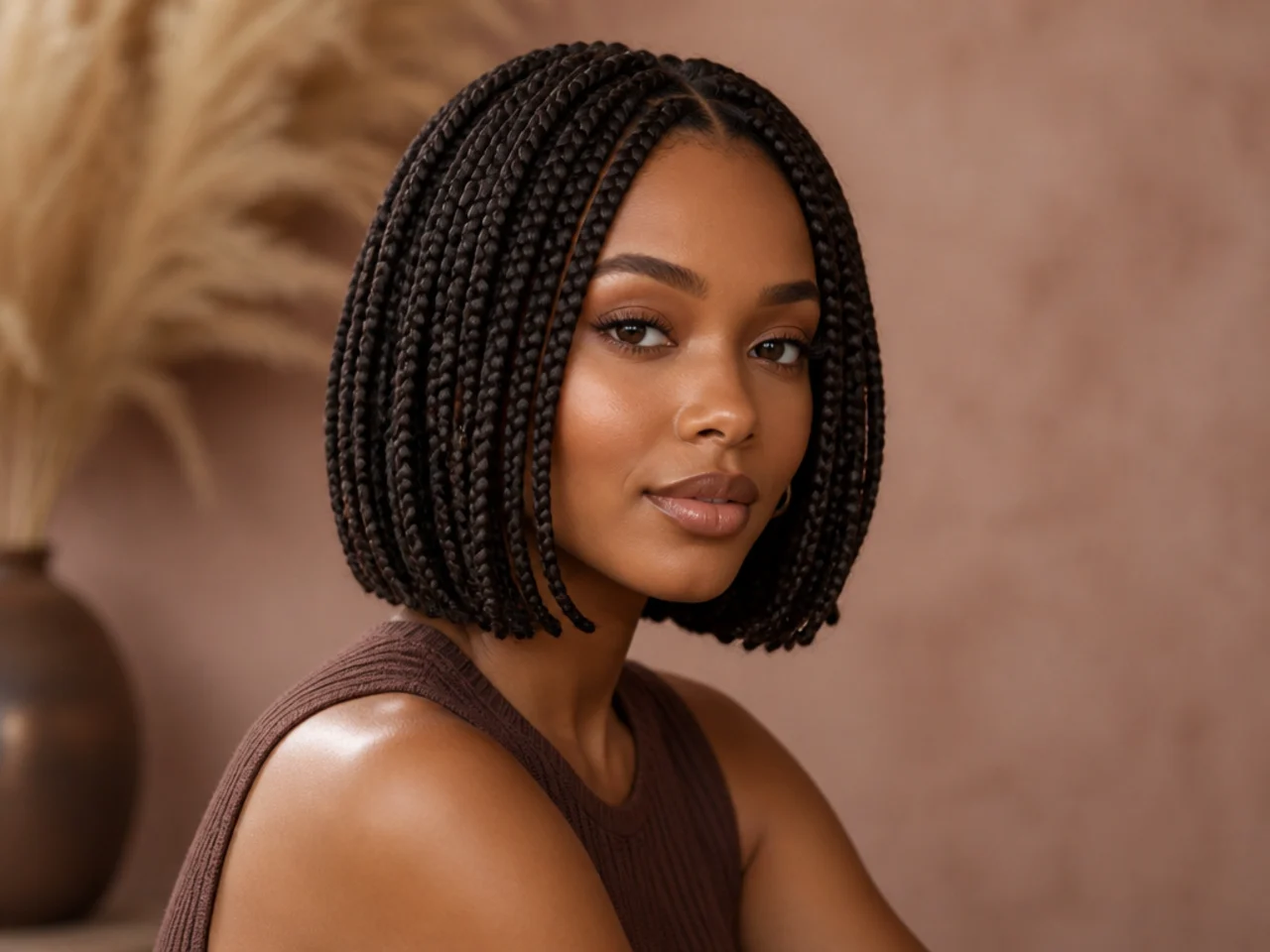
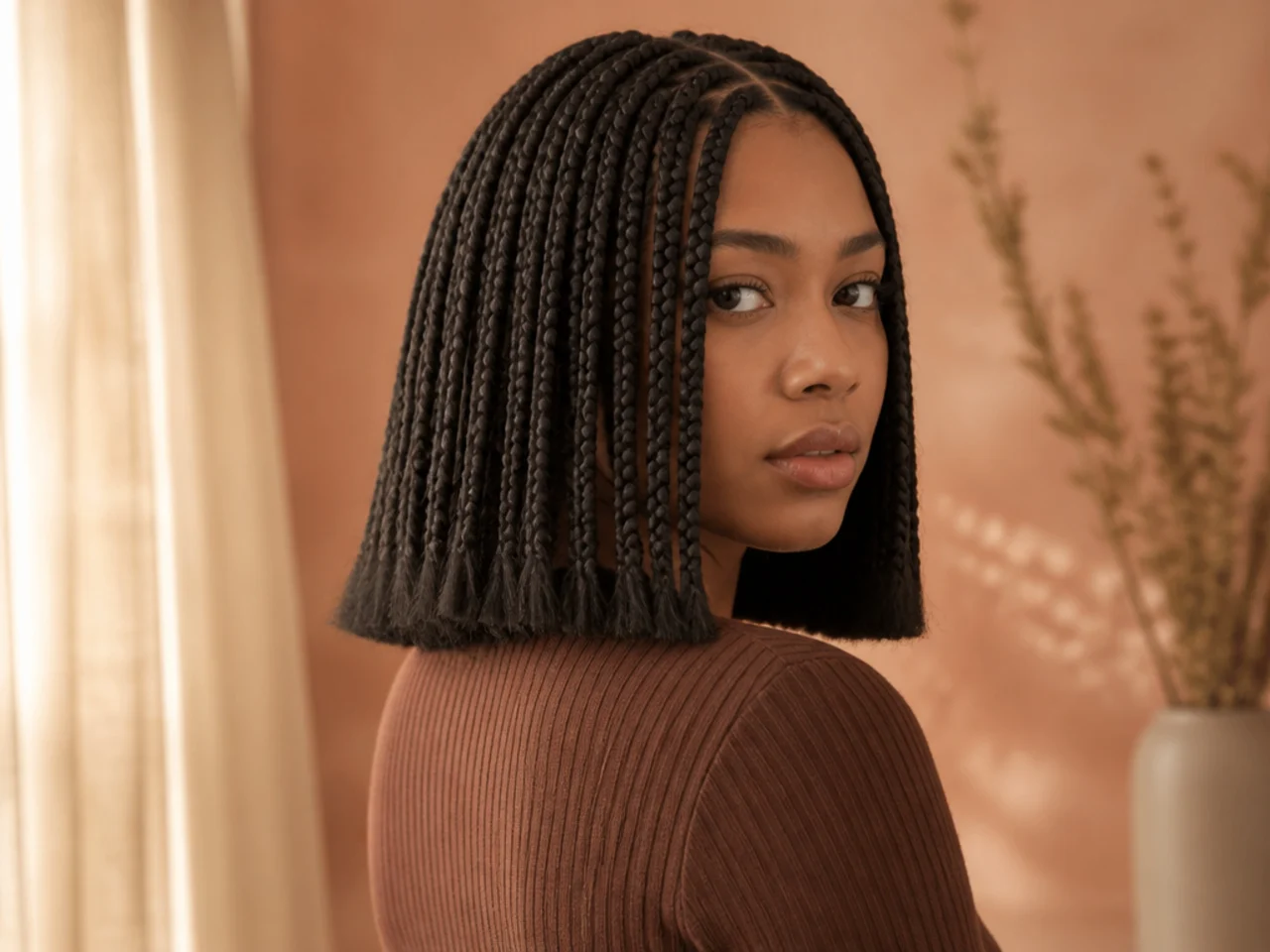
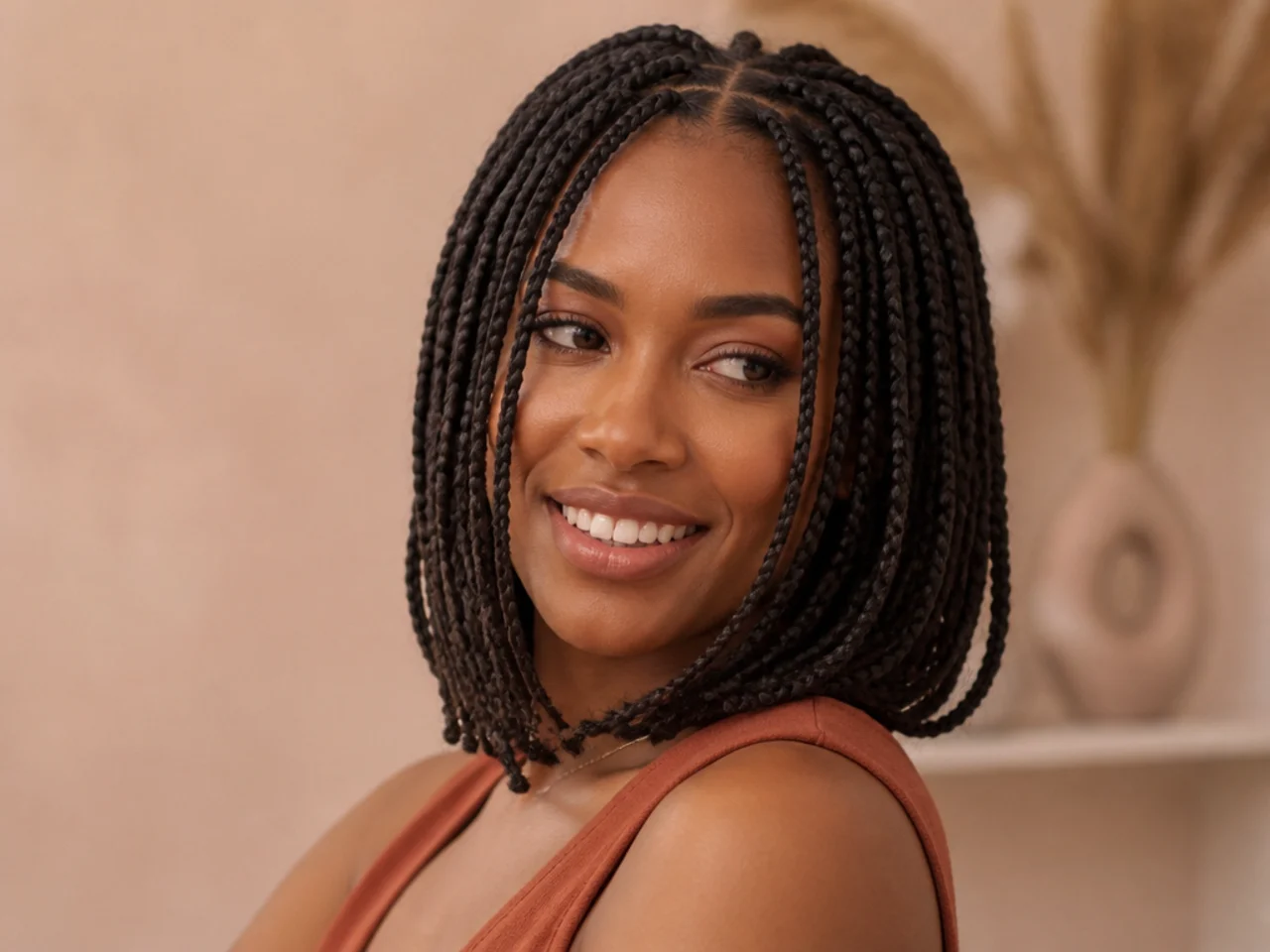
Twenty medium knotless braid bob ideas, and the thing a medium bob can do that no larger one can — with a hundred and forty braids the steps are small enough to read as an actual graduation, not a stepped line.
In this article · 27
- What Makes a Medium Braid Bob Work
- How to Choose Yours
- The 20 Bob Ideas
- 1. Soft-Edged Chin Bob
- 2. Blunt Chin Bob
- 3. Jaw-Length Medium Bob
- 4. Collarbone Medium Lob
- 5. A-Line Medium Bob
- 6. Centre-Parted Medium Bob
- 7. Deep Side-Parted Medium Bob
- 8. Medium Bob with a Face Frame
- 9. Medium Bob with Curled Ends
- 10. Honey Blonde Medium Bob
- 11. Highlighted Medium Bob
- 12. Burgundy Medium Bob
- 13. Ombré Medium Bob
- 14. Medium Bob with a Curved Grid
- 15. Medium Bob with Beads
- 16. Medium Bob with Gold Cuffs
- 17. Half-Up Medium Bob
- 18. Medium Bob Tucked Behind One Ear
- 19. Medium Bob on Fine Natural Hair
- 20. Medium Bob at Week Six
- Styling and Upkeep
- Mistakes to Avoid
- FAQ
- Final Thoughts
A bob is where medium braids stop behaving like braids and start behaving like hair, and it is the only size where that happens.
With a hundred and forty braids, the steps are small enough to disappear. A larger bob can only be cut in distinct lengths, which the eye reads as steps. At this density the difference between one braid and its neighbour can be a few millimetres, and that reads as a genuine graduation.
What Makes a Medium Braid Bob Work
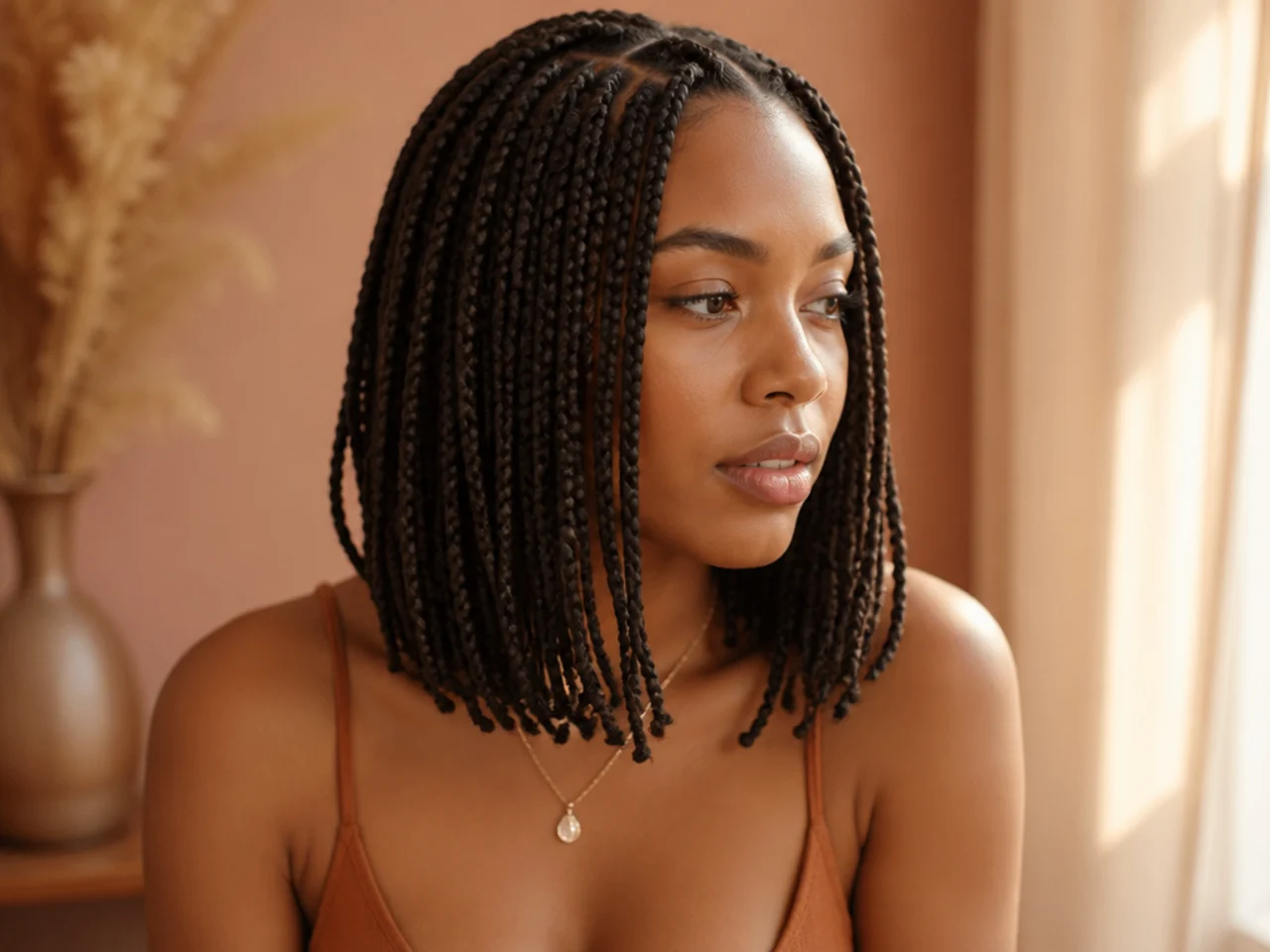
Density does what layering cannot. Braids still cannot be graduated one by one. But with enough of them, a gradual change across the set produces the same visual result.
The perimeter reads soft. A blunt line is still available if you want it, but it is now a choice rather than the only outcome.
It is the lightest thing in this silo. The lowest weight per root, at the shortest length. Nothing here asks less of your hairline.
The grid stays hidden even at the nape. This is the practical advantage over a larger bob, where tipping your head forward exposes every parting line at the back.
How to Choose Yours
Decide blunt or graduated before the cut. Both are available at this size, and they are cut completely differently.
Place the line against your jaw, standing. Chin, jaw or collarbone. Inches do not transfer between faces, and a seated damp cut lands shorter than you asked.
Ask for a graduation across the set, not layers within it. The phrasing matters — a braider hearing "layers" may cut two distinct lengths, which is the stepped result you were trying to avoid.
Seal every cut end. A cut braid is an open braid at any size, and on a bob a single unravelled braid breaks the shape immediately.
The 20 Bob Ideas
1. Soft-Edged Chin Bob
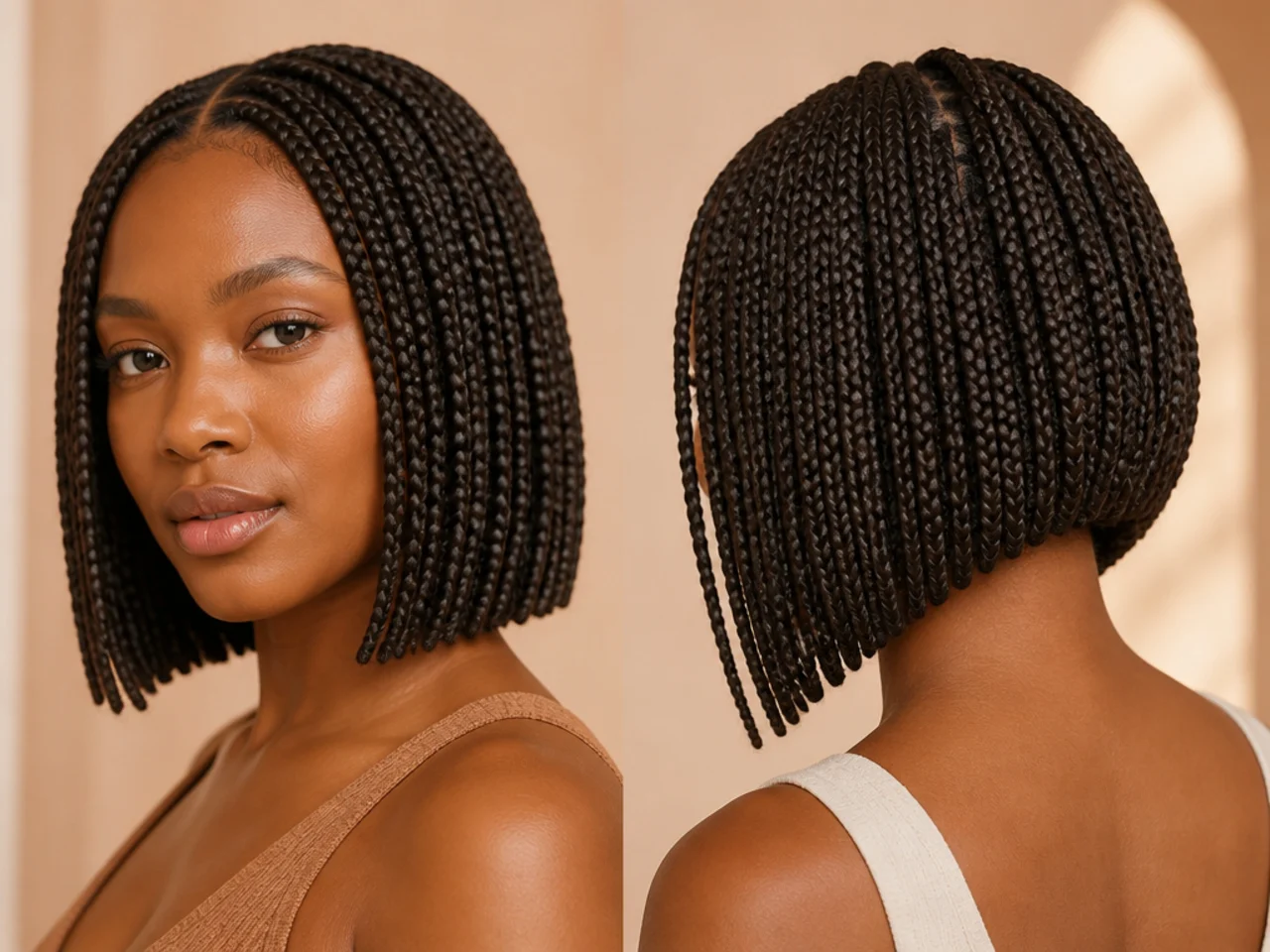
Graduated across the set. The shape only medium can produce. A few millimetres between one braid and its neighbour is below what the eye resolves, so the perimeter reads as a curve rather than as steps.
2. Blunt Chin Bob
The hard line, chosen deliberately rather than by default. At a wider braid count blunt is the only outcome available; here it is a decision, which is a different thing.
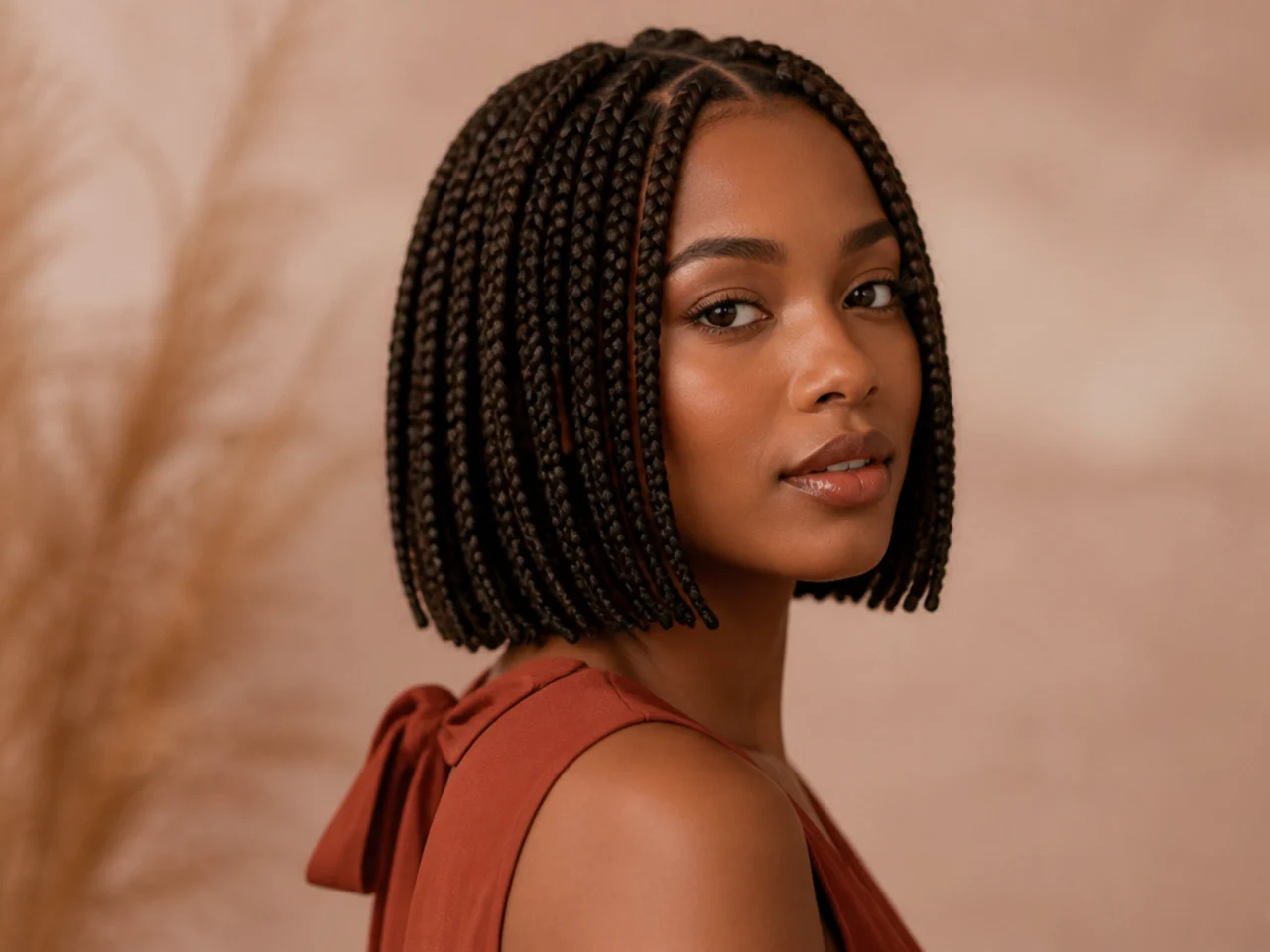
3. Jaw-Length Medium Bob
The most wearable placement of the three. The jaw sits where the face is widest, so the line lands somewhere it flatters most head shapes.
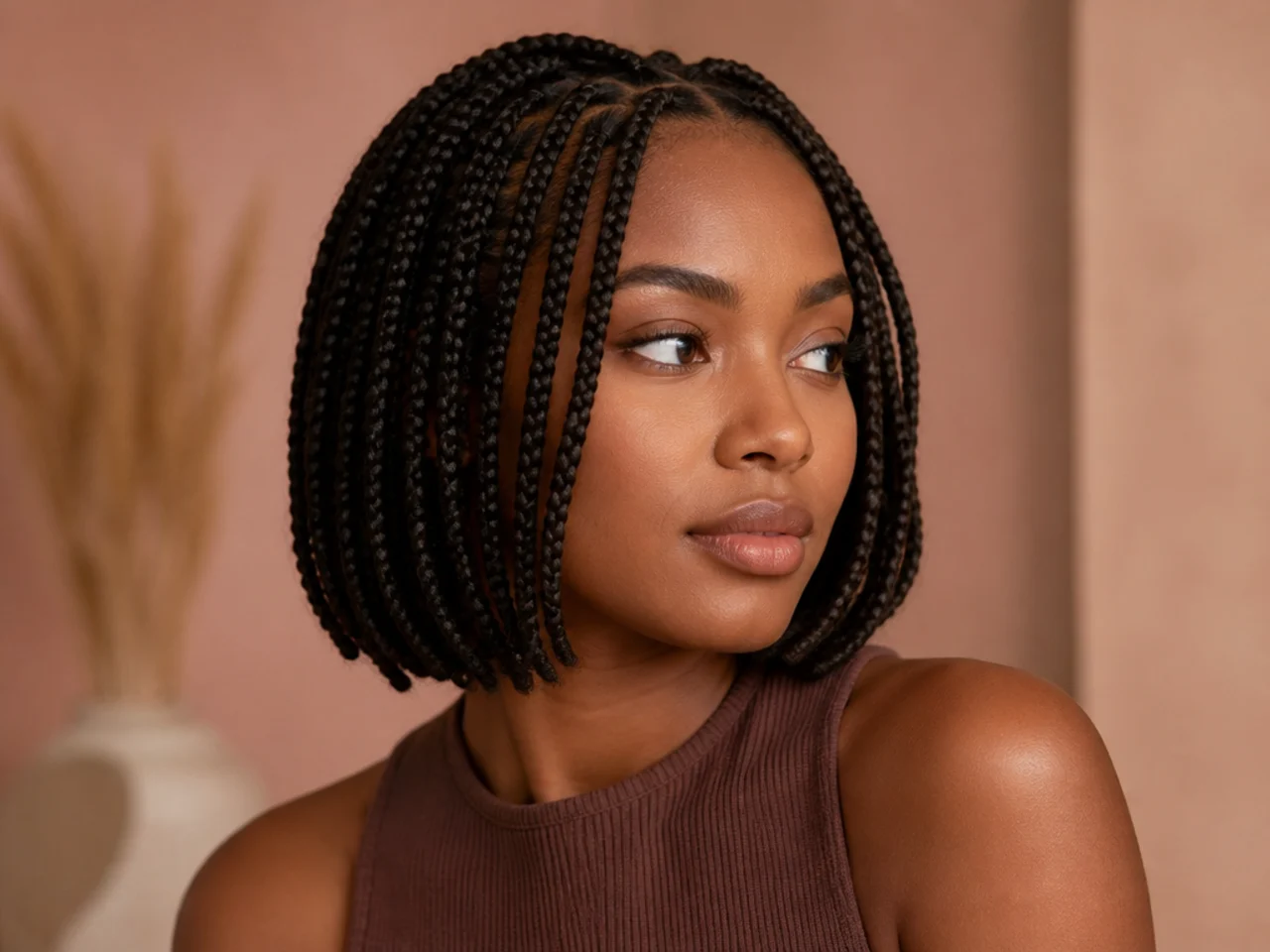
4. Collarbone Medium Lob
The long bob. Softest line, most length to play with. Extra length also means the graduation is spread over more distance, which softens it further.
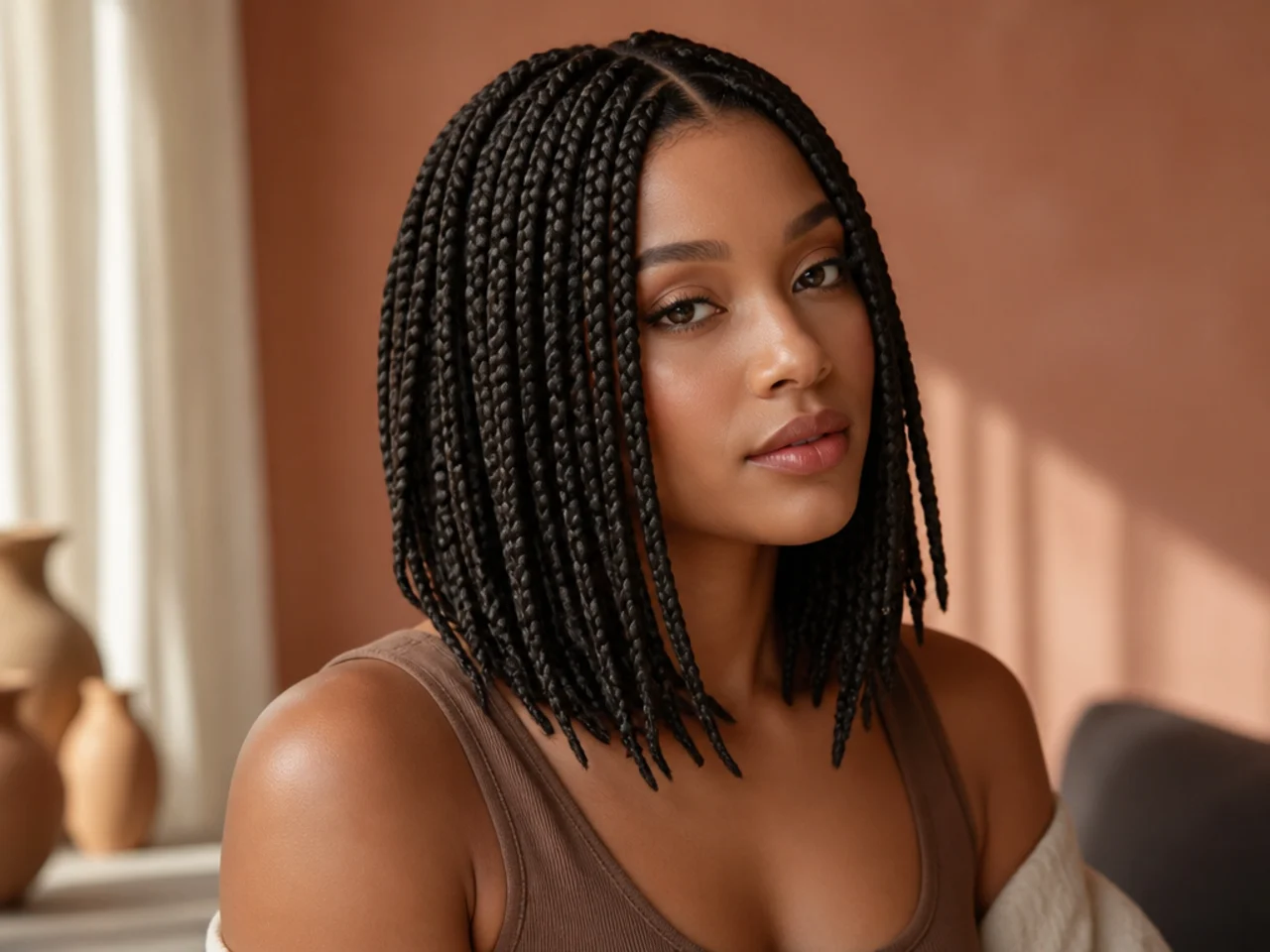
5. A-Line Medium Bob
Shorter at the nape, longer at the front, graduated between. An A-line needs the graduation to run front to back rather than side to side, so say which direction you mean.
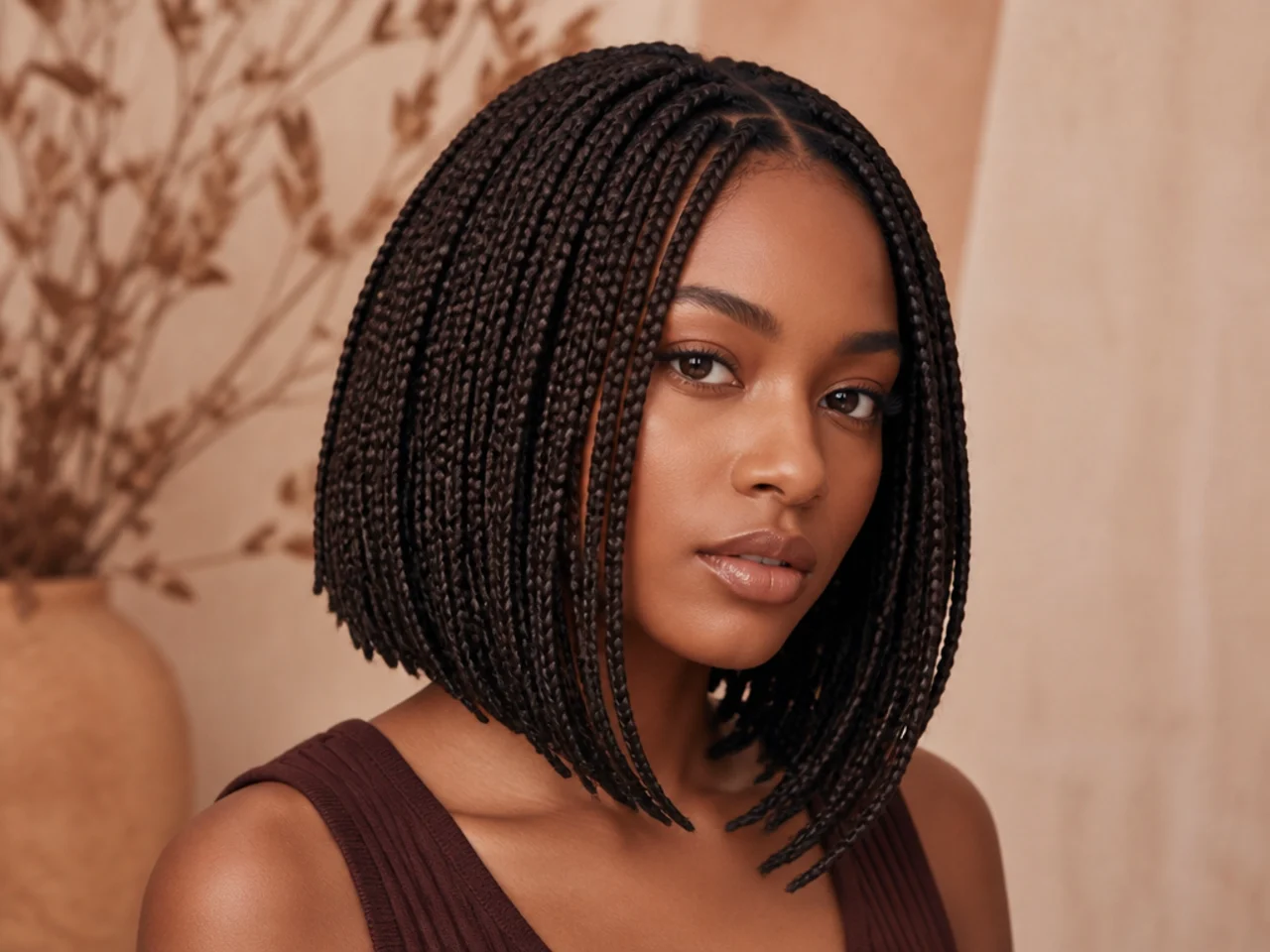
6. Centre-Parted Medium Bob
Symmetry, with the grid disappearing into the density. Both halves are on show at once with a centre part, which makes it the layout that most rewards an even install.
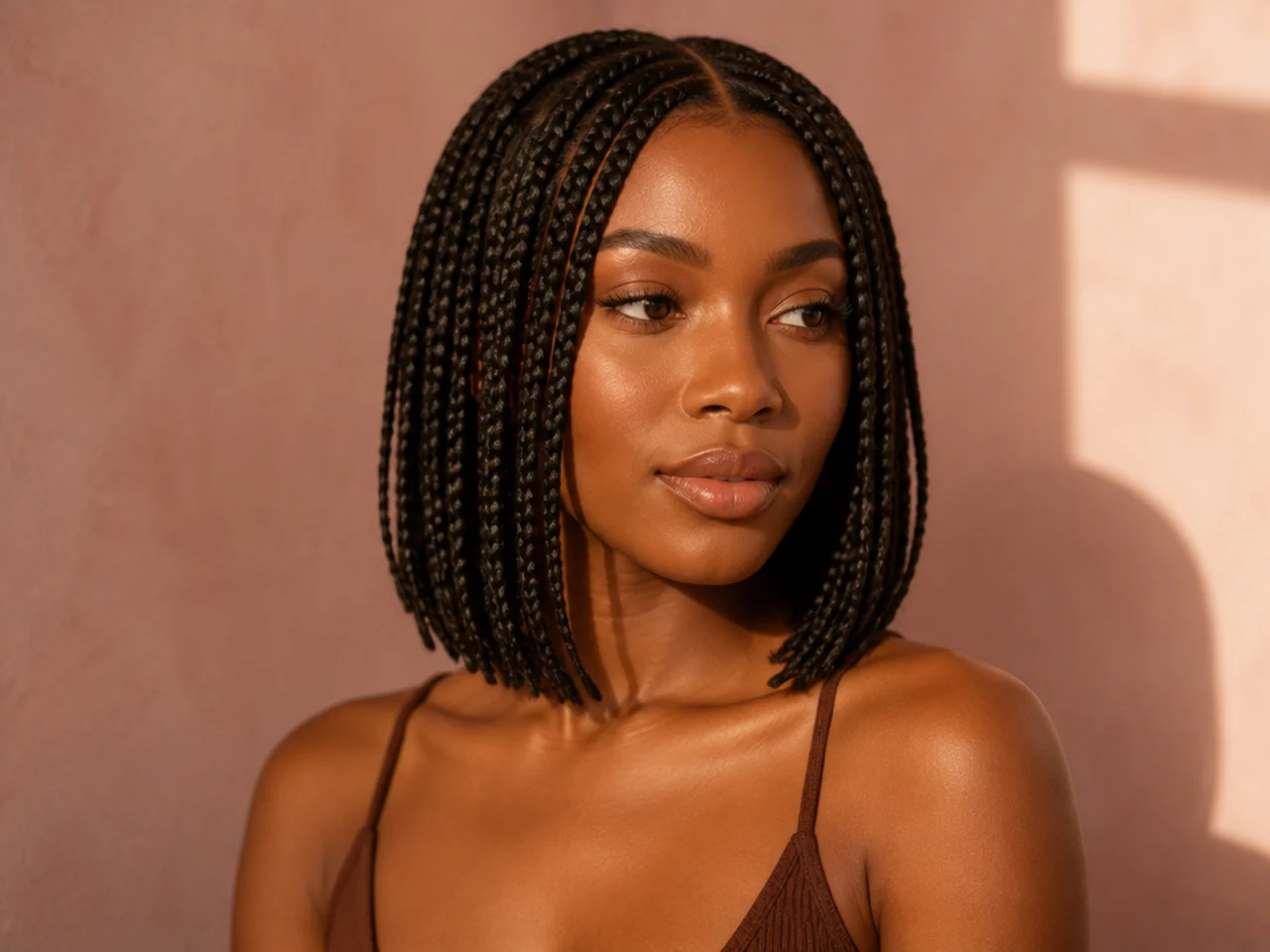
7. Deep Side-Parted Medium Bob
One side sweeping across. Fuller than the same part at a larger size. More braids on the heavy side means more of them catching the light, which is what makes a medium sweep look dense rather than sparse.
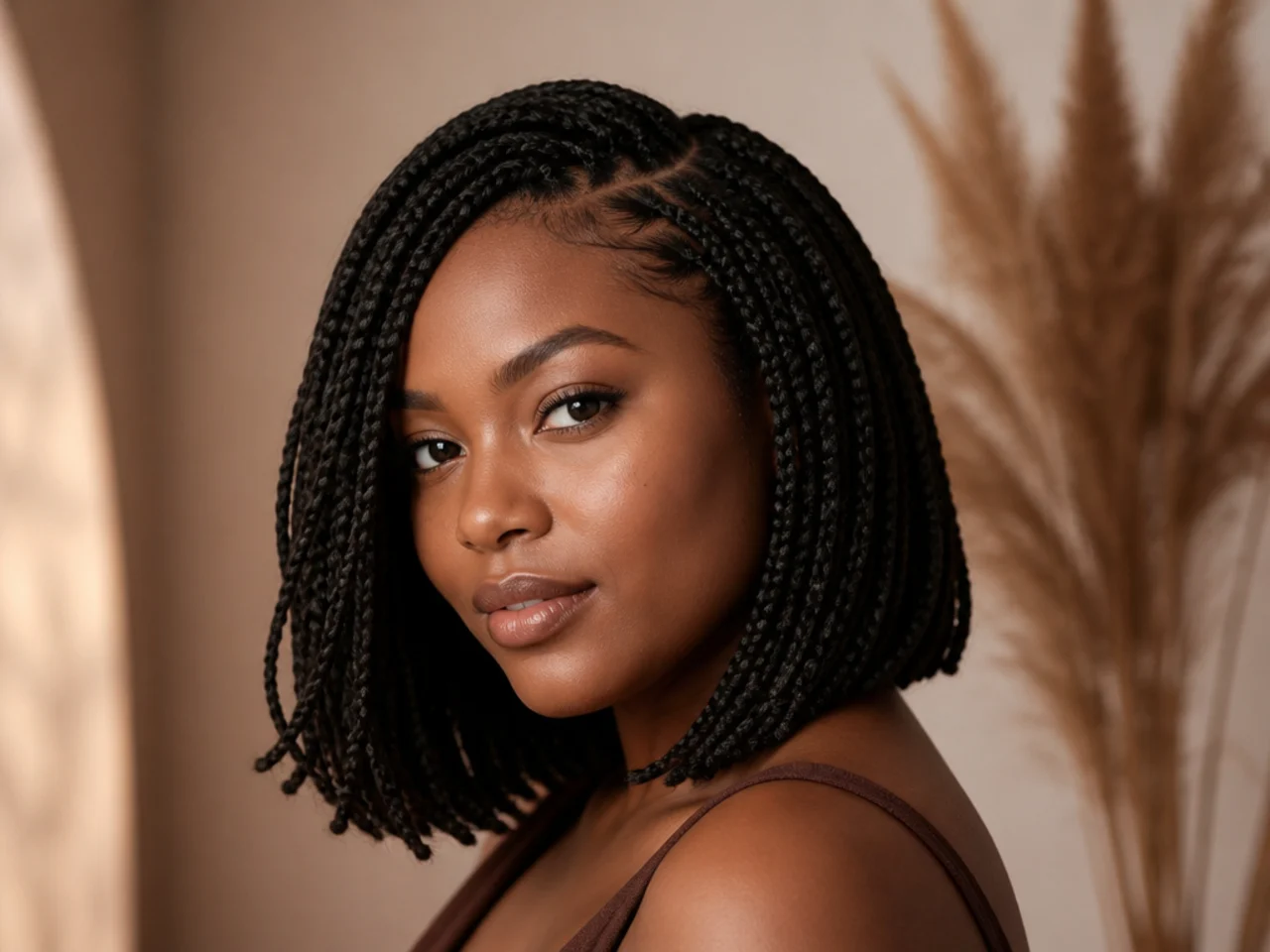
8. Medium Bob with a Face Frame
Shorter pieces at the front, graduated into the rest. Graduate the front pieces into the perimeter rather than cutting them as a separate length, or they read as a step.
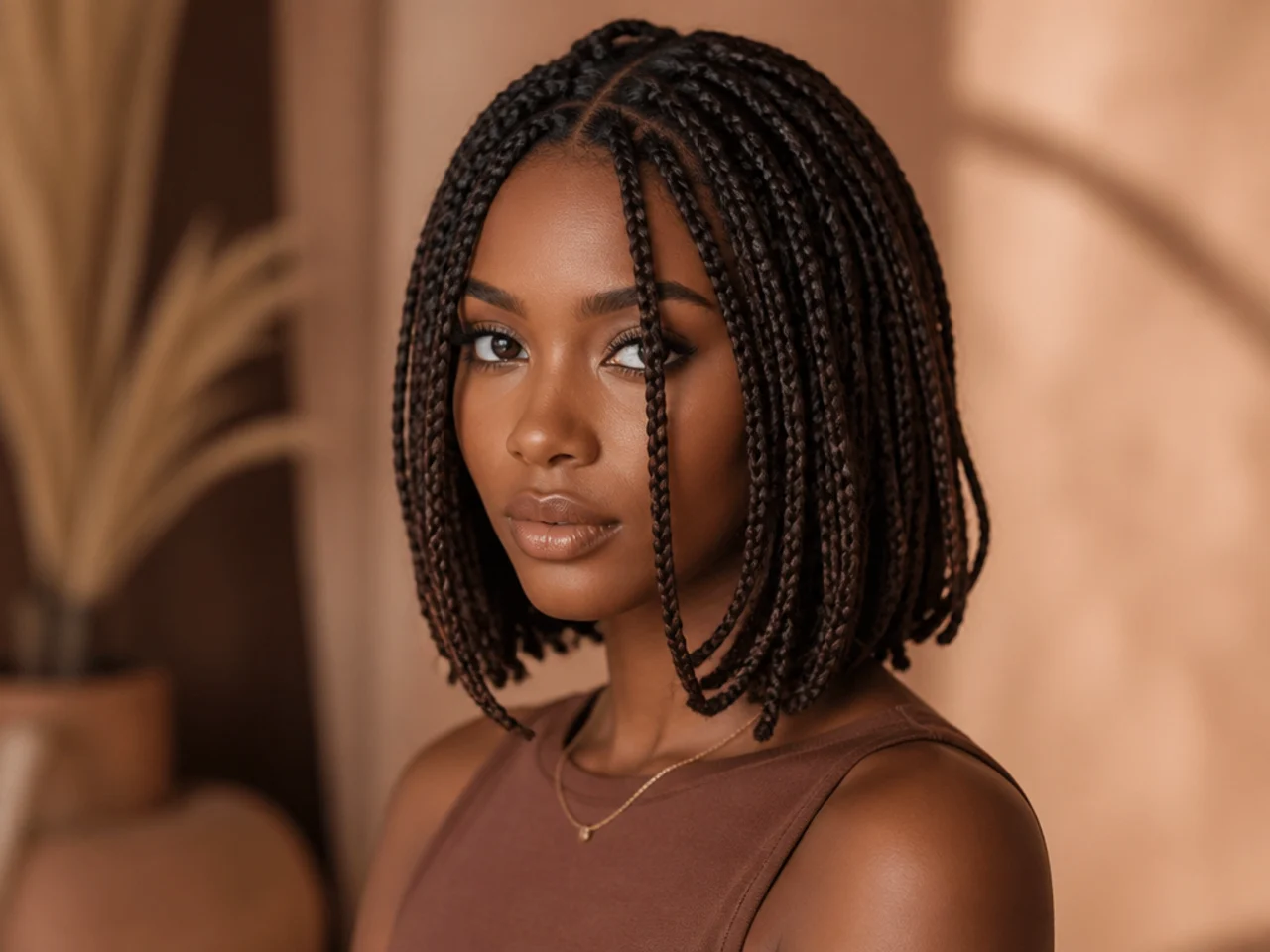
9. Medium Bob with Curled Ends
Curl on the perimeter, which at this density reads as real movement. Enough curled ends close together fill out into a mass, where a handful on a wider set reads as individual curled tails.
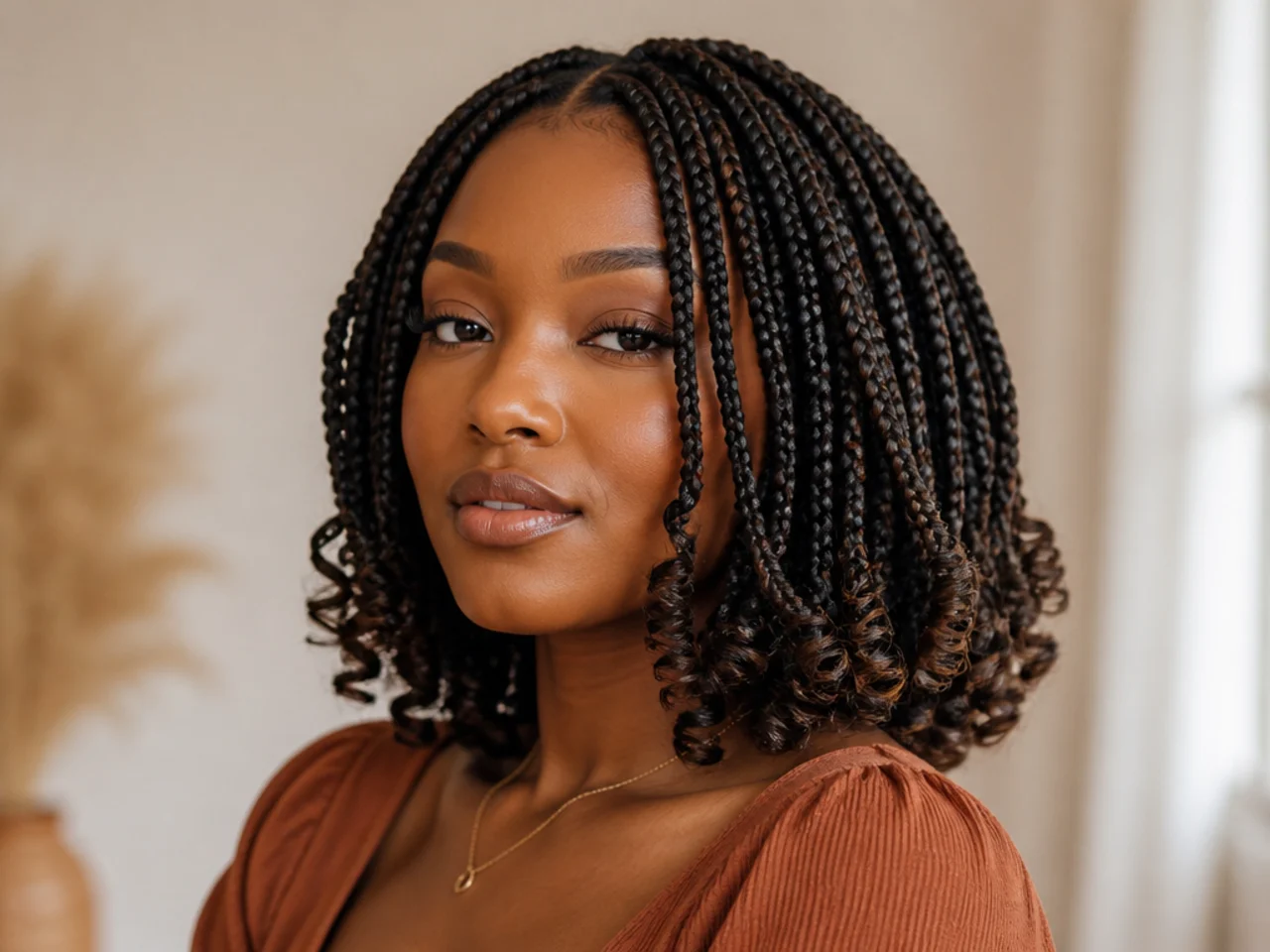
10. Honey Blonde Medium Bob
Warm colour that blends rather than stripes at this braid count. The eye stops resolving individual braids at this width, which is exactly what turns scattered colour into a tone.
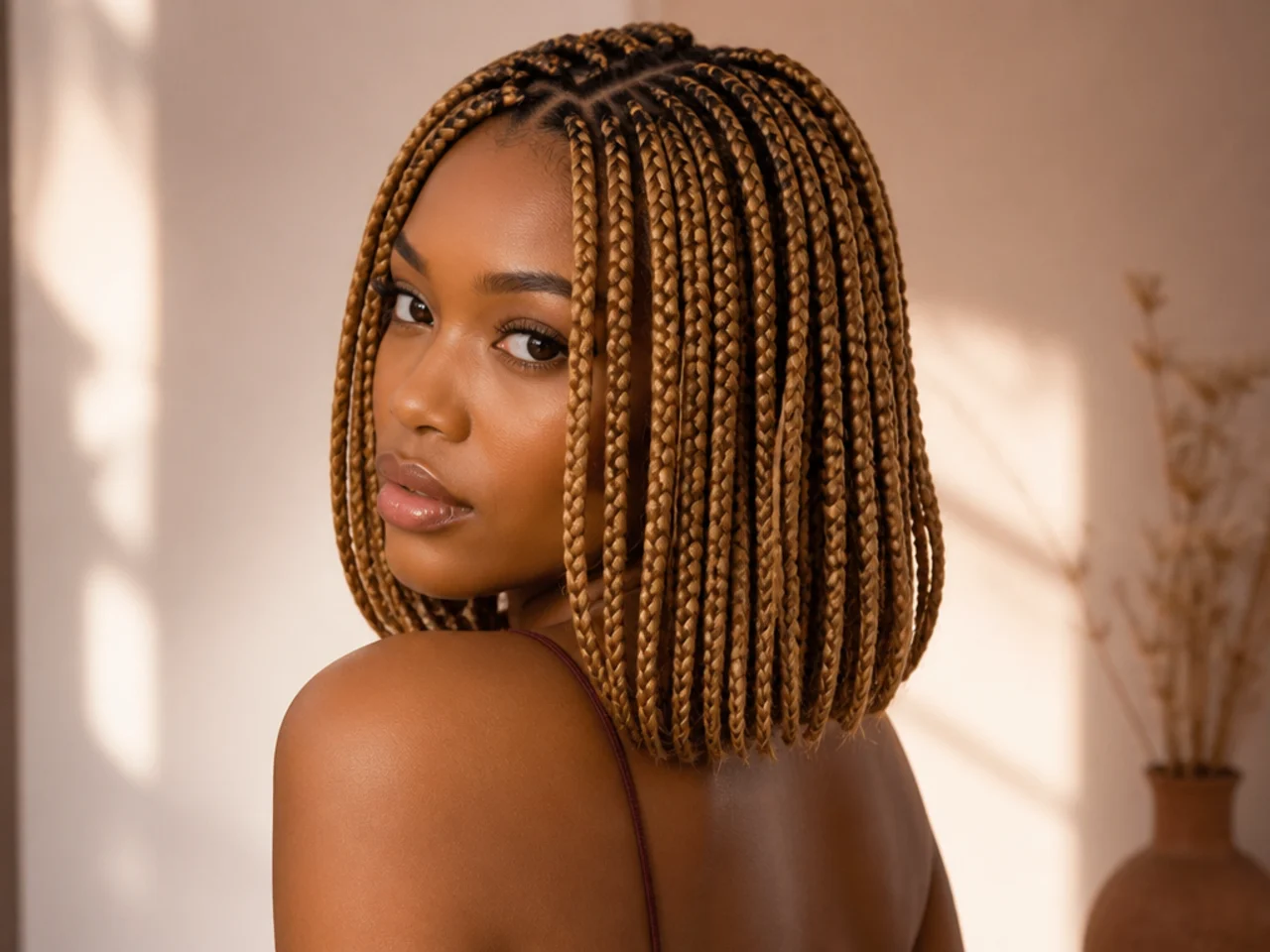
11. Highlighted Medium Bob
Lighter braids scattered through. A real highlight effect on a short shape. A bob has less length for the highlight to travel down, so the effect is concentrated where people actually look.
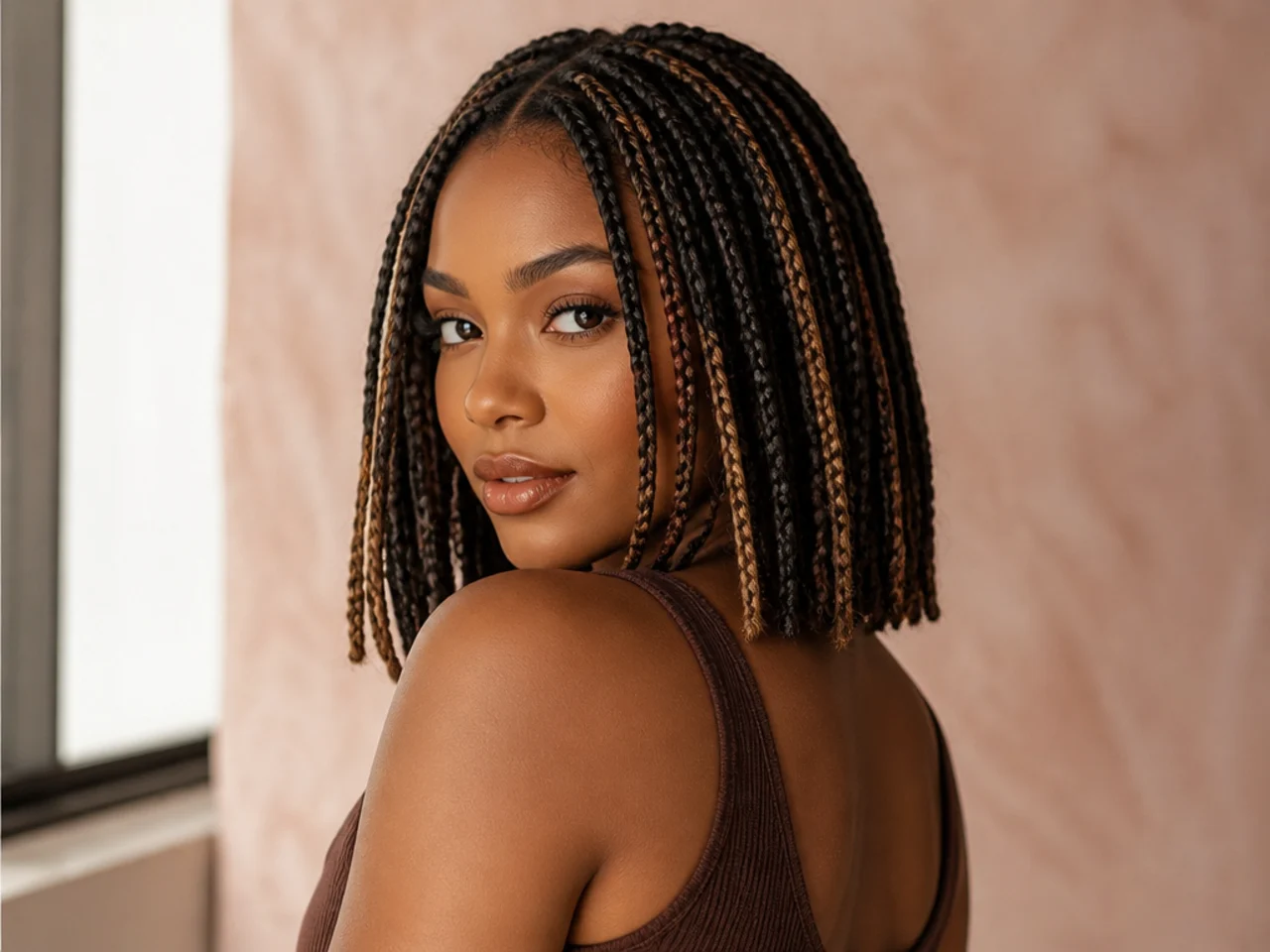
12. Burgundy Medium Bob
Deep red across a soft perimeter. Burgundy is dark enough that the graduated edge still reads clearly rather than getting lost in the colour.
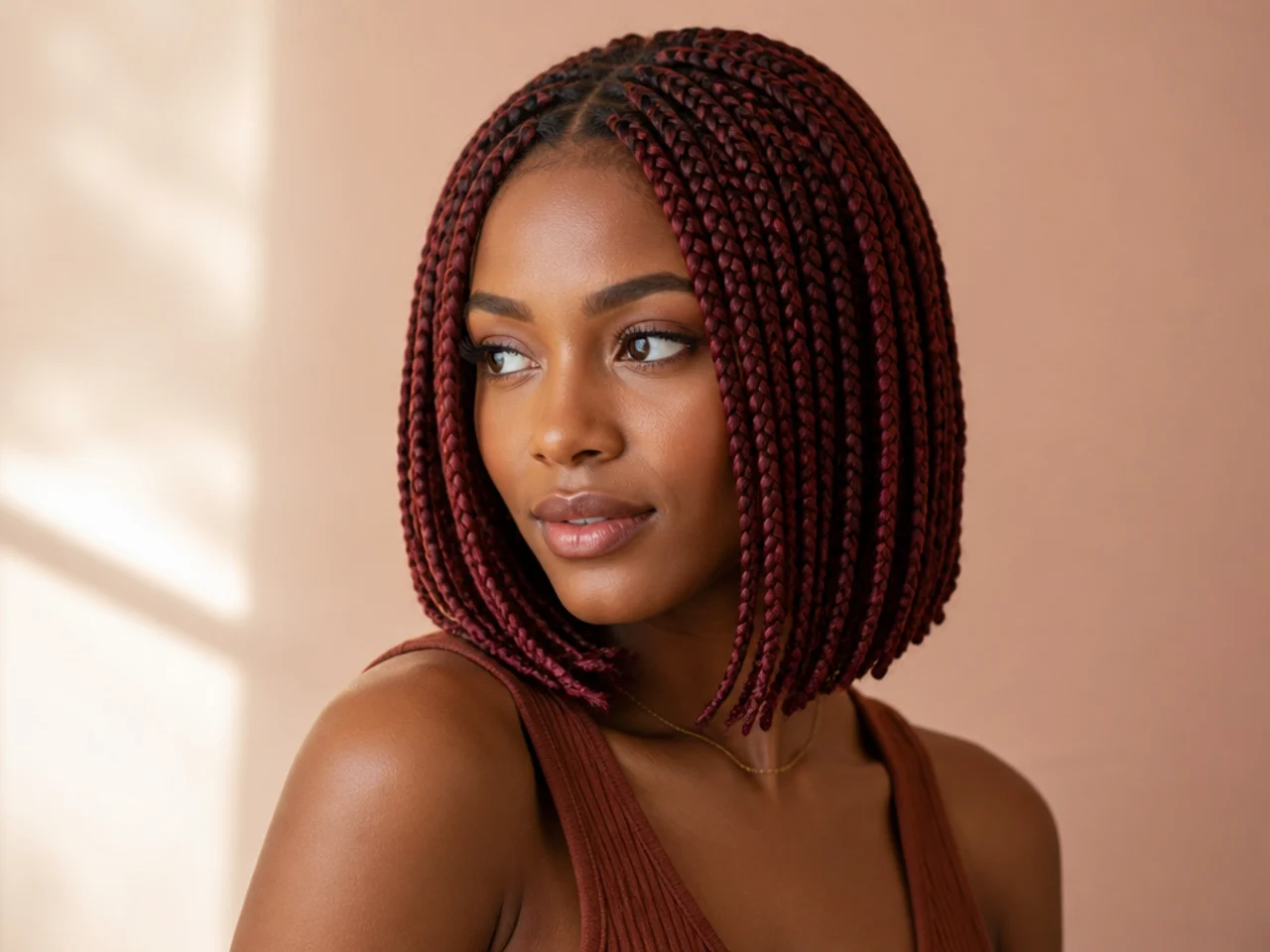
13. Ombré Medium Bob
Dark at the root, lighter at the perimeter. Short, so the fade is compressed. A compressed fade is a steeper gradient, so ask for the transition to start higher than you would on a long set.
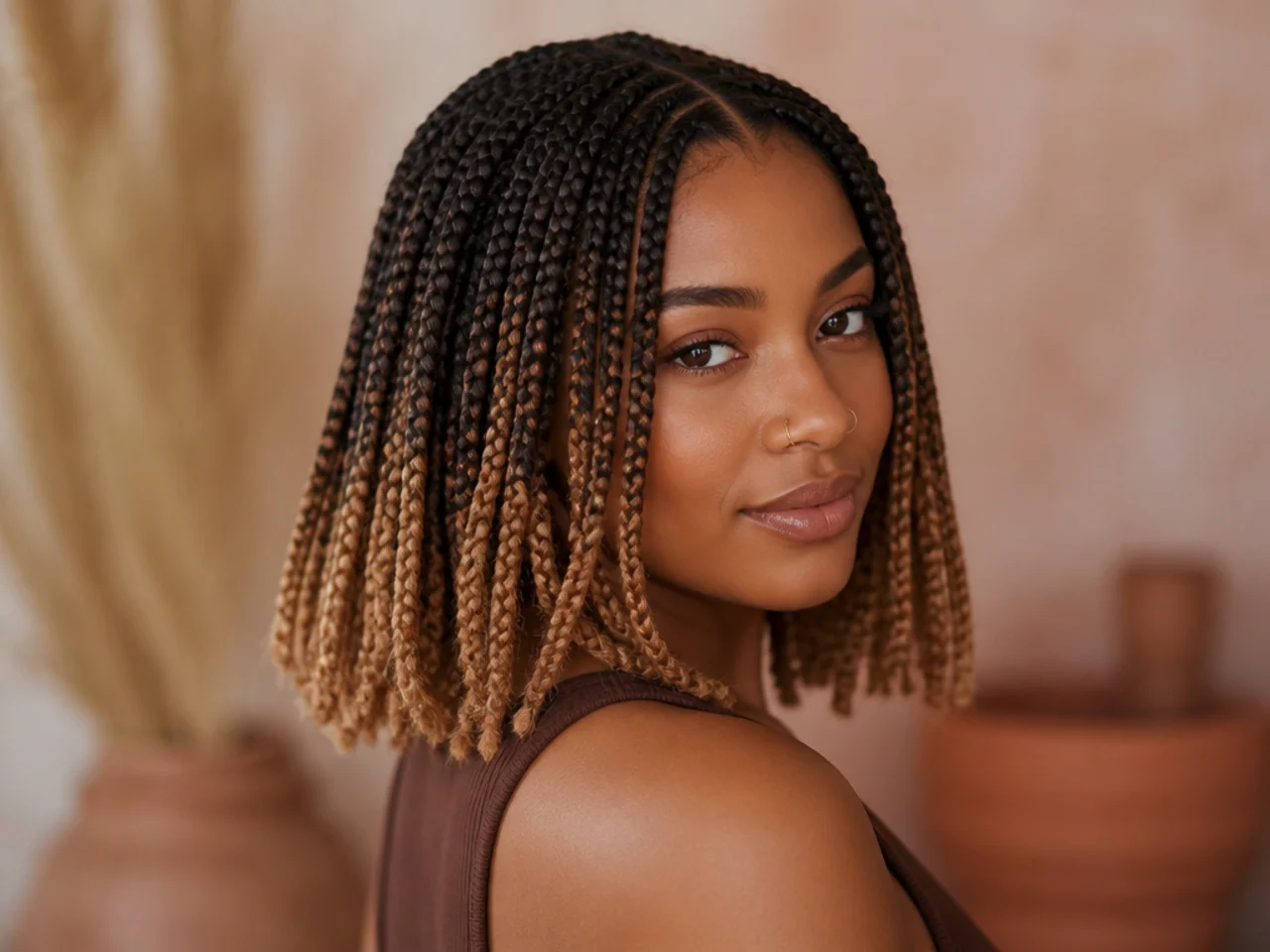
14. Medium Bob with a Curved Grid
Curved partings under a graduated line. Curved partings and a graduated perimeter are both soft shapes, which is why they suit each other.
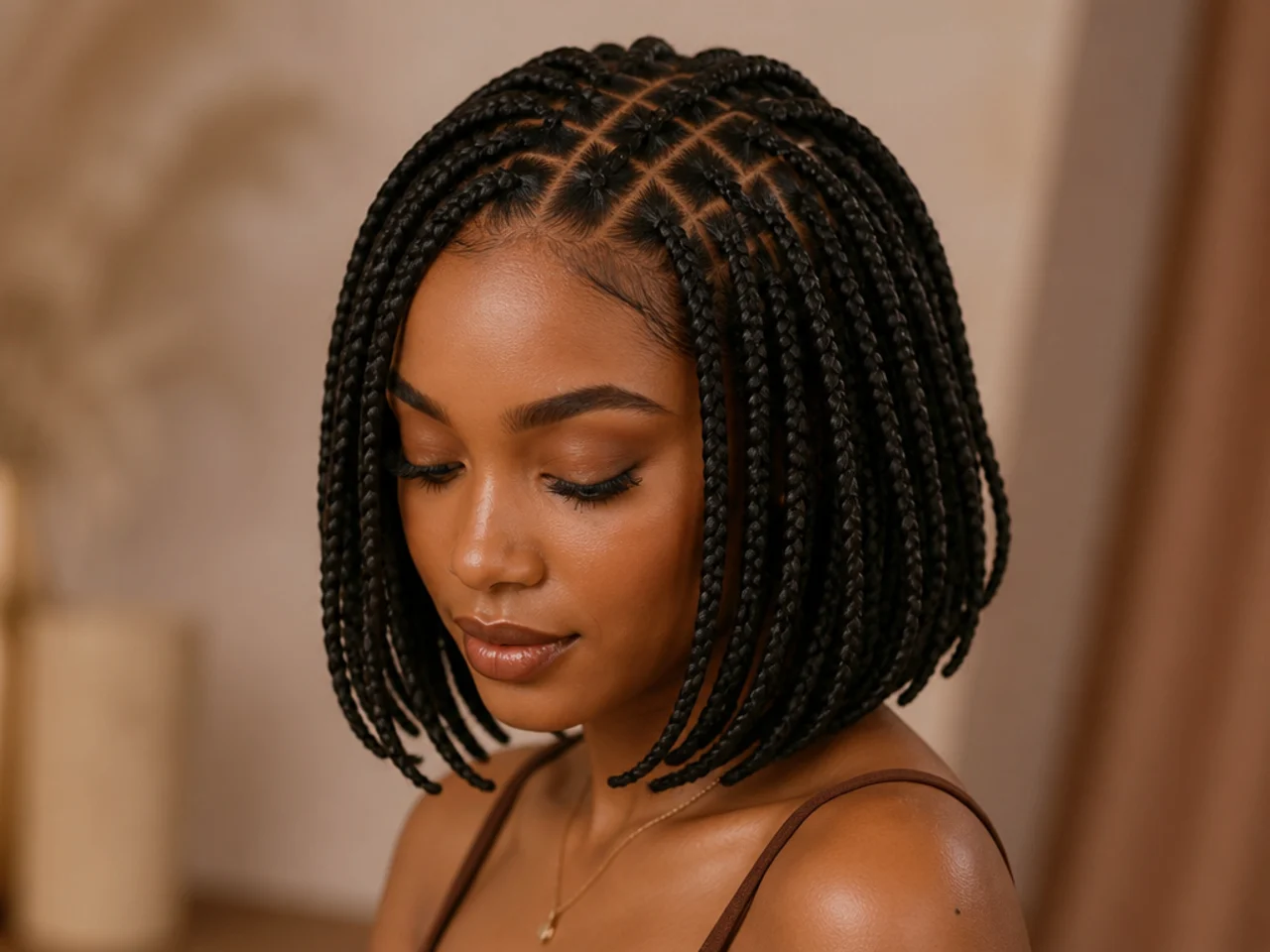
15. Medium Bob with Beads
Standard beads fit at this width, and a bob keeps them high and light. Less braid hangs below each bead on a bob, so there is far less leverage pulling at the root.
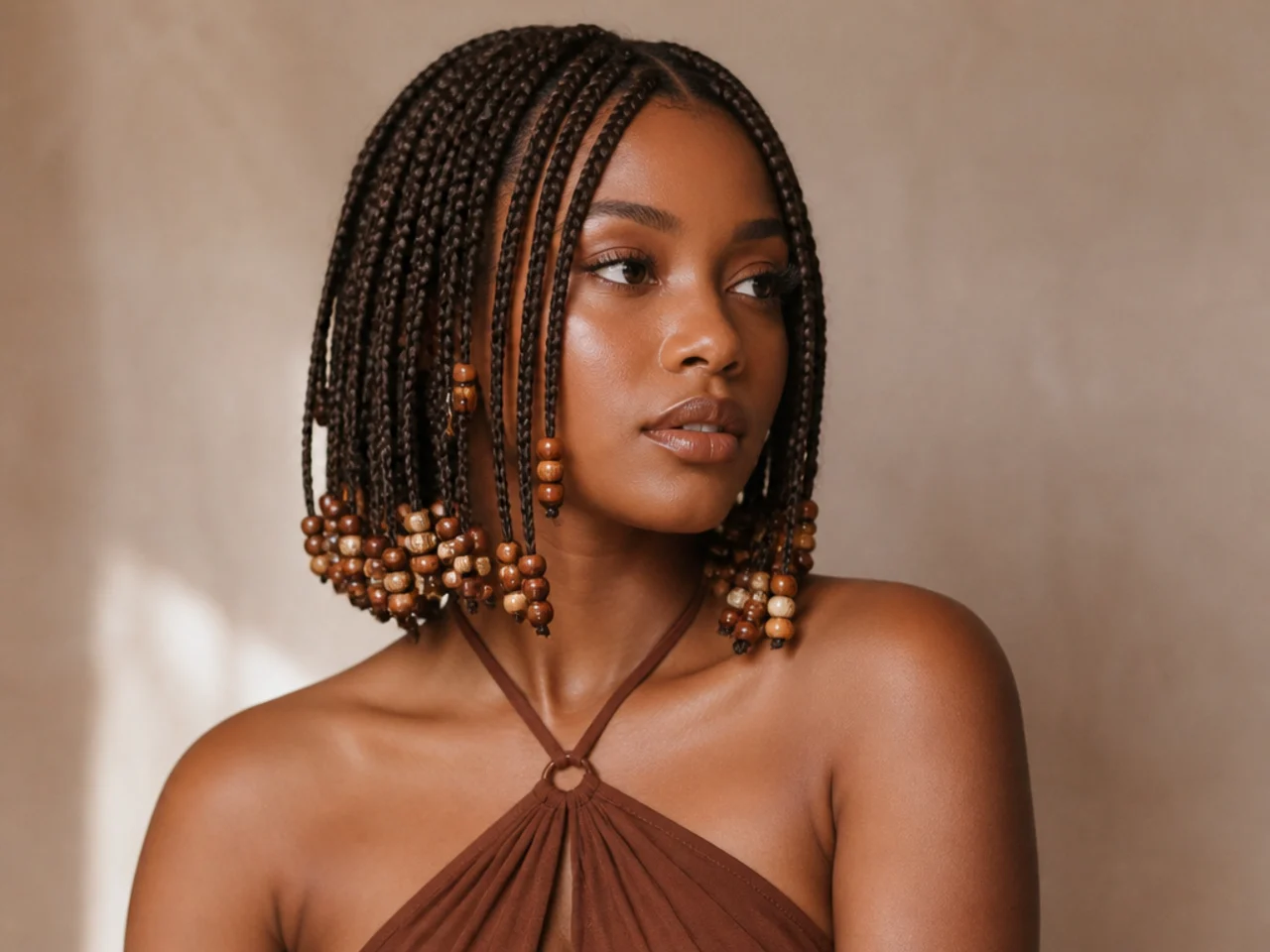
16. Medium Bob with Gold Cuffs
Cuffs scattered across a short shape, where they stay visible. On a long set cuffs disappear into the mass; on a bob they sit at eye level and stay on show.
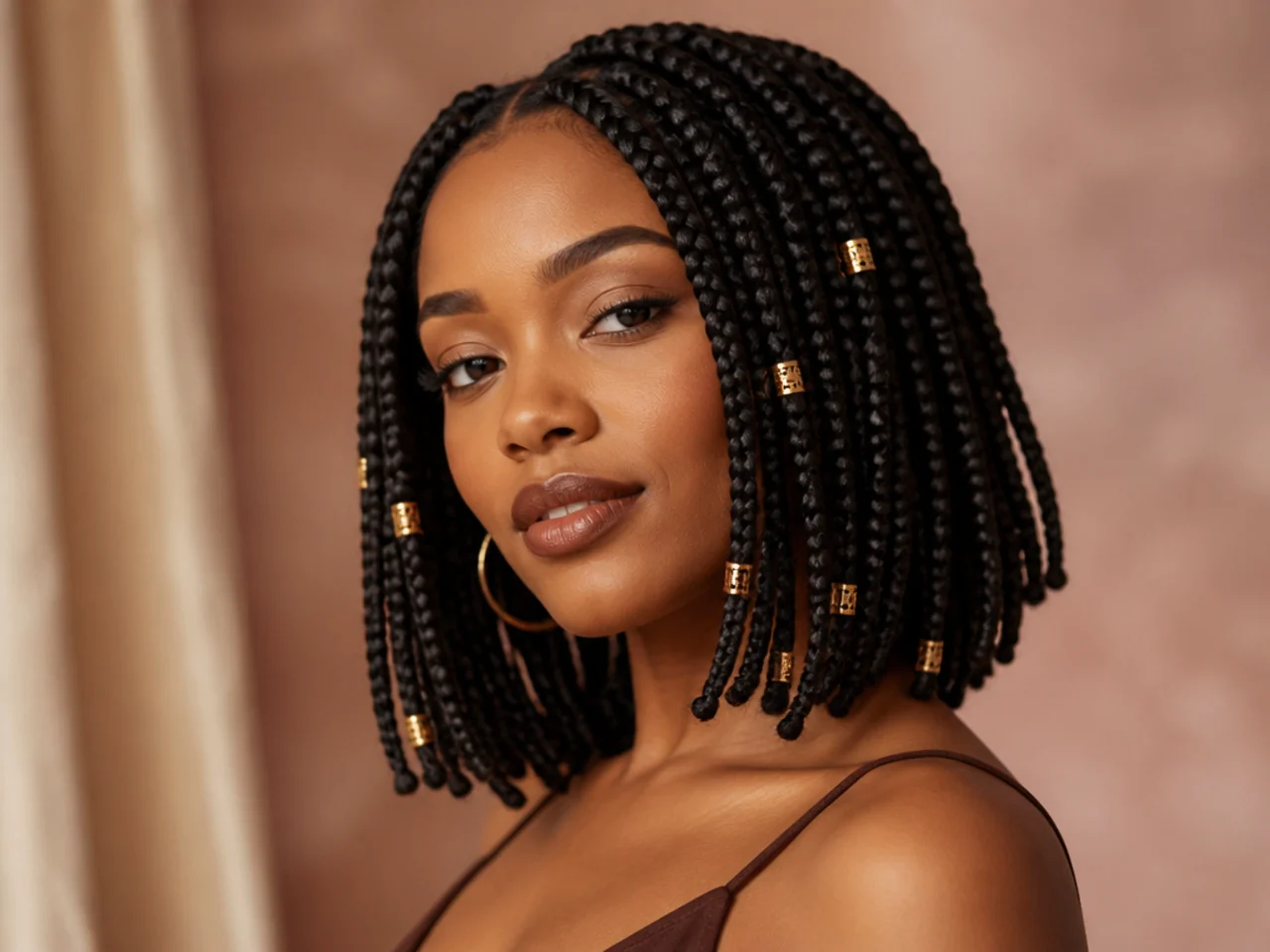
17. Half-Up Medium Bob
Just enough length to gather at the crown. The gather is small, so the tie barely has to close, which makes it the lightest half up in the silo.
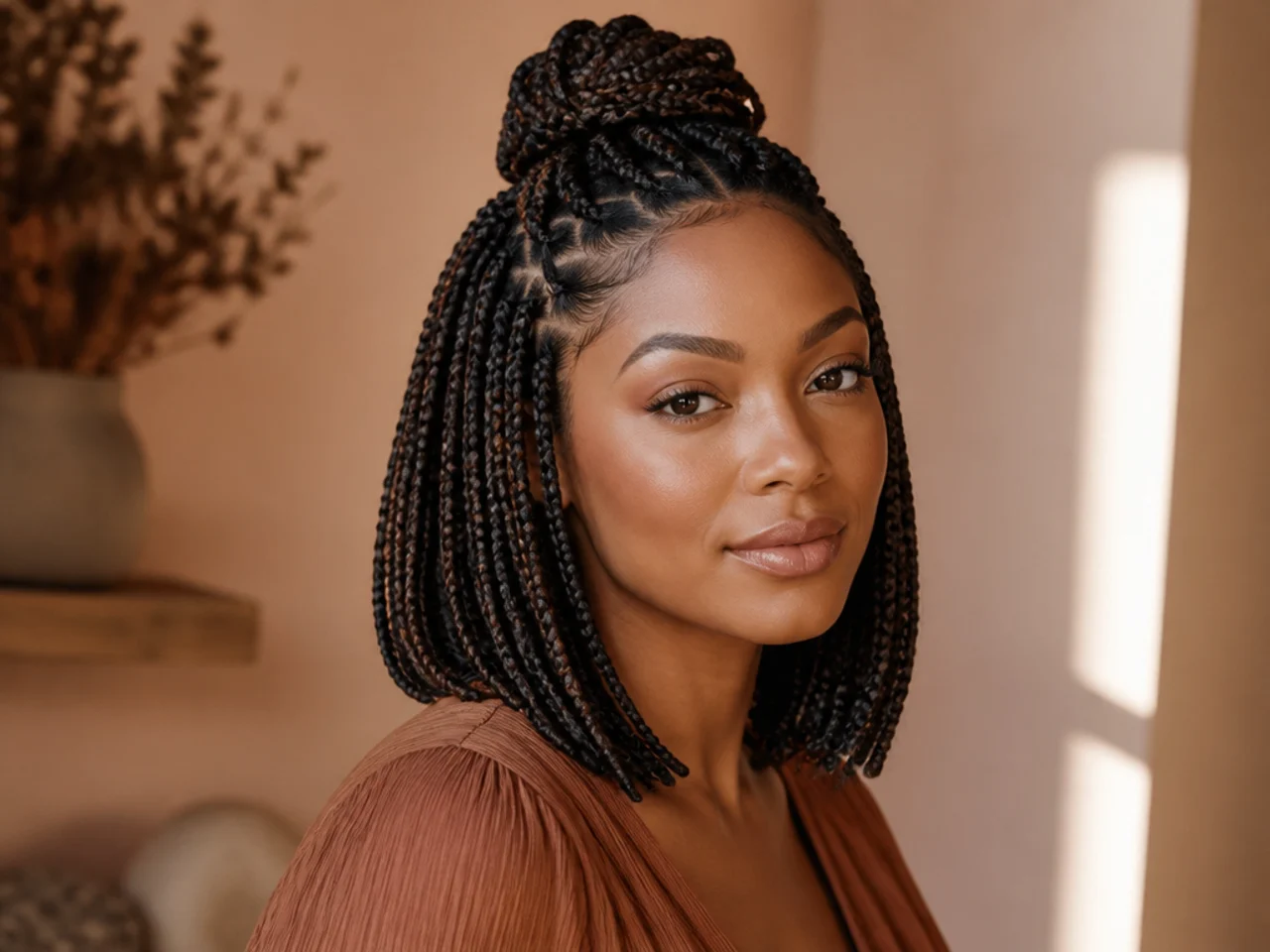
18. Medium Bob Tucked Behind One Ear
Instant asymmetry with nothing cut. A bob is short enough to stay tucked, where a longer set works its way back out within the hour.
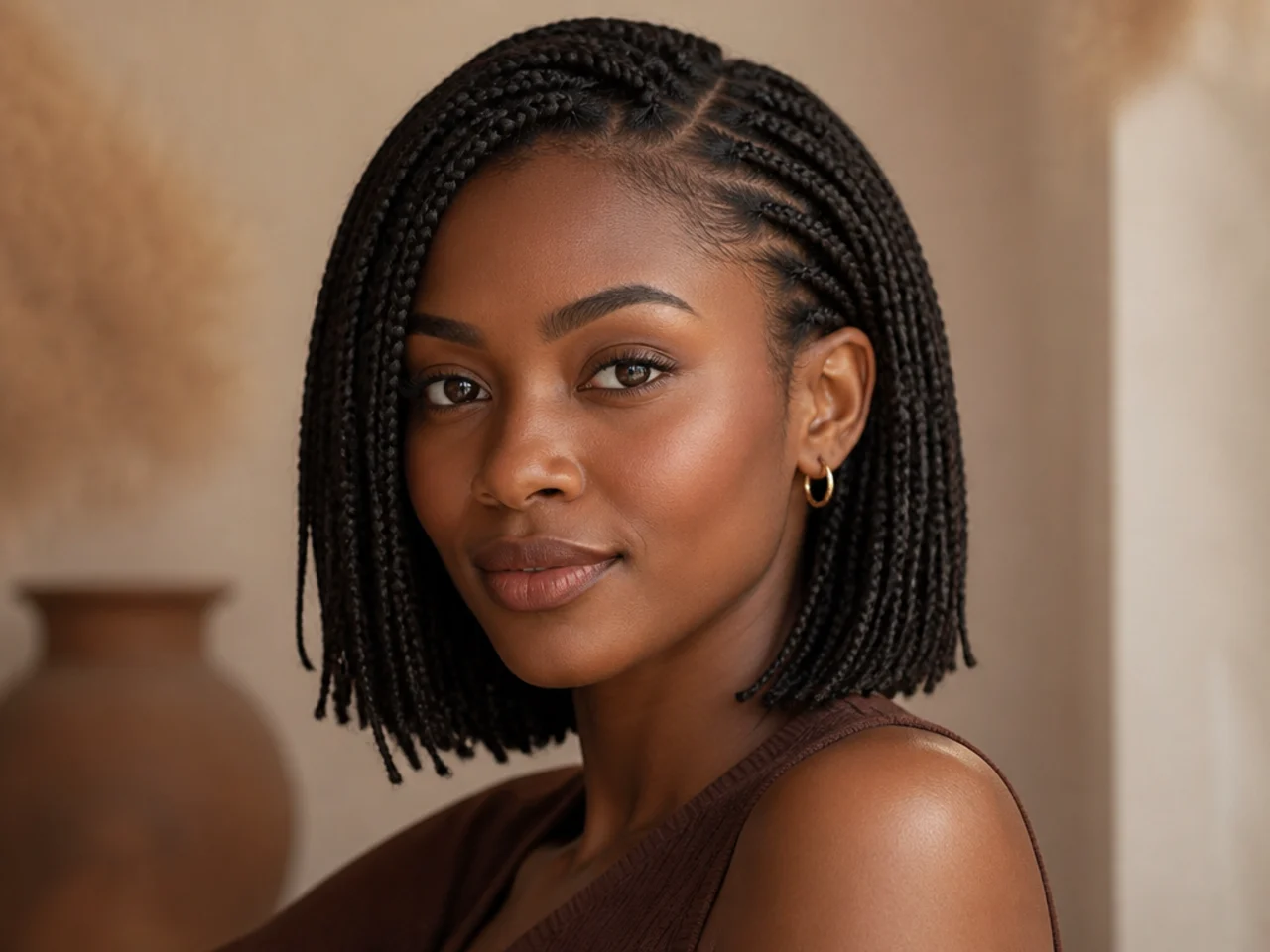
19. Medium Bob on Fine Natural Hair
The gentlest configuration available anywhere in this silo. Shortest length and highest braid count together means the least weight on each individual root.
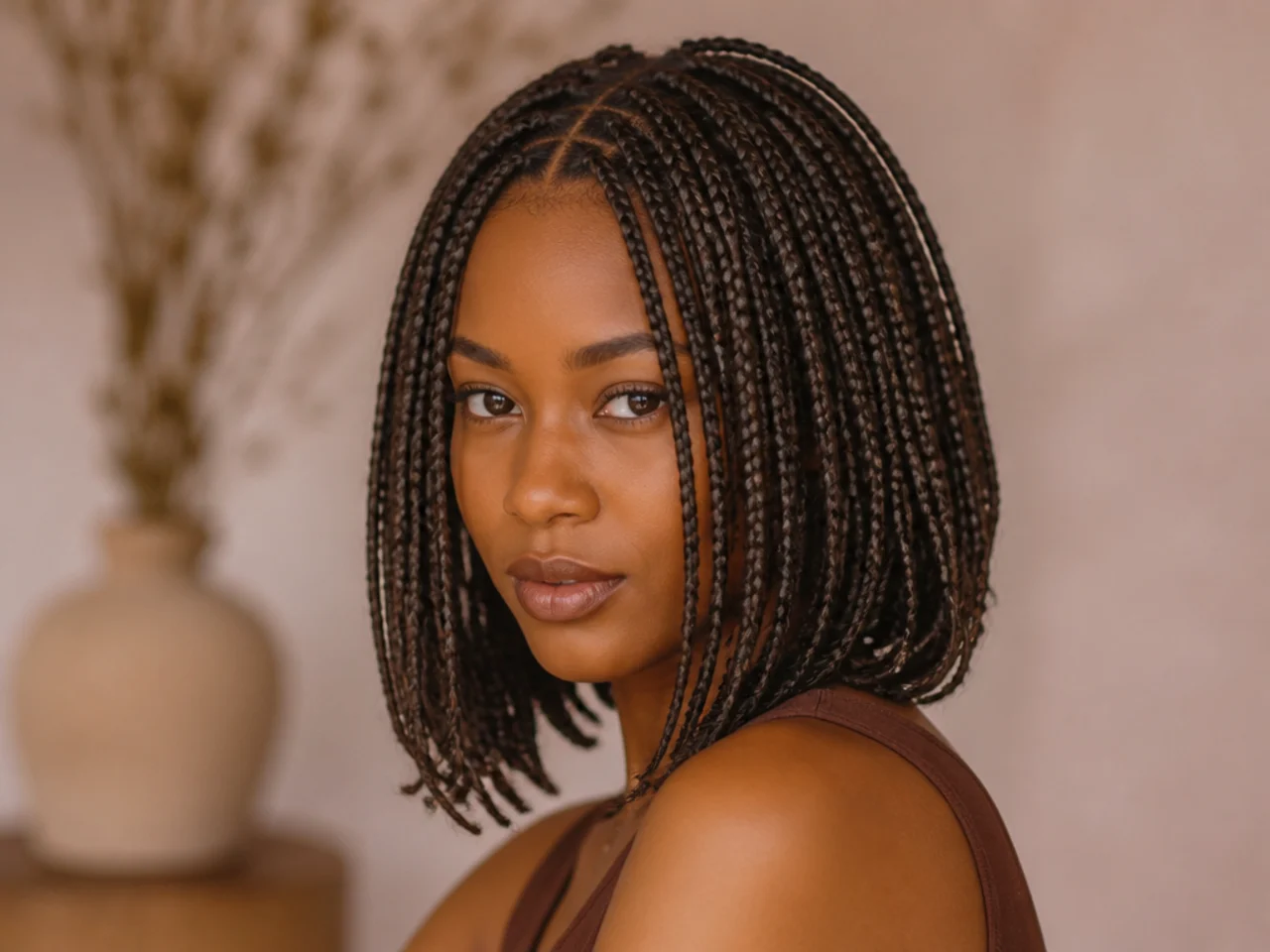
20. Medium Bob at Week Six
Shape holding, roots shifted. The stage worth seeing first. A bob holds its outline long after the roots have moved, which is what makes it easy to overstay.
Styling and Upkeep
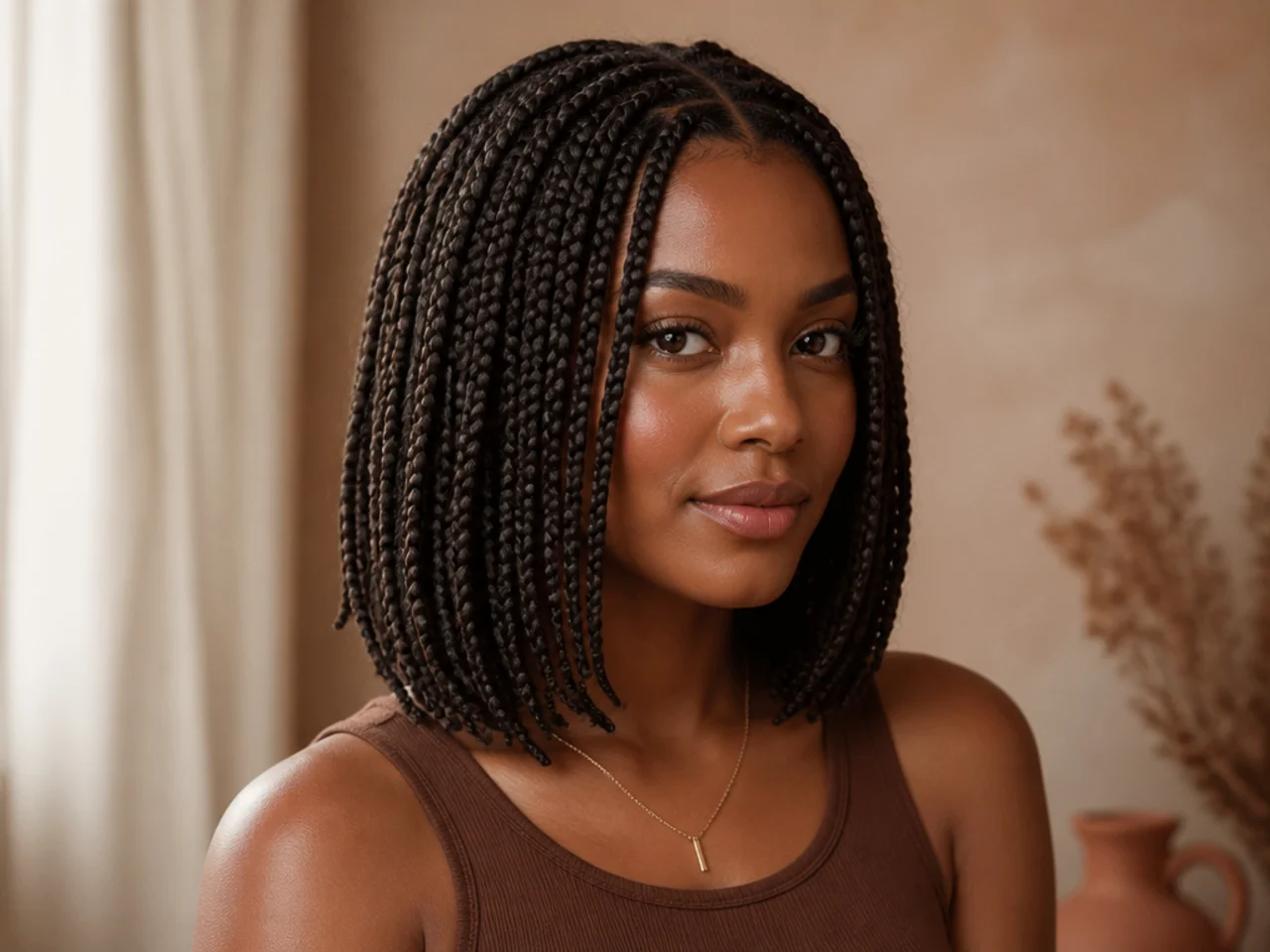
Check the perimeter weekly. One unravelled braid is visible on any bob, and it climbs if left.
Wash freely. A bob dries in a fraction of the time a long medium set does, which removes the main reason to stretch washes at this density.
Bonnet rather than gather at night. There is not enough length to tie without creating tension.
Keep the graduation in mind when trimming. Tidying the perimeter with straight scissors flattens a graduated bob back into a blunt one.
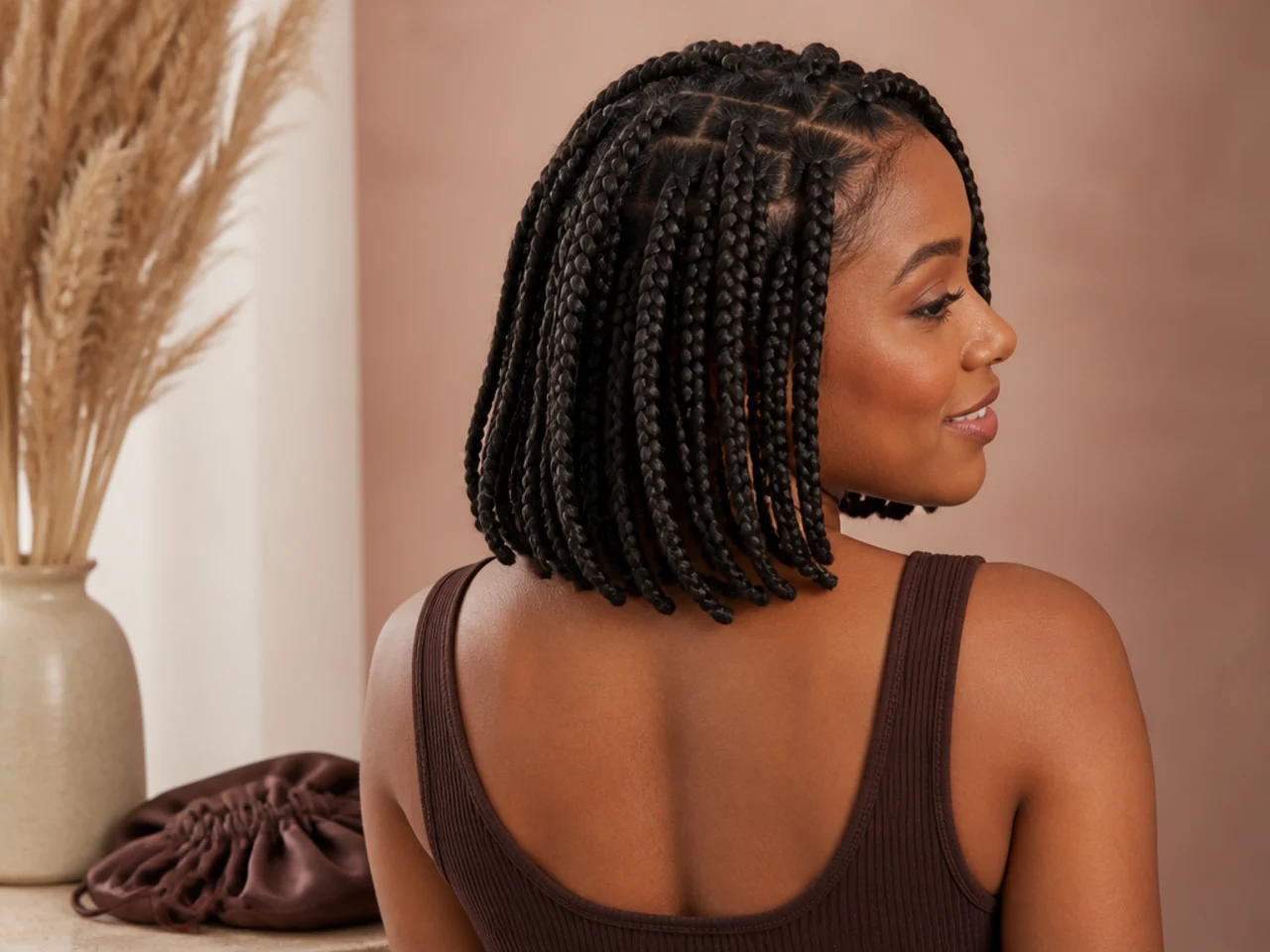
Eight weeks still applies. A bob holds its shape long after the roots have moved, which makes it easy to overstay.
Mistakes to Avoid
Asking for "layers". Ask for a graduation across the set — the words produce different cuts.
Trimming a graduated bob straight across. It undoes the shape in one pass.
Choosing the line in inches. Choose it against your jaw, standing, with braids in.
Leaving one end unsealed. On a bob perimeter it shows from across a room.
Wearing it past eight weeks because the shape still looks good. It will.
FAQ
Can it be layered? Effectively yes at this density — the steps become small enough to read as a blend.
What length? Chin is sharpest, jaw most wearable. Place it against your own jaw.
Is it lighter? The lightest configuration in the silo — shortest length, lowest weight per root.
Final Thoughts
If you have wanted a braid bob but not the hard architectural line that usually comes with one, this is the size that gives you the alternative. Ask for a graduation rather than layers, place the line standing, and it will behave more like a haircut than any other set of braids you wear.
For the length below the jaw see 20 shoulder length knotless braids ideas, and for the full range see 25 medium knotless braids ideas. More in Braids & Protective Styles.
Frequently asked questions
Related posts
See all posts
20 Waterfall Mermaid Braid Ideas That Hold
Read more
15 Side Mermaid Braid Ideas That Sit Right
Read more
20 Side Part Medium Knotless Braids I Saved
Read more