
20 Hoco Curly Hair Ideas That Beat Humidity
Twenty prep and technique ideas for curly homecoming hair — the wash-day timing, the gel cast, the diffusing method and the humidity plan that decide whether your curl survives a packed dance floor.
In this article · 30
- The Humidity Problem
- Wash Day and Timing
- 1. Wash Two Days Before
- 2. Deep Condition Four Days Out
- 3. Clarify a Week Before
- 4. Skip Protein the Week Of
- Applying Product
- 5. Apply to Soaking-Wet Hair
- 6. Rake, Then Scrunch
- 7. Use More Gel Than Feels Right
- 8. Layer Cream Under Gel
- 9. Add an Anti-Humidity Serum
- Drying
- 10. Diffuse on Low Heat, High Speed
- 11. Hover, Do Not Move the Diffuser
- 12. Dry to Completely Dry
- 13. Crack the Cast Only When Dry
- 14. Add Oil Over the Broken Cast
- Overnight and On the Night
- 15. Pineapple It Overnight
- 16. Sleep on Silk, Never Cotton
- 17. Refresh with Water, Not Product
- 18. Carry a Travel Mist and One Clip
- 19. Do Not Touch It All Night
- 20. Step Outside When It Lifts
- The Short Version
- If It Lifts Anyway
- Mistakes to Avoid
- FAQ
- Final Thoughts
Curl fails at homecoming for one reason, and it is almost never the style. It is a packed room, four hundred bodies, and humidity that undoes an afternoon's work by the second song.
The style you chose is largely irrelevant to whether that happens. What decides it is what you did in the three days before, and specifically whether the hair was sealed before you walked through the door.
The Humidity Problem
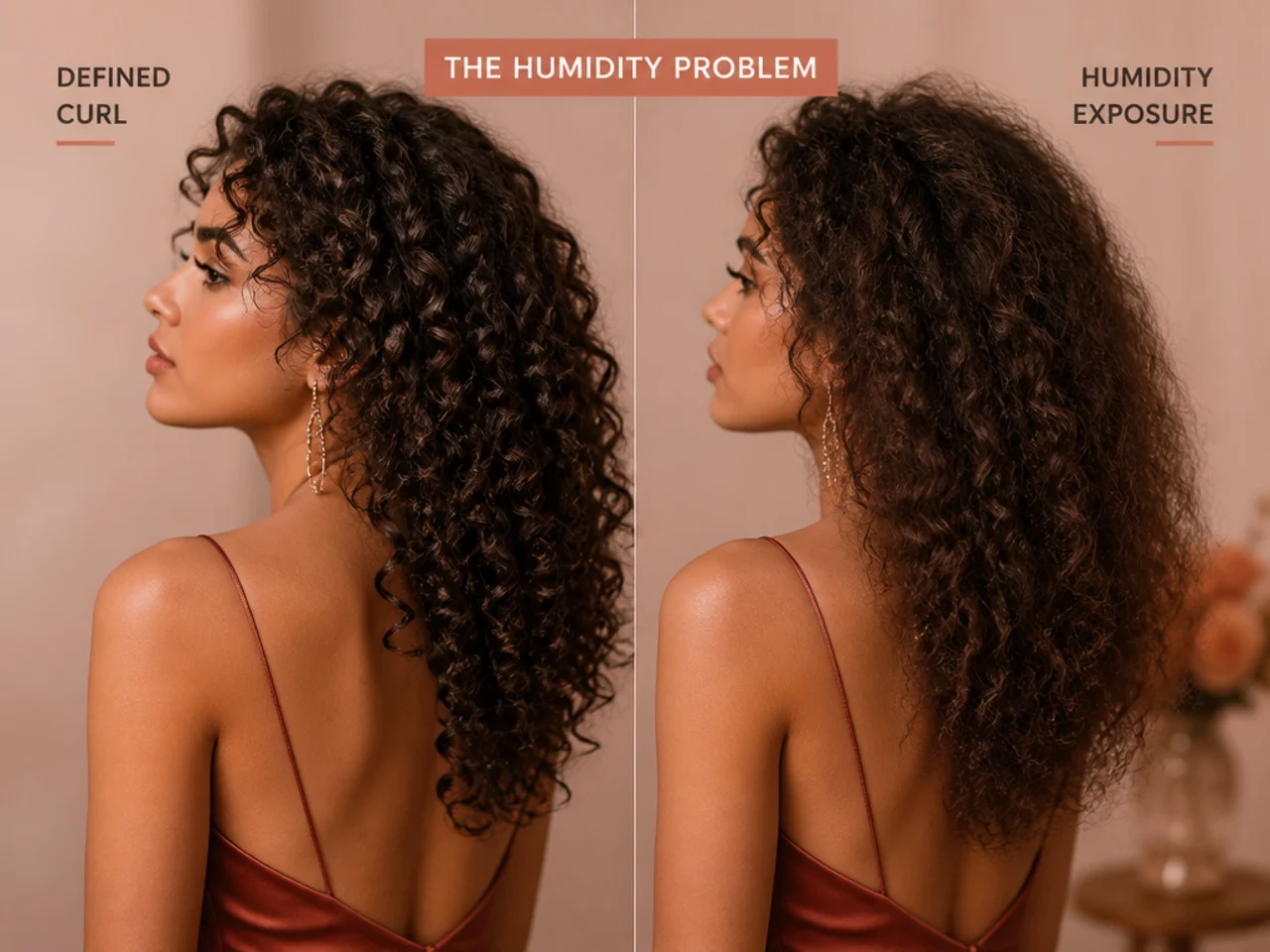
Hair is porous, and in a humid room it absorbs moisture from the air and swells. As each strand swells it lifts the cuticle, the curl clumps separate, and definition that was crisp at seven o'clock has blurred into a halo by nine.
Curly hair is more vulnerable to this than straight hair for a structural reason: the cuticle on a curved strand never lies as flat as it does on a straight one, so there are more openings for moisture to get in. This is also why curly hair is drier as a rule — the same openings let moisture out.
You cannot lower the humidity in a school gym with four hundred people in it. What you can do is seal the hair before you walk into the room, and that is what every step below is doing.
Wash Day and Timing
1. Wash Two Days Before
Not the night before. Curl needs a day to settle into its pattern, and day-two curl grips a pin far better than freshly washed hair.
2. Deep Condition Four Days Out
Late enough that the hair still feels soft on the night, early enough that it is no longer slippery. A mask the day before makes everything slide.
3. Clarify a Week Before
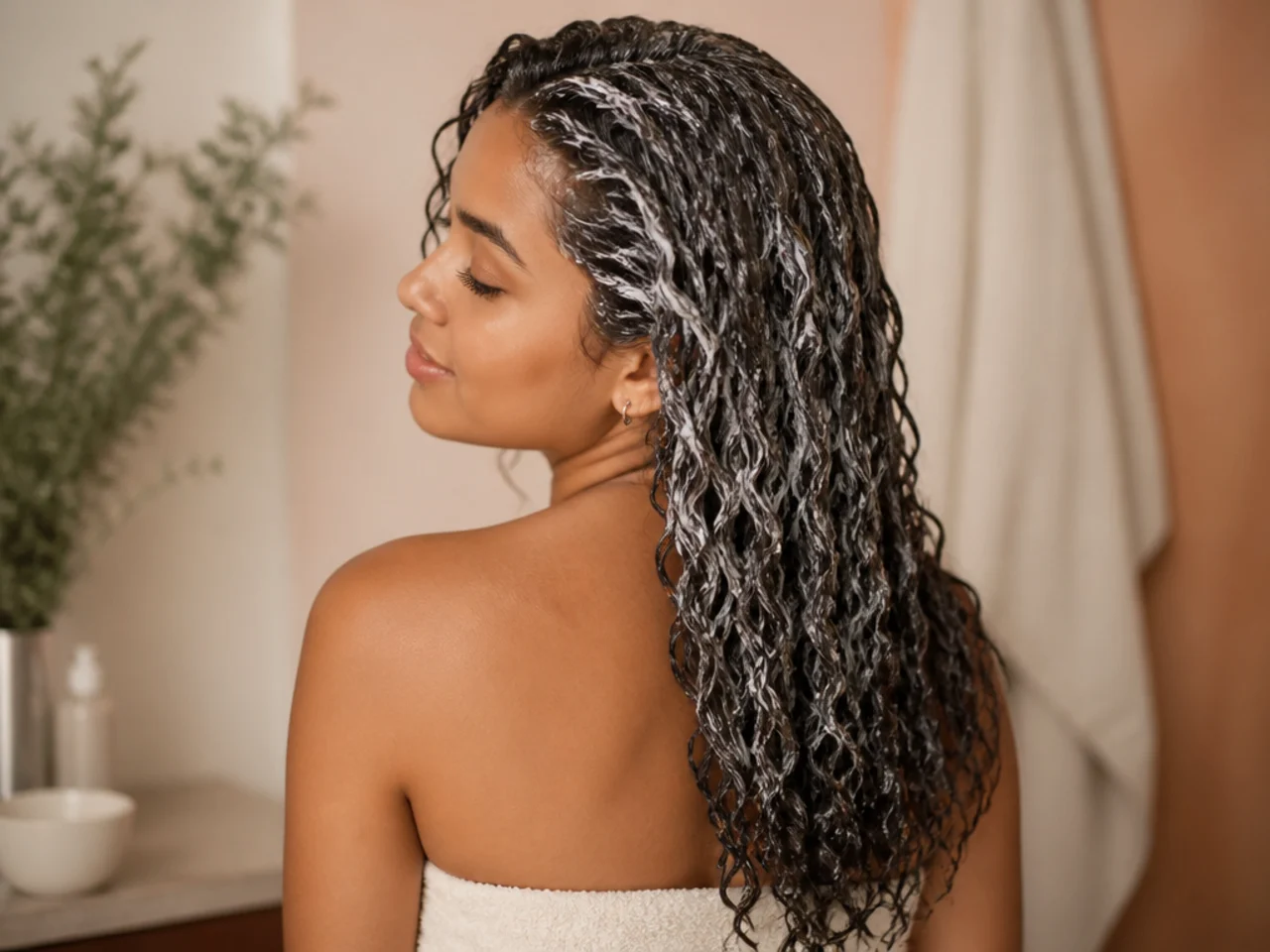
Product build-up sits on the surface and stops anything new from working properly. Strip it a week out, then rebuild.

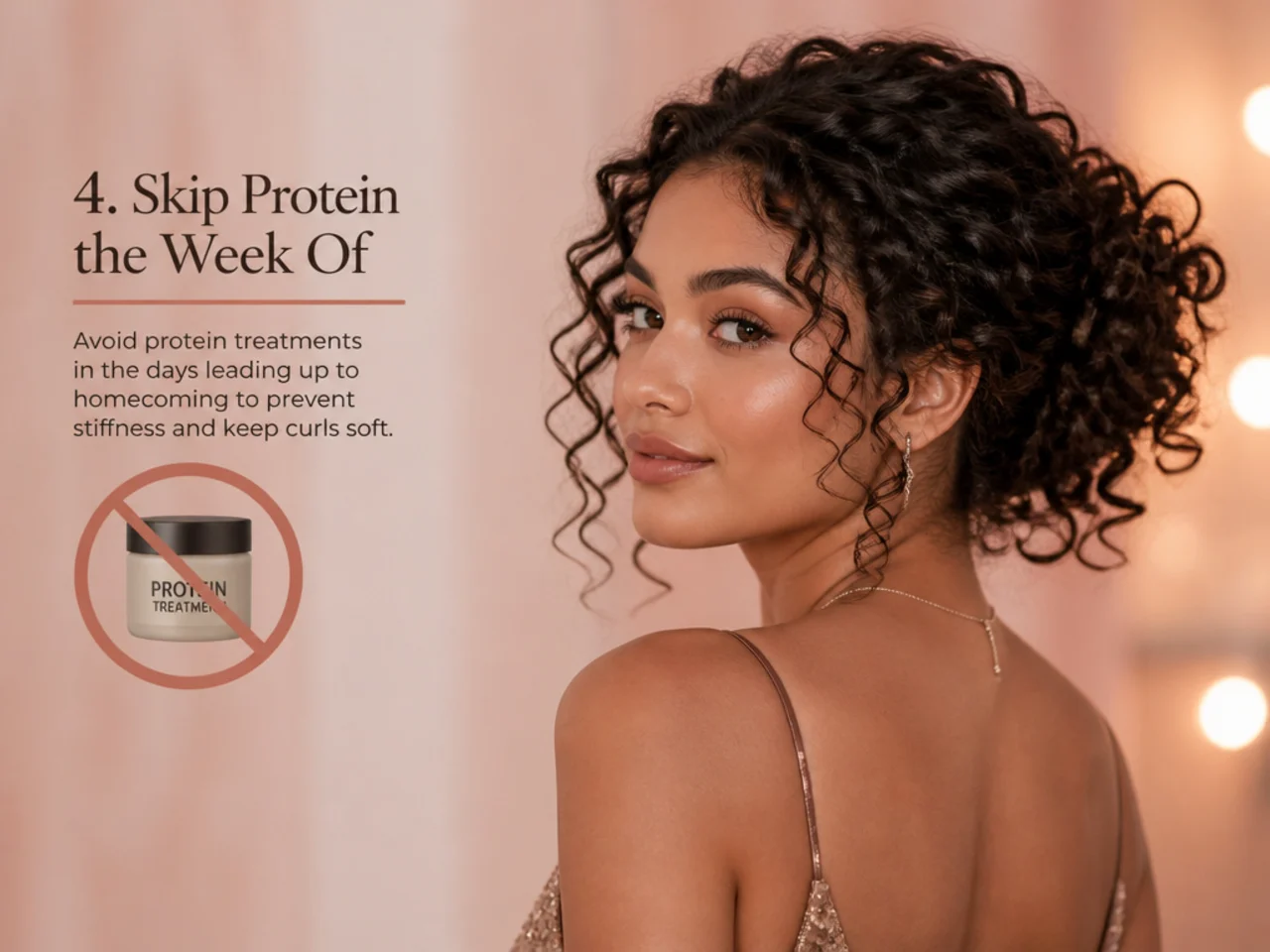
4. Skip Protein the Week Of
Protein treatments stiffen the strand. Useful in a routine, wrong two days before an event where you want the curl to move.
Applying Product
5. Apply to Soaking-Wet Hair
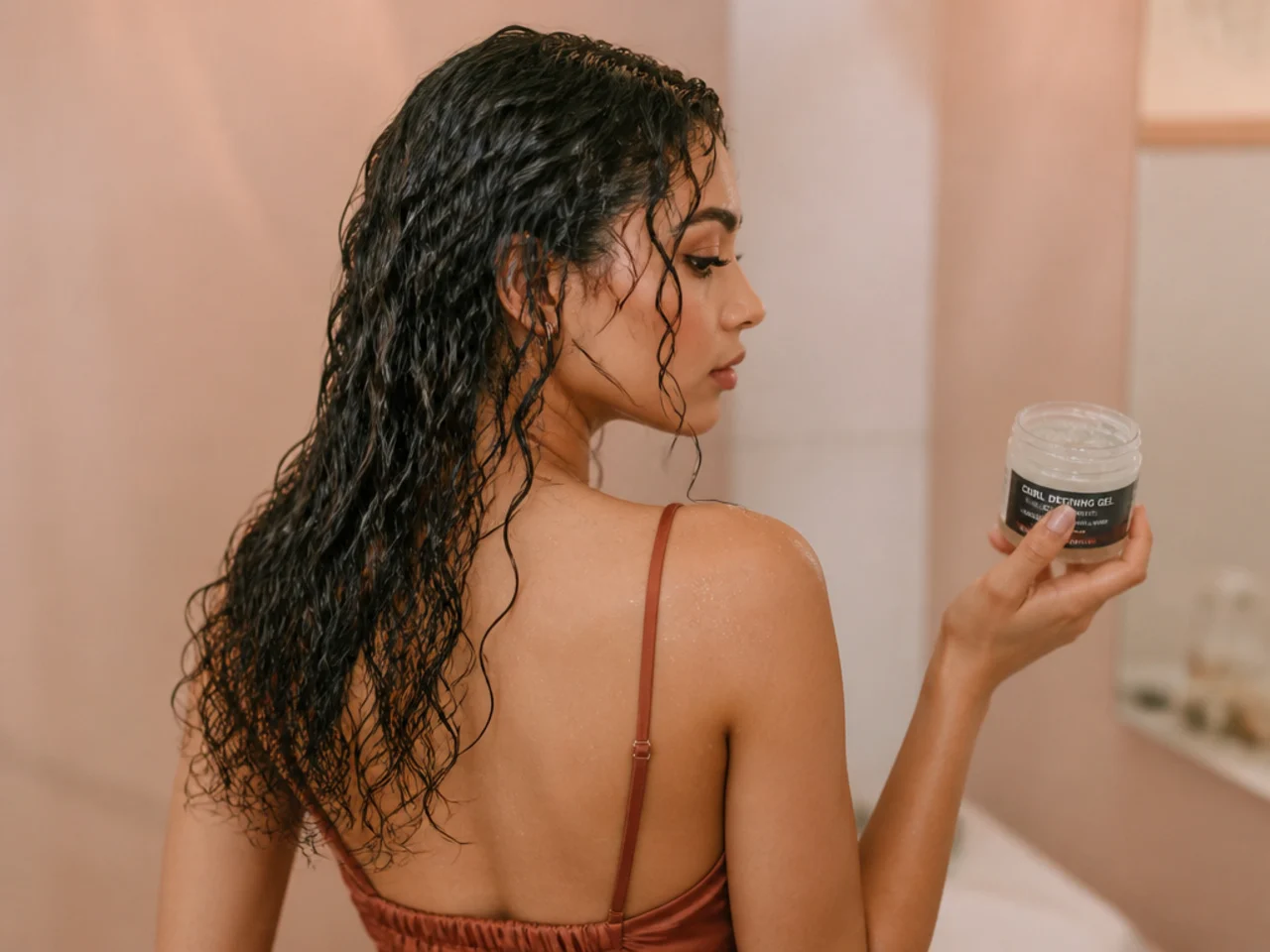
Not damp — soaking, straight out of the shower with water still running. Product applied to damp hair never forms a proper cast, and the cast is the entire mechanism.
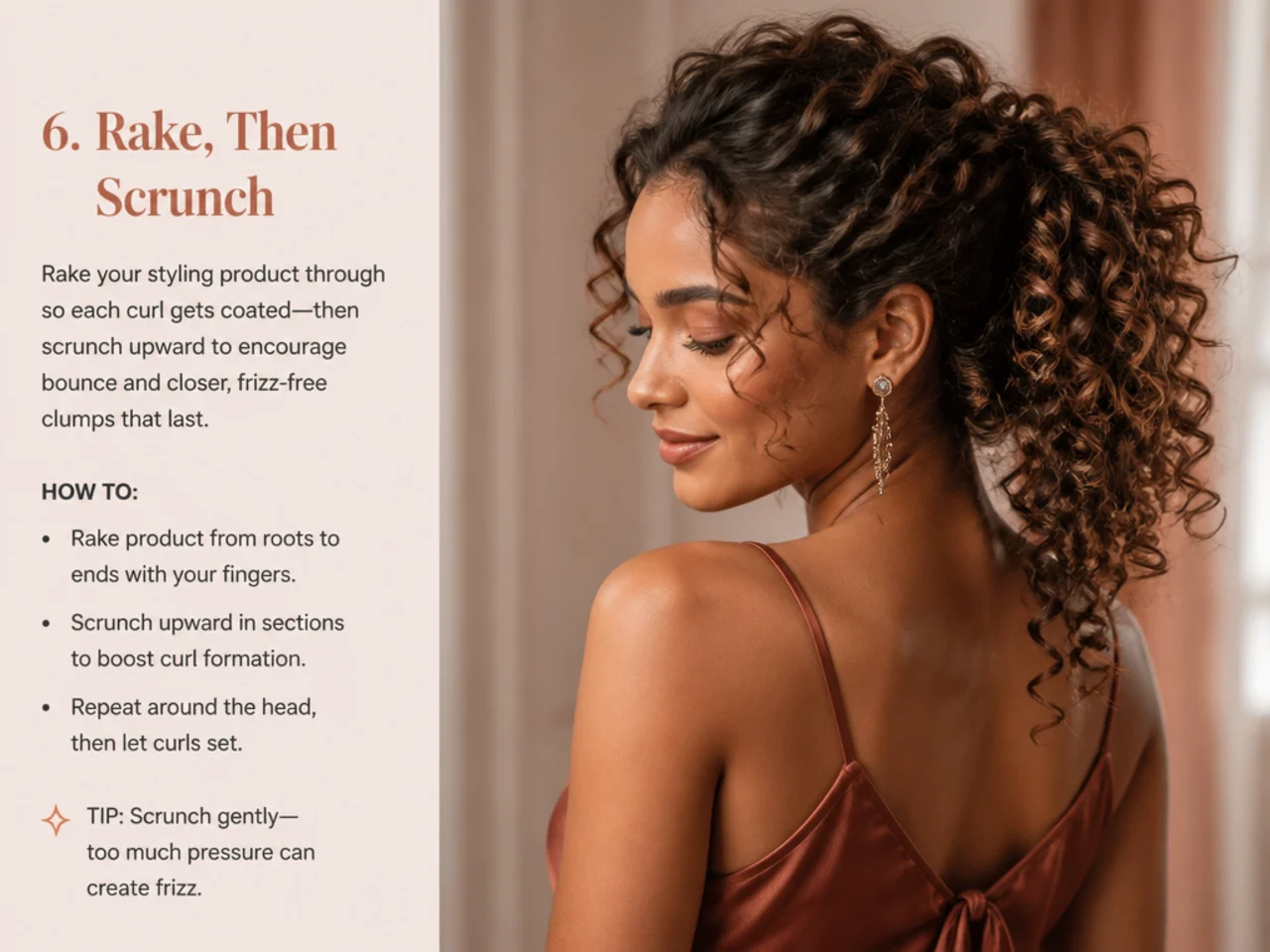
6. Rake, Then Scrunch
Two different jobs. Raking distributes the product evenly through the section; scrunching forms the clumps. Doing only one of them gets you half a result.
7. Use More Gel Than Feels Right
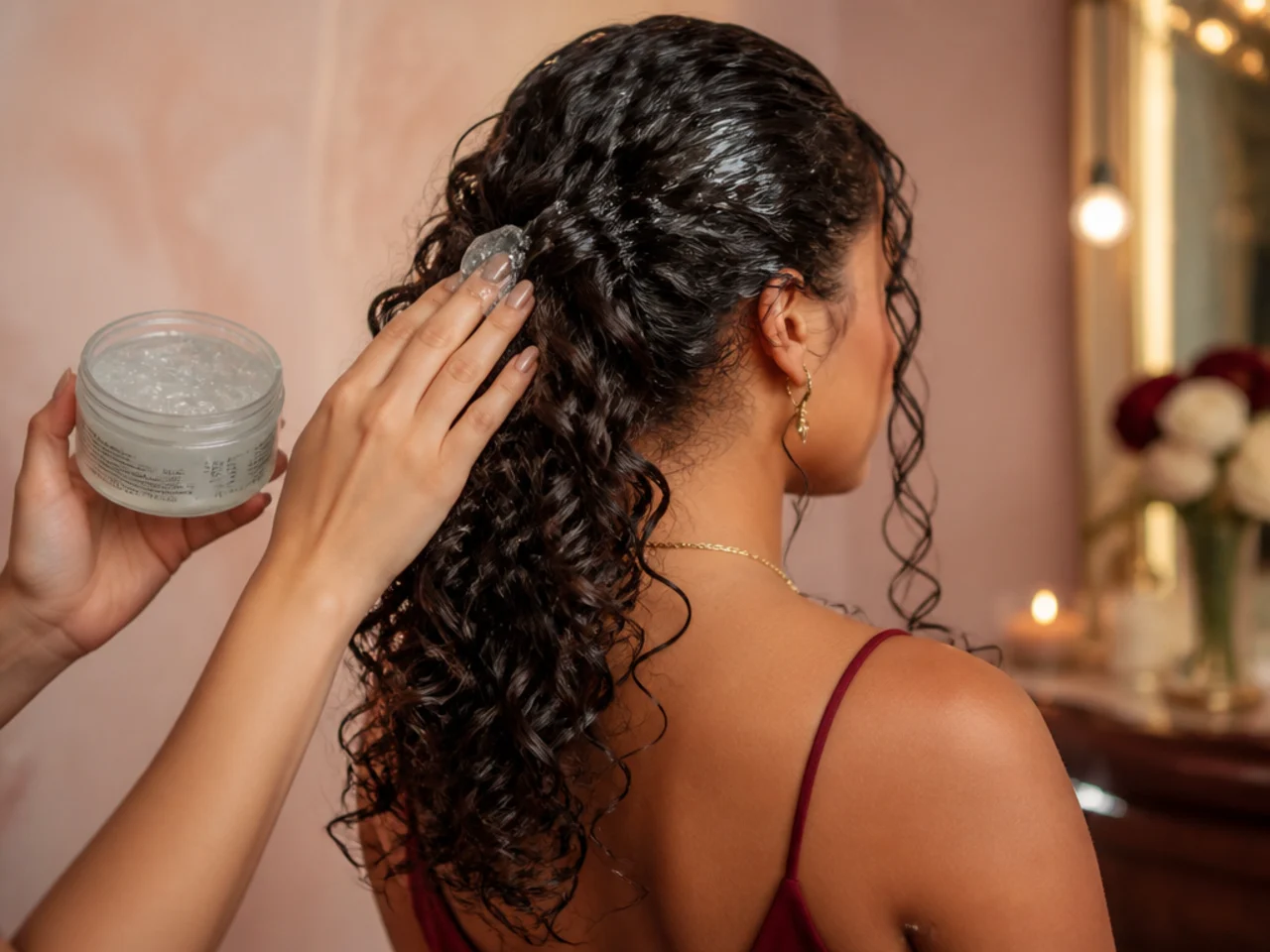
Under-gelling is the most common single cause of second-hour frizz. If it does not feel like too much while wet, it is not enough — you will be breaking the cast open afterwards anyway.
8. Layer Cream Under Gel
Cream supplies the moisture, gel supplies the seal. In that order, because a seal applied under a moisturiser is sealing nothing in.

9. Add an Anti-Humidity Serum
A silicone-based finisher genuinely blocks moisture rather than merely smoothing the surface. This is the one product on the list worth buying specifically for the night.

Drying
10. Diffuse on Low Heat, High Speed
Heat is what causes frizz; airflow is what dries. Turning the heat down and the speed up gets you the same drying time without the damage.

11. Hover, Do Not Move the Diffuser
Movement breaks the cast while it is still forming. Cup a section, hold completely still until it is dry, then move to the next one.

12. Dry to Completely Dry
Any dampness left in the hair will frizz the moment you walk into a warm room, because the moisture is already inside the strand. Bone dry, including the roots.

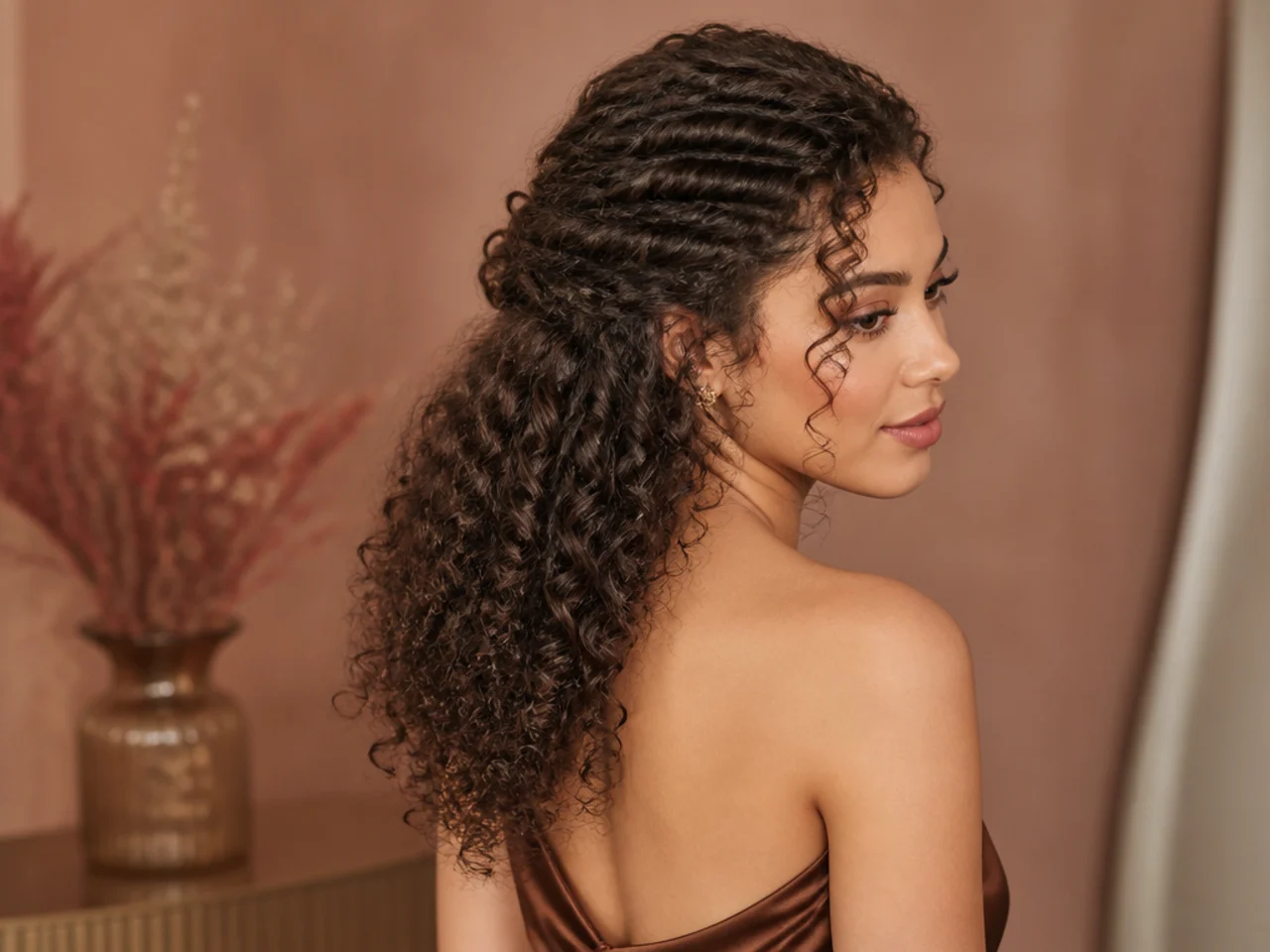
13. Crack the Cast Only When Dry
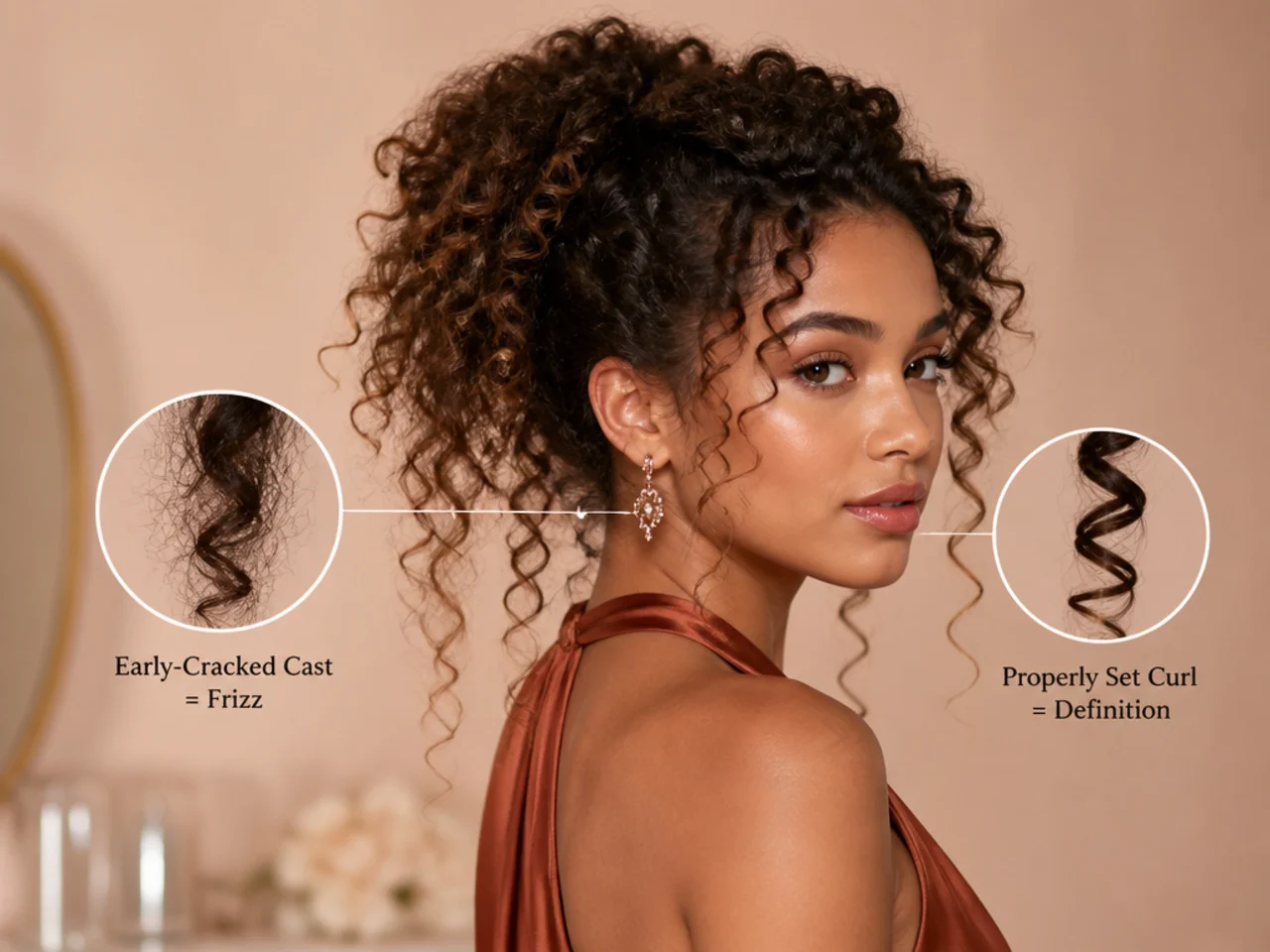
Crunchy is correct — it means the cast has formed. Scrunch it out once the hair is completely dry and the definition underneath is revealed. Crack it early and you get frizz instead.

14. Add Oil Over the Broken Cast
A drop of light oil over the top seals the surface and removes the last of the crunch without softening the hold underneath.
Overnight and On the Night
15. Pineapple It Overnight
A loose, high gather on a silk scrunchie. It keeps the weight of your head off the curl pattern while you sleep.

16. Sleep on Silk, Never Cotton
Cotton pulls moisture out of the hair and creates friction against it. Both are exactly what you spent the evening preventing.

17. Refresh with Water, Not Product
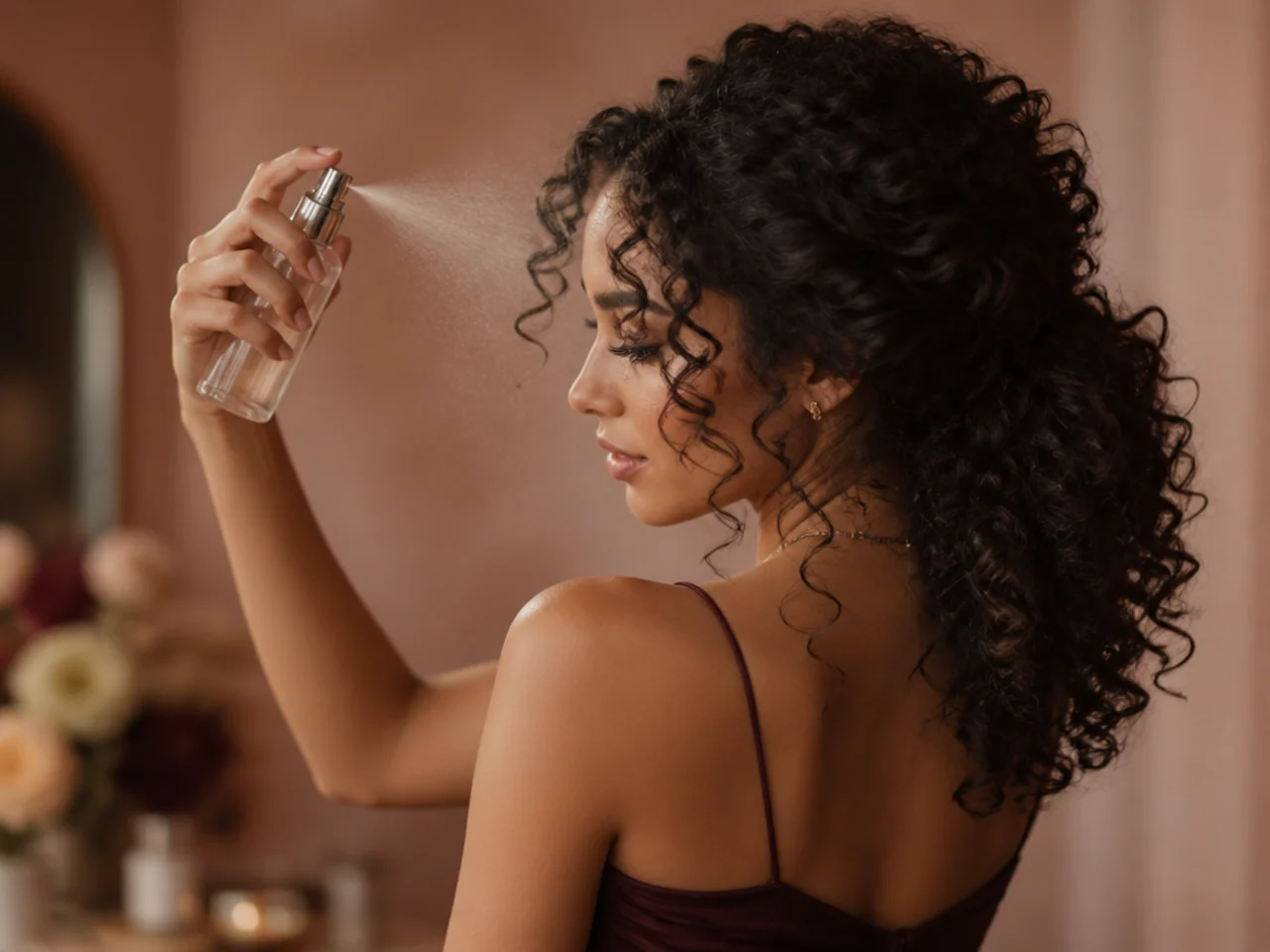
A light mist reactivates the product already in the hair. Adding more on top weighs the curl down and makes it drop faster.
18. Carry a Travel Mist and One Clip
That is the entire repair kit. Anything more is weight in a small bag you will not use.

19. Do Not Touch It All Night
Every touch lifts the cuticle and separates the clumps. This is the hardest rule on the page to keep and the one that most reliably decides the outcome.

20. Step Outside When It Lifts
Ten minutes in cooler, drier air resets more than any product in your bag will. If the room is the problem, leaving the room is the fix.

The Short Version
Wash two days out. Gel onto soaking-wet hair, more than feels right. Diffuse on low heat, held still, until bone dry. Crack the cast, add a drop of oil, and do not touch it again.
Five steps. They matter considerably more than which style you picked, and four of them happen before the day itself.

If It Lifts Anyway
Sometimes the room wins. When it does, the instinct is to add product, and that is the wrong move — more product on already-swollen hair weighs it down without redefining anything.
Do this instead: step outside for ten minutes, mist lightly with water only, and scrunch upward with a cupped hand. You are reactivating the cast that is still in the hair rather than building a new one. Then leave it alone.
If it is genuinely beyond reviving, put it up. A curly claw-clip chignon takes thirty seconds and looks entirely deliberate, and nobody in the room knows it was not the plan.

Mistakes to Avoid
Product on damp hair. It never casts properly, and it frizzes by nine.
Leaving it slightly damp. Humidity finds the moisture already inside the strand immediately.
Cracking the cast early. You get frizz instead of definition, and there is no second attempt.
Touching it all evening. Every time lifts the cuticle a little further.
Adding product to revive it. Water reactivates; product weighs it down.
FAQ
How do you stop frizz at a dance? A gel cast on soaking-wet hair, dried fully, cracked only when completely dry.
When to wash? Two days before — day-two curl holds far better than freshly washed hair.
Does hairspray frizz curl? Alcohol-heavy spray does. Use flexible hold from a distance, or oil over the cast.

Final Thoughts
The prep is the style. Get the cast right and almost any curly look on this site holds through a packed room; get it wrong and the best updo of the year still lifts by the second song.
For the styles themselves see 20 hoco hairstyles for curly hair, and for the full timeline see hair for hoco. More in Occasion & Event Hair.
Frequently asked questions
Related posts
See all posts
15 Graduation Hair Ideas for the Updo Versus Down Decision
Read more
15 Straight Hair Wedding Looks to Save
Read more
20 Gorgeous Prom Looks for Straight Hair
Read more