What Is “Karen Haircut”? Origins, Variations & Styles
The term “Karen haircut” is widely used online to describe a specific short-to-medium layered hairstyle that became recognizable through internet culture and memes. While the phrase is common on social media, the haircut styles themselves are legitimate salon haircuts that existed long before the term became popular.
This article provides a neutral, informative explanation of what the “Karen haircut” refers to, where the term originated, the different haircut variations associated with it, and how modern hairstyling has evolved beyond the label.
What Is a “Karen Haircut”?
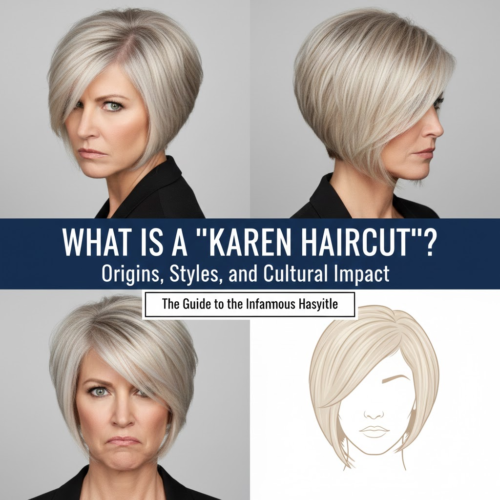
A “Karen haircut” is not an official hairstyling term. Instead, it is an informal internet label used to describe a group of short, structured haircut styles—most commonly variations of angled, stacked, or graduated bobs.

Common Characteristics Often Mentioned
- Short to medium length
- Stacked or tapered back
- Longer front sections
- Noticeable layering
- Side parts or side-swept bangs
- Frequent use of highlights or high-contrast color
It’s important to note that haircuts themselves are neutral fashion choices. The term arose from online shorthand, not from professional hairstyling definitions.
Origin of the Term “Karen Haircut”
Hairstyle Trends Before the Internet Label
Many of the haircut styles now associated with the term were popular salon requests in the late 2009s and early 2010s. Angled bobs, stacked layers, and volumized crowns were widely promoted in magazines, celebrity culture, and professional hairstyling education.
How Internet Culture Popularized the Phrase
As social media grew, internet communities began using visual cues such as hairstyles to create short-form cultural references. Over time, certain haircut images were repeatedly shared, turning them into a recognizable visual pattern. This repetition helped the phrase spread, even though the hairstyles themselves were mainstream at the time.
This shift reflects how online language evolves, not how hairstyles should be judged.
Why Did the “Karen Haircut” Become a Meme?
Visual Recognition
Structured haircuts with sharp angles and defined layers are easy to recognize visually, especially in photos and videos. This made them common reference points in meme culture.
Internet Shorthand
Online communities often rely on simplified visual symbols to communicate ideas quickly. Hairstyles, clothing, and accessories frequently become part of that shorthand.
Ethical Considerations
Modern discussions increasingly emphasize the importance of separating appearance from behavior. A haircut alone does not reflect personality, beliefs, or actions.
Common Variations of the “Karen Haircut”
Below are 12 Karen haircut variations often referenced in discussions of the term. These are presented strictly as hairstyling descriptions, not value judgments.
1. Stacked Angled Bob

Short, layered back with a sharply angled front, designed to create crown volume.
2. Inverted Bob

A steep length difference from back to front, producing a clean and structured look.
3. Asymmetrical Bob

One side longer than the other, often chosen for a bold, fashion-forward appearance.
4. Layered Short Bob

Multiple layers throughout for texture and easy styling.
5. Graduated Bob

Gradual increase in length from nape to front, offering a softer silhouette.
6. Highlighted Angled Bob

An angled bob combined with noticeable highlights to accentuate shape.
7. Feathered Short Cut

Soft, feathered layers that add volume without harsh lines.
8. Choppy Layered Bob

Uneven, textured layers for a more relaxed, modern finish.
9. Tapered Back Bob

Closely cut or tapered nape with longer top and front sections.
10. Side-Swept Bang Bob

A bob paired with a deep side part and sweeping bangs.
11. Volumized Crown Bob

Styling focused on lift and height at the crown.
12. Two-Tone Angled Bob

Contrasting base color and highlights to emphasize structure.
Alternatives to the Karen Haircut
Choose a bob, lob, or pixie cut with soft layers, balanced shape, and natural-looking highlights for a modern, neutral style.
Although the term “Karen haircut” is often applied broadly online, many short and mid-length hairstyles are stylish, contemporary, and widely worn without fitting that label. In reality, the association is more cultural than technical, and haircut structure matters far more than length alone.
If you prefer to avoid the look commonly linked to the term, the following haircut options offer similar versatility with softer lines and updated styling.
French Bob
The French bob offers a relaxed alternative to more heavily layered or sharply angled cuts. This cheekbone-length bob is blunt at the ends rather than inverted and is often styled with soft, slightly undone bangs. Its casual texture creates a natural, effortless appearance. You can also go for French Crop cut.
Italian Bob
The Italian bob is a more polished take on the classic bob but avoids sharp layering or spiked styling. It features chin-length, blunt-cut ends paired with soft curls or voluminous waves that subtly curve inward to frame the face.
Shaggy Lob
A shaggy lob differs from inverted or crown-heavy lob styles by emphasizing texture instead of structure. It includes lightweight, texturized layers that are easy to style and maintain and is typically worn with a center part and short, center-parted bangs.
Lob with Curtain Bangs
This variation features a middle part, face-framing curtain bangs, and a light, breezy finish. Gentle layering adds movement, while the bangs are cut to highlight the eyes and cheekbones, creating a relaxed, wash-and-go look.
Smooth, Rounded Pixie
A smooth, rounded pixie provides a softer alternative to highly textured or high-contrast short cuts. Inspired by classic pixie styles, it features rounded shaping and short bangs swept gently to the side for a clean, elegant finish.
Curly Pixie
A curly pixie embraces natural curls or waves rather than forcing a straightened texture. The softer shape creates a more romantic and approachable look, adding movement and personality while maintaining the ease of a short haircut.
Is the “Karen Haircut” Still Popular Today?
While these haircut shapes still exist, modern hairstyling trends emphasize:
- Softer layering
- Blended transitions
- Texture over rigidity
- Personalized face-shape tailoring
Many stylists now avoid rigid naming and instead focus on customization, ensuring the haircut fits the individual’s hair type, lifestyle, and preferences. The most popular haircut these days is Jellyfish cut.
Hairstyles as Cultural Symbols
Haircuts often reflect broader trends in fashion, media, and society. Similar to how styles like “The Rachel” became symbolic of a specific era, certain bob variations became visually linked to a time period and later referenced online.
Understanding this helps frame the conversation in a historical and cultural context, rather than a personal one.
How to Talk About Hairstyle Trends Respectfully
When discussing haircuts—online or in salons—it’s best to focus on:
- Shape and length
- Maintenance level
- Styling flexibility
- Face shape compatibility
- Hair texture and density
Describing hairstyles by their technical characteristics promotes clearer communication and avoids unnecessary labeling.
Professional hairstylists generally agree that no haircut belongs to a stereotype. Trends cycle, evolve, and return in new forms. What matters most is how a haircut suits an individual’s hair type, lifestyle, and personal style.
Conclusion
The “Karen haircut” is best understood as an internet term applied to a group of once-popular, legitimate hairstyles—primarily structured bob variations. While the phrase became widespread online, the haircuts themselves remain adaptable, professional, and customizable.
By focusing on hairstyling techniques rather than labels, conversations around beauty and fashion can remain accurate, respectful, and informative.
FAQs
Is the Karen haircut a real hairstyle?
The term itself is informal, but the haircut styles are real and commonly taught in professional hairstyling.
What is Karen Haircut?
A “Karen haircut” is not an official hairstyling term. Instead, it is an informal internet label used to describe a group of short, structured haircut styles—most commonly variations of angled, stacked, or graduated bobs.
Why is it called a Karen haircut?
The phrase developed through internet culture as visual shorthand, not through the beauty industry.
Can these haircuts be modernized?
Yes. Softer layers, blended angles, and contemporary coloring techniques can update any classic bob.